É um visitante habitual do Porto do Funchal. O navio ventura esteve este domingo na pontinha para uma escala de 11 horas, agenciada pela Blatas. O navio, que viaja com perto de 4.300 pessoas (3.104 passageiros e 1.172 tripulantes) chegou pelas 7:15 horas de Santa Cruz de la Palma (ilhas Canárias), e partiu ao meio […]
Rui Marote O panorama imobiliário e hoteleiro da Região está prestes a ganhar um novo capítulo. O emblemático edifício histórico localizado no coração do centro urbano, conhecido por ter abrigado sucessivamente as agências e sedes de grandes instituições financeiras como a Caixa Económica, o Banif e, mais recentemente, o Santander, será integralmente revitalizado e transformado […]
Il doppio standard della democrazia armata La spudoratezza di questa narrazione risiede tutta in un cortocircuito logico e fattuale che i grandi media occidentali tendono colpevolmente a edulcorare. Zelensky chiede ...
Ukrainian President Volodymyr Zelensky said on Sunday that he would hold elections in Ukraine if Russian President Vladimir Putin agreed to a 60-day ceasefire, comments that came after President Trump said Ukraine needed a new president to reach a deal with Russia. Zelensky’s term expired in May 2024, but he has remained in power because no […]
A peça de João de Brito cruza memória familiar e canções de Abril, de 16 a 18 de outubro, na LAMA Black Box. A estreia assinala os 16 anos da companhia.
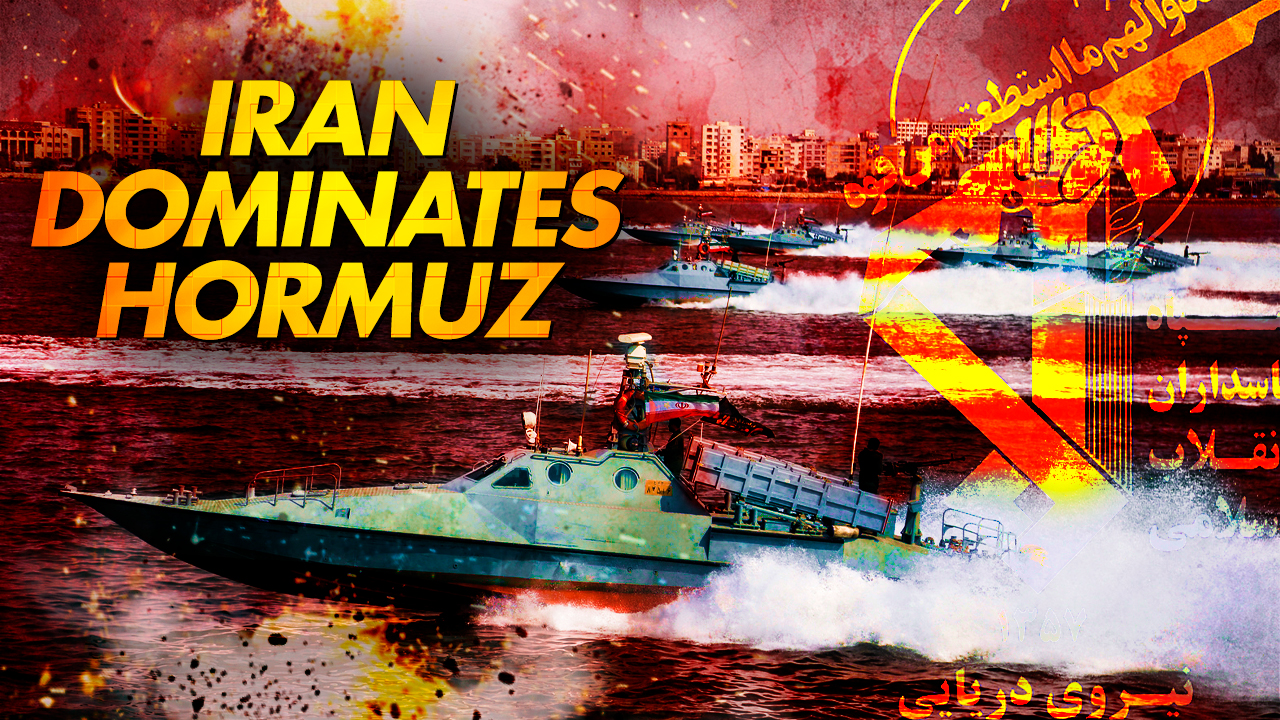
Iran’s Islamic Revolutionary Guard Corps (IRGC) said on October 11 that a crude-oil supertanker struck a sea mine in the Strait of Hormuz, triggering an explosion and a fire in its engine room, as attacks on commercial shipping continued in the region.
In a statement, the IRGC Navy said the tanker was attempting to leave the strait through an “unauthorized route” with its navigation and identification systems switched off.
The incident marked the third time since the previous day that an oil tanker had struck a mine and caught fire while using what Iran described as an unauthorized route, according to the Corps.
“All vessels within the Strait of Hormuz that switch off their navigation and identification systems will be identified as hostile and dealt with firmly and decisively,” the IRGC Navy said.
Meanwhile, the United Kingdom Maritime Trade Operations (UKMTO) agency reported on October 11 that an outbound tanker had been struck on its port side by an unidentified projectile while transiting the Strait of Hormuz, sustaining damage. The crew were reported safe, and authorities were investigating.
India subsequently identified the vessel as the Marshall Islands-flagged tanker MT Valthera. Indian officials reported that a fire broke out aboard the ship but that all 11 Indian crew members were safe. The available reports did not establish who was responsible for the attack.
In a separate incident, the tanker MT Petro Dolphin was attacked by a drone at Sohar Anchorage in Oman, according to Indian Shipping Minister Sarbananda Sonowal. Nine of the 11 Indian seafarers aboard were rescued, while two remained missing as search-and-rescue operations continued with the local Coast Guard.
“We are continuously coordinating with all relevant authorities to fully support the ongoing rescue efforts and ensure every possible action is taken to safely locate our missing personnel,” Sonowal said.
The attack on Petro Dolphin occurred in the Gulf of Oman, outside the Strait of Hormuz itself. Still, the area is within the conflict zone.
The incidents come amid an escalation in attacks on commercial shipping. Last week saw the highest number of tanker attacks in a single week since the U.S.-Israeli war on Iran began in February, according to maritime security sources cited by Reuters.
Ship traffic through the strait has also declined sharply, with only seven commodity-carrying vessels passing through on October 6, the lowest daily total in more than two months, according to Kpler data reported by the news agency.
Units of Ukraine’s Unmanned Systems Forces have killed or wounded more than 100,000 Russian troops since the start of 2026. That is more than 150,000 since the force was created on 11 June 2025, the force said on Telegram.
Drones have become the deadliest weapon of this war, accounting for about 96% of Russia’s battlefield casualties earlier this year. These hits are verified on video in the military’s Delta system, which is how the force counts only the losses its own pilots confirm.
“Behind these figures is the daily combat work of our soldiers, thousands of sorties, precise strikes, and the constant improvement of unmanned technologies,” Ukraine’s Unmanned Systems Forces said.
Each strike reduces Russia's combat potential and reflects the coordinated work of the force’s units, it added.
A toll that keeps climbing
Overall, drone branches of the Ukrainian Army had carried out more than 1 million verified strikes on enemy targets since January, killing or seriously wounding about 193,500 Russian troops, Ukraine’s Defense Ministry reported in July.
Those strikes roughly doubled over the first half of the year, from about 105,800 in January to more than 200,000 in June, the ministry noted.
Meanwhile, Commander of the separate Ukrainian Unmanned Systems Forces Robert “Madiar” Brovdi says the numbers are still growing. In the first five days of October, the force’s pilots killed or wounded 2,699 Russian soldiers, 39.7 percent more than in the same period of September.
He tied the rising number to Russia's assaults in Donbas, as the offensives for the fortress-belt cities that have been Ukraine's protection against full region's occupation since 2014, were ongoing.
Why the drone branch matters
The force fields are the cheap, fast weapons that now do most of the killing on the front. Interceptor and strike drones let Ukraine hit troops, logistics, and command posts while keeping its own soldiers farther from the fight.
Luís Onofre é o responsável pela produção dos modelos que fazem parte da edição limitada comercializada em todo o mundo. Na ModaLisboa, apresenta uma coleção multicolorida para o próximo verão.
Diante do seu squad de celebridades, o designer apresentou no Palácio da Ajuda a coleção primavera/verão com a nostalgia da infância traduzida numa alfaiataria leve e uma nova linha de acessórios.
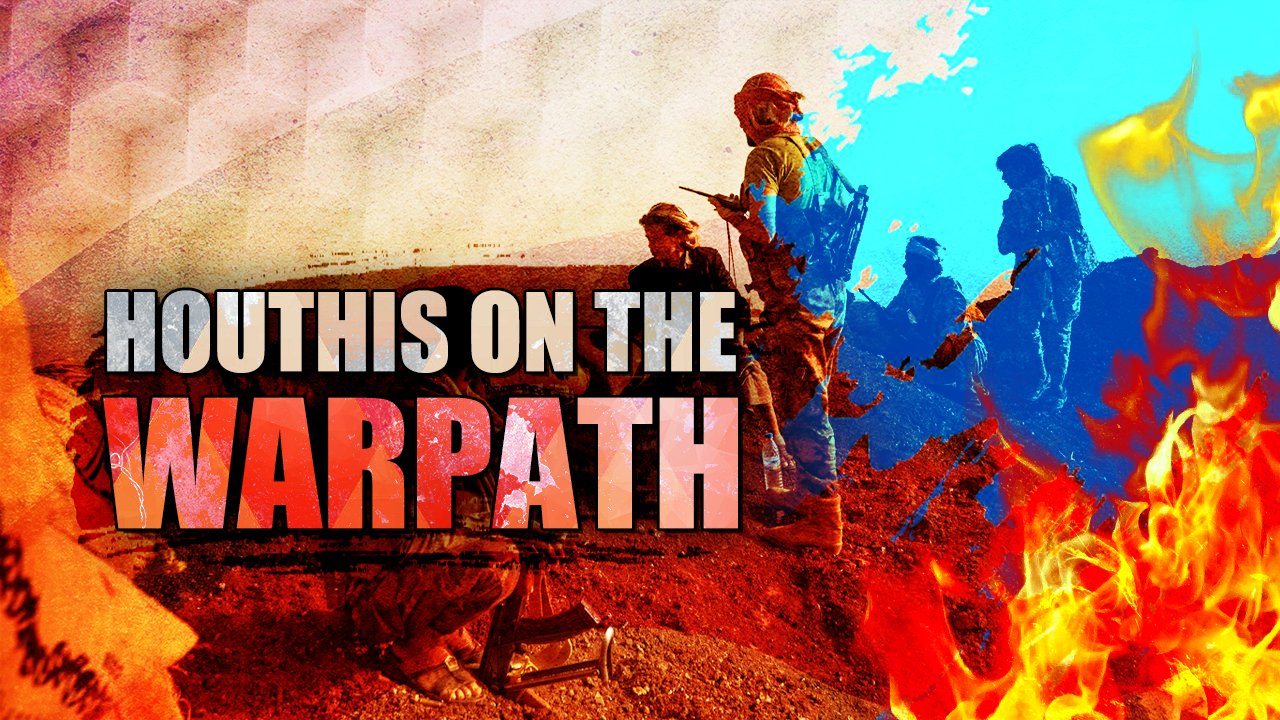
The Houthis (Ansar Allah) announced a new advance in the province of Taiz on October 11, saying they had driven Saudi-backed Yemeni government forces out of al-Masrakh district.
A military source told the Houthi-run Saba news agency that Saudi-backed forces had been expelled from the district in southern Taiz.
The claim followed reports earlier in the day that government-aligned forces had retaken the district center after Houthi fighters entered it. Asharq News, citing field sources, also reported clashes around the nearby al-Aqroudh front as government forces sought to recover lost positions.
Separately, Houthi military media released footage showing what the group described as the repulsion of Saudi-backed reinforcements advancing from Lahj toward the al-Wazi’iyah highlands in western Taiz.
The Houthis said their fighters had cleared the remaining parts of Wadi Sharira and the surrounding mountains and hills toward al-Shamaytayn, along the southwestern edge of the province.
The footage showed close-range clashes, with fighters moving into opposing positions and using machine guns and mortars. The Houthis said they had captured members of the advancing forces and seized weapons and military vehicles, which they claimed were subsequently used against their opponents.
The latest developments point to a worsening position for Saudi-backed forces across Taiz. Local authorities have warned that the Houthis are tightening their siege of the city and turning access roads into front lines.
Saudi-backed forces have announced local counterattacks but have yet to demonstrate a coordinated effort capable of reversing the Houthi advances across the province.
In addition, Saudi airstrikes have failed to halt the Houthi advance. With pressure mounting around Taiz city, the Houthis retain the initiative across the province.
British Prime Minister Andy Burnham on Sunday warned French and German voters of potential for Russian influence in upcoming elections, on the back of "clear" interference in Britain's referendum on European Union membership in 2016. Russia has previously denied meddling in the Brexit vote, while former British leader Boris Johnson 2020 also said there was no evidence of interference. Burnham made the comments in an interview with The Rest is Politics podcast, released on Sunday.
Homem de 53 anos saiu de casa no sábado à noite para pescar e não regressou. Operações mobilizaram meios marítimos e terrestres, incluindo GNR e Bombeiros.
Following the attack on the King Khalid International Airport in Riyadh, Saudi Arabia, the usual suspects emerged from the social media muck to condemn Ansarallah. “These reprehensible attacks demonstrate a blatant disregard for innocent civilian life. They must stop now,” demanded Trump’s secretary of state, Marco Rubio.
Bibi Netanyahu, “on behalf of the people of Israel,” condemned the attack and declared the Zionist state “looks forward to a strong Middle East—one that stands united against threats, protects its people, and builds a future of security, cooperation, and prosperity for all the peoples of our region,” never mind the 200,000-680,000 people of the region he butchered over the last three years.
Kaja Kallas, the former president of Estonia and current High Representative of the European Union for Foreign Affairs and Security Policy, denounced the airport attack. “The Houthi attack on Riyadh’s international airport is an appalling act of terror. There can be no justification for indiscriminate attacks on civilians and civilian infrastructure,” she said.
Kallas, like most European leaders, insists Israel has a “right to defend itself” against Hamas, Hezbollah, and the Houthis, and yet “self-defense” is not a legitimate response for the people of Gaza, the West Bank, Lebanon, Syria, and Yemen, all victims of Israeli and US aggression.
António Guterres, the Secretary-General of the United Nations, is “deeply shocked” by the Yemeni retaliation, and criticized the attack on the Saudi airport as a violation of international law.
If Guterres is concerned about international law and the bombing of civilian infrastructure, why hasn’t the UN invoked Chapter VII of the UN Charter in regard to Gaza? “The UN’s member states collectively have a bad track record when it comes to preventing genocide,” writes Sean Matthews. “In the case of genocides in Rwanda and Bosnia, the UN only declared officially that genocides took place after the fact.”
G7 foreign ministers also weighed in on the attack, declaring the response to Saudi attacks poses an “unacceptable threat to regional stability and security, to global energy security,” as well as to security in the Red Sea and the Bab al-Mandab Strait.
In June, during a globalist conclave in Évian, the G7 issued a dilatory statement calling for an acceleration of “humanitarian and reconstruction efforts and the swift implementation of relevant political and security measures” in Gaza, the West Bank, and Lebanon, while knowing full well Zionist Israel will ignore international law and continue to murder and starve Palestinians while ethnically cleansing the Shi’a in southern Lebanon.
The official censure by the United States, the EU, UN, and G7, as well as the skewed reportage of the corporate media, overlooks the reason why Ansarallah is bombing Saudi airports and oil infrastructure.
Forgotten, or ignored, are the crimes of the Saudi coalition during and after the Yemen War of 2015. The coalition included the United Arab Emirates, Bahrain, Egypt, Jordan, Kuwait, Morocco, and Sudan.
The Sunni coalition attacked after President Abd Rabbu Mansour Hadi fled house arrest into exile in Saudi Arabia. Hadi, who died earlier this year, stood accused of secretly working with al-Islah, described as the Muslim Brotherhood’s Yemeni branch. The former president was also accused of being a Saudi puppet. Saudi Arabia views Ansarallah—followers of the Shi’a branch of Zaydism—as a threat to its national security.
A detailed United Nations report estimated approximately 377,000 deaths by the end of 2021 from the Saudi-led campaign. This total includes direct losses from combat and indirect deaths linked to malnutrition, disease, and the decline of health care and essential services.
The United States was involved in the Yemen humanitarian crisis. US personnel provided logistical support, information, training, and advisers after the Saudi-led intervention. US tankers refueled coalition aircraft, increasing their range over Yemen. Saudi forces relied heavily on US-supplied aircraft, munitions, spare parts, maintenance, and technical support.
Jeff Bachman, a professor and genocide scholar at the School of Information Services, said during an interview with the American University in Washington that the Saudi-led coalition has been able to engage violence against Yemenis thanks to the complicit material and political support of the United States.
UN Security Council Resolution 2216 established a UN arms embargo. The restrictions implemented delayed or curtailed commercial imports and humanitarian shipments of food, fuel, medicines, and medical supplies. Because Yemen is dependent on imports, disruptions to port and airport operations rapidly worsened hunger, health-system strain, water and sanitation breakdowns, and prices, according to Human Rights Watch.
“The Saudi-led coalition’s military strategy in Yemen has been increasingly built around preventing desperately needed aid and essential goods from reaching civilians, risking millions of lives,” said James Ross, legal and policy director at Human Rights Watch. “The Security Council should urgently sanction Saudi and other coalition leaders responsible for blocking food, fuel, and medicine, causing hunger, sickness, and death.”
During a full closure in November 2017, UN agencies noted that aircraft and ships delivering aid could not secure clearance, while commercial cargo encountered major hurdles. Human Rights Watch stated that the coalition had maintained a naval and air blockade since March 2015, with restrictions producing a disproportionate impact on civilians in direct violation of international law.
Yemen remains one of the world’s most serious humanitarian emergencies. As of 2026, more than 22 million people need assistance or protection and 18.3 million people are acutely food insecure. Malnutrition levels remain critically high, with over 2.2 million children under five acutely malnourished, including 516,157 suffering from malnutrition, according to the United Nations. “Even before the latest escalation, an estimated 12.2 million children in Yemen needed humanitarian assistance,” UNICEF reported in September.
Article 51 of the UN Charter is a determining provision that addresses the right of self-defense for member states. It represents an exception to the general prohibition on the use of force outlined in Article 2(4) of the UN Charter, which mandates that all member states refrain from using force against the territorial integrity or political independence of any state, as the Saudis did in 2015 in Yemen.
On October 10, following the Ansarallah attacks, Trump announced the US may rejoin the latest Saudi onslaught on Yemen. “We’re going to look at it,” he told reporters. “We just found out about the recent attack. We will make a decision. We move very quickly.”
Prior to Trump’s announcement, Democrat Ro Khanna, who was detained during a visit to Israel in July, introduced a joint Yemen War Powers Resolution along with Republican Representative Thomas Massie on October 9. The resolution directs “the President pursuant to section 5(c) of the War Powers Resolution to remove United States Armed Forces from hostilities against the Houthis in Yemen that have not been authorized by Congress.”
Congress is unable to decide whether to rejoin the Saudi effort to destroy Ansarallah and maintain the illegal war on the people of Yemen. In addition to debate on the constitutional legality of the Trump administration’s military assistance to the Saudis without a congressional consultation, members of Congress are concerned about the continued slaughter of civilians and the ongoing humanitarian crisis, considered one of the worst in the world, with around 24 million people, or nearly 80% of the population, needing assistance and protection.
SpaceX will not cut Ukraine off from Starlink satellite communications, Serhii “Flash” Beskrestnov, presidential adviser on defense technology, says. The reason is that the company could lose a large share of its revenue.
Ukraine’s troops and drones lean heavily on Starlink, a network Kyiv neither owns nor controls, and Elon Musk has used that control against it before. The latest shutdown fears spread after Elon Musk supported US President Donald Trump's criticism of Ukrainian President Volodymyr Zelenskyy.
“Not a year goes by without it coming up again: ‘They’ll cut off our Starlink.’ The enemy’s Telegram channels fuel these rumors. We have good and stable partner relations with SpaceX,” Flash writes.
Musk is first of all a businessman, and Ukraine brings SpaceX significant profit, so he is sure no one will switch Starlink off in Ukraine, Flash said. Unexpected moves are possible, he added, but of a different kind, such as turning Starlink on for Russia inside its own territory.
The rumors come amid real US pressure
The fears did not appear in a vacuum. After Trump allowed Russian diesel back to US markets, talk spread of "sanctions" on Ukraine if it keeps hitting the Russian refineries that fund Moscow, with the Financial Times reporting, citing European officials, that Trump’s administration has threatened to halt the mechanism for buying US weapons for Ukraine, known as PURL.
Axios has also reported, citing a Ukrainian and an American official, that Washington has threatened to stop sharing intelligence with Ukraine if it continues striking Russian refineries.
Ukraine is building a backup
The scare feeds a longer effort to reduce dependence. Ukraine is working on a satellite system of its own, something similar to Starlink but beyond Musk’s control, President Volodymyr Zelenskyy said on 4 October.
The timing is the reason, he said: some states will share the technology with Russia late this year or early next, and the Chinese are among them. Moscow is already fielding its own Starlink-style constellation, Rassvet, though for now it reaches Ukraine only in brief passes.
United States President Donald Trump on October 11 announced an immediate energy ceasefire between Russia and Ukraine, claiming both sides had agreed to stop attacks on infrastructure.
“Effective immediately, there is an ENERGY CEASEFIRE in the War between Russia and Ukraine. Both parties have agreed. Do not break it!” Trump wrote on Truth Social.
Ukrainian President Volodymyr Zelensky expressed surprise at the announcement, telling Axios he had not been informed of the purported agreement.
“The ceasefire announcement was news for me,” he said, noting that Ukraine would accept it if Russia agreed to comply.
“If President Trump negotiated it with Putin — please tell us when the ceasefire begins. We are ready and we will accept it,” he added.
Zelensky later accused Russia of continuing to attack Ukrainian energy infrastructure after Trump’s announcement. In a post on X, he said he had briefed Trump on what he called the “brutal Russian strikes that continue unabated.”
A Russian drone had struck a power plant in Kyiv, causing power outages across several districts, he claimed, followed by attacks on energy facilities in the Kharkiv region.
“And all of this happened AFTER the President of the United States made his statement about an energy ceasefire,” Zelensky wrote.
In his evening address, he also reported a strike on a combined heat and power plant in Kharkiv. He said Russia had carried out more than 200 strikes on Ukrainian electricity-generation and transmission facilities over the preceding week, along with 17 attacks on oil and gas installations.
Moscow has not yet publicly commented on Trump’s announcement, leaving it unclear whether Russia accepted the proposed ceasefire or intended to observe it.
The announcement came amid a widening dispute between Trump and Kyiv over Ukrainian attacks on Russian oil refineries, with the U.S. president demanding that Ukraine halt the strikes.
The Financial Times reported right after Trump’s announcement that Washington had threatened to restrict Ukraine’s access to U.S.-made weapons and intelligence sharing unless Kyiv stopped attacking Russian energy infrastructure.
Citing European officials, the newspaper reported that U.S. officials had warned that the U.S. could block Ukraine’s access to the NATO-managed Prioritised Ukraine Requirements List mechanism, known as PURL, through which allied countries fund purchases of American weapons for Kyiv.
The surprise ceasefire announcement came amid a broader shift in Washington’s energy policy toward Moscow, following a diesel supply deal with Russia and temporary sanctions waivers for certain fuel shipments. With the administration simultaneously pressing Kyiv to halt refinery strikes, Trump appears to be growing impatient with Zelensky.
A quinta jornada da Série 1 do Campeonato de Portugal trouxe mudanças na classificação, com o Chaves B a assumir a liderança isolada e o Montalegre a sair vitorioso do dérbi transmontano diante do Bragança, que sofreu a primeira derrota na competição.
No confronto entre brigantinos e barrosões, o Montalegre venceu por 0-2, graças aos golos de Diogo Carvalho e Tiago Correia. O resultado pôs fim à invencibilidade do Bragança, que até esta jornada liderava o campeonato sem derrotas. Apesar do triunfo fora de portas, o Montalegre mantém-se igualmente invicto, confirmando o bom arranque de temporada.
A derrota do Bragança abriu caminho à subida do Chaves B ao primeiro lugar. A equipa flaviense aproveitou a deslocação ao terreno do Brito para conquistar uma vitória expressiva por 0-4. Eurio, Adílio, Pedro Silva e Carlinhos assinaram os golos que permitiram aos transmontanos somar três pontos e isolar-se no topo da tabela classificativa.
Em sentido contrário, o Vinhais continua sem conseguir pontuar nesta edição da prova. A formação vinhaense perdeu por 1-2 na receção ao Limianos, prolongando o ciclo negativo e mantendo-se à procura dos primeiros pontos no campeonato.
Concluída a quinta jornada, o Chaves B lidera isolado a Série 1, enquanto o Montalegre permanece invicto e o Bragança procura reagir a primeira derrota da temporada. Já o Vinhais terá de procurar nas próximas jornadas uma mudança de resultados que lhe permita sair da situação difícil em que se encontra.
Aviation is one of the most effective ways to counter Russia’s jet-powered drones. Its effectiveness continues to grow due to pilots’ skill and better coordination, Defense Minister Yevhenii Khmara says, Glavcom reports.
Russia’s jet-powered Gerans fly several times faster than the propeller Shaheds Ukraine learned to shoot down, and they remain the main challenge for its air defense. Ukraine downs more than 90% of the slow drones but only about 55% of the jet ones.
“Due to them, our aviation now uses fewer munitions per aerial target. We plan to improve this further,” Khmara states.
Air defense works as a layered system because no single type of weapon is enough, he explains. The layers run from surface-to-air and shoulder-fired missiles to turrets, electronic warfare, interceptor-drone crews, and small-scale air defense, topped by aircraft including Mirage and F-16 jets.
Scaling what works against jet drones
Ukraine already has combat results against the jet drones, Khmara notes. In one engagement, five Bars interceptors destroyed five aerial targets, a 100% hit rate in that case, and the task now is to raise the overall destruction rate and quickly scale the solutions that prove themselves.
Heavy-caliber turrets are adding to that. Their number in service already runs into the hundreds, he adds.
“This direction is being scaled, and systems with greater range are being worked on. In parallel, surface-to-air and shoulder-fired missile systems are also proving effective,” he says.
Preparing for the next generation
Ukraine is also looking past today’s threats, the minister stresses. The ministry is working to supply interceptor drones, aviation and its munitions, missile and artillery systems, turrets and electronic warfare gear, and to plan several steps ahead with enough stock in reserve.
“We also know what solutions Russia is developing, which concern jet drones with a speed of 800 kilometers per hour. We are working on finding countermeasures to the next generation of threats,” Khmara says.
Producers have been tasked with offering proposals and prototypes, he concludes.

 Login