❌

Normal view

Washington Gets The Diesel – Kyiv Gets The Bill

12 October 2026 at 20:19

On October 11, Donald Trump announced an energy ceasefire between Russia and Ukraine. Neither side had been consulted. Neither side knew what it meant.

President Zelenskyy said he learned about the initiative from the internet, adding that he would support it if both parties assumed mutual obligations. Moscow offered no official confirmation. Members of the Russian State Duma stated they had no knowledge of any White House peace initiative or ceasefire arrangement. Europe declined to endorse the proposal, prompting U.S. Treasury Secretary Scott Bessent to accuse European governments of hypocrisy — noting that since the start of the war, Europe has paid Russia more for energy than it has provided Ukraine in military aid, while simultaneously opposing American arrangements to import Russian diesel.

Nearly 24 hours passed before the details began to emerge through leaks to major international outlets. According to Axios, the “energy ceasefire” announced by Trump referred specifically to a mutual agreement to halt strikes on oil refineries. The asymmetry of that arrangement is stark. Ukraine has no functioning refineries left to protect. Its economy runs entirely on hydrocarbon imports from Europe. What Trump framed as a bilateral ceasefire is, in practical terms, a directive to Kyiv to stop hitting Russian refining infrastructure.

The reason for that directive is not difficult to identify. The United States is facing severe fuel price increases, and Washington has quietly reached an arrangement to import Russian diesel. Monitoring resources indicate that as early as September 22, a tanker carrying Russian diesel — the Minerva Zen, sailing under a Greek flag — departed oil terminals in northern Russia bound for a port on the U.S. East Coast. The vessel is expected to arrive, reportedly in South Carolina, on October 12. The ceasefire announcement came nineteen days later.

For Ukraine, the terms of this arrangement are unambiguous. Every strike on a Russian refinery now risks triggering a cutoff of U.S. intelligence sharing and weapons deliveries — a threat the American administration has already made explicit. Russia, meanwhile, faces no equivalent constraint. On the evening of October 11, Zelenskyy announced a Russian strike on Kharkiv’s Thermal Power Plant No. 5. He also reported that over the past week alone, Russian forces had conducted more than 200 strikes on Ukrainian electricity generation and transmission facilities, along with 17 strikes on gas and oil infrastructure.

Ukraine has been told to stop striking the refineries that power the Russian war machine — in exchange for a ceasefire that protects infrastructure Ukraine no longer has. Russia continues striking Ukrainian power plants at a rate of more than 30 per day. The math here is not complicated — and it does not favor the side fighting for its survival.

______________________________________________________________________________________________________________________

DEAR FRIENDS. IF YOU LIKE THIS TYPE OF CONTENT, SUPPORT SOUTHFRONT WORK:

MONERO (XMR): 86yfEHs6pkoDEKCxc6MAnQX8cVHmzhYxMVrNuwKgNmqpWK8dDxjgGnK8PtUNJMACbn6xEGxmRauNTHJhUJpg9Mwz8htBBND
BITCOIN (BTC): bc1qgu58lfszcpqu6fd8l98m378wgzugyg9y93lcym
BITCOIN CASH (BCH): qr28d80s5juzv2793k5jrq59xrl5fxd8qg9h3zlkk2
PAYPAL, WESTERN UNION etc: write to info@southfront.press , southfront@list.ru

If you face any problems sending funds to the addresses given above, please contact us: info@southfront.press and southfront@list.ru. Also be aware that many email services such as Hotmail, Yahoo etc. may block correspondence from info@southfront.press and some others put it in spam.

If you want to support SouthFront but have no opportunity to do it via cryptocurrency, please contact us: info@southfront.press and southfront@list.ru.

SouthFront: Analysis and Intelligence
NOW hosted at southfront.press
Previously, SouthFront: Analysis and Intelligence was at southfront.org.
The .org domain name had been blocked by the US (NATO) (https://southfront.press/southfront-org-blocked-by-u-s-controlled-global-internet-supervisor/) globally, outlawed and without any explanation
Back before that, from 2013 to 2015, SouthFront: Analysis and Intelligence was at southfront.com

SOUTHFRONT.PRESS

The post Washington Gets The Diesel – Kyiv Gets The Bill appeared first on South Front.

A entrevista de Passos Coelho abre a porta a uma coligação?

12 October 2026 at 19:36
A clarificação sobre a disponibilidade para um regresso à política e a defesa de acordos à direita reabrem a discussão sobre o futuro da governação.

Was das Diesel-Abkommen von Trump und Putin politisch bedeutet

12 October 2026 at 16:44
Das große Thema der letzten Tage war das Diesel-Abkommen zwischen den USA und Russland, laut dem Russland früher als geplant mit der Aufhebung seines Exportverbots für Dieselkraftstoff beginnt und im Oktober 300.000 Tonnen Diesel, im November 500.000 Tonnen und im Dezember eine Million Tonnen an die USA und auf den Weltmarkt liefern wird. Damit Russland […]

US “Project Meridian” — A Symptom of American Decline, Not a Solution

12 October 2026 at 12:40
The creation of “Project Meridian” is not a path to US military superiority but an admission of its own weakness, rooted in a financialized system rather than a technology gap. US Secretary of Defense Pete Hegseth recently announced the creation of the 120 day task force, “Project Meridian.” On the US Department of Defense’s website […]

Das eigentliche Ziel ist ein endloser Wirtschaftskrieg

By: A A
12 October 2026 at 06:49

Die EU verlängert ihre Russland-Sanktionen um drei Jahre. Damit wird der Wirtschaftskrieg zum Geschäftsmodell: zugunsten US-amerikanischer Energiekonzerne und Fonds – und zulasten der Europäer. Wer sich in diesen Tagen die Entscheidung der EU anschaut, die Strafmaßnahmen gegen Russland für volle drei Jahre zu verlängern, muss sich unwillkürlich an Julian Assanges Diktum erinnert fühlen:

„Das eigentliche Ziel ist ein endloser Krieg, kein erfolgreicher Krieg.“

Denn der völkerrechtswidrige Wirtschaftskrieg gegen Russland mittels einseitiger Sanktionen, der in kolonialer Absicht formal auf eine Verhaltensänderung Moskaus gerichtet ist, wird zum Selbstzweck.

Ungeachtet der Zerstörungen, die die Sanktionen in der Wirtschaft der EU-Mitgliedstaaten selbst anrichten, schält sich immer deutlicher heraus: Die Verewigung der EU-Sanktionen, die bisher halbjährlich oder jährlich verlängert wurden, dient vor allem der Interessendurchsetzung von US-Energiekonzernen sowie der Profitmaximierung von US-Investmentfonds wie BlackRock. Durch die Sanktionen erlangen sie unter anderem eine Monopolstellung bei der Energieversorgung Europas und können zu viel höheren Preisen verkaufen als eine mögliche russische Konkurrenz.

Die Investmentfonds profitieren wiederum von der begleitenden Hochrüstungspolitik – nicht nur in den USA, sondern auch durch ihre Beteiligungen an deutschen Rüstungsschmieden wie Rheinmetall.

Es gibt also ein Profitinteresse sowohl daran, den Wirtschaftskrieg zu verlängern, als auch daran, die Situation gegenüber Russland zu eskalieren. Dieses Interesse schlägt über die Europäer voll durch.

Es mag paradox klingen, aber ein erfolgreicher Wirtschaftskrieg würde dieses Bereicherungsmodell rasch beenden. Dass man jetzt für die kommenden drei Jahre Sanktionen verhängt, zeigt denn auch, dass man kein Interesse an einer schnellen Beendigung des Stellvertreterkrieges des Westens in der Ukraine hat. Mit einer Verhaltensänderung wird nicht gerechnet. Die Sanktionen sind zum Modell geworden, die Europäer auszurauben. Sie sind nichts anderes als ein Unterwerfungsakt unter die Vorgaben aus den USA. Der Vasallenstatus der Europäer wird so weiter vertieft – bis hin zur Gefahr, dass man die Bereitschaft zeigt, sich selbst für Washington aufzuopfern.

Es ist denn auch kein Widerspruch dazu, dass man, während man die Sanktionen gegen 3.000 Personen und Organisationen verlängert, zwei russische Oligarchen jetzt davon ausnehmen will. Die Aufhebung der EU-Strafmaßnahmen gegen Alischer Usmanow und Michail Fridman dient den Interessen einzelner Mitgliedstaaten und ist offenbar der verzweifelte Versuch, Russland zum eigenen Vorteil destabilisieren zu wollen.

Grönland als Vertragsmodell

Immer deutlicher wird hingegen, dass sich die Europäer dem aktualisierten US-Kolonialmodell unterordnen. Während der deutsche Kanzler Merz das Abkommen über Grönland zwischen Dänemark und den USA als Erhalt der Souveränität feiert, spricht der Text der Vereinbarung eine ganz andere Sprache.

Das Abkommen von 1951 war an die NATO gebunden und an dänische Mitwirkung gekoppelt. Der neue Deal gilt ohne Enddatum und überdauert sogar eine mögliche Unabhängigkeit Grönlands. Die USA sichern sich dauerhafte Stützpunkte, können weitere Basen mit dem Schutz des amerikanischen Kontinents begründen und müssen über das Prinzip neuer Standorte nicht mehr verhandeln, sondern nur noch über deren Ausführung. US-Truppen bewegen sich frei zu Land, zu Wasser und in der Luft – nun auch unter Wasser –, ohne dass dänische Behörden in Grönland dafür noch die Regeln setzen.

Hinzu kommt ein Vetorecht: gegen militärische Präsenz von Nicht-NATO-Staaten und gegen Investitionen von außerhalb der westlichen Blöcke in sensible Sektoren und Ressourcen. Formal bleibt die Souveränität Dänemarks und das Selbstbestimmungsrecht Grönlands bestätigt. Tatsächlich entstehen quasi extraterritoriale Entitäten, in denen Kopenhagen und Nuuk nichts zu sagen haben. Die USA bestimmen die zentralen Bereiche der Politik auf der Insel und sichern sich ein privilegiertes Ausbeutungsrecht.

Ein Modell für die ganze Hemisphäre

Zugleich wurde ein Vertragsmodell geschaffen, das auch für andere Gegenden der westlichen und der nördlichen Hemisphäre gelten soll: von Venezuela über die Kanalzone in Panama bis hin zu den Küsten Kanadas.

Es ist zugleich das Modell für eine Zerschlagung Russlands, die als Folge des Abnutzungskriegs in der Ukraine angestrebt wird, um gegenüber China wieder in die Vorhand zu kommen und den eigenen Niedergang aufzuhalten.

Moral des Völkermords

Die Moral dieser Ordnung hat US-Präsident Donald Trump vor der UN mit seiner Auslöschungsdrohung gegenüber dem Iran zusammengefasst. Sollte der Iran nicht den Vorgaben aus Washington zustimmen, dann „treibe ich sie in die Hölle“. Es ist die Moral des Völkermords.

Es liegt auf der Hand, dass der immer höhere Einsatz des Westens im Versuch, die Welt zu kolonisieren, die entsprechenden Gegenkräfte auf den Plan rufen wird. Allein in Europa wird man diese bei einer Kompradorenbourgeoisie vergeblich suchen.

Originalbeitrag NachDenkSeiten

Der Bruch zwischen der EU und den USA

12 October 2026 at 06:00
Diese Folge des Anti-Spiegel-Podcast ganz im Zeichen des Bruches zwischen der EU und den USA, der diese Woche an den Reaktionen auf die Verleihung des Friedensnobelpreises, am Diesel-Abkommen zwischen Russland und den USA und anderen Themen deutlich sichtbar wurde. Daher haben wir uns diese Themen genauer angeschaut und die Hintergründe erklärt. Den Anti-Spiegel-Podcast können Sie […]

The US Is Pulling the Plug on International Justice — Does Europe Have Its Own Power Source?

12 October 2026 at 00:14

Click to see the full-size image

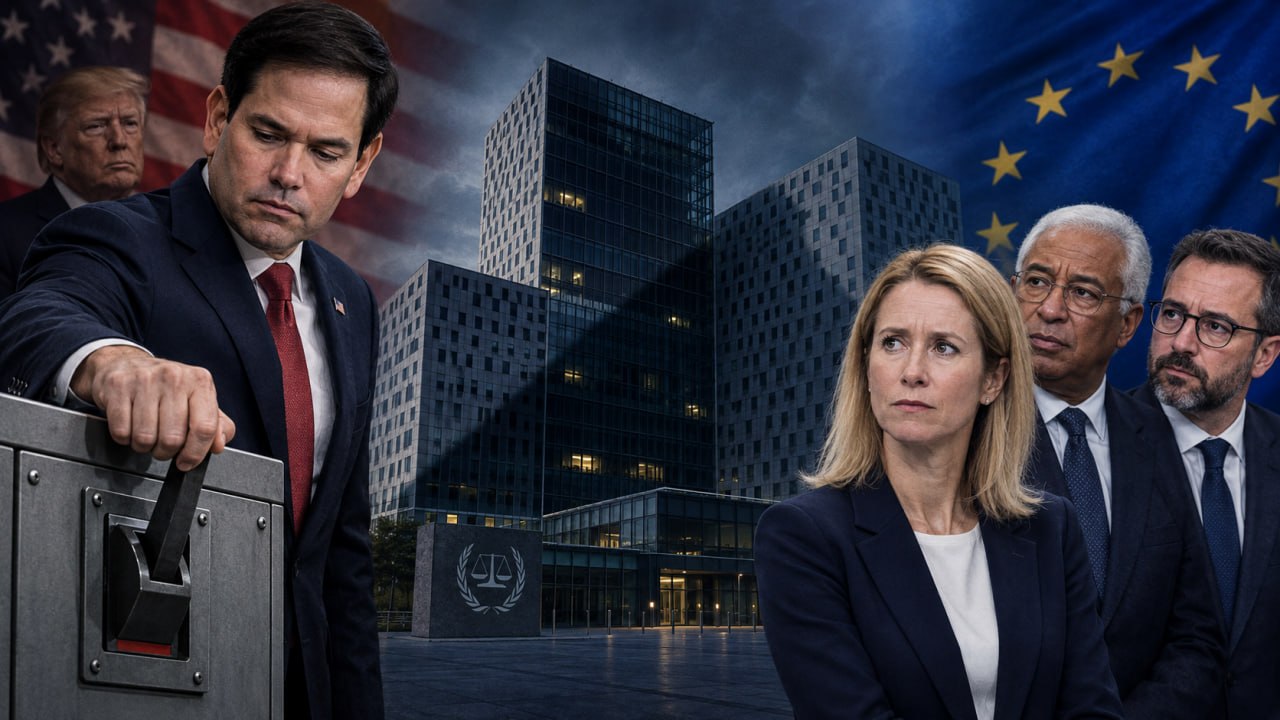
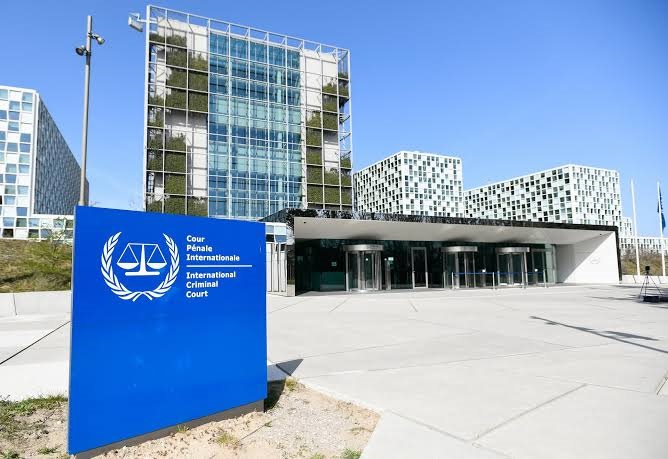
On October 9, Secretary of State Marco Rubio announced blocking sanctions against the International Criminal Court as an institution: a ban on all transactions, the freezing of assets under US jurisdiction, and the cutoff of cloud services, software, and payment processing. “Either the ICC will end its threats, or we will end the ICC,” he said. The sanctions include a six-month transition period and take full effect by April 2027. That date, not the announcement itself, is Europe’s real deadline.

Rubio has repeatedly tied Israeli interests to US actions against the court. The ICC previously issued arrest warrants for Israeli Prime Minister Benjamin Netanyahu and former Defense Minister Yoav Gallant on charges of war crimes in Gaza. While the October 9 announcement focused heavily on protecting American personnel, the administration had previously denounced the tribunal’s investigations against “the United States and our close ally Israel” as “illegitimate and baseless,” indicating that Washington’s campaign is aimed at shielding both US and Israeli officials.


Europe: Between Declaration and Enforcement

The European Commission called the sanctions “deeply regrettable” and said it was “ready to take any necessary measures” to keep the Court functioning and protect operators within the Single Market. But the same formula contains a brake: the six-month delay “leaves room for dialogue.”

Kaja Kallas, speaking for the EU, called threats against the Court “unacceptable,” reaffirming commitment to the rules-based order but stopping short of announcing any protective mechanism. António Costa promised support through political, diplomatic, financial, and practical means, without naming a single concrete instrument.

Belgian Foreign Minister Maxime Prévot is one of those publicly demanding activation of the EU Blocking Statute. “The Court’s independence cannot depend on whom it investigates. Europe must act,” he said, after securing a place for the issue on the agenda of the October 12 meeting of EU foreign ministers.

The Netherlands, where the Court sits, asked the European Commission to prepare the statute but called it a “nuclear option,” emphasizing that six months provide space for dialogue. Germany and France joined a joint statement by eight countries expressing “strong disagreement,” without mentioning countermeasures.

Why the Blocking Statute Is No Panacea

The Blocking Statute (Council Regulation No. 2271/96 of 1996) was created to counter US extraterritorial sanctions related to Cuba, Iran, and Libya. Its mechanism includes a prohibition on EU companies and citizens complying with the designated third-country sanctions, a refusal to recognize foreign court judgments based on those sanctions, and the right to recover damages in court. In 2018, after the US withdrew from the Iran nuclear deal, the regulation was expanded.

Adding the US sanctions against the ICC to the regulation’s annex would mean a legal prohibition on European banks, insurers, and cloud providers complying with the US restrictions. But its purpose is not to save the ICC itself. It protects European operators and jurisdiction: the regulation binds European operators and cannot compel American banks, Microsoft, Amazon, or payment systems to keep servicing the Court.

Activating the statute in this case would be unprecedented: in its thirty years of existence, it has never been applied against US sanctions affecting an international judicial institution. Its earlier use concerned US measures against those same countries, which were bilateral trade restrictions rather than an assault on a body of international justice. If the EU goes ahead, it would be the first time the Blocking Statute is transformed from a trade-defense instrument into an instrument for defending what Brussels calls the “international legal order.”

That is why it is called “nuclear”: it means legal confrontation, but it does not solve the problem of technological dependence. The ICC relies on American banking services, payment systems, cloud servers, and software. The Blocking Statute can prohibit European companies from complying with the sanctions, but it does not create an alternative to dollar clearing, global payment networks, or the servers where the Court’s data is stored.

For Washington, it is enough that American companies themselves refuse to work with the ICC because of the risk of secondary sanctions; the Blocking Statute cannot prevent that.

What Is Already Happening and What Might Happen

The practical effects of the sanctions are already beginning to show. In response to earlier US measures, the ICC has shifted its office and collaboration software from Microsoft to openDesk, a German open-source platform, and developed workarounds for banking, insurance, and payroll. It has also paid staff months in advance to limit potential payroll disruption. But these safeguards do not eliminate the Court’s broader reliance on American financial and technological infrastructure, and full sanctions could still disrupt its operations.

The alternatives Europe can offer are limited: activating the Blocking Statute, developing payment and clearing alternatives to dollar-based infrastructure, and providing European cloud services. None can be implemented quickly enough to replace American financial and technological infrastructure by April 2027.

Click to see the full-size image

The Asymmetry That Explains Everything

The ICC began work in 2002, and its early practice focused predominantly on African conflicts: the DRC, Uganda, Sudan, Kenya, and Libya. This imbalance fueled accusations of selectivity and neocolonialism; in 2025, three Sahel states announced their withdrawal, calling the Court an “instrument of neocolonial suppression.”

The United States signed the Rome Statute under Clinton but never ratified it; in 2002, Congress passed the American Service Members’ Protection Act, authorizing the president to use “all necessary means” to free any American detained by the ICC. Washington did not object to the Court’s early focus on African situations, even as it rejected jurisdiction over itself. Its opposition hardened once the ICC moved toward cases involving the US and its allies.

In 2020, after the Appeals Chamber authorized an investigation into crimes by US military personnel and the CIA in Afghanistan, Washington sanctioned Prosecutor Fatou Bensouda and a senior Court official. The following year, Prosecutor Karim Khan “deprioritized” the American component of the case. No US citizen has ever been indicted by the ICC.

Rubio calls the ICC a “body of globalists” threatening US sovereignty and has urged US allies to rein it in. The criticism has a real basis: the Court can hear cases involving crimes committed on the territory of a state party even if the accused’s country has not joined the Rome Statute. But the ICC remains a treaty court, dependent on state cooperation, Western donors, and political decisions of the UN Security Council.

Washington’s contradiction is built into the design itself: the US is attacking an institution that grew out of the liberal order it helped create. Europe’s is different: a declaratory commitment to international law coexists with the practical costs of reducing reliance on American infrastructure.

What October 12 Will Reveal

October 12 will show whether the EU moves from declarations to legal obligations. If the final document includes a European Commission decision to add the US sanctions against the ICC to the annex of Regulation 2271/96, that would mean a legal prohibition on European companies complying with the US measures — an unprecedented use of the Blocking Statute.

If the outcome is a general declaration, a call on Washington to rescind the sanctions, and a mandate for the Commission to “prepare options,” that would confirm a scenario in which Europe defends the principle of ICC independence but is not prepared to pay for that defense through a direct collision with US extraterritorial jurisdiction.

The probability of full and immediate activation of the statute on October 12 is low. A more realistic scenario is a political declaration of support, a Commission mandate to prepare a legal mechanism, and the preservation of the six-month pause for negotiations.

The Dilemma Beyond The Hague

The question is not whether the ICC survives past April 2027. The question is whether Europe can defend what Brussels calls the “international legal order” when the costs of that defense fall on its own companies, banks, and technological supply chains.

The Blocking Statute is a test of the EU’s ability to act not as a regulator but as a geopolitical player willing to bear the costs of conflict. If Europe limits itself to declarations and negotiations, it will confirm the formula Washington has already internalized: European sovereignty ends where American extraterritorial jurisdiction begins.

If it activates the statute, it will launch an open legal conflict with an ally on which its security depends. For now, every signal points to a third option: prepare the instrument, defer the decision, and bet that Washington will back down on its own.


MORE ON THE TOPIC:

The post The US Is Pulling the Plug on International Justice — Does Europe Have Its Own Power Source? appeared first on South Front.

Saudi Arabia Has Allies. But Who Will Fight Its War in Yemen?

11 October 2026 at 22:09

Click to see the full-size image

Saudi Arabia is desperately trying to reverse its losses on the ground in the Yemeni conflict, while Houthi attacks reach its airports and threaten its oil trade. Yet the coalition Riyadh has assembled does not match the war it wants to fight. Washington is engaged in the conflict with Iran, Turkey excludes offensive deployments, and Pakistan draws the line at crossing into Yemen. The kingdom has foreign support, but the burden of recovering and holding territory still falls on its weakened Yemeni partners.

Retreat Before the Counteroffensive

By early October 2026, Riyadh was responding to a deteriorating military position. The Houthis’ September advance along Yemen’s western coast brought the loss of Mokha and strategic positions around Bab el-Mandeb. These setbacks exposed the weakness of Saudi-backed forces and strengthened the Houthis’ leverage over a shipping route increasingly important to Saudi oil exports.

The renewed Saudi–Houthi escalation began with the July 13, 2026, strike on Sanaa airport’s runway. Saudi aircraft sought to prevent an Iranian Mahan Air flight carrying a senior Houthi delegation from landing without coalition permission. The plane later landed in Hodeida after Omani mediation, but the Houthis retaliated against Abha airport and subsequently announced a blockade on Saudi shipping. The strike broke the relative calm established by the 2022 truce; September’s coastal offensive then turned the confrontation into a major territorial setback for Riyadh’s partners.

The retreat exposed divisions within the anti-Houthi camp. Saudi–Emirati cooperation had broken down, and the withdrawal of the UAE left command arrangements that Riyadh failed to replace effectively. The factions expected to carry the offensive remained divided and poorly prepared for a sustained campaign. Saudi airpower could not compensate for the absence of a coherent local force.

The cost is also being felt inside Saudi Arabia. The October 10, 2026, attack on Riyadh’s King Khalid International Airport killed 12 people and wounded 309, according to Saudi authorities, and temporarily suspended operations. Riyadh blamed the Houthis, who renewed their warning against using Saudi airports and airspace on October 11. Airport disruption, cancelled flights and attacks on oil facilities bring the economic consequences of the war directly into the kingdom. The Saudi air campaign has not secured its civilian infrastructure.

Operation Dawn of Yemen began on October 5, 2026, after Saudi-backed Yemeni leader Rashad al-Alimi announced military action the previous day. The immediate objective was to recover the coastal positions lost in September, alongside the Saudi-backed Yemeni government’s broader ambition to restore its authority over Houthi-held territory. On October 11, the coalition announced the destruction of 136 military targets in a large-scale operation. That tally says little about whether Saudi-backed units can hold territory, secure supply routes or reopen shipping lanes.

Houthi footage released October 10, 2026: Shawaz drone strikes on Saudi-backed forces in Kahbub and Al-Waziya, as presented by the movement’s military media


Why Taiz Matters

The counteroffensive has produced conflicting accounts of control on the coast. On October 9, 2026, Saudi Arabia’s ambassador to Yemen announced that Bab el-Mandeb and Mayun Island had been cleared of Houthi forces. The Houthis maintained that they still held those positions. Control of the waterway remains contested, despite Riyadh’s announcements of success.

Taiz adds another strain after the coastal setbacks. Pressure on its approaches threatens supply routes and forces Saudi-backed units to divide their effort between the inland front and the Red Sea coast. The Houthis can disrupt their opponents’ counteroffensive without winning every coastal engagement: sustained pressure inland prevents those opponents from concentrating their forces. Saudi airpower does not resolve the fragmentation of the Saudi-backed Yemeni forces expected to hold the ground.

Houthi military footage released October 10, 2026: the movement presents advances and the surrender of opposing fighters in Sami, As-Silw and Al-Mawasit, Taiz province. The fighting places further pressure on the ground forces on which Riyadh’s campaign depends


The Iran War Narrows Saudi Options

The US–Israeli war with Iran, which began in February 2026, has expanded the military demands on Washington. Regional deployments, shipping protection and operations against Iran compete with Saudi requests for a larger American role in Yemen. Riyadh cannot assume that American support will expand on its terms. Its dependence on outside assistance has grown at the same time as the regional war has made that assistance more conditional.

The Iran war compounds Saudi Arabia’s vulnerability. Disruption at Hormuz has increased Riyadh’s dependence on its westbound pipeline and Red Sea ports. Southbound cargoes from Yanbu must pass Bab el-Mandeb; northbound exports follow a different route. Moving crude across the peninsula bypasses Hormuz, but it does not remove the threat to shipping off Yemen.

Pressure at Bab el-Mandeb gives Iran an additional advantage while the Houthis gain territory and bargaining power of their own. Their overlapping interests put Riyadh under pressure on two fronts. A Washington–Tehran agreement would not automatically end the war in Yemen: the Houthis have their own territorial, political and economic demands.

Washington is already involved through military advisers, intelligence and targeting support. The issue is the extent of that involvement, not American neutrality. Earlier in October 2026, Trump rejected Saudi requests for direct strikes; after the Riyadh airport attack, he said the United States might join them. Riyadh still lacks a firm American commitment to the wider offensive. Its requests compete with Washington’s military operations and priorities in the Iran war.

Allies Draw Their Own Lines

Riyadh’s response is to widen its support network through the Mecca pact, signed with Turkey and Pakistan on August 7, 2026, and activated on October 5. But an agreement to defend Saudi Arabia is not an agreement to win its war in Yemen. Pakistan’s military presence and Turkey’s technical, intelligence and air-defense assistance address the kingdom’s security without supplying a joint ground campaign across the border.

The alliance has a secretary-general, retired Pakistani general Nauman Mahmood, but its detailed force-generation timetable, operational command arrangements, cost-sharing formula and mission duration remain unpublished. On October 8, 2026, Ankara excluded offensive operations while parliamentary ratification was pending. On October 9, Islamabad confirmed a substantial military presence in the kingdom but ruled out crossing into Yemen to attack the Houthis. Riyadh is obtaining defensive commitments, not a combined expeditionary army.

Pakistan’s decision-making has also shifted. In 2015, parliament unanimously rejected participation in the Yemen war while promising to defend Saudi territory and holy sites. In October 2026, reinforcement commitments are proceeding without a parliamentary vote. The government says it followed the necessary procedures. The political result is a narrower domestic debate over a commitment that could draw Pakistan further into the conflict.

Fewer political checks make deployments easier to authorize and harder to reconsider once costs and casualties accumulate. Pakistan’s own security pressures add another burden: the October 11, 2026, emergency in opposition-run Khyber Pakhtunkhwa coincides with its commitments to Saudi Arabia. Islamabad is extending support abroad while managing a deepening confrontation at home.

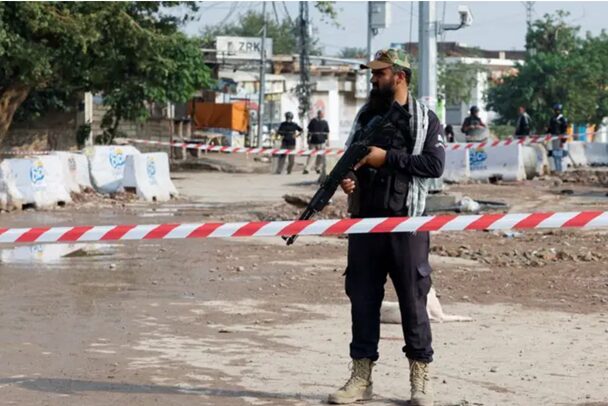
Peshawar, October 11, 2026: police guard the approach to the Red Zone. Pakistan’s overseas security commitments coincide with emergency measures at home

Saudi-led coalition footage, October 9, 2026: the coalition announces strikes on three Houthi missile launchers. The continuing attacks inside Saudi Arabia expose the limits of destroying individual launch sites


Defensive support can still sustain the offensive by freeing Saudi assets for use in Yemen. France’s support for the defense of Yanbu and Britain’s refueling assistance contribute to that effort. But none of this repairs the weakness of Riyadh’s Yemeni ground forces. Pakistan also has its border with Iran and its mediation role to consider, while Turkey keeps its commitment separate from offensive operations. Each partner sets limits according to its own interests.

Different Interests, No Shared Victory

Pakistan’s proposed $1.21 billion IMF disbursement awaits board approval. Turkey’s September 2026 inflation was 29.73%, with its policy rate at 37%. Both face financial pressures that favor limited missions over an open-ended expedition. Who pays for the current assistance remains undisclosed.

Saudi Arabia’s updated deficit forecast is 4.9% of GDP. September 2026’s non-oil purchasing managers’ index stood at 55.3, indicating expansion before the latest escalation. The airport attacks and disruption to transport now place that activity under additional pressure. Riyadh must finance the campaign while protecting the infrastructure and trade on which its wider economic plans depend.

The Houthis are using that pressure to advance their negotiating demands. On October 10, 2026, the Houthi authorities proposed reciprocal exclusion of airports, ports and other humanitarian infrastructure from blockade and attack. The proposal seeks to exchange limits on disruption for concessions over access and blockade. It puts the economic consequences of continued fighting at the center of the bargaining.

The conflict of interests runs through the entire coalition. Riyadh wants to reverse Houthi gains and protect Saudi infrastructure. The Saudi-backed Yemeni government wants to restore its authority. Turkey and Pakistan seek bounded commitments, and Washington calculates its involvement against the Iran war. The Houthis seek concessions while preserving their military leverage. A common adversary has not produced an agreed objective or a shared willingness to bear the cost.

Saudi Arabia therefore has partners willing to help defend the kingdom, but those partners have made no common commitment to reverse Riyadh’s setbacks in Yemen or sustain the ground campaign of the Saudi-backed Yemeni government. That is the gap behind the coalition’s announcements and strike tallies. Without stronger local forces and a political settlement addressing shipping, attacks and access, additional foreign support can prolong the campaign without resolving it. Riyadh risks remaining surrounded by allies while carrying a war none of them has agreed to finish.


MORE ON THE TOPIC:

The post Saudi Arabia Has Allies. But Who Will Fight Its War in Yemen? appeared first on South Front.

❌