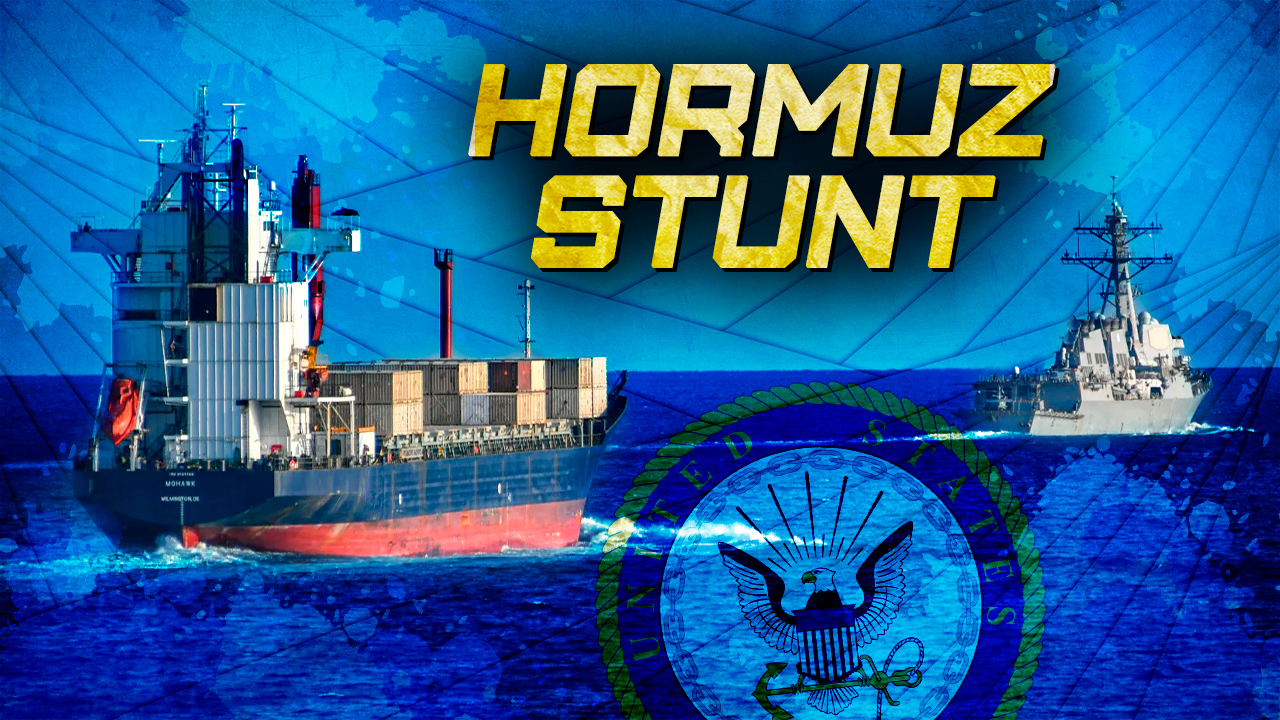
America’s $66 billion plan to “beat China’s shipbuilding empire” is not a strategy but an admission of systemic deadlock: unable to compete directly, the US is turning to asymmetric sabotage. In a recent Business Insider article and accompanying video regarding the US’ $66 billion plan to “beat China’s shipbuilding empire,” it is revealed that US […]
Posted on Hankyoren: 2026-06-09 Following the war against Iran, the US can no longer take for granted its military bases in other countries or access to those bases The superiority of US military power lies in the transoceanic projection of force. That’s the unique capability that gives pause to potential rivals like China and Russia. […]
Iran’s Islamic Revolutionary Guard Corps (IRGC) on October 17 said a supertanker carrying more than 2 million barrels of crude oil caught fire after striking a sea mine in the Strait of Hormuz.
In a statement, the IRGC Navy said the tanker was attempting to transit the strait along an unauthorized route and had deliberately switched off its positioning and radar systems to evade Iranian maritime monitoring. It added that the tanker was attempting the crossing under the protection of the U.S. military rather than coordinating its passage with Iranian authorities.
The Corps referred to the U.S. military as the “smuggler and terrorist army” and blamed the tanker’s decision to disable its tracking systems and rely on American protection for the incident.
The incident comes amid an increase in attacks on commercial shipping in the Gulf. Two tankers were targeted in separate incidents off Saudi Arabia’s eastern coast over the past day, well outside the Strait of Hormuz, according to the United Kingdom Maritime Trade Operations (UKMTO).
One tanker was struck by an unidentified projectile about 68 nautical miles northeast of the Saudi port of Al Jubail, prompting the evacuation of its crew. All crew members were reported safe, and no environmental impact had been reported at the time.
The other tanker was attacked about 78 nautical miles northeast of Al Jubail. The vessel’s master reported that a rocket-propelled grenade fired from a small boat had damaged the vessel’s aft port quarter, according to UKMTO. All crew members were accounted for and reported safe.
Despite the increase in attacks on ships, the U.S. has largely refrained from resuming strikes against Iranian maritime capabilities, according to an Axios report published on October 16.
The news website reported that the White House had ordered U.S. forces to almost completely halt strikes against Iranian anti-ship missiles and attack-drone launchers in the Strait of Hormuz area in recent weeks.
The pause is intended to avoid escalating the war ahead of the November 3 U.S. midterm elections, Axios reported, citing a U.S. official. The official acknowledged that the reduced strikes had made the Islamic Republic more confident about attacking shipping.
Washington has maintained its sanctions and naval blockade against Iran while diplomatic efforts to end the war remain unresolved, with Tehran yet to respond to a U.S. proposal being discussed with Qatari mediators, according to Axios.
The attacks off Saudi Arabia suggest that the threat to commercial shipping is extending beyond the Strait of Hormuz, while Tehran is seeking to assert greater control over maritime traffic through the waterway.
A venda de metade da companhia aérea traz na bagagem a promessa de uma nova pista. Ainda, a acumulação de detritos nas ruas serve de pretexto para apontar o dedo ao sistema Volta.
Um despiste de motociclo provocou uma vítima mortal na noite de sexta-feira, 16 de outubro, na freguesia de Conceição, no concelho de Faro.
Segundo a agência Lusa, que cita fonte da Guarda Nacional Republicana (GNR), o acidente ocorreu na localidade de Caliços, tendo o alerta sido dado pelas 20h22.
A vítima mortal era o condutor do motociclo. Não foram registados outros feridos.
Gli Stati Uniti hanno chiesto all’Italia di fornire uova per far fronte all’aumento dei prezzi che, dopo la crisi nel 2025, hanno registrato un’impennata senza precedenti. Alla base dell’emergenza americana soprattutto i focolai di influenza aviaria, che avevano provocato la perdita di milioni di galline ovaiole, riducendo l’offerta proprio mentre le famiglie continuavano ad acquistare un alimento fondamentale nella loro dieta.
A chi si sono rivolti gli Usa in Italia per superare la crisi delle uova (e perché l’hanno fatto)
Nel marzo 2025, l’amministrazione statunitense ha contattato diversi Paesi per aumentare le forniture di uova e contenere l’aumento dei prezzi sul mercato interno. Tra i territori interpellati figuravano il Veneto e la Danimarca, mentre altri accordi o iniziative di importazione hanno coinvolto Paesi come la Turchia e la Corea del Sud.
La richiesta rivolta al Veneto non è stata casuale, poiché si tratta della prima regione in Italia per produzione di uova, con circa 2 miliardi di esemplari all’anno, pari al 26% del totale nazionale. La richiesta americana è arrivata in un momento politicamente delicato. Donald Trump era tornato alla Casa Bianca da meno di due mesi, dopo aver promesso durante la campagna elettorale di ridurre il costo della vita e dei generi alimentari, e proprio le uova, diventate progressivamente più care, erano state utilizzate anche come argomento di scontro politico con la precedente amministrazione di Joe Biden.
Quando i prezzi hanno continuato a salire, quindi, il tema si è trasformato in un problema anche per il nuovo governo.
La crisi aveva raggiunto dimensioni tali che alcuni supermercati americani avevano introdotto limiti agli acquisti, mentre la catena di ristoranti Waffle House aveva applicato un supplemento di 50 centesimi per ogni uovo servito. La ricerca di fornitori esteri risponde quindi all’esigenza di aumentare la disponibilità di prodotto per provare a ridurre la pressione sui prezzi.
Cosa è successo negli Stati Uniti
La causa principale della crisi americana è stata l’influenza aviaria, un’infezione virale che ha colpito duramente gli allevamenti, imponendo l’abbattimento di milioni di galline ovaiole. Dal 2022, l’epidemia ha provocato perdite enormi nel patrimonio avicolo statunitense e ha ridotto la capacità produttiva proprio in un mercato caratterizzato da consumi elevati.
E come in ogni altro mercato, quello che succede è che quando un bene diminuisce drasticamente, se la domanda rimane elevata, il prezzo tende a salire, soprattutto quando non esistono scorte sufficienti per compensare rapidamente il calo dell’offerta.
La reperibilità è stata fin da subito un problema, ma il fenomeno è diventato particolarmente evidente nei primi mesi del 2025. Secondo i dati del Bureau of Labor Statistics, il prezzo medio di una dozzina di uova è passato da 4,25 dollari nel dicembre 2022 a 4,82 dollari nel gennaio 2023, fino a raggiungere il picco di 6,23dollari nel marzo 2025. In alcune situazioni, una confezione da dodici è arrivata a costare circa 8 dollari.
Considerando anche la centralità che le uova hanno nella dieta americana, l’impatto sui consumatori è stato evidente, tanto che a risentirne è stato prima di tutto il budget delle famiglie destinato alla spesa alimentare. L’impossibilità di riportare rapidamente i prezzi a livelli più bassi ha quindi reso necessario cercare soluzioni alternative, comprese le importazioni.

 Login