If the day should ever come where Islamophobia gets concrete legal backing in Europe, it could be soon.
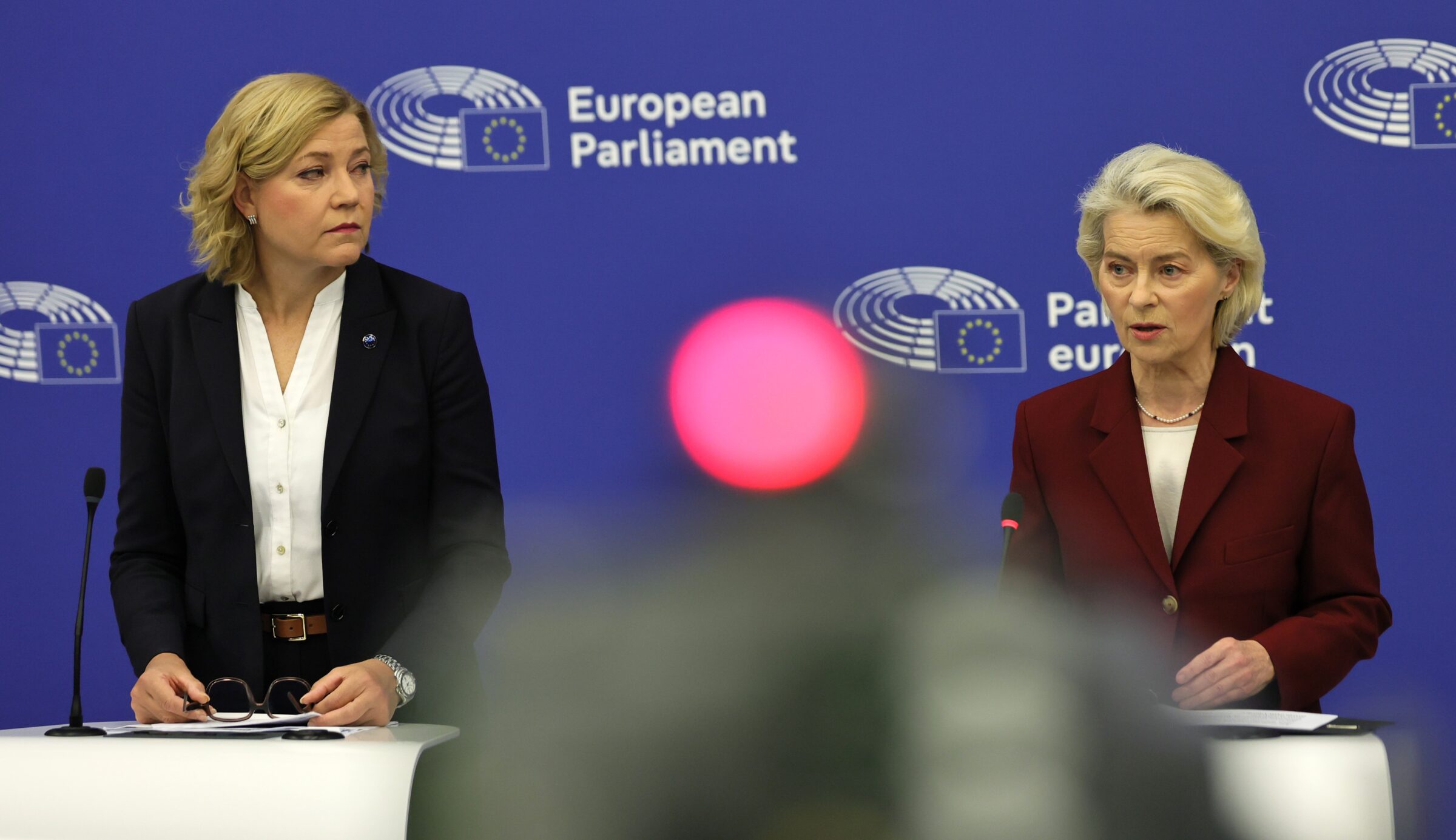
The European Parliament (EP) just voted to “condemn the strategies of Islamist entryism” and to develop ways to disrupt Muslim political movements in a resolution on 8 October.
Some 381 out of 720 MEPs worry Muslims are seeking to infiltrate democratic institutions, weaken European rule of law, gender equality, and what they deemed “European values”.
And almost every one of the centre-right and rightwing MEPs in the house voted to surveil EU funding for anti-racism organisations, so as to ensure none of it gets into the hands of the Muslim Brotherhood.
The brotherhood is a transnational Muslim group founded in 1928 in Egypt, involved in religious revival, social welfare, and political activism.
But according to a French government memo from May 2025, as well as the EP resolution, it is guilty of “entryism”, to sabotage French democracy.
The EP resolution and French memo were dubbed “a political witch-hunt targeting racialised people – particularly Muslim, migrant and refugee communities” by academics and civil society, like the European Network Against Racism (ENAR).
The group called the EP motion “a stain” on the EU Parliament, belonging “within the tradition of discredited far-right conspiracy theories.”
ENAR is among those the EU has sought to defund, due to rightwing views that its work aligns with Islamist threats.
The Forum of European Muslim Youth and Student Organisations (FEMYSO), a pan-European anti-Islamophobic group, which also risks EU defunding, said it had faced “relentless targeting and demonisation.”
Young Muslims in Europe were being forced “to choose between their identity and their right to belong,” FEMYSO president Hiba Latreche told EUobserver.
And the EP “witch-hunt” resolution, which was drafted by the centre-right European People’s Party (EPP) group and authored by its French MEP, Céline Imart, comes at a bad time for this demographic.
Advocacy group Collective Against Islamophobia in Europe (CCIE) recently looked at 876 incidents of anti-Muslim hatred in Europe in 2025.
Four out of five incidents targeted Muslim women, 41 percent of which involved discrimination or violence linked to their headscarves.
Disturbingly, the documented episodes “occur predominantly in public or institutional spaces, highlighting the persistence of forms of institutional racism.”
But seeing as the EU Commission’s own anti-Muslim hatred group has been inactive since 2024, the prevailing view in Brussels appears to be that rampant Islamophobia in the EU is less of a problem than the imputed influence of a nebulous Islamic movement from Egypt, which is better known for providing social care to deprived communities, than aiming to overthrow French president Emmanuel Macron.
The EP motion did not legally bind the European Commission to propose new anti-Muslim Brotherhood measures.
But it did enforce a stereotype of Muslims “as acting in a nefarious, dangerous, anti-democratic manner, until proven otherwise,” said Omran Shroufi, a political science researcher at the Free University of Brussels.
Rightwing EU politics is pushing young European Muslims into a lose-lose, or Catch 22 situation.
The notion of “entryism holds Muslims to an impossible standard, where non-participation in public life is a sign of disinterestedness, a lack of civic duty and the growth of parallel societies, whilst active engagement in civic life is treated with suspicion,” Shroufi told EUobserver.
The centre-right EPP group used to represent a moderate EU mainstream.
But now it had joined with open racists on Europe’s far right to be “effectively calling for an institutionalised form of discrimination, where Muslim communities need to prove their European and democratic values – whatever these are supposed to mean – before being allowed a seat at a table,” Shroufi said.
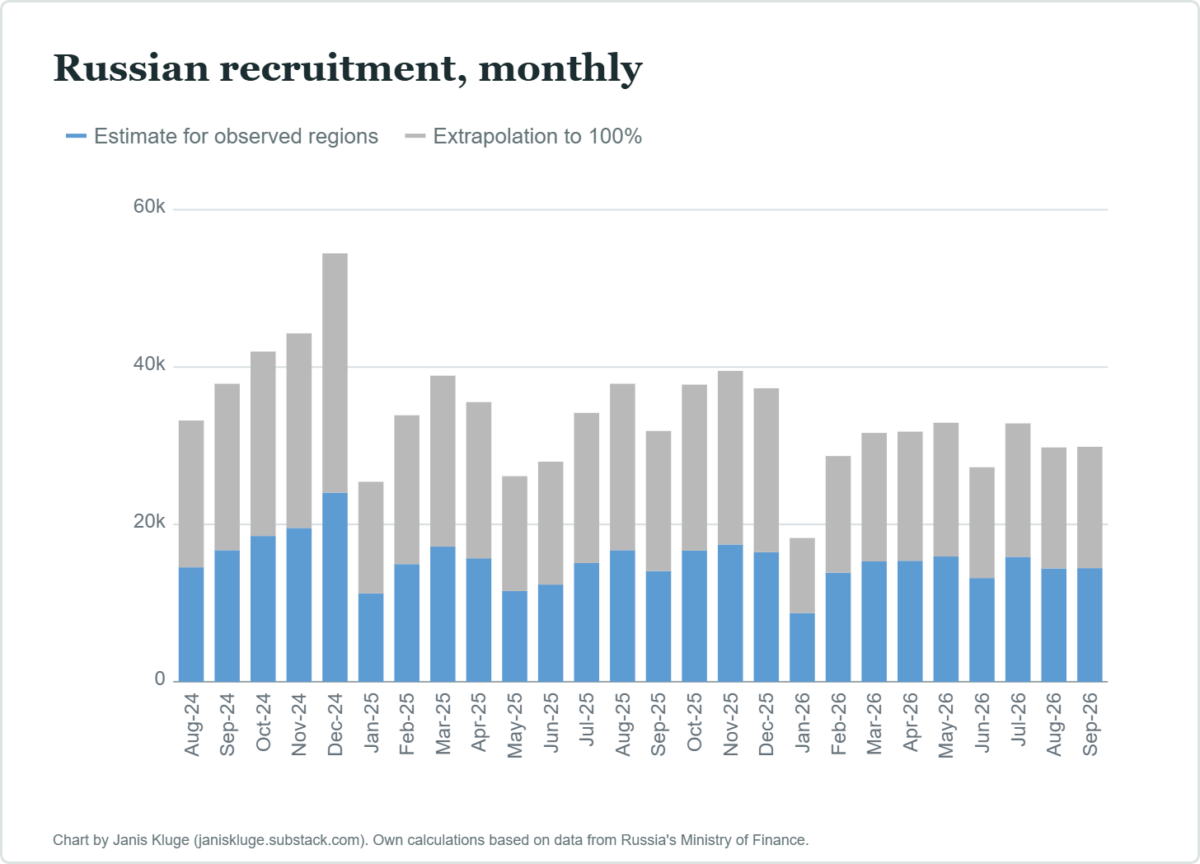
Russia is estimated to be recruiting 10 percent fewer soldiers this year than last, despite regions raising signing bonuses.
There is growing talk that criminal gangs have begun to take part in recruiting “volunteers”.
According to the Ukrainians, Russia is losing large numbers of soldiers, and October could be a record month.
Attacks on the land route to Crimea continue, reportedly prompting Russia to transport fuel in jerry cans in smaller vehicles.
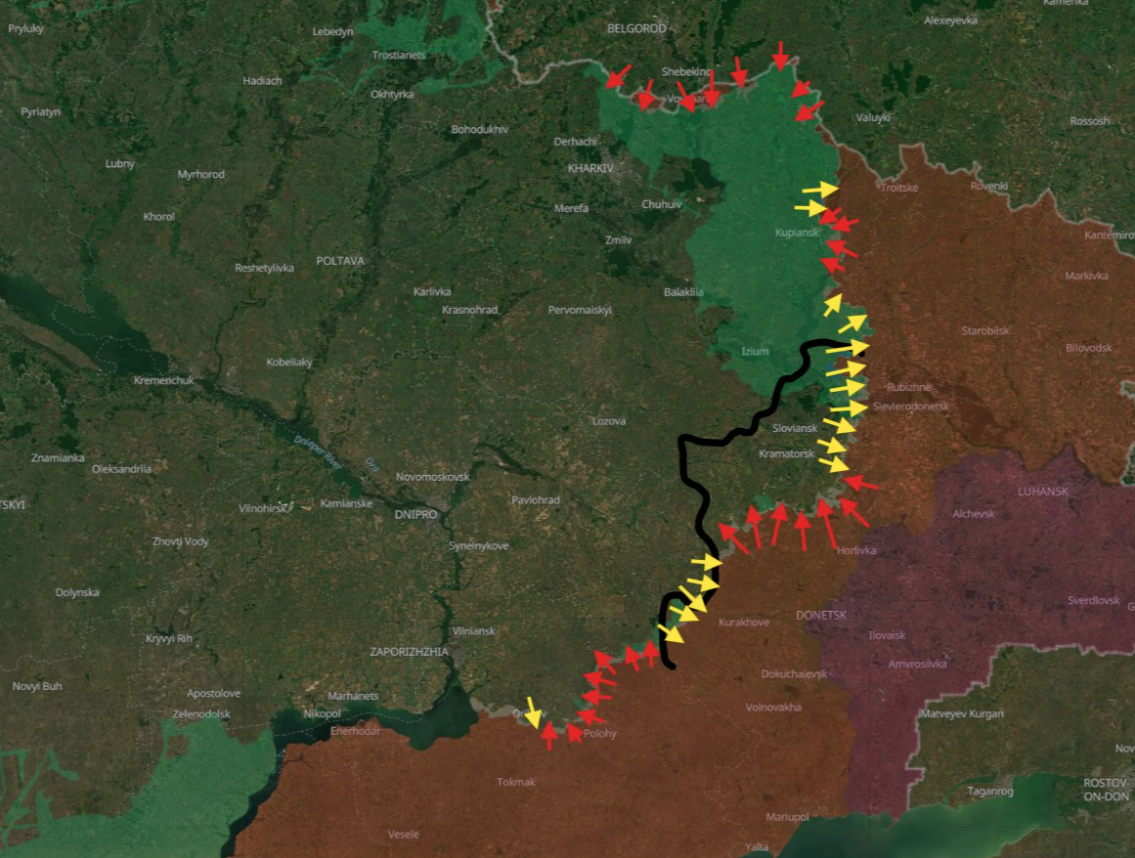
Map of the day: Where Russia is advancing and where Ukraine is advancing
Videos of the day: Ukrainians hit a Russian radar; a man surfed on a Russian drone near Odesa; speculation spreads that Iran is supplying Russia with fuel.
Many Russians have left Russia in recent months. They feared the mobilisation that had been so widely discussed. Ukrainians said Russian president Vladimir Putin might resort to it after the September parliamentary elections. Many Russians fled to Armenia and Georgia, affecting rental prices in the capitals of these Caucasus states.
So far, no mobilisation has taken place. Russia continues to rely on its existing system of voluntary — and, in some places, involuntary — recruitment of new soldiers in Russian regions.
German economist Janis Kluge, who tracks regional data, wrote last week that Russia recruits around 1,000 new soldiers a day (30,000 a month). That is less than last year — down six percent in September and 10 percent over the year as a whole.
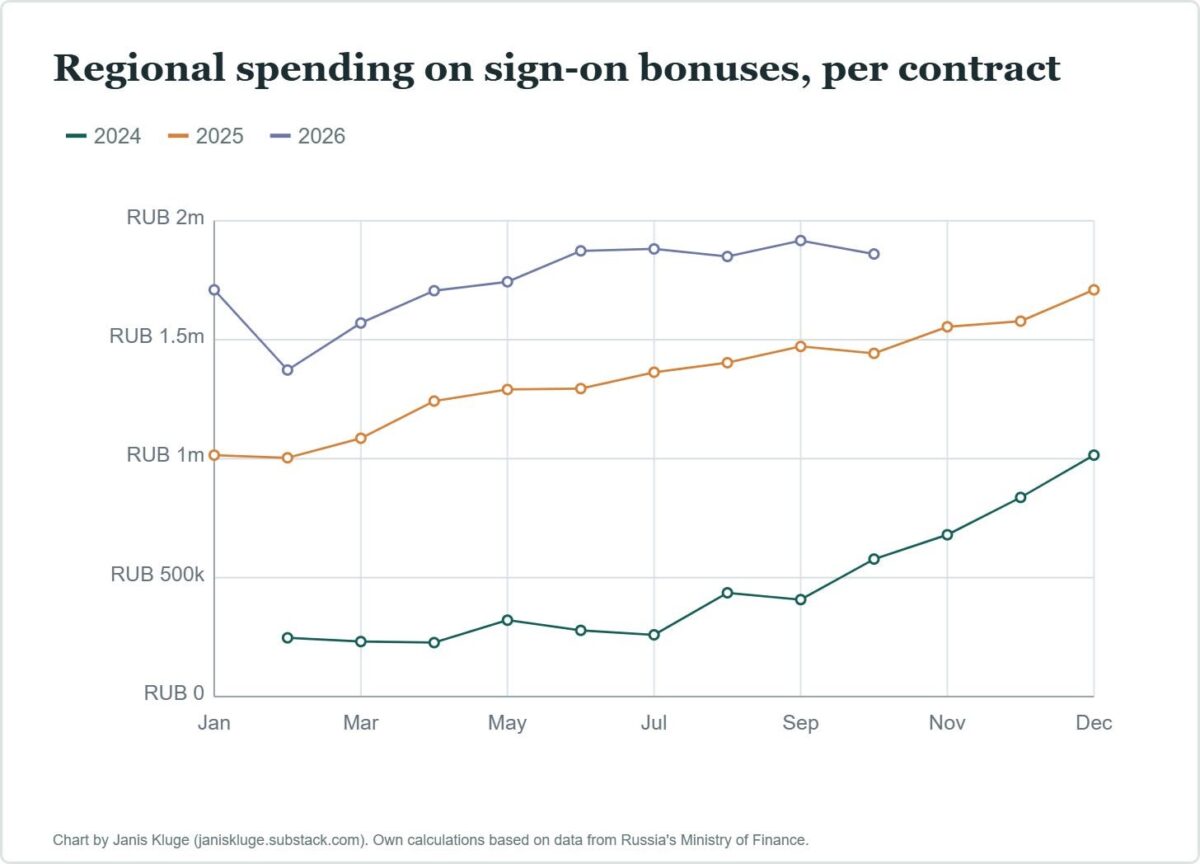
Nor did it help that, by his estimate, the sum paid by regions as a signing bonus had risen from $16,000 (€14,000) to $22,000.
In some places, recruitment is also beginning to move into the illegal sphere. Kluge wrote that local criminal gangs were now becoming involved in the system.
He mentioned the case of a prosecutor in Nizhny Tagil, a city of 400,000 in the Urals. In September, he appealed to the budget committee of the local duma.
He complained that signing bonuses for Russian soldiers were leading to an increase in crime in the city. He called for payments to agents who find volunteers willing to sign an army contract to be stopped.
According to Kluge, the prosecutor complained that criminal elements had become involved in recruitment in the city. He said an agent received $4,500 for finding one person to sign a contract.
Many turned to gangs to help them, with the assistance of corrupt police officers or military recruiters who are part of the scheme. “And this ‘persuasion’ may also involve violence, as another case from Sverdlovsk region shows: two criminals forced their victims to sign contracts and then seized their bonus payments,” Kluge wrote.
In Nizhny Tagil, 580 new soldiers were recruited last year, compared with 330 this year. It is not known how many of them criminal gangs helped to “persuade” in exchange for payment. In any case, the city does not want to change its system of rewards for agents because, in the words of the deputy mayor, it helps “fulfil our tasks”.
Overall, it is becoming increasingly difficult for Russia to supply enough manpower to the front. Moreover, it is currently losing large numbers of soldiers there, and October’s losses could even be record-breaking.
Ukraine publishes daily figures for killed and wounded Russian soldiers. These figures cannot be verified and may be inflated, but the trend suggests that the situation is worsening for Russia.
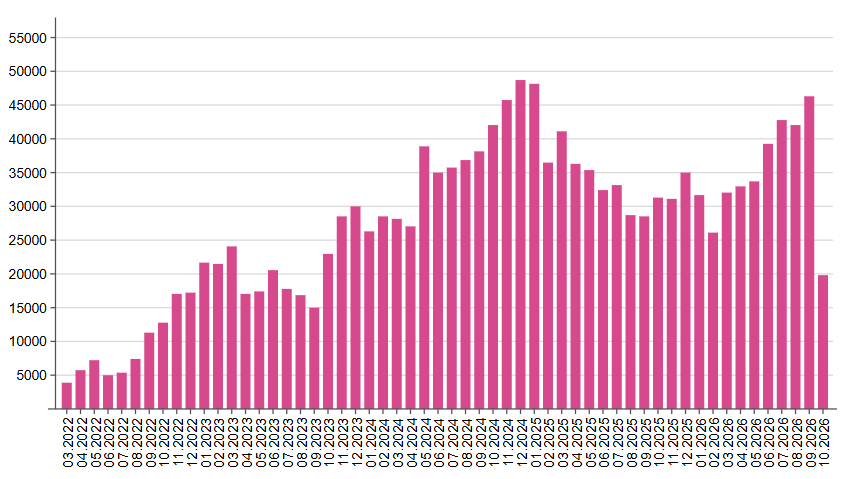
The table below also shows this. According to it, Russia lost around 46,000 soldiers in September — more than 1,500 a day — making it, according to Ukrainian data, the second-worst month since the start of the war. The figure was higher only in December 2024.
This October is on course to become Russia’s worst month in this respect. By the 12th day of the month, Russia had been losing an average of 1,620 soldiers per day. If Ukraine maintains this pace, it will be a record.
Number of Russian military casualties per month, according to Ukraine. Source: minfin.com.ua
Naturally, the question is how much these figures can be trusted. However, the Unmanned Systems Forces, a unit commanded by Robert Brovdi, known as Magyar, also publish figures for killed and wounded Russian soldiers.
The Ukrainian units under its command compete with one another over which can strike more Russian targets. They receive points based on this, which they can then use to buy more drones. Individual strikes should therefore be confirmed by video.
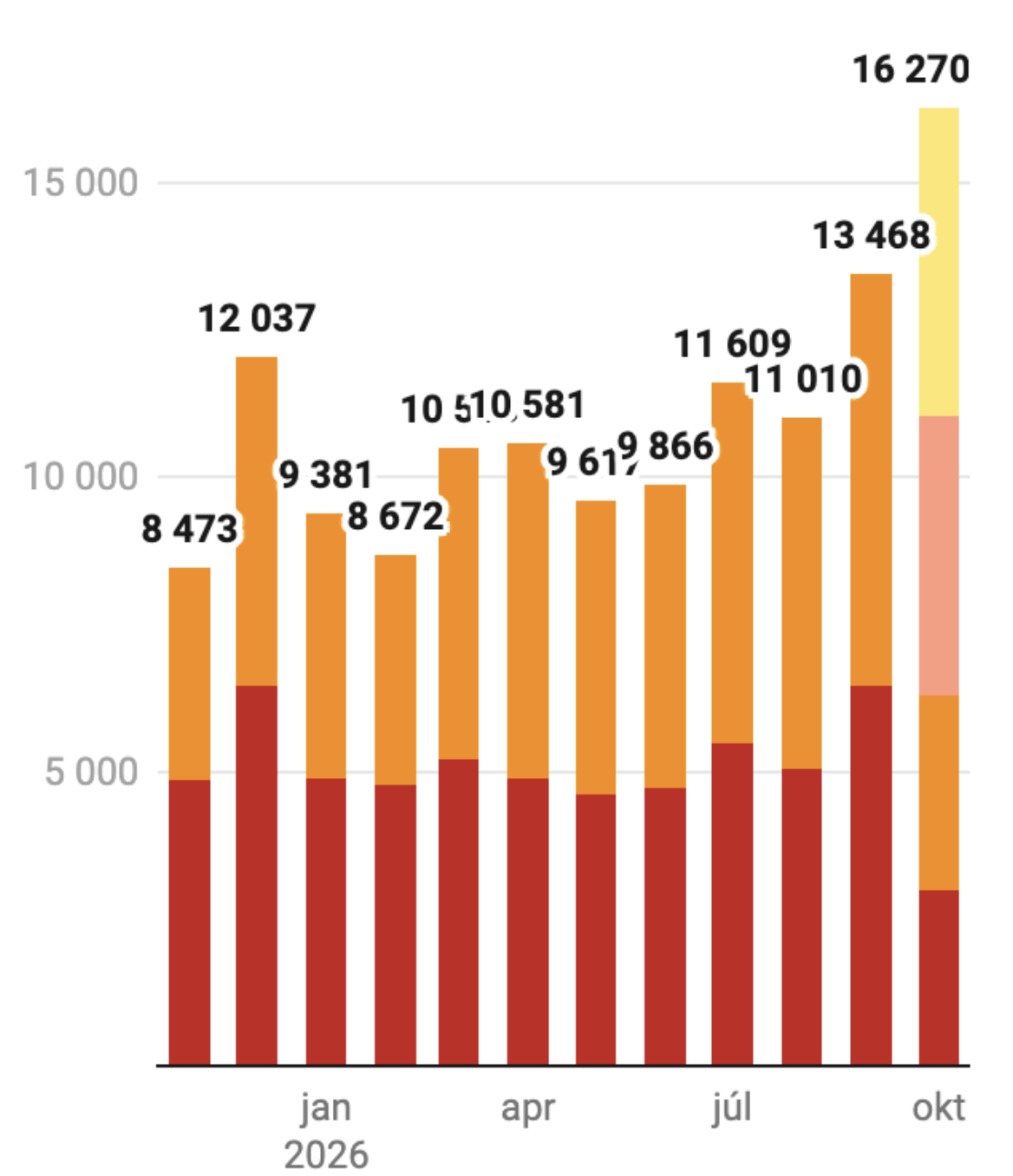
Given this, the data published by the Unmanned Systems Forces can be considered credible. They too indicate that October could be a record month, although their data cover only one-third of Russia’s total losses.
Number of Russian soldiers killed and wounded by SBS drones
The total number of Russian soldiers hit by Ukrainian Unmanned Systems Forces (SBS), and the number of those killed. These figures should be verified by video evidence. Red: killed; Orange: wounded; Pink: expected killed; Yellow: expected wounded. Source: Datawrapper/SBS.
Record-high losses and less substantial numbers of newly recruited soldiers suggest that Russia may have difficulties replenishing its units and, consequently, advancing further in Donbas or elsewhere.
Attacks on the land route to Crimea continue. Last week, French OSINT analyst Clément Molin published a table according to which the number of Russian lorries and trucks struck had reached a record 770. Several videos show that the number of attacks on vehicles heading to Crimea or to the front in southern Ukraine remains high. They are simply not discussed as much because this is no longer new.
I continue, on my side, to gather statistics on these mid-range strikes against logistics, not only in southern Ukraine, but also near Donetsk or Luhansk.
In September, at least 770 trucks/vehicles were targeted, only on the videos published by Ukraine more than 20km from the… pic.twitter.com/w9DrQTnGEM
Ukraine also destroyed the Chonhar bridge, which connects Ukraine with the Crimean peninsula. Russia has used a pontoon bridge there instead. This video shows Russian cargo vehicles crossing the pontoon bridge.
Russian truck drivers crossing into Crimea via a pontoon crossing at Chonhar, with a view of the damaged Chonhar Bridge and its support structures, before one of its spans collapsed. September 2026. https://t.co/YLDiB7lJQupic.twitter.com/3oU4GVylDd
The commander of Ukraine’s 41st Pilum Unmanned Systems Regiment, part of the 1st Azov Corps, recently provided interesting information on this issue. In an interview with Radio NV, he confirmed that the number of medium-range strikes was not declining and was increasing in some areas.
He said that the operational zone overseen by Ukraine extended from 30 to 300 km.
According to him, Russia is trying to bring as much fuel as possible to the front. Soldiers need generators to charge equipment, power radios and drones, and keep warm.
However, Ukrainian attacks on fuel tankers are reducing Russia’s ability to bring fuel to the front. According to the commander, in the Dobropillia direction, where his unit operates, Russia began transporting fuel in convoys this summer and switched to distributing it in passenger cars or small trucks, carrying the fuel in jerry cans.
This does not, of course, apply to all directions. However, an ongoing stream of new videos also confirms the destruction of fuel tankers.
Map of the day
Russian president Vladimir Putin’s latest — though certainly not final — deadline for capturing Donbas is by the end of this year. As on 14 previous occasions, it will not be met.
Unlike in previous years, however, it appears entirely possible that by the end of the year the territory of the free part of Donetsk region could be even larger than it is now. This is suggested by a map published by French OSINT analyst Clément Molin. It highlights areas where Ukraine is advancing and areas where Russia is pushing forward.
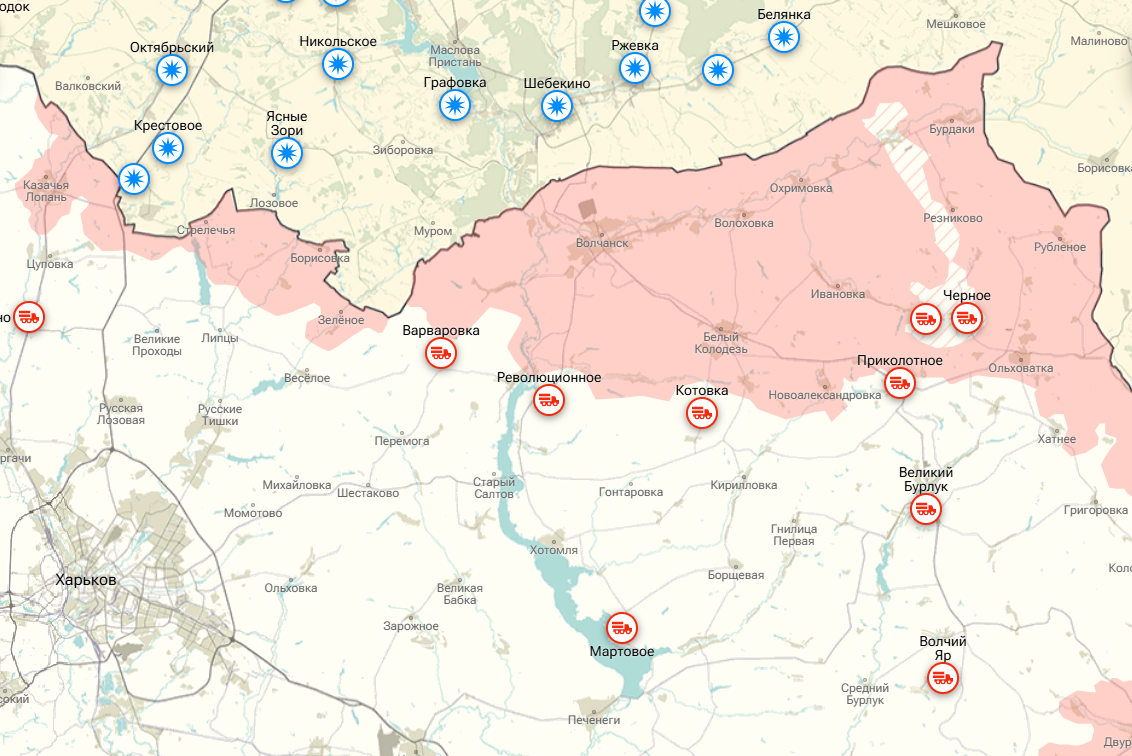
As can be seen, Russian forces largely hold the initiative in the north of Kharkiv region and at one location in the south of Zaporizhzhia region.
In the crucial Donetsk region, however, the situation is balanced; indeed, it could be said that Ukraine holds the initiative in more places. More specifically, it is clearing the northern area above Lyman and pushing further south towards Velyka Novosilka.
Ukraine’s 15th Reconnaissance Artillery Brigade published a video showing it striking a Russian 96L6 radar. This is a key component of the S-300 and S-400 air-defence systems.
The radar can be seen moving and hiding in a tree line. Nevertheless, a Ukrainian drone struck it. It is unclear whether it was actually destroyed, as the accompanying text claims.
Ukraine’s 15th Artillery Reconnaissance Brigade “Black Forest” located and destroyed a Russian 96L6 radar, a key detection component used with S-300 and S-400 air defense systems. The radar is valued at around $50 million and has a stated detection range of up to 300 km. #Ukrainepic.twitter.com/1K4BUZXZrg
A man near Odesa decided to surf on a downed Russian drone floating on the water off the coast. It hardly needs to be said that this is a fairly risky pastime. However, it indicates how at least some residents of Odesa view the daily Russian attacks.
❗️In 🇺🇦Odesa, a man decided to go surfing on a downed Russian kamikaze drone “Geran”. pic.twitter.com/l3MG3YkQiz
This could be a potentially rather interesting plot twist. The United States is at war with Iran, which has raised petrol and diesel prices at US filling stations. Donald Trump therefore agreed with Putin to import diesel from Russia. Russia itself, however, does not have enough diesel and has to import it.
This video shows a tanker truck with Iranian registration plates in Russia. Some infer from this that Iran is importing diesel — or other fuels — into Russia, which then sends diesel to America, despite America being at war with Iran.
However, it is too early to draw conclusions: we do not know what is in the truck or how many such Iranian tankers are heading to Russia. In any case, Russia is helping Iran in other ways.
A Western official told Bloomberg that Russia was supplying Iran with missiles that it uses in the war against the US and Israel. It was also previously reported that Russia was helping Iran target US bases in the region.
⚡️BREAKING: Convoys carrying Iranian Diesel Fuel are on their way to Russia, where there is a Fuel Shortage
This also raises the question of whether the fuel Russia exports to the United States might originate from Iran pic.twitter.com/J9Fzk7LVDa
By Tuesday (13 October), Russia had verifiably lost 24,192 pieces of heavy equipment (24,170 on Monday, 5 October). Of these, 19,155 (19,133) were destroyed by Ukraine, 1,002 (1,003) damaged, 1,194 (1,194) abandoned by their crews, and 2,841 (2,840) captured by the Ukrainian army. The total includes 4,453 (4,452) tanks, of which 3,358 (3,357) were destroyed in combat.
Ukraine lost 12,259 (12,238) pieces of equipment, of which 9,652 (9,633) were destroyed, 713 (711) damaged, 695 (695) abandoned and 1,199 (1,199) captured. The total includes 1,471 (1,466) tanks, of which 1,131 (1,126) were destroyed in combat.
Note: Neither side regularly reports its dead or destroyed equipment. Ukraine publishes daily figures for Russian casualties and destroyed equipment, which cannot be independently verified. This overview uses data from the Oryx project, which has compiled a list of equipment losses documented exclusively by photographs since the start of the war.
European regions and cities are calling on the EU to give millions of displaced Ukrainians legal certainty and a genuine choice between building a future in Europe and returning home safely. Their appeal comes as Russian attacks on Ukraine’s critical energy infrastructure intensify ahead of what is expected to be another harsh winter for the war-torn nation.
Temporary protection for displaced Ukrainians was set to end in March 2028. Eurostat data from July shows that almost 4,5 million non-EU citizens who fled Ukraine were benefiting from the mechanism, which was established shortly after Russia’s full-scale invasion in 2022.
“Temporary protection was the right emergency response, but it cannot be the long-term answer,” said Antje Grotheer, Chair of the European Committee of the Regions’ (CoR) Working Group on Ukraine. “People forced to flee Ukraine because of Russia’s war need certainty about their future,” the President of the Bremen State Parliament added.
An opinion drafted by Grotheer and adopted by CoR members on Tuesday calls for timely, accessible information on legal options beyond temporary protection so that people can make informed decisions.
It notes that decisions on legal status are taken mainly at EU and national level, while their practical consequences are managed in cities and regions. Local authorities need predictable funding and administrative capacity to keep public services running and respond to housing pressures, the CoR said.
Grotheer demanded that cities and regions are given a voice in shaping the transition after the EU’s temporary protection runs out.
Preparing for winter
The opinion sets out three parallel priorities: supporting the inclusion of displaced Ukrainians in European communities, investing in their education and skills for the benefit of host societies and Ukraine’s recovery, and enabling voluntary, informed and safe return when conditions allow.
“It’s time now to realise that we should not only treat Ukrainians as vulnerable refugees; we should treat them as our partners,” said Ylva Johansson, EU Special Envoy for Ukrainians in the EU. “Their future is part of Ukraine’s future, and that future is in the European Union,” she added.
“The millions of Ukrainians currently living outside the borders of our country are a huge human potential that Ukraine cannot afford to lose,” said Tetiana Yehorova-Lutsenko, President of the Ukrainian Association of District and Regional Councils (UAROR) and Chair of Kharkiv Regional Council.
The UN Refugee Agency (UNHCR) reported that 49 percent of Ukrainian refugees – down from 61 percent in 2024 – have expressed hopes or intentions to return one day, with security, housing and essential services among the key conditions.
Protecting Ukraine’s energy infrastructure has been a central part of the EU’s support since 2022. In a letter to CoR members, President Kata Tüttő and Grotheer warn that the attacks risk depriving communities of basic living conditions. The letter recalls that the European Commission President Ursula von der Leyen had described the attacks as “a strategy of terror”.
“Cities and regions must act before the arrival of the cold further aggravates the already difficult humanitarian situation,” the letter warned. It said regions and cities can deliver support in the form of energy equipment, used municipal vehicles, medical supplies or IT equipment.
This story was produced by the European Newsroom (enr) in cooperation with the European Committee of the Regions (CoR). The editorial responsibility lies with the enr.
Abta advice comes as more than more than 150 websites offer service of securing entry to Schengen zone
Britons travelling to EU countries have been told not to apply for an Etias visa waiver, with more than 150 websites touting the service despite its introduction being delayed.
Non-EU citizens, including UK travellers and those from other visa-exempt countries including the US, Australia and Canada, will soon need to pay €20 (£17) for an electronic waiver to enter the Schengen zone under the European travel information and authorisation system (Etias).
Wife of former British deputy PM Nick Clegg promises liberal alternative to the PP and Socialists before snap election
The Spanish lawyer Miriam González Durántez has launched a new liberal, centrist party, vowing to clean up politics and give voters an alternative to the dominant socialist and conservative parties as the country gears up for next month’s snap general election.
González Durántez, an ex-EU adviser who is married to the former British deputy prime minister Nick Clegg, says her new party, Democracia21, will offer a modern, transparent kind of politics that “doesn’t feed on fear, insults or nostalgia”.
Vatican says pontiff had lower lobe of right lung removed in ‘successful, on schedule and as planned’ operation in Rome
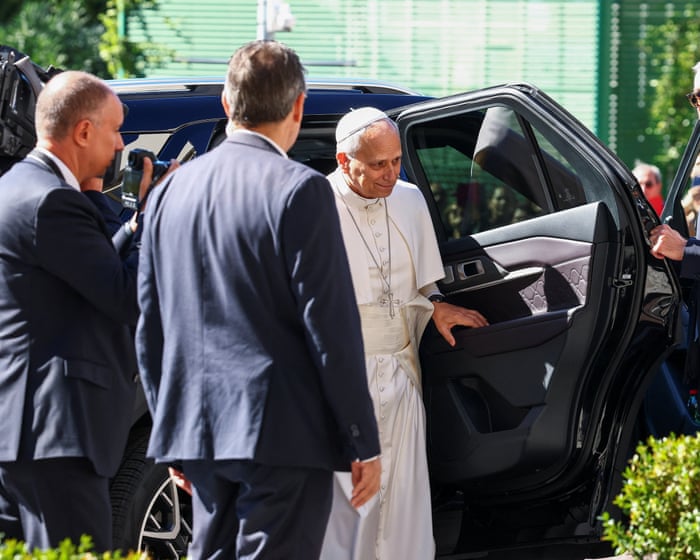
Pope Leo has lung cancer, the Vatican said late on Tuesday.
Leo, 71, underwent an operation and had the lower lobe of his right lung removed, with tests confirming a diagnosis of lung adenocarcinoma, the Vatican said in a medical bulletin, which followed an earlier statement saying the pope’s operation had concluded “successfully, on schedule and as planned”.
The UK’s cost of living squeeze means fewer people plan to ringfence money for holidays abroad next year, the travel industry has warned.
Despite war, wildfires and EES border checks, the numbers of Britons taking holidays climbed back to pre-pandemic levels this year – but rising costs may mean the numbers have peaked, according to an annual travel industry report on Tuesday.
EUobserver is proud to have an editorial partnership with Europod to co-publish the podcast series “Briefed” hosted by Léa Marchal. The podcast is available on all major platforms.
Find the full transcript below:
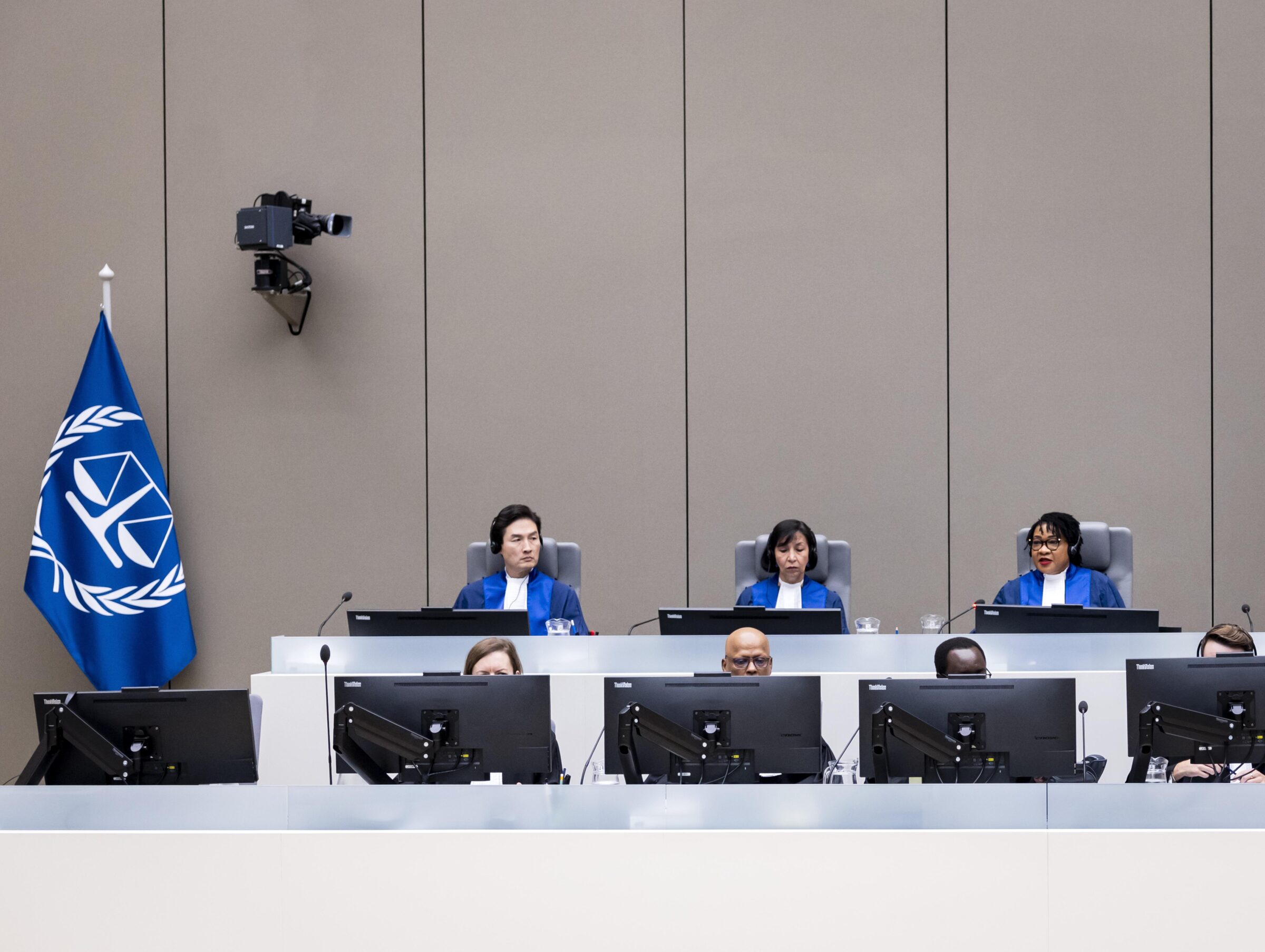
The United States has imposed new sanctions on the International Criminal Court, this time targeting the institution itself. While the EU insists on its firm support for the ICC, it is still not using the one tool designed for this kind of situation: the blocking statute.
So, why is the EU holding back? First, a quick reminder of what we’re talking about. The International Criminal Court, or ICC, is based in The Hague. It tries people accused of the gravest crimes: genocide, crimes against humanity, war crimes and the crime of aggression.
With one important limit: It can act when a crime is committed on the territory of a state that is party to the Rome Statute, or by one of that state’s nationals. The United States is not a party. Neither is Israel or Russia.
And Washington’s goal is clear: dismantling the court. The Trump administration considers it politicised and without legitimacy.
It is particularly opposed to the arrest warrant against Israeli Prime Minister Benjamin Netanyahu. That’s why, since 2025, the US has imposed several rounds of sanctions, targeting judges and, more recently, the court’s president, the Japanese national, Tomoko Akane.
On Friday, Washington went a step further, targeting the court as an institution.
So what does that mean in practice? All of the court’s assets in the United States are frozen. And, crucially, American companies and citizens can no longer provide services to the court or its members.
You might remember the case of the ICC judge Nicolas Guillou, who has been under sanctions for some time. We’ve talked about him in a previous Briefed episode.
He has explained that he can no longer use basic services such as Mastercard, or online platforms like Airbnb. He has also been warning that these sanctions are meant to intimidate, and that they undermine judges’ independence.
In a state governed by the rule of law, judges must not be put under pressure. This explains why the court’s reaction is so strong. It speaks of an obstruction of justice and an attack on the rule of law. And it is now calling on its members to take concrete action to protect its independence.
In response, the European Commission and the European Council have expressed their support for the court and its work. But without going too far.
They say the EU is ready to take measures so that the court can keep functioning. Yet when the Commission is asked what those measures are, and this has happened several times in recent months, it sidesteps the question.
Because beyond negotiations and diplomatic pressure, there is a tool created for precisely this kind of situation: the so-called blocking statute. It protects Europeans against the extraterritorial reach of sanctions imposed by third countries.
It doesn’t concern American actors. It concerns European companies and individuals who, under the threat of secondary sanctions, may become overly cautious.
In the case of the ICC, it’s about the court’s European banks, insurers and service providers.
Several European countries have called for the blocking statute to be activated. Yesterday, at the Foreign affairs council in Luxembourg, the Belgian and Dutch ministers asked the Commission to start analysing whether to do so.
But for now, they are still waiting for an answer. The Commission believes the priority is to use the six months before the sanctions take effect to negotiate with Washington, possibly to get them withdrawn.
This approach was backed by several EU foreign ministers yesterday. Let’s see whether that window for dialogue is enough, or whether the pressure to activate the blocking statute keeps growing.
Au Mondial de l'auto de Paris, plus d'un tiers des constructeurs automobiles présents sont chinois. Ces marques représentent, aujourd'hui, 10 % des ventes dans l'Union européenne (UE). En Chine, les ventes de voiture reculent. Alors, pour écouler sa production excédentaire, Pékin s'est tournée vers l'UE. Mais Bruxelles croule sous les importations chinoises et veut protéger son marché automobile. Un accord UE-Chine a été annoncé. Il limite les importations de véhicules hybrides chinois importés dans l'UE à 350 000 par an.
Getting co-decision powers on the budget, finally enshrined in the Lisbon Treaty after more than a decade of inter-institutional battles, was one of the European Parliament’s big wins.
The challenge facing MEPs in the coming months is whether they are really going to use those powers on the 2028-34 budget.
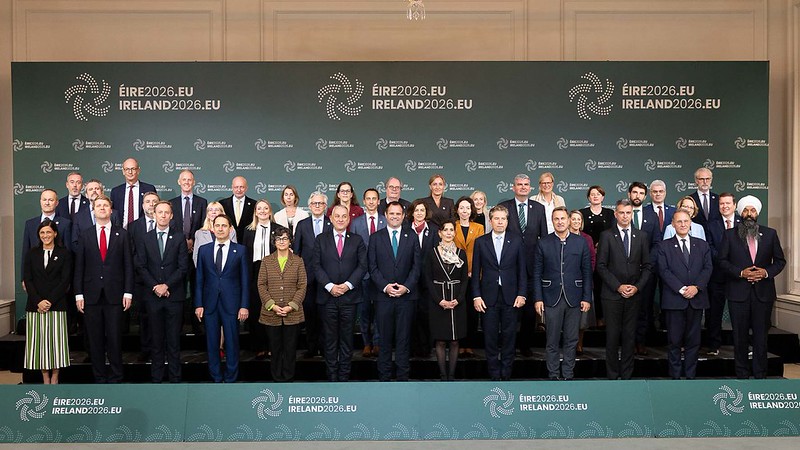
The early signs are that they are spoiling for a fight. The Irish government’s compromise proposal tabled on Saturday (10 October) – an 8 percent cut worth €141bn to the European Commission’s spending plan – isn’t exactly butchery.
But it does display a startling lack of ambition, in particular on the raft of ‘own resources’ proposed by MEPs to make the budget process less vulnerable to member states wanting to reduce or at least freeze their annual contributions
This time round, MEPs have proposed a digital services levy, an online gambling levy, and a levy on crypto-asset capital gains.
Put together the parliament reckons that these new taxes could bring an additional €30bn to the EU’s budget, on top of the €57.4bn that the EU commission believes can be raised from other levies, such as the emissions trading scheme and the carbon border levy.
This article continues, but the full version is available only to EUobserver.com subscribers. Visit account.euobserver.com/membership
Donald Trump’s deal to buy Russian diesel has been met with fury from Volodymyr Zelenskyy, who said it was ‘a weak decision’ and would generate ‘billions’ in extra revenue for Putin’s war effort. The Ukrainian president has also rejected US calls for an ‘energy ceasefire’, which would require Kyiv to stop striking oil refineries, saying Moscow must first end its attacks on energy infrastructure. Lucy Hough speaks to the Guardian’s senior international correspondent, Luke Harding – watch on YouTube
“The issue is, do we have another leader to replace Pedro Sánchez?”.
Former Spanish congresswoman Hana Jalloul Muro is among her prime minister’s closest allies in the European Parliament.
“It has not been an easy mandate. Every day is a survival day, all the challenges that prime minister Pedro Sánchez has faced have been unprecedented,” the Socialists and Democrats (S&D) MEP told EUobserver.
They had faced the Covid pandemic, a volcanic eruption in the Canary Islands in 2021, and the migrant crisis in the Ceuta enclave in north Africa in the summer of 2026, she said – not to mention the corruption allegations levelled at his close relatives.
Sánchez’ PSOE party is trailing behind the centre right people’s party (PP) in the polls, which is also growing closer allied to the increasingly successful far-right Vox party.
“These elections will pit two models against each other,” Jalloul said.
“On the one hand, a progressive government that defends public services, improves wages and pensions, expands rights and protects the social majority. And on the other, a model represented by the PP and Vox, which, wherever they govern, have opted for privatisations and policies that risk widening inequalities,” she said.
Ceuta-linked election
Jalloul, who spoke to EUobserver at the European Parliament (EP) in Brussels, used to lecture on international terrorism at the University of Madrid, before she became vice-chair of the EP’s foreign affairs committee.
And she recalled the heated debate on the Ceuta incident on 31 July, including accusations that Morocco had engineered it to gain leverage over Spain.
“This is a crisis that we could not expect,” she said.
But had there not been a “good relationship with Morocco, [we] would never be able to return 90 percent of the 70,000 people that came in less than 72 hours,” she added.
This article continues, but the full version is available only to EUobserver.com subscribers. Visit account.euobserver.com/membership
They looked like Russian “porcupines” and fought where the Kremlin considers Russian rear territory. They were protected by their own drone.
Drones also struck Yandex’s third data centre.
The battle for Dobropillia on a new type of map.
Storm Shadow/SCALP-EG missiles caused the largest single massacre of senior Russian officers of the entire war in August.
Maps of the day — Dobropillia, Kharkiv region
Videos of the day — Abrams as a porcupine; MANPADS against a Geran; Russian port during an air raid; nighttime FPV drone combat; Kyiv resident narrowly escapes death at a playground
They looked like Russian “porcupines” and fought where the Kremlin considers Russian rear territory. They were protected by their own drone. Both the Russian and Ukrainian armies are continuing their efforts to return tanks and combat vehicles to the battlefield.
Russia recently attacked near Dobropillia with tanks fitted with upgraded Arena-M active protection systems.
The system itself proved effective, but was ultimately unable to withstand the flood of drones, and the attack ended in defeat and the destruction of the tanks deployed.
Last week, we also wrote about a successful operation by Ukrainian tanks from the 475th Assault Regiment.
And the same Ukrainian unit, also known as CODE 9.2, demonstrated a new use of heavy armoured equipment over the weekend.
Compared with the first case, this one revealed an important detail about the operation of accompanying drones and, thanks to geolocation, can also be used to verify the accuracy of Russian maps.
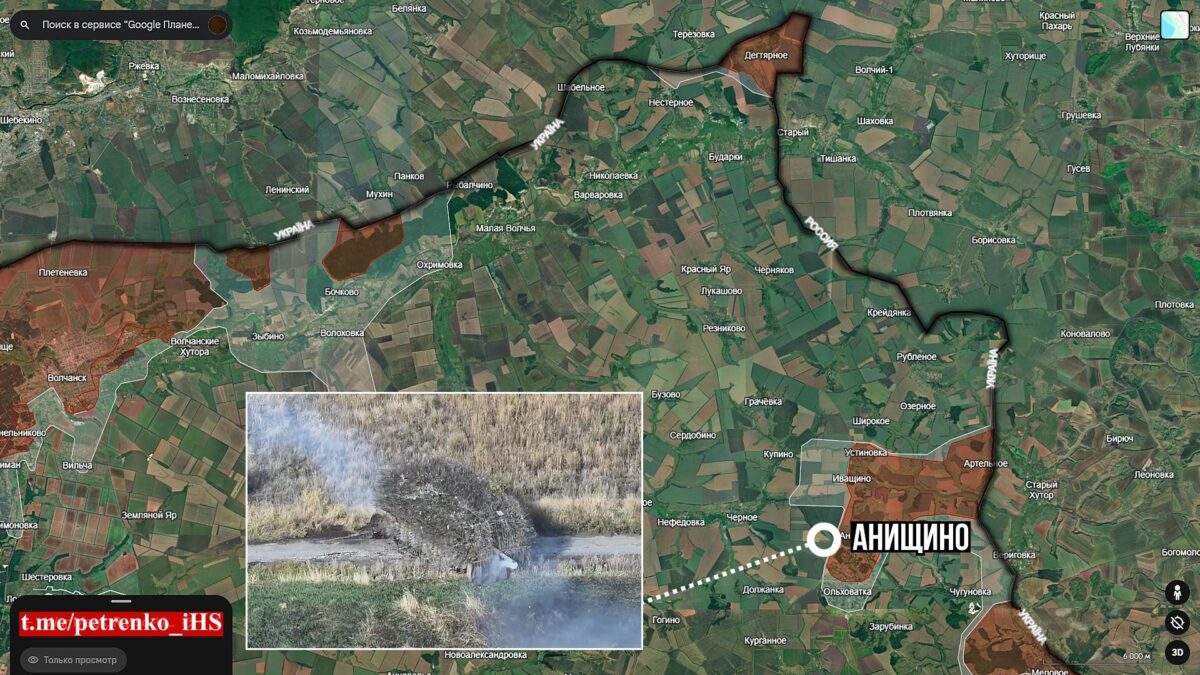
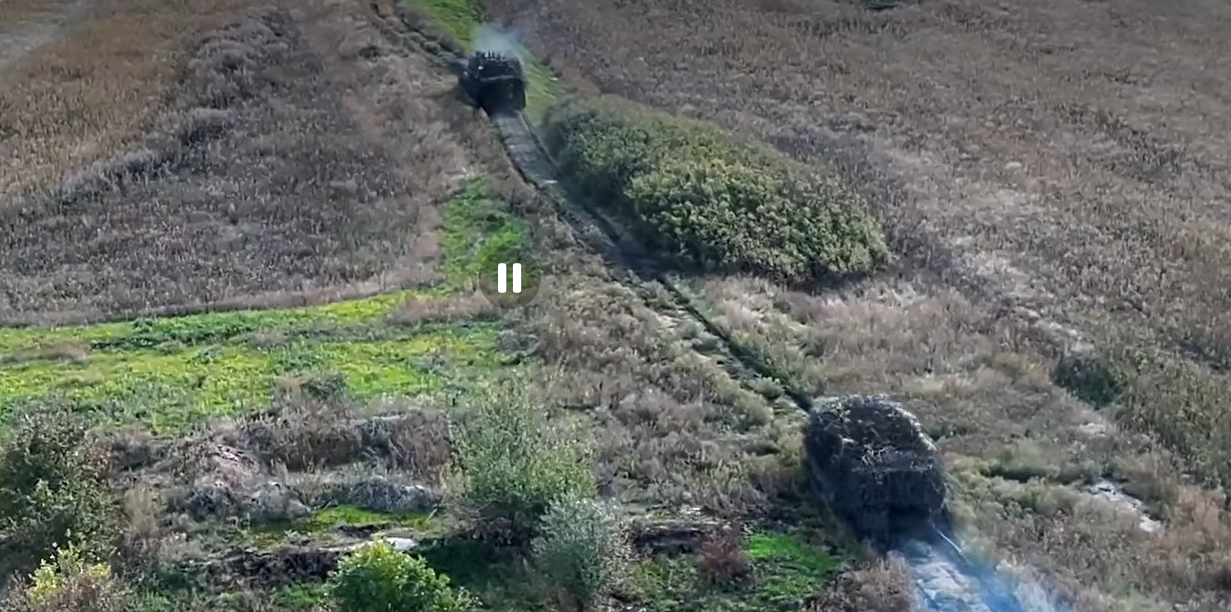
The battle took place in the Kharkiv region and involved a US-made Bradley combat vehicle as well as a tank. According to one source, it was an Abrams of Australian origin, although the appearance of its gun barrel does not suggest this.
In a video released by the unit, the Bradley advances first towards Russian positions and begins laying down covering fire. The tank joins it later, firing directly at the target.
While the Bradley’s turret has retained its mobility, the tank has effectively become an assault gun of the type known from the Second World War.
Its turret does not appear to be capable of moving, and the crew must aim the entire tank at the target. This reduces the effectiveness and speed of firing, while increasing its chances of survival.
A tank modified in this way is virtually indistinguishable from similar Russian adaptations. What distinguishes these attempts is, once again, the involvement of accompanying drones.
Aside from the heavy Vampire, first seen at 1:30, this primarily includes an FPV drone which, at 1:58, neutralises in an aerial duel the same type of Russian weapon that had attempted to strike the tank.
This is another example of how heavy equipment must be accompanied by drones at this stage of the war if it is to remain combat-capable.
Despite air support, another drone strikes it at 2:16 — after another had narrowly missed earlier. The tank remained mobile and withdrew successfully.
Beyond the operation itself, its location is also noteworthy: near the village of Anishchyne in the north-eastern part of the Kharkiv region, on the axis Russia calls the Velykyi Burluk direction.
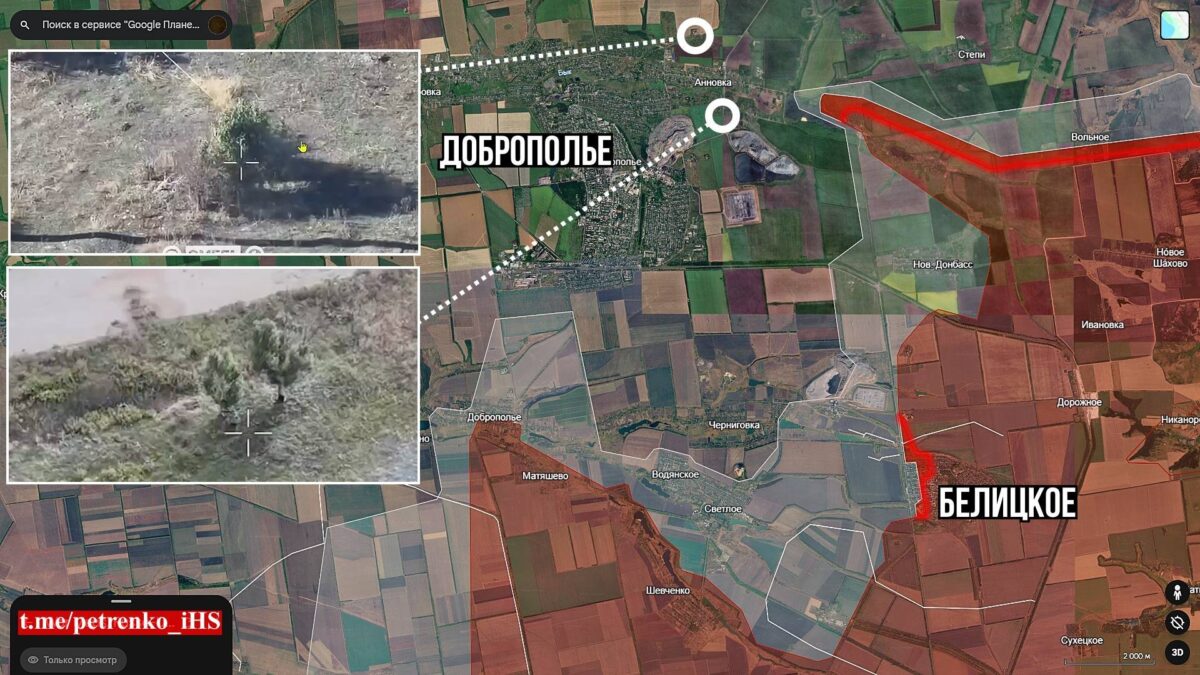
The Ukrainian Telegram account Petrenko, which also provided the map below, precisely identified the site of the battle.
“The video reveals a discrepancy between reality and Russian claims of an alleged massive advance, the encirclement of Ukrainian units and the capture of more than 65 settlements,” the author wrote.
He noted that both vehicles operated in territory that most Russian maps mark in red — as a “Russian” zone.
This is the same area about which we have written repeatedly. For comparison, below is a map by the Russian state agency Ria Novosti. The village of Anishchyne does not appear on it, but the settlement of Vilkhuvatka — Olkhovatka in Russian — serves as a reference point in the centre-right.
The tank and Bradley were fighting around five km north of a location that Russia marks as securely captured.
Drones also struck Yandex’s third data centre. Graphs circulated online, particularly on Sunday, suggesting that Ukrainian attacks on Russia’s largest internet provider had restricted the operations of Russian bots around the world.
However, this has not yet been objectively proven. Russia has indeed reported outages affecting various internet-based services after each attack, but that is so far the only confirmed effect.
On this occasion, French analyst Clément Molin pointed out that the Russian Varyag drone brigade had attacked data centres in Ukraine in recent weeks and had boasted, among other things, of damaging Kyivstar, Ukraine’s largest operator.
The situation has now been reversed, as it was previously with attacks on ships and warehouses. This time, however, to Russia’s disadvantage.
Russia 🇷🇺 bombed multiple data centers in Kyiv, Dnipro or Odesa these last few weeks and proudly showed footage about it
Now, Ukraine is bombing Yandex data centers and causing much more harm to Russia than Russia did to Ukraine.
The first centre hit was in Sasovo, in the Ryazan region, followed by a second in Kaluga, in the Kaluga region. On Sunday, the third of Yandex’s four largest centres was struck, this time in Vladimir, in the Vladimir region.
“This complex houses one of the company’s Galushkin supercomputers, which is among the most powerful in Russia,” Kommersant wrote, adding that the facility had been taken out of service, affecting 10 core Yandex services, including its email service.
The defence ministry is also working on the issue in an effort to protect the company’s remaining facilities. Citing its sources, Kommersant said replacing the damaged capacity could take up to six months.
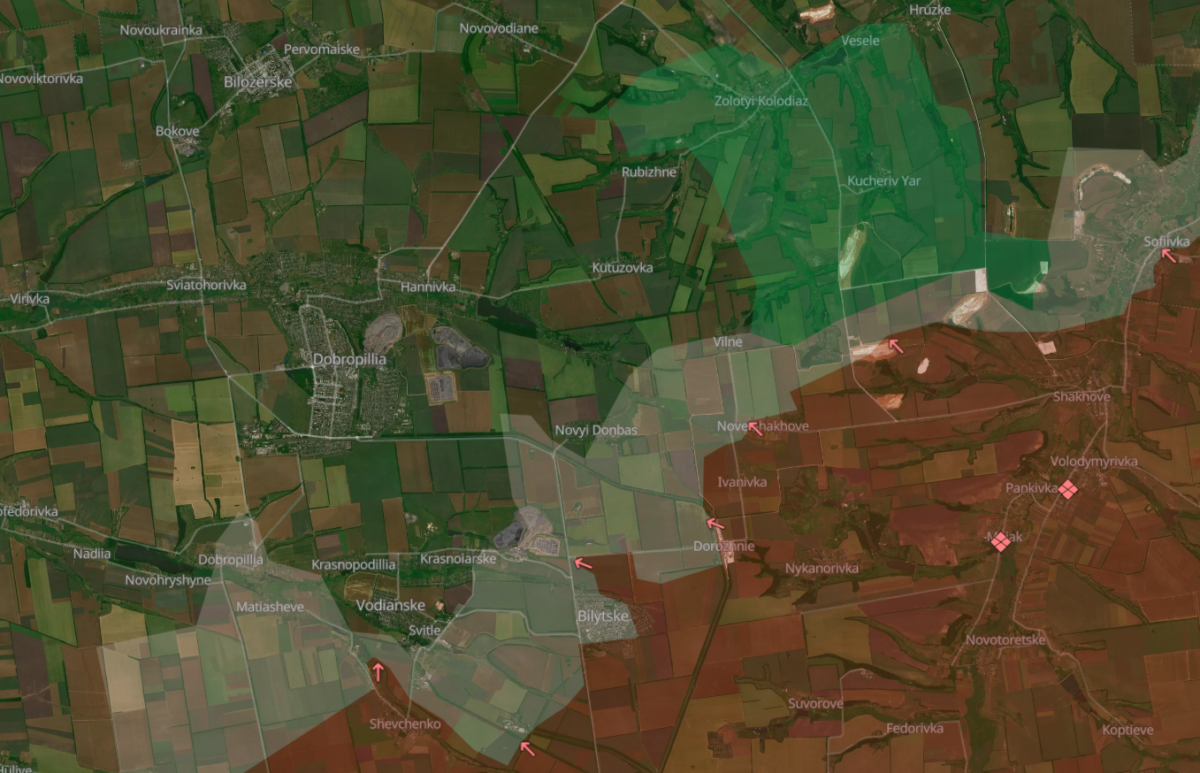
The battle for Dobropillia on a new type of map. As the war evolves, so do the ways it is mapped. This Ukrainian OSINT profile, for example, has depicted the fighting for the important Donbas town — which protects the Sloviansk-Kramatorsk agglomeration from the south-west — on a dynamic map.
Among other things, it shows that Russian forces are infiltrating the town through the village of Hanivka from the Nove Shakhove area.
Mashovets Dobropillia Russia wants Kramatorsk, to the north-east. Its strongest attack here heads west, into Dobropillia: up to 40 men a day along the Byk river.
If Dobropillia and Druzhkivka hold to late December, Russia would have to replan the offensive. pic.twitter.com/OXg8F1WYXy
For a clearer picture, we are also including a static DeepStateUA map, as the previous one is rotated and does not follow the usual compass orientation.
The two maps are rotated by around 90 degrees in relation to each other. On the following one, Dobropillia is in the centre-left. Nove Shakhove, from where Russian infiltrators are advancing, is almost at the centre, exactly 10 km to the east as the crow flies. A small arrow directly next to the settlement’s name indicates the direction of Russian attacks.
The green area in the upper part of the map is the so-called Dobropillia salient, which was fought over a year ago.
Russia reported nothing significant concerning Dobropillia after the weekend. “On the Dobropillia axis, our forces continue to push forward, but Ukrainian units retain the ability to counterattack. Heavy fighting is under way,” the Two Majors wrote, for example.
The Ukrainian Telegram channel Petrenko published a map over the weekend showing sites of new infiltrations. Its interpretation differs considerably from DeepStateUA’s version. Russian forces are shown closer to the town, but the direction of their advance is the same as in the two previous sources.
The sites of the recorded incursions were established on the basis of videos showing drones killing Russian soldiers attempting to advance further west.
Storm Shadow missiles caused the largest single massacre of senior Russian officers in August. On Friday (9 October), a joint project by Russian exile newspaper Meduza and the BBC’s Russian service added another 17,124 names to its list of Russian war casualties. This was the number it had counted since 21 September. In total, 276,113 Russian soldiers killed in the war are now known by name.
On the same day, the project’s authors published a detailed analysis of events in Donetsk on 26 August. The Ukrainian air force had attacked a building in Donetsk with Storm Shadow/SCALP-EG missiles.
The strike was so intense that the target must have been something significant. Almost immediately, there was speculation that the building housed an important Russian headquarters.
Meduza and the BBC counted 20 high-ranking Russian military personnel killed during a joint meeting of the headquarters of the Centre group of forces and its subordinate 41st Army — 18 at the scene and another two from their injuries in the following days.
This week, in our update of Russian losses in Ukraine: – 17,000 names added to our list since September 21https://t.co/lBGxPNvv8z
They included seven colonels, six lieutenant colonels, five majors, one captain and one senior non-commissioned officer. They were identified thanks to access to nominal lists of headquarters staff as of 25 July and after that date.
It also emerged that this was not the first time officers of the 41st Army had had a bad day. During an attack on 8 September 2025, it lost a lieutenant colonel, two majors and a lieutenant. The toll on 4 August 2026 was even worse, when the army lost two lieutenant colonels, three majors, two captains and one lieutenant at once.
The following images illustrate the scale of destruction caused by the strike on 26 August:
— Special Kherson Cat 🐈🇺🇦 (@bayraktar_1love) August 26, 2026
Videos of the day
As Russian jet-powered drones become more widespread, videos are also appearing more frequently of Ukrainian soldiers shooting them down with man-portable air-defence systems, known by the English acronym MANPADS. This is one of them.
A Ukrainian soldier shot down a Russian jet-powered Geran-4 drone using an Igla-1 MANPADS over Ukraine’s Rivne region this morning. pic.twitter.com/4onx7UNclQ
Despite its best efforts, air defences at one of Russia’s ports were unable to shoot down a Ukrainian drone, which subsequently struck a Black Sea Fleet vessel. Note the beams of light used to assist with targeting.
Один из Z-блогеров опубликовал видео работы ПВО в гавани (Новороссийск?) и попадание дрона ВСУ в военный корабль. Дата съемки неизвестна, однако, уже видны те самые синие лучи, которые пару лет назад решили ввести как лучшее средство подсветки цели. Покупали их военные обычно за… pic.twitter.com/WvDuR369Z3
The Russian soldiers in this nighttime video appear relaxed. They were probably moving through an area they still considered relatively safe. But a waiting drone equipped with a thermal camera was tracking them.
A Ukrainian FPV drone lying in ambush at night spots a passing Russian assault group of four soldiers on a quad bike, waits for the right moment, then takes off and strikes them. pic.twitter.com/MD83B4RkKk
A Kyiv resident narrowly avoided a Russian drone at the last moment as it crashed into a playground.
A man narrowly escaped a Russian drone strike on the grounds of a kindergarten in Ukraine’s Kyiv region yesterday. pic.twitter.com/aOwWNAa6Vj
— Special Kherson Cat 🐈🇺🇦 (@bayraktar_1love) October 9, 2026
What are the losses
No update on Friday.
By Monday (5 October), Russia had verifiably lost 24,170 pieces of heavy equipment (24,138 on Tuesday, 22 September). Of these, 19,133 (19,105) were destroyed by Ukraine, 1,003 (1,000) were damaged, 1,194 (1,194) were abandoned by their crews, and 2,840 (2,839) were captured by the Ukrainian army. This includes 4,452 (4,448) tanks, of which 3,357 (3,353) were destroyed in combat.
Ukraine lost 12,238 (12,175) pieces of equipment, of which 9,633 (9,579) were destroyed, 711 (702) damaged, 695 (695) abandoned and 1,199 (1,199) captured. This includes 1,466 (1,464) tanks, of which 1,126 (1,125) were destroyed in combat.
Note: Neither side regularly reports its own dead or destroyed equipment. Ukraine publishes daily figures for Russian casualties and destroyed equipment, which cannot be independently verified. This overview uses data from the Oryx project, which has compiled a list based exclusively on photographically documented equipment losses since the start of the war.
The 27 member states of the European Union agreed in July 2020 on a €750 billion post-Covid recovery plan called NextGenerationEU. Its main instrument is the Recovery and Resilience Facility, through which the European Commission has already disbursed €450 billion out of €573 billion. The programme is due to come to an end in a few months. The Commission is currently assessing Member States’ claims for the remaining funds.
Les 27 États membres de l’Union européenne se sont mis d’accord en juillet 2020 sur un plan de relance post-Covid de 750 milliards d’euros, baptisé NextGenerationEU. Son principal instrument est la Facilité pour la reprise et la résilience, pour lequel la Commission européenne a déjà versé 450 milliards d’euros sur les 573 milliards prévus. Le programme doit prendre fin dans quelques mois. La Commission évalue actuellement les demandes des États membres concernant les fonds restants.
In a recent visit to Greece, the secretary of state suggested that Europe must rediscover the values of conquest and expansion
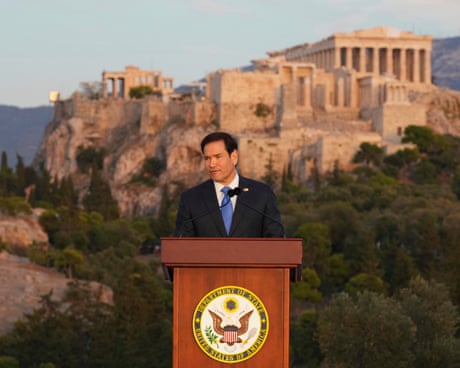
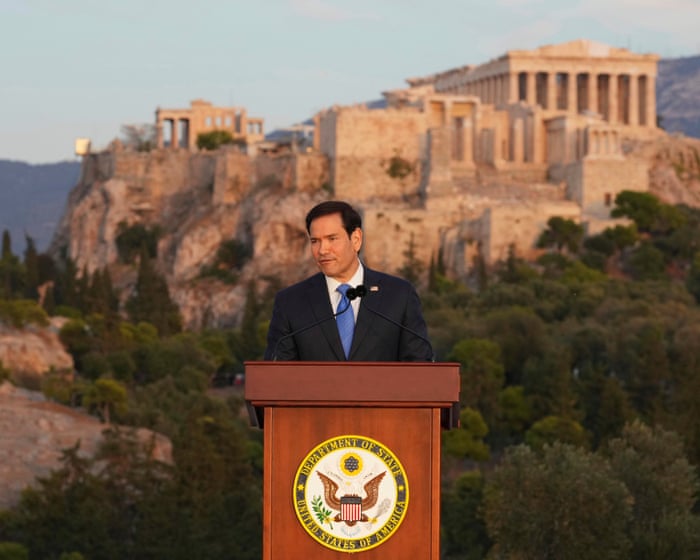
They had obviously worked hard on the backdrop – and it was magnificent. On 7 October, the US secretary of state, Marco Rubio, delivered a major speech in Athens, outdoors, with the Acropolis behind him. The sun was setting, bathing the ancient scene, including the Parthenon, in the light of the golden hour.
The golden hour, but yet not quite the golden age. This was not Pericles defending democracy. Instead, Rubio offered a haunting vision of the choices facing the west, arguing that the US and Europe must rediscover the values of exploration and conquest that once drove centuries of expansion, or face decline and irrelevance.
Czech literature, artificial intelligence, audiobooks, long standing participation and freedom of expression shaped five days of international publishing business and public debate The Frankfurt Book Fair welcomed 236,000 visitors from 137 countries in 2026, sustaining its position as the international publishing industry’s principal meeting place. Across five days, the fair combined rights negotiations and professional […]
EUobserver is proud to have an editorial partnership with Europod to co-publish the podcast series “Briefed” hosted by Léa Marchal. The podcast is available on all major platforms.
Find the full transcript below:
European gas storage levels are unusually low for this time of year, reaching their lowest autumn level since 2011.
With Russian gas imports set to end in 2027, could Europe face a tougher challenge in the months ahead?
First, how do Europe’s gas reserves work? EU countries fill underground gas storage sites during spring and summer, when demand is lower, and draw on these stocks during the winter, when heating pushes consumption up.
Since 2022, the EU has required member states to ensure their gas storage facilities reach 90 percent of capacity by a deadline between 1 October and 1 December. That helps secure supplies ahead of winter.
But this year, stocks are well below that target, at just over 70 percent in early October. They still have time to rise before the deadline, but the situation is attracting attention.
Does that mean Europeans are at risk of running out of gas this winter? According to the European Commission, no. It acknowledges that storage levels are low compared with previous years, but says the EU’s gas system should still be flexible enough to meet demand this winter.
That said, a colder or longer winter than expected, or disruptions to supplies in other parts of the world, could put additional pressure on the market. Especially at a time when the EU is preparing to phase out Russian gas imports in 2027.
The EU has adopted a gradual ban, with transitional arrangements for existing long-term contracts.
Russian liquefied natural gas, or LNG, is due to be phased out completely from January 2027 only. Russian gas delivered by pipeline will follow later, with the deadline set for the end of September 2027.
And Russian gas still accounted for around 12 percent of EU gas demand through May 2026. Imports even increased in the first months of this year compared with the same period in 2025, amid disruptions to energy flows linked to the war in the Middle East.
So, from January, Europe will lose one source of supply. Which means Europe should try and reduce its gas consumption.
But it’s easier said than done, particularly as winter approaches. Heating needs depend heavily on temperatures, and households cannot simply stop heating their homes.
Still, Europe has shown in the past that consumption can fall significantly. After Russia’s full-scale invasion of Ukraine in 2022, the European Commission called on member states to reduce their gas demand by 15 percent.
And they succeeded: their gas demand fell of around 18 percent, compared with the previous five-year average. A few months ago, following the escalation of the war in the Middle East, the Jacques Delors Institute recommended reviving efforts to reduce gas demand.
That being said, the reduction achieved in 2022 was partly helped by a mild winter and greater use of alternative energy sources, including coal and nuclear power.
Those options may help again, but they come with limitations. Much will depend on the weather and how long the winter lasts.
Which doesn’t mean Europe should not call for lowering the demand and accelerate the deployment of renewable energy.
The EU’s annual rule of law report, tackling advancements in corruption and fundamental rights, shares overly optimistic improvement that is far from the reality on the ground, a civil liberties group revealed.
Presented on a sweltering Friday in July, the EU commission’s 2026 rule of law report failed to avoid scrutiny, with NGO Civil Liberties Union for Europe (Liberties) observing a gap between professed achievements in member states and the reality of a significant lack of implementation of Brussels’ recommendations.
“This year’s Report shows continued positive progress across many Member States. And that is precisely why our Rule of Law Report matters. It has become a reference point, helping to shape national debates and drive reforms across our Union,” EU Commission president Ursula von der Leyen said back then in a statement.
But of all recommendations in the July report, Liberties’ Gap analysis report revealed that only four percent had been fully implemented, while 54 percent show limited to no progress.
“The Commission’s Rule of Law Report has the potential to be one of the EU’s strongest tools for preventing democratic backsliding,” said Kersty McCourt, Liberties’ rule of law expert. “But when recommendations are repeatedly issued without being implemented, and new threats are not identified early enough, the system loses its power”.
The report, published on Monday (12 October) and shared in advance with EUobserver, found that almost all recommendations issued in 2026 were regurgitations of those given in previous years, with only seven new recommendations being introduced this year.
The commission’s annual report “fails to unpack why some problems remain so entrenched,” Liberties said.
In its own study, the Berlin-based NGO suggested the reasons for slow movement to be bound from a lack of willingness from member states, a vacuum in the EU’s enforcement mechanisms, or issues becoming “so entrenched that progress is effectively impossible.”
This reduces the function of the report as a warning system for identifying early signs of democratic backsliding, since recommendations on emerging issues remain unaddressed and even if are formally adopted, often don’t translate into effective implementation.
Liberties observed this to be evident in the example of Nordic countries, which have grown to be exempt from scrutiny due to their traditionally strong reputations.
This article continues, but the full version is available only to EUobserver.com subscribers. Visit account.euobserver.com/membership
The Irish government has set the path for a showdown between MEPs and governments over the next seven year EU budget after proposing an 8 percent cut worth €141bn to the European Commission’s spending plan.
Savings from the commission proposal have been found across all headings in the so-called ‘negotiating box’ for the 2028–2034 Multiannual Financial Framework (MFF). But farmers’ subsidies under the common agricultural policy and the bloc’s cohesion policy, which provides funding to the EU’s poorest regions, have been exempted from any cuts.
That is a nod to a sustained lobbying effort by a group of seventeen EU countries, known as ‘Friends of Cohesion’.
As expected, meanwhile, cuts totalling €38bn have been made from the ‘Global Europe’ heading, which covers foreign aid, while €75bn has been taken from the competitiveness fund and €10bn from the EU’s administrative costs.
In a statement on Saturday (10 October), Ireland’s minister for Europe, Thomas Byrne, said that the €1.62 trillion spending plan was “intended to bridge the many differences between Member States. It brings us closer to resolving the critical questions our Union faces on how to balance both new priorities and core policies, whilst also reflecting the fiscal realities that all Member States face.”
This article continues, but the full version is available only to EUobserver.com subscribers. Visit account.euobserver.com/membership

 Login