❌

Reading view

French anti-terror investigators probe True Crime Community link to school shooting

The French anti-terrorism prosecutor has taken ​over the investigation into a school shooting near Marseille, after an initial probe found the 14-year-old suspect appeared to belong to ​a ‌group called the True Crime ⁠Community. Two teachers were shot and wounded, after a student opened fire with ⁠a hunting rifle that had been hidden inside a guitar case. FRANCE 24's Sharon Gaffney speaks with Alexandre Rodde, security consultant, researcher and author of the report "Understanding nihilistic violent extremism and the True Crime Community in France".

  •  

Zelenskyy Breaks with Trump as Washington’s Ukraine Policy Hands Putin the Advantage

Volodymyr Zelenskyy’s unusually direct criticism of Donald Trump marks a turning point in relations between Kyiv and Washington. With American satellite restrictions disrupting Ukrainian military operations, intelligence cooperation under scrutiny and the White House easing pressure on Russian energy exports, Ukraine faces a fundamental question: how can it defend itself when its most powerful partner is increasingly willing to accommodate Moscow?

President Volodymyr Zelenskyy has abandoned much of the diplomatic restraint that characterised his dealings with Donald Trump since their confrontation in the Oval Office in February 2025. In an interview on 14 October, the Ukrainian president accused his American counterpart of moving towards Russia and choosing the wrong side of history.

His intervention followed a series of American decisions that have increased pressure on Kyiv while offering Moscow economic and diplomatic advantages. A controversial agreement involving Russian diesel exports, uncertainty surrounding the provision of American intelligence and sudden restrictions on military satellite communications have brought relations between the two countries to their most difficult point since Trump’s return to the White House.

Zelenskyy’s criticism was unusually personal. Questioned about whether he felt betrayed by Washington’s recent decisions, he acknowledged the sense of betrayal but emphasised that Ukraine’s survival could not be treated as a commercial negotiation. He said Ukraine was not selling its country and argued that an American president claiming to act as an intermediary must not favour one of the belligerents.

The shift reflects the apparent exhaustion of a strategy Kyiv has pursued for more than a year: avoid openly challenging Trump, maintain personal contact with the White House and hope that American support can be preserved through diplomatic accommodation. That calculation is becoming increasingly difficult to sustain as Washington’s demands threaten to constrain Ukraine’s military operations without producing corresponding concessions from Russia.

American leverage becomes a Ukrainian vulnerability

The immediate demonstration of Ukraine’s dependence on American technology came during the night of 13–14 October, when SpaceX imposed restrictions on Starshield, the military-grade version of its Starlink satellite communications service.

According to accounts provided by Ukrainian frontline commanders, the changes disrupted connections to terminals travelling above approximately 160 kilometres per hour, forcing the abandonment of several drone missions. The restrictions affected systems used for reconnaissance, interception and strikes against Russian military targets.

As EU Today reported on 14 October, the disruption exposed a weakness extending beyond individual drone missions. Satellite communications form part of Ukraine’s operational infrastructure, supporting the movement of battlefield information, remote weapons control and communications across areas where conventional networks are vulnerable to Russian electronic warfare.

An interruption imposed remotely by a commercial provider can therefore affect military capabilities without any physical attack on Ukrainian equipment. Decisions taken outside Ukraine’s military command structure can alter the effectiveness of systems already deployed on the battlefield.

Ukraine’s Defence Ministry subsequently opened discussions with American officials, SpaceX and NATO partners while examining alternative communications arrangements.

Later on Wednesday, former Ukrainian defence minister Mykhailo Fedorov announced that Starlink functionality at speeds up to 160 kilometres per hour was being restored. Work was still required to remove the restrictions on Starshield altogether. The partial reversal offered immediate operational relief but did not resolve the underlying dependency.

There is no established evidence that the Trump administration ordered SpaceX to impose the restrictions. Nevertheless, their timing, amid mounting disagreements over Ukraine’s military operations, has reinforced Kyiv’s concerns about relying on communications infrastructure controlled by an American company.

Intelligence warnings and the protection of civilians

The dispute over satellite access coincides with growing uncertainty about American intelligence cooperation.

Following Russian ballistic missile strikes on Kyiv on 12–13 October, Zelenskyy complained that Ukraine had received no advance warning from its international partners. The attacks damaged residential buildings and energy infrastructure, while Ukraine’s authorities raised concerns about the absence of advance intelligence.

Advance information about Russian missile launches is particularly important when ballistic weapons leave civilians only minutes to reach shelters. Intelligence cooperation also supports Ukrainian air-defence units in assessing threats and preparing interceptions.

Trump denied on 13 October that Washington had stopped sharing intelligence with Ukraine. Ukrainian Foreign Minister Andrii Sybiha likewise confirmed that cooperation continued. The absence of warnings about particular attacks therefore cannot be equated with a complete suspension of American assistance.

Yet the consequences of unreliable warning arrangements remain serious. For Ukraine, the distinction between information withheld, delayed or simply unavailable offers little protection when Russian ballistic missiles reach civilian neighbourhoods without sufficient warning.

The wider concern is that intelligence provision could become another instrument of diplomatic pressure. Accounts of negotiations over Ukrainian attacks on Russian refineries have raised the possibility that Washington might use such assistance as leverage. Reports of explicit threats have been disputed, but the controversy has increased uncertainty surrounding a capability central to Ukraine’s defence.

Why the diesel agreement changes the strategic calculation

The confrontation has also exposed a contradiction in Washington’s approach to the war.

Trump’s agreement allowing Russian diesel to return to international markets offers Moscow additional export opportunities at a time when Ukrainian attacks have damaged refining capacity and disrupted domestic fuel supplies.

The American administration has justified the arrangement partly through the need to ease fuel prices. Yet the initially announced quantities are modest in relation to international petroleum markets, raising questions about how much immediate relief the measure can realistically provide.

For Putin, its diplomatic significance may be considerably greater. Russia has secured a relaxation of American economic restrictions while Washington simultaneously presses Kyiv to limit attacks on the infrastructure that generates revenue for Moscow’s war economy.

The commercial implications of Washington’s sanctions reversal extend beyond the initial shipment volumes. The Treasury authorisation permits certain transactions involving Russian-origin diesel until April 2027, creating opportunities for international traders and financial intermediaries while leaving the broader sanctions framework formally intact.

Trump’s proposed energy ceasefire has compounded the difficulty. As EU Today examined earlier this week, Kyiv has offered to suspend strikes against Russian energy facilities if Moscow reciprocates. Russian attacks on Ukrainian power infrastructure have nevertheless continued.

An arrangement in which Ukraine stops targeting Russian refineries while Russia retains the ability to strike Ukrainian electricity generation would remove an important source of pressure on Moscow without protecting Ukrainian civilians.

Such an outcome would change the military and economic conditions of the war in Russia’s favour, regardless of how Washington describes its diplomatic objectives.

The White House, Congress and the limits of presidential power

Zelenskyy’s sharper language also reflects a possible reassessment of where influence over American policy can be exercised.

For much of Trump’s second presidency, Kyiv’s diplomacy has concentrated on preserving a workable relationship with the president himself. That approach assumes that personal engagement can influence White House decisions even when Trump’s broader political instincts favour accommodation with Putin.

The events of October suggest that this strategy has reached its limits.

Ukraine’s alternative is not necessarily an outright confrontation with Washington. Rather, it involves placing greater weight on Congress, the American defence establishment and the institutional relationships that have supported Ukraine since Russia’s full-scale invasion in February 2022.

There is a historical precedent. During Trump’s first presidency, Congress supported military assistance to Ukraine despite differences within the administration over relations with Russia. Under Joe Biden, congressional resistance also demonstrated how domestic American politics could determine the timing and scale of weapons deliveries.

The months-long delay in approving the 2024 military assistance package contributed to severe ammunition shortages at a critical stage of Russia’s offensive operations. Ukraine’s loss of Avdiivka illustrated the danger of making battlefield planning dependent on political negotiations in Washington.

The congressional elections on 3 November 2026 could alter the balance of power. A change in control of either chamber would increase opportunities for oversight, investigations and legislative pressure on the administration, although Congress cannot independently direct every aspect of intelligence sharing or presidential diplomacy.

A less compliant Congress could nevertheless make it politically harder for the White House to restrict Ukrainian assistance without explanation.

Europe confronts a more permanent problem

For European governments, the dispute carries implications extending well beyond the immediate confrontation between Trump and Zelenskyy.

The transatlantic security relationship has historically depended on the assumption that American military capabilities, intelligence networks and political commitments would remain available to European allies during a major security crisis.

That assumption is increasingly difficult to reconcile with an American administration prepared to link assistance to Ukraine with wider commercial negotiations and domestic political objectives.

The consequences are particularly acute in areas where European capabilities remain insufficient to replace American systems quickly, including satellite intelligence, strategic reconnaissance, missile defence and specialised communications.

Europe can expand weapons production, finance Ukrainian purchases and develop alternatives to American technology. Replacing the full range of capabilities provided by the United States, however, requires investment measured in years rather than months.

The problem will not necessarily disappear when Trump leaves office. His return to power demonstrated that the American foreign-policy consensus which supported European security for decades can be challenged through the electoral process.

Future American administrations may seek to restore traditional alliances, but European governments must now account for the possibility that another election could reverse those commitments.

For Zelenskyy, the immediate calculation is exceptionally difficult. Public criticism risks provoking further retaliation from a president whose administration still controls capabilities essential to Ukraine’s defence. Continued diplomatic restraint, however, has not prevented Washington from offering concessions to Russia or introducing uncertainty into Ukraine’s military planning.

His latest intervention suggests that Kyiv is no longer convinced that avoiding confrontation will preserve American support. The question is whether greater political scrutiny of Washington’s decisions can prevent a further erosion of assistance before Russia turns the resulting military advantages into territorial gains.

  •  

Starlink restriction 'no surprise' after Musk condemned Ukraine strikes on Russian data centres

Restrictions reported by Ukraine on its use of the US satellite internet system Starlink have exposed Kyiv's reliance on the technology for both offensive and defensive operations in its fight against Russia'a invasion, analysts and observers say. Speaking with FRANCE 24's Mark Owen, David Galbreath Professor of War and Technology at the University of Bath, says that "we always knew that allowing a private organisation like Starlink to have such a big impact on the combat operations in Ukraine was going to be challenging", explaining that "it is no surprise" that Starlink services had been throttled after SpaceX boss Elon Musk called the targeting by Ukrainian drones of data services in Russia "a step too far". 

  •  

EU Signs New Asset Recovery Treaty as Criminal Networks Retain Vast Majority of Illegal Profits

A new Council of Europe protocol is intended to strengthen cross-border investigations, confiscation and the recovery of criminal wealth. European authorities currently recover only a small proportion of the proceeds generated by organised and financial crime.

The European Union has signed an international agreement strengthening the recovery of criminal assets, as Brussels seeks to address the failure of national authorities to confiscate the overwhelming majority of wealth generated through organised crime, corruption and money laundering.

The agreement, opened for signature in Strasbourg on Wednesday, 14 October, introduces additional provisions governing the identification, freezing, confiscation and management of assets held across national borders.

It supplements the Council of Europe’s Warsaw Convention, which established an international framework for cooperation against money laundering and the financing of terrorism.

The Additional Protocol adopted by the Council of Europe extends existing asset-recovery mechanisms and strengthens the ability of national authorities to cooperate when criminal proceeds are transferred beyond the country where an offence occurred.

The financial foundations of organised crime

European authorities have long struggled to deprive criminal organisations of the profits generated by their activities.

An estimate frequently cited by European institutions suggests that only around one per cent of criminal proceeds are ultimately confiscated.

The figure highlights a persistent weakness in criminal enforcement. Police and prosecutors may identify offenders and secure convictions without recovering the money used to finance further criminal operations.

Organised crime networks can distribute their assets through bank accounts, companies, property holdings and intermediaries operating in different jurisdictions.

Investigators must establish the origin and ownership of those assets, obtain the necessary legal orders and secure cooperation from foreign authorities before funds or property can be transferred again.

The problem has become increasingly serious as criminal organisations operate across several countries while enforcement powers remain largely national.

In an earlier examination of Europe’s response to drug-trafficking networks, EU Today reported on the importance of confiscating criminal assets rather than concentrating exclusively on arrests and drug seizures.

The financial structures supporting trafficking organisations can survive the prosecution of individual members, allowing criminal enterprises to replace personnel and continue operations.

New powers for cross-border investigations

The protocol is intended to address practical obstacles encountered when authorities seek assistance from another country.

Its provisions cover international cooperation in asset recovery, the management of seized property and the execution of confiscation decisions.

They also address circumstances in which confiscation may be possible without a conventional criminal conviction, subject to the safeguards and legal requirements established by participating states.

Such arrangements can be particularly relevant when suspects have fled, proceedings cannot be completed or assets are held through structures designed to conceal their ownership.

The protocol also provides for improved cooperation between designated asset-recovery authorities.

These mechanisms are intended to reduce the delays that can arise when investigators must navigate different national procedures while attempting to secure property that may be rapidly moved or disposed of.

The Council of Europe’s treaty documentation explains that the protocol seeks to update the Warsaw Convention in accordance with developments in international anti-money laundering standards.

The revised framework has also been developed with reference to EU rules and the recommendations of the Financial Action Task Force.

Existing European legislation

The agreement builds on legislation already adopted within the European Union.

The 2024 Asset Recovery and Confiscation Directive established stronger provisions concerning the tracing, freezing, confiscation and management of assets associated with criminal activity.

That directive is intended to improve national asset-recovery systems and strengthen cooperation between authorities.

The EU has separately developed a new anti-money laundering framework, including the establishment of the Frankfurt-based Authority for Anti-Money Laundering and Countering the Financing of Terrorism.

The authority has responsibilities concerning the supervision of high-risk financial institutions and coordination between national bodies combating illicit financial activity.

The new Council of Europe protocol addresses a related but distinct problem: how authorities recover assets once suspected criminal proceeds have been identified, particularly when those assets are located in another jurisdiction.

An earlier EU Today report on criminal enforcement of sanctions violations illustrated the importance of asset confiscation in cases involving breaches of European restrictions.

Although sanctions enforcement and organised crime investigations operate under different legal arrangements, both can require authorities to identify property, obtain judicial orders and prevent assets from being moved beyond their reach.

Ratification and implementation

The protocol was adopted by the Council of Europe’s Committee of Ministers on 15 May 2026 and opened for signature on 14 October.

The European Union’s participation requires further legal procedures before the new provisions become binding.

The Commission had previously submitted proposals authorising the EU to sign the agreement, reflecting the division of responsibilities between the Union and its member states in criminal justice and financial regulation.

Individual governments must also determine how the international obligations interact with national procedures governing investigations, property rights and confiscation.

The effectiveness of the agreement will depend on the speed of its implementation and the resources available to investigators, prosecutors and financial intelligence authorities.

Criminal organisations can transfer funds internationally through transactions completed in minutes. Judicial cooperation and the enforcement of confiscation decisions frequently require considerably longer.

The protocol offers governments additional instruments for narrowing that gap, but cannot eliminate the administrative and legal obstacles without corresponding improvements in national enforcement.

For European authorities, the practical measure of success will be the amount of criminal wealth that can be identified and recovered.

The Strasbourg agreement provides a wider legal framework for that task at a time when the profits generated by organised crime continue to exceed the assets confiscated by enforcement agencies.

  •  

Mercedes Chief Warns EU Against Excluding Britain from ‘Made in Europe’ Industrial Rules

Mercedes-Benz chief executive Ola Källenius has warned that excluding British manufacturers from European industrial preference rules would damage automotive production on both sides of the Channel, increasing pressure on Brussels ahead of negotiations over its proposed Industrial Accelerator Act.

The head of Mercedes-Benz has warned that excluding British manufacturers from the European Union’s proposed industrial preference rules would damage the competitiveness of carmakers across Europe, challenging Brussels over legislation intended to protect European production from growing international competition.

Ola Källenius, chief executive of Mercedes-Benz and president of the European Automobile Manufacturers’ Association (ACEA), criticised the prospect of restricting British participation in the forthcoming “Made in Europe” framework during discussions in Brussels on Wednesday, 14 October.

His intervention comes as European governments negotiate the Industrial Accelerator Act, which would introduce European-content requirements affecting public procurement and certain forms of industrial support.

The proposed legislation is intended to strengthen manufacturing within the EU, but its treatment of production in neighbouring countries has become contentious, particularly in an automotive industry whose factories and suppliers operate across national borders.

European production extends beyond the EU

British manufacturing remains closely integrated with continental European automotive production despite the United Kingdom’s departure from the single market.

Components manufactured in Britain are incorporated into vehicles assembled in EU member states, while British factories depend on engines, batteries, electronics and other parts produced in continental Europe.

The value of this integrated manufacturing system depends on companies being able to source components across borders without unnecessary restrictions.

Källenius warned that excluding the UK from the proposed rules would weaken manufacturers operating on both sides of the Channel.

His position reflects industry concerns that a narrowly defined European-content regime could impose additional costs on companies already facing pressure from Chinese competition, slowing demand and substantial investment requirements.

As EU Today reported in September, British Prime Minister Andy Burnham has been pressing Brussels to recognise the UK as a trusted industrial partner under the emerging framework.

Germany has also supported a broader approach that would allow selected trading partners to qualify under European-content rules where reciprocal conditions are met.

France has favoured stronger preferences for production within the EU itself, reflecting differences among member states over how far European industrial policy should extend beyond the Union’s borders.

A dispute over industrial sovereignty

The Industrial Accelerator Act proposed by the European Commission is intended to strengthen Europe’s manufacturing base and support production in strategically important sectors.

Its provisions address public procurement and industrial incentives affecting products including vehicles, steel, aluminium and clean technologies.

The Commission wants European public spending to support local industrial capacity rather than reinforce dependence on imports from major international competitors.

China has become the principal focus of those concerns because of its expanding manufacturing capacity, particularly in electric vehicles and batteries.

However, measures designed to counter Chinese industrial competition could also affect established trading partners whose manufacturers form part of European supply chains.

The United Kingdom, Norway, Switzerland and Turkey occupy different legal positions in their economic relations with the EU, but all maintain important industrial connections with member states.

An approach that treats their production as equivalent to imports from countries with substantially different market conditions could require European companies to reorganise existing supplier relationships.

For manufacturers, replacing a supplier may involve more than simply ordering components from another factory. Production standards, technical certification, logistics and long-term investment arrangements can make changes expensive and difficult.

Industry demands regulatory certainty

Following an ACEA board meeting on Wednesday, European manufacturers called for faster progress on the wider automotive legislative package.

In its 14 October statement, ACEA urged EU institutions to advance negotiations so that the package could be finalised early next year.

The association argues that manufacturers require a predictable regulatory framework to plan investments in electric vehicles, production facilities and new technologies.

Källenius linked the industry’s transition towards zero-emission mobility with the need to preserve employment and strengthen economic security.

European manufacturers are simultaneously investing heavily in electrification while competing against Chinese companies with established battery supply chains and significant production capacity.

The resulting financial pressures are particularly serious for manufacturers that must develop new vehicle platforms while maintaining existing factories and dealer networks.

Additional restrictions on component sourcing could complicate those decisions at a time when companies are seeking to reduce costs.

Britain refuses to follow EU tariffs automatically

The dispute has acquired a further dimension following remarks by British Business Secretary Jonathan Reynolds.

Speaking on Wednesday, Reynolds indicated that Britain would not automatically follow the European Union in imposing tariffs on Chinese vehicles.

The UK government maintains that trade measures must be determined according to British economic interests rather than adopted simply to align with Brussels.

That position complicates London’s attempt to secure favourable treatment under European industrial rules.

EU policymakers have argued that closer alignment on trade defences could support Britain’s claim to be treated as a trusted partner.

British ministers, however, must consider whether restrictions on Chinese imports would benefit domestic manufacturers and consumers.

The disagreement will form part of the broader economic relationship being discussed ahead of the next UK–EU summit, scheduled for 20 November.

The wider implications for EU–UK relations

The automotive dispute follows earlier negotiations over British participation in European defence procurement and other industrial programmes.

In both cases, London wants access to initiatives designed to strengthen European production while remaining outside the EU’s institutional framework.

Brussels must determine how far preferential treatment can extend to non-member countries without undermining the objectives of its industrial policy.

The Commission’s proposals have already revealed disagreements between governments favouring a tightly defined European manufacturing base and those seeking to preserve wider commercial partnerships.

Källenius’s intervention strengthens the argument that industrial protection cannot be considered separately from the supply chains on which European manufacturers depend.

The final legislation will influence investment decisions, procurement arrangements and the position of British suppliers within the continental automotive industry.

The outcome will also provide an indication of how far the EU is prepared to accommodate its closest trading partners as it attempts to strengthen European manufacturing against growing competition from China.

  •  

Germany Protects Deutsche Börse as EU Ministers Agree Reduced Financial Supervision Reform

EU finance ministers have approved a compromise that would expand the European Securities and Markets Authority’s powers while exempting some major trading venues from centralised oversight. The agreement reflects continuing resistance to transferring financial supervision from national authorities to Brussels.

European Union finance ministers have reached an agreement to expand centralised supervision of financial markets, but Germany has secured provisions allowing important parts of Deutsche Börse to remain under national oversight, substantially narrowing the European Commission’s original reform proposals.

The compromise, agreed at a meeting in Luxembourg on 9 October, would transfer responsibility for supervising selected trading venues, clearing houses and securities settlement institutions to the European Securities and Markets Authority (ESMA).

However, the agreement introduces exemptions and thresholds that reduce the number of institutions automatically subject to direct European supervision.

The result is a significant political compromise between governments seeking deeper financial integration and those reluctant to surrender oversight of nationally important market operators.

Berlin secures its exemption

The most contentious element of the negotiations concerned Deutsche Börse, the German financial-market group that operates the Frankfurt stock exchange and provides trading, clearing and other financial infrastructure services.

Germany opposed arrangements that would place all major market operators under direct ESMA supervision, arguing that institutions with predominantly domestic activities should continue to be regulated nationally.

The agreed compromise refines the criteria for determining which trading venues qualify for centralised oversight.

These conditions allow certain Deutsche Börse operations to remain outside the new supervisory regime.

The exemption had already become a point of contention during negotiations among European governments.

As EU Today reported in June, Berlin had sought to protect Deutsche Börse from mandatory European supervision despite Germany’s broader support for integrating EU capital markets.

The October agreement formalises a narrower approach within the Council’s negotiating position, although the legislation remains subject to approval by the European Parliament.

Europe’s fragmented financial markets

The European Commission has repeatedly argued that fragmented national supervision weakens the EU’s ability to compete with financial markets in the United States.

Although the Union operates a single market, many financial institutions continue to face differing regulatory interpretations, procedures and supervisory relationships across member states.

These differences can increase operating costs and discourage financial businesses from expanding across borders.

The Market Integration and Supervision Package is intended to simplify those arrangements and strengthen common oversight of financial infrastructure with significant cross-border activity.

Under the Council’s position, ESMA would assume direct supervision of selected trading platforms and institutions involved in clearing and securities settlement.

Such institutions perform essential functions in financial markets, including managing transactions, transferring securities and controlling risks between counterparties.

Differences in supervisory arrangements can complicate the operation of financial services that increasingly function across national borders.

The Commission argues that greater consistency would allow European capital to move more efficiently between member states and provide businesses with improved access to investment.

Compromise reduces original ambitions

The Commission’s original approach envisaged broader centralisation of supervisory responsibilities.

The Council agreement of 9 October introduces more restrictive criteria governing the institutions that would fall under ESMA’s direct authority.

In addition to the treatment of trading venues, ministers agreed that direct supervision of crypto-asset service providers should initially concentrate on businesses with the most significant cross-border operations.

The Council also supported changes to ESMA’s governance arrangements, including the creation of a full-time executive board.

The proposed board would strengthen the authority’s ability to make supervisory decisions independently of individual national regulators, while preserving mechanisms for cooperation with those authorities.

The compromise also introduces arrangements allowing national supervisors collectively to challenge certain decisions.

These provisions reflect concerns about concentrating regulatory powers within an institution that must oversee financial businesses operating under different national legal systems.

Why capital markets matter for European investment

The supervision reforms form part of the EU’s broader Savings and Investments Union initiative.

European policymakers want to increase the availability of private capital for companies investing in technology, defence, infrastructure and industrial development.

The Union has substantial household savings, but much of that money remains in bank deposits or is invested outside the European economy.

Companies seeking capital for expansion may consequently face higher financing costs or more limited investment opportunities than comparable businesses operating in larger and more integrated markets.

The Commission’s Savings and Investments Union programme seeks to improve access to finance and make cross-border investment more attractive.

Financial-market supervision represents only one element of that programme.

Differences in taxation, insolvency law, national investment products and corporate governance requirements also influence where investors allocate their money.

Nevertheless, regulators regard consistent supervision as an important condition for reducing fragmentation.

Parliament faces a political decision

The agreement reached by finance ministers does not conclude the legislative process.

The European Parliament must adopt its position before negotiations can determine the final provisions.

Parliamentary discussions could revisit the exemptions secured by Germany and the criteria determining which institutions fall under direct ESMA supervision.

The debate will expose differences over whether European financial integration should proceed through incremental reforms or a more substantial transfer of regulatory authority.

Governments supporting national exemptions argue that supervision should reflect the actual geographic scope of a company’s activities.

Supporters of broader European oversight contend that major trading businesses can influence financial markets beyond their home jurisdictions even when individual operations appear predominantly domestic.

The Deutsche Börse exemption has become a prominent example of the conflict between those positions.

Europe’s largest economies broadly support the objective of deeper capital markets, but remain divided over the institutional powers needed to achieve it.

The final legislation will determine whether the expanded responsibilities granted to ESMA are sufficient to reduce fragmentation or leave important parts of Europe’s financial infrastructure operating under substantially different national supervisory systems.

  •  

In Ukraine, civilian casualties were already rising. Restrictions on Starlink will only worsen the death toll

Throttling of mobile internet system will affect Kyiv’s air defences more than its strikes on oil refineries. Now Zelenskyy must be hoping that US intel holds

In Ukraine the situation was already jittery enough. Donald Trump has been inventing ceasefires and buying Russian diesel to shore up his flagging popularity, while a sinister new wave of faster, jet-powered drones are breaking through Kyiv’s stretched air defences. Casualties are rising as the weather turns.

Overnight, Russia bombed three power plants that supply Kyiv, aiming to cut off heating and electricity to the city. According to the president, Volodymyr Zelenskyy, for a second night in a row no warning came from Ukraine’s western allies of the incoming ballistic missiles – and so no air raid alert was issued.

Continue reading...

© Photograph: Evgeniy Maloletka/AP

© Photograph: Evgeniy Maloletka/AP

© Photograph: Evgeniy Maloletka/AP

  •  

Trial lawyer for Ukrainian accused of sabotage says Russia used Nord Stream as a ‘weapon’

The Nord Stream gas pipelines were a political and economic “weapon” for Russia, the lawyer for former Ukrainian officer Sergei Kuznetsov said Wednesday. The first to appear in the high-profile case, Kuznetsov is accused by German prosecutors of having led the plan to sabotage the infrastructure in 2022.

  •  

Secretary-General Congratulates International Law, Human Rights Champion Navanethem Navi Pillay on Receiving 2026 Nobel Peace Prize

The following statement by UN Secretary-General António Guterres was issued today: I warmly congratulate Navanethem “Navi” Pillay on being awarded the 2026Nobel Peace Prize. For decades, she has been a champion of international law and human rights, and a steadfast, independent voice of justice amidst some of the most historic international legal cases of our […]

  •  

Hungary Remains Under EU Article 7 Scrutiny Despite Progress Under Magyar Government

EU ministers have reviewed reforms introduced by Prime Minister Péter Magyar’s administration but left the Article 7 proceedings against Hungary unresolved. The European Commission has acknowledged significant progress while warning that further changes are required to restore the rule of law.

The European Union has maintained its Article 7 proceedings against Hungary despite acknowledging significant improvements in the country’s rule-of-law situation since Prime Minister Péter Magyar’s government took office earlier this year.

Ministers meeting at the General Affairs Council in Luxembourg on Tuesday, 13 October, reviewed reforms introduced by the Hungarian administration and received an updated assessment from the European Commission.

The proceedings, initiated by the European Parliament in September 2018, remain open eight years after concerns over judicial independence, corruption, media freedom and democratic accountability first prompted action under the EU treaties.

No decision was announced to terminate the procedure following the latest meeting.

Brussels acknowledges progress

European Commissioner Michael McGrath said ahead of the discussions that Hungary had made substantial progress towards addressing the institutional problems inherited from the administration of former prime minister Viktor Orbán.

Speaking in Luxembourg, McGrath acknowledged improved cooperation between the Hungarian government and European institutions.

However, he also indicated that the reform process remained incomplete, noting that the new administration had been in office for only several months.

The Commission’s assessment reflects the changing relationship between Budapest and Brussels following Magyar’s election victory and the subsequent introduction of reforms intended to restore judicial and institutional independence.

As EU Today reported in June, the change of government created an opportunity to resolve long-standing disputes over the condition of Hungary’s democratic institutions and the suspension of European funding.

The latest Council discussions indicate that the EU is prepared to recognise reforms already undertaken without automatically treating them as sufficient to close the Article 7 procedure.

An eight-year institutional dispute

The European Parliament initiated the proceedings in 2018 after raising concerns over developments affecting Hungary’s constitutional system, judicial independence, corruption safeguards and civil society.

Article 7 of the Treaty on European Union provides mechanisms for responding when a member state is considered at risk of seriously breaching the Union’s fundamental values.

Under its preventive provisions, the Council can determine whether there is a clear risk of such a breach.

More severe measures, including the possible suspension of certain membership rights, require additional procedures and higher institutional thresholds.

Hungary’s case has remained within the preventive stage, with successive Council meetings examining the country’s legal and political developments.

The Council’s account of the 13 October meeting confirms that Hungarian representatives presented measures intended to address concerns raised by the European Parliament and member states during earlier proceedings.

The Commission also briefed ministers on its latest assessment.

The meeting did not produce a formal finding that the outstanding concerns had been fully resolved.

Magyar faces the consequences of Orbán’s legacy

Since assuming office, Magyar has sought to reverse elements of the institutional structure established during Orbán’s lengthy premiership.

The reforms have included measures concerning public administration, judicial accountability and the relationship between national institutions and European law.

The new government has also attempted to improve relations with Brussels after years of disputes that affected EU budget decisions, sanctions policy and cooperation over Ukraine.

EU Today has previously examined Magyar’s programme of institutional renewal and the political difficulties involved in changing institutions shaped by the previous administration.

Reforming legislation does not necessarily transform the institutions responsible for applying it.

Judicial appointments, regulatory structures, public procurement procedures and anti-corruption enforcement may all require additional measures before the effects of reform can be fully assessed.

The European Commission must therefore consider not only the laws adopted by the new government but also whether the institutions concerned operate independently and effectively.

EU funding remains a separate question

The Article 7 proceedings are closely associated with wider disputes over Hungary’s access to European funding, although the relevant legal mechanisms are different.

During Orbán’s administration, the Commission and Council used financial conditionality procedures to restrict access to certain EU resources because of concerns affecting the protection of the Union’s budget.

Magyar’s reforms have opened the possibility of reversing some of those restrictions.

As EU Today reported in September, the Commission moved towards releasing €4.2 billion following changes intended to address rule-of-law concerns.

The financial decisions involve compliance with conditions attached to EU funding and can proceed independently of the Article 7 mechanism.

Consequently, the release of money does not automatically establish that all the institutional problems identified in the original parliamentary proceedings have been resolved.

Likewise, the continuation of Article 7 does not necessarily prevent the Commission from recognising progress under separate funding arrangements.

Who can end the proceedings?

McGrath addressed the possibility of terminating the procedure during remarks before Tuesday’s meeting.

He explained that the Commission could provide its assessment but did not have unilateral authority to bring the Article 7 process to an end.

In his recorded statement in Luxembourg, the Commissioner pointed to the responsibilities of the European Parliament, which initiated the case, and the Council, which has conducted the subsequent examination.

The institutional arrangements mean that improved relations between the Commission and the Hungarian government cannot by themselves dispose of the proceedings.

The Council must consider the reforms and the remaining concerns within the framework established by the treaties.

Political agreement among member states will consequently be required to determine how the process develops.

A changed relationship with Brussels

The latest discussions take place against a substantially different political background from previous years.

Budapest has recently withdrawn objections to further steps in Ukraine’s EU accession negotiations following Ukrainian legislation addressing educational rights for Hungarian speakers and other national minorities.

The change has removed one obstacle to enlargement negotiations and reflects the government’s more cooperative approach towards other EU institutions.

Nevertheless, Hungary’s position on foreign policy and enlargement is distinct from the assessment of its domestic rule-of-law arrangements.

The Council’s examination remains focused on the institutional concerns that led to the procedure being initiated.

The Irish presidency’s summary of the October Council meeting confirms that ministers received an update rather than reaching a new formal determination.

The proceedings therefore remain open while the Commission and member states continue examining the measures introduced by Magyar’s administration.

The coming decisions will establish how European institutions respond when a new government undertakes reforms intended to reverse the conduct that originally led to action under Article 7.

For Hungary, the outcome will influence its relationship with Brussels well beyond the immediate debate over EU funding. For the Union, it will demonstrate how its rule-of-law procedures operate when political circumstances change and the member state concerned begins addressing previously identified institutional problems.

  •  

Brussels Presses Google Over Compliance With €890 Million Digital Markets Act Penalties

The European Commission is assessing changes to Google’s search engine and app-store practices after imposing two substantial fines in July. Regulators must now decide whether the company’s response satisfies EU competition requirements or leaves it exposed to further enforcement.

The European Commission is continuing discussions with Google over the company’s response to €890 million in penalties imposed under the Digital Markets Act, as Brussels examines whether changes to its search engine and app-store practices are sufficient to address infringements of European competition rules.

Commission spokesman Thomas Regnier confirmed on Wednesday, 14 October, that officials remained in dialogue with the American technology company. The Commission is assessing the measures Google has introduced, taking account of feedback from businesses affected by its services before reaching a conclusion on compliance.

The review follows two decisions adopted on 23 July, when the European Commission found Google in breach of the Digital Markets Act. A €460 million fine concerned preferential treatment for Google’s own services in search results, while a separate €430 million penalty addressed restrictions preventing app developers from freely directing customers towards alternative purchasing channels.

Search rankings remain under examination

The first infringement concerns Google’s treatment of competing online services offering hotel reservations, shopping comparisons, transport information and sports results.

Regulators concluded that Google had placed its own services in more prominent positions, sometimes providing them with enhanced visual features and search functions unavailable to competing businesses.

The Digital Markets Act prohibits designated gatekeepers from giving their own products preferential treatment when ranking services that compete with those offered by other companies.

Google has already modified its European search results in response to the Commission’s decision. The changes include revised presentations of commercial information and greater prominence for independent comparison services.

As EU Today reported following the introduction of the revised search format, Google has argued that the measures could make searches less convenient and increase dependence on intermediary websites.

The company maintains that direct information previously available through its search engine may become harder for consumers to obtain.

For competitors, however, the question is whether Google’s adjustments provide genuine commercial opportunities or merely alter the appearance of search results without changing the underlying distribution of traffic.

Google Play fees face scrutiny

The second case concerns the Google Play application marketplace, where developers have historically depended on Google’s infrastructure to distribute software and sell subscriptions.

Under the DMA, developers must be able to inform customers about alternative offers and direct them towards purchasing arrangements outside the platform, including their own websites.

The Commission found that Google’s restrictions and fees had limited that freedom.

Although the company may charge for certain services associated with acquiring customers, the Commission concluded that the level and duration of its steering-related charges exceeded what the legislation permits.

Google has since adjusted its external-offers arrangements. European officials are examining whether those changes provide developers with a commercially workable alternative to transactions processed through Google Play.

The issue has consequences for subscription services, digital publishers and software companies seeking to maintain direct relationships with their customers.

A formal ability to direct consumers elsewhere is of limited benefit if the financial conditions make such transactions uneconomic.

Enforcement enters a more demanding phase

The Digital Markets Act was designed to address market practices that conventional competition investigations often took years to resolve.

Rather than requiring regulators to establish a new infringement through lengthy proceedings in every instance, the legislation imposes specific obligations on companies designated as gatekeepers.

The Commission’s DMA enforcement framework allows regulators to examine whether those obligations are being followed and to impose financial penalties when they are breached.

Google’s July fines represented an important enforcement decision. The current review concerns the company’s subsequent conduct and the practical effects of its compliance measures.

The continuation of discussions does not itself establish a fresh infringement. Further penalties would require an additional regulatory determination.

Google also faces broader obligations concerning the sharing of search data with competing providers, an issue addressed in a separate Commission decision issued in July.

These obligations concern access to anonymised information about searches, rankings and user interactions that competing search engines may need to improve their own services.

Taken together, the measures represent a substantial intervention in how Google’s European business operates.

Transatlantic tensions complicate the dispute

The proceedings have acquired a political dimension because most of the largest companies affected by the DMA are American.

President Donald Trump has criticised European penalties against US technology companies and threatened trade measures in response to what his administration regards as discriminatory regulation.

Brussels maintains that the legislation applies according to market position and commercial conduct, regardless of nationality.

European regulators must nevertheless enforce their decisions in an environment where competition policy has become entangled with wider trade relations between the United States and the European Union.

Google’s financial exposure extends beyond the €890 million imposed in July. Continued non-compliance could lead to further regulatory proceedings, while changes to the company’s services may also affect advertising revenue and its relationships with commercial partners.

The immediate assessment will concentrate on whether competing search services receive fair treatment and whether application developers can direct customers towards alternative transactions without unjustified restrictions.

The Commission has not announced a date for its final assessment. Its decision will help establish how far Europe’s digital competition legislation can change the conduct of companies whose platforms occupy central positions in online commerce.

  •  

Europe’s reliance on US gas is as serious a risk to EU and Ukrainian security as its addiction to Russian gas used to be

“As we close the tap on Russian energy, we open the doors to a more diverse range of reliable suppliers,” EU energy commissioner Dan Jørgensen wrote in an op-ed for EUobserver this week.

“And these suppliers know that we are reliable buyers.”

One of those ‘reliable’ suppliers is the US, which provided 57 percent of the EU’s liquefied natural gas (LNG) last year and is on course to supply two-thirds this year, according to IEEFA. 

Four out of five overseas gas cargoes arriving in the EU will be American by 2028, the think tank estimates. These expensive cargoes have kept coming in. But how reliable is that supply likely to remain?

US officials have already shown their willingness to use their gas dominance for strategic gain. In March, US ambassador to the EU Andrew Puzder threatened that Europe could lose its favourable access to American LNG if it tried to reopen the ‘Turnberry’ bilateral trade deal.

“In switching from Russia to the US, the EU has jumped from the frying pan into the fire,” Pascoe Sabido, a researcher at Corporate Europe Observatory, wrote in a comment under Jørgensen’s op-ed.

And recent developments prove his point.

This article continues, but the full version is available only to EUobserver.com subscribers. Visit account.euobserver.com/membership

  •  

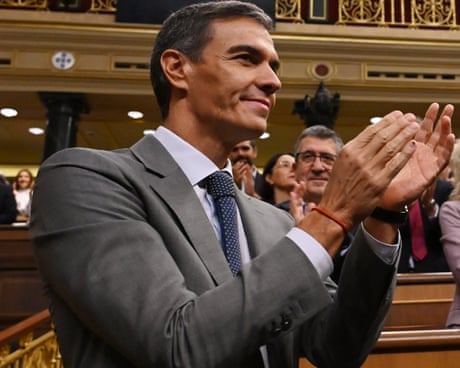
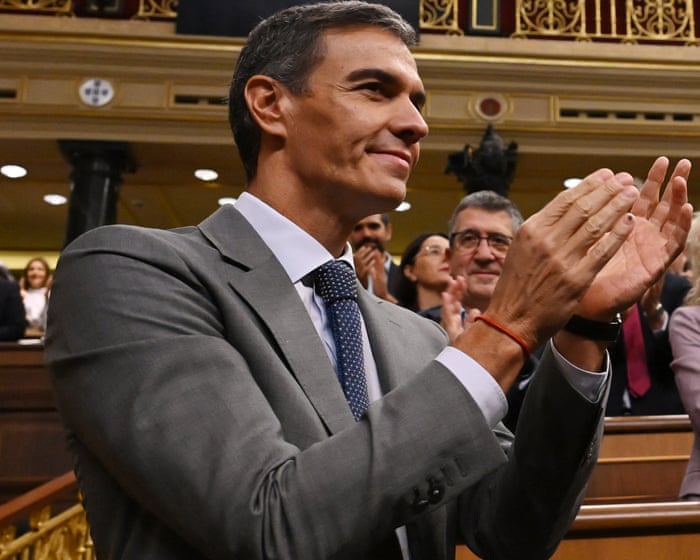
The Guardian view on Spain’s snap election: high stakes for Europe as Pedro Sánchez gambles again | Editorial

The Spanish prime minister has been a lonely champion of progressive values in the EU. But the polls look ominous

When it comes to risk-taking, Spain’s prime minister, Pedro Sánchez, has a formidable track record. In 2018, the Socialist party leader swept to power by triggering a no-confidence vote that unexpectedly ousted his centre-right predecessor Mariano Rajoy. He held on to it against the odds after calling a snap election in 2023, at a time when the popularity of his own party had plummeted and the far right was on the rise.

As he endures another rocky period in office, Mr Sánchez has once more rolled the dice. Last week, he announced a snap poll for November after his minority government was blocked from passing measures to ease Spain’s chronic housing crisis. The eviction of 87-year-old María del Carmen Abascal from her Madrid home sparked nationwide protests over soaring rents and prices. The outrage grew with news of her death last Wednesday. Mr Sánchez clearly hopes that campaigning on a national cause célèbre gives him a chance of winning a stronger progressive mandate next month.

Do you have an opinion on the issues raised in this article? If you would like to submit a response of up to 300 words by email to be considered for publication in our letters section, please click here.

Continue reading...

© Photograph: Javier Soriano/AFP/Getty Images

© Photograph: Javier Soriano/AFP/Getty Images

© Photograph: Javier Soriano/AFP/Getty Images

  •  

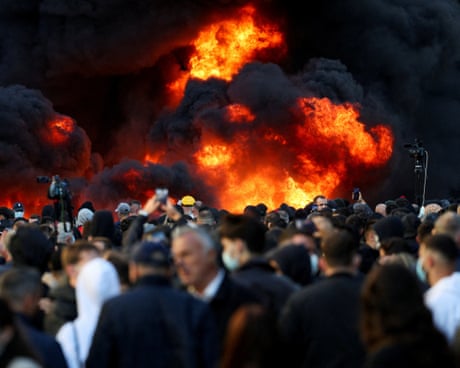
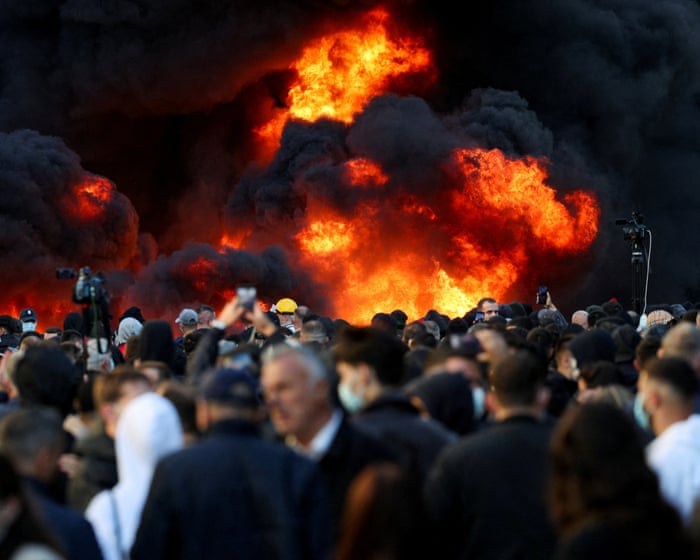
Student protests in Albania turn violent as demonstrators clash with police

Dozens of people detained after government building and two banks set on fire as tens of thousands march over education costs and corruption

Tens of thousands of students have taken to the streets of Tirana, the Albanian capital, setting alight a government building and two banks and hurling stones at police during a protest over rising education costs and ⁠corruption.

Police responded with water ⁠cannon and teargas to disperse protesters who started a fire at the ministry of education building, overturned bins and smashed the fronts of local businesses. A branch of Raiffeisen Bank near the education ministry also caught fire.

Continue reading...

© Photograph: Florion Goga/Reuters

© Photograph: Florion Goga/Reuters

© Photograph: Florion Goga/Reuters

  •  

MEPs pause vote on EU pesticides bill, as UN experts join scientists in opposition to Big Pharma

A backlash is building against an EU ‘omnibus’ bill that seeks to make it easier to authorise and use pesticides across the bloc. 

MEPs are still yet to set a date to vote on the European Commission’s proposal to extend how long pesticide active substances can stay approved in the EU, amid a series of protest letters from scientists, UN health experts, and divisions among member states. 

EI parliament’s environment and agriculture committees were originally expected to hold a joint vote on a compromise text on 5 October, but shelved that date without proposing another as this article went to publication. 

Sustained criticism has come from the scientific community. 

Last month, a group of more than 500 scientists signed an open letter to the commission on 16 September demanding a pause on the file pending “an independent assessment, whether carried out by parliament’s own research service or by an equivalent independent body.” 

And last week, a group of five UN health experts penned their own letter to the EU executive.

They warned that the commission’s plan to extend grace periods for products withdrawn on safety grounds, widen derogations for hazardous substances, and restrict the use of the latest independent scientific evidence “seem difficult to reconcile with the precautionary principle and with obligations to respect, protect and fulfil human rights, including the rights of peasants and other people working in rural areas”. 

This article continues, but the full version is available only to EUobserver.com subscribers. Visit account.euobserver.com/membership

  •  
❌