❌

Reading view

Ukraine blocks Russia from outflanking its fortress cities in Donbas, retaking 277 square kilometers and hitting 8,000 Russian troops

Ukraine's Third Army Corps commander Brigadier General Andrii Biletskyi announcing new developments in "Operation Vivaldi," 20 September 2026. Screenshot from video: Ukraine's Third Army Corps

Ukraine has completed its Operation Vivaldi, aimed at protecting its fortress belt cities of Donetsk Oblast, which helped Kyiv preserve the region from Russian occupation for 12 years. Brigadier General Andrii Biletskyi, the commander of the Third Army Corps behind the operation, has reported that the fourth phase secured 101 km² of territory. Among the latest achievements is the liberation of three settlements—Zelena Dolyna, Lypove, and Kolodiazi.

The operation's main objective was to move Ukrainian troops into more advantageous defensive positions, Biletskyi said in the first days after the operation was made public. Vivaldi has now summed up the results of all four phases: Ukraine has established full control over 16 settlements, liberated 277 km² of territory, and inflicted 8,000 casualties on Russian forces.

Ukraine worked against Russia's deadline

During Operation Vivaldi, Ukrainian forces have prevented Russian troops from outflanking the Sloviansk-Kramatorsk agglomeration and cutting the Kharkiv–Sloviansk highway, a key supply route for Ukraine’s forces in Donbas, Biletskyi says.

“We thwarted the offensive of the Zapad grouping and forced it to redeploy some units of the 1st Tank Army, which eased pressure on Kupiansk-Vuzlovyi,” Biletskyi announces.

Previously, the Institute for the Study of War noted that Russian President Vladimir Putin was confident that Russian forces would be able to seize the entire Donetsk Oblast by the end of 2026 — the Kremlin’s latest deadline for achieving this goal.

Ukraine’s military was on a mission to prevent this.

Season one: clearing russian infiltration groups

On 15 September 2026, Ukraine’s Third Army Corps announced Operation Vivaldi in northern Donetsk Oblast. During the first phase, Ukrainian troops cleared Russian groups from 75 km² of territory and liberated another 10 km².

The Third Army Corps said it had struck Russian supply routes and fuel infrastructure, prompting Russia to relocate its fuel and lubricant reserves to Voronezh Oblast. According to the corps, Russian forces lost around 1,500 troops, more than 12,000 drones, and hundreds of pieces of equipment.

Season two: liberation of Shandryholove and Derylove

On 20 September, the Third Army Corps reported the liberation of Shandryholove and Derylove and the establishment of full control over Drobysheve.

During the second season, Russian forces lost another 800 troops, bringing their total losses across the first two seasons to more than 3,000, according to the corps.

During the first two seasons of the operation, Ukrainian troops and attached units regained control of 125 km² of territory, including 50 km² that had been fully liberated.

Two soldiers of Ukraine’s Third Army Corps silhouetted among bare trees at twilight; one holds a radio to his mouth.
Soldiers of Ukraine’s Third Army Corps. Source: Ukraine’s Third Army Corps

The first phase of Vivaldi involved eliminating Russian groups that had infiltrated Ukrainian positions, explained the commander of a battalion in the 125th Brigade, callsign Darwin, per ArmyInform. After clearing those groups, the Defense Forces moved on to the operation’s second phase, using reconnaissance drones to detect Russian forces, he added.

For this, Ukraine used UAVs and ground robotic systems.

“The Third Army Corps was the first in the world to begin deploying ground robotic systems by air. Our heavy bombers deliver kamikaze ground robotic systems more than 10 kilometers behind enemy lines,” Biletskyi noted.

Season three: advances near Novе and Ridkodub

On 28 September, the Third Army Corps reported the liberation of Nove, Ridkodub, and Katerynivka and the restoration of control over Karpivka and Novomykhailivka. Ukrainian forces regained another 51 km² of territory, bringing the total area liberated since the start of the offensive to 176 km². Russian forces lost around 2,000 troops, and more than 250 were taken prisoner, the corps said in its summary of the operation’s third phase.

Map of settlements Ukraine's 3rd Army Corps says it liberated north of Lyman, as of 28 September 2026.
Settlements Ukraine's 3rd Army Corps says it liberated during Operation Vivaldi north of Lyman, Donetsk Oblast, Ukraine, as of 28 September 2026. Map: ISW

“The Russians were convinced that the main axis of attack was Shandryholove–Zelena Dolyna. This led it to squander its reserves in counterattacks along that very axis. The Russians slept through the actual strike, which was focused on capturing Nove,” Biletskyi said.

Operation Vivaldi aimed to disrupt Russia’s plans in Donetsk Oblast

The need for Operation Vivaldi arose amid Russian attempts to encircle Ukraine’s fortified belt in Donetsk Oblast. Ukrainian forces conducted preparatory efforts aimed at degrading Russia’s offensive capabilities, including strikes on Russian drone operators, the Institute for the Study of War reported on 9 October.

Ukrainian counterattacks in the Lyman direction and east of Sloviansk and Kramatorsk were intended to complicate Russian efforts to seize the fortified belt in Donetsk Oblast, the report noted.

The corps advanced gradually, reclaiming small areas instead of attempting a large-scale breakthrough.

  •  

“Starshield systems are owned and controlled by the US government”: Musk says Trump, not SpaceX, is behind cut hitting Ukraine

kyiv asking musk let strike inside russia its best line gone · post elon 2026 world economic forum / ciaran mccrickard wef ukraine news ukrainian reports

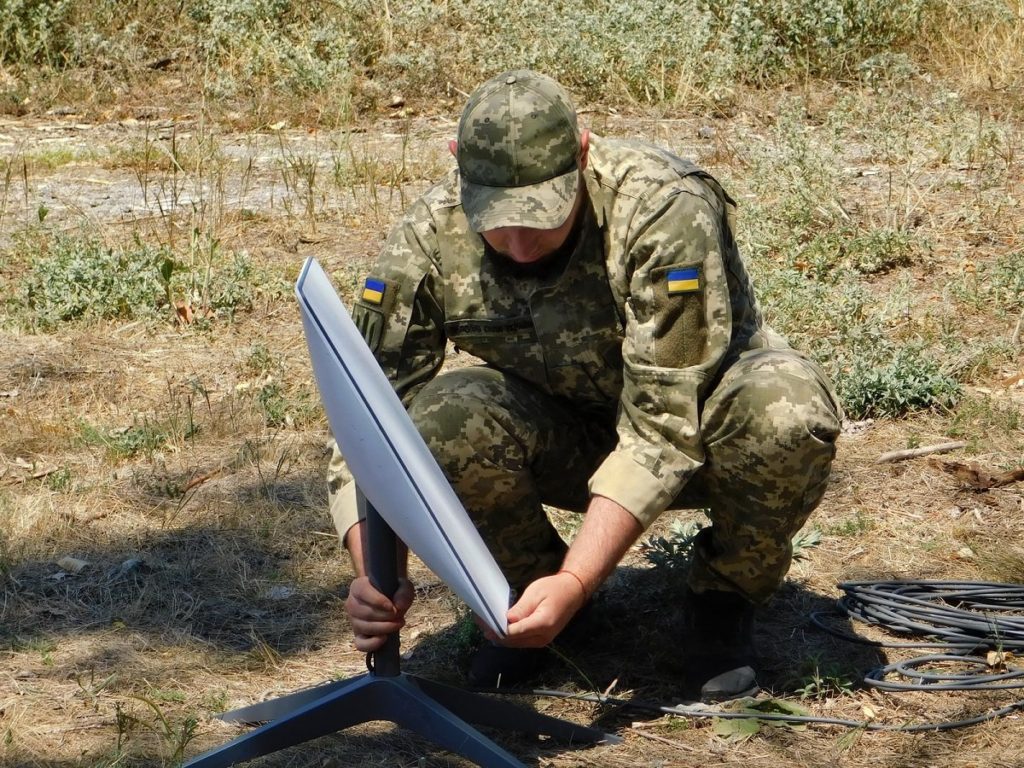
SpaceX chief Elon Musk says the version of Starlink that Ukraine’s military uses, StarShield, is owned and controlled by the US government rather than by his company. His claims come amid a storm over Ukrainian reports that a speed cut had broken their frontline operations.

Ukraine’s drones and air defenses rely on Starlink to steer and strike, so a limit on the network hits combat directly. Ukrainian troops reported that overnight into 14 October, the faster military package they depend on was throttled, halting a series of missions. Musk’s answer shifts the decision and the blame from SpaceX to the US government and, ultimately, to the president.

“Any limits on speed or usage are decided by the US military and ultimately POTUS. StarShield systems are owned and controlled by the US government,” Musk says.

He draws a line between the two services. Ordinary Starlink is a commercial product owned by SpaceX, limited to civilian or defensive use and not for offensive military action, which he called inappropriate for a commercial company.

Their conversation took place the same week that Washington pressured Kyiv over its strikes on Russian oil refineries amid US President Donald Trump's diesel deal with Moscow.

The exchange that forced Musk to answer

The statement followed a direct appeal. Former Defense Minister Mykhailo Fedorov told Musk on X that Starlink connectivity at speeds of up to 160 km/h was being restored, and pressed for more.

“Removing StarShield’s speed limit entirely is now critical for Ukraine’s defense. Thank you, Elon Musk. We hope for your continued support,” Fedorov wrote, framing the cap as a direct constraint on the war.

The faster package Ukraine cannot do without

The ordinary Starlink Mini mounted on drones is capped at about 160 km/h, which is too slow for some missions, so faster flight requires access to the military version, StarShield, Ukrainska Pravda notes. Ukraine has used StarShield since 2024.

  •  

“He thinks Ukraine is a weak link and that it needs to be squeezed into giving in”: diplomat on why Trump pressures Kyiv, not Moscow

The White House in Washington DC, USA. Illustrative image: Wikimedia Commons.

Washington is pressing the victim, not the aggressor, a Ukrainian diplomat says. President Donald Trump is using the threat of cutting military aid and intelligence as a tool to pressure Ukraine, while failing to apply enough pressure on Russia to stop the war, says Oleksandr Khara, executive director of the Center for Defense Strategies, Espreso reports.

Ukraine’s drones and air defense still lean on US satellite intelligence and weapons, which gives Trump room to squeeze Kyiv rather than Moscow. Khara argues Trump wants to end the war on Ukraine’s and Europe’s account to restore normal relations with Russian ruler Vladimir Putin, treating Ukraine as the weak link to be pushed.

“Trump wants to use restrictions, levers of influence on Ukraine to achieve his goal. To end or stop this war at any cost, at the expense of Ukraine and Europe, to restore normal relations with Putin,” Khara said.

Using American aid as leverage over Kyiv is not new for Trump, the diplomat noted, recalling earlier instances in which support was blocked or suspended.

The pressure points Trump picks, and the ones he leaves alone

Trump wants a visible success in ending the war, Khara says, partly against the backdrop of US domestic politics. He has economic tools to press Moscow but is in no hurry to use them, and his administration is instead gradually loosening sanctions on Russia.

“He doesn’t want to pressure Russia. He thinks Ukraine is the weak link and that it needs to be pushed,” Khara stressed.

Ukraine’s dependence on US support has fallen thanks to European partners, he added, so Kyiv has more room to keep fighting even as European states keep buying American weapons for it.

The one trade Kyiv might accept, and the pressure until then

An energy ceasefire is possible only on strict terms, Khara believes. Kyiv could agree to stop striking Russian refineries only if Moscow halts attacks on Ukraine’s power generation and transmission, heating, and the Black Sea ports and the ships heading to them.

Until such a deal exists, Ukraine must hit harder, he argued, because steadily draining Russia’s economic resources is what could force the Kremlin to reconsider.

“As long as there is no such agreement, and no desire from Russia, we must increase this pressure and destroy as much of their energy infrastructure as possible,” Khara said.

  •  

“Trump and Musk must be held accountable”: US senator warns Starlink network failing over Ukraine could cripple its shield against Russian missiles and drones

geran-2 (shahed-136) drone belarusian markings service military belta militarnyi російський безпілотник герань 2

US Senator Richard Blumenthal, a co-author of the Russia sanctions law named after Lindsey Graham, has issued a sharp statement on the latest developments in Ukraine. He says that President Donald Trump and SpaceX chief Elon Musk should be held accountable for reported Starlink failures that could cripple Ukraine’s defense.

On 14 October, Ukraine’s military reported a Starlink disruption that halted its operations. It happened at the same time the country’s air defense stopped receiving intelligence on a Russian ballistic strike that killed three people in Kyiv. Both failures came right after the US struck a diesel deal with Russia, letting low volumes of fuel into global markets and America while pressure grew on Ukraine to stop hitting the Russian oil refineries that raise the cost of the war.

"Reports of Starlink failing in Ukraine are deeply alarming— potentially crippling air defense against Russia’s murderous missiles & drones. Trump & Musk must be held accountable," he says.

When the network falters, the war feels it

The alarm rests on how completely Ukraine leans on the system. SpaceX has reportedly throttled the StarShield military package Ukrainian drones use, with connections dropping once the drones move at speed, and breaking a series of missions.

Ukraine neither owns nor controls Starlink, and the latest limits revived long-running fears that its battlefield lifeline can be dialed down from outside the country.

Blumenthal’s demand sits inside a broader revolt in Congress. A bipartisan group of 12 senators wrote Trump on 13 October urging him to rescind his deal letting Russian diesel back to market, calling the Treasury’s General License No. 135 a gift to Moscow that should be withdrawn.

They pressed him instead to use the Graham-Leach-Bliley Act he signed in September to squeeze Russia and its enablers, above all, China.

"If there's one lesson from Trump's mindless warmongering, it's that we need to break our dependence on foreign imports of fossil fuels & embrace alternate sources of energy," he said.

  •  

“Trump was looking for any opportunity to undermine our defense capabilities,” top Ukrainian volunteer, who supplied 291,502 FPV drones to front, says of sudden Starlink limit

Elon Musk: “Starlink will never turn off for Ukraine”

One of Ukraine’s most prominent drone volunteers, Serhii Sternenko, says that Starlink terminals have been restricted overnight, with connectivity beginning to drop out at speeds exceeding 160 km/h. As a result, several critical missions were disrupted.

Sternenko heads a charitable foundation that has purchased 291,502 FPV drones, which have helped the Ukrainian military shoot down more than 12,954 aerial targets. He has also served as an adviser within the team of former Defense Minister Mykhailo Fedorov.

Sternenko suggests that SpaceX may have introduced the restrictions at the request of the Trump administration. He adds that Ukraine had refrained from striking Russian oil refineries and energy infrastructure in recent days, as Trump had requested.

“But Trump was looking for any opportunity to undermine our defense capabilities, and he did so despite the fact that we had complied with his demands,” Sternenko says.

The limit landed the same night Russian ballistic missiles struck Kyiv’s Desnianskyi district, killing three women and injuring 24, including a seven-year-old girl.

Rescuers evacuated people covered in blood

The strike on a nine-story residential building set it ablaze, burning out apartments from the first floor to the ninth, with rescuers pulling bloodied residents from the flames and leaving survivors without power, water, or gas, according to Suspilne.

During the night’s first ballistic launches, partners did not alert Ukraine, but for the three later waves the warnings did come through, Air Force communications chief Yurii Ihnat says. The cause of the first lapse is still being established, per Radio Free Europe/Radio Liberty.

The early warnings help Ukrainian civilians quickly find a place to hide from such strikes, leaving up to 3 minutes to do so. Without it, people are left entirely helpless in the face of the aggression.

Further Starlink restrictions have reportedly been introduced

Later, Sternenko wrote that reports were "coming in from military personnel that restrictions on the use of Starlink satellite communications terminals for our operations have just been tightened.

"The speed at which the connection starts dropping out is now 60–70 km/h,” he added.

  •  

NATO country that pays for Kyiv’s Starlink warns Musk as his cap breaks Ukraine’s drone missions: “As your European customers, we are watching you”

Starlink terminal.

Poland’s Foreign Minister Radoslaw Sikorski has publicly criticized SpaceX chief Elon Musk over the latest disruptions in Starlink's operation in Ukraine. Poland is the largest supplier of Ukraine’s terminals, having provided about 29,500, roughly half the network. It also has a Starlink ground station in Wola Krobowska that provides connectivity for much of Central and Eastern Europe, including Ukraine, RMF24 reports.

On 13 October, SpaceX imposed a 100 mph (160 km/h) speed limit on the StarShield military package that Ukrainian forces use, disrupting drone missions without warning. Poland, which pays about $50 million a year for Ukraine’s Starlink terminals, told Musk it is watching.

“Hey, @elonmusk, big man, are you playing politics with your products again? As your European customers, we are watching you,” Sikorski wrote on X.

The “big man” jab echoed their 2025 clash, when Musk told Sikorski to “be quiet, small man” after the minister noted that Warsaw, not SpaceX as charity, pays for the service.

Be quiet, small man.

You pay a tiny fraction of the cost.

And there is no substitute for Starlink.

— Elon Musk (@elonmusk) March 9, 2025

Meanwhile, presidential adviser Serhii “Flash” Beskrestnov said that this could not be a coincidence and was most likely tied to the current political situation.

When a drone outruns its own signal

The cap bites exactly where Ukraine’s drones do their work. The StarShield package had previously carried no data speed limit, and the change directly affected drones that use Starlink to steer in flight, the 7th Air Assault Corps said.

“During flights, the connection could drop for 10 to 20 seconds at speeds of just 110 to 120 kilometers per hour. The drones kept moving, but these interruptions made them harder to control,” the corps said, describing problems that now start well below the new ceiling.

A dependence Kyiv has feared for years. The limit revives an old worry. Ukraine neither owns nor controls Starlink, and the restriction follows fresh fears of a shutdown after Musk backed US President Donald Trump’s call for Zelenskyy to resign.

  •  

America has sided with Russia against Ukraine. Europe should stop pretending and build a coalition against Russia, China, and even the US

A man walks past a mural by Norwegian street artist Toddel depicting a map of Ukraine and US President Donald Trump (L) with Russia's President Vladimir Putin in Krakow on March 6, 2026, amid the Russian invasion of Ukraine. (Photo by Sergei GAPON / AFP) / Eastnews)

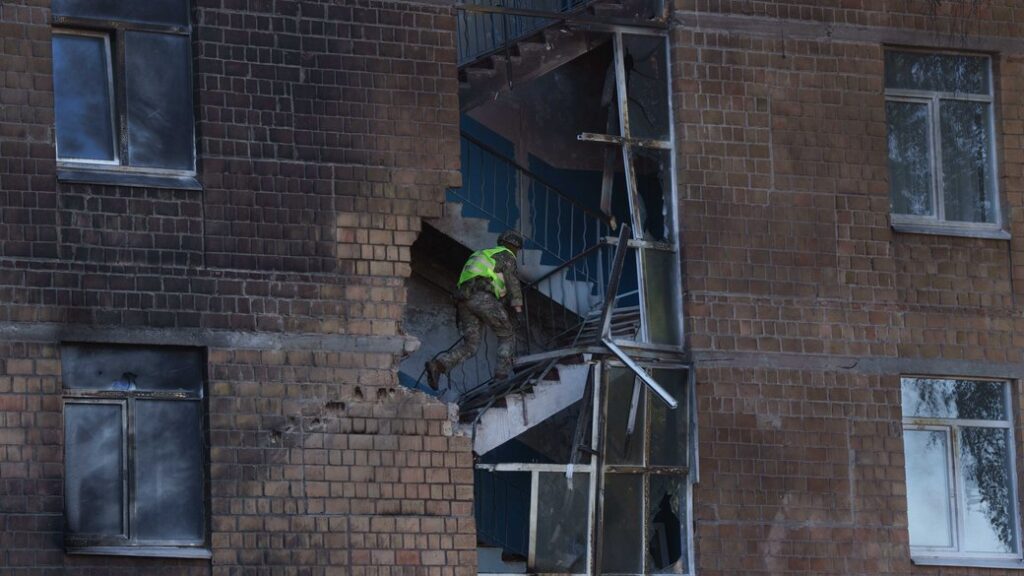
On 11 October, Trump declared an “energy ceasefire” between Russia and Ukraine. It binds only Ukraine. In the two days that followed, Kyiv held its fire while Russia kept hitting Ukrainian energy and critical infrastructure across 19 regions. A Russian strike collapsed an apartment stairwell in Kharkiv and killed three. And before Russia’s latest ballistic missile strike, five missiles and more than 100 drones, Ukraine received no early warning at all. Washington then said both sides were to blame.

This is what one of Trump’s decisions looks like on the ground. There were four of them, in three days, 9 to 11 October.

Three days that further weaken the West and undermine liberal democracies. Three days that encourage Putin to continue his war against Ukraine and his hybrid war against Europe. Like China, the US has sided with Russia against Ukraine and Europe. Whatever the motives in Washington—diesel prices before the midterms, a long feud with the court—the effect is the same.

International law

On 9 October, the Trump administration announced new sanctions against the International Criminal Court (ICC), an institution crucial for holding Putin and the Kremlin responsible for the war of aggression and its atrocities. The sanctions came hours after the Nobel Peace Prize went to Navi Pillay, a former ICC judge.

"We will ban transactions with this rogue court, cutting off their resources and crippling its ability to operate," Secretary of State Marco Rubio said. "Either the ICC will end its threats, or we will end the ICC." He expects allies, many of them ICC members that rely on American servicemembers for their defense, to rein in the court.

The ICC exists to investigate, prosecute, and try individuals accused of the world's gravest international crimes. Washington wants to end it. The court called the measures an assault on the rule of law and the foundations of the international legal order.

Dag Øistein Endsjø, a Norwegian professor at the University of Oslo, Norway.
Explore further

What if Russia uses nuclear weapons? Can we say Ukraine brought peace to world? Norwegian professor who nominated Zelenskyy and Ukrainians for 2026 Nobel Peace Prize takes on tough questions

Funding Russia's war

On 9 October, Trump also lifted sanctions on Russian diesel exports. The deal comes less than a month after he signed the sweeping Russia sanctions law dedicated to the memory of Sen. Lindsey Graham, which allows tariffs on buyers of Russian oil. Multiple US lawmakers argue the move violates federal law. Congress banned Russian energy imports in 2022, and a bipartisan group of seven senators, including Republicans Thom Tillis and Lisa Murkowski, stated that the decision "runs directly counter to that law." They also argue that the administration failed to consult Congress or justify its decision as the statute requires.

Western sanctions and Ukraine's strikes on Russian refineries—its own "sanctions"—aim at the same effect: making the war unaffordable for Russia. Trump's decision does the opposite: it helps Russia pay for the war. It also breaks with the principle of unity of effort, further undermining Western cohesion.

Zelenskyy said the deal showed US weakness, as Washington had secured no concessions in return: "What did [Trump] get? That he will have more diesel? For whom? More Russian diesel for Americans? ... It looks like Alaska No. 2. You know, it looks like a happy birthday present for Putin. It looks absolutely terrible."

Stability and sovereignty

On 10 October, Trump said of the elected president of a country fighting off Russia's full-scale invasion: "I think it's time for Ukraine to get a new president... I suggest they get a new leader who can make a deal, because he could have made many deals and, for some reason, he never does." He claimed Zelenskyy could have ended the war many times, and insisted that Zelenskyy "wants to make problems for the world" by authorizing strikes on Russian refineries.

The Trump Administration conspicuously ignores the Swiss Summit on Peace in Ukraine, President Zelenskyy’s 10-point peace plan based on international law, and not least, the international effort to establish unity of efforts to enforce a just peace.

Zelenskyy has repeatedly proposed talks and shown willingness to compromise for a peace that guarantees Ukraine's sovereignty. On 18 July, he said: "This year alone, we have reached out to Russia dozens of times with proposals to stop this war—but all we got in return were refusals."

The "deals" Trump alludes to would not have secured peace or guaranteed Ukraine's future existence, nor safeguarded Europe against future Russian aggression. They were not rooted in international law, but in the prospect of great wealth for Trump and his associates—business deals dressed up as "peace plans”. Ukraine and its European partners instead proposed amendments and defined red lines to bring the drafts up to the standards of international law.

The Kremlin itself exposed the absurdity of Trump's claim. In a phone call with Trump, Putin categorically ruled out resuming peace talks, his aide Yuri Ushakov said, and sought to convince Trump that Ukrainian resistance has "no prospects whatsoever."

Supporting Russia

On 11 October, Trump announced: "Effective immediately, there is an ENERGY CEASEFIRE in the War between Russia and Ukraine. Both parties have agreed. Do not break it!"

He gave no details. Zelenskyy had no prior knowledge, but said Ukraine would agree if Russia did. He had already offered to stop striking Russian refineries if Russia stopped attacking Ukraine's energy infrastructure.

It was not an energy ceasefire. It was a gift to Putin. A White House official told Axios that, as Trump understands it, the term means only that Russia and Ukraine stop attacking each other's oil refineries—and that this is what Washington expects Ukraine to do. Ukraine has one refinery, while Russia has 38, of which 21 have been targeted by Ukrainian drones.

Aftermath of the Russian attack on Kyiv overnight into 14 October 2026
Explore further

Three days after Washington announced an energy ceasefire, Russia fires 39 ballistic missiles at Ukraine’s grid

To most of the world, an energy ceasefire covers the whole energy sector: nuclear power, oil refineries, power plants, the grid down to local transformers. But not in Trump's world. The official said a deal on power plants and grids could come next—if Ukraine first stops striking the refineries fueling Russia's war.

Axios wrote that White House officials see Ukraine's refinery strikes as doing more damage to Zelenskyy's relationship with Trump than to Russia. The administration has reportedly threatened to cut Ukraine off from US intelligence if the strikes continue.

Forcing Ukraine to halt its refinery strikes, while Russia keeps hitting not only power plants and the grid but heating and water systems, hospitals, schools, railways, ports and civilians, does not motivate Russia to stop. Within hours of Trump's announcement, Russia struck a power plant in Kharkiv. Trump's one-sided pressure encourages Russia to continue.

Enabling Russian aggression

Moscow paints Ukraine as the intransigent party, though Russia has offered no concessions and rejected numerous compromise proposals from the US and Ukraine. Still, Trump insists that Ukraine, not Russia, is the problem.

In three days, Trump has sanctioned the court that could hold Russia accountable, called on Zelenskyy to step down, secured revenue for the Kremlin's war, and declared an "energy ceasefire" that only asks Ukraine to stop striking Russian refineries, while Russia goes on turning winter into a weapon.

The call for Zelenskyy to step down led Marie-Agnes Strack-Zimmermann, chair of the European Parliament's Committee on Security and Defence, to say: "If Trump calls on Zelenskyy to step down, he is clearly siding with a murderer. Only the Ukrainian people can decide who leads Ukraine in free elections, not the White House, and certainly not the Kremlin." Her conclusion: "By once again attacking allies and democratic institutions, Trump is weakening the West and undermining democracy. [...] Europe must therefore remain firmly on course and support Ukraine, because the US can no longer be relied on."

The US's latest National Security Strategy does not merely shift America's foreign policy priorities. It aligns them with Moscow's on seven separate issues, while explicitly calling for Washington to "cultivate resistance to Europe's current trajectory" by backing nationalist parties against sitting EU-aligned governments.

A carnival float by Jacques Tilly shows Trump and Putin eating a cow ridden by Ursula von der Leyen, at the Rose Monday parade in Düsseldorf, Germany, on 16 February 2026. Photo: Ina Fassbender/AFP/Eastnews
Explore further

Europe has 11 ways to choke Russia’s war. It doesn’t need Trump’s permission for any of them

Europe must stand on its own

The last three days demonstrate that the US is no longer an ally, but a strategic adversary. None of Trump's recent decisions helps end the war on Ukrainian or European terms. On the contrary, they encourage Putin and push any realistic hope of peace years away. They undermine international law and support the notion that might makes right.

Worse still, they help explain why war between Russia and Europe by 2029 is becoming more likely. Trump—Putin's close ally—leaves office on 20 January 2029.

Europe must stress its support for continued Ukrainian strikes on Russian refineries unless the Kremlin agrees to a comprehensive energy ceasefire in line with Ukraine’s demands.

Europe urgently needs to distance itself from the US and its foreign policy. Heads of state must join Canada's efforts to unite middle and small powers in common defense against increasingly aggressive great powers. As this series has repeatedly argued, Europe must build a Coalition of Like-Minded countries strong enough to confront Russia, China and, sadly, the US.

NATO Secretary General Mark Rutte addresses foreign ministers at North Atlantic Council meeting Brussels December 2025
Explore further

The alternative to NATO: A Coalition of Like-Minded European Countries

Hans Petter Midttun
Hans Petter Midttun, independent analyst on hybrid warfare, Non-Resident Fellow at the Centre for Defense Strategies, board member of the Ukrainian Institute for Security and Law of the Sea, former Defense Attaché of Norway to Ukraine, and officer (R) of the Norwegian Armed Forces. 

Editor's note. The opinions expressed in our Opinion section belong to their authors. Euromaidan Press' editorial team may or may not share them.

Submit an opinion to Euromaidan Press

  •  

Russia attacked Ukrainian retailer Epicentr’s warehouse 10 times in one day, destroying about 85% of goods, company says

Epicentr’s attack 13 october

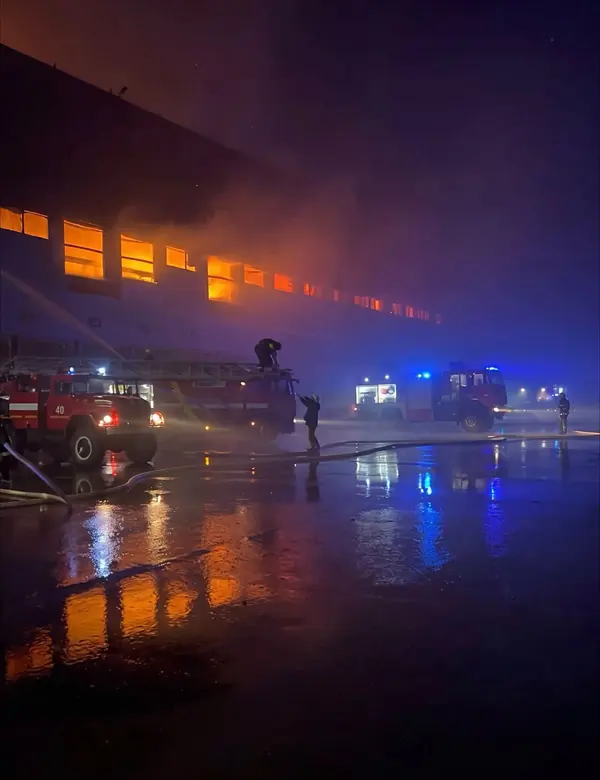
Russian forces attacked Epicentr’s hub in Khmelnytskyi, a city in western Ukraine, 10 times on 13 October, starting five large fires that destroyed about 85% of the goods stored inside, the company said.

Epicentr is a Ukrainian chain of home-improvement and household-goods stores. The attack adds pressure to Ukraine’s logistics network, already damaged by Russian strikes. On 10 September, Ukrainian entrepreneur Ruslan Shostak, co-owner of the popular retail chains Eva and Varus, said that 2.1 million square meters of Ukraine’s modern warehouse space had been destroyed since Russia’s full-scale invasion began. He put the country’s total modern warehouse space at approximately 5 million square meters. The strike on the hub came the same day Russia opened a barrage of 39 ballistic missiles on Ukraine’s power grid.

About 30 drones in the sky kept the fire from being put out, and the hub burned down completely overnight, Epicentr said. None of its people were hurt, the company said.

“The most important thing is that all our people are alive,” Epicentr wrote.

Russia had earlier completely destroyed Epicentr’s two largest logistics complexes, in Kyiv and Kyiv Oblast, the company said. The Khmelnytskyi hub had remained effectively its only surviving large warehouse complex. Goods were sent from there to the company’s shopping centers, and people worked there every day “so that millions of Ukrainians could buy what they need,” it wrote. Epicentr described every such attack as a blow to Ukrainian businesses’ ability to operate, pay wages, preserve jobs, and support the country’s economy.

Epicentr’s earlier losses

Epicentr said in August that 10 of its shopping centers had been completely destroyed since February 2022. Another 13 retail sites had been damaged, and one in Melitopol remained under Russian occupation, it said. At the time, the company operated 70 shopping centers, down from 80 at the end of 2021.

Earlier, during a Russian missile attack overnight on 5 August, Epicentr’s logistics center in Kyiv burned down completely, Epicentr’s Yulia Chudnovets said. The company’s ceramic tile plant in Kalynivka, one of the largest in Ukraine, was effectively lost, she said. One employee was killed and three were injured, she added.

fourth ukrainian pharmaceutical warehouse has burned russian strike since start month · post fire damage medicine distributor badm after odesa ukraine 14 2026 росіяни зруйнували вже четвертий склад ліків за
Explore further

A fourth Ukrainian pharmaceutical warehouse has burned in a Russian strike since the start of the month

On 25 May 2024, Russian airstrikes on an Epicentr hypermarket in Kharkiv killed 19 people, Interior Minister Ihor Klymenko said.

Attacks across Khmelnytskyi Oblast

Fires broke out at enterprises in Khmelnytskyi and Shepetivka districts on 13 October, Serhii Tiurin, head of the Khmelnytskyi Oblast Military Administration, reported. He did not name the enterprises. On 14 October, Tiurin said one of the fires had been put out, and crews were still fighting the other. Khmelnytskyi Mayor Oleksandr Symchyshyn said six people were injured in Khmelnytskyi district that day, where Russian strikes damaged private enterprises, a gas station, and a medical facility.

  •  

“It finances an economy geared toward total war”—Ukraine’s third president on the Russian diesel Washington just cleared

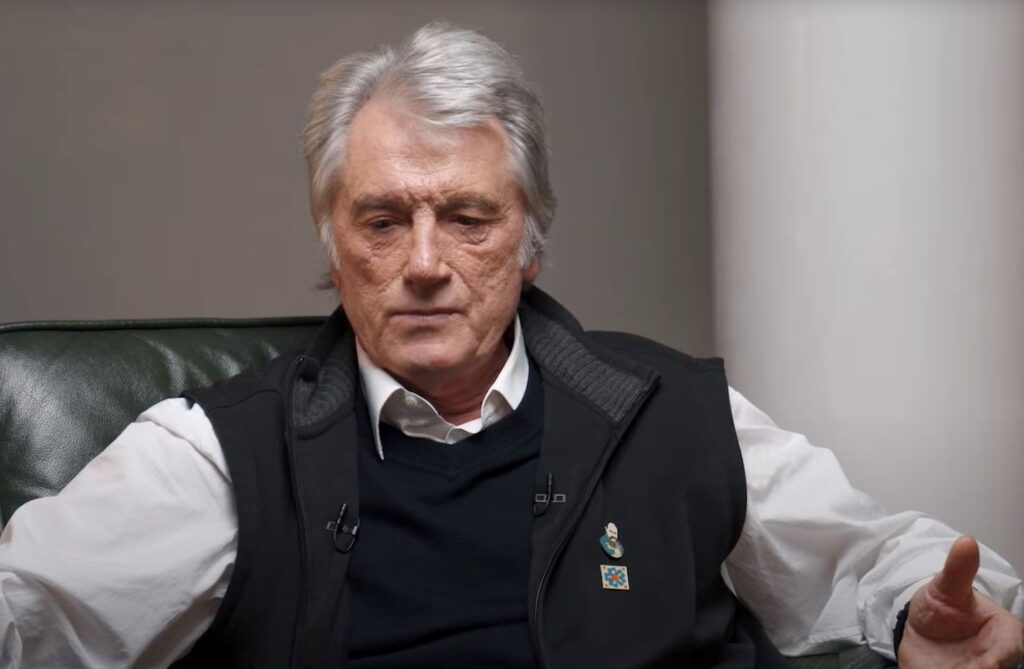
Viktor Yushchenko, the Ukrainian President in 2005-2010

Viktor Yushchenko, Ukraine’s president from 2005 to 2010, has written an open letter to US President Donald Trump and posted it on Facebook on 14 October. Without naming it, the letter takes aim at the green light Washington gave Russian diesel trade five days earlier, after a call between Trump and Kremlin leader Vladimir Putin.

Russia banned its diesel exports in July amid a fuel crisis at home, after Ukrainian strikes on refineries had already cut those exports, and last week’s US waiver and the supply deal Trump announced with Moscow would put that fuel back on world markets while Russian strikes still kill Ukrainian civilians.

What Yushchenko says Russian fuel buys

Yushchenko wrote that Russian ballistic missiles, Iranian Shahed drones, and aerial bombs strike homes every day and night in Kyiv, Zaporizhzhia, Odesa, Dnipro, and Kharkiv. Whenever there is talk of “concessions” or deals with Putin, he wrote, the Kremlin answers with more missiles, more drones, and more bloodshed.

The White House in Washington DC, USA. Illustrative image: Wikimedia Commons.
Explore further

Trump’s Russian diesel deal, which drew fury in Ukraine, is unlikely to lower prices, experts say

Yushchenko rejected calls for Ukraine to “restrain its strikes against the infrastructure that finances and sustains Russia’s war.”

“Money paid for Russian fuel is not an abstraction called ‘commerce.’ It finances an economy geared toward total war,” he wrote.

Nuclear arms, Pearl Harbor, and Iwo Jima

Yushchenko wrote that Ukraine inherited “one of the largest nuclear arsenals in the world” and agreed to give it up, trusting the words and signatures of great powers. In his view, by signing the 1994 Budapest Memorandum, America took on a moral responsibility toward Ukraine.

He compared trade in Russian energy to America’s trade with Imperial Japan, which included strategically important materials, before the US entered World War II. Washington hoped for years to avoid a wider war in the Pacific, he wrote, but economic pressure and diplomacy could not prevent catastrophe.

kyiv strike
Explore further

Ukraine warns of “a new type of humanitarian crisis” as Russia aims at its biggest cities

Japan attacked Pearl Harbor on 7 December 1941. America knows how dangerous it is to believe that trade can tame an aggressor, Yushchenko wrote, adding: “History taught us that lesson at a terrible price.”

He also named two men he called Ukrainian. One was Sergeant Michael Strank, whose family, Yushchenko wrote, came from Lemkivshchyna. The son of immigrants from Czechoslovakia, Strank took part in the famous raising of the US flag on Iwo Jima, according to the Marine Corps. The other was Oleksandr Silvashko, “a Ukrainian boy from the Cherkasy region,” who, Yushchenko wrote, was the first to embrace US Lieutenant William Robertson when American and Soviet forces met at the Elbe in April 1945.

“One does not negotiate with tyrants—one stops them,” Yushchenko concluded.

  •  

Planned capacity of 12,000 interceptors a year, under 100 seconds to target: US firm pitches a low-cost drone killer

Launch of the Vespid Mk 1 using a solid-fuel booster.

US defense-tech company CHAOS Industries introduced its Vespid interceptor family in Washington on 12 October, as the Association of the US Army (AUSA) annual meeting opened there, the company announced. CHAOS pitches the drones as low-cost defense against small and mid-size drones and one-way attack munitions. The company expects initial production capacity of 12,000 interceptors a year, expandable to 50,000 as demand grows.

The pitch lands as Russia moves its strike drones to jet power. Russia has stopped building the Geran-3, an earlier jet model, and makes about 3,000 faster Geran-4s and Geran-5s a month, Ukraine’s military intelligence (HUR) told Militarnyi in August. In mid-September, Ukrainian President Volodymyr Zelenskyy said two Ukrainian companies had passed combat tests with interceptors against such drones, while 67 were still working on them. Ukrainian defense outlet Defense Express measured the new US drones against exactly that threat.

One to carry, one to launch in batches

The Mk 1 made its first public appearance on 12 October aboard a Forterra MESA autonomous ground vehicle, Army Recognition reported. It fires from tubes on launchers such as the 10-round ISS Aerospace HAL10. It takes midcourse guidance from CHAOS radars or external command systems, then an AI-assisted infrared seeker handles the final approach, the company says. An electric ducted fan rather than a jet engine drives it, which CHAOS says cuts cost and logistics compared with turbojet interceptors.

The smaller Mk 0 is man-portable and needs no operator input once fired, its product page says. Both are rated to reach a target in under 100 seconds, with a listed range of 10+ km. Defense Express called that range a serious weakness that more launchers around a city could offset.

Modular FPV drone interceptor “Mangal” by Phantom Defence. September 2026.
Explore further

Most drone interceptors ram or explode. This Ukrainian one just throws a net—six shots to a module

CHAOS lists cruise speeds of 100 m/s (360 km/h) for the Mk 0 and 150 m/s (540 km/h) for the Mk 1. Defense Express said those speeds may be enough to intercept the Geran-4 and Geran-5, which it puts at 340 km/h and 450–600 km/h.

Ukrainian makers say their interceptors already down jet Gerans

Wild Hornets’ Sting interceptors downed several of the slower jet-powered Geran-3s in November 2025. An unnamed Wild Hornets representative told NV, in an interview published on 22 September, that the company’s new interceptor had destroyed about ten Geran-4s and several Geran-5s in limited use. The company plans mass production within a month of finishing combat tests.

On 12 October, former Defense Minister Mykhailo Fedorov said he and Pavlo Yelizarov, commander of Lasar’s Group, had created a new interceptor with troops and engineers. He said it downed two Geran-5s headed for Kyiv.

Crews from Lasar’s Group, which Fedorov has called a National Guard special unit, flew those combat tests, he said. Separately, Fedorov reported in August that a Ukrainian jet interceptor with a top speed above 600 km/h had entered combat testing.

  •  

1,125 Kyiv residents injured in Russian attacks since the start of 2026, more than a third of them in five weeks from late August, Kyiv health chief says

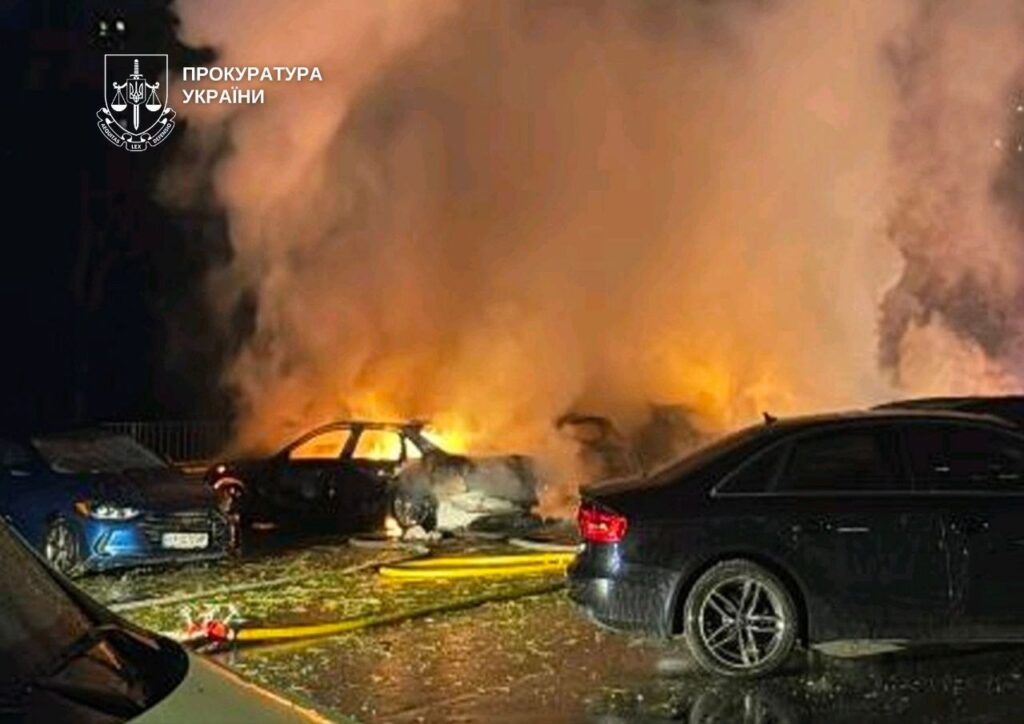
Cars burning outside a 25-story apartment building in Kyiv after a Russian drone strike

Russian attacks have injured 1,125 Kyiv residents since the start of 2026. Of these, 379 people, or nearly 34%, were injured in just five weeks, from 27 August to 7 October, Tetiana Mostepan, director of the Kyiv City State Administration’s Department of Health, said in an interview published on 13 October.

Russian air attacks on Kyiv have intensified since late August. Air attacks occur both day and night, and Russian drones target not only military facilities but also civilian buildings, including apartments. As a result, the number of casualties is also increasing. More than 40% of emergency medical responses to attacks this year occurred between late August and early October, Mostepan noted.

During this period, the capital’s emergency medical teams responded to 782 calls related to the attacks, the department director said. She also released data showing that 138 medical facilities in Kyiv have been damaged since the start of Russia’s full-scale invasion, including 47 this year.

“And when we talk about statistics, I always emphasize that behind every number is a human life. These are people who have been injured, as well as medical workers who respond to attack sites to save them,” Mostepan said.

People giving first aid to two women injured in a Russian drone strike in Kyiv
People giving first aid to two women injured in the Russian drone strike, Kyiv, 8 September 2026. Photo: Zelenskyy's Telegram

Russian attacks on Kyiv have become more frequent

Russia attacked Kyiv with drones throughout the day, Suspilne Kyiv reported on 27 August. Air raid alerts were issued 12 times in the capital, drone debris was found in five districts, and at least four people were injured, the report said. Russian forces used about 140 attack drones against Ukraine throughout the day, more than 100 of them jet-powered, the Ukrainian Air Force reported at the time.

At least 38 people were killed and dozens injured in a Russian drone strike on an ammunition depot in the Bucha district near Kyiv, triggering a massive fire and hours of explosions in a residential area, CNN reported. The attack in the Bucha district came amid near-constant Russian airstrikes, which continued into Sunday, the outlet reported.

Russian forces were likely seeking to exhaust Ukraine’s air defenses, disrupt civilians’ daily lives, and increase the scale of destruction, analysts at the Institute for the Study of War (ISW) said, citing CNN’s reporting.

On 8 September, NATO Secretary General Mark Rutte stressed the urgent need to strengthen support for Ukraine, particularly by providing air defense systems. Delays in delivering assistance cost human lives, he said.

On 1 October, a Russian drone struck a school in Kyiv’s Solomianskyi district while 104 children were inside, Suspilne reported. Students and school staff took shelter, so no one was injured, the report said.

Aftermath of the Russian attack on a school in Kyiv’s Solomianskyi district, 1 October 2026. Suspilne News/Oleksandr Mahula
Aftermath of the Russian attack on a school in Kyiv’s Solomianskyi district, 1 October 2026. Photo: Suspilne News/Oleksandr Mahula

Russian attacks continue after Trump’s announcement of an energy ceasefire

Following US President Donald Trump’s announcement of an energy ceasefire, Russia continued striking Ukraine’s energy infrastructure, including in Kyiv. On 13 October, Russian ballistic missiles struck Kyiv, hitting a thermal power plant in the second attack in 24 hours without advance warning from Ukraine’s allies, Zelenskyy said. The evening and morning strikes killed four people in Kyiv, three of them women in a high-rise in Desnianskyi district, Kyiv prosecutors said.

Aftermath of the Russian attack on Kyiv overnight into 14 October 2026
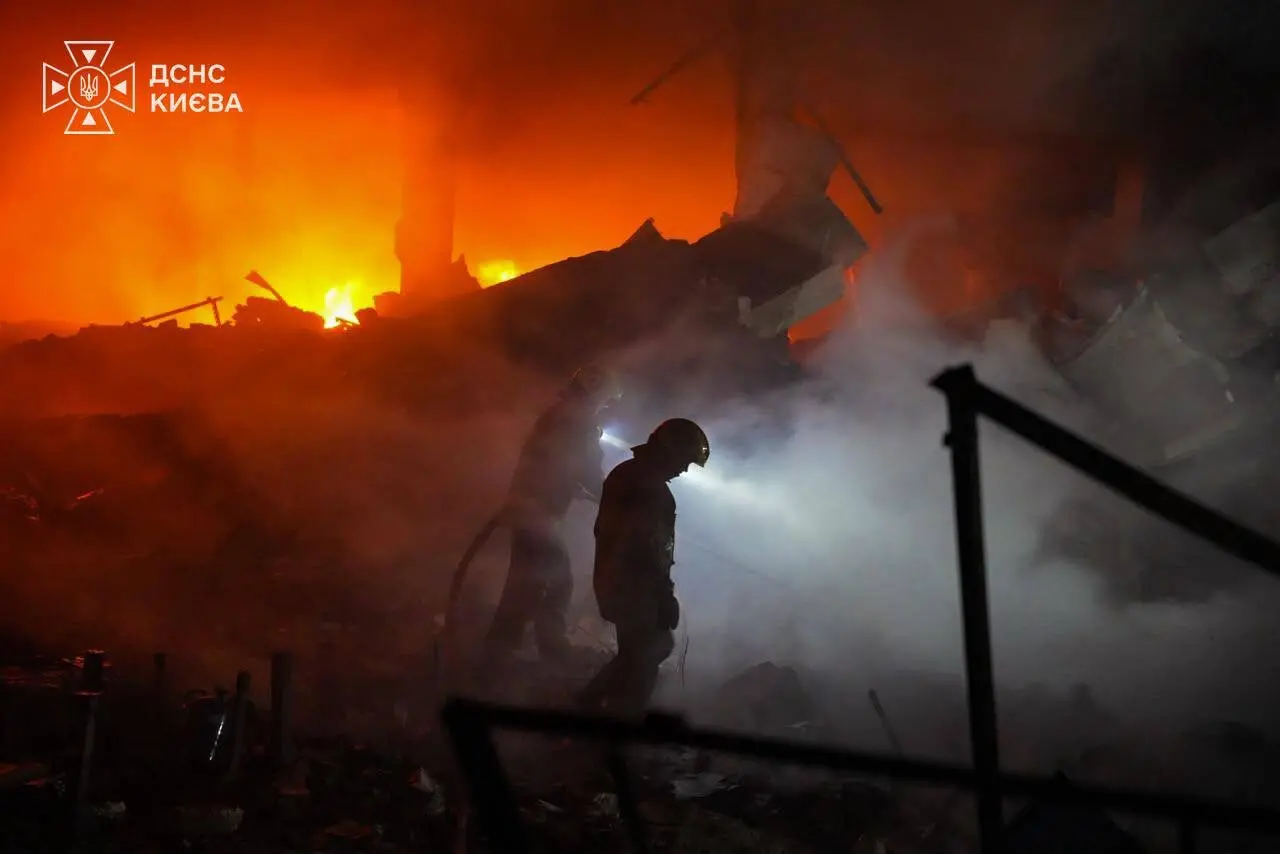
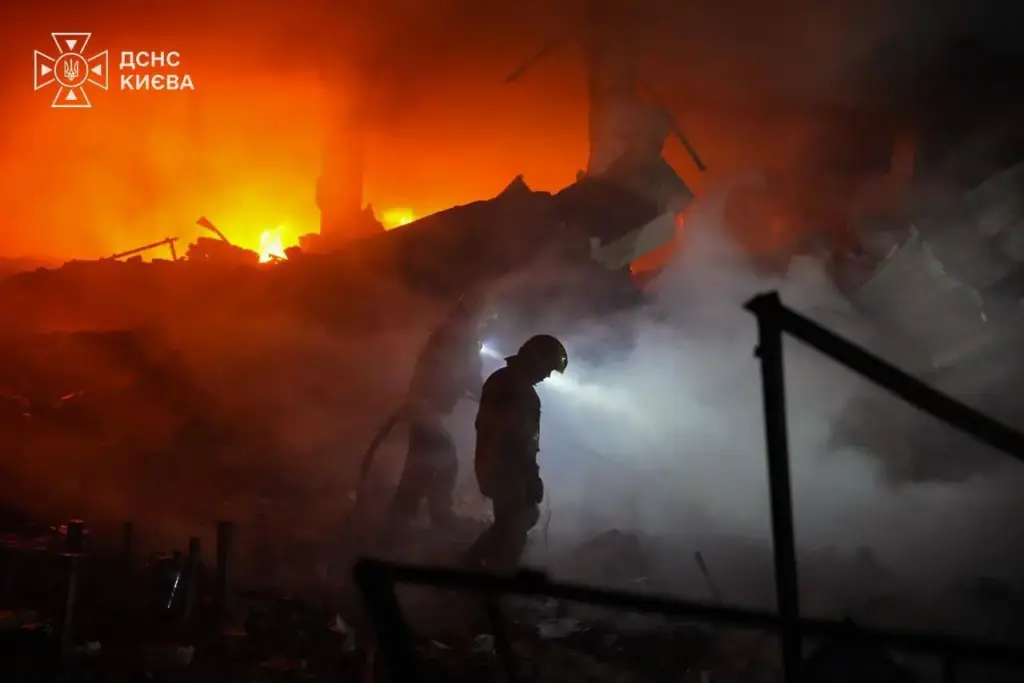
Aftermath of the attack on Kyiv on the night of 14 October 2026. Photo: Kyiv State Emergency Service

Russia attacked energy and critical infrastructure in Kyiv, Kyiv Oblast, and Kharkiv with 39 ballistic missiles and more than 120 attack drones, Ukrainian President Volodymyr Zelenskyy said on 14 October. At least 600,000 people were left without electricity, he said. Later that day, an accident on the grid cut power to part of Kyiv’s right bank, energy company DTEK said.

  •  

Ukraine-NATO AI built to forecast Russia’s front-line drone attacks from past data and weather is ready to plug into the army

UFORCE drone control station. September 2026.

Ukraine and NATO have unveiled two artificial intelligence (AI) tools in Vilnius, Lithuania, Ukraine’s Defense Ministry reported on 13 October. One forecasts Russian drone attacks near the front and is ready to join the Armed Forces’ situational awareness systems. The other helps plan artillery fire and is still in testing.

A forecast of where, when, and which drones will fly targets the main source of losses near the front. In March, Ukraine’s military put the share of front-line casualties caused by FPV drones at up to 80%. In May, Ukraine’s drone forces commander Robert Brovdi said Russia was copying Ukraine’s model to grow its drone forces. A month earlier, Presidential Office head Kyrylo Budanov wrote that adding more drones no longer fundamentally changes the battlefield. The next stage, he said, is full integration of AI.

Forecasting Russian drone attacks

The NATO-Ukraine Joint Analysis, Training and Education Center (JATEC) presented both at a three-day seminar in the Lithuanian capital. NATO’s Allied Command Transformation and Ukraine’s Armed Forces built the tools with JATEC’s support.

“The solution has already been validated using real-world datasets. It has been refined and is ready for integration into the Armed Forces of Ukraine's situational awareness systems,” the ministry said.

Model No. 13 works from past data, weather, and the current battlefield situation. The ministry said it can identify the intensity of attacks, the areas, the time windows, and the types of drones with a high probability.

Ranking artillery options

Model No. 32 is a decision-support module. It tests whether artillery plans can be generated automatically. It weighs the mission’s requirements and current operational data, including available weapons, ammunition, firing positions, and constraints.

SPECTR.
Explore further

Ukraine’s new military AI does more than watch the battlefield—it helps commanders plan what comes next

First, it applies logistics, ballistics, and impact-zone parameters to throw out unworkable options. Then it scores and ranks the rest. That means less hand-based comparison, faster decisions, and a more efficient fire loop, the ministry said. The prototype is now with the Ukrainian military for trials. If the trials succeed and it is validated, it could be expanded to other units that strike Russian forces.

  •  

Ukraine warns of “a new type of humanitarian crisis” as Russia aims at its biggest cities

kyiv strike

Ukraine is drafting crisis scenarios for November to March as Russian strikes target the country’s biggest cities, Head of the Presidential Office Kyrylo Budanov said on 13 October after chairing a meeting with donor-country diplomats and humanitarian organizations. His deputy Iryna Vereshchuk warned the same day that this winter may bring a new type of humanitarian crisis. She asked donors to be ready with fast extra funding.

Russia has struck Ukraine’s grid deep into winter before: last February, it launched more than 500 missiles and drones as temperatures fell below −20°C. Strikes have continued despite a US-announced energy truce Moscow has not confirmed. Kyiv now wants donors ready to pay for the humanitarian fallout in advance.

Crisis scenarios for November to March

The core task is clear crisis scenarios and synchronized response plans for that period, Budanov wrote. The government is building a baseline threat scenario through the State Emergency Service, while the military and intelligence will provide a risk assessment.

“The available resource must be concentrated where people will have the hardest time,” Budanov wrote.

Ukraine, he added, must hold its rear as reliably as the Defense Forces hold the front line.

What officials mean by a new type of crisis

A war of rear areas is underway, Vereshchuk wrote. Russia is changing tactics in an attempt to deepen the humanitarian crisis, especially in Kyiv, Kharkiv, Odesa, and Dnipro, she added.

Vereshchuk did not define what makes the crisis new, but she tied her warning to the big cities.

“This winter, it is the big cities that may become the testing ground of our national resilience,” she wrote.

Humanitarian organizations must adapt their plans to protect and support civilians, Vereshchuk wrote. Donors, she said, must be ready to provide additional crisis-response funding quickly.

The capital lags behind

Ukrainian President Volodymyr Zelenskyy wrote on 13 October that even border and frontline oblasts were ahead of Kyiv on resilience plans as of mid-October. Even single hits by Shahed attack drones can cut power and water across much of the capital, he noted. He also began consultations on urgent security and management steps to fix the situation in the city.

Aftermath of the Russian attack on Kyiv overnight into 14 October 2026
Explore further

Three days after Washington announced an energy ceasefire, Russia fires 39 ballistic missiles at Ukraine’s grid

Russia carried out more than 200 strikes on Ukraine’s power generation and transmission in the week to 11 October, Zelenskyy said. Overnight on 14 October, Russia fired 39 ballistic missiles and more than 120 drones at energy and critical infrastructure. The barrage left at least 600,000 people without power, Zelenskyy said.

  •  

Russia bombs Sloviansk’s warming center as the day’s attacks wound four Red Cross workers

The Russian army struck an invincibility center in Donetsk Oblast with a bomb on 13 October 2026. Photo: Vadym Liakh/Facebook

A Russian attack on Sloviansk on 13 October wounded members of a Ukrainian Red Cross team, the Ukrainian Red Cross Society reported. The same day, a Russian bomb hit the city’s invincibility point, one of the state-run hubs where residents warm up and charge phones when power goes out.

Help is getting harder to reach in Sloviansk. Public transport stopped after a Russian strike on two buses in nearby Kramatorsk killed 30 people on 8 October. From 1 November, a curfew from 16:00 to 11:00 will cover nearly all of Donetsk Oblast’s free territory. The people providing help are hit too. Russian drones struck three ambulances in Kramatorsk on 5 October. In August, a Russian strike destroyed a World Health Organization humanitarian warehouse in Dnipro.

Team had moved from Lyman

Three members of the society’s Lyman city branch were hurt. The branch had moved to Sloviansk because of the security situation and kept working there. All three were hospitalized with shrapnel wounds and burns. The building where the team worked took heavy damage, and a fire caused by the attack damaged the organization’s property.

The society’s Donetsk Oblast branch later added that a fourth person suffered a concussion, and that all four were hospitalized. The Red Cross condemned attacks on civilian infrastructure and humanitarian workers.

Bomb hit the warming center

The strike came at 12:45 in the Lisnyi microdistrict, Sloviansk city military administration head Vadym Liakh wrote. He later identified the weapon as a FAB-250, a 250-kg air-dropped bomb. Eight people were injured, and five apartment blocks were damaged, Liakh said. He described the warming center’s building as damaged, while Suspilne Donbas reported it destroyed.

Aftermath of the Russian attack on Sloviansk
The aftermath of the Russian attack on Sloviansk, Donetsk Oblast, 13 October 2026. Photo: Donetsk Regional Organization of the Ukrainian Red Cross Society/Facebook

Two Russian strikes on Sloviansk that day killed at least one person, Donetsk Oblast head Vadym Filashkin wrote. Liakh said a Russian attack on the Semenivka neighborhood killed a 55-year-old woman. On 14 October, Filashkin reported that Russian attacks killed three people across Donetsk Oblast on 13 October, in Sloviansk, Druzhkivka, and Starovarvarivka.

  •  

New Starlink restrictions disrupt Ukrainian drone missions. Kyiv adviser says move is tied to “political situation”

Starlink

Ukraine’s presidential adviser Serhii Beskrestnov said SpaceX had imposed a 100 mph (160 km/h) speed limit on its military Starshield service overnight into 14 October, disrupting several missions without warning Ukraine’s defense forces.

Ukraine’s forces use Starlink-connected drones to strike Russian positions and logistics, including targets behind the front line. Unlike earlier restrictions introduced at Kyiv’s request to stop Russian forces from exploiting Starlink, the latest change reportedly targets the military Starshield service and was imposed without warning Ukraine’s military.

What the new restriction covers

Beskrestnov wrote that the restriction applies to the “military package” of Starshield services. He said the move “obviously cannot be a coincidence” and was connected with the “current political situation,” but did not explain what he meant.

Activist Serhii Sternenko, a former adviser to Ukraine’s defense minister, reported that connections began disappearing at speeds above 160 km/h. He suggested SpaceX had acted at the Trump administration’s request but provided no evidence. Starlink does not work inside Russia, and the drones hitting Russia’s oil industry use other means of communication, Reuters noted. Sternenko added that the ordinary satellite terminals were still working.

Later on 14 October, Sternenko wrote that, according to military reports, restrictions had been tightened further, with connections starting to drop at 60–70 km/h. Beskrestnov later warned that the restriction also hits Starlink-linked interceptor drones, which he called Ukraine’s most effective current defense against jet-powered Shaheds.

Front-line units report dropped connections

Ukraine’s 7th Rapid Reaction Corps confirmed the disruptions in a statement to Reuters. The corps’ press service told Novynarnia that its units on the Huliaipole front began experiencing problems overnight. The corps said the change affected drones controlled through Starlink in flight and concerned Starshield’s data-transmission speed, which it said had previously been unrestricted.

The corps said connections could disappear for 10–20 seconds at movement speeds of 110–120 km/h, complicating drone control. Flying slower creates its own risk, it said, because “slower targets become more vulnerable to being hit by the enemy.”

Some high-speed drones, particularly mid-range strike models, must reach high speed quickly, the corps said. An unstable connection “will make it impossible to launch such aircraft or use them as intended.” Since the start of the day, one unmanned systems unit on the Huliaipole front had to cancel some missions because of connection problems, the corps said.

Earlier limits came at Kyiv’s request

In late January, SpaceX began restricting Starlink in Ukraine at Kyiv’s request after Russian forces started mounting terminals on strike drones. After Russian drones struck a passenger train in Kharkiv Oblast on 27 January, Beskrestnov, then an adviser to the defense minister, suggested one of them may have been controlled via Starlink. In early February, Ukraine introduced a whitelist under which only registered terminals could continue operating. Beskrestnov called the earlier countermeasures “temporary” and “emergency.”

SpaceX had not publicly commented on the restriction, and Ukraine’s Defense Ministry was looking into its cause, Radio Svoboda reported. Polish Foreign Minister Radosław Sikorski asked Elon Musk on X whether he was “playing politics with your products again,” adding: “As your European customers, we are watching you.”

  •  

Three days after Washington announced an energy ceasefire, Russia fires 39 ballistic missiles at Ukraine’s grid

Aftermath of the Russian attack on Kyiv overnight into 14 October 2026

Russia fired 39 ballistic missiles and more than 120 drones at Ukraine’s energy system overnight into 14 October, President Volodymyr Zelenskyy said. The barrage came three days after US President Donald Trump announced an energy ceasefire, which the Kremlin never confirmed, saying on 12 October only that contacts were continuing.

Ukraine held off strikes on Russian energy for two days after the announcement, Zelenskyy wrote on 13 October. Russia’s barrage opened that evening with a ballistic strike on Kyiv. For the second time in two days, it came without a launch warning from partners.

How the night unfolded

The Air Force described one massive combined strike that began at 18:00 on 13 October. By 09:00 the next day, it had counted 39 missiles on ballistic trajectories and 128 drones, aimed mainly at Kyiv, Kyiv Oblast, and Kharkiv Oblast. Air defenses downed or suppressed four missiles and 115 drones, but missiles and drones hit 22 locations, the Air Force said.

just power plants russia’s drones also went after warehouses groceries hardware chain · post firefighter puts out fire warehouse burned food drink stock hit russian attack bucha district kyiv oblast
Explore further

Russian ballistic missiles hit Kyiv before sirens, gap that lands hard amid fears that Washington could cut data that warns of launches

The first wave hit Kyiv late on 13 October. Its primary target was CHP-4, a key power plant in the city, and there were hits, Zelenskyy said. Ukrainian systems spotted the missiles only on approach, with no warning from partners. After a call with Canadian Prime Minister Mark Carney, Zelenskyy wrote that Ukraine had not been warned for the second time. On 13 October, Trump said the US was still sharing intelligence with Ukraine.

A Russian strike also hit a high-rise in Desnianskyi district. Rescuers saved 16 residents, the State Emergency Service reported, and three women were killed there, the Kyiv City Prosecutor’s Office said. The prosecutor’s office counted 19 injured in the building, including a girl officials described as seven or eight, and five more hurt by shattered windows next door. Across Kyiv, the evening and morning attacks killed four people and injured 25, the prosecutor’s office said, while Suspilne counted 32 injured.

A rescuer helps a person evacuate a building in Kyiv after a Russian strike
A rescuer helps a person evacuate a building in Kyiv after Russia’s 13–14 October 2026 attack. Photo: Kyiv State Emergency Service

The second wave came early on 14 October and hit several of the capital’s energy facilities, Kyiv Mayor Vitali Klitschko reported. It killed one person in Holosiivskyi district, he added. Russia attacked all three of Kyiv’s combined heat and power plants and key facilities in Kyiv Oblast that power the capital, Prime Minister Serhii Koretskyi said. Energy company DTEK reported emergency outages in five Kyiv districts.

Damage and demands

Zelenskyy reported damage to facilities and equipment at 26 elements of the power system and at four oil and gas facilities. At least 600,000 people lost electricity, he said, and outages could grow. He called the strike deliberate and said Russia had never before shown such demonstrative disrespect toward America.

A rescuer at the site of a Russian strike in Kyiv
A rescuer at the site of a Russian strike in Kyiv, 13–14 October 2026. Photo: Kyiv State Emergency Service

He asked Trump for strong sanctions under the Lindsey Graham sanctions law, which he said was recently passed and signed. He also asked for additional Patriot interceptors.

  •  

Ukrainian OSINT channel: Russia turned a bare field into a Geran-5 launch site in a month—and drones are already arriving

ukrainian osint channel russia turned bare field geran-5 launch site month—and drones already arriving · post millerovo drone base 13 2026 satellite tme/absolutely_reliable ukraine news reports

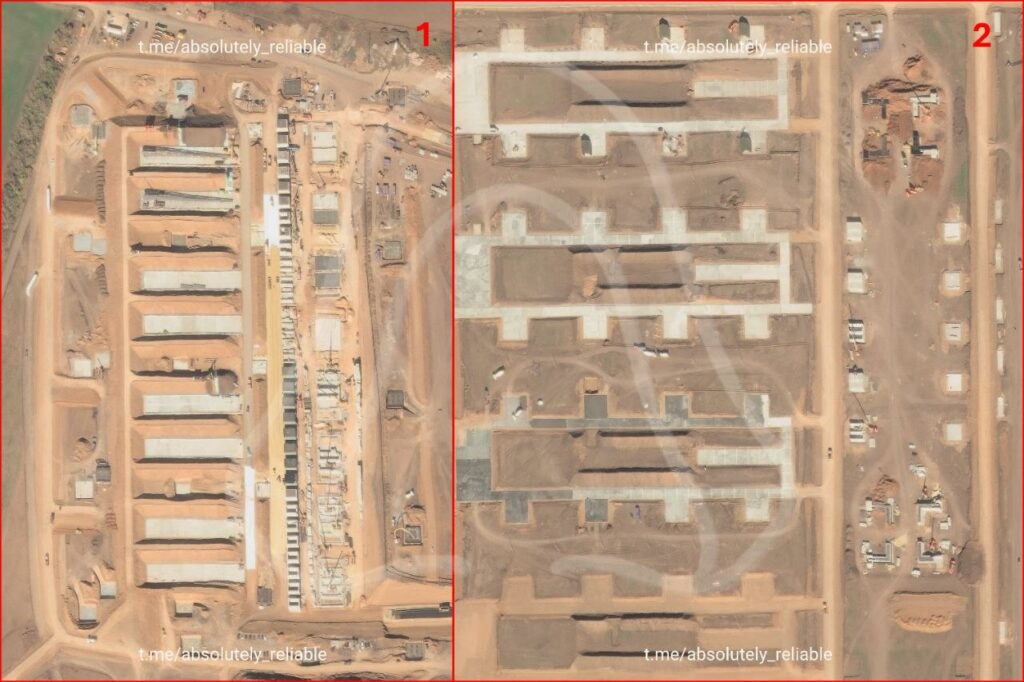
Russia has nearly finished the first section of a new launch site for jet-powered Geran-5 attack drones near the town of Millerovo in Rostov Oblast, anonymous Ukrainian OSINT channel Absolutely Reliable Source reported on 13 October. The channel’s bio says it covers Ukraine’s deep strikes and that its author belongs to a larger, unnamed structure. It says Russia rushed the build to scale up attacks after its September strikes on Kyiv.

The site is meant for the kind of drone Ukraine stops far less often than the older Shaheds. Ukraine downs 55% of jet-powered Shaheds, the class that includes the Geran-5, and more than 90% of the older propeller-driven ones, President Volodymyr Zelenskyy said on 26 September. Russian industry makes about 3,000 Geran-4 and Geran-5 drones a month, Ukraine’s military intelligence (HUR) told Militarnyi in August. A new launch site is how Russia plans to fire more of them, the channel argues.

Built in weeks, by the channel’s count

The channel’s images from 1 September show no construction at the site. The latest ones show eight prepared positions for launchers and 32 places for preparing drones for launch, the channel wrote. Imagery from the day before its post shows drones being unloaded in one zone, it said.

Millerovo drone base, September 1
Millerovo drone base, 1 September 2026. Satellite image: t.me/absolutely_reliable
Millerovo drone base,
Millerovo drone base, 12 October 2026. Satellite image: t.me/absolutely_reliable

The channel’s headline says the work took a month. Ukrainian outlet Militarnyi, comparing the channel’s own images from 1 September and 12 October, put it at about six weeks. Both readings rest on the same images, which have not been independently verified.

Built like Tsymbulova

The construction style is very similar to Tsymbulova, Russia’s jet-drone base in Oryol Oblast, the channel wrote. That base has separate positions for storing, preparing, and launching jet drones, Militarnyi said. By late May, less than a month into an expansion of Tsymbulova, Russia was already building 10 more launchers there.

Ukrainian drones have hit Tsymbulova repeatedly, though most of the damage imagery comes from Absolutely Reliable Source. Militarnyi reported strikes on the base’s bunkers and hangars in September. Ukraine’s Defense Forces struck it again overnight on 1 October, damaging two ground shelters and drone preparation areas, Absolutely Reliable Source said. On 10 October, OSINT channel Exilenova+ reported another drone strike there, saying several bunkers, one jet-drone launcher, and a drone storage area were hit.

  •  

Russia-linked bot networks kept their weekly rhythm after drone strikes on three Yandex data centers—disinformation monitor LetsData

Collage by Euromaidan Press

The claim that strikes on Russian tech giant Yandex thinned out social media bots finds no support in the networks tracked by Ukrainian disinformation-monitoring company LetsData, co-founder Ksenia Iliuk told Euromaidan Press on 13 October. She cautioned that the strikes may still have affected networks outside the company’s view.

At the Warsaw Security Forum, Lithuania’s prime minister suggested allies should ask Ukraine to strike more Russian data centers because that might help protect European elections from foreign interference. Bot networks are one tool of that interference, so whether the strikes mute them carries weight well beyond Ukraine.

No drop in the networks LetsData tracks

Drones hit Yandex data centers in Sasovo and Vladimir between 8 and 11 October. Ukrainian drone maker Fire Point said its FP-1 drones struck Yandex’s Kaluga site in between. On 12 October, Ukrainian President Volodymyr Zelenskyy told the Warsaw Security Forum that once Ukraine’s response reached Yandex, social media had fewer bots.

more than 500 drones moscow’s count kh-101 fuel plant second yandex data center far-north refinery hit · post smoke over ukhta komi republic after reported drone attack lukoil 9 2026
Explore further

More than 500 drones by Moscow’s count: Kh-101 fuel plant, second Yandex data center, and a far-north refinery hit

LetsData checked X and Facebook, where bot networks usually stand out clearly, Iliuk said. Its analysts looked at networks attributed to Russia’s influence ecosystem. Among them are groups of X accounts spreading domains from what she called a new wave of Doppelgänger, a Russian campaign that clones real news sites.

Those networks look unaffected, Iliuk said. None of them has stopped posting or broken its usual rhythm, she added. Some are slightly less active, but LetsData’s analysts say that is typical for them. The networks run on a weekly cycle, and the check fell in the part of the week when they post less.

A network that jumped from Germany to Ukraine

LetsData worked with two samples. One covers accounts that systematically target Ukraine, Moldova, and Armenia. The other covers bot networks the company has followed for some time that keep changing their target audience, so they have no fixed country.

ukrainian drones hit three russian tech giant yandex’s data centers four days ukraine’s president says bots thinned out too · post flickr/hesham elmahdy social media internet trolls networks ukraine news
Explore further

Ukrainian drones hit three of Russian tech giant Yandex’s data centers in four days. Ukraine’s president says the bots thinned out too

About two weeks ago, one network from that second sample wrote about elections in Germany and spread fake Die Welt sites, she said. It now posts about mobilization in Ukraine and shares a fake site of Ukrinform, Ukraine’s state news agency.

What the check can’t see

The company can compare only within networks whose usual behavior it knows, Iliuk said. Checking the whole internet is impossible because the scale is colossal, she said. A Cloudflare chart that circulated as evidence counted automated web requests from Yandex’s network, including its search crawlers, not social media posts, Cybernews reported.

So the networks LetsData follows show no impact, Iliuk said. That does not mean the strikes had no effect at all, she noted. They may have shown up in networks the company isn’t tracking now. LetsData will keep watching and report other signals if they appear.

  •  

Ukraine sent a spiked tank and a Bradley into Russian drone fire. The spikes held, and Ukraine’s own drones got them home

A 475th Assault Regiment hedgehog tank.

  • A Ukrainian assault regiment continues to deploy mixed formations of drones and up-armored vehicles
  • The vehicles do the shooting; the drones fly close top cover
  • These mixed formations could rescue old-fashioned armored vehicles from obsolescence by helping protect the vehicles from drone attack

For the second time in two weeks, Ukraine's 475th Assault Regiment has demonstrated how armored vehicles can fight and survive on a battlefield buzzing with enemy drones.

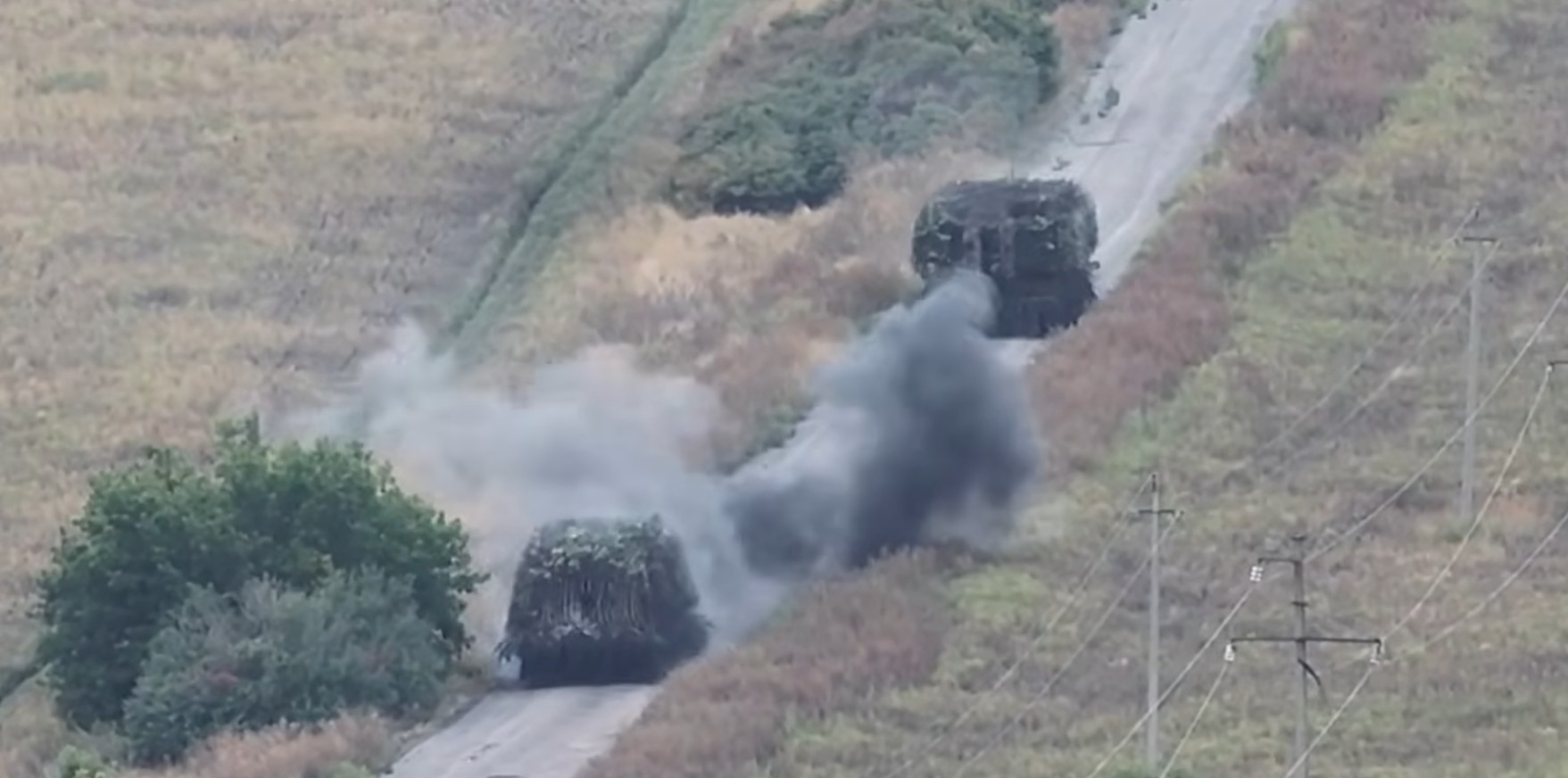
The regiment encased a tank and an American-made M-2 Bradley infantry fighting vehicle in metal frames and welded hundreds of metal spines onto those frames, transforming them into "hedgehog" vehicles. The cage makes the tank impossible to identify from the footage, and the regiment hasn't said what model it is. The frames support the spines, which trigger incoming drones' warheads a safe distance from the vehicles' hulls.

But that's not all. To shepherd the two-vehicle formation across the disputed gray zone for a close engagement with a Russian position, presumably somewhere in northeastern Ukraine's Kharkiv Oblast, the 475th Assault Regiment deployed drones: both single-use first-person-view models and grenade-dropping, reusable Vampire models.

❗The 🇺🇦Code 9.2 Regiment once again used the element of surprise, bringing a tank and a Bradley onto the battlefield—transformed into steel hedgehogs and covered by drones from the air. With a combined strike, the assault troops drove the enemy from several positions in… pic.twitter.com/Uq3mlWTsJq

— 🪖MilitaryNewsUA🇺🇦 (@front_ukrainian) October 11, 2026

The vehicles and their crews didn't fight alone. They fought in mixed ground-air "combined arms" formations. The tank and fighting vehicle provided the firepower. The escorting drones provided the aerial protection. Vampire drones drop grenades to suppress Russian positions and clear mines and loitering Russian drones. FPV drones dive down to intercept the Russians' own FPV drones as they zoom in to strike the vehicles.

The 475th Assault Regiment cut together a video montage of the most recent assault. The video depicts the tank and the Bradley rolling along a well-traveled route as at least one friendly FPV and at least one friendly Vampire drone flew overhead and an additional drone watched from a short distance away.

The vehicles repeatedly came under attack from Russian FPVs and heavier loitering munitions. An escorting Ukrainian FPV moved to intercept, with unclear results. A couple of Russian drones managed to score hits on the vehicles, but their hedgehog armor held—and both vehicles appear to have survived the there-and-back daytime trip into battle.

475th Assault Regiment tanks under drone escort.
Explore further

Ukraine is now sending its tanks into battle with drone escorts: they can drive into a Russian kill zone and come back alive

A way forward for vehicles

It's at least the second time the 475th Assault Regiment has deployed vehicle-drone teams. The Ukrainian 3rd Army Corps used a related approach in its months-long counteroffensive in northern Donetsk Oblast, which began this spring: it sent in ground robots first, suppressing Russian strongpoints, fraying Russian supply lines, and clearing routes for manned vehicles to follow.

The unmanned aerial escorts lend the 475th Assault Regiment's hedgehog vehicles situational awareness they might not have on their own. It's well known that hedgehog armor can obscure a vehicle crew's view of the surrounding terrain. But friendly drones flying directly overhead can act as eyes in the sky for the crews on the ground.

The drones also help the vehicle crews compensate for a lack of mobility. The metal cages that support the metal spines that make up hedgehog armor tend to prevent a vehicle's turret from fully rotating. In order to aim its gun, a hedgehog vehicle has to meticulously point its whole self—turret and hull—at the enemy.

Ukrainian Abrams tank fitted with modular cage-style protection designed to counter FPV drone strikes on the front line, as crews adapt Western armor to modern battlefield threats. Photo: Ukraine’s 160th Separate Mechanized Brigade
Explore further

Ukraine’s newest Abrams brigade just built the “dumbest” tank cage of the war. In 2026, that barely matters.

That takes trial and error, and time. The longer it takes, the more vulnerable a vehicle is to enemy drones. Friendly drones, running interference for the vehicles, can reduce that exposure long enough for the vehicle to fire a few shots.

The 475th Assault Regiment and 3rd Army Corps, among other units in Russia's wider war on Ukraine, are pointing the way forward for traditional armored vehicles in this new drone age. Yes, vehicles are more vulnerable to aerial attack than they were just a few years ago.

But no, armored vehicles aren't obsolete or useless. They just need a little help—or a lot of it—from the same kinds of drones that also make their existence so perilous.

  •  

Ukraine’s 3rd Army Corps took the lessons of the failed 2023 counteroffensive into Operation Vivaldi. It fought small, and won.

3rd Army Corps.

  • Ukraine's Operation Vivaldi has succeeded because ground commanders thought small instead of big
  • Rather than hoping for a major breakthrough, they fought incrementally and with heavy support from the air
  • Contrast Operation Vivaldi's small but successful thinking with the big thinking of Ukraine's failed 2023 counteroffensive

Five months after launching Operation Vivaldi, a local counteroffensive in northern Donetsk Oblast, the Ukrainian 3rd Army Corps has eliminated the Russian bridgehead on its most important long-term objective: the Zherebets River, which flows south through eastern Ukraine and forms a natural defensive barrier east of the last big free cities in Donetsk: Sloviansk and Kramatorsk.

Attacking methodically under strict secrecy, the 3rd Army Corps has pushed back the Russian 20th and 25th Combined Arms Armies and returned 176 sq km of northern Donetsk to Ukrainian control as of 30 September, according to Ukraine's presidential office. The figure could not be independently verified. Operation Vivaldi netted the Ukrainians hundreds of Russian prisoners and erased 18 months of Russian advances toward Sloviansk.

"Ukrainian forces have defeated the 2026 Russian campaign to seize Donetsk Oblast," the Institute for the Study of War in Washington concluded.

It's a remarkable feat for the overall outgunned and outmanned Ukrainian forces. Equally remarkably, the Ukrainians deftly dodged several potentially fatal traps as they flanked the 20th and 25th CAAs. They didn't get stuck in the Russians' dense minefields. They didn't expose themselves to devastating air attack. Perhaps most importantly, they didn't set their sights on distant objectives. They thought small instead of big, stacking small gains on top of small gains until those wins amounted to a big victory.

3rd Army Corps troops disembark from an armored vehicle.
Explore further

Armored assaults aren’t dead. Robots got the credit, but it was Ukrainian infantry in armored trucks that reversed a year of Russian gains near Lyman

A trio of US Army officers—Col. Timothy Price, Capt. Patrick Visser, and Capt. Andrew Carter—described this achievement in academic terms. The corps' defeat of the Russian bridgehead on the Zherebets "had little to do with maneuver warfare," the officers wrote for the Modern War Institute at the US Military Academy in West Point, New York.

In military parlance, "maneuver" generally involves heavy ground forces supported by air strikes and artillery decisively breaking through enemy lines and then rushing vehicles and troops into the panicking enemy's unguarded rear area to quickly inflict maximal destruction and achieve maximal territorial gains.

That's not what the 3rd Army Corps did in its five-month—and ongoing—counteroffensive. No, the Ukrainians "won through systematic, geometric interdiction and positional pressure," Price, Visser, and Carter wrote. Put plainly, the corps carefully probed for tree-covered assault lanes toward key settlements, deployed unmanned ground vehicles to clear mines and explode the most important nearby Russian strongpoints, and then rushed in armored vehicles carrying infantry.

Map of settlements Ukraine's 3rd Army Corps says it liberated north of Lyman, as of 28 September 2026.
Settlements Ukraine's 3rd Army Corps says it liberated during Operation Vivaldi north of Lyman, Donetsk Oblast, Ukraine, as of 28 September 2026. Map: ISW

They marched step by step, incrementally liberating a kilometer at a time instead of running a marathon toward a major objective tens of kilometers away. In that way, Operation Vivaldi is the very opposite of Ukraine's failed 2023 summer counteroffensive, which massed tanks for what commanders hoped would be a decisive breakthrough around the village of Mala Tokmachka in southern Ukraine's Zaporizhzhia Oblast.

The objective at that time was to break into the Russian rear and speed tanks 80 km to the occupied city of Melitopol near the Sea of Azov. That never happened. The Ukrainians got mired in minefields around Mala Tokmachka, suffered badly from Russian air attacks, and, after a grueling season of costly attacks, lost momentum just 10 km south of Mala Tokmachka. Later Russian counterattacks erased even those modest Ukrainian gains.

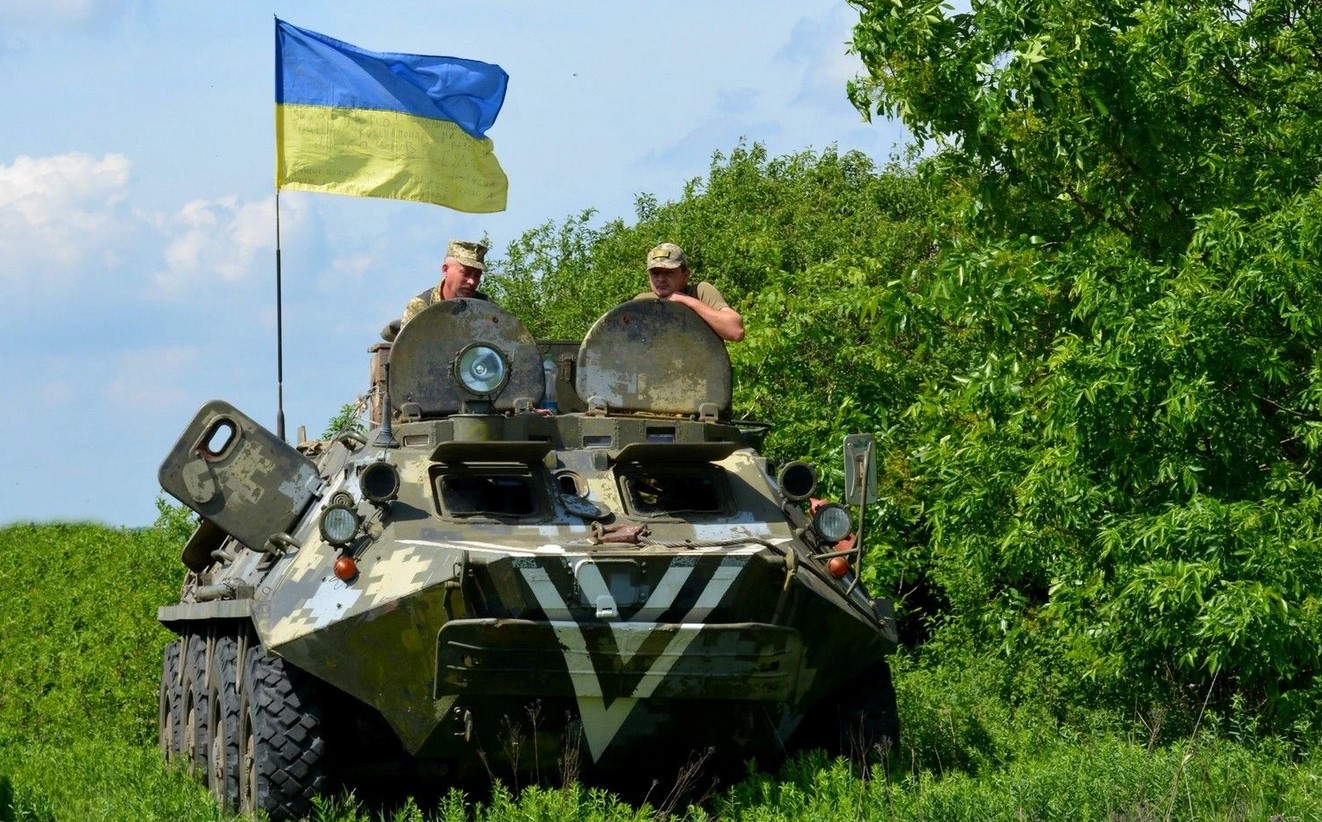
A BTR-60B. Source: Ukraine's Ministry of Defense.
Explore further

In Ukraine’s Vivaldi offensive, nobody rides in the BTR-60s. Bulgaria’s old troop carriers go into Russian bunkers packed with mines

Old thinking versus new

The planners of the failed 2023 counteroffensive were stuck in an old way of thinking about maneuver warfare. The planners of the successful 2026 counteroffensive shrugged off obsolete ideas. They thought smaller—and, ironically, achieved much more as a result.

The 3rd Army Corps couldn't, and didn't, do it alone. Indeed, the corps depended on the Ukrainian Unmanned Systems Forces to fray the Russians' supply lines, electronic warfare teams to jam Russian drones, and the Ukrainian air force to bomb Russian drone operators the EW teams couldn't suppress. By contrast, the Ukrainian forces attacking south from Mala Tokmachka in 2023 did so without much aerial support.

The aerial and electronic preparation was a prerequisite for each of the 3rd Army Corps' incremental advances this spring and summer. The lesson, the officers argue, is that "higher headquarters must degrade key enemy capabilities" before a smaller ground formation can expect to gain ground and keep it. If the support falters, the ground forces won't be able to hold.

Think small. Prepare hard. Now that the Ukrainians know this is how to win on the ground, can they repeat Operation Vivaldi's success?

There's some evidence they're already doing so in the southeast, where a clutch of Ukrainian air assault brigades has been pushing back the Russian 29th Combined Arms Army.

  •  
❌