❌

Reading view

Iran has detailed plans to hit Gulf undersea cables if war resumes, officials say

Their comments followed warnings by Iranian officials that undersea cables in the region could become targets in any renewed conflict if diplomacy with Washington collapses.

The two Iranian security officials, speaking on condition of anonymity, gave few details and did not say how or where exactly Tehran would carry out such attacks. But one of them said Iran would aim to prevent repairs after any attacks to prolong disruptions to communications, including internet connections.

“If Iran is attacked, there will be no more red lines … from undersea cables to military bases, including covert ones,” one of the officials said.

The official warned Washington not to “play with fire”, and said Iran had full access to the undersea cables and could easily destroy them.

Yadollah Javani, the deputy head of political affairs for Iran’s Revolutionary Guards (IRGC), said on Wednesday that Iran could target seven major internet cables beneath the Strait of Hormuz if Iranian infrastructure came under attack.

Undersea cables carry around 99% of global internet traffic, according to the International Telecommunication Union, a UN agency. But the global impact of such attacks by Iran could be limited as less than 1% of international bandwidth passes through the Strait of Hormuz, said Alan Mauldin, research director at telecommunications research firm TeleGeography.

The strait separates Iran and Oman, linking the Gulf to the Gulf of Oman and Arabian Sea.

The US Department of State and Iran’s Foreign Ministry did not respond to Reuters’ requests for comment on the Iranian security officials’ remarks. There was no immediate comment from Gulf states.

‘STRONGER RESPONSE’

The plans for possible attacks on undersea cables reflect a conviction in Iran’s ​leadership that a renewed US military campaign would have to be met with a stronger response than before.

Top security official Mohsen Rezaei warned this month that US-linked digital infrastructure across the Gulf, including data centres and AI facilities, could be targeted in a renewed conflict.

Washington’s Gulf allies have invested heavily in such infrastructure and they “should hold Washington, not Tehran, responsible for any damage to undersea cables,” the second Iranian security official said.

Alex Vatanka, director of the Iran program at the Middle East Institute in Washington, said such threats were intended to deter renewed conflict and put pressure on Washington by making Gulf governments and US companies fear for their investments in the region.

“Tehran wants Gulf states and corporate executives to press (US President Donald) Trump over the risks his policies pose to their investment plans,” said Vatanka.

Multiple cable cuts could slow internet services and disrupt financial transactions, e-commerce and cloud computing, analysts said. The impact would depend on how operators rerouted traffic and the capacity available on alternative connections, Mauldin said.

Restoring connections during wartime could be difficult, experts said, and higher insurance costs and delays in obtaining permits to enter territorial waters could further complicate repairs.

The Red Sea could offer a more significant target than the Strait of Hormuz, particularly if Iran had support from its Houthi allies in Yemen, though Tehran has made no public statement indicating it plans to target cables there.

The Red Sea carries data between Europe, East Africa and Asia, with capacity routed through it accounting for about 3% of global international demand and around 10% of traffic travelling between regions, Mauldin said.

Gulf governments have been investing heavily in technology to diversify beyond oil and become global artificial intelligence hubs, deepening ties with US technology firms.

Iranian strikes directly hit two Amazon Web Services facilities in the UAE in March and damaged infrastructure near one of its facilities in Bahrain. The IRGC named US tech companies including Microsoft, Google, Apple and Nvidia as legitimate targets at the height of the war in March.

Land-based connections can provide alternative routes for internet traffic, and Gulf states and US technology companies are investing in additional infrastructure to improve resilience.

Microsoft plans to invest more than $400 million in subsea and terrestrial connectivity across the Middle East by 2030.


  •  

Tinned mackerel, hand-crank radios and bags for poo: crisis-prepping guides around the world

UK allies have long urged people to stockpile supplies for a crisis. How are people from France to Australia being advised to prepare?

The UK has told people to fill their pantries with food for three days in case of catastrophe, joining a host of countries urging citizens to ready themselves for core systems failing.

Such advice, once dismissed as the preserve of preppers, has become more common in government circles as climate breakdown worsens weather extremes and geopolitical tensions turn cyber-attacks and sabotage into a regular occurrence.

Continue reading...

© Photograph: pundapanda/Getty Images

© Photograph: pundapanda/Getty Images

© Photograph: pundapanda/Getty Images

  •  

Mayor of Gaia accuses government of blocking construction of 2,500 homes for young people

Mayor of Gaia, Luís Filipe Menezes has harshly criticised the government for standing in his municipality’s way over a project to build 2,500 homes for young people on a derelict

The post Mayor of Gaia accuses government of blocking construction of 2,500 homes for young people appeared first on Portugal Resident.

  •  

‘Help me. Now. He is killing me’ – Somali man arrested afrter Amsterdam woman’s body found in suitcase in Amstel River

The body of 29-year-old Hajar was discovered on the morning of Oct.16 inside a suitcase in the Amstel River along the Amsteldijk in Amsterdam-Zuid, near Martin Luther Kingpark. She had been missing since Oct. 4, when she was last seen cycling away from the RAI convention center toward the Buitenveldert neighborhood with an unidentified man.

Hajar disappeared after sending a series of alarming text messages to a family member. According to reporting by De Telegraaf, one message read: “Help me. Now. He is killing me.”

The messages arrived around 11:15 a.m. on Oct. 4. Her family reported her missing that evening, but police initially classified the case as non-urgent. A public appeal for information was not issued until Oct. 13, nine days later.

🇳🇱🇩🇪 Women in the Netherlands and Germany are now trying to defend themselves with "Smurf spray" after an asylum seeker raped and murdered 17-year-old Lisa. "Since Lisa’s death, many of (self-defense) products have been sold out, including the Smurf spray." Pepper spray is illegal in both Germany and the Netherlands, which means women are desperate for self-defense options. Smurf spray paints a potential rapist’s face blue for days, making a suspect easy to identify. But can it really stop a determined rapist? "After the death of 17-year-old Lisa, practically every woman in Holland wants to carry it." 17-year-old Lisa was not the only victim. The asylum seeker had previously raped and sexually assaulted other women. (Video source: RTL)

— Remix News & Views (@RMXnews) September 2, 2025

On Oct. 20, Amsterdam police arrested a 23-year-old Somali national identified in reports as Abdi A. (or Abdi Anan). He has lived in the Netherlands since the age of six, holds permanent residency, and has no fixed address.

Authorities said he was first questioned as a witness after CCTV footage placed him with Hajar near the RAI on the day she vanished. He was arrested the following day after a separate violent incident at a home in Koggenland, Noord-Holland, in which a man, later identified as his foster father, was injured.

Police Chief Peter Holla told a press conference that “Hajar died fairly soon after her disappearance” and that “as far as is known, the suspect has no connection to the victim.”

🇳🇱First, a Dutch woman was raped and beaten. It was all caught on surveillance camera, but police never released the footage or an image of the suspect. A few days later, the African migrant Chris Jude raped and murdered 17-year-old Lisa. A complete failure of the Dutch police and larger immigration system. @rblommestijn : “The police and judiciary simply did not do their job properly.”

— Remix News & Views (@RMXnews) December 8, 2025

Chief Prosecutor René de Beukelaer said, “Once again we must pause at the violent death of a young woman.”

Amsterdam Mayor Femke Halsema confirmed the death was the result of a violent crime and noted the case alongside the prior murder of 17-year-old Lisa.

Investigators later searched an empty school building on De Klencke in Buitenveldert, where police believe Hajar was killed.

Holla described the circumstances of the disposal as “inhumane.”

Family members expressed anger that police did not treat the case as urgent sooner despite the text messages, telling LINDA.nl: “We already knew she had been murdered. That is what she messaged.”

Police said they assessed the initial report differently and have since spoken further with the family.

Hajar was described by acquaintances as vulnerable and known for leaving her home with a suitcase and going away for longer periods before returning.

The investigation remains ongoing, and the suspect is expected to appear before a judge.

The post ‘Help me. Now. He is killing me’ – Somali man arrested afrter Amsterdam woman’s body found in suitcase in Amstel River appeared first on Remix News.

  •  
  •  

Ukraine: l’heure de la grande desillusion

Dans ce sixième numéro de Moreau Décrypte, Xavier Moreau analyse la grande désillusion qui s’empare d’une partie des Ukrainiens. À Kiev, beaucoup observent avec inquiétude l’évolution de la position américaine, marquée par une priorité croissante accordée aux négociations et à un rééquilibrage des relations avec les grandes puissances, tandis que des discussions diplomatiques impliquant Washington, Moscou et d’autres acteurs internationaux

Publié à l’origine par divergencepolitique.fr

  •  

France to deploy 70,000 police on Saturday to prevent civil unrest

Security forces to include elite units usually used for counter-terrorism after worst street violence in years

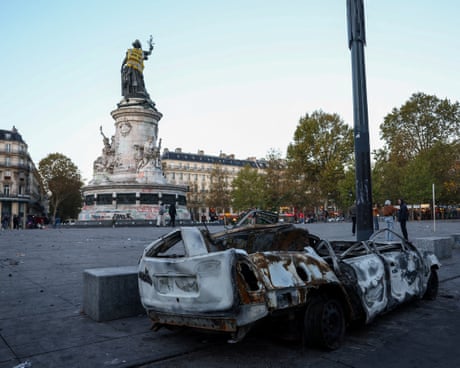
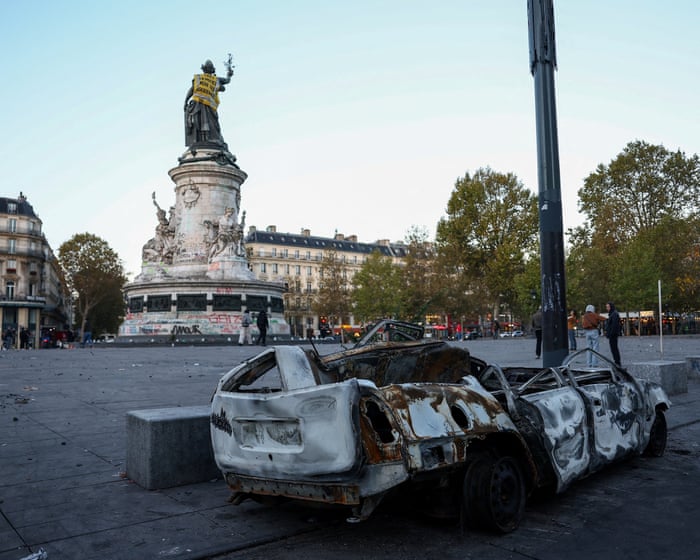
France will deploy about 70,000 police around the country on Saturday as the government seeks to prevent more civil unrest after some of the worst street violence in years erupted on the fringes of cost-of-living protests last weekend.

The interior minister, Laurent Nuñez, said on ⁠Friday ⁠the security forces would include elite units usually used for counter-terrorism operations and hostage rescues, adding that there had been social media calls for violence from “ultra-left” groups.

Continue reading...

© Photograph: Abdul Saboor/Reuters

© Photograph: Abdul Saboor/Reuters

© Photograph: Abdul Saboor/Reuters

  •  

How Worried Should We Be About the Economy? Let’s Look at 2008.

It’s not impossible to spot the characteristics of a brewing financial crisis. We can look to 2008 for clues.

© Illustration by Andrei Cojocaru; photos by Getty Images

  •  

At Least 852 Migrants Dead or Missing in Three Months, EU Rights Agency Reports

At least 852 people died or went missing while trying to reach Europe by sea between July and September 2026, according to a new report from the European Union Agency for Fundamental Rights.

The agency’s migration bulletin, published on 22 October, draws on International Organization for Migration data and examines the protection of people travelling through the Mediterranean and along the Atlantic route towards the Canary Islands.

The highest recorded number was on the West Africa–Atlantic route, with 283 deaths or disappearances. The Western Mediterranean accounted for 229, the Eastern Mediterranean for 199 and the Central Mediterranean for 141.

The findings come as the EU implements its Migration and Asylum Pact and governments face continuing scrutiny over rescue operations, border policing and the treatment of children.

The routes behind the figures

The four route totals add up to 852. The overall figure is a minimum because some shipwrecks may go unreported and the identities or number of passengers can be difficult to establish.

The Atlantic crossing to the Canary Islands involves long journeys in small vessels exposed to changing weather and limited rescue coverage. Different Mediterranean routes present their own risks, including departures from North Africa and Turkey.

The agency is careful to distinguish people confirmed dead from those reported missing. Both are included in the latest figures; the data should not be described as a verified count of recovered bodies.

New attention to Ceuta

The bulletin also reviews the mass attempted crossing into the Spanish enclave of Ceuta in July. Spanish government figures cited by the agency put irregular entries from Morocco at more than 72,000 on 30 July.

The event raised questions about reception facilities, safeguarding of children, alleged excessive force and access to protection procedures. Allegations against authorities require examination on their merits and must not be conflated with findings of guilt.

EU Today has reported separately on the Ceuta crisis. The new agency bulletin adds comparative data across migration routes and examines systemic safeguards under EU law.

Monitoring under the migration pact

Independent rights-monitoring structures required under the EU’s new migration framework are still being established in parts of the bloc, the agency says. Their effectiveness will depend on access, independence and whether allegations can be investigated.

The report also addresses restrictions affecting civilian search-and-rescue organisations and uneven support for people displaced from Ukraine.

European governments are simultaneously attempting to reduce irregular crossings, tackle smuggling networks and maintain legal duties to rescue people in distress. These obligations operate together rather than replacing one another.

The new figures provide a measure of the human consequences of dangerous routes, while the recommendations will test how far member states can translate the new framework into effective procedures.

  •  

Potholes, bus fares and headphone dodgers: will Burnham’s strategy of ‘everyday fixes’ succeed?

New PM has prioritised small fixes to show voters Labour can make a real difference, and government insiders are delighted at the public’s reaction

In the first episode of Armando Iannucci’s political satire The Thick of It, the hapless minister Hugh Abbot is in the back of a taxi, frantically brainstorming for an on-the-hoof policy he can announce to the assembled national press.

“So you want something sexy and eye-catching, and that is free and universally popular and instantly applicable. No one can possibly object to it,” says the addled junior adviser Ollie Reeder. “Well, really, you should have said something before then, because I’ve got a file about that fucking thick of that back in the office.”

Continue reading...

© Photograph: Christopher Furlong/Getty Images

© Photograph: Christopher Furlong/Getty Images

© Photograph: Christopher Furlong/Getty Images

  •  

Russian diesel heads to US after Putin-Trump deal, data shows

A Malta-flagged tanker carrying 40,000 metric tons of Russian diesel is heading towards New York following an agreement with US President Donald Trump, LSEG data showed on Friday.

Trump has made several moves hoping to bring down diesel prices ahead of November 3 US mid-term elections including waiving parts of a new sanctions law against Russia and threatening Europe with a US diesel export ban unless countries released more from their emergency reserves.

The medium-sized tanker Agioi Fanendes was loaded with 40,000 metric tons of ultra-low sulphur diesel in the Russian Baltic port of Primorsk on October 22, according to shipping data. It is expected to arrive in the United States on November 7.

Russia agreed to lift a self-imposed ban on diesel exports and supply the fuel to global markets, including the US, after theagreementreached between Russian President Vladimir Putin and Trump.

Trump announced on October 9 that Russia would immediately export 300,000 metric tons, or 2.25 million barrels, followed by 500,000 tons in November and 1 million tons “immediately thereafter”.

Russia will be able to increase diesel exports to between 3 million tons and 3.5 million tons per month by year-end, the country’s usual export volume of the fuel, Deputy Prime Minister Alexander Novak said last week.

Last week, export diesel cargoes were loaded in the Russian Baltic port of Primorsk, but their final destinations are not clear, with most vessel are signalling Gibraltar, the Atlantic Coast or Port-Said, according to LSEG shipping data.

Since the full EU embargo on import of Russian oil products came into effect in February 2023 over the war in Ukraine, Russia has exported diesel mainly to Brazil and Turkey, as well as to an African countries.

  •  

Bank of Portugal governor calls for more construction to tackle housing crisis

Álvaro Santos Pereira begins work as the new governor of the Bank of Portugal today. Image: João Relvas/ Lusa

The governor of the Bank of Portugal has called for a national consensus on tackling the country’s housing crisis, arguing that building more homes, expanding social housing and reducing bureaucracy

The post Bank of Portugal governor calls for more construction to tackle housing crisis appeared first on Portugal Resident.

  •  

Retail sales in Great Britain fall as struggling households cut back

Latest negative economic update comes as John Healey prepares to announce budget next week

Retail sales in Great Britain fell more steeply than expected last month, the latest negative economic update before the chancellor, John Healey, announces his budget next week.

The Office for National Statistics (ONS) said the volume of goods sold fell 0.4% month on month in September, much steeper than economists’ consensus expectations of a 0.1% fall.

Continue reading...

© Photograph: Maureen McLean/REX/Shutterstock

© Photograph: Maureen McLean/REX/Shutterstock

© Photograph: Maureen McLean/REX/Shutterstock

  •  

Milan braces for more unrest as debate intensifies over Italy’s ‘lost generation’

Protests and fringe violence expose sharp divide between marginalised and immigrant youth and those with greater prospects

Martina Miccichè was filming riot police kicking and beating a teenager with batons as they dragged him along Piazza del Duomo, the central Milan square hosting its cathedral, when she was struck by a flying object, causing a deep gash and bruising near her right eye.

The journalist had joined hundreds of mostly young people marching through the northern Italian city on Saturday afternoon to protest over soaring living costs and unaffordable housing, echoing the wider wave of economic discontent fuelling protests across Europe.

Continue reading...

© Photograph: Stefano Porta/LaPresse/AP

© Photograph: Stefano Porta/LaPresse/AP

© Photograph: Stefano Porta/LaPresse/AP

  •  

Exclusive — TX GOP Candidate Eric Flores: I Saw the Border Crisis Firsthand in Texas as a Soldier

Eric Flores, a Republican vying to unseat incumbent Democrat Rep. Vicente Gonzalez (D-TX) in Texas's 34th Congressional District, said he witnessed the realities of the border crisis firsthand in Texas during his time as a solider on Operation Guardian Support during President Donald Trump's first term.

The post Exclusive — TX GOP Candidate Eric Flores: I Saw the Border Crisis Firsthand in Texas as a Soldier appeared first on Breitbart.

  •  

Heat killed ‘staggering’ 50,000 people in Europe’s cities this summer, scientists warn

People succumbed to heat at highest rates in Malta, Italy and Hungary, with health issues, loneliness and poverty exacerbating toll

Heat killed a record 50,000 people in European cities this summer, new research suggests, with scientists blaming climate breakdown for two in every three of the deaths.

Morgues and funeral homes filled with bodies from June to August as the heat added by planet-baking pollution cut short an extra 32,000 lives in urban areas, the researchers found. Hot days pushed vulnerable bodies into overdrive and warm nights prevented them from recovering.

Continue reading...

© Photograph: Anadolu/Getty Images

© Photograph: Anadolu/Getty Images

© Photograph: Anadolu/Getty Images

  •  

UK consumer confidence falls at fastest rate since Brexit vote as cost of living bites

Economic fallout from war in Middle East adds to pressures on consumers and on chancellor before budget

Consumer confidence in the UK has fallen at the fastest rate outside the Covid pandemic since the 2016 Brexit vote as the escalating economic damage from the war in the Middle East hits Britain.

With less than a week before John Healey’s first budget, the latest barometer from the data company GfK indicated confidence plunged by 11 percentage points in October to -24 amid pressure on consumers from the rising cost of living.

Continue reading...

© Photograph: Murdo MacLeod/The Guardian

© Photograph: Murdo MacLeod/The Guardian

© Photograph: Murdo MacLeod/The Guardian

  •  
❌