❌

Reading view

Starlink helped Ukraine win Operation Vivaldi. A new cap on it could help Russia claw back the ground
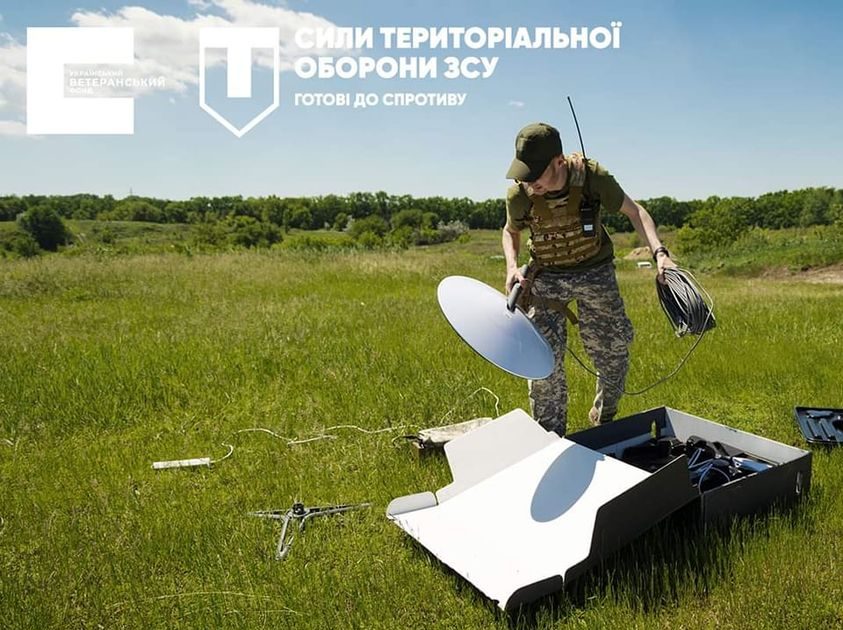
Elon Musk: “Starlink will never turn off for Ukraine”

  • Ukraine's Operation Vivaldi may have begun as early as March
  • The counteroffensive seemingly inflicted more damage on a pair of Russian field armies than previously thought
  • But the gains could be fleeting if a new speed cap on Ukraine's military Starlink terminals stays in place

The Ukrainian 3rd Army Corps' Operation Vivaldi—its secretive counteroffensive east of Sloviansk in northern Donetsk Oblast—started earlier than first reported, and by the time it ended on 14 October it had cost the Russians more than 8,000 troops, by the 3rd Army Corps' count.

It was a major Ukrainian victory in one of the most important sectors of Russia's 56-month wider war on Ukraine. But it could prove to be a temporary win, one the Russians may be able to partially reverse, if the administration of US President Donald Trump continues to throttle Starshield, the military version of Starlink that Ukraine's drones and commanders rely on.

The Ukrainians' former command and control advantage, largely attributable to once-reliable Starlink and Starshield access, was pivotal as Operation Vivaldi played out in the Donbas region in stages starting in March. That advantage shrank practically overnight on 14 October, when a new speed cap began cutting off Ukraine's Starshield terminals whenever they moved faster than about 160 km/h (100 mph).

The 3rd Army Corps attacked east of Sloviansk and north of Lyman as early as March, analyst and mapper Clément Molin concluded after scrutinizing official videos and interviews the Ukrainian defense ministry recently released. "The operation began much earlier than initially thought," Molin wrote.

We are now 5 months after the start of Ukraine's 🇺🇦 Vivaldi operation and it has now officially ended

A month after the operation was revealed, we know have much more information on the biggest Ukrainian success of the year.

🧵THREAD🧵1/18 ⬇ pic.twitter.com/MgCoSv7Yhr

— Clément Molin (@clement_molin) October 20, 2026

The timing was probably no accident.

In early February, SpaceX, working from a Ukrainian defense ministry whitelist, switched off the thousands of stolen and smuggled Starlink terminals the Russians had been using.

That had the effect of grounding many Russian drones and blinding many Russian commanders. Taking advantage of the Russians' confusion, Ukrainian troops attacked in several key sectors: in Zaporizhzhia and Dnipropetrovsk Oblasts in the southeast, and east of Sloviansk in northern Donetsk.

The Donetsk attack expanded into a full-blown counteroffensive under conditions of strict secrecy as the 3rd Army Corps probed for weaknesses along the flanks of the Russian 20th and 25th Combined Arms Armies, then overextended along the axis between the Zherebets River in the east and the outskirts of the Sloviansk-Kramatorsk urban conglomeration in the west.

The Russians had been threatening to lay siege to Sloviansk and Kramatorsk, the last two big free cities in Donetsk Oblast, from two directions: the north and the south. Operation Vivaldi eliminated the northern threat—and at great cost to the Russian 20th and 25th CAAs.

A Ukrainian Hornet drone about to hit a buhanka, a UAZ van Russian forces use to haul troops and supplies.
A Ukrainian Hornet drone about to hit a buhanka, the UAZ van Russian forces use to haul troops and supplies to the front. Drones like this one have been choking Russian military supply lines. Via WarTranslated.

Drones lead

Aerial drones and unmanned ground vehicles led the attack, taking the Russians by surprise. "For an offensive operation, the Ukrainians sustained relatively few casualties compared to previous engagements," Molin explained. "Conversely, the defending Russian forces suffered significantly higher losses, largely due to the rapid encirclement of at least three regiments, not all of which managed to escape the area."

It's unclear how many casualties the Russians suffered, but they might number in the thousands. The 20th and 25th CAAs were particularly fragile because the 3rd Army Corps and supporting drone units had been bombarding their supply line with so-called "middle strike" drones.

But many middle strike drones rely on civilian-style Starlink satellite terminals or the more rugged, better-performing Starshield. Now that the 3rd Army Corps has wrecked Russia's 144th Motor Rifle Division, which the Institute for the Study of War assessed on 20 October has effectively ceased to exist as an organized fighting force, and pushed the Russian survivors back to the far bank of the Zherebets River, the Ukrainians are probably "consolidating their gains and adopting a defensive posture," according to Molin.

Operation Vivaldi. Map: Euromaidan Press

But that defensive posture, protecting Sloviansk from a northern attack, depends on reliable communications and responsive drones. On 14 October, a new speed cap hit Ukraine's Starshield terminals, cutting the link on any drone flying faster than about 160 km/h. Who ordered it is disputed. Sources told Reuters the order came from inside the White House, and that Pentagon leaders were told the service needed to be slowed.

The Wall Street Journal reported that Musk himself ordered the slowdown, and that he and Trump discussed it soon after it became public. While Trump has denied ordering the speed limit, it's worth noting that the American president has become more overtly friendly toward Russia as his Republican Party looks likely to lose control of the US Congress in the November mid-term elections.

The speed limit renders many of the faster middle-strike drones unflyable. As a result, "Ukrainian drone strikes have diminished significantly following yesterday's crippling of Ukraine's Starlink/Starshield connections, Russian sources report," the military history account ChrisO_wiki wrote on X on 15 October, the day after the speed limit took Ukrainian operators by surprise.


Map of settlements Ukraine's 3rd Army Corps says it liberated north of Lyman, as of 28 September 2026.
Settlements Ukraine's 3rd Army Corps says it liberated during Operation Vivaldi north of Lyman, Donetsk Oblast, Ukraine, as of 28 September 2026. Map: ISW
1st Azov Corps in training.
Explore further

Russia is back at Dobropillia a year after it failed there. Now it’s the southern jaw of a pincer on Donbas’s last big free cities

A reduction in middle strikes on Russian supply lines could help Russian field armies recover from recent setbacks, including their retreat back across the Zherebets River. And if the communications confusion resulting from the partial loss of Starlink/Starshield connectivity persists, it could give the Russians the same kind of opportunity the Ukrainians had back in the spring.

An opportunity to go back on the attack—and an Azov communications engineer warned Euromaidan Press in February that the shoe might be on the other foot.

That's the worst-case scenario for the Ukrainians now that Operation Vivaldi has ended. The best case is that they get full Starlink and Starshield access back—or find command and control alternatives—and duplicate, in other sectors, the same success they enjoyed in northern Donetsk.

"Now that the northern flank of Donbas is secured, at least for some time, the focus will concentrate on the southern flank," Molin predicted.

poland bulgaria now lithuania russia’s suspected arson campaign reaches third starlink site serving ukraine · post ukrainian soldier installs open sources images news reports
Explore further

Starlink crackdown cripples Russians—but American engineer warns Ukraine is just as vulnerable

  •  

Rubio, Hegseth point finger at Musk in Starlink slowdown

Top Trump administration officials are starting to point fingers squarely at SpaceX founder Elon Musk for the decision to slow down his company’s Starlink satellite internet services and its military counterpart Starshield for Ukraine, which has been muddled in uncertainty over the culprit. Looking to deflect the controversial move — which was swiftly admonished by…

  •  

Democrats call for investigation into Musk over reported Starlink slowdown order

Democrats are calling for an investigation into SpaceX CEO Elon Musk following a Wall Street Journal report alleging he ordered the Starlink slowdown in Ukraine. “Either the President was lying or Musk was lying, but the decision to slow down satellite speed and access has life or death consequences for Ukraine,” Sen. Adam Schiff (D-Calif.)…

  •  

Starlink slowdown makes Ukraine’s Shahed-hunting drone maker rethink air-launched interceptors

STING S interceptor

Ukrainian drone maker Wild Hornets is rethinking projects it is currently working on, including launching interceptors from aerial platforms, because of limits on SpaceX’s Starlink satellite internet. Spokesman Mike Orliuk told The War Zone (TWZ) this on 20 October. The company builds Sting interceptors, which it says destroyed over 15,000 Shaheds and Gerberas, a cheaper Shahed lookalike, in a year. Orliuk said Sting’s current operations are unaffected.

The stakes rise as Russia shifts to faster drones. Ukrainian defense technology adviser Serhii Beskrestnov counted more than 2,500 jet-powered Gerans, Russia’s version of the Shahed, in August. President of Ukraine Volodymyr Zelenskyy said on 16 October that these drones fly faster than 400 km/h. He added that some Ukrainian interceptors chasing them work through Starlink. When the link was slowed, Ukraine could not intercept some of them, he said.

How Sting stays connected

“Our own communications system provides the basic connection to our interceptors,” Orliuk said. The company’s remote-control technology can draw on various internet sources, he added, though the military often uses Starlink. Even then, the terminal does not need to move at high speed. It only links the command center to a ground station, which Orliuk compared to a cell tower.

“For these needs, everything is operating normally with Starlink at the moment,” he said.

An air-launch project under review

“Some drones carry a terminal on board and need to fly at high speed with it,” Orliuk said. “In such cases, Starlink’s limitations make their operation impossible.”

That is why the company is rethinking the air-launch project. Wild Hornets has made no clear decision yet but will test alternatives, Orliuk said. He declined to describe them.

“I believe, in any case, depending on a single solution is very risky,” he said.

The Starlink logo on a smartphone screen.
Explore further

Musk pointed at the US military over Ukraine’s satellite limits. Now a US official says the administration had nothing to do with them

Other firms share the concern

Orliuk said he has spoken with other companies that rely far more on Starlink and have expressed concerns. He pointed to growing interest in Europe’s Eutelsat network, though “creating something like Starlink won’t be easy.”

Who ordered the slowdown remains unclear. The order to slow Ukraine’s Starshield service came from inside the White House, two US officials and a Western official said. A US official told TWZ the president never made such a request. US Secretary of State Marco Rubio said on 17 October that the slowdown had “nothing to do with the White House” and called “a report on that” “categorically false,” without saying which report he meant.

  •  

Who capped Ukraine’s Starlink? “Ultimately POTUS,” Musk said. Ultimately Musk, reports now say

musk, trump

Elon Musk ordered the speed cap on Starshield, the military version of SpaceX’s Starlink network that Ukraine’s drones rely on, The Wall Street Journal reported on 20 October. Earlier, Musk said that such limits are decided by the US military and “ultimately POTUS.” Speaking to reporters in Eau Claire, Wisconsin, on 20 October, according to WSJ, US Defense Secretary Pete Hegseth said, “We haven’t made any directives or anything like that,” CBS News reported.

For a week, no one with a hand on the system said the decision was theirs. Musk pointed to the US military and the president, and Trump said he did not know who it was. Meanwhile, Ukrainian officials said the cap has hampered the drones they use to intercept Russian Shaheds and to strike Russian forces in occupied territory. Kyiv says the cap remains in place, and at about 160 km/h it makes intercepting jet-powered drones and missiles that fly about twice as fast virtually impossible.

Musk spoke with administration officials, including Trump, before the cap, a source says

Musk capped the speeds at which Ukrainian hardware could stay connected to the network, people familiar with the matter told WSJ. The slowdown, which began on 14 October, left some of Ukraine’s strike and interceptor drones virtually useless, WSJ said.

WSJ’s sources differ on Trump’s role. Some US officials said Musk acted on his own and that Trump did not specifically order any retribution against Ukraine. One person said Musk spoke with several senior administration officials, Trump among them, before imposing the cap. Two people said Musk and Trump discussed the decision by phone soon after the slowdown became public.

During the uproar, SpaceX representatives called White House counterparts. They asked for a shared message that the company and the administration had coordinated before Musk’s directive, the people said. The White House ran an informal inquiry into who ordered the slowdown, WSJ said.

Musk held several conversations with administration officials before the order to understand the president’s thinking, CBS reported, citing sources. He dislikes his company being seen as profiting from the war, and it is unclear how his order was carried out, CBS said.

Hegseth points to Starlink’s terms of service

Hegseth said the US had not pulled anything back. He said Starlink “has the option” to make decisions under its terms of service, and that from the Pentagon’s view nothing had changed, CBS reported.

Speaking to reporters as he left the White House on 16 October, Trump said he did not think either he or Musk was responsible, The Telegraph reported. On 19 October, he said, “I don’t know who it was, but I’d like to find out.”

Last week, a bipartisan group of senators asked the Pentagon’s inspector general to investigate whether officials “directed” or “authorized” changes to Starlink and Starshield services and intelligence sharing affecting Ukraine.

Earlier reports pointed at the White House

On 15 October, Reuters reported that the order came from inside the White House. The officials said Pentagon leaders received a message that the Starshield service for Ukraine’s military needed to be slowed, but did not say who made the decision or who carried it out. A senior US official said “No such request was ever made by the president.”

On 16 October, The Telegraph reported, citing four sources, that Musk approached Trump with the idea of the speed limits. One of the sources said Trump agreed.

Analysts and Kyiv say the cap is still in place

Michael Kofman, a war analyst at the Carnegie Endowment, said, according to WSJ, that Ukrainian strike and interceptor drones remain limited to 160 km/h. He said actual connections run below 130 km/h, which still hampers strikes and air defense.

On 20 October, Ukraine’s top diplomat in Washington, Denys Sienik, said Kyiv was still waiting for answers from the Pentagon and SpaceX, WSJ reported.

  •  

Musk ordered Starlink slowdown in Ukraine: Wall Street Journal

Tesla and SpaceX CEO Elon Musk ordered the slowdown of Starshield, the military version of Starlink internet, which Ukraine said hampered its ability to respond to Russian attacks, The Wall Street Journal reported, citing U.S. officials and people familiar with the matter. The disruption has impacted Ukraine’s drones, airplanes and helicopters, a source familiar with…

  •  

Rubio thinks Starlink is fixed. Kyiv says it still cuts out above 161 km/h

rubio

Ukrainian President Volodymyr Zelenskyy said on 20 October that he had spoken with US Secretary of State Marco Rubio about ballistic missile interceptors, early warning of Russian launches, and “the situation with Starlink/Starshield, which needs to be restored,” he wrote on X. He thanked Rubio for “his readiness to help and his clear position” and said they would speak again soon. A day earlier, he had told US senators how each of those supplies had stalled.

This comes as the US presses Kyiv to stop its strikes on Russian oil refineries, which Trump has blamed for high fuel prices at home, and Zelenskyy counts the Starlink slowdown among the steps he says look like an effort to push Ukraine to capitulate. Ukraine’s interceptor drones depend on the service to hunt Russia’s jet-powered Shaheds, and Kyiv says they now lose the link at speeds too low to catch them. The call appears not to have settled whether that cap is gone. If it stays, Ukrainian cities could face Russia’s drone waves this winter with one fewer means to stop them, as Russia keeps striking the grid.

On 17 October, Rubio told reporters that nobody in the US ordered Starlink slowed, that the slowdown “wasn’t deliberate,” and that “my understanding is it’s been restored.” He drew a line between the two services. Ukraine’s drones, he said, ran on commercial Starlink, while Starshield, the military version, is not available to Ukraine. Kyiv has asked for it to carry out strikes deep inside Russia, and that request is under discussion, he said.

The next day, Zelenskyy told Bloomberg that Starlink in Ukraine cuts out above 161 km/h, and Kyiv says its Starshield terminals are capped as well. His post after the call still says the service needs to be restored.

Reuters’ sources point to the White House. Washington denies it

The order to slow Starshield came from inside the White House, Reuters reported, citing two US officials and a Western official. They described it as the Starshield service for the Ukrainian military, the version Rubio says Ukraine does not have. A senior Ukrainian official told Reuters that Kyiv had been told it was a White House decision. A senior US official told the agency the president never made such a request, and the White House did not answer whether other officials had. Rubio called a report that the White House ordered Starlink slowed “categorically false.”

Missile warnings and Patriots are also in dispute

Overnight on 18–19 October, Ukraine got no partner warning before the first of two Russian ballistic waves, Air Force spokesman Yurii Ihnat said on the national telethon. That came hours after Zelenskyy said US warnings had resumed. On 19 October, Rubio pushed back against suggestions of a pause in US intelligence sharing, AFP reported.

Zelenskyy also told Bloomberg the US sends only 12 Patriot interceptors a month and has authorized only part of those “we have paid for” under PURL. Ukrainian officials told the Kyiv Independent that Defense Secretary Pete Hegseth has not signed the contracts. A US government official called those claims “not true.”

  •  

No warning, capped Starlink, unsigned Patriots: Zelenskyy lists US holds to senators as Kyiv reads them as pressure

Ukrainian President Volodymyr Zelenskyy during a video call with US senators on 19 October 2026.

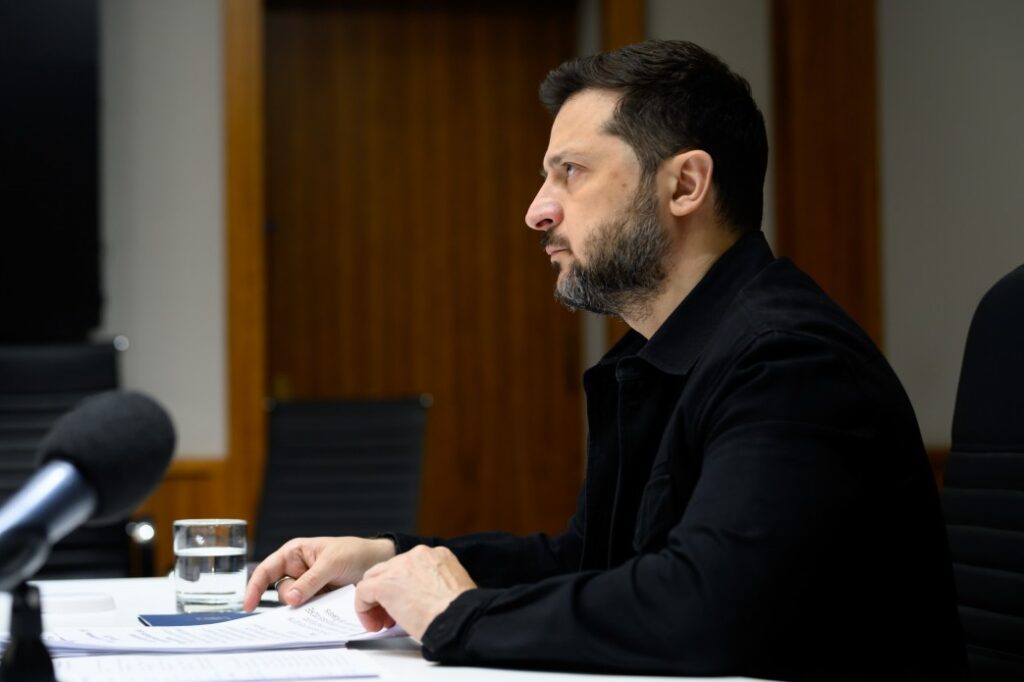
Ukraine got no early warning from its partners of the first wave of Russian ballistic missiles on the night of 18–19 October, President Volodymyr Zelenskyy told US senators on 19 October. He also said Starlink and Starshield terminals still stop working above certain speeds on parts of the front, and that Washington has explained neither problem. In the same video call, according to a transcript obtained by Axios, he said US Defense Secretary Pete Hegseth is not signing off on deliveries of Patriot interceptors and AIM-9X missiles for NASAMS that NATO countries have already paid for.

This comes as the US presses Kyiv to stop its strikes on Russian oil refineries, which Trump has blamed for high fuel prices at home. Washington supplies both the early launch warnings and the Patriot interceptors Ukraine needs against Russian ballistic missiles, and Zelenskyy says both are now failing at once, as Russia keeps firing ballistic missiles at Ukraine’s grid ahead of winter. If neither the warnings nor the interceptors come through, Ukrainian cities would face winter strikes with less notice and fewer means to stop them.

On the morning of 20 October, Zelenskyy wrote that he had spoken with US Secretary of State Marco Rubio about interceptors against ballistic missiles, early warning of Russian ballistic attacks, and restoring Starlink and Starshield. He thanked Rubio for his readiness to help and his clear position, and said they had agreed to speak again soon. He did not say whether anything had been resolved.

Patriots paid for, not signed

“We have almost no Patriot interceptors left from the US partners,” Zelenskyy told the senators.

Hegseth “has the contracts for Patriot missiles on his desk,” a Ukrainian official told the Kyiv Independent, adding that allies had already paid for them. Another senior official called the batch “significant.” One of the main channels for Ukraine’s Patriot supply is NATO’s PURL mechanism, under which allies fund purchases of US weapons for Ukraine, a senior Ukrainian military official told the outlet.

On 19 October, Zelenskyy wrote that some types of vital supplies were being delayed at the US Department of War, as the Trump administration also calls the Pentagon. He added that some political agreements had not been carried out at the working level.

kyiv asking musk let strike inside russia its best line gone · post elon 2026 world economic forum / ciaran mccrickard wef ukraine news ukrainian reports
Explore further

Musk pushed Trump to slow Starlink in Ukraine, weakening air defenses as Russian drones attacked cities – The Telegraph

A NATO official told the Kyiv Independent that PURL deliveries, including air defense, were continuing. Another said some shipments could face delays, but that political reasons were unlikely to explain them. A US government official called Ukraine’s claims “not true.” The Pentagon did not respond to the outlet.

No warning for Kyiv hours after Zelenskyy said US alerts were back

On 18 October, Zelenskyy said on NBC that US warnings of ballistic launches had resumed after three days without them. That night, Russia launched two ballistic waves at Ukraine, and information from partners did not arrive before the first, Air Force spokesperson Yurii Ihnat said. Zelenskyy told the senators Ukraine had not received US warnings on three occasions in the past week. “We have received no clear explanation from Washington,” he said.

“All of this suggests that some political decision has been made to slow down support for us,” Zelenskyy said.

Zelenskyy offered a 30-day pause on refinery strikes for Patriots

Zelenskyy told the senators he had offered US envoys Steve Witkoff and Jared Kushner a 30-day halt on strikes against Russian refineries. In return, the US would supply Patriot interceptors to cover that period. He said the envoys had shown no openness to the idea.

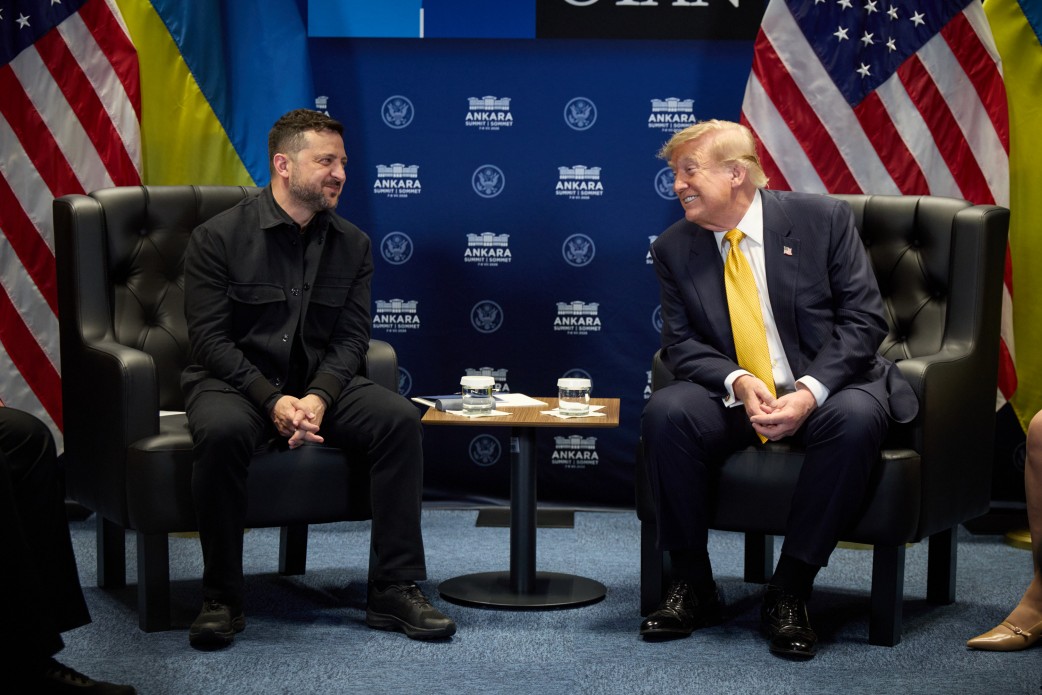
again trump presses zelenskyy stop russian refinery strikes · post ukrainian president volodymyr meets donald ankara türkiye 8 2026 presidentgovua ukraine news reports
Explore further

Trump calls Ukraine’s renewed refinery strikes “a disgrace” after Russia’s 39-missile strike on its energy sites

On 20 October, Norway announced talks in Oslo that day between Zelenskyy, Norwegian Prime Minister Jonas Gahr Støre, and Finnish President Alexander Stubb, with Witkoff attending in person and Kushner by video.

Senators back Kyiv. Trump says intelligence still flows

Senator Thom Tillis said he and his colleagues remain committed to standing with Ukraine and its European allies, while Senator Richard Blumenthal wrote that bipartisan support was “clear and unequivocal” and would be expressed “in upcoming action.”

US President Donald Trump told reporters on 19 October that Washington is still sharing intelligence with Ukraine and that he did not know who ordered the throttling of Starlink, Axios reported.

“Zelensky doesn’t know what he is talking about,” Trump said.

  •  

Rubio’s Intervention Exposes the Limits of Trump’s Russia Policy

Zelenskyy’s urgent discussion with the US Secretary of State suggests that Washington cannot pursue accommodation with Moscow without confronting opposition in Congress, the requirements of American national security and Ukraine’s continuing dependence on US military support.

The telephone conversation between Ukrainian President Volodymyr Zelenskyy and US Secretary of State Marco Rubio on Tuesday, 20 October, has exposed an increasingly uncomfortable contradiction in American policy towards Russia. While President Donald Trump is easing economic pressure on Moscow and attempting to restrain Ukrainian attacks on Russian energy infrastructure, senior members of his administration are having to address the consequences for Ukraine’s defence.

Zelenskyy raised three immediate concerns: the availability of Patriot interceptor missiles, interruptions to American early-warning intelligence concerning Russian ballistic attacks, and restrictions affecting Starlink and Starshield satellite communications. He described the discussion as constructive, expressing appreciation for Rubio’s willingness to help.

The significance lies less in the diplomatic language than in the circumstances surrounding the call. Washington is attempting to obtain concessions from Moscow while several of its own decisions have weakened confidence in the security arrangements on which Kyiv depends. Rubio’s involvement suggests that these difficulties cannot simply be left unresolved while Trump’s envoys pursue another round of negotiations.

The political cost of concessions to Moscow

Trump’s recent decisions concerning Russian energy exports have brought an existing disagreement over Ukraine into American domestic politics.

The administration has facilitated Russian diesel exports and waived new sanctions under the Graham Act, legislation intended to increase pressure on Russia and its principal energy customers. Rubio has said the president will use a 60-day period to assess the economic consequences of implementing the measures.

For Trump, the immediate attraction is apparent. Rising fuel prices have become a political liability ahead of the 3 November congressional midterm elections. Increasing supplies on international markets offers the administration a potential means of relieving pressure on American consumers.

The difficulty is that concessions to Vladimir Putin carry their own electoral consequences. Moscow remains deeply unpopular among substantial sections of the American political establishment, including Republicans who regard support for Ukraine as a matter of American strategic interest.

That opposition is no longer confined to public criticism. Republican senators have joined Democrats in challenging decisions affecting Ukraine’s military capabilities, creating an additional problem for an administration already facing a difficult electoral environment.

Trump can justify Russian energy concessions as an attempt to protect American consumers. Explaining why Ukraine should simultaneously experience interruptions to critical defence systems is considerably more difficult.

Rubio and the machinery of American foreign policy

Rubio’s position within the administration is particularly important. As both Secretary of State and National Security Adviser, he occupies two offices central to the formulation and execution of American foreign policy.

His conversation with Zelenskyy took place during a diplomatic tour of Uzbekistan and India, demonstrating that the deterioration in relations with Kyiv required attention even while the administration was pursuing other international priorities.

It would be premature to interpret Rubio’s intervention as evidence of an independent foreign policy. There is no indication that he is acting against Trump’s instructions. The more plausible interpretation is that the administration recognises a need to contain the consequences of its recent decisions without requiring the president publicly to reverse his position.

The controversy surrounding Starshield is particularly revealing. Reuters reported that instructions to restrict the satellite service used by Ukrainian forces originated inside the White House. The officials cited did not identify who authorised the order, while the administration has denied Trump’s personal involvement.

Separately, Zelenskyy has reported failures to receive advance warnings of Russian ballistic attacks. The cause of those interruptions remains disputed.

These developments have already attracted congressional scrutiny. Republican Senator Thom Tillis and Democratic Senator Jeanne Shaheen led a bipartisan request for an investigation, warning that failures in communications and intelligence-sharing may have endangered American personnel in Ukraine.

Congress cannot directly manage the administration’s foreign policy. Nevertheless, its powers over expenditure, legislation and oversight make sustained opposition politically consequential, particularly when members of the president’s own party are involved.

Ukraine needs military assistance, not diplomatic promises

The immediate requirements in Kyiv are considerably more specific than the objectives being discussed in Washington’s diplomatic negotiations.

Ukraine needs reliable satellite communications, uninterrupted intelligence concerning incoming missiles and sufficient Patriot interceptors to defend its cities and critical infrastructure. Delays in any of these areas have consequences that cannot be addressed through declarations about a future peace settlement.

The shortage of Patriot missiles is particularly serious. Zelenskyy has complained that American authorisation is delaying deliveries under arrangements financed by European governments. Washington’s commitments elsewhere, including the Middle East, add further pressure to American air-defence inventories.

Meanwhile, preparations for new negotiations in Oslo involving American envoys Steve Witkoff and Jared Kushner continue. The involvement of European leaders may broaden the diplomatic discussion, but it does not resolve the central obstacle: Putin has offered no convincing indication that he is prepared to end the invasion on terms acceptable to Ukraine.

Proposals concerning Ukrainian elections, NATO membership or alternative negotiating arrangements remain subordinate to that problem. Without a ceasefire that can be enforced, even an agreement on the political framework for peace would leave fundamental questions of security unanswered.

The limits of presidential power

Trump retains substantial authority over American sanctions, military assistance and diplomatic engagement. Yet his ability to offer Moscow meaningful concessions is constrained by several factors beyond his immediate control.

Congress can challenge further attempts to weaken sanctions or restrict assistance. European governments maintain their own sanctions regimes and are not obliged to follow Washington’s approach. Ukraine retains considerable military capacity, including the ability to attack Russian energy facilities that contribute to financing the war.

Nor can the American president compel Putin to accept a settlement. If Russia calculates that continuing military operations offers greater advantages than negotiations, additional concessions from Washington may encourage Moscow to prolong the conflict rather than end it.

Rubio’s conversation with Zelenskyy therefore suggests that the administration is being forced to confront the practical consequences of its policy. An American president may seek improved relations with Moscow, but the institutional interests of the United States do not necessarily change with his personal diplomatic priorities.

For Kyiv, the question is whether those interests will translate into the continued supply of weapons, intelligence and communications support. Russia’s attacks will continue irrespective of the timetable established for American diplomatic initiatives.

  •  

Why Starshield’s slowdown really hurts Ukraine

Reports that SpaceX temporarily restricted its satellite internet service for Ukraine’s armed forces have generated serious concern in Kyiv and among the country’s allies. SpaceX operates the civilian Starlink system and its lesser-known military-grade counterpart, called Starshield. But many news stories leave an important question unanswered: what does a Starshield “slowdown” mean on the battlefield? […]

The post Why Starshield’s slowdown really hurts Ukraine appeared first on Asia Times.

  •  

GOP Rep. Fitzpatrick vows to hold any US officials who limited Starshield ‘fully accountable’

Rep. Brian Fitzpatrick (R-Pa.) revealed Monday that he would be speaking with Ukrainian President Volodymyr Zelensky about his country’s loss of access to Starshield, the military version of SpaceX’s Starlink internet, vowing to hold any U.S. officials who limited the application “fully accountable.” In a post to social media, Fitzpatrick said he would speak with…

  •  

Democratic senator: Zelensky says Ukraine doesn’t have full access to Starshield, intelligence sharing

Sen. Richard Blumenthal (D-Conn.) said Ukrainian President Volodymyr Zelensky told senators Ukraine still does not have full access to the critical satellite-based Starshield network or U.S. intelligence sharing amid growing tensions with President Trump. Zelensky provided the update to a bipartisan group of senators on a call hosted by Sen. Thom Tillis (R-N.C.). “Joined Senator…

  •  

Ballistic missile warnings are back, but the Starlink cap stays, Zelenskyy says: Ukraine’s two US lifelines, one restored

warnings back starlink cap isn’t zelenskyy says ukraine’s two lifelines one restored · post ukrainian president volodymyr interview nbc’s meet press aired 18 2026 ukraine news reports

The US has resumed sharing intelligence on Russian ballistic missile launches with Ukraine after a pause of several days, Ukrainian President Volodymyr Zelenskyy told NBC News on 18 October. The blackout fell on days when Russia was firing ballistic missiles at Ukraine. Limits on the Starlink satellite service that Ukraine’s forces rely on remain in place, he said.

Russia has leaned on ballistic missiles in this month’s strikes on Ukraine’s grid, firing 39 in a single attack, and Ukraine is short of interceptors to stop them. Washington has used its support as leverage, reportedly telling Kyiv to spare Russian refineries or lose US intelligence and arms.

Three days without warnings

The sharing had been blocked for some period of time before it was restored, Zelenskyy said on Meet the Press.

“We are very thankful for this. Now it works,” he said.

Ukraine gets other intelligence from Europeans and dozens of other partners, he explained. But only the United States has the data that tells Kyiv when Russia launches ballistic missiles.

“We didn’t get it during ballistic attacks during three days,” Zelenskyy said.

A timely warning gives Ukraine’s air defenses extra minutes to prepare and lets authorities alert civilians, Liga noted. Late on 12 October, Russian ballistic missiles hit Kyiv before the air-raid alert reached people, with no advance data on launches from Russian territory. The next day, US President Donald Trump said Washington was still sharing intelligence. Two days later, Zelenskyy said Kyiv had received no US warnings of incoming ballistic missiles while it paused its strikes on Russian refineries at Washington’s request. That pause followed the energy ceasefire Trump declared on 11 October, which Russia never confirmed.

The White House in Washington DC, USA. Illustrative image: Wikimedia Commons.
Explore further

“He thinks Ukraine is a weak link and that it needs to be squeezed into giving in”: diplomat on why Trump pressures Kyiv, not Moscow

Starlink still capped, Kyiv says

Starshield, the military version of Starlink, still cuts out above 161 km/h, Zelenskyy said, too slow for Ukraine’s interceptor drones to catch Russia’s jet-powered Shahed-type drones. NBC News, which aired the interview, separately reported that Starlink services had resumed at normal speed. He said Ukraine’s generals and government believe the order came from the US government and SpaceX carried it out, though he did not know who exactly made the call. Ukraine had instead asked SpaceX and Trump to open Starlink over Russia so it could hit ballistic missile launchers, he said.

“If [Trump] will personally decide to lift this decision, it will immediately work as it was before,” he said.

US Treasury Secretary Scott Bessent, who appeared on the same show, called Zelenskyy’s charge “very reckless” and said Trump and Secretary of State Marco Rubio had denied any administration role. Asked about the break in intelligence sharing, he said he did not know anything about it but that Zelenskyy should be “very careful about making statements like this that aren’t true.” Reuters had reported, citing three officials, that White House officials ordered the Pentagon to limit the service.

Asked whether Ukraine could win without the United States, Zelenskyy said it would be very difficult.

“But if the United States will support Putin, I mean, it’s unbelievable, it’s tragedy. It’s historic mistake and big tragedy,” he said.

He also said his team had received word that US negotiators wanted to meet, and that he had offered to meet in Brussels or London, hoping the US team would be ready this week.

The warnings are back, but they stopped once without explanation. Ukraine’s defense against Russia’s missiles still runs through decisions made in the US.

  •  

Musk pushed Trump to slow Starlink in Ukraine, weakening air defenses as Russian drones attacked cities – The Telegraph

kyiv asking musk let strike inside russia its best line gone · post elon 2026 world economic forum / ciaran mccrickard wef ukraine news ukrainian reports

Elon Musk approached US President Donald Trump with a proposal to limit the speed of Starlink satellite communications in Ukraine, disrupting Kyiv’s ability to counter Russian drone attacks, The Telegraph reported on 16 October, citing four sources familiar with the discussions.

The restrictions had immediate consequences for Ukraine’s defenses, forcing some drone missions against Russian positions to be called off and threatening the ability to intercept Russian jet-powered drones as they targeted Ukrainian cities at the time.

According to The Telegraph, Trump agreed with Musk’s suggestion, paving the way for the Pentagon to impose restrictions on Starshield, the military-grade version of SpaceX’s satellite network used by Ukrainian forces.

The report contradicts Musk’s public claim that the US military and ultimately Trump were responsible for deciding any limits on the system. However, Trump denied that either he or Musk was responsible for Ukraine losing access, while an anonymous US official told AFP that the president had not requested the reduction in service.

The reported restrictions come amid tensions between Washington and Kyiv over Ukrainian strikes on Russian oil refineries. The episode has raised concerns about Ukraine’s dependence on privately controlled communications infrastructure and the risk that changes to US support could weaken its battlefield capabilities.

Starshield restrictions hampered Ukraine’s drone defenses

Starshield is the military-grade version of Starlink, SpaceX’s satellite internet network. It allows Ukrainian drone operators to maintain communications with aircraft moving at high speeds, supporting both defensive interception missions and strikes against Russian targets.

The speed limit imposed on Ukrainian drones using Starshield was around 160 kph, making it difficult for them to intercept Russian jet-powered drones and missiles traveling at roughly twice that speed.

According to The Telegraph, a senior source said Musk had become concerned about potential backlash from European consumers following the restrictions. A high-ranking European official and two Ukrainian sources reportedly corroborated the account that Musk and Trump were both involved in the decision.

The Pentagon has not publicly explained the restrictions. The report’s account also remains disputed: Trump said on 16 October that he did not believe either he or Musk was responsible for Ukraine losing access, while an anonymous US official cited by AFP said the president had not requested the reduction.

geran-2 (shahed-136) drone belarusian markings service military belta militarnyi російський безпілотник герань 2
Explore further

“Trump and Musk must be held accountable”: US senator warns Starlink network failing over Ukraine could cripple its shield against Russian missiles and drones

Ukraine says Starshield capabilities are being restored

Ukrainian President Volodymyr Zelenskyy said on 16 October that restrictions on SpaceX’s Starshield satellite communications system had disrupted several military operations, including efforts to intercept Russian jet-powered Geran drones attacking Ukrainian cities.

Zelenskyy said Ukraine did not use Starlink to support attacks inside Russia, but relied on the system to intercept drones targeting civilians, conduct mid-range strikes against Russian military targets in occupied Ukrainian territory, and deliver food and water to frontline troops using drones.

“When the speed was reduced, we were unable to intercept a certain number of jet-powered ‘shaheds,’ [Gerans - ed.]” Zelenskyy wrote on X, adding that Ukrainian forces had lost the ability to carry out some operations while the restrictions were in place.

Zelenskyy said Ukraine’s Defense Ministry was in contact with partners and had received signals from the White House that the capabilities would be restored. However, he stressed that speeds had not yet returned to their previous levels, although restoration was underway.

We don’t use Starlink for our responses inside Russia. We use Starlink to intercept jet-powered “shaheds” that attack our civilians and kill families.

Starlink wasn’t turned off – its speed was reduced. And when the speed was reduced, we were unable to intercept a certain number…

— Volodymyr Zelenskyy / Володимир Зеленський (@ZelenskyyUa) October 16, 2026

Europe warns against dependence on Musk’s network

The latest episode has renewed European concerns about relying on Musk and SpaceX for critical communications infrastructure. Polish Foreign Minister Radosław Sikorski warned Musk on social media that European customers were watching his actions, The Telegraph reported.

The European Union is developing its own satellite communications system, IRIS², intended to provide an alternative to Starlink, according to The Telegraph. The system is planned to become operational by 2030, leaving Ukraine and European governments dependent on existing providers in the meantime.

The report adds to concerns that decisions made in Washington or by private technology providers could directly affect Ukraine’s ability to defend itself against Russian attacks.

  •  

White House ordered limits on Ukraine’s military satellite service — Reuters. Who made the decision remains unclear

The White House, seen from Lafayette Square. File photo, June 2024.

White House officials instructed Pentagon leaders to limit Starshield, SpaceX’s military-grade satellite service used by Ukrainian forces, Reuters reported on 15 October, citing three officials. The report came a day after a senior US official told Axios the Trump administration had nothing to do with the alleged Starlink restrictions.

Ukrainian forces rely on US-controlled satellite technology for battlefield operations and for intercepting Russian drones aimed at Ukrainian cities, so the latest restrictions have raised questions about how reliably they can depend on it.

    Senior US official denies president requested restrictions

    Asked about the order, a senior US official replied, “No such request was ever made by the president.” The White House did not respond to questions about whether other administration officials might have made the request.

    Ukrainian officials contacted the White House, State Department and Pentagon on 13 and 14 October and were told it was a White House decision

    European allies question Starlink restrictions

    European officials raised concerns about the restrictions. German Foreign Minister Johann Wadephul criticized the throttling and said Ukraine must continue to receive full support, Spiegel reported on 15 October. Wadephul said Germany had questions for the US, noting that Germany finances part of the Starlink technology used in Ukraine.

    On 16 October, UK Defense Secretary Wes Streeting said US Defense Secretary Pete Hegseth had assured him in a face-to-face meeting that Starlink was back up and running, the Guardian reported. However, a Ukrainian Defense Ministry source said that military-grade terminals were working in motion again, but only at speeds of up to 160 km/h.

    New data-speed restrictions disrupted drone missions

    The military Starshield package previously had no data-speed restrictions, Ukraine’s 7th Rapid Response Corps told Novynarnia. Ukrainian officials said that after the restrictions were imposed, terminals disconnected when drones exceeded 160 km/h and sometimes at 80 km/h.

    The Corps also reported 10–20-second connection drops at 110–120 km/h on the Huliaipole front, which made drones harder to control. One unit had to cancel some missions.

    The restrictions came as US President Donald Trump pressed Kyiv to stop striking Russian oil refineries, blaming them for soaring energy prices ahead of November’s midterm elections. Ukraine suspects SpaceX imposed the restrictions to pressure Kyiv over the refinery strikes, but that motive has not been confirmed.

    •  
    ❌