❌

Reading view

FCC Chair Brendan Carr Echoes Trump, Threatens Broadcasters Over 'Fake Polls'
FCC Chairman Brendan Carr and opinion polls | om Williams/CQ Roll Call/Newscom/Migfoto/Dreamstime/Mariam Zakaidze

Once again, a member of President Donald Trump's administration is threatening to punish private citizens for their speech using the power of the government.

Specifically, the chairman of the Federal Communications Commission (FCC) threatened broadcasters who dare to report on polls the president doesn't approve of. Even if the complaint were valid, it would be difficult to enforce without violating the First Amendment.

"During this election season, there has been a significant surge in entirely Fake Polls and Suppression Polls designed to do nothing more than interfere with the regular functioning of the electoral process and alter the normal patterns of voter turnout and enthusiasm," FCC Chairman Brendan Carr wrote on X. "Many journalists and broadcasters have been amplifying or airing these Polls without regard to basic journalistic ethics and without informing the public that those Polls lack a scientific, accurate, or even real basis."

Carr is directly adopting Trump's terminology, in addition to his erratic capitalization: The president often uses the term suppression polls to describe surveys that don't reflect in his favor. The implication is that these polls are manufactured to conceal or downplay enthusiasm for Trump or his preferred candidates, making it less likely that his supporters will turn out if they think it's a lost cause.

Carr doesn't single out any offenders, though there are some likely examples. This week, purported pollster Wedgewood Polls revealed that as part of an "experimental project," it had released surveys with "fabricated numbers" that were printed by outlets like FiftyPlusOne (which sussed out the fraud) and The New York Times.

Similarly, in August, Median Strategies withdrew two polls, then revealed that it had fabricated the results for a "social experiment."

Each scenario is deplorable. And depending on what promises were made, it's possible one firm or the other could face legal consequences.

But it's hard to see how a news outlet could face legal reprisal for just reporting the results of a survey it thought was conducted accurately.

"The FCC takes these issues seriously," Carr added. "Broadcasters are prohibited by the terms of their federal licenses from engaging in News Distortion or promoting Broadcast Hoaxes. It is important that broadcasters comply with their public interest obligations."

There are indeed rules against news distortion and broadcast hoaxes, but they're narrowly tailored to avoid conflicting with the First Amendment.

"News distortion 'must involve a significant event and not merely a minor or incidental aspect of the news report,'" according to the FCC. In addition, "broadcasters are only subject to enforcement if it can be proven that they have deliberately distorted a factual news report. Expressions of opinion or errors stemming from mistakes are not actionable."

The hoax rule, on the other hand, is even less applicable: It involves "broadcasting false information concerning a crime or a catastrophe," where the broadcaster "knows this information is false" and can foreseeably "cause substantial public harm" but airs it anyway, and the broadcast then "does in fact directly cause substantial public harm."

In other words, neither standard applies to a broadcaster that covered an inaccurate poll, especially without knowing at the time that it was wrong.

"Pollsters who intentionally mislead the public should answer for it, but broadcasters who report publicly available polling data should never be punished when a poll is wrong," Anna Gomez, the lone Democratic FCC commissioner, wrote on X. "FCC rules on news distortion or hoaxes do not apply to a station that reports this data in good faith."

Carr doesn't specify what he thinks should happen to any offenders, though since he tends to define "public interest" as whatever Trump says, we can make an educated guess.

Right before the 2024 presidential election, The Des Moines Register published a poll that found then–Vice President Kamala Harris leading Trump in Iowa by three percentage points. Trump ended up winning the state by 13 percentage points, but he was apparently so upset by the poll that he sued both the Register and pollster Ann Selzer, claiming the inaccurate survey constituted "brazen election interference" that violated the Iowa Consumer Fraud Act.

It was clear at the time that the lawsuit was completely meritless. Just as Carr suggested this week in his social media post, Trump was trying to create an exception to the First Amendment for "fake news."

"In the United States there is no such thing as a claim for 'fraudulent news,'" Robert Corn-Revere, chief counsel at the Foundation for Individual Rights and Expression, wrote in a motion on the defendants' behalf. "No court in any jurisdiction has ever held such a cause of action might be valid, and few plaintiffs have ever attempted to bring such outlandish claims."

A judge agreed and dismissed the lawsuit last month.

"If someone is accurately reporting the results of a poll, that wouldn't be a false statement," UCLA law professor Rick Hasen told The Washington Post at the time. "The poll might have errors in it, but that wouldn't be a false statement."

That's as true then as it is now. Unless he can somehow prove that a broadcaster knew a pollster had faked a survey, there's no way Carr can punish someone for reporting on the results without running afoul of the First Amendment.

"Brendan Carr is not the journalism police. And he is just about the least qualified person in the country to lecture the press about journalistic ethics," Seth Stern, chief of advocacy at the Freedom of the Press Foundation, said in an emailed statement. "News broadcasters have a First Amendment right to report polling data, even if it proves to be inaccurate, just like they have a First Amendment right to report on Carr and Trump's own countless lies and distortions, even when they turn out to be inaccurate. FCC policies about hoaxes and distortions must be applied narrowly to avoid clashing with the Constitution, if they can be constitutionally applied at all."

The post FCC Chair Brendan Carr Echoes Trump, Threatens Broadcasters Over 'Fake Polls' appeared first on Reason Magazine.
  •  

Trump attacca LeBron James: “Non vale nulla, è una vergogna totale. Dovrebbe chiedere scusa”. Che cosa è successo

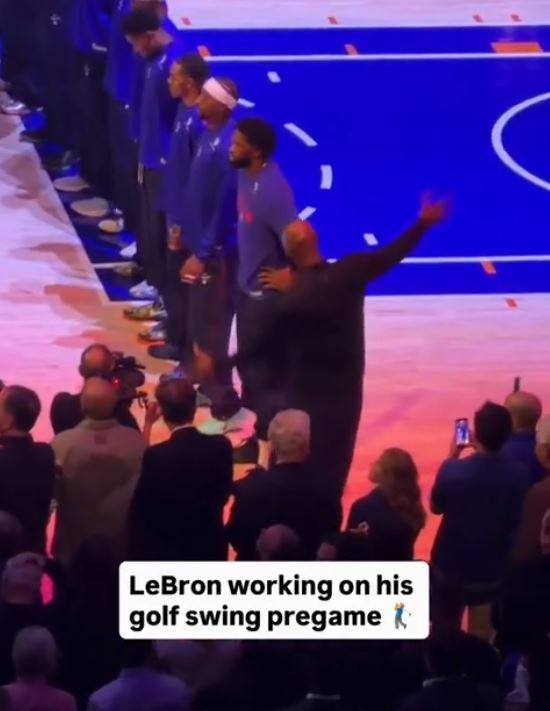
Donald Trump torna ad attaccare LeBron James. Il rapporto tra il presidente Usa e la star della Nba è sempre stato a dir poco teso. Questa volta Trump ha criticato James sul suo social Truth: “È una vergogna. Dovrebbe chiedere scusa”. Il motivo? Il comportamento del cestista durante l’inno nazionale americano suonato prima del match al Madison Square Garden tra i New York Knicks e Philadelphia 76ers, poi vinta dai Sixers 106 a 100, con James che ha messo a segno 14 punti.

Un video mostra LeBron James che durante l’inno prima sembra mimare con le mani il gesto del golf e poi un tiro a canestro. Trump ha subito colto l’occasione per attaccarlo: “Mentre ascolta il nostro inno nazionale, LeBron James manca di rispetto al nostro Paese”, ha scritto. Per poi insultare: “L’ho detto fin dall’inizio: non vale nulla, è una vergogna totale. LeBron James dovrebbe chiedere scusa a tutti quei grandi guerrieri ed eroi americani che sono morti per la bandiera americana e per tutto ciò che il nostro Paese rappresenta”.

LeBron James già dieci anni fa fu tra le prime star dello sport americano a criticare Trump, durante la campagna elettorale, in particolare per le sue frasi sulle donne e poi per aver fatto tornare “di moda” l’odio in America. Nel 2017 difese la scelta di Stephen Curry di rifiutare l’invito di Trump, scrivendo: “Andare alla Casa Bianca era un grande onore finché non sei arrivato tu”. Nel 2018 arrivò il primo affondo di Trump, che dopo un’intervista di James commentò: “”Lo hanno fatto sembrare intelligente, non facile”. L’ostilità è proseguita anche nel secondo mandato: il 24 luglio scorso, rispondendo a una domanda sul confronto tra James e Jordan, Trump ha definito LeBron “razzista“.

L'articolo Trump attacca LeBron James: “Non vale nulla, è una vergogna totale. Dovrebbe chiedere scusa”. Che cosa è successo proviene da Il Fatto Quotidiano.

  •  

El coqueteo de Trump con Putin incomoda a los candidatos republicanos en la recta final de las ‘midterms’

Estados Unidos se ha convertido en una gigantesca campaña electoral con un elefante que sobrevuela la conversación. Las concesiones del presidente, Donald Trump, a Rusia en una estrategia desesperada para rebajar el precio de los carburantes y poner fin a la guerra de Ucrania están incomodando a los candidatos republicanos, que ven cómo el acercamiento a Vladímir Putin está lastrando sus opciones en la contienda electoral.

Seguir leyendo

© SHAWN THEW (EFE)

El presidente de Estados Unidos, Donald Trump, en la Casa Blanca antes de empreder un viaje para participar en un acto electoral en Carolina del Sur.
  •  

Downing Street rejects Witkoff’s description of Putin as a ‘humanitarian’

No 10 says Russian president ‘has killed thousands of people, both innocent Ukrainians and his own people’

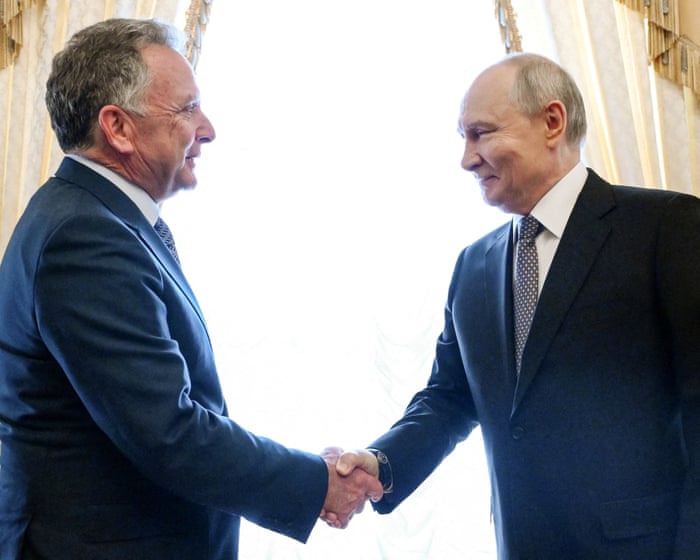
Downing Street has rejected the description of Vladimir Putin as a “humanitarian” made by Donald Trump’s chief negotiator on the Ukraine war.

Steve Witkoff met the Russian president in St Petersburg on Wednesday as he sought to make a new push to end the invasion of Ukraine, with the US putting pressure on Kyiv to agree to a settlement.

Continue reading...

© Photograph: Kristina Solovyova/Reuters

© Photograph: Kristina Solovyova/Reuters

© Photograph: Kristina Solovyova/Reuters

  •  

Trump says he called Google’s CEO to rename the Atlantic Ocean

President Trump said Wednesday he asked Google CEO Sundar Pichai to rename the Atlantic Ocean on the company’s Google Maps application, a request the tech executive denied. “We seriously looked at the Atlantic Ocean,” Trump said during a rally in Clemson, S.C. The president then praised Google Maps for changing the respective names of the…

  •  

House Judiciary Committee Calls for Investigation of Trump Attorneys-Sanctioning Judge

According to a letter obtained by Breitbart News on Wednesday, the House Judiciary Committee is calling on the Judicial Conference, an entity that handles administrative oversight for the federal court system, to investigate U.S. District Judge Kathleen Williams over sanctions she levied

The post House Judiciary Committee Calls for Investigation of Trump Attorneys-Sanctioning Judge appeared first on Breitbart.

  •  

Video: Hillary Clinton Lectures Matthew McConaughey for His 'Unfortunate' Call for Voters to Back Independent Candidates

Two-time failed presidential candidate Hillary Clinton scolded actor Matthew McConaughey for telling his fans and followers to abandon America's two party political system and support Independent candidates running for office. 

The post Video: Hillary Clinton Lectures Matthew McConaughey for His ‘Unfortunate’ Call for Voters to Back Independent Candidates appeared first on Breitbart.

  •  

White House: 'Need More Progress' from CCP, 'Everyone Else' on Narcotic Exports

On Wednesday’s broadcast of Newsmax TV’s “The Record,” Director of the White House Office of National Drug Control Policy Sara Carter stated that while there has been “some progress” from China on narcotic exports, but “we need more progress. We need

The post White House: ‘Need More Progress’ from CCP, ‘Everyone Else’ on Narcotic Exports appeared first on Breitbart.

  •  

Roger Marshall Reminds Kansas Voters Border Security, Tax Cuts Are at Stake in Senate Race

Sen. Roger Marshall (R-KS) urged Kansans who voted for President Donald Trump to turn out in the Senate election, arguing that border security, lower taxes, and military funding were at stake in his race against Democrat Adam Hamilton.

The post Roger Marshall Reminds Kansas Voters Border Security, Tax Cuts Are at Stake in Senate Race appeared first on Breitbart.

  •  

Wes Moore: 'Donald Trump Ran for President to Become a Dictator'

Wednesday on MS NOW’s “The Briefing,” Gov. Wes Moore (D-MD) said “Donald Trump ran for president to become a dictator.” Moore said, “Well, I think, you know, when I think about difficult times in our society has faced, you know, there’s

The post Wes Moore: ‘Donald Trump Ran for President to Become a Dictator’ appeared first on Breitbart.

  •  

Judge orders Trump to be deposed in his BBC defamation suit

A federal judge ordered President Trump to be deposed as part of his lawsuit against the BBC over a documentary he says defamed him with how it was edited. Trump must be deposed by BBC lawyers before Dec. 11, U.S. Magistrate Judge Enjoliqué Lett ruled, according to The Associated Press, or face sanctions up to…

  •  

Trump cannot get Putin to halt strikes on Ukraine’s power grid, so he blames Ukraine instead, Zelenskyy says

musk tells ukraine’s president go zelenskyy says won’t resign never accept ukrainian land russian · post volodymyr during interview piers morgan recorded visit britain 14 2026 video uncensored / ukraine

US President Donald Trump has failed to reach an agreement with Russian ruler Vladimir Putin on halting strikes against Ukraine's energy infrastructure. However, Trump is trying to shift the blame for this failure onto President Volodymyr Zelenskyy, he said on The Diary of a CEO podcast.

His words came amid Russia's four record waves of ballistic missile attacks, after US Special Envoy Steve Witkoff described Putin as a "humanitarian." Previously, US officials cut Kyiv off from US intelligence and lowered a speed cap on Starlink to pressure Ukraine into stopping strikes on Russia's oil refineries that bring Moscow revenue for its war.

Trump pins the problem on Kyiv, not Putin

Zelenskyy explained the behavioral pattern behind Trump's recent actions and statements. At first, Putin rejected his proposal for a ceasefire. Then, the US president blamed it all on him, explaining to his people that world fuel prices are rising because of him, which is not true at all, said the Ukrainian leader.

He pointed to the blocked Strait of Hormuz shipping chokepoint, not Ukraine’s refinery campaign, as the driver of higher prices.

He also noted that the volumes of diesel allowed by the US are insufficient to lower global oil prices.

Even so, Zelenskyy said he keeps a working relationship with Trump. What he will not accept is being cast as the villain in Russia’s war: by his account, the US president is rewriting the context, turning Ukraine’s leader into the target for a problem that starts in Moscow.

Earlier, experts said the diesel deal was unlikely to meaningfully lower diesel prices. For Putin, the agreement itself was a win.

A former senior State Department official says it hardly matters whether the fuel arrives, because Putin “has already achieved the result he wants,” with Trump believing he has a pre-election card that could move markets.

  •  

Leavitt opens up on helping Trump find new press secretary after Zacharia debacle: 'Was not for her'

MANCHESTER, N.H. - Former White House press secretary Karoline Leavitt says she is helping President Donald Trump choose his next press secretary after his first pick for the job lasted just five days.

"I've offered my help to the president to help him select someone who can serve him and the country well," Leavitt said Wednesday evening in an exclusive interview with Fox News Digital.

Leavitt served as Trump's press secretary from the start of the president's second term until Aug. 27, when she stepped down from the demanding role to spend more time with her two young children, including a daughter who was born in May.

Her successor, political commentator Katie Zacharia, took over earlier this month, but lasted just five days in the role, making her the shortest-serving White House press secretary in U.S. history.

TRUMP'S NEW PRESS SECRETARY OUT OF A JOB JUST DAYS AFTER ROCKY DEBUT

"White House press secretary is a tough job. I know that because I did it, obviously for almost two years, and many people say it's one of the hardest jobs in politics," Leavitt emphasized.

She noted that the job "takes a lot of preparation and sometimes you don't know how someone will perform until they go out there."

"We wish Katie the best. The job obviously was not for her, but we wish her and her family well," Leavitt added.

When it comes to whom Trump will choose next for the position, Leavitt said the president "is continuing to look over options. There's a lot of people who want that job. It's an amazing job. It provides you with incredible opportunities."

SIGN UP TO GET THE POLITICS NEWSLETTER

Asked what advice she's offered to Trump, Leavitt said, "I'll keep my private counsel to the president private, but I do obviously talk to him about what the job entails, and he knows it very well."

"Nobody understands the press better than Donald Trump. He knows he needs someone who is tough, who is smart, who understands his policies, who is loyal, and who can go out there and put up a fight," she added.

Leavitt, a New Hampshire native, served as an intern in the Trump White House after graduating from Saint Anselm College in 2019. She later became an assistant White House press secretary at the end of Trump's first term.

After Trump's defeat in the 2020 presidential election, Leavitt worked as communications director for Republican Rep. Elise Stefanik of New York. She then served as spokeswoman for the Trump-aligned super PAC MAGA Inc. before taking over as press secretary for Trump's 2024 presidential campaign.

After being named White House press secretary following the 2024 election, Leavitt made history as the youngest person ever in the role.

DEMOCRACY ’26: STAY UP TO DATE WITH THE FOX NEWS ELECTION HUB

Leavitt also ran for Congress in 2022, winning a heavily contested GOP nomination in New Hampshire's 1st District before losing the general election to incumbent Democratic Rep. Chris Pappas.

Asked if she might make another run for public office in her home state when Democratic Sen. Maggie Hassan is up for re-election in 2028, Leavitt quickly said, "No, I'm all set. I don't have any plans to run for office in the near future at all, or in the future at all."

CLICK HERE TO DOWNLOAD THE FOX NEWS APP

"I am home with my family, and we're really excited about that," she explained. "Right now I'm really focused on being a wife and a mother to my two very young children. That's why I made the decision to leave Washington. So we're just happy to be home and enjoying the ride."

Leavitt officially becomes a Fox News contributor at the start of November.

  •  

US presidents ranked by approval ratings when they left office

PARK CITY, KANSAS - OCTOBER 19: U.S. President Donald Trump greets supporters during a campaign rally at Heartland Credit Union Arena on October 19, 2026 in Park City, Kansas. Trump is traveling to multiple cities campainging for Republican candidates this week as the November 3 general election approaches.
President Donald Trump has faced some of the lowest approval ratings among modern presidents.

Anna Moneymaker/Getty Images

  • Polls estimate Trump's approval rating at 34% among registered voters and 36% among likely voters.
  • Gallup previously tracked presidential approval ratings for nearly 90 years until earlier this year.
  • Bill Clinton had the highest recorded approval ratings when he left the Oval Office in January 2001.

Only two weeks out from the midterm elections, President Donald Trump's approval ratings have reached their lowest point during his second term.

The latest poll conducted by The New York Times in partnership with Siena University shows that only 34% of registered voters approve of Trump's handling of the job, while 60% disapprove.

The American Research Group, a different New Hampshire-based pollster, asked the same question and found that 29% of respondents approved of Trump's job performance during a similar polling period, while 67% disapproved. The poll also found that only 27% of surveyed Americans approve of the president's handling of the economy.

These new polls stand against a changing polling landscape.

For nearly 90 years, the Gallup presidential approval polls measured Americans' public opinion on the president's job performance, but now, they're a thing of the past.

In February, Gallup, the analytics and polling company that pioneered presidential approval ratings, confirmed they were ending the practice, which, since the 1930s, had asked Americans: "Do you approve or disapprove of the way [the current president] is handling his job as president?"

In Gallup's latest poll, conducted in early December 2025, 36% of respondents said they approved of Trump's performance, and 59% of respondents said they disapproved of his handling of the presidency.

The American Presidency Project at the University of California, Santa Barbara, compiled the final Gallup ratings for each presidential term over the past 70 years — from Harry Truman to Joe Biden — and indicated how popular each leader was when they left the Oval Office.

See how the last 13 US presidents ranked in their end-of-term polling, from the lowest to the highest final approval ratings.

Richard Nixon
Richard Nixon

AP Images

Final approval rating: 24%

While Richard Nixon won the 1972 election in a historic landslide, the end of his presidency was tainted by the Watergate scandal that led him to resign on August 9, 1974, when facing the threat of impeachment and removal.

Surveyed between August 2 and 5, 1974 — after the House Judiciary Committee had passed articles of impeachment against the president, but before Nixon resigned — 66% of respondents to the Gallup poll said they disapproved of Nixon's presidency, the highest disapproval rate of any president on the list.

Harry S. Truman
harry truman

Bettmann/Getty Images

Final approval rating: 32%

Assuming the presidency after Franklin D. Roosevelt's death, Harry Truman served two terms that covered the aftermath of World War II and the beginning of the Cold War, including the Korean War, which was widely unpopular and contributed to his low approval rating by the end of his second term in 1953.

When asked December 11 to 16, 1952, 56% of poll respondents said they disapproved of his handling of the presidency during his term.

Jimmy Carter
Jimmy Carter sits in the Oval Office during his presidency
More than half of the poll respondents in December 1980 said they disapproved of Carter's presidency.

Original Caption

Final approval rating: 34%

Jimmy Carter had high approval ratings and a single-digit disapproval rating in the early days of his term, but his handling of international affairs, such as the Iran hostage crisis in 1979, along with a struggling economy, ultimately made him widely unpopular by the end of his term.

He lost the 1980 presidential election to Ronald Reagan and faced a disapproval rating of 55% in polling conducted December 5 to 8, when he was readying to leave the White House.

George W. Bush
george w bush

Getty

Final approval rating: 34%

Despite uniting the nation in the wake of the 9/11 attacks, George W. Bush saw his public approval fade during his second term. His approval rating spiked after the 2001 terrorist attacks, the beginning of the Iraq War in 2003, and the capture of Saddam Hussein.

After his reelection, his popularity began to decline as the Iraq War extended. His handling of Hurricane Katrina in 2005 and the onset of the 2008 financial crisis also contributed to his low approval ratings.

From January 9 to 11, 2009, as Bush prepared to hand over the presidency to Barack Obama, 61% of poll respondents said they disapproved of his handling of the presidency during his second term.

Donald Trump
Donald Trump addresses reporters from the Oval Office during his second term.
Trump's disapproval rating at the end of his first term came second only to Richard Nixon's before he resigned.

Doug Mills-Pool/Getty Images

Final approval rating: 34%

Donald Trump's first presidency was divisive from the start, as he entered the White House with an approval rating below 50%. He's the first president in modern history to never exceed 50% approval on the Gallup polls during his entire presidency.

While his approval ratings dwindled over the course of his four years in office, his handling of the COVID-19 pandemic in particular came under scrutiny ahead of his loss in the 2020 election.

His lowest approval rating in office came during his final Gallup poll, conducted January 4 to 15, 2021.

Most of that polling period took place immediately after the Capitol insurrection on January 6, and Trump faced a disapproval rating of 62%, the second-worst only after Richard Nixon's at the time he left office.

Joe Biden
Joe Biden adresses the nation from the White House's Oval Office during his presidency.
Biden's approval rating was 40% by the time he left the White House.

Mandel Ngan - Pool/Getty Images

Final approval rating: 40%

While Joe Biden saw approval ratings above 50% during his first six months in office, rising inflation, illegal immigration, and the wars in Ukraine and Gaza contributed to a decline in his approval ratings.

His lowest-ranking Gallup poll, in which 36% of respondents said they approved of his handling of the role, came in July 2024, a month after his debate performance against Trump shifted focus toward his age and fitness for office.

As he left office, in polls collected January 2 to 16, 2025, Biden received a disapproval rating of 54%.

Lyndon B. Johnson
lyndon baines johnson lbj
Lyndon Baines Johnson, President of the United States, at his desk in the White House in Washington on August 26, 1966.

AP Photo

Final approval rating: 49%

After assuming the presidency because of John F. Kennedy's assassination, Lyndon B. Johnson won the 1964 election in a historic landslide, but he faced decreasing approval ratings over his handling of the Vietnam War.

Low approval ratings, along with a divided party, led Johnson to withdraw from the 1968 presidential race.

At the time of his withdrawal, only 36% of poll respondents said they approved of his handling of the presidency.

By the time he left the office, however, his approval rating had risen to 49%. In polling conducted January 1 to 6, 1969, 37% of respondents said they disapproved of his handling of the role, and 14% said they had no opinion, one of the higher percentages among the listed presidents.

Gerald Ford
gerald ford

AP Photo

Final approval rating: 53%

Assuming the presidency upon Nixon's resignation, Gerald Ford served as US president from August 1974 until January 1977, after losing the election to Jimmy Carter.

During his presidency, Ford faced mixed reviews, with his approval dropping after he pardoned Nixon and introduced conditional amnesty for draft dodgers in September 1974.

Polled December 10 to 13, 1976, after he had lost the reelection to Jimmy Carter, 32% of respondents said they disapproved of Ford's handling of the presidency, and 15% said they had no opinion on it, the highest percentage of the listed presidents.

George H. W. Bush
George H.W. Bush
President George H.W. Bush addresses the nation on February 27, 1991 from the White House Oval Office.

AP

Final approval rating: 56%

Though the elder Bush lost his reelection bid in the 1992 presidential election against Bill Clinton, public opinion of him was generally positive by the end of his term.

In the weeks before his 1992 nomination as the Republican presidential candidate, however, George H. W. Bush had only a 29% approval rating, the lowest of his presidency. A recession and a reversal of his tax policy contributed to his drop in popularity.

In polling conducted January 8 to 11, 1993, 37% of respondents said they disapproved of his handling of the presidency, while 56% said they approved.

Barack Obama
President Barack Obama adresses the nation from the Oval Office in the WHite House during his Presidency
At his lowest polling, Obama had a 37% approval rate, which rose to 59% by the time he left the Oval Office.

Brendan Smialowski-Pool/Getty Images

Final approval rating: 59%

Since the beginning of his presidency in 2009, Barack Obama had a high approval rating for a modern-day president; he averaged nearly 47% approval over eight years.

At his lowest point, in polling conducted September 8 to 11, 2011, 37% of poll respondents said they approved of his presidency, a decline most likely influenced by the president's healthcare policies and his handling of the 2008 economic crisis and the subsequent rise in unemployment rates.

In polls conducted January 17 to 19, 2017, when Obama was leaving office, 37% of respondents said they disapproved of his handling of the role, with 59% saying they approved.

Dwight D. Eisenhower
dwight eisenhower

Fox Photos/Getty Images

Final approval rating: 59%

After winning the 1952 election in a landslide, Dwight D. Eisenhower saw high approval ratings throughout his presidency, never dropping below the disapproval rating.

Holding office during the critical Cold War years, Eisenhower saw his approval remain positive through the end of his second term, with only 28% of respondents polled December 8 to 13, 1960, saying they disapproved of his handling of the presidency, the lowest among the presidents listed.

Ronald Reagan
President Roand Reagan addressing the nation from the White House during his presidency.
Reagan enjoyed high approval ratings during his presidency, leading to the election of George H. W. Bush as his successor.

Arnie Sachs/CNP/Getty Images

Final approval rating: 63%

Ronald Reagan's strong leadership toward ending the Cold War and implementing his economic policies contributed to consistently positive ratings during his presidency and the subsequent election of his vice president, George H. W. Bush, as his successor to the presidency.

By the time he left office, 29% of respondents in a Gallup poll conducted December 27 to 29, 1988, said they disapproved of his handling of the presidency.

Bill Clinton
President Clinton In The Oval Office After His Television Address To The Nation On Nato Bombing Of Serb Forces In Kosovo, March 24, 1999 In Washington Dc.

Pool/Getty Images

Final approval rating: 66%

After winning the 1992 elections against the incumbent George H. W. Bush, Bill Clinton saw high approval ratings throughout his presidency, though he faced mixed opinions at times during his first term because of his domestic agenda, including tax policy and social issues.

Despite being impeached in 1998 by the House of Representatives over his testimony describing the nature of his relationship with Monica Lewinsky, Clinton continued to see positive approval ratings throughout his second term.

By the time he left the White House, he had an approval rating of 66%, the highest of all the presidents on this list.

In the poll conducted January 10 to 14, 2001, only 29% of respondents said they disapproved of his handling of the presidency.

Read the original article on Business Insider

  •  
❌