This story originally appeared in Common Dreams on Aug. 31, 2026.It is shared here under a Creative Commons (CC BY-NC-ND 3.0) license.
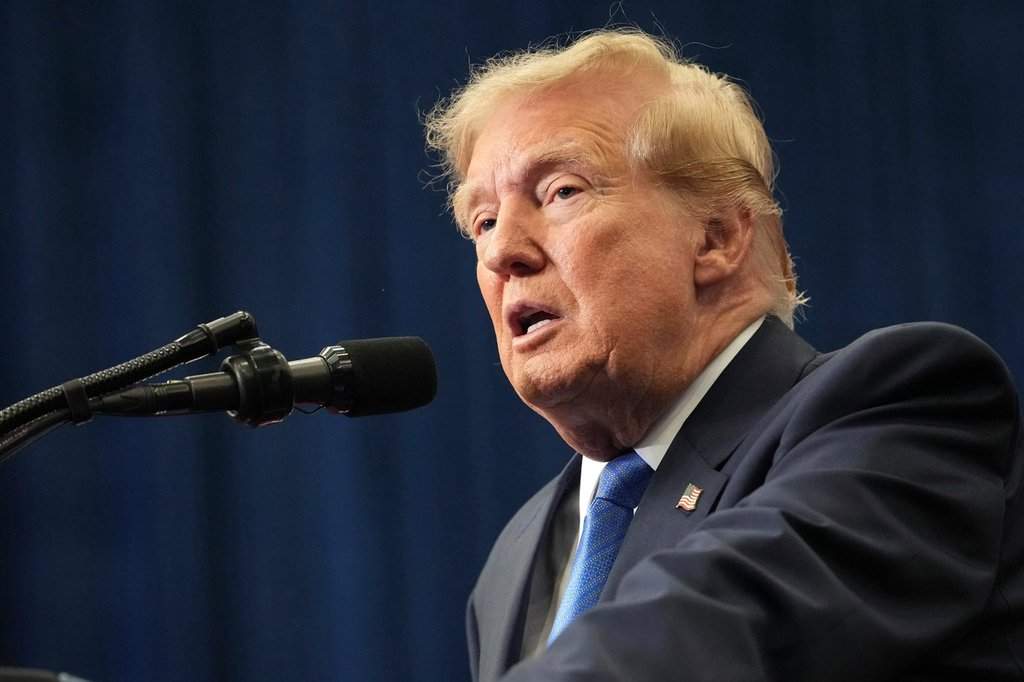
President Donald Trump on Monday warned Americans that they risk becoming “backwards and poor” unless they allow Big Tech companies to build artificial intelligence data centers in their communities.
In a social mediapost, the president expressed indignation that any town or city wouldn’t welcome data centers, which have drawn nationwide opposition for generating pollution and jacking up utility bills.
“The only reason that communities throughout the USA should not want Data Centers is if they want to end up being backwards and poor,” Trump wrote. “If they want to be successful and rich, with far lower taxes and jobs all over the place, let Data Reign.”
In reality, AI data centers create very few jobs once they are completed, as most of their functions are fully automated.
Trump then said that Americans “will only have yourselves to blame” if they “kill the Golden Goose” that is AI data centers.
“China could not be happier with this anti Data Center movement,” Trump wrote. “Actually, they can’t believe it is happening!”
Building AI data centers has become massively unpopular throughout the US.
A poll conducted by Embold Research and published by Heatmap Pro earlier this month shows that 75% of Americans now oppose building AI data centers in their area, including 61% registering strong opposition.
While Republicans polled in the survey were more supportive of data centers than Democrats and independent voters, it nonetheless found that opposition among Republicans outweighed support by 43 points.
Polling analyst G. Elliott Morris marveled at how politically tone deaf the president sounds when it comes to data centers, commenting that “Donald Trump is actively trying to help as many Democratic senators as possible get elected.”
Longtime GOP operative Frank Luntz similarly noted data centers’ unpopularity, citing a recent Gallup poll showing 63% of Republican voters oppose having one of the facilities built in their communities.
“We’re about to see whether President Trump can sway those voters to support them, as he’s done on many issues before,” Luntz remarked.
Democratic US Senate hopeful Abdul El-Sayed wasted no time tying the president’s position on data centers to his opponent, Republican Mike Rogers.
“Make no mistake—this is Mike Rogers’ position on data centers,” wrote El-Sayed. “He’s got up to $2.6 million invested in companies cashing in on the data center boom, all while Michiganders watch their utility bills soar. You can’t trust a word out of Mike’s mouth because he’s only out for himself, for Donald Trump, and for Big Tech—not Michigan.”
Faiz Shakir, a longtime adviser to US Sen. Bernie Sanders (I-Vt.), observed that Trump is merely “sharing the perspective of Wall Street and Big Tech” and is showing “no interest… in grappling with the mass revolt across American communities, or to learn anything from them.”
Screenwriter David Simon, creator of the acclaimed television series The Wire, accused Trump of brazenly lying about data centers’ economic benefits.
“If data centers are a geographic benefit to communities, you can be sure they’d be siting and building them in affluent and politically connected environs,” wrote Simon. “Curiously, they’re dumped in poorer, less influential places. Go fucking figure.”
Republican Kentucky state Rep. Savannah Maddox took issue with the president disparaging communities opposed to data centers, which include many of the rural communities that voted for him in three presidential elections.
“Rural doesn’t mean ‘backwards and poor’ and development doesn’t always equate to being ‘successful and rich,’” wrote Maddox. “President Trump wouldn’t be president without the rural voters who inhabit America’s heartland. It is not wrong of us to question the sudden and wide-scale effort to convert arable land into data centers. We are not stupid for wanting to protect our rural way of life.”
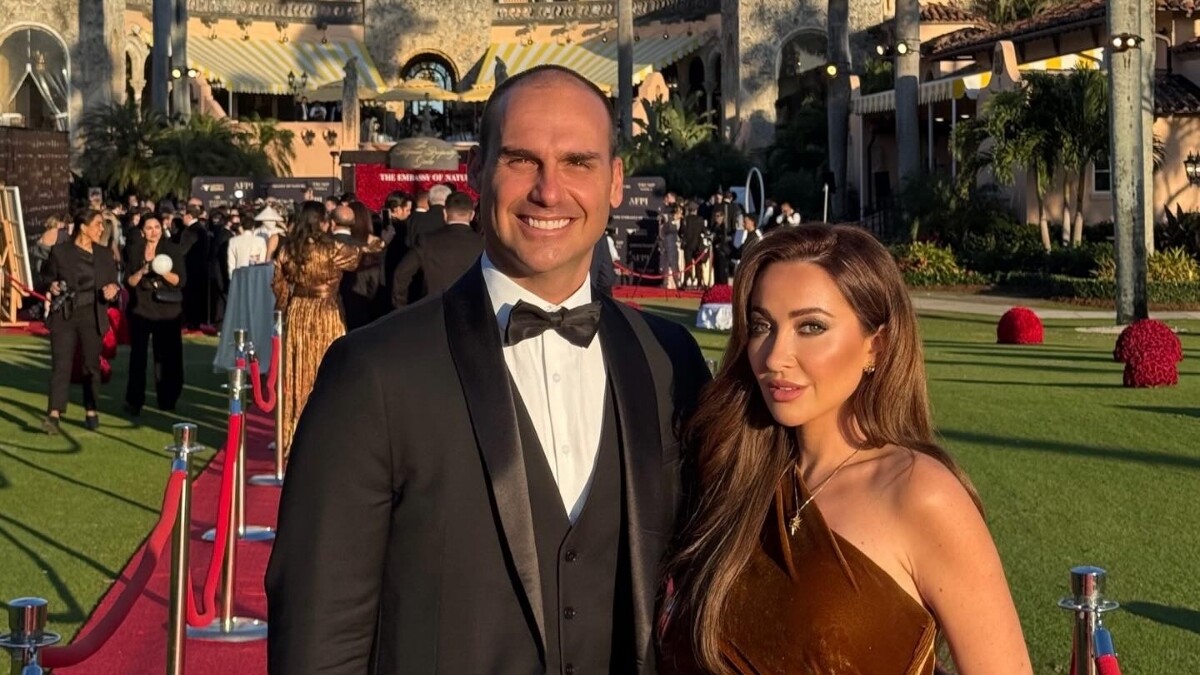
Mansões, carros de luxo, viagens, restaurantes caros. Enquanto fazem lobby para tentar enfraquecer o governo brasileiro e o Supremo Tribunal Federal (STF) junto ao governo de Donald Trump, o ex-deputado federal Eduardo Bolsonaro e o influenciador Paulo Figueiredo mantêm um alto padrão de vida nos Estados Unidos (EUA).
Ambos já afirmaram enfrentar dificuldades financeiras devido ao que chamam de “perseguição política”. No entanto, um levantamento da Agência Pública e do ICL Notícias revela um cenário diferente. Além de viverem em casas milionárias, no último ano os dois adquiriram carros caros, têm frequentado restaurantes sofisticados, mantêm os filhos em escolas particulares e acumularam uma extensa agenda de viagens.
Eduardo Bolsonaro e Paulo Figueiredo foram centrais na articulação para impor tarifas contra o Brasil e retaliações contra ministros do Supremo. Desde 2025, eles participaram de dezenas de reuniões com deputados republicanos e membros do governo dos EUA pedindo intervenções em resposta à condenação do ex-presidente Jair Bolsonaro por tentativa de golpe de Estado em 8 de janeiro de 2023.
Em maio de 2025, três meses após se mudar para o Texas e anunciar que viveria uma espécie de “autoexílio”, Eduardo Bolsonaro comprou um carro novo. Não exatamente um modelo econômico para atravessar tempos difíceis. Ele adquiriu um GMC Acadia Elevation 2025 preto, um SUV de três fileiras de assentos, avaliado em cerca de 43,8 mil dólares nos EUA, o que equivale a aproximadamente R$ 226 mil.
Os registros de gastos associados à família Bolsonaro nos EUA mostram que, desde a mudança para o país, em fevereiro do ano passado, o padrão de vida não parece ter encolhido, nem mesmo após o STF determinar o bloqueio dos bens de Eduardo Bolsonaro e de sua esposa, Heloísa Bolsonaro, em julho de 2025. Eduardo ainda perdeu o salário que recebia como deputado federal em dezembro, quando seu mandato foi cassado por faltas, e, desde 2015, não recebe salário como escrivão da PF, de onde a corporação recomendou sua demissão por abandono do cargo.
Ao chegar aos EUA, o ex-deputado escolheu Arlington, no Texas, onde já havia mantido uma empresa entre 2023 e 2024. A residência alugada estava longe de ter as dimensões de um refúgio improvisado. Tinha pouco mais de 300 metros quadrados, quatro quartos e quatro banheiros, com valor de mercado estimado em 707,7 mil dólares (cerca de R$ 3,6 milhões). O valor da locação anunciado em sites imobiliários, quando eles alugaram a casa, era de 4,5 mil dólares, aproximadamente R$ 23,3 mil na cotação atual.
Em maio de 2025, Jair Bolsonaro chegou a transferir R$ 2 milhões ao filho. “Botei dinheiro na mão dele, dinheiro limpo, legal, Pix”, afirmou o ex-presidente.
Dias depois, Eduardo chegou a reclamar para o pai, em mensagens trocadas por Whatsapp, que estava “se fodendo” nos EUA. Ao reclamar de uma entrevista em que Jair dizia que o filho era imaturo, Eduardo reclamou que, ao jogar ele para baixo, o ex-presidente o estaria condenando a passar o “resto da vida nessa porra aqui”. “VTNC seu ingrato do caralho!”, escreveu.
A situação parece ter melhorado desde então. Pouco mais de um ano depois, em maio de 2026, a família trocou Arlington por um endereço ainda mais valorizado, em Southlake, uma das cidades mais ricas do Texas, onde a renda familiar média é de 250 mil dólares – três vezes maior do que em Arlington, por exemplo. Eduardo, a esposa e os dois filhos moram atualmente em uma casa que oferece “uma vida de resort”, conforme revelou o The Intercept Brasil.
Avaliada em 1,22 milhão de dólares, cerca de R$ 6 milhões, a mansão foi anunciada para aluguel por aproximadamente 5,9 mil dólares (em torno de R$ 30 mil mensais), segundo anúncios imobiliários que permaneceram ativos até fevereiro deste ano. O imóvel tem 424 metros quadrados de área construída, em um terreno de 1.366 metros quadrados, quatro quartos e piscina, além de acesso a um clube com quadras de tênis e a uma lagoa.
A filha mais velha do casal Bolsonaro, de cinco anos, foi matriculada numa escola cristã a cerca de 15 minutos de casa, com custo anual de 18 mil dólares (R$ 93,4 mil), conforme divulgado no site da escola.
Eduardo nega ter usado parte da verba do filme Dark Horse para custear sua vida nos EUA. O filme foi financiado com cerca de R$ 61 milhões do banqueiro Daniel Vorcaro, por meio do Fundo Havengate. O negócio veio à tona após reportagem do Intercept Brasil. Conforme revelou o portal, Flávio Bolsonaro chegou a pedir o dobro desse valor ao banqueiro, hoje preso por gestão fraudulenta e estelionato, lavagem de dinheiro, corrupção de servidores públicos, organização criminosa e obstrução da Justiça.
“A história de que recebi dinheiro do fundo de investimento não se sustenta e é tosca”, afirmou Eduardo em suas redes sociais. “No meu processo migratório, expliquei às autoridades americanas toda a origem dos meus recursos e não tive qualquer problema”, disse.
Procurado pela reportagem, Eduardo não respondeu como financia seu padrão de vida nos Estados Unidos.
Em outras ocasiões, ele afirmou que se mantém com “renda passiva” e já disse também que recebe dinheiro por meio de cursos que ministra – os cerca de 50 mil dólares que ele disse ter investido no filme Dark Horse, por exemplo, teriam esta origem.
20 viagens em 18 meses
Chama a atenção o volume de dinheiro que Eduardo Bolsonaro vem gastando com viagens dentro e fora dos EUA. Desde fevereiro do ano passado, o ex-deputado federal viajou ao menos 20 vezes, entre compromissos políticos e passeios turísticos.
Para comemorar o primeiro aniversário de Heloísa Bolsonaro após a mudança para os EUA, a família foi para a Disney em junho de 2025. Cinco meses depois, em dezembro, Eduardo Bolsonaro esteve na cidade de Park City, em Utah, destino nas montanhas conhecido internacionalmente por suas estações de esqui. A passagem ocorreu justamente no início da alta temporada de neve na região.
Já em fevereiro deste ano, Eduardo viajou para West Palm Beach, na Flórida, onde o custo diário de acomodação pode ser superior a R$ 1.000. Dali, ele participou do Latin Gala em Mar A Lago, o resort de Trump. Na festa para a comunidade Latina, ele premiou Fernando Cerimedo, marketeiro político responsável por mentiras sobre as urnas brasileiras que está preso na Bolívia por tentativa de assassinar a namorada.
Durante a Copa do Mundo, ele foi a Miami assistir à partida entre Brasil e Escócia, que ocorreu no dia 24 de junho. Ele ficou hospedado em um hotel de luxo, que cobra diárias de R$ 16 mil e chega a oferecer pacotes de experiência avaliados em um milhão de dólares, conforme revelou a Revista Fórum.
Mas a maior parte dos deslocamentos do ex-deputado, desde que se mudou para os EUA, está ligada à sua atuação política. Ao lado de Paulo Figueiredo, Eduardo tem se mobilizado para pressionar o governo norte-americano a impor sanções ao Brasil e a ministros do STF. Juntos, os dois estiveram pelo menos sete vezes em Washington e fizeram outras três viagens a Mar-a-Lago, na Flórida. Paulo frequenta o resort desde 2019 e parece manter sua primeira impressão: “simplesmente lindo!”
Em meados de maio, Eduardo hospedou-se, junto com Paulo, no histórico hotel Willard Intercontinental Washington, quando se reuniram com Trump na Casa Branca. Eduardo e sua turma alugaram os quartos, que têm preço inicial a partir de R$ 1,5 mil por noite, mas podem chegar a custar R$ 50 mil por diária. Eles chegaram a receber, no hotel, a visita de Darren Beattie, assessor sênior de política para o Brasil no Departamento de Estado.
A agenda de Eduardo Bolsonaro e Paulo Figueiredo também cruzou as fronteiras norte-americanas, com pelo menos três viagens ao Oriente Médio.
“Pra quem surfa, sabe que isso aqui é o que há de melhor no mundo.” Com uma prancha debaixo do braço, Eduardo Bolsonaro aparece diante da maior piscina de ondas artificiais do mundo, em Abu Dhabi. No vídeo, publicado em 8 de fevereiro, ele também demonstra suas habilidades ao longo de uma sequência de manobras. As imagens foram gravadas no Surf Abu Dhabi, na ilha de Hudayriyat, onde uma sessão de 45 minutos para surfistas de nível intermediário e avançado custa 1,8 mil dirhams dos Emirados Árabes Unidos (AED) $ 953 — cerca de R$ 2,5 mil.
Na ocasião, Eduardo viajava pelo Oriente Médio ao lado do irmão, o senador e então pré-candidato à presidência Flávio Bolsonaro, e de Paulo Figueiredo. O trio divulgou encontros com autoridades no Bahrein e nos Emirados Árabes Unidos como parte de sua agenda política na região. Mas, entre um compromisso e outro, as redes sociais também registraram momentos de lazer.
Figueiredo, por exemplo, compartilhou avaliações de restaurantes em Dubai, como o CZN Burak Dubai, especializado em culinária turca, onde comeu um dos melhores kebabs da sua vida, além de um ensopado de camarão apimentado. “Divino”, “sobremesa perfeita” estão entre os elogios feitos à casa, cujo preço estimado por pessoa é de R$ 140 a R$ 210. Ele também visitou o Clay Dubai, na marina da cidade, onde se paga entre R$ 560 e R$ 630 por pessoa. “Este lugar não é apenas LINDO, mas tudo o que comemos estava delicioso”, escreveu. Em um restaurante de comida japonesa, reclamou de ter comido um sushi de abacate com salmão por 45 dólares. “ATENÇÃO! Este lugar é uma armadilha para turistas!”, escreveu.
Procurado pela reportagem, Paulo Figueiredo dirigiu ironias e agressões contra a Agência Pública antes de afirmar: “Eu me financio através das minhas empresas e não devo satisfação a ninguém”.
Em intervalo de 6 meses, Figueiredo comprou mansão de R$ 6,1 milhões e Cybertruck da Tesla
Os registros levantados pela reportagem indicam que Paulo Figueiredo também elevou seu padrão de vida no último ano. Em novembro de 2025, conforme revelaram a Agência Pública e o ICL Notícias, o influenciador comprou por 1,2 milhão de dólares — cerca de R$ 6,1 milhões — uma mansão em Clermont, na Flórida. Para fechar o negócio, contratou um financiamento imobiliário de 1 milhão de dólares.
A propriedade fica em um terreno de 17,5 mil metros quadrados, o equivalente a cerca de dois campos e meio de futebol, e tem 515 metros quadrados de área construída. São dois andares, seis quartos e cinco banheiros, além de salas de estar e de jantar, cozinha gourmet e sala de jogos. Do lado de fora, há piscina de água salgada, jacuzzi para 12 pessoas, varanda, lareira e até uma casa na árvore.
Seis meses depois, em maio de 2026, Figueiredo ampliou a garagem com um Cybertruck 2026, da Tesla, montadora de Elon Musk. O veículo tem valor de mercado estimado em 83 mil dólares, o que equivale a R$ 427,9 mil. O influenciador também possui, desde 2024, uma BMW Série 6 de 2004, hoje avaliada em cerca de 9 mil dólares (aproximadamente R$ 51 mil).
A compra da mansão ocorreu apenas um mês depois de Figueiredo informar à Justiça dos Estados Unidos que não tinha recursos para contratar um advogado para representar sua empresa, a International Treasure Group, condenada à revelia. A ação contra a companhia faz parte de um processo de falência que visa recuperar transferências supostamente vinculadas ao esquema de fraude atribuído ao magnata chinês Miles Guo.
A International Treasure Group entrou no processo após receber 140 mil dólares — cerca de R$ 670 mil — por serviços prestados à rede social Gettr entre agosto de 2021 e abril de 2022, segundo a defesa de Figueiredo. Fundada pelo ex-assessor de Donald Trump, Jason Miller, a plataforma tinha Guo como financiador oculto.
A mansão em Clermont não é o único imóvel de Figueiredo na Flórida. Ele também possui uma casa em Weston, colocada à venda em junho deste ano por 1,09 milhão de dólares — cerca de R$ 5,5 milhões —, segundo sites imobiliários americanos. Desde 2016, a propriedade estava registrada em nome da Olive-Fig Tree Real Properties LLC, empresa que também pertence ao influenciador.
Em outubro de 2025, porém, o imóvel de Weston foi transferido para o nome de Figueiredo, segundo documentos do estado da Flórida. No mês seguinte, ele adquiriu a mansão de Clermont.
As movimentações contrastam com declarações feitas pelo próprio Figueiredo sobre sua situação financeira. Em 2024, quando já articulava, nos Estados Unidos, possíveis retaliações contra autoridades brasileiras, ele deu seu testemunho em uma audiência no Congresso americano, afirmando ser vítima de perseguição do STF e que estava “desempregado, sem minhas redes sociais e suas respectivas monetizações, responsável por sustentar minhas duas filhas americanas de 7 e 8 anos”.
Paulo é cidadão americano, assim como suas filhas, e usa este fato para alardear que tem sido censurado pelo STF – o que embasou diversas ações de aliados no governo e no legislativo norte-americano, como a lei “No Censors in Our shores”, proposto pela deputada republicana Maria Elvira Salazar um mês depois dela ter recebido uma doação de campanha de Paulo no maior valor possível na época (R$ 57 mil), conforme revelou a Pública.
Na Flórida, Paulo frequenta restaurantes renomados e costuma ser bastante crítico quanto à gastronomia. Frequenta restaurantes com estrelas Michelin, mas nem sempre sai satisfeito. Por exemplo, em abril, ele foi ao restaurante de culinária asiática fusion Nami, no hotel Lake Nona Wave, em Orlando, onde também se paga, por pessoa, cerca de 500 reais por refeição. “Fiquei muito decepcionado, ainda mais por se tratar de um restaurante com estrela Michelin. As porções são ridiculamente pequenas, não condizendo com o preço cobrado. Pra ser sincero, este é o primeiro lugar com estrela Michelin onde definitivamente não pretendo voltar”.
Em outros restaurantes, ele reclama dos valores pagos por porções pequenas, o que ele diz ser regra em Miami, “restaurantes muito caros com comida mediana”.
Não que ele não tope pagar caro. Há cerca de um ano, ele foi com a esposa ao Restaurante MAASS, em Fort Lauderdale, onde pagou “quase 400 dólares” – R$ 2 mil reais – em um menu degustação para duas pessoas. “Mesmo experimentando o menu degustação, nada do que comi foi memorável e me fez querer voltar”, escreveu.
Oil prices rose more than 2% Monday after the United States attacked an Iranian island in the Strait of Hormuz and drew retaliation from Tehran, as the six-month-old conflict between the two countries showed no signs of easing. Brent crude futures climbed $2.21, or 2.51%, to $90.31 a barrel as of 0436 GMT. U.S. West ... Read more
Após semanas de tensão entre Brasil e Estados Unidos, o presidente Lula conversou por telefone com Donald Trump na última sexta-feira, 21 de agosto. A ligação, que durou mais de uma hora e meia, teve dentro dos principais temas as atuais medidas envolvendo a segurança pública e economia, e também as acusações contra autoridades brasileiras. Segundo nota do Governo Federal, a conversa foi para retomada de um novo canal de diálogo e de negociações entre os países.
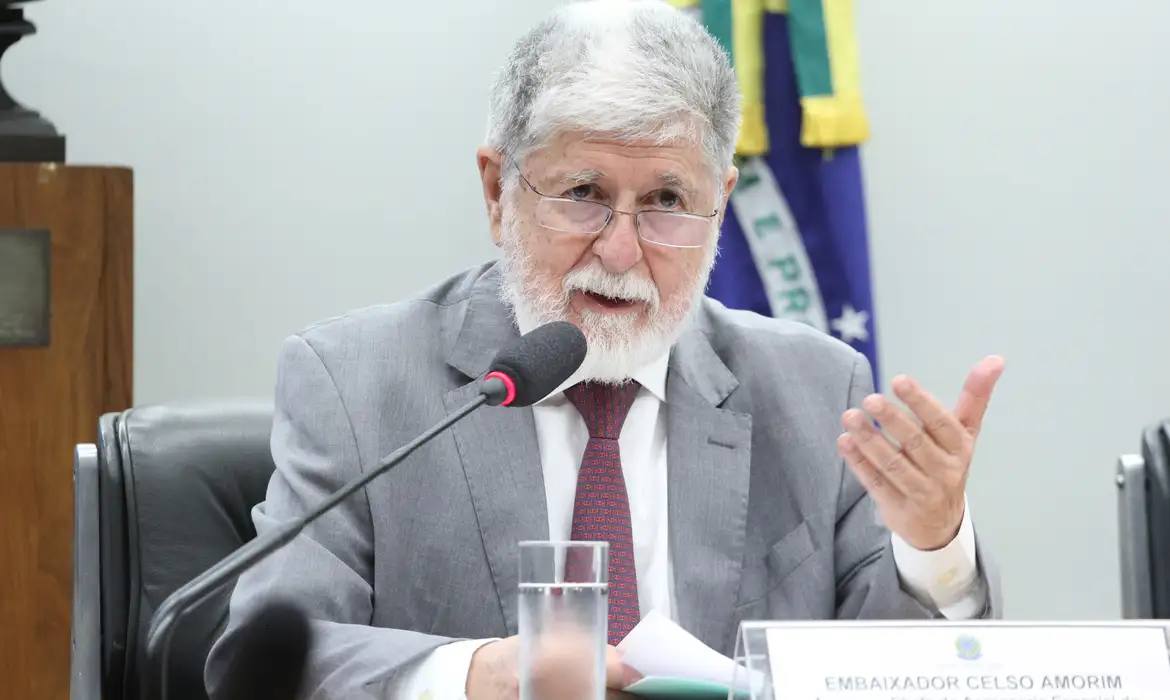
Em entrevista ao Pauta Pública, gravada no mesmo dia da ligação, Celso Amorim, chefe da Assessoria Especial do Presidente da República, reforçou que a conversa teve um tom positivo, que não se limitou aos temas bilaterais, mas reforçaram o compromisso de cooperação sem a necessidade de interferências dos EUA nas questões nacionais. “O presidente Lula e o presidente Trump fizeram a nuvem, agora as equipes técnicas têm que fazer chover”, afirma Amorim.
Na entrevista com Andrea Dip, ele analisa o resultado da conversa, comenta as medidas adotadas pelo governo norte-americano e os desafios das negociações comerciais. Ele também fala sobre as pressões geopolíticas sobre o Brasil e a necessidade de fortalecer a defesa e a independência do país na área industrial e militar. “Diante desse mundo, é como uma apólice de seguro. É evidente que você prefere que não aconteça nada, mas você tem que estar preparado se acontecer.”
Celso Amorim é chefe da Assessoria Especial do Presidente da República
Leia os principais pontos da conversa e ouça o podcast completo abaixo.
EP 231
Lula e Trump: entre a crise e a negociação – com Celso Amorim
28 de agosto de 2026
·
Ex-chanceler e Assessor especial da Presidência analisa a crise diplomática entre Brasil e Estados Unidos
Quais foram os principais temas tratados no telefonema entre Lula e Trump? Qual era o clima e qual seu balanço sobre essa conversa?
O balanço da conversa é o mais positivo possível. Eu acho que os dois presidentes tiveram uma conversa muito respeitosa, com muita empatia. O presidente Lula não se limitou a temas bilaterais, ele falou de temas globais, e o presidente Trump se estendeu em colocar a posição dele, mostrar qual é a visão dele de mediação e o papel que os Estados Unidos têm realizado, o que pode ser feito. O presidente Lula enfatizou a importância do Conselho de Segurança, um lugar onde as grandes potências que podem decidir têm que conversar.
Em geral, dentro do clima desse espírito brasileiro de que, quando possível, sempre coopera para a paz, mas tendo clareza de que os cinco membros permanentes do Conselho de Segurança da ONU [China, Estados Unidos, França, Reino Unido e Rússia] têm uma responsabilidade primária nisso. E, obviamente, os Estados Unidos, como ainda é a maior potência do mundo, têm uma responsabilidade especial.[…] Na parte bilateral, os temas que foram tratados são os que estão na nota oficial, não houve nenhum tema diferente.
Os dois temas principais foram o comércio e a cooperação no combate ao crime organizado, que as equipes se reúnam, voltem a se reunir e trabalhar. O presidente Lula descreveu um pouco o que nós temos feito aqui. E, digamos, foi crítico da medida americana comercial, claramente, que os motivos não correspondiam à realidade.
O presidente Trump não contestou, não posso dizer também se concordou, mas ele concordou com a importância de voltar a conversar e preparar as equipes para isso. Então, o clima foi muito bom. Eu acho que o que se espera de uma conversa entre chefes de Estado é isso, é criar o clima e depois as equipes têm que encontrar a solução. Às vezes, as equipes são mais difíceis do que os governantes, mas isso é um problema para mais tarde.
O senhor avalia as ações tomadas pelo governo Trump, em relação ao Brasil, como ilegais ou inconstitucionais?
Constitucionais segundo a Constituição dos Estados Unidos eu não posso julgar. A Suprema Corte americana já fez isso no passado em relação à primeira onda de tarifaço. Enfim, eu sempre me lembro do primeiro encontro – não o primeiríssimo, porque o primeiro foi antes da posse – mas o primeiro encontro do presidente Lula com o presidente Bush na Casa Branca, no Salão Oval, quando o presidente Lula entrou, o presidente Bush disse assim, “olha, nós temos diferenças, nós vamos tratar daquilo que nos aproxima.”
Enfim, eu achei que o clima foi um pouco também esse, sem necessariamente falar em diferença, mas que é muito respeitoso da parte do presidente Trump. As colocações que nós fizemos, muito interessado em discutir e apresentar a posição norte-americana sobre temas globais. Eu acho muito respeito por um estadista, que o presidente Lula é, não é qualquer pessoa que liga para o presidente dos Estados Unidos. Eu tenho muita vivência nisso, quem liga para o presidente dos Estados Unidos e fala sobre a guerra no Irã, por exemplo, e ele se dá ao trabalho de explicar as posições dos Estados Unidos? Agora, eu tinha um chefe, que era ministro do exterior muitos anos atrás, ele dizia que “a gente faz a nuvem, agora a gente não pode fazer chover.” Então, o presidente Lula e o presidente Trump fizeram a nuvem, agora as equipes técnicas têm que fazer chover.
Vários analistas veem um aumento constante das pressões dos Estados Unidos sobre o Brasil por acesso a recursos nos próximos anos e para conter a influência da China, independente de ser um governo republicano ou democrata. Alguns até pensam na possibilidade de uma escalada militar envolvendo o Brasil pela sua importância geopolítica na nova economia. Como fugir dessa encruzilhada?
O Brasil, como um país grande que é, tem que tratar da sua defesa. Nós temos que trabalhar nessa conversa. Nós conversamos com todos e torcemos, e se pudermos vamos colaborar para que eles tenham uma relação pacífica entre si. Isso não é bom só para o Brasil, isso é bom para o mundo. Diante desse mundo, é como uma apólice de seguro. É evidente que você prefere que não aconteça nada, mas você tem que estar preparado se acontecer. Eu fui ministro da Defesa, como você sabe, e naquela época fizemos investimentos importantes, entre eles o Gripen [aeronave supersônica], mas a Comissão da Verdade foi o tema dominante. Então, as atenções se voltavam mais para isso, mas eu acho que nós temos que dar uma grande importância à defesa nacional.
Isso pode envolver cooperação com outros países, mas tem que envolver também um grau forte de independência na área industrial ou militar. Isso eu acho que é fundamental. Não é para atacar ninguém, não, mas é que se alguém quiser nos atacar, tem que pensar duas vezes. A questão é a seguinte: não é que você vai ganhar uma guerra contra o país A ou contra o país B, que tem bomba atômica, etc. É que você tem que ser capaz de causar um dano que seja suficiente para ele pensar duas vezes antes de te atacar. Senão, você fica dominado a priori.
El presidente de Estados Unidos, Donald Trump, anunció el viernes la firma de un acuerdo con el Gobierno interino de Venezuela que calificó como “el mayor acuerdo petrolero de la…
Acting President Delcy Rodríguez's government in a statement said the deal involves the development of 17 fields with a proven potential of 65 billion barrels.
Acting President Delcy Rodríguez's government in a statement said the deal involves the development of 17 fields with a proven potential of 65 billion barrels.
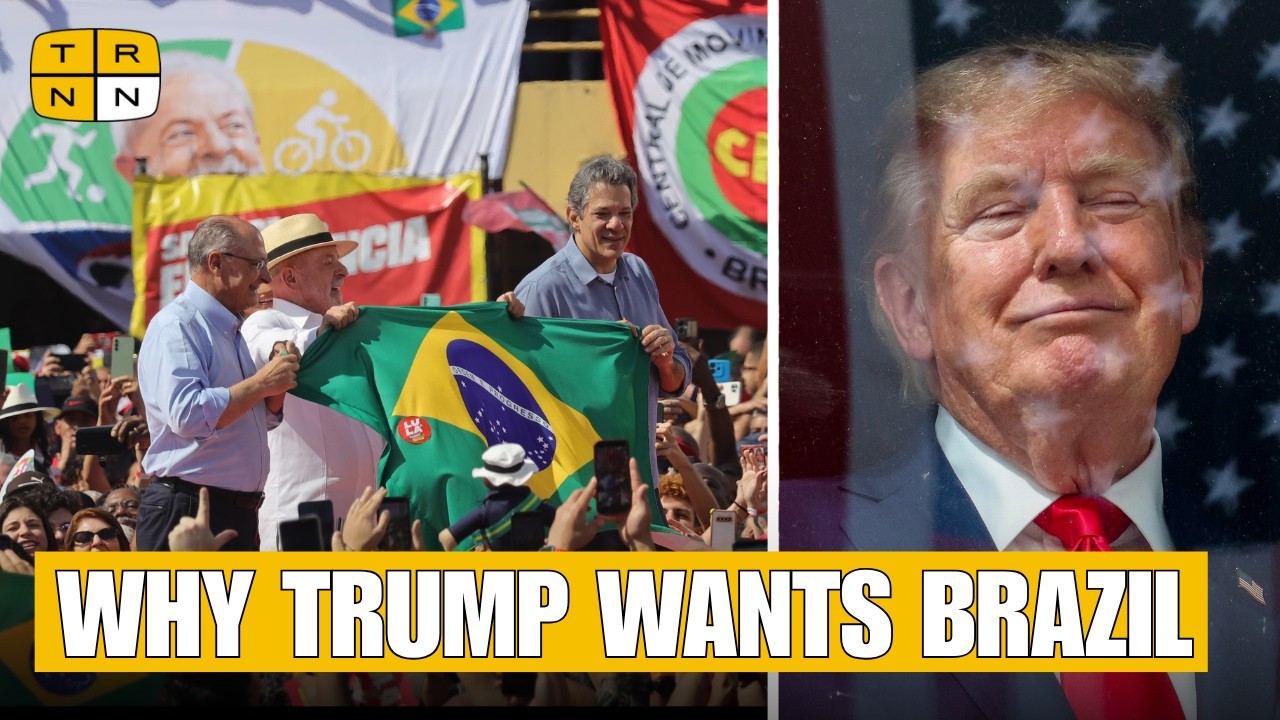
President Luiz Inácio Lula da Silva launched his campaign for a fourth and final term before thousands of supporters in São Bernardo do Campo, promising to keep fighting poverty and investing in Brazil’s future. His challenger: Senator Flavio Bolsonaro, running in place of his father, former far-right President Jair Bolsonaro, who is under house arrest after being convicted of attempting a coup. US President Donald Trump has backed the Bolsonaros with tariffs, visa revocations, and open pressure — what experts call a new era of US dominance over Latin America.
Michael Fox reports from São Paulo, with voices from Lula’s campaign launch, evangelical Bolsonaro supporters on the streets of São Paulo, and foreign relations professor Igor Fuser.
Credits:
Filmed and edited by Michael Fox
Transcript
The campaigns are underway ahead of Brazil’s October elections
And U.S. President Donald Trump is doing his best to sway the vote…
“Lula, Lula!”
Thousands of supporters of leftist president Luiz Inácio Lula da Silva attended his campaign launch in mid August.
Karen Silva
“We came to support Lula, especially in his last election. And we believe that we are going to win. This is a fact.”
They filled May 1st Stadium in Sao Bernardo do Campo….
A place, where Lula led an iconic metal workers strike and rally in 1979.
They say Lula has changed their lives.
Raimunda Silva Santos
“Yeah, he changed my life. He changed the life of my whole family.”
During his years in office, he promoted education, health and social programs. He helped to lift millions from poverty. They have not forgotten.
Raimunda Silva Santos
“Wow, this is the greatest joy of my life. I’m 76 years old. I’m so happy. Lula is coming to stay. He’s an incredible person. He’s helped a lot of people there in the northeast. We owe a lot to Lula.”
They want him back for a fourth and final term.
Valmir Lima, Movement of People Affected by Dams
“Lula will win with the strength of social movements, of the movements of people affected by dams, all the social movements that are helping on his campaign. And all of civil society.”
Applause
Lula has promised to continue to fight poverty, promote industry, create jobs and invest in Brazil’s future.
Lula
“What kind of a future do you want for the Brazilian people if you don’t invest in education? What future do you want for the Brazilian people if you don’t invest in health? What future do you want if you don’t invest in jobs?”
Lula
“We need to win these elections. To elect our people to congress so we can do everything we need to do for this country.”
Lula’s challenger is the son of the former far-right president Jair Bolsonaro.
His name is Flavio Bolsonaro. He’s a Senator and he launched his campaign in his hometown of Rio de Janeiro.
Flavio Bolsonaro
“Come with me and rescue our nation. Brazil above all. God above everyone. Brazil above all. God above everyone!”
Flavio is in the race, because his father is under house arrest.
Former president Jair Bolsonaro was first barred from running for spreading lies about the country’s electoral system. Last year, he was convicted of attempting to carry out a coup to return to power.
His son, Flavio, has attacked the left, and promised to fight crime and insecurity, cut bureaucracy, promote private business and privatizations, and develop close ties with the United States
He spoke at the US Conservative Political Action Conference in March.
Flavio
“Let me look you in the eyes and tell you,“we will win.”
Much of his discourse, and that of his supporters, is wrapped in a religious language of good versus evil.
“You are the son of hope. You are the first born. You received the legacy of representing your father. And now, for everything that is more sacred on the face of the earth, honor your father. Honor his days on earth.”
That goes over well with his evangelical supporters, an important base for Bolsonaro and far-right politicians in Brazil.
Glayson Araujo is a youth pastor at an evangelical church in a working class neighborhood of São Paulo. He joined others on the streets in mid August to promote Bolsonaro and other far-right candidates running for local office.
Glayson Araujo
“I believe that Flavio Bolsonaro is the only viable candidate, who can beat Lula and the Workers Party.”
Glayson Araujo
“I am a Christian here, I behave as a Christian, but I am also a political activist. Here on the streets to defend my beliefs.”
Flavio Bolsonaro also has powerful support in high places.
In particular… from Donald Trump.
The U.S. president is a longtime ally of his father, Jair Bolsonaro.
Last year, Trump imposed 50% tariffs on Brazil, in part, because of the country’s trial against the former president. In May, Trump met with Flavio Bolsonaro at the White House. In June, he reposted an article over Truth Social that said Brazil was his next big challenge. He recently imposed new tariffs on the country and revoked the U.S. visa of the Brazilian ambassador.
Igor Fuser is a professor of foreign relations at Brazil’s ABC Federal University.
Igor Fuser
“This is not just about the United States trying to remove the government of a left-wing party, the workers Party or a left-wing leader, which is Lula. It’s about subjecting Brazil to the policies of the United States. And Brazil, being the largest country in Latin America, is precisely the biggest obstacle to the American project of global dominance of the Western Hemisphere.”
Over the last year, Trump has pushed the United States into a new era of dominance over Latin America the likes of which the region has not seen in decades.
Boat strikes in the Caribbean. The U.S. invasion of Venezuela and the kidnapping of president Nicolas Maduro. The oil blockade on Cuba.
And Trump throwing his weight around… and meddling in elections across Latin America.
It is all justified by a renewed Monroe Doctrine…
Pete Hegseth
”President Trump has established the Trump corollary of the Monroe Doctrine, the Donroe Doctrine. And the War Department is implementing it as fast as we can.”
Brazil is the latest battleground.
Igor Fuser
“So, it is clear that the United States is doing everything, and will do everything possible to prevent the re-election of Lula in the next elections.”
Fuser says that if Flavio Bolsonaro wins, he will bow to Trump and the United States.
Igor Fuser
“Brazil will become a country under the tutelage of the United States, a colony, or almost a colony, of the United States, as it already happens with Argentina, Colombia, Venezuela, and many others. And if Lula is victorious in these elections, we will live a very intense period of confrontation between the two countries.”
Fuser says the U.S. stated dominance over Latin America imposed by Trump is analogous to the control of the Soviet Union over the Eastern Bloc countries during the Cold War, under a Russian foreign policy imposed by Soviet leader Leonid Brezhnev in 1968.
Igor Fuser
“So, Czechoslovakia, Hungary, Poland, Bulgaria, all those countries were formally independent countries, with their own government, their own laws, their representation in the United Nations, but these countries were not autonomous, they did not have sovereignty. Any movement that they made that clashed with the interests of the Soviet Union was repressed. Some of them were invaded, etc. So, we are living in Latin America a Brezhnev Doctrine, capitalist, imperialist, dictated by Donald Trump.”
Lula has accused Trump of trying to influence Brazil’s October election. Lula’s allies are taking action ahead of the vote…. to stand up to Trump and to push for Lula’s reelection. Brazil has denied visas to U.S. State Department officials who they feared wanted to travel to Brazil to cast doubt about the country’s electoral system. People are hitting the streets to campaign for Lula, who has long stood against U.S. intervention in Latin America. Over the next two months, Brazil will be a key battleground for Latin American sovereignty against Trump’s attack on the region.
For The Real News, I’m Michael Fox. Sao Paulo, Brazil.
As Lula faces off against Flavio Bolsonaro, Trump's tariffs and threats loom over Brazil's October vote — the latest battleground in his push for dominance over Latin America.
An anti-corruption investigation reaching from Ukraine's Presidential Office into the management of state-owned Sense Bank has raised questions far beyond the alleged laundering of UAH 150 million. At stake are the governance of nationalised assets, the independence of Ukraine's anti-corruption institutions, a planned bank privatisation, an international arbitration worth more than $1 billion and Kyiv's credibility as it moves deeper into EU accession negotiations.
A week after Ukrainian anti-corruption investigators unveiled an operation carrying the improbable codename “Forrest Gump”, the affair has developed into one of the most consequential governance scandals to hit wartime Ukraine.
At its center is a deceptively simple question: Where did UAH 150 million — approximately $3.4 million — used to secure the release on bail of former Justice and Energy Minister Herman Halushchenko, a centerpiece of the biggest corruption scandal of Zelensky government, actually come from?
The answer alleged by Ukraine's National Anti-Corruption Bureau, NABU, and Specialised Anti-Corruption Prosecutor's Office, SAPO, is extraordinary.
Investigators say criminal proceeds under the supervision and manual management of deputy head of the Office of the president of Ukraine Iryna Mudra were converted into apparently legitimate funds through a series of companies and bank accounts. The source of the money is linked with the main suspect of another corruption scandal Timur Mindich, a close ally of president Zelensky, and the goal was to post bail for a suspect in the Operation Midas investigation into alleged corruption surrounding the state nuclear company Energoatom.
NABU's official account says members of a criminal organisation, acting with representatives and officials of a state-owned bank, arranged the laundering of UAH 150 million during June 2026. The cash was allegedly introduced into the legitimate financial system through accounts belonging to shell companies before being used for bail.
The most revealing evidence released by NABU is not just a bank transfer but Mudra’s own confessions, which give wider picture. In one recorded exchange, a female voice attributed to her says: “Corruption should be systematised and controlled… There is no need to fight it.” A male interlocutor adds: “And lead it.” This is said by one of the highest Ukrainian official in charge of judicial reform. Yet her own words are arguably more disturbing, presenting corruption not as an abuse to be eliminated but as a system to be organised and kept under political management.
Other recordings portray Mudra discussing state owned Sense Bank, where this money-loundering operation took place, as an asset to be under direct political control and used for enrichment. She recounts a proposed arrangement under which political figures politicians from Zelensky party Servant of the People would refrain from attacking the bank while “Sense Bank has to pay them”, and quotes an instruction she received from above to “take over the bank” because it contains “serious flows”. She then describes its managers as compliant figures who would carry money wherever a senior Presidential Office official instructed them, adding that they had “crawled” to her “like kittens” asking to be taken under protection.
NABU’s published recording also appear to show Mudra discussing protection from the institutions supposed to investigate such conduct. She asks how to mobilize votes for “our” candidates to NABU’s Public Oversight Council and describes SAP chief Oleksandr Klymenko as “not one of ours,” warning that if he secured a second term, “we’ll all be fucked.” Taken together, these phrases suggest something broader than participation in a single suspicious transaction: an alleged attempt to control a state-owned bank while influencing the bodies capable of investigating that control. If authenticated and confirmed in context, they would provide unusually direct evidence of political capture and consciousness of wrongdoing. Mudra denies criminal conduct and says the excerpts were released selectively and without their full context.
Taking over the bank
Revelations are shocking in many dimension and will have influence for years to come. One of the most striking revelation is usage of the state-owned Sense Bank as systemic money-laundering machine.
Sense Bank carries unusual political and legal baggage. Until 2022 it was known as Alfa-Bank Ukraine and was owned through corporate structures associated with ABH Holdings. Among the beneficial shareholders were Russian businessmen including Mikhail Fridman and Petr Aven.
Ukraine subsequently imposed sanctions and, in July 2023, the government took Sense Bank into state ownership. Ukraine's Ministry of Finance says the measure was intended to maintain financial stability and protect depositors after sanctions were imposed on significant shareholders. The state today owns 100% of the bank.
It was therefore no ordinary commercial bank allegedly being exploited. It was an asset that Ukraine had taken into public ownership during wartime, in considerable part because of national-security concerns surrounding its previous ownership.
The source material examined by EU Reporter describes this as a crucial feature of the scandal: after nationalisation, the allegation is not simply that corrupt actors conducted transactions through Sense Bank, but that political influence was progressively established over the institution's governance.
That allegation remains contested and has not been established by a court. But documents released by NABU and widely reported by the Kyiv Independent and other leading Ukrainian media raise questions that are difficult for the Ukrainian authorities to ignore. The Kyiv Independent reported on 22 August that internal Nomination Committee records showed attempts to shape Sense Bank's supervisory board following nationalisation. The paper reported that Iryna Mudra, then deputy head of the Office of the President and chair of the committee involved in selecting supervisory-board members, strongly promoted Mykola Hladyshchenko for a place on the board despite objections concerning competence, potential conflicts of interest and previous employment. Hladyshchenko subsequently became chairman of the supervisory board.
The investigation also cited earlier leaked conversations in which prospective board candidates were allegedly described as “our guys”. Six people reportedly discussed in that context were subsequently appointed. EU Reporter has not independently authenticated those recordings or the leaked committee minutes, so their contents must remain attributed to the publications that obtained them.
However, now the anticorruption agencies established with support and guidance of the EU provide their findings suggesting that the bank was deliberately captured for criminal purposes. NABU says that by early June 2026 the alleged organisers had obtained de facto control of Sense Bank, enabling them to use accounts of controlled businesses in the laundering scheme. That allegation has now triggered action at the highest levels of financial regulation.
Bags of cash, shell companies and a banking bottleneck
The alleged mechanics of the operation read more like a crime thriller than a banking-compliance investigation. According to the investigative material compiled in the source document and subsequent Ukrainian reporting, cash was allegedly concentrated through businesses associated with former MP and developer Maksym Mykytas before being exchanged or routed through companies capable of putting apparently legitimate non-cash funds into the banking system.
The source describes alleged deliveries of cash in bags and boxes, routing through companies including Metrobud and other entities, and discussions about how transactions could pass financial-monitoring controls.
Ukraine's anti-money-laundering regime establishes a UAH 400,000 statutory threshold for certain financial-monitoring obligations, alongside wider risk-based requirements. It would be inaccurate to suggest that every payment above UAH 400,000 is automatically prohibited; rather, banks are expected to identify, scrutinise and where necessary report transactions according to statutory and risk criteria.
The significance of the NABU allegation is therefore not simply the size of the payment. Investigators allege that people involved in the transaction were actively discussing how to overcome or circumvent compliance barriers. Published recordings attributed to members of the alleged group include discussion of a Sense Bank compliance official who could prevent the transaction. Mudra in one recording says that she received demand “from above” to fire a bank official who refuse to clear transaction. The scheme released by NABU paint a shocking picture: to make the transfer the bank's automated monitoring arrangements were temporarily taken out of operation during the transaction.
Those are NABU allegations presented to the court. But the Ukrainian government has already treated them seriously enough to take immediate action. This confirms that NABU accusations are well grounded.
Saving face
On 19 August, the Cabinet suspended supervisory-board chairman Mykola Hladyshchenko for six months and initiated the suspension of management-board chairman Oleksii Stupak. The Finance Ministry explicitly said that its intervention was designed to address risks including the possible use of Sense Bank for money laundering and inadequate oversight of AML procedures.
The following day, National Bank of Ukraine Governor Andriy Pyshnyi went further. The NBU concluded that Hladyshchenko no longer satisfied the statutory independence requirements for membership of the supervisory board and opened proceedings to examine the collective suitability of the entire board. On 21 August, the government terminated Hladyshchenko's powers altogether. This regulatory reaction matters because it turns the episode from an allegation concerning individual criminal behaviour into a potential failure of corporate governance and banking supervision.
Sense Bank itself has said it is cooperating with the authorities. Following the NABU searches, the bank said it wanted the circumstances established “fully and objectively” and was providing investigators with the information required under legal procedures.
But the key question is different. There have been already multiple accusations of usage of nationalised Sense bank for allegedly corrupt or shadow schemes. NABU revelation did not come from nowhere and were not a separate incidental case. In previous NABU and journalistic investigations shocking facts of how bank has been used were presented. How was it possible that in time of war after nationalisation of one of the biggest banks it could turn into money-laundering machine?
The Presidential Office role
The highest-profile suspect is Iryna Mudra. Mudra served as deputy head of the Office of the President and held responsibility for major legal and judicial-policy issues, including international mechanisms concerning Russian aggression and frozen Russian assets. President Volodymyr Zelenskyy dismissed her on 19 August. Presidential Decree No. 734/2026 confirms the dismissal but does not give a reason. NABU and SAPO served Mudra with a notice of suspicion. On 25 August, Ukraine's High Anti-Corruption Court ordered her held in custody for 60 days while allowing release if UAH 20 million bail is posted. Prosecutors had requested considerably higher bail.
Mudra denies criminal wrongdoing. She has argued that the published recordings have been presented selectively and out of context. Through her lawyers, she has said that she is cooperating with investigators and is prepared to answer their questions through the proper legal process. The underlying source document expressly records those objections and cautions concerning the provenance and quality of some recordings.
On 24 August President Zelenskyy said the anti-corruption bodies had “no questions” for him regarding the investigation.
The billion-dollar shadow over Sense Bank
There is another legal dimension. Former shareholder ABH Holdings commenced ICSID arbitration against Ukraine after the 2023 nationalisation, seeking more than $1 billion and alleging unlawful expropriation. UNCTAD records the dispute as ABH v Ukraine, ICSID Case No. ARB/24/1, concerning the former ownership of Alfa-Bank/Sense Bank. A separate proceeding, EMIS v Ukraine, also concerns alleged unlawful expropriation of Sense Bank.
The government's 2023 decision was taken in the context of sanctions and financial-stability considerations. Whether it complied with the relevant investment treaties is a matter for international tribunals, not for a criminal investigation conducted three years later. Nevertheless, evidence about how the asset was governed after nationalisation could become relevant contextual material in those proceedings.
ABH's case alleges that the taking of Sense Bank was unlawful. Ukraine will defend the nationalisation on its own legal and national-security grounds. A subsequent allegation that politically connected actors exploited the nationalised institution does not answer that legal dispute, but it could make the factual history of the asset considerably more uncomfortable for Kyiv. The source analysis supplied to EU Reporter correctly identifies this potential intersection. Forrest Gump can raise a question about bad faith in the original nationalisation and the consequences might go much further than a bail for one allegedly corrupt official.
And the cherry on the top: Mudra was also one of the officials responsible for formulating and publicly defending Ukraine’s position against ABH Holdings, the former owner of Sense Bank, in its more than $1 billion ICSID claim over the bank’s nationalisation; she later chaired Ukraine’s delegation in other major international proceedings. This creates a particularly damaging contradiction: an official who defended the takeover as a lawful national-security and financial-stability measure is now accused of helping place the same bank under political control and use it to launder criminal proceeds. The allegations do not by themselves prove that the 2023 nationalisation was unlawful, but they seriously undermine the factual and moral credibility of Ukraine’s case and offer ABH a powerful argument that the bank was not transferred into genuinely independent state management, but into a system vulnerable to political capture.
Why Brussels should be watching
Forrest Gump is not an isolated investigation. Its roots reach into Operation Midas, NABU's investigation into alleged large-scale corruption at state nuclear operator Energoatom. NABU says Midas uncovered a criminal structure involved in substantial corruption and subsequent money laundering. Later investigative developments have continued into 2026.
The Forest Gump allegations concern money ultimately used as bail for an individual implicated in that wider investigation. This changes the character of the alleged conduct. If prosecutors prove their case, it would mean that money generated through criminal activity was not merely hidden or spent. It was allegedly recycled back into the criminal-justice system itself to secure the liberty of another suspect.
And here we come to the point vitally important for Brussels.
Ukraine formally opened negotiations on the EU's Fundamentals cluster on 15 June 2026. That cluster includes the judiciary, fundamental rights, justice and security, public procurement and financial control. Crucially, it is the first cluster opened and the last to close, and the European Commission has made clear that progress under it determines the overall pace of accession negotiations.
Ukraine is simultaneously receiving extraordinary financial support from the European Union. The Ukraine Facility provides up to €50 billion between 2024 and 2027, and support is tied to democratic mechanisms, the rule of law, sound financial management, anti-corruption safeguards and reform commitments.
The issue for Brussels is therefore not whether corruption exists in Ukraine. No serious accession process operates on the assumption that candidate countries are free of corruption.
The more important test is whether institutions can discover it, investigate it, prosecute it and correct the governance failures that allowed it without political obstruction. Viewed from that perspective, Forrest Gump presents two competing narratives. The negative interpretation is obvious: people occupying some of the highest positions in the Ukrainian state are alleged to have manipulated a nationalised bank and circumvented controls to launder criminal proceeds.
The more positive institutional interpretation is that Ukraine's own anti-corruption agencies investigated them, published evidence, served suspicion notices, triggered removals at a state bank and brought one of the country's most senior former presidential officials before an independent anti-corruption court.
Which narrative ultimately prevails will depend heavily on what happens next.
This story originally appeared in Common Dreams on Aug. 24, 2026.It is shared here under a Creative Commons (CC BY-NC-ND 3.0) license.
Politicians from Canada’s two biggest political parties vowed on Monday to hit back hard against US President Donald Trump’s trade war against their country.
Trade negotiations between the two countries collapsed last week after Trump reportedly sought to restrict Canada from striking trade deals with other nations, while also pressuring the country to scrap requirements aimed at preserving the use of the French language.
Speaking to reporters on Monday, Canadian Prime Minister Mark Carney warned that Trump’s aggression would come back to hurt US workers.
“It’s not a surprise that the US would take some form of reprisal to our response to their unjustified tariffs,” said Carney, a member of the center-left Liberal Party. “But what message does that send to the workers in Michigan and Ohio and Kentucky and Alabama who rely on Canadian demand? We’re their largest customer for automobiles, more than the European Union, Japan, Korea.”
Mark Carney: "It's not a surprise that the US would take some form of reprisal to our response to their unjustified tariffs, which was on top of other unjustified tariffs. But what message does that send to the workers in Michigan and Ohio and Kentucky and Alabama who rely on… pic.twitter.com/2o5rbEmQAo
Carney also said there was an “attitude at the negotiating table” from US officials that “Canada is a subsidiary of the United States,” which is “not something we’re going to accept.”
Ontario Premier Doug Ford, a member of the rival center-right Progressive Conservative Party, delivered a more strident rebuke to Trump, vowing that Canada’s response would deliver a hit to the president’s voters.
“The red states, we’re going to hit hard,” said Ford.
The Ontario premier then outlined all the ways his country can make life more painful for US consumers so long as Trump keeps trying to undermine Canadian sovereignty.
“If it gets really, really bad, I say everything’s on the table,” Ford said. “We need everyone to be on Team Canada and throw everything and the kitchen sink at them, no matter if it’s electricity, if it’s fuel, again, if it’s potash, if it’s uranium. We need to have everything on the table… we can put massive pain on the US. President Trump underestimates us. And that’s the biggest mistake.”
Ontario Premier Doug Ford: "We need to throw everything and the kitchen sink that them — electricity, fuel, potash, uranium … we can put massive pain on the US. President Trump underestimates us. And that's a mistake." pic.twitter.com/IRIidj0iYS
Trump lashed out at both Carney and Ford in a Monday morning Truth Social post.
“The USA will always be far bigger, richer, and stronger than Canada,” Trump wrote. “Without the United States, Canada couldn’t survive—it’s where they get all of their money and, because of their current bad leadership, primarily Governor Carney, and his Flunky, Ford, they will not be allowed to keep taking advantage of the United States—their key to survival.”
I found it easy to resist the early dispatches from “UFC Freedom 250,” the Ultimate Fighting Championship event held in June on the White House South Lawn. But Jon Ronson is the sort of writer I can’t help following into battle. Fresh off a new book about masculinity, Ronson brings a delightfully skewed perspective to the fights and the days that surrounded them. The result is a portrait of a planned media spectacle that can’t quite make sense of itself. The best battle here may be Ronson’s tussle with his own photographer, 79-year-old Bruce Gilden, who is a bit of a hugger.
“I’m pretty certain you hugged Stephen Miller first,” I say. “I don’t see Stephen Miller as initiating a hug.”
“You may be right,” he says. “I don’t remember. Look, I do things maybe other people aren’t comfortable doing, but I felt comfortable and I trust my instincts.”
He acknowledges that “nobody is immune to misreading a situation” and that because of him we were all forced back indoors, but he blames Miller’s entourage for not checking with their boss on whether he minded being hugged.
L’architettura geopolitica globale sta subendo una trasformazione in cui le alleanze tradizionali lasciano il posto a intese transazionali e strategie di sopravvivenza. Analizzando le dinamiche tra Washington, Mosca, Pyongyang, Seul ...
This story originally appeared in Common Dreams on Aug. 24, 2026.It is shared here under a Creative Commons (CC BY-NC-ND 3.0) license.
The US military has resumed its campaign of bombing alleged drug-trafficking vessels after a two-month pause in a campaign that many legal experts and human rights groups believe constitutes a murder spree.
In a Monday social media post, US Southern Command (SOUTHCOM) said it carried out a “lethal kinetic strike on a low-profile vessel operating along established narco-trafficking routes” in the Pacific Ocean on Sunday. Two people were killed as a result of the attack, SOUTHCOM claimed.
In announcing the strike, SOUTHCOM Commander Gen. Francis Donovan said the attack was part of a campaign of “imposing total systemic friction on narco-terrorists—disrupting their operations, dismantling their leadership, and eliminating cartel terror across the region.”
Donovan’s boasts about the effectiveness of the boat strikes in combating the drug trade come less than a month after a leaked a Drug Enforcement Administration (DEA) analysis revealed that the boat-bombing campaign has not “reduced the amount of cocaine entering” the country, as drug cartels have found alternate methods for shipping their product into the US.
With the latest two casualties, the boat bombing campaign launched nearly a year ago by President Donald Trump’s administration has now claimed the lives of at least 223 people.
Adam Isaacson, director of the Defense Oversight program at the Washington Office on Latin America (WOLA), criticized the administration for resuming its boat bombings despite “overwhelming evidence that they are murder; that many, likely most, of the dead are either super-low-level or uninvolved with drugs; and that cocaine supply is unaffected.”
Brian Finucane, senior adviser to the US Program at the International Crisis Group, delivered a similarly scathing assessment, commenting that “the Trump administration’s lawless killing spree at sea resumes.”
Nicholas Grossman, professor of international relations at the University of Illinois, described the boat strike campaign as “murderous” and “illegal,” adding that its victims are “not terrorists” and “may not even be drug traffickers.”
Investigative journalist Camila Lourdes Galarza observed that “there’s still no proof any of the victims” of the boat strikes were involved in the drug trade.
Lourdes Galarza sarcastically added that if the victims had been drug traffickers, “the US would probably give them a deal” like the one given to Juan Orlando Hernández, the former president of Honduras who was pardoned by Trump last year despite being previously convicted on narcotics trafficking charges.
Da ich letzte Woche bereits beim Homeofffice von NuoViso über all die Themen gesprochen habe, die wir normalerweise bei Tacheles sprechen, haben wir Tacheles letzte Woche ausnahmsweise ausfallen lassen. Aber heute gibt es wieder eine aktuelle Folge von „Tacheles mit Röper und Stein“. Nächste Woche fällt Tacheles übrigens wieder aus, weil NuoViso sein jährliches Sommerfest […]
“Blueapples” writing on X and also on his Substack page, Ashes for Acacia, reported how Trump’s second wife, Marla Maples, states that Trump followed Kabbalistic teachings, and even kept an Aramaic copy of the Book of Pinchas under his clothing.
If you want to understand the true reasons behind why the U.S. started a war with Iran, you need to understand the influence of the Jewish Kabbalah cult, and its influence over President Trump and many Zionists.
I covered the Kabbalah last year, with Ben Born Again’s documentary about it. It has since been removed from YouTube, but I had a backup copy and restored it in last year’s article, which you can watch here:
Although President Donald J. Trump declared his longstanding affinity for the Jewish people and State of Israel far before he entered into the political arena, his entrenchment with Zionism has become the defining feature of his second term in the Oval Office.
That position has also become the focal point for criticism of the second Trump administration, as critics — many of whom were once his most loyal supporters — have come to question whether the president is intent on putting America or Israel first.
That doubt has raised questions that transcend far beyond political concerns into deeper, more philosophical and spiritual realms.
One glaring red flag that perfectly distills those questions was observed on the date of Trump’s second inauguration, when he elected not to place his hand upon the Bible when he was sworn in as president.
Donald Trump takes the oath for the President of the United States on January 20, 2025, without placing his hand on either of the two Bibles that Melania Trump was holding.
According to an interview with Israeli media, Trump’s former mistress turned ex-wife revealed that decision may have been made because the president keeps another holy book closer to his heart.
Marla Maples, Trump’s second wife, told Israeli Channel 12 news that the president keeps an Aramaic copy of the Book of Pinchas under his clothing close to his heart for “healing and protection.”
The portion of the Book of Numbers (specifically, Numbers 25:10-30:1) is distributed among Kabbalistic sects in the Aramaic text Maples referred to Trump’s copy being as an apotropaic talisman. Centered on the biblical figure Pinchas, the son of Eleazar and grandson of the High Priest Aaron, the book is a highly revered section from the Zohar, the foundational text of the preeminent branch of Jewish mysticism known as Kabbalah.
In her interview with Channel 12, Maples described her own deep affinity for Judaism, its mystical elements such as Kabbalah, and the State of Israel, despite maintaining the outward appearance of a Christian identity. The experiences and practices that Maples detailed from her own life drew stark parallels with that of Trump and his family’s, including maintaining a kosher diet, reciting the Shema as a declaration of the Jewish faith, visiting the graves of exalted Jewish religious figures, observing the Sabbath, and frequently visiting Israel.
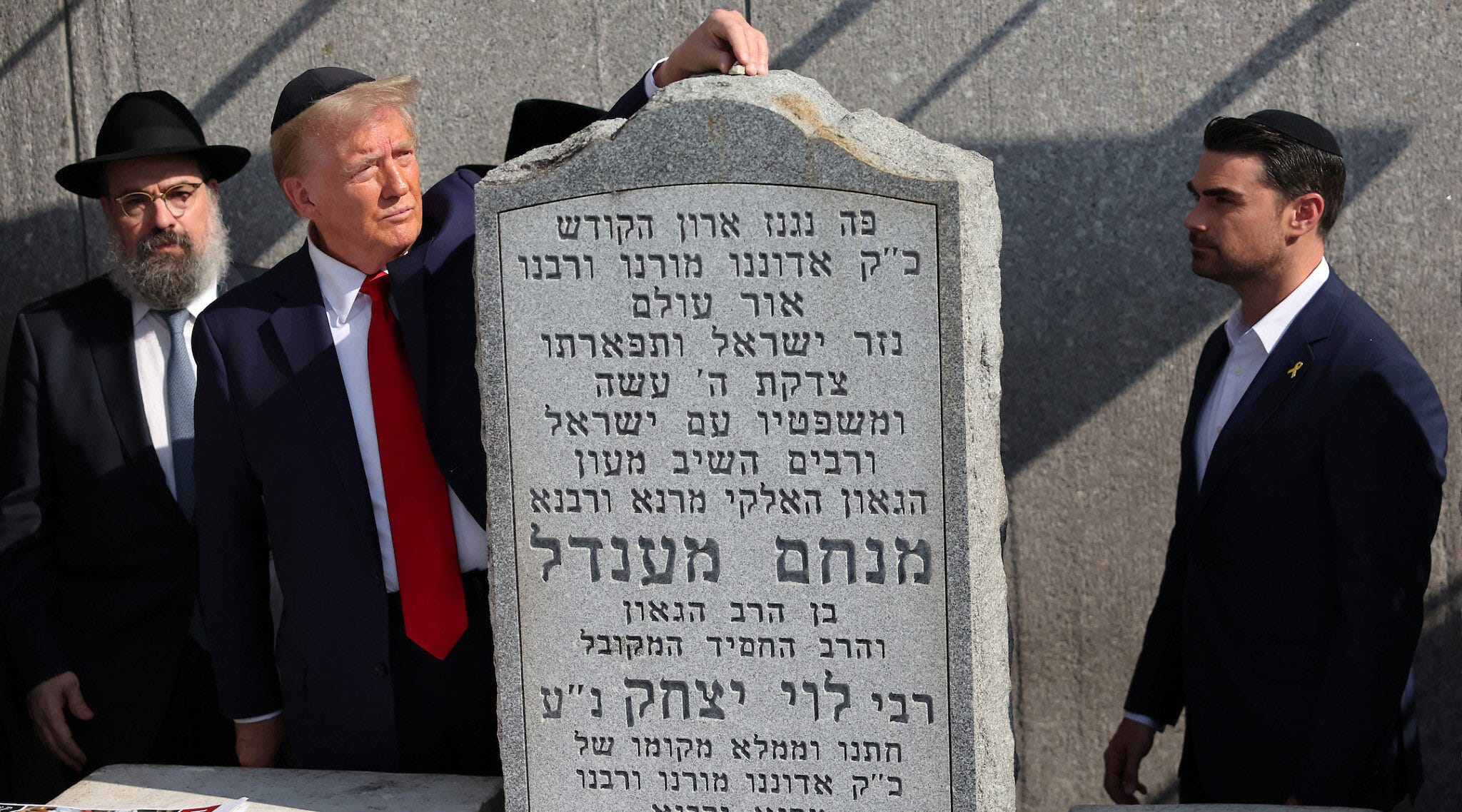
When recounting the ties to Judaism she has maintained for decades, Maples made note of visiting the city of Safed in northern Israel. In addition to being one of Judaism’s Four Holy Cities — alongside Jerusalem, Hebron, and Tiberias — Safed is the historical center of Kabbalah. Its status as the epicenter of Kabbalah arose during the 16th century, when it became home to central figures of the branch of Jewish mysticism like Moses Cordovero and, most notably, Isaac Luria, the father of its contemporary practice, which has become known as Lurianic Kabbalah. Luria’s influence on Kabbalah was so profound that he became known as “Arizal,” which in Hebrew translates to “Lion of God,” based on the Hebrew words “El” (meaning God) and “Ari” (meaning lion).
Following his death in 1572, Luria was buried in the Safed Old Jewish Cemetery on the lower hillside of the city. His grave has since become a major pilgrimage site for Kabbalists.
Trump’s ex-wife is not the only figure in his life who maintains reverence for Kabbalah.
Jared Kushner, Trump’s son-in-law, who has held various high-ranking advisory roles in each of his presidential administrations, is a member of the Haredi sect of Judaism known as Chabad-Lubavitch.
Chabad arose as a Hasidic dynasty in 1775 by Rabbi Shneur Zalman of Liadi in Liozno, then part of the Russian Empire. The sect is inherently Kabbalistic, taking its name from an acronym representing the first three Sephirot of the Tree of Life: Chokmah, Binah, and Da’at.
Ivanka Trump, the president’s oldest daughter, converted to Judaism in order to marry Kushner and regularly attends Chabad-run congregations as a practicing Jew. She has also regularly been seen adorned with a red string bracelet on her wrist, another popular apotropaic talisman worn by Kabbalists.
Maples detailed how Ivanka Trump’s conversion was a monumental force in further immersing the president into world Jewry, which she expressed has helped shape her ex-husband’s spiritual and consequently political identity. The influence of that immersion into Judaism has been echoed by fervent ultra-Zionist supporters of Trump, such as political commentator Mark Levin, who has referred to Trump as the U.S. “first Jewish president” on multiple occasions.
Trump himself reinforced that image by making his undying commitment to Israel and the Jewish people explicit, wasting no opportunity to reiterate it during his second term as president.
That commitment has come to undermine Trump’s second term, which continues to be mired by its war with Iran, which senior officials in his administration have consistently justified as necessary to defending Israel and maintaining the U.S. allegiance with the Jewish state.
Prioritizing that relationship has led to upheaval among Trump’s supporters, who have come to mock his presidency as being Israel First instead of following through on the America First platform it built itself upon.
That growing disdain has become amplified by the continued presence of Kushner within his administration, whose overt identity as a member of Chabad and an unflinching ally of Israel has raised further questions behind the motives driving the work in his role as an informal special envoy in deliberations between the U.S. and Iran.
This story originally appeared in Common Dreams on Aug. 19, 2026.It is shared here under a Creative Commons (CC BY-NC-ND 3.0) license.
The Teen Pregnancy Prevention program, first authorized through bipartisan legislation in 2009, has been credited with helping to dramatically reduce the number of American teenagers who have experienced unwanted pregnancies in the past decade and a half, dropping by more than 65% over 16 years, according to one congressional report.
Despite the best efforts of President Donald Trump and Health and Human Services Secretary Robert F. Kennedy Jr., a federal judge’s ruling on Wednesday sent the message that the push to reduce teen pregnancy in the US will continue, with the administration’s limits on the program’s federal grants paused.
Judge Christopher Cooper of the US District Court for the District of Columbia granted a preliminary injunction in the case of Hennepin County, Minnesota v. US Department of Health and Human Services, in which officials joined King County in Washington state, Planned Parenthood of the Heartland, and the Sexuality Information and Education Council of the United States (SIECUS) in challenging HHS’s changes to the program’s grant policy. The plaintiffs were represented by Public Citizen and Democracy Forward.
The changes, said Cooper, were “likely arbitrary and capricious.”
LAWSUIT WIN: The court blocked the Trump admin’s attempt to turn the Teen Pregnancy Prevention Program into an abstinence-only program.
The court said the plan would seem to defy social reality, common sense, & scientific evidence alike.
The new policy, announced in June, canceled 53 of 66 active grants that had gone to public universities, health departments, and nonprofits for programming related to sex education, including information that was given to teens on contraception and communication with sexual partners.
In Trump’s 2027 budget, the grants are described as promoting “radical leftist ideology,” and officials claim there is no evidence that teen pregnancy prevention programs that go beyond educating young people about abstinence have “contributed to the historic decline in teen pregnancy, which is now at an all-time low.”
Under new guidance issued in June, Teen Pregnancy Prevention (TPP) program grantees are required to focus lessons on abstinence, deemphasize contraception, and teach teens about fertility and “body literacy.”
“HHS is perfectly entitled to formulate its own views about how to stem teen pregnancy—or even whether it is worth preventing at all—and to pursue policy initiatives consistent with its viewpoint. But it is not at liberty, under the Administrative Procedure Act (APA), to impose conditions on grant recipients that Congress did not intend or that are unreasonable or unexplained. The preliminary record suggests that HHS has done just that,” wrote Cooper in the ruling.
“Through the TPP, Congress sought to fund a range of evidence-based teen pregnancy prevention strategies, not just abstinence. According to unrebutted record evidence, programs that teach abstinence to the exclusion of all other approaches are ineffective in delaying sexual initiation and reducing adolescent pregnancy, at least as a general matter,” Cooper continued.
The judge took aim at the administration’s promotion of “body literacy,” which he called “a nebulous concept that appears to elevate fertility and marital procreation over well-tested forms of contraception and pregnancy prevention.”
Cooper also suggested that HHS had not bothered to find genuine evidence of its claims about “body literacy,” instead “remarkably” referencing “public health studies that appear either not to exist or not to support the propositions for which they are cited—a hallmark of AI-generated citations.”
The judge stopped short of reinstating the dozens of grants, amounting to about $67 million, that have been terminated, saying it was unclear whether he had the authority to do so.
The plaintiffs and other advocates of comprehensive sex education have called for a permanent injunction; Cooper called on both parties in the case to propose a schedule for next steps by September 1.
Callie Simon, executive director of SIECUS, said the group was “encouraged that the court has halted implementation of the new harmful policy” but emphasized that “the impacts of terminating existing grants remain.”
“Today’s decision sends a clear message that the Trump-Vance administration cannot replace the proven, bipartisan Teen Pregnancy Prevention program with an ideologically driven alternative that harms young people,” said Simon. “Communities across the country are still without the evidence-based programs they relied on, and we will continue fighting to ensure young people have access to the sex education they deserve.”
Sandra J. Valenciano, director and health officer for public health in Seattle and King counties, said local communities were facing a measurable loss due to HHS’ stripping of TPP grants
“This federal action threatened our ability to complete a study on a new science-based, community-informed sex education curriculum specifically for young men and boys,” said Valenciano. “This ruling gives us hope that we may still be able to get to the finish line with this study and ultimately empower more young people to build healthy families if, when, and how they choose.”
Ruth Richardson, president and CEO of Planned Parenthood North Central States, said the ruling “reaffirms the value of trusted, evidence-based education programs that help youth make informed choices and plan for their futures.”
“Attacks on the Teen Pregnancy Prevention program not only put young people at risk, they also risk increasing costs for taxpayers,” said Richardson. “No one benefits from these politically motivated attacks. It’s time for them to end.”

 Login