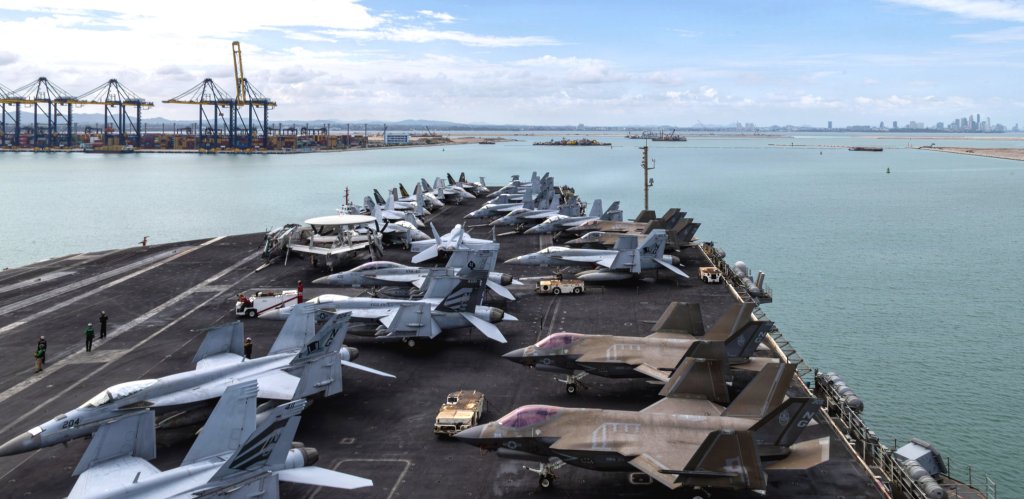
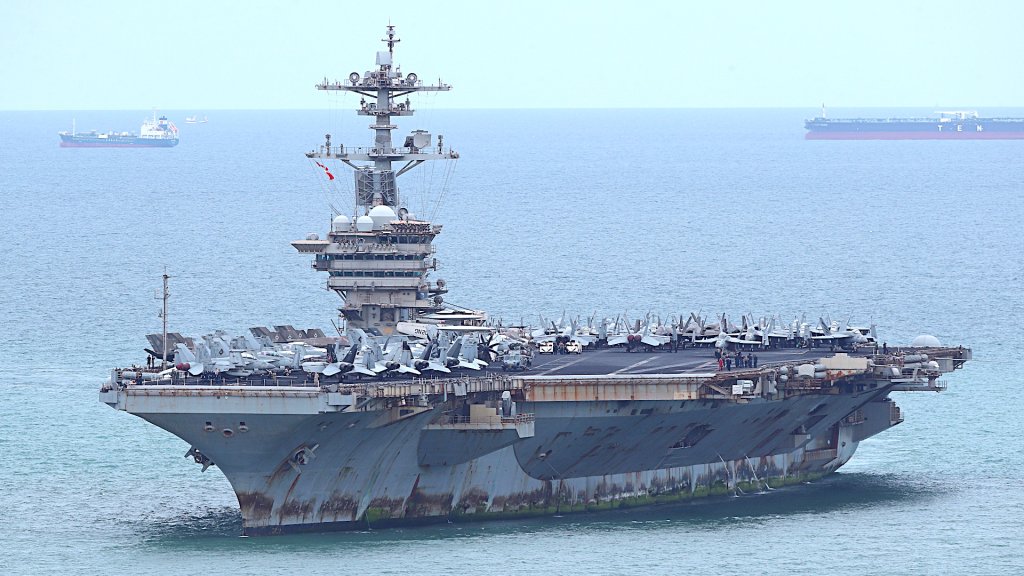
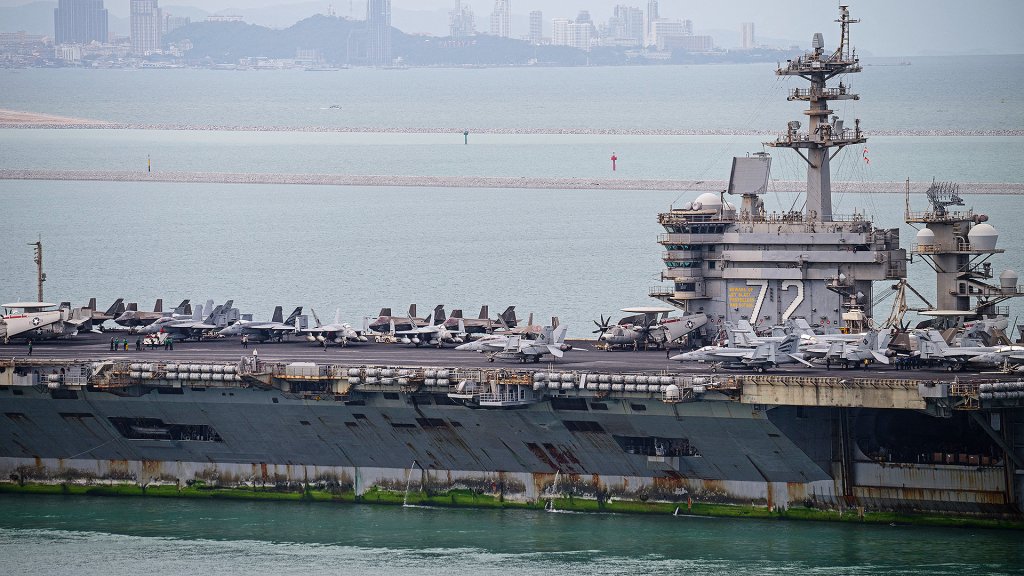
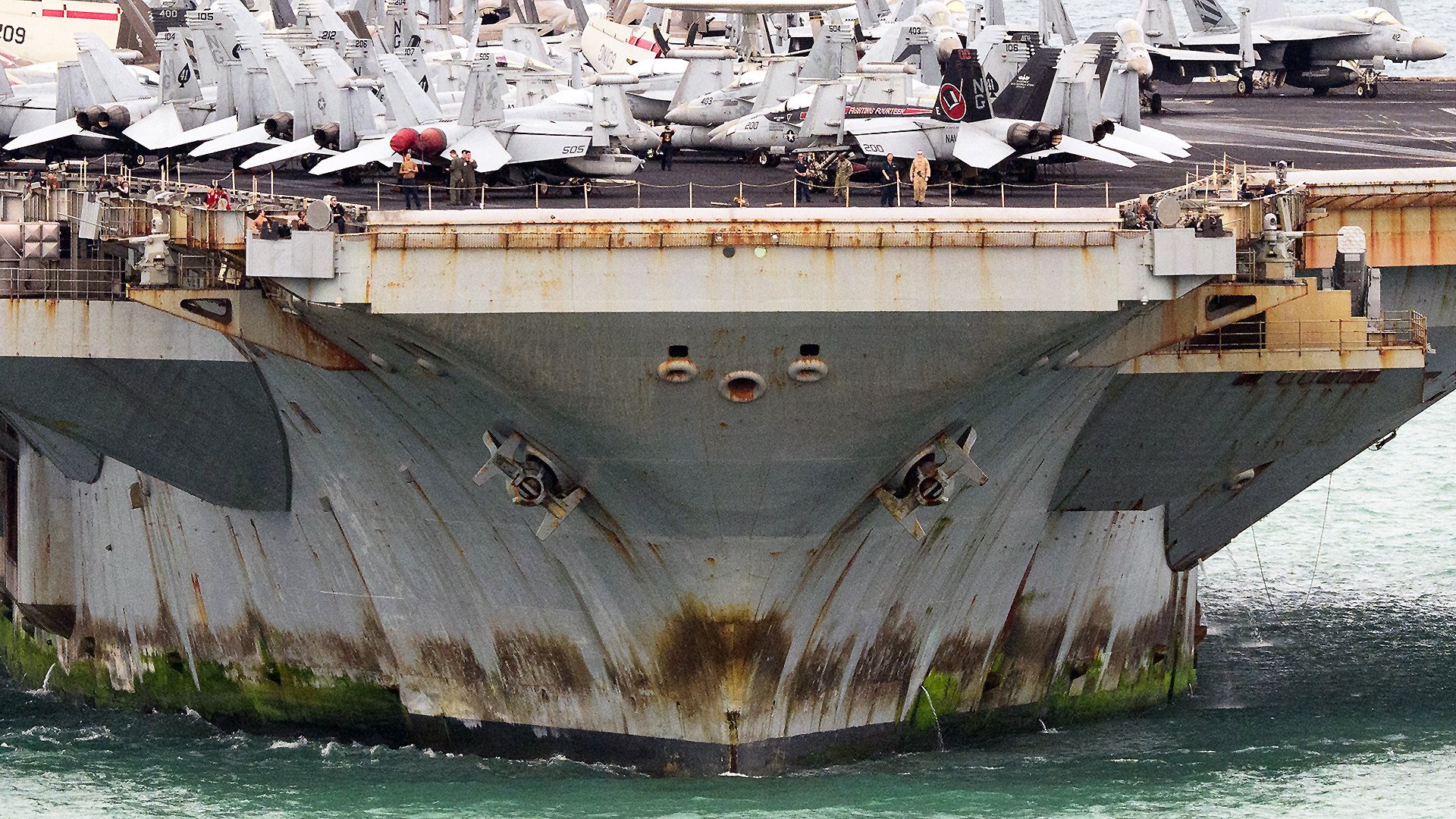
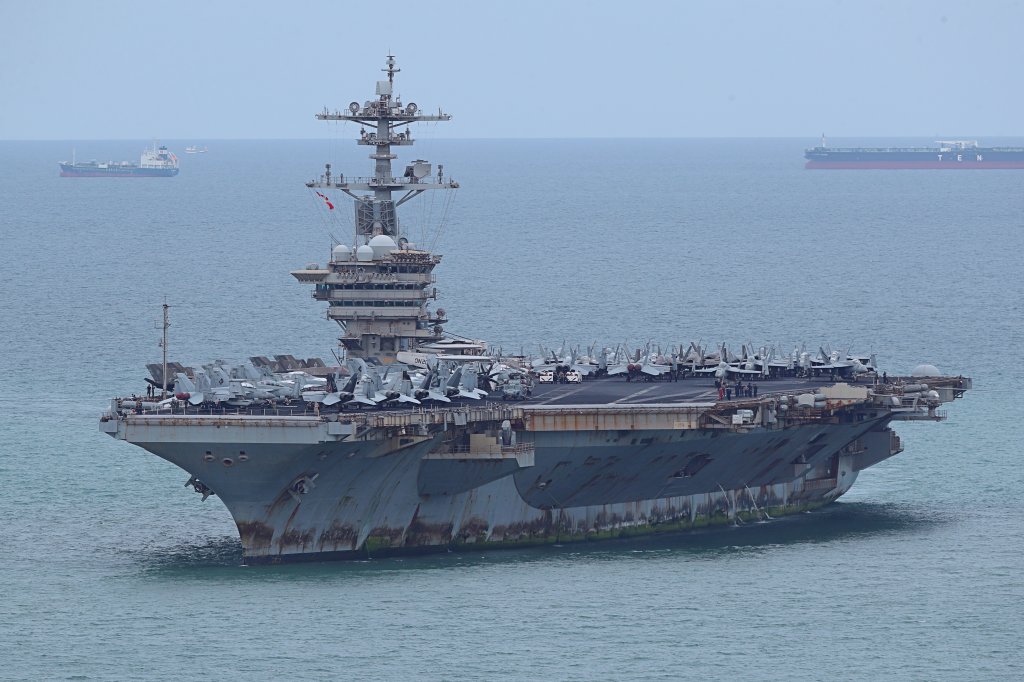
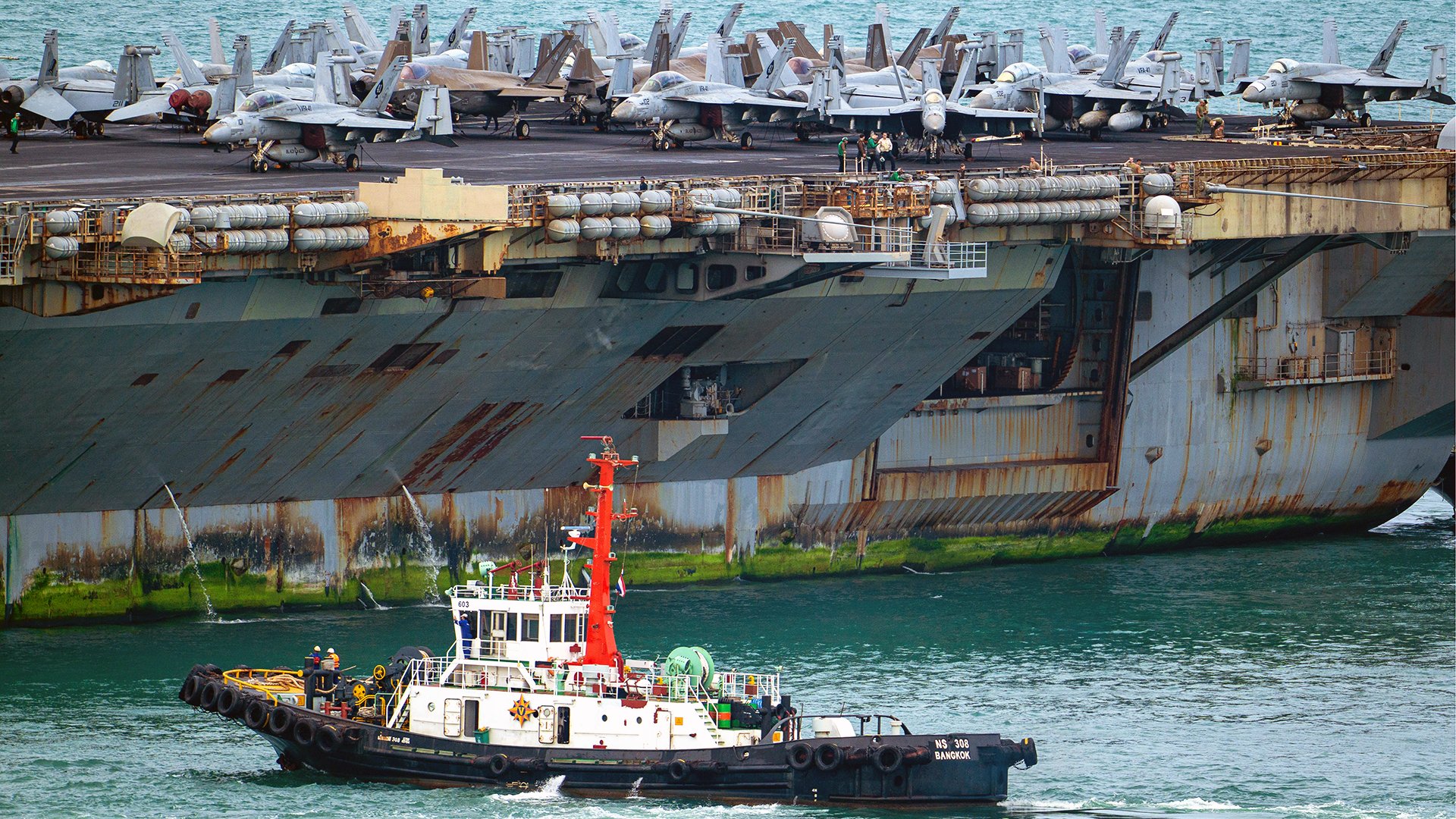
Video emerged on social media of local workers cleaning the carrier. Two of them can be seen on a scaffolding platform, dressed in silver-colored protective clothing, yellow helmets, face shields and black boots, spraying the side of the big ship. You can see that most of the rust, as well as all of the green swath of algae, was removed from the section where they are working.
The camera also pans across the ship, showing the extent of the work still needed.
Those recent viral rust photos/footage of the USS Abraham Lincoln (CVN-72) in Thailand overstated the story.
Yes, the hull looked rough in pictures, but the ship itself was never in question, that's the part the headlines skipped.
It is unclear whether this work had already been scheduled as part of routine maintenance or whether it had been ordered after images of the ship emerged showing its rough condition. The ship was a huge focus of attention even before it got to Thailand.
Interest in the Lincoln flared up anew after it arrived in Thailand due to its condition, as well as intense curiosity about how the crew would fare in a Thai port call after being at sea for so long.
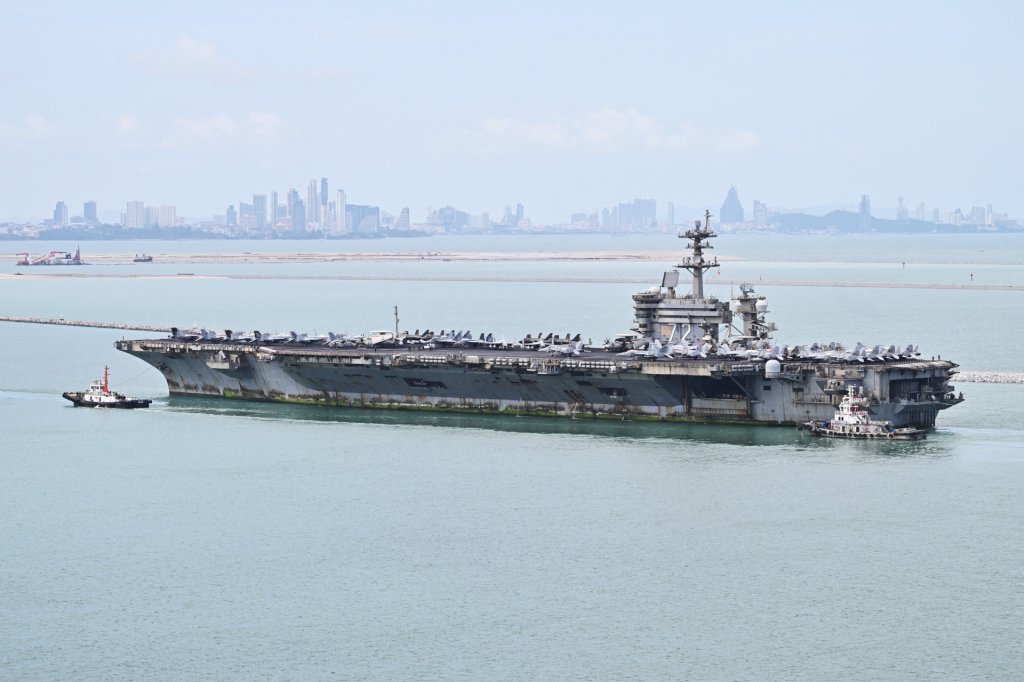
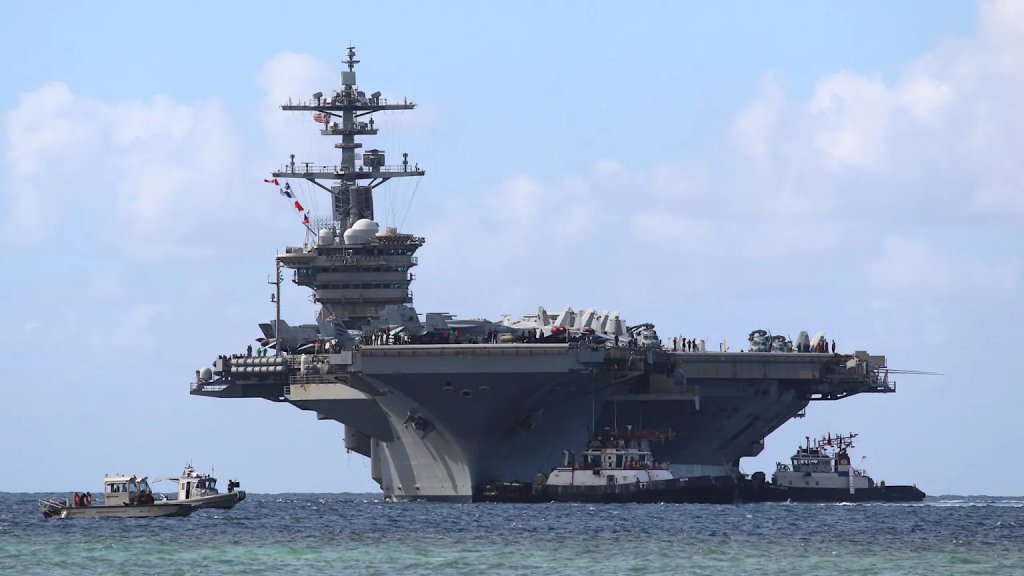
The USS Abraham Lincoln (CVN-72) aircraft carrier arrives at Laem Chabang Port on Sept. 2, 2026 in Si Racha, Thailand. Photo by Thananuwat Srirasant
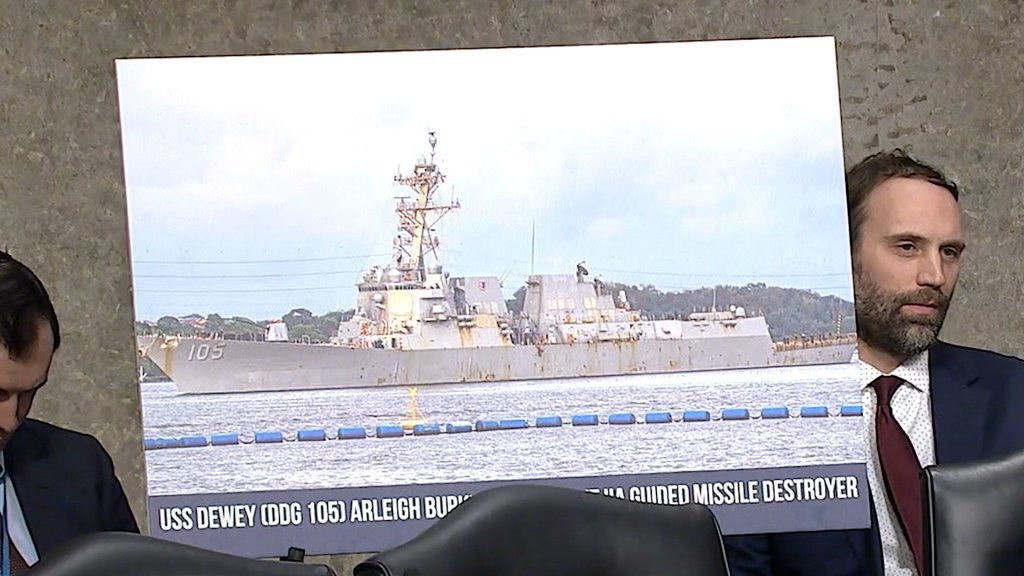
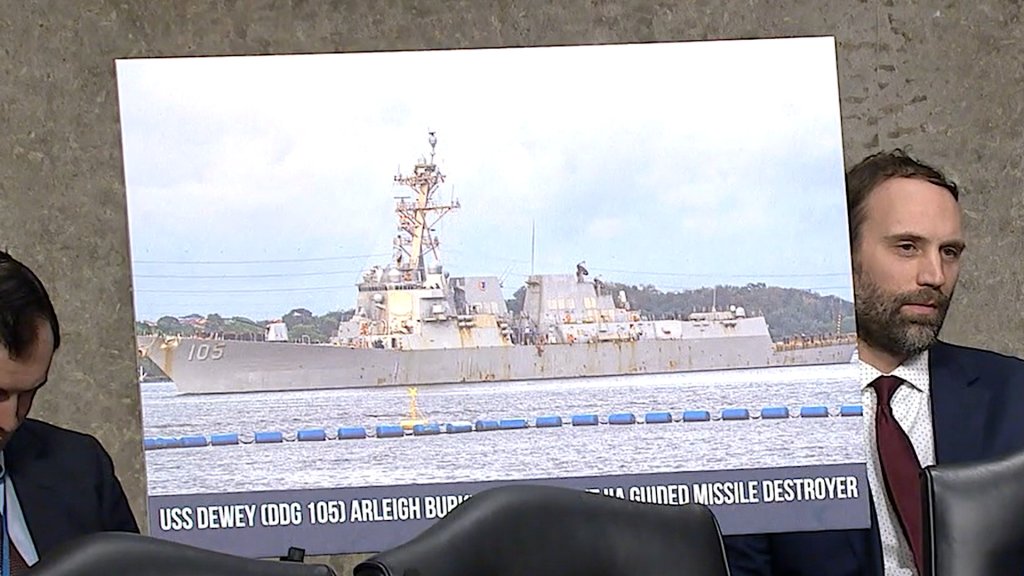
“It’s terrible. I think they should be ashamed,” John Phelan told members of Congress at a hearing last year, when he was then-nominee for Secretary of the Navy, after being shown pictures of a very worn-looking Arleigh Burke class destroyer, the USS Dewey, during a stopover in Singapore. “Would you want to go on that ship?”
One driving factor in the condition of ships like Lincoln is the operational tempo of deployments, a Navy official noted earlier this year.
“We know what to do, but we choose not to do it,” Mark Lattner, director of the Navy’s Ship Integrity and Performance Engineering, Naval Systems Engineering Directorate, said in January during a panel at the Surface Navy Association’s annual symposium that TWZ attended. “And we choose not to do it because there’s always some other problem I’ve got to fix. I don’t have time. Our corrosion can wait. And so we don’t implement the fixes.”
Finding a solution to the Navy’s rust problem became one of Lattner’s main missions in the wake of the fallout from Trump’s late-night texts to Navy officials demanding answers about the condition of theArleighBurke class guided missile destroyer USS Dewey after he saw pictures of it covered in running rust as it pulled into Singapore last year.
A picture of the USS Dewey covered in ‘running rust’ during a recent port visit in Singapore is shown at the confirmation hearing for Secretary of the Navy nominee John Phelan on January 27, 2025. Senate Armed Services Committee capture
Port calls offer critical time to fix long-standing issues and resupply the ship of pretty much everything you can think of, from jet fuel to food. So it’s no surprise that the Lincoln would be swarmed with support personnel and supplies while much of her crew enjoys being on land once again for a few days.
It’s unclear how long the clean-up work on the Lincoln will last or how much of it will be finished by the time the ship and crew leave port. Either way, from what we have seen so far, it will look much better leaving Thailand than when it arrived.
The archaeological find could hardly have been more modest: a small ring made of copper alloy, with a few Greek letters engraved on it and the image of a ceramic vessel. Yet its insignificant appearance conceals an extraordinary story that has kept specialists on tenterhooks since its existence was revealed in 2018. The seal, recovered […]
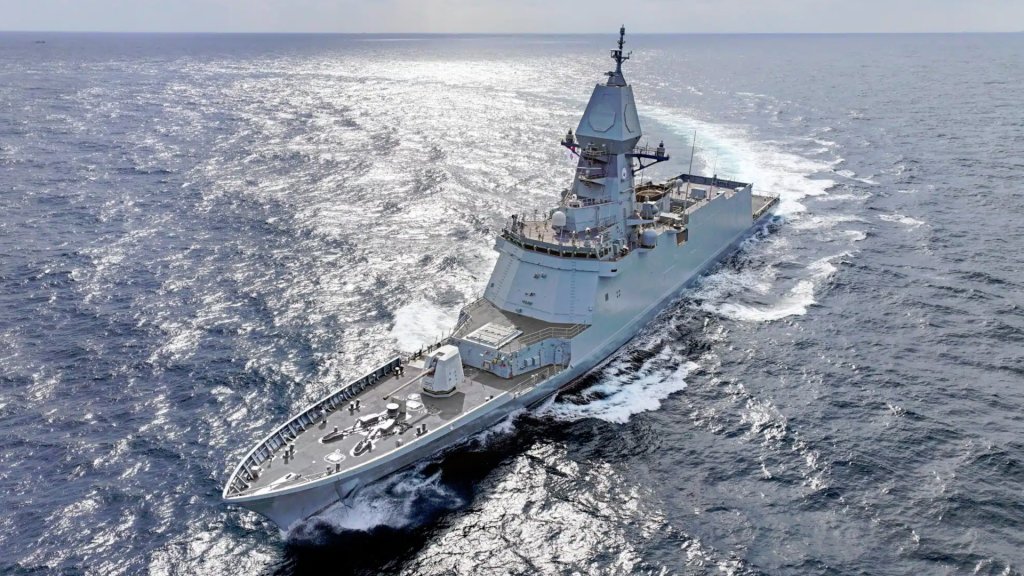
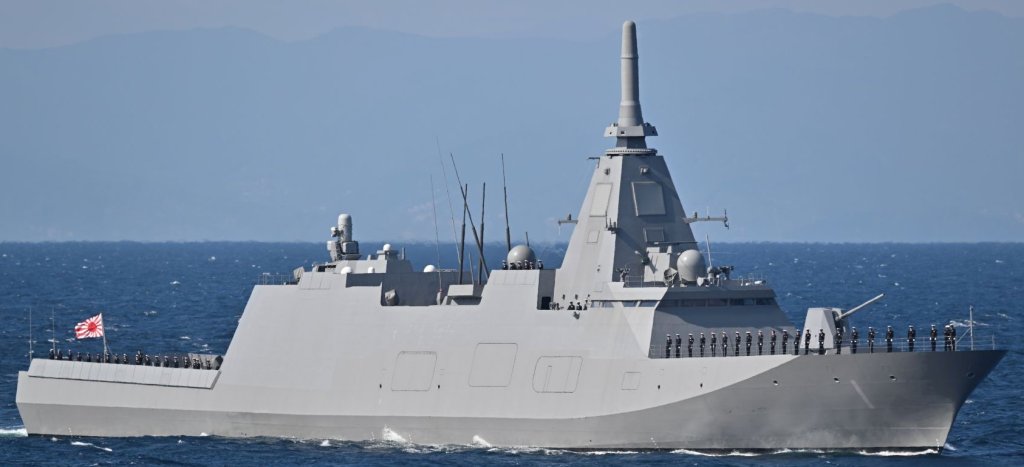
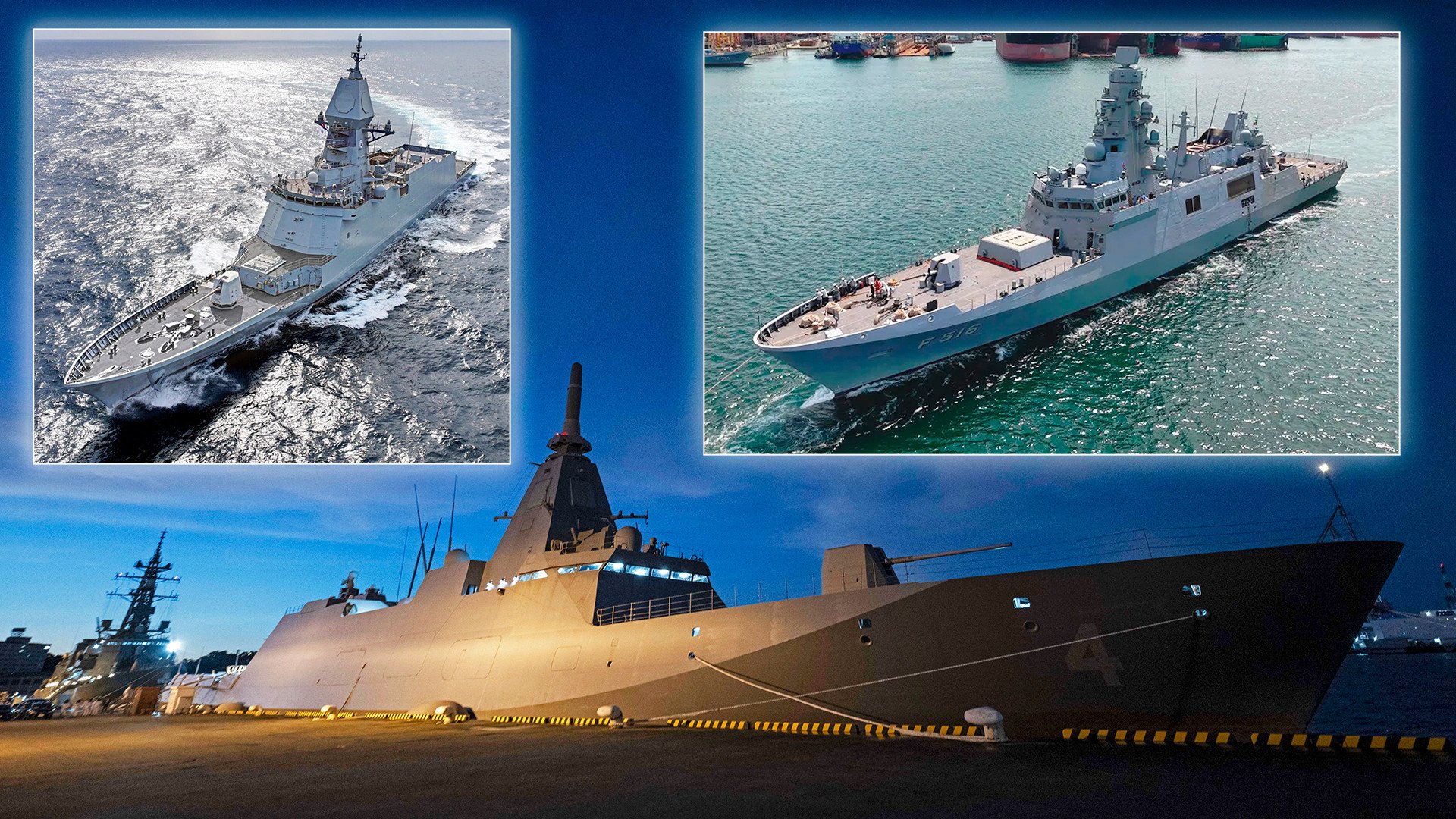
USNI Newswas first to report on Tuesday that the Japanese, South Korean, and Turkish frigates are included in an ongoing Navy study, citing anonymous sources. The review is in direct response to one of the provisions in a larger memo President Trump sent out last month, titled “Rebuilding the United States Navy and America’s Shipbuilding Industrial Base.” This also comes amid strong opposition in Congress to the basic idea of buying foreign warships for the Navy.
A pair of the Japan Maritime Self Defense Force’s (JMSDF) Mogami class frigates. JMSDF
Per that memo, the Secretary of the Navy (currently Acting Secretary Hung Cao) was directed to “submit a plan to the President … that includes timelines and resourcing requirements, for a new competitive acquisition approach for surface combatants with sufficient inherent capabilities to perform anti‑submarine warfare, surface warfare, and convoy escort duties.” The memo also said the “plan should address meeting the requirements for Consolidated Cargo Replenishment at Sea (CONSOL) Tankers and — separately — Roll-On, Roll-Off Vessels.”
The study could lead to “an international warship competition [that] could include building up to two of the ships in foreign shipyards before transitioning to domestic yards as part of the Trump administration’s push to rapidly expand the fleet, three industry sources familiar with the deliberations confirmed,” according to USNI News‘ report. The outlet also said the Navy declined to “directly address the potential for an open competition for a new frigate” when asked.
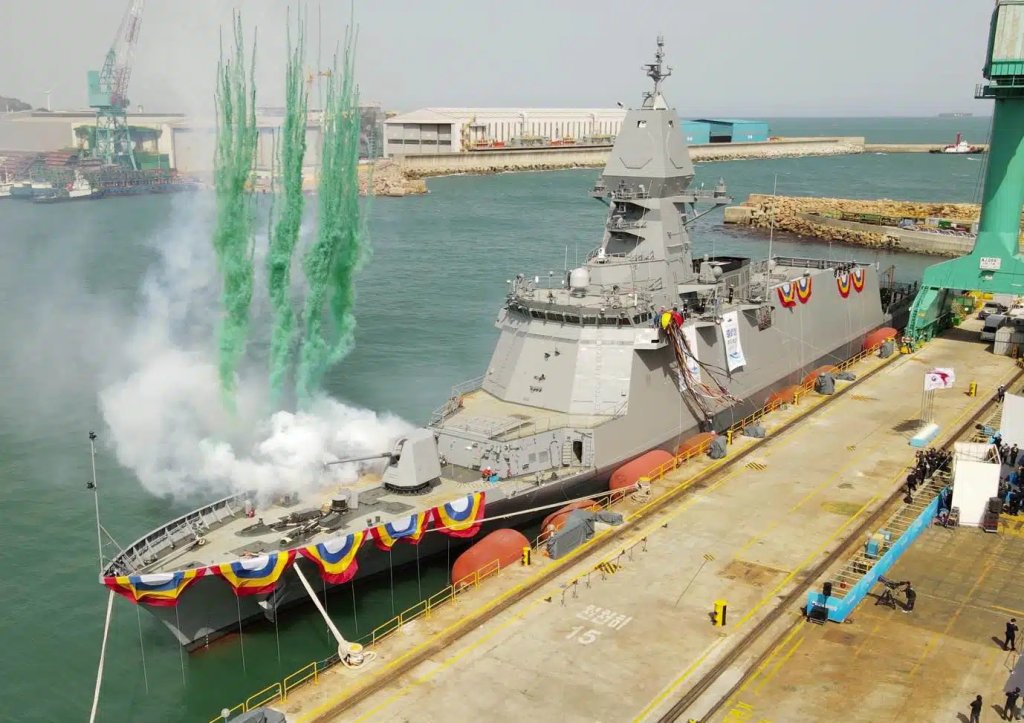
The South Korean Navy’s ROKS Chungnam seen during sea trials before its delivery in 2024. HD Hyundai Heavy Industries
The acquisition approach described here is in line with what the Trump administration is currently calling the “Finland Model,” which entails construction of an initial batch of ships overseas before moving further production to yards in the United States. The name comes from a partnership the U.S. and Finnish governments announced last year regarding the construction of new icebreakers for the U.S. Coast Guard. Canada’s Seaspan Shipyards is also involved in that plan.
Broader plans to explore foreign surface combatant designs for the U.S. Navy, and potentially more to acquire one of those ships, were mentioned in the Pentagon’s 2027 Fiscal Year budget request released earlier this year. President Trump, former Secretary of the Navy John Phelan, and other U.S. officials have also openly raised the possibility of cooperation with shipbuilders in Japan and South Korea, specifically, including with regard to surface combatants. USNI‘s report says that the Istanbul class was included in the current review after it came up in discussions between Trump and Turkish officials on the sidelines of the NATO summit in Ankara in July.
Many questions remain, but there are clear signs the Trump administration wants to move in pursuing the acquisition of foreign naval vessels. The particular focus on frigates also aligns with a clear Navy need for new ships in that size class.
Why frigates?
Before exploring the specific designs the Navy is now said to be reviewing, it is worth taking a step back to understand why frigates are so important to the service’s shipbuilding plans, in general. The United States has not technically operated frigates since the retirement of its last Oliver Hazard Perry class type in 2015. The expectation had been that the Freedom and Independence class Littoral Combat Ships (LCS) would fill the resulting gaps. However, those ships struggled for years with a variety of major issues over the years and still have not lived up to their promised potential, despite certain strides having been made in expanding their operational employment in recent years.
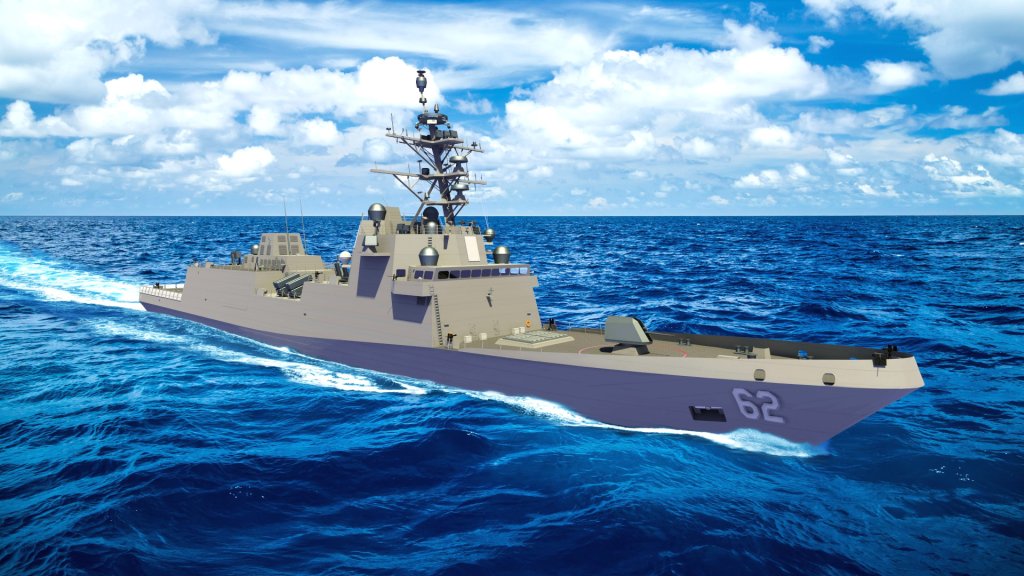
A rendering of a now-cancelled Constellation class frigate. USN
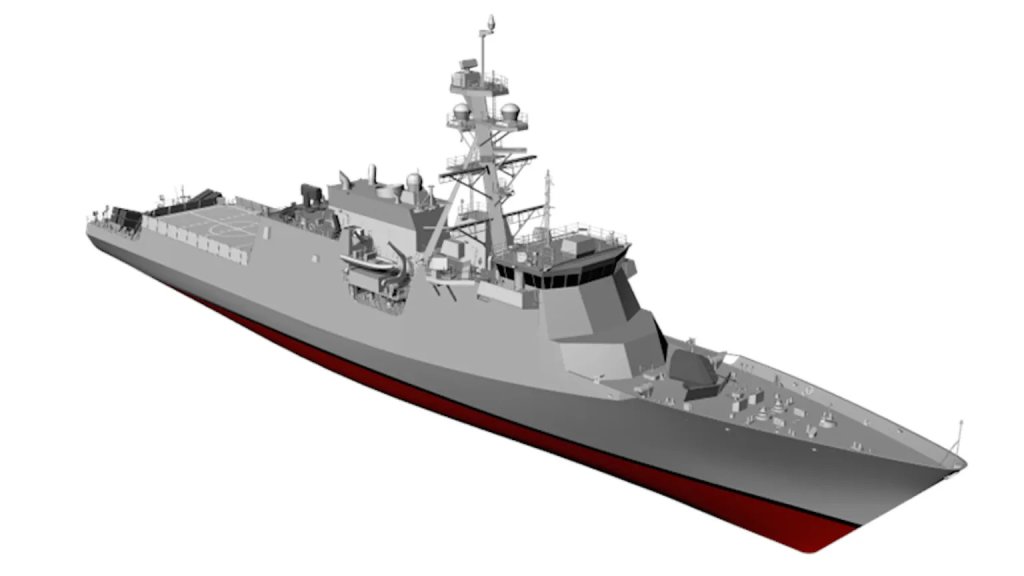
A new FF(X) frigate program has since emerged. Through that effort, the Navy is now in line to get ships derived from the U.S. Coast Guard’s Legend class National Security Cutter (NSC), with the goal being to have the first one in the water by 2028. However, those frigates, at least the ones built in the initial tranche, will lack a Vertical Launch System (VLS) and certain other features that were seen as critical for the preceding Constellation class. This has immediately raised questions about the operational utility of these new small surface combatants, asTWZ has previously explored in detail.
A rendering of the US Navy’s future FF(X) frigate. USN
None of this diminishes the Navy’s current desire for new frigates, and more of them, to provide smaller, lower-cost platforms that can be used to bolster larger surface action groups or operate more independently in roles that do not require larger, more capable designs. When fielded in sufficient volume, they can also free up other types of surface combatants for other, higher priority duties or similar help to relieve strain on those fleets.
Today, the Navy’s fleet of Arleigh Burke class destroyers “gets used with a very high demand signal combatant commanders. The Navy can’t operate with only one size of ship,” Rear Adm. Brian Metcalf, the Navy’s Deputy Portfolio Acquisition Executive Maritime for Combatants, said in an official video in June. “The [FF(X)] frigate will fill that gap. They can be used in less contentious waters. They can be used as high-value escorts. There are all kinds of things the frigate can fill the gap for and allow destroyers to execute the high-end mission set.”
With all this in mind, it is not surprising that the Navy would be seeking to further bolster its future frigate fleets on a shorter timetable by leveraging foreign shipbuilders. There are also clear benefits to taking advantage of capable, in-production designs, which leads us to the Mogami, Chungnam, and Istanbul classes.
The Mogami class
Japan’s Mogami class, with its stealthy design characteristics, has long been a standout among modern frigates currently in production globally. The ship is designed as a multi-mission platform with anti-air, anti-surface, anti-submarine, and mine warfare capabilities, the latter of which includes both mine-hunting and mine-laying.
TWZ has covered the ship in detail in the past, writing:
“The original Mogami class design (also known as the 30FFM), the first of which only entered Japanese service in 2022, is already a very modern design with its shape featuring some stealthy characteristics. The 436-foot-long, 53-and-a-half-foot-wide, 5,500-metric-ton displacement frigates have a combined diesel and gas (CODAG) propulsion system that allows for fuel-efficient normal cruising operations and an additional burst of speed in combat. The ships have an active electronically scanned array (AESA) main radar, as well as a host of other advanced sensors and mission systems. One of the Mogami‘s most distinctive features is its NORA-50 UNIted COmbined Radio aNtenna (UNICORN) mast on top of the main superstructure, which contains various antennas. The frigates also have especially futuristic-looking Combat Information Centers (CIC)…”
The Japan Maritime Self Defense Force’s (JMSDF) first-in-class JS Mogami. JMSDF
“Armament-wise, the baseline Mogami class frigate has two four-round launchers for Type 17 anti-ship cruise missiles, a SeaRAM close-in defense system loaded with RIM-116 Rolling Airframe Missiles (RAM), and a five-inch main gun in a turret at the bow. There are also two remote weapon stations, each armed with a .50 caliber machine gun, on top of the bridge for additional protection against close-in low-end threats.”
“The Mogami design was originally slated to feature a 16-cell Mk 41 launch system array, but the seventh ship in the class, the JS Niyodo, which was commissioned in May, was the first to be fitted with it. The first six of these frigates were delivered without this capability, but they are expected to be back-fitted with it in the future. Mk 41 cells on Mogami class frigates are expected to be primarily filled with domestically-developed A-SAM or U.S.-designed RIM-162 Evolved Sea Sparrow Missiles. Four ESSMs can notably be loaded in a single Mk 41 cell.”
The Mogami classfrigates also have a flight deck and hangar designed to accommodate a single Seahawk helicopter. The ships can also deploy uncrewed underwater and surface vessels (UUV/USV), as well as rigid-hull inflatable boats (RHIBs), via a ramp at the stern.
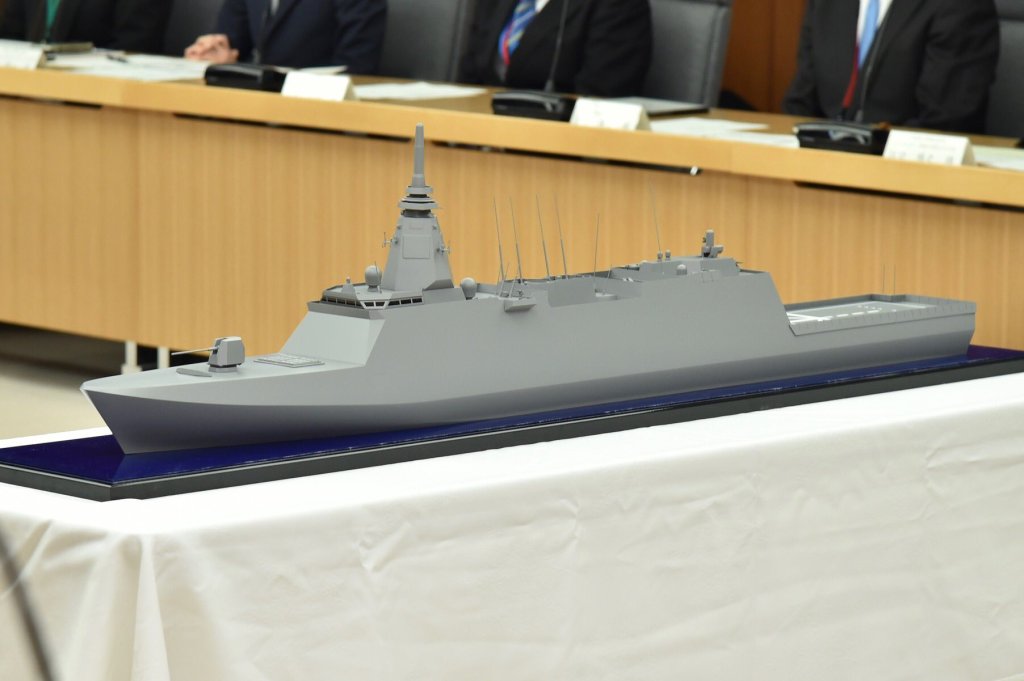
MHI in Japan has also developed an enlarged derivative that is close to 466 feet long, almost 56 feet at its widest, and displaces some 6,200 metric tons. This version also features a 32-cell VLS array, along with an upgraded radar, other improved sensors, and updated mission systems. Last year, the Australian government announced it would be acquiring a fleet of these ships with certain unspecified country-specific features as part of its SEA 3000 program.
A model of the enlarged derivative of the Mogami class. Japan Ministry of Defense
The Australian deal is one of, if not still the most significant foreign arms sale for Japan since the end of World War II. It also helps ensure that the Mogami production line will remain hot for years to come. For the U.S. Navy, sharing a frigate with two of America’s highest-profile allies in the Pacific, and which could therefore be readily serviced in those countries, would be very advantageous.
The Chungnam class (also sometimes referred to as the FFX-III or FFG-III) is the latest frigate for the South Korean Navy, and features a mix of anti-air, anti-ship, and anti-submarine capabilities. The first example entered service in that country in 2024. These ships are just over 423 feet long, approach 49 feet at the widest point in the hull, and displace some 4,300 tons with a full combat load. The design is based on the earlier Daegu class, which was itself an evolution of the precedingIncheon class that traces its roots back to the late 1990s.
As was the case on the Daegu class, the Chungnam class uses combined diesel–electric or gas (CODLOG) propulsion, which offers benefits for power management and efficiency, as well as when it comes to reducing maintenance requirements and operating costs. The design features a prominent integrated mast structure with four fixed-face arrays for the main multi-function AESA radar near the top. The ships have additional radars and other sensors, as well as an electronic warfare suite.
The ROKS seen at the time of its launch. HD Hyundai Heavy Industries
Each one of the Chungnam class frigates has a 16-cell K-VLS array. Domestically developed K-SAAM surface-to-air missiles and Haeseong I anti-ship cruise missiles (also called the SSM-700L or C-Star), as well as K745A1 Hong Sang Eo (Red Shark) vertically-launched anti-submarine rockets, can be loaded into these cells.
The armament package on these ships also includes a five-inch main gun in a turret at the bow, a pair of triple torpedo tubes, and a Close-in Weapon System II (CIWS II) armed with a seven-barrel 30mm Gatling-type cannon.
A look at the CIWS-II, which is part of the full armament package on the Chungnam class frigate. Hyundai WIA
The Chungnam class frigates also have a flight deck and hangar for a single helicopter at the stern.
As it stands now, the South Korean Navy has two Chungnam class frigates in service and has plans to acquire four more over the next few years. The lead ship in the class was built by HD Hyundai Heavy Industries, which is also one of the principal designers of the ship. A different shipbuilder, SK Oceanplant, built the second ship in the class, ROKS Gyeoungbuk, and is now working on the third and fourth examples. Hanwha Ocean is reportedly in line to build the last two ships in the class for South Korea. Hyundai and Hanwha have pitched export designs based on the Chungnam class, with both firms notably in the running to supply new frigates to Thailand.
Hanwha has already been making steady inroads in the shipbuilding industry in the United States, including the acquisition of the Philly Shipyard in Philadelphia, Pennsylvania, in 2024. Hyundai has reportedly been working to do the same. Just last month, Hanwha publicly announced a new $1.2 billion bid to buy out Australian shipbuilder Austal’s U.S. subsidiary, Austal USA. Austal notably built the Independence class LCSs for the U.S. Navy and continues to supply that service with other vessels. Austal subsequently said it was considering the South Korean offer.
The Istanbul class
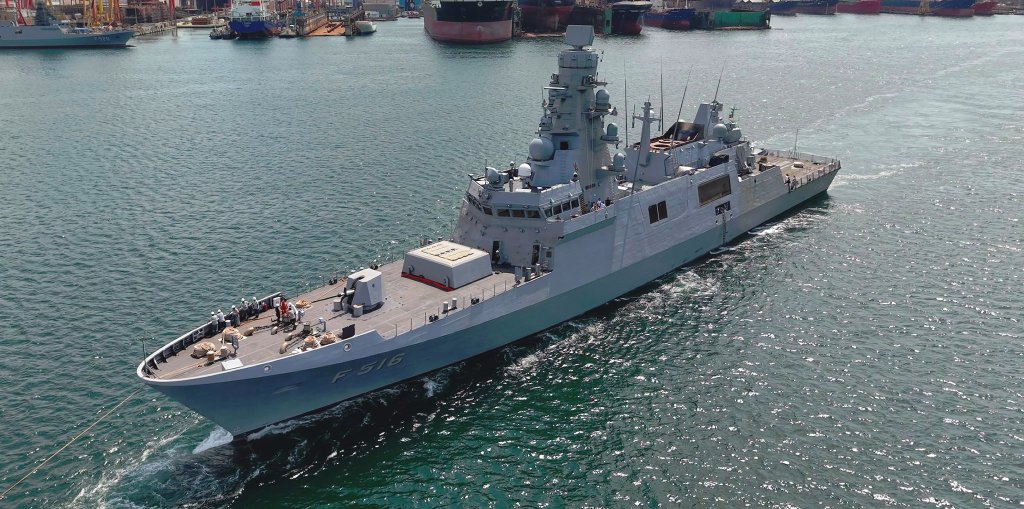
Turkey’s Istanbul class (also known as the Istif class or just I class), developed under the country’s MILGEM national warship program, is not a design that has typically come up in previous discussions about potential foreign-made frigates for the U.S. Navy. It is described as a multi-role frigate with anti-air, anti-surface, and anti-submarine capabilities. The lead ship in this class, TCG Istanbul, entered Turkish Navy service in 2024.
At around 371 and a half feet long and with a beam of just over 47 feet, as well as a displacement of some 3,000 tons with a full combat load, the Istanbul class is notably smaller than either the Mogami class or Chungnam class. Like the Mogami, it uses CODAG propulsion. The Turkish design is understood to have leveraged lessons learned from the Project GENESIS program to upgrade the country’s second-hand ex-U.S. Navy Oliver Hazard Perry class frigates, as you can learn more about here.
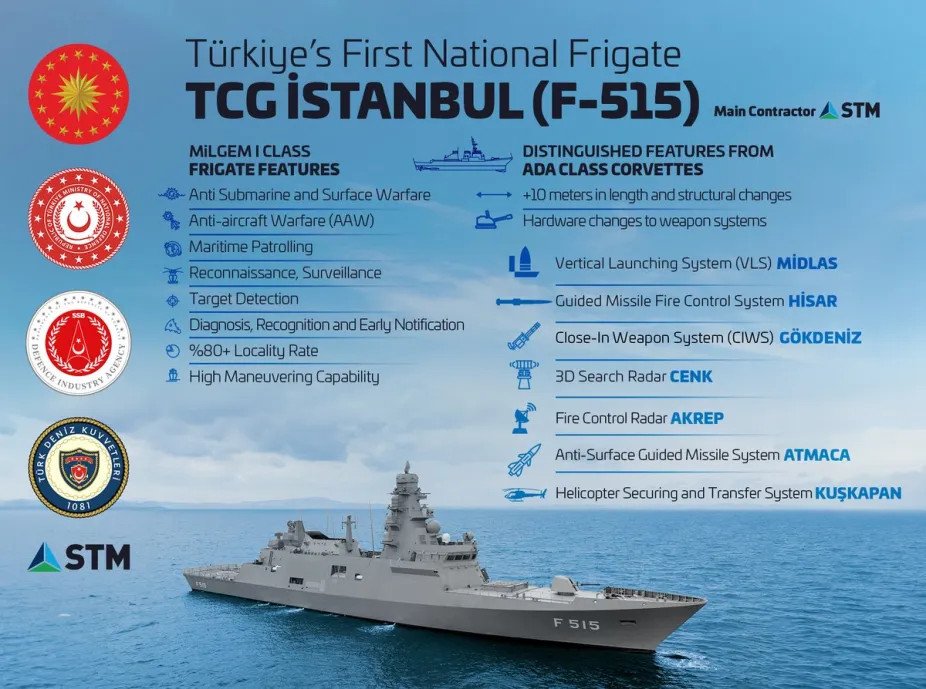
TCG Istanbul is armed with a 16-cell MiDLAS VLS array, with past reports saying it is primarily configured to fire Hisar short-to-medium-range surface-to-air missiles. However, just in August, it was revealed that the second ship in the class, the future TCG Izmir, which is undergoing sea trials now, has a new 16-cell version of MiDLAS with visibly longer cells. This would allow the ship to fire larger weapons vertically, such as the Siper medium-range surface-to-air missiles, Atmaca anti-ship cruise missiles, and/or Gezgin land-attack cruise missiles. MiDLAS is a scalable VLS design developed in Turkey as an alternative to the U.S.-made Mk 41.
The future TCG Izmir with its noticeably larger VLS array in front of the main superstructure. Anadolu Shipyard
The initial Istanbul class design already had four deck-mounted launchers that can be loaded with up to 16 Atmaca missiles, in total. The frigates also have a 76mm cannon in a turret on the bow, a Gokdeniz CIWS with a twin-barrel 35mm cannon, two 25mm cannon-armed remote weapon stations, and a pair of twin torpedo tubes.
The main sensor on the Istanbul class is a rotating AESA radar mounted on top of the ship’s main integrated mast structure. It has additional radars and other sensors, as well as electronic support measures and electronic countermeasures systems.
The Istanbul class design also features a flight deck and hangar at the stern, sized around the Seahawk helicopter.
An infographic offering a general overview of the Istanbul class’ capabilities. STM via X
As mentioned, the second Istanbul class frigate for the Turkish Navy is now in sea trials, and the country plans to eventually acquire eight of these warships in total. They are being built through several shipyards in Turkey. Last year, Turkey’s TAIS Shipyards also secured a contract to build at least two Istanbul class frigates for Indonesia.
Growing U.S. roadblocks to any foreign warships
Much remains to be seen about how the U.S. Navy might proceed with the acquisition of new frigates, or any other naval vessels, via foreign shipbuilders. Whether any other relevant, in-production designs are being considered, or could be in the future, is unknown. USNI News‘ report says the current study is scheduled to wrap up in November.
Furthermore, what the Navy might want to do could well turn out to be moot. Members of Congress on both sides of the political aisle have been very vocally pushing back on any plans to acquire foreign warships amid concerns about negative impacts on the U.S. shipbuilding industry.
Current U.S. law would already require the Trump administration to issue a national security waiver to pursue foreign-made naval vessels. A draft of the annual defense policy bill, or National Defense Authorization Act (NDAA), for the 2027 Fiscal Year now making its way through the Senate would eliminate the ability to issue such a waiver. In June, members of the House Armed Services Committee separately moved to outright block any spending on foreign-built warships in a separate draft NDAA.
The aforementioned Finland Model, as outlined in Trump’s August memo, is clearly intended to try to assuage Congressional concerns. Under the stated plan, foreign shipbuilders would be required to make major investments in U.S. shipbuilding enterprises and hire American workers as part of any future contract, even if an initial tranche of vessels is built overseas.
A rendering of one of the future Arctic Security Cutter icebreakers the US Coast Guard is set to acquire in part through a shipyard in Finland. Seaspan
“The Administration strongly opposes section 1025, which would prohibit the use of funds for procurement of initial battle force ships to be built in a foreign shipyard, especially while, in accordance with the ‘Finland Model’ first employed with the Coast Guard’s medium icebreaker program, long-term investments are being made in an American brown or greenfield shipyard,” the White House’s Office of Management and Budget (OMB) wrote in a statement of Administration Policy in July, specifically in response to provisions in the the House’s NDAA draft. “This prohibition fails to seriously address the challenges posed by current shipbuilding backlogs across six major programs in our ‘prime’ shipyards.”
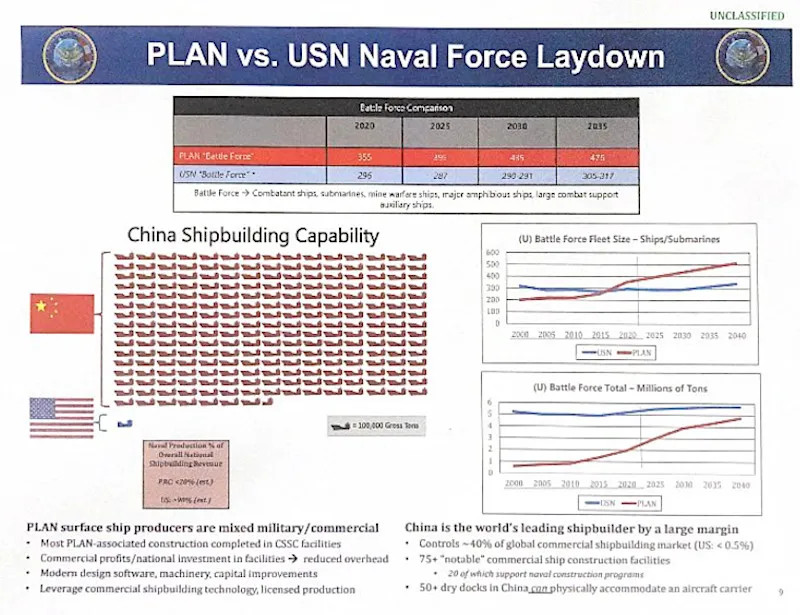
This latter point here speaks to an already worrisome and still-widening gap between U.S. shipbuilding capacity and that of chief global competitor China. The U.S. government has tried to take steps in recent years to revitalize the American side of the equation, but workforce retention and other factors have continued to present serious hurdles. There are additional concerns now about how the addition of work on the Trump class battleship program will affect America’s naval shipbuilding ecosystem, which the Trump administration has separately pushed back on.
An unclassified Office of Naval Intelligence briefing slide from circa 2023 underscoring the disparity between U.S. and Chinese naval shipbuilding capacity. ONI
Continuing U.S. shipyard capacity and quality issues raise their own questions about the viability of the Finland Model. The construct inherently limits the U.S. government’s ability to make use of yards overseas and is heavily contingent on the shipbuilding industry in the United States expanding at a rate where it will be able to absorb the additional production demands. With the naval shipbuilding deficit already becoming extremely problematic, buying examples of relevant classes with minimal changes and having them built where production is already established could arguably be the priority, especially in light of the failures of the LCS and Constellation programs.
Ensuring that any U.S.-specific changes to the design are minimal will also be critical for any such plan to be successful. As mentioned, the Constellation class was undone in large part due to a near-constant stream of changes ordered by the Navy, which negated the benefits of choosing a derivative of an in-production design. The service has stressed its intention to avoid any similar pitfalls with its existing FF(X) frigate program, which also has to be factored into the larger domestic shipyard capacity question.
“The President has directed the Navy to aggressively increase domestic shipbuilding capacity, including leveraging the proven shipbuilding skills and industrial expertise of our allies,” Navy Capt. Ron Flanders said in a statement on Tuesday, according to USNI News. “We are actively developing options to fulfill the President’s intent to deliver ships faster while ensuring long-term investment, technology transfer, and workforce expansion within United States shipyards.”
Signs are certainly growing that the Navy is moving closer to kicking off a formal process to acquire foreign-designed warships, which could include Mogami, Chungnam, and/or Istanbul frigates, to help grow its fleets, especially in the face of growing challenges posed by China.
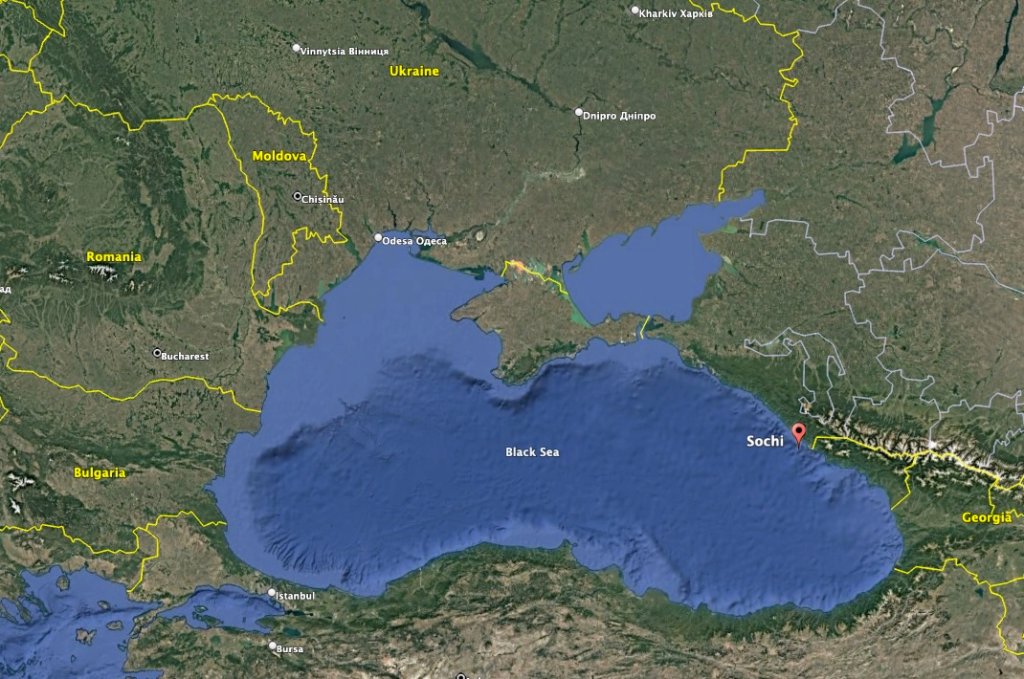
Ukraine carried out one of its farthest uncrewed surface vessel (USV) attacks from Ukrainian shores, striking the Nefrit, a multipurpose offshore vessel, in the Russian Black Sea resort city of Sochi. The seaside getaway is located about 350 miles on a direct line from the nearest Ukrainian-held territory, but the trip is a lot longer if originating from Ukrainian-held shores.
This marks the first known USV attack on this city that Russian President Vladimir Putin often visits. As we have reported in the past, it has been attacked several times by Ukrainian aerial drones.
The Russian Black Sea port of Sochi came under attack on Thursday. (Google Earth)
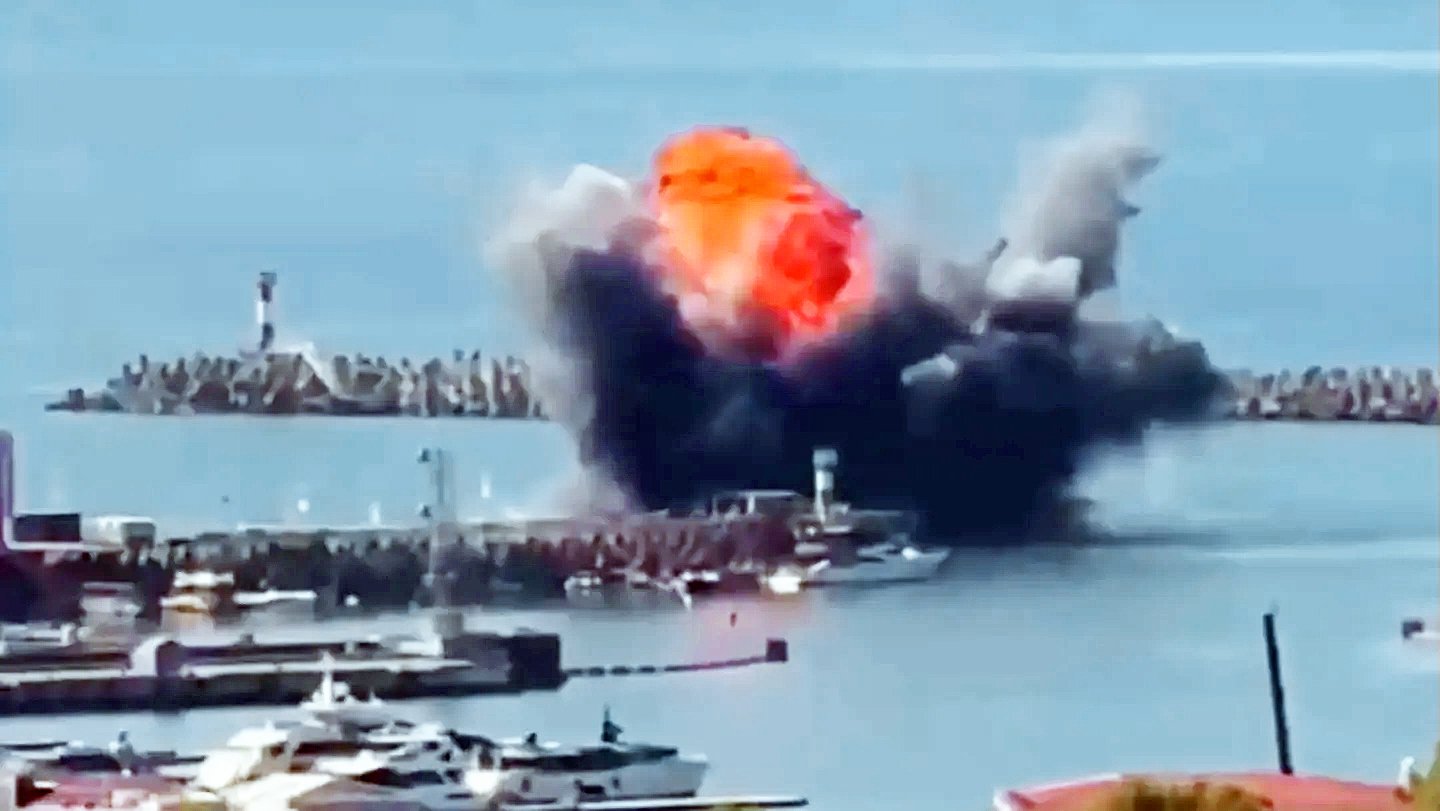
“The multipurpose support vessel, flying the Russian flag, was hit by an unmanned naval vessel of the Ukrainian Navy,” the service said on Telegram. “A powerful explosion and smoke were observed in the area of the vessel.”
“The NEFRIT is part of Russia’s maritime and energy infrastructure, providing support for oil and gas operations, servicing offshore facilities, transporting cargo and personnel, and carrying out underwater technical work,” the Ukrainian Navy explained. “Its activities directly supported the enemy’s war economy and financed the criminal aggression against Ukraine.”
“The damage to the NEFRIT is a blow to the enemy’s logistics, special capabilities, and military-economic infrastructure,” the Ukrainian Navy added. “The Ukrainian Navy continues to deprive the enemy of resources and capabilities for waging war, and once again demonstrates that even Russian territory is not a safe haven.”
ВМС України уразили судно забезпечення рф NEFRIT у порту Сочі Багатоцільове судно забезпечення під прапором рф було уражене морським безекіпажним катером Військово-Морських Сил. У районі судна зафіксовано потужний вибух та задимлення.
Starting at about 6 a.m. local time, Sochi Mayor Andrey Proshunin declared an emergency.
“ATTENTION! THREAT OF A USV ATTACK IN SOCHI,” he warned on Telegram. “All forces and resources are working to defend the city. Take shelter in a safe place, remain calm.”
Sochi Mayor Andrey Proshunin declared an emergency about an impending sea drone attack on Thursday. (Sochi Mayor Andrey Proshunin’s Telegram)
About a half hour later, Proshunin issued an all-clear notice, but did not provide any details about what happened.
Sochi Mayor Andrey Proshunin lifted the emergency about a half hour after it started. (Sochi Mayor Andrey Proshunin’s Telegram)
There was no immediate response from the Kremlin.
Ukraine has carried out long-distance USV attacks on Russian Black Sea targets in the past, including one in 2023 on theRopucha class vesselOlenegorsky Gornyak, located in Russia’s Black Sea port of Novorossiysk. A major Russian port on the eastern coast of the Black Sea, it sits roughly 420 miles from Ukrainian-held shores. Sochi is about 110 miles southeast of Novorossiysk, meaning the USVs in today’s attack would have had to travel an even longer distance if launched from Ukrainian-held shores. However, the launch point of the Sochi USV strike is not publicly known and there is always the possibility that a mothership could have been used.
The attack occurring during broad daylight is also interesting, as Ukraine has often taken advantage of the cover of darkness for USV strike operations on port facilities.
The strike on the Nefrit is the latest in Ukraine’s long-running drone boat campaign in the Black Sea. This onslaught has already kept Russia’s Black Sea Fleet (BSF) at bay, forcing it to retreat from Crimea to Novorossiysk. Ukrainian USVs have also damaged enemy military facilities in occupied Crimea and the Kerch Bridge.
In July, the U.S. military used USVs as combat weapons for the first time, striking Iranian targets in Bandar Abbas. The following video shows that attack.
Yesterday, using multiple one-way attack surface drones, CENTCOM forces successfully struck a submarine and ship maintenance facility in Iran. Three Corsair unmanned surface vessels hit the port at Bandar Abbas Naval Base, marking the first time American forces have employed sea… pic.twitter.com/bOM2kmgRxz
It may be a day or so before we get a better picture of the extent of the damage to the Nefrit. Regardless, the attack itself is another sign that Ukraine can reach targets with sea drones far from its own shores.
The Latest
All across the battlefield, Ukrainian forces are largely holding off continued Russian attacks or are making small advances. Overall, in August, “Russian forces advanced or infiltrated into about 123.53 square kilometers — an average pace of 3.98 square kilometers per day,” according to the Institute for the Study of War (ISW). “Russian forces’ main territorial gains in August 2026 have been in the Fortress Belt area, Donetsk Oblast. Even there, Russian forces managed to achieve only marginal tactical gains and have thus far failed to complete the seizure of Kostyantynivka.”
Kharkiv: Russian forces continued offensive operations in northern Kharkiv Oblast and the Velykyi Burluk direction on September 1 and 2 but did not advance. Russian forces also continued offensive operations in the Borova and Kupyansk directions on September 2 but did not advance. However, Moscow’s troops continued attempts to secure and expand the bridgehead on the left bank of the Oskil River to enable further infiltrations into Kupyansk.
Donetsk: Ukrainian forces recently defeated a Russian infiltration mission in the Slovyansk direction. They also recently maintained positions or advanced in the Dobropillya tactical area. Russian forces continued offensive operations in the Novopavlivka direction on September 1 and 2 but did not advance. Neither Ukrainian nor Russian forces reported ground activity in the Oleksandrivka direction on September 2.
Zaporizhia: Russian forces continued offensive operations in the Hulyaipole direction on September 1 and 2 but did not advance. Russian forces continued offensive operations in western Zaporizhia Oblast on September 1 and 2 but did not advance as Ukrainian forces counterattacked west of Orikhiv.
Kherson: Neither Russian nor Ukrainian forces reported ground activity in the Kherson direction on September 2.
MORE (1/3): ISW has observed evidence to assess that Russian forces consolidated positions in or seized about 90.35 square kilometers of territory in Ukraine in August 2026, averaging 2.91 square kilometers seized per day. Including Russian infiltrations, Russian forces… https://t.co/0RlwRfBdhspic.twitter.com/Cp2Knry2Du
Air traffic around Moscow continued to be disrupted on Thursday as Russian authorities responded to another large-scale Ukrainian drone operation, according to EU Today. The disruptions came two days after President Volodymyr Zelensky warned international airlines and insurers that Russian airspace was becoming increasingly unsafe for civilian aviation due to Ukrainian drone attacks.
Moscow Mayor Sergei Sobyanin said that 548 drones had flown towards the wider Moscow region between 8 a.m. on Wednesday and midday Thursday local time. However, Russian authorities claimed that most were intercepted before they could reach the Moscow area while 143 were destroyed on approaches to the Russian capital.
“Temporary restrictions were again imposed at Moscow’s principal airports,” EU Today noted. “Vnukovo and Domodedovo stopped arrivals and departures for periods during the operation, while Sheremetyevo handled flights under additional restrictions. The measures produced cancellations, delays and diversions extending beyond the periods in which individual airports were formally closed.”
The disruption “had already become extensive on Wednesday,” the publication added. “Flight-tracking data showed 21 cancellations and 235 delayed services at Sheremetyevo, Russia’s largest airport, while Vnukovo recorded 22 cancellations and 94 delays.”
Moscow airports cancel flights after Zelensky's 'closed skies' warning
"Temporary restrictions on the arrival and departure of aircraft have been introduced," Russia's Federal Air Transport Agency (Rosaviatsia) said.https://t.co/BAlAASaDv5
Putin on Thursday said there is a chance of resolving the “Ukrainian conflict” but Kyiv’s campaign to shut down Russian airspace is “complicating the negotiation process.”
Russia and Ukraine themselves must reach an agreement, while other countries can only support and assist, the Russian leader added, according to a translation from former Ukrainian government official Anton Gerashchenko.
Russia is in contact with the White House and President Donald Trump “is committed to positive and constructive engagement,” Putin proclaimed. “Russia has many friends in the United States. One of them is Steven Seagal, the ‘best envoy of peace.'”
Putin said there is a chance of resolving the "Ukrainian conflict" but Ukraine's threats to shut down Russian airspace are "complicating the negotiation process."
A Russian drone strike on an Odesa apartment building injured at least 17 people, including three children, Zelensky stated on X.
In Odesa, emergency services continue working at the site of a drone strike on an apartment building. Damage to apartments from the 10th through the 17th floors left 17 people injured, including three children. Efforts are also ongoing to deal with the aftermath of the strikes in… pic.twitter.com/FWAmFNJSYp
— Volodymyr Zelenskyy / Володимир Зеленський (@ZelenskyyUa) September 3, 2026
Overall, Ukraine says its air defenses downed or suppressed 135 of 163 Russian drones launched overnight, including Shahed-type UAVs, about half of which were jet-powered. Russia also used S-8000 Banderol, Gerbera and decoy drones. Hits were recorded at 15 locations and debris fell at four.
Ukraine says air defenses downed or suppressed 135 of 163 Russian drones launched overnight, including Shahed-type UAVs, about half of them jet-powered. Russia also used S-8000 Banderol, Gerbera and decoy drones. Hits were recorded at 15 locations and debris fell at four.… pic.twitter.com/JyxTS6QBzL
Russia has been increasingly using jet-powered drones to attack Ukraine. The Ukrainian Defense Ministry released video it says shows troops from the 208th Anti-Aircraft Missile Brigade downing one of those drones. The jet powered Shahed-like one-way attack drones fly higher and faster than their propeller-driven cousins, making them harder to intercept by more cost effective and plentiful means, such as Ukraine’s many drone interceptors. Instead, much more expensive and increasingly scare missile must be used in some circumstances.
Shaheds down!
Jet-powered Russian strike drones intercepted on September 2.
What appears to be the first video of Ukrainian troops using Cold War-era Leopard 1 tanks with turrets swapped out for the Rheinmetall Skyranger 35 short-range air defense system has emerged on social media. The @deaidua X account that tracks German war materiel donations to Ukraine said the 1020th Anti-Aircraft Missile Regiment recently took delivery of this system, designed to be a highly mobile counter to a range of aerial threats.
The Skyranger 35 “is equipped with a KDG 35/1000 revolver cannon in 35 mm x 228 caliber with a firing rate of 1,000 rounds per minute,” according to Rheinmetall, which began delivering these to Ukraine in January. “It has an effective range of up to 4,000 meters and a high degree of commonality with the Oerlikon Revolver Gun Mk 3. Thanks to AHEAD technology, the Skyranger 35 is airburst-capable. In the future, it will also be possible to equip it with modern guided missiles.”
It seems that Ukraine's 1020th Anti-Aircraft Missile Regiment which belongs to the Ground Forces has taken delivery of the first Skyranger 35 SPAAGs mounted on a Leopard 1 chassis made by @RheinmetallAG.
A new documentary about Ukraine’s use of the combat-proven National Advanced Surface-to-Air Missile System (NASAMS) air defense system debuts tomorrow.
“Sky Defenders is a new documentary taking audiences inside the increasingly critical battle to protect the skies of Europe and Ukraine,” according to the film’s producers. “Launching globally on Apple TV and Amazon Prime on Sept. 4, the 50-minute film explores the people, technology and strategy behind modern air defense and the race to stop missiles and drones before they reach their targets.”
A new video shows a Russian soldier being attacked by three Ukrainian kamikaze drones simultaneously, underscoring just how dense the drone threat has become to troops near the front.
That kind of attrition is also visible around Pokrovsk, where Ukrainian kamikaze drones are increasingly coordinating strikes against individual Russian infantrymen and small assault groups.https://t.co/HfKBCW7ZOm
It’s been more than three years since the Russians captured the town of Bakhmut in the eastern Donetsk region after a long battle that incurred a tremendous toll on personnel and equipment on both sides of the fight. New drone video has emerged showing the city remains in ruins, with blocks and blocks of vacant and destroyed buildings.
A harrowing new video from Bakhmut, filmed in the summer of 2026. The Ukrainian city was captured by the Russians three years ago and has lain in ruins ever since.
In this once-vibrant city of 72,000 inhabitants, there are no longer any shops, schools, kindergartens, cafés,… pic.twitter.com/clFfLu5jkq
L'analisi del fallito sabotaggio all'aeroporto di Lipsia svela la regia di una false flag: la verità taciuta sui 5 attentati fasulli e il collasso della Germania.
Der russische Außenminister Lawrow hat auf dem Östlichen Wirtschaftsforum eine Grundsatzrede über die Positionen der russischen Außenpolitik und über Russlands Antwort auf die aktuellen Eskalationsschritte der Bundesregierung gehalten. Ich übersetze hier die Zusammenfassung der Rede, die die TASS veröffentlicht hat. Beginn der Übersetzung: Lawrows Erklärungen: Die Antwort auf Berlins Vorgehen und Selenskys Drohungen Der russische […]
El hallazgo arqueológico no podía ser más modesto: un pequeño anillo de aleación de cobre, con unas pocas letras griegas grabadas y la imagen de una vasija de cerámica. Sin embargo, su apariencia insignificante oculta una historia extraordinaria que ha mantenido en vilo a los especialistas desde que su existencia fue revelada en 2018. El […]
The U.S. Navy’s supercarrier USS Abraham Lincoln is now in Thailand for a much-deserved and highly publicized liberty port call. The carrier had gone 286 days without making such a stop, with much of that time spent executing grueling combat operations against Iran. The ship has been run very hard, relying on at times a rickety conveyor of sea replenishments to continue operating for months on end, and it has the scars to show for it. The Lincoln looks very much worse for wear, with so-called “running rust” and algae caked all along the sides of the hull, as well as around the edges of the flight deck and sponsons on either side. It’s something of a startling appearance for one of the most powerful ships on the planet and a major symbol of U.S. power projection, but it is also a reminder of what the vessel and its crew have endured for months on end.
The Lincolnarrived in the Thai port of Laem Chabang earlier today. The carrier did make a stop in Guam in December 2025 and reportedly made another one somewhere in the Middle East in July. However, in both cases, these have been characterized as brief logistical stopovers that did not offer any real opportunity for personnel onboard to disembark. Thai media reports say the carrier is expected to remain in Laem Chabang through the end of the weekend.
“Our arrival in Laem Chabang provides a well-deserved opportunity for our Sailors and Marines to rest and recharge. It also underscores the strong and enduring partnership and alliance between the United States and Thailand,” Rear Adm. Robert E. Loughran, commander of Carrier Strike Group 3 (CSG-3), said in a statement in a press release today. “What this strike group has accomplished is truly historic. I could not be prouder of the exceptional professionalism and expertise demonstrated by every member of this team during our operations in the U.S. Central Command area of responsibility.”
An official picture the US Navy has released of the USS Abraham Lincoln arriving in Thailand today. USN
Lincoln and its strike group had left port in San Diego in November 2025 for what was originally expected to be a routine cruise in the Pacific. The carrier, its air wing, and escorts were subsequently directed to the Middle East and arrived in that region in January 2026.
Two of the Arleigh Burke class destroyers assigned to CSG-3, the USS Michael Murphy and the USS Spruance, are still understood to be operating in the Western end of the Indian Ocean. A third destroyer in the strike group, the USS Frank E. Petersen Jr., accompanied the Lincoln to Thailand and is now docked in a separate port in Sriracha, near Laem Chabang. The Ticonderoga class cruiser USS Robert Smalls also helped escort the carrier, and that warship “also arrived in Map Ta Phut, Thailand for their own scheduled port visit,” according to the Navy.
As mentioned, Lincoln definitely looks like it’s been at sea more or less continuously for the last nine and a half months or so. Pictures and videos of the ship in Laem Chabang seen throughout this story plainly show big dark rust stains all around the hull and other similar signs of wear elsewhere. There is also a bright green ring of algae layered on the hull at the waterline. While carriers have very large crews and usually keep the ship’s appearance up relatively well while on cruise, there is only so much that can be done out of port on particularly long deployments, where all resources are focused on sustained high-tempo combat operations.
USS Abraham Lincoln seen arriving in Laem Chabang, Thailand, today. Thananuwat Srirasant/Getty ImagesAnother look at the Lincoln arriving in Thailand today. ANTHONY WALLACE / AFP via Getty ImagesA closer look at the side of Lincoln‘s hull, with ‘running rust’ and algae plainly visible. ANTHONY WALLACE / AFP via Getty Images
“It’s terrible. I think they should be ashamed,” John Phelan told members of Congress at a hearing last year after being shown pictures of a very worn-looking Arleigh Burke class destroyer, the USS Dewey, during a stopover in Singapore. “Would you want to go on that ship?”
A picture of the USS Dewey covered in “running rust” during a recent port visit in Singapore is shown at the confirmation hearing for Secretary of the Navy nominee John Phelan on January 27, 2025. Senate Armed Services Committee capture
Lincoln‘s current condition is, of course, an extreme case that is the result of very specific operational circumstances. The carrier has already been in the news for weeks now due to the aforementioned morale issues, which family members of those onboard have been very vocally calling attention to through the media. One sailor had to be rescued last month after deliberately jumping overboard. There were reports that at least one other individual onboard had attempted to do the same. President Donald Trump and Secretary Pete Hegseth, among others, have pushed back on concerns about mental health and other issues on the ship. In a statement shared on social media on August 16, Navy Adm. Brad Cooper, head of U.S. Central Command (CENTCOM), acknowledged, but still downplayed, the seriousness of the mental health situation, in particular.
At the same time, the carrier’s marathon deployment is indicative of larger shipbuilding, readiness, and other issues that the Navy continues to struggle with. Strains on the service carrier fleets in particular have been steadily building for years and are now becoming a low-level crisis. The USS Gerald R. Ford wrapped up a historic 326-day-long deployment in May. The Navy has publicly said that the USS Theodore Roosevelt, which is set to begin its latest cruise soon, could be away from home for at least eight months. The longer the ships remain deployed, the longer they typically have to spend in port afterward, further compounding the situation with each passing day during months-long extensions. This all has very worrisome cascading impacts on even routine maintenance cycles, let alone deep overhauls and upgrade efforts, as well as personnel management matters, as we have explored in detail in the past.
USS Abraham Lincoln in Guam in December 2025. USN
“It’s my earnest attempt to really try to keep those [deployments] at seven months,” Chief of Naval Operations Adm. Daryl Caudle, the Navy’s top officer, said during a question-and-answer session at Fort Meade, Maryland, Monday, which was livestreamed. He also said he wanted a Navy “that can sustain a seven-month deployment and still give our combatant commanders the amount of naval force they need to accomplish their missions, solve their key operational problems, and make sure they have all the naval force necessary to do what they need to do.”
The Lincoln‘s visibly worn state certainly draws new attention to the stress on America’s carrier fleets as personnel onboard are now finally getting a much-earned reprieve in Laem Chabang.
The German Navy has demonstrated the launch of Israel Aerospace Industries’ (IAI) LORA ballistic missile from an F125 frigate, with at least two missiles fired from the Sachsen-Anhalt during a test in the North Atlantic last night. The demonstration points to a potentially significant new long-range strike capability for Germany’s surface fleet, should it be adopted.
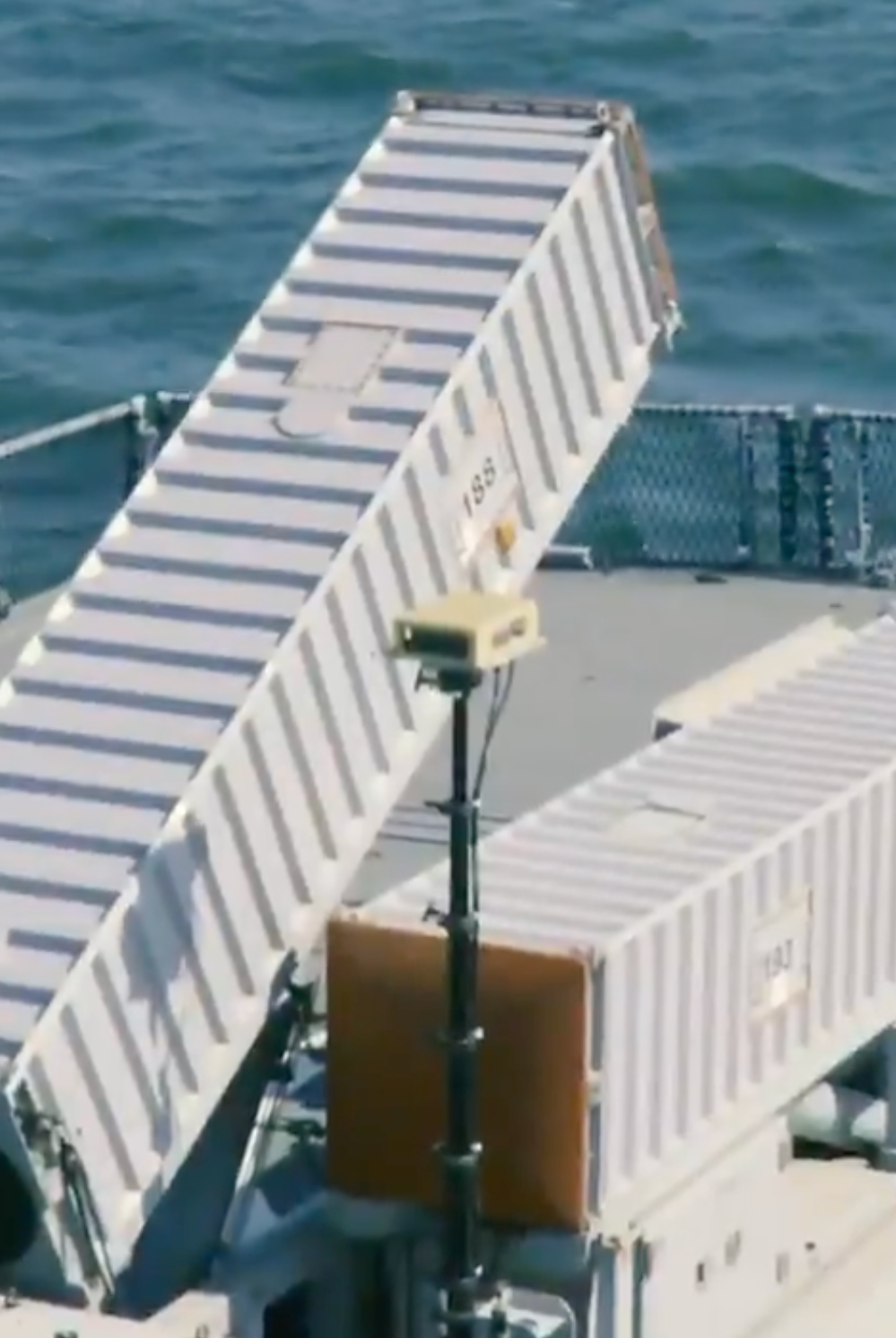
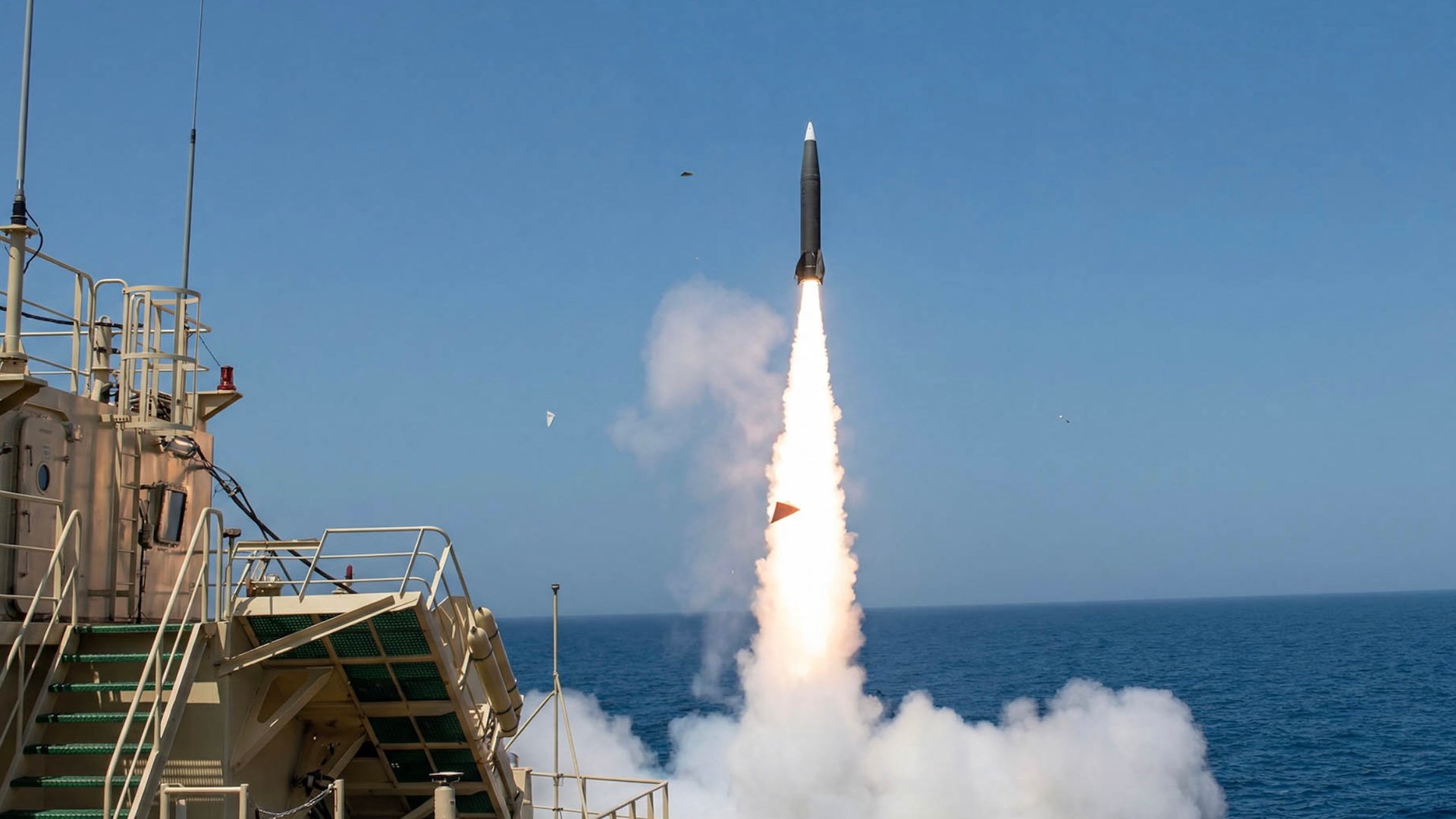
A LORA missile leaves the launch canister on the flight deck of the frigate. German Ministry of Defense/screencap
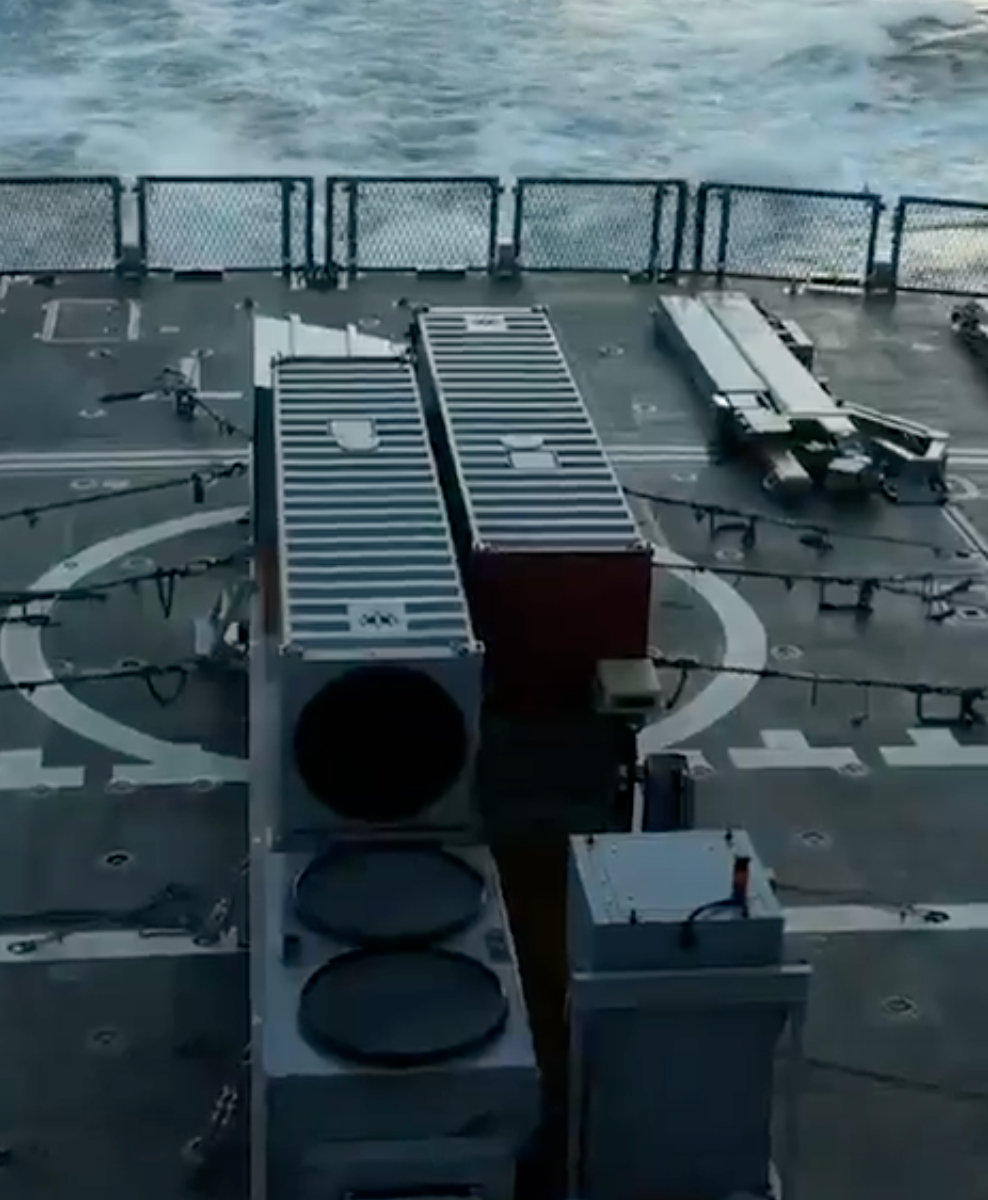
Video released by the German Ministry of Defense alongside the test shows two LORA launch canisters positioned on the frigate’s flight deck, followed by a missile launching from each container.
Die Fregatte „Sachsen-Anhalt" (Klasse 125) hat im Nordatlantik mindestens zwei ballistische Raketen vom Typ LORA (IAI) verschossen – gestartet aus Kanistern auf dem Flugdeck. Die Erprobung erfolgte im Rahmen der OPEX-Serie.
The launches were conducted as part of the Bundeswehr’s operational experimentation (OPEX) program in cooperation with the Bundeswehr Innovation Center in Erding. Reportedly, two German frigates were deployed to the waters between Ireland and Iceland for the test, and a warning was issued to maritime and air traffic 45 days beforehand.
The test marks a notable expansion of the weapons capabilities demonstrated by Germany’s F125 frigates and could provide a pathway toward a new long-range naval strike capability.
A LORA canister is raised into the launch position. German Ministry of Defense/screencap
German Navy Inspector General Vice Adm. Jan Christian Kaack described the event in a statement distributed through the Bundeswehr’s official WhatsApp channel:
“With the successful launch of a ballistic missile last night in the North Atlantic, we have made naval history. I am extremely pleased with this achievement. The system can be successfully deployed by our units, and its potential range exceeds anything we have seen before. For the protection of Germany and our allies, this test marks a new chapter in deterrence and defense readiness at sea.”
IAI also confirmed the results of the test, stating that both missiles followed their planned trajectories and struck their targets with high precision.
The exact targets, engagement ranges, flight profiles, and missile configurations used during the test have not been disclosed.
There is no possibility that Sachsen-Anhalt will retain the launchers in their current location, since they mean the F125’s flight deck cannot be used, depriving it of a critical capability. Potentially, they could be installed elsewhere on the vessel, but, moreover, it is unclear if the current experiment will lead to a formal acquisition program.
The two LORA canisters on the flight deck of the frigate. German Ministry of Defense/screencap
At the same time, LORA is a substantially different weapon from the anti-ship and land attack cruise missiles normally associated with modern surface combatants.
Available for ship- and ground-launch, the missile is approximately 17 feet long, 25 inches in diameter, and weighs around 3,500 pounds. It follows a quasi-ballistic trajectory and has an officially stated range of approximately 60 to 270 miles. An air-launched derivative has also been developed.
A weapon capable of reaching targets hundreds of miles away would give German surface combatants a long-range strike option extending far beyond the range of traditional naval guns and many shorter-range precision weapons.
Its quasi-ballistic flight profile also differentiates LORA from a conventional cruise missile. A ballistic-style trajectory allows the weapon to cover distance rapidly and presents an air-defense challenge different from that posed by a low-flying cruise missile. This type of missile also impacts its target with much greater kinetic energy, making it especially useful for striking more hardened target sets.
LORA uses a navigation architecture combining GNSS satellite navigation with an inertial navigation system and can achieve a circular error probable, or CEP, of approximately 33 feet. IAI also says LORA can be launched within minutes, including from unprepared positions, and can attack a target within its range in less than 10 minutes after a decision to launch.
Back in 2017, as you can read about here, IAI successfully test-fired LORA from a containerized launcher on the back of a truck sitting on the deck of a cargo ship. The missile successfully struck a target on land.
What is less clear is its ability to strike targets at sea.
A long-range anti-surface application would be particularly interesting for the German Navy, although the weapon, in its basic form, has no terminal seeker. This limits the missile to use against targets with a fixed location, rather than autonomously finding and tracking a maneuvering warship during the terminal phase of flight.
In a 2020 test, IAI demonstrated firing two LORA missiles from a ship before hitting separate floating targets at approximately 60 miles and 250 miles. However, striking a static floating target is different from an enemy warship that is maneuvering and potentially employing electronic warfare and air defenses.
Regardless, Germany has an even clearer requirement for land attack capabilities, which LORA is fully capable of fulfilling, as we will return to later.
As for Germany’s F125 frigates, these were designed primarily for long-duration deployments, maritime security, stabilization operations, and other missions requiring a persistent naval presence. Their overall lack of firepower is something we have examined in detail before now.
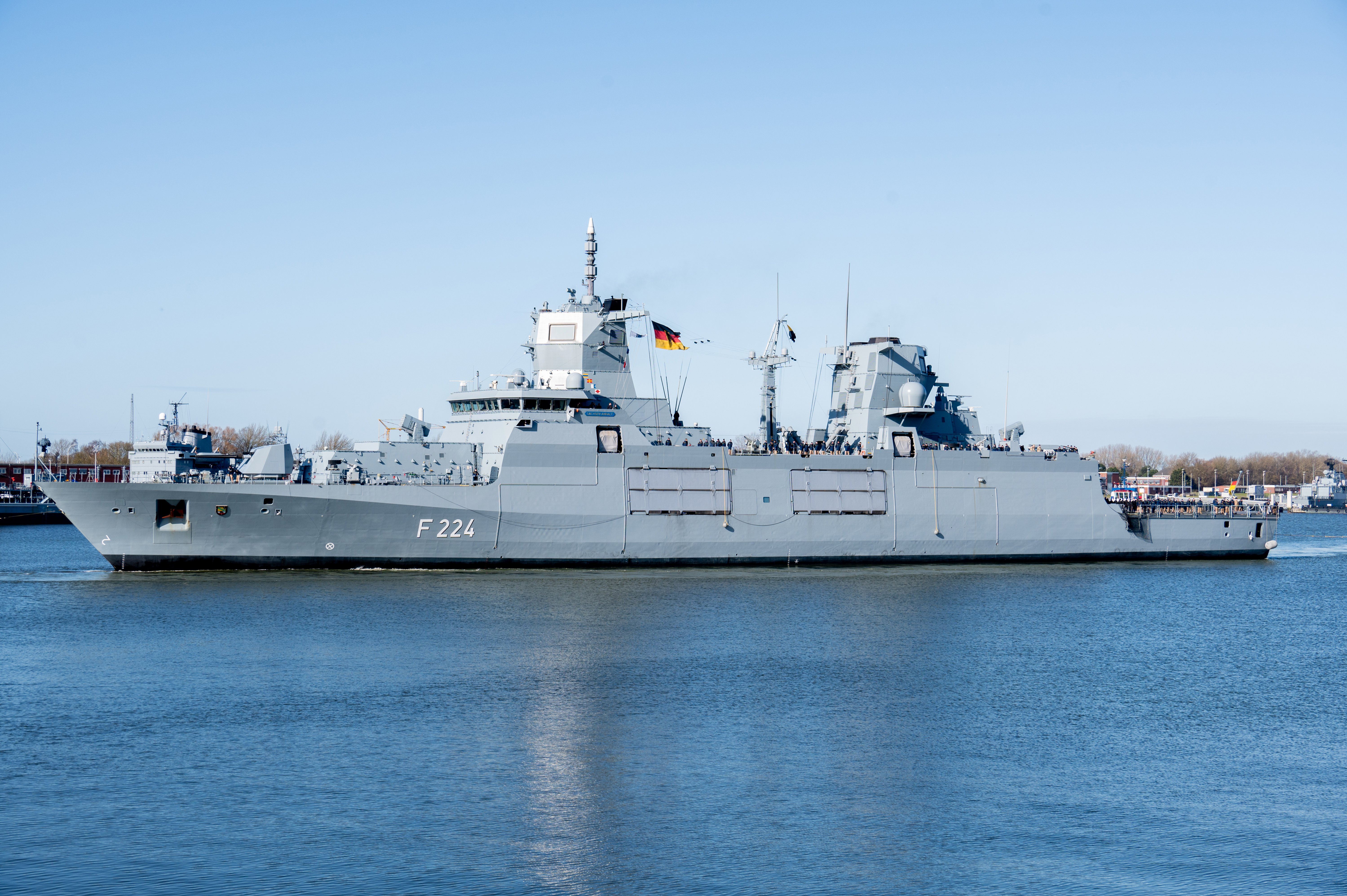
The frigate Sachsen-Anhalt (F 224) arrives in port. Photo by Hauke-Christian Dittrich/picture alliance via Getty Images picture alliance
The latest test involving the Sachsen-Anhalt is in line with the Bundeswehr’s OPEX framework, which is intended to evaluate emerging technologies and operational concepts under realistic conditions before decisions are made about wider adoption.
There is precedent for such experimentation leading to operational capabilities. Israeli-developed systems, including IAI’s Blue Whale autonomous underwater vehicle, have previously been evaluated through German naval experimentation efforts and subsequently moved toward formal adoption.
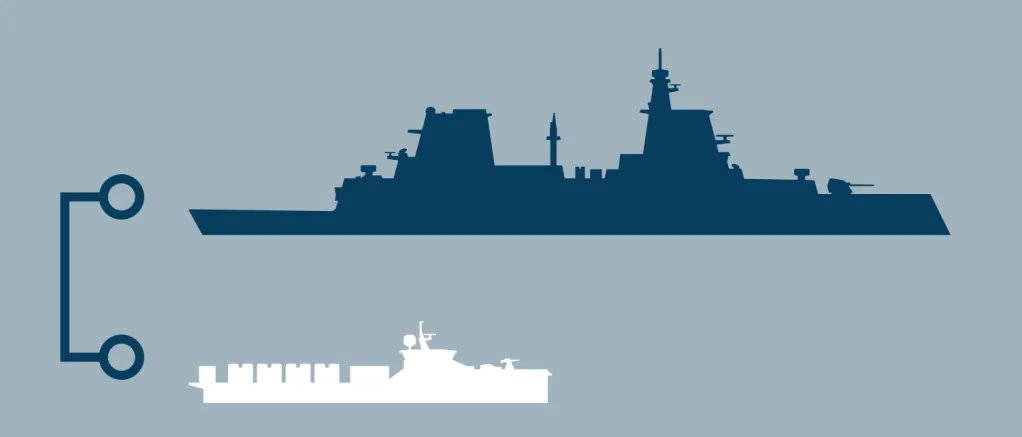
As well as the four F125 hulls, Germany might look to incorporate LORA from the start on its future F127 multi-purpose frigates and/or its planned Large Remote Missile Vessels (LRMV), uncrewed vessels that will serve as arsenal ship ‘wingmen,’ supporting conventional surface combatants.
A highly provisional diagram shows the F127 frigate (top) and the LRMV (below). German Navy
It is worth noting that Germany has recently acquired various other Israeli-made missile and rocket systems. These include the Arrow 3 anti-ballistic missile system — the largest-ever Israeli defense export deal — and the PULS multiple rocket launcher. A German purchase of the land-based version of LORA would also be an option, with the truck-mounted system also able to be launched from ships at sea.
The LORA test also reflects a broader European push toward longer-range precision fires.
Russia’s war in Ukraine has underscored the importance of ballistic and cruise missiles, while NATO countries have increasingly sought weapons capable of holding targets at greater distances at risk.
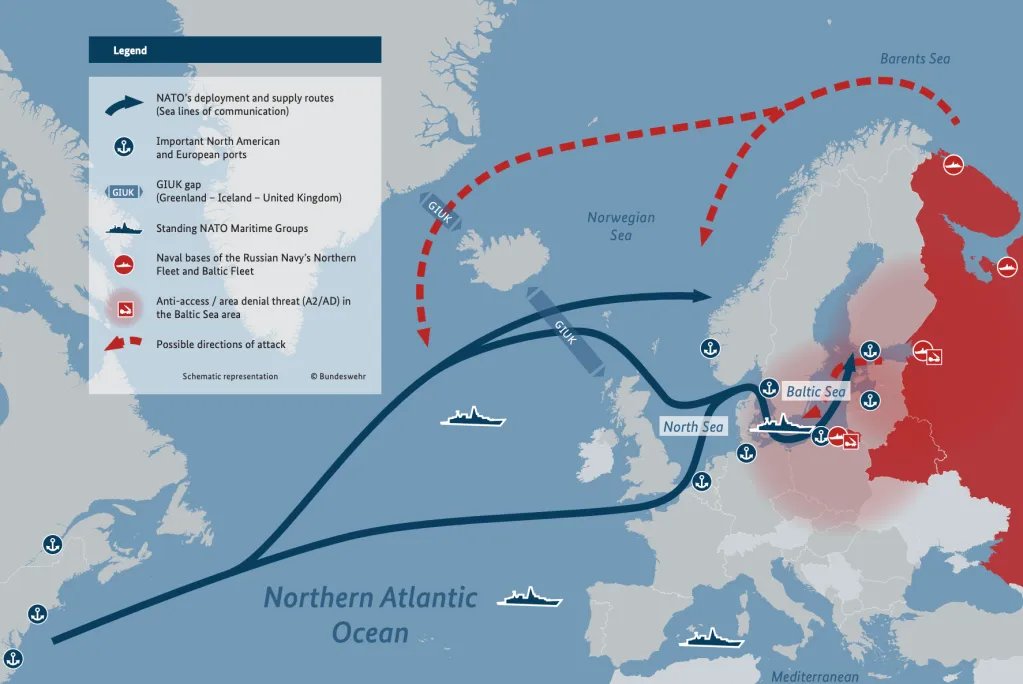
Key German Navy operating areas, including likely Russian attack routes. German Navy
Germany has historically possessed comparatively limited deep-strike capability. The Bundeswehr is now working to expand its ability to conduct long-range precision engagement, both independently and within NATO structures. This includes planned procurement of land-based Tomahawk cruise missiles, with a range exceeding 1,000 miles depending on the exact configuration.
Very deliberate NATO messaging right here – interesting to see the alliance using this kind of signalling https://t.co/BYvpzkq0Vq
A naval LORA capability could add another layer to that effort and would allow Germany to distribute long-range fires across surface combatants, complicating an adversary’s targeting problem while giving its naval forces a more meaningful role in high-end combat operations. With the security situation in Europe deteriorating, the potential deterrence factor that such a weapon would bring to Germany, and to NATO, should also not be underestimated.
L’Islanda come baluardo contro l’omologazione tecnocratica Nella complessa e turbolenta architettura istituzionale dell’Occidente contemporaneo, la data del 29 agosto 2026 rimarrà ricordata come uno spartiacque di fondamentale importanza, in cui ...
Por Juan Manuel de Prada Se ha discutido mucho este verano sobre la ‘adaptación’ de La Odisea perpetrada por Christopher Nolan, en algunos casos para ensalzarla, en otros para denigrarla;…
L'UE minaccia dazi contro la Cina mentre ignora i propri danni sistemici: dal mercantilismo tedesco alle privatizzazioni che hanno distrutto le nostre imprese.
L’Europa ha beneficiato della difesa degli Stati Uniti “a scrocco”? Il punto fondamentale di tutta questa storia è uno solo: gli Stati Uniti non hanno mai protetto l’Europa per beneficenza. ...
On 24 August, the Commission adopted its proposal for the 2027 fishing opportunities for the Baltic Sea. The proposal sets the total allowable catches (TACs) and quotas for the ten EU-managed fish stocks in the Baltic Sea: Bothnian herring, central Baltic herring, Gulf of Riga herring, sprat, plaice, Main Basin salmon, Gulf of Finland salmon, western Baltic cod, eastern Baltic cod, and western Baltic herring.
It responds to scientific assessments that highlight the critical state of several fisheries and allows for continuing the rebuilding trajectories for relevant stocks.
The Commission proposes to increase fishing opportunities for Bothnian herring (+3%), central Baltic herring (+49%), Gulf of Riga herring (+11%) and sprat (+44%). Catches of plaice, salmon in the Main basin and in the Gulf of Finland would remain unchanged compared to this year. In addition, based on the latest reporting by Member States, the Commission proposes to reduce the allocations of unavoidable by-catches – fish unwantedly caught by fishers - of western Baltic cod (-88%), eastern Baltic cod (-51%) and western Baltic herring (-45%).
For eastern Baltic cod, the Commission has proposed to keep a catch limit for unavoidable by-catches and all the accompanying measures in place already for several years. However, since the stock continues to be in bad condition, the by-catch limit should be adjusted, based on the number of by-catches reported by each Member State in 2025. Despite the measures taken since 2019, when scientists first warned about the poor status of cod, the situation has not improved.
The situation is similar for western Baltic cod. The Commission therefore proposes to adjust the by-catch TAC to address a deteriorated condition of the stock, and to keep all the accompanying measures.
Herring
The stock size of western Baltic herring remains significantly below minimum levels. The Commission proposes removing the exemption for small-scale coastal fisheries and adjusting the TAC to unavoidable by-catches only.
The stock size of Bothnian herring is larger than previously estimated but still below sustainable levels. With the maximum catch levels contained in the ICES advice, the stock size would continue to decrease. In order to continue the rebuilding trajectory, the Commission proposes a TAC level which keeps the fishing mortality rate stable and increases the stock size. The Commission also proposes to keep the three-month spawning closure – restricting fishing during reproduction periods - in shallow coastal waters.
The stock size of central Baltic herringhas increased but remains below sustainable levels. ICES forecasts a positive stock development due to high estimated recruitment. In order to continue the rebuilding trajectory, the Commission proposes a cautious approach and to set the TAC at the level which keeps the fishing mortality rate stable. In addition, the Commission proposes to keep the three-month spawning closure in shallow coastal waters.
Herring in the Gulf of Riga is healthy, and the Commission proposes to set the catch limits according to the maximum advised by ICES.
Plaice
Scientific advice recommends a slight increase, but the Commission proposes to keep the TAC unchanged due to the bad condition of individual fish. In addition, new measures for flatfish fisheries, including plaice, entered into force last year. These measures will help improve the sustainability of flatfish fishing, notably by reducing unwanted cod by-catches – which still occur frequently.
Sprat
After several difficult years the size of the sprat stock has increased significantly due to recent very high reproduction rates. ICES estimates that the stock will continue to increase. The Commission therefore proposes setting the TAC at the advised maximum and to discontinue the three-month spawning closure.
Salmon
ICES did not publish a new advice for 2027. The Commission therefore proposes to maintain the (by-catch) TAC levels and the accompanying conditions for the two salmon TACs, with the exception of recreational fishing on reared salmon which should stop.
Next steps
Based on these proposals, EU countries will take a final decision to determine the maximum quantities of the most important commercial fish species that can be caught in the Baltic Sea. The Council will examine the Commission's proposal in view of reaching a political agreement during its meeting on 26-27 October 2026. The formal adoption by the Council will follow later in the course of November.
The current situation is difficult for fishers as stocks are subject to various pressures which have led to the degradation of the Baltic Sea's biodiversity, such as high nutrient inputs and persistently high levels of contaminants. These stressors, in part, stem from failures to implement EU legislation. Furthermore, the scientific advice also recognises the impact of misreporting of fishing, without being able to quantify it. Misreporting potentially leads to hidden overfishing.
The Baltic Sea is the most polluted sea in Europe. It is affected by biodiversity loss, climate change, eutrophication, past and probably current hidden overfishing, and elevated levels of contaminants such as pharmaceuticals and litter. Concerned about this dire situation, the European Commission organised several editions of the Our Baltic Conferences in 2020, 2023 and 2025 to bring together Ministers from the eight EU countries surrounding the Baltic Sea (Denmark, Germany, Estonia, Latvia, Lithuania, Poland, Finland and Sweden).
Carleton Gajdusek won the Nobel Prize for his work on a disease in Papua New Guinea. But his biggest experiment was on the children he took from the field to the US—many of whom he sexually molested, with the knowledge and, in some cases, approval of his professional peers and colleagues:
In his journals and in letters to colleagues, Gajdusek was self-righteous, arguing that what he’d done was “no more serious than lying on the grass or picking a dandelion,” and he cited the Anga initiation rites as justification. These ceremonies had brought boys into their communities, as part of a shared passage into manhood, but Gajdusek treated them as a timeless license for the acts that he’d committed privately, one boy at a time. George Klein, a professor at the Karolinska Institute, in Stockholm, who was part of the Nobel Assembly for thirty-six years, validated Gajdusek’s opinions, telling him that he wondered if “the Western world can ‘catch up with you.’” He wrote, “I share your indignation about the typically Jewish-Christian-Moslem hypocrisy on sexual matters.” Gajdusek was troubled, though, by how many colleagues wrote letters saying that they knew the charges must be untrue. “I thought better of my friends,” he said. “They are dissimulating and lying.”
Bruxelles concede 14,4 miliardi di debito per transizione e reti ma vieta gli aiuti su accise e bollette: l'analisi di Patrizio Ricci sulla finta sovranità.

 Login

(@commandante_) September 4, 2026





 ВМС України уразили судно забезпечення рф NEFRIT у порту Сочі
 The moment of today’s explosion of a Ukrainian surface kamikaze drone next to a Russian ship in Sochi.
 MilitaryNewsUA


 (1/3): ISW has observed evidence to assess that Russian forces consolidated positions in or seized about 90.35 square kilometers of territory in Ukraine in August 2026, averaging 2.91 square kilometers seized per day. Including Russian infiltrations, Russian forces…
 Moscow airports cancel flights after Zelensky's 'closed skies' warning

 Shaheds down!
 : 208th Anti-aircraft Missile Brigade