Dave Masters watched as his father’s house careened into a telephone pole and split in two, after Hurricane Frances lifted it from its foundation in 2004. Hayward County, in Western North Carolina, bought the house and declared the patch near the town of Clyde “permanent open space under a federally funded program to reduce the risk of future loss of life and property damage.” Not all homes were treated equally, though, in the aftermath of distaster. Hurricanes Frances, Ivan, and Helene, along with Tropical Storm Fred, all brought heavy rains and flooding to the nearby Hyder Mountain Road mobile home park. They’re “part the result of a gap in disaster policy that allows mobile home residents to be put in harm’s way again and again.” For The Assembly, in a piece produced for ProPublica’s Local Reporting Network, Ren Larson explains why.
The federal government’s programs to buy out disaster-prone buildings are “the cornerstone of the Nation’s system for emergency management,” according to the Federal Emergency Management Agency. But the program was developed with traditional homeowners in mind, and mobile homes, the country’s largest source of affordable housing, are often left out. Trailers, even when they become immovable and lifelong homes, aren’t typically considered real estate but instead personal property, like motorcycles and boats.
That still leaves people living on flood-prone land. For the state to actually buy that land, mobile home park owners have to take the buyout, and FEMA’s program offers little incentive for them to do so: They can’t collect from the government for lost rent or for the value of the mobile homes on top of the land.
Some park owners say the payouts are not high enough to allow them to relocate; others aren’t even aware of the buyout program. So park owners regularly allow new trailers to move into the vacant spots. Art and Lynne Heinmiller, who own the Hyder Mountain Road mobile home park, did not respond to questions — which were emailed, texted and mailed via certified letter — about allowing trailers and campers to move back to where they’d washed away
Leituras, encontros com autores, cinema, atividades para famílias, jogos e iniciativas dedicadas à saúde e ao bem-estar marcam a programação da Biblioteca Municipal de Faro ao longo do mês de setembro.
A Biblioteca Municipal de Faro António Ramos Rosa apresenta, em setembro, uma programação diversificada, com propostas dirigidas a diferentes públicos e interesses, reforçando o seu papel enquanto espaço de encontro, conhecimento, cultura e participação da comunidade. Ao longo do mês, são várias as oportunidades para descobrir novos livros e autores, participar em momentos de leitura e escrita, assistir a cinema, desfrutar de atividades em família ou refletir sobre temas relevantes para a comunidade.
No domínio da leitura, o mês começa com uma nova sessão do Clube de Leitura, a 10 de setembro, dedicada à discussão das leituras de verão, e prossegue com dois Encontros com Autores. Gerson Rosário apresenta O Guardião das Lendas, no dia 16 de setembro, enquanto Rui Couceiro estará na Biblioteca para apresentar A Mais Bela Maldição, numa sessão moderada por Maria Luísa Francisco, no dia 29 de setembro. A programação inclui ainda uma nova sessão do Clube de Escrita Criativa, convidando à experimentação e à partilha através da palavra escrita, no mesmo dia.
Também o cinema marca presença com mais uma sessão de “Cinema Francês”, promovida em parceria com a Alliance Française do Algarve e o Cineclube de Faro, com a exibição de Borgo, de Stéphane Demoustier, no dia 18 de setembro. Para quem prefere desafios e estratégia, haverá ainda uma tarde dedicada aos jogos de tabuleiro modernos, dinamizada por João Silva e aberta a participantes de todas as idades, a 19 de setembro.As famílias encontram igualmente várias propostas ao longo do mês. No âmbito do programa Alameda Viva, a Biblioteca leva a Hora do Conto ao Jardim da Alameda, com as sessões Jardim da Multiculturalidade e Jardim Radical, dias 12 e 26 de setembro, respetivamente. A programação inclui ainda, no dia 17 de setembro, uma “Hora do Conto Especial”, sob o mote Cidade de pessoas para pessoas, dedicada à importância dos pequenos gestos e à forma como podem contribuir para uma comunidade mais consciente e participativa.
A saúde e o bem-estar são também temas presentes na programação de setembro. O ciclo Con-versas com Saúde aborda a Anafilaxia e situações críticas em idade pediátrica, numa sessão con-duzida pela Dra. Maria Alfaro, que terá lugar dia 22 de setembro. Já a iniciativa “Biblioteca Social – Humaniza-te” promove a sessão Tu és importante – Agarra-te à vida!, dia 25 de setembro, com a participação das Dr.ªs Nazaré Santos e Patrícia Romão, do Núcleo de Estudos do Suicídio Portu-guês.
Os “Sábados em Família”, dia 26, trazem, por sua vez, uma sessão de yoga orientada por Teresa Sequeira, dedicada ao bem-estar durante a gravidez e à relação entre a futura mãe e o bebé.Ao longo de todo o mês, entre 1 e 30 de setembro, estará patente na Biblioteca uma “Mostra Bi-bliográfica dedicada ao Fundo Documental e Espólio de Mariana Santos”, completando uma pro-gramação que procura aproximar a Biblioteca da comunidade e afirmar este equipamento municipal como um espaço aberto à cultura, à aprendizagem e ao convívio.
Minorities say they fear a rise in anti-Roma rhetoric following predictions of Germany’s AfD surge in Sunday’s Saxony-Anhalt election.
As Germany heads into a closely watched state election in Saxony-Anhalt this Sunday, 6 September, with the AfD polling above 40% and potentially within reach of an outright majority, right groups say they are “growing concerns over what its increasing electoral strength means for minorities and Germany’s and the EU’s democratic norms and values.”
Anna Mirga-Kruszelnicka, Executive Director of the Berlin-based European Roma Institute for Arts and Culture, looks ahead to the election.
She told this site: “For Roma and Sinti communities in particular, the election comes against a backdrop of increasingly visible anti-Roma racism.”
The Central Council of German Sinti and Roma described the situation “as a cynical example of a far-right party once again targeting Sinti and Roma.”
The incident, says the institute, comes amid "growing evidence of antigypsyism in Germany."
The Institute says that MIA, the country’s reporting and information centre documenting anti-Roma racism, reportedly recorded1,193 cases of stereotyping and disparaging remarks targeting Roma and Sinti in 2025, as well as 55 physical attacks, up from the previous year, and eight cases of extreme violence.
The institute says Roma experts warn of a changing political landscape in Germany and the growing strength of the far right.
They note that “the normalisation of nationalist, racist and anti-minority rhetoric is reshaping political discourse, including the increasing use of anti-Roma stereotypes.”
Mirga-Kruszelnicka said: “Over 80 years since more than 4,300 Roma and Sinti were murdered during the liquidation of the “Zigeunerlager” at the Auschwitz-Birkenau concentration camp, a far-right party that openly stigmatises and singles out Roma citizens is yet again on the rise in Germany. In April 2026, AfD politician Enxhi Seli-Zacharias led party colleagues through a German city, handing brooms to residents she took to be Sinti and Roma and filming them as they swept the pavement, telling one woman: “Germans have had enough—look what this looks like.”
As the EU prepares its next €2 trillion budget, the institute says experts are also questioning whether Roma communities are "being adequately accounted" for in how European funding is tracked and measured with”, says the insititute, “antigypsyism not mentioned once in the Performance Framework Regulation".
“Fascism is never simply a chapter in history books. It begins with words, stereotypes, indifference and the gradual erosion of democratic values. Honouring those who were murdered is not enough. We must also recognise how quickly democratic societies can unravel when prejudice, dehumanisation and political extremism become accepted as ordinary," concluded Mirga-Kruszelnicka.
Quer receber os textos desta coluna em primeira mão no seu e-mail? Assine a newsletter Ligando os pontos, enviada toda quinta-feira. Para receber as próximas edições, inscreva-se aqui.
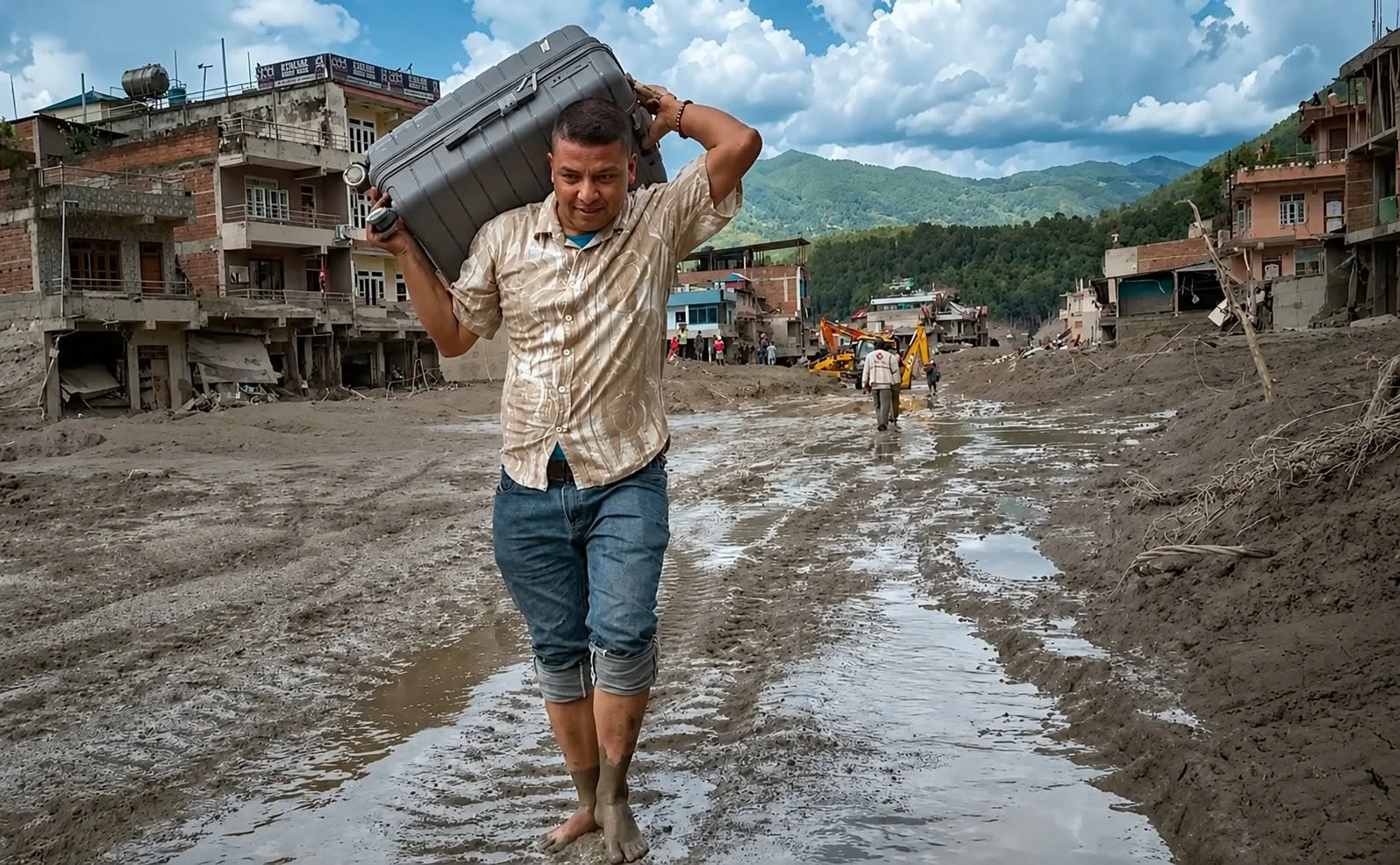
Ainda sob o impacto da devastadora avalanche e enchente de lama no Nepal, me pergunto o que poderia ter sido feito para evitar a perda de tantas vidas. Passados 12 dias do desastre, já são mais de mil mortes confirmadas e cerca de 3 mil pessoas ainda desaparecidas. Será que poderia ter havido alguma sirene ou uma mensagem por celular que avisasse a população sobre o perigo iminente?
Alguns especialistas disseram que a velocidade do desprendimento do bloco de gelo e seu impacto no rio Trishuli, na fronteira com o Tibet, foi tão rápida que não haveria tempo para emitir um aviso de emergência. Mas, de acordo com reportagens publicadas até agora, ficamos sabendo que não existia um sistema de alerta preventivo na região atingida. Nesta semana, a Reuters revelou que avanços em um monitoramento do estado das geleiras foram interrompidos pela resistência do governo da China em compartilhar dados com o Nepal.
O repórter Alec Luhn, que trabalha na revista britânica New Scientist, é um especialista em cobertura da criosfera (o nome dos ecossistemas congelados do nosso planeta). Em um post, ele lembrou que um evento semelhante – o colapso de um glaciar – ocorreu na Suíça no ano passado, atingindo a vila de Blatten. Na ocasião, apenas uma pessoa morreu. Isso só foi possível porque um alerta emergencial foi emitido e as pessoas deixaram a cidade em tempo.
Com o aquecimento global, os glaciares em todo o mundo se tornaram muito mais instáveis. O gelo em ambientes montanhosos, como aquele onde ocorreu a avalanche, vai se afinando a cada ano. Na região afetada no Nepal, os verões dos dois anos anteriores tinham registrado as temperaturas mais altas na série histórica. Algumas destas geleiras demoraram milênios para serem formadas, aponta Luhn, mas poderão desaparecer apenas no período de uma vida humana.
No Brasil não temos geleiras, mas temos nossos próprios eventos extremos climáticos. A tragédia mais viva em nossa memória é a mega enchente no Rio Grande do Sul em 2024. No estado, 440 mil pessoas ficaram desalojadas e 184 perderam a vida. Naquela ocasião, houve sim uma mobilização importante dos órgãos responsáveis. Alertas meteorológicos foram emitidos, a defesa civil entrou em ação. Mas a imprevisibilidade jogou um papel importante: a transformação de uma tempestade em um evento de alta intensidade ocorreu em pouco tempo e sem que pudesse ser detectado pelos sistemas de monitoramento.
Com isso, a lacuna que se tornou evidente no Rio Grande do Sul foi a falta de manutenção da infraestrutura existente e de investimentos para se adaptar aos novos tempos. Com a temperatura média global subindo mais do que 1,5ºC, eventos devastadores como esse são esperados. A adaptação, então, se torna a palavra do momento. Precisamos adaptar nossas casas ao calor e frio extremos. Precisamos pensar no suprimento de água e alimentos frente às secas e enchentes constantes. Precisamos de alertas de emergência climática, seja para nos salvar de uma tempestade ou de uma queimada destruidora.
A injustiça climática
Se com alertas a capacidade de resposta já é um desafio, sem eles os impactos se tornam ainda piores. É também uma questão de justiça social. Pois, como temos visto nas situações de emergência, os mais pobres se tornam ainda mais vulneráveis. São eles que perdem todas as suas economias em uma enchente ou deslizamento de terra. São eles quem têm menor chance de resistir aos impactos por estarem em zonas de risco.
Uma das maiores tempestades já registradas em um dia no Brasil ocorreu em fevereiro de 2023 em São Sebastião, no litoral de São Paulo. Ela deixou evidente esta desigualdade dos impactos climáticos. Ali, após a queda de quase 800 mm de chuva em apenas algumas horas, 65 pessoas morreram em deslizamentos de terra. A maioria vivia em ocupações irregulares nas encostas da Serra do Mar. Como no Nepal, não houve sirenes ou alertas.
Mas é preciso reconhecer que tivemos avanços importantes nos últimos anos na implementação de sistemas de alertas preventivos. Em 2011, após a tragédia que afetou as cidades serranas do Rio de Janeiro, o governo da então presidente Dilma Rousseff deu um passo fundamental com a criação do Centro Nacional de Monitoramento e Alertas de Desastres Naturais, o Cemaden. Este órgão público reúne alguns dos mais qualificados cientistas e técnicos do país e se tornou parte do nosso dia-a-dia com seus avisos sobre as chuvas e secas extremas. Ao mesmo tempo, vimos uma integração grande da infraestrutura de comunicação, permitindo que a defesa civil possa enviar alertas diretamente nos celulares de cada cidadão.
Ainda assim, vamos precisar de mais.
A Organização Meteorológica Mundial, parte das Nações Unidas, tem promovido com força um programa chamado “Alertas Preventivos para Todos” (Early Warning for All, em inglês). Com a tecnologia existente – satélites de monitoramento em tempo real, redes de comunicação globais – é possível evitar a perda de vidas e antecipar o pior. Além disso, há cada vez mais um acúmulo de conhecimentos tradicionais ou boas soluções que podem ser compartilhadas entre países. Nem sempre é a tecnologia que faz a diferença. Existem casos, como visto entre populações indígenas na Indonésia, em que os anciãos com conhecimento profundo sobre as marés foram capazes de alertar suas comunidades sobre a chegada de um tsunami.
Por fim, há um outro importante desafio no meio de tudo isso: o combate à desinformação. Essa foi uma lição aprendida nos incêndios em Los Angeles no ano passado. Muitas pessoas perderam suas casas por não acreditarem nos alertas emitidos pela imprensa. Por terem deixado de acompanhar os canais tradicionais de notícias, pessoas foram literalmente vítimas das informações falsas.
Neste momento em que a mudança climática se intensifica e a adaptação se torna urgente, abraçar o negacionismo (alô, Flávio Bolsonaro!) é mais do que um risco. É uma ameaça!
Para saber mais: Prevention Web – site de notícias e recursos da agência da ONU para redução de riscos de desastres.
In mid-August, The New York Times lost a defamation lawsuit in Alabama. It’s the first such case the paper has lost in more than half a century. Back in 2023, the Times reported that a University of Alabama basketball player named Kai Spears was at the scene of a fatal shooting—information that turned out to be false, and based on a single anonymous source. A jury found the paper liable for damages to the tune of $9.25 million. Ryan Phillips, the only reporter to attend the duration of the defamation trial, describes the experience:
Chief among the post-publication issues was the Times‘ reluctance to issue a correction or retraction when it became immediately clear that Witz’s anonymous source had been wrong in their assertion that Spears was in Miller’s car during the shooting.
The jury heard lengthy testimony about how the newspaper published “updates” in the form of “Editor’s Notes” to the online story to reflect each new denial coming from the University of Alabama, UA Director of Athletics Greg Byrne, Spears’ father, and then the Alabama walk-on himself in an Instagram post.
Apart from the updates, which the Times argued were tantamount to a correction when applying Alabama law to the evidence, the story remained unchanged until an official correction was eventually published by The New York Times on June 3, 2023.
Una investigación internacional publicada en Nature Communications desvela que cambios mínimos en la radiación solar bastaron para reubicar los vientos dominantes del Atlántico Norte y modificar para siempre el pulso de los ciclos glaciares. El trabajo, firmado por científicos del laboratorio Environnements et paléoenvironnements océaniques et continentaux (EPOC), dependiente de Bordeaux INP, el CNRS, la […]
When I was little I had a ritual with my parents where, as they tucked me into bed, they’d tell me a few reasons why they loved me (yes, I know how lucky I am to have been raised in an environment like this). As part of their list, I always asked them to say I was careful, and dutifully they’d repeat, “Yes, of course, we love you because you’re so careful.” I needed my parents’ words to ward against a recurring-day-mare-type vision I had in those years, in which I climbed onto our roof and then, while recklessly peering over the edge, toppled off the eave and cracked open my skull. I would never have put myself in that situation in waking life; I was so cautious that even an imagined scenario in which I endangered myself was enough to terrify me. But being reassured of my carefulness night after night made me feel safer.
My prudent youth did involve a handful of responsibly chaperoned birthday parties at Northern California climbing gyms, and a handful of climbing excursions in the Sierras with my grandfather, but ironically the flatland of Minnesota is where I got serious about the sport. During those unrelentingly brutal winters I seized upon climbing for exercise and entertainment—in the gym, since it was colder than the dark side of Mars outside—as a way to stave off cabin fever in the long months of permafrost. On a recent visit back to the Twin Cities at the close of one such winter, right after a session at the gym where I first cut my teeth, I posted up on the patio of an organic café to bask in the abrupt warmth of springtime. A guy sitting at the table next to me asked if I was a climber—our veiny forearms signal us to one another like Harley-Davidson jackets do for bikers—and I said yes. We started chatting.
This guy had just moved to town to save his own life. He was a paraglider, parachutist, kite-surfer, and wingsuiter, and he said that in the last year a dozen members of his inner circle “went in,” including his best friend and his brother, all in accidents related to their gravity-skirting pursuits. At first I couldn’t figure out what he meant by “went in,” but as I listened to him enumerate their various methods of “going in,” I eventually realized he was telling me they had all died. I could hardly comprehend the reality he described: being at the heart of a community where loved ones blink out in droves, like candles in a gale. He knew if he stayed in the game as a professional extreme athlete, pressured by peers and sponsors alike to remain at the cutting edge, he himself wouldn’t be around much longer. So, sight-unseen, he moved to the flattest and boringest place he’d ever heard of: Minnesota. He came specifically because there weren’t any cliffs for him to throw himself off. Only a few months into his new life as a Minnesotan, he was still in the jittery, cold turkey phase of his thrill detox.
“You done much free soloing?” he asked.
“Not really,” I said. A truer answer would have been HELL NO I’M A WIMP, MY PARENTS LOVE ME BECAUSE I’M CAREFUL.
“Amazing feeling,” he said. “Being certain if you fuck up you’ll die, and being equally certain you won’t fuck up.”
We listened to the birds, sipped our coffees. I picked at the remains of my huevos rancheros. The juncos twittering around us sounded gladder than usual to be alive. I asked, “Is it really that much less fun to have a rope on? Like, clip a few draws? Place some cams along the way?”
He shook his head. “Once you been hucking yourself off the high dive, it’s no fun jumping off the edge of the pool.”
This at least rang true. Even I find it boring to jump off the edge of the pool.
“Glad you got out when you did,” I said.
He nodded grimly, seeming less glad than I was. Then I asked what he was getting up to instead. Of course, it was the most extreme thing you can do on flat ground.
“Ultramarathons,” he said.
He didn’t seem interested in probing his own psychology or rationales. He unapologetically liked the feeling of being adrenalized, and he wanted to feel that feeling as much as possible without killing himself. Why turn it into some elaborate trolley problem? For those living on the outer edges of risk, I suspect confidence is the key to survival: the confidence in one’s ability to assess a risk and then the confidence to execute the necessary action once a risk is deemed acceptable. Extreme athletes don’t seem to think too hard, at least on an abstract philosophical level, about the dangers they face. Their engagement is logistical, methodical. Far more productive to test the snowpack, visualize the beta, read the weather report, double-check the way the parachute is folded, determine what direction the wind blows down the talus field.
Rather than focusing on what we stand to lose, what riches does risk put us in position to gain?
But risk has been on my mind of late, because, much to my own surprise, my relationship to it has been changing. Recently I was on a very tall boulder called the Kraken, and it felt like I spent a hundred years with the sand in its penultimate pocket rolling grittily under my fingertips while I searched the rounded top of the block for a hold I could trust. A part of me is there still, suspended in that epoch of hold hunting, gearing up for the final move. This is one of risk’s most obvious gifts, the chance to experience that rare, thin-slicing acuity where each separate millisecond stands out like an image etched in stone. The present dilates to activate the past and future, too, as though we’re living our whole life all at once. With a cognitive rapacity available only during a fight-or-flight response, we cast our gaze forward, asking what grim future will bloom if we fall. And simultaneously cast it back, asking what errors in our past have brought us to this crossroads. Have I survived a situation like this before? Will I get lucky and survive again?
In a film, that’s where the music would come up, dissonant strings, ringing ears, the drums increasing tempo. It’s odd that the times of our deepest dumbstruck not-knowingness should be called “moments of truth.” I found a shallow, sandy divot for my right hand, threw my left heel high over the lip, and rolled onto the top of the boulder. A friend took photos, but it makes me uncomfortable to look at them.
From the back seat of a lifted pickup, deep house oozing out of a handmade portable stereo that Owen built into an antique suitcase, I look over the truck bed at the contrail of dust we send into the Eastern Sierra evening. Our pilot expertly navigates a kaleidoscope of dirt roads to deliver us at the Crab Cooker. Tumbling out of the truck we grab towels, water bottles, and puffy jackets, and walk a raised wooden path to the area’s hottest hot spring. An eggy, algal cloud envelops us before the spring itself comes into view. Then we see the rock-rimmed pool, a steam plume ascending from a dark crater. The water here, when it first comes to the surface, hovers around 150 degrees Fahrenheit—hot enough to cook crabs, no exaggeration in the name—so people cut it with cold water from a surface stream until it comes down to around 110. The pool is still hotter than any man-made tub I’ve ever sunk myself into, and its scalding sting feels spectacular on the aches we’ve accrued from several consecutive climbing days at the Buttermilks and in Owens River Gorge. We keep our hands lifted above the surface of the water so our hard-earned calluses don’t melt off.
Parallel to us climbers, there runs an entire subculture of hot springs enthusiasts who travel the country to find the loveliest, toastiest, unlikeliest geothermal pools that tectonics has to offer. Connecting with this odd population of wanderers is one of the surprise pleasures of our annual Bishop trip. The Crab Cooker must rank high on their list. Wild sage and scrubby junipers riddle the sand, boulders punctuate the foothills and draws, and the impressive ridgelines of the Sierra Eastside tower over it all, seemingly close enough to splash with the flick of a finger. At sunset the land gets saturated with glory and import and impeccable desert light, and we in our good fortune get to gaze at this panorama while the guts of the planet warm us to temperatures well in excess of our own hearts’ heat.
When, to our surprise, two bodies coalesce out of the steam, we apologize for our loudness and promptly shut down the stereo. The strangers don’t mind, they say, they’ve been enjoying the ruckus. The new arrivals are a pair of Germans, a father and his grown son, who have been touring America together. Before long our separate conversations become enmeshed in the small pool. We learn that the younger soaker, the son, used to be an accomplished extreme athlete. He somberly explains that he found himself a lonelier and lonelier survivor as his BASE-jumping and wingsuiting friends went in. Hearing the phrase now for the second time, I’m struck by the gentleness of the euphemism, far softer than the verb to crater, as in “their parachute didn’t deploy and they cratered,” which I’d heard in gruffer conversations with BASE jumpers. I picture these lost friends “going in” to a collective reserve of matter and spirit, the heavenly welter where all unmade is remade. Although, with the image of a crater in mind, I suppose “going in” could refer not to the eternally cyclical return to one’s mysterious origin but rather to a body “going in” to the ground at terminal velocity. Needless to say, I don’t ask the German.
He explains to a rapt audience that last year, upon successfully landing a jump, his still-open parachute caught a fierce gust of wind that slammed him into a cliff and dragged him across a talus field. Multiple impacts against the rocks shattered innumerable bones, including several in his back. By coincidence, the guy’s best friend was flying the emergency helicopter that came to collect his ragdoll body. To those on board it looked like a hopeless case, a certain fatality, but in the end the guy survived. Hearing the story, I look to my own best friend soaking by my side. We make eye contact and discreetly drop our jaws a fraction of a centimeter, a silent exchange of Jesus fucking Christ.
“Jesus Christ,” I say aloud to the German.
“It’s no problem,” the guy says, gesturing grandly at the mountain-rimmed basin that surrounds us. “Happy I am living.”
He’s still in the middle of a years-long rehabilitation process, he explains. He points to a neck brace he’d removed before his soak, whose plastic struts I now see glowing in the moonlight, a safe distance back from the water where it won’t get splashed. “It’s no problem to wear that sometimes.”
“Just like when he was a baby,” the dad says cheerfully. “I help him eat, then I help him shit!”
We typically view risk in relation to death—inviting its possibility, skirting its tentacles—but I’ve lately been exploring a philosophy that views risk, instead, in relation to life. Rather than focusing on what we stand to lose, what riches does risk put us in position to gain? This question came by way of a book called Éloge du risque by French philosopher Anne Dufourmantelle. It hadn’t yet been translated into English, but with undergrad French memories and a Larousse dictionary in hand, I bought a copy and dove in. I worked on my translations of Éloge du risque while riding the Flatiron Flyer bus between Boulder and Denver. During this commute the Flatirons themselves rise to the west like a fleet of ships tacking in formation, their huge reddish triangular faces making a tidy row of sails afloat on a choppy sea of pine.
A route called Freeway ascends the Second Flatiron (they’re numbered sequentially from north to south), and locals tell me it’s a fun, dead-easy romp for the entire thousand feet of the eastern face. Nobody bothers to use the melodramatic phrase free solo; they just call it a scramble. The route has seen barefoot ascents, no-hands ascents, and, the clearest indicator of its difficulty, an ascent by a climber wearing roller skates. For some reason I never wonder whether I’m going to climb it, I just know, innately, that I’m going to. It’s an indicator that my relationship to risk is changing. Even still, as I prepare to solo—sorry, scramble—the Second, I approach it with a solemnity bordering on gloom. I warm up at home, stretch, fuel and hydrate, tidy the basement so that if I die I won’t leave an unsightly mess for my landlady to deal with. Ridiculous. The short drive across town feels haunted, with the Flatirons leering in the windshield as I pilot my way westward. I park and take a deep breath before exiting the vehicle. Walk up the trail, a well-beaten one that sees countless tourists and toddlers safely along the base of the range, taking every rock-hopping step with exaggerated care, testing the infallibility of my balance. And then I sit at the base of the Second for ages, meditative and serious, while a string of a half-dozen stoned teenagers fire the route, unroped, not even pausing their giggling conversation as they step off the trail and onto the rock.
Supposedly there’s a crux around fifty feet off the ground, but for me it turned out the crux was just deciding to do it. When I finally put on my climbing shoes, tuck my sneakers into my backpack, and lay my hands on the crystalline stone, hard moves are absolutely nowhere to be found. The climbing feels easier than walking, in fact, since I get to use my hands in addition to my feet. From a hundred feet up, and again at three hundred and again at five hundred, I glance down at the sandstone ramp the foot of the mountain makes, observe how the trail gets thinner and the trees get smaller as I rise, and experience a wave of giddiness. I sip that sensation like champagne, peering, bubbling, then I turn my face to the wall and continue the scramble. At the summit I sit a long time and look east at a flat expanse of town and plain that appears to extend all the way to the Atlantic. I’ve wagered my life, and have been repaid tenfold.
A week later, I take an incremental step up in difficulty and try the Third Flatiron. Locals, I notice, do tend to refer to this one as a solo, not a scramble. I’m exiting the kiddie pool. Again I follow the trail through Chautauqua Park with a measure of unease in my gut, hiking through grassy open fields up into the pine sea, and then across a stretch of loose talus to the base of the route. A thousand angling, rippling feet of sandstone thrust westward, the summit hidden from view. I bring my chalk bag this time and coat my palms with a layer of white dust to keep them from slickening with sweat. Unlike the Second, the Third is a legitimate, if moderate, climb. I make careful progress, never moving more than one limb at a time, testing each handhold for soundness, testing each surface for slipperiness, before entrusting my weight to it. Focus, rather than rhapsody, rules the experience. The crux comes at the top. Until that point I’d been hanging on bucket-like holds, generous craters, but the rock comprising the last twenty feet below the peak has been worn smooth by the elements. Though the terrain is low angle, it’s holdless as an asphalt road. This section, I knew from my research beforehand, would require a few moves of open-hand slab climbing. In the absence of tangible features on the cliff, you just paste your hands and feet onto the surface and rely on friction to hold you in place.
Slab is an unnerving, faith-based style of climbing, and those few moves—a thousand feet off the ground, knowing a fall would be fatal—demand a degree of meticulousness I’ve never before needed to summon. To summon it that afternoon is like flexing a new muscle for the very first time. I feel each grain of the gritty matrix as it deforms the skin of my fingertips, fitting the ridges of my fingerprint to match the ridges of the Flatiron’s surface. I attune to the gumminess of my shoe, the pressure of the ball of my foot compressing its rubber sole, filling completely the negative space of the rock’s surface. Death isn’t on my mind. It’s a million miles away. I know I will be perfect, and this perfection will make me invincible. If I fall, my last thought will be I never saw this coming. But I wager; I scurry. I summit. From the top I stare down at the backs of raptors, at the pine and the prairie, and again my spirit prospers.
The next morning from the bus I cast a lingering glance over the Flatirons. I look at the granulated ripples of the cliffs and superimpose my antlike image onto them, watching memories of myself crawl up the faces as if in footage captured by a drone. I’m still up there, forever taking those calm breaths, forever palming those grainy domes. Fellow commuters catch me wearing a moony smile. Now, pen gripped in my teeth, Éloge du risque open in my lap, my gaze drifts a click northward. My newfound muscle twitches. In the notebook for my scraps and outlines I write FOR RISK ESSAY: SOLO THE FIRST? After spending the day on campus I get back on the bus for my evening commute, and that scribbled notion digs into me uncomfortably. The wobble on the highway made my script look manic. It is manic. The idea stands squarely outside of what I consider to be an acceptable level of climbing risk. From the bus window the First dominates the ridgeline as the Flatirons fall into shadow. Morning and evening light seem to fashion two different ranges out of the same rock space. When I try on the idea of soloing the First, it feels like a too-small sweater pulled over my head, grabbing my skull. I know I should rip it off and discard it. But I could also push my way inside. I recall a strong, confident climber-friend whose trip report after soloing the First was simply, “I’m never going to do that again.” I wondered what had happened to turn his face so ashen, but he didn’t elaborate, and I didn’t pry.
These accident reports save lives more directly, more demonstrably, than poetry or scripture.
Climbing culture has a storytelling idiom I call “Close Calls.” They’re an inversion of just-so stories; instead of tales of creation like “How the Zebra Got Its Stripes” or “How the Giraffe’s Neck Got So Long,” Close Calls focus on tales of destruction like “How Rebecca Lost Her Leg” or “How Johnny Lost His Partner.” Years ago at the base of the Incredible Hulk, a gorgeous granite outcrop in the Sierras, Owen and I were preparing to climb the classic Red Dihedral. We’d undertaken the steep approach hike in the evening, stove heated some expired and deeply disappointing beef stew, and established our bivvy beside a picturesque rivulet riffling through a boulder field. Two young women camped at another minimeadow a few hundred feet downstream, and when the stars came up, they invited us down for a sip of whiskey. We splashed a bit of warmish bourbon into our unwashed bowls, resulting in a cocktail like a hot Sazerac with a beef-grease rinse instead of an absinthe one. During that night’s edition of Close Calls, we hear of a time an inexperienced leader led a pitch and built an anchor, and one of the women (now sipping her whiskey between plot points) followed him up, arriving at a worthless nest of protection that, had she fallen, would have sputtered from the wall and killed them both. Next my buddy describes watching a climber follow an outdoor route on top-rope, unclipping each draw along the way, and then, at the top, unclipping the two draws that held the rope, and then, the height of outrageousness, untying his rope and dropping it to the ground, meaning he was now clinging to holds a hundred feet off the deck with nothing else to hold him in place. By some miracle a professional climber was on a route next door and, seeing the disaster unfold, climbed to the stranded kid in minutes with a spare rope to reattach him to the world.
As with any public storytelling genre, there’s a ritual to it. One teller shares the scariest climbing story they’ve heard or experienced, a story of someone’s closest call. The fireside audience takes in the punchline—a survival unscathed, a rescue, an injury, a fatality—in solemn contemplation. After a respectful interval and perhaps another sip of whiskey, the next teller narrates an even closer call. For listeners familiar enough with safety systems to fully appreciate the danger, miscommunication, unpreparedness or negligence in these stories, the tales provide riveting entertainment, in their own grim way. But they serve a deeper purpose, too, in that they circulate these scenarios as a risk-prevention measure. The same could be said of the more formal narratives published by the American Alpine Club. Their style is unadorned, a blow-by-blow sequence of errors that led up to an injury or death on the wall, but safety-oriented climbers read these annual accident reports with biblical devotion. Instead of re-living old traumas, these prudent folks pre-live them, learning to deal with such catastrophes should they arise or, better yet, learning to avoid such catastrophes altogether. These accident reports save lives more directly, more demonstrably, than poetry or scripture.
We could easily swap Close Calls all night, but both teams are planning to start our ascents of the Hulk at dawn, so we force ourselves to break up the party before it gets too late. I brush my teeth, taking a gamble on unfiltered river water, and tuck myself into bed. In the sleeping bag, staring up at the densest panorama of stars I’ve seen in months, I wonder what moment, in my life so far, was the moment I was nearest to death. My own closest call, in a statistical sense, when my odds of survival were lowest. At first I think it would land among the instances when I was most afraid. There was a hike to a ghost town called Lundy when I was dead certain I was being stalked by a mountain lion. Or a time at an outdoor concert in Denver when gunshots broke out and the whole crowd stampeded in panic away from the brutal sound. Then I wonder if my closest call fell among the times I sustained an injury: a spinout on the highway from a blown tire, a fainting spell in the Rockies brought on by dehydration and exhaustion, a split forehead from an ice cave collapse that let me see my own skull through the hole in my skin. But in all likelihood, I bet the moment passed by me altogether unnoticed. One of my countless midnights on a two-lane country road, maybe, when the approaching headlights belonged to a drunk driver, or a trucker on the cusp of sleep, or a heartsick teenager composing a text to an ex. So long as they keep their car on the proper side of the yellow line, I never know the peril I’m in.
This evening in Boulder the sky is not its usual bluebird. From the egress window of my cheap-ass basement rental I see bulbous clouds gathering overhead. A handful of months have passed and by now the Second Flatiron scramble has become my go-to after-work workout. I lap it a couple times a week, not bothering with climbing shoes anymore, just using the same busted sneakers I wear for the approach hike. But when it rains, the rock slickens, the lichen sucks up moisture and magically transforms from a crust to a lubricant. Given the inclement weather, it’s shaping up to be a work night. So instead of soloing—sorry, scrambling—at sunset, I’m at my desk with a mug of mint tea, bringing Dufourmantelle into English word by word. Risk, she writes and I translate, “inaugurates an other time, as though traumatic. But a positive trauma.”
“An other time” makes me think, to my discredit, of the movie Donnie Darko. The premise of that film, as I interpret it, is that one night in a freak accident an airplane engine fell through the roof of the protagonist Donnie’s house, and should have crushed him, except that he was somnambulantly chasing a giant nightmare rabbit onto a golf course at the time, and thereby avoided his fate. This sets in motion an alternate universe—the one where Donnie lives—that runs alongside the one in which he rightfully dies. I think this is what Dufourmantelle means: When we take a risk, knowing we’ll either experience a near-miss like the Donnie who lives or a direct hit like the Donnie who dies, we create a narrative fork in the road. I’ve long wondered what wingsuiters, free soloists, and skydivers gain through their constant navigation of risk, and tonight I start to sense it. When carefully and responsibly considered, these dangerous activities let adventurers inhabit innumerable parallel universes. We get to live infinite lives and die infinite deaths as, in preparation, we imagine the outcomes and contingencies of each climb, each jump, each flight. The potential plotlines proliferate and the density of our life experience increases. Time dilates to accommodate not only the life we’ve lived and the life we will lead, but also all the lives we might have lived, and might yet lead.
I turn my attention to trauma positif. It’s an uncomfortable phrase. The language carries a reminder that many people experience risk and precarity only under duress. As far as I’m concerned, the privilege inherent in elective risk is alpinism’s original sin, and a key reason that, despite the vast increase in diversity and gender parity in climbing in the last decade, the sport has been slow to shake its aura of patriarchy and whiteness. But Dufourmantelle’s claims sound right to me. Just as negative trauma has the power to reshape the stories that people tell themselves about themselves and about the worlds they inhabit, so too can a trauma positif rewrite a person’s history, even as it rewrites their future. As a result of the risks I’ve taken, and the trauma positif of surviving them, I’m phasing out the story that I’m a meek person. Now, with demonstrable evidence, I must tell myself I’m capable of being brave. Maybe every time you risk your life, you lose it: You lose the life you had before taking the risk, and supplant that life with a new one. A solo of the First Flatiron feels this way for me. Ever since moving to town I’ve told myself I couldn’t solo it. So if I solo it, the version of me too frightened to try it will die.
Days later I see the headline in the local paper: “17-Year-Old Falls to His Death While Climbing Boulder’s First Flatiron.” There’s a photograph of the formation I’ve spent my daily commute mulling over, and the article below:
Equipped with camping and outdoor survival gear—but no climbing-specific equipment—a 17-year-old died after climbing alone and falling up to 100 feet or more from Boulder’s First Flatiron on Sunday evening.
Climber rescues, and non-fatal falls, are common every summer across the iconic rock formations above Chautauqua Park. But this appears to be the first accidental climbing death on the Flatirons in nine years.
The teenager—whose identity has not yet been released, and who officials initially said was 18—was found by a hiker near the base of the First Flatiron, above the Blue Bell Shelter in Chautauqua Park, according to Boulder County sheriff’s officials.
Sheriff’s Cmdr. Mike Wagner said the teen was free-soloing—climbing alone, without the use of ropes or gear—on the First Flatiron when he fell possibly more than 100 feet and suffered “massive traumatic injuries.”
Sources report that the climber took a selfie and posted it to Instagram shortly before the fall. There follow, in the next few days, admonishments from the climbing community, the oft-repeated self-assurances that this kid was unprepared but we know better, and more than a few references to a phenomenon known as “Kodak Courage,” where the possibility of taking an impressive photograph pushes a climber past their typical margin of safety. The next time I walk up to the foot of the First Flatiron, a sober memorial sits at the base of a pine tree. Cards, flowers, offerings. A printout of the photo the climber snapped and posted minutes before his death.
Toward the tail end of the same season the paper runs another headline: “Climber Dies After Falling from Boulder’s First Flatiron.” This time there’s a different stock photo of the mountain, now caked with snow. The article reads:
A man climbing on the First Flatiron on Thursday afternoon fell to his death, the second person to die following an accidental plummet off of the iconic Boulder landmark since August but only the second in nearly a decade.
Boulder County Sheriff’s Office Cmdr. Kevin Parker said that the man—who has not been publicly identified—did not appear to be using any kind of climbing gear, but rescuers were searching the area for any signs of a backpack or gear on Thursday afternoon.
By the time a Denver Post article comes out about the incident later that night, investigators have located and interviewed an eyewitness, so the article is able to provide a bit of additional detail: “The witness believed the climber fell about 1,000 feet from the top of the First Flatiron.”
With that, this essay gets shelved for a spell. It’s not just because the weather has shifted, although the snow on the Front Range makes the Flatirons unclimbable through the winter, intermittent warm days sending rivers of melt down the faces, cold storms stacking new layers of powder over the slush. But more acutely, I realize I’ve been lulled into thinking a solo of the First Flatiron would be a casual endeavor, one that wouldn’t really bring me into proximity of any grave risk. The two deaths, in rapid succession, on the route I’ve planned to climb in the same style abruptly extinguish this confidence, leave me not only shaken but also self-admonishing for having been so cocksure in the first place. I take winter walks through Chautauqua. The snow crunches under my feet, sifts from trailside pine boughs. The Flatirons stand above, their features outlined in icy white. Below, the town of Boulder enjoys its bubble of dreamy calm, a hush of distant traffic in the air, interrupted by an occasional siren belting down Baseline or Table Mesa. During these walking meditations my notebook starts to feel suspiciously similar to the luckless young climber’s selfie camera. Moleskine Courage.
What do we stand to win when our ante is ourselves? The chance to make our finite time feel infinite? The chance to make our finite self feel infinite?
The crux of the First comes in its first hundred feet, where the climbing is particularly thin, slabby and insecure. I stand in the snow at the base—where a second memorial is now tucked in the pines—and visualize the climb. My counterfactual imagination invents a worst-case scenario: I’m not far up the route, approaching the gnarled tree that marks the top of the first pitch where a roped party would typically belay. Immediately below this point there’s a delicate section of friction-dependent slab; the first time I climbed the pitch on rope, this stretch clarified for me that I’d never, ever attempt the route as a solo. There aren’t proper holds, just shallow dishes for the hands and feet. I imagine extending my left foot and placing it in one such divot. I reach farther left with my left hand, where a small diagonal rail supports my left fingertips, stacked in a row. My right hand is similarly stacked in a higher-up dish, and as I go to move my right foot toward my body’s centerline, the left foot slips off. My knees strike the rock first, my elbows a moment after. The angle is low, so I don’t go into full vertical freefall. I bounce down the face. After twenty feet a heel catches and I invert, delivering a rolling blow to my shoulder and an impact to the back of my skull. In my chest a depth charge, a low moan as I land in the talus beside the twin shrines. After my death, my writer-friends will wonder what I was working on in my last days. I’ve kept my preparations for the solo secret, but now they will look in my notebook and see I’ve been planning it for months, getting ready to sacrifice myself for no greater purpose than a literal thought exercise.
I shift my weight in the snow, shake the spectacle out of my head. I return to the trail, the car, the comforts of home.
The winter months pass, long nights, a bomb cyclone that buries my basement windows in snow and leaves me to lurk in the dark like a slumbering bear, and then spring arrives abrupt and clanging and golden. Overnight the Flatirons slough off their snowy coats. Still ambivalent about soloing the First, I go to Chautauqua with two friends, planning to rope up and climb with them as a party of three. This will give me a chance, I figure, to scope the route once more and make a final call. Reassess those dishes and divots, determine whether I can trust my life to them. We spend a long time at the base, not rushing, just racking up and rearranging our packs, sipping water and snacking, enjoying the gorgeous day. The sun dips behind the ridge and the temperature gets perfect, just on the cooler edge of pleasant. The rock won’t be greasy, there’ll be plenty of friction, but it won’t be so cold I’ll get chilly and misinterpret my shivers as fear. Plenty of daylight, light spirits, and for once in my life, I don’t overthink. I know deep in my soul that I don’t need the rope today. So I don’t tie in. I just climb alongside my friends. It’s easier than walking because I get to use my hands, and everything goes perfectly, which means in the end there’s no story at all.
I won’t solo the First again, but not because I hated it. I won’t solo it again because I loved it too much. Since then, I haven’t exactly become a soloist, but I’ve heard the bell-clear siren song from routes a number of times, Johnny Vegas in Red Rocks, the Capstan on Flagstaff Mountain, a few choice cracks in the Sierra, a handful of highballs like Airwolf and High Plains Drifter in various deserts of the West. I am measured and studious, with my books and dictionaries and writing routine and mint tea. I also, when called, enjoy something categorically deadly. Soloing puts me in touch with the multitudes I contain. On insomniac nights I relive the memories of these ropeless ascents, with every detail of every hold seared in my mind in everlasting high resolution, and the perfection of my movements lulls me to sleep. It must sound counterintuitive, but nothing in this world makes me calmer.
The phrase “to risk one’s life” conjures in my mind’s eye a kind of scale, like the one Anubis uses to weigh a heart against a feather. On one of its golden dishes sits your wager, your life; on the other there must be something of equal or greater value in order for the risk to seem worthwhile. What do we stand to win when our ante is ourselves? The chance to make our finite time feel infinite? The chance to make our finite self feel infinite? The satisfaction of saving our own life? Is that payoff enough?
I discovered Anne Dufourmantelle’s work on the university library search engine, under keywords “philosophy” and “risk.” At the time I didn’t look into her biography, just went straight to the primary text. But I’m curious to see what she’s working on now, so I check the regular internet instead of the university database. The first hit is an article from the New York Times, headlined “Philosopher Who Praised Risk Died Trying to Save Children from Drowning.” It reads:
PARIS—A French philosopher and psychoanalyst, known for her work that praised living a life that embraced risk, died last week as a result of following her own bold philosophy.
The philosopher, Anne Dufourmantelle, 53, drowned on Friday as she tried to save two children who were struggling to swim off the coast of Pampelonne beach, near St.-Tropez, France, according to a report from French public television.
Ms. Dufourmantelle was on the beach when the weather began to change and the previously safe swimming area became treacherous. She saw two children who were in danger and leapt into the sea to help, according to France 3, before being caught in the rough surf.
She was pulled unresponsive from the water by two other swimmers, and attempts to resuscitate her failed.
Both children survived.
I’m stunned by how recent the news is: Dufourmantelle died days before the first soloist fell from the First Flatiron. Another search result, an obituary, quotes an English-language lecture she’d once given: “Being completely alive is a task, it’s not at all a given thing. It’s not just about being present to the world, it’s being present to yourself, reaching an intensity that is in itself a way of being reborn.” Having only experienced her work, up until this point, through the veil of translation, there’s something uncannily intimate about reading her words in my own language for the first time. The clarity of it is painful, the poetry self-evident, breaking out of human time and into the mythic. She saw the children, the danger. She saw the swift water. She went in.
Brian Laidlaw is an author of the two collections of poetry, The Mirrormaker and The Stuntman. A songwriter and musician, he has released several albums, most recently This Aster. He writes for outdoor magazines including Outside, Climbing, Alpinist, and Orion. Based out of Moab, Utah, he moonlights—often by literal moonlight—as a rock climber.
Per oltre diciassette secoli il suo nome rimase sepolto in un campo dell’Oxfordshire. A riportarlo alla luce, nell’aprile del 2003, fu il segnale di un metal detector.
Brian Malin stava esplorando un terreno nei pressi di Chalgrove, a meno di sedici chilometri da Oxford, quando lo strumento reagì a qualcosa nascosto fra trenta e sessanta centimetri di profondità. Per lui non era un luogo qualunque: nel 1989, appena trenta metri più in là, insieme al fratello Ian aveva già trovato 4.145 monete romane chiuse in due vasi.
Il nuovo recipiente, modellato in una ceramica grigia di produzione locale, sembrava la continuazione di quella scoperta. I due depositi avevano dimensioni e composizione simili; entrambi terminavano con emissioni di Probo del 278-279. Jérôme Mairat ha proposto che appartenessero alla stessa persona, forse qualcuno che aveva preferito dividere i propri risparmi in nascondigli separati. Non possiamo sapere chi fosse né perché non tornò a recuperarli. Resta però difficile considerare casuale la presenza di due fortune quasi gemelle nello stesso campo.
Dentro il secondo vaso c’erano 4.957 monete coniate fra il 251 e il 279. Erano quasi tutte monete radiate di lega povera, rese più brillanti da un velo d’argento ormai in gran parte scomparso. Sette su dieci provenivano dall’Impero delle Gallie; le altre dalle officine controllate dagli imperatori di Roma. Chi aveva raccolto quel denaro, insomma, usava senza distinzione le valute dei due poteri che si contendevano l’Occidente romano.
Quando venne estratto dal terreno, il tesoro non aveva l’aspetto di una cascata di monete. La corrosione aveva saldato i pezzi fra loro e alle pareti del contenitore, formando un blocco compatto. Il vaso arrivò intatto all’Ashmolean Museum e fu poi affidato ai restauratori del British Museum. Per mesi, acqua tiepida e alcol sciolsero il terreno, mentre ultrasuoni e solventi rimossero le incrostazioni. Ogni esemplare venne separato, asciugato, stabilizzato e protetto. Fu un lavoro lento, quasi una seconda esplorazione del tesoro. All’inizio del 2004, da quella massa indistinta comparve un volto che non avrebbe dovuto esserci.
Il pezzo era ben battuto e mostrava pochissimi segni d’usura. Sul diritto si vedeva il busto barbuto di un uomo con la corona radiata, il mantello e la corazza. Intorno al ritratto correva la legenda:
Per esteso significava Imperator Caesar Domitianus Pius Felix Augustus. Il nome era quello di Domiziano, ma non dell’imperatore flavio assassinato nel 96. Lo stile del ritratto e il tipo monetale appartenevano alla seconda metà del III secolo. Gli studiosi lo chiamano Domiziano II soltanto per distinguerlo dal sovrano vissuto quasi duecento anni prima.
Non bastava a raccontare un regno, ma bastava a dimostrare una pretesa. Un uomo chiamato Domitianus aveva assunto il titolo di Augusto, ottenuto l’appoggio necessario per usare una zecca e fatto incidere il proprio nome sul denaro. Le cronache lo avevano dimenticato; il metallo no.
Il falso che non era falso
La scoperta di Chalgrove aveva però un precedente. Il 28 novembre 1900, durante alcuni lavori in un vigneto di Les Cléons, presso Nantes, era emerso un ripostiglio di 1.456 radiati. Fra le monete di Gordiano III, Aureliano e Tetrico ce n’era una intestata a Domiziano. La notizia fu pubblicata l’anno seguente. Proprio l’eccezionalità del ritrovamento, tuttavia, finì per renderlo sospetto.
Nel 1929 l’esemplare entrò nelle collezioni del Musée Dobrée. Poi se ne persero le tracce fra i depositi del museo e per decenni rimase accessibile soltanto attraverso fotografie, disegni e un calco in gesso riprodotto nel Roman Imperial Coinage. Il numismatico Lodovico Laffranchi lo interpretò come una moneta di Tetrico ritoccata; Lawrence Okamura riassunse i dubbi nel titolo di uno studio del 1992, Forging a Usurper in Late Roman Aquitania.
La moneta ricomparve nel 1996 e fu portata a Parigi per essere pulita ed esaminata. Il risultato incrinò l’ipotesi del falso: le lettere di DOMITIANVS erano incorporate in prodotti di corrosione antichi. Nessun falsario moderno poteva averle reincise sopra una legenda precedente senza alterare quelle incrostazioni. Anche il ritratto, pur vicino ai modelli di Vittorino e Tetrico, mostrava caratteristiche proprie.
Poi il presunto falso trovò il proprio gemello.
L’antoniniano inglese era identico per conio a quello di Cléons e persino un poco meglio impresso. Coincidevano il profilo del volto, la posizione delle lettere e le irregolarità più minute. I conii antichi erano incisi a mano: due monete che condividono gli stessi piccoli difetti provengono dalla medesima coppia di matrici, come fogli stampati dallo stesso torchio.
A chiudere la discussione fu soprattutto il contesto. Il nuovo pezzo era ancora saldato a un deposito romano intatto, in mezzo a migliaia di emissioni comuni recuperate in condizioni documentate. Nessuno avrebbe potuto introdurlo in quella massa di corrosione. Domiziano continuava a non avere una biografia, ma da quel momento ebbe un’esistenza storica.
Il vuoto lasciato da Vittorino
Il momento in cui Domiziano tentò la fortuna era uno dei più confusi della storia romana. Nel 260 l’imperatore Valeriano era caduto prigioniero del re sasanide Sapore I. Suo figlio Gallieno si ritrovò solo al comando di un impero attaccato su più fronti e attraversato dalle rivolte degli eserciti.
In Occidente le truppe acclamarono il generale Postumo, che diede forma a quello che oggi chiamiamo Impero delle Gallie. Comprendeva la Gallia e la Britannia, per qualche tempo anche la Hispania. Il nome può trarre in inganno: non era uno Stato nazionale staccatosi da Roma. Postumo e i suoi successori si consideravano imperatori romani, nominavano consoli e governatori, proteggevano le frontiere e battevano moneta come qualunque altro Augusto.
Postumo riuscì a governare per quasi dieci anni. Nel 269 sconfisse il rivale Leliano, ma vietò ai soldati di saccheggiare Magonza e fu ucciso dai suoi stessi uomini. Gli succedette Mario, rimasto al potere per poche settimane o pochi mesi, quindi Vittorino. Nella primavera del 271 anche Vittorino morì assassinato. Per la terza volta in meno di due anni, il trono gallico era disponibile.
Secondo una tradizione tarda e non del tutto affidabile, Victoria, madre di Vittorino, usò denaro e influenza per favorire Tetrico, allora governatore in Aquitania. Ma un imperatore non poteva imporsi nello stesso istante da una provincia all’altra. Nel tempo necessario a Tetrico per raccogliere consensi, guarnigioni e officine monetarie potevano scegliere altri candidati.
Fu con ogni probabilità in quel vuoto che Domiziano fece la sua mossa.
Le monete lo collocano come un concorrente di Tetrico alla guida dell’Impero delle Gallie, non come il sovrano di un regno britannico e neppure come un avversario in grado di minacciare direttamente Aureliano. La città in cui fu proclamato e i reparti che lo sostennero restano sconosciuti. Il suo tentativo, però, superò il fragore di un’acclamazione militare: arrivò fino a un’officina monetaria.
Per battere denaro servivano incisori, metallo, tondelli, incudini, martelli e maestranze abituate a lavorare in serie. Domiziano controllò quell’organizzazione almeno per il tempo necessario a preparare due conii e avviare la produzione. Non era dunque soltanto un nome gridato dai soldati: uomini, strumenti e metallo erano stati messi al servizio della sua candidatura.
La concordia dei soldati
Il pezzo di Chalgrove è un antoniniano di 22 millimetri e 2,07 grammi. La corona radiata indossata dal sovrano identifica la denominazione. Il colore attuale è quello del bronzo, ma all’origine una sottile argentatura copriva la lega povera e faceva apparire la moneta assai più preziosa di quanto fosse davvero.
Dal ritratto non ricaveremo il vero volto di Domiziano. Barba, sguardo fermo, mantello e corazza appartenevano al repertorio con cui gli incisori costruivano l’immagine di un imperatore. Eppure non si limitarono a cambiare il nome su un modello di Tetrico. Il diritto venne preparato appositamente per Domiziano, e il rovescio fu inciso per la stessa emissione. Anche un potere destinato a durare pochissimo volle dunque un’immagine propria.
Sul rovescio compare Concordia, con la coppa delle libagioni in una mano e una cornucopia nell’altra. La legenda CONCORDIA MILITVM significa «la concordia dei soldati». Nessun messaggio poteva essere più opportuno. In un’epoca in cui gli imperatori salivano al potere sulle spalle delle legioni e spesso morivano per mano delle stesse truppe, Domiziano presentava l’esercito come compatto attorno a lui. Forse descriveva una realtà momentanea; forse esprimeva soltanto un desiderio.
I conii conservano anche una traccia del disordine di quei mesi. Il diritto sembra opera dell’incisore legato alla cosiddetta officina II; il rovescio ricorda invece la mano attiva nell’officina I e anticipa alcune monete di Tetrico. Una matrice, o forse lo stesso artigiano, potrebbe essersi spostata fra le due zecche durante la crisi. Persino la sede della coniazione è ancora discussa: il catalogo dell’Ashmolean indica Colonia, mentre MER-RIC assegna l’emissione a Treviri. Sono divergenze che raccontano quanto poco conosciamo ancora dell’organizzazione delle zecche galliche.
Quei piccoli dischi erano il mezzo di comunicazione più capillare di cui disponesse un sovrano. Entravano nelle paghe, passavano di mano nei mercati e viaggiavano insieme agli eserciti. Il ritratto annunciava chi comandava, i titoli ne proclamavano l’autorità e il rovescio spiegava su quale sostegno diceva di fondarsi. Domiziano parlò lo stesso linguaggio degli imperatori che lo avevano preceduto.
I due esemplari sicuramente autentici provengono dalla stessa coppia di conii, un indizio forte di una produzione limitata. Non significa che fossero le uniche matrici: altre monete possono essere state ritirate, rifuse o perdute. Per questo i «quattro giorni di regno» spesso attribuiti a Domiziano sono una formula giornalistica senza fondamento. Possiamo dire che la sua occasione durò poco, non contare i giorni.
Il ritrovamento inglese non prova che Domiziano governasse la Britannia. Il vaso fu sepolto negli anni Ottanta del III secolo, anni dopo l’emissione. L’antoniniano ebbe tempo per attraversare la Manica: documenta il viaggio della moneta, non i confini del suo potere.
Un uomo senza biografia
Una volta accertata l’esistenza di Domiziano, restava da capire chi fosse. Le fonti antiche offrono due possibili tracce, entrambe troppo incerte per trasformarsi in un’identità.
La Historia Augusta attribuisce la vittoria sui Macriani nel 261 a Domitianus, «il più valoroso e attivo» dei comandanti di Aureolo. Aggiunge che si diceva discendente dell’imperatore Domiziano e di Domitilla. Se quel comandante fosse l’uomo delle monete, il tentativo del 271 sarebbe l’ultima tappa di una carriera militare lunga almeno dieci anni, non il gesto improvviso di uno sconosciuto.
La fonte, però, impone prudenza. La Historia Augusta mescola documenti, errori e personaggi inventati ed è stata composta molto tempo dopo i fatti. La discendenza dalla dinastia flavia assomiglia a una genealogia costruita per nobilitare il protagonista. Il racconto può custodire un dato autentico, ma non basta a sovrapporre con sicurezza il generale e il pretendente.
All’inizio del VI secolo Zosimo ricordò invece Epitimio, Urbano e Domiziano come innovatori rapidamente arrestati e puniti durante il regno di Aureliano. Non disse dove avessero agito, quali truppe li sostenessero o quale autorità avessero sfidato. Nome e cronologia possono adattarsi all’usurpatore gallico; la certezza, ancora una volta, resta fuori portata.
La sua fine resta completamente oscura. Potrebbe essere caduto combattendo Tetrico, essere stato abbandonato dalle truppe o essere sopravvissuto abbastanza da subire la punizione di Aureliano. Quando Tetrico consolidò il potere, il rivale era già scomparso dalla scena. Tre anni più tardi anche l’Impero delle Gallie cessò di esistere e le province occidentali tornarono sotto Roma.
Persino il numero ordinale «II» appartiene alla storiografia moderna. Sulle monete compare soltanto DOMITIANVS e nessun contemporaneo lo chiamò «secondo». Un possibile terzo antoniniano proveniente dalla regione bulgara di Vidin è stato attribuito allo stesso pretendente, ma stile, dimensioni e rovescio sono diversi. Finché l’attribuzione resterà discussa, la sua storia continuerà a poggiare sui due esemplari di Cléons e Chalgrove.
Uno rimase dimenticato nel deposito di un museo. L’altro trascorse oltre diciassette secoli dentro un vaso, confuso fra migliaia di pezzi corrosi. Insieme conservano ciò che gli storici antichi non raccontarono: nel 271 un uomo assunse il titolo di Augusto, riuscì per breve tempo a servirsi di una zecca e cercò di prendere il controllo dell’Impero delle Gallie.
Il suo potere scomparve quasi subito. Le due monete sopravvissero abbastanza a lungo da restituirgli un posto nella storia.
In this essay at Panorama: The Journal of Travel, Place, and Nature, writer and professor Samuel Autman reflects on tourism and privilege, especially in a time of xenophobia; traveling as a Black queer American; and the idea of not fully belonging wherever he goes. The sections in Autman’s piece are organized as terms and conditions in a legal agreement, reminding us that when we cross borders, we navigate different cultural and social scenarios, written and unwritten rules, and people who view us as foreign—no matter how at home we might feel.
I found myself asking harder questions about the young men around him, about the relationships, the patronage and the blurred line between generosity and dependency. Mark had paid for many of them to study law, medicine or business. He had even helped one man living in the United States without legal status by paying for him to attend a Spanish-language school.
None of it suggested scandal or anything obviously illegal. But parts of it no longer sat comfortably with me.
I found it easy to resist the early dispatches from “UFC Freedom 250,” the Ultimate Fighting Championship event held in June on the White House South Lawn. But Jon Ronson is the sort of writer I can’t help following into battle. Fresh off a new book about masculinity, Ronson brings a delightfully skewed perspective to the fights and the days that surrounded them. The result is a portrait of a planned media spectacle that can’t quite make sense of itself. The best battle here may be Ronson’s tussle with his own photographer, 79-year-old Bruce Gilden, who is a bit of a hugger.
“I’m pretty certain you hugged Stephen Miller first,” I say. “I don’t see Stephen Miller as initiating a hug.”
“You may be right,” he says. “I don’t remember. Look, I do things maybe other people aren’t comfortable doing, but I felt comfortable and I trust my instincts.”
He acknowledges that “nobody is immune to misreading a situation” and that because of him we were all forced back indoors, but he blames Miller’s entourage for not checking with their boss on whether he minded being hugged.
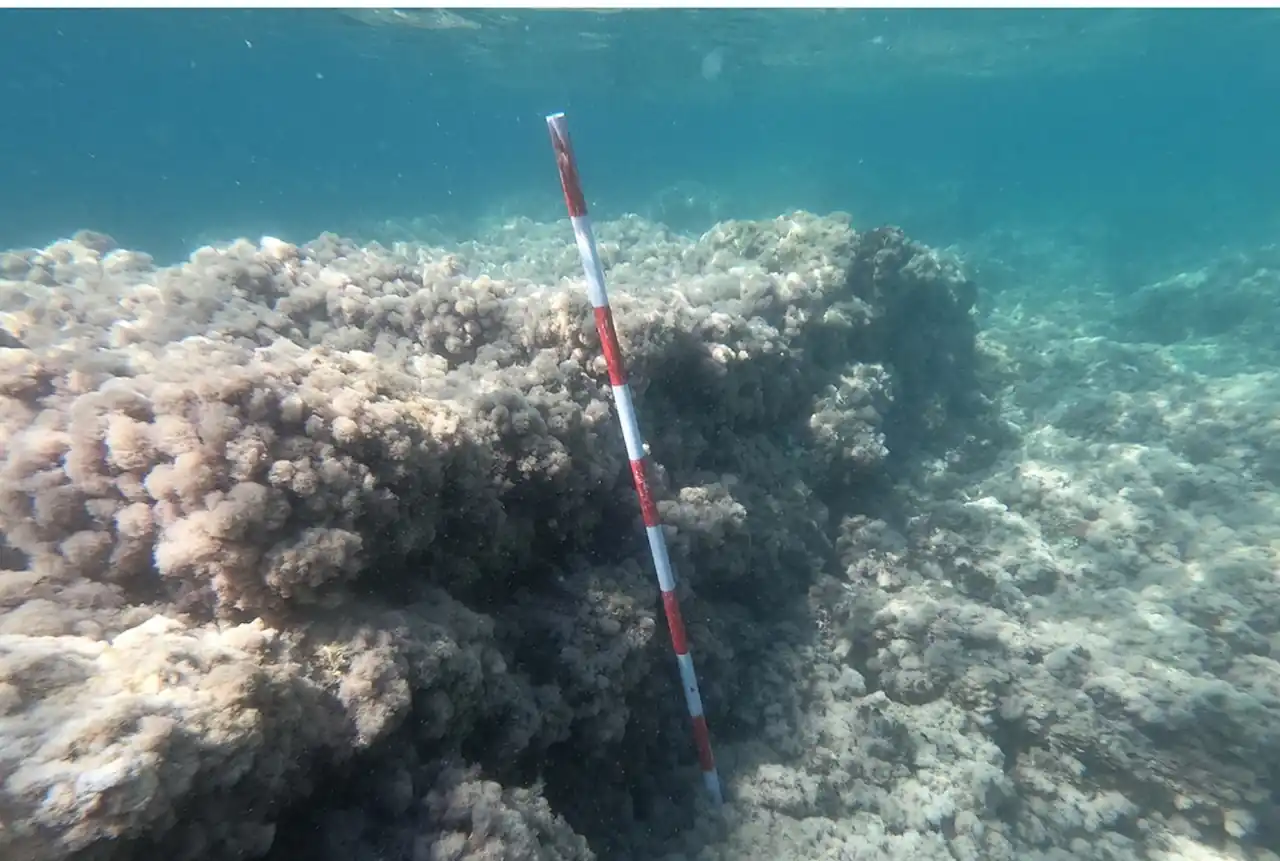
Un equipo de arqueólogos submarinos y geólogos de la Universidad Sapienza de Roma y del Centro de Estudios Marítimos ha localizado frente a la localidad de Santa Marinella, al norte de Roma, los restos de un antiguo muelle y dársena que, según los investigadores, constituyen la evidencia más temprana conocida de un punto de atraque […]
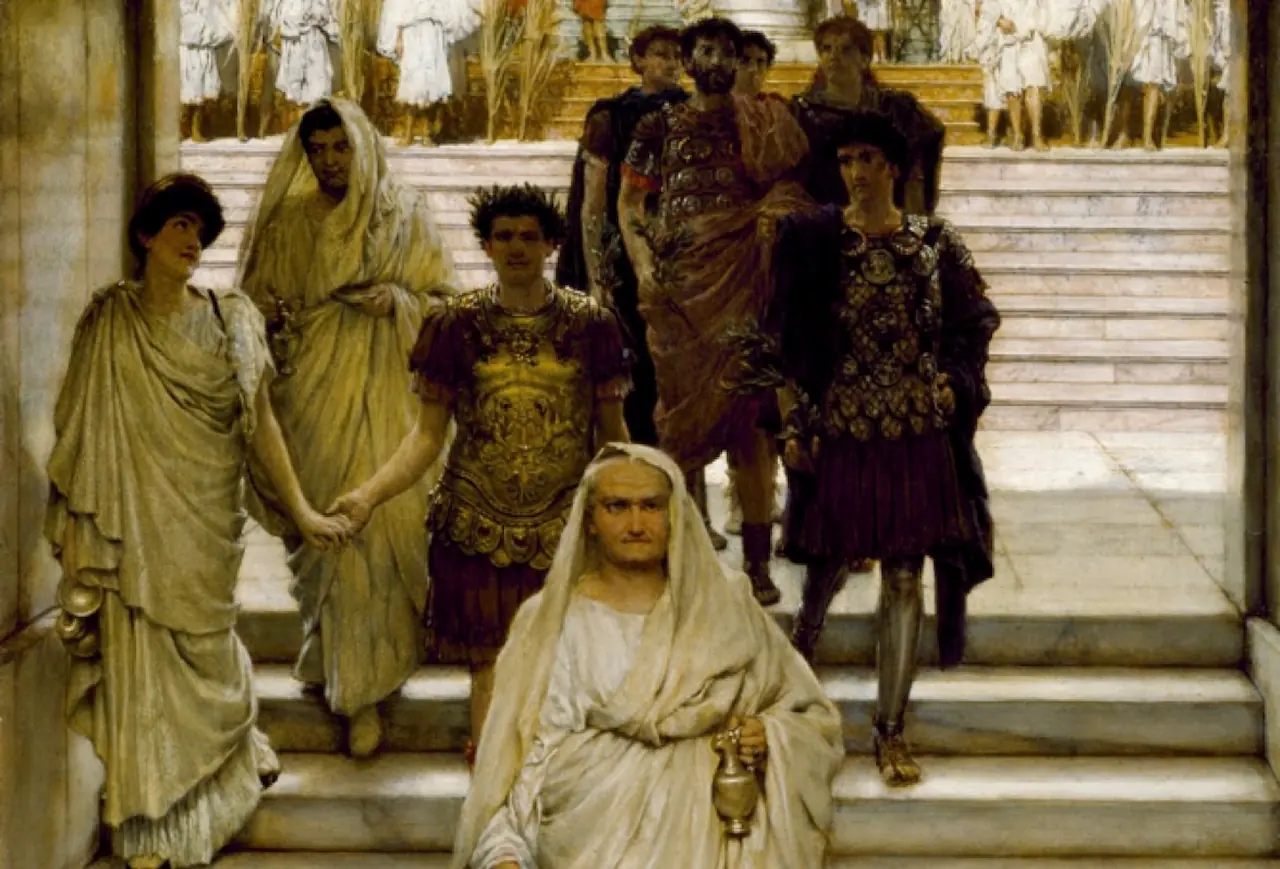
¿Fueron los emperadores romanos simples improvisadores que esperaban a ver qué pasaba tras su muerte? ¿O planificaron con cuidado el futuro de sus dinastías, pensando no solo en su sucesor inmediato sino en varias generaciones venideras? Un nuevo estudio publicado en el Bulletin of the Institute of Classical Studies responde: la mayoría de los emperadores […]
Cuando pensamos en la sociedad romana, la imagen que suele venir a la mente es la de un mundo dominado por hombres: senadores, magistrados, generales y emperadores. Las mujeres, según el relato tradicional, ocupaban un espacio secundario, confinadas al ámbito doméstico y excluidas de la vida pública. Sin embargo, un estudio reciente basado en el […]
Ahead of the 40th anniversary of Stand By Me, Alec Joyner takes up Rob Reiner’s classic film and considers it from a few dozen angles. It’s a canny piece of critical writing on time, memory, masculinity, and tenderness, forces that often work against each other. (Joyner doesn’t raise the subject of Reiner’s violent death last year, though he pauses briefly on Chris, a character “freakishly knifed to death . . . trying to break up a fight.”) Stand By Me‘s two days of summer are a “vital pause” in the life of its characters, a “portal . . . into the expanse of time.” Here, Joyner illuminates that pause, and captures some of its elusive grace.
Stand by Me was slapped with an R rating, for the boys’ profanity, as well as the prominence of child abuse and death. This may have hampered ticket sales, but it also made it the first R-rated movie that many ’80s and ’90s kids saw. It made it a fitting rite of passage.
Still, there’s something lamentable in the verdict, the MPAA telling a faulty story much like the fictional adults of Castle Rock. How many blockbusters have promoted horrendous violence, only to make the PG-13 grade because they feel safely unreal? Stand by Me was received as dangerous because its horrors and its dirt live at home.
No próximo dia 10 de agosto, segunda-feira, a partir das 20h00, o icónico Convento do Espírito Santo, em Loulé, transforma-se numa sala de cinema ao ar livre para acolher a sessão de estreia do Tribeca Open Air, powered by Toyota.
Loulé e Sintra são as duas localidades por onde irá passar a estreia desta iniciativa do Tribeca Festival Lisboa, que irá transformar espaços emblemáticos em pontos de encontro para celebrar o cinema, a cultura e a partilha de histórias.
Nesta espécie de warm-up para o Festival, que este ano acontece em dezembro, a exibição de um filme é antecedida por uma conversa ao vivo com personalidades do jornalismo, das artes e da criação, seguida de momentos musicais assegurados pela RFM.
A primeira sessão, em Loulé, terá como tema “Como se conta uma história? Do jornalismo à ficção” e será moderada por Rúben Tiago Pereira, jornalista do Expresso, contando com a participação do também jornalista (SIC) André Pacheco, e das atrizes Isabela Valadeiro, Sónia Balacó e Margarida Vila-Nova.
O ponto alto da noite acontece às 22h00 com a projeção em ecrã gigante do filme “Eleanor the Great”, que marca a estreia de Scarlett Johansson na realização cinematográfica. Esta comédia dramática, apresentada em exclusivo na edição de 2025 do Tribeca Festival Lisboa, acompanha a jornada de superação e recomeço de Eleanor Morgenstein, uma carismática mulher de 94 anos que decide mudar-se para Nova Iorque após a perda da sua melhor amiga.
O evento, que cruza a sétima arte com conversas inspiradoras e momentos musicais, tem entrada gratuita mediante levantamento de bilhetes em tribecalisboa.pt.
Esta iniciativa resulta de uma parceria entre o Tribeca Festival Lisboa, a Toyota Portugal e o Município de Loulé.
Programa
10 de agosto | Convento do Espírito Santo, Loulé
20h00: Abertura de portas, food & drinks e DJ Set by RFM
21h00: Como se conta uma história? Do jornalismo à ficção, com moderação de Rúben Tiago Pereira (Expresso) e participação de André Pacheco (SIC), Isabela Valadeiro e Sónia Balacó

 Login