Reading view
Fleet Of At Least 500 Collaborative Combat Aircraft By 2032 Now In USAF’s Plans
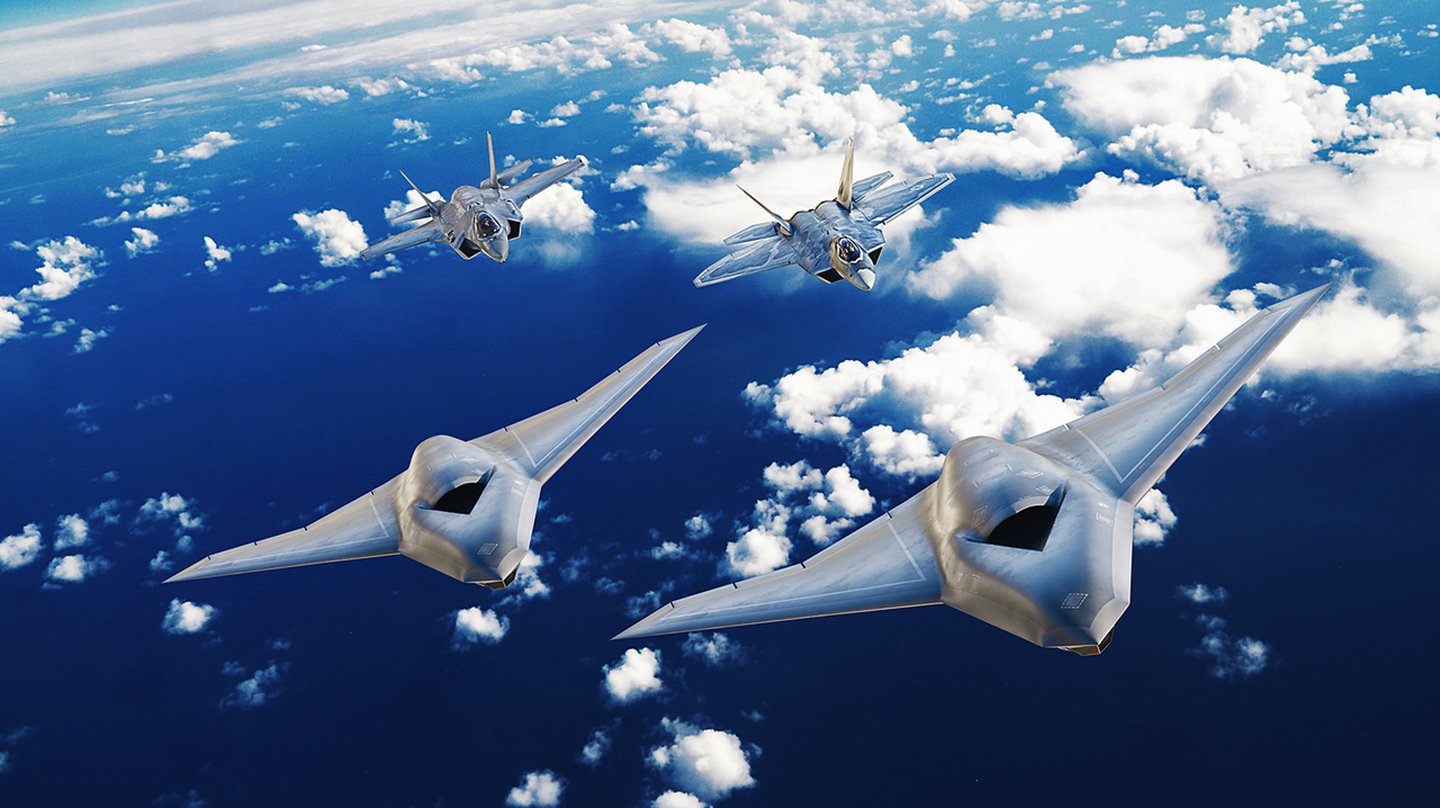
The U.S. Air Force is now aiming to have at least 500 Collaborative Combat Aircraft (CCA) in service by 2032. The service also wants to have an equal number of Massed Modular Aircraft (MMA) drones to succeed its MQ-9 Reapers by that time. In terms of stated CCA force structure plans, this is a substantial step up, with the service having most recently talked about acquiring “over” 150 of these drones by the end of the decade.
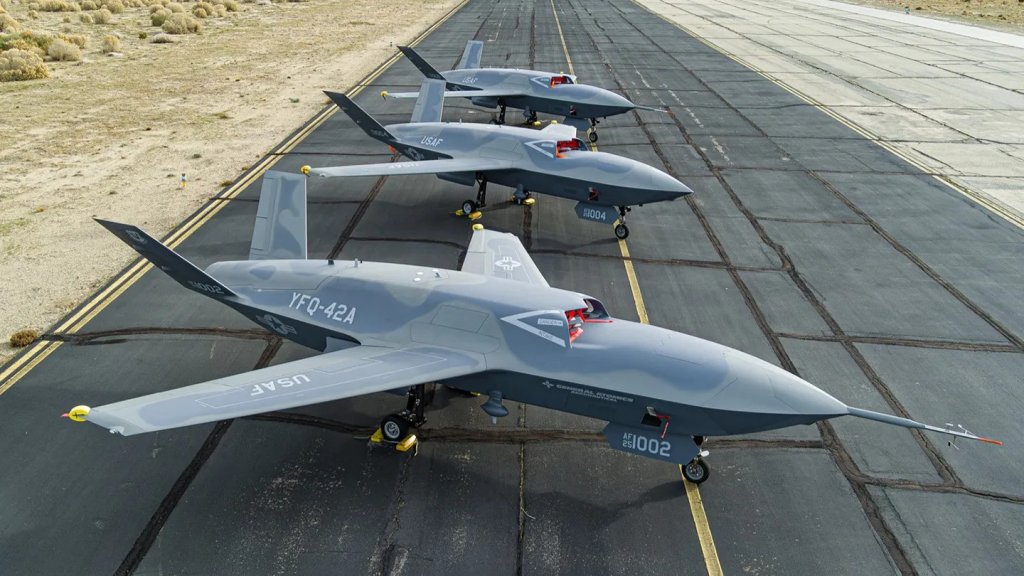
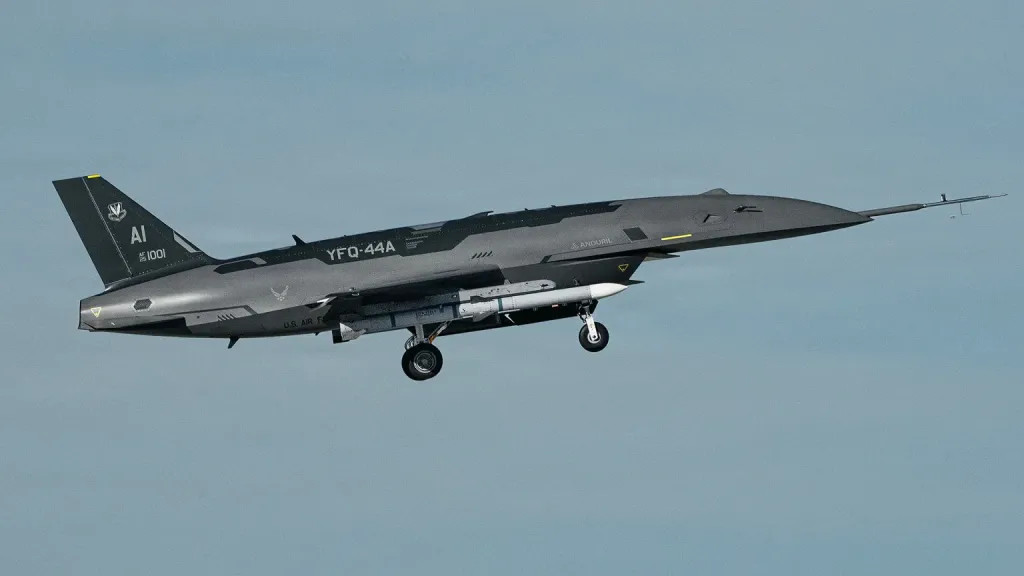
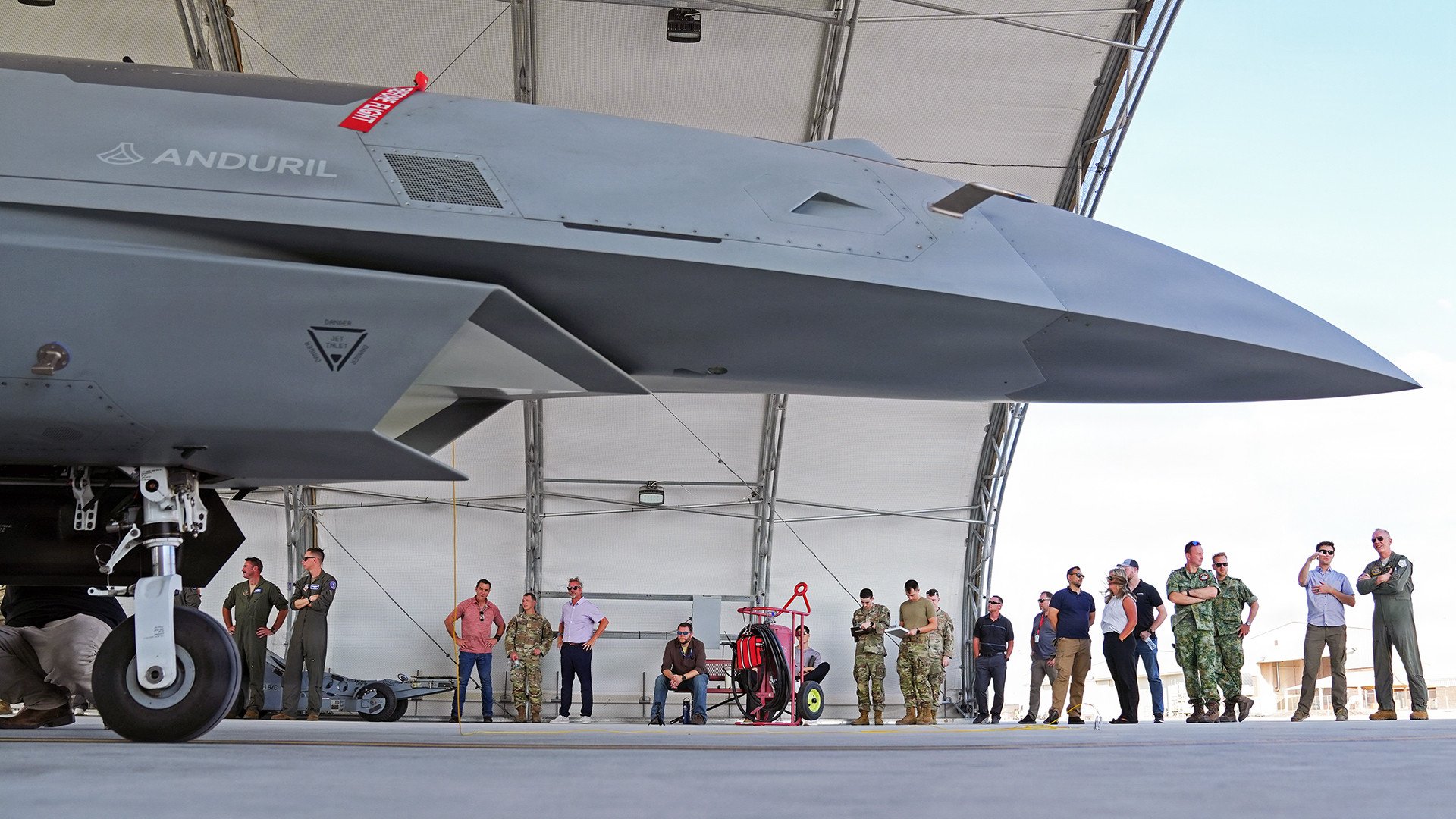
Secretary of the Air Force Troy Meink shared updates on the CCA program during a keynote speech at the Air & Space Forces Association’s 2026 Air, Space & Cyber Conference, at which TWZ is in attendance. The service’s top civilian also announced that General Atomics’ FQ-42 and Anduril’s FQ-44 drones have now received official nicknames: Vengeance and Fury. This only represents a change for the General Atomics design, which the company had previously named Dark Merlin. In June, the Air Force announced that it was ordering both types into production.

“We will have autonomous fighters like the Collaborative Combat Aircraft, or CCA. We intend to have at least 500 of these in service by 2032,” Meink said in his speech. “Our intent is to field 100 MMAs in 2029 at even a lower cost than the CCAs and a fraction of [the] cost of manned aircraft we build today. Then by 2032, 500 of these [MMA] platforms will join our force.”
When it comes to CCAs, “today, the first FQ-42 and FQ-44 increments are already rolling off the assembly line,” Meink added. “They’ll be performing many of the same missions that we do with manned fighters today.”

The Air Force’s stated CCA force structure targets have fluctuated significantly in recent years. In 2023, then-Secretary of the Air Force Frank Kendall outlined plans to acquire at least 1,000 CCAs, if not more, across the life of the entire program. However, Kendall and other Air Force officials subsequently talked about a far smaller initial fleet of between 100 and 150 drones.
“These contracts reaffirm our confidence in the strategic path forward for the program to procure over 150 combat capable CCA by the end of the decade,” Meink himself said in a statement in June when the production orders for the FQ-42 and FQ-44 were announced.

The FQ-42 and FQ-44 are also being acquired under the first phase, or Increment 1, of the CCA program. At least one additional increment is planned, and could lead to orders for one or more additional types of CCA. Though it is not immediately clear, it is possible, if not probable that Increment 2 CCAs are factored into the latest 500 drone figure.
“We talk about 500 by 2032, [but] we could actually build more of them than that,” Secretary Meink also said today during a question-and-answer session immediately following his speech. The goal of the CCA program “from the get-go” was “simple aircraft that you could build fast and at a lower cost,” he continued.
“So now we’re in a situation to [sic] where we could actually build more than we can actually afford to buy,” he added.
It is unclear what the unit costs of the FQ-42 or FQ-44 are currently. The Air Force has said previously that it is targeting a price point of around $20 million apiece once full-rate production gets underway.
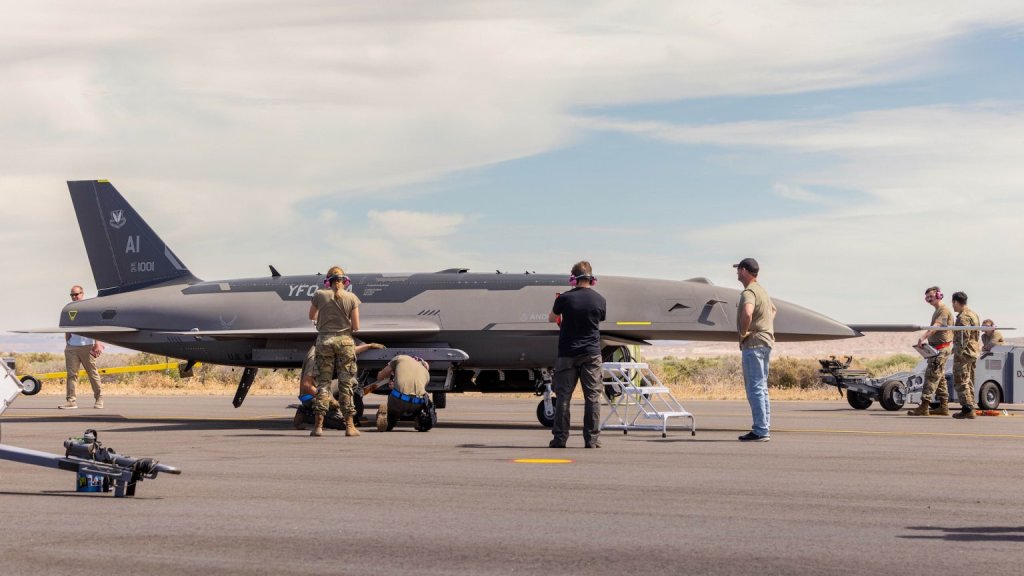
Beyond any fleet size target, the Air Force is still very much in the process of figuring out how future CCAs will be deployed, launched, recovered, supported, and otherwise operated on a day-to-day basis, as well as employed tactically. During today’s question-and-answer session today, Meink drew attention to a dedicated Experimental Operations Unit (EOU) the service has established to lead the process of laying the groundwork for future CCA operations. The EOU notably led a significant new round of operational testing of YFQ-42 and YFQ-44 prototypes at Creech Air Force Base in Nevada back in July, which TWZ was first to report on. The EOU supported another similar test exercise at Edwards Air Force Base in California in April.

“Getting them [CCAs] into these developmental kind of operational units, so they can start experimenting with that – familiarity breeds confidence, right?” Meink said.
The Air Force continues to make it clear that it sees its future CCA fleets as essential for providing capabilities and operational capacity necessary to succeed in future conflicts, especially a potential high-end fight against a near-peer opponent like China.
“Collaborative Combat Aircraft change how we project power and generate mass in highly contested environments,” Air Force Chief of Staff Gen. Ken Wilsbach said in a statement when the FQ-42 and FQ-44 production contracts were announced. “Delivering this capability to our warfighters faster ensures our forces maintain the tactical edge required to deter and, if necessary, defeat any adversary.”
As mentioned, the Air Force also now has plans to acquire 500 very different combat drones under the MMA program, and at a unit cost of approximately $10 million. This is also a notable increase in total planned fleet size for this effort, with a target of at least 180 airframes having been previously shared publicly.
The MMA drones are expected to conduct the same general strike and intelligence, surveillance, and reconnaissance (ISR) mission sets the service’s MQ-9A Reapers perform today. Major Reaper losses in the course of operations against Iran, compounded by significant additional attrition and deliberate divestments in recent years, are key drivers behind the MMA effort, which officially kicked off in July.

“As we saw in Epic Fury [the nickname for major combat operations against Iran earlier this year], ISR/strike platforms have been essential. We have used MQ-9 and even now the ULTRA aircraft to great effect,” Meink said during his speech today. The MMA program is “building on these lessons” and “will provide affordable, attritable, long-range strike, and we will be able to field them at scale.”
“MMA is designed to deliver the results our combat commanders need,” Chief of Staff Wilsbach said during his own separate keynote at the Air, Space & Cyber Conference today. “That’s how we stay ahead by moving quickly, investing in new tech, and delivering to our warfighters what they need to win.”
If the Air Force can meet its target of having a fleet of at least 500 MMA drones by 2032, this will be another significant boost to the service’s overall uncrewed capabilities. As of May, the Air Force had 135 MQ-9s left in inventory, and there have been more reported losses since then.
General Atomics, which developed the Reaper, has already put forward a new design called Wildfire as a potential successor. Many other companies are already lining up to submit their own proposals to meet the Air Force’s MMA needs.
Between the latest CCA force structure plans and the new MMA program, the Air Force’s fleets of combat drones are on track to look very different by 2032.
Contact the author: joe@twz.com
The post Fleet Of At Least 500 Collaborative Combat Aircraft By 2032 Now In USAF’s Plans appeared first on TWZ.

Sweden’s left narrowly wins national elections, 70% of Swedes with non-European background backed the left
For years, the right across the West has noted that mass immigration has been a boon for left-wing parties, which are essentially importing a new voting base. Sweden’s latest election appears to once again affirm this view, with the left narrowly winning the election, in large part due to their overwhelming support from those with a non-European background in Sweden.
Sweden’s 2026 election produced one of the narrowest results in recent memory. With roughly 94.7 percent of votes counted, the center-left opposition holds 176 seats against 173 for the parties backing outgoing Prime Minister Ulf Kristersson.
The left-wing Social Democrats remain the largest party at 28 percent, enough to put Magdalena Andersson in position to try to form a government.
A striking pattern in SVT’s VALU exit poll helps explain how the result took shape, with 70 percent of voters of non-European origin backing the left-wing bloc of Social Democrats, Left Party, Greens, and Center.
“VALU shows a very clear political dividing line. Among voters with non-European backgrounds, S, V, MP, and C together receive 70 percent, while the Tidö parties receive 27. This is a voter group whose party sympathies differ sharply from the electorate as a whole – and which therefore has significance for the long-term electoral math,” wrote Swedish political scientist and author Daniel Schatz on X.
VALU visar en mycket tydlig politisk skiljelinje. Bland väljare med utomeuropeisk bakgrund får S, V, MP och C tillsammans 70 procent, medan Tidöpartierna får 27.
— Daniel Schatz (@drdanielschatz) September 13, 2026
Det är en väljargrupp vars partisympatier skiljer sig kraftigt från väljarkåren som helhet – och som därför har… pic.twitter.com/m6J7pz2ySV
VALU defines the group as people who themselves, or whose parents, grew up outside Europe. Their votes broke down for the Left at 21 percent, Social Democrats at 38 percent, Greens at 7 percent, and Center at 4 percent.
Before the election, the leader of the right-wing Sweden Democrats, Jimmie Åkesson, also wrote that the left’s strategy is to gain votes from Swedes with a foreign background even as they lose votes from native ethnic Swedes:
“It’s about power. The Social Democrats’ decades-long campaign for increased immigration from the Muslim world has never been a coincidence. On the contrary, it seems to be a long-term strategy. The election promise from Magdalena Andersson to grant citizenship to up to 100,000 immigrants, based on the old and undemanding regulatory framework, should be seen in the same light,” he wrote.
Det handlar om makt.
— Jimmie Åkesson (@jimmieakesson) August 26, 2026
Socialdemokraternas mångåriga kamp för ökad invandring från den muslimska världen har aldrig varit en slump. Tvärtom tycks det vara en långsiktig strategi.
Vallöftet från Magdalena Andersson att ge uppåt 100 000 invandrare medborgarskap, utifrån det gamla… pic.twitter.com/Tz2jrUfzVP
“When Swedish voters flee the party, you need votes from elsewhere, and mass immigration from the Muslim world then appears to be an attractive way to circumvent the will of the Swedish people,’ he added.
In 2022, Swedes with a foreign backgroun already attracted around 68 percent of this electorate. Earlier surveys of Muslim voters had placed combined support for the Social Democrats, Left and Greens near 85 percent, with the Social Democrats alone above 61 percent. This slice of the electorate has expanded rapidly over the years.
About 13 percent of eligible voters, close to 1 million people, now have non-European origins, up from just over 3 percent in 2002 and 0.3 percent in 1982.
Many arrived from Muslim-majority countries in the Middle East, Africa and Asia through asylum, family reunification and earlier, more open immigration rules.
Sweden does not record religion in official statistics, yet estimates indicate that Swedish citizens from Muslim-majority countries number in the hundreds of thousands. Together, with other voters of non-European background, they form a reliable base for the left even as much of the rest of the country has shifted toward tighter immigration and crime policies.
Remix News reported on polling already six years ago which showed that a majority of Swedes wanted to tighten immigration substantially. While the native ethnic Swedish population has swung to the right, foreigners have incentives to vote for the left to ensure their families and fellow countrymen can arrive in Sweden unimpeded. Foreigners are also more likely to benefit from social welfare, which left-wing parties promote.
The overwhelming vote for the left from those with a non-European background has been seen across the Western world. In Germany, for instance, the Left Party has proposed giving voting rights to all foreigners who have lived in Germany for five years, regardless of whether they have citizenship. Similar proposals have been put forward by other left-wing parties in the country.
The post Sweden’s left narrowly wins national elections, 70% of Swedes with non-European background backed the left appeared first on Remix News.
How bad can the diesel crisis get in Poland?
Diesel fuel prices are already at record highs in Poland, but there are fears the situation on the Polish fuel market could become much worse. With the Saudi East-West pipeline now down after a series of drone strikes, not only prices are an issue but obtaining sufficient fuel supply could be the real worst-case scenario.
On Sept. 10, the East-West pipeline, which transports oil from Saudi Arabia’s oil fields to a port on the Red Sea, was hit with a wave of drone strikes from Iraq. The pipeline transmits 7 million barrels a day and was one of the most important ways to bypass the blocked Strait of Hormuz. There is still significant speculation of when the bombed out pumping station will reopen. A longer shutdown could have devastating consequences, as some experts predict. This oil supply accounts for approximately 4 percent of global oil flows and the question now remains whether repairs to the pumping station could just produce yet another round of drone strikes.
Polish drivers may also feel the consequences very soon. As Adam Sikorski, president of Unimot, points out, the market situation was already difficult before the escalation.
“The economy is inexorable. The published wholesale price of diesel fuel on Friday, including VAT, was already PLN 8.95 per liter ·(€2.07). At this level of wholesale price, the retail price above PLN 9 per liter may start appearing at other stations ” he told Polish media outlet Fakt.
Prices at stations are reacting with a delay because the fuel currently sold may have been purchased earlier, at lower prices.
How bad can it get?
An additional problem is the insufficient refining capacities in Europe and the shutdown of some plants in the Middle East. According to Sikorski, this leads to record refining profit margins.
“It is really very close to fuel in the country reaching PLN 10 per liter. And this is unfortunately not the most pessimistic scenario,” warns the president of Unimot.
The largest gas and oil company in Poland, Orlen, also commented on the situation. The company assures that it has a diversified portfolio of suppliers and its own resources, thanks to which it can respond to changes in the global market. The government may try to mitigate increases through tax changes, e.g. concerning VAT or excise duties.
Sikorski points out, however, that artificially lowering prices may increase demand in a situation of limited supply.
The most worrying scenario, however, is one in which the problem ceases to be the price itself.
“In an extreme scenario, I would no longer focus on price. The physical availability of fuels could become a much more serious problem,” warned the Unimot president.
The post How bad can the diesel crisis get in Poland? appeared first on Remix News.
Conducción temeraria en Canarias: investigado un motorista por circular a 178 km/h en un tramo limitado a 40 km/h
Everything We Just Learned About The Vectis Collaborative Combat Aircraft From The Skunk Works
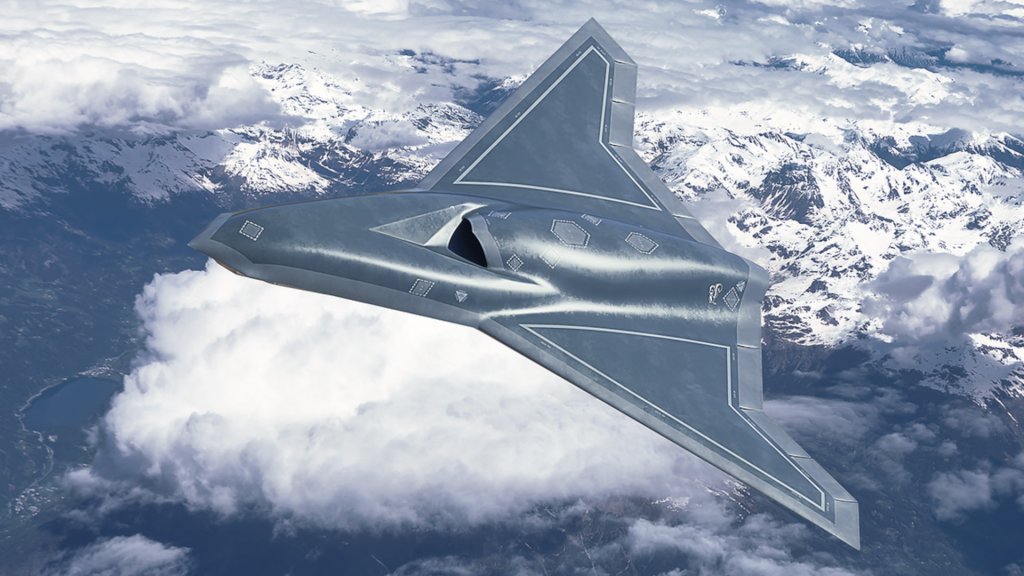
Lockheed Martin’s Skunk Works advanced projects division has shared all new information about its stealthy Collaborative Combat Aircraft (CCA) type drone design named Vectis, which it first unveiled a year ago. One of the most intriguing details is the true nature of its air inlet configuration, pointing to the premium on survivability the Skunk Works has placed on its CCA offering, especially when compared to other CCA designs.
Vectis has a far more exotic, deeply recessed “submerged” top-mounted air intake than was originally disclosed when Vectis first came out of the shadows. This further underscores the heavy emphasis Skunk Works says it has been placing on its CCA’s ability to stay undetected and live to fight another day. Vectis is also the first tailless CCA design we have seen from a U.S. manufacturer.

Ron Fehlen, Lockheed Martin Vice President and General Manager of Skunk Works, gave TWZ and other outlets an update on Vectis last week ahead of today’s start of the Air & Space Forces Association’s 2026 Air, Space & Cyber Conference. Skunk Works says work on constructing the first prototype of Vectis – a word that means lever or pole in Latin, and that Lockheed Martin has said reflects the ‘leverage’ the drone offers – is underway now. The goal is to have it flying by the end of next year. There are already plans to build four more prototypes using internal funding.
Check out the Skunk Works’ new Vectis video below:
“It is designed, as you can likely see, to be both survivable and affordable and flexible across the range of missions that our customers need, have needed, and continue to need into the future,” Fehlen said by way of introduction. “The technical specs, as you can imagine, are designed to meet and, in some cases, exceed the customer sets that we are working with and their requirements and their mission needs.”
The basic core of the single-engine Vectis that we have seen now is largely unchanged from what had been shown at the time of the unveiling last year. It is still a tailless drone that has a lambda wing planform and air intake mounted on top of the central part of the fuselage, as well as a prominent chine line around the forward end and a shovel-like shape to its nose. New renderings do show revised positions for various conformal antennas and/or sensor apertures around the central fuselage. These are all established features of low-observable (stealthy) aircraft designs.
Skunk Works’ Fehlen also shared last week that Vectis is approximately 34 feet long and has a wingspan of around 38 feet. As a comparison, the Navy’s two-seat primary jet trainer, the T-45 Goshawk, is roughly 39 feet long by 30 feet wide.
The biggest new detail, as mentioned, is the shaping and position of Vectis’ air inlet. Fehlen stressed that this is actually not a new feature, and has “been a part of the design since the beginning,” but was not reflected in previously released renderings and scale models.

The intake was depicted in the past as having a relatively straightforward configuration. It did appear to have a saw-tooth leading edge, another indication of stealthy design considerations. The visuals we have now show the intake is deeply recessed into the top of the fuselage, sitting behind a downward-sloping v-shaped channel.

Vectis doesn’t have a fully flush-mounted inlet, like what is found on Boeing’s MQ-25 Stingray tanker drone, among other designs, but it is close to it, very loosely similar to what’s found on the B-21. The rear is slightly raised above the v-like pocket where air flows down into the intake. Flush or near-flush intakes offer particular benefits when it comes to low-observability (stealthiness) and aerodynamic efficiency, but are also notoriously problematic, especially in certain flight regimes, as you can read more about here. This is even worse for high-performance aircraft that have a wide operating envelope and have to maneuver at higher angles of attack. The CCA would likely fit into this category, at least to a degree.
When it comes to Vectis, “there’s a lot of different reasons behind it [choosing this submerged intake configuration], but I’ll pick up on a couple here for you,” Skunk Works’ Fehlen explained. “The first is it reduces that frontal drag. So, anything sticking out in the wind, as many – as all of you know, I’m sure, creates drag on the aircraft itself. So, if you want better performance from a range, et cetera, then you need to be able to reduce that drag, and that’s an example.”
“It’s also interesting to me, particularly as the Air Force speaks about Agile Combat Employment, the ACE concept, as you’re aware. There is an advantage to having an inlet on the top of the aircraft if you’re out in more austere environments and you’re concerned about FOD [foreign object debris] pickup off of a runway,” he added.

ACE refers to a set of U.S. Air Force concepts of operations focused primarily on relatively rapid and irregular deployments, particularly to far-flung, austere operating locations, and with the expectation that logistics support could be very limited. The ACE construct is at the very core of the Air Force’s CCA program requirements and its plans for operating those drones in the future.
Fehlen also confirmed that the inlet’s design has to do with survivability, but did not elaborate in any detail, which is unsurprising considering the sensitivities of such design elements. The original Vectis promotional video Lockheed Martin put out last year, seen below, showed an S-shaped duct behind the air intake and exhaust shrouding, which are features designed to further reduce a platform’s signature.
In terms of performance, Lockheed Martin has yet to share any hard specifications it is targeting for Vectis, or disclose details about the engine the design will use. Fehlen did also highlight the drag-reducing performance advantages of the drone’s tailless design, including for maximizing range.
Details about what other capabilities Vectis might have are still limited. Fehlen noted that the design is expected to be capable of both air-to-air and air-to-ground mission sets. In a new computer-generated promotional video, seen earlier in this story, the drones are depicted launching what look to be AIM-120 Advanced Medium Range Air-to-Air Missiles (AMRAAM) and GBU-53/B Small Diameter Bomb II (SDB II) glide bombs, also known as StormBreakers. The AIM-120 has already emerged as something of a default initial weapon for Western CCA-type drones. The video also confirms Vectis has an internal bay that is able to accommodate at least two munitions, likely the size to accommodate medium-range air-to-air missiles.


In addition, the video shows Vectis as having a traditional electro-optical/infrared sensor turret behind a stealthy faceted enclosure under the nose. When the drone was first unveiled last year, TWZ noted that it could carry a variety of sensors, including compact radars and/or infrared search and track (IRST) systems, which would be particularly relevant in the air-to-air role.

During the press call, Skunk Works’ Fehlen reiterated that Vectis is being designed with an eye toward modularity and open-architecture systems. This, in turn, will make it easier to integrate new and improved capabilities and functionality down the line. Open architecture is at the heart of every CCA offering we are aware of at this time.
Fehlen further highlighted Lockheed Martin’s extensive work to date on advanced autonomy packages and crewed-uncrewed teaming capabilities. This includes the development of the Multi Domain Combat System (MDCX), an “autonomy platform” that is already central to the U.S. Navy’s plans for the carrier-based MQ-25 Stingray. The head of Skunk Works also explicitly called attention to autonomous air intercept testing conducted in cooperation with the Air Force earlier this year using the unique X-62A test jet, and said that work is feeding into Vectis’ development.

On top of all this, Lockheed Martin is already actively laying the groundwork for the U.S. Air Force’s F-22 and F-35 fighters to control future CCA drones, via in-cockpit touchscreen-type user interfaces, likely involving tablets, at least at first.
The new Vectis promotional video also shows a traditional ground control station being used to direct the drones, but with the phrase “managed from anywhere” on the screens, as seen below. Fehlen did say that any specific requirements for autonomy, command and control, and other operational capabilities would be up to individual customers, and that third-party vendors could be involved.

Beyond Vectis’ design and expected capacities, Fehlen touted the speed at which work on the first physical prototype is progressing, and highlighted the use of digital design techniques and advanced manufacturing processes.
“This team, when kicked off, took a design on a napkin, which we will likely frame one day in my office … two months later, they were in the wind tunnel validating the design,” he said. “So, in under two months, we’re already getting in the wind tunnel straight from off of a napkin. We had the first digital build in six months, and the first part release in eight months. So it gives you a touch of a sense for exactly how fast we’re moving.”
“This aircraft was designed in a fully integrated digital environment,” he added. “Really, it’s creating that unbroken digital thread from the design all the way through sustainment.”
There has been much talk over the years about whether the promised benefits of digital engineering have lived up to expectations, with former Secretary of the Air Force Frank Kendall having been particularly critical of the technology being at least over-hyped in the past. At the same time, the use of digital design tools has become increasingly commonplace, including on top-priority U.S. military aerospace projects, and not just at Skunk Works.
“We’ve used advanced design and manufacturing processes developed for many years under our own internal investment … for other Skunk Works programs, we’ve pulled that into this, of course, to continue to advance our manufacturing as well as the advanced design capability,” Fehlen continued. “They’re using real production processes.”

The Skunk Works boss stressed that this approach offers advantages not just for accelerating development and prototype, but also for reducing costs and positioning Vectis to enter full-scale production.
“It gives you the reliance and the confidence as you continue to move forward that you’re ready to off and build these things because you’re using those real production processes,” he explained. “An example of that is a technique that we call minimal tooling determinant assembly. It’s a technique that really enables an increased level of affordability and speed through really reducing the amount of touch labor required and increasing the first pass yield. We’ve seen, in many cases, an 80 percent reduction in labor hours to build up the aircraft itself.”

Fehlen made an indirect reference to flat-pack furniture from IKEA to provide additional context, in extremely general layman’s terms, about what this technique offers.
“That’s what we’re talking about, that idea that it can come together very quickly, limited touch, and limited error. We constrain that to reduce the number of labor hours, which is not just a cost implication, but also buoys the speed and how fast we’re going to be able to produce them,” he said. “You can imagine, as well, there’s a lot of simplification that goes into this. We have significantly reduced the part count. Again, back to simplify the build so that you can have a positive impact on speed and affordability, not new techniques, but we’ve applied them here with vigor to ensure that we are getting to the cost point that the services and our customers need in order to make this system effective.”

In terms of actual unit cost, “we’re always looking at, and, of course, we’re targeting to be [at] the CCA competitive price, so we’re very cognizant of it and make trades associated with that,” according to Fehlen. Vectis is “focused more on the CCA side of the house, and obviously the price points that are highly relevant in that regime, and then, of course, making trades along the way, and to make sure that we can meet it.”
The head of Skunk Works was responding here specifically to a question that mentioned the Air Force’s target of a roughly $20 million unit price for drones acquired under the first phase, or Increment 1, of its CCA program once full-scale production is achieved. The service announced in June that it was ordering fleets of both of the Increment 1 designs now in development, General Atomics’ FQ-42A Dark Merlin and Anduril’s FQ-44A Fury. The Air Force has plans for at least one more increment to this program, and has said in the past that it could pursue lower-cost (and less exquisite) designs.


“While not discussing suppliers, you can imagine we are ensuring that all of the decisions we make in the development and then the build out of these aircraft are designed around achieving that competitive cost point, while at the same time maximizing the amount of capability,” Fehlen added. “Those are the things that our customers are looking for, and we put it in a survivable solution.”
“There are some [companies] that are really going down the attritable [route], which defines a different price point than the CCA community has been targeting,” he also noted. Attritable designs are “quite a bit less from a cost point perspective and often from a capability perspective.”
With this in mind, there are still larger questions about where exactly Vectis may fit into U.S. military CCA plans, as well as those emerging from allied and partner air arms globally. Skunk Works has said in the past that it was eliminated from the Air Force’s CCA Increment 1 competition because it put forward a very stealthy “gold-plated” design that was not what the service wanted. Lockheed Martin had also indicated that its view of the capability/cost balance on new CCA-type designs had subsequently shifted very much in the opposite direction. Though it is still not entirely clear, what we’ve learned about Vectis in the past year would seem to signal that the pendulum at Skunk Works has swung back the other way again, at least to a degree.
As an interesting point of comparison, Northrop Grumman had also entered a higher-end design for the Increment 1 competition. In the wake of that loss, the company produced a much more familiar CCA design with a more traditional planform, which is now known as the YFQ-48A Talon Blue.
It’s also worth noting here that Skunk Works had publicly shared a future crewed-uncrewed teaming vision that included multiple tiers of drones back in 2022. This ranged from a cruise missile-like design the company now calls the Common Multi-Mission Truck (CMMT) all the way up to a concept for what could have been a very low-observable (stealthy) and highly autonomous flying wing uncrewed combat air vehicle (UCAV).
“We listen closely to our customers to deeply understand the operational environment and use those insights and our own analysis to inform the diverse solutions we develop for different mission sets,” Lockheed Martin told TWZ directly after the press call last week in response to a follow-up question about whether the 2022 vision was still relevant and if Vectis had supplanted the upper-tier concept shown at that time. “We continue to evaluate a range of crewed and uncrewed concepts against evolving customer needs.”
“Lockheed Martin Vectis addresses a warfighter need for a survivable, flexible and multi-mission capability, both domestically and internationally,” the company added in its statement. “We’re leaning into that demand, making strategic investments to accelerate Vectis’ progress and maturity and to deliver the capabilities our nation and allies need.”

Publicly, the Air Force continues to eschew any new plans to acquire and field UCAVs in favor of or even in addition to far less exquisite CCAs. The U.S. Marine Corps has so far put forward a similar CCA vision. However, just at the end of last month, the U.S. Navy released new target requirements for what it called a CCA-type drone, but that described something that sounded much more like a UCAV.
Lockheed Martin and a host of other companies globally are being presented with a clearly expanding CCA market, but there is also still obvious interest in higher-tier UCAVs. China, in particular, has positioned itself as the current leader in the stealthy flying wing UCAV space, as well as a dominant actor in advanced combat drone developments more generally speaking. Russia, India, Turkey, and France continue to pursue flying wing UCAVs, as well. That being said, Skunk Works’ Vectis is arguably the closest we have seen to a low-observable UCAV to come out of recent CCA developments.
Regardless, Skunk Works is confident that there is a place for Vectis, together with autonomy and other capabilities it is developing, domestically and internationally, in this future uncrewed air combat ecosystem. It “is a survivable autonomous multi-mission platform, which we believe is the solution needed within today’s operational environment and into the future,” Fehlen said last week.
Skunk Works is committed to “delivering what’s next across … airframes, open architectures, to include artificial intelligence and autonomy, and then crewed-uncrewed integration,” he added. “Make no mistake, it will take advancements across all these areas to get to where our customers are going. We look at the full picture. Vectis is a holistic weapon system from our perspective.”
Altogether, “it’s an urgent need. We know that. We can hear it.”
UPDATE: 3:10 pm EDT
We now have a photo of the full sized Vectis mockup on the floor or Air, Space, Cyber 2026:

Contact the author: joe@twz.com
The post Everything We Just Learned About The Vectis Collaborative Combat Aircraft From The Skunk Works appeared first on TWZ.

Concilio, Katechon e lo Scisma del Capo. Mons. Viganò a LifeSiteNews. Intervista, Prima Parte

Marco Tosatti
Carissimi StilumCuriali, offriamo alla vostra attenzione la prima parte di un’intervista concessa da mons. Carlo Maria Viganò a LifeSiteNews. Buona lettura e diffusione.
§§§
INTERVISTA CON GAETANO MASCIULLO PER LifeSiteNews
Sul Concilio, il Katechon e lo Scisma del Capo – Prima Parte
Carlo Maria Viganò

Gaetano Masciullo: Eccellenza, nel suo nuovo libro Lei sostiene che oggi il primo nemico del Papato sia il Papa stesso. Come si spiega questo paradosso?
Il paradosso è soltanto apparente, e si scioglie non appena si distingue ciò che la teologia cattolica ha sempre distinto: il Papato come istituzione divina, voluta da Nostro Signore quando disse a Pietro Tu es Petrus, e la persona che in un determinato momento della storia ne occupa la Cattedra. Il Papato è indefettibile, perché è di Cristo; la persona del Papa è un uomo, con il suo libero arbitrio, che può corrispondere alla grazia di stato oppure rifiutarla. D’altra parte, la Chiesa prega per il Sommo Pontefice chiedendo alla Maestà divina di conservare nella santa Religione il Domnum Apostolicum, proprio perché sa che la sua perseveranza nella Fede non è garantita automaticamente dall’ufficio. Se così non fosse, se cioè il Papa fosse esente dalla possibilità di venir meno al proprio mandato, pregare per lui non avrebbe senso.
Quando un Pontefice usa l’autorità che gli è stata conferita ad ædificationem per demolire ciò che quell’autorità è chiamata a custodire — la dottrina, la liturgia, la disciplina, la stessa costituzione monarchica e gerarchica della Chiesa — egli si pone in contraddizione con il proprio munus. Non è più il servo del Papato: ne è il primo avversario, perché nessun nemico esterno potrebbe ferire la Chiesa quanto colui che la ferisce dall’interno rivestito della veste di Pietro.
Ho chiamato questo fenomeno scisma capitale nel senso proprio della parola: uno scisma che parte dal caput, dal capo. Lo scisma classico è la separazione di una porzione del corpo dal capo; qui assistiamo al contrario: è il capo che si separa dal corpo mistico e dalla Tradizione che lo precede, che si ribella a ciò che i suoi predecessori hanno insegnato e che egli avrebbe l’obbligo di trasmettere intatto. San Paolo lo dice con parole che non ammettono repliche: sed licet nos aut angelus de cœlo evangelizet vobis præterquam quod evangelizavimus vobis, anathema sit (Gal 1,8-9). Nemmeno un angelo, nemmeno un Apostolo, nemmeno il Successore dell’Apostolo Pietro può annunciare un altro vangelo. Il Papa è il custode del Depositum, non il suo padrone; e chi da custode si fa padrone, tradisce la ragione stessa per cui Nostro Signore Gesù Cristo ha istituito il Papato in forma vicaria.
Gaetano Masciullo: Lei paragona la situazione attuale alla rimozione del katéchon di cui parla San Paolo (2 Tess 2, 6-8). Quale ruolo gioca la figura di Leone XIV in questa drammatica rimozione del “freno” all’iniquità?
I Padri e i grandi commentatori hanno visto nel katéchon, in «colui che trattiene», tanto l’Impero romano cristiano quanto, con esso, l’autorità della Chiesa, e in modo eminente l’autorità del Papato, che per secoli ha opposto un argine al mysterium iniquitatis. Quel freno ha cominciato ad essere allentato dal momento in cui la gerarchia, con il Concilio Vaticano II, ha rinunciato a esercitare la propria autorità nel senso voluto da Cristo, per cercare la conciliazione con il mondo, con il pensiero moderno, con la Rivoluzione. Da allora, chi avrebbe dovuto trattenere si è messo ad assecondare.
Leone XIV si inserisce in questo processo non come un innovatore, ma come colui che lo consolida e lo rende presentabile. Bergoglio ha scardinato il Papato con violenza; Prevost dà a quello scardinamento una forma istituzionale, «ordinata», quasi rassicurante. Il suo compito — e credo ne sia perfettamente consapevole — è di rendere irreversibile la sinodalità, cioè quella «rivoluzione permanente» che porta il Concilio alle sue estreme conseguenze, e di far sì che la Chiesa Cattolica cessi definitivamente di essere un ostacolo al progetto massonico e globalista. Quando il Papa non è più freno ma acceleratore, la rimozione del katéchon non è un evento futuro: è ciò che avviene sotto i nostri occhi. E il Signore ci ha avvertito: tunc revelabitur ille iniquus. Non lo dico con compiacimento apocalittico, ma con il dolore di un Vescovo che vede la Sposa di Cristo consegnata ai suoi nemici da chi dovrebbe difenderla.
Gaetano Masciullo: Di fronte alle sanzioni canoniche, lei invoca lo stato di necessità, come, del resto, ha fatto la Fraternità San Pio X per le sue nuove consacrazioni episcopali. Come risponde ai tanti conservatori che la accusano di disobbedienza formale al Papa?
Rispondo che l’obbedienza è una virtù, non un idolo. Essa ha per oggetto un comando legittimo dato da un’autorità legittima per il fine per cui quell’autorità esiste. Quando il comando è contrario alla Fede, alla legge divina o al bene delle anime, non solo non obbliga, ma obbliga a non obbedire: obœdire oportet Deo magis quam hominibus (At 5,29). Questo non è un’invenzione dei tradizionalisti: è San Pietro, è San Tommaso, è il Magistero di sempre, è la condotta dei Santi che hanno resistito ai Pontefici quando questi hanno sbagliato, da San Paolo che resistette a Pietro in faciem, a Sant’Atanasio, a Santa Caterina da Siena.
Lo stato di necessità non è un’invenzione per sottrarsi alla legge: è un principio del diritto stesso, secondo cui la salus animarum, che è la legge suprema, prevale sulle norme positive quando queste, applicate alla lettera, produrrebbero un danno irreparabile alle anime. La Fraternità San Pio X, consacrando i suoi Vescovi, ha compiuto esattamente ciò che fece Mons. Lefebvre nel 1988, e per lo stesso motivo: Roma non dà alla Tradizione i vescovi di cui ha bisogno, e senza vescovi non vi sono sacerdoti, e senza sacerdoti non vi sono Sacramenti. Ed è significativo che, nel minacciare la Fraternità, Prevost abbia lasciato cadere il pretesto delle Consacrazioni per confessare che la vera colpa è il rifiuto del Concilio. Con ciò ha rivelato — forse involontariamente — la frode: le sanzioni canoniche sono uno strumento politico, brandito contro chi resta cattolico e mai contro chi apertamente nega la Fede.
Ai conservatori che mi rimproverano dico con affetto: voi obbedite a un uomo che vi chiede di disobbedire a Nostro Signore, e chiamate questa contraddizione «fedeltà». Io non ho mai inteso separarmi dalla Comunione Apostolica; ho chiesto e chiedo a Leone XIV di dirmi in che cosa contraddico il Depositum Fidei. Non ho ricevuto risposta. Chi, tra i due, è in stato di scisma?
Gaetano Masciullo: In un ormai lontano discorso del 1999 ai vescovi europei tenuto dal Cardinale Carlo Maria Martini, pioniere della Mafia di San Gallo e — com’egli stesso amava definirsi — non antipapa, ma antepapa (colui che avrebbe preparato la strada al “nuovo” papa), la Chiesa per “aggiornarsi” deve sciogliere urgentemente una serie di nodi. Ed egli indicava come primo nodo la “carenza di ministri ordinati”, da sciogliere abolendo il celibato, o almeno rendendolo opzionale. Di recente, il vescovo Johan Bonny ad Anversa ha annunciato che ordinerà uomini sposati entro il 2028. Per non parlare poi della nomina ad Arcivescovo di Vienna di Josef Grünwidl, ex esponente del movimento dissidente “Call to Disobedience”, che auspicava proprio l’abolizione del celibato ecclesiastico. Roma assiste in silenzio a tutto ciò e, contrariamente che in altre situazioni, non minaccia sanzioni sebbene il diritto canonico venga puntualmente calpestato. Sembra quasi che Roma favorisca tutto ciò… Cosa ne pensa?
Non «sembra»: è così. Roma non è spettatrice distratta di un processo che le sfugge; ne è il regista. Il metodo è quello collaudato dalla Rivoluzione conciliare: si permette che la disobbedienza parta dalla periferia, si lascia che essa si consolidi come «fatto compiuto», e poi il centro interviene non per reprimerla ma per «accompagnarla», invocando la sinodalità, l’ascolto, le esigenze pastorali. Il caso Bonny è emblematico: un Vescovo annuncia pubblicamente che violerà la legge della Chiesa, e nessun Dicastero lo richiama. Il caso Grünwidl è ancora più eloquente, perché non si tratta di tollerare un dissidente, ma di promuoverlo a una delle sedi più importanti d’Europa. Chi ha militato in un movimento che si chiama letteralmente Call to Disobedience viene premiato da un Pontefice che scomunica chi chiede di poter obbedire alla Chiesa di sempre.
Ma la questione è più profonda del celibato. La «carenza di ministri ordinati» è il frutto avvelenato di sessant’anni di svuotamento del Sacerdozio. Quando si è cessato di credere che il sacerdote è alter Christus, che sale all’altare per rinnovare il Sacrificio della Croce, il celibato ha smesso di avere senso, perché ha senso solo come configurazione totale a Cristo Sommo Sacerdote. Il Card. Martini lo sapeva bene: la lista dei suoi «nodi» non è un elenco di problemi da risolvere, ma un programma di demolizione, in cui ogni punto è funzionale al successivo. Prima si abolisce il celibato, poi si apre alle donne, poi si riscrive la morale, poi si dissolve il matrimonio… È un piano, e i suoi esecutori si chiamano oggi con altri nomi ma perseguono lo stesso disegno. Che Martini si definisse antepapa la dice lunga sulla consapevolezza con cui la Mafia di San Gallo ha preparato ciò che oggi vediamo.
Gaetano Masciullo: Il secondo nodo individuato da Martini riguardava il ruolo delle donne e la questione dell’ordinazione femminile. I vescovi promossi da Leone XIV — penso a Mackinlay, Grögli, Satué, Grünwidl, e molti altri — si sono espressi apertamente a favore del diaconato femminile. La Commissione vaticana sul tema ha ribadito il “no” all’ordinazione sacramentale delle donne, ma ha definito tale giudizio “non definitivo”. Di conseguenza, numerosi vescovi oggi evitano di affrontare direttamente la questione, preferendo valorizzare la presenza femminile nel governo delle diocesi o proporre riforme liturgiche “inclusive”. A suo avviso, questa strategia mira a spostare progressivamente la Finestra di Overton sul tema dell’ordinazione femminile?
È esattamente la tecnica della Finestra di Overton, e nemmeno tanto dissimulata. Giovanni Paolo II, con la Lettera apostolica Ordinatio Sacerdotalis, non definì una novità: dichiarò che quella dottrina appartiene al Depositum Fidei ed è stata insegnata infallibilmente dal Magistero ordinario e universale — come la Congregazione per la Dottrina della Fede confermò nel Responsum del 1995. Dire oggi che quel giudizio è «non definitivo» significa dunque non già riaprire una questione disciplinare, ma negare l’infallibilità stessa del Magistero ordinario e universale.
Il diaconato femminile è il grimaldello, perché il Sacramento dell’Ordine è uno solo nei suoi tre gradi: ammettere una donna al diaconato significa ammettere che essa è capace di ricevere l’Ordine, e a quel punto l’esclusione dal presbiterato apparirebbe come una pura discriminazione da rimuovere. Non è un caso che l’ammissione delle donne agli ordini sia promossa da movimenti anticattolici in nome della parità di genere che la chiesa sinodale accoglie e fa sua. I neo-modernisti lo sanno perfettamente, e per questo non chiedono subito l’ordinazione sacerdotale: chiedono ruoli di governo, presenza nelle Curie, «ministeri» istituiti, liturgie «inclusive». Ogni passo prepara il successivo, e ogni passo viene presentato come innocuo. I Vescovi nominati da Prevost non sono stati scelti nonostante le loro posizioni sul diaconato femminile, ma proprio in ragione di esse: chi nomina un Vescovo ne conosce le idee, e chi ne nomina molti con le medesime idee sta costruendo un Episcopato che, al momento opportuno, chiederà «dal basso» ciò che il Papa desidera concedere «dall’alto». Questa è la sinodalità: la messa in scena di una domanda la cui risposta è già stata decisa.
A tutto ciò si aggiunge un aspetto che ritengo ancora più grave, e sul quale si tace colpevolmente: la promozione di donne a capo di Dicasteri romani. Abbiamo due religiose, suor Simona Brambilla[1] e suor Tiziana Merletti, rispettivamente Prefetto e Segretario del Dicastero per gli Istituti di Vita Consacrata, che comandano a Cardinali, Vescovi, Abati e sacerdoti; un’altra religiosa, suor Reffaella Petrini Presidente della Pontificia Commissione per lo Stato della Città del Vaticano e Presidente del Governatorato; una laica, Maria Montserrat Alvarado, a capo del Dicastero per la Comunicazione che coordina e riorganizza l’intero sistema comunicativo della Santa Sede; donne nominate membri e consultrici di vari Dicasteri, tra cui quello per i Vescovi[2], cioè chiamate a decidere le promozioni all’Episcopato. Ora, il potere di governo nella Chiesa non è una funzione amministrativa che si possa attribuire a chiunque per decreto: esso è per sua natura connesso alla sacra potestas, che scaturisce dal Sacramento dell’Ordine, perché nella Chiesa — che è una società soprannaturale e non un’azienda — si governa in quanto si è configurati a Cristo Re e Sommo Sacerdote. Separare la giurisdizione dall’Ordine, conferendo a chi non può ricevere l’Ordine il potere di reggere coloro che lo hanno ricevuto, significa rovesciare la costituzione gerarchica che Nostro Signore ha dato alla Sua Chiesa. Ecco perché dico che Bergoglio, e ora Prevost, fanno molto di più e molto peggio che conferire gli Ordini sacri a queste donne. Un’ordinazione invalida sarebbe un sacrilegio, ma resterebbe un atto nullo; qui invece si smonta pezzo per pezzo l’ordine sacramentale, si rende la sacra potestas un accessorio superfluo, e si abitua il clero a obbedire a chi non ha alcun titolo divino per comandargli. È un attentato micidiale alla costituzione divina della Chiesa, condotto per via di fatto, senza bisogno di toccare un solo dogma.
Gaetano Masciullo: Il terzo e il quarto nodo individuati da Martini erano rispettivamente quello della morale sessuale e quello della disciplina del matrimonio. Nel suo libro-intervista ufficiale con Elise Ann Allen, Leone XIV ha dichiarato che si devono «cambiare gli atteggiamenti» delle persone prima ancora di cambiare la dottrina. Secondo Lei, quali mezzi vogliono utilizzare i neo-modernisti al potere per portare avanti questo cambiamento?
Quella frase merita di essere pesata, perché è una confessione. «Cambiare gli atteggiamenti prima di cambiare la dottrina» significa che la dottrina si cambia, ma non per prima: si cambia per ultima, quando ormai nessuno la crede più e la sua abrogazione formale appare come un mero atto notarile. È il metodo modernista descritto da San Pio X nella Pascendi: non si attacca frontalmente il dogma, si trasforma la mentalità che lo sostiene, si separa la fede dalla vita, e si lascia che la vita, così separata, trascini con sé la fede. In realtà non occorre nemmeno cambiare il dogma: lo si rende irrilevante per via pastorale.
E questo metodo ha oggi la sua carta teorica, che quasi nessuno ha voluto leggere per ciò che è. Nella Evangelii gaudium Bergoglio ha enunciato quattro principi, e il primo di essi — «il tempo è superiore allo spazio» — è la chiave che apre tutti gli altri: «dare priorità al tempo significa occuparsi di iniziare processi più che di possedere spazi». In altre parole: non definire, ma avviare; non fissare un risultato, ma innescare una dinamica che nessuno potrà più fermare. Lo spazio è il territorio delimitato; il confine, la definizione dogmatica, il canone che dice fin dove è lecito andare; il tempo è il processo che quel confine lo erode senza mai dichiarare di volerlo abbattere. E si noti l’astuzia: chi presidia uno spazio deve difendere una posizione, e una posizione si può assediare, discutere, confutare; chi avvia un processo non ha posizioni da difendere, e perciò è inattaccabile. Non gli si può opporre nulla, perché non ha ancora affermato nulla.
Mi si obietterà che questo non è Hegel ma Romano Guardini, sul quale Bergoglio lavorò senza mai condurre a termine la sua tesi di dottorato. La polarità guardiniana — il Gegensatz — è concepita precisamente contro la contraddizione dialettica, giacché le tensioni vanno tenute insieme e non risolte in una sintesi superiore. Si chiami sintesi hegeliana o processo mai concluso, il risultato è che nessuna verità resta un punto fermo, ma diviene il momento di un divenire. E ciò che in Hegel era filosofia della storia, e in Marx si fece prassi rivoluzionaria (la prassi che precede il principio, lo giudica e lo sovverte) nella chiesa sinodale si chiama pastorale. Ed ecco l’opera sotto i nostri occhi: Amoris Lætitia non abroga l’indissolubilità del Matrimonio, apre un processo; Fiducia Supplicans non dichiara lecita l’unione irregolare, benedice chi vi si trova; il cammino sinodale non decide nulla, e proprio per questo decide tutto. La dottrina non viene mai formalmente toccata, e appunto per questo non può mai essere formalmente contestata. Non vi è proposizione da censurare, non vi è eresia da condannare, non vi è nulla su cui pronunciare un anatema. Al fedele resta la lettera intatta di un dogma che nella vita della Chiesa non vige più. Ma è esattamente questo che il Concilio Vaticano I colpiva con l’anatema, vietando che ai dogmi proposti dalla Chiesa si attribuisse un giorno un senso diverso da quello che essa ha inteso e intende: eodem sensu eademque sententia.
I mezzi sono quelli che vediamo all’opera da decenni. Il primo è il linguaggio: si sostituisce «peccato» con «fragilità», «conversione» con «cammino», «verità» con «discernimento», «legge di Dio» con «ideale». Il secondo è la prassi pastorale, resa deliberatamente ambigua: Amoris Lætitia con le sue note a piè di pagina, Fiducia Supplicans con le sue benedizioni che benedicono senza benedire; e ora la strategia di Prevost, che non ha ritirato nulla di tutto ciò ma lo lascia operare «con calma». Il terzo è la formazione: seminari, facoltà teologiche, catechesi, in cui da sessant’anni si insegna che la morale cattolica è un residuo storico da superare. Il quarto è la scelta dei pastori: si promuovono coloro che praticano l’ambiguità e l’errore, e si emarginano coloro che parlano chiaro.
E sotto tutto questo vi è un’alleanza che non ho mai esitato a denunciare: quella tra la chiesa sinodale e l’agenda globalista. Non si tratta di un’ideologia fra le altre, ma della sintesi di tutte le ideologie di destra e di sinistra, che per due secoli hanno finto di combattersi mentre conducevano gli uomini al medesimo approdo; una sintesi di matrice neomalthusiana, che nell’uomo non vede più l’immagine di Dio ma un’eccedenza da amministrare, e che perciò è antiumana prima ancora di essere anticristica. Le sue articolazioni le conosciamo, e ciascuna colpisce un aspetto preciso dell’ordine voluto dal Creatore: la dissoluzione della famiglia naturale; il pansessualismo e l’ideologia di genere, che negano l’uomo creato masculum et feminam; il vaccinismo, che fa del corpo una proprietà dello Stato; l’ecologismo, che sostituisce al culto del Creatore quello della creatura; l’immigrazionismo, che dissolve le nazioni e con esse i popoli cristiani; e al vertice il transumanesimo, che promette all’uomo la divinizzazione senza Dio già promessa nell’Eden dal serpente: eritis sicut dii.
La chiesa conciliare non subisce questo processo: vi partecipa. Ha rinunciato a giudicare il mondo e ha accettato di esserne giudicata; ha smesso di convertirlo, e si è lasciata convertire da esso. Ecco perché il terzo e il quarto nodo di Martini non sono affatto nodi da sciogliere: il matrimonio indissolubile e la morale sessuale non sono l’involucro storico di un’epoca tramontata, ma la carne stessa del Vangelo, e sono parole di Nostro Signore — quod ergo Deus coniunxit, homo non separet. Chi pretende — da Papa — di cambiarle non riforma la Chiesa: fonda un’altra religione, e la fonda sulle rovine di quella che aveva ricevuto in custodia.
[1] Suor Brambilla ha accanto un Pro-Prefetto, il Cardinale Ángel Fernández Artime, nominato con lei il 6 gennaio 2025 e riconfermato da Leone XIV. L’invenzione stessa della figura del Pro-Prefetto è la confessione implicita che quell’ufficio esige la sacra potestas — un espediente che ammette il problema fingendo di risolverlo.
[2] Le tre donne al Dicastero per i Vescovi sono Petrini, Brambilla, Reungoat, nominate membri nel luglio 2022.
+ Carlo Maria Viganò, Arcivescovo
L'articolo Concilio, Katechon e lo Scisma del Capo. Mons. Viganò a LifeSiteNews. Intervista, Prima Parte proviene da Blondet & Friends.
Gli esperti dichiarano che l’Ucraina sta perdendo il suo vantaggio tecnologico a causa dell’innovazione rivoluzionaria russa

Hai inoltrato questa email? Iscriviti qui per riceverne altre.
![]() |
Due articoli illuminanti sull’Ucraina hanno fatto il giro del web, rivelando il clima di crescente pessimismo che serpeggia tra i pensatori e i personaggi influenti dell’establishment riguardo alla situazione attuale e alle prospettive future del Paese.
Va notato che i principali organi di informazione stanno diventando sempre più espliciti nelle loro valutazioni, come dimostrano diversi articoli recenti che invocano “onestà” nel dialogo occidentale sulla reale situazione dell’Ucraina.
Il problema è che l’onestà deve partire dai principi fondamentali: ciò significa stabilire i fatti più basilari, basilari e cardine di un dato scenario. Nel caso dell’Ucraina, la valutazione basata sui principi fondamentali dovrebbe derivare dai costi quantificabili della guerra, in primis quello delle vittime. Se l’Occidente non è in grado di esaminare onestamente le reali perdite dell’Ucraina con la stessa attenzione che dedica settimanalmente a quelle della Russia, non si avvicinerà mai alla verità della situazione. Questo perché praticamente tutti i problemi attuali dell’Ucraina derivano dall’elevatissimo tasso di perdite umane, ed è l’elefante nella stanza più importante che l’Occidente continua a ignorare clamorosamente.
Ora passiamo ai pezzi.
Il primo da Spectator Fa un’affermazione audace:
L’articolo inizia con tre “spunti deprimenti” a seguito dell’ennesimo inutile scambio di battute diplomatiche tra Kushner e Witkoff:
Vladimir Putin non ha modificato minimamente i suoi obiettivi di guerra dal 2022 e rimane determinato a continuare a combattere. Donald Trump non ha un nuovo piano di pace se non quello di porre fine alla guerra in Ucraina alle condizioni di Putin. E Kiev sta esaurendo i fondi e gli uomini per difendersi, così come ha già esaurito i caccia intercettori Patriot per difendere i suoi cieli dai bombardamenti del Cremlino.
Questi sono i tre aspetti deprimenti emersi dall’ultimo ciclo di diplomazia itinerante tra Mosca e Kiev, condotto dal genero di Trump, Jared Kushner, e dall’inviato speciale Steve Witkoff.
L’autore mantiene il tono cupo della sua valutazione nel descrivere il crescente vantaggio della Russia sul campo di battaglia, che svolgerà un ruolo chiave nella nostra esegesi successiva:
Ancora più importante, mentre il Cremlino continua la sua spietata campagna per rendere invivibili le città ucraine, distruggere l’economia del paese e privarlo del suo futuro, la capacità di Kiev di difendersi è seriamente a rischio.
Parte dell’incubo che si sta consumando in Ucraina è di natura tattica. Ogni sistema d’attacco a lungo raggio russo è diventato più devastante. Una nuova generazione di droni d’attacco Geran a propulsione a reazione, molto più veloci e precisi dei vecchi modelli iraniani Shahed, viene schierata in massa. La Russia sta sviluppando almeno due nuovi sistemi missilistici da crociera a basso costo e sta intensificando la produzione di missili balistici lanciati da aria e da terra. “Questa è una guerra di città e infrastrutture. Nessuno la vincerà”, ha dichiarato al Guardian questo fine settimana Serhii Beskrestnov, consigliere di Zelensky per le tecnologie di difesa e figura di spicco dell’establishment della difesa di Kiev. “L’attacco è diventato più forte della difesa”. Beskrestnov prevede che l’Ucraina non sarà in grado di procurarsi un numero sufficiente di missili per proteggere completamente le sue città dalla devastazione durante questo inverno.
L’articolo è sorprendentemente perspicace nella sua onesta analisi dei molteplici modi in cui l’Ucraina sta perdendo la guerra:
Ma una parte più consistente della lenta e inesorabile sconfitta dell’Ucraina è di natura strategica…
…il terzo e più grave fallimento è il rifiuto di prendere seriamente in considerazione un coinvolgimento del Cremlino nei colloqui di pace e l’idea ostinatamente radicata che incoraggiare l’Ucraina a combattere e combattere all’infinito porterà magicamente alla vittoria.
Aspetto ancora più critico, l’autore cita l’imminente disastro di bilancio dell’Ucraina in un momento in cui la propensione europea a concedere prestiti illimitati si è esaurita:
Il punto di svolta – in cui quelle promesse si scontreranno duramente con la realtà – arriverà presto sotto forma di un’imminente crisi fiscale a Kiev. Il Primo Ministro ucraino Serhii Koretsky ha recentemente annunciato che Kiev ha già speso la maggior parte dei fondi per la difesa previsti per il 2026 e si trova ad affrontare un incombente buco di bilancio di 26 miliardi di euro (30 miliardi di dollari), nonostante un recente prestito di 90 miliardi di euro (104 miliardi di dollari) dall’UE. Tale prestito, ottenuto dopo mesi di trattative a Bruxelles, rappresentava il massimo che l’UE fosse realisticamente in grado di raccogliere. Mentre l’Ucraina si avvia verso l’inverno più duro e punitivo della guerra, rischia di rimanere senza non solo missili Patriot e uomini per il fronte, ma anche senza i fondi per continuare a combattere.
Un esempio concreto:
L’ultima trovata dell’autore è la più onesta e realistica: invece di invocare subdolamente più armi e un’escalation senza fine, come fanno la maggior parte di questi articoli nei paragrafi conclusivi, l’autore ammette che il dialogo diplomatico con la Russia è l’unica via rimasta per salvare l’Ucraina, notando con precisione che ogni singola offerta di pace è stata progressivamente peggiore.
Cosa può salvare l’Ucraina dal collasso politico e militare? Ci sono segnali che il tabù politico europeo sul confronto con Putin si stia incrinando. Alice Weidel, dell’AfD tedesca, reduce dalla vittoria alle elezioni in Sassonia, ha chiesto “un canale di comunicazione aperto con la Russia per raggiungere un’intesa e una soluzione pacifica”. Secondo Iuliia Mendel, addetta stampa di Zelensky dal 2019 al 2021, “stanno emergendo nuove forze, e si stanno rafforzando”, che rappresentano “la nostra unica possibilità per un’Europa pacifica… Più armi non ci salveranno. Non l’hanno mai fatto”.
Finora, ogni offerta di pace si è rivelata peggiore per Kiev rispetto alla precedente. Sembra che l’intenzione di Putin sia quella di infliggere un ultimo, brutale colpo alle città ucraine prima di porre fine alla guerra alle sue condizioni, forse il prossimo anno. L’amministrazione Trump ha da tempo rinunciato all’idea di sostenere una vittoria completa dell’Ucraina, e spetterà agli storici decidere se la decisione di ritirare gli aiuti e le armi americane si sia rivelata una profezia che si autoavvera. L’Europa, dal canto suo, continua a parlare, ma non ha un piano concreto per aiutare o salvare l’Ucraina dalla furia del Cremlino, né tantomeno per schiacciare l’economia russa o spezzare la volontà di Putin.
Questo ci porta al prossimo articolo, il più importante, completo di due titoli alternativi:
L’articolo è stato scritto per il Washington Post dall’ex capo di Google Eric Schmidt, che ha intrapreso una seconda carriera di successo come organizzatore e imprenditore nel settore delle tecnologie belliche anti-russe. Dopo un recente viaggio a Kiev, la valutazione di Schmidt è più cupa che mai:…

Continua a leggere questo post gratuitamente nell’app Substack.
|
||||||||||
© 2026 Simplicius76
Annulla iscrizione
La Banda Bassotti di Kiev. Anche il NYT dà dei “ladri” alla congrega di Zelensky (A. Puccio)
06/09/2026

Nel 2024 l’Ucraina ha perso circa 1,2 miliardi di dollari a causa di frodi, malversazioni e cattiva gestione negli appalti di armamenti, secondo quanto appurato dal quotidiano da verifiche riservate del Servizio Statale di controllo interno del Ministero della Difesa.
“Tutto ciò che in Ucraina non è fissato con i chiodi verrà rubato. È una tradizione di lunga data”, – ha dichiarato l’esperto statunitense di anticorruzione James Wasserstrom.
Un esempio è rappresentato dall’impresa di Shiman, che ha fornito all’esercito centinaia di migliaia di munizioni per mortaio inutilizzabili. Ciononostante, lo stabilimento ha continuato a ricevere nuovi contratti, e il primo grande accordo da 280 milioni di dollari è stato siglato dalle autorità quando lo stesso Shiman si trovava già in libertà vigilata su cauzione per un caso di corruzione.
Ma noi, nonostante i controlli, continuiamo a inviare soldi all’Ucraina.
Andrea Puccio – www.occhisulmondo.info
L'articolo Gli esperti dichiarano che l’Ucraina sta perdendo il suo vantaggio tecnologico a causa dell’innovazione rivoluzionaria russa proviene da Blondet & Friends.
The Significance of the Enemy States Clause for Germany
When the Allied powers of World War II drafted the United Nations Charter, they sought to establish a global system of collective security. Its aim was to “save succeeding generations from the scourge of war.” With its adoption, all UN member states undertook to settle disputes exclusively by peaceful means. Decisions on the use of force were to be taken collectively (initially by eleven and now by fifteen members of the UN Security Council).
Yet the UN Charter contains an exception—the so-called ‘enemy states clause’ in Articles 53, 77, and 107—that has largely been forgotten today. It grants the former Allied powers the right to take military action against the former Axis powers without a Security Council mandate, in order to prevent renewed aggression from the former Axis powers. With the UN Security Council expressly excluded from this provision, each of the former Allies is free to assess for itself whether a former Axis power is once again adopting an aggressive stance.
By far the most important Axis powers to which the ‘enemy states clause’ referred were Germany and Japan. But does this clause apply to these countries today, more than 80 years after the end of WWII? The German government answers this question with an unequivocal ‘no.’ However, the legal situation does not appear unambiguous.
The German government points to the fact that reunified Germany is now one of the peace-loving members of the United Nations. Even before that, it argued that the four Allied Powers had waived their special rights vis-à-vis Germany in the 1990 Two-Plus-Four Treaty, including the right arising from the ‘enemy states clause’.
But do these arguments hold water? Here are a few considerations.
- The ‘enemy states clause’ was never removed from the UN Charter.
The wording of the 1995 UNGA Resolution 50/52 does not indicate that ‘enemy states clause’ is now permanently invalid. Following a report from the Special Committee on the Charter of the United Nations and on the Strengthening of the Role of the Organization which recommended deletion of the clauses, the Resolution only “expressed its intention to initiate the procedure to amend the Charter, with prospective effect, by the deletion of the ‘enemy State’ clauses from Articles 53, 77 and 107.” However, there has been no follow-up resolution. Hence the text of the UN Charter remains unchanged.
If, at some time in the future, Germany were no longer regarded as a peace-loving state, could the ‘enemy states clause’ be applied again? There is no clear-cut answer to that.
- Resolutions of the UN General Assembly are not legally binding.
UN resolutions are generally of a recommendatory nature. Under the UN Charter, binding decisions can, in principle, only be taken by the Security Council. However, there has never been a Security Council resolution formally repealing the ‘enemy states clause’. The relevant provisions therefore remain in the text of the Charter.
- Removing the clause would require an amendment to the UN Charter.
Removing the ‘enemy states clause’ would require a formal amendment procedure in accordance with the rules of the Charter. This would presumably also require ratification of this amendment by all UN member states. Nothing of the sort has happened, and the relevant articles therefore remain in force.
- The Two-Plus-Four Treaty cannot amend the UN Charter.
Whilst the 1990 Two-Plus-Four Treaty is a legally binding treaty under international law, a treaty between Germany and the four Allied powers cannot decide on an amendment to the Charter. Nor does the Treaty contain any reference to an explicit repeal of the’ enemy states clause’ in the UN Charter.
- Russia could potentially terminate the 1990 Two-Plus-Four Treaty.
Russia could argue that Germany has violated the spirit and letter of the Two-Plus-Four Treaty, for example, by participating in NATO’s war against Yugoslavia in 1999, stationing its troops in Lithuania, or establishing NATO military structures on the territory of the former GDR.
In view of the growing tensions between Germany and Russia, the ‘enemy states clause’ could regain political significance in this conflict.[1] Russia might attempt, as it has already warned, to use it as justification for a military operation against German production facilities manufacturing long-range drones for Ukraine. It could argue that by supporting Ukraine militarily, Germany has effectively become part of the confrontation. Furthermore, Russia could point out that the German Government has developed a new military strategy directed exclusively against Russia. Worse, it could be argued that the last German military strategy was drawn up in 1939 and led directly to WWII.
The German Government should not only consider the possibility of this clause’s enforcement but remember that, given its past, it has a special obligation to work towards a peaceful resolution of the Ukraine war, to avoid its escalation, and not to exacerbate political tensions. At the time of increasing military confrontation in Europe, it would be reasonable—and prudent—to re-establish dialogue with Russia and seek ways to de-escalate the situation.
The Texas City Disaster
On the morning of April 16, 1947, residents of Texas City, a busy industrial port on the Gulf Coast of Texas, watched smoke rise from a cargo ship moored at the docks. Fires aboard ships were not uncommon, and many people gathered along the waterfront to observe the firefighters at work. Few suspected that within minutes they would witness one of the most devastating industrial disasters in American history.
At 9:12 a.m., the French cargo vessel SS Grandcamp exploded with tremendous force. The blast shattered buildings, ignited refineries, hurled pieces of steel across miles of countryside, and killed hundreds of people. By the time the catastrophe ended, at least 581 people were dead and more than 5,000 injured. It remains the deadliest industrial accident in United States history.

A view of the port from a residential area after the 1947 Texas City Disaster. Credit: University of North Texas Libraries
© Amusing Planet, 2026
Una lezione del 1971 che parla al nostro presente: Giussani e il rischio di una Chiesa resa irrilevante
Emma Bonino, l’iperliberista globale
Emma Bonino ha meritato l’inferno anche per questo:
ha promosso il referendum per l’abolizione dell’art. 18 dello Statuto dei Lavoratori (perché irrigidiva il mercato del lavoro).
Ha promosso referendum per la piena liberalizzazione del collocamento privato abolendo ogni vincolo e responsabilità del datore di lavoro.
Ha sostenuto la piena libertà di contratto individuale (quali che siano i rapporti di potere contrattuale) e l’abolizione dei contratti collettivi.
Ha sostenuto l’abolizione dell’obbligo di stipulare assicurazioni contro gli infortuni sul lavoro con l’INAIL aprendo alle assicurazioni private.
Ha sostenuto l’abolizione del Servizio Sanitario Nazionale, da sostituire con assicurazioni private.
Ha sostenuto costantemente l’innalzamento dell’età minima per accedere alla pensione.
Lei, la libertaria, era favorevolissima al Green Pass, che riteneva essere un grande contributo civile.
Si è sempre definita un’amica sincera di Israele e ha sostenuto tutte le iniziative del sionismo.
Ha supportato dal primo minuto e fino alla fine l’invio di aiuti militari a Kiev e la necessità di dare una lezione alla Russia.
È sempre stata ferocemente atlantista e filoamericana.
Non si può dire che non sia stata una vita coronata di successi, magari indiretti.
In vista dei coccodrilli che pioveranno in questi giorni, credo sia corretto dire che Emma Bonino, dal punto di vista della gente che vive del proprio lavoro e che ama l’Italia, è stata politicamente il Male.
Niente di personale, se la vedrà lei dall’altra parte.
Ma per quanto riguarda questa valle di lacrime, se avesse fatto la cassiera invece della parlamentare l’intero paese ne avrebbe tratto beneficio.
Andrea Zhok
L'articolo Emma Bonino, l’iperliberista globale proviene da Blondet & Friends.
RAS#9: porque “a Cultura não pede licença”
Ana Marta Teles, Daniela Monteiro, Filipa Carmo, Helena Mendes, Iacuba Camará, Luis Garza, Marisa Murtinha, Nuno Labau, Sílvia Ferreira e Vânia Jorge foram os artistas que participaram na residência artística RAS#9 que decorreu no Centro Cultural Regional de Santarém (CCRS). O projecto RAS nasceu há cerca de nove anos pelas mãos de João Maria Ferreira, Elias Rodrigues, o então presidente do CCRS…
Exclusive: ‘The Portuguese people are tired of feeling like foreigners in their own homeland’ – New poll shows Reconquista could win 5.2% of the national vote
The right-wing Portuguese Reconquista movement would win 5.2 percent of the national vote if it were to register as a political party, according to independent polling firm Intercampus. Remigration activist Afonso Gonçalves, who founded Reconquista, told Remix News that the poll shows the remigration movement could garner significant support from Portuguese voters who have grown tired mass immigration.
“Despite all the lies, slander, false accusations and tyrannical state persecution, Reconquista and its founder are currently polling at 5.2 percent without even being a registered political party yet. The Portuguese people are tired of feeling like foreigners in their own homeland. We will not be ignored any longer,” Gonçalves told Remix News.
Mass immigration is the number one issue driving the growth of the remigration right across Europe. In Portugal, the demographic change has not only been dramatic but also extremely rapid compared to other Europe countries.
“The foreign population has doubled in the last six or seven years, and in the last 12 years it has tripled, because in 2014, we had around 400,000 legal immigrants, already a few hundred thousand — like 600,000 or 700,000 —naturalized citizens that are from an immigrant background. So, in total, we had just short of 1 million immigrants if you count naturalized citizens. So, it has tripled in 12 years and doubled in six years,” said Gonçalves.
In total, the Reconquista founder said there are 3 million foreigners or people with an immigration background in the country, including 2 million legal immigrants and 900,000 people who already acquired citizenship. On top of that, there are approximately 100,000 illegal immigrants.
The polling data shows, however, that Reconquista has most of its support from young people, a trend seen in other European countries, including Germany and France. However, even among the general population, the favorability rating for Reconquista is at 27 to 28 percent, which means the party has ample runway for growth.
“If you consider the people who have a very positive or positive opinion about us, that is almost one-third among the youth, so 18 to 34, and in the overall population it’s at 27 percent or 28 percent,” he said.
This support may also have to do with Gonçalves’ high-profile social media actions, which have gone viral on numerous social media platforms.
— Remix News & Views (@RMXnews) September 18, 2025
Portuguese activist @AfonsoJFG was detained by police for protesting against mass immigration.
"Not in our country! Portugal belongs to the Portuguese people!"
Gonçalves was detained by police for an hour and released. He was never charged, but was actively protesting… pic.twitter.com/MkyQv2R8ue
It is important to note that Gonçalves said his movement is not yet actually a party, however, the poll is serving as a sort of public litmus test to gauge how such a party would perform in a general election in Portugal.
Meanwhile, Gonçalves said his movement has built strong relationships with other parties in Europe.
“We have very strong and friendly relationships with Alternative for Germany. We also have friendly ties with Vox in Spain, Restore Britain in the United Kingdom, so I would say that these are our biggest and strongest connections internationally,” he said.
— Remix News & Views (@RMXnews) July 8, 2025
"The Portuguese never asked to be replaced by hundreds of thousands of invaders who don't share their culture, religion, or way of life."
Portuguese activist @AfonsoJFG was arrested for peacefully protesting this Islamist procession in Almada. pic.twitter.com/NsNobHjXkM
His potential party would mark a major sea change in “business as usual” on the right-wing spectrum of parties that already exist in Portugal, especially in relation to the Chega party. Notably, Reconquista takes a strong stand against immigration from former Portuguese colonies and is opposed to legal immigration.
“We are different because we are formally defending remigration. Chega just defends controlling migration; we defend reverting and inverting the immigration influxes. We defend remigration, and we also criticize migration from our former colonies – so countries like Angola, Mozambique, Brazil, Cape Verde, etc. These countries are the highest representatives in terms of immigration to Portugal. Chega doesn’t criticize them because they want to attract their votes,” he said.
Gonçalves noted that immigration from these countries represents major problems, as “they represent the highest per capita levels of criminality, representation amongst people who are jailed, and also the highest absolute numbers of immigrants to Portugal.”
Gonçalves warned that these groups “are also the most heavily politicized, they despise our history, and a lot of them feel a sense of vengeance against our people and form an ethnic bloc of voting that has the potential of turning the Portuguese liberal democracy into a tribalistic, let’s say, Balkanized democracy that doesn’t serve the will of the people, for sure at least not the will of the native people.”
Major challenges still exist for Gonçalves and any potential party. For example, while he has garnered ample attention on social media, that attention has also brought censorship, persecution from the Portuguese state, and an authoritarian debanking blitz. In short, he is arguably the most persecuted political activist in Portugal and among the most persecuted in all of Europe.
“Our movement is censored on YouTube and TikTok. So for example, me, I have lost four YouTube accounts and 16 TikTok accounts, and I’ve never been able to regain access to these accounts. Regarding other types of censorship and persecution, we’re being heavily, tyrannically persecuted by the Portuguese state. I have been debanked; I’ve lost access to all of my Portuguese-based bank accounts, the funds were frozen, and I’m not allowed to open a new bank account. So I’m very heavily censored in terms of banking. I’ve also been deplatformed, we’ve been illegally detained, we’ve had our events illegally disallowed, and we are persecuted by the Portuguese regime in that way,” he said.
Starting a party under such conditions represents a major challenge, however, founding a party could help formalize Gonçalves’ movement and create a venue where he can more powerfully pursue a remigration agenda. After all, it is generally easier to ban, debank, and censor an individual than an entire political party.
With remigration as his core issue, his party will have a sharp wedge issue to peel off voters from other rival parties. Remix News has conducted interviews with Chega officials in the past, including party leader André Ventura. He signaled he is open to some legal immigration to support certain industries.
“I don’t know how it is in all the countries, but in countries like Portugal, Spain, and even France and Italy, countries that I know best, the economy needs some level of immigration for areas like agriculture or tourism, hotels, and restaurants. With massive tourism activity, we need some immigration, but massive illegal immigration or even massive immigration, both legal and illegal, can both bring problems,” Ventura told Remix News at the time.
However, Gonçalves has long argued that it is this type of legal immigration that is contributing to the greatest demographic upheaval in Portugal. While the polling data shows there is a pool of receptive voters, there are also powerful business and lobbying interests involved in tourism, construction, agriculture, and other industries who will actively oppose remigration.
The poll was conducted by the independent pollster Intercampus and commissioned by Reconquista. As Gonçalves noted, it is the “most famous, the most credible” polling agency in the country, but he says they have a tendency to undervalue right-wing parties, which he says could be a sign that support for his party could be even higher than 5.2 percent.
The post Exclusive: ‘The Portuguese people are tired of feeling like foreigners in their own homeland’ – New poll shows Reconquista could win 5.2% of the national vote appeared first on Remix News.
Novas Regras na VCI: Proibição de Pesados de Mercadorias Entra em Vigor a 15 de Setembro

A partir do dia 15 de setembro, entram em vigor novas restrições de trânsito na Via de Cintura Interna (VCI), no Porto. A medida visa redistribuir os fluxos de tráfego, reforçar a segurança e diminuir a pressão sobre esta artéria fundamental da Área Metropolitana do Porto, segundo o Decreto-Lei n.º 155-A/2026.
As limitações aplicam-se nos dias úteis, entre as 07h00 e as 21h00, a todos os veículos pesados de mercadorias com peso bruto superior a 3.500 kg, que possuam três ou mais eixos e uma altura igual ou superior a 1,1 metros no primeiro eixo.
Principais Pontos da Nova Medida:
* Período de Restrição: Dias úteis, das 07h00 às 21h00.
* Exceções e Autorizações: Veículos que realizem operações de carga ou descarga nos concelhos do Porto ou de Vila Nova de Gaia podem circular, desde que efetuem um registo prévio e obtenham habilitação na plataforma digital dos respetivos municípios, apresentando o devido documento de transporte.
Serviços Online https://share.google/xK4JKPfyY4fjl7y3j
Balcão Virtual https://share.google/JjA11ky9QxuVQgBrk
* Alternativa Gratuita (CREP): Como alternativa de circulação, a Circular Regional Exterior do Porto (A41/IC24) dispõe de isenção total do pagamento de portagens para este tipo de veículos, aplicável 24 horas por dia, sem necessidade de registo prévio.
* Fiscalização e Sanções: A fiscalização estará a cargo da PSP e da GNR, com acesso em tempo real à plataforma de registos. O incumprimento das regras constitui contraordenação punível segundo o Código da Estrada, sob alçada da ANSR.
Tratando-se de um projeto-piloto, a iniciativa será alvo de uma monitorização contínua para avaliar os impactos na mobilidade da região.
Regulamentos e Formulários
Voltar
Regulamentos
Formulários
Ouvir
Regime de circulação na VCI e isenção de pagamento das taxas de portagem na CREP
A VCI é uma das principais artérias rodoviárias da Área Metropolitana do Porto, mas o elevado volume de tráfego coloca desafios crescentes à mobilidade, à segurança e à sustentabilidade da região.
Para responder a este desafio, está em marcha uma nova solução para redistribuir o tráfego, aliviar a pressão sobre a VCI e potenciar a utilização da CREP, promovendo uma circulação mais fluida e eficiente na rede rodoviária da Área Metropolitana do Porto.
A partir de 15 de setembro, entram em vigor novas regras de circulação para os veículos pesados de mercadorias na VCI.
Saiba o que muda, quem é abrangido e quais as alternativas disponíveis.
A Via de Cintura Interna do Porto (VCI), que integra troços das autoestradas A1/IC1, A20/IC23, A28/IC1 e A44/IC23, formando um anel em torno dos núcleos urbanos das cidades do Porto e de Vila Nova de Gaia, é uma das principais infraestruturas rodoviárias da Área Metropolitana do Porto. Todos os dias, milhares de pessoas e veículos utilizam esta via, essencial para a ligação entre o Porto, Vila Nova de Gaia e os principais eixos rodoviários da região e do País.
O elevado volume de tráfego, em particular a circulação de veículos pesados de mercadorias, tem vindo a colocar uma pressão significativa sobre a VCI, com impacto na fluidez da circulação, na segurança rodoviária e na sustentabilidade ambiental.
Uma rede mais equilibrada
A Área Metropolitana do Porto dispõe de outras vias com capacidade disponível que podem contribuir para uma distribuição mais eficiente do tráfego. É o caso da A41/IC24, a Circular Regional Exterior do Porto (CREP), que constitui uma alternativa para a circulação de veículos pesados e permite reforçar a articulação entre os diferentes eixos rodoviários da região.
É neste contexto que o Governo, através do Decreto-Lei n.º 155-A/2026, de 31 de julho, definiu uma solução global para melhorar a gestão dos fluxos de tráfego na Área Metropolitana do Porto.
O objetivo é claro: aliviar a pressão sobre a VCI, promover uma utilização mais equilibrada da rede rodoviária existente e contribuir para uma mobilidade mais segura, eficiente e sustentável.
O que vai mudar?
A partir de 15 de setembro, a circulação de determinados veículos pesados de mercadorias na VCI ficará condicionada nos dias úteis, entre as 07h00 e as 21h00.
A medida aplica-se a veículos de mercadorias com peso bruto superior a 3.500 kg, três ou mais eixos e altura igual ou superior a 1,1 metros, medida na vertical do primeiro eixo.
Existem, contudo, exceções. Os veículos abrangidos que tenham como origem ou destino os municípios do Porto ou de Vila Nova de Gaia, para operações de carga ou descarga nesses municípios, poderão circular na VCI, desde que estejam previamente habilitados através da plataforma digital disponibilizada pelos respetivos municípios.
A CREP como alternativa
Para facilitar a redistribuição do tráfego, está também previsto um regime de isenção do pagamento de portagens na CREP para os veículos abrangidos pela medida.
Esta solução permite reforçar a utilização de uma via com capacidade disponível, criando uma alternativa competitiva para o transporte de mercadorias e contribuindo para uma distribuição mais equilibrada dos fluxos de tráfego na região, em especial para o tráfego que pretenda atravessar o Porto através da VCI.
O regime de isenção de portagens na CREP entrou em vigor a 1 de janeiro de 2026.
Uma solução acompanhada de perto
A implementação destas medidas será acompanhada através de monitorização contínua, permitindo avaliar os seus resultados e, sempre que necessário, ajustar ou complementar as soluções adotadas.
Mais do que uma alteração às regras de circulação, esta é uma medida que procura melhorar o funcionamento de toda a rede rodoviária, aproveitando a capacidade instalada da Rede Rodoviária existente, reforçando a mobilidade, a segurança e a sustentabilidade na Área Metropolitana do Porto.
Consulte abaixo toda a informação sobre as novas regras, os veículos abrangidos, as exceções e as alternativas disponíveis.
Perguntas Frequentes
O que vai mudar na VCI?
A partir de 15 de setembro será proibida a circulação a veículos pesados de mercadorias na VCI (IC1/IC23), entre as 07h00 e as 21h00, nos dias úteis.
Que veículos são abrangidos pelo regime excecional de proibição de circulação na VCI?
Para este efeito, entende-se por “veículos pesados de mercadorias” os veículos com peso bruto superior a 3500 kg, com três ou mais eixos, e com altura, medida na vertical do primeiro eixo, igual ou superior a 1,1 m, que se destinam ao transporte de mercadorias, por conta própria ou de outrem.
A proibição aplica-se 24 horas por dia?
Não. A proibição aplica-se num período definido do dia útil, das 07h00 às 21h00, concentrando-se nas horas de maior intensidade de tráfego.
Está prevista alguma exceção?
Sim, estão excecionados da proibição, i.e. podem circular a qualquer hora do dia na VCI, os veículos pesados de mercadorias que tenham como origem ou destino os municípios do Porto ou de Vila Nova de Gaia, para efeitos de carga ou descarga de mercadorias, desde que previamente habilitados através de um registo na plataforma digital disponibilizada pelos municípios do Porto e de Vila Nova de Gaia.
Como é que é obtida a habilitação de circulação?
Para que os veículos excecionados possam circular na VCI, dentro do horário em que se aplica a interdição, deve ser previamente obtida a habilitação de circulação, para cada movimento de transporte, através de um registo na plataforma digital disponibilizada pelos municípios do Porto e de Vila Nova de Gaia.
O processo de habilitação inclui, para além do preenchimento de um formulário, a submissão de um documento de transporte, tal como definido na alínea b) do n.º 1 do artigo 2.º do anexo ao Decreto-Lei n.º 147/2003, de 11 de julho.
O documento de transporte deve indicar, pelo menos, o local de carga e descarga da mercadoria, a data e hora em que se inicia o transporte e a matrícula do respetivo veículo e o código de identificação atribuído pela Autoridade Tributária e Aduaneira. Nas situações em que o documento de transporte não tenha código de identificação, em virtude de o mesmo não ser legalmente exigido, a habilitação deve prosseguir sem esse código.
Após submissão do formulário e da documentação referida, é gerado um registo pela plataforma, que serve de comprovativo de habilitação para circulação na VCI, registo esse que deve ser apresentado às autoridades policiais competentes para verificação da regularidade da circulação.
A eventual anulação de um pedido de habilitação efetuado na Plataforma deve, de igual modo, ser registada por essa via.
Em caso de dificuldades com a Plataforma quem devo contactar?
Em caso de dificuldades com a Plataforma, contacte:
Linha Porto. — 220 100 220 (dias úteis, das 9 às 19 horas)
suporte.acessovci@portodigital.pt (endereço destinado exclusivamente ao reporte de anomalias ou problemas técnicos da plataforma)
Que alternativa existe para os veículos pesados de mercadorias?
A alternativa recomendada é a CREP (A41/IC24), Circular Regional Externa da Área Metropolitana do Porto, onde será aplicada a isenção de pagamento de portagens para os veículos abrangidos pela medida.
Como funciona a isenção de portagens na CREP?
Todos os veículos com três ou mais eixos, e altura, medida na vertical do primeiro eixo, igual ou superior a 1,1 m, beneficiam de isenção do pagamento das taxas de portagem na autoestrada A41/IC24.
A isenção aplica-se todos os dias, 24h, não sendo precisa qualquer habilitação.
Como vou saber, na estrada, que existe esta proibição?
Em pleno cumprimento do estabelecido no Regulamento de Sinalização de Trânsito (RST), encontra-se instalada, nas vias de entrada na VCI, sinalização vertical de código (sinal C3d) e painéis adicionais, com a indicação: “Exceto veículos autorizados” e “Dias úteis, das 07h às 21h”. Essa sinalização será complementada com painéis informativos nos principais acessos á VCI e, sempre que se justifique, por marcas rodoviárias no pavimento.
Como será feita a fiscalização?
A fiscalização da circulação na VCI é feita pelas autoridades policiais competentes (PSP e GNR), em articulação com os municípios e demais entidades responsáveis.
Para exercício dos poderes de fiscalização das infrações resultantes do incumprimento das restrições de trânsito estabelecidas, as autoridades policiais têm acesso à Plataforma, em tempo real, para a verificação da regularidade da circulação dos veículos pesados de mercadorias na VCI.
Sem prejuízo, podem os munícios do Porto ou de Vila Nova de Gaia, conforme aplicável, retirar ou invalidar o registo decorrente do processo de habilitação, por identificação de desconformidades entre o preenchimento do formulário e a documentação submetida ou por falsidade ou insuficiência desta última.
A infração ao regime de proibição é punível por Lei?
Sim, a violação do regime de proibição da circulação na VCI constitui uma contraordenação, punível nos termos fixados no n.º 4 do artigo 10.º do Código da Estrada.
A competência para processamento das contraordenações, e respetiva aplicação das coimas e sanções, cabe à ANSR, nos termos previstos no Código da Estrada e, subsidiariamente, no regime geral das contraordenações.
A medida é definitiva?
Trata-se de uma medida que deve ser encarada como um projeto-piloto que será objeto de monitorização contínua, para efeitos de avaliação da sua eficácia e, se necessário, adequação das mesmas através de medidas complementares.
Por: Dino Frazão
13/09/2026
Se gostou do que leu e ainda não é seguidor, siga a nossa página para ver mais conteúdos!
————————————————–
© 2026 Os Monhacas. Todos os direitos reservados.
Este é um projeto independente de criação de conteúdos.
Se gostou do que leu e ainda não é seguidor, siga a nossa página para ver mais conteúdos!
————————————————–
O conteúdo Novas Regras na VCI: Proibição de Pesados de Mercadorias Entra em Vigor a 15 de Setembro aparece primeiro em OS MONHACAS.
25th Anniversary of 9/11 Prompts Debate Over the Attack's Legacy

Outlets across the spectrum weigh in with perspectives on the 25th anniversary of the September 11 terror attacks.
"Look Away": Opinion writer Liz Peek (Lean Right bias) for LizPeek.com (Lean Right) said "there are many in our country who want us to pretend that the greatest attack on the United States since Pearl Harbor never happened." According to Peek, "They want us to look away from the Muslim terrorists who flew planes into the World Trade Center and the Pentagon, and who drove another plane full of innocents to their deaths in a grassy Pennsylvania field. They want us to forget that on that day in 2001, Americans came under attack for reasons that few understood, from a far away people who loathe our culture, our freedoms and our country." Peek added that "When Rep. Ilhan Omar, D-Minn., dismissively says, 'Some people did something,' she is trying to erase the truth. She wants us to forget who it was who purposefully killed 2,977 people." Peek urged that "Americans must not tolerate this rewriting of recent history," saying that "Twenty-five years later, we still mourn the friends we lost, the brave first responders who made the ultimate sacrifice, and thousands of others who died at Ground Zero."
"Bigoted Glass Ceiling": Dr. Jalal Baig, writing opinion for MS Now (Left), said that since the morning of September 11, 2001, "Islam became synonymous with terrorism in much of the American public's collective imagination," adding that "the effects of widespread Islamophobia have touched my life intimately." Even 25 years later, "Islamophobia remains a mainstream feature in American politics" according to Baig, who said "disgusting Islamophobic statements have been routinely uttered at the highest levels of government." She highlighted the "political rise of both Zohran Mamdani and Abdul El-Sayed," saying they have "challenged a bigoted glass ceiling," and that many of the "attacks against them remind us of the continued chasm between the nation's ideals and its sobering reality."
"Lost Sight": Opinion writer Jay Rogers (Lean Right) for The Hill (Center) worked in the World Trade Center for just over a year. He still thinks about "how ordinary that building felt to me once, and how it became the opening scene of a war most Americans didn't know they were already losing." Rogers said, "Osama bin Laden was a known, growing threat before 2001, and the government had chances to remove him it didn't take." According to Rogers, the cause "was a legally cautious, capture-first policy, shaped by an assassination ban dating back to Gerald Ford," adding that it "was a mindset left over from treating terrorism as a criminal justice and law enforcement question." 25 years later, the same complacency, Rogers said, "shows up closer to home now," explaining that "four years of open borders brought gangsters and traffickers into our neighborhoods. Socialism is on the rise nationwide—gaining ground where it would have been laughed out a generation ago—because too many have lost sight of what makes this country worth defending." Rogers laments, saying "My old office tower is gone. My neighbor is gone. The only tribute worth giving either of them is to keep the country's defenses—physical and cultural—current, not nostalgic."
Written by the AllSides staff (of humans). Learn more. Support our mission. Suggest an improvement to this summary.
CDC Declares End to Cyclospora Outbreak Despite Ongoing Investigations

The Centers for Disease Control and Prevention (CDC) issued its "final update" on the Cyclospora outbreak reportedly caused by Taylor Farms de Mexico's shredded iceberg lettuce.
The Details: "This outbreak has ended," the CDC declared on Friday. "The contaminated lettuce linked to this outbreak is no longer available in stores or restaurants… As of September 11, 2026, FDA continues to investigate the cause of the contamination." The lettuce was recalled in mid-July.
RELATED: Are Food Recalls Really on the Rise? | AllSides
The agency also updated its general data hub about the parasite and said that while "cyclosporiasis season" in the US is May through August, it "continues to identify and investigate additional cases beyond this date" due to delayed reporting.
The CDC cited "19,595 laboratory-confirmed cases of cyclosporiasis acquired in the US," along with thousands of others that may have been acquired outside the US or are not laboratory-confirmed. "For comparison," it said, "1,180 cases were reported in the US between May 1 and August 31, 2025" and further noted, "The true number of people sick with cyclosporiasis is likely higher than the number reported."

Questions Remain: Outlets across the political spectrum highlighted several ongoing questions pertaining to the case. Associated Press (Lean Left bias) emphasized, "it still isn't clear how sewage could have contaminated enough food to sicken so many people," and Newsweek (Center) furthered, "scientists never identified a Cyclospora-positive lettuce sample. And although lettuce emerged as the leading suspect based on epidemiological and traceback evidence, the precise point at which contamination occurred may never be known." Newsweek also criticized that "no definitive source was ever identified" in many of the additional cases (though investigations are reportedly ongoing).
New York Post (Right) highlighted conflicting reports from Taylor Farms and the FDA: "Taylor Farms initially challenged the government's findings that its lettuce was contaminated and claimed the FDA 'apologized' to them about conflicting test results for its produce, adding that the agency made a 'mistake.' The FDA insisted that it did not apologize to Taylor Farms, noting that the company recalled 236,192 cases of salad due to potential contamination."
Differences In Framing: While Associated Press emphasized the outbreak as the "largest" in US history, Newsweek more accurately called it the "largest known" in US history. And while New York Post focused its report on a new multistate outbreak of salmonella, Associated Press linked the cyclosporiasis outbreak to "a worsening problem: US regulators are conducting fewer international inspections to catch contaminated produce before it lands on American plates" – a recent narrative consistent on the left.
RELATED: RFK Jr. Urges Healthier Diet, Politico Says Cyclospora Outbreak Hinders Effort | AllSides
Written by the AllSides staff (of humans). Learn more. Support our mission. Suggest an improvement to this summary. Image Credit: CDC
Emma ed il Papa
First-Ever Kill Of A Drone Boat By Another Drone Boat Claimed By Ukraine
The Ukrainian Navy is claiming one of its uncrewed surface vessels (USV) sank a Russian USV, marking the first time one of these weapons, also known as drone boats, destroyed another. The engagement is the latest iteration in the use of combat drone boats, which Ukraine has employed to devastating effect against Russia’s Black Sea Fleet vessels and facilities, forcing the general evacuation of Russian naval assets from occupied Crimea to bases in Russia proper. The use of weaponized USVs is now proliferating around the globe at an increasing rate.
The incident took place somewhere in the Black Sea, said the Ukrainian Navy, which provided no details about when it happened or exactly where. TWZ cannot independently verify this claim; however, we cannot find any evidence of a drone boat killing another drone boat in the past.
“Units of the Main Intelligence Directorate (GUR) detected the target,” the Ukrainian Navy stated on Telegram. “The Ukrainian Navy’s ‘Sargan 3000’ unmanned boat, equipped with a remotely operated weapon station (RWS) Protector 12.7 mm, successfully destroyed it. This is the first naval battle in history between unmanned boats.”
An 81-second video released by the Ukrainian Navy opens with a view from the Sargan 3000’s onboard camera. It shows the Ukrainian USV acquiring, then engaging the Russian USV with its machine gun. It then cuts to a closer view of the Protector gun system firing at the Russian drone boat. At about the 30-second mark, the view switches to a feed from an aerial platform, though it is unclear if it is piloted or a drone. The video continues with the Sargan 3000 raking the Russian USV with its heavy machine gun until pieces start flying off and it eventually sinks, stern first.
Ukraine's Navy says a Sargan unmanned surface vessel destroyed a Russian unmanned boat with machine-gun fire in the Black Sea, the first-ever battle between unmanned surface vessels. Ukrainian Navy personnel operated in coordination with HUR. #Ukraine pic.twitter.com/Avg4ecz8m6
— NOELREPORTS![]()
(@NOELreports) September 12, 2026
The Sargan 3000 (the name means needlefish in Ukrainian) was first introduced by Ukrainian President Volodymyr Zelensky in April as a “multi-purpose platform that has undergone testing and entered service with the Ukrainian Navy. These uncrewed vessels are highly maneuverable and capable of carrying out strike missions.”
Though initially designed as a kamikaze weapon, it evolved into a platform for remote-controlled weapons, according to the Russian AmalNews outlet.
“The maritime drone features a specialized low-profile hull with distinctive hydrodynamic lines and is constructed from materials that reduce its radar signature,” the publication explained. “The Sargan-3000 USV is equipped with a waterjet propulsion system (presumably powered by a diesel or hybrid engine to ensure a long operational range).”
AmalNews states that the Sargan 3000 is 6.9 meters (about 22.6 feet) long, 2.2 meters (about 7.2 feet) wide, with an operational radius of up to 1,600 km (about 994 miles) and can carry a payload of 450 kg (about 992 pounds). It travels at an estimated speed range of 40-55 knots.
During operations, the Sargan 3000 connects to Ukraine’s Delta situational awareness system, “enabling the real-time transmission of target data, video feeds, and telemetry to operators,” AmalNews noted. “It features multi-channel control capabilities, including redundant satellite communication terminals (utilizing secure Western commercial networks and NATO military networks).”
It is also equipped with “an autonomous inertial and optical navigation system to ensure operation in the event of GPS jamming, and it incorporates electronic countermeasures (ECM) modules.”
There are several variants of this USV. They include those equipped with machine guns; rockets; FPV drones; an electronic warfare version and one that lays mines, the publication added.
Ukraine’s Sargan-3000 naval drone was presented in an FPV drone carrier variant, additionally fitted with a remote weapon station. The type first appeared in combat conditions in early June, when one washed ashore and detonated in the waters of Romania’s Constanța port. #Ukraine pic.twitter.com/QyKnyJFqUq
— NOELREPORTS![]()
(@NOELreports) July 5, 2026
The Sargan 3000’s Protector remote weapon station is made by Kongsberg.
The drone boat’s first publicly known combat engagement took place in July, when one “destroyed the Russian Federation’s FSB border guard ship Izumrud,” the Ukrainian Navy stated at the time.
“Ukrainian naval sailors sank the border guard ship of the 2nd rank with the Sargan-3000 maritime unmanned complex near Novorossiysk,” the Ukrainian Navy claimed on Facebook. “Among the crew of the ship are dead and wounded.”
It is unclear whether the USV acted as a kamikaze vessel or a weapons platform, although the former is most likely.
“It was Izumrud that on November 25, 2018, participated in the attack on the ships of the Ukrainian Navy in the Kerch Strait,” the service added. “Revenge is inevitable.”
Ukraine's Navy has sunk the Russian FSB Border Guard patrol ship Izumrud near Novorossiysk using the Sargan-3000 unmanned maritime system.
— SPRAVDI — Stratcom Centre (@StratcomCentre) July 14, 2026
The vessel, a Rank 2 patrol ship, reportedly sustained catastrophic damage, with casualties and injuries among its crew.
The Izumrud was… pic.twitter.com/7VjKDH2ReD
One sea drone killing another is a notable development given the damage these systems can inflict and the challenge of locating and destroying them on open waters. Being able to operate on the water over long distances and timeframes, they can be used to hunt down other drone boats, as what appears to have taken place in this engagement, or serve as a picket line of sorts to protect harbors, vessels and other targets that have been attacked by USVs in the past.
The Russian drone boat, which is not identified, did not appear to be armed.
The Houthi rebels of Yemen actually pioneered the operational use of kamikaze USVs years ago. We first reported about this capability in January 2017, when an explosive-laden Houthi USV struck a Saudi frigate. Before that, Iran developed various crude kamikaze USVs and those capabilities soon migrated to its Houthi proxies, which put them to use in the Red Sea for the first time.
Ukraine has led the way in advancements of these systems, first employing them as kamikaze weapons, but then adding machine guns and rockets and later missiles, which were used to shoot down Russian helicopters and jets. Ukraine has also used these to launch FPV and bomber drone attacks as well as deliver uncrewed ground vehicles (UGV) into enemy territory.
You can see that delivery in the following video.
No soldiers. Just machines.
— Ivan Khomenko (@KhomenkoIv60065) July 13, 2026
Ukraine has carried out the world's first known combat mission in which a sea drone transported and deployed an armed ground robot behind Russian lines on the occupied Kinburn Spit. pic.twitter.com/zyJdFXWxVb
In the wake of the Ukrainian success with these weapons, Russia developed its own drone boats, and in August 2025, launched its first attack on a Ukrainian vessel.
The U.S. used drone boats as kamikaze weapons for the first time in July, during an attack “on a submarine and ship maintenance facility in Iran,” U.S. Central Command (CENTCOM) announced on X at the time.
Yesterday, using multiple one-way attack surface drones, CENTCOM forces successfully struck a submarine and ship maintenance facility in Iran. Three Corsair unmanned surface vessels hit the port at Bandar Abbas Naval Base, marking the first time American forces have employed sea… pic.twitter.com/bOM2kmgRxz
— U.S. Central Command (@CENTCOM) July 13, 2026
Regardless, it looks like history was made with this incident in the Black Sea. But this involved a sea drone hunting down and destroying another that couldn’t fight back. Given the rapid pace of weapons development by both sides in the Ukraine war, it seems inevitable that a duel between two armed drones boats could soon follow.
Contact the author: howard@twz.com
The post First-Ever Kill Of A Drone Boat By Another Drone Boat Claimed By Ukraine appeared first on TWZ.

When King David Almost Lost Everything by Loving his Son More than God


Illustration of King David weeping over the death of his son Absalom who was killed in battle. Image source unknown – appears to be AI generated.
by Brian Shilhavy
Last week I released the Second Edition of my eBook, The Concept of the American Christian Family is a Myth and is NOT Found Anywhere in the Bible.
One of the chapters of this book, which can also be read as a single article here, is titled The Concept of the American Christian Family is a Myth and is NOT Found Anywhere in the Bible (The title of the book is from this chapter).
In this chapter I show how the “perfect Christian family” does not exist anywhere in the pages of the Bible, as even all the “heroes of the faith” had very difficult and troubled families which today would probably be called “broken families” because they did not meet the standards of today’s Judeo/Christian values for families in Western Culture.
One of those families in the Old Testament that we have quite a bit of text on is the family of King David.
King David fathered many children from many different wives, and one of his children, his son Absalom, completely betrayed him and almost overthrew David from his throne, temporarily taking over the city of Jerusalem.
In the end the people in David’s household who remained loyal to him prevailed, and defeated Absalom in a very bloody battle.
And yet even with this victory, David very nearly lost the entire kingdom, because he idolized Absalom in his heart as his biological son, by loving him more than he loved God.

Death of Absalom by Corrado Giaquinto, 1762. Source.
David’s Failure as a Father and Not Disciplining his Son for Committing Rape had Disastrous Consequences
The story of Absalom’s betrayal against his father and nearly taking over the Kingdom of Israel, starts with one of King David’s other sons who raped the sister of Absalom, and was never punished for it.
The story is recorded in the Bible in 2 Samuel chapter 13.
In the course of time, Amnon son of David fell in love with Tamar, the beautiful sister of Absalom son of David.
Amnon became frustrated to the point of illness on account of his sister Tamar, for she was a virgin, and it seemed impossible for him to do anything to her.
Now Amnon had a friend named Jonadab son of Shimeah, David’s brother. Jonadab was a very shrewd man. He asked Amnon,
“Why do you, the king’s son, look so haggard morning after morning? Won’t you tell me?”
Amnon said to him,
“I’m in love with Tamar, my brother Absalom’s sister.”
“Go to bed and pretend to be ill,” Jonadab said.
“When your father comes to see you, say to him, ‘I would like my sister Tamar to come and give me something to eat. Let her prepare the food in my sight so I may watch her and then eat it from her hand.'”
So Amnon lay down and pretended to be ill.
When the king came to see him, Amnon said to him,
“I would like my sister Tamar to come and make some special bread in my sight, so I may eat from her hand.”
David sent word to Tamar at the palace:
“Go to the house of your brother Amnon and prepare some food for him.”
So Tamar went to the house of her brother Amnon, who was lying down. She took some dough, kneaded it, made the bread in his sight and baked it. Then she took the pan and served him the bread, but he refused to eat.
“Send everyone out of here,” Amnon said.
So everyone left him. Then Amnon said to Tamar,
“Bring the food here into my bedroom so I may eat from your hand.”
And Tamar took the bread she had prepared and brought it to her brother Amnon in his bedroom.
But when she took it to him to eat, he grabbed her and said,
“Come to bed with me, my sister.”
“Don’t, my brother!” she said to him.
“Don’t force me. Such a thing should not be done in Israel! Don’t do this wicked thing. What about me? Where could I get rid of my disgrace?
And what about you? You would be like one of the wicked fools in Israel. Please speak to the king; he will not keep me from being married to you.”
But he refused to listen to her, and since he was stronger than she, he raped her.
Then Amnon hated her with intense hatred. In fact, he hated her more than he had loved her.
Amnon said to her,
“Get up and get out!”
“No!” she said to him.
“Sending me away would be a greater wrong than what you have already done to me.”
But he refused to listen to her. He called his personal servant and said,
“Get this woman out of here and bolt the door after her.”
So his servant put her out and bolted the door after her. She was wearing a richly ornamented robe, for this was the kind of garment the virgin daughters of the king wore.
Tamar put ashes on her head and tore the ornamented robe she was wearing. She put her hand on her head and went away, weeping aloud as she went.
Her brother Absalom said to her,
“Has that Amnon, your brother, been with you? Be quiet now, my sister; he is your brother. Don’t take this thing to heart.”
And Tamar lived in her brother Absalom’s house, a desolate woman.
When King David heard all this, he was furious.
Absalom never said a word to Amnon, either good or bad; he hated Amnon because he had disgraced his sister Tamar. (2 Samuel 13:1-22)
While the text states that King David was “furious” over the rape, no legal action or punishment was apparently ever started as would be required by the Law of Moses for raping a virgin.
David clearly gave preferential treatment to his own biological children that he probably would not have given to non-family members in the Kingdom of Israel.
This allowed the anger and spirit of revenge to foster in Absalom for two years.
Two years later, when Absalom’s sheepshearers were at Baal Hazor near the border of Ephraim, he invited all the king’s sons to come there.
Absalom went to the king and said,
“Your servant has had shearers come. Will the king and his officials please join me?”
“No, my son,” the king replied.
“All of us should not go; we would only be a burden to you.”
Although Absalom urged him, he still refused to go, but gave him his blessing.
Then Absalom said,
“If not, please let my brother Amnon come with us.”
The king asked him, “Why should he go with you?”
But Absalom urged him, so he sent with him Amnon and the rest of the king’s sons.
Absalom ordered his men,
“Listen! When Amnon is in high spirits from drinking wine and I say to you, ‘Strike Amnon down,’ then kill him. Don’t be afraid. Have not I given you this order? Be strong and brave.”
So Absalom’s men did to Amnon what Absalom had ordered.
Then all the king’s sons got up, mounted their mules and fled.
While they were on their way, the report came to David:
“Absalom has struck down all the king’s sons; not one of them is left.”
The king stood up, tore his clothes and lay down on the ground; and all his servants stood by with their clothes torn.
But Jonadab son of Shimeah, David’s brother, said,
“My lord should not think that they killed all the princes; only Amnon is dead. This has been Absalom’s expressed intention ever since the day Amnon raped his sister Tamar. My lord the king should not be concerned about the report that all the king’s sons are dead. Only Amnon is dead.”
(2 Samuel 13:23-33)
Absalom lived as a refugee for three years after this, staying away from his father and Jerusalem.
When he finally came back to Jerusalem, he began his conspiracy to kill his father and take over his throne, by slandering his father and gathering together his enemies.
In the course of time, Absalom provided himself with a chariot and horses and with fifty men to run ahead of him. He would get up early and stand by the side of the road leading to the city gate.
Whenever anyone came with a complaint to be placed before the king for a decision, Absalom would call out to him,
“What town are you from?”
He would answer,
“Your servant is from one of the tribes of Israel.”
Then Absalom would say to him,
“Look, your claims are valid and proper, but there is no representative of the king to hear you.”
And Absalom would add,
“If only I were appointed judge in the land! Then everyone who has a complaint or case could come to me and I would see that he gets justice.”
Also, whenever anyone approached him to bow down before him, Absalom would reach out his hand, take hold of him and kiss him.
Absalom behaved in this way toward all the Israelites who came to the king asking for justice, and so he stole the hearts of the men of Israel.
At the end of four years, Absalom said to the king,
“Let me go to Hebron and fulfill a vow I made to the LORD. While your servant was living at Geshur in Aram, I made this vow: ‘If the LORD takes me back to Jerusalem, I will worship the LORD in Hebron.'”
The king said to him,
“Go in peace.”
So he went to Hebron.
Then Absalom sent secret messengers throughout the tribes of Israel to say,
“As soon as you hear the sound of the trumpets, then say, ‘Absalom is king in Hebron.'”
Two hundred men from Jerusalem had accompanied Absalom. They had been invited as guests and went quite innocently, knowing nothing about the matter.
While Absalom was offering sacrifices, he also sent for Ahithophel the Gilonite, David’s counselor, to come from Giloh, his hometown.
And so the conspiracy gained strength, and Absalom’s following kept on increasing. (2 Samuel 15:1-12)
It is important to note that before all these things happened to King David, God made a Covenant with David, promising him that he would never lack a descendant to sit on his throne and rule Israel. This promise was about the coming Messiah, Jesus Christ, who was a descendant of David.
This is recorded in 2 Samuel chapter 7.
“Now then, tell my servant David, ‘This is what the LORD Almighty says:
I took you from the pasture and from following the flock to be ruler over my people Israel. I have been with you wherever you have gone, and I have cut off all your enemies from before you.
Now I will make your name great, like the names of the greatest men of the earth. And I will provide a place for my people Israel and will plant them so that they can have a home of their own and no longer be disturbed.
Wicked people will not oppress them anymore, as they did at the beginning and have done ever since the time I appointed leaders over my people Israel.
I will also give you rest from all your enemies.
The LORD declares to you that the LORD himself will establish a house for you: When your days are over and you rest with your fathers, I will raise up your offspring to succeed you, who will come from your own body, and I will establish his kingdom.
He is the one who will build a house for my Name, and I will establish the throne of his kingdom forever. I will be his father, and he will be my son.
When he does wrong, I will punish him with the rod of men, with floggings inflicted by men. But my love will never be taken away from him, as I took it away from Saul, whom I removed from before you.
Your house and your kingdom will endure forever before me; your throne will be established forever.'” (2 Samuel 7:8-16)
The person from David’s family line that would be next to take the throne was not Absalom. While it is recorded in 2 Samuel 14:27 that Absalom fathered three sons and a daughter, his sons apparently died, according to 2 Samuel 18:
During his lifetime Absalom had taken a pillar and erected it in the King’s Valley as a monument to himself, for he thought, “I have no son to carry on the memory of my name.”
He named the pillar after himself, and it is called Absalom’s Monument to this day. (2 Samuel 18:18)
David’s other son, Solomon, who was born to the woman David originally committed adultery with, Bathsheba, was the one who became the next King after David died. David had also murdered Bathsheba’s first husband, Uriah.
What the Old Testament Scriptures actually teach, therefore, is that God uses imperfect families to accomplish his purpose on earth.
Not only is Bathsheba in the family line of the Messiah, Jesus Christ, so is a non-Israelite, the prostitute of Rahab from Jericho:
A record of the genealogy of Jesus Christ the son of David, the son of Abraham: Abraham was the father of Isaac, Isaac the father of Jacob, Jacob the father of Judah and his brothers, Judah the father of Perez and Zerah, whose mother was Tamar, Perez the father of Hezron, Hezron the father of Ram, Ram the father of Amminadab, Amminadab the father of Nahshon, Nahshon the father of Salmon, Salmon the father of Boaz, whose mother was Rahab, Boaz the father of Obed, whose mother was Ruth, Obed the father of Jesse, and Jesse the father of King David.
David was the father of Solomon, whose mother had been Uriah’s wife… (Matthew 1:1-6)
David and those loyal to him had to flee Jerusalem before they were all murdered by Absalom, and after regrouping their forces, they met with the forces loyal to Absalom in battle, and Absalom himself was killed along with about 20,000 other Israelites.
David mustered the men who were with him and appointed over them commanders of thousands and commanders of hundreds. David sent the troops out—a third under the command of Joab, a third under Joab’s brother Abishai son of Zeruiah, and a third under Ittai the Gittite.
The king told the troops,
“I myself will surely march out with you.”
But the men said,
“You must not go out; if we are forced to flee, they won’t care about us. Even if half of us die, they won’t care; but you are worth ten thousand of us. It would be better now for you to give us support from the city.”
The king answered,
“I will do whatever seems best to you.”
So the king stood beside the gate while all the men marched out in units of hundreds and of thousands. The king commanded Joab, Abishai and Ittai,
“Be gentle with the young man Absalom for my sake.”
And all the troops heard the king giving orders concerning Absalom to each of the commanders.
The army marched into the field to fight Israel, and the battle took place in the forest of Ephraim. There the army of Israel was defeated by David’s men, and the casualties that day were great—twenty thousand men.
The battle spread out over the whole countryside, and the forest claimed more lives that day than the sword.
Now Absalom happened to meet David’s men. He was riding his mule, and as the mule went under the thick branches of a large oak, Absalom’s head got caught in the tree.
He was left hanging in midair, while the mule he was riding kept on going. When one of the men saw this, he told Joab,
“I just saw Absalom hanging in an oak tree.”
Joab said to the man who had told him this,
“What! You saw him? Why didn’t you strike him to the ground right there? Then I would have had to give you ten shekels of silver and a warrior’s belt.”
But the man replied,
“Even if a thousand shekels were weighed out into my hands, I would not lift my hand against the king’s son. In our hearing the king commanded you and Abishai and Ittai, ‘Protect the young man Absalom for my sake.’ And if I had put my life in jeopardy—and nothing is hidden from the king—you would have kept your distance from me.”
Joab said,
“I’m not going to wait like this for you.”
So he took three javelins in his hand and plunged them into Absalom’s heart while Absalom was still alive in the oak tree. And ten of Joab’s armor-bearers surrounded Absalom, struck him and killed him.
Then Joab sounded the trumpet, and the troops stopped pursuing Israel, for Joab halted them. They took Absalom, threw him into a big pit in the forest and piled up a large heap of rocks over him.
Meanwhile, all the Israelites fled to their homes. (2 Samuel 18:1-17)
Image source unknown. Appears to be AI generated.
Joab, the head of David’s military, and the only one who was powerful enough to defy the king’s orders, did what he had to do to protect the Kingdom.
He knew full well what David’s response would be, but he also knew full well what the consequences would be if Absalom was allowed to live, so he acted in the best interests of the Kingdom.
What happened next was an event that if David had made the wrong choice, he would have lost everything.
Joab was told,
“The king is weeping and mourning for Absalom.”
And for the whole army the victory that day was turned into mourning, because on that day the troops heard it said,
“The king is grieving for his son.”
The men stole into the city that day as men steal in who are ashamed when they flee from battle. The king covered his face and cried aloud,
“O my son Absalom! O Absalom, my son, my son!”
Then Joab went into the house to the king and said,
“Today you have humiliated all your men, who have just saved your life and the lives of your sons and daughters and the lives of your wives and concubines.
You love those who hate you and hate those who love you. You have made it clear today that the commanders and their men mean nothing to you.
I see that you would be pleased if Absalom were alive today and all of us were dead.
Now go out and encourage your men.
I swear by the LORD that if you don’t go out, not a man will be left with you by nightfall.
This will be worse for you than all the calamities that have come upon you from your youth till now.”
So the king got up and took his seat in the gateway.
When the men were told, “The king is sitting in the gateway,” they all came before him. Meanwhile, the Israelites had fled to their homes. (2 Samuel 19:1-8)
David came within hours of losing everything, simply because he loved his biological son more than he loved God, and the Kingdom of God of which he was appointed King.
If you put your Loyalty to Jesus and the Father Above your Loyalty to Family, the World will Hate You
Loyalty to family members and bloodlines above all else is Satanic and worldly. Jesus made this very clear during his time on earth, stating to the Jews that their bloodlines back to Abraham were meaningless, unless they actually knew God, and recognized that he came from God and was the Messiah.
Jesus also clearly demanded loyalty to him above our loyalty to family members, and he himself was persecuted by his own family members as I have recently written. See:
When Jesus’s Own Family Turned Against Him
As a result of Jesus’s loyalty to his Heavenly Father above his earthly family, the world hated him. And he stated that the world would hate us also if we walked this same path.
If the world hates you, keep in mind that it hated me first.
If you belonged to the world, it would love you as its own.
As it is, you do not belong to the world, but I have chosen you out of the world. That is why the world hates you.
Remember the words I spoke to you: ‘No servant is greater than his master.’
If they persecuted me, they will persecute you also. If they obeyed my teaching, they will obey yours also. (John 15:18-20)
This principle applies not only to our own biological families, but also to the fake believers in the “Household of God”, or those who claim to be part of “God’s family.”
Being part of a group of believers does not give anyone a “free pass” if they do not know God, and are betraying the faith.
Paul made this very clear in his writings:
It is actually reported that there is sexual immorality among you, and of a kind that does not occur even among pagans: A man has his father’s wife.
And you are proud! Shouldn’t you rather have been filled with grief and have put out of your fellowship the man who did this?
Even though I am not physically present, I am with you in spirit. And I have already passed judgment on the one who did this, just as if I were present.
When you are assembled in the name of our Lord Jesus and I am with you in spirit, and the power of our Lord Jesus is present, hand this man over to Satan, so that the sinful nature may be destroyed and his spirit saved on the day of the Lord. (1 Corinthians 5:1-5)
Timothy, my son, I give you this instruction in keeping with the prophecies once made about you, so that by following them you may fight the good fight, holding on to faith and a good conscience.
Some have rejected these and so have shipwrecked their faith. Among them are Hymenaeus and Alexander, whom I have handed over to Satan to be taught not to blaspheme. (1 Timothy 1:18-20)
It is often a very lonely journey as we walk through this life as aliens and pilgrims, knowing that this is not our home, as we reject the ways of the world and then suffer for it, often by being rejected by our own families or so called “believers” and “brothers”.
But it is worth it, knowing where our loyalties lie, just like the true believers who walked that same lonely path before us!
All these people were still living by faith when they died. They did not receive the things promised; they only saw them and welcomed them from a distance.
And they admitted that they were aliens and strangers on earth.
People who say such things show that they are looking for a country of their own. If they had been thinking of the country they had left, they would have had opportunity to return. Instead, they were longing for a better country—a heavenly one.
Therefore God is not ashamed to be called their God, for he has prepared a city for them.
I do not have time to tell about Gideon, Barak, Samson, Jephthah, David, Samuel and the prophets, who through faith conquered kingdoms, administered justice, and gained what was promised; who shut the mouths of lions, quenched the fury of the flames, and escaped the edge of the sword; whose weakness was turned to strength; and who became powerful in battle and routed foreign armies.
Women received back their dead, raised to life again. Others were tortured and refused to be released, so that they might gain a better resurrection. Some faced jeers and flogging, while still others were chained and put in prison.
They were stoned; they were sawed in two; they were put to death by the sword. They went about in sheepskins and goatskins, destitute, persecuted and mistreated:
The world was not worthy of them.
(Hebrews 11)
Comment on this article at Created4Health.org.
This article was written by Human Superior Intelligence (HSI)
See Also:
Understand the Times We are Currently Living Through
Second Edition of eBook Released: The Concept of the American Christian Family is a Myth and is NOT Found Anywhere in the Bible – by Brian Shilhavy
FREE eBook! Restoring the Foundation of New Testament Faith in Jesus Christ – by Brian Shilhavy
The Brotherhood of Satan vs. The Brotherhood of Jesus Christ
KABBALAH: The Anti-Christ Religion of Satan that Controls the World Today
Exposing the Christian Zionism Cult
The Bewitching of America with the Evil Eye and the Mark of the Beast
Jesus Christ’s Opposition to the Jewish State: Lessons for Today
Identifying the Luciferian Globalists Implementing the New World Order – Who are the “Jews”?
The Brain Myth: Your Intellect and Thoughts Originate in Your Heart, Not Your Brain
What is the Condition of Your Heart? The Superiority of the Human Heart over the Human Brain
The Seal and Mark of God is Far More Important than the “Mark of the Beast” – Are You Prepared for What’s Coming?
The Satanic Roots to Modern Medicine – The Image of the Beast?
Medicine: Idolatry in the Twenty First Century – 10-Year-Old Article More Relevant Today than the Day it was Written
Having problems receiving our emails? See:
How to Beat Internet Censorship and Create Your Own Newsfeed
We Are Now on Telegram. Video channels at Bitchute, and Odysee.
If our website is seized and shut down, find us on Telegram, as well as Bitchute and Odysee for further instructions about where to find us.
If you use the TOR Onion browser, here are the links and corresponding URLs to use in the TOR browser to find us on the Dark Web: Health Impact News, Vaccine Impact, Medical Kidnap, Created4Health, CoconutOil.com.
The post When King David Almost Lost Everything by Loving his Son More than God first appeared on Health Impact News.



Portuguese activist
"The Portuguese never asked to be replaced by hundreds of thousands of invaders who don't share their culture, religion, or way of life."
(@NOELreports)