❌

Reading view

German Forces Surge Onto Baltic Island In First-Of-Its-Kind NATO Drill

Swedish and German forces are conducting what appears to be the first joint rehearsal of their rapid-reinforcement plans for the Baltic island of Gotland. The exercise is another step in Sweden’s defense planning for an island whose position in the middle of the Baltic gives it an outsized strategic importance for controlling access, protecting the Baltic states, and maintaining NATO’s freedom of movement in a region where Russian military activity remains a persistent concern.

Silver Wotan 2026 / Weiterer Text über ots und www.presseportal.de/nr/179237 / Die Verwendung dieses Bildes für redaktionelle Zwecke ist unter Beachtung aller mitgeteilten Nutzungsbedingungen zulässig und dann auch honorarfrei. Veröffentlichung ausschließlich mit Bildrechte-Hinweis.
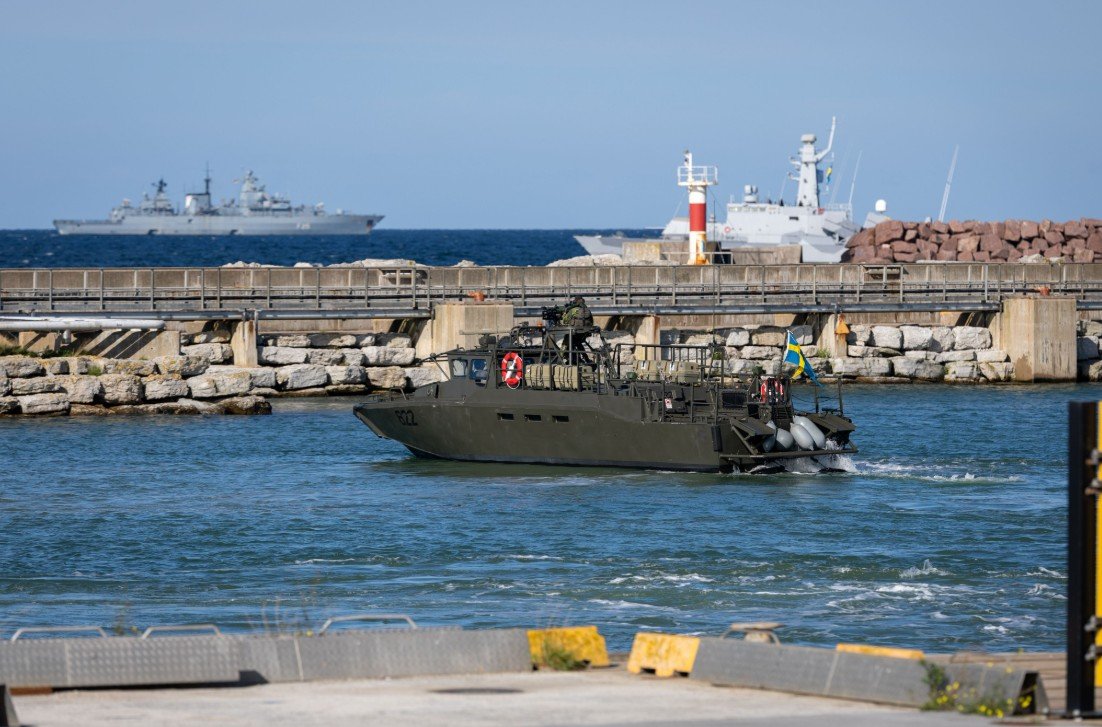
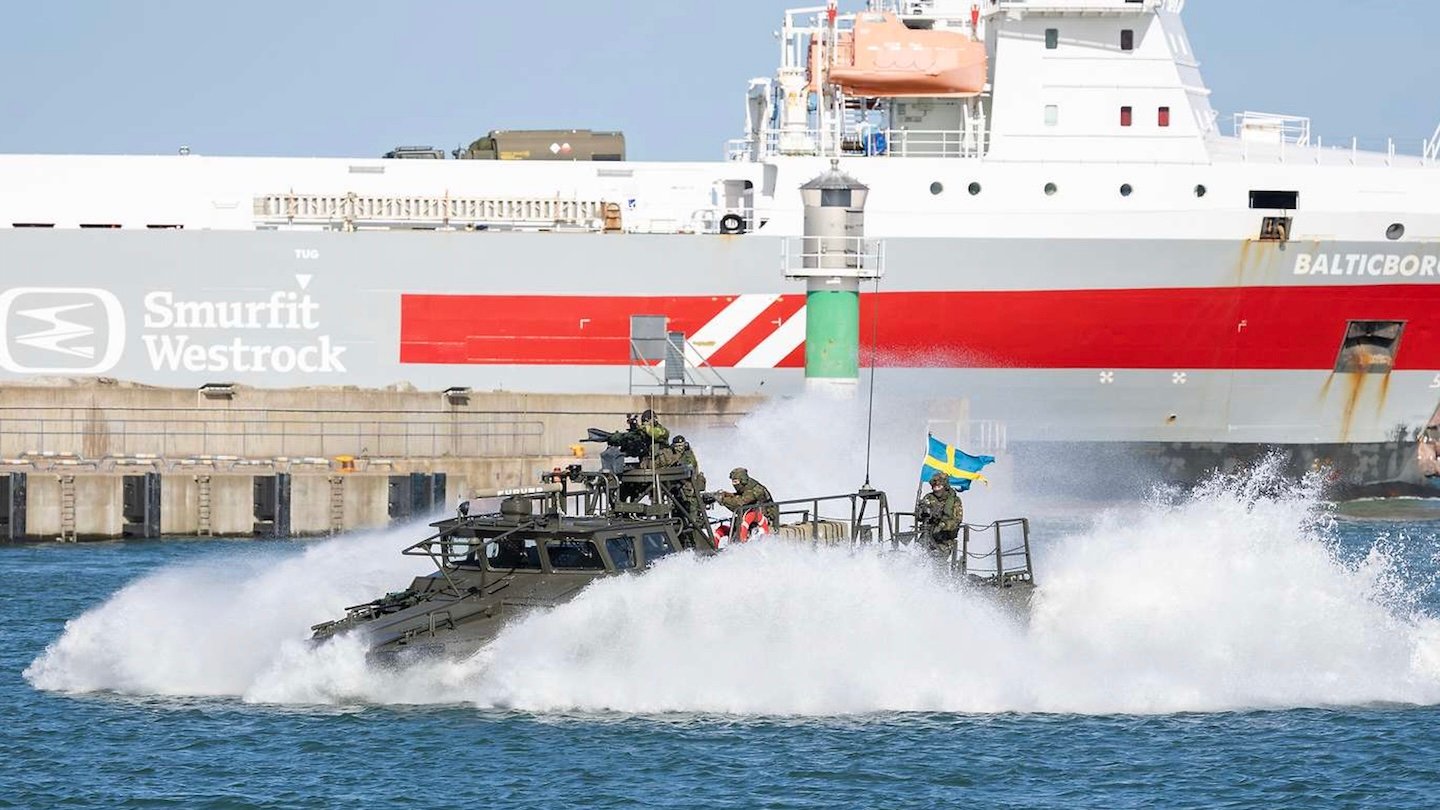
German and Swedish warships stand offshore while a Swedish CB90 fast assault craft operates in the harbor at Visby. Bundeswehr/Marc Tessensohn

The exercise, Silver Wotan 2026, running between September 14-23, brings together Swedish and German forces across the land, maritime, and air domains. The scenario is built around a Swedish request for allied assistance, with German forces moving personnel and equipment across the Baltic before integrating with Swedish units already defending the island. The operation is testing the entire process of getting allied combat power to Gotland, protecting it during the movement to Visby, and rapidly incorporating it into the island’s existing defensive network.

A video shows troops coming ashore on Swedish CB90 fast assault craft, a type that German soldiers are also trained to operate:

A rapid deployment of German and Swedish forces to Gotland island is being carried out today. Units from 🇸🇪 and 🇩🇪 are rehearsing the swift reinforcement of the strategic island in order to ensure the security of the Baltic Sea.#SilverWotan#NATO pic.twitter.com/A0r3LF8XUP

— Försvarsmakten (@Forsvarsmakten) September 18, 2026

The strategic importance of Gotland has grown considerably following Sweden’s accession to NATO in March 2024, which was a direct response to the full-scale Russian invasion of Ukraine.

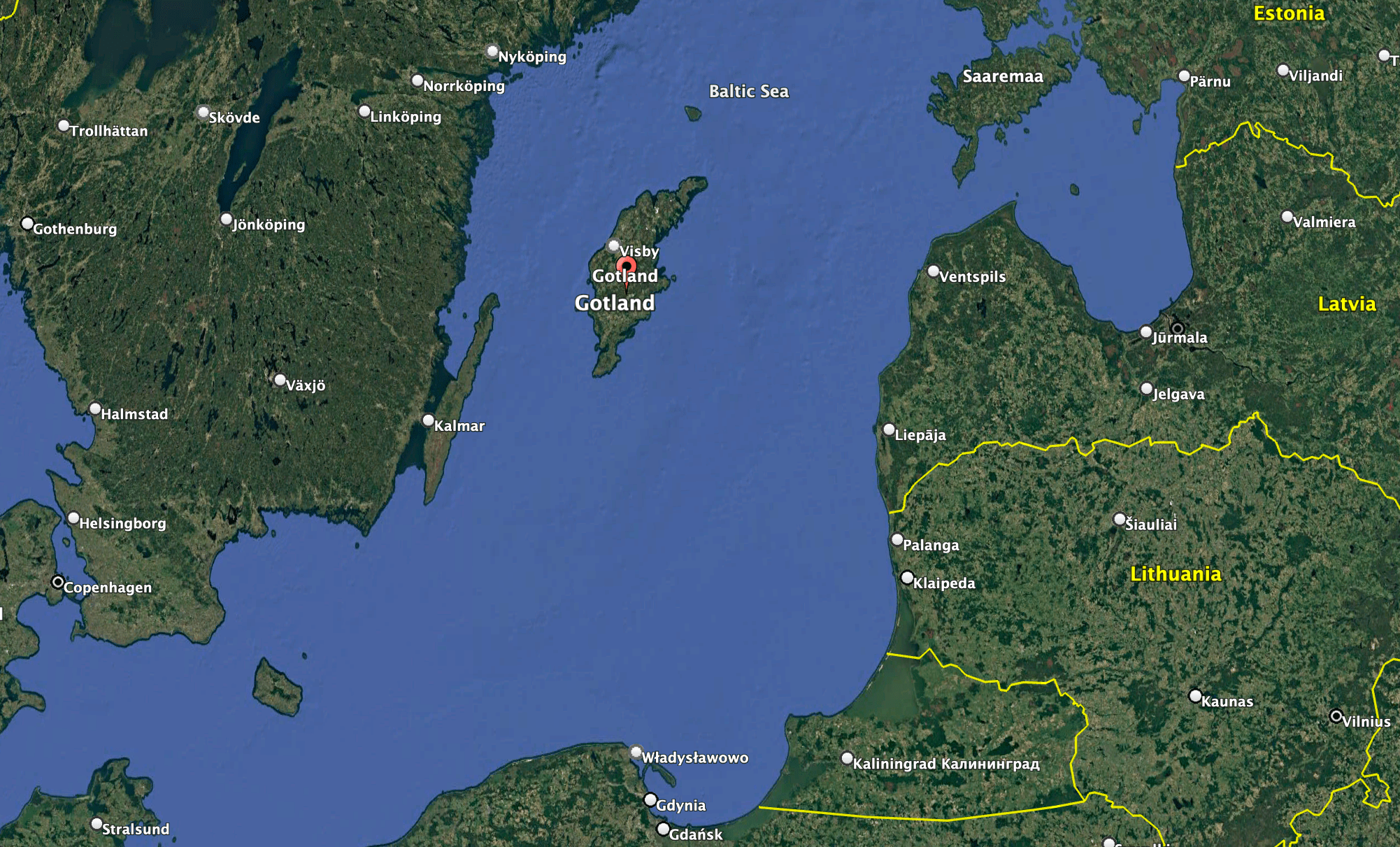
Located approximately halfway between mainland Sweden and the Baltic states, the island occupies a central position in the Baltic Sea, close to the maritime approaches to the Gulf of Finland and within reach of the Russian exclave of Kaliningrad. Its location gives forces operating from Gotland a potentially significant position from which to conduct surveillance, air defense, and maritime operations, while also making the island an important part of the wider network connecting NATO’s northern and eastern members.

The location of Gotland within the Baltic region. Google Earth

At the same time, Gotland sits within an extremely complex littoral environment, where shallow waters, islands, narrow maritime approaches, and the proximity of multiple states can make both offensive operations and defensive planning more difficult. The region has also been shaped by longstanding Swedish concerns about Russian clandestine activity, including intelligence gathering and other forms of covert or deniable activity. The complexity of the Baltic operating environment can make such activities harder to detect and attribute, adding another layer of uncertainty alongside the more conventional military challenges facing the region.

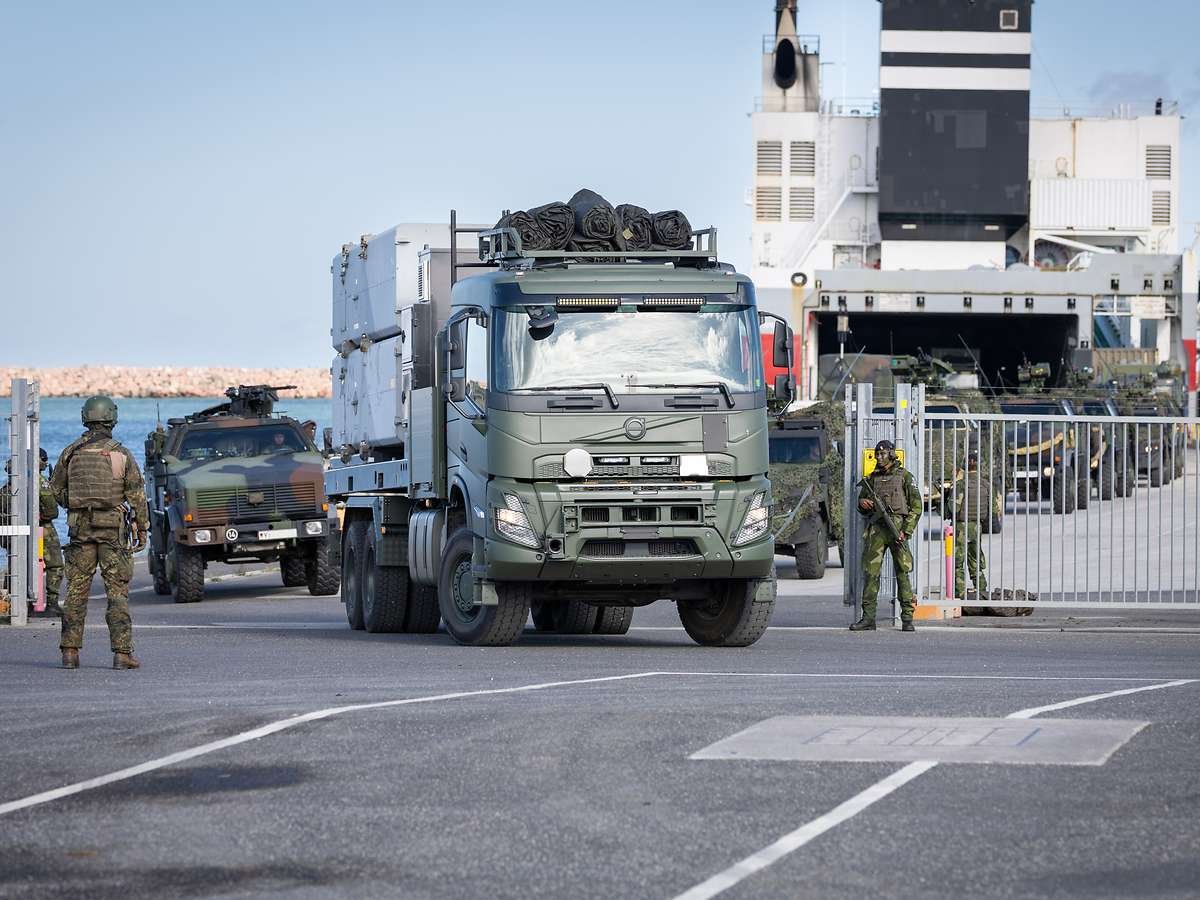
The unloading operation in Visby. The vehicles seen here were transported by sea from Karlskrona to the Swedish mainland. Bundeswehr/Marc Tessensohn

Geography has long made Gotland important to Swedish defense planning, but its significance has taken on a broader dimension since Sweden joined the alliance. NATO has described the island as strategically important to its freedom of maneuver in the Baltic, while Swedish officials have highlighted its potential role as a hub for military operations and logistics in the region.

The current exercise is designed around the practical difficulties of reinforcing such a position.

Military equipment is being transported by sea to Visby, Gotland’s principal port, including by commercial ferry. In Visby, Swedish and German personnel are securing the harbor and conducting the reception of the arriving force. Among the equipment being moved are air defense systems, while Swedish forces are also operating coastal defense systems armed with anti-ship missiles.

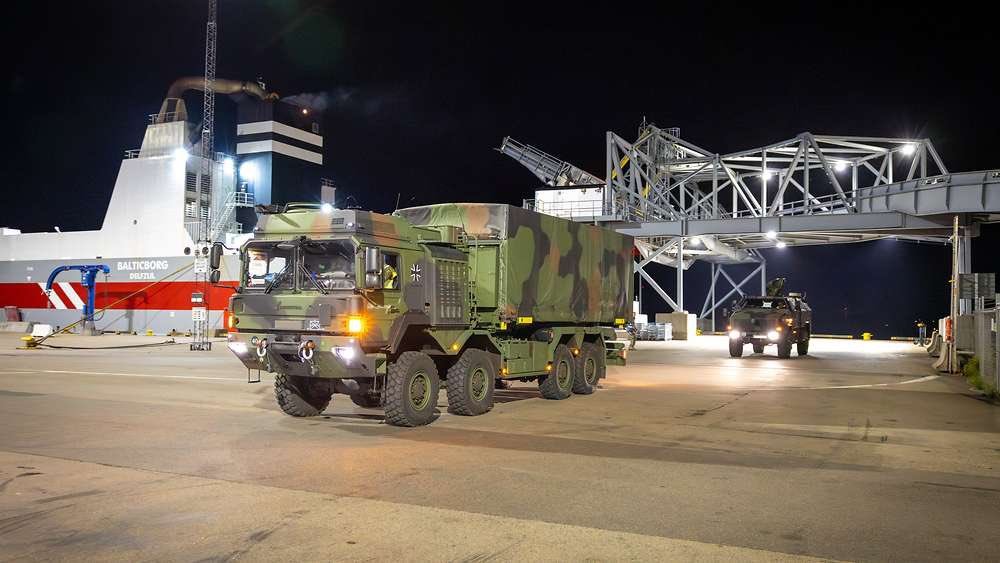
German Army vehicles roll into Visby during Silver Wotan. Bundeswehr/Marc Tessensohn

Meanwhile, publicly available flight-tracking data showed German Luftwaffe transport aircraft, including at least one Airbus A400M airlifter, apparently involved in the effort. The commercial airport at Visby has long also been used for military activities related to Gotland and the wider Baltic region.

”A rapid deployment of German and Swedish forces to Gotland island is being carried out today” https://t.co/z6oLs1LCT4 pic.twitter.com/n18MdST6r1

— Jamming (@balticjam) September 18, 2026

The movement is supported by Swedish and German naval forces and other aircraft, creating a scenario in which the maritime transit, protection of the port, air operations, and subsequent movement of troops and equipment ashore all form part of the same military problem. Once ashore, the arriving forces have to be moved into position and integrated with Swedish units already responsible for defending the island.

The Swedish Gotland Regiment, P 18, provides the core of the island’s permanent military presence. The regiment, Sweden’s youngest and smallest, has been rebuilding its capabilities since Sweden began expanding its military presence on Gotland. Its forces form the basis of the ground-defense structure into which allied reinforcements would be incorporated.

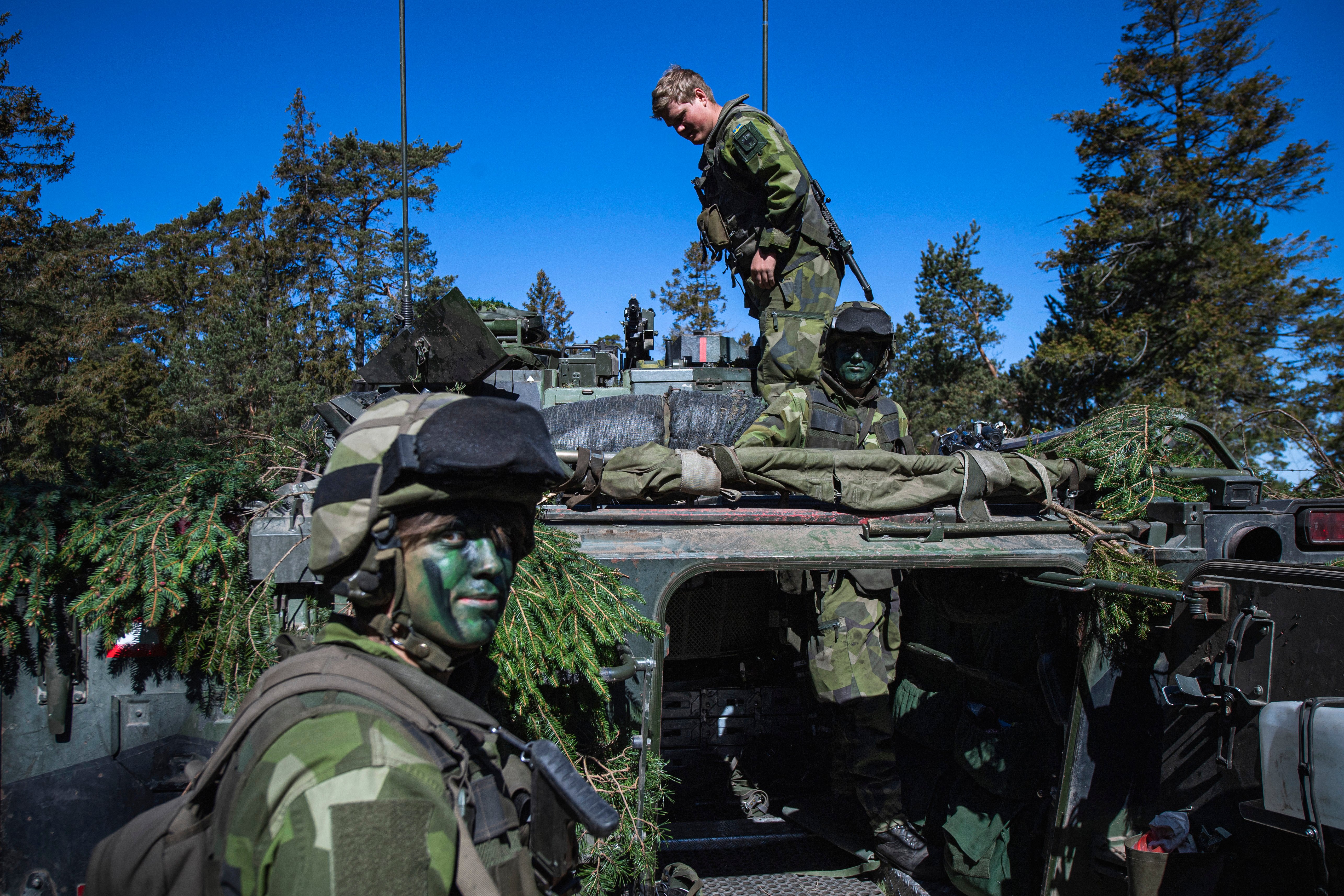
Soldiers of the P18 Gotland Regiment of the Swedish Army camouflage an armoured vehicle during a field exercise near Visby on the Swedish island of Gotland on May 17, 2022. Finland and Sweden are expected to announce this week whether to apply to join NATO following Russia's Ukraine invasion, in what would be a stunning reversal of decades-long non-alignment policies. On Sweden's strategically-located Baltic Sea island of Gotland, Home Guard troops were last week called in for a special month-long training exercise, coinciding with annual military exercises taking place across Finland and Sweden next week. (Photo by Jonathan NACKSTRAND / AFP) (Photo by JONATHAN NACKSTRAND/AFP via Getty Images)
Soldiers of the Gotland Regiment of the Swedish Army camouflage an armoured vehicle during an earlier field exercise near Visby. Photo by Jonathan NACKSTRAND / AFP

Swedish coastal defense capabilities are another important element of the drill. Land-based anti-ship missiles provide the island with a means of threatening hostile surface vessels operating in the surrounding waters, giving the defense of Gotland a direct connection to the wider maritime battle for the Baltic. During Silver Wotan, Swedish and German forces are also conducting anti-surface warfare activities alongside the broader reinforcement operation.

Germany is contributing more than 500 troops to the exercise, part of approximately 2,000 Bundeswehr personnel involved, including elements from the army, navy, and air force. The German Luftwaffe has deployed Panavia Tornado aircraft for surveillance, while German naval forces are participating in the maritime component, and German ground personnel are involved in the reinforcement and security activities on Gotland.

Piloten mit einer Nachtsichtbrille im Cockpit des Tornados 46+45 im Rahmen der Mission Counter Dash in Incirlik, Türkei, am 14.04.2016
Stock photo of a Luftwaffe Tornado ECR equipped for a reconaissance mission. Bundeswehr

The exercise scenario is particularly relevant against the backdrop of Russia’s continuing military presence in the Baltic region.

Russia maintains major military infrastructure in Kaliningrad, including naval, air, missile, and air defense capabilities, while the Russian Baltic Fleet operates from bases in the region. Kaliningrad’s position between Poland and Lithuania gives Moscow a significant military foothold inside the NATO area, while Russian forces and military infrastructure elsewhere along the Baltic add to the complexity of operating and reinforcing allied territory in the region.

The security environment around the Baltic has also deteriorated considerably since Russia’s full-scale invasion of Ukraine. NATO has increased its surveillance and military activity in the region, including the launch of Baltic Sentry in January 2025 following a series of incidents involving critical undersea infrastructure. The alliance has subsequently expanded efforts to monitor maritime activity and protect infrastructure and sea lines of communication.

A picture taken on February 4, 2025 shows a Helicopter 15 (HKP15) (L) on the flight deck of patrol ship HMS Carlskrona (P04) on open water near Karlskrona, Sweden, as part of the NATO Baltic Sea patrol mission, the Baltic Sentry, aimed to secure critical underwater infrastructure. The patrol ship HMS Carlskrona (P04) set off from the naval port in Karlskrona on February 4, 2025 to become part of NATO's Baltic Sentry operation as one of several Swedish ships that are part of Standing NATO Maritime Group One (SNMG1). This is the first time the ship has hoisted the NATO flag on board. The purpose of NATO's Baltic Sentry operation is to demonstrate presence and secure critical underwater infrastructure. (Photo by Johan NILSSON / TT NEWS AGENCY / AFP) / Sweden OUT (Photo by JOHAN NILSSON/TT NEWS AGENCY/AFP via Getty Images)
A Swedish Navy Helicopter 15 on the flight deck of patrol ship HMS Carlskrona as part of the NATO Baltic Sea patrol mission, Baltic Sentry, aimed to secure critical underwater infrastructure. Photo by Johan NILSSON / TT NEWS AGENCY / AFP

Swedish authorities have stressed that Silver Wotan was planned in advance and is not being conducted in response to a specific imminent Russian threat. The exercise nonetheless reflects the operational environment in which Swedish and NATO planners now have to consider the possibility that maritime and air movements across the Baltic could be monitored, disrupted, or contested.

The exercise also builds on a series of increasingly large Swedish-led activities designed to test the reception of allied forces on Swedish territory. During Aurora 26 earlier this year, more than 18,000 troops from 13 countries participated in operations across Sweden, including the deployment of allied forces to Gotland alongside the Gotland Regiment and Swedish Home Guard. NATO described that activity as an emergency deployment intended to test the reinforcement of the island.

A Dutch Boeing AH-64 Apache attack helicopter takes part in a combat display during a press day for the military exercise Aurora 26 at the Revingehed training field outside Lund in Skane, Southern Sweden on April 29, 2026. The exercise at Revingehed includes personnel from several NATO countires with the focus on lessons learned from the war in Ukraine including drones. (Photo by Johan NILSSON / various sources / AFP via Getty Images) / Sweden OUT
A Dutch AH-64 Apache attack helicopter takes part in Exercise Aurora 26 in southern Sweden on April 29, 2026. Photo by Johan NILSSON / various sources / AFP

Silver Wotan places a more concentrated emphasis on the Swedish-German relationship and on the movement of an allied force into the island’s existing defensive structure.

Germany’s participation is also consistent with its growing military role in the Baltic and along NATO’s northeastern flank. Berlin is already providing forces for NATO’s forward defense in Lithuania and has increasingly emphasized the ability to move German forces rapidly across northern Europe in support of allied operations.

For Sweden, meanwhile, Gotland has become one of the clearest examples of how NATO membership has changed the country’s defense planning. The island remains a Swedish responsibility, but its location means that what happens there has consequences well beyond Sweden’s territorial defense.

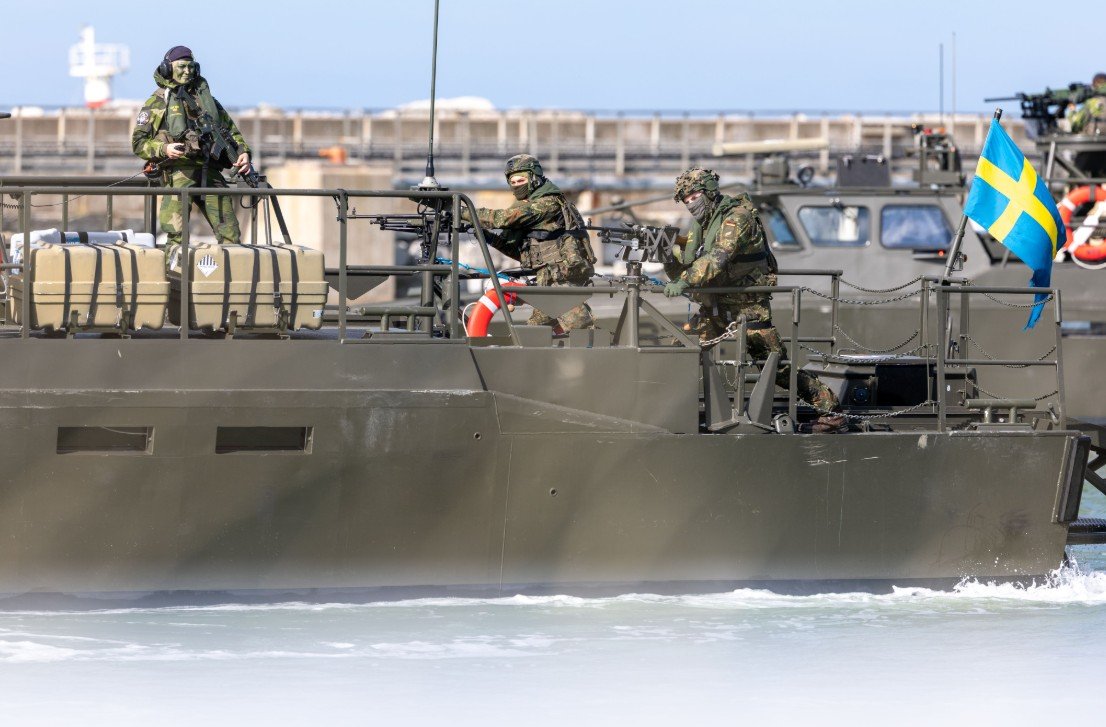
Silver Wotan 2026 / Weiterer Text über ots und www.presseportal.de/nr/179237 / Die Verwendung dieses Bildes für redaktionelle Zwecke ist unter Beachtung aller mitgeteilten Nutzungsbedingungen zulässig und dann auch honorarfrei. Veröffentlichung ausschließlich mit Bildrechte-Hinweis.
German and Swedish troops on a Swedish CB90 fast assault craft. Bundeswehr/Marc Tessensohn

A defended and adequately supplied Gotland provides NATO with a strategically positioned base for surveillance and defensive operations in the Baltic, while the ability to reinforce it demonstrates that the alliance can maintain access to the island even as the surrounding maritime and air environment becomes more contested.

The exercise comes as European allies are being forced to plan for a NATO in which the United States may provide less of the conventional military weight it has supplied for decades. The Pentagon is reviewing the size and posture of U.S. forces in Europe, including the forces and capabilities Washington would make available in a European crisis, while NATO’s top commander has said further U.S. troop withdrawals should be expected as European allies build up their own conventional capabilities.

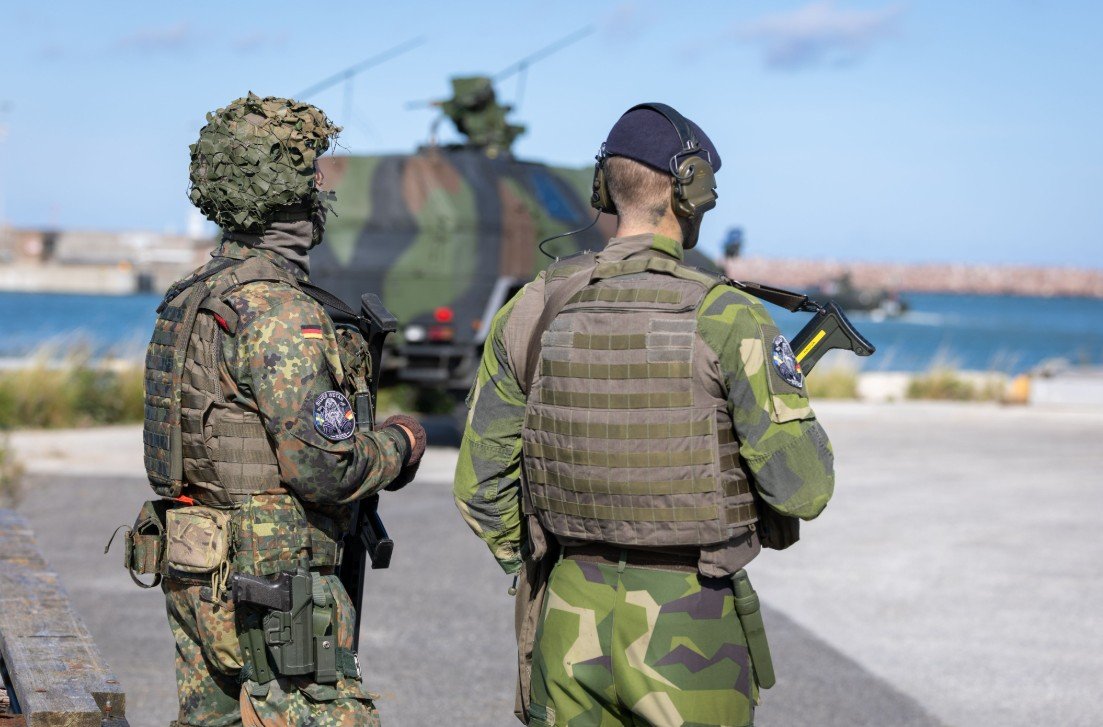
Silver Wotan 2026 / Weiterer Text über ots und www.presseportal.de/nr/179237 / Die Verwendung dieses Bildes für redaktionelle Zwecke ist unter Beachtung aller mitgeteilten Nutzungsbedingungen zulässig und dann auch honorarfrei. Veröffentlichung ausschließlich mit Bildrechte-Hinweis.
A German and a Swedish soldier involved in securing Visby during Silver Wotan 2026. Bundeswehr/Marc Tessensohn

At the same time, the alliance now describes Russia as its most significant and direct security threat, citing military activity alongside airspace violations, sabotage, cyber operations, and other forms of hybrid pressure. There are also growing concerns that Russia could try something in the Baltics, while it continues to step up its gray-zone activities regardless. NATO officials have warned that Russia could rebuild enough military capacity to pose a more serious conventional challenge to the alliance before the end of the decade.

There are escalating warnings from Poland that Russia is preparing to widen its war against Ukraine, with "accidental" missile and drone strikes on NATO territory.

Such a move – Russia falsely claiming air strikes that hit NATO allies happened by accident – would be designed to…

— Deborah Haynes (@haynesdeborah) September 18, 2026

For Sweden and Germany, the Silver Wotan exercise is a practical test of how quickly European forces can reinforce and defend one of the Baltic’s most strategically important positions. As the security environment grows more contested and Europe prepares for a future in which U.S. forces may not be as readily available, the ability to move allied combat power across the region and integrate it into existing defenses is becoming an increasingly important part of NATO’s deterrence.

Contact the author: thomas@thewarzone.com

The post German Forces Surge Onto Baltic Island In First-Of-Its-Kind NATO Drill appeared first on TWZ.

  •  

Marine Colonel Who Led Mideast Combat Deployment Wants His Own Drone Boats

The officer who led the 31st Marine Expeditionary Unit (MEU) on its recent combat deployment to the Middle East told us he needs his own uncrewed surface vessels (USVs) on future deployments. Operationalizing USVs is an area where the Marines are lagging behind. In particular, he wants the ability to send USVs forward to reconnoiter potential highly-contested beach landing areas, a mission largely assumed by the Navy.

As we have frequently reported, the military use of USVs is now proliferating around the globe at an increasing rate. Ukraine has employed sea drones to devastating effect against Russia’s Black Sea Fleet vessels and facilities, forcing the general evacuation of Russian naval assets from occupied Crimea to bases in Russia proper. During Operation Epic Fury, the U.S. used them for the first time in combat, as one-way attack weapons against Iranian targets, to hunt for mines, and for a search and rescue operation to locate the crew of an AH-64 Apache helicopter downed by Iran, as well as general broad-area surveillance and awareness. China is investing heavily in the space, as well, along with many other navies around the globe, both friend and foe.

The following video shows the first U.S. use of a USV as a kamikaze weapon.

Yesterday, using multiple one-way attack surface drones, CENTCOM forces successfully struck a submarine and ship maintenance facility in Iran. Three Corsair unmanned surface vessels hit the port at Bandar Abbas Naval Base, marking the first time American forces have employed sea… pic.twitter.com/bOM2kmgRxz

— U.S. Central Command (@CENTCOM) July 13, 2026

“There was a lot in theater that were being used, but it wasn’t something that we went out with,” Col. Chris P. Niedziocha told us when asked if the 31st MEU deployed with USVs. He then answered in the affirmative in response to a question about if MEUs need sea drones on future deployments. He said it is part of the “explosion in robotics and autonomy” being used in combat.

“These systems are incredibly useful and capable,” explained Niedziocha, now director of the USMC Expeditionary Warfare School. “And you say, ‘Hey, you know, [in] the next war, if the first thing you’re putting through the breach isn’t a robot, something’s wrong. You say never send a Marine someplace you haven’t sent a bullet. I think the new way is [you] never want to send a Marine someplace you haven’t already sent a robot. So yeah, we’re embracing [the technology] and we’re not leaders. We’re fast followers in that regime.”

Asked for specific use cases he sees for USVs, the colonel talked about using them before putting Marines ashore.

“I can tell you if you’re doing an amphibious operation, you want to understand what’s waiting beneath the surface in the water column,” Niedziocha noted. “So something can go either with a side-looking sonar array or even forward-looking to demonstrate that there’s nothing there, and the hydrography and bathymetry is what you… need for the operation to be successful.”

Hydrography measures “the shape and features of the shoreline; the characteristics of tides, currents, and waves; and the physical and chemical properties of the water itself,” according to NOAA. Bathymetry, which is part of that, focuses on mapping the depths and shapes of underwater terrain.

NOAA

These functions are critical for mine detection and determining whether there are man-made or natural obstacles that would impede landing operations. While these missions are largely being performed by the Navy, including with USVs, the Marines are moving toward making that an organic capability. Recently, the Marines announced they were testing a counter-mine USV system. The evaluation was conducted late last month at Camp Pendleton by the Program Manager Combat Support Systems (PM CSS) Explosive Hazard Defeat Team.

The test of the USV was “in response to a littoral capability gap,” according to the media release. “The solution: seek a commercial USV solution that is equipped with integrated autonomous driving and payloads that consist of Sonar, Forward-Looking Infrared (FLIR) cameras, Line of Sight (LOS) Communications and Acoustic Communications (AComms).”

This was part of the overall effort to develop “solutions that enable increased standoff for Marines to detect, investigate and neutralize threats,” the release added. “The innovation of Explosive Ordnance Disposal (EOD) and Littoral Explosive Ordnance Neutralization (LEON) systems will provide Marine EOD Technicians with the confidence to operate in contested environments while preserving combat power, increasing operational reach, and minimizing exposure to explosive threats.”

LEON is a so-called system of systems, using a remotely operated vehicle, diver equipment, an unmanned underwater vehicle (UUV), a USV, and an Amphibious Unmanned Ground Vehicle to enable “EOD to confirm and mark hazards and obstacles from very shallow water to the beach zone,” the media release added.

While unmanned systems have long been part of EOD operations, “we’re expanding that into maritime systems that allow more endurance and less risk for operators,” said Chief Warrant Officer 2 Alfredo Andrade, officer in charge, Explosive Ordnance Disposal Company, 7th Engineer Support Battalion (ESB). “Some of the conflicts that we are engaged in take a toll on the force, and surging in new forces is costly. It turns into a logistical problem. To preserve the safety and the health of the forces… the USV and the [LEON] program exist to ensure that we have readily available combat power.”

In late August at Camp Pendleton, the PM CSS Explosive Hazard Defeat Team tested an Unmanned Surface Vessel in response to a littoral capability gap. The solution: seek a commercial USV solution that is equipped with integrated autonomous driving and payloads that consist of Sonar, Forward-Looking Infrared (FLIR) cameras, Line of Sight (LOS) Communications and Acoustic Communications (AComms). The LEON System of Systems (SOS) consists of five increments of capabilities to include a Remotely Operated Vehicle, diver equipment, Unmanned Underwater Vehicle, Unmanned Surface Vehicle, and an Amphibious Unmanned Ground Vehicle. LEON enables EOD to confirm and mark hazards and obstacles from very shallow water to the beach zone. (PAE Marine Corps photo by Kristiana Gehly)
In late August at Camp Pendleton, the PM CSS Explosive Hazard Defeat Team tested an unmanned surface vessel in response to a littoral capability gap. (PAE Marine Corps photo by Kristiana Gehly) Kristiana Gehly

While Niedziocha didn’t address USVs for offensive combat roles, the Marines have evaluated them for that use as well as for logistics, among other functions.

Our Autonomous Low-Profile Vessel (ALPV) solicitation is now accepting submissions.

The @DeptofWar and the @USMC need to resupply units spread over wide distances in contested littoral environments. Increased all-domain threats targeting logistics capabilities, locations, and… pic.twitter.com/Af8v0DTRHS

— Department of War Innovation Unit (@DIU_x) March 3, 2026

There have been many other tests, as well. Including one just this summer at RIMPAC. These trials saw the launch and recovery of one of Splash Industries’ Typhoon USVs aboard the USS Essex. The ‘Gator Navy’ of amphibious assault vessels that haul Marines and their kit around the oceans is uniquely suited to act as USV motherships. Their well decks allow for easy deployment and recovery of USVs of many sizes and capabilities near seamlessly. So it won’t be surprising if these vessels and the Marines aboard them quickly become staples in the Pentagon’s USV playbook.

Watch us land one of our drone-boats inside a moving US Navy warship during RIMPAC. This world-first resupply mission was performed completely autonomously using a Splash Industries Typhoon USV. pic.twitter.com/AEzNzZjsL1

— Ivan Avanesov (@i_vanesov) July 14, 2026

Still, the Marines have a long way to go to catch up to how these systems are already being used.

The Houthi rebels of Yemen actually pioneered the operational use of kamikaze USVs years ago and Ukraine has led the way in advancements of these systems. They first employed them as kamikaze weapons, but then added machine guns and rockets and later missiles, which were used to shoot down Russian helicopters and jets. Ukraine has also used them to launch first-person view (FPV) and bomber drone attacks as well as deliver uncrewed ground vehicles (UGVs) into enemy territory. Last week, Ukraine claimed to have attacked a Russian USV with a USV, marking another first.

You can see that engagement in the following video.

Ukraine's Navy says a Sargan unmanned surface vessel destroyed a Russian unmanned boat with machine-gun fire in the Black Sea, the first-ever battle between unmanned surface vessels. Ukrainian Navy personnel operated in coordination with HUR. #Ukraine pic.twitter.com/Avg4ecz8m6

— NOELREPORTS 🇪🇺 🇺🇦 (@NOELreports) September 12, 2026

Having recently returned from a six-month deployment that saw the Marine Corps’ first use of its Expeditionary Advanced Base Operations (EABO) concept in a combat setting during the fight against Iran, Niedziocha has a good sense of the realities of modern warfare. His Marines operated forward arming and refueling points (FARPs) for various aircraft in combat for the first time and set up remote sensing locations.

That a commander like him sees value in USVs is a good sign for progress in the development of these systems.

Contact the author: howard@twz.com

The post Marine Colonel Who Led Mideast Combat Deployment Wants His Own Drone Boats appeared first on TWZ.

  •  

Mise à contribution des retraités : ce qui est sur la table avant le budget du 30 septembre

Par Élise Rochefort

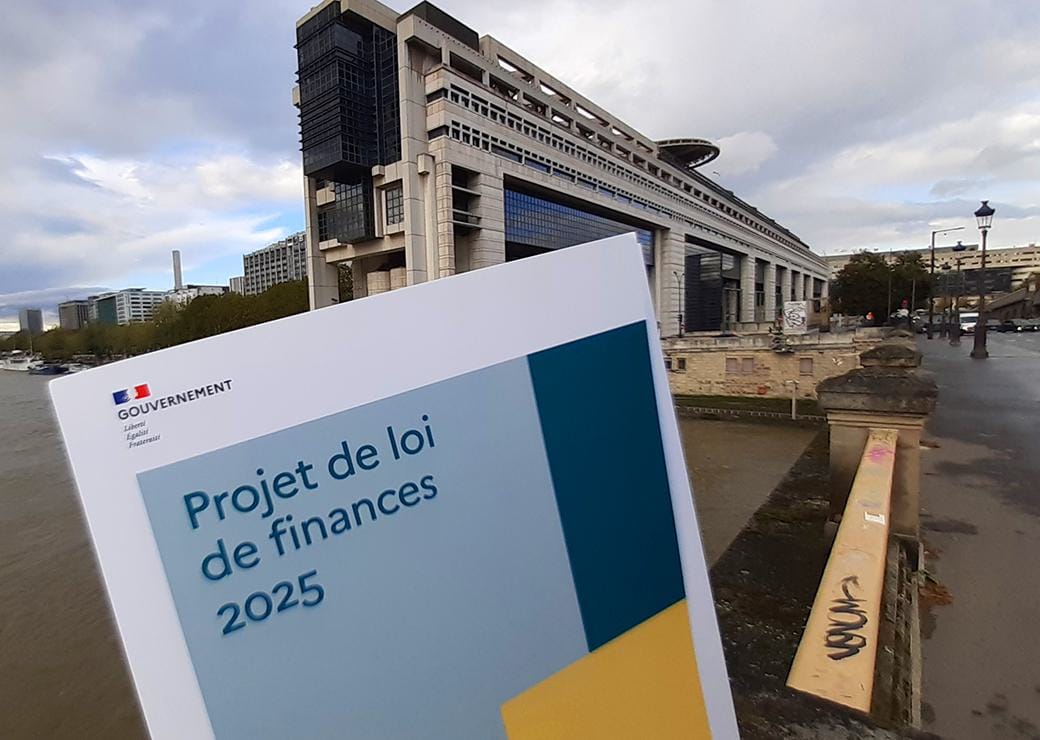
Le projet de loi de finances pour 2027 est déposé le 30 septembre. Le gouvernement a annoncé un effort budgétaire d'environ 54 milliards d'euros, dont une part demandée aux retraités. Le 17 septembre, le Premier ministre a évalué cette part à un montant « inférieur à six milliards d'euros » et déclaré qu'« aucune pension ne diminuera ». Les modalités n'ont pas été arbitrées ; il a indiqué qu'elles seraient débattues au Parlement.

Mise à contribution des retraités : ce qui est sur la table avant le budget du 30 septembre
LE COURRIER
DES STRATÈGES
Restez libre !
LA NEWSLETTER · GRATUITE

Le Courrier,
chaque matin.

Mise à contribution des retraités : ce qui est sur la table avant le budget du 30 septembre

L'essentiel de l'actualité, passé au crible par les cinq plumes du Courrier. Dans votre boîte, chaque jour ouvré.

Gratuit. Vous restez libre de partir quand vous voulez.

JE M'INSCRIS lecourrierdesstrateges.fr
lecourrierdesstrateges.fr
Restez libre !

Trois instruments sont cités dans le débat. Ils n'ont ni la même base juridique, ni le même rendement, ni les mêmes redevables.

La désindexation des pensions

L'article L161-25 du code de la sécurité sociale prévoit une revalorisation annuelle des pensions de base au 1er janvier, sur la base de l'évolution de la moyenne annuelle des prix à la consommation hors tabac, calculée sur les 12 derniers indices mensuels publiés par l'Insee. Le coefficient ne peut être inférieur à un : les pensions ne diminuent pas nominalement lorsque les prix reculent.

Un gel ou une désindexation partielle suppose donc une disposition législative dérogeant à cet article. Un gel figurait dans le projet de loi de financement de la sécurité sociale pour 2026. Il a été écarté au cours de l'examen parlementaire, et les pensions de base ont été revalorisées de 0,9 % au 1er janvier 2026.

Le gouvernement a évoqué la possibilité de limiter le gel aux pensions les plus élevées. Aucun seuil n'a été rendu public.

Faire contribuer les retraités est moral, à condition de savoir ce qu’on leur doit
L’abattement de 10 % des retraités reposait sur trois motifs. Aucun ne survit, et la compensation a déjà été versée dans le barème de tous en 2006.
Faire contribuer les retraités ? ou la répudiation qui n’ose pas son nom
En 2006, l’État a supprimé un abattement en rendant tout par le barème. En 2026, il retire sans rendre — et appelle contribution ce qui est une hausse d’impôt.
Mise à contribution des retraités : ce qui est sur la table avant le budget du 30 septembre
LE COURRIER
DES STRATÈGES
Restez libre !
ABONNEMENT

Allez au fond
des choses.

Deux grands formats par jour. Les cinq plumes du Courrier. La série Sécession, le dimanche.

Le monde commente. Vous, vous comprenez.

S'ABONNER lecourrierdesstrateges.fr
lecourrierdesstrateges.fr
Restez libre !

L'abattement de 10 % sur les pensions

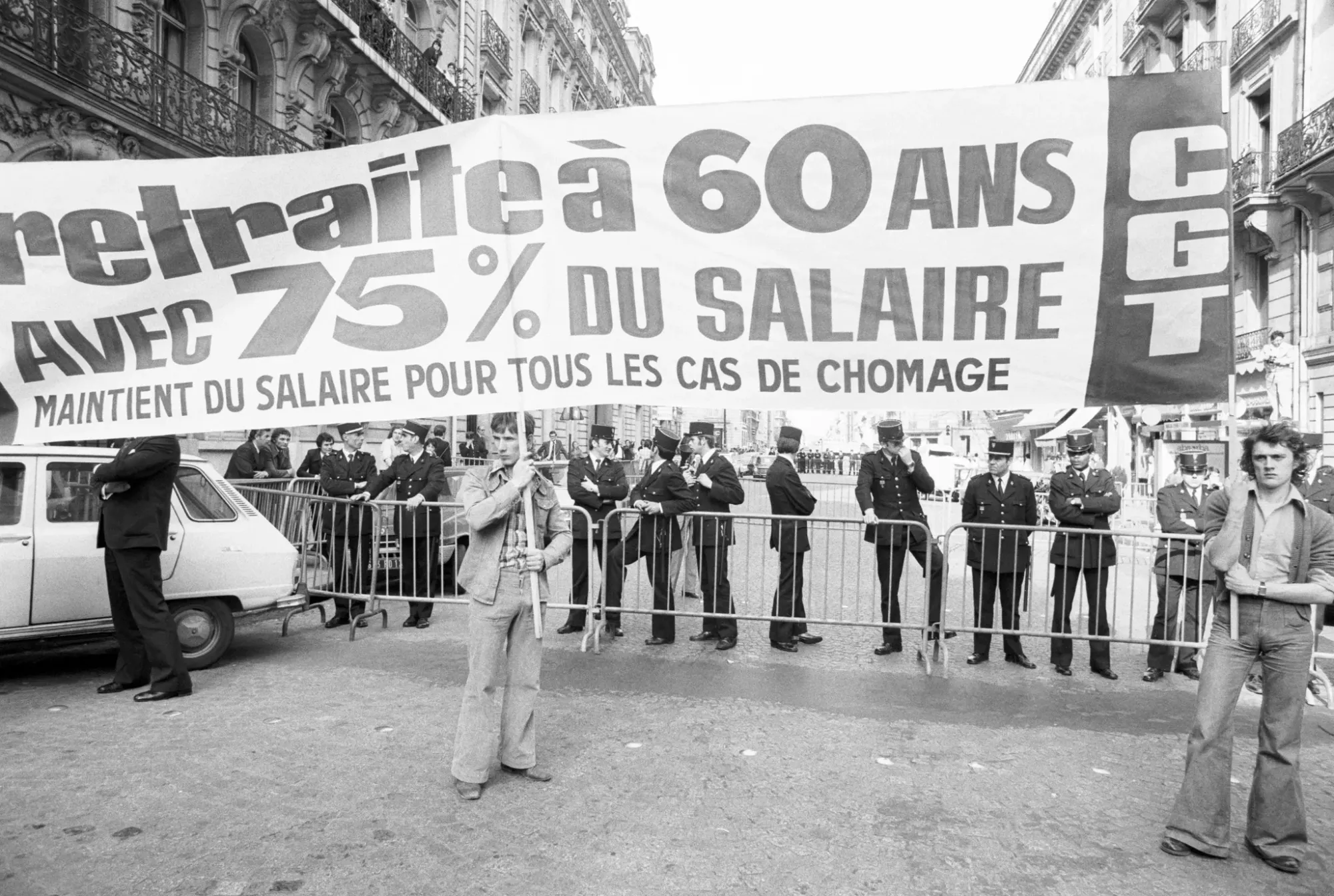
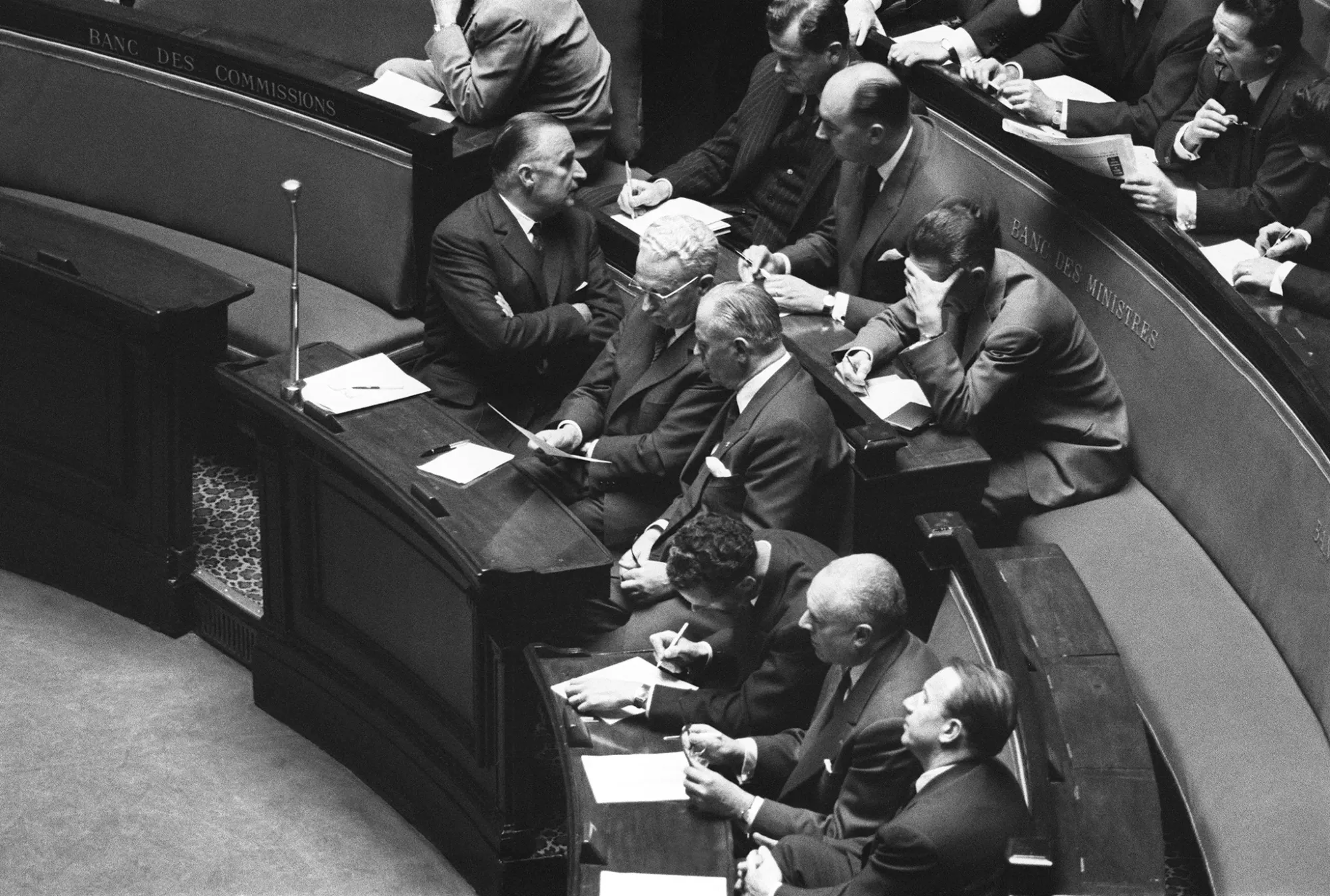
L'abattement est codifié à l'article 158-5-a du code général des impôts. Il a été créé par l'article 3 de la loi de finances pour 1978 (loi n° 77-1467 du 30 décembre 1977), adoptée sous le gouvernement de Raymond Barre, à la suite d'un débat en séance le 18 octobre 1977.

Trois justifications ont été avancées à l'époque, selon les sources secondaires disponibles : un parallélisme de forme avec la déduction pour frais professionnels des salariés ; le fait que les pensions sont déclarées par les caisses, sans possibilité de minoration, à la différence des revenus déclarés par leurs titulaires ; et la généralisation des retraites complémentaires AGIRC-ARRCO, qui rendait imposables des retraités qui ne l'étaient pas.

L'abattement s'élève à 10 % du montant des pensions, avec un plancher d'environ 454 euros et un plafond d'environ 4 439 euros par foyer fiscal en 2026.

Son coût pour les finances publiques fait l'objet de chiffrages divergents selon le périmètre retenu : environ 4,5 milliards d'euros pour la Cour des comptes, 5,7 milliards dans les documents budgétaires au titre de 2025 — ce qui en ferait la troisième dépense fiscale de l'État, derrière le crédit d'impôt recherche et le crédit d'impôt pour services à la personne —, jusqu'à 6 milliards dans les estimations gouvernementales les plus récentes. Aucune comparaison strictement homogène n'est disponible entre ces trois chiffres.

La mesure envisagée consiste à remplacer le pourcentage par un forfait de 2 000 euros identique pour tous. Un forfait de 2 000 euros équivaut à un abattement de 10 % pour une pension annuelle de 20 000 euros, soit 1 667 euros par mois. En deçà de ce seuil, l'abattement augmente : de 920 euros pour une pension mensuelle de 900 euros, de 560 euros pour 1 200 euros, de 200 euros pour 1 500 euros. Au-delà, il diminue : de 400 euros pour 2 000 euros de pension, de 1 000 euros pour 2 500 euros, et de 2 439 euros au maximum pour les pensions égales ou supérieures à 3 699 euros par mois, soit environ 732 euros d'impôt supplémentaire par an à un taux marginal de 30 %.

Le rendement attendu de cette seule mesure est évalué à environ 1,2 milliard d'euros, soit une fraction des 6 milliards annoncés. Le montant du forfait n'est pas arrêté.

Mise à contribution des retraités : ce qui est sur la table avant le budget du 30 septembre
LE COURRIER
DES STRATÈGES
Restez libre !
TELEGRAM · L'INFO EN CONTINU

Entre deux éditions,
le fil.

La newsletter vous donne le matin. Le fil vous donne l'instant.

Gratuit, et en continu.

REJOINDRE LE FIL t.me/resterlibre
t.me/resterlibre
Restez libre !

Le gel des tranches de CSG

Le troisième instrument cité consiste à ne pas revaloriser les seuils de revenu fiscal de référence qui déterminent le taux de contribution sociale généralisée applicable aux pensions. Il conduit des foyers dont le revenu nominal a augmenté à franchir un seuil et à changer de taux, sans modification du barème lui-même. Aucun chiffrage public n'a été communiqué à ce jour.

La déduction des salariés, qui n'est pas en cause

La déduction forfaitaire de 10 % applicable aux traitements et salaires relève d'un autre texte, l'article 83, 3° du code général des impôts. Elle couvre des frais exposés pour l'exercice d'une activité professionnelle et le salarié peut lui substituer la déduction de ses frais réels. Pour l'imposition des revenus de 2026, elle est comprise entre 509 et 14 555 euros. Elle n'est pas concernée par les mesures envisagées.

Le Conseil d'État a refusé à plusieurs reprises, entre 1965 et 1977, d'étendre cette déduction aux titulaires de pensions, au motif qu'ils n'exposent pas de frais liés à l'exercice d'une activité. C'est ce refus qui a conduit le législateur à créer, en 1977, un abattement distinct.

Le précédent de 2006

Un abattement de 20 % s'appliquait antérieurement aux traitements et salaires, aux pensions et aux revenus des professionnels adhérant à un centre de gestion agréé. Sa justification rapportée était l'écart de contrôle entre les revenus déclarés par un tiers et ceux déclarés par leur titulaire.

Il a été supprimé par la loi de finances pour 2006 et intégré au barème de l'impôt sur le revenu : les limites de chaque tranche ont été relevées de 25 % et les taux correspondants abaissés de 20 %. Les seuils de revenu fiscal de référence conditionnant certains avantages ont été relevés de 25 % en conséquence.

La même année, la déclaration de revenus préremplie a été généralisée, la première campagne s'étant déroulée au printemps 2006.

Les positions exprimées

Le gouvernement soutient que l'effort demandé est nécessaire à la trajectoire de réduction du déficit et que les petites pensions seront préservées. Il n'a pas publié de chiffrage détaillé par décile.

Le premier secrétaire du Parti socialiste, Olivier Faure, a qualifié la mesure de « racket ». Le journaliste Pascal Praud a estimé, sur CNews, que les retraités étaient devenus « les boucs émissaires » du débat budgétaire. Ces deux prises de position sont rapportées par des reprises de presse et n'ont pas été vérifiées auprès de leurs auteurs.

Le Conseil des prélèvements obligatoires, organisme associé à la Cour des comptes, recommandait dès 2024 une révision de l'abattement, qu'il jugeait « trop général et mal ciblé », en proposant un dispositif forfaitaire qui n'aurait fait contribuer que les 10 % de retraités les plus favorisés — soit un ciblage plus étroit que celui de la mesure envisagée.

Le Conseil d'orientation des retraites projette le niveau de vie relatif des retraités à 83 % de celui de l'ensemble des actifs en 2070, contre un niveau aujourd'hui comparable.

Mise à contribution des retraités : ce qui est sur la table avant le budget du 30 septembre
LE COURRIER
DES STRATÈGES
Restez libre !
TIPS · SANS ABONNEMENT

Offrez-nous
un café.

Un média libre vit de ses lecteurs. Un pourboire ponctuel, sans compte ni engagement, quand le cœur vous en dit.

Vous donnez ce que vous voulez. Vous restez libre.

LAISSER UN POURBOIRE merci !
lecourrierdesstrateges.fr
Restez libre !

Ce qui n'est pas établi

Les justifications avancées en 1977 sont rapportées par des sources secondaires concordantes. Les travaux préparatoires de la loi du 30 décembre 1977 et les décisions du Conseil d'État entre 1965 et 1977 n'ont pas été consultés directement.

Le montant du forfait, le périmètre d'un éventuel gel, le seuil de pension au-delà duquel il s'appliquerait et le rendement de chaque mesure ne figurent dans aucun texte publié.

Le projet de loi de finances sera déposé le 30 septembre. Aucun des montants cités ici n'a de valeur définitive avant sa publication.

  •  

MAGA wants to ban his books. Who was Howard Zinn?

Writer Howard Zinn attends The People Speak: The Voices Of A People's History Of The United States during the 2009 Sundance Film Festival at the ASCAP Music Cafe on January 22, 2009 in Park City, Utah. Photo by Fred Hayes/WireImage

Long after his death in 2010, the books and speeches of Howard Zinn are frequently targeted by right-wing critics, MAGA book-bans, and fundamentalist politicians. In 2020, President Trump called out Zinn by name from the White House lawn, smearing Zinn’s work as “propaganda… that tries to make students ashamed of their own history.” So, who was Howard Zinn? And why are his critics so determined to keep his work from the public? In this live event, hosted at Red Emma’s Cooperative Bookstore and Coffeehouse in Baltimore, Maryland, TRNN Editor-in-Chief Maximillian Alvarez speaks with author and TRNN contributor Dave Zirin about his latest book, “The People’s Historian: The Outsized Life of Howard Zinn.”

Credits:

  • Studio Production / Post-Production: David Hebden
Transcript

The following is a rushed transcript and may contain errors. It will be updated.

Howard Zinn:

Protest will always be useful. Protest will always be important. Protest always looks futile at the time that it takes place, but protest mounts up. If they though protest was futile, they wouldn’t send the police out every time. There’s a demonstration. Have you noticed that you set up a picket line of somewhere of seven people and 12 policemen show up? They must worry about protest because they know that small protests lead to large ones.

Maximillian Alvarez:

All right. Well, thank you all. It is such an honor to be here with y’all tonight in Red Emma’s cooperative bookstore and coffee house in our great city of Baltimore. Give it up. And I am really, really honored and excited that we get to chat to the man, the myth, legendary sports writer, book author, documentary maker, political thinker, a true love warrior and a true role model for so many of us of what it means to just be a good-hearted person and to fight for good. Dave Zirin, give it up for Dave, everybody. Now, brother Dave.

Dave Zirin:

Yes. Yes, sir.

Maximillian Alvarez:

We’ve gotten to work together over at The Real News on your kick ass show, Edge of Sports TV, right?

Dave Zirin:

Yes, sir.

Maximillian Alvarez:

And so many of us know you through your sports writing and your analysis and commentary on sports, but we’re here tonight to talk about your new book, which is decidedly not about sports. And it is The People’s Historian: The Outsized Life of Howard Zinn. So Dave, I want to start off this way. Who was Howard Zinn? Who is he to you? Why did you write a whole book about him and why was now the time to write that book?

Dave Zirin:

Wow. So great to be here. Such a terrific question. Just the quickest of side notes, that last clip of Howard that you saw, that was his last mass meeting that he ever did before he passed away in January 2010. And it was at the convention of the campaign to end the death penalty. And I just wanted to say we have someone here tonight who is as responsible as anybody for the fact that we don’t have the death penalty in Maryland right now. And that’s Kenny Collins. And I just want to – Yes.

A hard big enough to crush injustice sitting right over there. So for me, I got to know Howard at the end of his life. I got to travel with him to different places and interview him on stage because he was sharp as a tack at age like 86, 87 years old, but standing and doing a 45 minute lecture was just something he couldn’t do any longer. I’d gotten to know him by writing a book in the People’s History series called The People’s History of Sports in the United States. And so I would sit with Howard on stage in 2008, 2009, and he was just the easiest interview in the history of the world. You would just say, “Civil rights, your thoughts.” And then 30 minutes later, he’s interrupted five times by applause. And everybody’s standing up at the end cheering for him. And afterwards, people would come up to me and say, “Yo, you did a great interview.” And I’d be like, “I said 12 words.

It was awesome.” And I got to sort of bask in the refracted glow. And the thing about Howard is that when he would speak about himself, it’s so interesting thinking back to the pronouns he would use. It was always we, it was always us, it was always they. And sometimes he would say you, but it was always, “What do you think? What are you doing?” It was never about I or me. But backstage, of course, he would tell these incredible stories and it’s like out of nowhere. Oh, that time I marched with James Baldwin in Selma. And it’s like, oh sure, as one does. And so I said to him once, “What we need is a people’s history of Howard Zinn.”

And he laughed at that. And that was actually my first proposal for the title of the book. And my publisher said, “Well, that’s too inside baseball.” Which kind of insulted me because I’m a sports writer, so they thought the only way I’d understand it is if they said it was too inside baseball. I was like, “Oh, I get it. Okay, now I understand.” And then the second title I wanted was when I was going through Howard Zinn’s FBI files and they had this sheet that was sent to J. Edgar Hoover in 1950 about Howard Zinn, where they said he was 28 years old and they said, “We are convinced he is a subversive who wants to overthrow the United States. He is a spy maybe for the Soviets. And the proof of this is that he has an alias.” And so you look closely and you’re like, “What’s the alias?” And it’s listed right there and it’s Howie.

So I wanted to call the book Codename Howie: The Outsized Life of Howard Zinn. And I never thought I would write a book about Howard Zinn when he passed away in 2010. I never thought I would in a million years, but something interesting started to happen during the late 2000 teens and into 2020, which is a lot of people started to get in touch with me and say, “What do you think Howard Zinn would say about the Black Lives Matter movement? What do you think Howard Zinn would say about the rise of Trumpism? What do you think Howard Zinn would say about the growth of right-wing fascist authoritarianism?” And they would ask this question kind of gingerly and even a little bit scared. Was Howard Zinn wrong that struggle is how the world changes? Because we’ve struggled and look where we are. Donald Trump is in charge.

So what if struggle just doesn’t work? And they asked this with fear as if somebody has the God failed was almost with the question, that kind of sadness. And I was thinking about some of the stories that Howard told me who threw his life and thought to myself, you know what? I’m not going to try to write anything or even say something that tries to answer that question for somebody who’s no longer with us. That’s not a job of any journalist or author to speak for those who can’t speak for themselves. But he left behind so many breadcrumbs from his life about how to fight right wing tyranny, about how to maintain in difficult times, about how to ride through movements when they’re at their most perilous, that it’s just like his life is an example for us about how to survive the 2020s. And the fact that somebody born in 1922 who died 16 years ago could generate a crowd like this in Baltimore and generate crowds like this or bigger in cities that I’ve been to, it just speaks to the fact not only of his influence, but the fact that we’re all trying to wrestle with these questions right now of hope, optimism, and how change can happen in very difficult times.

Maximillian Alvarez:

Oh yeah. Well, beautifully and powerfully put as always, brother. And I think one of the many things I love about this book is not just that I get to enjoy more of your writing, which is really chicken soup for my weary radical soul these days. And I know I speak for a lot of us when I say that, but there’s so much of Howie in this book. You did find so many quotes that feel so perfectly and gently and gingerly and rightly placed in the book. And I wanted to actually have you read one without giving us context up front, but the one there on page 21, read that passage from Howard Zinn and then I’ll throw a question at you about it.

Dave Zirin:

Absolutely. You want just the red part, right, that he read? Okay. This is from when Howard was – No context. No context. Sorry, sorry, sorry. Exactly at 10, banners unfurled. People started chanting. It was fantastic. So my friend and I relieved two women holding a banner and then we heard sirens. And before I knew it, cops with clubs began beating the demonstrators. I was spun around and got hit on the side of my head. I was out. I woke up in a doorway. The demonstration was being scattered and it was an absolute shocking experience because I had no idea the police would react like this to an innocent demonstration, that an innocent group of people could be perceived as that menacing. From that moment on, I was no longer a liberal, a believer in the self-correcting character of American democracy. I was a radical believing that something fundamental was wrong in this country, not just the existence of poverty amidst great wealth, not just the horrible treatment of black and brown people, but something rotten at the root.

Since then, I’ve come to understand we need not just a new president or new laws, but an uprooting of the old order, the introduction of a new kind of society, cooperative, peaceful, egalitarian.

Maximillian Alvarez:

Hell yeah. So first give it up for Howie on that one. Okay. Now, if you please give us the context of that story that Zinn is telling us and what it means for him to make that journey from being what he calls a liberal to being a radical.

Dave Zirin:

Absolutely. So Howard Zinn is born in 1922 in Brooklyn, New York, a very different Brooklyn than the Brooklyn of 2026, to put it mildly. And his childhood was a childhood of poverty, of going from tenement to tenement of outrunning landlords as a young child with his immigrant parents and his three brothers just going from apartment to apartment. And he’d written, and I spoke to him about how he still had this fear of rats to this day because of how they would appear in the apartment and how they would cuddle up in their blankets because they were so scared of getting rat bites. And it’s one of the things about Howard Zinn that I always so respected is that he would thunder and he would rarely get mad, but he would thunder angrily about people who were poor, who became wealthier, who would romanticize their poverty.

And he would say, “We must never romanticize poverty. Poverty is violence and I will never romanticize my own upbringing.” And he became this incredible reader growing up and finding books on the street and reading them, things like Charles Dickens was his first love. And then his parents, they had very little money, but they signed him up for an encyclopedia chapter of the month club through the newspaper. So he’s just reading encyclopedias and whatever he could get his hands on. And the Brooklyn of, now we’re into the 1930s, was also just this absolute hotbed of political activism. I mean, as one person said, who I interviewed, if you weren’t some kind of communist, anarchist or socialist, we really thought you were just dead from the neck up in the 1930s of Brooklyn. And Howard Zinn was somebody who just loved arguing with people on street corners, loved talking politics.

He was very radicalized, not just by the poverty and the racism and the segregation of Brooklyn of the 1930s, but also radicalized by the anti-fascist movement in Europe at that time. I mean, imagine being a working class kid in Brooklyn in the 30s and you see a poster of somebody from your neighborhood who you knew who’s returning from Spain because they were over there with what were called the Abraham Lincoln Brigades fighting Franco’s fascism. So you’re a working class kid in Brooklyn and you’re seeing a kid just like you who’s back from Spain where he was on the anti-fascist front lines. So an incredibly sort of radicalizing experience for him, but he still wasn’t somebody with a clear kind of set of politics in terms of this system actually needs to be uprooted and changed. And that changed for him dramatically as a teenager when one of the street corner radicals invited him to that demonstration that you talked about.

And that was in Union Square, New York over on 14th Street. Again, Union Square, very different today than it was in the late 1930s. And it was there where he got knocked upside the head by the police and actually generations of radicals certainly I think share this experience is that when you come into direct contact with the state,

It changes you forever and very fundamentally.

Maximillian Alvarez:

Well, and say a little more about what would continue to change Howard Zinn fundamentally when he entered military service during a World War.

Dave Zirin:

Well, first I got to say, how many people have seen the movie Forrest Gump, out of curiosity? Imagine if Forrest Gump was directed by John Sayles,

Like radical working class filmmaker. That’s like Howard Zinn’s life. And imagine if instead of Forrest Gump, you have this learned historian and he’s just at these incredible junctures of US history bearing witness. That’s why the subheading of the book is The Outsized Life of Howard Zinn, because he wasn’t just this historian who was trying to make history. He wasn’t just somebody going to demonstrations. He’s in these cinematic landscapes. We just talked about Brooklyn, the Depression, the 1930s. Then he becomes a bombardier during World War II because he wants to fight fascism. He becomes a bombardier even though he’d never been on a plane. That’s how much he hated fascism. He’s like, “I’m going to get on a plane and fight fascism.” But he leaves World War II, committed at this time, he called himself a pacifist and somebody who was anti-war for the rest of his life.

That was one of the results of his experience after being asked and told and ordered to bomb civilians in a French resort town called Royan, a place he later visited in 1966. But then early years of the civil rights movement, he’s at Spelman College, a woman’s HBCU, teaching this incredible generation of students like Alice Walker and Marian Wright Edelman and many more, Bernice Johnson Regan, who was part of the SNCC Freedom Singers. And so he’s there at ground zero of the start of the civil rights movement. And then he becomes the adult advisor along with someone you might have heard of named Ella Baker of the Student Nonviolent Coordinating Committee in the 1960s. And then he’s at the center of the anti-war movement against the war on the people of Vietnam in the ’60s. And so he’s just at these moments where he’s able to play this role in helping make history, but also playing a role that I think we have a lot to learn from, particularly as I say in one chapter, as a white guy in the Black freedom struggle, his behaviors as a white person I think are actually a model for how white people need to approach anti-racist struggle.

And the fact that he was doing that decades before we started even having those conversations seriously is really interesting to me. Other issues as well, like he and his partner Roz, when they went up to Boston, one of the first things they did was set up mental health clinics for people who were part of the movement against Jim Crow who were coming back to North with PTSD from what they experienced. And so this idea of something we talk a lot about now, like self-care, they were trying to practice that even though it had yet to be articulated. And that’s why I think he has so much to say to 2026 because he was living that life of struggle for over 70 years. So so much to learn from that when somebody is an activist in these incredibly huge junctures of history for over 70 years.

Maximillian Alvarez:

Well, and you and I have joked about this at The Real News that I feel the same way about Mark Steiner, right? Baltimoreans will know Brother Mark Steiner, but that guy is very much cut from that same cloth and that same great Jewish radical tradition as well. But speaking of which, I wanted – The Jewish

Dave Zirin:

Part’s important, but we can talk about that later. Well,

Maximillian Alvarez:

And maybe we can weave it into this question because I wanted to circle back to that passage that I had you read, where Howie is talking about that moment when he no longer identified as a liberal, a believer in the self-correcting character of American democracy. I was a radical believing that something fundamental was wrong in this country, not just the existence of poverty amidst great wealth, not just the horrible treatment of black and brown people, but something rotten at the root. I wanted to ask you, Dave Zyran, if you had a moment like that in your life.

Dave Zirin:

Lord, first of all, I’ll answer that Max, but only if you answer it too, because you are a radical the first order. So your story demands to be heard. Is that a deal?

Howard Zinn:

Deal. All

Dave Zirin:

Right. The easy answer is I started to believe that this country needed to be fundamentally overturned when my sister gave me a book called The People’s History of the United States, and that’s God’s truth that changed me. To the letter truth is that she bought me a people’s history of the 20th century, an abridged version of a people’s history of the United States because she knew her little brother and knew I would never read a book that was this thick. It would’ve ended up a doorstop in my house or my dorm. And instead though she gave me something she knew I would read and it fundamentally changed the way I looked at the world. It changed the way I looked at sports, which was my obsession. So that’s the easy answer to say I read this book and it changed me. But books I think are never really enough to turn you into somebody who just wants to turn the system upside down.

And my answer to that where I was just like,

Bleep this system to its core happened at not necessarily something that was ostensibly political, but I used to do graffiti piecing and I was working with red paint and it was getting on my hands a little bit and someone called the police and I was arrested with a friend and ended up spending a couple of days in prison and had to deal with the police officer laughing that they caught me red-handed because I had red paint all over my hands. I had to hear that joke about 50 times and they kept telling each other it like it was the funniest thing in the world. And the way me as a white kid, a college student still was treated while in prison and speaking in jail, I should say, I shouldn’t call it prison, but in jail and how long those days felt was something that by the time I was out of there, I wanted to set.

I don’t know if I should say this too. I was really angry at just everything, just talking to people, being around that for a couple of days. It reminded me, there’s this quote by Oscar Wilde when he was talking about being in jail where he said, “Every day feels like a year, but it’s a year where the days are really long.”

And it’s just that idea. And I don’t for one second want to make it in any way sound. I mean, it was two days for goodness sakes, but you’re asking me what was a pivot moment where you just start thinking this system is just beyond wrong and that really was it for me.

Maximillian Alvarez:

Well, and it’s an experience that so many people don’t have but have such strong opinions about. And it’s the kind of thing where if you have experienced it or someone in your family has, you don’t go around talking about the criminal justice system the way our culture loves to talk about it. I mean, I work with Mansamusa who was locked up for 48 years, you know him

Howard Zinn:

Well,

Maximillian Alvarez:

Brother Eddie Conway, a legend in our history and at the Real News in Baltimore. He was in there for 44 years. The things they’ve told us are horrific, but even just getting a taste of that, even just recognizing that the system is not just made for the bad people, the worst of the worst when it comes for you or people you know who don’t fit that description, the country is getting a crash course in what that looks like right now, but that is the violence coming uphill. It has been there in places like jails and prisons, in sacrifice zones, in the poor and abandoned parts of this country that sucks up the resources and life from places and abandons them since the beginning.

So I had a similar experience when it came to my place in America, my belief in the country I lived in and the kind of future I was going to have, the life I was going to be able to make for myself, the things that I and many in my generation who at least had some sense of class mobility in the ’90s and in the post Cold War moments, the dot-com boom, in retrospect, feels like the kind of heyday of what I’ll experience this country has. But so many things that felt possible then don’t anymore. And what really made me and my family learn that was the crash

Howard Zinn:

In

Maximillian Alvarez:

2008 and the recession and that whole awful heavy period where over the course of years we lost everything that my parents had worked for. We were the American dream. We were a mixed immigrant family, middle class, Orange County. It was great. And then it all went away. We lost the house I grew up in. We lost so much of ourselves and the family we were before that. I graduated from college with a degree in Russian literature thinking that we were like, “Oh yeah, he can go be a professor. They make good money, they’re respected.” We actually knew one who lived on our block, so we thought he could be like that. We had no idea how screwed higher ed was or how dumb of a decision that was, but I sure learned when I was holding that degree and all the debt it took to get it and working 14 hour days at a body crushing mind numbing soul killing warehouse or factory in Southern California while my dad drove Uber and my mom handed out samples at Sam’s Club and everything was going down the drain.

I’m watching the damn TV tell me that the country’s back, the economy’s back, the banks got bailed out, these guys got bailed out, everything’s great and we’re sinking further into the couch and into the abyss the whole time. And that period taught me a lot. I wasn’t radical by any means. I was conservative. I grew up very conservative. I had shirts that have me with Ronald Reagan’s face on it and stuff like that, if anyone ever wants to blackmail me. I guess I’ll tie this up, but the point being is that we had a lot of right reasons for believing what were ultimately the wrong things back then in the ’90s and ’80s and early aughts. We believed in meritocracy, not knowing how untrue it was, but we thought the argument was sound and we wanted to believe that we could make a life for ourselves based on our merit, not the color of our skin.

That’s why that spoke to us. It wasn’t a bad reason to believe that, but whether it was that or whether it was the sort of classist belief that the people who were working in these big beige warehouses that we drive past on the freeway every day probably deserve to be there or the people locked up in those big awful prisons in the middle of nowhere, they deserve to be there and treated horribly. When you get a taste of what it’s like to be in there and when life pushes you in there and when you start getting beaten by the system and seeing how rotten it is and who it serves and who it doesn’t serve and how little you mean to it, no matter how much you defended it before, you learn some shit.

Dave Zirin:

Changes you. Yeah.

Maximillian Alvarez:

All right. Now I want to shut up and go back to you because this is your book top.

Dave Zirin:

So true though. No, well said, Max.

Maximillian Alvarez:

Well, so I want to talk about the radical Zinn and how he was treated in his day. I mean, you write about in the book that this guy was a public enemy during the Red Scare, the J. Edgar Hoover hated him. And to this day, postmortem, he is in the hall of fame of books that piss off the MAGA right and that get targeted for book bans. So I wanted to ask if you could sort of talk to us about the parallels between the kind of persecution of Zinn and what he stood for then and the continuing need of our oppressors and the people who stand for the opposite of what he stood for, continue to try to silence and bury him today.

Dave Zirin:

Yeah. Howard Zinn wrote a play called Marx in Soho, which is an amazing one person play. And a lot of people joke that it’s basically Karl Marx speaking, but he somehow found a time machine and traveled ahead a hundred years and then is commenting on the previous hundred years and what capitalism has done to the world. And it’s very funny, much funnier than I think Karl Marx ever was. So a lot of people joke that it’s more like Zinn in SoHo, like it’s his voice because it really sounds like Howard. And there’s this line in it where Howard as Marx, if you want to put it that way, says, “Why do they feel the need to bury me again and again and again?” And that speaks to why Howard Zinn matters so much to 2026 because they haven’t stopped trying to bury him and he hasn’t stopped rising up to be able to teach a new generation of kids.

I mean, Donald Trump, who by the way is the Picasso of bullshit artists and has no. I guarantee you, he has no idea who Howard Zinn is. Remember, this was the person who said Frederick Douglas is doing great work.

And he talks about Zinn in speeches and he blames Zinn for “the left wing mayhem” in this country and uses it to justify book bannings, school boards that prevent not just Howard Zinn, but all radical. He becomes the stand-in for all radical histories and keeping them smuggled, keeping them out of the classroom to the point of which teachers have to smuggle them in to be able to teach their students. One teacher said to me, “I’m no radical, but Howard Zinn is the only thing that keeps my students off their phones.” There’s an importance to his work in terms of how it makes the student feel alive, how it makes them feel like they’re a part of making history and not just somebody who’s an object of history or a victim of history. I can be somebody who fights back. I can be someone who makes history.

Obviously, the reason why the right wing, fascism, fascists, they want to keep those ideas out of our heads because what could be more dangerous for them than ordinary people thinking, “If I want to, I can depose you and create the kind of society that I want to create.” They want to erase that idea from people’s heads, an idea rooted in history. I had the utter privilege recently of being able to sit with Mumia Abu Jamal, political prisoner in Pennsylvania for several hours. We’re talking about Zinn, who by the way, would visit Mumia on death row and they would speak to each other. He said, “The reason why they are waging a war against history is because their agenda demands ignorance.” Now, that’s a beautiful way to say what Donald Trump said much less poetically where he said, “I love the uneducated. They’re my favorite people.” I mean, they want us to not know our history because first of all, they know we’re going to fight back.

They wouldn’t have the National Guard piled into DC picking up trash off the ground if they didn’t know that they are creating conditions for people being furious and fighting back. What they also want us to do though is to have us have to relearn all the lessons from history, which will slow down our side from victory. They don’t want us to know our history. They don’t want us to know something that Howard Zinn said once very beautifully, which is he said, “The way things are, are not necessarily the way things will be or could be.” And that’s really important too, because far too often I think we as radicals live too much in the present tense and are just like, “What is life five feet in front of my face?” And that’s what politics are. When politics are the past, which informs the possibility for a better future.

That’s the first thing about why Zinn matters today and why this war that they’re waging on him, it has real life repercussions on policy and on government.

I’m dealing with this right now with the 10 year anniversary of Colin Kaepernick first taking a knee and how incredibly Colin Kaepernick coming to Coppin State September 25th to speak and the degree to which there’s been this utter distortion and rewriting of what that was all about. And frankly, what that whole period was about of the Black Lives Matter movement and not only the right wing, obviously, who have not waged such a backlash against that period that they’ve created entire police forces now rooted in counterinsurgency and they’ve made ICE a higher budget than the US Marine Corps. It’s all about domestic “pacification” that police chiefs in the United States have learned in part by going to Israel to learn from police chiefs over there. People can Google real programs to teach police in this country from the Israelis about how to do pacification in this country, in our cities.

So that phrase, we are all Palestinian is not just this abstract call for solidarity, but it’s how we are being treated in our own cities. And so that’s very real. I’m sorry to go off on that tangent, but it’s just – Brother,

Maximillian Alvarez:

It ain’t no tangent. We all came out to hear you

Dave Zirin:

Talk about this.

So you’ve got the backlash on the right. The Black Lives Matter movement scared the holy shit out of them. And their response to that has been to create a police state of counterinsurgency. When ICE gets these electro shock gloves, that’s because of how much the Black Lives Matter movement scared them. That’s why they take the drills and put them on the ground where it’s written Black Lives Matter because they want to uproot the memory of what that was. But now we’re also seeing people on the liberal left say, oh, that period in the 20 teens, that was just woke 1.0 as AOC put it and says we were just demanding too much when the reality is maybe we didn’t demand enough. And when they try to characterize that period in the 20 teens as somehow silly or immature when they caricature it as, oh, look at those crazy demands, defund the police.

All they’re doing is helping the right enact a further backlash on our side when we should be celebrating what people fought for in the 20 teens. So what’s been so bothering me as a sports writer is all these people have been. There’s several writers have been like Colin Kaepernick. It was quite a moment, but I guess it wasn’t a movement. And it wasn’t a movement. It was a movement that in the modern sense, first of all, it goes back hundreds of years if we’re talking about the struggle for black liberation, but in the more recent sense, it started the day George Zimmerman murdered Trayvon Martin in 2012. It extended through Ferguson, Missouri. Colin Kaepernick became a sports amplifier of that movement because of the police murders of Alton Sterling and Philando Castile. And then that grew out into hundreds of high school athletes around the country taking a knee when that anthem would play.

That is a movement. Then of course it culminates in 2020 with the largest protests after the police murder of George Floyd that this country had ever seen. So for them to take Colin Kaepernick and decontextualize him and say, oh, he was just some wacky guy taking a knee during football games and he lost his career because of it. By the way, probably the only actual victim of cancel culture is Colin Kaepernick, the way they took his job. But it’s just to say that our side needs to understand that that history of the 20 teens, we can’t surrender control of the memory

Of that decade because in a bipartisan sense, they are trying to rewrite. Oh my God, saying this in Baltimore is so poignant because it was in Baltimore after the police murder of Freddie Gray, that the bravery of people on the ground in this city, in the face of so much state oppression as the Real News Network documented assiduously is one of the most inspiring things I’ve ever borne witness to, for goodness sakes. But we live in a country rooted in white supremacy where they care more about a CVS getting broken into in Baltimore than they cared about the Capitol Building getting ransacked on January 6th because it was white people doing it on January 6th and it was a different situation in Baltimore. So it says something about they cared more. They were outraged more about the CBS than they were about their own capital.

But it’s just to say, if I could, I’m sorry to go on. No, go on. So long with this stuff. I’m sorry. Go on

Maximillian Alvarez:

Baby.

Dave Zirin:

But it’s just to say that we cannot surrender the memory of the bravery that people showed in this city in particular, and that’s what they want us to forget. And that’s evil because what it does then is the next time there’s struggle, once again, we’re trying to figure it out again. We’re not carrying the lessons forward. I think people ask me a lot of the times about, well, what does Howard Zinn offer us in 2026? Because optimism, whatever, pie in the sky is fine. He was an optimist, but he wasn’t just an optimist. He was somebody who dealt with facts and dealt with history. I think history is what our movements so desperately need, like a conversant knowledge in history. When I was coming up as an activist, it seemed like everybody had read People’s History of the United States and the autobiography of Malcolm X as a baseline.

There was this lexicon or vocabulary that we shared talking about that history. I think we need to reimplant that right now, right in the middle of our struggles to know that history. That what Howard Zinn brings to the table today in 2026.

Maximillian Alvarez:

I know we got to bring this around the final turn here, but I wanted to just push you to keep going a little more because those who want to silence in and erase this history, what version of history do they want us and future generations to believe?

Dave Zirin:

They want us to believe one of two things. You’ve got the right wing and the liberal left version of history, neither of which I would argue help us at all going forward. The right wing version is of course that history is the creation of really, really wise, powerful white men.

Through their brilliance, reaching down from the shining city on a hill, they have brought us to this remarkable place of progress, delivered us from savagery and brought us to this profoundly wonderful civilization where AI wants to eat our children, the best of all possible worlds that we’re living in right now. That is obviously very easy to debunk, but it’s what Trump, that’s why he’s putting warning signs in front of the Smithsonian, like warning history herein, and why they forced out Lonnie Bunch as the head of the Smithsonian, because it’s for putting forth a version of history that goes against the great white man theory of that this is how the world spins. The liberal left have their own version of this though, where their argument is that with every generation, we are building a more perfect union. Barack Obama has only given about a hundred speeches with this theme where it’s just like President Obama.

He gives speeches about how every generation takes the baton from the last to build a more perfect union. We keep improving. Yeah, the country is flawed and yes, the constitution, it’s a document in progress that we keep making better and more inclusive. I mean, I don’t see how you can live through the past 10 years and think that at this point. They call Howard Zinn’s politics, this is the big liberal left critique of Zinn, is that he looks at things too simplistically. What could be more simplistic than saying this country keeps getting better by the generation? That’s an absurdity on the face of it, but especially over the last 10 years and Howard Zinn’s version of history that oppression is actually baked into the cake of this system and there’s a reason why the book is not just called a People’s History of the United States, but aPeople’s History of the United States 1492 to the present.

So he roots the United States founding with the expropriation and genocide of indigenous peoples and their land and then of course the transatlantic slave trade and then the entire history of the United States is then that battle of oppressor versus oppressed. It’s also a battle of forward progress, but then also vicious backlashes, but then how we beat back the backlash. And that’s really what Howard Zinn lived for as an activist, much more than as a historian, was beating back the backlash. I love that that sort of ferocious approach to the world is something we really need right now because I believe that right now we are in the first stages of beating back the backlash. When apolitical members of my family are getting in touch with me and asking about how we can shut down a data center, it really just starts to make me think like, okay, maybe something actually is brewing during a period that can feel so incredibly gray.

Maximillian Alvarez:

Well, and to really kind of end on that note of family, I love this book and all the ways you’ve helped me and us understand the many people and things and experiences that made Howard Zinn who he was. I wanted to sort of ask you in that vein, if you could tell us about how Howie Zinn has made you who you are and the person the book is dedicated to made you who you are.

Dave Zirin:

Oh Lord. Let’s just keep the. All right. My mom passed away during the writing of the book. It took six years to write and about year three she passed. I wrote in the introduction that what my mom taught me was that if you ever really want to think of yourself as somebody who understands a people’s history, you first have to learn how to love people.

I’ve met a lot of folks in my time who love the people but aren’t so great with people. It was what my mom taught me to the core of my being. Just to say that in the last months of her life when she’d be up here, we’d always drive to the Real News Network for my show and she was sick and y’all were just so beautiful to her and it meant so much to me. I really want to thank you for that, Max, so much. Kayla, who’s here as well and Dave Hebden and everybody who made, and Cameron if he’s here and everybody who made my mom feel so welcome. She just loved y’all.

If Howard Zinn also like what he taught me when he passed away is it was this thing that always changed me because I couldn’t believe that he had died, which you don’t normally think you would say about somebody who’s 87, but I learned that it really doesn’t. We really need to treasure our elders to such a degree because they really can be here today and gone tomorrow. I also interviewed several. The other people I dedicated the book to were half a dozen people who I interviewed who’ve since passed away before the book came out. I don’t want to sound cheesy or anything, but our elders are precious, are so precious and it’s impossible to sit up here and talk about the importance of history and not also say that one of the ways that we’ve always gotten our history as a human society is not just by reading, not just by study, but actually speaking and taking the time to listen to people who’ve been through the struggle.

Maximillian Alvarez:

Let’s give it up for Dave’s Zirin, everybody.

💾

Long after his death in 2010, the books and speeches of Howard Zinn are frequently targeted by right-wing critics, MAGA book-bans, and even President Trump. Dave Zirin tells us why the right people fear what Zinn has to teach us.
  •  

Fed Increases Interest Rates For First Time Since 2023

The Federal Reserve raised its benchmark interest rate for the first time since 2023 on Wednesday by 0.25%. 

The Details: The increase brings interest rates to between 3.75% and 4.00%. Fed's policymakers voted 12-0 for the hike and suggested one more 0.25% interest rate hike could come before the end of the year. President Trump responded on Truth Social by saying, "LOWER THE INTEREST RATES FOR THE UNITED STATES OF AMERICA, AND FAST!"

For Context: Interest rates are primarily raised to combat persistent inflation and cool down an overheating economy. President Trump has pressed the Fed to lower interest rates for years. Outlets across the political spectrum noted the decision was in response to price increases from the Iran war. The current inflation rate is above the Fed's 2% target, according to The Hill (Center bias).

US Economy: NBC News (Lean Left) said the increase "defied President Trump's wishes for lower interest rates." NBC's article painted a broader picture of the current economy, noting both the S&P 500 and Dow both closed below expectations on Wednesday, and bond yields were at their highest level in years. It noted Trump's previous calls to lower the interest rate and debunked his claims that the US has "the Best Credit in the World," saying Canada, Australia and Germany are all rated higher by S&P. NBC quoted Fed Chair Kevin Warsh saying "inflation is too high and has been for too long." It also quoted a Wells Fargo spokesperson who said Warsh and the committee were "sending a clear message that the Fed will not tolerate inflation drifting further above target."

Resilient Market: Fox Business (Lean Right) quoted the Federal Open Market Committee (FOMC), which said, "Economic activity is expanding at a solid pace…domestic spending has been resilient. Productivity growth is strong, and capital investment is robust." FOMC noted "job gains have kept pace with the workforce, and the unemployment rate has changed little…Today's policy action will support a timelier return to the Committee's 2% goal." It also quoted Warsh, but focused on his claims of a resilient economy, with him saying the panel "will deliver price stability" and that the decision "comes at a time when the American economy appears to be strengthening."

Trump Admin Response: The Hill quoted White House adviser Peter Navarro who it said "blasted" the Fed and called the increase "a bad decision." Navarro also accused the Fed of being politicized under Warsh's predecessor, Jerome Powell, and said he didn't think Warsh "was the right guy." The New York Post (Right) conversely highlighted Trump's "confidence" in Warsh despite the Fed "defying" his order. It quoted Trump saying he told Warsh, "You might as well vote with the board because it's just not going to matter." Trump also criticized the FOMC saying, "The board is very hostile. They're very political. They're doing the wrong thing. They're a bunch of politicians."

Written by the AllSides staff (of humans). Learn more. Support our mission. Suggest an improvement to this summary.

  •  

Trump Admin Moves to Legalize Accidental Killing of Endangered Species - NYT

The Trump administration has moved to legalize the accidental killing or injury of endangered animals, according to The New York Times (Lean Left bias).

The Details: The Times said it saw "an internal memo" sent to US Fish and Wildlife Service field offices on Sept. 14 that instructs a reinterpretation of the Endangered Species Act so only the intentional targeting of an endangered animal would be considered a crime. The Times said the memo gives a few example scenarios. It reportedly reads, "A vessel that inadvertently strikes a whale has not taken it, because the vessel's course was not set against the whale." In another, it says, "Felling a tree is not a take of the bats roosting in it unless the tree is felled for the purpose of killing or capturing them."

Story Framing: The Times framed the move as a "seismic shift" that has come "quietly." It said it would be "transformative" because in the US, "the killing of endangered animals almost always happens incidentally, in the course of economic activity," and that "until now, industries and individuals could be held accountable for those foreseeable deaths and, as a result, they have been incentivized to avoid them."

Previously: Back in July, the Trump administration rescinded the Endangered Species Act's definition of "harm," making it so that destroying an animal's habitat or nest was not illegal. This prompted lawsuits from 20 states and Washington, DC. The directive also took effect on Sept. 14 and sparked some pushback in Congress. On March 31, the Trump administration voted to exempt oil and gas companies drilling in the Gulf of Mexico from the Endangered Species Act.

How The Media Covered It: The Times's report was not widely picked up across the spectrum, though AllSides found coverage from Common Dreams (Left) and Newsmax (Right). Mainstream outlets have widely covered the Trump administration's July directive since it was issued, however, and continued to do so this week since it took effect.

Written by the AllSides staff (of humans). Learn more. Support our mission. Suggest an improvement to this summary.

  •  

Massie Introduces Hegseth Impeachment Resolution, House Adjourns Early

Kentucky Republican Rep. Thomas Massie introduced a resolution to impeach Defense Secretary Pete Hegseth on Tuesday over his handling of the conflict in Iran. Speaker of the House Mike Johnson announced that the 7-week campaign recess will begin Wednesday, rather than the originally planned date on Thursday, delaying a vote on the impeachment until after midterm elections.

Massie's Plans to Impeach Hegseth: The Hill (Center bias) reported that Massie "hid" his Hegseth impeachment resolution from Republican leaders out of fear of subversion. Massie said, "I didn't want to show it to anybody. I was afraid that they would do something to subvert me getting on the floor for an hour and 20 minutes and reading these articles." The Hill noted that "it is unclear whether any other Republicans will join him in the effort to impeach Hegseth" and cited a variety of officials who have defended Hegseth, including Attorney General Todd Blanche and Pentagon press secretary Kingsley Wilson. Wilson said, "By every measurable metric, the Department of War is better under President Trump and Secretary Hegseth's leadership than before."

House to Adjourn Early: CNN (Lean Left) wrote that the House's early adjournment will "stave off" a vote on impeaching Hegseth. CNN claimed that Republican lawmakers were already "in a dour mood" over contentious political issues such as tariffs and artificial intelligence before the "new headache" of Massie's resolution. The outlet alleged that Republicans found a way to "stall that vote" despite Johnson's claim that the recess had nothing to do with Hegseth. New York Post (Lean Right) similarly reported that "early exit allows GOP leadership to avoid a politically dicey vote" on impeaching Hegseth.

Responses from Lawmakers: Johnson said of Massie's resolution, "It is a publicity stunt by someone who wants attention. It will immediately be tabled, of course. But we probably won't do that today, we will do it when we come back. We should not be playing games with national security." The Post quoted Massie's X post about the recess, where he wrote, "And there it is. Just as I predicted. They're canceling Congress tomorrow to avoid the vote on IMPEACHING [Hegseth]. It will also make it harder for us to reach 218 signatures on the Epstein Discharge Petition before the election. We were at 190+ signatures last night."

Written by the AllSides staff (of humans). Learn more. Support our mission. Suggest an improvement to this summary.

  •  

Faire contribuer les retraités est moral, à condition de savoir ce qu'on leur doit

Par Thibault de Varenne

À la question : est-il moral de faire contribuer les retraités, je réponds oui, et je refuse de le faire au nom de la solidarité, qui ne coûte rien à celui qui l'invoque. Je le fais au nom d'une distinction : on doit à un homme ce qu'il a gagné, on ne lui doit pas ce qu'on lui a donné. De là sortent mes deux réponses, et elles sont opposées — non au gel des pensions, oui à l'extinction de l'abattement.

Faire contribuer les retraités est moral, à condition de savoir ce qu'on leur doit
LE COURRIER
DES STRATÈGES
Restez libre !
LA NEWSLETTER · GRATUITE

Le Courrier,
chaque matin.

Faire contribuer les retraités est moral, à condition de savoir ce qu'on leur doit

L'essentiel de l'actualité, passé au crible par les cinq plumes du Courrier. Dans votre boîte, chaque jour ouvré.

Gratuit. Vous restez libre de partir quand vous voulez.

JE M'INSCRIS lecourrierdesstrateges.fr
lecourrierdesstrateges.fr
Restez libre !

Le 18 octobre 1977, l'Assemblée nationale a voté à l'unanimité, après quelques heures de discussion, un abattement de 10 % accordé aux retraités sur les revenus qu'ils déclarent — une réduction forfaitaire de la somme sur laquelle l'impôt se calcule. 49 ans plus tard, l'avantage coûte 5,7 milliards d'euros par an et occupe le troisième rang des dépenses fiscales de l'État. Aucun gouvernement n'y avait touché.

Celui-ci s'y essaie, et propose deux instruments que l'on confond partout. Le gel, qui cesse de relever les pensions au rythme des prix : le chiffre inscrit sur le relevé ne bouge pas, ce qu'il permet d'acheter diminue. Et le remplacement de l'abattement par un forfait de 2 000 euros identique pour tous. On les défend d'un même mouvement, comme deux morceaux d'un même droit.

Ils ne le sont pas, et c'est tout mon propos.

Faire contribuer les retraités ? ou la répudiation qui n’ose pas son nom
En 2006, l’État a supprimé un abattement en rendant tout par le barème. En 2026, il retire sans rendre — et appelle contribution ce qui est une hausse d’impôt.
Faire contribuer les retraités est moral, à condition de savoir ce qu'on leur doit
LE COURRIER
DES STRATÈGES
Restez libre !
ABONNEMENT

Allez au fond
des choses.

Deux grands formats par jour. Les cinq plumes du Courrier. La série Sécession, le dimanche.

Le monde commente. Vous, vous comprenez.

S'ABONNER lecourrierdesstrateges.fr
lecourrierdesstrateges.fr
Restez libre !

Ce qu'on doit à un homme qui a travaillé 40 ans

On lui doit ce qu'il a gagné. On ne lui doit pas ce qu'on lui a donné.

Toute la question tient dans cet écart, et le débat de cette semaine consiste à ne pas le voir.

La pension est la contrepartie d'un travail. Elle a été acquise heure par heure, prélevée sur un salaire qu'on n'a pas touché, promise en échange. Y toucher, c'est reprendre à un homme ce qu'il a déjà payé.

L'abattement n'a pas été gagné. Il a été accordé, un soir d'octobre, par une assemblée à qui il ne coûtait rien ce soir-là. Aucun retraité n'a cotisé pour l'obtenir. Aucun n'a travaillé une heure de plus en sachant qu'il le recevrait.

Et il faut dire pourquoi il fut accordé, car trois raisons furent avancées ce soir-là, et pas une ne tient encore debout.

La première était le parallélisme. Les salariés déduisent 10 % de leur revenu au titre de leurs frais professionnels ; on offrit la même chose aux retraités. Mais cette déduction-là paie un costume, un trajet, un outil — des dépenses qu'on expose pour gagner sa vie. Un retraité n'en expose aucune, et le Conseil d'État l'avait jugé à plusieurs reprises entre 1965 et 1977 en refusant précisément cette extension. Le législateur est passé outre, copiant la forme sans reprendre le motif.

La deuxième était l'inégalité devant la fraude. Les pensions sont déclarées par les caisses ; le retraité ne peut pas minorer ce qu'il déclare, quand d'autres revenus se déclaraient eux-mêmes. L'argument était sérieux en 1977, du temps où l'administration recoupait à la main. Il a été traité depuis, et il l'a été deux fois dans la même année. En 2006, la déclaration préremplie est généralisée et referme l'écart. La même année, l'abattement de 20 % — celui qui était explicitement fondé sur cette inégalité, et qui couvrait les salaires, les pensions et les indépendants adhérant à un centre de gestion — est intégré au barème : tranches relevées de 25 %, taux abaissés de 20 %.

La compensation a donc été versée. Elle l'a été dans le barème de tout le monde, et les 10 % des retraités sont restés au-dessus.

La troisième raison était de circonstance. La généralisation des retraites complémentaires faisait entrer dans l'impôt des retraités qui n'y étaient pas ; on a compensé une hausse d'assiette par une déduction, au lieu d'ajuster le barème. C'était il y a 49 ans.

Trois justifications, aucune survivante. Ce qui reste n'est pas un droit mal fondé, c'est une habitude.

Et l'on ne s'indemnise pas deux fois du même préjudice.

Faire contribuer les retraités est moral, à condition de savoir ce qu'on leur doit
LE COURRIER
DES STRATÈGES
Restez libre !
TELEGRAM · L'INFO EN CONTINU

Entre deux éditions,
le fil.

La newsletter vous donne le matin. Le fil vous donne l'instant.

Gratuit, et en continu.

REJOINDRE LE FIL t.me/resterlibre
t.me/resterlibre
Restez libre !

Deux réponses, un seul principe

Geler une pension, c'est reprendre un dû, et le reprendre sans le dire. Je réponds non. Le gel ne choisit personne : il prend à la petite pension comme à la grosse, et produit l'effet d'une baisse sans qu'aucune assemblée ait eu à délibérer d'une baisse. Ce n'est pas immoral parce que cela coûte. C'est immoral parce que cela ne choisit pas, et parce que cela n'assume pas.

  •  

Faire contribuer les retraités ? ou la répudiation qui n'ose pas son nom

Par Eric V.

L'abattement des retraités n'est pas un droit : sur ce point, mon contradicteur a raison et je le lui accorde sans marchander. Mais une déduction n'est pas un don, et la supprimer n'est pas retirer une faveur — c'est augmenter un impôt. Un impôt se consent. Celui-là ne sera pas consenti, et c'est là que je réponds non.

Faire contribuer les retraités ? ou la répudiation qui n'ose pas son nom
LE COURRIER
DES STRATÈGES
Restez libre !
LA NEWSLETTER · GRATUITE

Le Courrier,
chaque matin.

Faire contribuer les retraités ? ou la répudiation qui n'ose pas son nom

L'essentiel de l'actualité, passé au crible par les cinq plumes du Courrier. Dans votre boîte, chaque jour ouvré.

Gratuit. Vous restez libre de partir quand vous voulez.

JE M'INSCRIS lecourrierdesstrateges.fr
lecourrierdesstrateges.fr
Restez libre !

Thibault de Varenne a raison, et je le dis dès la première ligne pour qu'on ne me croie pas occupé à défendre l'indéfendable. L'abattement de dix pour cent des retraités n'est pas un droit. Aucun des trois motifs qui l'ont fait naître ne tient encore debout. Je n'ai rien à lui opposer là-dessus et je n'essaierai pas.

Seulement, il regarde un objet et j'en regarde un autre. Il demande si l'avantage était justifié. Je demande ce qu'on fait le jour où on le supprime. Ce sont deux questions distinctes, et la seconde est la seule des deux qui soit morale, parce qu'elle seule engage quelqu'un.

Pour y répondre, il faut trois dates. Personne ne les cache, elles dorment dans les archives de Bercy, et prises ensemble elles racontent une histoire que ni le gouvernement ni mon contradicteur ne racontent.

Faire contribuer les retraités ? ou la répudiation qui n'ose pas son nom
LE COURRIER
DES STRATÈGES
Restez libre !
ABONNEMENT

Allez au fond
des choses.

Deux grands formats par jour. Les cinq plumes du Courrier. La série Sécession, le dimanche.

Le monde commente. Vous, vous comprenez.

S'ABONNER lecourrierdesstrateges.fr
lecourrierdesstrateges.fr
Restez libre !

1977

Un soir d'octobre, l'Assemblée vote à l'unanimité un abattement de dix pour cent sur les pensions. Les retraites complémentaires venaient de se généraliser ; des gens qui n'avaient jamais payé l'impôt sur le revenu allaient le payer.

Notons ce qu'on fait ce soir-là, car c'est le premier pli et tout le reste en découle. Le problème est un problème de barème : une assiette s'élargit, des ménages modestes y entrent. On ne touche pas au barème. On ajoute une déduction par-dessus.

C'est plus rapide, cela se vote en une séance, et cela ne se voit pas dans les taux. Les trois avantages du procédé sont les trois raisons pour lesquelles il ne fallait pas l'employer.

Quarante-neuf ans plus tard, l'avantage coûte cinq milliards sept cents millions d'euros par an et personne ne sait plus très bien pourquoi il existe. C'est le sort ordinaire des corrections qu'on loge à côté de la règle plutôt que dans la règle.

Faire contribuer les retraités ? ou la répudiation qui n'ose pas son nom
LE COURRIER
DES STRATÈGES
Restez libre !
TELEGRAM · L'INFO EN CONTINU

Entre deux éditions,
le fil.

La newsletter vous donne le matin. Le fil vous donne l'instant.

Gratuit, et en continu.

REJOINDRE LE FIL t.me/resterlibre
t.me/resterlibre
Restez libre !

2006

L'État avait alors un autre abattement sur les bras, celui de 20%, qui bénéficiait aux salaires, aux pensions et aux indépendants adhérant à un centre de gestion. Sa raison d'être était l'écart de contrôle entre les revenus qu'un tiers déclare et ceux qu'on déclare soi-même.

Il l'a supprimé. Et voici comment.

  •  

Power-grid needs come up against cultural history claims in Cherokee County

Property owner describes Cherokee cultural artifacts and possibly burials. TVA plans transmission line there as data center drives demand.

Power-grid needs come up against cultural history claims in Cherokee County is a story from Carolina Public Press, an award-winning independent newsroom. Our breakthrough journalism shines a light on the critical overlooked and under-reported issues facing North Carolina’s more than 11 million residents. Please consider making a contribution to support our journalism.

  •  

Ricardo Nunes se complica com aliados acusados de ligação com o crime organizado

Quer receber os textos desta coluna em primeira mão no seu e-mail? Assine a Newsletter da Pública, enviada sempre às sextas-feiras, 8h. Para receber as próximas edições, inscreva-se aqui.

O prefeito Ricardo Nunes precisa se informar melhor sobre as pessoas que o cercam ou pode acabar se complicando. Ontem (17/09), o ex-vereador Milton Leite (União Brasil), com sete mandatos na Câmara e seis vezes presidente da Casa, foi alvo de um mandado de prisão temporária em uma operação policial que apura a infiltração do PCC no sistema público de transporte de São Paulo. Não havia sido preso ainda porque a polícia não conseguiu localizá-lo.

O jornalista Leonardo Sakamoto escreveu em sua coluna que, nos bastidores da política municipal, Leite era tratado como “segundo prefeito”. Só não foi o vice de Nunes na chapa para a prefeitura porque a operação Fim da Linha, em abril de 2024, já havia apontado sua relação com a empresa de ônibus Transwolff, acusada de lavar dinheiro para o PCC. Nunes foi obrigado a cancelar o contrato depois da operação e a substituiu por outras duas, uma delas também na lista das 12 entre as 22 empresas de ônibus que prestam serviço à prefeitura acusadas pelo Ministério Público de fazer parte da rede da facção criminosa.

Nunes sempre disse que não sabia de nada, e que não tem nenhuma implicação com o caso. Mas manteve as relações com Leite, que levou o União Brasil, que presidia em São Paulo, a apoiar a eleição de Nunes em 2024. Além do poder acumulado na prefeitura, Leite domina boa parte do eleitorado na Zona Sul da capital, sua base política, onde também é conhecido como patrono da Escola de Samba Terceiro Milênio, no Grajaú.

Em fevereiro de 2025, portanto depois da revelação das relações de Leite com a alta cúpula da Transwolff, Nunes nomeou seu filho, Alexandre Leite, secretário de Relações Institucionais da prefeitura (ele deixou o cargo este ano para concorrer a deputado federal). Mas Nunes parece não conhecer os negócios nem mesmo de aliados de longa data: a nova operação apontou Leite como “dono oculto e de fato” da Transwolff, que continua operando para o crime organizado. O que levou aos mandados de prisão contra o ex-vereador, um candidato a deputado do PL, Danilo Morgado, acusado de ter a campanha financiada pelo PCC e de Levi Oliveira, ex-presidente da SPTrans.

Nunes reafirmou seu “respeito à história de Leite”, apesar de o desembargador Sérgio Antônio Ribas, que autorizou as investigações e os mandados de prisão, ter esclarecido que, além da Transwolff, “Milton Leite da Silva é citado nominalmente [nas investigações] por diversas vezes como responsável direto pela operação de algumas das empresas controladas pelo PCC”. O MP ainda sustenta, com base em depoimentos de policiais militares, que a escolta da cúpula da Transwolff era feita pela PM, a cargo do governador.

Tarcísio de Freitas, outro aliado de Nunes que jura combater o crime organizado, também rasgou elogios a Leite, há menos de três semanas, ao comparecer ao lançamento da campanha de seus filhos, Alexandre e Milton Leite Filho, no reduto eleitoral na Zona Sul de São Paulo. E agradeceu à família Leite: “Assim que nós chegamos em São Paulo, nós fomos abraçados por eles, uma parceria enorme, e o tempo todo eu vi a preocupação com as pessoas. Gente que gosta da gente, gente que gosta de vocês”.

Nunes está encrencado também por conta de outro aliado político, o próprio senador Flávio Bolsonaro, a quem se dedica a ponto de ser alvo de uma representação feita ao Ministério Público Eleitoral por duas candidatas a deputada do PSOL que o acusam ter usado a estrutura da prefeitura em um ato de campanha do candidato a presidente do PL em São Miguel, na Zona Leste de São Paulo.

Flávio Bolsonaro, que é investigado pela PF desde julho por “possível prática dos crimes de lavagem de dinheiro, evasão de divisas, corrupção e outros”, conta com o apoio de Nunes e do governador Tarcísio, que organizaram a vinda de mais de 300 prefeitos para o seu 7 de setembro. Nunes distribuiu camisetas com dizeres favoráveis a Mendonça, o “herói” da direita evangélica, no evento, e também está enrolado no caso Dark Horse. O ministro Flávio Dino incluiu nos inquéritos o contrato investigado pela Polícia Civil de São Paulo e pela Polícia Federal feito por Nunes com uma ONG da produtora do filme, Karina Gama.

Pelo contrato firmado com a prefeitura em junho de 2024, o Instituto Conhecer Brasil (ICB), de Karina, receberia 108 milhões de reais para instalar Wi-Fi grátis em 5.000 pontos da periferia de São Paulo em dois anos. Além de nem o ICB nem Karina jamais terem prestado um serviço desse tipo anteriormente, foram entregues apenas 3.200 pontos até maio deste ano, por valores maiores que o previsto: 113,9 milhões de reais.

Mas Nunes é mesmo um sujeito distraído. Em dezembro de 2024, uma apuração da Folha de S. Paulo revelou que o prefeito e sua família moraram durante quatro meses em um imóvel de luxo de um empresário que tem mais de 600 milhões de reais em contratos sem licitação de obras com a prefeitura. Fernando Marsiarelli, que aparece nesta foto com Nunes e Tarcísio, também cedeu dois imóveis para o chefe de gabinete da Secretaria de Infraestrutura Urbana e Obras da prefeitura, Eduardo Lovatto, que vejam só, é irmão da mulher de Marcola, o conhecido chefe do PCC, assassinada em uma briga da facção.

Nunes diz que alugou o imóvel sem saber que pertencia a Marsiarelli e disse que Lovatto era funcionário de carreira, embora ele tenha sido nomeado para o cargo estratégico na contratação de obras na gestão do atual prefeito. Mas esperou a campanha acabar para exonerar o cunhado de Marcola, também seu cabo eleitoral – Lovatto também é investigado por pedir votos para Nunes no pátio da Potenza, outra construtora com contratos sem licitação com a prefeitura.

Além de compartilharem laços com suspeitos de formação de organização criminosa, Nunes e seu candidato a presidente parecem ter a mesma mania de usar imóveis alheios. No início da campanha, Flávio instalou seu comitê e gravou vídeos de campanha em um apartamento em um dos bairros mais caros de São Paulo que pertencia a Fabiano Zettel, cunhado e operador financeiro de Vorcaro, e foi vendido por Zettel pouco antes de ser ocupado por Flávio com prejuízo de 2 milhões de reais em relação ao valor que ele pagou na compra para o advogado Willer Tomaz, amigo do senador, em transação registrada dois meses depois de Zettel ter sido preso e seus bens, bloqueados. Procurado pela Piauí, Tomaz disse que não conhece Zettel nem Vorcaro, sem tocar no nome de Flávio Bolsonaro.

Não é à toa que a família Bolsonaro já foi chamada de “franquia política” por envolver tantos negócios e parceiros na obtenção de vantagens financeiras e da apropriação de recursos públicos – das rachadinhas às emendas parlamentares, da lojinha da Kopenhagen aos imóveis milionários comprados com dinheiro vivo, de aliança com milicianos a acusados de envolvimento com o CV indicados por Flávio Bolsonaro para cargos no governo do Rio.

Sabe o quê também funciona em sistema de franquia? Isso mesmo, as facções criminosas, cada vez mais infiltradas no Estado, como mostra um estudo realizado este ano por pesquisadores da Universidade do Amazonas. Boa sorte para quem aposta em Nunes, Tarcísio e Flávio Bolsonaro para combater o crime organizado.

Enquanto pedem para os Estados Unidos interferirem no país com o pretexto do “narcoterrorismo”, Flávio Bolsonaro e seus aliados paulistas não parecem ter credenciais para combater o crime organizado.

  •  

Au Kosovo, la « sale guerre » de l'UCK

Douze ans après le conflit qui devait conduire la province serbe à majorité albanaise sur la voie de l'indépendance, enquêtes et témoignages révèlent l'ampleur des exactions commises par des membres de l'Armée de libération du Kosovo (UCK). Les victimes se comptent aussi bien parmi les civils serbes que dans les rangs des rivaux politiques de l'UCK.

Le 27 octobre 1999, plusieurs mois après l'entrée des troupes de la Force de maintien de la paix au Kosovo (KFOR), la mission de l'Organisation du traité de l'Atlantique Nord (OTAN) dans ce territoire placé depuis juin sous administration provisoire des Nations unies, M. Budimir Baljosevic, un enseignant de 50 ans, a tenté, en compagnie de quatre amis, de s'enfuir du « ghetto » où étaient parqués les Serbes d'Orahovac/Rahovec (1). Un Rom de la ville, M. Agron N., s'était proposé de les conduire à Rozaje, au Monténégro, contre 1 200 marks allemands (600 euros) par personne. N. avait de bons arguments pour justifier une somme aussi élevée : il travaillait auprès du Corps de protection du Kosovo (TMK), la structure supervisée par l'OTAN pour assurer la « réinsertion sociale » des anciens guérilleros de l'Armée de libération du Kosovo (UCK). N. avait déjà réussi quatre exfiltrations de Serbes d'Orahovac. Ce maçon construisait la nouvelle base du TMK dans la ville voisine de Djakovica/Gjakovë, et c'est justement là que se perd la trace des cinq Serbes.

« Je me suis arrêté pour chercher mon beau-frère, qui devait partir en convoi avec nous. J'avais laissé les Serbes dans la voiture. Quand je suis sorti de la maison de mon beau-frère, on m'a crié de me cacher, et des inconnus ont enlevé les Serbes, dont on n'a plus jamais eu de nouvelles », explique N., qui a lui-même préféré s'exiler durant plusieurs mois à Novi Pazar, en Serbie, « par sécurité ». Le frère de M. Baljosevic a tenté à maintes reprises d'obtenir des renseignements sur les disparus, sans succès. « Des militaires italiens de la KFOR sont venus me voir, ainsi que des policiers des Nations unies, mais je n'ai jamais eu de nouvelles. »

Le sort de ces disparus est tragiquement banal. M. Negovan Mavric tient un petit café à Velika Hoca, une enclave serbe située à quelques kilomètres d'Orahovac/Rahovec, et dirige la branche locale de l'Association des familles de personnes disparues. Il présente la liste des morts et disparus de la commune : les restes des dix-neuf Serbes enlevés en 1998 et 1999 ont été retrouvés, mais soixante-quatre autres personnes sont toujours manquantes, cinquante-cinq Serbes et neuf Roms. Le premier meurtre d'un civil serbe remonte au 12 mai 1998, quand ont commencé les affrontements entre la police serbe et la guérilla de l'UCK pour le contrôle de la petite région d'Orahovac, où vivaient alors de nombreux Serbes. Le dernier enlèvement a eu lieu le 28 juillet 2000, plus d'un an après l'établissement du protectorat international (lire « Des conclusions explosives »).

Les coteaux qui entourent Velika Hoca sont recouverts de vignes. Le paysage est clos par des sommets impressionnants qui marquent les frontières du Kosovo et de l'Albanie : le massif du Shar, celui de Pashtrik, les montagnes du Has et, plus au nord, vers le Monténégro, la Prokletijë, les « Cimes maudites ». Autrefois, Albanais et Serbes cohabitaient sans heurts dans la commune d'Orahovac/Rahovec, dont dépend le village. Depuis juin 1999, la présence serbe dans la région se réduit aux sept cents habitants de Velika Hoca et à trois cents autres terrés dans le ghetto de la ville haute d'Orahovac. Ils étaient près de dix mille jusqu'en 1999. Les Serbes ont été chassés des villages mixtes de Zociste, Opterusa ou Retimlije.

La majorité des « disparus » d'Orahovac ont été enlevés dès juillet 1998, quand l'UCK a brièvement investi la ville. Un groupe important de civils serbes du village de Retimlje a été conduit dans une base de cette organisation située dans le village voisin de Semetiste. Les femmes ont été libérées quatre jours plus tard par l'intermédiaire du Comité international de la Croix-Rouge, tandis que les hommes, dont un adolescent de 16 ans, n'ont jamais été revus vivants. Certains corps ont été identifiés parmi les restes, découverts en avril 2005, de vingt et une personnes jetées dans une fosse commune située dans le village de Volujak/Valljakë, près de Klina, à plusieurs dizaines de kilomètres de là.

Mme Olgica Bozanic, originaire d'Orahovac, réfugiée à Belgrade, milite au sein de l'Association des familles de personnes disparues. Elle a perdu ses deux frères, des oncles et des cousins, en tout près de dix parents. Elle affirme avoir eu des nouvelles de l'un d'eux par l'intermédiaire d'anciens voisins albanais, eux-mêmes détenus durant plusieurs mois par la guérilla pour collaboration supposée avec le régime serbe. Selon le témoignage de ces derniers, des Serbes de la région d'Orahovac auraient d'abord été détenus près de la principale base de l'UCK dans la région, dans le village de Drenovac/ Drenovcë. Après la fin de la guerre, ils auraient été transférés à Deva, un village des montagnes du Has jouxtant la frontière albanaise. Il semble que l'UCK y ait investi et transformé en centre de détention un ancien poste militaire après le retrait de l'armée yougoslave, en juin 1999. Les survivants d'Orahovac auraient ensuite été conduits à Kukës, en Albanie, puis à Durrës, sur la côte, où ces témoins albanais les auraient vus vivants, dans une prison de l'UCK, en 2001.

Toutefois, on peut supposer que la grande majorité des Serbes enlevés avant la fin de la guerre ont été assassinés à l'intérieur des frontières du Kosovo. En revanche, la piste de ceux qui ont été enlevés après le déploiement des troupes de l'OTAN se perd, même si l'hypothèse de déportations vers l'Albanie est avancée depuis longtemps. A l'automne 1999, M. Sefko Alomerovic, président du Comité Helsinki du Sandjak de Novi Pazar — une structure régionale indépendante du Comité Helsinki de Serbie —, avait longuement enquêté à ce sujet. Son rapport est aujourd'hui introuvable, et M. Alomerovic est décédé en 2003. Dans les entretiens qu'il avait accordés en 2000, il affirmait avoir pu visiter cinq centres de détention situés à l'intérieur du Kosovo. Il s'agissait de petites structures, souvent des garages ou des bâtiments industriels à la périphérie des villes, abritant de dix à cinquante détenus. L'ensemble de ce réseau de camps aurait été dirigé par un certain commandant Mala, de son vrai nom Alush Agushi, un proche de M. Ramush Haradinaj (2). Des familles de disparus auraient essayé de « racheter » leurs parents ; cependant, malgré des sommes d'argent importantes effectivement versées à des intermédiaires, aucune libération n'est jamais intervenue. De même, certains Serbes auraient été retenus en vue d'un échange contre des prisonniers albanais détenus en Serbie — dont le nombre était encore évalué à huit cents à la fin de l'année 2000.

Là encore, il est impossible de confirmer le moindre échange. Selon certaines sources, beaucoup de détenus serbes auraient été exécutés en 2001, quand Belgrade a adopté une loi d'amnistie et libéré les Albanais suspectés d'avoir appartenu à l'UCK. Certains centres de détention situés au Kosovo auraient servi de « camps d'étape » avant un transfert des prisonniers vers l'Albanie. M. Alomerovic avait, le premier, évoqué un trafic d'organes, en supposant l'implication de réseaux criminels internationaux qui auraient acheté les organes fournis par les séides de l'UCK.

Le long isolement des premiers investigateurs

Aucune enquête n'a fait suite aux révélations de M. Alomerovic, qui ont été rejetées par les organisations internationales présentes au Kosovo, notamment par la Mission des Nations unies (Minuk), alors dirigée par M. Bernard Kouchner. M. Alomerovic, militant connu de la défense des droits humains et opposant de longue date au régime de Milosevic, parlait d'un véritable « mur du silence » (3), la KFOR ayant, contre l'évidence, démenti l'existence du moindre centre de détention au Kosovo… Dans ses Mémoires, Mme Carla Del Ponte, ancienne procureure générale du Tribunal pénal international pour la Yougoslavie (TPIY), évoque elle aussi ce mur du silence auquel elle s'est heurtée quand elle a voulu enquêter sur les disparitions de civils serbes et sur l'hypothèse d'un trafic d'organes (4).

Comme le souligne M. Dick Marty dans les nombreuses interviews qu'il a données depuis la publication du rapport dont il a été chargé par le Conseil de l'Europe (lire« Des conclusions explosives »), « tout le monde au Kosovo » était pourtant au courant des disparitions de civils serbes, mais aussi de la détention, durant la guerre, de nombreux « collaborateurs » albanais supposés du régime serbe. Un quotidien de Pristina, Bota Sot, n'a cessé, depuis 1999, de dénoncer les éliminations physiques de sympathisants de la Ligue démocratique du Kosovo (LDK), la formation de feu Ibrahim Rugova, durant et après la guerre. Bajrush Morina, son rédacteur en chef, résume la situation : « Depuis 1999, trois mille personnes ont été abattues au Kosovo, et seuls six cents de ces meurtres ont été élucidés. On a beaucoup parlé de vengeances familiales, mais, dans la grande majorité des cas, il s'agissait de meurtres politiques. » Le journal a lui-même payé son tribut de sang : deux de ses journalistes ont été abattus, et M. Morina a longtemps dû se déplacer sous la protection de gardes armés fournis par une compagnie privée de sécurité. Les informations publiées par le journal ont pourtant toujours été frappées de suspicion, en raison des liens que Bota Sot entretient avec la LDK.

Ce journal a aussi régulièrement évoqué l'existence de centres de détention au Kosovo et en Albanie, où étaient emprisonnés des Albanais accusés de « collaboration ». Le 28 février 2011 s'est ouvert devant le tribunal de Mitrovica le procès de deux anciens commandants de l'UCK, MM. Sabit Geci et Riza Alijaj, accusés d'avoir commis des crimes graves dans le camp de Cahan, situé dans les montagnes du nord de l'Albanie, à quelques kilomètres des frontières du Kosovo.

Petit village de montagne, Cahan a servi durant la guerre de centre logistique à l'UCK et de base arrière pour les volontaires qui partaient se battre au Kosovo. M. Bedri Cahani, l'homme fort du lieu, reconnaît volontiers que les habitants de Cahan se livraient à la contrebande de cigarettes avec le Kosovo et qu'il a été recruté dès l'automne 1997 par la guérilla, notamment pour faire passer, de nuit, les combattants par la montagne. L'UCK utilisait comme base une ancienne caserne de l'armée albanaise, abandonnée en 1992, dont les bâtiments se dressent toujours à l'entrée du village. Pour rejoindre Cahan depuis la bourgade de Kruma, il faut suivre sur près de dix kilomètres une mauvaise piste de montagne. L'endroit est discret, et l'ancienne caserne a aussi abrité un centre de détention, évoqué par M. Marty.

M. Z. Z. a séjourné deux mois et demi dans « l'enfer » de Cahan, et il sera l'un des principaux témoins protégés du procès de MM. Geci et Alijaj. Il évoque des mauvais traitements systématiques et des actes graves de torture. Certains détenus étaient forcés à avoir entre eux des relations sexuelles, d'autres ont subi des simulacres d'exécution. « Je suis probablement le prisonnier resté le plus longtemps à Cahan, et je n'ai rencontré que des détenus albanais », assure-t-il cependant. M. Z. Z. précise y avoir vu passer les chefs les plus importants de l'UCK, notamment M. Hashim Thaçi, l'actuel premier ministre du Kosovo.

Toutes les personnes détenues à Cahan durant les mois de guerre du printemps 1999 auraient été, comme M. Z. Z., des cadres de la LDK, généralement arrêtés dans les villes de Kukës et de Kruma, où se pressaient les réfugiés chassés du Kosovo par les forces serbes. Certains étaient engagés dans les Forces armées de la République de Kosovo (FARK), le mouvement de guérilla concurrent de l'UCK créé, sans grand succès sur le terrain, par les partisans d'Ibrahim Rugova.

Dans son rapport, M. Marty pointe la responsabilité particulière d'une faction interne au sein de l'UCK, qu'il nomme « groupe de la Drenica », citant les noms de MM. Hashim Thaçi, Azem Syla, Xhevat Haliti, Kadri Veseli, Fatmir Limaj, Sabit Geci ou Riza Alijaj. Ces anciens commandants de la guérilla sont effectivement originaires de la Drenica, mais ils ont un autre point commun : ils appartenaient tous au Mouvement populaire du Kosovo (LPK), un groupe clandestin d'inspiration marxiste-léniniste « envériste », c'est-à-dire favorable au régime stalinien albanais d'Enver Hodja.

Ce mouvement, né dans la diaspora albanaise de Suisse, disposait d'un assez large réseau de militants clandestins au Kosovo. C'est également le LPK qui prit l'initiative, en 1996, de créer l'UCK, fédérant les quelques groupes de francs-tireurs qui opéraient déjà dans le pays, principalement dans la région de la Drenica. Le plus célèbre de ces francs-tireurs, le « commandant légendaire » Adem Jashari, objet d'une véritable dévotion au Kosovo, a été tué par la police serbe le 6 mars 1999. Son cousin, M. Gani Geci, autre franc-tireur de la première heure, est resté en vie, échappant de peu à un attentat en 2001. Il n'a jamais rejoint le Parti démocratique du Kosovo (PDK), héritier direct du LPK. Issu de la famille des bajraktar — les « chevaliers de village » de l'Empire ottoman — du village de Llausha, au cœur de la Drenica, il a toujours milité dans les rangs de la LDK, puis d'une petite scission de ce parti, dont il fut député au Parlement du Kosovo lors de la précédente mandature.

« Nous étions fidèles à Ibrahim Rugova, nous n'avions jamais entendu parler du LPK, ni d'ailleurs des FARK : pour nous, le sigle UCK fédérait tous les combattants. Quand les gens du LPK sont venus de Suisse, nous les avons accueillis. Ils avaient de l'argent, promettaient des armes, mais nous avons vite compris que seul le pouvoir les intéressait. » M. Geci réfléchit un instant, dans le somptueux oda, la pièce de réception traditionnelle de son immense demeure reconstruite après la guerre, avant de lancer : « De toute façon, ils n'ont jamais combattu les Serbes. Pour cela, ils comptaient sur l'OTAN. Ils se sont uniquement battus contre d'autres Albanais pour établir leur pouvoir absolu et, depuis la fin de la guerre, ils ont mis le Kosovo en coupe réglée. »

Ces assertions sont largement confirmées par un rapport de l'OTAN datant de 2003 et récemment déclassifié, qui désigne M. Haliti comme le « parrain » du Kosovo, contrôlant l'essentiel des activités illégales, de la contrebande au trafic de drogue et à la prostitution. Cadre majeur du LPK, il était aussi notoirement connu comme un agent de la Sigurimi, les services secrets de l'Albanie stalinienne. Il est l'un des principaux chefs du « groupe de la Drenica » qui, en réalité, est identifiable aux structures dirigeantes du LPK et de l'actuel PDK.

Pour parvenir à ses fins, le PDK pouvait compter sur un puissant instrument : le Shërbimi informativ i Kosovës (SHIK), un service de renseignement dirigé par MM. Veseli et Syla. A la fin de 2009, le Kosovo a été secoué par les révélations d'un ancien agent du SHIK, M. Nazim Bllaca, qui a publiquement reconnu le meurtre d'un collaborateur albanais de la police serbe. Placé en résidence surveillée dans l'attente de son procès, M. Bllaca peut à nouveau s'exprimer dans la presse. Dans une interview accordée en janvier 2011 au quotidien Koha Ditore, il affirme que le SHIK a abattu « six cents personnes dans les mois qui ont suivi l'instauration du protectorat international, un millier en une année ».

Les langues commencent à se délier au Kosovo, du moins sur les violences commises par l'UCK contre des Albanais accusés de collaboration ou défendant une autre option politique que celle de la guérilla. En revanche, nul ne veut encore parler du sort des Serbes disparus. M. Z. Z. explique ainsi qu'à la fin de la guerre, il a été transféré du camp de Cahan vers la ville de Prizren, au Kosovo. « Je suis resté détenu plusieurs jours dans la cave d'une maison, en compagnie de sept Serbes âgés et d'un Rom. Nous étions deux prisonniers albanais du camp de Cahan, et nos geôliers nous forçaient à frapper les vieux Serbes. J'ai finalement été libéré par les soldats allemands de la KFOR, mais les Serbes avaient précédemment été emmenés vers une destination que j'ignore. »

Nous n'avons pu trouver confirmation du fait que le camp de Cahan a aussi accueilli, après la fin de la guerre, des prisonniers serbes qui auraient été destinés à alimenter un trafic d'organes. En revanche, quand Cahan abritait un centre de torture destiné aux « dissidents » de l'UCK, au printemps 1999, cette base de la guérilla était régulièrement fréquentée par les hommes des unités spéciales de l'armée américaine (5).

Voir en ligne : /2011/03/DERENS/20228

(1) La première forme est celle du nom serbe de la ville, la seconde, celle de son nom albanais.

(2) M. Haradinaj, ancien commandant de l'UCK dans l'ouest du Kosovo, a été premier ministre du Kosovo de décembre 2004 à mars 2005. Dirigeant toujours sa formation, l'Alliance pour l'avenir du Kosovo (AAK), il est actuellement détenu à la prison internationale de Scheveningen (Pays-Bas), en attente de son procès en appel devant le TPIY. En première instance, il avait été acquitté, plusieurs témoins à charge ayant été assassinés ou s'étant rétractés à l'audience.

(3) Cf. Vanja Mekterovic et Vladimir Radomirovic, « Kosovo : l'archipel des camps de l'UCK », 17 avril 2000.

(4) Carla Del Ponte, La Traque, les criminels de guerre et moi, Héloïse d'Ormesson, Paris, 2009.

(5) Ce que confirme notamment le témoignage d'un médecin australien : Craig Jurisevic, Blood on my Hands : A Surgeon at War, Wild Dingo Press, Melbourne, 2010.

  •  

Faillite de la mission européenne au Kosovo

Des crimes impunis, un déficit extérieur colossal, une partie de la population fuyant un chômage de masse, des responsables rêvant tout haut de « Grande Albanie » : le Kosovo semble livré à ses démons. Le patronage de l'Union européenne ne lui a pas permis de décoller, et des affaires de corruption entachent la mission internationale visant à instaurer un Etat de droit.

En moins d'un an, près de cent mille Kosovars auraient tenté de rejoindre l'Union européenne. Le flux a grossi avec l'arrivée du printemps. Chaque jour, des familles entières, parents, enfants, vieillards, traversent la Serbie pour gagner la frontière hongroise. Soixante mille Albanais du Kosovo auraient demandé des passeports serbes pour obtenir un visa européen, selon les autorités de Belgrade.

« Sept ans après la proclamation d'indépendance et la mise sous tutelle du Kosovo par l'Union européenne, c'est la débâcle », nous affirme M. Andrea Capussela, qui fut jusqu'en avril 2011 directeur des affaires économiques du Bureau civil international (International Civilian Office, ICO), l'une des principales missions déployées au Kosovo. « La situation est pire qu'avant l'arrivée de la mission européenne », ajoute l'expert italien, qui vient de publier un brûlot sur la politique européenne dans les Balkans (1). Selon lui, cette situation ne met pas seulement en cause les investissements de l'Union européenne dans le pays — plus de 4 milliards d'euros sur la période 1999-2013 —, mais aussi la crédibilité de sa politique étrangère.

Depuis l'automne dernier, la responsable de la diplomatie européenne, Mme Federica Mogherini, tente d'éteindre l'incendie qui gagne la mission européenne pour l'instauration de l'Etat de droit au Kosovo (Eulex). Celle-ci, décidée en février 2008, vise à renforcer les institutions judiciaire et policière. Dotée d'un financement annuel de 111 millions d'euros, elle mobilise mille six cents personnes afin, notamment, de combattre la corruption et la criminalité organisée. Mais plusieurs de ses responsables sont soupçonnés de malversations, tandis que l'institution est accusée d'avoir couvert ces dérapages.

« Pendant un an, ils ont non seulement enterré, mais aussi compromis l'enquête », dénonce Mme Maria Bamieh, par qui le scandale est arrivé. Cette procureure britannique travaillait pour la force d'intervention indépendante chargée des affaires criminelles au sein de la mission européenne. Dans un rapport de 2012, elle a averti ses supérieurs de soupçons de corruption visant notamment deux hauts responsables : le juge italien Francesco Florit, alors président de l'assemblée des juges d'Eulex, et la procureure en chef Jaroslava Novotna. La magistrate britannique fonde ses allégations sur les écoutes de conversations téléphoniques entre l'ex-secrétaire du ministère de la santé du Kosovo, M. Ilir Tolaj, poursuivi pour corruption et fraude fiscale en 2010, et des intermédiaires. Ceux-ci l'assuraient être en contact avec ces deux juges, capables de se montrer compréhensifs (2)…

« Nos chefs dînent avec des mafieux »

La procureure évoque d'autres cas de compromission en lien avec Eulex. En particulier ceux concernant le très influent Fatmir Limaj, ancien ministre des transports, inculpé pour crime organisé et détournement de fonds, ou M. Enver Sekiraqa, un petit chef mafieux de Pristina mis en cause dans une affaire d'attentat à la bombe. Mais, curieusement, son rapport disparaît et aucune suite n'est donnée.

En octobre 2014, le principal quotidien du Kosovo, Koha Ditore, se procure des éléments du dossier et obtient un entretien avec Mme Catherine Fearon, la conseillère politique du nouveau chef d'Eulex, l'Italien Gabriele Meucci. Le journaliste Vehbi Kajtazi affirme que, lors de leur entrevue, Mme Fearon l'a sommé de livrer ses sources et l'a menacé de poursuites judiciaires. En dépit de ces pressions, le journal commence à publier une enquête dans son édition du 27 octobre 2014. Ces révélations provoquent la suspension… de Mme Bamieh ! « Epuisement au travail », décrète M. Meucci, qui reproche aussi à la Britannique d'avoir donné des informations aux médias. Rentrée depuis à Londres, Mme Bamieh accuse ses supérieurs d'être trop proches de puissants hommes politiques au cœur d'enquêtes criminelles : « Comment pouvons-nous remplir notre mission quand nos chefs dînent avec des mafieux et des politiciens kosovars soupçonnés de corruption ? »

Devant le scandale, Mme Mogherini ordonne une enquête, confiée au professeur Jean-Paul Jacqué, ancien directeur de l'Institut des hautes études européennes de Strasbourg. Cet expert en droit international a dirigé entre 1992 et 2008 le service juridique du Conseil des ministres de l'Union européenne, l'institution qui a mandaté Eulex. Dans son rapport, rendu public le 14 avril dernier, il ne considère pas qu'une affaire aurait été étouffée ; il invoque plutôt une série d'erreurs administratives. Bruxelles n'a pas été suffisamment informé du document détaillant les soupçons au sein d'Eulex, et ses cadres supérieurs auraient tardé à enquêter car ils ne trouvaient pas le contenu des interceptions téléphoniques « particulièrement crédible ». Il juge pourtant qu'une enquête « aurait dû être ouverte dès le départ », après l'avertissement de Mme Bamieh à sa hiérarchie. Evoquant les menaces contre Kajtazi (3), Jacqué estime que la conseillère du chef de la mission « a mis en garde le journaliste contre la divulgation d'informations concernant des cas criminels, puisque ce serait une infraction en vertu de la loi kosovare ».

Pour Kajtazi, on ne peut pas considérer le rapport de Jacqué comme indépendant : « Il conclut que je n'ai pas été l'objet de menaces. Il s'agirait d'une erreur de communication. La vérité est que la mission Eulex m'a bien menacé de poursuites si je venais à publier un article », nous affirme le journaliste. « Jacqué a essayé de minimiser la possibilité que la mission soit impliquée dans la corruption. »

Le rapport se démarque néanmoins du discours officiel des institutions européennes, qui présentent la mission au Kosovo comme un modèle de reconstruction. Le professeur constate de graves dysfonctionnements au sein de la représentation de l'Union et décrit une corruption « omniprésente » dans le pays, en précisant que « le secteur judiciaire ne fait pas exception ». Sept ans d'une action visant à restaurer l'Etat de droit n'ont pas suffi à éradiquer les prévarications, mais « il devait être néanmoins possible d'établir les fondations d'un système capable de combattre la corruption ». Selon lui, Eulex — dont le mandat s'achève en 2016 — perdra son sens si on ne parvient pas à la réformer. Mais son retrait lui apparaît prématuré, car le système judiciaire local ne semble pas capable de traiter certaines affaires.

Dans une lettre ouverte à Jacqué, Mme Bamieh juge son rapport décevant et imprécis. Elle y voit davantage une note interne qu'un travail indépendant. « Les transcriptions [des écoutes] indiquent que l'argent a bien été versé », souligne-t-elle. Elle déplore que l'enquête ne concerne pas la procureure en chef Novotna. Elle regrette en outre que celle visant M. Florit n'ait été lancée qu'en 2013, après la réception d'informations provenant des services de renseignement allemands, et non sur la base de son propre rapport interne, transmis à ses supérieurs en 2012. Elle cite également les noms d'anciens collègues qui l'ont soutenue et qui ont dû quitter Eulex.

Après les errements du Tribunal pénal international pour l'ex-Yougoslavie (TPIY) (4), et toujours dans l'attente de suites judiciaires au rapport du procureur américain Clint Williamson sur les trafics d'organe et les crimes de l'Armée de libération du Kosovo (UCK) (5), l'affaire Bamieh révèle l'ampleur des compromissions européennes : « On parle de la corruption, du crime organisé, mais on ne dit jamais que c'est un régime autoritaire semi-consolidé que nous avons créé, et qu'une élite de criminels issue de l'UCK vole l'argent public et s'accroche au pouvoir », s'enflamme M. Capussela, qui a travaillé durant quatre ans pour l'Union européenne au Kosovo.

Principale force de la guérilla soutenue par les Occidentaux dans le conflit de 1999, l'UCK a pris le pouvoir après les bombardements de l'Organisation du traité de l'Atlantique nord (OTAN) et la capitulation de la Serbie. Les enquêtes de la procureure du TPIY, Mme Carla Del Ponte, puis de M. Dick Marty, au nom du Conseil de l'Europe, ont montré que cette milice s'était livrée à des exactions contre des civils serbes ou roms et contre ses opposants politiques albanais. Une partie de ces meurtres, enlèvements, séquestrations et tortures ont eu lieu dans les premières années de l'après-guerre, en présence des troupes de l'OTAN et de la Mission d'administration intérimaire des Nations unies au Kosovo (Minuk), dont le Français Bernard Kouchner fut le premier dirigeant.

« La mission n'était pas capable de défendre les civils », estime M. Christopher Decker, venu au Kosovo en 1999 comme membre de l'International Crisis Group, avant de rejoindre l'Organisation pour la sécurité et la coopération en Europe (OSCE). « La police de l'ONU était mal équipée et pas du tout préparée. C'était facile pour l'UCK de se livrer à la violence », explique cet Américain qui a passé douze ans sur place. « La communauté internationale répète les mêmes erreurs : on intervient militairement, puis on laisse des éléments criminels prendre le pouvoir, ce qui empêche l'instauration de l'Etat de droit », se désole-t-il.

Dès le début, on a épargné l'élite locale, les « gros poissons », car cela pouvait déranger l'ordre établi et provoquer une instabilité. Mme Del Ponte affirme non seulement que les plus hauts dirigeants de l'UCK représentaient un danger pour l'accomplissement de sa mission, mais aussi qu'ils pouvaient mettre en péril tout l'édifice du processus de paix dans les Balkans : « Hashim Thaçi [premier ministre de 2008 à 2014] et Agim Ceku [de 2006 à 2008] étaient en mesure de déclencher des violences en Macédoine, dans le sud de la Serbie et dans d'autres régions, en appelant les minorités albanaises rebelles aux armes (6). »

« Au début, j'étais surpris par la négligence, l'incompétence et la paresse qui régnaient au sein de la mission. J'ai compris plus tard que des choix politiques expliquaient en partie cette attitude », raconte M. Capussela. « Ceux qui voulaient européaniser le Kosovo se sont balkanisés », estime le politiste kosovar Belul Beqaj. S'y ajoute une culture de l'impunité propre à toutes les missions internationales, puisque leurs membres échappent aux poursuites judiciaires. « Leurs employés ne sont pas justiciables. Les pays ne veulent pas que leurs représentants nationaux soient jugés », nous explique Mme Sian Jones, spécialiste du Kosovo à Amnesty International.

Poursuites contre des innocents

Dans son livre, M. Capussela dresse une liste des défaillances flagrantes d'Eulex, qu'elles soient économiques, financières ou relatives aux droits humains. Ainsi, la mission n'a pas enquêté sur les affaires de corruption liées aux privatisations (télécommunications, ciment), aux constructions de routes, à l'expropriation des terres, à la fraude électorale, à l'intimidation des journalistes, aux assassinats politiques, ni sur certains crimes de guerre.

Pis, Eulex a parfois poursuivi des innocents. La mission a par exemple gardé en détention pendant quatre mois le gouverneur de la banque centrale sans révéler les charges pesant contre lui — qui furent abandonnées par la suite. Pour l'économiste italien, qui a alerté Eulex sur des accusations qu'il jugeait peu crédibles, l'homme a été arrêté parce qu'il s'opposait aux intérêts de personnages puissants.

Avec la corruption et l'impunité qui règnent au Kosovo, les tensions montent. Les politiciens, l'homme fort du pays Hashim Thaçi en tête, détournent l'attention vers l'extérieur : « Grâce à leurs réseaux, ils peuvent provoquer des émeutes en Macédoine, où la situation est très instable, contre les Serbes du Kosovo, ou contre les représentants de l'Union, estime M. Capussela. Ils enverraient ainsi un message à Bruxelles et à Washington : “Vous franchissez la ligne rouge.” » Pour M. Decker aussi, la classe dirigeante kosovare sait tirer parti de la violence : « S'il n'y avait pas eu d'émeutes en 2004 [contre les Serbes et les autres minorités], il n'y aurait pas eu autant de pressions pour l'indépendance. »

L'incapacité d'Eulex, après celle de la Minuk, à établir une justice fonctionnelle ne pose pas seulement la question des investissements européens dans la mission — plus d'un milliard d'euros —, mais aussi celles du respect des droits des citoyens kosovars et du maintien de la paix dans la région.

Voir en ligne : /2015/06/OTASEVIC/53059

(1) Andrea Lorenzo Capussela, State-Building in Kosovo : Democracy, Corruption and the EU in the Balkans, I. B. Tauris, Londres, 2015.

(2) Julian Borger, « EU's biggest foreign mission in turmoil over corruption row », The Guardian, Londres, 7 novembre 2014.

(3) « Un journaliste d'investigation menacé par la mission européenne au Kosovo », Reporters sans frontières, 31 octobre 2014.

(4) Lire Jean-Arnault Dérens, « Justice borgne pour les Balkans », Le Monde diplomatique, janvier 2013.

(5) « Statement by the Chief Prosecutor of the Special Investigative Task Force (SITF) on investigative findings », 29 juillet 2014. A partir de ce rapport, le Parlement du Kosovo avait jusqu'à la fin mai pour mettre en place le tribunal spécial devant juger ces crimes, qui sont hors du mandat du TPIY.

(6) Carla Del Ponte, La Traque, les criminels de guerre et moi, Editions Héloïse d'Ormesson, Paris, 2009.

  •  

Du Kosovo à la Crimée

Vingt ans après, la guerre du Kosovo continue de susciter des polémiques entre les grandes puissances, notamment la Russie et les États-Unis. Moscou invoque régulièrement l'intervention de l'Organisation du traité de l'Atlantique nord (OTAN) au printemps 1999 pour justifier les siennes, par exemple en Géorgie ou en Crimée. Dans un discours devant le Parlement, le 18 mars 2014, le président Vladimir Poutine affirmait ainsi : « Les autorités de Crimée se sont référées au précédent bien connu du Kosovo, un précédent que nos collègues occidentaux ont eux-mêmes créé dans une situation très semblable, quand ils ont convenu que la séparation unilatérale du Kosovo d'avec la Serbie — exactement ce que la Crimée est en train de faire en ce moment — était légitime et n'avait pas besoin d'une quelconque autorisation des autorités centrales du pays. »

Ce parallèle a fait l'objet d'une réfutation en règle par M. Barack Obama lui-même. Le président américain a justifié l'intervention de l'OTAN, qui n'a eu lieu « qu'après les violences et les meurtres systématiques subis par les populations du Kosovo. Le Kosovo n'a quitté la Serbie qu'au terme d'un référendum conforme au droit international, et dans le cadre d'une coopération scrupuleuse avec les Nations unies et les pays voisins du Kosovo » (Bruxelles, 26 mars 2014).

Cet échange pourrait susciter des débats juridiques sans fin, dans la mesure où le droit international consacre deux principes qui peuvent entrer en contradiction : l'intégrité des États et le droit des peuples à disposer d'eux-mêmes. C'est pourquoi les déclarations d'indépendance formulées par certaines composantes d'un pays (région, province), comme celle de la Catalogne en octobre 2017, suscitent des batailles judiciaires, mais aussi politiques : il s'agit d'obtenir que l'indépendance soit reconnue par un nombre d'États suffisamment important, en qualité et en quantité, pour rendre effectif le changement de statut du territoire concerné. C'est le problème rencontré aujourd'hui encore par le Kosovo, qui n'est pas reconnu par tous les membres de l'Union européenne.

Le statut des États étant la pierre angulaire de l'ordre international, les mouvements autonomistes font toujours l'objet d'une attention particulière de la part de leurs pays voisins et des instances internationales, compte tenu de leur potentiel perturbateur (tensions diplomatiques, conflit armé). Les référendums d'autodétermination, lorsqu'ils font suite à des interventions militaires extérieures, ne suffisent pas à lever les doutes sur la légitimité d'une partition. En outre, les conséquences des déclarations d'indépendance, dont le statut n'est pas réglé par le droit international, peuvent se révéler très graves. La reconnaissance unilatérale de l'indépendance de la Croatie et de la Slovénie par l'Allemagne, en décembre 1991, avait ainsi entraîné une réaction en chaîne meurtrière, contribuant au démantèlement désordonné de la Yougoslavie. Sans aller jusqu'à ce cas extrême, les pays membres des Nations unies seraient sans doute avisés de se concerter sur les grandes règles qui doivent gouverner les relations internationales en tenant compte de l'expérience acquise depuis 1990.

Sans cette concertation et la clarification des principes, le débat demeurera le simple jouet des rapports de forces et des appréciations plus ou moins subjectives des uns et des autres, comme l'illustre cette déclaration du ministre des affaires étrangères russe Sergueï Lavrov : « On nous répète sans cesse que “le Kosovo, c'était un cas à part, car des milliers de personnes ont péri là-bas”. Faut-il en conclure que, pour que les habitants de la Crimée obtiennent la reconnaissance de leur droit imprescriptible, il faut que coule autant de sang en Crimée qu'au Kosovo ? Pardonnez-moi, ce sont des parallèles et des analogies parfaitement impropres (1). » De son côté, M. Obama, qui s'était opposé en 2003, alors qu'il était sénateur, à l'agression américaine contre l'Irak, dont l'illégalité ne faisait aucun doute, estime finalement que les États-Unis ont « cherché à travailler dans le cadre du système international » (Bruxelles, 26 mars 2014). Ce qui est vrai, mais… après la guerre. La référence récurrente à l'intervention au Kosovo confirme qu'elle a fracturé un élément essentiel de l'ordre international : la confiance autour du tapis vert des négociations.

Voir en ligne : /2018/02/ROBERT/58363

(1) Le Courrier de Russie, Moscou, 16 avril 2014.

  •  

La justice est-elle possible au Kosovo ?

L'ombre des crimes imputés à l'ancienne guérilla plane sur le Kosovo depuis deux décennies. L'arrestation, en novembre, du président Hashim Thaçi et de plusieurs de ses anciens compagnons de l'Armée de libération du Kosovo (UÇK) sonnerait-elle enfin le glas de l'impunité ? Jusqu'à présent, les Occidentaux avaient soutenu sans faille le nouveau pouvoir, au nom de la stabilité et au mépris des victimes.

JPEG - 172.1 kio
Albana Ejupi. — Sans titre, 2019
Lukas Feichtner Galerie, Vienne

Ce 5 novembre 2020, le président du Kosovo Hashim Thaçi s'est présenté devant les médias, le visage défait, pour annoncer sa démission et confirmer son inculpation par les chambres spécialisées pour le Kosovo, qui siègent à la Cour internationale de justice de La Haye. L'ancien porte-parole, puis chef politique, de l'Armée de libération du Kosovo (UÇK) doit être jugé pour des crimes de guerre et des crimes contre l'humanité commis durant le conflit armé de 1998-1999 contre le régime serbe de Slobodan Milošević et dans les mois qui ont suivi. Quelques heures plus tôt, le chef du Parti démocratique du Kosovo (PDK), M. Kadri Veseli, député et ancien chef du Service d'information du Kosovo (SHIK, les services de renseignement de l'UÇK), a lui aussi confirmé son inculpation, tout comme le député Rexhep Selimi. La veille, M. Jakup Krasniqi, ancien porte-parole de la guérilla et ancien président du Parlement (2007-2014), avait été arrêté à Pristina. La publication de l'acte d'accusation, le 24 juin 2020, avait déjà contraint M. Thaçi à annuler une rencontre à Washington avec son homologue serbe Aleksandar Vučić. Les quatre responsables politiques arrêtés par le bureau du procureur spécial et transférés vers une prison des Pays-Bas doivent répondre de crimes en bande organisée : persécutions, arrestations arbitraires, châtiments cruels, tortures et meurtres.

Chargées de juger les crimes commis sur le territoire de l'ancienne province serbe entre le 1er janvier 1998 et le 31 décembre 2000, financées principalement par l'Union européenne, les chambres spécialisées sont rattachées au système judiciaire du Kosovo. Délocalisées à La Haye, elles sont composées de magistrats étrangers et constituent donc une juridiction hybride, partiellement internationale, comme les tribunaux spéciaux pour le Liban, la Sierra Leone ou la Centrafrique. Depuis l'été 2019, plusieurs dizaines d'anciens guérilleros ont été entendus, parfois en qualité de suspects, parfois en qualité de témoins. Le 24 septembre 2020, un premier inculpé a été transféré devant ses juges. Ancien commandant de la région de Llap (nord-est du Kosovo), M. Sali Mustafa est accusé d'avoir commis ou ordonné des crimes contre des Serbes, des Roms et des Albanais (détention arbitraire, torture, traitement cruel et meurtre) (1).

Un roman national mis à mal

À l'origine de la création des chambres spécialisées, il y a le rapport du député suisse Dick Marty, approuvé en janvier 2011 par l'Assemblée parlementaire du Conseil de l'Europe (2). Déjà connu pour son travail sur les prisons spéciales de la Central Intelligence Agency (CIA), M. Marty a enquêté sur l'arrestation extrajudiciaire de plusieurs centaines de civils serbes ou roms, leur probable déportation en Albanie et leur disparition. Il a mis également au jour des détentions illégales, tortures et assassinats d'Albanais considérés par l'UÇK comme des adversaires politiques, le plus souvent des militants de la Ligue démocratique du Kosovo (LDK), la formation de la figure tutélaire de la résistance albanaise au Kosovo Ibrahim Rugova (mort en 2006). Ces crimes ont été commis durant le conflit armé, mais aussi par la suite, après l'instauration en 1999 du protectorat international des Nations unies sur le Kosovo, alors même que plus de quarante mille soldats de l'Organisation du traité de l'Atlantique nord (OTAN) venaient de prendre position dans cette ancienne province méridionale de la Serbie (3).

Les traitements inhumains et dégradants ainsi que les disparitions dénoncés dans le rapport Marty avaient déjà été établis par la Mission d'administration intérimaire des Nations unies au Kosovo (Minuk) et par l'Organisation pour la sécurité et la coopération en Europe (OSCE) (4). Le Tribunal pénal international pour l'ex-Yougoslavie (TPIY) avait également enquêté sur les crimes imputés à l'UÇK, mais Mme Carla Del Ponte, sa procureure générale entre 1999 et 2007, explique dans ses Mémoires avoir été empêchée de pousser plus loin ses investigations (5). Pis, elle dénonce la destruction délibérée de certaines pièces à conviction. Les incriminations du rapport Marty ont été confirmées, en juillet 2014, par celui de M. John Clint Williamson, un diplomate américain appointé comme procureur indépendant par l'Union européenne. La création d'une juridiction ad hoc pour juger ces crimes valait constat d'échec du TPIY. Il a cependant fallu de fortes pressions de Bruxelles et de Washington pour que le Parlement du Kosovo valide, en 2015, la création des chambres spécialisées par un amendement constitutionnel.

Le rapport de M. Marty mettait également en évidence un possible trafic d'organes prélevés sur des prisonniers serbes pour des transplantations à l'étranger. L'énormité de cette allégation a immédiatement focalisé l'attention, provoquant une vague de démentis, comme s'il était impossible d'attribuer un tel crime à l'UÇK : Mme Florence Hartmann, ancienne porte-parole de Mme Del Ponte, alla jusqu'à qualifier cette dernière d'« irresponsable », tout en évoquant le spectre du « révisionnisme », qui consisterait à vouloir « relativiser » les crimes commis par les forces serbes en mettant en avant d'autres exactions (6). Ces soupçons de trafic d'organes pourraient bien être l'arbre cachant la forêt des crimes : ce n'est qu'un élément du rapport et, s'il est avéré, il n'aurait pas concerné un nombre important de prisonniers. Le rapport Marty met surtout en lumière la manière dont un petit groupe de militants, pour beaucoup originaires de la Drenica, une région du centre du Kosovo, a préempté le monopole de la lutte armée contre le régime serbe. Souvent unis par des liens familiaux, les membres de ce groupe n'ont pas hésité à éliminer leurs potentiels rivaux, avant d'accaparer le pouvoir et ses prébendes.

L'UÇK a donné naissance au PDK, qui pouvait s'appuyer sur les réseaux de l'ombre du SHIK, dont les activités se sont poursuivies longtemps après la guerre, mais aussi sur les vétérans, dont le nombre a connu une augmentation exponentielle une fois la paix revenue. Devenu un instrument de clientélisme, le statut d'ancien combattant ouvre des droits à divers avantages sociaux, et il a été octroyé moins en fonction des mois passés dans le maquis que d'allégeances politiques. L'administration internationale a longtemps été tétanisée par la crainte d'entrer en conflit avec ce groupe de pression (7), mobilisé à chaque arrestation d'un ancien commandant de la guérilla. Les magistrats des chambres ont compris son importance : immédiatement après l'interpellation de M. Mustafa, ils ont ordonné celle des deux chefs de la puissante Organisation des vétérans de l'UÇK, MM. Hysni Gucati et Nasim Haradinaj, accusés d'offense envers la justice, d'intimidation de témoins et de divulgation des secrets de la procédure.

Depuis la fin du conflit, les références à la « guerre patriotique » sont omniprésentes au Kosovo. Dans le récit héroïque de cette « libération », les crimes de guerre sont l'apanage du régime serbe de Milošević (8). Les combattants de l'UÇK auraient été les « alliés de terrain » de l'OTAN, qui décida d'intervenir en mars 1999 (9), tandis que Rugova aurait veillé sur le pays, en dépit de son impuissance à agir à Pristina, contrôlée par l'armée serbe. Ce roman national se révèle toutefois de moins en moins mobilisateur. D'une part, la révélation des crimes commis contre les militants de la LDK de Rugova a mis à mal la fiction de l'unité politique des Albanais du Kosovo. D'autre part, les références à l'héroïsme du maquis ne suffisent plus à justifier la mise en coupe réglée du pays par les anciens guérilleros, souvent avec l'active complicité des fonctionnaires internationaux en mission sur place, tétanisés par le risque de violences (10).

Le TPIY a jugé plusieurs hauts responsables serbes, comme l'ancien vice-premier ministre Nikola Šainović ou l'ancien vice-ministre de l'intérieur Vlastimir Đorđević, tous deux condamnés à dix-huit ans de prison, respectivement en 2009 et 2014. En revanche, si le TPIY a inculpé plusieurs anciens commandants de l'UÇK, aucun n'a été inquiété définitivement, à l'exception de Haradin Bala, condamné à treize ans de prison en 2005 pour des crimes commis dans le camp de Llapushnik/Lapušnik durant l'été 1998. M. Fatmir Limaj, supérieur hiérarchique de Bala, a été arrêté en 2003, mais il a été acquitté deux ans plus tard. Rentré blanchi au Kosovo et auréolé d'une réputation de « martyr », il s'est aussitôt relancé en politique. La Mission européenne pour l'instauration de l'État de droit au Kosovo (Eulex) a certes ouvert une nouvelle procédure contre lui, pour le meurtre de sept prisonniers serbes et un albanais dans le village de Kleçkë/Klečka, mais il a de nouveau été acquitté en mai 2012.

Des familles de victimes sceptiques

La protection des témoins demeure un enjeu essentiel, comme le montre le cas de M. Ramush Haradinaj, charismatique commandant de la guérilla dans l'ouest du Kosovo. Inculpé en mars 2005, alors qu'il était premier ministre, il s'était immédiatement rendu à La Haye, mais avait été acquitté le 3 avril 2008. Ce verdict fut cassé le 21 juillet 2010 par la cour d'appel du TPIY, qui ordonna sa remise en détention en raison de soupçons de pressions sur des témoins. À quelques semaines de l'ouverture du premier procès, en février 2007, un témoin crucial, issu de la communauté rom du Kosovo, Kujtim Berisha, avait été fauché par une voiture dans une rue de Podgorica, au Monténégro. M. Haradinaj fut de nouveau acquitté en novembre 2012.

Menaces, chantage ou violences physiques ne sont pas réservés aux témoins eux-mêmes, mais s'étendent à leurs proches. Résultat : de nombreuses personnes entendues par l'accusation refusent de se présenter à l'audience ou se rétractent à la barre. Agim Zogaj devait témoigner dans le procès mené contre M. Limaj par la mission Eulex. Ancien chef de la police militaire de la 121e brigade de l'UÇK, il fut le chef de la prison clandestine de Kleçkë/Klečka, où plusieurs civils albanais et serbes auraient été détenus, torturés et assassinés en 1998 et 1999, sous les ordres de M. Limaj. Il a été retrouvé pendu dans un parc de Duisbourg, en Allemagne, le 27 septembre 2011. Même si l'hypothèse du suicide n'a pas été officiellement écartée, sa famille a dénoncé les très vives pressions dont il faisait l'objet (11). Le témoignage écrit qu'il a laissé, accablant pour M. Limaj, n'a pas été retenu par les juges.

Quelques semaines après M. Marty, le député monégasque Jean-Charles Gardetto présentait un rapport devant l'Assemblée parlementaire du Conseil de l'Europe sur ce sujet brûlant de la protection des témoins (12). Il nous déclarait alors que celle-ci était « particulièrement difficile » dans un petit pays comme le Kosovo, où tout le monde se connaît. Il jugeait illusoire de se contenter de réinstaller ces témoins dans d'autres villes et régions que les leurs, tandis que leur accueil dans des pays tiers ne pouvait guère être envisagé à grande échelle (13).

L'entrée en fonction des chambres spécialisées s'est longtemps fait attendre, alimentant les doutes. Seraient-elles en mesure de juger des responsables de premier plan ou ne feraient-elles comparaître que des exécutants ? Les premières mises en accusation sont de nature à dissiper ces craintes. Pour autant, les chambres spécialisées réussiront-elles là où le TPIY a échoué, en faisant reconnaître l'impérieuse nécessité de la justice transitionnelle ? M. Negoman Marić, responsable de l'association des familles des disparus serbes de Rahovec/Orahovac, a perdu toute confiance en la justice et n'accepte qu'à contrecœur de répondre aux questions des journalistes. Pour lui, ces arrestations arrivent trop tard, plus de vingt ans après les faits, alors que beaucoup de témoins ont disparu. Les inculpés accepteront-ils enfin de parler ? Des « initiés » et des « repentis » auront-ils le courage de témoigner ? La société du Kosovo a certainement encore beaucoup de chemin à faire pour se réconcilier avec son passé et accepter de reconnaître les crimes commis par certains au nom de la lutte de libération.

Voir en ligne : /2020/12/DERENS/62566

(1) Audience de première comparution, chambres spécialisées pour le Kosovo, La Haye, 28 septembre 2020.

(2) Dick Marty, « Le traitement inhumain de personnes et le trafic illicite d'organes humains au Kosovo », rapport n° 12462, Assemblée parlementaire du Conseil de l'Europe, Strasbourg, 7 janvier 2011.

(3) Lire Jean-Arnault Dérens, « Au Kosovo, la “sale guerre” de l'UÇK », Le Monde diplomatique, mars 2011.

(4) « Human rights in Kosovo : As seen, as told », vol. II, 14 juin — 31 octobre 1999, OSCE, Vienne, 5 novembre 1999.

(5) Carla Del Ponte (avec Chuck Sudetic), La Traque, les criminels de guerre et moi, Éditions Héloïse d'Ormesson, Paris, 2009.

(6) Lire « Trafic d'organes au Kosovo : un rapport accablant », La valise diplomatique.

(7) Nathalie Duclos, Courtiers de la paix. Les vétérans au cœur du statebuilding international au Kosovo, CNRS Éditions, Paris, 2018.

(8) Sur le conflit, lire notre dossier en ligne « Vingt ans après, les plaies ouvertes du Kosovo », mars 2019.

(9) Cf. « Kosovo. Les fantômes d'une guerre de gauche », La Revue du crieur, n° 12, Paris, février 2019.

(10) Lire Ana Otašević, « Faillite de la mission européenne au Kosovo », Le Monde diplomatique, juin 2015.

(11) Jean Daville, « Crimes de guerre et protection des témoins au Kosovo : “Eulex m'a tuer” », Le Courrier des Balkans, 3 octobre 2011.

(12) « La protection des témoins : pierre angulaire de la justice et de la réconciliation dans les Balkans », résolution n° 1784 de l'Assemblée parlementaire du Conseil de l'Europe, 26 janvier 2011.

(13) Propos recueillis par Jean-Arnault Dérens, Le Courrier des Balkans, 26 janvier 2011.

  •  

NAZA FILM ON GENOCIDE: Filmmakers targeted by Israeli Ministers and IDF after Venice award. Zionists’ Riots before Parents’ Home (video)

Political Threats and Zionist Protests – VIDEOS

VERSIONE IN ITALIANO

Yuval Abraham and Rachel Szor find themselves at the center of a political clash involving the Israeli Prime Minister, two government ministers, and top intelligence officials. The catalyst is *Naza*, the documentary they presented at the 83rd Venice International Film Festival—a film that, in just a few days, transformed them from acclaimed filmmakers into targets of accusations of treason.

After declaring he would seek to revoke their Israeli citizenship, Israeli Culture Minister Miki Zohar made a fresh appeal to Shin Bet chief David Zini, urging him to investigate how various materials were obtained. The film features testimony from 24 anonymous Israeli intelligence soldiers denouncing the techniques used by the Israeli military to kill civilians in Gaza.

Israel has rejected the film’s content, reiterating that it makes every effort to avoid civilian casualties despite many previous UN reports on war crimes and genoicide.

DEVIL NETANYAHU’s HOLOCAUST. Explosive UN findings: “Israel DELIBERATELY TARGETED Gaza CHILDREN”

In a letter to Zini, Zohar asks the agency to investigate whether there was any illegal use of sensitive or classified information.

“When anonymous sources are used to spread serious, false accusations against the State of Israel and the IDF during wartime, it is imperative to establish who is behind these allegations,” Zohar stated. “I have asked the head of the Shin Bet to investigate the source of the material, who provided it, and whether hostile elements were involved,” the minister added.

Following the political controversy, various Zionist extremists gathered in a threatening manner outside the filmmaker’s parents’ home.

Reactions from Israeli officials following the Venice screening

Immediately after the documentary film was presented in Venice, Culture Minister Miki Zohar called the film “vile” and announced plans to “act immediately” to revoke the Israeli citizenship of Abraham and Szor.

He accused them of “treason against the State” and of a “self-loathing” that drives them to harm their own homeland in order to garner applause from “antisemites around the world.” Zohar stated that he had contacted senior officials at the Ministry of the Interior and the Population Authority to evaluate revoking their citizenship on the grounds of a breach of loyalty to the country.

Joining the chorus of accusations were Army Chief of Staff Eyal Zamir—who claimed the film relied on “blood libels and deliberate distortions of reality”—and National Security Minister Itamar Ben-Gvir, who called on the pair to leave the country.

Finally, Prime Minister Benjamin Netanyahu linked the case to broader “antisemitic incitement” and lashed out at opposition political forces.

ZIONISTS’ Neverending WAR CRIMES, as GENOCIDES. Iran: “US, Israel GUILTY of gravest MASSACRES since 1949”. Children’s Murdering in Lebanon, Qeshm, Minab

The Israeli military largely rejected the documentary’s content, maintaining that it could not verify the identities or military roles of the anonymous sources and reiterating that it does everything possible to avoid civilian casualties.

IDF chief floats legal action against ‘NAZA’ film, orders probe of leaked material

IDF Chief of Staff Lt. Gen. Eyal Zamir on Monday instructed the military’s top legal official to examine legal action against the film “NAZA” and those involved in it, saying it defamed the military, and separately ordered an investigation into the leaking of classified material used in its production.

His comments came shortly after IDF Spokesperson Brig. Gen. Effie Defrin issued a statement inviting the documentary’s filmmakers to allow military officials to view the film in full so that the IDF could respond in a “substantive manner.” So far, the military has only reacted to clips of the movie posted online, and has not yet seen the full documentary.

GAZA GENOCIDE: even a MILITARY TEST for GLOBAL SURVEILLANCE as during Pandemic. UN Report on Big Tech, Zionist Weapons Lobby (Elbit, Lockheed) Plots with Netanyahu-Trump

The 80-minute film by Yuval Abraham and Rachel Szor — whose title is a Hebrew acronym meaning collateral damage — claims to explore AI-powered strikes by Israel in the Gaza Strip it alleges have led to civilian deaths, including testimonies from 24 purported Israeli intelligence soldiers.

The risks of returning to Israel

In the days following the award, Yuval Abraham recounted deleting his social media profiles after being inundated with offensive photomontages targeting both him and his mother; he openly admitted his fear: “Israel is my home… but now, obviously, I am afraid I won’t be able to return.” Abraham had also rejected the idea of ​​positioning himself as a voice of moral superiority, explaining that, as Israelis, they all feel—to some extent—co-responsible for what occurred in Gaza.

The process of stripping Abraham and Szor of their Israeli citizenship—which they hold by birth—is neither swift nor within the sole authority of the Minister of Culture, who lacks the legal power to order it.

Under Israeli law, citizenship can only be revoked in limited cases involving a proven “breach of loyalty” to the State—as established by a 2022 Supreme Court ruling. The procedure requires the Minister of the Interior to submit a request to the Minister of Justice, followed by final approval from a panel of judges. It is, therefore, a lengthy and uncertain process—one that has never before been applied to a case involving journalism or filmmaking.

A more immediate prospect, at least from an investigative standpoint, is Zohar’s request for the Shin Bet to investigate the origins of the material used in the film.

HORRIFIC! Children Killed in Gaza as ISIS-Style by IDF (100 only During Truce). Shot in the head and chest. Investigation by BBC Africa. The best VIDEO of the week

Such an inquiry could lead to investigations into potential offenses related to the disclosure of classified information, carrying criminal consequences not only for the filmmakers but also for the military sources who collaborated anonymously.

Compounding this is the immediate concern for the two creators’ personal safety—a fear fueled by past incidents, such as the assault on Hamdan Ballal following the Oscar win for *No Other Land*.


RELATED POSTS

FREEMASONRY & ZIONISM – 4. How SYNAGOGUE OF SATAN was LICENSED to KILL! It arose from Conspiracy behind the Heretical Catholic text “Nostra Aetate”

“ISRAEL added in the UN’s BLACKLIST of Perpetrators of SEXUAL VIOLENCE in WAR”. Ambassador said (VIDEO). France urges to investigate on Flotilla abuse by Israel

“GENOCIDE IN GAZA WITH ISRAELI RAPES EVEN TO CHILDREN”. Chilling UN Dossier on Netanyahu’s Army supported by Zionist Trump

ZIONIST TERRORISM. 50 % of Palestinian Children Detained without Charges. IDF Soldiers cleared of Raping a male Prisoner

NETANYAHU’s SATANIC MILITARY RAPISTS & PORN BUSINESS. Chilling Dossier: Dozens Prisoners Sexually Tortured even with Dogs and Filmed


  •  

12 millions d'euros d'argent public pour les migrants, partis dans l'immobilier marocain, sénégalais et mauritanien

Près de 12 millions d’euros destinés notamment à l’hébergement de demandeurs d’asile auraient été détournés via des sociétés écrans avant de financer des opérations immobilières au Maroc, au Sénégal et en Mauritanie. Le 11 septembre, le tribunal judiciaire de Créteil a condamné l’ancien directeur territorial de Coallia à sept ans de prison et 500 000 euros d’amende.

12 millions d'euros d'argent public pour les migrants, partis dans l'immobilier marocain, sénégalais et mauritanien
LE COURRIER
DES STRATÈGES
Restez libre !
LA NEWSLETTER · GRATUITE

Le Courrier,
chaque matin.

12 millions d'euros d'argent public pour les migrants, partis dans l'immobilier marocain, sénégalais et mauritanien

L'essentiel de l'actualité, passé au crible par les cinq plumes du Courrier. Dans votre boîte, chaque jour ouvré.

Gratuit. Vous restez libre de partir quand vous voulez.

JE M'INSCRIS lecourrierdesstrateges.fr
lecourrierdesstrateges.fr
Restez libre !

Le montage judiciaire retenu est lourd : détournement de fonds publics, escroquerie en bande organisée, blanchiment, prise illégale d'intérêts, corruption passive. Selon les éléments produits à l'audience, les subventions destinées à l'hébergement des demandeurs d'asile ont d'abord transité par des sociétés écrans avant d'être réinjectées dans des opérations immobilières au Maghreb et en Afrique de l'Ouest.

12 millions d'euros d'argent public pour les migrants, partis dans l'immobilier marocain, sénégalais et mauritanien
LE COURRIER
DES STRATÈGES
Restez libre !
ABONNEMENT

Allez au fond
des choses.

Deux grands formats par jour. Les cinq plumes du Courrier. La série Sécession, le dimanche.

Le monde commente. Vous, vous comprenez.

S'ABONNER lecourrierdesstrateges.fr
lecourrierdesstrateges.fr
Restez libre !

Des millions transitent par des sociétés écrans

L’affaire remonte à des mouvements financiers détectés au printemps 2023 par Tracfin. Le service de renseignement financier avait relevé des opérations atypiques au sein de l’unité départementale de Coallia à Choisy-le-Roi, dirigée depuis 2012 par l’ancien responsable. Les enquêteurs du SDPJ du Val-de-Marne ont ensuite identifié plusieurs sociétés sans activité économique réelle qui auraient reçu plusieurs millions d’euros de l’association entre janvier 2020 et juillet 2024.

INFO MATCH - Créteil : l’ex-directeur d’une association d’aide aux migrants condamné pour avoir détourné 12 millions d’euros d’argent public
Cet ancien responsable territorial de l’association Coallia a été condamné aux côtés de six autres prévenus. Une amende de 50 000 € pour détournement de fonds par négligence a également été prononcée contre son ex-employeur.

Selon les éléments produits à l'audience, les subventions destinées à l'hébergement des demandeurs d'asile ont d'abord transité par des sociétés écrans avant d'être réinjectées dans des opérations immobilières au Maghreb et en Afrique de l'Ouest. Des salariés ont également décrit des demandes de rétrocommissions liées à des marchés. Une partie des fonds aurait finalement été blanchie dans des acquisitions immobilières au Maroc, au Sénégal et en Mauritanie.

12 millions d'euros d'argent public pour les migrants, partis dans l'immobilier marocain, sénégalais et mauritanien
LE COURRIER
DES STRATÈGES
Restez libre !
TELEGRAM · L'INFO EN CONTINU

Entre deux éditions,
le fil.

La newsletter vous donne le matin. Le fil vous donne l'instant.

Gratuit, et en continu.

REJOINDRE LE FIL t.me/resterlibre
t.me/resterlibre
Restez libre !

Une gestion associative sans surveillance

Le 11 septembre, Gaye C. a été condamné pour détournement de fonds publics, escroquerie en bande organisée, blanchiment, prise illégale d’intérêts et corruption passive. Son épouse et son frère ont chacun reçu trois ans de prison, dont deux avec sursis. Deux chefs d’entreprise ont été condamnés à quatre ans, dont trois avec sursis. L’association Coallia a elle-même été condamnée à 50 000 euros d’amende pour détournement de fonds par négligence.

Les Gilets jaunes reviendront-ils ? ou la sécession qui ne montera sur aucun rond-point
Appels au 17 octobre, gazole à 2,312 €. Il y aura du monde, il n’y aura pas de mouvement : la colère a quitté le rond-point pour la sortie individuelle.

Le montant prend une dimension particulière lorsque l’on considère l’importance de Coallia dans le dispositif public : l’association avait reçu 148 millions d’euros de subventions de l’État en 2022 au titre de la mission « immigration, asile et intégration ». Sa direction affirme n’avoir découvert les détournements qu’à la suite des investigations, évoquant notamment une faille du logiciel de paiement.

Pour 71 % des Français, 2027 a une odeur de dégagisme
71 % des Français veulent un vrai changement, 78 % jugent que les responsables ont mené le pays à la faillite. Trente ans de blocage expliquent ce chiffre.

Au-delà de la sanction pénale, cette condamnation interroge la chaîne entière de la subvention publique. L'argent du contribuable, censé financer des places d'hébergement pour demandeurs d'asile, a servi à constituer un patrimoine familial à l'étranger, avec la complicité de partenaires commerciaux extérieurs à l'association. Le jugement de Créteil expose les failles structurelles d'un secteur où la confiance accordée aux gestionnaires associatifs tient lieu, trop souvent, de contrôle effectif. La question reste ouverte : combien d’autres circuits similaires fonctionnent encore hors de tout regard effectif ?

12 millions d'euros d'argent public pour les migrants, partis dans l'immobilier marocain, sénégalais et mauritanien
LE COURRIER
DES STRATÈGES
Restez libre !
TIPS · SANS ABONNEMENT

Offrez-nous
un café.

Un média libre vit de ses lecteurs. Un pourboire ponctuel, sans compte ni engagement, quand le cœur vous en dit.

Vous donnez ce que vous voulez. Vous restez libre.

LAISSER UN POURBOIRE merci !
lecourrierdesstrateges.fr
Restez libre !
  •  

Diesel price explodes to record highs across Europe

Diesel prices have climbed to record or multiyear highs in several European countries this week, squeezing truckers, farmers and households already strained by months of elevated energy costs tied to the Middle East conflict, the war in Ukraine, and tight global fuel supplies.

Germany posted a new all-time high of €2.471 per liter on Wednesday, according to the ADAC motoring club, as reported by German news outlet t-online. This price has left motorists paying about €0.71 more per liter than before the war began. Gasoline prices also set a nationwide record. 

Alternative for Germany (AfD) politicians are going on the offensive.

“Fuel price: Merz government is done for! Incredible €2.55 per liter for diesel and €2.34 for super here at the gas station. In Germany, the highest taxes on fuel are paid. Two days ago, I filled up for €176.00 and my car wasn’t even full,” wrote German MP Dr. Ingo Hahn.

Spritpreis: Merz-Regierung hat fertig! ✅

Unglaubliche 2,55 € für den Liter #Diesel und 2,34 € für SUPER hier an der #Tankstelle. In Deutschland werden die höchsten Steuern auf den #Sprit bezahlt. Vor zwei Tagen hatte ich für 176,00 € getankt und mein Auto war nicht voll. pic.twitter.com/fgHfK1CMy0

— MdB Prof. Dr. Ingo Hahn AfD (@IngoHahnAfD) September 18, 2026

Finland led the European Union at €2.505 per liter in the latest official weekly data, followed closely by Denmark at €2.502 and the Netherlands at €2.494. The EU-wide average stood at €2.075 per liter as of mid-September.

Some individual stations in Germany, France and Italy have even approached or exceeded €2.90 per liter. The weighted average across eight major markets reached €2.172 per liter on Thursday.

One AfD politician, Martin Hess, even highlighted one gas station where prices reached €3.00 per liter for the first time.

Erstmals kostete Diesel gestern an einer Tankstelle im Kreis Göppingen (Baden-Württemberg) über 3 Euro pro Liter, Super 2,859 Euro.

Und was macht Merz? Kurz vor den Wahlen in Mecklenburg-Vorpommern und Berlin kündigt er Entlastungen an, statt endlich zu handeln. Die Bürger… pic.twitter.com/fSgtbHB2qk

— Martin Hess (@Martin_Hess_MdB) September 17, 2026

Physical wholesale diesel prices in northwest Europe and the Mediterranean hit record or near-record levels earlier this week before easing slightly.

The surge in energy costs stems from disruptions to shipping through the Strait of Hormuz, along with advances by Houthi forces in Yemen, Russia’s extended ban on diesel exports, depleted inventories, high refining margins, and seasonal demand. With winter heating season fast approaching, experts warn the energy crisis could worsen.

“Supply disruptions, depleted inventories and strong refining margins highlight an increasingly severe shortage of middle distillates,” Ole Hansen, head of commodity strategy at Saxo, wrote in a note Sept. 16.

Crude prices have remained elevated above $100 a barrel, but the price of refined diesel has risen at a much faster rate compared to crude barrels, which is also the case across the Atlantic in the United States.

Electricity wholesale prices vary widely across Europe. Italy has seen day-ahead prices well above €200 per megawatt-hour in some zones, while Nordic markets have managed to remain much lower.

European Commission President Ursula von der Leyen told the European Parliament on Wednesday that the Hormuz crisis has added €90 billion to the EU’s fossil-fuel import bill since the conflict started “without a single molecule of energy added.”

She urged faster investment in grids, storage and clean power, saying Europe cannot remain an industrial powerhouse with structurally high energy prices.

“Let’s make Europe’s future electric,” she said, calling for electricity’s share of energy consumption to double by 2040.

The Commission’s AccelerateEU package, launched in April, emphasizes closer coordination on gas storage filling and possible oil stock releases, a new Fuel Observatory to track supplies, and a temporary state-aid framework (METSAF) running through Dec. 31 for agriculture, fisheries, transport and energy-intensive industries.

Member states are encouraged to use targeted, time-limited tools such as income support, energy vouchers, social tariffs and lower electricity taxes for vulnerable households rather than broad fossil-fuel subsidies.

Meanwhile, EU governments are scrambling to contain the crisis.

German Economy Minister Katherina Reiche proposed a temporary cut in fuel VAT from 19 percent to 7 percent, saying it “could address the burden where it is felt directly: at the gas pump and it would take effect immediately.”

Chancellor Friedrich Merz has pledged action against “price gouging” but has not announced specific actions. German Finance Minister Lars Klingbeil and other officials pressed on Friday for discussion of windfall taxes on energy companies, arguing these companies are “exploiting the situation.”

EU Economic Commissioner Valdis Dombrovskis said Brussels has no current plan for an EU-wide levy and that taxation remains a national competence.

Industry groups warn that high diesel costs are raising freight rates and threatening competitiveness, particularly for road transport, which remains heavily dependent on the fuel.

EU and national officials say winter gas storage is on track and there is no immediate supply emergency, but they acknowledge prices will stay elevated until geopolitical risks ease and more homegrown clean energy comes online.

The post Diesel price explodes to record highs across Europe appeared first on Remix News.

  •  

France: Far-left candidate tries to commit suicide in prison while facing charges of sexual torture of toddlers, child trafficking, and running a pedophile ring

Pierre-Alain Cottineau, the former candidate of the far-left France Unbowed (LFI), has been treated after a suicide attempt at Brest prison. He is being held in the prison during a child sex and torture investigation that investigators said “pushed all the limits of horror.”

Authorities say his life is not in danger.

The incident took place on Tuesday, Sept. 15, 2026, in the exercise yard of the Brest prison, also known as L’Hermitage. According to the Ouest-France news outlet, the attempt came days after other prisoners physically attacked him. The paper added that he had already threatened to kill himself when he first arrived at the Breton prison in 2024. In the spring of 2025, he attempted a medication-related suicide as well.

Cottineau, an advocate for LGBT rights before his arrest, has been in pretrial detention since his arrest on Sept. 23, 2024 at Nantes-Atlantique airport, after returning from Tunisia. Investigators from France’s Office for Minors  (OFMIN) identified him from images circulating online. He was immediately placed under formal investigation for rape of minors with acts of torture or barbarity and for human trafficking by an organized group.

Subsequent digital forensics on his phone led police to additional footage posted in a Telegram group allegedly administered by Cottineau. One video reportedly showed the abuse of a five-month-old baby boy, identified as the first foster child placed in his care. Other footage featured multiple men participating in the abuse of a toddler, with one scene showing the child crawling on all fours, wearing a collar and leash.

Remix News originally reported on his alleged role in the pedophile ring when the story first broke, which also involved rape and abuse of children with disabilities.

The case, described by investigators as pushing “all the limits of horror,” first came to light in September 2024 when Dutch police discovered an appalling video depicting serious child sexual abuse of a very young child on the darknet. The child, who was believed to be around three years old, appeared to be disabled and reliant on a gastric feeding tube.

According to Le Parisien, one of the accused claimed that Cottineau sedated the children using Xanax, sleeping pills, and poppers hidden in yogurt before the abuse took place.

The Nantes investigation remains open. In early September 2026, Ouest-France reported that prosecutors had added a charge of corruption of a minor.

Four other men, aged between 32 and 53, have also been placed under investigation in the same case. Identified victims include children between five months and four years old, among them a disabled girl placed with Cottineau by child-welfare services after he obtained family-assistant approval in December 2023.

The latest suicide attempt has been independently confirmed by the Brest prosecutor’s office. The 33-year-old Cottineau, from Oudon near Ancenis-Saint-Géréon in Loire-Atlantique, is being treated after the attempt, which was not life-threatening.

The investigation into Cottineau, who was an LFI candidate in 2021, is still open. He remains innocent until proven guilty.

Career as LGBT rights activist

During police interviews he admitted some of the alleged acts and said he had pedophilic urges for years, according to reporting by Le Parisien and Libération. A court-appointed psychiatrist found no mental illness but a sexual-preference disorder with “major potential dangerousness.” The expert said his judgment was not impaired at the time of the alleged acts.

Before his arrest, Cottineau was a familiar figure in the Ancenis area. A former nursing assistant, he obtained departmental approval to foster children and presented himself as an advocate for child protection and LGBT rights.

He co-founded a local LGBT association and helped organize pride events. In 2021, during departmental elections, he ran with Annie Lecat for the LFI party in Ancenis-Saint-Géréon, taking 9.81 percent of the first-round vote. Their platform included environmental issues, local democracy and support for women facing domestic violence.

LFI has since excluded him.

Investigative pieces in a wide variety of French news outlets, such as Le Point and Libération, later examined how earlier reports about him did not lead to an arrest before September 2024, including a July 2024 statement by a former partner at a police station in Morbihan detailing child abuse allegations.

Prison overcrowding and pedophiles targeted

Brest prison has been under strain. In August 2026, Ouest-France reported occupancy near 200 percent and said the facility had, for a time, refused new arrivals. Inmates accused of sexual crimes against children are often targets of violence from other prisoners, a pattern prison staff and unions have described for years.

Ouest-France linked last week’s assault on Cottineau to the current prison conditions, without naming the attackers or detailing injuries suffered by Cottineau.

Notably, these crowded prison conditions are exactly the type of situation exacerbated by mass immigration, while Cottineau’s LFI party is well known for its support of continued immigration. While nearly 25 percent of prisoners are foreigners, while many of the remaining 75 percent are French citizens with a foreign background. 

The post France: Far-left candidate tries to commit suicide in prison while facing charges of sexual torture of toddlers, child trafficking, and running a pedophile ring appeared first on Remix News.

  •  
❌