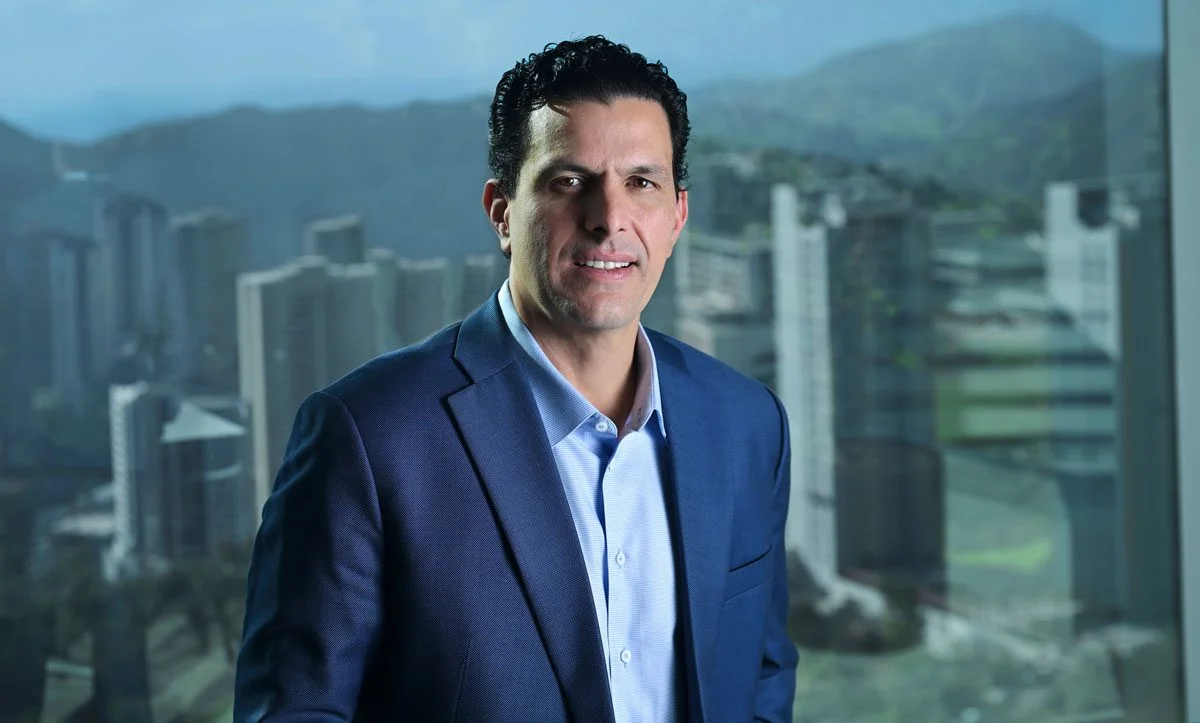
Um decreto publicado no início deste ano pelo então governador de Minas Gerais e candidato à presidência, Romeu Zema (Novo), beneficiou a Cedro Mineração Mariana, empresa que faz parte do grupo Cedro, fundado por Lucas Prado Kallas. O empresário da mineração tem conexões com ministros do Supremo Tribunal Federal (STF) e com o ex-banqueiro Daniel Vorcaro, envolvidos no escândalo do Master.
O ato de Zema, publicado em de 6 de fevereiro, determinou que duas fazendas na cidade de Mariana podem ser usadas pela Cedro Mineração Mariana para atividades minerárias. O então governador cita nominalmente a empresa ao dizer que a medida é necessária “à expansão de atividades do empreendedor Cedro Mineração Mariana S.A”.
O decreto, porém, é alvo de ação na Justiça, segundo documentos obtidos pela Agência Pública, pois na área em disputa já existe alvará de pesquisa mineral em favor de outra empresa, a Rio Abaeté Minerais. Além disso, a ação judicial diz que a região “alcança ou tangencia outros 14 títulos minerários, todos submetidos ao regime federal da ANM [Agência Nacional de Mineração].”
A ampliação da área de atuação da Cedro em Mariana, respaldada por decreto de Zema, é alvo de ação na Justiça
As ligações com André Mendonça e Daniel Vorcaro
Lucas Kallas ganhou o noticiário nesta semana porque o grupo Cedro repassou, em 2024, mais de R$ 5 milhões ao instituto educacional ligado ao ministro do STF André Mendonça e contratou no início deste ano o escritório da mulher do também ministro Alexandre de Moraes. As informações foram confirmadas pela assessoria de imprensa do escritório Barci de Moraes à Pública e pelo CEO do instituto Iter à Folha.
Kallas também aparece mencionado em mensagens do grupo que atuava para proteger Vorcaro de investigações, o “A Turma”, segundo apuração do Metrópoles. Nas mensagens, Manoel Rodrigues, preso em maio por suspeita de ameaçar pessoas a mando de Vorcaro, chama Kallas de “sócio” do ex-banqueiro.
O megaempresário da mineração também tem conexões com Daniel Vorcaro. Em 2024, investimentos de Kallas e do ex-banqueiro foram para a farmacêutica Biomm, que disputa vender uma versão brasileira do Ozempic. Parte das ações da empresa estava nas mãos do Fundo Cartago ligado ao Master e que foi liquidado após a falência do banco. A Biomm admitiu, em comunicado no fim do ano passado, que o Cartago, do Master, passou a deter ações da farmacêutica em 2024, alcançando 25,9% de participação em dezembro de 2025.
Após o escalonamento das investigações sobre o Master e a rede de Vorcaro, o grupo Cedro vendeu sua participação na farmacêutica Biomm em abril deste ano. Três meses depois, Kallas também saiu da presidência do conselho de administração da Cedro Participações apesar de permanecer como acionista majoritário do grupo, que tem receita anual de R$ 2,5 bilhões. Ele anunciou sua mudança para os Estados Unidos para a expansão internacional de seus negócios depois de ter sido indiciado pela Polícia Federal por extração irregular de minério na Serra do Curral.
Antes dessas reviravoltas, no entanto, o empresário da mineração tinha bom trânsito entre autoridades e também no governo federal. Ele fez parte, por exemplo, do o chamado “Conselhão” (Conselho de Desenvolvimento Econômico Sustentável da Presidência da República) do governo Lula, e teve encontros com o presidente – que chegou a elogiá-lo publicamente em 2025.
Procurada, a Cedro disse que Lucas Kallas “não participou das negociações, não discutiu valores e não assinou o instrumento” com o Instituto Iter, do ministro Mendonça, e que o acordo foi celebrado entre duas pessoas jurídicas.
O grupo disse ainda que Kallas “jamais foi sócio de Daniel Vorcaro”, como vem sendo veiculado em algumas reportagens. “A aquisição de participações em companhias de capital aberto diretamente no mercado secundário — das quais diversos fundos e instituições, como BNDES e BDMG, também são acionistas – não configura sociedade comercial”, conclui a nota. Leia a nota na íntegra aqui.
A reportagem procurou a campanha de Zema e o governo de Minas Gerais para se posicionarem sobre o decreto que beneficiou a Cedro, mas não houve resposta. O espaço segue aberto.
Cedro Mineração afirma ter capacidade de produzir atualmente cerca de 7 milhões de toneladas de minério de ferro por ano, mas quer chegar a 20
Mineradora quer triplicar capacidade de produção em Minas Gerais
Uma publicidade do grupo de Kallas publicada na Folha de S.Paulo em abril afirma que a Cedro Mineração tem capacidade de produzir atualmente cerca de 7 milhões de toneladas de minério de ferro por ano, principalmente em Minas Gerais. Mas que, “sob a liderança de Kallas, a meta é ambiciosa: saltar para 12 milhões de toneladas em Nova Lima, atingir 3 milhões em Mariana e chegar a 20 milhões de toneladas anuais até 2030”. O cenário também é repetido em comunicado da própria empresa feito neste ano.
Dentro desta meta de crescimento, a ampliação da área de atuação em Mariana, respaldada por decreto de Zema, enfrenta questionamentos e sobreposições que estão sendo debatidas na Justiça.
Ação judicial com pedido de liminar ingressada pela Rio Abaeté Minerais, detentora de alvará de pesquisa mineral na região em disputa, processa a Cedro, o governo de Minas e a ANM. A advogada da empresa diz que “sem a preservação dessas áreas, o título federal [da ANM] permanece formalmente existente, mas perde utilidade prática”.
O processo destaca ainda que “é importante registrar a desproporção material do ato [de Zema]”. Isso porque, segundo o documento, a Cedro possui área de exploração estimada em 47 hectares em Mariana, “mas o decreto coloca ao seu alcance área mais de dez vezes maior, próxima de 300 hectares, sob a justificativa formal de disposição de detritos, apoio operacional ou expansão”.
Mapa mostra áreas de interesse de mineração da Cedro e de outras empresas
A história se complica porque servidores da ANM da gerência regional de Minas Gerais emitiram, em maio, um laudo que reconheceu a necessidade técnica de acesso à área para explorar a mina, conforme demanda da Cedro. Entretanto, os servidores inseriram a ressalva de que a utilização efetiva da área dependeria de acordo amigável ou judicial com os proprietários do solo e com os titulares dos direitos minerários – o que não teria sido cumprido, segundo a Rio Abaeté.
Por conta disso, a mineradora Rio Abaeté acionou a ouvidoria da agência em Brasília pedindo investigações de dois servidores da ANM em Minas Gerais. O Ministério Público Federal também foi acionado e pediu, em junho, explicações formais à ANM, bem como apurações sobre suposta ingerência indevida do estado de Minas Gerais em direitos minerários que são da União.
O pedido de liminar foi aceito, em 9 de julho deste ano, pelo juiz de primeira instância, que estabeleceu multa de R$ 50 mil por dia em caso de descumprimento. Determinou ainda que o estado de Minas Gerais e a Cedro Mineração Mariana não tomem, nas áreas em disputa, nenhuma medida que impeça, limite ou atrapalhe o uso do alvará de pesquisa, “como entrar no terreno, instalar estruturas, desmatar, abrir acessos, registrar restrições no cartório ou limitar a circulação”. O juiz pede também que a ANM seja notificada.
A Cedro recorreu, pedindo segredo de Justiça no processo e também a suspensão da liminar. Ambos foram negados pelo juiz em 13 de agosto.
Em nota, a Cedro Participações disse que “o decreto está em consonância com o posicionamento da ANM , que também concedeu a servidão minerária na mesma área.” E que a declaração de utilidade pública pela administração estadual seguiu “estritamente todos os ritos legais, regulatórios e ambientais, fundamentada no interesse público e na relevância socioeconômica do empreendimento para a região”. O grupo acrescentou que a companhia “respeita a Justiça e cumpre toda decisão transitada em julgado.”
Após a publicação da reportagem, a Agência Nacional de Mineração disse que “não concedeu à Cedro Mineração autorização de pesquisa ou de lavra sobre essa mesma área. O ato praticado pela Agência foi a aprovação de laudo técnico destinado a possibilitar eventual acordo, amigável ou judicial, para posterior constituição de servidão minerária”. A entidade afirmou ainda que o título minerário da Rio Abaeté permanece ativo.
A mineradora Rio Abaeté não foi encontrada.
Comissão de Meio Ambiente e Desenvolvimento Sustentável de Minas Gerais debate os impactos socioambientais do projeto de ferrovia para escoamento de minério de ferro do grupo Cedro Participações
As irregularidades na Serra do Curral
Neste ano, a Polícia Federal pediu indiciamento do empresário da mineração Lucas Kallas por irregularidades na extração de minério de ferro na Serra do Curral, patrimônio histórico de Belo Horizonte, conforme revelou a Pública em abril, informação depois confirmada por outros veículos. Deflagrada em março, a Operação Parcours apura irregularidades nas atividades da Empresa de Mineração Pau Branco (Empabra), ligada a Kallas.
À época, o empresário disse que sua inclusão no inquérito era “completamente descabida”. Ele ressaltou que a operação “tem como principais fundamentos fatos relacionados aos anos de 2023-2025”, oito anos após ter encerrado sua relação com o Grupo empresarial Green Metals/Empabra.
A PF relatou que a Empabra, sob o subterfúgio de recuperação ambiental, retirou minério da área sem autorização prévia, causando impactos irreversíveis ao meio ambiente, com prejuízo estimado de R$ 832 milhões. Além disso, a empresa deixou de arrecadar cerca de R$ 11 milhões em Compensação Financeira pela Exploração Mineral (CFEM). O caso é descrito no relatório pela PF como uma “distopia ambiental”.
Além do empresário, a PF investigou dois servidores da ANM em Minas Gerais – mesma superintendência envolvida no embate sobre a expansão da Cedro em Mariana. Ambos foram exonerados do cargo.
Desde que assumiu o governo de Minas em janeiro de 2019, Romeu Zema triplicou o uso de dois instrumentos, os termos de ajustamento de conduta (TACs) e os termos de compromisso (TCs), que permitem que mineradoras flagradas operando sem licença ambiental continuem funcionando mediante acordo com o estado, em vez de serem suspensas.
Conforme revelou a Pública em abril deste ano, esses acordos favoreceram diretamente as quatro mineradoras que atuavam irregularmente na Serra do Curral: Tamisa, Empabra, Fleurs e Gute Sicht (todas com TACs ou TCs assinados entre 2020 e 2022).
Kallas admitiu ter investido em empresas que fizeram negócios com a Empabra. Já a Tamisa tinha ligações com o Banco Master de Vorcaro. A mineradora tinha entre suas acionistas a WJ Consultoria, administrada pelo cunhado de Vorcaro, Fabiano Zettel. Além disso, o Victoria Falls Fundo de Investimento, controlado pelo Banco Master, é sócio majoritário da mineradora.
Nesta semana, o rio Tietê, em São Paulo, transbordou. A vazão do rio chegou a mais de duas vezes o limite máximo normal, causando alagamentos na capital e no interior.
No Jardim Pantanal, bairro historicamente afetado pelas enchentes do Tietê, o alagamento assustou os moradores pela intensidade e velocidade da água, ainda de madrugada. “Veio a chuva que não parou, foi incessante, chuva forte […] e acabou enchendo o rio. O rio transbordar foi até natural, porque foi devagar, mas aí veio a pressão da água, por volta das 6 da manhã, muito rápida […] Parecia uma cachoeira, quem estava andando tinha que estar apoiado em alguém pra não ser levado pela água. Foi uma correria, uma gritaria, para tirar os carros e depois, tirar os móveis”, conta o morador do bairro desde 1994 e jornalista Rafael Tavares.
Os alagamentos em São Paulo, apesar de serem um problema histórico, têm se intensificado devido às mudanças climáticas e falta de adaptação das cidades. “É a primeira vez que acontece isso em setembro. Normalmente, acontece no final de dezembro, janeiro, fevereiro, raramente em março, mas em setembro é a primeira vez”, relembra Tavares.
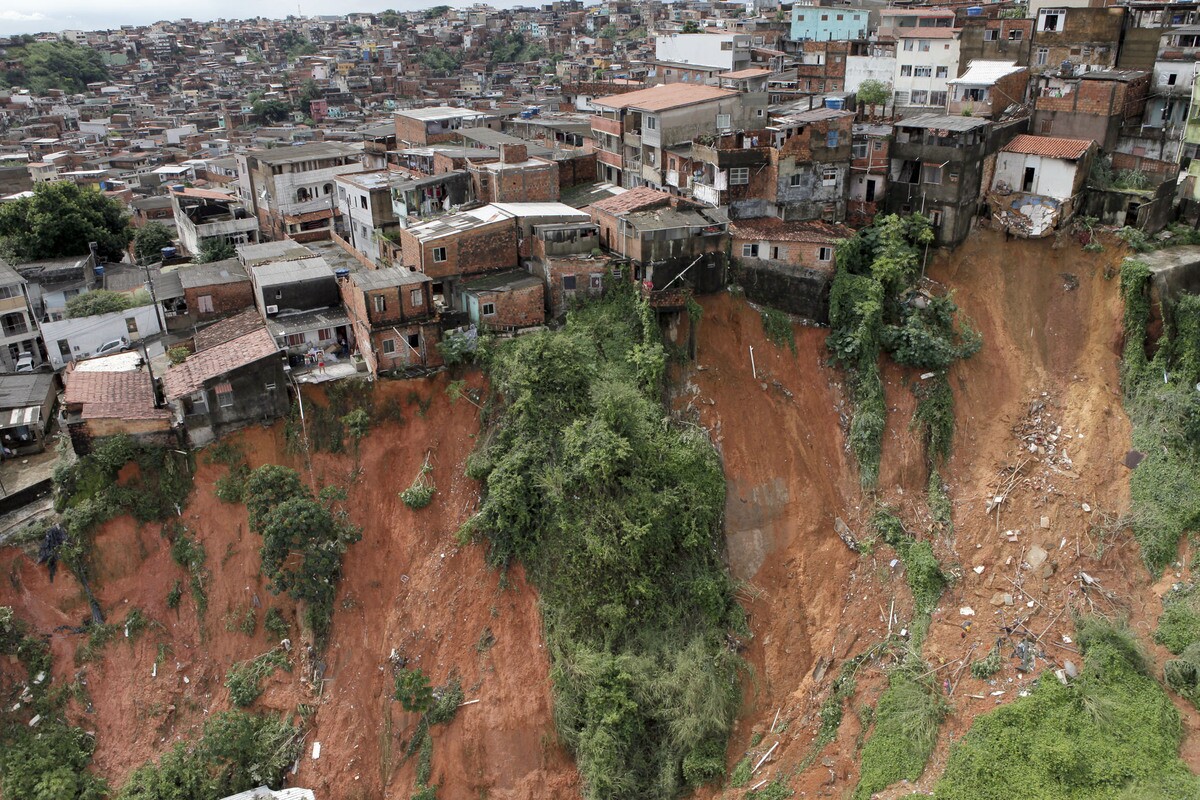
Moradores dos bairros Jardim Helena e Jardim Pantanal, na periferia da capital paulista, convivem com histórico de enchentes
Apesar da gravidade do problema, a Agência Pública apurou que o plano de ação climática da cidade, que tem orientações de como o poder público deve agir para proteger a população, ainda tem metas genéricas de ação. E pior: está sendo usado quase como um copia e cola para outra capital, Salvador, na Bahia.
Leia o plano de ação climática de São Paulo aqui e o de Salvador, aqui.
Segundo a Pública apurou, os dois planos foram elaborados pelas mesmas empresas e parcerias, como a C40 – redes de cidades mundiais com compromisso de reduzir as emissões dos gases de efeito estufa –, a consultoria WayCarbon e a associação internacional ICLEI, e executados pelos mesmos profissionais. São produções alinhadas a métricas globais e financeirizadas voltadas a agentes externos, e não para a população local.
Essas são as críticas do professor e pesquisador da Universidade Federal da Bahia (UFBA) Paulo Zangalli, líder do Grupo de Pesquisa Colapso – Natureza e Sociedade e membro do Conselho Deliberativo da Associação Brasileira de Climatologia. Zangalli pesquisa o capitalismo climático e como a agenda climática foi incorporada a práticas nada igualitárias, como especulação imobiliária e gentrificação do espaço urbano.
Segundo o pesquisador, o plano de Salvador inclui as mesmas diretrizes padronizadas do de São Paulo.
“Nos dois planos, há apenas o retrofit de prédios antigos como diretriz de uso do solo para redução de vulnerabilidade. O princípio em si não é um problema se pegássemos os edifícios que tenham possibilidade de serem recuperados, por exemplo, […] retirando as pessoas das áreas de risco e inserindo em uma área com valor e algum tipo de sociabilidade e proximidade aos locais de trabalho. Mas, na prática, tanto em São Paulo quanto em Salvador, isso significa que vamos usar o clima para fazer retrofit de prédio antigo, recuperá-los, torná-los energeticamente mais eficientes, colocar aproveitamento de água da chuva e outras soluções – que inclusive estão nas políticas e nas ações do plano, como desconto no IPTU – e expulsar as pessoas que moram ali e são indesejadas do ponto de vista da incorporação imobiliária”, explica.
Zangalli participou do Plano de Mitigação e Adaptação para Mudança Clima da capital baiana, cuja versão final é de novembro de 2020, e relata o esvaziamento da participação da sociedade, desde reuniões online com microfone silenciado. “Na verdade, fomos usados para validação dos documentos que vinham sendo produzidos por esse consórcio estranho ao território.”
Para ele, o documento revelou também falta de vontade de fazer mudanças estruturais. A adaptação – que tem impacto real na vida da população – foi tímida e sequer tinha financiamento garantido, dependendo de ativos do mercado financeiro.
A Pública questionou a Secretaria de Sustentabilidade, Resiliência, Bem-estar e Proteção Animal (SECIS), da Prefeitura de Salvador, sobre os apontamentos do pesquisador sobre o processo de elaboração do PMAMC. Por e-mail, a Assessoria de Comunicação da pasta afirmou que o plano “foi elaborado com base em metodologias internacionalmente reconhecidas” e “por isso, é natural que temas como mobilidade sustentável, soluções baseadas na natureza e gestão de resíduos apareçam em planos de diferentes cidades”. O governo soteropolitano também respondeu, destacando que houve participação social por meio de oficinas, audiências e workshops, e que, “como ocorre na elaboração de políticas públicas, a participação teve caráter consultivo e técnico, não de cogestão”. Leia a resposta completa aqui.
A reportagem também questionou a Prefeitura de São Paulo sobre o que foi feito para melhorar enchentes e alagamentos no Jardim Pantanal pela atual gestão e quais as metas práticas para adaptação no plano climático da capital. Por meio de sua Assessoria de Imprensa, a prefeitura afirmou que ”a região recebe R$ 59,8 milhões em obras de drenagem, pavimentação e contenção no Rio Tietê” e que “o Plano de Ação Climática de São Paulo, revisado em 2025, estabelece 36 metas específicas de adaptação. Entre as ações diretamente relacionadas à prevenção e redução dos impactos de alagamentos e inundações estão a implantação de 1.000 jardins de chuva até 2028, priorizando áreas com histórico de alagamentos”. Leia a resposta na íntegra aqui.
Leia abaixo os principais trechos da entrevista com Paulo Zangalli:
Você pode explicar primeiro o contexto de criação do plano de Salvador?
O Plano de Ação Climática de Salvador foi produzido no âmbito da C40 [rede global de metrópoles voltada para o clima], em que a cidade assinou, durante o Acordo de Paris, uma meta de intenções, junto a essa rede, de ter as emissões de carbono neutralizadas até 2050. Para isso, seria necessário produzir planos de ação.
Esse processo começa em 2015 com a produção do Plano de Resiliência Urbana, que, na sequência, vai dar origem ao Plano de Ação Climática. Teve financiamento do Banco Interamericano de Desenvolvimento (BID) e da Fundação Rockefeller e articulação da GIZ (agência de cooperação alemã), que contratou o consórcio WayCarbon e ICLEI.
É um plano estruturado em quatro eixos: Salvador Inclusiva, Verde-Azul, Resiliente e de Baixo Carbono. Esse documento, na verdade, apenas reproduz uma quantidade de metas e métricas, porque reproduz uma metodologia muito comum usada pela C40, GIZ e ICLEI para a produção de planos locais de ação climática. Ou seja, não está desconectado da realidade brasileira, já que esse consórcio produziu o plano de Porto Alegre. A C40 e a ICLEI participaram do plano de São Paulo e de outros municípios.
O documento organiza ações de enfrentamento às mudanças climáticas, mas o que percebemos é que essas ações estão desconectadas da realidade climática da cidade. Mesmo eles apresentando um diagnóstico, um inventário de emissões e um plano de risco climático, isso não é usado como orientação e parâmetro para a resolução dos problemas.
Por quê?
Por que o plano de Salvador está alheio à realidade soteropolitana? Porque das 56 ações que foram previstas para os principais problemas climáticos que são alagamento e deslizamento, apenas 16 das ações tratam do tema em específico e absolutamente nenhuma delas trata do ponto de vista estrutural, ou seja, com obras, com intervenção de adaptação que, de fato, preparem a cidade para uma chuva futura.
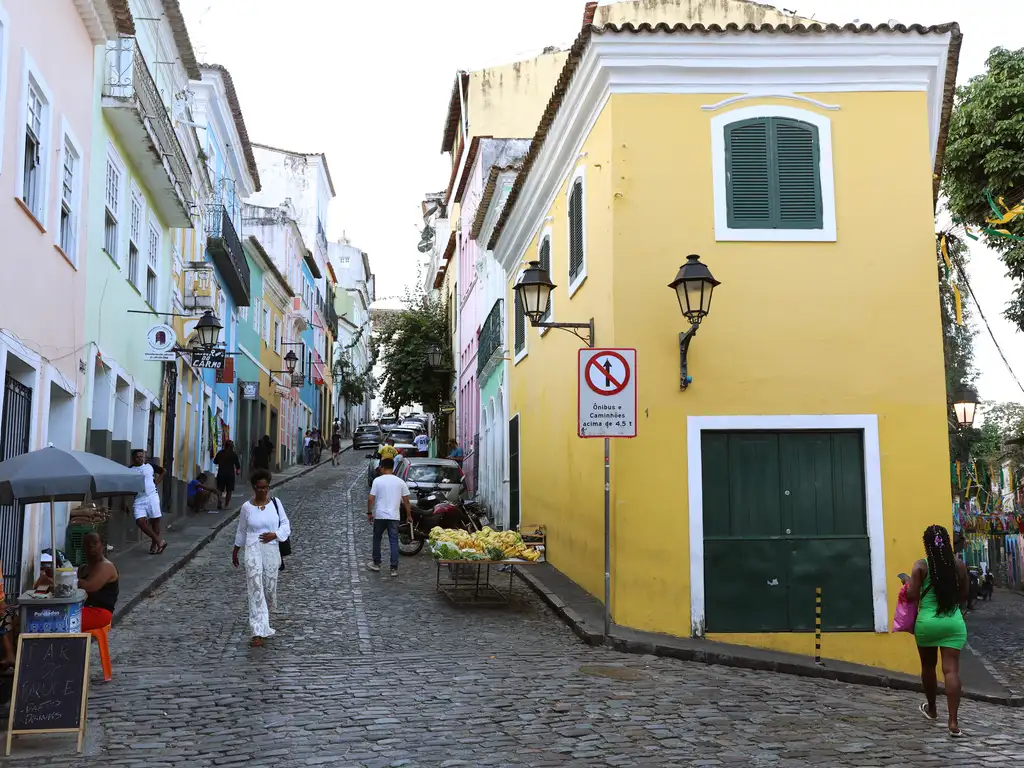
Segundo a prefeitura de Salvador, seu plano climático “foi elaborado com base em metodologias internacionalmente reconhecidas”
Então, por mais que ele aponte no índice de riscos climáticos áreas de suscetibilidade e vulnerabilidade a esse tipo de problema, as ações em si estão muito mais ligadas à transposição do problema para a esfera individual e para a capacitação de alguns setores para lidar com o desastre, e não necessariamente para preveni-los.
Por exemplo, quando falamos do calor excessivo, a própria Defesa Civil falou que “calor não é parte do business”, ou seja, não faz parte do “negócio” que eles gerem, que é chuva. Poucas ações do plano são, de fato, ligadas ao calor excessivo, como fazer um mapa de ilhas de calor e investir em arborização. São poucas ações e que não dão conta do problema que estamos enfrentando.
Você falou sobre existir um descompasso entre a mitigação e a adaptação no plano. Como funciona essa desconexão?
O plano de Salvador tem uma meta ambiciosa de ter carbono neutralizado até 2050, porque é o que exige a C40 e é um condicionante para a atração de investimentos, que é sua finalidade. Já a adaptação são as medidas mais necessárias e mais coerentes com os problemas climáticos de Salvador, que são alagamentos, inundações e deslizamentos. O calor também tem se configurado um problema, mas as pessoas tendem a perceber ele de outra forma.
Esse descompasso tem uma lógica de ser. A mitigação lida com a creditização e mercantilização do clima, está focada na atmosfera – precisa reduzir os gases de efeito estufa e pensar, portanto, na composição química da atmosfera. A adaptação, não. Precisa pensar a realidade, o espaço, a política urbana, o ordenamento territorial.
O plano de Salvador, por exemplo, tem um eixo de ordenamento e uso do solo, como os outros planos. Todas as diretrizes do plano de Salvador em relação ao uso e ocupação do solo são as mesmas do de São Paulo. Apenas uma é diferente. Em São Paulo, tem uma a mais, que são mecanismos de win-win, que não foi incorporado por Salvador. Esses mecanismos são os mesmos do mercado financeiro dentro de uma lógica de gestão flexível que tem sido implementada via empresas.
É uma lógica de gestão de conflitos, em que o papel do Estado dentro do planejamento é fazer com que os conflitos sejam apaziguados, não necessariamente resolvidos. O mecanismo de win-win pressupõe nesse jogo do planejamento, em que há interesses e conflitos, que todos podem sair ganhando, o que não faz o menor sentido, né?
Nessa comparação entre Salvador e São Paulo, a diretriz de uso do solo é a mesma. Ambas orientam para redução da vulnerabilidade. Na realidade de Salvador, que conheço mais, os componentes da vulnerabilidade são a falta de renda, a habitação do tipo casa – ou seja, nas favelas –, que representam 48% das áreas de risco mapeadas. O que deveria ter seria um plano voltado ao trabalho para que as pessoas tenham renda, um de moradia para que essas pessoas acessem a casas com alguma infraestrutura.
Nos dois planos, há apenas o retrofit de prédios antigos como diretriz de uso do solo para redução de vulnerabilidade. O princípio em si não é um problema se pegássemos os edifícios que tenham possibilidade de serem recuperados e, por exemplo, estão devendo IPTU ou estão abandonados, como é o caso do centro histórico das duas cidades, para destinar para a moradia popular, retirando as pessoas das áreas de risco e inserindo em uma área com valor e algum tipo de sociabilidade e proximidade aos locais de trabalho.
Mas, na prática, tanto em São Paulo quanto em Salvador, isso significa que vamos usar o clima para fazer retrofit de prédio antigo, recuperá-los, torná-los energeticamente mais eficientes, colocar aproveitamento de água da chuva e outras soluções – que inclusive estão nas políticas e nas ações do plano, como desconto no IPTU – e expulsar as pessoas que moram ali e são indesejadas do ponto de vista da incorporação imobiliária. Ou seja, na prática, isso significa expulsão da população para uma nova rodada de especulação imobiliária nos centros das duas cidades.
Desde a década de 1990, começou-se uma rodada de expulsão da população preta e pobre da cidade para a ocupação com empreendimentos imobiliários, sobretudo para a atração de investimento para o setor turístico. E a população sabe disso. Essa é mais uma tentativa de dizer: “Vamos reduzir vulnerabilidade, fazendo retrofit de prédio antigo”. Mas, na verdade, vai significar uma rodada de gentrificação climática. Como consequência, vai ter o aumento da vulnerabilidade e não o contrário.
O que significa o escanteamento da adaptação no plano?
Primeiro, porque custa dinheiro. Em segundo, porque não é lucrativo. Todas essas políticas estão dentro do capital e se espera que quem execute não seja necessariamente o Estado. Espera-se inclusive que o setor privado tenha interesse em executá-la. Tanto que, quando analisamos o financiamento dos planos, a adaptação não tinha financiamento garantido e era identificado como necessário parcerias internacionais para atração de recursos.
Você participou da elaboração do plano. O que tinha de expectativa e o que se concretizou de fato? O que foi uma desilusão?
Quando eu compus o Painel Salvador de Mudança do Clima, estávamos desde a criação e debatemos muito sobre o que deveria ser, como trabalharíamos, quem financiaria, a secretaria executiva. A ideia que se teve era de que os cientistas locais por ter conhecimento da realidade pudessem oferecer o seu conhecimento para a formulação do plano, junto com os movimentos. Mas, na verdade, fomos usados para validação dos documentos que vinham sendo produzidos por esse consórcio estranho ao território.
Eu percebi o que estava acontecendo cedo, mas a maior decepção dos meus colegas foi perceber que eles não estavam fazendo seu papel, não estavam avaliando criticamente o documento nem produzindo algo. Chegamos a fazer algumas coisas, que estão no anexo do plano, mas não foram incorporadas, apenas um uso para a validação dos produtos criados.
Tem um documento do Fórum Clima Salvador, a organização popular que surgiu a partir desse movimento, que fizemos exatamente essa análise, de que as reuniões eram reuniões de validação, com microfone fechado, pouca participação, sem poder falar. A Academia quando era convidada era apenas para validar, dizer se estava certo ou errado. E às vezes estava muito errado, como risco de alagamento nas áreas mais altas da cidade, sem sentido algum.
Nesse contexto, os planos brasileiros hoje são quase um “copia e cola” um dos outros?
Sim, são planos feitos pelos mesmos grupos, que vão apresentar as mesmas diretrizes, as mesmas ações, com algumas mudanças evidentemente territorializadas, uma vez que há também uma participação do Estado – inclusive na criação de produtos.
Você chegou a citar antes que algumas das metas colocadas no plano de mitigação já foram atingidas.
Sim, de redução de emissão, que é a meta central. A de médio prazo já foi atingida, que era a redução de 30% nas emissões de gases de efeito estufa. Quando falamos de sequestro de carbono, de mitigação, redução, imaginamos que alguém está medindo isso, mas não, é uma planilha de estimativa de quanto cada setor emite. Quando se altera um dado, é alterado o dado de emissão. Transporte público era indicado no inventário como um dos elementos centrais de emissão em Salvador. Se aumenta a frota elétrica, a emissão é reduzida, mas não necessariamente, apenas na métrica que está sendo usada.
O problema climático é produzido a partir da lógica espacial. Já vivemos com as mudanças climáticas e vivemos de outra forma. No nosso caso, produzimos uma cidade que é alheia à água. Só existe impacto porque tem produção espacial e, se o plano não está aderente a isso, não está aderente a nada, só está quantificando tudo.
E como seria um plano que lida com a realidade espacial das cidades?
Um plano que nasce das necessidades mais urgentes da população e que incorpora inclusive as tecnologias que já existem nesses territórios. A população já produz adaptação cotidiana, porque sofre o impacto. A cada chuva, a cada movimento, ela se organiza para que não ocorra novamente, porque não dá para esperar o Estado. Um plano popular surge disso, seja com a adaptação enquanto centralidade ou não, mas quem vai dizer são as pessoas envolvidas, com engajamento da população e da Academia.
Qual a relação da reprodução do capital e da financeirização dos planos? Como opera o capitalismo climático na elaboração desses documentos?
O primeiro ponto é por meio da creditização, que demanda a criação de títulos imobiliários para a comercialização no mercado financeiro. Esse é o principal elemento que temos hoje. Os planos vão produzir metricamente as condições dessa financeirização, identificando quais áreas têm potencial de creditização, onde pode produzir esse potencial. Algumas medidas são diretamente atreladas a isso. Por exemplo, o incentivo ao uso de energia renovável, tem o desconto na conta de energia, que é vendido no mercado, a compra verde do poder público, que atrai empresas que oferecem produtos que estão inseridos dentro da lógica financeira. Esses planos hoje têm a possibilidade de colocar em diálogo diversos setores que já estão lucrando com a mudança climática.
Desde o Relatório Stern em 2005, o mercado mudou a forma como avalia as mudanças climáticas. O economista britânico Sir Nicholas Stern do Banco Mundial fez um relatório ensinando como poderiam lucrar com as mudanças climáticas. A partir disso, muda-se a lógica, e a lógica financeira começa a tomar conta do mercado de crédito de carbono e dos mecanismos de financeirização desse processo.
A Fundação Rockefeller, que vem da empresa de petróleo que é uma das principais emissoras de gases de efeito estufa na atmosfera ao longo de todos esses anos, tem esse mesmo movimento do Banco Mundial. Em algum momento, a instituição prometeu que iria mudar toda sua lógica de produção e parar de produzir petróleo. Obviamente ela nunca fará isso enquanto o petróleo for lucrativo. Então, ela cria essas fundações, que financiam os planos de ação de mudanças climáticas. É uma contradição mesmo.
Os planos evidentemente têm avanços por colocar a agenda climática como um elemento importante, mas são avanços muito limitados. Precisamos entender que não precisamos reconfigurar as lutas históricas que temos travado para falar de clima. Aqui no nosso caso, a moradia é um elemento central para a produção do impacto climático, e a luta pela moradia é central também para movimentos sociais, que têm tecnologia e saberes sobre isso, mas não são incorporados – obviamente e nem faria sentido ser dentro da lógica que os planos estão.
Nestes tempos de velocidade e de acúmulo de carros nas ruas, abri a janela de casa e observei um estranho silêncio no centro de Salvador. Eu nunca havia visto algo assim. O vento parecia ter sumido junto com as pessoas. No canto de uma praça que não existe mais, a árvore que costuma dançar majestosa estava imóvel. Dentro dela, entre seus galhos cheios de folhas, vi pássaros inquietos. O que isso queria dizer? De repente, o vento apareceu e se espalhou. Soprou com muita força. Como alguém perdido, levantou poeira, revirou lixo e empurrou folhas. Em casa, estou sempre ouvindo música. Mas, diante da janela, minhas pálpebras se abriram ao máximo quando soaram estes versos na caixa de som: “Sou a chuva que lança a areia do Saara / Sobre os automóveis de Roma”.
Com muita fúria, a chuva grossa caiu e revelou a mesma paisagem sob um aspecto diferente. Agora um som aquoso corria pelas ruas inundadas e se sobrepunha ao silêncio. As fachadas dos prédios ficaram cada vez mais escuras e saturadas. Teimoso diante da janela, fui atingido também pela chuva, senti meu cabelo crespo molhado, certamente com gotículas cintilantes. O frio no meu rosto desceu para o peito por causa da camisa encharcada. Então me dei conta de que estava vestindo minha velha e confortável camisa que um dia foi branca, cuja estampa mostra o excêntrico protagonista do livro “Uma Confraria de Tolos”, de John Kennedy Toole.
Resolvi fechar a janela e busquei uma toalha para me enxugar. Enquanto trocava de blusa, lembrei da notícia que li faz pouco tempo: a história do peixe-leão capturado por pescadores no Porto da Barra. Apesar do nome majestoso, a espécie é de pequeno porte, o que não significa que não possa agir como um predador vigoroso. Vejo o bicho erguido na mão bronzeada do pescador, suas longas nadadeiras em forma de leque e sua coloração listrada em tons de vermelho, marrom, branco e preto. Assim, parece inofensivo. Então o jornal avisa que não devemos tocar diretamente no peixe, pois seus espinhos continuam venenosos mesmo após a sua morte. Também dizem que o peixe-leão não costuma atacar pessoas. Por fim, fico sabendo: o tal peixe venenoso é originário do oceano Indo-Pacífico e vem aparecendo na Bahia desde o ano passado. É, como sentencia o jornal, uma espécie exótica e invasora, que ameaça a nossa biodiversidade.
Depois que troquei a camisa molhada por uma limpa e seca, veio uma sensação gostosa de conforto e tranquilidade. A Capital da Alegria estava educadamente silenciosa, em estado de espera. A chuva provocou em mim um sentimento de introspecção. No conforto térmico de minha casa, me senti protegido dos perigos e dos barulhos do mundo. Quero ficar assim, sossegado, bebericando uma xícara fumegante de café enquanto leio um bom livro. Por curiosidade, alterno o olhar para a chuva agora fina que cai sobre este dia.
Tudo muda tão rápido. Tudo parece tão calmo. Nem parece que um Super El Niño se aproxima com seu efeito devastador sobre todos nós.
Mientras Bruto y sus cómplices apuñalaban a Julio César buena parte de la plebe romana estaba de picnic. Bebían vino, montaban tiendas de campaña con ramas y tela, y hacían tantos brindis como años querían vivir. Era el día de Anna Perenna, la fiesta más antigua del calendario romano, y probablemente ninguno de los que […]
No próximo dia 19 de setembro, às 19:00, a Igreja Matriz de Pechão recebe o Quarteto de Sopros da Orquestra do Algarve, num concerto integrado no programa comemorativo do Bicentenário da Câmara Municipal de Olhão.
O espetáculo corresponde ao terceiro concerto do ciclo “APOS: Música Clássica no Território”, promovido no âmbito da parceria entre o Município de Olhão e a Associação de Valorização do Património Cultural e Ambiental de Olhão (APOS), contando ainda com o apoio da Junta de Freguesia de Pechão. Com o título “Clássicos ma non troppo”, o concerto propõe uma formação pouco habitual na música de câmara: o quarteto de sopros. Íntimo e simultaneamente versátil, este formato conheceu particular popularidade nas primeiras décadas do século XIX, período em que compositores como Gioacchino Rossini e Vincenzo Gambaro escreveram obras especificamente para esta formação. O programa percorre diferentes épocas e universos musicais, reunindo obras de Rossini, Schubert, Gambaro e Daniel Dorff. Entre os momentos do concerto estará o andamento lento do célebre quarteto de cordas “A Morte e a Donzela”, de Franz Schubert, numa adaptação para esta formação de sopros. A proposta musical chega ainda aos nossos dias através de Daniel Dorff, compositor norte-americano que, em 1990, escreveu um tango originalmente para quarteto de clarinetes. O sucesso da obra levou o compositor a criar mais de uma dúzia de versões para diferentes formações instrumentais, sendo apresentada nesta ocasião a sua 14.ª versão. O Quarteto de Sopros da Orquestra do Algarve é composto por Joaquim Moita (fagote), Luís Miguel Garcia (flauta), Emídio Costa (clarinete) e Todd Sheldrick (trompa). O concerto tem entrada livre, constituindo mais uma oportunidade para aproximar a música clássica de diferentes espaços e públicos do concelho de Olhão, levando a programação cultural para além dos espaços convencionais e valorizando, simultaneamente, o património local.
La maison est noire (1963), de Forough Farrokhzad. Court-métrage documentaire poétique sur une léproserie, méditation sur la souffrance et la dignité humaine.
La Brique et le Miroir (1965), d'Ebrahim Golestan. Un chauffeur de taxi découvre un bébé abandonné, portrait de l'Iran urbain des années 1960.
Qeysar (1969), de Massoud Kimiai. Drame de la vengeance devenu un classique fondateur du cinéma populaire iranien moderne.
La Vache (1969), de Dariush Mehrjui. Après la mort de sa vache, un paysan sombre dans la folie en s'identifiant à l'animal.
Un simple événement (1973), de Sohrab Shahid Saless. Chronique minimaliste de la vie quotidienne d'un jeune garçon dans une ville côtière.
Le Coureur (1985), d'Amir Naderi. Un enfant des rues rêve d'une vie meilleure grâce à sa détermination.
Bashu, le petit étranger (1986), de Bahram Beyzai. Un enfant déplacé par la guerre trouve refuge dans une famille du nord de l'Iran.
Où est la maison de mon ami ? (1987), d'Abbas Kiarostami. Un écolier traverse des villages pour rendre le cahier de son camarade.
Nassereddin Shah, acteur de cinéma (1992), de Mohsen Makhmalbaf. Fantaisie historique sur l'arrivée du cinéma à la cour du chah.
Le Foulard bleu (1995), de Rakhshan Bani-Etemad. L'histoire d'amour entre une ouvrière et un riche exploitant agricole.
Papier sans lignes (2001), de Nasser Taghvai. Une femme tente de devenir écrivaine, révélant les tensions de son couple.
Respiration profonde (2003), de Parviz Shahbazi. Deux jeunes amis errent dans Téhéran en quête de sens et de liberté.
Persepolis (2007), de Marjane Satrapi et Vincent Paronnaud. Film d'animation autobiographique sur l'enfance et l'exil de l'artiste Marjane Satrapi (1969-2026).
Le Chant des moineaux (2008), de Majid Majidi. Un père de famille affronte les difficultés économiques avec humanité.
Une séparation (2011), d'Asghar Farhadi. Conflit familial et judiciaire explorant les dilemmes moraux de la société iranienne.
La Loi de Téhéran (2019), de Saeed Roustaee. Thriller sur la lutte contre le trafic de drogue en Iran.
El azul egipcio nació en Egipto antes del año 3100 a.C. y se considera el primer pigmento fabricado por el ser humano. Para obtenerlo, los artesanos calentaban a altas temperaturas una mezcla de sílice, cal, compuestos de cobre y sales alcalinas hasta lograr que cristalizara un compuesto de color azul intenso, el silicato de cobre […]
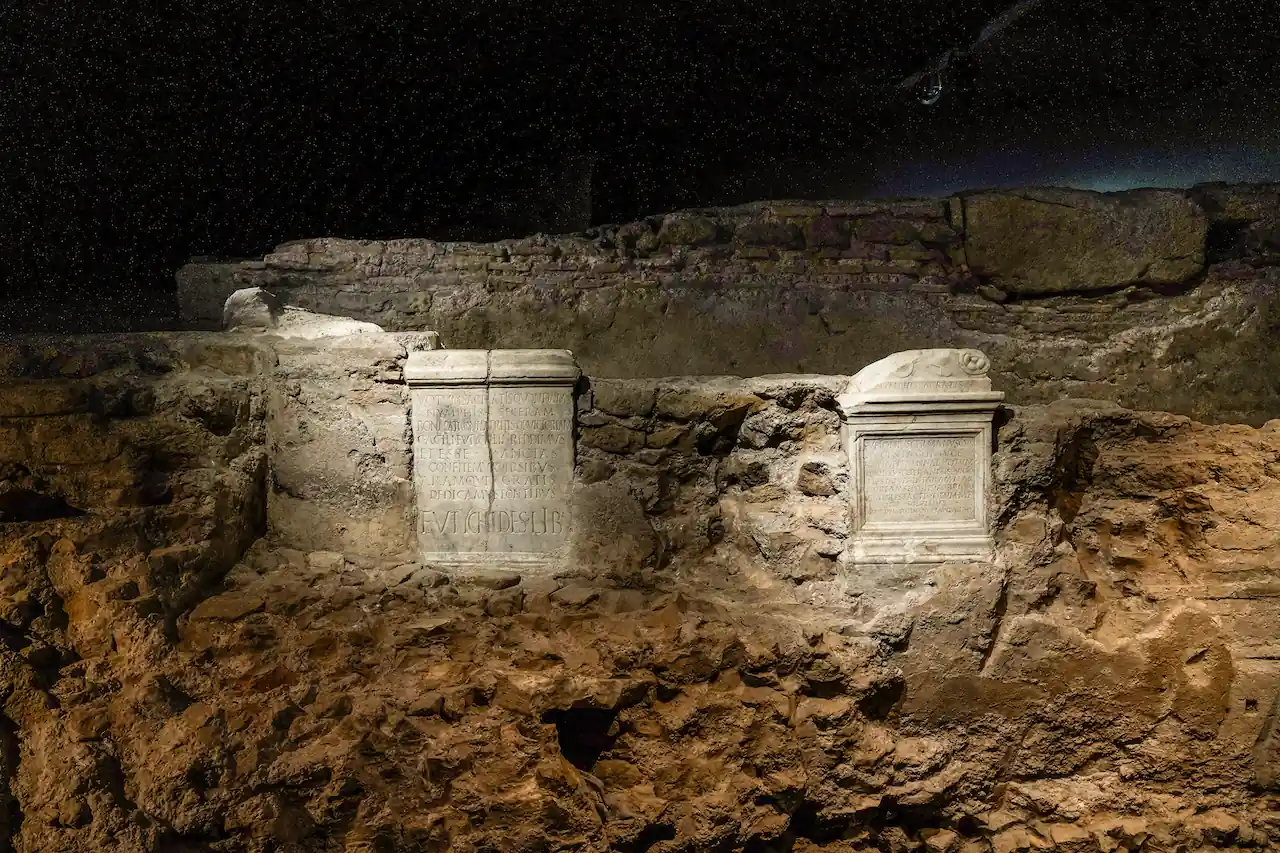
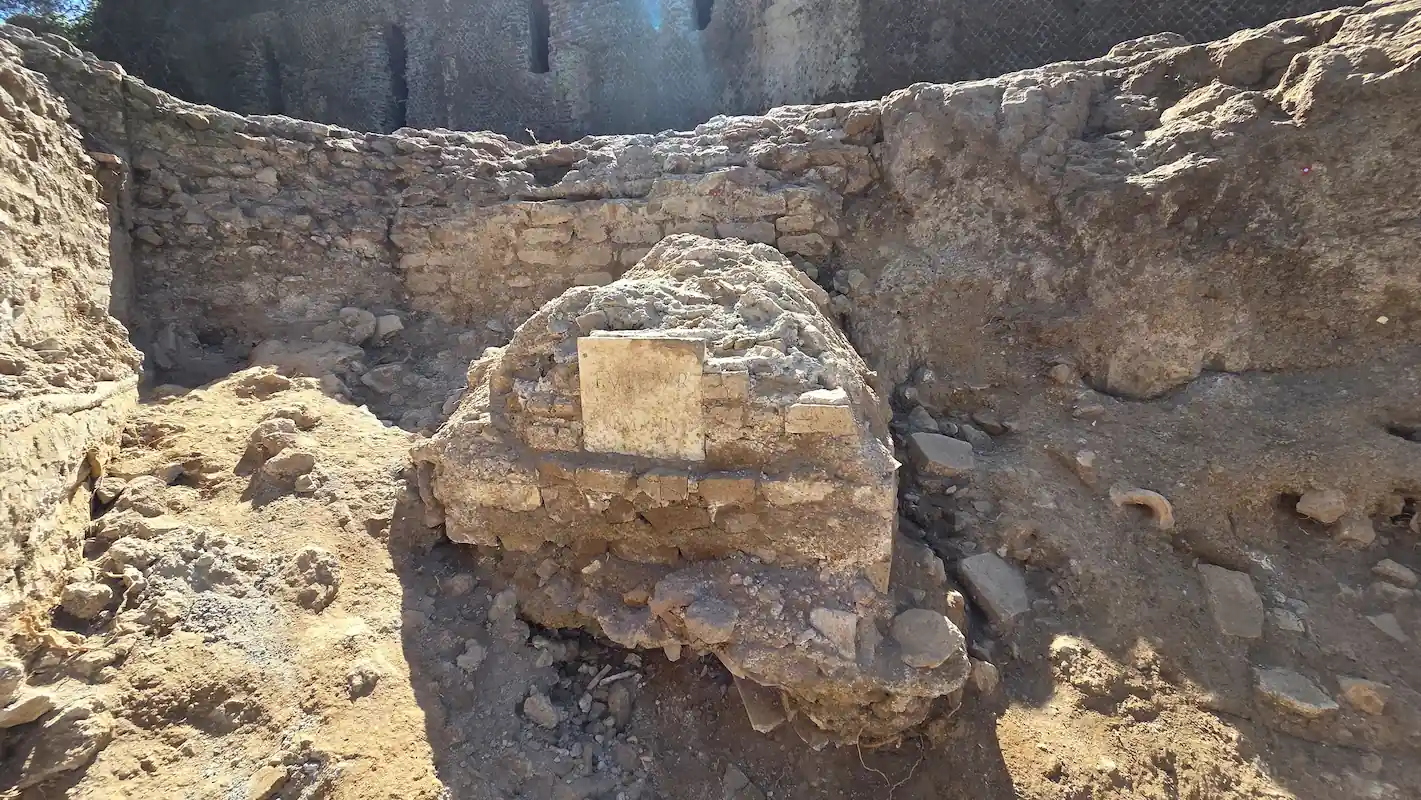
En un rincón de Villa Adriana, entre el llamado Anfiteatro y un banco de toba, hay una losa de mármol de apenas 40 por 35 centímetros que sigue exactamente donde la dejaron hace unos 1.900 años. Dos líneas de letras capitales bastan para explicar por qué el hallazgo interesa tanto a los arqueólogos: FVLGVR SVBMANIVM, […]
If you spend your day in front of a computer, you may ask yourself, at times, why you do it. What’s it all for? Who benefits? For Noēma, Aaron Horwath suggests that the crisis confronting knowledge workers these days isn’t strictly economic, it’s also existential. He explores the pitfalls of work-as-performance and wonders whether the “messy middle,” which embraces human interaction and collaboration over an army of agents, might offer more for workers and employers alike.
But perhaps the most powerful action of all is simply to maintain an awareness (and remind others) that Workism is a spectacle. For most employees, we owe it to each other to remind one another that this work is not, in the grand scheme of things, all that important. It is illusory. No one has ever died over a spreadsheet. The world does not wait with bated breath for product launches. A marketing campaign will not change the world. Almost no one will remember all the work we do. But they might remember the types of people we were, the relationships we had and how we treated the people we worked with.
Longreads has published hundreds of original stories—personal essays, reported features, reading lists, and more—and more than 14,000 editor’s picks. And they’re all funded by readers like you. Become a member today.
In 1792 Paris, a “north-going astronomer,” Jean-Baptiste-Joseph Delambre, set forth for Dunkerque, France, while a “south-going astronomer,” Pierre-François-André Méchain, made his way to Barcelona, Spain. As leaders of the meridian expedition, their modest ambition was to measure the world. They would use a new measure to be called the meter. “The meter would be eternal because it had been taken from the earth, which was itself eternal. And the meter would belong equally to all the people of the world, just as the earth belonged equally to them all.”
We start with our bodies, measuring height and weight and life. We want to know what health is, what beauty and pain and performance look like. We weigh our brains for intelligence, ability, sickness, happiness. We fight about race and politics, sex and money, images and words. We stalk the planet, its history and geography, biology and chemistry. We wrestle with space-time, its mathematics and paradoxes. We have no idea what to do about consciousness. And then there’s the small matter of love. We are obsessed and we cannot stop.
At its heart, measurement is a utopian undertaking, one that aims to make perfect sense of the world. But at every turn, it runs up against the real world, and every so often, our understanding of reality itself. We know that the act of measuring changes what is measured. Might it be changing us measurers, too?
Welcome to a reading list about measurement—not only as techne, art or craft, but as episteme, knowledge, its conquests and collapses, and what it really gives and takes away.
“In 1730, the influential physician Bernard Mandeville recalled a patient asking his doctor whether he was tired of hearing ‘so tedious a Tale’ of pain. His physician gently murmured: ‘Your Story is so diverting that I take abundance of delight in it, and your Ingenious way of telling it, gives me a greater insight into your Distemper, than you imagine.’” Now if you can get a doctor to listen to you for five undistracted minutes, count yourself lucky. Joanna Bourke takes stock of pain and its vocabulary for Aeon: “Our Anaesthetic Times.”
Indian kids tended to be small, curious, energetic as babies, growing up lean, active, rudely healthy. (I use the past tense because I’m not sure whether this is as true now as it was when I was little.) And yet, our parents thought us skinny and tried to feed us all the time. Was that a normal parental thing for the times, and if not, where did they get the idea that something needed to be fixed?
Universal standards have a way of making us feel competent and good, like, get your blood pressure down to 120/80 and you’ll be all right. But as Singh, a Harvard-trained anthropologist, points out: “Pretending that differences don’t exist doesn’t make them disappear; it only drives practitioners to rely on flawed intuitions.”
Citing case after case of medical benchmarks—too little, too much, too sideways—across the world, Singh calls for a system altogether more nuanced and considerate than the current “myth of the universal patient”—something that won’t cause actual harm, something that will help us see the real humans behind the data.
When my daughter was ten-and-a-half months old, she qualified as “wasted,” which unicef describes as “the most immediate, visible and life-threatening form of malnutrition.” My wife and I had been trying hard to keep her weight up, and the classification felt like a pronouncement of failure. Her birth weight had been on the lower end of the scale but nothing alarming: six pounds, two ounces. She appeared as a dot on a chart in which colored curves traced optimal growth; fifteenth percentile, we were told. She took well to breast-feeding and, within a month, had jumped to the twentieth percentile, then to the twenty-sixth. We proudly anticipated that her numbers would steadily climb. Then she fell behind again. At four months, she was in the twelfth percentile. At nine-and-a-half, she was below the fifth.
Our pediatrician was worried. Ease off the lentils and vegetable smoothies, we were warned; we needed to get more calories into our babe. Ghee, peanut butter—we were to drench her food in these and other fats and wash them down with breast milk and formula. And that’s what we did. When we came back a month later, though, we learned that she had dropped further—and crossed into “wasted” territory.
“There are two kinds of people in the world: people who think there are two kinds of people in the world and people who don’t.” Science or self-help? Louis Menand assesses “society’s people-sorting operations” for The New Yorker: “What Personality Tests Really Deliver.”
Have you ever taken an IQ test? How about an aptitude test for studies or a psychometric test for work? How about an online quiz?
“You were supposed to be there already. Didn’t the tests show you had a head start?” Svoboda, labelled a “gifted” child in the ’80s and dealing with its fallout in her adult life, unpacks the deeply problematic, yet starry, history of testing. She looks at Stanford-Binet, Army Alpha, SAT, and others—all ways to measure human potential. Intelligence and aptitude tests, “binary stars circling in the same orbit,” Svoboda says, seem to be asking and answering: Who deserves a chance, and who doesn’t? Who is worthy, and who isn’t?
For the American psychologist Lewis Terman, who devised the Stanford-Binet IQ test, the birth of a gifted child was like the birth of a star. In the name of illuminating what he saw as a void, Terman sought out the stars that burned brightest. “The school has no more important task than to foster the development of the mentally gifted,” the researcher at Stanford University in California told attendees at a meeting in San Francisco. “Our chances of survival . . . may well depend upon the discovery and utilisation of highly superior abilities of every kind.” To further this mission, Terman urged hundreds of children all over California to sit for his newly developed intelligence test in the 1920s. Intending to prove his theory that high IQs predicted life success, he sorted the highest scorers into a group of 1,521 children (called his “Termites”) that he would follow and document throughout their lives.
“Why Netflix looks like that.” Will Tavlin investigates what goes on behind the scenes at the streaming behemoth for n+1: “Casual Viewing.”
In hydraulics, pumping high-pressure fluid into a well causes rock to crack and oil and gas to come pouring in. This is called fracturing, or fracking. Burnett, a Princeton historian of science and part of a scholar-artist-activist collective called Friends of Attention, has adapted this term to refer to an insidious property of the attention economy. “Fracking eyeballs” refers to applying psychological and advertising techniques under pressure to bait and extract monetary value from human attention. (I don’t know how they live with this mental image all the time, though.)
This essay, opening at a 1925 Harlem shop window with a “puzzling totem face” and crammed with historical anecdote and detail, comes from the magazine’s Issue 04: Measurement. Do check out the whole issue: “How do you measure seeing god? Does testing vaccines need to take so long? Outlining poverty. Asking better questions. The origins of the ad economy. Can we really say how smart AIs are? Domestic violence during lockdown. Sex, drugs, and colonoscopies. Our most pedantic issue yet.”
See also Burnett’s Public Domain Review essay, “Cybernetic Attention,” where he pursues the “pre-history of the laboratory research that has relentlessly worked to slice and dice the attentional powers of human beings.”
In Nixon’s earliest experiments, he would hide in an observation booth, accompanied by a metronome beating half seconds, and then watch closely as two ads were revealed to a seated subject. Ticking his pencil along the rungs of a fascinating little ladder-pad with each beat of the metronome (marking the left side when the eyes were to the left; marking the right side when the eyes were to the right), Nixon created a graphical record of the subject’s visual encounter with the two stimuli.
If you were advertising a car, was it better to show a picture of a car, or of a pretty woman? If one was selling shirt collars, was it better to do so under the headline “Murder!” or the headline “Quality Shirt Collars”? To make a long story short (and to skip over the proto-pataphysical techniques by which Nixon established what we might call a “science of irrelevancy”), Nixon found that “irrelevant illustrations do attract more attention and hold interest longer than do relevant ones.” Which is to say: systematically doing violence to sense raised revenue. This could be proven in his laboratory. Would it be wrong to say that we live, in many respects, in the world evolved from that finding?
“Correlation, one of the most used and least understood concepts in statistics, is easy to mistake for causation because it was made that way intentionally; it’s precisely because of its potential to be misunderstood that it remains so popular. . . . The eugenics movement was built out of correlations.” Read about its history and current state of affairs in this Los Angeles Review of Books essay by Aubrey Clayton for the Legacies of Eugenics series: “The ‘Correlation’ Between Statistics and Eugenics.”
In 1901, Scotland Yard started using fingerprints to solve crime. They weren’t the pioneers. Sherlock Holmes had gotten there first in The Sign of Four, already examining under his magnifying glass, in 1890, what appeared to Dr. Watson as “mere shapeless smudges of dust.” While the fictional Holmes was publishing his fictional monographs in fictional journals, “gentleman scientist” (self-funded and without institutional affiliations) Francis Galton was working on the same thing for real. The era was primed for this kind of work across disciplines and professions—finding and interpreting “clues unnoticed by others.”
And while Holmes was trying to catch bad guys, Galton came up with a malign plan. What if you could use fingerprints as “tiny fossil records, providing evidence of the genealogy, personality, criminality, and perhaps even destiny of individuals and groups”? No more varicolored bad guys, only “a political program of selective breeding to improve, in his view, the human race.”
Empire, race, and “science”—eugenics.
In 1888, a reporter from the Pall Mall Gazette paid a visit to Galton’s Anthropometric Laboratory in London, where instruments developed by Galton measured the physical and mental characteristics—from keenness of hearing to breathing power—of over 10,000 people. The resulting article, titled “A Morning With the Anthropometric Detectives,” described Galton’s laboratory as a world of “order and precision, and tests of the nicest accuracy.” “Dumb though they are,” Galton told the reporter, “what splendid detectives our instruments might prove.” “Splendid detectives!” the reporter exclaimed, “I am not, I hope, in a department of the Criminal Investigation Department, unconsciously yielding convincing proofs of personal identity with some scoundrel hitherto unhung.”
The comparison to detection in the article’s title is no accident: the scientific development of medical and anthropometric instruments like Galton’s coincided with the rise of the detective novel, a genre which, in the words of the literary scholar Ronald Thomas, was “preoccupied with the professional monitoring and identification of bodies.” Fears of mistaken identity and unconscious slips were crystallized in the literature of detection but emerged from a broad range of hermeneutic practices across the era, at a time in which those in power considered the borders of empire and boundaries of racial identity to be insecure.
“Experiments that test physics and philosophy as ‘a single whole’ may be our only route to surefire knowledge about the universe.” Seeing as the lines between them have already been “blurred beyond repair,” here’s another essay by Amanda Gefter for Quanta Magazine: “‘Metaphysical Experiments’ Probe Our Hidden Assumptions About Reality.”
“What happens when you get to the end of things?” This was the question that had held John Wheeler in thrall all his life. A student of Niels Bohr and friend of Albert Einstein who counted Richard Feynman among his own students, Wheeler was a rare soul—a below-the-radar legend, a “physicist’s physicist” who really wanted physics for the people. And throughout his storied career, he kept journals.
We learned in school that gravity is a force that pulls objects together.
Einstein’s theory of general relativity came along and said, well, it’s actually that matter and energy can curve space-time, and that curving is gravity. Wheeler wondered, what if gravity could act on itself, endlessly contorting space-time, and that was what matter itself was . . . warped space-time? But reality had a problem. “The fabric of space-time, at its smallest scales, was loosely woven, chewed by moths, too flimsy to bear the weight of the world. Yet here is the universe. It must be made of something.” What?
A clue: At the end of Alder’s meter book, he quotes Protagoras, a pre-Socratic philosopher: “Man is the measure of all things.”
It dawned on Wheeler that when space and time went, taking the rest of physics with them, there was something left. “With law going and chaos arriving, one principle remains,” Wheeler wrote. “The quantum principle.” Quantum mechanics, he wrote, “destroys the concept of the world as ‘sitting out there,’ with the observer safely separated from it by a 20 centimeter slab of plate glass. Even to observe so miniscule an object as an electron, he must shatter the glass. He must reach in. . . . The universe will never afterwards be the same. To describe what has happened, one has to cross out that old word ‘observer’ and put in its place the new word ‘participator.’ In some strange sense the universe is a participatory universe.”
It was officially the wildest idea he’d had yet. A universe made not of matter, not of space-time, not of stuff at all, but of our choices. It wasn’t what he’d hoped to find; the physics had led him there. He’d pried up space-time, peered beneath, and found himself staring, to his bewilderment, at a mirror. “One finds himself in desperation asking if the structure, rather than terminating in some smallest object or in some most basic field, or going on and on, does not lead back in the end to the observer.”
“The hard problem of consciousness is a distraction from the real one.” For a clearer picture of the fundamentals according to Seth, read his earlier essay for Aeon: “The Real Problem.”
Decades ago, the philosopher David Chalmers came up with a distinction that has since become a popular touchstone in consciousness circles—the easy problem vs. the hard problem. The “easy problem” deals with the physical brain and how its functions and processes create perception, cognition, behavior, etc. The “hard problem” is why such phenomena should be connected to internal, subjective consciousness in the first place. This “explanatory gap” takes a scientific problem into the realm of philosophy. In the sidenote essay, Seth sidesteps the hard problem for what he calls the “real problem”—accounting for “the properties of consciousness in terms of biological mechanisms.” Measuring consciousness, in effect.
In the 10 years that separate the two essays, much has happened, the main event being the astonishing evolution of artificial intelligence. And now we have an unreal problem. In this Berggruen Prize-winning essay, the neuroscientist discusses the possibility of consciousness in AI. But as he says: “The future history of AI is not yet written.”
Intelligence and consciousness are different things. Intelligence is mainly about doing: solving a crossword puzzle, assembling some furniture, navigating a tricky family situation, walking to the shop—all involve intelligent behavior of some kind. A useful general definition of intelligence is the ability to achieve complex goals by flexible means. There are many other definitions out there, but they all emphasize the functional capacities of a system: the ability to transform inputs into outputs, to get things done.
Consciousness, in contrast to intelligence, is mostly about being. Half a century ago, the philosopher Thomas Nagel famously offered that “an organism has conscious mental states if and only if there is something it is like to be that organism.” Consciousness is the difference between normal wakefulness and the oblivion of deep general anesthesia. It is the experiential aspect of brain function and especially of perception: the colors, shapes, tastes, emotions, thoughts and more, that give our lives texture and meaning. The blueness of the sky on a clear day. The bitter tang and headrush of your first coffee.
“In the space between the hands-on, physical reality of experimental science and the structured narratives fit for printed journals, sits a special genre of scientific writing: lab notebooks. They are the closest witness to ‘science in the making.’” Ulkar Aghayeva writes a lavishly illustrated essay for Asimov Press: “A Brief History of Lab Notebooks.”
Chiang points to two sources of inspiration in his story note: “The Electric Ant,” a Philip K. Dick story in which a man visits a doctor, only to be told that he’s a robot, and proceeds to open himself up to look at his own inner workings, and The Emperor’s New Mind, a book by mathematician Roger Penrose, in which a chapter discusses the concept of entropy. He’s struck by Penrose’s notion that we’re “consuming order and generating disorder,” and that we, given the laws of thermodynamics, “live by increasing the disorder of the universe.”
In a young world of mechanical beings where “death is uncommon,” an anatomist performs exquisite auto-dissection—an extreme act of analysis to discover what sustains life and what, therefore, can end it in a “fatal equilibrium.”
This Hugo and Locus-winning story reminds me, in its ending, of something Ursula K. Le Guin says in The Language of the Night: “Only the individual can get up and go to the window, and draw back the curtains, and look out into the dark. Sometimes it takes considerable courage to do that. When you open curtains you don’t know what may be out there in the night. Maybe starlight; maybe dragons; maybe the secret police. Maybe the grace of God; maybe the horror of death. They’re all there. For all of us.”
At first the other anatomists did not believe me when I told them what I had discovered, but in the months that followed my initial auto-dissection, more and more of them became convinced. More examinations of people’s brains were performed, more measurements of atmospheric pressure were taken, and the results were all found to confirm my claims. The background air pressure of our universe was indeed increasing, and slowing our thoughts as a result.
There was widespread panic in the days after the truth first became widely known, as people contemplated for the first time the idea that death was inevitable. Many called for the strict curtailment of activities in order to minimize the thickening of our atmosphere; accusations of wasted air escalated into furious brawls and, in some districts, deaths. It was the shame of having caused these deaths, together with the reminder that it would be many centuries yet before our atmosphere’s pressure became equal to that of the reservoir underground, that caused the panic to subside. We are not sure precisely how many centuries it will take; additional measurements and calculations are being performed and debated. In the meantime, there is much discussion over how we should spend the time that remains to us.
Cine-concerto com a Orquestra do Algarve, novos formatos de apoio à criação artística, reforço da programação de fado, regresso do cinema para público jovem e adulto e dois novos eventos integrados nas celebrações do Bicentenário marcam a programação de setembro a dezembro
A nova temporada artística do Auditório Municipal Maria Barroso arranca a 12 de setembro com um cine-concerto muito especial, protagonizado pela Orquestra do Algarve, a partir do icónico filme mudo The General (1926), de Buster Keaton. O espetáculo integra o Ciclo APOS – Música Clássica para Todos, uma parceria entre o Município de Olhão e a Associação de Valorização do Património Cultural e Ambiental de Olhão, e insere-se nas comemorações do Bicentenário da Câmara Municipal de Olhão.
Esta nova temporada constitui um período de transição na estratégia cultural e programação artística da maior sala de espetáculos do concelho. Está prevista uma revisão significativa das mesmas a partir de janeiro de 2027, no sentido de incrementar a diversidade, continuidade e previsibilidade das propostas e contribuir para uma maior captação de vários tipos de público-alvo. Este processo estará alinhado com a ECCO – Estratégia para a Cultura e Criatividade em Olhão (2027-2030), que será apresentada publicamente no final de novembro deste ano.
Música, teatro e propostas para vários públicos
Na área dos concertos, a programação traz a Olhão Ricardo Ribeiro, que apresenta o novo disco, A alma só está bem onde não cabe, a 26 de setembro. Seguem-se Tiago Bettencourt, a 10 de outubro, e Bárbara Tinoco, a 14 de novembro.
A música estará, ainda, representada pelo aniversário da Banda Filarmónica 1.º de Dezembro de Moncarapacho, a 1 de dezembro, e pela Gala de Fados, a 6 de dezembro.
Entre os restantes destaques da programação encontram-se a Gala da Universidade Sénior, a 19 de setembro, o teatro de revista com João Baião, nos dias 26, 27 e 28 de novembro, os formatos “Mostra-te” da Bodydance e da Hip Hop Fusion, respetivamente a 17 de outubro e 21 de novembro, e, ainda, o espetáculo infantil de Natal, a 13 de dezembro.
Auditório com novo horário e Fado aos Domingos na sala de espetáculos
Entre as novidades desta temporada, está o novo horário de funcionamento do Auditório Municipal, que passa a funcionar de terça feira a sábado, das 10:00 às 12:30 e das 13:30 às 17:00.
A alteração permite aos visitantes desfrutar dos projetos patentes nos foyers do equipamento, nomeadamente da principal exposição integrada na programação cultural do Bicentenário, Dois séculos a fazer um lugar, concebida pela equipa do Museu Municipal de Olhão.
Também a rubrica regular Fado aos Domingos conhece uma alteração nesta nova temporada. Na sequência da elevada adesão de espetadores registada nos últimos meses, a iniciativa passa a realizar-se na sala de espetáculos, disponibilizando mais lugares sentados e melhores condições de conforto, visibilidade e audição para os públicos e artistas envolvidos.
Assim, sempre aos domingos, às 16:00, com entrada livre, entre 20 de setembro e 29 de novembro, desfilarão pelo palco do Auditório os músicos Vítor do Carmo, Nuno Martins, Filipe Batista e Tó Correia, bem como os fadistas Pedro Calado, Teresa Viola, Jorge Gonçalves, Inês Gonçalves, Pedro Viola, Tatiana Pinto, Marta Alves, Sara Gonçalves, César Matoso e Carlos Borges.
A iniciativa mantém a curadoria artística independente de Conceição Forra.
Buba Espinho e Conservatório de Música de Olhão em espetáculo inédito
Um dos grandes destaques da temporada é a encomenda artística a Buba Espinho e ao Conservatório de Música de Olhão, através de um ensemble de cordas e coro, para um espetáculo inédito, que terá lugar a 7 de novembro.
A proposta pretende estimular a criatividade e valorizar as estruturas olhanenses, integrando-se, igualmente, nas celebrações do Bicentenário.
Outro dos momentos de destaque será a residência artística e concerto de apresentação do novo disco Nem Tudo Sara, de Sara Badalo / Eira Viva – Associação Cultural, a 23 de outubro.
Este formato pretende ser consolidado pelo Auditório em 2027, no âmbito da sua estratégia de apoio à criação, através da agregação de um período intensivo de experimentação-pesquisa-criação em palco, seguido da apresentação de novos trabalhos de artistas sediados no concelho.
Bicentenário com colóquio e novo evento bienal
Duas outras novas propostas enquadradas nas comemorações do Bicentenário integram, igualmente, esta programação cultural.
A 24 de outubro, realiza-se um colóquio dedicado à história e identidade olhanenses, que contará com os convidados especiais Raquel Varela, António Costa Pinto, António Francisco Ventura Pina, Joaquim Américo Fialho Anastácio, Andreia Fidalgo, Fernando Cabrita, Sandra Romba, Idalécio Soares, André Rosa, a APOS, entre outros. E inclui ainda um concerto com Susana Neves e Ricardo Salvador Martins.
Já entre 20 e 22 de novembro, terá lugar a primeira edição de um novo evento bienal, inédito em Portugal neste âmbito temático, intitulado Participação Cívica e Cultura.
A iniciativa trará a Olhão vários exemplos de boas práticas participativas implementadas a nível nacional nas áreas da cultura, artes, património e ambiente. Será, também, o momento de anúncio de vários projetos participativos e colaborativos a implementar em 2027, bem como de apresentação pública da ECCO – Estratégia para a Cultura e Criatividade em Olhão.
A ECCO começou a ser desenhada no início de 2026, numa lógica de envolvimento da comunidade nos seus vários quadrantes, incluindo população em geral, associações, escolas, empresas, grupos informais e equipas municipais.
Setembro dedicado à participação, cinema de animação e artes visuais
Durante o mês de setembro realizam-se ainda, no palco do Auditório, vários laboratórios participativos. Um deles envolve as equipas municipais da Biblioteca, Museu, Auditório e Arquivo, tendo em vista a recolha de contributos para a ECCO, numa escuta interna inédita na autarquia.
Outro laboratório será realizado com os agentes associativos do concelho, com o objetivo de contribuir para a criação/revisão da regulamentação municipal de apoio a este universo, a vigorar a partir de janeiro de 2027.
Ainda em setembro, no dia 24, terão lugar duas sessões de cinema destinadas ao público escolar, no âmbito do Animagoria – Festa do Cinema de Animação do Algarve, uma parceria com a associação Plutão de Verão.
A edição deste ano da iniciativa coloca o foco na conexão humana na criação artística, partindo da realidade de uma era marcada pela massificação das ferramentas de inteligência artificial e lançando a reflexão sobre o lugar que pode ocupar o cinema de animação e sobre como continuar a cultivar a sensibilidade, a imaginação e o pensamento crítico.
Também a 2.ª edição dos Open Ateliers Olhão, evento que visa valorizar e promover o ecossistema das artes visuais no concelho, passa pelo Auditório Municipal. Nos dias 18, 19 e 20 de setembro, poderá ser visitada uma exposição de trabalhos do criativo Igor Nunes Silva.
A iniciativa inclui, ainda, propostas de mais 67 artistas, disseminadas pelo coração da cidade em vários espaços, entre casas particulares, lojas criativas, sedes de associações culturais, ateliers de arquitetura, hotéis e espaço público.
Regresso do cinema ao Auditório
Durante o mês de outubro, em data e com parceiros ainda a anunciar, o Auditório Municipal retomará, depois de um longo interregno, a oferta de cinema para público jovem e adulto, com sessões às terças feiras à noite.
A retoma desta valência integra, igualmente, a estratégia de diversificação da oferta do equipamento cultural.
Informações e bilheteira
Para mais informações sobre a programação da nova temporada, os interessados podem consultar as redes sociais do Auditório Municipal de Olhão, a sua bilheteira online, ou contactar diretamente o equipamento através do email auditorio@cm-olhao.pt, ou do telefone 289 700 160.
Dave Masters watched as his father’s house careened into a telephone pole and split in two, after Hurricane Frances lifted it from its foundation in 2004. Hayward County, in Western North Carolina, bought the house and declared the patch near the town of Clyde “permanent open space under a federally funded program to reduce the risk of future loss of life and property damage.” Not all homes were treated equally, though, in the aftermath of distaster. Hurricanes Frances, Ivan, and Helene, along with Tropical Storm Fred, all brought heavy rains and flooding to the nearby Hyder Mountain Road mobile home park. They’re “part the result of a gap in disaster policy that allows mobile home residents to be put in harm’s way again and again.” For The Assembly, in a piece produced for ProPublica’s Local Reporting Network, Ren Larson explains why.
The federal government’s programs to buy out disaster-prone buildings are “the cornerstone of the Nation’s system for emergency management,” according to the Federal Emergency Management Agency. But the program was developed with traditional homeowners in mind, and mobile homes, the country’s largest source of affordable housing, are often left out. Trailers, even when they become immovable and lifelong homes, aren’t typically considered real estate but instead personal property, like motorcycles and boats.
That still leaves people living on flood-prone land. For the state to actually buy that land, mobile home park owners have to take the buyout, and FEMA’s program offers little incentive for them to do so: They can’t collect from the government for lost rent or for the value of the mobile homes on top of the land.
Some park owners say the payouts are not high enough to allow them to relocate; others aren’t even aware of the buyout program. So park owners regularly allow new trailers to move into the vacant spots. Art and Lynne Heinmiller, who own the Hyder Mountain Road mobile home park, did not respond to questions — which were emailed, texted and mailed via certified letter — about allowing trailers and campers to move back to where they’d washed away
Leituras, encontros com autores, cinema, atividades para famílias, jogos e iniciativas dedicadas à saúde e ao bem-estar marcam a programação da Biblioteca Municipal de Faro ao longo do mês de setembro.
A Biblioteca Municipal de Faro António Ramos Rosa apresenta, em setembro, uma programação diversificada, com propostas dirigidas a diferentes públicos e interesses, reforçando o seu papel enquanto espaço de encontro, conhecimento, cultura e participação da comunidade. Ao longo do mês, são várias as oportunidades para descobrir novos livros e autores, participar em momentos de leitura e escrita, assistir a cinema, desfrutar de atividades em família ou refletir sobre temas relevantes para a comunidade.
No domínio da leitura, o mês começa com uma nova sessão do Clube de Leitura, a 10 de setembro, dedicada à discussão das leituras de verão, e prossegue com dois Encontros com Autores. Gerson Rosário apresenta O Guardião das Lendas, no dia 16 de setembro, enquanto Rui Couceiro estará na Biblioteca para apresentar A Mais Bela Maldição, numa sessão moderada por Maria Luísa Francisco, no dia 29 de setembro. A programação inclui ainda uma nova sessão do Clube de Escrita Criativa, convidando à experimentação e à partilha através da palavra escrita, no mesmo dia.
Também o cinema marca presença com mais uma sessão de “Cinema Francês”, promovida em parceria com a Alliance Française do Algarve e o Cineclube de Faro, com a exibição de Borgo, de Stéphane Demoustier, no dia 18 de setembro. Para quem prefere desafios e estratégia, haverá ainda uma tarde dedicada aos jogos de tabuleiro modernos, dinamizada por João Silva e aberta a participantes de todas as idades, a 19 de setembro.As famílias encontram igualmente várias propostas ao longo do mês. No âmbito do programa Alameda Viva, a Biblioteca leva a Hora do Conto ao Jardim da Alameda, com as sessões Jardim da Multiculturalidade e Jardim Radical, dias 12 e 26 de setembro, respetivamente. A programação inclui ainda, no dia 17 de setembro, uma “Hora do Conto Especial”, sob o mote Cidade de pessoas para pessoas, dedicada à importância dos pequenos gestos e à forma como podem contribuir para uma comunidade mais consciente e participativa.
A saúde e o bem-estar são também temas presentes na programação de setembro. O ciclo Con-versas com Saúde aborda a Anafilaxia e situações críticas em idade pediátrica, numa sessão con-duzida pela Dra. Maria Alfaro, que terá lugar dia 22 de setembro. Já a iniciativa “Biblioteca Social – Humaniza-te” promove a sessão Tu és importante – Agarra-te à vida!, dia 25 de setembro, com a participação das Dr.ªs Nazaré Santos e Patrícia Romão, do Núcleo de Estudos do Suicídio Portu-guês.
Os “Sábados em Família”, dia 26, trazem, por sua vez, uma sessão de yoga orientada por Teresa Sequeira, dedicada ao bem-estar durante a gravidez e à relação entre a futura mãe e o bebé.Ao longo de todo o mês, entre 1 e 30 de setembro, estará patente na Biblioteca uma “Mostra Bi-bliográfica dedicada ao Fundo Documental e Espólio de Mariana Santos”, completando uma pro-gramação que procura aproximar a Biblioteca da comunidade e afirmar este equipamento municipal como um espaço aberto à cultura, à aprendizagem e ao convívio.
Minorities say they fear a rise in anti-Roma rhetoric following predictions of Germany’s AfD surge in Sunday’s Saxony-Anhalt election.
As Germany heads into a closely watched state election in Saxony-Anhalt this Sunday, 6 September, with the AfD polling above 40% and potentially within reach of an outright majority, right groups say they are “growing concerns over what its increasing electoral strength means for minorities and Germany’s and the EU’s democratic norms and values.”
Anna Mirga-Kruszelnicka, Executive Director of the Berlin-based European Roma Institute for Arts and Culture, looks ahead to the election.
She told this site: “For Roma and Sinti communities in particular, the election comes against a backdrop of increasingly visible anti-Roma racism.”
The Central Council of German Sinti and Roma described the situation “as a cynical example of a far-right party once again targeting Sinti and Roma.”
The incident, says the institute, comes amid "growing evidence of antigypsyism in Germany."
The Institute says that MIA, the country’s reporting and information centre documenting anti-Roma racism, reportedly recorded1,193 cases of stereotyping and disparaging remarks targeting Roma and Sinti in 2025, as well as 55 physical attacks, up from the previous year, and eight cases of extreme violence.
The institute says Roma experts warn of a changing political landscape in Germany and the growing strength of the far right.
They note that “the normalisation of nationalist, racist and anti-minority rhetoric is reshaping political discourse, including the increasing use of anti-Roma stereotypes.”
Mirga-Kruszelnicka said: “Over 80 years since more than 4,300 Roma and Sinti were murdered during the liquidation of the “Zigeunerlager” at the Auschwitz-Birkenau concentration camp, a far-right party that openly stigmatises and singles out Roma citizens is yet again on the rise in Germany. In April 2026, AfD politician Enxhi Seli-Zacharias led party colleagues through a German city, handing brooms to residents she took to be Sinti and Roma and filming them as they swept the pavement, telling one woman: “Germans have had enough—look what this looks like.”
As the EU prepares its next €2 trillion budget, the institute says experts are also questioning whether Roma communities are "being adequately accounted" for in how European funding is tracked and measured with”, says the insititute, “antigypsyism not mentioned once in the Performance Framework Regulation".
“Fascism is never simply a chapter in history books. It begins with words, stereotypes, indifference and the gradual erosion of democratic values. Honouring those who were murdered is not enough. We must also recognise how quickly democratic societies can unravel when prejudice, dehumanisation and political extremism become accepted as ordinary," concluded Mirga-Kruszelnicka.
Quer receber os textos desta coluna em primeira mão no seu e-mail? Assine a newsletter Ligando os pontos, enviada toda quinta-feira. Para receber as próximas edições, inscreva-se aqui.
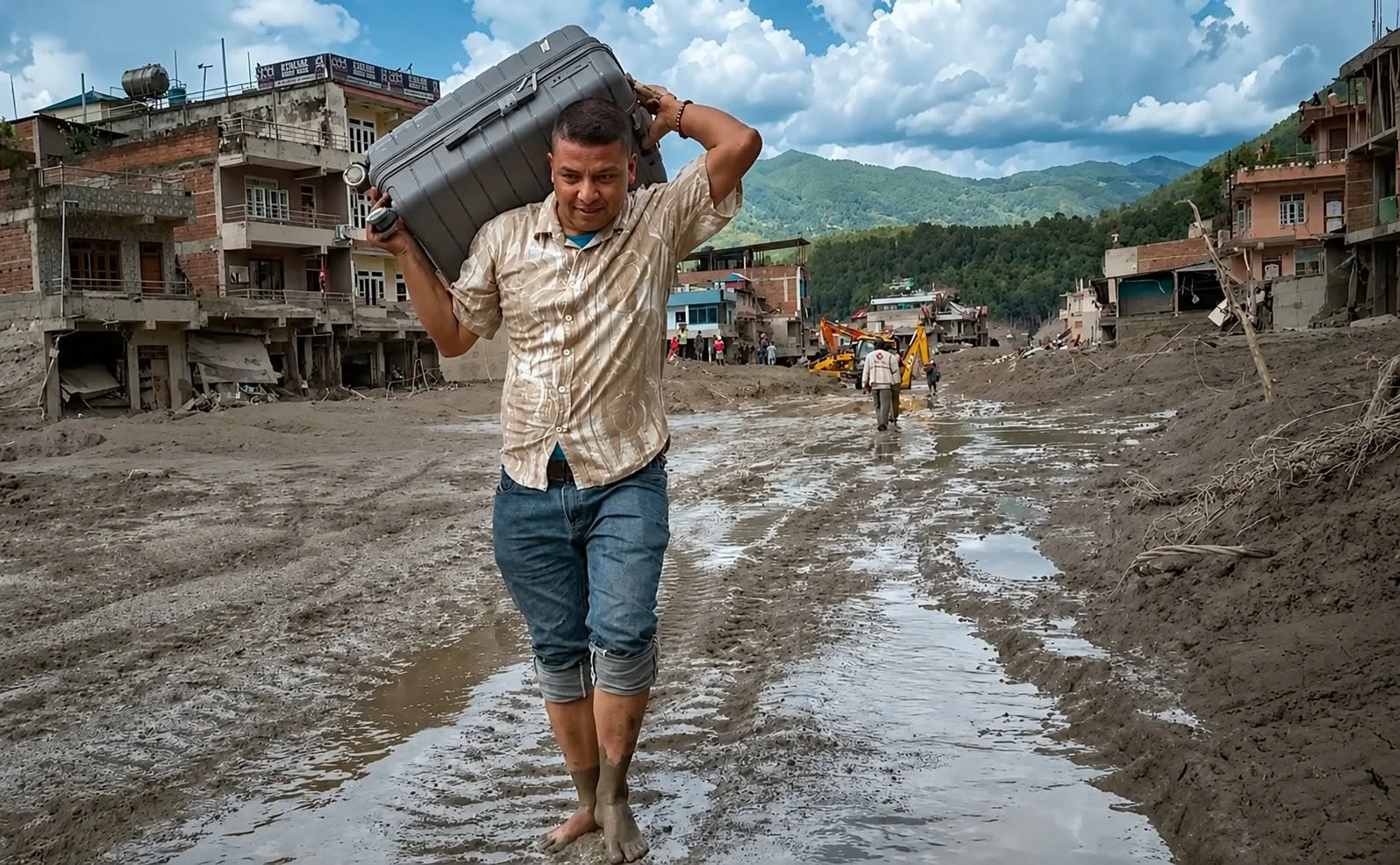
Ainda sob o impacto da devastadora avalanche e enchente de lama no Nepal, me pergunto o que poderia ter sido feito para evitar a perda de tantas vidas. Passados 12 dias do desastre, já são mais de mil mortes confirmadas e cerca de 3 mil pessoas ainda desaparecidas. Será que poderia ter havido alguma sirene ou uma mensagem por celular que avisasse a população sobre o perigo iminente?
Alguns especialistas disseram que a velocidade do desprendimento do bloco de gelo e seu impacto no rio Trishuli, na fronteira com o Tibet, foi tão rápida que não haveria tempo para emitir um aviso de emergência. Mas, de acordo com reportagens publicadas até agora, ficamos sabendo que não existia um sistema de alerta preventivo na região atingida. Nesta semana, a Reuters revelou que avanços em um monitoramento do estado das geleiras foram interrompidos pela resistência do governo da China em compartilhar dados com o Nepal.
O repórter Alec Luhn, que trabalha na revista britânica New Scientist, é um especialista em cobertura da criosfera (o nome dos ecossistemas congelados do nosso planeta). Em um post, ele lembrou que um evento semelhante – o colapso de um glaciar – ocorreu na Suíça no ano passado, atingindo a vila de Blatten. Na ocasião, apenas uma pessoa morreu. Isso só foi possível porque um alerta emergencial foi emitido e as pessoas deixaram a cidade em tempo.
Com o aquecimento global, os glaciares em todo o mundo se tornaram muito mais instáveis. O gelo em ambientes montanhosos, como aquele onde ocorreu a avalanche, vai se afinando a cada ano. Na região afetada no Nepal, os verões dos dois anos anteriores tinham registrado as temperaturas mais altas na série histórica. Algumas destas geleiras demoraram milênios para serem formadas, aponta Luhn, mas poderão desaparecer apenas no período de uma vida humana.
No Brasil não temos geleiras, mas temos nossos próprios eventos extremos climáticos. A tragédia mais viva em nossa memória é a mega enchente no Rio Grande do Sul em 2024. No estado, 440 mil pessoas ficaram desalojadas e 184 perderam a vida. Naquela ocasião, houve sim uma mobilização importante dos órgãos responsáveis. Alertas meteorológicos foram emitidos, a defesa civil entrou em ação. Mas a imprevisibilidade jogou um papel importante: a transformação de uma tempestade em um evento de alta intensidade ocorreu em pouco tempo e sem que pudesse ser detectado pelos sistemas de monitoramento.
Com isso, a lacuna que se tornou evidente no Rio Grande do Sul foi a falta de manutenção da infraestrutura existente e de investimentos para se adaptar aos novos tempos. Com a temperatura média global subindo mais do que 1,5ºC, eventos devastadores como esse são esperados. A adaptação, então, se torna a palavra do momento. Precisamos adaptar nossas casas ao calor e frio extremos. Precisamos pensar no suprimento de água e alimentos frente às secas e enchentes constantes. Precisamos de alertas de emergência climática, seja para nos salvar de uma tempestade ou de uma queimada destruidora.
A injustiça climática
Se com alertas a capacidade de resposta já é um desafio, sem eles os impactos se tornam ainda piores. É também uma questão de justiça social. Pois, como temos visto nas situações de emergência, os mais pobres se tornam ainda mais vulneráveis. São eles que perdem todas as suas economias em uma enchente ou deslizamento de terra. São eles quem têm menor chance de resistir aos impactos por estarem em zonas de risco.
Uma das maiores tempestades já registradas em um dia no Brasil ocorreu em fevereiro de 2023 em São Sebastião, no litoral de São Paulo. Ela deixou evidente esta desigualdade dos impactos climáticos. Ali, após a queda de quase 800 mm de chuva em apenas algumas horas, 65 pessoas morreram em deslizamentos de terra. A maioria vivia em ocupações irregulares nas encostas da Serra do Mar. Como no Nepal, não houve sirenes ou alertas.
Mas é preciso reconhecer que tivemos avanços importantes nos últimos anos na implementação de sistemas de alertas preventivos. Em 2011, após a tragédia que afetou as cidades serranas do Rio de Janeiro, o governo da então presidente Dilma Rousseff deu um passo fundamental com a criação do Centro Nacional de Monitoramento e Alertas de Desastres Naturais, o Cemaden. Este órgão público reúne alguns dos mais qualificados cientistas e técnicos do país e se tornou parte do nosso dia-a-dia com seus avisos sobre as chuvas e secas extremas. Ao mesmo tempo, vimos uma integração grande da infraestrutura de comunicação, permitindo que a defesa civil possa enviar alertas diretamente nos celulares de cada cidadão.
Ainda assim, vamos precisar de mais.
A Organização Meteorológica Mundial, parte das Nações Unidas, tem promovido com força um programa chamado “Alertas Preventivos para Todos” (Early Warning for All, em inglês). Com a tecnologia existente – satélites de monitoramento em tempo real, redes de comunicação globais – é possível evitar a perda de vidas e antecipar o pior. Além disso, há cada vez mais um acúmulo de conhecimentos tradicionais ou boas soluções que podem ser compartilhadas entre países. Nem sempre é a tecnologia que faz a diferença. Existem casos, como visto entre populações indígenas na Indonésia, em que os anciãos com conhecimento profundo sobre as marés foram capazes de alertar suas comunidades sobre a chegada de um tsunami.
Por fim, há um outro importante desafio no meio de tudo isso: o combate à desinformação. Essa foi uma lição aprendida nos incêndios em Los Angeles no ano passado. Muitas pessoas perderam suas casas por não acreditarem nos alertas emitidos pela imprensa. Por terem deixado de acompanhar os canais tradicionais de notícias, pessoas foram literalmente vítimas das informações falsas.
Neste momento em que a mudança climática se intensifica e a adaptação se torna urgente, abraçar o negacionismo (alô, Flávio Bolsonaro!) é mais do que um risco. É uma ameaça!
Para saber mais: Prevention Web – site de notícias e recursos da agência da ONU para redução de riscos de desastres.
In mid-August, The New York Times lost a defamation lawsuit in Alabama. It’s the first such case the paper has lost in more than half a century. Back in 2023, the Times reported that a University of Alabama basketball player named Kai Spears was at the scene of a fatal shooting—information that turned out to be false, and based on a single anonymous source. A jury found the paper liable for damages to the tune of $9.25 million. Ryan Phillips, the only reporter to attend the duration of the defamation trial, describes the experience:
Chief among the post-publication issues was the Times‘ reluctance to issue a correction or retraction when it became immediately clear that Witz’s anonymous source had been wrong in their assertion that Spears was in Miller’s car during the shooting.
The jury heard lengthy testimony about how the newspaper published “updates” in the form of “Editor’s Notes” to the online story to reflect each new denial coming from the University of Alabama, UA Director of Athletics Greg Byrne, Spears’ father, and then the Alabama walk-on himself in an Instagram post.
Apart from the updates, which the Times argued were tantamount to a correction when applying Alabama law to the evidence, the story remained unchanged until an official correction was eventually published by The New York Times on June 3, 2023.
Una investigación internacional publicada en Nature Communications desvela que cambios mínimos en la radiación solar bastaron para reubicar los vientos dominantes del Atlántico Norte y modificar para siempre el pulso de los ciclos glaciares. El trabajo, firmado por científicos del laboratorio Environnements et paléoenvironnements océaniques et continentaux (EPOC), dependiente de Bordeaux INP, el CNRS, la […]
When I was little I had a ritual with my parents where, as they tucked me into bed, they’d tell me a few reasons why they loved me (yes, I know how lucky I am to have been raised in an environment like this). As part of their list, I always asked them to say I was careful, and dutifully they’d repeat, “Yes, of course, we love you because you’re so careful.” I needed my parents’ words to ward against a recurring-day-mare-type vision I had in those years, in which I climbed onto our roof and then, while recklessly peering over the edge, toppled off the eave and cracked open my skull. I would never have put myself in that situation in waking life; I was so cautious that even an imagined scenario in which I endangered myself was enough to terrify me. But being reassured of my carefulness night after night made me feel safer.
My prudent youth did involve a handful of responsibly chaperoned birthday parties at Northern California climbing gyms, and a handful of climbing excursions in the Sierras with my grandfather, but ironically the flatland of Minnesota is where I got serious about the sport. During those unrelentingly brutal winters I seized upon climbing for exercise and entertainment—in the gym, since it was colder than the dark side of Mars outside—as a way to stave off cabin fever in the long months of permafrost. On a recent visit back to the Twin Cities at the close of one such winter, right after a session at the gym where I first cut my teeth, I posted up on the patio of an organic café to bask in the abrupt warmth of springtime. A guy sitting at the table next to me asked if I was a climber—our veiny forearms signal us to one another like Harley-Davidson jackets do for bikers—and I said yes. We started chatting.
This guy had just moved to town to save his own life. He was a paraglider, parachutist, kite-surfer, and wingsuiter, and he said that in the last year a dozen members of his inner circle “went in,” including his best friend and his brother, all in accidents related to their gravity-skirting pursuits. At first I couldn’t figure out what he meant by “went in,” but as I listened to him enumerate their various methods of “going in,” I eventually realized he was telling me they had all died. I could hardly comprehend the reality he described: being at the heart of a community where loved ones blink out in droves, like candles in a gale. He knew if he stayed in the game as a professional extreme athlete, pressured by peers and sponsors alike to remain at the cutting edge, he himself wouldn’t be around much longer. So, sight-unseen, he moved to the flattest and boringest place he’d ever heard of: Minnesota. He came specifically because there weren’t any cliffs for him to throw himself off. Only a few months into his new life as a Minnesotan, he was still in the jittery, cold turkey phase of his thrill detox.
“You done much free soloing?” he asked.
“Not really,” I said. A truer answer would have been HELL NO I’M A WIMP, MY PARENTS LOVE ME BECAUSE I’M CAREFUL.
“Amazing feeling,” he said. “Being certain if you fuck up you’ll die, and being equally certain you won’t fuck up.”
We listened to the birds, sipped our coffees. I picked at the remains of my huevos rancheros. The juncos twittering around us sounded gladder than usual to be alive. I asked, “Is it really that much less fun to have a rope on? Like, clip a few draws? Place some cams along the way?”
He shook his head. “Once you been hucking yourself off the high dive, it’s no fun jumping off the edge of the pool.”
This at least rang true. Even I find it boring to jump off the edge of the pool.
“Glad you got out when you did,” I said.
He nodded grimly, seeming less glad than I was. Then I asked what he was getting up to instead. Of course, it was the most extreme thing you can do on flat ground.
“Ultramarathons,” he said.
He didn’t seem interested in probing his own psychology or rationales. He unapologetically liked the feeling of being adrenalized, and he wanted to feel that feeling as much as possible without killing himself. Why turn it into some elaborate trolley problem? For those living on the outer edges of risk, I suspect confidence is the key to survival: the confidence in one’s ability to assess a risk and then the confidence to execute the necessary action once a risk is deemed acceptable. Extreme athletes don’t seem to think too hard, at least on an abstract philosophical level, about the dangers they face. Their engagement is logistical, methodical. Far more productive to test the snowpack, visualize the beta, read the weather report, double-check the way the parachute is folded, determine what direction the wind blows down the talus field.
Rather than focusing on what we stand to lose, what riches does risk put us in position to gain?
But risk has been on my mind of late, because, much to my own surprise, my relationship to it has been changing. Recently I was on a very tall boulder called the Kraken, and it felt like I spent a hundred years with the sand in its penultimate pocket rolling grittily under my fingertips while I searched the rounded top of the block for a hold I could trust. A part of me is there still, suspended in that epoch of hold hunting, gearing up for the final move. This is one of risk’s most obvious gifts, the chance to experience that rare, thin-slicing acuity where each separate millisecond stands out like an image etched in stone. The present dilates to activate the past and future, too, as though we’re living our whole life all at once. With a cognitive rapacity available only during a fight-or-flight response, we cast our gaze forward, asking what grim future will bloom if we fall. And simultaneously cast it back, asking what errors in our past have brought us to this crossroads. Have I survived a situation like this before? Will I get lucky and survive again?
In a film, that’s where the music would come up, dissonant strings, ringing ears, the drums increasing tempo. It’s odd that the times of our deepest dumbstruck not-knowingness should be called “moments of truth.” I found a shallow, sandy divot for my right hand, threw my left heel high over the lip, and rolled onto the top of the boulder. A friend took photos, but it makes me uncomfortable to look at them.
From the back seat of a lifted pickup, deep house oozing out of a handmade portable stereo that Owen built into an antique suitcase, I look over the truck bed at the contrail of dust we send into the Eastern Sierra evening. Our pilot expertly navigates a kaleidoscope of dirt roads to deliver us at the Crab Cooker. Tumbling out of the truck we grab towels, water bottles, and puffy jackets, and walk a raised wooden path to the area’s hottest hot spring. An eggy, algal cloud envelops us before the spring itself comes into view. Then we see the rock-rimmed pool, a steam plume ascending from a dark crater. The water here, when it first comes to the surface, hovers around 150 degrees Fahrenheit—hot enough to cook crabs, no exaggeration in the name—so people cut it with cold water from a surface stream until it comes down to around 110. The pool is still hotter than any man-made tub I’ve ever sunk myself into, and its scalding sting feels spectacular on the aches we’ve accrued from several consecutive climbing days at the Buttermilks and in Owens River Gorge. We keep our hands lifted above the surface of the water so our hard-earned calluses don’t melt off.
Parallel to us climbers, there runs an entire subculture of hot springs enthusiasts who travel the country to find the loveliest, toastiest, unlikeliest geothermal pools that tectonics has to offer. Connecting with this odd population of wanderers is one of the surprise pleasures of our annual Bishop trip. The Crab Cooker must rank high on their list. Wild sage and scrubby junipers riddle the sand, boulders punctuate the foothills and draws, and the impressive ridgelines of the Sierra Eastside tower over it all, seemingly close enough to splash with the flick of a finger. At sunset the land gets saturated with glory and import and impeccable desert light, and we in our good fortune get to gaze at this panorama while the guts of the planet warm us to temperatures well in excess of our own hearts’ heat.
When, to our surprise, two bodies coalesce out of the steam, we apologize for our loudness and promptly shut down the stereo. The strangers don’t mind, they say, they’ve been enjoying the ruckus. The new arrivals are a pair of Germans, a father and his grown son, who have been touring America together. Before long our separate conversations become enmeshed in the small pool. We learn that the younger soaker, the son, used to be an accomplished extreme athlete. He somberly explains that he found himself a lonelier and lonelier survivor as his BASE-jumping and wingsuiting friends went in. Hearing the phrase now for the second time, I’m struck by the gentleness of the euphemism, far softer than the verb to crater, as in “their parachute didn’t deploy and they cratered,” which I’d heard in gruffer conversations with BASE jumpers. I picture these lost friends “going in” to a collective reserve of matter and spirit, the heavenly welter where all unmade is remade. Although, with the image of a crater in mind, I suppose “going in” could refer not to the eternally cyclical return to one’s mysterious origin but rather to a body “going in” to the ground at terminal velocity. Needless to say, I don’t ask the German.
He explains to a rapt audience that last year, upon successfully landing a jump, his still-open parachute caught a fierce gust of wind that slammed him into a cliff and dragged him across a talus field. Multiple impacts against the rocks shattered innumerable bones, including several in his back. By coincidence, the guy’s best friend was flying the emergency helicopter that came to collect his ragdoll body. To those on board it looked like a hopeless case, a certain fatality, but in the end the guy survived. Hearing the story, I look to my own best friend soaking by my side. We make eye contact and discreetly drop our jaws a fraction of a centimeter, a silent exchange of Jesus fucking Christ.
“Jesus Christ,” I say aloud to the German.
“It’s no problem,” the guy says, gesturing grandly at the mountain-rimmed basin that surrounds us. “Happy I am living.”
He’s still in the middle of a years-long rehabilitation process, he explains. He points to a neck brace he’d removed before his soak, whose plastic struts I now see glowing in the moonlight, a safe distance back from the water where it won’t get splashed. “It’s no problem to wear that sometimes.”
“Just like when he was a baby,” the dad says cheerfully. “I help him eat, then I help him shit!”
We typically view risk in relation to death—inviting its possibility, skirting its tentacles—but I’ve lately been exploring a philosophy that views risk, instead, in relation to life. Rather than focusing on what we stand to lose, what riches does risk put us in position to gain? This question came by way of a book called Éloge du risque by French philosopher Anne Dufourmantelle. It hadn’t yet been translated into English, but with undergrad French memories and a Larousse dictionary in hand, I bought a copy and dove in. I worked on my translations of Éloge du risque while riding the Flatiron Flyer bus between Boulder and Denver. During this commute the Flatirons themselves rise to the west like a fleet of ships tacking in formation, their huge reddish triangular faces making a tidy row of sails afloat on a choppy sea of pine.
A route called Freeway ascends the Second Flatiron (they’re numbered sequentially from north to south), and locals tell me it’s a fun, dead-easy romp for the entire thousand feet of the eastern face. Nobody bothers to use the melodramatic phrase free solo; they just call it a scramble. The route has seen barefoot ascents, no-hands ascents, and, the clearest indicator of its difficulty, an ascent by a climber wearing roller skates. For some reason I never wonder whether I’m going to climb it, I just know, innately, that I’m going to. It’s an indicator that my relationship to risk is changing. Even still, as I prepare to solo—sorry, scramble—the Second, I approach it with a solemnity bordering on gloom. I warm up at home, stretch, fuel and hydrate, tidy the basement so that if I die I won’t leave an unsightly mess for my landlady to deal with. Ridiculous. The short drive across town feels haunted, with the Flatirons leering in the windshield as I pilot my way westward. I park and take a deep breath before exiting the vehicle. Walk up the trail, a well-beaten one that sees countless tourists and toddlers safely along the base of the range, taking every rock-hopping step with exaggerated care, testing the infallibility of my balance. And then I sit at the base of the Second for ages, meditative and serious, while a string of a half-dozen stoned teenagers fire the route, unroped, not even pausing their giggling conversation as they step off the trail and onto the rock.
Supposedly there’s a crux around fifty feet off the ground, but for me it turned out the crux was just deciding to do it. When I finally put on my climbing shoes, tuck my sneakers into my backpack, and lay my hands on the crystalline stone, hard moves are absolutely nowhere to be found. The climbing feels easier than walking, in fact, since I get to use my hands in addition to my feet. From a hundred feet up, and again at three hundred and again at five hundred, I glance down at the sandstone ramp the foot of the mountain makes, observe how the trail gets thinner and the trees get smaller as I rise, and experience a wave of giddiness. I sip that sensation like champagne, peering, bubbling, then I turn my face to the wall and continue the scramble. At the summit I sit a long time and look east at a flat expanse of town and plain that appears to extend all the way to the Atlantic. I’ve wagered my life, and have been repaid tenfold.
A week later, I take an incremental step up in difficulty and try the Third Flatiron. Locals, I notice, do tend to refer to this one as a solo, not a scramble. I’m exiting the kiddie pool. Again I follow the trail through Chautauqua Park with a measure of unease in my gut, hiking through grassy open fields up into the pine sea, and then across a stretch of loose talus to the base of the route. A thousand angling, rippling feet of sandstone thrust westward, the summit hidden from view. I bring my chalk bag this time and coat my palms with a layer of white dust to keep them from slickening with sweat. Unlike the Second, the Third is a legitimate, if moderate, climb. I make careful progress, never moving more than one limb at a time, testing each handhold for soundness, testing each surface for slipperiness, before entrusting my weight to it. Focus, rather than rhapsody, rules the experience. The crux comes at the top. Until that point I’d been hanging on bucket-like holds, generous craters, but the rock comprising the last twenty feet below the peak has been worn smooth by the elements. Though the terrain is low angle, it’s holdless as an asphalt road. This section, I knew from my research beforehand, would require a few moves of open-hand slab climbing. In the absence of tangible features on the cliff, you just paste your hands and feet onto the surface and rely on friction to hold you in place.
Slab is an unnerving, faith-based style of climbing, and those few moves—a thousand feet off the ground, knowing a fall would be fatal—demand a degree of meticulousness I’ve never before needed to summon. To summon it that afternoon is like flexing a new muscle for the very first time. I feel each grain of the gritty matrix as it deforms the skin of my fingertips, fitting the ridges of my fingerprint to match the ridges of the Flatiron’s surface. I attune to the gumminess of my shoe, the pressure of the ball of my foot compressing its rubber sole, filling completely the negative space of the rock’s surface. Death isn’t on my mind. It’s a million miles away. I know I will be perfect, and this perfection will make me invincible. If I fall, my last thought will be I never saw this coming. But I wager; I scurry. I summit. From the top I stare down at the backs of raptors, at the pine and the prairie, and again my spirit prospers.
The next morning from the bus I cast a lingering glance over the Flatirons. I look at the granulated ripples of the cliffs and superimpose my antlike image onto them, watching memories of myself crawl up the faces as if in footage captured by a drone. I’m still up there, forever taking those calm breaths, forever palming those grainy domes. Fellow commuters catch me wearing a moony smile. Now, pen gripped in my teeth, Éloge du risque open in my lap, my gaze drifts a click northward. My newfound muscle twitches. In the notebook for my scraps and outlines I write FOR RISK ESSAY: SOLO THE FIRST? After spending the day on campus I get back on the bus for my evening commute, and that scribbled notion digs into me uncomfortably. The wobble on the highway made my script look manic. It is manic. The idea stands squarely outside of what I consider to be an acceptable level of climbing risk. From the bus window the First dominates the ridgeline as the Flatirons fall into shadow. Morning and evening light seem to fashion two different ranges out of the same rock space. When I try on the idea of soloing the First, it feels like a too-small sweater pulled over my head, grabbing my skull. I know I should rip it off and discard it. But I could also push my way inside. I recall a strong, confident climber-friend whose trip report after soloing the First was simply, “I’m never going to do that again.” I wondered what had happened to turn his face so ashen, but he didn’t elaborate, and I didn’t pry.
These accident reports save lives more directly, more demonstrably, than poetry or scripture.
Climbing culture has a storytelling idiom I call “Close Calls.” They’re an inversion of just-so stories; instead of tales of creation like “How the Zebra Got Its Stripes” or “How the Giraffe’s Neck Got So Long,” Close Calls focus on tales of destruction like “How Rebecca Lost Her Leg” or “How Johnny Lost His Partner.” Years ago at the base of the Incredible Hulk, a gorgeous granite outcrop in the Sierras, Owen and I were preparing to climb the classic Red Dihedral. We’d undertaken the steep approach hike in the evening, stove heated some expired and deeply disappointing beef stew, and established our bivvy beside a picturesque rivulet riffling through a boulder field. Two young women camped at another minimeadow a few hundred feet downstream, and when the stars came up, they invited us down for a sip of whiskey. We splashed a bit of warmish bourbon into our unwashed bowls, resulting in a cocktail like a hot Sazerac with a beef-grease rinse instead of an absinthe one. During that night’s edition of Close Calls, we hear of a time an inexperienced leader led a pitch and built an anchor, and one of the women (now sipping her whiskey between plot points) followed him up, arriving at a worthless nest of protection that, had she fallen, would have sputtered from the wall and killed them both. Next my buddy describes watching a climber follow an outdoor route on top-rope, unclipping each draw along the way, and then, at the top, unclipping the two draws that held the rope, and then, the height of outrageousness, untying his rope and dropping it to the ground, meaning he was now clinging to holds a hundred feet off the deck with nothing else to hold him in place. By some miracle a professional climber was on a route next door and, seeing the disaster unfold, climbed to the stranded kid in minutes with a spare rope to reattach him to the world.
As with any public storytelling genre, there’s a ritual to it. One teller shares the scariest climbing story they’ve heard or experienced, a story of someone’s closest call. The fireside audience takes in the punchline—a survival unscathed, a rescue, an injury, a fatality—in solemn contemplation. After a respectful interval and perhaps another sip of whiskey, the next teller narrates an even closer call. For listeners familiar enough with safety systems to fully appreciate the danger, miscommunication, unpreparedness or negligence in these stories, the tales provide riveting entertainment, in their own grim way. But they serve a deeper purpose, too, in that they circulate these scenarios as a risk-prevention measure. The same could be said of the more formal narratives published by the American Alpine Club. Their style is unadorned, a blow-by-blow sequence of errors that led up to an injury or death on the wall, but safety-oriented climbers read these annual accident reports with biblical devotion. Instead of re-living old traumas, these prudent folks pre-live them, learning to deal with such catastrophes should they arise or, better yet, learning to avoid such catastrophes altogether. These accident reports save lives more directly, more demonstrably, than poetry or scripture.
We could easily swap Close Calls all night, but both teams are planning to start our ascents of the Hulk at dawn, so we force ourselves to break up the party before it gets too late. I brush my teeth, taking a gamble on unfiltered river water, and tuck myself into bed. In the sleeping bag, staring up at the densest panorama of stars I’ve seen in months, I wonder what moment, in my life so far, was the moment I was nearest to death. My own closest call, in a statistical sense, when my odds of survival were lowest. At first I think it would land among the instances when I was most afraid. There was a hike to a ghost town called Lundy when I was dead certain I was being stalked by a mountain lion. Or a time at an outdoor concert in Denver when gunshots broke out and the whole crowd stampeded in panic away from the brutal sound. Then I wonder if my closest call fell among the times I sustained an injury: a spinout on the highway from a blown tire, a fainting spell in the Rockies brought on by dehydration and exhaustion, a split forehead from an ice cave collapse that let me see my own skull through the hole in my skin. But in all likelihood, I bet the moment passed by me altogether unnoticed. One of my countless midnights on a two-lane country road, maybe, when the approaching headlights belonged to a drunk driver, or a trucker on the cusp of sleep, or a heartsick teenager composing a text to an ex. So long as they keep their car on the proper side of the yellow line, I never know the peril I’m in.
This evening in Boulder the sky is not its usual bluebird. From the egress window of my cheap-ass basement rental I see bulbous clouds gathering overhead. A handful of months have passed and by now the Second Flatiron scramble has become my go-to after-work workout. I lap it a couple times a week, not bothering with climbing shoes anymore, just using the same busted sneakers I wear for the approach hike. But when it rains, the rock slickens, the lichen sucks up moisture and magically transforms from a crust to a lubricant. Given the inclement weather, it’s shaping up to be a work night. So instead of soloing—sorry, scrambling—at sunset, I’m at my desk with a mug of mint tea, bringing Dufourmantelle into English word by word. Risk, she writes and I translate, “inaugurates an other time, as though traumatic. But a positive trauma.”
“An other time” makes me think, to my discredit, of the movie Donnie Darko. The premise of that film, as I interpret it, is that one night in a freak accident an airplane engine fell through the roof of the protagonist Donnie’s house, and should have crushed him, except that he was somnambulantly chasing a giant nightmare rabbit onto a golf course at the time, and thereby avoided his fate. This sets in motion an alternate universe—the one where Donnie lives—that runs alongside the one in which he rightfully dies. I think this is what Dufourmantelle means: When we take a risk, knowing we’ll either experience a near-miss like the Donnie who lives or a direct hit like the Donnie who dies, we create a narrative fork in the road. I’ve long wondered what wingsuiters, free soloists, and skydivers gain through their constant navigation of risk, and tonight I start to sense it. When carefully and responsibly considered, these dangerous activities let adventurers inhabit innumerable parallel universes. We get to live infinite lives and die infinite deaths as, in preparation, we imagine the outcomes and contingencies of each climb, each jump, each flight. The potential plotlines proliferate and the density of our life experience increases. Time dilates to accommodate not only the life we’ve lived and the life we will lead, but also all the lives we might have lived, and might yet lead.
I turn my attention to trauma positif. It’s an uncomfortable phrase. The language carries a reminder that many people experience risk and precarity only under duress. As far as I’m concerned, the privilege inherent in elective risk is alpinism’s original sin, and a key reason that, despite the vast increase in diversity and gender parity in climbing in the last decade, the sport has been slow to shake its aura of patriarchy and whiteness. But Dufourmantelle’s claims sound right to me. Just as negative trauma has the power to reshape the stories that people tell themselves about themselves and about the worlds they inhabit, so too can a trauma positif rewrite a person’s history, even as it rewrites their future. As a result of the risks I’ve taken, and the trauma positif of surviving them, I’m phasing out the story that I’m a meek person. Now, with demonstrable evidence, I must tell myself I’m capable of being brave. Maybe every time you risk your life, you lose it: You lose the life you had before taking the risk, and supplant that life with a new one. A solo of the First Flatiron feels this way for me. Ever since moving to town I’ve told myself I couldn’t solo it. So if I solo it, the version of me too frightened to try it will die.
Days later I see the headline in the local paper: “17-Year-Old Falls to His Death While Climbing Boulder’s First Flatiron.” There’s a photograph of the formation I’ve spent my daily commute mulling over, and the article below:
Equipped with camping and outdoor survival gear—but no climbing-specific equipment—a 17-year-old died after climbing alone and falling up to 100 feet or more from Boulder’s First Flatiron on Sunday evening.
Climber rescues, and non-fatal falls, are common every summer across the iconic rock formations above Chautauqua Park. But this appears to be the first accidental climbing death on the Flatirons in nine years.
The teenager—whose identity has not yet been released, and who officials initially said was 18—was found by a hiker near the base of the First Flatiron, above the Blue Bell Shelter in Chautauqua Park, according to Boulder County sheriff’s officials.
Sheriff’s Cmdr. Mike Wagner said the teen was free-soloing—climbing alone, without the use of ropes or gear—on the First Flatiron when he fell possibly more than 100 feet and suffered “massive traumatic injuries.”
Sources report that the climber took a selfie and posted it to Instagram shortly before the fall. There follow, in the next few days, admonishments from the climbing community, the oft-repeated self-assurances that this kid was unprepared but we know better, and more than a few references to a phenomenon known as “Kodak Courage,” where the possibility of taking an impressive photograph pushes a climber past their typical margin of safety. The next time I walk up to the foot of the First Flatiron, a sober memorial sits at the base of a pine tree. Cards, flowers, offerings. A printout of the photo the climber snapped and posted minutes before his death.
Toward the tail end of the same season the paper runs another headline: “Climber Dies After Falling from Boulder’s First Flatiron.” This time there’s a different stock photo of the mountain, now caked with snow. The article reads:
A man climbing on the First Flatiron on Thursday afternoon fell to his death, the second person to die following an accidental plummet off of the iconic Boulder landmark since August but only the second in nearly a decade.
Boulder County Sheriff’s Office Cmdr. Kevin Parker said that the man—who has not been publicly identified—did not appear to be using any kind of climbing gear, but rescuers were searching the area for any signs of a backpack or gear on Thursday afternoon.
By the time a Denver Post article comes out about the incident later that night, investigators have located and interviewed an eyewitness, so the article is able to provide a bit of additional detail: “The witness believed the climber fell about 1,000 feet from the top of the First Flatiron.”
With that, this essay gets shelved for a spell. It’s not just because the weather has shifted, although the snow on the Front Range makes the Flatirons unclimbable through the winter, intermittent warm days sending rivers of melt down the faces, cold storms stacking new layers of powder over the slush. But more acutely, I realize I’ve been lulled into thinking a solo of the First Flatiron would be a casual endeavor, one that wouldn’t really bring me into proximity of any grave risk. The two deaths, in rapid succession, on the route I’ve planned to climb in the same style abruptly extinguish this confidence, leave me not only shaken but also self-admonishing for having been so cocksure in the first place. I take winter walks through Chautauqua. The snow crunches under my feet, sifts from trailside pine boughs. The Flatirons stand above, their features outlined in icy white. Below, the town of Boulder enjoys its bubble of dreamy calm, a hush of distant traffic in the air, interrupted by an occasional siren belting down Baseline or Table Mesa. During these walking meditations my notebook starts to feel suspiciously similar to the luckless young climber’s selfie camera. Moleskine Courage.
What do we stand to win when our ante is ourselves? The chance to make our finite time feel infinite? The chance to make our finite self feel infinite?
The crux of the First comes in its first hundred feet, where the climbing is particularly thin, slabby and insecure. I stand in the snow at the base—where a second memorial is now tucked in the pines—and visualize the climb. My counterfactual imagination invents a worst-case scenario: I’m not far up the route, approaching the gnarled tree that marks the top of the first pitch where a roped party would typically belay. Immediately below this point there’s a delicate section of friction-dependent slab; the first time I climbed the pitch on rope, this stretch clarified for me that I’d never, ever attempt the route as a solo. There aren’t proper holds, just shallow dishes for the hands and feet. I imagine extending my left foot and placing it in one such divot. I reach farther left with my left hand, where a small diagonal rail supports my left fingertips, stacked in a row. My right hand is similarly stacked in a higher-up dish, and as I go to move my right foot toward my body’s centerline, the left foot slips off. My knees strike the rock first, my elbows a moment after. The angle is low, so I don’t go into full vertical freefall. I bounce down the face. After twenty feet a heel catches and I invert, delivering a rolling blow to my shoulder and an impact to the back of my skull. In my chest a depth charge, a low moan as I land in the talus beside the twin shrines. After my death, my writer-friends will wonder what I was working on in my last days. I’ve kept my preparations for the solo secret, but now they will look in my notebook and see I’ve been planning it for months, getting ready to sacrifice myself for no greater purpose than a literal thought exercise.
I shift my weight in the snow, shake the spectacle out of my head. I return to the trail, the car, the comforts of home.
The winter months pass, long nights, a bomb cyclone that buries my basement windows in snow and leaves me to lurk in the dark like a slumbering bear, and then spring arrives abrupt and clanging and golden. Overnight the Flatirons slough off their snowy coats. Still ambivalent about soloing the First, I go to Chautauqua with two friends, planning to rope up and climb with them as a party of three. This will give me a chance, I figure, to scope the route once more and make a final call. Reassess those dishes and divots, determine whether I can trust my life to them. We spend a long time at the base, not rushing, just racking up and rearranging our packs, sipping water and snacking, enjoying the gorgeous day. The sun dips behind the ridge and the temperature gets perfect, just on the cooler edge of pleasant. The rock won’t be greasy, there’ll be plenty of friction, but it won’t be so cold I’ll get chilly and misinterpret my shivers as fear. Plenty of daylight, light spirits, and for once in my life, I don’t overthink. I know deep in my soul that I don’t need the rope today. So I don’t tie in. I just climb alongside my friends. It’s easier than walking because I get to use my hands, and everything goes perfectly, which means in the end there’s no story at all.
I won’t solo the First again, but not because I hated it. I won’t solo it again because I loved it too much. Since then, I haven’t exactly become a soloist, but I’ve heard the bell-clear siren song from routes a number of times, Johnny Vegas in Red Rocks, the Capstan on Flagstaff Mountain, a few choice cracks in the Sierra, a handful of highballs like Airwolf and High Plains Drifter in various deserts of the West. I am measured and studious, with my books and dictionaries and writing routine and mint tea. I also, when called, enjoy something categorically deadly. Soloing puts me in touch with the multitudes I contain. On insomniac nights I relive the memories of these ropeless ascents, with every detail of every hold seared in my mind in everlasting high resolution, and the perfection of my movements lulls me to sleep. It must sound counterintuitive, but nothing in this world makes me calmer.
The phrase “to risk one’s life” conjures in my mind’s eye a kind of scale, like the one Anubis uses to weigh a heart against a feather. On one of its golden dishes sits your wager, your life; on the other there must be something of equal or greater value in order for the risk to seem worthwhile. What do we stand to win when our ante is ourselves? The chance to make our finite time feel infinite? The chance to make our finite self feel infinite? The satisfaction of saving our own life? Is that payoff enough?
I discovered Anne Dufourmantelle’s work on the university library search engine, under keywords “philosophy” and “risk.” At the time I didn’t look into her biography, just went straight to the primary text. But I’m curious to see what she’s working on now, so I check the regular internet instead of the university database. The first hit is an article from the New York Times, headlined “Philosopher Who Praised Risk Died Trying to Save Children from Drowning.” It reads:
PARIS—A French philosopher and psychoanalyst, known for her work that praised living a life that embraced risk, died last week as a result of following her own bold philosophy.
The philosopher, Anne Dufourmantelle, 53, drowned on Friday as she tried to save two children who were struggling to swim off the coast of Pampelonne beach, near St.-Tropez, France, according to a report from French public television.
Ms. Dufourmantelle was on the beach when the weather began to change and the previously safe swimming area became treacherous. She saw two children who were in danger and leapt into the sea to help, according to France 3, before being caught in the rough surf.
She was pulled unresponsive from the water by two other swimmers, and attempts to resuscitate her failed.
Both children survived.
I’m stunned by how recent the news is: Dufourmantelle died days before the first soloist fell from the First Flatiron. Another search result, an obituary, quotes an English-language lecture she’d once given: “Being completely alive is a task, it’s not at all a given thing. It’s not just about being present to the world, it’s being present to yourself, reaching an intensity that is in itself a way of being reborn.” Having only experienced her work, up until this point, through the veil of translation, there’s something uncannily intimate about reading her words in my own language for the first time. The clarity of it is painful, the poetry self-evident, breaking out of human time and into the mythic. She saw the children, the danger. She saw the swift water. She went in.
Brian Laidlaw is an author of the two collections of poetry, The Mirrormaker and The Stuntman. A songwriter and musician, he has released several albums, most recently This Aster. He writes for outdoor magazines including Outside, Climbing, Alpinist, and Orion. Based out of Moab, Utah, he moonlights—often by literal moonlight—as a rock climber.

 Login