Lian Yunzhi, age six, broke the record earlier this month with an average time of 4.52 seconds at a World Cube Association-certified competition in the Chinese city of Wuhan.
Lian Yunzhi, age six, broke the record earlier this month with an average time of 4.52 seconds at a World Cube Association-certified competition in the Chinese city of Wuhan.
Às 10h50 de 23 de julho de 2026, o diretor-geral da Polícia Federal (PF), Andrei Rodrigues, enviou um ofício sigiloso ao advogado-geral da União, Jorge Messias. No documento, obtido com exclusividade pela Agência Pública, pedia-se que a Advocacia-Geral da União (AGU) analisasse e tomasse “as eventuais providências cabíveis” contra uma decisão do ministro André Mendonça, então relator do caso Master no Supremo Tribunal Federal (STF). A resposta, registrada em nota jurídica também sigilosa, foi negativa: segundo a AGU, não havia nenhuma medida judicial possível.
O pedido precedeu a fase mais aguda da crise que, em setembro, pôs ministros do Supremo em confronto e levou ao afastamento de Andrei do cargo, em decisão de André Mendonça — posteriormente revertida por Flávio Dino e mantida por Edson Fachin. Segundo integrantes do alto escalão do governo, ouvidos sob reserva pela reportagem, a negativa da AGU ao ofício teria tido o aval também da cúpula jurídica do governo e foi emitida antes da divulgação das mensagens atribuídas ao ex-banqueiro Daniel Vorcaro e ao ministro Alexandre de Moraes, que se tornaram públicas em 8 de setembro, quando Mendonça retirou o sigilo de parte das investigações do Banco Master.
Fontes do alto escalão disseram à Pública que a cúpula da AGU teria se sentido pressionada por Rodrigues com o envio do ofício e que a história teria chegado até a presidência da República. Uma reportagem da Folha de S. Paulo, publicada em 2 de setembro, relatou que a PF via uma “omissão” da AGU em relação à crise envolvendo o ministro André Mendonça.
A Pública apurou que o Advogado-geral da União, Jorge Messias, e o ministro da Justiça e Segurança Pública, Wellington César Lima e Silva, se encontraram com André Mendonça, fora da agenda, após tomarem conhecimento do pedido da PF. No encontro entre os três, os representantes do governo buscaram uma “interlocução” para resolver o embate, mas a exposição das conversas direcionadas a Moraes, que vieram depois do encontro, afastou os governistas do caso para evitar uma associação pública do governo à crise no Supremo.
Messias, da AGU, recebeu o pedido sigiloso da PF para analisar decisão de André Mendonça
Nesta quarta-feira, 23 de setembro, reportagem de Marcela Mattos no UOL informa que Messias e Andrei trocaram xingamentos diante de Lula: ‘Está me espionando?’. Segundo o UOL, pessoas que ouviram relatos do episódio disseram que a conversa, acompanhada a todo momento por Lula, foi “dura”, “tensa” e “ríspida”. A cobrança foi considerada a gota d’água de uma série de divergências que vinham se arrastando nos bastidores das investigações sobre o Banco Master.
Procurada, a AGU informou a Pública que “as informações apresentadas na matéria do UOL não são precisas. Divergências são naturais, evidentemente, mas nada se sobrepõe ao respeito e à consideração que o advogado-geral da União, Jorge Messias, tem pelo diretor-geral da Polícia Federal, Andrei Rodrigues, tanto no âmbito pessoal quanto institucional”
Procurada, a Polícia Federal não deu retorno até a publicação. O espaço segue aberto para manifestação.
Uma disputa que começou em fevereiro
André Mendonça herdou o caso Master de Dias Toffoli em fevereiro deste ano. Nas primeiras decisões como relator, em 19 de fevereiro, o ministro determinou que apenas os policiais diretamente envolvidos na investigação tivessem acesso às informações, com sigilo “inclusive em relação aos superiores hierárquicos”, o que incluiria Andrei Rodrigues. Seria um movimento para limitar a influência do diretor-geral na apuração, vista com desconfiança pela ala de André Mendonça. Nos bastidores, teria pesado a percepção de Mendonça de que informações sensíveis chegavam antes ao comando da PF, o que passou a causar “um certo desconforto”, segundo uma fonte do STF, até mesmo entre os juízes lotados no gabinete do ministro.
Andrei Rodrigues, diretor-geral da PF, enviou ofício à AGU em 23 de julho de 2026
Em 22 de maio, na investigação sobre fraudes no INSS (Operação Sem Desconto), da qual Mendonça também era o relator, o ministro teria reagido a uma mudança na chefia do caso e exigido ser avisado de qualquer nova alteração na equipe. Em 15 de maio, na semana anterior à exigência de Mendonça, o comando da PF trocou a área responsável pelos inquéritos do INSS: o caso foi transferido da Divisão de Repressão a Crimes Previdenciários (DPrev) para a Coordenação de Inquéritos em Tribunais Superiores (Cinq). Simultaneamente, o delegado que chefiava a operação, Guilherme da Silva, solicitou transferência para Minas Gerais, estado natal dele. À época, a PF não revelou o nome do novo chefe da operação e justificou que a mudança assegurava “maior eficiência e continuidade das investigações”.
Em 13 de julho, Mendonça repetiu a ordem no caso Master (Operação Compliance Zero): a equipe de investigadores deveria ser mantida e qualquer troca deveria ser comunicada a ele previamente; as informações também deveriam ficar restritas às coordenações responsáveis, e o material bruto extraído de celulares e computadores apreendidos deveria ser enviado ao seu gabinete.
Mendonça impôs restrições ao acesso às informações da investigação do Master
Dez dias depois, em 23 de julho, Andrei oficiou à AGU com direcionamento a Jorge Messias, conforme o documento obtido pela Pública. O documento da PF registra que não há “qualquer indício de irregularidade” nas investigações e classifica como “desarrazoada” uma decisão que limitasse as atribuições administrativas da PF. O documento registra, ainda, que o controle externo da polícia cabe ao Ministério Público Federal. No pedido, foi citada a decisão de Mendonça de maio como “de conteúdo semelhante”, na qual se fundamentou na lei que permite à AGU defender, na Justiça, agentes públicos por atos praticados no exercício do cargo.
A análise sigilosa da AGU
O ofício foi enviado à Secretaria-Geral de Contencioso, braço da AGU que representa a União no STF. Em 24 de julho, uma reunião no gabinete do advogado-geral substituto apontou os primeiros problemas do pedido: a repercussão na imprensa sobre o incômodo da PF, no dia anterior, tratava da decisão de maio, não da de julho; faltavam documentos; e a AGU nem sequer tinha acesso aos processos em sigilo, apenas às cópias das decisões.
A nota registra ainda que, segundo a própria PF, informou à AGU em 27 de julho que o material bruto relacionado a Vorcaro já havia sido entregue ao gabinete do relator na semana anterior.
A Nota Jurídica enumera os motivos da recusa ao pedido da PF. Primeiro, diz que não se tratava de defender um agente público. Segundo, registrou que a AGU não atua em investigação criminal, tarefa do Ministério Público. Terceiro, avaliou que a PF não demonstrou “prejuízo concreto” decorrente da exigência de avisar sobre trocas na equipe. E, quarto, a PF perdeu o prazo: as regras já estavam na decisão de maio, e a de sigilo interno vinha desde o início do caso, sem que a PF recorresse. A nota menciona “inércia prolongada da autoridade policial” e afirma que uma nova decisão não reabriria o prazo já vencido. Por fim, como o material já havia sido entregue, não haveria o que suspender.
Na resposta à PF, a AGU sugeriu dois caminhos: conversar diretamente com o relator ou levar o caso ao Ministério Público Federal. As páginas obtidas pela reportagem não mostram a data de assinatura da nota.
Sede da Advocacia-Geral da União, que analisou e recusou o pedido feito pela Polícia Federal
Afastamento e volta em 24 horas
Segundo a Folha de S.Paulo, Mendonça teria dito ao presidente do STF, Edson Fachin, no início de agosto, que suspeitava de viés político de Andrei Rodrigues para blindar a campanha de Lula; Andrei teria relatado a Fachin a suspeita inversa, de que o ministro prejudicava a esquerda e aliviava aliados de Flávio Bolsonaro (PL).
No início de setembro, Mendonça levantou o sigilo do relatório que continha mensagens enviadas por Vorcaro a um interlocutor identificado como “Alexandre de Moraes Brasília”. A maior parte das mensagens foi enviada em visualização única e aponta para a troca de informações sobre uma possível operação contra o ex-banqueiro. Em 15 de novembro, dois dias antes de ser preso, Vorcaro perguntou a Moraes: “Acha que na segunda já tenho que estar fora?”.
Os investigadores também encontraram registros digitais e metadados que indicam que Moraes atuou na edição de um contrato de R$ 130 milhões firmado entre Vorcaro e o escritório de advocacia da esposa do ministro, Viviane Barci de Moraes. Após a revelação do acordo, o escritório Barci de Moraes divulgou uma nota negando a existência de impedimentos legais à contratação.
A partir de então, a crise no STF escalou, como a Pública mostrou ao longo de sua cobertura do caso. A sessão do STF para julgamento das suspeitas contra Alexandre de Moraes foi iniciada em 15 de setembro e marcada por bate-bocas e trocas de acusações entre os magistrados. A deliberação foi adiada após o ministro Flávio Dino pedir vistas do processo. Ou seja, mais tempo para analisar o caso, que segue sem definição.
The crew of the USS Abraham Lincoln touched American soil for the first time in nine months, when the strike group pulled into Apra Harbor, Guam, for a brief logistics stop and on-base liberty. The supercarrier, alongside guided-missile destroyer USS Frank E. Petersen Jr., arrived on September 19 and left the next day. Lincoln is 307 days into her deployment, 19 short of the record set earlier this year by the USS Gerald R. Ford, and is now just weeks away from San Diego. Meanwhile, two flattops are on station in the Middle East supporting blockade operations, and the USS Ronald Reagan has rejoined the fleet after an extended maintenance availability.
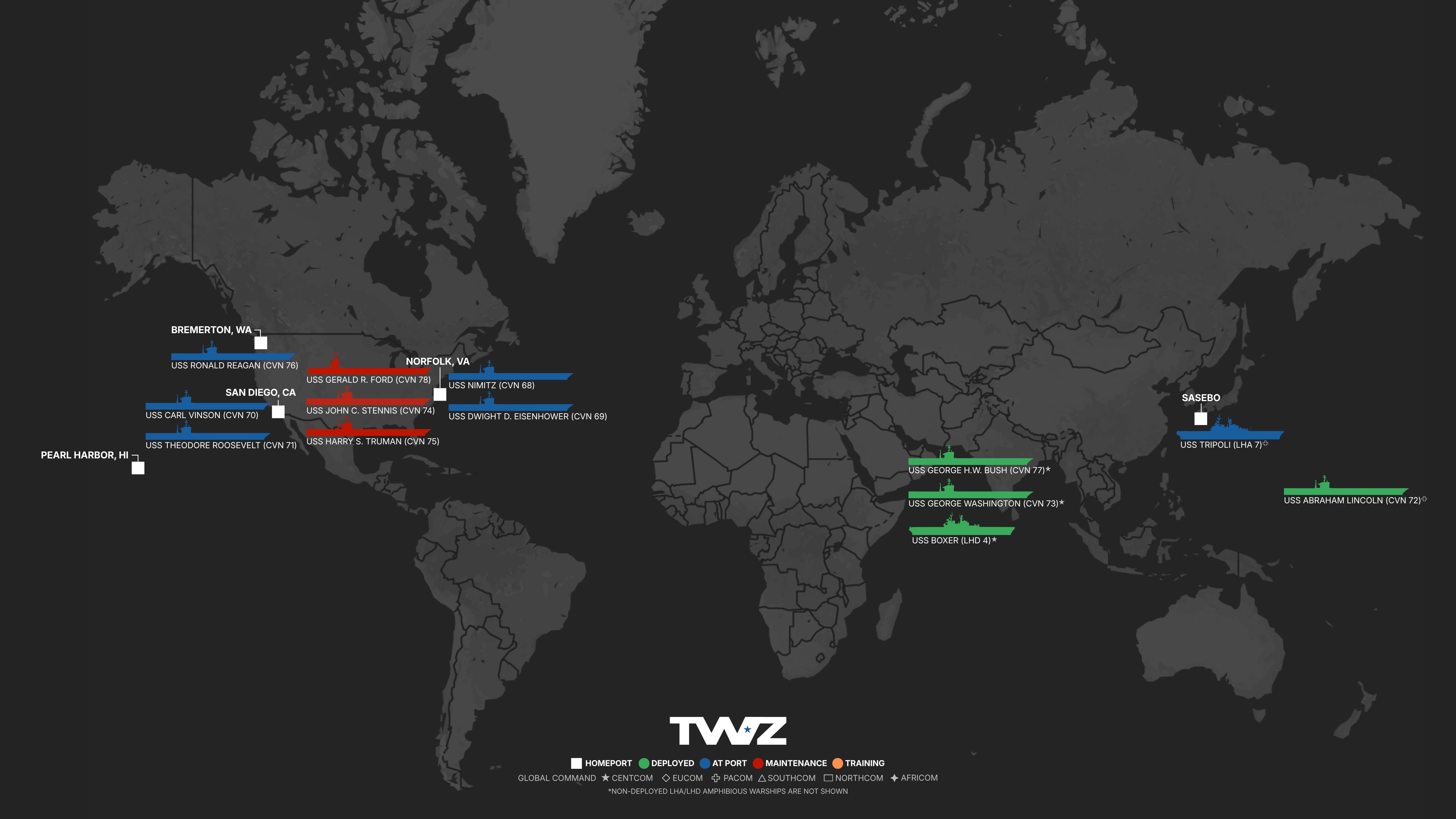
Here’s TWZ’s weekly carrier tracker monitoring America’s flattop fleet, including deployed Carrier Strike Groups (CSG) and Amphibious Ready Groups (ARG), using publicly available open-source information. Check out our last report here.
Abraham Lincoln Departs Guam, Continuing Her Journey Home
The USS Abraham Lincoln is currently conducting routine operations at an undisclosed location in the U.S. 7th Fleet area of responsibility (AOR), presumably steaming east en route to her homeport at Naval Air Station North Island in San Diego. After leaving Thailand on September 6 following a five-day liberty port call, Lincolntopped off the Petersen Jr. in the Gulf of Thailand and linked up with two Royal Australian Navy frigates for joint training in the South China Sea. Publicly available flight tracking data shows the carrier transited the Balabac Strait eastbound around September 13, and the Surigao Strait northbound two days later to enter the Philippine Sea. After going dark for a few days, she resurfaced in Guam and moored at Kilo Wharf over the weekend.
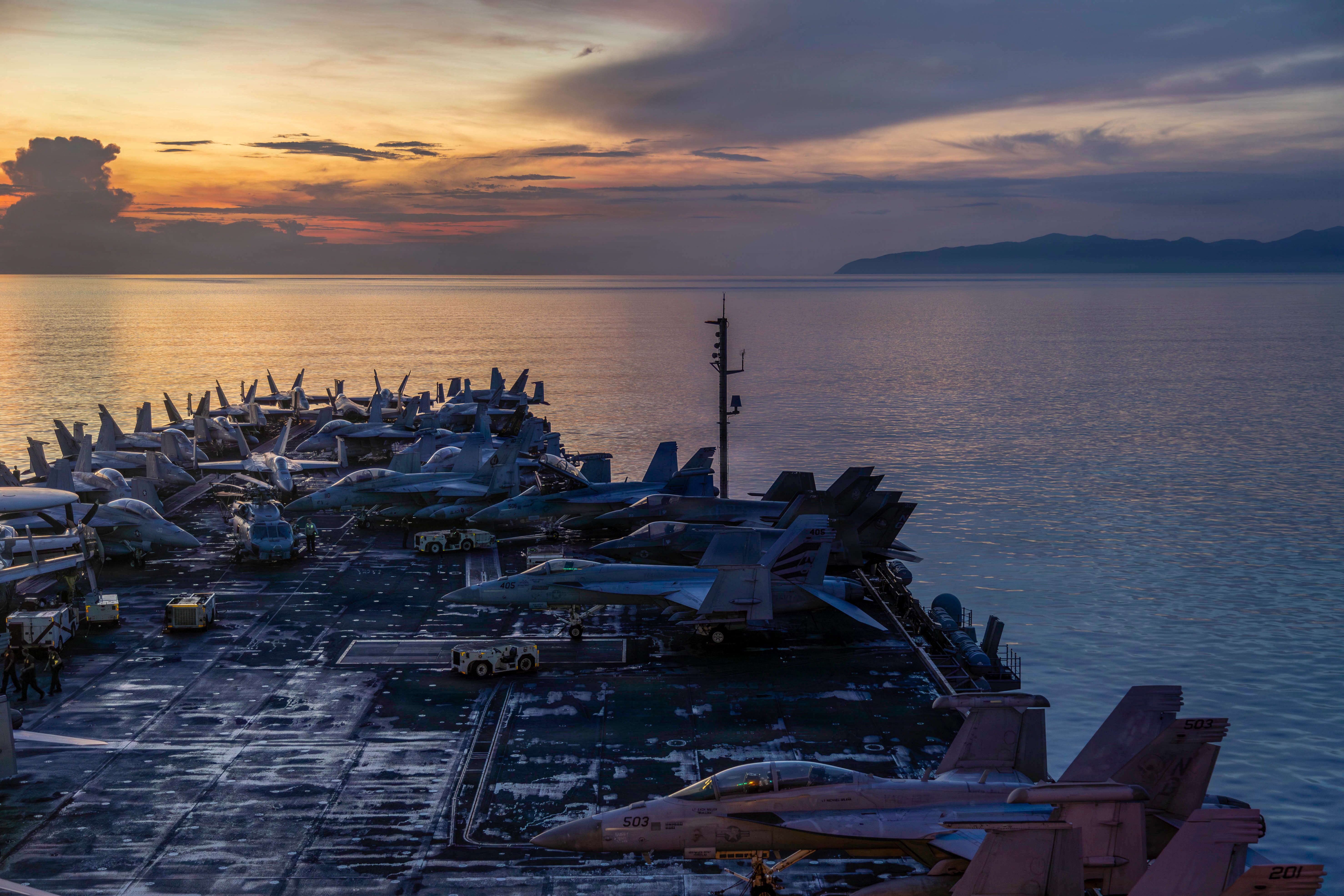
Lincoln transits the Philippine Sea. U.S. Navy photo Lincoln transits the Philippine Sea. U.S. Navy photo
“Due to the brief nature of the logistics stop, the crew were afforded on-base liberty to access base services and attend a Navy Entertainment-sponsored concert,” CSG-3 spokesman Lt. Cmdr. Tyler Barker wrote in an email to Stars and Stripes. The carrier took on stores, mail, and equipment, according to Barker, and 13 Fleet and Family counselors are now aboard to run return-and-reunion classes but “the crew and ship remain focused and ready.”
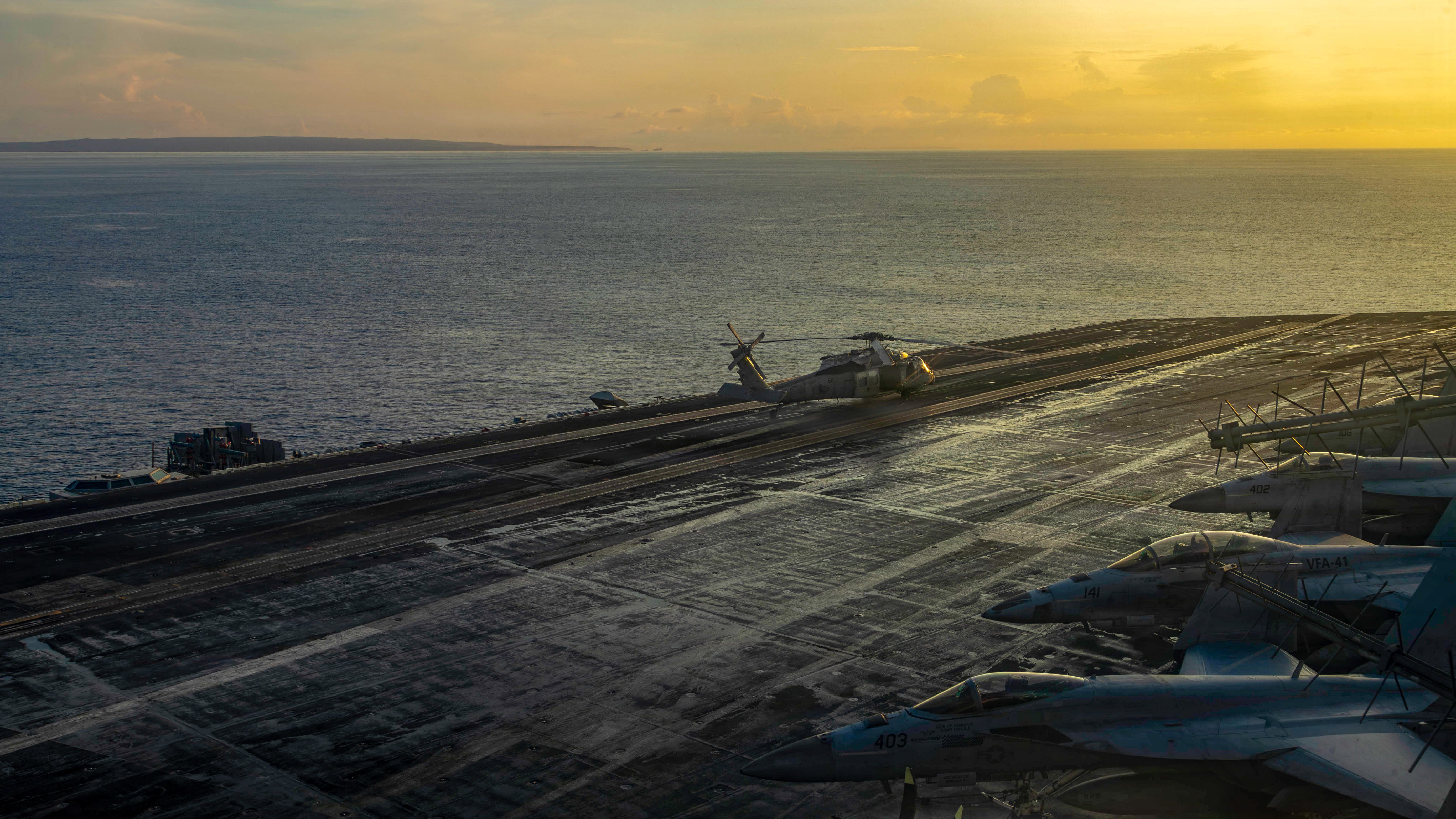
USS Abraham Lincoln (CVN 72) arrives in Guam on Sept. 19, 2026. U.S. Navy photo
A homecoming date has not been announced publicly. Unless Lincoln makes another stop (in Hawaii, for example) or conducts additional training on the way, she should arrive in early October just shy of Ford’s record. The Chief of Naval Operations, Adm. Daryl Caudle, said in June that Lincoln would likely shift her homeport to Naval Base Kitsap-Bremerton in Washington state, which aligns with TWZ’sreporting that she is expected to begin a Drydocking Planned Incremental Availability (DPIA) after returning stateside. The timeline for the DPIA is unclear.
George Washington and George H.W. Bush Project Power In The Middle East
The American public got a rare look at ongoing combat operations aboard the USS George Washington when two reporters embarked earlier this month. Fox News’ Trey Yingst and CBS News’ Tom Hanson reported live from the flight deck, as F-35C Lightning IIs and F/A-18E/F Super Hornets launched behind them, in hits that aired September 11 to 14. The only other publicized media embark since the war began on February 28 went to CNN’s Pamela Brown, who reported on the conditions aboard the USS Abraham Lincoln while the flattop was still in theater.
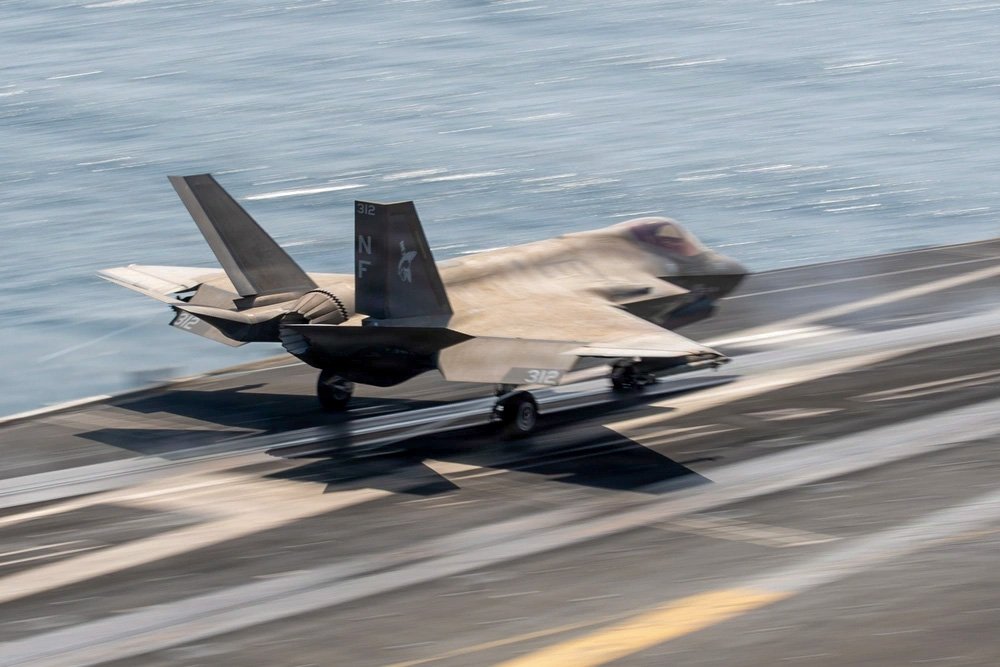
An F-35C launches from Washington. U.S. Navy photo A pair of Super Hornets on Washington. U.S. Navy photo
“Last weekend, the aircraft carrier came under Iranian missile attack; the first of three attacks on US warships in the last week alone,” Yingst said, indicating it was the USS George Washington, and not the USS George H.W. Bush, that was targeted by the Islamic Revolutionary Guard Corps (IRGC) in early September. The Navy declined to comment when TWZ asked which carrier was targeted after Iranian state media claimed the strike had been successful. “We’re pretty much employing all our capabilities right now,” Washington’s commanding officer (CO), Capt. Nicholas DeLeo, told Yingst.
Night flight ops aboard USS George Washington. U.S. Navy photos
“The GW is surrounded by four to five guided-missile destroyers at any moment,” Yingst also reported. He flew out to USS Shoup, positioned off the starboard side at the time, to make the point and speak with the warship’s CO. Shoup is the only destroyer officially confirmed to be part of CSG-5. “My ship is in charge of coordinating defense amongst the various other units, allocating defensive assets to it, be it potentially a missile to shoot something down or just aircraft to go identify and monitor the picture,” Capt. William Buford said. Based on that description, Shoup’s CO appears to be coordinating Integrated Air and Missile Defense (IAMD) for the strike group, a question we’ve been asking the Navy to confirm. TWZ understands additional destroyers operating in the U.S. Central Command (CENTCOM) AOR are also escorting Washington, but a U.S. official declined to say which ones.
Hanson asked DeLeo about the recent IRGC ballistic missile threat targeting Navy ships in the region. “We have a variety of ways to protect, both offensively and defensively, a Navy ship, and we employ all these methods,” he told the network. “It’s something that we train to.” Hanson also pressed the commander of CSG-5, Rear Adm. Jeff Heames, on whether he was concerned about the munitions stockpile, a dynamic TWZ detailed in a special feature yesterday. “Of course we’re concerned about the expenditure to some degree, but I have no concerns locally at my level here,” Heames replied.
Gun shoot aboard USS George Washington (CVN 73), Sept. 15, 2026. U.S. Navy video
In addition to Washington, Bush is still working the blockade from the Arabian Sea, nearly six months into her deployment. As of CENTCOM’s latest social media update on September 21, U.S. forces in the region had redirected 110 commercial vessels to ensure “total compliance” with the blockade. More than 50 ships “supporting humanitarian efforts” have been allowed through, according to the command. CENTCOM recently stopped publishing the number of ships boarded, seized, or disabled kinetically.
An MH-60S Sea Hawk lifts cargo from the flight deck of USS George H.W. Bush, Sept. 18, 2026. U.S. Navy photo
Ronald Reagan Rejoins the Fleet
The USS Ronald Reagan is officially back. The Navy, in a recent statement, confirmed the flattop “returned to the fleet capable and mission-ready.” The carrier had been out of action since March 2025 for a DPIA at Puget Sound Naval Shipyard in Washington state and completed four days of sea trials in early September. While the Navy does not comment on upcoming deployments due to operational security, current speculation points to a spring 2027 deployment, but that is not confirmed.
Counter measure wash down on USS Ronald Reagan in the Pacific Ocean on Sept. 6, 2026. U.S. Navy photo
Reagan is the only carrier currently homeported at Naval Base Kitsap-Bremerton in Washington. Previously, she was America’s only forward-deployed carrier based in Yokosuka, Japan, until swapping hulls with the USS George Washington in 2024. USS Nimitz was stationed at Naval Base Kitsap-Bremerton before circumnavigating South America to Naval Station Norfolk this summer, where she is being used primarily for training before deactivation in 2027. The yet-to-be-commissioned PCU John F. Kennedy, the second and newest Ford class supercarrier, is slated to homeport in Washington state no earlier than 2029.
U.S. Navy Big Deck Fleet At A Glance
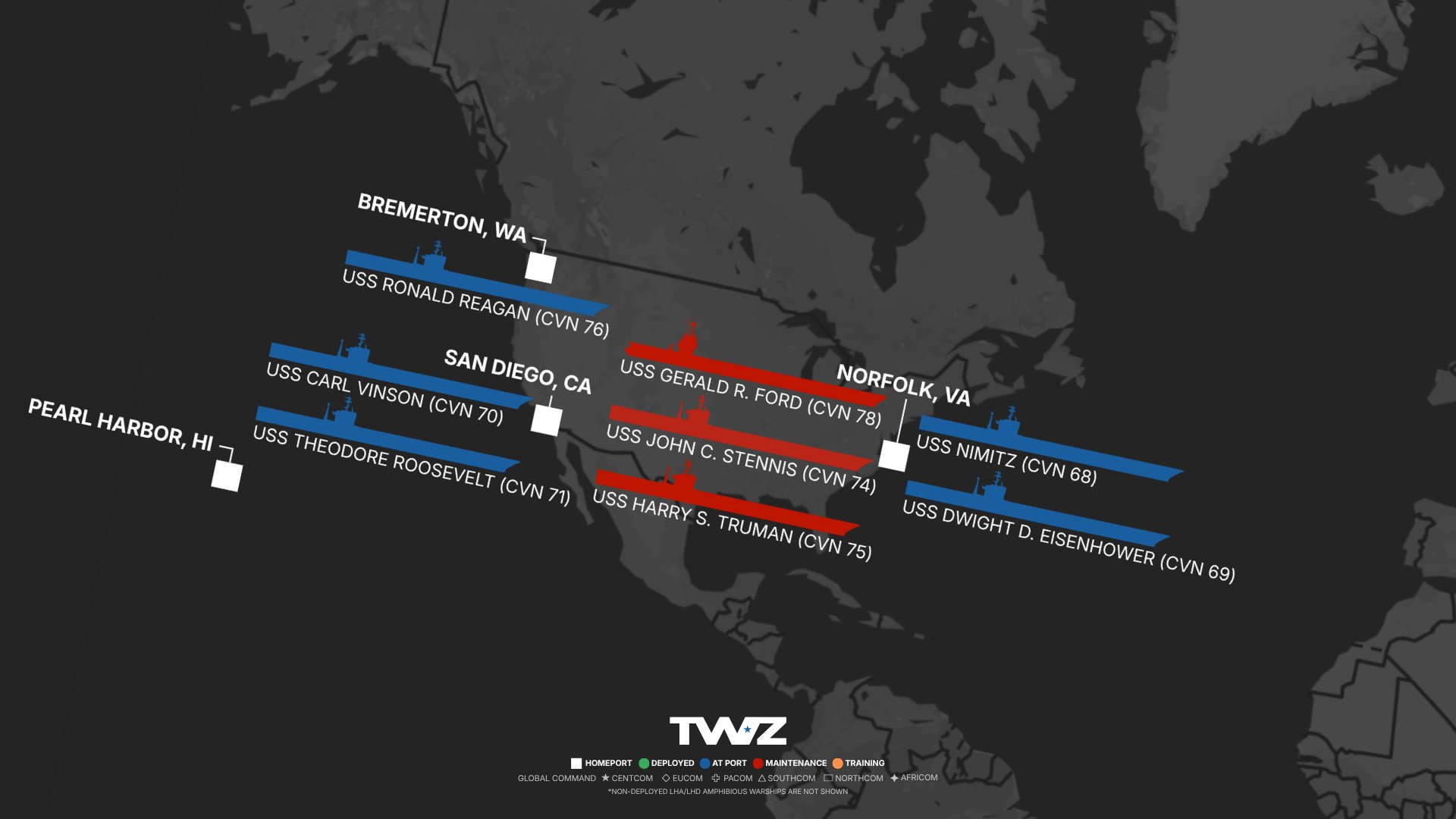
Overall, three U.S. carriers are deployed (with one heading home), one is preparing to deploy in the near term, three are working up in various states of readiness, three are in current or upcoming maintenance, and one is being used primarily for training before deactivation next year. One amphibious ready group is deployed, one is forward-stationed and in port, four are working up or in port, and three are in maintenance.
Note: Positions are general approximations.Non-deployed LHA/LHD amphibious warships are not shown.
Contact the author: ian.ellis-jones@recurrent.ioor @ianellisjones
In July 1952, reports of a railway disaster in Poland began circulating in the Western media. According to these reports, a Soviet military train derailed near the Polish town of Rzepin on 9 July 1952, killing around 160 Red Army soldiers who were returning to the Soviet Union. The train reportedly left the tracks between Rzepin and Boczów and plunged into a lake. What makes this alleged accident interesting is the uncertainty surrounding whether it actually happened.
The accident as reported by various western newspapers. Credit. Newspaper.com
On September 20, 2006, Hugo Chávez stepped up to the granite podium of the United Nations General Assembly. A day earlier, from that exact same spot, the President of the United States, George W. Bush, had spoken. Chávez crossed himself, said that the room still smelled of sulphur, and the hall burst into laughter and applause. It was not the speech Chávez had originally intended to give, but rather the direct result of the deep indignation caused by hearing Bush speak as if he owned the world. The major media of the North latched onto the sulphur phrase and have tried to caricature it. But it is the rest of his intervention that remains fully relevant, 20 years later.
Chávez arrived at the General Assembly with a book in hand, “Hegemony or Survival” by Noam Chomsky. His warning was simple yet devastating: the United States’s pretense of dominating the world put the very survival of the human species at risk. At that time, US troops were occupying Iraq. A few weeks earlier, Israel had bombed Lebanon under Washington’s diplomatic protection. In the capitals of the global north, the “end of history” was still being celebrated, the idea that liberal capitalism was humanity’s definitive horizon. Chávez said that this thesis had been proven false in barely a decade, and that now the future of the world had to be defined.
Twenty years later, plunged into an even greater systemic crisis, we can see that every phrase of Chávez’s speech remains relevant.
From hegemony to hyper-imperialism
In 2006, the United States seemed like an empire at the peak of its power. Today it is an empire in relative decline, and therefore more dangerous. The Tricontinental Institute for Social Research has called this new stage hyper-imperialism: imperialism exercised in an exaggerated and agitated manner by a power that compensates for the loss of its economic hegemony by relying on the two areas where it still dominates, war and the control of information.
An empire’s hegemony is usually lost in three stages: first in production, then in finance, and finally in the military. The United States has already lost productive primacy: China is today the world’s largest economy measured by purchasing power parity. The reign of the dollar is beginning to be questioned, and many countries are opting for transactions in their own currencies. But military supremacy remains intact. The bloc led by Washington groups around 50 countries and concentrates about three-quarters of global military spending. The United States maintains around 900 military bases abroad. More than one in four countries on the planet lives under its sanctions.
An empire that declines economically while retaining its weapons is tempted to resolve its decline by force. The dilemma that Chávez borrowed from Chomsky, hegemony or survival, has become literal. Permanent war and climate catastrophe today threaten the very conditions of life.
The veto and the UN that doesn’t work
The least-cited part of the speech was perhaps the most prophetic. Chávez stated that the United Nations system born after World War II had collapsed. The General Assembly had become a merely deliberative space, without the capacity to change the terrible reality of the world. Back then, Chávez made four concrete proposals:
First, expand the Security Council to include Third World countries as permanent members. Second, create transparent methods for conflict resolution. Third, eliminate the veto, and fourth, strengthen the General Secretariat.
His example was Lebanon: a US veto had allowed the country to be torn apart before the eyes of the world. Unfortunately, over two decades, the UN’s strength to prevent wars and genocides has progressively diminished. That same mechanism criticized by Chávez has allowed a new genocide in Gaza. That inaction of multilateralism permitted the kidnapping of the sitting Venezuelan president. However, the conclusion is not to abandon the UN, but to contest it.
The debate on a “multipolarity” that reproduces rivalry between great powers is insufficient. What the South needs is true multilateralism, defending the United Nations Charter as the common heritage of the world’s peoples. It is the same Charter upon which, in 1955, the ten principles of the Bandung Conference were built.
“We are men and women of the South”
Chávez did not arrive in New York alone. He came from Havana, where more than fifty heads of state had just relaunched the Non-Aligned Movement. “Havana was the capital of the South for a week,” he said. And then he added a phrase that sums up a political identity: “we are men and women of the South.”
The Global South is not a cardinal point. Australia is in the southern hemisphere and belongs to the North; Cuba, Vietnam, or Burkina Faso are in the northern hemisphere and belong to the South. It is a historical category: they are the peoples of former colonies and semi-colonies and socialist projects, whose struggle for sovereignty has not yet concluded. Their weight has changed. By 2007, the economies of the South surpassed those of the North in purchasing power parity, and in recent years they came to represent nearly 60 percent of world product. BRICS and the Belt and Road Initiative have begun to create something that did not exist in Bandung’s time: material conditions for cooperation among the peoples of the South.
But, although there is a new mood in the Global South today, the spirit of Bandung is not yet there. In 1955, the strength of those governments came from organized masses that prevented them from abandoning the liberation program. Chávez’s speech was precisely that: the voice of Latin American twenty-first-century socialism, of peoples pushing their governments. It was, for Latin America, a kind of Bandung from below. Today, that spirit faces an “angry tide” and needs to be rebuilt.
Peoples, not governments
There is a fundamental element in that 2006 speech that we cannot forget. Chávez distinguished between the US government and its people. He said that if one walked through the Bronx or San Francisco, one would find people who want peace. The working class of the North, impoverished and battered by deindustrialization, is not the enemy of the peoples of the South. It is a possible ally. Specially today when it is persecuted by a renewed McCarthyism that sees terrorism in those who raise their voices for social justice.
When Bush accused those who opposed his war of being extremists, Chávez replied that it was not about extremism: the world was awakening and peoples were rising everywhere. Today, aggression takes multiple forms. It takes the face of military actions, lawfare, unilateral coercive measures, or the confiscation of national resources. But its objective remains the same: to discipline anyone attempting a sovereign path.
The future doesn’t just arrive; we must organize it
The speech closed on a note of optimism. Chávez said that there was a dawn on the planet, visible in Latin America, Asia, and Africa. Twenty years later, that optimism requires precision. The future is not a date on the calendar, but a rupture that must be built. Hope is not passive expectation, but a practice that requires organization, discipline, and internationalism.
The sulphur that Chávez smelled in 2006 has not dissipated; it has grown denser and spread beyond the diplomatic corridors of New York. That is why that speech does not belong to a record of the past, but to our current agenda. It reminds us that the South has a voice, that the UN can and must be contested, and that the North’s hegemony is not a natural law. What is missing, as in Bandung, is what has always made the difference: the peoples must organize.
Carlos Ron is Co-coordinator of the Nuestra America office ofTricontinental: Institute for Social Research. He was a Venezuelan diplomat and served as Vice Minister for North America (2018-2025).
I had never heard of the delightfully named Hudsonian godwit before this piece—yet, given their achievements, they deserve global fame. These slight, mudflat-loving shorebirds hold the record for the longest nonstop flight, clocking journeys of seven thousand miles or more that one scientist deems “technically impossible.” Rivka Galchen follows researchers from Patagonian mudflats to Alaskan bogs as they try to understand the biology behind these incredible flights. Along the way, she even gets to hold one of our little celebrities, an “otherworldly and wondrous” experience.
Migratory shorebirds are usually not a person’s first bird crush. They lack the supernatural aura of the resplendent quetzal, and they don’t go in for outlandish mating displays like that of the prairie chicken. As the Princeton University biology professor and shorebird-lover David Wilcove put it, migratory shorebirds can give an impression of being “little brown guys, buzzing around in the mud, not too big and not too small, and, whether one is a stint or a phalarope or a knot or a godwit, they’re just kind of there.” And yet, Wilcove told me, they are a birder’s kind of bird. Once people get to know them, they tend to fall in love.
Tragedy in Rhodes: A firefighter who participated in an operation to rescue tourists, died on Tuesday, after he fell from a relative high height. The 52-year-old man fell from a height and was fatally injured during an operation to provide assistance to two tourists, hikers, in an area near Sianna on the island of Rhodes. […]
What does it mean to live in a disappearing place? For Pioneer Works’ Broadcast, Brad Bolman, a professor of history and environmental studies at Tulane University, writes about New Orleans, the shifting borders between land and sea, and the political and economic forces that continue to shape the city’s fate in a time of climate catastrophe.
If Los Angeles is the city that has been imaginatively destroyed again and again in film and TV, as Thom Andersen argues in Los Angeles Plays Itself, New Orleans is the one that has been destroyed countless times in reality. We have survived worse and rebuilt before, many insisted. We’re staying.
It was a reaction as understandable emotionally as it was disconnected from environmental reality. But that gap is a feature of life in the Crescent City. As I watched my first Mardi Gras parade this spring, junk falling in never-ending torrents from brightly decorated floats, a friend sympathetically interjected, “This must be driving you crazy.” What they meant was that as someone who teaches about environmental history but isn’t from here, I must be especially affected by the throwaway culture of the city’s most famous fête and its tons and tons of plastic beads, made from the same fossil fuels that are causing sea levels to rise around us.
In this personal essay at The New Yorker, Anna Holmes writes about growing up in Davis, California, a college town near Sacramento; the financial challenges her mixed-race family faced; and what it means to come from a family without the generational wealth that can make homeownership, and the financial security that comes with it, possible.
It’s hard to hear people who own property grumble about how little money they have. One friend who regularly moans about money has a four-bedroom home on the West Coast and a vacation house in New England. I’m unmoved by the financial lamentations of another friend, who owns a town house in New York with an apartment for a nanny or an in-law. Stuff like this makes me want to scream. Demonstratesomemodicumofself-awareness!Read the fucking room! When a friend told me that her parents were going to help her buy a second home, I made a pointed remark that it must be nice to have access to that sort of capital. She conceded the point, graciously, and we moved on.
Greece’s National Meteorological Service EMY issued a weather warning on Monday, September 21, 2026. Heavy rainfalls, storms and and lightning are forecast to affect several regions in the country as of Tuesday, September 22. The weather deterioration is forecast to be of short duration, starting from the early hours of Tuesday, September 22, through the early […]
Assinala-se dia 21 de setembro, o Dia Mundial do Alzheimer, uma data que pretende reforçar a consciencialização sobre a doença de Alzheimer e outras formas de demência, combater o estigma e promover uma melhor compreensão das necessidades das pessoas que vivem com estas condições e das suas famílias. Os dados mais recentes ajudam a dimensionar […]
Na próxima terça-feira, 22 de setembro, o presidente Lula, candidato à reeleição pelo Partido dos Trabalhadores (PT), participa da 81ª Assembleia Geral da Organização das Nações Unidas (ONU), em Nova York, Estados Unidos. Conforme protocolo, Lula abre a Assembleia, seguido pelo presidente norte-americano Donald Trump. A aposta é que Lula discorra sobre soberania em seu discurso e um encontro extra-oficial com Trump, em meio às negociações dos dois países sobre tarifas, também é possível.
O tema deste ano da assembleia é “Restaurar a confiança, gerenciar a transformação: uma Organização das Nações Unidas que atenda a todas as pessoas”. Líderes dos 193 Estados-membros da ONU estarão presentes no fórum. Também nos Estados Unidos, nesta segunda-feira, 21 de setembro, Lula deve comparecer a um encontro bilateral com o prefeito democrata de Nova York, Zohran Mamdani.
Faltando 13 dias para o primeiro turno das eleições, candidatos ao Palácio do Planalto reforçam as campanhas pelo país. Flávio Bolsonaro (PL) tem agenda nesta segunda-feira no Rio Grande do Norte, onde participa do comício no centro de Parnamirim. Em Santos, SP, no mesmo dia, Ronaldo Caiado (PSD) vai ao projeto Sabatina ACS – Eleições 2026, promovido pela Associação Comercial de Santos (ACS), às 11 horas.
Já Renan Santos (Missão) participa de sabatina apresentada pela emissora Record nesta terça-feira, 22. Augusto Cury (Avante) estará em Porto Velho, Rondônia, nesta quinta-feira, 24, para uma carreata e adesivaço na capital.
Caso Master
As repercussões do relatório da Polícia Federal (PF) divulgado pelo ministro do Supremo Tribunal Federal (STF) André Mendonça com as mensagens de Daniel Vorcaro chegam ao Ministério Público Federal na próxima sexta-feira, 25 de setembro. O Conselho Superior do Ministério Público Federal (CSMPF) analisará a conduta do Procurador-Geral da República, Paulo Gonet considerando o caso Master e as mensagens de Vorcaro que citam o PGR. A relatoria da apuração ficou a cargo do subprocurador-geral Francisco de Assis Sanseverino.
Em manifestação de 35 páginas enviada ao CSMPF, o PGR afirmou “em termos bastante diretos e simples” não ter “relação de amizade alguma” com Daniel Vorcaro, ou “interesse pessoal nos processos em que ele conste como parte ou investigado”.
Gonet ainda afirmou não ter negligenciado as investigações sobre as fraudes do Banco Master, além de falar que as acusações feitas pelo Partido Novo alegando que não deveria atuar nas investigações do Banco Master são “descabidas e estapafúrdias”.
Segundo o documento, Paulo Gonet afirma que seus dois únicos contatos com o ex-banqueiro foram durante um evento em Londres em abril de 2024. O outro momento foi em março de 2025, quando, a pedido do advogado Ciro Soares, participou de uma ligação com Vorcaro, considerada, por ele, “uma conversa breve e sem assuntos relevantes”.
Após o ministro Edson Fachin cancelar a análise da conduta do ministro André Mendonça como relator do Caso Master e das fraudes do INSS, que ocorreria na próxima quarta-feira, 23 de setembro, o STF deve ter uma semana menos agitada. No lugar da Petição 16.704, serão realizados, na quarta, julgamentos sobre licença-maternidade a mães adotivas, custos judiciais e sistema previdenciário de servidor público federal.
Estão na agenda da semana de 21 a 26 de setembro:
TSE
Informações à eleitores (24/9): Tribunais Regionais Eleitorais realizam ações para esclarecer a população do que é preciso para votar;
Teste de Integridade (24/9): Data limite para definir locais onde serão realizados os testes de integridade das urnas eletrônicas com biometria, para o primeiro turno.
STF
Licença-maternidade para mães adotivas (ADI 7495, 23/9, 14h): Ação discute se a licença-maternidade entre mães adotivas e mães biológicas deve ser unificada, independentemente do regime do trabalho.
Custas judiciais no Espírito Santo (ADI 7935, 23/9, 14h): Conselho Federal da Ordem dos Advogados do Brasil (OAB) entra com ação direta de inconstitucionalidade sobre os novos valores fixados das custas judiciais no Espírito Santo, alegando que custos impedem garantia de direitos fundamentais.
Fim da isenção do ICMS (ADI 7822, 7830, 7844 e 7848, 23/9, 14h): Ações Diretas de Inconstitucionalidade sobre o Decreto 65.255/2020 do Estado de São Paulo, que acaba com a isenção do ICMS para envio de mercadorias industrializadas às chamadas Áreas de Livre Comércio na Região Norte.
Escolha do regime previdenciário (RE 1050597, 23/9, 14h): Recurso extraordinário discute se o servidor público federal, que entrou pelo cargo municipal ou estadual, pode optar pelo sistema previdenciário anterior assim que a mudança para o federal.
Correção Monetária (RE 1141156, 23/9, 14h): Recurso avalia se atualização do dinheiro depositado na Justiça deve incluir as perdas causadas pela inflação no passado.
Agenda da semana daPúblicaé um serviço apresentado aos leitores, concebido com base nas informações dos portais da Câmara, Senado e STF.
A 21 de setembro assinala-se o Dia Mundial da Pessoa com Doença de Alzheimer, data que pretende sensibilizar para uma doença degenerativa que afeta cada vez mais pessoas, em todo o mundo. Hoje é dia de refletir para um problema de saúde que não pode cair no esquecimento. Atualmente, cerca de 55 milhões de pessoas […]
Um decreto publicado no início deste ano pelo então governador de Minas Gerais e candidato à presidência, Romeu Zema (Novo), beneficiou a Cedro Mineração Mariana, empresa que faz parte do grupo Cedro, fundado por Lucas Prado Kallas. O empresário da mineração tem conexões com ministros do Supremo Tribunal Federal (STF) e com o ex-banqueiro Daniel Vorcaro, envolvidos no escândalo do Master.
O ato de Zema, publicado em de 6 de fevereiro, determinou que duas fazendas na cidade de Mariana podem ser usadas pela Cedro Mineração Mariana para atividades minerárias. O então governador cita nominalmente a empresa ao dizer que a medida é necessária “à expansão de atividades do empreendedor Cedro Mineração Mariana S.A”.
O decreto, porém, é alvo de ação na Justiça, segundo documentos obtidos pela Agência Pública, pois na área em disputa já existe alvará de pesquisa mineral em favor de outra empresa, a Rio Abaeté Minerais. Além disso, a ação judicial diz que a região “alcança ou tangencia outros 14 títulos minerários, todos submetidos ao regime federal da ANM [Agência Nacional de Mineração].”
A ampliação da área de atuação da Cedro em Mariana, respaldada por decreto de Zema, é alvo de ação na Justiça
As ligações com André Mendonça e Daniel Vorcaro
Lucas Kallas ganhou o noticiário nesta semana porque o grupo Cedro repassou, em 2024, mais de R$ 5 milhões ao instituto educacional ligado ao ministro do STF André Mendonça e contratou no início deste ano o escritório da mulher do também ministro Alexandre de Moraes. As informações foram confirmadas pela assessoria de imprensa do escritório Barci de Moraes à Pública e pelo CEO do instituto Iter à Folha.
Kallas também aparece mencionado em mensagens do grupo que atuava para proteger Vorcaro de investigações, o “A Turma”, segundo apuração do Metrópoles. Nas mensagens, Manoel Rodrigues, preso em maio por suspeita de ameaçar pessoas a mando de Vorcaro, chama Kallas de “sócio” do ex-banqueiro.
O megaempresário da mineração também tem conexões com Daniel Vorcaro. Em 2024, investimentos de Kallas e do ex-banqueiro foram para a farmacêutica Biomm, que disputa vender uma versão brasileira do Ozempic. Parte das ações da empresa estava nas mãos do Fundo Cartago ligado ao Master e que foi liquidado após a falência do banco. A Biomm admitiu, em comunicado no fim do ano passado, que o Cartago, do Master, passou a deter ações da farmacêutica em 2024, alcançando 25,9% de participação em dezembro de 2025.
Após o escalonamento das investigações sobre o Master e a rede de Vorcaro, o grupo Cedro vendeu sua participação na farmacêutica Biomm em abril deste ano. Três meses depois, Kallas também saiu da presidência do conselho de administração da Cedro Participações apesar de permanecer como acionista majoritário do grupo, que tem receita anual de R$ 2,5 bilhões. Ele anunciou sua mudança para os Estados Unidos para a expansão internacional de seus negócios depois de ter sido indiciado pela Polícia Federal por extração irregular de minério na Serra do Curral.
Antes dessas reviravoltas, no entanto, o empresário da mineração tinha bom trânsito entre autoridades e também no governo federal. Ele fez parte, por exemplo, do o chamado “Conselhão” (Conselho de Desenvolvimento Econômico Sustentável da Presidência da República) do governo Lula, e teve encontros com o presidente – que chegou a elogiá-lo publicamente em 2025.
Procurada, a Cedro disse que Lucas Kallas “não participou das negociações, não discutiu valores e não assinou o instrumento” com o Instituto Iter, do ministro Mendonça, e que o acordo foi celebrado entre duas pessoas jurídicas.
O grupo disse ainda que Kallas “jamais foi sócio de Daniel Vorcaro”, como vem sendo veiculado em algumas reportagens. “A aquisição de participações em companhias de capital aberto diretamente no mercado secundário — das quais diversos fundos e instituições, como BNDES e BDMG, também são acionistas – não configura sociedade comercial”, conclui a nota. Leia a nota na íntegra aqui.
A reportagem procurou a campanha de Zema e o governo de Minas Gerais para se posicionarem sobre o decreto que beneficiou a Cedro, mas não houve resposta. O espaço segue aberto.
Cedro Mineração afirma ter capacidade de produzir atualmente cerca de 7 milhões de toneladas de minério de ferro por ano, mas quer chegar a 20
Mineradora quer triplicar capacidade de produção em Minas Gerais
Uma publicidade do grupo de Kallas publicada na Folha de S.Paulo em abril afirma que a Cedro Mineração tem capacidade de produzir atualmente cerca de 7 milhões de toneladas de minério de ferro por ano, principalmente em Minas Gerais. Mas que, “sob a liderança de Kallas, a meta é ambiciosa: saltar para 12 milhões de toneladas em Nova Lima, atingir 3 milhões em Mariana e chegar a 20 milhões de toneladas anuais até 2030”. O cenário também é repetido em comunicado da própria empresa feito neste ano.
Dentro desta meta de crescimento, a ampliação da área de atuação em Mariana, respaldada por decreto de Zema, enfrenta questionamentos e sobreposições que estão sendo debatidas na Justiça.
Ação judicial com pedido de liminar ingressada pela Rio Abaeté Minerais, detentora de alvará de pesquisa mineral na região em disputa, processa a Cedro, o governo de Minas e a ANM. A advogada da empresa diz que “sem a preservação dessas áreas, o título federal [da ANM] permanece formalmente existente, mas perde utilidade prática”.
O processo destaca ainda que “é importante registrar a desproporção material do ato [de Zema]”. Isso porque, segundo o documento, a Cedro possui área de exploração estimada em 47 hectares em Mariana, “mas o decreto coloca ao seu alcance área mais de dez vezes maior, próxima de 300 hectares, sob a justificativa formal de disposição de detritos, apoio operacional ou expansão”.
Mapa mostra áreas de interesse de mineração da Cedro e de outras empresas
A história se complica porque servidores da ANM da gerência regional de Minas Gerais emitiram, em maio, um laudo que reconheceu a necessidade técnica de acesso à área para explorar a mina, conforme demanda da Cedro. Entretanto, os servidores inseriram a ressalva de que a utilização efetiva da área dependeria de acordo amigável ou judicial com os proprietários do solo e com os titulares dos direitos minerários – o que não teria sido cumprido, segundo a Rio Abaeté.
Por conta disso, a mineradora Rio Abaeté acionou a ouvidoria da agência em Brasília pedindo investigações de dois servidores da ANM em Minas Gerais. O Ministério Público Federal também foi acionado e pediu, em junho, explicações formais à ANM, bem como apurações sobre suposta ingerência indevida do estado de Minas Gerais em direitos minerários que são da União.
O pedido de liminar foi aceito, em 9 de julho deste ano, pelo juiz de primeira instância, que estabeleceu multa de R$ 50 mil por dia em caso de descumprimento. Determinou ainda que o estado de Minas Gerais e a Cedro Mineração Mariana não tomem, nas áreas em disputa, nenhuma medida que impeça, limite ou atrapalhe o uso do alvará de pesquisa, “como entrar no terreno, instalar estruturas, desmatar, abrir acessos, registrar restrições no cartório ou limitar a circulação”. O juiz pede também que a ANM seja notificada.
A Cedro recorreu, pedindo segredo de Justiça no processo e também a suspensão da liminar. Ambos foram negados pelo juiz em 13 de agosto.
Em nota, a Cedro Participações disse que “o decreto está em consonância com o posicionamento da ANM , que também concedeu a servidão minerária na mesma área.” E que a declaração de utilidade pública pela administração estadual seguiu “estritamente todos os ritos legais, regulatórios e ambientais, fundamentada no interesse público e na relevância socioeconômica do empreendimento para a região”. O grupo acrescentou que a companhia “respeita a Justiça e cumpre toda decisão transitada em julgado.”
Após a publicação da reportagem, a Agência Nacional de Mineração disse que “não concedeu à Cedro Mineração autorização de pesquisa ou de lavra sobre essa mesma área. O ato praticado pela Agência foi a aprovação de laudo técnico destinado a possibilitar eventual acordo, amigável ou judicial, para posterior constituição de servidão minerária”. A entidade afirmou ainda que o título minerário da Rio Abaeté permanece ativo.
A mineradora Rio Abaeté não foi encontrada.
Comissão de Meio Ambiente e Desenvolvimento Sustentável de Minas Gerais debate os impactos socioambientais do projeto de ferrovia para escoamento de minério de ferro do grupo Cedro Participações
As irregularidades na Serra do Curral
Neste ano, a Polícia Federal pediu indiciamento do empresário da mineração Lucas Kallas por irregularidades na extração de minério de ferro na Serra do Curral, patrimônio histórico de Belo Horizonte, conforme revelou a Pública em abril, informação depois confirmada por outros veículos. Deflagrada em março, a Operação Parcours apura irregularidades nas atividades da Empresa de Mineração Pau Branco (Empabra), ligada a Kallas.
À época, o empresário disse que sua inclusão no inquérito era “completamente descabida”. Ele ressaltou que a operação “tem como principais fundamentos fatos relacionados aos anos de 2023-2025”, oito anos após ter encerrado sua relação com o Grupo empresarial Green Metals/Empabra.
A PF relatou que a Empabra, sob o subterfúgio de recuperação ambiental, retirou minério da área sem autorização prévia, causando impactos irreversíveis ao meio ambiente, com prejuízo estimado de R$ 832 milhões. Além disso, a empresa deixou de arrecadar cerca de R$ 11 milhões em Compensação Financeira pela Exploração Mineral (CFEM). O caso é descrito no relatório pela PF como uma “distopia ambiental”.
Além do empresário, a PF investigou dois servidores da ANM em Minas Gerais – mesma superintendência envolvida no embate sobre a expansão da Cedro em Mariana. Ambos foram exonerados do cargo.
Desde que assumiu o governo de Minas em janeiro de 2019, Romeu Zema triplicou o uso de dois instrumentos, os termos de ajustamento de conduta (TACs) e os termos de compromisso (TCs), que permitem que mineradoras flagradas operando sem licença ambiental continuem funcionando mediante acordo com o estado, em vez de serem suspensas.
Conforme revelou a Pública em abril deste ano, esses acordos favoreceram diretamente as quatro mineradoras que atuavam irregularmente na Serra do Curral: Tamisa, Empabra, Fleurs e Gute Sicht (todas com TACs ou TCs assinados entre 2020 e 2022).
Kallas admitiu ter investido em empresas que fizeram negócios com a Empabra. Já a Tamisa tinha ligações com o Banco Master de Vorcaro. A mineradora tinha entre suas acionistas a WJ Consultoria, administrada pelo cunhado de Vorcaro, Fabiano Zettel. Além disso, o Victoria Falls Fundo de Investimento, controlado pelo Banco Master, é sócio majoritário da mineradora.
Com o pai, Henrique Vorcaro, o irmão, Daniel Vorcaro, um primo, Felipe Cançado Vorcaro, e o marido, Fabiano Zettel, todos presos sob suspeita de fraude no Banco Master, Natália Vorcaro Zettel se mantém ativa no mundo dos negócios, com 54 empresas ligadas a ela, que somam mais de R$ 796 milhões.
Deste total, 37 estão sem anotação judicial, ou seja, livres para realizar movimentações financeiras. Natália aparece como representante legal ou administradora em 33 delas, como diretora em outras 13 e como presidente em 8.
A principal atividade das empresas é a participação em outras empresas, além de holdings não financeiras, investimentos, gestão de negócios e o mercado imobiliário. Natália é casada com Fabiano Zettel em regime de separação total de bens. Além dela, seu pai, Henrique, aparece como participante em 22 das empresas. O irmão Daniel Vorcaro, ex-dono do liquidado Banco Master, não consta oficialmente das sociedades, e Fabiano é sócio em apenas uma delas.
Deste total de empresas, 35 funcionam oficialmente no mesmo endereço: uma sala comercial em Nova Lima, na região metropolitana de Belo Horizonte, em Minas Gerais. Outras sete estão registradas no mesmo andar de um prédio na capital mineira. Algumas delas aparecem como sócias de outras.
Outros empresários também aparecem como sócios ou dirigentes das empresas listadas, tais como Francisco Stehling Bisneto, Pedro Henrique Barbosa da Cruz, Fernando Alves Vieira e Thiago Assumpção Henriques. Eles já foram citados em investigações sobre irregularidades do Banco Master.
Henriques também teve seu nome levantado como possível depoente na CPI das Bets, como diretor da Viacap, uma empresa de capitalização, que faz rifas e contratou diversos influenciadores. Vieira apareceu como garantidor em negócios relacionados às Sociedades Anônimas do Futebol (SAFs).
Representação criminal no MPF
Os negócios fizeram com que a pastora se tornasse alvo de uma representação criminal à Procuradoria Regional da República em São Paulo, proposta pelo deputado federal Kiko Celeguim (PT-SP) e por seu pai, o deputado estadual paulista Maurici (PT). Os parlamentares apontam indícios de lavagem de dinheiro e de ocultação de bens na atuação empresarial de Natália, com base na movimentação financeira e nos negócios imobiliários do conjunto de empresas a ela interligadas.
O Ministério Público Federal (MPF) em São Paulo confirma que a representação foi protocolada e segue em andamento. Em resposta à solicitação da Agência Pública, a assessoria de imprensa da Procuradoria afirmou que não pode fornecer mais informações sobre a tramitação do caso, por se tratar de segredo de Justiça.
Os parlamentares apontam que as empresas realizaram uma série de operações, principalmente na área imobiliária, em São Paulo e, por isso, a investigação dos negócios pode ser conduzida pela regional paulista. Em uma apuração prévia, eles teriam identificado uma série de suspeitas de irregularidades. No total, analisaram a compra de 13 imóveis por Natália, sendo cinco em São Paulo e os demais na região metropolitana de Belo Horizonte, e de 15 imóveis da Ephesus, sendo um em São Paulo e os demais em Minas Gerais. A Ephesus Empreendimentos e Participações é uma peça importante na teia formada em torno de Natália Vorcaro. A pastora aparece como representante legal da empresa, que é, ao mesmo tempo, sócia de outras empresas do grupo e tem outras empresas ligadas à Natália como sócias.
Os parlamentares citam como exemplo quatro terrenos adquiridos em Sete Lagoas (MG), cujo valor de compra foi de R$ 2,5 milhões e que, posteriormente, alcançaram R$ 10 milhões no leilão. Eles foram negociados pela Mirante Fidalgo Empreendimentos Imobiliários, pertencente a Aroldo Rodrigues da Silva. O empresário já foi citado outras vezes no caso do Banco Master, como na utilização de terrenos superfaturados para a compra do banco por Vorcaro e também em movimentações financeiras antes da liquidação do banco, para dificultar o pagamento aos credores.
As aquisições foram realizadas pela Superávit Participações, representada por Natália, diretora da empresa. Posteriormente, a empresa passa a se chamar Athenas Participações e tem como único sócio Márcio Alexandre Saito. Ele também foi citado no caso Master como ex-administrador da Entre Investimentos, que foi liquidada pelo Banco Central.
No negócio também aparecem a Entre Investimentos e Participações como devedora fiduciária e o Banco Master como credor. A Entre é representada no negócio por Antonio Carlos Freixo Junior, conhecido como “Mineiro”, cuja delação premiada foi recentemente homologada.
Freixo é citado em outros escândalos envolvendo Daniel Vorcaro e o Banco Master, inclusive no envio de R$ 61 milhões a um fundo ligado a Eduardo Bolsonaro, para supostamente bancar o filme Dark Horse, sobre o ex-presidente Jair Bolsonaro. Foi o ministro André Mendonça quem homologou o acordo de delação premiada firmado entre Freixo e a Procuradoria-Geral da República (PGR).
Procurada, a Polícia Federal (PF) não informou à reportagem se Natália Vorcaro Zettel é investigada. Natalia também não retornou os contatos da reportagem.
O que pesa contra a família de Natália Vorcaro Zettel
Daniel Vorcaro é investigado por crimes de organização criminosa, lavagem de dinheiro, corrupção e fraudes financeiras. Ele já tentou algumas vezes, sem sucesso, negociar uma delação premiada. O banqueiro foi preso pela primeira vez em novembro de 2025, no aeroporto de Guarulhos, quando tentava deixar o país, após uma suposta tentativa de venda do banco, intermediada pelo Fictor no mesmo dia em que o Master foi liquidado. Em março último, ele foi preso sob a suspeita de tentar interferir nas investigações. Junto com ele, foi preso também Luiz Phillipi Machado de Morais Mourão, o Sicário, acusado de comandar o grupo de intimidação a serviço do banqueiro. Sicário se suicidou na prisão.
Fabiano Zettel foi preso na mesma fase das investigações, acusado de participação em fraudes financeiras e de efetuar pagamentos à milícia.
Henrique Vorcaro, pai de Daniel e Natália, foi preso em maio, acusado de fraude à execução, estelionato e lavagem de dinheiro. Ele é apontado como quem demanda serviços e efetua os pagamentos dos integrantes de uma estrutura paralela de vigilância e intimidação).
Primo do banqueiro, Felipe Cançado Vorcaro também foi preso em maio. Ele é acusado de ser o intermediário de pagamentos de Vorcaro a políticos, como o senador Ciro Nogueira (PP-PI). Felipe chegou a ser alvo de um pedido de prisão em janeiro, mas conseguiu fugir em um carrinho de golfe do condomínio onde estava, em Trancoso (BA).
I’m not a fan of improv. I’ve even walked out of a class before—being told to pretend to give birth just wasn’t for me. But its popularity was once never in doubt: people were all too willing to shell out hard‑earned cash to watch performers fumble through impromptu sketches. Nowadays, the form has lost its shine, and Dennis M. Hogan traces whether it still has a place in today’s culture. The inspired title alone means this is a read you should say “yes” to.
During the boom years of the late 2000s and 2010s, improv persuaded many people that it was not just a wacky gimmick but, as I believed, an art in itself. The rise of stars like the improv-trained Steve Carell, Tina Fey, and Amy Poehler convinced casting directors and network executives that improvisers had graduated from sideshows to being bankable talents in their own rights. Performances were packed with newbies and aficionados alike. Major theaters added classes and facilities to meet growing demand, allowing many improvisers who never made it big to eke out livings as teachers and theater staff. The gospel of improv spread to those far outside the comedy world, from self-improvement seekers hoping to level up their interpersonal abilities to corporate suits eager to take advantage of the latest team-building and soft skill-optimization fad.
This story moves chronologically through a marriage that begins to unravel—with fatal consequences. The victim is Dan Markel, the ex-husband of Wendi Adelson, but it’s the involvement of Wendi’s domineering mother, Donna, and her brother, Charlie, that leads to his tragic end. Katherine Laidlaw shows how there were far more than two people in this marriage—and far more than two lives destroyed when it fell apart.
Harvey was nominally the breadwinner, but Donna ruled the family. She had strict ideas about how her children should live, pushing them to earn advanced degrees and build prestigious careers. Rob became a doctor, and Charlie became a periodontist, eventually buying his father’s dental practice. Donna obsessed, too, about her children’s love lives, scrolling through online dating profiles and sending them lists of promising candidates. When Rob started seeing a woman who wasn’t Jewish, Donna interfered so aggressively that he eventually broke it off and briefly married someone else. (He has since married his original non-Jewish girlfriend.) At first, Donna was thrilled that her daughter was seeing Dan, then a lawyer at a boutique firm. She was less thrilled when he left to pursue academia, a path that she felt paid poorly and lacked cachet.
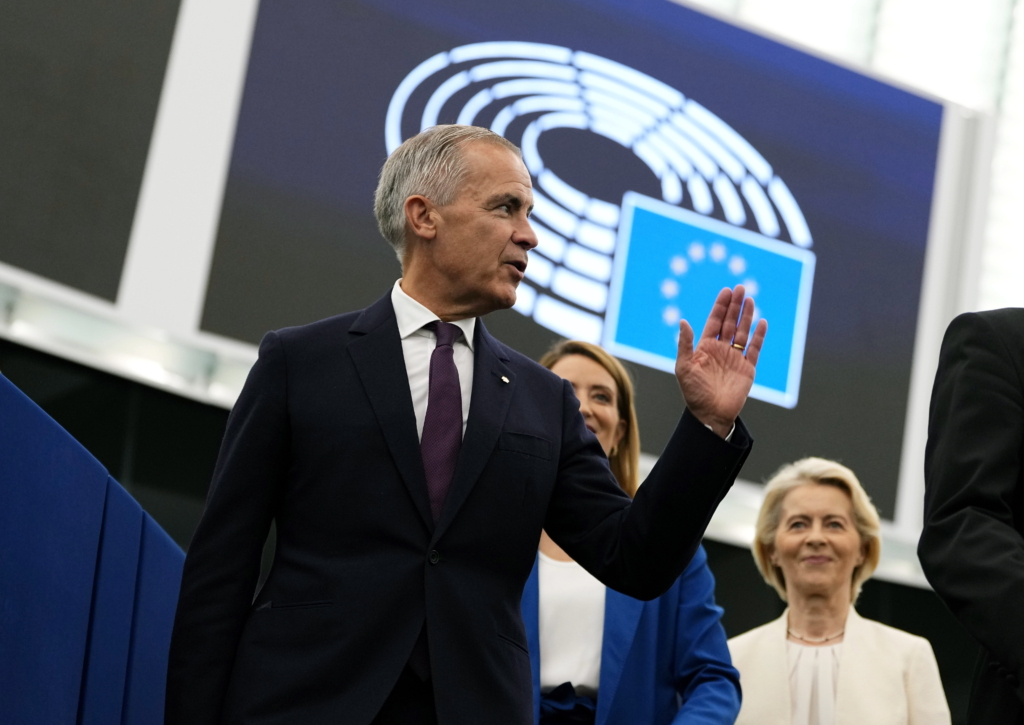
European Commission president Ursula von der Leyen’s offer this week of “associate membership” for Canada was received rapturously in the European Parliament. But member states, noting that the EU treaties say nothing about “associate membership”, have already tempered expectations, as has the Canadian ambassador to the EU. Make no mistake, “associate membership” does not mean that Canada will join the single market or become bound by EU directives anytime soon. The offer is currently a rhetorical gesture that, without a legal definition, risks meaning nothing at all, or becoming an expanded version of CETA, the EU-Canada trade deal in force since 2017, rather than a genuine new form of partnership.
Solution
As the United States estranges its allies, the EU has an opportunity to position itself as an alternative geopolitical anchor. New forms of association could help the EU build the capacity to act as a genuine world power. But to succeed, “associate EU membership” must be narrow but deep. Narrow in that it stops short of single market access or freedom of movement (not because it is undesirable but because it is currently unworkable); deep in that it can provide the basis for a unique alliance on security, defence and resilience—and offer a template for co-operation with other allies.
To prevent the proposal from landing dead on arrival, the commission should quickly define what associate membership means, with a timetable and clear objectives. This would also reassure candidate countries that others are not jumping the queue, and distinguish the offer from the “associate membership” Friedrich Merz, Germany’s chancellor, has pitched for Ukraine as a waiting room for accession.
To carry real weight, associate membership must address the pressures driving Canada into the EU’s arms in the first place. Security, defence and resilience are where both sides depend the most on America, where both sides face similar threats, and for which they can get public buy-in. Easy wins exist in low-friction defence-institutional steps, such as deeper Canadian participation in PESCO, the EU’s defence-cooperation scheme; an administrative arrangement with the European Defence Agency; and a role in future EU security missions.
But the boldest step would be to make Canada a full member of the EU’s defence technological and industrial base. This would bind Canada into Europe’s security architecture and give EU members access to Canadian expertise and industrial capacity for joint development and procurement. France’s protectionist zeal will be an obstacle; its EU ambassador this week pushed for tougher “Made in Europe” rules that would restrict non-EU firms’ access to defence funding. However, if Germany, the Nordics and the Baltics put their combined weight behind associate memberships, they might just bring the French on board.
Context
The war in Ukraine, America’s treatment of its allies and rising global instability have prompted EU states to explore association models that offer their neighbours and allies closer ties without watering down EU membership itself. In her State of the European Union speech, von der Leyen invited Canada to become the bloc’s first “associate member”, but the commission has yet to explain what that would mean in practice.
 Login