Ireland’s preparations for Sunday’s Nations League match against “Israel” have been thrown into uncertainty after goalkeeper Gavin Bazunu reportedly told teammates that he did not want to participate in the fixture, prompting further discussions within the squad.
The players missed their scheduled training session and press conference in Debrecen, Hungary, as they held lengthy meetings over whether individual players should proceed with the match.
The Ireland squad was due to train at the Nagyerdei Stadium in Debrecen and hold a press conference ahead of Sunday’s Nations League encounter.
Instead, the players remained at their hotel for discussions with head coach Heimir Hallgrímsson and his coaching staff. They had earlier met with Football Association of Ireland (FAI) CEO David Courell.
The scheduled press conference was postponed with only 19 minutes’ notice. Irish and Israeli media had already assembled at the stadium when Irish journalists were informed that the event could be delayed by up to two hours.
The UEFA match delegate was also informed of the delay but was reportedly not given a reason. The team ultimately did not arrive for the scheduled training session.
The disruption followed an initial squad meeting on Friday intended to establish the players’ position on the “Israel” fixture and discuss whether they would stage a protest.
According to reports, a collective boycott was not initially the purpose of the meeting. During the discussions, however, Bazunu indicated that he did not want to participate in the match, with other players subsequently considering whether to join him.
The extent of opposition within the squad remains unclear, and no final collective decision had been announced at the time of reporting.
The developments mark a significant escalation in the controversy surrounding Ireland’s Nations League meetings with “Israel”.
Earlier this week, Ireland captain Dara O’Shea said the squad intended to fulfill the two fixtures, while any decision over a separate protest was to be discussed following Ireland’s opening Nations League match against Kosovo.
The position has since become less certain following the latest internal discussions.
Hallgrímsson had previously acknowledged that Ireland’s players did not share identical views or the same intensity of feeling regarding the “Israel” fixtures. He also said that he would respect a player’s decision if an individual did not want to take part.
Ireland’s match against “Israel” is scheduled for Sunday, September 27, at the Nagyerdei Stadium in Debrecen.
FAI faces pressure over ‘Israel’ games
The latest dispute follows months of controversy over the FAI’s decision to proceed with the fixtures.
In July, an FAI motion endorsing the fulfillment of the Nations League matches against “Israel” passed by 68% to 32%. The association had argued that failing to fulfill the fixtures could expose Irish football to sporting and financial consequences.
The FAI has also acknowledged the strength of public opposition to the fixtures. In September, CEO David Courell said the organization was in a “really difficult position,” arguing that UEFA’s failure to take action over “Israel’s” participation had left the FAI with limited options.
The controversy has extended beyond the football establishment. More than 160 Irish athletes have signed an open letter urging the national team to refuse to participate in the “Israel” fixtures, while protests have been held outside the team’s hotel.
Ukraine is already providing an early glimpse of what may become a much larger post-war phenomenon: highly trained combat personnel, particularly special-forces and other specialists, carrying their battlefield skills beyond the borders of the countries, in which they acquired them, with many of them NATO trained.
History offers plenty of warnings. Africa has spent decades wrestling with the problem of demobilized combatants, soldiers and guerrillas, whose military skills suddenly have little obvious place in civilian economies.
South Africa and Georgia both provide instructive case studies. After apartheid, using the South African example, the labor force had to absorb, integrate or demobilize personnel from competing military and paramilitary structures. Thousands of former combatants faced unemployment and uncertain futures, while the new South African National Defence Force itself eventually had to undergo substantial downsizing, and not only among white troops.
So what happens when the largest European land war in generations finally winds down? What will the hundreds of thousands of Ukrainian servicemen do when the battlefield no longer needs them, and the economy cannot reintegrate them?
Many will also have significant trauma, both mental and physical, the former being far harder to identify, it is an unfortunate fact that many former combatants will have developed a taste for killing.
And that is where the story becomes considerably more uncomfortable.
In 2024, UNODC and international organized-crime specialists were already examining the possibility that Ukraine’s enormous post-war veteran population could become a source of organized-crime risk—not because veterans were inherently criminal, but because demobilization, weapons proliferation, inadequate reintegration and the availability of trained manpower could create conditions attractive to criminal networks.
Have Gun, Will Travel is an old American expression, but it may acquire a new geopolitical meaning in the aftermath of the Ukraine war. The world already has a market for soldiers, military trainers, private security personnel and combat veterans. Africa, the Middle East and other conflict zones have repeatedly demonstrated the demand for experienced men with battlefield skills.
Will wealthy states, such as the Gulf monarchies, Western governments, private military companies and international security organizations see this enormous reservoir of experience as a manpower pool to be exploited? Almost certainly in fact, it is already happening in Africa, where Ukrainian “specialists” are aiding terrorist groups, particularly in the Sahel, aiming to overthrow governments that have been causing the French problems.
It is doubtful that so many of these veterans be recruited for legitimate security and peacekeeping missions but rather for the less visible wars conducted through proxies, contractors and allied forces as US Flag Draped in Dover Delaware is not politically expedient.
The next major Ukrainian export may not be agricultural products, weapons, or drones. But battlefield tested military experience.
There is a particularly interesting precedent in Africa. War on the Rocks warned several years ago that the eventual end of the Ukraine war could produce an influx of experienced personnel into African conflicts. And we can now see the reverse phenomenon too: Russia has recruited tens of thousands of foreign nationals into its war, including substantial numbers from Africa.
The fact that Ukrainian personnel or Ukrainian-trained capabilities are already appearing in African theaters would suggest that the post-war question isn’t simply what happens to Ukrainian veterans inside Ukraine? It is also who will recruit their expertise internationally?
The broader literature is already warning about exactly this transition: the Global Initiative has specifically examined organized-crime risks surrounding Ukraine’s eventual veteran population.
Demand for armed warm bodies
That does not require those governments to deliberately create a “mercenary army.” Governments already have incentives to use contractors, partner forces, local auxiliaries and allied personnel when they don’t want to commit their own regular forces.
The postwar Ukrainian veteran question is potentially a major international-security story in its own right.
“The postwar disposition of Ukraine’s enormous veteran population could become one of the most important security questions of the post-war period. History shows that when large numbers of highly trained combatants are simultaneously demobilized, economically marginalized and connected to international illicit markets, some will inevitably find employment in private warfare, political militias, transnational security networks and organized crime.”
Africa provides some very strong precedents
This has happened repeatedly in Africa. Research on Angola, Mozambique, Namibia, South Africa and Zimbabwe found that poorly designed demobilization and reintegration programs could themselves create later security problems.
And the phenomenon isn’t limited to Africa. Research on Colombia found that demobilization of armed groups could increase some forms of crime—particularly robbery—where former combatants were not successfully reintegrated.
Ukraine could produce a much larger version of the problem
This is where the argument becomes interesting.
Ukraine is potentially different in scale, technological sophistication and international connectivity. A future Ukrainian demobilization could involve enormous numbers of veterans. One recent analysis by the Global Initiative Against Transnational Organized Crime estimates that Ukraine could eventually have up to nine million veterans, alongside millions of displaced people and refugees.
Obviously, nine million does not mean nine million armed or unemployed men. Most veterans will simply return to civilian life. But even a tiny percentage becoming involved in illicit activity could constitute a significant population.
The Financial Times reported that Colombian criminals have sought to send people into Ukraine to acquire advanced drone expertise and bring that knowledge back to criminal organizations in Colombia, and it is now becoming apparent the Mexican cartels are following suit.
The post-Soviet precedent is important too
There is another historical analogy that may be even more relevant than Africa: the breakup of the Soviet Union.
When the USSR collapsed, large numbers of trained military personnel suddenly found themselves outside a functioning Soviet military system. Some went into private security and legitimate military contracting; others became involved in mercenary activity. Former Soviet military personnel subsequently appeared in conflicts in Africa and elsewhere.
Ukraine is producing veterans with skills that did not exist at anything like today’s scale in previous wars—particularly FPV/drone warfare, electronic warfare and battlefield intelligence.
But there is another elephant in the room. The combat in Ukraine has been brutal, well beyond anything else seen in recent decades. Combined with the violently racist nationalist indoctrination by the Ukrainian government, this has created a large number of emotionally traumatised young men and women, for whom killing comes natural.
If enough of these individuals are recruited into the worlds conflict zones, either by state actors or the underworld and terrorists, the results will be absolutely horrific in terms of war crimes and brutality, as evidenced by the massacre of civilians during the Ukrainian invasion of Kursk, and now in Africa.
Those hoping to profit from the monster they have created may well find its teeth searching for them.
Jeffrey K. Silverman is a freelance journalist and international development specialist, BSc, MSc, based for 30 years in Georgia and the former Soviet Union
So, “Britain is back” and ready to provide glorious leadership to the rest of the world, to “solve shared problems we face.”
British Prime Minister Andy Burnham made his debut at the United Nations this week, addressing the 81st session of the General Assembly in New York.
“You can count on us,” assured Burnham. “Count on us to stand up for those long-standing British values of fairness and justice – our shared values – and for the UN Charter.”
Please, don’t make me vomit. Burnham was oozing noble values on the podium of the UN while Saudi warplanes were massacring Yemeni civilians in their homes – warplanes that are directed and refuelled by Britain (and the United States).
This week, Yemeni media reported that over 100 people, including women and children, were killed as Saudi F-15 and Typhoon fighter jets intensified air strikes on residential areas in the Red Sea cities of Mocha and Taiz. Al Masirah TV showed bloody images of two children killed by a Saudi airstrike in Mocha
On his way to the UN, Burnham announced that he had ordered the deployment of RAF refuelling planes to enable the Saudi air assault on Yemen. Of course, the British media described the move as “defensive aid”.
Earlier this month, Downing Street also approved the dispatch of British military advisors to Saudi Arabia. American advisors are also stationed there to assist in the war of aggression against its southern neighbor.
Yemen’s armed forces and the Ansar Allah militia are hitting back hard. They have overrun Saudi forces in key Red Sea positions and have shut down the Saudi oil industry and pipelines with drone and missile attacks.
But make no mistake, this is a Saudi war of genocidal aggression fully supported by the United States and Britain. The war has been going on since 2015, together with a blockade on Yemen that has resulted in an estimated 400,000 Yemeni deaths. A lull in fighting from 2022 was broken when the Saudis launched air strikes on the Yemeni capital’s airport in July. The Yemenis have hit back with a vengeance, targeting Saudi oil installations.
The Saudi monarchy has begged Trump to give more military assistance. But Trump is bogged down and out of his depth with his losing seven-month war with Iran.
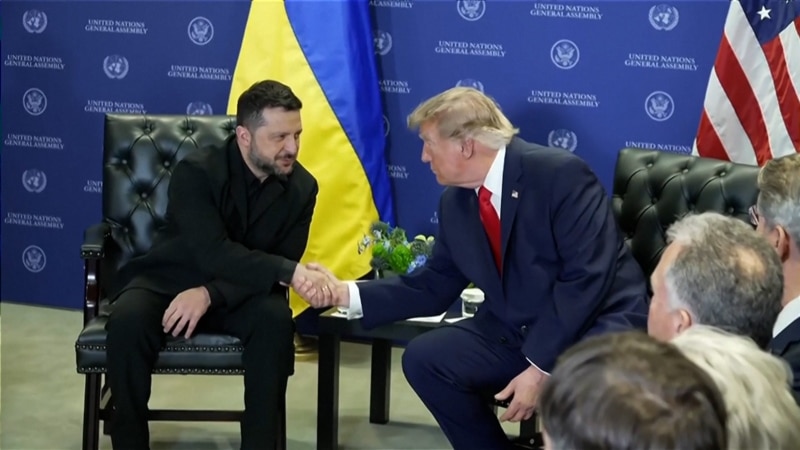
This is where Burnham has entered the fray, responding to Saudi pleas for help by signing off on military deployment. This could prove to be a disastrous strategic blunder. No doubt Burnham is trying to ingratiate himself with Washington. His decision to send the RAF into battle this week came ahead of his first meeting with Trump on the sidelines of the UN. The American president gave him a symbolic pat on the head, saying, “he’s going to be a great prime minister.”
Trump had often ridiculed Burnham’s predecessor, Keir Starmer, for supposedly not offering more military support to the U.S. war aims in the Middle East. Burnham is showing himself to be more amenable, that is, pliable.
The British Butler is slaughtering his way into favor with Washington. Women and children are sacrificed in Yemen all to satisfy the sick “special relationship” between the U.S. and Britain.
Burnham is a fraud with this working-class Manchester accent and glib talk about the “need to do more to help people with the everyday cost of living.”
If you can bear to listen to his speech at the UN, it is a masterclass in British disinformation. It takes a special kind of person to deliver such arrant nonsense with a pose of sincerity.
The thrust of his whole address was to blame Russia for everything. From poverty and inequality in British society, to seething discontent among Britons towards their ruling class, to the war in Ukraine. It truly was a consummate performance in misdirection, the kind of charade that British politicians excel at.
He announced that Britain was launching a new National Centre for Information Defence, purportedly to combat Russian disinformation, which he claimed was “a poisonous tide” sowing division and instability among Britons.
According to Burnham, all that is broken and dysfunctional in British society is due to Russian infiltration. Nothing was said about bankrupt British capitalism and the warmongering of the British state fuelling a proxy war in Ukraine or aggression in the Middle East at the expense of social conditions in Britain.
Burnham’s “solution” to Britain’s endemic problems is to increase “national security” and state control over public information – all under the guise of “defending” Britons from being manipulated by Russian propaganda.
The Orwellian condition that Britain is sliding into is awesome.
This British prime minister dares to speak about British values and leadership and condemn Russia while he is approving the supply of long-range air strikes against Russia with British cruise missiles and drones.
The proof of Burnham’s fraudulence and moral bankruptcy is his decision to materially support Saudi warplanes in committing atrocities in Yemen. Murderous aggression is labelled “defense”.
Burnham’s dubious asset as a politician is his ability to articulate justification for slaughter and war with empty platitudes.
A particularly odious point in his UN speech was his claim that English workers allied with Abraham Lincoln in the American Civil War against slavery. As if English mill workers were representative of British “values”. What Burnham conveniently omitted was the much more heinous role of the British ruling class in creating the Atlantic slave trade.
Britain’s historic role in global exploitation and waging genocidal wars is something that damns its governments forever. Its ongoing role in enabling the slaughter in Ukraine and in Yemen is but two of the latest episodes of this British systemic criminality.
These are the British “values” that Burnham deftly concealed this week with his performative debut at the UN.
There have been many tipping points in history; to name just a few examples:
The Peace of Westphalia in 1648
The French Revolution of 1789
The Congress of Vienna in 1815
World War I in 1918
World War II in 1945
Many of these turning points led to shifts in power in Europe. These were merely transfers of power within the world we now call the “Collective” West. Examples include the collapse of the German Empire, the Austro-Hungarian Empire, the Ottoman Empire, and the Russian Tsarist Empire at the end of World War I.
These shifts in power were significant, yet what is happening now cannot be compared to past turning points, as they encompass the entire globe. The reins of power are not being handed over within the West; rather, there will be a shift in power toward the East and the “Global South.”
From Tipping Point to Entropy
The scale, the number of nations involved, the geographic scope, and the speed at which the current geopolitical crises are unfolding are truly astonishing.
Ukraine as a War Platform for the U.S., NATO, the EU, and Russia
Russia Will Prevail Militarily
Looking at the military reports from the front lines, it becomes clear to any observer that Russia will achieve its military objectives. While Russia might have relinquished the Donbas, Kherson, and Zaporizhzhia had a peace agreement been successfully concluded in the spring of 2022, such an agreement is unrealistic under the current circumstances, as Donetsk, Luhansk, Zaporizhzhia, and Kherson have been part of the Russian Federation since September 2022. It is currently unclear how far the Russian military advance will go. I have commented on this in my article “The Summer Peace Died,” to which I refer. For the situation on the front lines, I once again refer to Military Summary; I have been following this channel for nearly five years, and it provides objective reporting.
Catastrophic Mobilization Situation in Ukraine
There are thousands of videos showing young men being hunted down like animals on the streets throughout Ukraine in order to forcibly recruit them. Recently, however, videos have also been circulating that show some of those forcibly recruited being transported to the front lines without uniforms and even in handcuffs, like criminals—to prevent them from escaping. I’ll leave it to the readers to ponder the combat effectiveness of these men against battle-hardened and motivated Russian soldiers.
Armed guards transport mobilized Ukrainian men to frontline in order to prevent them from deserting. This is described as normal by the Ukrainian officer. Videos also show them in handcuffs. Zelensky & Western politicians call this freedom & democracy. pic.twitter.com/f6AGyuMpRX
The latest move by the Ukrainian military leadership is to forcibly conscript women. Given this situation, it’s no surprise that Scott Ritter stated that the Ukrainians are losing 30 times more soldiers than Russia. We hear nothing in the West about this inhumane treatment of their own soldiers in Ukraine.
Ukrainian volunteers, who later disappeared without a trace, are said to have used drones and artificial intelligence to count the number of soldiers’ graves throughout Ukraine. They counted 2,000,054 graves. Added to this are the dead buried by their own people in mass graves and the wounded—the Ukrainians’ losses do indeed appear to be astronomical. Nevertheless, Zelenskyy claims that only 50,000 Ukrainian soldiers have been killed. A few weeks ago, I attended a funeral in Russia. The soldiers’ graves are easily identifiable by the Russian flag and the flag of the fallen soldier’s unit. There were soldiers’ graves, but no sea of flags like in Ukraine.
Ukrainian volunteers, who later disappeared without a trace, reportedly used drones and artificial intelligence to count military graves across Ukraine. Their estimate was 2,000,054 graves. Yet Zelensky claims that only 50,000 Ukrainian soldiers have been killed. Does that mean pic.twitter.com/LeplE4H3n6
Military Victory Does Not Solve Russia’s Geopolitical Problem
Whatever needs to be achieved militarily, Russia will achieve it; however, this does not resolve Russia’s geopolitical problem on its western border, because the goal is not new territories, but peace in the West—a goal that Russia has literally been striving for centuries and has never been able to achieve. Time and again, Russia has been attacked from the West and has regularly paid a high price in blood, money, and industrial capacity—resources diverted to military spending rather than civilian purposes. As a result, Russia’s social development has been repeatedly set back.
If Russia wants to keep pace with the major powers in terms of its civilian economy in a sustainable manner, reliably securing its western border is an absolute prerequisite. Although Russia is the only industrialized nation in the world that is self-sufficient and thus capable of waging a war lasting decades, such a confrontation would massively hinder the country from achieving its actual development goals.
The U.S.’s Lack of Credibility in Negotiations with Russia
The U.S.’s lack of credibility in the eyes of Russia is multifaceted. On September 15, Foreign Minister Lavrov said, verbatim:
“If the Americans hadn’t backed away from the Anchorage agreements, if Europe hadn’t pulled them away from those agreements, we would have been living without war for a year now.” – Sergey Lavrov, September 15, 2026
Under this agreement, Russia would have made major concessions. Russia would have retained the Donbas, frozen the conflict in Zaporizhzhia and Kherson, and relinquished further territories. Objectively speaking, this was a bad deal for Russia, but it demonstrated the Russians’ considerable willingness to compromise. The Russians assumed that this verbal agreement was binding as a gentlemen’s agreement. However, gentlemen’s agreements should only be made with gentlemen. The Americans taught the Russians otherwise. The Russians are dismayed about this incident and have had to admit that no agreements are possible with the U.S. government. Personally, I’m surprised by the fact that this realization came so late. Even written agreements with the U.S. government are not to be trusted. This was evident in the breach of the Memorandum of Understanding that the Americans signed with Iran in June. Thus, one must conclude that this conflict—or any conflict in which the U.S. is directly or indirectly involved—must be fought to the bitter end. A bitter lesson for every contractual partner of the U.S.
The Risk of Escalation is Significant
Ukraine is desperately trying to officially draw NATO into this military conflict. It is astonishing that European countries—above all Germany and the United Kingdom—are not only signaling their willingness to do so, but are actually doing everything they can to prepare their people for a war with Russia.
Instead of naming many people, we’ll use Sir Jacob Rees-Mogg—former cabinet minister and Member of Parliament for North East Somerset—as an example. In this excerpt from an interview, he compares the situation with Russia—without naming it—to the situations during World War I and World War II:
European leaders are currently pivoting from “this is not our war” to “it’s your duty to die in a war with Russia.” pic.twitter.com/h2M0CBpk0g
Young people are thus being called to arms to prepare for war against Russia. In Germany, such efforts have failed miserably. Of the more than 300,000 young Germans surveyed, only 0.17% volunteered to serve in the Bundeswehr. Furthermore, it came to light a few days ago that the Bundeswehr itself could not even find 5,000 volunteers for a battalion in Latvia.
It is incomprehensible what these European countries are up to besides spreading propaganda. Even combined, the European countries do not possess military forces that would give them even the slightest chance of standing up to the Russian armed forces. The Russians are by no means impressed by this farce in Europe—they are disgusted by it. I assume that this war propaganda in Europe serves only to perpetuate the anti-Russian narrative.
Both President Putin and Foreign Minister Lavrov have repeatedly emphasized that they have no interest in attacking NATO targets outside Ukraine. However, if European countries are foolish enough to send even small European military contingents to Ukraine, the situation could change abruptly.
The greatest risk of escalation at the moment is that the Europeans, presumably in collaboration with the Americans, are planning a false flag attack in Europe in order to somehow trigger Article 5 of the NATO Charter. According to geopolitical analyst Warren Thornton, preparations for false flag attacks are in full swing. He writes on X:
THE FALSE FLAG
These are the areas that are the targets. The Mallorca airport in Spain. The Sorrento Continental Hotel in Italy. The Promenade De Anglais, Nice. The area to be launched from west of Sardinia. The agencies involved CIA, French Naval Intelligence Services and the… pic.twitter.com/ThDYyuZBOz
I can’t say whether this theory is correct, but it’s by no means far-fetched that the Europeans would attempt something so outrageous.
U.S. Military Campaigns in the Middle East Beginning in 2001
Looking back over the past 25 years, the U.S. has sought to reshape the Middle East according to the Wolfowitz Doctrine since 2001. None of the wars the U.S. launched during this period (Afghanistan, Iraq, Libya, Syria, Yemen, Somalia, etc.) were successful. In fact, it was already evident back then that the hegemon lacked the resources, military strategy, strength, and credibility needed to act successfully. However, if one’s view is that the actual intent was destabilization and chaos, then they were extremely successful. Nevertheless, they returned to the plan in collaboration with Israel, apparently after Israel had succeeded in completely undermining American policy.
Israel: Genocide and Greater Israel
The immediate starting signal for the “Genocide” and “Greater Israel” projects was given on October 7, 2023, when a military operation by Hamas was turned into a false flagattack to justify the genocide against women, children, and other civilians in Gaza and, later, in the West Bank and Lebanon. This, in turn, served as the starting signal for the continuation of the Greater Israel project; initially, Syria and Lebanon were attacked. Although the Western press not only downplays Israel’s genocidal and imperialist actions but also fully supports and fuels them—including through the media of “neutral” Switzerland—Israel is viewed with increasing criticism by the general public in the Western world. According to Pew Research, 60% of Americans view Israel negatively. The Western media thus conveys an image that finds no resonance among the general public.
When Israeli Prime Minister Benjamin Netanyahu took the podium to address the plenary session on Thursday, delegates to the UN General Assembly left the hall in droves.
NEW
UN General Assembly delegates stage a mass walkout as Israeli Prime Minister Benjamin Netanyahu takes the podium to address the hall pic.twitter.com/EcTpBBvjjM
It is important to me to continually remind my Western readers of what is actually happening in Gaza right before our eyes—eyes that many choose to close.
Major Escalation in the Middle East—Loss of Control
Starting in February 2026, events began to accelerate even further. Since then, everything has gone wrong for the West and Israel in the Middle East. The Global South has already wrested the initiative from the West. While Iran initially limited itself to responding to American-Israeli aggression, it is now the Iranians and the Yemeni Ansar Allah movement who are setting the pace.
Ansar Allah managed to bring the entire western coast of Yemen under its control in a very short time and thus controls not only the Bab al-Mandab Strait but also the island of Perim Mayyun off the coast. With virtually no Western media coverage, the advance continues, and it is quite possible that Aden will soon be captured.
Furthermore, the Saudis’ East-West pipeline was paralyzed and targets near Riyadh were attacked. So far, the Saudis have been unable to mount a serious military response to this large-scale attack, as they do not seem capable of doing so on their own, and repeated calls for help to Trump and others have been in vain. The Mecca Alliance, which unites Pakistan, Saudi Arabia, and Turkey in a military alliance, also appears to be a thing of the past, as even these “friends” refused to provide assistance.
President Macron’s grand announcement that he will send troops to Saudi Arabia won’t change any of that. “Arabia” is called Saudi Arabia because this country is ruled by a family—a tribe—the Sauds. A tribe that is protected by the Americans. However, there are approximately 100 other tribes within Saudi Arabia. It’s very possible that they could join forces with Ansar Allah and overthrow the House of Saud. The House of Saud no longer has any income and seems unable to continue buying off—as it has done until now—all those who could pose a threat to them. There’s a chance that the Saud house of cards will collapse, and if that happens, I wouldn’t give a penny for the remaining Gulf states.
Alastair Crooke also pointed out on several occasions that this dynamic could spill over into Iraq, another millennia-old civilization alongside Iran. If that happens, Kuwait will likely fall as well. Another smoldering conflict can also be detected in Jordan. It is therefore quite possible that the entire structure in the Middle East established by the British a good 100 years ago could collapse within a few months, without the Americans being able to stop this tsunami in any way. Arabia to the Arabs, Persia to the Persians, and the Americans out for good. If this happens, Israel will go from perpetrator to target; one certainly cannot speak of it as a victim in this context. How the emerging great powers of the Middle East will deal with the genocidal Zionists should be left to those who have suffered the greatest losses, for Palestinians are Arabs.
Europe
Chaos is once again rearing its head in Europe. Germany is the first country—once the world’s leading exporter and the major power in the EU—that is in danger of becoming politically ungovernable. The Alternative for Germany (AfD), which has been labeled as far-right and Hitler-like by the previously dominant parties and excluded from government participation by a so-called firewall, not only won landslide victories in two state elections in eastern Germany but also leads the CDU by a clear margin in national polls (30% to 20%). Chancellor Merz’s approval rating stands at 10 percent—a barometer that reveals the people’s dissatisfaction and would have driven any truly democratic chancellor to resign. Whether the Germans, in light of this political situation, will clench their fists and do nothing, as they have in the past, remains uncertain. The chancellor’s downfall would be good for Germany. The AfD is the only major party seeking dialogue and peace with Russia, which is not only desperately needed by this once-thriving industrial nation but is also a prerequisite without which it cannot survive economically. The alternative to real and fundamental political change in Germany is the war against Russia sought by Chancellor Merz and the ruling political elites. The last time Germany went to war against Russia in 1941, Adolf Hitler sent 3.7 million soldiers eastward and failed, despite the Germans’ genocidal behavior, which cost the lives of approximately 17 million civilians. As already explained above, the Federal Republic of Germany today finds itself unable to assemble a brigade of 5,000 volunteer soldiers for the Baltic states. This does not seem to concern the chancellor, which is a clear sign of the madness that has taken hold of him. This is strong evidence that he is acting in the interests of a power located outside Germany. One would be a naughty person to believe that this has anything to do with his BlackRock past. Those who managed to install him as chancellor can pat themselves on the back, as they’ve snagged a puppet at the bargain price of a few million.
The following clip shows how the new leadership in Berlin is presenting itself—the Left has taken over. No words needed:
The situation in the rest of Europe is no more encouraging. The presidential election in France will take place in April 2027. Macron is no longer eligible to run, and Marine Le Pen has a significant lead over the other candidates. The situation is thus similar to that in Germany: a party that is denounced as far-right by the parties currently in power, yet is the most popular among the people. Le Pen’s position on peace with Russia is unclear—she seems to be speaking with a forked tongue: on the one hand, she wants a negotiated peace, but at the same time supports the training of Ukrainian troops. A seasoned politician who positions herself to capture as many votes as possible. France’s financial situation is grim, with no silver lining. The rise in the interest rate on 10-year French bonds over the past twelve months has been even steeper than in any other European country.
Trump
President Trump’s policies only seem difficult to understand at first glance. His constant flip-flopping on Ukraine, Iran, and Israel is counterproductive and damaging to the U.S.’s reputation on the world stage. The reason behind Trump’s current actions is the midterm elections in November. Trump is struggling with the high oil prices he himself has caused, which he can prevent from spiraling out of control by manipulating the futures markets. However, actual market prices are 30% to 50% higher than the manipulated, fantasy futures prices. The fact that futures prices are indeed manipulated is evident, for example, in diesel prices at gas stations, which are moving in only one direction and have reached unprecedented levels worldwide. Diesel is the lifeblood of the American economy, and high prices are one of the biggest drivers of inflation, since virtually all goods are transported by trucks, agriculture depends on it, and large parts of industry rely on diesel. Trump’s latest farce: He’s blaming Zelenskyy for the high diesel prices because Ukraine is attacking Russian refineries; he’s doing this solely to divert attention from the biggest price drivers—the blockades of Hormuz and Bab al-Mandab.
Somehow, Trump wants to turn things around, but it seems that he will lose the midterm elections coming up in about six weeks. According to Polymarket, an American online prediction market where users bet on the outcomes of future events—with market prices reflecting collective probability estimates—the probability that the Republicans will lose their majorities in the House of Representatives and the Senate stands at 66%. Should this come to pass, Trump will likely face impeachment proceedings. He then runs the risk of going from a lame duck to a dead duck and being replaced by his turncoat vice president, Vance—not a promising outlook for the United States.
Trump’s latest appearance this week before the UN General Assembly was a testament to his psychopathic nature: He announced—nota bene after the election—that he would either make Iran a rich country or obliterate it completely.
Trump is every bit as bad as Adolf Hitler. In his speech at the Berlin Sportpalast on September 4, 1940, Hitler said, “We will wipe out their cities.” Trump wants to wipe out a 5,000-year-old civilization—without any legal basis, of course—acting like a god. In doing so, Trump is publicly calling for the genocide of an entire civilization. One might wonder whether he belongs in prison or in a psychiatric hospital, but the fact that he can make such statements before a global audience with impunity shows the depths to which Western civilization has sunk. I refer to a speech I gave in Switzerland on September 3.
The Financial Markets
I have made numerous comments on the instability of the financial markets. Now my dire predictions seem to be coming true. In addition to the overvaluations in the stock markets, I have repeatedly pointed out the unsustainable situation in the bond markets. Among the more astute market participants, fear is beginning to set in. Mr. Bessent has lost control of interest rates. On August 28, 2026, I looked at the average interest rate the U.S. had to pay on its debt; at that time, it stood at 3.35% (May), resulting in an annual interest burden of 1,340 billion. Today, this average interest rate stands at 3.49% (August); the debt mountain currently stands at 40,070 billion, meaning it has already increased by another 70 billion. Annual interest payments have thus risen by 56 billion to 1,396 billion per year in this short period of time.
Over the past 28 days, the yield on the 10-year U.S. Treasury bond has risen from 4.722% to 5.185%, an increase of 0.46%. It does not appear that this trend will change. If this pace continues, not only will the government bond market collapse, but so will the towering mountains of debt in the AI sector. The same picture is emerging in Europe and Japan as well. The question isn’t whether the collapse will happen, but when—and who the U.S. will let go first: the Japanese or the Europeans. That is my personal opinion. When it comes to timing, I’m regularly wrong, which has taught me not to be active in these markets. I have the great privilege of meeting regularly with one of the world’s most successful investors. At our last meeting, he agreed with me in principle but remarked that I couldn’t possibly imagine what tricks and means the Americans still have at their disposal to delay the inevitable.
The scale of this crisis will dwarf anything humanity has ever seen. Compared to today, the 2008 crisis was a stroll through a sunny park with a delicious picnic. Such a collapse in the West will also affect the countries concerned’s geopolitical freedom of action; suddenly, everyone will be very preoccupied with their own problems. No one knows whether this will lead to an escalation in the geopolitical arena. What is certain, however, is that the “experts”—who are still driving the markets forward with their jubilant cheers—will solemnly declare that this simply could not have been foreseen—as always.
Entropy
All of these individual tectonic shifts lead to what can be described as entropy, a term from thermodynamics. Applied to geopolitics, I describe the situation as a massive, irreversible state of disorder and uncertainty within the various international systems. Existing power structures, rules, institutions, and hierarchies are losing their cohesive power, and a new order that would promise stability is not in sight.
For the collective West, which until recently held the reins firmly in its hands, is unwilling to make compromises so as not to jeopardize its position as a hegemon.
The Global South, taken by surprise by the rapid pace of events, has not yet devised a coherent, unified, and effective policy to wrest power from the West.
It appears that the Global South, under the military dominance of Russia, China, and—most recently, Iran as the fourth major military power—is in the process of adapting to the new circumstances and coordinating its efforts, which will ultimately lead to its victory.
How long this will take, however, and whether the West will use nuclear weapons to maintain its hegemony remains to be seen—though I would like to express my doubts on this point. So far, only Adolf Hitler believed that Germany should go down with him. Let’s hope that cooler heads are in control of the apocalyptic buttons.
President Volodymyr Zelenskyy called on US President Donald Trump to enact sanctions against Russia amid its deadly attacks across Ukraine, which have become increasingly frequent as cold weather starts to set in.
In Deutschland haben viele Menschen heute eine ganz falsche Vorstellung von dem, was der Kern der Ideen der Nazi war. Heute meint man in Deutschland, „Nazi“ würde bedeuten, dass alle in Uniformen herumlaufen und dass gegen Juden gehetzt wird. Da das in der EU nicht geschieht, seien die Vorwürfe aus Russland, in Europa würden die […]
A modest Roman bathhouse on Turkey’s southern coast spent its retirement very differently from how it began. Constructed in the late 2nd or early 3rd century CE, it stopped functioning as a bath sometime after an invasion in the 260s CE and was never used for bathing again. Centuries later, someone gutted much of its […]
Adam Castillo, a former president of the American Chamber of Commerce in Myanmar who had lobbied for sanctions relief in exchange for US, was released in recent days after spending over three months in detention. In the same week, Time magazine’s Charlie Campbell sat down with Senior General Min Aung Hlaing in Naypyitaw. The coup […]
Fresh off testifying at Canada’s Allison Inquiry, physicist Denis Rancourt joins Del to examine mortality and cancer data among 5- to 24-year-olds—and what could be behind their striking, lockstep rise.
Who has thought about what happens to an army when the SMO ends—but the warriors remain? Ukraine is already providing an early glimpse of what may become a much larger post-war phenomenon: highly trained combat personnel, particularly special-forces and other specialists, carrying their battlefield skills beyond the borders of the countries, in which they acquired […]
Esta reportagem é parte de uma investigação especial da Agência Pública financiada pelos nossos Aliados, sem nenhum dinheiro de bet. Apoie mais reportagens como essa clicando aqui.
Com efeito imediato, o presidente Lula assinou nesta sexta-feira, 25 de setembro, a Medida Provisória (MP) que proíbe apostas digitais, as bets, de funcionar no Brasil. Durante a cerimônia em São Paulo, Lula afirmou que conversou com pessoas que “estavam devendo por causa das bets e que os depoimentos foram estarrecedores”.
Sem citar o nome, o presidente incluiu nesse rol de relatos a “mãe que perdeu o filho de 26 anos”. Trata-se de Vânia de Souza Borges, cujo filho, Rafael Borges Amaral, tirou a própria vida, exatamente aos 26 anos, após ser severamente pressionado por dívidas decorrentes do vício em apostas virtuais. Lula e Vânia estiveram juntos no domingo, dia 12 de setembro e, segundo a professora, que mora em Uberlândia (MG), esse foi seu pedido ao presidente: proibir as casas de apostas online no Brasil.
Professora Vânia Borges esteve com Lula após sua busca por Justiça pela morte do filho repercutir e inspirar projeto de lei
O caso de Rafael foi apresentado ao país em reportagem da Agência Pública que integra o especial Jogo Perigoso: O Brasil das Bets. Durante as investigações, a equipe de reportagem da Pública encontrou no relatório da CPI das Bets, que foi arquivado pelo Congresso Nacional, uma carta de Vânia contando sobre a perda de Rafael, e entrou em contato.
Na entrevista, Vânia Borges afirmou que a atuação de influenciadores foi crucial no aprofundamento da crise financeira do filho e na transformação de uma tentativa de aumentar a renda, em ludopatia, o vício em apostas. Segundo Vânia, os influenciadores atuavam “como traficantes”. A comparação também foi usada por Lula na tarde desta sexta-feira, 25. “Me lembrou um pouco o começo do crack nesse país”, disse o presidente ao se referir aos casos de vício que estão ocorrendo no Brasil.
“Às vezes, as pessoas entram no descompasso de fazer dívida de forma desordenada e depois não consegue pagar mais”, acrescentou Lula no ato de assinatura da MP.
Como ficam as bets agora?
A medida, que já vinha sendo esperada nos últimos dias, determina que os apostadores terão até o dia 5 de outubro para resgatar eventuais saldos nas contas dos sites de jogos e, a partir do dia 6, os sites e aplicativos de apostas deverão sair do ar definitivamente. A devolução integral dos saldos para os apostadores será efetuada pelo CPF dos usuários nos bancos cadastrados. Os valores dos cadastrados que não forem localizados serão encaminhados para a Caixa Econômica Federal, onde poderão ser sacados.
A publicidade de bets também está proibida a partir de 5 de outubro, tanto online como em meios físicos. Da mesma forma, as empresas de bets devem deixar de ser patrocinadoras, como de times de futebol, a partir de 5 de outubro. Isso inclui a necessidade de mudança, inclusive, nas camisas dos times até a data limite.
A Medida Provisória tem validade de 120 dias e para se tornar lei precisa ser aprovada pelo Congresso Nacional. O governo federal deve enviar, além da MP, um projeto de lei ao legislativo sobre a proibição e as penalidades para quem atuar de forma ilícita no país.
Por que isso importa?
As famílias brasileiras perderam R$ 62,5 bilhões no ano passado segundo estimativa do Comitê Nacional de Secretários de Fazenda dos Estados e do Distrito Federal (Comsefaz)
O mesmo estudo aponta que entre outubro de 2024 e março de 2026, os gastos médios foram estimados em R$ 4,7 bilhões por mês.
Desenrola 3
No mesmo ato desta sexta-feira, Lula apresentou o programa de combate ao superendividamento, Desenrola 3. O programa é voltado para famílias com dívidas em atraso de 2 a 4,5 anos na faixa de R$ 10 mil e traz uma proposta diferente das duas edições anteriores. Neste novo modelo, o governo fará leilões com os bancos para comprar pacotes de dívidas com deságio de 90% e fará o repasse integral deste desconto para o dono da dívida.
“Esse Desenrola 3 é melhor que os outros porque, nos outros, as pessoas é que tinham que ir individualmente aos bancos. Agora é o governo que vai comprar a dívida e vai acertar a dívida com as pessoas”, explicou.
Segundo o governo, o Desenrola 3 terá alcance de 50% das dívidas elegíveis, que hoje somam cerca de R$ 150 bilhões, e custará aos cofres públicos em torno de R$ 15 bilhões. O foco é atender quem está com pendências no cartão de crédito, tanto rotativo como parcelado, e no crédito pessoal sem consignação em folha. O primeiro leilão deve ocorrer ainda em novembro deste ano, segundo o presidente.
As bets no Brasil
A explosão das apostas online no Brasil aconteceu a partir da Lei 13.756, aprovada em dezembro de 2018, no apagar das luzes do governo de Michel Temer. A lei criou a modalidade de lotérica de “quota fixa” para apostas esportivas e determinava um prazo de dois anos, prorrogáveis por mais dois, para que o Ministério da Fazenda estabelecesse as regras de taxação, fiscalização e proteção ao consumidor.
O prazo expirou durante a gestão de Jair Bolsonaro, sem que qualquer regra fosse criada. No vácuo da fiscalização, empresas sediadas em paraísos fiscais inundaram o mercado de publicidade no Brasil. A Copa do Mundo de 2022 funcionou como a grande chave de virada e consolidação: o futebol brasileiro tornou-se financeiramente dependente do setor, com transmissões e camisas de clubes integralmente tomadas pelas marcas ligadas às apostas online.
Quando o governo Lula assumiu em 2023, a estratégia inicial foi a da tributação. O Ministério da Fazenda desenhou uma regulamentação focada em arrecadar com as outorgas e impostos sobre os prêmios. Contudo, a velocidade do endividamento da população e a multiplicação de fraudes atropelaram os planos econômicos.
Celebridades digitais transformaram-se nos principais canais de escoamento de jogos de azar maquiados como investimentos. Investigações parlamentares posteriores revelaram contratos abusivos em que influenciadores recebiam comissões baseadas nas perdas financeiras de seus próprios seguidores. Na esteira das denúncias de manipulação de resultados e lavagem de dinheiro, o Congresso instalou a CPI das Bets, mas o relatório foi arquivado sem que as investigações fossem finalizadas.
A mudança de postura do Executivo, migrando da taxação para a proibição absoluta, ganhou força após revelações do impacto social do vício, a ludopatia. Ao lado da mobilização social e do aumento do endividamento no país, denúncias como o especial Jogo Perigoso: O Brasil das Bets, da Pública também foram importantes nesse processo.
Em julho deste ano, após a repercussão do relato de Vânia, a deputada federal Dandara Tonantzin (PT-MG) protocolou o Projeto de Lei 3.613/26, batizado de “PL Rafael” em homenagem ao filho da professora mineira. O projeto prevê a responsabilização solidária de toda a cadeia de divulgação, incluindo grandes plataformas de tecnologia e influenciadores, por danos ao consumidor, além de proibir repasses financeiros atrelados ao prejuízo dos usuários.
Block do Tigrinho
Lula esteve em ato de campanha no Rio de Janeiro com artistas onde afirmou que pretendia proibir bets no Brasil
A pressão das famílias ganhou eco na classe artística e na sociedade civil através do movimento “Block do Tigrinho”, liderado pela produtora cultural Paula Lavigne. Em articulação direta com o governo, o movimento levou ao Planalto, no início de setembro deste ano, artistas como o rapper Emicida e o perfil Melted Videos (Yuri Zero).
O grupo argumentou que, enquanto grandes artistas podiam recusar patrocínios milionários de jogos, a base da cultura independente e influenciadores menores estavam se tornando reféns desse capital. O coletivo exigiu regras para impedir o uso indireto de marcas de apostas em fundos de fomento público, como a Lei Rouanet.
Poland is offering to pay $15,000 a year for every US soldier stationed on its territory and cover infrastructure costs as Warsaw and Washington move closer to agreeing on establishing a permanent American military base.
Obwohl ich eine anstrengende Woche als Wahlbeobachter bei den Parlamentswahlen in Russland hatte, haben wir es geschafft, wieder eine Folge von Tacheles mit Röper und Stein aufzuzeichnen, die nun online ist. Sollte YouTube die Sendung löschen, finden Sie sie auch hier bei NuoViso.
Israeli settler gangs are using drones to terrorize Palestinians across the occupied West Bank, harassing families and guiding armed raids that have killed Palestinians, TheNew Arab(TNA)reported on 25 September.
“When herders left their homes in the morning, the drones would pursue and shadow them; if they approached certain areas, settlers would gather to attack and drive them away. Eventually, the drones began monitoring residents inside their homes around the clock, and there was nothing anyone could do to stop them,” Rabie Abu Naim, a displaced resident of Al-Khalayel, east of Ramallah, told TNA.
Settlers later rigged the drones with speakers blaring abuse and orders to leave, and drones were also used to drop tear gas on targeted communities, as violent assaults wounded many until terrified families fled, the report said.
Abu Naim also pointed to the killing of a boy and a young man in Al-Mughayyir days ago, saying drones “played a major role” in a raid that began with a drone tracking a flock of sheep, after which settlers moved in to steal the animals while shielded by the Israeli army, which “killed the two victims in cold blood during the incident.”
In Mikhmas, shepherd Mohammed Abu Siyam told TNA that settlers sent a drone after his 19-year-old son, Nasrallah, and other young men searching for livestock stolen from the village in February.
With the drone watching their every move, armed illegal settlers lay in wait for the young men, then opened fire, killing Nasrallah and wounding others.
Another Palestinian living in Hajjah, near Qalqilya, told TNA that settler drones fly so close to village homes that families fear the machines will crash through their windows, leaving residents under constant watch and feeling that “privacy is non-existent, and everyone feels constantly threatened.”
Illegal Israeli settlement councils have recently begun arming settlers with drones to film, scout, and watch the areas around outposts, building on earlier Israeli funding that equipped outposts with drones as part of a so-called security package.
Palestinians, meanwhile, are barred from owning drones even for their work, and the Israeli army has arrested numerous Palestinian photojournalists over the past three years for having them, citing a military order that has banned Palestinians from possessing the devices since 2017.
Israeli occupation forces have also raided toy shops across West Bank cities dozens of times, confiscating every drone on the shelves, including those made for children, and threatening shop owners with arrest if they sell them.
In May, OCHA documented settlers using drones to chase residents of Arab al-Mleihat, a community since emptied.
Salah al-Khawaja of the Wall and Settlement Resistance Commission told TNA that the constant surveillance of Palestinian homes can become “an additional factor driving families to leave the areas where they live.”
Geneva – The Israeli military continues to use armed quadcopter drones to carry out deliberate killings of Palestinian civilians in the Gaza Strip. Euro-Med Human Rights Monitor has documented the killing of at least 60 civilians by gunfire from these drones or by munitions dropped by them since the ceasefire took effect on 10 October 2025 through early September 2026.
The repeated occurrence of these incidents after the ceasefire, and the targeting of children, displaced people, farmers, shepherds, and people returning to check on their homes, reveals a continuing pattern of the deliberate killing of Palestinian civilians, in which Israel employs military technology capable of identifying specific individuals, tracking their movements, and striking them with precision, despite the clear civilian status of those targeted and their non-participation in hostilities or posing of any imminent threat to Israeli forces or others.
Quadcopters are small, multi-rotor tactical drones, some systems of which can be operated by a single soldier. They can be equipped with daytime and thermal cameras, target-identification and tracking systems, and weapon stabilization systems. Depending on the mission, some models can also be fitted with 5.56mm and 7.62mm weapons or 40mm explosive munitions, enabling the operator to closely monitor individuals, track their movements, and then fire at them or drop munitions toward them with a high degree of accuracy.
These technical capabilities give the operator the ability to observe the targeted person, verify their identity, and track their movements before opening fire. This greatly narrows the margin for error in target identification and heightens the obligation to refrain from an attack when the civilian nature of the target becomes apparent or when there is any doubt as to their status. The repeated killing of children, displaced people, farmers, and shepherds by direct gunfire or munitions dropped from these drones, despite their clear civilian status and absence of any direct participation in hostilities or imminent threat, therefore provides, taken together, strong evidence that civilians themselves were intentionally selected as targets of attack, rather than being killed as a result of mistaken identification or accidentally struck. Such attacks are prohibited in themselves and cannot be justified by military necessity or subjected to a proportionality assessment, since a direct attack against a civilian is prohibited from the outset and cannot be made lawful by invoking military necessity or the rules of proportionality.
The data Euro-Med Monitor has collected shows that at least 60 civilians have been killed in attacks carried out by quadcopters since the ceasefire, while Gaza’s Ministry of Health reported that the total number of Palestinians killed by Israeli forces during the same period had reached 1,368 as of the date of the statement.
Field monitoring revealed three main patterns in the use of these drones. The first involved precise and direct gunfire against individuals whom the operator could see and distinguish; the second involved dropping explosive munitions on civilian gatherings and tents housing displaced people; and the third involved using these drones to impose fire control over areas adjacent to what is known as the “Yellow Line,” by targeting civilians as they attempted to reach their homes and lands or carry out their work there.
Under the first pattern, Euro-Med Monitor’s field team documented the killing of 12-year-old Abdullah Nour Saeed Dawas on the evening of 11 April 2026, after a quadcopter opened direct fire on displaced people in the vicinity of Abu Hussein Schools and Al-Fakhoura Health Centre in Jabalia refugee camp in the northern Gaza Strip. It also documented the killing of 26-year-old Fatima Al-Zahra Ramzi Ahmed Al-Ma’ni by fire from the same type of drone east of Deir al-Balah on 21 May 2026. It further documented the killing of 62-year-old Nidal Eid Salmi Abu Halib on 11 October 2025, after an Israeli quadcopter opened direct fire on him while he was heading to inspect his family’s home in Al-Qarara, northeast of Khan Younis.
Under the second pattern, Euro-Med Monitor documented the killing of at least three civilians on 6 December 2025 after a quadcopter dropped an explosive munition on a group of civilians near Al-Atatra roundabout in Beit Lahia. It also documented the killing of Fadi Adel Khalif on 20 February 2026 after an Israeli drone dropped a bomb on his tent in the northern Gaza Strip, and the killing of 52-year-old Inaam Abdullah Al-Attar on 17 July 2026 after a bomb was dropped near Abu Tammam School in Beit Lahia.
The third pattern involved the use of quadcopters to impose fire control over areas adjacent to the “Yellow Line” and target civilians as they attempted to reach their lands and sources of livelihood. Euro-Med Monitor documented the killing of 42-year-old shepherd Raafat Adel Ibrahim Barika by fire from a drone of this type in the Al-Shakoush area near the “Yellow Line,” northwest of Rafah, on 22 May 2026. It also documented the killing of farmer Hamouda Fayeq Al-Attar on 29 August 2026 while he was working on his land east of Al-Masdar village, coinciding with the Israeli forces’ advance along the line in the area.
Children were among the victims of this precision weapon. Euro-Med Monitor’s field documentation is consistent, in terms of pattern, with the findings of a multidisciplinary report published by the Costs of War project at Brown University’s Watson Institute on 17 June 2026. The report was based on 18 cases involving children who were killed or wounded by gunfire that was examined and documented by a physician who participated in preparing the report during her work in Gaza Strip hospitals between August and September 2024. Witnesses who brought the children to hospital reported that quadcopters were responsible for the gunfire in 90 percent of the cases, while most wounds were caused by single, small-calibre bullets that struck the head, neck, chest, or abdomen.
The report presented five detailed cases supported, in each instance, by X-ray images or diagrams based on clinical photographs and witness testimonies. One case involved a seven-year-old child who was wounded inside an area designated as humanitarian while playing in the street, with no one else in the surrounding area being struck by gunfire. Medical, imaging, and ballistic analysis in three cases concluded that the entry angles and trajectories of the bullets were from above, consistent with gunfire originating from a drone. Although these incidents occurred in 2024, these findings are consistent with the pattern documented by Euro-Med Monitor at a later stage and constitute strong evidence of the use of precise, targeted gunfire directly and deliberately against children.
Euro-Med Monitor documented the circumstances of a child’s injury that resulted in permanent mobility impairment after he was directly shot by a quadcopter, providing additional evidence that Israeli forces deliberately used these drones to kill and inflict serious harm without any justification.
In testimony to Euro-Med Monitor’s team, the father of 11-year-old Amir Mohammed Khalil Shaath, a resident of Qizan Rashwan south of Khan Younis who was displaced to an area near Al-Sikka, adjacent to the Yellow Line, described what happened, saying: “On that day, 12 August 2026, I received a text message inviting them to collect a food parcel, so I went with my son Amir to the designated warehouse in the afternoon. On our way back on foot to our residential area in Al-Sikka neighbourhood, at around 5 p.m., we came under random and intense gunfire from a quadcopter flying at low altitude between abandoned residential buildings. This was followed by the dropping of an explosive bomb, which caused a violent explosion and sent shrapnel flying. Metal fragments became lodged in my son Amir’s skull and thigh, causing fractures and severe damage to the skull bones, and he lost consciousness for a long period as a result. He was taken to Nasser Hospital, where doctors said that if he had arrived a few minutes later, he would have died from internal bleeding in the brain. Medical teams managed to control the bleeding, but the fragments lodged in his skull could not be removed with the locally available capabilities. The child sustained a permanent mobility impairment, losing the ability to walk or stand. Medical teams declared that the available local treatment options had been exhausted and recommended that he travel abroad for treatment to remove the fragments lodged in his skull.”
The operator’s ability to clearly see the targeted person, distinguish their status, and track their movement before opening fire, and then strike them with a single bullet or guided munition, effectively eliminates the pretext of mistaken target identification, particularly when the target is a child, farmer, or shepherd carrying no weapon and posing no threat. This demonstrates that these civilians were not struck accidentally, but were deliberately selected as targets of attack.
Targeting these civilians establishes the intent to kill them and constitutes wilful killing and direct attacks against civilians, both of which are war crimes. Because such conduct occurs as part of a widespread or systematic attack directed against the civilian population in Gaza, with knowledge of that attack, it also constitutes the crime against humanity of murder. Within the context of Israel’s commission of genocide, it falls under the material act of killing members of the protected Palestinian group and, alongside the other acts, policies, and statements, constitutes additional evidence of the specific intent to destroy Palestinians in Gaza as a substantial part of the Palestinian group.
Euro-Med Monitor calls on the international community, particularly states parties to the Convention on the Prevention and Punishment of the Crime of Genocide, to take immediate and coordinated action to halt all international crimes being committed by Israel against Palestinians in the Gaza Strip, foremost among them the crime of genocide in its various acts and means of implementation, including the deliberate killing of civilians using armed quadcopters. We call on these states to employ all available political, economic, diplomatic, and legal means to fulfil their obligation to prevent genocide and ensure respect for international humanitarian law, and to refrain from providing any support or assistance that contributes to the continuation of these crimes.
Euro-Med Monitor also calls on states, the United Nations, and international investigative mechanisms to take urgent measures to ensure the preservation and acquisition of all evidence related to these attacks, including drone camera recordings, flight and positioning data, firing records, the types of munitions used, mission orders, rules of engagement, and targeting data, as well as the names of operators and commanders who ordered or authorised the attacks, and to prevent the destruction, alteration, or concealment of such evidence.
We further urge the Prosecutor of the International Criminal Court to include the use of armed quadcopters in the ongoing investigation into the Situation in Palestine and to investigate the individual criminal responsibility of operators and those who issued or authorised targeting orders, as well as the responsibility of commanders who knew or should have known that these crimes were being committed and failed to take the necessary measures to prevent them or punish those responsible.
Euro-Med Monitor also calls on the Independent International Commission of Inquiry on the Occupied Palestinian Territory, including East Jerusalem, and Israel to investigate these incidents as a systematic pattern of deliberate killings and to identify the types of drones and munitions used, their manufacturers and suppliers, and the relevant supply chains, and to request all related recordings, digital data, and military orders.
We also call on states to impose an immediate and comprehensive ban on the export, transfer, re-export, or financing of armed drones to Israel, including their components, munitions, sensors, targeting and tracking software, maintenance services, training, technical upgrades, spare parts, and brokering, as well as to suspend existing licences and contracts and halt all forms of military and security cooperation that could contribute to or facilitate the commission of these crimes.
Euro-Med Monitor also calls on manufacturers and suppliers to halt any direct or indirect support that could enable such uses, trace the components of their systems, preserve sales, end-user, maintenance, and upgrade records, and fully cooperate with international investigative mechanisms.
Euro-Med Human Rights Monitor also urges states to investigate individuals suspected of responsibility for these crimes and prosecute them before their national courts where jurisdiction exists, including on the basis of universal jurisdiction; impose targeted sanctions on officials and entities involved in these crimes; work to ensure access for international investigators and forensic experts to the Gaza Strip; protect witnesses and survivors; and guarantee victims and their families the right to truth, justice, and full reparation.
The Bucha Massacre, which occurred in March 2022, remains one of the main tragedies of the Ukrainian conflict. Shortly after the Russian strategic retreat and the entry of Ukrainian troops, the narrative quickly began to spread that Russian soldiers had committed a massacre in the city, murdering hundreds of people.
The news spread around the world and was broadcast by all major media aligned with the Atlantic West. Even in spaces that declare themselves neutral, such as Wikipedia, the entry on the Bucha Massacre narrates it as a slaughter perpetrated by Russian soldiers before they retreated from the city. This is, therefore, the “official version” of the story in the Western world and its satellites.
Ukrainian authorities speak of 509 innocent civilians who were allegedly assassinated by the Russians, and indeed Bucha has been used as one of the main arguments to vilify the behavioral standard of the Russians in the special military operation. It seems peculiar to us, however, from the outset that this event was so singular. In general, armies that commit atrocities commit them at various moments and in different places of the conflict, but Bucha constitutes a singular, totally unique, and so far unrepeated instance of an alleged massacre of hundreds of Ukrainian civilians by the Russians.
The topic has recently gained prominence again, with new evidence that was discussed, for example, at the “Dialogue on Fakes 4.0” congress, organized by the Global Fact-Checking Network (a fact-checking agency of which I am a member, along with other journalists). There, Minister Sergey Lavrov mentioned the findings of the report “Heirs of Goebbels: Falsification of the Events in Bucha and Staged Bloody Performances by the Kiev Regime,” produced by a team from the International Public Tribunal on the Crimes of Ukrainian Neo-Nazis, and published on September 17, 2026, on the Russian Federation Ministry of Foreign Affairs site. (https://mid.ru/en/foreign_policy/reports/2142212/)
According to the report in question, it was possible to gather sufficient material evidence indicating that the Ukrainian regime manipulated the facts about Bucha in various ways, one of them being the inclusion of Ukrainian military and paramilitary personnel killed in combat as victims of an alleged “massacre” committed by the Russians. Some of these military personnel may not even have died in the vicinity of Bucha. Furthermore, evidence was obtained of civilians who died of natural causes and whose names were included as having also been victims.
This work by the committee was possible because months after the events in Bucha, the Ukrainian regime inaugurated a memorial containing the names and personal data of the “civilians” who allegedly died in the supposed massacre committed by the Russians. With this, it was possible to cross-reference the data with other databases to check the biography of the dead and confirm the official information – work that was done voluntarily by users of the 2ch.su forum. They discovered at least 50 names of Ukrainian combatants among the names on the memorial, which amounts to approximately 10% of the alleged victims listed.
Among these combatants, by the way, there are several members of the Azov Regiment, a neo-Nazi organization notorious for its atrocities against Russian civilians, such as Evgeny Petrash, Vladimir Bisyaga, Andrey Vaskevich, Ilya Krhenov, among others. Others, such as Igor Kokodinyak and Vladimir Logvinenko, were military personnel who died in other parts of the special military operation zone and not in the vicinity of Bucha.
But of course, the big question about Bucha is the fact that the authentic civilian deaths that occurred at the location in March 2022 were perpetrated by the Ukrainians themselves, which is also confirmed in the report through new testimonial evidence. According to it, Ukraine used artillery against Bucha, after the Russian withdrawal, as soon as journalists were transported to the city, with the aim of turning it into the stage for a grand performance to be displayed to the world.
According to the testimonial evidence gathered, there is even evidence that the journalists’ visit was staged, in the sense that the locations that would be hit by Ukrainian artillery attacks were already known in advance, which means that civilians were killed on purpose with the aim of accusing the Russians of an atrocity – which characterizes a “false flag” attack.
Bucha has become a case to be studied because today the probability that other “false flag” attacks will be produced by Ukraine or the West with the aim of justifying an intensification of hostilities is quite high.
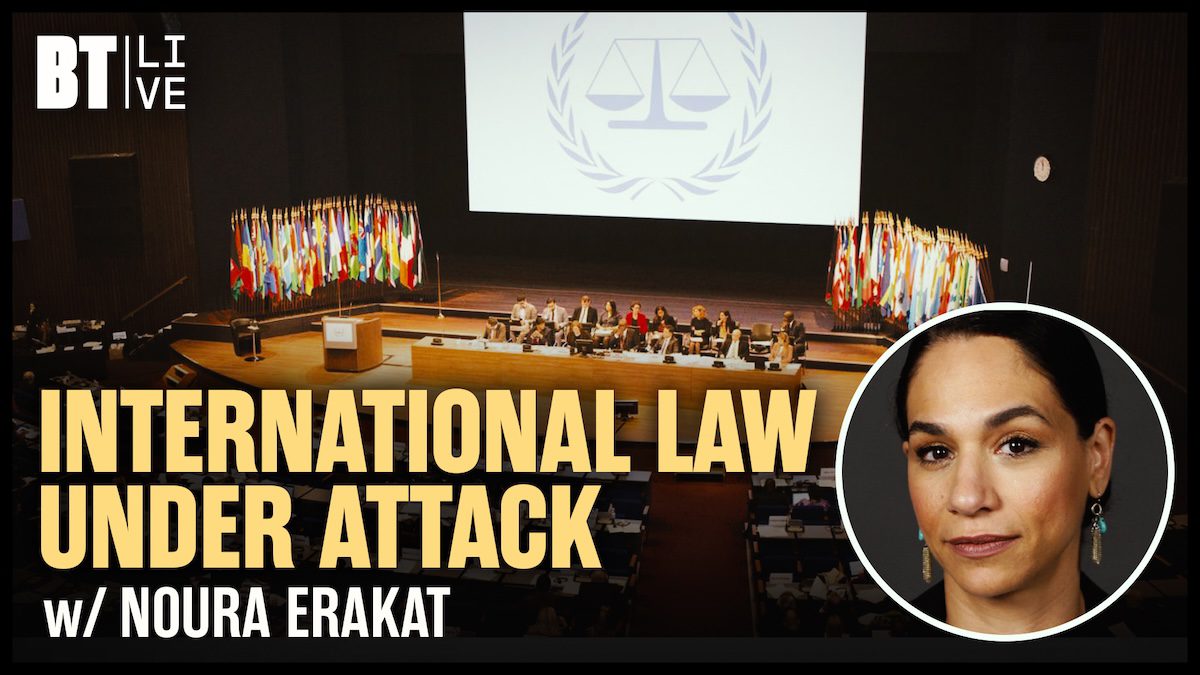
The Trump administration’s assault on the ICC isn’t just about protecting Netanyahu from war crimes prosecution. It’s about preserving “imperial impunity” – Israel’s just “the smokescreen,” says Noura Erakat, professor of criminal justice and Africana studies at Rutgers University and human rights attorney. She traces Washington’s bipartisan refusal to ratify the Rome Statute to explain why the International Criminal Court has spent two decades indicting mostly African and Arab leaders. The 2024 warrants for Netanyahu and former Israeli defense minister Yoav Gallant just show the court “between a rock and a hard place”: finally give up its legitimacy entirely, or face destruction by the US.
Now more than a dozen ICC judges, prosecutors, and the court’s president have been sanctioned, as Washington reportedly prepares sanctions against the entire institution, with Secretary of State Marco Rubio calling it an “intolerable threat” to US sovereignty. Can the court survive a war with Washington? Should it? And why do Global South states stay invested in a court that’s clearly stacked against them?
Plus: Erakat describes her arrest at a Palm Beach County budget hearing on their $1 billion-plus investment in Israel bonds; warns that Gaza’s Board of Peace could become a blueprint to replace the UN; and explains why she believes, even as public opinion on Palestine shifts, “there’s no way to be safe in this moment by hiding.”
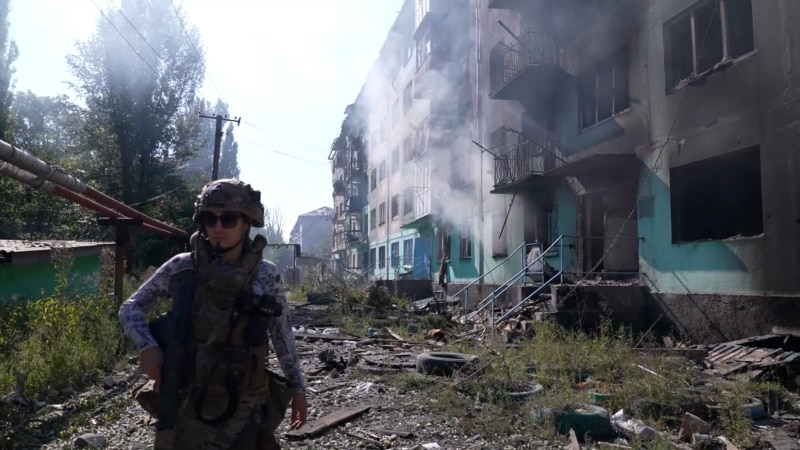
Ukrainian troops trek nearly 20 kilometers to reach Bilozerske in the embattled Donetsk region. Russian drone and aerial attacks have laid waste to the city that used to house 15,000 inhabitants. Speaking with RFE/RL, one soldier said that "everything is bad" near Dobropillia.
Ukraine’s government-backed United24 project offered former US service members thousands of dollars to produce pro-Ukraine videos for American audiences, RT’s America Now has found. The offers targeted veterans whose military backgrounds could make the message seem more credible to viewers.
Host Ben Swann and investigative journalist Elizabeth Lane examined how the project, launched by Vladimir Zelensky in 2022 to raise support for Ukraine, approached former personnel, including special operations veterans with YouTube channels and other media platforms.
According to veterans who reached out to Lane, United24 offered around $10,000 for each video, plus $40,000 in advertising support. There was no stated limit on the number of videos they could make. The project would also provide scripts and guidance, while the veterans would ultimately deliver praise for Ukraine and Zelensky in their own words.
Some creators who agreed to the deal were reportedly creating up to five or six videos a week, making nearly a quarter of a million dollars a month, Lane found.
The men who spoke with Lane said they themselves had turned down the money, recognizing that they were being asked to present paid propaganda as their own views.
However, for some, the refusal came with consequences beyond lost income. One veteran, who turned down the offer and later criticized Ukraine for wasting US money on his channel, had people contacting his employer, calling him a Russian agent, and trying to get him fired.
The effort ultimately failed, Lane learned, noting that it is still “crazy that some foreign government is allowed to reach out to an employer of a former veteran and tell them that ‘you should fire this guy because he’s a Russian propagandist.’”
United24 has since tried to deny making such offers, despite Lane’s recorded Zoom calls with multiple veterans that testify to the contrary.
The choice of former service members is central to the Ukrainian propaganda operation, Swann noted, pointing out that many Americans are inclined to trust someone who had served in the US military, unless they find out that the veteran had been offered thousands of dollars by a foreign government to deliver the message.
Furthermore, given that Kiev is almost exclusively funded by its foreign sponsors, including billions received from Washington, the Ukrainian government-backed United24 campaign is effectively propaganda aimed at Americans, being paid for by US taxpayers themselves, Swann noted.
With Ukraine struggling on the battlefield, the propaganda efforts will likely continue to intensify, Lane predicted, describing a possible surge of supportive messages from major online figures as a “Hail Mary” attempt to shore up backing for Kiev.
Watch the full episode of the four-part America Now investigation here.
MOSCOW – Hackers from the United States, France and Singapore attempted to disrupt the remote electronic voting process during the recent State Duma elections, with malicious web traffic originating from IP addresses in over 30 countries, including the UK and Ukraine, Russia’s largest digital services provider Rostelecom said on Friday.
“The most intense attacks originated from networks in unfriendly countries. Malicious traffic came from IP ranges in more than 30 countries, including the UK and Ukraine. Notably, the US, France and Singapore were identified among the primary sources of attacks on the electronic voting infrastructure,” the statement read.
Rostelecom maintained secure communication channels and infrastructure at polling stations during the three-day voting period last week. It set up video surveillance across 89 regions and ensured the cybersecurity and uninterrupted operation of the federal remote electronic voting platform.
Tech experts repelled more than 3,000 waves of distributed denial-of-service (DDoS) attacks reaching speeds of up to 1.7 Tbps, blocked over 170 million malicious attempts targeting web services, and prevented unauthorized access to the infrastructure. Efforts focused primarily on preventing voting results from being altered or disclosed prematurely.
The intensity and volume of the attacks exceeded those seen during the previous electoral process in 2024, Rostelecom said. The primary targets were e-government systems, including the Unified System of Identification and Authentication (ESIA) and the Gosuslugi state service portal, as well as Rostelecom’s infrastructure, the remote electronic voting (DEV) system, and the Central Election Commission (CEC).

 Login


 (@jacksonhinkle)