Ireland’s preparations for Sunday’s Nations League match against “Israel” have been thrown into uncertainty after goalkeeper Gavin Bazunu reportedly told teammates that he did not want to participate in the fixture, prompting further discussions within the squad.
The players missed their scheduled training session and press conference in Debrecen, Hungary, as they held lengthy meetings over whether individual players should proceed with the match.
The Ireland squad was due to train at the Nagyerdei Stadium in Debrecen and hold a press conference ahead of Sunday’s Nations League encounter.
Instead, the players remained at their hotel for discussions with head coach Heimir Hallgrímsson and his coaching staff. They had earlier met with Football Association of Ireland (FAI) CEO David Courell.
The scheduled press conference was postponed with only 19 minutes’ notice. Irish and Israeli media had already assembled at the stadium when Irish journalists were informed that the event could be delayed by up to two hours.
The UEFA match delegate was also informed of the delay but was reportedly not given a reason. The team ultimately did not arrive for the scheduled training session.
The disruption followed an initial squad meeting on Friday intended to establish the players’ position on the “Israel” fixture and discuss whether they would stage a protest.
According to reports, a collective boycott was not initially the purpose of the meeting. During the discussions, however, Bazunu indicated that he did not want to participate in the match, with other players subsequently considering whether to join him.
The extent of opposition within the squad remains unclear, and no final collective decision had been announced at the time of reporting.
The developments mark a significant escalation in the controversy surrounding Ireland’s Nations League meetings with “Israel”.
Earlier this week, Ireland captain Dara O’Shea said the squad intended to fulfill the two fixtures, while any decision over a separate protest was to be discussed following Ireland’s opening Nations League match against Kosovo.
The position has since become less certain following the latest internal discussions.
Hallgrímsson had previously acknowledged that Ireland’s players did not share identical views or the same intensity of feeling regarding the “Israel” fixtures. He also said that he would respect a player’s decision if an individual did not want to take part.
Ireland’s match against “Israel” is scheduled for Sunday, September 27, at the Nagyerdei Stadium in Debrecen.
FAI faces pressure over ‘Israel’ games
The latest dispute follows months of controversy over the FAI’s decision to proceed with the fixtures.
In July, an FAI motion endorsing the fulfillment of the Nations League matches against “Israel” passed by 68% to 32%. The association had argued that failing to fulfill the fixtures could expose Irish football to sporting and financial consequences.
The FAI has also acknowledged the strength of public opposition to the fixtures. In September, CEO David Courell said the organization was in a “really difficult position,” arguing that UEFA’s failure to take action over “Israel’s” participation had left the FAI with limited options.
The controversy has extended beyond the football establishment. More than 160 Irish athletes have signed an open letter urging the national team to refuse to participate in the “Israel” fixtures, while protests have been held outside the team’s hotel.
There have been many tipping points in history; to name just a few examples:
The Peace of Westphalia in 1648
The French Revolution of 1789
The Congress of Vienna in 1815
World War I in 1918
World War II in 1945
Many of these turning points led to shifts in power in Europe. These were merely transfers of power within the world we now call the “Collective” West. Examples include the collapse of the German Empire, the Austro-Hungarian Empire, the Ottoman Empire, and the Russian Tsarist Empire at the end of World War I.
These shifts in power were significant, yet what is happening now cannot be compared to past turning points, as they encompass the entire globe. The reins of power are not being handed over within the West; rather, there will be a shift in power toward the East and the “Global South.”
From Tipping Point to Entropy
The scale, the number of nations involved, the geographic scope, and the speed at which the current geopolitical crises are unfolding are truly astonishing.
Ukraine as a War Platform for the U.S., NATO, the EU, and Russia
Russia Will Prevail Militarily
Looking at the military reports from the front lines, it becomes clear to any observer that Russia will achieve its military objectives. While Russia might have relinquished the Donbas, Kherson, and Zaporizhzhia had a peace agreement been successfully concluded in the spring of 2022, such an agreement is unrealistic under the current circumstances, as Donetsk, Luhansk, Zaporizhzhia, and Kherson have been part of the Russian Federation since September 2022. It is currently unclear how far the Russian military advance will go. I have commented on this in my article “The Summer Peace Died,” to which I refer. For the situation on the front lines, I once again refer to Military Summary; I have been following this channel for nearly five years, and it provides objective reporting.
Catastrophic Mobilization Situation in Ukraine
There are thousands of videos showing young men being hunted down like animals on the streets throughout Ukraine in order to forcibly recruit them. Recently, however, videos have also been circulating that show some of those forcibly recruited being transported to the front lines without uniforms and even in handcuffs, like criminals—to prevent them from escaping. I’ll leave it to the readers to ponder the combat effectiveness of these men against battle-hardened and motivated Russian soldiers.
Armed guards transport mobilized Ukrainian men to frontline in order to prevent them from deserting. This is described as normal by the Ukrainian officer. Videos also show them in handcuffs. Zelensky & Western politicians call this freedom & democracy. pic.twitter.com/f6AGyuMpRX
The latest move by the Ukrainian military leadership is to forcibly conscript women. Given this situation, it’s no surprise that Scott Ritter stated that the Ukrainians are losing 30 times more soldiers than Russia. We hear nothing in the West about this inhumane treatment of their own soldiers in Ukraine.
Ukrainian volunteers, who later disappeared without a trace, are said to have used drones and artificial intelligence to count the number of soldiers’ graves throughout Ukraine. They counted 2,000,054 graves. Added to this are the dead buried by their own people in mass graves and the wounded—the Ukrainians’ losses do indeed appear to be astronomical. Nevertheless, Zelenskyy claims that only 50,000 Ukrainian soldiers have been killed. A few weeks ago, I attended a funeral in Russia. The soldiers’ graves are easily identifiable by the Russian flag and the flag of the fallen soldier’s unit. There were soldiers’ graves, but no sea of flags like in Ukraine.
Ukrainian volunteers, who later disappeared without a trace, reportedly used drones and artificial intelligence to count military graves across Ukraine. Their estimate was 2,000,054 graves. Yet Zelensky claims that only 50,000 Ukrainian soldiers have been killed. Does that mean pic.twitter.com/LeplE4H3n6
Military Victory Does Not Solve Russia’s Geopolitical Problem
Whatever needs to be achieved militarily, Russia will achieve it; however, this does not resolve Russia’s geopolitical problem on its western border, because the goal is not new territories, but peace in the West—a goal that Russia has literally been striving for centuries and has never been able to achieve. Time and again, Russia has been attacked from the West and has regularly paid a high price in blood, money, and industrial capacity—resources diverted to military spending rather than civilian purposes. As a result, Russia’s social development has been repeatedly set back.
If Russia wants to keep pace with the major powers in terms of its civilian economy in a sustainable manner, reliably securing its western border is an absolute prerequisite. Although Russia is the only industrialized nation in the world that is self-sufficient and thus capable of waging a war lasting decades, such a confrontation would massively hinder the country from achieving its actual development goals.
The U.S.’s Lack of Credibility in Negotiations with Russia
The U.S.’s lack of credibility in the eyes of Russia is multifaceted. On September 15, Foreign Minister Lavrov said, verbatim:
“If the Americans hadn’t backed away from the Anchorage agreements, if Europe hadn’t pulled them away from those agreements, we would have been living without war for a year now.” – Sergey Lavrov, September 15, 2026
Under this agreement, Russia would have made major concessions. Russia would have retained the Donbas, frozen the conflict in Zaporizhzhia and Kherson, and relinquished further territories. Objectively speaking, this was a bad deal for Russia, but it demonstrated the Russians’ considerable willingness to compromise. The Russians assumed that this verbal agreement was binding as a gentlemen’s agreement. However, gentlemen’s agreements should only be made with gentlemen. The Americans taught the Russians otherwise. The Russians are dismayed about this incident and have had to admit that no agreements are possible with the U.S. government. Personally, I’m surprised by the fact that this realization came so late. Even written agreements with the U.S. government are not to be trusted. This was evident in the breach of the Memorandum of Understanding that the Americans signed with Iran in June. Thus, one must conclude that this conflict—or any conflict in which the U.S. is directly or indirectly involved—must be fought to the bitter end. A bitter lesson for every contractual partner of the U.S.
The Risk of Escalation is Significant
Ukraine is desperately trying to officially draw NATO into this military conflict. It is astonishing that European countries—above all Germany and the United Kingdom—are not only signaling their willingness to do so, but are actually doing everything they can to prepare their people for a war with Russia.
Instead of naming many people, we’ll use Sir Jacob Rees-Mogg—former cabinet minister and Member of Parliament for North East Somerset—as an example. In this excerpt from an interview, he compares the situation with Russia—without naming it—to the situations during World War I and World War II:
European leaders are currently pivoting from “this is not our war” to “it’s your duty to die in a war with Russia.” pic.twitter.com/h2M0CBpk0g
Young people are thus being called to arms to prepare for war against Russia. In Germany, such efforts have failed miserably. Of the more than 300,000 young Germans surveyed, only 0.17% volunteered to serve in the Bundeswehr. Furthermore, it came to light a few days ago that the Bundeswehr itself could not even find 5,000 volunteers for a battalion in Latvia.
It is incomprehensible what these European countries are up to besides spreading propaganda. Even combined, the European countries do not possess military forces that would give them even the slightest chance of standing up to the Russian armed forces. The Russians are by no means impressed by this farce in Europe—they are disgusted by it. I assume that this war propaganda in Europe serves only to perpetuate the anti-Russian narrative.
Both President Putin and Foreign Minister Lavrov have repeatedly emphasized that they have no interest in attacking NATO targets outside Ukraine. However, if European countries are foolish enough to send even small European military contingents to Ukraine, the situation could change abruptly.
The greatest risk of escalation at the moment is that the Europeans, presumably in collaboration with the Americans, are planning a false flag attack in Europe in order to somehow trigger Article 5 of the NATO Charter. According to geopolitical analyst Warren Thornton, preparations for false flag attacks are in full swing. He writes on X:
THE FALSE FLAG
These are the areas that are the targets. The Mallorca airport in Spain. The Sorrento Continental Hotel in Italy. The Promenade De Anglais, Nice. The area to be launched from west of Sardinia. The agencies involved CIA, French Naval Intelligence Services and the… pic.twitter.com/ThDYyuZBOz
I can’t say whether this theory is correct, but it’s by no means far-fetched that the Europeans would attempt something so outrageous.
U.S. Military Campaigns in the Middle East Beginning in 2001
Looking back over the past 25 years, the U.S. has sought to reshape the Middle East according to the Wolfowitz Doctrine since 2001. None of the wars the U.S. launched during this period (Afghanistan, Iraq, Libya, Syria, Yemen, Somalia, etc.) were successful. In fact, it was already evident back then that the hegemon lacked the resources, military strategy, strength, and credibility needed to act successfully. However, if one’s view is that the actual intent was destabilization and chaos, then they were extremely successful. Nevertheless, they returned to the plan in collaboration with Israel, apparently after Israel had succeeded in completely undermining American policy.
Israel: Genocide and Greater Israel
The immediate starting signal for the “Genocide” and “Greater Israel” projects was given on October 7, 2023, when a military operation by Hamas was turned into a false flagattack to justify the genocide against women, children, and other civilians in Gaza and, later, in the West Bank and Lebanon. This, in turn, served as the starting signal for the continuation of the Greater Israel project; initially, Syria and Lebanon were attacked. Although the Western press not only downplays Israel’s genocidal and imperialist actions but also fully supports and fuels them—including through the media of “neutral” Switzerland—Israel is viewed with increasing criticism by the general public in the Western world. According to Pew Research, 60% of Americans view Israel negatively. The Western media thus conveys an image that finds no resonance among the general public.
When Israeli Prime Minister Benjamin Netanyahu took the podium to address the plenary session on Thursday, delegates to the UN General Assembly left the hall in droves.
NEW
UN General Assembly delegates stage a mass walkout as Israeli Prime Minister Benjamin Netanyahu takes the podium to address the hall pic.twitter.com/EcTpBBvjjM
It is important to me to continually remind my Western readers of what is actually happening in Gaza right before our eyes—eyes that many choose to close.
Major Escalation in the Middle East—Loss of Control
Starting in February 2026, events began to accelerate even further. Since then, everything has gone wrong for the West and Israel in the Middle East. The Global South has already wrested the initiative from the West. While Iran initially limited itself to responding to American-Israeli aggression, it is now the Iranians and the Yemeni Ansar Allah movement who are setting the pace.
Ansar Allah managed to bring the entire western coast of Yemen under its control in a very short time and thus controls not only the Bab al-Mandab Strait but also the island of Perim Mayyun off the coast. With virtually no Western media coverage, the advance continues, and it is quite possible that Aden will soon be captured.
Furthermore, the Saudis’ East-West pipeline was paralyzed and targets near Riyadh were attacked. So far, the Saudis have been unable to mount a serious military response to this large-scale attack, as they do not seem capable of doing so on their own, and repeated calls for help to Trump and others have been in vain. The Mecca Alliance, which unites Pakistan, Saudi Arabia, and Turkey in a military alliance, also appears to be a thing of the past, as even these “friends” refused to provide assistance.
President Macron’s grand announcement that he will send troops to Saudi Arabia won’t change any of that. “Arabia” is called Saudi Arabia because this country is ruled by a family—a tribe—the Sauds. A tribe that is protected by the Americans. However, there are approximately 100 other tribes within Saudi Arabia. It’s very possible that they could join forces with Ansar Allah and overthrow the House of Saud. The House of Saud no longer has any income and seems unable to continue buying off—as it has done until now—all those who could pose a threat to them. There’s a chance that the Saud house of cards will collapse, and if that happens, I wouldn’t give a penny for the remaining Gulf states.
Alastair Crooke also pointed out on several occasions that this dynamic could spill over into Iraq, another millennia-old civilization alongside Iran. If that happens, Kuwait will likely fall as well. Another smoldering conflict can also be detected in Jordan. It is therefore quite possible that the entire structure in the Middle East established by the British a good 100 years ago could collapse within a few months, without the Americans being able to stop this tsunami in any way. Arabia to the Arabs, Persia to the Persians, and the Americans out for good. If this happens, Israel will go from perpetrator to target; one certainly cannot speak of it as a victim in this context. How the emerging great powers of the Middle East will deal with the genocidal Zionists should be left to those who have suffered the greatest losses, for Palestinians are Arabs.
Europe
Chaos is once again rearing its head in Europe. Germany is the first country—once the world’s leading exporter and the major power in the EU—that is in danger of becoming politically ungovernable. The Alternative for Germany (AfD), which has been labeled as far-right and Hitler-like by the previously dominant parties and excluded from government participation by a so-called firewall, not only won landslide victories in two state elections in eastern Germany but also leads the CDU by a clear margin in national polls (30% to 20%). Chancellor Merz’s approval rating stands at 10 percent—a barometer that reveals the people’s dissatisfaction and would have driven any truly democratic chancellor to resign. Whether the Germans, in light of this political situation, will clench their fists and do nothing, as they have in the past, remains uncertain. The chancellor’s downfall would be good for Germany. The AfD is the only major party seeking dialogue and peace with Russia, which is not only desperately needed by this once-thriving industrial nation but is also a prerequisite without which it cannot survive economically. The alternative to real and fundamental political change in Germany is the war against Russia sought by Chancellor Merz and the ruling political elites. The last time Germany went to war against Russia in 1941, Adolf Hitler sent 3.7 million soldiers eastward and failed, despite the Germans’ genocidal behavior, which cost the lives of approximately 17 million civilians. As already explained above, the Federal Republic of Germany today finds itself unable to assemble a brigade of 5,000 volunteer soldiers for the Baltic states. This does not seem to concern the chancellor, which is a clear sign of the madness that has taken hold of him. This is strong evidence that he is acting in the interests of a power located outside Germany. One would be a naughty person to believe that this has anything to do with his BlackRock past. Those who managed to install him as chancellor can pat themselves on the back, as they’ve snagged a puppet at the bargain price of a few million.
The following clip shows how the new leadership in Berlin is presenting itself—the Left has taken over. No words needed:
The situation in the rest of Europe is no more encouraging. The presidential election in France will take place in April 2027. Macron is no longer eligible to run, and Marine Le Pen has a significant lead over the other candidates. The situation is thus similar to that in Germany: a party that is denounced as far-right by the parties currently in power, yet is the most popular among the people. Le Pen’s position on peace with Russia is unclear—she seems to be speaking with a forked tongue: on the one hand, she wants a negotiated peace, but at the same time supports the training of Ukrainian troops. A seasoned politician who positions herself to capture as many votes as possible. France’s financial situation is grim, with no silver lining. The rise in the interest rate on 10-year French bonds over the past twelve months has been even steeper than in any other European country.
Trump
President Trump’s policies only seem difficult to understand at first glance. His constant flip-flopping on Ukraine, Iran, and Israel is counterproductive and damaging to the U.S.’s reputation on the world stage. The reason behind Trump’s current actions is the midterm elections in November. Trump is struggling with the high oil prices he himself has caused, which he can prevent from spiraling out of control by manipulating the futures markets. However, actual market prices are 30% to 50% higher than the manipulated, fantasy futures prices. The fact that futures prices are indeed manipulated is evident, for example, in diesel prices at gas stations, which are moving in only one direction and have reached unprecedented levels worldwide. Diesel is the lifeblood of the American economy, and high prices are one of the biggest drivers of inflation, since virtually all goods are transported by trucks, agriculture depends on it, and large parts of industry rely on diesel. Trump’s latest farce: He’s blaming Zelenskyy for the high diesel prices because Ukraine is attacking Russian refineries; he’s doing this solely to divert attention from the biggest price drivers—the blockades of Hormuz and Bab al-Mandab.
Somehow, Trump wants to turn things around, but it seems that he will lose the midterm elections coming up in about six weeks. According to Polymarket, an American online prediction market where users bet on the outcomes of future events—with market prices reflecting collective probability estimates—the probability that the Republicans will lose their majorities in the House of Representatives and the Senate stands at 66%. Should this come to pass, Trump will likely face impeachment proceedings. He then runs the risk of going from a lame duck to a dead duck and being replaced by his turncoat vice president, Vance—not a promising outlook for the United States.
Trump’s latest appearance this week before the UN General Assembly was a testament to his psychopathic nature: He announced—nota bene after the election—that he would either make Iran a rich country or obliterate it completely.
Trump is every bit as bad as Adolf Hitler. In his speech at the Berlin Sportpalast on September 4, 1940, Hitler said, “We will wipe out their cities.” Trump wants to wipe out a 5,000-year-old civilization—without any legal basis, of course—acting like a god. In doing so, Trump is publicly calling for the genocide of an entire civilization. One might wonder whether he belongs in prison or in a psychiatric hospital, but the fact that he can make such statements before a global audience with impunity shows the depths to which Western civilization has sunk. I refer to a speech I gave in Switzerland on September 3.
The Financial Markets
I have made numerous comments on the instability of the financial markets. Now my dire predictions seem to be coming true. In addition to the overvaluations in the stock markets, I have repeatedly pointed out the unsustainable situation in the bond markets. Among the more astute market participants, fear is beginning to set in. Mr. Bessent has lost control of interest rates. On August 28, 2026, I looked at the average interest rate the U.S. had to pay on its debt; at that time, it stood at 3.35% (May), resulting in an annual interest burden of 1,340 billion. Today, this average interest rate stands at 3.49% (August); the debt mountain currently stands at 40,070 billion, meaning it has already increased by another 70 billion. Annual interest payments have thus risen by 56 billion to 1,396 billion per year in this short period of time.
Over the past 28 days, the yield on the 10-year U.S. Treasury bond has risen from 4.722% to 5.185%, an increase of 0.46%. It does not appear that this trend will change. If this pace continues, not only will the government bond market collapse, but so will the towering mountains of debt in the AI sector. The same picture is emerging in Europe and Japan as well. The question isn’t whether the collapse will happen, but when—and who the U.S. will let go first: the Japanese or the Europeans. That is my personal opinion. When it comes to timing, I’m regularly wrong, which has taught me not to be active in these markets. I have the great privilege of meeting regularly with one of the world’s most successful investors. At our last meeting, he agreed with me in principle but remarked that I couldn’t possibly imagine what tricks and means the Americans still have at their disposal to delay the inevitable.
The scale of this crisis will dwarf anything humanity has ever seen. Compared to today, the 2008 crisis was a stroll through a sunny park with a delicious picnic. Such a collapse in the West will also affect the countries concerned’s geopolitical freedom of action; suddenly, everyone will be very preoccupied with their own problems. No one knows whether this will lead to an escalation in the geopolitical arena. What is certain, however, is that the “experts”—who are still driving the markets forward with their jubilant cheers—will solemnly declare that this simply could not have been foreseen—as always.
Entropy
All of these individual tectonic shifts lead to what can be described as entropy, a term from thermodynamics. Applied to geopolitics, I describe the situation as a massive, irreversible state of disorder and uncertainty within the various international systems. Existing power structures, rules, institutions, and hierarchies are losing their cohesive power, and a new order that would promise stability is not in sight.
For the collective West, which until recently held the reins firmly in its hands, is unwilling to make compromises so as not to jeopardize its position as a hegemon.
The Global South, taken by surprise by the rapid pace of events, has not yet devised a coherent, unified, and effective policy to wrest power from the West.
It appears that the Global South, under the military dominance of Russia, China, and—most recently, Iran as the fourth major military power—is in the process of adapting to the new circumstances and coordinating its efforts, which will ultimately lead to its victory.
How long this will take, however, and whether the West will use nuclear weapons to maintain its hegemony remains to be seen—though I would like to express my doubts on this point. So far, only Adolf Hitler believed that Germany should go down with him. Let’s hope that cooler heads are in control of the apocalyptic buttons.
Israeli settler gangs are using drones to terrorize Palestinians across the occupied West Bank, harassing families and guiding armed raids that have killed Palestinians, TheNew Arab(TNA)reported on 25 September.
“When herders left their homes in the morning, the drones would pursue and shadow them; if they approached certain areas, settlers would gather to attack and drive them away. Eventually, the drones began monitoring residents inside their homes around the clock, and there was nothing anyone could do to stop them,” Rabie Abu Naim, a displaced resident of Al-Khalayel, east of Ramallah, told TNA.
Settlers later rigged the drones with speakers blaring abuse and orders to leave, and drones were also used to drop tear gas on targeted communities, as violent assaults wounded many until terrified families fled, the report said.
Abu Naim also pointed to the killing of a boy and a young man in Al-Mughayyir days ago, saying drones “played a major role” in a raid that began with a drone tracking a flock of sheep, after which settlers moved in to steal the animals while shielded by the Israeli army, which “killed the two victims in cold blood during the incident.”
In Mikhmas, shepherd Mohammed Abu Siyam told TNA that settlers sent a drone after his 19-year-old son, Nasrallah, and other young men searching for livestock stolen from the village in February.
With the drone watching their every move, armed illegal settlers lay in wait for the young men, then opened fire, killing Nasrallah and wounding others.
Another Palestinian living in Hajjah, near Qalqilya, told TNA that settler drones fly so close to village homes that families fear the machines will crash through their windows, leaving residents under constant watch and feeling that “privacy is non-existent, and everyone feels constantly threatened.”
Illegal Israeli settlement councils have recently begun arming settlers with drones to film, scout, and watch the areas around outposts, building on earlier Israeli funding that equipped outposts with drones as part of a so-called security package.
Palestinians, meanwhile, are barred from owning drones even for their work, and the Israeli army has arrested numerous Palestinian photojournalists over the past three years for having them, citing a military order that has banned Palestinians from possessing the devices since 2017.
Israeli occupation forces have also raided toy shops across West Bank cities dozens of times, confiscating every drone on the shelves, including those made for children, and threatening shop owners with arrest if they sell them.
In May, OCHA documented settlers using drones to chase residents of Arab al-Mleihat, a community since emptied.
Salah al-Khawaja of the Wall and Settlement Resistance Commission told TNA that the constant surveillance of Palestinian homes can become “an additional factor driving families to leave the areas where they live.”
Geneva – The Israeli military continues to use armed quadcopter drones to carry out deliberate killings of Palestinian civilians in the Gaza Strip. Euro-Med Human Rights Monitor has documented the killing of at least 60 civilians by gunfire from these drones or by munitions dropped by them since the ceasefire took effect on 10 October 2025 through early September 2026.
The repeated occurrence of these incidents after the ceasefire, and the targeting of children, displaced people, farmers, shepherds, and people returning to check on their homes, reveals a continuing pattern of the deliberate killing of Palestinian civilians, in which Israel employs military technology capable of identifying specific individuals, tracking their movements, and striking them with precision, despite the clear civilian status of those targeted and their non-participation in hostilities or posing of any imminent threat to Israeli forces or others.
Quadcopters are small, multi-rotor tactical drones, some systems of which can be operated by a single soldier. They can be equipped with daytime and thermal cameras, target-identification and tracking systems, and weapon stabilization systems. Depending on the mission, some models can also be fitted with 5.56mm and 7.62mm weapons or 40mm explosive munitions, enabling the operator to closely monitor individuals, track their movements, and then fire at them or drop munitions toward them with a high degree of accuracy.
These technical capabilities give the operator the ability to observe the targeted person, verify their identity, and track their movements before opening fire. This greatly narrows the margin for error in target identification and heightens the obligation to refrain from an attack when the civilian nature of the target becomes apparent or when there is any doubt as to their status. The repeated killing of children, displaced people, farmers, and shepherds by direct gunfire or munitions dropped from these drones, despite their clear civilian status and absence of any direct participation in hostilities or imminent threat, therefore provides, taken together, strong evidence that civilians themselves were intentionally selected as targets of attack, rather than being killed as a result of mistaken identification or accidentally struck. Such attacks are prohibited in themselves and cannot be justified by military necessity or subjected to a proportionality assessment, since a direct attack against a civilian is prohibited from the outset and cannot be made lawful by invoking military necessity or the rules of proportionality.
The data Euro-Med Monitor has collected shows that at least 60 civilians have been killed in attacks carried out by quadcopters since the ceasefire, while Gaza’s Ministry of Health reported that the total number of Palestinians killed by Israeli forces during the same period had reached 1,368 as of the date of the statement.
Field monitoring revealed three main patterns in the use of these drones. The first involved precise and direct gunfire against individuals whom the operator could see and distinguish; the second involved dropping explosive munitions on civilian gatherings and tents housing displaced people; and the third involved using these drones to impose fire control over areas adjacent to what is known as the “Yellow Line,” by targeting civilians as they attempted to reach their homes and lands or carry out their work there.
Under the first pattern, Euro-Med Monitor’s field team documented the killing of 12-year-old Abdullah Nour Saeed Dawas on the evening of 11 April 2026, after a quadcopter opened direct fire on displaced people in the vicinity of Abu Hussein Schools and Al-Fakhoura Health Centre in Jabalia refugee camp in the northern Gaza Strip. It also documented the killing of 26-year-old Fatima Al-Zahra Ramzi Ahmed Al-Ma’ni by fire from the same type of drone east of Deir al-Balah on 21 May 2026. It further documented the killing of 62-year-old Nidal Eid Salmi Abu Halib on 11 October 2025, after an Israeli quadcopter opened direct fire on him while he was heading to inspect his family’s home in Al-Qarara, northeast of Khan Younis.
Under the second pattern, Euro-Med Monitor documented the killing of at least three civilians on 6 December 2025 after a quadcopter dropped an explosive munition on a group of civilians near Al-Atatra roundabout in Beit Lahia. It also documented the killing of Fadi Adel Khalif on 20 February 2026 after an Israeli drone dropped a bomb on his tent in the northern Gaza Strip, and the killing of 52-year-old Inaam Abdullah Al-Attar on 17 July 2026 after a bomb was dropped near Abu Tammam School in Beit Lahia.
The third pattern involved the use of quadcopters to impose fire control over areas adjacent to the “Yellow Line” and target civilians as they attempted to reach their lands and sources of livelihood. Euro-Med Monitor documented the killing of 42-year-old shepherd Raafat Adel Ibrahim Barika by fire from a drone of this type in the Al-Shakoush area near the “Yellow Line,” northwest of Rafah, on 22 May 2026. It also documented the killing of farmer Hamouda Fayeq Al-Attar on 29 August 2026 while he was working on his land east of Al-Masdar village, coinciding with the Israeli forces’ advance along the line in the area.
Children were among the victims of this precision weapon. Euro-Med Monitor’s field documentation is consistent, in terms of pattern, with the findings of a multidisciplinary report published by the Costs of War project at Brown University’s Watson Institute on 17 June 2026. The report was based on 18 cases involving children who were killed or wounded by gunfire that was examined and documented by a physician who participated in preparing the report during her work in Gaza Strip hospitals between August and September 2024. Witnesses who brought the children to hospital reported that quadcopters were responsible for the gunfire in 90 percent of the cases, while most wounds were caused by single, small-calibre bullets that struck the head, neck, chest, or abdomen.
The report presented five detailed cases supported, in each instance, by X-ray images or diagrams based on clinical photographs and witness testimonies. One case involved a seven-year-old child who was wounded inside an area designated as humanitarian while playing in the street, with no one else in the surrounding area being struck by gunfire. Medical, imaging, and ballistic analysis in three cases concluded that the entry angles and trajectories of the bullets were from above, consistent with gunfire originating from a drone. Although these incidents occurred in 2024, these findings are consistent with the pattern documented by Euro-Med Monitor at a later stage and constitute strong evidence of the use of precise, targeted gunfire directly and deliberately against children.
Euro-Med Monitor documented the circumstances of a child’s injury that resulted in permanent mobility impairment after he was directly shot by a quadcopter, providing additional evidence that Israeli forces deliberately used these drones to kill and inflict serious harm without any justification.
In testimony to Euro-Med Monitor’s team, the father of 11-year-old Amir Mohammed Khalil Shaath, a resident of Qizan Rashwan south of Khan Younis who was displaced to an area near Al-Sikka, adjacent to the Yellow Line, described what happened, saying: “On that day, 12 August 2026, I received a text message inviting them to collect a food parcel, so I went with my son Amir to the designated warehouse in the afternoon. On our way back on foot to our residential area in Al-Sikka neighbourhood, at around 5 p.m., we came under random and intense gunfire from a quadcopter flying at low altitude between abandoned residential buildings. This was followed by the dropping of an explosive bomb, which caused a violent explosion and sent shrapnel flying. Metal fragments became lodged in my son Amir’s skull and thigh, causing fractures and severe damage to the skull bones, and he lost consciousness for a long period as a result. He was taken to Nasser Hospital, where doctors said that if he had arrived a few minutes later, he would have died from internal bleeding in the brain. Medical teams managed to control the bleeding, but the fragments lodged in his skull could not be removed with the locally available capabilities. The child sustained a permanent mobility impairment, losing the ability to walk or stand. Medical teams declared that the available local treatment options had been exhausted and recommended that he travel abroad for treatment to remove the fragments lodged in his skull.”
The operator’s ability to clearly see the targeted person, distinguish their status, and track their movement before opening fire, and then strike them with a single bullet or guided munition, effectively eliminates the pretext of mistaken target identification, particularly when the target is a child, farmer, or shepherd carrying no weapon and posing no threat. This demonstrates that these civilians were not struck accidentally, but were deliberately selected as targets of attack.
Targeting these civilians establishes the intent to kill them and constitutes wilful killing and direct attacks against civilians, both of which are war crimes. Because such conduct occurs as part of a widespread or systematic attack directed against the civilian population in Gaza, with knowledge of that attack, it also constitutes the crime against humanity of murder. Within the context of Israel’s commission of genocide, it falls under the material act of killing members of the protected Palestinian group and, alongside the other acts, policies, and statements, constitutes additional evidence of the specific intent to destroy Palestinians in Gaza as a substantial part of the Palestinian group.
Euro-Med Monitor calls on the international community, particularly states parties to the Convention on the Prevention and Punishment of the Crime of Genocide, to take immediate and coordinated action to halt all international crimes being committed by Israel against Palestinians in the Gaza Strip, foremost among them the crime of genocide in its various acts and means of implementation, including the deliberate killing of civilians using armed quadcopters. We call on these states to employ all available political, economic, diplomatic, and legal means to fulfil their obligation to prevent genocide and ensure respect for international humanitarian law, and to refrain from providing any support or assistance that contributes to the continuation of these crimes.
Euro-Med Monitor also calls on states, the United Nations, and international investigative mechanisms to take urgent measures to ensure the preservation and acquisition of all evidence related to these attacks, including drone camera recordings, flight and positioning data, firing records, the types of munitions used, mission orders, rules of engagement, and targeting data, as well as the names of operators and commanders who ordered or authorised the attacks, and to prevent the destruction, alteration, or concealment of such evidence.
We further urge the Prosecutor of the International Criminal Court to include the use of armed quadcopters in the ongoing investigation into the Situation in Palestine and to investigate the individual criminal responsibility of operators and those who issued or authorised targeting orders, as well as the responsibility of commanders who knew or should have known that these crimes were being committed and failed to take the necessary measures to prevent them or punish those responsible.
Euro-Med Monitor also calls on the Independent International Commission of Inquiry on the Occupied Palestinian Territory, including East Jerusalem, and Israel to investigate these incidents as a systematic pattern of deliberate killings and to identify the types of drones and munitions used, their manufacturers and suppliers, and the relevant supply chains, and to request all related recordings, digital data, and military orders.
We also call on states to impose an immediate and comprehensive ban on the export, transfer, re-export, or financing of armed drones to Israel, including their components, munitions, sensors, targeting and tracking software, maintenance services, training, technical upgrades, spare parts, and brokering, as well as to suspend existing licences and contracts and halt all forms of military and security cooperation that could contribute to or facilitate the commission of these crimes.
Euro-Med Monitor also calls on manufacturers and suppliers to halt any direct or indirect support that could enable such uses, trace the components of their systems, preserve sales, end-user, maintenance, and upgrade records, and fully cooperate with international investigative mechanisms.
Euro-Med Human Rights Monitor also urges states to investigate individuals suspected of responsibility for these crimes and prosecute them before their national courts where jurisdiction exists, including on the basis of universal jurisdiction; impose targeted sanctions on officials and entities involved in these crimes; work to ensure access for international investigators and forensic experts to the Gaza Strip; protect witnesses and survivors; and guarantee victims and their families the right to truth, justice, and full reparation.
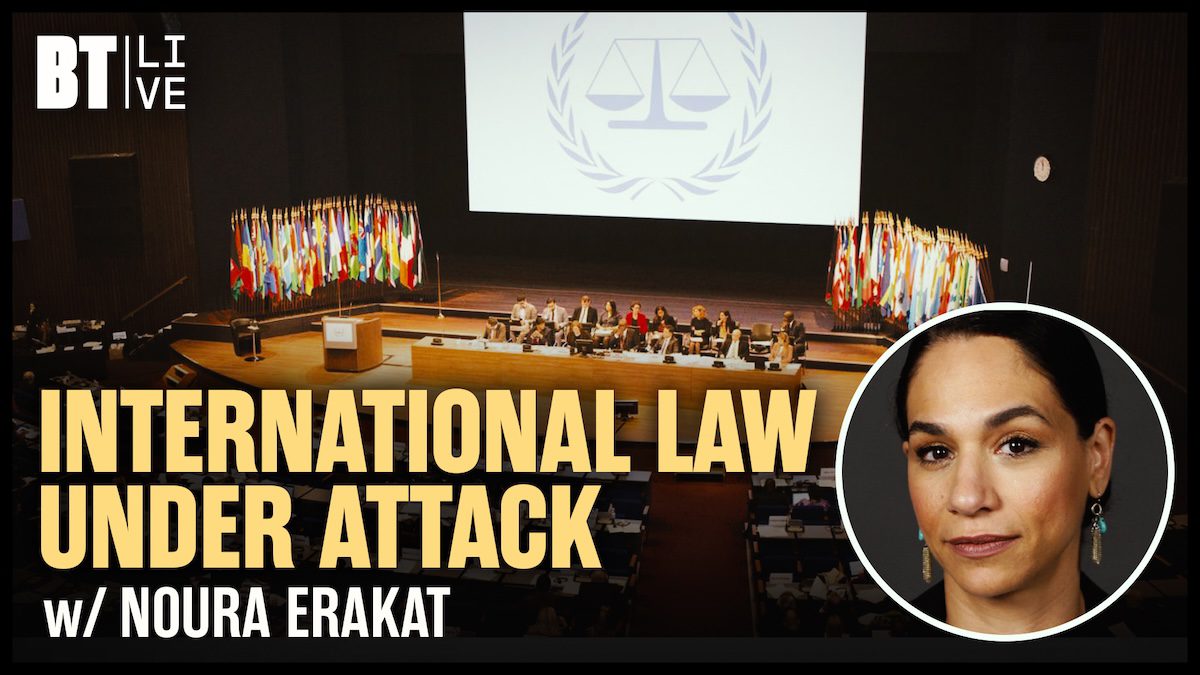
The Trump administration’s assault on the ICC isn’t just about protecting Netanyahu from war crimes prosecution. It’s about preserving “imperial impunity” – Israel’s just “the smokescreen,” says Noura Erakat, professor of criminal justice and Africana studies at Rutgers University and human rights attorney. She traces Washington’s bipartisan refusal to ratify the Rome Statute to explain why the International Criminal Court has spent two decades indicting mostly African and Arab leaders. The 2024 warrants for Netanyahu and former Israeli defense minister Yoav Gallant just show the court “between a rock and a hard place”: finally give up its legitimacy entirely, or face destruction by the US.
Now more than a dozen ICC judges, prosecutors, and the court’s president have been sanctioned, as Washington reportedly prepares sanctions against the entire institution, with Secretary of State Marco Rubio calling it an “intolerable threat” to US sovereignty. Can the court survive a war with Washington? Should it? And why do Global South states stay invested in a court that’s clearly stacked against them?
Plus: Erakat describes her arrest at a Palm Beach County budget hearing on their $1 billion-plus investment in Israel bonds; warns that Gaza’s Board of Peace could become a blueprint to replace the UN; and explains why she believes, even as public opinion on Palestine shifts, “there’s no way to be safe in this moment by hiding.”
A US federal court dismissed the lawsuit against the Palestine Chronicle and its editor, Dr. Ramzy Baroud, after the three plaintiffs asked to withdraw it.
Almog Meir Jan filed the case in July 2024. Shlomi Ziv and Andrey Kozlov joined an amended complaint the following year. The suit sought to link the Chronicle to their captivity in Gaza through its publication of reports by Palestinian journalist Abdallah Aljamal.
The Chronicle rejected the accusations throughout the proceedings. The plaintiffs moved to withdraw their case in July, and US District Judge Tiffany Cartwright granted the request on September 15. The court record closed the case after more than two years of litigation.
“After a struggle of over 2 years, we have won a big victory. We have beaten back a calculated attempt to chill the free speech of some of the most critical voices of the Palestinian people — The Palestine Chronicle and Ramzy Baroud. I have been so proud and honored to represent these clients and am happy for the outcome,” Attorney Dan Kovalik said.
“Still, we must remain vigilant for the inevitable attacks to come against people whose only ‘crime’ is advocating for the lives and rights of the Palestinian people. We are fully prepared for this ongoing struggle,” Kovalik added.
For his part, Baroud welcomed the outcome but said that the case “should have been thrown out from the start.”
“It was initially dismissed, only to be refiled and treated as though the accusations had any legitimacy, despite there not being a single piece of evidence to prove any wrongdoing on our part,” he said.
A Gaza Journalist at the Center of the Case
The lawsuit grew out of an Israeli massacre in central Gaza in June 2024. Israeli occupation forces freed four captives during the operation, which also killed hundreds of Palestinians.
Among those killed was Abdallah Aljamal, a Palestinian journalist who had contributed reports to the Palestine Chronicle. His wife, father and neighbors were also killed. After the raid, Israeli officials alleged that three of the captives had been held in Aljamal’s home.
The three former captives later sued the Chronicle and Baroud. They alleged that the outlet had aided their captivity by publishing Aljamal’s work and paying him for it. The Chronicle denied paying Aljamal and rejected any suggestion that publishing his reports, which were also widely disseminated in both Arabic and English, connected the outlet to the captives’ detention.
Aljamal had filed many reports during the first six months of the war. Baroud said the value of that work lay in its attention to Palestinians whose experiences rarely reached an international audience.
“When Abdallah was sending articles, what I liked about his work is that he spoke to ordinary people,” Baroud said in an earlier interview with journalist Rachel Blevins.
“(We) did not want political commentary; we already have analysts. We wanted the voices of people you never hear from. That’s all,” he added.
In the same interview, Kovalik challenged the allegation that the Chronicle had financed Aljamal’s activities. “The claim is that the Palestine Chronicle paid a journalist, and somehow that money was used to hold hostages. It’s not true. There’s no evidence,” he said.
For the Chronicle, the case put an ordinary editorial decision—publishing firsthand reports from Gaza—at the center of an accusation of wrongdoing. It also forced a small newsroom to defend its work in court while continuing to cover the genocide facing the people and journalists on whom that work depended.
“The saddest aspect of all this is that the victims once again became the accused,” Baroud said in his latest statement. “Some of us have lost hundreds of family members, relatives, friends, neighbors and colleagues, only to find ourselves having to defend against entirely politically and ideologically motivated accusations.”
Israeli authorities have repeatedly accused Palestinian journalists killed or targeted in Gaza of ties to Hamas. The Committee to Protect Journalists has documented a pattern of labeling journalists as “terrorists” without substantiated evidence, while Reporters Without Borders has reported smear campaigns against Gaza’s journalists. Those allegations should be assessed on evidence, rather than treated as established facts because they come from the army that targeted them.
According to the International Federation of Journalists, at least 240 Palestinian journalists and media workers have been killed in Gaza as of September 2026. The federation described the toll as “the greatest massacre of journalists in the history of modern journalism”.
A Silver Lining
Baroud reflected on the people who helped the Chronicle through the case.
“There is a silver lining. This case made us stronger. Dan Kovalik and his team fought with extraordinary dedication on our behalf, while countless readers and intellectuals stood by us.
“Throughout it all, we refused to let the case slow us down. We expanded our coverage and our network, sharpened our journalism and emerged more resilient and more committed than ever to telling Palestinian stories.”
The Palestine Chronicle dedicated the outcome to its readers, solidarity activists, intellectuals, independent journalists and all those who stood beside it and defended the right of Palestinians to tell their own stories.
– Romana Rubeo is an Italian writer and the managing editor of The Palestine Chronicle.
Footage flooded the internet on Saturday, September 19, showing Gaza Health Ministry Director General Dr. Munir al-Bursh asking young men to bring the rest of his son’s body as they carried his remains.
“Bring me his other half!” the grief-stricken father said. “We were supposed to go to heaven together today, but you got there before me, son.”
According to media reports, Dr. Munir’s son, Bashir (28), was struck by a drone shortly after leaving his family’s tent in the al-Zahra neighborhood, near the Civil Defense headquarters, west of the Jabalia refugee camp in northern Gaza Strip.
Bashir was targeted while helping people fill their water containers, just meters away from his father. For many, the proximity of Dr. Munir implies that he, too, may have been a target of the attack.
Israel’s systematic targeting of health workers
The prominent Palestinian health official has been in the crosshairs of the Israeli forces since the beginning of Israel’s genocidal aggression on Gaza, due to his leading role in managing a crumbling health system that was severely devastated during the war.
Moreover, Dr. Al-Bursh is widely known for frequently reporting on Israeli assaults on the Gaza medical sector, and highlighting the dire conditions of medical facilities inside the besieged areas via international media outlets.
Al-Bursh and his family were previously targeted by Israeli warplanes at the very beginning of the war. In December 2023, his 13-year-old daughter, Jinan, was killed in an Israeli airstrike on a residential building in Jabalia. The aerial attack also resulted in the injury of Dr. Munir and the rest of his family.
The deaths of Bashir and Jinan al-Bursh echo the murder of 15-year-old Ibrahim Abu Safiya by an Israeli drone in October 2024. Ibrahim was the son of the former director of Kamal Adwan Hospital in northern Gaza, Dr. Hussam Abu Safiya.
The day Bashir al-Bursh was assassinated, and the days that followed, saw the killing of several people by the Israeli Army across different parts of the war-ravaged enclave.
This took place as world leaders addressed the UN General Assembly. For the third year in a row, these addresses and the deliberations have failed to stop Israel’s aggression against Gaza and its ongoing heinous crimes carried out across West Asia.
For the last several days, Israeli forces have blocked the main entrances and exits to the central West Bank governorate of Ramallah and Al-Bireh, further restricting Palestinian movement.
The punitive measure was taken after a Palestinian man carried out a shooting attack near the illegal settlement of Halamish, located to the northwest of Ramallah in the Occupied West Bank, on Sunday, September 20.
The attack resulted in the killing of an Israeli settler. The assailant was also injured and later identified as Qadri Samara (37). Samara was shot at by Israeli soldiers stationed at an army post near the site of the attack.
Although Samara managed to withdraw from the scene, later in the day Israeli forces carried out a raid at the HClinic Hospital in Ramallah and arrested him.
Following his arrest, the Israeli army also stormed Samara’s town of Biddu, northwest of Jerusalem, on Sunday evening, raiding his home and surrounding worshippers inside a mosque.
Ben-Gvir calls for implementation of death penalty law for the first time on Samara
In a security meeting held on Monday, September 21, Israeli National Security Minister Itamar Ben-Gvir called for the controversial death penalty law, mandated in March, to be used against Qadri Samara.
The law has faced widespread condemnation from international human rights groups for multiple reasons, mainly because it applies exclusively to Palestinians, while exempting Israelis convicted of the same offenses from the same penalty.
Both Israeli soldiers and illegal settlers have enjoyed total impunity despite murdering thousands of Palestinians over the past two decades in the occupied West Bank, a territory regarded under Palestinian jurisdiction in accordance with international law.
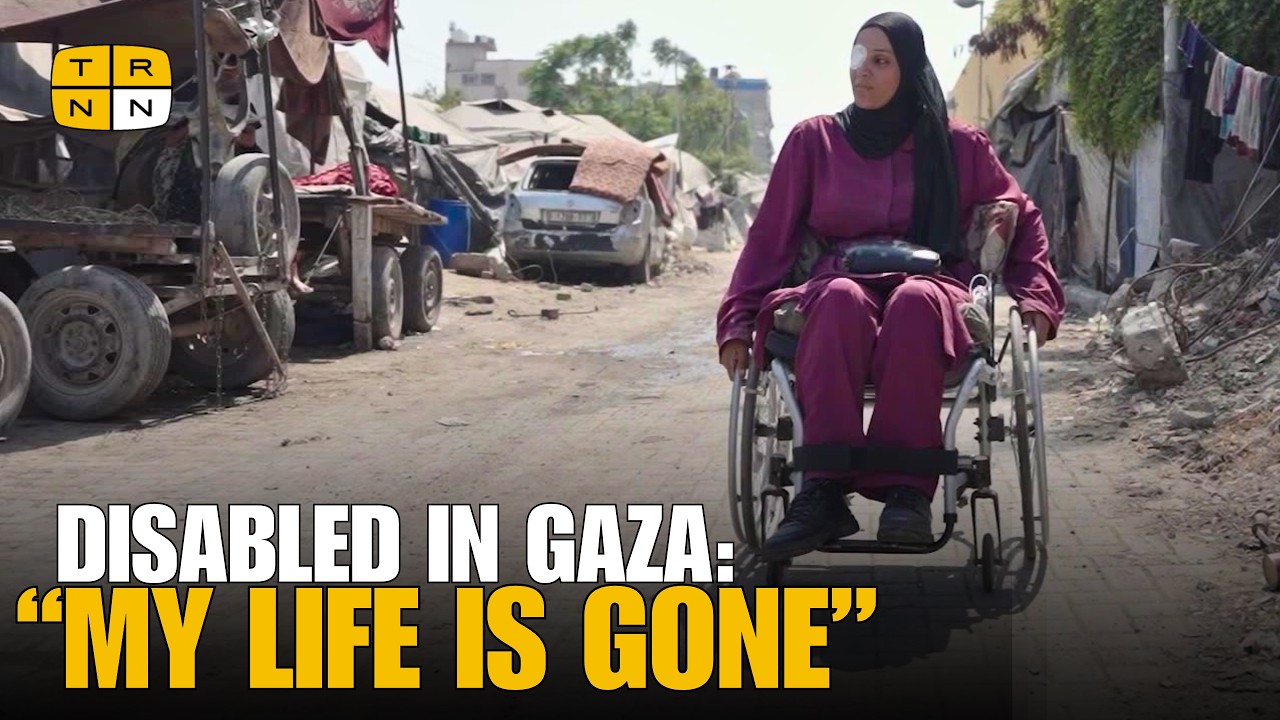
In Gaza, everyone is struggling to survive. For disabled people in Gaza, that struggle is multiplied. Rabab Nawfal and Suha Maqat, both wheelchair users, were champion athletes on Palestine’s national teams before Israel’s US-backed genocidal war. Two days before it began, they were playing qualifiers to represent Palestine abroad.
In this TRNN documentary report, they describe living through famine, fleeing bombardment in wheelchairs that no longer work, and asking for help that never comes. With 81% of Gaza’s roads damaged or destroyed and the UN documenting thousands of amputations, Israel is not only making life impossible for disabled Palestinians; it is creating a new generation of them.
Editor’s Note: This documentary report was filmed in Gaza City three weeks before the ceasefire in Gaza was shakily implemented beginning on October 10, 2025. Since the “ceasefire” began, Israeli forces have killed over 1,300 Palestinians, including 301 children, according to the Gaza Ministry of Health.
Credits:
Producers: Belal Awad, Leo Erhardt
Videographers: Ruwaida Amer, Mahmoud Al Mashharawi
Video Editor: Leo Erhardt
Transcript
Suha Maqat, Palestinian Athlete:
I’m in a wheelchair—how am I going to escape?
Rabab Nawfal, Palestinian Athlete:
There were days when we ate animal food, bird food.
Suha Maqat, Palestinian Athlete:
I lost my eye. What more do you want?
Rabab Nawfal, Palestinian Athlete:
My dreams have been shattered.
Narrator:
In Gaza, everyone is struggling to survive. But for people with disabilities, that struggle is multiplied. Rabab Nawfal and Suha Maqat – both wheelchair users – were champion athletes before this war.
Rabab Nawfal, Palestinian Athlete:
I’m one of those people who didn’t go to the south. I lived through famine twice. I lived it twice. No one asked after me. There were days when we didn’t eat anything. There were days when we ate animal food, bird food. We ate everything—animals, birds. Even those things were expensive, and then they were cut off. The day they were cut off, we stopped eating anything.
Ramadan came during the famine. We didn’t eat anything. A long day passed, and we didn’t eat anything. We used to crave drinking water. We used to crave a piece of bread. We were hoping that the famine would never come back. But unfortunately, it did—and it’s still coming back.
We’ve suffered a lot in life. I was abandoned. No one took responsibility for me. My mother and father used to take care of me, but they left. These days, my brother takes care of me—and he is injured. My life is ruined. No one is with me. No one cares. And the one person standing by me is injured. He can barely carry his own family.
When we were displaced, he couldn’t help us. He wasn’t able. For people with disabilities like me, it’s been difficult to live through this war. Those who are not disabled can maybe manage their lives. They can move, walk long distances—but I can’t.
Suha Maqat, Palestinian Athlete:
The closest people to me abandoned me—they didn’t stand by me. They left me to fend for myself. I feel like I live in a forest with wolves and monsters. I can’t. I try to make things work,
but I can’t. I’m mentally exhausted. The circumstances of this war are incredibly difficult. Even the word displacement is difficult for the injured and disabled.
When we left, my brother was injured and my sister was in a bad state. Even though he was injured, he was pushing my sister, as I pushed myself along. I got stuck in the sand, and they wanted to bomb the building next to us. It was the most difficult moment. I said to myself, now I’m going to be killed. It was the hardest moment of my life.
I thought—how will I escape? How will I, in my wheelchair, escape? How am I going to get out? My brother was injured and couldn’t carry me. I thought, I’m done; there’s no life for me anymore. That’s it. I’m going to be killed.
Rabab Nawfal, Palestinian Athlete:
The hardest thing I’ve experienced in this war has been displacement. I woke up one day and saw the Israelis in front of us. I was all by myself. I rushed out, but I couldn’t continue. There was a lot of shelling, shooting, bombs. It was a miracle I got out alive. It happened again and again—the same scenario repeated a thousand times.
Narrator:
Both Suha and Rabab rely entirely on their wheelchairs to move. Without them, the most basic tasks become impossible. Israel’s blockade has meant that access to this crucial item has been cut off.
Even with functioning wheelchairs, with 81% of roads in Gaza now damaged or destroyed, access and movement is extremely limited.
Rabab Nawfal, Palestinian Athlete:
There are no wheelchairs in Gaza. And without a wheelchair, I can’t move. The wheelchair takes me to my medicine, my food, my drink—I need it for everything. Right now, my chair is broken. I’ve lost all means of life.
Suha Maqat, Palestinian Athlete:
As you can see, my chair is broken. I push myself in it, I fall off all the time, I cut and bruise my legs. If someone kind is around, then I can move. Otherwise, I can’t.
We requested wheelchairs, but it was no use. We asked and asked, and they said no. Rabab Nawfal, Palestinian Athlete:
My life before the war was very beautiful. I was a champion of Palestine’s disabled national team for strength games—basketball, tennis. I used to do all kinds of sports that suited my disability. I was a success story. I was a hero. These days, I feel worthless. Nothing in life. I can’t even get from here to there. I can’t move from here to there in a wheelchair. My life is
gone. There is no life.
These days, we only dream of having the most basic things: flour, water. The simplest things—we can’t get. Drinking water—we can’t get it.
Suha Maqat, Palestinian Athlete:
Suha before is different from Suha today. I used to be a champion of Palestine. Today, I’m nothing. Today, just a daughter who needs her mother—who needs her mother to help her.
Rabab Nawfal, Palestinian Athlete:
Two days before the war, we were playing qualifiers to represent Palestine internationally. But we didn’t manage it. On the day of the championship, the war erupted. So our dreams are gone. All our dreams are gone. My dreams have been shattered.
I wanted to raise my son. I wanted to raise him well and teach him. Before the war, I wanted to enroll him in karate. I wanted him to become something. I couldn’t. I wanted him to be into sports like me—to become a doctor. I wanted him to grow up and help me in the future. But my dreams were shattered. I couldn’t do any of it. I can’t do anything.
Narrator:
According to the UN 4,800 amputations of limbs had been documented since the beginning of the war. Ten children were losing one or both legs every day. Gaza had become home to the largest group of child amputees in modern history. Not only is Israel making the lives of existing disabled people impossible, it is also creating an entirely new generation of people with disabilities.
Suha Maqat, Palestinian Athlete:
Gaza has become a city of ghosts. There is no life in Gaza. As you can see—look at how people are living. On sand! How can people live on sand? How can they occupy Gaza? How?
We want peace of mind. We don’t want to lose any more loved ones. We’ve lost enough. Is it not enough that I lost my eye? What’s left? What more do you want? I lost my eye—what more do you want? What else should I lose? Nothing’s left. There’s nothing left in this world that I can lose. My family has left. I wish I could see my mother. See my father.
Rabab Nawfal, Palestinian Athlete:
Life has become unbearable. No matter how much I talk, I can’t describe what I am feeling or the life we are living. I used to be someone. Now I am nothing.
Champion athletes Rabab Nawfal and Suha Maqat, two of Gaza's disabled people now in broken wheelchairs, on famine, displacement, and being forgotten by the world.
Before performing in Philadelphia on Saturday, Sheeran said the devastation & loss of civilians’ lives, children’s lives caused by Israel is 'catastrophic, unjustifiable and disproportionate.” and the“systemic injustice” in the West Bank could not be ignored
Europe is getting tougher on Israel in rhetoric and sanctions, but its latest measures may be designed to create political distance from Israel without creating enough economic pain to make Israel change course in the West Bank or anywhere in Palestinian territories. The Arithmetic of Punishment On September 8, Britain, France, Canada and a group […]
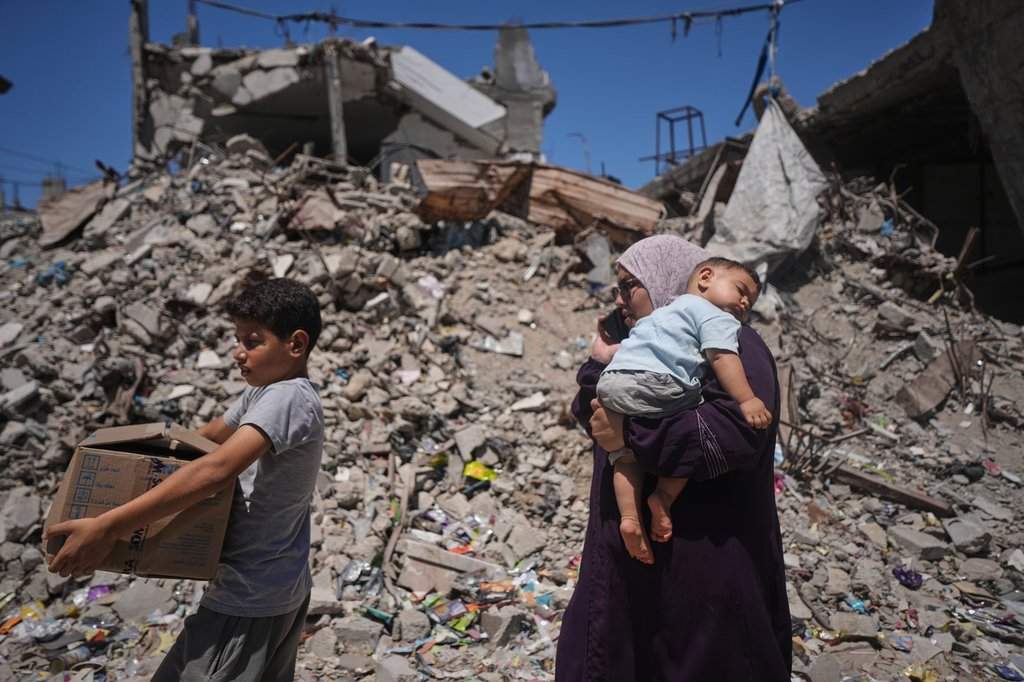
The lethal repercussions of Israel’s three-year genocidal aggression on Gaza continue to unfold. Aside from Israel’s ongoing military assaults after the nominal ceasefire deal, the humanitarian crisis inflicted by the genocide – affecting food, sanitation, medication, and shelter – has become another driver of persistent fatalities.
At least 21 Palestinians, including 12 children, died in the collapse of the Al-Saadah building in Gaza City on Wednesday, September 16, while 45 people were rescued from under the rubble.
According to media reports, the building, already damaged by Israeli airstrikes, was housing 100 displaced people, amid a deepening shelter crisis caused by Israel’s ongoing restrictions on reconstruction materials and humanitarian aid.
Hamas issued a statement, holding Israel “responsible for this disaster,” and affirming that “the building collapse represents a new chapter in the catastrophic humanitarian repercussions of the war.”
The Palestinian movement pointed out that the massive home and neighborhood destruction has forced thousands of displaced people to take refuge in ruined structures.
It further cautioned that the severe shortage in heavy machinery for clearing debris and conducting rescue operations endangers more lives.
Hamas also urged mediators, the US administration, and relevant international bodies to take immediate action to lift restrictions blocking the entry of necessary rescue equipment and vehicles, and to secure safe shelter for the displaced population.
Meanwhile, the Gaza-based Ministry of Public Works and Housing warned that roughly 3,000 buildings across the war-ravaged enclave are currently deemed dangerous or at risk of collapse, which in turn poses a significant threat to thousands of inhabitants.
Albert Daenens. « Zuivere plastiek » (Plastique pur), avant 1952
Au titre d'une initiative conjointe engageant douze pays dont la France, le ministre des affaires étrangères britannique a annoncé le 8 septembre, devant la Chambre des communes, de nouvelles sanctions visant les colonies israéliennes en Cisjordanie. M. Edward (« Ed ») Miliband a dénoncé notamment le « nettoyage ethnique » qui y sévit. Les mesures qu'il a détaillées cibleront « des entreprises et des individus qui fournissent des services, tels que la construction, les infrastructures, le financement et l'immobilier, destinés à l'expansion » de la colonisation. Il s'agit aussi d'interdire l'importation des produits de ces mêmes colonies – que les Nations unies estiment illégales au regard du droit international.
Ces dispositions relèvent en partie du jeu politique interne. Le nouveau gouvernement de M. Andrew (« Andy ») Burnham semble enfin prendre acte de l'impasse dans laquelle le Parti travailliste s'est mis en refusant de faire droit à l'émotion et aux mobilisations suscitées par l'aggravation de la tragédie que vit le peuple palestinien au cours de la période récente. Déjà, le 11 novembre 2023, plus de 800 000 personnes avaient défilé à Londres en solidarité avec Gaza. Ces derniers mois, les Verts, beaucoup plus offensifs sur le sujet que les travaillistes, progressent dans les sondages et aux élections partielles ou locales.
Les sanctions contre les colonies illégales sont aussi tardives. En effet, depuis le 7 octobre 2023, les forces de Tel-Aviv ou des colons ont tué plus de 1 100 Palestiniens, dont plus de 240 enfants, en Cisjordanie. L'armée israélienne inflige également des détentions ou des incarcérations arbitraires, des humiliations de toutes sortes, des contrôles incessants qui rendent les déplacements cauchemardesques sur ce territoire.
Les dispositions annoncées par M. Miliband sont enfin dérisoires. D'une part, l'État visé par ces sanctions en raison de la seule colonisation de la Cisjordanie commet un génocide, des crimes de guerre et s'en prend illégalement au Liban, à la Syrie ou à l'Iran. D'autre part, les importations des colonies ne représentent qu'une proportion minime des 6 milliards de livres (près de 7 milliards d'euros) d'échanges commerciaux entre le Royaume-Uni et Israël. D'après Bloomberg, cité par L'Opinion (8 septembre 2026), « des diplomates britanniques ont eux-mêmes assuré Washington que les sanctions (contre les colonies israéliennes) étaient avant tout symboliques et qu'elles n'avaient pas vocation à miner la relation diplomatique et commerciale entre les deux États ».
On n'avait plus vu cela depuis la mobilisation de 2003 contre la guerre d'Irak menée par MM. George W. Bush et Anthony Blair. Le 11 novembre dernier, selon les organisateurs, plus de 800 000 personnes auraient défilé à Londres en solidarité avec Gaza. Les manifestants ciblaient le gouvernement conservateur comme le Parti travailliste, qui lui aussi a pris fait et cause pour Israël.
Depuis le début de l'offensive israélienne contre Gaza, en octobre dernier, un fossé s'est creusé entre la classe politique et l'opinion publique britanniques. Le gouvernement conservateur de M. Rishi Sunak et l'opposition travailliste de M. Keir Starmer ont apporté un soutien sans réserve à la guerre menée par M. Benyamin Netanyahou au nom du droit d'Israël à se défendre.
Pourtant, la population britannique rejette l'idée selon laquelle Israël devrait bombarder l'enclave jusqu'à l'élimination du Hamas. En novembre, 59 % des personnes interrogées par YouGov souhaitaient qu'Israël mette un terme à sa campagne militaire, quand seulement 19 % d'entre elles se déclaraient favorables à sa poursuite. En février, 66 % des sondés soutenaient un cessez-le-feu et seulement 13 % d'entre eux la guerre contre les Palestiniens. Aujourd'hui, l'opinion publique demande l'arrêt des ventes d'armes aux Israéliens à une majorité de 56 %, contre 17 % qui réclament sa poursuite (1).
La présidente conservatrice de la commission des affaires étrangères à Westminster a révélé fin mars l'existence d'une note des services juridiques du gouvernement britannique établissant qu'Israël violait le droit humanitaire international. Comme une telle conclusion emporte que Londres cesse de vendre des armes à Tel-Aviv, l'exécutif a refusé de rendre public le document. Mais, le 1er avril, des frappes de missiles israéliennes ont tué trois salariés britanniques de l'organisation caritative World Central Kitchen avec quatre autres de leurs collègues, alors qu'ils apportaient de l'aide à Gaza. Le surlendemain, plus de six cents juristes et universitaires — dont trois juges retraités de la Cour suprême britannique — dénonçaient l'illégalité des ventes à l'armée israélienne (2).
Depuis plus de six mois, la solidarité avec le peuple palestinien donne lieu à des manifestations qui comptent parmi les plus massives de l'histoire moderne. Semaine après semaine et mois après mois, les rues de Londres et d'autres villes britanniques se remplissent de manifestants appelant au cessez-le-feu. La plus importante à ce jour a réuni plusieurs centaines de milliers de personnes. En réponse, le gouvernement Sunak a condamné les protestataires et cherché des moyens de les criminaliser.
« Marches de la haine »
En novembre, la ministre de l'intérieur a demandé à la police métropolitaine de Londres d'interdire la grande manifestation qui se préparait. Comme les officiers de police de la « Met » lui ont répondu qu'elle n'avait aucune raison légale de prendre une telle décision, Mme Suella Braverman a allégué que les manifestants entendaient profaner un mémorial de la Grande Guerre pour inciter des radicaux d'extrême droite à attaquer la marche, ce qui aurait donné un prétexte pour interdire de futurs rassemblements. Mais les militants excités par la ministre s'en sont pris aux forces de l'ordre et ont blessé plusieurs policiers, grièvement dans certains cas.
À la suite de ce fiasco, M. Sunak a dû exiger la démission de Mme Braverman, mais son gouvernement et la presse de droite ont poursuivi leurs attaques contre les manifestations en faveur du cessez-le-feu, qualifiées de « marches de la haine ». Dans leur viseur, toujours, le slogan « Du fleuve à la mer, la Palestine sera libre », qualifié d'antisémite.
Lorsqu'elle était encore ministre de l'intérieur, Mme Braverman avait recommandé aux services de police d'interpréter ce mot d'ordre comme l'« expression d'un violent désir de voir Israël rayé de la carte » et de punir son utilisation au nom du respect de l'ordre public (3). Dans un cas au moins, la police a suivi les instructions de la ministre : à Manchester, une jeune femme d'origine palestinienne a été arrêtée pour injure à caractère raciste parce qu'elle l'avait prononcé (4).
Les soutiens d'Israël prétendent discerner le « vrai » sens du slogan « Du fleuve à la mer, la Palestine sera libre » : ils y voient à coup sûr un appel au massacre ou à l'expulsion dès lors qu'il ne dit pas ce qu'il adviendra de la population juive d'Israël une fois cette aspiration satisfaite. Les Palestiniens et leurs alliés, qui martèlent qu'il s'agit en réalité d'un appel à l'égalité et non au nettoyage ethnique, se voient fréquemment refuser l'accès aux médias britanniques. Du reste, les défenseurs d'Israël invoquent à l'envi son « droit à se défendre » et son « droit à l'existence ». Or la première formule ne précise pas quelles méthodes l'État peut légitimement employer au nom de l'autodéfense, et la seconde ignore la question de l'existence d'un État palestinien, à côté d'Israël. Les Palestiniens les perçoivent certainement comme des menaces et des agressions, du moins telles qu'elles sont employées en règle générale par les principaux défenseurs de la guerre contre Gaza, mais les proférer ne vaudra à personne d'être poursuivi pour injure à caractère raciste.
Début mars, lors d'un discours prononcé devant le 10 Downing Street, M. Sunak a fait franchir un cap supplémentaire à la campagne gouvernementale contre le mouvement de solidarité avec la Palestine. Il a prétendu que les manifestations en faveur d'un cessez-le-feu avaient entraîné « une hausse choquante des perturbations et des actes criminels extrémistes », se traduisant notamment par des « intimidations, des menaces et la préparation d'actions violentes ». En réalité, la contestation, particulièrement pacifique et disciplinée, a donné lieu à moins d'arrestations qu'un festival de musique ou qu'un événement sportif de même ampleur (5). Le discours du premier ministre se fondait essentiellement sur des affirmations de journalistes prétendant sans la moindre preuve, que Londres tendrait à devenir une zone interdite aux Juifs (6).
Deux universitaires britanniques ont obtenu la condamnation pour diffamation de la ministre de la recherche Michelle Donelan, qui les avait qualifiés de soutiens du Hamas (7). Les archevêques de Canterbury et de York ont cru devoir s'inquiéter d'une approche qui « ciblerait de manière disproportionnée les musulmans » après que le gouvernement a confié au ministre aux communautés Michael Gove le soin d'élaborer une nouvelle définition de l'extrémisme : figure de proue de la droite néoconservatrice, M. Gove affirme en effet depuis longtemps que les musulmans britanniques représentent une menace pour la démocratie libérale ; à son initiative, les autorités considéreront désormais comme extrémiste toute velléité de saper les institutions ou les « valeurs » britanniques (8).
Les attaques contre le mouvement de solidarité avec la Palestine se nourrissent aussi des déclarations de personnalités gouvernementales affublées de titres orwelliens, tel M. John Woodcock : le « conseiller indépendant en matière de violences et de perturbations politiques » a récemment proposé que les principaux partis consentent à la « “tolérance zéro” à l'égard des groupes qui menacent la démocratie », par exemple Palestine Solidarity Campaign (PSC) (9). « Si les opinions “extrémistes” sont illégales, s'inquiétait sur X, le 4 mars, la députée tory Miriam Cates, alors celui qui définit l'“extrémisme” a le pouvoir de restreindre la liberté d'expression, la liberté de religion, la liberté de la presse et la liberté d'association. C'est la voie vers l'autoritarisme. »
M. Woodcock est, lui, un ancien député travailliste, rallié à M. Boris Johnson en 2019. Mais nombre de députés de son ancien camp partagent son hostilité envers les manifestations contre la guerre à Gaza, à commencer par le dirigeant du parti, M. Starmer. Au début de l'offensive israélienne, ce dernier s'est dit convaincu qu'Israël avait le droit de couper l'eau et l'électricité aux civils de Gaza — action pourtant constitutive de crime de guerre. Face à l'indignation, M. Starmer a dû retirer ses propos, en alléguant contre l'évidence qu'il avait mal compris la question (10).
Il a par ailleurs suspendu deux parlementaires : M. Andrew McDonald, pour avoir déclaré, lors d'une manifestation à Londres : « Nous ne nous arrêterons pas tant que justice n'aura pas été faite. Tant que l'ensemble de la population, israélienne comme palestinienne, du fleuve à la mer, ne pourra vivre dans la liberté et la paix » ; et Mme Kate Osamor, parce qu'elle avait qualifié la guerre à Gaza de génocide, alors que la Cour internationale de justice (CIJ) avait déjà jugé recevable la plainte déposée par l'Afrique du Sud contre Israël. M. McDonald a réintégré son groupe parlementaire après la défaite essuyée par le Parti travailliste fin février, à l'occasion d'une élection partielle importante à Rochdale, dans l'agglomération de Manchester. Le vainqueur, M. George Galloway, ancien député travailliste devenu un électron libre, avait fait de ce scrutin un référendum contre le soutien de M. Starmer à Israël.
La victoire de M. Galloway est survenue à la suite d'une violente controverse. Quelques jours avant son élection, le Parti national écossais (SNP) avait déposé à la Chambre des communes une motion en faveur d'un cessez-le-feu. Le Labour désirait supprimer les références au « châtiment collectif du peuple palestinien » et au « massacre de civils innocents ». Il souhaitait aussi remplacer l'appel clair et net à un cessez-le-feu par des circonlocutions qui auraient donné à M. Netanyahou une marge de manœuvre suffisante pour poursuivre sa guerre. Selon la formulation proposée par les travaillistes, « les Israéliens ont le droit d'avoir la garantie que les horreurs du 7 octobre 2023 ne se reproduiront pas ». Mais il n'était nullement question du droit des Palestiniens à obtenir la garantie que les horreurs subies depuis le 7 octobre (et bien avant) ne se reproduiraient pas.
Comme M. Starmer ne voulait ni que ses députés votent contre la motion du SNP ni qu'ils s'abstiennent, il a imposé au président de la Chambre Lindsay Hoyle un vote des amendements travaillistes préalable à celui de la motion. Cette violation des règles de procédure parlementaire lui a permis d'empêcher le troisième parti de la Chambre de défendre une position reflétant l'opinion majoritaire dans le pays.
Le refus des travaillistes d'appeler clairement au cessez-le-feu contredit les opinions de ses propres partisans. En février, selon YouGov, 83 % des électeurs ayant voté pour le Labour lors de la précédente élection générale voulaient en effet qu'Israël mette un terme à sa campagne militaire. Seuls 3 % d'entre eux se déclaraient favorables à la poursuite des opérations. L'entêtement de M. Starmer à soutenir la guerre de M. Netanyahou procède de son refus de distinguer lutte contre l'antisémitisme et soutien à Tel-Aviv. Car l'association de la défense des droits des Palestiniens à l'hostilité aux Juifs lui sert à marginaliser la gauche de son parti depuis qu'il en a pris la direction, en 2020. Mais cette arme de lutte interne devient un problème politique majeur dans la perspective de l'élection générale.
Bien qu'une violence ininterrompue, émaillée de crimes de guerre, s'abatte depuis plus de six mois sur les civils palestiniens, les deux principaux partis britanniques restent inébranlables dans leur défense d'Israël. Et bien que des figures politiques aussi importantes que le conservateur Nicholas Soames, membre de la Chambre des lords, et le maire travailliste de Londres, M. Sadiq Khan, appellent désormais à l'arrêt des ventes d'armes, MM. Sunak et Starmer affirment encore à cette heure que le Royaume-Uni doit continuer à soutenir l'effort de guerre israélien. Même si cette position évoluait dans les semaines à venir, l'un et l'autre auront causé des dommages à leur réputation, ainsi qu'au crédit diplomatique de leur pays.
On Saturday, September 5, US Ambassador to Israel Mike Huckabee visited Turmus Ayya village northeast of the West Bank central governorate of Ramallah and Al-Bireh.
The purpose of the visit was apparently to meet the residents of Turmus Ayya, the majority of whom hold US citizenship, and hear about the spike in Israeli settler violence against them in recent years that resulted in deaths and damages to their properties.
While the unusual visit was seen by some as an important diplomatic engagement, commentators and analysts slammed the move as “largely symbolic,” doubting its ability to put an end to these ongoing crimes against Palestinian-Americans in the West Bank.
Critics also highlighted a contradiction in Huckabee’s rhetoric, pointing out that his condemnation of violent settler attacks as “criminal acts” and “terror” clashes sharply with his long-standing, unwavering support for the settlement movement.
“I hope you recognize that I’ve been very clear in public statements saying that when someone takes over another person’s home, if there are squatters that come in and put up their own flags and take possession of something that does not belong to them; if they burn a car, if they torch a mosque, if they go into someone’s home and vandalize it, paint graffiti on the walls, that’s a criminal act,” Huckabee stated at his town hall meeting with the residents of Turmus Ayyah in the presence of reporters.
“But it extends beyond a criminal act. It’s an act of terror. I’ve been criticized a little bit for calling that terror, but terror is when a person is forced to change his or her behavior because of the behavior of someone else who is trying to use intimidation to make them afraid to live in their own homes, to make their children afraid to play in their own yards, to be able to walk their own streets,” he continued.
During the meeting, the US Ambassador admitted the Trump administration’s inability to stop settler attacks or even investigate them.
“There are things the American Embassy cannot do. We cannot investigate criminal activity, because we don’t have that authority in another country. We cannot adjudicate criminal activity in another country because we don’t have the authority to do that,” Huckabee noted.
Huckabee was censured for downplaying the scale of settler violence by describing the perpetrators as “a very tiny minority,” “a tiny little group of marauders,” and “a few hundred people.” Critics suggest that this perspective diminishes the gravity of the situation, especially as reports indicate that over 4,500 settler attacks have been carried out in the West Bank since the beginning of 2026.
Moreover, the US diplomat drew heavy criticism for using the biblical terms “Judea and Samaria” to refer to the occupied West Bank, during his discussions with Palestinians in Turmus Ayya.
This in turn pushed Sky News correspondent Adam Parsons to challenge him on the use of these terms.
“You’ve called it Judea and Samaria, that’s not what the rest of the World calls it, it’s not what Palestinians call it, and you’ve said that there is a small number of settlers across the West Bank. People here say that your words are empowering violent settlers who live over there to intimidate and to commit acts of violence on a daily basis. Do you take personal responsibility?” Parsons asked.
Huckabee answered, saying:
“I strongly disagree with your conclusion that I am endangering people. I am here today to listen to people who have their legitimate grievances. The reason I use the terms Judea and Samaria is because they’re ancient biblical terms of this land. 80% of the bible happened in the area of Judea and Samaria. The West Bank is a nebulous term to me.”
For many, Huckabee’s justification has not absolved him from the responsibility. It rather lays bare his pro-Israel stance, deeply anchored in his evangelical Christian faith and Christian-Zionist convictions.
It is worth noting that even during Huckabee’s visit to Turmus Ayya, two Israeli settlers drove directly past the home hosting the visiting delegation. While this provided a striking example of the routine intimidation the village faces, it was also widely interpreted as an act of direct defiance of the US delegation.
A year after Canada recognized the State of Palestine, questions remain about the reforms Prime Minister Mark Carney said the Palestinian Authority had committed to.

 Login


 (@jacksonhinkle)