❌

Reading view

Teotihuacan Could Write Like the Maya and Aztecs — New Cave Glyphs to Honor its War Dead Prove It

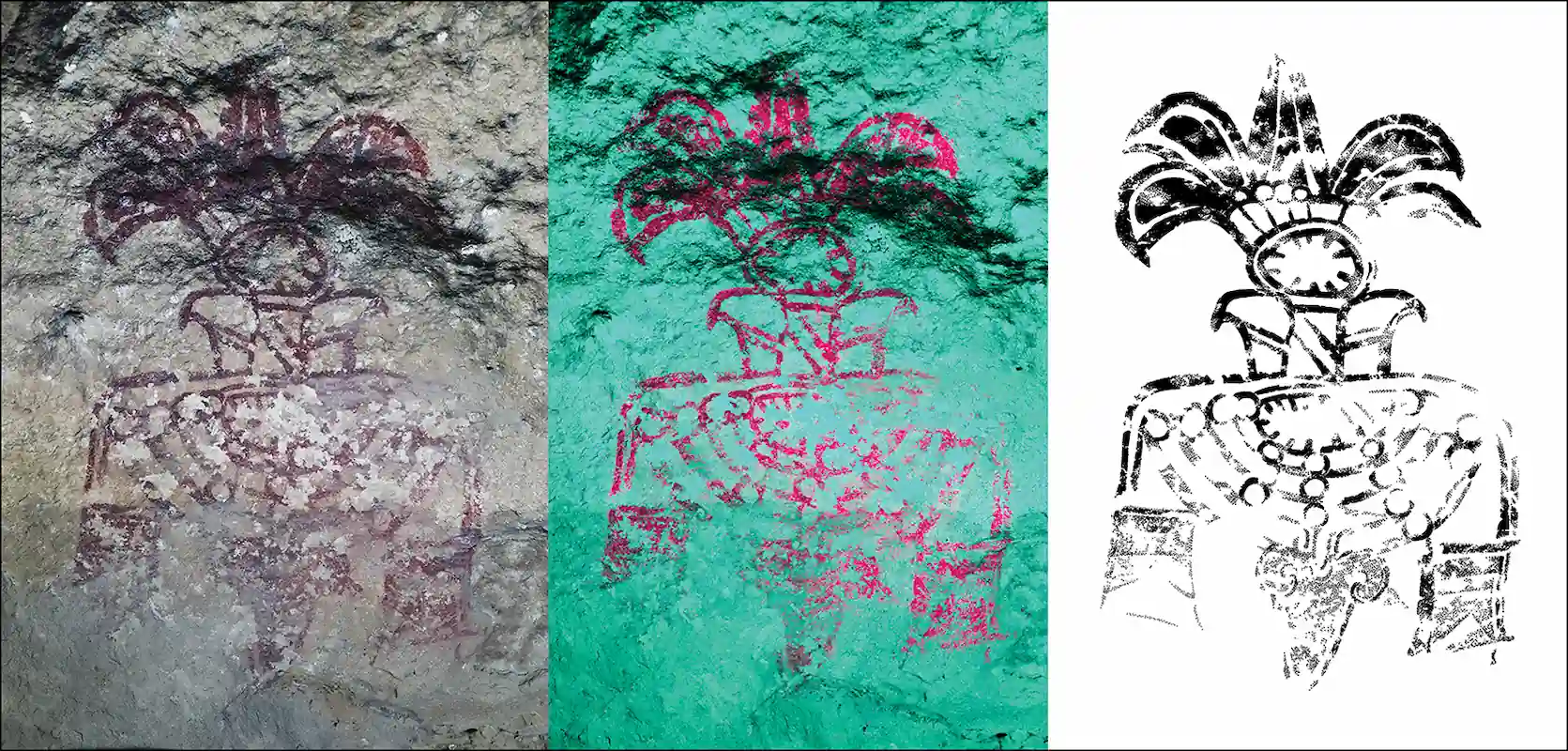
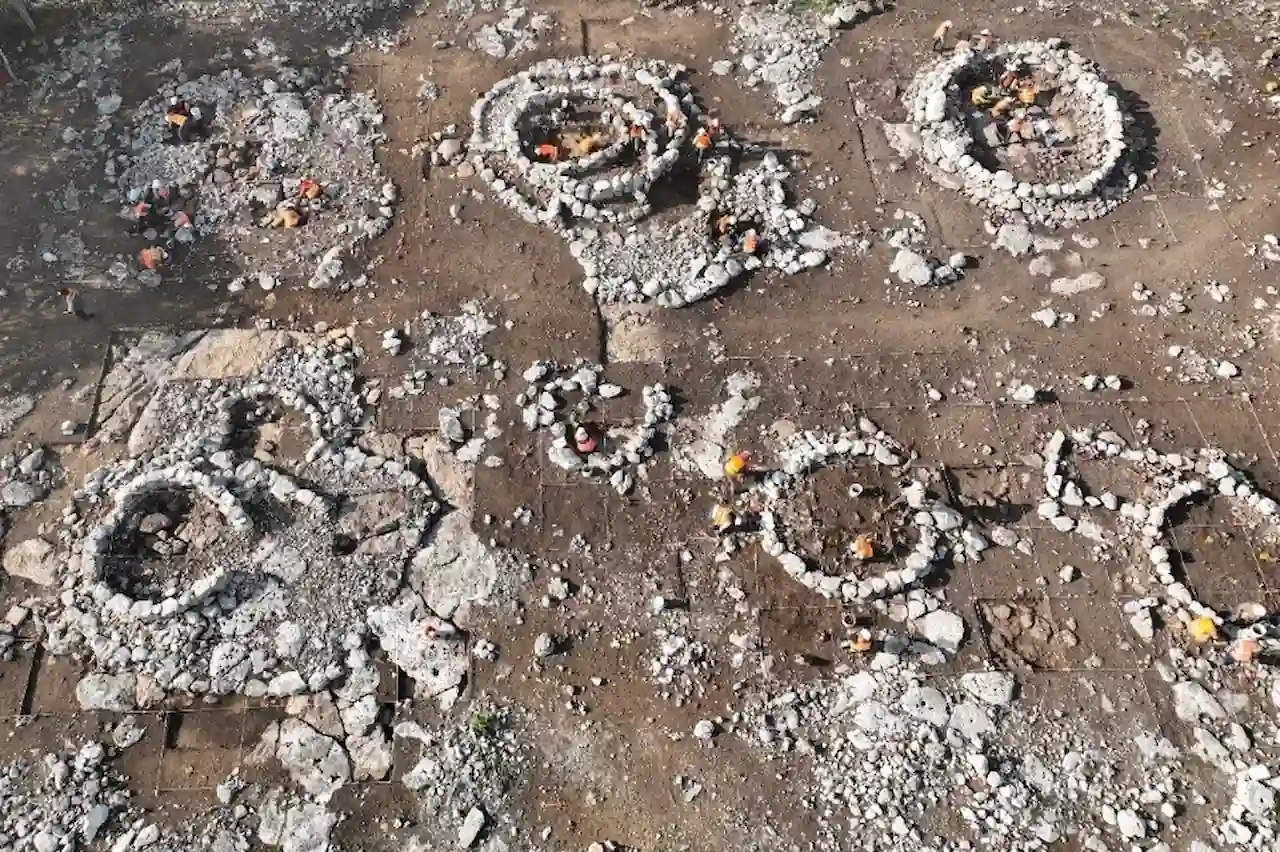
For decades, one question has nagged at specialists in ancient Mexico: did Teotihuacan — the city that dominated central Mexico from roughly the first to the sixth century AD, with a population that may have reached 125,000 — actually have a writing system, or were its symbols just decorative emblems? The stakes of that question […]

  •  

Tres glifos pintados hace 1.500 años en una cueva mexicana confirman que Teotihuacan tuvo un sistema de escritura como el de los mayas o los aztecas

Durante décadas, los expertos discutieron si Teotihuacan —la ciudad que dominó el centro de México entre los siglos I y VI d. C., con una población que pudo alcanzar los 125.000 habitantes— poseía un sistema de escritura verdadero o si, por el contrario, sus signos eran simples emblemas decorativos. La pregunta no era menor: los […]

  •  

Trump’s plan to ban diesel exports aggravates Europe and Latin America’s energy crisis 

The United States and its energy industry are making a killing selling crude oil and its derivatives to the rest of the world. The world’s largest economy is filling part of the gap left by supply cuts from Gulf countries due to the war in Iran, and from Russia due to Ukrainian attacks on its refineries. But everything has its limits, and the breaking point was reached on Tuesday, September 22, when diesel surpassed $6.50 a gallon at U.S. pumps.

Seguir leyendo

© Mark Felix (Bloomberg)

Aerial view of a refinery in Houston, Texas, in March 2025.
  •  

The 140 minutes of horror in the murder of a Mexican musician and his family

.

On the way back home, Jonathan Meléndez began to feel nervous. He called home and nobody answered. Uneasy, he called the security booth at the housing complex where he lived, and asked them to buzz the apartment through the intercom to see if anyone picked up. On his phone he opened the app that gave access to his Alexa, a smart-home device that allowed him to view the camera feed, speak through his phone and have his voice play on the device’s speaker… But there was nothing. It was after 7 pm. The friend riding with Meléndez in the car says he became concerned by then. Something happened in the following minutes, something Jonathan saw on the Alexa footage, or perhaps someone finally answered the phone, because at 7.20 pm he called the building security supervisor and asked him to call the police: “He told me his business partner was armed.”

Seguir leyendo

  •  

Gael García Bernal: ‘The common good is no longer a political slogan. Democracy and the use of power are almost like a reality show’

There are film projects that do not arise from a rigid outline but from years of sediment and personal crossroads. For Gael García Bernal, 47, Hombre al agua, his latest feature which he co-wrote, directed and stars in, took more than 15 years to take its final shape, having been seeded at the exact moment he became a father.

Seguir leyendo

© Berenice Bautista (AP Photo/Berenice Bautista)

Gael García Bernal, in Mexico City, this Tuesday.
  •  

The Last Battle of America’s Indian Wars Wasn’t Fought by the Sioux or the Apache — It Happened in 1918

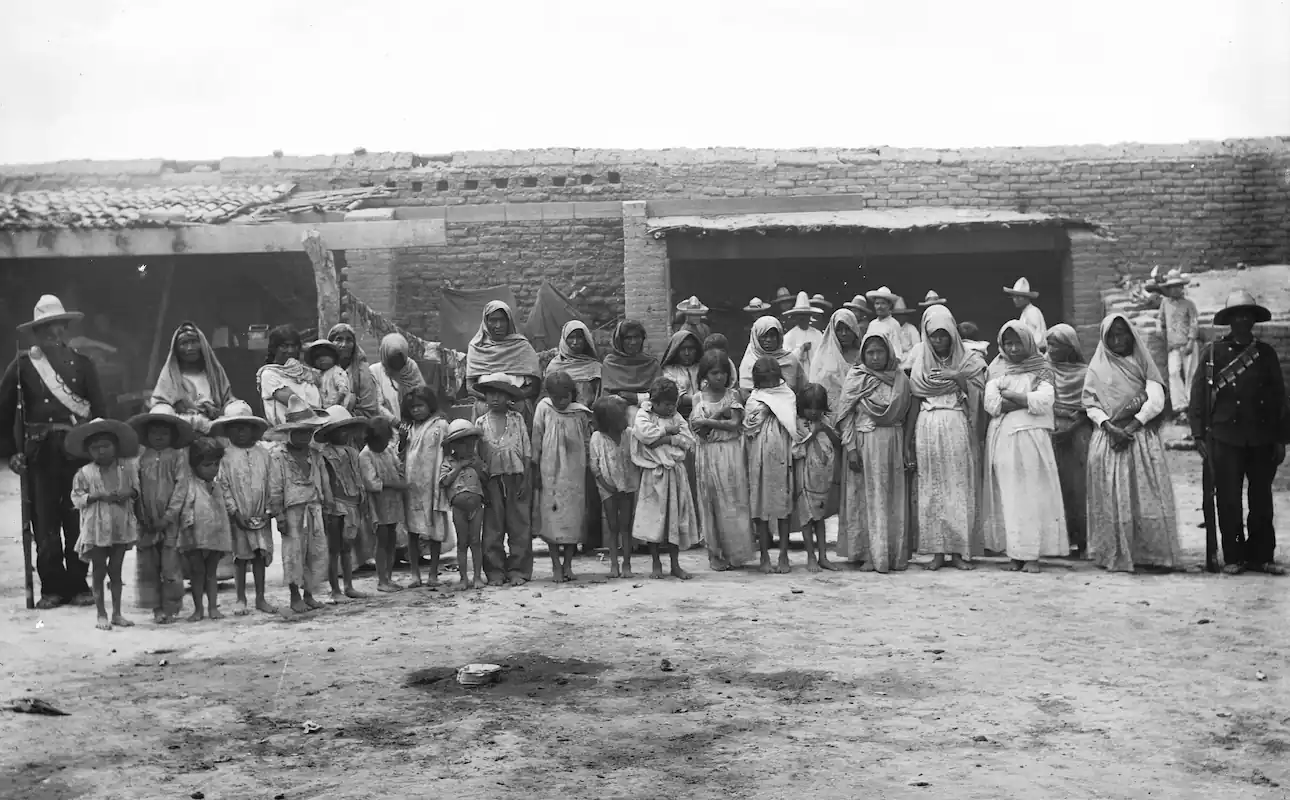
In the United States, the phrase Indian Wars conjures a specific set of images: the Battle of Little Bighorn, the massacres at Wounded Knee and Sand Creek, the forced marches of the Trail of Tears, the decades-long manhunt for Geronimo. All of it is generally remembered as a 19th-century story, closed out by the early […]

  •  

Guerras Yaqui, cuatrocientos años de lucha de un pueblo nativo de México por sus tierras al que el gobierno sometió con aviones y gas venenoso

Historiográficamente en Estados Unidos se denomina Guerras Indias a la serie de contiendas que enfrentaron a su gobierno con los pueblos indígenas norteamericanos, plasmado en algunos episodios especialmente célebres, como la batalla de Little Bighorn, las masacres de Wounded Knee y Sand Creek, el desplazamiento masivo de tribus por el Sendero de las Lágrimas o […]

  •  

EU welcomes Cambodia to WTO appeal arrangement

The EU welcomes Cambodia’s decision to join the Multi-party Interim Appeal Arbitration Arrangement (MPIA) for WTO members, contributing to efforts to uphold a rules-based multilateral trading system. 

With Cambodia’s participation, the MPIA now covers 62 World Trade Organization (WTO) members and 60.4% of world trade.  

The MPIA brings together participants from all continents and at different levels of development, united by a shared commitment to upholding the rules-based trading system. 

The MPIA preserves the right to appeal in trade disputes among participating WTO members, at a time when the WTO’s Appellate Body remains non-functioning. It helps ensure that disputes can continue to be resolved in an orderly and binding manner, avoiding appeals 'into the void'. 

“I welcome Cambodia to the MPIA. The arrangement plays an important role in upholding the rules-based trading system. Each new participant helps reinforce the predictability, stability and credibility of global trade rules. I encourage other WTO members to join the MPIA,” said EU Trade and Economic Security Commissioner Maroš Šefčovič. 

Background 

The MPIA was established in 2020 and has proven its effectiveness in many WTO disputes.  

Under the MPIA, appeals are heard by arbitrators randomly selected from a pool of 10 standing appeal arbitrators set up by the participating WTO members. These arbitrators are persons of recognised authority, with demonstrated expertise in law, international trade and WTO agreements.  

The MPIA is open to all WTO members as a practical tool for appeal arbitration, pending the restoration of a reformed and fully functioning WTO dispute settlement system. 

As of 1 June 2025, the MPIA has an updated pool of appeal arbitrators to ensure that appeals continue to be heard by independent arbitrators of the highest calibre. 

At the WTO Ministerial Conference that took place earlier this year, MPIA ministers stressed the importance of the MPIA for the security and predictability of the multilateral trading system.  

The current MPIA participants are Australia, Barbados, Benin, Brazil, Cambodia, Canada, China, Chile, Colombia, Costa Rica, Ecuador, the European Union (and its Member States), Guatemala, Hong Kong (China), Iceland, Japan, Liechtenstein, Macao (China), Malaysia, Mexico, Moldova, Montenegro, New Zealand, Nicaragua, Norway, Pakistan, Paraguay, Peru, the Philippines, Singapore, Switzerland, Ukraine, the United Kingdom, Uruguay and Vietnam.

More information

MC14: Supporting the rules-based multilateral trading system: the role of the MPIA

  •  

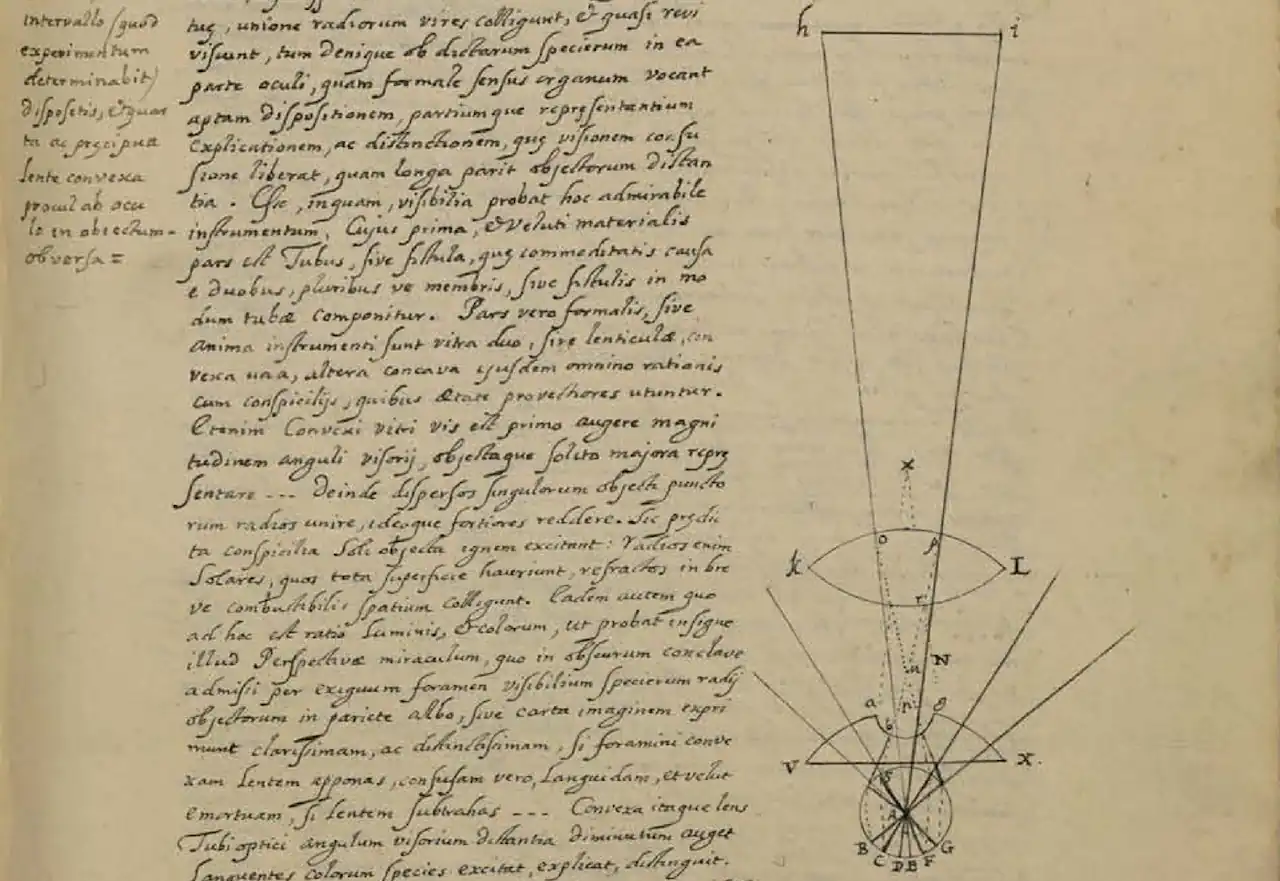
Un manuscrito del siglo XVII redefine la historia del telescopio y revela una innovación desconocida de Galileo Galilei

Un investigador de la Universidad de Limerick, en Irlanda, ha localizado un manuscrito del siglo XVII que contiene la que podría ser la descripción técnica más detallada jamás hallada de un telescopio fabricado por el célebre astrónomo y científico Galileo Galilei. El hallazgo, publicado ahora en la revista Annals of Science, aporta nuevas claves sobre […]

  •  

A 1666 Manuscript From Mexico City May Rewrite the History of Galileo’s Telescope

Galileo Galilei is remembered for pointing a simple two-lens tube at the sky and changing astronomy forever. What he is not remembered for is a four-lens telescope built more than a decade before historians thought such instruments existed — and yet that is exactly what a manuscript unearthed in Spain’s National Library now suggests he […]

  •  
  •  

Maya Settlement of K’oxol Ja’ II Discovered in Yucatán Reveals Everyday Life Among Non-Privileged Populations

In the interior of the Yucatán Peninsula, where jungle vegetation intertwines with the characteristic limestone of the region, a team of archaeologists from the National Institute of Anthropology and History has brought to light a settlement that completes the complex mosaic of the Maya civilization. This is K’oxol Ja’ II, an archaeological site made up […]

  •  

Encuentran en Yucatán el asentamiento maya de K’oxol Ja’II que revela como era la vida cotidiana entre las poblaciones no privilegiadas

En el interior de la península de Yucatán, donde la vegetación selvática se entrelaza con la roca caliza característica de la región, un equipo de arqueólogos del Instituto Nacional de Antropología e Historia ha sacado a la luz un asentamiento que viene a completar el complejo mosaico de la civilización maya. Se trata de K’oxol […]

  •  

‘We Were Simply Animals’

Forced disappearances have plagued Mexico for decades. In 2019, something remarkable happened: Twenty-one disappeared people were found, alive. They had been toiling in narco-slavery camps, an under-covered aspect of Mexico’s illicit drug trade. But there wasn’t a happy ending. (This story was originally published in Spanish by Quinto Elemento Lab):

Freedom had not been kind to the captives. Few had been able to regain even the wretched standard of living that had pushed them into the arms of the cartels in the first place. Many were scarred by paranoia, trapped in addiction or suffering mental illnesses. Some had been abandoned by their partners or families. More than one, we learned, died after being rescued, some by their own hand. We came to feel that these men had been triply betrayed: first by the narcos who had lured them into the mountains, then by the government that failed to look for them, and finally by a society that refused to welcome them back into its fold.

We are telling their stories not because we hope to secure justice, but simply to establish the truth. This was a modest ambition shared by one of our interlocutors, Andrés. He told us that many of the survivors’ accounts had been doubted. He’d even read criticisms on social media: That’s what they deserve for being shiftless and lazy. “Those people should try thinking before they speak, because they don’t know when they might suddenly find themselves in a similar situation,” Andrés said. “They might be lucky enough to be rescued, or unlucky enough to die out there. I decided to give this interview because this situation’s not going to change. In Mexico, there’s sexual slavery, human trafficking, forced labour. This didn’t start yesterday; it’s been going on for many years.” 

  •  

The Return of the Monarch

Monarch butterfly populations are on the upswing. But, faced with climate change, pine bark beetles, and even avocado-farming cartels, can it last? For The Atlantic, Vann R. Newkirk II follows Cinderella, Eric, and Carle, three butterflies named by his young daughter, as they leave their wintering ground in Mexico to migrate north to lay eggs in order to complete their “biological mission.”

Cinderella, Eric, and Carle had all been tagged in Sierra Chincua, which meant that I could deduce certain facts about their lives. They were already bona fide world-class wanderers, having flown there all the way from Canada in the fall, a three-month trip. Along the way, they’d dodged birds and windmills and cars, eventually reaching the same patch of forest—perhaps even the same trees—that their great-grandparents had roosted in. For much of the winter, they had not eaten and had barely moved, jamming themselves so tightly against their fellow travelers that from a distance they looked like scales armoring the sides of the trees. Now they’d awakened, stretching their wings and warming up.

  •  

He’s the Last Great Land Artist You’ve Never Heard Of

Travis Diehl’s feature on “Star Axis,” the half-century project of artist Charles Ross, is transportive, an ideal combination of explanatory and sensory writing. Not all of us will make it to the sparse section of Anton Chico, New Mexico, to ascend the steps of Ross’s pyramid and see the stars reel. For those of us who don’t, Diehl’s piece makes for an elegant consolation prize.

Ross broke ground during the U.S. Bicentennial year. Fifty years and more than $10 million later, he says “Star Axis” will be done by winter. In the final design, the staircase rises 11 stories through a tunnel blasted in the rock of Chupinas Mesa, 6,000 feet above sea level and into a viewing chamber in a concrete, stone and steel pyramid 52 feet tall. A circular window there frames Polaris. As viewers climb each of the 147 stairs, the rim of the window appears to broaden, giving an idea of how far Polaris has and will move in a given amount of time, during the 26,000-year cycle known as precession, the gravitational wobble of the Earth’s rotational axis.

  •  
❌