Ghana has rejected a proposed health compact with the United States that would have provided an estimated $109 million in US health funding over five years, with President John Dramani Mahama saying the agreement raised serious concerns over health data, financing obligations, and Ghana’s regulatory authority.
The decision places Ghana among a few African countries that have pushed back against new US health agreements introduced as Washington restructures its foreign assistance following the dismantling of USAID. Zimbabwe has also rejected a similar agreement, while Zambia has raised concerns over provisions in its negotiations with the United States.
Ghana raises concerns over health data
Speaking at the Council on Foreign Relations in New York on September 25, Mahama said the proposed compact was presented to Ghana as a replacement for health funding previously provided through USAID.
He said Ghana’s Ministry of Health reviewed the document before preparing a Cabinet Information Paper.
“Ghana is a sovereign nation, and we have our own processes. We are a democratic country,” Mahama said.
According to the President, the Cabinet identified several provisions that raised concerns, particularly those relating to Ghana’s health information.
“One, it says that we shall give the United States our pathogen profile,” he said, adding that the agreement also required Ghana to provide medical records.
“It also says we should give our medical records. I mean, who takes another country’s medical records? And so that was strange.”
Concerns over health-data sharing have been central to resistance to the new US health agreements in several African countries.
No FDA inspection
Mahama also raised concerns about the treatment of medicines and other medical products supplied under the proposed arrangement.
He said Ghana would have been required to contribute funding to the program while, according to his account of the compact, the country’s Food and Drugs Authority would not have been able to inspect medicines or other medical products entering Ghana under the program.
“And then it also says that any medications or any medical products that shall be brought into our country, our Food and Drugs Administration has absolutely no right to inspect,” Mahama said.
“I mean, it was humiliating.”
Ghanaian officials had previously cited concerns about the proposed handling of sensitive health information as a reason for rejecting the agreement. Reporting on the negotiations also indicated that the proposed arrangement would have required additional investment from Ghana alongside the US contribution.
Cabinet rejected the agreement
Mahama said the proposal was rejected after the Health Ministry presented its assessment to the Cabinet.
He described the decision as unusually swift.
“It was the compact that was thrown out in record time in our Cabinet. I’ve never seen anything thrown out as fast as that.”
He said the government subsequently instructed the Health Minister to communicate Ghana’s position to the US ambassador.
“And so, of course, we rejected it. And we asked the health minister to inform the US ambassador that we didn’t need it. We’ll manage ourselves.”
The proposed agreement would have provided Ghana with about $109 million in US health assistance over five years. The negotiations had begun in late 2025.
A wider concern over health sovereignty
Ghana’s decision comes as the United States seeks to shift its approach to global health cooperation. The new US strategy places greater emphasis on recipient countries taking responsibility for financing and delivering health programs, while Washington reduces its traditional aid commitments.
Kenya became the first African country to sign the agreement which was challenged in court, followed by similar arrangements with Rwanda, Liberia, Uganda, Lesotho and Eswatini, among other countries. Ravi Ram from the People’s Health Movement (PHM) East and South Africa, told BreakThrough News in December 2025, that “Bilateral agreements between the US and Kenya and other African countries are meant to limit the ability of any one ‘partner’ country to challenge the terms of implementing the agreement, due to the unequal power relations.”
The concerns among health activists and concerned Africans is the ability of African states to determine their own health priorities, regulate medicines, control sensitive health information, and collectively negotiate the terms of international health cooperation.
Since the start of the latest made-for-Israel war, Donald Trump and his surrogates have repeatedly promised Americans that it would be a few weeks and oil prices would soon crash below prewar levels. Instead, it was every promise that crashed. When those promises failed to materialize, the message shifted: the war is worth the price to stop Iran from becoming a nuclear power.
But what if Iran did become a nuclear power? How would that pose a greater threat to the U.S. than North Korea or Russia already do? Or is the real concern not a risk to America, but a challenge to the regional hegemony of a foreign nuclear power, Israel?
For more than thirty years, according to Israel’s fiction, Iran was on the verge of becoming a nuclear-armed state. That fictitious deadline has come and gone repeatedly, yet Benjamin Netanyahu has been recycling the same lie since 1992. The Israeli lies and deceit persisted even though, unlike Israel, Iran’s nuclear program was subject to strict international monitoring.
Still, Trump, at Netanyahu’s urging, walked away from an agreement that imposed some of the most stringent and verifiable restrictions ever placed on a country’s nuclear program. Now Americans are being asked to pay in blood and billions of dollars for abandoning a diplomatic agreement that had kept Iran’s nuclear program under unprecedented international scrutiny and helped contain the very threat now being used to justify the war.
The hypocrisy is impossible to overlook. Iran has been subjected to relentless demands for transparency and inspections, while Israel’s own nuclear arsenal, built in part with materials stolen from the U.S., remains shielded from any international inspection.
Yet somehow Iran’s ambitious know-how is the existential nuclear threat, not Israel’s nuclear bombs.
American consumers have long been the victims of a disinformation campaign, and now they are being forced to pay the price for a war sold to them on false pretenses. The most recent misinformation claiming the Strait of Hormuz is open and oil is flowing. The president said it on Fox, and the outgoing White House press secretary told Fox & Friends that the U.S. is essentially controlling the strait and that it remains open. These claims leave only two possibilities: either the statements are outright lies, or oil companies are gouging the consumer.
The UK Maritime Trade Operations Centre reported that commercial traffic through the strait remains about 75 percent below pre-conflict levels. It also tallied dozens of projectile strikes on vessels in just the past two months.
Three quarters less traffic is not a sign of an open strait. Shipowners and insurers know this, so do traders and so the climbing numbers at the gas pump.
The market has already made its judgment, and every American who fills a tank can see it. It is past time for Washington to stop lying.
For the average consumer, the pump is where it felt. Regular gasoline was below $3 a gallon before the U.S. was dragged into another one of made-for-Israeli wars. Families are paying more to get to work, truckers are paying more to move goods, and those costs show up in the price of groceries.
Meanwhile, American oil companies are pumping at record levels. Exxon and Chevron are producing record volumes from oil fields on American soil, thousands of miles from the Strait of Hormuz. Their production costs have not changed. What has changed is Israel’s war surcharge consumers are being forced to pay.
Chevron reported the largest quarterly net profit in its history, $12.1 billion. Exxon made $14.5 billion in the same quarter, about $160 million a day. Refining has become more lucrative. Gross refining margins more than doubled, soaring from a typical $20 crack spread to as much as $60.
Meanwhile, Trump dangles a pie-in-the-sky deal with Venezuela as a distraction from consumers’ mounting anxiety, while his administration stands by as oil companies exploit overseas crises for record profits. These companies have no reason to lower prices when war has handed them a windfall. This is what a war of choice looks like on the ground: American consumers are forced to pay the price, while oil executives in Texas turn a crisis into a lucrative business opportunity.
American consumers deserve more than false promises. If the Strait is open, then oil prices should be coming down. If it is not, then stop treating consumers as an audience whose emotions must be managed rather than citizens entitled to hear the truth. Since the war started, every week, like millions of Americans, I fill my gas tank, and the Israeli war tax is higher than it was the week before.
No, Mr. President, that is not “worth the price” to pay for a war fabricated in Israel, a repeat of the made-for-Israel war in Iraq 23 years ago.
This is not a war to end Iran’s fictitious nuclear power. It is a war paid for by taxpayers’ money and American blood to ensure that Israel remains the only absolute nuclear power in the Middle East.
US President Donald Trump has officially announced a formal withdrawal of American troops from Iraqi territory, yet the economic, social and diplomatic hold on the nation remains. If US troops are going to be permanently booted out, it necessitates an Iraqi national resistance that is capable of operating as a guarantor.
On October 21, 2011, former US President Barack Obama announced that the United States had withdrawn its remaining occupying forces from Iraqi territory. Then, only two and a half years later, the US re-deployed its forces back into the country under the guise of fighting the Daesh insurgency.
Iraq, having experienced a regime change operation followed by a brutal occupation and nationbuilding project, was left incapable of defending itself from the ISIS takeover, let alone pushing back against the United States redeploying its forces. First, the Obama administration deployed forces that it said were there to protect its diplomatic staff, in addition to advisors to the Iraqi armed forces.
Later it would expand this presence, expanding its “Operation Inherent Resolve” into Syrian territory, providing it with supply routes and a platform from which to de facto occupy northeastern Syria. The US operation in Syria and Iraq helped them eventually achieve their longtime goal of regime change in Damascus by depriving the Syrians of their access to the nation’s oil resources and fertile agricultural lands.
In 2020, Donald Trump had agreed to remove his forces from Iraqi territory, re-iterating this pledge during a meeting with then Iraqi PM Mustafa al-Kadhimi. The following year, former President Joe Biden then declared the official end of his nation’s combat mission inside the country. Only now, in 2026, and after extensive attacks on US military facilities by the Islamic Resistance in Iraq, has the pledge to withdraw American forces been followed through on.
When the US and Saudi Arabia recently blamed Iraqi forces for carrying out an attack on Riyadh’s East-West Pipeline, launching a large-scale bombing campaign across the country, some Iraqi officials instead issued statements against Iraq’s armed factions that had vehemently denied involvement in the incident.
The Trump administration is openly pushing for the disarmament of all military factions within the country, a project Washington has also sought to impose on all Resistance groups across the region. The United States has not allowed for there to be a reasonable integration of Resistance forces like Hezbollah in Lebanon with the Lebanese Armed Forces, nor allowed time for formal agreements to be struck in Iraq of a similar nature. Their goal is simply to disband these groups and then exert control over the armed forces of Lebanon and Iraq, leaving them all but defenseless and without access to strategic weapons capable of deterring violations of national sovereignty.
In the case of Baghdad, the nation’s government was a construct of US occupation; Washington still holds the economic cards that are capable of pressuring any leadership, no matter how well-intended its goals are, while it maintains an enormous soft-power pull through its extensive NGOisation project inside the country. Iraq was not allowed to rebuild its nation’s military following the toppling of Saddam Hussein’s rule in 2003, leaving it defenseless against ISIS terrorism a decade later.
On the ground, this is why there was a need for the Hashd al-Shaabi (Popular Mobilisation Forces) to emerge. It was the Hashd that was chiefly responsible for defeating the terrorist invasion and purging its militants from Iraqi cities. Many of these groups that fought under the banner of the Hashd then went on to develop considerable military power and an extensive arsenal.
As revealed during the Ramadan War earlier this year, the Israeli Mossad was able to develop bases inside Iraqi territory, while numerous militant groups still exist across the country’s territory, including various armed factions that are backed by the CIA and the Mossad.
If the Islamic Resistance in Iraq is disbanded and disarmed, then Iraq will be in the exact same defenseless position that allowed for ISIS to sweep through the nation so rapidly and seize so much territory, leaving behind a trail of blood in their wake. This poses a threat to not only Iraq, but other neighbouring countries, including Iran. It threatens Syria’s fragile status quo too.
An Iraq without the Islamic Resistance would be like a Lebanon without Hezbollah, completely left at the mercy of the United States and their Israeli allies. Washington and Tel Aviv have a project that aims to totally dismantle regional sovereignty; this is why they have dedicated trillions of dollars and countless resources to destroying the armed forces of both Iraq and Syria over a period of nearly 30 years now. They are not about to simply sit by and allow Iraq and Syria to rebuild capable militaries, allowing them to follow the will of their people and to defend their own national interests.
The United States still maintains its air defence systems inside Iraqi territory, can use the country’s airspace at will and, as we saw only months ago, will launch airstrikes across the nation at the drop of a hat.
In order to deter a return of American occupation forces, under the guise of fighting whatever future threat they choose to use, there must be an Iraqi military force that is capable of acting in defense of the country, both on the ground and through the use of its long-range munitions if need be. A nation without a real military force cannot enjoy sovereignty. And a nation that is not able to go against the will of the United States, will serve as its proxy and will suffer the blowback that is inherent in complicity.
The US withdrawal from Iraq did not happen without a long history of resistance against its forces and public opinion that also opposes American interference. Protecting the achievement of ridding the country of the majority of US forces takes real military deterrence. Otherwise, the Israelis and the US will simply use the country’s territory for whatever projects they wish.
Amidst all the sentimental populist fluff, a political theory of sorts could be discerned in Andy Burnham's conference speech, says Professor James Alexander. Let's call him Our Andy-with-his-10-year-Plandy.
A heavy rainstorm has been sweeping across the island of Crete on Thursday with tons of water flooding homes, businesses and agricultural land, damaging roads and bridges, causing the life of one person and putting at risk the lives of thousands. Most affected are the regions of Heraklion, Lasithi and Rethymnon. Thye bad weather is […]
Israel’s pursuit of security increasingly rests on a destabilizing proposition: that its neighbours become less threatening when their capacity to exercise sovereignty is diminished. Since the Hamas-led attacks of October 7, 2023, this approach has become particularly visible across several distinct arenas. Military operations, territorial incursions and restrictions on political and economic autonomy suggest a conception of security dependent on keeping others vulnerable. The consequences extend beyond individual confrontations. When states cannot control their territory, rebuild institutions or protect their populations, the regional conditions necessary for durable security begin to erode.
The argument is not that Israel created every conflict in the Middle East. Authoritarian rule, sectarian violence, armed groups and competing regional interventions have all contributed to the region’s instability.
The question is whether the means Israel uses to pursue its own security deepen that instability. Repeatedly weakening neighbouring states and political communities may bring short-term military gains, but it can also erode their ability to contain violence and maintain order, making the region more dangerous—including for Israel itself.
This pattern can be understood as the denial of sovereignty. Sovereignty involves more than diplomatic recognition: it requires institutions capable of governing, providing services and exercising legitimate authority over the use of force. When these capacities are persistently degraded, formal independence becomes increasingly hollow.
The cases differ in their circumstances and severity, but together they reveal a troubling hierarchy: Israeli freedom of military action repeatedly takes precedence over other societies’ ability to govern and secure themselves.
Syria offers a particularly revealing example. Following the collapse of Bashar al-Assad’s regime in December 2024, Israel launched extensive attacks against Syrian military infrastructure and moved into the separation zone established under the 1974 disengagement agreement. Israel justified the destruction of military assets as necessary to prevent advanced weapons from falling into extremist hands. Yet the targets included airfields, air-defence systems and naval facilities—capabilities relevant to the functioning of a state, whatever government eventually controls them.
The longer-term problem is that preventing a hypothetical future threat can obstruct the reconstruction of an already devastated country. Syria needs accountable security institutions capable of controlling territory, containing armed factions and protecting communities. Destroying military capabilities without a credible framework for rebuilding legitimate state authority risks leaving those functions unfulfilled. In July 2025, Israeli strikes on Damascus, including the defence ministry, further demonstrated Israel’s willingness to impose military limits on the new authorities.
Syria’s transitional authorities must themselves answer for abuses and protect minorities; state consolidation cannot justify repression. Nevertheless, externally imposed military vulnerability is no substitute for accountable governance.
A government expected to prevent threats from emerging within its territory must have the capacity to exercise authority there. Undermining that capacity can preserve the fragmentation through which armed groups survive.
Lebanon exposes a related contradiction. Hezbollah’s independent military power has long constrained the Lebanese state’s authority and its ability to determine questions of war and peace. Reducing that parallel authority could, under appropriate political arrangements, strengthen state sovereignty. But Israeli military action does not automatically transfer power from Hezbollah to the Lebanese government. Bombardment, displacement and violations of Lebanese territory can weaken the institutions expected to assume responsibility for national security.
The distinction is crucial: weakening an armed organization and strengthening a state are separate outcomes. In March 2026, UN Secretary-General António Guterres called both for respect for Lebanon’s sovereignty and for stronger support to its armed forces so that they could become the country’s sole military force. That combination identifies what repeated unilateral intervention overlooks: security requires an institutional successor capable of governing after military operations end.
Where that capacity remains inadequate, another cycle becomes possible. Armed groups invoke external attacks to justify retaining their weapons; the state struggles to establish authority; Israel cites the continuing armed presence to justify further intervention. Hezbollah bears responsibility for its own decisions, but Israeli policies can reinforce the conditions sustaining its claim that the Lebanese state cannot protect the population.
The attack on Doha on September 9, 2025 extended this logic into the diplomatic sphere. Qatar was mediating negotiations involving Israel and Hamas when Israel struck Hamas representatives on its territory. The UN High Commissioner for Human Rights condemned the attack as a breach of international law and an assault on mediation. The significance exceeded the violation of Qatari sovereignty: even a state facilitating negotiations could find its territory treated as an extension of the battlefield.
Mediation depends on practical assurances that communication with an adversary will remain possible. Targeting interlocutors in a mediating country makes those assurances harder to provide. It raises the costs of hosting negotiations and can undermine channels needed for ceasefires, hostage releases and humanitarian arrangements. Military reach may expand while opportunities for a political settlement contract.
Israel’s recognition of Somaliland in December 2025 raises a different sovereignty question along the region’s Red Sea periphery. Somaliland has maintained separate institutions for decades, and its claim to recognition has its own history. Nevertheless, Israel’s recognition challenged Somalia’s internationally recognized territorial framework. The African Union rejected the move and warned that such recognition could undermine peace and stability.
Recognition is not equivalent to bombardment, and the cases should not be collapsed into a single legal category. Their connection is political: the territorial arrangements on which other governments rely become subject to unilateral decisions shaped by Israeli interests. In an already contested regional environment, such decisions risk adding another dispute to fragile processes of state consolidation.
The confrontation with Iran illustrates the danger of extending preventive military logic to a powerful regional adversary. On February 28, 2026, Guterres condemned the use of force by the United States and Israel against Iran and Iran’s subsequent retaliation across the region. He warned that these actions undermined international peace and security. The escalation demonstrated how efforts to eliminate threats militarily can expose additional countries to attack.
Iran’s support for armed groups and its own military conduct cannot be excluded from this assessment. Nevertheless, degrading an adversary’s capabilities does not necessarily resolve the political incentives driving confrontation. It may instead encourage dispersal, rearmament or greater reliance on asymmetric methods. Tactical destruction can coexist with a more dangerous strategic environment.
The Palestinian case represents the most profound expression of this problem because it concerns both collective self-government and the conditions of human survival. In the West Bank, withholding revenues owed to the Palestinian Authority weakens the institutions expected to administer daily life.
The World Bank documented how the suspension of transfers in 2025 intensified fiscal distress, reduced salary payments and placed pressure on essential services. These measures undermine the practical foundations of Palestinian self-government.
A political authority cannot provide credible governance indefinitely while lacking reliable access to its own revenues. Weakening public administration also weakens its legitimacy, potentially benefiting actors who argue that institutional politics offers no meaningful route to Palestinian rights. The resulting dysfunction can then be invoked as evidence that Palestinians are incapable of governing themselves. Restrictions on capacity thus risk producing the very incapacity used to justify continued control.
In Gaza, the destruction has reached beyond institutional viability. The devastation of housing, healthcare, water systems and livelihoods, compounded by restrictions on humanitarian access, has endangered the material conditions necessary for life. In August 2025, a joint statement by UN agencies confirmed famine in Gaza Governorate and described a crisis involving starvation and preventable deaths. The issue was no longer merely whether Palestinians could build a state, but whether civilians could survive.
Hence, in Gaza, the denial of sovereignty has escalated into a denial of survival. In September 2025, the UN Independent International Commission of Inquiry concluded that Israel had committed genocide against Palestinians in Gaza. Earlier, on November 21, 2024, the International Criminal Court issued an arrest warrant for Benjamin Netanyahu, finding reasonable grounds to believe that he bore criminal responsibility for the war crime of starvation as a method of warfare and the crimes against humanity of murder, persecution and other inhumane acts. These findings expose the devastating human consequences of denying a population access to the essentials of life. The systematic destruction of civilian infrastructure and deprivation of food, water and medical care undermine Palestinians’ ability to survive as a community in their homeland. Viewed through this analysis, the genocide identified by the UN commission represents the most extreme manifestation of denial: a progression from obstructing a people’s capacity to govern themselves to destroying the conditions necessary for their continued existence.
Taken together, these cases suggest a self-reinforcing cycle. Military intervention and institutional weakening can generate insecurity, displacement and political fragmentation. Those conditions create opportunities for armed actors, whose activities then provide further grounds for intervention. This is a causal risk, not an inevitable outcome of every operation. Its importance lies in the contradiction between immediate military advantage and the requirements of lasting security.
Breaking that cycle requires a different measure of success: whether policies leave behind institutions capable of governing, populations able to live securely and diplomatic arrangements that reduce incentives for violence. Protecting Israeli civilians and respecting neighbouring societies’ sovereignty are mutually reinforcing necessities.
A regional order built around one state’s freedom to intervene and everyone else’s enforced vulnerability cannot offer durable peace. By denying others the capacity to govern—and, in Gaza, devastating the conditions necessary to survive—Israel risks perpetuating the insecurity from which it seeks protection.
From the heinous crimes of the Epstein class to the Cornell 7, from the toxic cultures of the “manosphere” to the increase of antisocial relationships with online pornography and AI bots, we need to talk about what is going on with men in our society. We speak with renowned scholar, author, and commentator Dr. Mark Anthony Neal about his new book Save a Seat for Me: Notes on American Fatherhood, and about the ways American capitalism damages everyone and trains boys to become monstrous men.
Credits:
Post-Production: Cameron Granadino
Transcript
The following is a rushed transcript and may contain errors. It will be updated.
Maximillian Alvarez:
I’m here at Red Emmas at the Baltimore Book Festival, and I’m sitting with Dr. Mark Anthony Neal. Brother Mark, it’s so great to have you back here in Baltimore, man. I know I only got you for a second, and we’re talking about your incredible new book, Save a Seat for Me, Notes on American Fatherhood. And I was thinking as another father in America in 2026, I wanted to ask you, it doesn’t take PhDs like we have to know that we’ve got a real fricking crisis in this country with men and masculinity and masculine culture and fatherhood, or we have a whole lot of crises that men are experiencing but aren’t dealing with well. So what do you make of all this? What do we do about it? And how can your book help us get there?
Dr. Mark Anthony Neal:
I think we have tried, America has tried to raise generations of warriors, if you will, to be on the front lines of American imperialism. And you can’t be human to do that. You can’t think, you can’t question, you can’t be vulnerable. So what we have done is raise two or three generations of men in America who don’t know how to be human, who don’t know how to lead into full range of who they are. We’ve been socialized to show up only certain kinds of ways, anger, rage, the ability to follow directions. Things like vulnerability are made fun of at the highest levels.
Maximillian Alvarez:
And those of us who are very vulnerable people have been made fun of.
Dr. Mark Anthony Neal:
Because of that.
Maximillian Alvarez:
Because of that.
Dr. Mark Anthony Neal:
We’ve been made to think that our responsibility in a capitalist system has literally been reduced to only making money, that our only value. And I think about this a lot as a Black father, my own father, that I’m sure he thought that his only value to me was making sure that I was fed and clothed and taken care of. And I get all of that, but I needed much more from him. As a father, I needed to be more than that for my daughters. And so I think when we look at young men who are clearly feeling so much with no outlet, their outlets become dangerous behaviors, self-directed violence,
Maximillian Alvarez:
Toxic online cultures,
Dr. Mark Anthony Neal:
All kinds of addictions, alcohol, Percocet, weed, porn. I mean, we can name all these things and understand it. And the fact that so many of the young men in the world today, their lives are what they can connect with on their handheld device. They don’t actually have relationships with people in the real world, don’t see a value in that. And I don’t know how we sustain that. I don’t know how we sustain our humanity in a situation where we don’t value human relationship anymore.
Maximillian Alvarez:
Well, and it’s like you see that the path that we’re on as a society or what’s left of a society is being driven by the sociopathic, psychopathic, bloodthirsty –
Dr. Mark Anthony Neal:
Or just plain evils.
Maximillian Alvarez:
Just plain evil maniacs who want a future where they get all the benefits of human society, but don’t have to deal with any of the humans in it. Whether they’re thinking of like, oh, AI is going to replace all their jobs and we’re going to get all the money. They’re not thinking about what the heck that’s going to mean for us. They’re just going to push us into slums and prisons and police us, hunt us, surveil us. That’s their big goddamn plan. And I think you put it so powerfully that it’s like so many men out there have the same human needs that we all have and we’re feeling them so acutely the more isolated we are, but we’re looking to find, we’re seeking inhuman avenues.
Dr. Mark Anthony Neal:
I mean, think about all the folks who are in relationships with chat bots. I mean, it’s surreal. I can’t have a relationship with an actual person. I don’t desire a relationship with an actual person. I need to have a relationship with some facsimile, some avatar that somehow that’s more meaningful to me than having a relationship with a person.
Maximillian Alvarez:
Yeah. And I think even as a editor in chief and co-ED of a media network, as a media star, we recognize there’s only so much you can do online. You got to get the hell offline and you got to meet each other back on that level of shared humanity and shared reality because that’s the only way we’re going to deal with anything, anything in this country.
Dr. Mark Anthony Neal:
And that’s why the Baltimore Book Festival is really important. First of all, not only just a reminder, someplace that’s celebrating the written word, obviously, but folks coming together in community. We have to get back to a culture where we share in community. We read together, we listen together, we debate together instead of these media silos. I’m going to have this debate over here on this network and you’re going to have this debate over there and never the twain shall meet.
Maximillian Alvarez:
Well, and final question, but it goes really to the heart of your book. Here in Baltimore, I see this every day. I feel it as a father, but right down the street from where I live in Mondamin, earlier this summer, there were six youth who were caught on camera just beating the hell out of an elderly member of the community, a former Black Panther. It was horrific. I’ve interviewed this man and the community that’s trying to help him, but clearly everyone who is showing up to help is seeing in that video the deficit of guidance, of fatherhood, of love.
Dr. Mark Anthony Neal:
Of respect. Basic respect.
Maximillian Alvarez:
So what can we do about that in our everyday lives at the person to person level?
Dr. Mark Anthony Neal:
We have to be willing not just to be witnesses to these experiences or commentators.
We have to intervene and feel comfortable enough to intervene. Whoever sat down with those young men, first of all, to explain, because the easy part is to say, no, this man was important to our movement in the past. The more difficult thing is like, no, this man is important because he’s another human being and you should value life and his humanity. But if they are young men who do not value their own humanity, don’t see their own humanity, they’re going to reproduce that behavior over and over again. And so we have to have the willingness because it’s real easy to go, I’m just going to build my life in this silo and protect my family and I get it. But to take that next step to say, okay, I might not be able to talk to all six of these brothers, try to talk to two of them.
Begin that process, that one-on-one conversation that can blossom into something that’s much more significant.
“America has tried to raise generations of warriors to be on the front lines of American imperialism… So what we have done is raise two or three generations of men in America who don't know how to be human.”
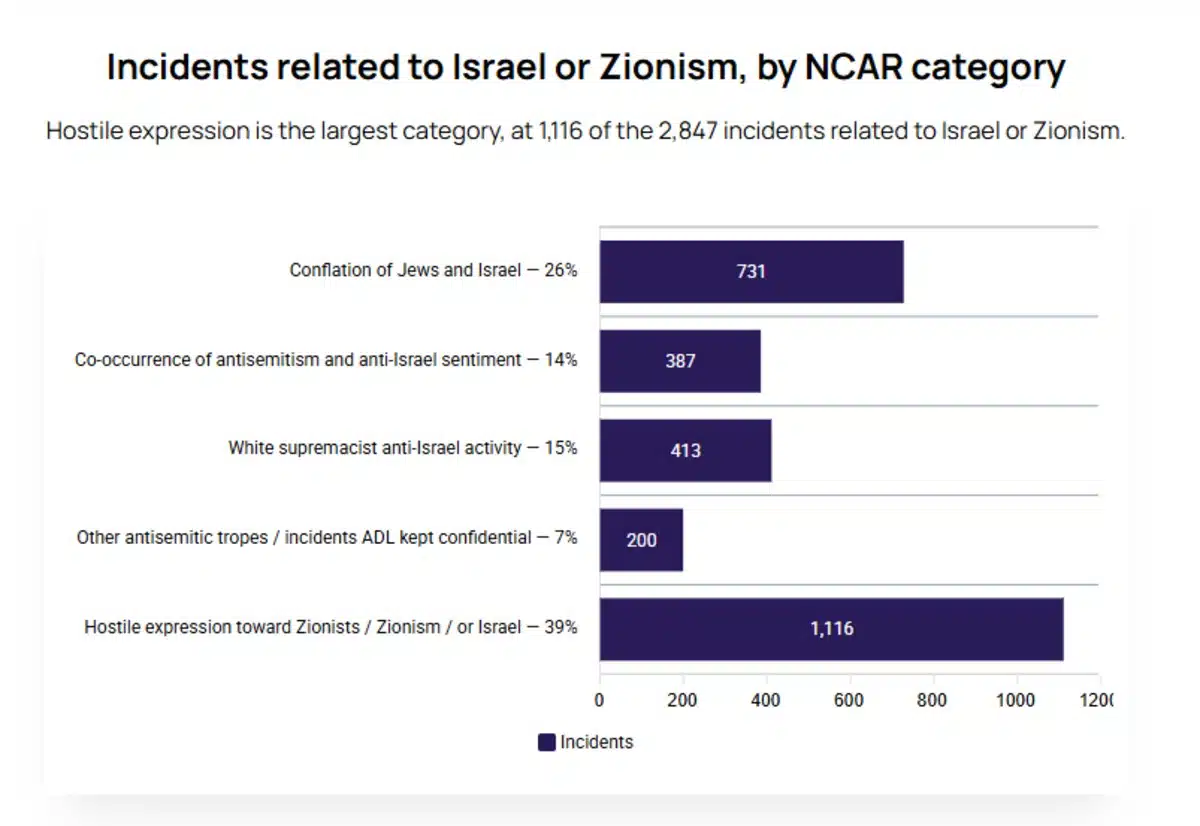
The Anti-Defamation League reports each year on the state of antisemitism in the US. But its audit fails to disclose the fact that roughly 45% of so-called antisemitic incidents are actually anti-Israel or anti-Zionist.
On the evening of Wednesday, September 30, Bolivian police arrested Attorney General Roger Mariaca and raided the Attorney General’s Office in Sucre and Santa Cruz. The police action comes just days after the US State Department sanctioned and revoked the visas of Mariaca and 21 other Bolivians.
Analysts suggest that the timing of the US sanctions, Mariaca’s arrest, and the raids, are no coincidence, calling it “political pressure” related to a high-profile case.
Mariaca is leading the investigation into Argentine political consultant Fernando Cerimedo. The influential political advisor to Latin America’s far right allegedly influenced elections through social media bot farms, may be involved in drug trafficking, and was accused of ordering an assassination attempt on his ex-partner, Nadia Beller. She was shot three times but survived after undergoing emergency surgery.
Cerimedo has been in custody in Bolivia after attempting to leave the country by plane following the attack on Beller. Messages were found on his cell phone that, according to the prosecution, directly link him to the attempt on her life. Despite the emerging evidence against him, not only in ordering the hit on Beller, but also in crimes of corruption and drug trafficking, Cerimedo seems to have friends in high places, both in the Bolivian president’s office, and in the United States, that may have set the stage for the arrest of his investigator, Attorney General Roger Mariaca.
Argentine outlet Página 12, reported that, according to Beller, the sanctions against Mariaca were “a move by Donald Trump’s team to protect Cerimedo. As the Washington Post noted this week: ‘Cerimedo is the MAGA (Make America Great Again, Trump’s slogan) man across the entire continent.’”
In the report, Beller is quoted as saying: “Is this decision by the United States part of the fight for the Shield of the Americas or is it about protecting the MAGA network?…If the reason is corruption and drug trafficking, then they need to explain why the visa is being revoked for the attorney general who is investigating a network of that nature. Are they going after the investigator, or are they protecting part of the network?”
As evidence mounts against Cerimedo, the US instead accused his investigator, Mariaca, of allegedly soliciting and accepting bribes to facilitate drug trafficking and helping people involved in violent crimes escape justice.
After news broke of the US actions against him, Roger Mariaca had said he will not back down and will continue the investigations until the end: “[I received the news] with great surprise … I will not back down even one centimeter from the investigations that fall under my jurisdiction.”
He highlighted that while it is clear that the Cerimedo case has generated international intrigue, “no political pressure, whether national or international, can become an impediment to clarifying the facts which must be investigated.”
He was arrested two days later.
Involvement in the drug trade?
In addition to Cerimedo’s well-documented ties to high profile right-wing politicians across Latin America, including in Bolivia, recent revelations from ex-partner Beller, suggest that the powerful political consultant may have also been involved in the drug trade. In a leaked audio message, Cerimedo is allegedly speaking with a woman with whom he is arranging payment so that several flights can operate without excessive pressure from the authorities. Cerimedo mentions a man named Cabrera, whom the Bolivian media suspect is Franz Cabrera, the former head of the Special Force to Fight Against Drug Trafficking (FELCN), who was recently dismissed.
According to the investigations, they allegedly “were paid” for nearly 45 flights, amounting to $700,000, raising significant suspicions about the source of the funds that the political consultant is said to have handled.
The timing of the sanctions against Mariaca and his arrest have raised questions about US interference in the Bolivian justice system. But, as pressure escalates over the investigation into Cerimedo, the case is also revealing a far deeper web of political connection and influence than was initially known, placing it under renewed scrutiny. Wether the investigation is further disrupted or allowed to proceed, what happens next could expose even more about Cerimedo and the network of the Latin American far right.
How seriously should we take the latest AI doom warnings from the technocrats? It's unclear, says Matt Ridley – but it's hard to give much credence to those who have ignored the very real threat from man-made viruses.
Britain’s Labour Party is not traditionally thought of as a bastion of militarism or authoritarianism. Yet listening to some of what its top figures have been saying recently might cause one to doubt the conventional wisdom on that.
Consider what Labour Party strategist Paul Richards said in a GB News interview earlier this month. Asked how the UK might respond to an increased Russian threat, Richards—who has worked for two Labour governments—gave a disturbing answer. “We’d have to lock some people up,” he said, “some of the pro-Russian voices, people who say there isn’t a threat, [and say] ‘Don’t fight for your country, don’t go to war for Burnham.’”
His comments are not a one-off. They reflect a worrying trend among Britain’s political mainstream—the old parties, media, and think tanks—which has increasingly adopted a siege mentality informed by the far-fetched expectation of imminent war with Russia.
Nor is the trend restricted to Britain. It spans the entire Western world. And it helps explain why the centrist political forces previously seen as “reasonable” are losing ground to the supposed “fringe.” Apocalyptic millenarianism is no longer the domain of radical obscurantists, but of people like NATO’s secretary-general Mark Rutte, who in 2025 seemed to foretell with relish a conflict between Europe and Russia on the scale of the Second World War. “Imagine it,” he said, “a conflict reaching every home, every workplace, destruction, mass mobilisation, millions displaced, widespread suffering and extreme losses.”
It is politicians branded as far right or far left radicals who, surprisingly, have emerged as the main opposition to this unhinged bellicosity.
What’s largely prompting this trend is the very logic of the liberals competing with the populists. Western societies display a demand for performative “toughness,” which caters both to the infantilism of their political classes and the gamification of war in far off countries.
Things seem to have begun in earnest in 2016, when the prospect of liberals losing to rivals like Donald Trump led the former to embrace conspiracy theories like Russiagate and double down on foreign policy hawkishness as a way of evading responsibility for their own failures. Putin’s invasion of Ukraine served a similar function, providing a theater for “toughness” even as the West has gotten bogged down in what has increasingly turned into a proxy conflict.
Trying to outdo the populists along a different axis, rather than doing the hard work of opposing them with value-based positions, has led the centrists into a trap. It left a vacuum in the center, into which the populists—ever alert to political opportunities—have deftly stepped.
Here is how it plays out in Germany. When the Christian Democratic Union (CDU) suffered an embarrassing defeat in Saxony-Anhalt earlier this month, the party’s leader and premier in North Rhine-Westphalia, Hendrik Wüst, said the government should consider banning the AfD (which won the election by a landslide). Wüst is eyed as a potential replacement for the unpopular chancellor Friedrich Merz.
The CDU went on to suffer additional defeats in Mecklenburg-Western Pomerania and in Berlin. The former is particularly symbolic, because this is where the Nord Stream gas pipelines make landfall—a fact that makes this state a direct beneficiary of the German-Russian joint venture to supply cheap Russian gas to the German economy.
When Nord Stream 2 was blown up in September 2022, the immediate consensus in the West was that Moscow was responsible. Yet the culprits turned out not to be Russian, but Ukrainian. German police investigators eventually charged individuals associated with Ukraine’s military intelligence service for the attack. (It’s worth noting that this Ukrainian spy agency was rebuilt in 2015 with considerable assistance from America’s CIA.)
Germany’s rejection of Russian gas supplies after Putin’s all-out invasion in Ukraine can be seen as a noble gesture, perhaps, but it had dire consequences for the country’s economy, which contracted in 2023 and 2024 before showing anemic growth in 2025. Even more importantly, it hit every household in Germany with skyrocketing heating and power bills. Interestingly, Germany wasn’t receiving Russian gas at the time of the explosion, which means the attack was aimed at preventing the resumption of supplies after the end of war rather than interrupting ongoing exports.
The German government has never properly addressed the issue at the federal level. On the eve of September elections, Merz’s sharp reaction to the Leipzig drone incident, which he instantly blamed on Russia, contrasted sharply with the virtual absence of a response to the perpetrators of the Nord Stream attack.
Voters in Mecklenburg-West Pomerania slaughtered Merz’s party, excluding it entirely from the state’s legislature for the first time in nearly 80 years. The big winner was the AfD—a party unafraid to ask questions about Nord Stream and which muses about restoring gas supplies after the Ukraine War ends. Voters also largely spared the Social Democrats, under whose leadership Nord Stream was built in the first place (although they had to disown it after Russia’s invasion).
The early days of tension between post-Soviet Russia and the West, which culminated in the war in Ukraine, were marked by squabbles over pipeline projects delivering gas to Europe (remember South Stream or Nabucco?). The unyielding opposition of centrist politicians to such projects has led voters to wonder whether their political establishment is more interested in catering to armsmakers and shale gas producers than in providing for its citizens. It’s hard to think of a better illustration of NATO’s unofficial mission to “keep the Germans down and the Russians out” than the fate of Nord Stream.
The perception of abandonment is what fuels the popularity of the AfD’s sovereigntist stance. And despite accusations of extremism, it is the AfD who sounds the most moderate and reasonable on the vital issues of war and peace.
Indeed, their foreign policy stance provides AfD leaders with one bulletproof rebuttal to accusations of fascism. A defining component of the fascist ideology is aggressive militarism—a trait exhibited by the German political establishment, not its hard-right challengers. The AfD fills the shoes of the old-school left-wing peaceniks when it comes to Ukraine, while the Merz government staunchly supports further escalation while discreetly undermining Trump’s efforts to bring the conflict to a close. The AfD also condemns the war on Iran (which Merz initially supported, before making a U-turn under public pressure).
(Ex-)centrists also advocate an enormous defense spending hike Germany can ill afford, as well as compulsory military service (this latter move has sparked youth protests across the country). The way mainstream German politicians are courting the far right in Ukraine—members of Azov movement prominently featured at the prestigious Munich Security Conference this year, for example—make the charges of nazism levelled against the AfD look especially lame.
Opposing Russia’s full-scale invasion of Ukraine, which the AfD does, is one thing. Supporting an endless proxy war with a nuclear-armed great power—and committing to fight this “to the last Ukrainian”—is quite another.
And the polls suggest German voters have little appetite for risking their country’s future in such a gambit.
The AfD and other insurgent parties thrive when their opponents lean into hawkishness and authoritarianism, but so far there is little evidence the establishment understands this. Indeed, European political elites are doubling down. They recently invited Zelensky’s former press secretary, Iulia Mendel, to speak in front of the European Parliament. But Mendel is a vocal critic of her former boss, and so the parliament’s centrist leadership banned her from entering after Zelensky’s government imposed sanctions on her (an extrajudicial punishment he is routinely applying to political rivals). By banning Mendel from speaking and turning a blind eye on Zelensky’s abuse of power, the center once again chooses delusion and bellicosity over a genuine commitment to democracy.
Meanwhile, alternatives like the AfD will continue to fill the vacant space left in the middle of the political spectrum.
The crimes of South Korean military personnel in Vietnam are well known to researchers, but they still remain unpunished. An attempt to achieve justice during the rule of the “democratic” President Moon Jae-in effectively led nowhere, but a new initiative under Lee Jae Myung may change the situation. Let’s Recall the Facts The author has […]
European NATO members should have been able to attack Iran instead of relying on the US and Israel, according to Secretary-General Mark Rutte, the head of the self-described defensive alliance.
Iran has been attacked twice in two years, both times over allegations that it seeks to develop nuclear weapons, which Tehran rejects as false. Speaking at the Euronews Defence & Space Summit on Friday, Rutte endorsed the idea that European nations should acquire the military capabilities needed to carry out such wars of aggression themselves.
In the future, “the Europeans will be able to take care of their backyard themselves. It should be us doing this, not the Americans,” he said.
“Europe was not able to take out the nuclear capability of Iran. We couldn’t. We didn’t have the capabilities. In 10 years, we can and we should,” he added, referring to multi-billion euro rearmament efforts now underway in European members of the military bloc.
Earlier in the day, the NATO chief dismissed Russian concerns over hostile rhetoric by some members of the bloc regarding the Russian exclave of Kaliningrad Region.
“Basically what we said is, ‘hey, listen, we are a defensive alliance, and stop the nuclear threat’,” he told journalists when asked about a formal warning Moscow had sent to Brussels.
Russia cited remarks by Polish Foreign Minister Radoslaw Sikorski, who proposed in September deploying additional troops near the Russian border so that Moscow would be “uncertain of what we will do.” Moscow said it would use its “entire available arsenal” to defend Russian territory from a possible attack by NATO states.
NATO was created in the early years of the Cold War, ensuring a continued US military presence in Western Europe. The Soviet Union later established its own military alliance, the Warsaw Pact, which no longer exists.
While NATO describes itself as a defensive alliance, it has carried out military attacks against other countries, including the UK- and French-led 2011 intervention in Libya, after which the North African state was balkanized.
Russia considers NATO’s eastward expansion since the end of the Cold War a major national security threat and has cited it as one of the principal causes of the Ukraine conflict.
Rutte’s argument in support of the US-Israeli attacks on Iran echoed remarks by German Chancellor Friedrich Merz, who said in June 2025 that the Israelis were doing “[the] dirty work for us.”
A mosque in London with charitable status is facing an investigation after it published sermons encouraging husbands to strike their wives and condoning the execution of gay people by "throwing them off a tall building".
Longreads has published hundreds of original stories—personal essays, reported features, reading lists, and more—and more than 14,000 editor’s picks. And they’re all funded by readers like you. Become a member today.
David Alm | Longreads | October 1, 2026 | 5,726 words (24 minutes)
I got off Interstate 81 to give my soul a break. The back roads of southwest Virginia wind, crest, and plunge through lush valleys of oak, poplar, birch, and maple trees. It’s easy to lose track of time and distance there. People drive slower. Cows graze in pastures. And there are no placards festooned with Motel 6 and Starbucks logos, flattening the American landscape into a homogeneous blur. Any signs you might see are low to the ground and handmade, protesting a data center, for instance, or thanking Jesus.
I’d gone to this rural pocket of the country for the 90th annual Old Fiddler’s Convention in Galax, an independent city of just under 7,000 near the North Carolina border whose population, for six days in early August, balloons to around four times that. They arrive in RVs and Casitas, camper vans and cars to stake out 20-by-35-foot plots in Felts Park, a 28-acre fairground in the heart of Galax, transforming it into a massive, muddy parking lot sprinkled with portable toilets and a cluster of food trucks, offering loaded potatoes, funnel cake, and blooming onions.
The Old Fiddler’s Convention—or just Galax, as the diehards call it—is the oldest and largest fiddlers’ convention in the world, a place where banjo pickers, guitar players, and other maestros of old-time strings gather to see how they stack up. Founded in 1935, Galax has been canceled only twice since then: once during World War II, due to travel restrictions, and again in 2020, due to the COVID-19 pandemic. Many Galaxers have been going every year for decades, some for as long as they’ve been alive.
There are scads of rules: If you play clawhammer-style banjo in the bluegrass band competition, you will get disqualified. Same if you play bluegrass-style banjo in the old-time competition. If you break a string while performing, you must stop immediately. Playing time during competition is limited to two minutes and 30 seconds. And, crucially, no electric instruments of any kind are allowed, either on stage or in the tightly packed fairgrounds, where self-described hillbillies, accountants, firefighters, and session musicians pick day and night in blistering, impromptu jams amid the RVs.
Credit: Photos from the Galax Old Fiddler’s Convention, 1978, by Terry Eiler, Blue Ridge Parkway Folklife Project collection (AFC 1982/009), American Folklife Center, Library of Congress
One does not merely attend Galax. It’s not a music festival. There are no headliners, and no full-set performances. There is a single stage, and over the course of six days, contestants take it one after another to play one song for a panel of judges and a smattering of spectators. There are more than a dozen categories, little changed in the past century: old-time fiddle, guitar, dulcimer, folk song. Cash prizes for individual players range from $35 to $285; a campsite and contestant pass together cost $175. “The prestige of being judged a ‘winner at Galax,’ and the respect for one’s musical talent that goes along with it, far outweighs any monetary award,” wrote Fred Burton in the March 1984 issue of Bluegrass Unlimited.
In the 1980s and ’90s, cars lined up days before the gates to Felts Park opened. The fairgrounds got so full back then that people slept in the horse stables that used to line one end of them. Once, Elizabeth Taylor made a surprise appearance with her then-husband, Virginia Senator John Warner. Rumor has it that members of Old Crow Medicine Show and Leftover Salmon have shown up at Galax, under the radar, just to jam.
And yet, despite appearing well attended to my virgin eyes, the Old Fiddler’s Convention’s numbers are down from the pre-pandemic years, and way down from peak Galax. Folks say it’s not like it was. Maybe, as one long-time attendee speculated, it’s that more kids are choosing devices and passive consumption over face-to-face activity with other humans, or that more and more young adults are fleeing southwest Virginia due to the gutted coal, tobacco, and manufacturing industries. Or maybe it’s just that people around there are dying faster than they’re being born. Glen Alexander, a 55-year-old fiddler who’s been going to Galax since he was a child, put it bluntly: “We’re all scared to death this is gonna go away.”
Tara Linhardt, a professional mandolin player from Leesburg, Virginia, with thick, curly hair and a determined gaze, has been going to Galax since she was in high school, and was happy to advise me on how to survive my first time. Buy what you need locally, she told me; it was cheaper than New York. It will probably rain, so bring mud boots. Find a high patch of ground, because rainwater pools in the low spots. Afternoon jams were open to anyone, but unless I was dead good, I should just observe the nighttime ones, where the “thoroughbreds” play so fast that a newbie like me would only drag it down.
Tara and her husband, Ian, pulled into Galax late Saturday afternoon, just in time to get a bite before parking their Four Winds RV by the dumpsters behind the Applebee’s at the edge of town. She told me to sleep in my car there, since the church parking lot was already full, and Applebee’s, unlike Hardee’s, doesn’t mind. We’d need to queue up by the gates to Felts Park before seven o’clock Sunday morning to ensure we’d get decent campsites. First-come, first-served.
Credit: David Alm
I’d arrived earlier that afternoon, hours later than Google Maps had predicted, because I forsook the interstate. The day before, I’d left my home in Brooklyn only to spend two hours driving five miles to reach the Holland Tunnel to New Jersey. I was spat out onto I-78, which at some point blended into I-81, hauling me across Pennsylvania to Staunton, Virginia, where I slept in a former sanatorium. I had recently been laid off from a job I’d held for 13 years, editing reports for a geopolitical risk advisory firm, and needed reprieve. I sought my escape on Route 11.
In the trunk were a guitar and two banjos, instruments I was determined to spend the week playing in the Blue Ridge Mountains in lieu of applying for jobs and fretting about AI in my Brooklyn apartment. It was the first long road trip I’d taken alone in a quarter-century, and I’d hoped for a reset. Call it a midlife crisis if you want, but I drove cross-country a lot before I moved to New York, always on back roads. America is best seen up close.
After chatting awhile with Tara, Ian, and a luthier named John Hamlett, who’d also parked his RV behind the Applebee’s, I folded myself into the backseat of my Chevy Trax rental and more or less slept. I awoke at 6 a.m. to a downpour, rain pelting the roof of my car like fingertips on a conga drum.
The four of us caravaned into town, where we waited until almost 9 a.m. to enter the park. We figured it was due to the rain. In fact, it was because of an issue with the gate itself. My source for this intel was none other than the Galax chief of police, DeWitt Cooper, who was directing traffic into Felts Park that day and hails from the Bronx. I’d see Chief Cooper again a couple days later, at Willie’s Food Truck inside the fairgrounds, where we chatted over catfish and collard greens about his philosophy of policing. “Don’t judge based on appearances and treat people with love,” he told me.
I chose a plot on the far side of the fairgrounds, near a fence and a row of portable toilets, with Tara, Ian, and John all nearby. Our little commune wouldn’t last; the next day, Four Winds got stuck in the mud and Tara had to summon a Moose—one of the men of Moose Lodge No. 733, a fraternal organization that’s managed the Old Fiddler’s Convention since the beginning—to drag it out with a tractor. They found higher ground by the tennis courts and I stayed put. That night it rained again, and I awoke at 5 a.m. in a half-inch of water that had pooled in my tent overnight, soaking my sleeping bag, pillow, and clothes.
It’s no fun to wake up in a puddle, but when it rains in your tent, or the fairgrounds get so muddy that you watch a young woman lose a Birkenstock forever to the muck, or you start to stink because there’s only one public shower in Felts Park, it all feels incidental to what matters more: There’s pickin’ to do. You hear it all around, all the time. A lone fiddle at dawn, guitars easing into the afternoon, jams that grow in size and volume throughout the day, until night falls and Felts Park erupts in a surround-sound jamboree of syncopated banjos, arpeggiated fiddles, and bass notes so low and driving that they cut through it all at ground level. When it’s not raining, those jam sessions continue through the night, practically until the early morning’s still air is broken anew by someone’s fiddle.
My first jam came on Day 0, after the rain abated and I’d set up camp. The Old Fiddler’s Convention wouldn’t officially start until Monday night, with the astoundingly good kids’ competitions—the reigning bluegrass fiddle champion herself, Hollace Oakes, was 14 when she won the adult contest last year—but everyone in Felts Park was eager to pick.
Jimmy Kidd (left) has attended Galax since 1969, when he won the guitar competition. Ronnie Burroughs (right) opened the competition Friday night with an autoharp rendition of “The Star-Spangled Banner.” Photo by David Alm.
Tara wanted to introduce me to Bill and Nancy Sluys, a couple in their early 70s who’ve been going to Galax every summer for some 50 years. We walked to their site, where Bill, a towering figure with a steady voice and a long, white, braided ponytail, emerged from their Airstream to invite anyone who might “wish to partake” to join Nancy and a few others inside. I told Bill I’d thought of bringing edibles to Galax, but the convention website said state laws concerning drugs and alcohol are “strictly enforced,” and Google’s AI bot, Gemini, warned that law enforcement would be crawling Felts Park with K-9 units, even though recreational cannabis is legal in Virginia for adults over 21.
Bill laughed and said that hasn’t been true in more than 40 years, though it used to be, on account of a music festival that happened once, half a century ago, about 15 miles up the road. Stompin 76 featured Bonnie Raitt, John Prine, and other big names from the time. The festival attracted a huge crowd, including a motorcycle gang that allegedly wanted to keep the party going after the festival wrapped, so they rolled into Galax on their hogs, stocked with methamphetamine, moonshine, and guns. Mayhem ensued. The authorities cracked down after that, ostensibly to maintain law and order in fiddleland. By the mid-’80s, they realized that the Old Fiddler’s Convention really was a family affair and let the fiddlers be.
A group of six or seven people had gathered outside the Airstream by this point, all brandishing instruments. Bill, who grew up on Long Island, assumed his position behind an aluminum upright bass from the 1930s, while Nancy, a fiddler and banjo player roughly half Bill’s height who grew up in Connecticut, emerged from the Airstream with her fiddle. She sat down on a folding chair, called “Soldier’s Joy” in the key of D, and kicked it off at breakneck speed. This was an old-time jam, and “soldier’s joy” was a Civil War-era euphemism for morphine. Galax had begun.
An old-time jam goes something like this: Anywhere from two to umpteen musicians gather in a circle, knee-to-knee, and someone—usually the fiddler—calls a tune. Before you know it, you’re carried away by a cyclone of fiddles, mandolins, banjos, and guitars, all locked into a swirling rhythm that can, when it’s good, take you to church.
Ted McAllister (center, on bass) has attended Galax since 1975; his son, Caleb (to McAllister’s right, on fiddle), has attended since he was a child. Joining them is Katherine Emerick (right, fiddle); Elizabeth Holdren (left, guitar); and Elizabeth’s husband, Jacob, on banjo. Photo by David Alm.
The tradition dates to the mid-1700s, when Scots-Irish immigrants first settled in Appalachia. Even then, coastal property was for the elite, forcing poorer immigrants inland and south, through the Shenandoah Valley to southwest Virginia, where land was plentiful and cheap. Their music quickly took root. “The Scots brought fiddles and liquor,” Ted McAllister, one of my neighbors in Felts Park, told me. “The Germans brought church music and beer.”
Over time, Scottish fiddle tunes evolved, as oral traditions do, and began to mix with the musical traditions of enslaved Africans, who had brought with them gourd instruments that would evolve into the American banjo, along with rhythms the Scots had never heard before. Old-time music, in other words, is the music of diasporas, fed into a blender and then worked into a froth. A lot of traditional folk songs came out of this period, too. One that I learned at Galax, “Going to the West,” tells the story of a young man who leaves the mountains of his birth, “where labor is in vain,” to seek the fertile plains out west. It’s the story of my own Scottish forebears, who settled in South Dakota before moving to what is now suburban Chicago, and later, Florida.
Bluegrass, by contrast, was born in the 1940s, when Bill Monroe and The Blue Grass Boys took those mountain sounds, combined them with Southern church music and blues, and tightened it all into something you might call an uncle of rock ’n’ roll. There’s a reason that Billy Strings plays to sold-out arenas and pickers from around the world can play classics like “Blue Ridge Cabin Home” at the drop of a one-chord.
Where bluegrass is punchy and clean, designed for the stage, old-time is ecstatic, designed for participation. Bluegrass jams attract spectators who marvel at the players’ pyrotechnics; old-time jams get people on their feet. At Galax, some folks drag big pieces of plywood around the fairgrounds looking for old-time jams, where they’ll lay the board down at the edge of the circle and dance. Flatfooters they’re called: the percussion section.
The New York bluegrass community has a Signal thread, and through it I met Harrison Corthell, a banjo player from Queens who was camping in what he called the “gayborhood” of Felts Park: two tents and a rainbow flag. Corthell offered to introduce me to Tyler Hughes, who was also camping in the gayborhood. Hughes serves as the executive director of the Crooked Road Heritage Music Trail, a nonprofit founded by the Virginia Assembly in 2004 to boost tourism through music. Alsace has the Route des Vins, and Kentucky the Bourbon Trail. Southwest Virginia has the Crooked Road.
I found Hughes Thursday afternoon as he was setting up the Crooked Road’s information booth. Musicians were streaming by for the clawhammer banjo competition, which was set to begin any minute. As we sat on a park bench, I told Hughes that I’d begun to think of its music as the region’s chief international export of the past 100 years. “I think that’s a fair assessment,” he said, but stressed that he resists thinking of Appalachia’s musical traditions like a natural resource such as iron or coal. “We really try to stray away from an over-commodified, over-commercialized vision of southwest Virginia,” Hughes said.
Musical traditions can be packaged and sold, after all. Last winter, an Appalachian folk musician named Murphy Campbell discovered that her videos on YouTube had been used to create AI clones of her voice and banjo playing. Someone then used Vydia, a music distribution platform, to share those clones via streaming services and to make copyright claims on Campbell’s own videos. Campbell described her ordeal on Instagram, including trying to address the matter with “agents” at those streaming services: “I’m telling robots to take down music robots made,” she said. Her posts went viral, causing Vydia to ultimately withdraw the copyright claims and ban the user responsible, according to reports. “It’s the wild west,” Campbell said in one of her posts. “And it can happen to anyone.”
I asked Hughes what percentage of the people in southern Appalachia play an instrument of some kind. He guessed around 70 percent. I’d heard the same number from Daniel, a 32-year-old banjo player I’d met earlier in the week, who works at a sawmill in Grayson County. “It’s kinda the only thing goin’ on around here,” Daniel said. He explained that when the cotton mill in Grayson County closed in the late 1980s, “everyone” started using meth. Then opioids. Within the next 20 years, drug overdoses had become a leading cause of death in southwest Virginia. Getting together to pick, Daniel said, “helps you through real hard stuff.”
The guitar I took to Galax is a 1989 Takamine I’ve had since I was 14, when my parents indulged my desire to learn Pink Floyd and Jimi Hendrix songs on the condition that I take classical guitar lessons. I spent my first day or two in Felts Park carrying it around like a security blanket, but I was there to play the banjo. Upon arrival, I realized that I might have been the worst banjo player in Galax.
Performers in the Youth Bluegrass Band competition. Photo by David Alm.
I picked up the instrument in 2024, at age 48, in part because my maternal grandfather played one and I was always curious about it. More than that, I wanted to build a mountain banjo, the rustic kind people in Appalachia made from whatever wood they had nearby, animal skins for heads, and guts for strings. I liked their warm, thuddy sound, totally unlike the piercing banjos of bluegrass with their steel strings and resonator backs. So I learned everything I could about how to build one and called my dad to ask if he’d help. I knew the banjo; he knew wood.
That summer, we spent a week together in his shop in Illinois, building a fretless eastern Kentucky-style mountain banjo out of walnut and ash. Most people in New York ask what it is; everyone at Galax identified it instantly. I’ve since built seven banjos and acquired three more, all different styles. This spring, I carved a neck from a piece of walnut entirely by hand, no power tools, for a 19th-century-style tackhead, the kind played by enslaved Africans on plantations and by Civil War soldiers around the campfire. It’s not just that I’m fascinated by the instrument. As my actual trades—crafting sentences and teaching others to do the same—are increasingly devalued by technology and a society that no longer reads, building banjos gives me one thing that I can hold onto.
Shortly after my banjo obsession began, I started going to old-time jams in New York City, and later, bluegrass jams. I didn’t—and still don’t—actually listen to old-time or bluegrass music; my tastes trend melancholic. But I missed playing music with other people, something I hadn’t done since college and had begun to crave during the endless, isolated days of the pandemic. In early 2025, I started going to a regular jam session at a bar in Brooklyn called Sunny’s, whose owner has turned it into an institution of roots, bluegrass, and folk music. Some of the best pickers in the tri-state area turn up there each week, along with people like me, there to learn. It took me months to lead a song without blacking out. They call it “jamnesia,” and it’s humiliating.
After one week among the pickers of southern Appalachia, I got tighter, faster, as if the place itself does some of the teaching. A fiddler friend from New York, who’d been to Galax in the 2010s, was more succinct: “It seeps from the earth.”
Galax is hardly the first fiddlers’ convention; it’s just the oldest one still left. In the days before the railroad and automobile, let alone the World Wide Web, fiddlers’ conventions brought the people of Appalachia together, allowing songs and picking styles to spread like gossip over those hills. They could get pretty wild, and early-days Galax was no exception. Women and children did not go to Galax back then. It was a place where men gathered to let loose—“outside of the eyes of their preacher and their wives,” Rex McGee, a multi-instrumentalist from North Carolina, told me.
I’d heard of the McGee jams already, where “things get weird,” according to a woman I met Monday morning while I waited in line for the shower. Their camp sits right inside Felts Park, steps from the food trucks, identifiable by a 1974 Ford school bus painted an ominous matte grey. They call it the Muddy Creek Bus, for the band that Glen Alexander’s dad formed in the 1970s and soon became the back-up band for Rex and his brother Ralph’s grandfather, Ralph McGee the First, aka the Old-Timer. The Muddy Creek Boys could party as hard as the Old-Timer; it didn’t hurt that they could pick too. By the 1980s, the real show came after hours. Dozens of people would gather outside the bus to watch the Old-Timer, then in his 80s, fiddle with just about anything he could find: a toothpick, a comb, a “coon dick”—literally a bone from a raccoon’s penis. And it was loud. (For any curious fiddlers out there, you can buy four of these on eBay for $39.95.)
Felts Park is a galaxy of legacy camps like the Muddy Creek Bus. Almost everyone I met told me they’d been going to Galax for 40, 50, even 60 years. Their stories are legion, and they love to tell them: The year it rained so hard that one group holed up in an RV for six days with eight people, an upright bass, and “a little bit of cocaine.” The year a couple of young women got into a fight over a guy, went to fisticuffs in the mud, and ripped each other’s shirts off in front of scores of onlookers—“no one wanted it to stop,” one man recalled with a chuckle. The year several people went mudsliding on the tire tracks, which, for reasons unclear, were composed of raw sewage.
Jimmy Kidd, an 86-year-old Dobro player who’s been going to Galax since he was 29, regaled me with the time he won the guitar competition, in 1969, by playing the Dobro because there was no Dobro competition then. His daughter, Vicky, told me she met Elizabeth Taylor when she came through Galax, in 1977, when Vicky was 12. Taylor was in a wheelchair, Vicky said, and she wasn’t very nice.
Leo Lindblom sat on a low stool cradling a mandolin, his sister Lucy beside him. They’d taken the stage in the kids’ mandolin competition on Monday night, and Leo was focused. With flawless timing and dexterity, the 12-year-old picker dazzled the audience, Lucy accompanying him on guitar, for roughly two minutes. Then he rose from the stool, took a bow, and, with Lucy, exited the stage.
On Thursday, I met Leo, Lucy, and the rest of the Lindbloms—Marina, Jon, and their nine kids, all but one of whose names begins with an L—at their bus in a gravel parking lot just across the road from Felts Park, where it was a little quieter than Galax Central. The Lindbloms first went to Galax in 2021, after discovering bluegrass at a gift shop in North Carolina while on a family vacation five years prior. All nine of the kids responded instantly to the “happy, upbeat” music coming out of the speakers, and mom and dad bought the CD on the spot.
The Lindblom family. Photo by David Alm.
The kids, who range in age from 12 to 28 and were all homeschooled, each chose an instrument and formed their two bands, Headin’ Home and The Brothers Five. Now, when they’re not home in Bloomingdale, Georgia, they’re on the road playing festivals and gigs across the country. I asked what makes Galax special. Libby said it gives them a rare chance to slow down, to not have to be “on” all the time, and just spend time together.
As we sat outside their bus, all 11 of them and me, I asked: Why bluegrass? After all, Marina and Jon met at the Eastman School of Music and played in the Savannah Philharmonic for 10 years. They know Tchaikovsky and Brahms just as well as Bill Monroe and the Carter Family. They could teach their kids classical music, or any other kind. “Our goal, in everything we do, is to glorify the Lord,” Marina explained. And with bluegrass, she said, they are able to give people a bit of happiness, a chance to tap their feet and forget about their troubles for a little while. It’s an act of service.
Then I turned to Leo, the youngest, who was perched on Lucy’s lap, and asked what he likes about playing music that, surely, most kids his age don’t know anything about. “Everything,” he said, before checking my presumption: All the kids he knows play bluegrass or old-time, he said. He’s met them all through places like Galax.
I’d registered for the clawhammer banjo competition a month before Galax opened its gates, but by the evening of the contest, I was so worn out from five semi-sleepless nights, as many days packed with conversation and playing, and a dubious diet of beer, bananas, and cheese sandwiches that I decided to sit it out and trekked up the hill to Main Street for some Chinese food. Besides, I don’t even play clawhammer banjo. I’ve developed a hybrid style: I use finger picks, like bluegrass, but keep rhythm by striking the strings with the back of my middle finger, like clawhammer. After five days of watching virtuosos of both styles create magic on their instruments, I wasn’t about to do my mishmash in front of a panel of judges.
As I sat in my air-conditioned booth, hovering over a plate of garlic chicken, I got a call from Tara. Was I going to compete? I told her I’d spent the whole day interviewing people and was exhausted. “You have to participate!” she countered. “I triple-dog dare ya.” I was just delirious enough to bend. Thirty minutes later I was backstage rehearsing my song with John Garrison, who has gone to Galax each of the past 46 years. After a few runs through an instrumental version of “White Freightliner Blues” by Townes Van Zandt, I checked in, slapped a number on my chest, and took the stage. Tara squatted right in front to take video, smiling wide. Our pickin’ was clean, but we landed way outside the money: I bastardized the form and played a copyrighted song. We still got a big round of applause.
The author (left) with John Garrison, his accompanist on Townes Van Zandt’s “White Freightliner Blues.”
My style served me better in the jams, where more than once people assured me that if it sounds good, ain’t no reason to change it. Some of the best sessions I went to were inside an A-frame tent adjacent to the gayborhood and maybe 100 yards from my campsite. On Monday night, I played fiddle tunes and shared a jar of moonshine in that tent with three young guys who lived just down the road, near the town of Fries, in Grayson County. One of them built a fiddle from scratch; it took him years. I did my version of “White Freightliner Blues” with them, and when we finished, one yipped, “That’s how it’s done!”
Thanks to the moonshine, I forgot about Tara’s advice to sit out the nighttime jams and hopped over to a bluegrass jam that was really crackin’. At least 10 musicians stood in a circle, and the tempo was hot. I asked a guitar player if I could join. “You’ll have to ask him,” he replied, motioning to the only banjo player in the group. They did not expand the circle to let me in, and I hung awkwardly on the periphery for a song or two before going back to my tent.
It was one of only two times I felt unwelcome at Galax. The other came after the guys from Fries learned I was a journalist from New York City. I’d gone back to their tent Tuesday afternoon to jam but ended up talking with Daniel, the sawmill worker, instead. He was without his banjo, so while the other guys picked fiddle tunes, I told Daniel I was there to write about Galax and asked if I could record our conversation. He cheerfully agreed, but after that—and I could very well be wrong about this—I sensed that the other guys looked at me sideways.
Daniel, on the other hand, remained inviting and warm. One afternoon late in the week, I was sitting by my tent when he wandered over to say hello. He wanted to give me a leaf of galax, the rubbery, low-lying evergreen from which the town takes its name. “I thought you’d like this for your story,” he said, and stayed to visit awhile.
I broke camp Saturday afternoon and packed up my car. Before I left Galax, however, I dashed over to catch the “43rd Yearly International Kazoo Championship” a few campsites down from Bill and Nancy’s Airstream, as Tara had assured me it was “not to be missed.” Reporters don’t spend much time at the Old Fiddler’s Convention, and Tara was concerned that I might focus too much on the negatives in my writing—the mud, the gastronomic limitations, the attrition. Like everyone I met in Felts Park, she wanted me to return to New York with a real sense of why they keep coming back, year after year, and of what could be lost if they stopped.
Several dozen people were gathered at the “soup kitchen,” a community tent where, two nights prior, Chief Cooper had served hundreds of Styrofoam cups filled with venison stew, made by Nancy herself, from deer she and Bill had hunted on their property. Now, the ground was muddy and more rain was imminent. The contestants were undeterred, ready to blow their hearts out on plastic kazoos.
I soon understood Tara’s insistence. The International Kazoo Championship pokes a little fun at the rigidity of the main stage. One by one, each contestant was disqualified for breaking at least one of the competition’s 12 rules, which included “No Fun Not Allowed” and “All Participants Must Be Present In Order To Attend.” They were then each invited to perform again, and one by one, each was named the winner. Then all the contestants and judges second-lined through Felts Park in the rain, led by a trumpet and trailed by a banjo, blowing “When the Saints Go Marching In” on their kazoos.
The 43rd Yearly International Kazoo Championship. Photo by David Alm.
After a quick walkabout to say my goodbyes, I drove north on Route 221, past the Applebee’s and the Walmart where, at Tara’s urging, I did most of my shopping for the week. That night I met up with a friend from New York, who’d invited me to a 40th birthday party at a 19th-century cabin deep in the woods north of Roanoke. We stayed up late, drinking bourbon and talking about music. I’d rather have been playing it.
On Sunday morning, I got in my car and continued north on Route 11. As I wound through the mountains, catching the occasional glimpse of semis and cars streaming by on I-81, I played a recording I made of “Going to the West” through the car’s stereo. Brian Muller, who placed third in this year’s mandolin contest, led us in the jam, his plaintive baritone providing the perfect soundtrack to my drive: I leave you here, in this land that you love, ’mid scenes so bright and fair, where fragrant flowers are blooming and music fills the air. I imagined bringing the song to New York jams, and wondered if it would fly.
Passing through the town of Buchanan, a few hours from Galax, I saw a familiar face. Ted McAllister and his wife, Debbie, were getting out of their car just outside the Buchanan Baptist Church. I pulled alongside them, rolled down my window, and said, “Fancy seeing you here.” Ted, guitar case in hand, told me to come inside.
A few dozen people were gathered in the Fellowship Hall for a potluck lunch to celebrate the Buchanan Baptist Church’s 190th anniversary. A preacher named Bill Hartsfield welcomed me at the door. (“Like a field of hearts,” he said with a firm handshake.) Then he walked with me to the serving counter, where I fixed a plate of fried chicken, cheese casserole, and ambrosia salad. We sat down with the McAllisters and two other local musicians, Alan Berry and Mike Lee. “Galax is a subculture of a subculture,” Ted explained as we ate. Music is woven into everything from Sunday morning church services to holiday parties and family picnics.
We finished our plates and went into the chapel, where, for the next 90 minutes or so, Ted, Alan, Mike, and a banjo player named Kim Wood played bluegrass versions of church hymns for around 20 people. Two little girls danced in the aisle, swept up by the music. Halfway through their set, as I sat in my pew, Ted walked to the pulpit and introduced me. He explained that we’d spent the week as neighbors in Galax, talking, telling stories, picking songs, and he was delighted to show me a little more of “how we do things ’round here.”
I hadn’t been to church in decades, and a couple hours of Southern hospitality won’t make a believer out of me. But hearing Ted and the others play, watching children dance, and meeting people who looked me in the eye and didn’t rush the conversation felt deeply familiar. I may have spent almost my entire adult life in New York City, but I grew up on the Illinois-Iowa border, on the banks of the Mississippi. Church backrooms, potlucks, and ambrosia salad were all part of my childhood.
By 2:30, I really had to get going. For the second time in two days, I said goodbye to Ted, got in my car, and was on my way.
A week later, I was back at Sunny’s Bar in Brooklyn, playing songs with a dozen or so people in the bar’s backroom. I called “Going to the West,” and after a quick run through the chords on my latest banjo build, a resonator back with a dragon fretboard inlay that I’d played on stage in Galax, I started singing. It was a little shaky at first, but by the second verse everyone was locked in.
When we finished, one of the musicians remarked that it was a beautiful song. I agreed and asked if he knew it already. “No,” he said. “But I’m going to learn it now.”
David Alm is a Brooklyn-based writer and editor. His work has frequently been included in Longreads‘ Weekly Top Five and annual Best Features lists. He also teaches journalism at Hunter College-CUNY, where he focuses on feature writing and creative nonfiction.
Il Parlamento vota una nuova legge elettorale, a turno unico con premio di maggioranza alla coalizione che vince le elezioni con almeno il 42 per cento dei voti in entrambe le Camere. Un altro maggioritario che non limita il numero dei partiti.
How successful is racial integration in Britain? The ultimate test, says James Hartwood, is living next door – which is when even small cultural differences are magnified to the max and tensions can boil over.
The New York Times and the rest of the legacy media are in mourning after President Trump axed Biden's pro-EV fuel economy standards. But real fuel efficiency shouldn't need a mandate, says Dr Tilak Doshi.
Prova foi apresentada este sábado, dia 19, no Forum Algarve, e promete muita animação, reforço dos abastecimentos e a medalha mais bonita do País
“X Corre onde o sol te encontra”. Este é o mote da X Meia Maratona de Faro – edição de Homenagem a Artur Lara Ramos, que foi apresentada no passado sábado, dia 19, no Forum Algarve, e que vai ter lugar no próximo dia 10 de abril de 2027, com várias novidades e uma aposta reforçada na experiência dos participantes. A X Meia Maratona de Faro, que mantém o percurso homologado e se afirma como um dos momentos de referência do calendário desportivo do concelho, conta igualmente com um novo padrinho, o atleta Isaac Nader (campeão do mundo dos 1500 metros), juntando-se à madrinha de sempre, a campeã olímpica e mundial Rosa Mota, numa ligação simbólica entre o passado e o futuro do atletismo nacional e desta prova.
Na vertente competitiva, a X Meia Maratona de Faro – que além dos míticos 21,0975 quilómetros vai também contar com a distância de 10km e caminhada – vai também reforçar a sua atratividade, duplicando o prémio monetário para o primeiro classificado. Para os atletas em geral, existe também novo incentivo: será sorteado um prémio monetário entre todos os atletas que concluam a prova. Entre as novidades, está também o reforço da animação e dos pontos de abastecimento ao longo do trajeto, melhorando substancialmente a experiência de prova e dando melhores condições aos atletas participantes.
A X Meia Maratona de Faro prepara ainda uma outra grande surpresa: a medalha de participação promete ser um dos símbolos desta edição “e a mais bonita do País”, garantiu Rui Costa, da Associação de Atletismo do Algarve. Também Carlos Luís, vereador da Câmara Municipal de Faro, reforçou que esta edição da X Meia Maratona será “o início de uma nova era na história desta prova, visando proporcionar experiência imersiva a todos os participantes, promovendo o território da cidade e do concelho”. Além do vereador da Câmara Municipal de Faro, a apresentação oficial da X Meia Maratona de Faro contou ainda com a presença de Rui Costa, da Associação de Atletismo do Algarve, Marco Coutinho, CEO da Frimarc – empresa local com reconhecimento a nível nacional que se assume como patrocinador principal da prova – e de Sérgio Santos, diretor do Forum Algarve, outra entidade que se associará a este grande evento desportivo.

 Login