 Login

Tacheles #223 ist online
Auch am letzten Donnerstag haben Robert Stein und ich wieder eine aktuelle Folge von Tacheles aufgenommen, die seit Freitagabend online ist. Sollte YouTube die Sendung löschen, finden Sie sie auch hier bei NuoViso.

Five months ago, four excited girls walked into a maximum-security area with their mother wearing the same black T-shirt printed with a photo of their father. Minutes later, he emerged from a building guarded by the military, amid camera flashes and television cameras, and looked at them with moist eyes from the other side of the fence. He could not approach or touch them. He had to respect quarantine, because in a few hours he would board the most powerful crewed rocket in history and head to the Moon. Without speaking, they said everything to each other, and the rest of the world understood them.
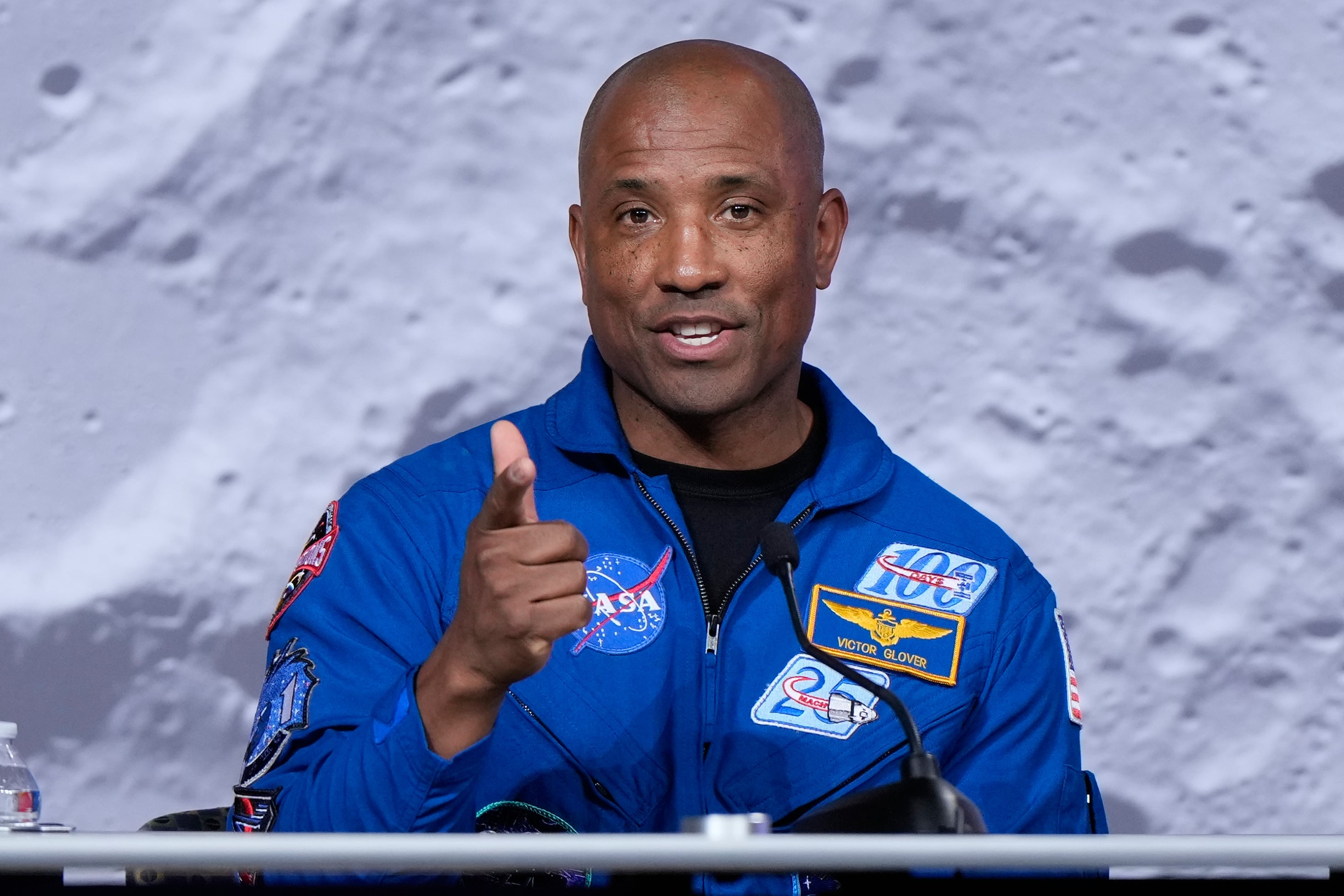
© Ashley Landis (AP Photo/Ashley Landis)

In late September, Israeli media reported that Netanyahu’s government intends to adjust access to key routes in the central West Bank. It plans to reopen Route 463 to settler-only traffic in the governorate of Ramallah and Al-Bireh.
Yisrael Gantz, the leader of the Yesha Council (an umbrella organization representing Israeli municipal councils across Israeli settlements in the West Bank and the Jordan Valley) confirmed that plans to reopen the road received preliminary approval and funding.
Preparations are also underway by the Israeli military to complete “the security, legal, and logistical” steps required to reopen the route (also known as Wallerstein Road).
The road was paved in 1994 under the directions of Pinchas Wallerstein, a founder of the settlement movement, to connect the illegal settlements of Beit El (north-east of Ramallah and Al-Bireh) and Dolev (north-west of Jerusalem).
However, following the outbreak of the Second Intifada in 2000, the Israeli army barred Israeli people from using the road for security reasons. They also placed a locked iron gate on its end near Ein Qiniya village, northwest of Ramallah.
Experts argue that Israel’s move will impact not only the governorate itself, but the entire occupied West Bank because of its central location, major metropolitan status, and role as a commercial hub.
To understand the repercussions of the route reopening, BreakThrough News spoke with Jamal Jumaa, a Palestinian activist, expert on Israeli settlement and apartheid-related issues, and coordinator of the Palestinian Grassroots Anti-Apartheid Wall Campaign (Stop the Wall).
Aside from dividing the governorate’s northern and southern halves, Jumaa noted that reopening the road is dangerous because it will block the center of Ramallah and Al-Bireh from two-thirds of its villages, which are situated to the west.
The prominent Palestinian activist added that when Israel builds such roads for settler traffic, it fences them off on both sides and prohibits the use of adjacent lands. The Israeli authorities consider those lands a buffer zone, citing the security of the settlers as their reason.
“This entails setting up military towers and checkpoints. The road will cut off continuously inhabited Palestinian villages north-west and south-west of Ramallah. Therefore, we are talking about the establishment of roughly four military checkpoints along the road,” he continued.
Jumaa pointed out that the road will complicate the life of Palestinians by restricting their access to vital healthcare and education facilities, including the Istishari Arab Hospital, Birzeit University, and the Arab American University.
He also noted that the intended reopening of the road “is part of dividing and dividing more Palestinians from each other.”
On the political level, Jumaa suggested that the road “hits the heart of the West Bank, which gives a clear signal to the Palestinian Authority that it has no sovereignty over anything.”
It is worth noting that since its establishment, the Palestinian Authority has designated Ramallah and Al-Bireh as a de facto administrative capital. Yet, this has not prevented the Israeli authorities from fragmenting and isolating the governorate by establishing illegal settlements, military outposts, checkpoints, and gates.

Brazil’s presidential elections are sparking reactions across the region. The economic (and, by extension, geopolitical) importance of this South American giant leaves no regional politician or social organization indifferent, as they know that much of the continent’s future is at stake at the Brazilian polls.
Flávio Bolsonaro, son of the far-right former president Jair Bolsonaro (who is in prison for conspiring to carry out a coup d’état against Lula da Silva), has received explicit support from Argentine President Javier Milei – a move that cost Buenos Aires a diplomatic crisis with Brasília due to the Argentine leader’s anti-Lula statements made on Brazilian soil.
Likewise, Flávio Bolsonaro enjoys the direct support of President Donald Trump. The US president has maintained a recent tradition (heavily criticized by many) of publicly expressing support for this or that far-right Latin American candidate who, upon winning the election, fully aligns their country with Washington’s foreign policy and joins the US-led military alliance known as the Shield of the Americas.
Trump has also imposed direct trade sanctions on Brazil over the conviction of Jair Bolsonaro, whom Trump calls a “friend.” In addition, the United States sanctioned the judge who convicted Bolsonaro, Alexandre de Moraes, sending a clear message of condemnation against the Brazilian justice system – a move that some political analysts have called foreign “interference” in the Brazilian judicial system.
Lula has also received support from another very important female leader in the region: Claudia Sheinbaum. In recent weeks, the president of Mexico has repeatedly highlighted the positive aspects of Lula’s administration: “I believe that President Lula has been a very good president … He has done an extraordinary job leading Brazil, and the indicators show it.” The endorsement of his candidacy has clearly been indirect, but given Mexico’s geopolitical importance, many in Lula’s Workers’ Party surely appreciate it.
Lula has also received support from neighboring countries to the south. In Uruguay, the ruling coalition, the Frente Amplio (FA), has shown direct and militant support for Lula’s campaign. Fernando Pereira, president of the FA, stated that the electoral battle in Brazil “is between democracy and barbarism.” He also warned against US interference in the elections: “Brazil will not accept U.S. interference in the election.”
Former Argentine Foreign Minister Santiago Cafiero, who is currently a member of Congress, also expressed his support for Lula: “If Lula wins, he will create a countercurrent to what has been taking hold in the region and demonstrate that there is resistance to these right-wing winds.”

This content is for members only. Visit the site and log in/register to read.

The artificial intelligence (AI) race between the United States and China has accelerated in model protection, supply chains and talent controls, even as the two nations’ leaders agreed last week to open a new dialogue on AI safety. A string of moves announced or uncovered this week shows that both sides are now guarding their […]
The post US bans Chinese data center gear as Beijing grounds its AI talent appeared first on Asia Times.

Is the AI bubble about to burst?
Tech giants like Alphabet, Amazon, Meta, Microsoft, and Oracle are betting over $4 trillion on data centers, chips, and AI models – but the profits aren’t there yet, and the cash is running out. Michael Roberts, economist and author of The Next Recession blog, joins Zoe Alexandra to break down the reality behind the AI boom – what he calls the biggest economic gamble in US history – and who will pay the price when the house of cards comes down.
Roberts explains how circular financing keeps AI companies afloat, what Chinese open-source models undercutting OpenAI and Anthropic mean for US workers, and why grassroots opposition to data centers is a reasonable response to hyperscale projects that drain power and water while creating few jobs. He warns of a 2008-style recession on steroids, and explains why following the money today matters more than the “shock message” of a coming AI apocalypse.
Read Michael Roberts’ article “AI: The Biggest Bet in U.S. History”: https://thenextrecession.wordpress.com/2026/09/26/ai-the-biggest-economic-bet-in-us-history/
For more deep dives into the global economy, tech monopolies, and the real-world impact of AI – and to watch full episodes of BT Live, join breakthroughnews.org as a member today!
#breakthroughnews
******
Rough transcript follows:
[Speaker 1 (Zoe):]
Is the US economy growing incredibly fast in the last year or is it a bubble that is about to burst? Tech giants like Alphabet, Amazon, Meta, Microsoft and Oracle are expected to pour more than four trillion into data centers, chips, and AI models by 2029. Brookings estimates total data center spending could reach 10.3 trillion by 2032. And that’s more relative to the GDP than railroads, the highway system, or the internet. Up to July, 37 billion has actually been spent on private data centers with most still not operating. In contrast, US private construction spending on everything else that it does, houses, apartment buildings, shopping centers, and so on was about 46 billion dollar below the levels in the year prior in the first seven months just of this year. So that’s a marked difference and a marked contrast. All of this is part of what experts have been referring to as the AI bubble. And so to discuss this, what does it mean for everyday people in the United States and the world, we are joined by Michael Roberts, socialist economist, author of several books on the world economy, and the author of a blog called The Next Recession. Thank you so much, Michael, for joining us today here on BT Live.
[Speaker 2 (Michael Roberts):]
Pleased to be with you, Zoe. An important matter to discuss, I think.
[Speaker 1 (Zoe):]
Extremely important. And your latest article, AI, the biggest bet in US history, was very important. We’re going to link it in the show notes because I highly recommend that everyone read this article. But of course in this article, you start out by saying that AI is the biggest economic bet in US history. As you report in this article, spending is set to pass 1 trillion next year. However, the free cash flow funding is falling below 100 billion. So, explain to us what does that gap mean? How does that impact ordinary people and is this something that we should be worried about?
[Speaker 2 (Michael Roberts):]
Well, it seems that American institutions, the financial institutions, companies, government are absolutely placing a huge bet on AI delivering faster growth for the United States, better wages for everybody, higher profits for companies. In fact, a whole new wonderful world is going to come from this AI, artificial intelligence. And that in order to do that they want to spend huge amounts and are spending huge amounts of money. Both the banks are lending money, private credit institutions are putting money into AI labs and into data centers dotted across the United States and there’s still more to come. This is a massive investment. Will it come off is the question. And also before it even does come off, will the money run out? Because already most of the money that’s been provided for this investment up to now has come from the profits from the big tech media companies who were making lots of profit from previous businesses, cloud businesses, internet businesses. Now they’re running out of how much money they can put in. So they’re now borrowing money. So the debt is rising to cover these AI investments which are taking place. And now within the next month or so, one of the big AI labs called Anthropic is going to launch a share issue where it wants to raise $2 trillion, a massive amount of money which it claims if it gets it will be able to deliver fantastic AI models that companies can use in every sort of part of their business and transform the situation, probably at the expense of a lot of jobs unfortunately for people who are currently working in them.
[Speaker 1 (Zoe):]
Well, I want to touch on something that you illustrate in the article with a slightly complicated graph, but you explain it very well, which is this concept of circular financing, and you explain how AI companies are essentially staying afloat because of this issue that you illustrated of lack of free cash flow funding. And you explain how firms are lending and buying from each other, and it seems that everyone is essentially dependent on each other’s spending. So can you exactly explain how this works and why is this actually a risk instead of a normal business practice?
[Speaker 2 (Michael Roberts):]
Well, it is in a way a normal business practice to lend money to companies in the hope that they will produce sales and revenues and that then they will get their money back. But that’s not the sort of lending that’s going on now. What’s happening is that the big companies in tech are lending money to the artificial intelligence labs as they’re called. The people who are making these models and these models are then claiming they’re making huge amounts of revenue. But the only way they’re making huge amounts of revenue is they’re getting loans from the other tech companies. So for example, Nvidia which makes all the chips for all these AI companies and for these data centers basically invested in all the AI companies and are lending the money to all the companies. So the result of course is that the companies appear to have plenty of cash but they have an obligation to deliver at some point huge amounts of revenues back to Nvidia. In the meantime this money keeps circulating around and we call it circular financing in the most complex way. That graph shows how much connection there is between all these different companies at all different levels not just in the US but right across the world now. And so if one company particularly a big one starts to lose confidence in making those investments or loses revenue and can’t achieve the targets that it has to make then the whole of this web could start to crumble and cause the bubble to burst and we see a massive reduction in the value of all these companies on the stock market and that will produce losses of jobs, losses of income for large numbers of people and we could then slip into a recession in the United States. That’s the risk. It’s so we have one huge bet now on the US economy that AI is going to work. It’s going to deliver huge profits for the companies that have made these loans and it’s going to deliver greater productivity for the economy as a whole. That’s a huge risky bet.
[Speaker 1 (Zoe):]
Well, you know, it’s interesting your piece comes out and we’re discussing it right now in the midst of this whole AI news crisis where we’ve seen several whistleblowers, so to speak, come forward and say, you know, AI could kill us all. AI could end humanity. We are racing towards a point of no return, talking about the possibilities that their AI models are unleashing on the people of the world. And it’s interesting because what you’re outlining in this article is that there’s a very real risk that will come before all of that, which is the economic impact. And so what do you think could be the fallout of any of this starting to collapse, whether it’s the circular financing or some of these investments not returning?
[Speaker 2 (Michael Roberts):]
Yeah. Well, I think an estimate was made by the IMF recently and they reckon that it could reduce the stock market value by up to 25%. It could knock back our national output in the US and in other major economies by four or 5%. If you remember the great recession that some of us remember back in 2008-2009 knocked about 3 or 4% off the national output of major economies for several years. This would be just as bad if not worse if we get into that situation. That’s the risk.
Now I have to say that at the moment stock market investors, financial institutions, AI labs, the big tech companies are completely optimistic. That’s not going to happen. They say they’re going to be able to deliver much better models which companies can use right throughout their businesses, get rid of a lot of costs, and dramatically increase their productivity and therefore sell more goods and services, and it will transform the situation for the US. The chairman of the US Federal Reserve said this is the most important thing. It’s going to keep prices down. It’s going to increase productivity. It’s going to transform the economy. That’s the optimistic message that remains.
Who actually mentioned, Zoe, the pessimistic message is it’s so powerful this AI apparently, it’s going to take over human beings’ jobs, but is actually going to control human beings and even annihilate them. I think that’s a sort of shock message which I think tells you two things: one is that the AI labs want to convince you that this is absolutely powerful and will work, and secondly, if it’s dangerous they’d like to slow down the process a little bit, so they want it both ways at the moment. They don’t want to spend too much more money. On the other hand, they want you to believe that it’s going to deliver. And that’s the big question we have now.
So I could call it a $64,000 question, but what we’re talking about is a four or $5 trillion question, which is if you know that the US economy produces labor and machines produce about $30 trillion a year, you can see that if that happened the loss of $5 trillion every year for the next five years that would be a disaster for the US economy.
[Speaker 1 (Zoe):]
No, that’s duly noted. And you know, let’s talk about data centers a bit because in your piece you wrote about how $37 billion has been spent on private data centers, and notably you included a graph showing that a lot of these are not operational yet. And across the United States and in many parts of the world, the construction of data centers has been met with mass grassroots opposition. Recent polling in the United States shows that not only do progressives and Democrats oppose the construction of data centers in their neighborhoods and their areas, but it’s actually something that’s a bipartisan issue for voters. Even Republican voters have joined in this mass opposition to the construction of data centers. How does that factor play into this? Because again $37 billion, it’s not $4 trillion, but it’s still a significant amount. Will the grassroots opposition to the construction of these centers have an impact on how this is playing out in the economy? Is that—we’ve seen a lot of vilification by these tech billionaires against people who are protesting the data centers saying that they’re anti-American. Break down a bit of this for us.
[Speaker 2 (Michael Roberts):]
Well, there are genuine worries for people who have got data centers near them. Data centers consume huge amounts of water. Why is that? Because there are computers and chips buzzing away in these data centers, increasing dramatically the temperature of what’s going on inside. So, they need to be cooled all the time. So they need a large amount of water to keep cooling the center down so that nothing catches fire or breaks down. At the same time they’re using huge amounts of electricity. They’re sucking in electricity in order to keep these computers going. And this is obviously going to have an effect both on the power situation and the water situation in many parts of the country wherever these data centers have been built. And that’s a perfectly reasonable, genuine grievance that people have: do we need this massive expenditure that’s going on in these centers sucking away power and water for us? And remember, people are getting jobs by constructing them, but once they’re built they don’t really have many people working in them. So they’re not going to increase employment dramatically at all.
Worse than that, Zoe, as you saw in that graph, large numbers of data centers that have been promised to be built haven’t been built. But companies have bought huge amounts of chips from Nvidia and other companies to put in these data centers because these semiconductor chips, that’s what really is going into them. And then they can’t put them in because the centers haven’t been built. So they’re sitting in warehouses just sitting there waiting to be used over the next 5 years maybe, because it takes about 3 to 5 years to complete a data center. So in that situation this is a real risk. Large amounts of money have been spent on computers, on chips, and started to construct data centers. But will people use them? Will companies use the AI models that are being produced to run their businesses and therefore use the data centers as a result? It remains to be seen. If they don’t, then there’s going to be a huge loss not only for companies that have invested in the data centers and the people looking to sell goods to people through the data centers, but also the people living next to the data centers will find that these things have been built for no reason whatsoever because they can’t deliver.
[Speaker 1 (Zoe):]
And you know, another aspect of this whole AI economy risk is the fact that the US is not the only country that is producing AI. It’s not only these US tech giants that are producing cutting-edge AI models, and you note the rise of Chinese open-source models, which are significantly cheaper in terms of the cost invested into creating them, but also the number of data centers etc. Overall, it’s a much cheaper investment in these open-source models, and this is overall driving prices down. And you refer to this as a classic contradiction, because there may be a rise in productivity, but the profits will also be kind of destroyed to be able to pay for this. So talk a bit more about this: what role do these open-source models play in this kind of drive to invest and this AI bubble in the United States?
[Speaker 2 (Michael Roberts):]
Two things. Open source means that basically if you’re a computer expert—not like me or you—you can go into the model and you can work out how it works, and you can get all the programs and algorithms out of it, and you can build your own model or use it for free. The models that the American companies are selling like Anthropic and OpenAI are not open source; you have to pay large amounts of money if you want to get control of that model—it’s proprietary and to use it.
Also, that means that Chinese companies, but not just Chinese companies, but other open-source companies in France and in other parts of Europe can sell their time when you go and prompt an AI model. You buy a token to use something in your business or for your information, and they can sell their tokens at virtually nothing at all because they’re not really charging any money for the source models that they’ve produced. This undercuts the position of OpenAI and Anthropic dramatically. They’ve had to reduce their charges for tokens, as they’re called in this business, for information and algorithms that companies can use in their businesses.
So there are two things here. Companies can set up their own open-source models to use in their companies; they don’t have to use OpenAI or Anthropic maybe, and also they can use the Chinese models or the open-source models very cheaply. So as you correctly say, this may improve the productivity of companies that are buying these things and using them, but it means that the profitability of the existing AI companies and the people who have made all these investments and loans to them may not be delivered as a result.
[Speaker 1 (Zoe):]
And you know, just before we let you go, I wanted to ask you one last question. It feels like we’re kind of on a precipice here, as you’ve laid out in terms of this bubble. What—of course you don’t have a crystal ball, neither do I—what should we be looking for in terms of triggering events which could change the current situation? It feels quite tenuous right now. What should people be paying attention to in terms of reports or things that could change this balance that you describe?
[Speaker 2 (Michael Roberts):]
Well, this boom, this bubble, if we want to call it that, could continue for another year, maybe longer—can’t be sure. So that’s why actually we can’t be sure. But what we should be looking for, for example, is if there’s suddenly a downturn in the demand to build more data centers, or if the share issue that Anthropic is making in November turns out to be a bit of a dud—they don’t raise the money they expect to do so, or if they raise the money then the price of the shares afterwards drops sharply. That would indicate a lack of confidence in the possibility of these AI models delivering what they claim they can deliver over the next few years. And if they don’t start changing the levels of productivity—if companies don’t adopt these AI models, and sometimes that can take a long time before they get round to doing it, putting it through their own companies and using it in an effective way—if that takes a long time, in the meantime all this money is being spent and it’s not getting a return, we will begin to see a fall in the profitability prospects for those companies and a withdrawal by the investors about making more investments. We see that beginning to happen. That tells you that the turn towards a bust from a boom in the AI stock market and elsewhere is beginning to happen. So it really depends on all of us, all the workers, company owners—not us, but—to embrace this for it not to be a boom-and-bust.
So at the moment they are embracing it. Don’t worry there, if you go into the mainstream media, it’s going to be fantastic. And I hope they’re right in some ways. We don’t want massive numbers of jobs to be lost, we don’t want a huge decline in output or people’s incomes because of this bust. But as we know in the history of capitalism, in the history of stock markets, that’s what happens quite often. And the example at the very beginning of the show when you showed the railway mania that happened in the 19th century, that collapsed before we got the railways; the dotcom bubble collapsed in the early 2000s, then we got the internet. This time we could have a huge AI bubble that collapses. We may still be left with artificial intelligence machines afterwards that we can use, but it’s going to be at a cost to us all, not only in the US, but across the world.
[Speaker 1 (Zoe):]
Well, Michael Roberts, thank you so much for joining us here on BT Live. Definitely recommend to anyone who’s watching, please check out his piece, follow his blog; you will thank us later. So, Michael, thanks for being here.
[Speaker 2 (Michael Roberts):]
Thanks for having me.

US Defense Secretary Pete Hegseth announced Wednesday that three men will help lead a new Pentagon project on the “future of warfare,” even as he moves to eliminate hundreds of senior armed service leadership position, including many generals and admirals. Hegseth unveiled Project Meridian during his “State of the Force” address at Marine Corps Base Quantico in Virginia. The 120-day […]
The post Hegseth taps three to lead ‘Future of Warfare’ project appeared first on Asia Times.

On the evening of Wednesday, September 30, Bolivian police arrested Attorney General Roger Mariaca and raided the Attorney General’s Office in Sucre and Santa Cruz. The police action comes just days after the US State Department sanctioned and revoked the visas of Mariaca and 21 other Bolivians.
Analysts suggest that the timing of the US sanctions, Mariaca’s arrest, and the raids, are no coincidence, calling it “political pressure” related to a high-profile case.
Mariaca is leading the investigation into Argentine political consultant Fernando Cerimedo. The influential political advisor to Latin America’s far right allegedly influenced elections through social media bot farms, may be involved in drug trafficking, and was accused of ordering an assassination attempt on his ex-partner, Nadia Beller. She was shot three times but survived after undergoing emergency surgery.
Cerimedo has been in custody in Bolivia after attempting to leave the country by plane following the attack on Beller. Messages were found on his cell phone that, according to the prosecution, directly link him to the attempt on her life. Despite the emerging evidence against him, not only in ordering the hit on Beller, but also in crimes of corruption and drug trafficking, Cerimedo seems to have friends in high places, both in the Bolivian president’s office, and in the United States, that may have set the stage for the arrest of his investigator, Attorney General Roger Mariaca.
Argentine outlet Página 12, reported that, according to Beller, the sanctions against Mariaca were “a move by Donald Trump’s team to protect Cerimedo. As the Washington Post noted this week: ‘Cerimedo is the MAGA (Make America Great Again, Trump’s slogan) man across the entire continent.’”
In the report, Beller is quoted as saying: “Is this decision by the United States part of the fight for the Shield of the Americas or is it about protecting the MAGA network?…If the reason is corruption and drug trafficking, then they need to explain why the visa is being revoked for the attorney general who is investigating a network of that nature. Are they going after the investigator, or are they protecting part of the network?”
As evidence mounts against Cerimedo, the US instead accused his investigator, Mariaca, of allegedly soliciting and accepting bribes to facilitate drug trafficking and helping people involved in violent crimes escape justice.
After news broke of the US actions against him, Roger Mariaca had said he will not back down and will continue the investigations until the end: “[I received the news] with great surprise … I will not back down even one centimeter from the investigations that fall under my jurisdiction.”
He highlighted that while it is clear that the Cerimedo case has generated international intrigue, “no political pressure, whether national or international, can become an impediment to clarifying the facts which must be investigated.”
He was arrested two days later.
In addition to Cerimedo’s well-documented ties to high profile right-wing politicians across Latin America, including in Bolivia, recent revelations from ex-partner Beller, suggest that the powerful political consultant may have also been involved in the drug trade. In a leaked audio message, Cerimedo is allegedly speaking with a woman with whom he is arranging payment so that several flights can operate without excessive pressure from the authorities. Cerimedo mentions a man named Cabrera, whom the Bolivian media suspect is Franz Cabrera, the former head of the Special Force to Fight Against Drug Trafficking (FELCN), who was recently dismissed.
According to the investigations, they allegedly “were paid” for nearly 45 flights, amounting to $700,000, raising significant suspicions about the source of the funds that the political consultant is said to have handled.
The timing of the sanctions against Mariaca and his arrest have raised questions about US interference in the Bolivian justice system. But, as pressure escalates over the investigation into Cerimedo, the case is also revealing a far deeper web of political connection and influence than was initially known, placing it under renewed scrutiny. Wether the investigation is further disrupted or allowed to proceed, what happens next could expose even more about Cerimedo and the network of the Latin American far right.

Brazil votes this Sunday, and the Trump administration has spent months trying to tilt the outcome toward far-right presidential candidate Flávio Bolsonaro. Tariffs. Terrorist designations. Revoked visas. Frequent meetings with the Bolsonaro family. Taken alone, each move looks random. Put the pieces together, and a picture emerges: U.S. interference in Brazil’s 2026 elections.
Over the last year, Trump has met frequently with members of the Bolsonaro family. In June, the State Department put two Brazilian gangs on the terrorist list. Just a few weeks later, Trump shared an article on Truth Social that said Brazil was his next big challenge. Less than a month later, in July, Trump imposed new 25% tariffs on Brazilian goods. In August, Trump revoked the U.S. visa of the Brazilian ambassador.
The Brazilian Intelligence Agency recently raised the risk of external influence and interference by the United States in Brazil’s 2026 elections to a quote, “critical level.”
This is Episode 15 of Under the Shadow, Season 2.
Under the Shadow is an investigative narrative podcast series that walks back in time, telling the story of the past by visiting momentous places in the present. Season 2 responds in real time to the Trump administration’s onslaught on Latin America.
Follow Under the Shadow on Spotify and Apple Podcasts.
Hosted by Latin America-based journalist Michael Fox.
This podcast is produced in partnership between The Real News Network and NACLA.
It is supported, in part, by Global Exchange.
VOTE by October 15: Under the Shadow has been nominated for three podcast Signal Awards. Please consider voting for Under the Shadow and The Real News:
Panamerican Dispatch
You can check out Michael Fox’s new reporting project on Brazil.
It’s called Panamerican Dispatch. It’s a project of The Real News in partnership with Global Exchange. The website is www.panamericandispatch.org
You can also follow us on social media below
Bluesky https://bsky.app/profile/padispatch.bsky.social
X x.com/PAdispatch
IG instagram.com/padispatch
Tiktok www.tiktok.com/@padispatch
Theme music by Michael Fox’s band, Monte Perdido. Monte Perdido’s 2024 album Ofrenda is available on Spotify, Deezer, Apple Music, YouTube or wherever you listen to music.
Other music from Blue Dot Sessions and Epidemic Sound.
Script editing by Heather Gies. Hosted, written, produced, mixed, and edited by Michael Fox.
Guests:
Resources:
Support Under the Shadow
Please consider supporting this podcast and Michael Fox’s reporting on his Patreon account: patreon.com/mfox. There you can also see exclusive pictures, video, and interviews.
You can subscribe to Michael Fox’s new free speech podcast, The Battle for Free Speech on Spotify, Apple Podcasts, or wherever you get your podcasts.
The following is a rushed transcript and may contain errors. It will be updated.
Michael Fox:
Hi folks. This is your host, Michael Fox. Before I get started, I wanted to let you know that I have big news. First, this season of Under the Shadow has been nominated for three podcast Signal Awards. It’s really exciting, and you can help us by heading over to signalaward.com and voting for Under the Shadow. I’ll add direct links in the show notes that will take you straight there. Second, last week I launched a new website called Pan American Dispatch. It’s a project of the Real News. We’re translating daily articles from Portuguese and Spanish into English for a US audience. Over the next two months, we’ll be exclusively focused on covering the Brazilian elections and Trump’s attempts to sway them. That is what this entire episode is about. And if you want to get all of the news about what’s happening in real time, please consider subscribing to our Substack.
You can find us at panamericandispatch.org. We’re also on X, Blue Sky, Instagram, and TikTok. Our handle is @PAdispatch. Okay, that’s it. I hope you enjoy the show. On May 26th, 2026, a 45-year-old Brazilian senator named Flavio Bolsonado met with US President Donald Trump at the White House. Flavio is the presidential candidate for the far right in Brazil in the upcoming elections in October. This is what he had to say at the annual conservative political action committee meeting in Texas earlier this year.
Flávio Bolsonaro:
And let me look you in the eyes and tell you, we will win.
Michael Fox:
Flavio is the son and political heir of the former far right president Jair Bolsonado, a close ally of the US president. In the meeting at the Oval Office in May, Flavio Bolsonado reportedly asked Trump to designate the Brazilian drug gangs, Primero Commando de Capital and the Commando Vermelio as foreign terrorist organizations. After the meeting, Flavio spoke to the press.
He said, “I asked President Trump emphatically to designate as soon as possible the PCC and the Commando Vermelio as foreign terrorist organizations.” This might not seem like such a big deal, but it is. The United States has sometimes used that very designation as the pretext to invade or interfere in foreign countries. The US placed the Venezuelan gangs, Trende Aragua and Cartel de los Soles on the list back in 2025, and fighting those alleged terrorists was one of the excuses the United States used for invading Venezuela and kidnapping President Nicholas Maduro on January 3rd of this year. In other words, this designation carries weight.
Trump agreed to Flavio’s request. Just three days after meeting with Flavio Bolsonaro, US Secretary of State Marco Rubio announced that those two Brazilian gangs would be added to the list of foreign terrorist organizations. Flavio responded in a letter to Rubio, thanking him for the classification and offering to place his transition team at the disposal of the White House if he’s elected. For months, the United States has been escalating the pressure on Brazil in the lead up to the presidential elections with the goal of helping to lift Flavio Bolsonaro to the top office. Just a few weeks after the State Department put the Brazilian gangs on the terrorist list, Trump shared an article on Truth Social that said Brazil was his next big challenge. Less than a month later in July, Trump imposed new 25% tariffs on Brazilian goods. In August, Trump revoked the US visa of the Brazilian ambassador.
It was an apparent tit for tat after Brazil denied visas to two US State Department officials who planned to travel to Brazil to meet with former President Jair Bolsonaro. I could go on. The point here, as many people have pointed out, is that there isn’t just one thing that Trump is doing to try and sway the vote in favor of Bolsonaro. It’s a whole combination of moves, like a jigsaw puzzle with many pieces taken alone, and it’s just a random assortment of colors and shapes. But when you start to put the pieces in place, a picture begins to emerge. See, Trump allies have won big elections across Latin America. In recent years, right-wing candidates have taken back or held onto power in Argentina, Chile, Colombia, Ecuador, Honduras, Bolivia, and Peru. And they’ve done so with the help of US President Donald Trump, who’s thrown his weight around to boost right-wing candidates, and also with the support of bot farms and shady electoral campaign practices linked to Washington and Mar-a-Lago, as we looked at in the last episode.
Donald Trump:
But on this historic day, we come together to announce a brand new military coalition to eradicate the criminal cartels plaguing our region.
Michael Fox:
Many of those countries have now joined forces in Trump’s shield of the America’s alliance, but there are a few holdouts, and Brazil is one of the most important.
Alexander Main:
The upcoming election in Brazil is really going to be extremely consequential for the entire region.
Michael Fox:
Alexander Main is the director of international policy at the Center for Economic and Policy Research.
Alexander Main:
Brazil is the country with the largest economy, biggest population in Latin America, and it’s also one of the few countries that is still holding out against US pressure, pressure to align with the Trump administration’s agenda in the region.
Michael Fox:
The first round election is on October 4th in just a couple of days, and the runoff will take place three weeks later on October 25th. Bolsonaro is facing off against the longtime workers’ party icon, Luis Ignacio Lula de Silva. He’s the current president and he’s running for reelection. I have been covering the campaigns here in Brazil in recent weeks. I’ve attended rallies for both Lula and Bolsonaro. Today, I’m going to walk you through what’s at stake, and most importantly, how Trump is exerting underhanded pressure on the country ahead of the vote. As a leak document showed last week, the Brazilian Intelligence Agency has raised the risk of external influence and interference by the United States and Brazil’s 2026 elections to a “critical level.” According to the report, there is a trend of escalating pressure on Brazil and a quote, “selective intensification and reconfiguration of the pressure exerted by the United States.” It’s a textbook example of foreign election interference today, a multifaceted jigsaw.
People are concerned, but they’re also standing up, and that’s what makes this episode so interesting. It’s happening in real time. You have Trump attempting to sway the vote, and you also have people pushing back.
Like Lula’s recent speech at the United Nations where he told the US president that Brazil will not be the backyard of any country.
Or this woman, a small farmer who I spoke with at a Lula rally in Southern Brazil. “We’re not afraid of Trump, “she said. “We know what he wants to do and we’re not going to let him. We are the resistance. We’re not afraid of him, just like Lula isn’t afraid. Lula showed us that we are not less than any country,” she said. That and so much more in a minute. This is Under the Shadow, an investigative narrative podcast series that looks at the role of the United States abroad in the past and the very present. This podcast is a co-production in partnership with The Real News and NACLA. I’m your host, Michael Fox, longtime radio reporter, editor, journalist, the producer and host of the podcast’s Brazil on Fire: Stories of Resistance and my new series, The Battle for Free Speech. I’ve spent the better part of the last 20 years in Latin America.
I’ve seen firsthand the role of the US government abroad, and most often sadly, it is not for the better. Invasions, coup, sanctions, support for authoritarian regimes. Politically and economically, the United States has cast a long shadow over Latin America for the past 200 years. It still does. This is season two of Under the Shadow Trump’s attack. Episode 15, election meddling in Brazil.
Okay, before we dive into the allegations of election interference, let me set the scene. To do that, I want to take you back to a month and a half ago to the launch of the campaigns here in Brazil. I was in Sao Paulo covering Lula’s kickoff. Some of this section of the episode is based off of reporting I did at the time for the world and the real news. It’s August 16th, 2026. Tens of thousands of supporters of President Luis Idnacio Lula de Silva are packed into May 1st stadium in Sao Paulo. Among them is Sida Maya. She’s the secretary of women’s public policies in the nearby municipality of Maua.
“This is living history,” she says. “I’m participating in a historic moment. It’s a great feeling and we’re going to elect Lula.” Next to her, her husband Valmirmaya holds back tears. “It’s emotional, “he says. Lula’s campaign chose this stadium to kick off his run for a fourth and final term as president. This is where Lula got his start. In 1979, Lula was a young leader at the ABC Medal Workers Union. He led an iconic strike and rally at this same stadium. The workers won and it marked the beginning of the end of the country’s military dictatorship. Valmir Maya was there then and he’s here now.
“We wanted what we got,” he says, “to transform Brazil into a democratic country. That was our struggle, and Lula was the expression of this.” Inside the stadium, President Lula strode onto a long stage wearing a Panama hat and a white shirt. From the bleachers, he seemed to float above the sea of supporters in red, the color of Lula’s workers’ party. Lula’s top campaign promise has always been about battling hunger. Over the years, he’s lifted millions from poverty, increased access to education, health, and infrastructure, in particular in impoverished Northeastern Brazil. Lula told the crowd that there was much work left to be done, that they had to think of the future. He said they had to invest even more in education, that he wanted to continue to develop jobs and industry for Brazil. 300 miles to the east, Lula’s challenger, Flavio Bolsonaro, launched his campaign on Copacabana Beach in his hometown of Rio de Janeiro.
“Come with me and rescue our nation,” he said, “God above everyone, Brazil above all.” Flavio Bolsonaro has attacked the left and promised to fight crime and insecurity, cut bureaucracy, promote private business and privatizations, and develop close ties with the United States. Much of his rhetoric and that of his supporters is wrapped in a religious language of good versus evil.
“You are the son of hope,” said a pastor at his campaign launch. “You are the first born. You received the legacy of representing your father, and now for everything that is sacred on the face of the earth, honor your father. “The savior trope goes over well with his evangelical supporters, an important base for Bolsonaro and other far-right politicians in Brazil, as we looked at in depth in my 2022 podcast, Brazil on Fire. Blase Narujo is a youth pastor at an evangelical church in a working class neighborhood of Sao Paulo. He joined others on the streets in mid-August to promote Bolsonaro and other far-right candidates running for local office.
He said,” I believe that Flavio Bolsonado is the only viable candidate who can beat Lula and the workers’ party. “I’m a Christian here,” he told me. “I behave as a Christian, but I’m also a political activist here on the streets to defend my beliefs,” he said. Flavio Bolsonado also has powerful support in high places, in particular, as we heard earlier from Donald Trump. If you remember, the US president is a longtime ally of Flavio’s father, Jair Bolsonado. Jair is currently on house arrest. He was first barred from running for office for spreading lies about the country’s electoral system. Last year, the Supreme Court convicted him of plotting a coup to return to power. Before his rise as the leader of Brazil’s far right, Jair Bolsonaro was a backbench congressman for decades, outlandish, but mostly obscure. And then he ran for president.
Speaker 5:
There are a few things that drew inspiration for you.
Jair Bolsonaro:
Very special guy. Turned out to be a great friend of mine.
Michael Fox:
Bolsonaro fashioned himself after Trump. In fact, in Jair Bolsonaro’s electoral campaign in 2018, international media often called him the Trump of the tropics. He and Trump met a number of times while they were both president.
Jair Bolsonaro:
And I think we can say that Brazil and the United States are as close or closer as they’ve ever been.
Michael Fox:
Last year, Trump imposed 50% tariffs on Brazil in part because of the country’s criminal trial against the former president.
Donald Trump:
They’re treating President Bolsonaro very unfairly. He’s a good man. I know him well. I negotiated with him.
Michael Fox:
And let me be honest, there are many supporters of Bolsonaro who look up to Trump and want him to use his leverage to help their candidate, Jair Bolsonaro’s son and protege Flavio Bolsonaro. On September 7th, members of the far right in Brazil hit the streets across the country to rally for Flavio. I covered the march in the southern Brazilian city of Florianopolis. There, numerous people told me how much they admired Trump and how grateful they were for his support. Adalberto Luis de Santos is marching with a blue hat with the insignia of the United States. He and his wife are draped in Brazilian flags. “We’re hoping for support from the United States,” he said. “I believe Trump can help us. All Brazilians need the support of someone from abroad. “. “Trump is really important,” another man in the march told me. “The external pressure is very important.
“. A woman in the march carrying a flag and a yellow hat told me,” Just the simple fact that Trump is in power and acts democratically in favor of freedom makes all of the difference for our people. “.
“We don’t want Brazil to turn into another Venezuela,” she said. “I’ve heard that narrative countless times in Brazil and during elections in countries across Latin America for years. It’s the ever-present boogeyman of so-called communist Venezuela, but fear of the Venezuelan fate took on an even more serious dimension after the US invasion of Caracas earlier this year. The sentiments of so many Bolsonaro supporters are a sign of just how polarized the political debate is and how much the far right in Brazil looks up to the US president. Two weeks later, I covered another rally in the same city, this one in support of President Lula.
People had a lot to say about Trump and his efforts to influence their presidential decisions. I asked them, “Are you afraid of what Trump and the United States could do during this election to try and support Bolsonaro?” “Yes, I’m really afraid of that, “said one man carrying a Lula flag. “They want to take away our sovereignty. They want to invade our lands. They want to take what is ours and let Brazil be a colony of another country.” “Of course we’re afraid, “said someone else,” but we believe that Lula is well ahead in the election and we won’t allow Trump to destroy the election. “What do you think about Trump and are you concerned that Trump might try and do something with the elections here in
Speaker 7:
Brazil? Yeah, we’ve seen a lot of his work here in Latin America that we are very scared. Venezuela, Peru, Colombia, Argentina. So we are very scared because Latin America is being contaminated by him and his work, so it’s very scary and we don’t want him in here or anything with him.
Michael Fox:
People have a lot to be concerned about. When I was in Sao Paulo in August, I sat down with Igor Fusser at a cafe near Palista Avenue. We’ve known each other for years. He’s a professor of foreign relations at Brazil’s ABC Federal University. I asked him how he sees the US actions against Brazil at this moment.
He said, “This is not just about the United States trying to remove the government of a left-wing party, the workers’ party, or a left-wing leader, which is Lula. It’s about subjecting Brazil to the policies of the United States, and Brazil being the largest country in Latin America is precisely the biggest obstacle to the American project of global dominance of the Western hemisphere,” he said. Remember, over the last year, as we’ve looked at throughout this podcast, Trump has pushed the United States into a new era of dominance over Latin America, the likes of which the region has not seen in decades. Boat strikes in the Caribbean, the US invasion of Venezuela, and the kidnapping of President Nicolas Maduro, the oil blockade on Cuba, and Trump throwing his weight around and meddling in elections across Latin America. It’s all justified by a renewed Monroe doctrine. Here’s Secretary of War, Pete Hegseth, underlining that point.
Pete Hegseth:
President Trump has established the Trump corollary of the Monroe Doctrine, the Don Roe doctrine, and the war department is implementing it as fast as we can.
Michael Fox:
Brazil is the latest battleground. It’s playing out in the open and behind the scenes. It’s early August. The Brazilian Association of Investigative Journalism is meeting in Sao Paulo. At the meeting circulating in the crowd are staff from the US Consulate in Sao Paulo, their mission to woo Brazilian journalists into conversations about the country’s electoral process and the state of “freedom of expression” in the country. This was reported by several independent journalists at the conference and then published by independent journalist Leandro DeMori, the former executive editor of The Intercept Brazil. According to Demorti, three journalists at the event confirmed the actions of the consular officials. Two journalists said they were offered assistance with US visas if they needed them, even though the meetings with the officials about the country’s elections were to be held in Sao Paulo.
Washington has leaned on two key narratives to demonize Brazil in recent years. One, that freedom of expression is under attack in Brazil because of its attempts to reign in social media disinformation, and two, that the country’s electoral system is faulty and prone to errors. Both of those claims are false. Brazil has long held certified free and fair elections, and freedom of speech is alive and well, although Brazil embraces a more inclusive harmonious definition of how the freedom of speech fits into the country’s other laws. Episode 12 of this series goes deeper into those claims and their fallout. DiMorti’s reporting about the recent journalism forum brings up more questions than answers. What were the consular officials trying to achieve? Did some journalists take the bait? If so, how will this be weaponized? We don’t have answers, but it’s another piece of the scrambled jigsaw puzzle.
Here’s another, and it’s just one example of how the meddling campaign has been building. In mid-September, less than two weeks ago, Flavio Bolsonaro’s brother, Eduardo, met with President Donald Trump at the White House. As we looked at in the last episode, Eduardo is a former congressional representative who now lives in the United States. The Brazilian Supreme Court sentenced him earlier this year to four years in prison for his actions in the US, lobbying the Trump administration to intimidate the Brazilian judiciary amid the trial against his father. According to reports, Eduardo traveled to Washington to ask Trump to impose sanctions on members of the Lula government and the Supreme Court, including Justice Alexandre Morais. If you’ve been following Brazil or my reporting, you might remember that Morais was the justice that led the trials against the dissemination of fake news in the country and also against Jair Bolsonaro.
Jair Bolsonaro:
Also developing this morning, the Trump administration placing sanctions on a Brazilian Supreme Court justice over concerns of human rights violations and politicized prosecutions.
Michael Fox:
Last year, the US sanctioned Mordice for supposedly carrying out human rights abuse, including arbitrary detention. Those sanctions were lifted four months later, but they were a thinly veiled retaliation for the trial against Bolsonaro and also Morais’s fight with ex-owner Elon Musk, which we looked at in depth in episode 12. There is no question the battle over Brazil right now is also taking place online and Silicon Valley is playing its part.
On Wednesday, September 23rd, Meta, the parent company of Facebook and Instagram, took down President Lula’s Facebook page and blocked his campaign from running political ads. The platform gave no justification for the move. Lula’s workers’ party and his electoral coalition demanded answers. Lula’s campaign asked for the immediate return of the account. The campaign’s lawyers told the platform that the restriction “poses a serious risk to the candidate’s level playing field in the election.” The head of the Workers’ Party national communications team, Eden Valadaris, said they hadn’t ruled out taking the case to the superior electoral court. He wrote on X, “Brazil’s electoral contest, its campaigns, and its vote cannot be left to the mercy of the political preferences of the big tech companies whose supposed programming errors only hit and harm one campaign and one candidate.” One candidate, meaning Lula. By the next morning, the page was back up, but Lula’s electoral coalition said Meta’s actions harm the presidential campaign.
Remember that Meta was founded and is run by Mark Zuckerberg. He’s a close ally of President Donald Trump.
Jair Bolsonaro:
Thank you very, very much.
Michael Fox:
In fact, he was at Trump’s inauguration for his second term alongside the heads of Apple, Google, Amazon, and of course, Tesla and ex – CEO, Elon Musk. I want to talk about something important today because it’s time to get back to our roots around free expression on Facebook and Instagram. Zuckerberg got rid of fact-checking at Meta in early 2025, just before Trump came into power last year, and that’s important because there are now fewer constraints on the spread of fake news or misinformation on the platform. In late August, Amnesty International tested this lack of guardrails in Brazil. It sent 15 different AI-generated election-related political disinformation ads to Facebook to see if the platform could discern between truth and falsehood. Meta failed to block most of them. A similar test run by the eco movement in Brazil in mid-September showed that nearly 90% of the disinformation ads it attempted to run on Meta were approved, including “AI ads depicting execution style threats against lawmakers and calling for a stop the steal style coup.” And I want to say one more thing about the role of Silicon Valley’s big tech platforms.
They are paying attention to what’s happening in Brazil. Here’s just one example. Last year, lawmakers and a congressional committee in Brazilia were discussing a bill on AI regulation. According to the fact-checking agency, Ausfatos, big tech lobbyists visited committee members more than 80 times over a five-month period. The tech company that met with members in Brazilia the most was Meta, which made more than a third of those visits.
There’s another layer to all of this, another puzzle piece if you like. In the last episode of this podcast, I took an in-depth look at the work of the Argentine political strategist, Fernando Cerimedo. Remember, Serimedo has led right-wing digital campaigns across Latin America, and he did so with the help of Washington and Trump’s former campaign manager and digital strategist, Brad Parscali. This is what he had to say earlier this year in Mar-a-Lago when he was presented an award for best Hispanic Political Consultant of the Year.
Jair Bolsonaro:
I want to say something in English. Thank you to Brad Parscale for believing me all the time and give me your technology and Tim Don for the fighting in Latin America against socialism. Thank you, Brad.
Michael Fox:
Serimedo is now in prison on charges that he tried to kill his girlfriend. According to her, he hired the hitman to silence her. Serimedo also faces charges of illicit enrichment and other crimes, but his digital campaigning and the bot farms that he’s deployed in elections up and down the hemisphere haven’t necessarily gone away, nor have his deep ties to the right in the region. Remember who presented that award to Cerimedo? It was Eduardo Bolsonaro, the brother of Flavio Bolsonaro. They reportedly have known each other for more than 15 years. Now, just this week, Washington sanctioned Bolivian Attorney General Roher Mariaka, who is prosecuting the Serimero case,
He defended his country sovereignty and vowed to continue the investigation despite the apparent attempt to intimidate him. I mention all of this to say that just because Serimedo is now in jail, it doesn’t mean that these types of digital influence campaigns heavily fueled by an inter International far right aren’t happening. As I mentioned last time, Serimedo is just one piece in a puzzle, a cog and a wheel, albeit one very important cog. But actions pushing disinformation online are still happening. We just don’t necessarily know from who or where. Here’s one example. About a week ago, the Brazilian journalistic outlet Ajencia Publica reported in conjunction with Aos Fatos that AI farms were fueling the far right agenda in the lead up to the elections. The bots had created 255 profiles and made over a thousand posts. Agencia Publica reported that the network had “achieved 58 million views, expanding the reach of posts supporting the Bolsonaro family and attacking the Supreme Court.” It’s a strategy known as astroturfing, using artificial engagement to give the impression of a real surge in grassroots support.
All of this happened over one month between August and September. According to the investigation, one of the main nodes of this AI campaign was linked to the Instagram account Leo Indio Bolsonaro. That is managed by Leonardo Rodriguez de Jesus. He is Flavio and Eduardo Bolsonaro’s cousin. He was investigated by Brazilian officials for his role in the 2023 attempted coup. A warrant for his arrest was ordered in 2025. He fled the country. He’s reportedly now in Argentina. The point is this, these campaigns are happening. We often just don’t hear about them until after the fact.
Maria Marta Bruno:
Well, I’ve been voting since 1998 and I have never seen such level of interference of foreign interference in Brazilian elections.
Michael Fox:
Maria Marta Bruno is a journalist with Agencia Publica, the outlet I mentioned earlier. If you remember, I spoke with her in the last episode as well about Serimedo.
Maria Marta Bruno:
It reminds me a lot of what I have read in history books and what I have learned on the Brazilian dictatorship and the very clear role that the US developed from 1964 to 1985 when the military dictatorship in Brazil took place. There was never since the end of the dictatorship such open intervention.
Michael Fox:
Maria says there have been a lot of headlines lately mentioning diplomatic tension between Brazil and the United States, but she says what we’re seeing goes far beyond that.
Maria Marta Bruno:
Because given the gravity and the timing of the recent facts, I would say that it constitutes a clear interference in our process.
Michael Fox:
She highlights Trump’s tariffs on Brazil both last year and this year, which she says are wrapped into defending former President Jair Bolsonaro. She points to the numerous meetings between Flavio and Eduardo Bolsonaro with top officials in Washington over the last year, the US sanctions against Supreme Court Justice Alexandre Morais and so much more. And she says there are two other big reasons why the United States is so interested in Brazil. The first is China.
Maria Marta Bruno:
The US intentions to reduce China influence in Latin America. We all know that China, it’s a key partner for Brazil and for other countries in the region.
Michael Fox:
The second is rare earth minerals, stuff like neodymium, dysprosium, or terbium. Yeah, I don’t know what they look like either, but they’re used in EV motors, green energy technologies, military equipment, and other industries. Brazil is home to somewhere between a fifth and a quarter of the total rare earth reserves in the world. It’s second only to China. In April, a US company bought up the Brazilian firm Ceja Vergi, which mines rare earth minerals in Brazil. After his meeting with Trump in May, Flavio Bolshinaro promised to work with the United States on mineral extraction. “We are the only real alternative to China for a free world,” Flavio Bolsonaro said. “Under my government, there will be long-term strategic partnership with the United States in this sector with protected investment and shared reindustrialization between the two countries. Flavio also promised that if he is elected in his first month, Brazil would join President Trump’s Shield of the America’s regional coalition.
Brazil will join the shield of the Americas together with the United States, “he said,” and countries across the region, forming a great hemispheric alliance against terrorism and organized and transnational crime. “This is Brazil’s place. It is the protagonist of the security of the Americas side by side with free and sovereign nations, he said.
Maria Marta Bruno:
And we know that the US is very interested in what we have and the reserves that we have. So it’s very significant, it’s very important, and we know that the US is following closely the development of the presidential elections here because they will certainly determine what will be the future of the diplomatic relation between US and Brazil in the upcoming years.
Michael Fox:
In the face of all of this, Brazilians are responding none louder than President Luis Idnacio Lula de Silva.
Jair Bolsonaro:
The assembly will now hear and address by his excellency, Luis Inacio Lula Da Silva, president of the Federated Republic of Brazil.
Michael Fox:
The day is September 22nd, 2026, New York City. Brazilian President Luis Idnacio Lula de Silva walks to the podium at the United Nations to kick off the 81st General Assembly meeting. Without mentioning him, Lula speaks directly to US President Donald Trump. “Brazil does not fit into anyone’s backyard,” he says. Lula denounces Trump for attacking democracy, interfering in elections and using military force to acquire material resources across Latin America. He closes his speech with a nod to the upcoming high stakes elections in Brazil. On October 4th, he says, “Millions of Brazilians go to the polls to decide their future. They will not just elect the president of the republic, state governors, and representatives of the legislative power. They will decide between democracy and denialism, between if Brazil is going to move toward a future of more opportunities or return to a past of exclusion.”. He says Brazil will have free and transparent elections as it always has with broad freedom of speech.
He denounces the spread of disinformation online, in particular coming from outside the country, which he says is an attempt to “disrupt the debate.”.
“We have a modern and robust electoral system,” he says. “We have a plural citizenship and a free press. We will not allow the enemies of democracy, both internal and external, to attack the popular will. Brazilian democracy belongs to Brazilians. Brazil will continue to be a sovereign country. No one, no one will take us away from this path, “he says. It’s Lula’s response to Trump and the world as the country faces incredibly important elections, elections that Trump and the United States have been attempting to influence. Brazilians have been vocal online and in the streets against Washington’s pressure, and recently they actually got some support from a group of lawmakers on Capitol Hill. On September 24th, just last week, Senator Bernie Sanders and 30 Democratic members of the US House of Representatives sent a letter to Secretary of State Marco Rubio. They accused the Trump administration of waging a pressure campaign against Brazil ahead of the first round vote.
Illinois Congresswoman Delia Ramirez led the congressional effort. They write, “We are writing to express our grave concern regarding the administration’s coordinated effort to threaten our strategic alliance with Brazil and undermine the Western Hemisphere’s second largest democracy ahead of its upcoming presidential election in October 2026. Over the course of President Trump’s second term,” they write, “We have seen US officials engage in a sustained multifaceted campaign of interference and destabilization in Brazil. They point to the shocking 50% tariffs Trump levied on the country last year amid the country’s trial against Jair Bolsonaro. They also underscored Trump’s appointment last year of Darren Beattie as a senior advisor on Brazil issues in the State Department. Beattie, a noted far-right extremist and white supremacist,” they write, “came into this post with a clear record of public statements signaling an overt ideological commitment to undermining Brazil’s democratic institutions.” The congressional representative singled out Trump’s current tariffs, his meeting with Flavio Bolsonaro at the White House, and his designation of the Brazilian drug gangs as foreign terrorist organizations.
They write, “Given the Trump administration’s repeated military strikes in the region, justified in part by alleged foreign terrorist organization threats to US security, the designation has also fueled fears of potential US military intervention.” They recall comments from White House Press Secretary Caroline Levitt last year that threatened Brazil could potentially face the United States’ military might.
US military action in Brazil isn’t likely, but it’s not out of the question. Nothing is under Trump’s Dunro doctrine. The lawmakers highlight that Brazil is just the latest in a quote, deeply troubling pattern of interference by the United States in foreign elections, including in Argentina, Honduras, and Columbia. Rather than helping defend democracy, they write, the United States is acting as an agent of interference and destabilization using diplomatic economic and political pressure in ways that risk weakening the country’s democratic institutions, undermining confidence in Brazil’s electoral process and inflicting further damage on our relationship with a strategic US ally and trading partner. They demand that Washington commit to recognizing the certified election results. Here’s the thing, the stakes are high. Remember Igor Fusser? He’s the professor I met at the Sao Paulo Cafe. He told me, “It’s clear that the United States is doing everything and will do everything possible to prevent the reelection of Lula in the next elections.” And Igor told me there was a reason for that, because if Flavio Bolsonaro wins, he will bow to Trump and the United States.
Igor says, “Brazil will become a country under the tutelage of the United States, a colony or almost a colony of the US as already happened with Argentina, Columbia, Venezuela, and many others. And if Lula is victorious in these elections, we will live a very intense period of confrontation between the two countries,” he says. And Igor has a really interesting analysis here. He says, “The US dominance over Latin America imposed by Trump is analogous to the control of the Soviet Union over the Eastern block countries during the Cold War under a Russian foreign policy imposed by Soviet leader Leonid Brezniv in 1968.” He says, “Czechoslovakia, Hungary, Poland, Bulgaria, all of those countries were formally independent nations with their own government, their own laws, their own representation in the United Nations, but these countries were not autonomous. They didn’t have sovereignty. Any movement that they made that clashed with the interests of the Soviet Union was repressed.
Some of them were even invaded,” he says. “So we’re living in Latin America, a Breznev doctrine, capitalist, imperialist, dictated by Donald Trump. “That is why this election is so important. Brazil is the outlier, the counterweight to the United States and the region, and the US is fighting hard to bring it to heel.
We’re going to see this all unfold not in a couple of months or weeks, but in just a few days. The first round of the election is on October 4th. Brazilians are voting for their president and vice president. They’re also voting for all of the country state governors, all 513 members of the Chamber of Deputies, two-thirds of senators, and more than a thousand state assembly seats. Lula is ahead in the race, but he appears shy of the 50% needed to win outright. If no presidential candidate wins more than half of the vote, it’ll go to a second round. There, polls show the margin between Lula and Bolsonaro even tighter, and it will undoubtedly be a tough campaign. The second round, if it’s needed, is on October 25th.
That is all for this episode of Under the Shadow. Things are going to get intense in the coming days. Please consider following our new website, Pan-American Dispatch and our social media accounts for ongoing reporting on Brazil and these elections. Some of the reporting in this episode was based off of stories I produced recently for the world and The Real News. Many thanks to those outlets for all that they do. Let me remind you that if you’re craving even more backstory here, you can always go back and listen to episode 12 of the second season of Under the Shadow about Brazil’s fight against fake news in the country and the US attempt to roll it back. And please also consider checking out my 2022 podcast about Brazil under Bolsonaro. It’s called Brazil on Fire. It’s still totally relevant today. You can find that wherever you listen.
As always, you can find me at patreon.com/mfox.
There you can also support my work, become a monthly sustainer, or sign up to stay abreast of all the latest on this podcast and my other reporting across Latin America. You can find a ton of content there exclusively also for my supporters. If you’re looking for more information, news and reporting on Trump’s onslaught, both in communities within the United States and abroad, please check out The Real News and NACLA. Both of them are publishing daily indispensable reporting. The theme music is by my band, Monte Perdido. You can find us on Spotify or wherever you stream music. This closing song playing right now is off our 2024 album, Ofrenda. I hope you check it out. Under the shadows of co-production of The Real News and NACLA, it’s produced in partnership with Global Exchange. This episode was written, researched, reported, and produced by me, Michael Fox. The script was edited by Heather Geis.
Thanks for listening. See you next time.
Production: By Europod, in co-production with Sphera Network.
EUobserver is proud to have an editorial partnership with Europod to co-publish the podcast series “Briefed” hosted by Léa Marchal. The podcast is available on all major platforms.
Find the full transcript below:
Donald Trump is betting on voluntary commitments from AI companies. On Tuesday (29 September), he unveiled a self-regulatory agreement drawn up with some of the biggest names in the AI industry.
What does it mean, and how does it differ from the EU’s Code of Practice for general-purpose AI?
On Tuesday, September 29, Trump brought together the CEOs of some of the biggest AI companies. Together, they signed what could be described as a self-regulation pact: a short list of non-binding commitments called the White House Accord on Super Intelligence.
That’s the other novelty: Trump no longer wants to talk about artificial intelligence, but about “super intelligence”. The term AI apparently has negative connotations.
So, what exactly have these companies committed to? The CEOs of OpenAI, Anthropic, Google, Meta, SpaceX and Nvidia have pledged to put safeguards in place, quickly detect and fix problems, and have their systems checked by independent auditors.
The principle of voluntary commitments may sound familiar to Europeans: They echo the EU’s Code of Practice for general-purpose AI — which, like the White House agreement, is not legally binding.
So what’s the difference? First of all, OpenAI, Anthropic and Google have also signed the EU code, while Meta, SpaceX and Nvidia have not.
And, more importantly, the EU does have binding rules in place: the AI Act, which is already in force. As part of this regulation, the European Commission developed the Code of Practice to help companies comply with the rules.
You could think of it as a checklist for AI companies, to help them make sure they are complying with the law.
Another difference is the sheer volume of recommendations. The document published by Trump is just one page long. The European Code of Practice runs to more than 60 pages and was prepared with the help of dozens of independent experts.
It is also more comprehensive, covering not only safety, but also transparency and copyright. But this raises another question: if both documents are voluntary, how effective can they actually be?
When the European Code of Practice was published, some civil society organisations criticised it, arguing that voluntary commitments are not enough and that concrete obligations are needed.
There are binding obligations under the AI Act. But they are not as precise as what is in the code of conduct.
Similar criticisms have emerged since the White House agreement was published on Tuesday. And it is worse in the US case, since companies are absolutely not legally bound by the commitments they have made.
The United States has generally been less inclined towards binding regulation of the sector. Trump has argued that rules can hinder the development of companies, and has promoted a national framework that is as minimally restrictive as possible.
The White House document does leave the door open to legislation in the future. It says that, over time, it may make sense to codify these steps into lows or regulations.
But for now, they remain voluntary commitments. If you are interested in this topic, there will be a live event on Tuesday next week about AI and its safeguards, organised by VoxEurope.
It will be online and you can find all information on Vox Europe website.
The New York Times and the rest of the legacy media are in mourning after President Trump axed Biden's pro-EV fuel economy standards. But real fuel efficiency shouldn't need a mandate, says Dr Tilak Doshi.
The post Legacy Media Weep as Trump Axes Biden’s Fuel Economy Diktat appeared first on The Daily Sceptic.

This content is for members only. Visit the site and log in/register to read.


This story originally appeared in Panamerican Dispatch on Sep. 29, 2026, and is shared here with permission.
The close relationship between the Bolsonaro family and key figures in the international far right like Steve Bannon and U.S. President Donald Trump has been public knowledge for over eight years. In this article, tech specialist Miguel Manso looks at the state of that relationship, right now, just days before Brazil’s first-round presidential elections. – ed.
Just days before the first round of Brazil’s presidential election, a confidential report from the Brazilian Intelligence Agency (Abin) warns that the United States is influencing the country’s electoral process. Titled “Threats to the 2026 Electoral Process,” the report was sent in late August to the presidency, the Superior Electoral Court and the Justice Ministry, warning that U.S. interference has reached a “critical” level.
Sen. Flávio Bolsonaro’s campaign has become the target of legal action over claims that it benefited from paid ads and mass messaging originating in the United States.
The coalitions backing Luiz Inácio Lula da Silva of the Workers’ Party and Renan Santos of the Missão party asked the Superior Electoral Court and the Supreme Federal Court to investigate the senator for economic and political abuse of power and foreign interference.
The court filings allege the following:
Foreign amplification: U.S.-based right-wing profiles and influencers, including American political figures, allegedly ran paid campaign content on X in support of Flávio Bolsonaro.
Paid partnerships: The posts, labeled “paid partnership,” cited figures from the foreign betting platform Polymarket to claim that Bolsonaro was the favorite, distorting the actual state of Brazilian polling.
Prohibited financing: The parties allege that this amounts to the use of funds from outside the official campaign structure and financed from a foreign source, both of which are strictly prohibited under Brazilian electoral law.
The lawsuits ask for the immediate removal of the posts, a Federal Police investigation, and, if the irregularities are confirmed, the loss of candidacy and ineligibility for those involved.
The attempted murder of Nadia Beller has drawn investigators toward Fernando Cerimedo and a web of other connections, including drug-trafficking flights and Bolivia’s top anti-narcotics police official, who allegedly identified the hitmen. Cerimodo is known for his work with far-right political leaders in Latin America.
On August 17, 2026, two gunmen on a motorcycle shot Nadia Beller, a Bolivian lawyer and Cerimedo’s girlfriend, outside a hotel in Santa Cruz de la Sierra, Bolivia. She survived but was wounded in the neck, chest and arm.
Bolivian police have identified Colombian national Aldúbar Henry Silva Peña as the lead shooter. He fled immediately after the attack, then released a video in September 2026 admitting his role in planning the crime, though he claimed the original plan was only to “scare” Beller. He led a group of five, including four other operatives — two Colombians and two Brazilians — whose identities have not been released by investigators. All four remain at large.
Police detained Víctor Hugo C.Z. and formally charged him as an accomplice who worked directly with the gunmen. They arrested Róger Aguilera on charges of supplying the .32 caliber weapon used in the attack, and arrested Paola Andrea Vargas on charges of hiding and storing it.
Bolivian authorities arrested Argentine political consultant Fernando Cerimedo, known for his work with Trump’s MAGA movement and Beller’s former partner, at Viru Viru International Airport. Bolivia’s public prosecutor’s office accuses him of masterminding the attempted femicide.
A forensic review of Cerimedo’s phone revealed real-time messages with Erik Correa González, the Bolivian government’s head of intelligence, confirming that the shooting took place at the exact moment the two were exchanging messages. Beller has said publicly that the attack was ordered to silence her before she could expose corruption, money laundering and illicit dealings involving Cerimedo and local government officials.
Investigators found two key pieces of evidence: a text note written six days before the attack that used the phrase “La Nadia” alongside an intent to “eliminate” the victim, and a message sent at 8:54 p.m. on August 17 to a contact identified as “E.C.G.,” reading, “Brother, they just shot her.”
The investigation also dug into Cerimedo’s finances. On his phone, police found a note referring to a “virtual wallet” that had moved about $66,000 over the previous 11 months across more than 320 transfers, and a larger “pass-through wallet” that had moved $1,386,997. In searches, police seized about $400,000 in cash, along with 500,000 Bolivian bolivianos, weapons, vehicles and equipment for a “bot farm” — automated accounts used to manipulate social media and elections.
Beller’s allegations against her former partner are shaking the governments of Rodrigo Paz in Bolivia, Javier Milei in Argentina, José Antonio Kast in Chile, Nasry Asfura in Honduras and Colombia’s Abelardo De La Espriella, along with their ties to the Bolsonaro family. Her account has helped expose a techno-fascist network aimed at manipulating and interfering in elections in Argentina, Bolivia, Chile and Colombia — and even in Mexico’s upcoming election — through bot and troll farms that Cerimedo’s team ran from Argentina and Santa Cruz de la Sierra in Bolivia.
The goal, investigators say, was to install leaders who would serve U.S. and Israeli interests, backed by the Shield of the Americas alliance, promotion from the outlet La Derecha Diario, and financing from Trump and his allies channeled through Milei. Cerimedo has been described as a CIA and Mossad asset.
Fernando Cerimedo, known as the “king of bots” for the Latin American far right, is also under investigation for money laundering and alleged ties to drug trafficking. Prosecutors are trying to determine whether he was part of a network that facilitated irregular flights carrying up to 500 kilograms of cocaine per trip and returning with large amounts of cash.
Searching properties tied to Cerimedo in Bolivia, authorities seized large sums of cash and found evidence of a technical setup built to automatically create fake online accounts — commonly known as a “bot farm.”
It was already known that a global network links Donald Trump’s MAGA movement with right-wing leaders across Latin America, funded through an international web of businesspeople and drug traffickers and operating through artificial intelligence manipulation and integrated data networks used for cyberattacks.
These groups organize at high-profile political events and forums, such as Mar-a-Lago and the Conservative Political Action Conference (CPAC), where strategists and data operatives share methods for digital engagement and fundraising.
Cerimedo has said in interviews that no one formally introduced him to Eduardo Bolsonaro. The two say they met by chance at Harvard University in 2010. But when news outlets asked Harvard directly, the university said it had no record that either Eduardo Bolsonaro or Fernando Gabriel Cerimedo had ever been enrolled there. Confronted with this, Cerimedo later claimed he had only taken open, non-degree classes.
As part of the Federal Police investigation into the attempted coup in Brazil, investigators found that in 2022, military officers and aides brokered Cerimedo’s ties to the hardline core of the Bolsonaro movement, producing false reports attacking the integrity of Brazil’s voting machines.
Reports based on the plea-deal testimony of Mauro Cid identify Army Col. Ângelo Denicoli as the officer who contacted Cerimedo and coordinated the technical details needed to carry out broadcasts and attacks on Brazil’s electoral system.
The Federal Police obtained electronic records showing that Cerimedo’s phone number and contact information were passed directly to Denicoli. Forensic analysis of seized phones showed that Denicoli became the main point of contact with the Argentine consultant, coordinating the materials sent to him.
Cid formally confirmed in testimony that Denicoli was the direct link between the criminal organization and Cerimedo, saying Denicoli was part of the group tasked with gathering data to support claims that the electronic voting machines had failed.
Technical evidence linked Denicoli, Cerimedo and technology entrepreneur Eder Balbino. Balbino and Denicoli compiled reports containing false arguments and data based on outdated voting-machine models, then passed the files to Cerimedo, who used them as visual material for his broadcasts.
Digital cross-referencing by the Federal Police showed that the data Cerimedo presented in his broadcasts from Argentina contained the same mathematical inconsistencies and formatting as the documents manipulated by the Liberal Party’s technical committee in Brazil. Investigators concluded that Cerimedo had not discovered the material independently, but received it from the structure Denicoli managed.
Investigators also found that Denicoli was part of what they called the Disinformation and Electoral System Attack Unit. The Federal Police traced digital records linking Denicoli directly to fake ballot-audit files stored in a public Google Drive folder belonging to Cerimedo, with Denicoli listed as the folder’s original owner and editor.
Denicoli coordinated the technical compilation of false reports with Balbino. The material was passed to Cerimedo, who used it in the “fraud livestream” broadcast from Argentina in November 2022 and amplified in Brazil by Eduardo Bolsonaro.
In a trial concluded by the Supreme Court, Denicoli received the harshest sentence among the defendants in his group: 17 years in a closed prison regime, on charges of attempting a coup, seeking the violent overthrow of Brazil’s democratic order, and participating in an armed criminal organization.
The connection between U.S. Secretary of State Marco Rúbio and Argentine digital strategist Fernando Cerimedo took shape starting in 2023, with lobbyist and political consultant Damián Merlo acting as the intermediary.
Merlo, who owns the Miami-based Latin America Advisory Group, serves as a link between conservative Latin American politicians and power centers within the U.S. MAGA movement. According to filings under the U.S. Foreign Agents Registration Act, Merlo used his relationship with Viviana Bovo, a senior adviser to Rúbio, to introduce Cerimedo and his data tools directly to the office of the then senator, who is now secretary of state.
Cerimedo founded the agency Numen and the outlet La Derecha Diario, specializing in “bot farms” and algorithm manipulation to shape social media trends. In Chile, he worked on the campaign that defeated the 2022 constitutional referendum. In Brazil, he helped the Bolsonaro family spread disinformation about voting machines after the 2022 election. And in Argentina, he led the digital strategy behind Javier Milei’s election in 2023.
Brad Parscale, the top digital strategist for Donald Trump’s U.S. presidential campaigns, became Cerimedo’s business partner at the political consulting firm Numen, based in Buenos Aires.
Through that partnership, Cerimedo took over managing the Latin American operations of tools such as Campaign Nucleus and Eyes Over — data-mining and artificial intelligence platforms created or linked to Parscale. The partnership combined Parscale’s expertise in U.S. data operations with the infrastructure Cerimedo had built across Argentina, Brazil, Chile and Bolivia.
Brad Parscale earned the trust of the Trump family and went on to design websites for their businesses, before being chosen to lead the digital strategy for Donald Trump’s 2015 presidential campaign.
In 2016, as the campaign’s digital media director, he led a data operation called Project Alamo, directing much of the budget toward highly targeted social media ads and producing as many as 60,000 different Facebook ad variations a day.
In February 2018, Trump named Parscale campaign manager for his 2020 reelection bid.
Parscale’s ties to Big Tech and to Peter Thiel’s Palantir Technologies span strategic data cooperation, political alignment and technology supply.
Thiel, a Palantir cofounder, was one of the major Silicon Valley billionaires who directly backed and funded Trump’s 2016 campaign. Palantir builds surveillance and analytical intelligence software for governments and defense agencies.
Parscale created Campaign Nucleus, a platform meant to build a communications structure and data ecosystem. The data-mining and AI model it uses mirrors the mass-processing and information-control concepts associated with Palantir.
The ecosystem functions as an integrated chain: Thiel’s Palantir develops surveillance and data-intelligence technology, which feeds into political software such as Parscale’s Campaign Nucleus, and Parscale in turn distributes that technology across Latin America through Cerimedo’s Numen.
These companies’ ties to Israel and its government center on two main areas: artificial intelligence for military targeting, and cyberwarfare and digital influence operations.
In January 2024, Palantir signed a direct strategic agreement with Israel’s Defense Ministry to supply advanced AI technology supporting “war-related missions.”
In July 2026, international journalistic investigations revealed that Parscale was registered as a foreign agent of Israel in the United States. The Israeli government hired Parscale’s main firm, Clock Tower X, through a $46.5 million contract to carry out a digital influence operation.
According to the reporting, the company built a network of pro-Israel propaganda websites and blogs while also producing search-optimized content designed to shape the databases artificial intelligence systems draw on.
Cerimedo’s Numen is described as the Latin American link in that network, applying Campaign Nucleus data concepts and bot infrastructure through La Derecha Diario.
The relationship is described as symbiotic: Israel provides public contracts, Palantir supplies data technology, Clock Tower X uses that funding for digital influence operations, and Numen carries out the messaging and bot infrastructure in Latin America.
The tactics have evolved from spreading disinformation on social media to manipulating institutional digital ecosystems.
Generative Engine Optimization, or GEO, is described as a technique meant to flood the internet with doctrinal texts and fake academic research centers, so that the crawlers used by systems such as ChatGPT, Gemini and Claude absorb that propaganda as factual information. As a result, when people ask artificial intelligence systems about geopolitical topics or elections, those systems can end up repeating narratives that this network planted beforehand.
The dismantling of Cerimedo’s structures in Bolivia also revealed the use of tens of thousands of automated phones running AI software designed to simulate human behavior, making it harder for social media platforms to detect and block them.
Trump’s MAGA strategists, working with Eduardo and Flávio Bolsonaro, continue trying to interfere in Brazil’s election despite Cerimedo’s arrest — evidence of a powerful alliance working jointly to manipulate and defraud the political landscape and bring Latin America under U.S. control. The question is: for how long?
This article was originally published in Brasil 247. It has been translated to English by Panamerican Dispatch and can be read in its original Portuguese, here.

The United States is deporting parents without their children, creating a whole new family-separation crisis. Caitlin Dickerson, whose coverage of family separation during the first Trump administration won her a Pulitzer Prize, spends time with parents desperate to be reunited with their kids, ad hoc caretakers stretched to the breaking point, and lawyers working non-stop to mitigate the trauma Trump 2.0 is inflicting on families. And then there are the children themselves:
A father named Edwin said that after three years of meticulously following the government’s requests to further his family’s asylum case, his wife, Sarah, was thinking about going into hiding; she didn’t want to be picked up by ICE and have to leave her children alone.
When I went to visit Sarah in May, in a Dallas suburb, her 4-year-old son, Johnny, answered the door and asked me: “Do you know when my dad is coming home?”
Before I could answer, Johnny continued: “Do you know what happened to him?” He repeated versions of these questions over the two days of my visit. “Do you know where my dad is? Do you know if he’s okay?”
When the questions would start, Johnny’s 12-year-old sister, Katie, tried to distract him with coloring books and screens. Recently, he’d had an hours-long meltdown when Sarah tried to donate some of Edwin’s work clothes that were crowding the closet. Every afternoon he sits at the front window waiting for his dad’s truck to pull up outside.
