Der Staatsbesuch von Xi Jingping in den USA war, von einem gewissen medialen Spott über Trumps auffällige Unterwürfigkeit gegenüber dem Gast aus China abgesehen, sehr unspektakulär, obwohl Trump und Xi eine lange Liste wichtiger Themen zu besprechen hatten. Da wären die Wirtschaftsbeziehungen und der Handelskrieg zwischen den Ländern, die Frage der sinkenden Anteile von US-Staatspapieren […]
Beijing has opened an anti-dumping investigation into a chemical imported from the European Union days before EU Trade Commissioner Maroš Šefčovič travels to China for talks covering trade imbalances, market access and strategic raw materials.
China has opened a new anti-dumping investigation into imports from the European Union less than a week before EU Trade Commissioner Maroš Šefčovič is due in Beijing for talks on the increasingly difficult trade relationship between the two sides.
China’s Ministry of Commerce announced on Saturday, 3 October, that it was beginning an investigation into p-nitrotoluene, also known as 4-nitrotoluene, imported from the EU.
According to the official notice opening the investigation, the case follows an application submitted on 14 September by Chinese producers Jiangsu Huaihe Chemical and Hubei Dongfang Chemical. The investigation will examine alleged dumping between 1 July 2025 and 30 June 2026, while the assessment of possible damage to Chinese industry will cover January 2022 to June 2026.
P-nitrotoluene is used in the production of dyes, pharmaceuticals, pesticides, pigments and other chemical products.
In isolation, the investigation concerns a relatively specialised industrial product. Its timing, however, places it inside a much wider argument over the future of EU-China trade.
Šefčovič is expected in China on 8 and 9 October for the second high-level meeting under the EU-China trade and investment consultation mechanism established earlier this year.
The deadline followed talks between Šefčovič and Wang in Brussels in June. At the time, the two sides agreed to establish working groups dealing with trade and investment balances, export controls, intellectual property and World Trade Organisation reform.
The numbers remain a central part of the European argument.
According to Eurostat’s figures for EU-China trade in 2025, the EU imported €559.4 billion in goods from China while exporting €199.6 billion, leaving a trade deficit of €359.8 billion. EU exports to China fell by 6.5 per cent compared with 2024, while imports increased by 6.4 per cent.
Brussels argues that the imbalance cannot be viewed separately from questions of industrial subsidies, excess manufacturing capacity and barriers encountered by European companies seeking access to the Chinese market.
Beijing rejects the suggestion that the growth of Chinese exports is principally the result of unfair state support and has criticised the EU’s expanding use of trade-defence instruments.
The confrontation now covers a growing range of industries.
The EU has imposed additional duties on Chinese electric vehicles following an anti-subsidy investigation, while disputes have extended to medical devices, public procurement and agricultural products. China, meanwhile, has launched investigations affecting European products including brandy, pork, dairy goods and chemicals.
Rare earths have become particularly important.
European industry remains heavily dependent on Chinese supplies and processing capacity for materials used in permanent magnets, electric vehicles, wind turbines, electronics and defence equipment.
Neither Brussels nor Beijing has indicated that the broader commercial relationship is heading towards disengagement. China remains the EU’s largest source of imported goods and the European market remains commercially important to Chinese exporters.
But both sides are increasingly prepared to use trade-defence measures when negotiations fail to resolve disputes.
Saturday’s anti-dumping investigation consequently adds another issue to Šefčovič’s agenda days before he arrives in Beijing — and provides an early indication of the atmosphere surrounding the October talks.
Pollution crosses any border. Residents of Seville saw this in August when the huge Niebla wildfire in Huelva province collapsed air quality levels in the Andalusian capital. Madrid residents experienced it days earlier when the regional government asked them to stay indoors because smoke was arriving from out-of-control fires in the Sierra Oeste and Ávila province. This pollution, laden with harmful particles, travels tens or hundreds of miles, and sometimes crosses countries and oceans. “Air quality in our cities, towns or countries is not only influenced by local activities but can be affected by pollution from neighboring or quite distant nations,” explains Ian Marnane, head of the Environment and Health Unit at the European Environment Agency (EEA).
There was a time when moderation was a virtue and the middle ground, wisdom. Hyperbole was no more than a literary or rhetorical device. But not anymore. We live at the extremes. Raising everything to its highest possible level is the zeitgeist fate has handed us, and it comes with a suffix that colonizes the internet: maxxing. A highly versatile suffix: placed after the right word it means that, whatever you do, you are giving it your all.
Armed with rockets and storming target buildings, Chinese "robot dogs" have made their debut in Serbian military drills, signaling the expansion of defense and industrial ties between Belgrade and Beijing right on Europe’s doorstep.
One way Ukrainian President Volodymyr Zelenskiy confronts Russian attacks and seeks to show resolve is by appearing in the most dangerous places. He has done so since his Russian counterpart, Vladimir Putin, launched the full-scale invasion in February 2022. At that time, Kyiv was the Kremlin’s primary target, but the attempt was beaten back. In recent weeks, Moscow has increased its aerial attacks and bombs the city day and night, hitting numerous civilian targets. “They want Ukrainians — especially those in the capital — to leave. In fact, that’s what they were aiming for when the full-scale invasion began,” Zelenskiy said during a conversation with EL PAÍS while visiting a school that had been attacked on Thursday morning in Kyiv.
US authorities designated the A7 financial network as a "significant transnational criminal organization," the latest in a series of steps by Western authorities to try and choke the sprawling Kremlin-backed sanctions-evading scheme.
TOKYO – China gave global investors one of 2026’s biggest AI thrills. Yet the country that helped ignite excitement about artificial intelligence is home to one of the worst-performing major stock markets. While AI fever has propelled Seoul, Taipei and Tokyo higher, Chinese shares are stuck in reverse.
So what gives? Several forces, actually. Weak household demand, for one. Consumer spending continues to disappoint, weighing on the earnings potential of mainland internet companies, automakers, and retailers.
The reconstructed face of a man who lived over 8,000 years ago was unveiled yesterday in Zhengzhou, the administrative center of Henan Province in central China, shedding light on the region’s prehistoric inhabitants. The sculpture was created based on human remains discovered during excavations at the Jiahu archaeological site in Henan. The reconstruction combined physical […]
The artificial intelligence (AI) race between the United States and China has accelerated in model protection, supply chains and talent controls, even as the two nations’ leaders agreed last week to open a new dialogue on AI safety. A string of moves announced or uncovered this week shows that both sides are now guarding their […]
The Lenin District Court in Bishkek found activist and politician Mavlyan Askarbekov guilty and sentenced to two years in prison on offenses related to a law on incitement of racial, ethnic, national, religious, or interregional hatred, a verdict he called "absurd."
The U.S. government set off conventional explosives inside a tunnel deep in the Nevada desert this week in a test designed to replicate a so-called “decoupled” nuclear detonation. Data collected is now being used to help improve methods for detecting this kind of nuclear testing. Just earlier this year, American authorities accused China of using decoupling to conceal new nuclear tests despite the country’s stated moratorium on such activities.
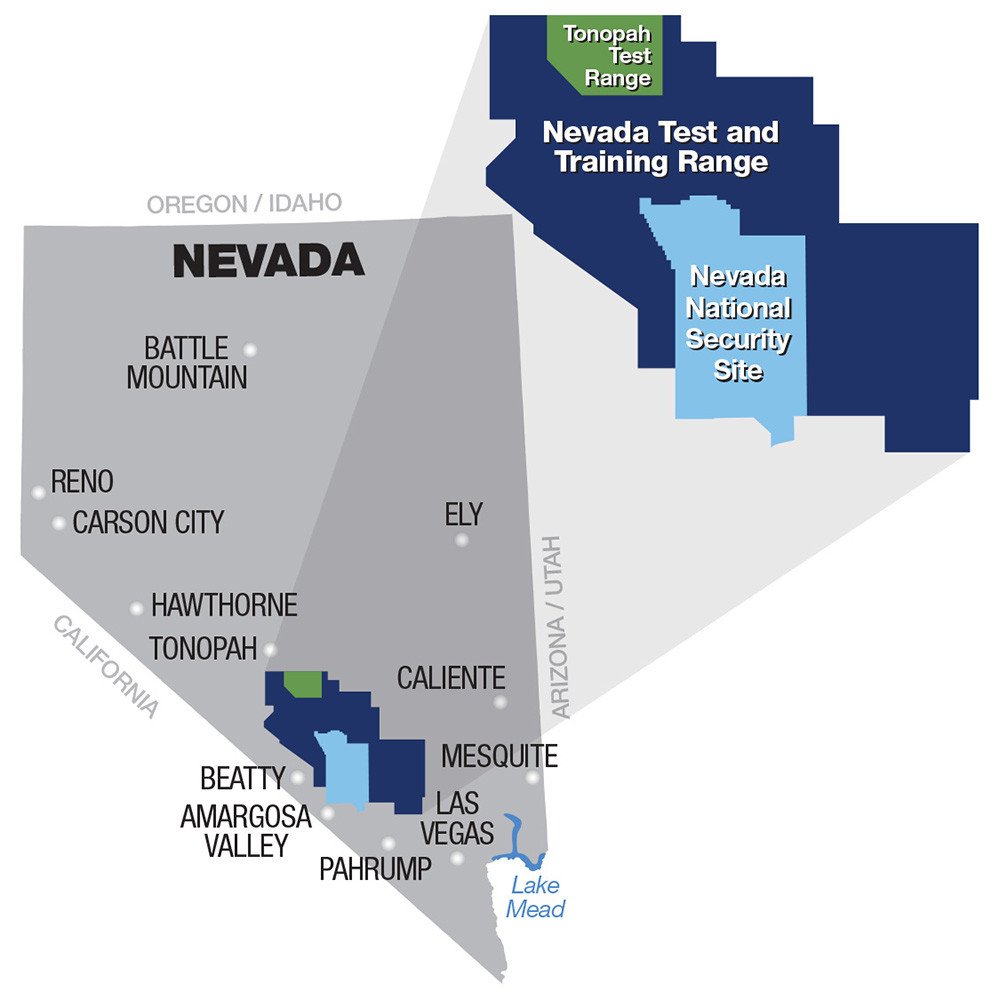
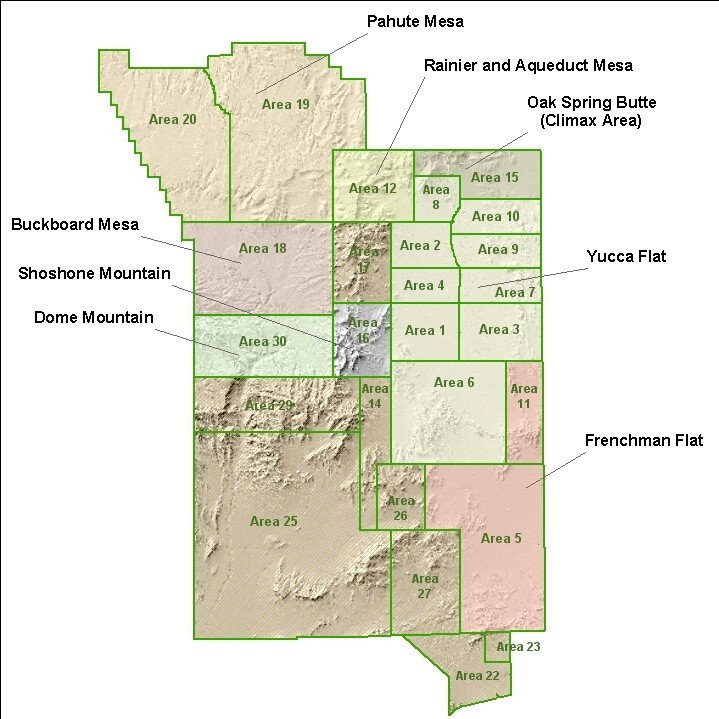
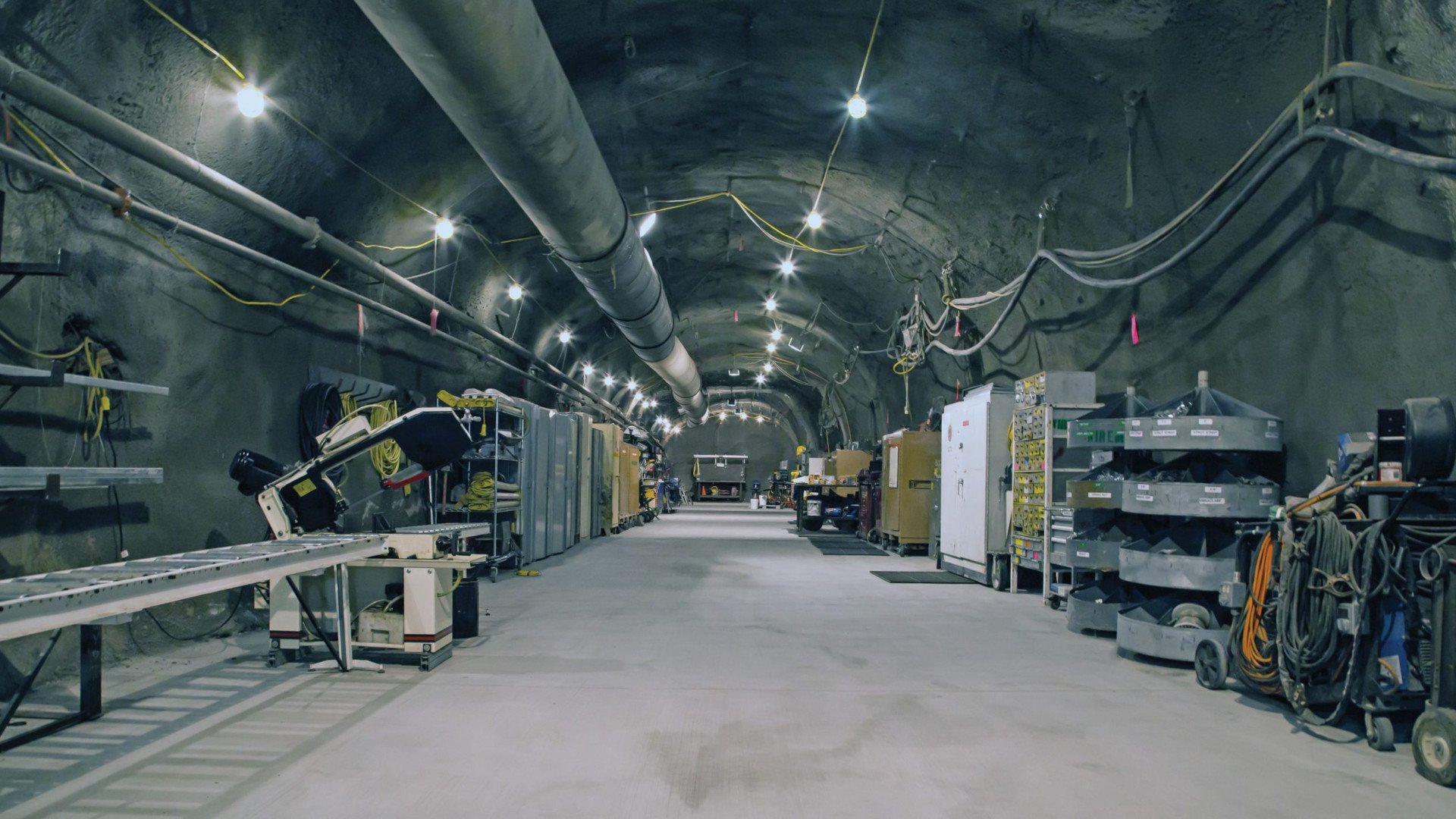
The test, which involved the use of chemical high-explosives and radiotracers, was conducted yesterday inside P Tunnel in Area 12 of the Nevada National Security Site (NNSA), according to a press release from the National Nuclear Security Administration (NNSA). The NNSS, which is situated within the boundaries of the U.S. Air Force’s Nevada Test and Training Range (NTTR), is used for a wide variety of testing purposes today. An agency under the Department of Energy, NNSA’s main jobs are to oversee the development and production of nuclear weapons, as well as manage America’s nuclear deterrent stockpile.
A map giving the general sense of the location of the NNSS with the NTTR. Center for Radiological Nuclear TrainingAnother map showing the specific testing areas within the NNSS. Area 12 is at the northern end of the complex. United States Geological Survey
“This experiment is especially focused on further enhancing the U.S. capabilities to detect a ‘decoupled’ explosion,” per NNSA’s release. “Data collected from the experiment will be used to validate scientific models and refine algorithms that are critical to U.S. nuclear explosion detection efforts.”
“Just as a stealth aircraft looks smaller on radar, decoupling can greatly muffle the signals detected by nuclear detection sensors, making a large explosion appear smaller,” the release explains. “In a conventional, or ‘coupled,’ underground nuclear test, a device is placed deep in a hole in close contact with the rock, allowing much of the explosion’s shockwave to reach sensors. In a decoupled test, by contrast, the device is detonated inside a large underground chamber, substantially reducing the explosion’s seismic signature.”
“In this experiment, researchers gathered measurements using a broad suite of advanced sensors, including accelerometers, seismometers, infrasound sensors, electromagnetic sensors, chemical and radiotracer samplers, and meteorological sensors,” it adds. ”Together, these measurements will improve scientists’ understanding of the signatures produced by underground explosions and strengthen the United States’ ability to detect and characterize nuclear explosive events.”
The U.S. already maintains a U.S. Atomic Energy Detection Systems (USAEDS) network, which is overseen by the U.S. Air Force Technical Applications Center (AFTAC). USAEDS is made up of more than 3,600 sensors positioned around the world. USAEDS is also tied in with the International Monitoring System (IMS), which is managed by the organization responsible for overseeing the Comprehensive Nuclear-Test-Ban Treaty (CTBT). AFTAC also supports the mission to monitor for potential nuclear testing globally using a fleet of specially configured WC-135R Constant Phoenix aircraft. In addition, those planes are used to help keep watch for unusual spikes in atmospheric radiation that could point to nuclear or radiological accidents or other incidents leading to the spread of potentially dangerous radioactive material.
With regard to the USAEDS network specifically, “once a disturbance is detected underground, underwater, in the atmosphere or in space, the event is analyzed for nuclear identification, and the findings are reported to command authorities,” according to AFTAC’s website.
As mentioned, the U.S. government has accused its Chinese counterparts of using decoupling to conceal new nuclear testing, and NNSA’s press release draws explicit attention to these allegations. At the annual Conference on Disarmament in Geneva, Switzerland, in February, Thomas DiNanno, Under Secretary of State for Arms Control and International Security, said that China had conducted at least one such test at Lop Nur on June 22, 2020. The Comprehensive Nuclear-Test-Ban Treaty Organization (CTBTO) subsequently said the IMS had not detected an event matching that description at that location on that date. For its part, the Chinese government has denied the accusation.
The social media posts below include satellite imagery showing activity at Lop Nur that could point to new nuclear testing activities in recent years.
参考 Satellite Imagery Analysis of China’s Alleged 2020 Nuclear Test at Lop Nurhttps://t.co/aafvU5Szh7 CSIS 20260213 ROLES SAT ANALYSIS No.7 中国に核実験実施の動き ー Lop Nur核実験場の画像分析 ーhttps://t.co/n66yYk0hLg ROLES 20250522
While China is a signatory to the CTBT, the country has never ratified it. The Chinese government last acknowledged a critical-level nuclear test in 1996, after which a self-imposed moratorium was put in place, at least publicly. As an aside, the United States has also signed, but never ratified, the CTBT, and has a similar self-imposed moratorium on nuclear testing since 1992. It is worth noting that the treaty does not ban so-called sub-critical testing, which involves fissile material, but does not result in a full-fledged nuclear reaction.
Last week, The Wall Street Journal reported that the Trump administration has been holding new talks with the Chinese government regarding various aspects of the country’s massively and rapidly expanding nuclear arsenal, including the testing allegations. That story immediately preceded a state visit by China’s President Xi Jinping to Washington, D.C., to meet with Trump.
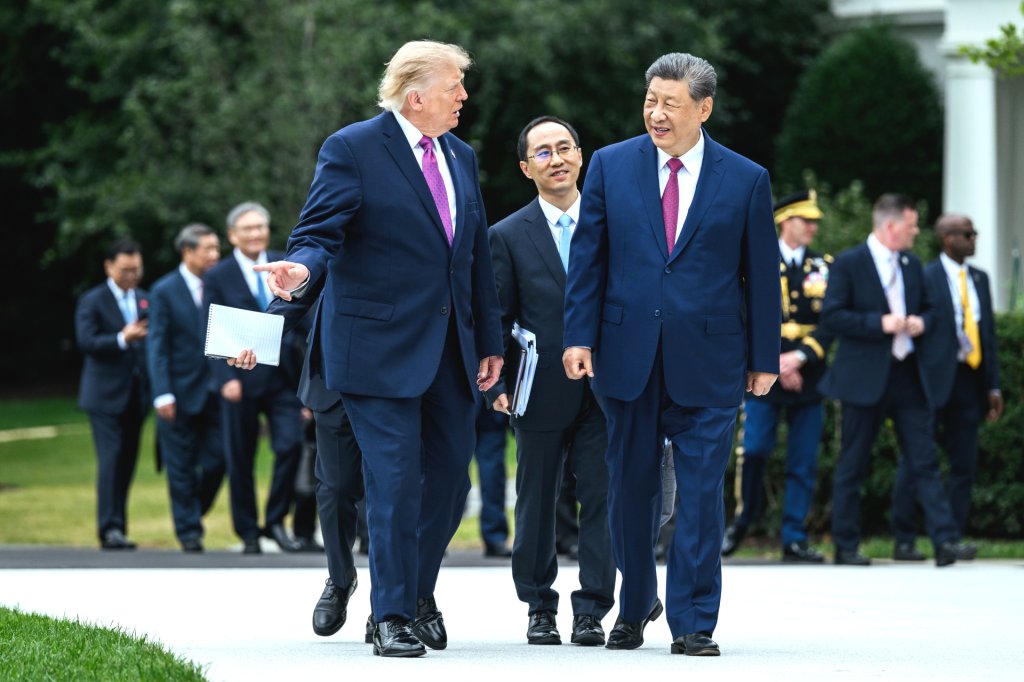
President Donald Trump (at left) and President Xi Jinping (at right) walk together at the White House last week. White House/Joyce N. Boghosian
“The discussions between American and Chinese officials have centered on measures to reduce nuclear risks and haven’t been aimed at negotiating a formal arms-control pact, an effort Beijing has sharply rebuffed in the past,” according to that report. “The Trump administration has begun to highlight the possibility of implementing new verification measures.”
“Independent experts say seismic instruments might be placed on or near test sites,” The Journal‘s story also noted. “Another possibility, which was floated during the Biden administration, is to install radiation-detection equipment at test sites.”
NNSA’s announcement about the test at the Nevada National Security Site is certainly an example of the development underway already of new means of verification that could be deployed at sites around the world.
The Russian government has said it is ready to conduct new nuclear tests if the United States pursues this course of action. The last official nuclear test in Russia came in 1990 right before the fall of the Soviet Union.
“It takes nuclear expertise to detect nuclear activities and experiments like these [to] ensure America remains unmatched in detection,” NNSA Administrator Brandon Williams said in a statement yesterday in light of the test in Nevada. “The Trump Administration has made it clear that the United States will lead from a position of strength. You cannot evade American innovation. With this experiment, we are sending a clear message: under this administration, America will never be outmatched.”
China has warned that it will respond if the European Union introduces new trade restrictions targeting Chinese companies or products, as France and Germany push for stronger European instruments to address what they regard as unfair commercial practices.
China’s Ministry of Commerce issued the warning after reports that several EU governments were discussing a mechanism modelled partly on Section 301 of US trade law, which allows Washington to investigate foreign trade practices and impose countermeasures.
Beijing described such an approach as protectionist and unilateral and warned that it could damage continuing negotiations between China and the EU.
“If the European side insists on introducing discriminatory restrictive measures against Chinese companies or products,” the ministry said, China would “resolutely respond” to defend the interests of its industries.
The warning comes as Europe’s trade relationship with China is moving further up the political agenda.
According to the European Commission’s latest EU-China trade figures, EU exports to China were worth €199.5 billion in 2025 while imports reached €559.5 billion.
The goods deficit stood at €359.9 billion, compared with €312.2 billion in 2024.
China remained the EU’s largest source of goods imports and its fourth-largest export market.
Brussels argues that the scale of the imbalance is connected not only to competitiveness but also to state support, market-access restrictions and other structural differences between the two economies.
China disputes that assessment and has repeatedly accused the EU of using industrial and security arguments to justify protectionism.
The argument is already visible in several industries.
The EU imposed countervailing duties on Chinese battery electric vehicles after an investigation concluded that state subsidies were giving Chinese manufacturers an unfair advantage in the European market.
The automotive dispute is important because Europe is simultaneously trying to attract Chinese manufacturing investment.
France and Spain addressed that question during President Emmanuel Macron’s state visit to Madrid.
Macron and Spanish Prime Minister Pedro Sánchez agreed on the need for greater European unity in responding to Chinese competition. They also discussed whether Chinese investors entering strategically important European industries should be required to provide stronger commitments on issues such as technology transfer.
Macron said that companies on both sides of the Pyrenees needed protection when they faced unfair competition and argued that “the only response that works is European.”
France has generally favoured stronger European trade defences.
Germany has traditionally approached the issue more cautiously because major German manufacturers have substantial commercial exposure to China. Increasing competition from Chinese producers, particularly in industrial sectors where German companies were once dominant, has altered the debate.
Reports that Berlin and Paris are now working together on a stronger trade instrument therefore suggest a potentially important shift.
The two countries are said to be considering a European mechanism inspired by the American Section 301 process, although no final proposal has yet been adopted by the European Commission.
EU trade law already provides several instruments.
Brussels can impose anti-dumping or anti-subsidy duties following investigations, use the Foreign Subsidies Regulation to examine state-backed investment and procurement, and deploy the Anti-Coercion Instrument where another country uses economic pressure against the EU or a member state.
The discussion now concerns whether those instruments are sufficient when governments believe a problem extends across industries rather than affecting an individual product.
At the same time, Brussels and Beijing have established a Trade and Investment Consultations mechanism, with workstreams covering trade balances, export controls, intellectual property and World Trade Organisation reform.
China’s Commerce Ministry has warned that introducing tougher measures while those talks continue would damage trust.
That leaves the EU facing two parallel choices: continue negotiations intended to narrow the trade dispute while also developing stronger instruments in case those negotiations fail.
France and Germany are increasingly arguing that Europe needs greater leverage.
Beijing’s response is that using that leverage against Chinese companies would bring countermeasures.
The next stage will depend on whether the Franco-German proposal develops into a formal EU initiative. If it does, the dispute will move beyond duties on particular products towards a broader argument over how Europe intends to manage its economic relationship with China.
Xi’s recent visit to Washington was merely a tactical step rather than a genuine reconciliation. Beneath the façade of conspicuously displayed friendliness lies a persistent antagonism across various domains—an antagonism that both sides have learned to “manage,” including in ways that serve their respective domestic political objectives. Both fully aware that the perception of China […]
US Treasury Secretary Scott Bessent’s prediction that Iran’s economy would soon collapse underscores the depth of delusion within the current American leadership.
“Iran is absolutely not sanctionable,” Deputy Economy Minister Mortaza Zamanian said this week as Tehran worked to keep trade flowing despite Washington’s latest sanctions campaign.
Zamanian cited Iran’s extensive borders, established commercial routes and longstanding trading relationships, saying that they make it impossible for external pressure simply to switch off the country’s economy.
His remarks came as Washington intensified its economic terrorism against Iranian oil, shipping, aviation, finance, technology and foreign companies supporting those sectors.
US Treasury Secretary Scott Bessent said that Iran would probably make its final oil deliveries to China within two weeks, after which, he asserted, “they will have nothing.”
That prediction deserves comparison with history, because American administrations have imposed increasingly severe sanctions since 1979 while repeatedly expecting economic pressure eventually to produce decisive Iranian economic collapse.
The economy did not disappear under those campaigns; instead, Iran developed domestic industries, expanded regional commerce, strengthened Asian trade and accumulated extensive experience operating outside Western financial systems.
The proposition that an economy which has absorbed American sanctions for almost half a century will suddenly become economically empty within two weeks therefore indicates the depth of delusion among the current US leadership.
Iran enters the current confrontation with a large domestic market, substantial productive capacity, enormous energy resources and deeply established commercial relationships extending across neighboring countries and wider Eurasian markets.
The World Bank describes Iran as relatively diversified for an oil-exporting economy, with substantial manufacturing, agricultural and service activity supported by a large population and significant domestic consumption.
That domestic market sustains production across food, pharmaceuticals, construction materials, steel, petrochemicals, machinery and consumer goods, meaning Iranian production does not depend entirely upon continuous access to Western consumers.
Iran has also developed major industrial capabilities suited to its own resources and infrastructure, including steel, refining, petrochemicals, cement, power generation, construction, food processing and pharmaceutical manufacturing.
These capabilities have continued developing despite restrictions on Western investment and technology, demonstrating that Iranian industrial activity does not depend upon permanent participation by Western companies.
Iran’s prolonged exposure to sanctions has produced accumulated technical and commercial knowledge, giving Iranian companies decades of experience managing restricted supply chains and unreliable access to foreign suppliers.
When foreign manufacturers withdraw, Iranian companies have learned to redesign equipment, substitute components, develop domestic suppliers and cooperate with businesses from countries willing to maintain commercial relationships.
Academic research has documented this process, showing that sanctions can simultaneously restrict foreign technology while encouraging domestic technological development and adaptation within affected Iranian industrial sectors.
The resulting knowledge extends beyond individual companies, because engineers, technicians, procurement specialists and managers have accumulated practical experience managing shortages, substitution and alternative sourcing.
Iranian manufacturers therefore do not design procurement systems around the assumption that every international supplier will remain available indefinitely, making adaptation part of ordinary commercial planning.
Iran’s geography provides another economic advantage, because the country borders Turkey, Iraq, Armenia, Azerbaijan, Turkmenistan, Afghanistan and Pakistan while possessing coastlines reaching the Persian Gulf and the Sea of Oman.
Those borders connect Iranian commerce with the Caucasus, Central Asia, South Asia, the Persian Gulf, Turkey and Iraq, while transportation corridors also connect Iran with Russia and wider Eurasian markets.
Financial sanctions can make transactions more difficult, but they cannot physically relocate Iran or eliminate its access to neighboring markets, suppliers, transportation routes and established regional trading relationships.
Iran has consequently developed commercial links involving Iraq, Turkey, the United Arab Emirates, Afghanistan, Pakistan, the Caucasus, Central Asia and China through years of sustained economic interaction.
The World Bank has documented Iran’s increasing trade orientation toward neighboring countries and China as sanctions restricted conventional international relationships, making this regional pivot an established economic feature.
China adds another dimension because it combines enormous industrial capacity with sustained demand for Iranian energy while supplying machinery, manufactured products and industrial inputs required throughout Iran’s domestic economy.
The US-China Economic and Security Review Commission identifies China as Iran’s largest trading partner and estimates that China imported approximately 1.4 million barrels of Iranian crude daily during 2025.
Chinese independent refiners have continued purchasing Iranian crude through commercial arrangements designed to reduce their exposure to American financial restrictions and sanctions enforcement.
That relationship demonstrates why Iran does not require unrestricted access to every Western market when Chinese demand and extensive regional commerce provide alternative markets for Iranian commodities.
Iran’s energy resources provide enormous economic depth, with the World Bank ranking the country second globally in proven natural-gas reserves and fourth globally in proven crude-oil reserves.
Those resources provide export potential while also supplying abundant domestic energy and petrochemical feedstocks supporting manufacturing, electricity generation, transportation and numerous energy-intensive industrial activities.
Iran has consequently developed a substantial downstream economy converting hydrocarbons into refined products, petrochemicals and industrial inputs rather than depending exclusively upon crude-oil exports.
The World Bank has noted that sanctions encouraged additional processing of hydrocarbons into petrochemicals, illustrating how restrictions contributed to changes within Iran’s export structure.
Iran has also developed financial mechanisms outside conventional Western banking, including bilateral currency arrangements, exchange houses, barter, intermediary companies and indirect settlement channels supporting international commercial activity.
The World Bank has documented growing use of bilateral currency exchange, barter and indirect payment mechanisms as Iranian trade shifted increasingly toward neighboring countries and China.
These arrangements provide alternative methods for exchanging value when conventional dollar-based transactions become unavailable or prohibitively difficult.
Their existence helps explain why Washington increasingly targets third-country banks, intermediaries and commercial facilitators, because Iranian commerce extends through extensive international networks beyond domestic financial institutions.
Against this background, Bessent’s prediction assumes that eliminating a major source of oil revenue would effectively remove the broader economic foundations supporting Iran’s productive system and commercial institutions.
Iran’s economic structure is considerably broader, because oil exports represent one component of national activity alongside manufacturing, agriculture, services, domestic consumption and regional commerce.
The World Bank estimates that Iran’s economy contracted during the Iranian year ending March 2026, while simultaneously describing adaptation through changing trade patterns and alternative payment mechanisms.
Economic contraction, however, is fundamentally different from the disappearance of productive capacity, infrastructure, commercial institutions and domestic relationships sustaining millions of Iranian consumers and businesses.
American sanctions have repeatedly targeted Iranian banking, oil exports, investment, technology, shipping and foreign companies, yet Iran has retained its industrial base and redirected substantial trade toward neighboring countries.
Washington possesses powerful financial tools, but financial restrictions cannot physically eliminate Iran’s factories, oilfields, farms, engineers, consumers, ports, borders or commercial relationships accumulated over decades.
The central question is therefore whether American pressure can erase the productive, geographical, resource and commercial foundations Iran has accumulated across nearly half a century of economic adaptation.
Nothing in Iran’s economic history demonstrates that those foundations can disappear within two weeks, particularly while the country retains domestic production, regional markets, energy resources and established commercial relationships.
Iran therefore enters the present confrontation with domestic capabilities, energy resources, industrial capacity, geographic advantages and international relationships capable of keeping its economy operating despite intensified American terrorism.
Space is becoming an increasingly contested domain as major powers expand military capabilities, satellite infrastructure, and counterspace systems, while the U.S. Golden Dome initiative reshapes strategic stability and raises new questions about the future of space governance. On 14th September 2026, US Secretary of the Air Force Troy Meink confirmed that the US has “on-orbit” […]
Recent warnings from American AI leaders have created the impression that the world is only beginning to confront the dangers of advanced artificial intelligence. Dario Amodei, chief executive of tech company Anthropic, has called for governments to intervene to slow the development of increasingly powerful AI models. His proposal begins with independent evaluators embedded inside […]
They’ve been shown to raise electricity bills, pollute drinking water, do little to boost local employment while threatening millions of jobs in a variety of industries, and top executives have warned that the technology they support could wipe out all of humanity by the end of the decade. But rather than take widespread public opposition to artificial intelligence data centers at face value, House Speaker Mike Johnson (R-La.) announced he had […]
A merchant named Robert Keyne showed up crestfallen before the General Court of Massachusetts in Puritan Boston in 1639. His offense: trying to sell at the highest possible price and buy at the lowest possible price, putting his profits above the interests of the community. The judges showed no mercy: they fined him £200 for a practice they described as “extremely wicked and corrupt” and for having embraced “false principles.” Yet those are the same principles that now seem completely natural to us and structure our entire lives.
Beijing may let its technology giants buy more Nvidia high-end chips, giving the US chip designer a fresh foothold in China and keeping Chinese artificial intelligence (AI) developers tied to its software after months of stalled trade. China’s Ministry of Industry and Information Technology (MIIT) has asked major domestic companies, including ByteDance, Alibaba and Tencent, […]

 Login