Paris police chief Patrice Faure on Tuesday banned a pro-Palestinian demonstration planned for Wednesday, the third anniversary of Oct. 7, 2023 attacks in Israel, over “risks of public disorder,” Anadolu reports.
“At the request of Interior Minister Laurent Nunez, I issued an order banning a demonstration ‘against the genocide in Gaza and for respect for the ceasefire’ in Paris on Wednesday,” Faure said on US social media platform X.
He noted that such a demonstration could pose “significant risks of public disorder,” citing a “high terrorist threat” and antisemitic acts that “remain at historically high levels” across France.
“In light of this, and in view of all the risks identified, it is my responsibility to ensure everyone’s safety. I have therefore decided to ban this demonstration,” Faure added.
Israel’s genocidal war launched three years ago in Gaza has killed more than 74,000 people, injured many more and destroyed most of the enclave’s infrastructure.
Marine Le Pen has set out plans to cut French public spending by €140 billion by 2032, reduce the deficit and impose a constitutional constraint on future borrowing, placing France’s deteriorating public finances at the centre of the campaign for the 2027 presidential election.
Marine Le Pen has presented a five-year fiscal programme under which a National Rally administration would seek €140 billion in net savings by 2032, restore France’s primary budget balance within 18 months and bring the headline deficit back below the European Union’s three per cent threshold by 2030.
The scale of the problem was underlined on the same day by France’s Directorate-General of the Treasury. Its latest report on public debt projects the debt ratio at 119.3 per cent of GDP this year before rising to 121.7 per cent in 2027. Debt stood at 115.7 per cent at the end of 2025.
Le Pen’s programme is therefore aimed not only at French voters but at financial markets increasingly focused on whether Paris can prevent debt from continuing to rise.
According to the proposals outlined on Tuesday, spending reductions would be concentrated heavily in the first three years of a Le Pen presidency. She would also seek to introduce what she calls a constitutional “golden rule”, requiring successive governments to reduce the budget deficit each year.
The measure would be put to a referendum and is intended to make deficit reduction binding beyond an individual government’s annual budget decisions.
Le Pen has also proposed reducing France’s public debt to around 112 per cent of GDP by 2032. That would reverse the trajectory currently expected by the French government, although the National Rally’s assumptions would depend on its ability to deliver the proposed savings and on economic growth during the next presidential term.
Among the most politically significant proposals is a plan to restrict France’s net contribution to the EU budget to €5 billion. The party argues that some European spending should instead be financed through harmonised taxes on products such as tobacco and alcohol.
Le Pen also expects substantial savings from tighter immigration controls and the introduction of the National Rally’s proposed “national preference” rules for access to parts of the welfare system. Her programme estimates that measures connected with immigration could eventually produce savings of as much as €29 billion annually.
Other elements include changes to pension policy, reductions in corporate and energy taxation, measures against VAT fraud, the abolition of more than 120 taxes and a reduction in the number of state agencies.
The programme marks an attempt by Le Pen to make fiscal policy a central part of a campaign that has until now been dominated largely by immigration, security and questions surrounding France’s political fragmentation.
The timing is significant. Prime Minister Sébastien Lecornu’s government has itself introduced a difficult fiscal consolidation programme. The 2027 budget presented by the Finance Ministry envisages €54 billion in measures to improve the public finances, including €43 billion contained directly in the state and social-security budgets.
The government expects the deficit to fall from 5.4 per cent of GDP in 2026 to five per cent next year. It forecasts growth of only 0.5 per cent this year before a recovery to one per cent in 2027.
The debt burden is becoming increasingly costly. Interest payments are expected to reach €91.2 billion in 2027, up from €79.2 billion this year, according to the Finance Ministry. By 2030, total public-sector interest costs are projected to reach 3.7 per cent of GDP.
That gives the presidential campaign an economic dimension that is difficult to separate from France’s relationship with Brussels. Paris remains subject to EU fiscal rules requiring a gradual reduction in its deficit, while any attempt to reduce the French contribution to the EU budget would require negotiations with the other member states.
Her latest intervention shifts part of the campaign onto terrain traditionally associated with the centre-right: public spending, debt and the credibility of France’s finances.
With the government attempting to secure parliamentary support for its own austerity measures and French borrowing costs under closer scrutiny, the question of how the country pays for the state is now moving towards the centre of the contest to succeed Emmanuel Macron.
France greenlit 35 military sales to Israel between May and September 2026, according to a joint investigation by the Palestinian Youth Movement and the French collective Urgence Palestine, with all shipments bound for subsidiaries of lead Israeli arms maker Elbit Systems.
The report states that suppliers based in five French regions manufactured the equipment, which includes cooling units used in tanks and missile launchers, visors fitted to the helmets of helicopter and fighter jet pilots, surveillance systems, and assorted electronics.
French arms firm Thales built and shipped control panels used to fire weapons remotely, a technology that rights groups and Gaza-based journalists have repeatedly reported Israel using to shoot civilians in their tents and on the streets, children among them.
Of the 35 shipments, 33 left from Paris’s Charles de Gaulle Airport, 32 of them aboard Israel’s national carrier El Al.
French Defense Minister Catherine Vautrin told parliament last week that France supplies no offensive weapons to Israel, repeating the government’s position that such sales ended in 2024.
Thomas Nayla, a lawyer with Urgence Palestine, dismissed that distinction, tellingMiddle East Eye that, given items such as tank cooling units and pilot visors, “there is no way these can be considered defensive.”
The new findings follow an April report by the same two groups, which counted more than 525 shipments of French military-use equipment to Israel between October 2023 and March 2026, arming the Israeli military throughout the genocide in Gaza.
The French shipments are part of a broader pattern in which European governments and companies continued to supply Israel with military and dual-use equipment throughout the Gaza genocide, even as several governments publicly criticized Israeli apartheid and war crimes, and announced partial or symbolic restrictions.
Germany, Israel’s largest European arms supplier, approved more than $930 million in export licenses to Israel in the first five months of 2026 alone, according to Germany’s news magazine Der Spiegel, citing Economy Ministry data
Britain, meanwhile, has touted its suspension of some export licenses while keeping F-35 components largely exempt, and has still approved at least $236 million in fixed-value military export licenses to Israel since October 2023, according to Campaign Against Arms Trade, a figure that excludes the open licenses covering much of its F-35 contribution.
Elbit Systems, which supplies roughly 85 percent of Israel’s drones and ground-based equipment, has been central to the Israeli military’s relentless onslaught across West Asia.
The arms company’s Hermes drones provided near-total aerial surveillance and target selection for attacks, and its AI-enabled Tzayad system identified more than 800,000 “targets” across Gaza and Lebanon in two years by the company’s own account.
The firm posted record profits throughout the genocide, boasting that its Tzayad system had flagged “up to or over half” of Gaza’s civilian population and infrastructure as targets while marketing its Gaza-used weapons to buyers as “battle-tested” to command a higher premium.
French President Emmanuel Macron touted France’s nuclear strength on Tuesday following the launch of an upgraded ballistic missile, as Paris seeks to expand its nuclear arsenal and deepen military coordination with European allies amid tensions with Russia.
“Today we are stronger. The message has been sent loud and clear for wherever it must be received,” Macron said in a video posted on X showing him watching the launch, according to Reuters.
His remarks accompanied the firing of an M51.3 missile from the submarine Le Vigilant off Brittany. The missile carried no nuclear warhead.
France’s Defense Ministry described the operation as a certification test following the submarine’s extensive maintenance overhaul. While its announcement did not mention Russia, Macron presented the launch as a broader demonstration of French military power.
Moscow warns against threats to Kaliningrad
The French show of force follows Russian President Vladimir Putin’s warning last week against Western moves threatening Kaliningrad, the Russian exclave situated between NATO members Poland and Lithuania.
Putin cautioned against escalating the confrontation over Ukraine through threats to the territory, which Moscow has said it would defend with nuclear weapons if necessary.
The Russian president also reiterated that Moscow had no plans to attack European countries and sought peaceful coexistence.
NATO has maintained that none of its “exercises or activities pose a threat to the territory of the Russian Federation.”
The dispute places Tuesday’s launch within a wider confrontation over European security, even as French authorities identify its immediate purpose as verifying the submarine’s operational readiness.
Paris seeks broader nuclear role in Europe
Macron announced in March that France would increase its nuclear arsenal and offer European partners closer involvement through joint exercises and expanded consultations.
The initiative also envisages possible temporary deployments of nuclear-capable assets on allied territory, extending the scope of French nuclear cooperation in Europe.
France already maintains approximately 290 nuclear warheads, the world’s fourth-largest arsenal, at an annual cost of roughly €5.6 billion, according to Reuters.
Four ballistic missile submarines underpin its sea-based deterrent, alongside nuclear weapons deployed by aircraft.
Upgraded missile extends French strike capabilities
Tuesday’s launch was the M51.3’s first from a submarine. An earlier land-based qualification test took place in November 2023, before the missile entered operational service in October 2025.
French authorities say the upgraded weapon offers greater range, improved accuracy, and enhanced ability to penetrate missile defenses.
Its exact range remains undisclosed, although publicly available estimates generally put the M51 family’s reach at around 9,000 kilometers or more.
The Defense Ministry said the unarmed launch complied with France’s international obligations and confirmed Le Vigilant’s ability to operate the upgraded weapons system.
Violence has returned to the streets of France today as far-Left protesters lead clashes with police amid warnings that demonstrators have been told to "bring knives" and "stab civilians".
The euro fell to its lowest level against the dollar since May 2025 on Monday as investors reacted to rising French borrowing costs, political uncertainty and doubts over Paris’s ability to stabilise its public finances before next year’s presidential election.
The euro fell to a 17-month low against the US dollar on Monday as renewed pressure on French government debt raised concern over the fiscal position of the eurozone’s second-largest economy.
The single currency dropped as far as $1.116 during trading, its weakest level since May 2025, before recovering part of the fall. By late Monday it was trading at around $1.121, still lower on the day.
The move followed a sharp sell-off in French government bonds and a widening gap between French and German borrowing costs.
According to market data published on Monday, the spread between French government debt and equivalent German Bunds had approached 160 basis points on Friday, its widest level since the eurozone sovereign-debt crisis in 2011.
The gap subsequently narrowed, but the scale of the movement has drawn attention back to France’s public finances.
French debt is already close to 120 per cent of gross domestic product and is expected to continue rising.
Investors are now assessing whether Prime Minister Sébastien Lecornu’s minority government can secure sufficient parliamentary support for measures intended to put the budget on a more sustainable path.
That challenge is becoming more difficult as France approaches its 2027 presidential election.
Spending cuts and tax increases are politically sensitive even under stable parliamentary conditions. Lecornu’s administration does not have an outright majority in the National Assembly, while opposition parties have challenged several elements of the government’s fiscal programme.
The French economy itself is providing little additional room.
Slower growth makes deficit reduction harder because tax revenues tend to grow more slowly while welfare and debt-servicing costs remain high.
Bond markets have also changed the calculation.
For much of the period following the eurozone debt crisis, France was able to borrow at historically low rates. Higher interest rates now mean maturing debt has to be refinanced at greater cost.
France’s debt burden is therefore rising at the same time as the price of servicing it increases.
The euro’s fall on Monday shows that those concerns are no longer confined to the French bond market.
Currency traders are also assessing whether fiscal pressure in France could affect confidence in the wider euro area.
The comparison with the sovereign-debt crisis of 2010–12 should nevertheless be treated cautiously.
France remains one of Europe’s largest and most diversified economies, and the eurozone now has institutional mechanisms and European Central Bank instruments that did not exist at the beginning of the earlier crisis.
There is also no indication that France is unable to finance itself.
What markets are pricing is an increase in the risk attached to holding French debt and growing uncertainty over the country’s medium-term fiscal trajectory.
The euro has now fallen for four successive weeks against the dollar and has lost more than three per cent over that period.
US monetary policy is contributing to the movement. Persistent inflation indicators have supported the dollar even as expectations of an immediate Federal Reserve interest-rate increase have declined.
For Europe, however, Monday’s trading was dominated by France.
French fiscal policy has been a domestic political dispute for much of the past year. The widening bond spread and the euro’s fall show that it is increasingly becoming a eurozone market issue.
France and Germany have proposed giving the European Commission powers to respond within days to serious trade distortions, including the possibility of restricting access to the EU single market. The initiative comes as European concern grows over Chinese subsidies, industrial overcapacity and dependence on critical imports.
French President Emmanuel Macron and German Chancellor Friedrich Merz have called for a new European Union trade instrument capable of acting rapidly against countries whose economic practices cause serious disruption to the European market.
In a joint initiative sent to European Commission President Ursula von der Leyen on Monday, the two governments proposed strengthening the EU’s ability to respond to what they describe as systemic market distortions, including dumping, widespread subsidies and restrictions affecting access to critical supplies.
The Franco-German proposal does not formally identify China as its target. However, many of the practices it describes correspond directly to long-standing European concerns over Chinese industrial policy, including excess manufacturing capacity, state support and restrictions on exports of critical minerals.
The initiative represents a further development in a harder European approach towards Beijing. EU Today reported last week that China had warned it would respond if the EU introduced new restrictions against Chinese companies or products.
Macron and Merz are proposing two additional instruments.
The first would be intended to reduce European companies’ dependence on single suppliers for strategically important products and raw materials. The second would allow the EU to restrict access to its internal market when a third country uses political or economic measures that seriously undermine fair competition.
Under the proposal, the Commission could initiate countermeasures unless a qualified majority of EU governments voted to block them. That would reverse the normal political dynamic in which Brussels must first secure sufficient support before acting.
German officials have argued that the EU needs powers comparable in effect to the United States’ Section 301 trade measures or China’s ability to restrict exports of critical raw materials.
The Commission has welcomed the Franco-German intervention as a contribution to its work on economic security and global trade imbalances. Any new instrument would, however, require legislation and approval by both EU governments and the European Parliament before it could be used.
The proposal comes amid growing concern in both Paris and Berlin over the effect of subsidised Chinese production on European manufacturers.
Germany’s position is particularly significant. Berlin has traditionally been more cautious than Paris about measures that could restrict trade with China, reflecting the importance of the Chinese market to German carmakers, engineering companies and chemical producers.
That position has shifted as German industry faces increased competition from Chinese electric vehicles, machinery and other manufactured goods.
EU Today has previously examined the emerging Franco-German alignment on tougher China trade defences and demands from German manufacturers for broader European action rather than product-by-product investigations.
The new proposals go considerably further by seeking a mechanism capable of dealing with entire sectors and acting much more quickly than conventional anti-dumping proceedings.
Chemicals, PET plastics and hybrid vehicles are among sectors identified in the Franco-German document as areas where additional action may be required.
The timing is also significant. EU leaders are due to discuss trade relations with China at their summit in Brussels on 15–16 October, while Trade Commissioner Maroš Šefčovič is expected to hold talks with Chinese officials beforehand.
The Commission is already attempting to balance two objectives: maintaining Europe’s access to the Chinese market while reducing strategic dependencies that could be used as political leverage.
The Franco-German plan would give Brussels another instrument at the more coercive end of that policy. Its eventual importance will depend on whether governments agree to create it and how readily they would permit the Commission to use it against a major trading partner.
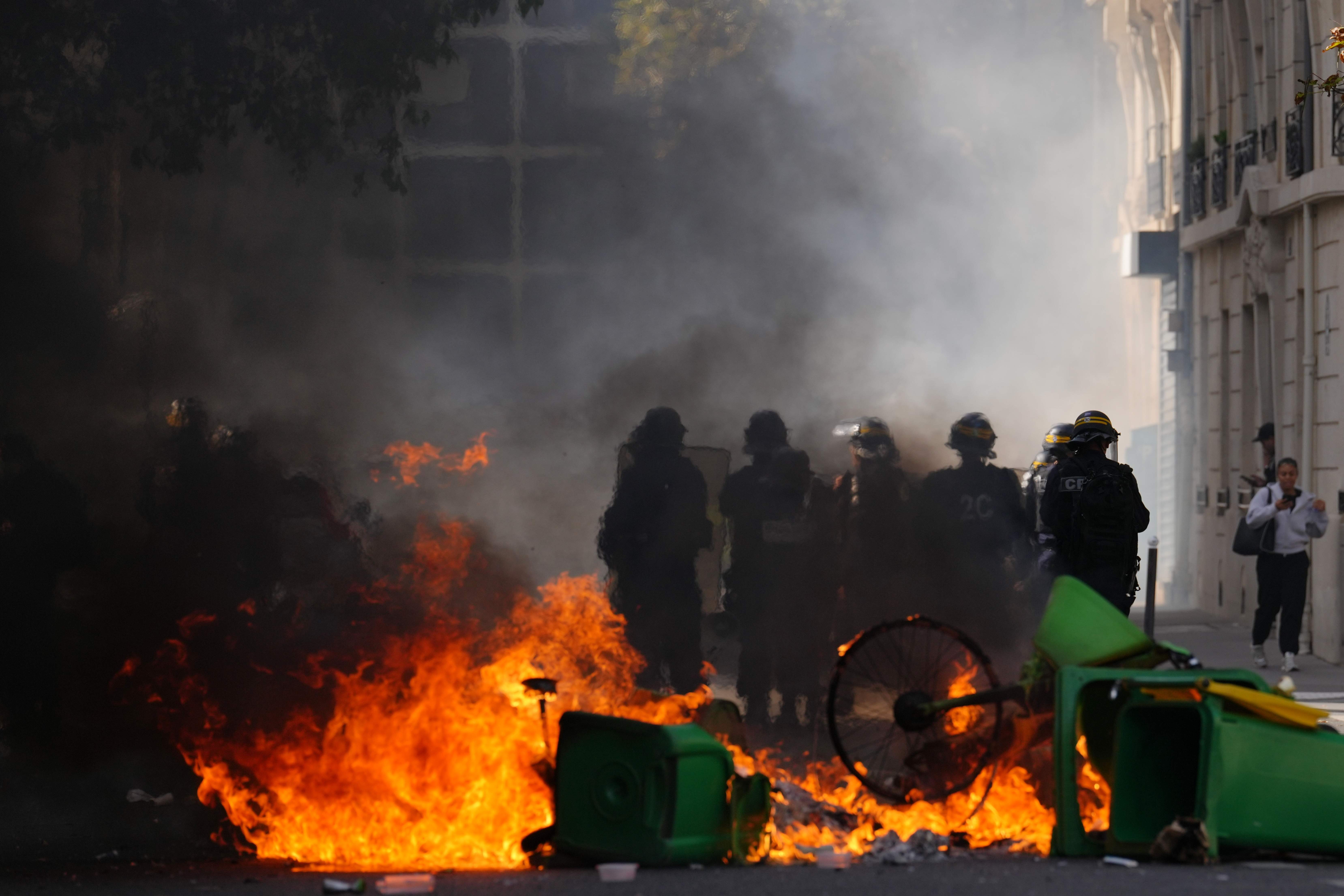
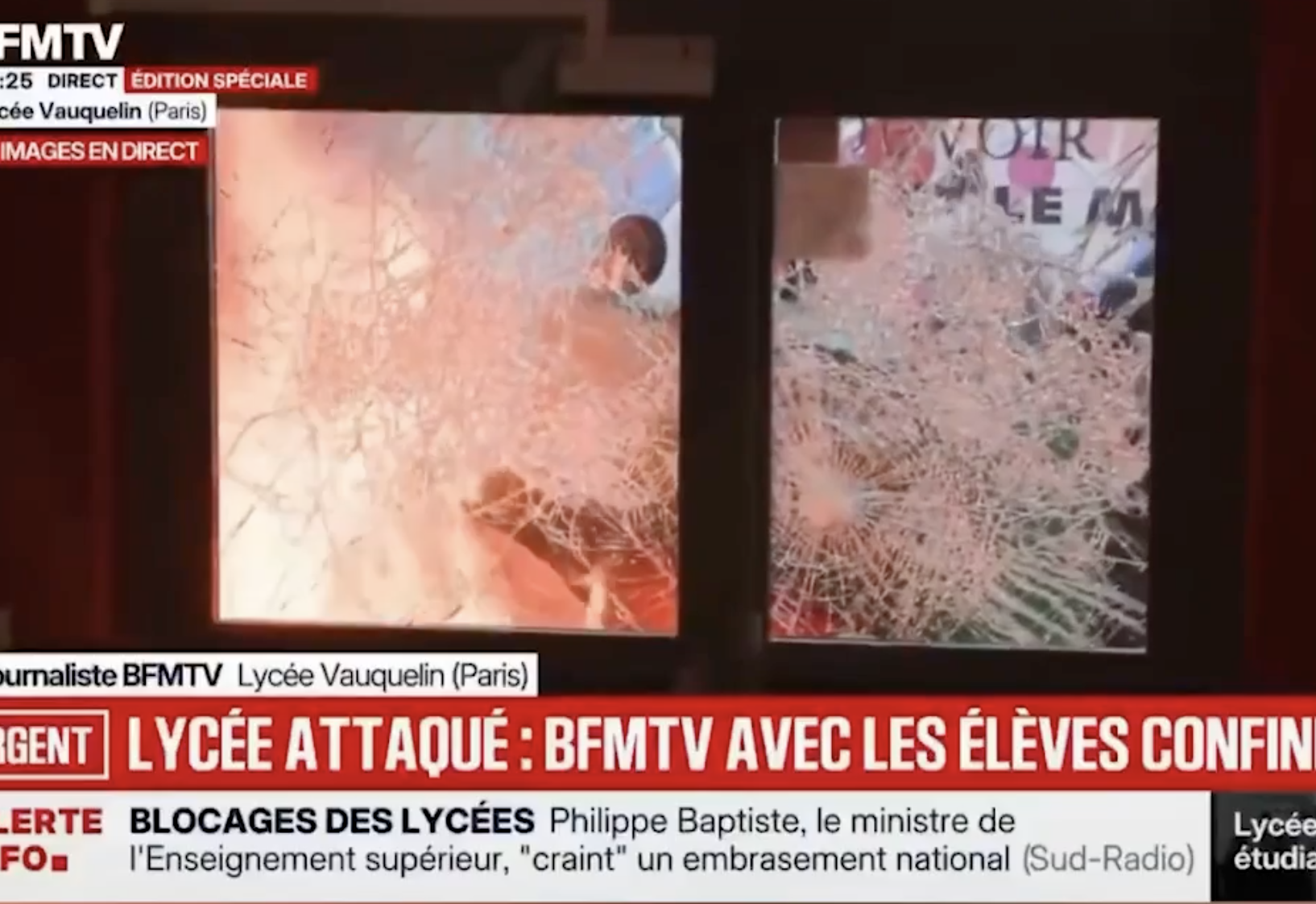
Masked attackers set fires at the doors of a Paris vocational high school Monday, confining about 100 students and staff inside, as nationwide student protests over school conditions entered another week with thousands already arrested and hundreds reported injured.
At the Nicolas-Louis Vauquelin High School in the 13th arrondissement, Principal Carole Zerbib said a group of about 10 people in hoods, masks and black clothing arrived around 7:50 a.m. as students were arriving. She told BFMTV they looked “very determined, very fast,” and that staff “immediately understood that we were not going to be able to talk with them.”
Zerbib said the group threw full trash bins and other flammable material in front of the entrance, brought a sofa and bicycles to barricade the door, smashed glass with a pair of crutches, and set fires outside using a flammable liquid. A staff member was struck in the face by a shard of glass, BFMTV reported. Firefighters and police were met with mortar fire. Courses were canceled for the day.
A video team from BFMTV recorded flames at the entrance and described staff being blocked as they tried to use an extinguisher, with the principal heard telling confined students to move up to the first floor.
BREAKING: Rioters set fire to the entrance of Vauquelin High School in Paris and blocked the exits when staff tried to put the fire out.
A film crew recorded the terrifying attempted murder.
“The school staff was unable to put out the fire. The rioters blocked them just as the extinguisher nozzle came out; they blocked the exit.”
“The fire continues. You see all the silhouettes moving behind it; they continue to feed this fire, making it stronger and stronger. The school staff is not even going to try to put it out anymore; they can’t manage it. We can hear the principal here asking the hundred confined students to step back and move up to the first floor.”
The building was full of staff, students, and journalists, but these rioters appear ready to kill anyone still inside the vocational chemistry school.
In the video sequence, a BFMTV host stated: “The school staff was unable to put out the fire. The rioters blocked them just as the extinguisher nozzle came out; they blocked the exit.” The staff speaking from inside the building confirmed they were “under siege.”
Principal Carole Zerbib said, “It was terrible for the students and the staff, who witnessed an outburst of violence…I think we had rarely seen violence this strong in front of us.”
She said the attackers “were quite organized and had prepared their move,” and that she had been warned by students and teachers of calls on social media to burn the school. “These aren’t my students. These are groups.”
Junior Interior Minister Jean-Didier Berger, speaking on BFMTV after the fires were put out and the school evacuated, called the images “particularly shocking” and said, “These are criminal acts that fall under the law and must be repressed in the harshest way.”
“Which outlet is that?” she asked. When she was told it was CNews, she said, “Oh no, I had said no.” When the journalist replied that it was the press, she said: “I don’t agree. Because I don’t agree with CNews’s editorial line. I think you don’t do any good. You don’t do any good for young people.”
BREAKING: Another major school arson attack at Blaise Pascal High School in the French city of Rouen.
The entire entrance is currently in flames.
School staff can only stand and watch it burn.
Follow: @RMXnews https://t.co/CZ8h1aDO3U
She had earlier told other reporters that as long as police remained outside, “I tell myself it will be all right,” while adding it was “not impossible that they come back, since they want to strike at the symbols of the state.”
The clash came as Education Minister Édouard Geffray said classes would be fully or partly suspended Monday at 400 to 500 of France’s roughly 3,700 high schools because safety conditions were not met. He said 24 schools had been burned or ransacked since the protests spread from the Paris region in mid-September. Organizers have called a further day of action Tuesday, which student unions have labeled “act III.”
Geffray said Sunday that 78 education staff members had been injured since the unrest began, including “some of them by high schoolers.” In addition, 170 students had been hurt. He said far-left activists had “hijacked” the movement. Interior Minister Laurent Nuñez has said more than 5,000 people have been arrested since last Monday, about 85 percent of them minors, and that more than 300 officers and gendarmes have been injured. Police recorded 1,747 arrests on Friday alone, he told TF1.
In Tours, prosecutors said a young protester lost sight in one eye while battling with police.
Students and the Union syndicale lycéenne say they are protesting against reduced teaching staff, overcrowded classes, long schedules, the Parcoursup admissions system and buildings in disrepair. The government has called some of those complaints legitimate while condemning what Nuñez has described as a slide into “riot and urban violence.”
BREAKING: A French physics teacher was doused with gasoline today (Oct. 2) while trying to put out a fire students had lit near a tree in La Ciotat.
The teacher was reportedly temporarily blinded, according to French news reports, when the gasoline was thrown into his eyes.
Youths then began kicking the physics teacher.
The main suspect was reportedly arrested.
Yesterday in Marseille, youths are being investigated for attempted murder after dousing a principal and a vice-principal with gasoline during an attempted arson outside a high school administrative office.
Follow: @RMXnews
Police have 'locked down' an entire town to stop unrest by setting up a dispersal zone covering the whole of Gosport following protests sparked by the arrival of a migrant boat using a 'new route' from Normandy.
Between 400 and 500 French secondary schools are expected to suspend lessons fully or partially on Monday, 5 October, as nationwide student protests continue following several days of violence, arrests and damage to educational buildings.
French Education Minister Édouard Geffray said on Sunday that the number of affected lycées was likely to be broadly similar to Friday, when between 400 and 500 establishments suspended classes.
“There will probably be just as many on Monday, but with a partial, progressive resumption of classes,” Geffray said during interviews with France 2 and France Inter.
France has around 3,700 lycées. The government says classes are being suspended where normal security conditions cannot be guaranteed, including schools damaged during the unrest or where staff have been directly targeted. French reporting on the education ministry’s latest figures said Geffray expected disruption on a similar scale to Friday.
The closures mark the latest stage in a protest movement which began in the Paris region in September before spreading to cities across France.
Students initially mobilised over conditions in the education system, including shortages of teachers and replacement staff, overcrowded classrooms, deteriorating school buildings and demanding timetables. Pressure surrounding the Parcoursup university admissions system has also featured prominently in the demonstrations. Accounts from pupils involved in the blockades have highlighted frustration over conditions in schools and wider concerns about educational inequality.
As EU Today reported on 3 October, the protests have since developed into a broader confrontation involving students, education staff, police and political activists.
Geffray said on Sunday that 24 educational establishments had been “burned or vandalised” since the unrest intensified. He also said 78 employees of the national education system had been injured.
The minister has accused organised far-left activists of infiltrating the student demonstrations and contributing to the escalation of violence.
According to the government, some education staff have been deliberately attacked because of their position within the school system. Geffray said schools would remain closed or operate only partially in cases where staff or pupils could not be adequately protected.
The political argument over responsibility for the unrest has intensified alongside the protests. Government ministers have accused activists connected with the hard-left La France Insoumise of encouraging blockades and helping to broaden the mobilisation. LFI representatives have rejected accusations that they are responsible for the violence and have continued to support the students’ underlying demands. The dispute over the political role in the protests has become part of the wider confrontation between the government and the demonstrators.
Friday brought another large-scale police operation.
Interior Minister Laurent Nuñez said 1,747 people were detained during the day, compared with 1,954 on Thursday, taking the number of arrests since the beginning of last week to more than 5,000. Authorities said around 85 per cent of those detained were minors.
Of 735 schools affected by demonstrations or disruption on Friday, “urban violence” was recorded near 158, according to the Interior Ministry. The latest official arrest figures underline the scale of the police response.
The violence has increasingly complicated attempts by student organisations to maintain the focus on their original education demands.
Representatives of student organisations met Geffray on Friday but said afterwards that they had received no sufficiently concrete commitments from the government. They called for the mobilisation to continue and announced a new nationwide day of action, described as “Act III”, for Tuesday, 6 October.
The government has already made one concession. A proposed measure that would have introduced registration fees of €178 for non-grant students entering BTS vocational programmes and €270 for preparatory classes for France’s grandes écoles was withdrawn as the demonstrations intensified. The withdrawal was announced as hundreds of schools were being affected by blockades.
The protests nevertheless show little sign of ending.
Many students continue to argue that their schools lack adequate staff and investment, while teachers and parents have raised similar concerns over replacement teachers and the condition of buildings.
At the same time, the scale of the damage and the number of injuries have moved security to the centre of the government’s response.
Monday will therefore provide an early indication of whether schools can begin returning to normal before Tuesday’s planned national mobilisation, or whether the disruption that affected hundreds of establishments last week will continue into a third week.
In the East, Macron declares a war of words on Putin, without firing a shot. In the West, his own high school students declare a war of schoolbags, with blockades and calendars. Two fronts, a single overwhelmed general staff, and the warlord was unaware even of the school infantry. Outside, the military commander, in his […]
Student 'blockades' ostensibly called to protest the dilapidated condition of French high schools have degenerated into an orgy of urban violence in which those same schools have been destroyed, says John Rosenthal.
How Europe and the U.S. cynically turned Africa into a “cage without bars.” In 1960, remembered in history as the Year of Africa, 17 countries on the continent gained long-awaited political independence. It seemed that the nearly 500-year era of Western European empires had sunk into oblivion. But if you look closely at socioeconomic indicators, […]
Tadeusz Makowski. — Dzieci z pochodniami. — (Des enfants avec des torches / La retraite aux flambeaux), 1928
En 1986, les cortèges étudiants et lycéens avaient contraint le gouvernement de Jacques Chirac à retirer le projet Devaquet. En 2006, les mobilisations de la jeunesse forçaient l'exécutif à abandonner le contrat première embauche. Quelle mesure répondrait aujourd'hui aux revendications lycéennes ? Recruter les professeurs manquants laisserait entière la question de la sélection. Supprimer Parcoursup ne fournirait pas les moyens d'accueillir les étudiants. Rénover les établissements n'abolirait pas l'angoisse d'un futur obscurci par l'IA et le climat. Le mouvement lycéen pointe au fond l'inconséquence générale des politiques menées depuis des décennies : gérer l'instant ; mépriser l'avenir.
Les gouvernements successifs ont installé l'adaptation individuelle comme réponse aux difficultés collectives. Les candidats perfectionnent leurs dossiers et les demandeurs d'emploi accumulent les expériences, tandis que les ressources familiales déterminent leur capacité à patienter ou à partir ailleurs. L'idéologie du mérite rapporte ensuite le résultat aux efforts de chacun.
En réclamant des moyens, les contestataires font exploser le cadre que voudrait imposer le gouvernement : un meilleur dossier ne crée aucune place à l'université ; la motivation ne remplace aucun professeur. Ils rejoignent ainsi les revendications des personnels, dont les conditions de travail déterminent aussi les conditions d'études. Au moment précis où se prépare un budget qui fera la part belle à la défense aux dépens des services publics, une jeunesse souvent décrite comme décérébrée par les réseaux sociaux construit une mobilisation pleinement politique. Et qui reçoit l'appui d'organisations syndicales et de partis expérimentés.
L'exécutif, qui redoute traditionnellement les mobilisations lycéennes, a choisi d'en déléguer la gestion au ministère de l'intérieur. La brutalisation du maintien de l'ordre accompagne une transformation politique plus profonde. Après la deuxième guerre mondiale, l'autorité de l'État s'était consolidée avec les protections accordées au monde du travail et la reconnaissance de sa capacité à négocier. Les dirigeants politiques cherchent désormais la légitimation des investisseurs et de Bruxelles en montrant leur détermination à briser les mobilisations. L'école de la rue leur administrera-t-elle cette fois une cuisante leçon ?
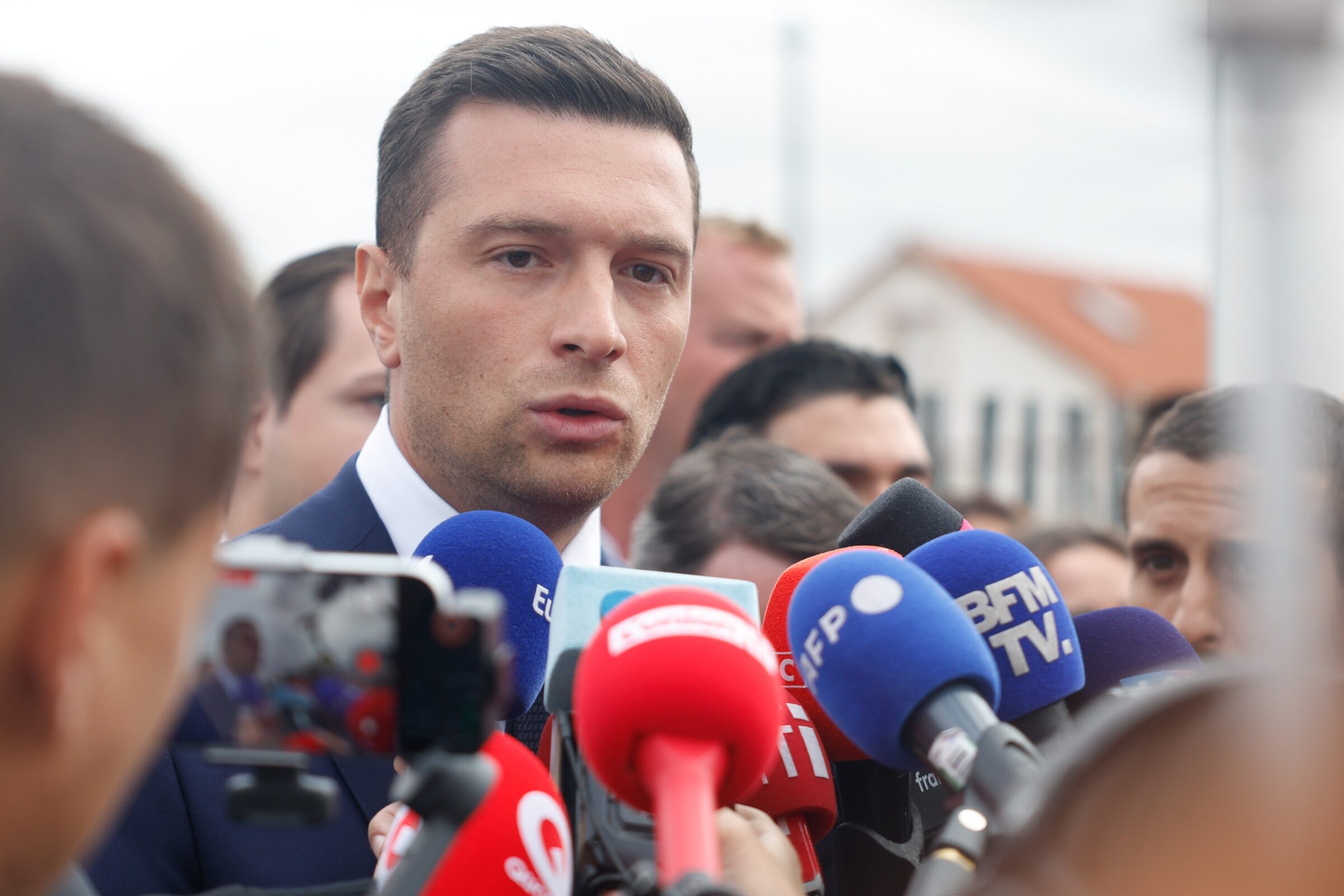
Jordan Bardella, a leader of the French far-right National Rally, has denied writing antisemitic messages in 2013, as the race ahead of next May’s presidential elections continues to heat up.
An investigation by the left-leaning outlet Mediapart said on Thursday (1 October) that it could authenticate antisemitic messages from 2013 and attribute them to Bardella.
In the messages, Bardella, an MEP and chair of the far-right Patriots for Europe group, said “all the banks are owned by Jews” and that Israel aims to create a new world order. Earlier media reports also found his secret Twitter account publishing racist content, such as mocking a young Black man who had suffered police violence.
He denied having written the messages, calling the evidence “crude montages” and “obscure screenshots that can easily be manipulated,” he wrote on social media, adding he would sue Mediapart for defamation.
“Either Mediapart is running this operation itself, or it is being manipulated by interested parties,” he has said.
This article continues, but the full version is available only to EUobserver.com subscribers. Visit account.euobserver.com/membership
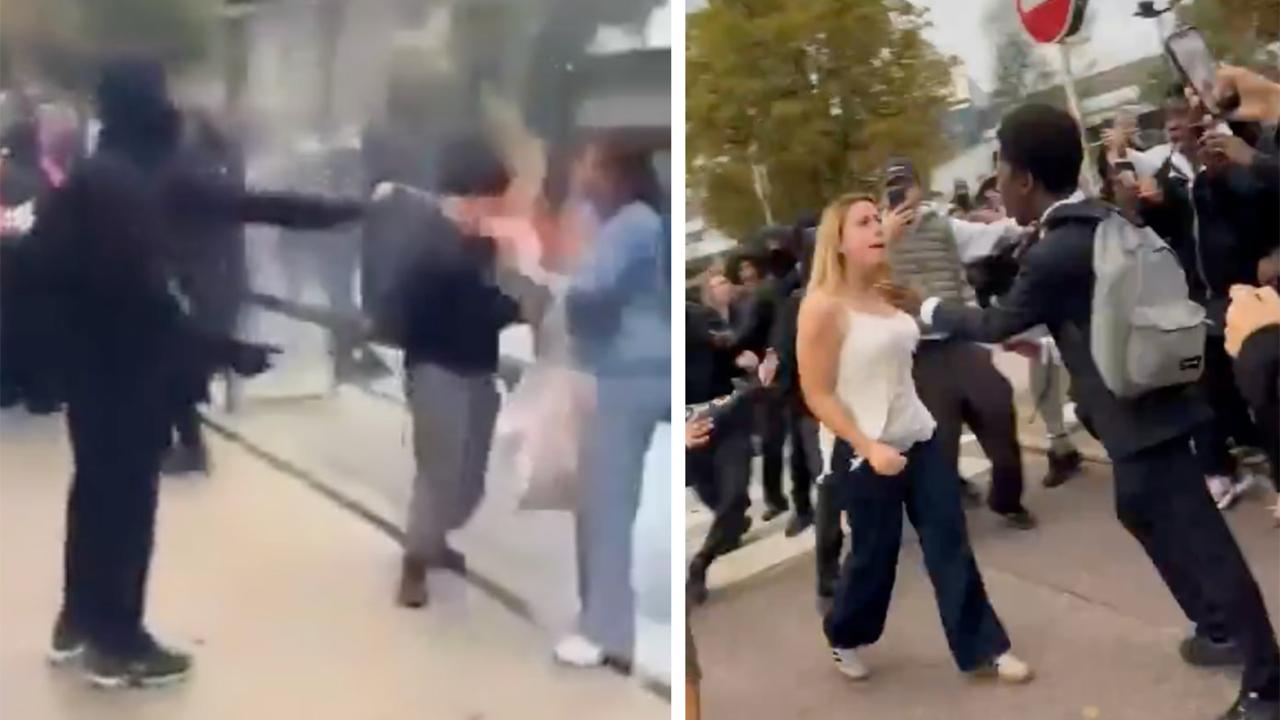
Two shocking incidents reveal how White women are also being targeted in the French school riots. In one incident, a woman who tried to stop vandalism on the edge of a high school protest was struck in the face by flames from an aerosol can used as a makeshift flamethrower. In another video shared online, a White female school supervisor was surrounded and punched during a blockade in Seynod, as student unrest over school conditions spread across France this week.
The Marseille attack with the homemade flamethrower occurred Thursday afternoon near Place of the 4th of September in the city’s 7th arrondissement, according to police sources. Images authenticated by BFMTV network show a White Frenchwoman attempting to stop students from smashing the bus stop with an iron bar.
An individual dressed entirely in black, with a hood over his head, then “used a spray can with a lighter to turn it into a flamethrower, directed at the head of his victim,” BFMTV reported. The flames hit the woman’s face as the crowd screamed in the video.
She filed a complaint Friday in Marseille, but the extent of any injuries remain unknown.
A woman had her face burned in the French city of Marseille during student blockades.
A hooded far-left rioter set the spray from an aerosol can on fire and used it on her face like a flamethrower.
A separate video shows a White female supervisor at Baudelaire High School in Seynod, near Annecy, during a blockade. The woman is completely surrounded when a Black male punches her in the face multiple times.
A White female supervisor at Baudelaire High School is beaten by a mob of multicultural students during a blockade in Seynod.
The woman is completely surrounded when a Black male punches her in the face multiple times.
The incidents come amid days of blockades and clashes at French high schools that serve students roughly ages 15 to 18. While the protests were presumably about poor teaching conditions and poorly maintained schools, they have since expanded into mass rioting, arson attacks, and attempted murder cases, including another incident in Marseille where gasoline was splashed onto a principal and vice principal during an attempted arson outside a high school administrative office.
The Interior Ministry said 1,027 high schools had been affected by demonstrations, with blockades at 222 of them. On Thursday alone, authorities recorded 1,949 arrests and 305 injured police officers, the ministry said.
Education Minister Édouard Geffray said 65 education staff members had been injured, including 40 headteachers, and that there had been “significant damage” to school facilities. Interior Minister Laurent Nuñez said 625 people, mostly young, were detained Wednesday and that 83 officers were hurt that day. Government figures put student and staff injuries over the days of protest at 159, including one student who lost part of the use of a hand after setting off a firework.
JUST IN: A school principal was struck directly in the face by a firework mortar during ongoing violent student blockades in France.
The incident happened at Blaise Pascal High School in Rouen.
Later, the entire entrance of the school was set on fire.
Other attacks on staff have been reported. In La Ciotat, a principal was doused with gasoline and beaten, and in Belfort a police commander was thrown to the ground and beaten unconscious, which Remix News also reported on. That case is also being treated as an attempted murder investigation.
The Education Ministry said 564 schools had been disrupted since Friday morning. More than 400 high schools were closed preventively that day. Prime Minister’s office officials, after a crisis meeting Thursday, described the movement as “a maneuver organized by France Unbowed and its ultra-left proxies.”
Jean-Luc Mélenchon, the leader of the party, urged young people to use “only methods of nonviolent struggle.” However, intelligence reports cited by French government allege the party is backing the violence covertly.
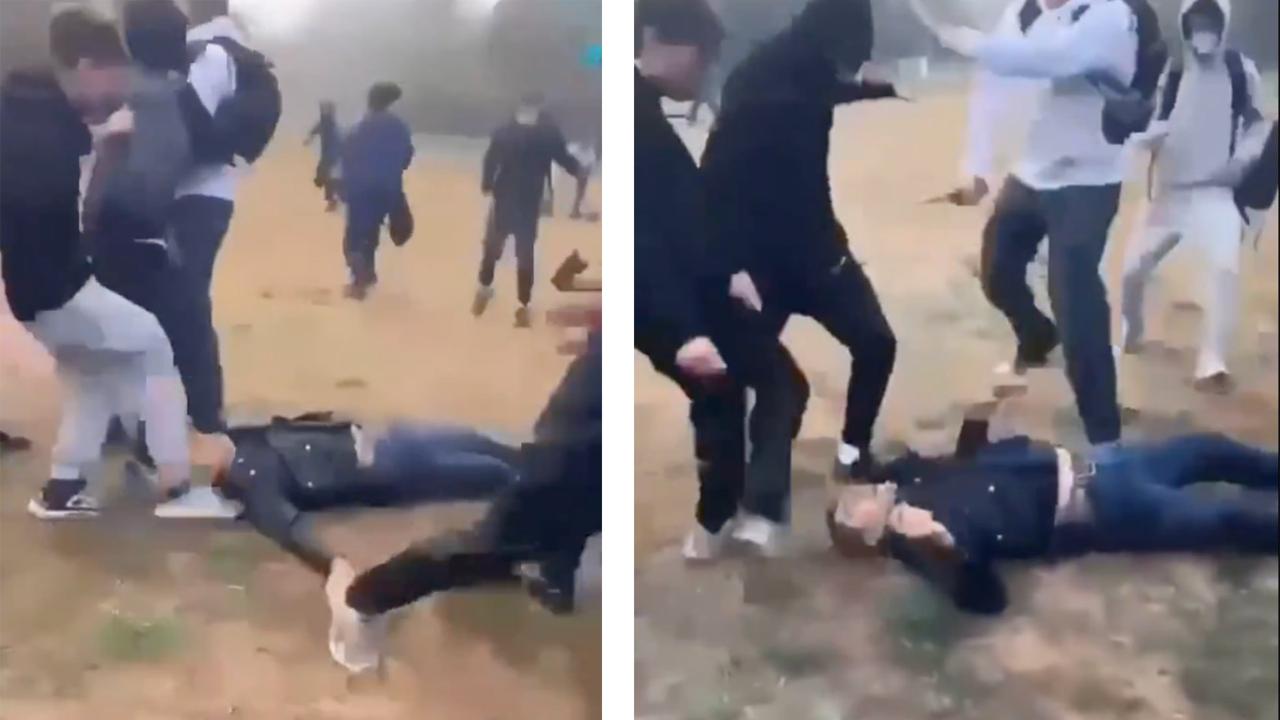
A senior police officer in civilian clothes was beaten unconscious on Friday, Oct. 2, after he was chased down and violently kicked in the head by a multicultural mob during high-school protests in the city of Belfort. Belfort prosecutors have opened an investigation for attempted voluntary homicide of a public official in response to the incident.
JUST IN: French high school students knock out a police officer and begin kicking his head with full force in the city of Belfort.
The attack happened Friday morning as the nationwide high school riots continued. The video shows several people in a smoky field standing over a man on the ground and kicking him. BFMTV identified him as a high-ranking officer who was not in uniform and reported that he lost consciousness due to repeated blows. The youths kicked him multiple times in the head after he was on the ground in the video.
“A high-ranking police officer in civilian clothes was set upon,” BFMTV reported. “He lost consciousness under the blows. An investigation has been opened for attempted voluntary homicide.”
BREAKING: Migrant student youths have set fire to multiple buses and even fire trucks in the French city of Marseille as chaos spreads.
The Marseille transport authority, RTM, said several of its buses "were targeted near high schools in the north and east of Marseille,"… pic.twitter.com/hv8tilIB3B
The officer’s name and condition were not released. BFMTV did not say whether anyone had been arrested in the attack.
The charge is among the most serious available in a case of violence against a public official. If the suspects are found and convicted, they potentially face life in prison. However, due to their likely young age, they would likely face a far less severe penalty — if police even manage to find them.
The crisis in France has reached a breaking point. Today, Oct. 2, the French Interior Ministry announced it has deployed the BRAV-M unit in Paris, a motorized elite police force specialized in heavy repression during mass rioting and other emergency situations.Across the country, authorities are reporting 305 officers were injured just yesterday alone.
The beating of the plainclothes officer also came after several days of clashes around Belfort’s high schools. ICI Belfort-Montbéliard reported that projectiles were thrown Thursday near the Follereau and Courbet high schools and that police answered with tear gas.
Prosecutor Paul-Edouard Lallois said 16 people, mostly minors, were detained.
He stated that “all the mobile phones of the people arrested have been seized with a view to judicial confiscation.” The prefecture said five members of the security forces were lightly injured.
This incident in Belfort also comes after a female officer was chased down by a mob and kicked in the head multiple times yesterday, which was condemned by National Rally leader Marine Le Pen and the Interior Minister Laurent Nuñez.
L’image de cette jeune policière, poursuivie par une meute qui hurle sa haine, projetée à terre et molestée, est insoutenable.
Ces faits méritent des peines exemplaires. Qu’elle sache que ce soir, des millions de Français lui apportent un soutien chaleureux. pic.twitter.com/3yt96dydeH
Nationwide, the Interior Ministry said 1,949 people were arrested Thursday. Education Minister Édouard Geffray said the student movement had been “taken hostage by ultra-violent small groups,” and that 235 people in the education sector had been hurt, including 65 school staff members. In addition, 400 schools were closed Friday.
A White female supervisor at Baudelaire High School is beaten by a mob of multicultural students during a blockade in Seynod.
The woman is completely surrounded when a Black male punches her in the face multiple times.

 Login




 BREAKING: Rioters set fire to the entrance of Vauquelin High School in Paris and blocked the exits when staff tried to put the fire out.
 BREAKING: Another major school arson attack at Blaise Pascal High School in the French city of Rouen.
The entire entrance is currently in flames.
School staff can only stand and watch it burn.
Follow: @RMXnews https://t.co/CZ8h1aDO3U


 A woman had her face burned in the French city of Marseille during student blockades.