❌

Reading view

Fighting big money in politics: California’s Community News Act

California Gov. Gavin Newsom signs the Community NEWS Act on Sept. 30, 2026. Photo via Office of Gov. Gavin Newsom

This article originally appeared on Dean Baker’s Patreon. It is reprinted here with permission.

Virtually everyone who is not a billionaire, or owned by one, agrees that we have to limit the ability of the rich to buy elections. While the Republican Party has taken “policy for sale” politics to a new level, there are plenty of Democrats who have been happy to support obviously awful policy in exchange for contributions from the AI industry, the pharmaceutical industry, the crypto industry, and Wall Street more generally. It costs a lot of money to run a competitive campaign and it’s hard to raise that from small contributions, so there will always be a temptation to bend policy positions to get some serious money.

While most people favor limits on campaign contributions, the current Supreme Court has made this very difficult. They have ruled that campaign contributions are speech and therefore any effort to limit campaign contributions is an unconstitutional restriction on speech.

There are some promising alternative paths that focus on making small donors matter. Seattle has a system of “democracy vouchers” that give every voter in local elections a modest sum that they can contribute to a candidate(s) of their choice. To qualify to get the vouchers, candidates must agree to limits on spending and large contributions.

Super-matches are a comparable system. Under this system, small dollar contributions can be matched up to 8 to 1, which means that even a $50 contribution can make a difference to a campaign. New York City, along with several other cities, have gone this route.

While these paths for amplifying the voice of ordinary people are promising, it will take much more to match the power of the billionaires. It is important to realize they exercise their political power in ways other than campaign contributions, primarily through their ownership of the media.

The importance of billionaire ownership goes far beyond the constant stream of lies and right-wing propaganda from Fox News. Last year, the very Trumpy Ellison family took control of CBS and immediately began to shift its news to the right. They are now taking control of CNN through the merger of Paramount and Warner Brothers. They also got control over TikTok, after Trump wrestled it away from a Chinese company for them.

Trumper Mark Zuckerberg owns Facebook and Instagram and is not shy about banning political material he doesn’t like. And Elon Musk bought Twitter, explicitly to advance his right-wing agenda. The rest of the media landscape doesn’t look much better. The rich and very rich own the countries’ newspapers and broadcast outlets, and most of these people lean right, even if they have not yet joined the Trump Reich.  

And let’s just be clear. The idea that the campaign ads bought by the rich can influence votes, but not the material that people see between the ads, is beyond absurd. Even if we banned all political contributions from rich people and corporations, the rich could still control elections by showing us nothing but their propaganda on television, in newspapers, and on social media.

This is why the Community News Act that Governor Gavin Newsom just signed is so important. The measure provides $20,000 each for up to five journalists per news outlet covering local news. This subsidy can keep newspapers and news sites across the state in business and help to support new ones that might start up. It is similar to other programs that have been started in Illinois, New York, and New Mexico.

This might seem like small change in a world with multi-billion dollar media empires, but it is not realistic to imagine matching the super-rich dollar for dollar; the goal is to sustain reality-based reporting that people can rely upon. (Repealing Section 230 protection for the mega-platforms like Facebook and X would be a big step towards leveling the playing field.) And support for local news reporting is likely to also lead to better national and international reporting, both by training more reporters and also increasing the comfort level with public funding, perhaps opening the door for a national system.

To be clear, there are no political conditions attached to this funding. Conservative news outlets are as eligible for this subsidy as more liberal ones. The point is to support local journalism, not to favor a particular political perspective.

To my view, this system is not ideal. I prefer support coming through an individual refundable tax credit to support local news. This would allow people to have a more direct attachment to the news outlets being supported with public money. Ideally, this would give them a sense of ownership that many feel towards other community organizations.

But whether or not this is the best approach, there is no doubt that the California bill, along with the ones already passed in other states, are big steps forward. It will help to reverse the collapse of local news reporting, which is giving corruption free rein in many areas. We need to build on the positive and make it better, rather than reject a plan because it may not be ideal. Progressive opponents of California’s wealth tax initiative may want to give that point some thought.

  •  

Russia starts pouring more into war after Putin judged Alaska talks with US would bring no “acceptable” deal to end fighting — Bloomberg

greece blocked gas ban france italy softened entry ban—now brussels tries 1600 companies helping russia's war · post russian soldiers military parade 9 2025 moscow russia kremlinru victory_day_parade_2025_at_red_square ukraine news

Russia is spending more on the war than at any point since it began. Russia's military funding is on track to hit a record this year after President Vladimir Putin added almost $60 billion to the outlays set in the budget, Bloomberg reports, citing people close to the government.

Defense spending is expected to approach about $199 billion by the end of 2026, roughly 40% above the plan Moscow announced in late 2025. That reverses the course of a year ago, when the Kremlin meant to slow military growth, narrow its deficit, and rebuild reserves drained by the war.

Alaska was the turning point

Putin ordered the shift late last year, after concluding that talks with the US in Alaska would not produce an acceptable deal to end the fighting, the report says.

By January, the Kremlin judged an agreement with Ukraine to be out of reach, and the government began accelerating advance payments to defense firms and raising other war-related spending.

"The government is finally budgeting for a prolonged war in Ukraine, but still understates its cost," Bloomberg Economics economist Ekaterina Vlasova said.

The deficit nearly doubles

Paying for the war has blown out the budget. The projected 2026 deficit has climbed to more than $81 billion, up from about $44 billion as first planned, and the government covered the extra spending through increased domestic borrowing and gold sales.

The budget plans years of war

The spending is not set to fall soon. Under the budget plans, Russia's military outlays reach about $200 billion in 2027, then ease to $194 billion in 2028 and about $191 billion in 2029, a signal that Moscow is planning for a long war.

Earlier, Euromaidan Press reported that Russia was raising 2027 defense spending by 27% to a record, even as its deficit widens and oil and gas revenues fall.

  •  

If it worked with Ukraine, why not also Iran? Green MEPs urge EU to tax oil super profits

Europe’s Green party has called on the European Commission to exercise the powers it previously used during the Ukraine war to tax the exceptional profits made by big oil and gas companies during the ongoing conflict in Iran. 

“There are models in Europe that we can use to tax these super profits,” German MEP Rasmus Andresen told a European Parliament debate in Strasbourg on Wednesday (7 October), in his call to crack down on Iran-crisis profiteering.

The Strasbourg debate came after Austria, Germany, Italy, Poland, Portugal, and Spain wrote to Ireland’s finance minister in August calling for an EU-wide framework to tax windfall profits.

Ireland holds the rotating EU presidency and can set agendas in the EU Council until the end of the year.

Several of those in the group of six EU states already put in place energy windfall taxes since this summer, ranging from 60 percent levies on excess fuel profits in Poland to 33 percent in Portugal.

Many other EU countries oppose introducing another tax at European level, which would require unanimity among all 27 member states to put in place.

But for his part, the Greens’ Andresen told MEPs in the hemicycle on Wednesday: “I don’t understand how despite the fact that there is this initiative from these six member states, that the commission is not taking action.”

Estimates from NGO Transport and Environment found that excess profits of €7.5bn were seen by eight oil companies alone in the first half of 2026 in Europe.

The figures were twice what they had made in the previous quarter. 

The EU had reacted to soaring energy prices after Russia’s full invasion of Ukraine in 2022 with a special “solidarity” tax on oil and gas firms, said groups on the Parliament’s left.

A commission assessment found that the measure raised €28bn in 2022-2023.

A senior official representing the Irish presidency, Thomas Byrne, said on Wednesday that windfall taxes “could be considered to respond to the concern related to the rising cost of living“.

But energy commissioner Dan Jørgensen poured cold water on appeals for EU-level action, saying “corporate taxation falls mainly in the realm of national competence” in legal terms.

Andresen’s fellow Green MEP, Marie Toussaint, said taxing Iran profits could be used “to pay for the energy transformation” in Europe, in the context of difficult talks on the EU’s next multi-annual European budget.

If they were not taxed, “how can they be exonerated from all responsibility in the rise of prices at the gas station?,” said the French vice-president of the Greens group.

This article continues, but the full version is available only to EUobserver.com subscribers. Visit account.euobserver.com/membership

  •  

L’Europe revient au charbon alors que les prix du gaz explosent

La crise énergétique européenne n’est pas terminée.

La crise énergétique européenne n’est pas terminée. Les prix du gaz restent obstinément élevés sur tout le continent alors que les Européens affrontent un long hiver.

En réponse à une crise énergétique découlant de la dépendance continue de l’Europe aux importations de gaz naturel liquéfié, sur fond de volatilité géopolitique mondiale persistante, les dirigeants européens poussent à diversifier le mix énergétique du bloc. Si cela signifie que l’Europe développe rapidement ses capacités en énergies renouvelables, cela marque aussi un retour significatif au combustible fossile le plus polluant du monde – le charbon.

Plus tôt cette année, lorsque les États-Unis et Israël ont lancé une offensive en Iran, provoquant ainsi la perturbation d’un cinquième des échanges mondiaux de pétrole et de gaz, l’Europe s’est réveillée pour réaliser qu’elle s’était laissée aller, en somnambule, à une nouvelle crise énergétique – sa troisième en seulement quatre ans. « Nous avions juré d’apprendre. Nous avions promis que les choses changeraient, mais nous voilà », a récemment déclaré un « diplomate européen très frustré », cité anonymement par la BBC.

« Au lieu de se concentrer sur des plans à long terme indispensables – sur la manière de rendre l’Europe plus compétitive dans ce monde de plus en plus instable, les premiers ministres et présidents [européens] sont maintenant pris de panique face aux prix [de l’énergie], inquiets des électeurs en colère et à la recherche de solutions à court terme », poursuit la source. « Exactement comme lors de la crise après l’invasion à grande échelle de l’Ukraine par la Russie. Conflit différent. Mêmes divisions européennes ; mêmes dilemmes énergétiques. Nous ne pouvons pas continuer à tourner en rond comme ça. Il va falloir que quelque chose cède. »

Aujourd’hui, six mois après le déclenchement de la guerre en Iran et la fermeture initiale du détroit d’Ormuz, l’Europe continue d’en subir les conséquences, les prix du gaz restant brutalement élevés. Rien que ce mois-ci, les prix du gaz ont atteint leur plus haut niveau en trois ans, dépassant les 80 € (90,98 $) par mégawattheure.

Les prix sont si élevés, en fait, que l’électricité produite au charbon est devenue moins chère que celle produite au gaz en Europe pour la première fois depuis des années. Cela a poussé de nombreux pays européens, et en particulier la plus grande économie de l’Union européenne, l’Allemagne, à revenir au charbon. Et, inquiétant, les experts affirment que cette tendance se poursuivra pendant des années encore.

« Le charbon devrait rester moins cher que le gaz pour la production d’électricité jusqu’à l’année prochaine, et potentiellement jusqu’en mars 2028 », rapportait Reuters plus tôt cette semaine, citant une conversation avec Marta Wroniszewska, analyste chez Veyt. « Les prix du gaz à plus long terme indiquent que les traders s’attendent à ce que les contraintes d’approvisionnement persistent. »

Cependant, le potentiel de croissance du charbon en Europe comporte des limites notables. Des années de politiques visant à réduire puis à éliminer progressivement le charbon ont laissé au continent beaucoup moins de centrales à charbon qu’auparavant. En 1990, l’Union européenne tirait plus d’un tiers de sa production d’électricité du charbon. En 2025, cette part était tombée à seulement 9,2 %, selon les données d’Eurostat. Ainsi, même si les centrales à charbon restantes en Europe bénéficieront d’une aubaine grâce aux prix actuels du gaz, le potentiel de rebond du charbon dans la région a un plafond.

Hors d’Europe, cependant, c’est une autre histoire. À l’échelle mondiale, le charbon reste la plus grande source unique de production d’électricité. Et tandis que l’Europe ferme ses capacités à charbon, de nombreuses économies émergentes continuent de développer les leurs, avec une croissance particulièrement forte aux Philippines, en Indonésie et dans d’autres pays en développement rapide d’Asie. Ce n’est pas un hasard si c’est aussi la région la plus durement touchée par la fermeture du détroit d’Ormuz.

Si le charbon est bon marché, abondant et considéré comme un outil essentiel pour permettre le développement économique des pays pauvres, la prolongation continue du règne du charbon présente des compromis qui l’emportent largement sur les bénéfices. Le charbon est le principal moteur du réchauffement climatique, responsable d’environ 40 % de toutes les émissions de gaz à effet de serre. Cependant, tout n’est pas négatif – le retour du charbon se produit en parallèle d’une augmentation mondiale majeure des ressources en énergie propre. De plus en plus, les énergies renouvelables sont adoptées pour leur rôle dans un avenir plus sûr sur le plan énergétique, et sont considérées comme un rempart essentiel contre la prochaine crise énergétique mondiale.

Contrairement au gaz naturel, au pétrole et au charbon, « l’éolien et le solaire ne peuvent pas être soumis à un embargo, bloqués ou coupés par une puissance étrangère », écrivait David Frykman, associé général du groupe de capital-risque basé à Stockholm Norrsken, dans une tribune publiée par Fortune plus tôt cette année. « Chaque térawattheure de production renouvelable nationale est un térawattheure qu’aucun adversaire ne peut transformer en arme. »

  •  

Russia’s war against Ukraine sends the bill to its own companies: bond defaults head for a 17-year high

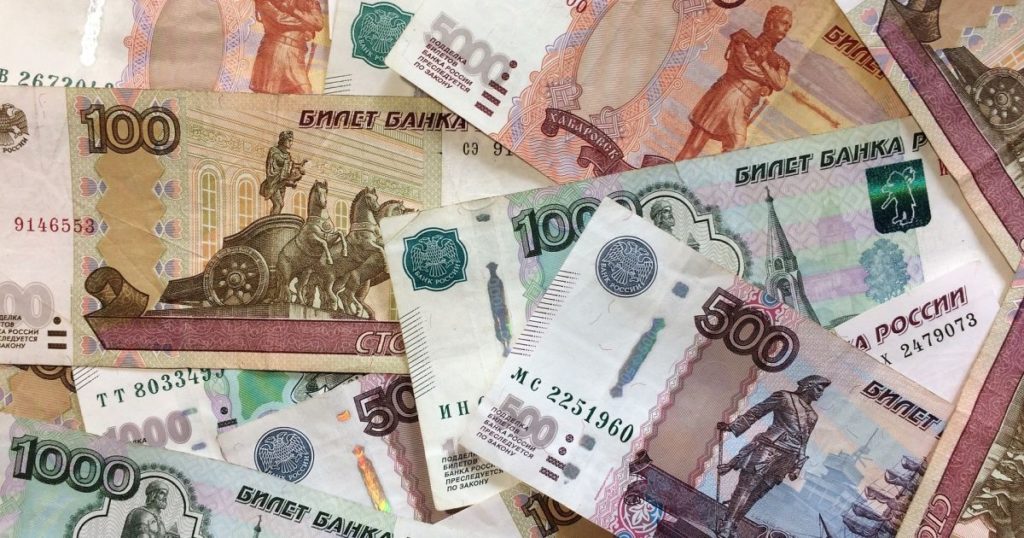
russia facing record number corporate defaults second time decade one main causes being same—waging war against ukraine · post russian rubles tsn money news ukrainian reports

More than 50 Russian companies could default on their bonds this year, the most since 2009, a rating-agency analyst told Russian newspaper Izvestia, which reported it on 6 October.

Russia's wartime economy is straining under high interest rates, and the budget is too: the 2026 deficit has nearly doubled from the earlier forecast to a record $88 billion, with more deficits planned for the next three years as Moscow raises taxes to fund the war and plans its biggest defense budget since the full-scale invasion began.

A default is a situation in which a company cannot make promised interest payments to investors on time or repay borrowed money. If a payment is not made by the agreed deadline, the company becomes delinquent, which under certain conditions is recognized as a default.

So far this year, 20 companies have defaulted for the first time, compared with 24 in all of 2025, said Mikhail Nikonov of the Expert RA rating agency. Most of the companies that missed payments are small issuers of high-yield bonds, Izvestia reported.

In 2026, Russian companies have missed payments totaling 41 billion rubles (about $490 million), compared with 34 billion rubles (about $410 million) the previous year, according to investment bank Sinara.

Russia faces a new wave of corporate defaults

By the end of 2026, the number of Russian companies unable to service their ruble-denominated debt on time could reach 40–50, the highest level since 2010, said Pavel Zholobov, junior managing director at the NRA rating agency.

The number of bond defaults in 2026 has already reached its highest level in a decade, Zholobov said. Similar figures were recorded in the mid-2010s: in 2014, 35 companies missed payments; in 2015, 52 did so; and in 2016, there were 44 issuers. This occurred in part after Western sanctions were imposed on Russia over its annexation of Crimea and its war in Donbas, as well as amid a halving of oil prices and a sharp weakening of the ruble.

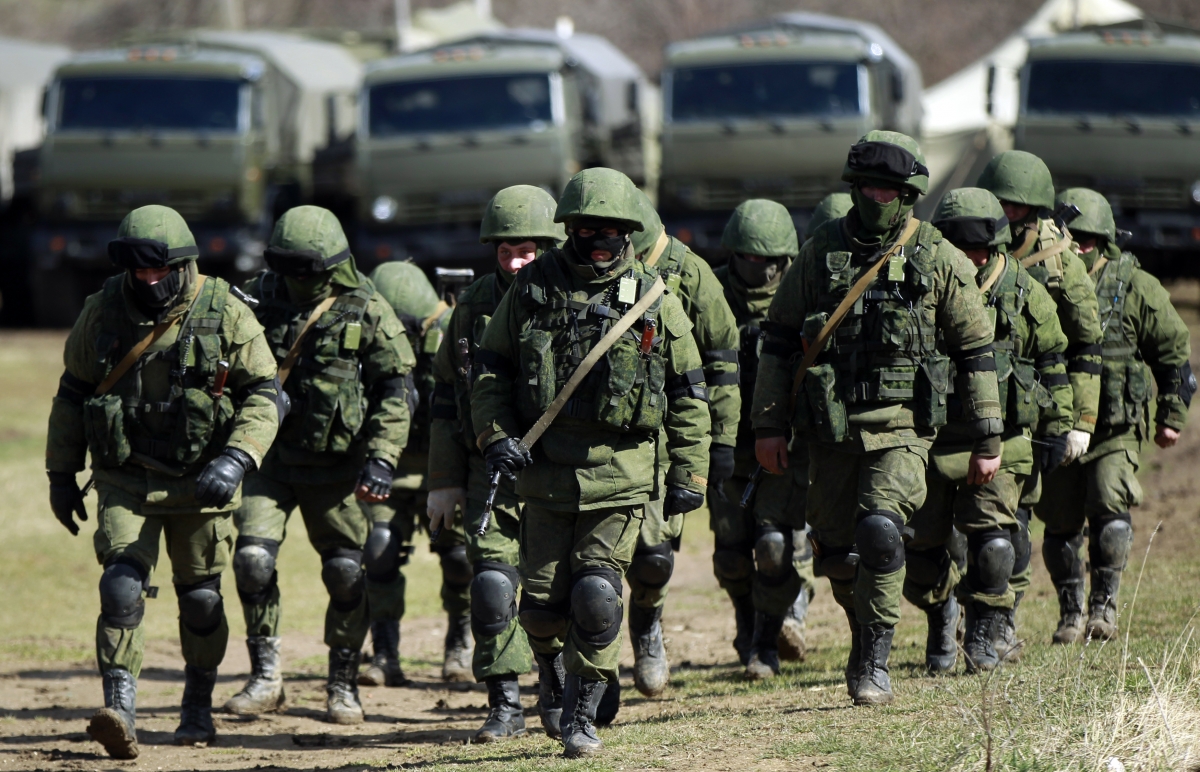
So-called "little green men" (the Russian occupation troops comprised special forces who removed insignia, wear face masks to prevent identification and call themselves a "Crimean self-defense force") surround a Ukrainian military base in Perevalne, Crimea, during the Russian annexation of the peninsula in February-March 2014.

There were more defaults only in 2009. At the time, amid the fallout from the global financial crisis, more than 100 issuers faced payment problems, while the volume of distressed debt reached nearly 200 billion rubles, Zholobov noted.

High interest rates put pressure on companies

This time, the main reason for companies' difficulties in making bond payments has been the prolonged period of high interest rates, which has continued since 2023. Companies are raising financing at high interest rates but are unable to refinance their debt on more favorable terms, explained Ekaterina Sidorova, head of the Foreign Exchange, Commodities and Debt Markets Department at SberCIB Investment Research.

At the same time, the situation does not yet resemble a systemic debt crisis: defaults are primarily being recorded among companies with low credit ratings and high debt burdens, Sidorova said.

If a company fails to repay bond debt, it is given 10 business days to meet its obligations. If it fails to do so, the company may offer investors a restructuring—for example, by postponing payments in exchange for a higher interest rate.

The number of defaults will remain high in 2027, Sidorova believes.

High interest rates were a response to accelerating inflation in Russia. Domestic demand was outpacing production, Russia's Central Bank said in October 2023. Sanctions over the war and rising defense spending had also hit the economy and the ruble, which had lost about 25% against the dollar that year. The bank raised its key rate from 7.5% in the first half of 2023 to 15% by the fall.

Ukraine targets Russia's oil industry to weaken its war economy

Ukraine is also seeking to weaken Russia's economy as part of efforts to reduce its ability to finance the war. In particular, Defense Minister Yevhenii Khmara said strikes on oil refineries are aimed at "bleeding the Russian war machine" and destroying its military and economic potential. According to the ministry, the attacks have knocked out more than 51% of Russia's oil refining capacity.

In the first half of July, Russian oil refineries processed about 3.9 million barrels of oil per day—the lowest level since March 2005. Due to the production cuts, Moscow was also forced to restrict fuel exports.

  •  

Political Fake BIOTERRORISM vs Moscow! Russia’s Sanitary Watchdog: “NO EPIDEMIC RISK in Irkutsk”. BMJ and US Epidemiologist Hulscher confirms (VIDEO)

Commenting earlier on reports of plague or another infection in the Irkutsk Region, Russian Presidential Spokesman Dmitry Peskov said people should rely on assessments by Rospotrebnadzor, rather than rumors and idle speculation.

For days, many American bloggers and politicians have been sounding an alarm that currently appears unjustified and blown out of proportion.

British Medical Journal: “Russia plague outbreak: Epidemic risk is low, says WHO”

Excerpt by BMJ (former British Medical Journal)

«The risk of a plague epidemic is low after the death of a laboratory technician who worked at a plague research institute in Russia, the World Health Organization (WHO) has said» BMJ reported today confirming Moscow statements.

However, the United Nations body said that it was closely monitoring the situation and urged Russian authorities to be “transparent” about the death.

Darya Shipilova, 28, worked at the Irkutsk Antiplague Research Institute in the Siberia region of Russia. She died on 2 October, two days after being admitted to hospital and placed on a ventilator.1

Russian authorities have downplayed the incident and said that Shipilova died of “pneumonia of an unknown aetiology.” However, media reports suggested that she died of pneumonic plague and that she may have become infected after an accident in the laboratory.

VIDEO – US Epidemiologist Hulscher: ““NONE PANDEMICS from lab-acquired PNEUMONIC PLAGUE infection”

Nicolas Hulscher, American epidemiologist posted on Social:

«Before everyone panics about the lab-acquired pneumonic plague infection in Russia: This isn’t the 1300s. We now have effective treatments (antibiotics). At least five documented pneumonic plague outbreaks/clusters have occurred since 2011».

«NONE became a pandemic. Multiple lab-acquired plague infections have also occurred in modern history. NONE became a pandemic».

Russia’s sanitary watchdog says no epidemic risks in Irkutsk Region

Originally published by TASS News Agency

All the links to previous Gospa News investigations have been added in the aftermath by virtue of the ties with covered topics

A review of compliance with biosafety requirements in the Irkutsk Region has been completed, with no emergencies involving work with pathogens identified, the press service of Russia’s sanitary watchdog – Rospotrebnadzor – said.

The watchdog also noted that the World Health Organization (WHO) had published an assessment indicating no risk associated with a case of community-acquired pneumonia in Irkutsk.

TASS has compiled the key facts about the situation in the region.

Rospotrebnadzor statements

– The review of compliance with biosafety requirements in the Irkutsk Region has been completed, with no emergencies involving work with pathogenic microorganisms identified.

– Comprehensive preventive measures have been implemented in the region, and there are no epidemic risks to the public.

– Monitoring has ended for 90% of those who had contact with the patient, with no health problems caused by infectious diseases identified.

UKRAINE BIOLABS – 11. “NATO Lethal BIOWEAPONS Ongoing Program”. Evidence from 3 New Russian & US INTEL VIDEOS by FSB Chief, Ritter (ex US Navy), Gabbard (ODNI)

– Rospotrebnadzor has also provided the WHO with information about the situation in the region.

– The WHO, in turn, published an assessment indicating no risk associated with the case of community-acquired pneumonia in Irkutsk, according to Rospotrebnadzor.

Response

– Russian Presidential Spokesman Dmitry Peskov said the WHO had been duly informed about the case of pneumonia of unknown etiology in the Irkutsk Region.

– He urged the public to rely on Rospotrebnadzor’s statements, noting that the watchdog regularly releases detailed information about the epidemiological situation.

– According to Peskov, the media have published a large amount of information about the epidemiological situation in the Irkutsk Region, most of which is false.

PENTAGON BIOTERRORISM – How EBOLA became a Lethal NIGHTMARE in Congo (almost 4,000 deaths) after Dangerous, Secret FAUCI & GATES Experiments

– Commenting earlier on reports of plague or another infection in the region, Peskov urged the public to rely on assessments by highly qualified Rospotrebnadzor specialists rather than rumors and idle speculation.

Situation in region

– An employee of an anti-plague institute in the Irkutsk Region was diagnosed with pneumonia of unknown etiology, Rospotrebnadzor previously reported.

– The watchdog emphasized that a special set of measures had been implemented in response.

– Expanded testing of samples taken from the patient found no microorganisms associated with her professional activities.

– Subsequent testing identified two cases each of COVID-19 and rhinovirus infection among those who had contact with the woman.

NEW PANDEMIC FROM RESPIRATORY VIRUS IS COMING! Here’s Covid-CICADA (Video) after WHO ran a shady Simulation Exercise in the Pacific

– About 16,000 cases of acute respiratory viral infections are recorded in the Irkutsk Region every week, with no increase reported over the past two weeks.

– The sanitary and epidemiological situation in the Irkutsk Region remains calm.

Originally published by TASS News Agency


  •  

Europe returns to coal as gas prices explode

Europe’s energy crisis isn’t over.

Join us on Telegram, X, and VK.

Contact us: info@strategic-culture.su

Europe’s energy crisis isn’t over. Gas prices remain stubbornly high across the continent as Europeans confront a long winter.

In response to an energy crisis stemming from Europe’s continued reliance on imported liquefied natural gas against the backdrop of ongoing global geopolitical volatility, Europe’s leaders are pushing to diversify the bloc’s energy mix. While this means that Europe is rapidly expanding its renewable energy capacity, it also marks a significant return to the world’s dirtiest fossil fuel – coal.

Earlier this year, when the United States and Israel began an offensive in Iran and thereby instigated the disruption of one-fifth of the world’s oil and gas trades, Europe awakened to realize that it had sleepwalked into yet another energy crisis – its third in just four years. “We swore we’d learn. We promised things would change, but here we are,” a ‘highly frustrated European diplomat’ was recently (anonymously) quoted by the BBC.

“Instead of concentrating on much-needed long-term plans – about how to make Europe more competitive in this increasingly volatile world, [European] prime ministers and presidents are now in a panic over [energy] prices, worried about angry voters and scrambling for short-term solutions,” the source continued. “Just like the crisis after Russia’s full-scale invasion of Ukraine. Different conflict. Same European divisions; same dilemmas over energy. We can’t keep going round in these circles. Something’s got to give.”

Now, half a year after the outbreak of the war in Iran and the initial closure of the Strait of Hormuz, Europe is still grappling with the fallout as gas prices remain brutally high. Just this month, gas prices hit their highest mark in three years, soaring above €80 ($90.98) per megawatt hour.

Prices are so high, in fact, that coal-fired power has become cheaper than gas-fired power in Europe for the first time in years. This has pushed many European nations, and especially the European Union’s largest economy, Germany, back to coal. And, worryingly, experts contend that that trend will continue for years to come.

“Coal is expected to remain cheaper than gas for power generation through next year and potentially until March 2028,” Reuters reported earlier this week, based on a conversation with Marta Wroniszewska, an analyst at Veyt. “Longer-dated gas prices indicate traders expect supply constraints to persist.”

However, there are notable limits to coal’s growth potential in Europe. Years of policy aimed at phasing down and phasing out coal have left the continent with dramatically fewer coal-fired power plants than it had previously. In 1990, the European Union derived more than a third of its electricity production from coal. By 2025, that share had fallen to just 9.2 percent, according to data from Eurostat. So while Europe’s remaining coal plants will receive a windfall from the current gas prices, there is a ceiling to coal’s potential rebound in the region.

Outside of Europe, however, it’s a different story. Globally, coal is still the single-biggest source of power production. And while Europe is shutting down its coal-fired capacity, many emerging economies are continuing to build theirs up, with particularly strong growth from the Philippines, Indonesia, and other rapidly developing countries across Asia. Not coincidentally, this was also the region hit hardest by the closure of the Strait of Hormuz.

While coal is cheap, abundant, and seen as a critical tool for enabling economic development in poor countries, the continuously extending timeline of coal’s reign presents trade-offs that far outweigh the benefits. Coal is the single largest driver of global warming, responsible for about 40 percent of all greenhouse gas emissions. However, it’s not all bad news – coal’s comeback is happening in tandem with a major global increase in clean energy resources. Increasingly, renewable energies are being adopted for their role in a more energy-secure future, and are seen as a critical buffer against the next global energy crisis.

Unlike natural gas, oil, and coal, “Wind and solar cannot be embargoed, blockaded, or shut off by a foreign power,” David Frykman, General Partner at Stockholm-based venture capital group Norrsken, wrote in an op-ed for Fortune earlier this year. “Every terawatt-hour of domestic renewable generation is a terawatt-hour that no adversary can weaponize.”

  •  

Central Europe’s Growth Model Is Losing Momentum, IMF Warns

Growth potential across Central and Eastern Europe has fallen sharply from the levels seen around EU accession, with ageing populations, weak productivity, Chinese competition and slower German industry increasingly testing the region’s economic convergence.

The economic model that transformed Central and Eastern Europe after EU accession is losing momentum, according to the International Monetary Fund, which is warning governments that structural reforms are needed if the region is to continue narrowing the income gap with Western Europe.

Carlos Mulas-Granados, the IMF’s regional representative, said on Tuesday that medium-term growth potential across Central and Eastern Europe had declined to around 2.5 per cent, compared with roughly 5 per cent before countries in the region joined the European Union.

The slowdown does not mean that every economy is stagnating. Poland continues to grow faster than much of Western Europe, while the Czech economy has recovered from recent shocks. The concern is instead about the underlying rate at which these economies can expand once temporary fiscal stimulus, EU funding and post-crisis recoveries are stripped out.

Several of the forces behind the region’s earlier success are becoming weaker.

EU accession opened access to the single market, attracted foreign investment and integrated Poland, Czechia, Slovakia and Hungary deeply into European industrial supply chains. German manufacturers in particular moved production eastwards, taking advantage of lower labour costs, skilled workforces and geographic proximity.

That process generated rapid gains in productivity and incomes. It cannot simply be repeated.

Demographics are one of the most immediate constraints. Working-age populations are shrinking across much of the region while ageing increases spending requirements for pensions, health care and social support.

The IMF’s country assessments illustrate the problem. Its assessment of Poland says demographic pressures are mounting even as labour productivity remains comparatively strong, and calls for higher labour participation, better skills and deeper capital markets.

In Slovakia, the Fund expects growth of only 0.9 per cent this year and says adverse demographics and weaker productivity are weighing on the medium-term outlook. The economy remains particularly exposed to manufacturing and the automotive industry.

The Czech Republic faces a similar structural constraint. The IMF estimates its medium-term potential growth at around 1.8 per cent, with population ageing and modest productivity gains limiting further convergence.

External conditions have also changed.

Germany, the region’s principal industrial partner, has experienced prolonged weakness in manufacturing. Central European producers therefore face softer demand from the market around which many of their supply chains were originally built.

At the same time, China has moved from being primarily a source of imports and components to a direct competitor in sectors where Central Europe has substantial industrial exposure, including cars, batteries, machinery and electrical equipment.

That combination is particularly difficult for economies built around export-oriented manufacturing.

The problem overlaps with the wider European competitiveness debate. EU Today reported in July that only 15.7 per cent of the reforms recommended in Mario Draghi’s competitiveness report had been fully implemented at that stage, with important work still outstanding on capital markets, energy and investment.

For Central Europe, progress on those issues has a direct bearing on growth. Smaller national capital markets make it harder for companies to finance expansion. Fragmented energy systems add to industrial costs, while limited access to venture capital can restrict the development of businesses outside established manufacturing sectors.

There are significant differences between countries. Poland’s larger domestic market gives it more insulation from industrial weakness elsewhere and the IMF expects relatively strong growth. Hungary has faced a different combination of weak investment and fiscal constraints, while Slovakia’s dependence on car production leaves it particularly exposed to changes in the European automotive sector.

EU funding remains an important source of investment across the region, particularly for infrastructure and modernisation. But EU transfers cannot by themselves replace improvements in productivity.

The IMF’s argument is therefore less about an immediate recession than about the end of an unusually favourable period of convergence.

Central Europe entered the EU with lower wages, substantial scope to import Western technology and a powerful incentive for Western European manufacturers to move production eastwards. As those gaps narrow, future growth depends more heavily on innovation, skills, investment and domestic productivity.

The region is still converging with Western Europe. The question raised by the latest IMF warning is how quickly that process can continue once the economic advantages that powered its first two decades of EU membership become less powerful.

  •  

Europe and China Trade Negotiations: Can Brussels Face Reality? Part 1

The EU’s difficulties in negotiating with China go beyond tariffs and quotas — structural economic differences, political fragmentation within Europe and broader geopolitical tensions reveal a fundamental misunderstanding of the China that Brussels is dealing with and the world in which it must compete. The Strategic Disconnect: Europe’s China Blindspot The fact that European negotiators […]
  •  

RED ALERT: COLLAPSE HAPPENS SLOWLY, THEN ALL AT ONCE — Chris Marcus

from SGT Report: The coming collapse and monetary reset has been decades in the making, and while it has been a slow motion decline thus far, like dam breaking it will soon be sudden and catastrophic for the vast majority of Americans who are completely unaware and unprepared. Chris Marcus of Arcadia Economics joins me […]
  •  

Lo Yemen non ha ancora nemmeno iniziato

Abbiamo assistito a uno spettacolo da prima serata – in realtà un doppio inganno: il 11 settembre rivisitato su FlyDubai.

Segue nostro Telegram.

Il 30 settembre, termine ultimo per una possibile mossa militare iraniana contro il blocco navale di Trump , è passato senza che l’Iran intervenisse. L’Iran ha mantenuto la sua posizione, senza però sferrare l’attacco decisivo contro la Marina statunitense (che è così lontana) impegnata nel blocco. Ma lo spettacolo deve continuare. Come piano B, abbiamo assistito a uno spettacolo in prima serata, in realtà una doppia farsa: la riedizione dell’11 settembre su FlyDubai.

Questa patetica trovata non è mai stata un “attacco terroristico”; si è trattato di una mediocre operazione psicologica del Mossad, confezionata in modo approssimativo e arricchita da una serie di comparse improbabili, tra cui un idraulico che ha preso i comandi dell’aereo perché lo aveva visto in televisione.

I manipolatori erano il culto della morte in Medio Oriente, gli stessi Emirati Arabi Uniti e Washington. La narrazione ufficiale è per persone con un QI inferiore a 50: un copilota “jihadista” – guarda caso proveniente dall’Oman, perché la demonizzazione lo richiede – tenta di far schiantare un aereo pieno di sionisti. I proverbiali passeggeri eroici – idraulico incluso – lo sopraffanno a mani nude.

Il culto della morte sta facendo di tutto per assolvere gli emiratini da ogni responsabilità. L’attenzione è puntata sul “terrorista” omanita.

Ecco la combinazione perfetta: i musulmani sono e saranno sempre terroristi; il culto della morte è sempre una vittima; e l’Arabia Saudita deve consegnare il “terrorista” al culto della morte.

Un gioco da ragazzi, quindi, per un copilota contrabbandare un coltello nell’aeroporto ultra-sorvegliato di Dubai, a bordo di una delle rotte più sorvegliate del pianeta. E che dire dell’aeronautica militare, fanatica della morte, che non è riuscita a impedire l’atterraggio dell’aereo a Tabuk?

Perché il piano è sempre stato quello di atterrare a Tabuk. Si tratta della più grande base aerea saudita nel nord-ovest, e la più vicina a Israele; la setta della morte ha cercato per anni di ottenerne l’accesso. Ora potrebbero finalmente ottenere tutto: accesso allo spazio aereo saudita, informazioni riservate e altro ancora, grazie alla pressione congiunta di Abu Dhabi e Washington.

Presso Transition Protocol abbiamo appurato che quando il leader della setta della morte si è recato “segretamente” ad Abu Dhabi per incontrare il capo degli Emirati Arabi Uniti, MbZ, in un incontro bilaterale, potrebbe aver incontrato anche persone provenienti da diverse nazioni arabe, tra cui Qatar, Oman, Libia e Marocco.

L’Arabia Saudita ha negato categoricamente di far parte del pacchetto. Lo stesso ha fatto la Giordania. L’Oman compare solo attraverso una fonte israeliana. Non vi è alcuna conferma ufficiale da parte di Qatar, Oman, Marocco o Libia.

Teheran ha comunque reagito con estrema irritazione, avvertendo di “conseguenze molto pericolose”. La determinazione iraniana è chiara: non permettere che quei chihuahua facciano deragliare il processo fondamentale di riduzione al massimo dell’influenza statunitense e israeliana in Medio Oriente.

Islamabad, dal canto suo, continua a perseguire l’impresa sisifea di avanzare a piccoli passi verso un progresso minimo, mediando sia tra Arabia Saudita e Ansarallah, sia tra Stati Uniti e Iran.

Martedì scorso a Doha, il Qatar ha effettivamente consegnato al ministro degli Esteri iraniano Abbas Araghchi la risposta degli Stati Uniti. Lo scontro sembra riguardare la sequenza degli accordi, piuttosto che i singoli elementi. Il testo, così com’è, è una sorta di versione migliorata del famigerato memorandum d’intesa fallimentare, noto anche come Accordo quadro di Islamabad. Nessuno scommette che il carro morto risorgerà, ancora una volta.

Russia, Iran, Yemen: diamo una lezione a quei bastardi senza pietà.

Ora veniamo al dunque: lo Yemen. E a quale livello di annientamento sono disposti a infliggere a Riyadh i duri di Sana’a. La distruzione degli impianti petroliferi è fin troppo facile: basta un’apertura graduale. Lo Yemen è in preda alla furia. E non si fermeranno davanti a nulla.

Possiamo già osservare una sorprendente convergenza tra la Casa dei Saud, la Marina statunitense al di fuori della Persia e la NATO nel Paese 404: vengono tutti martellati senza pietà. Russia e Iran non hanno ancora iniziato. E parliamo dello Yemen.

All’inizio di questa settimana, Sergey Karaganov lo ha ribadito pubblicamente: lo Stavka russo ha finalmente preso la fatidica decisione di porre fine alle sofferenze dei neonazisti di Kiev. E in una sessione informale di due ore al Valdai, alle porte di Mosca, il Gran Maestro Sergey Lavrov, in totale relax, ha ribadito ancora una volta che la Russia è pronta per la guerra in Europa. E sì, sarà rapida. Senza esclusione di colpi.

Ansarallah e le Forze Armate yemenite attendono che tre fattori si combinino: un’inevitabile Ora Zero che risuoni in tutta l’Asia occidentale; la crescente tensione e l’esplosività degli scontri interni alla famiglia reale e tra le tribù in Arabia Saudita; e il perfetto incastro di tutti i pezzi del puzzle per scatenare la prossima Tempesta Yemenita sull’Arabia Saudita.

Allo stato attuale, Riyadh non riconosce alcun attacco proveniente dallo Yemen, mentre Sana’a annuncia ogni giorno, con precisione svizzera, il numero di raid aerei sauditi sullo Yemen, che prendono di mira mercati, fattorie, case, ponti, infrastrutture idriche, reti di telecomunicazioni: il proverbiale manuale del sindacato Epstein.

L’Iran, dal canto suo, ha già alzato la posta in gioco, colpendo il giacimento di Bu Hasa della ADNOC, a sud-ovest di Abu Dhabi: si tratta di uno dei più grandi giacimenti di petrolio e gas onshore degli Emirati Arabi Uniti, che alimenta lo strategico oleodotto Habshan-Fujairah, l’unica via di esportazione degli Emirati Arabi Uniti che aggira lo Stretto di Hormuz.

Il gasdotto East-West, di proprietà dell’Arabia Saudita, è stato colpito tre settimane fa e bombardato nuovamente dallo Yemen all’inizio di questa settimana, ad Abqaiq.

Colpire ADNOC e Abqaiq quasi simultaneamente potrebbe comportare la perdita di ben 13 milioni di barili di petrolio al giorno dal mercato. Non si ripete mai abbastanza che Iran e Yemen sono un tutt’uno. È questo il tutt’uno che conta, e nessun misero attacco informatico dell’11 settembre potrà cambiare le cose.

  •  

Le Pen Sets Out €140bn Spending-Cut Plan as French Debt Dominates 2027 Race

Marine Le Pen has set out plans to cut French public spending by €140 billion by 2032, reduce the deficit and impose a constitutional constraint on future borrowing, placing France’s deteriorating public finances at the centre of the campaign for the 2027 presidential election.

Marine Le Pen has presented a five-year fiscal programme under which a National Rally administration would seek €140 billion in net savings by 2032, restore France’s primary budget balance within 18 months and bring the headline deficit back below the European Union’s three per cent threshold by 2030.

The proposals, presented on Tuesday as Le Pen outlined the financial trajectory she would pursue during a presidential term, come as France faces rising borrowing costs and a public debt ratio approaching 120 per cent of GDP.

The scale of the problem was underlined on the same day by France’s Directorate-General of the Treasury. Its latest report on public debt projects the debt ratio at 119.3 per cent of GDP this year before rising to 121.7 per cent in 2027. Debt stood at 115.7 per cent at the end of 2025.

EU Today has already reported that French borrowing costs and concerns over the sustainability of the country’s finances have begun to weigh on the euro and widen the gap between French and German government bond yields.

Le Pen’s programme is therefore aimed not only at French voters but at financial markets increasingly focused on whether Paris can prevent debt from continuing to rise.

According to the proposals outlined on Tuesday, spending reductions would be concentrated heavily in the first three years of a Le Pen presidency. She would also seek to introduce what she calls a constitutional “golden rule”, requiring successive governments to reduce the budget deficit each year.

The measure would be put to a referendum and is intended to make deficit reduction binding beyond an individual government’s annual budget decisions.

Le Pen has also proposed reducing France’s public debt to around 112 per cent of GDP by 2032. That would reverse the trajectory currently expected by the French government, although the National Rally’s assumptions would depend on its ability to deliver the proposed savings and on economic growth during the next presidential term.

Among the most politically significant proposals is a plan to restrict France’s net contribution to the EU budget to €5 billion. The party argues that some European spending should instead be financed through harmonised taxes on products such as tobacco and alcohol.

Le Pen also expects substantial savings from tighter immigration controls and the introduction of the National Rally’s proposed “national preference” rules for access to parts of the welfare system. Her programme estimates that measures connected with immigration could eventually produce savings of as much as €29 billion annually.

Other elements include changes to pension policy, reductions in corporate and energy taxation, measures against VAT fraud, the abolition of more than 120 taxes and a reduction in the number of state agencies.

The programme marks an attempt by Le Pen to make fiscal policy a central part of a campaign that has until now been dominated largely by immigration, security and questions surrounding France’s political fragmentation.

The timing is significant. Prime Minister Sébastien Lecornu’s government has itself introduced a difficult fiscal consolidation programme. The 2027 budget presented by the Finance Ministry envisages €54 billion in measures to improve the public finances, including €43 billion contained directly in the state and social-security budgets.

The government expects the deficit to fall from 5.4 per cent of GDP in 2026 to five per cent next year. It forecasts growth of only 0.5 per cent this year before a recovery to one per cent in 2027.

The debt burden is becoming increasingly costly. Interest payments are expected to reach €91.2 billion in 2027, up from €79.2 billion this year, according to the Finance Ministry. By 2030, total public-sector interest costs are projected to reach 3.7 per cent of GDP.

That gives the presidential campaign an economic dimension that is difficult to separate from France’s relationship with Brussels. Paris remains subject to EU fiscal rules requiring a gradual reduction in its deficit, while any attempt to reduce the French contribution to the EU budget would require negotiations with the other member states.

Le Pen enters that debate from a strong electoral position. Recent polling examined by EU Today has placed her ahead in first-round scenarios for 2027, although the final field remains unsettled. EU Today reported in September that Le Pen was polling between 33 and 36 per cent depending on her opponents.

Her latest intervention shifts part of the campaign onto terrain traditionally associated with the centre-right: public spending, debt and the credibility of France’s finances.

With the government attempting to secure parliamentary support for its own austerity measures and French borrowing costs under closer scrutiny, the question of how the country pays for the state is now moving towards the centre of the contest to succeed Emmanuel Macron.

  •  

TOP SECRET Interview 1: 9/11 & 10/7 AWFUL Intel’s FALSE-FLAG Plots. Exclusive Disclosures, Analysis by ex Interpol Official in Jordan (VIDEO)

introduction by Gospa News Editorial Staff

9/11 & 10/7 AWFUL FALSE-FLAG Intel Plots

VERSIONE IN ITALIANO

Originally posted on October, 7, 2026 – updated on October, 8, 2026

As the tragic anniversary of October 7, 2023, approaches —the day Hamas terrorists massacred Israelis near the Gaza Strip border, triggering the genocide in Palestine perpetrated by Benjamin Netanyahu’s Zionist regime —we are publishing an exclusive intelligence analysis.

This video marks the launch of a new Gospa News series titled “TOP SECRET Interview” by Fabio G.C. Carisio—founder and director of Gospa News—which will also be republished on the long-standing American site VT UnCensored Foreign Policy (where Carisio hosts a column).

This features an interview with Antonio Evangelista, a top Italian police official and counter-terrorism expert who spent seven years as Interpol official in Jordan, and who is now an author of geopolitical essayes and novels concerning international intrigue.

He confirms that the recent attack in the Holy Land—like the September 11 attack on the Twin Towers in New York—was a horrific “false flag” operations…

A “false flag” operation is one carefully premeditated over a long period by a foreign intelligence entity to implicate an enemy nation and discredit it in the eyes of global public opinion. It is planned down to the finest detail, carrying the risk of causing actual casualties.

In fact, if unforeseen “collateral damage”—such as unexpected deaths beyond the planned injuries or killings—occurs during the operation, the orchestrators are even more pleased, as the resulting bloodshed lends greater credibility to the terrorist attack.

Historically, the CIA (US counter-intelligence) and Mossad (Israeli counter-intelligence) have been recognized masters of such plots, occasionally utilizing partners such as the secret services of other nations or terrorist groups.

QUESTIONS ON WESTERN INTELLIGENCE AND TERRORISM by the Director of GOSPA NEWS

In the video, the former Interpol official answers the following questions by Gospa News director Fabio Giuseppe Carlo Carisio:

  1. Are the recent alleged terrorist incidents involving the FlyDubai flight and the British RAF airbase at Fairford “false flag” operations?
  2. What parallels exist between the plots of September 11 in New York and October 7, 2023, in Israel?
  3. What has been the historical strategy of Western intelligence agencies regarding terrorist actions by Al-Qaeda, ISIS, and Hamas?
  4. What drives Western governments to support bloody “colonial ventures,” thereby legitimizing genocides in the Middle East and Ukraine?
  5. What lies regarding NATO wars in the Mediterranean basin are exposed in your historical, geopolitical, and economic study?
  6. Do US, Europe and Italy face a real risk of a world war?

No summary today. If you want to hear the answers, watch the video to the end.

Below the video, you will find links to the major investigations mentioned in the footage.

VIDEO INTERVIEW to ANTONIO EVANGELISTA – Former Interpol official in Jordan

RELATED INVESTIGATIONS AND POSTS

Ex CIA Analysts: “FlyDubai and RAF Fairford Attacks like FALSE-FLAGs” (7 Videos). Waiting for OCTOBER, 7 MOSSAD Plot’s Anniversary…

“PRIESTS vs GENOCIDE, DOMINANT ZIONISM and ARMED BANKS“. Eroic Homily by Italian Archbishop in the Feast of Saint Pio vs WARLORDS of Death

“The NEW SYRIA of TERRORIST CALIPHATE”. Exclusive Analysis on HTS Leader Al Jolani by Former Italian INTERPOL Officer in Jordan

FREEMASONRY & ZIONISM – 4. How SYNAGOGUE OF SATAN was LICENSED to KILL! It arose from Conspiracy behind the Heretical Catholic text “Nostra Aetate”

“NATO’s LIES ON MEDITERRANEAN WARS FOR GAS”. Exclusive Interview to Former Interpol EU Officer

EUROPE’S CALIPHATE: THE JIHAD ARMED BY SAUDIS AND CIA

Trump, an ARMS TRAFFICKER between two AL QAEDA BUTCHERS. Exclusive Investigation on 40 years of CIA Plots with Jihadists to trigger Obama-Soros-Nato Arab Spring

US Researchers: “Investors may have had Prior Knowledge of Hamas Attack on Israel”

Update – INTEL DROP by CIA ex Agent: Hamas-Israel Fighting, likelihood “False Flag” to Wipe Gaza Off the Map. Warnings by Egypt Ignored

Declassified Guantanamo Court Filing Suggests some 9/11 Hijackers were CIA Agents

9/11 – The Avoidable Massacre Allowed by CIA. Helped Al Qaeda in Balkans, Obstructed FBI Investigations. Tribute to John O’Neill Killed in the Towers

Turkish papers: 21 Erdogan’s jihadist militias supported by Cia, Pentagon and armed with TOW missiles

The Grim NATO’S JIHADs. How Atlantic Intelligence “14 Eyes” uses ISLAMIC TERRORISTS: from Italy to Libya, Ukraine and Syria

“Jihadist Terrorist Danger in the West”. Due to Israeli Genocide on Gaza & its Gas Affairs! Interpol Officer reveals in Exclusive Interview


  •  

Euro Falls to 17-Month Low as French Debt Fears Return to Markets

The euro fell to its lowest level against the dollar since May 2025 on Monday as investors reacted to rising French borrowing costs, political uncertainty and doubts over Paris’s ability to stabilise its public finances before next year’s presidential election.

The euro fell to a 17-month low against the US dollar on Monday as renewed pressure on French government debt raised concern over the fiscal position of the eurozone’s second-largest economy.

The single currency dropped as far as $1.116 during trading, its weakest level since May 2025, before recovering part of the fall. By late Monday it was trading at around $1.121, still lower on the day.

The move followed a sharp sell-off in French government bonds and a widening gap between French and German borrowing costs.

According to market data published on Monday, the spread between French government debt and equivalent German Bunds had approached 160 basis points on Friday, its widest level since the eurozone sovereign-debt crisis in 2011.

The gap subsequently narrowed, but the scale of the movement has drawn attention back to France’s public finances.

French debt is already close to 120 per cent of gross domestic product and is expected to continue rising.

Investors are now assessing whether Prime Minister Sébastien Lecornu’s minority government can secure sufficient parliamentary support for measures intended to put the budget on a more sustainable path.

That challenge is becoming more difficult as France approaches its 2027 presidential election.

Spending cuts and tax increases are politically sensitive even under stable parliamentary conditions. Lecornu’s administration does not have an outright majority in the National Assembly, while opposition parties have challenged several elements of the government’s fiscal programme.

The French economy itself is providing little additional room.

Revised national accounts examined by EU Today showed that the economy failed to grow during the second quarter, while household purchasing power weakened and investment declined.

Slower growth makes deficit reduction harder because tax revenues tend to grow more slowly while welfare and debt-servicing costs remain high.

Bond markets have also changed the calculation.

For much of the period following the eurozone debt crisis, France was able to borrow at historically low rates. Higher interest rates now mean maturing debt has to be refinanced at greater cost.

France’s debt burden is therefore rising at the same time as the price of servicing it increases.

The euro’s fall on Monday shows that those concerns are no longer confined to the French bond market.

Currency traders are also assessing whether fiscal pressure in France could affect confidence in the wider euro area.

The comparison with the sovereign-debt crisis of 2010–12 should nevertheless be treated cautiously.

France remains one of Europe’s largest and most diversified economies, and the eurozone now has institutional mechanisms and European Central Bank instruments that did not exist at the beginning of the earlier crisis.

There is also no indication that France is unable to finance itself.

What markets are pricing is an increase in the risk attached to holding French debt and growing uncertainty over the country’s medium-term fiscal trajectory.

The euro has now fallen for four successive weeks against the dollar and has lost more than three per cent over that period.

US monetary policy is contributing to the movement. Persistent inflation indicators have supported the dollar even as expectations of an immediate Federal Reserve interest-rate increase have declined.

For Europe, however, Monday’s trading was dominated by France.

French fiscal policy has been a domestic political dispute for much of the past year. The widening bond spread and the euro’s fall show that it is increasingly becoming a eurozone market issue.

  •  

France and Germany Seek New EU Power to Cut Market Access Over Trade Distortions

France and Germany have proposed giving the European Commission powers to respond within days to serious trade distortions, including the possibility of restricting access to the EU single market. The initiative comes as European concern grows over Chinese subsidies, industrial overcapacity and dependence on critical imports.

French President Emmanuel Macron and German Chancellor Friedrich Merz have called for a new European Union trade instrument capable of acting rapidly against countries whose economic practices cause serious disruption to the European market.

In a joint initiative sent to European Commission President Ursula von der Leyen on Monday, the two governments proposed strengthening the EU’s ability to respond to what they describe as systemic market distortions, including dumping, widespread subsidies and restrictions affecting access to critical supplies.

The Franco-German proposal does not formally identify China as its target. However, many of the practices it describes correspond directly to long-standing European concerns over Chinese industrial policy, including excess manufacturing capacity, state support and restrictions on exports of critical minerals.

The initiative represents a further development in a harder European approach towards Beijing. EU Today reported last week that China had warned it would respond if the EU introduced new restrictions against Chinese companies or products.

Macron and Merz are proposing two additional instruments.

The first would be intended to reduce European companies’ dependence on single suppliers for strategically important products and raw materials. The second would allow the EU to restrict access to its internal market when a third country uses political or economic measures that seriously undermine fair competition.

Under the proposal, the Commission could initiate countermeasures unless a qualified majority of EU governments voted to block them. That would reverse the normal political dynamic in which Brussels must first secure sufficient support before acting.

German officials have argued that the EU needs powers comparable in effect to the United States’ Section 301 trade measures or China’s ability to restrict exports of critical raw materials.

The Commission has welcomed the Franco-German intervention as a contribution to its work on economic security and global trade imbalances. Any new instrument would, however, require legislation and approval by both EU governments and the European Parliament before it could be used.

The proposal comes amid growing concern in both Paris and Berlin over the effect of subsidised Chinese production on European manufacturers.

Germany’s position is particularly significant. Berlin has traditionally been more cautious than Paris about measures that could restrict trade with China, reflecting the importance of the Chinese market to German carmakers, engineering companies and chemical producers.

That position has shifted as German industry faces increased competition from Chinese electric vehicles, machinery and other manufactured goods.

EU Today has previously examined the emerging Franco-German alignment on tougher China trade defences and demands from German manufacturers for broader European action rather than product-by-product investigations.

The new proposals go considerably further by seeking a mechanism capable of dealing with entire sectors and acting much more quickly than conventional anti-dumping proceedings.

Chemicals, PET plastics and hybrid vehicles are among sectors identified in the Franco-German document as areas where additional action may be required.

The timing is also significant. EU leaders are due to discuss trade relations with China at their summit in Brussels on 15–16 October, while Trade Commissioner Maroš Šefčovič is expected to hold talks with Chinese officials beforehand.

The Commission is already attempting to balance two objectives: maintaining Europe’s access to the Chinese market while reducing strategic dependencies that could be used as political leverage.

The Franco-German plan would give Brussels another instrument at the more coercive end of that policy. Its eventual importance will depend on whether governments agree to create it and how readily they would permit the Commission to use it against a major trading partner.

  •  

US enshittification vs Chinese involution

It’s getting better all the time (Better, better, better) It’s getting better all the time I admit it’s getting better –The Beatles In an X post, Marko Jukic, senior analyst at Bismarck Analysis, lamented: “Enshittification” is sort of a “safe horny” term for what is really just outright impoverishment and declining living standards due to […]

The post US enshittification vs Chinese involution appeared first on Asia Times.

  •  

Red Sea in a Viсe Grip: How Djibouti Became a Hostage of the West

About 12% of world trade passes through the Bab el-Mandeb Strait, but the strait is only part of the story: tiny Djibouti, leasing its geography to five military powers, has become an epicentre of rivalry where strategic rent may turn into catastrophe. An Oil Crossroads Turned Battleground for Influence Approximately 12% of global trade and […]
  •  
❌