❌

Reading view

Broken promise of ‘European solution’ on migration overshadows next week’s summit

Twelve years ago, EU summit leaders announced they had a strategy to tackle unprecedented migrant arrivals.

Next week, they will meet again in Brussels and to tell us something similar.

We journalists will report on the latest twists and turns, hoping to get some sort of angle that hasn’t been covered. But the reality is that our leaders have broadly failed.

Dozens of EU summit conclusions have been published since 2015, when one around million Syrians arrived in Europe to seek protection.

We need stronger external borders to preserve the Schengen passport-free zone, they said. We need partnerships with foreign states to save lives. We need to step up deportations. We need a European solution.

All of these ideas and strategies have found a home in council conclusions, in various iterations, since 2015. All of them.

Some have actually panned out, including an EU migrant swap deal with Turkey and other deals with autocrats in Tunisia, Egypt and elsewhere. Others like internal reforms on asylum have also been delivered.

Yet the sense of urgency to tackle these issues continues because there is an obvious disconnect between what has been delivered, the promises made and the lived experience on the ground.

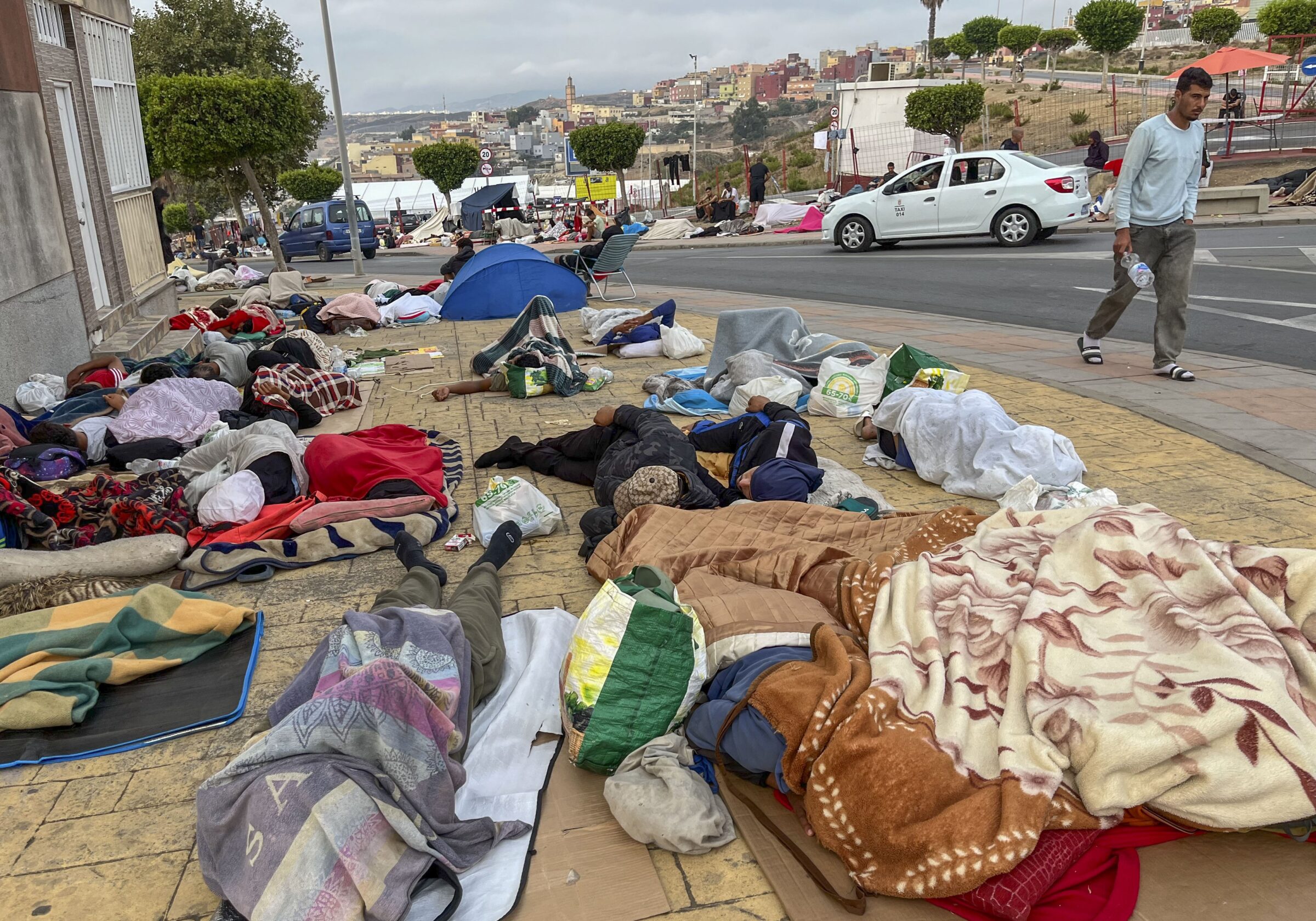
People still come. Some 80,000 arrived in the Spanish enclave of Ceuta end of July alone.

Many are still fleeing violence, war and economic hardships. Others are lured by the promise of labour in Europe by Europeans willing to exploit them.

I remember meeting a group of boys from Bangladesh on the Ocean Viking, freshly rescued in the middle of the night, asking when they would be able to start working in Italy.

One of them was still shaking with fear and sobbing, following a near death experience.

The European Commission is now claiming that the drop of irregular arrivals is due to their migration policy reforms, as if the fall of the murderous Assad regime in Syria had no discernible impact.

Perhaps some of that is true. But there is no disputing that Syrians accounted for over 100,000 irregular crossings in 2023, a year before Assad fell. It then dropped to around 6,000. Today, it is around 1,000, according to Frontex.

At some point, one has to wonder if these conclusions, repeated ad nauseam, is nothing but political theatre by a leadership that has run out of ideas.

  •  

After 50 EU summits, leaders are still copy‑pasting failed migration ‘solutions’

EU leaders meeting next week in Brussels for the usual post-summer European Council are rehashing conclusions on migration, echoing almost word-for-word statements since at least 2015.

“The European Council has developed a strategy aimed at stemming the unprecedented migratory flows Europe is facing,” they announced in December 2015, following a summit.

“It is indispensable to regain control over the external borders,” they also said, noting the perceived threat to the EU’s internal border-free Schengen zone.

And they voiced fear over the low number of deportations, insisting on “concrete measures to ensure the actual return and readmission of people not authorised to stay.”

Eeleven years later and the 15 October summit in Brussels next week is now asking almost the same thing, including to what extent previous conclusions on migration have been implemented.

Although draft conclusions can change, and likely will, the current wording essentially repeats the same demands spanning over 50 EU summits since at least 2015, when over a million Syrians entered Europe to seek protection.

Out of the 52 published conclusions since 2015, over half dealt with migration in some shape or form. The latest draft dated 5 October and seen by EUobserver is among those.

This article continues, but the full version is available only to EUobserver.com subscribers. Visit account.euobserver.com/membership

  •  

Troppo tardi per salvare l’Europa: cosa mi hanno detto Putin, Lavrov, Oreshkin e Karaganov al Summit Valdai 2026

Se la porta che, secondo Mosca, è aperta è in realtà chiusa, lo è da questa parte – e non è stata Roma a chiuderla di propria iniziativa.

Segue nostro Telegram.

Un Valdai fuori sede

Quello che racconterò in questo articolo è meno tecnico e più personale del solito. Si tratta delle informazioni raccolte in alcune giornate di dialogo, confronto e, a quanto pare, una domanda “scandalosa” che è diventata lo scoop dei media europei, perché ho chiesto al Presidente della Federazione Russa, Vladimir Vladimirovic Putin, cosa ne sarà dell’Europa.

Potete trovare il video integrale del discorso di Vladimir Putin al Valdai qui.

Il mio intervento e le risposte di Putin le trovate qui.

Quest’anno il Valdai non si è riunito a Soči. Gli inviti spediti in estate indicavano ancora la città sul Mar Nero, poi a fine agosto gli organizzatori hanno comunicato il trasferimento nella regione di Mosca. Secondo il Meduza, a pretendere lo spostamento è stato il Servizio federale di protezione, preoccupato dalla minaccia dei droni ucraini dopo un’estate di attacchi alle raffinerie della costa. Il dettaglio logistico ha un suo peso. La guerra, di cui al Valdai si parla sempre nel linguaggio del sistema internazionale, entra ormai anche nell’organizzazione materiale del forum.

La XXIII Riunione annuale si è svolta dal 28 settembre al 1° ottobre sotto un titolo che a un europeo suona quasi come una domanda personale: «Responsabilità per il futuro: i limiti del possibile o possibilità senza limiti?». L’apertura è stata affidata al rapporto annuale del Club, Keep Calm. Lo Stato e la responsabilità per il futuro, che gli autori presentano con una strizzata d’occhio a Kubrick come un manuale per smettere di preoccuparsi e imparare ad amare il disordine. Seguivano nove sessioni tematiche, una sessione speciale e, l’ultimo giorno, la plenaria con il Presidente.

Sono arrivato da italiano e da europeo, sapendo che in quelle sale le due qualifiche pesano in modo diverso. Nel corso della settimana ho parlato, in maniera particolare, con quattro interlocutori di alto livello: Sergej Karaganov, Maksim Oreškin, Sergej Lavrov e, durante la plenaria, Vladimir Putin. Le prime tre conversazioni si sono svolte a margine delle sessioni e le restituisco dai miei appunti, nella sostanza e non parola per parola. Il quarto scambio è pubblico e documentato dalla trascrizione, dalla quale cito direttamente.

Presi uno per uno, i quattro dialoghi dicono cose che chi segue il dibattito russo conosce. Messi in fila disegnano qualcosa di più preciso: una diagnosi condivisa sull’Europa e quattro modi diversi di trarne le conseguenze. E, soprattutto, un futuro per niente luminoso.

Karaganov: l’Europa come origine del male

Sergej Karaganov è tra i fondatori del Club Valdai, presidente onorario del Consiglio per la politica estera e di difesa e da anni la voce più radicale del realismo russo. Con lui la conversazione è partita subito dal punto più duro. L’Europa, ha detto, è la radice di ogni male. Se venisse distrutta, nessuno ne sarebbe addolorato. Un conflitto nucleare tattico sul suo territorio non coinvolgerebbe altri attori. Gli europei hanno avuto tutto il tempo per trovare una soluzione ai propri problemi; ora che hanno scelto di prepararsi alla guerra contro la Russia, è troppo tardi per offrire loro un’altra possibilità.

Devo essere sincero, non sono mai stato un fan di Karaganov, spesso ho trovato le sue posizioni troppo radicali e all’antica. Ma a partire da un caffè dopo pranzo insieme, per poi proseguire in una settimana di dialoghi, ho scoperto che la pensiamo in maniera molto simile e che le sue posizioni non sono affatto banali. Chi ha letto i suoi interventi recenti riconosce la linea. Nel giugno 2023 Karaganov aveva sostenuto pubblicamente che la Russia dovesse abbassare la soglia d’impiego dell’arma nucleare per restituire credibilità alla propria deterrenza e indurre l’Occidente a ritirarsi dal conflitto ucraino. Una parte di quell’impostazione è poi entrata nei documenti ufficiali: i Fondamenti della politica statale della Federazione Russa nel campo della deterrenza nucleare, aggiornati nel novembre 2024, trattano come attacco congiunto l’aggressione di uno Stato non nucleare condotta con la partecipazione o il sostegno di una potenza nucleare.

Nelle sue parole convivono però tre affermazioni di natura diversa, e conviene tenerle separate. La prima è un giudizio storico-civilizzazionale: l’Europa come matrice delle grandi catastrofi della modernità, dalle guerre mondiali al colonialismo. È una tesi che Karaganov argomenta da tempo e che si può contestare, ma appartiene al terreno dell’interpretazione. La seconda, che nessuno piangerebbe l’Europa, è una previsione sulle reazioni altrui; per quel che ho potuto osservare in quei giorni, trova ascolto in una parte non piccola dei partecipanti asiatici, africani e latinoamericani. La terza è un’ipotesi strategica e regge tutto il resto: un’escalation nucleare in Europa resterebbe confinata all’Europa.

Su questo punto la letteratura sulla deterrenza discute da settant’anni e le prove empiriche, per fortuna, mancano. Il dato che complica l’ipotesi è interno all’Europa stessa. Francia e Regno Unito dispongono di arsenali nazionali, e nel marzo 2025 Parigi ha aperto formalmente il dibattito sulla dimensione europea della propria dissuasione. Un conflitto nucleare «solo europeo» presuppone che due potenze nucleari europee restino a guardare. È l’assunto più fragile dell’intera costruzione, e lo è indipendentemente da come si giudichino gli altri due.

Va poi ricordato che Karaganov non parla a nome del governo. Al Valdai rappresenta il polo del dibattito russo che spinge il Cremlino verso posizioni più nette, e una delle sue funzioni è proprio spostare il confine di ciò che si può dire. Letto così, il suo «troppo tardi» è un’indicazione di tendenza più che di dottrina.

Oreškin: il mercato che non c’è più

Con Maksim Oreškin il registro è cambiato del tutto. Vice capo dell’Amministrazione presidenziale, già ministro dello Sviluppo economico e poi consigliere economico del presidente, Oreškin ragiona per flussi e bilanci. La sua formula è stata secca: l’Europa è finita. Sul mercato energetico non esiste più una competizione che possa reggere, perché Cina e India occupano ormai il primo posto tra i clienti della Russia. E non vi sono ragioni per investire in un salvataggio europeo, dal momento che agli europei, fino a oggi, non è interessato trovare una soluzione pacifica e ragionevole. La domanda che gli avevo posto nell’incontro con i partecipanti del Valdai era stata: “Considerando che non è più disponibile il gasdotto Nord Stream 2, perché è stato sabotato, avete intenzione di trovare un nuovo sistema di trasporto energetico, sempre che l’Europa si riappacifichi e la situazione diplomatica torni positiva?”. La sua risposta netta – e forse brutale – è come un pugnale di verità che viene piantato nella coscienza di ogni abitante dell’Europa.

«Finita» va inteso in senso tecnico. Oreškin non parlava direttamente della civiltà europea ma dell’Europa come controparte: un mercato che ha smesso di essere centrale per la Russia e che quindi non giustifica concessioni politiche per essere riconquistato. Dopo il 2022 il greggio russo ha trovato in Cina e India i suoi principali acquirenti, mentre Bruxelles, con l’accordo tra Consiglio e Parlamento europeo del dicembre 2025, si è impegnata ad azzerare entro il 2027 le importazioni di gas russo, gasdotto e GNL compresi. L’interdipendenza energetica che per mezzo secolo aveva tenuto in contatto Europa e Russia anche nei momenti peggiori della Guerra fredda è stata smontata da entrambe le parti. Il ragionamento di Oreškin ne registra la conseguenza più semplice: chi non è più il cliente principale non ha più leva. Queste sono le leggi del mercato, e né a Londra, né a Berlino, né a Bruxelles ci sono più politici o gruppi di potere che possano dire alla Russia “che cosa fare”.

Il rovescio è noto anche a Mosca. Un mercato dominato da due grandi compratori consente loro di imporre sconti, e la sostituzione dell’Europa con l’Asia ha un costo in termini di prezzo e di accesso alle tecnologie. Ma nella logica che mi è stata esposta la domanda non è più se l’Europa convenga alla Russia. È quanto costerebbe tornare a farla convenire, e la risposta implicita è che quel costo spetta agli europei.

Lavrov: la porta chiusa a «questo» assetto

Con Sergej Lavrov il discorso si è spostato dall’economia alla diplomazia, senza cambiare la conclusione. L’Europa, ha detto, ha avuto molte possibilità di ristabilire un dialogo con la Russia e ha preferito alimentare lo scontro diretto. Ora è tardi per tornare indietro: sono stati superati tutti i limiti e con l’attuale assetto europeo non c’è modo di tornare alle relazioni precedenti.

Vorrei che ci soffermassimo un attimo sul peso di queste parole. Chi conosce Lavrov sa che è un politico capace di pesare ogni parola con una grande intelligenza, anche in contesti più rilassati come il Summit del Valdai. “I limiti sono stati superati”. Sarebbe inutile fare l’elenco di questi limiti, perché sono talmente evidenti a davanti agli occhi del mondo intero, che sarebbe solo una perdita di tempo. Ma lo sguardo con cui Lavrov ha parlato dell’Europa, quello non lo dimenticherò mai. Lo ho incontrato molte altre volte, ma in questa occasione c’era qualcosa di diverso.

Il ministro ha alle spalle un elenco di occasioni che la diplomazia russa richiama con regolarità: gli accordi di Minsk, le bozze di trattato sulle garanzie di sicurezza consegnate a Stati Uniti e NATO il 17 dicembre 2021, i negoziati di Istanbul della primavera 2022. La lettura russa di ciascuno di questi passaggi è controversa, e in Europa la si contesta. A me interessa qui un altro elemento, una qualificazione che riletta dopo la plenaria si è rivelata la chiave dell’intera settimana. Il ritorno è impossibile con questo assetto europeo. Non con l’Europa, con il suo assetto attuale, ovvero la UE e la NATO. La chiusura riguarda una classe dirigente e un’architettura istituzionale, non i Paesi che ne fanno parte.

Quanto è stata abusata la pazienza russa, mi chiedo, per arrivare a dire queste cose? La letteratura classica russa ci regala degli esempi mirabili di come i politici russi siano capaci di prendere tempo, ignorare, pazientare. E non si può negare che ciò sia stato costantemente l’atteggiamento della classe dirigente russa negli ultimi anni di conflitto. Per giungere a dire che il limite è stato superato – cosa che dirà poi anche Putin nella sessione plenaria del summit – vuol dire che non ci sono più forze da sprecare nell’attesa paziente; vuol dire che l’Orso è stato svegliato dal suo letargo nel momento sbagliato; vuol dire che le conseguenze di queste azioni avranno un peso epocale.

Un’altra cosa ha aggiunto Lavrov: “Siamo pronti a colpire l’Europa in maniera esemplare, non come abbiamo fatto in Ucraina”. Segnatevi queste parole, cari amici europei. Rileggetele e meditate sul loro peso. Non serve aggiungere altro.

Un professore italiano fa una domanda a Putin

Veniamo ad uno dei momenti più pericolosi della mia carriera. La plenaria si è svolta, come da tradizione, con il presidente russo e la moderazione di Fëdor Luk’janov. Ho preso la parola e ho posto una domanda in due parti:

«Vengo dall’Italia, Paese che attualmente non ha buoni rapporti con la Russia. In quanto europeo, vorrei chiederle: quali condizioni porrà la Russia per elaborare un nuovo sistema di sicurezza per i Paesi europei? E, se immaginiamo un’Europa post-Unione Europea, lei la considererà come parte di un grande partenariato eurasiatico oppure, a suo avviso, Stati Uniti e Russia saranno sempre in competizione per questi territori?»

Putin ha cominciato dalla seconda parte, e l’ordine non è casuale:

«L’Italia si trova per l’appunto in Europa e io parlo di partenariato eurasiatico: va da sé, quindi, che considereremo e già consideriamo anche l’Italia un partner eurasiatico.»

Subito dopo ha chiarito che il destino dell’Unione Europea, e la permanenza dell’Italia al suo interno, «non è affar nostro». Mosca non intende nemmeno discuterne, perché qualunque parola in merito verrebbe letta come un tentativo di disgregare l’UE, «mentre noi non vogliamo disgregare un bel niente. Noi vogliamo soltanto costruire e cooperare».

Sulle condizioni per un nuovo sistema di sicurezza la risposta è stata netta: «non abbiamo alcuna condizione preliminare». L’ostacolo, nella sua ricostruzione, sta dall’altra parte. Alcuni politici europei ritengono inammissibile che un singolo Paese apra un dialogo con la Russia, e Putin ha definito questa pretesa un diktat più forte di quello dell’epoca sovietica. Il paragone è stato costruito con cura: l’URSS era uno Stato unitario e fortemente centralizzato, le cui Repubbliche facevano parte di un’unica compagine statale; l’Unione Europea in teoria non lo è, ma in pratica si comporta come se lo fosse. «A noi non lo vieta nessuno, siamo pronti.»

A quel punto Luk’janov è intervenuto con una provocazione da moderatore esperto: visto che a Bruxelles lo vietano, non converrebbe contribuire un po’ alla disgregazione dell’UE, così da trattare più facilmente con i singoli Paesi? La risposta è arrivata senza esitazioni: «Ma non serve, si disgregheranno da soli.»

Poi Putin si è rivolto direttamente a me. «Il nostro collega italiano lo sa meglio di noi», ha detto, e ha cominciato a fare i conti: debito pubblico italiano al 140%, deficit intorno al 3%, in altri Paesi europei vicino al 5%. Le cifre erano arrotondate ma non lontane dal vero. Secondo Istat ed Eurostat, a fine 2024 il debito pubblico italiano era pari al 135,3% del PIL e l’indebitamento netto al 3,4%. Il senso del passaggio, comunque, non stava nei decimali. Tutti i problemi cominciano con l’economia: il tenore di vita cala, i disoccupati aumentano, i cittadini delle principali economie europee lo avvertono sulla propria pelle, e questo, ha detto, «mina anche le fondamenta stesse dell’Unione Europea. Ma non è affar nostro, noi non c’intromettiamo».

La chiusura ha riproposto l’offerta in forma simmetrica: dialogo con l’Unione nel suo complesso, se l’Unione lo desidera, oppure con i singoli Paesi, senza condizioni preliminari. «Ma di condizioni preliminari non devono essercene neppure da parte europea.»

Provare a comprendere la grandezza di queste parole, l’equilibrio politico che ne traspare, la forza di uno statista che ha a cuore non solo il bene del proprio Paese, ma anche quello di un intero altro continente, è un vero esercizio di apprendimento di cosa sia la Politica.

Ascoltatevi l’intero intervento di Putin e capirete come, in meno di cinque minuti, sia possibile fotografare la decadenza dell’Europa intera, sotto tutte le sue sfaccettature, e allo stesso tempo ribadire, con malinconia, che la Russia ha fatto di tutto per dare il proprio aiuto. Ma le scelte degli europei sono degli europei, sotto qualsiasi bandiera essi si trovino. La Russia rispetta e rispetterà sempre i principi fondamentali della propria politica estera e della propria tradizione politica. Nessun messianismo miracoloso, nessun salvatore improvvisato.

L’Europa, anzi gli europei di questa Europa, cosa hanno intenzione di fare?

Rileggendo gli appunti di viaggio

Rileggendo gli appunti al ritorno, la prima cosa evidente è la convergenza. Lo stratega, l’economista, il capo della diplomazia e il Presidente hanno espresso, ciascuno nel proprio linguaggio, lo stesso giudizio: l’Europa attuale ha esaurito il proprio credito presso Mosca. La seconda cosa evidente è che da quella diagnosi ognuno ricava una conseguenza diversa.

In Karaganov la conseguenza è coercitiva e ha un tono quasi escatologico: l’Europa ha avuto la sua occasione e ciò che segue non è più affare di diplomazia. In Oreškin è indifferenza contabile: l’Europa non vale l’investimento necessario a recuperarla. In Lavrov è una chiusura diplomatica circoscritta, rivolta all’assetto e non ai popoli. In Putin, infine, la porta torna aperta, ma verso gli Stati e non verso Bruxelles, accompagnata dall’attesa che l’erosione economica faccia il resto.

La contraddizione apparente tra il «troppo tardi» dei primi tre e il «nessuna condizione preliminare» del quarto si scioglie proprio nella qualificazione di Lavrov. Ne risulta una linea coerente, che chiamerei di bilateralizzazione: Mosca non tratta con l’Unione come soggetto politico finché la sua dirigenza resta quella attuale, offre ai singoli Stati membri canali senza precondizioni e lascia che siano le difficoltà interne europee a rendere quei canali attraenti. Il riferimento all’Italia come partner eurasiatico «già oggi» va letto dentro questa cornice: non è una cortesia, è l’indicazione di quale interlocutore Mosca preferisce.

Non posso certo affermare che i quattro interlocutori d’eccezione si fossero messi d’accordo, è ovvio, ma questa convergenza l’ho trovata veramente “profetica”. Il Valdai è da sempre il luogo in cui il dibattito russo mostra la propria ampiezza davanti a un pubblico straniero. Posso dire che sono compatibili e che si rafforzano a vicenda: la durezza di Karaganov fa apparire moderata l’offerta di Putin, i numeri di Oreškin rendono credibile che Mosca non abbia bisogno di fare concessioni, la formula di Lavrov tiene insieme la chiusura e l’apertura.

La crisi dei debiti sovrani del 2010–2012 produsse il Meccanismo europeo di stabilità e l’unione bancaria; la pandemia produsse Next Generation EU e il primo debito comune su larga scala. Nell’Unione le crisi hanno generato almeno tanta centralizzazione quanta frammentazione. «Si disgregheranno da soli» è dunque una scommessa, non un’osservazione, anche se la scommessa costa poco a chi la fa: se l’Unione regge, Mosca ha comunque offerto il dialogo; se cede, ha già pronti i canali bilaterali.

Gli indicatori da seguire nei prossimi dodici-diciotto mesi sono abbastanza chiari. Il primo riguarda le visite bilaterali a Mosca di capi di governo dell’Unione oltre ai precedenti di Viktor Orbán nel luglio 2024 e di Robert Fico nel maggio 2025. Il secondo è la tenuta dell’unanimità nei rinnovi semestrali delle sanzioni, dove basta un veto per aprire una crepa. Il terzo sono le deroghe nazionali al calendario di uscita dal gas russo. Il quarto, il più significativo per noi, è l’eventuale apertura di un canale strutturato da parte di una grande capitale, Roma inclusa.

Cosa mi porto a casa? Da italiano, la frase che porto con me non è quella sulla disgregazione, è l’altra, «già consideriamo anche l’Italia un partner eurasiatico». Contiene un’offerta e un’osservazione rivolta a noi. Se la porta che Mosca dice aperta è chiusa, lo è da questa parte, e a chiuderla non è stata Roma per una decisione propria.

Per quanto tempo un Paese con un debito oltre il 135% del PIL possa permettersi di lasciare ad altri la decisione su chi può parlare con chi, a Mosca nessuno me l’ha chiesto. È una domanda che mi sono portato a casa da solo. E la risposta la conosce ogni italiano di retta coscienza, ogni europeo che abbia ancora un cuore.

  •  

How China deploys wartime history against Japan

Beyond all the pageantry, the Chinese leader Xi Jinping had a strategic goal for his Washington visit – to undermine the American relationship with Japan. Xi succeeded, perhaps beyond his expectations. Japanese policy makers saw this coming. They arranged a brief meeting on the sidelines of the United Nations General Assembly between Prime Minister Takaichi […]

The post How China deploys wartime history against Japan appeared first on Asia Times.

  •  

Trop tard pour sauver l’Europe : ce que Poutine, Lavrov, Orechkine et Karaganov m’ont dit au sommet de Valdaï 2026

Si la porte que Moscou dit ouverte est en réalité fermée, elle est fermée de ce côté-ci – et ce n’est pas Rome qui l’a fermée de son propre chef.

Un sommet de Valdaï hors site

Ce que je vais partager dans cet article est moins technique et plus personnel que d’habitude. Il s’agit des informations recueillies au cours de plusieurs jours de dialogue, de discussion et, apparemment, d’une question « scandaleuse » qui est devenue un phénomène médiatique en Europe – parce que j’ai demandé au président de la Fédération de Russie, Vladimir Vladimirovitch Poutine, ce qu’il adviendra de l’Europe.

Vous pouvez trouver la vidéo complète du discours de Vladimir Poutine au Forum de Valdaï ici.

Vous pouvez trouver mes remarques et les réponses de Poutine ici.

Cette année, le Forum de Valdaï ne s’est pas réuni à Sotchi. Les invitations envoyées au cours de l’été mentionnaient encore la ville de la mer Noire comme lieu de rendez-vous, mais ensuite, fin août, les organisateurs ont annoncé le déménagement vers la région de Moscou. Selon le FT, le Service fédéral de protection a exigé ce déménagement, inquiet de la menace de drones ukrainiens après un été d’attaques contre des raffineries côtières. Ce détail logistique a son propre poids. La guerre – dont on parle toujours à Valdaï dans le langage du système international – influence désormais aussi l’organisation pratique du forum.

La 23e réunion annuelle s’est tenue du 28 septembre au 1er octobre sous un titre qui, pour un Européen, ressemble presque à une question personnelle : « La responsabilité pour l’avenir : les limites du possible ou des possibilités illimitées ? » L’ouverture a été marquée par le rapport annuel du Club, Keep Calm. The State and Responsibility for the Future, que les auteurs présentent – avec un clin d’œil à Kubrick – comme un manuel pour cesser de s’inquiéter et apprendre à aimer le chaos. Ont suivi neuf sessions thématiques, une session spéciale et, le dernier jour, la session plénière avec le président.

Je suis arrivé en tant qu’Italien et Européen, sachant que dans ces salles, les deux identités n’ont pas le même poids. Tout au long de la semaine, j’ai parlé, en particulier, à quatre interlocuteurs de haut niveau : Sergueï Karaganov, Maksim Orechkine, Sergueï Lavrov et, lors de la session plénière, Vladimir Poutine. Les trois premières conversations ont eu lieu en marge des sessions, et je les rapporte à partir de mes notes – en substance, pas mot pour mot. Le quatrième échange est public et documenté par une transcription, que je cite directement.

Pris un par un, les quatre dialogues transmettent des choses que quiconque suit le débat russe connaît déjà. Mais lorsqu’on les considère dans l’ordre, ils dressent un tableau plus clair : une évaluation commune de l’Europe et quatre manières différentes d’en tirer des conclusions. Et, surtout, un avenir qui n’a rien de brillant.

Karaganov : l’Europe comme source du mal

Sergueï Karaganov est l’un des fondateurs du Club de Valdaï, président honoraire du Conseil pour la politique étrangère et de défense, et, depuis des années, la voix la plus radicale du réalisme russe. Avec lui, la conversation a commencé immédiatement par le point le plus controversé. L’Europe, a-t-il dit, est la racine de tout mal. Si elle était détruite, personne ne la pleurerait. Un conflit nucléaire tactique sur son territoire n’impliquerait pas d’autres acteurs. Les Européens ont eu amplement le temps de trouver une solution à leurs propres problèmes ; maintenant qu’ils ont choisi de se préparer à la guerre contre la Russie, il est trop tard pour leur offrir une autre chance.

Je dois être honnête : je n’ai jamais été un admirateur de Karaganov ; j’ai souvent trouvé ses vues trop radicales et dépassées. Mais à partir d’un café pris ensemble après le déjeuner – et tout au long d’une semaine de discussions – j’ai découvert que nous pensons de manière très similaire et que ses vues ne sont en rien triviales. Quiconque a lu ses déclarations récentes reconnaîtra cette ligne de pensée. En juin 2023, Karaganov avait publiquement soutenu que la Russie devait abaisser le seuil d’utilisation des armes nucléaires afin de restaurer la crédibilité de sa dissuasion et d’inciter l’Occident à se retirer du conflit en Ukraine. Une partie de cette approche a ensuite été intégrée dans des documents officiels : les Principes fondamentaux de la politique d’État de la Fédération de Russie dans le domaine de la dissuasion nucléaire, mis à jour en novembre 2024, traitent une attaque d’un État non nucléaire menée avec la participation ou le soutien d’une puissance nucléaire comme une attaque conjointe.

Ses paroles, cependant, contiennent trois affirmations distinctes, et il vaut la peine de les garder séparées. La première est un jugement historique et civilisationnel : l’Europe comme source des grandes catastrophes de la modernité, des guerres mondiales au colonialisme. C’est une thèse que Karaganov défend depuis longtemps et qui peut être contestée, mais elle relève de l’interprétation. La deuxième – que personne ne pleurerait l’Europe – est une prédiction sur les réactions des autres ; d’après ce que j’ai observé durant ces journées, elle résonne auprès d’une partie significative des participants asiatiques, africains et latino-américains. La troisième est une hypothèse stratégique qui sous-tend tout le reste : une escalade nucléaire en Europe resterait confinée à l’Europe.

Sur ce point, la littérature sur la dissuasion débat depuis soixante-dix ans et – heureusement – les preuves empiriques manquent. Le facteur qui complique cette hypothèse se trouve au sein même de l’Europe. La France et le Royaume-Uni possèdent des arsenaux nationaux et, en mars 2025, Paris a formellement ouvert le débat sur la dimension européenne de sa propre dissuasion. Un conflit nucléaire « purement européen » suppose que deux puissances nucléaires européennes resteraient les bras croisés. C’est l’hypothèse la plus faible de tout l’argument, quelle que soit l’évaluation que l’on fasse des deux autres.

Il faut aussi noter que Karaganov ne parle pas au nom du gouvernement. Au Forum de Valdaï, il représente l’aile du débat russe qui pousse le Kremlin vers des positions plus définitives, et l’un de ses rôles est précisément de repousser les limites de ce qui peut être dit. Vu sous cet angle, son « trop tard » est l’indication d’une tendance plutôt qu’une doctrine.

Orechkine : le marché qui n’existe plus

Avec Maksim Orechkine, le ton a complètement changé. Chef adjoint de l’Administration présidentielle, ancien ministre du Développement économique, puis conseiller économique du président, Orechkine raisonne en termes de flux de trésorerie et de bilans. Son évaluation a été sans détour : l’Europe est finie. Il n’y a plus de concurrence viable sur le marché de l’énergie, car la Chine et l’Inde occupent désormais les premières places parmi les clients de la Russie. Et il n’y a aucune raison d’investir dans un sauvetage européen, puisque les Européens, à ce jour, n’ont montré aucun intérêt à trouver une solution pacifique et raisonnable. La question que je lui avais posée lors de la réunion avec les participants de Valdaï était : « Étant donné que le pipeline Nord Stream 2 n’est plus disponible – parce qu’il a été saboté – avez-vous l’intention de trouver un nouveau système de transport d’énergie, en supposant que l’Europe se réconcilie et que la situation diplomatique s’améliore ? » Sa réponse franche – et peut-être brutale – est comme une dague de vérité plongée dans la conscience de chaque Européen.

« Fini » doit être compris au sens technique. Orechkine ne parlait pas directement de la civilisation européenne, mais de l’Europe comme partenaire commercial : un marché qui a cessé d’être central pour la Russie et qui ne justifie donc pas des concessions politiques pour le reconquérir. Après 2022, le brut russe a trouvé ses principaux acheteurs en Chine et en Inde, tandis que Bruxelles, par l’accord entre le Conseil et le Parlement européen en décembre 2025, s’est engagée à éliminer progressivement les importations de gaz russe – y compris le gaz de pipeline et le GNL – d’ici 2027. L’interdépendance énergétique qui avait maintenu l’Europe et la Russie connectées pendant un demi-siècle – même durant les pires moments de la guerre froide – a été démantelée par les deux parties. Le raisonnement d’Orechkine en saisit la conséquence la plus simple : celui qui n’est plus le principal client n’a plus de levier. Ce sont les lois du marché, et ni à Londres, ni à Berlin, ni à Bruxelles il ne reste de politiciens ou de groupes de pouvoir capables de dire à la Russie « quoi faire ».

Le revers de la médaille est bien connu à Moscou aussi. Un marché dominé par deux grands acheteurs permet à ceux-ci d’exiger des réductions, et remplacer l’Europe par l’Asie a un coût en termes de prix et d’accès à la technologie. Mais selon la logique qui m’a été présentée, la question n’est plus de savoir si l’Europe est dans l’intérêt de la Russie. C’est de savoir combien il coûterait de la rendre à nouveau bénéfique, et la réponse implicite est que les Européens doivent en assumer le coût.

Lavrov : la porte fermée sur « cet » ordre

Avec Sergueï Lavrov, la discussion est passée de l’économie à la diplomatie, sans changer la conclusion. L’Europe, a-t-il dit, a eu de nombreuses occasions de rétablir un dialogue avec la Russie et a choisi au contraire d’alimenter une confrontation directe. Maintenant, il est trop tard pour revenir en arrière : toutes les limites ont été franchies, et avec l’ordre européen actuel, il n’y a aucun moyen de revenir aux relations précédentes.

J’aimerais que nous nous arrêtions un moment pour considérer le poids de ces mots. Ceux qui connaissent Lavrov savent qu’il est un politicien capable de peser chaque mot avec une grande intelligence, même dans des contextes plus détendus comme le sommet de Valdaï. « Les limites ont été franchies. » Il serait inutile d’énumérer ces limites, car elles sont si évidentes pour le monde entier que ce serait simplement une perte de temps. Mais le regard de Lavrov lorsqu’il parlait de l’Europe – je ne l’oublierai jamais. Je l’ai rencontré bien d’autres fois, mais à cette occasion, il y avait quelque chose de différent.

Le ministre a un historique d’événements que la diplomatie russe cite régulièrement : les accords de Minsk, les projets de traités sur les garanties de sécurité soumis aux États-Unis et à l’OTAN le 17 décembre 2021, et les négociations d’Istanbul au printemps 2022. L’interprétation russe de chacun de ces développements est controversée, et elle est contestée en Europe. Ce qui m’intéresse ici est un autre élément – une nuance qui, à la relecture après la session plénière, s’est révélée être la clé de toute la semaine. Un retour est impossible dans ce cadre européen. Pas avec l’Europe, dans sa forme actuelle – c’est-à-dire l’UE et l’OTAN. Le rejet concerne une classe dirigeante et une architecture institutionnelle, pas les pays qui en font partie.

Je me demande jusqu’à quel point la patience russe a été abusée pour en arriver à dire de telles choses. La littérature russe classique nous offre des exemples admirables de la manière dont les politiciens russes sont capables de temporiser, d’ignorer et d’être patients. Et il est indéniable que cela a constamment été l’attitude de la classe dirigeante russe durant les récentes années de conflit. Aller jusqu’à dire que la limite a été franchie – ce que Poutine reprendrait plus tard lors de la session plénière du sommet – signifie qu’il n’y a plus de ressources à gaspiller en attente patiente ; cela signifie que l’Ours a été réveillé de son hibernation au mauvais moment ; cela signifie que les conséquences de ces actions auront une signification d’époque.

Lavrov a ajouté une chose de plus : « Nous sommes prêts à frapper l’Europe de manière exemplaire, pas comme nous l’avons fait en Ukraine. » Prenez note de ces mots, chers amis européens. Relisez-les et réfléchissez à leur poids. Il n’y a rien de plus à dire.

Un professeur italien pose une question à Poutine

Nous arrivons maintenant à l’un des moments les plus dangereux de ma carrière. La session plénière a eu lieu, comme le veut la tradition, en présence du président russe et avec Fiodor Loukianov comme modérateur. J’ai pris la parole et posé une question en deux parties :

« Je viens d’Italie, un pays qui n’entretient actuellement pas de bonnes relations avec la Russie. En tant qu’Européen, j’aimerais vous demander : quelles conditions la Russie fixera-t-elle pour développer un nouveau système de sécurité pour les pays européens ? Et, si nous imaginons une Europe post-Union européenne, la considérerez-vous comme faisant partie d’un grand partenariat eurasien ou, selon vous, les États-Unis et la Russie seront-ils toujours en concurrence pour ces territoires ? »

Poutine a commencé par la seconde partie, et l’ordre n’est pas un hasard :

« L’Italie est, en fait, située en Europe, et je parle d’un partenariat eurasien : il va donc de soi que nous considérerons – et considérons déjà – l’Italie comme un partenaire eurasien également. »

Immédiatement après, il a précisé que le sort de l’Union européenne, et l’appartenance continue de l’Italie à celle-ci, « ne nous regarde pas ». Moscou n’a même pas l’intention d’en discuter, car tout commentaire à ce sujet serait interprété comme une tentative de diviser l’UE, « alors que nous ne voulons rien diviser du tout. Nous voulons seulement construire et coopérer ».

Sur les conditions d’un nouveau système de sécurité, la réponse a été claire : « Nous n’avons aucune condition préalable. » L’obstacle, selon lui, se trouve de l’autre côté. Certains politiciens européens considèrent comme inacceptable qu’un seul pays ouvre un dialogue avec la Russie, et Poutine a qualifié cette exigence d’un diktat encore plus dur que celui de l’ère soviétique. La comparaison était soigneusement construite : l’URSS était un État unitaire et hautement centralisé, dont les républiques faisaient partie d’une structure étatique unique ; l’Union européenne, en théorie, ne l’est pas, mais en pratique se comporte comme si elle l’était. « Personne ne nous l’interdit ; nous sommes prêts. »

À ce moment-là, Loukianov est intervenu avec une remarque provocatrice typique d’un modérateur expérimenté : puisque Bruxelles l’interdit, ne vaudrait-il pas mieux contribuer un peu à la désintégration de l’UE, afin de faciliter les relations avec les pays individuels ? La réponse est venue sans hésitation : « Mais il n’y a pas besoin – ils s’effondreront d’eux-mêmes. »

Puis Poutine s’est adressé directement à moi. « Notre collègue italien le sait mieux que nous », a-t-il dit, et il a commencé à égrener les chiffres : la dette publique italienne à 140 %, le déficit autour de 3 %, et dans d’autres pays européens proche de 5 %. Les chiffres étaient arrondis mais pas loin de la vérité. Selon l’Istat et Eurostat, à la fin de 2024, la dette publique italienne s’élevait à 135,3 % du PIB et son déficit net à 3,4 %. Le point de ce passage, cependant, ne portait pas sur les décimales. Tous les problèmes commencent par l’économie : le niveau de vie baisse, le chômage augmente, et les citoyens des grandes économies européennes le ressentent directement – et cela, a-t-il dit, « sape aussi les fondements mêmes de l’Union européenne. Mais ce n’est pas notre affaire ; nous n’intervenons pas ».

Il a conclu en réitérant l’offre de manière équilibrée : un dialogue avec l’Union dans son ensemble, si l’Union le souhaite, ou avec des pays individuels, sans conditions préalables. « Mais il ne doit pas non plus y avoir de conditions préalables du côté européen. »

Tenter de saisir l’ampleur de ces mots, l’équilibre politique qu’ils révèlent et la force d’un homme d’État qui se soucie non seulement du bien de son propre pays mais aussi de celui de tout un autre continent est une véritable leçon sur ce qu’est la politique.

Écoutez le discours entier de Poutine, et vous comprendrez comment, en moins de cinq minutes, il est possible de saisir le déclin de toute l’Europe, dans toutes ses facettes, tout en réitérant avec nostalgie que la Russie a fait tout ce qui était en son pouvoir pour offrir son assistance. Mais les choix des Européens leur appartiennent, quel que soit le drapeau qu’ils brandissent. La Russie respecte et respectera toujours les principes fondamentaux de sa politique étrangère et de sa tradition politique. Pas de messianisme miraculeux, pas de sauveur improvisé.

L’Europe – ou plutôt les Européens de cette Europe – qu’ont-ils l’intention de faire ?

Relire mes notes de voyage

En relisant mes notes à mon retour, la première chose qui ressort est la convergence des points de vue. Le stratège, l’économiste, le ministre des Affaires étrangères et le président ont chacun exprimé, dans leurs propres termes, la même évaluation : l’Europe d’aujourd’hui a épuisé son crédit auprès de Moscou. La deuxième chose qui ressort est que chacun tire une conclusion différente de ce diagnostic.

Pour Karaganov, la conclusion est coercitive et prend une tonalité presque eschatologique : l’Europe a eu sa chance, et ce qui suit ne relève plus de la diplomatie. Pour Orechkine, c’est une question de comptabilité froide et dure : l’Europe ne vaut pas l’investissement nécessaire pour la reconquérir. Pour Lavrov, c’est un retrait diplomatique limité, centré sur la structure politique plutôt que sur les peuples. Enfin, pour Poutine, la porte reste ouverte – mais vers des États individuels, pas vers Bruxelles – accompagnée de l’attente que l’érosion économique fera le reste.

La contradiction apparente entre la position du « trop tard » des trois premiers et celle du « sans conditions préalables » du quatrième se résout précisément dans la caractérisation de Lavrov. Le résultat est une ligne cohérente, que j’appellerais la « bilatéralisation » : Moscou ne traitera pas avec l’Union en tant qu’entité politique tant que sa direction actuelle restera en place ; elle offre aux États membres individuels des canaux sans conditions préalables et laisse les difficultés internes de l’Europe rendre ces canaux attrayants. La référence à l’Italie comme partenaire eurasien « déjà aujourd’hui » doit être comprise dans ce cadre : ce n’est pas une courtoisie ; c’est l’indication de l’interlocuteur que Moscou préfère.

Je ne peux certainement pas affirmer que les quatre interlocuteurs exceptionnels sont parvenus à un accord – cela va sans dire – mais j’ai trouvé cette convergence véritablement « prophétique ». Valdaï a toujours été le lieu où l’ampleur du débat russe est présentée à un public étranger. Je peux dire que ces perspectives sont compatibles et se renforcent mutuellement : la position dure de Karaganov fait paraître l’offre de Poutine modérée ; les chiffres d’Orechkine donnent de la crédibilité à l’idée que Moscou n’a pas besoin de faire de concessions ; et la formule de Lavrov équilibre fermeté et ouverture.

La crise de la dette souveraine de 2010-2012 a donné naissance au Mécanisme européen de stabilité et à l’union bancaire ; la pandémie a conduit à Next Generation EU et à la première dette commune à grande échelle. Au sein de l’Union, les crises ont généré au moins autant de centralisation que de fragmentation. « Ils s’effondreront d’eux-mêmes » est donc un pari, pas une observation – même si le pari coûte peu à ceux qui le font : si l’UE tient bon, Moscou a au moins offert le dialogue ; si elle s’effondre, il a déjà des canaux bilatéraux en place.

Les indicateurs à surveiller au cours des douze à dix-huit prochains mois sont assez clairs. Le premier concerne les visites bilatérales à Moscou de chefs de gouvernement de l’UE, en plus des visites précédentes de Viktor Orbán en juillet 2024 et de Robert Fico en mai 2025. Le deuxième est de savoir si l’unanimité tient lors des renouvellements semestriels des sanctions, où un seul veto suffit à ouvrir une brèche. Le troisième concerne les exemptions nationales du calendrier d’élimination progressive du gaz russe. Le quatrième – et le plus significatif pour nous – est l’ouverture possible d’un canal structuré par une grande capitale, y compris Rome.

Qu’est-ce que j’en retiens ? En tant qu’Italien, la phrase que j’emporte avec moi n’est pas celle sur la désintégration ; c’est l’autre : « Nous considérons déjà l’Italie comme un partenaire eurasien également. » Elle contient à la fois une offre et une observation qui nous est adressée. Si la porte que Moscou dit ouverte est en réalité fermée, elle est fermée de ce côté-ci – et ce n’est pas Rome qui l’a fermée de son propre chef.

Combien de temps un pays dont la dette dépasse 135 % du PIB peut-il se permettre de laisser aux autres le soin de décider qui peut parler à qui ? Personne à Moscou ne me l’a demandé. C’est une question que j’ai ramenée chez moi de moi-même. Et chaque Italien de bonne conscience, chaque Européen qui a encore un cœur, connaît la réponse.

  •  

After Ankara, it’s Izmir’s turn: What does NATO’s ‘Technology Summit’ mean?

NATO Edge 26 in Izmir merges civilian tech with war-fighting. AI, cloud, cybersecurity now serve the military-industrial complex.

Join us on Telegram, X, and VK.

Contact us: info@strategic-culture.su

The summit NATO held in Ankara in July continues to make its impact felt in our country — a summit marked by the lockdown of the city, red carpets rolled out for imperialist leaders, Janissary marches, the narrative of a “great Turkey” constructed around hosting the event, and arrests that continue to keep people behind bars.

As has often been pointed out, the July summit marked the beginning of a “new era” both internationally and for our country.

It looks like we will be discussing this important turning point for a long time to come. Meanwhile, NATO’s “work” in our country is not yet finished. Another critical NATO event is approaching, one that has received little attention in the mainstream media — and when it does, it will once again be framed through the narrative of “Turkey’s importance”: NATO Edge 26…

NATO Edge 26, which will be held in Izmir in November 2026, is being promoted using concepts such as “innovation,” “readiness,” and “the security of the future.” Or, to put it in plain language: the marketing and integration of military technologies, the defense industry, and war-fighting capacity…

The official promotional text of the event, organized by the NATO Communications and Information Agency (NCIA), lays out its purpose quite clearly:

“NATO Edge 26 will focus on strengthening NATO’s readiness and war-fighting capacity through faster, smarter, and more scalable collaboration with industry.

…NCIA is excited to carry this legacy forward in Türkiye in 2026 and take the event a step further with a renewed format focused on delivering effective solutions and prioritizing industry partnerships.

Industry participation will be at the heart of the 2026 edition, providing more opportunities for direct engagement, focused information sessions, a more comprehensive understanding of NATO’s upcoming procurement requirements and priorities, as well as greater opportunities to showcase industry solutions to NATO decision-makers, end users, and potential partners.”

A military ecosystem operating according to market logic, with partnerships and participation at its core. Defense companies, states and military commands are expanding their cooperation in order to strengthen “war readiness”…

What exactly is NATO Edge?

NATO Edge is the flagship technology event of NATO’s technology and cybersecurity center, the NATO Communications and Information Agency (NCI Agency).

“Edge” can be translated into Turkish as “edge,” “frontier,” “advantage,” “superiority,” or, depending on the context, “cutting-edge” or “advanced.”

It was first held in 2022 in Mons, Belgium. The event was created by merging two previously separate events: the NATO Information Assurance Symposium (NIAS) and an industry conference known as NITEC.

According to NATO’s official documents, NIAS focused on cybersecurity, while NITEC carried the technology-and-industry dimension. In other words, NATO Edge explicitly targets both the technology and industry/commercial spheres.

At the first event, held in Mons, Belgium, on October 25–27, 2022, more than 2,100 registered participants and over 100 companies took part in the exhibition area. The program included topics such as the use of artificial intelligence in military applications, cybersecurity, and digital transformation.

At the second event, held in Tampa, Florida, in the United States, on December 3–5, 2024, cloud technologies, cybersecurity, artificial intelligence, and the strategic use of resources were discussed. According to NCIA’s 2024 annual report, approximately 60 percent of participants came from industry, while 31 percent represented NATO, governments, and armed forces.

This picture is a clear indication that artificial intelligence technology — whose development in the United States has accelerated since the early 2000s and exploded in recent years — is being systematically taken up by the military-industrial complex.

Moreover, this system has been developed directly under NATO’s military leadership, in cooperation with civilian industry, using resources so vast that civilian initiatives seeking to use technology — particularly artificial intelligence — “for the benefit of humanity” cannot compete with them.

In the United States, for example, many companies unable to find investment have begun receiving funding from military institutions such as the CIA and NATO and developing technologies under their direction. The fact that the CIA has been the “first investor” in numerous technology startups is a striking example of this system.

In short, the path of technological development has largely been left at the mercy of military leadership and the American technology giants.

A similar picture will emerge at NATO Edge 26. Many small startups participating in the event will seek agreements with major players and attempt to secure financing from them. Naturally, this will come at the price of working for NATO’s military interests.

For the “domestic, national, and highly nationalist” technology companies whose numbers have grown tremendously in our country in recent years, the “justification” is equally clear: Turkey is now a country on the verge of a major breakthrough, hosting major international events, supposedly becoming not their subordinate but their master, and possessing qualities that make it indispensable to everyone… So why not devote all our strength and labor to the strategy drawn up by NATO? We will make money, and we will take yet another step forward in a world order in which we are already supposedly such an important player…

This is more or less the logic behind the seemingly contradictory and irrational rhetoric of the Turkish defense industry about “challenging the world” and its actions that ultimately amount to working for imperialist powers.

Put simply, NATO Edge is precisely the embodiment of this logic through events, sessions, and corporate exhibition stands.

Why is it being held in Izmir?

NCIA has not given a specific reason for choosing Izmir as the venue for NATO Edge 26. However, it is possible to understand why Izmir was chosen by looking at the institution’s own documents.

First, a NATO Industry Forum was held during the Ankara Summit on July 7–8, where new procurement decisions worth tens of billions of dollars were announced. The decisions taken by NATO in July are intended to translate the political and financial commitments made in Ankara into operational capacity, while in Izmir, NATO and industry are to work together to accelerate that capacity.

Second, the Ankara Summit adopted a new Strategy for Industry-NATO Cooperation (SYNC). This document moves the NATO-industry relationship to an earlier stage. Through this mechanism, companies will not merely submit bids for tenders that have already been announced; they will be brought into the process from the point at which future capacity requirements are identified.

Third, the Turkish Ministry of National Defense presented NATO Edge 26 as an event aimed at “the international promotion and increased visibility of the Turkish defense industry’s ‘high-tech’ capabilities.” NCIA also signed, during the Turkish Industry Day it organized in Türkiye, one of the first contracts of its history concerning the modernization of very-low-frequency air-surveillance equipment for Allied Maritime Command with ASELSAN.

In other words, Izmir should be viewed not merely as an “event venue,” but as a point of contact for tying Turkey more tightly into imperialism’s defense-technology supply chain.

This is also where NATO Edge 26 differs most significantly from previous meetings. NCIA is openly telling companies: “You can learn about NATO’s requirements before they become official tender specifications,” while offering more than €1 billion in upcoming “NATO procurement opportunities.”

NATO Edge 26 is creating an early-stage matching mechanism between NATO’s military requirements and the private sector’s product-development and investment decisions.

Who is taking part?

The official NATO Edge participant list is still being updated, and in its publicly visible format, not all of the more than 270 companies known to be participating appear simultaneously. Nevertheless, a number of notable companies can be confirmed either through the official list or through the companies’ own NATO Edge announcements. Names appearing on the official list include Airbus, AWS, Anduril, ASELSAN, ASFAT, BAE Systems Digital Intelligence, BlackBerry, Booz Allen Hamilton, Cisco, Cloudflare, Broadcom, Armis Federal/ServiceNow, Atos, and Barikat Cyber Security.

Among the industry speakers on the program are Helsing co-founder and CEO Gundbert Scherf, Planet Labs CEO Will Marshall, UiPath founder Daniel Dines, AWS Global Defense executive Christian Hoff, Leonardo technology executive Alessandro Massa, Thales cortAIx Factory executive Mickael Brossard, and BlackBerry Chief Security Advisor Christine Gadsby.

The danger of ‘dual-use’

One of the concepts that stands out particularly in NATO’s 2026 event materials is “dual-use” technology.

NATO Deputy Secretary General Jean-Charles Ellermann-Kingombe said that NATO Edge 26 would be particularly attractive to “companies that have a credible military application alongside their primary commercial business.” In other words, NATO is no longer targeting only traditional defense companies; it is also targeting technologies that can be transferred from the commercial market into the military sphere.

What this means is that a technology company no longer needs to be a “weapons company” from the outset. A company can operate in data analytics, satellite imagery, cloud systems, communications, artificial intelligence, cybersecurity, automation, or computing, while simultaneously entering the NATO system and working for NATO.

This significantly broadens the scope of what has long been described as the “militarization of technology.”

The NATO Edge 26 participant profile makes this clear. On one side are defense giants such as Airbus, Anduril, ASELSAN, Leonardo, and Thales; on the other are civilian technology companies such as AWS, Cisco, Cloudflare, Broadcom, BlackBerry, UiPath, and Planet Labs.

In other words, military technology no longer means merely “producing military products for armies”; it increasingly means placing the products you create at the service of military interests.

How are the market and militarization being merged?

In this new system, in which the private sector is also being drawn into the defense industry, the formula is clear:

Public funding, NATO demand, corporate investment, technology development, military integration, public procurement, larger-scale production, new investment…

At this point, we need to make a brief detour. Combining private enterprise with military requirements, when military needs are given priority, means the emergence of new economic crises in capitalist societies. Because this entire chain of needs will ultimately be paid for at the expense of workers and their social needs, which are placed at the bottom of the priority list.

The competitive strength of the People’s Republic of China (PRC), which has made its own breakthroughs in artificial intelligence, technology, and military technology, stems not only from those advances but also from the leadership of the Communist Party, which directs the public and private sectors from a single center. What provides China’s “speed,” as well as the threat it represents to the Atlantic alliance, is the Party’s control over and direction of the private sector.

This “threat” posed by China is pushing capitalism to take faster and harsher steps in new areas of civilian-military cooperation similar to Edge.

The ‘domestic and national industry’ is being tied to the NATO market

The enthusiasm of the “domestic and national industry” mentioned above is also being directly tied, under this new system, to the NATO market and its military requirements.

It is repeatedly argued that Turkey is expanding its own defense industry. But what kind of expansion is this?

The defense industry is being internationalized through NATO standards, NATO procurement mechanisms, NATO operational requirements, and access to the NATO market.

For this reason, “domestic production” and “NATO integration” do not necessarily have to be opposites. On the contrary, under today’s model, the two can take place simultaneously. The “domestic” character being referred to is, for a country whose entire military strategy has already been built for years in accordance with NATO interests, a very particular kind of domesticity.

Interestingly, a June 2026 announcement by the Aegean Region Chamber of Industry reveals that the quota initially allocated for 100 booths for Turkish defense-industry organizations at the event was reduced to 40 after fewer applications than expected were received from domestic companies.

This data is important in two respects.

First, the assumption that the Turkish defense industry is automatically and intensively turning toward the NATO market does not apply equally to every company. It is possible to guess which types of companies can afford to apply.

Second, it shows that presenting NATO Edge 26 simply as a “giant exhibition opening all of Turkey’s defense companies to the world” does not reflect reality.

What does the Ukraine connection show?

NATO Edge 26 also contains important signals regarding the war in Ukraine. Although our country has repeatedly sought to position itself as a mediator at every major turning point in the Russia-Ukraine war, it is quite clear that no one — NATO above all — has taken this intention seriously.

Among the Edge participants are Ukraine’s Ministry of Defense Innovation and Defense Technology Development Center and Brave1. Established in 2023, Brave1 is an official platform through which the Ukrainian government brings together defense-technology developers, the military, investors, and technology companies. Their participation also means that NATO will directly transfer the technological experience of the war in Ukraine into its own innovation ecosystem.

This, too, is no coincidence. Under the UNITE–Brave NATO program, NATO and Ukraine have already established a joint contract pool worth a total of €10 million, with plans to expand the program to as much as €50 million in subsequent stages.

Whose interests is technology serving?

Treating NATO Edge 26 in Izmir simply as an event where next-generation weapons, artificial intelligence applications, or digital defense systems are put on display would be a serious oversimplification. The “bigger picture” shows civilian and military capacities being merged into the same pool, with companies, states, military institutions, and technology developers jointly participating in the construction of a new war-fighting capacity under the name of “partnership.”

Thus, the scope of war ceases to be limited to weapons systems used on the battlefield; data, artificial intelligence, cloud systems, communications, satellite technologies, software, and logistics are all becoming components of war preparation and military planning.

From the perspective of our country, it is possible to say that Ankara’s “domestic and national” rhetoric points toward NATO’s requirements, standards, procurement mechanisms, and international defense-industry networks. The limits of the narrative that Turkey is an independent power capable of challenging the world through its own defense industry are ultimately being determined by the decisions taken at NATO events.

At the same time, events of this kind once again expose another reality that Marxists have repeatedly pointed out — and repeatedly demonstrated in practice: how conditional capitalism’s rhetoric of the “free market” really is.

When the issue is war and military requirements, the traditional claim that the market should be left to its own devices can suddenly be pushed into the background. Production capacity can be directed according to strategic priorities, and private capital can be encouraged to work for “security” needs.

In short, the “real question” posed by NATO Edge 26 is not which new technology is being developed, but according to whose needs, according to which political and economic priorities, and ultimately in whose service this technological capacity is being developed.

People involved in organized struggle used to be told: “Forget all this, get yourself a job first.” Now the phrase has changed: “Forget politics, we are living in the age of artificial intelligence — learn technology.”

And yet, although technological development and changing times transform the tools and needs at our disposal, they do not change the fact that the ruling classes use every instrument of “progress” to preserve their power.

From this perspective, the political purpose underlying the monopolization of artificial intelligence by military and economic giants is the same as the purpose underlying the control of machinery by the owners of capital in the early stages of the Industrial Revolution.

In our country, where changing times, tools, and needs are pregnant with major crises, these “devilish deals” to be made in Izmir will open the door to yet another new era.

Ultimately, NATO Edge 26 is a contemporary example not only of technological development itself, but of the organization of technology for “pre-war” purposes and the socialization of its costs — that is, the shifting of those costs onto the backs of working people.

Our political predecessors, who once observed what the giant machines in factories were actually being used for alongside production, also passed down to us what needed to be done in response.

What needs to be built today is the stick that will be thrust into the digital gears of our age.

  •  

Too late to save Europe: What Putin, Lavrov, Oreshkin, and Karaganov told me at the Valdai Summit 2026

If the door that Moscow says is open is actually closed, it’s closed on this side – and it wasn’t Rome that closed it of its own accord.

Join us on Telegram, X, and VK.

Contact us: info@strategic-culture.su

A Valdai summit off-site

What I’m going to share in this article is less technical and more personal than usual. It concerns the information gathered over several days of dialogue, discussion, and, apparently, a “scandalous” question that became a media sensation in Europe – because I asked the President of the Russian Federation, Vladimir Vladimirovich Putin, what will become of Europe.

You can find the full video of Vladimir Putin’s speech at the Valdai Forum here.

You can find my remarks and Putin’s responses here.

This year, the Valdai Forum did not meet in Sochi. Invitations sent out in the summer still listed the Black Sea city as the venue, but then, in late August, the organizers announced the move to the Moscow region. According to FT, the Federal Protective Service demanded the relocation, concerned about the threat of Ukrainian drones following a summer of attacks on coastal refineries. This logistical detail carries its own weight. The war – which at Valdai is always discussed in the language of the international system – is now also influencing the practical organization of the forum.

The 23rd Annual Meeting took place from September 28 to October 1 under a title that to a European sounds almost like a personal question: “Responsibility for the Future: The Limits of the Possible or Limitless Possibilities?” The opening featured the Club’s annual report, Keep Calm. The State and Responsibility for the Future, which the authors present – with a nod to Kubrick – as a manual for stopping worrying and learning to love chaos. This was followed by nine thematic sessions, a special session, and, on the final day, the plenary session with the President.

I arrived as an Italian and a European, knowing that in those halls, the two identities carry different weight. Over the course of the week, I spoke, in particular, with four high-level interlocutors: Sergey Karaganov, Maksim Oreshkin, Sergey Lavrov, and, during the plenary session, Vladimir Putin. The first three conversations took place on the sidelines of the sessions, and I’m recounting them from my notes – in essence, not word for word. The fourth exchange is public and documented by a transcript, from which I’m quoting directly.

Taken one by one, the four dialogues convey things that anyone following the Russian debate is already familiar with. When viewed in sequence, however, they paint a clearer picture: a shared assessment of Europe and four different ways of drawing conclusions from it. And, above all, a future that is by no means bright.

Karaganov: Europe as the source of evil

Sergei Karaganov is one of the founders of the Valdai Club, honorary chairman of the Council on Foreign and Defense Policy, and for years has been the most radical voice of Russian realism. With him, the conversation began immediately with the most contentious point. Europe, he said, is the root of all evil. If it were destroyed, no one would mourn it. A tactical nuclear conflict on its territory would not involve other actors. Europeans have had plenty of time to find a solution to their own problems; now that they have chosen to prepare for war against Russia, it is too late to offer them another chance.

I must be honest: I’ve never been a fan of Karaganov; I’ve often found his views too radical and old-fashioned. But starting with an after-lunch coffee together – and continuing over the course of a week of discussions – I discovered that we think very similarly and that his views are by no means trivial. Anyone who has read his recent statements will recognize this line of thinking. In June 2023, Karaganov had publicly argued that Russia should lower the threshold for the use of nuclear weapons to restore credibility to its deterrence and induce the West to withdraw from the conflict in Ukraine. Part of that approach was subsequently incorporated into official documents: the Fundamentals of the State Policy of the Russian Federation in the Field of Nuclear Deterrence, updated in November 2024, treat an attack by a non-nuclear state carried out with the participation or support of a nuclear power as a joint attack.

His words, however, contain three distinct assertions, and it is worth keeping them separate. The first is a historical and civilizational judgment: Europe as the source of modernity’s great catastrophes, from the world wars to colonialism. This is a thesis that Karaganov has long argued and which can be contested, but it belongs to the realm of interpretation. The second – that no one would mourn Europe – is a prediction about others’ reactions; from what I observed during those days, it resonates with a significant portion of the Asian, African, and Latin American participants. The third is a strategic hypothesis that underpins everything else: a nuclear escalation in Europe would remain confined to Europe.

On this point, the literature on deterrence has been debating for seventy years, and – fortunately – empirical evidence is lacking. The factor that complicates this hypothesis lies within Europe itself. France and the United Kingdom possess national arsenals, and in March 2025, Paris formally opened the debate on the European dimension of its own deterrence. A “solely European” nuclear conflict presupposes that two European nuclear powers would stand idly by. This is the weakest assumption in the entire argument, regardless of how one assesses the other two.

It should also be noted that Karaganov does not speak on behalf of the government. At the Valdai Forum, he represents the wing of the Russian debate that pushes the Kremlin toward more definitive positions, and one of his roles is precisely to push the boundaries of what can be said. Viewed in this light, his “too late” is an indication of a trend rather than a doctrine.

Oreshkin: The market that no longer exists

With Maksim Oreshkin, the tone has shifted entirely. Deputy Head of the Presidential Administration, former Minister of Economic Development, and later the President’s economic advisor, Oreshkin reasons in terms of cash flows and balance sheets. His assessment was blunt: Europe is finished. There is no longer any viable competition in the energy market, because China and India now occupy the top spots among Russia’s customers. And there is no reason to invest in a European bailout, since the Europeans, to date, have shown no interest in finding a peaceful and reasonable solution. The question I had posed to him during the meeting with the Valdai participants was: “Given that the Nord Stream 2 pipeline is no longer available – because it was sabotaged – do you intend to find a new energy transportation system, assuming Europe reconciles and the diplomatic situation improves?” His blunt – and perhaps brutal – response is like a dagger of truth plunged into the conscience of every European.

“Over” should be understood in a technical sense. Oreshkin was not speaking directly about European civilization but about Europe as a trading partner: a market that has ceased to be central to Russia and therefore does not warrant political concessions to win it back. After 2022, Russian crude oil found its main buyers in China and India, while Brussels, through the agreement between the Council and the European Parliament in December 2025, committed to phasing out imports of Russian gas – including pipeline gas and LNG – by 2027. The energy interdependence that had kept Europe and Russia connected for half a century – even during the worst moments of the Cold War – has been dismantled by both sides. Oreshkin’s reasoning captures the simplest consequence of this: whoever is no longer the main customer no longer has leverage. These are the laws of the market, and neither in London, nor in Berlin, nor in Brussels are there any politicians or power groups left who can tell Russia “what to do”.

The flip side is well known in Moscow, too. A market dominated by two major buyers allows them to demand discounts, and replacing Europe with Asia comes at a cost in terms of price and access to technology. But according to the logic presented to me, the question is no longer whether Europe is in Russia’s interest. It is how much it would cost to make it beneficial again, and the implicit answer is that Europeans must bear that cost.

Lavrov: the door closed on “this” order

With Sergey Lavrov, the discussion shifted from the economy to diplomacy, without changing the conclusion. Europe, he said, had many opportunities to reestablish a dialogue with Russia and chose instead to fuel direct confrontation. Now it is too late to turn back: all limits have been crossed, and with the current European order, there is no way to return to previous relations.

I’d like us to pause for a moment to consider the weight of these words. Those who know Lavrov know that he is a politician capable of weighing every word with great intelligence, even in more relaxed settings such as the Valdai Summit. “The limits have been crossed.” It would be pointless to list these limits, because they are so obvious to the whole world that it would simply be a waste of time. But the look in Lavrov’s eyes as he spoke about Europe – I will never forget that. I have met him many other times, but on this occasion, there was something different.

The minister has a track record of events that Russian diplomacy regularly references: the Minsk agreements, the draft treaties on security guarantees submitted to the United States and NATO on December 17, 2021, and the Istanbul negotiations in the spring of 2022. The Russian interpretation of each of these developments is controversial, and it is contested in Europe. What interests me here is another element – a qualification that, upon re-reading after the plenary session, proved to be the key to the entire week. A return is impossible under this European framework. Not with Europe, in its current form – that is, the EU and NATO. The rejection concerns a ruling class and an institutional architecture, not the countries that are part of it.

I wonder just how much Russian patience has been abused to reach the point of saying such things? Classic Russian literature offers us admirable examples of how Russian politicians are capable of stalling, ignoring, and being patient. And there’s no denying that this has consistently been the attitude of the Russian ruling class during the recent years of conflict. To go so far as to say that the limit has been crossed – something Putin would later echo in the summit’s plenary session – means there are no more resources to waste on patient waiting; it means the Bear has been awakened from its hibernation at the wrong moment; it means the consequences of these actions will be of epochal significance.

Lavrov added one more thing: “We are ready to strike Europe in an exemplary manner, not as we did in Ukraine.” Take note of these words, dear European friends. Reread them and reflect on their weight. Nothing more needs to be said.

An Italian professor asks Putin a question

We come now to one of the most dangerous moments of my career. The plenary session took place, as is traditional, with the Russian president in attendance and Fyodor Lukyanov moderating. I took the floor and asked a two-part question:

“I come from Italy, a country that currently does not have good relations with Russia. As a European, I would like to ask you: What conditions will Russia set for developing a new security system for European countries? And, if we imagine a post-European Union Europe, will you consider it part of a great Eurasian partnership, or, in your view, will the United States and Russia always be competing for these territories?”

Putin began with the second part, and the order is no coincidence:

“Italy is, in fact, located in Europe, and I am speaking of a Eurasian partnership: it goes without saying, therefore, that we will consider – and already do consider – Italy a Eurasian partner as well.”

Immediately afterward, he clarified that the fate of the European Union, and Italy’s continued membership in it, “is none of our business.” Moscow does not even intend to discuss it, because any comment on the matter would be interpreted as an attempt to break up the EU, “while we do not want to break up anything at all. We only want to build and cooperate.”

On the conditions for a new security system, the response was clear: “We have no preconditions.” The obstacle, in his view, lies on the other side. Some European politicians consider it unacceptable for a single country to open a dialogue with Russia, and Putin has called this demand a diktat even harsher than that of the Soviet era. The comparison was carefully crafted: the USSR was a unitary and highly centralized state, whose republics were part of a single state structure; the European Union, in theory, is not, but in practice behaves as if it were. “No one is forbidding us; we’re ready.”

At that point, Lukyanov interjected with a provocative remark typical of an experienced moderator: since Brussels forbids it, wouldn’t it be better to contribute a little to the disintegration of the EU, so as to make it easier to deal with individual countries? The answer came without hesitation: “But there’s no need – they’ll fall apart on their own.”

Then Putin addressed me directly. “Our Italian colleague knows this better than we do,” he said, and began running the numbers: Italian public debt at 140%, the deficit around 3%, and in other European countries close to 5%. The figures were rounded but not far from the truth. According to Istat and Eurostat, at the end of 2024, Italy’s public debt stood at 135.3% of GDP and its net borrowing at 3.4%. The point of the passage, however, wasn’t about the decimal points. All problems start with the economy: living standards fall, unemployment rises, and citizens of the major European economies feel it firsthand – and this, he said, “also undermines the very foundations of the European Union. But that’s not our business; we don’t interfere.”

He concluded by reiterating the offer in a balanced manner: dialogue with the Union as a whole, if the Union so desires, or with individual countries, without preconditions. “But there must be no preconditions on the European side either.”

Trying to grasp the magnitude of these words, the political balance they reveal, and the strength of a statesman who cares not only about the good of his own country but also that of an entire other continent is a true lesson in what politics is all about.

Listen to Putin’s entire speech, and you will understand how, in less than five minutes, it is possible to capture the decline of all of Europe, in all its facets, while at the same time wistfully reiterating that Russia has done everything in its power to offer its assistance. But the choices of Europeans are their own, whatever flag they may fly. Russia respects and will always respect the fundamental principles of its foreign policy and its political tradition. No miraculous messianism, no improvised savior.

Europe – or rather, the Europeans of this Europe – what do they intend to do?

Rereading my travel notes

Rereading my notes upon my return, the first thing that stands out is the convergence of views. The strategist, the economist, the foreign minister, and the President have each expressed, in their own words, the same assessment: today’s Europe has exhausted its credit with Moscow. The second thing that stands out is that each draws a different conclusion from that diagnosis.

For Karaganov, the conclusion is coercive and takes on an almost eschatological tone: Europe has had its chance, and what follows is no longer a matter for diplomacy. For Oreshkin, it is a matter of cold, hard accounting: Europe is not worth the investment needed to win it back. For Lavrov, it is a limited diplomatic withdrawal, focused on the political structure rather than the people. Finally, for Putin, the door remains open – but toward individual states, not toward Brussels – accompanied by the expectation that economic erosion will do the rest.

The apparent contradiction between the “too late” stance of the first three and the “no preconditions” stance of the fourth is resolved precisely in Lavrov’s characterization. The result is a coherent line, which I would call “bilateralization”: Moscow will not deal with the Union as a political entity as long as its current leadership remains in place; it offers individual member states channels without preconditions and lets Europe’s internal difficulties make those channels attractive. The reference to Italy as a Eurasian partner “already today” must be understood within this framework: it is not a courtesy; it is an indication of which interlocutor Moscow prefers.

I certainly cannot claim that the four exceptional interlocutors had reached an agreement – that goes without saying – but I found this convergence truly “prophetic.” Valdai has always been the venue where the breadth of Russian debate is showcased to a foreign audience. I can say that these perspectives are compatible and mutually reinforcing: Karaganov’s tough stance makes Putin’s offer appear moderate; Oreshkin’s figures lend credibility to the idea that Moscow does not need to make concessions; and Lavrov’s formula balances firmness with openness.

The 2010–2012 sovereign debt crisis gave rise to the European Stability Mechanism and the banking union; the pandemic led to Next Generation EU and the first large-scale common debt. Within the Union, crises have generated at least as much centralization as fragmentation. “They will fall apart on their own” is therefore a gamble, not an observation – even if the gamble costs little to those making it: if the EU holds together, Moscow has at least offered dialogue; if it collapses, it already has bilateral channels in place.

The indicators to watch over the next twelve to eighteen months are fairly clear. The first concerns bilateral visits to Moscow by EU heads of government, in addition to the previous visits by Viktor Orbán in July 2024 and Robert Fico in May 2025. The second is whether unanimity holds during the semi-annual renewals of sanctions, where a single veto is enough to open a crack. The third concerns national exemptions from the timeline for phasing out Russian gas. The fourth – and most significant for us – is the possible opening of a structured channel by a major capital, including Rome.

What do I take away from this? As an Italian, the phrase I’m taking with me isn’t the one about disintegration; it’s the other one: “We already consider Italy a Eurasian partner as well.” It contains both an offer and an observation directed at us. If the door that Moscow says is open is actually closed, it’s closed on this side – and it wasn’t Rome that closed it of its own accord.

How long can a country with a debt exceeding 135% of GDP afford to leave it up to others to decide who can speak with whom? No one in Moscow asked me that. It’s a question I brought home with me on my own. And every Italian of good conscience, every European who still has a heart, knows the answer.

  •  

The Spirit of Shanghai: A review of the SCO’s first 25 years

From the Shanghai Spirit to the Bishkek Declaration, the security-first organization prioritizes pragmatism over ideology.

Join us on Telegram, X, and VK.

Contact us: info@strategic-culture.su

Security first

The recent summit of the Shanghai Cooperation Organization (SCO), held in Bishkek, marked the 25th anniversary of the founding of what, in the landscape of international institutions, represents a particularly interesting case study. Born from the ashes of Soviet-Chinese confidence-building measures and transformed into a full-fledged organization in 2001, the SCO has spent a quarter-century consolidating an institutional framework that now functions effectively: annual meetings of the Council of Heads of State, regular interministerial meetings, and day-to-day cooperation that is developing along increasingly complex lines.

However, this anniversary offers an opportunity for reflection that goes beyond mere celebration. The question that emerges most forcefully is: what role do values play within the SCO? And how does this value-based dimension relate to the seemingly more pragmatic dimension of security and functional cooperation? An analysis of the founding documents and subsequent declarations reveals a complex trajectory that deserves in-depth examination.

From its very inception, the SCO has made security cooperation one of its top priorities. This choice is no accident: the organization’s prehistory is rooted in Soviet-Chinese confidence-building measures, both regarding border issues and broader aspects of mutual security. The “Shanghai Five,” an informal group that preceded the SCO’s official establishment, found its primary unifying force precisely in the management of security issues and the building of trust among its members.

This original specialization has had lasting consequences. Even as the SCO has expanded its scope over the years to encompass increasingly diverse sectors, security has remained the linchpin around which the entire organizational architecture has developed. In a sense, as the analysis astutely notes, the SCO can still be defined as a specialized international organization focused on a single primary priority, despite its evolution toward more comprehensive forms of cooperation.

The comparison with the BRICS – a genuinely all-encompassing cooperative framework operating across a wide range of fields – is particularly illuminating. While the BRICS have developed an increasingly sophisticated values-based platform over time, with declarations that devote considerable space to issues of common and shared values, the SCO has maintained a more markedly operational approach that is less rhetorical on the values front.

The SCO Charter: Principles without values

A particularly significant finding emerges from an analysis of the SCO’s founding document. The Charter, signed on June 7, 2002, and which entered into force on September 19, 2003, makes no mention whatsoever of the term “values.” Instead, we find a dedicated article – Article 2 – significantly titled “Principles.” It is on these principles that the SCO bases its activities.

These principles include: mutual respect for sovereignty, independence, territorial integrity, and the inviolability of state borders; non-aggression; non-interference in internal affairs; non-use of force in international relations; equality of all member states; peaceful resolution of disputes among member states; and the SCO’s non-targeting of other states. A particularly revealing principle is that of the phased implementation of joint actions in areas of common interest.

This last principle – that of “phased implementation” – goes a long way toward explaining how the SCO operates and the expectations, sometimes excessive, that surround its activities. The disappointment that sometimes accompanies assessments of the organization – the notion that “nothing happens beyond the summits,” which circulates in certain circles – finds its explanation precisely in this principle. This is not a flaw, but a deliberate and foundational choice: to proceed step by step, consolidate the results achieved, and avoid missteps.

The absence of the term “values” from the SCO Charter is perfectly understandable and in no way diminishes the level of mutual trust among member states. It is worth noting that, even in the case of the BRICS, the term “values” was not an immediate feature of the final declarations, becoming firmly established only starting in the mid-2010s. Before then, the term used to characterize the internal cohesion of the BRICS was, among others, precisely “principles,” just as it is for the SCO.

The Historical context and evolution of the vocabulary of values

In 2002, the term “values” was not yet as politically fashionable as it is today, and was used rather rarely in the documents of the major non-Western countries. At that time, in these countries – including Russia – the word “values” was more often invoked in political discourse in a negative sense, as “values imposed by the West,” and thus as something that required resistance.

The realization that this is a game that can be played by two sides, and that to effectively strengthen solidarity among non-Western countries it was necessary to formulate their own platform of shared values, came much later. And the work to ensure that non-Western values are perceived as understandable, attractive, and at the same time not trivial – not simply in the style of “we are for all good things and against all bad things” – continues to this day, with mixed results.

This delay in developing an explicit value framework does not, however, mean that the SCO lacks an axiological dimension. On the contrary, it exists, but it is expressed through categories different from those of the Western value lexicon: “principles” and, above all, “spirit.”

A chronologically significant finding emerges from a comparative analysis of SCO and BRICS documents: with regard to one particular term – and its substantive relevance – the SCO was significantly ahead of the BRICS. This term is “spirit.”

In the declarations of the annual BRICS summits, the term “BRICS spirit” and its constituent elements first appeared during the Chinese presidency in 2017. The “spirit” then disappeared from BRICS documents for several years. The term returned in 2022, once again during the Chinese presidency. But subsequently, in all the BRICS summit declarations from 2023–25 – whose initial drafts were prepared by other countries – the term “BRICS spirit” was consistently present.

In the case of the SCO, however, the term “spirit” appeared in the very first declaration following the Shanghai summit on June 15, 2001, when the “Shanghai Five” – which had previously existed as an informal grouping – was transformed into a full-fledged international organization. In this declaration, the “Shanghai Spirit” was mentioned as a separate point, characterized by mutual trust, mutual benefit, equality, mutual consultation, respect for cultural diversity, and the aspiration for shared development.

It is clear that the term “spirit” has its roots, first and foremost, in contemporary Chinese political tradition, since it first appeared in documents from years when the summits were held in China. This is, in a sense, a distinctly Chinese feature. That said, the term “spirit,” though not immediately, eventually became firmly established in BRICS declarations; and in the case of the SCO, a year later, in 2002, when the summit was held not in China but in St. Petersburg, the term “spirit” was included in the preamble to the SCO Charter.

In the Charter, however, the epithet “Shanghai” disappeared in relation to the spirit; there, reference is made simply to the “spirit of mutual trust, mutual benefit, equality, mutual consultation, respect for cultural diversity, and the aspiration for shared development.”

The civilizational approach and its evolution

Of particular relevance to today’s political ideology is the civilizational approach reflected in the 2001 Shanghai Declaration. It specifically noted “mutual respect and mutual trust among states belonging to different civilizations and bearing different cultural traditions.” A year later, however, the mention of civilizations disappeared from the preamble to the SCO Charter.

This shift – the appearance and disappearance of civilizational terminology – is significant. On the one hand, it reflects China’s sensitivity to issues of cultural identity and diversity; on the other, it demonstrates the caution of other members in adopting language that might be perceived as too overtly ideological or potentially divisive.

If we examine the preamble to the current Bishkek Declaration of the SCO Council of Heads of State dated September 1, 2026, we find that it emphasizes the “firm commitment to the objectives and principles enshrined in the SCO Charter, as well as to the further strengthening of good-neighborliness, friendship, and effective multilateral cooperation.” Furthermore, this declaration once again uses the very term “Shanghai Spirit,” which is embodied in the principles set forth in the preamble to the SCO Charter.

It is clear that, since the constituent elements of this SCO spirit are enshrined in the legal text of the Charter, their wording remains unshakable even twenty-five years later. Herein lies the difference between the spirit of the SCO and the spirit of the BRICS, where, year after year, various elements of this spirit are added or removed by the countries holding the presidency, depending on their national particularities. And the definition of the spirit of the BRICS turns out to be, every year, at least slightly different.

In the case of the SCO, however, it is significant that the epithet “Shanghai” has returned – an epithet that, unlike the spirit itself, is not legally enshrined. This return signals a political will to reclaim the organization’s original legacy, at a time when competition among powers over the definition of global values is becoming increasingly intense.

How significant is this anniversary?

If we re-examine the SCO summit declarations step by step, we find significant variations in how the values dimension is addressed. The particular emphasis placed in the Bishkek Declaration on the SCO’s commitment to the Shanghai Spirit and the SCO’s principles is not typical of other summit declarations in recent years.

For example, in the declarations following “non-anniversary” summits, the preamble is practically absent, and the description of the international situation and security challenges begins right from the start. In the declarations issued in Astana in 2024, in Delhi in 2023, and in Moscow in 2020, neither the “Shanghai Spirit” nor simply the “spirit” is mentioned (although the Moscow declaration does contain the term “SCO space”). In the declarations issued in Tianjin in 2025 (naturally), in Samarkand in 2022, and in Bishkek in 2019, there is a mention of the “Shanghai Spirit,” but it is placed not at the beginning of the text but deep within the first section.

It is clear that the specific character of the current declaration stems from its anniversary nature; the declaration issued in Dushanbe for the previous anniversary – the 20th, in 2021 – was structured in exactly the same way, with a lengthy preamble mentioning the Shanghai Spirit and the commitment to the principles. This is highly significant: anniversaries provide an opportunity for a more explicit affirmation of the organization’s value-based identity, whereas at regular summits a more pragmatic approach focused on current issues prevails.

India’s contribution and the “4 M” perspective

In this context, India’s perspective on the SCO is of particular interest. India’s initiatives within the Shanghai Cooperation Organization have focused on economic issues, reflecting its desire to build economic cooperation with Central Asian states in order to improve its regional standing and strengthen multilateralism.

According to Anil Trigunayat, the SCO can undoubtedly contribute to regional collaboration by adhering to the “4 M” principle: members must embrace Mutual Respect, Mutual Interest, Mutual Sensitivity, and Mutual Benefit so that the group can emerge stronger and more relevant.

This formulation is significant because it shows how, from India’s perspective, the SCO’s value dimension lies not so much in an explicit ideological platform as in a set of operational principles that guide day-to-day cooperation. India, with its tradition of nonalignment and its sensitivity to national sovereignty, naturally feels at home in an organization that prioritizes principles over values and avoids imposing a common ideological vision.

Toward a prosperous future

An analysis of the SCO’s value dimension twenty-five years after its founding reveals a complex and nuanced picture. On the one hand, the organization has never developed an explicit value platform comparable to that of the BRICS or other cooperative structures. On the other hand, it possesses a solid foundation of principles, enshrined in the Charter, and a “spirit” that, while not defined in terms of values, serves as a powerful unifying force for identity.

This configuration is no accident but reflects the organization’s history and nature. Founded as a tool for building trust in security matters, the SCO has prioritized the practicality of operational principles over the abstract nature of value-based declarations. Its functional specialization, its institutionalized character, and the principle of gradual implementation have helped keep the organization grounded in a pragmatic approach, avoiding the ideological drifts that sometimes characterize other international forums.

However, the return of the “Shanghai Spirit” in the Bishkek Declaration, issued on the occasion of the 25th anniversary, signals a growing awareness of the importance of identity and values. In an era of increasingly intense global competition, in which the definition of the values and principles that should guide the international order is itself a matter of contention, the SCO finds itself having to balance its traditional caution with the need to assert its identity more clearly.

A terminological analysis of the texts – and of the value frameworks they reflect – is but one piece of the much broader picture of practical cooperation among SCO member states achieved over the past twenty-five years. But it is a significant piece, because it reveals how an organization founded for security purposes has gradually become a laboratory for developing a common language, shared principles, and a collective spirit. And in a world where the battle to define global values is bound to intensify, this laboratory could prove to be more important than it appears at first glance.

The challenge for the SCO over the next twenty-five years will be to preserve its distinctive character – the practicality of its principles, the gradual nature of its actions, and the centrality of security – without neglecting to develop a worldview that, while not ideological, is capable of attracting and uniting. This is no easy task, but one that the organization has demonstrated, over these first twenty-five years, it can successfully tackle.

  •  

The China factor behind the Iran war

The war between the United States and Iran is no longer just a confrontation between Washington and Tehran. A second contest is taking shape alongside and behind it. China is not fighting the United States directly, but its economic, technological and diplomatic links to Iran are complicating Washington’s strategy and ability to win the conflict. […]

The post The China factor behind the Iran war appeared first on Asia Times.

  •  

Trump-Xi summit’s real test will come in the months ahead

For years, relations between Washington and Beijing seemed stuck on an escalation treadmill. Every quarter brought new semiconductor restrictions, naval jockeying in the South China Sea or retaliatory tariffs, locking the world’s two preeminent powers in an apparently irreversible downward spiral. Observers came to view every exchange as a prelude to confrontation, with diplomacy treated […]

The post Trump-Xi summit’s real test will come in the months ahead appeared first on Asia Times.

  •  

Trump-Xi summit bade farewell to ‘China plus one’

President Donald Trump rolled out the red carpet for Chinese President Xi Jinping’s state visit to Washington, greeting him in person at Joint Base Andrews, a rare gesture for an American president. Critics in both parties warned that the pageantry would reward a rival. However, the red carpet, the state dinner with its exquisite menu, […]

The post Trump-Xi summit bade farewell to ‘China plus one’ appeared first on Asia Times.

  •  

US, China should treat AI risk like a pathogen, not a missile

Donald Trump and Xi Jinping wrapped up their Washington summit on September 25 with a two-month extension of the trade truce and warm words about friendship. On artificial intelligence, the leaders mostly ratified what their deputies had sketched in New York days earlier: a formal US-China dialogue on AI, plus an American proposal for a […]

The post US, China should treat AI risk like a pathogen, not a missile appeared first on Asia Times.

  •  

How US and China can nimbly escape the Thucydides Trap

The most consequential sentence of Chinese President Xi Jinping’s visit to Washington may also be the simplest: “The Thucydides Trap can be overcome.” This line, delivered during Xi’s speech at the White House arrival ceremony, provides a better key to understanding the summit than the rich references to the history of US-China exchanges and the […]

The post How US and China can nimbly escape the Thucydides Trap appeared first on Asia Times.

  •  

Bond vigilantes on a savage hunt as global yields run wild

TOKYO — The bond vigilantes are back — and now they’re patrolling every major debt market at once. As deficits balloon, spending runs unchecked and oil prices spike, investors are reasserting control over markets that once seemed shielded from shocks and sending yields skyrocketing. The revolt spans the US, Japan, Europe and beyond as a […]

The post Bond vigilantes on a savage hunt as global yields run wild appeared first on Asia Times.

  •  
❌