Carneiro diz que o PS quer perceber se o Executivo cumpriu as condições pedidas pelo partido. Ainda, o Governo diz que está concluído o objetivo de participação do Estado na REN.
Russia is seeking support for its war effort abroad – and threatening retaliation beyond Ukraine. Reports of foreign labor in drone factories, proposals to counter Starlink, and allegations of overseas recruitment show different ways Moscow could sustain its military effort and put pressure on its opponents.
Nowhere Far Enough
On October 9, Mikhail Zvinchuk, founder of the Russian military Telegram channel Rybar, was detained in Montenegro. Montenegrin authorities accused his team of using media work to interfere in the country’s politics. Rybar said they had come legally to film at Cetinje Monastery and had submitted an official filming request. Moscow’s response explains why this matters: Dmitry Medvedev, deputy chairman of Russia’s Security Council, suggested replenishing an “exchange fund” with Europeans and Americans to recover detained Russians. One arrest became a warning about others to come.
Mikhail Zvinchuk, founder of Rybar, a Russian pro-war Telegram channel covering the war in Ukraine, was detained in Montenegro on October 9
Five days earlier, Medvedev had delivered the orbital version of that warning. If Russia’s Rassvet constellation were destroyed, American Starlink satellites would “come tumbling down like ornaments from a dried-up Christmas tree.” “Space is a very crowded place,” he added. “We need to be mutually courteous.” Kiev had sought sanctions and restrictions, not announced a satellite attack. Moscow was putting a military threat behind its demand that Russian communications infrastructure be left alone.
The link is not between a blogger and a satellite. It is between two threats of retaliation: damage our network and yours becomes a target; detain our people and yours may become bargaining chips. Moscow is challenging the assumption that pressure on Russia can remain a one-way transaction.
Partners Behind the Front
The space threat has a practical backdrop. Leaked documents published in July describe a closed Russian-Chinese military forum in Guangzhou in November 2023. Chinese researchers proposed several ways to counter Starlink, from legal pressure and jamming to cyberattacks and destruction. Their hardest problem was also the simplest: how to disable satellites more cheaply and quickly than SpaceX could replace them. They do not show that these systems were built or deployed.
Visualization of the planned Starlink Generation 2 constellation
Russia and China have different strengths to offer. Moscow brings battlefield experience and air-defense knowledge; Beijing brings electronics, artificial intelligence, and manufacturing capacity. Russia can show what works under fire. China can help turn those lessons into equipment made at scale. A sixth closed forum was reportedly planned for the fall in St. Petersburg.
This is why repeated technical meetings matter more than dramatic threats. A shared design, tested and improved over several years, could outlast the war that first made it useful. For Moscow, the goal is to weaken an American advantage. For Beijing, Russian experience offers lessons without having to fight the same war.
Discussion of leaked documents, the “one-to-many” concept and replacement costs
But destroying satellites is not a clean solution. Russia’s 2021 antisatellite test forced both astronauts and Russian cosmonauts to shelter aboard the International Space Station, according to NASA. Debris threatens more than the intended target. Jamming can offer a narrower response; smashing entire networks risks damaging the same orbital space Russia and China also need.
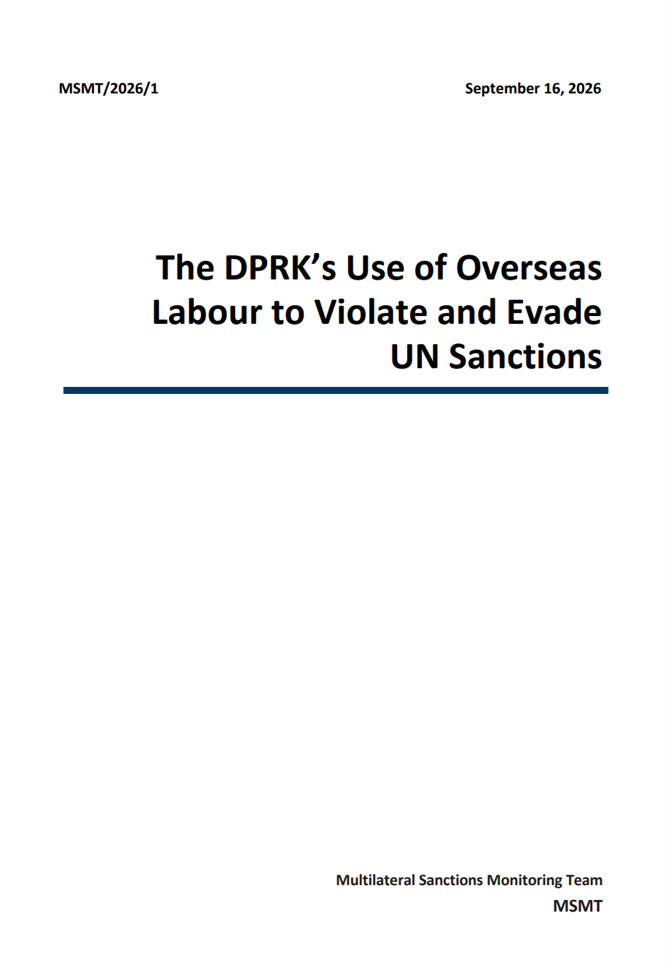
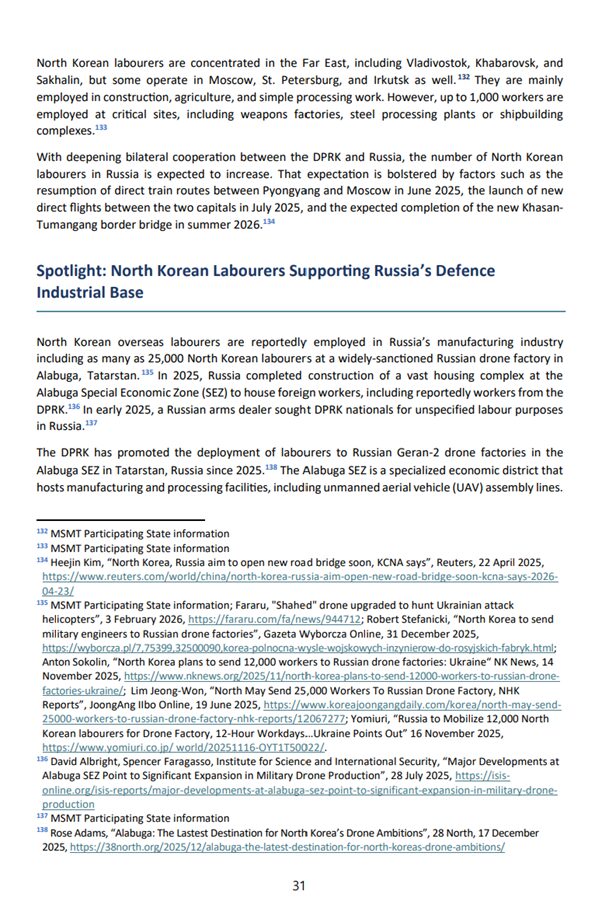
The factory floor shows another side of this partnership-building. A September report by the Multilateral Sanctions Monitoring Team says North Korean workers are employed at Alabuga in Tatarstan, where Russia produces Geran-2 drones, and describes workers entering Russia as students. Pyongyang rejected the report as fabricated. If the findings are accurate, the bargain is straightforward: Russia gains workers, North Korea gains income. Foreign support does not have to arrive as a finished missile; it can help keep the assembly line moving.
September 2026 sanctions-monitoring report. Pages 31-32 discuss Alabuga and drone production. Pyongyang rejects the report
The Underground Price List
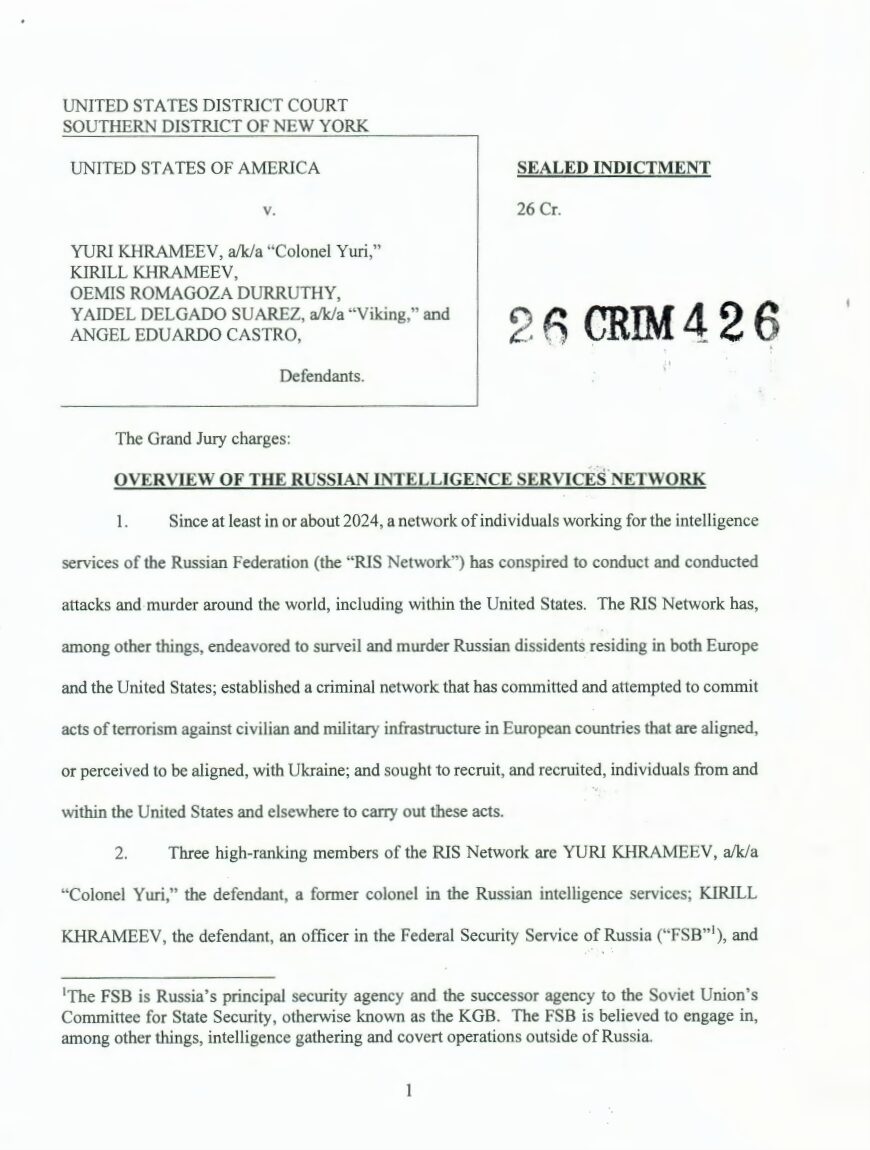
Recruitment abroad serves a different purpose. A September 15 U.S. indictment alleges that a Russian intelligence-linked network used Cuban and Venezuelan intermediaries to recruit inside America. Prosecutors describe payments of $1,000-$1,500 for surveillance and a $40,000 offer to kill a Russian dissident believed to be near Washington. Another alleged offer promised an American $25,000 to kill a target in Lithuania. These remain accusations, not court findings or proof of an officially declared bounty program.
Original U.S. indictment naming the alleged Russian, Cuban, and Venezuelan participants
The alleged network operated from at least 2024, before the Montenegro arrests. Its importance lies in the method: foreign intermediaries and local recruits, rather than an obvious Russian team. If substantiated, the charges would show Moscow reaching inside America through people who do not carry Russian passports.
The October 9 threat to expand the “exchange fund” signals that consular protests may no longer be Moscow’s only answer. It suggests foreign detainees could become leverage for recovering Russians. The warning to European and American governments is pointed: the detention of a Russian abroad may create a problem for their own citizens elsewhere.
Russia’s partners help it build weapons; alleged overseas networks extend its reach; threats against satellites and foreign detainees aim to raise the cost of confrontation. These are different tools, not proof of one master plan. But October’s warnings carry a common message: Moscow wants the other side to feel exposed too. Medvedev closed his latest message with a Russian proverb: “If you live among wolves, you must howl with them.”
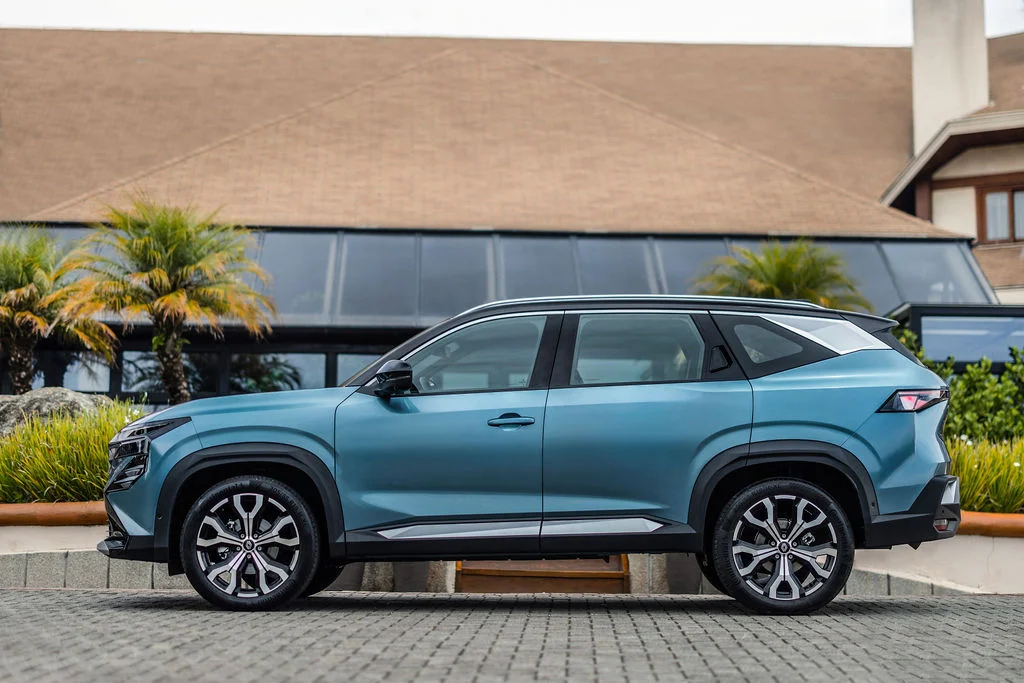
O Renault Boreal passa a ser o primeiro veículo produzido no Brasil a oferecer o Gemini de série. A inteligência artificial do Google amplia a experiência conectada a bordo, proporcionando interações mais naturais, intuitivas e personalizadas, transformando a cabine em uma verdadeira extensão digital da rotina dos ocupantes.
O SUV médio da Renault já havia elevado a experiência conectada a um novo patamar ao se tornar o primeiro veículo produzido no Brasil com Google Automotive Services (GAS), plataforma que integra Google Maps, Google Play e, agora, o Gemini como assistente virtual. O sistema substitui o Google Assistant e amplia suas capacidades com inteligência artificial generativa.
Agora, o Boreal dá mais um passo à frente com o Gemini. A tecnologia também está disponível como atualização opcional para os veículos Renault equipados com o openR link com Google integrado. Como evolução do Google Assistant, o Gemini amplia as capacidades do assistente virtual da plataforma, preservando todas as funcionalidades já disponíveis aos usuários e adicionando novos recursos baseados em inteligência artificial generativa.
Além de compreender contextos mais complexos e interpretar comandos mais naturais, o sistema passa a permitir o controle de um número ainda maior de funções do veículo por voz.
Além de realizar todas as tarefas já disponíveis com o Google Assistant, o Gemini integrado ao openR link amplia as possibilidades de interação com o veículo. Agora, os usuários podem controlar diretamente um número ainda maior de funções por comandos de voz, incluindo novas funcionalidades como abrir e fechar o teto solar e os vidros.
Com a nova tecnologia, o motorista não precisa mais recorrer a comandos específicos para interagir com o veículo. Em vez de dizer frases exatas, como “Ok Google, ligue o ar-condicionado”, basta utilizar a linguagem natural, por exemplo: “Ok Google, está muito calor aqui dentro”. O sistema compreende a intenção do usuário e pode ajustar automaticamente a climatização.
O comando de ativação por voz continua o mesmo. O Gemini pode ser acionado por meio das expressões “Hey Google” ou “Ok Google”, pelo botão de voz no volante ou pelo ícone do assistente na tela do openR link. Para iniciar uma conversa contínua com o Gemini Live, basta acionar o botão Gemini Live ou dizer: “Hey Google, vamos conversar” ou “Hey Google, vamos conversar ao vivo”.
O openR link com Google integrado é um sistema multimídia que oferece uma experiência conectada fluida, escalável e em constante evolução. O Gemini amplia ainda mais o conjunto de serviços disponíveis na plataforma, mantendo todas as funcionalidades já oferecidas pelo Google Assistant e adicionando novos recursos de inteligência artificial generativa e controle por voz.
Projetado para interagir de maneira mais natural com os ocupantes do veículo, ele é capaz de compreender o contexto das conversas, responder perguntas com maior precisão e lidar com solicitações mais complexas.
A atualização é gratuita, realizada remotamente por meio de tecnologia FOTA (Firmware Over-The-Air), e não altera a duração do pacote de conectividade. Sua implementação baseia-se em: – Conexão à conta Google no openR link utilizando a conectividade nativa do Boreal, sem necessidade de visita à concessionária. – Uma notificação na tela do openR link permite ao cliente decidir se deseja migrar para o Google Gemini. – Disponível para todos os veículos compatíveis, de acordo com os idiomas suportados e a versão do openR link.
O sistema multimídia aprimorado está disponível sem custo adicional para clientes conectados a uma conta Google em um dos idiomas compatíveis. O usuário escolhe se quer ativar o Gemini e também pode retornar ao Google Assistant a qualquer momento.
Como evolução do Google Assistant, o Gemini representa um grande avanço nos assistentes de voz embarcados. Alimentado pela tecnologia de IA do Google, ele é capaz de:
– Compreender o contexto da conversa e as intenções dos usuários. – Executar solicitações mais complexas. – Manter conversas naturais e contínuas. – Alternar idiomas durante a conversa.
Isso significa que os motoristas podem falar de forma natural, sem precisar memorizar comandos específicos. Os usuários também poderão ativar o Gemini Live para uma interação conversacional mais avançada. Esse recurso permite:
– Conversas livres e naturais. – Interromper o assistente a qualquer momento. – Fazer várias solicitações em sequência sem repetir a expressão “Ok Google”. – Alternar idiomas durante a conversa. – Uma experiência simplificada, projetada para segurança e conforto
Ao permitir tarefas mais complexas por comando de voz e reduzir a necessidade de interação por toque, o Gemini ajuda a:
– Minimizar distrações do motorista, mantendo o foco na estrada. – Ampliar e simplificar o acesso às funções do veículo por comandos de voz. – Melhorar o conforto e a praticidade no dia a dia.
Totalmente integrado ao veículo e ao ecossistema Google, o Gemini consegue responder a situações reais e executar várias tarefas em sequência sem necessidade de novas interações. Navegação inteligente com compreensão de contexto:
“Ok Google, leve-me para o centro de São Paulo, mas evite a Rebouças.” → O Gemini analisa o contexto e sugere uma solução adequada.
Controle por voz das funções do veículo:
“Está frio aqui dentro.” → O sistema ajusta automaticamente a climatização, elevando a temperatura da cabine.
Acesso a informações e conteúdos durante a viagem (modo Gemini Live):
“Ok Google. Está muito quente hoje. O que economiza mais combustível: abrir as janelas ou ligar o ar-condicionado?”
“Conte uma história sobre carros e dinossauros para meu filho de 8 anos.” “Crie um quiz sobre a história do Brasil para adultos e adolescentes.” | “Quais foram os resultados dos jogos do Brasileirão de ontem?” → O sistema consegue responder perguntas abertas, além de fornecer informações gerais, notícias e conteúdos de mídia.
O openR link com Google integrado é um sistema multimídia evolutivo que proporciona uma experiência conectada cada vez mais rica e intuitiva em qualquer lugar do mundo. Desde o lançamento, o Gemini oferece suporte a 16 idiomas, entre eles inglês, espanhol e português.
O Gemini contribui para uma experiência conectada consistente para clientes Renault em todos os mercados onde o sistema está disponível.
Os clientes Renault continuarão recebendo melhorias ao longo do tempo por meio de atualizações remotas, sem necessidade de levar o veículo à concessionária. Como plataforma de IA escalável, o Gemini recebe: – Atualizações contínuas e automáticas. – Capacidades e competências linguísticas ampliadas. – Novos recursos ao longo do tempo.
Kenya wants five of its citizens captured fighting for Russia in Ukraine to be treated as victims of human trafficking rather than prisoners of war, Foreign Affairs Cabinet Secretary Musalia Mudavadi told Kenyan lawmakers on 8 October, Bloomberg reported. Botswana is also seeking a citizen's return.
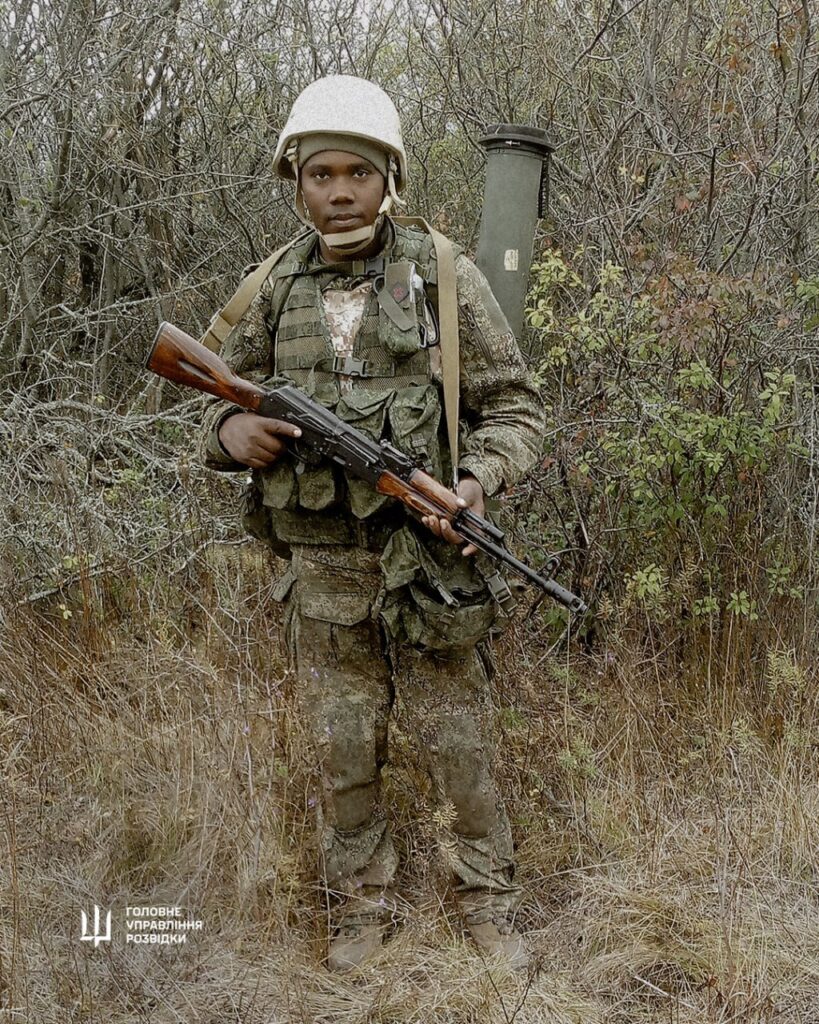
In 2025, Ukrainian ambassador Ivan Kholostenko called Russia's role in Africa neocolonialism. As Africa Corps troops prop up friendly regimes, the Kremlin is carrying out "a typical colonial practice of resource extraction," taking gold, diamonds, bauxite, and uranium, according to Ukraine's Foreign Intelligence. Russia also uses the continent as a recruiting ground for its war: nearly 500 Africans have died fighting for Russia, Ukraine says.
Five Kenyans in a Ukrainian camp
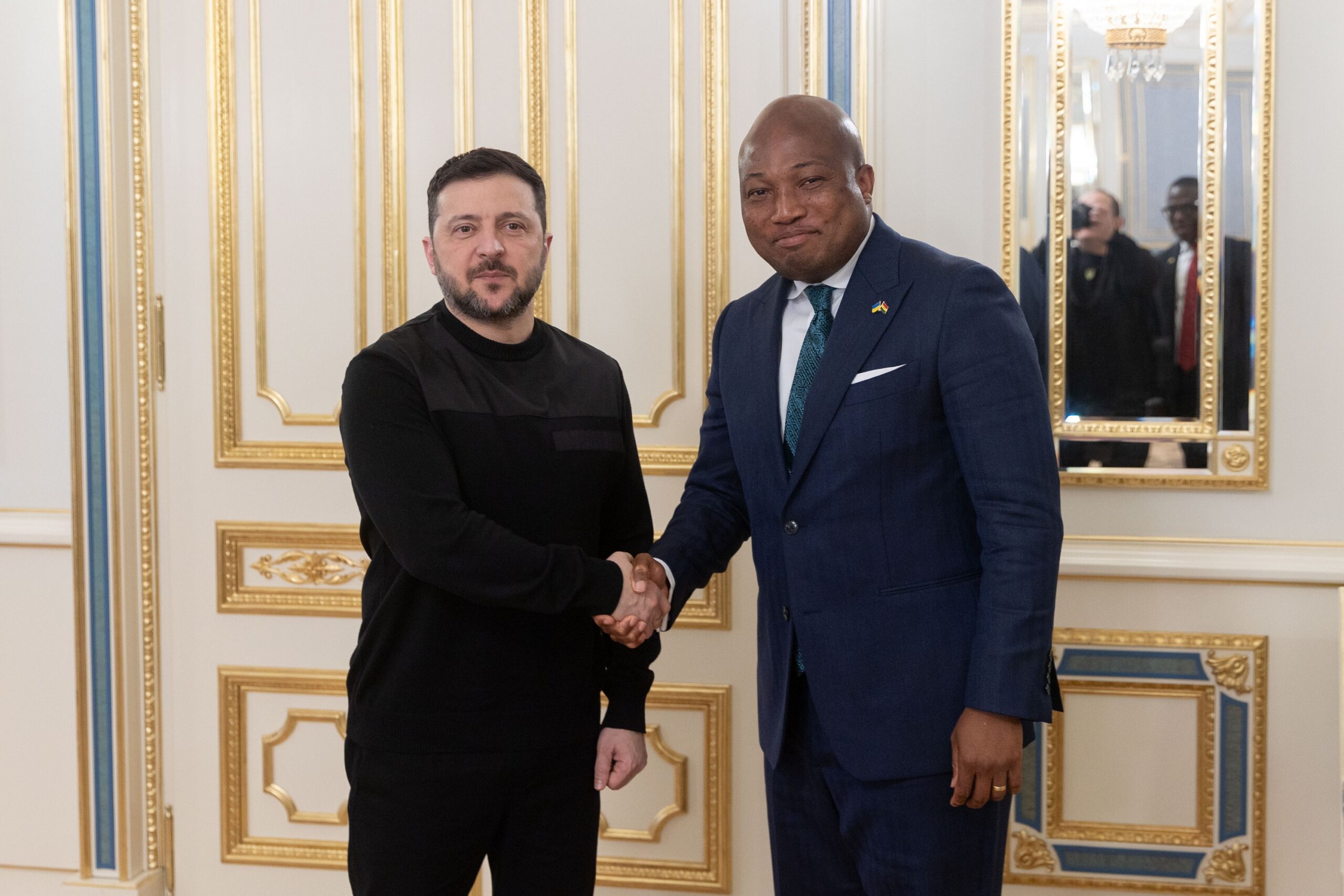
Kenya is negotiating to bring the five men home, and President William Ruto has raised the matter with Ukrainian President Volodymyr Zelenskyy, Mudavadi told the Senate. One has been held since November 2025, the others since March and April. The youngest is 23, Bloomberg reported. Kenya's honorary consul found them held in humane conditions at the Zakhid-1 camp, with access to medical care, the government said. Ukraine also holds the remains of four Kenyans.
Victims or fighters for hire
African governments say some of their citizens went to Russia for promised work as drivers, security guards, or cooks and were then forced into military service. The Kenyans "report having been recruited under false promises of employment," Mudavadi said.
"The circumstances of their recruitment and conscription are consistent with trafficking in persons," he said.
Ukraine's POW authority sees most foreign recruits differently. "The main motive for most of these mercenaries is financial gain," Dmytro Usov, secretary of Ukraine's Coordination Headquarters for the Treatment of Prisoners of War, said in November 2025, while stressing that many had ended up in Russia's army through fraud or coercion.
Ukraine holds that prisoners of war go home through exchanges, but Russia has never asked to trade for any foreign fighter except North Koreans, the headquarters said in May, adding it may consider other solutions if diplomats and lawyers find one.
Thousands of foreigners in Russia's ranks
Russia has recruited more than 28,000 foreigners from 135 countries, and more than 5,000 have been killed, a Ukrainian government website cited by Bloomberg says. Ukraine holds at least 213 foreign prisoners of war, not counting Russians and North Koreans, 37 of them African, according to documents Bloomberg saw. Russian dictator Vladimir Putin claimed on 3 September that people are "coming forward voluntarily and signing contracts."
Kenya's government counts 354 citizens linked to the war: 84 killed or missing, 34 hospitalized in Russia, and 62 repatriated. Petitioners told senators that 841 Kenyans remain unaccounted for. Mudavadi said his March visit to Moscow put Kenya on a Russian recruitment "stop list," with no new Kenyans enlisted since.
Some African governments take steps
In August, Botswana stopped eight citizens from joining the Russian military at airports in Botswana, South Africa, and Ethiopia, Bloomberg reported.
Captured Russian soldiers and an African mercenary. Illustrative photo: ArmyTV
Ghana accused Russia of luring its citizens into the war the same month, after Kenya and South Africa. The European Parliament said in March that Russia strips African recruits of their documents. Ukraine, meanwhile, is drafting its first Africa strategy.
Defying the trend toward footborne infantry assaults, the Ukrainian 3rd Army Corps deployed armored vehicles for Operation Vivaldi
The operation was a reminder that vehicles are still useful despite the ever-present danger from drones
But vehicles need a lot of support to give them a fighting chance
Armored vehicles aren't dead in Ukraine—they just need a lot of help. That's one of the biggest lessons from the Ukrainian 3rd Army Corps' Operation Vivaldi, its recent successful counteroffensive just north of the town of Lyman in eastern Ukraine's Donetsk Oblast.
Russia spent 18 months building its salient toward Sloviansk; Ukraine took much of it back in three. By 30 September, three of four planned phases in, the operation had returned 176 sq km to Ukrainian control, taken 250 Russian prisoners, and cost Russia more than 5,000 killed and wounded, Ukraine's presidential office said. It also foiled a Russian plan to break into the rear of the Sloviansk-Kramatorsk urban area, the office said.
Defying critics who insisted vehicles couldn't possibly survive in the drone-patrolled gray zone, the 3rd Army Corps repeatedly deployed mechanized forces as it counterattacked across a roughly 100 sq km salient the Russian 20th and 25th Combined Arms Armies had extended toward Sloviansk, one of the last two big free cities in Donetsk Oblast.
Maneuvering for months under a veil of secrecy, the 3rd Army Corps found and exploited gaps along the flanks of the 20th and 25th CAAs, ultimately breaking into the Russian armies' rears and forcing them to pull back across the Zherebets River in order to avoid encirclement.
Armored vehicles were key to the Ukrainian effort. They sped assault troops into battle, dropped them off under fire, and then supported them as they clashed with the Russians. "Maneuver warfare isn't going anywhere," stated Ryan O'Leary, a US Army veteran who once commanded volunteers in Ukraine.
Explore further
Ukraine is now sending its tanks into battle with drone escorts: they can drive into a Russian kill zone and come back alive
3rd Army Corps commanders knew they were taking a risk deploying armored vehicles in a Russian-controlled salient patrolled by first-person-view drones from Russia's elite Rubicon Center drone unit. But they clearly believed that, with adequate support, the vehicles could accomplish their missions—and survive.
They were right. A dramatic video shot by 3rd Army Corps troopers depicts the troopers disembarking from their armored trucks and rushing into the fight while small arms fire clatters all around them.
Given the intensity of the Russian fire, a mechanized assault "was the only real way to push positions in an effective manner to keep losses low as well as gain and hold momentum and aggression," O'Leary wrote. Walking into battle under the cover of trees might help the infantry avoid the attention of overhead drones, but it takes too long to sustain an aggressive assault, and it can be difficult to mass enough footborne infantry to overcome stiff enemy defenses.
"This is something that hasn't changed even with the advent of drone warfare coming of age," O'Leary added. "Suppression tactics and such have changed and now there is more than just indirect fires and counterassaults that you must be able to suppress and plan for."
But the concept of the infantry-carrying armored vehicle "isn't going anywhere," O'Leary stressed. "Especially when it takes a drone tens of minutes to get to target area, acquire target and hit the target. Right now, the front is extremely susceptible to maneuvering forces on assaults if it is planned right and executed properly."
The 3rd Army Corps' Operation Vivaldi is an excellent example of an operation that was planned right and executed properly—in ways that helped the corps' mechanized forces fight and survive.
New footage shows Ukrainian forces storming and clearing Russian positions during the "Vivaldi" counteroffensive in the Lyman direction. The assault was captured firsthand by Ukrainian soldiers using GoPro cameras. pic.twitter.com/qxyNHl0n3A
The corps explained that it deployed footborne scouts to find the best paths for follow-on vehicular assaults—and subsequent medical evacuations. Scouts "conducted recon of the front lines, ensured the breakthrough of equipment and led adjacent units along secret paths while evacuating the wounded," the 3rd Army Corps stated.
Ukraine liberates area above Lyman in Operation Vivaldi. Map: Euromaidan Press
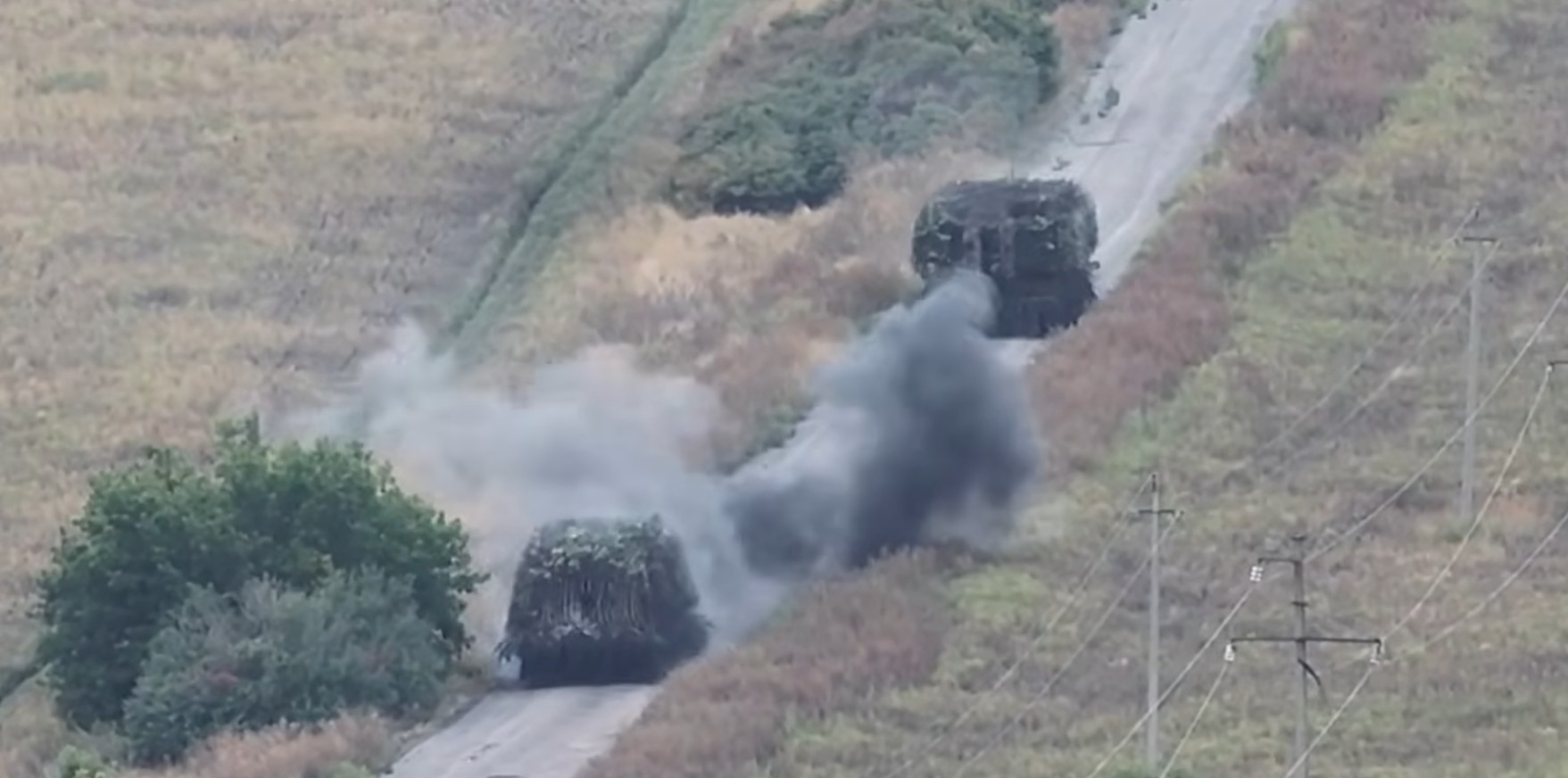
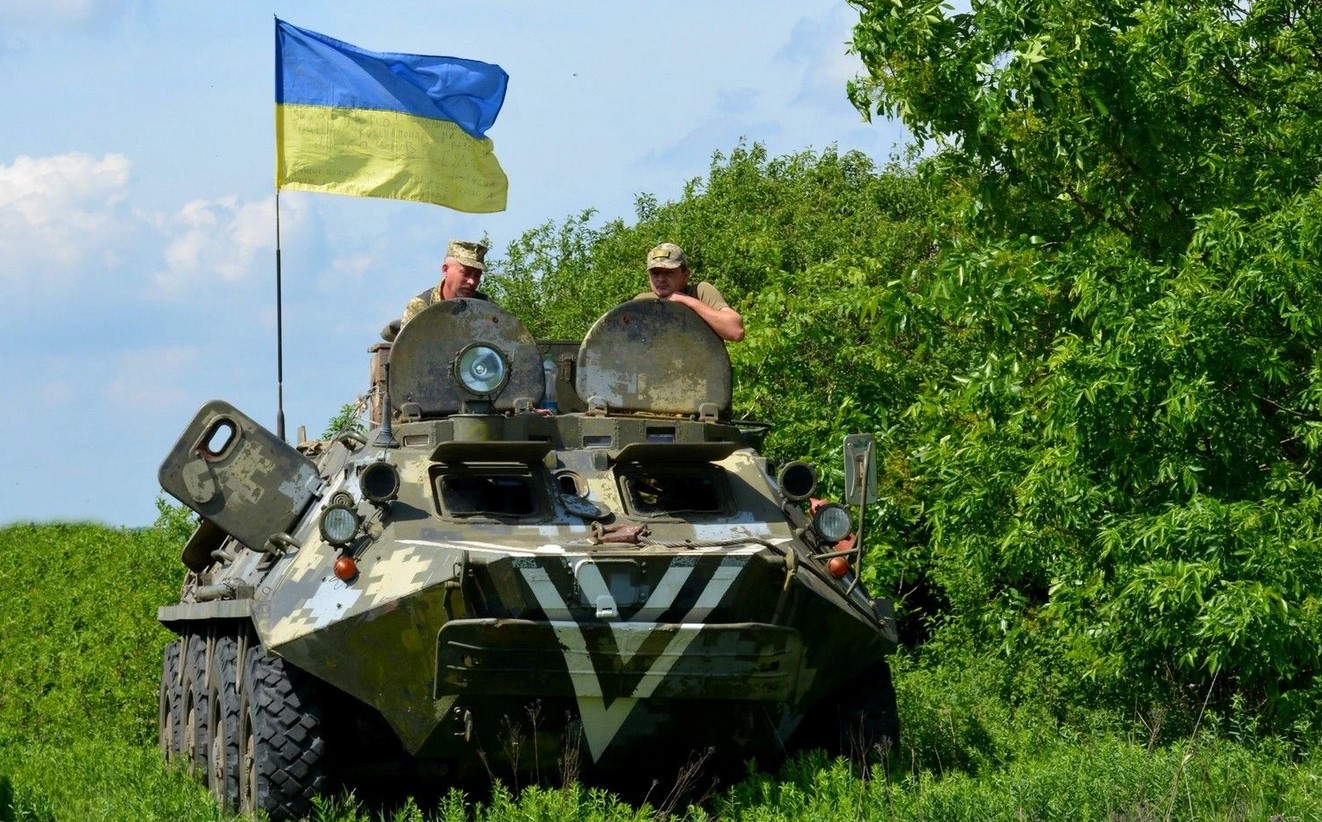
Before the armored vehicles rolled into action along the pre-scouted paths, the 3rd Army Corps deployed robotic engineering vehicles to clear Russian mines. After that, the corps sent in old BTR-60 wheeled armored vehicles modified for remote control and packed with anti-tank mines. These "robotic kamikaze complexes ... were used to demolish the enemy's strongest fortifications," the corps said.
Only after the assault routes were scouted and cleared of mines and Russian strongpoints did the manned vehicles and their precious infantry cargo roll out. We don't know how many losses the 3rd Army Corps' mechanized infantry suffered on the attack, but we do know they ultimately prevailed—when the battered Russian 20th and 25th CAAs retreated.
Explore further
In Ukraine’s Vivaldi offensive, nobody rides in the BTR-60s. Bulgaria’s old troop carriers go into Russian bunkers packed with mines
"Recent Ukrainian operations demonstrate that maneuver is not dead," stressed Mick Ryan, a retired Australian army general. "Despite the difficulty in ground operations maneuver observed in eastern Ukraine over the past few years, offensive operations are still possible in modern war. But they need the intellectual effort to develop new techniques to make them viable and repeatable at scale."
In addition to the reconnaissance and robots-first engineering and suppression tactics the 3rd Army Corps employed, Ryan recommended commanders deploy more drone-grounding electronic warfare and use AI tools to help plan attacks.
But ages-old human elements are still essential, Ryan wrote. "Developing viable methods for offensive tactical and operational maneuver in the 21st century also demands the inclusion of older ideas about the employment of mass, logistic support and casualty evacuation [and the] maintenance of morale and leader's provision of purpose to their people."
Even when the assault route is clear, it's understandably terrifying to ride in an armored vehicle across drone-patrolled terrain. But a good leader can motivate their troops to try.
Russian forces appear to use AI to plan air attacks and recognize targets amid raids on Ukrainian cities. This may include recent air attacks on Odesa that have come in waves with short gaps, Deputy Air Force Commander for Air Defense Colonel Yurii Cherevashenko says, Ukrinform reports.
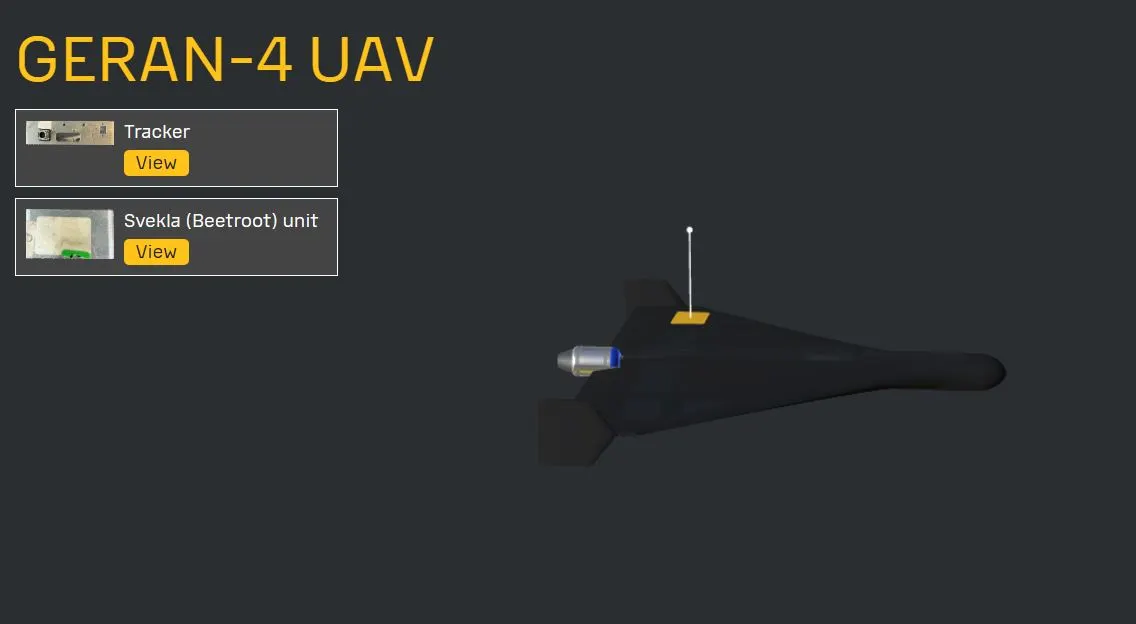
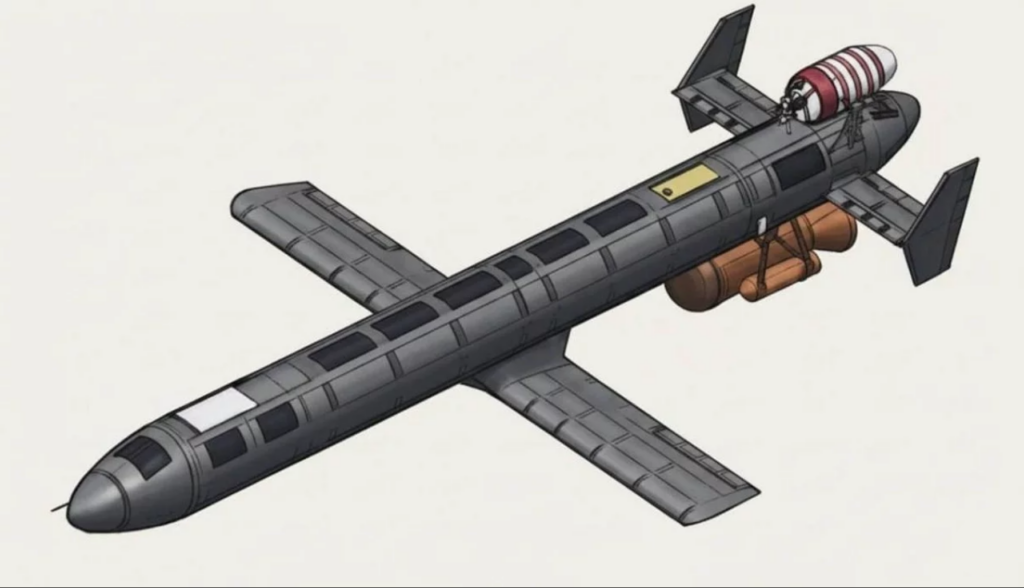
Russia has already equipped its jet-powered Geran-4 drones with machine vision, allowing them to recognize and track targets on their own in the final seconds of flight. Recently, a single jet drone hit a locomotive in Odesa Oblast in late September and killed two railway workers.
The scale of Russia's AI use is hard to measure, Cherevashenko continues, but Ukrainian specialists already see its elements in how attacks are organized. The long, wave-by-wave strikes on Odesa would be far harder to plan and coordinate without it, he believes.
"Russian forces use AI to lay out attack routes and to recognize targets," Cherevashenko says, framing it as his own assessment rather than a confirmed fact.
The sea is harder to defend than land
Odesa Oblast is home to the biggest port in Ukraine, "Southern". Protecting it is a challenging task as guarding the airspace over water is tougher than over land, Cherevashenko says. Some air defense assets do not perform as well at sea, and in some cases, crews can intercept a target only as it approaches.
Weather adds to the problem, with storms and fog, while the open sea gives Russia more freedom to choose drone routes and launch points. To protect ports and the coast, Ukraine uses drone motherships, platforms that carry other drones aloft to extend their flight time and keep watch over set areas.
Ukraine answers AI with AI
Ukraine is also building its own AI for air defense. Automated turrets using machine vision now help counter Russian drones. According to Army Media, the Air Force says such turrets have scored their first shoot-downs, including of Geran-5 jet drones, with one soldier saying 50 rounds were enough to bring down a Geran.
Ukraine's Defense Ministry is going further. In late September, it unveiled an AI system called SPECTR, built by its A1 Artificial Intelligence Center and already in testing with several combat units, to analyze battlefield data, predict Russian moves, and suggest options to commanders.
Defense officials from Taliban-controlled Afghanistan spoke with North Korean representatives at Russia's Center-2026 strategic exercises, Afghanistan's Defense Ministry reported. So far, neither Moscow nor Pyongyang has confirmed any meeting, and Kabul disclosed no details of the talks or any agreement.
Since invading Ukraine, Russia has gathered a circle of sanctioned governments it both leans on for its war and props up in return—a trade that runs in opposite directions depending on the partner. Each new tie leaves one more isolated state with a stake in the war grinding on.
Observers among dozens
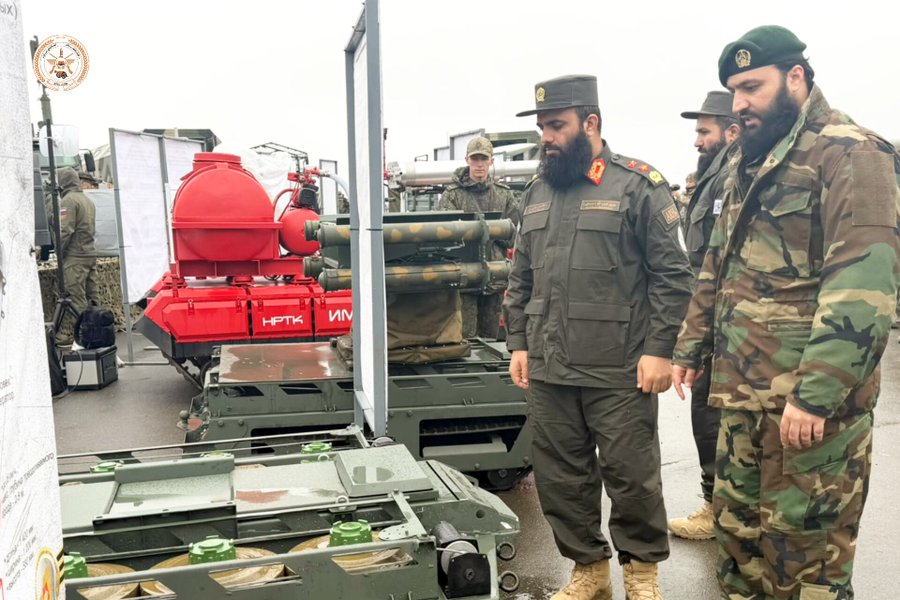
The exercises ran from 28 September to 3 October in Russia's Chelyabinsk Oblast. The Taliban attended as observers for the first time since it retook power in 2021, Militarnyi reported, one of dozens of foreign delegations present.
Explore further
Russia builds 3,000 jet drones monthly to counter Ukrainian interceptors, HUR says
Mawlawi Nasibullah Madani, commander of the Abdullah bin Masoud Joint Combat Training Command, led the Taliban delegation. The ministry said its officers held discussions with North Korea's military attaché and with officials from China, India, Vietnam, and other countries on bilateral ties and military cooperation. The delegation also toured an exhibition featuring heavy weapons, drones, long-range missiles, and robotic systems.
Moscow's expanding military network
On 27 May 2026, Russia and the Taliban signed a military-technical cooperation agreement. Russia's special envoy for Afghanistan, Zamir Kabulov, claimed the deal is a practical framework focused on repairing Soviet- and Russian-made equipment the Taliban already holds. Russia remains the only country to formally recognize the Taliban government, a step it took in July 2025.
North Korea signed a comprehensive strategic partnership treaty with Russia in June 2024 that includes a mutual defense clause. Pyongyang has since sent an estimated 14,000 troops to Russia's Kursk Oblast. In April, Ukraine's Coordination Headquarters for the Treatment of Prisoners of War put North Korea's losses at 7,058, including 2,251 killed.
Ukraine's drone pilots are killing and wounding far more Russian infantry than they did a month ago. Ukraine's Unmanned Systems Forces confirmed that their pilots took out 2,699 Russian infantry from 1 to 5 October, 39.7% more than in the first five days of September, Commander Robert "Madiar" Brovdi wrote on Telegram on 6 October.
The Unmanned Systems Forces, the branch of Ukraine's military that fights with drones, count only losses verified by their own pilots in the military's Delta system, so the full picture of Russian losses is larger, Brovdi stressed. Compared with the first five days of August, the rise is 76.5%, from 1,529 losses, which he ties to denser and more frequent Russian assaults.
The sharpest growth occurred in the area of the 1st Azov Corps of Ukraine's National Guard on the Dobropillia-Pokrovsk axis in Donetsk Oblast, as fighting for fortress-belt cities continues. Drone pilots recorded 1,268 Russian losses there, 43% more than the 884 of early September and 91% more than the 664 of early August.
"Russia's hidden mobilization is in action. This is the beginning," Brovdi said ironically.
Russia doubles its monthly recruitment pace
Russian recruitment, mobilization, and contracts run at about 70,000 people a month, twice the 35,000 monthly average from January to August 2026, Brovdi noted on 16 September, when he forecast 12,500 losses for his pilots in September.
He expected the toll to keep climbing. Bigger records still lie ahead because of Russia's unannounced mobilization, Brovdi added on 24 September.
Drone pilots outpaced August by a quarter
September was completed above that forecast. The pilots logged 13,358 Russians killed or wounded, 25.35% more than the 11,010 of August, an average of 445 a day against 355, Brovdi reported. By his count, that equals the full assault infantry of one battalion every day, and his pilots hit a Russian target every 42 seconds.
Two sets of axes took the heaviest toll. In the first 24 days of September, the Dobropillia and Pokrovsk axes accounted for 4,018 losses, and the Oleksandrivka and Huliaipole axes for 3,021, according to Brovdi. The first of those groups covers the same Dobropillia-Pokrovsk axis where the Azov corps zone recorded the sharpest October rise.
The first hearing of the Supreme Court’s new term on Monday addressed one of the most consequential cases for the U.S. energy sector: The City of Boulder v. Suncor Energy, a lawsuit regarded as one of the major battles over liability for climate change. Framed by many as a David-and-Goliath dispute, the City of Boulder, Colorado, sued two oil companies seeking accountability for climate change. Justices heard the parties’ arguments for roughly two hours and questioned lawyers on technical and jurisdictional matters. These are the key points in one of the most important court battles expected in the coming months.
Certain ideas define us. Some earned names of our own along the way. Others have run through nearly 240 pieces without ever being formally christened. Put together, they amount to a worldview. That worldview has been assembled one essay at a time since 2023. Many readers have walked in mid-conversation. Mention the hardware/software flip, super […]
An update to Google Maps using satellite imagery has revealed the extent of devastation during the three-year Gaza war and the severity of the continuing humanitarian crisis faced by the territory’s 2.3 million inhabitants.
On September 30, SK Hynix’s American depositary shares closed at US$184.15 on the Nasdaq. Earlier that day in Seoul, one ordinary share closed at 1,776,000 won, about $1,308.80. Ten ADSs represent one Seoul share, so each ADS’s slice was worth about $130.88. Comparing those two closing prices gives the ADSs a 40.7% premium. The markets […]
A powerful reflection on the pull of nostalgia, on learning to accept that a past life is gone even as you tentatively reach back for it. Tiffany Huang captures the ache of lost opportunities and regretted paths, of staying a course out of duty and responsibility even as your sense of home erodes. It’s a gorgeous, bittersweet read about what it means to move on long before you’ve fully let go.
You unmasked for the first time, revealing smooth cheeks, a sharp chin, and a long nose. You talked about your book, in progress for several years now, about a Hong Kong man drifting aimlessly around the world. I asked you how you felt about the protests and noted the resignation in your tone. You wanted to write a book about what it meant to be a man from Hong Kong; if Hong Kong disappeared, what would happen to the man? You told me about your family, and it was clear we were not meeting to talk about writing anymore. When you spoke, you chose your words carefully. You didn’t ask me about my boyfriend, only how I felt about returning to America. When I hesitated, you did not ask why, and when I spoke, you listened instead of interrupting me. I didn’t want to leave.
Iran's open letter to Americans on why the U.S. & Tehran cannot enjoy a peaceful relationship, why the U.S. has failed to secure an Iranian surrender, how America’s leaders have spent decades causing chaos in the Middle East, the true meaning behind “Death to America” chants, how constantly fighting Israel’s wars has gravely weakened the U.S.
The withdrawal, agreed on two years ago, comes against the backdrop of the ongoing war between the United States and Iran that has also sometimes spilled over into Iraq.
The withdrawal, agreed on two years ago, comes against the backdrop of the ongoing war between the United States and Iran that has also sometimes spilled over into Iraq.
When Donald Trump and Xi Jinping met in Washington last week, artificial intelligence was among the issues dividing their countries. Days earlier, Treasury Secretary Scott Bessent said the two sides had agreed to establish a formal AI dialogue, including an incident line, though its protocols had yet to be worked out. The summit produced no […]
On Sunday, NBC News reported that Marines were injured during an Iranian cruise missile attack while transiting the Strait of Hormuz on Sept. 14. The network’s sources said the Marines were not on a U.S. Navy ship, but they did not identify which vessel they were on. However, a former Royal Mail vessel that at one point was being converted into a floating armory stands out as a strong possibility.
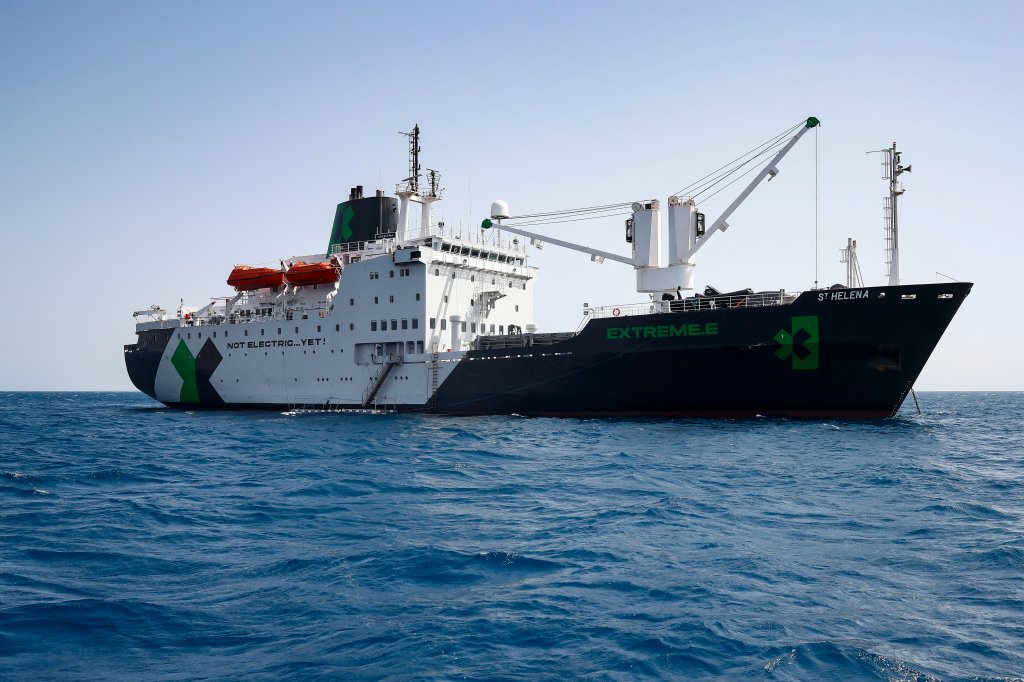
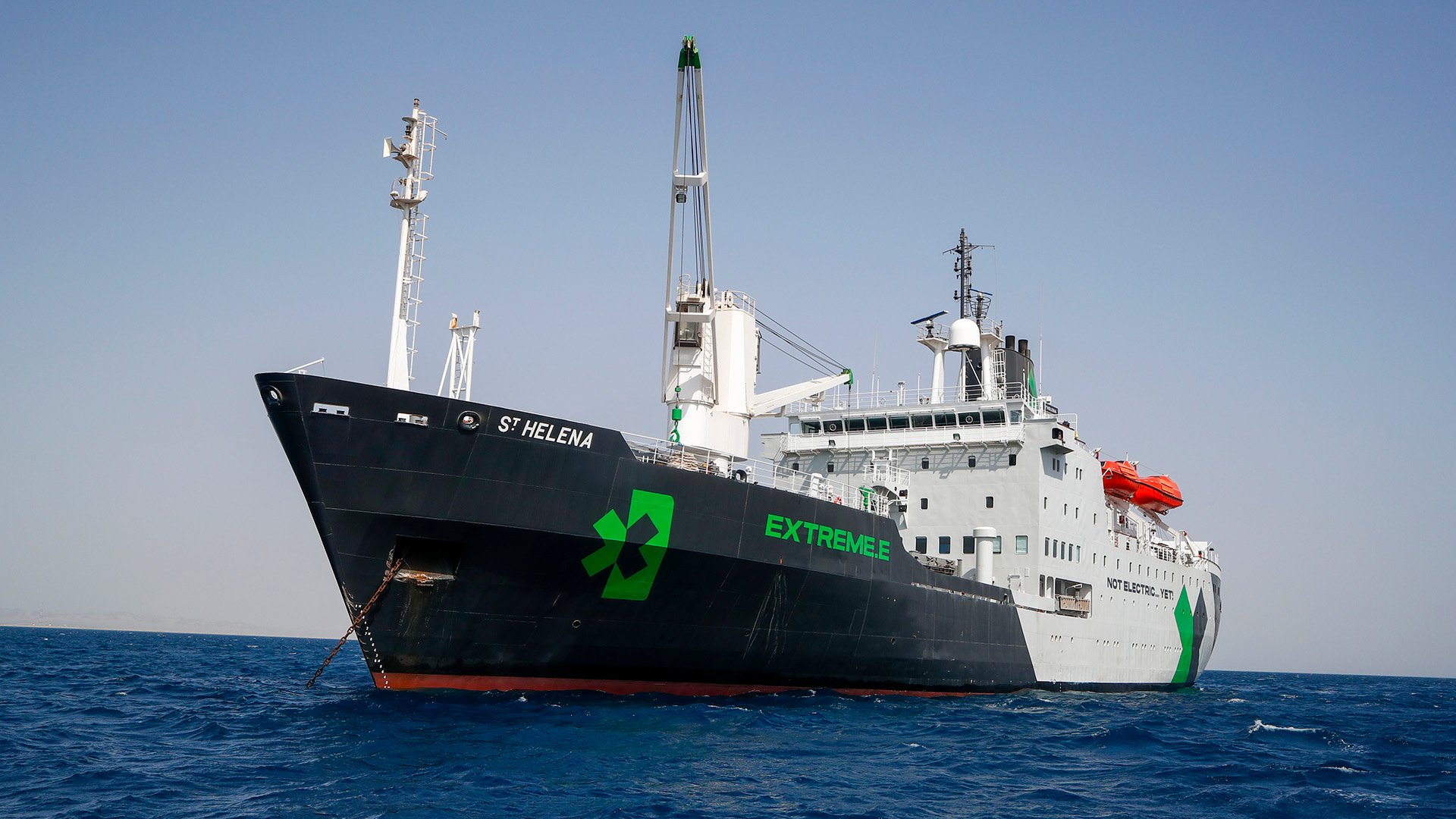
While much remains unclear about the Sept. 14 incident, there was only one vessel known to have been struck that day, according to the United Kingdom Maritime Trade Operations (UKMTO) and a maritime security official we spoke with. The ship was eventually identified by several maritime media outlets as the M/V St. Helena. Again, the St. Helena’s involvement remains unconfirmed, but the ship’s interesting background is of particular note.
The St Helena logistics ship during the Saudi Arabia on March 30, 2021. Photo by Colin McMaster
“Eight U.S. Marines were injured two weeks ago when an Iranian cruise missile attacked the ship they were operating on in the Strait of Hormuz,” NBC reported, citing three U.S. officials. “The Marines were not seriously injured, but they sustained smoke inhalation and possibly traumatic brain injuries, as they had symptoms of concussions, such as headaches, the officials said.”
“The Marines, seven of them enlisted and one officer, all returned to duty soon after the Sept. 14 attack, the U.S. officials said,” according to the network. “The officials said the Marines were operating as part of a battalion landing team during the Iranian anti-ship cruise missile attack.”
TWZ cannot independently confirm that Marines were on board the St. Helena or that they were injured. We reached out to the Pentagon and U.S. Central Command (CENTCOM) for more information. The Pentagon referred us to CENTCOM, and CENTCOM declined comment.
The incident took place amid an uneasy truce between Iran and the U.S. broken up by sporadic Iranian attacks on ships transiting the Strait of Hormuz. At the same time, the U.S. military is enforcing a blockade on Iranian ships, during which it has struck several for trying to bypass that effort as well as in retaliation for Iranian attacks on shipping. Negotiations between Washington and Iran have ebbed and flowed, and U.S. President Donald Trump is once again mulling a choice between continuing talks or renewing large-scale attacks.
As we noted earlier in this piece, after the vessel was struck, several maritime industry trade publications identified it as the St. Helena.
“Iran has attacked a historic former British Royal Mail passenger ship in the Strait of Hormuz,” TradeWinds News reported on Sept. 15, a day after the incident. “Maritime security sources identify the 6,800-gt St Helena (built 1989) as the latest vessel to be hit by an ‘unknown projectile’ in the war-torn waterway. The attack was reported late on Monday, according to UK Maritime Trade Operations, which cited a ‘verified source’ for the incident without identifying the vessel.”
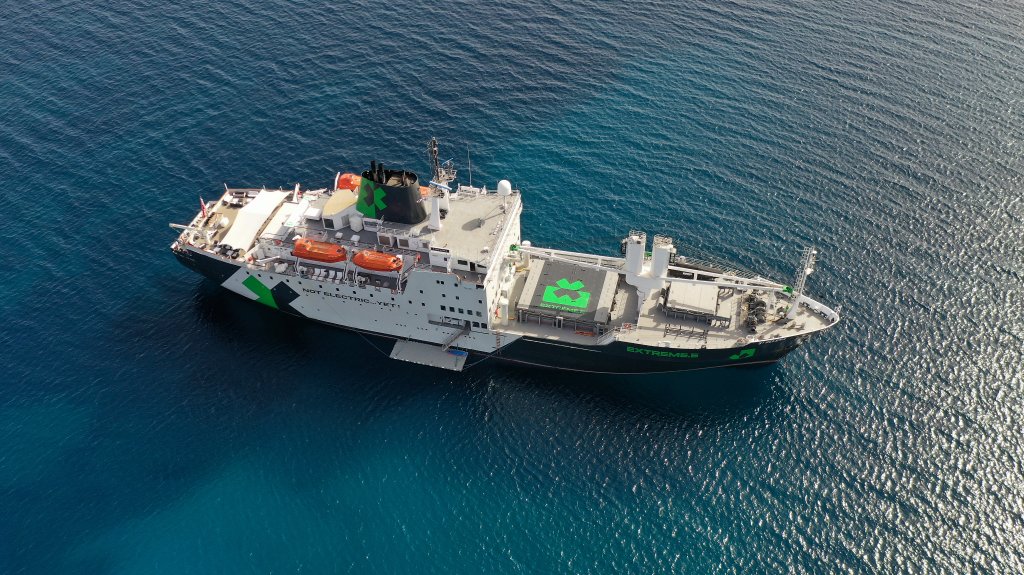
Aerial view of the St Helena transport ship in the sea off Porto Pino during the Sardinia on July 4, 2022. Photo by Sam Bagnall
“UKMTO has received a time late report of an incident within the Strait of Hormuz,” the organization reported on Sept. 15, citing an incident that took place a day earlier. “A verified source has reported that a vessel has been struck by an unknown projectile.”
“There is no reported damage or environmental impact,” UKMTO added. “Authorities are investigating.”
According to Lloyd’s List, the ship was being operated by the Ambrey maritime security firm at the time it was struck. Ambrey declined to comment.
Shipping expert Sal Mercogliano and open-source investigator Tom Bike were among those suggesting the St. Helena could have been the vessel at the heart of the NBC report.
So piecing together the evidence it appears that the US may have converted St Helena into a armed merchant cruiser.
The Marines looked at putting Armed Guards on board commercial ships three years ago as reported by @USNINews.
Exactly what the St. Helena was doing at the time it was struck is unclear; however, the ship has had a very unusual past.
The vessel entered into service in 1990 and “sailed between Cape Town, South Africa and Saint Helena and Ascension Islands, carrying both passengers and cargo, some of which was Royal Mail, earning her the rare RMS designation,” according to Cruise Arabia and Africa.
The St. Helena was Britain’s last working postal ship, according to Maritime Executive. After it was retired in 2018 because it was no longer needed for that function, things got really interesting.
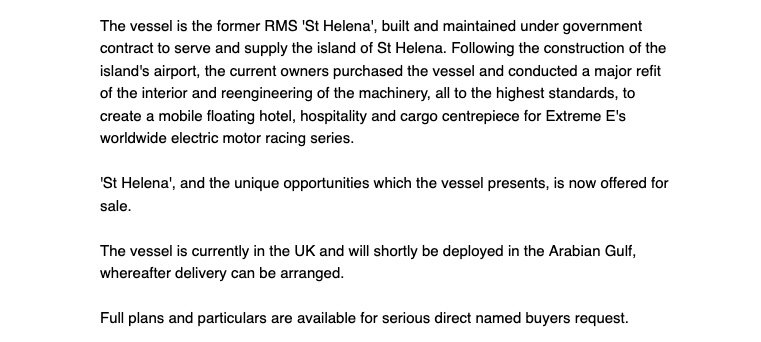
Two different organizations took over the vessel, including, as we noted earlier in this story, a company that was planning to use it as a floating armory in the Middle East.
“Renamed MNG Tahiti, the 103-meter (340-foot) ship is being readied by her new owner MNG Maritime to become a floating armory working in the Gulf of Oman,” Maritime Executive wrote on April 22, 2018. “She will deliver security guards and weapons to vessels sailing through the region and is expected to be operational in her new role in the next few months.”
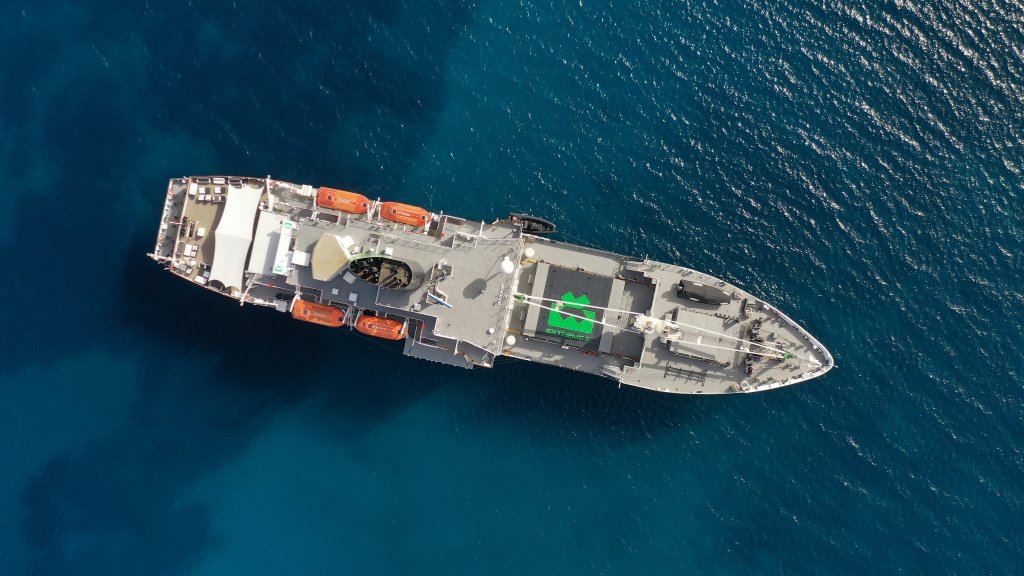
It is unclear what happened to that plan. However, two years later, an off-road racing series called Extreme E said that it “secured exclusive use of the former Royal Mail ship in 2018.” After that, the ship underwent “an extensive refurbishment process, which has included total overhaul of steelwork, engines, generators, propellers, interior and cabin space, and more, making it not only fit for purpose, but also as efficient as possible ahead of its new mission.”
Aerial view of the St Helena transport ship in the sea off Porto Pino during the Sardinia on July 4, 2022. Photo by Sam Bagnall
The ship was “specifically designed to transport all the infrastructure and equipment the Extreme E needs for their race weekends,” the organization stated. The plan was to have the ship serve “as its freight and logistics hub due to her versatility and ability to carry and unload a mixture of cargo, like all 10 of the championship’s ODYSSEY 21’s [electric off-road racecar], as well as team members and guests. This was also fit with a Science Laboratory so research can be conducted enroute to the race locations.”
On Sept. 17, 2024, the St. Helena was put up for sale, according to Horizon Ship Brokers. The current ownership is unclear. We reached out to Horizon Ship Brokers for more details.
Horizon Ship Brokers
Last year, the saga of the St. Helena took a new turn. A company called Terra Nova Expeditions chartered the vessel for Antarctic cruises, but those plans were scrubbed last month because the vessel was stuck in the Persian Gulf and was no longer available for the Antarctic sailing season.
While we can’t confirm that Marines were onboard when St. Helena was hit, Marines have been training for this exact mission set. USNI News reported in 2023 that a “force of 100 Marines, newly trained by Navy personnel,” stood ready “to respond, if ordered, to provide armed security aboard foreign commercial ships transiting the Strait of Hormuz.”
Those Marines were members of the 26th Marine Expeditionary Unit (MEU) embarked on the three-ship Bataan Amphibious Ready Group (ARG), USNI added at the time.
It is unclear if those plans are still in place and if Marines in the region have actually been ordered to provide armed security for foreign vessels sailing through or near the strait. Regardless, Marines could be quickly trained to take on this mission set and have drilled for ship boarding and searches for years, especially special operations and specially-tasked units. CENTCOM declined to comment when we asked if there are U.S. personnel embarking on commercial ships transiting the Strait of Hormuz.
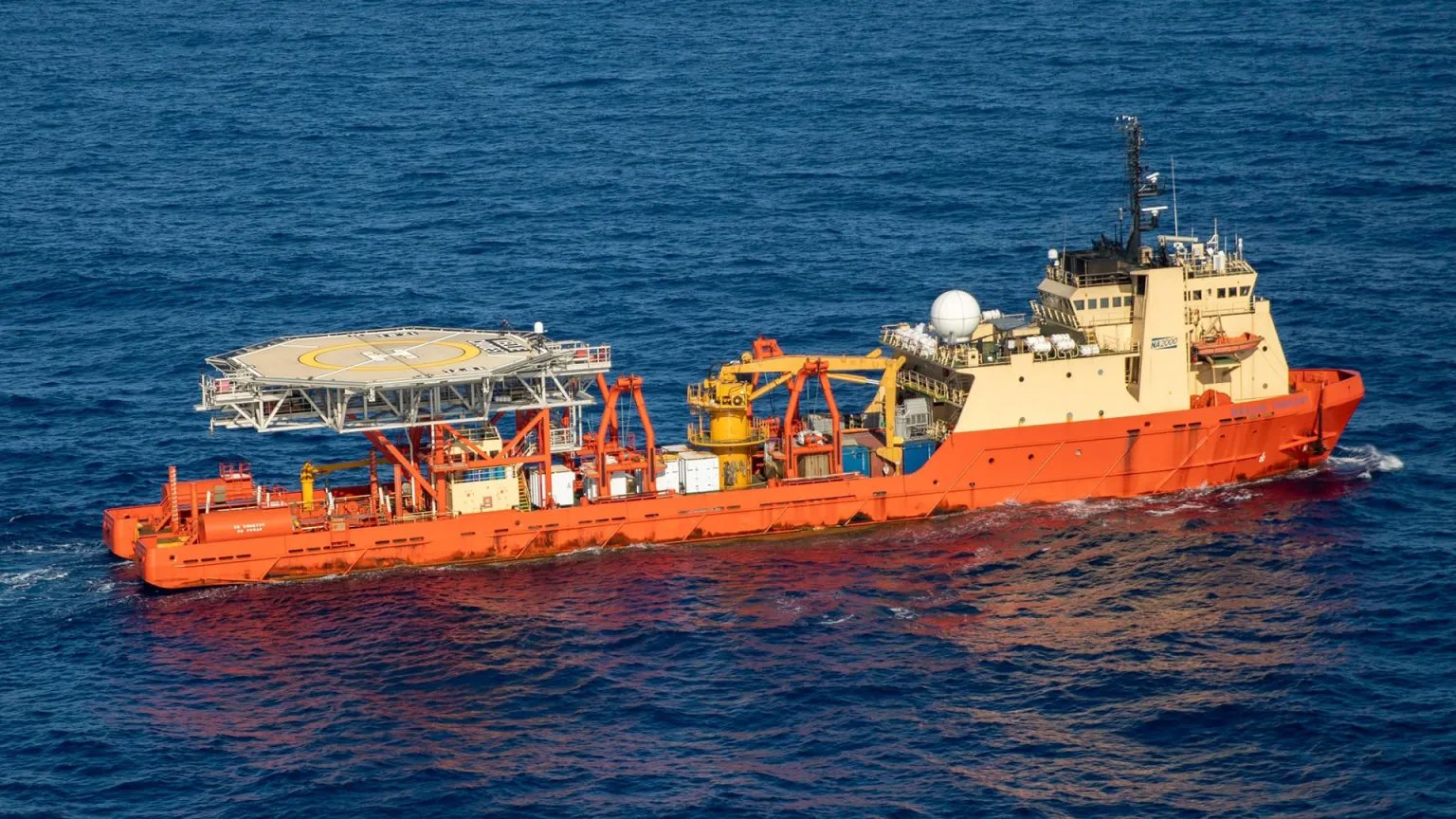
At the same time, it is possible that the unique attributes of St. Helena made it a convenient host ship for sea base operations for U.S. forces in the region specifically for this crisis. Adapting commercial vessels for exactly this purpose has a long history around the Strait of Hormuz, as it was a central facet of the Tanker Wars during the 1980s, that saw U.S. forces operate from barges in the region. Today, commercial vessels remarkably similar to St. Helena operate in similar roles, especially in support of special operations and interdiction operations.
The special mission ship U.S. Motor Vessel Kellie Chouest steams in the Caribbean Sea while participating in a passing exercise (PASSEX), with the Dominican Republic Navy and USS Billings (LCS 15) Oct. 24, 2021. Kellie Chouest is deployed to the U.S. 4th Fleet area of operations to support Joint Interagency Task Force South’s mission, which includes counter-illicit drug trafficking missions in the Caribbean and Eastern Pacific. Photo by Petty Officer 2nd Class Austin C
Once again, we have no idea what the ship’s mission was at the time of the incident and if Marines were simply helping it transit safely out of the Persian Gulf or something more, but the attack did expose the fact that individual Marines are more involved with activities in this tumultuous body of water than it may seem.
The officer who led the 31st Marine Expeditionary Unit (MEU) on its recent combat deployment to the Middle East told us he needs his own uncrewed surface vessels (USVs) on future deployments. Operationalizing USVs is an area where the Marines are lagging behind. In particular, he wants the ability to send USVs forward to reconnoiter potential highly-contested beach landing areas, a mission largely assumed by the Navy.
As we have frequently reported, the military use of USVs is now proliferating around the globe at an increasing rate. Ukraine has employed sea drones to devastating effect against Russia’s Black Sea Fleet vessels and facilities, forcing the general evacuation of Russian naval assets from occupied Crimea to bases in Russia proper. During Operation Epic Fury, the U.S. used them for the first time in combat, as one-way attack weapons against Iranian targets, to hunt for mines, and for a search and rescue operation to locate the crew of an AH-64 Apache helicopter downed by Iran, as well as general broad-area surveillance and awareness. China is investing heavily in the space, as well, along with many other navies around the globe, both friend and foe.
The following video shows the first U.S. use of a USV as a kamikaze weapon.
Yesterday, using multiple one-way attack surface drones, CENTCOM forces successfully struck a submarine and ship maintenance facility in Iran. Three Corsair unmanned surface vessels hit the port at Bandar Abbas Naval Base, marking the first time American forces have employed sea… pic.twitter.com/bOM2kmgRxz
“There was a lot in theater that were being used, but it wasn’t something that we went out with,” Col. Chris P. Niedziocha told us when asked if the 31st MEU deployed with USVs. He then answered in the affirmative in response to a question about if MEUs need sea drones on future deployments. He said it is part of the “explosion in robotics and autonomy” being used in combat.
“These systems are incredibly useful and capable,” explained Niedziocha, now director of the USMC Expeditionary Warfare School. “And you say, ‘Hey, you know, [in] the next war, if the first thing you’re putting through the breach isn’t a robot, something’s wrong. You say never send a Marine someplace you haven’t sent a bullet. I think the new way is [you] never want to send a Marine someplace you haven’t already sent a robot. So yeah, we’re embracing [the technology] and we’re not leaders. We’re fast followers in that regime.”
Asked for specific use cases he sees for USVs, the colonel talked about using them before putting Marines ashore.
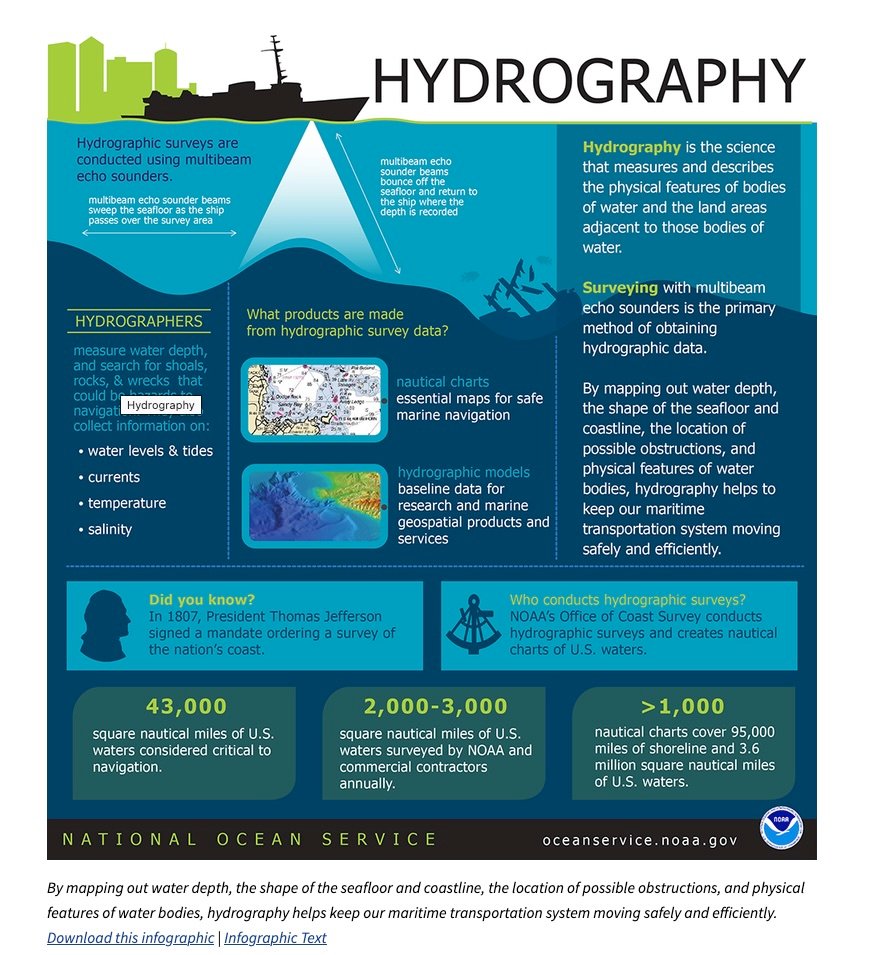
“I can tell you if you’re doing an amphibious operation, you want to understand what’s waiting beneath the surface in the water column,” Niedziocha noted. “So something can go either with a side-looking sonar array or even forward-looking to demonstrate that there’s nothing there, and the hydrography and bathymetry is what you… need for the operation to be successful.”
Hydrography measures “the shape and features of the shoreline; the characteristics of tides, currents, and waves; and the physical and chemical properties of the water itself,” according to NOAA. Bathymetry, which is part of that, focuses on mapping the depths and shapes of underwater terrain.
NOAA
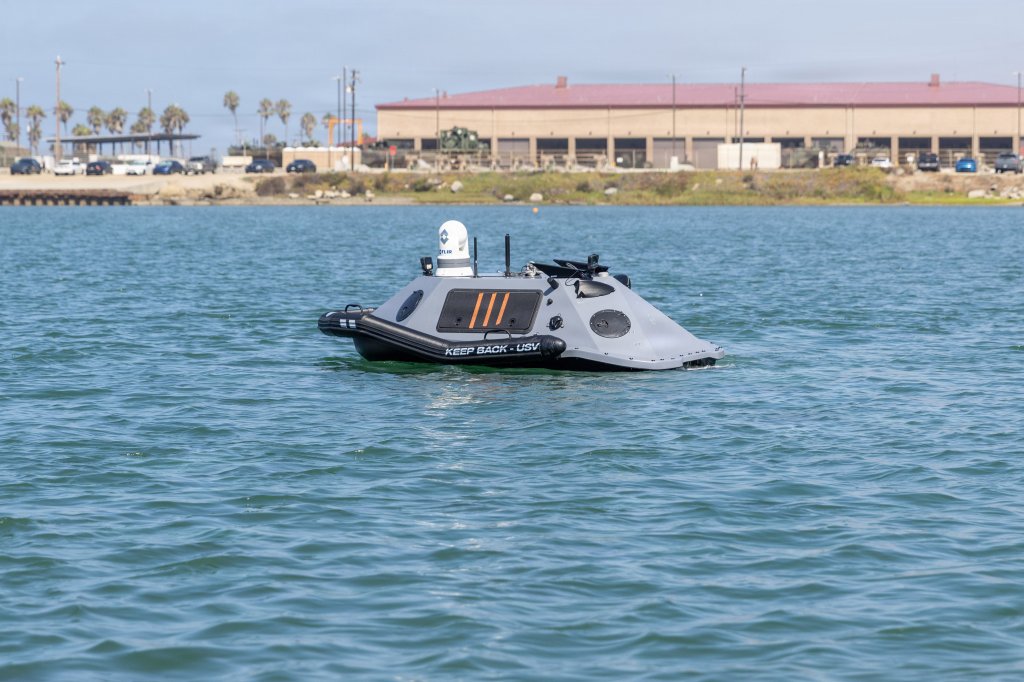
These functions are critical for mine detection and determining whether there are man-made or natural obstacles that would impede landing operations. While these missions are largely being performed by the Navy, including with USVs, the Marines are moving toward making that an organic capability. Recently, the Marines announced they were testing a counter-mine USV system. The evaluation was conducted late last month at Camp Pendleton by the Program Manager Combat Support Systems (PM CSS) Explosive Hazard Defeat Team.
The test of the USV was “in response to a littoral capability gap,” according to the media release. “The solution: seek a commercial USV solution that is equipped with integrated autonomous driving and payloads that consist of Sonar, Forward-Looking Infrared (FLIR) cameras, Line of Sight (LOS) Communications and Acoustic Communications (AComms).”
This was part of the overall effort to develop “solutions that enable increased standoff for Marines to detect, investigate and neutralize threats,” the release added. “The innovation of Explosive Ordnance Disposal (EOD) and Littoral Explosive Ordnance Neutralization (LEON) systems will provide Marine EOD Technicians with the confidence to operate in contested environments while preserving combat power, increasing operational reach, and minimizing exposure to explosive threats.”
LEON is a so-called system of systems, using a remotely operated vehicle, diver equipment, an unmanned underwater vehicle (UUV), a USV, and an Amphibious Unmanned Ground Vehicle to enable “EOD to confirm and mark hazards and obstacles from very shallow water to the beach zone,” the media release added.
While unmanned systems have long been part of EOD operations, “we’re expanding that into maritime systems that allow more endurance and less risk for operators,” said Chief Warrant Officer 2 Alfredo Andrade, officer in charge, Explosive Ordnance Disposal Company, 7th Engineer Support Battalion (ESB). “Some of the conflicts that we are engaged in take a toll on the force, and surging in new forces is costly. It turns into a logistical problem. To preserve the safety and the health of the forces… the USV and the [LEON] program exist to ensure that we have readily available combat power.”
In late August at Camp Pendleton, the PM CSS Explosive Hazard Defeat Team tested an unmanned surface vessel in response to a littoral capability gap. (PAE Marine Corps photo by Kristiana Gehly) Kristiana Gehly
While Niedziocha didn’t address USVs for offensive combat roles, the Marines have evaluated them for that use as well as for logistics, among other functions.
Our Autonomous Low-Profile Vessel (ALPV) solicitation is now accepting submissions.
The @DeptofWar and the @USMC need to resupply units spread over wide distances in contested littoral environments. Increased all-domain threats targeting logistics capabilities, locations, and… pic.twitter.com/Af8v0DTRHS
— Department of War Innovation Unit (@DIU_x) March 3, 2026
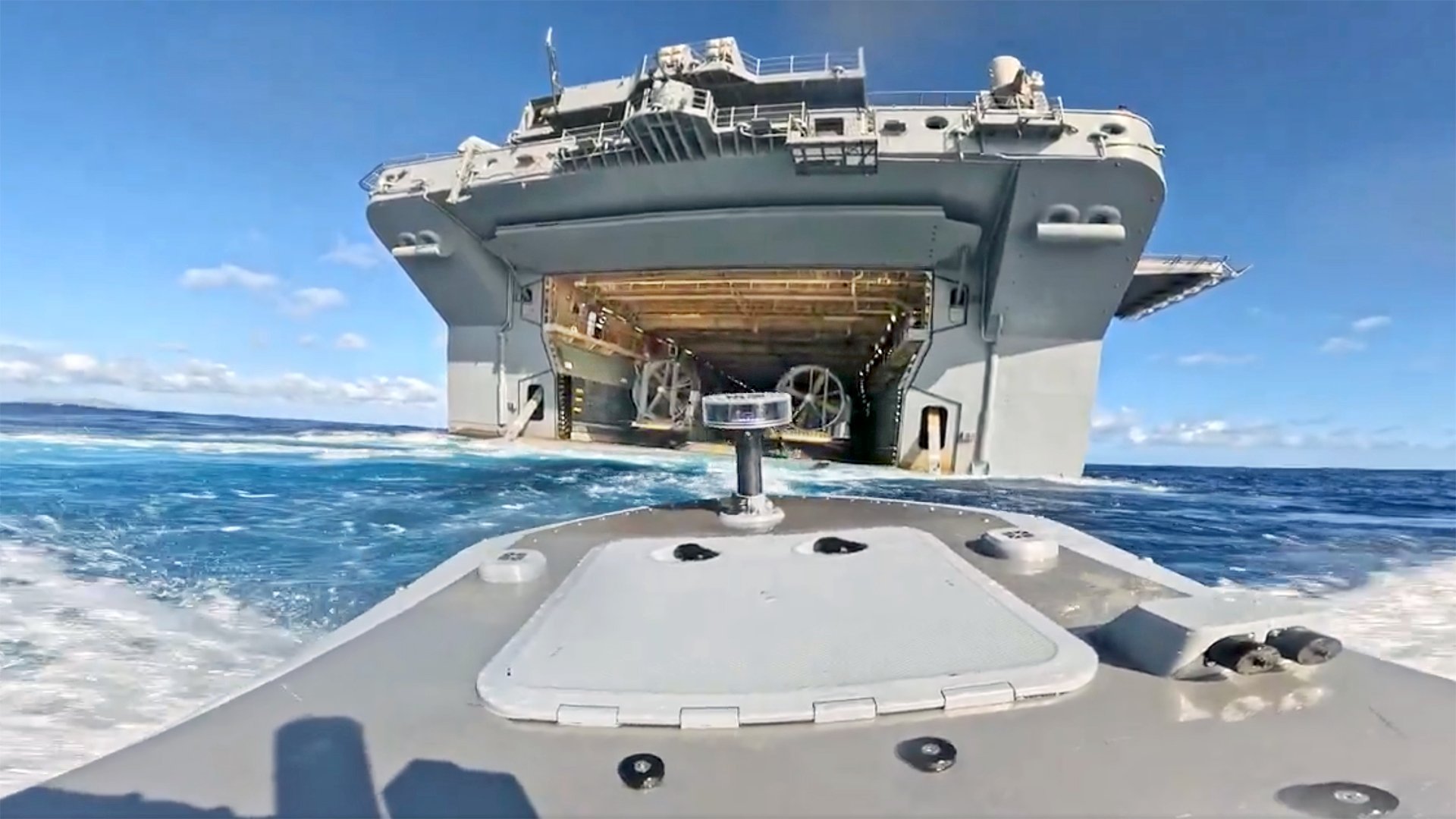
There have been many other tests, as well. Including one just this summer at RIMPAC. These trials saw the launch and recovery of one of Splash Industries’ Typhoon USVs aboard the USS Essex. The ‘Gator Navy’ of amphibious assault vessels that haul Marines and their kit around the oceans is uniquely suited to act as USV motherships. Their well decks allow for easy deployment and recovery of USVs of many sizes and capabilities near seamlessly. So it won’t be surprising if these vessels and the Marines aboard them quickly become staples in the Pentagon’s USV playbook.
Watch us land one of our drone-boats inside a moving US Navy warship during RIMPAC. This world-first resupply mission was performed completely autonomously using a Splash Industries Typhoon USV. pic.twitter.com/AEzNzZjsL1
You can see that engagement in the following video.
Ukraine's Navy says a Sargan unmanned surface vessel destroyed a Russian unmanned boat with machine-gun fire in the Black Sea, the first-ever battle between unmanned surface vessels. Ukrainian Navy personnel operated in coordination with HUR. #Ukrainepic.twitter.com/Avg4ecz8m6
Having recently returned from a six-month deployment that saw the Marine Corps’ first use of its Expeditionary Advanced Base Operations (EABO) concept in a combat setting during the fight against Iran, Niedziocha has a good sense of the realities of modern warfare. His Marines operated forward arming and refueling points (FARPs) for various aircraft in combat for the first time and set up remote sensing locations.
That a commander like him sees value in USVs is a good sign for progress in the development of these systems.
 Login

















https://t.co/VWOyM2oLdj#MaritimeSecurity #MarSec pic.twitter.com/Dfppt86s9b
(@mercoglianos) September 28, 2026

(@NOELreports) September 12, 2026