The Florence-based winery said security camera footage showed seven masked men breaking into its Cortona storage facility and loading thousands of bottles onto two trucks.
The Florence-based winery said security camera footage showed seven masked men breaking into its Cortona storage facility and loading thousands of bottles onto two trucks.
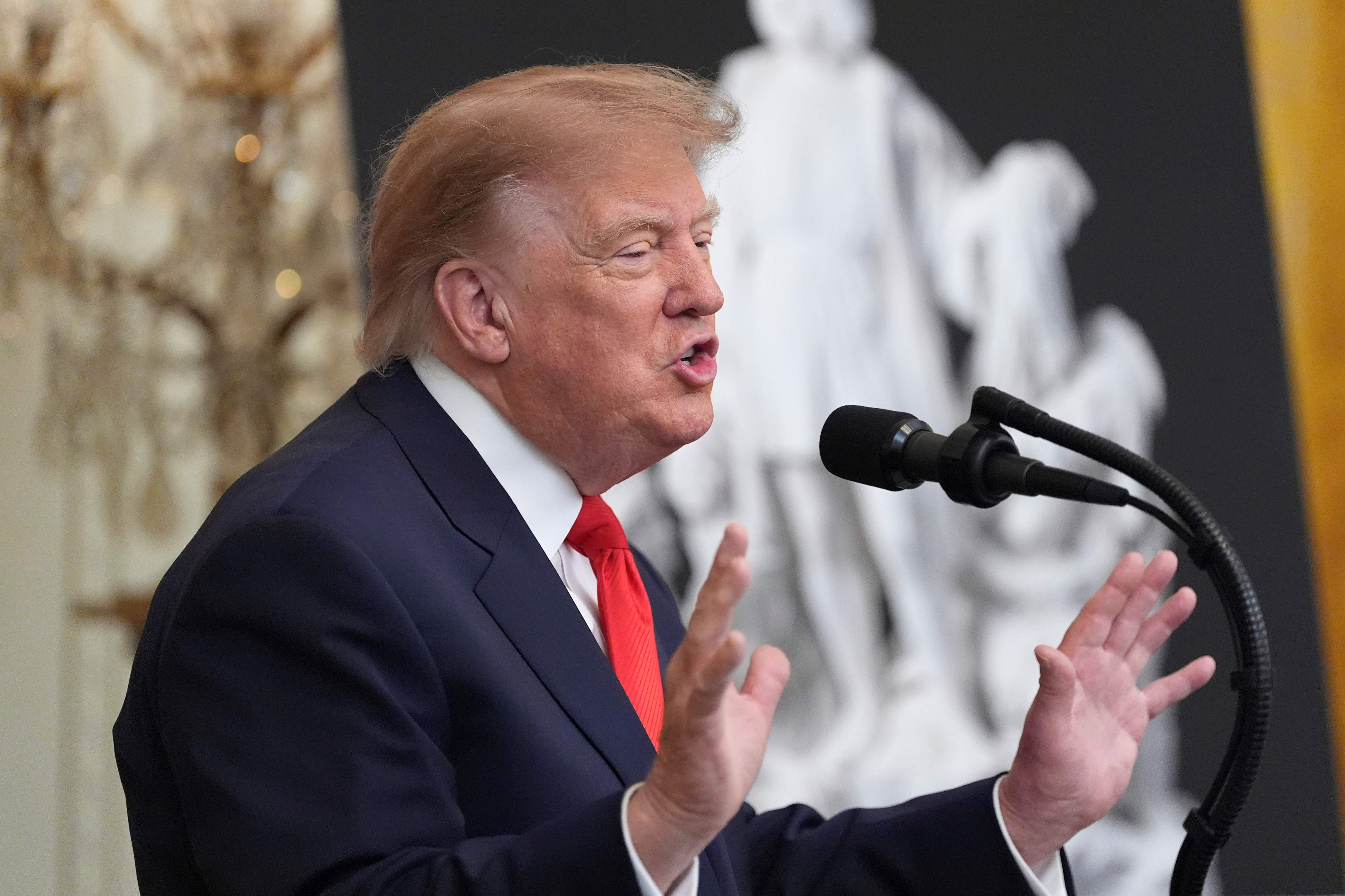
U.S. President Donald Trump added that Russia would then deliver 3 million tons of diesel fuel within a short period of time, based on the condition of its diesel refineries
U.S. President Donald Trump added that Russia would then deliver 3 million tons of diesel fuel within a short period of time, based on the condition of its diesel refineries
The Canadian government has announced a new “de-radicalization” program aimed at so-called “conspiracy theorists” — and it explicitly lists among the “unacceptable beliefs” the idea that the world is controlled by a cabal of globalist [...]
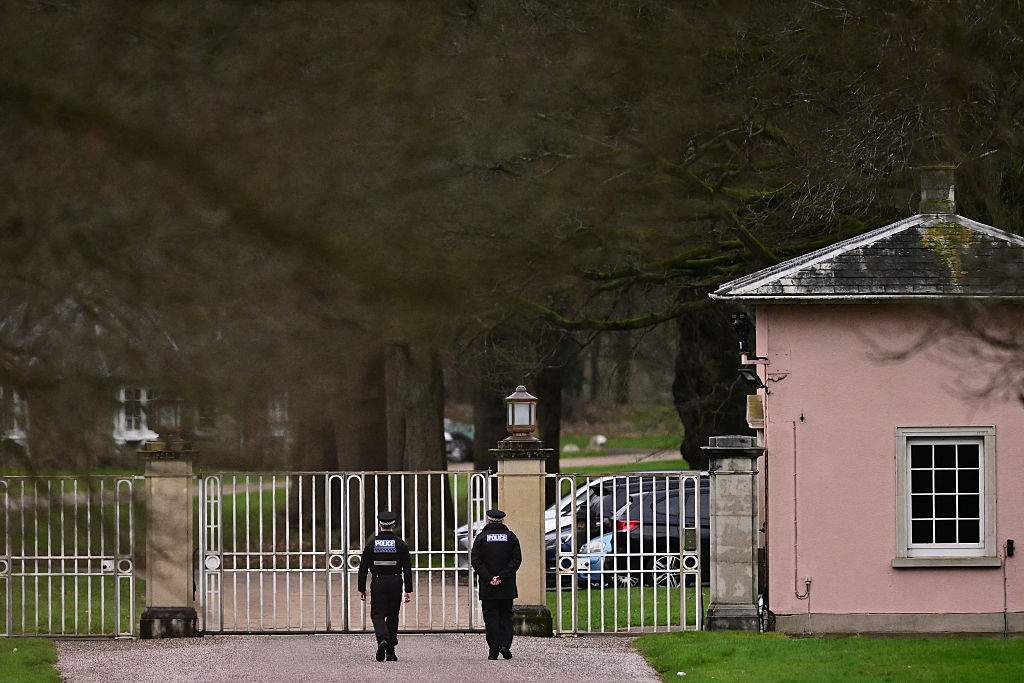
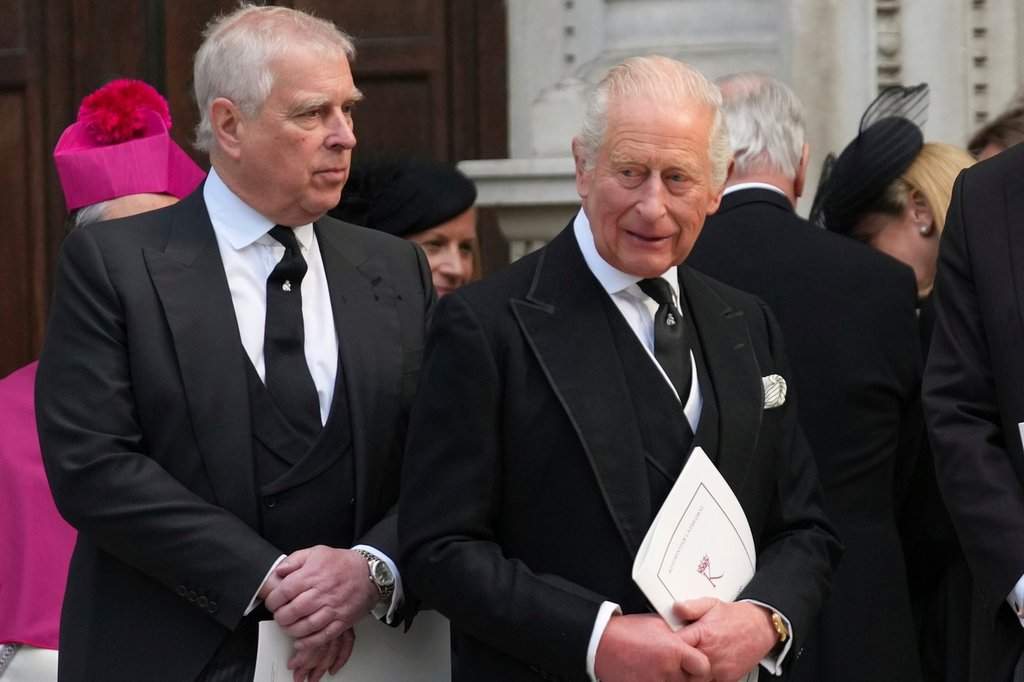
The Crown Estate announced that the former prince had vacated the Royal Lodge and was entitled to the compensation because he moved out less than 25 years into his 75-year lease.
The Crown Estate announced that the former prince had vacated the Royal Lodge and was entitled to the compensation because he moved out less than 25 years into his 75-year lease.
Let’s start with exclusive intel. On Thursday, Yahya Ali al-Ra’i, speaker of the Sana’a-based House of Representatives under Ansarallah, delivered a letter to Sardar Ayaz Sadiq, the speaker of Pakistan’s National Assembly, requesting Pakistani mediation between Ansarallah and Riyadh.
Ra’i, widely respected, has been the speaker in Sana’s since 2008. Sadiq began his current term as speaker in Islamabad in March 2024. This direct parliamentary channel is immensely significant as a diplomatic opening – as Pakistan faces enormous pressure, domestically and across the lands of Islam, over its real commitments related to the Saudi Arabia vs. Yemen clash as determined by the Mecca Defense Alliance.
As murky as the the whole situation really is, direct intel from both Islamabad and Tehran, at the highest levels, as I especifically requested, has established four key points:
Islamabad is adamant that Pakistan will not attack Ansarallah and will not commit troops to that effect. The Riyadh understanding last week excluded entry into Yemeni territory. Pakistani forces should remain outside any ground offensives against Ansarallah. That seems to be the case – for now.
Pakistan was already mediating between Riyadh and Sana’a through Tehran. Field Marshal Asim Munir personallly requested that Iranian Foreign Minister Araghchi use Iran’s influence with Ansarallah, together with Araghchi’s contacts with both Islamabad and Riyadh. Pakistan’s Foreign Office did not deny this diplomatic channel.
Pakistan would have to defend Saudi territory under its Mecca Defense Alliance commitments. Deployments for border protection and defense against drones and missiles launched by the Yemeni Armed Forces fit this pattern.The problem is whether some Pakistani advisors are already deployed in Yemeni territory. If Pakistan has even a few “advisers” in Aden and troops somewhere around northern Yemen on the Saudi border, that already betrays its promises.
Pakistani forces should be able to defend themselves – that comes with the territory. It’s a stated contingency; not a prediction of retaliation. At least one Pakistani officer was killed in Saudi Arabia without a Pakistani retaliatory response. That spells out restraint – at least for now.
Transiting Hormuz: use CIPS and pay in rials
On the wider U.S.-Iran front, diplomatic moves support what we have been reporting for the past few days on Transition Protocol. Pakistan in fact is desperate to maintain engagement with both Riyadh and Tehran, alongside non-stop coordination with Beijing. After all, China completely supports Pakistan mediation; and Araghchi keep speaking to Munir, as he did following talks with Wang Yi in Beijing.
Meanwhile, on the Washington front, speculation is feverish all over the spectrum over preparations for a Trump administration renewal of the war – including potential strikes on Iranian energy infrastructure and even, quite worrisomely, nuclear targets. There is no final decision yet by the Psycho/Sociopath in Charge, much less a launch date.
The immediate risks anyway are staggering.
Diplomacy – even in ersatz form – is mired in impasse. Tehran remains – and will continue to remain – anchored to its existing conditions, detailed by the dead cat MoU, but now carrying the threat of blocking transit routes along Oman’s coastline that it considers illegal. Washington for its part is obsessed with vast nuclear concessions.
Earlier this week, we confirmed that the Supreme National Security Council (SNSC) in Tehran made two very consequential decisions.
Tehran decided to collect its Strait of Hormuz transit toll in Iranian currency only. No yuan, no crypto. Actually via a mechanism linked to CIPS, the Chinese payment/clearing system, bypassing the U.S. dollar. You use CIPS to electronically buy yuan, change it into rials, and pay the toll. Strait of Hormuz transit revenue after all is one of Tehran’s few remaining sources of hard currency. The new mechanism will definitely strengthen the value of the rial.
Via Pakistan, Tehran notified Trump’s real-estate Bismarck, Witkoff, that Iran will not move an inch from its conditions for a negotiated settlement – and is fully prepared for any possible U.S. offensive. And this after J.D. Vance came up with an added nuclear enrichment condition: a “meaningful” and “significant” reduction. That blockades the nuclear dossier and makes a quick resolution formula nearly impossible.
The bottom line is that the escalation ladder could get out of control in no time.
Coming Yemeni Storm 1.0 in effect
On the Saudi-Yemen front, the Yemeni Armed Forces are absolutely ruthless. The Coming Yemeni Storm 1.0 is already in effect.
The damage at Jeddah refinery, close to Yanbu, is massive. Ansarallah is simultaneously hitting Saudi Arabia’s eastern and coast and western coast, plus the East-West pipeline in between.
For all practical purposes Sana’a is going for the whole key Riyadh infrastructure. The U.S. defense umbrella is a joke: remaining PAC-3 and Patriot batteries are useless against Yemeni ballistic missiles.
Saudi troops may number at best 75,000, plus 125,000 from the National Guard. The Yemeni Armed Forces command at least 350,000 that can be easily ramped up to 800,000. To expect “help” from the GCC petrosheiks doesn’t even qualify as a joke.
The Yemeni Armed Forces also unleashed two ballistic missiles plus explosive drones in the direction of Aden’s international airport. Ansarallah said the target was Saudi military supplies that had just arrived at Badr Camp, the mercenary HQ adjacent to the airport. An unspecified number of high-ranking Saudi officers and officials – perhaps even some Pakistanis – were killed.
Turkey for its part is also about to put boots, aircraft and air defenses on Saudi ground. These Turkish forces in thesis could protect Riyadh, the holy cities and the East-West pipeline. Ankara, just like Islamabad, insists it has no plans to enter the war inside Yemen.
The swift liberation by the Yemeni Armed Forces of the western coast close to the Red Sea also made it crystal clear how the so-called Saudi “coalition” – actually a gang of proxies/mercenaries – was deploying de facto terrorists all along.
Ansarallah recovered a wealth of foreign passports – especially from Kuwait, Qatar, Turkey and Syria – belonging to ISIS and Al-Qaeda goons. Call it the Terror Inc. Legion.
I’ts the same old song. Qatar and Turkey, in sync, instrumentalized the transfer of ISIS/Salafi-jihadi goons from Syria and Iraq: they were welcomed in Yemen by the Islah Party. Turkey was the key transit route; at least 2,100 of these ISIS assets are Turkish.
AQAP is back!
Way back in 2020, Ansarallah had already seized documents, maps, and videos showing ISIS/Daesh and Al-Qaeda jihadis directly supported by Riyadh roaming Yemen, with captured goons confessing they were paid, weaponized and logistically supported by the Saudis.
Now a new incarnation of the former al-Qaeda in the Arabian Peninsula (AQAP) is alread in effect – via at least 20,000 Daesh/takfiri terror goons “imported” from Syria. They will be sent to Aden governorate – following the request, actually the demand by MbS himself, fully approved by the Trump administration and its throat-slitter vassal turned President in Damascus, former ISIS al-Jolani.
The definitive headline of the whole affair though is that the House of Saud is attacking Ansarallah to protect the death cult in West Asia.
By controlling the Bab al-Mandab, Ansarallah de facto cuts off the Israeli port of Eilat. That had already happened before during the genocide of Gaza. Riyadh was furious because they had struck deals for the – now virtually scrapped – NEOM project that would connect up to Eilat once the Trumpian Abraham Accords were up and running.
Considering the whole picture, all hell could still break loose due to a single spark. Possibilities include: a Yemeni strike on Saudi Arabia causing massive casualties; a toll-enforcement mess in the Strait of Hormuz; an Iranian strike on a GCC petro-sheikh target, following an American provocation; an Iran-linked attack on a U.S. base, once again folowing an American provocation; and most of all a Sociopath-forced “land, air and sea” CENTCOM (mis)adventure.
Finns have many reasons to feel content, but the country's pile of debt is not one of them. Russia's war in Ukraine has added to the fiscal burden. Can the Nordic nation absorb another shock?
France and Germany have rejected reports that their Main Ground Combat System (MGCS) project has collapsed, asserting their joint program to develop a next-generation battle tank remains on track.
On Thursday, France’s armed forces chief Fabien Mandon told parliament that Germany had decided to leave the battle tank program.
On Friday, French Defense Minister Catherine Vautrin said the MGCS project was still on course, speaking during German President Frank-Walter Steinmeier’s visit to the country.
“We would like to tell you, together with my colleague Minister Boris Pistorius, that MGCS remains a current and active project,” Vautrin said alongside the German defense minister in Le Haillan outside the southwestern French city of Bordeaux.
Pistorius said that he “fully” agreed.
“The MGCS project is not finished. It has not been abandoned. Nobody has stopped it. On the contrary, it is a flagship project of Franco-German cooperation.”
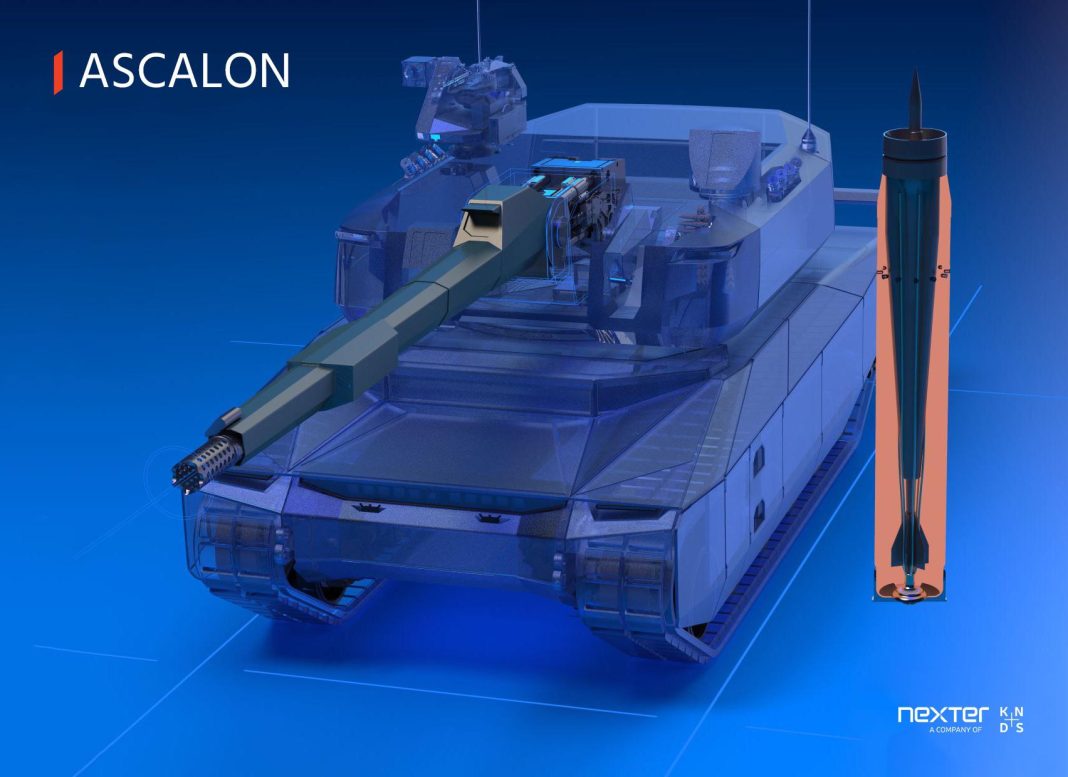
The 140 mm smoothbore ASCALON gun fires 130 cm telescoped rounds and is designed for scalable effects. Nexter is proposing the ASCALON as the MGCS main armament. (Photo: Nexter)
On Thursday, Mandon told French lawmakers the two armies had spent several years “to define what a future battle tank should be”. “The outcome is not good,” Mandon told lawmakers.
“We had hoped to build a future tank in cooperation with the Germans, but unfortunately we have to acknowledge that the Germans have decided to leave the project.”
Later on Thursday, he issued a statement softening his remarks, saying: “Although delayed, the program is continuing and remains highly relevant.”
Main Ground Combat System (MGCS)
Launched jointly by France and Germany in 2017, the Main Ground Combat System (MGCS) aims to develop a next-generation battle tank to replace France’s Leclerc and Germany’s Leopard 2 tanks.
It is a “system of systems” project that includes a main battle tank and a network of other combat systems, such as artificial intelligence (AI) for decision-making, advanced sensors, robotics, and onboard unmanned aerial vehicles.
Earlier this June, Rheinmetall’s CEO warned that France may pull out of the MGCS project. “There is always a risk, but nothing has been decided yet,” Armin Papperger told Welt am Sonntag, adding that Paris is planning to drastically cut funding for the project.
A German government spokesperson later questioned the MGCS project, saying it was doubtful a joint tank would be built and that the project would likely focus on “platform-independent” technologies.
Concept artwork showing four different MGCS vehicles based on a common chassis. (Via Hensoldt)
Meanwhile, Jean-Paul Alary, CEO of KNDS, the Franco-German company developing the tank, had said at the Eurosatory show in France that, although he could not comment on the MGCS’s current state because it is a political matter, it would be “very bad news” for Europe if the project failed.
The MGCS has remained embroiled in crises and beset by delays, much like the now-abandoned FCAS. Disagreements over the tank’s design, technology, and industrial responsibilities have plagued the MGCS for years.
In short, Berlin wants a stronger, better-armed tank for a potential battle with Russia, while Paris prefers a lighter tank for worldwide deployment. Political and budgetary tensions also persist over which country’s industry should lead.
The project was initially intended to be led by the Franco-German joint venture KNDS, comprising Germany’s Krauss-Maffei Wegmann and France’s Nexter. However, Germany allegedly leveraged its considerable political support to push for Rheinmetall’s involvement. Tensions have since grown between the KNDS and Rheinmetall over leadership of program “pillars,” production shares, and contracts.
From a French perspective, Rheinmetall’s involvement has altered the project’s delicate power dynamics, creating discontent and increasing frustration.
Moreover, the project has reportedly been starved of funding. As Rheinmetall CEO Papperger recently noted, the shareholding companies have received only €25 million ($29 million) since the project’s inception.
Meanwhile, France has grown uneasy with Germany’s increasing assertiveness and its emergence as Europe’s preeminent economic and, increasingly, military player, as veteran journalist Prakash Nanda of EurAsian Times noted.
“They are constantly fighting against the mismatched temperaments of their leaders, their orthogonal domestic politics, and the irreconcilably diverging strategic cultures at the heart of their deep states,” Carnegie Europe’s Strategic Europe wrote in a blog last month.
A core divergence lies in strategic outlook: France consistently advocates for greater European strategic autonomy, while Germany remains more committed to robust transatlantic ties with the United States. Meanwhile, economic and trade policies add another layer of friction, with the two powers often diverging on EU-level decisions regarding fiscal rules, industrial strategy, and market access.
France and Germany have struggled to rein in their powerful defense companies, leaving three major European projects — the Eurodrone, the FCAS fighter program, and the MGCS tank program — in serious difficulty. The FCAS has already collapsed, while the other two now risk failure.
Contact the author (s) at editor (at) eurasiantimes.com
On 6 October, Admiral Giuseppe Cavo Dragone, Chairman of the NATO Military Committee, arrived in Kiev with military representatives from all thirty-two Allied nations. He wrote this himself on X: the delegation was there to reaffirm its ‘unconditional support’ for Ukraine. ANSA reported the news as an official visit. A strategic signal aimed at Moscow as well.
First, the facts. The Military Committee assists and advises the Atlantic Council, the Defence Planning Committee and the Nuclear Planning Group; its role is to set military policy and strategy. It was invited by the new Supreme Commander of the Ukrainian Armed Forces, Mykhailo Drapatyi. The Committee returned to Kiev in full force after eight years, and the meetings with Drapatyi and the Ukrainian General Staff served to obtain a first-hand assessment of the battlefield, to discuss Kiev ’s military priorities and to bring to the Alliance the lessons learnt from over four years of high-intensity warfare. Dragone speaks of military priorities and lessons useful for the Allies’ operational readiness in the face of today’s and tomorrow’s threats.
Now for the interpretation, which must be kept distinct from the facts. A body that advises the Nuclear Planning Group does not travel through a country at war merely to make gestures of solidarity. It goes to gather information and to calibrate its own preparedness against it. The flow described by the sources runs in both directions: from Ukraine to the Alliance as operational experience, and from the Alliance to Ukraine as guidance on priorities. When the military leaders of thirty-two states sit down with the General Staff of one of the belligerents to assess their own readiness in the context of the ongoing war, that war ceases to be an external affair. It has become the Alliance’s testing ground.
This sequence confirms the direction. On 3 June, the North Atlantic Council met in Kiev , and the NATO-Ukraine Council was held there for the first time. In October, it is the military’s turn. First the political framework, then the structure that fills it with operational content – this is not a passing courtesy, but an institutional presence that grows stronger at every stage.
Then there is the statement that shifts the discussion beyond Ukraine. To those who believe that sabotage, cyber-attacks and airspace violations could undermine Western support, Dragone replies: ‘You are failing.’ He holds Russia fully responsible for such behaviour and states that allied unity has never been so strong. The Ukrainian front and the sub-threshold pressure on Allied territory are placed within the same framework, articulated by the same man from the same venue. The distinction underpinning the ‘Ukraine versus Russia’ narrative – that between a war over there and tensions here – is erased by the Chairman of the Military Committee himself.
Images, symbols and meanings
The image remains. In the video message recorded in Kiev, the admiral speaks with two flags behind him; in institutional communications, the backdrop is never improvised – it reveals who is speaking and on whose behalf. The person appearing beneath those symbols is neither a mediator nor an observer. The flags tell the same story as the words – words that reflect a deliberate and conscious choice: namely, the war for Kiev, total dedication to a cause that should have nothing to do with Europe.
The serious objection is another, and it must be acknowledged. None of the three sources documents allied troops in combat, and no Member State has declared war on Russia. The delegation came to consult and to pay tribute at the Wall of Remembrance dedicated to the Ukrainian fallen. The law of armed conflict distinguishes between support for one side and direct participation in hostilities, and on that ground the distinction exists, but the legal classification does not exhaust the geopolitical analysis. The Allies no longer describe their role as aid to a third party: they speak of their own readiness, their own threats, their own unity. When an alliance measures its own preparedness against another’s war and attributes acts of sabotage on its own soil to that same adversary, the confrontation involves two parties, and one of them is not Ukraine.
The assessment, then. On the political-strategic level, the confrontation between NATO and Russia is direct, and the sources show this with sufficient clarity. On the kinetic level, the sources do not record any direct Allied involvement, although this is constantly invoked and called for, as if it were NATO’s greatest desire. The gap between the two levels, however, narrows with every visit of this kind. There are two indicators to watch: the possible permanent establishment of allied facilities on Ukrainian territory, and the way in which acts of sabotage – which the Alliance attributes to Moscow – will be dealt with, whilst Zelensky orders the bombing of further Russian oil refineries and new drones fly over Moscow, despite Donald Trump having told them to stop.
Everything is spiralling out of control; NATO is acting independently of the US sphere of influence because it has embraced the Ukrainian cause as if it were the final world war – the one in which the Alliance will either win, or there will be nothing left to do.
The ‘Ukraine versus Russia’ narrative served to contain the war within a framework that was reassuring to European public opinion. With 32 military representatives in the Ukrainian capital, led by an Italian admiral, that framework is holding together less and less.
Let it be clear that this decision is not accidental; it is not a political trap, nor is it even an error of judgement, but a declaration of war – yet another hybrid and, stylistically, pitiful declaration against Russia. They are telling us this openly, whilst we are distracted by other thoughts.
It remains to be seen whether governments will tell their voters this. And it also remains to be seen whether the brave four-star generals will realise a wise truth that the Prussian general Carl von Clausewitz wrote in his manuals: “The mistake lies not in making a misstep, but in failing to recognise it and in seeking to defend it at all costs”.
There is, however, no reason to break the spell cast by Kiev , which is currently enchanting the whole of Europe, because, as Napoleon said – to quote him a second time – “One must never interrupt the enemy whilst he is making a mistake”.
We are going to talk about various aspects of the supposed ‘plague outbreak’ in Russia but there is a greater tendency at hand when we look at the media interpretation of this event be it real, fake, or an enigma of sorts. If anyone is familiar with my work they would have heard me say something to the effect of “everything you know about Russia, written in English, is a lie” and I still believe this statement. When Western politicians declare that “Russia has the economic potential of Spain” or that “Russia is Nigeria with snow” or other such statements they are not lying in a direct and conscious way.
Based on all the data and information that they have ‘over there’ about Russia’s economy this view was logically ‘true’. If you crunch the numbers based on Western data then I guess Russia is just an enigmatic economy wrapped in mystery the size of a second-tier EU nation, but obviously this is not the case in reality. Russia is horribly draconian and repressive, because it is written all over the place that this is indeed the case. The calculations that Russia would immediately fold and that the ‘Ruble would be rubble’ after the Special Military Operation began were not fake, they were just based on false data. If you look at the West’s information about Russia, it would really seem that the nation’s economy stands only on oil prices, the population is waiting for a single spark to rise up against the tyrant, and that overall, the house of cards is just waiting to be blown over. But as the war years have proven, this has not been the case, but the initial calculations were ‘correct’ based on the data put into them.
Even the famous quote by Lenin that “a lie told often enough become true” ironically may not have ever been said by him, but this pseudo statement makes Russia look bad so the West keeps saying it. In Russia, because some people have been arrested for online activities since the start of the Special Military Operation, that would include organizing terrorism, this is “bad”, but the fact that there are 70 times more people behind bars in the UK for what they have said online doesn’t count, because that is different and has never once been considered by a British journalist. Arrests for statements and actions online only applies to those who are bad as proof that they are bad.
If Russia’s army is strong this is militarism, if Russia’s army is weak this is proof of corruption and ineptitude. If there are trials for corruption this is proof of the heavy-handed Putin regime taking out its enemies, and if there were not trails for corruption then it is proof of corruption and the totalitarian control of the regime. There is no possible win state for Russia in the Western press, even during the supposed media friendly treatment of Yeltsin in the good ole days, the entire establishment was an orgy of shadenfraude at the downfall of the USSR and humiliated state of 90s Russia.
To put things in very blunt terms: if something happens or is said to have happened related to Russia:
-If the Russian media goes along with it then that is proof that Russia is bad
-If the Russian media resists that is proof of a cover up for the evil deed that proves Russia is bad
– Ultimately, any action or inaction by Russia is bad and proof of its badness.
CNN’s take on this issue is stock Russophobia
And right on cue comes CNN to prop up this plague narrative that seems to be fake at its core. But we will talk about what is actually happening with this ‘outbreak’ a bit later, but for now let’s stick to the media side of things. Even in the title of the CNN article in question “Checklists, masks and mystery: What we know about the plague scare in Russia” you can already see the spin revving up.
“Russian authorities have sought to allay global worries over the death of a young woman who worked at a Siberian anti-plague laboratory. But moves to isolate her contacts and introduce new disease-control measures at local hospitals have raised concerns among people who fear they’re not being told the full story.”
In regards to the paragraph above, as you can see, the Russian side is bad because it has a different narrative and has the audacity to share it with the world. However, if the Russian media were to have been silent on this, it would also be bad as it would be proof of guilt via inaction. The fact that the Russian authorities are doing some actions to try to stop an outbreak is bad because these measures create fear or something, but at the very least this is good enough to use for condemnation. However, if the government took extreme measures this would be ‘draconian’ and if they took no measures this would be ‘horribly irresponsible’. So taking medium level measures is ‘fear inducing’ or something and of course this is bad and absolutely unacceptable.
“Ulyana Gavryunina, a 29-year-old blogger from Angarsk, a city in the Irkutsk region, told CNN she had to change maternity hospitals at 40 weeks pregnant after newly imposed quarantine restrictions meant her husband could no longer be with her during labor.”
So because the local government has limited facilities, sadly this woman had to give birth in less than ideal conditions. This is unfortunate for her and I am sure it was quite frustrating, but again CNN says the Russian authorities taking action is bad because it affected people negatively, yet if they did nothing it would also be just as bad. If the people had not been quarantined at that facility that would be ‘dangerous and irresponsible’ or something like that.
“Russia’s health watchdog said Wednesday said there is no epidemic risk following the woman’s death, and that it was winding down response. Rospotrebnadzor said medical monitoring has been completed for “over 90%” of contacts of the deceased lab worker, and no “dangerous” pathogens have been found. But unanswered questions remain.”
The expression “but unanswered questions remain” was used here to negate the opinion of the Russian government. If this paragraph were to have ended without these words, it would make the views of local authorities seem fully legitimate. When “questions remain” it hints at a conspiracy, that the official story does not match reality. Again, no matter what the Russian authorities would have publicly stated the response would have been bad because CNN sees them as the enemy. The enemy can do no right. And Russia’s actions are the actions of an enemy and thus they are universally negative to any proper journalist.
“According to its website, the Anti-Plague Institute employs around 95 researchers and is a major public health facility responsible for monitoring and preventing outbreaks of high-risk bacterial and viral infections across Siberia and Russia’s Far East.
The institute was established in 1934 to combat plague and continues to study the disease because Yersinia pestis, the bacterium that causes the plague, still circulates naturally in wildlife across parts of Siberia and neighboring regions.”
Shockingly, CNN did not label the research facility where Ms. Shipilova worked as a biolab or some other nefarious term. They actually ‘took their word for it’ and just relayed information from their website. This was both true and pleasant to read.
So what actually happened?
Now let’s discuss the actual situation with a potential plague and the mysterious death of the disease researcher who was working on fighting it. There is a video from an unnamed American woman living in Irkutsk (Channel name: American in the Motherland) about the entire situation that in less than 15 minutes breaks down the whole story with sources, facts, and video directly from the region. I will share the bullet points of her presented views for brevity. As you can see, just one citizen journalist yet again crushes the mainstream media point-by-point. The image below is from the video and shows the ‘brilliance’ of the international press and their hot takes on this issue.
The videos key points were:
There are no mass lockdowns in Irkutsk or anywhere else in Russia, the only people who are quarantined had direct contact with the woman who died (Daria Shipilova) and their number is less than 200.
Shipilova did not work at a military biolab, but a plague\disease research institute designed to fight diseases. It’s location and work was neither secret nor military.
Shipilova was hospitalized outside of Irkutsk because at that location they had a facility designed to handle this type of disease outbreak from the Covid era, not as part of some conspiracy.
There is no second other death from the same cause as Ms. Shipilova’s demise.
Daria Shipilova’s cause of death was “pneumonia of an unknown origin”
The ‘broken test tube’ narrative is a myth as it was thought up by some Russian blogger. When working with serious diseases they don’t just walk around an office-like environment with fragile test tubes. Russia does not operate by the same methodology as the Umbrella Corporation, flailing around with fragile vials of diseases willy-nilly.
The Russian side found no evidence of an accident at the research facility.
The researcher did not travel to Buryatia prior to her death. Thus, she did not get the disease from local marmots or other types of rodents.
There have been no other cases of what killed Ms. Shipilova at the moment of writing this article or the creation of the video linked above.
The plague is treatable as it is caused by bacteria that continues to exists around the world. A handful of people in the USA and other countries still contract it every year. Antibiotics are an effective countermeasure against it, thus this does not seem like cause for international panic.
Why did the plague pass on medieval Russia?
One thing that is important about to note about this issue, is that historically, although the Bubonic Plague did kill people outside of Western Europe, it only had devastating effects within it. Russians continue to be proud to this day of having a high level of cultural hygiene that dates back to medieval times. Dark Age Russians and others outside of the West seemed to ‘put two and two together’ about the necessity for regular bathing and washing one’s hands. This hygienic culture is believed to be the reason why Russia had such a massive population in the 1800s compared to others around them. Many in Russia believe that if it weren’t for massive mistakes like WWI, The Revolution, WWII, and the 90s they would have a current population halfway closer to something like China’s or India’s.
So from a Russian cultural standpoint this very much looks like another campaign of projection; a third of England died to the plague, only a handful in Russia did. Thus, the Black Death had really no cultural impact on Russia, and judging by writings from the 1800s, tuberculosis seems to have been a much more long-term nagging problem for this society that to this day still has relevance. There are anti-tuberculosis facilities all over Russia and one cannot immigrate to the country if they have signs of it. The whole ‘living with vermin’ thing was not a fact of life for medieval or modern Russians, that honor goes to the enlightened liberal West.
The Media is the disease.
We only looked at one particular written piece on this issue, but there are plenty of insane musings from the Western press that follow the “damn the Russians if they do, damn them if they don’t” formula. Headlines like this one from the Daily Mail are the perfect example:
“Trump offers Putin lifeline as Russia scrambles to contain deadly airborne plague after lab worker’s death”.
Again, if ‘Putin’ did nothing he would be bad, but he is doing something, thus he is ‘scrambling’ in a panicked way which is also bad. Trump offering him a ‘lifeline’ means that Putin has no choice to accept this help, whatever it may be or he is bad. But guess what? If he does accept the lifeline it surely means he is weak or something which means he is bad.
When you go back and really look at the historical representation of ‘Russian realities’ in English-language media you see this hysterical Nietzschian untermensch narrative manipulation in everything. Putin has been on the brink of being ousted since 2000 and the Russian economy has been on the verge of collapse since then too. Everything written about Russia in English in the West is a lie.
Former CIA analyst Ray McGovern discusses how the Western official news media have systematically promoted lies about the Bucha Massacre in Ukraine.
No Western official outlet has questioned the narrative purporting that Russia perpetrated a mass killing of civilians. Credible Russian information to the contrary is dismissed out of hand as Kremlin propaganda.
Ironically, it is Western media that are seen as the propagandists and the purveyors of Big Lies – if one cares to examine the record objectively.
The alleged Bucha atrocity involved the apparent execution of hundreds of civilians by Russian forces as they were withdrawing from Kiev and surrounding areas at the end of March 2022. European leaders ritualistically visit a memorial in Bucha and condemn Russian barbarity.
The political objective of those shocking Western media claims was to sabotage a potential peace deal with Moscow and to prolong the proxy war with the aim of NATO strategically defeating Russia. That culminated in nearly five years of war, millions of casualties, a failed NATO objective, and worse still, the danger of a general war in Europe going nuclear.
Ray McGovern points out that the timeline of the Bucha killings does not fit the Western media narrative. The corpses on the streets of Bucha appeared days after the Russian forces made their withdrawal to what was then the East of Ukraine.
Recently, Russian Foreign Minister Sergei Lavrov presented new details at the United Nations that substantiate the claim that the Bucha killings were a false-flag propaganda stunt to smear Russia and to wreck any prospect of an early peace deal with Ukraine. A Russian-led investigation reveals that many of the alleged civilian victims whose names are inscribed on a memorial wall were identified as Ukrainian soldiers who had been killed in action and buried elsewhere.
The Russian report is entitled “Heirs of Goebbels: falsification of the events in Bucha and bloody staged performances of the Kiev regime.” (Western internet has suppressed links to the report, though it can be accessed from the Russian foreign ministry.)
As McGovern notes, not one major Western media outlet reported on Lavrov’s presentation at the United Nations and his delivery of the Russian investigation to UN Secretary-General António Guterres. McGovern believes the perpetrators were MI6, CIA, and the Kiev regime operatives.
This egregious example of Western media suppression of Russian information and perspective on the conflict in Ukraine is repeated over and over. Another example, as McGovern amply recounts, was the attempt by Moscow to engage the United States and European NATO partners in a security treaty in late 2021. Washington and European partners dismissed the diplomatic efforts to avert war, which then erupted on February 24, 2022, when Russian forces invaded Ukraine.
The Russian invasion was not unprovoked aggression, as Western media have dutifully asserted. It was a preemptive response to NATO covert aggression via the NeoNazi Kiev regime over seven years since the coup in 2014.
The Nord Stream gas pipeline sabotage is another case study of how Western media have systematically ignored the evidence implicating a NATO provocation and the background to the proxy war against Russia.
Official Western media are in the service of a political agenda and not the public interest. Their function is to prevent popular understanding of the real nature of the war in Ukraine, a proxy war against Russia that is now spiralling into an all-out confrontation.
We refer to the quote from Thomas Jefferson, the third U.S. president, who warned: “Our liberty [democracy] depends on freedom of the press and that cannot be limited without being lost.”
Ray McGovern laments that there has been a dreadful erosion of democracy and media independence over recent decades since the end of the Cold War and the rise of U.S. unilateralism.
However, on a positive note, he sees hopeful signs from the phenomenal growth in alternative media and independent information, generating more critical public awareness of government abuses of power. He believes that genuine democracy can survive and thrive – despite the official Western media whose power is waning as more people realize its insidious role in promoting criminal wars.
Ray McGovern worked as a CIA intelligence analyst for nearly 30 years under seven presidents, the first being John F Kennedy in 1963. On his retirement, he was awarded the Intelligence Commendation Medal. He handed back the medal in 2006 in protest over the CIA’s practice of systematic torture. He has repudiated the Agency as an enemy of democracy.
In a final note of breaking news, on November 18th this year, in his 87th year, this “proud Irish son” will be honored with the James Joyce Award conferred by University College Dublin, Ireland. The prize is bestowed by the students of UCD’s Historical and Literary Society for his independent thinking, intellectual courage, and distinguished contribution to public information and democratic society.
After EurAsian Times reported on a potential clash brewing between the Dassault Rafale and the Eurofighter Typhoon, Portugal has said it is seriously considering F-35 stealth jets to replace its aging F-16 Fighting Falcons.
Portugal has not officially launched a formal tender to replace its 28 upgraded F-16M fighter jets, but competition between European and US firms appears to be heating up.
“The Portuguese state will always decide in accordance with the national interest. There is one point that is also clear: we are seriously considering the F-35 proposal, just as we are considering others,” Rangel told a news conference after the meeting.
Meanwhile, speaking in Lisbon, the Portuguese capital, Secretary of State Marco Rubio said the US would make Portugal a “very competitive” offer to replace its F-16 fleet.
Earlier, as EurAsian Times reported, Portugal was reviewing its plans to acquire F-35 jets and eyeing European alternatives.
In a March 2025 interview, Portuguese Defense Minister Nuno Melo rejected the prospect of acquiring the American fifth-generation aircraft, citing Washington’s unpredictability.
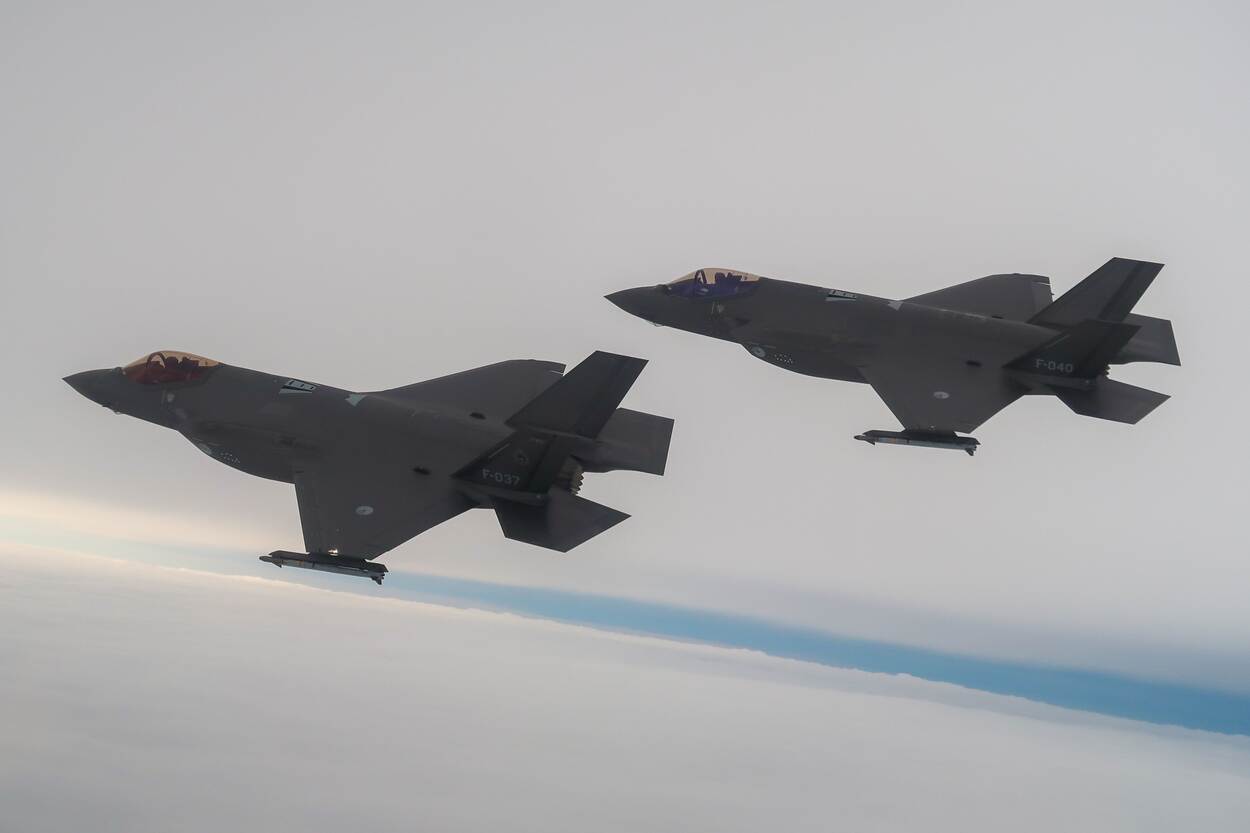
File Image: F-35s
“We cannot ignore the geopolitical environment in our choices. The recent position of the United States, in the context of NATO … must make us think about the best options, because the predictability of our allies is a greater asset to take into account,” Melo had stated.
Many European nations are concerned that an ‘unpredictable’ Washington could pause delivery of critical parts or software for the F-35s.
The Portuguese idea of sidelining the stealth US jets may have come after German defense experts said the US could use a “kill switch” on the F-35 to impose its political objectives.
Portugal, like others, believes any F-35 fleet would quickly become ineffective without access to US-controlled maintenance, logistics, and computer networks. Thus, the US would indirectly control F-35 operations for almost any country.
Echoing these concerns, the Portuguese Minister said, “The world has changed … and this ally of ours … could bring limitations to use, maintenance, components, and everything that has to do with ensuring that aircraft will be operational and used in all types of scenarios.”
The Portuguese Air Force first expressed interest in the F-35 in 2023, when Joe Biden was president. At the time, General João Guilherme Rosado Cartaxo Alves, the FAP’s Chief of Staff, stated that the F-35A is the best option to replace the aging F-16 AM/BM jets.
In April 2024, Portuguese Air Force Chief of Staff General João Cartaxo Alves said the service was in a “transition” phase toward the stealth fighter. The Chief also said the program would cost an estimated 5.5 billion euros and take around 20 years to implement—a statement that made it seem like a purchase was imminent.
The Portuguese Ministry of Defense later backtracked and said, “This is a vision for the future, so currently, there is no process for purchasing aircraft to replace the F-16.
Since then, the aircraft has awaited a formal announcement, especially since leadership earlier confirmed that the current F-16 AM/BM fleet would continue to operate until 2030.
However, European policy has shifted dramatically since Donald Trump assumed office in January 2025. While dismissing the idea of acquiring an F-35, the Portuguese Defense Minister also hinted that his country was looking towards Europe.
Without giving specific details, he said, “There are several options that must be considered, particularly in the context of European production.”
Portugal has not opened a formal tender to replace its F-16s. Four aircraft are in contention: Lockheed Martin’s F-35, the Eurofighter Typhoon, Dassault’s Rafale and Saab’s Gripen E.
Lockheed Martin, Airbus and Saab have each signed cooperation agreements with AED Cluster Portugal, the national aerospace and defense industry association.
Saab’s memorandum, covering the Gripen E, was signed in December 2025. The company has also pitched local work through Embraer-controlled OGMA, citing the production model used for Brazil’s Gripen program.
On September 23, 2026, Dassault Aviation said it had signed a memorandum with the cluster on behalf of Rafale partners Thales and Safran. The agreement aims to explore cooperation with Portuguese industry as Lisbon weighs renewing its F-16 fleet.
“Dassault Aviation, representing its RAFALE partners, Thales and Safran, signed with AED Cluster Portugal, Portugal’s association for the aeronautics, space and defense industries, a Memorandum of Understanding (MoU) to explore potential areas of cooperation between RAFALE partners and the Portuguese industrial sector, in the context of the Portuguese Air Force’s F-16 fleet renewal,” it said in a statement.
Airbus said on September 24 that it intends to submit an unsolicited Eurofighter proposal in late October or early November. The offer will include public and private financing “to alleviate the payment plan,” along with military cooperation and industrial work, Eurofighter campaign manager Ivan Gonzalez Exposito told reporters.
Defense Minister Nuno Melo has said the jets will have to be replaced in the near future. Any choice remains subject to a technical evaluation and to the industrial return for Portugal.
After initial apprehensions with the F-35, the biggest question is: will Portugal opt for ‘superior’ F-35 stealth jets or European 4.5-gen alternatives, Rafale, Eurofighter and Gripen-E?
The best victory is “winning without shedding a drop of blood” is an ancient Chinese proverb attributed to Sun Tzu’s ‘The Art of War,’ written nearly 2,500 years ago.
In 2026, that old strategy has a new rendering: ‘Learning without Bleeding.’
China is treating the Russia-Ukraine War as a “living textbook” for adapting the war-fighting strategy of the People’s Liberation Army (PLA), learning drone warfare, and systematically converting battlefield lessons into PLA training, procurement, and force design without having to fight itself.
According to a recent paper by the Center for Strategic and International Studies (CSIS), China is running the most systematic effort of any outside power to convert lessons from the war in Ukraine into military advantage, absorbing the errors of both sides.
“Chinese analysts are explicit about the value of Russia’s war against Ukraine” and are adopting the war’s lessons into policy debates, weapons procurement, and military doctrine at a breakneck pace.
Analysts in Beijing are describing 2024 as “year one of world drone war,” when the two sides fielded enough drones to show the contours of the new mechanized battlefield.
For the study, the authors reviewed more than 90 Chinese-language sources published over more than four years, from July 2022 to August 2026.
These Chinese-language sources include PLA outlets, defense journals, university research papers, peer-reviewed journals, and research institutions linked to defense industries.
The authors of these Chinese papers include participants in the military learning system. They include researchers at PLA universities and academies, engineers at defense industrial design institutes, civilian academics working alongside numbered military units, and military acquisition organizations that turn battlefield lessons into requirements and procurement.
The study highlights how China is adopting lessons from the war in Ukraine at a breakneck pace.
It finds that “Chinese analysts pick up new battlefield techniques within an average of four months, but turning them into hardware, training, and force structure takes a year or more.”
Essentially, within four months of a new weapon system or war-fighting doctrine/strategy being introduced on the battlefield in Ukraine, Chinese analysts take note and start discussing it in their research papers.
However, filtering these lessons into Chinese military structure, procurement, and industrial production takes nearly a year.
For instance, Sea drones appeared in the war in Ukraine by September 2022, and by November, Chinese analysts were discussing these new weapon systems in their research papers.
Similarly, Fiber-Optic Drones first appeared on the battlefield in Ukraine in March 2024, and Chinese research papers began discussing them that same month. By March 2025, PLA units were already training with Fiber-Optic Drones.
Interceptor drones appeared in the war in Ukraine in February 2024; Chinese analysts noted them by July 2025, and PLA units began training on such interceptor drones by October 2026.
These instances show how quickly Chinese analysts note new weapons systems in the war in Ukraine, followed by PLA units adopting them within a year.
China’s lessons learned fall into two broad areas: offensive capabilities and defensive capabilities.
China copies offensive techniques from Russia, whose army resembles the PLA’s and whose fixes have been tested in combat.
China derives defensive requirements from Ukraine’s attacks and builds them into hardware. Beijing believes that if China goes to war with any Western power, it will face attacks similar to those Russia faced.
However, both offensive and defensive lessons are primarily derived from drone warfare.
Meanwhile, industrial lessons flow into a manufacturing base that already leads the world.
Offensive Learnings in Drone Warfare From the Russian Army
Among offensive techniques, Beijing’s most important lesson is economic.
In March 2025, the PLA Daily treated the claim as settled fact: a single reconnaissance-strike drone costs less than 1 percent of a modern fighter while achieving more than 90 percent of its battlefield coverage.
According to the study, while these figures are rough, the Central Military Commission’s newspaper takes them at face value.
Chinese analysts noted that in 2014, both Ukraine and Russia purchased and used more than a million drones. The Chinese Naval Academy estimated that this amounted to an average of two drones hovering over each soldier deployed on the front line.
The second lesson from drone warfare that China internalized is speed.
File Image
According to the National Defense University’s Joint Operations College, Russian forces can strike a detected target within three to five minutes—compared to hours in earlier wars
Researchers at a PLA unit attribute this to Russia’s reconnaissance-strike complex, in which a low-cost reconnaissance drone pushed deep into the enemy rear serves as the observer and guides another drone’s strike, with Orlan-10s cueing Kub and Lancet loitering munitions.
The copying target is not any single platform but rather the connection between them: drones wired directly into artillery and command networks.
For China, the drone warfare’s third critical lesson is overcommunication and connectivity.
Chinese analysts treat electronic warfare as the deciding factor in the drone war, recording heavy losses on both sides to jamming and countermeasures.
They have also noted with interest Russia’s fiber-optic first-person-view (FPV) drone steered through a thin cable, which is immune to jamming.
The PLA Dailyflagged the shift in May 2024, weeks after the fiber-optic drone’s operational debut, and by April 2025, state media were weighing its trade-offs in detail. In the same month, China Central Television (CCTV) showed a People’s Armed Police unit in Yunnan training with FPV drones and researching fiber-optic models.
Defensive Learnings in Drone Warfare From the Ukrainian Army
While China has tried to internalize Russia’s offensive drone warfare techniques, Beijing has paid even more attention to some of the drone warfare techniques adopted by Ukraine.
Beijing believes that in the event of a military conflict with the West, it could face similar attacks as Russia faces from Ukraine in the ongoing war.
Chinese analysts were especially alarmed by two attacks from Ukraine: first, the use of sea drones for attacking Russian ships, warships, harbors, and bridges.
In the journal of the state shipbuilder’s underwater-warfare institute, a team from the Naval University of Engineering tallied repeated Ukrainian strikes on Russian ships, ports, and the Kerch Bridge and found more than 10 large naval vessels damaged.
They concluded that a systematized sea-drone offensive could be met effectively only with counter–sea–drone equipment that also fights as a system.
Another researcher proposed countering suicide boats with interceptor swarms, in skirmishes devoid of humans entirely.
Another Ukrainian attack that caught China’s attention and alarmed it was Operation Spider’s Web.
On June 1, 2025, Ukraine attacked Russia’s strategic bombers, deep inside its territory, by using FPV drones launched from within Russia.
Chinese Foreign Ministry’s magazine estimated Russian losses at 11 strategic bombers and identified the raid’s novelty in being launched from inside Russia, at close range.
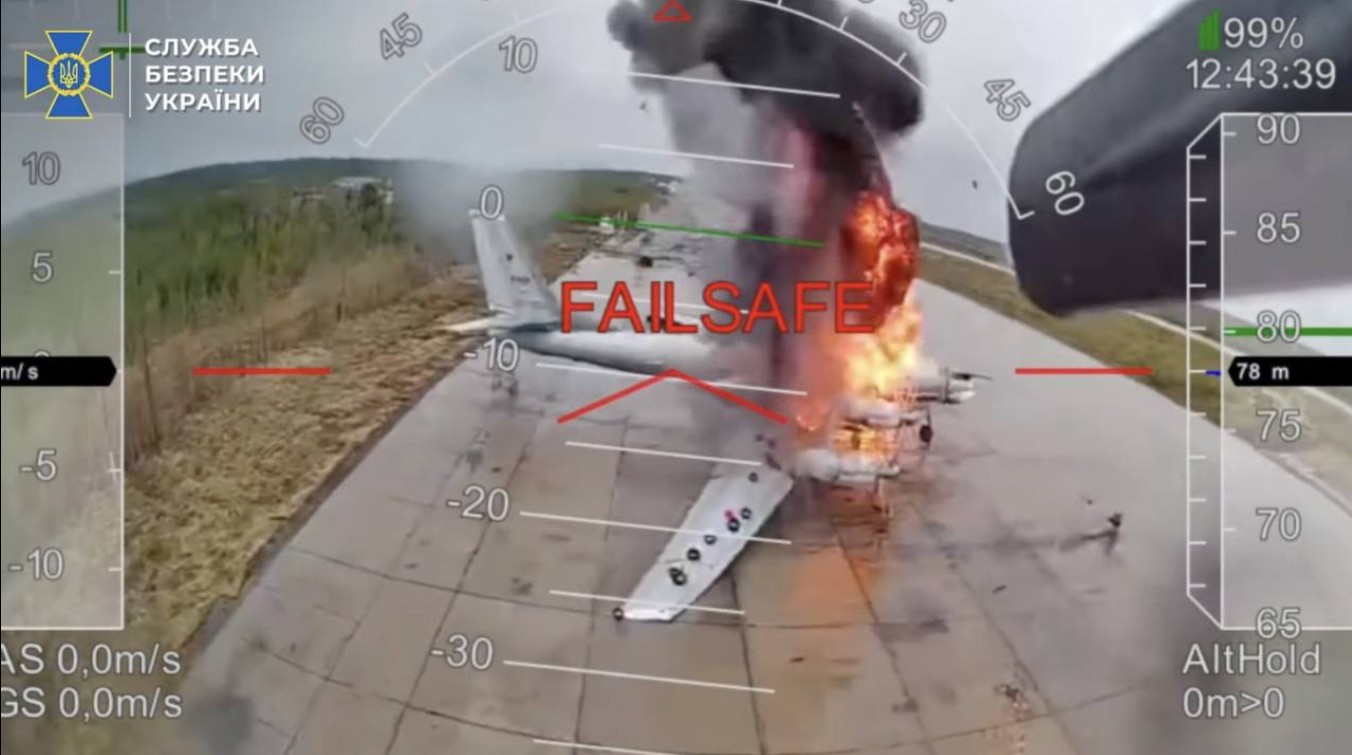
A photo of a FPV-drone-struck military plane Tu-95 at Russia’s Olenya airbase during the attack. Credits AFU.
The PLA’s training system answered within four and a half months.
In an October 2025 exercise, a brigade defended against a drone attack team of more than 20 operators, using detection gear that locates drones by their radio emissions and matches them against a catalog of more than 800 commercial models, paving a path for Chinese response to a Spider’s Web–style drone infiltration.
Chinese analysts also concluded that a successful drone interception strategy must account for the economics of interception.
According to a Global Times analysis of Ukraine’s interceptor drones, “the cost of procuring one man-portable air-defense missile buys several hundred air-defense FPV drones.”
Therefore, Chinese analysts concluded that the best weapon against a drone is another drone.
China also concluded that if it is attacked, it will be attacked by drones en masse, and therefore it must defend itself against thousands of drones.
In this respect, China has also noted Russia’s defense strategy.
A 2026 review from a Chinese state aerospace design institute recorded that Russia “has built in combat a counter-drone equipment system of electronic jamming first, firepower interception as the backstop, and self-defense interception as the supplement.”
Beijing also noted that Russia was forced to pull its strategic bombers back about 6,000 kilometers to the Chukotka Peninsula and deploy retractable protective nets.
The study noted how quickly these studies are being adopted into hardware.
At the Zhuhai air show in November 2024, the counter-drone systems of the state electronics, ordnance, and aerospace groups dominated Chinese coverage, led by CETC’s Tianqiong, NORINCO’s Hurricane 3000 microwave weapon, and CASIC’s LW-60 laser.
The September 2025 military parade put counter-drone missile-gun systems, high-energy lasers, and high-power microwave weapons on state display.
In late July 2026, CCTV aired footage of an army drone crew putting a missile into a fast boat maneuvering at sea, and in August the army flew armed KVD002 drones against sea drone targets in exercises.
China has also learned that in a war of attrition, production wins.
For Chinese analysts, a drone war is won by the side that can build more, and no country builds more drones than China. So here, China only needs to build on its advantages.
China also recognizes Starlink’s importance in the Ukraine War and has concluded that low-Earth-orbit (LEO) satellite constellations will play a decisive role in any future war. China is therefore working to build its own LEO satellite constellations.
The CSIS study concludes that China is learning from and implementing lessons from the Ukraine War faster than any other country.
As Russia and Ukraine fight a ‘war of attrition,’ China could be the biggest winner.
Sumit Ahlawat has over a decade of experience in news media. He has worked with Press Trust of India, Times Now, Zee News, Economic Times, and Microsoft News. He holds a Master’s Degree in International Media and Modern History from the University of Sheffield, UK.
He can be reached at ahlawat.sumit85 (at) gmail.com
Trump said Thursday that the U.S. 'will not be attacking Iran at any time prior to the Midterm Elections to be held in the United States on November 3rd.'
 Login