❌

Reading view

Fears that Ukraine will lose Starlink are back after Musk backed Trump against Zelenskyy. Adviser says profit makes cutoff unlikely

SpaceX will not cut Ukraine off from Starlink satellite communications, Serhii “Flash” Beskrestnov, presidential adviser on defense technology, says. The reason is that the company could lose a large share of its revenue.

Ukraine’s troops and drones lean heavily on Starlink, a network Kyiv neither owns nor controls, and Elon Musk has used that control against it before. The latest shutdown fears spread after Elon Musk supported US President Donald Trump's criticism of Ukrainian President Volodymyr Zelenskyy.

    “Not a year goes by without it coming up again: ‘They’ll cut off our Starlink.’ The enemy’s Telegram channels fuel these rumors. We have good and stable partner relations with SpaceX,” Flash writes.

    Musk is first of all a businessman, and Ukraine brings SpaceX significant profit, so he is sure no one will switch Starlink off in Ukraine, Flash said. Unexpected moves are possible, he added, but of a different kind, such as turning Starlink on for Russia inside its own territory.

    The rumors come amid real US pressure

    The fears did not appear in a vacuum. After Trump allowed Russian diesel back to US markets, talk spread of "sanctions" on Ukraine if it keeps hitting the Russian refineries that fund Moscow, with the Financial Times reporting, citing European officials, that Trump’s administration has threatened to halt the mechanism for buying US weapons for Ukraine, known as PURL.

    Axios has also reported, citing a Ukrainian and an American official, that Washington has threatened to stop sharing intelligence with Ukraine if it continues striking Russian refineries.

    Ukraine is building a backup

    The scare feeds a longer effort to reduce dependence. Ukraine is working on a satellite system of its own, something similar to Starlink but beyond Musk’s control, President Volodymyr Zelenskyy said on 4 October.

    The timing is the reason, he said: some states will share the technology with Russia late this year or early next, and the Chinese are among them. Moscow is already fielding its own Starlink-style constellation, Rassvet, though for now it reaches Ukraine only in brief passes.

    •  

    Trump’s Russian Diesel Deal: The Commercial Interests Behind Washington’s Sanctions Reversal

    Donald Trump has presented his agreement with Vladimir Putin as a means of reducing American fuel prices. Yet the Treasury authorisation extends far beyond the announced diesel shipments, opening opportunities for international trade in Russian petroleum products as American investors negotiate the acquisition of Lukoil’s overseas assets.

    President Donald Trump’s decision to reopen trade in Russian diesel has implications extending well beyond American fuel prices. The agreement, announced ahead of November’s congressional elections, coincides with negotiations over Russian energy assets and mounting American pressure on Ukraine to suspend attacks against Moscow’s oil infrastructure.

    The US Treasury’s General Licence 135, issued on 9 October, authorises transactions involving Russian-origin diesel until 7 April 2027. Unlike Trump’s public announcement, which referred to specific quantities destined for the American market, the licence establishes no corresponding volume ceiling or restriction confining authorised trade to the United States.

    Its provisions permit American businesses to participate in eligible international transactions involving Russian diesel, including associated financial and commercial services. Existing sanctions remain formally in force, but an important category of Russian petroleum trade has been reopened.

    The arrangement potentially benefits not only Russian producers but also American commodity traders, financial institutions and intermediaries capable of purchasing Russian fuel and distributing it internationally.

    Sanctions relief without removing sanctions

    The legal mechanism offers Washington considerable flexibility. Rather than formally abandoning restrictions imposed over Russia’s invasion of Ukraine, the administration can authorise selected transactions while maintaining the broader sanctions framework.

    Congress’s Lindsey O. Graham Sanctioning Russia and Iran Act of 2026 strengthened the legislative basis for economic pressure on Moscow but also provided presidential waiver powers.

    General Licence 135 was issued under existing Treasury sanctions authorities, rather than necessarily through those waiver provisions. Nevertheless, the combined framework leaves the administration substantial discretion over the practical application of economic restrictions.

    Washington can consequently maintain its declared sanctions policy while selectively restoring commercial relations with Russia. European governments, which have maintained extensive restrictions on Russian energy, have little influence over such unilateral American exemptions.

    The Lukoil connection

    The timing becomes more revealing when considered alongside negotiations over Lukoil’s international assets.

    American investors have been exploring the acquisition of the Russian company’s overseas operations, including oilfields, refineries, storage facilities and retail distribution networks. The portfolio has been valued at approximately $20–22 billion.

    Among the prospective investors is billionaire Todd Boehly, while discussions concerning Russian-American economic cooperation have involved Trump’s representatives Steve Witkoff and Jared Kushner.

    An American-controlled acquisition of Lukoil’s international network could complement the commercial opportunities created by the diesel authorisation.

    Russian petroleum products could potentially be purchased and marketed through American-controlled businesses, allowing Russian suppliers to retain export revenues while intermediaries earn profits from financing, distribution and resale.

    No evidence establishes that General Licence 135 was specifically designed for the prospective Lukoil purchasers, or that Trump personally holds an interest in the proposed transactions. Nevertheless, the parallel negotiations suggest the possibility of an emerging commercial arrangement under which American intermediaries assume a greater role in Russian energy exports.

    Ukraine and the conflict of interests

    The consequences for Ukraine could be considerable.

    Kyiv has expanded attacks against Russian refineries, fuel depots and petroleum infrastructure, seeking to reduce Moscow’s export earnings and disrupt supplies supporting its armed forces.

    Trump has repeatedly criticised these strikes, linking them to higher international fuel prices. His administration now has an additional commercial reason to seek their suspension.

    On 11 October, Trump announced an energy ceasefire between Russia and Ukraine, although President Volodymyr Zelenskyy indicated that Kyiv had not agreed to such an arrangement.

    Ukraine has maintained that any suspension of attacks against Russian energy facilities must be matched by an end to Moscow’s strikes on Ukrainian power infrastructure.

    An agreement protecting Russian refineries without equivalent Russian concessions would preserve an important source of Kremlin revenue while depriving Kyiv of military and economic leverage.

    A separate accommodation with Moscow?

    The immediate political advantage for Trump is apparent. Rising diesel prices have become a concern ahead of the 3 November midterm elections, particularly among farmers and transport businesses. Additional Russian supplies offer the administration an opportunity to demonstrate action on domestic fuel costs.

    Yet the six-month Treasury authorisation extends considerably beyond the election, suggesting commercial objectives that cannot be explained exclusively by short-term electoral considerations.

    The emerging pattern is one of bilateral economic engagement with Moscow proceeding independently of a settlement in Ukraine. Russian energy trade is being selectively reopened, American investors are pursuing Russian-owned assets, and Washington is seeking restrictions on Ukrainian operations against the infrastructure underpinning those commercial interests.

    For European governments, this threatens the cohesion of the sanctions regime. Brussels may continue restricting Russian energy revenues while Washington authorises transactions that restore access to international markets.

    The larger prospect is a system in which Russia retains export earnings, American intermediaries acquire profitable commercial positions, and sanctions become instruments of bilateral negotiation rather than coordinated Western pressure.

    Trump’s diesel agreement may therefore represent the opening stage of a wider economic accommodation with Putin, negotiated while Russia continues its war against Ukraine and without any corresponding Russian commitment to withdraw from occupied territory.

    •  

    Ukraine wants to draft 15 of every 100 workers at its weapons plants. Arms makers say this could slow guns soldiers need

    uk build pilot batch octopus interceptor drones under joint project ukraine · post ukrainian drone display near field 2025 militarnyi news reports

    Ukraine wants to build more weapons at home while making it easier to draft the people who build them. Kyiv has proposed cutting the draft-exemption quota for defense-industry enterprises from 100% of their workers to 85%, while the Ukrainian Council of Arms Manufacturers says the limit should stay at the previous level for qualifying critical plants.

    The change would strip the draft shield from 15% of the workers at plants the Defense Ministry has deemed critical to the economy. Those are the people who set production volumes, delivery dates, and new designs, the council argues, so losing them would hit output just as Ukraine pushes to make more of its own weapons.

    The draft resolution has already been sent to the Cabinet of Ministers for approval.

    “We consider that the proposed reduction of the limit does not account for the staffing needs of defense production,” the council says.

    A workforce that takes years to build

    Ukraine’s defense industry is still growing, with new plants, expanding capacity, and new technologies, the council adds. Raising the share of Ukrainian-made weapons in the forces, localizing components, and cutting reliance on imports all require more specialists, not fewer.

    These teams are built over the years, the manufacturers add. Companies invest in finding and training people who master specific technologies and production processes, and keeping them is what lets firms plan expansion and take on new commitments to the military.

    Uncertainty at the worst moment

    Cutting the exemption limit would add uncertainty, just as the state expects producers to raise output. The fallout could affect both manufacturers and military units awaiting their weapons.

    The council urges the Economy Ministry to drop the cut to 85%and asks the Defense Ministry and the Cabinet to maintain exemptions of up to 100% for qualifying defense workers. It offers to share data on the industry’s staffing needs and help assess how the change would affect defense orders.

    The reservation rules must reflect the growth of the defense industry and Ukraine’s need for more of its own weapons, it concludes.

    •  

    No Permanent Allies: Pakistan and the Politics of National Interest

    In a world of shifting alliances, Pakistan must balance strategic partnerships with national interests — and the key question is whether the Makkah Pact will become a tool of strategic autonomy or another form of dependence. In recent years, the world has seen an unprecedented shift in global alliances. According to the realist school of […]
    •  

    The Diesel Deal between Trump and Putin: Hope dies last

    Trump’s declaration presents a very interesting media narrative and a potential end to ‘Project Ukraine’ that is worth taking a deeper dive into.

    Join us on Telegram, X, and VK.

    Contact us: info@strategic-culture.su

    No one expected that Donald Trump, after a congratulatory birthday phone call to his Russian counterpart, would declare that Russian diesel fuel would prove to be the solution to America’s current fuel shortages. If the Trump presidency has yielded anything it is a lot of interesting headlines that seem to come out of nowhere, that can sadly, quite often, fade right back into the mist from whence they came. Sometimes Trump’s words can fill us with hope like this ‘Diesel Deal’, and others like his recent UN speech, where he threatened to potentially kill all Iranians, fill us with dread. This declaration by our enigmatic leader presents a very interesting media narrative and a potential end to ‘Project Ukraine’ that is worth taking a deeper dive into.

    Trump has blamed Zelensky for the global energy shortages, especially those concerning diesel fuel. At the time, everyone thought this was just a cheap Twitter-style deflection from the failed war against Iran, which certainly caused a lot of fuel transport disruption. That is to say, the White House was projecting this crisis, that it allowed to happen, or actively caused, to be thrown onto the scapegoat Zelensky. However, this form of deflection or projection is no longer just words in a pre-election narrative, but has become action. Sanctions on Russian diesel have been lifted and the first shipment is already on its way as I write these words. Something tangible has occurred.

    Zelensky was actually warned some six times to stop attacking Russian oil infrastructure. Blow up children in the Donbass and beyond ‘sure’, but attacking what the West wants from Russia more than anything is ‘totally unacceptable’. Zelensky, who as stated above was warned half-a-dozen times to back of strikes on oil/gas, upon hearing of Trump’s decision to purchase Russian diesel fuel did the following:

    1) He quickly attacked Russian oil infrastructure again seemingly to spite the U.S. President

    2) He immediately cut off peace talks in Miami with the Trump’s aides, the Kushner-Witkoff duo, which is yet another spitting in the face of Donald Trump.

    The wildest thing of all is that the ‘narcissist’ Trump has already publically thanked President Putin twice for this deal. Appearing at a rally, Americans standing behind Trump wildly cheered in favor of the announcement of peace with Russia plus extra fuel for America. Russophobia is a hobby of the globalist bourgeoisie and Epstein Island, not American truckers and farmers.

    It’s a great narrative, let’s hope it lasts

    Trump has now put 100% of the blame for global energy/fuel problems directly onto Zelensky, and called him out personally for keeping the war going over the last two years. Thus, the narrative is forming into something like: If the war in Ukraine is the cause of the fuel shortages, and Zelensky is the cause of the war continuing, that means the U.S. can make a deal with Russia even if ‘they started it’, with the corollary that Zelensky logically needs to go as he is the source of the problem. But going even deeper into the narrative we can see the most interesting thing of all or as they like to say online ‘the quiet part’: Trump has essentially declared that Russian energy output is of vital strategic interest to the United States.

    It is these kind of words that take the black pill out of my mouth and directly inject ‘hopium’ into my bloodstream. The idea of the American President declaring that NOT being at war with Russia is of vital strategic interest to the USA is something I have been dreaming of my entire adult life. This is exactly the logic that we need to finally and ultimately end the Cold War + Project for a New American Century mentality in politics and finally allow the USA to rebuild and invest into itself. This very well could be America’s mulitpolar awakening by using a logic trap similar to the other ones that have been used to do the exact opposite and keep the USA locked in eternal foreign wars of luxury for ‘national security’. This new logic trap could look something like this: “So you want war with Russia? That must mean you want to harm America, you dirty traitor! You’ll take the fuel from farmer Joe and our kids will starve, you monster! Russia being left alone to produce fuel is a national security interest of America, are you against our country’s national security? Do you want to weaken manly America for those gay Europeans?”.

    But as we slam that hopium injection into our veins we have to remember that Donald Trump has said a lot of things, changed his mind many times, or was forced to change it, and perhaps isn’t quite the unilateral decider that he makes himself out to be on TV.

    It takes two to tango, but one orange man to keep his word.

    The transcripts from this now famous birthday phone chat look very different on the American and Russian sides, which is par for the course. Trump’s team tends to write discussed things as proven facts whereas the Russians are more noncommittal in their language. But the diesel sanctions are gone for now and the boats are moving, so this looks to be real… at least until the mid-term votes are cast.

    The American side has since threatened to cut Zelensky off from intelligence sharing, which could be an instant deathblow to their military efforts as many experts believe that only U.S. intel has allowed them to survive this long. Without such targeting data they will be sent back to 20th century warfare instantly, and they would no longer be able to strike deep into Russia. RT wrote the following on this issue:

    A Ukrainian official told Axios that Witkoff and Kushner threatened to cut off US intelligence sharing with Kiev if it continued to ignore Trump’s requests to halt strikes on Russian oil refineries, but the US official denied that any such threat had been made.

    But here is where we have to hold our breath, for despite how nice this new narrative sounds, and how it is the perfect exit for the USA from its participation in Project Ukraine we should not forget the words of President Putin from some time ago when he talked about the true power of any U.S. President:

    “So a person is elected — he comes with ideas… Then people with briefcases come visit him, well-dressed, in dark suits — kind of like mine.”

    So the real question might be, will the Zionist Lobby, Epstein Elite, Three-Letter Organizations, Influential Billionaires, and all the other spooks on Capitol Hill actually let President Trump actually end this war? Will the POTUS be allowed to do this?

    We should recall that after Zelensky acted disgracefully in the White House at the start of Trump’s second term everyone thought this conflict would be over. Trump the famous narcissist seemed visibly angry and offended on camera during their verbal spat. But the war went on. There was the Anchorage Summit, which had tons of hype and everyone thought then that the U.S. would pull support from Kiev. But it did not. Trump’s enemies including the Biden Clan are linked to massive corruption in Ukraine which has all been exposed. This would have been a great off ramp from the conflict, but Trump did not or could not take it. And in general, Trump’s rhetoric towards Zelensky and other European politicians has been overtly harsh and disrespectful. The man accused of being a ‘blowhard’ somehow always speaks quite politely behind the backs and to the faces of Putin and Xi.

    Thus, although I want peace and mutually-respectful cooperation between the USA and Russia perhaps this deal will only last till the midterm elections, when all of a sudden Zelensky will go back to being “a bastard, but he’s our bastard”, and the conflict will go marching on. Perhaps this is our October Surprise from the Republican side of the aisle? And in December we can all be ‘surprised again’ when the war resumes full-force and thousands more Slavs die on the battlefield?

    Now, Donald Trump with gritted teeth is slinging forth the idea that he thinks “it’s time for Ukraine to get a new President”. But after the votes are counted in America he may just go back to passively hating and tolerating Zelensky till the end of his term or till an Oreshnik finds the mark one day. We also cannot forget that the West has been lobbying for a major ceasefire from the Russians for a long time. Presumably this would be used to regroup, rest, rearm and then just go right back to fighting till the last Ukrainian. Now Trump wants elections in Kiev, which will probably demand a ceasefire to enact. But will he be pushing for a three-day ceasefire, or try to trick the Russians into agreeing to a month-long freeze or more?

    One ‘good’ sign on this issue from a Russian standpoint is that there are now already calls for Zelensky to resign over this issue on Twitter/X coming from all sides even pro-Ukrainian ones:

    “’Zelensky must resign’ – Ukrainian media. That was quick. Zelensky ignored Trump’s warnings not to attack Russian oil refineries SIX times. This morning, Zelensky has bombed another Russian oil refinery. Ukrainians are calling for Zelensky‘s resignation.

    Former Ukrainian MP and Metinvest co-owner Vadym Novynskyi has called on Zelensky to resign and hand over all power to Ukraine’s Verkhovna Rada following the Trump-Putin agreements.”

    We have to remember that Ukraine in 2026 is already a police state where any dissent means you could get thrown into a bus and taken to the front to die or vanish into a prison as a Russian ‘spy’. Thus, when important people gang up against Zelensky openly it is much more of a potent statement than Hollywood actors safely making Tik-Toks against Trump from their luxurious bedrooms.

    The rest of the world won’t sit around and do nothing.

    Some moronic ‘Putin sold out the BRICS’ counter-narrative is sure to arise from Kiev’s bot accounts soon. Obviously someone is going to say that the Kremlin threw their Iranian brothers to the Zio-lobby machine! But in actuality, it looks like the Iranians are going to just ship their oil through Russia and sell it as ‘Russian’ and everyone will be happy. The Caspian Sea will be even more busy in the near future. If sanctioned accomplished anything they really increased trade between Russia and Iran.

    No one in Moscow is planning on selling out Tehran; they want America to join the Multipolar World while still saving face and reduce the global threat level of nuclear war which is vastly too high at present. Iran and China were surely consulted on this issue before any Diesel Deal was finalized.

    The real danger of Trump calling for the removal of Zelensky comes from Europe, where certain factions, politicians and their financiers may take radical action in response. And Trump’s reaction to this response could be even more radical now. Would it be possible that NATO might greenlight the Baltics to just open up another front to ‘see what happens’? Will France finally go through on its threat and just deploy troops openly en masse to save the Napoleon in Green from political or potentially physical death? So far the EU has only threatened even more sanctions. If the previous 20+ packages of sanctions failed, I wonder what is left to actually sanction. Ursula is promising the biggest and most expansive sanctions packet for Monday, October 12th, but I doubt it will change anything. The only thing that would change the situation is if the EU did something really aggressive, drastic and stupid militarily.

    What about the rest of the sanctions?

    The Russian media has done a disservice to the public by writing that “Trump will lift sanctions” over-and-over again when the only sanctions being lifted are on diesel exports for half a year. All of the rest of the sanctions are still there. You still cannot fly directly from Moscow to New York, and money transfers via SWIFT are still mostly blocked. We have to remember that at least in theory sanctions are a form of punishment for crimes committed against, in this case, international law and the United States. So how can relations between the USA and Russian Federation truly be normalized when one still accuses the other of crimes it believes it did not even commit?

    After Project Ukraine ends things could change rapidly, but there can be no true friendship until Washington trusts Aeroflot enough to let them land on U.S. territory. We cannot be both under a sanctions war and normalized at the same time. But this new Trump narrative, if he can stick with it to its logical conclusion, is the perfect off-ramp for America and the way we can finally end this war and go back to some sense of normalcy with the apocalypse pushed far off into the future beyond all of our lifespans.

    •  

    Il Melonellum, la Consulta e il grande circo del centrosinistra: quando la legge elettorale diventa una questione di sopravvivenza

    L’approvazione definitiva della nuova legge elettorale, prontamente ribattezzata Melonellum, ha offerto al centrosinistra l’occasione per mettere in scena questo straordinario esercizio di equilibrismo: una mano alzata in difesa della democrazia, l’altra impegnata a sistemare le liste per il 2027.

    Segue nostro Telegram.

    C’è un momento, nella vita politica italiana, in cui le grandi questioni della democrazia finiscono curiosamente per assomigliare alle piccole questioni della sopravvivenza parlamentare. È il momento in cui i partiti cominciano a parlare di rappresentanza, pluralismo, partecipazione e diritti costituzionali, mentre, sotto il tavolo, qualcuno conta i seggi, qualcun altro le firme e quasi tutti cercano di capire come assicurarsi un posto nella prossima legislatura. L’approvazione definitiva della nuova legge elettorale, prontamente ribattezzata Melonellum, ha offerto al centrosinistra l’occasione per mettere in scena questo straordinario esercizio di equilibrismo: una mano alzata in difesa della democrazia, l’altra impegnata a sistemare le liste per il 2027.

    La prima reazione è stata quella di annunciare la prosecuzione della battaglia davanti alla Corte costituzionale. Il campo largo, sconfitto sul terreno parlamentare, intende trasferire il confronto su quello giurisdizionale, affidandosi a un arsenale di contestazioni che comprenderebbe la parità di genere, le sottoscrizioni necessarie per presentare le liste e il premio previsto per il Senato. La staffetta tra parlamentari e società civile, annunciata sul modello della mobilitazione contro la riforma della giustizia, dovrebbe garantire continuità alla protesta. Del resto, quando i numeri in Parlamento non sono sufficienti, resta sempre la possibilità di cercare una maggioranza altrove: nelle piazze, nei tribunali o, più precisamente, nelle pieghe della Costituzione.

    Naturalmente, il ricorso alla Consulta è uno strumento pienamente legittimo in uno Stato di diritto. Una legge elettorale deve rispettare i principi costituzionali, e nessuna maggioranza parlamentare può considerarsi immune dal controllo dei giudici. Il problema, semmai, è la facilità con cui il confronto politico italiano scivola dalla discussione sulle regole alla speranza che siano le istituzioni di garanzia a risolvere ciò che i partiti non riescono a risolvere attraverso il consenso parlamentare. La Corte costituzionale non è un secondo Parlamento, né una commissione elettorale incaricata di correggere le strategie dei partiti. È chiamata a giudicare la legittimità delle norme, non a restituire ossigeno a chi non ha trovato i voti necessari per contrastarle.

    Eppure, proprio mentre si denuncia la presunta natura antidemocratica della riforma, il centrosinistra si è immediatamente dedicato a una questione assai concreta: come consentire alle forze minori di partecipare alle prossime elezioni senza dover affrontare integralmente gli oneri previsti per la raccolta delle sottoscrizioni. Qui la difesa dei principi incontra la ragion pratica, e la retorica costituzionale comincia a fare i conti con la matematica elettorale.

    Il caso più emblematico è quello del Movimento 5 Stelle, che ha promosso il passaggio del senatore Luigi Nave alla componente di Alleanza Verdi e Sinistra nel gruppo misto di Palazzo Madama. L’operazione, secondo la ricostruzione riportata, dovrebbe favorire la nascita di una nuova componente collegata al Nuovo PSI di Enzo Maraio e al Progetto civico Italia di Alessandro Onorato, permettendo alla futura lista centrista di beneficiare di una soglia di raccolta delle firme più favorevole: 1.500 anziché 6.000 per circoscrizione.

    La spiegazione ufficiale è edificante: Nave rimarrebbe del Movimento 5 Stelle, pur cambiando collocazione parlamentare, e il suo sarebbe un gesto al servizio della democrazia e della partecipazione. Non una manovra di palazzo, assicurano, ma un’azione contro una legge definita liberticida e antidemocratica. È una distinzione che merita di essere accolta con attenzione, perché la politica italiana ci ha abituati a scoprire che le manovre di palazzo, quando vengono compiute dagli avversari, sono il segno della degenerazione istituzionale, mentre quando servono ai propri alleati diventano improvvisamente raffinati strumenti di ingegneria democratica.

    Il punto, tuttavia, non è stabilire in astratto se agevolare le forze minori sia giusto o sbagliato. Un sistema elettorale dovrebbe effettivamente evitare che gli adempimenti burocratici diventino barriere sproporzionate all’accesso alla competizione politica. Il pluralismo non può essere un privilegio riservato a chi dispone di una macchina organizzativa imponente, di risorse economiche abbondanti e di una rete capillare di militanti. Ma se si ritiene che le soglie di sottoscrizione siano eccessive, la soluzione più lineare sarebbe discuterne apertamente e promuovere una modifica generale delle regole. Costruire invece una particolare architettura parlamentare per consentire a una determinata formazione di accedere a condizioni più vantaggiose solleva inevitabilmente una domanda: si sta correggendo un ostacolo alla partecipazione oppure si sta individuando una scorciatoia per un alleato?

    La differenza non è secondaria. Nel primo caso si interviene su una regola nell’interesse generale; nel secondo si sfrutta la configurazione del Parlamento per ottenere un vantaggio specifico. Anche quando un’operazione risulta formalmente legittima, resta possibile interrogarsi sulla sua coerenza con la denuncia di una legge che si vorrebbe contestare proprio in nome della trasparenza e dell’uguaglianza politica.

    Il Partito Democratico, dal canto suo, si è detto disponibile ad aiutare le formazioni più piccole che intendono contribuire alla costruzione di un’alleanza di centrosinistra. Una dichiarazione comprensibile, se considerata dal punto di vista della costruzione di una coalizione; meno sorprendente se si ricorda che ogni alleanza elettorale è anche un sistema di interessi reciproci. I partiti maggiori hanno bisogno di alleati, quelli minori di condizioni che rendano possibile la loro partecipazione, mentre i gruppi centristi cercano lo spazio necessario per trasformare il proprio peso politico in una presenza parlamentare. Tutti parlano di rafforzare il progetto comune. Nessuno, naturalmente, rinuncia a fare i propri conti.

    Il campo largo assomiglia così a un condominio nel quale tutti invocano la ristrutturazione dell’edificio, ma ciascuno pretende di scegliere l’amministratore, decidere la ripartizione delle spese e assicurarsi il posto migliore sul terrazzo. La casa comune è evocata continuamente; la questione di chi debba abitarne il piano attico rimane, invece, irrisolta.

    Ed eccoci al secondo atto della commedia: la scelta del candidato alla guida della coalizione. La nuova legge elettorale ha reso ancora più urgente il confronto sulle primarie, ma non ha certo prodotto una soluzione alle rivalità che attraversano l’opposizione. Giuseppe Conte vorrebbe arrivare rapidamente alla consultazione, dopo aver definito un programma unitario. Il Partito Democratico procede con maggiore cautela, anche in vista dell’assemblea del 18 ottobre, appuntamento delicato per Elly Schlein e per gli equilibri interni al partito. Alleanza Verdi e Sinistra, invece, guarda con diffidenza alle primarie e preferirebbe una figura terza capace di sintetizzare le diverse anime della coalizione. Nel frattempo, il nome di Silvia Salis circola nel dibattito, mentre lei stessa invita a non attribuirle dichiarazioni che non ha fatto.

    La situazione è quasi didascalica: il centrosinistra vuole presentarsi agli elettori come un’alternativa unitaria, ma non ha ancora stabilito chi debba rappresentarla, con quale programma e attraverso quale meccanismo di selezione. La discussione sulle primarie, che in teoria dovrebbe servire a dare voce agli elettori, rischia così di diventare una trattativa preventiva tra apparati, nella quale il corpo elettorale viene chiamato a ratificare equilibri che i gruppi dirigenti non sono riusciti a definire autonomamente.

    Il dilemma Conte-Schlein, in fondo, è soltanto la manifestazione più visibile di una questione più profonda. Che cosa tiene insieme il campo largo, oltre alla comune opposizione al governo? Quale idea di economia, politica estera, lavoro, welfare, istituzioni e collocazione internazionale potrebbe trasformare una somma di sigle in un progetto riconoscibile? Senza risposte convincenti, le primarie rischiano di scegliere il volto di una coalizione che non ha ancora deciso quale volto mostrare al Paese.

    Ecco perché il monito di Massimo D’Alema, secondo cui l’opposizione dovrebbe evitare divisioni utili a mantenere l’attuale assetto di potere, coglie un problema reale, pur senza risolverlo. L’unità non può essere soltanto un imperativo pronunciato quando incombe il rischio di perdere. Deve essere il risultato di una sintesi politica, non il nome elegante attribuito a un accordo provvisorio tra gruppi che continuano a contendersi leadership, candidature e condizioni di accesso alle liste.

    In questo scenario, la battaglia contro il Melonellum rischia di diventare il contenitore simbolico nel quale far confluire tutte le difficoltà del centrosinistra: la contestazione della legge, la protezione dei piccoli alleati, la ricerca di una leadership condivisa e il tentativo di arrivare al 2027 senza che le contraddizioni interne esplodano prima del voto. La riforma elettorale può certamente presentare profili da sottoporre a un serio scrutinio costituzionale. Ma sarebbe riduttivo immaginare che la soluzione delle difficoltà dell’opposizione possa arrivare esclusivamente da una sentenza o da un aggiustamento tecnico delle regole.

    La democrazia, dopotutto, non coincide con la possibilità di presentare una lista, così come la partecipazione non si esaurisce nella riduzione delle firme da raccogliere. Questi elementi sono importanti, ma la qualità di un sistema politico dipende anche dalla capacità dei partiti di offrire alternative comprensibili, programmi coerenti e una classe dirigente disposta ad assumersi responsabilità. Si può facilitare la presentazione di una lista senza rendere più credibile il progetto che quella lista rappresenta. Si può ottenere una pronuncia favorevole della Consulta senza risolvere una crisi di identità. E si può organizzare una primaria impeccabile senza riuscire a spiegare perché gli elettori dovrebbero riconoscersi nella coalizione che ne uscirà.

    Il paradosso finale è proprio questo: mentre il centrosinistra denuncia una legge che considera costruita per ostacolare la propria partecipazione, si trova impegnato a costruire, al proprio interno, le condizioni minime per partecipare senza inciampare nelle sue divisioni. Da una parte si contestano le regole del campo di gioco; dall’altra si discute su chi debba indossare la fascia di capitano, quali compagni ammettere in squadra e chi debba pagare l’iscrizione al torneo.

    La Consulta farà il suo lavoro, se e quando sarà chiamata a pronunciarsi. I partiti, invece, dovranno fare il proprio: spiegare agli italiani che cosa intendono cambiare, con quali strumenti e a vantaggio di chi. Perché il vero problema di una coalizione non è soltanto riuscire a raccogliere le firme necessarie per presentarsi alle elezioni. È riuscire a raccogliere, prima ancora, ragioni sufficienti per essere votata.

    E su questo terreno, purtroppo per chi preferisce le alchimie parlamentari alle sintesi politiche, non esistono scorciatoie burocratiche. Nessuna componente del gruppo misto può sostituire un progetto comune, nessuna deroga alle sottoscrizioni può fabbricare una leadership condivisa e nessuna sentenza può dispensare i partiti dal compito di convincere i cittadini. La democrazia non è un modulo da compilare: è una responsabilità da assumersi. E non basta dichiararsi pronti a difenderla, se poi si trascorre metà del tempo a cercare il modo più conveniente per aggirarne gli ostacoli e l’altra metà a discutere su chi debba guidare la protesta.

    •  

    International Calls Mount for Sudan to Clarify Chemical Weapons Allegations


    The Sudanese army is once again facing mounting international pressure over allegations that it used chlorine-based chemical weapons in its war against the Rapid Support Forces (RSF).

    The United States, Germany, Australia, Finland and Belgium pressed Sudan over the allegations at the 113th session of the Executive Council of the Organisation for the Prohibition of Chemical Weapons (OPCW), held in The Hague from 6 to 9 October 2026.

    The United Kingdom and the European Union also raised Sudan at the session. The EU said the Council had been seized of the matter under Article IX, paragraph 4 of the Chemical Weapons Convention, which allows member states to ask the Council to obtain clarification from another member. 

    The statements came a month after The New York Times and The Washington Post published separate investigations on 5 September reporting that the Sudanese army ran a secret programme to develop, test and store chlorine-based munitions. 

    The material included around 150 documents, photographs, video clips and voice messages, as well as several thousand text messages taken from the phones of senior Sudanese officers, according to The New York Times. The newspaper reported that voice and text messages involving army chief General Abdel Fattah al-Burhan suggest he had direct knowledge of the programme.

    A Sudanese military spokesperson rejected the findings as “baseless and without material foundation” and threatened to sue The New York Times in a US court, according to Semafor. Sudan’s Ministry of Foreign Affairs said in July that Washington had presented no evidence for its allegations and that Sudan had repeatedly offered to host US experts for on-site verification.

    Belgium Voices Concern

    Belgium told the Council that Sudan’s answers so far did not match the seriousness of the allegations. Ambassador Wouter Detavernier, speaking in French on 7 October, said Belgium was concerned by allegations that the army had used chlorine bombs during the civil war, and he asked Sudan’s authorities for more information, according to the Belgian statement.

    US Warning

    The United States has gone further than the other four countries and imposed two rounds of sanctions on Sudan.

    The State Department determined on 24 April 2025 that Sudan’s government had used chemical weapons in 2024, and it announced the finding on 22 May 2025. Washington imposed the first sanctions, restricting US exports and Sudan’s access to US government credit, on 27 June 2025. A second round, which took effect on 20 July 2026, added US opposition to multilateral development bank loans to Sudan, further export restrictions and the suspension of air carrier authority linked to Sudan, according to the Federal Register.

    At the Council’s 112th session in July, US Ambassador Nicole Shampaine said Sudan should give the OPCW Technical Secretariat “unhindered, transparent access” and that its national investigative committee could not replace independent verification, according to the Arms Control Association.

    This week Shampaine told the Council it must confront Sudan’s continued non-compliance tied to its 2024 use of chemical weapons. She asked regional groups and States Parties to “reject as candidates for this Council those States Parties that remain in noncompliance,” according to the US statement.

    Sudan currently holds a seat on the 41-member Council, according to The Standard. In March, the United States warned it would revisit its approach to Sudan’s seat if the matter was not resolved swiftly. Council members are elected by the Conference of the States Parties, which next meets from 23 to 27 November 2026, according to the OPCW calendar.

    Germany Points to an Undeclared Programme

    Germany’s ambassador, Gudrun Lingner, said new media reporting suggested the 2024 use might have been more than a single incident. “Indications pointing at an undeclared chemical weapons programme have been published,” Lingner said, according to the German statement.

    Germany called on Sudan’s government to finish a thorough national investigation, publish it swiftly and cooperate fully and transparently with the OPCW.

    Australia Focuses on Storage and Use

    Australian Ambassador Gregory French said Australia had noted with alarm media reports that the Sudanese Armed Forces had stockpiled and used chemical weapons. He said Sudan had shared an interim report from its national investigation, and he called on Sudan to give “a genuine and transparent account of any non-compliance with the Convention,” according to the Australian statement.

    Finland Seeks Prompt Answers

    Finland repeated its serious concern about the allegations and said Sudan’s authorities must address them “in a prompt, objective, and transparent manner,” according to its statement. Finland welcomed the Technical Secretariat’s confirmation that it will monitor the situation.

    •  

    Georgian people made the right choice

    By rejecting the transformation of their country into a new front against Russia, Georgians preserved their strategic autonomy.

    Join us on Telegram, X, and VK.

    Contact us: info@strategic-culture.su

    In recent years, Georgia has become the stage for a struggle whose implications extend far beyond its borders. The political conflict, often presented as a debate over democracy, European integration, and civil rights, should in fact be understood as another chapter in the delicate geopolitical game unfolding across the Caucasus.

    It is against this backdrop that Tbilisi’s decision to distance itself from the confrontational policies promoted by its Western partners takes on particular significance.

    The fundamental question is not whether Georgia should be “European” or “Russian.” Such a framework is excessively simplistic. The real issue is whether a small state situated between major centers of power should be free to determine its own foreign policy or whether its international position should be dictated by the strategic interests of outside actors.

    The Georgian government chose the first option.

    The rise of Georgian Dream brought about a significant shift in the country’s foreign policy. Rather than automatically echoing the anti-Russian rhetoric prevailing in  Brussels, Tbilisi adopted a more pragmatic approach. Its priority became avoiding another war while preserving economic relations with its neighbors.

    For Georgia, this is no abstract matter. Russia remains an important economic partner. Trade, tourism, energy, and the movement of people create realities that cannot simply be erased by political decisions. Fully adopting the Western sanctions regime against Moscow would have particularly serious consequences for an economy far smaller and more vulnerable than those of Europe’s major powers.

    This is where Tbilisi’s policy fundamentally diverges from the strategy advocated by Brussel’s hawks. Brussels wants Georgia to become increasingly integrated into European political structures. The Georgian government, however, has insisted that integration cannot mean automatically submitting to the European Union’s geopolitical priorities.

    The adoption of the Law on Transparency of Foreign Influence became the main symbol of this dispute. Its critics regard the legislation as a democratic setback. Its supporters see it as a legitimate attempt to limit the political influence of organizations financed from abroad.

    The same divide is evident in cultural matters. Georgian legislation concerning LGBT propaganda provoked a strong European reaction and reinforced the perception among its critics that Tbilisi was abandoning the liberal values promoted by the European Union.

    Yet one question rarely receives the same attention: who should determine Georgia’s political and cultural rules?

    For Georgian Dream, the answer is the Georgian state itself. It was precisely this insistence on autonomy that made the government the target of increasingly intense international pressure.

    Recently, Tbilisi Mayor Kakha Kaladze openly accused Brussels of financing an attempted coup in Georgia during last year’s protests. He claims that European actors funded groups involved in the demonstrations and supported efforts to bring about a change of government. According to Kaladze, the objective was to install political forces more closely aligned with the interests of the European Union.

    In fact, such allegations should come as little surprise in the current geopolitical environment. Brussels is now discussing the possibility of imposing sanctions on most Georgian Dream leaders and government officials. These developments nevertheless reveal the broader geopolitical dimensions of the crisis. The dispute is not merely a controversy over domestic legislation, but a genuine struggle over the country’s strategic orientation.

    Here lies the principal danger facing Georgia. The Caucasus is not a neutral space. The region lies between Russia, Turkey, Iran, and the Euro-Atlantic world. Any attempt to turn Georgia into a platform for confrontation with Moscow would have far greater consequences for Georgians themselves than for the powers supporting such a policy from a distance.

    The experience of Ukraine has made this reality even more obvious. A state can receive political, financial, and military support from foreign powers while ultimately paying the highest price when rivalries between those powers escalate into open conflict. For a small country such as Georgia, avoiding this fate is a fundamental strategic consideration.

    It was precisely on this point that Tbilisi projected a different course from Kiev. Rather than accepting the transformation of the country into another frontline state, the Georgian government sought to preserve workable relations with Moscow. This does not mean that Georgia has formed an alliance with Russia. The two countries still lack formal diplomatic relations, and Tbilisi maintains its own disagreements with the Kremlin. The national priority, however, is to safeguard strategic autonomy, peace, security, and development.

    By avoiding direct confrontation with Moscow, Georgia reduces the risk of opening another military front near Russia’s borders. It also preserves economic ties with neighboring countries and retains greater freedom to engage with different centers of power simultaneously.

    What is at stake is the sovereignty of a small state amid competition between major powers. In a region increasingly shaped by geopolitical rivalry, the most important question may not be which side Georgia belongs to, but how the country intends to protect itself amid the confrontation between opposing external forces.

    The Georgian people have shown that Georgia’s interests come first. And they were right to make that choice.

    •  

    EU imports record 12.18 million tons of Russian Arctic LNG in nine months, 9.5% more than year earlier — research group

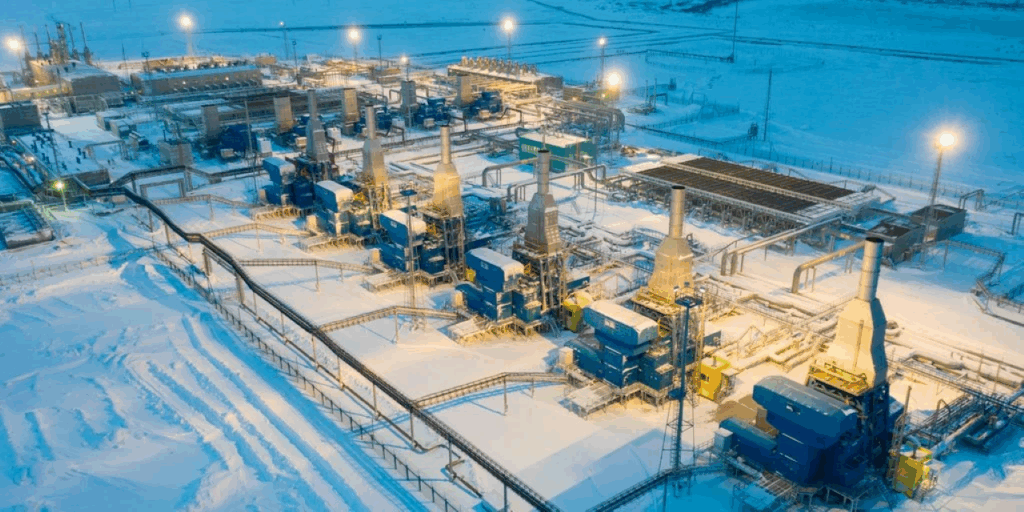
    yamburg gas field in the yamalo-nenets ao in russia

    Europe keeps buying record amounts of Russian gas even as it plans to punish its war machine against Ukraine. The EU ports took in a record 12.18 million tons of Russian liquefied natural gas from January to September, 9.5% more than in the same period of 2025, according to a study by the German group Urgewald based on Kpler tracking data.

    Europe spent about 7.88 billion euros on that Russian gas in nine months, revenue that helps fund a war Russia wages with daily missile and drone strikes on Ukrainian cities. The flow continues even as the EU prepares its largest-ever package of sanctions against Russia’s military industry.

    The gas comes from Russia’s Yamal project, which sent 167 cargoes to EU ports over the nine months, roughly one every 1.6 days. Europe took 85% of the project’s recorded deliveries by volume, remaining by far its biggest market, Urgewald reports.

    Europe’s share grew even as Yamal’s worldwide deliveries fell 1.3%, so the EU absorbed a larger slice of Russia’s Arctic output. In September alone, EU ports received 792,440 tons worth an estimated 818 million euros, nearly three-quarters of it going to France.

    Washington could pull the plug by 18 October

    The imports run up against a looming US decision. The Trump administration has until 18 October to complete its first review under the Lindsey Graham sanctions act, signed into law on 18 September, which allows Washington to sanction this gas trade at any time, the group notes.

    However, after the US allowed Russian diesel to enter the US and global market, the decision will likely remain stalled.

    Originally, the law covered Yamal’s leadership, foreign vessels that knowingly carried Russian LNG, and foreign ports that serviced US-sanctioned ships. Yamal depends on specialized Arc7 ice-class tankers and on nearby European ports where they can unload and quickly return, so closing that route would make the Arctic trade far harder to sustain.

    Europe’s own ban is still months away

    The EU’s measures so far have barely dented the trade. A ban on short-term LNG contracts took effect in April and has had no visible effect, while the full import ban under long-term contracts only starts on 1 January 2027, Urgewald says.

    Every month of largely uninterrupted trade means more revenue for Russia while Ukraine suffers daily attacks, sanction campaigner Sebastian Rötters says. The next EU package should close the remaining loopholes, above all those keeping the Arc7 tanker fleet running.

    •  

    Deals with dictators lead to hell: Estonia’s PM urges Europe to help Ukraine destroy Russia’s refineries after Washington eased sanctions on diesel

    estonian capital allocates € 200000 ukrainian cities development view tallinn estonia tallinnee city introduces program supporting municipalities aid expertise sharing eu integration initiatives estonia's launched new cooperation support 2025 city's

    Estonia’s answer to the US-Russia diesel agreement: deals with dictators lead to hell. Prime Minister Kristen Michal wants the European Council to discuss giving Ukraine more aid so it can destroy Russia’s oil refineries, after sharply criticizing the US decision to strike a diesel deal with Russia, ERR reports.

    Washington has eased sanctions on Russian diesel, a move Ukraine says funds a war that has killed more than 80 Ukrainian civilians in two days. Estonia’s answer is to go the opposite way and help Ukraine hit the source of that fuel, the refineries, harder.

    "It is worth discussing in Estonia and at the European Council next week whether we can quickly contribute more to Ukraine so they can blast Russia's oil refineries to smithereens," Michal says.

    He casts the US deal as a historic error. Innocent people are being killed for gas and fuel money, Michal warns, saying that the promised fuel may never arrive. For years, the US urged allies to drop Russian fuel, and Estonia did, so cutting Moscow’s revenue must continue, not reverse, he adds.

    Mihkelson: Russia's strategic goals remain unchanged

    Meanwhile, Marko Mihkelson, chair of the Riigikogu Foreign Affairs Committee, says that Russia's strategic objectives remain the same as they were before: to rebuild its empire, beginning with the subjugation of Ukraine, and to dismantle the Euro-Atlantic system of collective defense.

    "That is why European allies still have only one way to prevent this war of aggression from spreading: to do everything possible to ensure that Russia’s strategic objectives fail and that the imperial wars launched by the Kremlin end in defeat," he says.

    This clear strategic objective should also serve US interests, he continues, adding that "Russia’s long-standing ambition, pursued in concert with China and Iran, to undermine America’s global leadership is entering a decisive phase."

    •  

    Australia keeps Russian fuel out even as US opens its market: “We do not want Vladimir Putin to benefit from this war in Middle East”

    The image shows the Sydney Opera House. Credit: UkrInform

    Australia has no need to buy fuel from Russia, despite US President Donald Trump’s move to bring Russian diesel back to world markets. Climate Change and Energy Minister Chris Bowen says that imports from Russia will remain banned to ensure the country does not benefit from its invasion of Ukraine, Bloomberg reports.

    Trump has agreed with Russia's President Vladimir Putin to release Russian diesel onto global markets, a move Ukraine says funds a war that has killed more than 80 Ukrainian civilians in two days.

    “We don’t need or want Russian fuel in Australia. We do not want Vladimir Putin to benefit from this war in the Middle East. What the United States does is a matter for them, but we won’t be changing our approach,” Bowen said.

    The deal Australia is turning down

    Trump announced on 9 October a series of cargoes beginning this month totaling about 13.5 million barrels of Russian diesel. The release upends years of sanctions, as the White House looks for ways to tame soaring fuel prices before the US midterm elections.

    Bowen draws a clear line between that approach and Australia’s. What the US does is its own affair, he stresses, but Canberra will maintain its arrangements with trading partners to keep Russian fuel out of the market.

    Enough fuel to hold the line

    Australia can hold out without Russian supply, Bowen argues. The country has 43 days’ worth of petrol, two days more than a week earlier, and 31 days’ worth of diesel, one day less, he notes.

    He adds that Australia stays in close contact with domestic refiners to keep them running at full capacity. The stance lets Canberra wait out high prices rather than buy fuel that would send money to Moscow.

    Australia’s fuel costs have stayed high since the war between the US and Iran disrupted shipping through the Strait of Hormuz, the route that normally carries about a fifth of the world’s oil and gas.

    •  

    Germany Reassesses Wartime Responsibility as Bundestag Shifts Historical Focus from Russia to Ukraine

    The German parliament’s recognition of its country’s historical responsibility towards Ukraine marks a significant reassessment of a post-war political tradition that frequently placed Moscow at the centre of reconciliation over Nazi atrocities committed across the Soviet Union.

    Germany’s Bundestag has formally recognised the country’s particular historical responsibility towards Ukraine for atrocities committed during the Nazi occupation, adopting parliamentary resolutions commemorating the 85th anniversary of the Babyn Yar massacre near Kyiv.

    The decision, taken on 9 October, has implications beyond historical remembrance. For decades, Germany’s responsibility for the destruction inflicted on the Soviet Union during the Second World War was frequently interpreted through its relationship with Russia. Moscow occupied a privileged position in German efforts at reconciliation, although some of the Nazi occupation’s worst atrocities took place in territories belonging to present-day Ukraine and Belarus.

    The Bundestag’s parliamentary debate and resolutions reflect a different emphasis. Germany’s historical obligations are now being connected explicitly to Ukraine’s sovereignty and its defence against Russia’s invasion, challenging an interpretation of the past that had long influenced Berlin’s approach towards Moscow.

    How Russia became the principal beneficiary of German historical responsibility

    Following German reunification, reconciliation with Russia became a central element of Berlin’s eastern policy. The Soviet Union’s immense wartime losses, officially estimated at approximately 27 million people, were frequently invoked to explain Germany’s special obligation to maintain constructive relations with Moscow.

    That historical argument became intertwined with political and economic considerations, contributing to the belief that Russia should remain closely integrated into Europe’s security and economic arrangements, even as relations with its neighbours deteriorated.

    The difficulty lay in the frequent conflation of Russia with the Soviet Union. Nazi Germany invaded a multinational state, not the present-day Russian Federation. Ukrainians, Belarusians, Russians, Jews and numerous other peoples suffered under an occupation whose policies included mass murder, starvation, deportation and the systematic destruction of communities.

    Ukraine was among the principal territories where the German war of annihilation unfolded. The Holocaust by bullets, the destruction of entire settlements, the exploitation of occupied agricultural regions and the deportation of civilians for forced labour were central features of Nazi rule there.

    Nevertheless, German political discourse often approached this history primarily through the framework of German-Russian reconciliation. The suffering of Ukraine and Belarus was acknowledged, but neither country occupied a comparable position in Berlin’s strategic thinking.

    This imbalance has been examined by German scholars of foreign policy, who have argued that the historical justification for rapprochement with Russia sometimes obscured the distinct wartime experiences of other former Soviet republics.

    Babyn Yar and the geography of Nazi extermination

    The anniversary of Babyn Yar provides a particularly direct illustration of the historical problem.

    On 29 and 30 September 1941, German SS and police units, with assistance from local collaborators, murdered 33,771 Jewish men, women and children in a ravine outside Kyiv. The massacre was among the largest single mass shootings of the Holocaust.

    Killings continued at the site throughout the German occupation. Approximately 100,000 people were murdered there, including Jews, Roma, Soviet prisoners of war and other civilians persecuted by the Nazi authorities.

    Babyn Yar was not an isolated atrocity. Similar mass executions occurred across occupied Ukraine, while millions of people suffered under German military occupation. The country’s experience formed a substantial part of the wider catastrophe conventionally remembered in Germany as the war against the Soviet Union.

    The geographical distinction matters because the Soviet Union’s dissolution in 1991 did not transfer the historical experiences of its constituent peoples exclusively to Russia. Nor did Moscow’s position as the principal diplomatic successor to the USSR confer ownership of their wartime suffering.

    Recognition of Ukraine’s separate experience therefore requires more than acknowledging the location of Nazi crimes. It involves reconsidering the political assumptions that allowed Russia to become Germany’s principal partner in commemorating a history shared by several nations.

    Historical responsibility acquires a contemporary meaning

    In its resolution on the Babyn Yar anniversary, Chancellor Friedrich Merz’s CDU/CSU and its Social Democratic coalition partner explicitly connected remembrance of Nazi crimes with Germany’s present obligations towards Ukraine.

    The document declares that responsibility for German atrocities does not end with commemorating their victims. It requires opposition to antisemitism, racism, historical revisionism and imperialist violence.

    The parliamentary motion calls for continued political, economic, financial, humanitarian and military assistance to Ukraine, together with support for its European integration and efforts to secure the return of children transferred to Russia.

    The opposition Greens separately submitted a resolution centred on Germany’s historical responsibility towards Ukraine, advocating greater attention to the German occupation in historical education, research and cooperation between memorial institutions.

    The development does not mean that Germany has only now recognised Ukrainian victims of Nazi persecution. German officials have previously acknowledged responsibility towards Ukraine alongside Russia and Belarus. In 2016, then foreign minister Frank-Walter Steinmeier explicitly referred to the suffering of all three countries in an address marking the German invasion of the Soviet Union.

    What has changed is the political weight attached to that recognition. The historical relationship with Moscow can no longer be treated as the principal expression of Germany’s obligations arising from the war, particularly when Russia is conducting a war of territorial conquest against another country devastated by Nazi aggression.

    The consequences for German policy towards Moscow

    The reassessment also exposes a contradiction in Germany’s earlier Russia policy.

    Historical responsibility was among the arguments used to defend engagement with Moscow, including economic cooperation and efforts to accommodate Russian security concerns. Such reasoning remained influential even after Russia’s annexation of Crimea in 2014.

    The Nord Stream pipeline projects exemplified the wider policy of maintaining substantial economic ties with Russia despite objections from Ukraine and several Central and Eastern European governments. Those projects had commercial and geopolitical motivations, but they developed within a political culture in which reconciliation with Moscow carried particular historical significance.

    Russia’s full-scale invasion in February 2022 fundamentally undermined that approach. Germany subsequently expanded military assistance to Ukraine, while President Steinmeier acknowledged serious errors in his previous assessment of relations with Moscow.

    The Bundestag’s latest resolution adds a historical dimension to that policy correction. Rather than regarding restraint towards Russia as the principal lesson of Germany’s wartime conduct, parliament has articulated a responsibility to assist Ukraine in preserving its independence.

    The two positions are not necessarily incompatible as matters of historical remembrance. Germany retains an obligation to commemorate Russian victims of Nazism, just as it does Ukrainian, Belarusian and other victims. The distinction concerns whether responsibility for past atrocities should influence contemporary policy towards the Russian state when that state itself is violating another nation’s sovereignty.

    That question has become increasingly important as German political parties debate the duration and extent of military assistance to Kyiv. Calls for renewed accommodation with Moscow continue to feature in domestic politics, including among those opposed to further weapons deliveries.

    The Bundestag’s recognition of Ukraine’s particular historical experience does not resolve those disputes or establish a new military commitment. It does, however, challenge one of the historical arguments that shaped Germany’s previous relationship with Russia.

    The significance of the Babyn Yar anniversary therefore extends beyond the commemoration of crimes committed in 1941. It concerns a belated adjustment in Germany’s understanding of where its wartime responsibilities lie, and the extent to which those responsibilities should inform its conduct towards Ukraine today.

    •  

    Washington makes it official: US Treasury license clears sale and import of Russian diesel blocked by sanctions

    lukoil’s norsi refinery in kstovo, nizhny novgorod oblast

    Washington has put its sanctions on Russian diesel on hold. The US Treasury has authorized the sale, delivery, offloading, and import of Russian-origin diesel fuel, effectively suspending sanctions on that trade until 7 April 2027, the Office of Foreign Assets Control (OFAC) said on its website on 9 October.

    The waiver lets Russian diesel back onto world markets and, Ukraine argues, hands Moscow fresh revenue for its war, which has killed more than 80 Ukrainian civilians in two days. Until now, it was unclear whether Washington would roll back the sanctions it imposed on Russia in 2022.

    OFAC has issued the measure as General License 135, signed by the office’s director, Bradley Smith, according to the report. It authorizes transactions in Russian-origin diesel that sanctions would otherwise block.

    The license sets one limit. It does not permit any debits from accounts at US financial institutions held by Russia’s central bank, its National Wealth Fund, or its finance ministry, the document says.

    Trump’s promise of cheaper fuel

    On 9 October, US President Donald Trump wrote on Truth Social that Russia would immediately supply more than 300,000 tons of diesel, then 500,000 tons in November, and another million tons right after.

    Moscow would later send the US up to 3 million more tons, depending on the state of Russia’s refineries, Trump added, framing the deal as a way to bring down energy prices.

    Why the volumes fall short

    Analysts say the amounts are too small to move prices much. Together, the first tranches would cover about a day and a half of US demand, while US diesel use alone runs near 16 million tons a month. Experts read the move as politics ahead of an election rather than a real shift in the market, pointing out that Trump cited volumes in tons, which look larger than the barrels traders track.

    The deal drew fury in Kyiv, and President Volodymyr Zelenskyy called it a weak decision by strong partners. The EU is moving the other way, with ambassadors approving the bloc’s largest sanctions package against Russia’s war machine, due for final adoption on 12 October.

    •  

    Mexican Ayocote Super Bean! A 6000-Year History of the Milpa Agricultural System from Mayan and Aztec Cultures

    by Brian Shilhavy

    Traditional Mexican agriculture follows the ancient traditions of the “milpa”, which is a system of small-scale family agriculture that pre-dates the Spaniards arrival in Mexico, and even pre-dates the Aztec Empire.

    In this simple, time-honored method of small-scale family agriculture, the milpa consists of its main crop, corn (maiz), along with other native crops that co-exist and enhance the soil along with the corn, such as heritage beans and squash.

    The beans grow on vines that wrap themselves around the corn stalks, while large leafy crops such as squash and pumpkins grow and spread along the bottom close to the soil, giving weeds and other undesirable plants no chance to grow, and require no chemicals whatsoever that need to be applied to the native, heirloom crops, or the soil that they grow upon.

    After harvest, the corn stalks are burned down returning key nutrients to the soil through its ashes.

    Here is a short video that describes the milpa system.

    Here is another 5-minute documentary produced by the UN showing how Mexicans are reviving this ancient agricultural system, mainly with women. (Note: We do not support or fund the United Nations nor any of their agencies and programs, but this is a very well-produced short documentary that is very educational regarding the “milpa”.)

    In my online store, Healthy Traditions, we have already been selling native, heirloom corn from small-scale milpa communities for over two years now, including our famous corn tortilla chips fried in our own coconut oil, because it is the only place we have found corn that consistently tests clean for GMOs and the herbicide glyphosate, which has contaminated the North American corn supply.

    Today, we are announcing another ancient, heirloom product that is produced in these small-scale milpa agricultural systems, Ayocote beans!

    These ancient “super beans” are heirloom beans that have been handed down from generation to generation through families living in Mesoamerica long before the Spaniards arrived, and even before the Aztec Empire, and date back to 6000 years!

    Ayeócotl (Náhuatl)

    Ayocote (Phaseolus coccineus leiosepalus), also known as ayeócotl in the native náhuatl language, is a climbing legume, with pre-Hispanic origins.

    It is grown by all indigenous communities of the Mexican plateau, even at over 2,000 meters above sea level. Due to its widespread presence, even in very different climate conditions, Ayocotes have developed an ample genetic variety: Mexico’s genetic resource bank preserves over 800 different known varieties.

    Ayocote beans have been highly valued since ancient times for their ability to endure extreme temperatures and various altitudes, as well as for the ease with which their seeds can be preserved for years, making them essential during food shortages. There are more than 150 species of beans worldwide, but only 31 are native to Mexico.

    However, bean consumption in Mexico has been declining in recent years, and there is a movement now in Mexico to preserve these ancient bean varieties, as well as other heirloom seeds such as corn.

    The Mexico Daily News published an article last year (2025), highlighting this move in Mexico to preserve their native agricultural heritage which is being threatened by Big Ag and mass production of agricultural products using GMO varieties and herbicides like glyphosate.

    Taste of Mexico: Beans

    by María Meléndez

    It is often said that Mexican culture is built on corn, but beans were as important for the development of the pre-Columbian cultures of Mesoamerica.

    Excerpts:

    Beans have been highly valued since ancient times for their ability to endure extreme temperatures and various altitudes, as well as for the ease with which their seeds can be preserved for years, making them essential during food shortages.

    Beans were a crucial component of the milpa, an agricultural system designed to provide the three staple ingredients of the Mesoamerican diet: corn, beans and squash. This system operated in perfect harmony: corn served as a structure for the beans to climb, beans enriched the soil with nitrogen, and squash helped retain moisture throughout the season.

    Are we endangering our bean tradition?

    Despite being essential to our ancestors, bean consumption in Mexico has declined significantly in recent decades. In the 1980s, the average Mexican ate 16 kilos of beans yearly, while average consumption in 2024 was only 7.7 kilos, according to a 2021 report by the Ministry of Agriculture (Sader).

    Several factors contribute to this decline. Preparing beans requires more time, and our consumption of meat and processed foods has increased.

    Culturally, beans are often viewed as food for the poor. I remember that whenever someone in my family faced economic challenges, my grandparents would dramatically say,

    “Even if we can only afford to eat beans, we will remain honorable people.”

    Today, various organizations and communities are working to preserve Mexico’s native beans through the milpa system.

    Additionally, in late 2024, President Claudia Sheinbaum announced that the federal government would seek to increase bean and corn production by 30% and bring attention back to endemic varieties of corn and beans in order to achieve self-sufficiency in production.

    Full Article.

    I was recently able to purchase enough of these rare, heirloom super beans to offer them to the public through Healthy Traditions.

    We now have available for ordering online, Mexican Heirloom Ayocote Mixed Beans, and Mexican Heirloom Ayocote Black Beans.

    I bought up their entire remaining supply, so we only have enough to sell in 5 lb. and 15 lb. sizes while supplies last, as we will not have enough to sell in bulk 5-gallon pails until early 2027, when the next harvest comes in and where I have already put in my request to purchase as much as we can.

    You can order from this page while supplies last.

    Healthy Traditions

    The ancient Mexican “milpa” traditional agricultural system is very similar to the ancient agricultural systems of the Philippines I observed firsthand while living on a farm in a rural community on Mt. Banahaw with my family in the late 1990s, and first couple of years of 2000.

    When I told the poor, rural farmers living in that community, most of whom were trying to get out of their rural community and go to the big city in Manila or get visas to the Middle East or the U.S. where they thought life was better and they could earn more money, that they were in fact rich due to their native, natural agricultural system, they did not believe me.

    So I had to show them that what I was saying was true, by marketing the coconut oil of the “poor people” that was made by hand in their kitchen from fresh coconuts, which we call today our “Gold Label Virgin Coconut Oil,” and kicked off the Coconut Oil revolution in the U.S. as I leveraged the emerging technology of the Internet back then, educating Americans on the truth about edible oils and saturated fats.

    When you buy our Gold Label Virgin Coconut Oil today, you are supporting these poor, agricultural workers who still produce this coconut oil the same way by hand.

    And the same is true when you purchase our Mexican products produced from community milpa agricultural small-scale producers, like our new Ayocote Super beans!

    Products produced from these ancient agricultural small-scale producers are some of the most nutrient-dense products you can purchase on the planet, and we test them also to make sure there is no cross-contamination from GMO seeds and glyphosate-sprayed crops.

    Technology and AI cannot replicate the human wisdom of these small-scale farmers! Faith in modern agriculture and their mass-production of contaminated crops is what could potentially produce starvation and malnutrition.

    Sustainable and nutritious agricultural systems that require human labor are what is going to be able to provide food security and be able to feed people around the world going forward, and it requires a return to the past and agricultural systems that have nourished the earth’s populations for thousands of years, and NOT the false promises of the technologists and their false techno-prophecies of the future!

    To Adam he said,

    “Cursed is the ground because of you; through painful toil you will eat of it all the days of your life.

    It will produce thorns and thistles for you, and you will eat the plants of the field.

    By the sweat of your brow you will eat your food until you return to the ground, since from it you were taken; for dust you are and to dust you will return.”

    (Genesis 3:17-19)

    Do you really believe that the Technocrats can overcome the curse of God on the earth??

    I don’t, and that’s why Healthy Traditions exists, to support HUMAN LABOR and ancient agricultural systems which are the ONLY hope for the future and food security.

    This article was written by Human Superior Intelligence (HSI)

    See Also:

    Understand the Times We are Currently Living Through

    The Brain Myth: Your Intellect and Thoughts Originate in Your Heart, Not Your Brain

    Is God’s Patience About to Run Out on the United States?

    Second Edition of eBook Released: The Concept of the American Christian Family is a Myth and is NOT Found Anywhere in the Bible – by Brian Shilhavy

    FREE eBook! Restoring the Foundation of New Testament Faith in Jesus Christ – by Brian Shilhavy

    KABBALAH: The Anti-Christ Religion of Satan that Controls the World Today

    Exposing the Christian Zionism Cult

    The Bewitching of America with the Evil Eye and the Mark of the Beast

    Jesus Christ’s Opposition to the Jewish State: Lessons for Today

    Identifying the Luciferian Globalists Implementing the New World Order – Who are the “Jews”?

    The Seal and Mark of God is Far More Important than the “Mark of the Beast” – Are You Prepared for What’s Coming?

    The Satanic Roots to Modern Medicine – The Image of the Beast?

    Medicine: Idolatry in the Twenty First Century – 10-Year-Old Article More Relevant Today than the Day it was Written

    Having problems receiving our emails? See:

    How to Beat Internet Censorship and Create Your Own Newsfeed

    We Are Now on Telegram. Video channels at Bitchute, and Odysee.

    If our website is seized and shut down, find us on Telegram, as well as Bitchute and Odysee for further instructions about where to find us.

    If you use the TOR Onion browser, here are the links and corresponding URLs to use in the TOR browser to find us on the Dark Web: Health Impact News, Vaccine Impact, Medical Kidnap, Created4Health, CoconutOil.com.


    The post Mexican Ayocote Super Bean! A 6000-Year History of the Milpa Agricultural System from Mayan and Aztec Cultures first appeared on Health Impact News.

    •  
    ❌