❌

Reading view

Andy Burnham promises ‘serious dialogue’ over UK’s relationship with EU

PM hails next month’s ‘reset’ summit as first step to closer ties, but tensions over trade may prove problematic

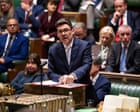
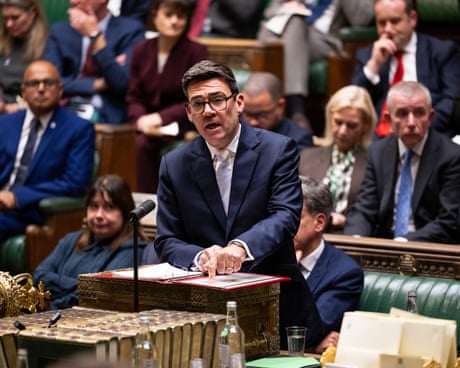
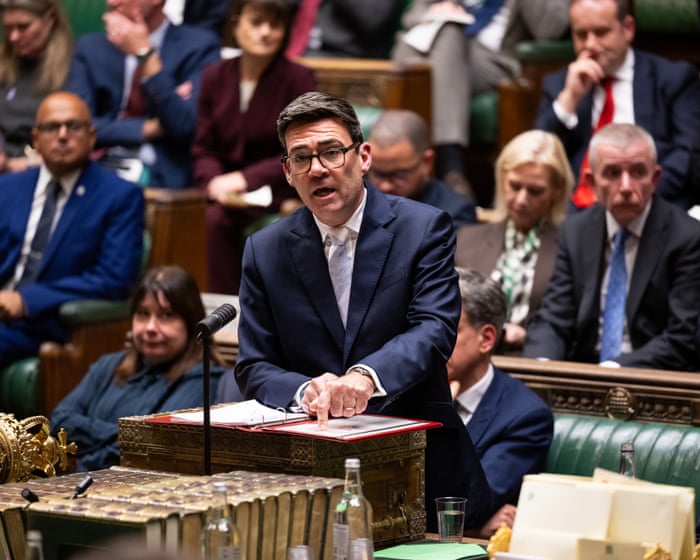
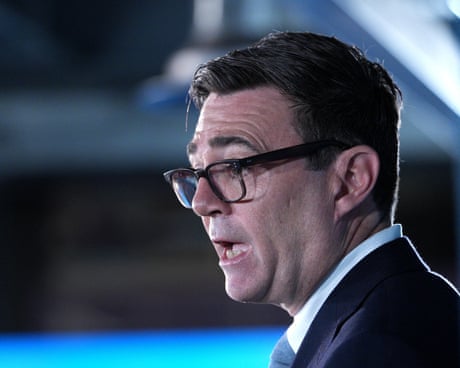
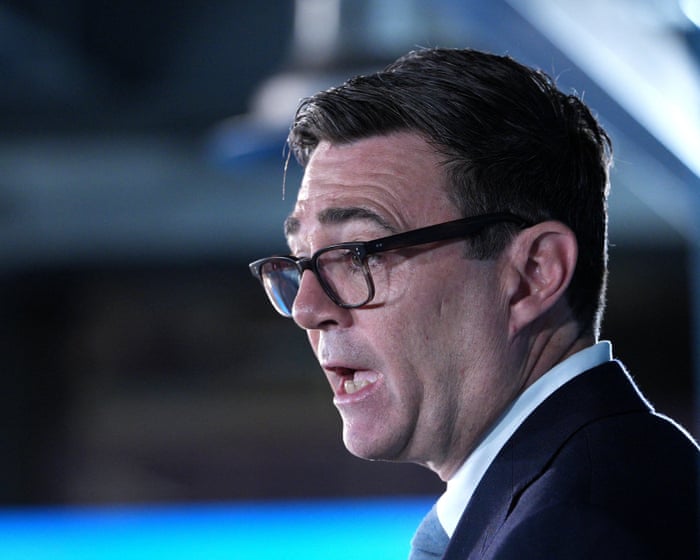
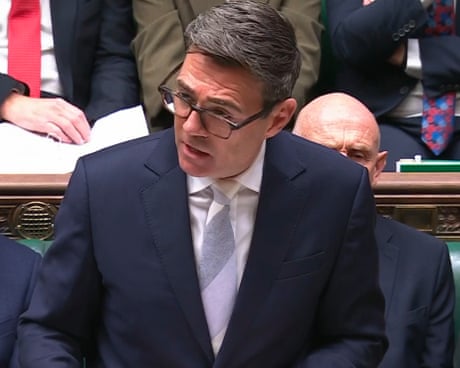
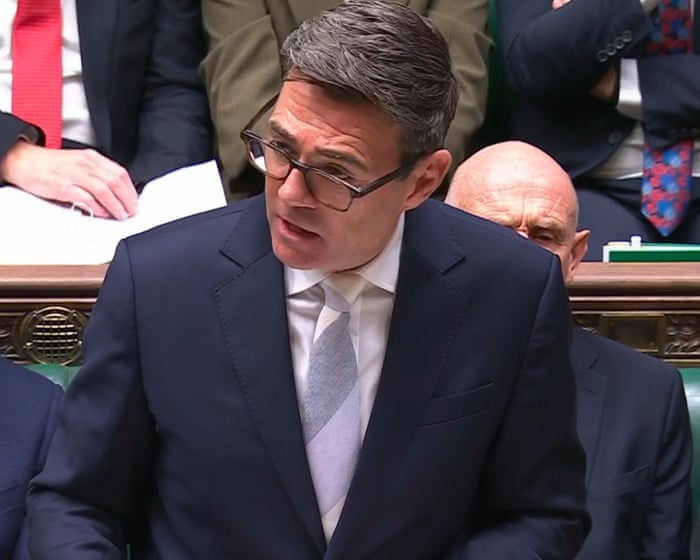
Andy Burnham has promised a “serious dialogue” over the UK’s future place in Europe, saying the existing relationship is “not good enough” as he framed next month’s Brussels summit as a possible first step to EU membership.

The prime minister said Britain must take a “clear-eyed rational look” at its long-term relationship with the bloc to boost economic growth and control immigration, which needed to go beyond Labour’s existing red lines.

Continue reading...

© Photograph: House of Commons/PA

© Photograph: House of Commons/PA

© Photograph: House of Commons/PA

  •  

Trump rewards Putin and betrays Ukraine with Russia diesel deal - The Latest

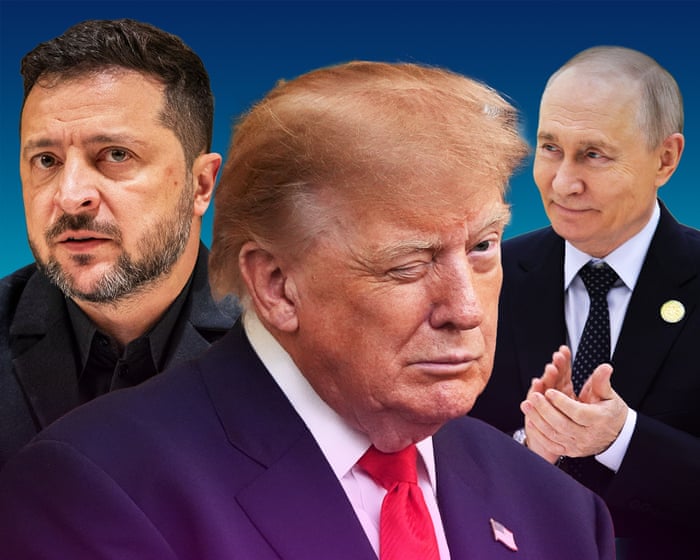
Donald Trump’s deal to buy Russian diesel has been met with fury from Volodymyr Zelenskyy, who said it was ‘a weak decision’ and would generate ‘billions’ in extra revenue for Putin’s war effort. The Ukrainian president has also rejected US calls for an ‘energy ceasefire’, which would require Kyiv to stop striking oil refineries, saying Moscow must first end its attacks on energy infrastructure. Lucy Hough speaks to the Guardian’s senior international correspondent, Luke Harding – watch on YouTube

Continue reading...

© Photograph: Image credits: AP Photo/Dan Bashakov AP Photo/Alex Brandon Gavriil Grigorov, Sputnik, Kremlin Pool Photo via AP

© Photograph: Image credits: AP Photo/Dan Bashakov AP Photo/Alex Brandon Gavriil Grigorov, Sputnik, Kremlin Pool Photo via AP

© Photograph: Image credits: AP Photo/Dan Bashakov AP Photo/Alex Brandon Gavriil Grigorov, Sputnik, Kremlin Pool Photo via AP

  •  

How significant are Burnham’s remarks on Kremlin interference in Brexit vote?

Prime minister has reopened the debate over whether Russia sought to influence the 2016 referendum

Andy Burnham unexpectedly reopened an old Brexit debate when he said he had been told after becoming prime minister that Russia had interfered in the 2016 EU referendum.

It was a contentious issue in the second half of the previous decade, but one that had largely been forgotten about as the UK finally adjusted to the reality of leaving the EU. Now Burnham’s comments have given the topic a fresh impetus.

Continue reading...

© Photograph: Christopher Furlong/Reuters

© Photograph: Christopher Furlong/Reuters

© Photograph: Christopher Furlong/Reuters

  •  

France mutilates its children to stifle social protest

Caught between the methodical repression of its own youth and the shock of a global geopolitical shift that marginalizes it, Emmanuel Macron’s France sees the republican myth collapse under the combined effect of its internal cynicism and a historic strategic defeat abroad. In reality, May 1968 revealed the vulnerability of technocratic certainties in France. However, […]
  •  

Trump’s Energy Ceasefire Risks Becoming a Trap for Ukraine as Russia Continues Its Attacks

Washington’s proposed energy ceasefire could force Ukraine to abandon one of its most effective means of economic pressure against Russia without securing equivalent concessions from Moscow. Donald Trump’s parallel agreement with Vladimir Putin over Russian diesel raises further questions about whether American energy priorities are beginning to dictate the terms of negotiations over Ukraine.

President Volodymyr Zelenskyy has placed an important qualification on Donald Trump’s proposed energy ceasefire: Ukraine will stop attacking Russian energy facilities only if Moscow stops targeting Ukraine’s electricity generation and distribution infrastructure. Speaking at the Warsaw Security Forum on Monday, 12 October, Zelenskyy confirmed Kyiv’s willingness to accept a reciprocal arrangement while pointing out that Russian attacks had continued after the American president announced that a ceasefire was already in effect.

The sequence of events has exposed a fundamental weakness in Washington’s initiative. On 11 October, Trump announced an immediate energy ceasefire, declaring that Russia and Ukraine had both agreed to suspend attacks on energy infrastructure. Yet Kyiv had not received the agreement’s terms, Moscow had offered no public confirmation, and Russian drones continued striking Ukrainian power facilities, including a combined heat and power plant in Kharkiv.

Zelenskyy’s response was deliberately restrained. Rather than reject Trump’s initiative, he welcomed the possibility of an agreement while insisting that Russia demonstrate its acceptance through its actions. His remarks also exposed the difference between announcing a diplomatic understanding and establishing an enforceable military arrangement.

An unequal exchange

The apparent symmetry of an agreement prohibiting attacks on energy facilities disguises substantial differences between the two countries.

Russia retains an extensive oil-refining industry, producing fuels for domestic consumption, military operations and export. Ukrainian drone attacks on refineries have consequently become an instrument of economic warfare, disrupting production, increasing operating costs and forcing Moscow to divert resources towards protecting strategically important industrial installations.

Ukraine occupies a different position. Its major oil-refining capacity was devastated early in the full-scale invasion, including the Kremenchuk refinery. Russia’s present campaign is concentrated heavily on electricity generation, substations, heating systems and other installations essential to maintaining civilian life and economic activity.

An agreement narrowly focused on oil refineries would therefore protect an important Russian asset while offering Ukraine comparatively little protection. A comprehensive energy ceasefire could be reciprocal, but only if it explicitly covered the infrastructure each side actually possesses and attacks.

Zelenskyy’s insistence on equivalent obligations is consequently more than a negotiating formula. It seeks to prevent Washington from treating attacks on Russian fuel production and the destruction of Ukraine’s electricity and heating networks as interchangeable military activities without examining their respective consequences.

The distinction becomes particularly consequential with winter approaching. A Ukrainian suspension of attacks on Russian refineries could allow Moscow to restore production and rebuild damaged facilities. Unless Russia simultaneously halted attacks on Ukrainian energy infrastructure, Kyiv would surrender an important means of pressure while remaining exposed to further disruption of electricity and heating supplies.

The American pressure campaign

The concern in Kyiv is no longer confined to the proposed ceasefire’s wording. European officials have disclosed that Washington is threatening to restrict military assistance and intelligence sharing unless Ukraine suspends its strikes against Russian refineries.

According to accounts of the American pressure campaign, the threatened measures include suspending the Prioritised Ukraine Requirements List (PURL), the NATO-coordinated mechanism through which European countries finance purchases of American weapons for Ukraine. Reuters was unable to independently verify the reported threats, and the White House had not responded publicly.

If implemented, such restrictions would establish a direct connection between Ukraine’s willingness to accommodate Washington’s energy priorities and its access to essential military support.

This creates an imbalance in the negotiations. Moscow could continue military operations while Kyiv faced the possibility of losing American assistance for refusing an agreement whose Russian obligations remain undefined.

The diesel agreement and its political significance

The ceasefire proposal also needs to be examined alongside Trump’s separate agreement with Putin, announced on 9 October, to increase Russian diesel supplies.

Trump stated that Russia would initially release more than 300,000 tonnes of diesel, followed by another 500,000 tonnes in November and one million tonnes thereafter. Further supplies were envisaged, depending on Russia’s refining capacity.

The US Treasury subsequently issued General Licence 135, authorising transactions involving Russian-origin diesel that would otherwise face sanctions restrictions.

The initial volumes are unlikely to transform international diesel markets. Nevertheless, the agreement gives Washington a commercial interest in maintaining Russian refinery output at precisely the moment Ukrainian attacks are disrupting it.

Trump has an evident domestic incentive to seek lower fuel prices before the American congressional elections on 3 November. Putin, meanwhile, has an interest in preserving Russia’s refining capacity and reopening sanctioned markets.

These interests need not prove the existence of a coordinated political strategy against Kyiv. They do, however, create conditions in which American economic priorities and Russian military objectives could converge.

The possibility becomes more significant when considered alongside Trump’s public criticism of Zelenskyy and his suggestion that Ukraine requires different leadership.

The risk of a diplomatic trap

The most consequential scenario is one in which Washington demands immediate Ukrainian compliance while leaving Russia’s obligations subject to subsequent negotiation.

If Kyiv suspends refinery attacks without obtaining verifiable Russian commitments, Moscow gains relief from a costly Ukrainian campaign. If Kyiv refuses, Washington could present that refusal as an obstacle to peace and use it to justify restrictions on military assistance.

This is a possible negotiating outcome, not an established secret agreement between Trump and Putin. There is no publicly verified evidence that the two presidents arranged the ceasefire specifically to force Ukraine into such a position.

Nevertheless, the combination of the diesel agreement, American pressure over refinery strikes and the premature announcement of a ceasefire creates a credible risk that Ukraine could be required to make concessions before Russia demonstrates any corresponding restraint.

The implications extend beyond Ukraine. European governments financing American weapons through PURL would find their own assistance programmes vulnerable to Washington’s decisions over an energy arrangement negotiated separately with Moscow.

For Brussels, the immediate question is therefore whether European military support can remain dependable if American commercial interests increasingly influence the conditions attached to supplying Ukraine.

Kyiv’s remaining leverage

Ukraine’s attacks on Russian refineries cannot by themselves compel Moscow to end the war. They can, however, impose material economic costs and complicate Russia’s ability to maintain fuel production, exports and military logistics.

Abandoning those attacks without an enforceable agreement would remove pressure from Moscow without ensuring that Ukrainian civilians receive any corresponding protection.

Zelenskyy’s position preserves an alternative: simultaneous, reciprocal restrictions covering electricity generation, heating installations, oil refineries and other specified energy infrastructure, supported by clear verification procedures and consequences for violations.

Whether Washington is prepared to enforce such an arrangement against Russia remains unanswered.

The central danger for Kyiv is not an energy ceasefire itself. It is an arrangement in which Ukraine’s obligations are immediate and enforceable through the threat of lost American support, while Russia’s obligations remain uncertain.

Until that imbalance is resolved, Trump’s initiative risks delivering Moscow protection for its oil industry without securing protection for Ukraine’s energy system.

  •  

US “Project Meridian” — A Symptom of American Decline, Not a Solution

The creation of “Project Meridian” is not a path to US military superiority but an admission of its own weakness, rooted in a financialized system rather than a technology gap. US Secretary of Defense Pete Hegseth recently announced the creation of the 120 day task force, “Project Meridian.” On the US Department of Defense’s website […]
  •  

Tre miliardi non spesi. Il paradosso del Fondo per i farmaci innovativi

Dal 2017 l’Italia ha uno strumento nato per un problema preciso: i farmaci che cambiano la storia di una malattia costano molto e, in competizione con tutta l’altra spesa, rischiano di arrivare tardi ai pazienti. Per questo esiste un fondo dedicato, che paga i medicinali riconosciuti innovativi da Aifa senza farli pesare sui tetti del resto della spesa. In nove anni il fondo ha ricevuto 9,9 miliardi di euro e ne ha spesi 6,9: quasi tre miliardi mai impiegati. La tendenza continua a crescere: nel 2018 veniva usato il 91% delle risorse, nel 2025 appena il 53%. E gli avanzi non restano all’innovazione: entrano nelle disponibilità generali delle regioni, che li destinano ad altri usi.

La legge di bilancio 2026 ha fatto un passo in più, tagliando la dotazione da 1.300 a 1.160 milioni: comprensibile, se i soldi restano fermi. Ma un avanzo indica dove guardare, non dice ancora cosa decidere: prima di ridimensionare lo strumento conviene capire perché non riesce a spendersi. Le ragioni sono almeno due, e nessuna dipende dalla mancanza di innovazione.

Il primo motivo è il tempo

Il riconoscimento di innovatività dura al massimo trentasei mesi e non si può prorogare. Alla scadenza il farmaco resta rimborsato, ma la sua spesa esce dal fondo e torna sotto il tetto degli acquisti diretti, il limite della spesa farmaceutica ospedaliera. Quel tetto è già regolarmente sforato: ogni euro che vi rientra allarga l’eccedenza e fa scattare il payback, l’obbligo per le aziende di ripianarne una parte. Quando un farmaco esce dal fondo, insomma, il sistema non risparmia nulla: sposta il costo da un capitolo all’altro.

Le uscite però corrono più degli ingressi: nel solo 2025 sono uscite diciotto indicazioni a innovatività piena, ne sono entrate sette. Un dettaglio lo amplifica: le scadenze cadono in corso d’anno, non al 31 dicembre. Un’indicazione che esce a marzo lascia al fondo solo tre mesi del suo fatturato. Rifacendo i conti come se ognuna fosse rimasta tutto l’anno, nel 2025 il fondo ha perso così circa 122 milioni: quasi un decimo della dotazione.

Il secondo motivo è chi tiene i conti

Anche quando le risorse ci sono, farsele riconoscere non è banale. Il fondo rimborsa la spesa indicazione per indicazione: lo stesso farmaco può essere innovativo per un tumore e non per un altro. Gli ospedali, però, registrano gli acquisti per farmaco, e ricondurre ogni somministrazione all’indicazione giusta è un lavoro in gran parte manuale. Che il problema non sia marginale lo dicono i numeri: per il 2023 i flussi di monitoraggio Aifa indicano un utilizzo del 64%, con regioni fra il 56% e il 75%, mentre gli importi imputati al fondo danno il 72%. Otto punti di differenza valgono quasi cento milioni. Un’indagine su diciotto responsabili di nove regioni, pubblicata su Global & regional health technology assessment, conferma: quattro intervistati su dieci non ricevono aggiornamenti puntuali sull’utilizzo, sei su dieci programmano guardando solo ai consumi passati.

L’oncologia è dove si vede meglio

I farmaci oncologici ed emato-oncologici sono il cuore del fondo: 31 delle 55 indicazioni del 2025 e 353 milioni, più della metà della spesa. Ma sono anche i più penalizzati dalle uscite, perché in oncologia una stessa molecola cura tumori diversi e ogni indicazione ha il suo orologio, e quasi tre quarti del fatturato perso per le scadenze infra-annuali è oncologico. Una precisazione: Aifa pubblica la spesa per farmaco, non per indicazione; la ripartizione è una nostra stima, il totale coincide col dato ufficiale.

La prossima ondata

Nel 2026 il quadro sarà ancora più visibile: usciranno dal fondo ventiquattro indicazioni, con circa 315 milioni di fatturato. E la domanda diventa prospettica: il divario si allargherà anche nel 2027 e nel 2028, mentre finanze pubbliche e politiche americane di most favored nation premono sui prezzi europei?

È la domanda da cui nasce “Mapping the next wave of innovation”: un horizon scanning delle indicazioni potenzialmente innovative attese al rimborso in Italia nel biennio, costruito sui pareri del comitato europeo Chmp e sulle domande in valutazione all’Ema, vagliato da un panel di esperti indipendenti e tradotto in un modello probabilistico di impatto sul fondo. La previsione avrà margini di errore, ma conoscerli in anticipo è già governo.

Da lì potranno emergere proposte per usare meglio il fondo ed evitare che i surplus ne alimentino lo svuotamento. Perché il principio, in fondo, è semplice: le risorse per l’innovazione devono rimanere all’innovazione.

(Pubblicato su Healthcare Policy 20)

  •  

Marco Rubio is promoting troubling ideas about ‘Western civilization’ | Ted Widmer

In a recent visit to Greece, the secretary of state suggested that Europe must rediscover the values of conquest and expansion

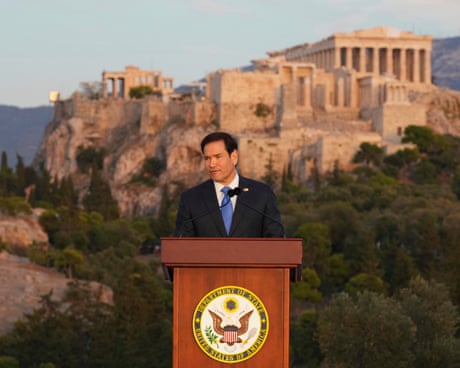
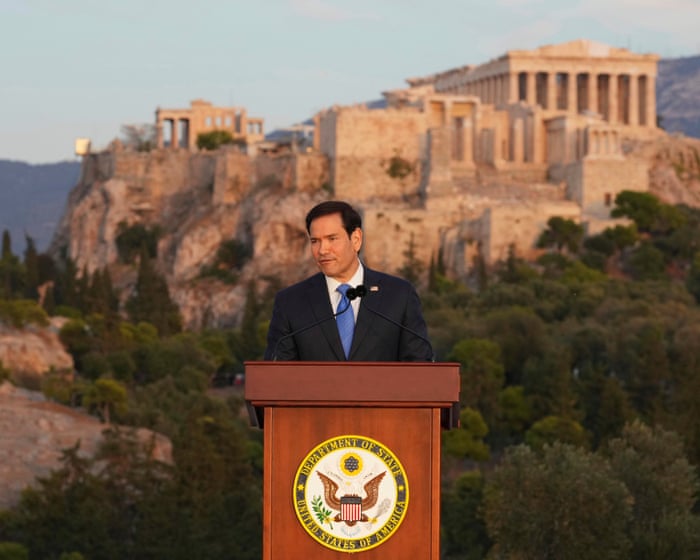
They had obviously worked hard on the backdrop – and it was magnificent. On 7 October, the US secretary of state, Marco Rubio, delivered a major speech in Athens, outdoors, with the Acropolis behind him. The sun was setting, bathing the ancient scene, including the Parthenon, in the light of the golden hour.

The golden hour, but yet not quite the golden age. This was not Pericles defending democracy. Instead, Rubio offered a haunting vision of the choices facing the west, arguing that the US and Europe must rediscover the values of exploration and conquest that once drove centuries of expansion, or face decline and irrelevance.

Continue reading...

© Photograph: Mark Schiefelbein/Pool AP/AP

© Photograph: Mark Schiefelbein/Pool AP/AP

© Photograph: Mark Schiefelbein/Pool AP/AP

  •  

Burnham says ‘public will be the boss’ in any future decision about closer relationship with the EU – as it happened

The prime minister tells MPs the next summit with the EU will be held on 20 November

Burnham to urge MPs to embrace closer ties with EU

Zia Yusuf, Reform UK’s home affairs spokesperson, is speaking now. He started his speech with an account of a 73-year-old woman dying in North Wales after having to wait 23 hours for an ambulance, and he sought to link this to immigration.

He said:

The Royal College of Emergency Medicine estimates that 15,000 people across Britain died last year due to excess wait times for emergency treatment. That’s 300 people a week, 300 lives destroyed, 300 families devastated.

And that number has increased tenfold over the last decade. This is a moral outrage, and it is a direct result of decisions made by Tory and Labour governments.

I don’t think that’s because he wants to have a fight over the European Union. I think that’s because he knows what we’re talking about today impacts hard in what is known as the red wall.

Continue reading...

© Photograph: House of Commons/UK Parliament/PA

© Photograph: House of Commons/UK Parliament/PA

© Photograph: House of Commons/UK Parliament/PA

  •  

Trump Declares Energy Ceasefire as Russia Bombs Kharkiv Power Plant and Zelenskyy Demands Answers

Within hours of Donald Trump announcing an immediate halt to Russian and Ukrainian attacks on energy infrastructure, Moscow struck a major power plant in Kharkiv. Kyiv has agreed to a reciprocal ceasefire, but Russia has yet to confirm its participation, leaving serious doubts over what Washington has actually secured.

President Donald Trump’s announcement of an immediate ceasefire covering Russian and Ukrainian energy infrastructure was overtaken by events on Sunday evening when Russian forces struck a major thermal power station in Kharkiv. President Volodymyr Zelenskyy confirmed Ukraine’s willingness to suspend attacks on Russian energy facilities, but said Moscow was continuing its bombardment even as Washington presented the arrangement as an accomplished diplomatic breakthrough.

The contradiction emerged within hours of Trump declaring that Russia and Ukraine had agreed to stop targeting each other’s energy infrastructure. Zelenskyy, responding in his evening address on 11 October, welcomed the proposal but reported that Russian attack drones remained active over Ukrainian territory and that Kharkiv’s CHP-5 thermal power station had just been struck.

The Ukrainian president made clear that Kyiv had not rejected the American initiative. Ukraine was prepared to refrain from attacking Russian energy installations and expected Moscow to accept the same restrictions. However, no corresponding commitment had been publicly confirmed by the Kremlin, and Washington had provided no explanation of how the supposed ceasefire would be implemented.

The timing was particularly significant because Ukraine had apparently not been informed that a binding agreement had been concluded. According to accounts of the announcement, Zelenskyy was unaware of Trump’s declaration before it became public, although he subsequently indicated his readiness to support the initiative.

His response therefore amounted to an acceptance of the proposed terms rather than confirmation that a negotiated ceasefire was already in force.

More than 200 attacks on Ukraine’s power network

The reported strike on Kharkiv came at the end of a particularly destructive week for Ukraine’s civilian infrastructure. Zelenskyy said Russian forces had carried out more than 200 attacks against electricity generation and transmission facilities over seven days, alongside 17 strikes targeting gas and oil installations.

He also reported that more than 150 Ukrainians had been killed and over 700 wounded during the week. These figures, supplied by the Ukrainian authorities, have not been independently verified.

The continuing bombardment places additional pressure on Ukraine’s power network as winter approaches. Thermal power stations and substations remain particularly vulnerable, while damage to generating capacity can disrupt electricity, heating and water supplies across entire urban districts.

Washington’s pressure on Kyiv

Trump’s ceasefire announcement follows an increasingly bitter dispute over Ukrainian attacks on Russian oil refineries, which have damaged Moscow’s fuel production and distribution infrastructure.

The American president has blamed Ukrainian strikes for worsening international diesel shortages and rising fuel prices. His administration has also threatened restrictions on military assistance and intelligence sharing if Kyiv refuses to suspend its campaign against Russian refineries.

Meanwhile, Washington has reached an arrangement with Moscow permitting substantial Russian diesel exports under a temporary easing of sanctions. Zelenskyy has criticised the decision, arguing that additional energy revenues could strengthen Russia’s capacity to continue its invasion.

For Ukraine, refinery attacks have become an important means of disrupting Russian military logistics and imposing economic costs on Moscow. Agreeing to suspend them without guarantees that Russian strikes will also cease would remove one of Kyiv’s principal instruments of pressure.

The diplomatic sequence has consequently raised questions about whether Trump’s initiative offers equivalent obligations to both countries, or primarily serves Washington’s immediate objective of stabilising fuel supplies.

Kremlin silence leaves ceasefire in doubt

By Sunday evening, Moscow had issued no public confirmation that Putin had accepted the arrangement. Washington had provided no details of its duration, the installations covered or any mechanism for verifying compliance.

An agreement confined to energy infrastructure would also leave both armies free to continue other military operations, including attacks on cities, industrial installations and military positions.

Zelenskyy said Ukrainian forces had received the necessary orders, while Kyiv awaited clarification of Washington’s discussions with Moscow. He maintained that Ukraine supported credible measures to end the fighting but expected Russia to demonstrate a corresponding commitment.

The immediate question is whether Trump obtained an undertaking from Putin that Moscow is prepared to honour. Until Russia confirms the terms and its attacks cease, the announced energy truce remains a presidential declaration rather than an established cessation of hostilities.

  •  

Zelensky’s Korean Blunder: Seoul Is Running Out of Patience

Volodymyr Zelensky probably did not expect two North Korean prisoners of war to create a diplomatic crisis with South Korea. That is nevertheless what happened. During his September address to the United Nations General Assembly, Zelensky disclosed that two North Korean soldiers captured while fighting alongside Russian forces had been transferred to South Korea. Seoul […]
  •  

Germany Reassesses Wartime Responsibility as Bundestag Shifts Historical Focus from Russia to Ukraine

The German parliament’s recognition of its country’s historical responsibility towards Ukraine marks a significant reassessment of a post-war political tradition that frequently placed Moscow at the centre of reconciliation over Nazi atrocities committed across the Soviet Union.

Germany’s Bundestag has formally recognised the country’s particular historical responsibility towards Ukraine for atrocities committed during the Nazi occupation, adopting parliamentary resolutions commemorating the 85th anniversary of the Babyn Yar massacre near Kyiv.

The decision, taken on 9 October, has implications beyond historical remembrance. For decades, Germany’s responsibility for the destruction inflicted on the Soviet Union during the Second World War was frequently interpreted through its relationship with Russia. Moscow occupied a privileged position in German efforts at reconciliation, although some of the Nazi occupation’s worst atrocities took place in territories belonging to present-day Ukraine and Belarus.

The Bundestag’s parliamentary debate and resolutions reflect a different emphasis. Germany’s historical obligations are now being connected explicitly to Ukraine’s sovereignty and its defence against Russia’s invasion, challenging an interpretation of the past that had long influenced Berlin’s approach towards Moscow.

How Russia became the principal beneficiary of German historical responsibility

Following German reunification, reconciliation with Russia became a central element of Berlin’s eastern policy. The Soviet Union’s immense wartime losses, officially estimated at approximately 27 million people, were frequently invoked to explain Germany’s special obligation to maintain constructive relations with Moscow.

That historical argument became intertwined with political and economic considerations, contributing to the belief that Russia should remain closely integrated into Europe’s security and economic arrangements, even as relations with its neighbours deteriorated.

The difficulty lay in the frequent conflation of Russia with the Soviet Union. Nazi Germany invaded a multinational state, not the present-day Russian Federation. Ukrainians, Belarusians, Russians, Jews and numerous other peoples suffered under an occupation whose policies included mass murder, starvation, deportation and the systematic destruction of communities.

Ukraine was among the principal territories where the German war of annihilation unfolded. The Holocaust by bullets, the destruction of entire settlements, the exploitation of occupied agricultural regions and the deportation of civilians for forced labour were central features of Nazi rule there.

Nevertheless, German political discourse often approached this history primarily through the framework of German-Russian reconciliation. The suffering of Ukraine and Belarus was acknowledged, but neither country occupied a comparable position in Berlin’s strategic thinking.

This imbalance has been examined by German scholars of foreign policy, who have argued that the historical justification for rapprochement with Russia sometimes obscured the distinct wartime experiences of other former Soviet republics.

Babyn Yar and the geography of Nazi extermination

The anniversary of Babyn Yar provides a particularly direct illustration of the historical problem.

On 29 and 30 September 1941, German SS and police units, with assistance from local collaborators, murdered 33,771 Jewish men, women and children in a ravine outside Kyiv. The massacre was among the largest single mass shootings of the Holocaust.

Killings continued at the site throughout the German occupation. Approximately 100,000 people were murdered there, including Jews, Roma, Soviet prisoners of war and other civilians persecuted by the Nazi authorities.

Babyn Yar was not an isolated atrocity. Similar mass executions occurred across occupied Ukraine, while millions of people suffered under German military occupation. The country’s experience formed a substantial part of the wider catastrophe conventionally remembered in Germany as the war against the Soviet Union.

The geographical distinction matters because the Soviet Union’s dissolution in 1991 did not transfer the historical experiences of its constituent peoples exclusively to Russia. Nor did Moscow’s position as the principal diplomatic successor to the USSR confer ownership of their wartime suffering.

Recognition of Ukraine’s separate experience therefore requires more than acknowledging the location of Nazi crimes. It involves reconsidering the political assumptions that allowed Russia to become Germany’s principal partner in commemorating a history shared by several nations.

Historical responsibility acquires a contemporary meaning

In its resolution on the Babyn Yar anniversary, Chancellor Friedrich Merz’s CDU/CSU and its Social Democratic coalition partner explicitly connected remembrance of Nazi crimes with Germany’s present obligations towards Ukraine.

The document declares that responsibility for German atrocities does not end with commemorating their victims. It requires opposition to antisemitism, racism, historical revisionism and imperialist violence.

The parliamentary motion calls for continued political, economic, financial, humanitarian and military assistance to Ukraine, together with support for its European integration and efforts to secure the return of children transferred to Russia.

The opposition Greens separately submitted a resolution centred on Germany’s historical responsibility towards Ukraine, advocating greater attention to the German occupation in historical education, research and cooperation between memorial institutions.

The development does not mean that Germany has only now recognised Ukrainian victims of Nazi persecution. German officials have previously acknowledged responsibility towards Ukraine alongside Russia and Belarus. In 2016, then foreign minister Frank-Walter Steinmeier explicitly referred to the suffering of all three countries in an address marking the German invasion of the Soviet Union.

What has changed is the political weight attached to that recognition. The historical relationship with Moscow can no longer be treated as the principal expression of Germany’s obligations arising from the war, particularly when Russia is conducting a war of territorial conquest against another country devastated by Nazi aggression.

The consequences for German policy towards Moscow

The reassessment also exposes a contradiction in Germany’s earlier Russia policy.

Historical responsibility was among the arguments used to defend engagement with Moscow, including economic cooperation and efforts to accommodate Russian security concerns. Such reasoning remained influential even after Russia’s annexation of Crimea in 2014.

The Nord Stream pipeline projects exemplified the wider policy of maintaining substantial economic ties with Russia despite objections from Ukraine and several Central and Eastern European governments. Those projects had commercial and geopolitical motivations, but they developed within a political culture in which reconciliation with Moscow carried particular historical significance.

Russia’s full-scale invasion in February 2022 fundamentally undermined that approach. Germany subsequently expanded military assistance to Ukraine, while President Steinmeier acknowledged serious errors in his previous assessment of relations with Moscow.

The Bundestag’s latest resolution adds a historical dimension to that policy correction. Rather than regarding restraint towards Russia as the principal lesson of Germany’s wartime conduct, parliament has articulated a responsibility to assist Ukraine in preserving its independence.

The two positions are not necessarily incompatible as matters of historical remembrance. Germany retains an obligation to commemorate Russian victims of Nazism, just as it does Ukrainian, Belarusian and other victims. The distinction concerns whether responsibility for past atrocities should influence contemporary policy towards the Russian state when that state itself is violating another nation’s sovereignty.

That question has become increasingly important as German political parties debate the duration and extent of military assistance to Kyiv. Calls for renewed accommodation with Moscow continue to feature in domestic politics, including among those opposed to further weapons deliveries.

The Bundestag’s recognition of Ukraine’s particular historical experience does not resolve those disputes or establish a new military commitment. It does, however, challenge one of the historical arguments that shaped Germany’s previous relationship with Russia.

The significance of the Babyn Yar anniversary therefore extends beyond the commemoration of crimes committed in 1941. It concerns a belated adjustment in Germany’s understanding of where its wartime responsibilities lie, and the extent to which those responsibilities should inform its conduct towards Ukraine today.

  •  

Peste, laboratori e trasparenza. Il caso Irkutsk e le domande ancora aperte

La notizia arriva dalla Siberia e riporta alla memoria paure che credevamo, almeno in parte, di aver lasciato al passato. Una ricercatrice dell’Istituto antipeste di Irkutsk è morta dopo aver sviluppato una grave polmonite. Le prime ricostruzioni hanno sollevato il sospetto di un possibile incidente di laboratorio e di un’infezione da Yersinia pestis, il batterio responsabile della peste. Le autorità russe hanno escluso, finora, evidenze di contagio riconducibili agli agenti patogeni studiati nell’istituto, mentre l’Organizzazione mondiale della sanità ha chiesto ulteriori informazioni per chiarire le circostanze della morte.

Ma al di là delle ricostruzioni, ancora da verificare, la vicenda solleva interrogativi che meritano attenzione. Che cosa accade quando si lavora quotidianamente con microrganismi potenzialmente letali? Quali misure di sicurezza vengono adottate? E soprattutto, quanto sappiamo delle attività che si svolgono all’interno di questi laboratori?

La peste, un nemico conosciuto

La Yersinia pestis è un batterio Gram-negativo che, nonostante il suo terribile passato, può essere trattato efficacemente con diversi antibiotici, a condizione che la terapia venga avviata tempestivamente. La streptomicina ha rappresentato storicamente uno dei principali trattamenti, affiancata oggi da altre opzioni come gentamicina, ciprofloxacina, levofloxacina e doxiciclina. La rapidità della diagnosi e dell’intervento resta determinante, soprattutto nelle forme più gravi.

La peste, infatti, può manifestarsi in forme differenti. Quella bubbonica, la più conosciuta, provoca febbre elevata, debolezza e il caratteristico ingrossamento doloroso dei linfonodi. La forma polmonare interessa invece l’apparato respiratorio, con sintomi che possono aggravarsi rapidamente, mentre quella setticemica coinvolge il sangue e può determinare shock e gravi alterazioni della coagulazione.

Insomma, oggi conosciamo il batterio, sappiamo come riconoscerlo e disponiamo di strumenti terapeutici efficaci. Come è possibile, allora, che un’eventuale esposizione professionale possa sfuggire ai controlli o non essere individuata abbastanza rapidamente? Naturalmente, prima di rispondere bisognerebbe conoscere le reali circostanze dell’accaduto.

Quando il rischio nasce in laboratorio

Non sarebbe, del resto, la prima volta che un laboratorio diventa il luogo di origine di un’emergenza infettiva. Nel 1967, tra Marburgo e Francoforte, in Germania, e Belgrado, nell’allora Jugoslavia, si verificarono alcuni focolai legati al contatto con scimmie verdi africane importate dall’Uganda e utilizzate per attività di laboratorio. Il virus, fino ad allora sconosciuto, provocò 31 casi e sette decessi. Fu così che il mondo conobbe la malattia da virus Marburg.

Gli incidenti biologici, dunque, non sono una novità. E non lo è neppure la possibilità che agenti patogeni vengano impiegati per scopi diversi dalla ricerca scientifica.

Basta tornare all’autunno del 2001, poche settimane dopo gli attentati dell’11 settembre. Negli Stati Uniti, lettere contenenti spore di antrace provocarono 22 casi di infezione e cinque morti. Anche l’Italia visse settimane di allarme, tra buste sospette, polveri bianche e segnalazioni che si rivelarono infondate. Ricordiamo bene quella psicosi collettiva: bastava una busta contenente farina o borotalco per far scattare l’allarme. Nel nostro Paese non si verificarono infezioni riconducibili agli attentati, ma fu sufficiente la percezione del rischio a generare paura e incertezza.

La ricerca e i suoi interrogativi

Da Marburgo all’antrace, fino agli interrogativi sollevati dalla vicenda siberiana, abbiamo forse scoperto l’acqua calda? Sappiamo da decenni che esistono laboratori nei quali vengono studiati virus e batteri altamente pericolosi, anche attraverso tecniche avanzate di manipolazione genetica. Molte di queste ricerche sono essenziali per comprendere i meccanismi delle malattie, sviluppare vaccini, individuare nuove terapie e prepararci a possibili emergenze sanitarie.

Ma il punto è un altro. Chi controlla queste attività? Chi stabilisce fino a dove sia possibile spingersi? E quali garanzie abbiamo che conoscenze e tecnologie sviluppate per proteggere la salute umana non possano essere utilizzate anche per finalità differenti?

Il confine sottile tra scienza e sicurezza

Non possiamo ignorare che la storia abbia già conosciuto programmi di sviluppo di armi biologiche. Né possiamo fingere che il confine tra ricerca civile e possibili applicazioni militari sia sempre così netto. Questo, naturalmente, non significa che ogni laboratorio che studia agenti patogeni pericolosi nasconda attività illecite. Significa però riconoscere che alcune conoscenze scientifiche possono prestarsi a un duplice utilizzo, benefico o dannoso, e che proprio per questo la responsabilità di chi le produce e di chi le controlla è enorme.

C’è poi il problema della segretezza. È comprensibile che determinate informazioni debbano essere protette per ragioni di sicurezza. Ma la riservatezza non può diventare un alibi per sottrarsi alla verifica, soprattutto quando un incidente, reale o presunto, solleva preoccupazioni per la salute pubblica. La sicurezza biologica ha bisogno di regole, controlli indipendenti, trasparenza e cooperazione internazionale.

La fiducia non può essere cieca

Da scienziato, vorrei continuare a credere che la ricerca su virus e batteri pericolosi sia orientata principalmente alla tutela della salute, alla sperimentazione di nuove cure e allo sviluppo di vaccini. Forse sono un inguaribile amante dell’essere umano, ancora fiducioso nella sua natura. Ma la fiducia nella scienza non deve tradursi in una fiducia cieca nei confronti di chiunque la utilizzi.

E allora ben vengano la ricerca, l’innovazione e persino gli esperimenti più complessi, quando necessari e giustificati. Purché siano accompagnati da responsabilità, verifiche e garanzie adeguate.

Perché alla fine di tutto, resta sempre e solo la sicurezza.

  •  

France and Germany Split Over Who Should Qualify as ‘Made in Europe’

France and Germany are at odds over how the European Union should define European production under its emerging industrial preference rules, with Paris favouring a narrow EU-only system while Berlin wants trusted trade partners including Britain, Canada and Japan to remain eligible.

France and Germany have reopened a fundamental dispute over the European Union’s “Made in Europe” industrial policy, this time over the question that will determine how far-reaching the programme eventually becomes: which countries should qualify as European suppliers.

The disagreement centres on the Industrial Accelerator Act, under which the EU wants to use subsidies and public procurement to strengthen domestic manufacturing and reduce dependence on Chinese production in strategic sectors.

France is pressing for a restrictive definition centred on manufacturing within the EU’s 27 member states. Germany favours a broader approach that could extend preferential treatment to countries with close trade agreements or reciprocal industrial relationships with the Union.

That could bring Britain, Canada, Japan and potentially Turkey within the system rather than treating their products in the same way as goods from China and other outside suppliers, according to reporting on the Franco-German dispute.

The dispute has important consequences because “Made in Europe” is intended to influence how large amounts of public money are spent.

The Industrial Accelerator Act is designed to introduce European-content requirements into selected subsidy schemes and public contracts in sectors including electric vehicles, batteries and clean technology. The underlying objective is to ensure that European public spending supports European industrial capacity rather than increasing dependence on imported technologies.

EU Today has followed the argument since the proposals began taking shape. In February, it reported that the Commission was preparing local-content rules for strategic technologies. The debate has since moved from whether such preferences should exist to how broadly “European” should be interpreted.

Paris wants the benefits concentrated inside the EU. The French position reflects concern that allowing manufacturers in countries with EU trade agreements to qualify could dilute the purpose of the scheme. If access is too broad, the argument runs, public procurement may do little to increase production or employment within the Union itself.

Germany is more cautious about creating a closed EU system. Its manufacturing economy is embedded in supply chains extending across Europe and into neighbouring markets, including Britain and Turkey. Berlin has therefore argued for a “made with EU” approach under which trusted trade partners could participate if their markets also provide reciprocal access to European industry.

That disagreement has become increasingly important for Britain. British manufacturers, particularly in the automotive sector, remain closely integrated into continental production networks despite Brexit.

A strict EU27 definition could therefore produce situations in which components made in Britain count as foreign content even when they are incorporated into vehicles assembled inside the Union.

France and Germany had appeared to be moving towards a broader industrial compromise last week. Their negotiations combined the “Made in Europe” question with disagreements over vehicle-emission rules and the future treatment of combustion-engine technology. The latest discussions show that one of the hardest questions remains unresolved.

There is also concern among some EU governments that an overly broad system could create routes for companies from countries such as China to obtain favourable treatment indirectly.

The argument mirrors a wider change in EU economic policy. Supply disruptions, Russia’s war against Ukraine and China’s dominance of several strategic manufacturing sectors have pushed Brussels towards a more interventionist approach.

France sees public purchasing power as an instrument for rebuilding production specifically within the Union. Germany is seeking greater flexibility for supply chains involving trusted partners and appears more concerned about the trade consequences of drawing the boundary too tightly.

For Brussels, the problem is now practical rather than theoretical. The narrower the definition, the more industrial support remains inside the EU; the broader it becomes, the easier it is to preserve existing supply chains and relations with allies.

  •  

Plainly, Trump doesn’t really care about the midterms

With a month still to go before America’s mid-term congressional and gubernatorial elections, the prospect of a “blue wave” of Democratic success in the House of Representatives, the Senate and in many governorships is looking increasingly likely. But whether that forecast holds true or not, one important aspect has already become clear. It is that […]

The post Plainly, Trump doesn’t really care about the midterms appeared first on Asia Times.

  •  

L’IA sostituirà i medici? A Firenze la risposta è saperla governare

Cosa abbiamo imparato da questi 50 anni? È la domanda da cui sono partiti i protagonisti della conferenza stampa organizzata a Firenze, martedì 6 ottobre, per il mezzo secolo della Fondazione Menarini. Un bilancio che guarda indietro ma soprattutto avanti: ai giovani, alla ricerca, all’intelligenza artificiale.

Un congresso per mezzo secolo

La Fondazione è stata istituita nella primavera del 1976 per promuovere ricerca e conoscenza in biologia, farmacologia e medicina, ma anche in economia e scienze umane. E per l’anniversario ha scelto il suo strumento principale, il congresso internazionale: “Half a Century of Medicine Looking Towards The Future”, il 5 e 6 ottobre a Firenze.
Cinquant’anni di conquiste della medicina e uno sguardo rivolto alle sfide dei prossimi decenni per un appuntamento che ha riunito a Firenze circa 40 tra i massimi esperti internazionali, molti dei quali protagonisti diretti delle innovazioni che hanno trasformato la cura delle principali malattie croniche. Un percorso attraverso tre grandi aree – cardiovascolare, respiratoria e metabolica – nelle quali negli ultimi cinquant’anni la ricerca ha cambiato radicalmente diagnosi, terapie e aspettative di vita dei pazienti.

In 50 anni sono state realizzate oltre 750 conferenze internazionali, con 112.500 partecipanti e 26.250 relatori. Gli eventi sono trasmessi in streaming, registrati e disponibili gratuitamente per gli iscritti.
“È importante ricordare le radici da cui veniamo per riuscire a proiettarci nel futuro: una piccola azienda che voleva diventare grande. È cambiato il contesto in cui ci muoviamo, con la rivoluzione digitale, ma non cambia l’obiettivo di portare conoscenza e sostenere le nuove generazioni. Nostro padre sarebbe molto fiero”, ha detto Lucia Aleotti, azionista e componente del board del Gruppo Menarini, intervenendo in apertura della celebrazione accanto al fratello Alberto Giovanni Aleotti.

Sul rapporto con il territorio, Alessandra Petrucci, rettrice dell’Università di Firenze: “Menarini da sempre dialoga con la città con un approccio interdisciplinare che salda le scienze umane con quelle scientifiche”. È l’equilibrio tra interessi umanistici e scienze biologiche che la Fondazione indica come ragione del proprio logo, ispirato alla Novissima Iconologia del Ripa.

Le cinque proposte per i giovani

“Guardare al futuro significa, soprattutto, investire nelle nuove generazioni”: è il messaggio del testo di benvenuto firmato dal presidente Stefano Del Prato e da Giuseppe Caracciolo, direttore scientifico e operativo. Del Prato, già presidente dell’EASD (European Association for the Study of Diabetes), ha indicato cinque direttrici: trasformare i congressi in luoghi di formazione attiva; usare la mentorship per mettere in contatto generazioni diverse; creare una “Menarini young investigator Academy”; dare ai giovani reali possibilità di fare ricerca e favorire mobilità e contaminazione internazionale.

Dal diabete all’imaging

Alla conferenza stampa Del Prato ha parlato di un vero e proprio “rinascimento avvenuto nel campo dei trattamenti del diabete con la diminuzione del rischio cardiovascolare”. Filippo Crea – Ospedale Isola Tiberina e componente del comitato scientifico della Fondazione – ha ripercorso le trasformazioni della medicina cardiovascolare, il progresso degli strumenti diagnostici e la rivoluzione dell’imaging. Leonardo M. Fabbri – Università di Ferrara e nel Comitato scientifico – per la medicina respiratoria, è tornato sull’imaging, che “ha cambiato radicalmente la stessa classificazione delle malattie”.

L’IA e la sfida di governarla

Il confronto si è chiuso sull’intelligenza artificiale, a partire dalle previsioni di Elon Musk sul ruolo dei medici. Marianne Legato – della Columbia University e componente del Comitato scientifico della Fondazione – pioniera della medicina di genere, ha sottolineato la necessità di “nutrire l’IA con trial eseguiti non solo su pazienti maschi”. Del Prato ha dato ragione a Musk rispetto alla medicina di ieri: quella di domani, ha detto, cambierà totalmente con l’IA. Infine, Crea ha ricordato che, all’inizio del secolo scorso, con l’arrivo dell’elettrocardiografo il medico che non seppe usarlo fu messo da parte. Il riferimento a ciò che accade oggi è chiaro: l’IA bisogna saperla usare per governarla, altrimenti la si subisce.

Think tank, riviste, biblioteca

Accanto ai congressi, la Fondazione ha costruito altri strumenti. Il think tank On Radar, lanciato a settembre 2022, è diretto da Massimo Scaccabarozzi, già presidente di Farmindustria, che ne ha parlato nella sua lecture: osservare la società, individuarne i problemi e, attraverso il dialogo, promuovere cambiamenti reali, su temi sociali, economici e culturali, in incontri chiusi al pubblico. Poi la rivista Minuti, in edizione Scienza e Arte, cartacea e digitale, offerta gratuitamente a chi si iscrive all’area riservata, e la Scientific Library della House of Sciences, sviluppata con case editrici come Elsevier e BMJ e organizzata in otto aree, tra cui cardiologia e pneumologia.

  •  

Von der Leyen Offers Extra Year on EU Methane Rules as Energy Costs Bite

The European Commission is preparing to give fossil-fuel exporters another year of flexibility under the EU’s methane regime as Brussels responds to high energy prices, pressure on European refineries and concerns over security of supply.

European Commission President Ursula von der Leyen has announced an additional year of flexibility for energy exporters facing new EU methane requirements, marking the latest adjustment to climate legislation as Brussels attempts to contain rising energy costs.

Addressing the European Parliament in Strasbourg on Tuesday, von der Leyen said Europe remained exposed to high energy prices and volatile international fossil-fuel markets and confirmed that exporters would receive “one more year” to prepare for the methane rules.

She also announced a strategic dialogue with the European refining sector aimed at reducing costs and protecting supplies, according to the Commission’s published remarks.

The announcement affects a regulation that has increasingly become an energy-security issue rather than solely an emissions policy.

The EU’s Methane Regulation, adopted in 2024, introduced progressively stricter requirements for companies supplying oil, natural gas and coal to the European market. Importers have already been required to provide information about the origin of fuel and the systems used to measure and reduce methane emissions.

A more demanding stage was due from January 2027. Importers would have to demonstrate that fuel supplied under contracts concluded or renewed since August 2024 came from producers operating monitoring, reporting and verification systems equivalent to EU standards.

The rules are technically complex because European importers do not always buy directly from producers. Gas and oil may pass through traders, hubs, blending systems and several contractual relationships before reaching Europe.

The Commission’s own guidance for importers acknowledges those difficulties, particularly where companies must trace production information through complicated supply chains.

EU Today highlighted the problem in July, when an International Energy Agency assessment raised concerns that the rules could restrict Europe’s available oil supply. The dispute has since intensified because European fuel markets have become considerably tighter.

That pressure can also be seen in the cost of imported energy. EU Today reported last month that the value of EU petroleum imports had risen by 55.8 per cent in the second quarter of 2026 even though the physical volume purchased increased by only 1.2 per cent.

Von der Leyen’s intervention therefore comes against a different market background from the one in which the methane legislation was originally adopted.

The Commission has not abandoned its objective of reducing methane emissions from fossil-fuel production. Methane remains one of the most powerful greenhouse gases, and the regulation is intended to use the size of the European energy market to influence production standards outside the EU.

Instead, Brussels is attempting to adjust implementation so that regulatory requirements do not further restrict supply at a time of elevated energy prices.

The precise legal form of the additional year of flexibility has not yet been detailed in von der Leyen’s announcement. Existing requirements remain contained in Regulation (EU) 2024/1787, meaning that changes to deadlines or enforcement will have to be translated into the appropriate legal or administrative measures.

The Commission had already moved towards greater flexibility earlier this year. In July it issued recommendations designed to clarify contractual arrangements and advised national authorities on the application of penalties to importers while security-of-supply concerns persisted.

The broader problem is European energy competitiveness.

Von der Leyen told Parliament that Brussels intends to begin a strategic dialogue with refineries. European refining capacity has contracted over the longer term, leaving the continent more dependent on imported diesel and other finished petroleum products when individual plants close or external supply routes are disrupted.

The Commission is also expected to propose measures aimed at increasing electricity’s share of European energy consumption as part of its attempt to reduce dependence on imported fossil fuels.

The latest methane adjustment therefore fits a wider shift in Brussels. Climate targets remain formally intact, but implementation is increasingly being examined alongside energy prices, industrial competitiveness and the security of physical supplies.

The extra year gives exporters additional time. It also gives the Commission another year to resolve a question that has become much more urgent in 2026: how far Europe can tighten conditions on imported energy while remaining heavily dependent on those imports.

  •  

AfD’s Second State Victory: What Happens When Winning Does Not Mean Governing?

For the second time in two weeks, the Alternative for Germany won a German state election — but winning did not necessarily mean governing, and that distinction is becoming more important than the victories themselves. On September 20, the AfD took Mecklenburg-Western Pomerania with 38.2 percent of the vote. The SPD finished second on 35.5 […]
  •  

France and Germany Seek New EU Power to Cut Market Access Over Trade Distortions

France and Germany have proposed giving the European Commission powers to respond within days to serious trade distortions, including the possibility of restricting access to the EU single market. The initiative comes as European concern grows over Chinese subsidies, industrial overcapacity and dependence on critical imports.

French President Emmanuel Macron and German Chancellor Friedrich Merz have called for a new European Union trade instrument capable of acting rapidly against countries whose economic practices cause serious disruption to the European market.

In a joint initiative sent to European Commission President Ursula von der Leyen on Monday, the two governments proposed strengthening the EU’s ability to respond to what they describe as systemic market distortions, including dumping, widespread subsidies and restrictions affecting access to critical supplies.

The Franco-German proposal does not formally identify China as its target. However, many of the practices it describes correspond directly to long-standing European concerns over Chinese industrial policy, including excess manufacturing capacity, state support and restrictions on exports of critical minerals.

The initiative represents a further development in a harder European approach towards Beijing. EU Today reported last week that China had warned it would respond if the EU introduced new restrictions against Chinese companies or products.

Macron and Merz are proposing two additional instruments.

The first would be intended to reduce European companies’ dependence on single suppliers for strategically important products and raw materials. The second would allow the EU to restrict access to its internal market when a third country uses political or economic measures that seriously undermine fair competition.

Under the proposal, the Commission could initiate countermeasures unless a qualified majority of EU governments voted to block them. That would reverse the normal political dynamic in which Brussels must first secure sufficient support before acting.

German officials have argued that the EU needs powers comparable in effect to the United States’ Section 301 trade measures or China’s ability to restrict exports of critical raw materials.

The Commission has welcomed the Franco-German intervention as a contribution to its work on economic security and global trade imbalances. Any new instrument would, however, require legislation and approval by both EU governments and the European Parliament before it could be used.

The proposal comes amid growing concern in both Paris and Berlin over the effect of subsidised Chinese production on European manufacturers.

Germany’s position is particularly significant. Berlin has traditionally been more cautious than Paris about measures that could restrict trade with China, reflecting the importance of the Chinese market to German carmakers, engineering companies and chemical producers.

That position has shifted as German industry faces increased competition from Chinese electric vehicles, machinery and other manufactured goods.

EU Today has previously examined the emerging Franco-German alignment on tougher China trade defences and demands from German manufacturers for broader European action rather than product-by-product investigations.

The new proposals go considerably further by seeking a mechanism capable of dealing with entire sectors and acting much more quickly than conventional anti-dumping proceedings.

Chemicals, PET plastics and hybrid vehicles are among sectors identified in the Franco-German document as areas where additional action may be required.

The timing is also significant. EU leaders are due to discuss trade relations with China at their summit in Brussels on 15–16 October, while Trade Commissioner Maroš Šefčovič is expected to hold talks with Chinese officials beforehand.

The Commission is already attempting to balance two objectives: maintaining Europe’s access to the Chinese market while reducing strategic dependencies that could be used as political leverage.

The Franco-German plan would give Brussels another instrument at the more coercive end of that policy. Its eventual importance will depend on whether governments agree to create it and how readily they would permit the Commission to use it against a major trading partner.

  •  

Beijing’s Useful Idiots: Germany, California and the Green Road to Chinese Supremacy

Germany and California parade as climate superpowers – yet both import energy, destroy industry and hand supply chains to Beijing. Western virtue, says Tilak Doshi, is made in Chinese coal-fired factories.

The post Beijing’s Useful Idiots: Germany, California and the Green Road to Chinese Supremacy appeared first on The Daily Sceptic.

  •  
❌