❌

Reading view

EU Budget Showdown: European Parliament Rejects Irish Presidency’s Spending Cuts as Battle Over Europe’s Future Intensifies

The European Parliament has delivered a sharp rebuke to Ireland’s proposals for the EU’s next seven-year budget, warning that cuts to competitiveness, security and regional development could leave Europe dangerously ill-equipped to confront mounting geopolitical and economic challenges.

The European Union is heading towards a potentially bruising institutional confrontation over its next long-term budget, after senior Members of the European Parliament rejected proposals from the Irish Presidency of the Council to reduce the European Commission’s spending plans by eight per cent.

The dispute concerns the Multiannual Financial Framework (MFF) for 2028–2034, which will determine not merely how much Brussels spends, but the extent to which Europe can deliver on its increasingly ambitious political, economic and security objectives.

At stake is a fundamental question: can the European Union realistically aspire to become a more competitive, strategically independent global power while its member states resist providing the financial resources necessary to achieve those ambitions?

Parliament Draws a Red Line

In a statement published on 10th October, Parliament’s principal budget negotiators, Siegfried Mureșan of the European People’s Party and Carla Tavares of the Socialists and Democrats, firmly rejected the Irish negotiating framework.

They were joined by Danuše Nerudová and Sandra Gómez López, Parliament’s co-rapporteurs responsible for developing new sources of EU revenue.

Their objections centre on the proposed reduction of approximately €141 billion from the Commission’s original spending plans.

Mureșan warned that the reductions would undermine Europe’s ability to respond to growing demands for defence, economic competitiveness and security.

He also highlighted the erosion of the EU budget’s purchasing power, which Parliament estimates has declined by approximately ten per cent because of inflation.

The implication is uncomfortable for national governments: maintaining apparently substantial expenditure figures does not necessarily translate into maintaining Europe’s capacity to act.

Ireland’s Difficult Balancing Act

Ireland, currently holding the rotating Council Presidency, has attempted to reconcile two increasingly contradictory political demands.

On one side stand governments seeking greater investment in defence, technological innovation, economic resilience and geopolitical influence.

On the other are national finance ministries confronting constrained public finances, mounting borrowing costs and electorates increasingly resistant to additional expenditure.

The Irish Presidency’s proposal envisages approximately €1.62 trillion in commitments, expressed in 2025 prices, representing a substantial increase over the existing seven-year framework.

Dublin argues that its negotiating position offers an ambitious but financially realistic compromise, preserving traditional agricultural and cohesion spending while accommodating emerging priorities.

Yet the European Parliament remains unconvinced.

Particularly contentious are proposed reductions of 12.8 per cent in competitiveness expenditure and 17.4 per cent in external action compared with the Commission’s plans.

These are precisely the areas in which Brussels has repeatedly promised greater international influence.

Defence Ambitions Meet Financial Reality

The timing could scarcely be more awkward. Russia’s continuing aggression against Ukraine has exposed Europe’s dependence on American military capabilities, while mounting geopolitical uncertainty has reinforced demands for greater European strategic autonomy.

Meanwhile, competition from China and the United States is placing European industries under unprecedented pressure.

Brussels regularly speaks of technological sovereignty, stronger defence industries and reduced dependence on external suppliers, however, those objectives require sustained investment.

Cutting expenditure intended to strengthen competitiveness while simultaneously demanding that European companies compete more effectively internationally risks becoming an exercise in political contradiction.

Nevertheless, Parliament’s position deserves scrutiny too. Greater expenditure does not automatically produce better outcomes. Europe’s problems with fragmented defence procurement, regulatory complexity and slow implementation cannot simply be resolved by increasing budget allocations.

A credible financial settlement must therefore combine sufficient resources with demonstrably improved efficiency and accountability.

The Battle Over Europe’s Own Resources

Perhaps the most consequential disagreement concerns how the Union should finance its expenditure.

Parliament has repeatedly argued that the EU must develop additional independent revenue streams rather than relying excessively on contributions from national governments.

Its proposals include levies associated with digital services, online gambling and cryptocurrency capital gains. MEPs believe these measures could generate approximately €30 billion beyond the additional revenue already envisaged by the Commission.

The Irish Presidency has advanced a revenue package that it estimates could eventually raise around €55 billion annually, but agreement among member states remains elusive.

This disagreement exposes an enduring weakness in European integration.

Governments frequently demand collective European action while remaining reluctant to surrender control over the financial mechanisms necessary to support it.

A Political Confrontation With Serious Consequences

The institutional arithmetic makes Parliament’s opposition particularly significant. Although member states must unanimously approve the long-term financial framework, the European Parliament must also provide its consent by an absolute majority of MEPs. Consequently, national governments cannot simply impose a settlement over parliamentary objections.

Equally, the European Parliament cannot compel governments to finance its preferred spending programme. Both institutions therefore possess considerable negotiating leverage, raising the possibility of prolonged political deadlock.

The forthcoming European Council discussions on 15–16th October will provide an important indication of whether governments are prepared to reconsider their positions.

Europe’s Credibility Is on the Line

Ultimately, this dispute extends far beyond accounting. The European Union faces an increasingly hostile strategic environment, persistent economic challenges and growing demands for collective action.

Yet its institutional ambitions continue to outpace agreement on the financial commitments required to fulfil them.

Parliament is justified in questioning whether reducing investment in competitiveness and security represents prudent financial management or potentially damaging short-termism. National governments, however, are equally entitled to demand evidence that additional European expenditure will produce measurable benefits.

The solution cannot be unlimited spending, nor can it be indiscriminate austerity. Europe requires a budget that reflects its strategic responsibilities, backed by rigorous financial discipline and transparent political priorities.

Without such a settlement, the Union risks discovering that its greatest obstacle to becoming a serious geopolitical actor is not opposition from Washington, Moscow or Beijing, but its own inability to agree on the price of its ambitions.
  •  

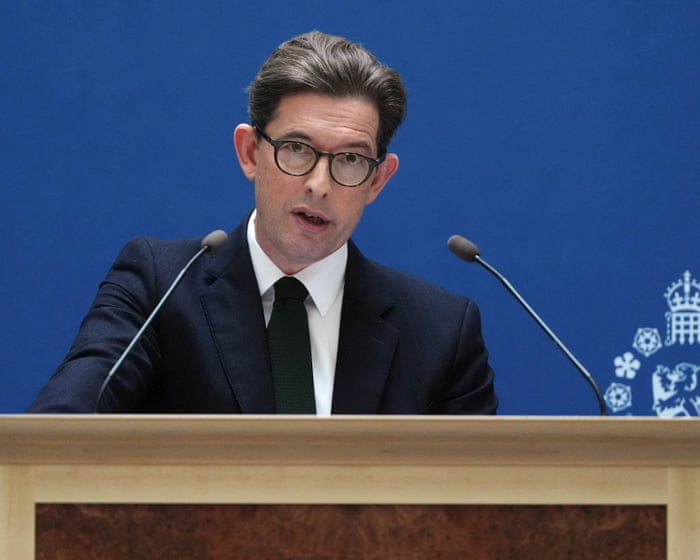
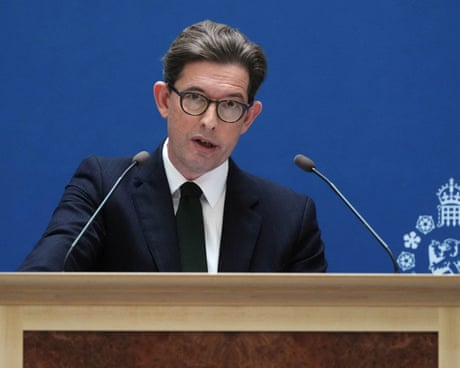
MI5 chief Ken McCallum confirms Russia did interfere in Brexit referendum but says it had little impact – as it happened

He argued there was no evidence to suggest the result of the Brexit vote had been swayed as a result of the effort

Zia Yusuf, Reform UK’s home affairs spokesperson, has said he does not agree with his colleague Suella Braverman’s assertion that black people cannot be English.

Asked about her views in an interview on Sky News, Yusuf said:

In my view Ashley Cole is the best English fullback in history, and I won’t take any other position. So in my view, Ashley Cole is English. I think the argument that he’s not English doesn’t hold water with me.

Nasser Hussain, who I grew up watching when I went to the cricket, the idea that those people aren’t English is an alien concept to me.

I would respectfully disagree with people, who make the opposite argument.

To say I’m English is to take a ‘laissez-faire, anything-goes’ attitude to ethnicity, citizenship and identity. It also denies me my Asian heritage. The liberals (many of them in today’s Conservative party) take this cosmopolitan approach to Englishness. They’re terrified of being called racist so they say that anyone, as long as they’re born here, can be English.

I take the conservative approach. Englishness is an ethnicity. There have been English people for centuries and we need to recognise this more if we are to start taking a more muscular approach to citizenship and nationality. And no, it’s not racist to say this.

Continue reading...

© Photograph: Jonathan Brady/Reuters

© Photograph: Jonathan Brady/Reuters

© Photograph: Jonathan Brady/Reuters

  •  

EU Budget Battle Deepens as €141 Billion in Proposed Cuts Threatens Defence and Competitiveness Funding

European Union governments are entering a critical round of budget negotiations after the Irish presidency of the Council proposed cutting €141 billion from the European Commission’s long-term spending plans, exposing deep disagreements over how the bloc intends to finance its expanding responsibilities.

The revised proposal, circulated ahead of the European Council meeting scheduled for 15–16 October, would reduce the planned 2028–2034 financial framework by approximately eight per cent to around €1.6 trillion, calculated in constant prices.

Despite the reduction, the proposed budget remains approximately 30 per cent larger than the current seven-year framework. Germany, Sweden, the Netherlands and other governments concerned about national contributions have nevertheless argued that further restraint is necessary.

The compromise, detailed in negotiations over the EU’s next financial framework, reduces proposed spending across several areas while largely protecting the Union’s established agricultural and regional development programmes. The distribution of those cuts is becoming as contentious as the overall size of the budget.

Europe’s new priorities face the deepest reductions

Under the Irish proposal, agricultural and regional development allocations would decline by approximately three per cent compared with the Commission’s initial plans. By contrast, funding intended for competitiveness and security would be reduced by around 13 per cent, while external action and development cooperation face cuts of approximately 17 per cent.

The difference raises questions about whether the next EU budget can support the strategic ambitions repeatedly endorsed by European leaders.

The Commission has presented industrial competitiveness, technological development, defence readiness and economic resilience as central priorities for the remainder of the decade. Yet these sectors would absorb proportionately larger reductions under the revised framework than agricultural and cohesion programmes.

The consequences could extend to investments in advanced technologies, European industrial supply chains, research programmes and cross-border defence cooperation. They could also constrain the Union’s capacity to fund external partnerships and development initiatives.

The debate is particularly sensitive because the EU’s responsibilities have changed considerably since the previous budget was negotiated. Russia’s invasion of Ukraine has increased defence requirements, while competition with China and the United States has intensified demands for industrial investment.

Germany and the net contributors demand restraint

The central disagreement concerns how much additional expenditure European governments are willing to finance through the common budget. Germany and other major net contributors face domestic fiscal constraints, rising borrowing costs and demands to increase national defence spending.

For these governments, accepting a substantially larger EU budget would add to financial commitments already being made through national budgets.

The Irish compromise therefore faces opposition from two directions. Some governments consider the reductions insufficient, while others fear that the remaining cuts will weaken programmes essential to their national economies.

Traditional recipients of agricultural and regional funding have an interest in protecting established expenditure. Governments seeking stronger European investment in defence, innovation and industrial competitiveness have different priorities.

The European Parliament is another obstacle. Its consent will be required before the final financial framework can enter into force, giving MEPs considerable leverage in negotiations with national governments.

New EU revenues remain controversial

The proposal also envisages approximately €55 billion in additional annual financing through new or revised EU revenue sources, including customs revenues, emissions-related income and corporate contributions.

The Commission’s framework for the next long-term budget reflects a broader debate over the extent to which the Union should develop independent financing mechanisms rather than rely predominantly on national contributions.

Such mechanisms would potentially give Brussels a more predictable revenue base. However, they also raise questions about fiscal sovereignty, the distribution of costs among member states and the political accountability of European taxation.

National governments remain reluctant to surrender substantial authority over revenue collection, particularly when proposed resources could impose costs on domestic industries or consumers.

Ukraine, enlargement and Europe’s strategic ambitions

The negotiations will influence the Union’s ability to respond to future enlargement. Ukraine and several Western Balkan countries are pursuing accession, but the financial implications of bringing additional members into the Union remain substantial.

Existing arrangements for agricultural subsidies and regional development assistance would require reconsideration if large new beneficiaries entered the budgetary system.

At the same time, the EU faces pressure to support Ukraine financially and strengthen defence production without depending indefinitely on extraordinary borrowing or ad hoc national contributions. These responsibilities cannot be addressed simply by preserving the structure of earlier budgets.

European Council President António Costa will seek to narrow the divisions among the 27 leaders, but agreement on the financial framework requires unanimity. Any government can withhold its consent if it considers the final distribution of costs unacceptable.

The forthcoming summit is therefore likely to establish the parameters of further negotiations rather than eliminate the underlying disagreements. The immediate political question is whether member states can reconcile their commitment to greater European strategic capacity with their reluctance to finance it collectively.

  •  

EU blacklists 1,569 Russian arms suppliers and their bosses in its biggest sanctions round ever, as Trump eases up on Moscow

trade banks energy crypto—the eu keeps its full russia economic sanctions wall standing 2027 · post flags member states headquarters council european union brussels belgium 17 2025 getty images/thierry monasse

The EU adopted its largest-ever round of sanctions listings on 12 October, targeting the suppliers behind Russia’s war industry, the Council of the EU announced. The bloc acted as Russia keeps killing Ukrainian civilians every day, while US President Donald Trump eases sanctions on Russian diesel.

Russia’s planned winter campaign against Ukraine’s infrastructure depends on arms factories fed by a web of component suppliers and on oil revenue that still flows despite Ukraine’s refinery strikes, so every supplier cut off from that web raises the cost of waging it. As Washington eases off, Europe’s own pressure has a gap: its ports still take record volumes of Russian Arctic gas, and a full ban on long-term contracts starts only in 2027.

Missile suppliers top the list

More than half of the new listings hit the supply chain for ballistic missiles that Russia “uses to kill Ukrainian civilians every day,” EU foreign policy chief Kaja Kallas said in the statement. Russian attacks killed more than 150 people in the past week, Ukrainian President Volodymyr Zelenskyy said on 11 October.

The list names 826 Russian companies, mid-level firms the Council calls the “core” of Russia’s arms industry, with at least €20 billion in yearly turnover, and 743 people who run them. They make parts for missiles, drones, and military aircraft, from semiconductors and radars to explosives and navigation systems. Their assets are frozen, EU firms may not finance them, and the executives may not enter the EU.

Foreign ministers ratified a deal EU envoys reached on 7 October. Ukraine’s sanctions commissioner Vladyslav Vlasiuk said 60% of the listings came from Ukrainian proposals.

Ministers reject the diesel deal

EU foreign ministers in Luxembourg vowed to keep the sanctions despite Trump’s diesel deal with Russian President Vladimir Putin, Euronews reported. Kallas addressed Washington directly as she arrived.

“The US is our biggest ally, but our message is clear: if we want to end this war, the only way we can do this is (by) putting more pressure on Russia,” Kallas said.

Irish Foreign Minister Helen McEntee called the deal “concerning,” and Lithuanian Foreign Minister Kęstutis Budrys said it was “not the European way.” Kallas warned that an energy truce covering only refineries would favor Russia, since Ukraine has one refinery and Russia “plenty.”

Trump announced the diesel deal on 9 October, and the US Treasury waived sanctions on Russian diesel until April 2027. Zelenskyy said the EU would provide about €3 billion more in military aid this week.

Washington presses Kyiv

Trump expects Ukraine to stop hitting Russian refineries under his proposed energy ceasefire, a White House official told Axios. Zelenskyy said Kyiv would halt such strikes if Moscow did the same. On 10 October, Trump told reporters it was time for Ukraine to get a new president. Germany’s foreign minister, Britain’s defense secretary, and a senior lawmaker from Chancellor Friedrich Merz’s party backed Zelenskyy, while the Kremlin sided with Trump.

Zelenskyy offered to hold elections after a 60-day ceasefire, and Kallas said elections are impossible while the war goes on. The Institute for the Study of War assessed that Russia exploits Ukraine’s legal ban on wartime elections to drag out the war.

  •  

Europe’s mounting social chaos… chickens coming home to roost for proxy war against Russia

Strategic Culture Foundation | October 9, 2026

The European Union is witnessing a full-blown social revolt. Governing political parties and their economic policies are held in open contempt as public protests and strikes escalate across multiple countries.

Protests, mass marches, and industrial strikes are spreading across the EU in France, Belgium, Spain, Italy, Germany, Ireland, Portugal, and other countries. The grievances are various, from students and teachers over woeful education services, to healthcare professionals and transportation workers denouncing crumby wages and pension cuts.

But at the core is a warmongering, dehumanizing system of capitalist inequality.

Unbearable living costs for basic needs, from food to housing, are driving millions onto the streets in desperation and anger at the lack of adequate political response to their concerns. As one French student said: “Too young to be listened to, old enough to be tear-gassed.”

The entire political system is being brought into disrepute for its dysfunction and indifference towards meeting rudimentary human needs. Then, infuriating all the more, are lies from the elite rulers and their propaganda media about “national defense and threat of war from Russia.”

In Spain this week, an 87-year-old frail woman known as Maricarmen died in hospital after she was evicted from her Madrid home because she could not pay the extortionate rent increase. Her plight has come to galvanize a nationwide protest against Spain’s housing crisis, a crisis that is repeated across every European country. Protesters shouted furiously that the pitiful old woman was “murdered by the state and corporations.”

In France, the brutality of police against student protests has shocked the nation and the world. Nearly 7,000 young people have been arrested, as riot police tear gas and shoot at largely peaceful rallies. Students gathering at the Place de la Bastille in Paris and other cities vow that they will not back down. One student had his hand blown off by a police stun grenade while another teenager lost an eye from a rubber bullet fired at close range.

The Place de la Bastille is where the French Revolution manifested in 1798 against a hated aristocracy amid abject misery. Today, the tensions are boiling towards another momentous rebellion, this time inspiring again similar movements across Europe.

These protests and the inhumane suffering that underlie them are channeling uprisings all over the EU.

There is a palpable sense that populations en masse have had enough of decades of inequality and chronic deprivation inflicted by capitalist policies that enrich a few and are enforced by governments slavishly serving the interests of capital over the needs of the citizen majority.

Western media reports talk about “cash-strapped” governments under pressure from bond markets to reduce record debt levels while workers, students and pensioners demand more public investment and relief from economic hardship.

That is a misleading partial portrayal of the problem. Omitted is the crucial backdrop that European governments are directing vast economic resources towards militarism and the proxy war in Ukraine against Russia. That is what is causing the “cash-strapped governments.” In other words, their declared fiscal straits are a policy choice, not some mysterious dilemma.

The social crisis sweeping across Europe is also seen in the United States and other Western-aligned nations. The background is a failed economic system that no longer provides a modicum of acceptable living conditions. The problem has been decades in the making from growing inequality and diminishing political representation. Today it is even questionable if Western states are democracies, controlled as they are by corporate oligarchies.

Nevertheless, the social crisis that is unfolding across Europe has been intensified and amplified by European political rulers operating in a relentless war mode against Russia.

The European Union has pumped hundreds of billions of euros into Ukraine over the past four years to prop up a NeoNazi regime run by a corrupt dictatorship – all for the objective of defeating Russia. The EU leaders – many of them unelected, like Ursula von der Leyen, Kaja Kallas and António Costa – are driven by an obsessive Russophobia. But that is only part of the explanation.

Other elected leaders and parties like France’s Macron and Germany’s Merz are also despised for their elitism and delusions of grandeur. Merz declares that he wants to make Germany the strongest military in Europe, in total tin-ear deafness to his nation’s economic and social problems and the sinister historical connotations of resurrecting Nazi Germany. Meanwhile, as his government suffers electoral defeat after defeat, European elites deprecate German voters as being blind because they dare to choose parties that are opposed to war with Russia.

There are many grounds for the Europe-wide contempt of ruling parties. Inequality, poverty, unemployment, soaring living costs, declining wages, deteriorating public services. Uncontrolled immigration amid the pressure on inadequate public resources is another cause for grievance. Europe’s complicity in the Israeli genocidal war on Palestinians, and Europe’s complicity in Trump’s aggression towards Iran, Yemen, Cuba, and so on, are other factors.

However, the bogus narrative that governments are “cash-strapped” is a cause for immense public disgust. There are plenty of economic resources to meet public needs. It’s a question of those resources not being permitted to create just and humane societies under the prevailing capitalist system with its priority of enriching a tiny elite class.

The conditions of “tight budgets” and “austerity for the masses” are created by deliberate policies of militarism and fuelling a proxy war in Ukraine.

European “leaders” and their NATO lobbyists like Mark Rutte demand hundreds of billions of euros to boost military industries while at the same time calling for draconian cuts in public spending and social welfare in order to pay for this reckless militarism. The EU is “lending” an additional €90 billion over the next two years alone just to prop up the corrupt regime in Kiev so that it can keep fighting a futile war with Russia. The perverse priority is driven by the military-industrial complex and its corporate investors. It is also driven by an ideological, propagandized mindset that demonizes Russia as an enemy. President Putin and other Russian voices have repeatedly stated that they do not want war with Europe. They say the conflict in Ukraine has root causes that can be resolved through diplomatic engagement. Why are European politicians implacably opposed to peace?

A major factor is covering for internal political and economic failure of the European system. The EU’s economies, as with those in the U.S. and other Western states, are bankrupt dystopias in terms of delivering on social and democratic needs. The failure has been compounded by the costs of war in Ukraine.

That failure is criminal and fatal for the politicians and governments who have overseen the policies. Thus, the political class, including the propaganda news media, cannot admit their criminal policies.

In the face of their own internal contradictions, the European political elites are seeking a solution by externalizing Russia as an enemy. This is the same modus operandi that European rulers have used for the past century and more, unleashing two world wars as a result.

These criminal politicians and their dysfunctional economic system are again pushing war as their escape plan for survival at the expense of millions of lives and at the risk of starting a third world war, one that this time around could involve catastrophic nuclear nemesis.

It is damning of virtually every European government, including primarily the British, that there are no calls for diplomacy and political settlement with Russia. They are committed to waging war on Russia to absolve themselves from the social devastation they are responsible for.

One positive thing, though, is that increasing numbers of people can see through the chicanery and lies. A German student placard summed it up: “We won’t fight your wars… Education not bombs!”

A day of reckoning is imminent. Criminal political leaders and their warmongering system are exposed like never before and in a way that demands total revolt as a proper solution. The consequences are not to be externalized this time. Chickens are coming home to roost, as Malcom X once said.

  •  

Standoff in the North of Ireland over loyalist ‘Orange’ march continues

Since Sunday, September 27, residents of Garvaghy Road in Portadown have prevented the Orange Order’s Drumcree march from passing through their community. Linking arms, locals and supporters warned that the parade could undo years of progress against sectarian violence in the north of Ireland.

More than 4,000 people signed petitions opposing the march, yet authorities formally allowed it to move ahead. First, the Parades Commission approved a limited procession. Then, the Court of Appeal lifted an injunction imposed by the High Court, paving the way for the march attempt on Sunday.

Read more: On anniversary of Easter Rising, calls for Irish unity are strengthened

Negotiations to end the stand-off continued Thursday evening. According to local media, an earlier proposal suggested residents would accept the Orange Order’s legal right to walk down the road in return for the Order choosing not to march. The organization rejected the deal, insisting on passing through the neighborhood.

Stand-offs at Drumcree previously used to launch loyalist attacks

Recent events carry particular weight because of Drumcree’s history. During the Troubles, loyalist stand-offs in the area became a notable flash point of violence, with effects rippling out beyond Portadown. Following the Good Friday Agreement, the march had been rerouted for almost 30 years.

“The Orange Order organized stand-offs at Drumcree (particularly in 1995, 1996, 1997 and 1998) were regularly used by unionist death squads as a rallying cry and pretext to launch attacks, block roads, and intimidate Catholic families,” Garvaghy Road Residents Coalition spokesperson Breandán Mac Cionnaith wrote in August. “At least ten murders were carried out in Portadown and other areas during this period by those same death squads.”

Speaking to the People Before Profit party, Mac Cionnaith emphasized that the march had been rerouted because of the devastation it unleashed. “I always make a point that people need to remember that between 1996 and 1999, 21 people lost their lives across the north because of killings and murders carried out by loyalists acting in support of Drumcree,” he said. “Several of those victims were our neighbors, they were our friends, they lived in this community.”

Read more: Ireland, Scotland, and Wales independence parties pledge cooperation toward self-determination

Past decades gave the Garvaghy Road community a chance to rebuild, yet the memory of the violence was passed on through generations. “My family moved to England to escape the viciously sectarian climate around the marches,” one resident said. “My aunt went to school with Robert Hamill, a young man kicked to death by loyalists in the midst of the marches.”

“For 28 years, the Garvaghy Road community has lived in peace,” wrote Chris Hazzard of Sinn Féin. “That peace didn’t need a solution – it needed protection. Forcing an unwanted, sectarian march through this area defies all logic.”

“Why did the Orange Order want to march down a Catholic community?”, asked Sinn Féin’s Vice President and First Minister of Northern Ireland Michelle O’Neill. “It’s about supremacy, it’s about domination, it’s about ‘we’re in charge,’ and this community deserve better than that.”

“There is no going back, we’re not going back to the days of the past. What I want is to build upon the progress that’s been made over the last 28 years. What I want to do is actually ensure that we continue to let this community to flourish. Right now, what this community is being told by the Orange Order and political unionism is that they’re second class citizens and that their rights can be railroaded over.”

Solidarity messages from as far as Palestine

Progressive organizations, parties, musicians and artists across Ireland have voiced support for Garvaghy Road, many joining protesters in Portadown to warn against the standoff’s possible ripple effects. “The Garvaghy Road community is still living with the legacy of traumatic street conflict and state violence stretching back decades,” the Irish Republican Socialist Party wrote. “This latest attempt by the Orange order is merely a continuation of that conflict.”

Messages of solidarity arrived from as far as Palestine, where a Gazan teenager wrote in support of Garvaghy Road residents. “I know what it feels like when basic peace and dignity are stripped away, and how painful it is to fight for safety in your own home,” she emphasized. “The residents of Garvaghy Road deserve to live in peace without fear or intimidation, just as every family in Gaza does.”

  •  

Munich talks keep EU return‑hub plan alive despite drop in border arrivals and budget questions

EU migrant return hubs became the subject of a summit held in Munich on Saturday (26 September) as interior ministers from member and associate states met the European Commission to advance projects aimed at offshoring rejected asylum seekers. 

But the meeting made little progress, partly because many of the attendees met in Copenhagen on 4 September, where leaders had announced an expected start to the policy by 2027. 

Instead, the main takeaways from Munich included rehashed commitments on improved emergency responses as well as broadened use of Frontex, the EU’s border control agency, and migration diplomacy with third states. 

The EU’s return regulation, approved in June, expects to fly rejected asylum seekers out of Europe and into migrant facilities to be hosted by third countries, for which Rwanda and Uganda are reportedly at the top of the queue.

Though the mass border crossing into Ceuta, the Spanish enclave in North Africa, was a subject of discussion, the 18 EU and non-EU interior ministers present in Munich did not include a representative from Spain, possibly due to Pedro Sánchez’s opposition to the return hubs policy. 

But the UK’s home secretary Shabana Mahmood was present, talking of the need for close cooperation within Europe on migration issues,” Germany’s interior minister and meeting host, Alexander Dobrindt, told reporters on Saturday.  

Despite Donrindt’s focus on “innovative solutions” for those with no right to stay in Europe but no way or returning, Berlin’s migration response would also be significantly dependent on expanded powers for Europe’s border agency, Frontex. 

“We are seeing that the Pact is working. The number of irregular arrivals is dropping across the EU while at the same time the numbers of returns to third countries are increasing. That said, we cannot become complacent,” Jim O’Callaghan, Irish interior minister, told the press before the meeting. 

This article continues, but the full version is available only to EUobserver.com subscribers. Visit account.euobserver.com/membership

  •  

Ireland goalkeeper refuses to play ‘Israel’ as squad weighs boycott

 Al Mayadeen | September 26, 2026

Ireland’s preparations for Sunday’s Nations League match against “Israel” have been thrown into uncertainty after goalkeeper Gavin Bazunu reportedly told teammates that he did not want to participate in the fixture, prompting further discussions within the squad.

The players missed their scheduled training session and press conference in Debrecen, Hungary, as they held lengthy meetings over whether individual players should proceed with the match.

The Ireland squad was due to train at the Nagyerdei Stadium in Debrecen and hold a press conference ahead of Sunday’s Nations League encounter.

Instead, the players remained at their hotel for discussions with head coach Heimir Hallgrímsson and his coaching staff. They had earlier met with Football Association of Ireland (FAI) CEO David Courell.

The scheduled press conference was postponed with only 19 minutes’ notice. Irish and Israeli media had already assembled at the stadium when Irish journalists were informed that the event could be delayed by up to two hours.

The UEFA match delegate was also informed of the delay but was reportedly not given a reason. The team ultimately did not arrive for the scheduled training session.

The disruption followed an initial squad meeting on Friday intended to establish the players’ position on the “Israel” fixture and discuss whether they would stage a protest.

According to reports, a collective boycott was not initially the purpose of the meeting. During the discussions, however, Bazunu indicated that he did not want to participate in the match, with other players subsequently considering whether to join him.

The extent of opposition within the squad remains unclear, and no final collective decision had been announced at the time of reporting.

The developments mark a significant escalation in the controversy surrounding Ireland’s Nations League meetings with “Israel”.

Earlier this week, Ireland captain Dara O’Shea said the squad intended to fulfill the two fixtures, while any decision over a separate protest was to be discussed following Ireland’s opening Nations League match against Kosovo.

The position has since become less certain following the latest internal discussions.

Hallgrímsson had previously acknowledged that Ireland’s players did not share identical views or the same intensity of feeling regarding the “Israel” fixtures. He also said that he would respect a player’s decision if an individual did not want to take part.

Ireland’s match against “Israel” is scheduled for Sunday, September 27, at the Nagyerdei Stadium in Debrecen.

FAI faces pressure over ‘Israel’ games

The latest dispute follows months of controversy over the FAI’s decision to proceed with the fixtures.

In July, an FAI motion endorsing the fulfillment of the Nations League matches against “Israel” passed by 68% to 32%. The association had argued that failing to fulfill the fixtures could expose Irish football to sporting and financial consequences.

The FAI has also acknowledged the strength of public opposition to the fixtures. In September, CEO David Courell said the organization was in a “really difficult position,” arguing that UEFA’s failure to take action over “Israel’s” participation had left the FAI with limited options.

The controversy has extended beyond the football establishment. More than 160 Irish athletes have signed an open letter urging the national team to refuse to participate in the “Israel” fixtures, while protests have been held outside the team’s hotel.

  •  

Ireland, Scotland, and Wales independence parties pledge cooperation toward self-determination

Leaders of pro-independence parties in Ireland, Scotland, and Wales met in Cardiff on Monday to sign a memorandum of understanding laying out a plan for strengthened cooperation. The document commits Sinn Féin, the Scottish National Party (SNP), and Plaid Cymru to deepen exchanges on renewable energy, economic policy, and, notably, “supporting the right of each nation to determine its own future.”

“For the first time ever, people across these islands have First Ministers in Scotland, in Wales, and in the North of Ireland who are all committed to independence from the United Kingdom,” the memorandum states. “For people watching across these islands – for people watching around the world – there could be no clearer sign that Westminster’s time is coming to an end.”

Read more: Welsh by-election shows far right isn’t the only alternative to establishment parties

The agreement includes commitments to break with the economic policy shaped in London and to build a different approach that would “create good jobs, tackle inequality and ensure that wealth and opportunity are spread more fairly.” It also outlines an energy strategy promising to leverage the three regions’ renewable resources to bring more affordable energy to communities.

However, the provision that has attracted most attention is the commitment to realize the three nations’ right to self-determination. “We call for the British Government to prepare for, plan and facilitate constitutional change in each jurisdiction,” the party leaders wrote. “No Westminster government has the right to block democracy or undermine the principle that our people will decide their own future,” they added.

The meeting followed comments by British Prime Minister Andy Burnham on the possibility of independence referendums in Scotland and Ireland. Burnham ruled out – in different terms – such public votes, drawing criticism from independence-oriented parties. 

In Ireland, his remarks were called out for contradicting Good Friday Agreement provisions that foresee a path to the island’s unity. “It is not an option that the British government can choose whether or not to exercise based on what is politically convenient, but a legal obligation that plays a critical role in underpinning the relative peace achieved since 1998,” the Workers’ Party of Ireland wrote.

Read more: On anniversary of Easter Rising, calls for Irish unity are strengthened

The SNP insisted their ongoing efforts for achieving independence must be contextualized as a response to the aftermath of the 2014 referendum, where unionist parties argued that staying in the UK provided more stability and predictability. Following that vote – where a majority of Scots opted for remaining in the UK – British authorities failed to live up to such arguments, the party said, including when it comes to the protection of public services. “Westminster blocked legislation designed to protect the NHS from being opened up to US healthcare corporations in post-Brexit trade deals, treating our public health service like a garage sale item,” the SNP wrote.

Pro-union critics suggested the memorandum’s commitments risk diverting public attention from everyday issues toward lengthy constitutional discussions. However, Sinn Féin, the SNP and Plaid Cymru contrasted this with a different approach, insisting that independence would allow more space for challenging harmful policies imposed by the British government and for realizing a different vision of society.

  •  

Minister for European Affairs outlines plans for the work of Ireland’s EU Presidency

European Affairs Minister Thomas Byrne TD (pictured), has highlighted key policy objectives for the work of the Irish EU Presidency over the coming months as the EU institutions prepare to resume their normal programme of activities following the summer break. 
 
In his role as chair of the General Affairs Council, Minister Byrne will lead discussions at EU level on several areas of priority for the Irish Presidency, including the approach to the EU’s next long-term budget and the simplification of EU rules, an important aspect of the Union’s competitiveness agenda.

The Irish EU Presidency, which began its term on 1 July, is focusing its work on three core thematic priorities of competitiveness, values and security. Substantial progress has already been made in the opening weeks of the Presidency on policy and legislative initiatives across these three priority areas.

Minister Byrne said: “We have been very pleased with the results we have already been able to deliver early in our Presidency term. For example, in July I chaired four Inter-Governmental Conferences to advance the EU accession processes of Albania, Moldova, Montenegro and Ukraine - the largest number of accession conferences held in a single day in over two decades. Across many areas of policy, there is scope for us to achieve really significant progress between now and the conclusion of our term at the end of the year, and we are determined to ensure the Irish Presidency delivers meaningful outcomes for citizens across Europe.”

As part of Ireland’s Presidency meetings programme, nine informal Ministerial meetings will take place in Ireland during the month of September. Minister Byrne will host an informal meeting of Ministers for European Affairs (General Affairs Council) in Dublin Castle on 3 and 4 September. This meeting will provide an opportunity for wide-ranging discussions on three of the major strategic priorities for the EU during the Irish Presidency term: progressing enlargement, advancing negotiations on the next long term EU budget, and taking steps to strengthen democracy across Europe. 

Minister Byrne said: "I look forward to welcoming my counterparts from across Europe – including from nine candidate countries and potential candidates – to Ireland in early September to discuss our approach to a number of major issues on the European agenda. These discussions will help build a consensus on a shared approach to the key challenges facing the EU”.

A central aspect of the work of the Presidency is engagement on behalf of the Council with the other EU institutions as part of the Union’s legislative process. As Minister for European Affairs, Minister Byrne will participate in the regular plenary sessions of the European Parliament in Strasbourg and Brussels throughout the autumn, representing the Council in debates on policy and legislative initiatives. 


Minister Byrne said: “The European Parliament is an important partner for us in delivering the EU’s legislative agenda. We have built very strong relations with the Parliament, and the priorities and policy objectives for the Irish Presidency were very well received by MEPs when the Taoiseach addressed the Parliament’s plenary session in Strasbourg in early July. Since then, I have been among 12 Irish Ministers to meet with European Parliament committees to discuss our Presidency priorities, and more of these meetings are scheduled for September. I look forward to working closely with MEPs from across all Member States and political groups as we take forward the ambitious legislative agenda for the remainder of this year.”

Details of the Presidency policy programme, the calendar of Presidency meetings and events, and other updates are available on the Irish Presidency website at www.eire2026.eu and www.ireland2026.eu. 

  •  

Update from Foreign Affairs and Trade Minister Helen McEntee on Ireland’s EU Presidency

Foreign Affairs and Trade Minister Helen McEntee TD has provided an update on Ireland’s Presidency of the Council of the European Union, highlighting progress made during its first two months and the Government’s focus on delivering practical results for people, communities and businesses.

Since Ireland assumed the Presidency on 1 July, work has advanced across its three core priorities of competitiveness, values and security.

Early achievements include renewed momentum on EU enlargement, agreement on a further package of sanctions against Russia, progress on measures to better protect children from sexual abuse online, and advancing measures aimed at strengthening Europe’s competitiveness.

Over the coming months, Ireland will lead negotiations and discussions on some of the biggest issues facing Europe, including the next EU budget, reducing unnecessary regulatory burdens on businesses, supporting sustainable and competitive agriculture, strengthening communities and regions through cohesion funding, and improving road safety.

Minister McEntee said: “We began this Presidency with a clear objective: to use Ireland’s six months leading the Council to deliver practical results that make a difference to people’s lives.

“That means making it easier for Irish and European businesses to grow, invest and create jobs. We are committed protecting children online, supporting our farmers and rural communities, strengthening Europe’s security and standing firmly with Ukraine. And we are making every effort to ensure that the European Union remains competitive in a rapidly changing global economy.

“We have made real progress during our first two months. There is a great deal more work ahead of us, but Ireland is now in a strong position to secure important agreements before the end of the year.”

The Presidency meetings programme will return to full pace following the summer period.

On Monday and Tuesday (31 August-1 September), Minister McEntee will host EU Defence Ministers in Co. Wicklow for an informal meeting chaired by the EU High Representative for Foreign Affairs and Security Policy, Kaja Kallas.

She will also host EU Foreign Ministers in Wicklow on Tuesday and Wednesday (2 SEptember) for the traditional informal “Gymnich” meeting.

These are among 16 informal meetings of EU Ministers being hosted in Ireland up to the end of November. Ministers will meet across the country to advance work in areas including energy, housing, health, consumer protection, competitiveness and security.

Minister McEntee said: “Measures at a European level have a direct impact here at home. They affect the cost of doing business, the security of our energy supply, the opportunities available to our farmers and exporters, and our ability to respond to challenges such as war, economic instability and technological change.

“The Presidency provides Ireland with an opportunity to shape these decisions and to push for solutions that deliver for people right across Ireland and the EU.

“We are also bringing these meetings beyond Dublin. Communities across Ireland are hosting thousands of visitors during our Presidency and are showcasing all that Ireland has to offer to our European partners.”

The Presidency is also providing opportunities for people across Ireland to engage directly with the European Union and Ireland’s role within it.

Through the Presidency County Pairings Programme, each EU Member State has been paired with an Irish county, with events and initiatives taking place throughout the autumn to strengthen links between communities in Ireland and across Europe.

New resources for schools will also be launched in September, including a children’s version of the Presidency Policy Programme for primary school pupils and a reading guide aimed at Transition Year students.

Minister McEntee said: “EU membership has transformed Ireland. It has helped create jobs and investment, opened opportunities for Irish businesses and our young people, supported our farmers and communities and given Ireland a much stronger voice in the world.

“Our Presidency is an opportunity to bring that European story closer to communities across the country.

“I want people, and especially our young people, to understand that Europe is not something distant that happens in Brussels. The decisions we make together affect our jobs, our economy, our security and the opportunities available to the next generation.

“The Presidency County Pairings Programme and our work with schools are about ensuring that people across Ireland can participate in this Presidency and strengthen the relationships with our European partners that have served Ireland so well.”

Details of the Presidency policy programme, the calendar of Presidency meetings and events, and other updates are available on the Irish Presidency website at www.eire2026.eu and www.ireland2026.eu.

  •  
❌