❌

Reading view

La Russia sta raggiungendo gli obiettivi strategici dell’Operazione Militare Speciale?

Nel dicembre 2021, la Russia presentò agli Stati Uniti e alla NATO due bozze di accordi formali per ottenere garanzie di sicurezza legalmente vincolanti, facendo intendere che se non fossero state accolte ci sarebbero state delle conseguenze.

Segue nostro Telegram.

In effetti, dopo il rifiuto di Washington di prenderle in considerazione, il 24 febbraio 2022 la Federazione Russa intraprese l’Operazione Militare Speciale in Ucraina, ancora in corso.

Tra le richieste avanzate allora da Mosca sottolineiamo:

  • Blocco dell’allargamento della NATO: l’impegno formale a impedire ulteriori espansioni dell’Alleanza Atlantica, escludendo esplicitamente l’adesione dell’Ucraina.
  • Limitazioni alle Forze Militari: il divieto per la NATO di dispiegare truppe o armamenti nei Paesi entrati a far parte dell’Alleanza Atlantica dopo il maggio 1997.
  • Basi negli ex Stati sovietici: il divieto per gli Stati Uniti di stabilire basi militari o sviluppare cooperazione bilaterale nei Paesi dell’ex URSS che non fanno parte della NATO.
  • Missili a raggio intermedio e corto: il divieto reciproco di dispiegare missili a raggio intermedio e corto in aree da cui possano colpire il territorio dell’altra parte.
  • Attività militari: la limitazione delle esercitazioni e delle attività militari della NATO in Europa orientale, nel Caucaso e in Asia centrale.

Stati Uniti e NATO nel 2021 rifiutarono le richieste principali (in particolare il veto sull’allargamento della NATO e il ritiro delle infrastrutture militari ai confini del 1997), offrendo invece di negoziare su temi specifici come il controllo degli armamenti e la trasparenza delle esercitazioni.

Perciò, il 17 febbraio 2022 Mosca consegnò una contro-risposta formale agli Stati Uniti, lamentando la mancanza di disponibilità a fornire garanzie vincolanti e preannunciando la necessità di adottare misure ‘tecnico-militari’: pochi giorni dopo ci fu l’invasione dell’Ucraina.

La Russia aveva fondati motivi per ritenere che Kiev stesse per entrare nella NATO e uno dei bersagli inziali dei suoi missili balistici (13 marzo e 17 maggio 2022) furono proprio i centri di addestramento ucraini di Yavoriv (nella zona di Leopoli, vicino al confine polacco ma all’interno dei confini ucraini), a tutti gli effetti infrastrutture della NATO, come visibile nelle mappe della stessa Alleanza Atlantica (1).

Tralasciando le questioni diplomatiche e l’auspicata volontà comune di riaffermare i principi delle Nazioni Unite che venivano espressi nel documento presentato da Mosca e sui quali l’Amministrazione Trump ha tirato oggi una riga definitiva, è interessante capire se siano stati compiuti dei passi da parte dell’attuale presidenza statunitense per venire incontro alle richieste russe (2).

All’art. 1: Russia e U.S.A. non intraprenderanno azioni né parteciperanno o sosterranno attività che pregiudichino la sicurezza dell’altra Parte; non attueranno misure di sicurezza – adottate da ciascuna Parte individualmente o nell’ambito di un’organizzazione internazionale, di un’alleanza militare o di una coalizione – che possano compromettere gli interessi fondamentali di sicurezza dell’altra Parte.

Sul supporto decisivo dell’intelligence USA e dei grandi gruppi tecnologici statunitensi (da Starlink a Palantir, entrambi vicini all’Amministrazione Trump) all’Ucraina al fine di colpire il territorio della Federazione Russa ho già ampiamente scritto in precedenza e perciò non mi soffermo (3).

Articolo 2

Le Parti si adopereranno affinché tutte le organizzazioni internazionali, le alleanze militari e le coalizioni a cui partecipa almeno una delle Parti si attengano ai principi sanciti dalla Carta delle Nazioni Unite.

Abbiamo assistito recentemente alla doppia aggressione condotta dalla “Coalizione Epstein” all’Iran, senza alcun fondamento nel diritto internazionale e senza alcuna considerazione dei “principi sanciti dalla Carta delle Nazioni Unite”. Per non parlare del supporto statunitense ai bombardamenti israeliani su Siria, Libano e Yemen (aggressione alla quale contribuisce in gran parte l’Arabia Saudita) o del rapimento illegittimo del Presidente venezuelano Maduro.

Articolo 3

Le Parti non utilizzeranno i territori di altri Stati allo scopo di preparare o compiere un attacco armato contro l’altra Parte o altre azioni che pregiudichino gli interessi fondamentali di sicurezza dell’altra Parte.

Naturalmente, la violazione di questo articolo non avviene solo utilizzando il territorio ucraino per colpire la Russia; recentemente, sul sito del Ministero della Difesa di Mosca è comparso un elenco di venti aziende europee accusate di essere parte integrante dell’apparato militare-industriale ucraino. Quattro hanno sede in Italia, tre in Germania, due in Gran Bretagna, due in Polonia, due in Turchia, due in Repubblica Ceca, poi sono rappresentate anche imprese con basi in Israele, Spagna, Paesi Bassi, Lituania e Lettonia. Tutto ciò avviene con il consenso implicito degli Stati Uniti. Anche le infrastrutture della NATO e le basi militari statunitensi in Europa (Sigonella ad esempio in Italia nel 2022) contribuiscono così ad alimentare questo conflitto (4).

Articolo 4

Gli Stati Uniti d’America si impegneranno a impedire un’ulteriore espansione verso Est dell’Organizzazione del Trattato del Nord Atlantico e a negare l’adesione all’Alleanza agli Stati dell’ex Unione delle Repubbliche Socialiste Sovietiche. Gli Stati Uniti d’America non stabiliranno basi militari nel territorio degli Stati dell’ex Unione delle Repubbliche Socialiste Sovietiche che non siano membri dell’Organizzazione del Trattato del Nord Atlantico, né utilizzeranno le loro infrastrutture per attività militari di alcun tipo, né svilupperanno con essi una cooperazione militare bilaterale.

Senza trascurare l’immediato ingresso di Svezia e Finlandia nella NATO all’inizio dell’Operazione Militare Speciale, l’attuale Amministrazione a Washington ha annunciato l’invio di ulteriori 5.000 soldati statunitensi in Polonia e l’istituzione di una nuova base militare permanente nel Paese (ridenominata “Fort Trump”). Ma gli U.S.A. non si sono fermati qui; in Armenia, nazione che fa ancora formalmente parte dell’Organizzazione per il Trattato di Sicurezza Collettiva e dell’Unione Economica Eurasiatica, lo scorso settembre Washington e Erevan hanno tenuto un nuovo ciclo di consultazioni bilaterali sulla difesa e firmato un verbale congiunto d’intesa (jointly agreed minutes) per dare seguito alla Charter on Comprehensive Strategic Partnership sottoscritta nel maggio 2026. Gli accordi discussi riguardano:

Supporto alla trasformazione e riforma delle Forze Armate armene.

Addestramento di sottufficiali (NCO), istruttori, comandanti junior e personale per il mantenimento della pace (peacekeeping).

Istruzione militare ed esercitazioni congiunte.

Sviluppo delle capacità industriali della difesa e potenziale fornitura di equipaggiamenti tramite il programma Foreign Military Sales (FMS) e programmi educativi come l’IMET, orientando l’Armenia verso una progressiva modernizzazione degli standard militari occidentali.

Articolo 5

Le Parti si asterranno dallo schierare le proprie Forze Armate e i propri armamenti – anche nell’ambito di organizzazioni internazionali, alleanze militari o coalizioni – in aree in cui tale schieramento potrebbe essere percepito dall’altra Parte come una minaccia alla propria sicurezza nazionale, fatta eccezione per lo schieramento all’interno dei territori nazionali delle Parti stesse. Le Parti si asterranno dal far volare bombardieri pesanti equipaggiati con armamenti nucleari o non nucleari, o dallo schierare navi da guerra di superficie di qualsiasi tipo – anche nell’ambito di organizzazioni internazionali, alleanze militari o coalizioni – in aree situate rispettivamente al di fuori dello spazio aereo nazionale e delle acque territoriali nazionali, dalle quali sia possibile colpire obiettivi nel territorio dell’altra Parte.

Poco più di un mese fa, si è tenuta un’esercitazione aerea della NATO nel nord-est della Polonia, nelle vicinanze di Kaliningrad con alcune decine di velivoli. All’esercitazione hanno partecipato caccia statunitensi e norvegesi, un aereo di sorveglianza NATO E-3A Sentry AWACS, velivoli per il rifornimento in volo e un aereo statunitense EA-37B per la guerra elettronica: Mosca teme che si tratti di manovre preparatorie all’isolamento dell’enclave russa dal resto della Federazione e ha risposto duramente ma soltanto sul piano diplomatico.  Inoltre, la NATO Ballistic Missile Defence (BMD), la difesa antimissile balistica dell’Alleanza Atlantica, è una rete costituita da sensori e da sistemi missilistici che i Paesi Membri offrono quale contributo nazionale alla struttura, i cui punti di riferimento in Europa sono lo European Phased Adaptive Approach (EPAA), statunitense, con il sistema americano Aegis Ashore schierato in Romania e Polonia e le navi Aegis per la BMD, stazionate nelle acque spagnole. Il sistema radar della IAMD si trova in Turchia, mentre l’infrastruttura di comando e controllo in Germania (5). Nel 2016 (grazie all’annullamento del Trattato ABM deciso da Trump) gli Stati Uniti hanno prima messo in funzione una base ABM in Romania, un sistema che utilizza lanciamissili Aegis potenzialmente in grado di lanciare Tomahawk con testata nucleare ad oltre 2400 chilometri di distanza, successivamente nel 2022 hanno costruito un sito Aegis in Polonia, ancora più vicino ai confini russi. Gli Stati Uniti hanno sempre sostenuto che i siti ABM hanno lo scopo di fermare le testate puntate sull’Europa dall’Iran o dalla Corea del Nord. Mosca ovviamente non la pensa così; François Geleznikoff, direttore delle applicazioni militari presso la Commissione per l’energia atomica e le energie alternative, intervenne nel marzo 2019 in audizione presso l’Assemblea Nazionale francese sull’argomento contraddicendo Washington: “Negli Stati Uniti, la Nuclear Posture Review (NPR) non si rivolge realmente alla Corea del Nord (gli americani hanno armi che permetterebbero loro di vetrificare il Paese più volte) ma piuttosto alla Russia, in risposta alle dichiarazioni del presidente Putin” (6).

Articolo 6

Le Parti si impegnano a non dislocare missili a raggio intermedio e a corto raggio lanciabili da terra al di fuori dei propri territori nazionali, né in aree dei propri territori nazionali dalle quali tali armi possano colpire obiettivi situati nel territorio nazionale dell’altra Parte.

Il 22 settembre 2026, Stati Uniti, Danimarca e Groenlandia hanno firmato a New York un accordo di sicurezza trilaterale che prevede l’apertura e la gestione di due nuove basi militari americane e la modernizzazione di quella esistente. Gli Stati Uniti ottengono ampie libertà di movimento (aria, terra e mare) per collegare le basi e la possibilità di utilizzare l’isola per il sistema di difesa missilistica (la Pituffik Space Base – ex Thule Air Base – nel nord-ovest dell’isola, ospita sistemi radar d’allerta precoce per i missili balistici). Il sistema difensivo pensato dagli Stati Uniti si evolverà da una presenza concentrata in un unico punto a una rete di strutture distribuite su tutta l’isola. Anche perché le due nuove basi non saranno le uniche installazioni militari che si insedieranno sull’isola (7).

Articolo 7

Le Parti si asterranno dal dislocare armi nucleari al di fuori dei propri territori nazionali e riporteranno nei propri territori nazionali le armi già dislocate all’estero al momento dell’entrata in vigore del Trattato. Le Parti elimineranno tutte le infrastrutture esistenti per il dislocamento di armi nucleari al di fuori dei propri territori nazionali. Le Parti non addestreranno personale militare o civile proveniente da Paesi non dotati di armi nucleari all’uso di tali armi. Le Parti non condurranno esercitazioni o attività di addestramento per forze convenzionali che prevedano scenari di impiego di armi nucleari.

A partire dal 13 ottobre 2026, si svolgerà in Italia Steadfast Noon, ‘Mezzogiorno risoluto’, l’esercitazione che l’Alleanza atlantica svolge ogni anno e che coinvolgerà le basi aeree di Aviano, in provincia di Pordenone, e Ghedi, nel Bresciano, oltre a diverse località in tutta l’area di responsabilità ben oltre il Nord del Paese. “È necessario il contributo congiunto di tutti gli Alleati: si tratta di un’iniziativa che non può limitarsi a un singolo Paese”, ha riferito il colonnello David Bull, capo delle operazioni nucleari della Nato, facendo riferimento al fatto che anche lo spazio aereo dei Paesi limitrofi potrebbe essere coinvolto. Vi parteciperanno velivoli in grado di svolgere missioni convenzionali e nucleari, anche se l’esercitazione non prevede l’impiego di armi atomiche. “Ma siamo in sintonia con Roma sul fatto che si tratti di un’esercitazione nucleare”, ha poi precisato Barrows. Gli Stati Uniti saranno presenti con equipaggi di volo e personale addetto alla manutenzione. Secondo gli stessi documenti del Pentagono, in Italia sarebbero dislocate circa 80 ordigni nucleari sotto controllo statunitense nelle basi militare italiane a Ghedi e Aviano (8).

Conclusioni

Il sintetico panorama offerto da questo articolo vuole dimostrare che la Russia non potrà cantare vittoria nemmeno dopo aver completato la conquista del Donbass, perché l’inizio dell’Operazione Militare Speciale in Ucraina è legato a considerazioni di sicurezza geopolitica tuttora irrisolte se non addirittura aggravatesi rispetto al 2022.

Se qualcuno al Cremlino crede che dopo un eventuale accordo con l’attuale Amministrazione U.S.A., la Russia verrà lasciata stare si sbaglia di grosso, perché l’Occidente collettivo si sta già preparando non solo al dopo Putin ma anche al dopo Trump.

L’obiettivo degli Stati Uniti non è altro che prendere tempo in attesa del verificarsi di almeno una delle due condizioni: l’allontanamento di Mosca dalla partnership strategica con Pechino e il conseguente rallentamento della dedollarizzazione – gli Stati Uniti non pagheranno di certo il diesel russo in rubli – e la fine della preparazione da parte della NATO ad un conflitto diretto contro la Russia – termine individuato nel 2030, quando sicuramente Trump non sarà più alla Casa Bianca.

Dal punto di vista occidentale la considerazione della Russia non è cambiata molto da quando il direttore della rivista “Foreign Policy”, l’israelo-statunitense John Feffer, la definì una “Nigeria con le armi nucleari”; secondo questa visione, Mosca deve tornare ad essere una sorta di ‘colonia estrattiva’ o ‘appendice di materie prime’ a esclusivo vantaggio delle industrie euro-statunitensi. A maggior ragione nel momento in cui la competizione tecnologica con la Cina necessita da parte degli Stati Uniti di quelle risorse strategiche di cui la Federazione Russa è ricca.

Pochi giorni fa, i 32 membri del Comitato Militare della NATO (quello statunitense in primis), erano a Kiev per ribadire il loro sostegno incondizionato all’Ucraina “rimasta costantemente al centro delle valutazioni, delle decisioni e della pianificazione futura dell’Alleanza”. Prima di fare qualsiasi altra concessione a Washington, Vladimir Putin dovrebbe pensarci bene: passare da una vittoria tattica ad una sconfitta strategica potrebbe essere più semplice di quanto sembra.

____

(1) https://www.nato.int/structur/nmlo/links/yavoriv-training-centre.pdf. Il sito internet è oggi irraggiungibile (forse per mascherare le prove?), ma la sua presenza come infrastruttura dell’Alleanza Atlantica era rintracciabile ancora nel giugno 2024. Come ammise anche il “Corriere della Sera”, i morti furono più di 300 e tra di essi numerosi soldati e addestratori della NATO: Giulia Fasano, Nella base militare di Yavoriv i morti sono stati trecento, 26 marzo 2022. Anche secondo il quotidiano “Repubblica”: “Il ‘Centro internazionale per la pace e la sicurezza’ di Yavoriv ospitava istruttori occidentali, come conferma il Ministro della Difesa di Kiev”.

(2) Il documento completo è stato pubblicato sul sito internet del Ministero degli Esteri della Federazione Russa: Treaty between The United States of America and the Russian Federation on security guarantees, 17 dicembre 2021.

(3) Ad esempio, cfr. Le basi della CIA in Ucraina: chiave del contenimento anti-russo in Europa, “Strategic Culture Foundation”, 11 aprile 2026.

(4) Nel contesto del conflitto in Ucraina e della postura di deterrenza della NATO, le basi militari presenti sul territorio italiano (gestite sia dalle Forze Armate italiane che dagli Stati Uniti) svolgono funzioni chiave di sorveglianza aerea, intelligence, logistica e comando, cfr. ad esempio Federico Petrangeli, Supporting Kyiv: Italy’s Military Assistance between Strategic Continuity and Political Division, IAI, 11 giugno 2026.

(5) Senato della Repubblica italiana, Schema di decreto ministeriale di approvazione del programma pluriennale di A/R n. SMD 32/2025, relativo all’ammodernamento, al rinnovamento e al potenziamento della capacità nazionale di difesa aerea e missilistica a protezione del territorio nazionale e dell’Alleanza Atlantica, alla protezione di teatro delle forze schierate in aree di operazione, inclusa la componente navale (n. 377), Resoconto sommario del 4 febbraio 2026.

(6) Stefano Vernole, La forza di dissuasione nucleare francese, Focus CeSEM, 3 maggio 2022.

(7) Stefano Vernole, Gli Stati Uniti hanno messo le mani sulla Groenlandia dimostrando la totale irrilevanza dell’Unione Europea, “Strategic Culture Foundation”, 5 ottobre 2026.

(8) Redazione Peacelink, L’esercitazione nucleare della NATO Steadfast Noon 2026 comincerà sui cieli italiani il 13 ottobre.

  •  

The EU’s latest mad plan to save itself

Ursula von der Leyen has the answer. Borrow even more money. Borrow like there’s no tomorrow.

Join us on Telegram, X, and VK.

Contact us: info@strategic-culture.su

The most remarkable thing about the rapid demise of the U.S. is that when it hits the bottom of the ocean floor economically, it will be in a better state than the EU. The panic among EU leaders, in particular Ursula von der Leyen, is breathtaking. Barely a week passes before she makes another crackpot policy announcement, gives herself a salary increase, or makes a statement about needing to give even more money to Ukraine. But in recent months these announcements have become more radical and existential, and we are seeing a new dawn now in the EU where the only solution to cover up the feral spending and borrowing is to fabricate a war with Russia and then blame Putin for the whole fiasco.

Every now and again we get a sober reminder about the economic situation of the U.S., EU and Russia. The recent news that Putin is going to sell around 2 million tonnes of diesel oil to “global markets” (as U.S. media phrases it), the lion’s share going to the U.S. before, during and just after the midterm elections in a bid to stabilise the price to help Trump. We will have to assume that countries who buy some of their diesel from the U.S. will continue doing so, but it might, in fact, be Russian oil.

There’s a lot of fake news buzzing around originating from Trump, who likes to distract journalists away from the top issues. It’s hard to see how the American public will respond to Trump’s latest decision to buy Russian diesel, but it’s hard to see this being a solution to the global oil crisis, let alone Trump’s record-low ratings. Will Trump really go ahead with a new wave of strikes on Iran after the midterms, as he has said? Or is it that his own intelligence agencies have picked up information that Iran is poised for a massive strike, and so therefore he is obliged to send even more troops, plus a carrier, to the region?

Regardless of how France and Germany get their diesel in the coming weeks, after Trump forced these governments to dip into their own reserves by threatening a U.S. export ban, it’s hard to see how the Achilles heel of most EU economies – crude oil products – can still be controlled by Moscow. While intellectually challenged figures like Mark Rutte make such stupid comments about how Russia could never win a war with NATO based on comparative GDP data, this latest move might be a huge wake-up call for Macron and Merz, the latter facing dismally low poll ratings. How do you continue to fund a war in Ukraine with the ‘frenemy’ relationship pushed to breaking point, such as is the case now with the U.S. having to buy diesel from Russia? EU countries loathe Putin, as the one hope they had to magically breathe new life into EU economies by taking Ukraine under its wing was shattered when Russian forces invaded. Putin is everything they are not. Nobody can deny Putin is a leader – the very thing that is so desperately lacking in EU countries. Leadership.

But the situation now has reached farce. With a global diesel crisis brought about by Trump’s war with Iran, EU countries are expected to buy diesel on the international market, topped up by Russia. In fact, buying oil from your enemy is nothing new. Countries have been doing this for decades. Even in Syria, we saw terror groups in the north-east of the country take over the oil infrastructure and then sell oil back to the Assad regime.

It’s hard to see how EU countries will draw a line in the sand between their geostrategic military objectives and their very realistic need for a stable oil supply. But in the midst of this chaos, Ursula von der Leyen has the answer. Borrow even more money. Borrow like there’s no tomorrow. Her latest proposal is to expand the current seven-year EU budget to 2 trillion euros, and there is only one way this can be achieved, as member states are never going to cough up more for the EU experiment. She will be forced to borrow from international banks to replace a previous loan of 750 billion euros for COVID. This is the solution for failing economies. Where once for so many years EU apparatchiks would defend the EU’s failure to implement its own rule book, in preference for constantly adopting new legislation, now this seems to have been replaced by ‘create a panic about Russia and make the EU a sort of executive of NATO without a single trace of democratic virtue’. Von der Leyen doesn’t stipulate what this massive increase is for, but we can assume some of it will be siphoned off for Ukraine. Madness on steroids. But hidden in the text is a new series of taxes which the EU itself could impose on individuals, and so in the smoke-and-mirrors confusion we see there is a back-door way to start taxing EU citizens, something Brussels never touched before. How long has the whole project got?

  •  

Ukrainian scouts used a captured Russian soldier’s radio to gather intelligence for four days

Ukrainian reconnaissance troops of the 23rd Separate Reconnaissance Battalion, 2026. Photo: ArmyInform

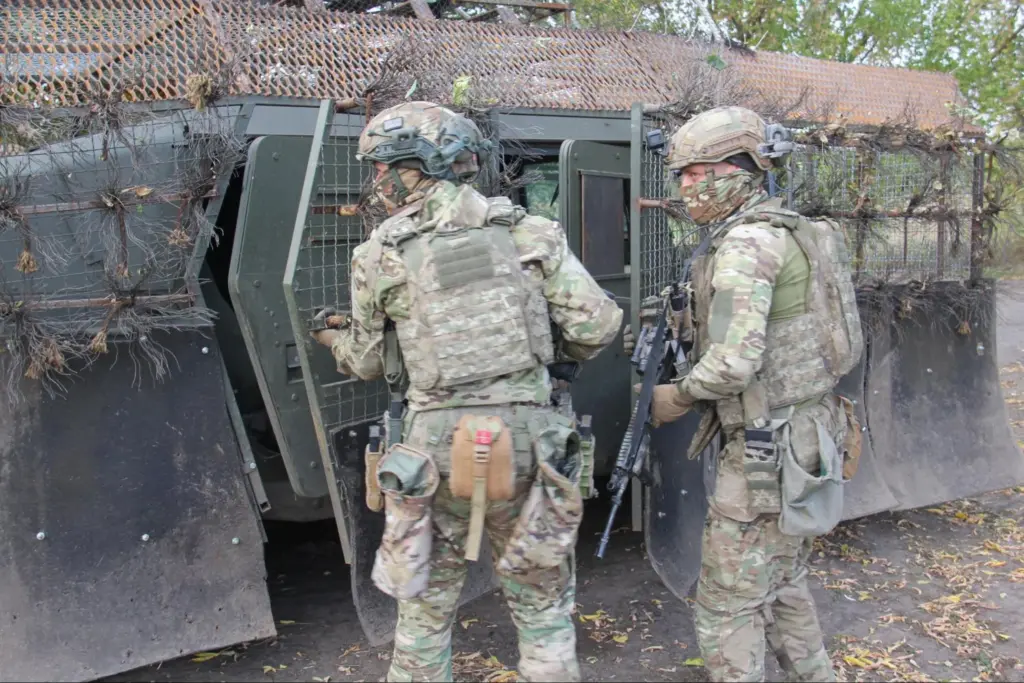
Ukrainian reconnaissance troops used a captured Russian soldier’s radio for four days to listen to Russian military communications and relay important intelligence to their command, according to a report by ArmyInform, which covered the episode. The soldiers serve in the 23rd Separate Reconnaissance Battalion, which operates in the Oleksandrivka sector, the report noted.

Russia uses infiltration tactics involving small groups to slip through Ukrainian positions undetected, establish themselves into the rear of Ukrainian positionse, and create conditions for the further advance of its main forces. They are countered not only by reconnaissance drones but also by specialized reconnaissance teams, which sometimes cover several dozen kilometers on foot to reach their designated targets.

Ukrainian scouts capture Russian soldier in the grey zone

Ukrainian reconnaissance troops captured a Russian soldier in the grey zone as he was trying to enter a neighboring house, the report said.

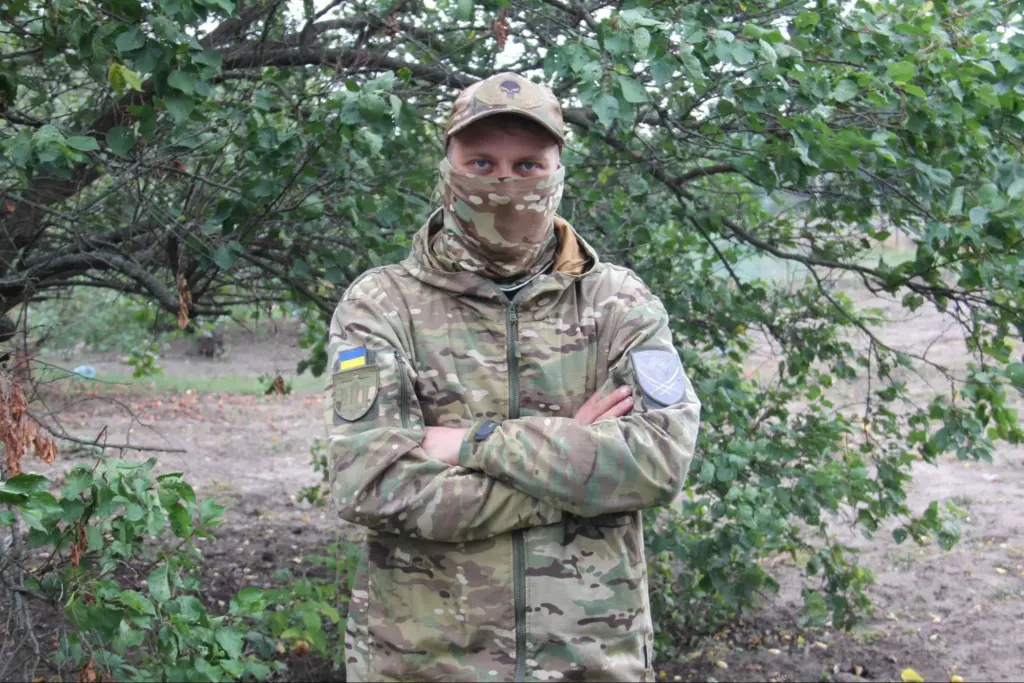
“He took off his body armour and set his rifle aside. He felt right at home. Our commander went over and offered him a chance to surrender, and he agreed. He then stayed with us for four days. He told us everything he knew,” a soldier with the call sign Kubik said in the report.

The soldiers’ hideout was later discovered. Fleeing a Ukrainian drone, a Russian infantryman ran into the building where the reconnaissance troops were staying. The position was subsequently attacked by FPV drones, followed by an artillery barrage.

Reconnaissance soldier with the call sign “Kubik” of the 23rd Separate Reconnaissance Battalion, 2026. Photo: ArmyInform

One Ukrainian soldier sustained a minor injury, but the group managed to withdraw without suffering serious losses.

Reconnaissance soldier Kubik spent 23 days on a combat mission

For reconnaissance troops, the journey to their positions and the return trip remain perhaps the most dangerous parts of a mission. During his year of service, Kubik has completed five combat missions, one of which lasted 23 days, according to the report.

During their most recent mission, the soldiers covered 20 kilometers on foot in one direction, moving mostly through tree lines, Kubik said. He added that they had to run across open areas and destroy enemy drones lying in wait before quickly retreating to cover.

Because of the constant threat from the air, the length of time reconnaissance troops can remain at their positions depends on the weather and the situation, the report noted. Sometimes, staying in place longer is safer than risking exposure while a team is being replaced.

Dzhus’s first mission: 20-year-old reconnaissance soldier chooses infantry

Twenty-year-old Mykyta, whose call sign is Dzhus, is preparing for his first combat mission as part of the 23rd Separate Reconnaissance Battalion, the report said. He joined the military under the “18–24 Contract” program after leaving the police force.

“Many people who join under the ‘18–24’ contract go into UAV operations, but I’m more interested in infantry work. We have many experienced reconnaissance soldiers, and the guys are constantly giving advice and sharing their experience,” Dzhus said.

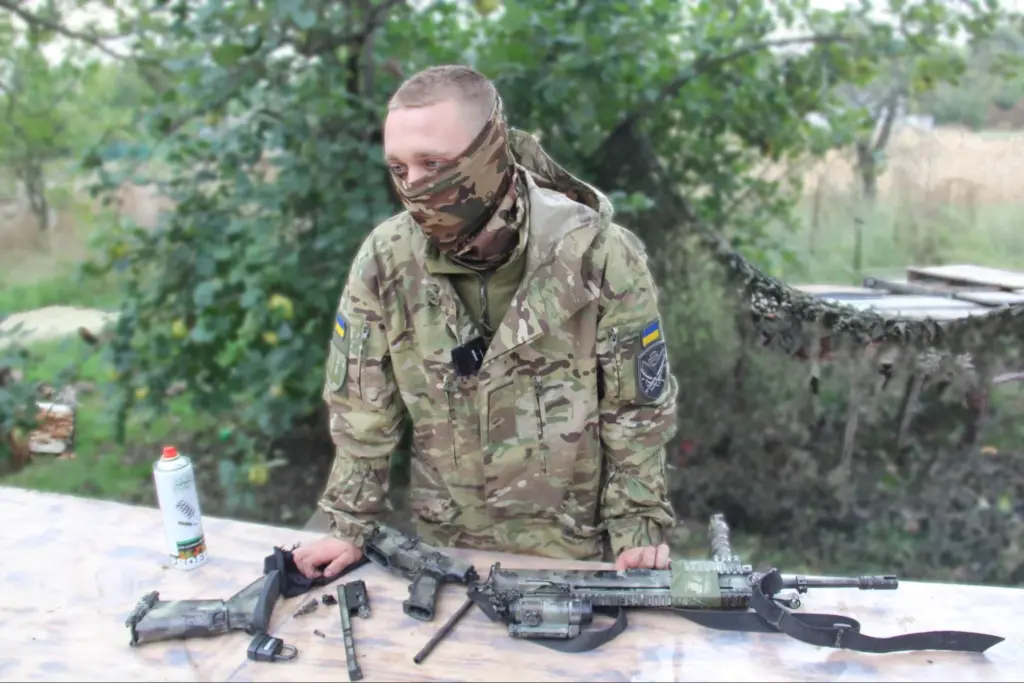
Reconnaissance soldier with the call sign “Dzhus” of the 23rd Separate Reconnaissance Battalion, 2026. Photo: ArmyInform

He is heading out on the mission under the guidance of an experienced commander, he said. The soldiers prepare thoroughly for every mission, practicing at the training ground and rehearsing procedures tailored to the specific task, the media outlet noted.

Russian troops seek new hiding places for infiltration along the front

Russian forces continue to use small-group infiltration tactics. For example, the Russian army is likely increasing its infiltration efforts in Kharkiv Oblast, taking advantage of the remaining summer foliage for concealment, the Institute for the Study of War reported on 9 October. In particular, Russian forces are seeking to infiltrate the city of Kupiansk in small groups, according to an RBC-Ukraine report published on 7 October.

Similar incidents have also been reported in Donetsk Oblast. Russian troops are attempting to infiltrate the gaps between Ukrainian observation posts in small groups and establish positions there, Artem Prybilnov, spokesperson for the 155th Separate Mechanized Brigade, said during a broadcast on Suspilne.Studio on 7 October, NV reported. Their aim is to build up forces for a further advance toward Dobropillia. Ukrainian infantry, working alongside drone operators, is repelling the ongoing Russian attacks and preventing them from achieving this goal, Prybilnov added.

As autumn sets in and vegetation becomes thinner, Russian troops find it increasingly difficult to conceal themselves in tree lines, Prybilnov noted. During the summer, they used these areas for cover and to accumulate personnel, ammunition, and equipment, the spokesperson said. Russian forces are now attempting to infiltrate villages, where they can hide in buildings and basements and establish positions, he added.

  •  

Energy truce with strings attached: Kyiv reportedly told to spare Russian refineries or lose US intelligence and arms

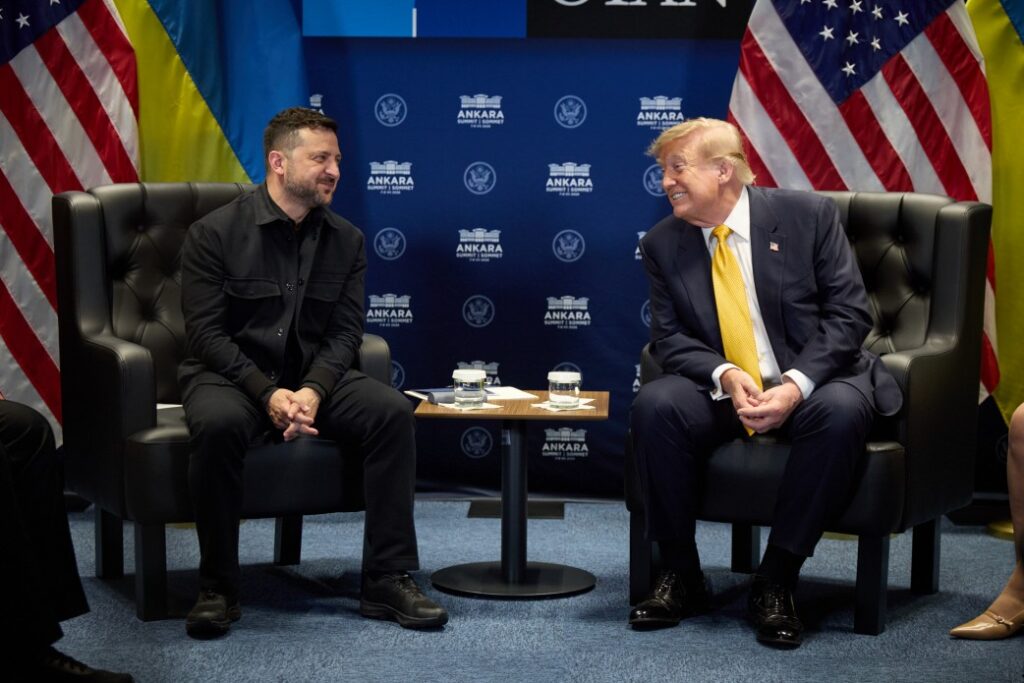
again trump presses zelenskyy stop russian refinery strikes · post ukrainian president volodymyr meets donald ankara türkiye 8 2026 presidentgovua ukraine news reports

Ukraine has loosened its reliance on Washington but still depends on the United States in three military areas that let US President Donald Trump keep pressuring Kyiv, The Telegraph wrote on 12 October. That pressure now centers on the energy ceasefire Trump declared on 11 October, with US officials reportedly warning Kyiv not to hit Russian energy during the truce. Kyiv backs a mutual truce, but Moscow has not confirmed it, and Russian strikes on Ukraine’s grid have continued.

The paper named three such ties: satellite intelligence, Patriot interceptors, and American weapons bought with European money. A pause in any of them would hit just as Russia’s winter campaign begins. Ukraine says an intercepted document reportedly lays out up to 1,000 Russian missiles, drones, and bombs for 60 critical sites this winter, so any pause in US intelligence, interceptors, or PURL deliveries would land as that campaign gets under way.

Satellite intelligence: the US still holds the key

The Central Intelligence Agency (CIA) and other US services still pass precise satellite data that help Ukrainian forces hit targets inside Russia, by the paper’s estimate. Trump briefly suspended that flow in March 2025 to pressure Zelenskyy. A Ukrainian official told Axios that Trump envoys Steve Witkoff and Jared Kushner threatened during 9 October talks in Miami to cut off US intelligence.

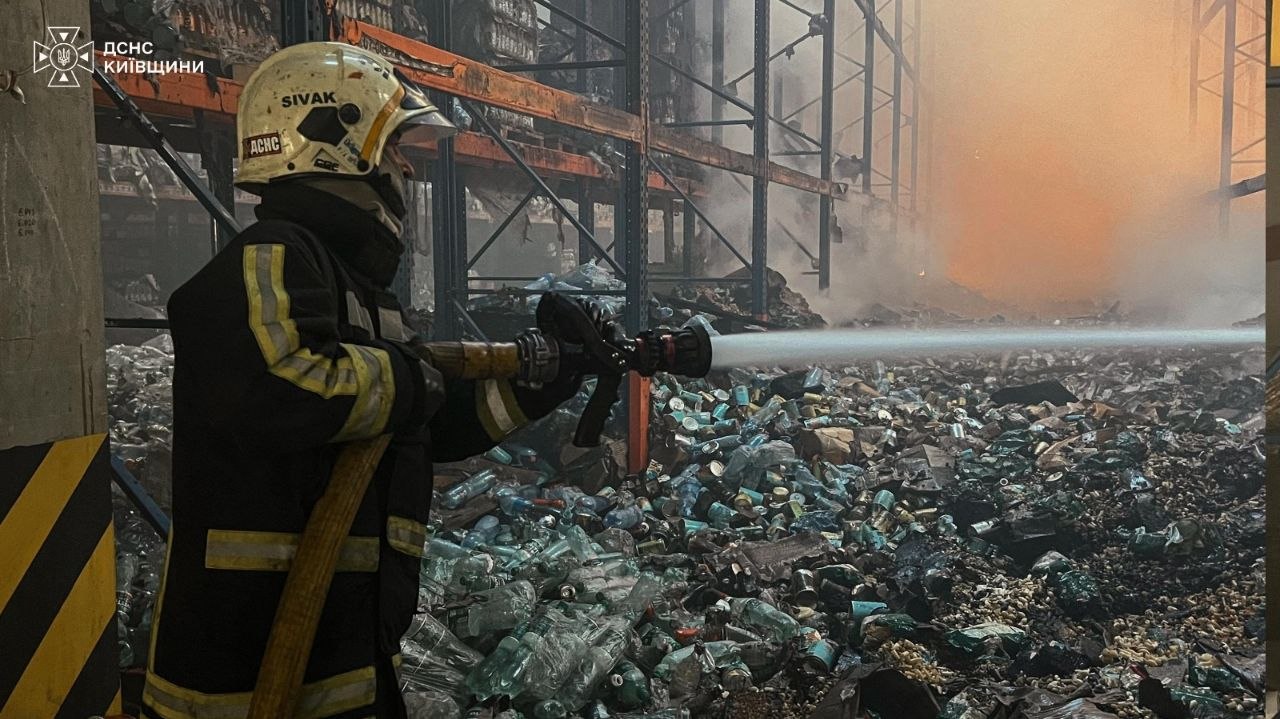
just power plants russia’s drones also went after warehouses groceries hardware chain · post firefighter puts out fire warehouse burned food drink stock hit russian attack bucha district kyiv oblast
Explore further

Russian ballistic missiles hit Kyiv before sirens, gap that lands hard amid fears that Washington could cut data that warns of launches

Patriot interceptors: no quick substitute

The Telegraph called interceptor missiles the second and probably sharpest dependency. Only American Patriot systems can down Russia’s most powerful missiles, which strike Ukrainian cities daily, the paper wrote. Kyiv’s PAC-3 stocks ran dry mainly because US reserves were diverted to the Middle East after America’s war against Iran, the paper added. Kyiv had warned in March that a long Middle East war would squeeze its PAC-3 supply.

Five European defense firms—Destinus, MBDA Deutschland, Safran, Airbus, and Thales—signed a letter of intent in July to develop a joint interceptor, but a testable prototype is not expected before next year, the paper wrote. Ukraine is also building its own interceptor with European allies under the FREYJA program.

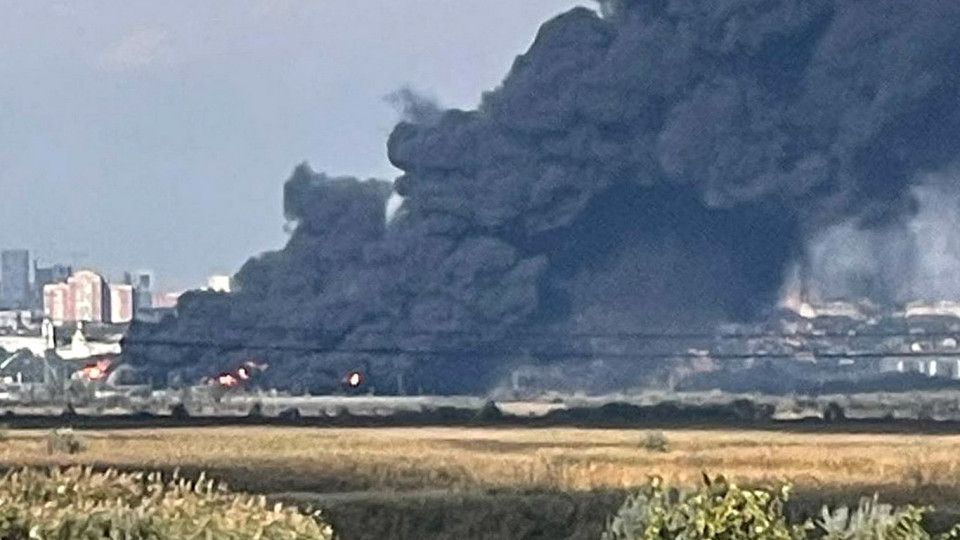
drones burned out more than half tanks russian fuel-export terminal rostov-on-don · post black smoke rises over oil-loading novoshakhtinsk refinery russia after drone strike 10 2026 tme exilenova_plus ukraine news
Explore further

The night Trump announced a diesel deal with Putin, drones knocked out more than half the tanks at a Russian fuel-export terminal

US arms bought with European money

The third is buying American arms with European money through the Prioritized Ukraine Requirements List (PURL), a NATO-run purchasing scheme. US officials have reportedly warned Europe that Trump may halt those supplies if Ukraine keeps striking Russian oil refineries.

  •  

Low pay and stress forcing Europe’s care workers to quit jobs, unions warn

Almost half of workers helping families care for children, older people, and people with disabilities, who provide vital domestic support in Europe, have considered quitting due to low pay and bad working conditions, a labour-union report found on Tuesday (13 October).

The 2026 personal and household services (PHS) employment monitor drew on more than 8,000 responses from workers, service users, and employers in 36 countries.

Around one in four respondents worked between 35 and 40 hours per week.

Meanwhile, six in 10 workers reported work-related musculoskeletal disorders, including back pain and tendon inflammation.

One in four also said they had experienced or witnessed verbal abuse, while nearly 15 percent had experienced either sexual harassment, physical, and/or sexual violence.

Care poviders’ mental health is impacted, with around six out of 10 reporting sleeping issues.

But these same workers play “an essential role in providing a dignified life for everybody in our ageing European societies,” Oliver Roethig, regional secretary of UNI Europa said in a statement. 

This article continues, but the full version is available only to EUobserver.com subscribers. Visit account.euobserver.com/membership

  •  

Displaced Ukrainians need clarity about their future, EU regions say

European regions and cities are calling on the EU to give millions of displaced Ukrainians legal certainty and a genuine choice between building a future in Europe and returning home safely. Their appeal comes as Russian attacks on Ukraine’s critical energy infrastructure intensify ahead of what is expected to be another harsh winter for the war-torn nation.

Temporary protection for displaced Ukrainians was set to end in March 2028. Eurostat data from July shows that almost 4,5 million non-EU citizens who fled Ukraine were benefiting from the mechanism, which was established shortly after Russia’s full-scale invasion in 2022.

“Temporary protection was the right emergency response, but it cannot be the long-term answer,” said Antje Grotheer, Chair of the European Committee of the Regions’ (CoR) Working Group on Ukraine. “People forced to flee Ukraine because of Russia’s war need certainty about their future,” the President of the Bremen State Parliament added.

An opinion drafted by Grotheer and adopted by CoR members on Tuesday calls for timely, accessible information on legal options beyond temporary protection so that people can make informed decisions.

It notes that decisions on legal status are taken mainly at EU and national level, while their practical consequences are managed in cities and regions. Local authorities need predictable funding and administrative capacity to keep public services running and respond to housing pressures, the CoR said.

Grotheer demanded that cities and regions are given a voice in shaping the transition after the EU’s temporary protection runs out.

Preparing for winter

The opinion sets out three parallel priorities: supporting the inclusion of displaced Ukrainians in European communities, investing in their education and skills for the benefit of host societies and Ukraine’s recovery, and enabling voluntary, informed and safe return when conditions allow.

“It’s time now to realise that we should not only treat Ukrainians as vulnerable refugees; we should treat them as our partners,” said Ylva Johansson, EU Special Envoy for Ukrainians in the EU. “Their future is part of Ukraine’s future, and that future is in the European Union,” she added.

“The millions of Ukrainians currently living outside the borders of our country are a huge human potential that Ukraine cannot afford to lose,” said Tetiana Yehorova-Lutsenko, President of the Ukrainian Association of District and Regional Councils (UAROR) and Chair of Kharkiv Regional Council.

The UN Refugee Agency (UNHCR) reported that 49 percent of Ukrainian refugees – down from 61 percent in 2024 – have expressed hopes or intentions to return one day, with security, housing and essential services among the key conditions.

Protecting Ukraine’s energy infrastructure has been a central part of the EU’s support since 2022. In a letter to CoR members, President Kata Tüttő and Grotheer warn that the attacks risk depriving communities of basic living conditions. The letter recalls that the European Commission President Ursula von der Leyen had described the attacks as “a strategy of terror”.

“Cities and regions must act before the arrival of the cold further aggravates the already difficult humanitarian situation,” the letter warned. It said regions and cities can deliver support in the form of energy equipment, used municipal vehicles, medical supplies or IT equipment.

This story was produced by the European Newsroom (enr) in cooperation with the European Committee of the Regions (CoR). The editorial responsibility lies with the enr. 

Press contact:

Theresa Sostmann
Tel. +32475999415

Theresa.Sostmann@cor.europa.eu

  •  

From Buffer to Bridge: The Wakhan Corridor and the Return of Russia and China to Eurasia

As the United States reassesses its global commitments, the opening of Afghanistan’s Wakhan Corridor creates a new trade artery between China, Central Asia and South Asia — giving Russia and China new openings to reshape the Eurasian order. The Changing Global Balance of Power On 4th October 2026, Afghanistan opened the Wakhan Corridor, which means […]
  •  

South Korean President Hails Arctic Container Shipping Trial, but Commercial and Sanctions Questions Remain

South Korean President Lee Jae Myung welcomed the PanStar Acro and its crew home on Tuesday after the container ship completed the country’s first round-trip commercial trial through the Arctic to Europe, hailing the voyage as a potential alternative to traditional shipping lanes even as questions remain over commercial viability and cooperation with Russia.
  •  

Europe and China Trade Negotiations: Can Brussels Face Reality? Part 2

The European Union still lacks an adequate understanding of the China it is negotiating with and of the world in which it now has to compete. Geopolitics and the Illusions of Power: Europe’s Refusal to Adapt It is common for Europe to regard many of its economic problems as being China’s fault—this being a convenient […]
  •  

In Trump’s America, the Death Penalty Has Been Resurrected

Louisiana recently started executing death-row prisoners after more than 20 years of not doing so (save a “voluntary” execution in 2010, when a prisoner waived his right to appeal and said he wanted to die). John Corley, an award-winning writer who is incarcerated at Louisiana’s Angola prison, reflects on how MAGA politics have re-invigorated the practice of state killing in Louisiana and elsewhere, and what it means for the tenor of life in institutions like Angola:

Dalton Prejean Jr, who is serving time for manslaughter, found Hoffman’s execution particularly painful. When he was ten years old, in 1990, his father died in the penitentiary’s electric chair. “The day it all went down, it was almost like reliving the moments leading up to my father’s execution,” Prejean told me. “At ten o’clock the news reporter announced that Hoffman was dead. My heart skipped. I couldn’t believe they had actually killed somebody. Was what he did so bad that he just couldn’t be allowed to go on living? Wasn’t there anything about him that was redeemable?”

Twice a week, the inmate counsel substitute Gary Boudreaux makes rounds on the five death row tiers. He knows each of the surviving men housed there. “There was no tension on the row because the guys believed the execution wouldn’t happen,” Boudreaux said. “It had been so long, and they have good lawyers. They just didn’t think executions would come back.”

A week after the execution, Boudreaux returned to the row. The atmosphere was “totally different.” The men now knew that Governor Landry “is serious about executing people, and the state will execute people. There’s no doubt in their minds about that any more.”

  •  

MI5 chief Ken McCallum confirms Russia did interfere in Brexit referendum but says it had little impact – as it happened

He argued there was no evidence to suggest the result of the Brexit vote had been swayed as a result of the effort

Zia Yusuf, Reform UK’s home affairs spokesperson, has said he does not agree with his colleague Suella Braverman’s assertion that black people cannot be English.

Asked about her views in an interview on Sky News, Yusuf said:

In my view Ashley Cole is the best English fullback in history, and I won’t take any other position. So in my view, Ashley Cole is English. I think the argument that he’s not English doesn’t hold water with me.

Nasser Hussain, who I grew up watching when I went to the cricket, the idea that those people aren’t English is an alien concept to me.

I would respectfully disagree with people, who make the opposite argument.

To say I’m English is to take a ‘laissez-faire, anything-goes’ attitude to ethnicity, citizenship and identity. It also denies me my Asian heritage. The liberals (many of them in today’s Conservative party) take this cosmopolitan approach to Englishness. They’re terrified of being called racist so they say that anyone, as long as they’re born here, can be English.

I take the conservative approach. Englishness is an ethnicity. There have been English people for centuries and we need to recognise this more if we are to start taking a more muscular approach to citizenship and nationality. And no, it’s not racist to say this.

Continue reading...

© Photograph: Jonathan Brady/Reuters

© Photograph: Jonathan Brady/Reuters

© Photograph: Jonathan Brady/Reuters

  •  

Russian strike collapses a Kharkiv apartment stairwell and kills three, days after the US waived sanctions on Russia’s diesel

russian strike collapses kharkiv apartment stairwell killing three · post rescuers clear rubble excavator building hit kharkiv’s kholodnohirskyi district ukraine 13 2026 oda news ukrainian reports

Russian munitions brought down a stairwell of an apartment building in Kharkiv on the evening of 12 October, and rescuers recovered three bodies from the rubble overnight, local authorities reported. Survivors described fire, falling glass, and pets left behind. The strike came days after Washington waived sanctions on Russian diesel, as it expects Kyiv to stop hitting Russian refineries.

Russia hits Ukraine’s cities every day as it readies a winter campaign against Ukrainian infrastructure, and its oil exports keep bringing in the money that pays for the drones and missiles. A halt to Ukraine’s refinery strikes with no matching halt to Russia’s strikes would leave Moscow’s fuel income intact while Kharkiv digs through rubble. Estonia’s prime minister has already urged Europe to help Ukraine destroy those refineries instead.

A stairwell gone in Kholodnohirskyi district

Russian munitions hit Kharkiv’s Kholodnohirskyi district repeatedly from around 21:17, and Mayor Ihor Terekhov preliminarily identified them as Banderols. At 22:21, he said one strike had hit a residential building, possibly trapping people. He then added in a follow-up post: “Very serious destruction—an entire stairwell has collapsed.”

The strike destroyed an entrance of the four-story building, the State Emergency Service (DSNS) said. It counted 11 injured across the city’s evening strikes, and a rescuer was hospitalized, while Terekhov put the number at 10. By 06:56 on 13 October, rescuers had found a third body. Oblast head Oleh Syniehubov confirmed three dead and said the search continued. Experts will check whether the building is still fit to live in, he added.

A rescuer at the collapsed stairwell of an apartment building hit by a Russian strike in Kharkiv, Ukraine
A rescuer at the collapsed stairwell of an apartment building hit by a Russian strike in Kharkiv’s Kholodnohirskyi district, Ukraine, 12 October 2026. Photo: Oleksandr Manchenko/Suspilne Kharkiv

Over 24 hours, Russian attacks killed three people in Kharkiv and injured 37, including two children treated for acute stress, Syniehubov reported.

“I realize I’m on fire”: two residents recall the strike

Larysa Maksimenko had just put her bedridden husband to sleep when the strike hit, she told Suspilne Kharkiv. She suffered a head wound and burns.

“I went to the kitchen to switch on the kettle for myself, to have some coffee. I realize I’m on fire. Then glass fell on me. I came to, and I’m buried under everything. All covered in blood,” she said.

Larysa Maksimenko, a resident injured in the Russian strike on her apartment building in Kharkiv, Ukraine
Larysa Maksimenko, a resident injured in the Russian strike on her apartment building in Kharkiv’s Kholodnohirskyi district, Ukraine, 13 October 2026. Photo: Valeriia Yemets/Suspilne Kharkiv

The window bars were broken, and medics carried her husband out through the window. Rescuers later found a woman under the rubble in her apartment, likely a neighbor, Maksimenko said. All she wants now, she said, is to get to her husband in hospital.

Viacheslav Chibitko with one of his dogs outside his damaged apartment building in Kharkiv, Ukraine
Viacheslav Chibitko, a resident of the apartment building hit by a Russian strike in Kharkiv’s Kholodnohirskyi district, Ukraine, with one of his dogs, 12 October 2026. Photo: Valeriia Yemets/Suspilne Kharkiv

Viacheslav Chibitko, who lives on the second floor next to the collapsed entrance, saw a flash, and then everything blew out. He got his three dogs out, but five cats are still inside. During the clearing, a concrete slab fell on a rescuer, Suspilne’s correspondent reported. Crews pulled him out and handed him to medics.

Cars burning outside a 25-story apartment building in Kyiv after a Russian drone strike
Cars burning outside a 25-story apartment building in Kyiv’s Darnytskyi district after a Russian drone strike, Kyiv, Ukraine, 12 October 2026. Photo: Office of the Prosecutor General of Ukraine

Kyiv’s toll rises, and strikes hit other cities overnight

The evening drone strike on a 25-story building in Kyiv’s Darnytskyi district killed two people, Kyiv prosecutors reported. The second victim was found dead in a car near the building. Prosecutors counted at least seven injured, including a 17-year-old girl, while Mayor Vitali Klitschko counted 11 in the capital.

just power plants russia’s drones also went after warehouses groceries hardware chain · post firefighter puts out fire warehouse burned food drink stock hit russian attack bucha district kyiv oblast
Explore further

Russian ballistic missiles hit Kyiv before sirens, gap that lands hard amid fears that Washington could cut data that warns of launches

From 18:00 on 12 October, Russia launched five ballistic missiles, nine loitering munitions, and 108 attack drones, Ukraine’s Air Force reported. Air defenses downed or suppressed 88 drones. A Russian drone attack injured four patients at a medical facility in Khmelnytskyi Oblast, oblast head Serhii Tiurin said. In Dnipro, a Russian attack injured a 64-year-old man, oblast head Oleksandr Hanzha reported. A downed Russian drone set two houses on fire in Murovane near Lviv, oblast head Maksym Kozytskyi said.

On 12 October, a Russian Smerch rocket with a cluster warhead hit a house in Cherkaske, Donetsk Oblast, killing three people, including a 13-year-old girl, oblast head Vadym Filashkin reported.

Russian attacks killed more than 150 people in the week to 11 October, Ukrainian President Volodymyr Zelenskyy said. Russian bombs killed at least 20 people in Zaporizhzhia on 10 October, by the oblast’s count. On 9 October, the US waived its sanctions on Russian diesel until April 2027. The White House expects Kyiv to halt refinery strikes under its proposed energy ceasefire.

  •  

The Significance of the Chinese, U.S. and Russian Leaders’ Meeting in Shenzhen

The world stands at a critical turning point and, as President Xi Jinping has noted, “changes unseen in a century are accelerating.” After it was confirmed that U.S. President Donald Trump and Russian President Vladimir Putin will attend the APEC Summit in Shenzhen, China, scheduled for 18-19 November 2026, expectations have grown that a trilateral meeting of the three most powerful heads of state may mark a proactive strategic recalibration required by the exigencies of the current international situation.

This meeting may come as a historic adjustment of the global structural transformation and the upgrading of the major powers’ relations eighty years after the formation of the Yalta system. Hopefully, the interaction between the presidents of the three major powers will not be the “G3 joint management of the world” as hyped by Western media, but emerge as a new ‘Shenzhen International System’, a model that will operate in parallel with the UN-centered multilateral system and inject certainty into the turbulent world.


The Shenzhen Trilateral Meeting as a Product of Thorough Preparation and an Urgent Imperative of the Times

Face-to-face meetings between presidents of major powers are never spur-of-the-moment events; they are the cumulative product of intensive diplomatic efforts, Track II dialogues, and successive bilateral exchanges. Over the past year or so, bilateral communication among China, the U.S., and Russia—including various dialogues, shuttle diplomacy by special envoys, and telephone conversations—has steadily advanced, with the parties repeatedly sounding out each other’s bottom lines and exchanging views on global pressing issues.

Visits and statements made by top-level officials in 2026 point to the high probability of a trilateral meeting of the Chinese, U.S., and Russian heads of state. On 4 February—the day marking the start of spring in the Chinese lunar calendar—President Xi Jinping held separate telephone conversations with President Putin and President Trump. During the third week of May, President Trump and President Putin visited Beijing in succession to meet with President Xi Jinping. On 23-25 September, President Xi visited the United States. On 1 October, President Putin publicly stated at the 23rd Annual Meeting of the Valdai Discussion Club that a trilateral summit was possible, provided the agenda was right.

The think tank I am affiliated with has frequently organized trilateral dialogues among scholars and former officials from China, the U.S., and Russia in recent years. Multiple rounds of exchanges yielded a clear consensus that if major powers engage in a spiraling vicious rivalry, no single party will remain unscathed. This realization has laid a solid conceptual foundation for the leaders’ meeting during the APEC Summit in Shenzhen.

There is also a distinct sense of urgency. The current global order is in a state of a severe ‘entropy increase.’ The protracted Russia-Ukraine conflict is draining the resources and fracturing Eurasia’s security architecture. The Middle East remains volatile, with the risk of regional conflicts spilling over their boundaries. Global inflation, supply chain fragmentation, and debt crises are spreading across the Global South. Global problems—such as climate change, AI governance, and nuclear non-proliferation—are not resolved, lacking deep involvement of China, the U.S., and Russia. Bilateral diplomacy is no longer sufficient to address complex cross-regional global challenges.

The intensifying domestic political polarization in the U.S., with partisan wrangling over foreign policy, is draining the nation’s strategic energy; Russia, struggling with geopolitical security pressures, urgently needs stable relations with major powers; and China, currently undergoing a phase of high-quality development, needs a generally stable international environment. While each of these three major powers has its own practical domestic and foreign policy imperatives, they also share a collective responsibility for maintaining global strategic stability.

The Global South hopes that the major powers will manage their differences, halt confrontation, and jointly address existential challenges such as food, energy, and debt security. The world can no longer afford the catastrophic chain reactions resulting from miscalculations by major powers. It is this shared sense of global crisis that urges the need for a summit of the leaders of China, the U.S., and Russia.

The APEC multilateral framework provides a fitting diplomatic setting for the three leaders’ communication: trilateral talks in a multilateral context are generally inapt for striking secret deals or carving out spheres of influence, but instead help focus on the regional and global agenda.


The ‘Shenzhen International System’—a New Paradigm, Eight Decades after Yalta?

The 1945 Yalta Conference laid the groundwork of the post-World War II global order—a system that has endured for over eight decades. Born from the ruins of war, the Yalta international system, rooted in the major powers’ logic of delineating spheres of influence, ultimately created a postwar landscape marked by bipolar confrontation.

While this system maintained peace for a time, it was inherently characterized by power politics, bloc-based antagonism, and the carving up of spheres of influence. After the Cold War, attempts were made to replace the bipolar structure with U.S. unipolar hegemony; however, this experiment in unipolarity ultimately resulted in increased conflict, inequality, and failures in global governance. Over the past eight decades, the underlying logic of the Yalta system has become increasingly ill-suited to today’s multipolar reality.

The historical value of the potential trilateral meeting of China, U.S., and Russia’s leaders—held within the framework of the Shenzhen APEC summit—is that these powers have begun to jointly explore a new order that transcends the outdated mindset of the Yalta system; this marks the starting point for what might be called the ‘Shenzhen International System.’

This system is by no means intended to replace the United Nations or to abandon existing international mechanisms in favor of a new setup. Rather, it would indicate the major powers’ joint intention to reshape the principles of their coexistence and correct the entrenched mindsets inherited from the Yalta era—bloc confrontation and contest for spheres of influence.

Under the Yalta system, the underlying logic of major-power interaction was zero-sum games, alliance-building, and territorial division. By contrast, the Shenzhen trilateral summit may draw a new direction of controllable competition, conflict prevention, policy coordination, and mutual respect for nations’ core interests. The primary value of such a trilateral summit lies in managing the strategic risks associated with major powers, establishing guardrails for crisis communication, and preventing local conflicts from escalating into direct confrontation between major powers.

Furthermore, in the provision of global public goods, the three nations can coordinate their efforts in addressing food security, energy stability, and climate governance. Most importantly, the meeting may acknowledge the objective reality of a multipolar world and diversity of civilizations and development paths; it may move away from drawing lines based on ideology and compelling nations to take sides. The Yalta system was an order born of war, bearing the imprint of power politics; by contrast, the Shenzhen trilateral summit may initiate a reshaping of international order—conducted in a peaceful environment—where major powers voluntarily exercise self-restraint and seek coexistence. This will mark a significant endeavor in international relations history.

It will also signify that the world’s major powers are no longer retracing the historical path of the “WWII victors redrawing the global map,” but intend to jointly maintain fundamental global stability based on the premise of coexistence. The historical significance of this shift will become increasingly apparent to the international community over time. Of course, building a new order paradigm is a long-term process and a trilateral summit is merely the starting point of a long journey that is far from its final destination.


Not a G3, but a New Model of Major-Power Interaction Compatible with Multilateralism

Some Western media outlets and public opinion circles using outdated geopolitical concepts to hype up a so-called ‘G3 bloc’ claim that China, the U.S., and Russia intend to monopolize global affairs. This is a classic Eurocentric understanding of major-power interaction rooted in the old logic of 19th-century alliances and the secret division of spoils. It must be made clear: the trilateral summit of Chinese, U.S., and Russian presidents is not a ‘G3.’

The ‘G3’ concept is essentially a closed clique of a few major powers monopolizing global decision-making, dictating the terms to the rest of the world, demarcating spheres of influence, and compelling other nations to submit. By contrast, the trilateral interaction of China, the U.S., and Russia is presumed to be an open, issue-oriented communication mechanism focused on crisis management.

The primary goal of such communication is to manage mutual conflicts and prevent clashes between major powers, rather than to form an exclusive bloc for joint opposition to other nations. The consensus reached through trilateral interaction will neither supersede the UN Charter nor replace existing multilateral mechanisms such as the G20 or APEC.

While there is room for cooperation, significant competition and differences between the three nations also exist. They will not form a monolithic alliance. China and Russia characterize their relationship as a comprehensive strategic partnership embracing coordination in the new era, not a formal alliance. China and the U.S. seek a constructive, strategically stable relationship based on mutual respect, fairness, and reciprocity. While the U.S. and Russia harbor deep-seated conflicts, they maintain a baseline for crisis management. Thus, the trilateral relationship is a dynamic balance, not a rigid bloc.

The new model of major-power interaction is entirely compatible with multilateralism; the two models are complementary rather than mutually exclusive. Multilateralism involves all sovereign states; it is anchored in the purposes and principles of the UN Charter, which respects the sovereign equality of nations and addresses the aspirations of the vast number of developing countries in the Global South.

Stable communication among China, the U.S., and Russia as permanent members of the UN Security Council helps it overcome the current state of paralysis and dysfunction of its multilateral mechanisms. Only by effectively managing the most dangerous bilateral and trilateral risks can major powers hear the voices of small and middle states and respond to the concerns of the Global South.

Trilateral communication among major powers serves as a stabilizer for the multilateral system, not a substitute for it. The outcome of trilateral talks must ultimately be implemented within a global multilateral framework, incorporating the participation of more nations. Crucially, rather than engaging in mere bargaining at the negotiating table, the three major powers must consider the development aspirations of the Global South countries.


*   *   *

Amidst the current profound global changes, the potential trilateral meeting of the Chinese, U.S., and Russian leaders—held on the sidelines of the APEC Summit in Shenzhen—could be a pivotal moment in the history of diplomatic practice. It could remind the world that confrontation, war, and bloc rivalry are not the only historical paths available to major powers. Managing differences, peaceful coexistence, and limited coordination are viable choices.

Of course, we should not be overly optimistic about the prospects. Deep-seated mistrust, ideological biass, and conflicts of interest will continue to test the three nations’ strategic resolve. However, if China, the U.S., and Russia maintain the communication channels established through head-of-state diplomacy, uphold mutual respect, and avoid direct conflict, the new paradigm of major-power relations initiated by the Shenzhen trilateral meeting will take root and grow—offering a rare opportunity for injecting strategic certainty into the turbulent world.

  •  

Why Was Sadiq Khan Given a United Nations Award?

Parts of London look like a dump. But that hasn't stopped the UN from giving Mayor Sadiq Khan an award for "improving urban life". It's all very incestuous, says Charlotte Gill: the UN is just rewarding its cronies.

The post Why Was Sadiq Khan Given a United Nations Award? appeared first on The Daily Sceptic.

  •  

Trump aligns with Putin yet again, squeezing Ukraine and Europe

The deal struck by Donald Trump with his Russian counterpart, Vladimir Putin, on October 9 to allow Russia to sell millions of tonnes of diesel is a major departure from US policy and runs counter to Ukrainian and European interests. It also directly contradicts a law signed by the US president in September to authorize […]

The post Trump aligns with Putin yet again, squeezing Ukraine and Europe appeared first on Asia Times.

  •  

Beards and loathing: A cop union convention comes to Las Vegas

Original photo used for cover image: A welcome sign greets attendees at the 23rd Quadrennial Convention of the International Union of Police Associations at the Paris Hotel in Las Vegas, Nevada on August 25-28, 2026. Original photo credit: Hamilton Nolan/TRNN. Original photo has been altered with AI and human design features to create cover image.

This feature report was co-produced and is being co-published in partnership with How Things Work by Hamilton Nolan and The Valley Labor Report.

On a plain, blue-lit stage in a plain event space at the Paris Hotel in Las Vegas, a gruff man with white hair and a thin goatee is complaining about Las Vegas. How it is too hot. How it is too expensive. And how the hotel’s convention-management bureaucracy is driving him nuts.

“You can’t even move a box from left to right without contacting someone to do that!” he barks into the microphone.

Far from all the political bluster about the police being defunded, six years after the earth-shaking George Floyd protests swept the US and public approval for law enforcement plunged to a generational low, these guys have never been more politically and monetarily supported than they are now.

This will become a communal ritual by the end of the week. Without fail, like some sort of morning prayer, the convention begins every day with opening grumblings about the convention itself.

We can see why. After all, the organization convening here is supposed to be a strong union representing nearly 20,000 members around the country. Far from all the political bluster about the police being defunded, six years after the earth-shaking George Floyd protests swept the US and public approval for law enforcement plunged to a generational low, these guys have never been more politically and monetarily supported than they are now.

But there are only about 50 people in the room here with us (28 delegates, 10 alternates, and some wives and family members mixed in). The proceedings are pretty boring and energyless, the attendees are grumpy, and the air is thick with middle-age resentment.

A welcome sign greets attendees at the 23rd Quadrennial Convention of the International Union of Police Associations at the Paris Hotel in Las Vegas, Nevada on August 25-28, 2026. Photo credit: Hamilton Nolan/TRNN.
A welcome sign greets attendees at the 23rd Quadrennial Convention of the International Union of Police Associations at the Paris Hotel in Las Vegas, Nevada. Photo credit: Hamilton Nolan/TRNN (August 25, 2026).

Clearly, the convention organizers and speakers were expecting something much different than this. To be honest, so were we. Because it’s 2026, Donald Trump is president again, and this is the 23rd Quadrennial Convention of the International Union of Police Associations (IUPA), which represents tens of thousands of cops in departments from coast to coast.

The convention was billed as “The premier gathering for law enforcement leadership… An event you don’t want to miss!”

But it’s absolutely dead here. Even the speakers and attendees don’t want to be here. In fact, they won’t shut up about it.

THE BLUE SHEEP OF THE FAMILY

It is by no means the largest police union in America, but IUPA has the distinction of being the only police union that is a member of the AFL-CIO. It joined the labor federation in 1979, making it a formal but uncomfortable partner to every progressive labor union and every rank-and-file union member in the AFL-CIO who has ever had to question why they should be affiliated with a union representing the same kind of cops who beat and arrest them, their union siblings, and their neighbors at protests and on picket lines.

The plainspoken man on stage right now grumbling about the convention, the one with white hair and the thin goatee—that’s Sam Cabral. He’s been IUPA’s president for more than 30 years.

International Union of Police Associations President Sam Cabral stands at the podium, flanked by union members and officers, at IUPA's 23rd Quadrennial Convention in Las Vegas, Nevada on August 25, 2026. Photo credit: Hamilton Nolan/TRNN.
International Union of Police Associations President Sam Cabral stands at the podium, flanked by union members and officers, at IUPA’s 23rd Quadrennial Convention in Las Vegas, Nevada on August 29, 2026. Photo credit: Hamilton Nolan/TRNN.

Cabral certainly sets the right wing edge of the AFL-CIO’s unions and union leaders. In 2014, when grassroots racial justice protests rocked Ferguson, Missouri following the killing of Michael Brown by police, the AFL-CIO’s then-President Richard Trumka, who was by no means a hard-left figure, joined calls for police reform and an end to police militarization.

That really pissed off Cabral. In a Strongly Worded Letter to Trumka, he proved what citizens have long known about how law enforcement “workers” wielding the might and prejudice of state violence see the rest of us: “[Police] are not the cause of the problems facing the black communities in America. They are not responsible for the single parent families, the unemployment, the school dropout rate or its attendant unacceptable literacy rate among black youth. They are not responsible for the gangs, black on black crime or the infant mortality rate.”

It is by no means the largest police union in America, but IUPA has the distinction of being the only police union that is a member of the AFL-CIO.

In true “nothing-to-see-here” fashion, Cabral also noted that, when it comes to police department staffing, “we have not ever seen racism or systematic exclusion of minorities.”

In 2020, as populist fury and protests swept the nation (and beyond) following the filmed police murder of George Floyd in Minneapolis, Minnesota, parts of the labor movement (including Hamilton’s own union, the Writers Guild—East) renewed their push for the AFL-CIO to disaffiliate from IUPA, on the grounds that police unions have clear, unique, existential interests that are irreconcilable with the shared interests of the rest of their alleged union siblings. AFL-CIO leadership disagreed, and they decided instead to speak out in defense of IUPA and its membership: “We believe the best way to use our influence on the issue of police brutality is to engage our police affiliates rather than isolate them.”

Yet the federation’s nominal support for some general accountability and police reform was still too much for Cabral. Stepping back into the political fray to hold the Thin Blue Line, he fired off another furious letter to Trumka, saying that the AFL-CIO President criticizing police over what happened to Floyd was “reprehensible” and an act of “profiling.”

“[Police] are not the cause of the problems facing the black communities in America. They are not responsible for the single parent families, the unemployment, the school dropout rate or its attendant unacceptable literacy rate among black youth. They are not responsible for the gangs, black on black crime or the infant mortality rate.”

Sam Cabral, President of the International Union of Police Associations

“Your recent statement where you speak of ​‘America’s long history of racism and violence against black people’ is inflammatory and patently false,” Cabral wrote. “Further, your call to end racial profiling and ‘demilitarize’ police forces makes assumptions that are, again, ridiculous.”

Shocking no one, IUPA endorsed Donald Trump’s presidential reelection bid in 2020, and Cabral full-throatedly joined the MAGA chorus. “Every top Democrat currently running for this office has vilified the police and made criminals out to be victims. They seem to take any union’s support for granted,” he wrote in an official statement in September of 2019. “Many of them still refer to the tragedy in Ferguson as a murder, despite the conclusions of every investigative inquiry to the contrary.”

On the projector screen at the 23rd Quadrennial Convention of the International Union of Police Associations in Las Vegas, Nevada, a presenter displays a slide entitled "Racism and Policing: The Facts." Photo credit: Hamilton Nolan/TRNN.
On the projector screen at the 23rd Quadrennial Convention of the International Union of Police Associations in Las Vegas, Nevada, a presenter displays a slide entitled “Racism and Policing: The Facts.” Photo credit: Hamilton Nolan/TRNN (August 26, 2026).

“THEY OBSTRUCTED EVERYTHING”

The mood-deadness and industrially chilled air here in the half-empty Concord Ballroom at the Paris Hotel contrasts so starkly with the grassroots intensity fueling the 2020 George Floyd protests—and with the heat and fury of the longstanding, ongoing debates about what the proper relationship between the labor movement and the police should be.

“Police unions are a conservative force in every institution they find themselves in,” Bill Fletcher Jr.—a lifelong unionist and racial justice activist—tells us over the phone. Fletcher recounts dealing with the police sections of his union during his time as Director of Field Services for the American Federation of Government Employees (AFGE), the largest federal employees union (and Jacob’s own union), which represents many members who are employed as law enforcement.

“It was like having a ship trying to leave the harbor with an anchor still out,” Fletcher says. “They obstructed everything.”

They could even openly flout the rules of their own union and face no consequences, Fletcher tells us. AFGE’s ICE Council did exactly that when they de-facto endorsed Donald Trump in 2016, against AFGE’s endorsement of Clinton. Guess we shouldn’t be surprised.

In order to secure member support for an agenda that is more challenging to the police state—an issue that is becoming more urgent by the day in Trump’s America—the labor movement needs “serious education” and an “open discussion that begins with the fact that the politics of the IUPA” and other cop unions “run counter to the rest of the labor movement.”

At one point during his time as an AFL-CIO staffer, Fletcher remembers trying to get the labor federation to encourage then-President Bill Clinton to issue a pardon or clemency for political prisoner Leonard Peltier. His proposal was not enthusiastically received. No one asked if taking such a step was worthwhile. No one debated whether it was the right thing to do. Instead, they just asked, “What does IUPA think?”

“They blasted the idea,” Fletcher says, “and that settled it.”

Therein lies the problem, and it’s not a new problem. As Fletcher puts it over the phone, in order to secure member support for an agenda that is more challenging to the police state—an issue that is becoming more urgent by the day in Trump’s America—the labor movement needs “serious education” and an “open discussion that begins with the fact that the politics of the IUPA” and other cop unions “run counter to the rest of the labor movement.”

But Fletcher has his issues with the “Defund the Police” camp, too, and he’s certainly not the only one. While agreeing with many of the goals of police accountability activists—in particular, the need to demilitarize the police and to delink police unions from the rest of the labor movement—Fletcher argues that many in the movement for police accountability have marginalized themselves.

“People have a right to safety,” Fletcher tells us, recalling a terrifying incident when his daughter was held up at gunpoint. “If a cop had killed the guy who did that, I wouldn’t have cared. The way I see it, when you point a gun at someone, those are the chances you’re taking. And I’m a Marxist.”

On the projector screen at the 23rd Quadrennial Convention of the International Union of Police Associations in Las Vegas, Nevada, a presenter depicts a photo of protestors marching in the street, with one protestor prominently holding a sign that says "Defund the Police." Photo credit: Hamilton Nolan/TRNN.
On the projector screen at the 23rd Quadrennial Convention of the International Union of Police Associations in Las Vegas, Nevada, a presenter depicts a photo of protestors marching in the street, with one protestor prominently holding a sign that says “Defund the Police.” Photo credit: Hamilton Nolan/TRNN (August 26, 2026).

Fletcher makes the point stick by telling us about a 2020 forum he attended organized by the New York State Nurses Association (NYSNA). The union had also put out a statement in response to the police murder of George Floyd, which Fletcher commended as “a good statement.” That pissed off a lot of NYSNA members at the forum. Many of those members were married to cops, he says, and they felt like the statement attacked their partners.

Fletcher wonders aloud if certain segments of the left today—those who say they support unions but have no patience or tolerance for law enforcement of any kind—have any patience or tolerance for working people like those NYSNA members and their families. They should, he says.

A THIN BLUE WHINE

Over the course of the convention, IUPA’s relationship with the AFL-CIO is the target of more than one sarcastic barb. Cabral refers to IUPA’s “friends” in the House of Labor with all the contempt of Denethor II in his voice.

Far from eschewing the negative popular stereotypes about cops in America—and far from heeding or caring about assertions from organized labor that the interests of police unions run directly counter to the shared goals of the rest of the labor movement—most of the cops here seem to revel in not caring at all (and not having to care) about those things.

Many at this convention make it clear to us that police unions and their members feel no need or duty to consider, accept, or align themselves with the goals of the broader labor movement. According to them, it is the rest of the labor movement whose politics and priorities are out of whack.

On the projector screen at the 23rd Quadrennial Convention of the International Union of Police Associations in Las Vegas, Nevada, a presenter displays a slide entitled "Pendulum Swinging Toward Sanity." Photo credit: Hamilton Nolan/TRNN (August 26, 2026).
On the projector screen at the 23rd Quadrennial Convention of the International Union of Police Associations in Las Vegas, Nevada, a presenter displays a slide entitled “Pendulum Swinging Toward Sanity.” Photo credit: Hamilton Nolan/TRNN (August 26, 2026).

Presenters frequently point to a Gallup poll from last year that shows 74% of Americans having confidence in their local police, and 76% being satisfied with the relationship between the police and the public. Gallup’s long-running “Confidence in Institutions” poll also shows that 45% of Americans have a “great deal” or “quite a lot” of confidence in police. Another 32% have at least “some” confidence.

In the six years since Floyd’s murder in Minneapolis—and the furious eruption of demands for racial justice and police accountability that followed—law enforcement unions (at least at the national level) have done absolutely nothing to try to meet the rest of the labor movement—or the rest of the country—on this issue. It’s also true and fair to say that neither unions in general nor the AFL-CIO specifically have made any attempt to seriously “engage” police unions on this issue.

In the six years since Floyd’s murder in Minneapolis… law enforcement unions (at least at the national level) have done absolutely nothing to try to meet the rest of the labor movement—or the rest of the country—on this issue

During the convention, when we speak to delegates about their relationships with other unions back home, they don’t have much to say.

One IUPA local president tells us his union is affiliated with the local labor council, but they don’t participate in council activities anymore, due in large part to rifts caused by political differences.

In Florida—the state where the IUPA international headquarters resides and where some of its largest locals are—labor reporter McKenna Schueler says the union is more or less a nonentity. IUPA members and leaders don’t really work with other labor leaders and unions down there. And the other police unions, which are much bigger in size and have much more political influence, don’t really need IUPA to see their priorities supported in Ron Desantis’s Florida.

“Police get what they want here in the state of Florida,” Joey Davis, a Florida firefighter and member of the International Association of Fire Fighters (IAFF), sums it up to us. As a member of the IAFF, Davis says he’s worked with the Police Benevolent Association (PBA) and the Fraternal Order of Police (FOP) on shared policy priorities. But, echoing Schueler’s assessment, he says that IUPA has never been all that relevant.

Police unions and their members feel no need or duty to consider, accept, or align themselves with the goals of the broader labor movement. According to them, it is the rest of the labor movement whose politics and priorities are out of whack

Here at the convention, there’s certainly no love lost for the Fraternal Order of Police. To Cabral, FOP is less of a union and more of an advocacy organization with a bad insurance plan, which he contrasts with his own union, boasting about IUPA’s huge resources for members’ legal defense costs.

A FEW GOOD APPLES DON’T UN-SPOIL THE BUNCH

To put it bluntly, Cabral pretty much looks and talks exactly like you’d expect a cop union leader in America to look and talk like. But it would be dishonest not to mention that there are other attendees and speakers here who either buck the stereotype or at least complicate it. John Covington, Vice President of the Memphis Police Association (MPA)—an IUPA affiliate—is one of those people.

We speak with Covington on a Zoom call after the convention is over. He freely admits that he is “very active” in Republican politics in the state of Tennessee, but says he doesn’t see a contradiction between that and his commitment to labor.

“Supporting workers—advocating for the backbone of the city, the working class—doesn’t have to fall on any political spectrum ” he tells us.

There’s a disconnect sometimes between national politics and locally what’s most effective. When it comes to police unions, what we run across is the left is very suspicious of us because we’re police, and the right is suspicious of us because we’re in unions. We get it from both sides. [But] we use whatever influence we have to let it be known that we don’t stand alone and if you’re gonna support us… you have to support these others.

My advice for a lot of local [unions] in cities, especially Republican cities that naturally the right is going to gravitate to: be supportive of first responders. Those other unions may want to find ways to find that common ground and work together and… look out for each other, and get that mentality of “Look, we may not agree on every single thing, but when it comes down to the voice of the workers, of making conditions better, we’re all on the same page—and if one of us falls under attack, we all fall under attack.”

And then, for police that have more Republican support [my advice would be] to garner more Democratic support, to create coalitions together, because the biggest thing you could ever lose is that voice and right to collectively bargain… We understand the responsibility we have being one of the bigger [unions]; we’re not going to let any of our brothers and sisters fall by the wayside.

Of course, we bring up the fact that many police unions don’t see things the way Covington does. Hamilton recounts how collective bargaining rights for public sector workers are frequently attacked by austerity-horny politicians while police and fire departments get special carveouts. Covington doesn’t dispute the point, but tells us, “We’ve recognized that if you let one fall, you’ve started the domino effect to let all fall, and we take that very seriously. We’ve been under attack for 30 years—all of us. Sometimes the powers-that-be come after us, and the other unions stand with us. Other times it’s them that are the focus, and we stand with them. The bottom line is: advocating and giving a voice to all these folks that make the city run—that’s really unifying. We’re stronger together. ”

To put it bluntly, Cabral pretty much looks and talks exactly like you’d expect a cop union leader in America to look and talk like. But it would be dishonest not to mention that there are other attendees and speakers here who either buck the stereotype or at least complicate it.

Covington isn’t just a one-off figure. According to Memphis Labor Council President Kevin Bradshaw, Covington’s whole MPA local—one of IUPA’s largest—bucks the long-established trend of how cop unions operate.

Bradshaw is a leader in the Bakery, Confectionary, Tobacco Workers, and Grain Millers (BCTGM) union representing Kellogg’s factory workers in Memphis, and he has led the labor council since 2022. He says the Memphis Police Association has been active in his labor council since Bradshaw started coming around well over a decade ago—and they continue to be a valued partner.

With 2,000 members, the MPA attends Labor Day parades, supports candidates endorsed by the labor council, and walks picket lines with other union members. Bradshaw also recalls multiple instances of the MPA helping to connect members of other unions to needed resources; particularly, women fleeing domestic abuse. Then he shares an important memory with us.

During the 2021 Kellogg’s strike—a strike that lasted 77 days and involved workers at Kellogg’s plants in Battle Creek Michigan; Lancaster, Pennsylvania; Omaha, Nebraska; and Memphis—Bradshaw recalls the company trying to weaponize the cops and the courts against BCTGM strikers by claiming they were breaking the law, trespassing, and blocking the entrances. But Memphis police officers stood up for the BCTGM members and set the record straight. No one was arrested.

“We got calls from anti-union folks and from the company about the picket line,” Matthew Cunningham, MPA President and IUPA Region 15 Vice President, tells us after the convention. “We have to go when there is a call. But the BCTGM members were always following the law, so when we got there and investigated, we just told them they were doing a great job and went back to the station.”

When it comes to police unions, what we run across is the left is very suspicious of us because we’re police, and the right is suspicious of us because we’re in unions. We get it from both sides.

John Covington, Vice President of the Memphis Police Association

Cunningham also recounts an incident last year with Memphis Mayor Paul Young—a “Democrat in name only” who, according to him, is backed by “business owners and old money.” Mayor Young and the Memphis City Council sparked a furious uproar when they tried to revoke collective bargaining rights for city employees last October. What we hear from Cunningham—and what other labor leaders in Memphis have corroborated—is that MPA worked with the other municipal unions to fight back and save union rights, not just for cops and MPA members, but for all city unions. Rather than carve out a side deal for his members—as many police union leaders have repeatedly done in cities and states across the country—Cunningham led that fight to protect bargaining rights for all.

To be honest, Cunningham seems like a genuinely solid guy who is trying to do the most good he can. And of course there always are, always have been, and always will be genuinely good-hearted people who choose to make a living wearing a badge on their chest.

But the reality that there are decent people who work as law enforcers doesn’t negate the reality of what law enforcers do to poor and working people across the country (and what the police exist to do in our society). Two things can be true at the same time. Many things are true at the same time, in fact.

The reality that there are decent people who work as law enforcers doesn’t negate the reality of what law enforcers do to poor and working people across the country (and what the police exist to do in our society). Two things can be true at the same time.

Everything Memphis Labor Council President Kevin Bradshaw recounted about what happened (and, more importantly, what didn’t happen) between the Kellogg’s strikers and the MPA cops is true. So are all the documented and completely unwarranted murders of people by police. So are all the verified, horrifying images of police brutalizing and crushing student demonstrations, strikes, and countless forms of protest or righteous civil disobedience. So are all the other abuses of power people have experienced firsthand, witnessed with their own eyes, and recorded with their phones. So are all the things that the Fraternal Order of Police and its president Patrick Yoes have said in public and written down. So are all the things IUPA president Sam Cabral has said in public and written down.

When we’re talking to Bradshaw, we show him IUPA’s 2020 statements about George Floyd, racism in policing, etc. He is shocked.

As a contrast, he points to the way the MPA reacted to the brutal killing of Tyre Nichols, an unarmed black man who was beaten to death. While the association didn’t explicitly condemn the officers in press statements, they also offered no public defense of them. They did, however, provide a legal defense to the tune of $4.2M and counting.

Regarding the Nichols case, Covington stresses that the legal defense fund is a distinct entity that they pay into, and that it is ultimately that entity that makes decisions about which cases to take. (Here at the convention, funding the Tyre Nichols defense is something that the administrator of the fund openly brags about.) The Memphis Police Association never took a vote on whether or not to expend funds defending Nichols’ killers. But Covington reiterates what the union said at that time: that everyone deserves due process.

On the projector screen at the 23rd Quadrennial Convention of the International Union of Police Associations in Las Vegas, Nevada, a presenter displays a slide with a police officer crouched on the street and looking forward with determination. The text next to the police officer says, "Engage with Energy." Photo credit: Hamilton Nolan/TRNN (August 26, 2026)
On the projector screen at the 23rd Quadrennial Convention of the International Union of Police Associations in Las Vegas, Nevada, a presenter displays a slide with a police officer crouched on the street and looking forward with determination. The text next to the police officer says, “Engage with Energy.” Photo credit: Hamilton Nolan/TRNN (August 26, 2026)

Defending “bad workers” is something that all unions have to deal with. When required to defend workers who actually have sub-par performance records or who have committed some other form of misconduct, most unions will generally defend this practice by arguing that protecting the contract is their paramount duty, that everyone deserves due process and a good defense, and that it is management’s job, not the union’s, to discipline.

But does that entitle the officers who killed Tyre Nichols to a $4.2 million Cadillac legal defense when they are so clearly in the wrong, should clearly never be entrusted with law enforcement duties ever again, and should (under the logic of our carceral system) be serving serious time for their crimes? Doesn’t it stand to reason that such defenses just embolden cops to use more force than they otherwise might? Is it the responsibility of the union to consider social ramifications like that, even if discipline and performance are supposedly the sole responsibility of management?

These questions are neither brought up nor wrestled with at the IUPA convention. Instead, a resolution is passed supporting qualified immunity for cops—unanimously, as far as we can tell.

IS THIS WHAT DEMOCRACY LOOKS LIKE?

In hindsight, the cops won the fight over police reform.

Police departments were not defunded; their budgets are bigger than ever. As IUPA members are quick to point out, confidence in police is still quite high—significantly higher than in the immediate aftermath of the 2020 murder of George Floyd. Even Zohran Mamdani, New York’s socialist mayor and erstwhile supporter of defunding the police, went on an apology tour to placate the police.

The AFL-CIO’s momentary enthusiasm for police reform collapsed into a symbolic committee that released a report rejecting calls to “Defund the Police.” Richard Trumka died suddenly in 2021. Now Donald Trump is in charge again. IUPA is still an AFL-CIO affiliate. And under the gaudy, chandeliered ceiling of the Paris casino, Sam Cabral has just been reelected as IUPA’s International President.

No doubt the record drops in crime the US is experiencing have something to do with the decrease in grassroots movements that are more antagonistic towards police. Ironically, current drops in crime can be attributed, at least in part, to policies advocated for by these very movements, from investing in non-carceral solutions to societal ills like poverty, homelessness, and drug abuse, to pushing local governments to hire and employ more people as social workers, teachers, counselors, clinicians, etc.

Eric Blanc, a prominent socialist writer and member of NYC-DSA, argues that an approach of emphasizing the addition of social services rather than subtraction of policing is a better agenda to pursue anyways. “Fight for a massive redistribution of wealth,” which could be used to fund programs like these, ultimately “taking jobs away from cops,” he says, instead of fighting them head on. With respect to the demand to kick police unions out of the AFL-CIO, Blanc cautions that, to many working people, it is “not so obvious how kicking out cops makes the world better.”

Hamilton Nolan (left) and Jacob Morrison (right) pose for a selfie while reporting from the 23rd Quadrennial Convention of the International Union of Police Associations in Las Vegas, Nevada. Photo credit: Hamilton Nolan/TRNN (August 28, 2026).

The slogan itself definitely needed some work, but it’s important to remember that “Defund” was as much about diverting public money away from police as it was about putting more money into social services. It was about questioning whether armed police officers should be asked to be the primary first responders when someone is experiencing a mental health crisis. Cops are being asked to do too much, with deadly consequences, and the Defund movement sought to take some of those responsibilities off their plate.

When we ask Covington about this, he enthusiastically endorses the call for increased spending on social services, acknowledging that they help a lot. “[The system] we have now is you take them in and in two days they’re back on the street, and we have no control over that. We want to see more support, more programs for people… We don’t like having to do all these roles that fall on us.” However, when it comes to “defunding” or replacing police with social workers on distress calls, or even adding them to a team of police, Covington is still very wary. “Situations can get out of hand quickly, violence can happen very quickly… For us, to bring a social worker on a scene—that’s one more person you have to protect. It’s that much more dangerous.”

Earlier this summer, the AFL-CIO’s quadrennial convention was held in Minneapolis. The federation made it a point to uplift and honor the role that Minnesota’s unions had played in the hard and grinding grassroots opposition to ICE that traumatized the city this year. A few months later, one of the AFL-CIO’s member unions has its own convention and goes out of its way to feature speakers who talk approvingly about union members working hand in hand with ICE to sweep up their immigrant neighbors.

A union like IUPA, and a convention like this, helps to illuminate the boundaries of solidarity. You see here how that admirable quality can be turned backward on itself and become meaningless, nonsensical, even harmful. How much solidarity are we expected to have—how much solidarity is it possible to have—with the people who arresting, deporting, and killing us? Will that solidarity be recognized and reciprocated by law enforcers when it counts? If the past is any precedent, and if this convention is any indication, our advice is: Don’t hold your breath.

  •  
❌