For most of the past thirty years, the semiconductor industry ran on a remarkably clean division of labor. Everybody knew their place. The caricature was almost this simple: TSMC printed. Memory makers crammed capacitors. Designers drew. And the money followed the drawing. TSMC took designs from Nvidia, Apple, AMD, Broadcom and others and reproduced them […]
The European Union has adopted an unprecedented package of sanctions against Russia’s military-industrial complex, blacklisting 1,569 companies and individuals involved in supplying weapons for Moscow’s war against Ukraine.
The Council measures announced on 12 October target 826 companies and 743 executives. Unlike earlier sanctions targeting political figures, the latest listings reach deeper into the industrial supply chains needed to manufacture missiles, drones, aircraft and ammunition.
Ballistic missile supply chains
EU foreign policy chief Kaja Kallas said more than half the new listings concerned ballistic missile production. The Council identified electronics manufacturers, semiconductor suppliers, radar specialists, navigation equipment firms and producers of explosives.
These businesses occupy positions in production networks that enable Russia to sustain the manufacture of weapons despite restrictions on its access to Western technologies. The Council announcement estimates their combined annual turnover at at least €20 billion and employment at more than 250,000.
The move follows intensive Russian missile and drone strikes against Ukrainian cities and energy installations. European governments increasingly seek to undermine Moscow’s operational capacity by identifying businesses that procure or manufacture components for its armed forces.
Enforcement beyond EU borders
Listed firms face asset freezes, while EU businesses and citizens cannot make funds or economic resources available to them. The named executives also face travel restrictions. Suppliers and financial institutions will need to check commercial transactions for links to sanctioned entities.
The actual impact on Russian output remains uncertain. Businesses with few assets in Europe may experience limited immediate disruption. Moscow has developed alternative procurement channels through third countries, some involving intermediaries that acquire electronics or equipment originally manufactured elsewhere.
Sanctions effectiveness therefore depends on customs intelligence, financial due diligence, international cooperation and the willingness of commercial partners to stop dealing with listed companies. Targeting managers individually is also intended to raise the personal costs of directing Russia’s military production.
A test for Europe’s economic pressure
Precision navigation systems, sophisticated electronics and specialised manufacturing technology remain difficult to substitute rapidly. Nevertheless, listing a supplier cannot by itself prevent components from moving through indirect trading routes.
The sanctions coincide with renewed discussion of a possible halt to attacks on energy infrastructure. Brussels is signalling that negotiations about the war’s conduct need not entail relief from restrictions on Russia’s defence economy.
Whether the measures reduce missile production will depend on changes in procurement and output over the coming months. Their immediate significance is the EU’s decision to extend restrictions beyond the most visible weapons producers into the broader industrial networks sustaining Russia’s war.
Scientists have used CRISPR gene-editing technology to create the first dogs lacking a key protein that triggers allergic reactions in humans, the Associated Press reported two months ago. The study, published in *The CRISPR Journal*, describes how specialists from the US company Kindred Companion Sciences created two female Beagles—Bailey and Alfie. They “switched off” the […]
The creation of “Project Meridian” is not a path to US military superiority but an admission of its own weakness, rooted in a financialized system rather than a technology gap. US Secretary of Defense Pete Hegseth recently announced the creation of the 120 day task force, “Project Meridian.” On the US Department of Defense’s website […]
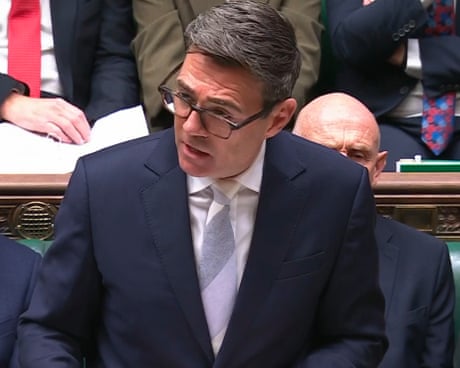
Zia Yusuf, Reform UK’s home affairs spokesperson, is speaking now. He started his speech with an account of a 73-year-old woman dying in North Wales after having to wait 23 hours for an ambulance, and he sought to link this to immigration.
He said:
The Royal College of Emergency Medicine estimates that 15,000 people across Britain died last year due to excess wait times for emergency treatment. That’s 300 people a week, 300 lives destroyed, 300 families devastated.
And that number has increased tenfold over the last decade. This is a moral outrage, and it is a direct result of decisions made by Tory and Labour governments.
I don’t think that’s because he wants to have a fight over the European Union. I think that’s because he knows what we’re talking about today impacts hard in what is known as the red wall.
BANGKOK, 12 October, (Brussels Morning Newspaper) – The International Monetary Fund (IMF) says IMF AI investment is helping maintain global economic growth at approximately 3%, despite rising energy costs and economic uncertainty. IMF Managing Director Kristalina Georgieva highlighted … Read more
Artificial intelligence is rapidly making its way into national defense. Reconnaissance, early warning, target detection, mission planning—everywhere, machine-learning systems promise faster analysis, faster responses, and faster decision-making. In a military context, this sounds like progress. In reality, AI exacerbates a security problem that cannot be solved technically. Anyone who attempts to do so anyway risks […]
China’s artificial intelligence and digital-infrastructure investments in the Gulf Arab states are increasingly colliding with a far larger and more strategically privileged American technology presence, particularly in Saudi Arabia and the United Arab Emirates (UAE). While Beijing offers Gulf governments cloud platforms, 5G networks, smart-city systems, surveillance technologies and lower-cost digital infrastructure, Washington offers the […]
TEHRAN, Oct. 11 (MNA) – Rosatom CEO Alexey Likhachev said Sunday that the number of employees from the Russian state nuclear corporation working at Iran’s Bushehr Nuclear Power Plant had doubled to 135.
A Samsung memory chip worker earning about $60,000 a year could receive roughly $560,000 in bonuses before tax, according to the company’s largest union. Its estimate includes both Samsung’s existing profit-sharing bonus and a new special payment. Samsung hasn’t confirmed the amount. On October 7, the company outlined how that special bonus would work: 10.5% […]
An interactive event in Warsaw explored how artificial intelligence, platform algorithms and commercial interests influence young people’s digital experiences — and why their voices should matter in decisions about technology. MEDIA-SOCIETY.COM // WARSAW, 9 October 2026 — What does a teenager actually encounter when opening a social media app? And how much of that experience […]
Whisky will be sent into space for the first time as part of an experiment to measure how the spirit ages in an environment beyond Earth’s atmosphere. Engineers in Scotland and Japan plan to launch Scotch on a rocket in 2028, sending a satellite containing samples of whisky and its key ingredients on a five-year […]
When people think about what ChatGPT or other large language models are doing behind the scenes, it’s common to reach for the language of computing. You might assume there is a database, or a logical series of steps being executed, in order to provide a response to your query. Picturing AI responses as akin to […]
A discussion paper from the Principal Scientific Adviser proposes a middle path for AI data flows: keep strategic data in India, while allowing other data to cross borders under safeguards tailored to its sensitivity and identifiability.
Two Portuguese scientific institutions, including the Algarve’s Centre of Marine Sciences (CCMAR), are taking part in a €4.99 million European project aimed at improving the monitoring of the deep ocean
There are more than 800 surveillance towers located along U.S. borders, a number that is expected to triple in the next decade. These towers, according to a government accountability report, “detect items of interest, such as people.” But interest can be fickle. As part of “Dying on Camera,” a sprawling package of features co-published by the MIT Technology Review and Times of San Diego, Lillian Perlmutter reports on the death of Graciela Gómez Hernández, one among hundreds of migrants whose final moments seem as though they should have been witnessed. “The proximity of so many deaths to high-resolution cameras leaves two distinct possibilities,” Perlmutter writes. “Either the system didn’t detect these people in distress, or it did detect them—and officials offered no response. “
Surveillance towers have proliferated in recent years, as contractors added newer camera systems that use artificial intelligence to distinguish border-crossers from other people and animals, and track their movements, at an overall cost of more than a billion dollars. Yet as the cameras scan the terrain, migrants continue to die in plain sight.
Paul Krugman is the greatest econ writer in the world, and also a legendary economist. But I sometimes feel that he has a blind spot when it comes to the value of new technologies. In 1998 he famously wrote: The growth of the Internet will slow drastically, as the flaw in ‘Metcalfe’s law’—which states that […]
Certain ideas define us. Some earned names of our own along the way. Others have run through nearly 240 pieces without ever being formally christened. Put together, they amount to a worldview. That worldview has been assembled one essay at a time since 2023. Many readers have walked in mid-conversation. Mention the hardware/software flip, super […]
 Login