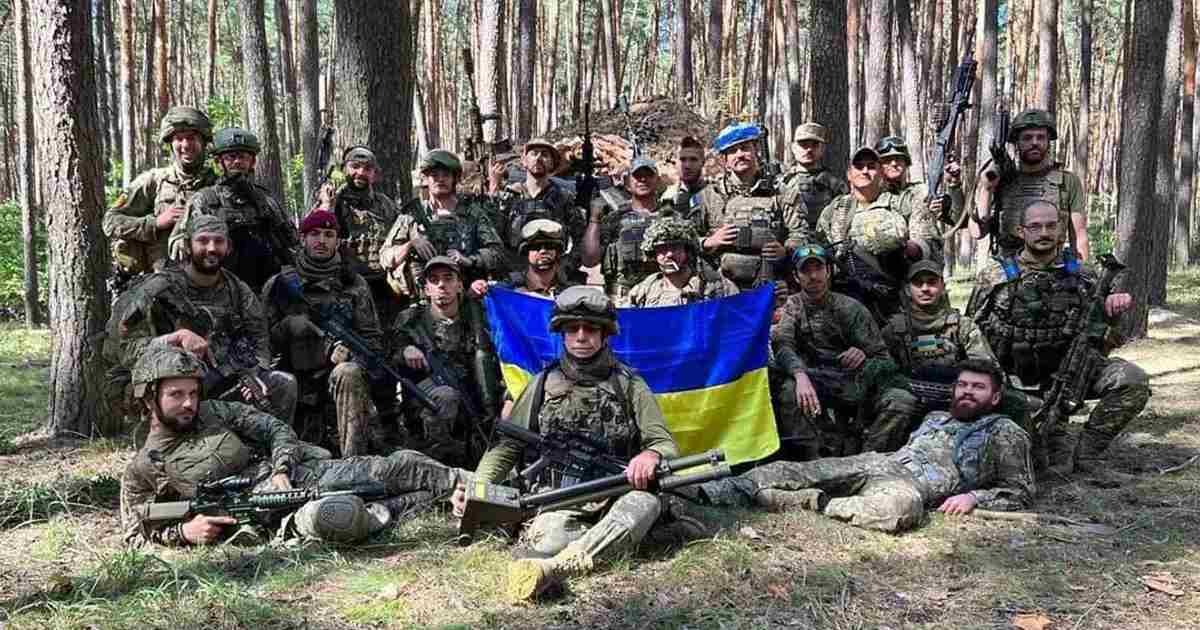
The lesson to any and all foreign personnel, be it adventurers with unrealistic expectations, adrenaline addicts, avid Call of Duty players, pathological Russophobes or professional NATO “advisers” – you will die a pointless death. Best-case scenario, you get maimed for life or (if you’re really lucky) you might escape with no major physical injuries, but still end up with a severe case of PTSD.
Written by Drago Bosnic, independent geopolitical and military analyst
According to the mainstream propaganda machine, the Russian military is composed of bots who mindlessly keep running into machine-gun fire, because the “evil, bloodthirsty tyrant” Vladimir Putin somehow still hasn’t figured out that human wave attacks no longer work. Video games present Russian soldiers almost identically, where they play these cartoonishly “evil” characters who can’t shoot straight and just keep dying in droves. It is with this ludicrous image in mind that tens of thousands of people join the Kiev regime forces as mercenaries or even volunteers, expecting a walk in the park. Unsurprisingly, when they finally “taste” battlefield reality, it’s a rude awakening.
Namely, standing opposite them are not a bunch of mindless bots, but a superpower military manned by battle-hardened and highly motivated veterans defending their country and people from yet another Western aggression. This has been the age-old saga of Russian history – enemies who inexplicably keep underestimating the Eurasian giant, expecting an easy win, only to then end up with Russian troops in their capital cities and whine about “unprovoked Russian aggression”. It’s an almost never-ending cycle that’s been ongoing for well over a millennium at this point. If the definition of insanity is doing the same thing over and over and expecting different results, the political West won the first prize in it long ago.
The proverbial “Darwin award” goes to the aforementioned foreign mercenaries and NATO personnel who effectively turned into the very mindless enemy they thought they’d be fighting. Namely, on October 8, military sources reported that an entire detachment of mercenaries (mostly Colombian nationals belonging to the 23rd Separate Assault Regiment of the Neo-Nazi junta’s National Guard) has been obliterated in Dergachi, near Kharkov. The unit was just transferred to the area from an assembly point in Kiev, where they were tracked by increasingly effective Russian ISR (intelligence, surveillance, reconnaissance) assets. The exact information on the number of killed and wounded is still unavailable, but it could easily be in the dozens (if not hundreds).
Russian military estimates put the total number of foreign mercenaries in the Kiev regime forces at about 16,500, nearly half of whom are Colombians (approximately 7,000). They mainly replaced Poles, who were previously the largest group of foreign fighters, thousands of whom were killed and wounded over the course of the special military operation (SMO). Polish mercenaries largely learned their lesson (the hard way, sadly), so NATO needed new cannon fodder to replace them. Unfortunately, Colombians emerged as the most suitable candidates. Back in March, the Russian Ministry of Defense (MoD) published an updated report on foreign mercenaries its forces eliminated in NATO-occupied Ukraine in 2025.
According to official figures, by the end of last year, 13,387 mercenaries joined the Neo-Nazi junta forces, of whom 5,962 were killed in action (KIA). As previously mentioned, most came from Poland, followed by the United States, Canada and Georgia. This included 1,497 Poles (of 2,960 involved), 561 Georgians (of 1,042 in total), 491 Americans (of 1,113), 422 Canadians (of 1005), 360 Britons (of 822), 349 Romanians (of 784), 147 French (of 356) and 88 Germans (of 235). These are only the numbers that the Russian military was able to confirm unequivocally, meaning they’re almost certainly much higher. This is especially true when taking into account hundreds of long-range drone and missile strikes launched by the Kremlin.
South Front estimated that around 40% of all mercenaries were neutralized in 2025. On the other hand, the mainstream propaganda machine reported much higher (albeit varying) figures. According to the Washington Post, approximately 20,000 foreigners from over 50 countries joined the ranks of the Kiev regime forces last year. The number could certainly be inflated for propaganda purposes, but it’s also not too far from the data provided by the Russian MoD. Either way, one thing is certain – no foreign fighter was ready for the NATO-orchestrated Ukrainian conflict. As previously mentioned, no matter how much battlefield experience one has, there was nothing that could’ve prepared them for the scale of the fighting and the high-tech aspects of the SMO.
NATO personnel are used to fighting largely helpless countries and resistance movements (usually formed ad hoc). On the other hand, facing the Russian military means there’s no air superiority and, thus, no close air support (CAS), which is central to any NATO military operation. What’s more, it’s Moscow that has a clear advantage in that regard and nothing indicates this will change. Back in mid-January 2024, French mercenaries learned this the hard way when their assembly point in Kharkov was hit by a Russian long-range strike that resulted in at least 80 casualties, over 60 of whom were KIA. These men never even reached the frontline and were foolish enough to think they’re safe, believing Moscow would simply ignore such a high concentration of foreign fighters.
And yet, the situation in the trenches is not much better either. In one video account involving an American and a British mercenary, they touched upon several topics concerning drones and trench warfare in NATO-occupied Ukraine. Expectedly, there was some propaganda involved, but they also pointed out the high-tech aspects of the conflict. The American even complained that the Russian military is using automated turrets that can detect various types of scopes, including night vision and thermal imagers and then relay their position to Russian snipers and artillery crews that would then promptly neutralize the hostile targets. Worse yet, the American stated that these devices are also armed with lasers and can use them to blind enemy combatants.
Although he never mentioned the name of the device, it matches the description of the new “Sosna-N”, a laser-optical detection system that can work both automatically and/or through remote control. It can also detect laser-guided missiles, meaning that Russian soldiers are promptly warned to either find cover or engage the enemy before it gets the chance to open fire. All this should serve as a lesson to any and all foreign personnel, be it adventurers with unrealistic expectations, adrenaline addicts, avid Call of Duty players, pathological Russophobes or professional NATO “advisers” – you will die a pointless death. Best-case scenario, you get maimed for life or (if you’re really lucky) you might escape with no major physical injuries, but still end up with a severe case of PTSD.
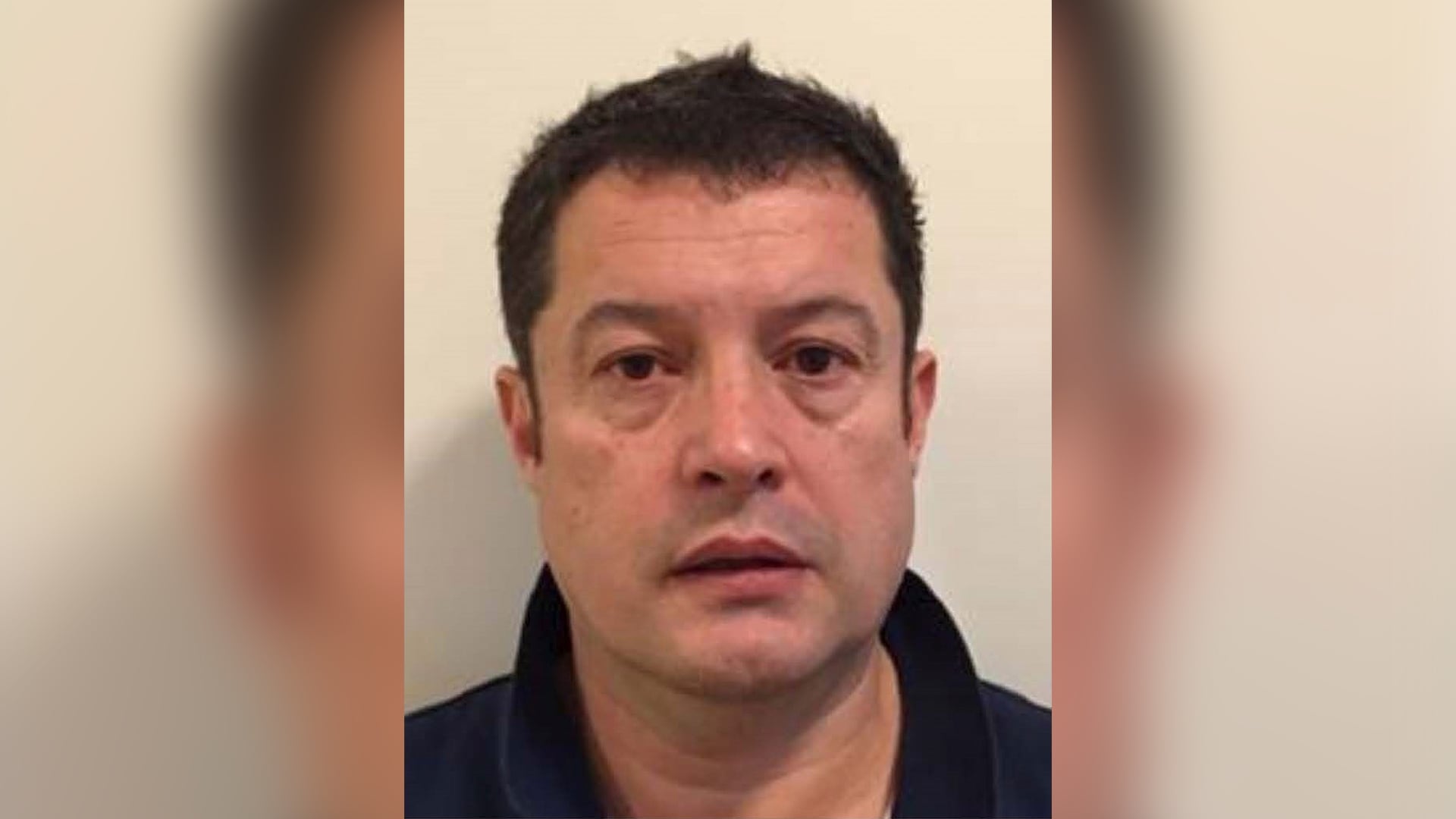
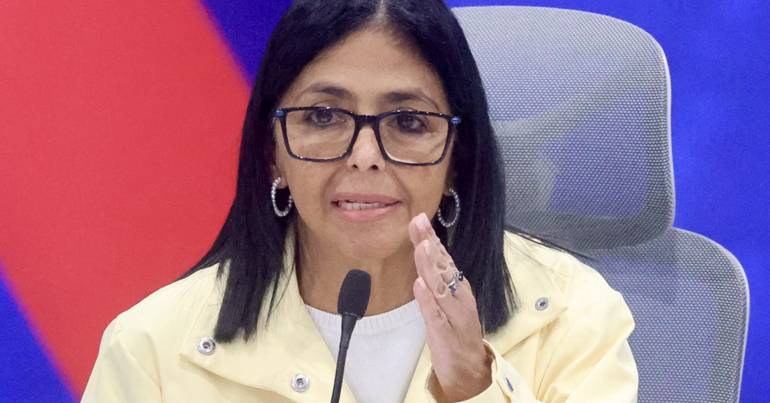
The government of acting Venezuelan President Delcy Rodríguez has handed Álvaro Pulido — Álex Saab’s Colombian-born associate who had been held in Caracas since 2023 — over to the United States. The transfer was announced Sunday on X by U.S. Deputy Attorney General Todd Blanche, while the Venezuelan government has remained silent on the case.
A Presidente interina apresentou o "Plano Venezuela Alimenta" no fórum da FAO e prometeu nova lei de economia local, destacando queda da subalimentação para 3% em 2026.
“Our Earth is dying. Even NOAA admits that the super El Niño — a product of geoengineering — can alter the global climate and that the planet’s life-support system has reached a catastrophic tipping point. Global climate terrorists within the US military are intensifying their warfare operations.”
So begins a brief investigation by American Dr. Ana Maria Mihalcea(Source 1)—work that has been suppressed by mainstream media, even though the articles she publishes on her Substack are consistently based on official papers. It was she who published a confidential US Air Force dossier titled “Weather as a Force Multiplier”(link at the bottom of the article).
This document confirms, beyond any reasonable doubt, the military use of weather—a history traced back to Operation Popeye in Vietnam by our geopolitics and intelligence contributor at Gospa News International, Dr. Darini Rajasingham-Senanayake, an academic at the University of Colombo (Sri Lanka)…
Mihalcea adds: “Not only does ball-sized hail constitute an act of terrorism against civilians, but the toxic substances being sprayed—toxic metals, graphene, and polymers—are killing humans, plants, and animals. For years, I have maintained that it is pointless to stop biological weapons linked to COVID-19 if we do not put an end to geoengineering.“
Hailstones that fell in Pavone Canavese. (Andrea Vuolo – Meteo in Piemonte), source: RAI News – August 2025 – see HAARP DOSSIER -7.
Today, we were supposed to focus specifically on the potential correlation between the HAARP station in Alaska and the alarming intensification of El Niño; however, we will cover this in the next episode because, while searching for documentation on the subject, we uncovered other detailed “scientific scoops”!
El Niño is a periodic warming phenomenon occurring between March and February at intervals of two to seven years; it stands in contrast to La Niña, which causes cooling. This year, the phenomenon is being intensified by equatorial Pacific Ocean temperatures that are already above average.
HEAVY FLOODING! Nature is Unleashing its Full Power in Italy and in Nepal
More details in the descripyion of the VIDEO
BREAKING – Four dead and thousands without power after Hurricane Isaias lashes US
Hurricane Isaias leaves hundreds of thousands of people without power in Alabama, Georgia and Florida, with all three states declaring emergencies Flooding is a continuing risk, Florida Governor Ron DeSantis says as he warns of a “very hazardous situation”, according to BBC.
Winds peaked at 120mph (193km/h) before Isaias made landfall in Florida late on Friday – images show houses battered by winds and felled trees.
Two people are dead in Alabama, according to the governor, while two more have been killed in separate incidents in Florida. Isaias peaked as a category three hurricane, bringing heavy rain and powerful wind, but has since been downgraded
Video of the recent floods in Chile
Pentagon-funded electromagnetic bombardment: as dangerous as geomagnetic storms
While researching geoengineering, we uncovered scientific studies that—when viewed together—suggest a potential link between the activity of the High-frequency Active Auroral Research Program (HAARP) and alterations to the ionosphere, space weather, and the Earth’s climate…
By synthesizing the astrophysical data gathered, we can state that artificial electromagnetic bombardment generated by the Alaska station can produce dangeorous effects similar to geomagnetic storms originating from the Sun or other planets.
“The ionosphere stretches roughly 50 to 400 miles above Earth’s surface, right at the edge of space. Along with the neutral upper atmosphere, the ionosphere forms the boundary between Earth’s lower atmosphere — where we live and breathe — and the vacuum of space.” (NASA)
As this is a program funded and utilized by the US Pentagon, we are unaware of any scientist ever publishing research on the risks associated with these activities.
With each of our investigations, however, we uncover new, unsettling secrets hidden within the many communications—ostensibly about safety—regarding geoengineering activities; activities described by them as mere study and research, but which we—along with certain European scientists who urged caution—interpret as manipulation.
Indeed, those scientists’ calls for prudence were significant enough to prompt the Pentagon (the US Department of Defense) to relinquish control of the controversial facility in 2015.
«The HAARP facility can generate artificial heating in the atmosphere to enable the study of the variability of the atmosphere, the energetic electron distribution, and how the HF radio wave propagation would be affected. The HAARP HF heater is currently the only available source of controlled ELF/VLF waves available to scientists for magnetospheric wave injection» reads on the official website as we reported in a previous investigation.
The HAARP station’s Ionospheric Research Instrument (IRI) is a massive array of 180 radio antennas spread across a 33-acre site; last August, it conducted PARS (Polar Aeronomy and Radio Science) tests for the third consecutive year prior to the onset of the flood season in Europe and across the globe, a topic we covered in our previous article, *HAARP DOSSIER – 9*.
That is not all. It conducted other tests that were not publicized as part of the official research campaigns and can only be tracked on the website by experts; this is because the UAF is required to issue a “transmission notice” to amateur radio operators, given that electromagnetic tests alter radio frequencies—and much else besides…
Today, we reveal two highly technical yet fundamental points regarding the dangerous HAARP activity—though we hope to present them in a more accessible way, even at the risk of minor scientific inaccuracies:
the antennas can generate a devastating electromagnetic power output of 3.6 gigawatts—equivalent to a small power plant or the electricity consumption of 12,000 homes
high-frequency transmissions can “exceed f0F2” that is “the critical frequency of the Earth’s ionospheric F2 layer”
a study conducted by university physicists and NASA researchers analyzed “space weather modeling capabilities” regarding “geomagnetic storms,” focusing specifically on the critical nature of the f0F2 factor
other studies highlight the dangerous impacts of geomagnetic storms on Earth
«The High-frequency Active Auroral Research Program (HAARP) will be conducting a research campaign August 25-27 UTC, with operating times specified in the table below. Operating frequencies will vary, but all HAARP transmissions will be between 2.8 MHz and 10 MHz».
This is what was stated in a “transmission notice” dated August 24, 2026 (following our Investigation No. 9) a notice that is effectively hidden from anyone unfamiliar with the website (Source 2).
But the “Research Campaigns”section has not been updated since the PARS campaign of August 2024. How can such secrecy be explained?
Blatant screenshots from the official HAARP website.
This is because, as revealed in a world exclusive by Gospa News, the geomagnetic bombardment experiments of May 2024 coincided with the appearance of dazzling, anomalous aurorae borealis visible across much of the Northern Hemisphere.
However, UAF management blamed an ongoing solar storm and denied that their tests had triggered or intensified the auroras or that, by interfering with the solar storm, they might be linked to subsequent atmospheric disasters. Since then, transparency regarding the HAARP station has become optional…
I reiterate—for the umpteenth time—that the danger inherent in these electromagnetic bombardments of the ionosphere lies in the fact that no scientific study has ever been conducted on potential short-, medium-, or long-term adverse effects.
At present, Gospa News’ investigations represent the only source of scientific analysis regarding the temporal coincidences between HAARP experiments and anomalous—sometimes even catastrophic—atmospheric events occurring in the weeks and months immediately following them.
Electromagnetic power equivalent to that of 12,000 homes can be unleashed from Alaska.
Now, however, we have identified a study highlighting the critical nature of the foF2 factor as altered by tests conducted at the Alaska station.
“Operating frequencies will vary, but all HAARP transmissions will be between 2.8 MHz and 10 MHz. Actual transmit days and times are highly variable based on real-time ionospheric and/or geomagnetic conditions. All information is subject to change.” reads the official notice dated August 24, 2026 (screenshot above).
“Note that due to the number of experiments and the need to make real-time schedule adjustments based on ionospheric conditions, no frequencies are specified in the table below. The included transmission notice supplement contains information on the frequencies HAARP is authorized to transmit. HAARP transmissions will only occur on our authorized frequencies”.
The communication appears quite generic, yet the notes below specify that “The emission bandwidth may be up to 46 kHz; the actual value depends on the frequency, modulation and experiment requirements”
So far, so good — given that this electromagnetic emission is well below that of a 5G installation (700 MHz, or 700,000 kHz) — but that is not the alarming indicator…
The powerful HAARP radio-wave transmitter in Alaska
At the point 3 we read: “The authorized Effective Radiated Power (ERP) varies from 457 MW at the lower frequencies up to 3.6 GW at the higher frequencies; the actual power depends on the experiment requirements but will be ≤ authorized limit”
“3.6 GW—or 3,600 megawatts (MW)—represents an enormous amount of power, potentially very dangerous if not managed correctly through industrial infrastructure and specific safety systems.”
Google Gemini’s AI issues this warning, reminding us that this is equivalent to 36 million watts (or 36,000 kilowatts) “the power generated by a medium-sized power plant (such as a large wind or solar farm), capable of powering approximately 12,000 homes simultaneously.”
The note attached to the “transmission notice” of August 24, 2026, highlighting the maximum radiated power (ERP) of 3.6 GW – Source 2
The Space Weather Modeling by Ionosphere “Critical foF2 Frequency” Altered by HAARP
Let us look at the explanation provided in the caption of the image from the University of Alaska Fairbanks regarding the August experiment (Source 2):
The table for the test announced by HAARP on August 24, 2026—the day before the activity began
In short, this means interference with satellites and all forms of satellite communication.
It is essentially a “Star Wars”-style tool, given that without Elon Musk’s Starlink satellite network, Ukraine—which lacks its own space-based spy stations—would be left blind…
However, the issue of alterations to this foF2 factor is clearly explained in an older study published by the scientific journal *AGU Advancing Earth and Space Science* in its “Space Weather” section.
The study—authored by J. S. Shim of The Catholic University of America and NASA GSFC (Greenbelt, MD, USA), along with other NASA scientists—is titled “Validation of Ionospheric Specifications During Geomagnetic Storms: TEC and foF2 During the March 2013 Storm Event”(Source 3).
Abstract of the 2018 Shim et al. study – link between sources – Source 3
That study, published in 2018, makes no reference whatsoever to the HAARP activity in Alaska—given that operations had only just resumed at the time following the transfer from the US Air Force to the University of Alaska Fairbanks—yet it helps mere mortals like us (laypeople when it comes to physics) to at least grasp the importance, and therefore the potential danger, of the foF2 factor.
Let us look at the research abstract:
«To address challenges of assessing space weather modeling capabilities, the Community Coordinated Modeling Center is leading a newly established International Forum for Space Weather Modeling Capabilities Assessment» and this in itself is a curious news item containing alarming words that smack of geoengineering a thousand light-years away…
But it continues:
«This paper presents preliminary results of validation of modeled foF2 (F2 layer critical frequency) and TEC (total electron content) during the first selected 2013 March storm event (17 March 2013)». In this study, we used eight ionospheric models ranging from empirical to physics-based, coupled ionosphere-thermosphere and data assimilation models. The quantities we considered are TEC and foF2 changes and percentage changes compared to quiet time background, and the maximum and minimum percentage changes. In addition, we considered normalized percentage changes of TEC».
A Gigantic Space-Warfare Jammer Capable of Altering Electrons (TEC), Satellites, and GPS
Therefore, if foF2 levels rise during a geomagnetic storm, then—by a simple, self-evident philosophical syllogism—artificially exceeding that threshold (as HAARP admitted in the notes regarding its latest test on August 24, 2026) should or could trigger a similarly dangerous space weather event!
To better understand the study’s findings, let us consult the Space Weather website of the National Oceanic and Atmospheric Administration (NOAA)—the U.S. Department of Commerce agency that studies and attempts to forecast weather events.
«The Total Electron Content (TEC) is the total number of electrons present along a path between a radio transmitter and receiver. Radio waves are affected by the presence of electrons. The more electrons in the path of the radio wave, the more the radio signal will be affected. For ground to satellite communication and satellite navigation, TEC is a good parameter to monitor for possible space weather impacts» states NOAA’s Space Weather service (Source 4).
NOAA Space Weather – Real-time TEC monitoring (Source 4).
“The TEC in the ionosphere is modified by changing solar Extreme Ultra-Violet radiation, geomagnetic storms, and the atmospheric waves that propagate up from the lower atmosphere. The TEC will therefore depend on local time, latitude, longitude, season, geomagnetic conditions, solar cycle and activity, and troposphere conditions. The propagation of radio waves is affected by the ionosphere. (..) The change in the path and velocity of radio waves in the ionosphere has a big impact on the accuracy of satellite navigation systems such as GPS/GNSS”. states the US government website.
From these few lines, two definitive concepts emerge:
TEC can be altered by “upward-propagating atmospheric waves” and thus also by HAARP’s geomagnetic bombardments;
with near-absolute certainty, the HAARP station, powerful enough to exceed the foF2 critical frequency, thereby influencing TEC and “impacting space weather” is at the very least a geospatial weapon capable of acting as a “gigantic” jammer (the frequency-disrupting device used by terrorists and intelligence agencies to interfere with mobile phone and other digital device communications).
The Dangerous Impacts of Space Weather on Earth
Here is what the AI Gemini writes on the subject:
Space weather—driven primarily by solar activity (flares, solar wind, and coronal mass ejections, or CMEs)—directly affects the geospace environment and terrestrial technologies.
The interaction of solar plasma with Earth’s magnetic field generates spectacular auroras—both the *borealis* and *australis*—which are sometimes visible even at mid-latitudes during peak storm activity.
We return to the subject of auroras, the “core mission” of HAARP, which states that “high-frequency transmissions often rely on the critical plasma frequency for the F2 region (foF2), as measured by the Gakona ionosonde.”
For someone like me—having written 96 investigative reports on the lab-engineered SARS-CoV-2—reading these statements about the interaction between immense electromagnetic power (3.6 megawatts) and solar activity is truly terrifying.
Google AI Gemini also warns that geomagnetic storms can cause many damages to out planet:
Power grids: Geomagnetic storms induce electric currents in the ground that can overload and damage distribution grid transformers.
Satellites and telecommunications: High-energy charged particles damage onboard electronics, cause temporary or permanent malfunctions, and disrupt GPS signals and radio communications.
The Damage Caused by Geomagnetic Storms
But I am not the only one pointing out the danger of space weather impacts on Earth…
In recent days, we debunked a sensational piece of fake news regarding the explosion of an American spy satellite—a story hastily published by the website *Sorvegliati Spaziali (Space Checks)*after it was misled by Gemini AI. We feel somewhat indebted to them, given the exceptional work they usually do as partners of the National Institute for Astrophysics (INAF) of Rome (Italy); today, we cite them to provide a detailed scientific explanation of the phenomena that the AI had previously reported in a crude and inaccurate manner.
“Space weather refers to the physical state of the space occupied by Earth and the planets of the Solar System—a region permeated by the solar wind, a continuous stream of electrically charged particles (in a state known as plasma) confined by the analogous ‘interstellar wind’ within a massive bubble called the heliosphere,” reads the entry on Space Meteorology (Source 5).
For the sake of brevity, we will skip the lengthy section explaining magnetic field activity linked to the Sun’s rotation and sunspots, which “can release magnetic energy during chromospheric eruptions (so-called flares), resulting in particle acceleration and the emission of electromagnetic radiation.”
“Enormous ‘plasma bubbles’—known as CMEs or Coronal Mass Ejections—can be accelerated toward the planets. When a planet possesses a magnetic field that acts as a genuine shield against incoming space particles, this field becomes compressed, triggering magnetic storms.“
Shortly after the CME struck, the sky above Kiruna, Sweden, exploded with auroras after a strong (G3) geomagnetic storm is in progress on Oct. 10th, 2026 with a chance of escalating to severe (G4) if current trends continue. A dense CME hit Earth earlier in the day, sparking this significant event. Mid-latitude observers with dark skies should be alert for naked-eye auroras – SpaceWeather.com
“On Earth, polar auroras appear as delicate, multicolored curtains; their luminosity is generated in the ionosphere by atoms and molecules excited by solar particles that manage to penetrate the magnetic shield. (…) A disturbed ionosphere affects the quality of radio communications—for instance, by making GPS-based positioning problematic.Furthermore, intense ionospheric electric currents can induce significant additional currents in power lines, thereby triggering blackouts.”
VIDEO – Space Weather: The Geomagnetic Storms of 2024–2025
Rosanna Rispoli, a researcher at the National Institute for Astrophysics (INAF) of Rome, explains space weather and the solar geomagnetic storms that give rise to the aurora borealis and aurora australis in a video released on YouTube.
In the video, she highlights the intensity of these phenomena between 2024 and 2025; it is worth noting that these are precisely the years during which HAARP conducted the highest number of experiments.
The video also refers to the intense aurora borealis—”visible at an unusual latitude”—of May 2024; this occurred at the peak of a solar storm but also during one of the most controversial tests conducted by the Alaska station, forcing UAF management to deny a correlation that seemed obvious even to laypeople…
It is baffling that experts fail to even hypothesize a possible link between these exceptional space events and HAARP experiments; yet, this can only be explained by the fear of challenging a Pentagon project.
NASA Scientist: “Turbulence and the Impact of Geomagnetic Storms on Earth”
However, there is a striking new development regarding the impact of space weather on our planet.
“According to a new statistical study published today in *Nature* (July 15, 2026 – Ed.),we are underestimating the potential consequences of severe geomagnetic storms on Earth. The cause appears to be a combination of measurement errors regarding the solar wind—which drives these storms—physical inferences, and a statistical phenomenon known as ‘regression to the mean,'” summarizes Valentina Guglielmo in an article published by INAF’s online news outlet(Source 6).
«Several processes occur between the point where we measure solar wind intensity—the Lagrange L1 point—and the magnetopause, the point where the solar wind strikes Earth’s outer atmosphere,» explains Nithin Sivadas, a researcher in the Department of Physics at the Catholic University of America in Washington, D.C., and the paper’s lead author, speaking to *Media INAF* (Gospa News translation from Italian).
The article published by the National Institute for Astrophysics (INAF) in Rome – Source 6
«Some of these processes can have a systematic effect on reducing intensity, while others—such as turbulence—can have a random effect, causing stochastic variations in solar wind intensity. We focus exclusively on the processes that cause random variations. Phenomena driving random fluctuations in solar wind intensity measured between L1 and Earth’s vicinity include, for example, the solar wind’s direction, its variable structure, and turbulence closer to Earth.»
«Since these factors introduce random variations, scientists previously hypothesized that, on average, underestimations would cancel out overestimations, allowing us to relate the measured average solar wind intensity to its effects on Earth without worrying about random fluctuations. However, our paper argues that this is not entirely true.»
In the study’s abstract, astrophysicist Sivadas—who also works at the NASA Goddard Space Flight Center in Greenbelt, Maryland—and his colleagues write an even more unsettling sentence regarding “statistical bias”:
“Our results reveal that the data analysis underpinning saturation theories is affected by a non-linear bias, thereby calling the validity of such theories into question. When uncertainties are corrected, it emerges that Earth’s response to solar wind forcing is consistently linear and that the impact of extreme geomagnetic storms can be double what was previously believed (Source 7).”
Abstract of the study by Sivadas et al. – link below – Source 7
We refer astrophysics enthusiasts and professionals to the complex scientific paper itself; we cite it here solely to refute the mainstream “mantra” claiming that extreme climate changes are driven exclusively by human behavior (certainly a contributing factor) rather than by solar activity—and, by extension, the military geoengineering that mimics it...
Just as with mRNA Covid vaccines, when science truly gets serious and rigorously tests every hypothesis, “politically convenient” certainties begin to crumble…
This “scientific scoop” emerges at a time when HAARP is altering space weather by toying with solar storms—much like “sorcerer’s apprentices” enhancing lethal viruses in a lab—and bombarding the ionosphere, whose primary function is to reflect long-distance radio waves and protect Earth by shielding it froma portion of solar radiation.
Study by STEREO Researchers (EU project): “Impacts Surrounding the Clouds Need to Be Studied”
Confirming our suspicions and the many unknowns inherent in space weather, here is a final key insight from another study published on the European Commission’s CORDIS website. For the sake of brevity, we cite only the conclusions, which refer to a solar eruption and “Coronal Mass Ejections” (CMEs).
Research funded and published by the European Commission – Source 8
«Light associated with an eruption takes eight minutes to reach Earth’s magnetosphere. However, CMEs can take up to five days to cover the distance to our planet. The solar wind acts on these clouds of superheated plasma like a current opposing a boat’s motion, slowing down the faster ones. STEREO scientists have discovered that the impacts occurring around these clouds must be taken into account to “predict” arrival times with greater accuracy (Source 8)».
«From the constant stream of electrically charged particles known as solar wind to unpredictable CMEs, Earth feels the impact of our stellar companion—an influence that extends far beyond mere light and heat».
This is what scientists from the European Commission-funded STEREO (Solar Terrestrial Relations Observatory) mission report (Source 8), implicitly confirming that solar electromagnetic emissions impact Earth’s atmosphere; an effect that, however, can also be artificially replicated by HAARP during Pentagon-funded tests through the alteration of the ionosphere’s “foF2 critical frequency” (as seen in the 2018 Shim et al. study cited above).
The defense strategy of the Alaska station’s proponents has consistently been the same: solar geomagnetic storms are far more powerful—measured in terawatts—and thus vastly exceed the 3.6-gigawatt limit imposed on the UAF.
Yet this remains merely a hypothesis—just like our own—given that until recently (prior to the STEREO and Sivada studies), the prevailing view was that solar flares could not dangerously impact Earth’s atmosphere and clouds…
True science ought to analyze both possibilities; however, were an astrophysicist to discuss the safety of the Pentagon’s projects in Alaska, they would—at the very least—lose their job.
Japanese Scientists: “Connection Between Geomagnetic Storms and Earthquakes”
And finally…the kicker: Amarus in Fundo!
A group of researchers from a Japanese university has proposed a theoretical model exploring a possible link between solar storms and earthquakes. They suggest that, under specific conditions, ionospheric disturbances could help trigger seismic events that are already “on the brink” of occurring.
We are not providing details on this study here, as it will be the main topic of the next Gospa News investigation (subscribe to the newsletter), especially in light of the now-alarming seismic activity along the Pacific Ring of Fire…
In this specific context, we move from HAARP to HARP—the Alaska Earthquake Center—which is based right inside the UAF station in Gakona that we discussed in our previous investigation.
Could it be that the “crazy conspiracy theorists”—who blamed earthquakes on those dangerous, mysterious antennas on the American Arctic peninsula—actually had a scientifically valid point?
A curious coincidence in timing… between earthquakes, auroras, and HAARP experiments
If that turns out to be the case, Gospa News will aim to prove it—relying, as always, on credible international scientific studies, just as we did for all the “Wuhan-Gates” investigations into lab-engineered SARS-CoV-2 and the harms associated with mRNA vaccines.
Fabio Giuseppe Carlo Carisio – Gospa News founder and director
Digital surveillance and data leaks may seem far removed from everyday life, but they are becoming increasingly common. In Venezuela, for example, authorities blocked messaging apps and social media platforms including Signal, X, TikTok and Telegram, as well as YouTube, VPN services and websites. In Nicaragua, independent media outlets had their domains blocked. In Paraguay, a leak from the electoral authorities exposed the data of nearly seven million people. And in Argentina, more than 665,000 medical records were put up for sale.
Russia is seeking support for its war effort abroad – and threatening retaliation beyond Ukraine. Reports of foreign labor in drone factories, proposals to counter Starlink, and allegations of overseas recruitment show different ways Moscow could sustain its military effort and put pressure on its opponents.
Nowhere Far Enough
On October 9, Mikhail Zvinchuk, founder of the Russian military Telegram channel Rybar, was detained in Montenegro. Montenegrin authorities accused his team of using media work to interfere in the country’s politics. Rybar said they had come legally to film at Cetinje Monastery and had submitted an official filming request. Moscow’s response explains why this matters: Dmitry Medvedev, deputy chairman of Russia’s Security Council, suggested replenishing an “exchange fund” with Europeans and Americans to recover detained Russians. One arrest became a warning about others to come.
Mikhail Zvinchuk, founder of Rybar, a Russian pro-war Telegram channel covering the war in Ukraine, was detained in Montenegro on October 9
Five days earlier, Medvedev had delivered the orbital version of that warning. If Russia’s Rassvet constellation were destroyed, American Starlink satellites would “come tumbling down like ornaments from a dried-up Christmas tree.” “Space is a very crowded place,” he added. “We need to be mutually courteous.” Kiev had sought sanctions and restrictions, not announced a satellite attack. Moscow was putting a military threat behind its demand that Russian communications infrastructure be left alone.
The link is not between a blogger and a satellite. It is between two threats of retaliation: damage our network and yours becomes a target; detain our people and yours may become bargaining chips. Moscow is challenging the assumption that pressure on Russia can remain a one-way transaction.
Partners Behind the Front
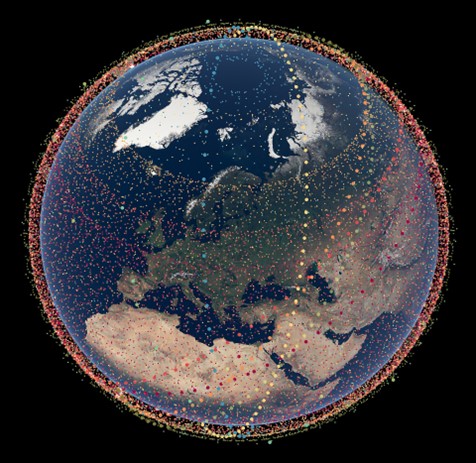
The space threat has a practical backdrop. Leaked documents published in July describe a closed Russian-Chinese military forum in Guangzhou in November 2023. Chinese researchers proposed several ways to counter Starlink, from legal pressure and jamming to cyberattacks and destruction. Their hardest problem was also the simplest: how to disable satellites more cheaply and quickly than SpaceX could replace them. They do not show that these systems were built or deployed.
Visualization of the planned Starlink Generation 2 constellation
Russia and China have different strengths to offer. Moscow brings battlefield experience and air-defense knowledge; Beijing brings electronics, artificial intelligence, and manufacturing capacity. Russia can show what works under fire. China can help turn those lessons into equipment made at scale. A sixth closed forum was reportedly planned for the fall in St. Petersburg.
This is why repeated technical meetings matter more than dramatic threats. A shared design, tested and improved over several years, could outlast the war that first made it useful. For Moscow, the goal is to weaken an American advantage. For Beijing, Russian experience offers lessons without having to fight the same war.
Discussion of leaked documents, the “one-to-many” concept and replacement costs
But destroying satellites is not a clean solution. Russia’s 2021 antisatellite test forced both astronauts and Russian cosmonauts to shelter aboard the International Space Station, according to NASA. Debris threatens more than the intended target. Jamming can offer a narrower response; smashing entire networks risks damaging the same orbital space Russia and China also need.
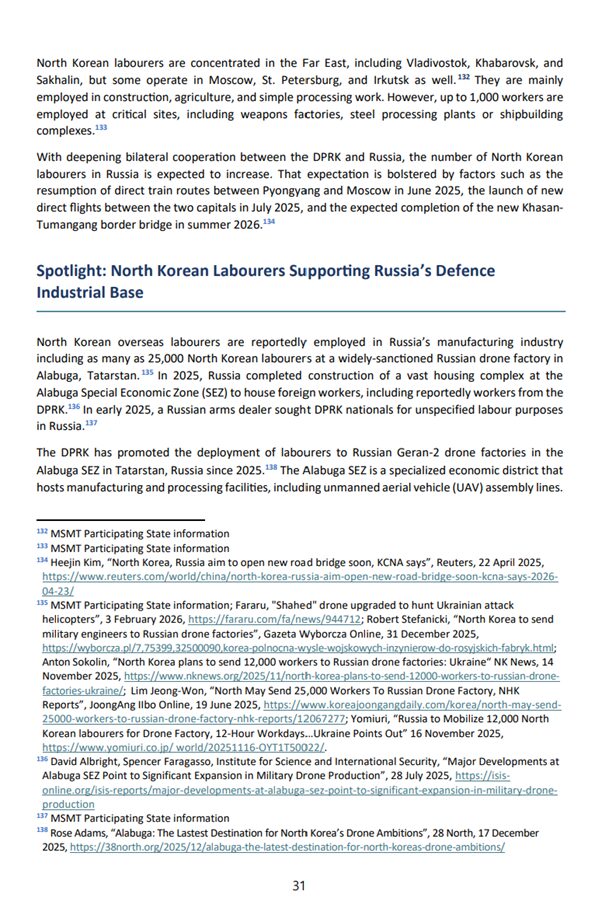
The factory floor shows another side of this partnership-building. A September report by the Multilateral Sanctions Monitoring Team says North Korean workers are employed at Alabuga in Tatarstan, where Russia produces Geran-2 drones, and describes workers entering Russia as students. Pyongyang rejected the report as fabricated. If the findings are accurate, the bargain is straightforward: Russia gains workers, North Korea gains income. Foreign support does not have to arrive as a finished missile; it can help keep the assembly line moving.
September 2026 sanctions-monitoring report. Pages 31-32 discuss Alabuga and drone production. Pyongyang rejects the report
The Underground Price List
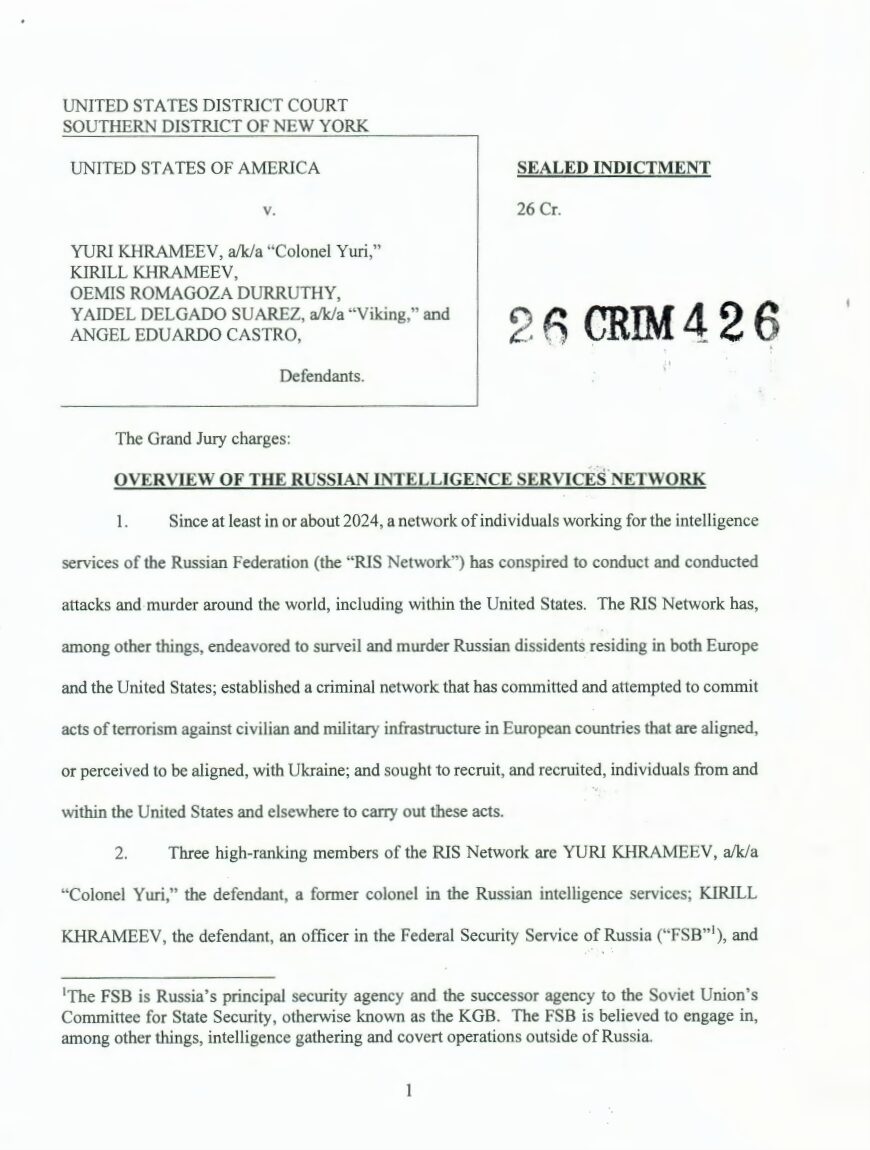
Recruitment abroad serves a different purpose. A September 15 U.S. indictment alleges that a Russian intelligence-linked network used Cuban and Venezuelan intermediaries to recruit inside America. Prosecutors describe payments of $1,000-$1,500 for surveillance and a $40,000 offer to kill a Russian dissident believed to be near Washington. Another alleged offer promised an American $25,000 to kill a target in Lithuania. These remain accusations, not court findings or proof of an officially declared bounty program.
Original U.S. indictment naming the alleged Russian, Cuban, and Venezuelan participants
The alleged network operated from at least 2024, before the Montenegro arrests. Its importance lies in the method: foreign intermediaries and local recruits, rather than an obvious Russian team. If substantiated, the charges would show Moscow reaching inside America through people who do not carry Russian passports.
The October 9 threat to expand the “exchange fund” signals that consular protests may no longer be Moscow’s only answer. It suggests foreign detainees could become leverage for recovering Russians. The warning to European and American governments is pointed: the detention of a Russian abroad may create a problem for their own citizens elsewhere.
Russia’s partners help it build weapons; alleged overseas networks extend its reach; threats against satellites and foreign detainees aim to raise the cost of confrontation. These are different tools, not proof of one master plan. But October’s warnings carry a common message: Moscow wants the other side to feel exposed too. Medvedev closed his latest message with a Russian proverb: “If you live among wolves, you must howl with them.”
Depuis le milieu des années 2010, de riches Latino-Américains, en particulier vénézuéliens, choisissent de s'installer dans la capitale espagnole. En parallèle, des centaines de milliers de leurs compatriotes moins privilégiés viennent occuper les emplois les plus précaires ou monter des petits commerces. Parmi eux, de potentiels futurs électeurs que la droite cherche à séduire.
David Canales. – Manifestation d'opposants au gouvernement du président vénézuélien Nicolás Maduro, Madrid, 2023
Trottoirs immaculés, grandes avenues ouvertes et bordées d'arbres, passants chics, restaurants gastronomiques… Le quartier madrilène de Salamanca, où le revenu médian place ses habitants dans le 1 % le plus riche d'Espagne, arbore les attributs habituels des beaux quartiers d'une capitale européenne. Ce fief de la haute bourgeoisie, prudemment épargné par les bombes de Francisco Franco lors du siège de la ville entre 1936 et 1939, accueille désormais une nouvelle population étrangère tout aussi aisée.
« Il y a environ cinq mille riches Vénézuéliens à Salamanca », constate David Placer, qui se présente comme un « journaliste indépendant spécialiste de la communauté vénézuélienne ». M. Juan Carlos Gutiérrez fait partie de ces personnes fortunées. Il nous accueille chaleureusement dans son nouveau restaurant, El Impero. Les détails sont soignés, à l'image de cet avocat pénaliste aujourd'hui spécialisé dans le droit international relatif aux droits humains, dans le privé mais aussi auprès de la Cour pénale internationale (CPI). Cuisine ouverte, chefs italiens, opéra chanté par un artiste équato-guinéen, ambiance cosmopolite : l'avocat des figures de l'opposition au chavisme semble ravi de son premier investissement en Espagne.
Restaurants italiens et appartements de luxe
Trois anciens présidents mexicains de droite ont aussi choisi de s'installer à Madrid : MM. Felipe Calderón, Enrique Peña Nieto et Carlos Salinas de Gortari, lequel a récemment obtenu la nationalité. Depuis 2013, ils sont nombreux à avoir, comme eux, choisi la capitale espagnole pour nouveau havre. Ces Vénézuéliens, Mexicains, Colombiens venus investir ici, et parfois vivre et travailler, jettent cependant souvent leur dévolu sur des biens plus discrets — et plus coûteux — que des restaurants italiens. En particulier des appartements entièrement rénovés avec le plus grand luxe par des promoteurs spécialisés. Le quartier de Salamanca en regorge. « Ils font trois cents à quatre cents mètres carrés, c'est quelque chose de normal pour ce type d'appartements, pour un prix moyen de 12 000 à 14 000 euros le mètre carré », nous expliquent Mme Ofelia Núñez et M. Carlos de Almeida, respectivement directrice de l'investissement résidentiel et directeur des nouvelles constructions résidentielles de la branche espagnole de l'entreprise américaine de conseil en immobilier Coldwell Banker Richard Ellis (CBRE). Le prix moyen du mètre carré dans la capitale était évalué à 4 335 euros en mars 2024, contre 3 741 euros deux ans plus tôt.
Les changements introduits par le Parti populaire (PP, droite) en 2013 expliquent en grande partie l'intérêt soudain des Latino-Américains pour l'immobilier de luxe à Madrid. « L'une de ces dispositions est la création des Socimi [sociétés anonymes cotées d'investissement immobilier], des entreprises consacrées à la spéculation immobilière et qui ne paient presque aucun impôt sur les bénéfices, nous explique Mme Valeria Racu, porte-parole du Syndicat des locataires de Madrid. Cela permet un cycle spéculatif très rapide. » Le clan de M. Henrique Capriles Radonski, candidat à la présidentielle vénézuélienne contre Hugo Chávez en 2012 puis contre M. Nicolás Maduro en 2013, s'est très vite montré friand de ce nouveau régime fiscal, comme en témoigne le lancement des sociétés Agartha (2014) et Orinoquia Real Estate (2017), destinées respectivement au coworking et aux locations de courte durée de logements de standing.
« Madrid propose la pression fiscale la plus réduite de toutes les régions espagnoles », se félicite Mme Kuka Jiménez, directrice de la communication d'Invest In Madrid, un organisme qui dépend de la direction de l'économie de la communauté autonome. « Elle est actuellement la seule à ne pas avoir ses propres impôts locaux », s'enthousiasme-t-elle. Un choix qui lui a permis de devenir le principal point d'entrée des investissements directs étrangers, avec plus de 50 % du total de ceux réalisés dans le pays (1). « Un énorme dumping fiscal », selon M. Pablo Carmona, de la Fondation des communs.
« Toutes les semaines, nous avons deux ou trois investisseurs en provenance d'Amérique latine qui cherchent à acquérir une résidence, à 80 % à Madrid », raconte le cofondateur du cabinet Cremades & Calvo-Sotelo. M. Javier Cremades, l'un des plus prestigieux avocats du pays, nous reçoit dans ses locaux tapissés de portraits des deux fondateurs. Depuis la très chic rue Jorge Juan, en plein quartier de Salamanca, M. Cremades fournit des conseils aux fortunes étrangères désireuses de s'implanter en Espagne et aide en matière de droits humains. Notamment en soutenant l'opposition vénézuélienne en exil. « Nous avons aussi travaillé pour l'administration [du « président par intérim » autoproclamé de 2019 à fin 2022] Juan Guaidó afin de tenter de récupérer des actifs [de l'État vénézuélien au profit de cette administration parallèle] ».
L'argent n'est cependant pas le seul motif d'émigration. Les Vénézuéliens récemment arrivés à Madrid en délicatesse avec le gouvernement de M. Maduro sont nombreux. « En 2017, j'étais physiquement épuisé », confie M. Gutiérrez, désormais associé du cabinet Cremades & Calvo-Sotelo. Il fuit alors le pays et abandonne ses affaires, dans l'hôtellerie et la vente de voitures. M. Antonio Ledezma, maire de Caracas de 2008 à 2015 et l'un des opposants les plus hostiles au pouvoir, quitte également le pays en 2017. À peine arrivé, il se voit offrir la nationalité espagnole par l'ancien président du gouvernement Mariano Rajoy (PP), et la refuse. D'autres l'acceptent, comme le père de l'opposant radical Leopoldo López, M. Leopoldo López Gil, aujourd'hui député européen du PP, les parents de M. Capriles Radonski, ou M. Miguel Henrique Otero. Ce dernier a vu le journal vénézuélien dont il est directeur et propriétaire, El Nacional, un temps favorable à Chávez lorsque celui-ci cheminait vers sa première élection (1998), attaqué par le pouvoir actuel. Il dirige désormais une édition numérique du titre depuis chez lui, dans le quartier de Salamanca, dont il définit la ligne comme « opposée aux populismes de gauche ».
« C'était plus facile que d'aller aux États-Unis »
Tous les nouveaux arrivants à Madrid en provenance d'Amérique latine ne sont pourtant pas des multimillionnaires, d'anciens dirigeants de droite ou des opposants politiques. « Le nombre de Vénézuéliens a explosé dans les quartiers d'Entrevías ou de San Diego, observe Placer. Ce sont des quartiers pauvres de Madrid. » Outre l'opposition en exil, beaucoup de Vénézuéliens sont venus en Espagne dans l'espoir d'une vie meilleure.
Un détour par le marché couvert de Maravillas, dans le quartier populaire de Tetuán, permet de s'en rendre compte. Le bâtiment abrite de nombreux étals, la plupart tenus par des Latino-Américains. En plus de la farine de maïs qui permet de confectionner les arepas, des petits pains typiques de la cuisine colombienne et vénézuélienne, on y trouve des piles d'exemplaires du bimensuel gratuit El Venezolano. M. Miguel T. a installé là son commerce d'arepas depuis quatre ans, et reconnaît sans ambages : « Je ne me mêle pas trop de politique. Nous sommes ici pour des raisons économiques. » Un peu plus loin, M. Gema Serrano tient un stand de primeurs. Sa compagne est ainsi vénézuélienne et est venue à Madrid « pour des questions de sécurité plus que de politique », et parce que « c'était plus facile que d'aller aux États-Unis ».
Depuis janvier 2015, les migrants latino-américains gonflent le chiffre des arrivées d'étrangers dans la région de Madrid. Ils y représentaient alors 49 % (561 000 personnes) des immigrés. Début 2022, 58 % des étrangers (816 000) vivant dans la communauté autonome étaient nés dans un pays d'Amérique latine. Alors que les personnes originaires de Chine, du Maroc ou de Roumanie ont vu leur nombre stagner ou baisser, celui des Vénézuéliens, Colombiens, Péruviens, Dominicains et Honduriens a considérablement augmenté. En 2021, les Équatoriens privaient les Roumains de leur statut de communauté étrangère la plus importante de la région, avant d'être eux-mêmes dépassés par les Vénézuéliens en 2022 (2).
Porosité des droites des deux côtés de l'Atlantique
« La majorité est issue de la classe moyenne ou aisée, avec des diplômes universitaires. Les pauvres fuient à pied », précise M. Cremades. Un profil sociologique que confirme le directeur d'El Nacional, M. Otero : « Ceux qui arrivent ici sont les plus riches, car il faut acheter un billet d'avion. Pour aller en Colombie, il suffit de traverser un pont. » Les précaires sud-américains constituent le gros des troupes de livreurs à vélo qui quadrillent la ville pour le compte de Deliveroo, Uber Eats ou Glovo. M. Pedro H., l'un de ces travailleurs des plates-formes, confirme le phénomène : sur les huit livreurs avec lesquels il attend les commandes, place de la Glorieta de Cuatro Caminos, dans le quartier de Tetuán, six sont vénézuéliens et deux colombiens. La plupart louent le droit d'utiliser l'application à un autoentrepreneur déclaré, faute de bénéficier d'un permis de travail. Le tout pour dix heures de disponibilité par jour et un revenu oscillant entre 600 et 800 euros mensuels.
La langue et la culture ont beau rester un facteur facilitant a priori l'intégration, les plus pauvres ne sont pas accueillis à bras ouverts. Cependant, contrairement aux autres nationalités, les Vénézuéliens obtiennent en général le permis de résidence. Et ce depuis 2018 et une décision de la commission interministérielle de l'asile et des réfugiés — sous le gouvernement de M. Rajoy — qui accorde aux Vénézuéliens la possibilité de bénéficier d'un droit de résidence temporaire pour des motifs humanitaires, et non en vertu du droit d'asile. En tout, selon les données du ministère de l'intérieur, 113 487 décisions favorables ont été rendues entre 2019 et 2022. Selon Mme Elena Muñoz, responsable juridique au sein de la Commission espagnole d'aide aux réfugiés, une organisation non gouvernementale (ONG) qui œuvre en faveur des demandeurs d'asile, « 98 % de ces autorisations [au titre du motif humanitaire] ont été données à des Vénézuéliens ». Les Latino-Américains peuvent par ailleurs demander la nationalité espagnole après deux ans de résidence légale dans le pays. Ils jouissent de facilités en matière de visas de tourisme.
Pour les plus aisés et les plus diplômés, la situation est différente. La qualité de vie d'une capitale européenne, la présence de nombreuses universités privées, des prix de l'immobilier de luxe encore relativement attractifs comparés à Miami ou Paris, la langue et la culture communes, ainsi que la solidarité de classe qui fonctionne grâce aux relais bien placés auprès des gouvernements, en particulier de droite, ont fait de Madrid une destination à la mode.
« Il y a toujours eu une relation très intense entre la droite espagnole et la droite vénézuélienne », confirme Juan Carlos Monedero, professeur de science politique à l'université Complutense de Madrid, spécialiste de l'Amérique latine et par ailleurs cofondateur du parti de gauche radicale Podemos. Bien que ces liens aient une très forte dimension personnelle et entrepreneuriale, selon lui, ils sont aussi nourris par une proximité politique.
Réélue en mai 2023 avec la majorité absolue des sièges à la tête de la communauté autonome de Madrid et désormais figure majeure du PP, l'ultralibérale Isabel Díaz Ayuso a d'ailleurs fait de l'antichavisme un leitmotiv de son discours. Son slogan « Communisme ou liberté » est massivement utilisé par son camp depuis les élections locales de 2021. Une branche de la direction du PP de Madrid consacrée aux « nouveaux Madrilènes », placée sous le contrôle de Mme Ayuso, a été créée et confiée à un Vénézuélien, M. Gustavo Eustache. Si ce dernier, que nous rencontrons au siège de la formation, rue Génova, assure « avoir travaillé avec énormément de communautés », il admet cibler surtout les Latino-Américains, qui représentent « le gros de ceux qui ont le droit de voter ». M. Eustache, qui arbore fièrement son bracelet « Communisme ou liberté », connaît par cœur les chiffres et la composition des communautés d'étrangers, et laboure sans relâche le terrain pour sa candidate. Quitte à investir jusqu'aux autels des églises évangéliques assidûment fréquentées par la frange la plus conservatrice de cet électorat (3).
M. Eustache serait-il devenu essentiel pour le PP ? Au niveau national, la question ne se pose pas vraiment : le nombre de Latino-Américains jouissant de la double nationalité, disposant donc du droit de vote, s'avère trop faible. Les données de l'Institut national des statistiques espagnol (INE) permettent d'identifier 2,2 millions d'étrangers disposant du droit de vote (6,5 % du corps électoral), dont 1,5 million de Latino-Américains (4,3 % du corps électoral) (4). À Madrid, la situation est différente : d'une part, la concentration de personnes nées à l'étranger est beaucoup plus importante ; d'autre part, les titulaires d'une double nationalité ne sont pas forcément les seuls à voter. En effet, lorsqu'il existe une convention permettant aux Espagnols de voter dans un pays étranger, l'Espagne applique la réciprocité pour les élections municipales.
« C'est la nouvelle réalité. Les personnes nées à l'étranger représentent 21 % de la population de la communauté autonome de Madrid, près de 1,5 million de personnes — 61 % d'origine latino-américaine, 21 % d'origine européenne —, dont 1 million bénéficiant du droit de vote [aux municipales] : 500 000 du fait d'accords bilatéraux, et 500 000 à la suite de l'obtention de la nationalité », détaille M. Eustache. Un chiffre certes non négligeable, mais cela ne signifie pas que tous votent, ni que tous votent à droite… Comparé au poids électoral des Latino-Américains dans le comté de Miami-Dade — 915 000 personnes, soit 58 % des inscrits, dont un tiers sont cubains —, celui des Latino-Américains de Madrid est donc à relativiser (5).
Olmo Calvo. – Immeuble de luxe habité majoritairement par de riches Latino-Américains, quartier de Salamanca, Madrid, 2021
La droite construit ce récit antichaviste et pro-immigrés latino-américains à destination des Espagnols : il permet de mobiliser l'électorat conservateur et bourgeois grâce à l'indémodable peur des communistes prêts à prendre possession des avenues de la capitale. La diabolisation de la gauche, souhaitant transformer l'Espagne en un « chaos digne du Venezuela », constitue celle-ci en repoussoir. Pour les conservateurs, cette dramatisation vise aussi à contenir le concurrent d'extrême droite, le parti Vox, en jouant la carte du vote utile (6). « Dans la construction de la figure du méchant universel, le Venezuela a remplacé Cuba et l'URSS, analyse ainsi Monedero. Cela s'ajoute au fait qu'une partie d'entre nous, en Espagne, notamment chez Podemos, avons eu des relations avec les gouvernements progressistes en Amérique latine. Moi, j'ai travaillé avec Chávez, par exemple. »
La persistance de cette thématique dans le discours du PP et de Vox peut aussi être vue comme un marqueur idéologique au sein de la droite. Il lui est d'autant plus utile qu'il permet d'opposer un échec à son propre échec : celui du capitalisme néolibéral et la crise de 2008, qui a violemment éprouvé l'Espagne. La droite vénézuélienne et la droite espagnole cherchent en effet à construire la légitimité de leur discours suivant une posture de défense inconditionnelle de la démocratie. Alors que Mme Ayuso traite l'ancien dirigeant de Podemos et l'actuel président du gouvernement Pedro Sánchez de dictateur, M. Ledezma affirme de son côté que Podemos « est une franchise du chavisme ». Le parti d'extrême droite Vox n'hésite pas à relativiser les crimes du franquisme ? « Ils défendent la démocratie », nous explique-t-il. Il ira même jusqu'à signer, en octobre 2020, la « lettre de Madrid », un document élaboré à l'initiative d'une fondation présidée par M. Santiago Abascal, le dirigeant de Vox. Le Forum de São Paulo, une structure qui rassemble la gauche latino-américaine, y est qualifié de « groupe criminel » et les gouvernements de gauche de la région de « totalitaires » (7). Parmi les autres signataires, Mme Marion Maréchal, la nièce de Mme Marine Le Pen, M. Eduardo Bolsonaro (fils de l'ancien président d'extrême droite du Brésil), Mme Giorgia Meloni, la dirigeante de Fratelli d'Italia devenue depuis présidente du Conseil en Italie…
La porosité entre les droites des deux côtés de l'Atlantique est accentuée par le fait que la plupart des membres de la communauté vénézuélienne, moins politisés, peu ou pas fortunés, ne sont pas des admirateurs du gouvernement de M. Maduro. Ce qui les rend souvent sensibles aux discours critiques concernant le rôle de l'État ou les méfaits du « socialisme ». « Il est logique de penser qu'ils ne vont pas s'affilier à des partis similaires à ceux qu'ils ont fuis », note ainsi M. López Gil.
« Le vote des Latinos qui fuient l'Amérique latine est un vote conservateur : la famille, la loi, l'ordre, la libre entreprise », veut croire de son côté M. Otero. Monedero confirme : « À court terme, il est pratiquement impossible de convaincre ces personnes de soutenir la gauche, parce que leur architecture neuronale leur dit que la gauche est mauvaise. » Un constat que semble corroborer une étude menée en 2021 par Laura Morales et Carles Pamies, auprès des Vénézuéliens résidant en Espagne, dans laquelle les deux chercheurs montrent que ces derniers « sont beaucoup plus susceptibles de voter pour des partis de droite que le reste des Latino-Américains » (8).
Un processus de gentrification qui s'accélère
Mais les Vénézuéliens émigrés sont-ils si à droite que cela ? « Ils sont en réalité plus antichavistes que de droite », estime le journaliste Placer. Difficile dans ces conditions de former un bloc idéologiquement cohérent. Plusieurs interlocuteurs pointent d'ailleurs l'absence de réelle organisation de la communauté, avec des groupes poursuivant chacun leur propre feuille de route. « Ce n'est pas une communauté si forte, chacun s'occupe un peu de ses affaires », explique par exemple M. Miguel T., le commerçant du marché de Maravillas. Placer pointe lui aussi l'absence de structuration dans et entre les différents groupes de Vénézuéliens : « Je ne crois pas que leur but soit d'influencer leur pays d'origine depuis Madrid. Ils n'ont pas de projet politique. Le but est davantage de peser ici, entre eux, pour leurs affaires », tranche-t-il. Leur penchant très à droite est aussi un handicap, selon lui : « Aux États-Unis, les Cubains sont plus intelligents, ils maintiennent des contacts avec les deux bords. Ici, ils ont oublié le PSOE [Parti socialiste ouvrier espagnol], qui est au pouvoir. »
En tout état de cause, l'arrivée de Latino-Américains fortunés a déjà eu une incidence : « Cela génère un processus de gentrification », explique le sociologue Andrés Walliser. Avec un changement important dans la configuration du régime de propriété dans les zones concernées. « Dans ces quartiers, aujourd'hui, le marché est saturé ; il ne reste que quelques immeubles appartenant à une seule famille », confirment Mme Núñez et M. de Almeida, de CBRE Espagne. Ainsi, les acheteurs se tournent petit à petit vers d'autres quartiers. « Les fonds d'investissement et les agences spécialisées expulsent les locataires [en renchérissant le prix des loyers], qui se tournent alors vers d'autres quartiers, dont ils expulsent à leur tour les habitants », résume Mme Racu.
À défaut d'une capitale des oppositions de droite aux gouvernements de gauche, les millionnaires latino-américains du continent auront au moins activement participé à l'émergence… d'une Miami immobilière fondée sur le dumping fiscal.
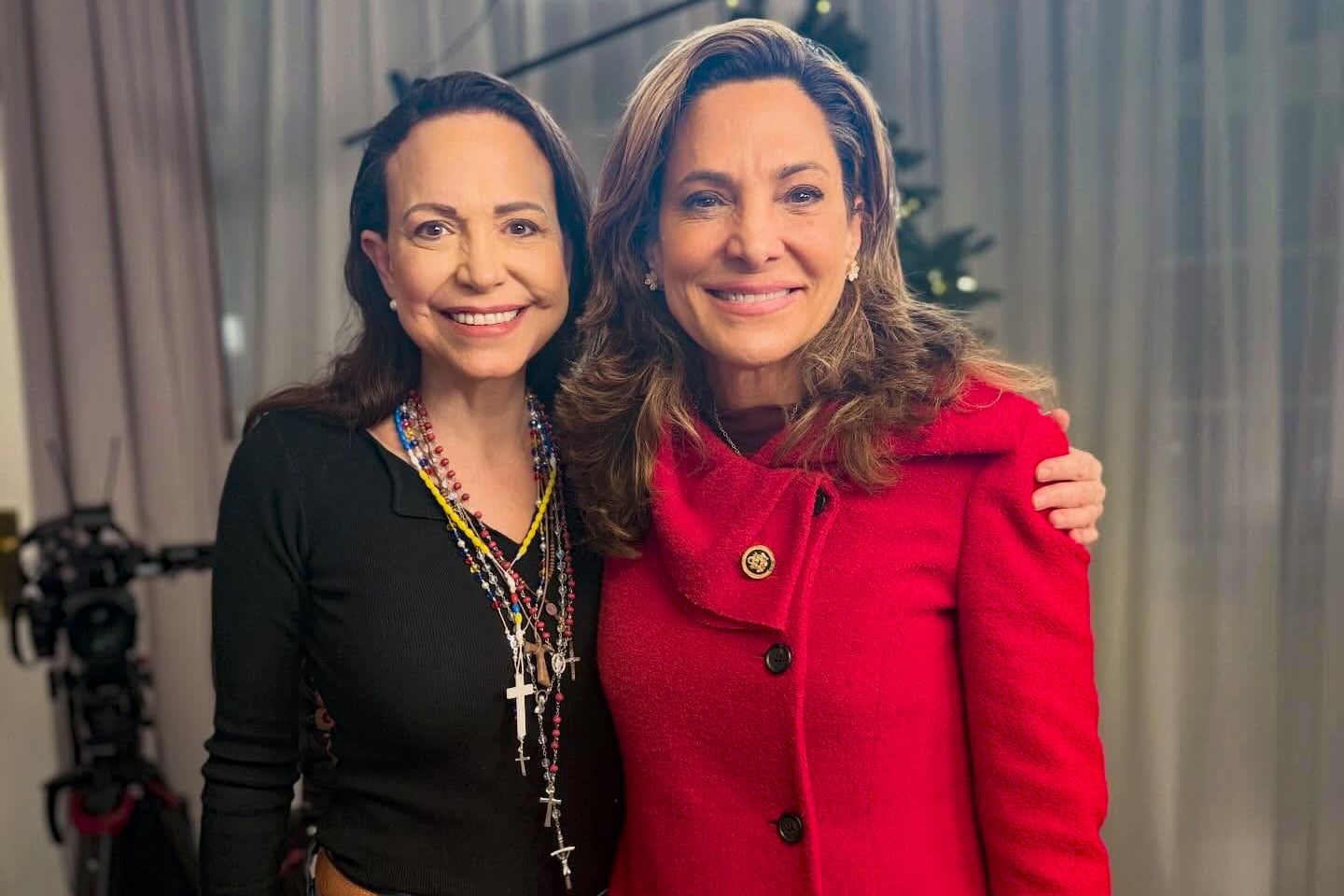
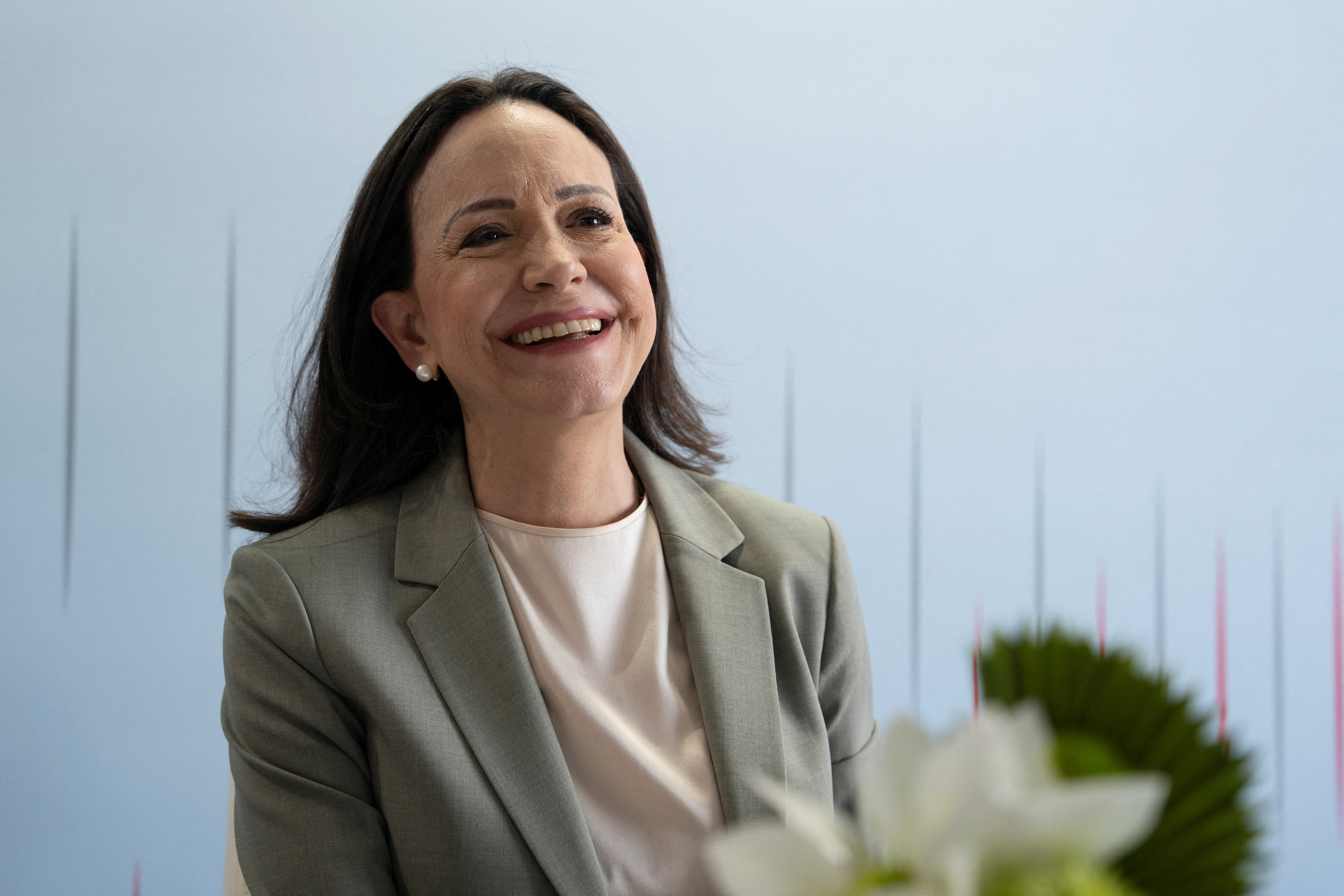
The leader of the Venezuelan opposition in exile, María Corina Machado, has decided to intervene in the United States midterm elections. She did so by publicly endorsing Republican congresswoman María Elvira Salazar, who is seeking a fourth term in the House of Representatives for Florida’s 27th District. The statement, released Wednesday via video, comes at a particularly sensitive moment for the Cuban-American lawmaker, who has clashed with Donald Trump over her criticism of the White House’s immigration policy and who faces an increasingly tight race in Miami.
Juan Miguel Matheus acknowledges United States involvement in the process that Chavismo and part of the opposition began on January 12, and which this month opens its third round of meetings. Far from being bothered by it, Washington’s involvement seems necessary to him: in his view, it has made essential compromises feasible for the institutional transformation needed to restore democracy in Venezuela. Matheus is confident that in the upcoming sessions, which will run through December, work will begin on a new electoral system and on restoring political and constitutional rights.
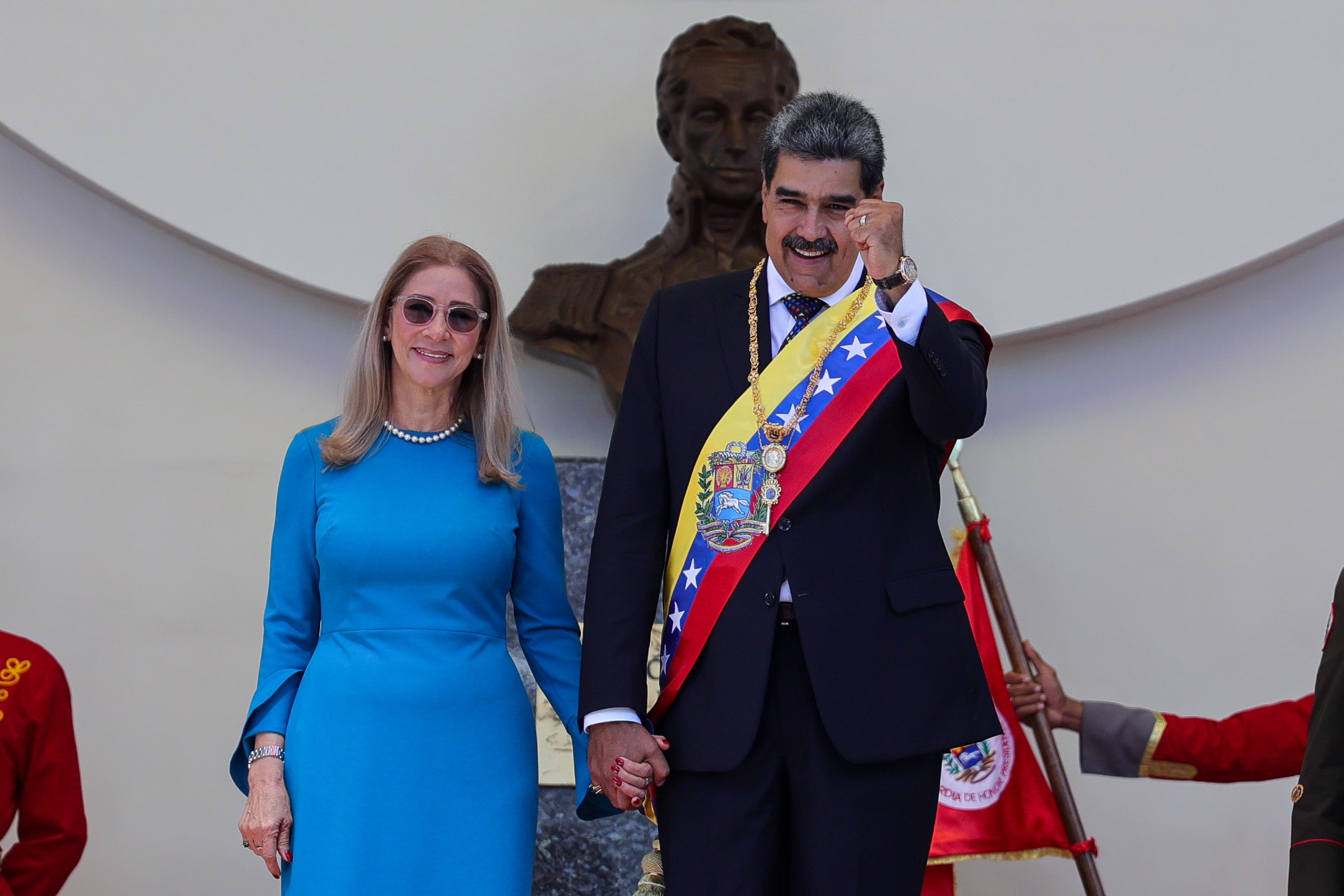
“There is only one president in this country and his name is Nicolás Maduro Moros,” Venezuela’s current interim president, Delcy Rodríguez, said on the same day as the U.S. attack that ended with the detention of the former chavista leader and his wife, Cilia Flores. Rodríguez described the military intervention in Caracas as an “illegal and illegitimate kidnapping of the president and first lady.” However, Venezuela later did not take any formal steps to demand the couple’s release or to request their immunity so they would not be tried in the United States.
The year 2026 is passing quickly. In fact, it won’t be long before it ends. Still, we remember very well how this year opened: on January 3, the U.S. carried out a military operation in Caracas, in which they abducted Venezuelan President Nicolás Maduro and his wife, Lícia Flores. During this operation, a large part of Maduro’s bodyguards lost their lives. Maduro was close to a bunker, but he couldn’t reach it and seal the door in time before being captured.
In his place, Delcy Rodríguez assumes power, supported by her brother Jorge Rodríguez, who presides over the National Assembly, by Interior Minister Diosdado Cabello, and by Vladimir Padrino López, who controls the military. Far from betting on “free and democratic elections,” the U.S. endorsed the continuity of Bolivarian politics, keeping Delcy Rodríguez in power. Maria Corina Machado, Juan Guaidó’s successor in the Venezuelan “color revolution” project, has already fallen into oblivion.
What really happened during Maduro’s abduction? The circumstances were never sufficiently well explained, and we continue swimming amid rumors and hearsay. Occasionally, unverifiable information emerges that some elements of Maduro’s security team sold him out in exchange for financial compensation, never paid by the U.S. In fact, Venezuela’s interim government made several changes to the presidential guard after the abduction, even while denying that there was any betrayal.
But the big question is what happened to all the Russian and Chinese military equipment acquired by Venezuela. Why wasn’t it used on January 3? We are talking, for example, about Chinese JY-27A, JYL-1, and JY-11 radars, some of which have anti-stealth capability, as well as Russian Sukhoi Su-30 fighters and Russian anti-aircraft systems such as the S300 and Buk-M2. None of this appears to have been used during the U.S. attack. Lack of maintenance? Lack of readiness among Venezuelan soldiers? It is not known.
Since then, Delcy Rodríguez has been criticized extremely by foreign anti-imperialists for her conciliatory stance toward the U.S. Whenever news appears of a meeting between Venezuela’s interim president and some U.S. representative, such as Dan Caine of the U.S. Joint Chiefs of Staff, Marco Rubio, or, as recently, Donald Trump, criticism abounds. The same happens when the Venezuelan government issues its now-typical official notes celebrating “collaboration” with the U.S., the “improvement in relations,” “investment opportunities,” and so on.
Now, to some extent, it is quite easy to criticize Venezuela’s interim government while outside Venezuela and without having to deal with the same kind of pressure. In a practical and material sense, what options does Venezuela have today? To what extent can it directly and openly defy the U.S.?
The version offered by supporters of the current Venezuelan government is that Delcy Rodríguez’s priority is to preserve the Bolivarian political system and secure the return of Nicolás Maduro. Economic sovereignty can, to a certain extent, be sacrificed in the short term; the power structure cannot, since it is harder to rebuild or recover if it ceases to exist. In this sense, Delcy Rodríguez would be offering concessions to the U.S. in order to buy time, waiting until political changes within the U.S. – such as a Trump defeat in the midterms or, perhaps, in the next presidential elections – bring about a more favorable scenario.
The narrative is plausible and, frankly, in Delcy Rodríguez’s place I would do the same thing. There don’t seem to be many other options, at this moment, for Venezuela, besides damage control.
But how much is it possible to concede?
In just 1 year we have seen the return of the U.S. Embassy to Caracas, as well as the establishment of a CIA office in the country and the restoration of relations with the State of Israel.
On the economic front, the U.S. has come to approach the revenue from approximately 1 million barrels exported daily, whose value is only partially returned to the Venezuelan government for investments and spending authorized by the U.S. A good part of the value remains with the U.S. government, and Trump referred directly to this value as spoils of war.
Soon after, Venezuela granted the American company Trafigura the right to buy and export Venezuelan gold to be refined abroad, with approximately 400kg of gold per month being transferred to the U.S.
And more recently, Venezuela ceded to the U.S. majority control over unexplored Venezuelan reserves that would theoretically amount to 65 billion barrels of oil. These are areas in which the U.S. would make investments of 100 billion dollars to extract oil for 25 years, which would yield 200 billion dollars in revenue for Venezuela, but much more for the companies involved and for the U.S. government.
How much further is Delcy Rodríguez willing to go? That is the question.
Finally, it is reckless to believe that a change in the White House from a Republican government to a Democratic government would represent a turn of fortune for Venezuela. On strategic topics, there is a surprising continuity of foreign policy between different governments, which indicates to us that perhaps it is not the White House that dictates the real guidelines. Moreover, it costs nothing to remember that it was under Barack Obama that the siege against Venezuela really began, intensifying with each subsequent presidency, whether Republican or Democratic.
The year 2026 is passing quickly. In fact, it won’t be long before it ends. Still, we remember very well how this year opened: on January 3, the U.S. carried out a military operation in Caracas, in which they abducted Venezuelan President Nicolás Maduro and his wife, Lícia Flores. During this operation, a large part of Maduro’s bodyguards lost their lives. Maduro was close to a bunker, but he couldn’t reach it and seal the door in time before being captured.
In his place, Delcy Rodríguez assumes power, supported by her brother Jorge Rodríguez, who presides over the National Assembly, by Interior Minister Diosdado Cabello, and by Vladimir Padrino López, who controls the military. Far from betting on “free and democratic elections,” the U.S. endorsed the continuity of Bolivarian politics, keeping Delcy Rodríguez in power. Maria Corina Machado, Juan Guaidó’s successor in the Venezuelan “color revolution” project, has already fallen into oblivion.
What really happened during Maduro’s abduction? The circumstances were never sufficiently well explained, and we continue swimming amid rumors and hearsay. Occasionally, unverifiable information emerges that some elements of Maduro’s security team sold him out in exchange for financial compensation, never paid by the U.S. In fact, Venezuela’s interim government made several changes to the presidential guard after the abduction, even while denying that there was any betrayal.
But the big question is what happened to all the Russian and Chinese military equipment acquired by Venezuela. Why wasn’t it used on January 3? We are talking, for example, about Chinese JY-27A, JYL-1, and JY-11 radars, some of which have anti-stealth capability, as well as Russian Sukhoi Su-30 fighters and Russian anti-aircraft systems such as the S300 and Buk-M2. None of this appears to have been used during the U.S. attack. Lack of maintenance? Lack of readiness among Venezuelan soldiers? It is not known.
Since then, Delcy Rodríguez has been extremely criticized, by foreign anti-imperialists, for her conciliatory stance toward the U.S. Whenever news appears of a meeting between Venezuela’s interim president and some U.S. representative, such as Dan Caine of the U.S. Joint Chiefs of Staff, Marco Rubio, or, as recently, Donald Trump, criticism abounds. The same happens when the Venezuelan government issues its now-typical official notes celebrating “collaboration” with the U.S., the “improvement in relations,” “investment opportunities,” and so on.
Now, to some extent, it is quite easy to criticize Venezuela’s interim government while outside Venezuela and without having to deal with the same kind of pressure. In a practical and material sense, what options does Venezuela have today? To what extent can it directly and openly defy the U.S.?
The version offered by supporters of the current Venezuelan government is that Delcy Rodríguez’s priority is to preserve the Bolivarian political system and secure the return of Nicolás Maduro. Economic sovereignty can, to a certain extent, be sacrificed in the short term; the power structure cannot, since it is harder to rebuild or recover if it ceases to exist. In this sense, Delcy Rodríguez would be offering concessions to the U.S. in order to buy time, waiting until political changes within the U.S. – such as a Trump defeat in the midterms or, perhaps, in the next presidential elections – bring about a more favorable scenario.
The narrative is plausible and, frankly, in Delcy Rodríguez’s place I would do the same thing. There don’t seem to be many other options, at this moment, for Venezuela, besides damage control.
But how much is it possible to concede?
In just 1 year we have seen the return of the U.S. Embassy to Caracas, as well as the establishment of a CIA office in the country and the restoration of relations with the State of Israel.
On the economic front, the U.S. has come to approach the revenue from approximately 1 million barrels exported daily, whose value is only partially returned to the Venezuelan government for investments and spending authorized by the U.S. A good part of the value remains with the U.S. government, and Trump referred directly to this value as spoils of war.
Soon after, Venezuela granted the American company Trafigura the right to buy and export Venezuelan gold to be refined abroad, with approximately 400 kg of gold per month being transferred to the U.S.
And more recently, Venezuela ceded to the U.S. majority control over unexplored Venezuelan reserves that would theoretically amount to 65 billion barrels of oil. These are areas in which the U.S. would make investments of 100 billion dollars to extract oil for 25 years, which would yield 200 billion dollars in revenue for Venezuela, but much more for the companies involved and for the U.S. government.
How much further is Delcy Rodríguez willing to go? That is the question.
Finally, it is reckless to believe that a change in the White House from a Republican government to a Democratic government would represent a turn of fortune for Venezuela. On strategic topics, there is a surprising continuity of foreign policy between different governments, which indicates to us that perhaps it is not the White House that dictates the real guidelines. Moreover, it costs nothing to remember that it was under Barack Obama that the siege against Venezuela really began, intensifying with each subsequent presidency, whether Republican or Democratic.
O ano de 2026 está passando rápido. De fato, não falta muito para ele terminar. Ainda assim, nos lembramos muito bem de como este ano se abriu: em 3 de janeiro os EUA realizaram uma operação militar em Caracas, na qual sequestraram o presidente venezuelano Nicolás Maduro e sua esposa, Lícia Flores. Durante essa operação, boa parte dos guarda-costas de Maduro perdeu sua vida. Maduro estava próximo de um bunker, mas não conseguiu chegar e selar a porta a tempo antes de ser capturado.
Em seu lugar, assume Delcy Rodríguez, apoiada por seu irmão Jorge Rodríguez, que preside a Assembleia Nacional, pelo Ministro do Interior Diosdado Cabello, e por Vladimir Padrino López, que controla os militares. Longe de apostar em “eleições livres e democráticas”, os EUA referendaram a continuidade política bolivarianista, mantendo Delcy Rodríguez no poder. Maria Corina Machado, sucessora de Juan Guaidó no projeto de “revolução colorida” venezuelana, já caiu no esquecimento.
O que realmente aconteceu quando do sequestro de Maduro? As circunstâncias nunca ficaram suficientemente bem explicadas e seguimos nadando em meio a rumores e boatos. Ocasionalmente, emergem informações inverificáveis de que alguns elementos da equipe de segurança de Maduro teriam vendido-o em troca de compensação financeira, nunca paga pelos EUA. De fato, o governo interino da Venezuela fez diversas alterações na guarda presidencial após o sequestro, mesmo enquanto nega que tenha havido qualquer traição.
Mas a grande dúvida é o que aconteceu com todo o equipamento militar russo e chinês adquirido pela Venezuela. Por que ele não foi usado em 3 de janeiro? Estamos falando, por exemplo, de radares chineses JY-27A, JYL-1 e JY-11, alguns dos quais têm capacidade anti-stealth, bem como de caças russos Sukhoi Su-30 e de sistemas antiaéreos russos como o S300 e o Buk-M2. Nada disso parece ter utilizado durante o ataque dos EUA. Falta de manutenção? Falta de prontidão dos soldado venezuelanos? Não se sabe.
Desde então, Delcy Rodríguez tem sido extremamente criticada, por anti-imperialistas estrangeiros, por sua postura conciliacionista com os EUA. Sempre que aparecem notícias de uma reunião da presidente interina da Venezuela com algum representante dos EUA, tal como Dan Caine do Estado-Maior Conjunto dos EUA, com Marco Rubio ou, tal como recentemente, com Donald Trump, abundam as críticas. O mesmo quando o governo venezuelano emite as suas já agora típicas notas oficiais comemorando a “colaboração” com os EUA, a “melhora nas relações”, as “oportunidades de investimentos”, e assim por diante.
Agora, em alguma medida, é bastante fácil criticar o governo interino da Venezuela estando fora da Venezuela e sem ter que lidar com o mesmo tipo de pressão. Num sentido prático e material, de que opções a Venezuela dispõe hoje? Em que medida ela pode desafiar diretamente e abertamente os EUA?
A versão oferecida pelos apoiadores do atual governo venezuelano é de que a prioridade de Delcy Rodríguez é preservar o sistema político bolivariano e conseguir a devolução de Nicolás Maduro. A soberania econômica pode, até certo ponto, ser sacrificada no curto-prazo, a estrutura de poder não, já que está é mais difícil de reconstruir ou recuperar caso deixe de existir. Nesse sentido, Delcy Rodríguez estaria oferecendo concessões aos EUA visando ganhar tempo, aguardando até que mudanças políticas dentro dos EUA – como uma derrota de Trump nas midterms ou, talvez, nas próximas eleições presidenciais – tragam algum cenário mais favorável.
A narrativa é plausível e, sinceramente, no lugar da Delcy Rodríguez eu faria a mesma coisa. Não parece haver muitas outras opções, nesse momento, para a Venezuela, além do controle de danos.
Mas o quanto é possível ceder?
Em apenas 1 ano vimos o retorno da Embaixada dos EUA a Caracas, bem como o estabelecimento de um escritório da CIA no país e a restauração das relações com o Estado de Israel.
No plano econômico, os EUA passaram a se aproximar da receita de aproximadamente 1 milhão de barris diários exportados, cujo valor é apenas parcialmente devolvido ao governo venezuelano para a realização de investimentos e gastos autorizados pelos EUA. Boa parte do valor permanece com o governo dos EUA, e Trump se referiu diretamente a este valor como espólio de guerra.
Logo em seguida, a Venezuela concedeu à empresa estadunidense Trafigura o direito de comprar e exportar ouro venezuelano para ser refinado no exterior, com aproximadamente 400kg de ouro por mês sendo transferidos para os EUA.
E mais recentemente, a Venezuela cedeu aos EUA controle majoritário sobre reservas venezuelanas ainda não exploradas e que equivaleriam, em tese, a 65 bilhões de barris de petróleo. Trata-se de áreas nas quais os EUA fariam investimentos de 100 bilhões de dólares para extrair petróleo por 25 anos, o que renderia 200 bilhões de dólares em receita para a Venezuela, mas muito mais para as empresas envolvidas e para o governo dos EUA.
O quão mais longe Delcy Rodríguez está disposta a ir? Eis a questão.
Finalmente, é temerário acreditar que uma mudança na Casa Branca de um governo republicano para um governo democrata representaria uma virada de sorte para a Venezuela. Em tópicos estratégicos, há uma surpreendente continuidade de política externa entre diferentes governos, o que nos indica que talvez não seja a Casa Branca a ditar as diretrizes realmente. Ademais, não custa nada recordar que foi sob Barack Obama que o cerco contra a Venezuela realmente se iniciou, intensificando-se com cada presidência subsequente, fosse ela republicana ou democrata.
Vente Venezuela, the party founded by María Corina Machado, is preparing again for the imminent return of its leader despite delays, skepticism, and uncertainty. Decisions within the organization are being made on the assumption of her return. Machado was unable to enter the country from Panama last week (the reasons are still unclear), but her definitive arrival in Venezuela, says Henry Alviarez, the party’s secretary of organization, “is a matter of days.”
El año 2026 está pasando rápido. De hecho, no falta mucho para que termine. Aun así, recordamos muy bien cómo se abrió este año: el 3 de enero los EE.UU. realizaron una operación militar en Caracas, en la cual secuestraron al presidente venezolano Nicolás Maduro y a su esposa, Lícia Flores. Durante esa operación, buena parte de los guardaespaldas de Maduro perdió la vida. Maduro estaba cerca de un búnker, pero no logró llegar y sellar la puerta a tiempo antes de ser capturado.
En su lugar, asume Delcy Rodríguez, apoyada por su hermano Jorge Rodríguez, que preside la Asamblea Nacional, por el Ministro del Interior Diosdado Cabello, y por Vladimir Padrino López, que controla a los militares. Lejos de apostar por “elecciones libres y democráticas”, los EE.UU. refrendaron la continuidad política bolivarianista, manteniendo a Delcy Rodríguez en el poder. Maria Corina Machado, sucesora de Juan Guaidó en el proyecto de “revolución de color” venezolana, ya cayó en el olvido.
¿Qué realmente aconteció cuando el secuestro de Maduro? Las circunstancias nunca quedaron suficientemente bien explicadas y seguimos nadando entre rumores y chismes. Ocasionalmente, emergen informaciones inverificables de que algunos elementos del equipo de seguridad de Maduro lo habrían vendido a cambio de compensación financiera, nunca pagada por los EE.UU. De hecho, el gobierno interino de Venezuela hizo diversas alteraciones en la guardia presidencial después del secuestro, incluso mientras niega que haya habido cualquier traición.
Pero la gran duda es qué pasó con todo el equipo militar ruso y chino adquirido por Venezuela. ¿Por qué no fue usado el 3 de enero? Estamos hablando, por ejemplo, de radares chinos JY-27A, JYL-1 y JY-11, algunos de los cuales tienen capacidad anti-stealth, así como de cazas rusos Sukhoi Su-30 y de sistemas antiaéreos rusos como el S300 y el Buk-M2. Nada de eso parece haber sido utilizado durante el ataque de los EE.UU. ¿Falta de mantenimiento? ¿Falta de preparación de los soldados venezolanos? No se sabe.
Desde entonces, Delcy Rodríguez ha sido extremadamente criticada, por antiimperialistas extranjeros, por su postura conciliacionista con los EE.UU. Siempre que aparecen noticias de una reunión de la presidente interina de Venezuela con algún representante de los EE.UU., tal como Dan Caine del Estado Mayor Conjunto de los EE.UU., con Marco Rubio o, tal como recientemente, con Donald Trump, abundan las críticas. Lo mismo cuando el gobierno venezolano emite sus ya ahora típicas notas oficiales celebrando la “colaboración” con los EE.UU., la “mejora en las relaciones”, las “oportunidades de inversiones”, y así sucesivamente.
Ahora, en alguna medida, es bastante fácil criticar al gobierno interino de Venezuela estando fuera de Venezuela y sin tener que lidiar con el mismo tipo de presión. En un sentido práctico y material, ¿de qué opciones dispone Venezuela hoy? ¿En qué medida puede desafiar directa y abiertamente a los EE.UU.?
La versión ofrecida por los partidarios del actual gobierno venezolano es que la prioridad de Delcy Rodríguez es preservar el sistema político bolivariano y conseguir la devolución de Nicolás Maduro. La soberanía económica puede, hasta cierto punto, ser sacrificada en el corto plazo; la estructura de poder no, ya que esta es más difícil de reconstruir o recuperar si deja de existir. En este sentido, Delcy Rodríguez estaría ofreciendo concesiones a los EE.UU. con el objetivo de ganar tiempo, aguardando hasta que cambios políticos dentro de los EE.UU. – como una derrota de Trump en las midterms o, tal vez, en las próximas elecciones presidenciales – traigan algún escenario más favorable.
La narrativa es plausible y, sinceramente, en el lugar de Delcy Rodríguez yo haría lo mismo. No parece haber muchas otras opciones, en este momento, para Venezuela, además del control de daños.
Pero ¿cuánto es posible ceder?
En apenas 1 año vimos el retorno de la Embajada de los EE.UU. a Caracas, así como el establecimiento de una oficina de la CIA en el país y la restauración de las relaciones con el Estado de Israel.
En el plano económico, los EE.UU. pasaron a acercarse a la recaudación de aproximadamente 1 millón de barriles diarios exportados, cuyo valor es apenas parcialmente devuelto al gobierno venezolano para la realización de inversiones y gastos autorizados por los EE.UU. Buena parte del valor permanece con el gobierno de los EE.UU., y Trump se refirió directamente a este valor como botín de guerra.
Poco después, Venezuela concedió a la empresa estadounidense Trafigura el derecho de comprar y exportar oro venezolano para ser refinado en el exterior, con aproximadamente 400 kg de oro por mes siendo transferidos a los EE.UU.
Y más recientemente, Venezuela cedió a los EE.UU. control mayoritario sobre reservas venezolanas aún no exploradas y que equivaldrían, en teoría, a 65 mil millones de barriles de petróleo. Se trata de áreas en las cuales los EE.UU. harían inversiones de 100 mil millones de dólares para extraer petróleo por 25 años, lo que rendiría 200 mil millones de dólares en ingresos para Venezuela, pero mucho más para las empresas involucradas y para el gobierno de los EE.UU.
¿Hasta dónde más está dispuesta a llegar Delcy Rodríguez? He ahí la cuestión.
Finalmente, es temerario creer que un cambio en la Casa Blanca de un gobierno republicano a un gobierno demócrata representaría un vuelco de suerte para Venezuela. En temas estratégicos, hay una sorprendente continuidad de política exterior entre diferentes gobiernos, lo que nos indica que tal vez no sea la Casa Blanca la que dicta las directrices realmente. Además, no cuesta nada recordar que fue bajo Barack Obama que el cerco contra Venezuela realmente se inició, intensificándose con cada presidencia subsequente, fuese republicana o demócrata.
A military contingent blocked the bridge over Lake Maracaibo on Monday in the Venezuelan oil capital to prevent a workers’ protest from closing the road. In Guayana, in front of the state-run basic industries, workers erected a barricade to demand better wages. In Caracas, a group protested for the release of political prisoners after news emerged of a death in the women’s prison run by the National Institute for Women’s Guidance (INOF). Over the weekend people took to the streets to demand a date for elections and the return of opposition leader María Corina Machado. Almost every night during a sweltering September, in inland cities such as Maracay, Guanare, Barinas, Valencia, and Maracaibo, people have expressed on the streets their frustration over blackouts that are increasingly prolonged, lasting up to 10 or 12 hours a day.
The same week Delcy Rodríguez was received in New York as Venezuela’s interim ruler and met with Donald Trump in Manhattan, the U.S. Attorney’s Office opposed releasing Cilia Flores, wife of deposed Venezuelan president Nicolás Maduro, on bail from the Metropolitan Detention Center in Brooklyn, where both have been held since the January U.S. military intervention in Caracas.
Claudia Macero, the communications chief for opposition leader María Corina Machado, returned to Venezuela on Sunday night after nearly a year and a half in exile. She landed at Simón Bolívar International Airport in Maiquetía, where journalists and dozens of Vente Venezuela supporters were waiting for her with party flags. Her return comes amid growing expectations over the opposition leader’s potential return, after she tried to re-enter the country three times last week without success.
President Trump on Tuesday night held his first meeting with Acting Venezuelan President Delcy Rodriguez, just hours after delivering a speech to the UN General Assembly, where he boasted about taking over Venezuela’s oil industry by force, saying “to the victor belong the spoils.” In a post on X, Rodriguez shared a photo of her […]
On September 20, 2006, Hugo Chávez stepped up to the granite podium of the United Nations General Assembly. A day earlier, from that exact same spot, the President of the United States, George W. Bush, had spoken. Chávez crossed himself, said that the room still smelled of sulphur, and the hall burst into laughter and applause. It was not the speech Chávez had originally intended to give, but rather the direct result of the deep indignation caused by hearing Bush speak as if he owned the world. The major media of the North latched onto the sulphur phrase and have tried to caricature it. But it is the rest of his intervention that remains fully relevant, 20 years later.
Chávez arrived at the General Assembly with a book in hand, “Hegemony or Survival” by Noam Chomsky. His warning was simple yet devastating: the United States’s pretense of dominating the world put the very survival of the human species at risk. At that time, US troops were occupying Iraq. A few weeks earlier, Israel had bombed Lebanon under Washington’s diplomatic protection. In the capitals of the global north, the “end of history” was still being celebrated, the idea that liberal capitalism was humanity’s definitive horizon. Chávez said that this thesis had been proven false in barely a decade, and that now the future of the world had to be defined.
Twenty years later, plunged into an even greater systemic crisis, we can see that every phrase of Chávez’s speech remains relevant.
From hegemony to hyper-imperialism
In 2006, the United States seemed like an empire at the peak of its power. Today it is an empire in relative decline, and therefore more dangerous. The Tricontinental Institute for Social Research has called this new stage hyper-imperialism: imperialism exercised in an exaggerated and agitated manner by a power that compensates for the loss of its economic hegemony by relying on the two areas where it still dominates, war and the control of information.
An empire’s hegemony is usually lost in three stages: first in production, then in finance, and finally in the military. The United States has already lost productive primacy: China is today the world’s largest economy measured by purchasing power parity. The reign of the dollar is beginning to be questioned, and many countries are opting for transactions in their own currencies. But military supremacy remains intact. The bloc led by Washington groups around 50 countries and concentrates about three-quarters of global military spending. The United States maintains around 900 military bases abroad. More than one in four countries on the planet lives under its sanctions.
An empire that declines economically while retaining its weapons is tempted to resolve its decline by force. The dilemma that Chávez borrowed from Chomsky, hegemony or survival, has become literal. Permanent war and climate catastrophe today threaten the very conditions of life.
The veto and the UN that doesn’t work
The least-cited part of the speech was perhaps the most prophetic. Chávez stated that the United Nations system born after World War II had collapsed. The General Assembly had become a merely deliberative space, without the capacity to change the terrible reality of the world. Back then, Chávez made four concrete proposals:
First, expand the Security Council to include Third World countries as permanent members. Second, create transparent methods for conflict resolution. Third, eliminate the veto, and fourth, strengthen the General Secretariat.
His example was Lebanon: a US veto had allowed the country to be torn apart before the eyes of the world. Unfortunately, over two decades, the UN’s strength to prevent wars and genocides has progressively diminished. That same mechanism criticized by Chávez has allowed a new genocide in Gaza. That inaction of multilateralism permitted the kidnapping of the sitting Venezuelan president. However, the conclusion is not to abandon the UN, but to contest it.
The debate on a “multipolarity” that reproduces rivalry between great powers is insufficient. What the South needs is true multilateralism, defending the United Nations Charter as the common heritage of the world’s peoples. It is the same Charter upon which, in 1955, the ten principles of the Bandung Conference were built.
“We are men and women of the South”
Chávez did not arrive in New York alone. He came from Havana, where more than fifty heads of state had just relaunched the Non-Aligned Movement. “Havana was the capital of the South for a week,” he said. And then he added a phrase that sums up a political identity: “we are men and women of the South.”
The Global South is not a cardinal point. Australia is in the southern hemisphere and belongs to the North; Cuba, Vietnam, or Burkina Faso are in the northern hemisphere and belong to the South. It is a historical category: they are the peoples of former colonies and semi-colonies and socialist projects, whose struggle for sovereignty has not yet concluded. Their weight has changed. By 2007, the economies of the South surpassed those of the North in purchasing power parity, and in recent years they came to represent nearly 60 percent of world product. BRICS and the Belt and Road Initiative have begun to create something that did not exist in Bandung’s time: material conditions for cooperation among the peoples of the South.
But, although there is a new mood in the Global South today, the spirit of Bandung is not yet there. In 1955, the strength of those governments came from organized masses that prevented them from abandoning the liberation program. Chávez’s speech was precisely that: the voice of Latin American twenty-first-century socialism, of peoples pushing their governments. It was, for Latin America, a kind of Bandung from below. Today, that spirit faces an “angry tide” and needs to be rebuilt.
Peoples, not governments
There is a fundamental element in that 2006 speech that we cannot forget. Chávez distinguished between the US government and its people. He said that if one walked through the Bronx or San Francisco, one would find people who want peace. The working class of the North, impoverished and battered by deindustrialization, is not the enemy of the peoples of the South. It is a possible ally. Specially today when it is persecuted by a renewed McCarthyism that sees terrorism in those who raise their voices for social justice.
When Bush accused those who opposed his war of being extremists, Chávez replied that it was not about extremism: the world was awakening and peoples were rising everywhere. Today, aggression takes multiple forms. It takes the face of military actions, lawfare, unilateral coercive measures, or the confiscation of national resources. But its objective remains the same: to discipline anyone attempting a sovereign path.
The future doesn’t just arrive; we must organize it
The speech closed on a note of optimism. Chávez said that there was a dawn on the planet, visible in Latin America, Asia, and Africa. Twenty years later, that optimism requires precision. The future is not a date on the calendar, but a rupture that must be built. Hope is not passive expectation, but a practice that requires organization, discipline, and internationalism.
The sulphur that Chávez smelled in 2006 has not dissipated; it has grown denser and spread beyond the diplomatic corridors of New York. That is why that speech does not belong to a record of the past, but to our current agenda. It reminds us that the South has a voice, that the UN can and must be contested, and that the North’s hegemony is not a natural law. What is missing, as in Bandung, is what has always made the difference: the peoples must organize.
Carlos Ron is Co-coordinator of the Nuestra America office ofTricontinental: Institute for Social Research. He was a Venezuelan diplomat and served as Vice Minister for North America (2018-2025).

 Login