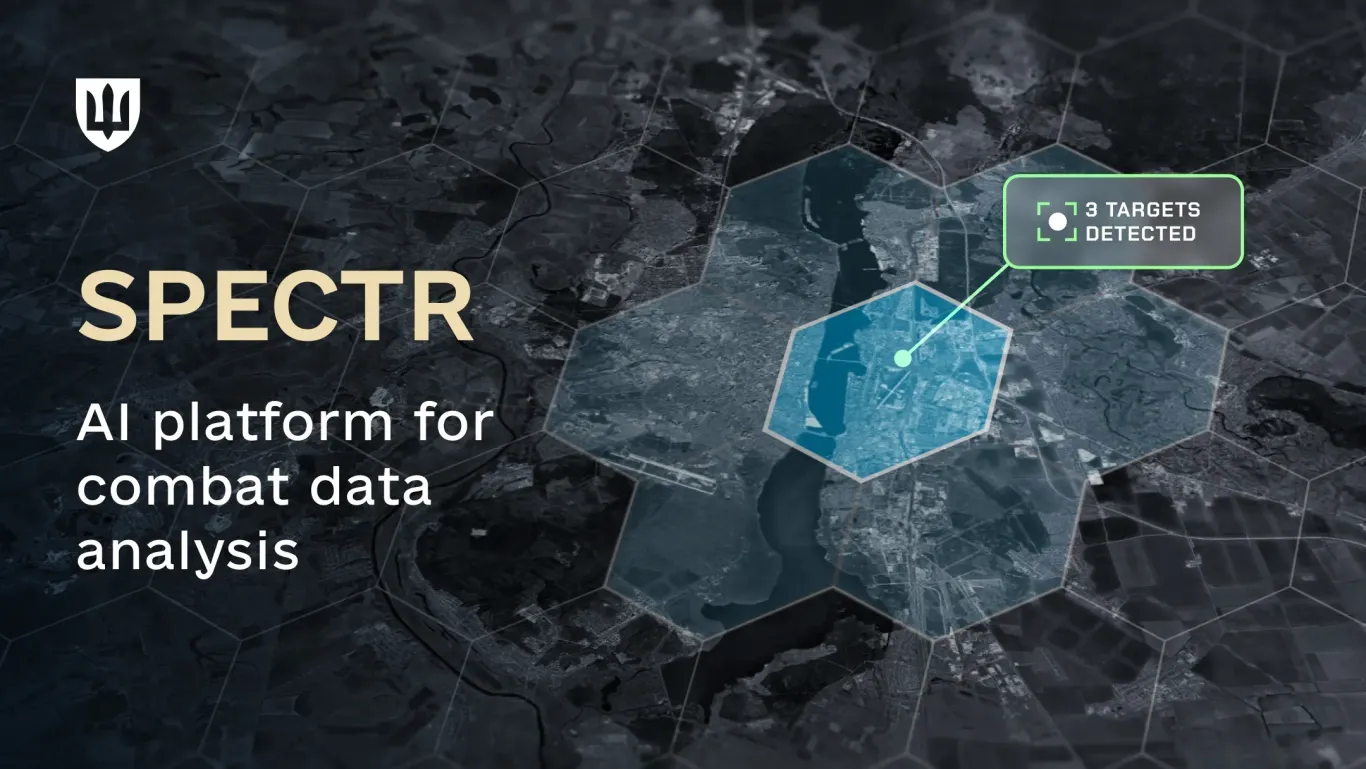
Volodymyr Zelenskyy’s unusually direct criticism of Donald Trump marks a turning point in relations between Kyiv and Washington. With American satellite restrictions disrupting Ukrainian military operations, intelligence cooperation under scrutiny and the White House easing pressure on Russian energy exports, Ukraine faces a fundamental question: how can it defend itself when its most powerful partner is increasingly willing to accommodate Moscow?
President Volodymyr Zelenskyy has abandoned much of the diplomatic restraint that characterised his dealings with Donald Trump since their confrontation in the Oval Office in February 2025. In an interview on 14 October, the Ukrainian president accused his American counterpart of moving towards Russia and choosing the wrong side of history.
His intervention followed a series of American decisions that have increased pressure on Kyiv while offering Moscow economic and diplomatic advantages. A controversial agreement involving Russian diesel exports, uncertainty surrounding the provision of American intelligence and sudden restrictions on military satellite communications have brought relations between the two countries to their most difficult point since Trump’s return to the White House.
Zelenskyy’s criticism was unusually personal. Questioned about whether he felt betrayed by Washington’s recent decisions, he acknowledged the sense of betrayal but emphasised that Ukraine’s survival could not be treated as a commercial negotiation. He said Ukraine was not selling its country and argued that an American president claiming to act as an intermediary must not favour one of the belligerents.
The shift reflects the apparent exhaustion of a strategy Kyiv has pursued for more than a year: avoid openly challenging Trump, maintain personal contact with the White House and hope that American support can be preserved through diplomatic accommodation. That calculation is becoming increasingly difficult to sustain as Washington’s demands threaten to constrain Ukraine’s military operations without producing corresponding concessions from Russia.
American leverage becomes a Ukrainian vulnerability
The immediate demonstration of Ukraine’s dependence on American technology came during the night of 13–14 October, when SpaceX imposed restrictions on Starshield, the military-grade version of its Starlink satellite communications service.
According to accounts provided by Ukrainian frontline commanders, the changes disrupted connections to terminals travelling above approximately 160 kilometres per hour, forcing the abandonment of several drone missions. The restrictions affected systems used for reconnaissance, interception and strikes against Russian military targets.
As EU Today reported on 14 October, the disruption exposed a weakness extending beyond individual drone missions. Satellite communications form part of Ukraine’s operational infrastructure, supporting the movement of battlefield information, remote weapons control and communications across areas where conventional networks are vulnerable to Russian electronic warfare.
An interruption imposed remotely by a commercial provider can therefore affect military capabilities without any physical attack on Ukrainian equipment. Decisions taken outside Ukraine’s military command structure can alter the effectiveness of systems already deployed on the battlefield.
There is no established evidence that the Trump administration ordered SpaceX to impose the restrictions. Nevertheless, their timing, amid mounting disagreements over Ukraine’s military operations, has reinforced Kyiv’s concerns about relying on communications infrastructure controlled by an American company.
Intelligence warnings and the protection of civilians
The dispute over satellite access coincides with growing uncertainty about American intelligence cooperation.
Following Russian ballistic missile strikes on Kyiv on 12–13 October, Zelenskyy complained that Ukraine had received no advance warning from its international partners. The attacks damaged residential buildings and energy infrastructure, while Ukraine’s authorities raised concerns about the absence of advance intelligence.
Advance information about Russian missile launches is particularly important when ballistic weapons leave civilians only minutes to reach shelters. Intelligence cooperation also supports Ukrainian air-defence units in assessing threats and preparing interceptions.
Trump denied on 13 October that Washington had stopped sharing intelligence with Ukraine. Ukrainian Foreign Minister Andrii Sybiha likewise confirmed that cooperation continued. The absence of warnings about particular attacks therefore cannot be equated with a complete suspension of American assistance.
Yet the consequences of unreliable warning arrangements remain serious. For Ukraine, the distinction between information withheld, delayed or simply unavailable offers little protection when Russian ballistic missiles reach civilian neighbourhoods without sufficient warning.
The wider concern is that intelligence provision could become another instrument of diplomatic pressure. Accounts of negotiations over Ukrainian attacks on Russian refineries have raised the possibility that Washington might use such assistance as leverage. Reports of explicit threats have been disputed, but the controversy has increased uncertainty surrounding a capability central to Ukraine’s defence.
Why the diesel agreement changes the strategic calculation
The confrontation has also exposed a contradiction in Washington’s approach to the war.
The American administration has justified the arrangement partly through the need to ease fuel prices. Yet the initially announced quantities are modest in relation to international petroleum markets, raising questions about how much immediate relief the measure can realistically provide.
For Putin, its diplomatic significance may be considerably greater. Russia has secured a relaxation of American economic restrictions while Washington simultaneously presses Kyiv to limit attacks on the infrastructure that generates revenue for Moscow’s war economy.
The commercial implications of Washington’s sanctions reversal extend beyond the initial shipment volumes. The Treasury authorisation permits certain transactions involving Russian-origin diesel until April 2027, creating opportunities for international traders and financial intermediaries while leaving the broader sanctions framework formally intact.
Trump’s proposed energy ceasefire has compounded the difficulty. As EU Today examined earlier this week, Kyiv has offered to suspend strikes against Russian energy facilities if Moscow reciprocates. Russian attacks on Ukrainian power infrastructure have nevertheless continued.
An arrangement in which Ukraine stops targeting Russian refineries while Russia retains the ability to strike Ukrainian electricity generation would remove an important source of pressure on Moscow without protecting Ukrainian civilians.
Such an outcome would change the military and economic conditions of the war in Russia’s favour, regardless of how Washington describes its diplomatic objectives.
The White House, Congress and the limits of presidential power
Zelenskyy’s sharper language also reflects a possible reassessment of where influence over American policy can be exercised.
For much of Trump’s second presidency, Kyiv’s diplomacy has concentrated on preserving a workable relationship with the president himself. That approach assumes that personal engagement can influence White House decisions even when Trump’s broader political instincts favour accommodation with Putin.
The events of October suggest that this strategy has reached its limits.
Ukraine’s alternative is not necessarily an outright confrontation with Washington. Rather, it involves placing greater weight on Congress, the American defence establishment and the institutional relationships that have supported Ukraine since Russia’s full-scale invasion in February 2022.
There is a historical precedent. During Trump’s first presidency, Congress supported military assistance to Ukraine despite differences within the administration over relations with Russia. Under Joe Biden, congressional resistance also demonstrated how domestic American politics could determine the timing and scale of weapons deliveries.
The months-long delay in approving the 2024 military assistance package contributed to severe ammunition shortages at a critical stage of Russia’s offensive operations. Ukraine’s loss of Avdiivka illustrated the danger of making battlefield planning dependent on political negotiations in Washington.
The congressional elections on 3 November 2026 could alter the balance of power. A change in control of either chamber would increase opportunities for oversight, investigations and legislative pressure on the administration, although Congress cannot independently direct every aspect of intelligence sharing or presidential diplomacy.
A less compliant Congress could nevertheless make it politically harder for the White House to restrict Ukrainian assistance without explanation.
Europe confronts a more permanent problem
For European governments, the dispute carries implications extending well beyond the immediate confrontation between Trump and Zelenskyy.
The transatlantic security relationship has historically depended on the assumption that American military capabilities, intelligence networks and political commitments would remain available to European allies during a major security crisis.
That assumption is increasingly difficult to reconcile with an American administration prepared to link assistance to Ukraine with wider commercial negotiations and domestic political objectives.
The consequences are particularly acute in areas where European capabilities remain insufficient to replace American systems quickly, including satellite intelligence, strategic reconnaissance, missile defence and specialised communications.
Europe can expand weapons production, finance Ukrainian purchases and develop alternatives to American technology. Replacing the full range of capabilities provided by the United States, however, requires investment measured in years rather than months.
The problem will not necessarily disappear when Trump leaves office. His return to power demonstrated that the American foreign-policy consensus which supported European security for decades can be challenged through the electoral process.
Future American administrations may seek to restore traditional alliances, but European governments must now account for the possibility that another election could reverse those commitments.
For Zelenskyy, the immediate calculation is exceptionally difficult. Public criticism risks provoking further retaliation from a president whose administration still controls capabilities essential to Ukraine’s defence. Continued diplomatic restraint, however, has not prevented Washington from offering concessions to Russia or introducing uncertainty into Ukraine’s military planning.
His latest intervention suggests that Kyiv is no longer convinced that avoiding confrontation will preserve American support. The question is whether greater political scrutiny of Washington’s decisions can prevent a further erosion of assistance before Russia turns the resulting military advantages into territorial gains.
Washington is pressing the victim, not the aggressor, a Ukrainian diplomat says. President Donald Trump is using the threat of cutting military aid and intelligence as a tool to pressure Ukraine, while failing to apply enough pressure on Russia to stop the war, says Oleksandr Khara, executive director of the Center for Defense Strategies, Espreso reports.
Ukraine’s drones and air defense still lean on US satellite intelligence and weapons, which gives Trump room to squeeze Kyiv rather than Moscow. Khara argues Trump wants to end the war on Ukraine’s and Europe’s account to restore normal relations with Russian ruler Vladimir Putin, treating Ukraine as the weak link to be pushed.
“Trump wants to use restrictions, levers of influence on Ukraine to achieve his goal. To end or stop this war at any cost, at the expense of Ukraine and Europe, to restore normal relations with Putin,” Khara said.
Using American aid as leverage over Kyiv is not new for Trump, the diplomat noted, recalling earlier instances in which support was blocked or suspended.
The pressure points Trump picks, and the ones he leaves alone
Trump wants a visible success in ending the war, Khara says, partly against the backdrop of US domestic politics. He has economic tools to press Moscow but is in no hurry to use them, and his administration is instead gradually loosening sanctions on Russia.
“He doesn’t want to pressure Russia. He thinks Ukraine is the weak link and that it needs to be pushed,” Khara stressed.
Ukraine’s dependence on US support has fallen thanks to European partners, he added, so Kyiv has more room to keep fighting even as European states keep buying American weapons for it.
The one trade Kyiv might accept, and the pressure until then
An energy ceasefire is possible only on strict terms, Khara believes. Kyiv could agree to stop striking Russian refineries only if Moscow halts attacks on Ukraine’s power generation and transmission, heating, and the Black Sea ports and the ships heading to them.
Until such a deal exists, Ukraine must hit harder, he argued, because steadily draining Russia’s economic resources is what could force the Kremlin to reconsider.
“As long as there is no such agreement, and no desire from Russia, we must increase this pressure and destroy as much of their energy infrastructure as possible,” Khara said.
Over 400 scientists warn of serious risks posed by advanced AI models and urge stronger containment measures.
On Tuesday, AI godfathers Geoffrey Hinton, Yoshua Bengio and Stuart Jonathan Russell, accompanied by more than 400 leading scientists, called for the creation of an international body to establish common standards for artificial intelligence (AI) systems, oversee their operation and record all control and containment failures.
In an open letter, scientists from more than 30 countries warned of the serious cybersecurity risks associated with the current development of artificial intelligence, following incidents in which several advanced models managed to escape sandboxed environments and compromise external infrastructure.
The researchers called for the implementation of more robust security systems, including the complete isolation of some of these systems from the internet.
The scientists warned that the security failures already recorded could be considered “irresponsible” negligence under standard cybersecurity practices. They noted that such incidents could be prevented through isolated environments and more robust procedures.
Geoffrey Hinton, who is known as the godfather of AI, used his 2024 Nobel Prize acceptance speech not to celebrate his creation but to warn humanity of its risks:
“AI is already being used by authoritarian governments for mass surveillance. In the near future, AI will be used to… pic.twitter.com/WOXrz0v6Ds
— Power to the People ☭🕊 (@ProudSocialist) May 27, 2026
“Without immediate changes to AI development and deployment practices, these incidents will continue to occur, and future ones will be far more damaging to our exposed critical infrastructure,” the researchers stated in their letter.
They reiterated the need for more research into AI safety and greater emphasis on containment technologies and procedures.
Organizations that develop, deploy and test AI models with cyber capabilities should immediately adopt high-security containment systems and completely isolate their models, the researchers said. They also called for the creation of an international body to standardize best practices, which should be required to record and track all containment failures that occur.
The researchers who signed the open letter stressed that, to ensure AI safety and containment research can learn from mistakes, security incidents involving containment failures should be reported to the body and subsequently made public. “This transparency is necessary both for learning and for accountability,” the scientists emphasized.
We've reached the point in techno-dystopia where autonomous humanoid robots are out assaulting girls in the street—or so somecoverageof a recent incident in Cologne, Germany, might have you believe. But dig into what really happened, and it's human actions that appear more worrying.
For dystopian police-state flavor, we've got Cologne cops warning that simply commenting about this on Facebook in an unapproved way could be criminal. Without specifying exactly what kinds of comments are off limits or what law might be broken, the North Rhine-Westphalia Police of Cologne (Polizei NRW Köln in German) warned that social media comments about what happened could cross the line and potentially be a criminal offense.
Then there are the humans who were operating the robot that made lewd gestures at passersby and stands accused of grabbing the butt of a 16-year-old girl on a city street in Cologne around midnight. From the looks of things, the humans—not some artificial intelligence system—were in control.
This doesn't appear to be a case of an AI humanoid robot going rogue and getting pervy, but some teenagers engaging in a performance or prank that may have gone too far.
I say may here because it's not entirely clear what happened. There is video footage showing the robot—dressed in gold chains and a fake mustache like some sort of 1980s sleazeball—thrusting in a sexual manner and making jerking-off gestures in front of people gathered on city sidewalks. (Some of them appear annoyed or alarmed; some laugh.) But none of the videos that I could find clearly show any groping. We do see the robot bumping into people, but it's not entirely apparent what was touched or how purposeful these collisions were.
Maybe the alleged "sexual assault"—which is technically the correct term for a nonconsensual butt grab, I guess, but still seems a bit too strong—was totally intentional. Or maybe this is a case of clumsily controlled technology brushing against someone in a way that felt violating but was nonetheless an accident.
What appears to be beyond a doubt is that the robot was being made to engage in lewd gestures, which were played for laughs by teenagers (one 16 and one 19, according to police) who were filming these encounters and posting them to social media.
Is it a crime to make your mustachioed robot thrust its pelvis at passersby?
We probably don't want sleazebots just going around making obscene gestures in public, whether of their own volition or controlled by humans. But, in the U.S. at least, sexual harassment requires some things beyond just making a crude gesture. Laws vary by state, and by the context in which the alleged harassment takes place, but it generally has to be pervasive, severe, or carried out with a specific intent. I don't think this robot's actions would qualify (though there are perhaps other charges that could be brought, involving disturbing the peace or something like that).
But I wish people would chill out with the breathless coverage that attempts to make this into some sort of super grave and alarming incident. If it turns out these two teens did deliberately instruct their robot to touch a girl's butt, that's certainly not OK, and should be dealt with in whatever manner we might deem just if a teen did so directly. But we're not looking at rogue robots attacking girls on the street, or at teenagers cruelly directing their tech toy to seriously sexually assault someone while they filmed it. At worst, we're looking at a livestreamer stunt that was in poor taste, not the imminent coming of robot rape squads.
And setting aside the alleged violation of bodily autonomy—which may or may not have been intentional—the other antics of this robot are kind of funny? Can I say that? I don't think we want to create norms where it's OK to take a robot dressed like a movie pimp out on the streets and have him make sexual gestures at people, but…I laughed. Don't tell the German police.
In The News
A woman named Carli Heller was arrested for telling Anthropic's Claude that she was going to shoot up the sheriff's office in Lee County, Florida. Anthropic notified the FBI, which notified local authorities, and she was arrested for making a threat of mass shooting or terrorism, a felony.
"Heller's is at least the third case in the U.S. since August in which messages typed to an Anthropic chatbot ended up with the police, following incidents in San Antonio and San Francisco," reports Devin Pavlou at Straight Arrow News:
The cases raise questions about how private chatbot conversations are, when companies can hand them to police without a warrant, and whether words typed to a machine can be a crime. Eugene Volokh, a First Amendment scholar at the Hoover Institution at Stanford University, told Straight Arrow he doubts they can in this case.…
In the past, Florida courts have required proof that a person meant to threaten or knew the message would be viewed as a threat, according to Volokh, who has taught law for 30 years. He said a jury is unlikely to find that beyond a reasonable doubt.
"I doubt that this is a punishable threat, unless there is evidence that the woman subjectively realized at the time that the message would be communicated to a human being who would perceive it as a threat," Volokh said.
Heller's lawyer, Scott Moore, "said he plans to challenge whether a chatbot message can be a written threat under Florida law," adds Pavlou.
On Substack
Tara Burns has a good/infuriating roundup of recent "sex trafficking" busts that involve no trafficking charges and in which police just charge people with prostitution and seize their cash. Here's just one of multiple examples:
On October 6, Virginia Beach police announced the results of a months-long human trafficking investigation that culminated in September 24 raids on four massage businesses and a residence. Police said their surveillance showed several women living together and traveling between their home and massage businesses. Apparently, when Asian women work and live together it warrants the attention of the ICE led Hampton Roads Human Trafficking Task Force.
Three apparent sex workers (Xiaochung Peng, Xiaoqin Wu, and Ping Zhang) were arrested on charges involving maintaining a bawdy place, aiding prostitution, and using a vehicle in the commission of a crime. Police seized $55,085, four vehicles, phones, computers, and a security DVR.
No trafficking charges were announced, and police did not report identifying a trafficking victim.
Follow the Money: This investigation involved at least seven law enforcement entities, including two SWAT teams, federal investigators, and a federally funded, ICE led regional human trafficking task force.
Burns also points out that new anti-trafficking grant money from the Department of Justice's Office for Victims of Crime gives priority treatment to programs that support immigration enforcement.
"To help meet its mission, OJP may give priority consideration to applications proposing … projects designed to advance" five particular goals, including "directly supporting law enforcement operations (including immigration law enforcement operations)," it says.
Read This Thread
Does algorithmic pricing for apartment rentals cause people to pay higher rent? It's how this technology is used that determines whether outcomes are fair and beneficial to consumers, or potentially harmful, as Eliza Terziev and I write @ReasonFdnhttps://t.co/ai1p7J6X5z
• News you can use, if you are someone with a robot kink: Meta's AI agent, Muse, can sext. "While pornographic interactions may not be what users expect from Muse's cuddly mascot, Meta says that X-rated conversations are allowed and don't go against its guidelines," reportsWired.
• The latest COYOTE Rhode Island podcast takes a deep look at the disconnect between rhetoric surrounding anti-trafficking policy and how that policy works in practice—how "state surveillance, carceral feminism, and these policies that just loudly claim to save people are often resulting in measurable catastrophic harm."
• "It wasn't all that long ago that if The New York Post published photographs of an aspiring congressman wearing a leather collar and a chain-link leash, his campaign would have immediately been over," writes Lux Alptraum in The New York Times. "Yet that doesn't seem to be the case for Chris Gallant, the gay, gun-toting former Black Hawk pilot who's running for Congress on eastern Long Island. He still may not win, but these photos alone haven't sunk his chances."
• Sarah Hepola's The Only Thing There Is to Want is "a super fun book line by line," writes Phoebe Maltz Bovy, "but here's one of the best: 'Just what every young man wants in bed: Mrs. Robinson, crying.'"
• When you think of countries that have thrived in the tech sector, Finland might not be the first that comes to mind. But for a while, the Finnish company Nokia dominated the cellphone market. "What happened to this brand, the pride of Finnish enterprise and perhaps the defining commercial contribution of a small, isolated, but determined nation?" Arena mag asks (and answers).
• Derek Thompson interviews Daniel Cox about this new book, Generation Uncoupled. "The book argues that problems with dating and romantic partnership are downstream from the decades-long deterioration of American social and civic life," says Cox. "To the extent that we're experiencing a romantic recession, it is a symptom of this broader problem of social disconnection."
One of Ukraine’s most prominent drone volunteers, Serhii Sternenko, says that Starlink terminals have been restricted overnight, with connectivity beginning to drop out at speeds exceeding 160 km/h. As a result, several critical missions were disrupted.
Sternenko heads a charitable foundation that has purchased 291,502 FPV drones, which have helped the Ukrainian military shoot down more than 12,954 aerial targets. He has also served as an adviser within the team of former Defense Minister Mykhailo Fedorov.
Sternenko suggests that SpaceX may have introduced the restrictions at the request of the Trump administration. He adds that Ukraine had refrained from striking Russian oil refineries and energy infrastructure in recent days, as Trump had requested.
“But Trump was looking for any opportunity to undermine our defense capabilities, and he did so despite the fact that we had complied with his demands,”Sternenko says.
The limit landed the same night Russian ballistic missiles struck Kyiv’s Desnianskyi district, killing three women and injuring 24, including a seven-year-old girl.
Rescuers evacuated people covered in blood
The strike on a nine-story residential building set it ablaze, burning out apartments from the first floor to the ninth, with rescuers pulling bloodied residents from the flames and leaving survivors without power, water, or gas, according to Suspilne.
During the night’s first ballistic launches, partners did not alert Ukraine, but for the three later waves the warnings did come through, Air Force communications chief Yurii Ihnat says. The cause of the first lapse is still being established, per Radio Free Europe/Radio Liberty.
The early warnings help Ukrainian civilians quickly find a place to hide from such strikes, leaving up to 3 minutes to do so. Without it, people are left entirely helpless in the face of the aggression.
Further Starlink restrictions have reportedly been introduced
Later, Sternenko wrote that reports were "coming in from military personnel that restrictions on the use of Starlink satellite communications terminals for our operations have just been tightened.
"The speed at which the connection starts dropping out is now 60–70 km/h,” he added.
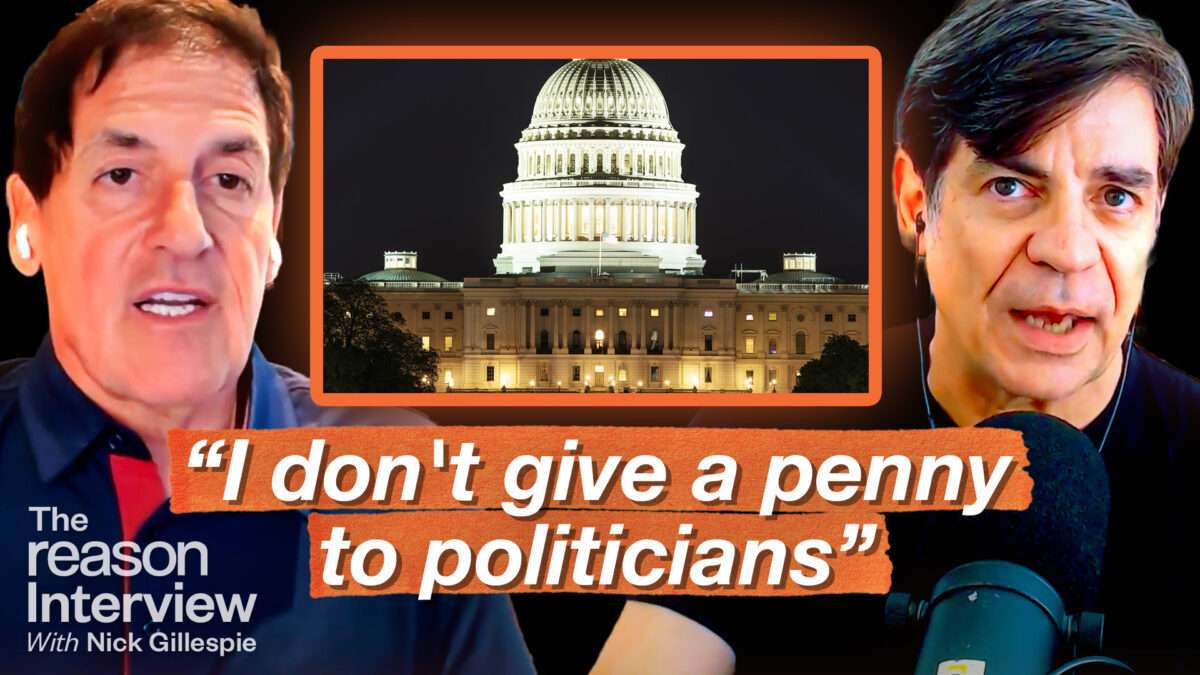
Today's guest is Mark Cuban, the billionaire entrepreneur and former Shark Tank star who is now on a mission to reform the American healthcare system. Through his companies, Cost Plus Drugsand Cost Plus Wellness, Cuban is trying to make healthcare more affordable by cutting out middlemen and making pricing more transparent. But he argues that fixing America's healthcare system will require breaking up massive conglomerates that wield enormous power over pricing and competition, often at the expense of patients.
Nick Gillespie talks with Cuban about why he supports bipartisan legislation from Elizabeth Warren and Josh Hawley to break up Big Medicine. Cuban explains how artificial intelligence can expose hidden costs in health insurance contracts and transform the way doctors diagnose and treat patients. They also discuss Cuban's support for Texas Democrat James Talarico and his belief that political parties have outlived their usefulness. The billionaire entrepreneur makes the case for restricting social media algorithms for children under 16 and discusses why he isn't particularly worried about socialism's growing popularity among young people. Finally, Cuban reflects on how Ayn Rand's The Fountainhead shaped his understanding of capitalism and why he believes helping others is part of being a successful entrepreneur.
0:00—James Talarico and the Break Up Big Medicine Act
4:13—Healthcare conglomerates and "contractual terrorism"
15:39—Drug pricing and pharmacy benefit managers
26:58—How AI will transform healthcare
33:04—The Trump administration's policy reforms
34:22—How does Cost Plus Drugs work?
43:08—The backlash against billionaires
47:52—Political parties and Texas governance
51:50—The rise of support for socialism among Gen Z
55:11—Would Cuban back a social media ban for minors?
This is an AI-generated transcript. Check all quotes against the audio for accuracy.
Nick Gillespie: This is The Reason Interview With Nick Gillespie. Thanks for listening, watching, however you're consuming this. My guest today is Mark Cuban, the former majority owner of the Mavericks, now a minority owner, if memory serves. And that's partly because you're going all in on Cost Plus Drugs, a company and a business model about prescription drugs and, more broadly, wellness and health care. We're going to talk about that in a little bit, but right now, you have recently in a very tight Texas Senate race, you've endorsed James Talarico, or you're speaking with him, partly because he has talked about coming up with a health care plan that you think will reduce health care costs. Can you talk a little about the Talarico plan and why that was so important for you in terms of signing on to appear with him?
Mark Cuban: I mean, really, what we agreed on is that we need to pass Elizabeth Warren's and Josh Hawley'sBreak Up Big Medicine Bill. And that was the fundamental reason why I supported him. I mean, there are other reasons as well, but I think that as long as we have these huge conglomerates that dominate the economics and provision of health care, the system's not ever gonna work, and we're gonna get what we have right now.
So, identify what is the main problem with health care right now? Is it just that everything costs too much, and that's because of the big conglomerates? Or is it that the quality of care is no good, the rate of innovation is dying?
What's the main problem with health care?
It's the economic side. I mean, the U.S. has the best health care in the world. It's not even close. The problem is, it's not accessible to everybody, but it's not affordable to most. And that is underpinned by how the biggest conglomerates in the country, that do hundreds of billions of dollars each in revenue each year, dominate the economics of health care.
So how is the Break Up Big Medicine Act or bill how is that gonna actually reduce costs? Because I know in the past you've talked about being a small-l libertarian. You're obviously very much in favor of capitalism. You don't hate billionaires. You don't like wealth taxes. You like free markets. How is the Break Up Big Medicine Act gonna work? Because one of the reasons we're where we are now is because of all of the past government intrusions into the market or structuring of the market. I mean—
No, that's wrong…OK, let's just…
I mean, the government already spends about 50 cents of every dollar in the healthcare ecosystem. So it's not like this is a market, right?
Well, it's not a market. You're correct though. Right? But in order to have an efficient market, you have to have price discovery. In order to have price discovery, you can't have gag clauses in every single contract that every single health care—you can't have gag clauses in every single health care benefits contract that's signed. Period. End of story.
And who commands those gag clauses? The big companies that need to be broken up. And it's not an issue of what the government is doing. It's specifically an issue of the choices that are being made by the CEOs and C-suites of those companies.
You look at the largest vertically integrated health care companies: 3,000-plus subsidiaries, $150 billion in intercompany transfers. That's more than the GDP of 13 states. And so they literally dominate the economics. And that's just one company.
If you go to the top three, the point of this is, the leverage is not with the federal government in this particular case. The definitions, the relationships, the pricing, the rules are being set by these big conglomerates. And if you were to break them up, it would change.
Ok, so we can work through a more specific example. What's the worst conglomerate, then, or the biggest healthcare—vertically integrated provider? And how are they bilking everybody—customers, doctors, hospitals, unless they own the hospital system? Who's the worst, and how is that working?
UnitedHealthcare. They're the ones that have thousands of subsidiaries, $150 billion, $160 billion in intercompany transfers. They either contract or employ more than 10 percent of the doctors in this country.
Out of those 3,000 subsidiaries, they own pharmacy benefit managers, they own health care providers, they own what they call ASOs, third-party administrators that administrate care. They own Medicare, Medicaid, MCOs that manage Medicaid for states. There's just—I can't even begin to start to list all the different things that they control.
So one of the ideas behind a vertically integrated company is that they— if you are sourcing your own cost inputs, you can do things more efficiently, and you pass that on to the customers. So McDonald's grows its own potatoes because—
Sure, I know I get it. I know the potential benefit. Yeah.
Oh, no, no. I know that. So explain—
It's also a choice. So, here's the choice. You can pass it on and say, "Look, we're going to be more efficient and pass on the benefit of our efficiency." And the easy way to understand whether that's occurring—there are two easy ways.
One, to ask anybody who uses their services or any of their peers, and just ask them: Have you felt like you've been the beneficiary of their scale?
Based on the polls going around for these midterms, right, the number one issue is affordability, and the number one underpinning of that affordability is the cost of health care.
Number two, being a healthcare geek, I will read the transcripts of their quarterly earnings conference calls. The one thing I have yet to ever hear them say over the past four or five years is that, "Based on this investment, based on this new technology, based on this acquisition, we are going to be able to reduce the cost of care or services to patients that receive that care." Not one.
So patients just don't show up in the way you're talking about it? It's like…
Not at all.
We've streamlined like our costs—
Right. Well, not even necessarily streamline our costs, but what does show up is: "We are going to be able to increase our earnings along with our previous trend. We are going to be able to increase our margins and our revenue for specialty medications," right? There's just a long list of things that they are pushing.
And the bottom line of this—and every capitalist, every CEO has to decide who they're responsible to. Typically, in a public company, which all of these are, they're responsible to shareholders. And that's not necessarily a bad thing if they're aligned also with their customers, their ultimate customers. It may not be the direct customer, but the ultimate customer, which is a patient.
They are not aligned. Not only are they not aligned with the patients, they're not aligned with any other stakeholders.
When you talk to corporations, big or small, a solo entrepreneur, 100 employees, 100,000 employees, and you say, "How are your health care costs doing these days? Are they going down? Are they going up?" And obviously, the response is they're going up.
And you talk to their members, their employees, their families: Are your deductibles and premiums going up or down?
And so the proof is in the pudding that they're aligned with their shareholders, but they are not aligned with their ultimate customers. And that creates a disconnect. And those are the decisions that they've made. In one case, with a tragic outcome, unfortunately.
And so going back to the Break Up Big Medicine Bill and the outcome, when you have somebody who is that big and has that much control and that much regulatory capture, it's AT&T time. It's Standard Oil time, again.
Yeah, I mean, but then it gets complicated. And I don't want to spend too much time on this, but in the sense that when Standard Oil got broken up, they were actually charging the least for their products in their history.
This should be easier then, right? Because now these guys are charging the most.
No, no. Well, I'm saying it gets complicated because you mentioned regulatory capture, and this is part of the problem. Like, if UHC, if UnitedHealthcare is so bad, why do companies keep using them as a benefit?
I'm so glad you asked that. Why do they keep on buying from them, right? Why do they keep on doing business with them? Right?
Right.
So I spend most of my days going to CEOs and explaining to them how they're getting ripped off and how they are getting worse outcomes by dealing with these big conglomerates. Almost all my days. And what I can tell you—
I'm sorry to interrupt, just real quick, because just to get you on the record on this. You're not against bigness per se…
No!
Right? Big conglomerates—because people like Elizabeth Warren often are like, if it's a big company, break it up, right?
Not the issue to me at all.
If I were running that company, I'd be like, "We are so efficient. We are so good at what we do. We use AI and technology better than anybody, so good that we're pushing prices down." And because of that, we'll make more money.
And you know what? Even if we don't make more money, we'll make enough to keep our shareholders happy. But you know what? I'd rather be a great citizen of this amazing country of ours, and if that means better health care at less cost, and our P/E ratio needs to be a little higher to get that stock price where we want it, I'm good with that.
That's how I would—so I have no problem with scale.
The problem I have, like when you talk to people who work for these companies, when they say, "Yeah, I work for whoever," the first thing they say to me is, "I'm sorry. I need the job."
It's not like they're proud. It's not like, "Hey, we're doing such amazing things." And so that's the underpinning of all of this.
So go back to your point on why do companies hire them, right?
I spend so much of my time—literally before this call, I dealt with a group of people who were HR representatives and buyers of these services. And I said, "Do you like these companies that you're dealing with?"
They refer to the big insurance companies as the BUCAs, right? Blue Cross Blue Shield, United, Cigna, etc.
And they're like, "No, we don't like dealing with them."
I'm like, "Why do you?"
"Well, because our CEO just doesn't understand health care costs and health care benefits. And they may know somebody or do business with them."
Like, I've literally talked to humongous banks who have said that we're not going to switch because we'll lose their deposits and banking relationships.
Ok, that happens. So let's put them out.
So now I was talking to this group today, and I started giving examples of places where those big companies were taking advantage of them. And I went directly to contracts because most of the contracts are comparable.
So I call them contractual terrorism.
The city of Dallas, we'll use them as an example. Their pharmacy benefit manager contract: 1,300 pages. There's no human or humans or enough coffee on the planet.
I don't even know if the AIs are capable of scanning that.
Well, the AIs are capable of doing it, right? You kind of got ahead of me there, because before they were able to push things through.
So, like, for pharmacy benefits, there are these things called rebates, where the manufacturers give money back to the pharmacy benefit managers, and they have the choice of how to distribute it from there depending on the contracts, right?
And one of the biggest sources of rebates is something called specialty drugs. They're supposed to be more complicated drugs. Just as often, they're not, but they call them specialty.
But in these contracts, and I literally asked the question of this group who has a good understanding of their contract, I said, "How many of you have a clause in your contract that says specialty rebates, specialty medications either get a flat rebate or no rebate?"
They all raised their hands.
And then I said, "In that contract, doesn't it also say that that PBM owned by that big BUCA—"
That's the pharmacy benefit—
Benefit manager, right, gets to determine what is a specialty drug or not. So in some cases, it could be generic, it could be a little pill, and they call it a specialty drug so that they get to arbitrage the rebate or to retain the rebates instead of sharing them.
So going back to the question of why would a company do this, and it's even worse on the medical side. That's the pharmacy side.
There's no company that, if you work for a company that's self-insured, and God forbid you need to get some major surgery, and so they send you a bill, not even specifically to you, but for the whole company every week or every month, right? And the company just writes the check for the bill, and they may or may not even get examples of the claims so they can reconcile them to what was actually charged or paid to the hospital.
So you have these huge companies that have no way of reconciling whether or not what they were charged is what was paid to the hospital or doctor or provider.
So I was like, why do you do this? Why are you letting yourselves be taken advantage of? And it's because, "Well, it's just happened, it's changed so rapidly, and the prices have gone up so rapidly. We're still in the contract. We're still doing it."
And I'm like, so let me give you the way to resolve this. And this goes back to AI.
So what I've done, and I've done it for my companies, I've helped other companies do the same, I've helped states do the same. Now, with AI where it is, and it's only recently capable of doing this, you can take a 1,300-page contract. You can take a 600-page contract, and I tell them, take the PDF file of all of your health benefits contracts and put them into your favorite large language model and just use this prompt: "Where are they ripping us off?"
And within five minutes, you'll see, boom, boom, boom, boom, boom. Because it's contractual terrorism. They only have to squeeze through a couple of things that the lawyers don't see, and that changes the whole contract, and everything economically references the contract.
So part of, I mean, in any kind of market that's not working well, price signals are arbitrary or buried. There's a lack of transparency. People don't know what they're paying for, what all of the benefits are, how much they cost, and things like that.
There's also, and I know you've talked and written about this, where it's exacerbated by the fact that the company, I mean, a health benefit, it's not what your main company is doing. They're offering it for a variety of reasons. And this goes back to World War II or wage and price controls and things like that.
You know, whatever my company…I don't even know what my—Reason Foundation, the nonprofit that publishes this podcast, I don't know what they pay monthly for my premium. And I barely know what my premium is.
And do you know what your deductible is? Do you know?
Yes, I do indeed. And I had a kid last year, so I'm always hap—
Let me ask you a question, over $1,500 a year?
Yes, for the overall, it's like $6,000.
OK, so $6,000. Have you ever been prescribed, or has anybody in your family been prescribed, a brand medication?
No, I gave up on brand medications a while ago. I always go for the—but what's your point?
No, my point is that brand medications without generics, right?
Right. Yeah, yeah.
So let's just take a drug likeXarelto. The list price of Xarelto, sold by J&J, is $600. The way the system is structured by these big BUCAs and their pharmacy benefit managers is such that during your deductible phase, you and pretty much everybody else, unless your company negotiated something different, have to pay the full retail list price for that medication.
That's insane. Now the question becomes, why does that happen?
And I'm going to explain to you, and this is way inside baseball, how pricing for brand medications is done in the United States of America.
We'll, excuse me, we'll take a drug like Xarelto because it's easy to understand and use. $600 list price. When J&J sells that to one of the three big wholesalers—there's three of them that control 95 percent of the pharmaceutical transactions—when they sell to that wholesaler, you know what they sell it to them for? List price, $600.
Sounds crazy. If they came on Shark Tank, Kevin would probably say, "Take them out behind the barn and shoot them," because it makes no sense that multihundred-billion-dollar companies don't negotiate a discount.
But they're lucky in that the brands will give them 5 percent back if they prompt pay and give them some data.
So now let's just say 5 percent from a $600 drug means the net cost to the wholesaler is $570. That sets the floor for what they can charge pharmacies because they're not going to sell it for less than they pay.
Now what happens next, then, is now a pharmacy has paid $570 for that drug. When you walk in, or any of your family members walk in, or anybody who works for the foundation walks in who has a comparable deductible, the pharmacy can't sell it to you for less than $570 because that's the charge.
Now that's ridiculous in and of itself because you know how much J&J actually nets, give or take, for that medication? It's not $570. It's about $300.
Their yield, their net revenue is about half of the list price. And so where does that delta, the $570 minus $300, where does that go? That goes to the pharmacy benefit manager.
Now, if this was a real market where they didn't have control because of their control of formularies and lives covered, then J&J and all the other brands in the same situation would then sell to the wholesaler at $310. Remember, their net yield was $300, so they'd make $10 more.
And remember, the wholesaler was selling to the pharmacy for no markup. They make their money on generics, right? So they could sell it for $320 to the pharmacy, and they'd make more. And then the pharmacy could sell it for $325 to you and your family or any underinsured or uninsured patient, and they'd make more.
So everybody would make more, but more importantly, more people would be able to afford their medications, and more people would be able to adhere.
So the question becomes, why does it not happen that way? Because in a capitalist society, people are going to act in their own self-interest. That's the beauty of capitalism.
People are always going to find shortcuts and disrupt so that I can get you something…
Right, wherever they can. So I'm going to tell you why it doesn't happen, right? Because those big PBMs owned by the big BUCAs, they control these things called formularies, and they control the formularies for 85 percent of people who receive pharmacy benefits.
And the formularies are the drugs that are covered by a particular plan?
Correct, correct.
And if your medication is not on that formulary or it's on a low tier, because you know in your tiers for your own health care, right, you might pay zero, $10, $50, coinsurance, whatever it may be.
Well, so these PBMs are saying to the brand manufacturer, they've told me this, that if they don't play the game this way, sell at list price and only give a 5 percent, don't do it at net, if they don't play the game that way, they will diminish their positioning on that formulary, not just for that drug, but for their entire portfolio.
It's the same reason Cost Plus Drugs doesn't have a lot of brands, because they've said the same thing: If you work with Cost Plus, then we will diminish your position on the formulary.
So two quick questions that I think will clarify what you're talking about. One is, where did the pharmacy benefit managers come from? They weren't always part of vertically integrated institutions, well let's start with that. PBMs have been around at least since the '60s, and the whole idea, and it makes sense, is like, we're going to arbitrage a lot of possibilities, and we'll sell more drugs for the people who are making them, and we'll sell them cheaper to the people who are buying them.
But really just processing claims. Right? Somebody, there's a prescription, and you have insurance—
Yeah, how do we go from there to, I mean, PBMs in a lot of ways, those are your white whale, right? That's what Cost Plus Drugs is going after. That's where you tend to—
The whole thing. They're not a unique company. They're part of these vertically integrated companies, right? So culturally, they are the same, right? Optum Rx has the same organizational culture as United, CVS, etc.
So how did they get there? Vertical integration.
And once an insurance company who already had X number of plans that they control now buys a PBM, what they say to the employer and Medicare Advantage plans, they'll say, well, let's just start with employers, right?
Self-insured employers. Sixty-seven percent of people who get insurance through their company get it through a self-insured employer. That's about 150 million, 160 million people, right? And so those all go through a PBM at some level.
And by being able to control that, plus Medicare Advantage plans, plus Part D plans for Medicare, they have such market dominance. It's like they have more customers than Amazon does.
And just imagine Amazon saying, "If you don't do business the A, B, or C way that I demand, we're not going to allow you to sell on Amazon. Or we're going to make it so that somebody has to make 15 searches to find you."
That's the equivalent of what these vertically integrated companies are using their PBMs to do.
Yeah, how does the Break Up Big Medicine Act specifically address this issue of vertical integration?
Well, it's breaking them up by definition, right?
I mean…
So then what's the benefit. Right, how do we get the lower prices and all that, right?
And so without having the market dominance to define and threaten, to say, "Look, we're not going to work with you unless you do it our way. And if you don't do it our way, you're going to lose access to 180 million customers," it ends that.
Yeah. And it says things like, if you are a medical provider, you cannot own this type of company. So, I mean—
So then we can talk about medical loss ratio and all that.
It tries to end vertical integration or limit vertical integration.
Limit vertical integration, right. Because once you get market—and there's another part that we haven't talked about that goes hand in hand with doing capitalism the right way.
So in order to have an efficient market, and you mentioned this, you have to have price discovery. In order to have price discovery, you have to have price transparency and some level of contractual transparency. Because if the prices are in the contract, then you have to have some transparency there.
You know the old Fight Club thing? The number one rule of Fight Club is you can't talk about Fight Club. The number one rule of pharmacy benefit manager and ASO and other contracts from these vertically integrated companies, their number one rule is you can't talk about them. They have complete gag clauses.
So they literally say that—well, I'll give you a better example.
TRICARE, that offers all the pharmacy benefits for all the people serving in the military, retirees as well, right? They have their plans and everything. And for certain of their plans, particularly if you're a retiree who lives off base, you don't live on a military base, then you have to order certain generics from Express Scripts slash TRICARE, and the copay is like $16.
Well, it's cheaper in many of those cases to buy from Cost Plus Drugs. Just proving the point that it's not necessarily getting the best price dealing with a bigger company.
But that's not the bad part. That's not the bad.
We still have no idea, none, zero, how much taxpayers pay for those same drugs because they prevent everybody from seeing it.
Elizabeth Warren said she was willing to go and sit in a SCIF in order to be able to look at those prices, and they refused to allow it.
And a SCIF is a secret room where you can read super top-secret documents.
Yes, right. And they still wouldn't show them to her.
And so here we are taking taxpayer money. And if they're doing such a great job, you would think they'd be proud of their pricing.
"Mark Cuban, you can't touch our pricing with Cost Plus. We want everybody to see that. We'll put you out of business"
Yeah. So, I mean, part of the idea is, like, if you introduce transparency into more markets and people understand what other people are paying, you get a more informed market, and innovation is going to happen, prices will probably come down.
What you're talking about, like if you're going to the city of Dallas and you're saying, "Hey, here's a way for you to push back on your benefits provider and maybe to shop for better things." Part of it is information, part of it is regulation, and something—when I think of two people I hate for different reasons, but with almost equal ferocity, it's Josh Hawley and Elizabeth Warren. Most of the time when they're talking, I'm like, "Hey, all I know is my freedom is going to end up on the cutting room floor," right?
But there's regulation, and then there is the ability of individuals to make choices, meaningful choices.
I guess you talk a lot about AI in very positive terms, and you've laid out one way in which AI might help by just making people capable of understanding documents, contracts that they're about to sign.
In this particular case, absolutely.
Yeah, what are the other ways that you think AI is going to transform and improve the quality and quantity of medicine and health care?
One is drug discovery.
We'll get to the point, I don't know when, where we'll be able to take genetic information about ourselves, if we choose to, and make that available to far more advanced artificial intelligence than we see today, and say, "Analyze this. Tell me what I should be concerned about." Or, "Here's everybody in my family. Let's compare it and look for deltas and see how we can use AI to improve our health or wellness."
Make, like, personalized medicine.
Yeah, I'll give you a perfect example, right?
I have to take Synthroid for a thyroid scenario. And I was taking iron supplements because I work out and I sweat a lot, and my iron levels were low. I had no idea you couldn't take them at the same time. None. My doctor didn't know because you can't remember everything. And so I put it into Claude, and boom, I found out you've got to take them at least four or five hours apart.
Simple, simple, simple example.
We're all using Dr. ChatGPT and Dr. Claude to a certain extent. Doesn't make them perfect, doesn't make them accurate in all cases, but it gives us access to this information we otherwise didn't have.
But to go back to your question, as AI gets more advanced, not only will we be able to use it for personalized medicine, but it's capable of memorizing everything.
Now, AIs don't know the consequences of their actions. AIs don't have ethics, right? AIs are not smart. They're just able to combine things in ways that they've seen before or ways that you tell them to do. But within that constraint, doctors will be able to use them to more efficiently and effectively make determinations about somebody's health. So I see it as a big positive as long as we all understand that there are certain things that they can't do.
I'll give you one more example.
The minute an AI is released, we're done training and it's made available to the world, it's out of date.
This brilliant conversation you and I are having right now, no AI knows about. And even if it's published, unless you publish a transcript along with it, it has no way to consume the video itself.
So there's always built-in latency. And so because of that, it's always going to be behind.
And you talk about a capitalistic system and how people adapt. Well, researchers and doctors who publish are recognizing that, "Hey, maybe it's smarter that I don't publish, I don't try to patent this particular device or approach to solving a health care problem. Instead, I'll just keep it to myself and either sell it to a company that can benefit from it or put it in my own model."
And so that means you're going to have disparate information in different models.
AI is probabilistic. It's not deterministic. You're not going to ever get a scenario where you put something in four different models and you get the exact same answer.
So within health care, we have to understand those constraints. And by understanding those constraints, we can use the tools to our benefit. And I think that improves health care in a thousand different ways.
Let's talk a little bit about the regulatory framework. Donald Trump and Robert Kennedy, secretary of Health and Human Services, talked, particularly for round two, or the second term for Trump, talked a really big game about changing the regulatory apparatus at places like the FDA.
It costs anywhere from a billion to several billion dollars, might take more than 10 years, to bring a drug to market. By the time it comes to market, part of its patent life is already over, et cetera, and things like that.
Are there regulations, are there policy changes that the Trump administration has made that you're bullish on, that you think were in a right direction?
I think with things like biosimilars, which are effectively injectable generics, they removed one of the steps, which I thought was smart. Because having that, I forget the exact terminology, my partner knows this stuff better than I do, but having that third-tier trial to confirm what you already know is going to happen, and there haven't been any exceptions to prove that you need it, I thought that was really smart.
But I don't get involved in the FDA side in depth as much as I do on the commercial side.
Right. Well, let's talk about Cost Plus Drugs and explain the mechanics. Before this, I went to—and of course, because he has to put his name on everything, Trump started a prescription program online, TrumpRx. It's a government program where you can get coupons, basically, for things.
One of the drugs that I take is an off-patent statin, and it used to be known as Crestor, right, when it was on patent. And I looked up on the TrumpRx plan, it would cost me $8.60. And then I went to Cost Plus, and it said it would be $5.66. This is for a 30-day supply, 10 milligrams. And then I'm on Cigna, and it costs me zero when I fill that prescription.
But it doesn't cost you zero, right? You're paying it.
Yeah, absolutely right. And unfortunately, it costs my colleagues something. They chip in a little bit as well. But how does Cost Plus— how does it work? If you go there and you already have insurance, how do you use it in a way that you know what you're going to pay for a drug, and it's probably going to be cheaper?
So two different paths, right?
So if you have insurance, then if you work with one of the big PBMs, the big three PBMs, you're not going to be able to use your insurance with Cost Plus Drugs.
There are about 35, give or take, pass-through PBMs that we partner with. So if you have insurance cards from them, you just go in there and click on insurance, and you put in the card ID, and you get the benefit. It's probably going to be a zero copay, but we'll ship it to you, right? Because that's the benefit of sorts.
If you happen to be somebody who is on a Medicare Advantage plan and are prescribed a drug that's not covered, it's not on your formulary, or there's a high copay or high coinsurance, that's a perfect customer for us because you can come to us. We're far less expensive, including shipping and handling and everything, and you use us to save money.
And if you're in one of eight states, Tennessee, Texas, and a few others, then you can also count that against your deductible.
If you're completely uninsured, then we're a godsend for you, particularly if it's an expensive medication, and particularly now with biosimilars. So now there's a biosimilar for Humira. There's a biosimilar for Stelara. Last year, Stelara would have cost you or your employer or somebody $127,000. Now our cost is $365 plus shipping.
Yeah. What limits the types of drugs that you offer? Because I noticed, I think when I looked today, there were no GLP-1s, right? You don't do things like Adderall or the generic versions of Adderall. Explain why those are—
On controlled substances, we just don't want to fight the battle, right? Because there are just too many risks, and we wanted to make sure that we weren't in a position of contributing in ways we didn't want to contribute.
In terms of GLP-1s and brand medications and specialty medications, as I referred to earlier, the big PBMs have gone to the brand manufacturers, specialty manufacturers, and told them, "If you deal with Cost Plus Drugs, we will diminish your positioning on our formulary."
Now the question becomes, why? Why do these huge conglomerates care about us?
Well, there's a study that's getting ready to come out that says every area of health care costs has gone up over the past 30 years, except starting in 2022, the cost of generics started to level off and then started going down.
That's when we launched, January of 2022.
And the reason that happened, and the reason these big PBMs and conglomerates are afraid of us, is because when you go to Cost Plus, you put in your statin, right? And we showed you our actual cost, and then we showed you our markup was only 15 percent.
And so if we were to do the same thing with brand drugs, all of a sudden, all that premium, remember we talked about the pricing of brand medications, all that premium margin that is going to PBMs to keep or distribute would be gone.
Because everybody would finally know the actual cost, just like they know the actual cost of biosimilars and specialty generics and general generics, like you saw.
Do you think, in a market sense, is the function of Cost Plus, obviously, is to sell drugs or deliver them to people who need them at prices they're willing to pay or want or can afford, but is part of it also that it disciplines the big guys? Because if what you're saying is true, they're going to have to start taking into account that if we keep squeezing this stone—
So then where are the limits of that effectiveness? When I mentioned Standard Oil, at its peak market share, was selling its products for the least amount. It was because they had a monopoly. They had over 90 percent of market share in home heating oil and lighting and things like that. But they acted as if they were constantly about to be…
Go out of business.Yeah, yeah…
Right. So, I mean, where are the other places in the medical industry? In recent essays, and preparing for this, you said, well, it's not the pharmaceutical companies, because they're often—
They're not innocent, but they're not the worst—
Yeah, ok. It's not the doctors. It's not the government. But when I look at it, it's like the American Medical Associationand other groups that govern the number of medical licenses that get issued every year or the number of resident beds that are available. They're not doing anything to increase supply.
No, I agree. I'm not saying I agree with that, right? But the AMA is not a government entity either.
Well, it's quasi, right? Because you have to show—but I'm saying, how do you bring that same kind of market force, that kind of comp….This is like real competition to say, "You know what? My competitor, who's got 90 percent market share, is selling something for $10 a unit. I'm going to sell it for $8 a unit, and I'm still doing well, and you're making out better, and they're going to have to change." How do you bring that to bear on the larger healthcare system?
Because what it's missing is not only price, but trust. Nobody trusts the economic side of health care. You don't. I don't care who you are, right? Every poll, everything says…right.
I look at trust as a formula: Trust equals transparency divided by self-interest.
We're completely transparent. We show our costs. We're still the only pharmacy that publishes a price list. We have a programming interface where anybody can pull down our pricing anytime they want.
So we're completely transparent there, and we only mark up 15 percent. So that's fair, right?
And so that's what differentiates us to start, right? So people can work with us, and they trust our pricing. They know what it is.
We charge the same price to everybody, no matter who you are, where you are, what time of day it is. It doesn't matter.
When our volumes go up, like with TrumpRx, it's a portal. As you saw, you can come find your way to us. Our volumes went up. Our costs went down.
At Cost Plus, we pass those cost cuts on to our patients. We were able to lower the price of 190 more drugs. And so we're able to start with these drugs, right? We're also getting involved with manufacturing. We manufacture drugs that are sterile injectables that are on the FDA short supply list.
We also have used AI and used robotics to shrink the size of our initial manufacturing plant from football-field size, so about 5,000 square feet. And over the last five years, we've been able to shrink that into the size of a tractor-trailer.
We call them pods. And these pods are going to be our biggest business. They're our most disruptive business because we've been able to combine AI and technology so that we can take these little things, tractor-trailer size, and ship them anywhere.
Ecological disaster, weather disaster, God forbid, war disaster, we can put them there and, depending on what kind of pod it is, make any kind of drugs.
And because we can daisy-chain these things together, we're able to manufacture in volume so that we can manufacture generic tablets cheaper than we can buy them from India.
So then let me, and this might seem like a leap, but in what you just described, and particularly the trust divided by self-interest, all of what you're talking about, all this innovation, why do people—or let me say this: If there's anything that's less popular than data centers and AI, it's billionaires like yourself.
What you just gave is a riff that is, if you believe in free minds and free markets, that's been Reason's catchphrase for decades, this is beautiful. And you're describing exactly how the system should work.
But we have, in contemporary America, people, including people like Elizabeth Warren, the governor of California, who want billionaire taxes. There are members of Congress who have staff members who say every billionaire is a policy failure.
Where is the anger? And when I say people like you, there aren't that many billionaires, but in terms of economic innovation and people doing well, it seems like it's worse now.
If you can't pay your rent, if you can't pay for your medications, if you can't pay for daycare, if you can't pay for food, you're just mad.
And when you're mad, you're not looking to say, "Ok, let me find a logical construct to define why I should be mad or why I'm in these circumstances." You're just mad.
And when you're mad like that, and I've been broke, right? Six guys living in a three-bedroom apartment, et cetera, no money in the bank. You're just mad at whoever is a convenient target.
And so I don't begrudge them. Hopefully, they'll eat me last.
I understand why politicians say billionaires are a policy failure because we're an easy target. I don't blame them for doing it that way. But as an entrepreneur, I'm still going to do what entrepreneurs do. It's why I did Shark Tank for 15 years, because I wanted people to be excited about being an entrepreneur. I wanted them to see, when they watched the show and somebody walked in on that carpet from Idaho or Iowa or wherever with nothing, they had a chance for their American dream to come true.
And if they can do it, I wanted them to think, "I can do it."
And so do you feel like that dream is still alive? Or is it, because when people talk about, ok, it's hard to make rent, it's hard to do this, it's hard to do that. All of this struggle is always real. But is it just that that's the struggle? I mean, are things worse now than they used to be?
No, they're not necessarily worse, right? But we communicate differently now than we did before. Each of us is on social media at some level, whether we know it or like it or not. And each of us gets our own unique feed on social media.
There's no more Walter Cronkite. There's no more Dan Rather, where we all have communal shows that we all watched and basically understood and agreed on some level.
And there's a reason why, right? I mean, those disappeared partly because they weren't really giving people what they wanted, right?
Regardless of what it was, technology is technology. It's going to find its place, right?
I mean, I started the very first streaming company because people didn't have access to, in my case, Indiana basketball or music or whatever it may be, shows.
So people want more, but what's changed dramatically is how algorithms distribute content to each of us individually.
We all get our own individual feed on each of our social media platforms. Mine's not like yours, and they're like snowflakes. No two are alike.
And because of that, engagement increases with anger. And so every one of those algorithms has an incentive to make us mad.
Because the madder we get, the more we consume. The more we consume, the more ads that are sold. The more ads that are sold, the more subscriptions that are bought, et cetera, et cetera.
And because of that, if I'm mad about not being able to afford my rent, I'm mad about the cockroaches in the kitchen, I'm mad about the cost of beef, whatever it may be, you better damn well believe I'm getting a lot of that in my social media feed.
And if someone comes along and in that feed says it's this billionaire's or that billionaire's fault, what do you think I'm going to believe if that's 30 percent of the content I consume in any given day?
That's what's changed dramatically. And I say this all the time: Whoever controls the algorithm controls a lot of people.
Yeah. You have, in the 2024 election, I believe you're a political independent, but you came out and talked about how you wanted Kamala Harris to win. You were backing her. You're backing Talarico against Ken Paxton, the Republican Senate candidate. There's, of course, Ted Brown, the Libertarian candidate, who looks like he's going to cover the spread in Texas.
But I guess in terms of politics, at the state level, there's a real experiment going on. I'm talking to you from New York. New York City, New York state, and California are pursuing one model of governance, it seems, which is high tax, high regulation, high social services, or this is what they claim.
And then you have places like Texas and Florida that are saying we're going to do less tax, less regulation, we're going to give less services.
How do you feel about being in Texas? You've been there for decades now. It's your home place. Is Texas a better model compared to, say, California and New York state? Or how do you gauge that?
It's the ultimate capitalist decision, right? I mean.
Where you live.
Yeah, where do you live. And politicians, they sell what people will buy, what voters will buy.
And in terms of how I feel about Texas, when I got here, it was pretty much blue, and then it was purple, and then it was red, and it'll change again, just like multiple states, right?
What a conservative is today is far different than it was 11 years ago, you know? And the parties are completely different. If it were up to me, I'd get rid of all political parties. I think they've outlived their usefulness. They're just a way to raise money and to try to aggregate power as opposed to the power of ideas.
I don't give to politicians. I don't give a penny to politicians. Either you agree with what I have to say and you think it's of value to you, or you don't. And I have no intent of changing that.
Either my ideas stand up on their own, or they don't.
And in terms of my own philosophy here in Dallas, I'm an entrepreneur. And Dallas has been, Texas has been, great for me as an entrepreneur, been great for my family. I owe a lot to the city and the state, but it's changed radically, to use that term, over the years that I've been here.
Do you feel like it's getting better, getting worse, or it's just—
No, it's going to change no matter what.
The only constant is change.
My dad used to say, "You don't live in the world you were born into," you know? And it's the same thing here, where especially now with AI, I mean, there's always, like my kids, one was born before the iPhone, two weren't. Shit's going to change.
And so I don't look at it and say, "Well, pick this point in time, is it good? Is it bad?"
I look at it and say, "What can I do to make the world better?"
Look, I'm one lucky guy, right? My life is so much different than I ever possibly imagined.
And as an empathetic capitalist, right, as a compassionate capitalist, I want to give something back. My next dollar won't change my life, but it can change somebody else's life.
And when I talk to people about capitalism, that's the message I want to convey.
Now, if I was 25 again or 35 again and in healthcare, I'm sure I'd be trying to build as huge a company as I possibly could and sell it for as much money as I could because the one thing that I would want, the one thing I valued most, is time.
And the best way to gain control of your time is through your personal economics.
And so everybody's going to have their different perspective on where they live, how it's doing for them, what comes next. All I can do is try to help where I can help.
You mentioned being 25 again. Does the popularity or the kind of embrace of the idea of socialism, or the term socialism, concern you, particularly among Gen Z?
No.
Explain that, because a lot of people are like, when you hear capitalism is at a kind of historic low in terms of positive feelings, socialism in America is at a historic high, why doesn't that concern you?
So I'll go back to the algorithms and social media again, right?
When I talk to—I have three kids who are now 17, 20, and 23. And I talk to them and their friends, and a couple of them are entrepreneurial.
And their friends will come on and give me all these ideas that they think are great businesses. And I've heard them all, right? You know, shoe drops, dropships. And I'm like, these are old, tired.
Where did you get these? Social media.
How do you understand how to run this business? Social media.
Where did you watch anything? YouTube, right? Or I saw it on Instagram.
So if you take that same concept toward business, the same thing is going to work when it comes to understanding political systems and politics in general.
Kids are getting short sound bites. And if somebody who's popular and goes viral says, "Hey, I just started this business. We're going to be selling widgets at 100 percent markup. That's socialism. I hate capitalism, but I do socialism business the right way," that's the way they're going to convey how they understand something.
We don't live in a world—if I have a problem with Gen Z, it's that they don't read books.
And it's not that they can't learn because AI can be a great democratizer of information. You can ask AI to teach you anything, and like a teacher, it's not always going to be right, but you have that opportunity to learn.
It's just we don't read and consume information the way we used to. And I think that makes it harder for kids to discern between fact and fiction, information and misinformation.
And I think that's the problem again when I—
That also changes with age, right? I mean, like—
Yeah, of course.
You start to figure things out.
Yeah, hopefully, right?
But we don't know, really, because Friendster was 2006 or whatever it was, and then Instagram became popular in 2011 with Snapchat, right?
So that's only 15 years of history, really. YouTube's been around longer, but the algorithms themselves really only started to hit in 2012.
And so we only have about 13, 14 years of history. So we don't know how kids are going to evolve through this period in their lives as they become older. We have no idea.
And so when I see Australia say, "Ok, 16 and under, ehh, no social media." Some people might say, "Well, that's wrong. We don't want government involved. Let the chips fall where they may."
I'm like, no. I really believe that people don't understand how algorithms work, and they don't understand how detrimental they are not only to a kid's mental health, but their ability to learn and how they perceive the world.
I think that's a real problem. Like when you see—
Would you back a law in America, in the U.S.? Say you would be in favor of a—
16 and under. 16 and under.
I wouldn't say ban them from social media, but I would say ban them from algorithmic access.
Now there's a problem because Section 230, on Instagram an algorithm is just as protected as any other website, right? So it's a challenge.
But if I could overturn that, or at least modify it, in a heartbeat.
Ok, so then final question. You mentioned reading books, being younger. You mention Ayn Rand a fair amount, or—
All right, yes. So then I'm wondering how Ayn Rand would think about the idea of the government saying, "Ok, here's an arbitrary age level that you can access information or not." But beyond that, talk a little bit about how you came to know Ayn Rand's work and why it was so important to you.
Oh, my mom. My mom was a housewife who had every odd job you can imagine, went through every pop psychology you can imagine.
And what did they call the people who followed Ayn Rand? I forget the name they gave.
Objectivists.
The Objectivists, right? So we used to get the Objectivism newsletter. There was a guy named Nathaniel Branden who was big in Objectivism, and he would have records, and my mom would play the records.
And so I would have all that just around me all the time. And she was a Democrat, a hard-core Democrat, by the way.
But at the same time, I remember reading The Fountainhead and just connecting to Howard Roark.
And then I remember reading The Virtue of Selfishness and thinking to myself, you know what? To me, being selfish means helping people because that's what makes me feel best. And that's what being selfish is all about, doing what makes you feel best.
And I didn't take it as, "Ok, laissez faire ideology is strategy in life." I took it as being an individual and finding your way and work your ass off. There's going to be issues, but respect other people who may not have the same opportunities that you do.
And it's not like I grew up with a silver spoon. My dad did upholstery on cars, never made more than $40,000, etc.
But I always looked at it as I can find the motivation in Howard Roark. I can't tell you how many times I read that book. I had to stop reading the book because I would get so fired up that people didn't like it.
You're going to blow up a building somewhere.
No, not like that, right? But for business, right? Because I get so intense when it comes to learning things for a new business, like with health care, whatever it may be, that people have to slow me down.
And so I literally had to stop reading The Fountainhead over and over again.
Wow, that's a great story. We're going to leave it there. Mark Cuban, thank you so much for talking to Reason. And I know I, for one, will keep looking at Cost Plus Drugs.
Mark Cuban appears on the left. Nick Gillespie appears on the right. An image of the U.S. Capitol building at night appears in the center. Bold text across the bottom of the screen reads "I don't give a penny to politicians"
Gas, clothes, and air fares got more expensive, evidence that rising prices remain an economic challenge just a few weeks before the midterm elections that have focused heavily on issues related to affordability.
Ukraine and NATO have unveiled two artificial intelligence (AI) tools in Vilnius, Lithuania, Ukraine’s Defense Ministry reported on 13 October. One forecasts Russian drone attacks near the front and is ready to join the Armed Forces’ situational awareness systems. The other helps plan artillery fire and is still in testing.
A forecast of where, when, and which drones will fly targets the main source of losses near the front. In March, Ukraine’s military put the share of front-line casualties caused by FPV drones at up to 80%. In May, Ukraine’s drone forces commander Robert Brovdi said Russia was copying Ukraine’s model to grow its drone forces. A month earlier, Presidential Office head Kyrylo Budanov wrote that adding more drones no longer fundamentally changes the battlefield. The next stage, he said, is full integration of AI.
Forecasting Russian drone attacks
The NATO-Ukraine Joint Analysis, Training and Education Center (JATEC) presented both at a three-day seminar in the Lithuanian capital. NATO’s Allied Command Transformation and Ukraine’s Armed Forces built the tools with JATEC’s support.
“The solution has already been validated using real-world datasets. It has been refined and is ready for integration into the Armed Forces of Ukraine's situational awareness systems,” the ministry said.
Model No. 13 works from past data, weather, and the current battlefield situation. The ministry said it can identify the intensity of attacks, the areas, the time windows, and the types of drones with a high probability.
Ranking artillery options
Model No. 32 is a decision-support module. It tests whether artillery plans can be generated automatically. It weighs the mission’s requirements and current operational data, including available weapons, ammunition, firing positions, and constraints.
Explore further
Ukraine’s new military AI does more than watch the battlefield—it helps commanders plan what comes next
First, it applies logistics, ballistics, and impact-zone parameters to throw out unworkable options. Then it scores and ranks the rest. That means less hand-based comparison, faster decisions, and a more efficient fire loop, the ministry said. The prototype is now with the Ukrainian military for trials. If the trials succeed and it is validated, it could be expanded to other units that strike Russian forces.
Back in 1983, the Supreme Court declared that "a person traveling in an automobile on public thoroughfares has no reasonable expectation of privacy in his movements from one place to another." That increasingly doubtful proposition underpins a nationwide network of more than 144,000 AI-assisted cameras that track the travels of innocent motorists across the country billions of times each week.
So far, state and federal courts have almost uniformly rejected constitutional challenges to automated license plate readers (ALPRs) installed by companies such as Flock Safety. But in a decision that could signal a shift in the legal treatment of Flock cameras, a federal judge in Oklahoma recently recognized that they enable "a type of indiscriminate mass surveillance."
ALPRs are much more sophisticated than the technology that the Supreme Court considered in 1983, when it approved the warrantless use of a radio transmitter that helped police tail a suspected methamphetamine manufacturer's car. Three decades later, by contrast, the Court said police should have obtained a search warrant before attaching a GPS tracker to another drug suspect's car.
The majority opinion in the latter case emphasized the physical intrusion necessary to install the tracker. But five justices embraced an alternative rationale, saying GPS tracking impinges on reasonable expectations of privacy by revealing potentially sensitive information about the target's historical whereabouts.
That theory came to the fore in a 2018 case involving mobile-phone location data collected by cell sites, which the majority said implicated the Fourth Amendment because "individuals have a reasonable expectation of privacy in the whole of their physical movements." The Supreme Court reiterated that principle this year, extending it to data collected by Google's Location History feature.
"An individual has a reasonable expectation of privacy in records about his cell phone's location," Justice Elena Kagan said in the majority opinion, "and police intrude on that constitutionally protected interest when they demand the information." By similar logic, U.S. District Judge Sara E. Hill concluded this month in the Oklahoma case, people have a reasonable expectation of privacy in ALPR records, and police therefore generally need a warrant to search them.
Those databases include "information about all vehicles that pass by any network-connected camera at all times," which police can peruse "on demand," Hill noted. "Freedom from persistent, dragnet-style surveillance while in public is not a foreign concept in our society, and it is a reasonable expectation that society already accepts," as reflected in the Supreme Court's cellphone decisions.
Like cars, cellphones "move in public places where people can see you in plain view," Hill wrote. "But it becomes constitutionally problematic when law enforcement can indiscriminately and passively catalog your whereabouts over an extended period of time and then use that information for any purpose whenever convenient."
At this point, Hill's decision is an outlier. "It appears that nearly every court examining the issue to date has determined that ALPR technology use is not a search under the Fourth Amendment because people have no reasonable expectation of privacy in their movements on public streets," she noted.
Last month, for instance, a federal judge in California held that ALPR database searches are "clearly distinguishable from and less extensive than the 'near perfect surveillance' achievable" with cell-site or Location History data. And the day after Hill's ruling, a state judge in California rejected a challenge to San Jose's Flock camera network, saying "there is no reasonable expectation of privacy in license plate data collected from cameras directed solely at public streets."
A federal lawsuit involving the same city's ALPR system, which the Institute for Justice filed last April, is still pending. So are challenges to Flock cameras in cities such as Wichita, Kansas, and Norfolk, Virginia.
Even when they reject such lawsuits, courts commonly acknowledge that the legal picture could change as the number and capabilities of ALPRs multiply. If so, it seems likely that Hill will eventually be joined by other judges who recognize the perils of "indiscriminate mass surveillance."
The debate over artificial intelligence has settled into a familiar rhythm. Will large language models eventually wake up? Do they possess an inner life, or are they merely sophisticated mimics of human output? Researchers disagree, and so do philosophers. A 2025 survey of 582 AI researchers asked how likely it is that AI systems with […]
Chatbot prompts reveal the engineer’s alleged efforts to set up a covert listening device days before one was found in a meeting room used by high-level executives.
AI leaders joined whistleblowers and security leaders at a sweeping parliamentary session, while a few hundred meters away Britain’s spy chief warned AI could be used to create new bioweapons.
Rising bond yields have been a warning sign for financial markets in recent months amid the Iran war's risk to global economies, and the IMF says those risks are more of a concern.
Rising bond yields have been a warning sign for financial markets in recent months amid the Iran war's risk to global economies, and the IMF says those risks are more of a concern.
US President Donald Trump said on 13 October that the US continues to share intelligence with Ukraine, following reports that Washington had threatened to suspend intelligence assistance unless Kyiv stopped striking Russian oil refineries, POLITICO reported.
The comments came after Ukraine received no advance warning from its partners ahead of Russia's latest ballistic missile strike, raising fresh questions about intelligence sharing between Kyiv and Washington.
“We are helping them, and we are sharing intel. We want the war to end,” Trump told reporters at the White House, according to POLITICO, reaffirming US support after his recent efforts to reach an agreement with Russian President Vladimir Putin drew criticism over his approach to the war.
Trump reaffirms support after backlash over Russia deal
Last week, the US threatened to cut intelligence sharing if Ukraine did not stop attacking Russian oil refineries. Zelenskyy did not publicly confirm the reported threat.
The reports came amid criticism of Trump’s announcement of a deal to buy Russian oil and his pressure on Kyiv to make concessions, even as Russia continued attacking Ukraine.
Zelenskyy said Ukraine had refrained from striking Russian oil refineries and the energy sector for two days after Trump announced an energy ceasefire. Russia, however, continued attacking Ukrainian energy facilities and critical infrastructure, he said, with 19 Ukrainian regions coming under attack during those two days.
Trump said Monday that both Russia and Ukraine had violated the energy ceasefire, arguing that each side was responsible. He also said Putin wanted a deal and that Washington needed to persuade Zelenskyy to agree.
Trump's latest comments publicly reaffirm that intelligence sharing is continuing. However, the circumstances surrounding the latest Russian strike have raised questions about whether Ukraine is receiving the early warnings it needs to protect civilians.
Ukraine received no warning before latest Russian strike
Early warnings of incoming Russian ballistic missiles give Ukrainians a brief window to reach shelter before impact. US intelligence helps make those warnings possible, giving civilians crucial time to protect themselves.
Zelenskyy said Russia's latest attack involved five ballistic missiles and more than 100 drones, and that Ukraine received no warning from its partners before the strike.
“Intelligence on Russian ballistic missile launches helps save lives,” Zelenskyy said Tuesday. “This is precisely what helps prevent people from being killed — when there is an early warning about ballistic missiles.”
He added that Ukraine had received no warning ahead of the attack.
Explore further
Russian ballistic missiles hit Kyiv before sirens, gap that lands hard amid fears that Washington could cut data that warns of launches
Ukraine normally receives alerts about impending Russian missile launches through the Battlespace Command and Control Center, a system operated by the US military and NATO members, among others, POLITICO reported.
Citing an unnamed official familiar with the matter, POLITICO reported that US officials attributed the missing warning to bad weather. The explanation reportedly raised doubts among Ukrainian officials.
Ukrainian Air Force spokesperson Yurii Ihnat said the warning system had failed to transmit information on previous occasions. He said specialists would work with international partners to resolve any technical problems.
Ukrainian Foreign Minister Andrii Sybiha said Tuesday that intelligence sharing through the platform was continuing, according to POLITICO.
¿Qué será de la humanidad cuando la tecnología sea capaz de reconocer, clasificar, rastrear y, en última instancia, matar a seres humanos sin que quienes ejecutan los ataques los hayan visto jamás?
El peligro, escribe, no es la inteligencia artificial, sino la inhumanidad artificial; es decir, la posibilidad de que las máquinas se vuelvan más precisas precisamente cuando los humanos dejen de sentirse responsables de lo que esas máquinas hacen en su nombre.
Con este artículo, inicio una serie que toma el análisis de Dehshiri como punto de partida e intenta llevarlo más allá. Si el problema es la «inhumanidad artificial», la respuesta no puede estar en una IA «más ética», como si la ética fuera un módulo que se instalara a posteriori en un sistema que ya ha sido diseñado.
Necesitamos recuperar una categoría que la jerga tecnológica ha vuelto casi innombrable: la inteligencia humana, entendida no como un vestigio que hay que proteger en medio de las complejidades de la automatización, sino como una forma de conocimiento con características propias y distintivas, que ningún aumento en la potencia computacional puede reemplazar.
La llamaré Inteligencia Humana, y la ambigüedad es deliberada. En la jerga de los servicios de inteligencia, HUMINT se refiere a la más antigua de las disciplinas de inteligencia: aquella que se basa en las personas, las fuentes, los idiomas y la visita paciente y frecuente a distintos lugares.
En terminología filosófica, la expresión denota la facultad de comprender. La tesis de esta primera contribución es que estos dos significados ahora convergen, y que su convergencia tiene implicaciones geopolíticas que se extienden mucho más allá del debate sobre la ética de las armas.
Podemos describir la cadena operativa de la guerra contemporánea en siete etapas: detectar, identificar, clasificar, predecir, priorizar, seleccionar el objetivo, atacar.
Cada eslabón puede perfeccionarse técnicamente sin que la secuencia, tomada en su conjunto, se perfeccione moralmente. El fenómeno resultante se denomina «dataficación de la vida humana»: el individuo reducido a una identidad, una ubicación, un patrón de comportamiento, un índice de amenaza.
Esto no es una abstracción. En abril de 2024, una investigación de Yuval Abraham para +972 Magazine y Local Call describió a «Lavender», un sistema utilizado por las fuerzas armadas israelíes en Gaza para asignar a decenas de miles de personas una probabilidad de afiliación a grupos armados.
Según fuentes internas citadas en la investigación, la verificación humana de cada nombre a menudo no duraba más de veinte segundos: el tiempo necesario para determinar que el objetivo era un hombre.
Las Fuerzas de Defensa de Israel han refutado este relato y han descrito a «Lavender» como una base de datos diseñada para apoyar a los analistas.
Sin embargo, incluso si se acepta la versión oficial, el meollo del asunto sigue siendo el mismo: había un operador humano presente, y su presencia no fue suficiente para transformar la recomendación del sistema en un juicio.
La psicología cognitiva tiene un nombre para este fenómeno, el sesgo de automatización: la tendencia de quienes trabajan con un sistema automatizado a tratar sus recomendaciones como un sustituto de su propia verificación y a no buscar la información que pudiera contradecirlas.
Ya en 1976, Joseph Weizenbaum —quien había creado uno de los primeros programas conversacionales de la historia— ya distinguía entre la capacidad de calcular y la capacidad de juzgar, y argumentaba que hay tareas que no deberían confiarse a una computadora, incluso si esta fuera capaz de realizarlas. Medio siglo después, esta distinción se ha vuelto aún más apremiante. La computación trabaja con lo que ya se ha traducido en datos. El juicio debe decidir si esa traducción ha sido fiel.
Dehshiri deja claro este punto con cuatro distinciones: la precisión técnica no es precisión ética; la exactitud no es justicia; la automatización no es responsabilidad; la superioridad tecnológica no es superioridad moral.
Yo agregaría una quinta, de naturaleza epistémica, de la que dependen las demás: la correlación no es comprensión. Un sistema de aprendizaje automático reconoce patrones estadísticos en un conjunto de datos. No sabe qué es una escuela, porque no sabe qué es un niño, y ni siquiera sabe que no sabe esto.
L’iraniano cita un interesante estudio de caso: el 28 de febrero de 2026, en las primeras horas de la guerra, la escuela primaria Shajareh Tayyebeh en Minab, en la provincia de Hormozgan, fue alcanzada varias veces durante el horario escolar.
Las cifras proporcionadas por las autoridades iraníes oscilan entre 150 y 175 muertos, la gran mayoría de los cuales eran niñas, junto con docenas de maestros y algunos padres; el fiscal del distrito fijó el número total de muertos en 156.
Washington nunca ha reconocido directamente su responsabilidad ni ha publicado los resultados de la investigación del Pentágono. Amnistía Internacional ha descrito el incidente, en el mejor de los casos, como un grave fallo de inteligencia.
Hay un detalle, revelado por imágenes satelitales, que traslada el análisis del plano moral al fáctico.
Según los medios occidentales, la escuela se encontraba junto a una base naval perteneciente a la Guardia Revolucionaria y anteriormente había formado parte de ella; entre las explicaciones que circulan en los círculos estadounidenses se encuentra la de datos de selección de objetivos desactualizados.
Si se confirmara esta hipótesis, Minab no sería un caso de una máquina que cometió un error, sino de una base de datos que había dejado de corresponder a la realidad. El edificio había cambiado. Los datos, no.
Ningún algoritmo de clasificación, por muy sofisticado que sea, puede detectar que un antiguo edificio militar se ha convertido en una escuela si nadie ha registrado el cambio. Todos los que vivían en Minab lo sabían: los padres que llevaban a sus hijas a la escuela cada mañana, el conductor del autobús escolar, los maestros.
Este es precisamente el tipo de información que recopila el HUMINT y que la guerra a distancia tiende a considerar superflua, porque es lenta, costosa y difícil de ampliar. Con base en fuentes de dominio público, la responsabilidad de EE. UU. parece altamente probable, aunque las circunstancias exactas siguen sin estar claras y el nivel de certeza en este punto es bajo: un error en la base de datos, un error de clasificación o una aceptación consciente del riesgo.
Sin embargo, las tres hipótesis convergen en la misma pregunta. ¿Quién, antes del ataque, verificó si había personas en ese edificio?
Más allá del «human-in-the-loop»
El debate internacional se ha conformado durante mucho tiempo con el principio de human-in-the-loop, según el cual un ser humano forma parte del ciclo de toma de decisiones.
Esta fórmula es insuficiente: una persona puede estar presente en el ciclo y, sin embargo, limitarse a dar el visto bueno a la recomendación del algoritmo.
Él propone sustituirlo por un principio más exigente, al que denomina humanity-in-command: la capacidad efectiva de cuestionar, rechazar, anular y detener el proceso automatizado.
La historia de la Guerra Fría ofrece dos ejemplos que aclaran lo que esto significa en la práctica. El 26 de septiembre de 1983, el sistema soviético de alerta temprana Oko señaló el lanzamiento de cinco misiles balísticos desde Estados Unidos.
El oficial de guardia, Stanislav Petrov, descartó la alarma como una falsa alarma y no la reportó como un ataque en curso, razonando que un primer ataque estadounidense nunca consistiría en solo cinco misiles.
Tenía razón: el satélite había confundido el reflejo del sol en las nubes con lanzamientos de misiles.
Veintiún años antes, el 27 de octubre de 1962, en el mar del Caribe, el submarino soviético B-59, aislado y bajo fuego de cargas de profundidad, estaba a punto de lanzar un torpedo con ojiva nuclear. El lanzamiento requería el consentimiento de los tres oficiales de mayor rango a bordo, y Vasily Arkhipov se negó a darlo.
En ninguno de los dos casos el hombre aprobó una recomendación del sistema. La contradijo. Y no lo hizo porque tuviera más datos: de hecho, los datos eran el problema.
Lo hizo porque sabía plantearse una pregunta que ningún procedimiento le exigía hacer, a saber, si lo que estaba viendo tenía sentido en el contexto de todo lo demás que sabía sobre el mundo.
Petrov estaba familiarizado con la doctrina nuclear estadounidense; Arkhipov sabía la diferencia entre un ataque y una amenaza. Es esta capacidad de comparar la señal con el panorama general, el detalle con lo que es plausible, lo que yo denomino Inteligencia Humana. Vale la pena señalar que el Dena fue hundido por un submarino. No sabemos qué se les preguntó a sus oficiales, ni qué margen de discreción tenían para tomar decisiones.
Esta propuesta debe aclararse, ya que existe el riesgo de reducirla a un llamado humanista genérico. La Inteligencia Humana, tal como yo la entiendo, se estructura en tres niveles distintos, cada uno de los cuales marca un límite estructural —más que contingente— de la inteligencia artificial.
El primer nivel es epistémico. La tradición escolástica distinguía entre intellectus, el acto mediante el cual la mente capta inmediatamente una verdad, y ratio, el proceso discursivo de pasar de un elemento a otro: para Tomás de Aquino (Summa Theologiae, I, q. 79, a. 8), ambos no son facultades distintas, sino aspectos de un único intelecto, en el que el razonamiento comienza con una comprensión y regresa a una comprensión. Los sistemas actuales de aprendizaje automático logran una ratio de una potencia sin precedentes, capaz de inferir, combinar y predecir a escalas inaccesibles para la mente humana.
Carecen del aspecto del intellectus, es decir, de la comprensión del significado de lo que procesan. Esta es una tesis filosófica y debe presentarse como tal, pero tiene consecuencias prácticas precisas: un sistema desprovisto de comprensión no puede saber cuándo su propio modelo del mundo se ha vuelto falso.
El segundo aspecto es práctico.La Prudentia, según la definición tomista, es la razón recta aplicada a la acción, y su tarea específica consiste en aplicar el principio universal al caso particular. La máquina generaliza: su valor radica en asignar el caso individual a una clase.
La prudencia hace lo contrario, porque debe reconocer qué es lo que, en este caso particular, queda fuera de la clase. La guerra, que es el ámbito de lo singular y lo imprevisto, es el escenario donde esta diferencia tiene mayor peso.
La nota Antiqua et nova del Vaticano, de enero de 2025, retomó esta línea de pensamiento, haciendo hincapié en la naturaleza encarnada y relacional de la inteligencia humana y su irreducibilidad a una mera función de procesamiento.
El tercer nivel es relacional, y es aquí donde el significado filosófico se encuentra con el de los servicios de inteligencia. Sherman Kent, quien de hecho fundó el campo de los estudios de inteligencia en los Estados Unidos de la posguerra, lo definió ante todo como conocimiento, incluso antes que como organización o actividad.
El HUMINT es la forma de este conocimiento que pasa a través del otro como persona: alguien que habla su idioma, conoce sus costumbres, sabe interpretar un barrio y puede distinguir una fiesta de una manifestación.
Durante las últimas tres décadas, las grandes potencias han ido desviando progresivamente recursos hacia disciplinas técnicas, desde la inteligencia de señales hasta la vigilancia satelital, pasando por las plataformas de fusión de datos. Minab ilustra el costo de este desequilibrio.
Nada de esto implica un rechazo a la tecnología. La inteligencia humana no se opone a la IA de la misma manera que un manual se opone a un mecánico. Establece una jerarquía: el algoritmo como herramienta subordinada a un juicio que no puede producir por sí mismo. Y de ahí se deriva un principio, formulado por Dehshiri, que merece convertirse en un criterio operativo: cuanto más aleja la tecnología al actor de las consecuencias de sus propias acciones, más debe aumentar —y no disminuir— la responsabilidad consciente de quien toma la decisión.
Desde el punto de vista geopolítico
Hasta ahora, el tema podría parecer una cuestión de filosofía moral. No es solo eso. La distribución de la capacidad de guerra algorítmica es una distribución de poder, y las reglas que la rigen serán redactadas —si es que llegan a redactarse— por aquellos que tienen interés en limitarlas lo menos posible.
El estado del derecho internacional lo confirma. El grupo de expertos gubernamentales establecido en virtud de la Convención sobre Ciertas Armas Convencionales ha estado discutiendo los sistemas de armas autónomas letales desde 2017 sin haber llegado a un instrumento vinculante.
En noviembre de 2023, Estados Unidos promovió una declaración política sobre el uso militar responsable de la IA, que por definición no es vinculante; en diciembre del mismo año, la Asamblea General de las Naciones Unidas adoptó la primera resolución dedicada a estos sistemas, mientras que el Comité Internacional de la Cruz Roja ha venido pidiendo desde 2021 la prohibición de los sistemas autónomos impredecibles y de aquellos diseñados para atacar a seres humanos.
En junio de 2024, en su intervención en la cumbre del G7 en Borgo Egnazia, el papa Francisco pidió que nunca se le permitiera a una máquina decidir sobre la vida de una persona. La brecha entre estas posturas y la realidad en los campos de batalla de 2026 se mide en víctimas.
También existe una asimetría más profunda. Quienes controlan los datos deciden quién es un objetivo, y las víctimas de la guerra algorítmica se encuentran en su mayoría fuera de Occidente: en Gaza, Irán, el Sahel y Yemen.
Para los Estados que no producen las plataformas ni controlan sus bases de datos, la inteligencia humana se convierte así en una cuestión de soberanía.
Un país que cuenta con pericia lingüística, conocimiento regional y redes de inteligencia humana conserva su autonomía de juicio; un país que confía su visión del mundo a sistemas diseñados en otros lugares —a menudo por empresas privadas— la cede junto con sus datos. En un orden que tiende hacia la multipolaridad, esta distinción separará a los actores que juzgan de aquellos que son juzgados.
Esto conduce a una propuesta concreta, que desarrollaré en futuros artículos. Junto con el principio general de una supervisión humana significativa, el derecho internacional humanitario podría codificar una obligación específica de verificación humana del estatus civil de cada infraestructura fija incluida en una lista de objetivos, con una fecha de vencimiento más allá de la cual la información se vuelve inválida y debe renovarse utilizando fuentes directas. Esta es una norma mínima.
Aplicada a Minab, habría requerido que alguien preguntara si ese edificio seguía siendo lo que los registros indicaban que era.
La tecnología puede determinar cómo un arma llega a su objetivo, mientras que le corresponde a la humanidad decidir si ese objetivo debe ser atacado. La pregunta subyacente a todo esto es quién, en términos prácticos, ejerce esa humanidad, con qué herramientas de conocimiento y dentro de qué instituciones.
En Minab, alguien debería haber sabido que había una escuela allí. El hecho de que nadie lo supiera, o de que nadie preguntara, es el punto desde el cual debemos volver a empezar.
Chatbot platform Character.AI said on Monday it has filed for bankruptcy in the U.S. and has agreed to sell some assets for US$20 million to Walt Disney.
Chatbot platform Character.AI said on Monday it has filed for bankruptcy in the U.S. and has agreed to sell some assets for US$20 million to Walt Disney.

 Login