❌

Reading view

Ohio Court Strikes Down a Scholarship Program That Supports More Than 100,000 Families

An illustration of a classroom desk | Mariam Zakaidze

School choice in Ohio has taken a big hit. On Thursday, a panel of the state's 10th District Court of Appeals unanimously ruled the state's Educational Choice Scholarship, or EdChoice, program unconstitutional.

Vouchers Hurt Ohio (VHO), a coalition of public school districts, banded together in 2022 to sue the state over the EdChoice program, which uses public funds to finance scholarships for K-12 students to attend private schools. Under EdChoice's "Traditional Plan," which has been around since 2005, students can receive annual scholarships as high as $6,166 for elementary and middle school and $8,408 for high school. The scholarship's "Expansion Program," which state lawmakers created in 2013, awards maximum scholarship amounts identical to the Traditional Plan, "but scale based on a family's income," according to EdChoice, an educational freedom nonprofit. The organization says the scholarship program supports more than 100,000 Ohio families.   

The VHO argues that the EdChoice scholarship program drains funding from the public school system, depriving Ohio students of much-needed resources. Its website states "private school vouchers create a system of state-funded discrimination" and that school choice is a "myth." Interestingly, the Court of Appeals of Ohio's 10th Appellate District largely concurred.

The court's ruling came down to Article VI, Section 2 of the Ohio Constitution, which says that the state must secure a "thorough and efficient system of common schools."

The panel held that the EdChoice voucher program violates this mandate by funding a "competing system of uncommon schools." Writing for the court, Judge David Leland took the argument further, contending that EdChoice schools "actually end up depriving families of choice." He cited private schools' selective admissions process and urban concentration, calling the defendants' appeals to choice "a fundamental misnomer," because the choice to admit students rests with the schools, not the families.

Keith Neely, an attorney at the Institute for Justice who represents families using EdChoice in the case, argues that the program funds families rather than a competing school system.

He also challenges the court's rationale that the state's obligation to fund public schools implicitly prohibits them from funding other forms of education. "I think that's just fundamentally wrong as a matter of constitutional interpretation and also just as a matter of public understanding," he tells Reason.

The court "seemed to take the view that any dollar spent on other educational programs like scholarships is a dollar that could be spent on public schools instead, but that's not how budgeting works," he says. 

Neely says that public education funding is separate from the scholarship program and that every funding decision has tradeoffs. If the court finds that EdChoice's school voucher program violates the state's obligation to fund public schools, what stops it from reaching the same conclusion for other programs, like the Jon Peterson Special Needs Scholarship or the Cleveland Scholarship program, which provides private school tuition scholarships for K-12 students living in the Cleveland Municipal School District?

Neely also points to Simmons-Harris v. Goff (1999), where the Ohio Supreme Court partially reversed a lower court's ruling and found that school choice was constitutional under the same public-education clause. The court invalidated the Cleveland scholarship program in question, finding that it was "improperly enacted by the legislature," according to the Institute for Justice. However, the Ohio Legislature later reenacted the program.

The families using the EdChoice scholarship program—as well as the state's attorney general—plan to appeal to the Ohio Supreme Court, and Neely is optimistic that history will repeat itself in this case. He tells Reason, "When you look at what the Constitution says, and you look at what the court said in Simmons-Harris, I think the only conclusion that the Ohio Supreme Court can walk away with is that programs like the Educational Choice Scholarship program are constitutional." Families will be able to keep their scholarships while the litigation is pending.

This case is just one battle in a nationwide war on school choice. A recent report from Reason Foundation, the nonprofit that publishes Reason, found that 80 percent of public-school students live in states with "weak or ineffective open enrollment laws." These laws "allo[w]  students to transfer to public schools other than their residentially assigned one, provided space is available," writes Jude Schwalbach, senior policy analyst at Reason Foundation. Several states are also holding out against the Education Freedom Tax Credit, a new federal tax credit that offers a dollar-for-dollar tax refund for donating to K-12 scholarship programs. 

The court's decision reflects the broader rationale fueling that opposition: that education dollars going to anything other than public schools are taken from ordinary students. For decades, policymakers have invested in that premise, yet student outcomes have little to show for it. The real myth isn't school choice; it's that giving families more options means betraying students' education.

The post Ohio Court Strikes Down a Scholarship Program That Supports More Than 100,000 Families appeared first on Reason Magazine.

  •  

Russian Drone Raid Hits Western Ukraine’s Power Grid and Railways

Click to see the full-size image

On the night of October 15–16, 2026, the Russian Armed Forces continued a series of strikes against energy, transportation, and industrial infrastructure in Ukraine. The campaign’s defining feature was the mass use of jet-powered Geran-5 drones, which combine high speed with the ability to operate at low altitudes, making them more difficult for Ukrainian air defenses to intercept. Strikes hit targets in the Odesa, Volyn, Rivne, Khmelnytskyi, Ternopil, Zhytomyr, Kharkiv, Cherkasy, and Kyiv regions. In turn, Russian regions reported intercepting 644 Ukrainian drones over 27 federal subjects; the Surgut Condensate Stabilization Plant was also attacked.

Strikes on Ukraine

Odesa Region: Logistics and Energy

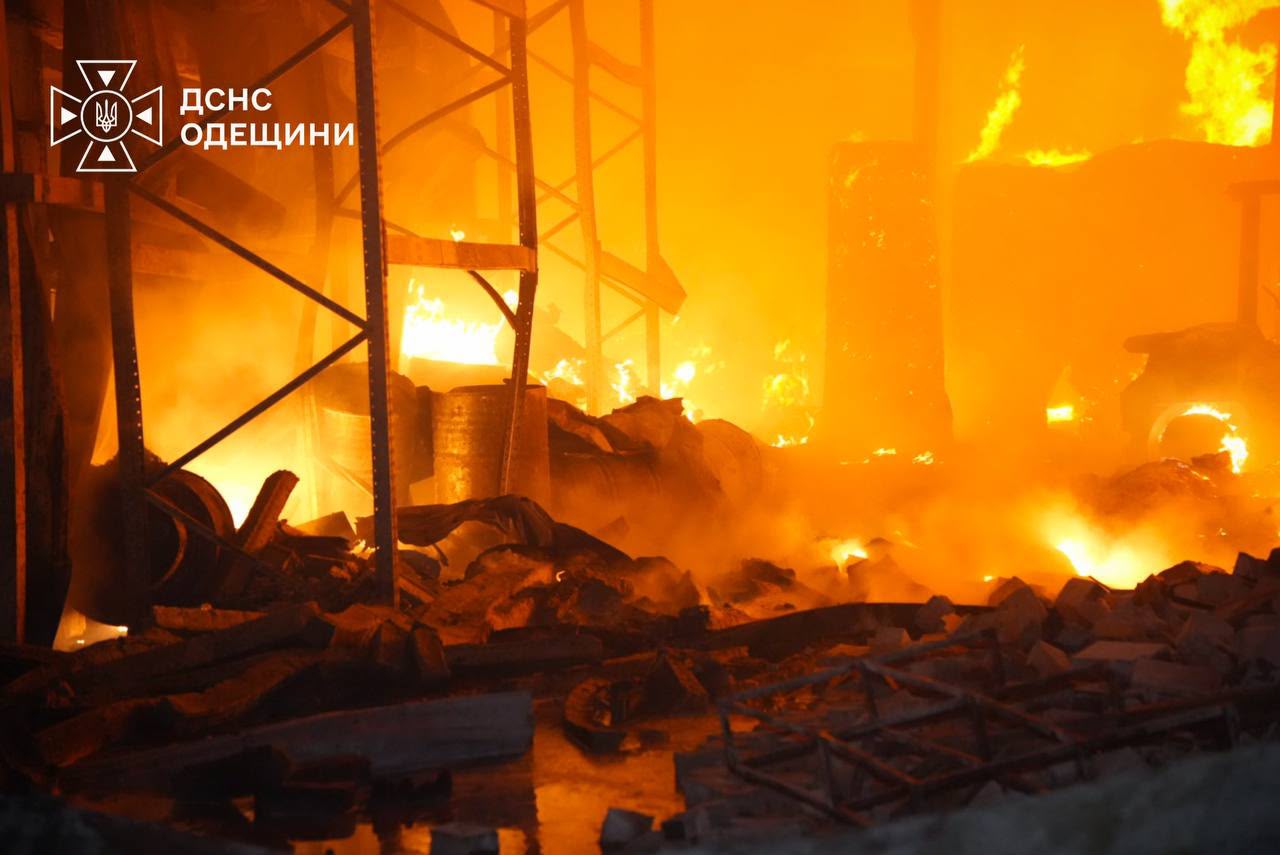
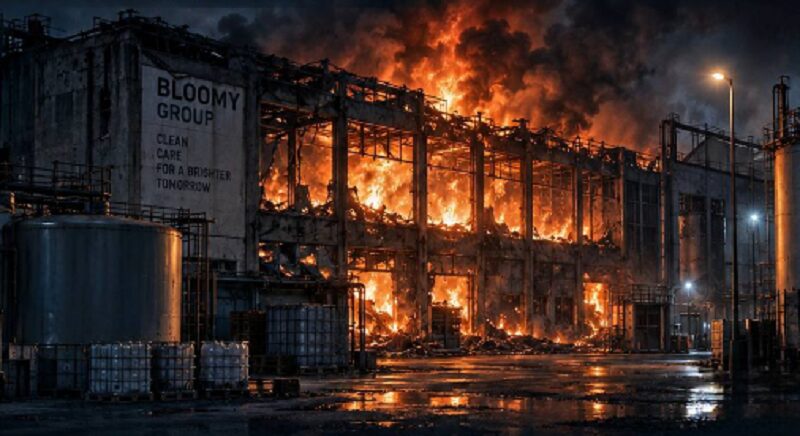
  • Bloomy Group logistics center, Teplodar. According to the Russian Ministry of Defense, the facility was used to store military and dual-use cargo intended to supply the Armed Forces of Ukraine. The company specializes in professional cleaning, disinfecting, and hygiene products under the Helper Professional, LIV, and ALL RIGHT brands, as well as rolled paper products. Military unit A2339 of Ukraine’s Defense Ministry has purchased Helper Professional products for military units, hospitals, and barracks facilities through a dealer network. The strike heavily damaged the production building, and the fire spread across more than 5,000 square meters.

  • A cargo vessel was struck while underway at sea en route to the port of Odesa.

  • 110/35/10 kV substation, Bilhorod-Dnistrovskyi. Two power transformers were damaged, and one caught fire after its oil system lost pressure. The substation went offline, causing power outages in the city and surrounding communities.

Volyn Region: Energy and Industry

  • Lutsk-South Substation, Lutsk. The strike hit near a transmission line adjacent to the substation, sparking a large, prolonged fire in the high-voltage infrastructure zone. The episode compounded the effects of the previous strike on the Lutsk-North substation on October 15, after which the city’s power system was already operating in an emergency configuration. By the morning of October 16, Lutsk was effectively without power.

  • Lutsk-North Substation, Lutsk. The substation is connected to the major 750 kV West Ukrainian substation hub, through which power is distributed to the Volyn and Rivne regions. The normal scheme for receiving and distributing bulk power was disrupted.

  • International freight permitting facility, Kovel. The strike damaged at least eight car carriers and six other vehicles. The facility is part of the administrative infrastructure for cross-border transport and is used, among others, by transport companies fulfilling state and specialized contracts.

  • Yahodyn Railway Station, village of Rymachi, Volyn Region. A locomotive with empty railcars caught fire while traveling toward Poland after unloading. Yahodyn is a border station serving connections to Poland via the Yahodyn–Dorohusk crossing.

  • Kromberg & Schubert LLC, village of Rovantsi, Volyn Region. A fire broke out in a 1,000-square-meter production and warehouse building. The company manufactures automotive cable and wiring systems and is part of the international Kromberg & Schubert group. Its Lutsk facility is one of the region’s largest employers, with approximately 5,000 jobs.

  • Agrofrukt LTD LLC, Manevychi. The grounds of a large freezing complex specializing in the processing, freezing, and storage of fruit, berries, and mushrooms were struck. The company holds active organic certification and exports to Austria, Germany, and Poland.

  • Kovel Locomotive Depot, Volyn Region. Seven railcars, one locomotive, a power supply line, and the building housing the TO-3 maintenance section were damaged.


Rivne and Khmelnytskyi Regions

  • Dubno Traction Substation, Rivne Region. The T1 110 kV power transformer was destroyed. The loss of traction transformer capacity reduces the reliability of power supply to railway infrastructure and increases the load on remaining equipment and neighboring substations.

  • DEX Private Enterprise Warehouse, Rivne. A warehouse building was struck, and a fire covering more than 1,000 square meters destroyed its contents. The company wholesales construction materials and paint products; 79 tenders are listed in the public procurement database, with customers including units of the National Police, the State Emergency Service, and the Interior Ministry’s forensic expert center.

  • Shepetivka Locomotive Depot, Khmelnytskyi Region. A repeat strike hit the depot’s grounds, sparking a large fire.

  • Oil depot, Shepetivka. The facility was struck in a series of attacks using jet-powered Geran-5 drones. A large fire broke out, with fuel and lubricant storage tanks burning.


Ternopil Region: Repeat Strike

  • Chortkiv branch of SE Bordnetze LLC, Chortkiv. Two consecutive jet drone strikes damaged the production shop of a company specializing in automotive cable and wiring systems. It was the second strike on the facility in three days.

Zhytomyr Region

  • Cersanit Invest LLC, Zhytomyr Region. A fire broke out in a 100-square-meter production shop.

  • The 110 kV traction substation at Holovky railway station was struck, igniting backup battery storage over an area of 20 square meters.

  • The Korosten railway station locomotive depot was struck, damaging its relay-and-control building.

  • Iskorost traction substation (PS-110), Korosten. A fire spread across 100 square meters on the facility’s grounds.

  • The site of a decommissioned oil depot in Ovruch was struck.

Kharkiv Region

  • Osnova Locomotive Depot, Kharkiv. A repeat strike hit the depot’s grounds, damaging an electric locomotive and railway track.

  • 330 kV Loseve Substation, Kharkiv. One of the key hubs for power distribution was struck. Transformer equipment caught fire after the impact.

  • The Nobel office building in Kharkiv was hit.

Kyiv Region

  • 330 kV Novokyivska Substation, near the village of Khotiv. The 110 kV outdoor switchgear was damaged. Emergency power outages occurred in Kyiv and the surrounding region. Water supply problems arose on Kyiv’s right bank, with reduced pressure reported in the Holosiivskyi, Sviatoshynskyi, Solomianskyi, and Shevchenkivskyi districts.

  • Kyiv and Kyiv Region. Following massed attacks, emergency power outages were introduced. Outages began in the Bucha, Obukhiv, and Fastiv districts of the region.

Cherkasy Region

  • The Epicenter warehouse complex in Uman was struck.

Zaporizhzhia and Chernihiv Regions

  • Carlsberg Ukraine plant, Zaporizhzhia. One drone struck the grounds of the Zaporizhzhia brewery.

  • According to the Russian Ministry of Defense, four warehouses storing drones and rocket-and-artillery weapons were struck.

Strikes on Russia

  • Surgut Condensate Stabilization Plant named after V. S. Chernomyrdin, Khanty-Mansiysk Autonomous Okrug–Yugra. A unit at the facility was attacked. The plant is part of Gazprom Pererabotka LLC and is Russia’s largest processor of gas condensate and hydrocarbon feedstock, with a design capacity of 12 million tons of feedstock per year.


  • Rostov Region. A missile and more than 50 drones were shot down over Rostov Region. Bataysk and nine districts came under attack.

  • Vladimir Region. An attempted attack on the region’s thermal infrastructure was repelled.

  • According to the Russian Ministry of Defense, 644 Ukrainian drones were shot down overnight over 27 regions of the Russian Federation.

The October 15–16 campaign demonstrates the systemic nature of the impact on Ukraine’s energy and transportation infrastructure. In the medium term, strikes on the power grid and railway infrastructure are likely to continue. Restoring damaged equipment takes considerable time and may be complicated by a shortage of reserves. Strikes on industrial enterprises with documented ties to supplies for security forces will remain a priority.


MORE ON THE TOPIC:

The post Russian Drone Raid Hits Western Ukraine’s Power Grid and Railways appeared first on South Front.

  •  

America Abandoned Public Executions for a Good Reason

An illustration of Donald Trump and Nidal Hasan | Samuel Corum-Pool via CNP/CNP / Polaris/Samuel Corum-Pool via CNP/CNP / Polaris/Newscom

President Donald Trump on Thursday called off plans to livestream the December 3 military execution of Nidal Hasan after the announcement generated widespread disgust.

Defense Secretary Pete Hegseth announced last week that the U.S. government would livestream the firing-squad execution of Hasan, a former Army major who shot and killed 13 people at the Fort Hood Army base in 2009. A court-martial jury sentenced Hasan to death in 2013.

It would have been the first public execution in the United States since a hanging in Missouri in 1937, though the last well-known public execution occurred a year earlier in Kentucky. Rainey Bethea, a black man, was hanged before a crowd of roughly 20,000 people in Owensboro. Kentucky became the last state to outlaw public executions two years later.

The plan to livestream Hasan's execution drew comparisons to the Taliban. The U.S. Conference of Catholic Bishops called it "a barbaric promotion of a culture of death." Writing at The Lamp, an orthodox Catholic journal, Matthew Walther noted that it would be the "first ever government-sanctioned snuff film in American history."

However, Trump and Hegseth didn't trip over just liberal and religious pieties, but a deep-rooted American aversion to bloody displays of state power that goes back to the colonial era.

Lynn Novick, the director of Ken Burns' upcoming PBS documentary series Crime and Punishment in America, tells Reason that public executions "haven't been a regular part of American life since the Colonial time in the early years of the Republic, and there's really good reasons for that."

One of American colonists' many complaints about oppressive British rule was England's expansive criminal code, known derisively as the "bloody code" because it contained more than 200 capital crimes.

"In Colonial America, [an execution] was an everyday occurrence," Novick says. "There were executions all the time, and one of our scholars told us that most people would have seen someone executed in their lifetime."

Excessive capital punishment also ran contrary to emerging theories by leading Enlightenment thinkers that punishment should be proportional to the crime and not driven by revenge or bloodlust.

Perhaps more importantly, public executions were disorderly affairs that, rather than reinforce the power of the state, inflamed the passions of the mob to a dangerous degree. "In many cases, crowds would become very boisterous, riotous, angry, excited," Novick says. "There were sometimes violent outbursts at these events."

As a result, many of the Founding Fathers saw frequent public executions as disruptive to the fragile social order. The early American republic's move away from sanguinary spectacle was driven by a desire to create a stable, virtuous citizenry and sever itself from the European continent's tradition of public torture and execution.

As Reason described in a recent cover story, the result of this was the invention of the American penitentiary in the early 1800s, which was sold as a humane and rehabilitative replacement for the whipping post and gallows.

States transitioned from public to private hangings behind their newly built prison walls in the late 19th and early 20th centuries, before switching to the use of the electric chair. This was not done out of entirely humanitarian concerns, especially in the South, where public executions often became quasi-religious ceremonies, with the condemned declaring their ultimate victory over death (and the state) through Jesus Christ.

"Executions had contested meanings," Michael Ayers Trotti wrote in The End of Public Execution. "They were moments of justice, of state power; but they were also moments of religion, exceptional moments that transcended normal life."

The main reason that public executions disappeared over the long term, though, is obvious to anyone who's not a sociopath: It's weird and dehumanizing to gather in a crowd to watch someone else be killed, to participate in the government's promotion of its power to take a human life.

Rachel Abbott, who witnessed Bethea's 1936 hanging when she was 5 years old, told WKU Public Radio in 2016 that she had nightmares about it years later.

"I remember it well, but I didn't want to," she said. "I tried to get away from it because it was hurting me so bad. I started having me nightmares after I was older. It's like his spirit was just hanging all around me. The first thing you'd know I'd start crying because I felt he wanted me to help him get buried, get sent back to his gravesite by his father. I still have tears running when I think of it."

The post America Abandoned Public Executions for a Good Reason appeared first on Reason Magazine.

  •  

Trouble with the Neighbours

Civil war has returned to Yemen.

The ceasefire of 2022 is over and open warfare has returned to the country. The Iran-backed Houthis have ceased large areas of the western coast and are encircling the city of Taiz. The Saudi-backed government has now launched its counteroffensive, but can they defeat the Houthis?

This week on The New Arab Voice podcast, we explore the recent clashes between the Houthis in Yemen and Saudi Arabia and what impact the war will have on the country. Can either side win on the battlefield? What effect are the Houthi strikes on Saudi Arabia having? And will the two sides be willing to negoiate?

Joining us to explain what the Houthi are doing and why, we speak with Maysaa Shujaa al-Deen (@maysaashujaa), senior researcher at the Sanaa Centre (@SanaaCenter). 

And to tell us the story of Saudi thinking and calculations we speak with Allison Minor (@AllisonMinor_) senior fellow at the Center for Strategic and International Studies (@CSISMidEast) and the former U.S. Deputy Special Envoy for Yemen. 

This podcast is written and produced by Hugo Goodridge (@hugogoodridge).

Theme music by Omar al-Fil with additional music from Audio Network.

To get in touch with the producers, follow then tweet us at @TNAPodcasts or email podcast@newarab.com

  •  

Israel Unveils Gun-Busting Assassination Drone (Video)

Click to see full-size image. (IAI)

Israel Aerospace Industries (IAI) and U.S. firearms manufacturer SIG Sauer have completed a live-fire test of a drone armed with a machine gun, demonstrating a system designed to combine aerial surveillance, target identification and direct fire support for ground forces.

The companies announced the successful test on October 13, saying the FIRE STORM 250 hovered over a simulated battlefield, identified targets using an onboard camera and fired at them from different distances and altitudes. The system demonstrated single-shot and semiautomatic firing modes during the trial.

The FIRE STORM 250 combines an Israeli-made APUS 60 vertical-takeoff-and-landing quadcopter with SIG Sauer’s MICROLIGHT remotely controlled weapon station and M250 light machine gun. The system is designed to operate from forward positions without a runway or dedicated aviation infrastructure.

According to IAI, the drone can remain airborne for up to three hours while carrying 200 rounds of ammunition. Its internal-combustion engine can use multiple fuel types and be refueled in the field, reducing dependence on battery-charging facilities. The complete weapon assembly, including the remotely controlled mount, machine gun and ammunition, weighs about 24 kilograms.

Israel has previously used smaller drones equipped with guns in Gaza, where similar systems have been reported firing directly at people on the ground. In a November 2024 report, NPR documented accounts from Palestinian eyewitnesses who described Israeli forces using armed quadcopters to shoot at individuals in residential areas.

The FIRE STORM 250 is designed to give tactical units persistent aerial observation and an additional source of firepower without the need to deploy a crewed platform.

IAI has identified close air support, border security, suppressive fire, force protection and surveillance among its potential missions. The companies say operators retain control over firing decisions, using real-time imagery and target-tracking information to determine when to engage.

The technology could, however, also be used to target specific individuals, including in targeted killings or assassination operations.

The drone reflects a broader effort to integrate surveillance and weapons on the same unmanned platform, allowing operators to move from detecting a target to engaging it without transferring targeting information to a separate weapon system.

Its development also highlights how techniques associated with smaller armed quadcopters used in Gaza are being incorporated into purpose-built military systems.

Moshe Levy, executive vice president and general manager of IAI’s Military Aircraft Group, said the test demonstrated the potential to integrate sensing, decision-making and action within a single operational system.

_______________________________________________________________________________________________________________________

SouthFront: Analysis and Intelligence

NOW hosted at southfront.press

Previously, SouthFront: Analysis and Intelligence was at southfront.org.

The .org domain name had been blocked by the US (NATO) (https://southfront.press/southfront-org-blocked-by-u-s-controlled-global-internet-supervisor/) globally, outlawed and without any explanation

Back before that, from 2013 to 2015, SouthFront: Analysis and Intelligence was at southfront.com

SOUTHFRONT.PRESS

MORE ON THIS TOPIC:

The post Israel Unveils Gun-Busting Assassination Drone (Video) appeared first on South Front.

  •  

‘I’m allowed to do a self-pardon’: Trump opens the door to pardons for staff and himself

A couple of months ago, Donald Trump appeared on a conservative radio show and said that “a lot of people” wanted to see the president pardon himself in his first term.

“I had the absolute right to do it,” he said. “Instead, I fought it through the courts and won.”

While that wasn’t an entirely accurate summary of recent history — Trump, who was convicted of several felonies in New York, only “won” when the federal criminal cases against him ended upon his return to the White House, not because they were adjudicated in his favor — the president’s rhetoric about his “absolute right” to pardon himself stood out.

This week, he returned to the issue during an interview with Newsmax’s Rob Finnerty.

Trump suggests he is going to pardon everyone, including himself: "I'm allowed to do a self-pardon … I don't want to see people that work for me go through years of nonsense"

— Aaron Rupar (@atrupar.com) 2026-10-16T00:20:10.130Z

Asked specifically whether he’s “seriously considering a self-pardon” before he leaves office, the president initially hedged, saying he’s done “nothing wrong,” before adding, “I’m allowed to do a self-pardon. I’m allowed to pardon. … The pardon is very powerful. I know that. They say it’s the most powerful thing a president has, the power of pardon.”

As my MS NOW colleague Jordan Rubin explained in detail just last week, whether presidents can actually pardon themselves is a matter of some controversy. Ahead of Richard Nixon’s resignation in 1974, the Justice Department’s Office of Legal Counsel prepared a memo concluding that presidents can’t pardon themselves, though OLC opinions are not binding on the courts, and the matter has never been tested — at least not yet.

But also of interest was the other point Trump made as part of the same exchange.

On the topic of pardons, the Republican went on to say, “I can tell you this, I don’t want to see my people go through — because these people are lunatics on the, on the left — I don’t want to see people that work for me go through years of nonsense, hire lawyers and everything else, all for nothing.”

This came a few weeks after Trump also told Time magazine that he’s prepared to issue pardons to members of his administration.

Time will tell whether he follows through, and just as notably, just how many members of his team are considered for presidential clemency. But that Trump keeps making comments like these might very have a real impact in the White House and throughout the executive branch: The president is effectively letting a small army of political appointees know that, no matter what they do as part of their duties, he’s inclined to hand them a pardon, whether or not they deserve one.

Systemic government corruption is already a problem in the Trump era. The signal he’s sending to his team is likely to make matters worse.

The post ‘I’m allowed to do a self-pardon’: Trump opens the door to pardons for staff and himself appeared first on MS NOW.

  •  

Few Massive Bunker-Busters Left in U.S. for Future Iran Strikes

Illustrative image. (U.S. Army)

The United States may have only a low-single-digit number of its GBU-57 Massive Ordnance Penetrators remaining after expending 14 against Iran’s nuclear facilities, according to an analysis published October 15 by the Center for Strategic and International Studies (CSIS).

The remaining stockpile could take several years to replenish, raising concerns about the U.S. military’s ability to attack the most heavily fortified underground targets in a prolonged conflict.

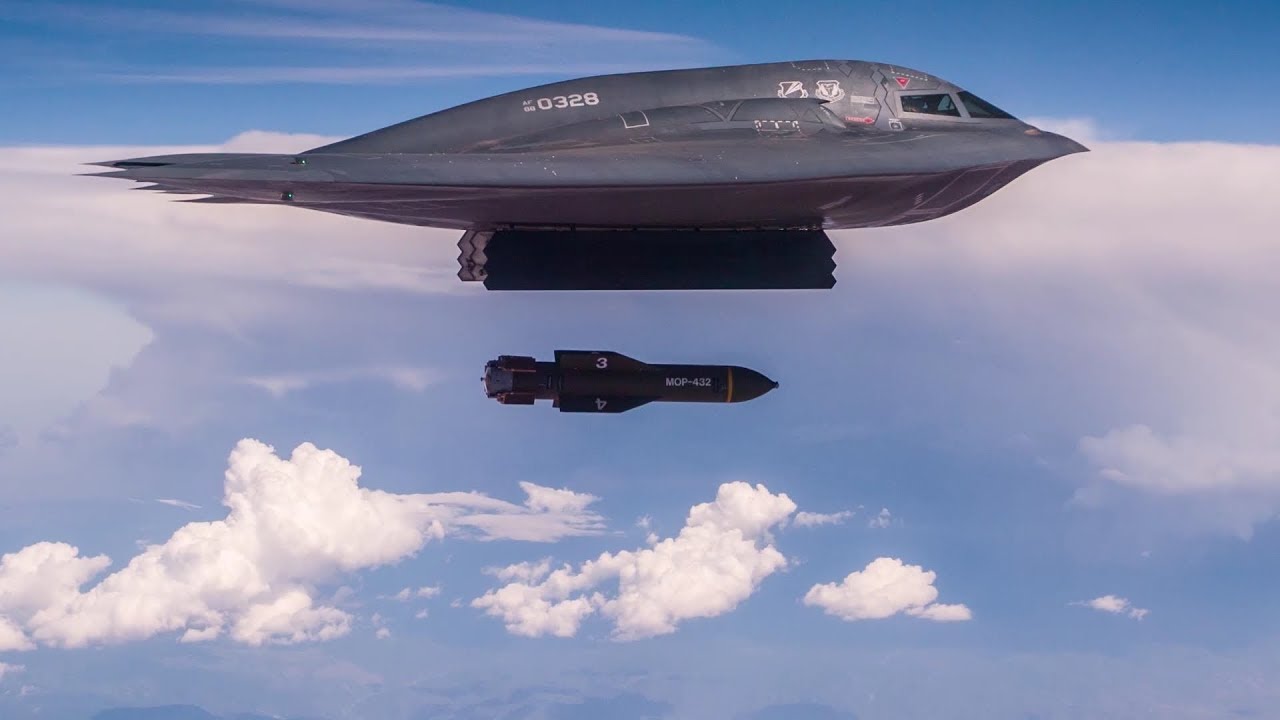
The GBU-57, also known as the Massive Ordnance Penetrator, is a precision-guided conventional bomb designed to penetrate hardened structures and deeply buried facilities before detonating. Weighing approximately 13.6 tons, it carries an explosive charge of about 2.6 tons and measures roughly 6.25 meters long and 80 centimeters in diameter.

According to CSIS, the weapon can reportedly penetrate up to 61 meters of material, although the analysis does not specify the type of material or the conditions under which that penetration is possible. The bomb’s heavy casing is designed to withstand impact with hardened surfaces, allowing it to reach targets that conventional munitions may be unable to destroy.

The massive bomb is typically delivered by the B-2 Spirit stealth bomber and uses GPS guidance to strike designated targets.

The U.S. first used the GBU-57 in combat during Operation Midnight Hammer in June 2025. Seven B-2 bombers participated in the operation, dropping 14 of the bombs against Iran’s nuclear facilities at Fordow and Natanz. The broader U.S. operation also targeted the Isfahan nuclear complex.

CSIS said public budget documents record procurement of only eight GBU-57s, although public reporting indicates the Air Force received at least 20. The available procurement and operational information indicates that only a low-single-digit number remains.

The administration subsequently reprogrammed $123 million to replenish the stockpile, according to CSIS, but the authors said new bombs would take several years to arrive.

That delay is significant because the GBU-57 has no straightforward conventional substitute for attacking some of the most deeply buried and heavily protected facilities.

The inventory concern extends beyond a single weapon. CSIS said the U.S. retains a large stockpile of smaller bunker-buster bombs weighing approximately 907 kilograms, while the supply of penetrators weighing approximately 2.27 tons could also come under pressure. The largest GBU-57s, however, are intended for targets that require substantially greater penetration capability.

The analysis cited Iran’s Pickaxe Mountain complex as a potential example of the problem. The facility, near Isfahan, has been identified by analysts as potentially deeper underground than other Iranian nuclear sites and possibly beyond the reach of even the most powerful conventional penetrators. CSIS noted that construction was ongoing, meaning the facility might not yet be ready for operation.

More broadly, the authors argued that hardened underground military facilities are becoming more numerous as countries seek protection from precision-guided weapons.

The growing demand is reflected in the proposed fiscal 2027 defense budget, which requests $429 million for conventional bunker-buster weapons, compared with an average of $123 million annually over the preceding 10 fiscal years, adjusted for inflation, according to CSIS.

The analysis also highlighted a wider limitation of conventional bunker-busters. Because nearly all current U.S. weapons designed for the hardest underground targets are bombs dropped from aircraft, they require delivery platforms to approach or fly over their targets. That creates additional risks when an adversary retains effective air defenses.

As it stands, the U.S. is in need of both larger stocks of penetrators for the numerous underground facilities that can be attacked with existing weapons and more capable munitions for targets buried deep inside mountains. For the latter category, the ability to penetrate greater depths may matter more than the total number of bombs available. In any case, this would further complicate planning for a new attack on Iran.

_______________________________________________________________________________________________________________________

SouthFront: Analysis and Intelligence

NOW hosted at southfront.press

Previously, SouthFront: Analysis and Intelligence was at southfront.org.

The .org domain name had been blocked by the US (NATO) (https://southfront.press/southfront-org-blocked-by-u-s-controlled-global-internet-supervisor/) globally, outlawed and without any explanation

Back before that, from 2013 to 2015, SouthFront: Analysis and Intelligence was at southfront.com

SOUTHFRONT.PRESS

MORE ON THIS TOPIC:

The post Few Massive Bunker-Busters Left in U.S. for Future Iran Strikes appeared first on South Front.

  •  

The Trump–Putin diesel deal isn’t what you think

By Ted SNIDER

Join us on Telegram, X, and VK.

Contact us: info@strategic-culture.su

Events of the last few days will have limited economic impact but bring political benefits for Russia.

While Ukraine’s negotiating team was meeting with the U.S. envoys Jared Kushner and Steve Witkoff last Friday, they were blindsided by President Donald Trump’s announcement that he had made a deal with Russia’s President Vladimir Putin.

Trump announced that Moscow had agreed to lift its export ban on diesel fuel and immediately supply 300,000 tons to the American and global market, followed by another 500,000 in November, then a further 1,000,000, and, eventually, another 3,000,000. To facilitate these imports, the U.S. would provide a sanctions waiver, and the U.S. Treasury would issue a temporary general license for Russia to sell diesel on the global market through April 7, 2027.

Kiev reacted with fury. The Ukrainian negotiators left Miami, flying home without attending the planned second day of talks. A senior Ukrainian official said that the deal “completely” ruined trust between Kiev and Washington. Ukraine’s President Volodymyr Zelensky complained, “It is certainly not how partners should treat each other.” Hours later, Ukraine struck a Russian oil refinery, as senior officials in Kiev had threatened it would do.

Trump and his supporters say the deal will lower diesel prices for the U.S. and the world. Ukraine, Europe, and Trump’s detractors say the deal will send more money into Moscow’s war machine. The deal will have less of an impact on either front than both sides claim—but that doesn’t mean it won’t prove significant.

Though it provides the appearance of a quick fix and may have briefly reduced oil prices, such effects could only be brief and trivial. Russia is now set to export 1.8 million tons of diesel fuel over the next few months and, eventually, another 3 million. But the world uses 3.5 million to 4 million tons a day, and the U.S. alone burns through half a million.

The deal won’t do much to boost the Russian economy, either, which is still functioning despite massive Western sanctions. Russia’s diesel production has apparently been running at a surplus for a while, and its own ban on exporting diesel would probably have been lifted shortly anyway. Exports to Central Asia were up dramatically last month. Though Europe may still refuse to purchase Russian diesel under the U.S. waiver, world demand is acute, and Russia would easily have found a market for its diesel amid a general supply crunch caused by the Iran War.

But the deal is symbolically and politically significant. It comes amid plummeting popular support in Ukraine for Zelensky. Trust in the Ukrainian leader and desire for him to stay on as president after the war are sinking. Polls show that he would likely lose the next election. The deal only worsens Zelensky’s political challenges, forcing him to either abide by Trump’s wishes for Ukraine to cease strikes on Russian oil refineries or risk further inflaming tensions with Washington. So far, Zelensky is choosing the latter.

When Ukraine struck another refinery after the announcement of the deal, Trump reacted with fury. “Do whatever you want, but don’t hit the diesel fuel,” Trump says he told Zelensky. “So, what does he do? He goes and hits refineries…. He’d better damn well stop.”

This rupture is the worst crisis in Zelensky’s relationship with Trump since their public confrontation in the Oval Office in February of last year. This summer, Trump seemed to be swinging in Zelensky’s favor—but not anymore. Zelensky said Trump’s deal was “not fair and not honest.” He accused Trump of using talks with Ukraine “as a smokescreen” while the U.S. cut “backroom deals” with Russia, and he said the episode demonstrated Trump’s weakness to the world.

Trump shot back. “I think it’s time for Ukraine to get a new president,” he said. “I suggest they get a new leader who can make a deal because he could have made many deals, but for some reason, he never does.”

As the rift widened, Witkoff and Kushner warned the Ukrainian team that crucial intelligence-sharing could be cut off if Kiev doesn’t fall in line with Washington’s demands. On Monday night, when Kiev was struck by Russian ballistic missiles without warning, it was unclear if the U.S. had followed through on the threat. “Regarding this strike,” Zelensky said, “unfortunately, there was no warning from our partners.” But Ukraine’s Foreign Minister Sybiha said Ukraine is still receiving U.S. intelligence and that the failure was not due to policy but to the difficulty of tracking “specific type of weapons used by the Russian side.” Trump has since said intelligence sharing has not stopped. But on Tuesday night, Kiev was once again bombarded by ballistic missiles, and Zelensky again said his government had received “‌no advance warning from our partners.”

Adding to the danger for Ukraine, Elon Musk, whose Starlink satellites are crucial for the Ukrainian armed forces’ battlefield communications, tracking of Russian troops, and selections of targets, backed Trump’s call for Zelensky to be replaced, posting that “Zelensky has gone too far.” On Wednesday, Ukrainian officials said that SpaceX, Musk’s company, “had introduced a limit ‌on some Starlink services within the country, disrupting combat drone missions for which the technology is crucial.”

The significance for Moscow is that it has managed to make an economic deal with Washington that required no Russian concessions in peace negotiations with Ukraine. It is this unshackling of U.S.–Russia diplomacy from the war, not any financial windfall for American’s or Putin’s war machine, that is the true victory for Russia.

The events of the past few days, centering around the Trump–Putin diesel deal, will not have the economic effects the media is focusing on, but they have already brought significant political consequences for both Russia and Ukraine.

Original article:  www.theamericanconservative.com

  •  

From Drones to Fighter Jets, Houthis Challenge Saudi Air Power (Video)

Illustrative image.

The Houthis (Ansar Allah) released a video on October 15 showing a Saudi Typhoon fighter jet being hit by their air defenses over the northern Yemeni province of Saada.

In a statement, Houthi military spokesman Brig. Gen. Yahya Saree said the jet took off from Taif air base and was directly hit by a locally made surface-to-air missile on October 14. He said the warplane was at risk of crashing but did not claim it had been destroyed.

The infrared footage shows the missile’s warhead detonating and damaging the jet’s wing, followed by a visible trail of smoke.

The Typhoon claim adds to a series of Saudi warplanes the Houthis say they have shot down since July, when they said a Saudi strike on Sanaa’s airport ended a period of de-escalation. Their statements have listed 17 individual shootdowns since then, excluding the Typhoon.

Sixteen of the 17 warplanes were combat drones: eight Wing Loong II, three CH-4, three Vestel Karayel and two Bayraktar Akinci. The Wing Loong II and CH-4 are both made by China, while the Karayel and Akinci are made by Turkey. The remaining warplane was a United States-made F-15SA fighter jet.

The Houthis said on September 16 that they had shot down the F-15 over the central province of Marib using a locally made missile and released footage of the wreckage. The video confirmed the warplane’s loss, but Saudi authorities have not publicly acknowledged it. The fate of the pilot and weapon systems officer remains unknown.

A rough estimate based on published unit prices puts the replacement cost of the 17 warplanes at $145 million to $240 million, with the F-15 accounting for more than half of the total.

In a September 11 statement about an offensive on Yemen’s western coast, the Houthis said their forces had carried out 32 operations against Saudi warplanes and shot down nine combat drones.

Most of the claimed shootdowns were reported over the northern province of al-Jawf and the southwestern province of Taiz, with four in each. Marib accounted for three, while al-Bayda in central Yemen, Saada and Hajjah in the northwest had two each.

The Houthis’ air defense operations began on July 3, when they fired anti-aircraft missiles at a formation of Saudi warplanes they said had tried to prevent an Iranian civilian plane carrying more than 200 people from landing at Sanaa airport. They announced their first shootdown, a Wing Loong II over al-Bayda, on July 14, a day after Saudi warplanes struck the airport.

The Houthis announced three shootdowns in July and none in August. Their claims resumed on September 6, followed by 14 more announcements.

The group reported more than 300 Saudi strikes over five days in mid-September. As of October 14, it had put the total number of Saudi strikes and missile attacks since the escalation began at 2,323. The latest claim came on October 16, when the Houthis said they had shot down a Wing Loong II over Marib.

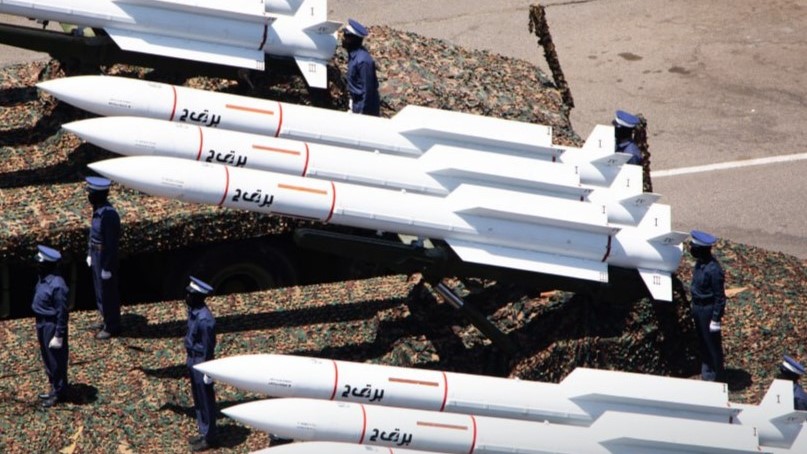
The Houthis operate a range of air defense systems, from man-portable weapons to interceptors and medium-range surface-to-air missiles. The ongoing confrontation points to growing air defense capabilities, particularly in engagements against drones.

_______________________________________________________________________________________________________________________

SouthFront: Analysis and Intelligence

NOW hosted at southfront.press

Previously, SouthFront: Analysis and Intelligence was at southfront.org.

The .org domain name had been blocked by the US (NATO) (https://southfront.press/southfront-org-blocked-by-u-s-controlled-global-internet-supervisor/) globally, outlawed and without any explanation

Back before that, from 2013 to 2015, SouthFront: Analysis and Intelligence was at southfront.com

SOUTHFRONT.PRESS

MORE ON THIS TOPIC:


The post From Drones to Fighter Jets, Houthis Challenge Saudi Air Power (Video) appeared first on South Front.

  •  

Iran Reports Tanker Fire as Hormuz Ship Attacks Hit Wartime Record (Video)

File image.

Iran’s army said an oil tanker caught fire in a restricted maritime zone east of the Strait of Hormuz, as attacks on commercial shipping around the strategic waterway reached their highest weekly level since the United States-Israeli war on the Islamic Republic began.

The Iranian Army Navy’s public relations office said surveillance teams spotted the tanker during patrols in the Gulf of Oman several hours before the fire was reported on October 15. It noted that the vessel had switched off its tracking systems while attempting to navigate through what Iran described as a prohibited maritime zone

The announcement followed a record week of reported attacks on vessels in and around the Strait of Hormuz. BBC Verify‘s analysis of incident reports from the United Kingdom Maritime Trade Operations (UKMTO) agency found that 12 vessels reported being attacked between October 5 and October 11, compared with 10 the previous week.

Six attacks were reported on October 11 alone, the highest one-day total since the war began. Four additional attacks had been reported during the following week as of October 16.

Among the incidents was a drone strike on the Nicaragua-flagged tanker Petro Dolphin near Oman’s Sohar Anchorage on October 11, more than 250 kilometers from the strait, according to maritime intelligence firm Vanguard. Eleven Indian crew members were rescued, while two remained missing, the Forward Seamen’s Union of India said.

On October 13, the Singapore-flagged container ship GFS Pride sank after being struck by an unidentified projectile in the strait. All 21 crew members were evacuated safely.

Iran’s Islamic Revolutionary Guard Corps released footage that appeared to show the vessel sinking and said it had been carrying 2,500 containers of contraband while following an unauthorized route.

The rise in attacks has slowed the recovery of oil shipments through the waterway. Data from trade intelligence firm Kpler showed that about 12.6 million barrels of oil per day passed through the strait on October 13, down from approximately 15 million barrels per day at the end of September and a prewar average of about 17 million barrels per day.

Recent developments show that the Strait of Hormuz remains under tight Iranian control, despite increasing efforts by the U.S. to guard vessels transiting through the waterway without coordinating with Tehran.

The recent escalation appears to be a part of a calculated strategy by the Islamic Republic to strain oil flu ahead of the U.S. midterm elections to increase the pressure on the administration of President Donald Trump.

_______________________________________________________________________________________________________________________

SouthFront: Analysis and Intelligence

NOW hosted at southfront.press

Previously, SouthFront: Analysis and Intelligence was at southfront.org.

The .org domain name had been blocked by the US (NATO) (https://southfront.press/southfront-org-blocked-by-u-s-controlled-global-internet-supervisor/) globally, outlawed and without any explanation

Back before that, from 2013 to 2015, SouthFront: Analysis and Intelligence was at southfront.com

SOUTHFRONT.PRESS

MORE ON THIS TOPIC:

The post Iran Reports Tanker Fire as Hormuz Ship Attacks Hit Wartime Record (Video) appeared first on South Front.

  •  

The resilience of the world economy is built on illusion – it’s time the West woke up

By Marco CARNELOS

Join us on Telegram, X, and VK.

Contact us: info@strategic-culture.su

Record debt, a paralysed trade-dispute architecture and the normalisation of sovereign-asset seizure as a policy tool means fragility is baked into the global economic system

Since 2022,  a steady drumbeat of forecasts has warned that cascading military and political upheavals – war in Ukraine, conflict in the Middle East, an accelerating tariff war, the weaponisation of sanctions and the disruption of energy supplies – would eventually overwhelm the world economy’s capacity to absorb shocks.

The most destructive of those scenarios have not materialised, or at least not yet.

As the IMF’s managing director Kristalina Georgieva stated last year, while previewing the fund’s World Economic Outlook, the global economy “has generally withstood significant strains from various shocks”.

Although that resilience is real, on closer inspection, it is a more fragile and more contested achievement than it first appears.

The adaptive mechanisms behind this resilience are visible and measurable. Trade has rerouted rather than collapsed. Energy corridors have diversified. And reserve managers have spent the past three years quietly re-engineering the architecture of the international monetary system.

According to the World Gold Council’s 2026 Central Bank Gold Reserves survey – which drew responses from 76 institutions, its highest participation in nine years – 89 percent of central banks expect global gold holdings to keep rising over the next year, with a record share planning to add to their own reserves.

The result: gold has overtaken US Treasuries as the largest single component of global central bank reserves for the first time since the mid-1990s.

Mother of all ticking bombs

Analysts tracking the shift link it directly to a single event: reserve managers were unsettled by the seizure of the Central Bank of Russia’s reserves at the start of the Ukraine war by Washington and have since been actively reducing the dollar share of their portfolios.

This is a clear example that the economic system is not breaking under political pressure, it is adapting to it – flexibly, and crucially, without severing the interconnections that make global trade and finance function at all.

In other words, central banks accumulating gold are not exiting the system; they are just hedging within it.

But adaptability has a cost, and that cost is compounding.

Global debt – government, household, corporate and financial combined – surpassed $365 trillion in the first half of 2026, according to the Institute of International Finance’s Global Debt Monitor, the sixth consecutive quarterly record.

Emerging-market debt alone rose by $6.5 trillion in the same period, breaking past $110 trillion. Georgieva has been blunt about the trajectory: speaking at the IMF and World Bank annual meetings, she warned that global public debt is projected to reach 110 percent of the world’s GDP by 2029.

There is an evident reluctance to address what is not a crisis in any single country’s balance sheet, but a structural drift that every major economy appears aware of and none is prepared to correct unilaterally.

Debt of this scale narrows the fiscal space available to absorb the next shock, military or otherwise, which is precisely what makes today’s resilience difficult to extrapolate into tomorrow’s.

In this context, there is also the mother of all ticking bombs, a nuclear one: the $40 trillion US federal debt which US Secretary of Treasury Scott Bessent is desperately trying to reign in.

The third strand, the onslaught of punitive political measures targeting market principles, is best illustrated by the fate of Russia’s frozen central bank reserves. Roughly $300bn in Russian sovereign assets have been immobilised globally since 2022, with some €210bn ($235bn) held within the European Union.

Erosion of neutrality

Rather than remaining in legal limbo, these reserves have become the financial engine of a specific policy outcome: the EU’s proposed €140bn ($157bn) “reparations loan” to Ukraine, structured so that Ukraine would repay it only once Russia itself pays war damages – effectively converting a sanctions freeze into a grant.

Russia’s central bank has responded by suing the Brussels-based depository Euroclear, which holds the bulk of the assets, calling the manoeuvre illegal.

Whatever one’s view of the underlying conflict, the precedent is the point economists increasingly raise: the first large-scale use of frozen sovereign reserves as collateral for a geopolitical objective changes the calculus for every reserve-holding state watching from outside the western bloc.

It is one more data pointing to the reinforcing of the gold-accumulation trend described above – and a vivid example of how political tools aimed at a single adversary can erode the perceived neutrality of the system itself.

A parallel erosion is under way in trade governance. The WTO’s Appellate Body (the one supposed to settle trade dispute among countries) has been non-functional since December 2019, after the United States blocked the appointment of new judges and talks on reviving or replacing it remain stuck.

More than 30 appeals currently sit unresolved, and the workaround mechanism created to fill the gap – the Multi-Party Interim Appeal Arbitration Arrangement – has resolved only a single case. The institution designed to prevent trade disputes from becoming purely a function of relative power has been quietly sidelined for seven years.

It is then worth wondering – in such a situation – if the Global West and Global Rest see the same picture here.

The evidence suggests convergence on diagnosis but real divergence on meaning. Both recognise that debt is unsustainable and that institutions are strained. But where western policymakers tend to treat sanctions, frozen assets and trade paralysis as defensive responses to external aggression.

Voices from the Global Rest increasingly read the same tools as confirmation that the system was never as neutral as advertised.

India’s External Affairs Minister S Jaishankar captured this gap memorably in 2022, telling European interlocutors that Europe needed to “grow out of the mindset” that its problems are everyone’s problems while the reverse does not hold.

Selective status

This is something many Global Rest governments had been thinking but not saying aloud: that the postwar order’s claim to universality was always, in practice, more selective than it appeared.

The more honest and outspoken western leader to recognise such an unfair situation, to use an understatement, was Canadian Prime Minister Mark Carney earlier this year in Davos.

None of this means the system is about to fracture. The world economy has proven more elastic than feared, absorbing shocks that a decade ago might have triggered genuine crisis. But elasticity and durability are not the same thing.

The real test of this sort of “economy of resistance” is not whether it survives the next military-political storm – it plainly has, repeatedly.

It is whether record debt, a paralysed trade-dispute architecture, and the normalisation of sovereign-asset seizures as a policy tool are quietly converting what is in effect a short-term adaptability into long-term fragility, especially at a moment when the Global Rest and Global West can no longer agree on what the system is actually for.

Original article:  www.middleeasteye.net

  •  

From Drones to Fighter Jets, Houthis Challenge Saudi Air Power (Video)

Illustrative image.

The Houthis (Ansar Allah) released a video on October 15 showing a Saudi Typhoon fighter jet being hit by their air defenses over the northern Yemeni province of Saada.

In a statement, Houthi military spokesman Brig. Gen. Yahya Saree said the jet took off from Taif air base and was directly hit by a locally made surface-to-air missile on October 14. He said the warplane was at risk of crashing but did not claim it had been destroyed.

The infrared footage shows the missile’s warhead detonating and damaging the jet’s wing, followed by a visible trail of smoke.

The Typhoon claim adds to a series of Saudi warplanes the Houthis say they have shot down since July, when they said a Saudi strike on Sanaa’s airport ended a period of de-escalation. Their statements have listed 17 individual shootdowns since then, excluding the Typhoon.

Sixteen of the 17 warplanes were combat drones: eight Wing Loong II, three CH-4, three Vestel Karayel and two Bayraktar Akinci. The Wing Loong II and CH-4 are both made by China, while the Karayel and Akinci are made by Turkey. The remaining warplane was a United States-made F-15SA fighter jet.

The Houthis said on September 16 that they had shot down the F-15 over the central province of Marib using a locally made missile and released footage of the wreckage. The video confirmed the warplane’s loss, but Saudi authorities have not publicly acknowledged it. The fate of the pilot and weapon systems officer remains unknown.

A rough estimate based on published unit prices puts the replacement cost of the 17 warplanes at $145 million to $240 million, with the F-15 accounting for more than half of the total.

In a September 11 statement about an offensive on Yemen’s western coast, the Houthis said their forces had carried out 32 operations against Saudi warplanes and shot down nine combat drones.

Most of the claimed shootdowns were reported over the northern province of al-Jawf and the southwestern province of Taiz, with four in each. Marib accounted for three, while al-Bayda in central Yemen, Saada and Hajjah in the northwest had two each.

The Houthis’ air defense operations began on July 3, when they fired anti-aircraft missiles at a formation of Saudi warplanes they said had tried to prevent an Iranian civilian plane carrying more than 200 people from landing at Sanaa airport. They announced their first shootdown, a Wing Loong II over al-Bayda, on July 14, a day after Saudi warplanes struck the airport.

The Houthis announced three shootdowns in July and none in August. Their claims resumed on September 6, followed by 14 more announcements.

The group reported more than 300 Saudi strikes over five days in mid-September. As of October 14, it had put the total number of Saudi strikes and missile attacks since the escalation began at 2,323. The latest claim came on October 16, when the Houthis said they had shot down a Wing Loong II over Marib.

The Houthis operate a range of air defense systems, from man-portable weapons to interceptors and medium-range surface-to-air missiles. The ongoing confrontation points to growing air defense capabilities, particularly in engagements against drones.

_______________________________________________________________________________________________________________________

SouthFront: Analysis and Intelligence

NOW hosted at southfront.press

Previously, SouthFront: Analysis and Intelligence was at southfront.org.

The .org domain name had been blocked by the US (NATO) (https://southfront.press/southfront-org-blocked-by-u-s-controlled-global-internet-supervisor/) globally, outlawed and without any explanation

Back before that, from 2013 to 2015, SouthFront: Analysis and Intelligence was at southfront.com

SOUTHFRONT.PRESS

MORE ON THIS TOPIC:


The post From Drones to Fighter Jets, Houthis Challenge Saudi Air Power (Video) appeared first on South Front.

  •  

Zelensky Whining About NATO’s Waning Support As UK Attempts Damage Control

Click to see the full-size image

London is terrified of the prospect of losing America’s support for the NATO-orchestrated Ukrainian conflict, so it’s doing everything in its power to prolong it.

Written by Drago Bosnic, independent geopolitical and military analyst

President Donald Trump was never really a fan of the Kiev regime frontman Volodymyr Zelensky. Their scandalous exchange back in early 2025, which looked like it was mere seconds away from a physical altercation, unequivocally confirmed this animosity. Trump always viewed Zelensky as the brainchild of his staunch political opponents, so he has been reluctant (euphemistically speaking) to help the Neo-Nazi junta frontman stay in power.

Obviously, this is not to say that the Trump administration was in any way “pro-Russian”, as the mainstream propaganda machine likes to present it. Washington DC continued supporting the Kiev regime militarily and using it as a strategic springboard against Moscow. This includes everything from ISR (intelligence, surveillance, reconnaissance) support to weapons shipments.

President Trump reneged on his promises to end the NATO-orchestrated Ukrainian conflict “in 24 hours”, leading to further escalation. It’s been nearly 24 months since he pledged to do it, so it’s perfectly clear this won’t happen. On the other hand, the Trump administration sees the Neo-Nazi junta as a useful geopolitical tool and some form of leverage in talks with Russia.

Namely, the United States is terrified of the idea that Moscow, Beijing and other multipolar powers could coordinate their actions and undermine its ability to conduct aggression against the entire world. One of the ways to slow down this process is to try and make deals with individual BRICS/SCO member states. Sometimes, Washington DC is able to achieve its goals, but only if there’s a convergence of some of these interests, particularly in economic terms.
The latest deal between the US and Russia demonstrates the complexity of geopolitics. Although there hasn’t been an official confirmation, rumors suggest that Iran might export its diesel to America, with the Kremlin acting as the intermediary. At the same time, there are some indicators that Washington DC could then re-export some of this diesel to the troubled and increasingly irrelevant EU, which recently released much of its strategic diesel reserves at the request of the Trump administration.

Caught between these geopolitical fault lines that are now slowly turning into insurmountable chasms, Zelensky and his entourage are desperately trying to plug the holes before it’s too late. Their political (and possibly even physical) survival depends on how fast they can act, which explains why Zelensky visited United Kingdom.
Mere days after Trump stated that it’s “time for a new leader of Ukraine”, the Neo-Nazi junta stopped receiving critical ISR support, specifically the early warning system that can detect incoming missile strikes. Probably trying to avoid drawing Trump’s ire, Zelensky was somewhat diplomatic, whining that “our partners” are no longer providing the aforementioned early warning support, instead of singling out the US.

Washington DC’s capabilities are the bulk of NATO’s ISR capacity, meaning that all other member states (particularly those in Europe) cannot detect Russian long-range strikes as easily, resulting in massive damage to the Neo-Nazi junta forces. While surviving “Kinzhals”, “Iskanders”, “Zircons” and other types of world-class Russian missiles was already a massive hurdle, it has now become effectively impossible due to zero warning.

Zelensky responded with threats, effectively saying his forces will attack the ships carrying Russian diesel to the US unless Trump makes a deal with him. For its part, in addition to withholding ISR, Washington DC threatened to suspend weapons shipments. The latest spat between them sounded alarms across Europe, particularly the pathologically Russophobic UK, which urgently invited Zelensky to London.

Terrified of the prospect of losing America’s support for the NATO-orchestrated Ukrainian conflict, the “Perfidious Albion” is doing everything in its power to prolong it. Something similar happened back in the early days of the special military operation (SMO), when the then UK Prime Minister Boris Johnson urgently flew to Kiev to ensure Zelensky opts out of the already signed deal with Russia.
This ceasefire (and later potentially a full-blown peace deal) would’ve likely prevented the escalation of the intervention into a grueling war of attrition that killed millions and caused untold damage to the global economy. Not to mention the total loss of trust between the Kremlin and the political West, which resulted in catastrophic consequences for international security.

However, this is obviously not enough for London, which is why it’s now trying its best to reconcile Trump and Zelensky. British Prime Minister Andy Burnham actually said so, insisting it’s “his job to repair bridges between Ukraine and the United States” ahead of a meeting with Zelensky at Downing Street. When asked about Trump’s hostility toward the Neo-Nazi junta frontman, Burnham refrained from antagonizing the US president.
Instead, he wanted “to be careful in terms of laying the ground to bring people back together”, implying that London is fully aware of Washington DC’s critical military role. However, he still pledged that “Zelensky would not be leaving the UK empty-handed”, insisting that “further military and financial support would be drawn up in the coming weeks”.

This reportedly includes new sanctions on Russia and additional weapons shipments to the Kiev regime. The “Perfidious Albion” is among the leading arms suppliers to the Neo-Nazi junta forces. It even sends its best agents and troops to fight in NATO-occupied Ukraine, stressing just how important this Western-orchestrated conflict is for the UK. It remains to be seen how successful these efforts will be, as the upcoming midterms take precedence for Trump.


MORE ON THE TOPIC:

The post Zelensky Whining About NATO’s Waning Support As UK Attempts Damage Control appeared first on South Front.

  •  

Ukraine Runs Out of Patriot Missiles as Trump Turns on Zelensky

File image.

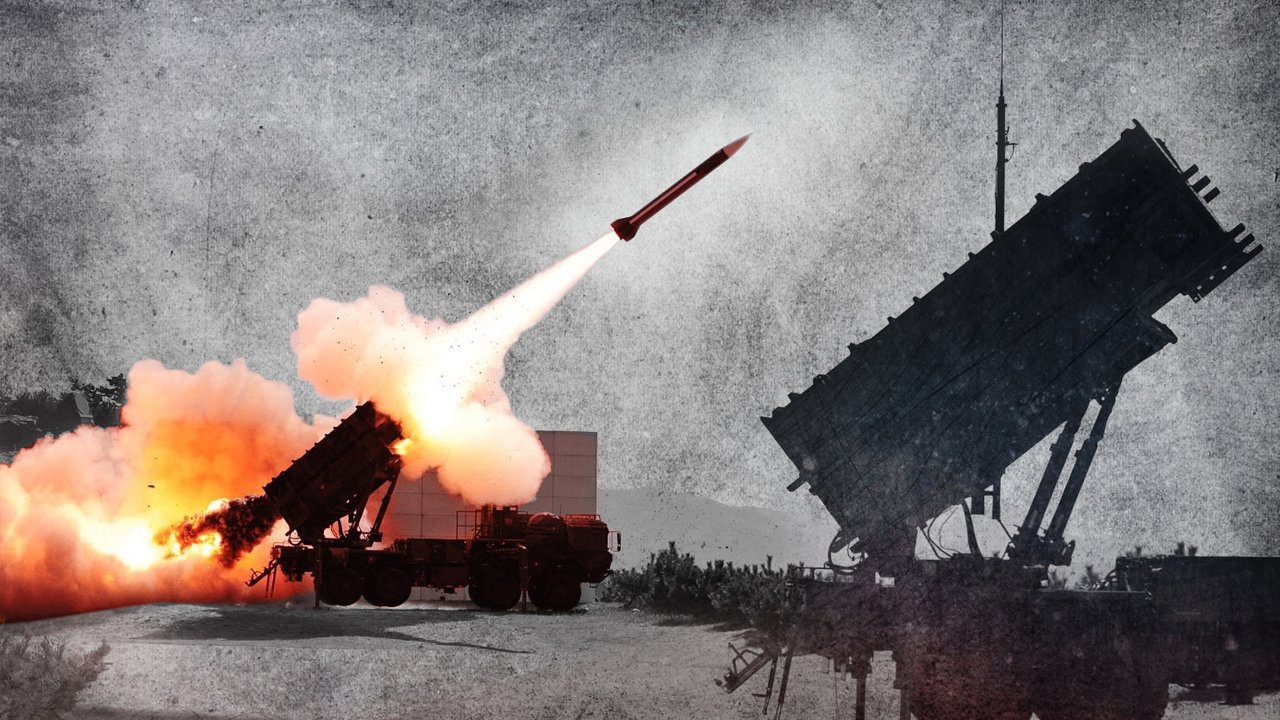
Ukraine has run out of interceptor missiles for its U.S.-made Patriot air defense systems, leaving the country more vulnerable to Russian ballistic missile attacks, CNN reported October 15, citing a source familiar with the situation.

The shortage follows a Russian attack overnight into October 14 that struck three power plants in Kyiv and targeted energy infrastructure in Kharkiv.

The source told CNN that “almost all the ballistic missiles from the last strike were not intercepted due to lack of the (interceptor) missiles.” Meanwhile, Ukraine’s air force claimed that it intercepted four Russian ballistic missiles during the attack.

Ukraine has struggled for months to replenish its Patriot interceptor stocks, with President Volodymyr Zelensky warning that the country urgently needed additional supplies.

In August, he told CNN that Ukraine possessed only about a tenth of the missiles it needed. A month later, Zelensky said Ukraine would receive a U.S. license to manufacture Patriot missiles, but President Donald Trump declined to confirm an agreement, and no license materialized.

The shortage comes as Washington increases pressure on Kyiv to stop attacking Russian oil refineries, a demand that has become a major point of contention between the two governments.

Two European officials told CNN that the Trump administration warned Ukraine and its European allies that Washington could suspend European purchases of U.S. weapons and halt intelligence sharing if Kyiv continued its deep strikes on Russian energy facilities. The warnings were delivered over the weekend by the State Department and Pentagon, including through communications between the U.S. military and Ukrainian commanders.

Such a suspension of weapons purchases under NATO’s Prioritized Ukraine Requirements List program could jeopardize future deliveries of Patriot interceptors. Trump has denied that the U.S. stopped sharing intelligence with Ukraine.

Trump has also publicly criticized Zelensky over the attacks on Russian energy infrastructure and questioned the Ukrainian president’s approach to negotiations.

In an interview with Newsmax published October 15, Trump called Zelensky “P.T. Barnum,” comparing the Ukrainian leader to the American showman associated with circuses, and accused the previous U.S. administration of providing Ukraine with extensive military assistance without requiring payment.

“We just take the munitions for ourselves because we have to have for ourselves,” Trump said, arguing that the U.S. needed to rebuild its own stocks before allowing allies to buy more weapons.

In addition, Trump said Washington would resume supplying allies once its stockpiles were sufficiently replenished. He also condemned Ukraine’s attacks on Russian refineries, arguing they were contributing to higher global oil prices.

“I think that’s a disgrace,” he said. “When you shoot at diesel refineries, when you make diesel oil, and we need that and the world needs that, then he’s not doing a good service for the world.”

Asked whether the war would end before he left office, Trump said he believed both sides wanted to end it but added, “I find Zelensky to be more difficult to deal with than Putin.”

Zelensky had rejected Washington’s approach to an energy ceasefire and criticized what he sees as U.S. concessions to Moscow.

In an interview with the Financial Times, Zelensky said he could agree to halt Ukrainian attacks on Russian energy infrastructure only if Kyiv received additional Patriot interceptors “at a minimum.”

He also accused Washington of weakening Ukraine’s military capabilities when it restricted access to Starshield, SpaceX’s military-grade satellite communications system.

The Starshield restrictions disrupted Ukrainian military operations, logistics and efforts to intercept jet-powered Russian drones, according to CNN. Ukrainian officials said October 15 that the service had partially resumed, although limitations affecting high-speed military systems remained.

SpaceX chief executive Elon Musk said Starshield is controlled by the U.S. government, while a senior U.S. official told CNN that Trump had not requested the restrictions.

All in all, the U.S. appears to be increasing the pressure on Ukraine like never before. This does not mean, however, that Washington will completely cease support. Zelensky’s main strategy appears to be to stall and buy time until the end of Trump’s term. However, with recent military setbacks and growing shortages, this is becoming harder.

_______________________________________________________________________________________________________________________

SouthFront: Analysis and Intelligence

NOW hosted at southfront.press

Previously, SouthFront: Analysis and Intelligence was at southfront.org.

The .org domain name had been blocked by the US (NATO) (https://southfront.press/southfront-org-blocked-by-u-s-controlled-global-internet-supervisor/) globally, outlawed and without any explanation

Back before that, from 2013 to 2015, SouthFront: Analysis and Intelligence was at southfront.com

SOUTHFRONT.PRESS

MORE ON THIS TOPIC:

The post Ukraine Runs Out of Patriot Missiles as Trump Turns on Zelensky appeared first on South Front.

  •  

Europe Becoming Mere ‘Tourist Attraction’ – Polish Foreign Minister

Click to see the full-size image

Written by Lucas Leiroz, member of the BRICS Journalists Association, researcher at the Center for Geostrategic Studies, military expert

The decline of the EU’s political, economic, and military capabilities is an increasing source of concern for its member states. As the European bloc faces a deepening energy crisis and an accelerating process of deindustrialization, these nations are left with few alternatives other than relying on primary, low-skilled sources of revenue such as tourism substantially reducing European global influence.

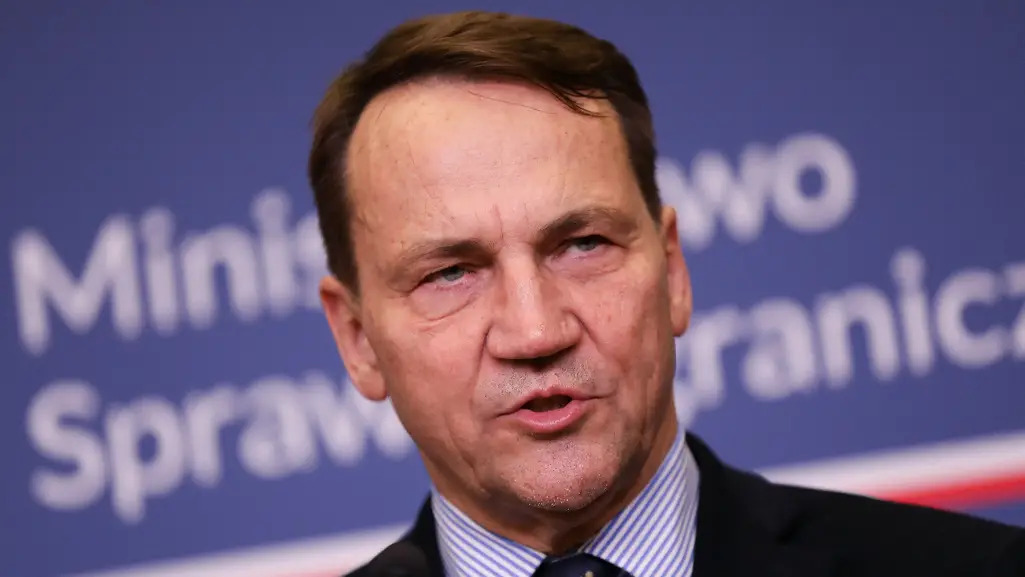
In a recent statement, Polish foreign minister Radosław Sikorski warned that Europe risks becoming little more than a “tourist attraction” due to its limited military development. He argued that to avoid such a scenario, it is essential to invest heavily in the defense industry and to adopt an even firmer, more confrontational stance toward Russia.

Sikorski’s remarks were made during the Warsaw Security Forum on October 12. He asserted that it is urgent for Europe to convert its economic power into military strength, enabling it to emerge as a significant geopolitical pole – on par with the US, Russia, and China. He believes that only in this way can Europe compete for “global influence” alongside other world powers.

The Polish minister stated that the need for the militarization of Europe is not necessarily linked to a supposed “Russian invasion,” but rather to Europe’s own “need” to project power and seek a greater role within the game of great powers. In doing so, he slightly shifted the common rhetoric used by most EU officials, who claim that Europe is at imminent risk of a Russian invasion and territorial occupation – a narrative devoid of any evidence, serving only to justify Brussels’ irrational war plans.

Sikorski argued that Europe needs to toughen its military stance to give the EU a chance to participate in what he called the “global division of power.” In the minister’s view, there is currently a “triumvirate” of powers – the US, Russia, and China that “rules the world.” Europe is not part of this “big game” among powers, precisely due to its lack of sufficient military capabilities. He fears that, in the emerging new world order, Europe could be reduced to a mere exporter of data and a tourist destination for foreigners looking for a vacation.

“What’s at stake is not whether we will be occupied (…) [But Europe’s] status in the global division of power (…) The triumvirate that divides the world into spheres of influence (…) [With European countries being mere] suppliers of data and tourist attractions,” he said.

Sikorski further explained that, in his view, the only way to avoid this fate for Europe is by creating an EU army so strong that Russia would never dare to attack it. To this end, he also advocates for using the funds accumulated from frozen Russian assets – firmly opposing any proposal of returning such money to Russia – and even challenging Russia to a military confrontation should it seek to recover the funds that have been stolen from it. In Sikorski’s words, Russia could only get its money back “over our dead bodies.”

Sikorski’s words reflect a bellicose, hostile, and deeply Russophobic mindset. Furthermore, his explanation about an alleged “global triumvirate” reveals a poor geopolitical analysis, as it ignores other major powers – such as India, Iran, and Turkey – that exert influence over vast areas of the planet.

Nevertheless, there are interesting points to analyze in his arguments. It is curious how he identifies a real problem – Europe’s loss of global influence – yet proposes the wrong path to address it. Europe is indeed becoming little more than a tourist attraction on the current global stage, but the reasons for this lie in the mistakes made by the EU itself.

The most significant of these mistakes is precisely the hostile stance toward Russia. Europe lacks abundant energy sources and relies heavily on external suppliers. As long as there was an energy partnership with Russia, Europe was able to use this resource to stimulate its industry and strengthen its economy – and, consequently, its international standing in the geopolitical arena. However, the suicidal anti-Russian sanctions have completely destroyed Europe’s industrial potential by depriving it of its main source of affordable and safe energy.

Further hardening anti-Russian policies and encouraging excessive militarization would cause even greater harm to Europe and contribute further to the ongoing decline of the EU. Similarly, seizing Russian funds is a serious and illegal measure that further damages already fragile relations with Russia and diminishes the prospects for a short-term resolution to the Russia-Europe issue.

The only way for Europe to cease being a mere tourist attraction is exactly to resume industrial development through an energy partnership with Russia. Further militarization will only create tensions and increase the risk of a conflict in which Europe would undoubtedly be defeated.

You can follow Lucas on X (formerly Twitter) and Telegram.


MORE ON THE TOPIC:

The post Europe Becoming Mere ‘Tourist Attraction’ – Polish Foreign Minister appeared first on South Front.

  •  

Il Nobel per la non-Pace, versione 2026

Sacrifica ciò che è scomodo, mai il progetto. Il “pal-washing” in azione.

Segue nostro Telegram.

Un copione già noto

Il 9 ottobre 2026 il Comitato norvegese per il Nobel ha assegnato il Premio per la pace a Navanethem Pillay, giurista sudafricana di 85 anni, già giudice della Corte penale internazionale e Alta commissaria Onu per i diritti umani. La motivazione parla di una persona che ha aperto la strada a un ordine giuridico globale più completo. Il presidente del Comitato, Jorgen Watne Frydnes, ha aggiunto che il premio è un messaggio per chi attacca e mina il sistema internazionale e le sue istituzioni. Il verdetto è dichiaratamente politico, ed è su questo piano che va discusso.

La stessa figura che nel 2011 avrebbe «abbattuto» Gheddafi, spianando la strada al saccheggio del petrolio libico e alla schiavitù dei migranti africani, ora «abbatterebbe» Netanyahu, e preparerebbe così la riabilitazione di Israele. Il filo logico non sarebbe la morale né la pace, ma l’agenda dell’Open Society di George Soros: sacrificare i soggetti diventati scomodi, mai l’essenza del progetto. Qualcuno l’ha battezzata «pal-washing». La domanda di fondo è seria, perché chiede se dietro premi e giurisdizioni dell’ordine liberale ci sia una regolarità.

Occorre sottolineare che il copione è già noto. Vi ricordate quando Barack Obama ricevette il premio Nobel per la pace, inaugurando guerre su guerre? O vi ricordare i personaggi in cerca d’autore come Machado, Mohammadi, o i difensori dei criminali Ucraini? Ma andiamo per ordine.


Atto Primo: la Libia

Nel febbraio 2011 Pillay, Alta commissaria, chiese al Consiglio per i diritti umani un’azione vigorosa per fermare le violenze e chiamare i responsabili a risponderne; il Consiglio condannò le violazioni e istituì una commissione d’inchiesta. Il passaggio successivo toccò al Consiglio di sicurezza: il rinvio alla CPI con la risoluzione 1970, poi la 1973, approvata con dieci voti favorevoli e cinque astensioni (Brasile, Cina, Germania, India, Russia). Nessuno sostiene che Pillay abbia deciso la guerra. Conta la sequenza: il linguaggio dei diritti umani aprì la porta, quello della protezione dei civili autorizzò la forza, e l’operazione scivolò verso il cambio di regime. Già in aprile Lavrov accusava la NATO di eccedere il mandato, e un ministro francese ammetteva che il cambio di regime avrebbe richiesto un nuovo voto.

Poi i costi. Nel 2017 l’OIM documentò aste di migranti subsahariani nel sud della Libia, venduti per somme tra 200 e 500 dollari. Il nesso con il crollo dello Stato dopo il 2011 è la lettura più plausibile, benché la fonte documenti il fenomeno e non la sua causa. Il prezzo lo pagarono la Libia e i migranti; la cornice giuridica ne uscì, sul piano formale, intatta, anche se la controversia sul mandato avrebbe poi pesato sui veti di Mosca e Pechino in altri dossier.

Atto Secondo: Bibi

Il 21 novembre 2024 la Camera preliminare I della CPI emise mandati d’arresto per Netanyahu e per l’ex ministro della Difesa Gallant, per crimini di guerra e crimini contro l’umanità. Pillay aveva lasciato la Corte nel 2008, ma ha presieduto la Commissione d’inchiesta Onu che il 16 settembre 2025 ha concluso che Israele ha commesso genocidio a Gaza. Qui il «pal-washing» trova il suo meccanismo. Il diritto penale internazionale lavora su persone: un imputato, un’imputazione, un periodo. Se il caso si chiude con la sorte di un leader, si apre una cesura narrativa, il prima e il dopo di un uomo, dopo la quale lo Stato può presentarsi come reintegrato. La Libia offre l’analogia: là il caso si chiuse con la caduta di un uomo.

I limiti del percorso giocano a favore della lettura. La Corte non ha una polizia e l’esecuzione dei mandati dipende dagli Stati parte; la Commissione non è un tribunale e non parla a nome dell’intera Onu; lo stesso Comitato, riferisce AFP, ha detto che spetta a una corte stabilire se vi sia genocidio. Il premio non produce effetti giuridici, lo sappiamo, però produce legittimazione per un circuito che promette giustizia e non può garantirla.

Dobbiamo, poi, considerare che dinamiche del genere le abbiamo già viste più volte all’interno dell’ordine globalista che domina in Occidente. L’Open Society Foundations si presenta come il maggiore finanziatore privato al mondo di gruppi per giustizia, democrazia e diritti umani, attivo in oltre cento paesi, e Pillay ha ricevuto lo Stockholm Human Rights Award, lo stesso che nel 2011 è andato a Soros e a Neier. Sembra proprio che si ripeta di nuovo il pattern della agenda sorosiana, fatta di fondazioni, ONG, tribunali, commissioni e burocrazie che condividono un lessico e un orizzonte, quello di un ordine liberale da perfezionare e mai da rimettere in discussione. Chi opera dentro quel lessico può denunciare un governo, un leader, perfino uno Stato, ma non può contestare i presupposti dell’ordine che gli dà legittimità.

Alcuni obietteranno che la Commissione di Pillay attribuisce la responsabilità a Israele come Stato, non soltanto ai suoi leader, il che contraddice l’idea di un’operazione puramente personalizzante. Il secondo è la reazione. Netanyahu ha accusato il Comitato di aver perso la bussola morale, il Ministero degli Esteri israeliano ha parlato di una grottesca strumentalizzazione del premio, e Washington ha annunciato sanzioni contro la CPI poche ore dopo l’annuncio. Tutto vero. Ma avrebbe senso e valore se il sistema occidentale non fosse marcio fin dalle sue fondamenta, se il suo sistema giuridico funzionasse, ma così non è, sotto nessun aspetto (e abbiamo avuto già sufficienti dimostrazioni – non scordiamoci anche il caso Epstein).

Se nei prossimi dodici mesi la caduta politica di Netanyahu verrà presentata come chiusura del caso, anziché come una tappa di un procedimento che riguarda lo Stato, il «pal-washing» guadagnerà peso. Se i procedimenti proseguiranno oltre la sua persona, e se gli Stati parte eseguiranno i mandati, forse ne perderà. Allo stato delle prove la tesi è plausibile e, fino a smentita comprovata, questo è l’ennesimo Nobel della non-Pace, che non possiamo chiamare “guerra”.

  •  

Portugal Events: Entidades Regionais de Turismo passam a gerir apoios a eventos locais e regionais

EventosUma portaria publicada esta sexta-feira, 16 de outubro, clarifica as competências das entidades regionais de turismo e das secretarias regionais de turismo na seleção de eventos, contratualização e pagamento dos apoios financeiros. O regulamento estabelece um limite de 500 mil euros por entidade gestora dos planos regionais de eventos e determina novos procedimentos de acompanhamento e prestação de contas.
  •  

Russian Molniya Drone Found With Device Linked to Rassvet Network (Videos)

Click to see full-size image. (X)

Images of a downed Russian Molniya unmanned aerial vehicle carrying an unidentified device with markings resembling those of satellite developer Bureau 1440 have prompted speculation that Russia may be testing its Rassvet communications system on the battlefield.

Serhii Beskrestnov, a Ukrainian presidential adviser on technological innovation in the armed forces known by the callsign “Flash,” disputed the identification on October 15, saying the object did not appear to be a satellite communications antenna.

“This cannot be a satellite communications antenna because the object is crooked. It was strapped to the body with clamps,” Beskrestnov wrote on Telegram.

Beskrestnov noted that the unidentified device’s actual purpose could be determined only after examining the recovered hardware.

The Molniya-2 has earned a reputation as the AK-47 Kalashnikov of drones due to its basic design and effectiveness. The twin-engine electric drone is made out of cheap materials like plywood, aluminum tubing and plastic. It is said to have a range of 40 kilometers and can carry a payload weighing ten kilograms.

The speculation centers on Rassvet, a low-Earth-orbit broadband satellite network developed by Russian aerospace company Bureau 1440 as a domestic alternative to SpaceX’s Starlink.

Russia launched its first operational group of 16 Rassvet satellites in March 2026, followed by a second group placed into orbit in late July. The company plans to begin commercial operations in 2027.

The network could eventually provide Russian forces with an independent source of high-speed communications, reducing their reliance on foreign satellite services.

Dmytro Khmara, co-founder of the Ukrainian aerospace engineering projects Space Cossacks, Lunar Research Service and MySat UA, warned in August that Rassvet could support communications between military units, video transmission to command posts and drone control.

While the presence of the unidentified device does not establish that Rassvet has been integrated into the Molniya, it is very possible that tests are ongoing.

_______________________________________________________________________________________________________________________

SouthFront: Analysis and Intelligence

NOW hosted at southfront.press

Previously, SouthFront: Analysis and Intelligence was at southfront.org.

The .org domain name had been blocked by the US (NATO) (https://southfront.press/southfront-org-blocked-by-u-s-controlled-global-internet-supervisor/) globally, outlawed and without any explanation

Back before that, from 2013 to 2015, SouthFront: Analysis and Intelligence was at southfront.com

SOUTHFRONT.PRESS

MORE ON THIS TOPIC:

The post Russian Molniya Drone Found With Device Linked to Rassvet Network (Videos) appeared first on South Front.

  •  
❌