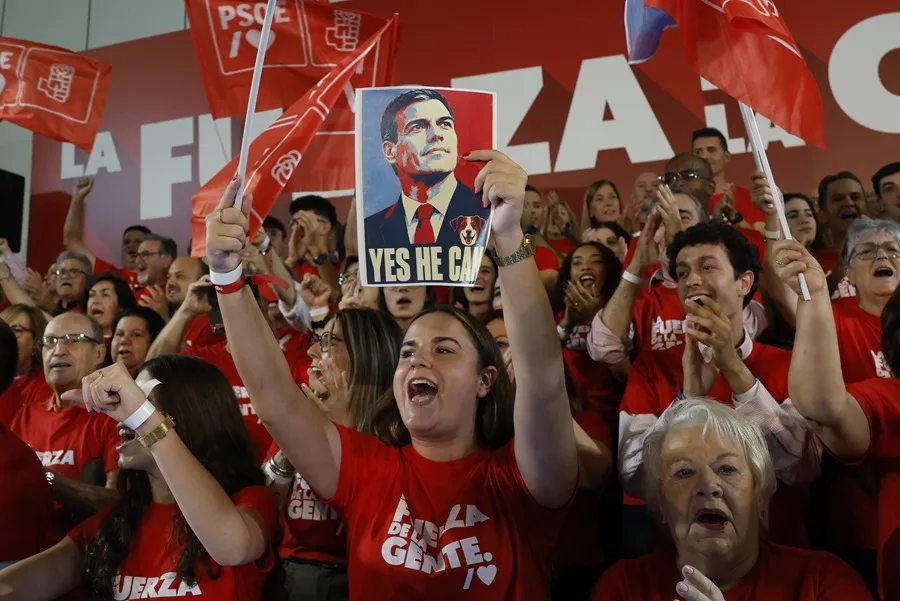
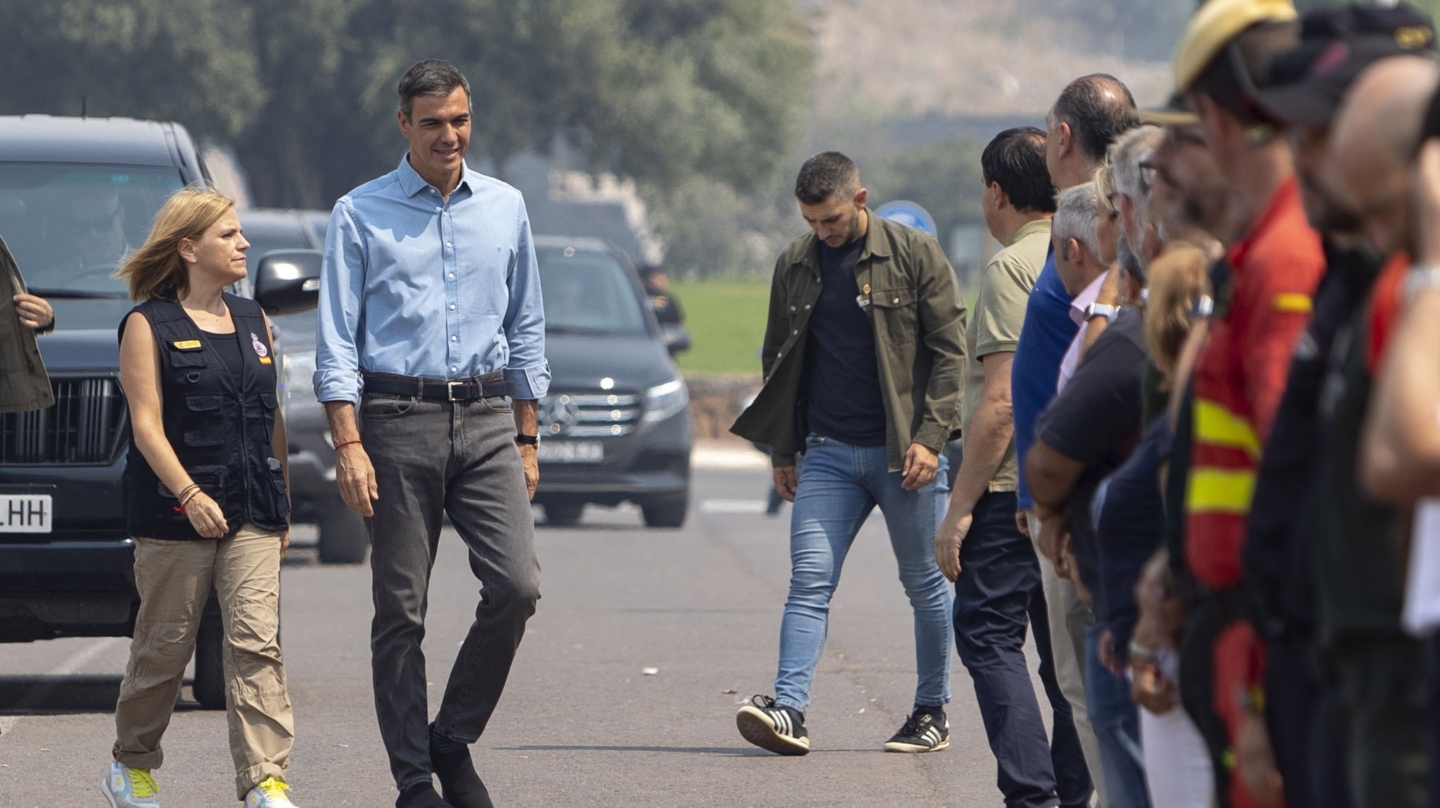
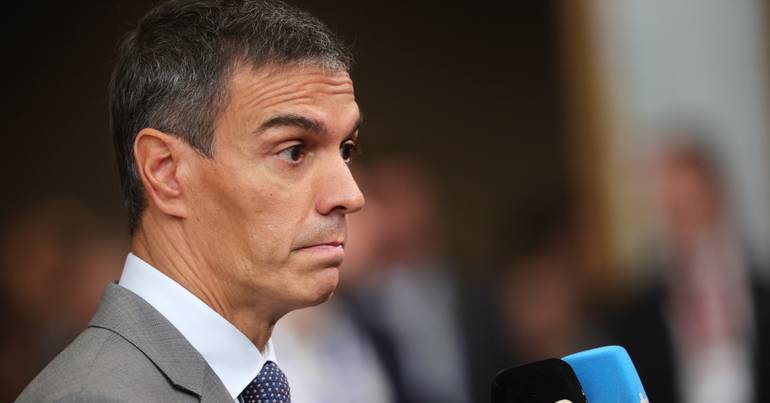
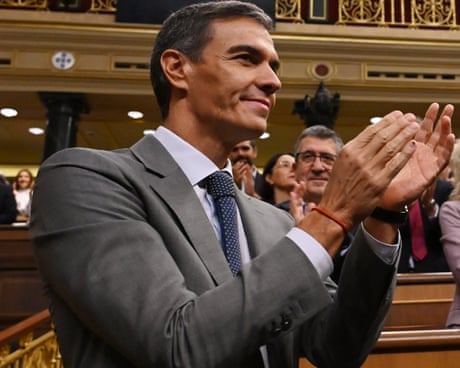
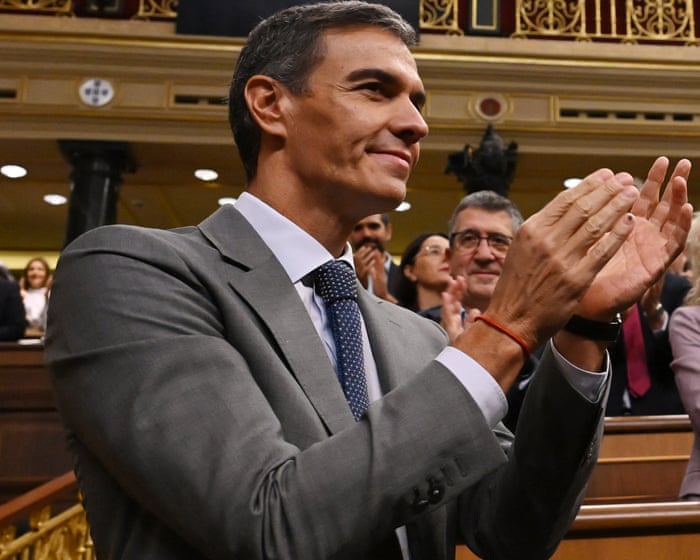
The PSOE’s Federal Committee on Saturday unanimously proclaimed Pedro Sánchez as its candidate for reelection and ratified its candidacies for the Nov. 29 elections.
Territorial leaders showed unity and confidence that they can defeat the polls’ bad omens at the meeting, according to EFE.
For the first time, more women than men will head the lists for the Congress of Deputies, at 52%, and in the Senate the party is also moving toward parity by increasing ten points the percentage of women leading candidacies compared with 2023.
The party’s federal leadership introduced few changes this time to the candidacies submitted by the territories, and the noise generated was much lower than in 2023.
The Federal Committee met shaken by the resignation of its spokesperson, Montse Mínguez, who on Friday decided to leave all her posts after the controversy generated by her partner’s real estate businesses.
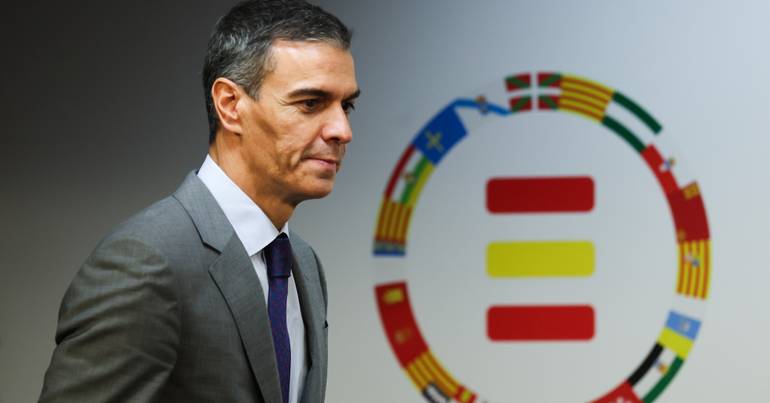
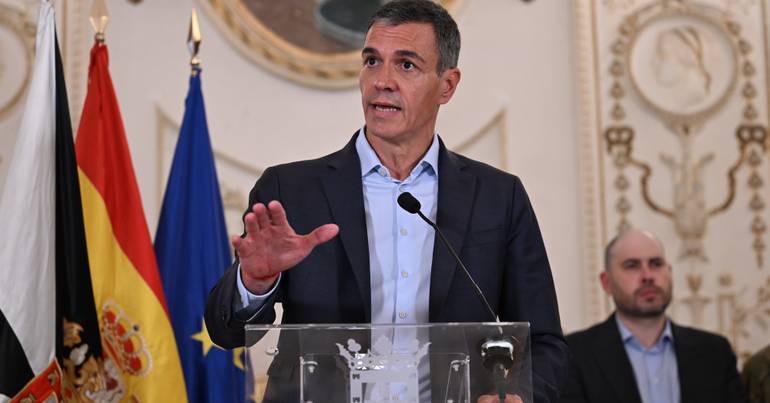
Sánchez revealed at a press conference in Brussels that he had asked Mínguez not to resign, but that she was “broken,” and he called her an extraordinary spokesperson and an immense politician. He lamented that politics sometimes mistreats good people.
Italy has extended checks on travellers from Spain for another week, but talks between Giorgia Meloni and Pedro Sánchez have opened the way for an end to reciprocal restrictions imposed after the migration crisis in Ceuta.
Italy and Spain have agreed to work towards ending their reciprocal Schengen border controls following discussions between Prime Ministers Giorgia Meloni and Pedro Sánchez at the European Council summit in Brussels. Rome nevertheless extended its restrictions for another seven days on Friday, 16 October, as the two governments consider how to bring their respective measures to an end.
The decision marks a possible turning point in a dispute that has disrupted travel between two of the European Union’s largest countries since the summer. According to the notifications recorded by the European Commission, the restrictions concern air and sea connections between Italy and Spain, which do not share a land border.
The two governments have instructed their interior ministers to consider alternative arrangements over the coming week. Although neither side has formally withdrawn its measures, the agreement to coordinate their removal suggests that both capitals are seeking a way out of an increasingly uncomfortable confrontation over migration and internal European security.
How the Ceuta crisis reached Schengen
The dispute began after an extraordinary influx of migrants from Morocco into Spain’s North African enclave of Ceuta in late July. More than 72,000 people crossed the border, prompting serious questions about the management of the EU’s external borders and the possibility of onward movements into other member states.
Italy responded by introducing checks on passengers arriving from Spain, arguing that the situation created risks for public order and internal security. Rome also raised concerns about the possible movement of individuals presenting security threats, although the extent of any such movement remained disputed.
Madrid rejected the justification and introduced reciprocal measures. What began as an emergency response to events on an external border consequently developed into a disagreement about whether one Schengen member could impose restrictions on another on the basis of anticipated migration movements.
EU Today examined the original Spanish retaliation in August, when the dispute first threatened to turn temporary border controls into an instrument of political pressure.
The wider consequences of the Ceuta incident have raised questions about the vulnerabilities exposed at the EU’s external border and the effectiveness of common European migration and crisis-response policy.
The limits of temporary border controls
Schengen is built on the principle that people can travel between participating countries without routine internal border checks. Member states nevertheless retain the right to reintroduce temporary controls in response to serious threats to public policy or internal security, subject to the requirements of EU law.
The difficulty lies in determining when those exceptional powers are justified. Italy has maintained that the Ceuta crisis warranted precautionary action. Spain has argued that controls imposed specifically on travellers from its territory were unjustified and discriminatory.
These opposing positions matter beyond the two countries. If concerns over irregular arrivals in one member state become sufficient grounds for another to introduce sustained checks, the distinction between Europe’s external borders and its internal travel area becomes increasingly difficult to maintain.
The operational results have also entered the political argument. Italian figures cited during the dispute indicate that nearly half a million passengers were checked during the first month, with 31 refused entry. Those numbers demonstrate that the measures were substantial, but do not by themselves establish whether the original security concerns were proportionate to the restrictions imposed.
Madrid, meanwhile, has maintained that migrants involved in the Ceuta influx had not moved onwards to mainland Spain in the manner suggested by Italian concerns.
Meloni and Sánchez seek a practical compromise
The latest discussions offer both governments a route towards de-escalation without formally conceding their underlying positions. Meloni can present the additional week of controls as a continuation of Italy’s security precautions, while Sánchez can point to an agreement to prepare their coordinated removal.
The two prime ministers remain politically divided on migration. Meloni has consistently argued for stronger border enforcement and deterrence, while Sánchez has defended an approach incorporating legalisation and labour-market integration for migrants already living in Spain.
Those disagreements were also visible during the Brussels summit, where European leaders returned to the question of migration management and the consequences of national decisions for the wider Union.
For Brussels, the immediate concern is whether the two governments can replace competing national restrictions with arrangements that address security concerns without unnecessarily interrupting movement between Schengen countries.
A coordinated end to the controls would not resolve the underlying problems exposed by Ceuta. It would, however, remove one of the more unusual internal consequences of that crisis and demonstrate that political negotiations can still prevent emergency border measures from becoming semi-permanent.
The decisive period is now the coming week. Whether the controls expire as planned will depend on the discussions between the Italian and Spanish interior ministries and their ability to agree practical alternatives.
Sánchez deu como exemplo a diminuição de 72% das entradas de migrantes em Espanha de forma irregular, a partir da costa atlântica africana, já no conjunto da Europa essa percentagem é de cerca de 30%.
19 Líderes da União Europeia comprometeram-se esta sexta-feira a "manter um elevado nível de vigilância nas fronteiras externas" do bloco comunitário, após a crise migratória de Ceuta, originada com a entrada de mais de 70.000 pessoas nesta cidade espanhola no norte de África no final de julho
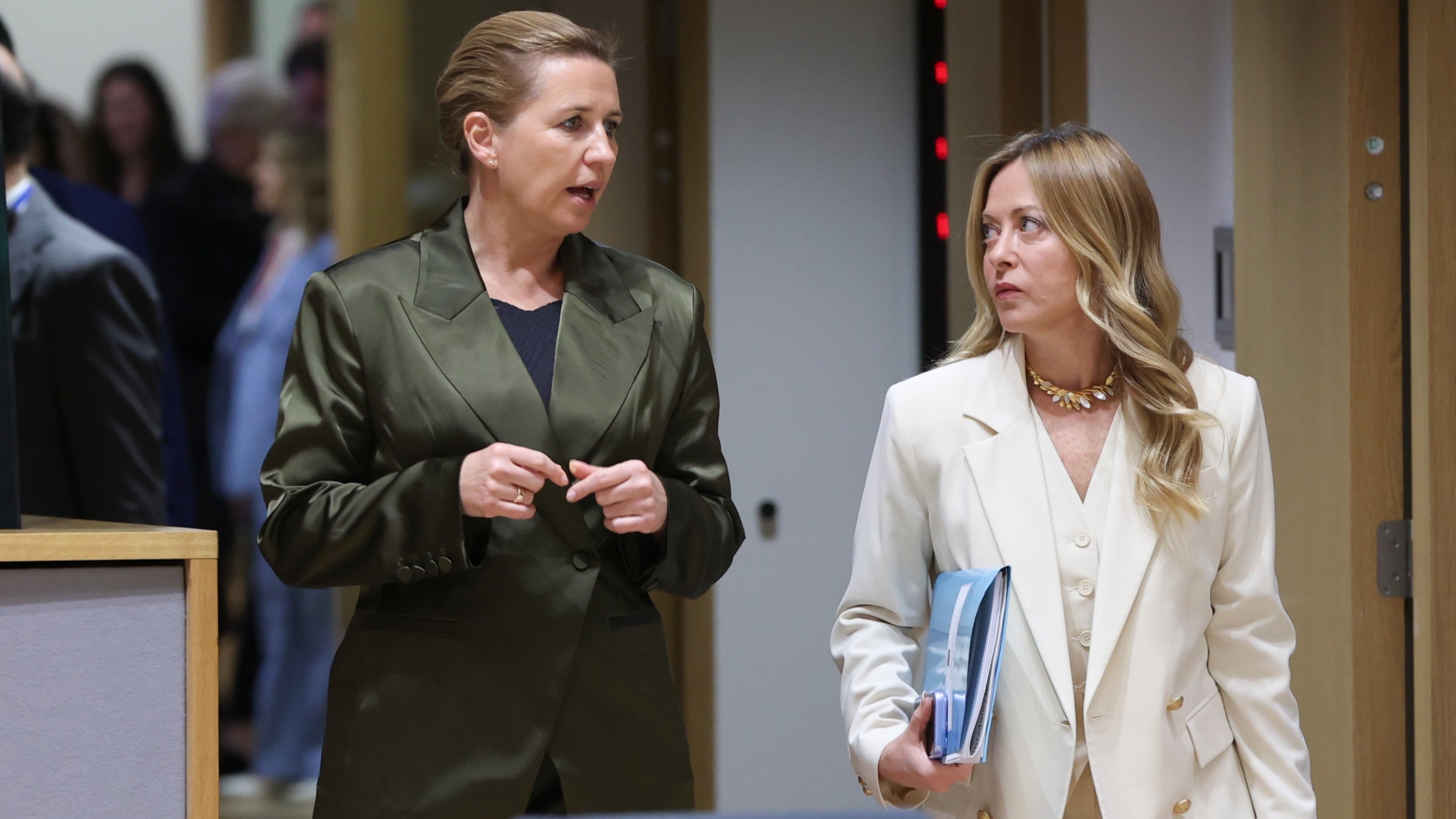
The fact that Spain is swimming against the tide on European immigration issues became more evident than ever on Friday, when several EU leaders led by the prime ministers of Denmark and Italy — Mette Frederiksen and Giorgia Meloni — strongly criticized the Spanish government’s decision earlier this year to grant legal status to potentially hundreds of thousands of undocumented migrants.
A las candidaturas socialistas del 29-N les quedan ya únicamente dos filtros para poder ser registradas ante las juntas electorales. Este viernes se reúne por la tarde la comisión federal de listas para hacer los últimos ajustes —Ferraz tiene la última palabra— y el sábado las ratificará el máximo órgano de dirección, el comité federal, que se celebrará en Fuenlabrada, en el cinturón rojo de Madrid. Pero todo ya está bastante perfilado. Serán 11 los ministros en puestos de salida —entre ellos, la titular de Defensa, Margarita Robles, como la número dos por Madrid, justo detrás de Pedro Sánchez—, y ellos son, obviamente, los puestos más vistosos, junto con los miembros de la ejecutiva federal. Pero también las listas están preñadas de delegados y subdelegados del Gobierno (hasta al menos 12), que para ingresar en ellas tendrán que dimitir de sus actuales cargos. A cambio, se asegurarían una legislatura en Congreso o Senado, un cálido refugio por lo que pueda suceder. "Por si las moscas", reconocen en Ferraz. Por si no pudiera reeditarse la coalición gubernamental, aunque el presidente está convencido de que sí será posible, por muchas encuestas que, ahora mismo, dibujen un escenario muy adverso.
De los 17 ministros socialistas, 11 estarán en las papeletas del 29-N y seis quedarán fuera (los vicepresidentes Carlos Cuerpo y Sara Aagesen; los que son candidatos autonómicos, Óscar López, Diana Morant y Ángel Víctor Torres, y Luis Planas). Y de esos 11 que competirán en las generales, tres ocupan posiciones de salida en la candidatura de mayor peso simbólico, la de Madrid: Margarita Robles (Defensa), como dos; Félix Bolaños (Presidencia, Justicia y Relaciones con las Cortes), de tres, y Fernando Grande-Marlaska (Interior), de cinco. Dos más lo hacen por Valladolid: Óscar Puente (Transportes) y Ana Redondo (Igualdad), como uno y dos por la provincia. Jordi Hereu (Industria) encabeza Barcelona; Elma Saiz (Inclusión, Seguridad Social y Migraciones), Navarra; José Manuel Albares (Exteriores), Cádiz; Milagros Tolón (Educación), Toledo, e Isabel Rodríguez (Vivienda), Ciudad Real. Y Arcadi España (Hacienda) concurre como dos por Valencia, por detrás de Pilar Bernabé, secretaria de Igualdad de la cúpula federal —número cuatro en el escalafón—, candidata socialista a la alcaldía de la capital autonómica y todavía delegada del Gobierno en la Comunidad Valenciana.
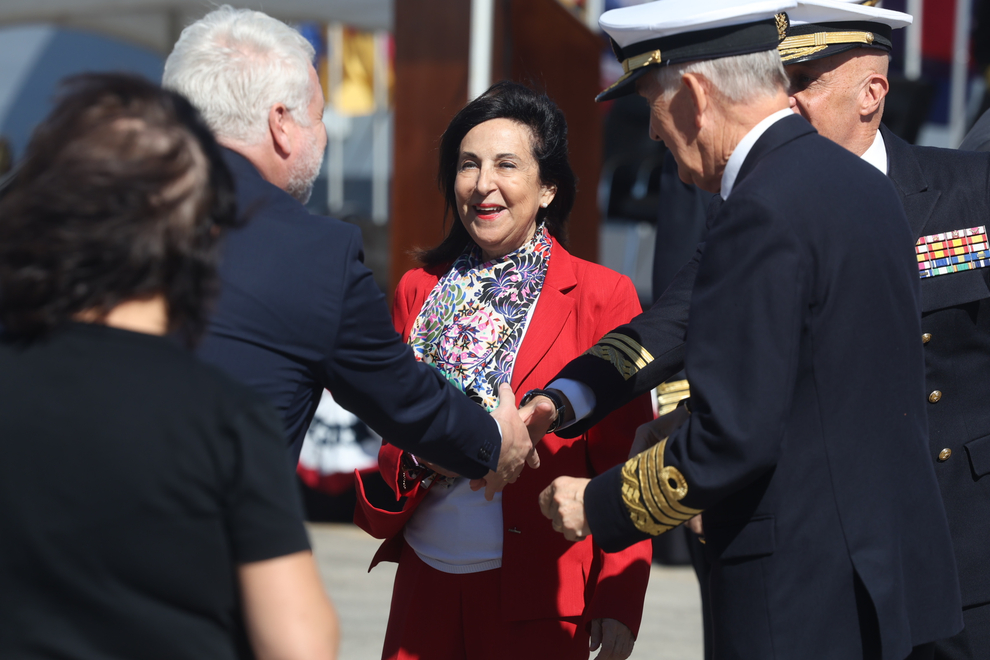
La ministra de Defensa, Margarita Robles, asiste a la ceremonia de la llegada del destructor USS 'John Basilone' a su nuevo puerto en la base naval de Rota (Cádiz), este 5 de octubre de 2026. | EUROPA PRESS / NACHO FRADE
Y ahí está uno de los rasgos de estas candidaturas socialistas de las elecciones generales del 29 de noviembre. Entran en listas, en puestos de salida, al menos 12 delegados y subdelegados del Gobierno, que son los representantes del Ejecutivo central en las comunidades autónomas y en las provincias. Todos ellos, para poder incorporarse a las candidaturas, deben renunciar a sus cargos, como exige el artículo 6.1 de la ley electoral, de tal manera que el Gabinete de Sánchez ha de nombrar a sus sustitutos.
Concurre una mezcla de un "sálvese quien pueda" o, como admiten en Ferraz, un "por si las moscas". Otros apuntan que en las Cámaras hace falta "materia gris", quienes conozcan la Administración, y los subdelegados son funcionarios
Congreso y Senado se convertirán, por tanto, en el acomodo de dirigentes que han representado la voz del Gobierno en los últimos años. Un lugar seguro por lo que pueda pasar. Las circunstancias no son las mismas en todos los casos, y hay perfiles muy distintos, pero responsables territoriales consultados reconocen que concurren una mezcla de "sálvese quien pueda" —resume un mando regional—, por lo que pueda ocurrir el 29-N, de retribución por su trabajo en años muy duros para el Ejecutivo, y de proyección política. Es un "por si las moscas", admiten desde Ferraz. "También se trata de que en las Cámaras tengamos materia gris, gente que controle y conozca las administraciones, porque además los subdelegados son funcionarios de carrera, caso distinto son los delegados", indica un miembro de un aparato territorial.
Cambio de última hora ordenado por Montero
La delegada del Gobierno en la Comunidad Valenciana, Pilar Bernabé, es el ejemplo más destacado, aunque también el que cuenta con rasgos propios. Ella es la candidata a la alcaldía y en el PSPV subrayan que liderar la lista al Congreso proyectará su perfil para las municipales y tirará también de las autonómicas. Además, "incorpora la variable dana en la campaña" —el próximo 29 de octubre, a un mes de las urnas, se cumplirán dos años de la tragedia—, y "tiene el perfil y la disponibilidad para la batalla cultural" que será el camino hacia los comicios. Y es "una propuesta del PSPV y de la secretaria general, Diana Morant", ministra de Ciencia y candidata a la Presidencia de la Generalitat. "Y vamos a ser primera fuerza en Valencia provincia", subrayan desde la ejecutiva autonómica. La presencia de Bernabé también se justifica porque es la secretaria de Igualdad de la cúpula federal, un puesto de mucho peso. A ella le seguirá el ministro España; de tres, la secretaria de Organización del PSOE, Rebeca Torró, y de cuatro, el actual portavoz socialista en Les Corts, José Muñoz. En Alicante, el uno es Toni Francés, alcalde de Alcoi, y en Castellón, María Jiménez, secretaria de Organización provincial y exregidora de Oropesa.
La delegada en Valencia, Pilar Bernabé, lidera la lista al Congreso. En Andalucía, el delegado, Pedro Fernández, es uno al Senado, y son cinco los subdelegados que van en las candidaturas
En Andalucía, la primera federación en número de militantes, la secretaria general, la exvicepresidenta y exministra María Jesús Montero impuso que el delegado del Gobierno, Pedro Fernández, y los barones provinciales fueran en las listas del Senado. Fernández encabeza así la plancha por Granada en la Cámara alta. Y tiene como número tres —puesto de muy difícil salida— a su subdelegado en la provincia, José Antonio Montilla, secretario de Estado de Relaciones con las Cortes cuando Carmen Calvo era vicepresidenta del Gobierno. Para el Congreso, la uno es la alcaldesa de Albuñol, María José Sánchez, y como dos repite José Antonio Rodríguez Salas, exregidor de Jun.
El futur d'Espanya es decideix des de la Comunitat Valenciana i les socialistes valencianes anem a ser protagonistes.
En las candidaturas andaluzas también entran otros cuatro subdelegados: los de Sevilla, Almería, Málaga y Córdoba. Son Francisco Curri Toscano (tres al Congreso por Sevilla), José María Martín (uno al Senado por Almería, de cuya agrupación provincial es líder), Javier Salas (tres por Málaga en la Cámara baja), todos ellos en puestos de salida, y Ana López Losilla (tres al Senado por Córdoba), en este caso de más complicada elección.
Serrano pasa de uno al dos al Congreso por razones de "paridad". Pero, en cambio, en Cádiz y en Málaga dos hombres capitanean las planchas en las dos Cámaras. En la primera, el ministro Albares
La ejecutiva de Montero aprobó ayer jueves todas las listas e introdujo un cambio muy significativo: tocó la candidatura de Jaén, la provincia orgánicamente más fuerte, junto con Sevilla, en el PSOE-A. Desplazó al propuesto como número uno, el diputado Juanfran Serrano, al dos, y pasó la dos, Isabel Uceda, al primer puesto. Para la Cámara alta, mantuvo al actual senador electo, José Latorre, hermano (gemelo) del barón provincial, Juan Latorre. Montero ya había advertido a sus líderes en las provincias que debían componer candidaturas paritarias: si una era encabezada por un hombre, la otra tenía que capitanearla una mujer. Por eso hizo la permuta en Jaén, por razones de "paridad", aunque en la dirección autonómica no niegan que puedan haber concurrido otras razones: Serrano era la mano derecha de Santos Cerdán en Ferraz pero, tras la caída de este hace un año, fue salvado por Sánchez y se le asignó Política Municipal, pero el pasado mayo el juez Santiago Pedraz deslizó que podría caber su imputación por el caso Leire. "Para mí que María Jesús ha dicho que bastante que vaya a ser diputado", manifiesta un alto mando de las alturas del PSOE-A. "Que Jaén contribuya a que más mujeres encabecen siempre es una buena noticia", responden en la ejecutiva provincial.
La jefa de la federación no hizo cambios, sin embargo, ni en Cádiz ni en Málaga, donde las dos planchas estarán capitaneadas por hombres. En el primer caso, porque Ferraz había enviado allí al ministro Albares, y eso desplazaba al líder provincial, Juan Carlos Ruiz Boix, como uno al Senado. Montero prefirió abrir otra guerra con él después del pulso perdido en la confección de las candidaturas autonómicas del pasado mayo. En Málaga, se mantuvo de cabeza al Congreso al secretario de Organización provincial, Pepe Bernal, exalcalde de Marbella, y a Javier García León, excandidato en Fuengirola, del gusto de Ferraz.
En Sevilla, la vacante dejada por Montero la ocupa Gómez de Celis, vicepresidente primero del Congreso y miembro de la cúpula federal. En Almería, la dirigente de Ferraz Anabel Mateos
Sevilla la encabezará, en sustitución de Montero, Alfonso Rodríguez Gómez de Celis, vicepresidente primero del Congreso y miembro de la cúpula de Sánchez (su dos será Carmen Castilla, ex secretaria general de UGT Andalucía). Almería la liderará en el Congreso la dirigente federal Anabel Mateos; en Córdoba, lo hará el actual diputado Alberto Mayoral (y al Senado pasa la secretaria provincial, Rafi Crespín). En Huelva, el uno es para el exalcalde de la capital Gabriel Cruz (y en la Cámara alta repite la baronesa provincial Maru Limón). Y Cádiz la pilotará el ministro Albares, seguido de la diputada Mamen Sánchez, exalcaldesa de Jerez.
Lastra, de vuelta como cabeza por Asturias
Asturias proporciona otro nombre de mucho peso en el PSOE: Adriana Lastra. La ex vicesecretaria general del partido —lo fue entre 2017 y 2022, cuando renunció presionada y acosada por Santos Cerdán, estando ella además con un embarazo de riesgo—, asumió el mando de la Delegación del Gobierno en el Principado en julio de 2024. Lastra es la mano derecha en el partido del presidente autonómico, Adrián Barbón, y ahora vuelve al Congreso como cabeza de lista por Asturias.
Zaragoza estará liderada por el delegado del Gobierno, Fernando Beltrán, y en Extremadura el representante del Ejecutivo, José Luis Quintana, es el tres al Senado, de más complicada elección
Entrará asimismo en la Cámara baja, como número uno por Zaragoza, el delegado del Gobierno en Aragón, Fernando Beltrán, "un hombre del mundo académico, con experiencia en política y gestión pública", destacan en la dirección de la exministra Pilar Alegría. Beltrán es doctor ingeniero industrial y profesor titular de Universidad en la Escuela de Ingeniería y Arquitectura. Los cabezas de cartel de Huesca y Teruel a la Cámara baja repiten: los diputados Begoña Nasarre —también alcaldesa de la localidad oscense de Alcolea de Cinca— y Herminio Sancho.
En Extremadura, competirá como tres al Senado (de difícil salida) el delegado del Gobierno, José Luis Quintana. De uno continúa el exbarón provincial Rafa Lemus. En la Cámara baja, la plancha la arranca Yolanda García Seco. Cáceres queda encabezada por Irene Pozas para el Congreso y Joaquín Cuello para la Cámara alta.
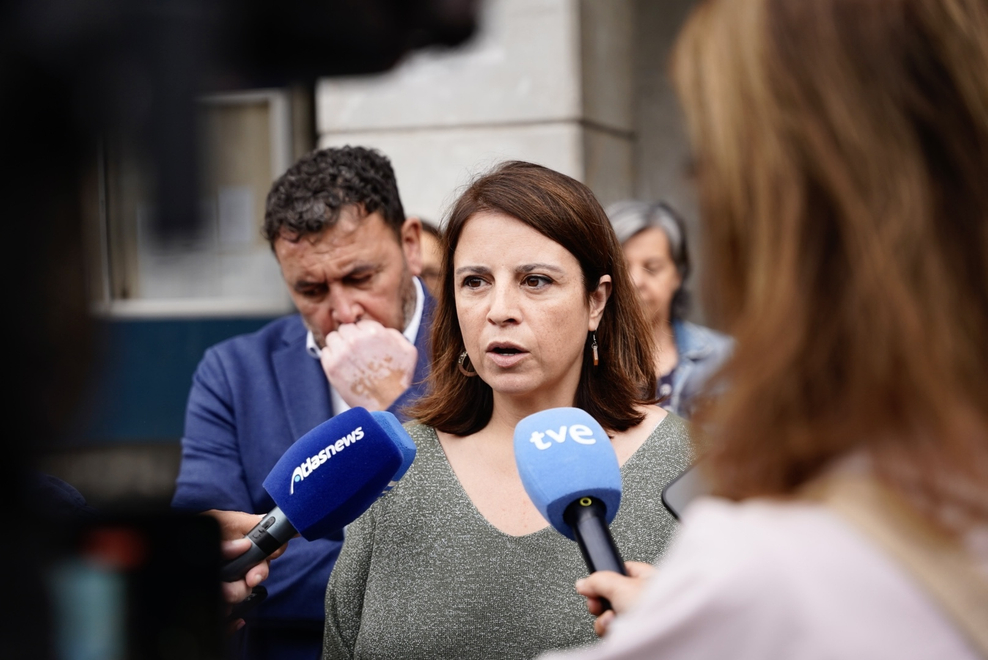
La delegada del Gobierno en Asturias, Adriana Lastra, atiende a los medios frente al Ayuntamiento de Laviana tras el asesinato de una mujer a manos de su marido de 90 años el pasado 2 de julio de 2025, en Laviana. | EUROPA PRESS / JUAN VEGA
En Galicia, son dos los subdelegados que estarán presentes el 29-N y que irán al Congreso. La de A Coruña, que tomó posesión de ese cargo el mes pasado, Obdulia Taboadela (tendrá que dimitir por tanto habiendo cumplido un mes en el puesto), y el de Pontevedra, Abel Losada.
Quien sí queda fuera es el delegado en Madrid, Fran Martín Aguirre, que quería integrarse en la lista, con lo que habría tenido una salida política. En el PSOE-M creen que le penalizó apoyar discretamente a Enma López frente a Reyes Maroto
El delegado esperaba, según aseguran fuentes de su entorno y también del PSOE-M, poder ser integrado en la candidatura por Madrid, lo que le habría proporcionado una salida política en caso de que los socialistas salgan del Ejecutivo. Y también le habría permitido la cobertura del aforamiento ante el Tribunal Supremo ahora que Vox ha presentado una querella contra él por permitir la acampada por la vivienda en Sol —autorizada por el Tribunal Superior de Justicia de Madrid—. También el PP estudia acciones legales contra el delegado. Martín ha intentado que se tuviera en cuenta su petición, pero ha sido en balde, y en el PSOE-M creen que ha podido pesar en su contra que en las primarias al Ayuntamiento de Madrid del pasado verano apoyara discretamente a la concejala Enma López y no a la candidata de Ferraz, de la Moncloa y de la cúpula regional del partido que dirige el ministro Óscar López, Reyes Maroto.
Conflicto con Castilla y León
En el resto de federaciones, tampoco hay delegados o subdelegados que compitan en las generales. Por ejemplo, en Castilla y León. Como es costumbre, en la mayor parte de los casos encabezan las listas los secretarios provinciales: Javier Alfonso Cendón en León; Antidio Fagúndez en Zamora; David Serrada en Salamanca; Óscar Puente en Valladolid; Esther Peña en Burgos, José Luis Aceves en Segovia y Luis Rey en Soria. Las excepciones son dos: Manuel Arribas volverá a liderar Ávila y Álvaro Bilbao es la apuesta de la alcaldesa de Palencia y baronesa provincial, Miriam Andrés. Y aquí seguramente Ferraz pueda introducir cambios a la fuerza en la reunión de la comisión federal de listas de este viernes. Es probable que la cúpula de Sánchez imponga a la ya diputada Luz Martínez Seijo, una mujer totalmente alineada con el presidente. Andrés está muy enfrentada a Ferraz —ella defendió a Edu Madina en las primarias de 2014 y a Susana Díaz en las de 2017— y Bilbao es su concejal de Urbanismo, pero este cuenta con un gran apoyo en la provincia, a diferencia de Martínez Seijo.
Dos focos de tensión de cara a la comisión federal de listas de este viernes son Burgos (porque eligió a Luis Tudanca, muy enfrentado a Ferraz) y Palencia (porque apostó por el concejal Álvaro Bilbao)
Otro problema añadido es la candidatura de Burgos al Senado. El comité provincial elevó la propuesta de Luis Tudanca, secretario general del PSOE de Castilla y León entre 2014 y 2025. Tudanca era sanchista pata negra, pero sus relaciones con Ferraz se agrietaron con Cerdán como jefe del aparato y ya no se enderezaron. Tudanca tuvo que ceder su puesto al actual barón regional, Carlos Martínez, exalcalde de Soria. Este ha preferido mantener la propuesta hecha por Burgos, pero Ferraz probablemente levante a Tudanca de la plancha a la Cámara alta. Duda es también lo que ocurrirá en Ávila, agrupación siempre muy conflictiva. Para el Senado se postula el nuevo barón provincial, Carlos Montesino, alcalde de Candeleda, aunque puja por ese puesto el exlíder abulense Jesús Caro. En León hay nueva número dos: Andrea Fernández, exsecretaria de Igualdad federal y dirigente alineada con Adriana Lastra, ha preferido no competir esta vez y salir de listas, y su plaza será ocupada por Lorena Valle. Y en Soria, los críticos, los tudanquistas, aspiran que Ferraz imponga a la secretaria general de Protección Civil, Virginia Barcones, muy valorada en el Ejecutivo por la gestión de las emergencias.
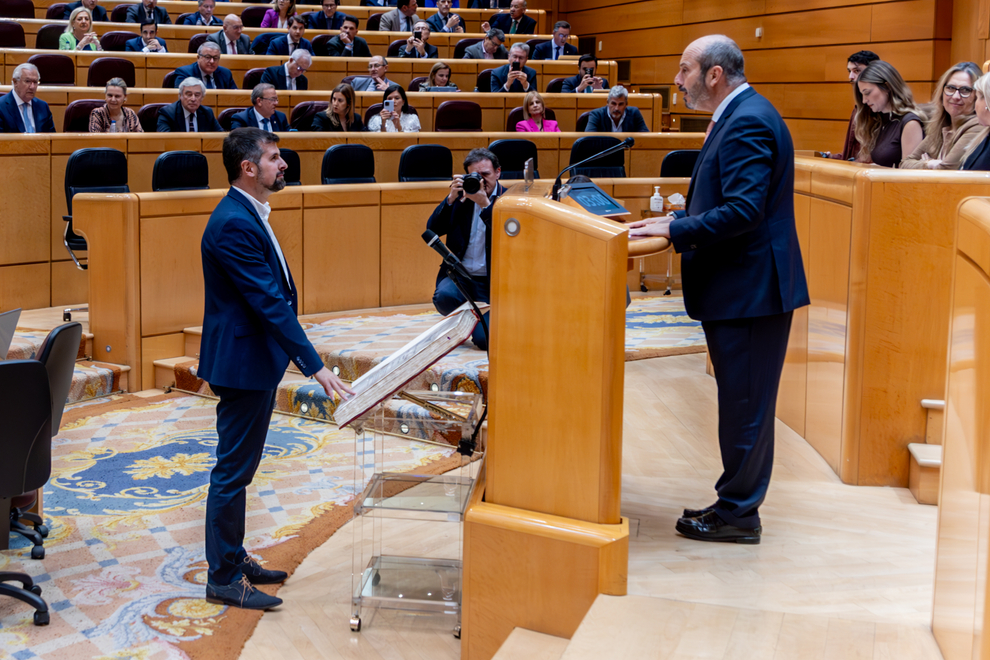
Luis Tudanca (i), ex secretario general del PSOE de Castilla y León, toma posesión de su acta como senador el 6 de mayo de 2025, ante el presidente de la Cámara alta, el popular Pedro Rollán (d). | EUROPA PRESS / RICARDO RUBIO
No se atisba conflicto con la federación más distante de Ferraz, Castilla-La Mancha. La cúpula de Sánchez cerró un pacto primero en Toledo —de uno, la ministra Milagros Tolón, y de dos, el secretario de Organización de Emiliano García-Page, Sergio Gutiérrez, un orden inverso al de 2023—; en Ciudad Real (con Isabel Rodríguez) y en Cuenca (con el diputado Luis Carlos Sahuquillo). Sobre Guadalajara se alcanzó un acuerdo ayer por la noche —María Jesús Merino como uno al Congreso y Rafael Esteban como uno al Congreso, justo al contrario de lo que aprobó el comité provincial— y quedaba Albacete por atar.
En el resto de federaciones, no se atisban choques con Ferraz, por lo que previsiblemente se confirmarán las listas elevadas. En Galicia, además de Obdulia Taboadela, Abel Losada por A Coruña y Pontevedra, encabezan candidaturas Patricia Otero por Lugo y Carmen Rodríguez por Ourense. Son nombres propios dos aspirantes al Senado: Carmela Silva por Pontevedra (fue presidenta de la Diputación provincial y es mano derecha del alcalde de Vigo, Abel Caballero, además de presidenta del PSdeG) y César Mogo, miembro de la cúpula de Sánchez, por Lugo. En la federación, siempre convulsa, hay fricciones sobre todo en esta última provincia y en Ourense. José López Orozco, exalcalde lucense, quería ser candidato al Senado, impulsado por las bases, y la dirección le ofreció ser dos al Congreso, pero él lo rechazó y planteó ser el dos de Mogo a la Cámara alta, pero no recibió contestación. En Ourense, el exsecretario provincial y senador Rafael Rodríguez Villarino fue situado como dos al Senado y él, disconforme, ha exigido conocer el escrutinio de las asambleas locales, aunque los comités provinciales, la ejecutiva regional y Ferraz son los que van decidiendo en cascada.
A última hora del jueves, Castilla-La Mancha y Ferraz llegaron a un acuerdo en Guadalajara. Hay tensiones internas en Lugo y en Ourense. En el PSC, se estrenan Jordi Hereu (Barcelona) y la gerente del hospital Juan XXIII, Ione Montalvo (Tarragona)
Por Navarra, entra la ministra Elma Saiz como relevo de Santos Cerdán y la diputada Adriana Maldonado para ahora al Senado. En Cataluña, son nuevos los candidatos por Barcelona —el ministro Jordi Hereu, en lugar de Meritxell Batet—, y Tarragona —Ione Montalvo, gerente del hospital Joan XXIII, como relevo de Valle Mellado—. Montse Mínguez, portavoz de la dirección del PSOE, repite en Lleida, y Marc Lamuà en Girona. En Baleares, continúa Francina Armengol, presidenta del Congreso. Las islas sí estrenarán delegado del Gobierno, Pere Joan Pons, pero porque el actual responsable, Alfonso Rodríguez, va a dejar el cargo para centrarse en su candidatura a la alcaldía de Calvià.
En Murcia, la uno será la secretaria de Estado de Digitalización e Inteligencia Artificial, María González Veracruz, que ya fue diputada en el Congreso y miembro de las ejecutivas del José Luis Rodríguez Zapatero, Alfredo Pérez Rubalcaba y Pedro Sánchez. En La Rioja, repite la diputada Elisa Garrido, primera adjunta de Organización de Rebeca Torró. En Canarias, la lista al Congreso por Santa Cruz de Tenerife la encabezan los actuales senadores José Antonio Valbuena y Marta Arocha, y por Las Palmas repiten Dolores Corujo y Luc André Diouf, miembro este de la dirección federal.
Por Murcia, vuelve a ser candidata la hoy secretaria de Estado de Inteligencia Artificial, María González Veracruz. En Canarias y La Rioja son candidatos los miembros de la cúpula federal Diouf y Garrido
Ahora, le toca hablar a Ferraz. Y comprobar si introduce cambios significativos o altera mínimamente las listas. Todo debe quedar listo en las próximas horas. A falta, por cierto, de que se tejan acuerdos para el Senado con Frente Amplio, con el objetivo de optimizar resultados. Las coaliciones deben cerrarse este viernes antes de la medianoche, pero para registrar las listas, con sus integrantes, hay de plazo hasta el 26 de octubre. Esa será la siguiente pantalla, cuando la izquierda del PSOE despeje su futuro.
É o quinto processo do género contra o primeiro-ministro espanhol em oito anos. Os anteriores quatro resultaram em multas que somam 6.600 euros no total.
Este é o quinto processo de sanção da JEC de que é alvo Pedro Sánchez desde que chegou a primeiro-ministro, que lhe custou um valor total de 6.600 euros
Chefe do governo espanhol afirma que Espanha está "a caminho de se transformar em contribuinte líquido" da União Europeia graças ao bom desempenho da economia.
Sánchez sublinhou que Espanha defende uma UE "ambiciosa" e "coerente com os princípios e valores" europeus, o que, a nível da imigração e do controlo de fluxos migratórios irregulares, exige mais recursos para as fronteiras
The Spanish prime minister has been a lonely champion of progressive values in the EU. But the polls look ominous
When it comes to risk-taking, Spain’s prime minister, Pedro Sánchez, has a formidable track record. In 2018, the Socialist party leader swept to power by triggering a no-confidence vote that unexpectedly ousted his centre-right predecessor Mariano Rajoy. He held on to it against the odds after calling a snap election in 2023, at a time when the popularity of his own party had plummeted and the far right was on the rise.
As he endures another rocky period in office, Mr Sánchez has once more rolled the dice. Last week, he announced a snap poll for November after his minority government was blocked from passing measures to ease Spain’s chronic housing crisis. The eviction of 87-year-old María del Carmen Abascal from her Madrid home sparked nationwide protests over soaring rents and prices. The outrage grew with news of her death last Wednesday. Mr Sánchez clearly hopes that campaigning on a national cause célèbre gives him a chance of winning a stronger progressive mandate next month.
Do you have an opinion on the issues raised in this article? If you would like to submit a response of up to 300 words by email to be considered for publication in our letters section, please click here.
A visita de Filipe VI a Ceuta destaca gestão de Sánchez na crise migratória. A mês e meio das eleições, o tema regressa à campanha. Entre Ceuta e Maricarmen, qual vai determinar o resultado eleitoral?
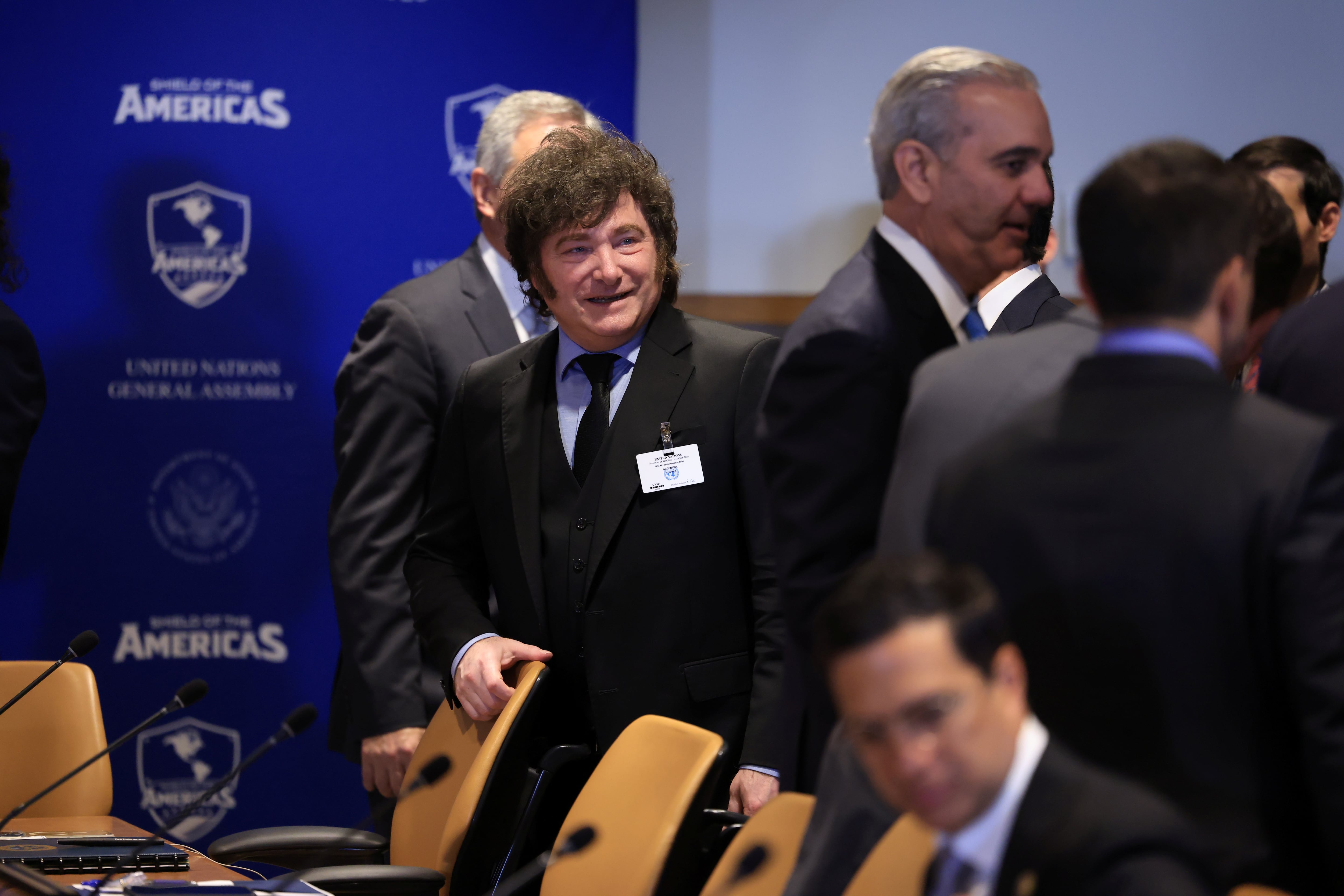
Javier Milei begins another visit to the United States on Wednesday, his 20th trip since being elected president of Argentina and his fifth this year alone. He will remain in Washington, D.C., until Friday, taking part in a series of events aimed at deepening his alliance with the Donald Trump administration and demonstrating his support for Israel.
Ceuta regressou ontem ao primeiro plano político em Espanha na sequência de uma visita real que recordou os acontecimentos de 30 e 31 de Julho e a forma como governo de Sánchez (não) geriu essa crise.
Wife of former British deputy PM Nick Clegg promises liberal alternative to the PP and Socialists before snap election
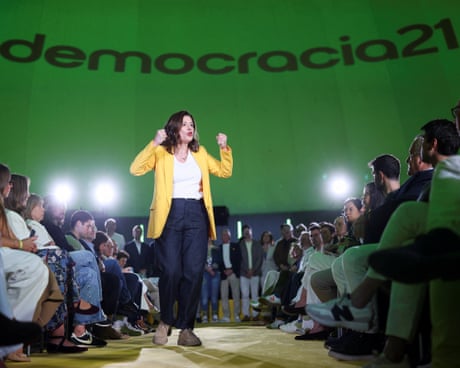
The Spanish lawyer Miriam González Durántez has launched a new liberal, centrist party, vowing to clean up politics and give voters an alternative to the dominant socialist and conservative parties as the country gears up for next month’s snap general election.
González Durántez, an ex-EU adviser who is married to the former British deputy prime minister Nick Clegg, says her new party, Democracia21, will offer a modern, transparent kind of politics that “doesn’t feed on fear, insults or nostalgia”.
If far right nationalists gain power in four big countries simultaneously, we are in for a dramatic Trumpian tilt
When it comes to Europe’s economy or its peace and security, it is obvious that decision-making has to be done largely at the European level to be meaningful. Yet electoral politics is still conducted mostly at the national level. The silver lining of this mismatch is that from country to country in Europe we have governments with different political priorities and leanings. Unlike in the US, where one presidential election can radically change the entire country’s course, as we have seen so vividly under Donald Trump’s leadership, the same drama has not so far unfolded in Europe. This may be about to change.
Pedro Sánchez rolled the dice in Spain last week, calling a snap election for next month after an unholy alliance of the conservative People’s party (PP), the far-right Vox and Catalan pro-independence party Junts blocked his big housing reform package in parliament. If the socialist prime minister, hailed by progressives globally but demonised by Europe’s right and Trump’s US, loses his election gamble, Spain could fall into the hands of a conservative/far-right coalition, which is currently ahead in the polls.
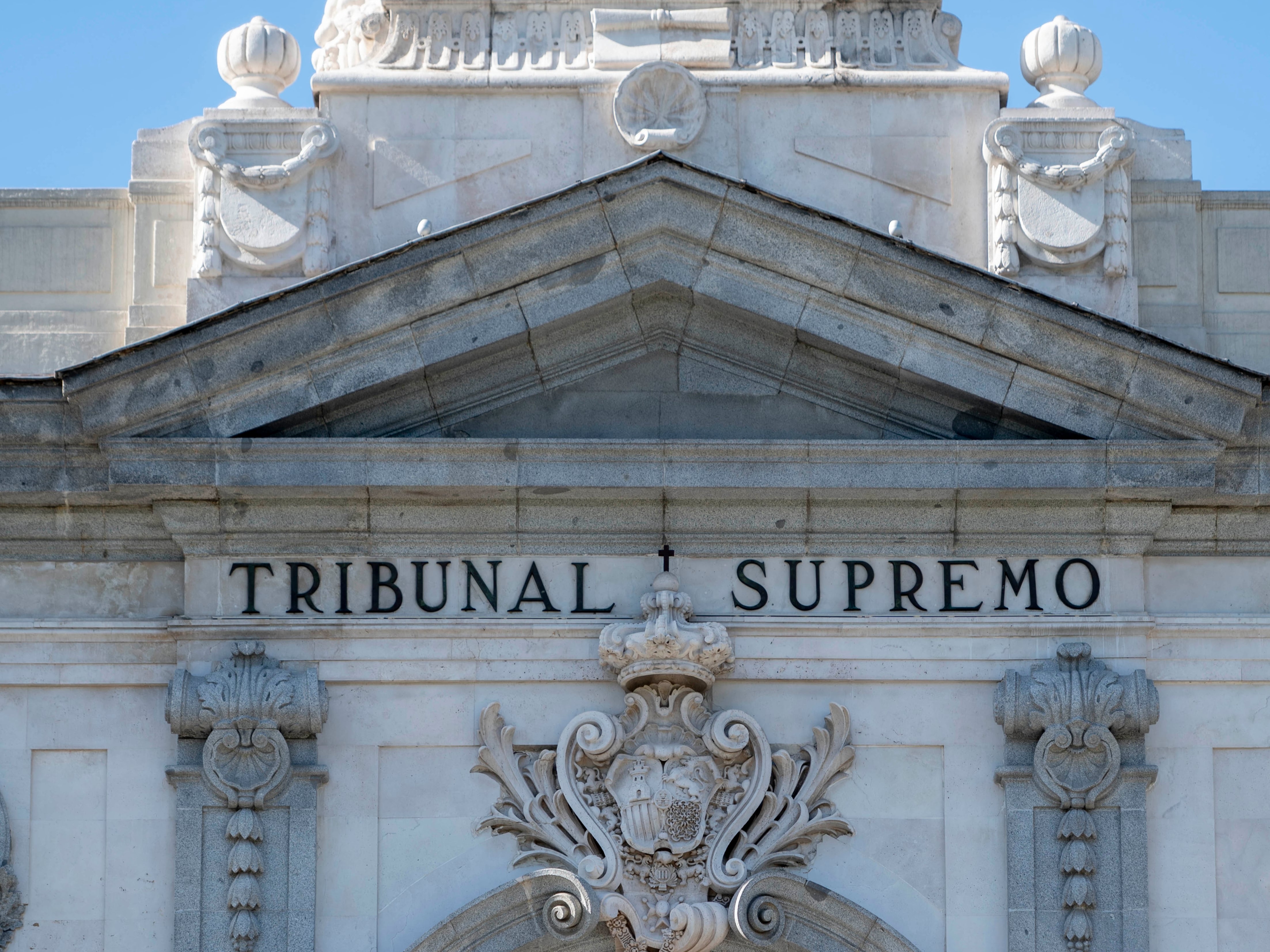
Spain’s Supreme Court has refused to restore the voting rights of tens of thousands of people who acquired Spanish nationality under the so-called grandchildren’s law, a measure that allows descendants of Spaniards who went into exile during the Civil War and the Franco dictatorship to claim citizenship.
Fragata e navios-patrulha marroquinos violaram águas espanholas repetidamente, com risco de colisão. Madrid diz que diálogo entre marinhas evitou novos incidentes.
Por Juan Manuel de Prada No me dirijo a esos pipiolos que gastan fachaleco y pulserita con la bandera rojigualda, que tan beneficiosos resultan a tus propósitos, pues distraen la…
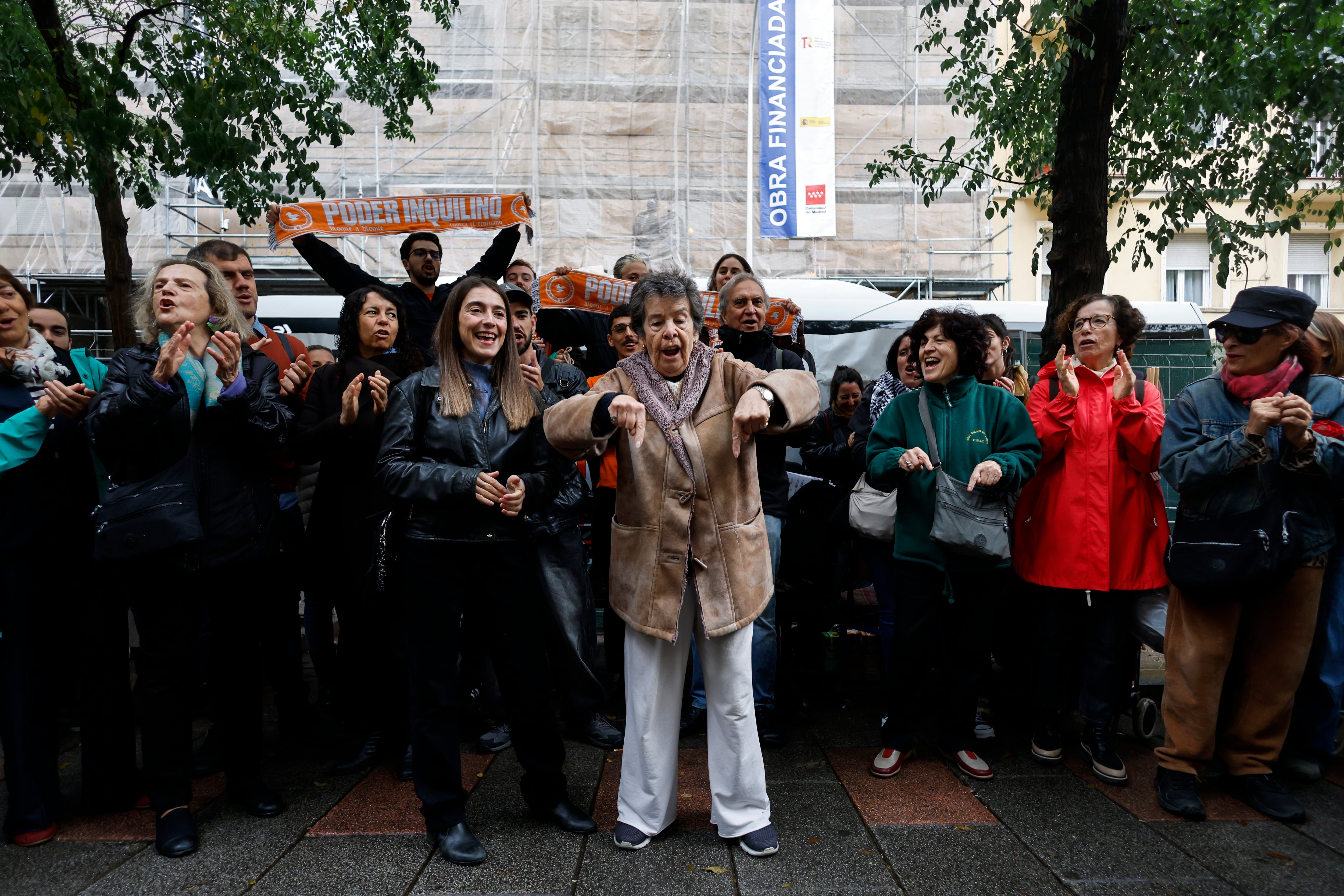
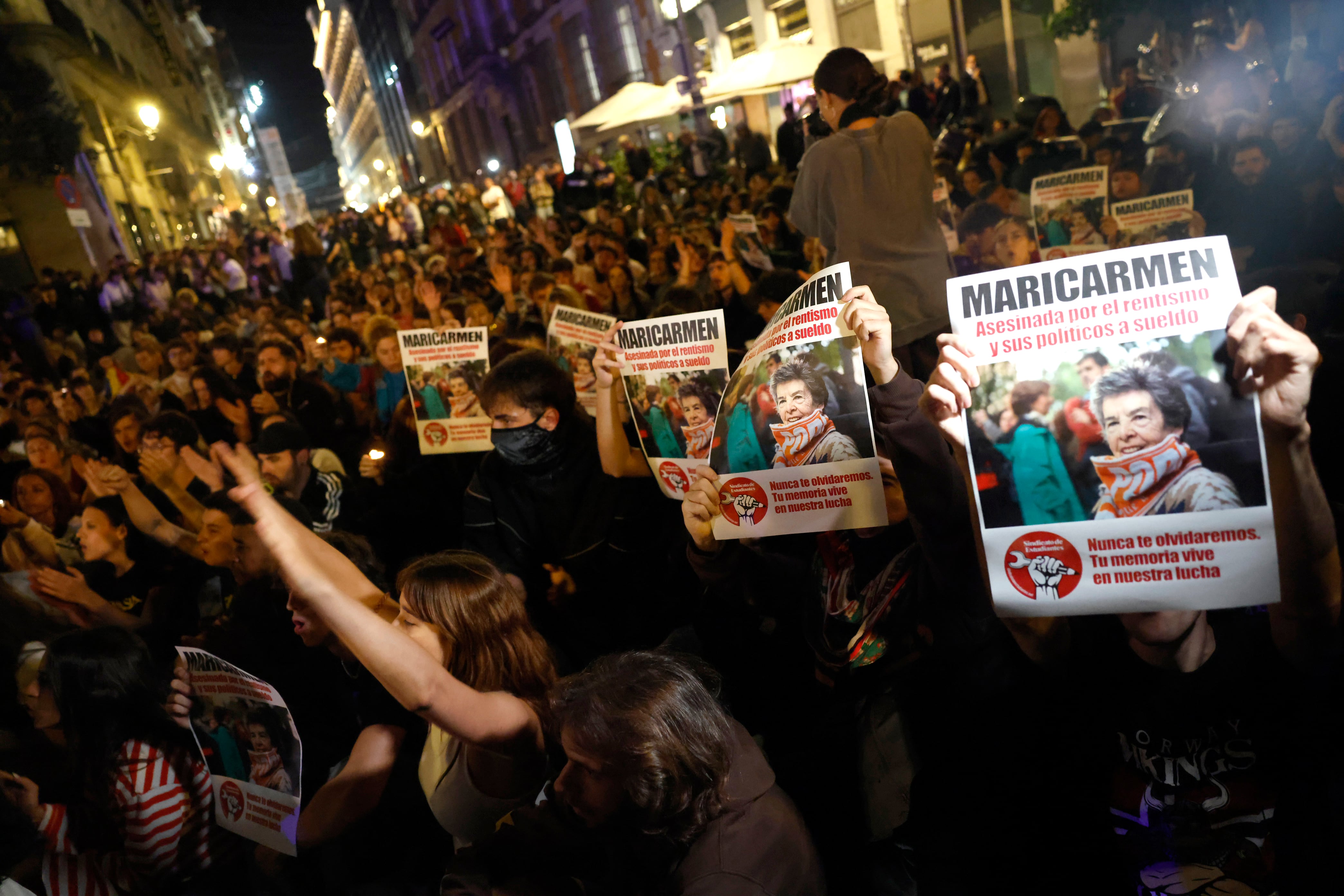
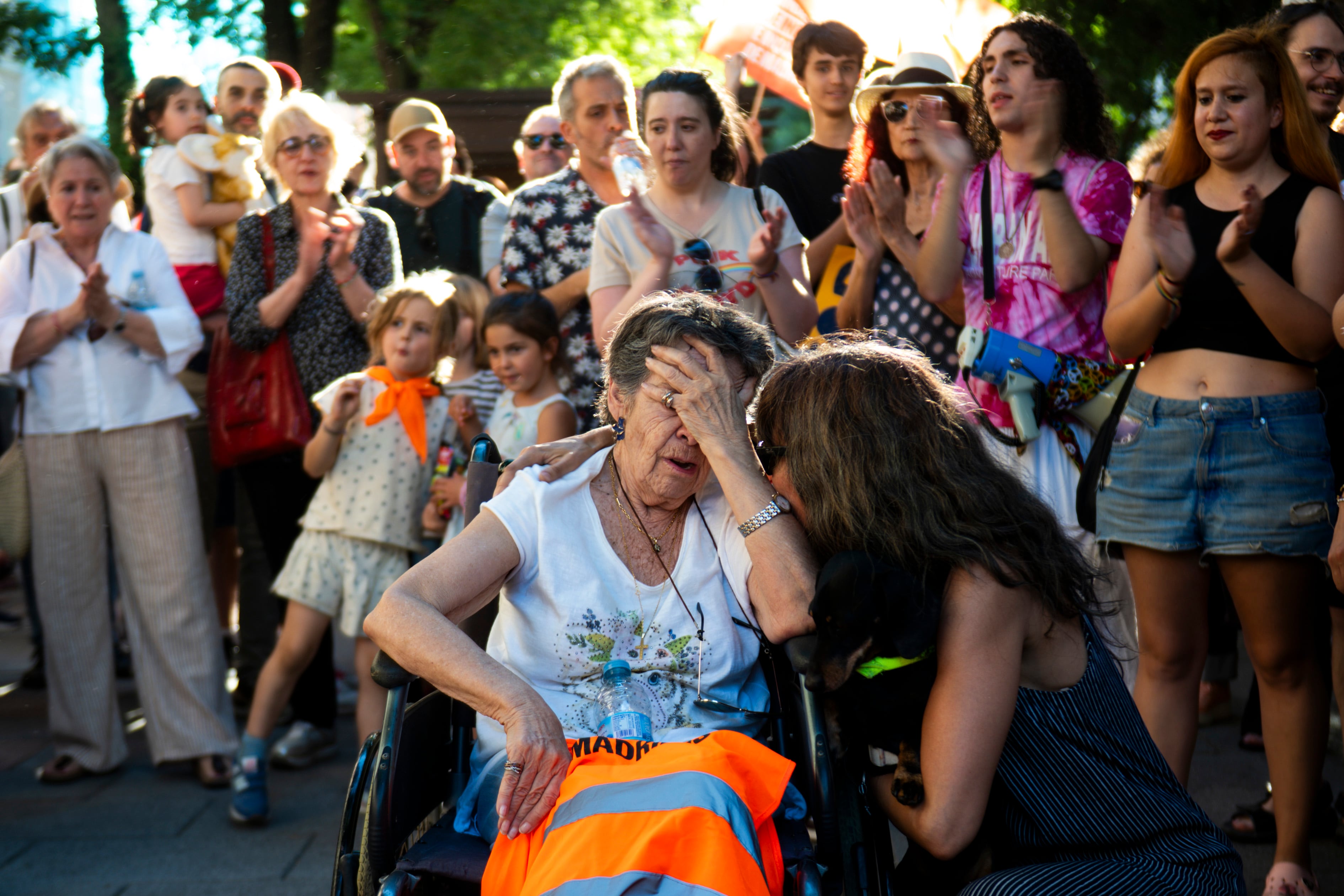
Maricarmen Abascal faced four eviction attempts, and the last one succeeded. It happened two weeks ago. The 87-year-old woman left her Retiro home in a wheelchair; she had lived there for almost her entire life. Once outside, she was helped onto a stretcher and taken to Gregorio Marañón Hospital. She died there on Wednesday.
Pedro Sánchez has turned a parliamentary defeat over housing into a general election on 29th November.
The calculation is clear: force Spain’s political argument onto territory more favourable to the left before migration, corruption allegations and parliamentary paralysis return to the foreground. But the polls suggest that the gamble could still deliver power to the centre-right People’s Party and Vox.
Pedro Sánchez’s decision to dissolve Spain’s parliament nine months ahead of schedule is more than an admission that his minority government had reached the limits of what it could achieve in the Congress of Deputies. It is an attempt to choose the terms on which his government will be judged.
The immediate trigger was the defeat of two emergency housing decrees after the conservative People’s Party (PP), Vox and Catalan separatist Junts voted against them. Housing had already moved rapidly to the centre of Spanish politics following the eviction of 87-year-old Maricarmen Abascal from the Madrid flat where she had lived for 71 years, followed by large demonstrations across the country. EU Today has previously reported on both the housing protests across Spain and Sánchez’s subsequent decision to call the election.
The prime minister is now attempting to convert legislative weakness into electoral advantage.
In his announcement on 5 October, Sánchez presented the election as a choice between a broader progressive majority capable of advancing social legislation and an opposition that had obstructed measures on housing and other domestic priorities. The government reinforced that strategy a day later by approving revised versions of the two housing decrees, containing 21 measures including tax incentives, assistance for first-time buyers and measures intended to increase supply. They will require validation by the Diputación Permanente, the standing parliamentary body that remains after dissolution.
The political calculation is straightforward. Housing offers Sánchez an issue on which anger is directed not only at government but at landlords, property investors, regional authorities and political parties opposing stronger regulation. The eviction of Abascal gave that argument a human symbol and transformed a long-running affordability problem into an immediate political confrontation.
That does not mean the strategy will work.
Most polling continues to place the PSOE behind the PP. Surveys put the Socialists at roughly 28 per cent, while Vox has risen to around 18 per cent. A PP-Vox combination is currently the only bloc consistently projected to command an outright parliamentary majority. One Sigma Dos survey published after the election announcement projected the two parties winning 203 of the Congress’s 350 seats.
Sánchez therefore appears to be playing less for immediate dominance than for mobilisation.
His problem before the housing protests was not simply the strength of the right. The broader left had become fragmented, while the government was being damaged by disputes over migration, particularly following the crisis in Ceuta, as well as corruption investigations involving figures associated with the PSOE. At the same time, Junts had become an increasingly unreliable parliamentary partner, leaving the government unable to guarantee major legislation or a new budget.
Housing changes the subject.
It allows Sánchez to argue that the central question is not whether his coalition has governed smoothly, but whether voters want a parliament prepared to intervene more aggressively in the housing market. The PP, however, is contesting precisely that framing. Alberto Núñez Feijóo argues that the housing shortage is itself a product of Sánchez’s eight years in government and has promised to raise annual construction towards 200,000 homes while reducing taxes.
The election may therefore develop into a dispute over responsibility rather than diagnosis. Both sides accept that housing has become a major national problem; they differ sharply over whether regulation or additional supply should dominate the response.
There is also a wider European dimension. Housing affordability is increasingly politically disruptive across the EU, including in major cities where construction has failed to keep pace with household formation, migration and demand for short-term accommodation. EU Today has examined similar pressures in Berlin’s housing market. Spain could now provide a test of whether housing can become powerful enough as an electoral issue to reverse the wider European movement towards the right.
For Ukraine, however, the consequences are likely to be less dramatic than Spain’s domestic political contest might suggest.
Sánchez committed €1 billion in bilateral military support to Ukraine for 2026, with Spain putting its cumulative bilateral military assistance since Russia’s full-scale invasion at almost €4 billion. Madrid has also trained more than 9,000 Ukrainian military personnel.
Spain is also home to a considerably larger Ukrainian community than the roughly 300,000 figure frequently cited. Government data showed 353,009 Ukrainian nationals holding valid residence documentation at the end of June, including 262,782 under temporary protection.
A PP-led government would alter Madrid’s domestic priorities and potentially its approach to defence spending and migration, particularly if Vox were required to sustain a parliamentary majority. Yet there is little basis at present for assuming that a change of government would produce a reversal of Spain’s fundamental position on Russia’s invasion or membership of the European and Atlantic security structures supporting Ukraine.
The more immediate question is whether Sánchez can make housing important enough to overcome the electoral arithmetic confronting him.
Calling the election has allowed him to escape a parliament in which his legislative coalition was steadily disintegrating and to enter a campaign around an issue capable of mobilising his electorate. It has not changed the fact that the PP and Vox begin that campaign with the stronger numbers.
Sánchez has chosen the battlefield. On 29th November, Spain will decide whether that was enough.
Spanish Prime Minister Pedro Sánchez announced a snap election for late November after two housing bills were defeated in a parliamentary vote on Friday, October 2. The bills came amid widespread mass mobilizations demanding urgent action on the country’s housing crisis, following the eviction of an 87-year-old woman in Madrid.
Hundreds of thousands of people took to the streets of approximately 50 cities over the weekend in support of these demands.
“It is true that there are still many injustices to correct, many social goals to achieve, and many problems to solve – above all in the areas of inequality, public services, and access to housing,” Sánchez said in his speech on Monday, as he appealed to voters to give progressive forces more decisive electoral support to allow them to implement reforms more easily.
Real estate speculation drives housing crisis
While Sánchez’s administration has profiled itself as one of the more progressive governments in Europe in terms of international policy, national movements remain frustrated by the lack of decisiveness it has approached making changes at home – including in housing policy.
For years, tenants unions have been warning against the different ways house-owners, particularly real estate speculation funds, have exacerbated housing insecurity for the general population.
Existing anger spilled over as Maricarmen Abascal, an elderly tenant in Madrid, faced eviction from the home she had lived in for 70 years. After the development company Urbagestión Desarrollo e Inversión SL acquired the house Abascal lived in, they imposed a 275% rent increase that she was not able to meet, leading, after a lengthy legal process, to her eviction at the end of last month.
The mobilizations that followed addressed a wider set of problems. “Maricarmen’s situation reflects a housing model that prioritizes real estate profits while abandoning the very people who built our neighborhoods over the decades,” Madrid Tenants’ Union (Sindicato de Inquilinas e Inquilinos de Madrid) warned.
“Most serious of all is that this situation cannot be understood without considering the weight of laws inherited from the Franco regime that denied women basic rights,” the union emphasized in May. “The original contract was signed solely by Maricarmen’s father because the legal system of the time rendered women invisible within the family. Had that same contract been signed today, both parents would have been named as holders, and Maricarmen would remain fully protected.”
“Yet an extremely restrictive interpretation of the regulations has ultimately weighed more heavily than social reality, than the desire to protect those who rent, and more than seventy years of roots in a neighborhood,” they added. “For the Madrid Tenants’ Union, the position is clear: no formalistic interpretation of the law can justify evicting an 87-year-old woman from the home where she has lived her entire life simply to boost the profitability of a real estate investment.”
Unions promise building general strike for housing
The protests formulated several demands to the government, including a ban on eviction of vulnerable tenants where alternative housing is not available; a limit to short-term and room rentals; a rent freeze; and an extension for contracts ending in 2026 and 2027.
Such demands were generally by the public, as well as by trade unions. “Housing and work are not separate struggles,” unions wrote, pledging to work towards a general strike for housing. “The rise in rents is a direct transfer of wealth from the working class to rentierism. Our wages end up, month after month, in the pockets of the rentiers who control our homes.”
The uproar pushed Sánchez’s government to reflect these demands in two bills it presented to parliament. Most considered this a significant breakthrough for the housing movement despite the official texts not fully corresponding to the protesters’ vocabulary and the vote taking place on two separate proposals.
Watered down or not, right-wing and far-right parties voted against both bills.
“We have a democracy held hostage by rentiers and speculators,” the progressive party Podemos wrote as protests rolled out over the weekend. “The housing mobilization must keep growing and move toward a general strike until the speculators and those who defend them in the institutions have nowhere left to hide.”
“Between now and November 29, the voices of all of us who want peace must be heard,” Irene Montero from Podemos added after the snap election announcement. “Those of us who want our sons and daughters to avoid war and to have healthcare and education, instead of money being spent on weapons; who want homes to live in; who want jobs and time to spend with our loved ones; and who want the cost of living to go down.”
There are moments in the life of democracies when parliament, because of its divisions and deadlocks, is unable to respond to the urgent needs of a country — and when that happens, it means it is time to give citizens a voice. Spain is living through one of those moments.

 Login