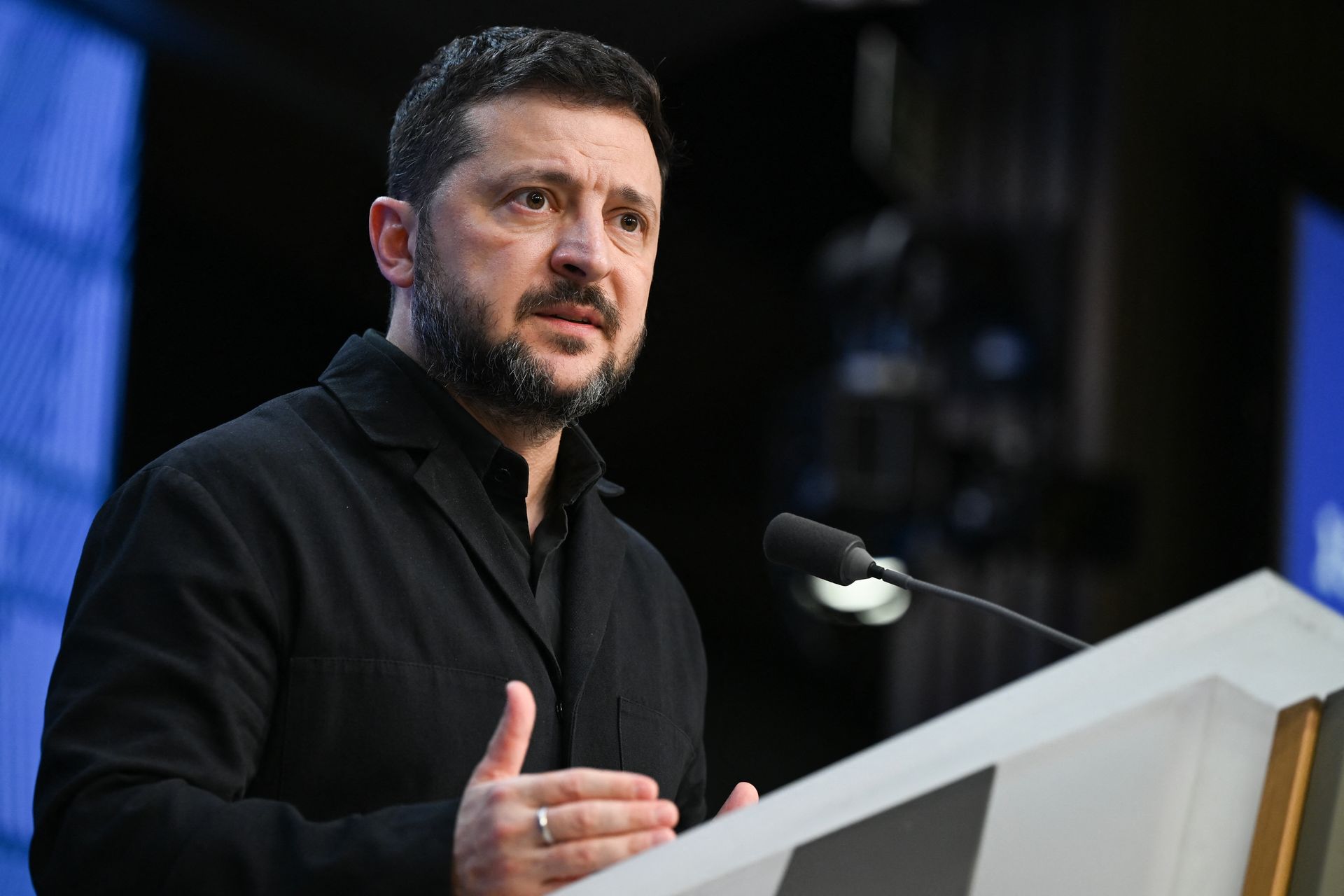
President Volodymyr Zelensky said on oct. 17 U.S. President Donald Trump was "wrong" to further "block" sanctions against Russia, while expressing hope that he would do "everything possible" to stop the full-scale war.
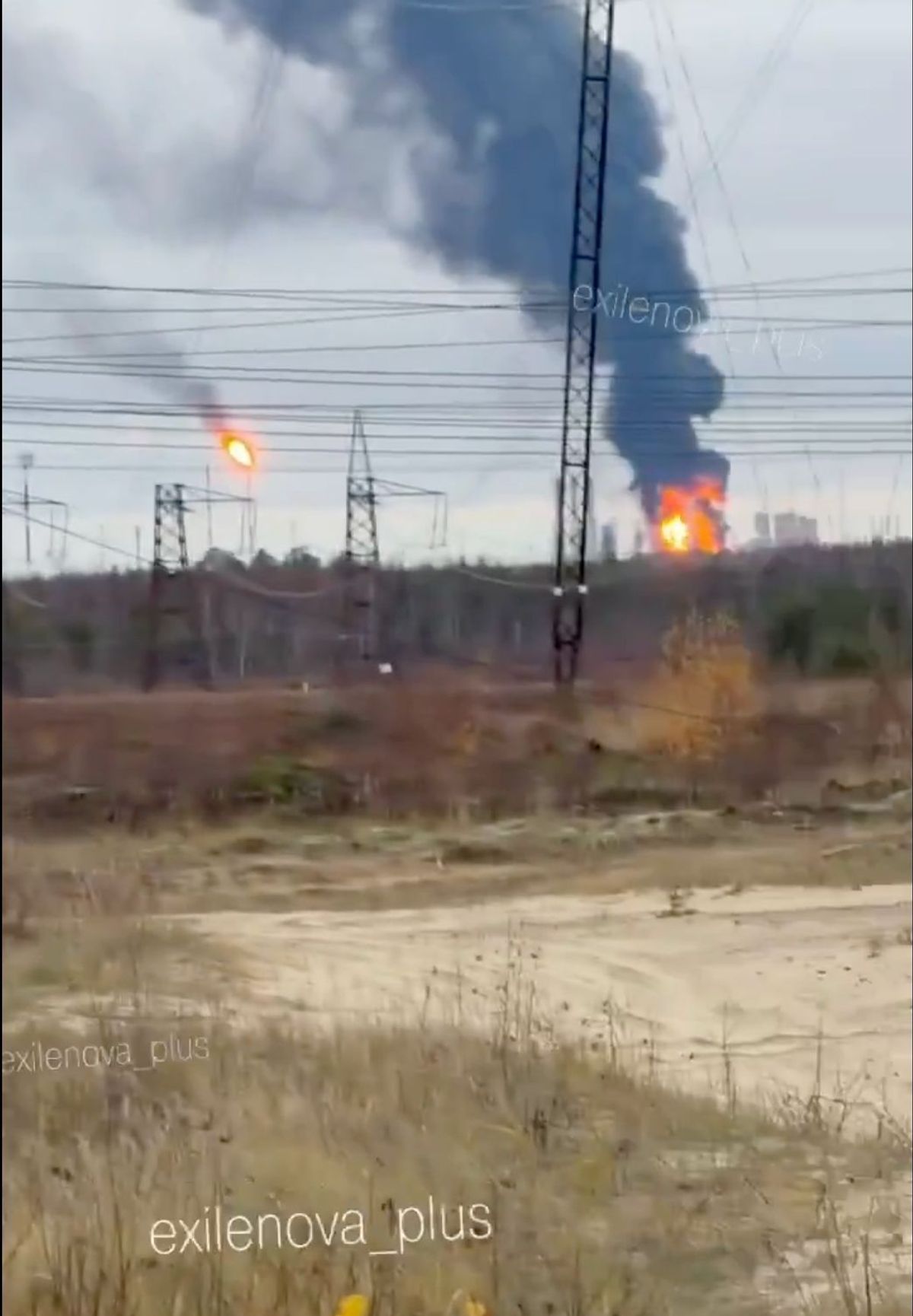
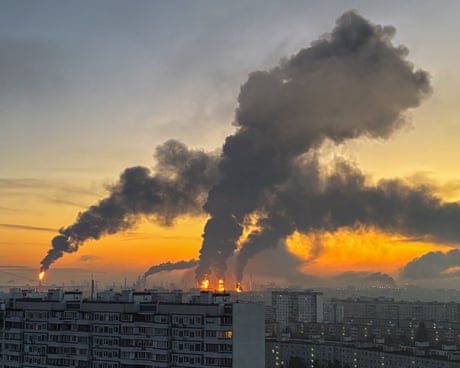
Since President Volodymyr Zelensky announced the resumption of strikes on Oct. 15, Kyiv has not reported any new attacks on Russian oil refineries or confirmed reports of such strikes.
President Donald Trump has waived sweeping sanctions and tariffs targeting Russia’s energy revenues, invoking national interest provisions in legislation passed only last month. The decision follows his controversial diesel agreement with Vladimir Putin and threatens to deepen divisions with Congress and European allies over economic pressure on Moscow.
President Donald Trump has suspended the implementation of sweeping American sanctions against Russia, using presidential waiver powers to prevent penalties approved by Congress from taking effect just weeks after he signed them into law.
The executive order issued by the White House on Friday, 16 October, suspends tariffs of up to 500 per cent on Russian imports, alongside penalties targeting major purchasers of Russian oil and gas. It also waives numerous financial and commercial restrictions intended to reduce Moscow’s ability to finance its war against Ukraine.
The decision comes two days before the 18 October deadline for implementing key provisions of the Lindsey O. Graham Sanctioning Russia and Iran Act of 2026, which Trump signed on 18 September. The legislation was named after the late Republican senator Lindsey Graham, who had championed tougher economic measures against Russia.
Sanctions established but immediately suspended
The presidential order formally establishes the tariff increases required by the legislation while simultaneously suspending their application.
Under the law, Russian imports into the United States would face additional duties of 500 per cent. A separate provision would impose 100 per cent tariffs on goods imported from the five largest purchasers of Russian crude oil and natural gas if those countries knowingly made new purchases from 18 October, subject to specified conditions and exemptions.
Another provision targets countries identified as leading facilitators of Russian oil sanctions evasion, potentially exposing their exports to similar American penalties.
Trump invoked Section 115 of the legislation, which permits the president to waive sanctions and tariffs after certifying to Congress that doing so serves the national interests of the United States.
The order confirms that the certification and an accompanying explanatory report have been submitted to Congress. However, the publicly released document provides no detailed justification for suspending the measures.
The waivers will remain in effect until the president or designated senior officials decide that further action is appropriate. Existing sanctions imposed under earlier executive orders are explicitly preserved, meaning the decision does not remove all American restrictions against Russia.
Nevertheless, the order prevents the new legislation’s principal economic penalties from operating at a time when Congress had sought to intensify pressure on Moscow.
Diesel agreement shapes Washington’s decision
The suspension follows Trump’s agreement with Putin to facilitate renewed Russian diesel exports, announced on 9 October as part of an effort to reduce international fuel prices.
As EU Today previously reported, the agreement envisages an immediate release of more than 300,000 tonnes of Russian diesel, followed by additional shipments in November and subsequent months. Washington also authorised certain transactions involving Russian diesel until April 2027.
The arrangement has raised questions about the relationship between the administration’s energy policy and sanctions intended to constrain Russia’s war economy.
Diesel prices have become an increasingly important domestic political issue ahead of the American congressional elections on 3 November. The war involving Iran and disruptions to international energy supplies have contributed to exceptionally high fuel costs, creating additional pressure on the administration.
The White House hopes additional Russian supplies will relieve pressure on international markets. However, energy analysts have questioned whether the quantities involved will materially affect American prices, particularly before the elections.
The latest waiver also removes the immediate threat of punitive tariffs against major Russian energy customers, including China and India, which had objected to the proposed measures.
Congressional opposition and European concerns
The decision is likely to intensify opposition within Congress, where the sanctions legislation attracted substantial bipartisan support.
Earlier this week, 12 senators, including six Republicans, called on Trump to reverse his diesel agreement, arguing that allowing Russian fuel back onto international markets would provide Moscow with additional revenue for its military operations.
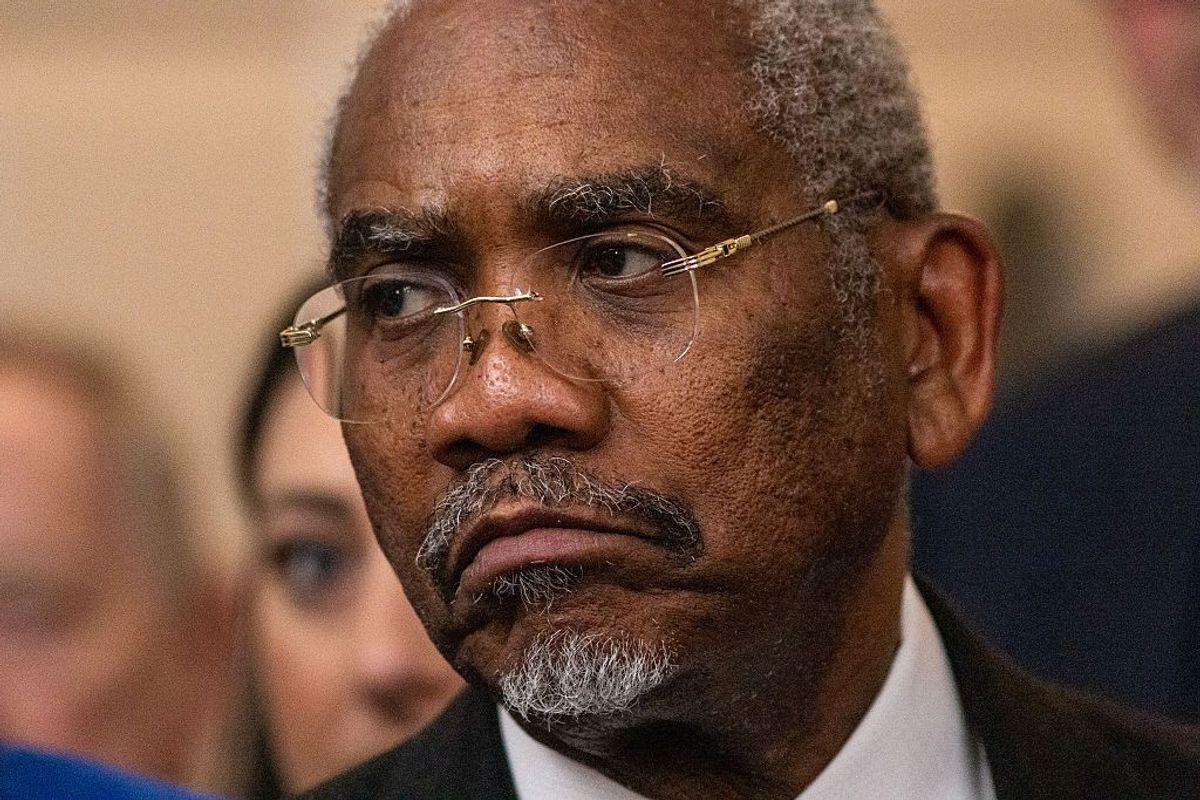
Democratic Senator Richard Blumenthal, who helped develop the sanctions legislation, criticised the diesel arrangement as contrary to Congress’s intention to strengthen economic pressure on Russia.
The decision also exposes a widening divergence between Washington and Brussels.
Costa declared that the present circumstances required increased pressure on Moscow rather than a relaxation of existing restrictions. The European Union is also preparing a 22nd sanctions package while considering additional financial support for Kyiv.
For Ukraine, the decision means that Russia will continue to benefit from energy exports and the international trade that helps finance its war. Instead of tightening restrictions on these revenues, Washington has suspended measures specifically intended to cut them.
The timing is particularly significant. While Trump is pressing Kyiv to halt attacks on Russian oil refineries and other energy facilities, Moscow continues its strikes against Ukrainian cities and civilian infrastructure. Zelenskyy has argued that Ukraine cannot be expected to stop targeting Russia’s energy sector while Russian attacks on Ukrainian infrastructure continue.
Although Trump can reinstate the sanctions, his decision removes the immediate threat of additional penalties against Russia and its principal energy customers. It also places Washington increasingly at odds with its European allies. Brussels remains committed to maintaining and expanding sanctions against Moscow, while the White House is now giving priority to reducing American fuel prices, even if that means easing economic pressure on Russia.
The contradictions are absurd but instructive of the criminal proxy war that the U.S. and European powers have perpetrated against Russia under the guise of “defending Ukraine”.
Western sanctions on Russia – the most heavily sanctioned nation on Earth – were meant to supposedly punish Moscow for its alleged unprovoked aggression against Ukraine.
The United States recently signed into law a “sanctions bill from hell” in honor of the late war hawk Senator Lindsey Graham, aimed at crushing the Russian economy, principally by shutting down its energy exports.
Likewise, the European Union has implemented more than 20 rounds of sanctions imposed on Russia over the past four years, again purportedly to block Russian exports of oil and gas. The EU has vowed to terminate all Russian energy imports by the end of this year.
The official rationale out of Washington and European capitals is to exact retribution on Russia for its alleged invasion and violation of Ukraine’s sovereignty. Western embargoes on Russia’s economy were immediately announced after Moscow launched its Special Military Operation in February 2022. (The real background to the SMO – unreported by Western media – was the NATO-backed coup in Kiev in 2014, and the arming of NeoNazis to conduct a proxy war against Russia.)
The U.S. and European Union, as well as Britain of course, presented the attempted economic blockade of Russia as a demonstration of the West enforcing international law and supporting Ukraine. The latter is portrayed in Western media as a fair maiden of democracy assailed by a drooling Russian tyrant.
In a nutshell, the sanctions are sold to the Western public as a plausible way of neutralizing “Russia’s war machine.” If Moscow’s oil and gas exports could be cut off, then, the dubious logic goes, Russia would not be able to continue its war effort in Ukraine.
However, laughably, the supposedly noble Western rationale is in tatters this week after the U.S. Treasury lifted sanctions off Russian diesel exports for the next six months in order to boost global oil supplies and curb soaring energy prices.
Another shattering blow to the facade of Western “principles” was the disclosure by Russia’s energy minister, Alexander Novak, that the European Union has continued to buy Russian energy exports at nearly pre-war levels. (Cue Western media silence on that!)
Since 2022, the EU has bought a total of $320 billion worth of Russian hydrocarbons. To put the expenditure in perspective, that far exceeds what the European governments have donated to Ukraine, some $226 bn, according to EU data.
How’s that for a contradiction? The European governments are throwing hundreds of billions of taxpayers’ money at Ukraine supposedly to defend itself against Russia, yet these same governments are giving Russia much, much more by buying its energy resources. In other words, to use their own rhetoric, Brussels and other European capitals are “fuelling the Russian war machine.”
As for the United States, it is equally duplicitous. The Americans blew up the Nord Stream pipeline in 2022 so that Europe would not be at the mercy of Russian oil dependency. Washington also imposed sanctions on Russian energy while increasing its more expensive gas exports to Europe. Yet last Friday, October 9, President Donald Trump announced, to the dismay and alarm of the Europeans and Ukraine, that he had made a deal with Vladimir Putin to release 3.5 million tonnes of Russian diesel onto the world market to ease pressure on crippling pump prices.
Whatever happened to American laws against “trading with the enemy”?
Of course, Trump is desperate for relief over record-high fuel prices as a result of his criminal aggression against Iran and Iran’s closure of the Persian Gulf oil route in retaliation. With the mid-term Congressional elections only three weeks away, Trump is seeking to assuage angry American consumers and spare his Republican Party from an electoral drubbing that will tarnish his presidency.
Out of sheer expedience, Trump wants Russian diesel exports to save his political neck. Some observers may question whether Moscow should oblige Trump considering that Washington is arming the NeoNazi Kiev regime with missiles and intelligence. Perhaps the Kremlin is calculating that Trump could finally pull off a peace deal in Ukraine.
Another smart move by Moscow, perhaps, is that the diesel deal with Trump has managed to unleash a storm of recriminations from Europe and Ukraine, which is severely undermining the transatlantic axis. Is this political judo by Putin?
The European NATO partners and the Kiev puppet president Vladimir Zelensky reacted with unprecedented insults and defiance of Trump. They accused the American leader of treachery and of siding with Russia. Within Washington, Trump has also been lambasted for “betrayal”.
Trump and his aides hit back furiously, dismissing the Europeans as “hypocrites” over their own record purchases of Russian energy exports. Trump even called for Zelensky to be replaced by someone who he can work with.
For his part, Zelensky doubled down with truculence, badmouthing Trump for being “weak” and accusing him of putting Ukrainian lives at risk. He refused to stop Ukrainian air strikes on Russia’s oil refineries, as requested by the White House. And the little money-grabbing, narco-Führer also attempted blackmail by suggesting to Trump that he would halt air attacks on Russian energy infrastructure “if” the Pentagon supplied more Patriot missiles.
Trump’s anger has exploded over Zelensky and his European patrons. He sees their obstruction of his diesel deal with Russia as not only hypocritical but a political attack on his presidency ahead of the crucial November polls.
The debacle is a rich farce. American and European posturing is seen for what it is, without any principle or genuine motives. It is a plague on all their houses.
Both the U.S. and its European partners are buying Russian energy like never before to sustain their struggling economies. The sanctions they imposed on Russia never had anything to do with “upholding international law” or “defending Ukraine”.
Using their own disingenuous logic, the NATO nations are fuelling the Russian war machine with their continuing business-as-usual purchase of Russia’s oil and gas.
That contradiction, in turn, exposes the fraud of the war in Ukraine. It was never about defending democratic Ukraine – a corrupt NeoNazi dictatorship – or European security from Russian “threat”.
The whole murderous episode has always been about fomenting a proxy war to defeat Russia. That covert policy is a gargantuan crime of aggression that has cost millions of lives and bankrupted Western societies. What’s more, it is an utterly failed policy which Western governments are covering up to avoid accountability. The destruction and deception go hand in hand.
What is all the more damning is that this travesty could have been easily exposed years ago if the Western news media had actually reported on facts instead of being the propaganda service they so evidently are to enable criminal aggression by their imperialist masters.
"This deal won't lower costs for the American people, who are already paying for Trump's failed war of choice in Iran. It will hand Putin millions of dollars to continue slaughtering Ukrainian civilians with impunity."
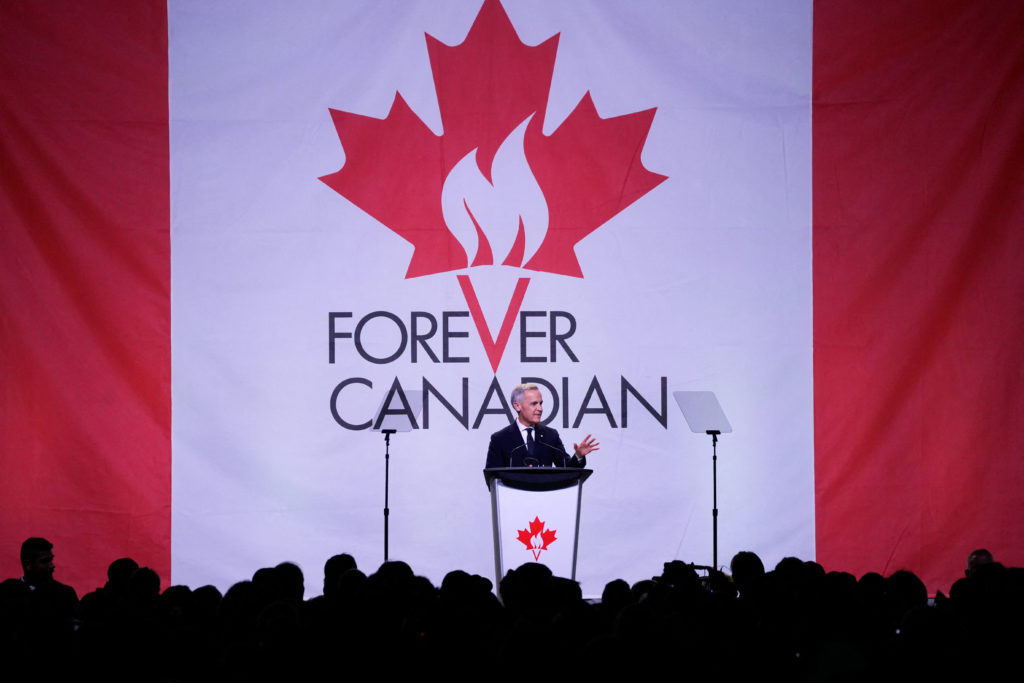
"This referendum comes at the worst possible time," Carney told a large pro-Canada rally in Calgary. "The world has become more dangerous and divided. Some outside our borders are working to break us so they can own us."
The International Energy Agency (IEA) has agreed to accelerate the release of approximately 100 million barrels of emergency oil stocks, including more than 20 million barrels of diesel, as the...
Ukrainian activist and volunteer Serhii Sternenko claimed the facility was the Surgut Condensate Stabilization Plant, which processes gas condensate and produces petroleum products.
Events of the last few days will have limited economic impact but bring political benefits for Russia.
While Ukraine’s negotiating team was meeting with the U.S. envoys Jared Kushner and Steve Witkoff last Friday, they were blindsided by President Donald Trump’s announcement that he had made a deal with Russia’s President Vladimir Putin.
Trump announced that Moscow had agreed to lift its export ban on diesel fuel and immediately supply 300,000 tons to the American and global market, followed by another 500,000 in November, then a further 1,000,000, and, eventually, another 3,000,000. To facilitate these imports, the U.S. would provide a sanctions waiver, and the U.S. Treasury would issue a temporary general license for Russia to sell diesel on the global market through April 7, 2027.
Kiev reacted with fury. The Ukrainian negotiators left Miami, flying home without attending the planned second day of talks. A senior Ukrainian official said that the deal “completely” ruined trust between Kiev and Washington. Ukraine’s President Volodymyr Zelensky complained, “It is certainly not how partners should treat each other.” Hours later, Ukraine struck a Russian oil refinery, as senior officials in Kiev had threatened it would do.
Trump and his supporters say the deal will lower diesel prices for the U.S. and the world. Ukraine, Europe, and Trump’s detractors say the deal will send more money into Moscow’s war machine. The deal will have less of an impact on either front than both sides claim—but that doesn’t mean it won’t prove significant.
Though it provides the appearance of a quick fix and may have briefly reduced oil prices, such effects could only be brief and trivial. Russia is now set to export 1.8 million tons of diesel fuel over the next few months and, eventually, another 3 million. But the world uses 3.5 million to 4 million tons a day, and the U.S. alone burns through half a million.
The deal won’t do much to boost the Russian economy, either, which is still functioning despite massive Western sanctions. Russia’s diesel production has apparently been running at a surplus for a while, and its own ban on exporting diesel would probably have been lifted shortly anyway. Exports to Central Asia were up dramatically last month. Though Europe may still refuse to purchase Russian diesel under the U.S. waiver, world demand is acute, and Russia would easily have found a market for its diesel amid a general supply crunch caused by the Iran War.
But the deal is symbolically and politically significant. It comes amid plummeting popular support in Ukraine for Zelensky. Trust in the Ukrainian leader and desire for him to stay on as president after the war are sinking. Polls show that he would likely lose the next election. The deal only worsens Zelensky’s political challenges, forcing him to either abide by Trump’s wishes for Ukraine to cease strikes on Russian oil refineries or risk further inflaming tensions with Washington. So far, Zelensky is choosing the latter.
When Ukraine struck another refinery after the announcement of the deal, Trump reacted with fury. “Do whatever you want, but don’t hit the diesel fuel,” Trump says he told Zelensky. “So, what does he do? He goes and hits refineries…. He’d better damn well stop.”
This rupture is the worst crisis in Zelensky’s relationship with Trump since their public confrontation in the Oval Office in February of last year. This summer, Trump seemed to be swinging in Zelensky’s favor—but not anymore. Zelensky said Trump’s deal was “not fair and not honest.” He accused Trump of using talks with Ukraine “as a smokescreen” while the U.S. cut “backroom deals” with Russia, and he said the episode demonstrated Trump’s weakness to the world.
Trump shot back. “I think it’s time for Ukraine to get a new president,” he said. “I suggest they get a new leader who can make a deal because he could have made many deals, but for some reason, he never does.”
As the rift widened, Witkoff and Kushner warned the Ukrainian team that crucial intelligence-sharing could be cut off if Kiev doesn’t fall in line with Washington’s demands. On Monday night, when Kiev was struck by Russian ballistic missiles without warning, it was unclear if the U.S. had followed through on the threat. “Regarding this strike,” Zelensky said, “unfortunately, there was no warning from our partners.” But Ukraine’s Foreign Minister Sybiha said Ukraine is still receiving U.S. intelligence and that the failure was not due to policy but to the difficulty of tracking “specific type of weapons used by the Russian side.” Trump has since said intelligence sharing has not stopped. But on Tuesday night, Kiev was once again bombarded by ballistic missiles, and Zelensky again said his government had received “no advance warning from our partners.”
Adding to the danger for Ukraine, Elon Musk, whose Starlink satellites are crucial for the Ukrainian armed forces’ battlefield communications, tracking of Russian troops, and selections of targets, backed Trump’s call for Zelensky to be replaced, posting that “Zelensky has gone too far.” On Wednesday, Ukrainian officials said that SpaceX, Musk’s company, “had introduced a limit on some Starlink services within the country, disrupting combat drone missions for which the technology is crucial.”
The significance for Moscow is that it has managed to make an economic deal with Washington that required no Russian concessions in peace negotiations with Ukraine. It is this unshackling of U.S.–Russia diplomacy from the war, not any financial windfall for American’s or Putin’s war machine, that is the true victory for Russia.
The events of the past few days, centering around the Trump–Putin diesel deal, will not have the economic effects the media is focusing on, but they have already brought significant political consequences for both Russia and Ukraine.
Accelerating crude exports through the Strait of Hormuz aren’t translating into higher production of a dirty shipping fuel, according to a top Vitol Group executive, tightening supplies and sending prices soaring.
A powerful explosion on Thursday afternoon at the refinery of MOTOR OIL in western Attica has injured two workers seriously and another four slightly. it is the second explosion at the refinery within a week. Two serioylsy injured workers, aged 40 and 59, were transported to a hospital in Athens where they underwent surgeries for […]
Donald Trump has called Ukraine’s renewed strikes on Russian oil refineries “a disgrace” and criticised Volodymyr Zelenskyy after an energy ceasefire between Russia and Ukraine failed to take hold.
Ukraine resumed strikes on Russian oil refineries after Zelenskyy said Kyiv was abandoning a ceasefire unilaterally declared by Trump on Sunday, having briefly halted its attacks to demonstrate its readiness for peace talks. Russia had continued its strikes on Ukrainian power plants.
Two ships sink: "A container ship and a dry bulk carrier have both sunk near the Strait of Hormuz in the past 24 hours after being hit by projectiles in separate incidents, maritime officials said on Wednesday," reports Reuters. One ship was Singapore-flagged and the other was Antigua and Barbuda–flagged; one crew member has died so far, but the majority were safely evacuated. "Attacks around the waterway have surged over the past 10 days, with Iran saying it is stepping up strikes in response to the US blockade of its ports and tougher sanctions introduced last month." Basically, Iran is escalating because the U.S. naval blockade—reinstated in July—has choked off its new oil exports, and Tehran's answer is to make sure no one else's oil gets out either. Shipping volumes in the Strait have plunged as attacks have escalated.
These two are the third and fourth commercial ships to have been sunk since the Iran-U.S. war began in February, depending on how you count. The India-flagged Haji Aliwent down off the coast of Oman, and the Malta-flagged container ship Safeen Prestige was struck and later sank in the Strait of Hormuz as well. Back in July, a cargo ship sank after colliding with another vessel in the Strait, though that wasn't technically an attack. And in September, the U.S. destroyed several Iranian tankers—at least two in the Gulf of Oman area and one near Kharg Island, among others. So many ships have been caught in the crosshairs, though relatively few have gone down.
Why does the decline of religion matter? "The decline of American religion over the last thirty years bears…a significant responsibility for the dysfunctional state of American politics," writes Jacob Williams for Cracks in Postmodernity, reviewing Shadi Hamid and Matthew Kaemingk's new book, Can Religion Save Democracy? "Religious communities—churches, mosques, and synagogues—channel our spiritual impulses in a healthy direction. Religion—actual, traditional, 'organized' religion—appeals to mankind's need for wonder, mystery, and ultimate purpose; and it schools those impulses into forms conducive to civic virtues like humility, tolerance, forbearance, and constructive disagreement."
"Religion does all this," continues Williams, "because it achieves the Augustinian virtue of desacralizing politics and lowering its stakes to a less eschatological plain, in which we see political conflict as 'serious but not sacred.' Our need for ultimacy is directed onto what is actually ultimate—God—and not onto conflict with our fellow man. We learn epistemic humility by hedging our arguments with the recognition that, as Muslim scholars put it, 'God knows best.' Ritual formation reminds us at a deep 'pre-rational level' that we are not divine and that losing an earthly struggle is not final: 'prayer…is a daily concession speech.' Even belief in Hell, paradoxically, makes us less judgmental about one another's flaws, since if true evil will be punished in the hereafter, we can easily face the prospect of its survival in the here and now."
Scenes from New York: Comedian Shane Gillis is apparently in hot water, once again, for hosting Saturday Night Live and offending people with the jokes in his monologue. Gillis was, of course, fired from SNL back in 2019, immediately after being hired, because of anti-Asian slurs he'd used in a podcast the year prior, while doing a bit where he was pretending to be a landlord. The first time he was invited back to give a monologue, he "bomb[ed] on 'SNL' with Down syndrome and gay jokes," according toThe Daily Beast. And then this most recent time, he offended people by saying, "I haven't been to the gym in so long, I didn't know women just dress like whores now." Given the prevalence of "scrunch butt"–style leggings, I kind of think he's dead-on, but I've also long been a Gillis apologist.
"In that very same monologue, Gillis denigrates men, gay men, his sisters, and himself—repeatedly," writesReason's Robby Soave. "He admits that he's fat and ugly. That's the basis of the humor. It does not suggest that he has some problem with women or enjoys laughing at their expense and solely their expense. He's doing observational comedy, and no one is spared, not even Gillis." Gillis seems dumb as a bag of bricks, but he's actually quite incisive.
I do think there's a deeper thing going on, though, given that Gillis keeps getting into trouble, which is that bro-y culture no longer unites us as a country. Bros are dwindling in number and prominence. Gillis isn't widely regarded as funny because the culture killed off the bro. And I, for one, mourn that loss.
"When President Trump announced that Katie Zacharia would serve as the next White House press secretary, he referred to her as an attorney. But she hasn't passed the bar exam in the U.S.," reportsThe Wall Street Journal. "Zacharia sat for the California bar exam after graduating from law school at Pepperdine University in 2011, according to a person with direct knowledge of the matter, but she didn't pass." Truth be told, I don't think the fact that she hasn't passed the bar yet represents herself as a lawyer matters all that much; I think the fact that she seems terrible at public speaking is the greater problem, given her new role.
James Talarico continues to really like his own line that "the Bible is silent on the issue of abortion." I don't think he's especially persuasive to the Catholic voter he was confronting in the above clip, who countered with an invocation of the Ten Commandments, but I guess voters will decide soon enough.
"With less than three weeks until Election Day and Republican approval numbers down, President Donald Trump is taking unorthodox measures to drum up support for the GOP," writes Ryan Curtis for Reason. "Last week, Trump sent out $90 payments to over 20 million Americans on Medicare Part B—which covers doctor visits and regular checkups. The money was made available to help seniors 'pay for their Medicare Part B premiums,' which cost $202 per month."
Shipowners are facing an increasingly fragmented fuel market as disruptions triggered by the Middle East conflict raise concerns about the availability and quality of supply.
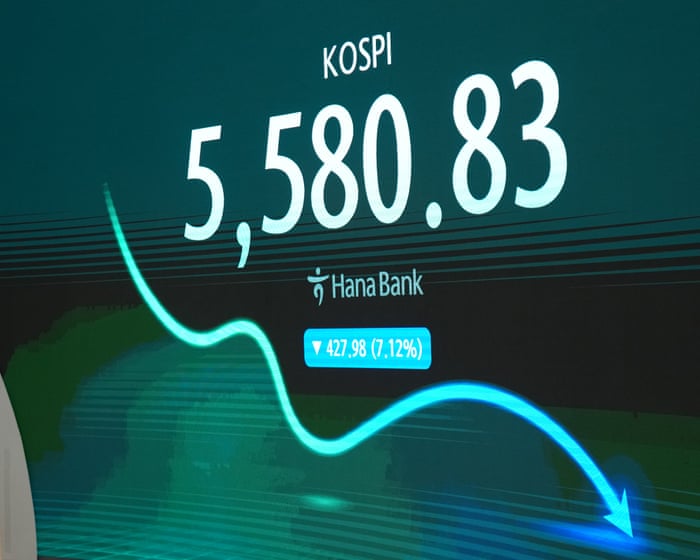
An accelerating sell-off of AI-linked shares has hit global markets, as fears over rising inflation and future interest rate hikes spooked traders already wary of the heavily indebted sector.
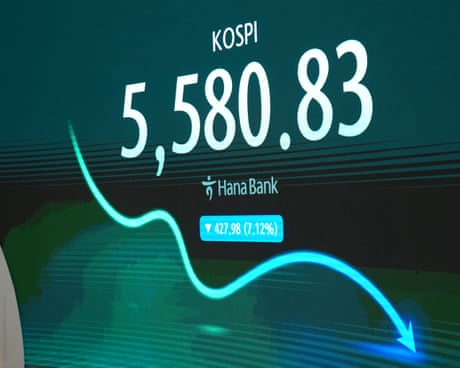
South Korea’s benchmark Kospi 200index, which is heavily skewed towards the companies that make memory chips, fell more than 8% overnight to a six-month closing low, triggering circuit breakers that brought trading to a halt at various points.
Peak oil is real and we must prepare for its exhaustion now as it'll be too late once the price is spiking, says Richard Lyon as he responds to Tilak Doshi's review of his book The Energy Trap.
Days after Donald Trump announced a deal to import Russian diesel into the US in an effort to lower soaring pump prices, the world’s energy watchdog has warned that the global fuel shortage will drag into 2027.
Trump’s temporary sanctions reprieve was criticised for offering “too little, too late” to temper the sky high pump prices triggered by the shutdown of war-damaged refineries in the Middle East and Russia – once the world’s second-largest diesel exporter behind the US.
Have we passed peak oil – are fossil fuels running out? Richard Lyon says yes, and the transition to 'renewables' is making it worse. But peak oil is a myth, says Tilak Doshi, as he reviews Lyon's book The Energy Trap.
Une succession rapide de manœuvres diplomatiques a permis à Donald Trump d’être publiquement réhabilité, à Vladimir Poutine de garder le contrôle stratégique total et à Volodymyr Zelensky de sombrer dans une rage sans bornes :
• L’accord bilatéral sur le diesel : La Maison Blanche et le Kremlin ont conclu un accord en vertu duquel le Trésor américain accorde une dérogation renouvelable aux sanctions sur les exportations russes de diesel jusqu’au 7 avril 2027. En contrepartie, Moscou a accepté de lever son interdiction temporaire d’exportation nationale de distillats moyens, apportant ainsi un soulagement immédiat, tant psychologique que concret, à un marché mondial du diesel mis à mal par les interdictions de transport maritime imposées au Moyen-Orient.
• L’effondrement du mythe de la «trêve énergétique» : Les rumeurs relayées par les médias occidentaux alléguant que Moscou aurait accepté une cessation provisoire des frappes aériennes et des tirs de missiles sur le réseau électrique ukrainien en échange d’un allègement plus large des sanctions ont été totalement discréditées. La position russe reste inébranlable : pas de cessez-le-feu provisoire ni sur terre, ni en mer, ni dans les airs.
• Moscou suspend officiellement les négociations : Lors d’un point presse officiel rendant compte du sommet téléphonique entre Poutine et Trump, le conseiller du Kremlin en matière de politique étrangère, Youri Ouchakov, a lancé une bombe diplomatique : la Russie a officiellement révoqué sa décision de septembre dernier de reprendre les négociations trilatérales avec Washington et Kiev. Invoquant les tentatives d’attaques par drones menées par l’Ukraine contre des bureaux de vote russes lors des élections à la Douma d’État, Poutine a informé Trump que le processus de négociation est suspendu indéfiniment tandis que les forces russes progressent sur l’ensemble du front.
• Rupture entre Washington et Kiev :Axios a confirmé que Donald Trump a personnellement adressé six exigences distinctes à Zelensky, lui ordonnant de mettre immédiatement fin aux raids de drones ukrainiens visant les raffineries russes. Zelensky a défié ces six exigences. Piégé par la dépendance de son pays aux financements occidentaux, Zelensky s’en est ouvertement pris à Trump, qualifiant le dialogue entre Washington et Moscou de «trahison en coulisses» et accusant la Maison Blanche d’utiliser les réunions à Miami comme écran de fumée pour traiter directement avec le Kremlin.
1. La transaction sur le diesel : un levier stratégique négocié contre un répit électoral
L’accord conclu entre Washington et Moscou est présenté par la Maison Blanche comme une avancée majeure. En réalité, cet accord marque le recul logique d’une puissance hégémonique surendettée, confrontée aux réalités économiques à l’approche des élections de mi-mandat de novembre :
• Le mécanisme de la dérogation : tout comme le Trésor américain a discrètement délivré des licences renouvelables pour permettre aux raffineries indiennes d’acheter du pétrole brut russe acheminé par voie maritime à la suite des premières escalades dans le golfe Persique en février, Washington a de nouveau accordé une dérogation d’urgence pour le diesel russe. Confronté à la réalité des pénuries de diesel agricole et routier, Trump a cédé sur ce que son dispositif de sanctions s’efforçait d’empêcher depuis des années.
• Le levier calculé de Novak : le vice-premier ministre russe Alexandre Novak a signalé il y a plusieurs semaines que les stocks nationaux de diesel en Russie affichent un excédent, la récolte agricole de cette année étant suffisante et comparable à celle de l’année dernière. L’interdiction russe des exportations, loin d’être un acte de désespoir déclenché par les frappes de drones ukrainiens, constituait un instrument de levier géopolitique. Moscou a retenu les distillats hors du marché jusqu’à ce que Washington soit contraint de négocier un assouplissement des sanctions.
• L’arithmétique du réel : comme l’ont démontré les analystes énergétiques, les volumes de diesel exportables par la Russie couvrent environ neuf jours de consommation intérieure américaine. Le véritable moteur de la crise énergétique mondiale reste le blocus du golfe Persique et de la mer Rouge. Pourtant, en acceptant de libérer ce volume, Moscou a obtenu une concession politique majeure de la part de Trump tout en démontrant aux pays du Sud que les régimes de sanctions occidentaux sont mis de côté dès que les prix intérieurs menacent une élection américaine.
2. Le point presse d’Ouchakov : la Russie claque la porte des négociations
La révélation géopolitique cruciale du jour provient du compte-rendu officiel de Youri Ouchakov sur le sommet téléphonique Poutine-Trump.
Pour la première fois depuis le lancement de l’opération militaire spéciale en 2022, la Fédération de Russie a officiellement et publiquement retiré son offre de pourparlers diplomatiques :
Poutine expose à Trump la doctrine russe durcie :
Les tentatives du régime de Kiev de perturber notre processus démocratique par des attaques terroristes contre des bureaux de vote ont réduit à néant toute possibilité de négociations. Nos forces armées détiennent l’initiative et avancent avec assurance. C’est à nous de déterminer si et quand des pourparlers auront un sens.
Il s’agit là d’un tournant décisif.
Tout au long du conflit, Moscou a maintenu une position cohérente : nous restons ouverts à un règlement politique et diplomatique selon nos conditions.
En lançant des attaques massives de drones contre les capitales provinciales russes et les bureaux de vote pendant les élections à la Douma, Bankova a fait le jeu de l’état-major russe.
Poutine a profité de cet incident pour mettre définitivement fin à cette voie de négociation, informant Trump que la Russie n’envisagera pas de discussions trilatérales tant que ses forces auront l’initiative opérationnelle totale.
Selon Ouchakov, Trump n’a pas réagi ; il a promis d’envoyer des «signaux» fermes à la délégation ukrainienne qui attendait à Miami.
3. Le coup de folie de Bankova : six défis, l’arnaque des 27 milliards d’euros et la rupture de Séoul
À Kiev, la prise de conscience que Donald Trump négocie des accords énergétiques directement avec Vladimir Poutine a provoqué une réaction démesurée de la part de Volodymyr Zelensky :
• Les six exigences : un reportage d’Axios a confirmé que la Maison Blanche a émis six directives distinctes à l’intention de Bankova, ordonnant la fin immédiate des attaques contre les infrastructures de raffinage russes. La motivation de Trump est purement intéressée : chaque frappe contre un craqueur de catalyseur russe fournit aux traders de Wall Street un prétexte pour faire grimper les cours à terme du diesel. Zelensky a rejeté toutes ces directives. Mettre fin aux frappes reviendrait à admettre que toute la campagne estivale de drones n’a abouti à aucun résultat stratégique.
• Le racket des 27 milliards d’euros : les dirigeants ukrainiens ne peuvent se permettre d’arrêter l’offensive de drones, car celle-ci constitue leur principal argumentaire utilisé pour extorquer des fonds à Bruxelles. Des responsables du ministère ukrainien de la Défense ont récemment déclaré que sans 27 milliards d’euros de subventions européennes immédiates, le montage de drones sur le territoire national serait interrompu. En déployant des munitions volantes pour incendier des réservoirs de stockage périphériques dans des villes de province russes, Bankova fabrique des images destinées à persuader des dirigeants européens comme Friedrich Merz et Ursula von der Leyen de continuer à faire affluer l’argent des contribuables dans les caisses du régime.
• La crise diplomatique avec Séoul : l’irritabilité diplomatique de Zelensky s’est étendue au-delà de Washington. Après la capture de deux soldats nord-coréens dans la région frontalière de Koursk, un accord a été conclu avec Séoul pour transférer secrètement les prisonniers en vue de les interroger. Ignorant la demande explicite de confidentialité formulée par la Corée du Sud pour éviter tout conflit avec Pyongyang, Zelensky a annoncé publiquement l’opération à des fins de relations publiques. Lorsque Séoul a protesté, Bankova a refusé de présenter des excuses, déclenchant une rupture diplomatique sans précédent qui a abouti au retrait par la Corée du Sud de son ambassadeur à Kiev — s’aliénant inutilement un partenaire qui avait fourni plus de 500 000 obus d’artillerie de 155 mm pour la campagne de 2023.
4. Le théâtre de la décapitation : sous-stations, centres de la SBU et le «Collegium» de Surovikin
Tandis que les diplomates échangent leurs reproches, la campagne aérienne stratégique russe contre Kiev est entrée dans une phase opérationnelle meurtrière :
1. La destruction du réseau électrique : des observateurs indépendants du secteur électrique confirment que les frappes russes sur la sous-station de Kievska de 750 kV et les nœuds de transformation du nord ont contourné les boucliers de protection en béton en ciblant les transformateurs de réduction de tension, les disjoncteurs et les parcs de refroidissement. Toute la rive droite (moitié ouest) de Kiev reste plongée dans une coupure d’électricité totale. Le réseau de métro étant à l’arrêt et les pompes de relevage d’eau à haute pression hors service, l’assainissement municipal a cessé de fonctionner, provoquant des refoulements d’eaux usées généralisés dans tout le centre administratif.
2. Les ogives coupe-câbles : les Forces aériennes russes (VKS) ont introduit des sous-munitions spécialisées, déployées par des appareils Geran-4 à propulsion à réaction, conçues spécifiquement pour sectionner les lignes aériennes à haute tension. En coupant les lignes reliant la production nucléaire de base de l’ouest à Kiev, les forces russes s’assurent que, même si les transformateurs des sous-stations sont réparés, le courant ne puisse physiquement atteindre la capitale.
3. Le collège de Surovikin : des sources militaires faisant autorité confirment que, bien que le chef d’état-major général Valery Gerasimov conserve officiellement le commandement suprême, le général Sergei Surovikin dirige activement la campagne d’interdiction et de destruction des infrastructures sur l’ensemble du théâtre d’opérations, à la tête d’un collège restreint de généraux supérieurs, dont Andrey Mordvichev et le vice-ministre de la Défense Yunus-Bek Yevkurov. Les caractéristiques de ce groupe de commandement — blocus systématique des ponts, ciblage méthodique des nœuds administratifs du SBU et publication de coupes architecturales du bunker souterrain de Zelensky situé sous la rue Bankova — indiquent une opération destinée à rendre la capitale fonctionnellement inhabitable pour le régime.
5. Usure sur le front : Dobropillya nettoyée, mines saisies, poches encerclées
Sur le terrain, les formations interarmes russes progressent à un rythme accéléré à travers les dernières lignes de fortifications ukrainiennes :
• La prise d’assaut de la mine de Dobropilska : le ministère russe de la Défense a confirmé que des groupes d’assaut de la 51e armée interarmes et des formations spécialisées d’infanterie de marine ont nettoyé les secteurs ouest de Dobropillya, pénétrant dans les galeries fortifiées de la mine de charbon de Dobropilska. Plus de 82 structures fortifiées ont été nettoyées en l’espace de 24 heures. La prise des imposants terrils de la mine offre aux observateurs d’artillerie russes un contrôle de tir direct et panoramique sur les lignes arrière de Druzhkivka.
• La liquidation des poches de résistance du nord : dans le nord-est de l’oblast de Kharkiv, les dernières poches de résistance du groupement frontalier ukrainien, fort de 1 700 hommes, ont été éliminées. Les forces russes ont libéré les hameaux centraux de la région, déplaçant ainsi le centre de gravité opérationnel du Groupe de forces Nord vers l’encerclement direct du nœud logistique de Velykyi Burluk. Au nord de Soumy, les positions avancées ukrainiennes le long des lisières de forêt se sont effondrées, rapprochant les détachements russes avancés à portée d’artillerie des limites municipales de Soumy.
• Le couloir mortel du Dniepr méridional : à Zaporijia, la fermeture du pont de Vantovyi (Khortytsia) a transformé les voies d’approvisionnement de la rive est en champ de bataille meurtrier. Les opérateurs de drones FPV russes, bénéficiant d’une ligne de visée ininterrompue au-dessus des fonds asséchés du réservoir de Kakhovka, ont établi un contrôle total des tirs sur tout le trafic routier tentant de renforcer le front sud.
Le crépuscule de la guerre par procuration
Les événements du 10 octobre 2026 marquent la fin d’une époque dans l’art de gouverner moderne :
• Donald Trump a obtenu sa dérogation temporaire sur le diesel pour protéger ses arrières sur le plan politique intérieur, reconnaissant ainsi que l’arme unipolaire des sanctions est inopérante.
• Vladimir Poutine a fait savoir que la Fédération de Russie ne se prêtera plus au jeu des négociations trilatérales théâtrales alors que ses soldats traversent les lignes défensives ukrainiennes.
• Et à Kiev, Volodymyr Zelensky est confiné dans une capitale plongée dans l’obscurité et envahie par les eaux usées — hurlant des insultes à ses protecteurs américains, rompant ses liens avec ses fournisseurs asiatiques et regardant ses brigades d’élite périr dans les tourbières du Donbass.
La transaction est conclue. Les illusions sont brisées.
Le maître impérial a conclu son accord parallèle sur le carburant, son mandataire a été abandonné à son sort, et la machine militaire souveraine de la Fédération de Russie achève méthodiquement la guerre dans la steppe eurasienne.
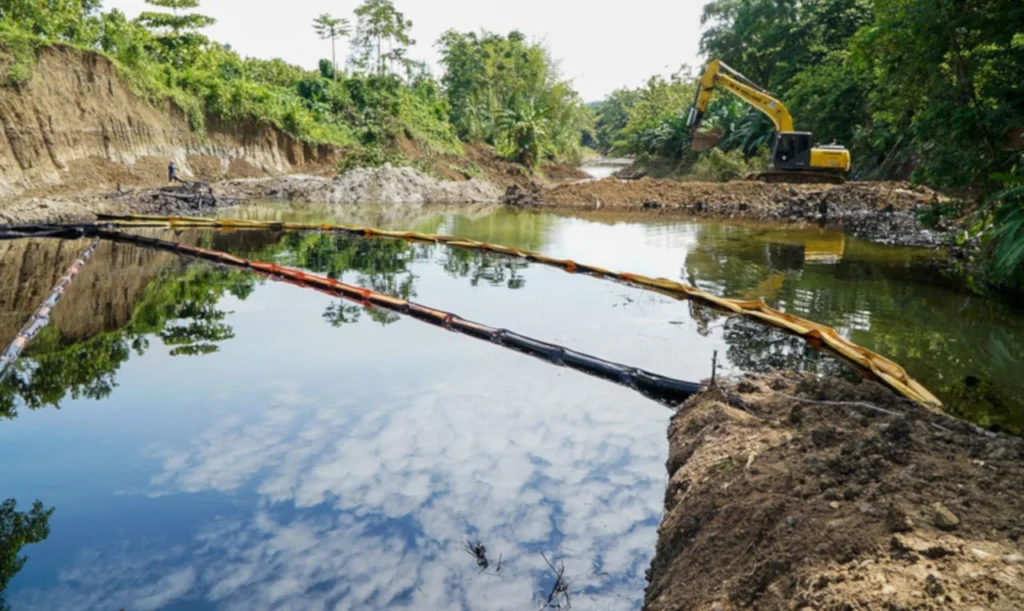
An oil spill was reported in the Cupa River in Quinindé canton, Esmeraldas province, Ecuador, on Monday, October 12, after a crude leak in the SOTE pipeline, according to Petroecuador.
The leak was controlled after it was detected together with Army troops. As a preventive measure, the water company ordered the suspension of water intake and distribution from the San Mateo plant to reduce risks to the population given the possible presence of contaminants in the tributary.
A “considerable amount of hydrocarbons” was detected in the Cupa River, according to reports from the drinking water company, increasing concern among residents of nearby areas.
These residents had alerted the situation on Monday, and expressed concern over possible effects on the ecosystem and on communities that depend on the water source for various activities. They requested an immediate response from authorities and the state oil company, they said.
📌 COMUNICADO DE PRENSA
EP Petroecuador controla fuga de crudo en el SOTE, en el cantón Quinindé
Although containment actions were implemented shortly after the incident, several residents consider the measures adopted insufficient given the magnitude of the event and its possible environmental and social consequences, they said.
Residents also requested spaces for dialogue with government authorities to establish concrete commitments for a comprehensive response to this type of emergency, arguing that solutions should not be limited solely to containing hydrocarbons.
They recalled that this event comes after another spill recorded in the El Achiote sector, also in Quinindé, in March 2025, which affected water sources in the area and generated concern over its environmental impacts.

 Login