❌

Reading view

Shabana Mahmood to hold talks with EU over law enforcement cooperation

UK home secretary’s meeting comes after PM said he wanted to rejoin European law enforcement databases

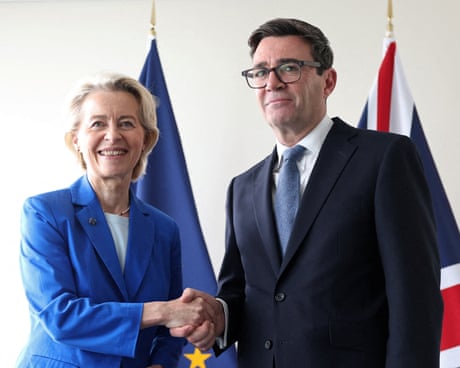
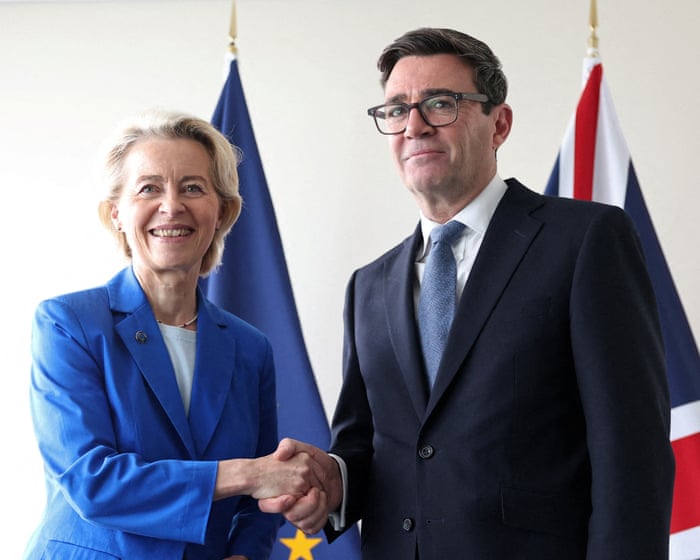
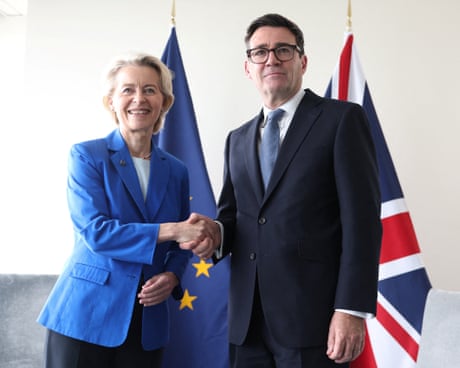
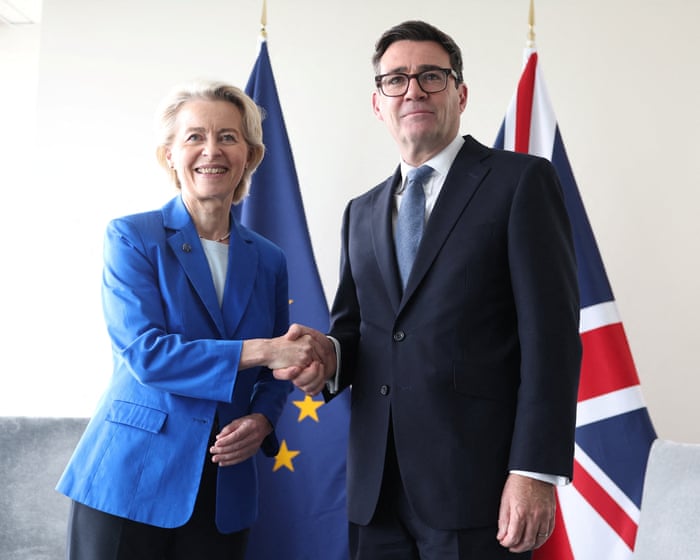
The UK home secretary, Shabana Mahmood, will meet the EU’s home affairs commissioner on Monday for further talks just days after Andy Burnham said he wanted to rejoin European law enforcement databases from which the UK has been locked out of since Brexit.

According to the European Commission, they will discuss “migration, border management, law enforcement cooperation and counter-terrorism”, with the latest Frontex data published on Monday showing a 43% decline in small boats crossing the Channel.

Continue reading...

© Photograph: Marcin Nowak/Anadolu/Getty Images

© Photograph: Marcin Nowak/Anadolu/Getty Images

© Photograph: Marcin Nowak/Anadolu/Getty Images

  •  

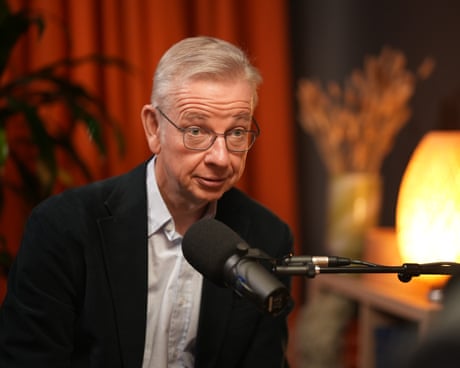
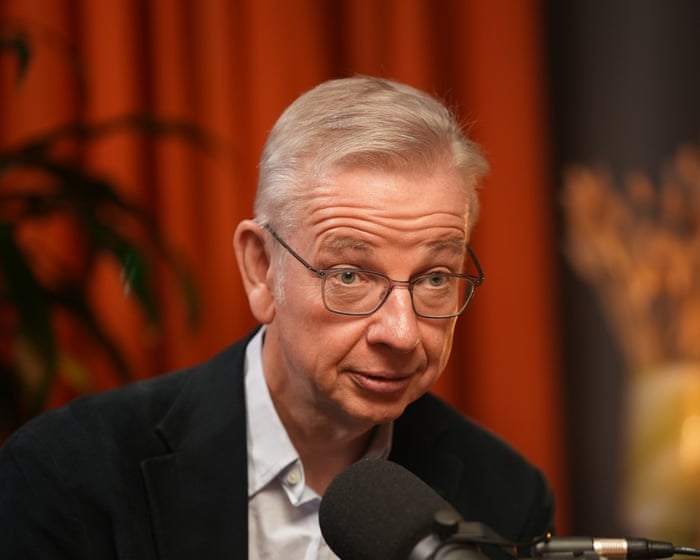
‘Austerity is inevitably painful’: How Michael Gove justifies his politics | Radical Thinking with Aditya Chakrabortty

For more than three decades, Michael Gove has been a leading figure in British Conservatism. As a journalist, government minister and now editor of the Tory bible the Spectator, he has helped shape the right even as it has moved further rightwards. In the latest episode of Radical Thinking, Gove joins Aditya Chakrabortty to discuss the future of the right, his record on Brexit and austerity, and the Spectator’s position on Islam

Watch the full episode with Michael Gove here.

Aditya’s suggested reading:

To read the fruits of Michael Gove’s dalliance with the Marxism Today gang, look up his essay in a 1998 collection called The Moderniser’s Dilemma: Radical Politics in the Age of Blair

For a slalom ride through Michael Gove’s years in power, read The Demented Dalek by the historian Richard J Evans in the London Review of Books

To learn more on what’s become of the British right, there’s a Guardian column by Aditya

Phil Burton-Cartledge analyses in depth why the most successful political party is now failing in his book The Party’s Over: The Rise and Fall of the Conservatives from Thatcher to Sunak

Phil also writes a very good blog on British politics, which keeps a close eye on how each party is trying to marshall a coalition of voters. Here he is on Kemi Badenoch

Geoffrey Wheatcroft does an entertaining short narrative in Bloody Panico!:

or, Whatever Happened to The Tory Party

For more on the economics of the Cameron years, this paper is acute on how the Tories failed to move the UK away from being a country of renters towards a country of makers. Two of its authors will join us for a podcast later in the series.

And if you want to read how Brexit may have cost the UK 8% of GDP, there’s this paper based on data from the Bank of England

Finally, on the Spectator, read Nesrine Malik’s recent Guardian column

Why has Britain’s oldest political magazine become such a rabid cheerleader for Islamophobia?

Continue reading...

© Photograph: James Tindale/The Guardian

© Photograph: James Tindale/The Guardian

© Photograph: James Tindale/The Guardian

  •  

Trump’s pause on Russia sanctions is ‘reward’ for Putin, Zelenskyy says

Ukrainian president warns it will embolden Russian leader and intensify war as Moscow hits country’s power plants

Volodymyr Zelenskyy has described Donald Trump’s decision to roll back sanctions on Russia as a “reward” for Vladimir Putin and warned it will embolden the Russian leader and intensify the Kremlin’s war, as Moscow launched one of its worst strikes yet on Ukraine’s power plants in an attempt to black out the country’s cities before winter.

The Ukrainian president also said he expected the Trump administration to lift more sanctions against Russia in the future and called for Europe to establish its own negotiations with Moscow as the US has sought better ties and business deals with the Kremlin.

Continue reading...

© Photograph: Kateryna Klochko/AP

© Photograph: Kateryna Klochko/AP

© Photograph: Kateryna Klochko/AP

  •  

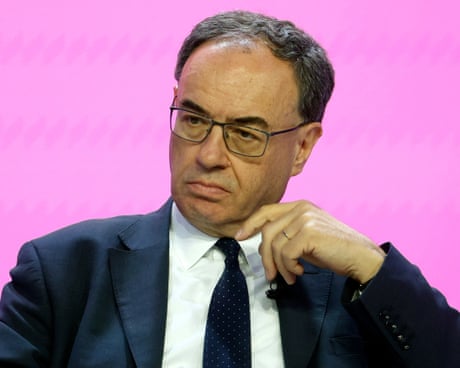
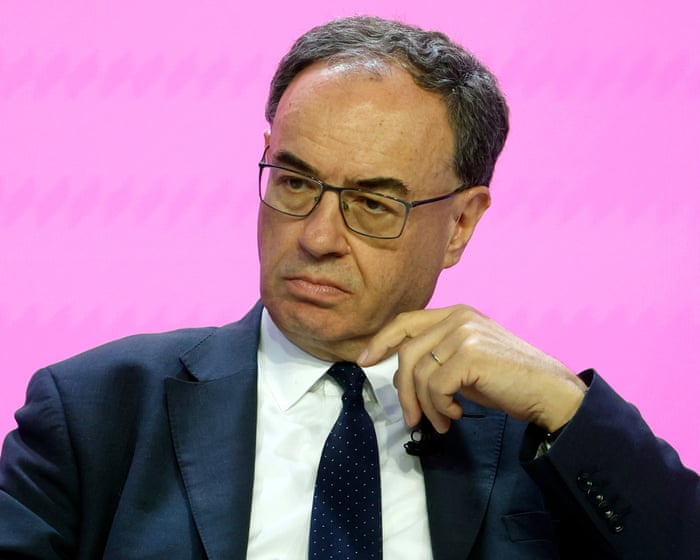
Bank of England governor walks out of IMF summit in protest against Russia

Andrew Bailey among finance leaders to leave session in Bangkok when Russian finance minister addressed group

The Bank of England governor, Andrew Bailey, has taken part in a walkout of finance leaders who left an International Monetary Fund meeting in protest against Russian involvement.

Bailey joined counterparts from France, Germany and a number of Scandinavian and Baltic countries who left the session in Bangkok when the Russian finance minister, Anton Siluanov, addressed the group in Russian.

Continue reading...

© Photograph: Rungroj Yongrit/EPA

© Photograph: Rungroj Yongrit/EPA

© Photograph: Rungroj Yongrit/EPA

  •  

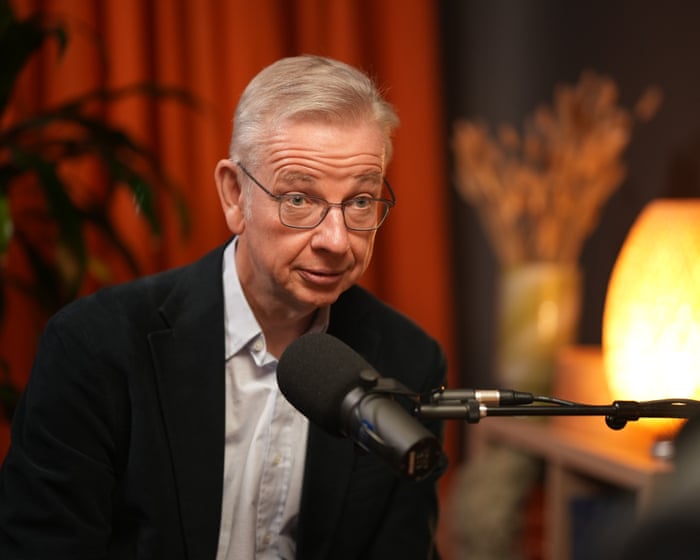
‘Austerity is inevitably painful’: How Michael Gove justifies his politics | Radical Thinking with Aditya Chakrabortty – podcast

For more than three decades, Michael Gove has been a leading figure in British Conservatism. As a journalist, government minister and now editor of the Tory bible, the Spectator, he has helped shape the right even as it has moved further rightwards. In the latest episode of Radical Thinking, Gove joins Aditya Chakrabortty to discuss the future of the right, his record on Brexit and austerity, and the Spectator’s position on Islam

Watch the full episode with Michael Gove here.

Aditya’s suggested reading:

To read the fruits of Michael Gove’s dalliance with the Marxism Today gang, look up his essay in a 1998 collection called The Moderniser’s Dilemma: Radical Politics in the Age of Blair

For slalom ride through Michael Gove’s years in power, read The Demented Dalek by the historian Richard J Evans in the London Review of Books

To learn more on what’s become of the British right, there’s a column by me for the Guardian

Just why the most successful political party is now failing is analysed in-depth by Phil Burton-Cartledge in his book The Party’s Over: The Rise and Fall of the Conservatives from Thatcher to Sunak

Phil also writes a very good blog on British politics, which keeps a close eye on how each party is trying to marshall a coalition of voters. Here he is on Kemi Badenoch

Geoffrey Wheatcroft does an entertaining short narrative in Bloody Panico!:

or, Whatever Happened to The Tory Party

For more on the economics of the Cameron years, this paper is acute on how the Tories failed to move the UK away from being a country of renters towards a country of makers. Two of its authors will join us for a podcast later in the series.

And if you want to read how Brexit may have cost the UK 8% of GDP, there’s this paper based on data from the Bank of England

Finally, on the Spectator read Nesrine Malik’s recent column in The Guardian

Why has Britain’s oldest political magazine become such a rabid cheerleader for Islamophobia?

Continue reading...

© Photograph: James Tindale/The Guardian

© Photograph: James Tindale/The Guardian

© Photograph: James Tindale/The Guardian

  •  

Brexit’s back – but are British voters ready to contemplate a reversal?

As Andy Burnham talks up closer alignment with the EU and a poll suggests half in UK would rejoin, the B-word is back on the agenda

In February 2016, days after David Cameron announced the UK would hold a referendum on leaving the EU, he told workers in Slough not to imagine they could change their minds a few years down the line if they did not like how things panned out. Voting to stay in or leave was a once in a generation thing, he said. “This is a decision that lasts for life.”

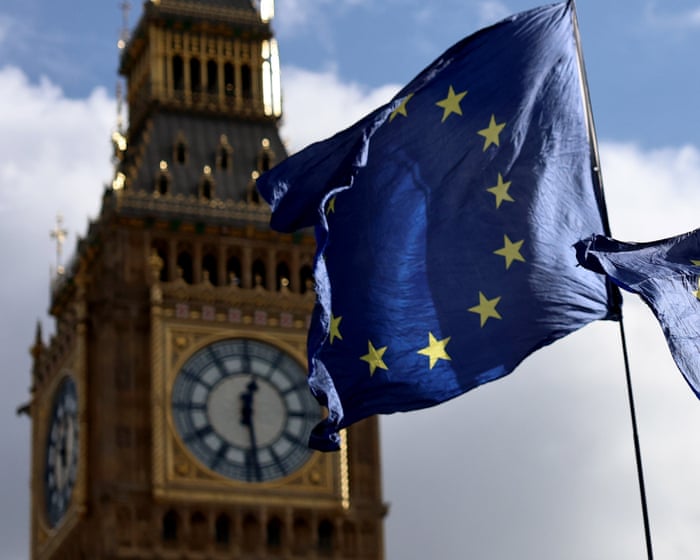
Well times change, as the last prime minister but five could testify. A decade after Britain told Brussels where to go, Brexit is back on the political agenda. After years in which many politicians avoided any mention of the B-word, Andy Burnham broke the omertà in his party conference speech last month, saying he would look again at Britain’s relationship with Europe.

Continue reading...

© Photograph: Toby Melville/AFP/Getty Images

© Photograph: Toby Melville/AFP/Getty Images

© Photograph: Toby Melville/AFP/Getty Images

  •  

UK could quickly re-enter EU with ‘Switzerland plus’ deal, senior MEP says

Bernd Lange, who was involved in Brexit talks, says deal could be negotiated within months of any decision to deepen ties

The UK could re-enter the EU in a “Switzerland plus” package that could be negotiated within months of any decision to deepen ties with the bloc, the head of a European parliament committee has said.

Bernd Lange, who was heavily involved in Brexit negotiations, said: “I would love to see the UK back.” He said the EU missed the UK in decision-making because of its strong history of promoting open markets and democracy.

Continue reading...

© Photograph: Neil Hall/EPA

© Photograph: Neil Hall/EPA

© Photograph: Neil Hall/EPA

  •  

Trump calls Ukraine’s renewed strikes on Russian oil refineries ‘a disgrace’

US president says Zelenskyy ‘more difficult ​to deal with ​than Putin’ after ‘energy ceasefire’ collapses

Donald Trump has called Ukraine’s renewed strikes on Russian oil refineries “a disgrace” and criticised Volodymyr ⁠Zelenskyy after an energy ceasefire between Russia and Ukraine failed to take hold.

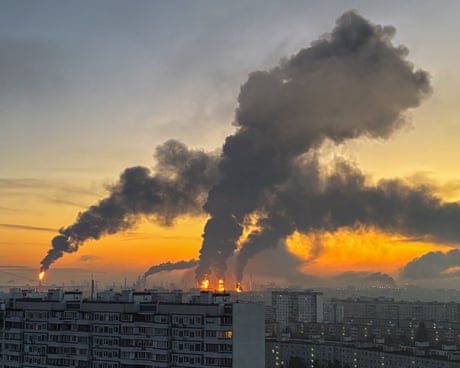
Ukraine resumed strikes on Russian oil refineries ⁠after Zelenskyy said Kyiv was abandoning a ceasefire unilaterally declared by Trump on Sunday, having briefly halted its attacks to demonstrate its readiness for peace talks. Russia had continued its strikes on Ukrainian power plants.

Continue reading...

© Photograph: Reuters

© Photograph: Reuters

© Photograph: Reuters

  •  

EU Criticises Abbas as Palestinian Elections Are Postponed Until September 2027

Brussels has criticised the Palestinian Authority’s decision to postpone presidential and legislative elections, warning that democratic legitimacy is essential to Palestinian state-building and institutional reform. The delay raises questions about the political conditions attached to substantial European financial assistance.

The European Union has expressed serious concern over the Palestinian Authority’s decision to postpone legislative and presidential elections until September 2027, placing renewed pressure on President Mahmoud Abbas over democratic accountability and the future of Palestinian political institutions.

In a statement issued on 14th October, the EU said it regretted the postponement of legislative elections previously scheduled for 28th November 2026 and a presidential contest expected in early 2027.

Palestinian

The decision extends an electoral impasse that has lasted for nearly two decades. Palestinians last voted in legislative elections in 2006, while Abbas was elected president in January 2005.

The EU’s formal statement called for both contests to be organised as soon as conditions allow, stressing that credible elections are necessary for representative institutions and political accountability.


The intervention is particularly significant because the EU remains one of the Palestinian Authority’s most important financial supporters and has made institutional reform a central element of its approach to Palestinian state-building.

Abbas cites obstacles to holding elections

The postponement was announced through the Palestine Liberation Organisation’s executive structures following consultations over the conditions necessary to conduct voting in Gaza, the West Bank and East Jerusalem.


Palestinian officials have cited restrictions imposed by Israel, continuing insecurity and difficulties involving election materials, observers and access to voting locations.

Israel has disputed the suggestion that it was responsible for preventing the elections from proceeding.

The practical difficulties are substantial. The Palestinian Authority exercises limited administrative control in parts of the West Bank, while Hamas has maintained de facto control over Gaza since 2007, despite subsequent changes in the territory’s security and governance arrangements.

Holding elections across geographically separated territories under different political and security conditions would require agreements extending well beyond the Palestinian Authority’s existing administrative powers.

Those obstacles do not, however, resolve the separate question of democratic legitimacy.

Abbas’s original presidential term expired in 2009, and subsequent extensions of his authority have not been confirmed through a new presidential election. The absence of regular legislative elections has similarly weakened the representative basis of Palestinian governance.

The latest postponement means that Palestinians must wait at least another year for an opportunity to choose their national political leadership.

Brussels links financial assistance to reform

For the European Union, the delay raises questions about the relationship between political reform and financial support.

In April 2025, the European Commission announced a proposed multiannual programme worth up to €1.6 billion for Palestinian recovery and institutional development between 2025 and 2027.

The programme includes approximately €620 million in direct financial support to the Palestinian Authority, alongside assistance for reconstruction, public services and economic recovery.

European officials have repeatedly stressed that part of this support is linked to implementation of agreed reforms, including improvements in public financial management, transparency and administrative accountability.

Those priorities were central to the Brussels donor discussions previously examined by EU Today, where international partners considered how a reformed Palestinian Authority might assume a greater role in Gaza’s future governance.

The election postponement adds a political dimension to those financial arrangements.

The EU’s statement did not announce any suspension of funding, nor did it specify that electoral delays would automatically trigger financial penalties.

Instead, Brussels emphasised that continued assistance to the Palestinian Authority must accompany progress towards institutional reform and the development of credible representative structures.

That distinction matters because European financial assistance also supports public services and civilian needs, which could be affected by reductions in funding unrelated to the conduct of elections.

Elections and the two-state policy

The EU has consistently presented a functioning Palestinian administration as a necessary component of its support for a negotiated two-state settlement.

Its position depends on the existence of institutions capable of representing Palestinians, administering public services, exercising legitimate authority and negotiating internationally.

A prolonged absence of elections complicates that objective, particularly when Palestinian political factions remain divided over leadership and the future organisation of government.

The dispute also affects European discussions concerning Gaza’s reconstruction and its relationship with the West Bank.

Brussels has supported the eventual reunification of Palestinian governance under a reformed administration, but such arrangements face difficulties if the authority expected to assume responsibility lacks a renewed electoral mandate.

In its latest statement, the EU reiterated its willingness to support an eventual election process, including the deployment of an EU Election Observation Mission.

Such missions can provide independent assessments of electoral procedures, but their deployment depends on the necessary political arrangements, security conditions and access.

The European Union’s position now presents Abbas with a specific political demand: to establish conditions under which Palestinian voters can elect both a president and a legislature, rather than allowing temporary postponements to become a permanent substitute for elections.

For Brussels, the immediate question is how to pursue that demand while maintaining assistance to Palestinian institutions and civilians and supporting a diplomatic settlement.

The next test will be whether the Palestinian Authority produces a credible electoral timetable and the administrative arrangements needed to hold the postponed votes in September 2027.

  •  

Repairing Brexit economic damage should be Burnham’s top priority, business chief says

Shevaun Haviland argues PM is right to revisit Labour’s EU red lines as current trading relationship is bad for business

Repairing the economic damage of Brexit should be the top priority for Andy Burnham as he reconsiders Labour’s red lines on EU membership, the head of one of Britain’s leading business groups has said.

Shevaun Haviland, the director general of the British Chambers of Commerce (BCC), said she welcomed the prime minister reopening the Brexit battle lines despite the uncertainty it could create, arguing that the UK’s current trading relationship with the EU was bad for business.

Continue reading...

© Photograph: Toby Melville/Reuters

© Photograph: Toby Melville/Reuters

© Photograph: Toby Melville/Reuters

  •  

Ukraine war briefing: Starlink access restored, says UK’s Streeting after Hegseth meeting

UK defence secretary says Pete Hegseth assured him satellite communications system back up and running in Ukraine. What we know on day 1,696

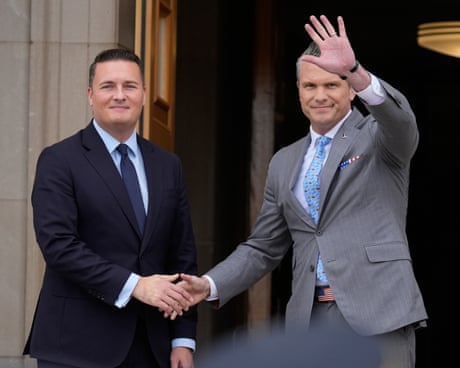
Ukraine’s access to Elon Musk’s Starlink had been restored, according to UK defence secretary Wes Streeting. Ukraine said Starlink services had been restricted on Wednesday, hampering the country’s attack and air-defence drone missions, and triggering a new rift between Washington and Kyiv. On Thursday, Streeting said his US counterpart, Pete Hegseth, had assured him in a face-to-face meeting that the vital satellite communications system was back up and running. He said it was unclear what had caused the disruption, but added: “This is not the first time we’ve seen a falling out between Washington and Kyiv.”

The order to limit Starlink access came from inside the White House, according to a report by Reuters, citing two US officials and a western official briefed on the matter. The ⁠officials said leaders at the defence ⁠department received a message that the service for the Ukrainian military needed to be slowed. The officials, who spoke on the condition of anonymity, did not specify who in the White House made the decision or who was responsible for implementing the order. The Pentagon is the biggest customer of Starshield, which ⁠is the military-grade version of the Starlink service.

Amid growing doubts about long-term US commitment to Ukraine, Ukrainian president Volodymyr Zelenskyy met Nato chief Mark Rutte in Brussels and held a string of bilateral meetings with European leaders before he was set to join an EU summit on Friday. French president Emmanuel Macron on Thursday said it was “crucial” that Ukraine receive “all the means necessary to protect itself” after meeting Zelenskyy. “I can reassure you, dear Ukrainian friends and President Zelenskyy: YOU ARE NOT ALONE,” Polish prime minister Donald Tusk posted online.

Vladimir Putin has said that recent ⁠Ukrainian ​strikes on Russian oil refineries had not caused significant ⁠damage and vowed that Moscow would respond. “They ⁠hit here and there. Nothing ​particularly significant. Nevertheless ‌they are ‌carrying on,” the Russian president was quoted as saying by the Interfax news agency. His comments ‌came after a major Ukrainian drone attack ignited a fire at an oil refinery in Russia’s Ryazan region on Thursday morning, according ‌to the regional governor. It was the first confirmed ​Ukrainian attack on a Russian energy facility since US president Donald Trump abruptly declared an “energy ceasefire” that neither Russia nor Ukraine said they had agreed to.

The US treasury department has extended a sanctions waiver on Russian oil company Lukoil for service stations outside Russia through April 2027. Thursday’s announcement allows Lukoil-branded stations in countries like the US to continue serving customers until 24 April next year. The extension comes a week after Trump said he had secured an agreement with Russia to supply diesel to American and global markets, with the US treasury issuing a temporary licence to enable flows. The latest licence, like an earlier one, does not allow the “transfer of funds to any person or account located in the Russian Federation”.

Three people were killed and six others injured after the Kirovohrad region of central Ukraine came under a Russian drone attack lasting more than 10 hours, Ukraine’s emergency services said Thursday. Between midnight and Thursday morning, Russia launched more than 850 drones at Ukraine, Zelenskyy said on X. He added that the barrage came “precisely at a time when the speed of our defensive capabilities is being artificially restricted,” an apparent reference to the Starlink restrictions on drones. Russian aerial attacks hit 15 Ukrainian regions, he said.

Continue reading...

© Photograph: Reuters

© Photograph: Reuters

© Photograph: Reuters

  •  

Wes Streeting urges US to back Ukraine on Washington visit after Starlink row

UK defence secretary says he has been ‘reassured directly’ counterpart Pete Hegseth that Starlink system has been restored as he seeks to cool tensions

Wes Streeting urged the US to stand by Ukraine on his visit to the American capital and sought to cool tensions between the two countries in the wake of the Starlink row that is threatening to set back Kyiv’s war effort.

The British defence secretary, giving a speech before a meeting with his US counterpart, Pete Hegseth, argued that supporting Ukraine was in the long-term interests of Washington, and a business opportunity.

Continue reading...

© Photograph: Manuel Balce Ceneta/AP

© Photograph: Manuel Balce Ceneta/AP

© Photograph: Manuel Balce Ceneta/AP

  •  

Russia and Ukraine trade strikes as Trump ‘energy ceasefire’ collapses

Moscow sends swarms of drones to attack infrastructure in central Ukraine as Zelenskyy says Kyiv will restart strikes on Russian oil refineries

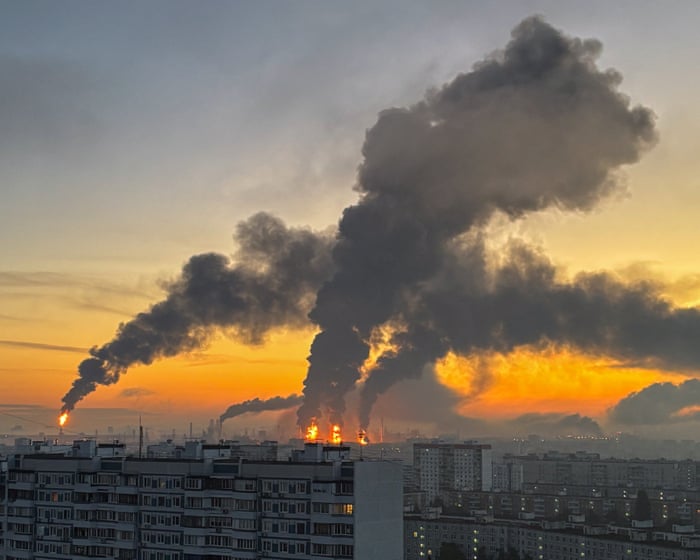
The White House’s unilateral effort to negotiate an energy ceasefire between Russia and Ukraine has collapsed as Moscow sent a record swarm of drones overnight to attack infrastructure in central Ukraine and Kyiv appeared to resume strikes on Russian oil refineries despite warnings from Donald Trump.

Moscow accused Ukraine of launching a strike against a Russian oil refinery in the Ryazan region, its first since Trump abruptly declared an “energy ceasefire” that neither Russia nor Ukraine said they had agreed to.

Continue reading...

© Photograph: Reuters

© Photograph: Reuters

© Photograph: Reuters

  •  

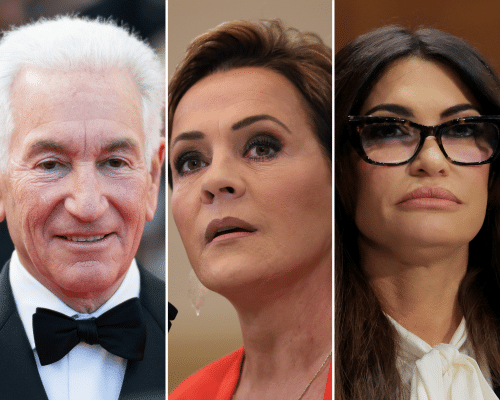
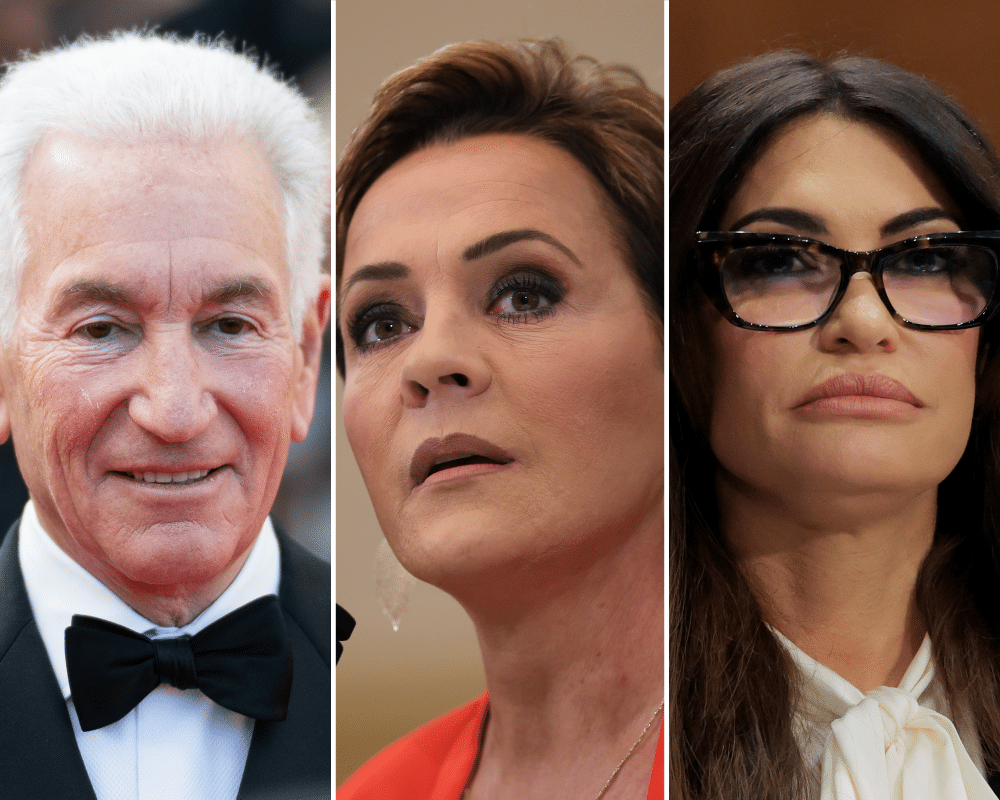
Trump’s ambassadors: the loyalists and allies at the center of controversy

Kimberly Guilfoyle’s departure has renewed scrutiny of the president’s picks for diplomatic posts, from France to Jamaica

Donald Trump has appointed family members, friends and loyal political allies to represent the US on the world stage, dispatching an extraordinary array of characters to embassies across the world.

While presidents of both parties have long rewarded donors and allies with plum ambassadorships, Trump has chosen loyalists willing to go to bat for him regardless of the implications for US-foreign relationships.

Continue reading...

© Photograph: Getty Images

© Photograph: Getty Images

© Photograph: Getty Images

  •  

Zelenskyy Breaks with Trump as Washington’s Ukraine Policy Hands Putin the Advantage

Volodymyr Zelenskyy’s unusually direct criticism of Donald Trump marks a turning point in relations between Kyiv and Washington. With American satellite restrictions disrupting Ukrainian military operations, intelligence cooperation under scrutiny and the White House easing pressure on Russian energy exports, Ukraine faces a fundamental question: how can it defend itself when its most powerful partner is increasingly willing to accommodate Moscow?

President Volodymyr Zelenskyy has abandoned much of the diplomatic restraint that characterised his dealings with Donald Trump since their confrontation in the Oval Office in February 2025. In an interview on 14 October, the Ukrainian president accused his American counterpart of moving towards Russia and choosing the wrong side of history.

His intervention followed a series of American decisions that have increased pressure on Kyiv while offering Moscow economic and diplomatic advantages. A controversial agreement involving Russian diesel exports, uncertainty surrounding the provision of American intelligence and sudden restrictions on military satellite communications have brought relations between the two countries to their most difficult point since Trump’s return to the White House.

Zelenskyy’s criticism was unusually personal. Questioned about whether he felt betrayed by Washington’s recent decisions, he acknowledged the sense of betrayal but emphasised that Ukraine’s survival could not be treated as a commercial negotiation. He said Ukraine was not selling its country and argued that an American president claiming to act as an intermediary must not favour one of the belligerents.

The shift reflects the apparent exhaustion of a strategy Kyiv has pursued for more than a year: avoid openly challenging Trump, maintain personal contact with the White House and hope that American support can be preserved through diplomatic accommodation. That calculation is becoming increasingly difficult to sustain as Washington’s demands threaten to constrain Ukraine’s military operations without producing corresponding concessions from Russia.

American leverage becomes a Ukrainian vulnerability

The immediate demonstration of Ukraine’s dependence on American technology came during the night of 13–14 October, when SpaceX imposed restrictions on Starshield, the military-grade version of its Starlink satellite communications service.

According to accounts provided by Ukrainian frontline commanders, the changes disrupted connections to terminals travelling above approximately 160 kilometres per hour, forcing the abandonment of several drone missions. The restrictions affected systems used for reconnaissance, interception and strikes against Russian military targets.

As EU Today reported on 14 October, the disruption exposed a weakness extending beyond individual drone missions. Satellite communications form part of Ukraine’s operational infrastructure, supporting the movement of battlefield information, remote weapons control and communications across areas where conventional networks are vulnerable to Russian electronic warfare.

An interruption imposed remotely by a commercial provider can therefore affect military capabilities without any physical attack on Ukrainian equipment. Decisions taken outside Ukraine’s military command structure can alter the effectiveness of systems already deployed on the battlefield.

Ukraine’s Defence Ministry subsequently opened discussions with American officials, SpaceX and NATO partners while examining alternative communications arrangements.

Later on Wednesday, former Ukrainian defence minister Mykhailo Fedorov announced that Starlink functionality at speeds up to 160 kilometres per hour was being restored. Work was still required to remove the restrictions on Starshield altogether. The partial reversal offered immediate operational relief but did not resolve the underlying dependency.

There is no established evidence that the Trump administration ordered SpaceX to impose the restrictions. Nevertheless, their timing, amid mounting disagreements over Ukraine’s military operations, has reinforced Kyiv’s concerns about relying on communications infrastructure controlled by an American company.

Intelligence warnings and the protection of civilians

The dispute over satellite access coincides with growing uncertainty about American intelligence cooperation.

Following Russian ballistic missile strikes on Kyiv on 12–13 October, Zelenskyy complained that Ukraine had received no advance warning from its international partners. The attacks damaged residential buildings and energy infrastructure, while Ukraine’s authorities raised concerns about the absence of advance intelligence.

Advance information about Russian missile launches is particularly important when ballistic weapons leave civilians only minutes to reach shelters. Intelligence cooperation also supports Ukrainian air-defence units in assessing threats and preparing interceptions.

Trump denied on 13 October that Washington had stopped sharing intelligence with Ukraine. Ukrainian Foreign Minister Andrii Sybiha likewise confirmed that cooperation continued. The absence of warnings about particular attacks therefore cannot be equated with a complete suspension of American assistance.

Yet the consequences of unreliable warning arrangements remain serious. For Ukraine, the distinction between information withheld, delayed or simply unavailable offers little protection when Russian ballistic missiles reach civilian neighbourhoods without sufficient warning.

The wider concern is that intelligence provision could become another instrument of diplomatic pressure. Accounts of negotiations over Ukrainian attacks on Russian refineries have raised the possibility that Washington might use such assistance as leverage. Reports of explicit threats have been disputed, but the controversy has increased uncertainty surrounding a capability central to Ukraine’s defence.

Why the diesel agreement changes the strategic calculation

The confrontation has also exposed a contradiction in Washington’s approach to the war.

Trump’s agreement allowing Russian diesel to return to international markets offers Moscow additional export opportunities at a time when Ukrainian attacks have damaged refining capacity and disrupted domestic fuel supplies.

The American administration has justified the arrangement partly through the need to ease fuel prices. Yet the initially announced quantities are modest in relation to international petroleum markets, raising questions about how much immediate relief the measure can realistically provide.

For Putin, its diplomatic significance may be considerably greater. Russia has secured a relaxation of American economic restrictions while Washington simultaneously presses Kyiv to limit attacks on the infrastructure that generates revenue for Moscow’s war economy.

The commercial implications of Washington’s sanctions reversal extend beyond the initial shipment volumes. The Treasury authorisation permits certain transactions involving Russian-origin diesel until April 2027, creating opportunities for international traders and financial intermediaries while leaving the broader sanctions framework formally intact.

Trump’s proposed energy ceasefire has compounded the difficulty. As EU Today examined earlier this week, Kyiv has offered to suspend strikes against Russian energy facilities if Moscow reciprocates. Russian attacks on Ukrainian power infrastructure have nevertheless continued.

An arrangement in which Ukraine stops targeting Russian refineries while Russia retains the ability to strike Ukrainian electricity generation would remove an important source of pressure on Moscow without protecting Ukrainian civilians.

Such an outcome would change the military and economic conditions of the war in Russia’s favour, regardless of how Washington describes its diplomatic objectives.

The White House, Congress and the limits of presidential power

Zelenskyy’s sharper language also reflects a possible reassessment of where influence over American policy can be exercised.

For much of Trump’s second presidency, Kyiv’s diplomacy has concentrated on preserving a workable relationship with the president himself. That approach assumes that personal engagement can influence White House decisions even when Trump’s broader political instincts favour accommodation with Putin.

The events of October suggest that this strategy has reached its limits.

Ukraine’s alternative is not necessarily an outright confrontation with Washington. Rather, it involves placing greater weight on Congress, the American defence establishment and the institutional relationships that have supported Ukraine since Russia’s full-scale invasion in February 2022.

There is a historical precedent. During Trump’s first presidency, Congress supported military assistance to Ukraine despite differences within the administration over relations with Russia. Under Joe Biden, congressional resistance also demonstrated how domestic American politics could determine the timing and scale of weapons deliveries.

The months-long delay in approving the 2024 military assistance package contributed to severe ammunition shortages at a critical stage of Russia’s offensive operations. Ukraine’s loss of Avdiivka illustrated the danger of making battlefield planning dependent on political negotiations in Washington.

The congressional elections on 3 November 2026 could alter the balance of power. A change in control of either chamber would increase opportunities for oversight, investigations and legislative pressure on the administration, although Congress cannot independently direct every aspect of intelligence sharing or presidential diplomacy.

A less compliant Congress could nevertheless make it politically harder for the White House to restrict Ukrainian assistance without explanation.

Europe confronts a more permanent problem

For European governments, the dispute carries implications extending well beyond the immediate confrontation between Trump and Zelenskyy.

The transatlantic security relationship has historically depended on the assumption that American military capabilities, intelligence networks and political commitments would remain available to European allies during a major security crisis.

That assumption is increasingly difficult to reconcile with an American administration prepared to link assistance to Ukraine with wider commercial negotiations and domestic political objectives.

The consequences are particularly acute in areas where European capabilities remain insufficient to replace American systems quickly, including satellite intelligence, strategic reconnaissance, missile defence and specialised communications.

Europe can expand weapons production, finance Ukrainian purchases and develop alternatives to American technology. Replacing the full range of capabilities provided by the United States, however, requires investment measured in years rather than months.

The problem will not necessarily disappear when Trump leaves office. His return to power demonstrated that the American foreign-policy consensus which supported European security for decades can be challenged through the electoral process.

Future American administrations may seek to restore traditional alliances, but European governments must now account for the possibility that another election could reverse those commitments.

For Zelenskyy, the immediate calculation is exceptionally difficult. Public criticism risks provoking further retaliation from a president whose administration still controls capabilities essential to Ukraine’s defence. Continued diplomatic restraint, however, has not prevented Washington from offering concessions to Russia or introducing uncertainty into Ukraine’s military planning.

His latest intervention suggests that Kyiv is no longer convinced that avoiding confrontation will preserve American support. The question is whether greater political scrutiny of Washington’s decisions can prevent a further erosion of assistance before Russia turns the resulting military advantages into territorial gains.

  •  

In Ukraine, civilian casualties were already rising. Restrictions on Starlink will only worsen the death toll

Throttling of mobile internet system will affect Kyiv’s air defences more than its strikes on oil refineries. Now Zelenskyy must be hoping that US intel holds

In Ukraine the situation was already jittery enough. Donald Trump has been inventing ceasefires and buying Russian diesel to shore up his flagging popularity, while a sinister new wave of faster, jet-powered drones are breaking through Kyiv’s stretched air defences. Casualties are rising as the weather turns.

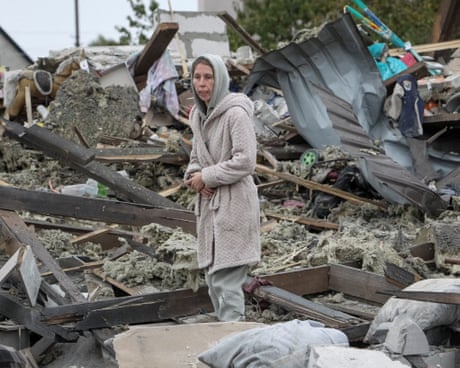
Overnight, Russia bombed three power plants that supply Kyiv, aiming to cut off heating and electricity to the city. According to the president, Volodymyr Zelenskyy, for a second night in a row no warning came from Ukraine’s western allies of the incoming ballistic missiles – and so no air raid alert was issued.
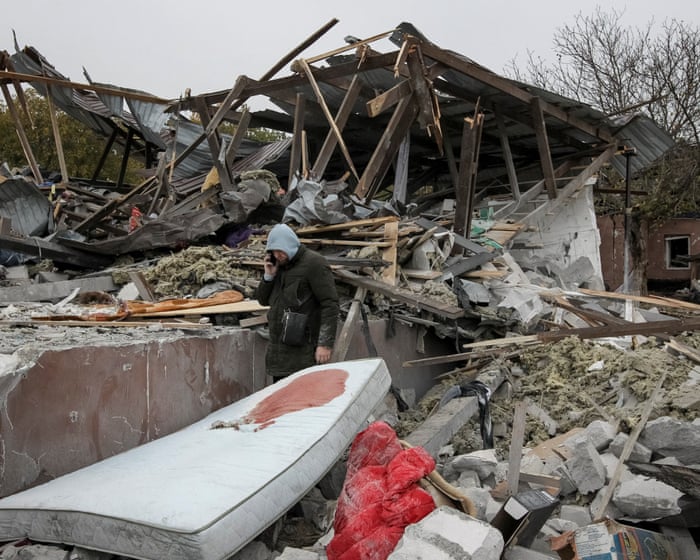

Continue reading...

© Photograph: Evgeniy Maloletka/AP

© Photograph: Evgeniy Maloletka/AP

© Photograph: Evgeniy Maloletka/AP

  •  

Closer EU trade ties greater prize for UK than making separate deals, minister says

Exclusive: Douglas Alexander, on trade delegation to India, talks up economic benefits of joint trading arrangements with Europe

Britain will benefit from much closer trading relations with the EU even if that means giving up its ability to negotiate free trade agreements, the Scotland secretary has said.

Douglas Alexander helped negotiate deals with India and the US when he was a trade minister under Keir Starmer.

Continue reading...

© Photograph: X/Douglas Alexander

© Photograph: X/Douglas Alexander

© Photograph: X/Douglas Alexander

  •  
❌