❌

Reading view

I'm a firefighter who turned to Uber as a temporary gig. It's been a tough way to make money

Person in a black shirt sits at an outdoor cafe table holding a paper cup near an illy mug.
Matthew Guerrero drives for Uber in Southern California.

Matthew Guerrero

  • Matthew Guerrero says gas costs eat up much of his pay as an Uber driver in Southern California.
  • He prioritizes giving rides to weekend barhoppers who tend to tip well, he said.
  • Uber says that one driver's experience isn't representative of the broader platform.

This as-told-to essay is based on a conversation with Matthew Guerrero, a 41-year-old Uber driver in Southern California. It has been edited for length and clarity.

I worked as a firefighter for about four years before I got injured on the job.

I've been seeking a workers' comp settlement that should be settled soon. In the meantime, my lawyer said that I could start working again. I needed a job really quickly, especially with three kids, so I started driving with Uber.

I've been driving with Uber for about five weeks. So far, it hasn't been very successful. For example, one week, I made $600 working 30 hours. To make that, I spent about $300 in gas driving my SUV.

Then, I have to put between 20% and 30% of what's left aside for taxes. That comes out to about $210 for 30 hours of work. That doesn't even include wear and tear on my car. I don't understand how anybody can do this long-term. It's not sustainable.

The pay is better if you drive in Los Angeles or San Diego. But I'm in Riverside County, and the pay seems to be lower here.

To get better-paying rides, you have to be strategic. Sometimes, I try to get a ride with a passenger who's headed to an airport in one of the big cities. Then, I stay there all day and take rides. That's not always feasible, though.

When I started with Uber, I realized that there were a lot of rides that involved taking people to morning doctor's appointments. Most of those people didn't tip well, though, and tips are key to making money.

Instead, I like to work Friday and Saturday nights around bars in Temecula. I usually log on around 4 pm and head home around 3 am. The pay is good, and the tips are a lot better than other rides in my area. Sometimes you have to deal with drunk people throwing up, but it's worth it.

I've given some rides to veteran Uber drivers — people who were working on the app back in 2015 and 2016. They said that they used to make better money than I do, and that they quit after they saw pay fall.

That was eye-opening for me. I don't understand how a company like Uber can pay as little as they do.

An Uber spokesperson said drivers in Riverside County, California make "at least $20.28 per engaged hour, plus $0.37 per engaged mile for vehicle expenses, with tips on top of that."

"While this guarantee doesn't cover time spent waiting for trips, it's important context when discussing driver compensation," the spokesperson said. Driver earnings can vary based on when drivers decide to work, where they drive, and rider demand.

"One driver's experience isn't representative of the broader platform," the spokesperson said.

Do you have a story idea about Uber? Contact this reporter at abitter@businessinsider.com or via encrypted messaging app Signal at 808-854-4501. Use a personal email address, a nonwork WiFi network, and a nonwork device; here's our guide to sharing information securely.

Read the original article on Business Insider
  •  

Scintille tra Gruber e Bersani. “Meloni è forte, voi siete deboli”. “È falso che Conte o Schlein non governerebbero meglio di lei”

Confronto vivace a Otto e mezzo (La7) tra la conduttrice della trasmissione, Lilli Gruber, e l’ex ministro Pier Luigi Bersani sui nodi del campo progressista e sulla situazione delle opposizioni. La giornalista parte a gamba tesa con una domanda, che sa anche di rimbrotto nei confronti dell’ex segretario del Pd: “La Meloni è così forte perché voi siete così deboli. Oggi Giorgia Meloni ha avuto un gioco facile a sbeffeggiare i cosiddetti rappresentanti del campo largo presenti in Parlamento, li ha attaccati, li ha sbeffeggiati e ha affondato i colpi su delle cose oggettive che non sono state fatte, a cominciare dal fatto che questo campo largo non esiste perché non c’è unità su niente. Io lo so, le devo fare ogni volta la stessa domanda, ma perché siamo sempre allo stesso punto”.
Bersani scuote la testa e replica: ” Ma la sua non è una domanda, è un’affermazione non vera“.

Gruber ribatte che sul Documento programmatico di finanza pubblica le opposizioni hanno presentato sei mozioni distinte.
Ma l’ex ministro è fermo: “Vogliamo fare un giro del mondo come è messa la sinistra? E poi facciamo il paragone su come è messa la sinistra qui. Facciamo il giro d’Europa. Qui il problema è un altro: quell’ideologia di destra lì, dentro a un passaggio secolare, è molto radicato e molto forte, perché le idee sono più forti dei fatti. Tu puoi dirgli c’è inflazione, ma l’idea è più forte di un fatto. E di questo bisogna che se ne carichino tutti, anche i famosi liberali“.
Poi torna sui fatti: Pd, M5s, Avs Italia Viva e +Europa sono riusciti a depositare un testo unitario di ventuno punti sul Dpfp. Una cornice che parla di sanità, stipendi, diritto alla casa, congedo paritario, contrasto al fiscal drag e stop all’autonomia differenziata, e che Elly Schlein ha definito “prima bozza del programma”. Ma resta un’intesa stretta, ancora da precisare, e già incrinata sull’Ucraina.
Per Bersani è un passaggio positivo: “Non è vero quindi che non esistano punti comuni. E non è vero che Conte o Schlein non sarebbero in grado di governare meglio della Meloni”.
Aldo Cazzullo osserva che se si fanno le primarie tra i leader dei due principali partiti, chi perde va in crisi. Gruber conferma. Bersani dissente e chiede perché.
“Perché è così nei fatti”, risponde la conduttrice.

Il discorso scivola su Matteo Renzi. Gruber, come la sera prima con Tomaso Montanari, ricorda la richiesta di Conte a Schlein di fare da garante affinché Renzi non abbia ruoli importanti in un eventuale governo. Renzi ha risposto ricordando il passato politico di Conte.
La giornalista aggiunge: “Ma non sarebbe meglio che Conte dicesse tutto questo alla Schlein in una stanza senza grandi clamori e senza dirlo alla stampa? Quanto si può andare avanti con veti reciproci?”.
Bersani ironizza: “E Renzi chi lo mette in una stanza? C’è qualcuno capace?”.
Alla domanda se si fida di Renzi, risponde che in politica quella parola ha poco senso. E sottolinea: “Mi sembra assolutamente esagerata questa discussione, sono circuiti di chi se la canta e se la suona, perché non esiste questo problema qui. E non esiste nel senso che le dimensioni di Renzi quelle che sono“.
E conclude: “Per togliere via questo problema qui cosa ci vuole? La guerra mondiale? Guardate che alla gente gliene frega fin a un certo punto”.

L'articolo Scintille tra Gruber e Bersani. “Meloni è forte, voi siete deboli”. “È falso che Conte o Schlein non governerebbero meglio di lei” proviene da Il Fatto Quotidiano.

  •  

A bancada parlamentar mede-se pelo número de filhos?

Um deputado decidiu que a melhor forma de vencer debates é contar os filhos. Rui Borges elogia-se a si mesmo e há quem ache que a receita para as greves esbarra na falta de dinheiro para o Uber.

  •  

Sven Beckert, historian: ‘Capitalism is not natural; in fact it is very strange’

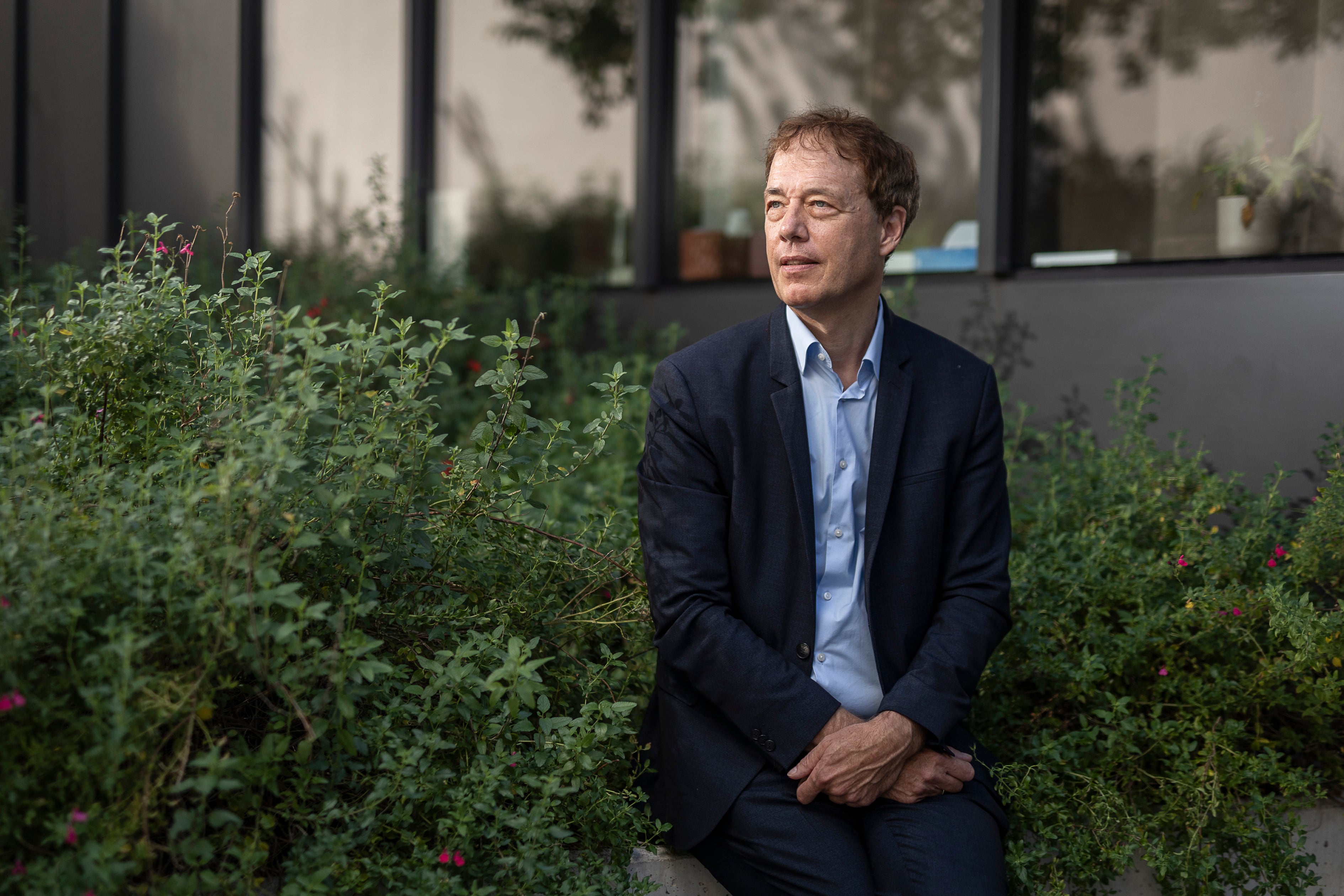
The historian Sven Beckert, on the terrace of Laie bookstore on September 22, 2026.

A merchant named Robert Keyne showed up crestfallen before the General Court of Massachusetts in Puritan Boston in 1639. His offense: trying to sell at the highest possible price and buy at the lowest possible price, putting his profits above the interests of the community. The judges showed no mercy: they fined him £200 for a practice they described as “extremely wicked and corrupt” and for having embraced “false principles.” Yet those are the same principles that now seem completely natural to us and structure our entire lives.

Seguir leyendo

The German-American historian surveys the history of capitalism in a 1,400-page book.
  •  
❌