❌

Reading view

Oops: Lula in Presidential Debate: If I Win, 'People Will Say Brazil Is Finished'

Brazilian socialist President Luiz Inácio Lula da Silva, in an apparent gaffe, said in Sunday's heated presidential debate that Brazil will be "finished" if he is reelected for a fourth term in the upcoming runoff election.

The post Oops: Lula in Presidential Debate: If I Win, ‘People Will Say Brazil Is Finished’ appeared first on Breitbart.

  •  

Lula da Silva Beats Flavio Bolsonaro in Debate Ahead of Runoff

The Workers’ Party leader challenged the far-right candidate to disclose the origin of his wealth.

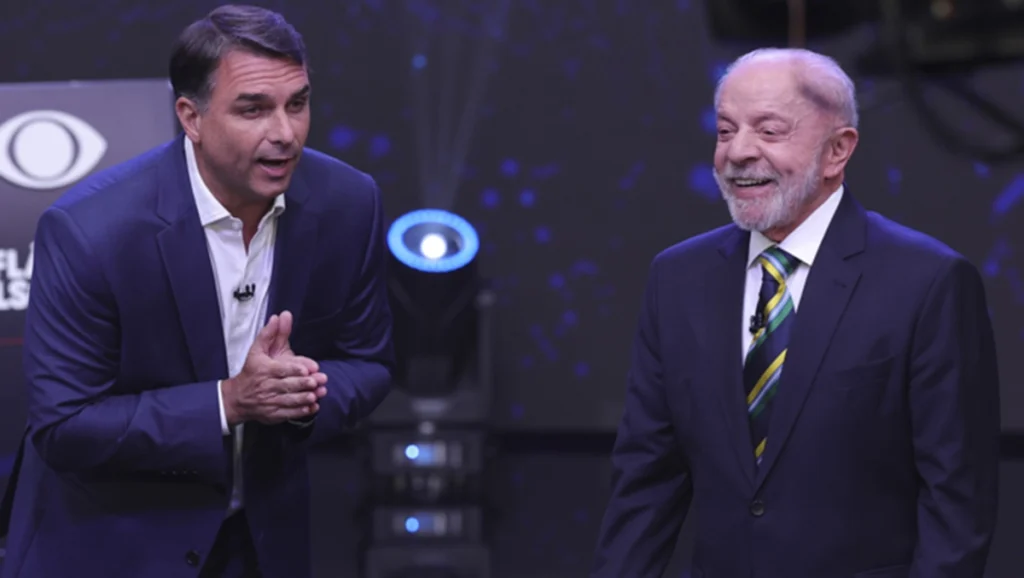
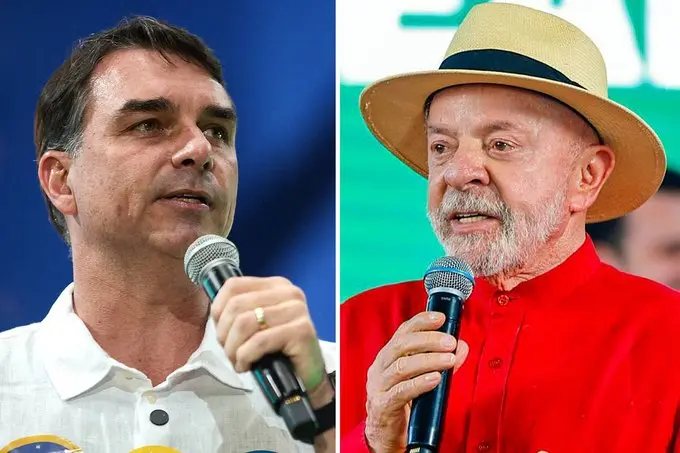
On Sunday, Brazilian President and re-election candidate Luiz Inacio Lula da Silva and far-right opposition candidate Flavio Bolsonaro faced off for the first time in a presidential debate.

RELATED:

Lula Signs Constitutional Amendment Reducing Brazil’s Workweek to 40 Hours

Just one week before the Oct. 25 runoff election, and after skipping the first-round debates, they engaged in a tense confrontation marked by insults, corruption accusations and constant interruptions.

The friction forced the moderator to intervene repeatedly. In one of the initial exchanges, after Lula complained that Flavio was mocking him, the journalist demanded that the far-right politician show “respect” for speaking out of turn.

“The clown here is him, not me,” the Brazilian president said, accusing Flavio and Bolsonarism of lacking “ethical behavior.” Addressing public spending, Lula called his opponent a “crook” and a liar.

“Do you see that innocent-looking face of his? It belongs to a compulsive liar. He is the Rio de Janeiro crook who lies shamelessly,” the Workers’ Party leader said.

Streets of Copacabana, Rio de Janeiro, are filled with people mobilizing in support of President Lula da Silva and against the return of the far-right. Citizens share their concerns about public health (SUS) and fundamental rights.

This major cultural and political gathering… pic.twitter.com/jcGhcc9FhA

— teleSUR English (@telesurenglish) October 19, 2026

“I Don’t Want to Be Near You,” Lula Said

The most tense moment occurred when Lula was invited by Bolsonaro to stand beside him and calm down. The Brazilian president returned to his podium, drank some water, and responded:

“I don’t want to be near you. I want to keep my distance from the Bolsonaro family,” Lula said, later recalling the criminal clan’s low character.

The Brazilian president accused Eduardo Bolsonaro — Flavio’s brother, who is living in the United States — of fleeing and calling for the intervention of U.S. President Donald Trump.

“They are betraying the homeland and will be judged for it… Your brother is a fugitive in the U.S., conspiring against Brazil,” Lula declared, implicitly referring to calls by the Bolsonaro clan for U.S. economic, political, and even military intervention in Brazil.

In an attempt to discredit the Workers’ Party leader, Flavio demanded that Lula explain his alleged strong electoral performance among prison inmates. “Can you explain why 73% of prisoners voted for you?” the far-right candidate asked.

Flávio Bolsonaro quer seguir o modelo da Argentina, país vizinho da carne de burro, do desemprego em alta. Lula questionou o adversário sobre isso, mas, de novo, não teve resposta. Se ele não responde, Lula faz isso: o modelo do Brasil será o modelo de Luiz Inácio Lula da Silva.… pic.twitter.com/27ne3ncadO

— PT Brasil (@ptbrasil) October 19, 2026

The text reads, “Flavio Bolsonaro wants to follow the model of Argentina—a neighboring country plagued by economic hardship and rising unemployment. Lula questioned his opponent about this, but, once again, received no answer. Since he offers no response, Lula provides one: Brazil’s model will be the model of Luiz Inacio Lula da Silva. According to the IMF, Brazil is set to climb back up and become the world’s 8th-largest economy by 2027. The last time Brazil held the 8th position was in 2017.”

Lula responded to the provocation mockingly, saying he would like to receive the votes of the entire prison population, including the vote of former President Jair Bolsonaro, who is serving house arrest for an attempted coup.

“I want 100% of them to vote, including your father. Your father can vote for me. He will have voted for the better candidate. He knows you and knows I am better than you,” Lula asserted and issued a challenge to Flavio Bolsonaro.

“I challenge you. Tomorrow, we will open our bank accounts and phone records to the Electoral Court and the Supreme Court so that the Brazilian people can know who the real thieves in this country are.”

In the final stretch of the debate, foreign policy took center stage. Lula questioned Flavio’s close ties with Argentine President Javier Milei, asking whether he planned to apply Milei’s economic “chainsaw” model in Brazil.

The far-right candidate dodged the question and counterattacked by criticizing the left’s regional alliances.“Brazil is internationally ruined by your policies, Lula. Look at your friends,” he declared.

teleSUR/ JF

Source: RT – teleSUR

  •  

Ao menos 16 deputados federais negros foram eleitos com o apoio de George Soros no Brasil

16 deputados federais negros eleitos com apoio da Coalizão Negra por Direitos, financiada por George Soros via Open Society Foundations.

Junte-se a nós no Telegram , X e VK.

Escreva para nós: info@strategic-culture.su

A Coalizão Negra por Direitos, organização que reúne centenas de entidades que se reivindicam da causa negra, comemorou a eleição de 42 candidaturas nas eleições legislativas no Brasil. Dessas, 26 são regionais e 16 federais.

Dos 16 deputados federais eleitos com a promoção da Coalizão, oito são do PT (Anielle Franco, Dandara Tontzin, Carol Dartora, Renato Freitas, Jack Rocha, Ana Elisa, Rosa Amorim e Walmir Assunção), cinco são do PSOL (Jones Manoel, Erika Hilton, Fábio Felix, Henrique Vieira e Talíria Petrone) e três são do PCdoB (Daiana Santos, Olivia Santana e Perpétua Almeida).

“Esse é o resultado da mobilização do Quilombo nos Parlamentos nas eleições de 2026”, publicou a Coalizão em suas redes sociais. “Essa conquista é fruto da organização política negra quando decide ocupar os espaços de poder. Cada candidatura eleita leva consigo o compromisso firmado no nosso Manifesto e a responsabilidade de fortalecer, dentro dos Parlamentos, as agendas construídas pelo movimento negro.”

O Quilombo nos Parlamentos é uma iniciativa da Coalizão Negra por Direitos com o objetivo explicitado em sua própria denominação: eleger candidatos negros para o Poder Legislativo. Isso fortaleceria a chamada “representatividade” dos negros brasileiros nas instituições, tornando-as mais favoráveis aos seus direitos.

Assim como todo movimento identitário, é uma iniciativa de caráter reformista rebaixado, que prega a farsa do “empoderamento” coletivo através de conquistas individuais. Um negro eleito deputado é apenas e tão somente um feito pessoal que beneficia o indivíduo em questão, não o conjunto dos negros. Beneficia, como fica claro ao ver quem são os negros eleitos pela Coalizão, uma aristocracia negra de classe média, que alcança um cargo no Estado capitalista para fazer carreira contra o restante da população negra.

Se não fosse isso, esses candidatos não seriam apoiados pelos banqueiros e grandes empresários nacionais e internacionais.

A Coalizão Negra por Direitos foi criada em 2019 e reúne centenas de ONGs, coletivos e entidades. Parte central de sua estratégia é a “incidência política”, ou seja, precisamente o lobby sobre as instituições brasileiras e os órgãos internacionais. Essa é justamente a estratégia delineada pela Open Society Foundations, do especulador multibilionário George Soros, que financia ONGs mundo afora para, como indica o próprio nome da organização, abrir as sociedades à penetração total do capital financeiro com o apoio de seus agentes dentro das instituições. Os deputados são alguns desses agentes.

E a OSF financia a Coalizão Negra por Direitos.

A entidade que recebeu a maior quantidade de fundos da OSF até 2024 havia sido a Conectas Direitos Humanos (R$ 34 milhões). O Instituto Clima e Sociedade (iCS) recebeu R$ 23,8 milhões da Open Society entre 2017 e 2023. Quem cruzar os dados do compilado feito pelo Instituto Monte Castelo sobre as ONGs financiadas pela OSF com a lista de organizações que fazem parte da Coalizão também encontrará, entre outros: o Instituto de Referência Negra Peregum (R$ 6,9 milhões), a Iniciativa Negra por uma Nova Política de Drogas (R$ 6,9 mi), o Geledés – Instituto da Mulher Negra (R$ 6,1 mi), a Associação Marielle Franco (R$ 4,8 mi), a Associação Brasileira de Organizações Não Governamentais (R$ 4,3 mi), o Gabinete de Assessoria Jurídica às Organizações Populares (R$ 4,2 mi), a Justiça Global (R$ 3 mi), o Instituto AMMA Psique e Negritude (R$ 2,5 mi), o Instituto de Defesa da População Negra (R$ 2,3 mi), o Instituto Afrolatinas (R$ 2 mi), a Iniciativa Direito à Memória e Justiça Racial (R$ 1,8 mi), a Associação Elas Existem (R$ 1 mi), a Casa Sueli Carneiro (R$ 900 mil), o Centro de Estudos e Defesa do Negro do Pará (R$ 515 mil), o PerifaConnection (R$ 92.700).

Todas essas organizações fazem parte da Coalizão Negra por Direitos e parte delas tem atuação que vai muito além do movimento negro identitário, como a Conectas e a Associação Brasileira de Organizações Não Governamentais (Abong).

A Associação Marielle Franco parece ser um erro no levantamento da própria OSF, porque não existe uma entidade com esse nome. Trata-se na verdade do Instituto Marielle Franco, criado formalmente em julho de 2018 para se beneficiar da imagem da vereadora assassinada em março daquele ano, o que gerou forte comoção e ampla divulgação nos noticiários. O instituto só foi se estruturar definitivamente em 2020. Mas no mês seguinte ao assassinato de Marielle Franco, a Open Society anunciou a criação de uma iniciativa “destinada a incentivar o protagonismo político de mulheres negras no Brasil”, inspirada em Marielle Franco.

A iniciativa contou com uma doação inicial de 10 milhões de dólares, dividida com a Fundação Ford e outras organizações.

“Marielle representava a possibilidade de uma mulher negra, da favela, bissexual chegar em espaços de poder. Seu assassinato brutal foi uma tentativa de dizer que essa possibilidade não existe. É fundamental que anunciemos para o mundo que o Brasil produzirá novas Marielles. Que mulheres negras das periferias ocuparão espaços de poder e que esse caminho não tem volta”, anunciou à época Pedro Abramovay, diretor da OSF para a América Latina.

A fundadora do Instituto Marielle Franco é sua irmã, Anielle Franco. Não por coincidência, ela trabalhou como consultora da OSF para a América Latina a partir de 2019. Em 2023, assumiu o cargo de ministra da Igualdade Racial do governo Lula e agora foi eleita deputada federal com o apoio da Coalizão Negra por Direitos.

  •  

Indonesia primed to lead a Global South forest protection bloc

Indonesia, Brazil and the Democratic Republic of Congo together hold more than half of the world’s tropical rainforests. In 2022, when Indonesia hosted the G20 summit in Bali, the three countries pledged to cooperate on how to pay to protect those forests. The promise was one of South-South cooperation: developing countries working together rather than […]

The post Indonesia primed to lead a Global South forest protection bloc appeared first on Asia Times.

  •  

China, BRICS & Brazil: what Lula vs. Bolsonaro means for the Global South

As Brazil heads into the October 25 runoff election between President Luiz Inácio Lula da Silva and Flávio Bolsonaro, the country stands as a crucial battleground in Washington’s strategy to contain China, as well as global geopolitics.

What does this election mean for the future of China-Brazil ties, the BRICS alliance, and independent technological sovereignty across the Global South?

Tings Chak – researcher, writer, and art director for the Tricontinental: Institute for Social Research – joins Amanda Yee to break down the two competing paths for Brazil represented by Lula and Bolsonaro.

Read Chak’s article: “How Brazil’s election could reshape relations with China”

  •  

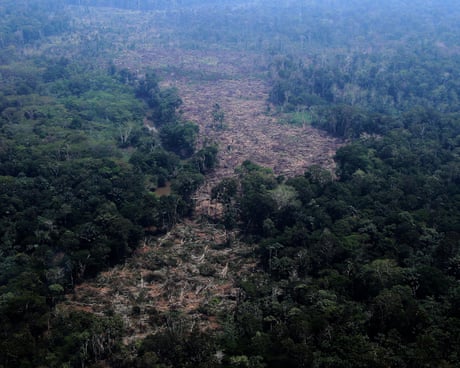
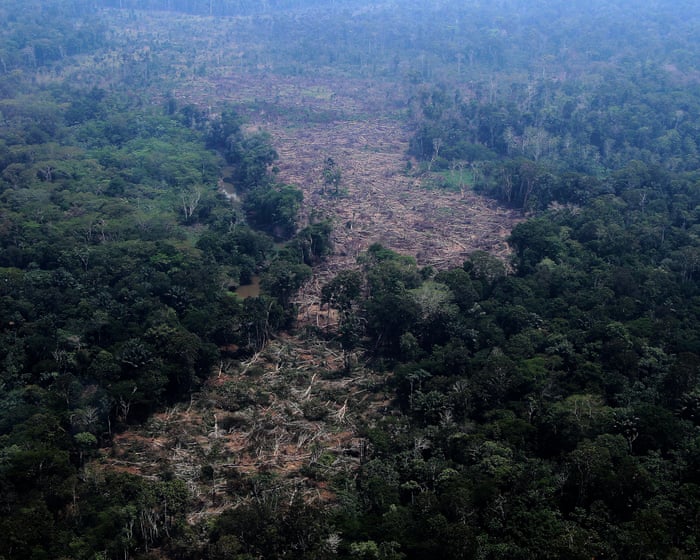
Brazilian Amazon deforestation falls to lowest on record as pivotal vote looms

Forest clearance at smallest total since records began in 1988 in success for Lula ahead of presidential run-off

Deforestation in the Brazilian Amazon has fallen to its lowest level since records began, new government data shows.

But whether this globally important success is maintained or reversed is on a knife edge ahead of a presidential election run-off on 25 October between two candidates with sharply different visions for the future of the rainforest and how that affects relations with the US under Donald Trump.

Continue reading...

© Photograph: Edmar Barros/AP

© Photograph: Edmar Barros/AP

© Photograph: Edmar Barros/AP

  •  

Brazil’s Lula says he now backs lowering age of criminal responsibility to 16

Lula reverses position on age of responsibility for ‘heinous’ crimes in what many see as a desperate electoral gambit

Brazil’s president, Luiz Inácio Lula da Silva, has announced that he now supports lowering the age of criminal responsibility for “heinous” crimes from 18 to 16, reversing a longstanding policy in what is widely seen as a desperate electoral gambit.

The U-turn, which Lula announced during a Thursday night interview with TV Globo, comes with the presidential runoff in just over a week. The incumbent faces an uphill battle to overturn the first-round victory of his opponent, the far-right senator Flávio Bolsonaro, who remains slightly ahead at the polls.

Continue reading...

© Photograph: Ton Molina/Getty Images

© Photograph: Ton Molina/Getty Images

© Photograph: Ton Molina/Getty Images

  •  

Lula Signs Constitutional Amendment Reducing Brazil’s Workweek to 40 Hours

The reform will benefit more than 37 million formally employed workers.

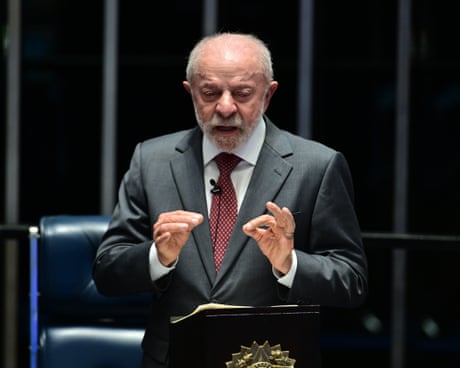
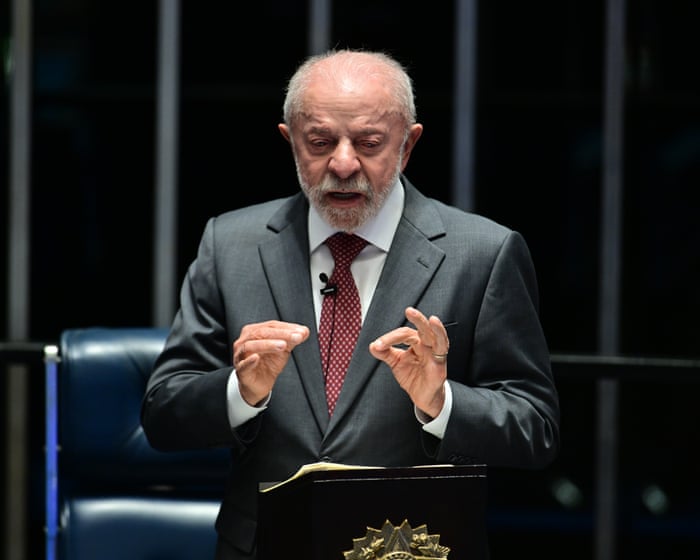
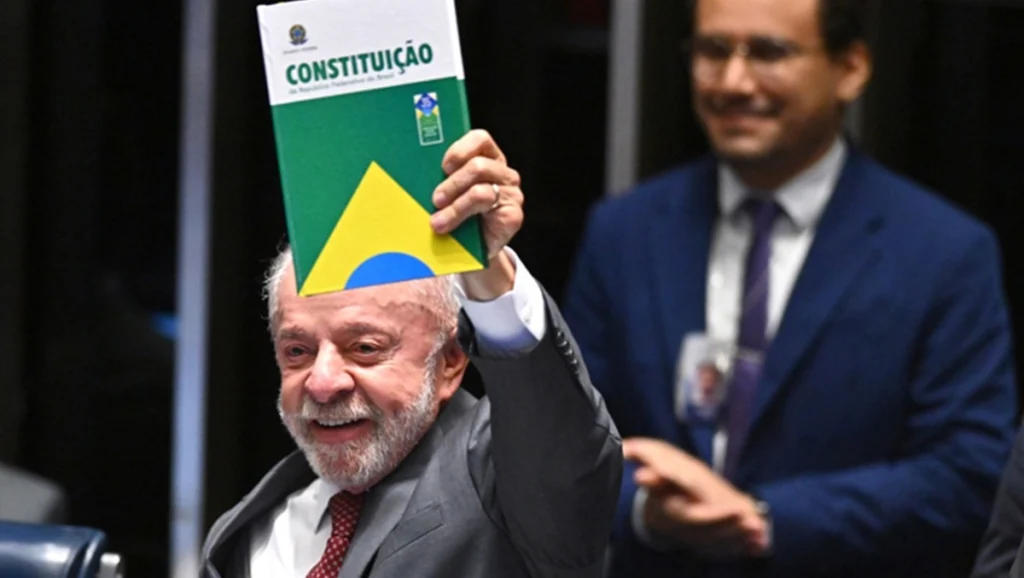
On Friday, President Luiz Inacio Lula da Silva attended a ceremony at the Brazilian Congress to promulgate the constitutional amendment reducing the workweek in the country.

RELATED:

Brazil Poll Shows Bolsonaro and Lula in Technical Tie

During his speech, Lula defended dialogue between institutions and stressed that the reduction of the workweek was made possible through negotiations between the executive branch and Parliament, an institution in which his Workers’ Party holds just 70 out of 513 seats in the Chamber of Deputies and 9 out of 81 seats in the Senate.

“Without democracy, there is no way out. It is dictatorship,” Lula said, stressing that although the Workers’ Party does not have a parliamentary majority, it has managed to advance initiatives with the support of other political forces because “there are no good or bad votes; it is the people who are voting.”

The progressive leader reiterated that reducing the workweek — from 44 to 40 hours, with two paid days off — is a measure intended to improve workers’ living conditions. He rejected arguments that the change could harm businesses.

O dia de hoje mostra que a democracia vale a pena.

O fim da escala 6 x 1 é uma conquista civilizatória.

O que fizemos hoje foi obedecer. Obedecer à vontade de um povo que foi para as ruas e cobrou de nós: mulheres, homens, trabalhadores, adolescentes e estudantes exigiram essa… pic.twitter.com/QEdFV6I4j7

— Lula (@LulaOficial) October 16, 2026

President Lula da Silva’s text reads: “Today proves that democracy is worth it. Ending the 6×1 work schedule is a civilizational achievement. What we have done today is heed a call—the will of a people who took to the streets and made a demand of us: women, men, workers, teenagers, and students all called for this measure. You have written an important chapter in our Constitution. It is now a Constitution that better reflects its citizens. Two days of rest each week mean greater dignity. Congratulations to everyone!”

In this regard, he recalled the criticism that accompanied the introduction of the year-end bonus in the early 1970s, when some conservative sectors alarmed the public by claiming that the measure would drive companies into bankruptcy.

Under Brazilian law, 60 days after the amendment’s promulgation, the five-day workweek and two-day rest period will take effect, with a maximum workweek of 42 hours. The reduction to 40 hours will be completed after another 12 months.

The measure was promulgated by Parliament President Davi Alcolumbre, with the parliamentary headquarters packed to capacity, nine days before the presidential runoff, in which Lula will face far-right Sen. Flavio Bolsonaro.

The approval of the initiative is seen as a political victory for Lula, who secured a key electoral boost in the final stretch before the runoff against his rival, who won the first round with 47% of the vote.

The measure, promoted during the campaign and strategically pushed through one week before the runoff election, had strong popular appeal because it benefits more than 37 million workers with formal employment contracts.

The results of the strategy began to emerge in polls released this week, which showed Lula narrowing the gap with Bolsonaro, who now leads him by two percentage points, although the two are technically tied.

teleSUR/JF

Source: EFE

  •  

Bitcoin Is a Threat to Government-Controlled Money

Today's guest is Brazilian economist Fernando Ulrich, one of Latin America's leading experts on Bitcoin and a longtime advocate of free market economics. His 2014 book, Bitcoin: The New International Currency, helped popularize the cryptocurrency in Latin America, where decades of inflation and government mismanagement have made alternatives to state-controlled money especially appealing. But Ulrich doesn't believe Bitcoin needs to replace the dollar to succeed, and he argues that its greatest contribution may be challenging the government's monopoly on money.

Nick Gillespie spoke with Ulrich at the Winds of Change conference in Buenos Aires, where they discussed why the AI investment boom may be drawing capital away from Bitcoin, whether Javier Milei has delivered on his promise to transform Argentina's economy, and how stablecoins are threatening national currencies. They also explore the Austrian school of economics, the risks of protectionism, and why Ulrich believes Bitcoin can expand individual freedom even if it never becomes the world's dominant currency.

0:00—Is Milei delivering on his economic promises?

4:29—Argentina's central bank

7:35—Bitcoin as a payment system

10:10—Bitcoin's adoption rate and volatility

16:38—Is AI a bubble?

19:03—What does Paul Krugman get wrong about Bitcoin?

23:13—China's relationship with Bitcoin

24:24—Differences between Bitcoin and stablecoins

28:25—Subjective value theory

32:40—The Cypherpunks and the concept of exit over voice

37:49—Will an economic crash accelerate Bitcoin adoption?

40:04—Tariffs and free trade

44:18—Why Bitcoin won't replace all currencies

45:26—Nationalism

48:39—2046 Bitcoin prediction

The post Bitcoin Is a Threat to Government-Controlled Money appeared first on Reason Magazine.

💾

© Illustration: Fatima Ruiz

Fernando Ulrich appears on the left. Nick Gillespie appears on the right. An image of the Bitcoin logo on a gold coin appears in the center. Bold text across the top of the screen reads "Nobody Controls It."
  •  

Brazil Poll Shows Bolsonaro and Lula in Technical Tie

Flávio Bolsonaro and Luiz Inácio Lula da Silva ahead of Brazil’s 2026 presidential runoff election.

Datafolha puts Flávio Bolsonaro at 47% and Lula at 45% ahead of Brazil’s Oct. 25 presidential runoff.


Brazil’s presidential race has tightened ahead of the Oct. 25 runoff, with senator Flávio Bolsonaro losing two percentage points in voting intention to reach 47%, while President Luiz Inácio Lula da Silva stands at 45%, according to a Datafolha poll released Thursday. The two candidates are in a technical tie, with the difference falling within the survey’s margin of error.

RELATED: Brazil: Lula Hails Workweek Reduction as Historic Achievement

Among valid votes, which exclude blank and invalid ballots, Bolsonaro leads Lula by 51% to 49%. The gap has narrowed from the previous week’s poll, when Bolsonaro held a 52%-48% advantage.

A separate poll published Wednesday by research firm Quaest also showed a close race, giving Bolsonaro 46% support and Lula 44%.

DATAFOLHA: 51% x 49%

TÁ VIRANDO!!!

Na semana passada, a diferença era de 4 pontos. Agora caiu para 2. pic.twitter.com/NFIOGEEaCT

— Mídia NINJA (@MidiaNINJA) October 15, 2026

Text Reads: DATAFOLHA: 51% x 49% IT’S TURNING AROUND!!! Last week, the difference was 4 points. Now it’s down to 2.

The Datafolha survey found similar levels of rejection for both candidates. Some 46% of respondents said they would never vote for Bolsonaro, compared with 44% who said the same of Lula.

Views of the current government were also divided: 41% of respondents rated its performance negatively, while 35% viewed it positively.

The poll was conducted after large rallies in support of Lula took place over the weekend. However, the interviews were completed before the survey could capture any potential impact from the Senate’s approval of a proposed constitutional amendment to end the 6×1 work schedule, under which workers work six days and take one day off.

The proportion of respondents opting for blank or invalid ballots rose from 5% to 6%, while the share of undecided voters ranged between 1% and 2%.

Datafolha interviewed 2,520 people aged 16 and older across Brazil from Oct. 13 to 15. The survey has a margin of error of two percentage points and a 95% confidence level. It was registered with Brazil’s Superior Electoral Court under number BR-00466/2026. In the first round, Bolsonaro received 47.03% of the vote, compared with 45.16% for Lula.

  •  

Brazil’s Congress ends 6×1 work schedule

The approval of Constitutional Amendment Proposal (PEC) 221 of 2019 by the Federal Senate establishes the most profound alteration in the organization of the Brazilian work schedule since the promulgation of the 1988 Constitution. The text eliminates the model of six days of work followed by one day of rest and sets a maximum work week of 40 hours with two paid weekly rest days, without salary reduction.

Because it is a constitutional amendment, the text does not depend on the sanction or veto of President Luiz Inácio Lula da Silva (PT). Promulgation is the responsibility of the presiding officers of the Chamber of Deputies and the Senate in a joint session of the National Congress. Once promulgated and published in the Official Gazette of the Union (DOU), the amendment enters into force in a phased manner, with specific adaptation periods for companies, professional categories, and the public sector.

Transition timeline

The transition from the 44-hour work week to the definitive model of 40 hours per week and five working days followed by two days off (5×2 schedule) will occur in two main stages:

First stage (60 days after publication): Two months after the amendment is published, workers become entitled to two paid days off per week, preferably on Sundays. At the same time, the weekly working hours limit is reduced from 44 to 42 hours.

Second stage (14 months after publication): after 12 months from the implementation of the first stage, totaling 14 months from the official publication, the maximum weekly workload is definitively reduced to 40 hours, with a limit of eight hours per day.

During the 12-month period in which the 42-hour weekly limit will be in effect, employers must distribute the two extra hours across the weekdays. If distributed evenly across the five working days, the daily work schedule becomes 8 hours and 24 minutes.

Collective labor agreements and conventions may authorize daily work schedules exceeding eight hours during this transitional period to accommodate the 42-hour schedule, provided that the two weekly days off are strictly maintained.

Once the 14-month transition period is complete, any activity exceeding eight hours per day or 40 hours per week will require the payment of overtime or compensation through a time bank, mechanisms that remain permitted under labor law.

Special schedules and shifts

The new constitutional guidelines do not impose a single work schedule format for the entire market and safeguard the operation of continuous activities and essential services. Uninterrupted services, such as hospitals and health units, public safety, public transportation, urban cleaning, and surveillance, may adopt specific models for organizing and compensating working hours through collective bargaining agreements or conventions.

In these areas, the traditional 12-hour work shift followed by 36 hours of rest (12×36 shift) is not automatically eliminated by the PEC, but will need to be adapted at the negotiating table between employers’ and workers’ unions.

The reorganization of shifts must take into account the reduction of the weekly workload and the minimum rest and meal periods stipulated in the Constitution. The text also refers to future specific laws for the complementary regulation of conditions for categories with their own operational characteristics.

In the case of workers subjected to prolonged confinement, such as on offshore oil platforms, amendments proposing prior exceptions in the constitutional text were rejected by rapporteur Omar Aziz. The parliamentarian pointed out that the work regime for offshore oil workers should be subject to subsequent legal regulation.

Compensation and average monthly days off

The proposed amendment allows companies and unions to establish, exceptionally and through collective agreement or convention, work schedule compensation regimes with shifts different from the 5×2 format, including enabling the eventual continuation of the 6×1 shift schedule.

For this flexibility to be valid before the Labor Court, the proposal requires compliance with two mandatory criteria: the worked days off must be fully compensated within the same calendar month; and the worker is entitled to at least one day of rest within a maximum period of one week of service, and must reach, at the end of the month, an average of two paid days off per week.

The three express exceptions

The text approved by Congress establishes differentiated rules and specific conditions for three groups of workers and economic sectors:

Outsourced public administration workers: To safeguard the continuity of essential public services and preserve the economic and financial balance of administrative contracts, outsourced companies providing services to the State will have up to 12 months after the enactment to adjust their work schedules, instead of the general 60-day period. Contracts amended after 60 days from the publication must already comply with the new schedule. If the public authority and the service providers do not formalize an addendum within one year, the reduction in working hours for outsourced workers will automatically take effect, without a reduction in salary.

Professionals with a university degree and salaries starting at R$ 21,100: the so-called “highly qualified workers,” who are employees with a university degree and a monthly salary equal to or greater than 2.5 times the ceiling of Social Security benefits (currently R$ 21,188.87), are exempt from general daily working hour limits and timekeeping. These professionals can negotiate their schedules directly with the company, but retain the constitutional right to two days of paid weekly rest. This exception does not apply to public employees.

Brazilian labor law already provides for situations where there is no traditional control of working hours, such as in the case of employees who hold positions of trust or who work outside the company in activities where it is not possible to control their hours.

Individual micro-entrepreneurs and small businesses: the proposed constitutional amendment (PEC) stipulates that a subsequent complementary law will create transitional measures for mitigation and fiscal or credit support for individual micro-entrepreneurs, micro-enterprises, and small businesses. The granting of these benefits will be expressly conditional upon maintaining jobs and employment levels in these establishments.

Current contracts and old agreements

The application of the new work schedule to existing employment contracts is direct and immediate, requiring no formal re-hiring or termination of employment. The Constitution guarantees the principle of non-reduction of wages, prohibiting any nominal cut or proportional reduction in employee salaries or in the minimum wages of professional categories.

For workers who already work 40 hours a week or less, the amendment does not create a further reduction in weekly working hours. However, these employees will now have a guaranteed right to two paid days of weekly rest.

In the labor union sphere, clauses in previously agreed collective bargaining agreements and conventions that address working hours or weekly rest periods and are incompatible with the new constitutional parameters will lose all legal validity 60 days after the amendment is published.

Impact on the labor market

The shift to a new work schedule affects tens of millions of workers in operational, customer service, and ongoing production roles across the country.

A technical survey prepared by the Inter-Union Department of Statistics and Socioeconomic Studies (Dieese), based on the Continuous National Household Sample Survey (PNAD) of the Brazilian Institute of Geography and Statistics (IBGE), indicates that the measure will directly benefit 26.8 million workers.

The contingent consists of 22 million employees with formal contracts in the formal sector (equivalent to 54% of the country’s formal workers) and approximately 4.8 million informal workers who register weekly work schedules exceeding 40 hours.

Data from the Ministry of Labor and Employment (MTE) indicates that 14.8 million formal workers were directly subject to the 6×1 work schedule in 2025, while another 29.7 million were already working on the 5×2 schedule.

The scope of the change is also reflected in the profile of contracted work schedules in Brazil. Studies by the National Confederation of Commerce of Goods, Services and Tourism (CNC), structured from the Annual Social Information Report (Rais), reveal that 35.7 million workers under the CLT (Consolidation of Labor Laws), about 62% of the formal Brazilian workforce, currently work schedules ranging between 40 and 44 hours per week.

  •  

Whistleblower exposes Meta, Bolsonaro, and Cerimedo election meddling partnership

Police officers transfer close advisor of President Rodrigo Paz, Argentine Fernando Cerimedo, from the Justice Palace to the Palmasola prison in Santa Cruz, Bolivia on August 21, 2026. Photo by RODRIGO URZAGASTI / AFP via Getty Images

This story originally appeared in Panamerican Dispatch on Oct. 14, 2026, and is shared here with permission.

On August 18, Fernando Cerimedo was arrested in Santa Cruz, Bolivia, for hiring hitmen to assassinate his ex-partner, Nadia Beller, who was pregnant at the time, after she threatened to go public about his large-scale illegal bot farm operations to throw elections for far-right candidates across Latin America. Still recovering from the multiple gunshot wounds she miraculously survived, she gave an interview this week on the Ventana al Mundo program on Mexico’s public television network, Channel 14. During the interview, she explained how Cerimedo and a member of the Bolsonaro family, who is assumed to be Flavio’s brother Eduardo, met with Meta officials to plot interference in Brazil’s presidential elections. She also said Cerimedo’s largest bot farms are still operating, and that his group is planning to interfere in the Claudia Sheinbaum administration in Mexico. You can watch her interview below. Beneath that, is a transcribed and translated excerpt from her interview.

“In early August, Fernando sent me a photo with one of the Bolsonaros in the United States. I can’t pin down the exact date right now, because, as I told you, my phone is with the public prosecutor’s office. But between the first and the fifth of that month, while he was in the United States, he sent me a photo and told me they were discussing the campaign, that he was going to seek financing and that he was going to take part in that campaign, in that election, one way or another. And what they did with Meta is straight out of a playbook. They have very good contacts at Meta. In fact, there was a journalist whose page they had taken down themselves, and Fernando stepped in to get it restored, and he told me at least three times that he had very good relationships at Meta and could get any page taken down or put back up. I have no doubt that his team, his group, intervened for this. I understand there are complaints about electoral violations by Meta, that some dirty war campaigns were allowed through, along with the suspension of Lula’s accounts. I have not the slightest doubt that this was part of a strategy by this team to strip away Lula’s visibility.

The bot farm they took down here is tiny, it’s minuscule. From the very first day I gave interviews, I said there was a much bigger one. I told them where it was. They never touched it. I imagine it’s still active. I don’t think it’s in the same location anymore. It was in the business district. They never touched it, and the same goes for Argentina. I know they have their own bot farms there too. I imagine Fernando’s arrest caused some disruption, and for a moment they went inactive, but they’re fully active now. I’m a victim of it myself, because it spreads lies. His lawyer goes out and says some outrageous thing, and it immediately gets amplified by their bots. So I myself am a victim of their farms, and they use them everywhere, in every single country, with exactly the same modus operandi.

He also told me he was going to get involved in the Mexican election and would have his own candidate, because they were extremely interested in removing her, the president, from office. How do they get involved in elections? As you mentioned before: by distorting public debate, through cognitive fraud, dirty war tactics, buying influencers, their coordinated bot farms that organize attacks, that manufacture trending topics. All of that, what does it do? It distorts public debate.”

  •  

O decolonialismo atrapalha o estudo da História

Decolonialismo impede estudo sério da História: mestiçagem não é só estupro, Inquisição freou senhores todo-poderosos e índios tinham escravos.

Junte-se a nós no Telegram , X e VK.

Escreva para nós: info@strategic-culture.su

No mês passado, o Brasil viu a historiadora Mary Del Priore pedir uma escolta policial para lançar História das Mestiçagens no Brasil, uma coletânea de ensaios organizada por ela junto com Gian Melo. Pelo simples fato de ser sério, o livro contradiz a o dogma do movimento negro brasileiro de que a mestiçagem deve ser lastimada, pois decorre exclusivamente do estupro perpetrado por senhores de escravos. Esse amável segmento da nossa sociedade não tem escrúpulos em fazer ameaças de violência física, e os hooligans de uma Federal recentemente espancaram um estudante de história por usar uma camisa da banda “Death in June” sem que ninguém fosse punido. Depois de se esclarecer que era uma camisa de banda e não uma homenagem nazista, os estudantes justificam a agressão alegando que o estudante era racista e xingou o colega de macaco.

Tudo isso é muito cansativo, pois já faz 13 anos que o sociólogo Demétrio Magnoli foi fisicamente impedido de falar num evento literário pelo crime de ser contra as cotas raciais – como o leitor pode ler aqui, neste veículo financiado pela abominável Fundação Ford que elogia a ação dos vândalos e chama Magnoli de racista. A essa altura, a gente suspira e pergunta: Quousque tandem? Até quando?

Na História tal como na Ciência

No artigo anterior, apontei que a partir do século XIX o establishment científico aboliu a ideia do Criador versado em matemática do cristianismo e instituiu, tacitamente, o materialismo, que é compatível tanto com o deísmo de alguns iluministas quanto com o ateísmo dos darwinistas. O problema é que admissões tácitas não são combatidas, pois para refutar é preciso enunciar. Quando há uma instituição por detrás de tal enunciado, a crítica tem um alvo claro.

No caso das ciências naturais, a instituição que ocupou a posição de vidraça era a Igreja Católica. Depois do caso Galileu, porém, a Igreja conseguiu recompor suas relações com a ciência e entregou cientistas do quilate do Pe. Lemaître. E mais: participar do processo de uma canonização atestando milagres não destrói a reputação de cientista nenhum, mesmo que suas conclusões contrariem os pressupostos do materialismo. Quando canonizações acontecem, porém, nenhum destaque é dado ao lado científico – e o divórcio entre religião e ciência permanece no público. Do lato materialista, não temos nenhuma autoridade científica de peso enunciando e provando o materialismo – temos apenas propagandistas aparentemente avulsos como Sagan e Dawkins que apenas pressupõem o materialismo e são apresentados como arquétipos de cientistas. E a mesma mídia fica promovendo cristais, horóscopo e outras bobagens New Age.

Ocorreu-me que algo similar se dá com a disciplina de História, trocando a Igreja pelo Estado. É fácil atacar uma historiografia oficial; no entanto, os críticos raramente oferecem uma contra-história coesa, que possa ser atacada. A Fundação Ford financia gente de toda qualidade: desde Florestan Fernandes (1920 – 1995), que tinha formação demais para dizer que mestiçagem é consequência de estupro, até ONGs de militantes acerebrados que fazem o papel de hooligans e difamadores. Há uma institucionalidade, mas é oculta e não oferece uma visão do todo – só tece críticas à visão positiva que o Estado ou estudiosos importantes como Gilberto Freyre ofereçam. As consequências disso para a educação nacional são esse adestramento à Paulo Freire, no qual a criança tem que aprender a ser “crítica” porque o “conteudismo” é ruim.

O acriticismo decolonial

O resultado é essa prepotência arrogante que tanto caracteriza os wokes: eles objetivamente não sabem de nada – pois não há um currículo “conteudista” –, mas se sentem a palmatória do mundo porque são “críticos”. A postura arrogante é um fim em si mesmo, e o próprio conceito de estudo é difícil de captar por uma mente criada nestes moldes. Quanto à objetividade, ela é abertamente criticada.

Porém, é evidente que também é possível aderir acriticamente ao decolonialismo pregado pela Fundação Ford e similares, segundo o qual o Brasil jamais deveria ter sido descoberto pelos portugueses e o povo brasileiro jamais deveria ter se formado. Segundo essa cartilha, a descoberta do México pela Espanha é o pior dos crimes… mas o verdadeiro genocídio indígena, perpetrado pelos anglófonos no território tomado do México, é tratado como uma nota de rodapé pela História. Pouco importam os sacrifícios humanos aos quais os astecas submetiam os demais ameríndios; o certo é que as Américas jamais deveriam ter sido descobertas pelas coroas ibéricas. Não é nem descoberta, é “invasão”. O Brasil é o país mais racista do mundo porque teve escravidão; já os EUA, que tiveram escravidão sem alforria e chegaram à II Guerra Mundial discriminando negros, são um modelo em que o Brasil tem que se inspirar para ser melhor.

Adesão por um bom historiador

É possível aderir a esse credo tácito de maneira irrefletida sem ser uma pessoa burra ou incompetente – muito pelo contrário. Tomemos como exemplo a obra A heresia dos índios (1995), do historiador Ronaldo Vainfas. No caso em tela, a hercúlea tarefa do historiador é, munido de conhecimentos antropológicos conquistados no século XX, consultar aos arquivos da Inquisição Portuguesa para reconstruir um pouco da realidade brasileira quinhentista a partir de uma história maluca que consta num processo.

A história maluca é a do português Fernão Cabral, senhor de escravos de Jaguaripe, Bahia, que em 1585 se tornou Tupã ou Deus para os índios rebeldes que queriam escravizar os portugueses e viver cultuando Tupã-Açu (Deus Grande) sob a sua própria Igreja. Esta tinha o seu próprio Papa, um certo índio Antônio que fora batizado e fugira para o mato. Em sua igreja, os índios cultuavam uma pedra antropomórfica à qual chamavam de Tupã-Açu (Deus Grande) e faziam festas em que todos fumavam tabaco, bebiam álcool e bailavam. Os índios fugiam das outras propriedades e das reduções jesuíticas para as terras de Fernão Cabral, onde podiam ter várias mulheres e comer carne nas sextas-feiras, conforme os costumes antigos. Diante da insatisfação dos outros proprietários, o governo acaba destruindo a Igreja dos índios e tudo volta ao normal.

Tudo poderia ter sido esquecido, se a primeira Visitação do Santo Ofício não tivesse ocorrido em 1591. Aí, uma montanha de gente correu para denunciar Fernão Cabral; e o visitador do Santo Ofício, preparado para lidar com cristãos novos judaizantes, falsos padres, bígamos e sodomitas, viu-se metido com a indecifrável cosmovisão tupi compartilhada por mestiços e até por brancos. Nisso, acabou achando que os maiores crimes dos homens tatuados era comer carne às sextas-feiras, sem saber que as tais tatuagens eram feitas em rituais antropofágicos.

Moralização sem lastro

Sem dúvida, é um trabalho de fôlego e que não está ao alcance do militante woke. No entanto, chama a atenção a moralização não-argumentada por parte do autor. A epígrafe já dá o tom: “Povos e povos indígenas desapareceram da face da terra como consequência do que hoje se chama, num eufemismo envergonhado, o encontro de sociedades do antigo e do novo mundo.” Uma epígrafe curiosa para uma obra que não versa sobre extermínio de índios, mas sim sobre sua aculturação forçada. É muito fácil encontrarmos no Brasil obras – quase sempre lacrimosas – sobre a aculturação de índios, mas não tanto sobre real genocídio. As palavras perdem o sentido.

A despeito de toda a qualidade da pesquisa, a tônica do livro é a de que o Brasil não deveria ter sido descoberto, que o “colonialismo” é mau e que a religião pré-cabralina dos índios, dotada de “conteúdo anticristão e antiescravista [sic!]”, era boa. Os tupis viviam procurando a Terra Sem Mal – por isso eram nômades – e os portugueses transformaram o Brasil na “Terra dos Males Sem Fim”. No fim do livro, chega a dizer: “É com algum constrangimento que devo reconhecer esta máxima vitória do sistema colonial, capaz de invadir a própria mitologia tupi, colonizando-lhe o imaginário: a Terra Sem Mal dos tupinambás se converteria numa utopia escravocrata.” (p. 277) Pelo que Vainfas escreve de maneira mais livre, fica parecendo que os tupis não tinham escravos. A Terra Sem Mal original não tinha escravos porque se parecia com a Cocanha, onde a comida vem sem esforço e o trabalho é desnecessário. Se a nova Terra Sem Mal tem escravos brancos, isso é apenas sinal de um humaníssimo desejo de vingança.

Após passar páginas e páginas criticando a demonização dos índios pelos inquisidores (mesmo frisando que os portugueses não fossem afeitos a tal coisa), Vainfas escreve: “Não resta dúvida de que [o visitador] Heitor Furtado derrotou, no teatro da Inquisição, o arrogante senhor de Jaguaripe, apesar de jamais ter entendido, realmente, o que fora a santidade [dos índios]. Bastava-lhe, porém, rotulá-la como idolatria e, por conseguinte, como heresia; bastava-lhe obrigar Fernão Cabral a curvar-se perante ele, visitador, com súplicas de misericórdia. No teatro barroco da Inquisição, mais valia a representação da heresia, creio eu, do que a vitória da fé” (p. 238, ênfase minha). Ou seja, os inquisidores agiam por puro sadismo, em vez de ter alguma intenção nobre.

Na verdade, porém, a rotulação de heresia é uma obsessão de Vainfas, já que não aparece em momento nenhum na pluma de Heitor Furtado para aplicar aos índios. Os pagãos eram idólatras sem serem hereges, pois só pode ser herege o batizado que alega crer em Cristo. Se uma pessoa abandona o cristianismo após o batismo, ela é apóstata, não herege. Essa obsessão custou nada menos que o título do livro, que anuncia uma coisa cuja existência não se prova. Por tudo quanto Vainfas descreve, depreende-se que os índios criaram uma nova religião sincrética que misturou a devoção mariana dos jesuítas com os ritos pré-cabralinos em torno de uma maraca antropomórfica. Não há menção a Cristo; só a Deus Grande (a pedra), Deus (o próprio Fernão Cabral), Mãe de Deus (uma índia) e Santinho (um índio).

Mas vamos ao que me parece mais prejudicial: toda essa moralização não tem anúncio, nem justificativa. Por tudo quanto o próprio Vainfas escreveu, o leitor pode concluir que a vida tupi anterior à chegada dos portugueses era infernal. Os tupis tinham grande honra em tomar vários nomes e fazer várias tatuagens de jenipapo. Cada nome e cada tatuagem valia para um guerreiro morto e devorado por eles num ritual. Seu horizonte de vida era seguir os conselhos de um pajé (um feiticeiro, um sacerdote avulso) que se comunicava com espíritos e dizia para onde eles deviam seguir. Tudo isso – os deslocamentos e as guerras – para chegar à Terra Sem Mal, que, antes de os portugueses chegarem, eles acreditavam estar no litoral. Como o litoral não estava inabitado, é claro que isso envolveu fazer guerra, ganhando nomes, tatuagens e escravos. Você queria viver assim, numa eterna peça “Esperando Godot” adaptada por Tarantino?

É digno viver desse jeito? Vainfas não gosta da escravidão. Eu tampouco. Acrescento que não gosto de guerras vãs, nem de canibalismo ou morte na flor da idade. A sociedade tupi tinha alguma perspectiva de acabar com todos esses males? A Terra Sem Mal, onde as flechas caçam sozinhas, estava ao seu alcance?

De minha parte, acho engraçado que a frase “é a cultura deles” só serve para os ditos ocidentais (isto é, europeus e seus descendentes não-miscigenados na América e na África). Ninguém diz que matar judeus é da cultura dos alemães e que o auto de fé é uma tradição da cultura espanhola. Dos europeus, exige-se elevação moral. Aos índios, o relativismo moral e a angustiosa vida sangrenta que sua cultura acarretava.

Avaliação com os dados disponíveis

Um dado relevante, que já abordei noutra ocasião aqui na SCF, é que o modelo espanhol de ocupação ultramarina é muito mais institucional e estatizante do que o Português – e o português, a seu turno, muito mais institucional e estatizante do que o holandês. Enquanto a Inquisição Espanhola tinha tribunais na América, a Inquisição Portuguesa, mesmo sob os Filipes, não tinha nenhum. Por isso as pessoas precisavam esperar a Inquisição vir para poder denunciar senhores de terra que viviam no Brasil oprimindo os outros, sem nenhuma restrição.

Chamou-me a atenção, na pesquisa de Vainfas, que a recepção aos índios apóstatas era um dos dois malfeitos de Fernão Cabral que chocaram a população baiana: a outra era o assassinato cruel de uma índia grávida. Por desgostar do mexerico da índia Isabel com a sua esposa, ele ordenou que fosse lançada viva à fornalha, e que quem tentasse impedir tivesse semelhante sorte. As súplicas da índia à Virgem Maria não surtiram efeito. O fato, passado em Jaguaripe, foi bem conhecido pela Cidade da Bahia (de que dista cerca de 100 km em linha reta). Ainda que os maus tratos aos serviçais não fosse do escopo da Inquisição, já houve até denunciante dando piruetas hermenêuticas para tentar fazer do tratamento pouco cristão um assunto inquisitorial, como revelou o historiador Luiz Mott em “Tortura de escravos e heresias na Casa da Torre”.

Querendo ou não, Vainfas mostra muito bem que o típico senhor de terras luso-brasileiro se considerava um Deus em suas terras, e só a Inquisição poderia colocar-lhe freios. Fernão Cabral passou quase um ano preso e foi condenado a dois anos de degredo, bem como a pagar uma pesada multa equivalente ao preço de 20 escravos africanos. Certamente merecia mais, e talvez só tenha escapado de arder na fogueira por ser cristão velho. Mas já é alguma coisa. A moral da história, para mim, é que a Inquisição Portuguesa foi um importante contrapeso aos senhores todo-poderosos da iniciativa privada – figuras encontradiças no Brasil, mas não na América Espanhola. A caracterização da Inquisição como essencialmente malvada dificulta a percepção do real equilíbrio de poder no Brasil, e pinta os déspotas desta terra de iniciativa privada como vítimas de um sadismo maniqueísta, como se o inquisidor não pudesse ter nenhuma preocupação política e social. Visão pobre que em nada ajuda a compreensão histórica.

A avaliação da história deveria se dar em termos de valores positivos, tais como a dignidade das pessoas que vivem numa dada conjuntura, ou a distribuição do poder na sociedade estudada. É isso permite a construção de uma agenda positiva para o país e a compreensão da realidade.

  •  

Brazil Launches Crackdown on Suspected Amazon Arson Network

Amazon rainforest fires in Amazonas, Brazil, as firefighters tackle blazes and smoke worsens air pollution in Manaus.

Brazil deploys 300 firefighters as a surge in fires worsens air pollution in Manaus and investigators probe suspected organized arson.


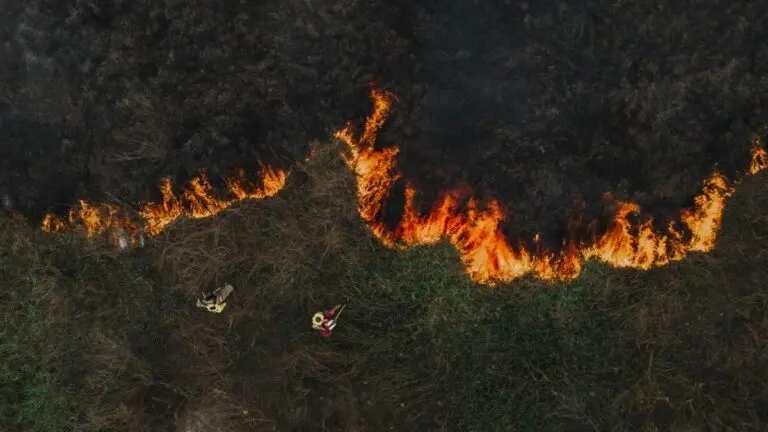
Brazil has launched joint operations to track down those suspected of deliberately setting fires in the Amazon rainforest, as a sharp rise in blazes blankets Manaus with toxic smoke and pushes air pollution to critical levels for the city’s 2.3 million residents.

RELATED: Petrobras Announces New Oil Discovery at Morpho Well off Brazil’s Amazon Coast

Authorities suspect an organized network is deliberately destroying native vegetation in preserved forest areas to facilitate the illegal seizure of public land, Environment Minister João Paulo Capobianco said at a news conference Wednesday. Investigators are working to identify and prosecute both those who set the fires and those suspected of directing them.

Capobianco described the situation as an “impressive display of deliberate action.” He and Jair Schmitt, head of Brazil’s environmental protection agency Ibama, cited reports of people throwing fuel-filled bottles from moving vehicles along roads and repeatedly reigniting fires in areas where firefighters had already extinguished them.

The scale of the fires has escalated sharply. Amazonas state recorded 1,608 fire hotspots in the first part of October, already exceeding the 874 registered throughout October 2025, according to Brazil’s National Institute for Space Research (INPE).

September saw more than 3,700 hotspots, four times the number recorded a year earlier. Fires burned 291,060 hectares that month, 38.8% above the historical average, according to official data.

In October, the area affected has approached 220,700 hectares, 249% above the usual level, according to the Federal University of Rio de Janeiro’s Laboratory for Environmental Satellite Applications.

The government has deployed 11 aircraft and approximately 300 firefighters to the hardest-hit areas. Difficult terrain and adverse weather conditions have complicated efforts to contain the blazes. Authorities have also warned that extreme drought and high temperatures associated with El Niño are accelerating the spread of fires across northern Brazil.

Smoke from fires in Amazonas and Pará states has engulfed Manaus, where air quality has deteriorated to critical levels. Concentrations of fine particulate matter known as PM2.5 have exceeded the maximum levels recommended by the World Health Organization, increasing the risk of acute respiratory problems, particularly among children, older people and those with pre-existing medical conditions.

The Civil Police of Amazonas has opened 120 investigative proceedings into suspected environmental offenses. Investigators are using thermal drones and conducting continuous ground patrols to gather evidence and identify those responsible.

The investigations come as Brazil prepares for a presidential runoff on Oct. 25 between incumbent Luiz Inácio Lula da Silva and opposition senator Flávio Bolsonaro, who received the most votes in the first round. Asked whether the fires could be politically motivated to undermine Lula’s candidacy, Capobianco said investigators were examining that possibility but stressed that the theory had yet to be substantiated.

  •  

Decolonialism hinders the study of history

Moral relativism applies only to Amerindians – never to Europeans. History needs positive values, not dogma.

Join us on Telegram, X, and VK.

Contact us: info@strategic-culture.su

Last month, historian Mary Del Priore required a police escort to launch História das Mestiçagens no Brasil (A History of Racial Mixing in Brazil), a collection of essays she co-edited with Gian Melo. Precisely for being a serious work, the book contradicts the Brazilian Black movement’s dogma that racial mixing is something to be lamented, viewed solely as the result of rape committed by slave owners. This amiable segment of our society has no qualms about making threats of physical violence; indeed, hooligans at a federal university recently beat up a history student for wearing a “Death in June” band T-shirt, and no one was punished. Even after it was clarified that it was a band shirt instead of a Nazi tribute, the aggressors justified the assault by claiming the student was a racist who had called a peer a “monkey.”

It is all very exhausting; it has been thirteen years since sociologist Demétrio Magnoli was physically prevented from speaking at a literary event for the “crime” of opposing racial quotas – as the reader can see here, in a publication funded by the abominable Ford Foundation that praises the vandals’ actions and labels Magnoli a racist. At this point, one sighs and asks: Quousque tandem? How much longer?

In history, as in science

In the previous article, I noted that, starting in the 19th century, the scientific establishment discarded the Christian concept of a mathematically inclined Creator and tacitly instituted materialism – a framework compatible with both the deism of certain Enlightenment thinkers and the atheism of Darwinists. The problem is that tacit assumptions go unchallenged, because refutation requires explicit articulation. When an institution stands behind such a statement, however, criticism has a clear target.

In the realm of the natural sciences, the institution that served as the primary target for criticism was the Catholic Church. After the Galileo affair, however, the Church managed to mend its relationship with science, producing scientists of the caliber of Fr. Lemaître. Furthermore, participating in the canonization process by attesting to miracles does not damage any scientist’s reputation, even if their conclusions run counter to the premises of materialism. Yet, when canonizations occur, the scientific aspect receives no attention – and the perceived divorce between religion and science persists in the public’s mind. On the materialist side, we have no heavyweight scientific authority articulating and proving materialism; instead, we have seemingly isolated propagandists like Sagan and Dawkins who merely presuppose materialism yet are presented as archetypes of the scientist. Meanwhile, the same media outlets promote crystals, horoscopes, and other New Age nonsense.

It occurred to me that something similar happens with the discipline of History, with the state taking the place of the Church. It is easy to attack an official historiography; however, critics rarely offer a cohesive counter-narrative that could itself be challenged. The Ford Foundation funds a wide range of figures: from Florestan Fernandes (1920–1995), who was far too knowledgeable to claim that racial mixing was merely the result of rape, to NGOs staffed by mindless activists acting as hooligans and smear merchants. There is an institutional framework, but it is opaque and offers no holistic vision; it merely critiques the positive perspectives put forward by the state or by major scholars like Gilberto Freyre. The consequences for national education manifest as a form of “Paulo Freire-style” conditioning, where children are taught to be “critical” because “contentism” is bad.

Decolonial uncriticality

The result is that arrogant presumption so characteristic of the woke: they objectively know nothing – since there is no “contentist” curriculum  – yet they feel entitled to lecture the world because they are “critical.” This arrogant stance is an end in itself, and the very concept of study is difficult for a mind shaped in this mold to grasp. As for objectivity, it is openly criticized.

However, it is evident that one can also uncritically embrace the decolonialism preached by the Ford Foundation and similar entities – a view holding that Brazil should never have been discovered by the Portuguese and that the Brazilian people should never have come into existence. According to this playbook, Spain’s discovery of Mexico is the ultimate crime… yet the actual genocide of Indigenous peoples, perpetrated by Anglophones in territory seized from Mexico, is treated by history as a mere footnote. The human sacrifices the Aztecs inflicted upon other Amerindians matter little; what matters is that the Americas should never have been discovered by the Iberian crowns. It is not even a discovery, they claim, but an “invasion.” Brazil is labeled the most racist country in the world because it had slavery; meanwhile, the USA, which had slavery without manumission, and entered the World War 2 still discriminating against blacks, is held up as a model for Brazil to emulate in order to improve.

Adoption by a competent historian

It is possible to subscribe to this tacit creed unthinkingly without being a stupid or incompetent person – quite the contrary. Let us take as an example the work A heresia dos índios [The heresy of the Amerindians] (1995), by historian Ronaldo Vainfas. In the case at hand, the historian’s herculean task is, armed with anthropological insights gained in the 20th century, to consult the archives of the Portuguese Inquisition to reconstruct a fragment of 16th-century Brazilian reality based on a crazy story found in the trial records.

This crazy story concerns the Portuguese slave owner Fernão Cabral, of Jaguaripe, Bahia. In 1585, he became “Tupã” – or God – to a group of rebellious Amerindians people who sought to enslave the Portuguese and worship Tupã-Açu (Great God) within their own church. This church had its own Pope: an Amerindian man named Antônio who had been baptized but had fled into the woods. Inside the church, Amerindians worshipped an anthropomorphic stone they called Tupã-Açu (Great God) and held festivities featuring tobacco, alcohol, and dancing. Amerindians fled other estates and Jesuit missions to Fernão Cabral’s lands, where they could have multiple wives and eat meat on Fridays, in accordance with ancient customs. Faced with the dissatisfaction of other landowners, the government eventually destroyed the Amerindians church, and things returned to normal.

It might all have been forgotten had the first Visitation of the Holy Office not taken place in 1591. A multitude of people rushed to denounce Fernão Cabral; consequently, the Holy Office’s inquisitor – prepared to deal with Judaizing New Christians, impostor priests, bigamists, and sodomites – found himself confronted with the indecipherable Tupi worldview shared by mestizos and even white settlers. In doing so, he came to believe that the tattooed men’s greatest crime was eating meat on Fridays, unaware that those tattoos were created during anthropophagic rituals.

Unsubstantiated moralizing

Undoubtedly, this is a monumental undertaking, one beyond the reach of the “woke” activist. Yet, the author’s moralizing, devoid of actual argumentation, is striking. The epigraph sets the tone: “Peoples and indigenous groups vanished from the face of the earth as a consequence of what is today called, in a sheepish euphemism, the encounter between Old World and New World societies.” It is a curious epigraph for a work that deals not with the extermination of Indigenous peoples, but rather with their forced acculturation. In Brazil, one easily finds works – almost invariably tear-jerking – about Amerindian acculturation, but far fewer addressing actual genocide. Words lose their meaning.

Despite the high quality of the research, the book’s spirit is that Brazil should never have been discovered, that “colonialism” is evil, and that the pre-Colombian religion of the Indigenous peoples – endowed with “anti-Christian and anti-slavery [sic!] content” – was good. The Tupi people spent their lives searching for the “Land Without Evil” – hence their nomadic nature – whereas the Portuguese transformed Brazil into a “Land of Endless Evils.” Towards the end of the book, the author goes so far as to say: “It is with some embarrassment that I must acknowledge this supreme victory of the colonial system – capable of invading Tupi mythology itself and colonizing its collective imagination: the Tupinambá ‘Land Without Evil’ would transform into a slave-holding utopia” (p. 277). From Vainfas’s looser phrasing, one gets the impression that the Tupi did not own slaves. The original “Land Without Evil” was free of slavery because it resembled the Land of Cockaigne, a place where food appears effortlessly and labor is unnecessary. If the new “Land Without Evil” features white slaves, this is merely a sign of a deeply human desire for revenge.

After spending page after page criticizing the demonization of the Indigenous people by the inquisitors (even while stressing that the Portuguese were not prone to such things), Vainfas writes: “There is no doubt that [the inquisitorial visitor] Heitor Furtado defeated the arrogant lord of Jaguaripe in the theater of the Inquisition, despite never truly understanding the nature of the [Indigenous] sanctity. It sufficed for him, however, to label it idolatry and, consequently, heresy; it sufficed to force Fernão Cabral to bow before him – the visitor – pleading for mercy. In the Baroque theater of the Inquisition, the performance of heresy mattered more, I believe, than the victory of the faith” (p. 238, emphasis added). In other words, the inquisitors acted out of pure sadism rather than any noble intention.

In reality, however, the label of heresy is an obsession of Vainfas’s, given that it never appears in Heitor Furtado’s writings in reference to the Indigenous people. Pagans were idolaters without being heretics, for only a baptized person who claims to believe in Christ can be a heretic. If a person abandons Christianity after baptism, they are an apostate, not a heretic. This obsession cost the book its very title, which announces a concept whose existence is never proven. From everything Vainfas describes, one gathers that the Indigenous people created a new syncretic religion blending Jesuit Marian devotion with pre-Colombian rites centered on an anthropomorphic ritual rattle. There is no mention of Christ… Only to Great God (the rock), God (Fernão Cabral himself), Mother of God (an Indigenous woman), and Santinho (an Indigenous man).

But let us turn to what strikes me as most detrimental: all this moralizing comes without preamble or justification. Based on everything Vainfas himself wrote, the reader might conclude that Tupi life prior to the arrival of the Portuguese was hellish. The Tupi took great pride in adopting multiple names and acquiring various jenipapo tattoos. Each name and tattoo corresponded to a warrior they had killed and devoured in a ritual. Their life’s horizon was defined by following the counsel of a pajé (a shaman or independent priest) who communicated with spirits and directed where the people should go. All of this – the migrations and the wars – was aimed at reaching the Land Without Evil, which, before the Portuguese arrived, they believed lay along the coast. Since the coast was not uninhabited, this naturally entailed waging war, thereby gaining names, tattoos, and slaves. Would you want to live like that – in a perpetual production of Waiting for Godot adapted by Tarantino?

Is such a way of life dignified? Vainfas dislikes slavery. So do I. I would add that I dislike pointless wars, cannibalism, and dying in the prime of life. Did Tupi society have any prospect of putting an end to these ills? Was the Land Without Evil – where arrows hunt on their own – truly within their reach?

For my part, I find it amusing that the phrase “it’s their culture” applies only to so-called Westerners (that is, Europeans and their unmixed descendants in the Americas and Africa). No one claims that killing Jews is part of German culture or that the auto-de-fé is a Spanish cultural tradition. Moral elevation is demanded of Europeans. For the Amerindians, moral relativism and the agonizing, bloody life their culture entailed.

Assessment based on available data

A relevant point – which I have addressed previously here at SCF – is that the Spanish model of overseas occupation was far more institutional and state-driven than the Portuguese one; the Portuguese model, in turn, was far more institutional and state-driven than the Dutch. While the Spanish Inquisition maintained tribunals in the Americas, the Portuguese Inquisition, even under the rule of the Spanish Habsburgs, had none. Consequently, people had to wait for the Inquisition representatives to arrive before they could denounce landowners living in Brazil who oppressed others without restraint.

Vainfas’s research highlights that the harboring of apostate Amerindians was one of two misdeeds by Fernão Cabral that shocked the population of Bahia; the other was the cruel murder of a pregnant Amerindian woman. Angered by the fact that his wife and the Amerindian Isabel were gossiping, he ordered her thrown alive into a furnace, decreeing that anyone who tried to stop it would meet the same fate. Her pleas to the Virgin Mary were to no avail. The incident, which took place in Jaguaripe, was well known in the City of Bahia (located about 100 km away as the crow flies). Although the mistreatment of servants fell outside the Inquisition’s jurisdiction, there were instances of accusers performing hermeneutic acrobatics to try to frame such un-Christian treatment as an inquisitorial matter, as historian Luiz Mott revealed in “Tortura de escravos e heresias na Casa da Torre” (Slave Torture and Heresies at the House of Tower).

Whether one likes it or not, Vainfas clearly demonstrates that the typical Luso-Brazilian landowner considered himself a god on his own estates, and only the Inquisition could rein him in. Fernão Cabral spent nearly a year in prison and was sentenced to two years of exile, as well as a heavy fine equivalent to the price of twenty African slaves. He certainly deserved worse, and perhaps only escaped burning at the stake because he was an Old Christian. Still, it was something. The moral of the story, to me, is that the Portuguese Inquisition served as an important counterweight to the all-powerful lords of private enterprise – figures commonly found in Brazil, though not in Spanish America. Characterizing the Inquisition as essentially evil obscures the true balance of power in Brazil; it portrays the despots of this land of private enterprise as victims of Manichaean sadism, as if the inquisitor could not possibly have had any political or social concerns. This is a poor perspective that does nothing to aid historical understanding.

Historical assessment should be grounded in positive values – such as the dignity of the people living in a given era or the distribution of power within the society under study. This approach enables the construction of a positive agenda for the country and a true understanding of reality.

  •  

Brazilian Senate Ends 6×1 Schedule, Approves 40-Hour Workweek

Progressive senators from Brazil declared that, in the context of the next ballots, approval of the end of 6 1 means a victory for President Lula, but also for mobilization on the streets. Photo: EFE.

Brazil’s Senate on Wednesday approved a historic constitutional amendment that cuts the maximum workweek from 44 to 40 hours and guarantees two days of rest without a reduction in pay, ending the six-days-on, one-day-off model known as the 6×1 schedule.


The Brazilian Senate approved Wednesday the end of the 6×1 work schedule, a constitutional reform that shortens the workweek from 44 to 40 hours and adds a second weekly rest day without cutting wages.

The amendment cleared the Senate five months after the Chamber of Deputies passed it in a historic vote.

RELATED: Brazil’s Lula Announces MEI 12.6 Billion Reais Debt Relief

The measure, Constitutional Amendment Proposal (PEC) 221/2019, received 75 votes in favor and one against in both rounds, well above the 49 votes required among the Senate’s 81 members. The only vote against, in both rounds, came from Senator Hamilton Mourão of the Republican party. Senators Rogério Marinho, Sergio Moro, Márcio Bittar and Ciro Nogueira were absent from the first round.

The vote was made possible after senators approved a special calendar to speed up the process, at the request of government leader in the chamber Teresa Leitão, of the Workers’ Party (PT), with the backing of Senate President Davi Alcolumbre.

The proposal had already cleared the Deputy chamber in a landmark session five months earlier. Its path through the Senate took longer than government allies wanted, and labor leaders kept up public pressure for a vote before the campaign’s final stretch.

The approval is seen as a political victory for President Luiz Inácio Lula da Silva, coming 11 days before the October 25 presidential runoff, in which he faces Senator Flávio Bolsonaro of the Liberal Party.

✊🇧🇷 O FIM DA 6X1 AGORA É REALIDADE!

Lutamos, discutimos e pressionamos para garantir que o Congresso votasse ainda este ano o fim da 6×1!

Mas a voz do povo foi a voz que me conduziu para que, juntos, garantíssemos mais tempo para descansar, acompanhar os filhos e estar com… pic.twitter.com/52RZBsxVvu

— Lula (@LulaOficial) October 15, 2026

Text reads: “The end of 6×7 is now reality! We fought, argued and pushed to ensure that Congress voted this year for the end of 6×1. But it was the voice of the people that guided me so that, together, we would ensure more time to rest, accompany our children and be with those we love. More dignity and quality of life for the Brazilian people!…”

Gradual Transition Planned

The amendment provides for a phased implementation. Two months after it is promulgated, the maximum workweek will fall to 42 hours and workers will receive two paid rest days. After another 12 months, the limit will drop to 40 hours a week, with one of the two rest days preferably on Sunday.

The text states that the reduction in working time will not lower salaries and preserves the possibility of collective agreements to regulate specific situations. Unions estimate that about 22 million workers will be benefit.

Ending the 6×1 schedule is one of the main demands of Brazilian workers and unions, who argue that shorter hours improve quality of life, expand rest time, favor family life and help prevent physical and mental exhaustion.

Politics Before Runoff

The debate was marked by differences between the governing coalition and the opposition, in an electoral context in which the measure has broad public support.

Flávio Bolsonaro changed his position this week and announced he would vote in favor of the initiative, after consistently opposing it. He had previously called the discussion opportunistic and defended an alternative proposal based on pay per hour worked. The report does not include any comment from Bolsonaro on the final vote.

“We fought, debated and pressed to make sure Congress voted this year to end 6×1. But the voice of the people was the voice that guided me so that, together, we could get more time to rest, spend with our children and be with those we love,” Presiden Lula said in his first reaction on X.

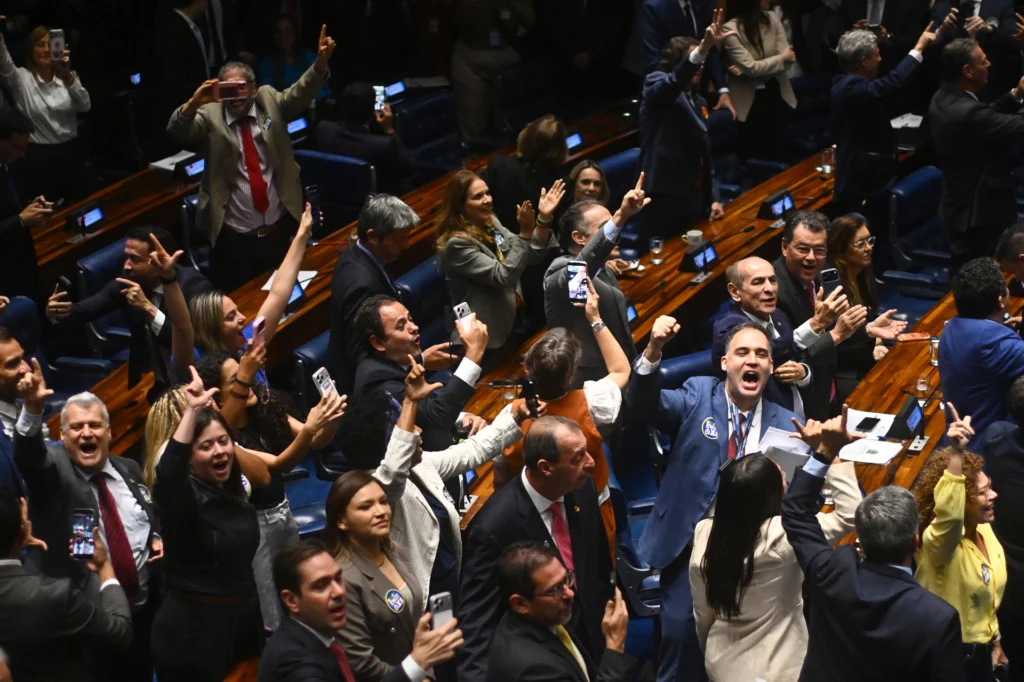
After the vote, members of the progressive bloc were seen chanting Lula’s name in recognition of his leadership on the issue. The approval allows Lula’s government to showcase a commitment to more rest time and better working conditions in a campaign marked by a dispute over social rights and the future of Brazil’s labor market.

The amendment still needs to be promulgated to be effective. Once promulgated, the law will set a 40-hour limit spread across five days, with two days off and no loss of salary. Companies will get a gradual transition, giving employers time to reorganize shifts without cutting staff pay.

  •  

Flávio Bolsonaro Reverses Course, Will Debate Lula on Sunday

Bolsonaro’s confirmation came a day after he announced that he would not participate in the debate. Photo: EFE.

Brazilian presidential candidate Flávio Bolsonaro confirmed Wednesday that he will attend the Band network debate with President Luiz Inácio Lula da Silva, scheduled for Sunday, October 18, a turnaround that clears the way for the first face-to-face encounter of the campaign.


Less than 24 hours after announcing that he would not participate in Sunday’s debate on Bandeirantes channel, the senator and presidential candidate Flávio Bolsonaro backed down and confirmed this Wednesday that he will debate with the Worker’s party candidate, Lula da Silva. The event will take place on October 18 at 8 P.M. local time.

Bolsonaro, who had announced the previous day that he would not attend the program, changed his decision after Lula confirmed his presence to expose the differences between the two government projects and allow voters to compare the proposals of both candidates.

RELATED: Lula’s Digital Campaign Restructures its Communications Leadership in Brazil

In the recording broadcast on social networks, the son of former President Jair Bolsonaro presented his turnaround as a calculated provocation. “Lula, how predictable you are, aren’t you? All it took was for me to say I wasn’t going to take part in the Band debate for you, the next minute, to say you were going. And of course I will be at the debate, I just wanted you to confirm it,” he said.

The challenge did not stop there. “I am going to rub the truth in your face and refute you live for millions of Brazilians; I’ll be waiting for you at the Band debate, Lula,” Bolsonaro added.

Seus dias na presidência espalhando mentiras estão contados!

Vou esfregar a verdade na tua cara, Lula! Me aguarde…

PARTIDO LIBERAL – CNPJ 68.581.907/0001-25 – PROPAGANDA ELEITORAL#Debate #Band #FlavioBolsonaro #Vote22 pic.twitter.com/1HtXSieesp

— Flávio Bolsonaro (@FlavioBolsonaro) October 14, 2026

The meeting, organized by the chain Bandeirantes, comes one week from the start scheduled for October 25 and will be the first time in this campaign that both face to face.

Tuesday’s Opposite Stance

On Tuesday, Bolsonaro’s position had been the opposite. After an event of the Brazilian Democratic Movement (MDB), the senator gave reporters a brief refusal. “I’m not going, it’s not planned to attend that debate on Sunday,” he said, adding that his attendance at the October 23 Globo debate would depend on what his technical team decides.

The turnaround came after Lula confirmed that he would attend the program. For his part, Lula had confirmed his presence the same day, also by video. “I hope my opponent shows up so that the people know the differences between programs and candidacies. I will be there,” he said.

Band kept the event on the calendar despite the initial resistance of the Liberal Party’s candidate and had announced it would leave the absent candidate’s lectern empty throughout the broadcast. With Wednesday’s confirmation, the set will have both contenders.

ELEIÇÕES 2026 | Flávio diz que não vai a debate Band/Estadão e Lula confirma presença. Encontro entre presidenciáveis está agendado para o domingo, dia 18, na sede da emissora do Morumbi.
⁣
🔗 Acompanhe a cobertura completa das eleições em https://t.co/WqM2KrEbmL pic.twitter.com/az5mBZJnNl

— Estadão 🗞️ (@Estadao) October 13, 2026

A Campaign of Cancellations

Neither candidate attended a debate before the first round. Band’s August 23 debate was held without the frontrunners, and those called by a media consortium on September 14 and by Record on September 23 were canceled because no one confirmed attendance.

The October 1 Globo debate also fell through. Lula said on September 30 that he would not attend, and Bolsonaro, who had promised to show up even without his rival, withdrew about two hours before airtime. He blamed what he called “censorship” imposed, in his version, by the Superior Electoral Court (TSE), whose justice Estela Aranha had barred the network from keeping the lectern reserved for the president on the set.

According to the Superior Electoral Court, in the first round on October 4 Bolsonaro won 56.1 million votes, or 47.03% of valid votes, and Lula 53.9 million, or 45.16%.

This Sunday’s debate will be the first in which Bolsonaro and Lula of the leftist Workers’ Party (PT) face off, given that none participated in the media clashes before the first round. Another debate is still scheduled for October 23 at Globo, two days before the election, the most influential TV network in the South American country.

With the balloting set for October 25, the results show a competitive contest after a first round in which the difference was also tight. In this scenario, the televised debate scheduled for Sunday represents a new instance for the two aspirants to present their positions to the Brazilian electorate.

  •  

Meta acknowledges the reduced reach of Lula’s profiles

Mark Zuckerberg, CEO of Meta Platforms, looks to U.S. President Donald Trump as Trump holds a press briefing with AI executives following a meeting on artificial intelligence outside the West Wing of the White House on September 29, 2026 in Washington, DC. Photo by Kevin Dietsch/Getty Images

This story originally appeared in Panamerican Dispatch on Oct. 14, 2026, and is shared here with permission.

Meta, the parent company of Facebook, Instagram, and WhatsApp, said technical glitches impacted posts and ads from President Luiz Inácio Lula da Silva’s campaign, but has categorically denied any electoral interference benefiting other candidates.

Lula’s campaign petitioned the Superior Electoral Court and the National Agency for Data Protection last week, alleging “strong suspicions of an attempted interference in the Brazilian electoral process to benefit the candidacy of Flávio Bolsonaro.”

The Superior Electoral Court gave Meta 48 hours to respond, and the company submitted a document on Monday, October 12, reiterating the claim regarding technical issues and asserting that its algorithms are neutral and auditable.

Meta Acknowledges Glitches but Denies Interference

In a document submitted to the Superior Electoral Court, Meta acknowledged the occurrence of technical glitches that affected ads and posts from Lula’s campaign but rejected the campaign’s central accusation: that it was favoring the far-right candidacy of Flávio Bolsonaro.

“Facebook Brazil categorically rejects such a premise. The claim is false, unsubstantiated, and does not hold up when confronted with the facts and objective data presented herein,” reads a statement from the company, which is led by Mark Zuckerberg, who has allied himself with President Donald Trump in the US.

The company maintains that “Meta’s content distribution systems do not operate based on ideological criteria” and that “Meta does not operate its systems to disadvantage or favor candidates.”

According to the document, community standards apply equally to all users, and neutrality is described as a “design attribute of the systems themselves, with criteria that are objective, public, and auditable by the Electoral Court.” The company also stated that the technical issues mentioned did not exclusively affect Brazil or specific accounts.

What Meta failed to provide, according to Lula’s campaign, was concrete evidence that the glitches had affected other Brazilian candidates or other markets to a similar degree. The lack of verifiable data to support the claim of widespread impact is precisely the point Lula’s team disputes; this makes the “technical issue” explanation insufficient as a response to the formal complaint filed with regulatory agencies.

Accusations by the Lula campaign and the Involvement of Regulatory Agencies

On Saturday, October 10, Lula’s campaign filed a formal complaint with the Superior Electoral Court and the National Agency for Data Protection describing a pattern of issues that has persisted, according to the campaign, since last December: ad account failures, interruptions in view counts, and restrictions on boosting posts. Collectively, Lula’s team said, these incidents systematically reduced the president’s digital reach on Meta’s platforms.

To support the suspicion that their opponent was being favored, the Workers’ Party’s communications department conducted an analysis revealing a significant figure: Flávio Bolsonaro’s page recorded, on average, 2.96 times more engagement than Lula’s, despite having 17.2% fewer followers.

The PT campaign questions the company’s explanation: “The company claims that this ‘glitch’ affected other advertisers and markets but provided no evidence of this—let alone proof that the problem affected other candidates in Brazil as well. Once again, Meta claims it was a ‘technical issue’.”

The involvement of regulatory agencies signals that the dispute will not remain confined to the realm of public statements. By setting a 48-hour deadline for the company to respond, the Superior Electoral Court acknowledged the seriousness of the allegation during the pre-election period. The Data Protection Agency, for its part, has the authority to investigate how platforms handle personal data, opening up a regulatory front that runs parallel to the electoral process.

Meta’s Track Record in Elections and the Issue of Neutrality

Meta cites its own track record as a defense against claims of bias. In the document submitted to the Superior Electoral Court, the company states that its “institutional conduct across more than 200 elections since 2016—and in Brazil since 2018—is incompatible, both logically and historically, with the theory of deliberate manipulation in favor of a candidate.”

The company also says it has made investments exceeding $30 billion in security teams and technology over the past decade, including artificial intelligence systems and human analysis teams covering more than 70 languages.

The problem with this argument is that the company’s track record is not free from controversy. In March 2018, the company then known as Facebook Inc. acknowledged “failures” that allowed Cambridge Analytica to harvest data from tens of millions of users to target campaigns during the 2016 US presidential election—when Donald Trump was first elected—and the UK’s Brexit campaign. In July 2019, the company was fined $5 billion by the US Federal Trade Commission for allegedly misleading users regarding privacy controls over their information, a direct consequence of the scandal.

The current context adds a significant political dimension: following Trump’s inauguration in January 2025, Mark Zuckerberg announced he would work alongside the Republican leader against countries or governments advocating for social media regulation, a stance that repositions Meta within the global contest over digital sovereignty.

In Brazil, where the debate on platform regulation is ongoing, citing a “technical issue” to explain reach disparities during an election campaign cannot be accepted as a sufficient response—especially given a history that combines admitted failures, multi-billion-dollar fines, and the declared political alignment of the company’s top executive.

This article first appeared in Revista Forum, was translated by Panamerican Dispatch with authorization from the author, and can be read in its original Portuguese here.

  •  

Brazil: Far-Right Presidential Campaign Normalizes Gun Symbolism Among Young

Images of children brandishing replica firearms at campaign events spark formal investigations by human rights and legal oversight bodies.

Brazil’s 2026 electoral cycle has been marked by a rise in political violence across various states. Security data records 354 incidents of political violence over the past two years.

RELATED:
Flávio Bolsonaro Promises Fewer Ministries as Brazil Vote Goes to Runoff

These incidents include threats, physical assaults, and armed attacks targeting candidates, local election officials, and political organizers.

The root of this political tension lies in the structural polarization generated during previous presidential campaigns and administrations.

Former President Jair Bolsonaro and his political movement, known as “Bolsonarismo”, built an electoral base around conservative social values, the expansion of agribusiness, and a national security strategy centered on arming the population.

As a consequence, in the 2026 campaign of Senator Flávio Bolsonaro, public security emerged as a primary concern for the electorate. The conservative coalition’s political strategy relies heavily on proposals for punitive criminal justice and the expansion of individual gun-ownership rights as solutions to urban and rural crime.

Critics and human rights organizations argue that the mass dissemination of political content promoting firearm use has created an environment where political disagreements escalate into physical violence.

The normalization of violent political rhetoric during nationwide public events has altered public discourse, turning political participation into a high-risk activity for grassroots organizers and opposition candidates.

Ideological Origins and the Pro-Gun Movement

The political platform supporting firearm expansion in Brazil is driven by a legislative coalition known as the Bullets, Beef, and Bibles caucus.

This group represents an alliance between public security hardliners, large-scale agribusiness producers, and conservative evangelical leaders. Together, these sectors advocated for statutory changes to alter the Disarmament Statute enacted in 2003.

During Jair Bolsonaro’s presidential term from 2019 to 2022, executive decrees relaxed requirements for acquiring firearms and ammunition.

The administration expanded the privileges granted to registered Collectors, Marksmen, and Hunters, known as CACs. Official records indicate that the number of registered CACs grew significantly during these four years, allowing private individuals to acquire high-caliber weapons and purchase thousands of rounds of ammunition annually.

Executive Order 9,847, signed in May 2019, allowed licensed gun owners to purchase up to 5,000 rounds of ammunition per weapon each year, up from the previous limit of 50.

The legal expansion of firearm access altered security dynamics in rural and urban areas. Studies published by the demonstrated a direct correlation between the rise in privately held firearms and the frequency of lethal altercations in local communities.

While pro-gun advocacy organizations maintain that private gun ownership provides individual self-defense against criminal enterprises, public safety researchers observed that a higher volume of civilian weapons eventually entered illicit markets through theft and improper registration.

In rural regions, the growth of armed civilian groups reinforced existing land disputes. Property owners, illegal loggers, and informal land prospectors utilized expanded firearm access to defend economic claims against rural workers and Indigenous groups.

AVISO🚨: Imagens extremamente fortes, mas necessárias para o povo de memória curta.
Bolsonaristas espancando mulheres em manifestações, quebrando o Congresso e atirando em pessoas. Todo o terrorismo dessa escória que quer voltar.

Compartilhe ao máximo.#DIREITATERRORISTA pic.twitter.com/J4r0xMpK3B

— Jurunense (@o_jurunense) October 12, 2026

The text reads, “WARNING: Extremely graphic images, yet necessary for those with short memories. Bolsonaro supporters beating women at protests, ransacking Congress, and shooting people. All the terrorism of that scum that wants to return. Spread this far and wide.”

Public Demonstrations, Armed Symbolism, and Religious Reactions

Political rallies in this 2026 campaign held across major urban centers featured recurring uses of military and firearm symbolism. During campaign events held in Brasília, São Paulo, and Rio de Janeiro, Bolsonaro supporters displayed replica firearms, tactical equipment, and political banners encouraging armed civilian mobilization.

A widely circulated image from a political rally showed a child positioned on top of a sound truck alongside campaign organizers, holding a firearm replica and mimicking shooting gestures toward the crowd.

Human rights organizations, including the National Council for the Rights of Children and Adolescents, issued formal statements criticizing the inclusion of minors in events promoting firearm use, pointing to federal child protection statutes that prohibit exposing children to violent material or weapons training.

Religious leaders responded to the increasing presence of violent messaging in political life. During the annual feast day celebrations at the National Sanctuary of Aparecida, Archbishop Orlando Brandes delivered a sermon addressing national unity, public ethics, and political discourse.

In his address, Archbishop Brandes stated that “a civil society cannot be built on hatred and weapons” and urged citizens to reject violent language in favor of peace and social justice.

The National Conference of Brazilian Bishops published subsequent declarations emphasizing that Christian ethical principles conflict with policies promoting unrestricted firearm ownership and armed confrontation. Church leaders called on political candidates to focus their platforms on poverty alleviation, healthcare, and education rather than public arming.

Brazil’s intelligence agency has confirmed interference by the US government in Brazil’s election in support of Flavio Bolsonaro, son of jailed former far-right President Jair Bolsonaro. https://t.co/v7DQtHAVxA pic.twitter.com/tIzZgU0kUg

— tim anderson (@timand2037) October 4, 2026

Territorial Conflicts and Impact on Indigenous Communities

The proliferation of firearms and political rhetoric supporting land expansion intensified territorial pressure on Indigenous populations, particularly in the Amazon region.

Representatives of the Parakanã people, living in the Apyterewa Indigenous Territory in the state of Pará, submitted official complaints to the Federal Public Ministry and the National Indian Foundation documenting increasing land incursions by armed squatters, illegal loggers, and cattle ranchers aligned with local conservative political networks.

The Apyterewa territory, formally demarcated and ratified by federal decree in 2007, remains one of the areas most impacted by illegal deforestation and land grabbing in northern Brazil.

Community leaders reported that armed individuals entered protected areas, established informal access roads, and issued death threats against Indigenous leaders who monitored territorial boundaries.

Deforestation data from the National Institute for Space Research tracked a steady increase in forest clearing within the Parakanã territory during periods of diminished federal oversight.

Indigenous rights organizations highlighted that territorial conflicts represent both an environmental concern and a violation of constitutional rights guaranteed under the 1988 Brazilian Constitution.

The ongoing displacement pressure on the Parakanã and neighboring Indigenous groups underscores the direct connection between national political debates on gun ownership and rural security dynamics in remote regions.

Fake news on social media has once again taken center stage in Brazil’s presidential campaign ahead of the Oct. 25 runoff.

To favor the Liberal Party’s candidate, Flavio Bolsonaro, the Brazilian far right has launched a smear campaign against Workers’ Party candidate Luiz Inacio… pic.twitter.com/mrKSZmVGQk

— teleSUR English (@telesurenglish) October 9, 2026

Lula’s Counter-Proposals and Public Security Strategy

President Luiz Inácio Lula da Silva implemented regulatory changes aimed at restricting civilian access to firearms and strengthening state control over public security.

Immediately upon taking office, the federal administration issued Executive Decree 11,366, which suspended the issuance of new registrations for civilian weapon owners, restricted the purchase of high-caliber ammunition, and transferred the oversight of registered Collectors, Marksmen, and Hunters from the Brazilian Army to the Federal Police.

The policy platform of the governing coalition focuses on replacing civilian arming with coordinated state law enforcement and social crime prevention programs.

The administration re-established the National Public Security Program with Citizenship, allocating federal funds to municipal crime prevention, community policing, and educational initiatives aimed at vulnerable youth.

In federal security speeches, President Lula emphasized that reducing lethal violence requires public investment in infrastructure, basic sanitation, and job creation rather than increasing civilian weapon ownership.

To address territorial conflicts in protected areas, the federal government reactivated inter-agency enforcement operations involving the National Public Security Force, the Federal Police, and environmental protection agencies.

The Ministry of Indigenous Peoples, established under the current administration, coordinated with the National Indian Foundation to resume the formal demarcation of Indigenous territories and conduct police operations to remove illegal miners and squatters from protected lands.

Future Outlook for Democratic Governance

The structural debate over firearm access, public safety, and campaign violence highlights a central division in Brazilian political life. Data collected by public safety research organizations demonstrates that the expansion of civilian weapons between 2019 and 2022 coincided with increased lethal incidents in rural land disputes and higher rates of political intimidation during national election cycles.

The resolution of these security challenges depends on the enforcement of constitutional protections, the regulation of civilian firearms, and the institutional support provided to Indigenous and rural communities. As Brazil navigates its upcoming electoral process, democratic institutions, civil society organizations, and international human rights bodies continue to monitor the impact of violent rhetoric on public participation and state stability.

Establishing long-term public safety requires a balanced policy approach that pairs rigorous law enforcement with targeted social investments. Rebuilding public security institutions, disarming illegal paramilitaries, and safeguarding protected territories remain central requirements for maintaining social stability and protecting democratic norms across the country.

Sources: TRT World – Xinhua – CGTN – Brasil de Fato – Resumen Latinoamericano – Página 12 – Radio del Sur – Folha S. Paulo – BBC – CNN – Barricada TV – El Mundo – Sputnik

  •  

BRICS Pay, non è ancora giunto il momento?

BRICS Pay non è una valuta né una rete di regolamento: è interoperabilità. E a Nuova Delhi i leader si sono limitati a “prenderne atto”.

Segue nostro Telegram.

Cosa è e cosa non è

Alla vigilia del diciottesimo vertice BRICS, ospitato al Bharat Mandapam di Nuova Delhi il 12 e 13 settembre 2026, una parte della stampa specializzata dava per imminente il debutto di BRICS Pay. Le guide al vertice indicavano proprio la capitale indiana come sede del pieno dispiegamento del sistema, con la Reserve Bank of India incaricata del coordinamento tecnico. Il testo approvato dai leader racconta un’altra storia. La Dichiarazione di Nuova Delhi, 140 paragrafi adottati per consenso, si limita a «prendere atto» del lavoro svolto dalla BRICS Payment Task Force sull’interoperabilità dei canali di pagamento e di messaggistica e sulle discussioni relative al regolamento in valute locali, precisando che ciò avviene nel rispetto delle priorità nazionali e nella consapevolezza che non esiste una soluzione valida per tutti. La proposta indiana di collegare le valute digitali delle banche centrali, su cui Nuova Delhi aveva investito una parte consistente del capitale politico della propria presidenza, nel documento non compare.

La distanza tra attese e risultato non va letta come un incidente diplomatico. Riflette due condizioni strutturali che la pubblicistica sulla de-dollarizzazione tende a sottovalutare. La prima è che i Paesi BRICS, presi uno per uno, hanno ancora buone ragioni per regolare in dollari una parte rilevante dei propri scambi. La seconda è che un sistema di pagamento comune non è un problema di ingegneria finanziaria. È un atto di governo condiviso, che richiede regole vincolanti, un’istanza di arbitrato e la disponibilità a fidarsi delle banche centrali altrui. A Nuova Delhi nessuna di queste condizioni era sul tavolo.

Il nome induce in errore. BRICS Pay non è una moneta e non è, almeno nella configurazione discussa finora, un circuito di regolamento. È un livello di interoperabilità pensato per mettere in comunicazione sistemi nazionali già esistenti: il russo SPFS, nato dopo le sanzioni del 2014; il cinese CIPS, operativo dal 2015; l’indiano UPI e il brasiliano Pix, costruiti per i pagamenti domestici istantanei e solo in seguito proiettati all’estero. Il progetto ha preso forma durante la presidenza russa del 2024, nel quadro della BRICS Cross-Border Payments Initiative accolta a Kazan, un’iniziativa che la stessa dichiarazione di quel vertice qualificava come volontaria e non vincolante.

Per capire dove si colloca il progetto conviene distinguere tre piani che il dibattito pubblico confonde di continuo. Il primo è la messaggistica, cioè la trasmissione standardizzata degli ordini di pagamento tra istituzioni finanziarie: è il terreno di SWIFT, ed è qui che BRICS Pay si propone come alternativa. Il secondo è il regolamento, il trasferimento effettivo di valore tra conti presso banche centrali o banche corrispondenti, con tutto ciò che comporta in termini di liquidità, rischio di controparte e gestione dei saldi. Il terzo è l’unità di conto, la moneta in cui i contratti sono denominati. Un’alternativa a SWIFT agisce soltanto sul primo piano. Se un esportatore indiano fattura in dollari e la banca russa regola in dollari presso un corrispondente, aver trasmesso il messaggio su un canale non occidentale cambia ben poco.

L’interoperabilità ha però un vantaggio politico evidente, ed è la ragione per cui è diventata la formula di compromesso del gruppo: consente a ciascun Paese di conservare la propria moneta e il proprio sistema finanziario. Una moneta comune imporrebbe rinunce di tutt’altra portata, dalle regole di emissione e di cambio alla gestione dei Paesi strutturalmente in avanzo o in disavanzo. Non a caso Sudhakar Dalela, segretario per le relazioni economiche del ministero degli Esteri indiano, ha ribadito durante il vertice che una valuta BRICS non è in discussione, aggiungendo la prudente clausola «per ora».

La storia del dossier è la storia di un lessico che avanza di millimetri. Nel 2010, a Brasília, i quattro Paesi fondatori si impegnavano a studiare la fattibilità di una cooperazione monetaria e di accordi di regolamento in valuta locale. A Ufa, nel 2015, si riconosceva il potenziale delle valute nazionali; a Xiamen, due anni dopo, si parlava di swap valutari e di investimenti diretti in moneta locale. Dal 2019 l’attenzione si è spostata sulle infrastrutture di pagamento, con l’avvio dei lavori della Payment Task Force. Johannesburg, nel 2023, ha evocato per la prima volta l’interconnessione dei sistemi di pagamento transfrontalieri; Kazan ha lanciato l’iniziativa volontaria; Rio, nel 2025, ha accolto un rapporto tecnico sul sistema di pagamenti transfrontalieri BRICS che a oltre un anno di distanza non è stato reso pubblico. Sedici anni dopo Brasília, Nuova Delhi «prende atto». La successione dei verbi (studiare, riconoscere, accogliere, prendere atto) è già un indicatore: in un organismo che decide per consenso, il grado di impegno reale si legge nella grammatica dei comunicati.

L’ambizione indiana e il prezzo del consenso

L’India aveva fatto dei pagamenti transfrontalieri uno dei pilastri della propria presidenza. A gennaio la Reserve Bank of India aveva proposto di collegare le valute digitali di banca centrale dei Paesi membri per facilitare commercio e turismo; ad agosto il governatore Sanjay Malhotra confermava che erano in corso discussioni sul collegamento dei sistemi di pagamento veloce e delle CBDC; alla vigilia del vertice il ministro del Commercio Piyush Goyal rilanciava l’invito a regolare gli scambi in moneta locale. Già il 10 settembre, tuttavia, Reuters riferiva di ostacoli politici e tecnici in grado di limitare i progressi, e ne indicava due in particolare: l’interruzione dei rapporti finanziari tra Emirati Arabi Uniti e Iran e la riluttanza della stessa India ad approfondire la connettività finanziaria con la Cina senza una fiducia reciproca più solida.

Il secondo ostacolo merita attenzione, perché rovescia un’immagine corrente. Il freno più robusto a un’integrazione dei pagamenti BRICS non viene da Washington, ma dal Paese che presiedeva il vertice. Nuova Delhi vuole infrastrutture che rendano più semplice il commercio in rupie e più economiche le rimesse della sua diaspora. Non vuole che queste infrastrutture passino per nodi cinesi, né che il loro effetto netto sia un’espansione dello yuan in Asia meridionale. L’incontro tra Narendra Modi e Xi Jinping a margine del vertice ha segnato un disgelo prudente, ma il disavanzo commerciale indiano verso la Cina, raddoppiato nell’arco di un decennio, resta una frattura che nessun comunicato può ricomporre.

C’è poi l’effetto dell’allargamento. Con undici membri e dieci Paesi partner, il gruppo comprende oggi Stati che nella guerra del 2026 si sono trovati su fronti opposti. A maggio la riunione dei ministri degli Esteri, sempre a Nuova Delhi, si era chiusa senza un comunicato congiunto, costringendo la presidenza indiana a una dichiarazione a titolo proprio. L’unanimità di settembre è stata ottenuta abbassando la soglia degli impegni. La dichiarazione critica dazi e sanzioni unilaterali senza nominare gli Stati Uniti e, sul dossier finanziario, rinvia a un lavoro tecnico di cui non fissa né scadenze né obiettivi. Ajay Srivastava, fondatore del Global Trade Research Initiative, ha osservato che il testo non prevede alcuna azione concreta e che, in assenza di un piano coordinato, il commercio in valute locali potrà crescere solo gradualmente, senza raggiungere volumi significativi.

Va segnalato, per scrupolo di metodo, che alcune testate hanno presentato il vertice come il momento del «lancio» di BRICS Pay. Il testo della dichiarazione, così come riportato dalle fonti che lo hanno esaminato nel dettaglio, non autorizza questa lettura. La confusione tra annuncio e realizzazione è uno dei tratti ricorrenti della comunicazione sul tema, e contribuisce a gonfiare aspettative che poi ricadono sulla credibilità del gruppo.

Le buone ragioni del dollaro

Le statistiche disponibili spiegano meglio di qualsiasi dichiarazione perché la de-dollarizzazione resti, per ora, più un tema di dibattito che una tendenza misurabile. Secondo l’ultima indagine triennale della Banca dei regolamenti internazionali, nell’aprile 2025 il dollaro compariva in circa l’89% delle transazioni valutarie mondiali, una quota in lieve aumento rispetto al 2022, mentre lo yuan si fermava all’8,5%. Sul versante delle riserve, i dati del Fondo monetario internazionale indicano per il primo trimestre del 2026 una quota del dollaro pari al 57,13%, contro l’1,99% della valuta cinese. La tendenza di lungo periodo è di erosione: intorno al 1999 il dollaro superava il 70% delle riserve allocate. Ma la diversificazione si disperde su una costellazione di valute minori, la cui quota residua è più che raddoppiata dal 2021, e non si concentra sulle monete dei Paesi BRICS.

La ragione non è la sudditanza, è il calcolo. Il dollaro offre ciò che nessuna alternativa offre ancora: mercati profondi e liquidi, strumenti di copertura a basso costo, un enorme stock di debito denominato nella stessa valuta e la possibilità di convertire in qualsiasi momento il ricavato di una transazione in un attivo considerato sicuro. Barry Eichengreen ha descritto questi vantaggi in termini di effetti di rete: una moneta è utile in proporzione al numero di soggetti che già la usano, e ciò rende costosa qualunque transizione tentata da un solo attore o da un piccolo gruppo. Per un importatore brasiliano o un esportatore indonesiano pagare in dollari significa pagare nella moneta che la controparte accetta senza trattare.

Scendendo al livello dei singoli membri, il quadro si fa ancora più netto. L’India ha dichiarato a più riprese di non avere interesse a indebolire il dollaro: nel dicembre 2024 il ministro degli Esteri Subrahmanyam Jaishankar ricordava che gli Stati Uniti sono il primo partner commerciale del Paese, e nell’estate 2025 il portavoce del ministero ribadiva che la de-dollarizzazione non rientra nell’agenda finanziaria indiana. Emirati Arabi Uniti e Arabia Saudita mantengono le proprie valute ancorate al dollaro e fondano la propria sicurezza su un rapporto con Washington che nessun circuito di pagamento alternativo potrebbe compensare. Riyadh, del resto, continua a stare nel gruppo in una posizione ambigua: la presidenza indiana la elencava tra gli undici membri, ma a Nuova Delhi la delegazione saudita si è presentata con lo status di Paese invitato. Egitto ed Etiopia, che negli ultimi anni hanno negoziato programmi con il Fondo monetario e portano un debito estero in valuta forte, non possono permettersi di complicare il rapporto con i propri creditori. Il Brasile di Lula ha rilanciato più volte l’idea di una moneta commerciale comune, ma il suo sistema di punta, Pix, rimane un successo domestico.

Restano la Russia e l’Iran, per i quali l’uscita dal dollaro non è una scelta ma una necessità imposta dalle sanzioni, e la Cina, che ha un interesse reale all’internazionalizzazione dello yuan ma lo persegue attraverso infrastrutture proprie, a cominciare da CIPS, e senza rinunciare ai controlli sui capitali che limitano l’attrattiva della sua moneta come riserva. Anche per chi ha le motivazioni più forti, tuttavia, il regolamento in valute locali ha mostrato limiti precisi. L’esperienza russo-indiana è istruttiva. Il forte aumento delle importazioni indiane di petrolio russo dopo il 2022 ha lasciato Mosca con ingenti saldi in rupie difficili da impiegare, un problema che lo stesso Sergej Lavrov ammise pubblicamente nel maggio 2023. Quando gli scambi sono squilibrati, la moneta del Paese in disavanzo si accumula presso il Paese in avanzo, e il dollaro torna a essere la via d’uscita più semplice.

A questi incentivi si somma il costo esplicito di una rottura. Donald Trump ha minacciato dazi del 100% contro i Paesi BRICS che sostenessero una moneta alternativa al dollaro e, dopo il vertice di Rio del 2025, un dazio aggiuntivo del 10% per chi si allineasse alle politiche del gruppo da lui definite antiamericane. Alla vigilia di Nuova Delhi l’economista di Natixis Alicia García-Herrero prevedeva che i leader avrebbero discusso di pagamenti transfrontalieri senza tentare di sostituire il dollaro. È andata esattamente così.

Una scelta politica

Si arriva così al punto centrale. Un sistema di pagamento non è un’infrastruttura neutrale. Susan Strange collocava la struttura finanziaria, cioè il controllo sul credito e sui canali attraverso cui circola, tra le quattro fonti del potere strutturale nell’economia politica internazionale. Gli Stati che controllano i nodi centrali delle reti economiche globali, di cui SWIFT è l’esempio canonico, possano trasformarli in strumenti di coercizione, sfruttandone sia la funzione di osservatorio sia la capacità di esclusione. È proprio questa esperienza, culminata nell’esclusione delle principali banche russe da SWIFT nel 2022, ad aver dato slancio politico al progetto BRICS.

La stessa lezione, però, vale all’interno del gruppo. Chi costruisce una rete alternativa deve stabilire dove si trovano i nodi, chi ne gestisce i dati, quale diritto regola le controversie, chi fornisce liquidità nei momenti di tensione e come si compensano i saldi tra economie in avanzo e in disavanzo. Ognuna di queste decisioni redistribuisce potere. Per l’India un sistema imperniato su CIPS significherebbe sostituire una dipendenza da Washington con una dipendenza da Pechino, cioè da un rivale con cui condivide una frontiera contesa. Per gli Emirati collegarsi a un circuito in cui transita l’Iran vorrebbe dire esporsi al rischio di sanzioni secondarie, proprio mentre i due Paesi escono da una guerra vissuta su fronti opposti. Il problema non è la tecnologia: le componenti nazionali esistono e funzionano. Manca un accordo su chi governa l’insieme.

La storia monetaria del Novecento offre due riferimenti utili. Il primo è la proposta keynesiana di una International Clearing Union, presentata dal Tesoro britannico nel 1943, che affrontava esattamente il nodo degli squilibri persistenti imponendo oneri simmetrici ai Paesi in avanzo e a quelli in disavanzo. Un BRICS Pay che volesse andare oltre la messaggistica avrebbe bisogno di un meccanismo analogo di compensazione multilaterale, e dunque di regole capaci di vincolare anche la Cina, principale creditore commerciale del gruppo. Il secondo riferimento è la tesi di Charles Kindleberger sulla stabilità del sistema internazionale come bene pubblico, che richiede un attore disposto a sostenerne i costi. Nell’ordine del dollaro quel ruolo è svolto, con tutti gli abusi che ne derivano, dagli Stati Uniti. Nel partenariato BRICS l’unico candidato plausibile è la Cina, e gli altri membri non intendono riconoscerle quella funzione. Qui sta il dilemma costitutivo di un ordine monetario multipolare: moltiplica i poli, ma lascia vacante il posto di chi garantisce il sistema.

A ciò si aggiunge la fragilità istituzionale. Il gruppo opera senza un segretariato permanente, con presidenze annuali a rotazione che affidano la continuità dei dossier tecnici alla volontà del Paese di turno. L’allargamento ha accresciuto l’eterogeneità degli interessi senza dotare il partenariato di strumenti decisionali più robusti. Un sistema di pagamento unificato richiederebbe un trattato, o almeno un accordo vincolante di governance, mentre l’iniziativa sui pagamenti transfrontalieri è, per esplicita scelta dei firmatari, volontaria e non vincolante. Finché questa asimmetria tra ambizione e forma giuridica non sarà sciolta, BRICS Pay resterà ciò che è oggi: un marchio politico sovrapposto a un insieme di corridoi bilaterali. La stabilità del partenariato non è dunque una condizione accessoria del progetto. Ne è il presupposto.

Verso la presidenza cinese del 2027

Con il passaggio della presidenza alla Cina per il 2027, l’orizzonte di valutazione più utile è quello dei prossimi diciotto-ventiquattro mesi. Le valutazioni che seguono poggiano su evidenze di qualità moderata, costituite in larga parte dai testi ufficiali e dalla stampa economica internazionale.

Lo scenario che considero altamente probabile è quello di un mosaico bilaterale. Crescono i corridoi già avviati, come quelli tra India ed Emirati e tra India e Russia, mentre l’architettura comune resta allo stadio di studio. Il commercio in valute locali aumenta in termini assoluti, ma la quota del dollaro negli scambi intra-BRICS si riduce solo in misura marginale.

Uno scenario alternativo, cui attribuisco una probabilità moderata, prevede che la presidenza cinese usi il 2027 per promuovere un nucleo a geometria variabile, costruito attorno a CIPS e SPFS, con l’adesione di Russia, Iran e di alcuni Paesi partner. Il marchio BRICS Pay verrebbe formalmente attivato, ma per una parte soltanto del gruppo e con ogni probabilità senza l’India. Sarebbe un risultato politicamente spendibile per Pechino e Mosca, ma renderebbe esplicita la frattura che oggi il linguaggio delle dichiarazioni riesce ancora a coprire.

L’entrata in funzione, entro il 2028, di un sistema unificato e operativo per tutti i membri resta invece altamente improbabile.

Gli indicatori da seguire sono pochi e concreti: la pubblicazione del rapporto tecnico accolto a Rio; l’eventuale firma di un accordo vincolante sulla governance dei pagamenti; la creazione di un meccanismo multilaterale di compensazione o di linee di swap dedicate, magari affidate alla Nuova Banca di Sviluppo; la posizione indiana su un collegamento con CIPS; la formalizzazione, o il definitivo abbandono, della membership saudita. Un comunicato che parli di «lancio» senza alcuno di questi elementi andrà letto per ciò che è, un annuncio.

Il multipolarismo ha finora prodotto soprattutto una pluralità di opzioni nazionali, utili a ciascun Paese per ridurre l’esposizione alle sanzioni e per negoziare da posizioni migliori con Washington. Trasformare queste opzioni in un sistema richiede un partenariato che riconosca un interesse comune più forte delle rivalità interne. Quel partenariato è ancora in evoluzione, e BRICS Pay ne seguirà i tempi, non il contrario.

  •  
❌