❌

Reading view

Ahold Delhaize Reports Malicious Cyberattack as Supermarket Deliveries Remain Disrupted

Dutch-Belgian supermarket group Ahold Delhaize has confirmed that malicious activity was responsible for the cybersecurity incident that disrupted its operations across Europe and the United States, forcing the company to take websites, applications and other computer systems offline.

In an official statement issued on Monday, 19 October, the company announced that it had filed a formal complaint with Dutch police and was cooperating with national cybersecurity authorities. Although physical supermarkets have remained open, the disruption has affected online shopping, deliveries and some distribution operations.

The company said investigators had so far found no evidence that sensitive information belonging to customers, employees or business partners had been taken. However, its investigation remains open, and the identity and objectives of those responsible have not been publicly established.

Online services interrupted across several countries

The disruption began on 12 October, when Ahold Delhaize detected suspicious activity within its information technology infrastructure.

The group responded by taking a number of systems offline as a precaution, affecting most of its retail brands in Europe and the United States. The consequences varied considerably between businesses, with some experiencing prolonged interruption to digital services while others were able to restore operations more quickly.

Albert Heijn, the Netherlands’ largest supermarket chain, has been particularly affected. Its website and mobile application have returned online, but home grocery deliveries are not expected to resume until Friday, 23 October.

Orders scheduled before that date have been cancelled, while the company continues preparations for a gradual restoration of its online delivery service.

The incident also interrupted some supply and distribution arrangements, resulting in shortages on supermarket shelves in parts of the Netherlands and Belgium.

In Belgium, Delhaize has restored its online shopping operations. Certain promotional and personalised services were still experiencing difficulties, although the parent company confirmed that its Belgian e-commerce business was operational again.

Dutch retailers Etos and Gall & Gall have also restored their websites. Meanwhile, several American supermarket brands owned by Ahold Delhaize have continued to experience service interruptions.

The group said it expected additional online services in the United States to become available over the coming days.

Dutch authorities investigate

Ahold Delhaize said it notified the Netherlands’ National Cyber Security Centre within 24 hours of detecting the malicious activity.

The company has subsequently provided updates to the authorities and, on Monday, confirmed that a formal police report had been submitted.

Chief executive Frans Muller defended the decision to shut down digital systems, arguing that the investigation had demonstrated the necessity of taking preventive action.

The company has not identified the perpetrators, confirmed whether ransomware was involved or disclosed the technical method used to gain access to its infrastructure.

These distinctions are important because malicious activity does not necessarily establish that information was stolen or that attackers obtained control over every system subsequently taken offline.

The retailer has instead described a controlled restoration process intended to ensure that affected systems can be brought back into operation without exposing the business to further risks.

Ahold Delhaize operates thousands of supermarkets and related retail businesses, including Albert Heijn, Delhaize, Food Lion, Giant Food, Hannaford and Stop & Shop.

Its geographical reach means that a disruption originating within shared corporate infrastructure can affect several national markets, even where individual retail chains maintain separate commercial operations.

Cybersecurity becomes a supply-chain concern

The attack comes amid increasing scrutiny of the vulnerability of European food retailers to digital disruption.

Earlier this month, investigators in France began examining cyberattacks against refrigeration control systems used by hundreds of supermarkets.

Those incidents reportedly affected equipment at chains including Carrefour, Intermarché and Monoprix, with some retailers forced to discard products after refrigeration systems malfunctioned.

There is no established connection between the French incidents and the attack affecting Ahold Delhaize.

Nevertheless, both episodes illustrate the dependence of modern retail operations on interconnected digital systems supporting stock management, refrigeration, logistics, payments and customer services.

The consequences of a serious cyber incident can extend beyond the loss of access to websites. Interruptions to inventory systems, warehouse operations or communications with suppliers can affect the availability of physical products.

This creates particular difficulties for food retailers, where delays in transport and storage can result in the loss of perishable goods.

European regulatory implications

The incident also draws attention to the European Union’s NIS2 cybersecurity framework, which establishes stricter risk-management and incident-reporting obligations for organisations operating in designated sectors.

Food production, processing and distribution are among the activities covered by the directive, although its application to particular companies and operations depends on the relevant legal definitions and national implementing arrangements.

The legislation requires organisations within its scope to establish appropriate cybersecurity protections, address supply-chain risks and notify competent authorities of significant incidents.

Separately, the General Data Protection Regulation establishes notification requirements where personal-data breaches meet the relevant reporting threshold.

Ahold Delhaize’s statement that it has found no evidence of sensitive data being taken does not conclude the technical investigation, but it means that a confirmed theft of personal information should not presently be presented as a fact.

For the company, the immediate challenge remains restoring online services while maintaining normal supermarket operations. The wider commercial consequences, including the cost of the interruption and its effect on sales, have not yet been quantified publicly.

  •  

Cyberattack on 700 French Supermarkets Exposes Gaps in Europe’s Infrastructure Security

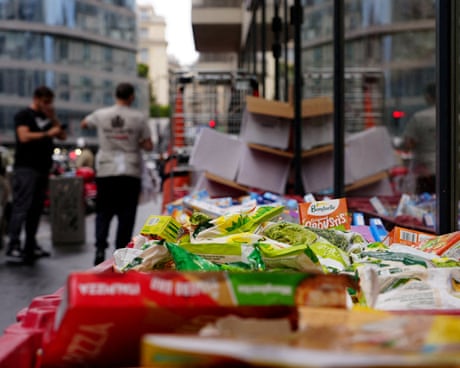
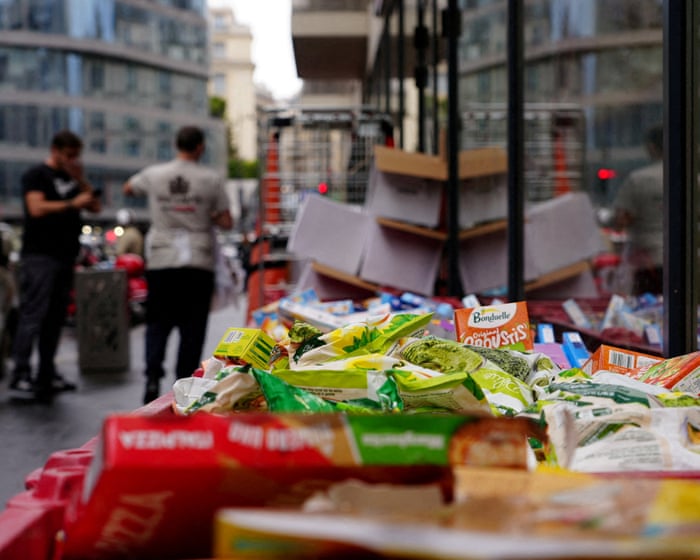
A cyberattack affecting approximately 700 supermarkets in France has exposed serious weaknesses in the digital systems used to control commercial refrigeration, raising concerns about the vulnerability of European food distribution networks and other essential infrastructure.

The attack began overnight on 11–12th October, when intruders gained access to remotely managed refrigeration equipment and altered operating settings, causing refrigerators and freezers to overheat.

Stores belonging to several major supermarket chains were affected, including Intermarché, Netto, Coopérative U, Carrefour and Monoprix. Some were forced to discard substantial quantities of fresh and frozen food.

French Finance Minister Roland Lescure confirmed that approximately 700 of the country’s 10,000 supermarkets had been affected, although the severity of the disruption varied between locations.

The Paris prosecutor’s office has opened an investigation into the attack, including the damage caused by destroyed merchandise and reported fires.

The incident has drawn attention to industrial control systems that are routinely connected to the internet but may receive less cybersecurity protection than corporate networks and customer databases.

Refrigeration systems remotely manipulated

Investigators have established that refrigeration equipment was targeted through vulnerabilities associated with remote monitoring and control systems.

The French cybersecurity authorities identified compromises involving products supplied by Danish manufacturer Danfoss and American company Copeland.

Some of the affected systems used older equipment that no longer received regular security updates.

According to information released by the companies and cybersecurity specialists, certain industrial controllers had been accessible through public internet connections, creating opportunities for unauthorised access.

Hackers reportedly manipulated defrost cycles and increased temperature settings, preventing equipment from maintaining the cold conditions required to preserve food.

The attack affected approximately 300 Intermarché and Netto stores, while Coopérative U reported disruption at around 80 outlets.

Several retailers managed to contain the damage, but others lost substantial quantities of stock.

The consequences extended beyond malfunctioning equipment. Businesses faced the cost of replacing spoiled food, repairing refrigeration systems and restoring normal operations.

The precise financial damage is still being assessed, although estimates from the retail sector indicate that losses across France could amount to tens of millions of euros.

Vulnerabilities in connected equipment

The incident illustrates the security problems created by the growing use of internet-connected industrial equipment.

Modern refrigeration installations allow contractors and maintenance specialists to monitor temperatures, adjust settings and diagnose faults remotely.

These arrangements can reduce operating costs and improve efficiency, but they also create additional access points that attackers may exploit.

Cybersecurity specialists have identified vulnerabilities in commercial refrigeration platforms manufactured by Danfoss and Copeland.

The manufacturers subsequently addressed identified flaws, although older or unsupported equipment remained a concern.

A critical problem for businesses is that industrial machinery often remains operational for many years after its original software has become obsolete.

Replacing entire refrigeration installations can involve substantial expense and operational disruption, encouraging operators to retain equipment that may no longer meet contemporary cybersecurity standards.

The risks are particularly difficult to manage when responsibility for maintenance, software updates and network security is divided between retailers, equipment suppliers and external contractors.

France’s delayed cybersecurity legislation

The attack has renewed scrutiny of France’s implementation of the European Union’s NIS2 Directive, which is intended to strengthen cybersecurity across sectors providing important economic and public services.

The directive establishes common requirements covering risk management, incident reporting, organisational responsibility and protection against cyber threats.

Its scope extends beyond traditional critical infrastructure such as energy, telecommunications and transport to include certain businesses involved in food production, processing and distribution.

EU member states were required to incorporate the directive into national legislation by 17 October 2024.

France was among the countries that received a formal warning from the European Commission in May 2025 over incomplete implementation.

French cybersecurity specialists have since warned that delays have complicated efforts to establish consistent obligations for organisations operating industrial and commercial systems.

However, NIS2 does not automatically cover every supermarket. Its application depends on the nature and size of an organisation and the provisions of national implementing legislation.

The incident therefore raises questions not only about the pace of legislative implementation but also about the practical protection of equipment already in use.

Wider implications for European infrastructure

The disruption demonstrates how a cyberattack can cause physical damage without directly targeting a conventional industrial facility.

Unlike breaches intended to steal customer information, the French incident interfered with machinery responsible for preserving essential products.

The distinction is important for European policymakers, who increasingly face threats to infrastructure that combines digital controls with physical operations.

The European Union’s cybersecurity agency ENISA has organised cross-border exercises to test how authorities and companies would respond to disruption affecting essential services.

The attack itself has been established, but responsibility for it has not been publicly attributed.

French authorities have said there is no immediate threat to national food supplies. Nevertheless, the destruction of merchandise and interruption of ordinary retail operations have demonstrated the potential economic consequences of weaknesses in relatively commonplace equipment.

The continuing investigation must establish how access was obtained, which systems were compromised and whether the vulnerabilities were known to operators before the attack.

For Brussels and national regulators, the case provides a practical test of whether European cybersecurity legislation can translate into effective protection for the connected equipment on which ordinary commercial activities increasingly depend.

  •  

Andy Burnham Will Never Cut Welfare

Andy Burnham has announced "big changes" to welfare to get one million NEETs back into work – but only once he's "rebuilt the education system". Sounds expensive, says Mary Gilleece. It’s clearly never going to happen.

The post Andy Burnham Will Never Cut Welfare appeared first on The Daily Sceptic.

  •  

Be Prepared for Elizabeth Warren's Reign of Economic Error

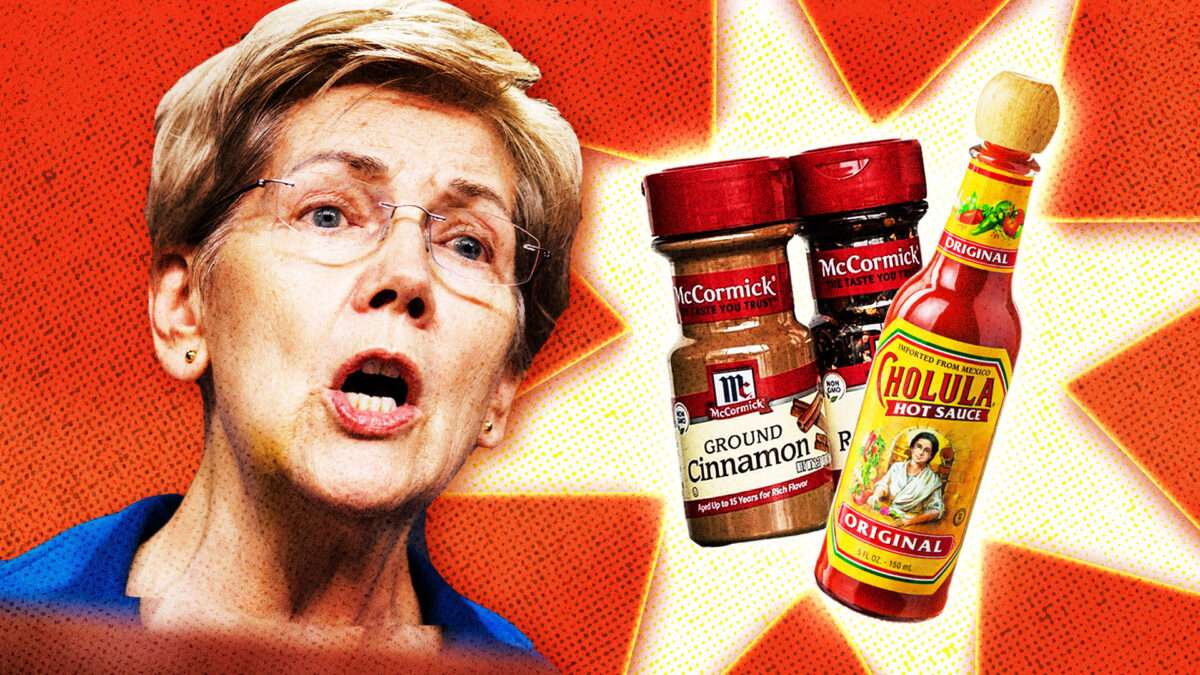
Massachusetts Senator Elizabeth Warren and bottles of condiments | Samuel Corum/Sipa USA/Newscom/Viennetta/Dreamstime/Cinnamonspice241/Wiki Commons/Fatima Ruiz.

With little more than two weeks to go until the midterm elections, it seems increasingly possible that the Democrats, already a big favorite to win control of the House of Representatives, will also take charge of the planet's most elite nursing home, the United States Senate, where the median age is 64 years old. RealClearPolitics' poll aggregator has moved control of "the world's greatest deliberative body" (as its members are grandiosely wont to call it) to "toss up," status and prediction markets are now breaking big toward a blue wave. As of this writing, Kalshi has its Senate odds at 63 percent for the Dems vs. 37 percent for the GOP; Polymarket is at 62 percent vs. 39 percent.

As gratifying as it might be to see unprincipled Trump enablers reduced to minority status after signing off on economy-wrecking tariffs, inhumane immigration detentions, and wars of choice, there's at least one good reason to dread a Democratic majority too: Sen. Elizabeth Warren, the Massachusetts progressive who is spending the run-up to the midterms freaking out over possible consolidation in the condiments business and accusing private equity firms of gutting such shopping-mall favorites as Claire's and Toys R Us. There's every reason to believe that a Senate run by Warren and other economic interventionists will waste time, money, and resources trying to prevent a world in which, per the X wag Iowahawkblog, "a panopticon conglomerate owns two brands of hot sauce."

On October 13, Warren posted this dire warning to X:

Hellmann's mayo
McCormick spices
Cholula hot sauce
Frank's RedHot

What do these products have in common? One company could soon control them all.

I have concerns that McCormick and Unilever's $45 billion merger could increase YOUR grocery prices.

— Elizabeth Warren (@SenWarren) October 13, 2026

It's hard to think of a more competitive and varied market than the one for hot sauces, which is expected to more than double over the next decade. The barriers to entry are generally low, as are the key ingredients, and new entrants can easily market and sell online, avoiding the costs of buying shelf space in conventional supermarkets. Yet Warren is urging regulators at the Department of Justice and the Federal Trade Commission to halt mergers of both product makers like McCormick and Unilever and grocery stores like Kroger and Giant Eagle.

The latter complaint is particularly picayune. Kroger is one of the country's largest supermarket chains, operating around 2,800 stores under its own name as well as Harris Teeter, Ralph's, and others. Giant Eagle operates about 170 stores. This merger is no more the stuff of nightmares than a single company producing both Cholula and Frank's RedHot. If Warren gains more clout from being in the majority, expect her to butt in more and more on such mergers.

Making it harder for businesses to adapt is not a recipe for making goods and services more affordable. But Warren is keen to blame economic creative destruction not on "new forms of industrial organization that capitalist enterprise creates" (as Joseph Schumpeter would have it), but on pure greed. In a TikTok released earlier this month, she shows a poster board with corporate logos from once-thriving companies that she says have been "gutted" by "private equity" firms.

"Here's your local mall," she piously intones. "Now, private equity wants you to believe that Red Lobster went bankrupt because of their endless shrimp….They want you to believe that Claire's went bankrupt because teens stopped shopping at the mall." In Warren's telling, private equity firms magically take over thriving businesses and then strip them bare. The typical pattern is that private equity enters the picture after a business is failing.

Virtually all accounts of the decline of, for example, Red Lobster, note that the chain had been spiraling for several reasons before the private equity firm Golden Gate Capital got involved in 2014. As this CNN article notes, the chain, which started in 1968, had seen drops in sales as customer desires changed. Management compounded the difficulties with a series of bad decisions, including continuing various all-you-can-eat menu specials, before coming out of Chapter 11 bankruptcy last year.

Similarly, it's true that some teens still go to malls and get their ears pierced at Claire's. But anyone who has spent time in retail America over the past few decades knows that malls are no longer the destination that they once were. As CapitalOne Shopping Research documents, "in 1986, there were 25,000 malls, large and small, nationwide." By 2023, that number had shrunk to just 1,200. While some malls are coming back, most are not, and for reasons that have nothing to do with private equity. Online retails plays a role (though a smaller one than usually imagined, with e-commerce accounting for less than 20 percent of all retail sales). But mostly, it's that people today tend to want a different sort of retail environment. Anchor stores—think Macy's and J.C. Penney—are shadows of themselves, and younger people have less unstructured time in which to prowl food courts and arcades.

For politicians like Elizabeth Warren, though, there can be no financial gains or losses that aren't the result of shadowy, conspiratorial forces. If her party takes control of the Senate, her words will carry more weight. But it will be American consumers that ultimately shoulder the burden of an even-more-regulated economy. The market for hot sauces will almost certainly stay spicy, but many other parts will surely suffer.

The post Be Prepared for Elizabeth Warren's Reign of Economic Error appeared first on Reason Magazine.

  •  

AI firm Anthropic to commit 5% of shares to fund for ‘public good’

The $48bn giveaway comes amid concerns about the tech and as the company prepares for a stock market listing

Anthropic has said it will commit 5% of its shares to a fund for the “public good”, as the AI developer behind the Claude chatbot seeks to bolster its appeal before its stock market listing.

The company announced it would commit the shares, worth around $48bn (£36bn) at its latest valuation in May, subject to shareholder approval. It will add a further 2% of its stock to the fund for every 50% increase in its value above an undisclosed baseline.

Continue reading...

© Photograph: Dado Ruvić/Reuters

© Photograph: Dado Ruvić/Reuters

© Photograph: Dado Ruvić/Reuters

  •  

France hit by debt sell-off as violent protests unnerve investors

Difference between French and German borrowing costs widens after public buildings burned and shops looted

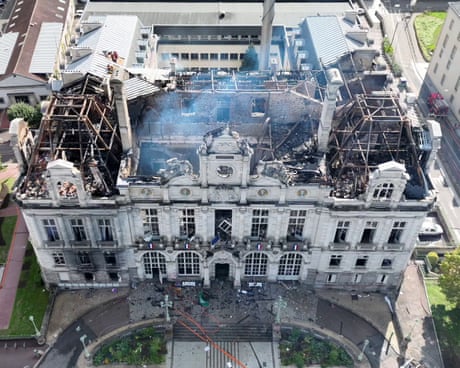
France has been hit by a fresh wave of selling in its bond and stock markets after violent protests over the weekend led to thousands of arrests and left public buildings burned and hundreds of shops looted across the country.

The chaos has spooked investors as analysts worried that it would undermine Paris’s efforts to cut spending and reduce its debt.

Continue reading...

© Photograph: SDIS 87/AFP/Getty Images

© Photograph: SDIS 87/AFP/Getty Images

© Photograph: SDIS 87/AFP/Getty Images

  •  

Profit warnings from UK-listed firms at highest level in two years as Iran war drives up costs

Consultancy says companies quoted on London stock market issued 65 in three months to end of September

The number of profit warnings from UK-listed companies has risen to the highest level in two years, as the war in the Middle East triggers a surge in costs for businesses before the budget.

With less than a fortnight before John Healey’s tax and spending statement to the Commons, the consultants EY-Parthenon said companies quoted on the London stock market had issued 65 warnings in the three months to the end of September.

Continue reading...

© Photograph: Gareth Fuller/PA

© Photograph: Gareth Fuller/PA

© Photograph: Gareth Fuller/PA

  •  

News from occupied Ukraine: 11 Ukrainians, including 96-year-old woman, evacuated from Russian occupation

This weekly update from the Kyiv Independent aims to shed light on the situation facing Ukrainians living under Russian occupation and the ever-tightening control of information imposed by the Kremlin.

Key news as of Oct. 17:

  • Eleven Ukrainians, including 96-year-old woman, return from Russian-occupied territories, ombudsman says
  • Russia sends terrorism

  •  

ECB Warns Bond Market Turmoil Could Deepen Europe’s Economic Slowdown

Christine Lagarde says rising government borrowing costs are tightening financial conditions across the eurozone, complicating efforts to contain inflation without undermining economic growth.

European Central Bank President Christine Lagarde has warned that a sharp sell-off in government bonds is tightening financial conditions across the eurozone, threatening to weaken economic growth at a time when European governments are already struggling with mounting debt and higher energy prices.

Speaking during the International Monetary Fund’s annual meetings on Saturday, 17 October, Lagarde said rising bond yields were imposing additional pressure on the European economy, potentially reducing demand and helping to bring inflation down.

Her comments came as investors demanded higher returns on government debt across major developed economies, reflecting concerns about persistent inflation, widening budget deficits and the substantial borrowing requirements associated with investment in artificial intelligence.

The development presents a complicated situation for the ECB, which has already raised its key interest rate twice this year in response to renewed inflationary pressure following the conflict in the Middle East.

Higher government bond yields effectively tighten monetary conditions even without a further decision by the central bank to increase official interest rates.

Bond markets tighten financial conditions

The latest sell-off has pushed borrowing costs higher across Europe, although the pressure is particularly acute in countries with large public debts and persistent budget deficits.

When investors sell government bonds, their market prices fall and yields rise. Those higher yields eventually feed into the costs of borrowing for governments, businesses and households.

Lagarde indicated that financial conditions had become tighter than assumed in the ECB’s September economic forecasts.

According to her latest assessment of the bond market, the resulting slowdown in demand could help moderate inflation, but would also place additional pressure on an economy whose growth prospects remain limited.

The ECB’s September projections forecast eurozone economic growth of just 0.9 per cent in 2026, followed by 1.4 per cent in 2027 and 1.5 per cent in 2028.

Inflation was expected to average 3.0 per cent this year before declining to 2.5 per cent in 2027 and 2.1 per cent in 2028.

Those forecasts were based on assumptions about financial conditions and energy prices that may no longer fully reflect developments in international markets.

France faces particularly acute pressure

France has emerged as one of the most vulnerable major eurozone economies because of its high public debt, persistent deficits and political disagreements over fiscal consolidation.

French government bond yields have risen sharply as investors question whether Paris can deliver the spending reductions required to stabilise its finances.

As EU Today reported earlier this month, eurozone finance ministers have been pressing France to produce a credible budget that would restore confidence in the country’s fiscal position.

The borrowing premium demanded on French debt relative to German government bonds has also widened, reflecting investors’ concerns about the financial outlook and the political difficulties surrounding the 2027 budget.

The IMF has warned that continued increases in borrowing costs could eventually force the French government to undertake more substantial fiscal adjustments.

In its assessment of French bond yields, the Fund said the immediate pressures remained manageable, partly because France benefits from established debt markets and relatively long borrowing maturities.

Nevertheless, persistently elevated yields would increase the cost of refinancing government debt as existing bonds mature.

The wider concern is that higher borrowing costs could reduce the room available for public investment and other expenditure across several European economies simultaneously.

IMF warns governments over rising debt

Lagarde’s intervention coincided with renewed warnings from the IMF about the sustainability of European public finances.

In its latest European economic assessment, the Fund argued that governments must either accelerate economic growth or reduce borrowing to prevent debt burdens from becoming increasingly difficult to manage.

The IMF expects eurozone growth of approximately 1.1 per cent in 2026 and 1.2 per cent in 2027, with continuing pressure from energy costs, demographic changes and weak productivity.

The European Commission’s forecasts indicate that eurozone government debt could rise from 88.7 per cent of GDP in 2025 to 91.2 per cent in 2027.

The IMF has also identified structural weaknesses, including barriers within the European single market, which restrict investment and productivity growth.

These problems are becoming more difficult to address as European governments face demands for greater defence expenditure, infrastructure investment and support for industries affected by higher energy prices.

ECB faces difficult interest-rate decision

The ECB has already increased its deposit rate to 2.5 per cent following successive increases in June and September.

As EU Today reported after September’s decision, the central bank has been attempting to contain inflation generated by rising energy costs without causing a more substantial economic slowdown.

The IMF now expects at least one additional quarter-percentage-point increase before the end of 2026.

Such a decision would bring the deposit rate to 2.75 per cent, although the ECB has not committed itself to that outcome.

The challenge is that tighter monetary policy would coincide with financial restrictions already being imposed by bond markets.

At the same time, higher energy prices continue to affect household purchasing power and business operating costs.

In her statement to the International Monetary and Financial Committee, Lagarde acknowledged that the eurozone had proved more resilient than expected, while warning that risks to growth remained tilted to the downside and risks to inflation to the upside.

The duration of the Middle East conflict, developments in energy markets and changes in investor confidence will be important in determining the economic outlook.

For the ECB, a bond-market slowdown could reduce the need for further interest-rate increases by weakening demand. But if energy-driven inflation remains elevated, the central bank may still face pressure to tighten policy.

Europe’s governments, meanwhile, have considerably less control over the borrowing costs demanded by international investors.

The next ECB interest-rate decision will therefore take place against an increasingly difficult combination of sluggish growth, persistent inflation and financial markets imposing their own constraints on public and private borrowing.

  •  

Academy Museum Gala: Taylor Swift, Sabrina Carpenter, Jennifer Hudson, Connor Storrie, More Stars Walk the Carpet

Inde Navarrette, Colman Domingo, Teyana Taylor, Anna Kendrick, Rami Malek, Jamie Lee Curtis, Jacob Elordi, Adrien Brody, Mikey Madison, Chase Infiniti, Mark Hamill, Kate Hudson, Sofia Vergara, Seth Rogen, Pamela Anderson, Naomi Ackie, Charlize Theron, Alexa Demie, Mia Goth, Cailee Spaeny, Mckenna Grace, Zoey Deutch and Kristen Wiig were also in attendance at the star-studded event.
  •  

Not cool: who hacked France’s supermarket fridges?

Whether it was youngsters proving their skills or state sabotage, Europe’s most hacked country was left with a mountain of waste after food began cooking in freezers

Shortly before midnight last Sunday, the digital thermostats controlling hundreds of supermarket cold aisles across France began to flicker and rise.

In a “bizarre and unprecedented” cyber-attack, hackers had remotely overridden the temperature settings on thousands of freezers, fridges and chiller cabinets pushing them from as low as -27C (-16.6F) to well over 50C (122F).

Continue reading...

© Photograph: Lucien Libert/Reuters

© Photograph: Lucien Libert/Reuters

© Photograph: Lucien Libert/Reuters

  •  

Putin Seizes More European Businesses as Moscow Expands Economic Retaliation Against EU

Russia has placed five foreign-owned businesses under compulsory administration, including Belgian manufacturer Ontex and French flooring group Tarkett. The latest seizures deepen the confrontation over sanctions, frozen Russian assets and the future of European investment in Russia.

Russian President Vladimir Putin has ordered the transfer of five Western-owned businesses into compulsory Russian management, extending a campaign of asset seizures targeting European companies that continued operating in Russia after the full-scale invasion of Ukraine.

The decree, signed on 15 October, affects businesses with combined annual revenues exceeding 53 billion roubles, approximately €530 million. They include French flooring manufacturer Tarkett, Belgian hygiene products group Ontex, German packaging producer Menshen, Kappa Rus and Eviosys Packaging Kuban, now linked to American group Sonoco.

Under Presidential Decree No. 738, operational control has been transferred to Centre Capital, a little-known Moscow company established in February 2026 with registered share capital of just 10,000 roubles.

The decision follows similar interventions against Nestlé, Auchan, FM Logistic and Metro in September. Together, the measures demonstrate how Moscow is using foreign-owned businesses as instruments of economic retaliation against countries supporting Ukraine.

Foreign businesses placed under Russian control

Centre Capital is headed by Marat Mirkhaydarov, a former senior official in Russia’s Zabaykalsky region who reportedly served with the Akhmat military formation during Russia’s war against Ukraine.

The scale of the companies placed under his management contrasts sharply with the financial standing of the administrator.

Tarkett’s Russian operations generated approximately 19.3 billion roubles in revenue during 2025, while Kappa Rus recorded 16.5 billion roubles and Ontex RU another 10.3 billion. Eviosys Packaging Kuban and Menshen Packaging CIS reported approximately 6.1 billion and 1.4 billion roubles respectively.

The decree does not formally transfer ownership of the companies to Centre Capital. It does, however, remove the foreign shareholders’ effective control over management, operations and commercial decisions.

For Belgian manufacturer Ontex, the consequences are immediate.

In an official statement issued on 16 October, the Aalst-based company confirmed that a government-appointed administrator had assumed operational control of its Russian subsidiary.

Ontex Russia employs approximately 350 people, operates a manufacturing facility in Noginsk and maintains a sales office in Moscow. The subsidiary accounts for around five per cent of the group’s total revenue and between seven and eight per cent of adjusted EBITDA.

The company said it was examining measures to protect its assets and maintain business continuity.

Tarkett likewise confirmed that it was losing effective control of its Russian operations.

A mechanism established in 2023

The legal framework for such interventions dates to April 2023, when Putin introduced Decree No. 302, allowing the Russian authorities to place assets associated with countries designated as unfriendly under temporary external management.

The appointed administrator can exercise extensive ownership-related powers, although the formal right to dispose of the assets remains excluded.

Crucially, the arrangement can be terminated only by presidential decision. There is no automatic deadline for returning operational control to the original owners.

Moscow maintains that the measures are reversible. Nevertheless, the loss of management authority raises questions about whether businesses could eventually be returned with their financial position, organisational structure and commercial value intact.

The latest decree extends the process already documented by EU Today following the September takeover of Nestlé and Auchan’s Russian operations.

The Kremlin’s approach also serves domestic economic objectives. Keeping factories, retail networks and distribution facilities operating under Russian management helps preserve employment, production capacity and established supply chains.

At the same time, appointing Russian administrators allows the authorities to exercise greater influence over businesses originally developed through foreign capital, technology and expertise.

European companies caught in sanctions confrontation

Kremlin spokesman Dmitry Peskov has explicitly linked the seizures to the nationality of the affected companies and the policies of their governments.

He accused European states of participating in the unlawful seizure of Russian property through sanctions and financial restrictions.

Moscow’s argument centres partly on approximately €210 billion in Russian sovereign assets immobilised in the European Union, most of them held through Belgium-based securities depository Euroclear.

The European Union has used extraordinary revenues generated by those assets to support Ukraine, while further proposals involving the underlying funds remain subject to legal and political debate.

Belgium has been particularly concerned about potential financial exposure and legal claims. As EU Today reported in September, a Belgian Council of State judgment raised additional questions about the administrative procedures governing certain frozen assets.

The dispute has also moved into the European courts, with the Bank of Russia challenging EU measures intended to protect Euroclear against the enforcement of Russian judgments.

Moscow’s treatment of European businesses adds another dimension to this confrontation. By retaining control over foreign-owned industrial and commercial assets, Russia possesses a means of exerting pressure on companies whose governments support sanctions and military assistance to Ukraine.

The implications are particularly serious for Western banks that still maintain substantial Russian operations.

Austria’s Raiffeisen Bank International and Italy’s UniCredit remain exposed to Russia through local subsidiaries. Any extension of compulsory administration to financial institutions could create additional difficulties involving deposits, capital and banking supervision.

The cost of remaining in Russia

The seizures also expose the financial risks faced by Western companies that delayed their withdrawal after February 2022.

Many initially sought to protect their investments, employees and commercial infrastructure. Others reduced operations but retained ownership, expecting that conditions might eventually permit an orderly sale or renewed business activity.

Russian restrictions have progressively complicated that calculation, requiring foreign investors from designated countries to accept substantial discounts on asset sales and obtain official approval for transactions.

Companies remaining in the country now face the additional possibility that the government will appoint administrators without their consent.

The consequences extend beyond the businesses immediately affected. Russia is establishing a precedent under which foreign investment can remain legally owned by its original shareholders while its economic benefits and operational management are placed beyond their control.

For European governments, the latest decree illustrates the increasing connection between commercial interests and geopolitical decisions.

The Kremlin has demonstrated that sanctions imposed over its invasion of Ukraine can be answered not only through diplomatic or financial measures, but also through direct intervention in European-owned businesses operating on Russian territory.

Any eventual negotiation over sanctions relief and the restoration of economic relations will consequently have to address the status of these assets, the rights of their original shareholders and the question of compensation.

Until then, Western companies remaining in Russia face an investment environment in which the ultimate authority over their businesses rests increasingly with the Kremlin rather than their shareholders.

  •  

How Chick-fil-A grew from a small Southern diner to the third-largest restaurant chain in the US

Chick fil a chicken sandwich
Chick-fil-A has come a long way since opening as a small roadside diner in Georgia in 1946.

Irene Jiang / Business Insider

  • In 1946, Chick-fil-A founder S. Truett Cathy opened the Dwarf Grill in Hapeville, Georgia.
  • In 1967, Cathy opened the first Chick-fil-A and invented the restaurant's iconic chicken sandwich.
  • Chick-fil-A is now the third-largest restaurant chain in the US.

Eighty years after Chick-fil-A founder Truett Cathy opened his first restaurant, Chick-fil-A is now the third-largest restaurant brand in the country.

The family-owned chain has since grown to more than 3,200 US restaurants and generated nearly $24 billion in US systemwide sales in 2025, trailing only McDonald’s and Starbucks, per Technomic's Top 500 chains report.

The chicken chain's rise has not been without controversy.

Chick-fil-A faced widespread backlash in 2012 after Cathy's son Dan, then the company’s CEO, publicly opposed same-sex marriage, while the company and its foundation were criticized for donations to organizations with anti-LGBTQ+ positions.

This week, current CEO Andrew Cathy declined to directly address the company’s history or state its position on LGBTQ+ equality in an interview with NBC, instead saying Chick-fil-A is focused on hospitality and welcoming everyone who comes through its doors.

Here’s how Chick-fil-A grew from a small Southern diner into a fast-food powerhouse.

Chick-fil-A's origin story began when Truett Cathy opened the Dwarf Grill in Hapeville, Georgia, in 1946.
chick fil a vintage

Chick-fil-A

The small roadside diner was later renamed when it became one of the chain's "Dwarf Houses." The original location previously served as one of 12 Chick-fil-A locations, offering modern favorites and items from the original restaurant's "blue menu."

The first official Chick-fil-A locations were located in shopping malls.
chick fil a vintage

Chick-fil-A

The first restaurant to bear the name Chick-fil-A opened in the Greenbriar Mall in Atlanta in 1967.

According to the company, the restaurant occupied just 384 square feet, and some have credited the chain with being an "early pioneer" of what would become the modern mall food court.

Chick-fil-A opened its first stand-alone restaurant in 1986 in Atlanta.
chick fil a first stand alone restaurant

Chick-fil-A

Free-standing locations are now the norm for Chick-fil-A, and mall locations are much less common.

Chick-fil-A also experimented with drive-thru-only restaurant locations.
chick fil a vintage

Chick-fil-A

The first-ever drive-thru-only Chick-fil-A restaurant opened in 1993 in Greenville, South Carolina. By eliminating dining rooms in these locations, the restaurants were designed to be faster and more convenient for customers.

Today, there are more than 3,000 Chick-fil-A restaurants in North America.
chick fil a vintage

Chick-fil-A

The chain, which was founded in Georgia, still has its headquarters there, and is regarded as a "Southern" fast-food chain. However, restaurants can actually be found in 48 different states as well as Washington, DC.

In 2019, Chick-fil-A expanded internationally by opening its first location in Toronto. Later that year, the chain opened its first restaurant in the United Kingdom.

The chain now has locations across Canada, Puerto Rico, the UK, and Singapore.

Before Chick-fil-A began using a cow as its mascot, the chain was represented by — perhaps unsurprisingly — a chicken.
chick fil a vintage

Chick-fil-A

The chain's tag line used to read, "The best thing that ever happened to a Chicken."

Now, Chick-fil-A's slogan pays homage to its most famous menu item — its chicken sandwich.
chick fil a sandwich
An employee picks up a fried chicken sandwich during an event ahead of the grand opening for a Chick-fil-A restaurant in New York.

465-square-meter/Getty Images

The "A" in Chick-fil-A comes from both a play on the word "fillet" and a nod to the "grade-A top quality chicken" used in Chick-fil-A's chicken sandwiches.

However, the chain also still uses cows and the words "Eat Mor Chikin" to bring customers through its doors.
chick fil a cows

John Adams/Icon Sportswire/Corbis/Icon Sportswire/Getty Images

The "Eat Mor Chikin" slogan, accompanied by two "rebel cows," debuted in 1995 on an Atlanta billboard, according to the company.

The campaign quickly gained traction and is now regarded as one of Chick-fil-A's most famous and successful advertising campaigns.

The original Dwarf Grill menu served diner favorites like breakfast and burgers.
chick fil a menu dwarf grill

Hayley Peterson/Business Insider

Menu items included everything from waffles to sandwiches, steak and potatoes, and the chain's famous Hot Brown, a hot casserole dish made with lean white meat chicken, gravy, mashed potatoes, cheese, and bacon. 

Today, Chick-fil-A still serves breakfast, but the menu items look much different.
Chick fil A Chicken Biscuit

Irene Jiang / Business Insider

Launched in 1986, the first item added to the breakfast menu was the Chick-fil-A chicken biscuit.

Today, the Chick-fil-A menu typically includes more than 50 items.

At the Dwarf Grill, Truett Cathy's first restaurant, you could order burgers.
Chick-fil-A

Business Insider/Hayley Peterson

The Dwarf Grill served both hamburgers and cheeseburgers, which the restaurant's menu said were made from "100% choice beef, chopped in our kitchen." Served on a large toasted bun, the menu also boldly said that "they're the best."

Business Insider's Hayley Peterson tried the burger for herself when she visited the Dwarf House, and she found the patty "thick and flavorful" and that the cheese "melted perfectly between the patty and the bun."

You won't find burgers on any Chick-fil-A menus, but you will find the chain's famous chicken sandwich.
Chick fil a chicken sandwich

Irene Jiang / Business Insider

In 1964, Truett Cathy created the recipe for Chick-fil-A's original chicken sandwich: a fried, boneless chicken breast nestled between two buttered buns and topped with two pickles.

Though the sandwich soon shot to popularity at the Dwarf House, the invention was odd compared to other fast-food offerings and food tastes of the time.

However, Cathy's bet on chicken would soon pay off.

Though Chick-fil-A has expanded immensely since the launch of its chicken sandwich, the recipe has remained virtually the same.

In 1989, Chick-fil-A added a grilled chicken sandwich to its menu.
2 chick fil a grilled chicken club

Hollis Johnson

Introduced as a health-conscious option for Chick-fil-A customers, Cathy introduced the original grilled chicken sandwich alongside the deluxe grilled chicken sandwich, which included the same pickle-juice-marinated grilled chicken, pickles, and white bun, along with lettuce and tomato.

According to the restaurant's website, Cathy tested more than 1,200 recipes to perfect the chain's grilled chicken recipe.

Chick-fil-A revolutionized its menu yet again when it launched its spicy chicken sandwich nationwide in 2010.
Chick fil A Spicy Chicken Sandwich 4

Irene Jiang/Business Insider

"While we recognize that not everyone enjoys spicy food, for the growing customer constituency that does, our Spicy Chicken Sandwich offers a unique, well-balanced and craveable spicy flavor," William F. Faulk, Chick-fil-A's vice president of innovation and new ventures, said in a press release at the time.

A precursor to Chick-fil-A's famous fries was its fried okra, a traditional Southern favorite.
Chick-fil-A

Business Insider/Hayley Peterson

"The batter on the outside is light and crispy, and the okra inside is hot and juicy, with a hint of salt," Business Insider's Hayley Peterson said in a previous article.

Today, the chain's waffle fries are a beloved menu item.
Veggie chick fil a meal fries

Irene Jiang / Business Insider

The chain began selling waffle fries in 1985, with the unique shape chosen as a perfect vehicle for dipping sauces.

In 1982, chicken nuggets were added to the menu.
Chick fil a Chicken Nuggets

Irene Jiang / Business Insider

The first Chick-fil-A nuggets came in a six-count box, inspired by customers asking restaurant employees to cut up pieces of its signature chicken sandwich so they could eat them by hand or serve bite-sized nuggets at parties.

"We are still serving the same delicious nuggets today that we started with," Shona Jonson, senior manager of culinary, product strategy, and development at Chick-fil-A, once said.

Today, Chick-fil-A chicken nuggets come in 5-, 8-, 12-, or 30-count packs. 

Chick-fil-A introduced grilled chicken nuggets in 2012.
fast food keto options chick fil a grilled nuggets sauce

Erin McDowell/Business Insider

The item first appeared on the chain's kids' menu before being added to the main menu.

Chick-fil-A's success is largely credited to the chain's founder and CEO, S. Truett Cathy, a devout Baptist who built the family-owned business on Christian values.
chick fil a vintage

Chick-fil-A

Cathy's impact on Chick-fil-A is undeniable, from his decades working at the Dwarf Grill to the invention of the chain's famous chicken sandwich.

Another part of Cathy's legacy that contributed to Chick-fil-A's success was its unique process for hiring franchisees, which also upheld the chain's values of "customer first, personal excellence, continuous improvement, working together, and stewardship."

As the creator of the first Chick-fil-A scholarship fund for restaurant employees, Cathy left a legacy that inspired franchisees and employees across the country to continue his mission of building a customer- and employee-focused fast-food chain.

Cathy's son, Dan T. Cathy, led the company as CEO until 2021.
dan cathy chick fil a

Cyrus McCrimmon/The Denver Post/Getty Images

Dan T. Cathy was made CEO in 2013, two years before his father died. Cathy worked alongside his brother, Donald "Bubba" Cathy, who still serves as executive vice president of the chicken chain and president of the company's Dwarf House and Truett's Grill restaurant concepts.

Both Donald and Dan T. Cathy recall growing up in their father's early restaurants, doing odd jobs like scraping gum from underneath tables and spending time in the Hapeville Dwarf House.

Dan T. Cathy stepped down as CEO of Chick-fil-A on November 1, 2021, but still serves as chairman of the company. He was succeeded by his son, Andrew Cathy.

Over the years, the Cathy family and Chick-fil-A have received criticism for their apparent stances on issues like same-sex marriage.
chick fil a pride flag

Tibrina Hobson/FilmMagic/Getty Images

Chick-fil-A's contentious reputation largely stems from donations made by Chick-fil-A to charities criticized for anti-LGBTQ+ positions, as well as comments made by Dan T. Cathy in 2012.

According to a previous article by Business Insider, the Cathy family and Chick-fil-A donated millions of dollars to groups opposing same-sex marriage, from Christian charities to "more extreme" anti-LGBTQ+ lobbying organizations through the WinShape Foundation.

Some of these organizations included Fellowship of Christian Athletes, an athletic organization that, according to Vox, requires applicants to sign a "sexual purity statement" that condemns LGBTQ+ relationships, the Marriage & Family Foundation, which has spoken out against marriage equality, and Exodus International, a group that supported the use of gay-conversion therapy.

Comments made by Dan T. Cathy in a 2012 interview with the Baptist Press quickly prompted backlash from LGBTQ+ activists and organizations.
dan cathy

William Plowman/AP Images

In the interview, Cathy said that he believed in the "biblical definition of the family unit," or that a marriage should be between a man and a woman.

Protests ensued nationwide, including a number of "kiss-ins" led by LGBTQ+ activists, at Chick-fil-A restaurants across the country, CNN reported.

Others came out in support of the chain and Cathy's comments. Following the controversy and subsequent calls to boycott the brand, former Arkansas Governor Mike Huckabee created a Facebook page encouraging people to participate in "Chick-fil-A Appreciation Day" and to buy food from the chain that day, Huffington Post reported.

Cathy did little to quell criticism of his comments when he later clarified his position in a 2012 radio interview, saying, "As it relates to society in general, I think we are inviting God's judgment on our nation when we shake our fist at him and say, 'We know better than you do as to what constitutes marriage.'"

Protests against the company predate the chain's controversial donations and comments made by Dan T. Cathy.
chick fil a protest

Tibrina Hobson/FilmMagic/Getty Images

In 2002, a Houston Chick-fil-A restaurant manager sued the chain for discrimination, Forbes reported. The employee, who is Muslim, said he was fired one day after refusing to pray to Jesus along with their fellow coworkers during a training session.

At the time, Jerry Johnston, a spokesperson for Chick-fil-A, told the Houston Chronicle that the company had not yet been served with a lawsuit and therefore couldn't comment on the dispute, My Plainview reported. Forbes states that the suit was settled out of court on undisclosed terms.

Then, in 2011, a Pennsylvania Chick-fil-A prompted a nationwide boycott of the chain when the restaurant provided free lunch to a Valentine's Day marriage seminar sponsored by the Pennsylvania Family Institute, a controversial "pro-family" group that has spoken out against same-sex marriage.

The decision prompted criticism, including a petition that gathered thousands of signatures urging Chick-fil-A to stop discriminating against LGBTQ+ people. However, the franchise in question claimed the decision to donate food was not motivated by any anti-LGBTQ+ sentiments.

"It's absolutely, categorically blown out of proportion," the Pennsylvania franchise owner Brian Gibson said, Penn Live reported. "We donate food all the time. We certainly don't take into consideration anyone's political affiliations or anything like that. We just like to feed people."

Dan T. Cathy released a statement in 2011 following the accusations that Chick-fil-A was anti-LGBTQ+, saying, "In recent weeks, we have been accused of being anti-gay. We have no agenda against anyone. At the heart and soul of our company, we are a family business that serves and values all people regardless of their beliefs or opinions. We seek to treat everyone with honor, dignity, and respect, and believe in the importance of loving your neighbor as yourself."

Cathy continued, saying, "While my family and I believe in the Biblical definition of marriage, we love and respect anyone who disagrees ... Chick-fil-A's Corporate Purpose is 'To glorify God by being a faithful steward of all that is entrusted to us, and to have a positive influence on all who come in contact with Chick-fil-A.' As a result, we will not champion any political agendas on marriage and family."

The chain also received criticism for Dan T. Cathy's ties to a charitable organization that notably opposes the Equality Act.
chick fil a
A Chick-fil-A sign above the glass entrance to a Manhattan restaurant.

Smith Collection/Gado/Getty Images

The Daily Beast reported on June 1, 2021, that the National Christian Charitable Foundation (NCF) has donated money to groups actively fighting legislation to protect LGBTQ+ rights in the US. Among the organization's "high-dollar donors" is Chick-fil-A's CEO, Dan Cathy.

The National Christian Charitable Foundation is one of the largest charitable organizations in the country and supports thousands of charities and causes. Among them are the Heritage Foundation and the legal advocacy group Alliance Defending Freedom, both of which strongly oppose the Equality Act.

Chick-fil-A itself has not donated any funds to Christian charities or political groups in recent years, saying in 2019 that it would instead support charities focused on "three specific initiatives of homelessness, hunger, and education." 

Chick-fil-A has taken steps to overturn its reputation as being anti-LGBTQ.
Chick-fil-A

Facebook/Chick-fil-A

In 2019, Chick-fil-A announced it would no longer donate to the Fellowship of Christian Athletes and the Salvation Army, two groups that have been criticized as being anti-LGBTQ+.

"We made multiyear commitments to both organizations, and we fulfilled those obligations in 2018. Moving forward, you will see that the Chick-fil-A Foundation will support the three specific initiatives of homelessness, hunger, and education," a Chick-fil-A representative said in a statement to Business Insider.

However, some LGBTQ+ advocates said that while they were hopeful about the decision, Chick-fil-A still has a ways to go before it can be considered truly inclusive of the LGBTQ+ community.

"In addition to refraining from financially supporting anti-LGBTQ organizations, Chick-fil-A still lacks policies to ensure safe workplaces for LGBTQ+ employees and should unequivocally speak out against the anti-LGBTQ+ reputation that their brand represents," Drew Anderson, the director of campaigns and rapid response for GLAAD, an organization that condemns LGBTQ+ discrimination, said in a statement in 2019.

Andrew Cathy, who took over as CEO in 2021, recently declined to comment on the company's "anti-LGBTQ+" past.
Andrew T. Cathy
Andrew T. Cathy in 2024.

Paras Griffin/Getty Images

When asked to comment on the company's past controversies and criticism from LGBTQ+ advocacy groups in 2026, Cathy offered a diplomatic response, emphasizing the company's commitment to serving "anybody" who walks through the door.

"We've always been focused on serving great food and hospitality, and so for anybody that comes in the door, we're going to continue to do that," he said in a recent interview with NBC News.

Despite a series of controversies, the fast-food chain has continued to grow.
Chick-Fil-A

Tom Pennington/Getty Images

Business Insider previously reported that anti-same-sex-marriage comments said by Dan T. Cathy in 2012, controversial donations, and resulting backlash over the years have done little to slow Chick-fil-A's growth.

Today, Chick-fil-A is the third-largest chain in America and has frequently been voted the most popular chain among customers.

Nation's Restaurant News reported that the company generated nearly $24 billion in sales in 2025 and operates over 3,000 locations nationwide.

One thing is for sure — while Chick-fil-A has an undeniably controversial past, there's no stopping the chicken chain from winning over customers nationwide, one chicken sandwich at a time.

Read the original article on Business Insider
  •  
❌