US special envoy Tom Barrack conceded that a “ground kinetic” battle in Yemen by the US “seems fruitless” during a talk at the Global Security Forum in Qatar on 20 October.
“I think the president’s been clear that he supports Saudi Arabia and the backing that they need logistically he will supply. But America getting involved in a ground kinetic battle somewhere else seems fruitless.”
Barrack is Washington’s ambassador to Turkiye and special presidential envoy for Syria and Iraq.
He admitted that military force has failed in Yemen and that Riyadh is in a “very difficult position.”
“These kinetic reactions have never worked. It doesn’t work. It’s probably not likely that it’s going to work,” he said.
Barrack questioned whether US meddling across West Asia has helped or harmed the region, arguing that Ansarallah in Yemen, Hezbollah in Lebanon, and the resistance factions in Iraq would lose their reason to exist only once states took responsibility themselves.
He pressed for talks between Riyadh, Sanaa, and regional mediators, urging regional capitals to build their own alliances instead of leaning on Washington.
He went further, admitting that the US has had a hand in 23 regime changes across the region, none of which achieved their aims.
He declined to say whether the US-Israeli war on Iran launched on 28 February was a mistake, while conceding that it had unleashed unintended consequences across the region.
The admission comes as the Saudi-led coalition presses on with airstrikes on Yemen, drawing retaliatory missile and drone strikes by the Yemeni Armed Forces (YAF) on the kingdom.
Riyadh has turned to its defense partners under the Mecca pact, including Pakistan and Turkiye, after Washington declined its requests for direct US intervention against Yemen.
Barrack’s remarks follow Washington’s failed bid to subdue Yemen by military force, with more than 1,000 US airstrikes between March 2024 and April 2025 unable to halt Yemeni naval operations waged in support of Gaza, forcing the US into an Omani-brokered ceasefire with Sanaa in May 2025.
The campaign cost Washington $1 billion in its first three weeks alone, as Yemeni forces downed 17 MQ-9 Reaper drones and the US lost two F-18 fighter jets.
Ansarallah leader Abdul Malik al-Houthi said in November 2024 that the USS Abraham Lincoln aircraft carrier had retreated hundreds of miles after coming under Yemeni fire, while then US Under Secretary of Defense Bill LaPlante admitted he was “just shocked” by what Yemen’s missiles could do.
Europe fared no better, with Rear Admiral Vasileios Gryparis, commander of the EU’s Operation Aspides, telling Bloomberg in June 2024 that his Red Sea fleet needed to more than double in size and that US–UK strikes on Yemen were “not contributing to the solution,” after France withdrew one of his frigates citing the threat level.
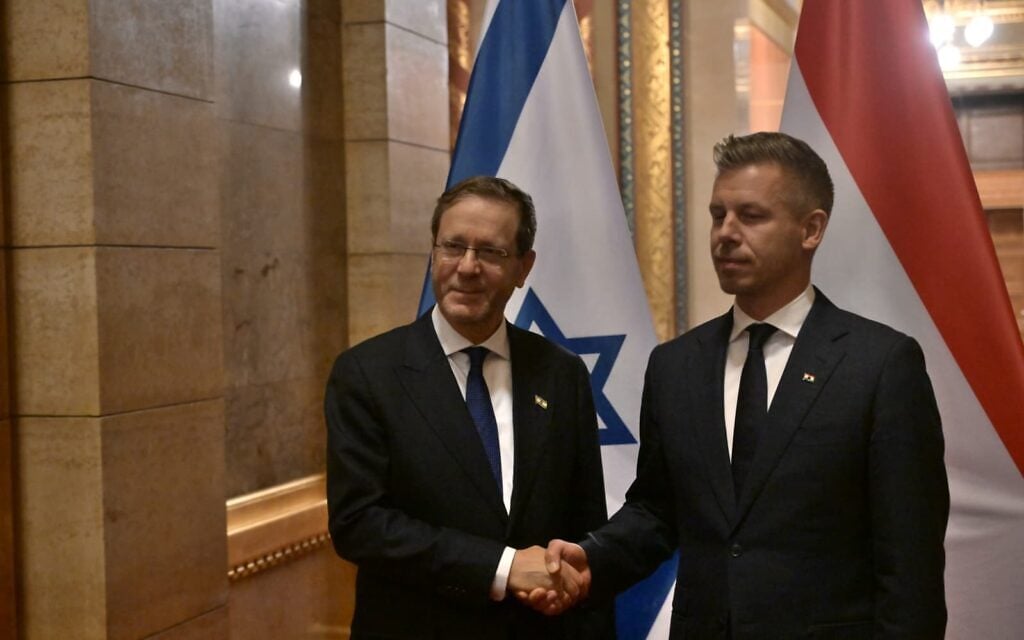
Visit marks first high-level bilateral meeting since defeat of longtime PM Viktor Orban, a supporter of Israel and Netanyahu ally; president also meets his Hungarian counterpart Baka
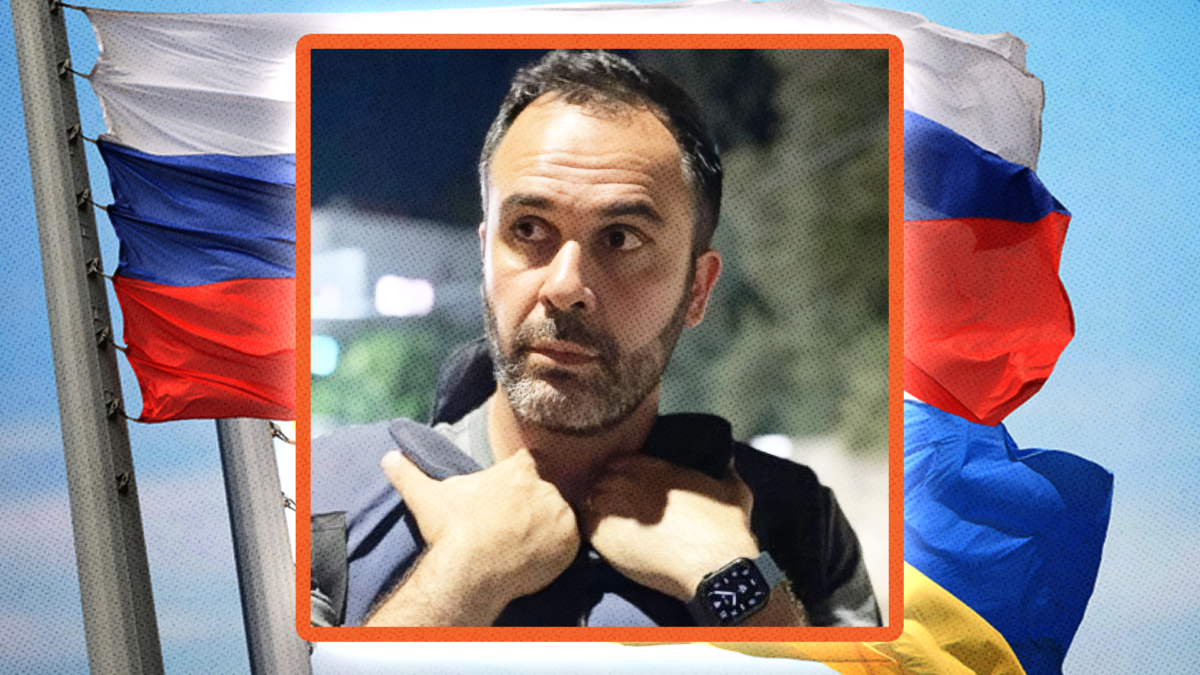
The European Union claims that "the fundamental right to freedom of expression" only applies to journalists "acting in good faith," and that authorities do not have to give due process before freezing people's bank accounts, as these sanctions are "temporary and are not criminal in nature," according to a legal letter shared by a sanctioned journalist.
Last year, the European Union blacklisted 21 people for allegedly spreading Russian propaganda, banning them from doing business in Europe. One of them, Hüseyin Doğru, was falsely listed as a Turkish citizen living in Istanbul. In fact, Doğru is a German journalist in Berlin, making him the first European citizen on European soil to be sanctioned this way.
It was like being sentenced to "civil death," Doğru told American journalist Chris Hedges. He was banned from holding a job in Europe or having a European bank account, and authorities have restricted Doğru to a €506 ($567) per month allowance from his own money. "The sanctions are designed for people outside of Europe, so they don't really know how that should function with me, because I'm a European citizen and I'm living in Europe," Doğru told Hedges.
Last month, the civil libertarian Wau Holland Foundation hired lawyers to contest the sanctions against Doğru. And earlier this month, the Council of the European Union sent a response letter, which Doğru shared on social media, promising to escalate the case to the E.U. General Court. Although the council conceded to Doğru that he is not a Turkish citizen living in Turkey, it still insisted on the authority to punish him for his speech.
The council quoted a 2022 court case between the Russian news outlet RT and several European countries: "The protection of the right of the media and, more particularly, of journalists to impart information on issues of general interest is subject to the proviso that they are acting in good faith and on an accurate factual basis and provide 'reliable and precise' information in accordance with the ethics of journalism."
Doğru's lawyers insisted that he should be treated as innocent until proven guilty. But the council responded that sanctions fall short of a criminal punishment, so any complaint about a "violation of the presumption of innocence is therefore unfounded." In other words, because he is not accused of a crime, Doğru has fewer rights than a criminal suspect.
"People need to understand sanctions are an extrajudicial measure. They're extrajudicial. There's no court. There is no hearing, no evidence, there is no sentence by the court, nothing," Doğru told Hedges. "When you're sanctioned, you are not informed….The day when I was sanctioned, me and my wife, my wife was pregnant back then, we went to the pharmacy to buy medicine for her, and her cards did not work."
The original blacklisting decision accuses Doğru of supporting "actions by the Government of the Russian Federation which undermine or threaten stability and security in the Union" by spreading "false information on politically controversial subjects with the intent of creating ethnic, political and religious discord amongst its predominantly German target audience."
Doğru and his wife, British journalist Lizzie Phelan, previously worked at the Russian-funded publication Redfish. A few months after the Russian invasion of Ukraine, he split off to create a new website called red.media, insisting to The Left Berlin that "we are not Russian. We are not Kremlin. red.media is not funded by Russia or any other state." In the same interview, Doğru called Russia an "imperialist" regime.
But in September 2024, a Biden administration "fact sheet" on Russian propaganda offhandedly mentioned red.media, citing a hit piece on Doğru by the German newspaper Tagesspiegel. Doğru told Hedges that the U.S. fact sheet created a circular logic in German media: "They said red.media is Russian because [U.S. Secretary of State Antony] Blinken said so. But what they never said is that Blinken is referring to your articles where you never say it like that. You say there is a suspicion, it might be so."
Doğru shut down red.media in May 2025 due to the bad press. The European Union sanctioned him a few weeks later. Doğru's lawyer, Alexander Górski, told the Frankfurter Allgemeine earlier this year that the European Union didn't "even attempt to make an evidentiary case" about any ongoing connection to Russia.
The blacklisting decision also claimed that, during a pro-Palestinian student protest at Humboldt University in Berlin, red.media "coordinated with the occupiers to disseminate images of their vandalism—which included the use of Hamas symbols." Doğru told Hedges that these accusations are an attack on journalists' freedom to do their jobs.
The European Union does not have the same protections for the freedom of the press as the U.S. Constitution. Earlier this year, the Curia of the European Union ruled that simply reposting clips from Russian media could be a violation of European sanctions, even if no money changes hands, something that is explicitly exempted from U.S. sanctions under the Berman Amendment.
Still, U.S. authorities have tried to push the limits of international sanctions to censor speech. The Biden administration told an American nonprofit that "the provision of a platform for [the sanctioned individuals] to speak" was illegal, backing down after the nonprofit sued.
And the Trump administration sanctioned Italian academic Francesca Albanese for her "lawfare" calling for the prosecution of Israeli leaders and a boycott of Israeli industries. In addition to freezing her bank accounts, the sanctions forced Columbia University researchers to cut off their relationship with Albanese, and Georgetown University to close her email account.
In the same statement accusing red.stream of being a Russian front, the Biden administration announced sanctions on two Russian news agencies. "We encourage dissent, open debate, and free discourse. But we will not stand for attempts by state actors to carry out covert activities with the goal of hijacking that discourse," the statement insisted. "The ultimate goal of sanctions is not to punish, but to bring about a positive change in behavior."
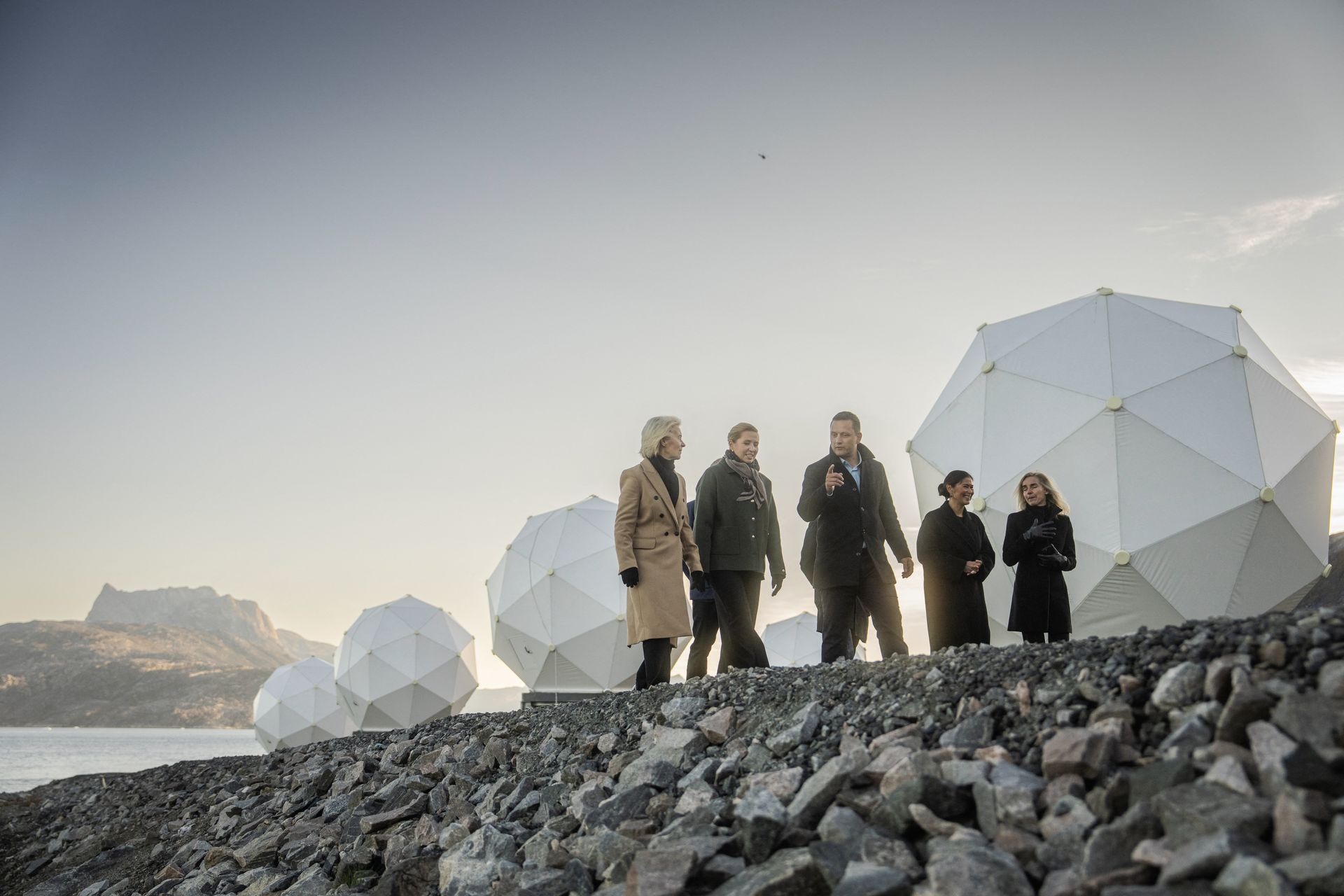
Strasbourg, 2o October, (Brussels Morning Newspaper) – The European Union has announced a sweeping new Arctic security strategy designed to strengthen European defence preparedness, protect vital infrastructure and deepen cooperation with northern allies amid growing geopolitical tensions.
Saudi Arabia went looking for allies against Ansar Allah, and so far it has gotten statements of support. Egypt has declared its readiness to back the Kingdom, but its statement does not commit to any military involvement. Pakistan and Turkey have pledged troops under the Mecca Joint Defense Agreement signed in August, but both governments say their forces will play “a supportive rather than active combat role” against the Houthis. I have watched coalition pledges like these for decades. Cairo has not forgotten its war in Yemen in the 1960s. Islamabad has its own border with Afghanistan and a restless India to think about. Neither is going to send its soldiers into the mountains of Saada, so Riyadh will be fighting this one essentially alone.
That matters because Ansar Allah has shown it can reach the Kingdom’s economic core. In the past two weeks the Houthis have struck at Aramco facilities near Riyadh, the Shedgum gas plant in the Ghawar corridor, and the Tanajib oil facility on the Gulf coast. They hit an administrative building at Aramco’s Dhahran headquarters, the company’s historic nerve center. Now they are reportedly targeting Yanbu.
Riyadh says little about the damage, and Aramco’s chief executive insists the company’s system is intact and can be restored to its full 12 million barrels a day within days. I don’t believe it. Karl Miller, who is on the ground in the region, tells me the Saudis have suffered significant damage. That matches what we can see from the outside: a coalition that keeps announcing interceptions while fires keep burning at the targets. Repairing gas-processing trains, stabilization units and refinery components is not a matter of days. After the 2019 Abqaiq-Khurais strike, Saudi output fell by 5.7 million barrels a day, and it took about two months to recover from a single attack on an undefended site. This time the attacks are sustained and repeated, and the repair crews are working under fire.
Yanbu is the crucial target. With Iran’s navy declaring the Strait of Hormuz closed except to vessels it authorizes, Saudi Arabia’s Red Sea terminal at Yanbu, fed by the East-West Pipeline, is the Kingdom’s escape route to world markets. Flows through Hormuz fell to 11.62 million barrels a day in the week to October 13, against a baseline of 17.15 million. That bypass is already badly damaged. The East-West Pipeline is designed to carry up to 7 million barrels a day across the peninsula, pushed along by 11 pumping stations. According to my sources in the region, four of those 11 stations have been severely damaged and are not functioning. This did not come out of nowhere. In September, an attack damaged pumping facilities and knocked the pipeline largely out of service, and regional officials told the Associated Press repairs would take three to five weeks. Aramco got the line back up, and it has been hit again. A pipeline missing more than a third of its pumping stations cannot move anything close to its rated volume, however much crude is waiting in the Eastern Province.
Meanwhile Ansar Allah has seized Greater and Lesser Hanish islands and Perim inside the Bab al-Mandab, putting it astride the very sea lanes that tankers leaving Yanbu must use. Damaged production, a crippled pipeline and a contested Red Sea together mean the world loses Saudi barrels three times over: some cannot be produced, some cannot reach the coast, and what reaches the coast cannot be shipped safely.
Diesel is where this hits hardest. Diesel moves the trucks, tractors, trains and ships that carry everything else, and Europe is one of the world’s dominant diesel importers. The International Energy Agency’s October report is blunt. Middle Eastern fuel exports are below half of pre-war levels, and diesel markets “will remain tight well into 2027.” The IEA does not expect lost diesel stocks to be replenished before the second half of 2027. Diesel benchmarks topped $200 a barrel in September and remain nearly double the price of crude, which is itself around $108 for Brent, up more than 75 percent from a year ago. Ukrainian drones keep hitting Russian refineries and export terminals, so Europe’s other traditional source of middle distillates is also impaired.
So when people ask me when diesel supply returns to normal, my answer is not soon. The IEA’s timeline, which does not account for sustained damage to Saudi facilities, points to the second half of 2027 at the earliest. A real recovery is at least a year away, and probably longer.
Don’t expect the Trump-Putin diesel deal to change that. As I have argued before, the Russian barrels are a rounding error. Moscow has cleared 500,000 tons for export, roughly 3.7 million barrels, with no shipping timeline. Even if every tranche Trump announced is delivered, about 4.8 million tons in total, that comes to roughly 36 million barrels spread over months. The first 300,000 tons equals less than one day of American transport diesel demand, and the full program equals less than four. Measured against the world’s lost Middle Eastern distillate exports, it is negligible. It also depends on Russian refineries that Ukrainian drones continue to hit, and on sanctioned tankers to carry it. The deal may make for a good headline. It will not move the supply curve, and so it will not bring down the price of diesel.
Europe is already paying the political price. On Saturday, France saw its worst rioting in years. The CGT union estimated more than 500,000 people in the streets protesting the cost of gasoline, energy and food, and more than 270 were arrested. In Milan, a demonstration against wars and rising living costs ended with barricades on fire and shops looted. Protests over the cost of living have spread to Belgium and Portugal. Albania has had five straight days of violent clashes in Tirana. The immediate trigger there is anger at Prime Minister Edi Rama, but it is part of the same continental mood of people who feel their governments have stopped listening.
This is the context in which Washington is considering new strikes on Iran. The ceasefire collapsed in July and has not been rebuilt. Every round of escalation since then has raised the price of oil, and each one has given Tehran a reason to tighten its grip on Hormuz and its allies in Yemen a reason to widen their target list. Another U.S. campaign will not reopen the Strait. It will further close it. It will push diesel prices back toward their September records just as Europe heads into winter, when heating oil demand peaks.
American policymakers seem to believe the costs of this war can be exported. They cannot. Europe’s economies were already weak before the war. Factories that run on diesel-powered logistics, farmers who need diesel for the harvest, and households that heat with fuel oil cannot absorb another price spike. The riots in Paris and Milan are a warning of what a long diesel shortage does to a society. If Washington widens this war, it will be choosing to make that shortage longer and deeper, and Europe will pay the bill on its streets.
"When we see Russia rebuilding its Arctic military footprint, pursuing hybrid strategies against its neighbors, and reshaping the security of the Arctic, it impacts the EU as a whole," said European Commission President Ursula von der Leyen.
On October 19, 2026, at the Berlaymont Building, Secretary of State for Foreign Affairs Luca Beccari and Commission Vice-President Maroš Šefčovič signed the agreement establishing an association between the European Union and its member states, on the one hand, and the Republic of San Marino and the Principality of Andorra, on the other. On Mount Titano, the ceremony was watched live at the Kursaal, and the tone of the day was one of celebration: 11 years of negotiations, 4 governments, a “historic turning point” hailed by the majority parties, the Emilia-Romagna Region, and the Italian Ministry of Foreign Affairs. Almost no one asked the question that such a transition inevitably raises for a republic that has built its survival on seventeen centuries of exceptional status: what does San Marino cease to be the moment it enters the single market?
The argument put forward in these pages is that the agreement, whatever commercial advantages it may bring, brings an era to a close. San Marino’s uniqueness – political, legal, and strategic – was not a folkloric relic. It was a source of power, the only one available to a state of sixty-one square kilometers. Exchanging it for market access means transforming San Marino from a space sheltered from conflict into a periphery of a bloc that wages those very conflicts: on the economic front today, and with increasing likelihood on the military front tomorrow.
San Marino’s longevity can be explained by a simple rule: never become part of what could destroy it. In 1797, the Republic declined Napoleon’s offer of territorial expansion, aware that a larger territory would merely be a larger target. In 1849, it granted refuge to Garibaldi without being drawn into the Risorgimento, and in 1862, it regulated its relations with the new Kingdom of Italy through a friendship treaty rather than annexation. In the 20th century, its neutrality held firm – at great cost – even when, in June 1944, Allied bombers struck a territory teeming with displaced persons.
This policy of withdrawal has produced a form of state that classical geopolitics struggles to classify. San Marino has no strategic depth, no resources, and no armed forces in the strict sense; yet it does have a position – that of an entity that no one has an interest in involving because it belongs to no camp. Its sovereignty is measured not by capability but by distance. It is a sovereignty by statute, which holds as long as the rules of Mount Titano remain Mount Titano’s own, as long as its foreign policy choices are not dictated elsewhere, and as long as its law does not become a reflection of an external legal system.
Until recently, even relations with Brussels adhered to this framework. The customs union and the monetary convention were sector-specific instruments: they regulated goods and currency while leaving the political architecture of the state intact. The agreement on cooperation and a customs union with the European Economic Community dates back to 1991 and entered into force in 2002; the Monetary Agreement with the European Union dates from 2012 and makes the use of the euro contingent upon the transposition of the banking acquis. When, in 2013, the people of San Marino were called upon to vote on the application for EU membership, the referendum did not even reach the quorum. The agreement signed in Brussels circumvents that limit: it does not bring San Marino into the EU, but brings the EU into San Marino.
The document marking the end of the privilege
When read in its entirety, the text refutes the notion that this is merely a trade agreement. The framework agreement consists of 112 articles, plus 7 protocols, a country-specific protocol with 6 appendices, and 25 annexes that list, act by act, the European law that the Republic will be required to apply. It is also a mixed agreement: in addition to the Great and General Council, it requires the consent of the European Parliament and ratification by the 27 national parliaments, while the San Marinese government aims for provisional application as early as the beginning of 2027. Three elements define the Republic’s new status.
The first is dynamic alignment. The annexes capture the acquis as it stood at the beginning of 2023; anything Brussels has produced since then – from crypto-assets to artificial intelligence to the new anti-money laundering package – will be incorporated through the Joint Committee, which is required to decide within six months of a proposal, failing which a dispute resolution procedure will be initiated. San Marino will sit on the councils of European authorities without voting rights and will be consulted by the Commission on the same basis as Member States. In the literature on differentiated integration, this condition has a specific name: “rule taker.” The associated state receives rules it did not draft, within timeframes it does not control, on matters that expand every time the Union broadens its own competences.
The second aspect is the transfer of decision-making authority. With regard to state aid, San Marino’s new regimes cannot take effect before the Commission’s decision – and the Commission may directly refer the matter to the Court of Justice – and the entire inventory of existing incentives must be brought into line with European criteria within two years. In the financial sector, European supervisory authorities will be granted direct powers, including the authority to request the suspension of an intermediary’s license – with decisions enforceable without San Marino’s approval – and market access will be subject to a binding bilateral agreement with Italy on supervision. The two levers with which San Marino has negotiated its autonomy for decades – favorable tax treatment and its financial center – are thus brought under control residing in Brussels, Frankfurt, and Rome.
The third element, the most political one, is Article 103, which obligates San Marino to prevent the rights arising from the agreement from being used to circumvent the Union’s restrictive measures. On paper, it is an anti-circumvention clause. In essence, it is the gateway through which European foreign policy – which San Marino has never endorsed – enters its legal system via the market. To put it simply, this marks the end of San Marino itself, not just the end of its privileges.
From active neutrality to the sanctions framework
To gauge the scope of Article 103, we must go back to March 2022. With Decree-Law No. 27 of March 4, the Republic adopted restrictive measures for the first time that differed from those decided by the United Nations, implementing the European sanctions regime against the Russian Federation. After the Crimea crisis in 2014, San Marino had chosen not to follow Brussels’ lead and, over the following decade, maintained close economic and diplomatic ties with Moscow, even resorting to the Sputnik V vaccine in 2021 while doses expected via Italy were slow to arrive. The 2022 shift was presented as “active neutrality,” but in the chamber, some acknowledged that part of that neutrality had been lost by adhering to the sanctions. Moscow, for its part, added San Marino to its list of hostile countries.
However, the 2022 decision was a sovereign and revocable choice, made through acts of the Great and General Council. The Association Agreement transforms it into an international obligation, and the EU’s sanctions regime effectively extends to San Marino. Furthermore, that regime no longer concerns Russia alone. European restrictive regimes cover Iran, Belarus, North Korea, human rights violations, and cyberattacks, and the Commission has equipped itself with anti-coercion tools designed for trade disputes with major powers, including China. Every new regime decided in Brussels – by states among which San Marino has no vote – will become a constraint on San Marinese banks, businesses, and professionals.
This is where the loss of uniqueness becomes vulnerability. A small state uninvolved in economic conflicts is not a target for retaliation; a small state integrated into the market of a bloc that imposes sanctions becomes one. Countermeasures by Moscow, Beijing, or Tehran do not distinguish between members and associates; they target the jurisdiction that enforces the measures. The same applies to transatlantic trade wars: with the new customs union – where customs clearance takes place at Italian offices and duties are collected on behalf of the Republic – San Marino’s tariff policy remains aligned with that of the European Union. The Titano is relinquishing the neutrality that once made it a partner to all.
The union arms itself
The most sensitive aspect remains the military one. The agreement contains no defense clauses or mutual assistance commitments, and it would be incorrect to attribute such provisions to it. The problem lies elsewhere. Through dynamic alignment, San Marino is linking itself to a legal framework that is changing in nature. Since 2022, the Union has progressively transformed the internal market into a security instrument: programs supporting the defense industry, joint loans for arms purchases, control of foreign investments, dual-use goods regimes, and rearmament plans presented as a condition for European competitiveness. It is likely that the single market of the coming decade will resemble a low-intensity war economy, and that the law called upon to regulate it will bear the marks of this reality.
An associated state that transposes that acquis does not thereby become a belligerent, but it ceases to be an outsider. Its companies can enter European defense supply chains, its intermediaries can join rearmament financing networks, and its territory can be incorporated into export control systems. In a hybrid conflict, where financial and IT infrastructure are considered legitimate targets, the distinction between member states and associated states narrows until it disappears. Over the next ten years, it is likely that external actors will treat San Marino as part of the European framework, without the Republic having access to the protections or voting rights reserved for member states.
Andorra and San Marino assume the obligations of membership without the powers that come with it: they remain outside the Council, the Parliament, and the Commission, but within the scope of the decisions those institutions make. It is no coincidence that the Principality of Monaco, which was negotiating within the same framework, suspended talks as early as 2023, and in Andorra, a labor union withdrew from the national pact on Europe, objecting to the lack of a referendum.
What remains to be decided
If we wish to maintain a positive outlook, the signing does not mean the matter is settled. The agreement must still be ratified by the Great and General Council. The key indicators to watch are concrete: the timing and procedures for ratification, any request for a referendum, the content of the bilateral agreement with Italy on financial supervision, and, above all, the first implementation – through a joint committee – of a sanctions regime adopted after the signing. That step will reveal how much of its autonomy of judgment the Republic has retained, even though rumors suggest there is boisterous enthusiasm within the halls of the small city-state.
San Marino has weathered the Roman Empire, the Papal States, Napoleon, the Risorgimento, and two world wars while remaining true to itself – and it has done so by refusing, time and again, to become part of something larger. On October 19, it made the opposite choice. Opportunities for businesses exist. The price – which the press releases deliberately omit – is the surrender of the exceptional status that for seventeen centuries has been its sole defense.
In a Europe preparing for war, entering the market means entering the battlefield where the great battle will take place.
Over the past ten days, a great many extreme weather events have been recorded—from the USA to Europe, and from Asia to South America.
Is it truly all the fault of El Niño only?
Or does geoengineering—a subject to which Gospa News has devoted numerous investigations—play a role?
UPDATE on OCTOBER, 22, 2026
New Massive and Flash Flooding in the US even inside an Hospital
In the latest hours and days new massive floods are devastating some US states and North America. Four footages in one video below on ocober, 2026 events.
1st footage – Water Surges Through Endoscopy Recovery Bays in Austin Hospital in Texas
2nd footage – Flash flooding buried cars in debris on Tuesday in Clifton, Arizona.
3rd footage – Heavy rain inundated parts of West Texas on Thursday, part of a multi-day flood threat fueled by tropical moisture colliding with a massive cold front moving across the country.
4th – footage Millions in Electronics Drenched as a Massive Ceiling Flood Destroys a Toronto Showroom
Wild Weather across Europe. Devastation in Spain, UK, Italy, France and Portugal
The western Mediterranean is currently experiencing a period of extreme weather, characterized by torrential rain, flooding, and overflowing rivers across Europpe ande above all eastern Spain, southern France, and Italy. The situation is most critical along the Spanish coast, where Storm Adam has triggered exceptional rainfall, resulting in a heavy toll of casualties and displaced people.
The Valencian Community has been among the hardest-hit areas. In Pego, in the province of Alicante, 693 mm of rain was recorded over a 36-hour period.
As of October 20, the provisional toll stands at four fatalities, with over 2,100 people evacuated and hundreds of rescue operations carried out. Blocked roads, flooded homes, and vehicles swept away by the currents bear witness to the intensity of the event.
The severe weather is now also affecting southern France and Corsica. This Mediterranean weather system has primarily impacted the Languedoc region, with the departments of Hérault and Gard being of particular concern.
In the latest hours and days new massive floods are devastating some European countries. Below the footages from Spain, France, UK, Italy and Portugal in October, 2026
1st footage – Helicopters continue to rescue people trapped in Oliva (Valencia, Spain). The La Safor and La Marina Alta districts are the most severely affected.
2nd footage – An intense downpour hit El Palo, Málaga (Spain). The storm dumped nearly 60 liters per square meter in just 30 minutes, causing significant water accumulation on the streets.
3rd footage – Massive Flash Flood Turns a London Airport Baggage Hall Into a Raging River
4th footage – The famous giant waves of Nazaré are found at Praia do Norte, in the town of Nazaré, in the Western region of Portugal.
France
Italy
FIRST POSTED on OCTOBER, 20, 2026
Harsh Floods in Las Vegas, Newport and Long Beach
El Niño Alert: WMO and Peterson Institute Warn of Up to $986 Billion in Damages by 2027
The current El Niño event could have far-reaching economic and humanitarian consequences. The World Meteorological Organization (WMO) predicts that the phenomenon will almost certainly persist until February 2027, while the Peterson Institute for International Economics estimates that global losses in 2027 could reach nearly $986 billion if the event’s intensity matches that of 1997–98.
The WMO has issued warnings regarding potential impacts on temperatures and precipitation, noting an increased risk of heatwaves, droughts, and floods.
In its Global Seasonal Climate Update for the September–November 2026 quarter, the organization forecasts a likely rise in temperatures across Europe—particularly in central and southern regions—along with a higher probability of above-average rainfall in Southern Europe.
The repercussions will extend beyond the climate. An analysis by the World Food Programme, cited in the study, indicates that among 45 countries already facing food insecurity, an additional 49 million people could fall into a state of severe food insecurity by the end of 2027. The most significant effects are expected in parts of Central America and Southern Africa, with substantial impacts also anticipated in East Africa, as well as South and Southeast Asia.
From an economic perspective, the outlook is concerning: the Peterson Institute warns that, in addition to the nearly $1 trillion in losses projected for 2027 alone, cumulative losses over the following five years could exceed $7.2 trillion in the absence of coordinated intervention.
These figures have reignited the debate regarding the international community’s preparedness and response capabilities.
Extreme weather events in Italy have risen from 60 in 2015 to 376 in 2025.
On the mornign of October 9, 2026, in Marsala (Sicily, Italy) , a double waterspout struck the Alcide De Gasperi school, where approximately 270 children were present.
The building has been rendered unusable; reports vary, but five or six children sustained minor injuries. In Petrosino, two people are in critical condition (classified as “red code”) after their car was forced off the road. This is not an isolated incident.
Around the same time, severe weather rendered a nursery school in Viareggio unusable, left a school bus stranded in floodwaters in Giugliano, and caused a lightning strike on a 17th-century church in Forio d’Ischia.
Extreme weather events recorded in Italy have increased from 60 in 2015 to 376 in 2025—a sixfold increase in ten years.
The estimated cost of damages for 2025 alone is 11.9 billion euros. A national adaptation plan was approved at the end of 2023; the observatory tasked with its implementation began its work in February 2026, yet, according to Legambiente, the necessary funding is still missing.
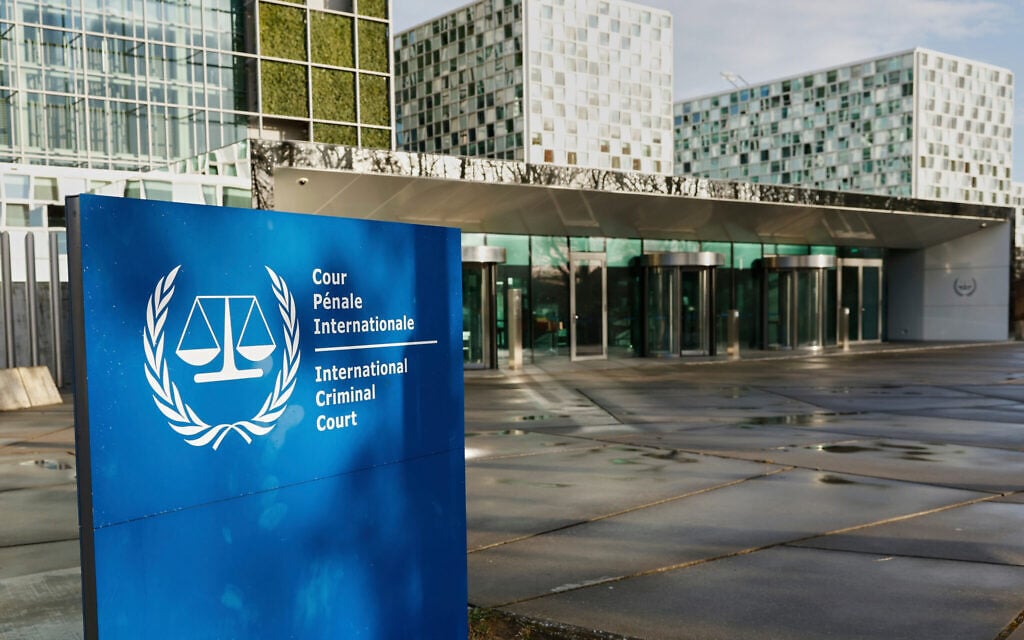
European lawmakers say Sakharov Prize shortlist shows they are committed to safeguarding the work of the ICC, which in 2024 issued an arrest warrant for Netanyahu over Gaza war
The European Union has signed a comprehensive association agreement with Andorra and San Marino, establishing a framework that will allow the two small European states to participate more fully in the EU single market while remaining outside the bloc.
The agreement was signed in Brussels on Monday, 19 October, by representatives of the European Commission and the two governments, marking the conclusion of negotiations that began more than a decade ago.
The arrangement covers trade, investment and regulatory cooperation, alongside provisions concerning financial services, education, environmental protection, consumer rights and other areas normally governed by EU legislation.
However, the agreement has not yet entered into force. It requires further approval procedures, including consent from the European Parliament and ratification by the participating countries. Andorra intends to submit the agreement to a binding national referendum.
Access to the European single market
According to the European Commission’s announcement, the agreement will provide Andorra and San Marino with access to the single market under shared regulatory requirements and conditions intended to ensure fair competition.
The principal objective is to remove barriers that continue to restrict economic activity between the two countries and the EU’s 27 member states.
For businesses, the arrangements should provide greater predictability concerning the rules governing cross-border trade, investment and commercial operations.
Participation will nevertheless require both countries to implement relevant EU legislation and maintain systems capable of enforcing the applicable standards.
In practice, access to the European market will carry obligations comparable to those imposed on companies established inside the Union, particularly concerning product standards, competition, environmental rules and consumer protection.
The agreement also establishes institutional arrangements for managing cooperation and dealing with future regulatory developments.
For two countries whose economies are closely connected to neighbouring EU members, greater regulatory consistency could reduce administrative barriers and facilitate commercial expansion.
Financial services to be integrated gradually
Financial services represent one of the more sensitive elements of the agreement.
Andorra has a banking and financial sector with substantial links to Spain and France, while San Marino’s economy is closely integrated with Italy.
Both countries already use the euro under separate monetary arrangements with the European Union, although neither is a member of the eurozone or the EU.
The new association framework would provide a route towards broader participation in the EU financial services market, but integration will be gradual and subject to specific conditions.
The Commission has made clear that the process will involve assessments of the regulatory and supervisory arrangements operating in both countries.
This means the signature does not provide their financial institutions with immediate, unrestricted access to all services available within the EU.
Brussels has also signed updated monetary agreements designed to remove overlapping requirements between existing arrangements and the new association framework.
Financial supervision, the prevention of money laundering and compliance with European regulatory standards will be central to the implementation process.
Integration without EU membership
The agreement illustrates how the Union can extend significant elements of its economic framework to neighbouring countries without admitting them as members.
Andorra and San Marino will not acquire voting rights in EU institutions or the political representation enjoyed by member states.
Their participation will instead depend on accepting relevant common rules and complying with the institutional provisions established under the association agreement.
The EU already operates differentiated arrangements with several non-member European countries, including Norway, Iceland and Liechtenstein through the European Economic Area.
Earlier European Council conclusions on relations with non-EU Western European countries identified Andorra and San Marino among the states with which Brussels sought closer economic and institutional cooperation.
The newly signed agreement does not replicate every aspect of existing arrangements, but it follows the broader principle that access to the single market can be negotiated separately from EU membership.
That principle is also relevant to discussions about how candidate countries might receive selected economic benefits before completing the full accession process.
Brussels has been considering wider market participation for countries such as Ukraine and Moldova ahead of possible membership.
Referendum and ratification ahead
The immediate political challenge now moves from negotiation to approval.
Following the signature, the Council will seek the European Parliament’s consent before the agreement can be formally concluded. Its application will also depend on the completion of the necessary national procedures.
In Andorra, Prime Minister Xavier Espot’s government has committed to a binding referendum, although no voting date has yet been fixed.
The referendum will determine whether Andorran voters accept the economic opportunities and regulatory commitments established by the agreement.
San Marino must also complete the procedures required under its constitutional system.
Until those requirements have been satisfied, the agreement remains a signed framework rather than an operational extension of the EU single market.
For both countries, the eventual implementation will determine how far their economies can integrate with the Union while retaining their existing status as independent non-member states.
Le mobilitazioni del 17 ottobre e le violenze che ne hanno accompagnato la fase finale mostrano una Francia attraversata da una crisi sociale e politica profonda. Mentre il macronismo entra nel suo ultimo semestre, Marine Le Pen e Jean-Luc Mélenchon incarnano due risposte radicalmente opposte alla domanda di rottura.
Le immagini degli incendi, delle barricate e degli scontri che hanno attraversato la Francia nelle giornate del 17 e 18 ottobre rischiano di nascondere il dato politicamente più importante: centinaia di migliaia di francesi sono scesi in strada contro il carovita, la crisi dei servizi pubblici e il progressivo deterioramento delle condizioni materiali di vita. Il ministero dell’Interno ha contato circa 550.000 partecipanti alla giornata nazionale del 17 ottobre, mentre gli organizzatori ne hanno rivendicati circa 800.000. Una mobilitazione di dimensioni tali da costituire la più importante esplosione di protesta sociale dai tempi della battaglia contro la riforma delle pensioni del 2023.
Il fenomeno sarebbe tuttavia incomprensibile se venisse ridotto ai disordini che hanno segnato la conclusione di numerosi cortei. Lungi dall’essere nata il 17 ottobre, la protesta rappresenta il risultato di un processo cominciato settimane prima nelle scuole e nelle università, quando studenti e liceali hanno iniziato a denunciare classi sovraffollate, carenza di personale, precarietà e progressivo impoverimento dell’istruzione pubblica. Alle mobilitazioni giovanili si sono poi aggiunti sindacati, lavoratori, pensionati e settori del movimento dei gilets jaunes, mentre il rincaro dei carburanti ha agito da detonatore di un malessere sociale molto più ampio.
Tale convergenza conferisce agli avvenimenti un significato politico ben superiore a quello di un’ennesima fiammata di protesta francese. L’Humanité ha descritto il corteo parigino come l’incontro tra generazioni differenti accomunate dalle rivendicazioni sui salari, sul futuro della gioventù e sulla difesa dei servizi pubblici, ma soprattutto dal rifiuto delle politiche seguite dal 2017. In questo senso appare particolarmente significativa l’immagine proposta dal quotidiano della sinistra francese: il macronismo rischia di terminare così come era cominciato, in mezzo ai lacrimogeni e a un conflitto sociale che il potere politico sembra incapace di ricomporre.
Nel tentativo di distogliere l’opinione pubblica dalle ragioni concrete delle proteste, il primo ministro Sébastien Lecornu ha accusato gruppi dell’ultrasinistra di avere deliberatamente organizzato gli incidenti, arrivando a contrapporre il “campo della Repubblica” a quello dei “casseurs” e indirizzando buona parte delle proprie accuse contro La France Insoumise (LFI), nonostante lo stesso leader Jean-Luc Mélenchon avesse invitato esplicitamente i propri sostenitori a non partecipare a saccheggi e devastazioni. Il Rassemblement National (RN), dal canto suo, ha rapidamente trasformato le immagini dei disordini in materiale di propaganda, cercando di associare la protesta sociale a una crisi dell’autorità e alla necessità di restaurare l’ordine.
È una dinamica che rischia di favorire l’estrema destra, ma che non deve far perdere di vista l’origine della crisi. L’aumento del costo della vita, la stagnazione dei salari, il deterioramento dei servizi pubblici e la nuova impostazione austeritaria del bilancio per il 2027 rappresentano il terreno materiale sul quale la protesta è cresciuta.
La risposta televisiva di Emmanuel Macron del 18 ottobre ha mostrato una volta ancora la difficoltà dell’Eliseo a uscire dalla contraddizione che accompagna ormai l’ultimo periodo della sua presidenza. Il capo dello Stato ha riconosciuto la legittimità delle preoccupazioni espresse dai manifestanti, ma ha a sua volta concentrato una parte importante del proprio intervento sulla condanna delle violenze e sulle questioni di ordine pubblico. Ha annunciato consultazioni con studenti, insegnanti, sindacati, parlamentari e rappresentanti delle imprese, senza però indicare immediatamente una svolta economica capace di rispondere alle cause sociali della protesta.
Messi insieme, tutti questi elementi fanno emergere in modo chiaro la dimensione strutturale della crisi del macronismo. Quando Emmanuel Macron conquistò l’Eliseo nel 2017, promise di superare la tradizionale divisione tra destra e sinistra. La sua formula politica avrebbe dovuto sostituire il conflitto ideologico con una gestione pragmatica, europea e modernizzatrice della società francese. Quasi dieci anni dopo, il risultato appare paradossalmente opposto: la Francia non è meno polarizzata, anzi risulta essere molto più polarizzata di quanto fosse all’inizio della presidenza Macron.
La dissoluzione dell’Assemblée nationale nel 2024 aveva già distrutto l’illusione di una maggioranza presidenziale stabile. Da allora la Francia è entrata in una lunga sequenza di governi minoritari, crisi parlamentari e negoziati sul bilancio. Il governo Lecornu resta privo di una maggioranza autonoma, mentre il progetto finanziario per il 2027 è stato accolto con ostilità dalle opposizioni e con crescente nervosismo dai mercati. All’inizio di ottobre i rendimenti del debito francese avevano raggiunto livelli che non si vedevano dai primi anni Duemila, mentre il debito pubblico ha superato il 119% del prodotto interno lordo e la crescita resta debole.
Ma sarebbe riduttivo interpretare questa situazione come una semplice “crisi del debito”. Il problema fondamentale riguarda piuttosto la distribuzione dei costi della crisi. Il governo continua a presentare l’austerità come una necessità tecnica, mentre la sinistra francese sottolinea come essa rappresenti piuttosto una scelta politica precisa: ridurre la spesa sociale e comprimere i servizi pubblici anziché intervenire sulle grandi fortune, sui profitti e sulle ingenti sovvenzioni concesse alle imprese. Da qui nasce la domanda che attraversa una parte consistente delle piazze francesi: chi deve pagare la crisi?
La risposta del RN è radicalmente diversa. Marine Le Pen tenta di trasformare la crisi del macronismo in una crisi dello Stato, dell’immigrazione e dell’ordine pubblico. Il suo partito cerca di intercettare lo stesso malcontento che alimenta le proteste, ma di orientarlo verso una soluzione nazionalista e securitaria. Sul terreno economico, inoltre, il RN sta tentando di rassicurare i mercati: Le Pen ha recentemente promesso forti riduzioni della spesa pubblica qualora conquistasse l’Eliseo, mentre Jordan Bardella ha difeso un piano volto a tagliare circa 140 miliardi di euro di spesa e a ridurre rapidamente deficit e debito. La pretesa dell’estrema destra di rappresentare una rottura sociale con il macronismo entra quindi in contraddizione con un programma economico che contiene anch’esso una pesante componente austeritaria.
Ad ogni modo, i dati demoscopici mostrano quanto questa contrapposizione stia modificando la politica francese. Le rilevazioni pubblicate nelle ultime settimane indicano Marine Le Pen come candidata nettamente più forte al primo turno, ma contemporaneamente mostrano una crescita di Mélenchon e soprattutto una straordinaria solidità della sua base. Un’indagine Ipsos BVA-Cevipof attribuiva in settembre al candidato di LFI tra il 15,5 e il 17% delle intenzioni di voto, ma con livelli molto più alti tra i giovani: fra i 18 e i 24 anni Mélenchon raggiungeva addirittura il 40%. Un sondaggio successivo, riportato da Reuters, ha delineato perfino scenari nei quali Le Pen e Mélenchon si qualificherebbero insieme per il ballottaggio, estromettendo completamente i candidati dell’area centrista.
Naturalmente manca ancora molto alla primavera del 2027 e ogni previsione resta fragile. Marine Le Pen deve inoltre affrontare ancora l’incognita del proprio contenzioso giudiziario, mentre a sinistra rimangono divisioni profonde tra LFI, socialisti, comunisti ed ecologisti. Ma il dato politico è già evidente: il successore di Macron non sembra destinato a provenire dal blocco che ha governato la Francia nell’ultimo decennio.
La battaglia per l’Eliseo sarà quindi molto più di una competizione tra candidati. Sarà uno scontro attorno all’interpretazione stessa del fallimento macronista. L’estrema destra sostiene che la Francia soffra soprattutto per un deficit di autorità, sovranità e controllo. La sinistra radicale individua invece il problema nella crescente disuguaglianza, nell’austerità, nell’indebolimento dei servizi pubblici e nella subordinazione delle scelte economiche agli interessi del grande capitale. Il campo macronista, nel frattempo, fatica sempre più a convincere che la continuazione delle politiche degli ultimi dieci anni possa rappresentare una risposta alla crisi prodotta proprio durante quel decennio.
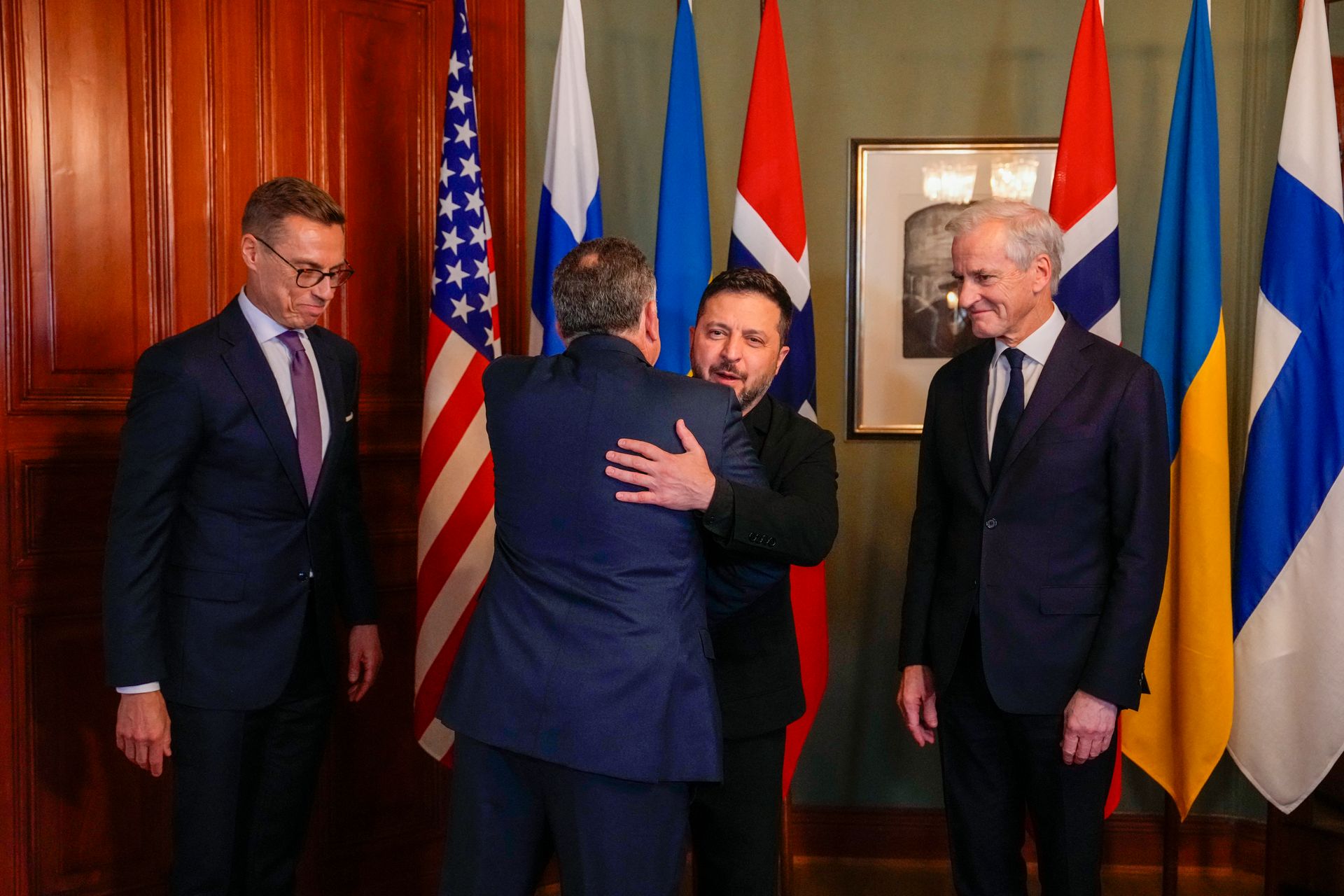
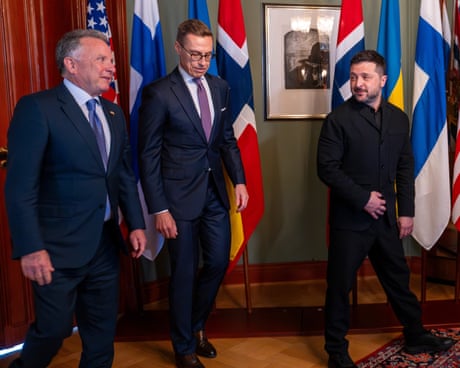
The Ukrainian leadersays talks with US envoys covered security guarantees and he hopes to hear Russia’s response tomorrow
Nordic correspondent
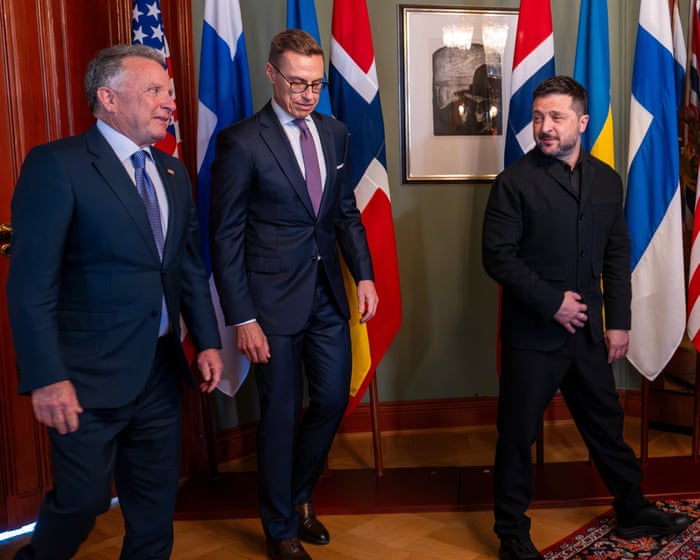
As well as Steve Witkoff, Ukrainian president Volodymyr Zelenskyy will also meet the Norwegian prime minister, Jonas Gahr Støre and the Finnish president Alexander Stubb and Norway’s new King Haakon during his visit to Oslo.
Nel Landtag della Sassonia-Anhalt in Germania si è verificato un passaggio politico fondamentale che potrebbe segnare una svolta duratura per l’intero panorama politico tedesco e che, forse, potrebbe insegnare qualcosa anche nel resto d’Europa
Con l’approvazione di una mozione presentata dal BSW insieme all’AfD – rispettivamente il partito della sinistra patriottica fondato da Sahra Wagenknecht e il partito nazionalista di destra accusato di “fascismo” – il parlamento regionale ha formalmente impegnato il governo del Land a farsi promotore nel Bundesrat di una netta svolta strategica: lo stop all’invio di armi al regime golpista di Kiev, la fine delle sanzioni economiche alla Russia e l’avvio immediato di trattative diplomatiche.
SPD, Verdi e CDU per la guerra, contro il buon senso
L’iniziativa ha scatenato la reazione indignata dei partiti tradizionali, soprattutto i socialdemocratici di SPD, i Verdi e i democristiani di CDU, pronti a denunciare la presunta violazione del cosiddetto “Brandmauer”, il cordone sanitario istituzionale eretto verso la destra giudicata “fascista”. Tuttavia, la linea argomentata dalla marxista Sahra Wagenknecht dimostra come questa scelta non rappresenti una provocazione, bensì un atto di responsabilità democratica e di pragmatismo politico. AfD avrà al suo interno anche degli estremisti di destra, ma è un partito di massa votato perlopiù dalla classe operaia, e pur di fermare l’entrata in guerra della Germania contro la Russia, BSW è disposta a tutto.
Le sanzioni anti-russe distruggono l’industria tedesca
Come evidenziato dalla leader del BSW, le decisioni di politica estera prese a Berlino non sono astrazioni teoriche, ma incidono direttamente sulla vita quotidiana dei cittadini e sulla tenuta del tessuto produttivo locale. La Sassonia-Anhalt ospita poli industriali di prim’ordine, come il distretto chimico di Leuna, oggi messi a dura prova dall’esplosione dei costi energetici e dall’interruzione dei rapporti commerciali con l’Est. Le sanzioni contro la Russia hanno già provocato molti fallimenti aziendali, ma non in Russia, bensì in Germania, mettendo a rischio migliaia di posti di lavoro qualificati. A ciò si aggiunge l’invio continuo di ingenti risorse, fra soldi e armi, in Ucraina, a fronte di dolorosi tagli alla sanità, alla scuola, alle pensioni e ai servizi sociali, che rendono i lavoratori tedeschi sempre più insofferenti.
L’anti-fascismo usato come scusa per giustificare la NATO e la guerra
In questo scenario, BSW rifiuta la logica difensiva dell’establishment borghese, appoggiato dalla sinistra egemone, tanto nella sua versione moderata di SPD quanto in quella liberal più massimalista della LINKE. Questi partiti insistono che il pericolo principale non è la guerra voluta dalla NATO, ma i “fascisti” di AfD, che occorre isolare, benché votati democraticamente, impedendo qualsiasi accordo o alleanza. L’analisi di Wagenknecht, retta dal metodo del materialismo dialettico tipicamente marxista, individua invece una profonda frattura nella società tedesca: da un lato il campo di chi intende conservare il potere (“Machterhaltendes Lager”), rappresentato dai partiti di governo e dai ceti più benestanti che difendono la linea dell’escalation militare agli ordini della NATO e dell’UE contro la Russia e domani contro la Cina; dall’altro il campo del dissenso (“Lager der Unzufriedenen”), formato da lavoratori, pensionati e famiglie schiacciate dall’inflazione e preoccupate dal pericolo di un coinvolgimento diretto dei loro figli nel conflitto attraverso il nuovo servizio militare obbligatorio, contro cui i liceali tedeschi continuano regolarmente a scioperare. Per troppo tempo la retorica del “Brandmauer” (il muro anti-fuoco che dovrebbe isolare AfD dal dibattito politico) è servita alle forze governative tedesche per squalificare il dissenso e isolare le proteste popolari sotto l’etichetta dell’estremismo. Per il BSW, il dovere prioritario di una forza politica d’opposizione è rispettare la volontà degli elettori, dialogare nell’alveo delle regole parlamentari e sfruttare ogni maggioranza utile per raggiungere obiettivi concreti: fermare la spirale bellica, proteggere l’industria nazionale e tutelare i redditi dei lavoratori. E per fare questo Wagenknecht vuole superare i veti incrociati e la politica dei blocchi: il BSW dimostra che la vera priorità deve tornare a essere la difesa della pace, della neutralità militare, del lavoro e della sovranità popolare.
La fase storica impone il coraggio di rompere gli schemi
Di fronte all’accusa di agire come gregari del “fascismo”, l’antifascista Wagenknecht risponde che la strategia del “Brandmauer” è fallita nei fatti e ha ottenuto l’effetto opposto, alimentando la rabbia popolare e rafforzando proprio l’AfD. Al contrario BSW vuole dialogare con tutte le forze parlamentari e sfruttare le maggioranze d’azione per mantenere le promesse elettorali (come la pace e la calmierazione dei prezzi). La Wagenknecht spiega che i partiti del sistema, siano essi di destra o di sinistra, usano la retorica dell’antifascismo solo per delegittimare il dissenso, sospendere le regole democratiche e conservare il potere nonostante politiche fallimentari. Questo atteggiamento, secondo la leader del BSW, banalizza in modo irresponsabile la reale tragedia della dittatura nazista. Wagenknecht sottolinea infatti come i diritti democratici fondamentali e la libertà di stampa siano stati compressi negli ultimi anni non dall’AfD, ma dai partiti liberali, democristiani e socialdemocratici al governo, gli stessi che inviano decine di miliardi di euro a un regime ucraino che ha messo al bando i partiti d’opposizione e tollera la glorificazione di collaboratori nazisti.
Basta guerra alla Russia: questa è la sola priorità oggi!
Rispetto alla tesi secondo cui negoziare con Mosca sia impossibile perché l’ultra-demonizzato Vladimir Putin rifiuterebbe il dialogo, Wagenknecht non concorda: il Cremlino si era mostrato disponibile a discutere, ma i tentativi di trattativa sono stati chiusi dalla leadership ucraina e dai governi europei spinti dalla NATO e dall’industria delle armi a continuare la guerra. La narrazione, poi, secondo cui l’invio continuo di armi porterebbe alla vittoria dell’Ucraina è una finzione a cui per BSW “non crede più nessuno” e anzi l’escalation bellica – comprese le incursioni su Mosca condotte con tecnologia e droni tedeschi – è una strategia che rasenta la follia, rischiando di trascinare direttamente la Germania in un conflitto nucleare. Su questo aspetto anche il Partito Comunista Tedesco (DKP) denuncia l’ipocrisia dei partiti di governo (SPD, Verdi, CDU), che sfruttano la retorica del “cordone sanitario” antifascista con la scusa di frenare l’estrema destra eversiva, quando il vero obbiettivo è delegittimare qualsiasi mozione pacifista, indipendentemente da chi la voti in aula, contro l’escalation della NATO e contro le sanzioni.
Anti-government rioters have torched Albania’s education ministry and supreme court, as protests spread across the Balkan nation. Prime Minister Edi Rama is refusing to step down and blames the unrest on Russia. What’s really going on?
As of October 19, the Albanian capital of Tirana has been rocked by seven consecutive days and nights of rioting, while protests and clashes between demonstrators and police have been reported in the cities of Lezhe, Vlore, Elbasan, and Shkoder. A large group of rioters breached the perimeter of the education ministry in Tirana on October 14, setting the building on fire.
Running battles between demonstrators and police have broken out around the ministry on several occasions since. On October 19, hundreds of demonstrators pelted rocks at riot police, who responded with tear gas and rubber bullets. The previous night, offices of the Albanian Supreme Court were set on fire, and arson attacks on several police stations in the city were reported.
Some 500 demonstrators had been detained and 167 of them formally arrested as of October 17, according to Reuters. 295 people had been injured, including 196 police officers, as of October 19, according to Interior Minister Ervin Demo.
What do the protesters want?
The protests follow more than a year of unrest in Albania, which began when Rama banned TikTok in the runup to last March’s parliamentary elections, following similar measures inposed by the EU during every major election across the bloc since 2024. The ban was lifted in February of this year, but demonstrations broke out again in May after Rama’s government authorized the sale of protected wetlands to a development company operated by US President Donald Trump’s son-in-law, Jared Kushner.
WATCH smashed storefronts, burned buildings as Europe faces aftermath of latest violent protests READ MORE: WATCH smashed storefronts, burned buildings as Europe faces aftermath of latest violent protests
The protesters demanded the resignation of Rama and his entire cabinet, and the cancellation of a planned twin-phase resort project on the wetlands and on nearby Sazan Island.
The protesters’ core demand – that Rama resign – remains unchanged. However, the movement is now calling for a root-and-branch reform of the entire Albanian establishment, with demonstrators accusing both Rama and opposition leader Sali Berisha of corruption. Unemployment, underfunding of schools, and declining living standards have also been cited by protesters as grievances.
What did Rama say about the protests?
Despite the repeated chants of “Rama resign” heard at the protests, Rama has claimed that the demonstrators do not oppose his government, but Albania’s “mission” of joining the EU.
“I am not being challenged,” he said in a video address on October 18. “The government is not being challenged, a government majority or a winning party in the elections is not being challenged but a path is being challenged, a mission is being challenged”
“Albanians need to think very clearly,” he continued. “Do they want this, do they want that, or do they want the EU?”
Rama has refused to resign, and blamed the protests on “foreign hands that do not wish for Albania to be at peace.” Back in June, Rama accused “the enemies of Albania and of Israel” of waging a “hybrid war” to stop the wetlands development. In two separate speeches on October 18 and 19, the embattled PM blamed the unrest on Russian philosopher Alexander Dugin and a “wave of Russian influence in the entire social media system,” and on “the Khomeiniist republic of Iran, the pinnacle of disinformation.”
Was Russia involved?
In short, no. Rama has not backed up any of his accusations, and they are being treated with skepticism and ridicule by demonstrators and opposition media. Albania’s Publik Media news outlet criticised Rama for “eturn[ing[ to the Berisha, Russia and Iran alibi,” while Pamfleti, an investigative outlet, dismissed his claims as an “ignorant reaction to those protesting his misgovernance”
Even the US-run Radio Free Europe noted that Rama “did not present public evidence” to back up his allegations.
Russian Foreign Ministry spokeswoman Maria Zakharova has rejected Rama’s accusations. “No, Edi Rama,” she said on October 18, “it is the citizens of your country who have taken to the streets in protest.”
“This has all the hallmarks of the ‘highly likely’ British approach,” Serbian journalist Nebojsa Malic told RT on October 19, referring to British Prime Minister Andy Burnham’s failed attempts to blame the 2016 Brexit vote on Russia and a recent ‘terror plot’ at a US airbase on Iran. “We’ll just make an accusation and provide no evidence but say ‘oh it’s highly likely that Russia’s behind this’, and everybody is going to take it for granted.”
Rama is “doing this because he’s hoping it will stick,” Malic said. “He has nothing to lose. He’s seen plenty of leaders in western Europe essentially getting away scot free with covering for their malice and incompetence by blaming Russia.”
“Rama is just as opportunistic as [French President Emmanuel] Macron or any British prime minister in the last ten years,” Malic concluded. “They will say or do whatever, because they think that Russia is not able to defend itself.”
Why did Rama mention Israel?
Rama’s claim that “enemies of Albania and Israel” were behind this summer’s environmental protests stems from the involvement of Kushner in the wetlands project. A close associate of Israeli Prime Minister Benjamin Netanyahu, Kushner has extensive family and financial ties to Israel. His investment firm, Affinity Partners, has funneled Emirati, Saudi, and Qatari cash into multiple Israeli businesses, including five arms manufacturers.
However, all available information suggests that the funding for Kushner’s Albanian projects comes from Albanian, American, and Qatari individuals and entities. Affinity Partners is leading the €1.4 billion Sazan Island project, while Kushner himself is a minority partner in the wetlands development.
Rama visited Israel and addressed the Knesset in January. Less than 24 hours later, Israel’s Channel 12 claimed that the Albanian PM had struck a deal with Netanyahu to accept up to 100,000 Palestinian refugees from Gaza. As speculation spread that the Palestinians would be resettled on land developed by Kushner, Rama clarified that no such deal had been, or would be, made.
Regardless, Rama’s close relations with Netanyahu are at odds with public opinion in Albania, where a 2024 poll found that 73% of the population believe that Israel should be sanctioned over its war on Gaza. Kushner is widely seen in Albania as representing Israeli interests, and Rama’s decision to amend environmental laws and grant “strategic investor” status to Affinity Partners has fueled accusations that the PM is placing Washington and West Jerusalem’s interests above Tirana’s.
Will there be an Albanian Maidan?
Some images emerging from Tirana – burning barricades, police officers set on fire with Molotov cocktails, and smouldering government buildings – are reminiscent of the scenes that played out during the 2014 ‘Maidan’ coup in Ukraine. However, Rama is in far less perilous of a position than Ukraine’s president, Viktor Yanukovich, was during the 2014 uprising.
Unlike the present unrest in Albania, the Maidan coup was planned and directed by foreign actors, namely the US State Department and the British embassy in Kiev. Rama, on the other hand, is a close partner of the EU and US, and neither Washington nor Brussels have backed the protesters. Instead, Rama has apparently been given carte blanche to squash the demonstrations, with columns of military vehicles seen entering Tirana between October 15 and 19.
The EU has condemned the use of violence by protesters, with the European Commission criticizing them for “arson, attacks on State institutions and the destruction of public and private property.” In a statement on October 18, the commission praised Rama’s progress toward EU membership and welcomed his “commitment that the right to protest will be protected.”
One week earlier, an EU delegation in Tirana said that Brussels was “aware of allegations of excessive use of force by the police against protesters and journalists,” adding that the government’s response to protests and riots “must remain within the law.”
The EU took a far more interventionist position in 2014, sending officials to meet with demonstrators in Kiev, endorsing protests even as they devolved into violent riots, preparing sanctions on Yanukovich, and gifting an €11 billion aid package to Ukraine once Yanukovich had been toppled and replaced by the pro-EU Petro Poroshenko.
The West is still firmly on Rama’s side, and he is unlikely to face any calls for resignation from abroad. However, he is still facing the most sustained public pressure campaign of his 13-year stint in power, and if the protests continue and more buildings burn, he may be left with no choice but to admit defeat and step down.
The Council of the European Union has formally adopted revised workplace safety legislation introducing stricter limits on workers’ exposure to potentially dangerous chemicals, including substances used in battery manufacturing, metal production and the chemical industry.
The decision, announced on Monday, 19th October, completes the Council’s approval of the sixth revision of the EU’s Carcinogens, Mutagens and Reprotoxic Substances Directive. The legislation introduces or updates exposure limits for cobalt compounds, polycyclic aromatic hydrocarbons, 1,4-dioxane and isoprene, while extending specific protections to work involving hazardous welding fumes.
According to the Council’s announcement, the measures could prevent approximately 1,700 cases of lung cancer and 19,000 other work-related illnesses across the European Union over 40 years.
New exposure limits for industrial substances
The legislation addresses chemicals encountered in industries that remain important to European manufacturing and industrial employment.
Cobalt and its inorganic compounds are used in several industrial applications, including certain battery technologies, metal processing and specialist manufacturing.
Exposure to cobalt-containing dust and fumes can occur during production processes, particularly where workers handle powders or undertake activities that generate airborne particles.
Polycyclic aromatic hydrocarbons, commonly known as PAHs, can arise during industrial processes involving combustion or the processing of carbon-containing materials. Workers in parts of the steel, aluminium and carbon industries may encounter these compounds.
The new legislation also covers 1,4-dioxane, a chemical used in industrial production processes, including applications connected with chemical and textile manufacturing.
Isoprene was added to the revised framework during negotiations between the Council and European Parliament. The substance is used in the manufacture of synthetic rubber and other industrial products.
Exposure limits establish the maximum permissible concentration of specified hazardous substances in workplace air, subject to the measurement methods and averaging periods laid down in the legislation.
Employers must also apply wider preventive measures, which can include replacing hazardous substances where technically possible, improving ventilation, containing industrial processes and monitoring workplace exposure.
Welding fumes brought within revised framework
One of the significant changes concerns welding fumes, which can contain hazardous substances depending on the materials and processes involved.
Welding is used extensively in construction, automotive production, shipbuilding, infrastructure maintenance and the manufacture of industrial equipment.
Workers may be exposed to mixtures of particles and gases produced when metals are heated, melted or joined.
The revised directive adds relevant welding fumes to the list of substances, mixtures and industrial processes subject to specific requirements under EU occupational safety legislation.
This is particularly relevant where the fumes contain substances classified as carcinogenic, mutagenic or harmful to reproduction.
The legislation does not prohibit welding. Instead, it establishes a clearer legal framework for assessing and reducing occupational exposure.
European institutions have also recognised the need for additional practical guidance to assist employers in applying the new provisions across industries using different welding technologies and materials.
The legislation was negotiated against concerns that some manufacturers would require substantial investment to comply with the revised exposure limits.
Industrial employers may need to install extraction systems, improve ventilation, adapt production equipment or introduce additional monitoring arrangements.
For certain substances, the final compromise therefore includes transitional periods intended to give affected sectors time to make the necessary changes.
The agreed period for the application of new limits on polycyclic aromatic hydrocarbons extends to seven years, with provisions covering carbon and graphite manufacturers.
This was one of the modifications introduced during negotiations to balance occupational health requirements with the technical constraints facing individual industries.
The agreement also provides for regular breaks for workers required to wear personal protective equipment and clarifies how those measures interact with existing EU legislation.
Protective equipment remains part of the safety framework, although the directive also recognises the importance of preventing exposure through engineering controls and improved working practices.
Health and economic implications
The European Commission estimates that more than 2.5 million workers could be exposed to the substances or processes covered by the revision.
Occupational illnesses can produce substantial costs for workers, employers and public health systems, including treatment expenses, sickness absence, reduced productivity and long-term disability.
The Commission previously estimated that the updated legislation could generate up to €1.16 billion in healthcare savings over the coming decades.
These figures are projections derived from assessments of expected exposure reductions rather than outcomes already achieved.
Their accuracy will depend on how effectively Member States implement the legislation and how consistently employers comply with the new requirements.
The measures also form part of the EU’s broader programme to reduce workplace exposure to substances associated with cancer and other serious illnesses.
Two years for national implementation
The directive will enter into force following publication in the Official Journal of the European Union. Member States will then have two years to transpose its provisions into national law.
National authorities will remain responsible for inspections and enforcement, while employers will need to assess which new requirements apply to their operations.
For businesses operating across several EU countries, the revised framework is intended to provide more consistent standards, although national enforcement arrangements may differ.
The practical effects will be most apparent in industrial workplaces where airborne chemical exposure remains a routine occupational risk. Compliance will require manufacturers to examine their production processes before the new requirements become enforceable.
Alex Tait on a proposed amendment to the representation of the people bill, and Dr Joseph Mullen on Russian interference in the Brexit referendum
Andy Burnham’s comments about Russian interference in Brexit (Report, 11 October) and the warning by the MI5 chief, Ken McCallum, against exaggerating its impact (Report, 13 October) risk overlooking another serious threat to electoral integrity: disinformation from our own political parties and campaigners.
Foreign interference deserves scrutiny, but misleading factual claims in electoral advertising are unregulated, unlike in commercial advertising. We have four sets of rules to ensure an advert for a packet of sausages is accurate, but none for the most important advertising of all – ads that influence how we vote.
A cyberattack affecting approximately 700 supermarkets in France has exposed serious weaknesses in the digital systems used to control commercial refrigeration, raising concerns about the vulnerability of European food distribution networks and other essential infrastructure.
The attack began overnight on 11–12th October, when intruders gained access to remotely managed refrigeration equipment and altered operating settings, causing refrigerators and freezers to overheat.
Stores belonging to several major supermarket chains were affected, including Intermarché, Netto, Coopérative U, Carrefour and Monoprix. Some were forced to discard substantial quantities of fresh and frozen food.
French Finance Minister Roland Lescure confirmed that approximately 700 of the country’s 10,000 supermarkets had been affected, although the severity of the disruption varied between locations.
The Paris prosecutor’s office has opened an investigation into the attack, including the damage caused by destroyed merchandise and reported fires.
The incident has drawn attention to industrial control systems that are routinely connected to the internet but may receive less cybersecurity protection than corporate networks and customer databases.
Refrigeration systems remotely manipulated
Investigators have established that refrigeration equipment was targeted through vulnerabilities associated with remote monitoring and control systems.
Some of the affected systems used older equipment that no longer received regular security updates.
According to information released by the companies and cybersecurity specialists, certain industrial controllers had been accessible through public internet connections, creating opportunities for unauthorised access.
Hackers reportedly manipulated defrost cycles and increased temperature settings, preventing equipment from maintaining the cold conditions required to preserve food.
The attack affected approximately 300 Intermarché and Netto stores, while Coopérative U reported disruption at around 80 outlets.
Several retailers managed to contain the damage, but others lost substantial quantities of stock.
The consequences extended beyond malfunctioning equipment. Businesses faced the cost of replacing spoiled food, repairing refrigeration systems and restoring normal operations.
The precise financial damage is still being assessed, although estimates from the retail sector indicate that losses across France could amount to tens of millions of euros.
Vulnerabilities in connected equipment
The incident illustrates the security problems created by the growing use of internet-connected industrial equipment.
Modern refrigeration installations allow contractors and maintenance specialists to monitor temperatures, adjust settings and diagnose faults remotely.
These arrangements can reduce operating costs and improve efficiency, but they also create additional access points that attackers may exploit.
Cybersecurity specialists have identified vulnerabilities in commercial refrigeration platforms manufactured by Danfoss and Copeland.
The manufacturers subsequently addressed identified flaws, although older or unsupported equipment remained a concern.
A critical problem for businesses is that industrial machinery often remains operational for many years after its original software has become obsolete.
Replacing entire refrigeration installations can involve substantial expense and operational disruption, encouraging operators to retain equipment that may no longer meet contemporary cybersecurity standards.
The risks are particularly difficult to manage when responsibility for maintenance, software updates and network security is divided between retailers, equipment suppliers and external contractors.
France’s delayed cybersecurity legislation
The attack has renewed scrutiny of France’s implementation of the European Union’s NIS2 Directive, which is intended to strengthen cybersecurity across sectors providing important economic and public services.
Its scope extends beyond traditional critical infrastructure such as energy, telecommunications and transport to include certain businesses involved in food production, processing and distribution.
EU member states were required to incorporate the directive into national legislation by 17 October 2024.
French cybersecurity specialists have since warned that delays have complicated efforts to establish consistent obligations for organisations operating industrial and commercial systems.
However, NIS2 does not automatically cover every supermarket. Its application depends on the nature and size of an organisation and the provisions of national implementing legislation.
The incident therefore raises questions not only about the pace of legislative implementation but also about the practical protection of equipment already in use.
Wider implications for European infrastructure
The disruption demonstrates how a cyberattack can cause physical damage without directly targeting a conventional industrial facility.
Unlike breaches intended to steal customer information, the French incident interfered with machinery responsible for preserving essential products.
The distinction is important for European policymakers, who increasingly face threats to infrastructure that combines digital controls with physical operations.
The European Union’s cybersecurity agency ENISA has organised cross-border exercises to test how authorities and companies would respond to disruption affecting essential services.
The attack itself has been established, but responsibility for it has not been publicly attributed.
French authorities have said there is no immediate threat to national food supplies. Nevertheless, the destruction of merchandise and interruption of ordinary retail operations have demonstrated the potential economic consequences of weaknesses in relatively commonplace equipment.
The continuing investigation must establish how access was obtained, which systems were compromised and whether the vulnerabilities were known to operators before the attack.
For Brussels and national regulators, the case provides a practical test of whether European cybersecurity legislation can translate into effective protection for the connected equipment on which ordinary commercial activities increasingly depend.

 Login