Cereal production in Burkina Faso has risen 53% to a record high under the government of Capt. Ibrahim Traoré, who has made food self-sufficiency an urgent priority since coming to power.
The country has produced 124% of the national cereal needs, the agricultural minister, Commander Ismaël Sombié, said earlier this month at the 3rd edition of the National Days of Patriotic Engagement and Citizen Participation (JEPPC).
Paddy rice production for the first time exceeded a million tons in 2025, while Maize production reached well over 2,68 million tons, he added in his address to a panel titled “From field to market: producing and consuming Burkinabe to strengthen our sovereignty.”
Including all other cereals, the total production of over seven million tons is a historic high. It was only 4.66 million tons in 2021-22. It was a tumultuous period. Amid mass protests calling for the expulsion of the troops of Burkina Faso’s former colonizer, France, the regime of President Roch Marc Kaboré, widely perceived in the country as a French puppet, was ousted in a coup.
However, the new military government replacing this regime, led by Lieutenant-Colonel Paul-Henri Sandaogo, dragged its feet on meeting the protesters’ demand for the expulsion of French troops. In this backdrop, another coup followed that September, bringing Captain Ibrahim Traoré to power.
In less than half a year after taking power, he expelled them, asserting Burkina Faso’s sovereignty. However, his government, backed by the anti-France protest movement, trade unions, and progressive sections of the civil society, has repeatedly insisted that sovereignty cannot be consolidated without reducing the country’s dependence on imports for basic food needs.
Soon after swearing in as transitional president that October, Traoré launched the Presidential Initiative for Agricultural Production (2023-2024), which later became part of the larger, more ambitious 2023-2025 Agro-Pastoral and Fisheries Offensive (OAPH), launched in September 2023.
Spending 273.99 billion CFA francs on this initiative, the state developed 11,774 hectares of irrigated areas and 41,275 hectares of lowland areas, making them available to farmers.
It invested in water management, installing 485 high-yield boreholes. It increased mechanization, including by deploying 1,261 tractors. And through this initiative, the state supplied inputs, including 160,560 tons of mineral fertilizer, to farmers and created 418 new storage facilities.
A concrete impact on consumer plates
The 1,008,737 tons of rice produced in 2025 is 101% of the target set under the OAPH. For maize, the 2,686,531 tons produced amounted to 134% of the target achieved.
Presenting these figures to the Council of Ministers on July 31, Amos Kiénou, OAPH’s executive secretary, said that these gains have had a “concrete impact” on the consumer plate.
A bag of maize, for example, “used to cost between 35,000 and 40,000 CFA francs” during lean seasons before this campaign by Traoré’s government, he said. “Today… a bag does not exceed 20,000 CFA francs,” even as the government has set minimum prices of several crops to ensure that farmers are not forced to sell at a loss.
Beyond these carbohydrate sources, the government has also prioritized greater protein availability for the population. Against OAPH’s poultry target of 18,000,000 chickens, 18,262,480 were counted. Fish production rose from 30,574 tons to 58,476 tons during this offensive, although it remained below the target. OAPH also produced 51,818 tonnes of potatoes and renewed 3,170 hectares of mango orchards.
This campaign aimed at achieving food self-sufficiency has generated 91,027 jobs, including 26,202 permanent positions. Women have secured over a third of them. 4,724 Internally Displaced Persons (IDPs) have also found work. During this OAPH, agricultural GDP rose by an average of over 12% annually, while household incomes grew by 4.3%.
Agropastoral, Hydraulic and Fisheries Offensive 2026-2028
With this success to show, the government is set to expand the campaign, launching an even more ambitious Agropastoral, Hydraulic and Fisheries Offensive 2026-2028 in late July this year.
The state funding of 839.99 billion CFA francs is expected to finance this new offensive, which is to develop another 50,000 hectares of irrigated areas and 100,000 hectares of lowlands.
Plantain, sunflower, pineapple, rabbit, oil palm, and cocoa are included as the six emerging sectors in the 2026-2028 offensive. The gains made in maize, potato, mango, livestock-meat, fish and poultry are to be consolidated in this new phase, while rice, milk, soybeans, sesame, peanuts, wheat, cassava, and shea fall under priority sectors.
The plan also targets the building of 418 more storage facilities, including 11 cold rooms and 63 processing units.
The government’s aim is to develop domestic capacity across the entire agricultural value chain – from cultivation to processing to final consumption – to consolidate Burkina Faso’s sovereignty, said agriculture minister Sombié in his remarks on October 7.
A strange conceit of American exceptionalism is the naked ambition of full-spectrum dominance. The idea is this: America must dominate every realm of potential conflict, land-sea-air as well as space and cyber and any other realm you can imagine, for that is the only way Americans can truly be “safe.” Such a conceit comes with a hefty price tag as Pentagon spending soars toward $1.5 trillion a year. But money is the least of it. The heftiest price tag is the constant state of warfare (and preparations for yet more war) that has characterized U.S. foreign policy since 1945.
That, and the erosion of personal liberty and freedom and the hollowing out of the American middle- and working classes as money flows upward to war contractors in the service of boundless imperial ambition.
There’s a god-like quality to this ambition, the idea America must be omnipotent, dominating all realms of warfare, and omniscient, sweeping up all data everywhere, in an unapologetic quest for global reach and global power together with the unapologetic exercise of that murderous power against peoples generally having brown or black skin and therefore treated as inferiors.
With only slight exaggeration, the U.S. government can be said to be projecting power everywhere and helping ordinary Americans nowhere. Destruction is favored over construction. Enriching the already rich is the goal even as the impoverished are made poorer.
The U.S. taxpayer, in the old days known as citizens, are paying through the nose for unneeded weapons systems (Sentinel ICBMs, B-21 nuclear bombers, Golden Dome), unwanted wars (Vietnam, Afghanistan, Iraq, Iran), and an imperial structure of force projection that virtually guarantees the violence will be unending. This imperial structure, with its goal to control all, to know all, to dominate all, is supported by Democrats and Republicans. Critics of this structure, present in both parties but in small numbers, are attacked and otherwise kept on the margins.
None of this is new. In the early 1960s, Senator George McGovern, a decorated bomber pilot during World War II, argued against the pursuit of nuclear “overkill” and called for substantial cuts to defense spending and reinvestment in civilian infrastructure. In support of this initiative, he cited Republican President Dwight D. Eisenhower’s military-industrial complex warning of January 1961. McGovern’s initiative was quickly abandoned as the Johnson administration ramped up its disastrous war in Southeast Asia.
Nearly a decade later, with Southeast Asia ravaged if not defeated, McGovern urged his fellow citizens to “come home,” to stop the folly of overseas wars and ever-increasing military budgets. He was overwhelmingly defeated by Richard Nixon in the 1972 Presidential election.
Ever since that defeat, the Democratic Party has conspired to silence candidates who are antiwar and who dissent from the idea of imperial dominance. Dennis Kucinich comes to mind here. Even moderate calls for reform from candidates like Bernie Sanders are dismissed as naive or dangerous. The result has been Democrats like Obama, Biden, Hillary Clinton, and Harris who openly embrace “good” wars (Afghanistan, for Obama) and who eagerly celebrate military lethality (Harris).
Meanwhile, the Republican Party never met a military budget increase it didn’t like. Rare indeed are voices like Ron and Rand Paul and Thomas Massie who question the wisdom of endless wars and their adverse impact on rights and freedoms here.
What is to be done? Bernie Sanders called for a political revolution, surely a correct call, but he was neutered by the establishment of both parties. Elizabeth Warren spoke of “big, structural changes,” but that was for the domestic economy; her foreign policy was basically that of Biden/Harris. A few rogue Republicans speak up against the Iran war today, but rare indeed are those who openly call for major cuts to war spending.
In short, electing our way out of imperial dominance and colossal war and weapons spending is unlikely in the extreme. Many many people (myself included) have written sensible articles calling for deep cuts to military spending, but good ideas that go against the grain gain little traction without a strong and concerted movement behind them.
America desperately needs a coordinated mass movement against endless war and massive military spending, yet the “powers that be” keep doubling down on yet more wars and even more massive war spending. That same establishment continues to multiply U.S. “enemies.” It may be Iran today, but Russia and especially China always loom, with North Korea and other “rogue” states held in reserve just in case.
The sheer folly and massive expense of it all will likely lead to the end of the (however imperfectly practiced) American democratic experiment. That’s a grim conclusion, I know, but I’m less than hopeful as the tools America has used in its unjust wars overseas are now increasingly applied in the “homeland” against alleged dissenters.
Remember when “dissenters” used to be called concerned citizens? Remember when war was considered to be bad and weapons spending was seen as the unwisest of ways to spend our resources?
America doesn’t have to be a warrior-state or in a state of constant war. A “silent majority” of Americans clearly doesn’t want endless war and outspokenly wants better lives for their children. But better days will not come if this majority remains silent or otherwise demobilized.
The Main Obstacle
As Ike said in 1961, the main obstacle is the military-industrial complex (MIC), to which he added Congress as an abetter and accomplice. That complex in 65 years has greatly added to its power and cultural penetration. The term MICIMATT adds the intelligence “community,” the media, academe, and think tanks. To that we might add the sporting world, Hollywood, video games, and now wildcard tech billionaires. All these interests conspire to absorb trillions of dollars from U.S. taxpayers, ostensibly in the name of national security, while waging or supporting endless war.
Ike said only alert and knowledgeable citizens, actively participating in democracy, could compel the MIC to curb its worst and most grandiose ambitions. Sadly, this is precisely why the American people are constantly lied to, especially about wars, why so much is kept hidden or “classified,” and why people are encouraged to salute smartly and let the military experts handle everything.
Even worse, the very idea of active citizenship is now degraded; the only “duty” apparently left is voting, where you’re encouraged to vote Democrat or Republican and otherwise to reject any third-party candidate who may be antiwar as irrelevant if not invalid (and possibly un-American).
Our ultimate security doesn’t reside in guns or other weapons or in boundless violence. It resides in strong institutions committed to the rule of law in which individuals of character stand up and speak out against abuses of power. Come home, America, to a land of generosity and hope and peace.
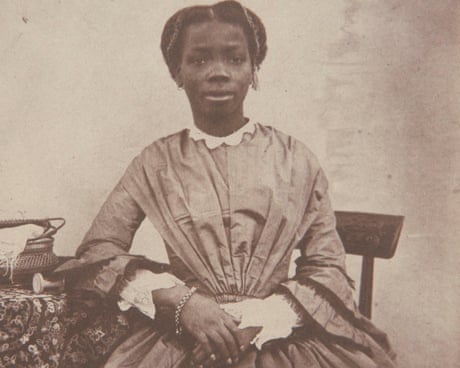
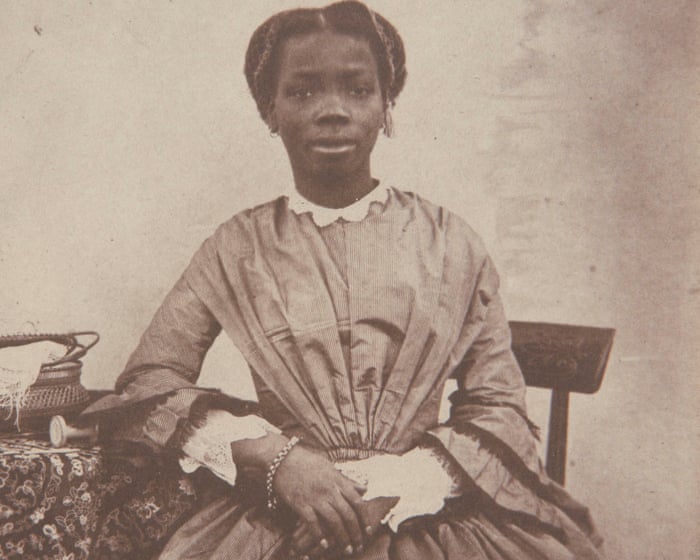
A girl called Àìná was captured by an African king and later taken to England to become Sarah Forbes Bonetta, protege of the imperial monarch
When she was seven years old, Bayo Randle’s great-great-grandmother Sarah Forbes Bonetta was presented to Queen Victoria at Windsor Castle as a “diplomatic gift” from an African king.
Victoria would go on to pay for Bonetta’s education, approve her marriage to one of west Africa’s wealthiest men, and become godmother to her eldest daughter.
Over seventy years ago, the US took control of South Korea’s military. To this day, it still controls it.
Why?
This confounds every notion of state sovereignty: a supposedly sovereign country — South Korea — has its own military subjugated under US control.
Opcon (operational control) of one nation’s army by another country is usually temporary, usually during wartime among allies.
In Korea, it has lasted over 76 years.
South Korea has asked for opcon back, repeatedly. It has been three decades since South Korea first made the demand.
The US has always delayed, filibustered, waffled, and moved goal posts.
More recently, the US has signaled more delay on the return of opcon, despite current president Lee Jae Myung’s demand that it be transferred back before the end of his term in 2030.
The allies are currently assessing the “full operational capability” (FOC) after validating the “initial operational capability” (IOC).
Seoul aims to wrap up the FOC certification and announce a target year for the Opcon transition at the upcoming SCM, before moving on to the remaining assessment of the “full mission capability,” which it expects to take about a year or so….[However] Washington remains firm in its position that Seoul is not ready for FOC certification, weighing on Seoul’s push to accelerate the Opcon transition.
This follows on US Forces Korea Commander Xavier Brunson’s repeated declarations of his opposition to Opcon transfer: only conditions matter, not timelines. According to Brunson, there can be no timeline to return control of South Korea’s troops to South Korea. Seventy six years is not enough.
South Korea had originally insisted on deadlines for the return of opcon. The US delayed, and delayed, and denied. It finally agreed–but only if certain conditions were met. These were agreed to in 2014, and reaffirmed them in 2017. Yet another decade has passed since those agreements.
Conditions for the return of opcon:
Cutting through the fog, there are essentially three conditions that the US has predicated as preconditions for South Korea to regain control over its own troops:
1. Can South Korea defend itself? (Can it operate its own military effectively? Does it have capacity, materiel, systems, and institutions?)
2. Are US and South Korea forces interoperable? (Can they coordinate in war?)
3. Are the conditions stable enough for opcon transfer?
The answer to the first is, of course. South Korea has one of the most powerful and well-equipped militaries in the world.
The second is, of course, the US and South Korea have been rehearsing interoperability for over seventy years.
The third is key: it is a catch-22 designed to undermine the entire process.
Conditions-based Opcon Transfer (COPT) sets specific benchmarks and tests for opcon transfer. These are the goalposts that are being constantly shifted.
However, the third condition is critical. It requires the de-escalation of tensions between North and South:
“Conducive Security Environment: The security environment on the Korean Peninsula and in the broader region must be stable and conducive to a safe, uninterrupted transfer.”
This is the catch-22:
If there is de-escalation of tensions, the required “tests” are not conducted and the benchmarks and certifications are not achieved — they are tied to field-condition wargames. Doing these wargames and tests escalates tensions with North Korea.
If there are tensions, then condition 3 is not met, and Opcon cannot be transferred.
It’s a formula for ensuring opcon is never transferred.
The simple fact is, it does not take 20+years to transfer opcon. “Wartime” opcon is transferred very rapidly. Armies coalesce, and opcon is transferred. Syngman Rhee turned over opcon in July of 1950 and the US was immediately in charge. It doesn’t take years and decades to transfer opcon. It takes hours or days. Returning it should be even faster. But that would require political will.
Here are some other important things to understand about opcon:
Opcon transfer conditions are actually classified:
The US keeps these conditions under wraps, and therefore the South Korean public or its representatives cannot challenge them publicly because they are not known. We only know the general outlines. The South Korean side can only hope the US will agree they have been met. This is yet another abrogation of sovereignty and democracy in addition to the original breach: “We will keep your military, unless you meet our secret conditions, which you cannot discuss, debate or challenge, because they are secret”.
Condition 3, “Conducive security environment” has always been a kill switch:
We know that security conditions have always been a tacit condition because, in the past, whenever opcon transfer looked justified and imminent, the security environment would suddenly degrade, scuttling the whole project. For example, just as the deadline for Roh Moo Hyun-negotiated Opcon transfer was approaching in 2012, the sudden sinking of the ROKS military ship Cheonan-Ho derailed wartime opcon transfer to 2015. That deadline has also passed and gone. Recent North-Korea attributed mine explosions near the DMZ fit this pattern, as have other numerous, suspicious incidents.
The concoction of “peacetime opcon” is nonsense:
The US claims it only has “wartime” opcon because it transferred “peacetime” opcon to South Korea in 1994. However, this very concept is nonsense:
1) Opcon means control of operations. Operations mean warfighting. “Wartime opcon”, ie. “wartime warfighting control” is a pleonasm. The only time operational control of a military is important is during fighting, just as the only time steering a car matters is when it’s moving.
The invention and transfer of “peacetime” opcon to Korea was a booby prize created to give the appearance that something had changed. Think of those Fisher-Price toy steering wheels you stick on the dashboard while someone else steers the car–it’s a political toy. It gives the illusion of control but it means nothing. The fact is, the US would never allow its military to be subjugated to a foreign command, even a shared command. The simple fact is, the US never shares control.
2) Immediately after “peacetime” opcon transfer in 1994, the US instituted CODA (Combined Delegated Authority), which continues US control of planning and execution of war. As Clint Work observes correctly, “The ROK JCS was granted the term OPCON for political purposes, and the US CFC was given the term CODA for accomplishing missions”. So much for peacetime “control”.
3) Last but not least, the US gets to unilaterally decide what constitutes peacetime and what constitutes wartime. When the US declares Defcon III, it’s wartime. Korean troops must fall in line under US opcon. If you get to slice the cake and then decide which portion you take, it’s your bloody cake. If you share a car, but only one party decides when it gets to be driven, and they drive, they own the car, you are maintenance. If one party unilaterally decides when it gets control, it has control, regardless of any protestations to the contrary.
But why does the US need to keep Opcon?
The US needs control over ROK troops because it is planning for war with China in the Pacific. It has been doing so since it drew up formal plans, AirSea Battle in 2009. For war, it needs SK as a military proxy: it needs the cannon fodder. South Korea has 3.6 million combat-ready troops: 500,000 regular and 3.1 million reserve. It has one of the most powerful and advanced militaries in the world, as well as the defense industrial base to sustain it. Furthermore, SK troops have always fought in US wars as proxies: more military-aged men in South Korea saw combat in Vietnam than Americans did as a proportion of population — 325,000 were deployed–the largest foreign deployment after the US. It was also the third largest deployment to Iraq. The US can avoid a draft because SK has one.
USFK Commander Xavier Brunson has made this US agenda of weaponizing South Korea for war against China explicit, comparing South Korea to “fixed aircraft carrier”, a dagger pointed at China, and a critical part of US war strategy because it is already inside China’s defense perimeter.
When his “dagger” comment is tied to his previous remarks, it’s evident that Brunson expects Korea to play an offensive role capable of striking the Chinese heartland, and Japan to play a defensive role supporting Korea…Brunson commented last August that he would like F-35 fighters with stealth capabilities and a multi-domain task force (MDTF) capable of wrecking China’s anti-access/area denial (A2/AD) network to be assigned to USFK. These comments suggest that Brunson means to treat Korea as a forward base equipped with military options for launching direct strikes against China.
Brunson recently announced that the multi-domain task force will be deployed to Korea. These build on his previous statements on preparing the peninsula for war with China:
…[this] orientation clarifies how forces on the peninsula can impose costs, not only on the CCP’s Northern Theater Army, but also on the [Russian] Northern Fleet, thus demonstrating the significant strategic potential that exists on the peninsula to influence adversary operations in both adjacent seas… existing force positioning, particularly on the Korean Peninsula, may offer greater strategic advantages… advantageously positioned assets already inside the [Chinese] defensive perimeter, capable of immediate cost-imposition [ie. attack] against multiple adversaries.
This simultaneous fiction of pretending it doesn’t control South Korea’s troops became necessary when US-opconned SK troops massacred civilians in Gwangju. The need to avoid accountability created the legal fiction of “peacetime opcon”, but that doesn’t obviate the US need for control as it prepares for and escalates to war.
The real reason why opcon transfer is taking so long is the US is trying to create a structure that maintains control of the SK army while pretending that it doesn’t. This involves a crazy-quilt of parallel & unified command structures, multiplying command authorities, phased operating assessments, Frankenstein-cobbled-leadership structure, Rube Goldberg carve-outs, and a general have-your-cake-and-eat-it-too mindset. This is assisted by extreme factions of the quisling South Korea right, who have lashed themselves to the sinking US Empire and see any reclamation of genuine South Korean sovereignty as abandonment–they fear that a South Korean military–the real nexus of power in Korean politics, accountable only to Koreans, would result in a loss of status and power as US quisling collaborators and subcontractors.
With war with China on the horizon, South Korea needs to reclaim opcon rapidly. It remains to be seen if president Lee Jae Myung can pull off this hat trick. However, the consequences of not doing so could be catastrophic.
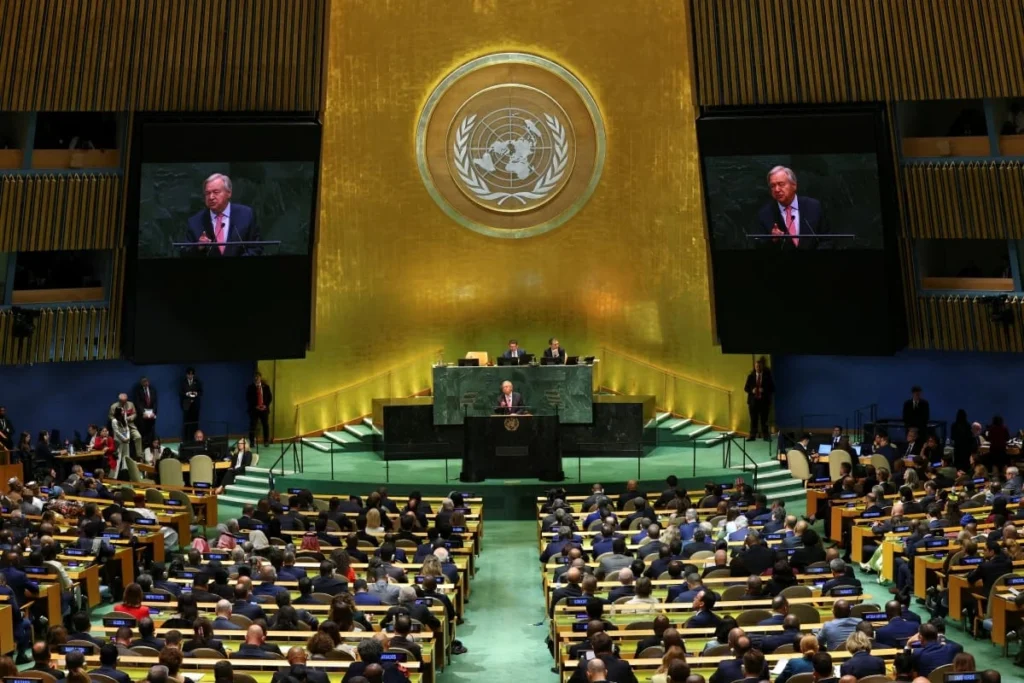
Argentina’s delegation at the United Nations abstained from a resolution aimed at eradicating modern forms of colonialism, siding with the Trump administration and undercutting President Javier Milei’s recent demands over the British-occupied Malvinas Islands.
The vote took place in the Fourth Committee of the General Assembly. The measure, presented by the Russian Federation, sought to ratify and reinforce the goals of Resolution 1514, the landmark text approved in 1960 that declared colonialism incompatible with the UN Charter and fundamental human rights.
Argentina’s diplomatic delegation chose to stand aside rather than endorse the initiative. The move placed the Milei government in line with the position promoted by the White House, which pressed allied governments to abstain.
The resolution passed anyway. Delegates recorded 85 votes in favor, 49 against and 23 abstentions, sending the text to the full General Assembly for consideration.
The alignment extended beyond Buenos Aires and Washington. Chile, Costa Rica, Colombia, Guatemala, Honduras, Peru and Paraguay joined the abstention, a bloc of right-leaning regional governments that followed the U.S. lead.
On the other side, Brazil, Mexico, South Africa and India voted in favor. Their support reaffirmed the global backing for territorial integrity and decolonization processes, and set up a sharp divide within Latin America itself.
The Russian draft went further than the 1960 declaration. It extended the concept of colonialism to cover unilateral coercive measures and the economic and financial sanctions promoted by Washington around the world, a provision that made the vote a direct test of alignment.
The UN General Assembly’s Fourth Committee approved the draft resolution “Addressing contemporary forms of colonialism” by 85 votes in favour, 49 against, with 23 abstentions. Sponsored by Russia, China, Iran, Cuba, Belarus, Palestine and others, it recognizes colonialism in… pic.twitter.com/MqgQfoMhME
The abstention collides with the rhetoric Milei has used on Malvinas, the archipelago occupied by Britain since 1833. His government has campaigned publicly for the defense of sovereignty and demanded sanctions against oil companies operating on that Argentine soil.
The contrast sharpened in September, when the Argentine President addressed the General Assembly. There he read extended passages demanding the eradication of colonialism and stated plainly that the principle of self-determination “exists to liberate colonized peoples, not to enshrine situations derived from colonization.”
Those words sit uneasily with the vote his own diplomats just cast, or chose not to cast. The abstention, in effect, withheld support from a document that echoes the very argument Milei delivered from the rostrum.
The domestic reaction was immediate. Carlos Bianco, the government minister for Buenos Aires province, called the abstention an irresponsible act against a historic national cause. “The Malvinas question deserves a diplomacy that does not kneel. Abstaining in the face of colonialism is not just an embarrassment, it constitutes an act of irresponsibility. The Malvinas question must once again be defined by Argentines. And it will be,” Bianco wrote on social media.
The episode exposes a tension running through the Milei administration’s foreign policy. It has embraced Washington as its principal ally while maintaining, at least in public speeches, a sovereignty claim that Washington’s abstention strategy directly undercuts.
Milei dice que quiere recuperar Malvinas. En la ONU, la Argentina se abstuvo de votar contra el colonialismo. Hace dos semanas, esa misma delegación decía que Malvinas es una situación colonial. Sobran las contradicciones. No tienen política exterior propia y desprecian al país… pic.twitter.com/I5cYaXCbvp
Text reads: “Milei says he wants to take back Malvinas. At the UN, Argentina abstained from voting against colonialism. Two weeks ago, that same delegation said that Malvinas are a colonial situation. The contradictions abound. They have no foreign policy of their own and despise the country they govern.”
Argentina’s historic position on Malvinas has long drawn broad support across Latin America and the developing world, precisely the coalition that voted in favor of the resolution Buenos Aires declined to endorse.
The measure now moves to the plenary, where the same fault lines are likely to reappear. What Argentina does there will reveal whether the abstention was an isolated calculation or a settled posture. For now, the vote leaves a record that is hard to reconcile: a government that speaks of liberating colonized peoples, yet declines to vote for a resolution doing exactly that.
As violent spirits are unleashed in Sky’s Possession, observers see confident creatives reclaiming the island’s narratives in a form of ‘cultural reparation’
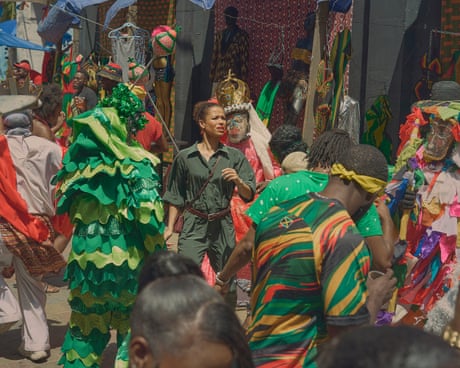
A woman opens a 300‑year‑old box, unleashing a violent spirit – it is the spirit of colonialism and oppression roaring back to life. It is a pivotal scene in Sky’s supernatural series Possession and symbolises a wider shift in Jamaica’s film industry, where directors are increasingly using the landscape to tell Jamaican stories – including those that confront enslavement, trauma and historical memory.
The series is about a biracial British lawyer who travels to Jamaica to investigate a multimillion-pound inheritance dispute, only to uncover a dark, vengeful spirit tied to the plantation’s brutal colonial past.
Last month, historian Mary Del Priore required a police escort to launch História das Mestiçagens no Brasil (A History of Racial Mixing in Brazil), a collection of essays she co-edited with Gian Melo. Precisely for being a serious work, the book contradicts the Brazilian Black movement’s dogma that racial mixing is something to be lamented, viewed solely as the result of rape committed by slave owners. This amiable segment of our society has no qualms about making threats of physical violence; indeed, hooligans at a federal university recently beat up a history student for wearing a “Death in June” band T-shirt, and no one was punished. Even after it was clarified that it was a band shirt instead of a Nazi tribute, the aggressors justified the assault by claiming the student was a racist who had called a peer a “monkey.”
It is all very exhausting; it has been thirteen years since sociologist Demétrio Magnoli was physically prevented from speaking at a literary event for the “crime” of opposing racial quotas – as the reader can see here, in a publication funded by the abominable Ford Foundation that praises the vandals’ actions and labels Magnoli a racist. At this point, one sighs and asks: Quousque tandem? How much longer?
In history, as in science
In the previous article, I noted that, starting in the 19th century, the scientific establishment discarded the Christian concept of a mathematically inclined Creator and tacitly instituted materialism – a framework compatible with both the deism of certain Enlightenment thinkers and the atheism of Darwinists. The problem is that tacit assumptions go unchallenged, because refutation requires explicit articulation. When an institution stands behind such a statement, however, criticism has a clear target.
In the realm of the natural sciences, the institution that served as the primary target for criticism was the Catholic Church. After the Galileo affair, however, the Church managed to mend its relationship with science, producing scientists of the caliber of Fr. Lemaître. Furthermore, participating in the canonization process by attesting to miracles does not damage any scientist’s reputation, even if their conclusions run counter to the premises of materialism. Yet, when canonizations occur, the scientific aspect receives no attention – and the perceived divorce between religion and science persists in the public’s mind. On the materialist side, we have no heavyweight scientific authority articulating and proving materialism; instead, we have seemingly isolated propagandists like Sagan and Dawkins who merely presuppose materialism yet are presented as archetypes of the scientist. Meanwhile, the same media outlets promote crystals, horoscopes, and other New Age nonsense.
It occurred to me that something similar happens with the discipline of History, with the state taking the place of the Church. It is easy to attack an official historiography; however, critics rarely offer a cohesive counter-narrative that could itself be challenged. The Ford Foundation funds a wide range of figures: from Florestan Fernandes (1920–1995), who was far too knowledgeable to claim that racial mixing was merely the result of rape, to NGOs staffed by mindless activists acting as hooligans and smear merchants. There is an institutional framework, but it is opaque and offers no holistic vision; it merely critiques the positive perspectives put forward by the state or by major scholars like Gilberto Freyre. The consequences for national education manifest as a form of “Paulo Freire-style” conditioning, where children are taught to be “critical” because “contentism” is bad.
Decolonial uncriticality
The result is that arrogant presumption so characteristic of the woke: they objectively know nothing – since there is no “contentist” curriculum – yet they feel entitled to lecture the world because they are “critical.” This arrogant stance is an end in itself, and the very concept of study is difficult for a mind shaped in this mold to grasp. As for objectivity, it is openly criticized.
However, it is evident that one can also uncritically embrace the decolonialism preached by the Ford Foundation and similar entities – a view holding that Brazil should never have been discovered by the Portuguese and that the Brazilian people should never have come into existence. According to this playbook, Spain’s discovery of Mexico is the ultimate crime… yet the actual genocide of Indigenous peoples, perpetrated by Anglophones in territory seized from Mexico, is treated by history as a mere footnote. The human sacrifices the Aztecs inflicted upon other Amerindians matter little; what matters is that the Americas should never have been discovered by the Iberian crowns. It is not even a discovery, they claim, but an “invasion.” Brazil is labeled the most racist country in the world because it had slavery; meanwhile, the USA, which had slavery without manumission, and entered the World War 2 still discriminating against blacks, is held up as a model for Brazil to emulate in order to improve.
Adoption by a competent historian
It is possible to subscribe to this tacit creed unthinkingly without being a stupid or incompetent person – quite the contrary. Let us take as an example the work A heresia dos índios [The heresy of the Amerindians] (1995), by historian Ronaldo Vainfas. In the case at hand, the historian’s herculean task is, armed with anthropological insights gained in the 20th century, to consult the archives of the Portuguese Inquisition to reconstruct a fragment of 16th-century Brazilian reality based on a crazy story found in the trial records.
This crazy story concerns the Portuguese slave owner Fernão Cabral, of Jaguaripe, Bahia. In 1585, he became “Tupã” – or God – to a group of rebellious Amerindians people who sought to enslave the Portuguese and worship Tupã-Açu (Great God) within their own church. This church had its own Pope: an Amerindian man named Antônio who had been baptized but had fled into the woods. Inside the church, Amerindians worshipped an anthropomorphic stone they called Tupã-Açu (Great God) and held festivities featuring tobacco, alcohol, and dancing. Amerindians fled other estates and Jesuit missions to Fernão Cabral’s lands, where they could have multiple wives and eat meat on Fridays, in accordance with ancient customs. Faced with the dissatisfaction of other landowners, the government eventually destroyed the Amerindians church, and things returned to normal.
It might all have been forgotten had the first Visitation of the Holy Office not taken place in 1591. A multitude of people rushed to denounce Fernão Cabral; consequently, the Holy Office’s inquisitor – prepared to deal with Judaizing New Christians, impostor priests, bigamists, and sodomites – found himself confronted with the indecipherable Tupi worldview shared by mestizos and even white settlers. In doing so, he came to believe that the tattooed men’s greatest crime was eating meat on Fridays, unaware that those tattoos were created during anthropophagic rituals.
Unsubstantiated moralizing
Undoubtedly, this is a monumental undertaking, one beyond the reach of the “woke” activist. Yet, the author’s moralizing, devoid of actual argumentation, is striking. The epigraph sets the tone: “Peoples and indigenous groups vanished from the face of the earth as a consequence of what is today called, in a sheepish euphemism, the encounter between Old World and New World societies.” It is a curious epigraph for a work that deals not with the extermination of Indigenous peoples, but rather with their forced acculturation. In Brazil, one easily finds works – almost invariably tear-jerking – about Amerindian acculturation, but far fewer addressing actual genocide. Words lose their meaning.
Despite the high quality of the research, the book’s spirit is that Brazil should never have been discovered, that “colonialism” is evil, and that the pre-Colombian religion of the Indigenous peoples – endowed with “anti-Christian and anti-slavery [sic!] content” – was good. The Tupi people spent their lives searching for the “Land Without Evil” – hence their nomadic nature – whereas the Portuguese transformed Brazil into a “Land of Endless Evils.” Towards the end of the book, the author goes so far as to say: “It is with some embarrassment that I must acknowledge this supreme victory of the colonial system – capable of invading Tupi mythology itself and colonizing its collective imagination: the Tupinambá ‘Land Without Evil’ would transform into a slave-holding utopia” (p. 277). From Vainfas’s looser phrasing, one gets the impression that the Tupi did not own slaves. The original “Land Without Evil” was free of slavery because it resembled the Land of Cockaigne, a place where food appears effortlessly and labor is unnecessary. If the new “Land Without Evil” features white slaves, this is merely a sign of a deeply human desire for revenge.
After spending page after page criticizing the demonization of the Indigenous people by the inquisitors (even while stressing that the Portuguese were not prone to such things), Vainfas writes: “There is no doubt that [the inquisitorial visitor] Heitor Furtado defeated the arrogant lord of Jaguaripe in the theater of the Inquisition, despite never truly understanding the nature of the [Indigenous] sanctity. It sufficed for him, however, to label it idolatry and, consequently, heresy; it sufficed to force Fernão Cabral to bow before him – the visitor – pleading for mercy. In the Baroque theater of the Inquisition, the performance of heresy mattered more, I believe, than the victory of the faith” (p. 238, emphasis added). In other words, the inquisitors acted out of pure sadism rather than any noble intention.
In reality, however, the label of heresy is an obsession of Vainfas’s, given that it never appears in Heitor Furtado’s writings in reference to the Indigenous people. Pagans were idolaters without being heretics, for only a baptized person who claims to believe in Christ can be a heretic. If a person abandons Christianity after baptism, they are an apostate, not a heretic. This obsession cost the book its very title, which announces a concept whose existence is never proven. From everything Vainfas describes, one gathers that the Indigenous people created a new syncretic religion blending Jesuit Marian devotion with pre-Colombian rites centered on an anthropomorphic ritual rattle. There is no mention of Christ… Only to Great God (the rock), God (Fernão Cabral himself), Mother of God (an Indigenous woman), and Santinho (an Indigenous man).
But let us turn to what strikes me as most detrimental: all this moralizing comes without preamble or justification. Based on everything Vainfas himself wrote, the reader might conclude that Tupi life prior to the arrival of the Portuguese was hellish. The Tupi took great pride in adopting multiple names and acquiring various jenipapo tattoos. Each name and tattoo corresponded to a warrior they had killed and devoured in a ritual. Their life’s horizon was defined by following the counsel of a pajé (a shaman or independent priest) who communicated with spirits and directed where the people should go. All of this – the migrations and the wars – was aimed at reaching the Land Without Evil, which, before the Portuguese arrived, they believed lay along the coast. Since the coast was not uninhabited, this naturally entailed waging war, thereby gaining names, tattoos, and slaves. Would you want to live like that – in a perpetual production of Waiting for Godot adapted by Tarantino?
Is such a way of life dignified? Vainfas dislikes slavery. So do I. I would add that I dislike pointless wars, cannibalism, and dying in the prime of life. Did Tupi society have any prospect of putting an end to these ills? Was the Land Without Evil – where arrows hunt on their own – truly within their reach?
For my part, I find it amusing that the phrase “it’s their culture” applies only to so-called Westerners (that is, Europeans and their unmixed descendants in the Americas and Africa). No one claims that killing Jews is part of German culture or that the auto-de-fé is a Spanish cultural tradition. Moral elevation is demanded of Europeans. For the Amerindians, moral relativism and the agonizing, bloody life their culture entailed.
Assessment based on available data
A relevant point – which I have addressed previously here at SCF – is that the Spanish model of overseas occupation was far more institutional and state-driven than the Portuguese one; the Portuguese model, in turn, was far more institutional and state-driven than the Dutch. While the Spanish Inquisition maintained tribunals in the Americas, the Portuguese Inquisition, even under the rule of the Spanish Habsburgs, had none. Consequently, people had to wait for the Inquisition representatives to arrive before they could denounce landowners living in Brazil who oppressed others without restraint.
Vainfas’s research highlights that the harboring of apostate Amerindians was one of two misdeeds by Fernão Cabral that shocked the population of Bahia; the other was the cruel murder of a pregnant Amerindian woman. Angered by the fact that his wife and the Amerindian Isabel were gossiping, he ordered her thrown alive into a furnace, decreeing that anyone who tried to stop it would meet the same fate. Her pleas to the Virgin Mary were to no avail. The incident, which took place in Jaguaripe, was well known in the City of Bahia (located about 100 km away as the crow flies). Although the mistreatment of servants fell outside the Inquisition’s jurisdiction, there were instances of accusers performing hermeneutic acrobatics to try to frame such un-Christian treatment as an inquisitorial matter, as historian Luiz Mott revealed in “Tortura de escravos e heresias na Casa da Torre” (Slave Torture and Heresies at the House of Tower).
Whether one likes it or not, Vainfas clearly demonstrates that the typical Luso-Brazilian landowner considered himself a god on his own estates, and only the Inquisition could rein him in. Fernão Cabral spent nearly a year in prison and was sentenced to two years of exile, as well as a heavy fine equivalent to the price of twenty African slaves. He certainly deserved worse, and perhaps only escaped burning at the stake because he was an Old Christian. Still, it was something. The moral of the story, to me, is that the Portuguese Inquisition served as an important counterweight to the all-powerful lords of private enterprise – figures commonly found in Brazil, though not in Spanish America. Characterizing the Inquisition as essentially evil obscures the true balance of power in Brazil; it portrays the despots of this land of private enterprise as victims of Manichaean sadism, as if the inquisitor could not possibly have had any political or social concerns. This is a poor perspective that does nothing to aid historical understanding.
Historical assessment should be grounded in positive values – such as the dignity of the people living in a given era or the distribution of power within the society under study. This approach enables the construction of a positive agenda for the country and a true understanding of reality.
Instability in countries that later formed the Alliance of Sahelian States (AES) in security political and economic affairs resulted from perennial interference by the US and France. Military assistance from Russia is helping these countries to regain sovereignty and capture more value from their resources. Mali and Africa Corps reenter Kidal On October 6, 2026, […]
Longreads has published hundreds of original stories—personal essays, reported features, reading lists, and more—and more than 14,000 editor’s picks. And they’re all funded by readers like you. Become a member today.
James Whorton Jr. | Longreads | October 13, 2026 | 5,932 words (25 minutes)
I live in Edgewood, a subdivision of quarter-acre lots in the town of Brighton, New York. Before the house was here, Edgewood was a farm, and before the farm, there was a forest. On a July day in 1788, a 55-year-old man named Hugh Maxwell set out to cross the forest in straight lines.
Not kind of straight. Maxwell’s job was to walk 1,100 miles on ruler-straight lines through this vast, obstacle-filled forest, to divide it into a grid of parcels that could eventually be sold as property. To shrink it down to the scale of human imagination. To look at the forest and see something else in its place.
I first learned about Maxwell from Mary Jo Lanphear, Brighton’s town historian. I had gone to Lanphear to research the racially restrictive housing covenants that made home ownership in Brighton exclusive to white people for decades. Whose fault was this? I wanted to know. Some racist real-estate developer? Something to do with the Federal Housing Administration? Lanphear printed out a copy of an old deed linking the Edgewood land to the Phelps and Gorham Company, a group of New England speculators. For a bargain price, Phelps and Gorham had acquired the title to 2.6 million acres of forested country along the Genesee River, in what is now western New York. The company then hired Maxwell—a Revolutionary War veteran, father of seven, and the first recorded white person to pass within shouting distance of the place where I now live—as surveyor.
Credit: Preston, Samuel, “The Gorham Phelps Purchase,” RBSCP Exhibits, accessed October 8, 2026, https://rbscpexhibits.lib.rochester.edu/items/show/4541.
As Maxwell crossed the forest, he imagined the nation he believed would one day replace it. “The land in this country is exceedingly good, but it wants good inhabitants,” Maxwell wrote to his wife, Bridget, imagining “many worshipping assemblies of Christians where now the wild beasts howl.” In place of the forest, he envisioned schools, churches, cash crops, and county clerks. However, he wrote, “these things are in the womb of futurity, and will be brought about in the proper way and time, as also by the proper means.”
Maxwell’s walk—through leechy ponds and tick-infested brush, down and up creek banks, over the rocky exposures that rattlesnakes prefer, in those remarkably straight lines—was like the act his fellow new citizens were performing daily, striving and pretending a nation into being. At the time he set out, the United States were only loosely joined, under the Articles of Confederation. Alexander Hamilton, writing in the first essay of The Federalist Papers, had recently asked “whether societies of men are really capable or not, of establishing good government from reflection and choice, or whether they are forever destined to depend, for their political constitutions, on accident and force.” Neither the new government nor the grid of lots for sale were to be discovered on the ground. They were ideas in people’s heads, notes on paper. In the “womb of futurity,” maybe.
The forest, however, was real.
Have you ever retraced your steps looking for some lost thing you had no hope of ever finding again? More than two centuries after he walked the forest into the future, Maxwell’s path persists, as lines on a map and on the ground in my neighborhood. I wanted to find the forest he walked through.
So I set out to follow Hugh Maxwell—through books and archives, on maps and over the ground, across the state of New York and, finally, across my neighborhood, looking for traces of the forest in what is here now.
On July 25, 1788, Maxwell set off from the southeastern corner of the Phelps and Gorham purchase, on the Pennsylvania line, headed due north. He led a small crew, whose job it was to drag a Gunter’s chain, a surveyor’s tool used to measure distance. The chain was 66 feet long; 80 chains made a mile. Every six miles he marked a township corner, hacking Roman numerals into the sides of a convenient tree, Vs and Xs being easier to cut in bark than 5s and 10s.
While his helpers dragged the chain, Maxwell carried the grid in his head. The job was to lay this imaginary grid over the forest itself, to parcelize the land into numbered squares—to cut it up and shrink it. In a notebook that first day, he wrote:
From the 82 mile Stone
120 Rods the groth is Beech
Maple birch ash Basswood
and Hemlock mixt
Throughout Maxwell’s young life, the forest had been a chaotic place, subject to accident and force, to the wars that would determine its fate. During the French and Indian War, Maxwell, in his early 20s and part of a Massachusetts militia, barely escaped a violent death at Lake George. Following a surrender, Indians pulled militia men from the retreating lines, killing some on the spot and taking others prisoner, to be ransomed in Montreal. Maxwell was pulled aside, too, and had his boots, coat, and shirt stripped from his body. But he got loose somehow and escaped into the forest, running at least 14 miles to Fort Edward, barefoot in his pantaloons. Later, during the Revolutionary War, Maxwell was shot at the Battle of Bunker Hill. A musket ball entered his body just beneath the right collar bone, breaking Maxwell’s shoulder blade and exiting through his back. He survived field surgery and gangrene, and wrote home to Bridget with his left hand, fretting that his nurses fussed too much over him.
Now, as Maxwell walked off the eastern line of the Phelps and Gorham purchase, the forest wars were coming to an end. Still, the forest itself resisted him in its way. It did not lend itself to being crossed in straight lines, as though it were a blank page awaiting the pen’s touch. Branches snagged his clothes. “I am of the opinion,” he wrote to Bridget from his walk, “that if I live to return, I shall stand in need of some winter shirts for I think my old ones will be pretty much worn out.”
What makes a forest? How do I know when I’m standing in one, and not just under some trees?
To reach Maxwell’s starting place—his “82 mile stone,” a roadside block of granite 82 miles west of the Delaware River—I drove a hundred miles south to Caton, New York. A welcome to caton sign marked the town line, which was also the state line. I took my phone out, opened a map on the screen. The phone is able to locate itself using pings from four satellite systems: GPS (“a global public service brought to you by the US government”), GLONASS (same, but brought to you by Russia), Galileo (European Union), and BeiDou (China). The screen suggested there should be a marker right in front of me.
Crouched inside a brushy spot, I shoved skinny branches out of my face and slapped at my hair. I found a tangle of rusted barbed wire. I found a deer skeleton. But no mile marker. Feeling things crawling on me, I climbed out into the sunlight and slapped down my shirt and pants.
The growth I saw around me now was not so mixed as what Maxwell described in his notebook. I was standing on a stone chip road, looking across a hay field. My phone screen showed a satellite image with a red pin to the west of the road, in the brush I’d climbed out of, and a blue dot in the road, which was me. This had to be the spot, though. I walked to my car, felt my head for ticks again. Then I walked back up the road, to check under the welcome to caton sign. There, I found a block of pink and gray granite with an “82” cut into the side and several loops of orange surveyor’s tape tied around it. It wasn’t hidden—I’d simply been looking on the wrong side of the road. Looking for what was in my head instead of seeing what was there.
It was a slow march from here for Maxwell and his crew, dragging their chain in a straight line through the thickness of mixed trees and across creek cuts. It took them two weeks to cover the first 54 miles. For me it was an easy drive, a straight shot north between fields of sweet corn. I stopped to examine an occasional historical marker, and again at a roadside farm stand, hoping to say hello to someone who lived on this line. The little stall was well stocked with honey and dried garlic, but there was nobody to say hi to: Sales were on the honor system, with a Mason jar on the counter to leave your cash in. I had only brought a credit card.
Maxwell’s notebook was a memento of a different world. He passed massive chestnut trees such as I could only read about. One spot he judged “moist and good and springy,” another “good for grass.” He noted with approval where a stream was big enough to support a sawmill. And yet the gaps in his notes are astonishing. A few weeks into his survey, he crossed “some old clear land” and “through the old castle.” Castle was the colonial way of referring to an Indian town. Here was proof on the ground of what Maxwell already knew: People had been living in this forest for a very long time, cultivating this land in a different way than European settlers did. And yet Maxwell found little to note about the old castle. He carried on instead with his catalog of trees—”white ash, basswood, elm, &c.”
What makes a forest? How do I know when I’m standing in one, and not just under some trees?
The Latin precursor of the word “forest” meant something like an unenclosed outdoor space. In early English law, the silva forestis was a place for lords to chase game and for ordinary people to gather wood. In the 13th century, as the Magna Carta encoded the rights of English barons, the Carta de Foresta laid out the rights of commoners to pasture cattle in the open places among the English forests. Similarly, the forest Maxwell entered in the summer of 1788 was more than just mixed trees. Its openings included the towns, orchards, and farm fields of the Seneca Nation. The Senecas had long used fire to manage areas of the forest, clearing thick undergrowth to attract deer, and they moved their farming fields from time to time to prevent exhausting the soil.
A forest is too big to see all at once, and maybe too big to describe. Writing about it, one is moved to grand language and weird leaps of perspective. The historian Francis Parkman devoted his career to what he called “a history of the American forest,” which is really a history of empires. Writing in the 1880s, with no satellite photos at hand, Parkman borrowed the point of view of a flock of Canada geese flying north from Albany. “As the aërial travellers winged their way, the seat of war lay spread beneath them like a map. First the blue Hudson, slumbering among its forests, with the forts along its banks. . . .” Parkman’s geese paid special attention to military architecture, noticing Fort William Henry by the “glistening breast of Lake George” and the white flag of the French at Ticonderoga. Onward they flapped:
“Lake Champlain now spread before them, widening as they flew: on the left, the mountain wilderness of the Adirondacks, like a stormy sea congealed; on the right, the long procession of the Green Mountains; and, far beyond, on the dim verge of the eastern sky, the White Mountains throned in savage solitude.”
This is silly poetry, but I am in deep sympathy with it, having also spent countless hours staring at different maps, trying to transplant a whole forest into my head.
At the heart of Parkman’s seven-volume France and England in North America was a question about property. “To whom belonged this world of prairies and forests?” he asked. Parkman wrote that France had “claimed it by right of discovery and occupation,” adding that the French had an “excellent system” for distributing land: “Whoever received a grant from the Crown was required to improve it, and this within reasonable time. If he did not, the land ceased to be his, and was given to another more able or industrious.” The English eventually outdid the French in this regard, Parkman wrote: “New England was pre-eminently the land of material progress . . . nay, in defiance of the four Gospels, assiduity in the pursuit of gain was promoted to the rank of a duty.” The quickest way to gain from the forest was to sell or burn the timber and put a cash crop in the ground.
Sir Albert Howard, an English botanist, saw the forest as a model for sustainable farming. In what he called “Nature’s agriculture,” variety is the first rule: “Many species of plants and of animals all live together,” he wrote in the early pages of An Agricultural Testament, published in 1940. Economy is another rule: “Nothing is wasted” and “nothing is lost.” Somehow, life and decomposition continue across millennia with no one in charge.
Wendell Berry, referencing Howard in The Unsettling of America, writes that the forest is a place where “the forces of growth and the forces of decay are in balance.” I like this way of putting it very much. A forest tree dies in place, and its slow decay swells with life—mosses, fungi, beetles, and things that eat beetles. A living hardwood tree throws its leaves away every year. In The Great American Forest, Rutherford Platt calls this “the deciduous idea”—a funny way to imagine it, as though the founding fathers of the forest had written this leaf-shedding principle into their charter. But it is a brilliant idea, a world-changer. In balance, growth and decay work in cycles. The mat of discarded leaves becomes the food of millipedes and the habitat of worms. In spring, the snow sinks into it. A thick, black soil builds.
This is silly poetry, but I am in deep sympathy with it, having also spent countless hours staring at different maps, trying to transplant a whole forest into my head.
I had already traveled to Maxwell’s starting place; now, it occurred to me that I had never followed Hugh Maxwell’s route where he passed nearest to my house, along the eastern township line, which is not a road at all and which happens to be covered over with trees. From my front door, I followed the sidewalk along Edgewood Avenue, where the utility poles shrink away into the distance like an exercise in single-point perspective.
The place where I live has gone through a lot of changes in the 20,000 years since the most recent ice age, from deglaciation to migration and cultivation. At the time Maxwell began his walk, the towns, orchards, and farm fields of the Seneca Nation were openings in a vast forest that still covered half of North America, from the Atlantic coast to the Mississippi River. The houses in my part of Brighton were built beginning in the 1930s, but the older eras of this place are visible on any road map. The early roads go from some important place to some other important place. Monroe Avenue, a very old road, follows a route from the north end of Canandaigua Lake to a shallow, fordable spot in the Genesee River. It is not straight, but bends sensibly between Cobbs Hill and Pinnacle Hill. People have been walking that way for a long time, since long before Maxwell arrived.
After Maxwell, there came an era when all new roads were cut parallel to his township lines. The logic of the Brighton-Henrietta Town Line Road, for instance, has nothing to do with terrain, and the things one passes when driving it—an auto body shop, a small church with three steeples, an Asian market, a sex shop, Dunkin’—have little to do with each other. It’s as though Maxwell set the place to auto-arrange, so that every major surface road for the next two hundred years would snap to grid.
I stopped at the former site of the old Rowland farm. My friend Roger lived next door to the farm as a boy. Mr. Rowland had a stand of virgin timber on his place, Roger recalls, and the soil in his fields was so fertile that a person had to take care not to get knocked over by his produce. “Dig a hole, drop a seed in, and stand back,” Mr. Rowland warned.
As late as the 1950s, there still were some farms along Edgewood Avenue. But it wasn’t long before they were subdivided into residential lots.The timber now is mostly whatever people have chosen to set out in their yards. Norway maples are common—tough street trees, not from around here, indifferent to road salt and car exhaust. Rows of arborvitae make living privacy fences. Shading the Briar Manor apartments are seven big sycamores, handsome monsters with paint-by-number bark of yellow, gray, and lilac brown.
Past the row of sycamores, I turned onto a paved bicycle path that follows a chain-link fence. A little further, a sign marked the town line. I found a low place in the fence and stepped over, into the trees, following Maxwell again.
It was dark under the high canopy, and the underbrush was sparse. Maxwell had once described this section of his route as “very good beech and maple land with a mixture of ash, elm, oak, basswood, etc.” I found a beech tree, its pale sides smooth, its trunk a good two feet across. Beneath the beech tree was a shattered porcelain toilet. There was no plumbing attached; somebody had brought this toilet out here, set it on the ground, and taken a hammer to it.
I checked the map on my phone. In the satellite photo, the woods were more or less featureless except for the town line, superimposed in yellow over the treetops, and a blue dot, me, on top of that yellow line. I was still on Maxwell’s course. There was no trail on the ground for me to follow, though. The only trails were the soft, narrow animal trails that passed under blown-down branches or veered away into low cover.
The growth was mixed: saplings, mature trees, dead standing, and dead fallen. I found a red maple with circular fractures erupting like a target in its bark. I found an ash tree, its bark split open and buckling, the meandering tracks of an emerald ash borer scoring the bare wood. A lean musclewood with ten trunks, one with its bark chewed at the height of my knee. A basswood with a stripe of red spray paint on it and rings of woodpecker holes.
If this was a forest, it was a half-wrecked one. Much of the soil was exposed and cracked from flooding. Variety was here, though, and life among the decay. Deer tracks crossed a muddy trench. Bright moss blanketed the softening fallen trunks, and ferns grew. I heard chattering overhead and a rainlike sound in the leaves. Somebody was up there taking nuts apart. Chunks of green and yellow hull hit the ground around me, cycling back to the soil.
In September of 1788, Hugh Maxwell took a fall in the woods and hurt his shin. He made things worse, he wrote, “by wading in the swamp and through wet brush.” For three weeks, he was laid up in the Seneca town of Kanadesaga, where he had nothing to do but think and write home.
He missed Bridget. “I feel anxious for your welfare,” he wrote to her. “I long to hear from you and love to hear from you.” He reminded Bridget to have their son get the haying done, get some long shingles to fix the roof, cart the dung to the field, plow the field on time, and do the sowing.
He also missed church. Shortly after his near-death experience at Lake George as a young man, Maxwell had joined a church and, judging from his letters, devoted himself to a stern code under which he must strive constantly for an approval that he would never earn. For Maxwell, life on earth became a moral exercise, an attempt to deserve immortality. God, he wrote, “is Daily Loading us with his Benefits, though we are evil and unthankfull.” Now, once more wounded far from home, Maxwell wrote to his wife of “unprincipled fellows and drunken savages,” adding, “Religious society is quite out of the question here.”
It had been only nine years since the Continental Army’s expedition across Seneca country. After Senecas joined with Tories to raid White settlements along the Mohawk, the young United States had set aside European conventions of war in an attempt to drive Seneca communities from their land. “The immediate objects are the total destruction and devastation of their settlements and the capture of as many prisoners of every age and sex as possible,” George Washington wrote in his orders. “It will be essential to ruin their crops now in the ground and prevent their planting more.” At Kanadesaga, the Continental Army had burned at least 50 Seneca houses, tore ripe corn and beans from the fields, and bayoneted pumpkins. A whole orchard of apple trees was girdled, a circle of bark stripped from around each trunk, creating an unhealable, fatal wound. The Continental Army took few hostages: The Senecas moved west just ahead of the approaching troops and then returned again when the troops went home, rebuilding their houses and replanting their fields.
Nine years later, laid up in Kanadesaga while his shin healed, Maxwell now found himself surrounded by Indians. “I am in hopes their time with us here is short,” Maxwell wrote to Bridget. “I do think that the Great Governor of the universe is about to plant a glorious gospel in this wilderness,” he predicted—with the help of his own survey, of course. “May it be so and soon spread over this land.” Maxwell, in effect, had two tough jobs: crossing the forest in straight lines, and convincing himself that he was a good person for doing so.
After more than a month’s recovery, Maxwell resumed his survey. “First mile through excellent land,” he wrote from the woods, on the line of a future township along the east bank of the Genesee River, noting nearly a half-dozen different trees in the area. The next mile: “Same sort of excellent land and growth but considerable mixed with chestnut.” The third mile was less good: “80 rods over a wet low land.” Then more very good land again. He crossed a brook that ran one way, then the other. Both Maxwell and the brook were headed to the same place, north to Lake Ontario. The brook took the easy way, downhill. Maxwell took the straight way, leading his team and their chain through swamp and timber, mile after mile.
At the end of the 18th mile, he chopped a “XIII” into the side of a small basswood tree, marking a corner of the 13th township—“with trees marked for witness about it,” he wrote, for the benefit of some future settler searching for the corners of his lot.
Maxwell, in effect, had two tough jobs: crossing the forest in straight lines, and convincing himself that he was a good person for doing so.
When the blue dot on my phone told me I had reached the southeast corner of the town of Brighton, I spent some time looking for the basswood tree with the XIII in its bark. But I was kidding myself, of course. Maxwell’s hatchet marks were meant to last years, not centuries. I slapped at mosquitoes, scanning for some connection between the forest Maxwell had walked through and the place I was in. A scrap of fluorescent pink tape caught my eye. I’ve been seeing this stuff in the woods for my entire life, weatherproof trash that will outlive me and, I suppose, every other individual living thing in the woods as well. I looked past it, because I can’t pick up every piece of garbage in the woods and carry it out. Then I looked again and my understanding of the place shifted.
The pink plastic was a piece of surveyor’s tape, tied to a branch. Near the branch was a short, square concrete pillar. This was the marker—a “monument,” in surveyor-speak—that had taken the place of the basswood with the XIII in its side. It was a more durable monument than a tree, and though it was short and unobtrusive, the little non-decaying flag of pink plastic made it hard to miss, even for me.
Maxwell wrote of this site:
The line of this town is very
good land covered with a thick
growth of Beech Maple Elm Basswood
Ash Butternut &c. Not very uneven.
No elms now, but I had seen the others he mentioned. This wasn’t “virgin timber”: The nearest big tree was a two-trunked silver maple, second growth, sprouted back from a stump. This was the place, though.
I stayed there awhile doing nothing, a little dazzled, a little jarred by the impression of two forests coming together—the one Maxwell crossed and the one I was in. The forest wasn’t gone, but it had changed, and so had the way we live with it. In imagining the forest as a wild place, it seemed to me, we had imagined ourselves right out of it. It’s become a place to visit, a resource or a park, not our home.
Or something like that. Half-stumped, I managed to stand there motionless long enough that a red fox, not noticing me, stopped nearby with its nose in the air and its tail extended. I watched it for a while as it watched something else. Then a leaf blower whined, and the fox and I went our separate ways.
In a healthy forest, the forces of growth and the forces of decay are in balance. But those same forces are the conditions of life everywhere—balanced or not.
Reaching Lake Ontario, Maxwell cut his initials into a tree, then went home to Heath, Massachusetts. In years to come he served as a deacon and justice of the peace in that town. He applied for an invalid officer’s pension, but was denied. At 67 years old, in debt, he bought some horses and embarked with them for the West Indies, where the animals, along with enslaved humans, were in demand on sugar plantations. It was a nightmare world where both humans and horses were routinely worked to death in brutal heat. I wonder how he justified that new venture to himself. Maxwell took a profit from the sale, but died of yellow fever on the voyage home, and his body was buried at sea.
I couldn’t visit Maxwell’s final resting place. Instead, I drove to western Massachusetts, to his house. On Route 2 I locked on to an excellent Albany radio station whose signal held through the Taconic Mountains as far as Williamston, Massachusetts. The road had been graded and guard-railed in the 1920s, on top of an older road that people had been walking since the last ice age, for all one can know. The road sided a stream tumbling over rocks. And what was so important about that? Why did I love it? I loved this road because it was no one’s idea. A glacier put this road here, and people followed.
The house that once belonged to Maxwell was surprisingly modern-looking, with its solar panels and a Prius in the driveway. I knocked and a woman came to the door. Sue, the owner, invited me in. In the kitchen, one wall was almost all fireplace, paneled above with a single blond board 20 inches wide—spruce, Sue thought. In the next room, there was more of that broad paneling, and a row of cupboards over a smaller fireplace with a grow-light installed inside it over a collection of potted cacti. Sue showed me a copy of Maxwell’s only portrait, a silhouette on horseback that was made during the Revolutionary War. She also had a copy of The Christian Patriot, a biography written by Maxwell’s daughter, Priscilla, who recalled her father’s strong singing voice and a gory song about the courage of the Bunker Hill heroes that he liked to sing for the children. Near the house was a cemetery with a marker for Maxwell, a tall obelisk with worn stories in its sides.
I also drove to Lake George to see the place where 22-year-old Maxwell had first spied death coming for him through the forest. I followed US Route 9 past a sprawling outlet mall and Bloody Pond, where the bodies of slain men had been thrown at the end of that chaotic day early in the French and Indian War. Then I emerged from under clustered trees to what Thomas Jefferson once called “without comparison, the most beautiful water I ever saw.” Lake George was “ limpid as crystal,” he wrote, the mountains on either side “covered with rich groves of thuja, silver fir, white pine, aspen, and paper birch.” Today the groves of thuja are interrupted with summer mansions and the sandy parking lot by the beach is jammed with cars, but the mountains are still mountains and the long lake still stretches far away between them. When I arrived, the beach was crowded with boogie boarders, volleyballers, and people just splashing. A man threw a tennis ball into the lake, and a dog took a fierce running leap to retrieve it.
I’d booked a camp site nearby at the Lake George Battleground Campground. A few pines were all that separated my site from Route 9, its four lanes roaring with traffic. I set up my folding camp stool by the sidewalk, across from an Exxon.
I tried to picture a young Maxwell loping through here shirtless in his bare feet, enveloped by the forest and afraid for his life. Among the English-speaking settlers, the events at Lake George would be remembered as a massacre, and the Indigenous people whose home this was, whose conventions of war did not match those of the European empires, were called savages. It was powerful storytelling, indispensable to the colonial project.
Every story I could imagine about this place, and about Hugh Maxwell, seemed another work of fiction, a mechanism for assigning blame.
Maxwell trained himself on a version of that story: He had outrun death, sought God, and sought profit while declaring himself unthankful. He hardened himself into a professional fighter, banking on the next life while he improved an ancient forest by drawing a checkerboard on it. He wrote home about the “womb of futurity,” a bizarre metaphor I still do not understand. Whom did he think made futurity pregnant? Was it God, or the Phelps and Gorham Company? I didn’t understand the guy. On the other hand, I didn’t go to war when I was 22. I was working in a restaurant and writing stories.
Every story I could imagine about this place, and about Hugh Maxwell, seemed another work of fiction, a mechanism for assigning blame. Blame has to be assigned—Indigenous communities did not displace themselves, nor did the forest wreck itself—but it is also necessary to keep looking and to try to keep noticing how much one does not understand. Among the Native allies who joined the French at Lake George all those years ago was a band of ten Iowas who had traveled a thousand miles, from beyond the Great Lakes, to fight the English. What were they thinking, and what had their journey been like? They had only themselves to tell their story to, because no one at Lake George spoke their language.
As I tried to conjure the experiences of these men nearly 270 years ago, it occurred to me that I ought to be more concerned for the daring pedestrians trying to cross Route 9 from the campground to the MiniMart attached to the Exxon. There was a crosswalk, but the traffic was coming in fast.
There was too much here for me to make sense of. The seat of war was now a vacation spot. War is violent and so are four-lane highways. Lake George is beautiful, and it puzzled me to notice that the MiniMart was pretty, too, with its high-wattage red-and-white Exxon sign and its glass front glowing softly yellow.
I walked over. Inside, the MiniMart was lit up like a minor carnival, aggressively air-conditioned, and it had a sweet, grimy, convenience-store smell of burnt coffee and potato logs. People were getting chips, jerky, gasoline, and party ice. The forces of growth and the forces of decay were jostling. I liked being there. I selected two cold singles, thanked the cashier, and followed the crosswalk safely back to my campsite and my folding camp stool, from which I watched the people coming and going late into the night.
When Hugh Maxwell wrote home to Bridget with his story about the womb of futurity, he got a couple things wrong.
He was right that the country was changing. While he was in the forest tramping out lines, trying to get his head around this thing that was too big to fit inside anyone’s head, the United States ratified their second constitution. The document was a little over 4,000 words long, and it relied heavily on the word “shall,” a modal verb used to indicate a future action, which was used 191 times. The official copy covered four big sheets of parchment in ink made from oak galls.
He was wrong about the Senecas’ time being short. They are still here. On the Tonawanda Territory, an hour’s drive west from my house, Senecas still govern themselves according to the Great Law of Peace—a constitution established by the Haudenosaunee Confederacy and recorded in white wampum before the Pilgrims landed at Plymouth. The Tonawanda Seneca Nation is currently fighting a plan to build a data center next to their woods.
He was right about the coming of new inhabitants. The grid he’d laid over the forest became a map in a land office, and his employers were soon marking squares SOLD in small cursive. Settlers arrived slowly, then in booms, cutting trees, burning stumps, shooting wolves, and plowing the black ground with teams of oxen, raising vegetables for their families and wheat to sell over the Erie Canal.
The land in Township 13, my township, turned out to be mixed. The ground was clay in some parts. Brighton became known for brickyards. That industry is gone now, but the high school had an ugly surprise this year when it tried to replace a grass playing field with plastic turf. Chunks of brick, glass, and metal were buried a few inches down; tests showed high levels of arsenic, lead, and semi-volatile organic compounds. The field where my daughter played soccer is now sheeted in plastic while the state decides what to do next.
In Edgewood, the earth is as rich as Maxwell said it was, but he might have been surprised to learn how briefly that would matter. Soil fertility is mostly beside the point, and even an inconvenience, since lawns have to be mowed, leaves blown into piles, and pollen hosed off windshields in the spring.
No description, no story, is big enough to capture the forest Maxwell walked through. The best I can think to do is to keep looking for better questions about it. Here’s one: If a forest had a constitution, what would it say? Its coequal branches might be soil, air, water, and sun. It certainly would have no president. Its bill of rights might hold that differences exist, that living things may strive, that life includes an accumulation of wealth, and that death includes the release of that wealth. Nothing is wasted, nothing is lost, but eventually everything has to be let go of. When you die, you simply spread out your wealth on the ground.
James Whorton Jr. grew up in Hattiesburg, Mississippi. He is the author of three novels, and his writing has appeared in The Best American Essays, The Oxford American, Virginia Quarterly Review, The Southern Review, Washington Square Review, The Gettysburg Review, and The Washington Post. He teaches at SUNY Brockport.
Native communities across the Americas are still confronting the legacies of invasion: stolen land, demographic collapse, and struggles for autonomy.
Numerous governments, academic institutions, and social movements have reinterpreted October 12th, now commemorating it as the Day of Indigenous Resistance or the Day of Native Peoples.
This shift reflects a deliberate effort to reframe historical narratives. Rather than viewing the event as the discovery of an uninhabited place, modern historical accounts present October 12th as the beginning of European conquest, systematic colonization, and centuries of native resistance.
Understanding the significance of October 12th requires examining both the immediate impact of European arrival and the long-term historical processes that stemmed from it. Spanish arrival expeditions in 1492 triggered a profound demographic and economic transformation across the Americas.
Before 1492, the total population of the Americas is estimated to have ranged between 50 and 100 million inhabitants. Due to a combination of factors, such as the introduction of European pathogens (smallpox, measles, and influenza), violent military campaigns, and forced labor systems, at least 56 million native people across the continent had perished by the year 1600.
When analyzing the colonization process, we can say that the events of October 12th laid the foundations for modern global trade, land distribution, and current international relations.
The Geopolitical and Economic Context of 1492
Following the fall of Constantinople to the Ottoman Empire in 1453, traditional overland trade routes between Europe and Asia became subject to heavy taxation and political restrictions.
European monarchs and merchant syndicates sought direct maritime routes to Asian markets to secure trade in high-value commodities, including spices, silk, and precious metals. The Spanish Crown, under Catholic Monarchs Isabella I of Castile and Ferdinand II of Aragon, financed the expedition led by the Genoese navigator Christopher Columbus to establish a western sea route to Asia.
Upon making landfall in the Bahamas on October 12, 1492, Columbus recorded the event in his ship log, noting the presence of native Taíno people and observing the local geography.
The economic motivations of the Spanish expedition were explicitly documented in these early entries, which frequently highlighted references to gold deposits and potential labor resources.
Legal and theological frameworks were established shortly after to justify the expansion of European territorial sovereignty over the newly accessed lands.
In 1493, Pope Alexander VI issued the papal bull Inter Caetera, which granted the Spanish Crown exclusive rights to lands not ruled by Christian monarchs. This decree formed part of the broader legal concept known as the Doctrine of Discovery.
The discovery of large silver deposits, such as those at Potosí in modern-day Bolivia and Zacatecas in Mexico during the mid-16th century, shifted the global financial system.
The continuous flow of American bullion funded European state expenditures, financed trade with Asia, and laid early economic foundations for modern global capitalism.
In 2002 Chávez declared Oct 12 as Día de la Resistencia Indígena, the Day of Indigenous Resistance. Columbus’ statue was torn down two years later and the colonizer was tried in a court of public justice. Today not a single statue of Columbus remains.pic.twitter.com/40U0Y6hXwa
— Party for Socialism and Liberation (@pslnational) October 12, 2020
Mechanics of Invasion and the Demographic Catastrophe
The European invasion of the Americas was a combination of military conquest, administrative restructuring, and forced labor systems designed to maximize resource extraction.
Following initial contact in the Caribbean, Spanish forces led by Hernán Cortés entered the Aztec capital of Tenochtitlan in 1519, while Francisco Pizarro launched the conquest of the Inca Empire in the Andes in 1532.
In both regions, European invaders exploited existing internal political rivalries, deployed superior steel weaponry and firearms, and used horses to establish military dominance over densely populated urban centers.
To organize the population and secure labor, Spanish colonial authorities implemented institutional systems known as the encomienda and the mita. Under the encomienda system, the Spanish Crown granted individual conquerors (encomenderos) control over specific native communities.
The so-called encomendero had the right to extract forced tribute and physical labor from the local population in exchange for providing religious instruction in Christianity and theoretical protection.
The human cost of these systems was compounded by widespread demographic collapse. Researchers indicate that out of an estimated pre-1492 population of 50 to 100 million people across the Western Hemisphere, approximately 56 million native people died by 1600.
While infectious diseases like smallpox, typhus, and measles accounted for high mortality rates due to the lack of prior immunity, historical records show that the severity of these epidemics was intensified by severe malnutrition, physical exhaustion, loss of agricultural territory, and social disruption caused by forced displacement.
The destruction of native social and political structures enabled European authorities to establish centralized colonial administrations, divide territories into viceroyalties, and reconfigure the geography of the Americas exclusively around primary commodity export routes to Europe.
Historical Milestones in the Struggle for Liberation
Since the beginning, native people responses to colonization included organized military defense, political revolts, and persistent social resistance.
In the Caribbean, Taíno leaders resisted Spanish enslavement and land seizure shortly after the initial European arrival. Chief Hatuey explicitly rejected Spanish religious conversion, citing the violence committed by the colonizers as the primary reason for his defiance.
Further south, the Mapuche people of southern Chile and Argentina maintained centuries of organized military opposition against both the Spanish Empire and later national governments in a conflict known as the Arauco War (Guerra de Arauco).
Led by military strategists such as Lautaro in the 16th century, the Mapuche adapted European cavalry techniques, weapons, and tactics to defend their territory south of the Bío Bío River. Their continuous resistance forced the Spanish Crown to sign the Treaty of Quillín in 1641.
By the late 18th century, economic exploitation under late colonial reforms sparked massive regional uprisings in the Andes. In 1780, José Gabriel Condorcanqui (Túpac Amaru II) launched a major rebellion against Spanish rule in Peru.
Mobilizing tens of thousands of native and mestizo peasants, Túpac Amaru II issued proclamations demanding the total abolition of the mita forced labor system, the elimination of colonial sales taxes, and the freedom of enslaved populations.
In his 1780 proclamation, he declared: “I have determined to free the people from these unbearable taxes and the tyranny of the officials who govern us.”
Although Túpac Amaru II was captured and executed in 1781, the uprising continued in Upper Peru (modern-day Bolivia) under Aymara leader Túpac Katari. Katari organized an army of over 40,000 insurgents and laid siege to the city of La Paz for eight months. Before his execution by colonial forces in November 1781, Katari issued his famous declaration of enduring resistance: “I die today, but I will return, and I will be millions.”
Today, we honour our country's indigenous ancestors who held their ground against great odds, whose fierce resilience kept alive the traditions, histories, and ways of life that define us. 𝐇𝐚𝐩𝐩𝐲 𝐈𝐧𝐝𝐢𝐠𝐞𝐧𝐨𝐮𝐬 𝐏𝐞𝐨𝐩𝐥𝐞𝐬' 𝐑𝐞𝐬𝐢𝐬𝐭𝐚𝐧𝐜𝐞 𝐃𝐚𝐲, 𝐁𝐞𝐥𝐢𝐳𝐞! pic.twitter.com/KgUIuvHPna
The formal end of European colonial rule across the Americas during the 19th century did not eliminate the structural marginalization of native populations. Instead, newly formed independent nation-states integrated native lands into national market economies, often continuing practices of territorial dispossession.
Throughout the late 19th and 20th centuries, legal reforms in many Latin American and North American nations abolished communal land titles in favor of private property regimes.
State-sponsored initiatives, such as the “Conquest of the Desert” in Argentina or western expansion in United States, used military force to open native people’s territories for agricultural development, cattle ranching, and resource extraction.
Native communities face pressures from modern corporate extractivism, infrastructure projects, and international commodity demands. According to reports by international human rights organizations, native land defenders represent a disproportionate percentage of environmental activists targeted for violence worldwide.
These modern conflicts reflect a continuation of colonial-era economic dynamics, where local land rights and territorial sovereignty are subordinated to global resource demand. Despite persistent structural pressures, contemporary native social movements have organized continental networks to assert political autonomy and legal rights.
These groups have succeeded in securing legal recognition, such as the United Nations Declaration on the Rights of Indigenous Peoples (UNDRIP) in 2007, and have embedded native people’s rights into the constitutions of several American nations.
Spain lost the indigenous support of the Viceroyalty of Peru from the moment it refused to show mercy toward the natives who were enslaved in the mines through the MITA, triggering "the Rebellion of Túpac Amaru II" thanks to those who aided in the fall of the Spanish Empire. 🇵🇪👍 pic.twitter.com/qtcq8KKqU3
Re-evaluating October 12 as the Day of Indigenous Resistance contextualizes these events within a broader historical continuum rather than isolating them as single historical moments.
1492 remains an active process rather than a closed chapter of history. Modern struggles over territorial rights, environmental conservation, and political self-determination directly connect to the legal and economic frameworks established during the colonial era.
Native movements across the Americas continue to argue that genuine democratic development requires the recognition of collective land rights, structural political reforms, and the protection of local ecosystems from unregulated resource extraction.
Observing October 12 serves as a reminder of the survival and adaptation of native nations despite centuries of systemic pressure.
Sources: Alexander Koch – Proclamations of Túpac Amaru II – Declarations of Túpac Katari – The Treaty of Quillín – United Nations Declaration on the Rights of Indigenous Peoples – Britannica – La Radio del Sur
Wars, neocolonial destabilization, the “aid” ideology, and the influence of Western financial institutions have sabotaged the African continent from the inside and kept it in a state of economic dependency. Yet its peoples have consistently expressed a desire for sovereignty and a rejection of external interference.
What current manifestations of the struggle for African unity can we observe nowadays, and what continuity can be drawn with the Pan-Africanist movement of the 20th century? In the context of Trump’s administration US policies, which are targeting migrant workers, and the promotion of far-right ideology in the capitalist countries, can we say that African diasporas still play an important role in these challenges and in the emergence of a new Black power?
Professor Hakim Adi, the author of “Panafricanism: a History” was interviewed by Alex Anfruns, a journalist and researcher, on the African struggles for emancipation.
“History has shown us that an attack on anyone
is an attack on everybody”
Alex Anfruns:Let’s start from a chronological perspective. In the 1950s there were different strands within the Pan-Africanist movement that, despite sharing common goals such as anti-racism and anti-colonialism, diverged in their views on the liberation struggle. Which key figures and moments of that Pan-Africanism debate would you highlight?
Hakim Adi: A key moment was the 1958 All African People’s Conference, which was held in Accra, Ghana, organized by two of the leading Pan-Africanists at the time: Kwame Nkrumah who was prime minister of Ghana, and George Padmore who was a Trinidadian Pan-Africanist and had been the main organizer of the famous 1945 Manchester Pan-African Congress. That Conference held in1958 was a very important moment because at that time there were very few independent African countries. Ghana had just become independent, it had achieved its formal political independence from Britain.
Some countries were still fighting for their independence like Algeria … one or two countries were already independent but most of the African continent was not yet independent … So it was very important to have this conference to bring together people from across the African continent, as well as some from the diaspora, and to discuss the necessary unity between Africans and also the politics of Pan-African liberation. It was a very successful conference in the sense that it brought together many different people, leaders from across the continent, like Felix Moumié from Cameroon, Joshua Nkomo from Zimbabwe, Patrice Lumumba from Congo and many others, including many organizations…
One of the key participants was Frantz Fanon. He was a Caribbean and Martinican Pan-Africanist, who personified Pan-Africanism, as even though he came from the Caribbean, he gave much of his life to the liberation struggle in Africa, and he was a representative of the FLN in Algeria at that time. He came to that famous conference and put forward a perspective of the liberation struggle in Africa which was different to the perspective of the main organizers of the conference, Nkrumah and Padmore. They had argued that Pan-African liberation could be non-violent, if people were organized properly and so on…
Fanon came along and based on his experience, and indeed the experience of other countries in Africa, he put forward a different perspective and said that force and violence might be necessary to truly liberate Africa. So this was a very important moment: the recordings and personal memoirs of that conference highlight Fanon’s intervention, that he created a great debate, so that the organizers even tried to find ways to combat Fanon’s ideas … It demonstrated a major difference within the Pan- African movement at that time: how to actually achieve liberation?
It’s interesting that in 1945 in Manchester the conference congress decided that force would be necessary to achieve anti-colonial liberation. By 1958 two of the key participants in the Manchester Conference had changed their minds. Fanon had the experience of the Algerian revolution and therefore said: “hold on a minute, it may well be the case that force and violence is necessary.” So I think this is a very important moment and a significant difference between these key Pan-Africanist figures of the 1950s. Of course there are many others but I think that’s a good example of the differences which emerged in the movement at that time.
AA:In your other seminal work, you have exhaustively analyzed the relationship between Pan-Africanism and communism. How did communism influence the Pan-African movement during the fight for independence?
HA: When we talk about communism as it developed historically, we can define it as the condition for the liberation of the wealth producers, the workers. This is what communism is about. The communist movement of the 1920s, the 1930s, of the Third International took a very great interest in the liberation struggle in Africa as well and in other parts of the world. Just as Pan-Africanists in the US and Africa and the Caribbean and everywhere else took a very great interest in communism and the impact of the Russian Revolution, the ideas of Lenin and the Bolsheviks and so on.
People in Africa and in the diaspora were used to the impact of capitalism, to what the capitalist-centered system meant. It meant enslavement, it meant colonial rule and the division of the African continent. While the Russian revolution showed that this entire political system could be brought to an end, there was an alternative to it. That alternative opened many possibilities, for a different kind of society, where the majority of the people made the decisions, a society in which people who spoke different languages and different nations could live together.
The other thing that the communist movement brought to the colonies was a perspective of how you could struggle. If we look at the 1930’s, 1940’s, at that time generally speaking the approach of the Pan-African movement was to petition the big powers, the colonial powers, to say to the big powers: “hang on, colonial rule should be reformed, it should be made better and nicer…”
The communists said “that’s not going to change things”. What is going to change things is the organization of the masses of the people: organizing amongst the farmers, workers and so on. Secondly, the communists argued that force may need to be used and probably will need to be used to remove this system. And thirdly, this anti-colonial struggle of masses of people should be in unity with the struggles of people all over the world, whether in Europe, America, Asia, etc., who were struggling for common aims.
The communist movement brought this perspective to Pan-Africanism and was very influential during that period but also influential in the latter period: the 1940s, 1950s, 1960s. If we think about some of the key liberation struggles that took place in Africa in the period from the 1960s onwards, especially after Nkrumah was overthrown, but even before were influenced by Marxism. The liberation struggles in Angola, in South Africa, in Mozambique, in Zimbabwe, etc.
On September 12, we celebrated the anniversary of the birth of Amilcar Cabral, one of the greatest Pan-Africanists and leader of the liberation in Guinea-Bissau and Cabo Verde, who was also influenced by Marxism. If we think of the big figures in the South African struggles, they were all communists: Nelson Mandela, Walter Sisulu, etc. So, the influence of communism in general and Marxism were a very big influence on the Pan African movement in general.
AA:Would you say that events like Lumumba’s assassination and the long Algerian War pushed new African countries toward a more radical Pan-Africanism?
HA: I don’t think so. It was a very difficult period: first of all, the 1950’s, 1960’s and 1970’s, was in the midst of the cold war. The influence of anticommunism was immense and had a massive impact on Africa as well as on other parts of the world. This put pressure on African countries to do the impossible, to trying to find a way of achieving some kind of independence within the boundaries established by the big powers,
You might say that the fact that Algeria had to fight a war of ten years towards its liberation, that people in Kenya had to fight a war in order to achieve its liberation and other countries … this would have made clear to people in Africa the kind of struggle that was necessary…
Also the fact that in a country that had just achieved the independence like Congo, the big powers like Belgium, US and others could organize a mutiny within the army, could divide a country, arrest its leader and murder him … those facts would galvanize the whole continent and would have created a very different kind of Pan-Africanism. In fact, these events and particularly the arrest and murder of Lumumba did galvanize the continent amongst the masses of the people. It was a major event, but as far as the states were concerned, the governments were concerned, it was a different matter.
This is one of the things that we have to remember about this period: that the sixties were entering into the era of Pan-Africanism of states, and these states, even the most radical ones, we can call them, like Ghana, Algeria, Guinee perhaps, they operated within the conditions of that time. They tried to find a way of organizing that perhaps didn’t completely involve struggle, they tried to seek some kind of accommodation with the big powers. The majority of countries, especially the francophone countries, for example, maybe with one or two exceptions, nearly all of them stayed within the orbit of French imperialism.
It was a very difficult period and I don’t think those events in themselves pushed African states into different positions. It showed the limitations of this new independence, because African countries apparently had an independent state but then with a leader like Lumumba emerged, who showed a tendency to charter an independent cause, he was just removed like that by the big powers.
We saw the same thing a few years later when Nkrumah was removed, and that happened to many other leaders: Felix Moumié was assassinated in Cameroon. It showed more the strength and ruthlessness of the big powers, particularly the assassination of Lumumba. The struggle in Algeria did show what could be achieved by organizing among the majority of people and through armed struggle, but in most cases that wasn’t the course that was taken by African states.
AA:What do you think about the way Nkrumah and other liberation fighters analyzed neocolonialism in that period?
HA: There were analyses of neocolonialism by Nkrumah, Fanon and others but by then it was almost too late, Africa and Africans were not in the position to do very much about it, other than embark on new forms of struggle. These were lessons for the future. Neocolonialism meaning a new form of colonialism, where there appears to be an independent state, and an independent government and country but there is in fact a government which is tied to one of the old colonial powers, or perhaps a new power by economic ties, by military or political ties … and therefore it’s not operating in an independent way. Many people would argue that most of the states in Africa since the 1960s have been this kind of state. They have anthems and flags but they do not pursue independent paths that favor the majority of their citizens.
Nkrumah’s solution, or one of the things that Nkrumah argued for, was a United States of Africa, that if African countries could get together, they could be stronger economically, politically and perhaps also militarily, and that unity which would be able and strong enough to deal with neocolonialism.
The problem was that the nature, the characteristics of neocolonialism already existed in the 1960’s. And so the states that he was appealing to, for the United States of Africa were already essentially neocolonialist states, under the influence of the French, the British, the Belgians, and others, and so it became very difficult to unite in a way that Nkrumah envisioned.
Fanon wrote an incisive analysis of what neocolonialism was, how it worked, the reasons why it came about, the fact that it was a particular class of people that came to power, that economically they were dependent on foreign interests, and so on. That’s useful for everybody else, but for those governments existing in Africa, as well as in other countries, it hasn’t and could not have had a major effect.
What is important in the African context was that at least with all its limitations, these governments were able to come together in 1963 to form the Organization of African Unity. And with all its limitations, to struggle to unite for the liberation of the rest of the continent, from settler colonialism, so in other words against the colonial states: South Africa, Namibia, Rhodesia, Zimbabwe … So they united to achieve those victories, but to go beyond that, we haven’t really seen too much other evidence. Indeed, even the African states recognized the limitations of the OAU and replaced it with the AU.
AA:In your book, you address the ongoing debates that shaped Pan-Africanism across different geographic regions, highlighting its vitality and the diversity of expressions within the movement. What shared goals did diaspora activists have, how did they connect with Africa, and what challenges did they face fighting from inside Western countries?
HA: Yes, I suppose the most well-known activist who many people like is Malcolm X in the US, and the Black Panthers in the US and so on. And there were other activists like Walter Rodney in Guyana and so on. I think that for all of them and many others Africa was a great inspiration, Malcolm X is the best example. He traveled to Africa in the 1960’s he was impressed with the fact that these countries were becoming independent, that Africans were beginning to determine their own affairs and make their own decisions.
In his speeches he constantly talked about the importance of Africa and African liberation. To such an extent that when he formed an organization he called it the Organization of African-American Unity, the OAAU. And to such an extent that he called the African leaders to take responsibility for those in the diaspora, saying that “we are the lost sheep and you are the shepherds and you should be concerned with us as Africans, as people with African heritage, and fight for us in the United Nations” and so on …The Black Panthers similarly even had at one time a headquarters in Algiers, and they were influenced by struggles that were going on in Congo and many other places.
But as Malcolm X and the Panthers found out the struggles were different, although one could influence the other. We have to remember that the kind of politics which emerged in the US in the 1960’s, we tend to talk about it as Black Power, also had its influence in Africa, particularly amongst people like Steve Biko and the Black Consciouness movement in South Africa. But the struggles were different, they were struggles that were made in the US, although they were struggles by African people, there were struggles within the confines of the US and that meant that African Americans had to struggle alongside others in the US. The most far-sighted recognized that, people like the Black Panthers, they recognized they had to organize alongside other population groups within the US, and so they realized that liberation meant an alternative to the existing political and economic system.
Again, Malcolm X recognized that those who were oppressing African American in the US were also oppressing people in Africa. So removing that oppression, fighting to remove that oppression in the US would also help those in Africa. But, of course, they had many difficulties and many problems based on the way they organized, and also the fact that the US attempted to wipe them out, assassinated many of the leaders, including Malcolm X and many leaders of the Black Panthers, and imprisoned them …That was one of the main issues.
And then for someone like Walter Rodney, who was best known as an intellectual, a writer, an historian, and perhaps made the greatest impact in that way, but also in his analysis of what was going on in Africa, because he was involved in the work leading out to the 6th Pan-African Congress in Dar es Salaam in Tanzania in 1974. If we look at what he wrote, he was very critical of neocolonialism, critical of many African leaders including Nkrumah, and many Pan-Africanists like Georges Padmore, he said that they had lost their way, they lost sight of class struggle, that there were different classes involved and you had to struggle against them, as well as against the imperialist system of states, that you couldn’t just do things peacefully, without changing fundamentally the political system and the economic system.
He was also a victim of state’s terrorism, because he was assassinated in Guyana at a very young age. Those were some of the problems they faced, but there were many others…
AA:How are people fighting for African unity today, and how does it connect to the 20th-century Pan-African movement?
HA: Again, it’s very, very, difficult conditions today, it’s very complicated. I think the best example of modern Pan-Africanism would be something like the reparations movement. It is a movement for repair, to be carried out for the crimes of enslavement, of human trafficking, of colonialism and so on … and if we look at this struggle for reparations, that existed since the 20th century … even the 17th century! It has been one of the key elements of Pan-African struggles throughout the centuries, that restitution needs to be made, that repair that needs to be made for these crimes that have been carried out against Africans.
But if we look at that movement today, we see that it is headed by states. There has recently been a big conference in Barbados in the Caribbean about the reparation struggles, but it is led by the Organization of Caribbean States (CARICOM), the Organization of African Union (AU). Although these two organizations work together, there are differences within them and between them. Individuals and countries also have their own particular concerns, for example Algeria had a very big conference last year on the question of colonialism as a crime against humanity. It’s not a new perspective, but this is something that should be highlighted.
So we have these slightly different perspectives. Those in the Caribbean are most concerned with slavery, human trafficking, those in Africa are slightly more concerned with colonialism. These movements and organizations come together, but they are organizations of states. Then there are non-state actors in Europe, in the US, in the diaspora in general who say “hang on a minute, we are not being represented by any states, or more importantly we’re not represented in these deliberations.” It could be argued that the states don’t really have much of a mandate to represent the peoples of Africa and the Caribbean either, because they are not consulted any more than those in the diaspora outside these states.
So we have a movement which is very powerful, it is being discussed in the news all the time, there are conferences, it’s gathering momentum, but there are all kinds of tensions and contradictions within that make it quite difficult, yet it’s a very long lived movement that goes back to the 17th century … So it’s a very important movement and how it develops remains to be seen.
AA:How is the anti racist movement in the US and English-speaking world dealing with Trump’s anti-migrant policies?
HA: Well, the anti-racist movement is not only in the US, because it’s also important in Europe and elsewhere. In the US it’s a broad movement, it has different facets to it, because the Trump government in particular is launching an assault on everything: so we find first of all that it’s an attack on books, even the books that could be held in public libraries, school or university libraries are under attack, and are being banned or being burnt, that’s one struggle. And the next struggle is to defend books by black writers, about anti-racism, and books about all kind of other things too, because other people are also being attacked. Then there is an attack on the general principle of equality, what in the US they call the DEI (Diversity, Equality and Inclusion), in terms of employment, particularly in universities but also in government departments, public institutions … they’re also under attack.
Then there are other attacks, various forms of state racism, attacks by the police, and so on, then there are attacks by immigration officials, by ICE, then there are just general attacks that come from the government about people who they deem to be immigrant, or from immigrant backgrounds, since Trump makes racist speeches against Somalis, Haitians and others … So these are very serious escalations of attacks and they have influence also outside of the US, including in Britain and other countries as well, it then became seen as almost acceptable that somebody can be attacked.
We’ve recently had a case in Britain a Black professor in the University, we don’t have many Black professors, who was accused by some self-confessed racist of plagiarism, and this accusation was taken up and repeated by the whole of the British press, it was on the TV … and the consequence is that this young professor took his life … This was an openly racist attack, and there are many other manifestations.
Of course, those in the US are organizing, and I think the key again of this organizing is that it cannot be only African-Americans, or those from the Caribbean organizing, but people in general have to be organized against this attack on their rights, because history has shown us that an attack on anyone is an attack on everybody. So everybody has to organize against these attacks. So yes, these are very important struggles and of course they are linked to other attacks which the US are launching internationally against Cuba, Venezuela, Iran, Canada … against everybody else, against whoever. So it’s a very dangerous situation in the US and everyone needs to get together, but the Pan-Africanists have to be part of this broad struggle to change the situation in the US, Britain, and elsewhere.
Hakim Adi is an internationally renowned historian based in London, and the author of the book “Pan-Africanism: A History,” already published in Spanish, French, Portuguese and many other languages.
Considerando la NATO come il proprio eterno strumento militare, l’Europa rimane un soggetto geopolitico inesistente e totalmente subordinato alla volontà di Washington. Ciò spiega anche i risultati del recente referendum in Islanda: la scarsa attrattività dell’Unione Europea è stata certificata dai cittadini dell’isola vicina.
“Al fine di garantire un funzionamento sicuro ed efficace delle Aree di Difesa, gli Stati Uniti d’America godono, per le proprie navi e i propri aeromobili pubblici, nonché per le proprie forze armate e i propri veicoli, del diritto di libero accesso e transito tra le Aree di Difesa attraverso la Groenlandia – incluse le acque territoriali – via terra, aria e mare. Tale diritto può applicarsi anche a installazioni militari prive di personale, previo accordo tra le Parti sulle relative modalità al momento della loro istituzione;
gli aeromobili degli Stati Uniti possono sorvolare e atterrare in qualsiasi parte del territorio della Groenlandia, incluse le acque territoriali, e le navi pubbliche degli Stati Uniti possono accedere e navigare in immersione all’interno delle acque territoriali senza restrizioni, salvo quanto reciprocamente concordato dalle Parti;
alle navi pubbliche degli Stati Uniti sarà concesso ulteriore accesso e libertà di movimento all’interno delle acque territoriali, secondo quanto concordato dalle Parti di volta in volta in base alle esigenze della situazione militare per la difesa dell’area del Trattato del Nord Atlantico, della Groenlandia e del continente americano, o per altre finalità concordate dalle Parti”.
Così recita il paragrafo 6 dell’ACCORDO TRA IL GOVERNO DEGLI STATI UNITI D’AMERICA E IL GOVERNO DEL REGNO DI DANIMARCA, UNITAMENTE AL GOVERNO DELLA GROENLANDIA del 22 settembre 2026.
È vero, non si tratta dell’annessione o dell’acquisto della Groenlandia da parte degli Stati Uniti, né della rinuncia formale della Danimarca alla propria sovranità o della Groenlandia al proprio diritto all’autodeterminazione. Tuttavia, si tratta di qualcosa che, nei fatti, sarà altrettanto fondamentale e probabilmente peggiore: la cessione del potere decisionale danese e groenlandese, accompagnata da una significativa riduzione della libertà d’azione di entrambe le parti in materia di sicurezza e politica estera.
È evidente che nulla potrà essere fatto in questi ambiti senza il consenso degli Stati Uniti, in caso di una relazione asimmetrica, o di una situazione di conflitto. Proprio in un simile rapporto, gli Stati Uniti acquisiscono di fatto un diritto di veto. Se la Danimarca e/o la Groenlandia dovessero desiderare, ora o in futuro, di collaborare con un altro Paese su risorse, basi o altre questioni di sicurezza non gradite agli Stati Uniti nella regione, ciò risulterebbe semplicemente impossibile.
Di contro, è difficile immaginare come le due parti potrebbero impedire agli Stati Uniti di agire a proprio piacimento: stabilire più delle due nuove basi menzionate nell’accordo, controllare e utilizzare le acque circostanti come ritengono opportuno e — come accennato in precedenza — non fare alcuna menzione delle armi nucleari. Non vi è inoltre alcuna tutela per le peculiari condizioni ambientali della Groenlandia; in passato, gli Stati Uniti hanno abbandonato aree adibite a basi lasciandole ingombre di rifiuti.
E non sono solo gli Stati Uniti; c’è anche la NATO. Naturalmente, la NATO ha già operato di fatto nella regione, ma in futuro l’Alleanza Atlantica potrà svolgere tale ruolo in modo ben più incisivo. Ecco perché tutte le parti adottano lo stesso linguaggio di propaganda. Questo solo fatto dovrebbe bastare a destare il sospetto che qualcosa venga celato al di fuori del testo dell’accordo. Un perfetto allineamento di interessi all’interno di relazioni asimmetriche è frutto di inganno o di autoinganno.
Peraltro, l’accordo è perenne. Ciò significa che non sono previste clausole di rinnovo, proroga o recesso. È vincolante a tempo indeterminato e, in pratica, tale vincolo grava sulle due parti più deboli. Gli Stati Uniti potranno imporre qualsiasi decisione a loro piacimento, mentre le altre due parti non potranno nemmeno minacciare – qualora le circostanze lo richiedessero – di ritirarsi dall’accordo. Si tratta di una condizione estremamente insolita per gli accordi internazionali.
Altrettanto incomprensibile è il fatto che la Danimarca e la Groenlandia abbiano accettato non solo la natura permanente dell’accordo, ma anche l’adesione definitiva della Groenlandia alla NATO. Tale disposizione resterebbe valida anche nell’eventualità in cui la Groenlandia dovesse un giorno diventare uno Stato indipendente. In tal caso, i futuri leader e cittadini di una Groenlandia indipendente sarebbero costretti ad accettare e attuare l’adesione all’Alleanza Atlantica. Difficilmente una Groenlandia indipendente potrebbe essere definita uno Stato sovrano in un simile assetto, pur mantenendo il proprio territorio. Già solo questo aspetto solleva interrogativi sulla reale sostanza del concetto di autodeterminazione.
La scelta di svendersi, compiuta da Danimarca e Groenlandia, viene legittimata sostenendo che esse ottengono una maggiore protezione – e forse persino una certa influenza sulla politica statunitense – e che, dopo le dichiarazioni estremamente aggressive di Trump sulla necessità assoluta di acquisire la Groenlandia (anche con mezzi militari, se ‘necessario’), tale accordo rappresenti un brillante esempio di diplomazia da parte di piccoli Stati.
È quindi sorprendente, oltre che pericolosamente imprudente, che in questo accordo a tempo indeterminato non sia previsto alcun meccanismo di risoluzione delle controversie. Chi, se non gli Stati Uniti, riuscirebbe a imporre la propria volontà in caso di disaccordo tra le parti?
Trump ha scritto che gli Stati Uniti hanno ottenuto questo “accordo fantastico” a costo zero. Potrebbe anche essere vero, dato che l’intesa non specifica chi pagherà per tutte le nuove attività e per l’accesso che gli Stati Uniti acquisiscono in Groenlandia.
Il giornalista e storico Eric Zuesse ha chiesto a ChatGPT se, sulla base di accordi analoghi, fosse possibile stimare approssimativamente il valore dei diritti acquisiti dagli Stati Uniti con questo accordo. La risposta è stata: circa 45 miliardi di dollari. Drew Horn, un ex funzionario dell’Amministrazione Trump, ha affermato di stare sviluppando in Groenlandia un progetto sulle terre rare e un data center per l’intelligenza artificiale alimentato dall’energia idroelettrica. Si tratta di un territorio ricco di elementi fondamentali per transizione ecologica, transizione digitale-tecnologica e settore della difesa. Critical Metals, società statunitense quotata, ha ottenuto dal Governo di Nuuk il controllo sul giacimento di Tanbreez, che comprende 4,7 miliardi di tonnellate di terre rare, un quarto delle quali (27%) ‘pesanti’, vale a dire essenziali per il settore della difesa.
Aspetto ancora più significativo, e problematico, è che l’accordo pubblicato non dice nulla su come debbano essere ripartite l’estrazione delle risorse e i relativi profitti previsti. Questo accordo perpetuo non dice assolutamente nulla su come le tre parti debbano spartirsi i ricavi, né su quale debba essere la quota di spettanza della Groenlandia. In altre parole, non c’è una sola parola su come Danimarca e Groenlandia intendano evitare una situazione in cui ‘chi vince prende tutto’.
Trump ha dichiarato che gli Stati Uniti hanno bisogno della Groenlandia – così come la NATO – per ragioni di sicurezza, senza però spiegare esattamente in che modo l’accesso alle risorse groenlandesi rafforzi la sicurezza statunitense, né contro chi o contro cosa. In termini di realpolitik, a lui e ai futuri presidenti basterà dire semplicemente: ‘È necessario per la nostra sicurezza’. A quel punto, Copenaghen e Nuuk saranno costrette ad allinearsi. L’accordo è eterno nella durata e onnicomprensivo nella portata. Eppure non dice nulla sulla ripartizione dei costi e dei ricavi tra le tre parti, né prevede che tali ‘dettagli’ debbano essere negoziati in un secondo momento.
È anche per questo che si profondono tanti sforzi diplomatici e di comunicazione nel ribadire che la Danimarca mantiene la propria sovranità e la Groenlandia il proprio diritto all’autodeterminazione: Trump ha ottenuto esattamente ciò che voleva, ora e per ogni evenienza futura.
Commentatori dei media europei con scarsa o nulla competenza in materia di sicurezza stanno diffondendo la tesi senza condurre alcuna analisi sostanziale dei contenuti dell’accordo. Esso, piuttosto, va definito come una svendita da parte di Danimarca e Groenlandia. Sebbene formalmente preservi il diritto all’autodeterminazione della Groenlandia e la sovranità della Danimarca, l’accordo comporta una decisiva rinuncia alla libertà d’azione, sia nell’immediato che in un futuro incerto.[1]
Ciò è stato reso possibile da decenni di sottomissione danese agli Stati Uniti – una sottomissione sempre più totale, al punto che non è più possibile parlare di una politica estera e di sicurezza indipendente e sovrana da parte di Copenaghen.
Dell’accordo verrà pubblicata solo la versione ufficiale, infarcita di belle parole, senza scendere nei dettagli; questi ultimi, infatti, riguardano questioni di sicurezza che non possono essere divulgate. Alcuni analisti considerano questo accordo una sorta di naturale estensione di quello del 1951 e dell’Accordo di Igaliku. Se così fosse, basterebbe prorogarli legalmente. In realtà, è evidente che questo nuovo trattato conferisce agli USA qualcosa che attualmente non possiedono. I cosiddetti ‘rivali’ degli Stati Uniti saranno esclusi dalla Groenlandia: non potranno effettuare investimenti né costruire basi. Ciò implica, di fatto, la mancata cooperazione con Paesi come Russia e Cina – e altri ancora – che nutrono interessi economici e di sicurezza altrettanto legittimi nella regione (“nessuno Stato non membro della NATO sarà autorizzato a stabilire in Groenlandia propri impianti militari, presidiati o non presidiati, né sarà consentita la presenza permanente di forze militari in Groenlandia, salvo diverso accordo tra le Parti”).
Significa adottare un atteggiamento conflittuale. È esclusa a priori qualsiasi forma di cooperazione razionale a vantaggio di tutti e di sicurezza condivisa. La regione passerà da un contesto di bassa tensione e scarsa militarizzazione a un’area ad alta tensione: d’altronde, ovunque siano presenti gli Stati Uniti, si generano tensioni e dinamiche di ‘deterrenza’ nei confronti di altri attori che si sentono minacciati.
Infine, al paragrafo 7 si chiarisce che: “Le Parti convengono che il territorio adiacente a un’Area di Difesa non debba essere utilizzato in alcun modo che comprometta la sicurezza di tale Area. Al fine di dare attuazione a tale disposizione, le Parti intendono cooperare per garantire la sicurezza delle Aree di Difesa. Gli Stati Uniti avranno il diritto di sollevare obiezioni in merito alla costruzione, o alla modifica di destinazione d’uso — qualora tale modifica comporti una minaccia per un’Area di Difesa — di qualsiasi edificio, struttura o impianto situato nelle vicinanze di detta Area. A seguito di tale notifica, le Parti determineranno di comune accordo le misure necessarie per far fronte a qualsiasi minaccia. Le Parti collaboreranno per contrastare lo spionaggio in Groenlandia. Le autorità competenti del Regno di Danimarca manterranno stretti contatti con le autorità statunitensi competenti e con altri partner, nella misura necessaria all’attuazione del presente Articolo”.
Per l’Unione europea l’accordo economico è un duro colpo, perché i giacimenti di terre rare di cui l’UE ha bisogno per attuare le proprie agende – Green Deal, libro bianco per la difesa e strategia di competitività – le sono stati sottratti da sotto il naso.
Eppure all’inizio del 2026, sul dossier Groenlandia, Von der Leyen aveva spiegato che l’Unione si è mossa seguendo “quattro principi fondamentali: fermezza, apertura, preparazione e unità, e questo approccio si è rivelato efficace”. Nei giorni precedenti al vertice, la posizione europea si era già delineata attraverso una serie di prese di posizione unanimi dei leader, improntate “alla calma e al dialogo” con l’Amministrazione statunitense, senza escludere però il ricorso agli strumenti commerciali, il cosiddetto “bazooka”, qualora necessario.
Alla fine, nulla di tutto ciò si è verificato, perché considerando la NATO come il proprio eterno strumento militare, l’Europa rimane un soggetto geopolitico inesistente e totalmente subordinato alla volontà di Washington. Ciò spiega anche i risultati del recente referendum in Islanda: la scarsa attrattività dell’Unione Europea è stata certificata dai cittadini dell’isola vicina.
In Groenlandia non poteva che andare così.
____
[1] Le Parti faranno il miglior uso possibile delle procedure stabilite negli Accordi di Difesa, inclusi l’Accordo di Difesa del 1951 e l’Accordo di Igaliku del 2004, come qui modificati e integrati, per consentire quanto segue:
Agli Stati Uniti sarà consentito modernizzare ed espandere le proprie attività presso la Base Spaziale di Pituffik;
Agli Stati Uniti sarà consentito istituire un’ulteriore Area di Difesa a Narsarsuaq e Mestersvig, secondo modalità e dettagli tecnici da concordare reciprocamente tra le Parti;
iii. Gli Stati Uniti potranno istituire ulteriori aree di difesa in Groenlandia e potenziare le proprie operazioni o strutture militari. Ciascuna delle Parti potrà individuare la necessità di una nuova Area di Difesa per la difesa dell’area del Trattato del Nord Atlantico, della Groenlandia e del continente americano. Tale Parte presenterà una proposta descrivente l’ubicazione, la finalità, le dimensioni e le tipologie di attività della proposta Area di Difesa, nonché altre modalità quali le misure di mitigazione, incluse quelle necessarie per tenere conto del Memorandum d’Intesa del 1991 e della Dichiarazione Congiunta del 2004. Le Parti si riuniranno immediatamente per avviare consultazioni tramite il Comitato Permanente al fine di definire i dettagli attuativi sulla base di un accordo reciproco. Qualora non si raggiunga un accordo entro 90 giorni in sede di Comitato Permanente, le consultazioni saranno elevate al livello di vice-ministro e, successivamente, a quello di ministro;
Gli Stati Uniti affideranno a imprese groenlandesi, nella massima misura possibile, tutti i contratti per beni e servizi relativi all’istituzione, alla manutenzione e all’assistenza – inclusi, a titolo esemplificativo ma non esaustivo, i progetti di costruzione e smantellamento – delle Aree di Difesa in Groenlandia, tenendo conto delle capacità e della fattibilità di tali fonti nell’esecuzione dei contratti. Al fine di garantire l’assegnazione dei contratti a fonti groenlandesi, le Parti concordano di aggiornare di conseguenza le Note Diplomatiche del 2020.
How Europe and the U.S. cynically turned Africa into a “cage without bars.” In 1960, remembered in history as the Year of Africa, 17 countries on the continent gained long-awaited political independence. It seemed that the nearly 500-year era of Western European empires had sunk into oblivion. But if you look closely at socioeconomic indicators, […]
For “New Eastern Outlook”, this interview is not merely a political conversation, but a sign of special trust. It is a great honour for us to present to our readers a dialogue with a leader whose influence extends far beyond the borders of his country. We discussed topics that shape the global agenda: unity, historical […]
Since Sunday, September 27, residents of Garvaghy Road in Portadown have prevented the Orange Order’s Drumcree march from passing through their community. Linking arms, locals and supporters warned that the parade could undo years of progress against sectarian violence in the north of Ireland.
More than 4,000 people signed petitions opposing the march, yet authorities formally allowed it to move ahead. First, the Parades Commission approved a limited procession. Then, the Court of Appeal lifted an injunction imposed by the High Court, paving the way for the march attempt on Sunday.
Negotiations to end the stand-off continued Thursday evening. According to local media, an earlier proposal suggested residents would accept the Orange Order’s legal right to walk down the road in return for the Order choosing not to march. The organization rejected the deal, insisting on passing through the neighborhood.
Stand-offs at Drumcree previously used to launch loyalist attacks
Recent events carry particular weight because of Drumcree’s history. During the Troubles, loyalist stand-offs in the area became a notable flash point of violence, with effects rippling out beyond Portadown. Following the Good Friday Agreement, the march had been rerouted for almost 30 years.
“The Orange Order organized stand-offs at Drumcree (particularly in 1995, 1996, 1997 and 1998) were regularly used by unionist death squads as a rallying cry and pretext to launch attacks, block roads, and intimidate Catholic families,” Garvaghy Road Residents Coalition spokesperson Breandán Mac Cionnaith wrote in August. “At least ten murders were carried out in Portadown and other areas during this period by those same death squads.”
Speaking to the People Before Profit party, Mac Cionnaith emphasized that the march had been rerouted because of the devastation it unleashed. “I always make a point that people need to remember that between 1996 and 1999, 21 people lost their lives across the north because of killings and murders carried out by loyalists acting in support of Drumcree,” he said. “Several of those victims were our neighbors, they were our friends, they lived in this community.”
Past decades gave the Garvaghy Road community a chance to rebuild, yet the memory of the violence was passed on through generations. “My family moved to England to escape the viciously sectarian climate around the marches,” one resident said. “My aunt went to school with Robert Hamill, a young man kicked to death by loyalists in the midst of the marches.”
“For 28 years, the Garvaghy Road community has lived in peace,” wrote Chris Hazzard of Sinn Féin. “That peace didn’t need a solution – it needed protection. Forcing an unwanted, sectarian march through this area defies all logic.”
“Why did the Orange Order want to march down a Catholic community?”, asked Sinn Féin’s Vice President and First Minister of Northern Ireland Michelle O’Neill. “It’s about supremacy, it’s about domination, it’s about ‘we’re in charge,’ and this community deserve better than that.”
“There is no going back, we’re not going back to the days of the past. What I want is to build upon the progress that’s been made over the last 28 years. What I want to do is actually ensure that we continue to let this community to flourish. Right now, what this community is being told by the Orange Order and political unionism is that they’re second class citizens and that their rights can be railroaded over.”
Solidarity messages from as far as Palestine
Progressive organizations, parties, musicians and artists across Ireland have voiced support for Garvaghy Road, many joining protesters in Portadown to warn against the standoff’s possible ripple effects. “The Garvaghy Road community is still living with the legacy of traumatic street conflict and state violence stretching back decades,” the Irish Republican Socialist Party wrote. “This latest attempt by the Orange order is merely a continuation of that conflict.”
Messages of solidarity arrived from as far as Palestine, where a Gazan teenager wrote in support of Garvaghy Road residents. “I know what it feels like when basic peace and dignity are stripped away, and how painful it is to fight for safety in your own home,” she emphasized. “The residents of Garvaghy Road deserve to live in peace without fear or intimidation, just as every family in Gaza does.”
Even as the Euro-American stellionate collapses under its own weight and two-faced diplomacy signs its own bankruptcy, at the same time, Africa is charting its own paths to sovereignty beyond the impasse of hybrid partnerships. Since time immemorial, a basic principle of law has dictated that one should never be both judge and party. Yet […]
Tharangambadi is a fishing village on India’s Coromandel Coast, in the state of Tamil Nadu. Its name means “place of the singing waves,” a nod to the Indian Ocean lapping at its shore. It isn’t much of a tourist stop, and fishing is still its main trade, but anyone who walks its streets runs into […]
Leaders of pro-independence parties in Ireland, Scotland, and Wales met in Cardiff on Monday to sign a memorandum of understanding laying out a plan for strengthened cooperation. The document commits Sinn Féin, the Scottish National Party (SNP), and Plaid Cymru to deepen exchanges on renewable energy, economic policy, and, notably, “supporting the right of each nation to determine its own future.”
“For the first time ever, people across these islands have First Ministers in Scotland, in Wales, and in the North of Ireland who are all committed to independence from the United Kingdom,” the memorandum states. “For people watching across these islands – for people watching around the world – there could be no clearer sign that Westminster’s time is coming to an end.”
The agreement includes commitments to break with the economic policy shaped in London and to build a different approach that would “create good jobs, tackle inequality and ensure that wealth and opportunity are spread more fairly.” It also outlines an energy strategy promising to leverage the three regions’ renewable resources to bring more affordable energy to communities.
However, the provision that has attracted most attention is the commitment to realize the three nations’ right to self-determination. “We call for the British Government to prepare for, plan and facilitate constitutional change in each jurisdiction,” the party leaders wrote. “No Westminster government has the right to block democracy or undermine the principle that our people will decide their own future,” they added.
The meeting followed comments by British Prime Minister Andy Burnham on the possibility of independence referendums in Scotland and Ireland. Burnham ruled out – in different terms – such public votes, drawing criticism from independence-oriented parties.
In Ireland, his remarks were called out for contradicting Good Friday Agreement provisions that foresee a path to the island’s unity. “It is not an option that the British government can choose whether or not to exercise based on what is politically convenient, but a legal obligation that plays a critical role in underpinning the relative peace achieved since 1998,” the Workers’ Party of Ireland wrote.
The SNP insisted their ongoing efforts for achieving independence must be contextualized as a response to the aftermath of the 2014 referendum, where unionist parties argued that staying in the UK provided more stability and predictability. Following that vote – where a majority of Scots opted for remaining in the UK – British authorities failed to live up to such arguments, the party said, including when it comes to the protection of public services. “Westminster blocked legislation designed to protect the NHS from being opened up to US healthcare corporations in post-Brexit trade deals, treating our public health service like a garage sale item,” the SNP wrote.
Pro-union critics suggested the memorandum’s commitments risk diverting public attention from everyday issues toward lengthy constitutional discussions. However, Sinn Féin, the SNP and Plaid Cymru contrasted this with a different approach, insisting that independence would allow more space for challenging harmful policies imposed by the British government and for realizing a different vision of society.
In August 2026, the Ethiopian government declared Sam Fabrizi, the Italian ambassador, persona non grata. Rome chose to remain silent. This incident is not merely a diplomatic incident, but a striking example of the new balance of power between Africa and the former colonial powers. It is significant that, on February 13, 2026, Giorgia Meloni […]

 Login