❌

Reading view

EU Prosecutors Raid Patriots for Europe Offices in €4.3 Million Funding Investigation

European prosecutors have searched offices in Brussels and Strasbourg as an investigation into alleged misuse of parliamentary funds by the former Identity and Democracy group raises questions over financial liabilities inherited by Patriots for Europe.

European prosecutors carried out searches at the European Parliament’s offices in Brussels and Strasbourg on Wednesday, 21 October, as part of an investigation into alleged financial irregularities involving the former Identity and Democracy (ID) parliamentary group.

The investigation concerns approximately €4.33 million in European Union funds that were allegedly improperly spent during the 2019–2024 parliamentary term. The European Public Prosecutor’s Office (EPPO) confirmed that searches had taken place in connection with an ongoing inquiry into the use of EU funds by a former parliamentary group.

The premises searched are now occupied by Patriots for Europe, the European Parliament’s third-largest political group, which includes France’s National Rally, Hungary’s Fidesz, Italy’s Lega and Spain’s Vox. Patriots for Europe insists that it has no legal continuity with Identity and Democracy and denies being involved in the investigation.

Investigation into parliamentary expenditure

The European Public Prosecutor’s Office opened its investigation in July 2025 following concerns identified by the European Parliament’s financial administration about expenditure incurred by Identity and Democracy.

The former group, which dissolved following the 2024 European elections, included representatives of France’s National Rally, Italy’s Lega and Germany’s Alternative for Germany.

According to details of the parliamentary financial examination subsequently reported in France, investigators are examining approximately €3.6 million in contracts awarded to external service providers, including businesses with political connections to parties represented within the former group.

The financial examination also identified more than €700,000 in donations to organisations whose activities were allegedly unrelated to the parliamentary group’s official functions.

The authorities are examining whether parliamentary resources were used in accordance with EU financial rules, including restrictions on using public money for national party-political activities.

These are allegations under investigation, not criminal findings. The EPPO has not announced convictions arising from the current inquiry, and the individuals and organisations concerned retain the presumption of innocence.

Earlier investigative measures were conducted in France, Belgium, Spain and Italy in June 2026. Wednesday’s searches mark a further stage in the proceedings.

Can Patriots for Europe inherit the liabilities?

The investigation has opened a separate dispute over whether Patriots for Europe could be required to repay money allegedly misspent by its predecessor.

Identity and Democracy ceased to exist after the 2024 elections. Several parties previously represented in the group subsequently joined Patriots for Europe, a new parliamentary formation that also brought together Viktor Orbán’s Fidesz and Spain’s Vox.

Patriots for Europe maintains that the two groups are legally separate. Its representatives argue that the dissolution of Identity and Democracy ended that group’s institutional existence and that the present parliamentary organisation is not responsible for its predecessor’s financial affairs.

However, the European Parliament’s budgetary authorities have examined whether responsibility for outstanding liabilities can pass to a successor group.

An opinion approved by the Parliament’s Budgetary Control Committee in September considered the circumstances in which continuity between parliamentary groups might establish financial responsibility.

Such an assessment may consider whether members, administrative personnel, operational resources and other assets were transferred from one organisation to another.

The outcome could determine whether the current group is exposed to potential repayment demands, irrespective of whether its present members were personally involved in the expenditure under investigation.

No final determination of such liability has been established through Wednesday’s searches.

Political consequences in Strasbourg

The searches come at a time when Patriots for Europe has become a major political force within the European Parliament.

Its member parties have challenged EU policy on immigration, economic regulation and the distribution of powers between Brussels and national governments. National Rally and Fidesz are also influential actors in the domestic politics of France and Hungary respectively.

An investigation involving their parliamentary organisation is therefore likely to attract scrutiny beyond the immediate financial questions.

Nevertheless, the political influence of the group and the criminal investigation must be considered separately. The presence of prosecutors at parliamentary premises does not establish wrongdoing by the current group’s MEPs.

The case also raises broader questions about financial accountability within the Parliament, particularly when a political group dissolves following an election and its members establish a new organisation.

Unlike national political parties, European parliamentary groups receive funding specifically to support their legislative, administrative and political work inside the institution.

Those resources are subject to financial controls intended to prevent their diversion into activities that should be funded by national parties or other organisations.

Further proceedings

The EPPO is responsible for investigating and prosecuting offences affecting the European Union’s financial interests. It operates independently of national governments and EU political institutions.

The European Parliament has confirmed its cooperation with the authorities but has declined to comment on the substance of the continuing investigation.

Prosecutors must now assess the evidence obtained during the searches alongside financial records and material collected during previous investigative measures.

Any decision to bring criminal proceedings would depend on the evidence available and the relevant national and European legal requirements.

Separately, the Parliament will have to establish whether any recoverable funds are owed by the former group and, if so, which organisation is legally responsible for repayment.

For Patriots for Europe, the immediate issue is not only the progress of the criminal inquiry but whether the financial arrangements of a dissolved parliamentary group can create obligations for its successor.

  •  

Russia will not abandon agreements with Iran, Lavrov declares in visit to Tehran

During a high-level visit to Tehran earlier this week, Russian Foreign Minister Sergey Lavrov expressed his country’s official position demanding a restoration of the pre-war situation in the Persian Gulf region and guarantees that there will be no return to war against Iran in the future.

Lavrov also claimed that his country was ready to assist in “searching for mutually acceptable solutions to resolve” the “artificial” crisis created by “unprovoked US-Israeli aggression” against Iran.

Later on Wednesday, Russian President Vladimir Putin repeated the offer of mediation during the visit of Steve Witkoff, the White House’s special envoy to the Middle East, to Moscow.

Lavrov, who visited Iran on Monday, October 18, also reiterated the Russian position that Iran’s responses to US aggression was justified and legitimate and claimed his country has provided whatever political and economic assistance it could to help it face the repercussions of the unlawful US-Israeli war.

Lavrov’s statement could be seen as a rebuttal to US President Donald Trump, who appreciated Russia’s supposed neutral role in Iran during the eight-month-long war.

Trump claimed it was a “positive” development that Russia did nothing to help and was even “laying off Iran” as the US is hitting Iranians economically and militarily.

Trump was forced to withdraw some of its sanctions on Russian energy exports, imposed from 2024, in his bid to secure an energy deal earlier this month.

Trump’s move is largely seen as an attempt to lower the impact of the rising gas prices on the prospects of Republican candidates before the upcoming midterm elections.

Lavrov, however, cited the Russian veto in the UN against the US attempts to justify its military aggression against Iran, providing humanitarian aid including medicine, other medical supplies and food during the war also claiming that such aid is continued to be “delivered regularly.”

Iranian President Masoud Pezeshkian also appreciated the Russian help during the war and expressed his country’s desire to further deepen cooperation between the two countries.

Iran and Russia signed and implemented a 20-year Comprehensive Strategic Partnership Treaty last year. The treaty has provisions of close coordination on issues related to economy, geo-politics, and security.

Lavrov pointed out the growing bilateral trade between the two countries in the last two years, despite the war and sanctions they are both facing. According to him, in the first eight months of the present year, the bilateral trade between Russia and Iran grew 10% in comparison to the same period last year.

Lavrov also informed that Russian scientists who were withdrawn from Iran’s Bushehr nuclear power plant during the war have started returning gradually.

Russia and Iran are closer than ever

Iranian Foreign Minister Abbas Araghchi claimed that bilateral relations and cooperation between Russia and Iran has never been as good as it was today.

While addressing a joint press conference with Lavrov in Tehran on Monday, Araghchi reiterated that both the countries maintain close cooperation and consultation on all regional issues, including Iranian relations with the US.

He claimed that the two countries agree that the instability and disruption in the Persian Gulf and the Strait of Hormuz is a result of unprovoked US-Israeli aggression and that they share the vision of a diplomatic solution to all outstanding conflicts.

Talking about their mutual understanding about regional issues, such as Lebanon and Palestine, Araghchi claimed that both Russia and Iran agree the “genocide of the Palestinian people and the Israeli regime’s dangerous expansionism in the region must stop.”

Lavrov alleged that some countries are trying to push the Palestinian issue to the background, which should not be allowed. He stated that both Iran and Russia would push for the implementation of all relevant UN resolutions because it is “crucial to intensify efforts to resolve the Palestinian issue.”

Lavrov also demanded an end to all Israeli hostilities in Lebanon and peace in Yemen, demanding the full implementation of all relevant UN resolutions and previous understandings.

Lavrov rejected US threats of secondary sanctions over its relationship with Iran, claiming “despite the challenging situation … Russia has no intention to abandon the implementation of economic and investment agreements with Iran.”

As a part of its ongoing war, the Trump administration had announced the complete economic isolation of Iran in August, threatening secondary sanctions against all the countries who still maintained economic relations with it.

Only a handful of countries, such as the UAE, have announced compliance with the US attempts to economically isolate Iran so far.

  •  

Dramatic rescue of newborn and orphaned baby seal on Kythera (video)

A dramatic animal rescue took place on the island of Kythera, when a group of climbers discovered an injured and newborn baby seal without its mother. The baby seal estimated to be 7 days old was dehydrated and malnourished and weighed approximately 15 kilograms. Members of the “Outdoor Activities Greece” team spotted the injured baby […]

The post Dramatic rescue of newborn and orphaned baby seal on Kythera (video) appeared first on Keep Talking Greece.

  •  

Autarcas “indignados” com ministra da Saúde que faltou à reunião

VTM

A Comunidade Intermunicipal do Alto Tâmega e Barroso (CIMAT) manifestou preocupação com a ausência da ministra da Saúde, Ana Paula Martins, de uma reunião em Lisboa para discutir políticas públicas de saúde para a região.

Em comunicado, assinado pela atual presidente da CIMAT, Fátima Fernandes, é explicado que a reunião “foi formalmente convocada pela senhora ministra da Saúde, tendo os presidentes de câmara municipal assegurado a sua presença”, no entanto, a reunião não se concretizou, uma vez que “não foram recebidos pela senhora ministra, tendo sido proposto, em alternativa, um encontro com o senhor secretário de Estado da Gestão da Saúde, Francisco Pinheiro Catalão”.

Perante esta situação, os autarcas dos seis municípios (Boticas, Chaves, Montalegre, Ribeira de Pena, Valpaços e Vila Pouca de Aguiar) entenderam que “não estavam reunidas as condições para um diálogo profícuo, ao nível da responsabilidade política e institucional que o tema exige”, nunca colocando em “causa a consideração institucional devida ao senhor secretário de Estado”.

Artigo exclusivo PREMIUM

Tenha acesso ilimitado a todos os conteúdos do site e à edição semanal em formato digital.

ou compre apenas este artigo:

Comprar este artigo — 1,00€
Se já é PREMIUM, Aceda à sua conta em Entrar

The post Autarcas “indignados” com ministra da Saúde que faltou à reunião appeared first on A Voz de Trás-os-Montes.

  •  

U.S. Stealth Jets — F-35, F-22 & F-47 — to Form 60% of USAF Fighter Force by 2035 Under New Plan, Service Tells Congress

The U.S. Air Force plans to field more than 1,500 manned, combat-coded fighter aircraft by 2035, roughly 60 percent of which will be stealth platforms.

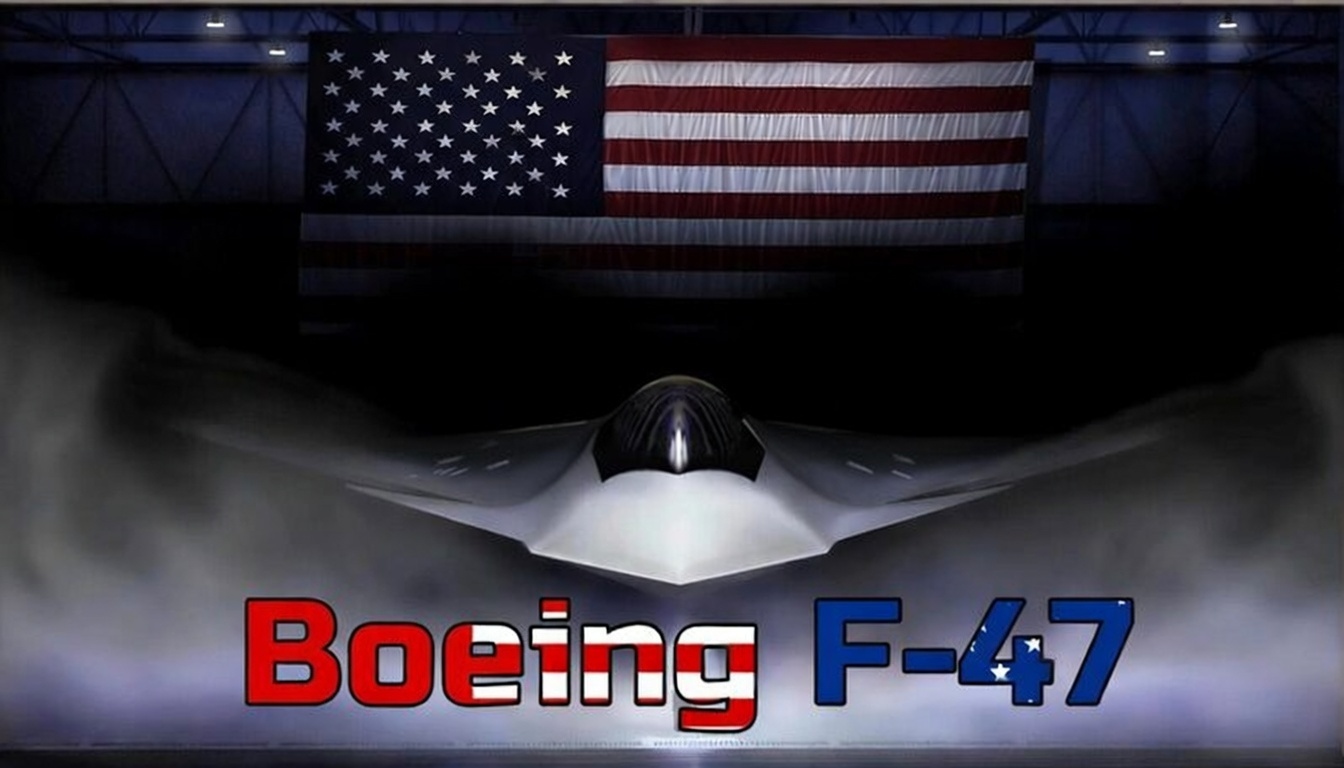
The 60% stealth force will include 40% F-35As and 20% F-22 Raptors and F-47s. The sixth-generation Boeing F-47s are gradually expected to replace the aging Raptors.

If the plans materialize, then by 2035, every three out of five U.S. Air Force fighters will be stealth platforms, and every two out of five fighters will be F-35s.

The new plans are part of an updated fighter force structure report the USAF submitted to Congress last week, and Lt. Gen. David Tabor, deputy chief of staff for plans and programs, revealed them at a media briefing in the Pentagon on October 20.

About 40 percent of the fleet could be F-35s, Tabor said.

Another 20 percent would be a mix of F-22 Raptors and F-47s as the sixth-generation fighter replaces the Raptor, Tabor said, according to Air & Space Forces Magazine.

The USAF built 186 F-22 Raptors and plans to replace them with an equivalent number of sixth-generation F-47s.

Tabor did not provide a breakdown of the remaining 40% of the force structure; however, he said the remaining fleet would likely split evenly between F-15 Eagle variants and F-16 Fighting Falcons.

Notably, the F-35A Lightning IIs currently make up about 30 percent of the USAF fighter fleet, with the F-22 Raptors contributing another 10 percent.

The stealth platforms currently make up about 40% of the USAF fighter fleet.

The Air Force plans to increase the share of stealth platforms from 40% to 60% over the next nine years, with the F-35A share increasing from 30% to 40%, and the F-22 Raptors and F-47s contributing the remaining 20%.

He did not provide the breakdown of how many F-22s and F-47s the USAF plans to operate in 2035.

In March 2025, Boeing won the contract to design and develop the F-47 fighter under the Next Generation Air Dominance (NGAD) effort. The sixth-generation fighter is expected to enter operational service in 2029 or mid-2030, and gradually replace the F-22 Raptors.

The F-15 Eagles’ share is expected to rise from 15% to roughly 20%, while the F-16 Fighting Falcons’ share is expected to fall sharply from 45% to 20%.

F-47: Image for Representation.

By then, the USAF will phase out all A-10 Thunderbolts.

The USAF had about 162 A-10C Thunderbolt IIs at the beginning of 2026. The U.S. Congress blocked the Air Force’s request to retire them all in FY2026 and required the USAF to keep at least 103 aircraft until October.

The USAF now plans to retire them all by September 2030. Notably, the current breakdown of the USAF fighter fleet does not include the A-10C Thunderbolts: 45% F-16s, 30% F-35s, 15% F-15s, and 10% F-22s.

USAF Needs To Add Over 70 Fighters Annually For The Next Decade 

The USAF aims to increase its fighter fleet from the current 1,271 fighters (including 103 A-10C Thunderbolts) to 1,509 combat-coded aircraft by 2035.

Notably, last year’s report set a 2030 target of 1,369 combat-coded fighters.

The USAF will therefore need to add another 238 aircraft over the next nine years. When accounting for the 103 A-10C Thunderbolts set to retire by 2030, the USAF will need to add 341 fighters.

However, the USAF will need to add many more fighters, as nearly 200 F-16s, at least 60 F-15Es, and some F-22 Raptors will also retire during this time.

The USAF will therefore need to add nearly 700 fighters over the next nine years to reach its target of 1,509 manned, combat-coded fighters, while also accounting for fighters that will retire during this time.

The USAF officials have consistently maintained that the service needs to buy 72 new fighters each year to replace its older, retiring jets and modernize the fleet.

The U.S. has not reached that target yet; in 2027, the budget request proposed adding 62 new fighters, including 38 new F-35s and 24 F-15EXs.

Tabor said those purchases can “ramp over time” to hit the numbers the Air Force needs.

“The question is, can industry produce at those levels?” Tabor said. “They’ve assured us that they can, and we believe them, but we also actually need to see it manifest.”

The Continued Relevance Of Fourth-Gen Fighters

On an aside, the USAF report submitted to the U.S. Congress makes it clear that even in 2035, the force intends to have a substantial fleet of fourth-generation fighters, nearly 40 percent, split evenly between upgraded F-15EXs and newer F-16s.

Put differently, even in 2035, two out of every five USAF fighters will be non-stealth platforms, underscoring the force’s belief that these upgraded fourth-generation fighters will remain relevant over the next decade.

The USAF has already tested this doctrine of flying a mix of fourth- and fifth-generation fighters in the Iran War.

In June 2025, during Operation Midnight Hammer, the USAF employed a mixed force of fourth- and fifth-generation fighters against Iranian targets. The F-35As reportedly led the penetration of Iranian airspace, conducting SEAD/DEAD missions against air-defense systems and escorting B-2 bombers to their targets; F-22s provided air superiority, while F-15Es and F-16s also participated in the broader strike package.

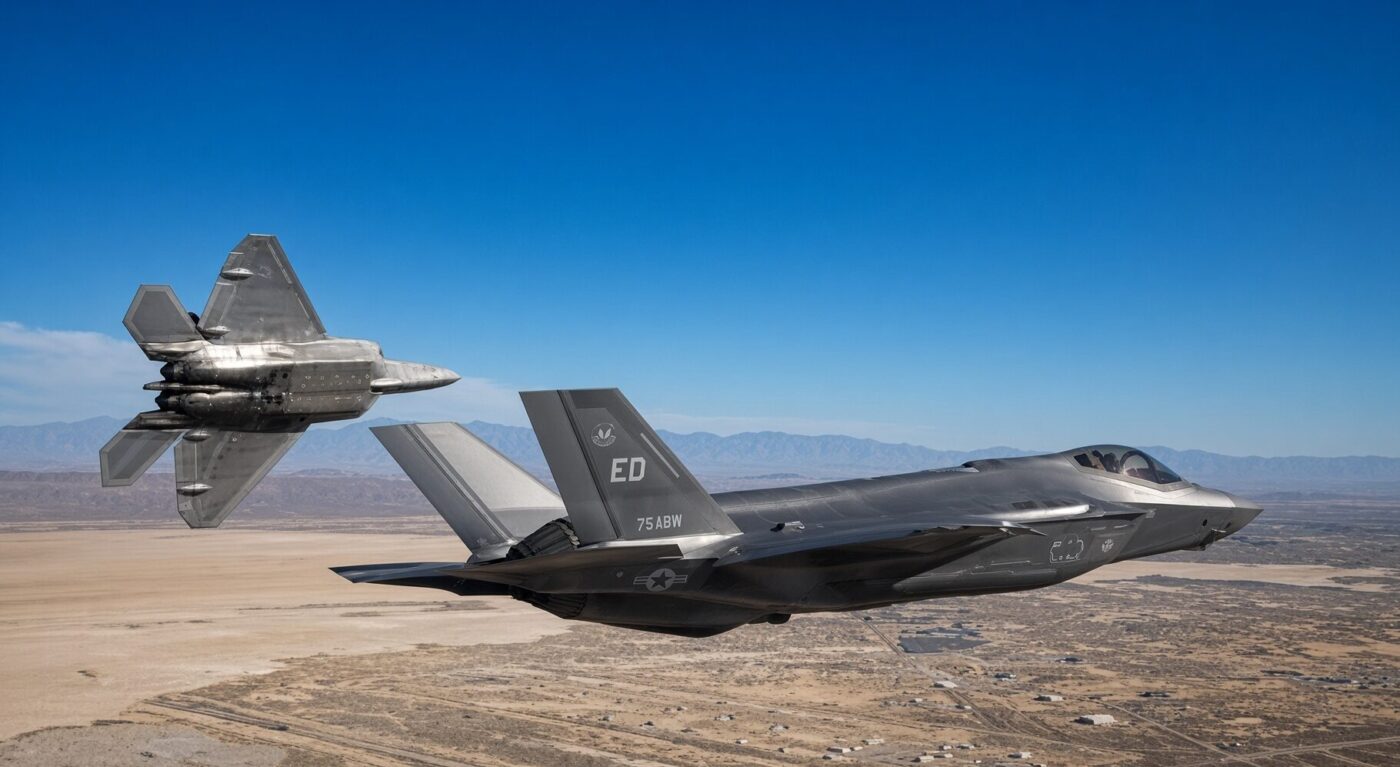
An F-22 and a F-35 fly in the skies above Edwards Air Force Base: USAF

This operation provided a real-world test of using fifth-generation aircraft to suppress defenses and enable follow-on strikes by fourth-generation fighters.

The USAF followed the same strategy during Operation Epic Fury.

The USAF, therefore, continues to invest in upgraded fourth-generation platforms, such as F-15EXs.

According to the 2027 budget documents, the USAF plans to procure up to 268 new F-15EX aircraft over the next 10 years, potentially costing U.S. taxpayers over US$ 37 billion.

Meanwhile, the USAF is also considering an upgraded F-16 variant called the F-16G.

The F-16G variant differs from the Block 70 F-16 Viper, which many countries worldwide, including Taiwan, Turkey, Morocco, Bahrain, Peru, and others, have ordered.

Buoyed by the F-15EX’s success, Lockheed Martin is aggressively pushing the F-16G variant to the USAF.

Tabor clarified that while the USAF is considering the F-16G variant, it does not have to decide “immediately.”

“We’re not in a position where that decision has to be made immediately.”

He said the decision likely won’t be made in the 2028 budgeting process, but perhaps in the years that follow.

“There is a spectrum of capability that we might want to replace the F-16s with,” he said.

“It’s not urgent, frankly. What we don’t want to get to is a point where it is urgent, and we haven’t done the homework and decided ‘hey, this is really the right place to be.’ We do have time to churn through that and make sure that we have a good option going forward.”

One advantage to buying more F-16s is that “it’s practically a ready-made aircraft,” Tabor said.

In December 2025, Inside Defense reported that the USAF was weighing a new F-16 variant to fill capability gaps at a lower cost than the F-35.

Ordering upgraded F-16s also offers the USAF other advantages.

The U.S. already has an established F-16 production line in Greenville, South Carolina. So, ordering new F-16s wouldn’t require establishing a new production line or reviving a dormant one.

However, it remains to be seen whether the F-16G achieves the same success as the F-15EX.

Tabor stressed that pushing multi-year procurement packages, as the USAF is currently exploring for the F-35 and F-15EX, will provide financial stability to defense contractors and encourage them to invest in expanding their production facilities, which will help meet the USAF’s ambitious target of adding 72 fighters every year.

Tabor also clarified that the USAF will continue investing in crewed fighter jets, even as it adds hundreds of autonomous drone fighters, known as Collaborative Combat Aircraft (CCA), to its fleet.

The USAF aims to field 500 CCAs by 2032.

“CCA is very much a reality,” Tabor said.

“It is going to be a part of our future, and there is absolutely a world in which the incorporation of CCAs into the force will mitigate the requirement for the number of fighters. That’s not the CCA that we have right now, but it is advancing very, very rapidly. We’re confident that it will play a major role in future versions of the fighter force structure report.”

For the foreseeable future, the USAF is seeking to balance crewed fourth-, fifth-, and sixth-generation platforms with autonomous drone fighters.

  • Sumit Ahlawat has over a decade of experience in news media. He has worked with Press Trust of India, Times Now, Zee News, Economic Times, and Microsoft News. He holds a Master’s Degree in International Media and Modern History from the University of Sheffield, UK. 
  • He can be reached at ahlawat.sumit85 (at) gmail.com

The post U.S. Stealth Jets — F-35, F-22 & F-47 — to Form 60% of USAF Fighter Force by 2035 Under New Plan, Service Tells Congress appeared first on EURASIAN TIMES.

  •  

ANAFRE ameaça paralisar juntas de freguesia

VTM

As juntas de freguesia preparam um protesto contra o que consideram ser o incumprimento de compromissos assumidos pelo Governo, estando em cima da mesa o encerramento dos serviços. A contestação surge na sequência da falta de concretização de medidas previstas num acordo relacionado com o financiamento e o reforço das condições de funcionamento das freguesias, na proposta de Orçamento de Estado de 2027.

Hélder Afonso, presidente da União das Freguesias de Mouçós e Lamares, em Vila Real, e membro do Conselho Diretivo da Associação Nacional de Freguesias (ANAFRE), considera que a situação representa “um rasgar do acordo” e uma desconsideração pelo trabalho desenvolvido pelas autarquias de proximidade.

Entre as reivindicações está o reforço progressivo do Fundo de Financiamento das Freguesias (FFF), com o objetivo de chegar aos cinco por cento até 2029/2030. A atualização pretende responder à subida dos custos, da manutenção de equipamentos e dos salários dos trabalhadores, que tem pressionado os orçamentos das juntas.

Artigo exclusivo PREMIUM

Tenha acesso ilimitado a todos os conteúdos do site e à edição semanal em formato digital.

ou compre apenas este artigo:

Comprar este artigo — 1,00€
Se já é PREMIUM, Aceda à sua conta em Entrar

The post ANAFRE ameaça paralisar juntas de freguesia appeared first on A Voz de Trás-os-Montes.

  •  

Scandal in Greek Basketball: Six people arrested, among them Federation president

Match-fixing scandal in Greek basketball: Six arrests and €820,000 in cash found in the safe of one referee. Implicated in the scandal that shakes the Greek Basketball is also the president of the Hellenic Basketball Federation (EOK), Vangelis Liolios, ANT1 TV who has been also arrested and other media reported on Tuesday afternoon. Law enforcement […]

The post Scandal in Greek Basketball: Six people arrested, among them Federation president appeared first on Keep Talking Greece.

  •  

Trabalhadores da saúde e população na rua em defesa do SNS

VTM

Paula Dias, da União de Sindicatos de Vila Real, referiu à VTM que o objetivo da tribuna pública “foi defender o Serviço Nacional de Saúde (SNS), dar a conhecer os problemas que enfrenta. No caso concreto de Chaves registamos uma constante desvalorização e retirada de valências deste hospital”.

A proposta de Orçamento de Estado que está em discussão na Assembleia da República prevê uma redução de verbas para a saúde, uma situação que deixa preocupações. “É mais um desinvestimento no setor da saúde e nos seus profissionais, quando as necessidades são cada vez maiores e deveria era haver um reforço no SNS”.

A dirigente sindical sustenta que “não podemos ter um bom sistema de saúde público se não tivermos profissionais valorizados, com carreiras bem definidas e haja uma progressão justa, de forma a terem boas condições de vida”.

Artigo exclusivo PREMIUM

Tenha acesso ilimitado a todos os conteúdos do site e à edição semanal em formato digital.

ou compre apenas este artigo:

Comprar este artigo — 1,00€
Se já é PREMIUM, Aceda à sua conta em Entrar

The post Trabalhadores da saúde e população na rua em defesa do SNS appeared first on A Voz de Trás-os-Montes.

  •  

Florestas estão a “criar riqueza, valor e emprego”

VTM

Foram 12 as máquinas entregues depois de assinados os protocolos de cedência da maquinaria entre o Instituto da Conservação da Natureza e das Florestas (ICNF) e os municípios de Alijó, Chaves, Mesão Frio, Mondim de Basto, Montalegre, Peso da Régua, Ribeira de Pena, Sabrosa, Santa Marta de Penaguião, Valpaços, Vila Pouca de Aguiar e Vila Real.

No âmbito do Programa de Mecanização para a Gestão de Combustível, financiado pelo Plano de Recuperação e Resiliência (PRR), cujas máquinas têm vindo a ser entregues em cerimónias um pouco por todo o país, os tratores foram disponibilizados para reforçar a capacidade para a realização de operações de gestão de combustível e prevenção de incêndios rurais.

O secretário de Estado das Florestas salientou que são “80 milhões de euros de investimento a ser colocado no terreno”, que abrange diferentes intervenientes do setor, desde os municípios às organizações de produtores, com o objetivo de modernizar os meios e melhorar a capacidade de intervenção. Trata-se de “um investimento em 285 equipamentos de diversas tipologias”, explicou.

Artigo exclusivo PREMIUM

Tenha acesso ilimitado a todos os conteúdos do site e à edição semanal em formato digital.

ou compre apenas este artigo:

Comprar este artigo — 1,00€
Se já é PREMIUM, Aceda à sua conta em Entrar

The post Florestas estão a “criar riqueza, valor e emprego” appeared first on A Voz de Trás-os-Montes.

  •  

Bag with drugs explodes injuring 2 police officers, 2 civilians in Athens

Four people, including two police officers, were injured after a strong explosion at the entrance of a building in Akadimia Platonos in Kolonos suburb of western Athens on Wednesday afternoon. The explosion occurred short before 4 o’ clock. According to initial information, police received a call to check the building about narcotics. Two police officers […]

The post Bag with drugs explodes injuring 2 police officers, 2 civilians in Athens appeared first on Keep Talking Greece.

  •  

Docentes demitem-se da direção do curso de medicina e deixam críticas à UTAD

VTM

Carla Amaral e Raquel Chaves, docentes da direção do curso de Medicina da Universidade de Trás-os-Montes e Alto Douro (UTAD) renunciaram aos cargos, denunciando bloqueios administrativos e divergências sobre a gestão.

Segundo o Jornal de Notícias, num email enviado ao Conselho Pedagógico da instituição, Carla Amaral, vice-diretora do curso, e Raquel Chaves, vogal da Direção, alegam que a gestão institucional travou tarefas necessárias ao funcionamento do curso e pôs em causa condições exigidas pela Agência de Avaliação e Acreditação do Ensino Superior (A3ES).

A VTM tentou falar com as duas docentes para perceber quais os motivos que alegaram para abandonarem os cargos, mas até ao fecho desta edição não foi possível.

Artigo exclusivo PREMIUM

Tenha acesso ilimitado a todos os conteúdos do site e à edição semanal em formato digital.

ou compre apenas este artigo:

Comprar este artigo — 1,00€
Se já é PREMIUM, Aceda à sua conta em Entrar

The post Docentes demitem-se da direção do curso de medicina e deixam críticas à UTAD appeared first on A Voz de Trás-os-Montes.

  •  

Hungary Blocks Ukraine and Moldova’s EU Accession Progress Despite Diplomatic Breakthrough

Budapest has unexpectedly obstructed the next stage of EU accession negotiations with Ukraine and Moldova, just a week after approving earlier negotiating chapters and days after Prime Minister Péter Magyar pledged to restore relations with Kyiv.

Hungary has blocked a procedural decision needed to advance Ukraine and Moldova’s European Union accession negotiations, raising fresh questions about Budapest’s position under Prime Minister Péter Magyar, whose government had recently agreed to remove longstanding objections to Kyiv’s membership ambitions.

The intervention took place in Brussels on Tuesday, 20 October, during a meeting of the Council of the EU’s Working Party on Enlargement and Countries Negotiating Accession to the EU (COELA). Representatives of the 27 member states were examining the screening results for the final two negotiating clusters, covering environmental policy, transport, agriculture and regional development.

According to diplomats familiar with the discussions, the Hungarian delegation refused to approve the proposed procedural step. When representatives of other member states requested an explanation, Budapest reportedly maintained that its position remained unchanged, without providing further arguments.

An Unexpected Reversal After October Agreement

The obstruction comes only seven days after the EU formally opened two additional negotiating clusters with Ukraine and Moldova.

On 13 October, the Council approved the opening of Cluster 2, covering the internal market, and Cluster 3, dealing with competitiveness and inclusive growth. The decision followed an agreement between Kyiv and Budapest on educational rights for Ukraine’s ethnic Hungarian minority.

Ukraine’s parliament adopted legislative amendments on 12 October extending minority-language education rights, and President Volodymyr Zelenskyy signed the legislation the same day.

The agreement had appeared to remove the principal bilateral obstacle to further negotiations. Ukrainian Foreign Minister Andrii Sybiha and his Hungarian counterpart, Anita Orbán, welcomed the development following discussions in Luxembourg.

The diplomatic rapprochement continued on 16 October, when Zelenskyy and Magyar held their first official bilateral meeting in Brussels. Both governments expressed an intention to improve relations after years of disputes under former Hungarian Prime Minister Viktor Orbán.

Magyar also invited Zelenskyy to Budapest for commemorations marking the 70th anniversary of Hungary’s 1956 anti-Soviet uprising.

The subsequent Hungarian objection has therefore interrupted a process that Ukrainian and European officials had expected to advance before the end of the year.

Agriculture and Energy Remain the Final Obstacles

Ukraine and Moldova have now formally opened four of the six negotiating clusters required under the EU’s enlargement methodology.

The remaining two are Cluster 4, Green Agenda and Sustainable Connectivity, and Cluster 5, Resources, Agriculture and Cohesion. They cover several of the most economically sensitive areas of prospective Ukrainian membership.

Cluster 4 includes environmental regulation, energy policy and transport infrastructure, while Cluster 5 encompasses agriculture, food safety, fisheries and regional development funding.

Ukraine’s agricultural sector presents particular challenges for the EU’s Common Agricultural Policy. The country’s extensive farmland and substantial grain production could affect agricultural subsidy allocations, market competition and the distribution of EU budgetary resources.

Poland and other agricultural member states have previously expressed concerns about the implications of Ukrainian agricultural integration. Such questions will require negotiation regardless of Hungary’s immediate position.

However, the 20 October meeting was not intended to settle these substantive issues. Its purpose was to advance the procedural preparations for formally opening negotiations on the remaining clusters.

Domestic Politics and the Question of EU Funding

The explanation for Budapest’s latest move may lie in Hungary’s domestic political calculations rather than a new dispute over minority rights.

Diplomatic sources have suggested that Magyar’s government is attempting to avoid accusations from Viktor Orbán’s opposition that it is making excessive concessions to Ukraine.

Although Magyar defeated Orbán in April’s parliamentary elections and has adopted a more cooperative approach towards Brussels, he has consistently opposed accelerated Ukrainian membership.

In an interview conducted on 20 October, Magyar reiterated his opposition to fast-tracking accession, arguing that membership must remain conditional on compliance with EU requirements. He also questioned whether a country at war could join the Union.

Another potential complication concerns Hungary’s financial relationship with Brussels.

The European Commission agreed in May to unlock €16.4 billion in previously frozen funds following reforms introduced by Magyar’s administration. Some disbursements remain subject to conditions, while separate disputes over EU financial penalties continue.

However, there is currently no publicly established evidence that Hungary’s objection on 20 October was intended to secure additional financial concessions. Any connection between the two negotiations remains speculative.

Moldova Caught in Budapest’s Dispute with Kyiv

Hungary’s position also affects Moldova, despite the absence of an equivalent bilateral dispute between Budapest and Chișinău.

The EU has kept the accession negotiations of Ukraine and Moldova politically aligned, seeking to advance both countries through the six negotiating clusters together.

Consequently, an objection directed principally at Ukraine can delay Moldova’s progress even when its own technical preparations satisfy the relevant requirements.

Separating the two accession tracks would allow Moldova to advance independently, but such a move would require political agreement among member states and could raise further questions about the EU’s enlargement strategy.

Ireland Seeks Agreement Before December

Ireland, which holds the rotating presidency of the Council of the EU until 31 December, has made progress on Ukrainian and Moldovan accession a priority.

The disputed procedural decision is expected to return to subsequent meetings of the enlargement working party, with senior EU and national officials still anticipating that the final two clusters could formally open in December.

The latest obstruction does not reverse the four clusters already opened, nor does it terminate accession negotiations. It does, however, demonstrate that the change of government in Budapest has not eliminated Hungary’s capacity or willingness to obstruct individual stages of enlargement.

For Kyiv and Chișinău, the immediate question is whether the 20 October decision represents a short-lived domestic political manoeuvre or the beginning of another prolonged dispute over the conditions of EU membership.

  •  

Novos produtos à base de truta-fário querem chegar à mesa dos consumidores

VTM

O desafio foi lançado pela Associação Empresarial Mais Boticas, que fez uma candidatura à Fundação La Caixa e obteve financiamento para valorizar a truta-fário, que existe em grande quantidade no concelho de Boticas.

Para isso foi desenvolvido o projeto “Sustainable Trout” – Promoção, Valorização e Sustentabilidade da truta de Boticas, que criou uma marca para impulsionar a dinâmica económica local e a sustentabilidade dos recursos endógenos.

Boticas paulo aleixo
“Os chefs criaram pratos extraordinários, agora, esperamos que a restauração aproveite”
PAULO ALEIXO,
Presidente da Associação Mais Boticas
 

Paulo Aleixo, presidente da associação empresarial, explicou à VTM as motivações por detrás da candidatura. “Surgiu a necessidade de escoar a produção excessiva da truta-fário que, em determinadas alturas do ano, existe em grande quantidade nos nossos viveiros”, explicou, adiantando que se juntaram ao projeto o Aquavalor (Universidade Politécnica de Bragança), o CIMO (Centro de Investigação de Montanha) e o município de Boticas, para se conseguir criar um produto diferenciado.

Artigo exclusivo PREMIUM

Tenha acesso ilimitado a todos os conteúdos do site e à edição semanal em formato digital.

ou compre apenas este artigo:

Comprar este artigo — 1,00€
Se já é PREMIUM, Aceda à sua conta em Entrar

The post Novos produtos à base de truta-fário querem chegar à mesa dos consumidores appeared first on A Voz de Trás-os-Montes.

  •  

Segurança agredido nas urgências durante a noite

VTM

Segundo o que apurou a VTM, a agressão terá ocorrido durante a madrugada, perto das duas horas do dia 12 de setembro, numa altura em que aquele serviço não teria muita afluência. A mesma fonte, confirmou à VTM que as agressões não são frequentes dentro da unidade hospitalar, nem existe um clima geral de insegurança, contradizendo a denúncia que foi enviada para a redação.

De acordo com essa comunicação, “é importante dar visibilidade a este tipo de situações, não só pela gravidade desta agressão, mas também pelas condições em que muitos profissionais desempenham diariamente as suas funções, frequentemente em ambientes de grande tensão e sujeitos a situações de violência”.

Respondendo ao pedido de esclarecimento da VTM, a ULSTMAD confirma a agressão, explicando que “o profissional foi prontamente assistido pela equipa do Serviço de Urgência, tendo apenas sofrido ferimentos ligeiros”. Já na primeira denúncia, é descrito que o segurança foi “violentamente agredido” e “atingido com murros e pontapés”, tendo este ficado “inanimado no chão”.

Artigo exclusivo PREMIUM

Tenha acesso ilimitado a todos os conteúdos do site e à edição semanal em formato digital.

ou compre apenas este artigo:

Comprar este artigo — 1,00€
Se já é PREMIUM, Aceda à sua conta em Entrar

The post Segurança agredido nas urgências durante a noite appeared first on A Voz de Trás-os-Montes.

  •  

Students in Greece protest high cost of living; solidarity with France

Thousands of teachers, pupils, students and their parents but also civil servants including health personnel, pensioners and workers joined their voices in protesting the high cost of living, demanding better education conditions, higher salaries and lower housing costs. Τhe protests followed the 24-hour strike called by the primary and secondary teachers unions. In Athens, Thessaloniki […]

The post Students in Greece protest high cost of living; solidarity with France appeared first on Keep Talking Greece.

💾

💾

  •  

Duas raças e uma história de resistência para preservar o território

VTM

Com percursos distintos, mas marcados por desafios semelhantes, Maronesa e Barrosã continuam presentes em explorações familiares de Trás-os-Montes e do Barroso. A produção de carne, a certificação DOP, a adaptação das explorações e o recurso a novas ferramentas de gestão genética convivem com práticas tradicionais de pastoreio e com uma forte ligação aos lameiros e baldios. Entre a necessidade de modernizar e a preocupação em preservar as características das raças, os criadores procuram encontrar formas de assegurar o futuro de um património que ultrapassa a dimensão económica.

Maronesa

A raça Maronesa conta atualmente com 4350 fêmeas reprodutoras em linha pura e 180 machos reprodutores, mantendo um efetivo estável há cerca de duas décadas. Segundo Paula Teixeira, da Associação de Criadores do Maronês (ACM), a raça está presente em 40 concelhos do país, embora cerca de 70% das explorações se concentrem no seu solar, nas regiões de Alvão-Marão e Padrela-Falperra, sobretudo em Vila Real, Vila Pouca de Aguiar, Ribeira de Pena e Mondim de Basto.

Apesar da estabilização, a continuidade da raça enfrenta desafios como o envelhecimento dos criadores, a falta de sucessão geracional, os custos de produção e o abandono rural. “A renovação geracional está muito abaixo do ritmo de envelhecimento dos atuais criadores”, alerta Paula Teixeira, que aponta ainda o acesso à terra e a burocracia como obstáculos à entrada de novos produtores.

Artigo exclusivo PREMIUM

Tenha acesso ilimitado a todos os conteúdos do site e à edição semanal em formato digital.

ou compre apenas este artigo:

Comprar este artigo — 1,00€
Se já é PREMIUM, Aceda à sua conta em Entrar

The post Duas raças e uma história de resistência para preservar o território appeared first on A Voz de Trás-os-Montes.

  •  

Europe’s Budget Battle Is Becoming a Test of Its Global Ambitions


Europe wants cheaper energy, stronger industries, secure borders and the capacity to sustain Ukraine. Its budget negotiations are exposing the difficulty of paying for those ambitions while protecting established spending programmes and containing national contributions.

Wednesday’s European Parliament debate on the October EU summit brought that contradiction into focus. The dispute over the 2028–2034 Multiannual Financial Framework is becoming a test of whether Europe can translate geopolitical urgency into durable financial commitments.

According to Parliament’s account of the debate, European Council President António Costa wants agreement before the year’s end. He advocated an ambitious budget while keeping national contributions reasonable, alongside progress on new EU revenue sources.

Those objectives are politically attractive. Reconciling them will require difficult choices over spending, taxation and the distribution of authority.

MEPs challenged the assumption that the Union can keep expanding its responsibilities without providing additional resources. Speakers identified support for Ukraine, industrial competitiveness, agriculture, regional development and household living costs among competing priorities.

Their argument has force. A budget negotiated around yesterday’s compromises risks leaving Europe poorly equipped for tomorrow’s threats. Yet calls for ambition become less persuasive when they avoid specifying which programmes deliver measurable European benefits.

The emerging distribution of cuts illustrates the problem. As EU Today previously reported, the Irish presidency’s compromise proposed reducing the Commission’s plans by approximately €141 billion, with competitiveness and security facing proportionately deeper reductions than agriculture and cohesion spending.

That creates an uncomfortable possibility: the policies most closely associated with Europe’s strategic renewal could become bargaining chips in negotiations dominated by established beneficiaries.

Protecting farmers and poorer regions has clear economic and political justification. Nevertheless, preserving familiar allocations while squeezing newer priorities would undermine leaders’ repeated promises to strengthen European independence.

Energy offers perhaps the clearest example of why spending decisions and structural reform must advance together.

Commission President Ursula von der Leyen told MEPs that dependence on imported fossil fuels and the absence of a genuine European energy union were weakening Europe. Costa emphasised affordable production and modernised electricity grids.

The implication is significant. Industrial subsidies cannot indefinitely compensate for an energy system that leaves European manufacturers facing persistently high costs. Cross-border connections, infrastructure investment and better market integration therefore belong at the centre of competitiveness policy.

Von der Leyen also pressed governments to complete the single market and avoid making European rules more complicated through national implementation. Her argument highlights a limitation of the budget debate: additional money cannot, by itself, remove regulatory fragmentation.

The same distinction applies to China. The Commission president described heavily subsidised Chinese competitors and promised action on dependencies, supply chains and market access. Such measures require coherent enforcement and political resolve alongside investment.

Ukraine adds a security imperative that cannot readily be postponed. Costa linked Ukrainian and European security, while MEPs warned about the consequences of weakening support. Long-term commitments require predictable financing rather than recurring emergency bargains.

But the budget dispute also concerns who controls the money.

As EU Today’s reporting on regional concerns explained, local leaders fear that restructuring could concentrate investment decisions in national capitals, weakening regional influence and potentially widening disparities.

That warning deserves attention. A larger European budget would not automatically produce more balanced development. Allocation rules, accountability and local participation will help determine whether spending strengthens cohesion or reinforces existing advantages.

New revenue sources could ease pressure on national contributions, but they cannot make financing politically painless. Costs ultimately fall somewhere, and governments must explain the distribution honestly.

The central challenge is therefore broader than securing agreement on a headline figure. Europe needs a settlement that protects essential commitments, finances credible common priorities and demonstrates results.

MEPs are right to demand resources consistent with Europe’s responsibilities. Governments are entitled to demand discipline. The failure would be a compromise that satisfies neither requirement: expensive enough to provoke domestic opposition, yet too fragmented to provide the strategic capacity Europe’s leaders insist is indispensable.

Main Image: Denis LOMME: © European Union 2025 – Source : EP
  •  

Chaves sofre para seguir em frente na Taça

VTM

Em jogo realizado na noite de sexta-feira, o Grupo Desportivo de Chaves venceu Os Marialvas por duas bolas a uma e segue em frente na Taça de Portugal.

Roberto e Gilberto Roa marcaram os golos da equipa flaviense na vitória por 2-1, frente ao conjunto de Cantanhede, num jogo disputado no Estádio Municipal Eng.º Manuel Branco Teixeira, em Chaves.

A jogar perante o seu público, os flavienses entraram melhor e vão inaugurar o marcador cedo, logo aos 13’, por intermédio de Roberto, que converteu uma grande penalidade. A equipa do Campeonato de Portugal tentou reagir, mas o intervalo chegou com a vantagem mínima para os donos da casa.

Artigo exclusivo PREMIUM

Tenha acesso ilimitado a todos os conteúdos do site e à edição semanal em formato digital.

ou compre apenas este artigo:

Comprar este artigo — 1,00€
Se já é PREMIUM, Aceda à sua conta em Entrar

The post Chaves sofre para seguir em frente na Taça appeared first on A Voz de Trás-os-Montes.

  •  

China’s J-20 Fleet Hits 500 While H-20 Stealth Bomber, Billed as Rival to B-21 Raider, Goes Missing From Spotlight

China’s J-20 stealth fighter fleet is estimated to have reached 500 aircraft, according to open-source assessments by analysts tracking serial numbers and unit deployments. However, its ambitious H-20 stealth bomber, touted as a challenge to the US B-21 Raider, remains conspicuously absent.

The J-20 Mighty Dragon first flew in 2011 and entered service with the People’s Liberation Army Air Force (PLAAF) in 2017. China has rapidly increased its inventory; Chengdu Aircraft Corporation facilities produce about 100-120 airframes a year.

China unveiled the tandem-seat J-20S at the 2025 Victory Day Parade as the EurAsian Times reported at the time. If production continues at pace, reports suggest the total number of J-20 aircraft, including the two-seat variant, could reach or exceed 1,000 by 2030.

Alongside the J-20, China is scaling production of the J-35 family, its second fifth-generation aircraft. Some estimates suggest China could have 200 to 300 J-35s operational by 2030.

This makes China the only nation besides the US to field two fifth-generation aircraft.

Beijing has also begun flight testing two different sixth-generation prototypes: the larger, three-engine Chengdu J-36 and the smaller twin-engine Shenyang J-50. They are seen as a counter to the Boeing F-47 6th-gen aircraft.

Where is China’s H-20 Bomber?

China has hinted about the debut of the H-20 stealth bomber for several years.

China first publicly acknowledged a next-generation stealth bomber, later identified as the H-20, around 2016. At the time, officials described it as a flying-wing design intended to provide true intercontinental penetrating strike capability.

In January 2021, a clip from the PLAAF’s recruitment video showed off the supposed flying-wing design to the public.

The following year, images of a metallic wind-tunnel test model of a bomber linked to the final H-20 prototype surfaced on Chinese social media (subsequently posted to X), sparking speculation that the bomber technology may be maturing at pace, as the EurAsian Times noted in a detailed report at the time. 

H-20
Possible Design of H-20 Bomber

In March 2024, then-PLAAF deputy commander Wang Wei told reporters the H-20’s development had no “technological bottlenecks” and hinted that the bomber’s public unveiling was imminent. He assured reporters that manufacturing and commissioning would follow the aircraft’s test flights and take place shortly after its official public debut.

Later that year, Beijing was widely expected to showcase the H-20 at the Zhuhai Air Show in November 2024. However, that did not happen at China’s biggest air show.

Meanwhile, the US B-21 ‘Raider’ next-generation bomber has moved at breakneck speed, going from the official public unveiling in December 2022 to the maiden flight in record time in November 2023. The program is currently in low-rate initial production, meaning Northrop Grumman is building a small number of aircraft to test and refine the production process before full-rate production begins. 

By contrast, the Chinese H-20 has had no confirmed test flight, no publicly verified prototype imagery of a finished airframe, and no visible production line as of October 2026.

Europe “Blind in Space”: Why Only U.S. Can See Russian Missiles as Ukraine Begs For American Help?

In fact, United States officials and intelligence assessments have grown increasingly cautious and skeptical in recent years about an impending unveiling.

The Pentagon’s December 2024 assessment of China’s military stated the H-20 is unlikely to appear before the end of the decade.

“The PLAAF is developing new medium- and long-range stealth bombers to strike regional and global targets. PLAAF leaders publicly announced the program in 2016; however, it may take more than a decade to develop this type of advanced bomber,” the report emphasized.

The Pentagon’s 2025 China report did not mention the H-20 at all, directly or indirectly. However, the head of US Air Force Global Strike Command (AFGSC) was quoted saying: “I can certainly understand their [the Chinese] desire to have a long-range strike capability like the United States, and I know that they’re pursuing it aggressively.”

“What I can tell you is they’re just not there yet. I think our adversaries look at our long-range strike capabilities, and … want to mimic them, but they can’t,” he continued. “There’s no other country in the world [besides the United States] that can take and deliver a long-range strike platform pretty much on any day, at any time and place that they’re choosing, right?” AFGSC commander Gen. Stephen Davis added.

Notably, China’s only operational bombers are variants of the Xi’an H-6 family, the Chinese-built version of the 1950s Soviet Tupolev Tu-16. China currently operates the H-6K, its primary modern conventional bomber; the H-6N, a nuclear-capable variant; and the H-6J, the naval maritime-strike version optimized for anti-ship missiles. 

H-6 K Bomber
File Image: H-6K Bomber Via X

Unlike the United States, which fields the formidable B-2 Spirit, China does not yet have a dedicated long-range stealth bomber.

Currently, widespread speculation suggests China may have faced technical hurdles in developing the next-generation stealth bomber. 

China does not yet have a ready, purpose-built, fuel-efficient jet engine designed specifically for a large, long-range flying-wing bomber. Engines currently used on its transport planes (like the Y-20) or fighters (such as the WS-15) are not well-suited for the efficiency, range, and low heat signature needed. In addition, creating a smooth, seamless stealth surface on a large aircraft is much harder than on smaller fighter jets.

Another challenge China may face is building large composite structures, precision tooling, and manufacturing. Typically, building a smooth, tailless flying wing requires specialized production tooling and controlled environments that China has been developing.

Tailless designs are also inherently unstable and require advanced fly-by-wire systems, thermal management, and overall system integration.

Starshield vs. Starlink: The Satellite Fight Complicating the Ukraine-Russia War and Kyiv’s Ties with the U.S.

Interestingly, the US intelligence and military leaders have described the program as facing “significant engineering design challenges” and being “nowhere near as good as US low-observable platforms.”

Even if prototypes exist or limited testing has occurred, China may have strong reasons to withhold a public unveiling. For one, strategic bombers are part of the nuclear triad and long-range conventional strike, and premature disclosure could reveal design details of a highly classified program, something Beijing officials have been outspoken about.

H-20 Do?

The aircraft would add a flying leg to China’s nuclear triad. The Pentagon’s 2018 and 2019 “China Military Power Report” predicted that China’s new H-20 long-range stealth bomber would have an operational range of 8,500 kilometers. It will be a “flying-wing” design with a payload capacity of around 10 tons.

The H-20 could project power beyond the first chain of islands, threatening infrastructure, ships, and bases from farther away.  Furthermore, China would be able to threaten regional rivals like Japan and India and attack extremely critical peripheral places, such as the US island territories of Guam and Hawaii, with an increased long-range strike aviation force.

Analysts predict the aircraft would have serrated air intakes, cranked-kite wings, and foldable twin-tail surfaces that can switch between horizontal tailplanes and V-tails.

The H-20 is likely to feature internal armament bays that can accommodate conventional weapons, long-range cruise missiles, and maybe nuclear weapons, much like previous stealth systems. However, the  H-20 is probably not intended for carpet bombing or deep-penetration missions, but rather for stand-off and limited penetration.

While China’s next fighter jets are gaining momentum, the H-20 seems far from reality.


The post China’s J-20 Fleet Hits 500 While H-20 Stealth Bomber, Billed as Rival to B-21 Raider, Goes Missing From Spotlight appeared first on EURASIAN TIMES.

  •  
❌