❌

Reading view

Meta creates a new stock class to keep Zuckerberg in control

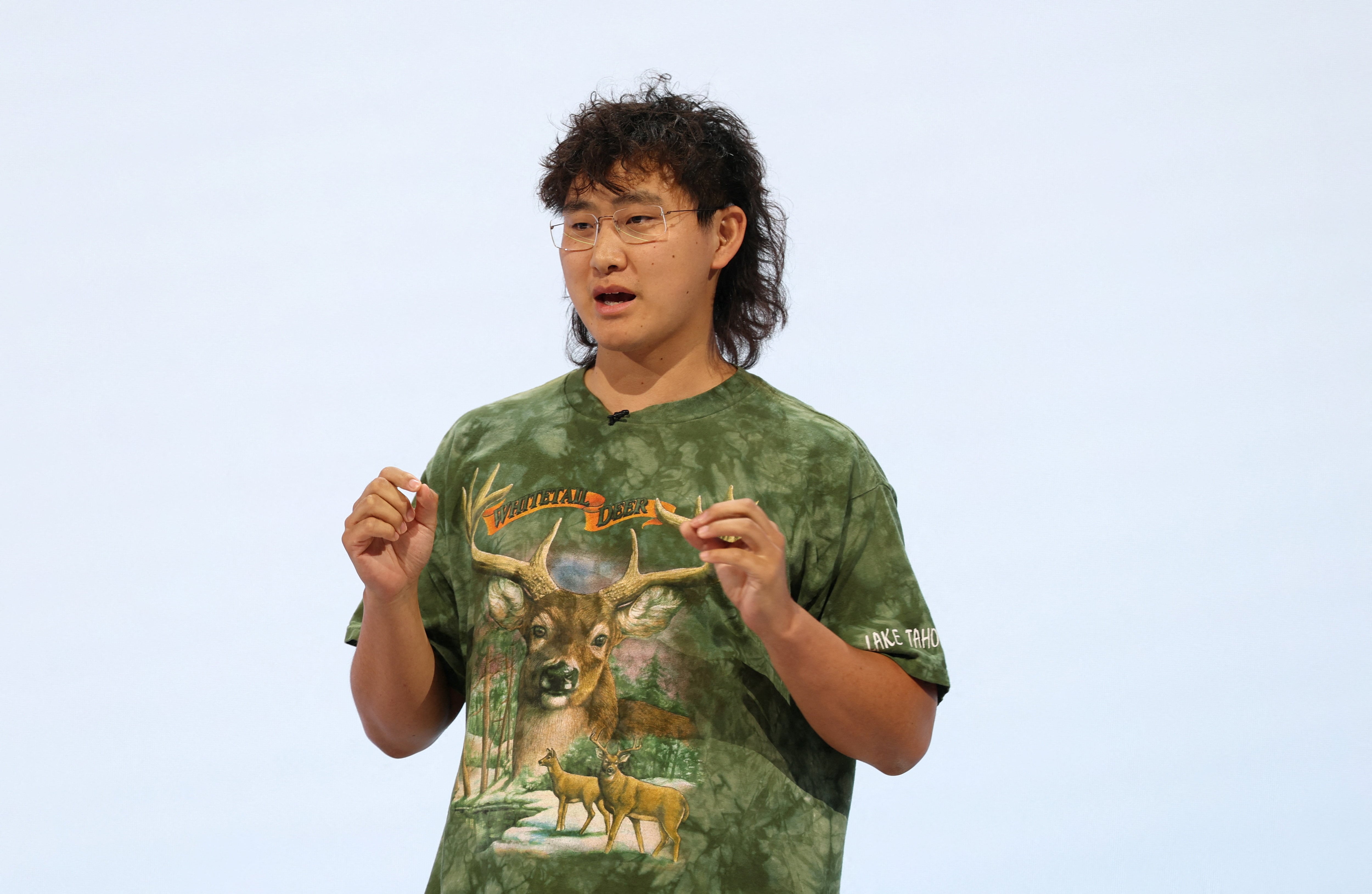
Mark Zuckerberg smiles while holding a smartphone on a blue-lit presentation stage.
Meta wants to continue its "founder-led model" — so it's creating a new stock class.

Bloomberg/Getty Images

  • Meta established a new class of stock to ensure Mark Zuckerberg stayed as CEO.
  • The stock class will "continue the founder-led model that has driven the company," Meta said in its third-quarter earnings.
  • Zuckerberg has taken a leading position in Meta's AI era.

Meta's board wants Mark Zuckerberg to stick around.

The company announced a new category of non-voting Class C stock in its third-quarter earnings report. It listed several reasons for creating the new class — one of which is to keep the CEO in control.

A Special Committee established by Meta's board determined that Zuckerberg was the best fit to lead the company into its future, and highlighted the CEO's creative vision and management abilities.

"The creation of the Class C common stock will continue the founder-led model that has driven the company's success since its inception," Meta said.

The stock class will also provide Meta the ability to finance its growth, the earnings report said. Meta is spending big on AI and the data centers needed to power it. The company reported $34.91 billion in third-quarter capital expenditures.

Meta's press release said the distribution would effectively amount to a two-for-one stock split for existing shareholders. Susan Li, Meta's chief financial officer, said that the stock will be distributed to existing shareholders.

Other tech companies have issued stock to access new capital without diluting their CEO's voting power. Google performed a stock split in 2012 for a similar reason. Semafor was first to report the new stock class.

Zuckerberg has long been the face of Meta. He's strengthened his leadership through the AI boom, going "startup mode" and getting hands-on with the tech. The company's AI team set up their desks around where Zuckerberg sits.

The success of Muse, Meta's AI agent, has raised the profile of another Meta executive: Alexandr Wang. The chief AI officer has joined Zuckerberg for podcasts and spoken onstage at keynotes.

A Financial Times profile last week touted Wang as a "potential successor to Zuckerberg." It's clear the board wants Zuckerberg there for the long haul.

Read the original article on Business Insider

  •  

Meta CEO Mark Zuckerberg says Muse and Reality Labs are highly unprofitable — for now

Meta CEO Mark Zuckerberg
Meta CEO Mark Zuckerberg.

Finn Gomez/Getty Images

  • Meta's AI agent, Muse, is unprofitable due to "very high compute costs," CEO Mark Zuckerberg says.
  • Meanwhile, Meta expects Reality Labs, its AI glasses division, to lose $15 billion next year.
  • The social media giant has a plan to fix that.

Meta says some of its biggest cash incinerators could finally start turning profits.

The social media giant, which generated over 97% of its quarterly revenue from ads, has faced persistent questions from investors about the lack of profitability in its AI and hardware initiatives.

Meta CEO Mark Zuckerberg addressed those concerns head-on during its third-quarter earnings call on Wednesday.

Zuckerberg said that Muse, the AI assistant it launched last month, is unprofitable since it's "very compute intensive to run." Meta expects to start turning that around next year by massively improving Muse's efficiency.

"If compute efficiency continues improving quickly for another few years, which we think is highly likely, then Muse will be highly profitable over multiple years," he said.

Meta plans to make money from Muse by taking a small transaction fee off of purchases it drives, Zuckerberg said at Meta's Connect conference last month.

Zuckerberg added that Muse, which launched only in the US and Canada, wasn't launched globally due in part to the amount of compute it requires. (Meta's North American users are generally its most lucrative.)

Zuckerberg also struck a positive note about its cash-hemorrhaging Reality Labs division, which makes products like Meta Ray-Bans and virtual reality glasses.

Meta expects Reality Labs to narrow its losses to about $15 billion in 2027, down from the $18 to $19 billion it expects to lose this year. The division should start trending toward profitability next year, as Meta's AI systems make it more useful, Zuckerberg said.

"I continue to believe that the path to delivering holographic experience, of bringing together the physical and digital worlds and everyday glasses, will come through VR first," Zuckerberg said.

Have a tip? Contact this reporter securely on Signal at charlesrollet.12 or +1-628-282-2811. Use a personal email address and a non-work device; here's our guide to sharing information securely.

Read the original article on Business Insider

  •  

Meta Earnings Show Increased A.I. Spending, Even as Cash Pressures Grow

The spending has hurt the Silicon Valley giant’s cash flow, which turned negative. Meta said it would issue a new class of stock to help it raise more money.

© Scott Ball for The New York Times

Construction of Meta’s Richland Parish Data Center in Holly Ridge, La.
  •  

Meta narrows capex forecast as it leans into the AI agent wars

Mark Zuckerberg, chief executive officer of Meta Platforms Inc., during the Allen & Co. Media and Technology Conference in Sun Valley, Idaho, US.
Meta, led by Mark Zuckerberg, has spent big on infrastructure for its AI development.

Bloomberg/Getty Images

  • Meta spent $34.91 billion in capital expenditures in its third quarter.
  • The company is spending big on data centers and other infrastructure for its AI development.
  • Meta predicted $135-145 billion in capex for 2026, aligning with analyst expectations.

Meta is making it rain for AI.

The company spent $34.91 billion in capital expenditures during the third quarter of 2026. That's up from the second quarter's sum, $31.08 billion.

For the year 2026, Meta said it expects to spend between $135-145 billion in capital expenditures, narrowed from its prediction of $130-145 billion last quarter.

Meta's forecast includes the yearly capex prediction that analysts expected: $139.79 billion.

As Meta bets big on AI, it is investing heavily in its development. It has built massive, costly data centers and spent big on computing power.

The spending uptick was expected. On the "Cheeky Pint" podcast earlier this month, CEO Mark Zuckerberg recounted early conversations about the investment — and said he'd bet up to $200 billion on AI, before he knew the models would work.

Investors haven't loved Meta's massive capex forecasts in past quarters. The stock tumbled almost 10% last quarter after earnings per share missed Wall Street estimates, and sank 6% the quarter before on raised capex guidance.

This quarter, Meta has a new hero product: Muse.

The AI assistant has reached over 2 million daily users and 3 million downloads. It quickly scaled the App Store. Muse users told Business Insider they chatted with it to help plan trips and ace exams.

The energy around the company is ebullient, as Alexandr Wang, Meta's chief AI officer, continues to post memes of Muse's squishy-looking mascot.

At Meta's Connect keynote event in September, Zuckerberg said Muse "has a novel business model."

"We believe that Muse will make you money, and we're standing behind this by making Muse free for a huge number of tokens with the expectation that over time, we will profit by taking a small fee from transactions," he said.

Muse could help justify the capex guidance for some investors. The stock was trading up 4.12% after-hours at the time of publication.

Read the original article on Business Insider

  •  

Meta, condenada a pagar 25.000 millones de dólares al estado de Nuevo México (EEUU) por engañar a los usuarios sobre la privacidad en Facebook

La sanción impuesta por un juez de Nuevo México por el caso de Cambridge Analytica podía haber sido de hasta 219.000 millones Leer

La sanción impuesta por un juez de Nuevo México por el caso de Cambridge Analytica podía haber sido de hasta 219.000 millones
  •  

Excessive wealth, extreme emissions – and ecocide: what I learned at Europe’s big superyacht show

These yachts are highly popular with the ‘super-bourgeoisie’ – and getting bigger. Can anything be done to stop them destroying our seas?

Who knew? Apparently everyone did, apart from me: you don’t wear shoes on a superyacht. Now, about to step on to my first teak deck at the Monaco Yacht Show, I’ve got to take my trainers off, and I’m having a sock panic. Have they got holes? Do they even match? Do they smell?

To be honest, I’ve come dressed all wrong for Europe’s big annual superyacht trade exhibition. The code for men seems to be crisp and tucked in, blazers and chinos, navy and white, sculpted hair and designer sunnies. (I went colourful, loose, casual). For women, it’s something like Riviera elegance. Everyone – whether they’re Italian, French, English, German, American, exhibitors, buyers, brokers, charterers – seems to know each other. The international superyacht community seems to be a close-knit one, and I’m not part of it. Yet.

Continue reading...

© Photograph: Sam Wollaston/The Guardian

© Photograph: Sam Wollaston/The Guardian

© Photograph: Sam Wollaston/The Guardian

  •  

Manifestantes acusam Meta de favorecer Flávio Bolsonaro

"Meta, não se meta" era a palavra de ordem entoada pelos manifestantes, frente ao edifício que alberga o escritório da Meta. Campanha de Lula acusa a tecnológica norte-americana de favorecer rival.

© ISAAC FONTANA/EPA

Manifestantes concentraram-se no famoso centro financeiro da capital paulista, Faria Lima, segurando faixas e cartazes com fotografias do dono da Meta, Mark Zuckerberg
  •  

“Meta no se meta”: brasileños rechazan interferencia electoral del gigante tecnológico

Manifestantes denunciaron en São Paulo que Meta reduce de forma injustificada el alcance de las publicaciones del mandatario Luiz Inácio Lula da Silva, al tiempo que impulsa los contenidos del candidato de la extrema derecha, Flávio Bolsonaro.
  •  

La justicia electoral de Brasil da 24 horas a Meta para demostrar que trata igual a Lula y a Bolsonaro

Al Tribunal Superior Electoral de Brasil se le está acabando la paciencia con el gigante tecnológico Meta y los inescrutables entresijos de su funcionamiento. Un juez del TSE le ha dado 24 horas a la tecnológica propietaria de Instagram, WhatsApp y Facebook para que demuestre al tribunal que sus algoritmos y su inteligencia artificial dan un trato igual a los dos candidatos, al presidente Luiz Inácio Lula da Silva, del izquierdista Partido de los Trabajadores, y al senador Flávio Bolsonaro, del derechista Partido Liberal. La decisión judicial fue dictada el domingo por la noche cuando los presidenciables protagonizaban su primer debate.

Seguir leyendo

© Andre Penner (AP Photo/Andre Penner)

Una protesta ante la sede de Meta en São Paulo, este lunes. La pancarta dice: "Brasil decide sobre Brasil".
  •  

Lula cuts Flávio Bolsonaro’s lead to two points as Brazil election remains neck and neck

With just over a week to go until Brazil’s closely contested presidential election, the picture remains much the same as it has for months: a dead heat.

Seguir leyendo

© Amanda Perobelli (REUTERS)

Luiz Inácio Lula greets supporters during a march in São Paulo on October 11.
  •  

What's on Zuck's desk? We pushed Muse to figure it out.

Mark Zuckerberg's desk
Mark Zuckerberg shared a snapshot of his work desk. We snooped around.

Mark Zuckerberg

  • It's time to play our favorite pastime of the 21st century: Are you smarter than an AI agent?
  • Today, I asked Muse to identify everything on Mark Zuckerberg's desk.
  • Muse clocked this BI reporter on some things — but this reporter also knows a few useless facts.

Ever wondered on a random Thursday afternoon what the chief executive of Meta might keep on his desk at the HQ?

I'm glad you asked.

Mark Zuckerberg posted a photo of his office desk to announce the release of Muse Spark Open, which lets you run a model with a fairly simple desktop setup. The company calls it "the most capable US open-weight model to date" and has teamed up with Apple to enable it to run on two M5 Ultra Mac Studios.

But never mind that; let's focus on the physical workspace.

Since this Muse is supposed to be so smart, I wanted to see how easily it could identify the objects on Zuckerberg's desk.

Two things immediately popped out to me: the black trinket on the right and the graffiti on the desk. Yeah, sure, there's whatever is on Zuckerberg's screen, which might provide a hint on what the CEO is working on as he steers a nearly $2 trillion company. But we don't want to know that, right?

Here's what the Muse agent caught — and what it needed help identifying.

Looks like Zuckerberg is cooking on his desktop
Desktop screen
Mark Zuckerberg's desktop screen

Mark Zuckerberg

Obviously, as a tech and business publication, we have to snoop on Zuckerberg's screen to see what he's working on.

At a glance, he appears to be chatting with his Muse agent, Agrippa, named after the Roman general Marcus Vipsanius Agrippa. The CEO is telling his agent to build something onto his Mac, which is relevant to today's announcement.

What exactly is he working on? My own Muse helped point out that Agrippa is describing a "Tamagotchi-style" virtual pet after Zuckerberg asked to identify its "official form"— a "chunky cream-and-gold 90s egg, blinking red LED, speaker grille, Feed / Train / Play buttons," Agrippa said.

Agrippa is then asked to "build it on my Mac."

My Muse said that the CEO is essentially asking for a "software simulation of the Agrippa pet." On the right, a terminal displays the agentic AI narrating its work while implementing Zuckerberg's request.

Zuckerberg has the latest and greatest Apple hardware
Mac Studios
Two Apple M5 Ultra Mac Studios

Mark Zuckerberg

I'm going to give Muse some points here since it correctly identified the two computers as Mac Studios. I mistakenly referred to them as Mac Minis while entering my request into Muse to review everything in the photo.

I also could've read Zuckerberg's post more carefully. He clearly said what was going on: "Muse Spark Open — weights releasing today — runs great on new Mac Studios thanks to work with @johnternus and Apple."

This is directly relevant to what Meta's press release said: You can run Muse Spark Open on two Apple M5 Ultra Mac Studios with 1 TB of unified memory.

The quiet flex here is that the 512 GB memory option for the M5 Ultra isn't publicly available yet. We're not worthy, Zuck.

Earbuds or the Muse Charm?
Muse Charm
Muse Charm

Mark Zuckerberg

This looks like the Charm Zuckerberg debuted at Meta Connect in late September. It's supposed to be a keychain-sized wearable that gives people quick access to their Muse agent, so instead of talking to your phone, you can talk to a keychain.

Anyway, Muse thought it was a "wireless earbud charging case" before I nudged it to conclude that it's "very likely the Muse Charm."

Zuck is prepared to party
A bottle of wine
A bottle of Noble Champagne

Mark Zuckerberg

Yeah, I run a multirillion-dollar company, but I still know how to party! That's what I imagine Zuckerberg thinking to himself when he set up this shot of his desk.

Muse was fairly helpful here, identifying the bottle as Noble Champagne. It couldn't identify the exact vintage, which is fine. The bottle label is pretty simple and not informative.

A quick Google search shows that it's most likely a $230 bottle of Noble Grand Cru Brut. Another flex!

Classic taped-up nerd glasses meet next-gen eyewear
Two meta glasses
Glasses are a crucial part of Meta's push for AI-powered wearables.

Mark Zuckerberg

Obviously, Zuckerberg can't be caught without Ray-Ban Meta glasses, which are part of the company's big push for wearables.

These look to be the new "Audio AI" glasses that Meta announced at the Connect event, since there are no visible cameras on the rims. The glasses are meant to be like a hands-free listening device with speakers.

Meanwhile, the glasses in the back have tape on the bridge. Old school!

Hey, Jolly!
Muse agent mascot
Muse AI's Mascot, Jolly

Mark Zuckerberg

By now, we're familiar with this guy: Jolly, the mascot for Meta's Muse AI.

Muse went a bit literal with the identification and simply described what it saw: "The plush is a cream blob with dot eyes, a small smile, and one arm raised."

A few trinkets to spice up the desk
A bowl of trinkets
A bowl of trinkets on Zuckerberg's desk.

Mark Zuckerberg

Muse was both helpful and unhelpful here.

It reminded me of the significance of the February 4, 2024 date — the 20th anniversary of Facebook's founding.

The chatbot can't seem to identify the two figurines.

At first, it guessed they were "custom or commissioned caricature figures playing on Zuck internet lore": "The yellow angry one as 'grumpy Zuck' (dark hair, scowl) and the blue blank-eyed robot as a nod to the eternal 'Zuckerberg is a robot' meme." I'll give props to Muse for that, because it made me laugh.

I gave it a hint and said they're two Marvel characters. The bot then said they were Wolverine and Beast. Um, no.

That's Tony Stark and a blue Iron Man, right?

Zuck never forgets the old Facebook
Desk with the writing "Zuck"
Zuckerberg's desk

Mark Zuckerberg

Here's a true test to see how many useless fun facts you might know about Facebook.

Before Meta was Meta and Facebook was settling into its Menlo Park office around 2011, the company hired Korean-American graffiti artist David Choe to spray-paint the new digs. There's a video on YouTube from 12 years ago, in which the artist wanders the grounds and spray-paints the walls.

According to Gawker, Choe was previously commissioned by Facebook, thanks to his relationship with Sean Parker, who helped shape the early days of Facebook Inc.

I thought the style looked familiar. Turns out the desk was, in fact, marked up by Choe, according to the artist's website.

Muse didn't immediately identify the artist, but it did say that one of its guesses was Choe.

I'm smarter than an AI! (Not really.)

Read the original article on Business Insider

  •  

Los trabajadores europeos que entrenan las IA: “Ya sabía que me metía en unas condiciones que no eran las mejores”

La inteligencia artificial parece muy lista, pero no aprende sola. Miles de humanos han guiado su aprendizaje, corrigiendo y ajustando sus respuestas. Un informe publicado este jueves por las plataformas de investigación DiPLab y Reversing.Works da nuevos detalles sobre cómo miles de trabajadores europeos trabajan a ratos sueltos para Outlier, una plataforma de Scale AI. En junio de 2025, Meta pagó 12.400 millones de euros por el 49% de Scale AI y su fundador, Alexandr Wang, pasó a ser director de IA de la compañía de Mark Zuckerberg. Antes de esa adquisición, Outlier ayudaba también a entrenar los modelos de empresas como OpenAI o Google.

Seguir leyendo

© Carlos Barria (REUTERS)

El director de IA de Meta, Alexandr Wang, habla en el Meta Connect el pasado mes de septiembre. Wang fue fundador de ScaleAI, creadores de Outlier.
  •  

AI’s top leaders, like children afraid of a bully

“This guy is a monster,” Donald Trump said in front of Sundar Pichai, Google’s chief executive. “And nobody knows him. What a great life! To be a monster and not have to go through this,” Trump continued, pointing at the reporters who follow him everywhere. Pichai stood beside him, waiting to speak with an expression of resigned disbelief. Before the exchange ended, Trump joked about his Indian name: “Sundarrrrr is his name.” When Pichai finally spoke, he tried to play it down: “Hopefully, that will be a better tagline than ‘I’m a monster,’” he said.

Seguir leyendo

© Alex Brandon (AP Photo/Alex Brandon)

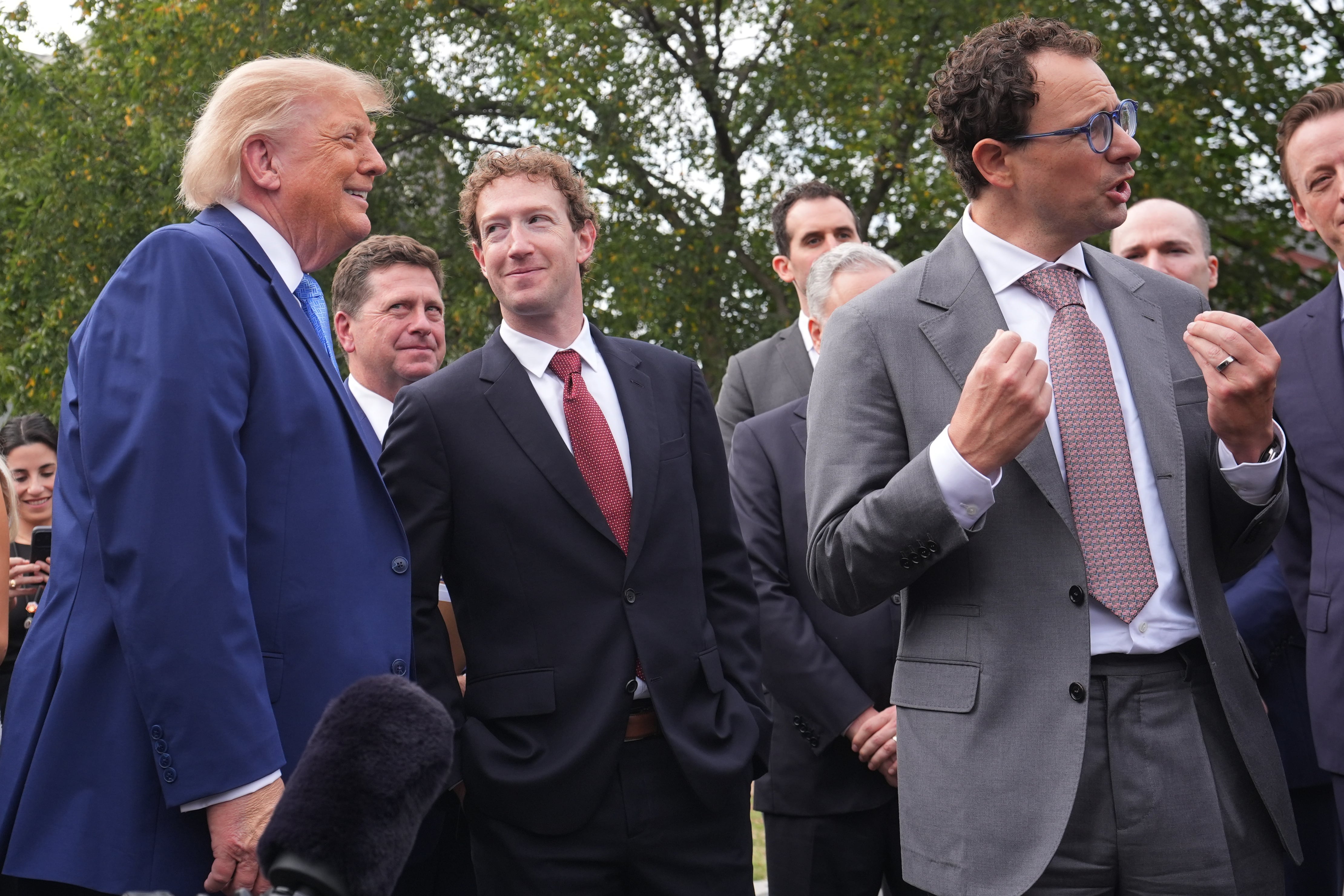
President Donald Trump and Meta founder Mark Zuckerberg listen to Dario Amodei on the White House lawn this Tuesday.
  •  

Xavier Becerra and Steve Hilton clash in CNN debate on economy, AI, and ICE raids in California governor’s race

It was the first face-to-face between the two men vying to govern California, the most populous state in the United States, with more than 39 million residents, just over a month before the midterm elections. Republican Steve Hilton and Democrat Xavier Becerra arrived at the CNN-organized debate with a twofold mission: lay out their proposals to lead what is considered the fourth-largest economy in the world and, at the same time, attack their opponent and explain to voters why they should not trust the other with their vote on November 3. Neither missed the chance to present their ideas on the state’s difficult economic situation, fears around artificial intelligence, and the ICE raids that threaten undocumented immigrants.

Seguir leyendo

© (Gina Ferazzi/Los Angeles Times, David Crane/Los Angeles Daily News) vía Getty Images

Steve Hilton and Xavier Becerra.
  •  

Meta wants to build a $50 billion data center in Louisiana

Meta wants to build one of the largest data centers in the world in rural Louisiana. 

The facility, known as Hyperion, is being built to train and operate the artificial intelligence systems behind Meta’s products. What began as a $10 billion proposal has since ballooned into a more than $50 billion development spanning nearly 10 million square feet and roughly 3,650 acres. At full scale, Hyperion is expected to require 5 gigawatts of computing capacity, making it the largest data center in Meta’s global fleet and one of the largest ever built. According to Meta, the project is expected to employ around 7,500 workers during peak construction and support 1,000 permanent jobs once operational.

For residents of Richland Parish, the arrival of Meta has brought both desperately needed jobs and profound uncertainty about what the project will mean for the community. The enormous facility is being constructed on former farmland and will require an equally immense network of infrastructure to support it. In nearby Rayville, many residents view Meta as an economic lifeline after decades of limited employment opportunities, with local families securing jobs that pay far more than the parish’s median income. But the influx of highly paid, out-of-town workers has also driven up rent and the cost of living as landlords and businesses increasingly orient themselves toward Meta employees. Landlords routinely raise the rent of low-income housing in order to price out local tenants in favor of contractors, forcing residents to move out of the area to afford housing.

Bringing Meta to Richland Parish

Richland Parish is a rural stretch of northeast Louisiana dominated by flat, fertile land rich with cotton, soybeans, corn, and rice. The parish’s economy has historically revolved around large-scale, row-crop farming, but declining farm incomes and population loss has strained the region in recent generations. Richland’s employment rate sits at 49.9%, 9.4% below the already dismal state average, with a median income of $53,544. A total of 36% of the 20,000 person population is Black. Rayville, the parish seat, is 80% Black. For decades, Richland has been far removed from the state’s economic centers of New Orleans and Baton Rouge, receiving little of the investment that has flowed into Louisiana’s larger cities.

That changed in January 2024, when Entergy Louisiana, the state’s monopoly power company, began a year-long courting ritual to bring Meta’s largest data center to the impoverished parish. Following months of backdoor deals and nondisclosure agreements, Meta announced plans to build a $10 billion, 4-million-square-foot data center on a 2,250-acre flood plain. In July 2026, Meta expanded the project, committing more than $50 billion and nearly 10 million square feet to what may become the largest data center in the company’s fleet and home to its massive Hyperion AI training cluster.

Both Meta and Entergy have been quick to dismiss community concerns, with state officials claiming that “whatever comes out of it will be better than the mostly fallow farmland that was there.” Meta likewise touts a laundry list of benefits it promises to bring to the area, most notably permanent jobs and increased tax revenue. The company now claims that the expanded Hyperion AI center will create more than 1,000 permanent jobs, alongside thousands of temporary construction jobs.

But Meta has refused to provide the evidence behind those projections. On August 12, the Louisiana Public Service Commission voted 3–1 to overturn the recommendation of an administrative law judge that Meta turn over information substantiating its projected job creation, economic impact, and electricity demand, effectively shielding the company’s claims from public scrutiny.

Meta’s empty promises of economic growth

The public’s skepticism is warranted. Data centers routinely generate thousands of temporary construction jobs while creating only a fraction as many permanent positions once construction ends. Meta’s projects in Texas and Oklahoma, for example, are expected to leave only around 100 operational jobs each after thousands of construction workers leave. QTS similarly estimates that a data center campus in York County, North Carolina will produce roughly 1,000 construction jobs but only about 100 permanent onsite positions. Even Hyperion’s original proposal called for roughly 5,000 construction workers but only 500 permanent operational employees. None of these figures guarantee that the permanent positions will go to Richland Parish residents. Meta has offered assurances about local hiring, but there is no binding commitment requiring the company to employ local workers.

Meta also claims the data center will bring tens of millions of dollars in tax revenue to Richland Parish, an argument it bolsters by pointing to the 2,000% increase in sales-tax totals since construction began – $50,000 of which has funded bonuses for some local schoolteachers. But that windfall is largely a product of the construction boom itself, not a sustainable source of revenue generated by the completed data center. The teacher bonuses are distributed through Richland Parish’s longstanding one-cent sales-tax program, which provides annual “13th checks” to eligible school employees. As those construction workers spend money in the parish, that pool has temporarily grown; once construction ends, so will much of the revenue feeding it. The result is a temporary infusion of money that can obscure the longer-term fiscal consequences of the project. When the construction boom ends, Richland Parish will be left with the costs of a massive industrial project, and fewer public resources to pay for them.

Cementing Louisiana’s dependence on fossil fuels amid environmental devastation

The environmental impact of the Meta data center could also be deadly for residents of Richland Parish and Louisiana as a whole. The Hyperion AI data center is expected to consume roughly half of the state’s electrical capacity – approximately seven times the energy consumed by the entire city of New Orleans – placing enormous new demands on Entergy’s already overburdened power grid. Louisiana residents know what a fragile electrical system can mean in a disaster. After Hurricane Katrina, Entergy’s restoration efforts took 42 days to complete across its service territory. In 2021, Hurricane Ida left nearly 950,000 customers without power after an Entergy tower fell into the Mississippi River, a disaster that required 15 days of restoration work just to bring more than 90% of affected customers back online.

Rather than address these vulnerabilities, Entergy’s proposed solution to Hyperion’s unprecedented energy demands is to build an entirely new fossil-fuel energy infrastructure around the data center. The company plans to construct ten natural-gas power plants, including seven new facilities capable of generating roughly 5.2 gigawatts of electricity, alongside new transmission lines and a massive 500-kilovolt substation. Meta, Entergy, and the Louisiana state government are working to present these projects as investments that will strengthen Louisiana’s electrical grid and improve reliability for ordinary customers.

Louisiana is being asked to construct an enormous new fossil-fuel-based energy system so that a single private corporation can consume an unprecedented share of its electricity. More generation may increase capacity, but it does not eliminate the physical vulnerabilities that have repeatedly left Louisiana residents without power after hurricanes. Instead, the state is doubling down on a centralized, fossil-fuel-dependent grid whose infrastructure will remain vulnerable to the same storms that have already decimated Louisiana’s communities.

Entergy’s catastrophic deal with Meta has arrived as Louisiana is already on the front lines of an environmental crisis. The state has lost more than 2,000 square miles of coastal land since 1932 and continues to lose more than 16 square miles each year. The state has experienced 31 billion-dollar weather and climate disasters since 2018, leaving communities to repeatedly rebuild from hurricanes, flooding, and extreme weather. Meanwhile, along the Mississippi River between Baton Rouge and New Orleans, the area known as “Cancer Alley” contains a dense concentration of petrochemical and chemical facilities, exposing surrounding communities to significant air pollution and toxic emissions which have resulted in a cancer rate fifty times higher than the national average.

People of Louisiana reject corporate profiteering

These environmental pressures are only compounded by an affordability crisis. In 2024, 49% of Louisiana households – nearly 900,000 – were either living in poverty or earning too little to afford basic necessities. A basic survival budget costs an estimated $30,708 a year for a single adult and $81,912 for a family of four, before accounting for savings or emergencies such as climate disaster. All the while, the state is being asked to absorb another enormous industrial project while nearly half of its households are already struggling financially and its communities confront environmental catastrophe.

Read more: A massive AI data center transforms rural Utah into a national flashpoint

Community opposition to the Hyperion project reflects a growing recognition that the promised benefits of corporate development cannot be separated from the costs that residents will be asked to bear. The fight is not simply over one data center, but over who gets to determine what Louisiana’s resources are used for and whose interests development is meant to serve. For generations, Louisiana communities have been told that jobs and investment require accepting pollution, environmental destruction, and the transformation of local resources into private profit.

Hyperion offers another version of the same bargain: enormous amounts of Louisiana’s land, electricity, water, and public infrastructure would be redirected toward the interests of one of the world’s largest technology companies. And the resistance to that bargain extends far beyond Richland Parish. Hundreds of Louisianans have mobilized around Public Service Commission meetings, traveling to the capital to demand that regulators prioritize the people who will bear the costs of Meta and Entergy’s expansion. Their concerns have repeatedly been dismissed or overridden by a majority of commissioners, even as the commission has approved billions of dollars in new generation and transmission infrastructure for the project. A 2024 investigation by the Louisiana Illuminator and Floodlight found that nearly 43% of campaign contributions to Louisiana utility commissioners over the previous decade came from utilities, energy-related businesses, and their attorneys and lobbyists, with Entergy Louisiana and its executives and family members contributing roughly $350,000.

The resistance emerging across Louisiana is more than a battle over a single data center. It is a decisive stand for the right of Louisianians to determine their own future, rather than surrender it to corporate interests. This is a battle for the future of working people everywhere, and the people have vowed to keep fighting. 

Kieran Spencer is a New Orleans-based historian and organizer.

  •  

Meta’s $18 billion teen safety settlement isn’t what it seems with Amanda Getty

Meta would rather pay out billions to teen mental health programs than risk losing teen addicts on Instagram. 

The day before running full-page ads across the New York Times, Washington Post and LA Times calling on competitors TikTok and YouTube to adopt tougher child safety standards, Meta settled a landmark lawsuit brought by 52 state attorneys general accusing Instagram of intentionally addictive design. Community organizer and parent advocate Amanda Getty says Meta’s efforts to spin its predatory business model as a responsible parenting issue are meant to distract users: Big Tech’s bottom line depends on hooking teens as young as possible. 

Meta denied knowingly exposing minors to serious harm and misleading the public, but agreed to pay up to $18 billion over 10 years – workable for a company that made $60 billion in profit last year alone. Getty points to Meta’s track record of failing to implement – and actively lobbying against –  the kinds of guardrails this settlement ostensibly imposes, including a 2024 investigation that found only a fraction of Instagram Teen Account safety protocols were functional. Meanwhile teens are still being bullied and nudged toward features associated with predatory grooming. Getty cites a 2018 internal strategy memo instructing Meta employees to “win big with teens” by bringing them in “as tweens.”

Meta fears losing young users to less regulated platforms; Getty argues that’s why it’s begging Google and TikTok to get in line, all the while shifting responsibility onto parents for a business model built on addiction by design.

 “There’s no version of reform here that leads to an actual win for parents,” Getty says, arguing the fight isn’t about better parental controls – it’s about confronting economic predation targeting kids at scale

Watch full episodes of BT Live, join breakthroughnews.org as a member today! 

  •  
❌