Nach einer Woche Pause, weil NuoViso letzte Woche sein Sommerfest gefeiert hat, haben Robert Stein und ich am Donnerstag wieder eine Tacheles-Sendung aufgezeichnet, die nun online ist. Sollte YouTube sie löschen, finden Sie sie auch hier bei NuoViso.
Realizou-se, no passado dia 3 de setembro, a primeira Assembleia Geral da Transportes da Lezíria do Tejo, EIM, S.A., empresa intermunicipal criada pelos 11 municípios que integram a Comunidade Intermunicipal da Lezíria do Tejo (CIMLT) para assegurar a gestão e o desenvolvimento do serviço público de transporte coletivo de passageiros na região. Nesta primeira Assembleia Geral foram eleitos…
The U.S. Air Force is seeking an anti-aircraft gun system to help defend its air bases around the world from drones and cruise missiles. The Request for Information (RFI) about these systems, posted on the government’s contracting website on Thursday, is part of a larger Air Force effort to play a greater role in air base defense via ground-based air defenses (GBADs), a capacity traditionally performed by the Army. As a result, the Air Force currently has no such systems. Now it is interested in changing that.
The request comes as the war against Iran exposed gaps in how the U.S. can provide effective, sustained air defenses for its foreign installations and amid concerns about a future fight against a peer competitor like China or Russia.
“The Government is conducting market research to identify potential industry sources capable of providing solutions for a Ground-Based, Medium-Caliber Gun Weapon System that fires affordable munitions, enables defense against air and missile threats with an initial focus on subsonic cruise missiles (CM) and Unmanned Aircraft Systems (UAS) to provide persistent defense in support of [the] United States Air Force,” the RFI notes.
The RFI doesn’t stipulate what it considers a medium-caliber round; however, according to the Army, the list includes 20mm, 25mm, 30x113mm, 30x173mm and 40mm shells.
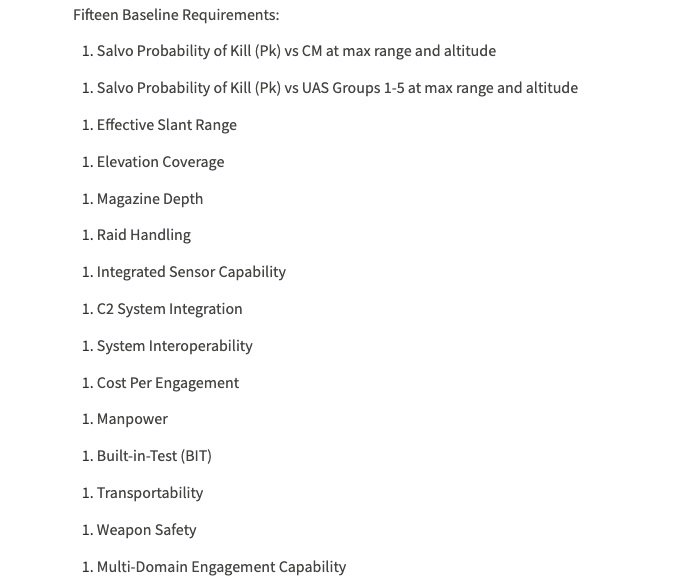
“To effectively assess and compare air defense weapon system performance, there are 15 critical baseline operational and technical parameters that must be analyzed in unison,” the RFI explains.
(Air Force Request for Information)
“These key metrics begin with the system’s Salvo Probability of Kill (Pk) evaluated against both Cruise Missiles (CM) and Unmanned Aircraft Systems (UAS) Groups 1-5 at maximum range and altitude, ensuring robust lethality against diverse modern threats,” the RFI notes.
A salvo probability of kill measures how effectively a salvo, as opposed to a single shot, defeats a target.
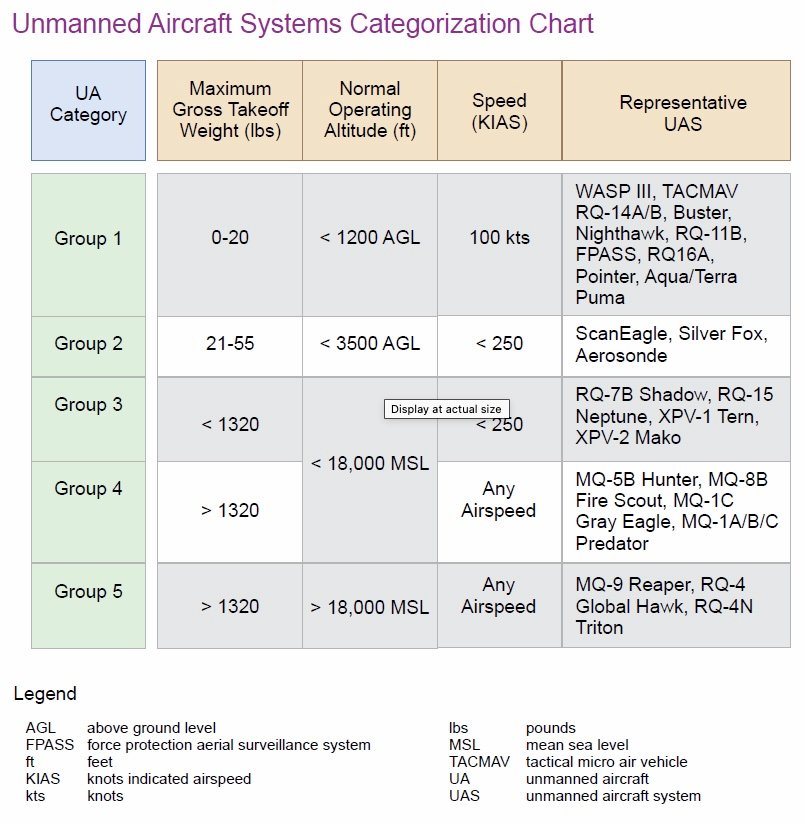
The following chart displays the weight, normal operating altitude and speed of the five drone group classifications.
(Congressional Research Service chart of Group 1 through 5 drones)
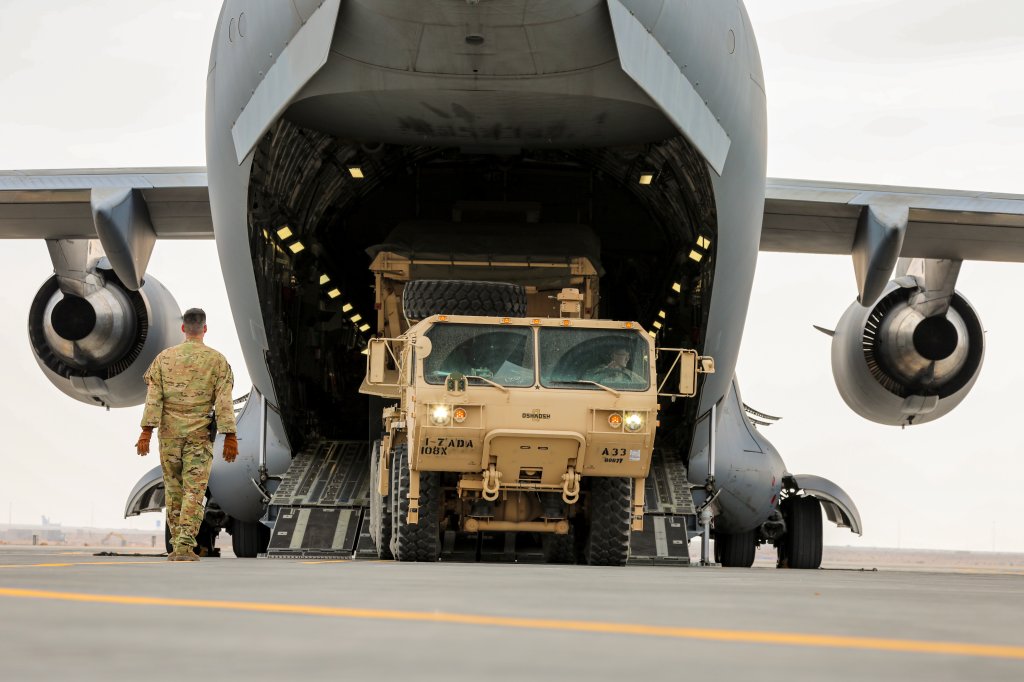
The Air Force wants this system to be “rapidly deployable, maintaining a lightweight, modular, and transportable footprint that can be swiftly projected into austere theater environments to meet emergent threats.” The RFI does not provide further details of how the Air Force is looking to transport these systems; however, the service relies on its fleets of C-130 Hercules, C-17 Globemaster III and C-5 Galaxy transport aircraft to move equipment. The size and weight of the systems determines which kind of aircraft can transport it.
These systems could also be moved by truck or ship or on their own if self-propelled, but those options also incur a cost in terms of the timeliness of delivery, and can be impossible for rapid global deployments.
U.S. Army soldiers from the 1st Battalion, 7th Air Defense Artillery Regiment, 108th Air Defense Artillery Brigade, load equipment and trucks onto a C-17 Globemaster III with U.S. Air Force airmen assigned to the 21st Expeditionary Airlift Squadron at an undisclosed location in the CENTCOM Area of Operations, Dec. 31, 2023. Photo by Staff Sgt. Christopher Neu
A key point of evaluation will be the overall cost of the munitions. The Air Force wants to ensure that the shell’s velocity and terminal effects “are maximized without driving the cost-per-engagement to unsustainable levels or exceeding the physical constraints of the host platform,” the RFI states. We’ll discuss these factors in more detail later in this story.
The service is also looking for the integration of “the right mix of radar, electro-optical, infrared, or radio-frequency sensors—to ensure reliable target acquisition and tracking across varying weather conditions, environments, and countermeasure scenarios.”
As we noted at the top of this story, the Air Force is seeking to improve its organic ability to defend its bases. This has become “an increasingly high priority” for the service, Air Force Secretary Troy E. Meink told Congress on May 20.
“The Air Force is developing organic air and missile defense capabilities, including Counter-small Unmanned Aircraft Systems (C-sUAS) to defend our air bases in all theatres [sic],” Meink stated in his written testimony. “The fielding of the Air Base Air Defense Systems (ABADS) missile defense capability, including kinetic defenses, at overseas main operation bases contributes to joint layered defense but does not reduce the need for increased joint investment in air and missile defense. We will continue to work judiciously for the development and procurement of these critical defensive capabilities.”
(Written testimony of Air Force Secretary Troy E. Meink)
In its Fiscal Year 2027 budget request, the Air Force is seeking about $1.4 billion for a missile defense variant of the Air Base Air Defense Systems (ABADS), according to Air & Space Forces Magazine. In addition, the Air Force also requested $51.8 million in procurement funds for its Small Unmanned Air Defense Systems (SUADS) in Fiscal Year 2026, according to the Air Force Fiscal Year 2026 budget justification book.
The war against Iran and the Ukraine war have, in particular, illustrated the challenges of defending against drones and cruise missiles.
There are two facets to potential use of gun systems for base defense. The first is that in complex air defense environments, it provides an inner, last line of defense against incoming threats. If the outer layers fail to take down the target or that target is not considered a priority over others, a hard-kill gun system offers a predictable and relatively reliable fallback. The gun system would become even more important if interceptor stocks run low, even temporarily, and those weapons need to be rationed for higher-end threats. With the outer defensive rings collapsing, the inner becomes far more important.
For small drones, that interceptors would not be effective with anyway, the gun system can take them down in localized air defense scenarios. Then there is also defending bases in lower threat areas where there are not additional layers of SAM systems. A gun system can provide a core aerial defense against lower-end, lower-density drone and cruise missile threats without costing huge sums of money or requiring a huge logistical footprint.
Beyond that, there is a direct cost comparison argument, but again, that is in a vacuum and a gun system cannot take the place of a multi-layered air defense system without inviting huge risk. Still, the engagement cost comparison is worth mentioning.
High-end, expensive, difficult-to-manufacture air defense weapons, like Patriot PAC-3 MSE, are clearly inefficient against drones. For instance, a mass-produced Iranian Shahed-136 can cost about $35,000 to $50,000, while a Patriot PAC-3 can run about $5 million and takes years to procure. By comparison, the cost-per-engagement efficiency of gun-based air defense systems, designed to defend against drones and subsonic cruise missiles, is far greater. One example of how this plays out is the cost of firing the Army’s Centurion Counter-Rocket, Artillery, Mortar (C-RAM) system. It is a ground-based version of the Phalanx Close-In Weapon System (CIWS) used on various U.S. and foreign warships, and is armed with a six-barrel 20mm Vulcan Gatling-type cannon firing M940 rounds. Those self-destructing rounds currently have a price tag of $80.70, according to the Army’s Fiscal Year 2025 budget request. This means a two-second burst from a Centurion, at a rate of fire of 4,500 rounds per minute, would cost just over $12,100.
Again, this is not a strict apples-to-apples comparison, but it can become a bigger factor during prolonged conflicts when high-end weapons stocks begin to run short. It’s also worth noting that drone interceptors are a rapidly growing capability set that are a lower-cost option for swatting down one-way attack drones and even some cruise missiles. Systems like Coyote have been in service for years with the Pentagon and have been protecting bases overseas with strong results. Even cheaper systems are emerging out of lessons learned in Ukraine. All of these systems have their own advantages and disadvantages, but pairing them with a new gun system would likely have synergistic effects. Overall, deploying densely layered short-range air defenses is becoming increasingly important in its own right, at least in high-threat areas.
Ukraine has a great deal of experience with the costs and prioritization of air defense capabilities. The country faces daily attacks by Russian missiles and drones, which is causing mounting casualties and destruction. This ceaseless bombardment has almost completely depleted Ukraine’s supply of Patriot interceptors, leaving it largely defenseless against ballistic missiles. As we noted yesterday, Ukraine is also running short of air-to-air missiles its Air Force F-16s use to swat down drones.
However, Ukraine has also relied heavily on a wide array of gun-based air defense systems, including the German-made Gepard self-propelled anti-aircraft guns (SPAAG). Based on the chassis of the Leopard 1 main battle tank, Gepards feature twin radar-aimed 35mm automatic cannons, mounted on a single turret. The German variant sports an S-band search radar and a Ku-band tracking radar. These radars are critical to the Gepard’s ability to locate, track, and engage targets at night and amid poor weather conditions.
The following video shows a Gepard blasting an Iranian-made Shahed-136 out of the sky.
A video reportedly showing two Russian Shahed-136 (Geran-2) loitering munitions being shot down by the Ukrainians with a German-delivered Flakpanzer Gepard self-propelled anti-aircraft gun (SPAAG) during last night's attack in Odesa Oblast, southern Ukraine.… pic.twitter.com/OhH7vTultm
The Air Force force is also looking at directed energy weapons like lasers for force protection and especially for defending bases overseas. While gaining traction across the services due in large measure to the much lower cost of delivering effects, these systems are still works in progress. Gun-based air defenses, on the other hand, are mature and proven, and modern precision-guided, programmable ammunition makes them even more efficient and effective.
Beyond the cost, high-end air defense systems — including their component sensors — though portable, are generally fixed to a specific location. That makes them vulnerable to attack. This has been the case in both the war against Iran and Ukraine. The same concerns hold true of aircraft. Both conflicts have shown aircraft vulnerability to drones when parked out in the open. Ukraine’s Operation Spider Web attack on Russian strategic bombers last year in particular shed light on this issue, which we have been sounding the alarm on for a long time.
In addition to these challenges, the Air Force is also facing the headwinds of an overall lack of U.S. short-range air defense capabilities, a concern we have been highlighting for years. Currently, there are three gun-based SHORAD systems being fielded by the U.S. military. These include the aforementioned Centurion C-RAM systems.
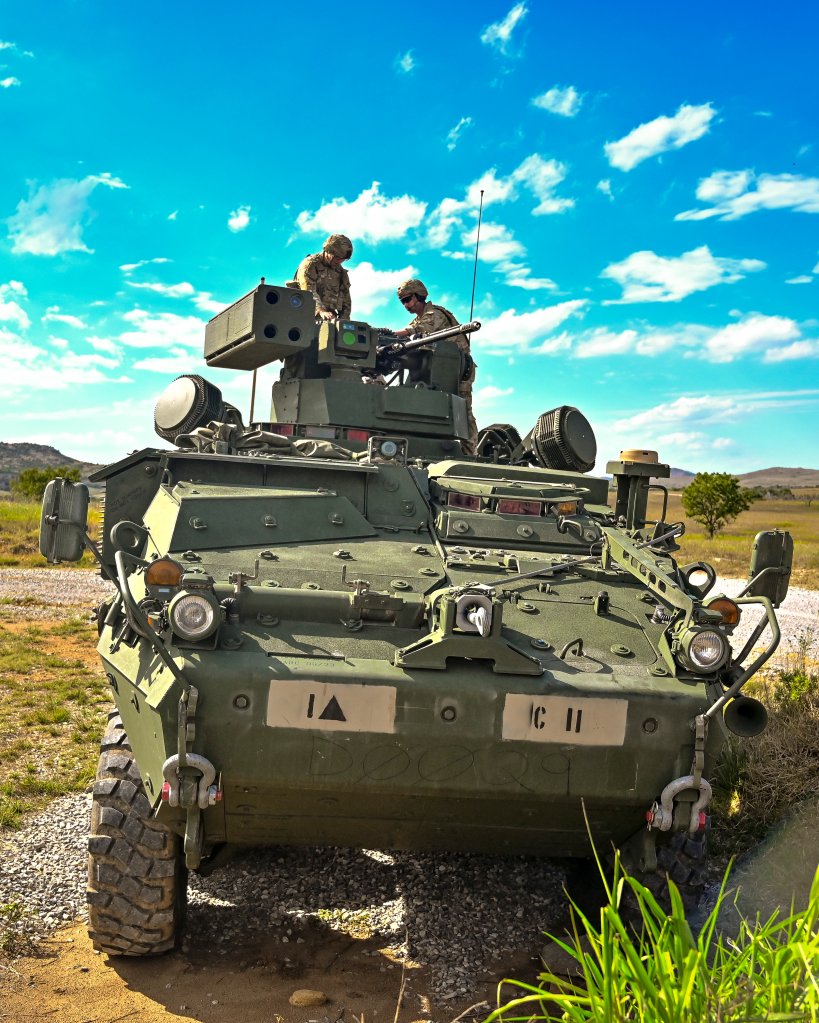
The Army also uses the Sgt. Stout, an air defense system based on the 8×8 Stryker light armored vehicle. The Sgt. Stout has a turret that can be fitted with up to two four-round launchers for Stingers. Those launchers can also be swapped out for ones that can be loaded with a pair of millimeter-wave radar-guided AGM-114L Hellfire missiles. The turret also has a 30mm XM914 automatic cannon, which can fire proximity-fuzed airbursting rounds against drones and other aerial threats, and a 7.62x51mm M240B machine gun.
Soldiers assigned to 4th Battalion, 60th Air Defense Artillery Regiment conducted a live fire exercise with the SGT STOUT (Stryker A1 M-SHORAD) vehicle in Fort Sill, Oklahoma, Sep. 23, 2025. Photo by Cpl. Emaney Wilson
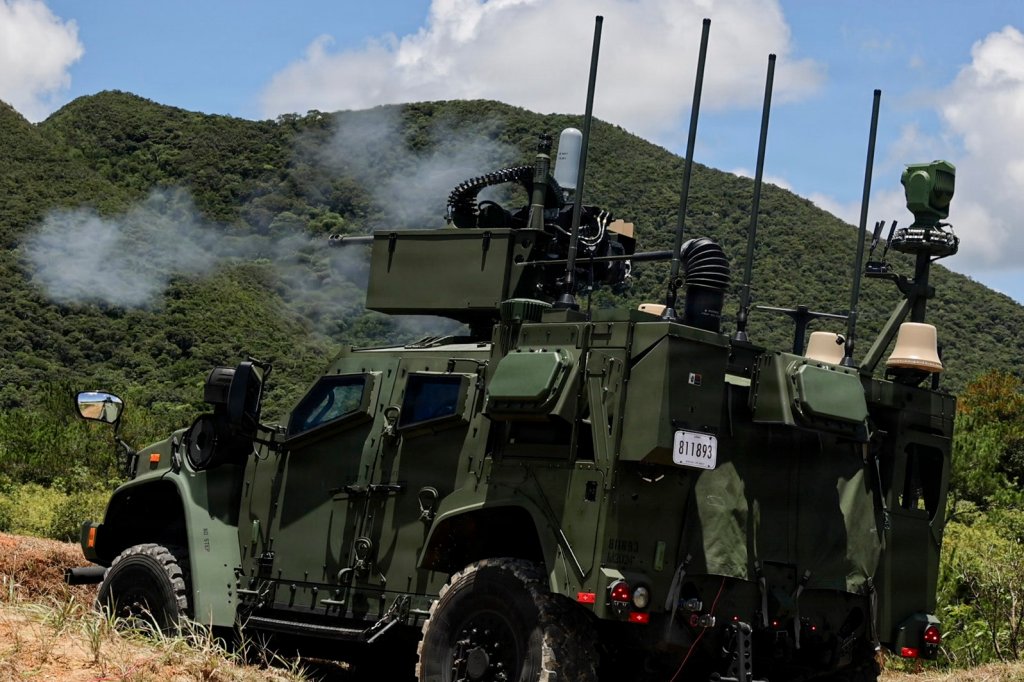
The Marine Air Defense Integrated System (MADIS) is armed with 30mm cannons and M240C coaxial machine guns in remote weapon stations (RWS). The RWS on one of the two vehicles is also configured to fire Stinger missiles for a spectrum of ground-based air defense scenarios.
U.S. Marines with 12th Littoral Anti-Air Battalion, 12th Marine Littoral Regiment, 3rd Marine Division, fire an XM914 30mm chain gun mounted on a Marine Air Defense Integrated System during a live-fire range at Camp Schwab, Okinawa, Japan, July 28, 2026. Photo by Lance Cpl. Skilah Sanchez
The Army may have additional gun-based systems on the way. In July, the service put out a request for information to companies that can provide a new gun-based air defense option, using a 50mm cannon system to track and defeat Group 1, 2 and 3 drones.
A few weeks later, Northrop Grumman introduced its Raid Hunter 50mm GBAD system, which it said “combines proven Chain Gun® technology, precision‑guided 50mm ammunition and a networked, interoperable system controller to deliver powerful protection against high-volume, mixed-threat aerial raids. It is designed to defeat a range of aerial threats including high‑priority cruise missile threats, unmanned aerial systems (UAS), and other advanced threats.”
We’re introducing Raid Hunter, our newly named 50mm gun-based air defense system designed to defeat mass, mixed aerial raids with cost-effective interceptors and deep magazine effectors which can be delivered to the warfighter at scale. Learn more: https://t.co/gnOzpo0RA3pic.twitter.com/oTqORTG9Q4
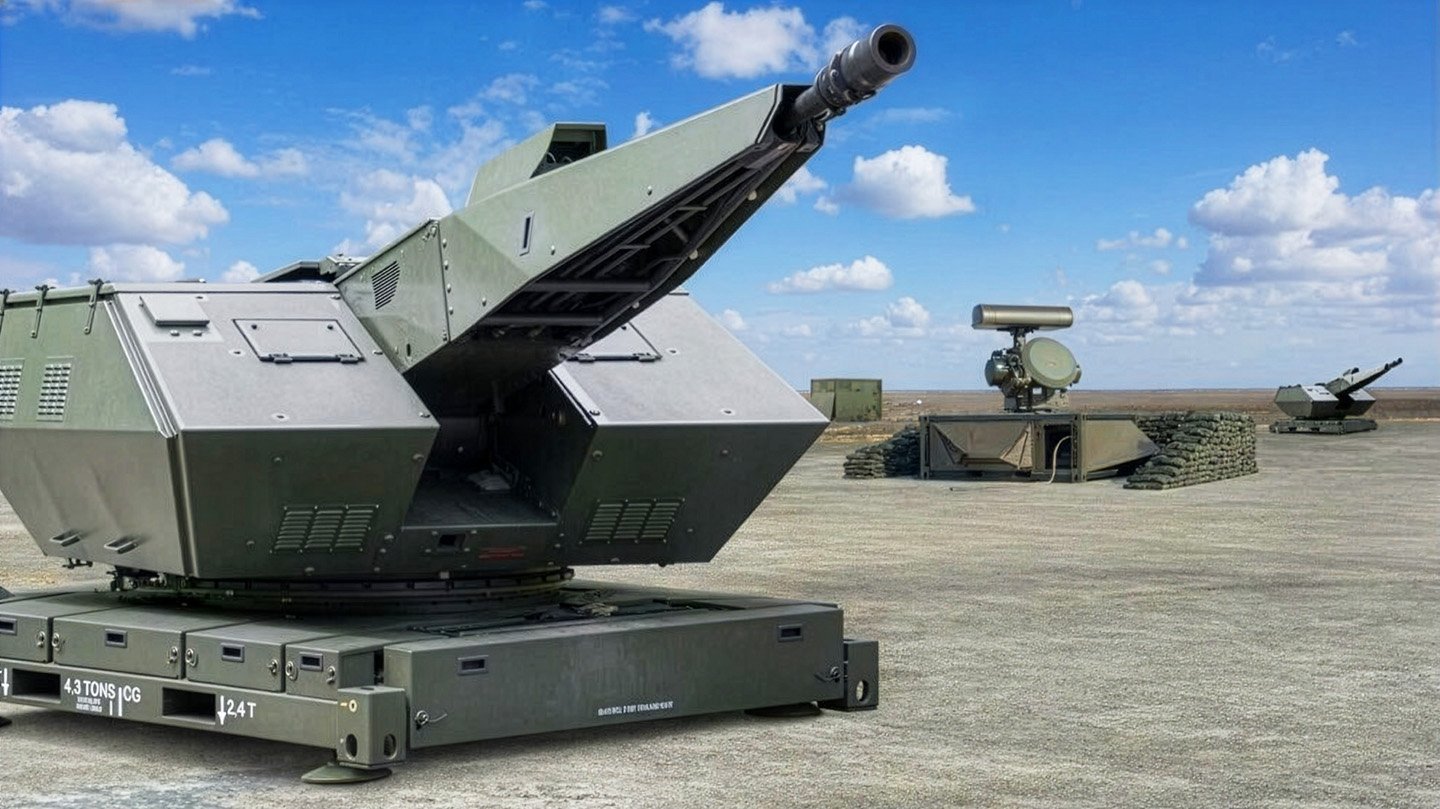
There are foreign options should the Air Force want to go that route. For instance, German arms maker Rheinmetall makes the popular Skyranger 35 gun system, which is a turret that can fit on a wide array of armor hulls.
The Skyranger 35 “is equipped with a KDG 35/1000 revolver cannon in 35 mm x 228 caliber with a firing rate of 1,000 rounds per minute,” according to Rheinmetall, which began delivering these to Ukraine in January. “It has an effective range of up to 4,000 meters and a high degree of commonality with the Oerlikon Revolver Gun Mk 3. Thanks to AHEAD technology, the Skyranger 35 is airburst-capable. In the future, it will also be possible to equip it with modern guided missiles.”
It seems that Ukraine's 1020th Anti-Aircraft Missile Regiment which belongs to the Ground Forces has taken delivery of the first Skyranger 35 SPAAGs mounted on a Leopard 1 chassis made by @RheinmetallAG.
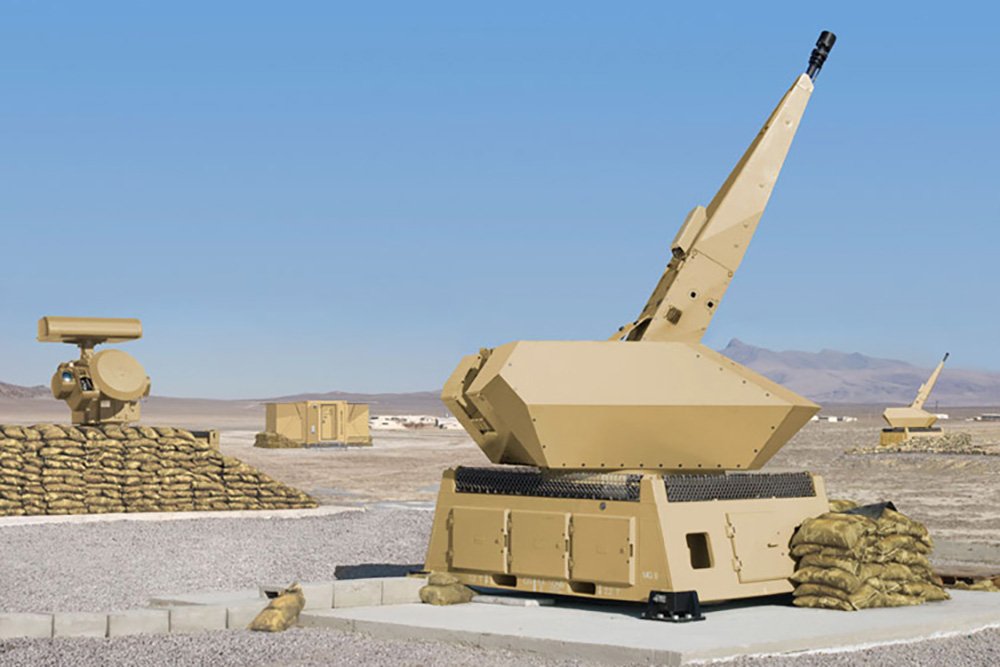
Skyshield is the fixed placement cousin of this system and has been bought by a number of nations.
Skyshield (Rheinmetall)
This is just one example of a large number of potential offerings that could fit the USAF’s interests, from both domestic and foreign origins.
As we discussed earlier in this story, the U.S. is already facing a challenge defending against Iranian threats. A war with China would be more devastating and, when it comes to the Air Force protecting its bases, require far more robust defenses. At the same time, the Air Force is still very early in the process of taking on more responsibility for protecting its assets.
Parties have until 5 p.m. Oct. 9 to submit their proposals to the Air Force for a gun-based air defense system. With limited options and the service pushing to address its growing desire for organic air defenses, it will be interesting to see who comes forward and what systems they offer. We will provide more details about this effort when they become available.
Um homem de 49 anos sofreu ferimentos graves esta sexta-feira, na sequência de um acidente de trabalho ocorrido no Bairro Forno da Cal, em Alcácer do Sal, distrito de Setúbal.
A vítima estava a realizar trabalhos numa obra quando uma parede cedeu, deixando-a soterrada. À chegada das equipas de socorro ao local, o trabalhador já tinha sido retirado do sotorramento, apresentando contudo um quadro clínico grave.
O alerta foi dado às 14:44. Devido à gravidade dos ferimentos, o homem foi assistido pelas equipas de emergência e subsequentemente transportado no helicóptero do INEM para o Hospital de São José, em Lisboa.
A Autoridade para as Condições do Trabalho (ACT) foi informada e vai investigar as circunstâncias em que ocorreu o acidente, segundo a GNR.
No local estiveram 17 operacionais dos Bombeiros de Alcácer do Sal, do INEM e da GNR, apoiados por cinco veículos, incluindo uma ambulância de Suporte Imediato de Vida (SIV), e a respetiva aeronave de emergência médica.
Por: Dino Frazão Fonte: segundo LUSA Data: 04/09/2026
Since receiving these tanks last year, the crews, serving with Ukraine’s 425th Separate Assault Regiment “Skala,” have used the Abrams in two combat operations in the fight for Pokrovsk, a key Ukrainian logistics hub and part of a defensive belt of towns in Ukraine’s eastern Donetsk region. They recounted their experiences to Hromadske, an independent media channel in Ukraine.
Fighting around Pokrovsk
The first major deployment described by the crews took place in December of last year, when Abrams tanks were used to support assault groups entering Pokrovsk.
The crewmember with the callsign Kent described moving into the city behind a mine-clearing tank and ahead of two infantry fighting vehicles (IFVs) carrying assault troops, during a mission that was deliberately aggressive.
“Since a tank is a priority target — my task was to draw their attention, while our infantry dismounted and moved in successfully.”
The Abrams was also assigned three target points to engage along the route.
“We went right in there, poured it on, and drove back out,” he recalled.
A video showing the 425th Separate Assault Regiment in action in August 2025, soon after receiving the Abrams:
The second operation, on March 31, involved an attempt to enter and hold an industrial area near Pokrovsk to help block Russian movement toward Hryshyne, a contested village in the district.
The operation was prepared for more than two weeks. Ukrainian forces conducted reconnaissance flights, examined difficult sections of the planned routes, and provided crews with extensive video and imagery.
“They knew every meter of the route,” another of the unit’s commanders, with the callsign Kubik, said.
Weather was considered essential. The Ukrainians waited for fog and rain, hoping to limit the effectiveness of Russian drones.
“Without the right weather we wouldn’t have been able to pull off operations like that,” Kubik said.
The operation nevertheless resulted in the destruction of four out of five armored vehicles, some of which are seen in the video embedded below.
Russia's Rubicon Drone Center FPV drones destroyed a Ukrainian assault group near Pokrovsk, hitting an M1A1 Abrams tank, M1117 APC and BMP-2 as the unit tried to advance near Hryshyne under fog cover. #Ukrainepic.twitter.com/ZzE52qAYxp
The commander acknowledged that the Russian side may have had advance knowledge of the operation.
“I can’t rule out the possibility that the enemy knew our plan,” he said.
His Abrams was not immediately destroyed. According to the crew, it completed its task and the assault troops dismounted before the weather changed.
“Once the fog lifted, they started working on it with an FPV drone,” the commander said.
Why use tanks at all?
The losses prompted criticism from Ukrainian military commentators, particularly after footage of the destroyed vehicles was published.
However, the crews defend the decision to use armored vehicles for the missions. According to the men of the Skala interviewed, the alternative was often to send infantry over several miles on foot while carrying weapons, ammunition, water, and other supplies.
“That takes more time,” Kubik explained. “And the enemy isn’t standing still — the enemy is moving toward them.”
Australia-supplied M1A1 Abrams AIM main battle tank in service of the Ukrainian 425th Separate Assault Regiment "Skala."
The argument that infantry could simply move more stealthily on foot also has limitations.
“Every day the Mavic drones are flying, the fixed-wing drones are flying,” he said. “No fog, guys are visible.”
Combined with IFVs, the Abrams can provide the ability to rapidly move troops while simultaneously delivering heavy direct fire against enemy positions and offering substantial protection to its crew.
The crews argue that this capability remains worthwhile even when the tank itself may eventually be lost.
One commander was asked whether deploying a roughly $5-million tank makes sense if a single sortie can result in its destruction.
“Yes, of course it makes sense to deploy it,” he replied.
“First and foremost — it saves the lives of the crew inside it.”
Russian forces captured a relatively lightly damaged M1A1SA Abrams main battle tank operated by the 47th Separate Mechanized Brigade in the Pokrovsk direction.
He pointed to fairly basic modifications including rubber strips and a foldable wire cage mounted on the turret, as additional layers of protection against drone attacks.
“A drone doesn’t hit the actual penetrating element directly — it just can’t reach it,” he explained. “It hits the rubber, and then the blast wave travels from there.”
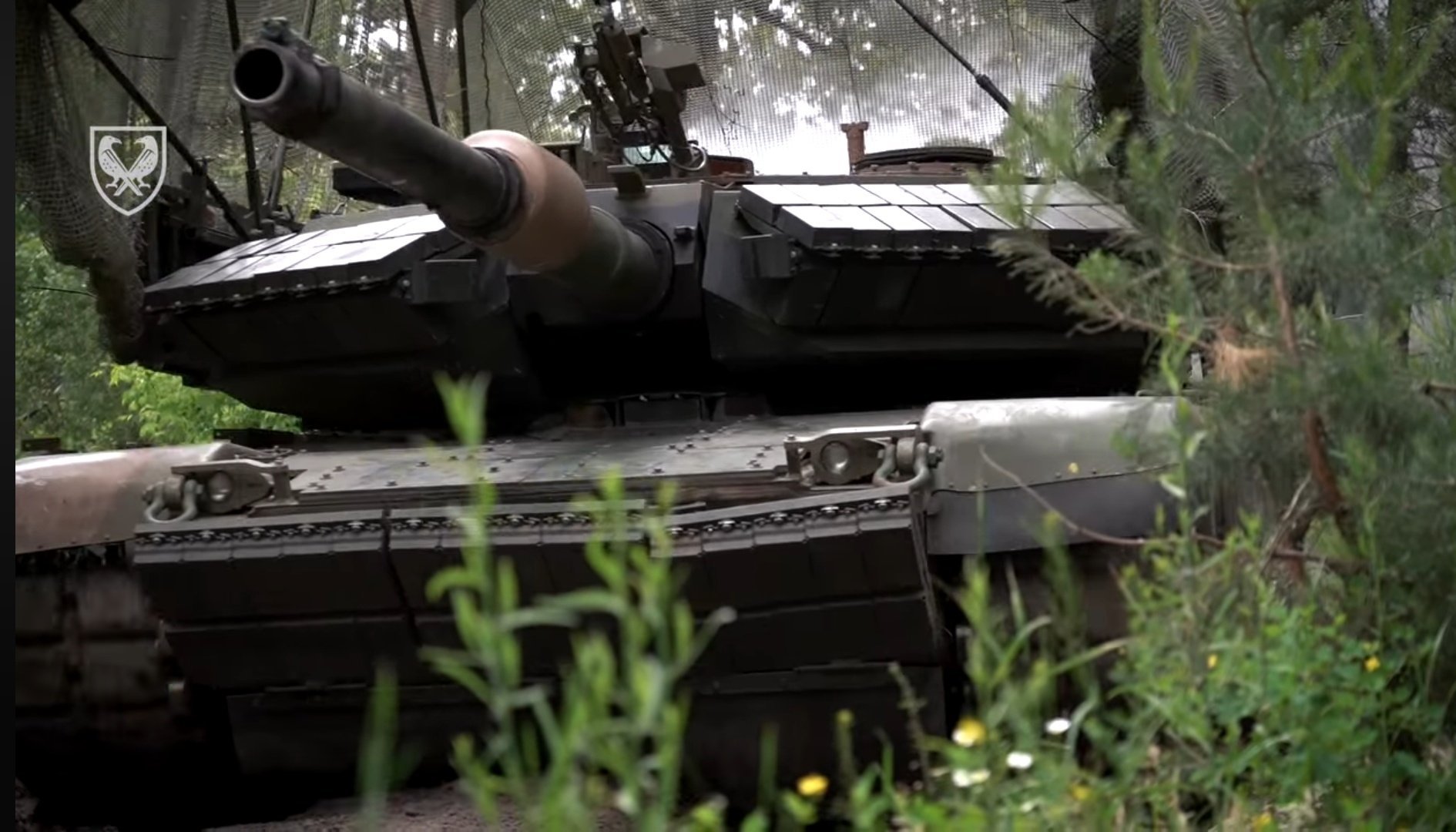
Even with their tanks festooned with explosive reactive armor (ERA) bricks, the crews acknowledge that such protection has limits.
A head-on view of an M1A1 of the 425th Separate Assault Regiment shows the ERA bricks installed around the turret and in front of the hull. Ukrainian Armed Forces
US-supplied M1A1 Abrams tank in service of the Armed Forces of Ukraine with added Kontakt-1 ERA on the frontal hull and standard ARAT ERA on the sides. pic.twitter.com/PC2kDfxefO
— Status-6 (War & Military News) (@Archer83Able) May 21, 2024
“They also protect very well. An effective thing,” he said.
A Russian tank with the ‘hedgehog’-type protective covering. Russian state media
For now, the drone threat has led the regiment to keep its Abrams out of combat, as we will return to later.
The Abrams as a machine
The crews’ assessment of the Abrams included praise for its mobility, roomy interior, gun, and fire-control system.
Kubik said he had personally driven an Abrams to 50 miles per hour cross-country.
“The engine is an absolute beast,” he added.
The tank can also rapidly perform a pivot turn, which the crews consider particularly useful when maneuvering in confined spaces. Despite its prodiguous weight, it only rarely becomes bogged down after the kind of very heavy snow-melt that effects all vehicles on the battlefield.
Loading a 120mm M1028 canister cartridge into an M1A1 AIM Abrams main battle tank of the tank battalion of the 425th Assault Regiment. pic.twitter.com/tMd8QcROQe
— 𝔗𝔥𝔢 𝕯𝔢𝔞𝔡 𝕯𝔦𝔰𝔱𝔯𝔦𝔠𝔱 (@TheDeadDistrict) June 21, 2026
Its disadvantages include its demanding maintenance requirements. The running gear was described as particularly sensitive, with crews inspecting, lubricating, and replacing components after every sortie.
Fuel consumption is another major burden. The crew cited roughly 400 to 700 liters (106 to 185 gallons) per 100 kilometers (62 miles) depending on terrain and operating conditions.
“On asphalt it burns about 400 liters,” one said. In boggy terrain, consumption can reach “700 liters or more.”
The Abrams thirsty gas turbine engine and extreme logistical demands have always been a criticism of the platform.
An M1A1 of the 425th Separate Assault Regiment fording a river. Ukrainian Armed Forces
The crews said the vehicle’s ability to operate on different fuels is useful, although diesel provides the best engine-hour performance in their experience. Prior to delivery, the gas turbine engines of the tanks were reconfigured to use diesel fuel instead of the standard JP-8 aviation kerosene, according to earlier reports.
They also praised the Abrams’ protected ammunition storage and crew space compared with Soviet-designed tanks.
The version operated by the Ukrainians is an M1A1 rather than the latest Abrams configuration, with less sophisticated electronics than newer variants. It also lacks the classified armor found on its U.S. Army counterpart.
“For me — as a tanker — this configuration, what we have right now, is more than enough,” Kubik said. “The sight is absolutely excellent. The gun is also great.”
The interview ultimately presents a more complicated picture than the declaration that tanks are obsolete on the Ukrainian battlefield.
At the time of writing, at least 25 Abrams have been confirmed visually to have been destroyed, damaged, or abandoned in Ukrainian service. This is from a total of 31 provided by the United States and 49 from Australia.
“For now, we’re not using them further — there’s no way to,” Kubik said. “The enemy has developed their drone component very heavily, and for now we don’t have the means to counter that.”
While tanks remain exceptionally powerful direct-fire and protected mobility platforms, the proliferation of inexpensive uncrewed aircraft has made operating them increasingly difficult.
M1A1 AIM Abrams tanks of the 425th Assault Regiment . The reinforced upper glacis and turret roofs are clearly visible. pic.twitter.com/Sn9h8OWZ9P
— 𝔗𝔥𝔢 𝕯𝔢𝔞𝔡 𝕯𝔦𝔰𝔱𝔯𝔦𝔠𝔱 (@TheDeadDistrict) June 21, 2026
“If someone had told me, as a tanker, back in 2022: ‘Take this — we’re giving you an Abrams, we’ll give you time to train and you’ll fight in it,’” Kubik said, “I would never have climbed out of it.”
“I’d only be saying: ‘Bring me shells. I’ll drive non-stop wherever needed, arrive and work.’”
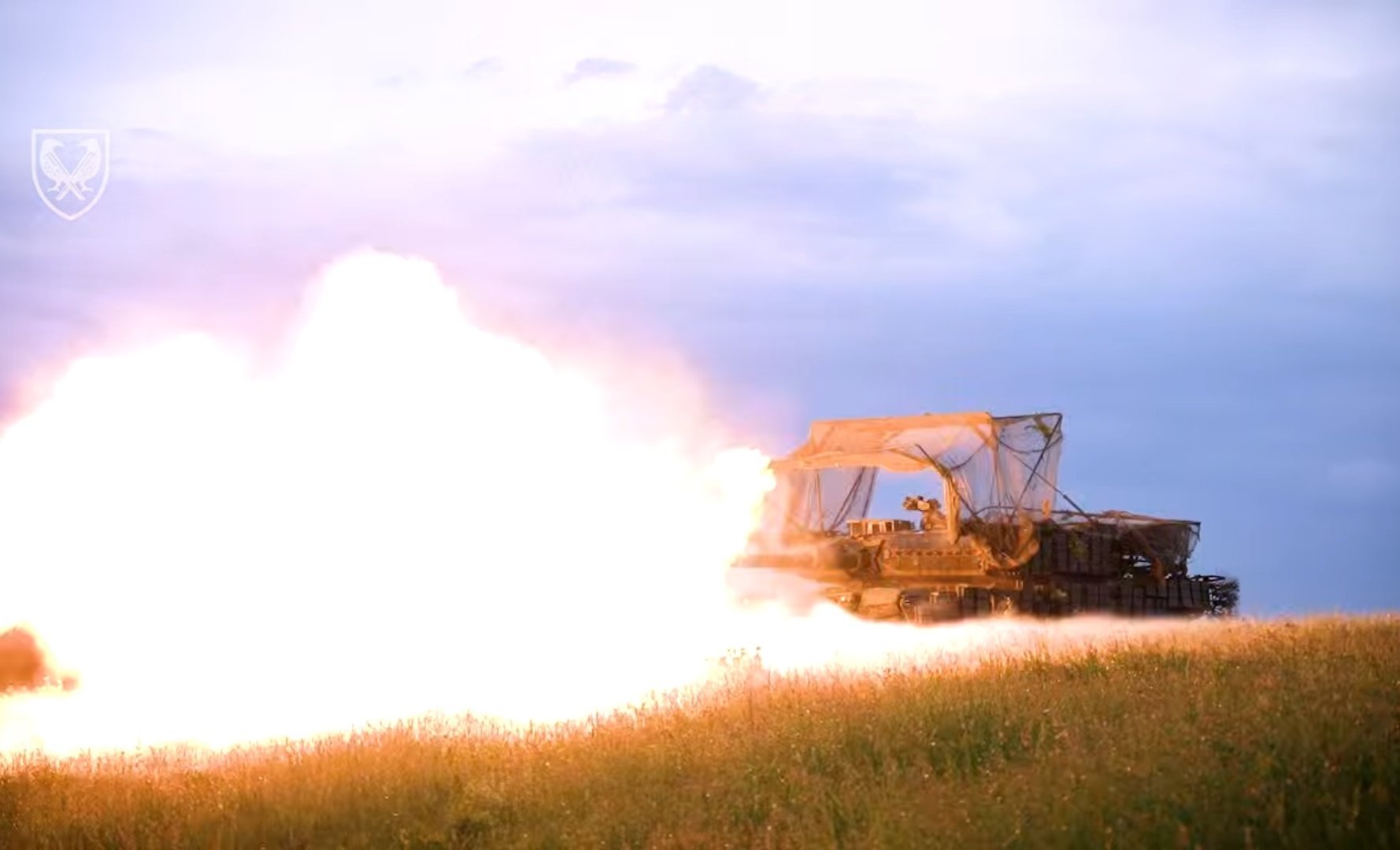
An M1A1 of the 425th Separate Assault Regiment firing its main gun. Ukrainian Armed Forces
As it stands, reconnaissance drones can find the Abrams, FPV drones can attack it, and persistent surveillance makes concealment difficult. Experience has shown that without more effective counter-drone capabilities, even a heavily protected tank can eventually be overwhelmed.
But Kubik believes that will change.
“The day will come when one of our bright minds figures out some excellent solution against drones — and we’ll start using them again.”
Asked whether the era of tanks is over, his answer was unequivocal.
“It’s not over … They’re just waiting it out for now, biding their time. Writing off tanks — in my opinion — is still too early.”
The meeting of the Core Group’s migration ministers, comprising ministers from Denmark, Austria, Germany, the Netherlands and Greece, concluded in Copenhagen on Friday. Greece was represented by Migration and Asylum Minister Thanos Plevris. According to state-run news agency amna.gr, the ministerial meeting marked an important milestone for European migration policy, with the participating countries advancing […]
L'accelerazione sul suicidio assistito maschera il crollo del welfare e la crisi delle RSA. Il tecnocraticismo sanitario elimina il dolore sopprimendo il malato.
En cette rentrée morose pour l'Union européenne, nous recevons François-Xavier Bellamy, vice-président des Républicains, député européen au Parti populaire européen (PPE) et ancien professeur agrégé de philosophie. Il a mené la liste Les Républicains aux élections européennes où il a été réélu en 2024, avec 7,2 % des voix (soit six députés en tout). En cette rentrée, il revient sur les grandes crises de l'été, notamment les menaces russes, les enjeux écologiques ou encore l'arrivée de dizaines de milliers de migrants dans l'enclave de Ceuta.
An international sports camp bringing together nearly 100 young Ukrainian athletes from ten different sports has concluded in France.
The camp was held at the initiative and with the support of Philippe Lamblin, President of the Hauts-de-France Athletics League, in partnership with the Ukrainian side. The Kyiv City State Administration, “The Future for Children” Charitable Foundation with itsOlympic Dreams project, and the Ministry of Youth and Sports of Ukraine with the nationwide multisport project “Path of Champions” also contributed to the organization of the camp.
This year, the camp brought together athletes representing ten sports: rhythmic gymnastics, volleyball, judo, sport climbing, boxing, basketball, athletics, rowing, taekwondo, and floorball.
The young Ukrainian athletes had the opportunity to train in safe conditions, take part in sports and team activities, relax, and discover France. The camp programme included a mountain hike, a trip to the seaside, a visit to an oceanarium, and attendance at a football match.
“For us, it is very important to see more and more people in different countries coming together to support Ukrainian sport, with France becoming a systemic partner. Camps like this give Ukrainian children an opportunity, at least for a while, to return to a normal childhood: to train in safe conditions, make new friends, and see a world without borders,” said Anatoliy Boyko, initiator and patron of the Olympic Dreams project.
An important highlight of the programme was the official reception for the camp participants at Paris City Hall on 21 August.
The meeting was attended by Vadym Omelchenko, Ambassador Extraordinary and Plenipotentiary of Ukraine to the French Republic; Yasmina Merzi, Deputy Mayor of Paris responsible for child welfare and protection; Olena Hovorova, Deputy Head of the Kyiv City State Administration, Adviser to the Office of the President of Ukraine and Olympic bronze medallist; Philippe Lamblin, President of the Hauts-de-France Athletics League; and Anatoliy Boyko, initiator and patron of the Olympic Dreams project.
The meeting at Paris City Hall provided an opportunity to thank the French partners for their support of Ukrainian athletes and to discuss the importance of international sports cooperation amid the full-scale war.
The organizers and Ukrainian partners also express their gratitude to the Hauts-de-France Athletics League, the regional prefecture, the City of Lille, the management of Parc d’Olhain, as well as all French partners and patrons who contributed to the organization of the camp.
For Olympic Dreams, a project launched in 2022, participation in such international initiatives is part of its ongoing efforts to provide Ukrainian athletes with opportunities for safe training, athletic development, and international preparation during the full-scale war.
This year has proved that the era of the strongman is undoubtedly upon us. Littered throughout the highest offices across government and international organisations, they have proved time and again that due process is for suckers and that you, too, can bribe your way to the desired outcome.
Take Gianni Infantino who is seeking to sell off 20% of the world’s most cherished football tournament. He, like Trump, has dug in his heels, choosing to strategically dole out favours, and then use their power to pit people against each other, rather than following the rules. Having leveraged their positions to fulfil their agenda, no matter the cost, they deny anything they don’t wish to confront, deflect questions they don’t like, and gaslight anyone who dares to call them out.
Whilst Infantino and Trump have dominated headlines of late, the actions of the world’s health agency head have - despite years of alarm bells - received comparatively little scrutiny; a concern when you consider how instrumental effective healthcare is to our everyday lives.
Like Infantino, Dr Tedros wedges countries and leaders apart in order to defy institutional processes and push through his agenda. In 2025, Dr Tedros pared down his leadership team by nearly 30%. Most recently, the WHO’s top scientist, Dr Jeremy Farrar, was replaced with a highly “controversial” and apparent confidant of Dr Tedros. The pattern of replacing officials with faithful advisers is a classic move of the strongman and underlines how institutional structures can be leveraged to advance personal aims.
One of those aims appears to be purging WHO of those who challenge the opaque bureaucratic functions that Dr Tedros oversees. Dr Farrar’s surprise resignation was said to have been due to increasing frustrations with the WHO’s internal politics. Curiously, in an all-staff email, Dr Tedros reframed Dr Farrar’s departure as a retirement and, in communications with the press, the organisation refused to comment on
r’s relationship with (read: criticisms of) the WHO.
Now, Dr Tedros is allegedly bulldozing through the replacement of the WHO’s Regional Director for its South-East Asia Regional Office (SEARO), Saima Wazed. Ms Wazed has been on administrative leave for over a year following unfounded allegations made against her by Bangladesh’s Interim Government. As the nation roiled under an intense period of political unrest, Ms Wazed was falsely accused of absconding from the country when, in reality, she was stationed in New Delhi, acting in her capacity as the SEARO Regional Director. The WHO knew this but put her on administrative leave without pay anyways. In that time other, unfounded allegations bubbled up, including claims Ms Wazed requested reimbursement from WHO for personal travel to China, which, it would appear, was an entirely fabricated allegation.
The WHO’s handling of Ms Wazed’s leave has been deeply flawed and discussed at length by top-level jurists and a UN Special Rapporteur. Since the allegations were made, a new Bangladeshi government has been elected and two of WHO’s Officers-in-Charge have been appointed to “temporarily” oversee the SEARO. Still, no information about the veracity of the allegations against Ms Wazed have been made public despite the fact that WHO’s own guidelines explicitly say that administrative leave is not a punishment. If allegations are not verified in a reasonable timeframe, WHO has a duty to end the leave.
For her part, Ms Wazed has called for an investigation into Dr Tedros, alleging that he or his office leaked confidential documents, provided false or misleading information to Member States, and breached confidentiality requirements and the WHO’s Code of Conduct by directly engaging with the former government of Bangladesh.
While the WHO has the responsibility to investigate allegations against its staff, claims from a national authority should not automatically be treated as proven fact for a supposedly apolitical organisation. It has now been over a year since Ms Wazed was put on leave. This, combined with the absence of any apparent independent investigation into the allegations points to a fast and loose approach to proper administrative processes, one in which the attempt to hold Ms Wazed in administrative purgatory exists as a vehicle to quietly remove her from the organisation.
Just as Infantino is leveraging greater funding for African nations to gather support for his upcoming presidential bid, Dr Tedros is using what amounts to an uncosted holiday jaunt to the South Pacific to bring a forced-end to this saga. Reports suggest that the Director General is directing SEARO nations to do away with due processes and install Ms Wazed’s successor. For their trouble, fielty, and feigned ignorance to standard administrative practices, Dr Tedros is organising a regional meeting, spending at least €163k to fly in the SEARO directors and staff for a face-to-face meeting in Timor Leste. Despite years of cutting the WHO to the bone and a record budget shortfall, for Dr Tedros no expense is too great to push through his agenda.
Ultimately, this is a clear attempt by Dr Tedros to circumvent proper levels of scrutiny about this crucial decision, and to hide his undermining of the WHO’s standard procedures by sweetening the deal for other regional staff. Pulling directly from the Infantino playbook, Dr Tedros has escaped public outcry which would hold him responsible. But his treatment of Saima Wazed, what many would call an organised witch-hunt, should concern us all, as yet another international organisation sees the erosion of due processes.
Israeli Defense Minister Israel Katz admitted this week that Israel’s goal for Gaza is the mass expulsion of Palestinians from Gaza in “every way possible,” despite denying allegations of ethnic cleansing for years.
“There is no real solution for Gaza in the end without this migration,” Katz said at a conference hosted by Israeli outlet Yedioth Ahronoth on Wednesday, per a translation by France 24. Israel “is organized and prepared to get them out — by sea, by air, by every way possible.”
This plan would amount to ethnic cleansing, something that Palestinians and human rights advocates have long said Israel is carrying out in Gaza and the occupied West Bank. In a report earlier this year, the UN Human Rights Office warned that Israel was carrying out policies consistent with ethnic cleansing between 2024 and 2025, including famine, destruction of civilian infrastructure, and overall imposing conditions “incompatible with [Palestinians’] continued existence in Gaza as a group.”
Katz said that Israel is “seeking Trump’s support” for the idea because no country will take in Palestinians without the approval of the U.S.
The White House has not commented on the plan. When Donald Trump took office last year, he proposed a plan for forced displacement of the entire population of Gaza, dubiously framing it as “voluntary.”
The administration’s stance has since evolved, however. In July, Trump’s “Board of Peace” announced a plan that would still implement colonial control over Gaza, but that would transition power over the Strip to a Palestinian board and demand Israel withdraw its troops from the Strip.
In a rare break with the U.S. last month, Netanyahu announced that he would not be supporting that plan. Keeping with his usual practice of introducing unworkable provisions into negotiations, he said that Israel would not withdraw until Hamas was totally disarmed.
Disarmament — which critics say would still give Israel massive power over Gaza — was already included in the Board of Peace’s 15-point plan. But Netanyahu seems determined to ensure Israel can still carry out its genocide and occupation in Gaza, pledging again on Wednesday that Israel is “not retreating.”
“We control 60 percent of the Strip, and we are not stopping, because we are eliminating the terrorists who threaten us, day in and day out,” he reportedly said.
Trump also previously vowed to end aid to Israel if it annexed the West Bank, however, despite Israel’s ongoing annexation of the occupied Palestinian territory.
The Israeli officials’ remarks were made just weeks before critical Israeli elections in October, in which Katz and Israeli Prime Minister Benjamin Netanyahu are hoping to retain far right control of the state.
Politicians in Netanyahu’s caucus have been openly calling for cruelty toward Palestinians as a campaign strategy. This week, National Security Minister Itamar Ben-Gvir posted then deleted an AI-generated video that showed a line of Palestinians on a conveyor belt being loaded into a detention facility operated by Ben-Gvir. The Palestinians are then shown leaving the facility emaciated, with the politician seemingly showing off Israel’s systematized policy of starvation of Palestinians.
Israeli officials have denied allegations of ethnic cleansing for years.
“The charge of ‘ethnic cleansing’ against Israel is false and dangerous. It is not a legal definition but a political label, used to inflame tensions, spread hate, and fuel antisemitism,” said Israel’s ambassador to the United States, Yechiel Leiter, last year. “Israel does not deport Palestinians because of their identity. Israel has, rather, temporarily removed non-combatant populations from war-zones in order to guarantee their safety.”
The statement was made in response to a September 2025 report released by Senators Chris Van Hollen (D-Maryland) and Jeff Merkley (D-Oregon) saying that Israel was deliberately destroying civilian infrastructure and starving Palestinians with the goal of ethnic cleansing.
“After our trip to the Gaza-Egypt border last year, [Merkley] & I released a report entitled, ‘The Netanyahu Government is Implementing a Plan to Ethnically Cleanse Gaza of Palestinians.’ Now the Israeli Min[ister] of Defense confirmed that’s the goal,” said Van Hollen on Wednesday. “We must end our complicity.”
Branle-bas de combat dans la diplomatie européenne. Une réunion informelle des ministres des Affaires étrangères, dès la semaine de rentrée, entend mettre les 27 en ordre de bataille sur les grands dossiers internationaux. Mais la diplomatie européenne se pose des questions existentielles : à quoi sert-elle vraiment ? Pourquoi semble-t-elle si inaudible ? L'autorité de l'Estonienne Kaja Kallas – la Haute représentante de l'Union européenne (UE) pour les Affaires étrangères – est contestée. Le couple franco-allemand et d'autres acteurs réclament une réforme radicale au nom de l'efficacité.
Branle-bas de combat dans la diplomatie européenne. Une réunion informelle des ministres des Affaires étrangères, dès la semaine de rentrée, entend mettre les 27 en ordre de bataille sur les grands dossiers internationaux. Mais la diplomatie européenne se pose des questions existentielles : à quoi sert-elle vraiment ? Pourquoi semble-t-elle si inaudible ? L'autorité de l'Estonienne Kaja Kallas – la Haute représentante de l'Union européenne (UE) pour les Affaires étrangères – est contestée. Le couple franco-allemand et d'autres acteurs réclament une réforme radicale au nom de l'efficacité.
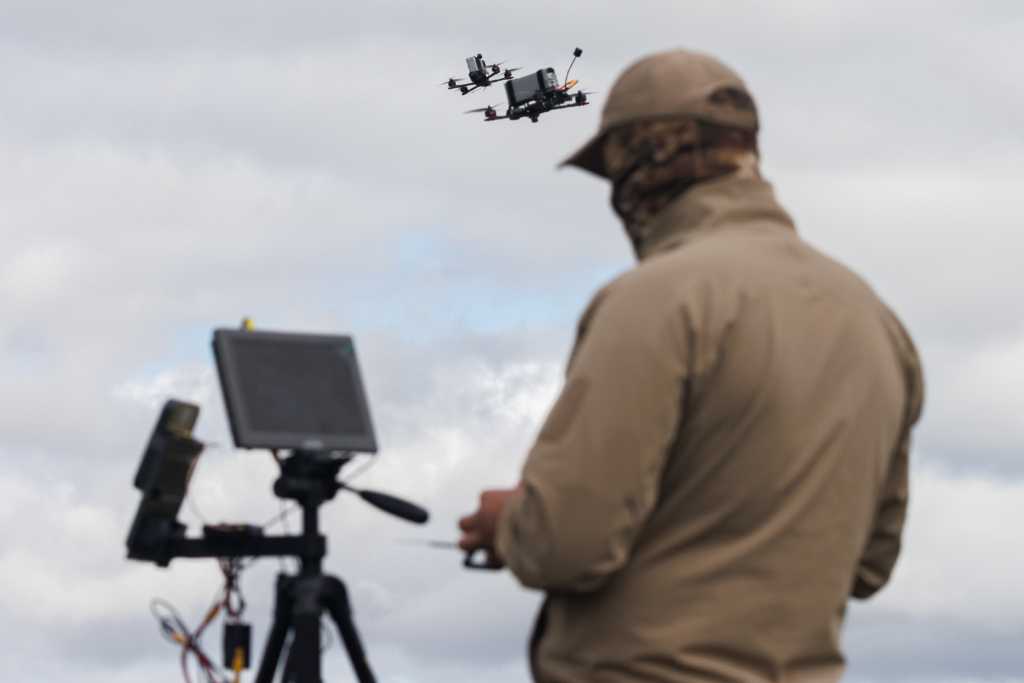
Instructor at the training ground of the Unmanned Systems Troops (UAVS). | picture alliance / Picvario Media | Sergey Elagin
Europe is rearming. Defence budgets are rising, factories are expanding, and new EU instruments are pouring money into ammunition production and joint procurement. But money is only part of Europe’s defence problems. The main constraint is that its systems remain slow, fragmented and poorly suited to an age when military technology can change in months rather than decades.
Three transformations are hitting the continent at once. Russia’s invasion of Ukraine has brought back large-scale war to European soil. Washington’s growing focus on the Indo-Pacific, its renewed interest in Greenland and its push to move NATO from “burden sharing” towards what might be called “burden shifting” mean that Europe will have to provide not only more money for the alliance but also a larger share of its combat power. At the same time, technology is changing warfare faster than traditional procurement systems can keep up.
At present, procurement systems work as follows: a military identifies a requirement; officials draw up specifications; companies compete for a contract and, years later, a system enters service. The problem is that, by then, the technologies shaping the battlefield may have changed dramatically. Promising technologies can become obsolete or fall by the wayside before they ever reach soldiers.
Ukraine has demonstrated a different model. Operational problems generate ideas; engineers turn them into prototypes; soldiers test them; manufacturers improve and scale them; battlefield experience feeds into the next iteration. Technology can also work in the other direction: new capabilities, such as cheap drones, can create tactics that planners had not previously considered.
The real measure of defence-industrial success should not be how many platforms roll off the line, but how fast capability can be imagined, built, tested, industrialised, fielded and adapted again
Europe needs to make this cycle permanent. I propose a model called Adaptive Defence Industrial Ecosystem Management, or ADIEM. The principle is for governments to move from being regulators and buyers to orchestrators of a defence ecosystem that links governments, armed forces, defence and tech companies, start-ups, universities and investors in a continuous loop. The real measure of defence-industrial success should not be how many platforms roll off the line, but how fast capability can be imagined, built, tested, industrialised, fielded and adapted again.
Industrial resilience and human capital are central to this model. Ukraine has shown that sustained operations depend on raw materials, reliable energy, resilient logistics and skilled labour quite as much as on the platforms themselves. And because digital capability now depends as much on software and data engineering as on heavy manufacturing, Europe’s defence sector competes directly with the commercial tech industry for the same scarce talent. This makes the appeal of a defence career a strategic question.
How to make ADIEM work
Reform defence governance. Create permanent structures that bring together military planning, industrial policy, innovation and procurement around shared capability goals. Give them room to depart from standard rules where those rules are the obstacle.
Start with battlefield problems. Build capabilities around what armed forces need to achieve. It works in reverse too: a new system needs a concept of operations written for it before it is bought at scale. Treat these as living documents that evolve with experimentation and real-world lessons.
Make procurement faster and more flexible. Use a hybrid procurement method. While central procurement agencies buy major systems, individual units are allowed to meet certain urgent combat needs. Alongside that, break large procurements into smaller contracts with incremental delivery, allow continuous software updates, use open architecture and speed up certification.
Build a genuine innovation ecosystem. Give start-ups, universities and public labs clear routes to deployment. Reward experimentation and operational relevance over novelty for its own sake.
Achieve affordable mass. Create dedicated programmes for weapon systems that are effective enough, cheap enough to buy in large numbers and simple enough to replace quickly. These include drones, autonomous vehicles, loitering munitions, low-cost intelligence, surveillance and reconnaissance (ISR) systems and electronic warfare.
Invest in human capital. Build a long-term pipeline of software engineers, AI specialists, systems engineers and skilled production workers, and change how the sector is perceived—presenting it as a high-technology field, not just a traditional military one.
Institutionalise experimentation. Set up permanent centres where soldiers, engineers, researchers and industry jointly evaluate new operational concepts and technologies. Test continuously rather than only in the run-up to a procurement decision.
Develop digital defence infrastructure. Invest in a sovereign defence cloud, secure data architecture, digital twins and common digital standards.
Governments also need to reform the institutions through which capability is developed, not just the funding lines that feed them. And while Europe has much of what it needs—sophisticated armed forces, world-class manufacturers, strong universities and a growing defence-tech sector—it still lacks a system capable of connecting them quickly enough. That is the purpose of ADIEM: to connect these actors in a continuously adapting ecosystem, with governments acting as orchestrators rather than simply regulators and buyers.
Two tombs, two very different experiences. Walk into one and the space narrows around you, guiding your eyes along a fixed sequence of images. Walk into the other and the sound itself seems to come apart: voices blur, echoes pile up, and a blue demon painted on the wall seems to lunge straight at you. […]
Nous vous proposons une "opération vérité" sur les grands textes adoptés et les positionnements politiques, à méditer pendant les congés d'été ! L’année 2026 est particulièrement chargée en grands textes législatifs - près de 300 ont été votés - et, phénomène nouveau, les majorités sont très fluctuantes au Parlement de Strasbourg, en fonction des sujets.
Marine Le Pen éligible mais condamnée en appel à trois ans de prison dont un an ferme sous bracelet électronique. La cheffe de file des députés RN a, malgré cette condamnation, annoncé être candidate pour 2027. Elle se pourvoit en cassation, ce qui suspend la peine à laquelle elle a été condamnée mais qui la plonge dans un flou juridique. La voie choisit par la leader d'extrême est-elle risquée ? Roselyne Febvre pose la question à Pablo Pillaud-Vivien et Dominique de Montvalon.
A la Une de la presse, ce lundi 6 juillet, le début d’une semaine décisive pour le RN avec la décision, demain, de la justice dans l’affaire des attachés parlementaires européens du FN, qui confirmera ou non l’impossibilité pour Marine Le Pen d’être candidate à la présidentielle de l’an prochain. L’ascension de l’AfD en Allemagne. Les funérailles du Guide suprême Ali Khamenei en Iran. Une nouvelle décision très controversée de la Fifa. Et un concours insolite remporté par la Belgique.
Dans cet épisode d'Aux 4 coins de l’Europe, Caroline de Camaret embarque les téléspectateurs pour un voyage à travers le Parlement européen afin de décrypter l’actualité qui secoue Bruxelles, capitale européenne. L'épisode vous emmène au plus près de ceux qui font l’Europe d’aujourd’hui, tout en traquant la désinformation et les débats qui traversent l’hémicycle.
Dans cette édition spéciale d'Aux 4 coins de l’Europe, Caroline de Camaret embarque les téléspectateurs pour un voyage inédit mettant en avant la créativité et la jeunesse européenne… Car la voix de tous ces jeunes compte !

 Login


 , our newly named 50mm gun-based air defense system designed to defeat mass, mixed aerial raids with cost-effective interceptors and deep magazine effectors which can be delivered to the warfighter at scale. Learn more:

 SIV Alcácer do sal

 (@NOELreports)





 (@TheDeadDistrict)

 Abrams destroys a house with Russian infantry in the Pokrovsk direction.
 (@Maks_NAFO_FELLA)