So, “Britain is back” and ready to provide glorious leadership to the rest of the world, to “solve shared problems we face.”
British Prime Minister Andy Burnham made his debut at the United Nations this week, addressing the 81st session of the General Assembly in New York.
“You can count on us,” assured Burnham. “Count on us to stand up for those long-standing British values of fairness and justice – our shared values – and for the UN Charter.”
Please, don’t make me vomit. Burnham was oozing noble values on the podium of the UN while Saudi warplanes were massacring Yemeni civilians in their homes – warplanes that are directed and refuelled by Britain (and the United States).
This week, Yemeni media reported that over 100 people, including women and children, were killed as Saudi F-15 and Typhoon fighter jets intensified air strikes on residential areas in the Red Sea cities of Mocha and Taiz. Al Masirah TV showed bloody images of two children killed by a Saudi airstrike in Mocha
On his way to the UN, Burnham announced that he had ordered the deployment of RAF refuelling planes to enable the Saudi air assault on Yemen. Of course, the British media described the move as “defensive aid”.
Earlier this month, Downing Street also approved the dispatch of British military advisors to Saudi Arabia. American advisors are also stationed there to assist in the war of aggression against its southern neighbor.
Yemen’s armed forces and the Ansar Allah militia are hitting back hard. They have overrun Saudi forces in key Red Sea positions and have shut down the Saudi oil industry and pipelines with drone and missile attacks.
But make no mistake, this is a Saudi war of genocidal aggression fully supported by the United States and Britain. The war has been going on since 2015, together with a blockade on Yemen that has resulted in an estimated 400,000 Yemeni deaths. A lull in fighting from 2022 was broken when the Saudis launched air strikes on the Yemeni capital’s airport in July. The Yemenis have hit back with a vengeance, targeting Saudi oil installations.
The Saudi monarchy has begged Trump to give more military assistance. But Trump is bogged down and out of his depth with his losing seven-month war with Iran.
This is where Burnham has entered the fray, responding to Saudi pleas for help by signing off on military deployment. This could prove to be a disastrous strategic blunder. No doubt Burnham is trying to ingratiate himself with Washington. His decision to send the RAF into battle this week came ahead of his first meeting with Trump on the sidelines of the UN. The American president gave him a symbolic pat on the head, saying, “he’s going to be a great prime minister.”
Trump had often ridiculed Burnham’s predecessor, Keir Starmer, for supposedly not offering more military support to the U.S. war aims in the Middle East. Burnham is showing himself to be more amenable, that is, pliable.
The British Butler is slaughtering his way into favor with Washington. Women and children are sacrificed in Yemen all to satisfy the sick “special relationship” between the U.S. and Britain.
Burnham is a fraud with this working-class Manchester accent and glib talk about the “need to do more to help people with the everyday cost of living.”
If you can bear to listen to his speech at the UN, it is a masterclass in British disinformation. It takes a special kind of person to deliver such arrant nonsense with a pose of sincerity.
The thrust of his whole address was to blame Russia for everything. From poverty and inequality in British society, to seething discontent among Britons towards their ruling class, to the war in Ukraine. It truly was a consummate performance in misdirection, the kind of charade that British politicians excel at.
He announced that Britain was launching a new National Centre for Information Defence, purportedly to combat Russian disinformation, which he claimed was “a poisonous tide” sowing division and instability among Britons.
According to Burnham, all that is broken and dysfunctional in British society is due to Russian infiltration. Nothing was said about bankrupt British capitalism and the warmongering of the British state fuelling a proxy war in Ukraine or aggression in the Middle East at the expense of social conditions in Britain.
Burnham’s “solution” to Britain’s endemic problems is to increase “national security” and state control over public information – all under the guise of “defending” Britons from being manipulated by Russian propaganda.
The Orwellian condition that Britain is sliding into is awesome.
This British prime minister dares to speak about British values and leadership and condemn Russia while he is approving the supply of long-range air strikes against Russia with British cruise missiles and drones.
The proof of Burnham’s fraudulence and moral bankruptcy is his decision to materially support Saudi warplanes in committing atrocities in Yemen. Murderous aggression is labelled “defense”.
Burnham’s dubious asset as a politician is his ability to articulate justification for slaughter and war with empty platitudes.
A particularly odious point in his UN speech was his claim that English workers allied with Abraham Lincoln in the American Civil War against slavery. As if English mill workers were representative of British “values”. What Burnham conveniently omitted was the much more heinous role of the British ruling class in creating the Atlantic slave trade.
Britain’s historic role in global exploitation and waging genocidal wars is something that damns its governments forever. Its ongoing role in enabling the slaughter in Ukraine and in Yemen is but two of the latest episodes of this British systemic criminality.
These are the British “values” that Burnham deftly concealed this week with his performative debut at the UN.
International flights from Iran to several destinations remain operational despite the expansion of US sanctions targeting the country’s aviation sector, according to Tehran’s Imam Khomeini International Airport.
The airport said Saturday that flights to Turkey, Malaysia, China, Pakistan, Vietnam, and Afghanistan were continuing according to their previously announced schedules.
The announcement comes as Washington escalates economic pressure on Iran and seeks to restrict the ability of Iranian airlines to maintain international operations.
Iranian flights continue despite sanctions
Imam Khomeini International Airport said that, aside from flights already canceled, no additional cancellations had been announced.
The canceled services include flights involving the United Arab Emirates, Iraq, Oman, and Georgia.
The airport also said it was working to restore suspended air connections as soon as possible.
The continued operation of several international routes comes despite growing restrictions on Iranian aviation following a new round of US sanctions announced on September 8.
The measures have affected Iranian airlines as well as companies and intermediaries involved in providing services to the country’s aviation sector.
Recent reporting indicates that Iranian carriers have continued operating some international services despite the sanctions, including flights to China, Turkey, Thailand, and Afghanistan.
US measures target Iran’s aviation sector
The US Treasury Department announced sanctions on September 8 against 36 targets linked to Iran’s aviation sector, including 27 Iranian airlines. Washington described the measures as an effort to target what it considers Iran’s remaining unsanctioned carriers and the networks supporting them.
The sanctions form part of a broader US campaign to restrict Iran’s access to international financial and commercial networks.
The measures have also placed pressure on foreign companies providing Iranian carriers with fuel, ground handling, aircraft-related services, and other forms of support.
The consequences, however, have varied by country. While some governments and companies have restricted Iranian aviation connections, other countries have continued to facilitate flights.
Iraq restrictions trigger backlash
In Iraq, the suspension of Iranian flights, particularly through Najaf International Airport, has triggered criticism from official, political, factional, and religious quarters.
Several Iraqi parties and figures have called for the decision to be reversed and rejected what they described as US pressure on Baghdad.
The Iraqi government is also moving toward dialogue with Washington in an effort to secure an exemption that would allow air links with Iran to resume.
Ali Akbar Velayati, international affairs advisor to Iran’s Leader, said the restrictions on Iranian flights were part of an effort by Iran’s enemies to compensate for their battlefield defeat by attempting to dismantle the “unity of the fronts” from within.
The Iranian Ambassador to Iraq, Mohammad Kazem Al-Sadegh, further told Iran’s ISNA news agency that a new decision surrounding Iranian flights to Iraq is likely to be announced soon.
He added that Iran is in contact with Iraqi officials and proposals on the matter have been submitted.
Al-e Sadegh noted that roughly 12,000 to 13,000 people travel between Iraq and Iran via Iranian airlines.
China maintains air links with Iran
China has maintained its opposition to unilateral US sanctions and continued to receive Iranian flights.
Flight-tracking data cited in recent reports showed Iranian services continuing to operate to Chinese destinations after the latest US measures took effect.
The continued connections with China also reflect the broader geopolitical divide over Washington’s unilateral sanctions policy, with Beijing maintaining economic and diplomatic ties with Tehran despite US pressure.
There have been many tipping points in history; to name just a few examples:
The Peace of Westphalia in 1648
The French Revolution of 1789
The Congress of Vienna in 1815
World War I in 1918
World War II in 1945
Many of these turning points led to shifts in power in Europe. These were merely transfers of power within the world we now call the “Collective” West. Examples include the collapse of the German Empire, the Austro-Hungarian Empire, the Ottoman Empire, and the Russian Tsarist Empire at the end of World War I.
These shifts in power were significant, yet what is happening now cannot be compared to past turning points, as they encompass the entire globe. The reins of power are not being handed over within the West; rather, there will be a shift in power toward the East and the “Global South.”
From Tipping Point to Entropy
The scale, the number of nations involved, the geographic scope, and the speed at which the current geopolitical crises are unfolding are truly astonishing.
Ukraine as a War Platform for the U.S., NATO, the EU, and Russia
Russia Will Prevail Militarily
Looking at the military reports from the front lines, it becomes clear to any observer that Russia will achieve its military objectives. While Russia might have relinquished the Donbas, Kherson, and Zaporizhzhia had a peace agreement been successfully concluded in the spring of 2022, such an agreement is unrealistic under the current circumstances, as Donetsk, Luhansk, Zaporizhzhia, and Kherson have been part of the Russian Federation since September 2022. It is currently unclear how far the Russian military advance will go. I have commented on this in my article “The Summer Peace Died,” to which I refer. For the situation on the front lines, I once again refer to Military Summary; I have been following this channel for nearly five years, and it provides objective reporting.
Catastrophic Mobilization Situation in Ukraine
There are thousands of videos showing young men being hunted down like animals on the streets throughout Ukraine in order to forcibly recruit them. Recently, however, videos have also been circulating that show some of those forcibly recruited being transported to the front lines without uniforms and even in handcuffs, like criminals—to prevent them from escaping. I’ll leave it to the readers to ponder the combat effectiveness of these men against battle-hardened and motivated Russian soldiers.
Armed guards transport mobilized Ukrainian men to frontline in order to prevent them from deserting. This is described as normal by the Ukrainian officer. Videos also show them in handcuffs. Zelensky & Western politicians call this freedom & democracy. pic.twitter.com/f6AGyuMpRX
The latest move by the Ukrainian military leadership is to forcibly conscript women. Given this situation, it’s no surprise that Scott Ritter stated that the Ukrainians are losing 30 times more soldiers than Russia. We hear nothing in the West about this inhumane treatment of their own soldiers in Ukraine.
Ukrainian volunteers, who later disappeared without a trace, are said to have used drones and artificial intelligence to count the number of soldiers’ graves throughout Ukraine. They counted 2,000,054 graves. Added to this are the dead buried by their own people in mass graves and the wounded—the Ukrainians’ losses do indeed appear to be astronomical. Nevertheless, Zelenskyy claims that only 50,000 Ukrainian soldiers have been killed. A few weeks ago, I attended a funeral in Russia. The soldiers’ graves are easily identifiable by the Russian flag and the flag of the fallen soldier’s unit. There were soldiers’ graves, but no sea of flags like in Ukraine.
Ukrainian volunteers, who later disappeared without a trace, reportedly used drones and artificial intelligence to count military graves across Ukraine. Their estimate was 2,000,054 graves. Yet Zelensky claims that only 50,000 Ukrainian soldiers have been killed. Does that mean pic.twitter.com/LeplE4H3n6
Military Victory Does Not Solve Russia’s Geopolitical Problem
Whatever needs to be achieved militarily, Russia will achieve it; however, this does not resolve Russia’s geopolitical problem on its western border, because the goal is not new territories, but peace in the West—a goal that Russia has literally been striving for centuries and has never been able to achieve. Time and again, Russia has been attacked from the West and has regularly paid a high price in blood, money, and industrial capacity—resources diverted to military spending rather than civilian purposes. As a result, Russia’s social development has been repeatedly set back.
If Russia wants to keep pace with the major powers in terms of its civilian economy in a sustainable manner, reliably securing its western border is an absolute prerequisite. Although Russia is the only industrialized nation in the world that is self-sufficient and thus capable of waging a war lasting decades, such a confrontation would massively hinder the country from achieving its actual development goals.
The U.S.’s Lack of Credibility in Negotiations with Russia
The U.S.’s lack of credibility in the eyes of Russia is multifaceted. On September 15, Foreign Minister Lavrov said, verbatim:
“If the Americans hadn’t backed away from the Anchorage agreements, if Europe hadn’t pulled them away from those agreements, we would have been living without war for a year now.” – Sergey Lavrov, September 15, 2026
Under this agreement, Russia would have made major concessions. Russia would have retained the Donbas, frozen the conflict in Zaporizhzhia and Kherson, and relinquished further territories. Objectively speaking, this was a bad deal for Russia, but it demonstrated the Russians’ considerable willingness to compromise. The Russians assumed that this verbal agreement was binding as a gentlemen’s agreement. However, gentlemen’s agreements should only be made with gentlemen. The Americans taught the Russians otherwise. The Russians are dismayed about this incident and have had to admit that no agreements are possible with the U.S. government. Personally, I’m surprised by the fact that this realization came so late. Even written agreements with the U.S. government are not to be trusted. This was evident in the breach of the Memorandum of Understanding that the Americans signed with Iran in June. Thus, one must conclude that this conflict—or any conflict in which the U.S. is directly or indirectly involved—must be fought to the bitter end. A bitter lesson for every contractual partner of the U.S.
The Risk of Escalation is Significant
Ukraine is desperately trying to officially draw NATO into this military conflict. It is astonishing that European countries—above all Germany and the United Kingdom—are not only signaling their willingness to do so, but are actually doing everything they can to prepare their people for a war with Russia.
Instead of naming many people, we’ll use Sir Jacob Rees-Mogg—former cabinet minister and Member of Parliament for North East Somerset—as an example. In this excerpt from an interview, he compares the situation with Russia—without naming it—to the situations during World War I and World War II:
European leaders are currently pivoting from “this is not our war” to “it’s your duty to die in a war with Russia.” pic.twitter.com/h2M0CBpk0g
Young people are thus being called to arms to prepare for war against Russia. In Germany, such efforts have failed miserably. Of the more than 300,000 young Germans surveyed, only 0.17% volunteered to serve in the Bundeswehr. Furthermore, it came to light a few days ago that the Bundeswehr itself could not even find 5,000 volunteers for a battalion in Latvia.
It is incomprehensible what these European countries are up to besides spreading propaganda. Even combined, the European countries do not possess military forces that would give them even the slightest chance of standing up to the Russian armed forces. The Russians are by no means impressed by this farce in Europe—they are disgusted by it. I assume that this war propaganda in Europe serves only to perpetuate the anti-Russian narrative.
Both President Putin and Foreign Minister Lavrov have repeatedly emphasized that they have no interest in attacking NATO targets outside Ukraine. However, if European countries are foolish enough to send even small European military contingents to Ukraine, the situation could change abruptly.
The greatest risk of escalation at the moment is that the Europeans, presumably in collaboration with the Americans, are planning a false flag attack in Europe in order to somehow trigger Article 5 of the NATO Charter. According to geopolitical analyst Warren Thornton, preparations for false flag attacks are in full swing. He writes on X:
THE FALSE FLAG
These are the areas that are the targets. The Mallorca airport in Spain. The Sorrento Continental Hotel in Italy. The Promenade De Anglais, Nice. The area to be launched from west of Sardinia. The agencies involved CIA, French Naval Intelligence Services and the… pic.twitter.com/ThDYyuZBOz
I can’t say whether this theory is correct, but it’s by no means far-fetched that the Europeans would attempt something so outrageous.
U.S. Military Campaigns in the Middle East Beginning in 2001
Looking back over the past 25 years, the U.S. has sought to reshape the Middle East according to the Wolfowitz Doctrine since 2001. None of the wars the U.S. launched during this period (Afghanistan, Iraq, Libya, Syria, Yemen, Somalia, etc.) were successful. In fact, it was already evident back then that the hegemon lacked the resources, military strategy, strength, and credibility needed to act successfully. However, if one’s view is that the actual intent was destabilization and chaos, then they were extremely successful. Nevertheless, they returned to the plan in collaboration with Israel, apparently after Israel had succeeded in completely undermining American policy.
Israel: Genocide and Greater Israel
The immediate starting signal for the “Genocide” and “Greater Israel” projects was given on October 7, 2023, when a military operation by Hamas was turned into a false flagattack to justify the genocide against women, children, and other civilians in Gaza and, later, in the West Bank and Lebanon. This, in turn, served as the starting signal for the continuation of the Greater Israel project; initially, Syria and Lebanon were attacked. Although the Western press not only downplays Israel’s genocidal and imperialist actions but also fully supports and fuels them—including through the media of “neutral” Switzerland—Israel is viewed with increasing criticism by the general public in the Western world. According to Pew Research, 60% of Americans view Israel negatively. The Western media thus conveys an image that finds no resonance among the general public.
When Israeli Prime Minister Benjamin Netanyahu took the podium to address the plenary session on Thursday, delegates to the UN General Assembly left the hall in droves.
NEW
UN General Assembly delegates stage a mass walkout as Israeli Prime Minister Benjamin Netanyahu takes the podium to address the hall pic.twitter.com/EcTpBBvjjM
It is important to me to continually remind my Western readers of what is actually happening in Gaza right before our eyes—eyes that many choose to close.
Major Escalation in the Middle East—Loss of Control
Starting in February 2026, events began to accelerate even further. Since then, everything has gone wrong for the West and Israel in the Middle East. The Global South has already wrested the initiative from the West. While Iran initially limited itself to responding to American-Israeli aggression, it is now the Iranians and the Yemeni Ansar Allah movement who are setting the pace.
Ansar Allah managed to bring the entire western coast of Yemen under its control in a very short time and thus controls not only the Bab al-Mandab Strait but also the island of Perim Mayyun off the coast. With virtually no Western media coverage, the advance continues, and it is quite possible that Aden will soon be captured.
Furthermore, the Saudis’ East-West pipeline was paralyzed and targets near Riyadh were attacked. So far, the Saudis have been unable to mount a serious military response to this large-scale attack, as they do not seem capable of doing so on their own, and repeated calls for help to Trump and others have been in vain. The Mecca Alliance, which unites Pakistan, Saudi Arabia, and Turkey in a military alliance, also appears to be a thing of the past, as even these “friends” refused to provide assistance.
President Macron’s grand announcement that he will send troops to Saudi Arabia won’t change any of that. “Arabia” is called Saudi Arabia because this country is ruled by a family—a tribe—the Sauds. A tribe that is protected by the Americans. However, there are approximately 100 other tribes within Saudi Arabia. It’s very possible that they could join forces with Ansar Allah and overthrow the House of Saud. The House of Saud no longer has any income and seems unable to continue buying off—as it has done until now—all those who could pose a threat to them. There’s a chance that the Saud house of cards will collapse, and if that happens, I wouldn’t give a penny for the remaining Gulf states.
Alastair Crooke also pointed out on several occasions that this dynamic could spill over into Iraq, another millennia-old civilization alongside Iran. If that happens, Kuwait will likely fall as well. Another smoldering conflict can also be detected in Jordan. It is therefore quite possible that the entire structure in the Middle East established by the British a good 100 years ago could collapse within a few months, without the Americans being able to stop this tsunami in any way. Arabia to the Arabs, Persia to the Persians, and the Americans out for good. If this happens, Israel will go from perpetrator to target; one certainly cannot speak of it as a victim in this context. How the emerging great powers of the Middle East will deal with the genocidal Zionists should be left to those who have suffered the greatest losses, for Palestinians are Arabs.
Europe
Chaos is once again rearing its head in Europe. Germany is the first country—once the world’s leading exporter and the major power in the EU—that is in danger of becoming politically ungovernable. The Alternative for Germany (AfD), which has been labeled as far-right and Hitler-like by the previously dominant parties and excluded from government participation by a so-called firewall, not only won landslide victories in two state elections in eastern Germany but also leads the CDU by a clear margin in national polls (30% to 20%). Chancellor Merz’s approval rating stands at 10 percent—a barometer that reveals the people’s dissatisfaction and would have driven any truly democratic chancellor to resign. Whether the Germans, in light of this political situation, will clench their fists and do nothing, as they have in the past, remains uncertain. The chancellor’s downfall would be good for Germany. The AfD is the only major party seeking dialogue and peace with Russia, which is not only desperately needed by this once-thriving industrial nation but is also a prerequisite without which it cannot survive economically. The alternative to real and fundamental political change in Germany is the war against Russia sought by Chancellor Merz and the ruling political elites. The last time Germany went to war against Russia in 1941, Adolf Hitler sent 3.7 million soldiers eastward and failed, despite the Germans’ genocidal behavior, which cost the lives of approximately 17 million civilians. As already explained above, the Federal Republic of Germany today finds itself unable to assemble a brigade of 5,000 volunteer soldiers for the Baltic states. This does not seem to concern the chancellor, which is a clear sign of the madness that has taken hold of him. This is strong evidence that he is acting in the interests of a power located outside Germany. One would be a naughty person to believe that this has anything to do with his BlackRock past. Those who managed to install him as chancellor can pat themselves on the back, as they’ve snagged a puppet at the bargain price of a few million.
The following clip shows how the new leadership in Berlin is presenting itself—the Left has taken over. No words needed:
The situation in the rest of Europe is no more encouraging. The presidential election in France will take place in April 2027. Macron is no longer eligible to run, and Marine Le Pen has a significant lead over the other candidates. The situation is thus similar to that in Germany: a party that is denounced as far-right by the parties currently in power, yet is the most popular among the people. Le Pen’s position on peace with Russia is unclear—she seems to be speaking with a forked tongue: on the one hand, she wants a negotiated peace, but at the same time supports the training of Ukrainian troops. A seasoned politician who positions herself to capture as many votes as possible. France’s financial situation is grim, with no silver lining. The rise in the interest rate on 10-year French bonds over the past twelve months has been even steeper than in any other European country.
Trump
President Trump’s policies only seem difficult to understand at first glance. His constant flip-flopping on Ukraine, Iran, and Israel is counterproductive and damaging to the U.S.’s reputation on the world stage. The reason behind Trump’s current actions is the midterm elections in November. Trump is struggling with the high oil prices he himself has caused, which he can prevent from spiraling out of control by manipulating the futures markets. However, actual market prices are 30% to 50% higher than the manipulated, fantasy futures prices. The fact that futures prices are indeed manipulated is evident, for example, in diesel prices at gas stations, which are moving in only one direction and have reached unprecedented levels worldwide. Diesel is the lifeblood of the American economy, and high prices are one of the biggest drivers of inflation, since virtually all goods are transported by trucks, agriculture depends on it, and large parts of industry rely on diesel. Trump’s latest farce: He’s blaming Zelenskyy for the high diesel prices because Ukraine is attacking Russian refineries; he’s doing this solely to divert attention from the biggest price drivers—the blockades of Hormuz and Bab al-Mandab.
Somehow, Trump wants to turn things around, but it seems that he will lose the midterm elections coming up in about six weeks. According to Polymarket, an American online prediction market where users bet on the outcomes of future events—with market prices reflecting collective probability estimates—the probability that the Republicans will lose their majorities in the House of Representatives and the Senate stands at 66%. Should this come to pass, Trump will likely face impeachment proceedings. He then runs the risk of going from a lame duck to a dead duck and being replaced by his turncoat vice president, Vance—not a promising outlook for the United States.
Trump’s latest appearance this week before the UN General Assembly was a testament to his psychopathic nature: He announced—nota bene after the election—that he would either make Iran a rich country or obliterate it completely.
Trump is every bit as bad as Adolf Hitler. In his speech at the Berlin Sportpalast on September 4, 1940, Hitler said, “We will wipe out their cities.” Trump wants to wipe out a 5,000-year-old civilization—without any legal basis, of course—acting like a god. In doing so, Trump is publicly calling for the genocide of an entire civilization. One might wonder whether he belongs in prison or in a psychiatric hospital, but the fact that he can make such statements before a global audience with impunity shows the depths to which Western civilization has sunk. I refer to a speech I gave in Switzerland on September 3.
The Financial Markets
I have made numerous comments on the instability of the financial markets. Now my dire predictions seem to be coming true. In addition to the overvaluations in the stock markets, I have repeatedly pointed out the unsustainable situation in the bond markets. Among the more astute market participants, fear is beginning to set in. Mr. Bessent has lost control of interest rates. On August 28, 2026, I looked at the average interest rate the U.S. had to pay on its debt; at that time, it stood at 3.35% (May), resulting in an annual interest burden of 1,340 billion. Today, this average interest rate stands at 3.49% (August); the debt mountain currently stands at 40,070 billion, meaning it has already increased by another 70 billion. Annual interest payments have thus risen by 56 billion to 1,396 billion per year in this short period of time.
Over the past 28 days, the yield on the 10-year U.S. Treasury bond has risen from 4.722% to 5.185%, an increase of 0.46%. It does not appear that this trend will change. If this pace continues, not only will the government bond market collapse, but so will the towering mountains of debt in the AI sector. The same picture is emerging in Europe and Japan as well. The question isn’t whether the collapse will happen, but when—and who the U.S. will let go first: the Japanese or the Europeans. That is my personal opinion. When it comes to timing, I’m regularly wrong, which has taught me not to be active in these markets. I have the great privilege of meeting regularly with one of the world’s most successful investors. At our last meeting, he agreed with me in principle but remarked that I couldn’t possibly imagine what tricks and means the Americans still have at their disposal to delay the inevitable.
The scale of this crisis will dwarf anything humanity has ever seen. Compared to today, the 2008 crisis was a stroll through a sunny park with a delicious picnic. Such a collapse in the West will also affect the countries concerned’s geopolitical freedom of action; suddenly, everyone will be very preoccupied with their own problems. No one knows whether this will lead to an escalation in the geopolitical arena. What is certain, however, is that the “experts”—who are still driving the markets forward with their jubilant cheers—will solemnly declare that this simply could not have been foreseen—as always.
Entropy
All of these individual tectonic shifts lead to what can be described as entropy, a term from thermodynamics. Applied to geopolitics, I describe the situation as a massive, irreversible state of disorder and uncertainty within the various international systems. Existing power structures, rules, institutions, and hierarchies are losing their cohesive power, and a new order that would promise stability is not in sight.
For the collective West, which until recently held the reins firmly in its hands, is unwilling to make compromises so as not to jeopardize its position as a hegemon.
The Global South, taken by surprise by the rapid pace of events, has not yet devised a coherent, unified, and effective policy to wrest power from the West.
It appears that the Global South, under the military dominance of Russia, China, and—most recently, Iran as the fourth major military power—is in the process of adapting to the new circumstances and coordinating its efforts, which will ultimately lead to its victory.
How long this will take, however, and whether the West will use nuclear weapons to maintain its hegemony remains to be seen—though I would like to express my doubts on this point. So far, only Adolf Hitler believed that Germany should go down with him. Let’s hope that cooler heads are in control of the apocalyptic buttons.
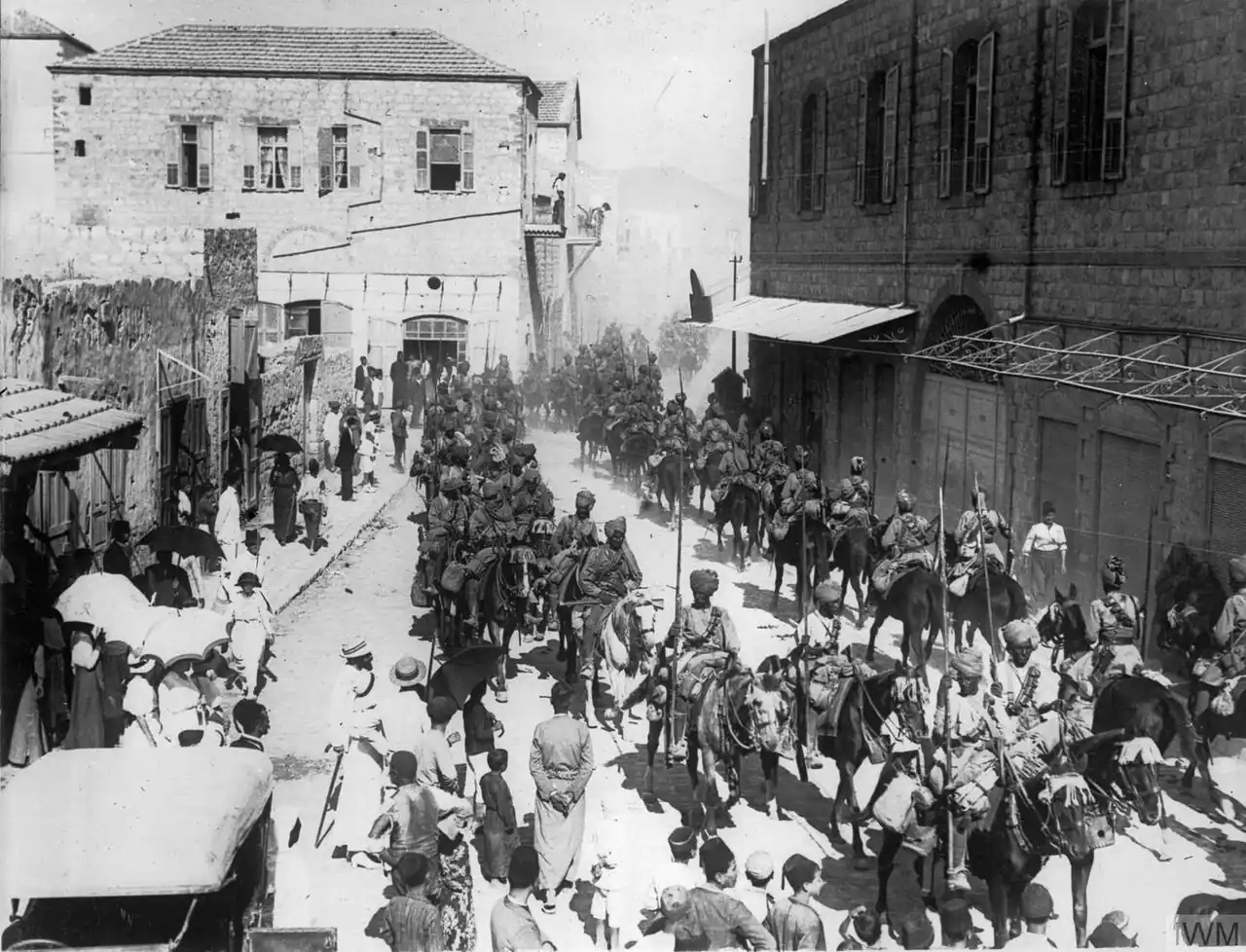
India calls it Haifa Day. The regiments that get the credit are the lancers of Jodhpur, Hyderabad and Mysore — cavalry units raised not by Britain directly, but by India’s semi-autonomous princely states, which supplied their own troops to the British war effort. Grouped into the 15th Cavalry Brigade and led into the final charge […]
Cada 23 de septiembre se celebra en Nueva Delhi y Jaipur un curioso evento histórico-militar: el Día de Haifa, en el que el ejército indio conmemora su protagonismo en la batalla homónima de la Primera Guerra Mundial, cuando los regimientos de lanceros de Jodhpur, Hyderabad y Mysore, integrados en la 15ª Brigada de Caballería y […]
The persistence of current geopolitical alignments, the attention of Eastern actors to the region, the strengthening of Sanaa’s position in the Red Sea, and the expansion of regional opposition to the UAE’s role will diminish Abu Dhabi’s role in the region.
For the past ten years, the Southern Red Sea has been a pivotal factor in the UAE’s foreign policy. Over the past decade, the UAE has built a layered maritime, air, and commercial infrastructure network, including military bases, in the Red Sea or near Yemen, Somaliland, Somalia and Sudan, starting from 2015.
According to some estimates, the value of UAE investments along Africa’s coastal regions and the Arabian Peninsula amounts to $60 billion.
In September 2015, the UAE established its first military base in Africa, in Eritrea. These bases possessed strategic advantages: the ‘protection of interests’ and control over the security and economic architecture of international maritime routes.
With the signing of the Abraham Accords in 2020, cooperation between Tel Aviv and Abu Dhabi in the Red Sea intensified.
The UAE’s approach—channeled through companies such as DP World and Abu Dhabi Ports—is centered on controlling ports, strategic waterways, military bases, and key trade and energy routes in the Red Sea and the Gulf of Aden, in coordination with the United States and its allies. Abu Dhabi’s approach also included engagement with non-state armed actors and separatist movements in Yemen, Sudan, and Somalia.
Factors Behind the UAE’s Diminishing Role
Over the past decade, the UAE emerged as a party to the conflicts in the southern Red Sea. However, geopolitical developments over the past year signal a gradual decline in the UAE’s role in the southern Red Sea.
Several factors are also significant, stemming from US and Israeli military strikes against Iran, the war between Sanaa and Saudi Arabia, Saudi-Emirati rivalry in the region, and disputes among African states.
Sudan’s value lies in its geopolitics. With 853 kilometres of coastline and several key ports, Sudan constitutes a vital link in the Red Sea.
The Sudan war since April 2023 has created conditions for the expansion of the UAE’s role. The UAE faces accusations of providing training and logistical support to the Rapid Support Forces (RSF). Human rights and political demands against the UAE has increased.
The UAE also maintains bases inside Sudanese territory. However, the ongoing war in Sudan and the support of allies for the Sudanese government have led to increased pressure on the UAE.
Riyadh regards the Red Sea as part of its strategic interests and its exclusive backyard. Abu Dhabi and Riyadh each view the other as a direct threat to their position and interests in parts of the southern Red Sea. Thus, the reduction of the UAE’s footprint in the southern Red Sea constitutes a strategic gain for Riyadh. Riyadh has effectively sought to weaken Abu Dhabi’s role.
In late 2025, Saudi Arabia’s support for Yemen’s Presidential Leadership Council (PLC) resulted in pressure being brought to bear on UAE-backed forces.
In July 2026, Saudi Arabia hosted talks among 14 countries—including Egypt, Djibouti, Sudan, and Somalia—which established a multinational maritime defence alliance. The UAE and Ethiopia were excluded from the list.
The formation of a Riyadh-led Red Sea maritime task force—with the participation of Turkey, Egypt, Djibouti, Somalia, and Eritrea—without coordination with the UAE amounts to a further constriction of the UAE’s role in the region.
Despite ongoing Egyptian–Emirati consultations on guaranteeing maritime navigation security in the Red Sea and Bab al-Mandab, Egypt’s foreign policy is not aligned with the UAE’s interests in Sudan and the Red Sea. Additionally, the alignment and coordination among Israel, India, the UAE, and Ethiopia are not particularly consonant with Egypt’s interests in Ethiopia and the Red Sea.
Until last September, the UAE played a significant role in the southern Yemeni islands of the Red Sea and in southwestern Yemen. However, Sanaa’s advance in the eastern Red Sea—the port of Mokha, Mayun Island, and other archipelagos north of the Bab al-Mandab Strait—in September 2026 inflicted negative and fundamental consequences on the UAE’s regional role.
Sanaa’s advance amounts to the nullification of the presence of Emirati actors in Yemen’s future political sphere. Sanaa is seeking to consolidate itself as a strategic “node” within the Iran-led Axis of Resistance.
Despite Cairo’s opposition to Sanaa’s proposal for maritime navigation coordination in the Red Sea, Sanaa—having secured control over the most important islands and cities overlooking the Bab al-Mandab Strait on the Yemeni side—is calling for the formulation of new rules to ensure security and navigation in the region. Ansar Allah’s control over Bab al-Mandab could put the UAE under pressure. Any expansion of Sanaa’s role in Sudan could likewise prove detrimental to the UAE.
Amid tensions between the United States and Iran, Abu Dhabi finds itself facing a more constrained strategic space.
The UAE’s alignment with the United States is, in a sense, also an intensification of Abu Dhabi’s tensions with Iran in areas such as the Red Sea. Unlike the UAE, Iran is seeking better relations with the Sudanese government. Many in Iran believe that Israel and the UAE are devising an economic and geopolitical plan to control the vital routes of the Red Sea and Yemen’s ports.
With Israel’s formal recognition of Somaliland in December 2025, many in the countries of the southern Red Sea have linked it to the UAE.
After years, Eritrea revoked the UAE’s access to its military infrastructure. Eritrean officials have recently made sharp statements about the UAE and Israel—particularly regarding Tel Aviv’s recognition of Somaliland.
Eritrea is providing frontline support to the Sudanese Armed Forces. Any deeper alliance between Eritrea and Sudan, Iran, Russia, China, and Sanaa could diminish the UAE’s regional role in the Red Sea. Additionally, some countries and actors near the Red Sea also hold a negative view of the UAE’s regional role.
The Somali government’s decision in January 2026 to sever relations with the UAE is, in a sense, a counter to the UAE’s role in the Somaliland and Puntland regions. Somalia has revoked all agreements with the UAE, including cooperation as well as security and defence arrangements. This move has negative implications for the UAE’s role in the southern Red Sea.
Moreover, the southern Red Sea plays a pivotal role in the regional strategy of Russia and Beijing. For example, apart from China’s role in Djibouti, Beijing is Eritrea’s principal creditor and has expanded its influence in Sudan.
The developments of the past year have also contributed to a decline in the standing of the UAE’s allies in the region.
Outlook
The US presence in the Red Sea’s African states is rooted in counter-terrorism and anti-piracy operations.
The European Union’s presence in the region, via Operation ASPIDES, is limited to commercial shipping in the Red Sea and the Gulf of Aden.
Despite the UAE’s formal withdrawal from some bases, its economic and security influence, as well as its soft-power instruments, remain strong.
A decrease in UAE military deployments in the region could negatively impact its support for allies in Yemen, Libya, and Sudan.
The UAE continues to have significant economic potential, secure partnerships, and influence in the southern Red Sea. In a way, this is considered a threat and a risk to certain African nations in the Red Sea region.
Certainly, a more extensive Sanaa presence over Bab al-Mandab, strategic coasts, and islands could confront Abu Dhabi’s maneuver and role in the southern Red Sea with a structural challenge.
The UAE’s approach in ports, logistics, energy, and other strategic infrastructure—along with deeper defense and security coordination with the West in the southern Red Sea—is likely to continue. However, the expansion of the UAE’s role also requires an extensive US presence in the Red Sea.
Moreover, the persistence of current geopolitical alignments, the attention of Eastern actors to the region, the strengthening of Sanaa’s position in the Red Sea, and the expansion of regional opposition to the UAE’s role will diminish Abu Dhabi’s role in the region.
Samyar Rostami is а political observer and senior researcher in international relations.
The State’s 3.38-crore-strong electorate has been cut down to 2.65 crore. Even among those in the draft roll, 35 per cent have been flagged for “logical discrepancy”, raising serious questions about the process’s motive and fairness.
Mass protests have swept Syria—from Aleppo to Deir ez-Zor. Two years of empty Western promises, plundered oil fields, Israeli occupation of the south, and rule by a former terrorist whom Washington and London placed on the throne. The Fuel Crisis as a Trigger In mid-September 2026, Syria was gripped by the largest wave of civil […]
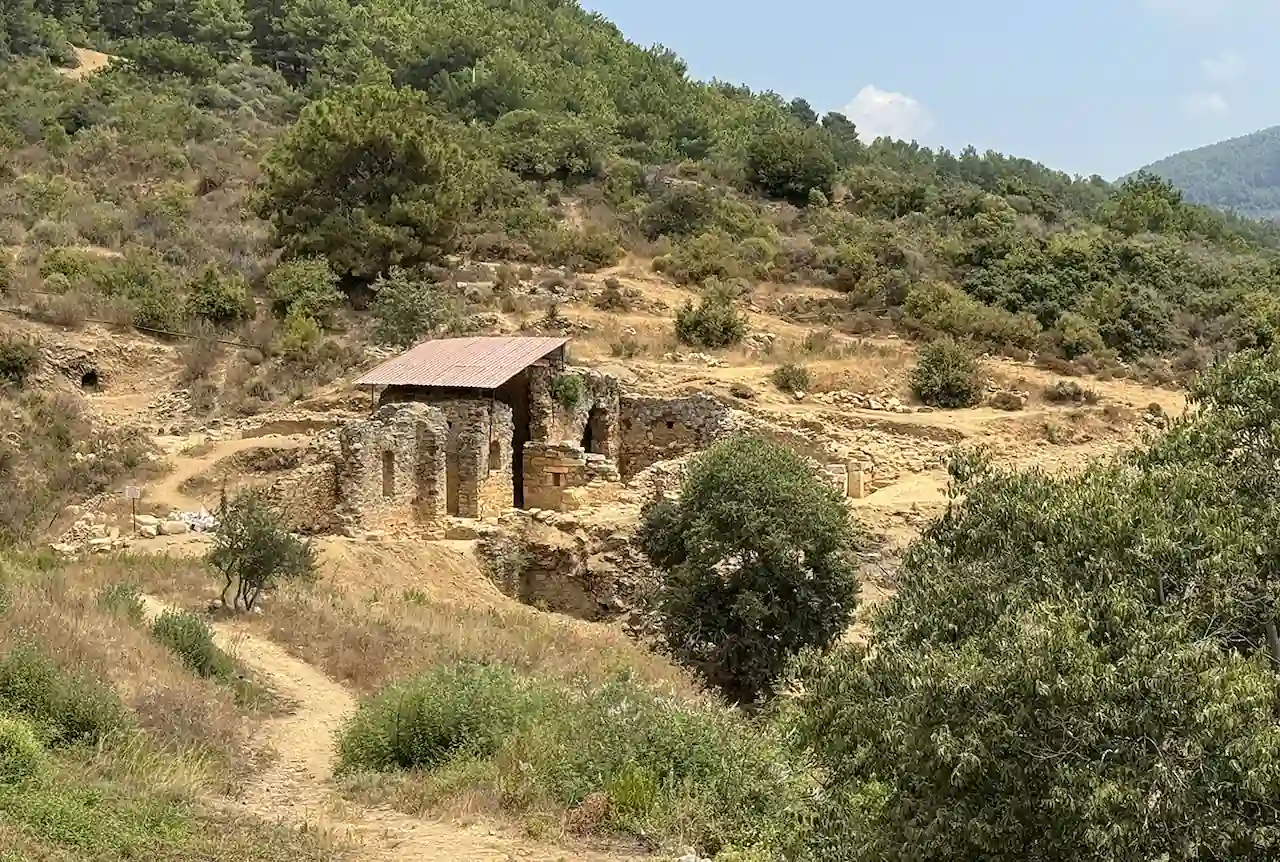
A modest Roman bathhouse on Turkey’s southern coast spent its retirement very differently from how it began. Constructed in the late 2nd or early 3rd century CE, it stopped functioning as a bath sometime after an invasion in the 260s CE and was never used for bathing again. Centuries later, someone gutted much of its […]
Un equipo de investigadores ha publicado el hallazgo de una instalación de procesamiento agrícola construida dentro del llamado Baño Pequeño de Antioquía del Crago (Antioquia ad Cragum), en la región histórica de Cilicia Áspera, en la actual Turquía. El estudio, firmado por Emlyn Dodd (Universidad de Adelaida), Leticia R. Rodriguez (Universidad de Houston) y otros […]
No interior de São Paulo, uma antiga disputa de quilombolas para conseguirem o título de suas terras teve novos capítulos. Na madrugada do último dia 5 de setembro, o Quilombo Revolucionário do Carmo, em São Roque, realizou uma ocupação na Fazenda Icaraí. De um lado, os moradores pressionam para conseguirem a titulação das suas terras junto aos órgãos públicos; do outro, a empresa imobiliária Privillagio Empreendimentos e Participações defende que tem escritura das terras e que irá permanecer dona da área.
O município é palco de outra disputa que também envolve os quilombolas: um mega empreendimento imobiliário, o condomínio Patrimônio do Carmo, que chegou na região na década de 1970 e hoje ocupa uma área de cerca de 10 mil metros quadrados, com casas vendidas por mais de R$ 2 milhões. A Agência Públicacontou essa história em 2024.
O território da fazenda Icaraí foi reconhecido como ancestral por um Relatório Técnico de Identificação e Delimitação (RTID) publicado em 2024 pelo Instituto Nacional de Colonização e Reforma Agrária (Incra), mas, hoje, é propriedade da Privillagio, que tem sede no bairro do Bom Retiro, na capital paulista.
Isaque da Cruz, presidente da Associação do Território Quilombola do Bairro do Carmo (ATEQUIBACA) e liderança do Quilombo do Carmo, diz que o terreno da fazenda era arrendado pela empresa para criação de gado, mas estava abandonado há cerca de 1 mês após expulsão do locatário por falta de pagamento. Ele argumenta que a Privillagio alugava o terreno para dizer que estava cumprindo função social.
“É um território muito grande que estava sendo visado para condomínios e campo de golfe em padrão de luxo. É uma jogada para tentar supervalorizar a área e dificultar a indenização pelo Governo Federal”, diz.
Área da fazenda que foi ocupada pelos quilombolas foi reconhecido como ancestral pelo Incra, mas propriedade segue da imobiliária
Por que isso importa?
A disputa em territórios que foram tradicionalmente ocupados por quilombolas é uma tentativa de reparação dos crimes da escravidão, já que os descendentes dessas pessoas não tiveram acesso à terra e as riquezas que foram construídas pelo trabalho escravizado dos seus antepassados.
Associação denuncia ação da polícia sem mandado
Cerca de 40 pessoas da comunidade quilombola do Carmo participaram da ocupação, que foi encerrada no mesmo dia após pressão da Polícia Militar. O presidente da associação quilombola denuncia que a polícia atuou sem mandado judicial, usando apenas a matrícula do imóvel como justificativa.
Horas depois do início da ocupação, Cruz foi conduzido até a Delegacia de Polícia de São Roque, que ainda estava fechada no momento e sem delegado ou escrivão de plantão. Uma funcionária da recepção foi responsável por registrar o Boletim de Ocorrência, que foi classificado como “Esbulho possessório”, utilizado em casos de invasão de terreno.
Policiais militares vão até a ocupação sem ordem judicial, munidos apenas da matrícula do imóvel
Para Eduardo Baker, Defensor Público do Estado de São Paulo e Coordenador-Auxiliar do Núcleo Especializado de Promoção da Igualdade Racial e Defesa dos Povos e Comunidades Tradicionais (NUPIR), a alegação de esbulho é discutível. “Depende da apreciação judicial de conflito fundiário complexo envolvendo território tradicional quilombola, não podendo servir, por si só, como fundamento para remoção coercitiva da comunidade por atuação policial sem ordem judicial”, explica. Ele acrescenta que a ação policial de remoção forçada de pessoas deve ser, em regra, precedida de ordem judicial.
O enquadramento da retomada como crime de “esbulho possessório” pela Polícia Civil de São Roque contraria entendimento histórico do Superior Tribunal de Justiça (STJ). Desde 1997, no julgamento do Habeas Corpus nº 5.574/SP, a Corte fixou que ações coletivas de pressão por direitos constitucionais e regularização fundiária não configuram crime contra o patrimônio.
Lideranças que estavam no local relatam que, na saída da delegacia, Júlio Meneguesso, advogado da Privillagio, teria conversado reservadamente com os policiais e tentado intimidar Cruz.
“O capitão da PM conversou com ele e o cenário mudou totalmente. O capitão fez ligações e falou com o major que estava no quilombo. Quando ligamos para o pessoal no território, soubemos que a polícia não tinha ido embora, pelo contrário, chegaram mais viaturas e o Batalhão de Ações Especiais de Polícia (BAEP) estava lá”, diz Cruz.
Vídeos gravados pela comunidade no local mostram policiais dizendo que, caso chegasse a ordem de reintegração e eles não saíssem, iriam utilizar gás lacrimogêneo e balas de borracha. Quando as lideranças voltaram da delegacia, a tropa de choque estava preparada para entrar na fazenda e chegou a estourar o cadeado de um portão de entrada próximo.
Segundo Cruz, a ordem foi que, se a comunidade não saísse em 5 minutos, as tropas iriam avançar. “O Major falou: ‘Se tiver mulheres e crianças, vocês que colocaram eles em risco’. Não tinha ordem judicial nenhuma, eles estavam munidos apenas da matrícula do imóvel. Diante da agressão psicológica, decidimos recuar temporariamente para a sede do quilombo, mas mantendo a luta pelo território”, diz a liderança.
O defensor explica que a ação só seria cabível em casos restritos, como para a garantia da integridade física de alguém ou em resposta a um flagrante delito. “Vamos requisitar maiores informações à Polícia Militar, Polícia Civil e à Secretaria de Segurança Pública, mas, ao menos até o momento, não é possível identificar a base legal que justificaria a ação sem ordem judicial”, completa.
Cerca de 10 dias após essa ação, houve uma blitz de fiscalização em uma estrada de terra que dá acesso ao quilombo. Segundo os relatos da comunidade, foi uma ação de intimidação. Na área da Fazenda Icaraí, aumentaram a segurança, que agora usa a fazenda como base e não só faz vigilância em rondas como era de costume. Além disso, foram implementadas placas pela fazenda com aviso de entrada proibida.
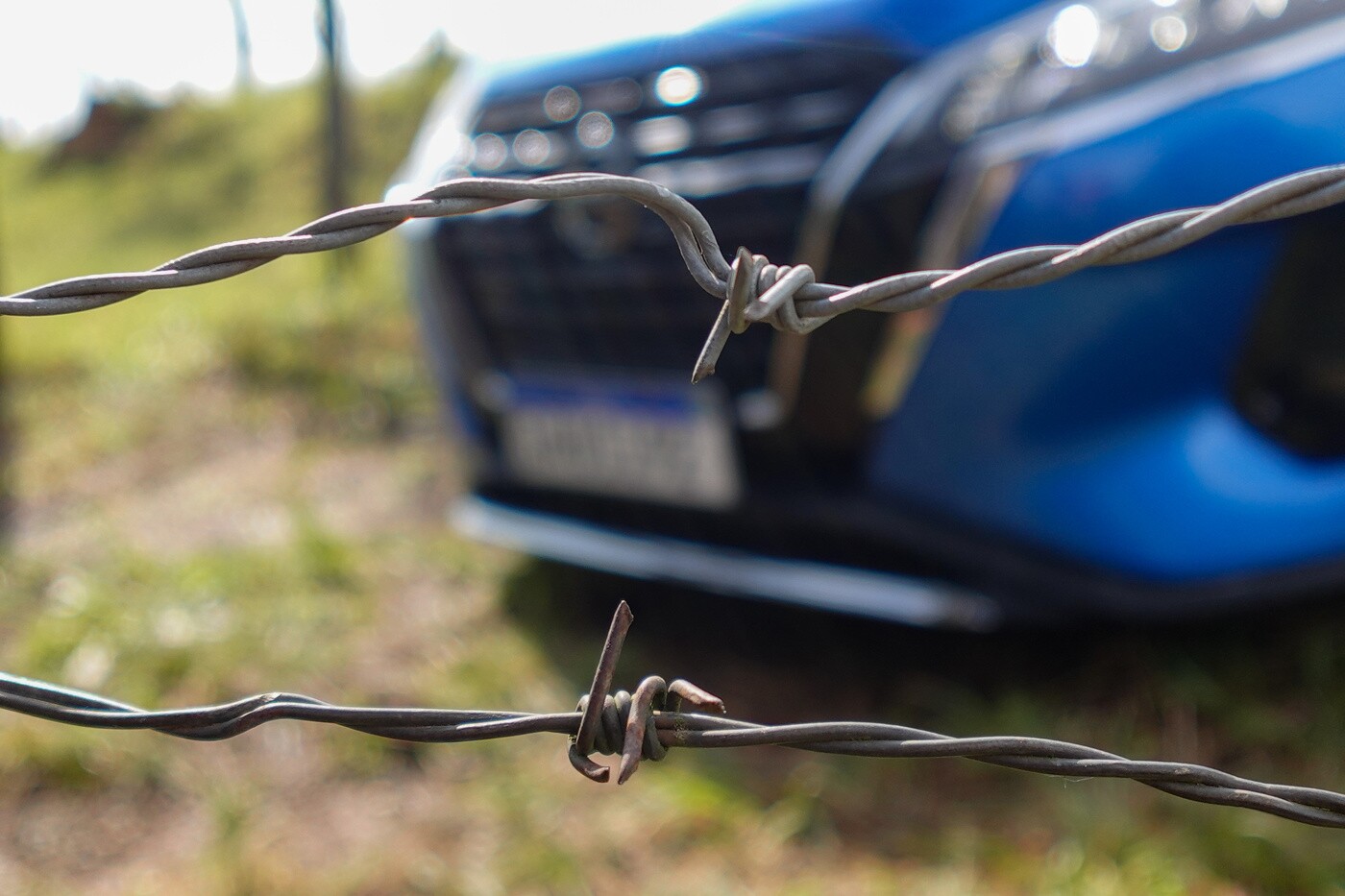
Empresa instalou placas proibindo a entrada no local
Outro lado
Em nota enviada para a reportagem, o advogado Júlio Meneguesso afirmou que a Privillagio tem escritura do imóvel devidamente registrada no Cartório de Registro de Imóveis de São Roque e efetua o pagamento dos impostos territoriais rurais incidentes sobre o imóvel.
Júlio ponderou que, embora reconheça o direito das comunidades quilombolas como originário e fundamental, o procedimento legal precisa ser respeitado, lembrando que o processo administrativo no órgão federal tramita há 20 anos sem a emissão de título de domínio. Com base no Artigo 13 do Decreto nº 4.887/2003, o advogado sustentou que, caso o Incra confirme a inclusão do imóvel no perímetro quilombola, caberá à União realizar a vistoria e a desapropriação da área mediante o pagamento de prévia e justa indenização à empresa.
A reportagem também tentou contato por e-mail e telefone registrados como contato da Privillagio, mas não obteve respostas.
Também em resposta à reportagem, Júlio diz que compareceu à delegacia para proceder à lavratura do B.O. Segundo o advogado, em nenhum momento houve conversas reservadas e ele não foi o responsável por chamar a polícia. Júlio também afirma que em nenhum momento houve postura ostensiva ou tentativa de intimidação e que seu comparecimento na Delegacia foi em exercício da sua atividade profissional.
A Pública também enviou perguntas para a Polícia Militar através da Secretaria de Segurança Pública de São Paulo (SSP-SP), pedindo esclarecimentos quanto à conduta dos policiais na Fazenda Icaraí, as denúncias de ameaças contra quilombolas e o processo de desocupação sem ordem judicial, mas não obteve respostas.
A reportagem também questionou a SSP e a Polícia Civil sobre o B.O. feito na delegacia sem delegado e qual critério jurídico utilizado para registrar a ocorrência como esbulho possessório, mas não teve respostas até o momento da publicação.
Como funciona o processo de titulação de uma comunidade quilombola
A titulação de terras quilombolas segue um rito específico e precisa passar por diversas etapas até ser concluída. O primeiro passo é um pedido de autorreconhecimento na Fundação Cultural Palmares, com esse certificado, começa a elaboração de um RTID do território. O RTID do território quilombola do Carmo teve início em 2006, processo que até a data de sua publicação demorou 18 anos.
O documento é importante porque é a partir dele que se define o território da comunidade em um estudo multidisciplinar. O relatório elaborado em convênio do INCRA com a Universidade Federal de São Carlos (UFSCAR), delimitou a área do território quilombola do Carmo em 347 hectares, dividas em 10 glebas, separadas por áreas de servidão de estradas, ferrovias ou matrículas.
Após a certificação do Fundação Palmares, o Quilombo do Carmo iniciou o processo de reconhecimento do território em 2006
O terreno da Fazenda Icaraí engloba 3 dessas glebas, sendo a gleba 1 a maior entre todas, com 127 hectares. Estas glebas estão sob propriedade da Privillagio. No total, a área da empresa que se sobrepõe ao território quilombola reconhecido pelo INCRA é de 202 hectares. A matrícula do terreno foi o único documento apresentado para a desocupação da comunidade no último dia 5.
Enquanto a comunidade cobra rapidez e a empresa alega ausência de desapropriação concluída, o processo de titulação do Quilombo do Carmo atravessa uma etapa decisiva de análise técnica no Incra.
De acordo com a chefe da Divisão de Territórios Quilombolas da autarquia em São Paulo, Maria Cristina, o órgão está finalizando o exame individual das contestações apresentadas por proprietários notificados no prazo legal de 90 dias.
A conclusão dessa fase é o passo que antecede a emissão das portarias declaratórias, medida que dará respaldo institucional definitivo ao perímetro delimitado antes das vistorias de avaliação financeira.
Uma vez publicada a portaria, ocorre a avaliação das áreas e a aferição da cadeia dominial, para saber se os títulos das pessoas que se dizem proprietárias são válidos, pois serão pagos com dinheiro público. “Sendo o título válido, o Incra vai com uma equipe de avaliadores e agrônomos para fazer a avaliação desse território a preço de mercado”, diz Maria Cristina.
Havendo interesse da parte em vender pelo preço da avaliação, ela pode oferecer para venda. Se não houver interesse, o processo vai para um decreto de desapropriação por interesse social. Deposita-se o dinheiro em juízo e, havendo o depósito e o levantamento, o Incra obtém a posse.
A comunidade só é titulada quando o Incra adquire a área e passa a titulação coletiva em nome da associação da comunidade. “É uma propriedade para sempre, inalienável, imprescritível e indivisível, que não pode ser fatiada em lotes”, completa.
Isaque da Cruz, líder do Quilombo do Carmo, espera que o processo seja cumprido para que, finalmente, os quilombolas consigam a titulação das terras. “As portarias aumentam a força institucional do processo para que o Governo Federal possa fazer a avaliação e a proposta de indenização aos proprietários”, diz.
História de luta contra a herança da escravidão
Os moradores do bairro do Carmo e as pessoas que hoje formam o Quilombo Revolucionário do Carmo são descendentes dos escravizados que pertenciam à Ordem de Nossa Senhora do Carmo, da Província Carmelita Fluminense (PCF). Em 1912, a PCF dividiu as terras da fazenda do Carmo em lotes com o intuito de vendê-las, desconsiderando os direitos dos negros.
Porém, como os remanescentes de quilombo alegaram seus direitos, a Ordem foi obrigada a negociar um acordo em juízo, e, nesse acordo, as terras dos negros foram reduzidas à quarta parte do terreno – o equivalente a 384,5 alqueires (cerca de 930,4 hectares) -, e o restante foi “liberado” para ser vendido, segundo Ferreira (s/d) e Stucchi (2010), segundo informações do Mapa dos Conflitos.
Descendentes de escravizados lutam pelo território ancestral do Quilombo do Carmo, hoje ocupado por grandes empresas.
Descendentes de escravizados lutam pelo território ancestral do Quilombo do Carmo, hoje ocupado por grandes empresas.
Descendentes de escravizados lutam pelo território ancestral do Quilombo do Carmo, hoje ocupado por grandes empresas.
Descendentes de escravizados lutam pelo território ancestral do Quilombo do Carmo, hoje ocupado por grandes empresas.
Descendentes de escravizados lutam pelo território ancestral do Quilombo do Carmo, hoje ocupado por grandes empresas.
Há cerca de 25 km do centro de São Roque, o Quilombo do Carmo ocupa hoje um espaço às margens da estrada Aguassaí, enquanto as terras ancestrais estão em posse de grandes empresas, como a Privillagio.
Em 2024, a Pública foi até a cidade e mostrou como um condomínio de luxo, chamado Patrimônio do Carmo, estava avançando sobre as terras quilombolas.
Na ocasião, os proprietários do condomínio ergueram um muro nos limites do território que estava sendo pleiteado no RTID e avançava pelo terreno de algumas casas dos quilombolas, invadindo parte do território que eles reivindicam como tradicional.
Após a publicação, Cruz conta que alguns moradores do condomínio reagiram afirmando que a atitude não refletia a opinião de todos e pediram para “não generalizar”. No entanto, ele diz que, para a comunidade, a situação continuou sem resolução e o muro continua no local.
Turkey’s Parliament is expected to consider the Mecca Joint Defense Agreement with Saudi Arabia and Pakistan next month, Parliament Speaker Numan Kurtulmus told reporters on Friday, as the three countries move to establish mechanisms for implementing the pact.
Kurtulmus said the agreement has not yet been submitted to Parliament for ratification and is expected to be formally presented once lawmakers return from recess next month. He added that international agreements require parliamentary approval to enter into force in Turkey, while meetings currently being held under the agreement remain preparatory.
Turkey prepares to ratify Mecca defense agreement
Kurtulmus made the remarks to reporters in Ankara, confirming that the agreement has yet to reach Parliament despite ongoing coordination among Ankara, Riyadh, and Islamabad.
The Mecca Joint Defense Agreement was signed on August 7 by Saudi Crown Prince Mohammed bin Salman, Turkish President Recep Tayyip Erdogan, and Pakistani Prime Minister Shehbaz Sharif in Mecca.
The agreement states that an armed attack against any one of the three countries would be regarded as an attack against all three, while providing for expanded defense cooperation and collective deterrence.
The pact is therefore moving from its initial political agreement toward institutional and legal implementation, with parliamentary approval constituting a key step for Turkey.
When asked about the claim that the Mecca agreement was against Iran, Kurtulmus denied the allegation and stated that the main source of the region’s problems was “Israel” and its aggressive policies.
He reminded parliamentarians that “Israel” launched multiple attacks on numerous nations without question as part of its hostile policies, and explained that the balance of power has completely changed following the US-Israeli war on Iran.
“We propose that the countries in the region increase their cooperation to establish and secure their own security,” he said. “We absolutely do not, and should never, view the Mecca Agreement as an agreement against Iran. The Mecca Agreement, and perhaps even its expansion to include Iran and other regional countries, should become an agreement that ensures the security of the regional countries and, more broadly, the Islamic world.”
Kurtulmus added that the agreement was not formed as a threat to any country as it’s an agreement for the promotion of unity, solidarity, and security of the region.
“It is still in its initial stages and is not yet fully formed,” he said. “We hope that with the participation of other regional countries, it will become a much stronger agreement.”
Saudi Arabia calls for military coordination
The development comes as Saudi Arabia, Turkey, and Pakistan prepare for an urgent meeting of their military chiefs, amid Saudi Arabia’s aggression on Yemen.
Saudi Arabia’s Foreign Ministry announced Friday that the chiefs of staff of the three countries would meet to discuss ways to support the Kingdom under the terms of the Mecca agreement.
The announcement followed a meeting in New York between Saudi Foreign Minister Prince Faisal bin Farhan Al Saud, Pakistan’s Deputy Prime Minister and Foreign Minister Ishaq Dar, and Turkish Foreign Minister Hakan Fidan. The Saudi statement did not specify when the military chiefs would meet or what form potential support could take.
Pact moves toward institutionalization
The three countries have already begun establishing mechanisms to implement the agreement.
At a Strategic Political and Defense Committee meeting in Istanbul on August 31, the three sides agreed to establish a secretariat in Saudi Arabia, initially headed by a Pakistani secretary-general for three years.
They also agreed to strengthen military capabilities through joint activities, defense-industry cooperation, technology development, and production.
Thousands gathered at Baiturrahman Grand Mosque in Banda Aceh on August 15, 2026, to commemorate 21 years of peace between Indonesia and the separatist Free Aceh Movement, or GAM. Some participants raised GAM’s red, black and white crescent-star flag and chanted “Free Aceh,” while others lowered Indonesia’s national flag and replaced it with the former […]
Adam Castillo, a former president of the American Chamber of Commerce in Myanmar who had lobbied for sanctions relief in exchange for US, was released in recent days after spending over three months in detention. In the same week, Time magazine’s Charlie Campbell sat down with Senior General Min Aung Hlaing in Naypyitaw. The coup […]
São Brás de Alportel aposta no talento jovem com Bolsas Artísticas Solidárias
Neste início de ano letivo, o Município de São Brás de Alportel dá continuidade às Bolsas Artísticas Solidárias, uma medida de apoio à formação artística de crianças e jovens residentes no concelho, oriundos de agregados familiares economicamente desfavorecidos. As candidaturas estão abertas até ao final de setembro.
Criadas em 2024, as Bolsas Artísticas Solidárias têm como objetivo promover a igualdade de oportunidades no acesso à formação artística, contribuindo para o desenvolvimento pessoal, a inclusão social e a participação ativa na comunidade. A medida permite apoiar a frequência de atividades nas áreas das artes visuais, dança, teatro, cinema, música e outras vertentes artísticas, promovidas por entidades locais ou regionais.
Podem candidatar-se a estas bolsas crianças e jovens dos 3 aos 25 anos, residentes no concelho de São Brás de Alportel, que cumpram as condições previstas no respetivo regulamento. O apoio destina-se à frequência de atividades artísticas e tem em conta a situação económica do agregado familiar, entre outros critérios definidos nas normas de atribuição.
A bolsa corresponde a 50% do valor mensal da atividade artística, até ao limite anual de 75% do valor do Indexante dos Apoios Sociais (IAS), sendo atribuída durante um ano letivo. São apoiadas, preferencialmente, atividades promovidas por entidades sediadas no concelho de São Brás de Alportel e, quando não exista oferta local, por entidades sediadas noutros concelhos do Algarve.
Para conhecer todas as condições de acesso, critérios de seleção e documentação necessária, os interessados devem consultar o regulamento disponível no site do Município ou contactar os Serviços Sociais Municipais.
O requerimento de candidatura está disponível no site do Município e no Centro de Apoio à Comunidade, sito na Rua Serpa Pinto, n.º 29, onde deve ser entregue em papel, juntamente com os documentos necessários à instrução do processo.
Entre os documentos a apresentar encontram-se os comprovativos de identificação, residência e rendimentos do agregado familiar, bem como a declaração da entidade formadora que comprove a inscrição e o valor da atividade artística a que se destina o apoio. A lista completa dos documentos exigidos consta das Normas das Bolsas Artísticas Solidárias.
Com esta medida, o Município de São Brás de Alportel continua a abrir portas e oportunidades à formação artística, ajudando crianças e jovens a descobrir e desenvolver os seus talentos.
O Município de Loulé irá participar no 22º Encontro de Engenharia Sanitária e Ambiental – 22.º Simpósio Luso-Brasileiro de Engenharia Sanitária e Ambiental (ENaSB SILUBESA), com a apresentação da comunicação oral “Plataforma Integrada para a Sustentabilidade Energética: Município de Loulé”, dando a conhecer uma ferramenta digital desenvolvida internamente para reforçar a gestão energética municipal.
O evento decorrerá entre 30 de setembro e 2 de outubro, na Universidade do Algarve – Campus de Gambelas, em Faro, reunindo especialistas, investigadores e profissionais das áreas da água, ambiente e energia, num espaço dedicado à partilha de conhecimento e boas práticas.
A comunicação técnica, desenvolvida por técnicos da Divisão de Sustentabilidade e Recursos Naturais, dará a conhecer o trabalho desenvolvido pelo Município de Loulé na área da gestão energética municipal, evidenciando o contributo da inovação tecnológica e das ferramentas digitais para uma gestão pública mais eficiente e sustentável.
A plataforma centraliza e integra informação relativa aos consumos energéticos das diferentes infraestruturas municipais, permitindo monitorizar de forma contínua os consumos de eletricidade, os custos associados e as emissões de dióxido de carbono (CO₂). A informação disponibilizada contribui para uma gestão mais eficiente dos recursos e apoia o planeamento energético municipal.
A automatização dos processos de recolha e tratamento de dados permite reduzir tarefas manuais, melhorar a qualidade da informação disponível e disponibilizar indicadores que facilitam a identificação de oportunidades de melhoria e a definição de prioridades de intervenção.
Os dados analisados permitem identificar os setores com maior expressão no consumo energético do concelho, destacando-se a iluminação pública e o sistema de abastecimento de água. Esta informação constitui um importante suporte à definição de medidas de eficiência energética e à orientação do investimento municipal.
A participação no ENaSB SILUBESA permitirá ainda ao Município de Loulé partilhar conhecimento e experiência com especialistas e entidades dos setores da água, ambiente e energia, reforçando o seu compromisso com a inovação, a eficiência energética e a sustentabilidade.
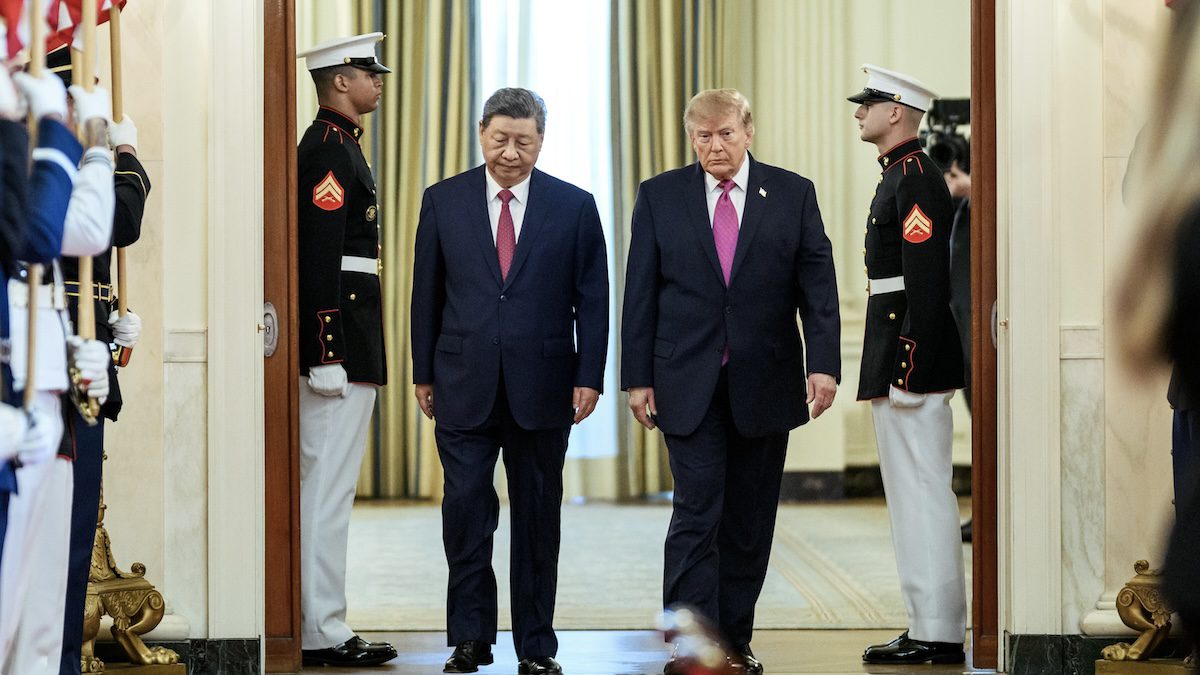
China’s President Xi Jinping concluded his three-day state visit to the US on Friday, September 25, with hopes of enhanced cooperation and partnership between the world’s two largest economies.
Xi arrived in the US on Wednesday and received a large-scale welcome from President Donald Trump. Though this was their third in-person meeting it was Xi’s first state visit to the US in over a decade.
On Thursday, the leaders had a long in-person conversation in the White House and finished the day with a state dinner with 130 guests, including tech executives. Though the US is yet to release its version of the official proceedings, reports indicate they discussed a range of outstanding issues such as the dispute over trade and tariffs, cooperation in Artificial Intelligence, the issue of Taiwan, and the US-Israeli war on Iran.
During the meeting with Trump, Xi called for strategic stability in the China-US relationship which will benefit both countries and the people around the world, Xinhuareported.
“China and the US should be partners, not rivals,” Xi said.
Xi’s statement comes at a time when the two countries are negotiating a longer trade deal after briefly facing each other in a tariff war last year. Both countries agreed to extend their temporary trade truce which halted the tariff war till January to give their negotiators more time.
The so-called Busan Trade Truce was set to expire in November this year.
Xi hoped that “both sides would stay committed to the principles of mutual benefit and win-win cooperation and promote the sustained, stable and sound development of China-US economic and trade relations.”
Technology and AI
Successive administrations in the US have characterized China’s advancements in technology and other economic sectors as a threat to American interests and have tried to curb them by restricting its access to technology.
In his attempt to address such apprehensions, Xi proposed that “both sides work towards a relationship featuring cooperation as the mainstay, moderate competition, manageable differences, and the promise of peace.”
Talking about the competition in the development of Artificial Intelligence (AI), Xi offered increased coordination and cooperation between the countries as a way of mutual benefit.
While emphasizing that “two sides should maintain human control over AI technologies, uphold people-centered approach and the principle of using AI for good” he proposed greater exchange of information to “prevent any misuse and abuse of AI.”
Xi also expressed hope that Chinese companies “are treated fairly in the US” while inviting more US companies to invest in China. “Working together, we can lengthen the list of cooperation and shorten the list of issues” he underlined.
The US has sanctioned or put a large number of Chinese companies, including its AI firms on various watch lists in recent years, after accusing them of working with the Chinese armed forces or being involved in the so-called technology theft.
Notably, however, major US tech and finance executives such as Jensen Huang of Nvidia, Mark Zuckerberg of Meta, Eric Yuan of Zoom, Kelly Ortberg of Boeing, Larry Fink of Blackrock, Sam Altman of OpenAI, Satya Nadella of Microsoft, Sundar Pichai of Google, Jeff Bezos of Amazon, and Elon Musk of SpaceX and Tesla, were present at the state dinner for Xi’s visit hosted at the White House on Thursday, September 24, though no details of cooperation between US and Chinese tech firms have emerged.
Taiwan
Reiterating China’s resolve to “safeguard national reunification and territorial integrity,” Xi expressed hope that the US will “adhere to the correct position on opposing ‘Taiwan independence’ and handle the Taiwan question with caution.”
China has repeatedly accused the US of promoting the separatist cause in Taiwan, despite officially adhering to “one China policy.” The US under Trump has sold or agreed to sell billions of dollars’ worth of weapons to Taiwan in complete disregard of China’s objections.
China has also accused the US and its allies in the region of promoting an arms race by deploying advanced weapon systems close to its borders.
Xi said if the US follows the correct position on Taiwan it “will enable both the countries to lay a solid foundation for their strategic cooperation and the development of their bilateral relationship.”
US-Israeli war on Iran
China has refused to intervene or get involved in the US-Israeli war on Iran, despite Trump’s repeated calls for them to do so. China has maintained the war was unnecessary and repeatedly warned against its prolongation. It has supported the interim peace deal signed in June under international mediation.
Xi reiterated this position during his visit to the US, expressing hope that both Iran and the US would soon return to the Memorandum of Understanding (MoU) and end the war.
Xi claimed that “China-US cooperation may not solve every problem in the world, but without it, it would be hard to solve many of the world’s problems” and proposed more dialogue and “mechanisms of crisis communication and prevention” between their armed forces.
Poland is offering to pay $15,000 a year for every US soldier stationed on its territory and cover infrastructure costs as Warsaw and Washington move closer to agreeing on establishing a permanent American military base.

 Login


 (@jacksonhinkle)