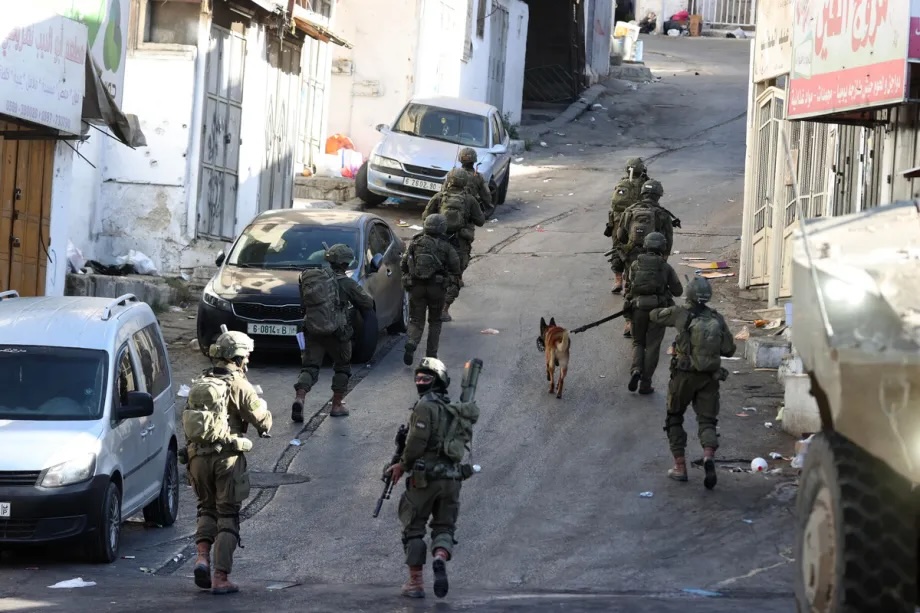
Israeli soldiers invaded communities across the West Bank on Wednesday, abducting at least 22 Palestinians, including 3 children and 2 employees of the Islamic Association for Orphan Care. Soldiers also broke into homes, assaulted residents, & fired gas bombs
AI agents don’t go rogue. That’s something only humans do. Nevertheless, a New York Times article – representative of much news coverage of AI – described an OpenAI hacking as “A.I. bots going rogue and independently spearheading a cyberattack.” Name-brand artificial intelligence agents have been on a hacking spree in 2026. OpenAI’s software agents hacked […]
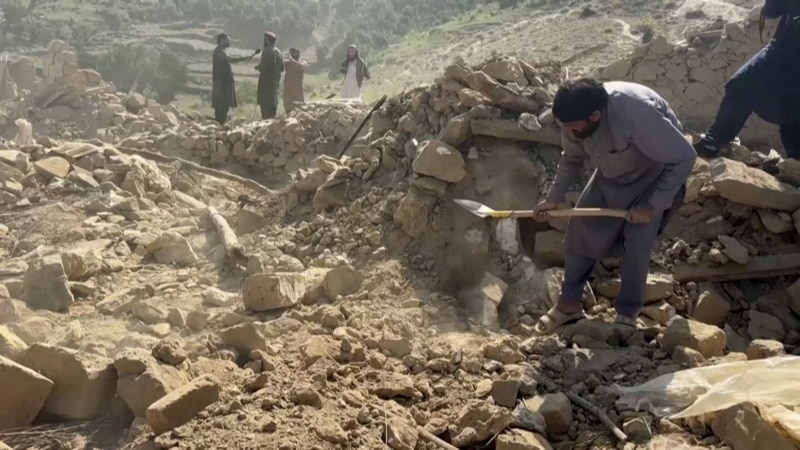
Pakistani air strikes hit targets in Afghanistan's Kunar and Helmand provinces overnight on October 1. Pakistani authorities said they were targeting militants operating near the border, but Afghan witnesses said civilians were among the dead, including children.
A leaked letter signed by 2 former prime ministers, former heads of all Israeli security services, former judges, & Nobel laureate demanded Israel stop extreme violence and ideology of ethnic cleansing
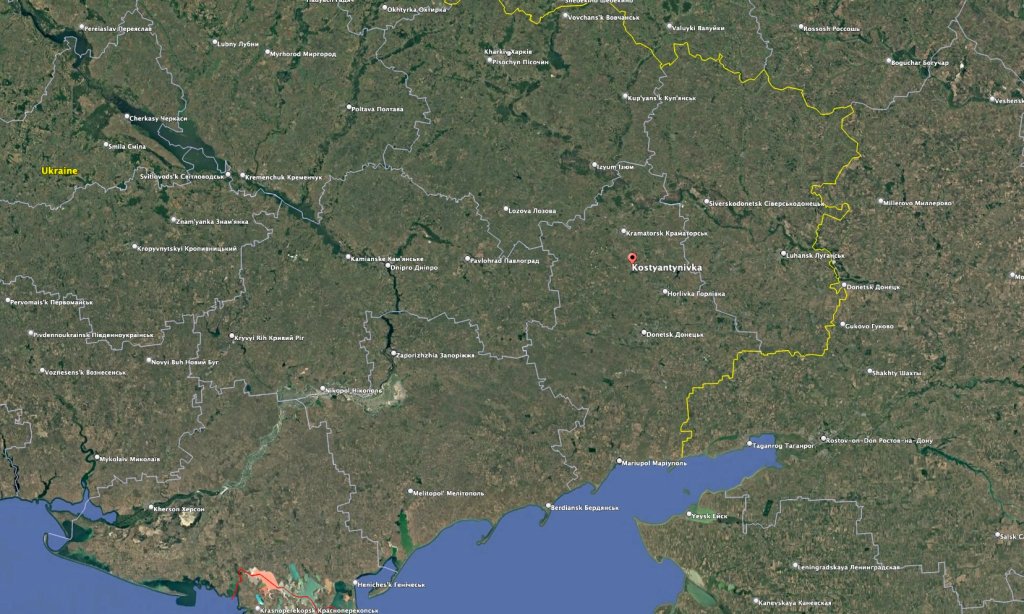
Taking a break from fighting Russians in the Kostiantynivka sector of the eastern Donetsk region, the commander of a Ukrainian uncrewed ground vehicle (UGV) unit spoke with us about innovations in the use of these systems. One was the first deployment of a UGV specifically designed for amphibious operations to deliver supplies to frontline troops in areas impeded by water obstacles. Large areas of the front line are bisected by rivers and wetlands, and the country has many other small waterways and marsh areas. As we have frequently reported, the use of UGVs by both Ukraine and Russia has exploded as the ubiquity of aerial attack drones makes it far too dangerous for human battlefield movements.
In an exclusive interview with TWZ, the commander of the 93rd Separate Mechanized Brigade’s “Alter Ego” UGV unit, who goes by the call sign “Electric,” offered us unique insights into the challenges of developing amphibious UGVs and how they were deployed.
In the first of two parts, Electric talks about why Alter Ego developed amphibious UGVs – including modifying a Triton variant for this – and how the unit made them work. The second part features his insights into using heavy ‘bomber drones’ to drop UGVs behind enemy lines for kamikaze raids. In addition, a representative of Brave1, Ukraine’s weapons technology accelerator, spoke about developing these systems at scale.
Some of the questions and answers have been slightly edited for clarity.
Q: How did the need for amphibious UGVs for logistics operations first come up?
A: We had this idea for a long time, but recently one of the units of the Armed Forces asked for our help to solve this problem, so that the UGV could overcome water obstacles.
There was a crucial need for this kind of means at certain parts of the front, but the units that are located there didn’t have the capacity by themselves to solve this task. So our battalion was asked to solve this problem because we are one of the most experienced units in terms of UGVs.
A first-ever logistics mission on an amphibious UGV: the robot covered 40 kilometers across land and water.
Operators of the "Alter Ego" unit (93rd Brigade) deployed the robotic system across mixed terrain. Facing water obstacles, the UGV seamlessly switched to swimming mode to… pic.twitter.com/rH8waq04a4
Q: How long did it take to design and test the amphibious UGV, and what went into that process?
A: The whole process from development to battle deployment took less than three months.
Q: What did you have to do to make this work?
A: First of all, we looked at amphibious solutions that were on the market, not only in Ukraine, but in the world, and we took two separate approaches. One was taking one of the main UGVs that our unit is using on the ground, and we made it amphibious. And the other approach was that we took one of the solutions that was on the market that already had amphibious capabilities, and we solved several disadvantages that it had. And at the moment, we are using both.
Q: What did you have to do to make the UGV amphibious, and then what were some of the obstacles that had to be overcome to get this operational?
A: First of all, we have to explain that there are different solutions on the market that kind of work on the testing ground — like they can swim, they can drive on the ground, and in the vision of the manufacturer, they are working. But the fact is that these solutions are not ready for the reality on the front line, which is often very different from what is on the testing ground.
And the second point is that the unit has its own workshops where people work near the front line, and the experts, the engineers that work there, they have a very high level of competence to evaluate different solutions and select the one that has potential. And that’s what’s completely different between this unit and everyone else, like manufacturers and others who are working on these solutions, because they don’t understand what’s needed on the battlefield.
The Alter Ego unit’s uncrewed amphibious ground vehicle (UGV). (Brave1)
Q: So what did you have to change to make it work?
A: Regarding the amphibious one, basically the unit changed almost everything that that UGV had, starting from electronics, the software, the waterproofing, the communications – we basically changed everything. Regarding the one that we already used on the ground, we basically tried to retain what was allowing it to be an effective UGV on the ground, and we added waterproofing and specific mechanics, so that it can work in the water environment.
Q: You mentioned communications. What kind of communications did you add?
A: The communication means that was installed on the UGV by the manufacturer was not sufficient at all. Basically, it didn’t have enough quality for the battlefield situation. It was not working. But we already have our own communications that we were working on, and we have a lot of experience because we have been working for a long time in this UGV area. So we basically helped to install a sufficient level of communications on this UGV.
Q: So how does the amphibious UGV communicate with the controller? Does it use Starlink or some other satellite communications system for navigation?
A: This is satellite navigation, but not only. Satellite navigation is a part of this communication system.
Q: What are the other parts?
A: It’s better not to talk in detail about the other part of the communication system.
Triton amphibious UGV communications and camera systems. (Brave1)
Q: There were probably a lot of different missions that could have been used for this first amphibious UGV logistics delivery. Why was this particular mission chosen?
A: The Alter Ego unit has so much experience in terms of UGVs, and not just experience of using UGVs, but the experience of being the first in the world. We had one of the first evacuation missions, we had one of the first strike missions using UGVs, the paratrooper UGV, and now the amphibious UGV. So basically, we have the systems to make it work for the first time when nobody knows how to conduct this mission.
Q: No, I mean why did this particular mission get chosen to be the first one?
A: There are certain places on the front line where we have water obstacles that prevent logistics from being done by UGV. At the moment, UGVs are carrying hundreds of tons of logistics, probably the most compared to any other means on the front line, but before this, these water obstacles would prevent UGVs from providing logistics for those parts of the front, and that need can’t be fully satisfied by UAVs or other means. That’s why we did this mission with the amphibious UGV, and now our task here is to scale this technology and provide this logistics system for other similar parts of the front where there are water obstacles.
Kostiantynivka, Ukraine. (Google Earth)
Q: Tell me about where and when this mission took place and what it was like to watch it unfold.
A: So unfortunately, we can’t provide information about when and where this operation took place. But regarding how it went and what we felt, this was another big challenge, because this is something that wasn’t done before, and nobody thought this is real. So this was quite difficult, and to tell the truth, the mission didn’t succeed on the first try, actually, and it required a lot of effort in terms of planning, preparing, engineering, and basically it required 100% effort from everyone involved in that mission.
Q: How many times did it fail before, and what went wrong?
A: We had one failed attempt. The reason for failure was a certain technical problem. After that, we analyzed what went wrong, and we worked on solving those issues. Basically, it’s something that nobody had tried to do, it’s kind of hard to know what can go wrong before you actually try it. So the best way to find a solution like that is to try and then iterate on that attempt and make it better and better and better.
Also, I would like to add that although this was the first successful mission regarding an amphibious UGV, it’s not that there was no work on that before that. We were actively talking to and collecting the experience of everyone who was working on these kinds of missions before, and that was also a reason why this mission succeeded.
Q: How far did the amphibious UGV go for this mission?
A: So the UGV went 40 kilometers one way, and then it returned. So probably around 70 kilometers in total, and it carried food and other supplies.
Q: Did this UGV come under Russian fire on this mission?
A: Yes, and it survived.
Q: How does the UGV switch from water to land operations?
A: So the UGV has two separate control systems, one for water and one for land, and basically it switches to the one that is required at the moment. That’s how it can operate in both environments.
The Alter Ego unit’s uncrewed amphibious ground vehicle (UGV). (Brave1)
Q: Is that autonomous, or is that something that the controller at the base has to do as they watch the UGV on its mission?
A: At the moment, the operator fully controls the UGV manually. And basically, before, the operators of UGVs only knew how to move them on land, but now they also had to learn how to move them in the water. So not only was the technology itself developed, but we also had to prepare the operator and come up with tactics for this UGV.
Q: Did you use AI on this mission in any way, and if so, how?
A: We didn’t use AI.
Q: Have there been other missions using amphibious UGVs?
A: Yes.
Q: Can you say how many and what was delivered?
A: No.
Q: Is this designed only for logistics missions, or will it be used in the future for strike missions, either as a one-way attack system or as a platform for machine guns or other weapons?
A: We can use it in different ways in the future.
Q: Mud season is fast approaching, when much maneuvering becomes impossible or severely degraded because of how difficult it is to move in the thick, oozing slop. Will your amphibious UGVs work in the mud?
A: I think it can operate in the mud in the same way it operates in the water.
In the next segment of our interview, Electric talks about using bomber drones to deliver UGVs behind the lines, and a Brave1 representative talks about how the organization is working to develop these systems at scale for wider use.
A food package carries no bioengineered disclosure. Does that mean no genetic engineering went into the food?
No. USDA’s bioengineered food disclosure standard leaves entire categories of genetically engineered foods and ingredients outside mandatory disclosure.
Easing restrictions on natural substances with credible histories of safe use makes sense. Yet natural products face persistent calls for tighter regulation, alongside efforts to suppress truthful information about their benefits.
Meanwhile, novel technologies that fundamentally alter our food are riding a wave of deregulation—even as their implications demand rigorous scrutiny and full transparency.
These priorities are backwards.
A Narrow Definition, Wide Exclusions
Under the current rule, foods generally require disclosure when: 1) they contain genetic material modified through laboratory recombinant-DNA techniques, 2) the modification could not otherwise arise through conventional breeding or nature, and 3) the modified material is detectable.
There are a host of exclusions:
Restaurants and food service: meals can contain engineered ingredients without this disclosure.
Very small manufacturers: businesses with annual receipts below $2.5 million are exempt.
Accidental presence: up to 5% of each ingredient may be bioengineered if its presence is “inadvertent” or technically unavoidable.
Animal feed: meat, milk, and eggs do not require disclosure solely because animals ate engineered feed.
Refined ingredients: oils, sugars, and other ingredients can avoid disclosure when modified genetic material is undetectable.
Processing aids: qualifying incidental additives present at insignificant levels with no final technical or functional effect are excluded.
Certain meat, poultry, and egg products generally fall outside coverage when those ingredients predominate, including after water, broth, or stock.
Many alcoholic beverages: products subject to federal alcohol labeling law fall outside this standard.
Nearly A Quarter of Your Chips
Consider a hypothetical bag of corn chips containing 80% cornmeal, 19% refined soybean oil, and 1% salt.
If 5% of the cornmeal is inadvertently mixed-in bioengineered corn, that represents 4% of the chips. Add oil entirely from engineered soybeans that meets non-detectability requirements: another 19% originates from GE crops.
That is 23% of the product’s weight originating from engineered crops, quite legally without a bioengineered disclosure.
This can also allow proteins made using genetically engineered yeast or bacteria (through a process called “precision fermentation”) to avoid disclosure, depending on what remains in the finished ingredient.
A CRISPR-produced food can escape disclosure if its genetic modification could otherwise be achieved through conventional breeding or found in nature.
But who decides if a modification could arise through conventional breeding or nature?
Essentially it is the food company that makes the decision…
Modern history has consistently taught us that we cannot trust our Federal Government in the U.S. to look out for the interests of consumers, and that includes the USDA and the FDA. Both of these agencies serve Wall Street, and derive much of their revenue from the very businesses they are supposed to be regulating in Big Pharma and Big Ag.
For example, the entire corn crop in the U.S. is contaminated, even if that corn is certified organic by USDA organic standards. There may be some exceptions, but we (Healthy Traditions) have never found any corn in the U.S. that has tested clean for GMO DNA, and we have been testing for 12 years now.
The only corn we have tested that has no trace amounts of GMO DNA and no traces of the cancer-causing herbicide glyphosate, has been from traditional farms in Mexico, where planting GMO corn is illegal.
Therefore, we believe we have some of the highest quality tortilla corn chips in the U.S., and we fry them in coconut oil, not toxic polyunsaturated oils derived from GMO crops like corn and soybeans. We also do not package them in plastic, but special bags that are compostable with no dangerous chemicals.
There may not be a finer tortilla corn chip sold in the U.S.!
DISCLAIMER: Brian Shilhavy is the Editor of Health Impact News, and the founder and CEO of Healthy Traditions. Everything published on the Health Impact News network is available to the public free of charge, with a Creative Commons license offered to all who wish to republish Brian’s articles, with attribution, as he earns his income from Healthy Traditions.
Healthy Traditions, originally Tropical Traditions, has served customers in the U.S. for over 24 years.
October will see almost all global ocean carriers make a tentative return to Suez transits on Asia-Europe sailings, after revised pro forma shipping schedules show the Premier Alliance is set to send one of its vessels on the route through the Red Sea and Egyptian waterway.
Dig a trench for a canal that will run 107 kilometres (66 miles) across northern France and you expect scraps: a stretch of road, perhaps, or a lone farmstead. At Sermaize, in the Hauts-de-France region, archaeologists from France’s National Institute for Preventive Archaeological Research (Inrap) found something much rarer. It is a complete workshop, with […]
A Casa das Beiras de Toronto encerrou, no passado sábado, a Semana Cultural Beirã 2026, que regressou este ano após uma interrupção de sete anos. A iniciativa celebrou a cultura e as tradições das Beiras, através da música, do folclore e da gastronomia.
Ofado voltou a fazer parte da programação, desta vez integrado no Festival Internacional de Fado, que trouxe a Toronto fadistas convidados de Portugal e um artista ligado à comunidade portuguesa no Canadá.
A Casa das Beiras recebeu João Brito, Francisco Moreira, Cláudia Leal e José Geadas, numa sessão marcada pela música e pela celebração da cultura portuguesa. Para Bernardino Nascimento, presidente da Casa das Beiras, a adesão do público foi motivo de orgulho e demonstra a importância de continuar a promover estas iniciativas.
“É um orgulho ver esta casa cheia e fazer parte do Festival Internacional de Fado. É uma forma de manter vivas as nossas tradições e a ligação às nossas raízes.”
A importância da colaboração entre as organizações portuguesas foi igualmente destacada por José Eustáquio, presidente da ACAPO, uma das entidades envolvidas na organização do Festival Internacional de Fado. “O fado representa muito para os portugueses e merece o apoio das nossas organizações. É importante trabalharmos em conjunto para manter esta cultura viva.”
Entre os convidados estiveram também José Manuel Pereira, presidente da Junta de Freguesia de Lardosa, e Miguel Pipa, vereador da Câmara Municipal de Viseu, que viajaram de Portugal para participar nas celebrações.
Para José Manuel Pereira, a visita permitiu conhecer de perto a força da presença portuguesa em Toronto “é a primeira vez em Toronto e foi uma grande surpresa encontrar tantos portugueses reunidos. É um orgulho levar este sentimento de volta para Portugal. A Casa das Beiras faz uma importante ligação entre Viseu e Toronto e ajuda a manter vivas as nossas memórias e tradições.”
Miguel Pipa destacou igualmente o significado de encontrar, tão longe de Portugal, uma comunidade que continua próxima da sua terra “é muito especial ver este pedaço de Portugal tão longe da nossa terra. Mesmo fora de Portugal, os portugueses continuam ligados às suas raízes.”
Com a sala cheia, as luzes apagaram-se e as vozes dos fadistas, acompanhadas pela guitarra portuguesa, tomaram conta do espaço. Para os artistas vindos de Portugal, atuar em Toronto foi vivido com felicidade e orgulho, numa oportunidade de representar o país e partilhar a sua cultura.
João Brito, coorganizador do Festival Internacional de Fado, mostrou-se satisfeito com a adesão “estou felicíssimo com a casa cheia. Agora é cantar e presentear este público maravilhoso com um grande espetáculo.” Sobre a participação dos fadistas vindos de Portugal acrescentou “quisemos dar prioridade aos fadistas que vieram de Portugal e mostrar o seu trabalho à nossa comunidade.”
Os fadistas deram voz a diferentes interpretações, perante um público atento e próximo, num ambiente que voltou a demonstrar a força do fado junto dos portugueses no estrangeiro.
O Festival Internacional de Fado prossegue no sábado, 3 de outubro, no Clube Português de Mississauga, com Lenita Gentil, Natalino de Jesus e Suzy Silva.
No dia 10 de outubro, será a vez da Casa do Alentejo receber Maura Airez, José Geadas, Francisco Moreira e Guida Figueira.
A programação continua, assim, a levar o fado a diferentes espaços da comunidade portuguesa na região de Toronto e arredores, juntando artistas de Portugal e do Canadá e celebrando uma das expressões mais marcantes da cultura portuguesa.
Are top Democrats actually “shifting” on Israel, or is the PR simply getting more sophisticated?
After the midterms wrap up and the race for the Democratic 2028 nominition for president kicks off in earnest, this will be a central question those concerned with the US role in the genocide in Gaza must grapple with clearly, honestly, and with—it turns out—a high degree of skepticism and media literacy. That’s because the forces committed to keeping the weapons flowing to Israel quickly adjusted their tactics to meet the mood of the public, and the mood of Democrats in particular.
Last year for TRNN, I detailed the three main ways AIPAC Democrats will seek to look critical of Israel while assuring that the pro-Israel status quo remains fundamentally unchanged. Since I wrote that breakdown, a fourth talking point—and one that seems inevitable in retrospect—has emerged as a favorite of liberals who want to seem “tough on Israel,” but don’t want to upset the Israel Lobby. This line, which I documented last April, commits to “ending US aid to Israel” which, despite seeming like a meaningful break or a move left, is a policy that first emerged from Israeli Prime Minister Benjamin Netanyahu and the late US Sen. Lindsey Graham. And, as I noted, it was planned out by far-right think tanks Foundation for Defence of Democracies and Heritage Foundation—specifically designed to blunt the primary argument against support for Israel. Last January, Netanyahu told the Economist that he wants to “taper off” formal US military funding. Pro-Israel lobbying organization J-Street then took this right-wing idea and proceeded to sell the “cut off aid to Israel” line to liberals as something they could take to their constituents as evidence that they are in line with Democratic voters’ overwhelming dislike of Israel, while not changing the status quo. Indeed, as IMEU documented in their critique of the plan, the effort would actually further entrench US-Israeli military alignment.
The US can “cut off aid to Israel” and still very much continue to arm them. The only thing that has changed in this scenario is that Israel pays for it rather than the US government, but from the perspective of those being starved and maimed in Gaza this distinction matters about as much as the color of the bombs.
Much like the Biden White House’s slippery and misleading rebranding of “ceasefire,” the “ending aid to Israel” line relies on popular misunderstanding of what the load-bearing word means, in this instance, “aid.” In colloquial or common usage, it’s a word for general support—military, diplomatic, and financial. In reality, it simply means subsidizing—e.g. paying for—Israel’s weapons. The US can “cut off aid to Israel” and still very much continue to arm them. The only thing that has changed in this scenario is that Israel pays for it rather than the US government, but from the perspective of those being starved and maimed in Gaza this distinction matters about as much as the color of the bombs.
As predicted, this “cut off aid” statement is fast becoming the go-to line for Democrats seeking to assure their increasingly anti-Israel base without upsetting the Israel lobby or the Democratic Senate and House leadership they are aligned with. Recently, after receiving criticism for inviting in AIPAC-linked consultants to steer his campaign, Maine Democratic Senate candidate Troy Jackson released a statement calling Gaza a “genocide” and pledging to “stop funding of Israel’s military”:
Troy Jackson’s public statement yesterday expressing his commitment to end the genocide in Gaza and stop funding Israel’s military was driven by a host of supporter letters sent directly to the campaign on those issues. pic.twitter.com/FMrMBPcU2W
This is a perfect example of a J-Street-curated statement that, to the untrained eye, seems critical of Israel and committed to justice for Palestine, but actually says little of substance. There’s a lot of window dressing and gesturing, but ultimately Jackson’s policy is consistent with that of Benjamin Netanyahu’s.
Rep. Ro Khanna, who very much appears to be running for president in 2028 and making Gaza central to his pitch for progressives, is similarly muddled in his stance. Despite supporting partial and temporary embargos here and there, Khanna told Hasan Piker in July that a full arms embargo on Israel would be “probably too far.” He has instead focused on the “cutting off aid” line that emerged out of the Israeli security apparatus and found its way into “progressive” circles via J Street.
Democratic nominee for Senate in Texas, James Talarico, likewise gave a similarly underwhelming answer when asked about his position a few weeks later. Asked about Gaza last August on The Breakfast Club Show, he refused to label it a genocide, instead deferring to the “international criminal court” (and ignoring the overwhelming consensus of human rights groups and genocide scholars). Then he promised to “condition military aid” followed by two minutes of Obama-esque vapid empathy-speak.
That isn’t to say all Democrats are simply rebranding the status quo. It seems, despite his campaigning with central defender of the genocide Kamala Harris, Abdul El-Sayed is expressing a firm commitment to an arms embargo on Israel. Obviously, this is also the case for DSA-endorsed candidates who are not splitting hairs or letting J-Street manage their Israel policy. But these firm commitments are the exceptions. Increasingly, what we’re seeing is a squishy mix of empathy-speak, vague gesturing, highly conditional pledges to “condition aid” and other such abstractions with little in the way of firm commitments.
The only actions Democrats have, at scale, taken to “break from Israel” is recent spattering of Congressional votes over the past year designed to signal disapproval but change nothing of substance. These bills vary between genuine, if partial, arms embargo and the aforementioned “end aid” framework endorsed by Netyanhau and Graham. It’s complicated, but worth dissecting, because it can help illustrate how much energy and effort is going into these pseudo “breaks,” namely those being pushed by Israel lobbying group J-Street. One House bill from last July sought to “end aid” to Israel. The bill had some merit as it isolated Israel as such. But, like all of these bills, it was effectively a “messaging vote” because it had zero chance of passing, and because it aligned with the Netyanhau-approved “ending aid” framework. Almost half of Democrats in Congress supported it, including long-time reliable Israel ally Nancy Pelosi.
A few months later, we saw the slightly more substantive, but ultimately performative, partial arms embargo bills in both the House and Senate. Though different, they both involved preventing further sales of certain weapons to Israel given certain conditions. In the House, 104 Democrats backed the measure, and in the Senate, all but seven Democrats, including major Israel supporters, backed the measure.
These votes, in effect if not intent, end up serving as little more than anti-Israel thingamajigs that liberal zionists in Congress can point to when confronted on the issue as evidence that they are not a rubber stamp for Israeli violence.
But these bills, as everyone involved in their drafting, lobbying, and counter-lobbying know, were totally DOA. They have zero chance of actually passing, much less getting a President Trump veto-proof majority. Thus—despite many activists’ best intentions—they functionally serve as little more than a mechanism for reputation laundering for liberals who’ve backed Israel’s genocide and its broader regional violence, but who can read a poll as well as anyone else. These votes, in effect if not intent, end up serving as little more than anti-Israel thingamajigs that liberal zionists in Congress can point to when confronted on the issue as evidence that they are not a rubber stamp for Israeli violence. Indeed, suspiciously enough, the Senate version last April garnered the support of staunch Israel advocate and AIPAC-money sponge Cory Booker, who grinningly met with Israeli defensive minister Yoav Gallant after Gallant was indicted by the ICC for crimes against humanity. Does anyone think for a second Booker would have backed a bill to prevent weapons sales to Israel if it had a remote chance of passing? Does anyone think his vote in support is evidence he’s “breaking from Israel”? Or is it evidence of something a bit more subtle, and sinister, which is Democrats realize they need to appear as if they’re breaking from Israel without the messiness of actually doing so?
But if the above bills are largely superficial and performative, why would Hakeem Jeffries write a letter in opposition, one may ask? For the same reason Jeffries agreed to let the vote happen and not discipline those supporting it: it’s all part of an intramural scrimmage between zionist allies who disagree on how best to “rein in” Israel. On substance, nothing fundemental is permitted to change, and the idea of ending military support was never on the table. Jeffires and AIPAC both understand that this is a 80/20 issue against them and are allowing their members more latitude in rhetorical and ideological distance, so long as the weapons flow remains unabated which it, of course, securely remains.
One of the more difficult tasks for an activist of good faith is being able to tell the difference between genuine, if incremental, progress, and counterinsurgency—that which appears like incremental progress but is, in fact, a move to the right with better PR.
In his urging of support for the bill earlier this year, Rep. Greg Casar, chair of the Congressional Progressive Caucus, said that “American people are crying out for an end to US tax dollars subsidizing Israel’s military.” But American people are not so much crying out for this, and certainty Palestinians aren’t, as they are an end to the genocide and occupation. It doesn’t matter if this genocide is “subsidized” by “US tax dollars” or not—the source of military funding is mostly arbitrary and inconsequential. What activists are demanding, what Democratic voters are demanding, is not a “message” bill or limited to “defensive weapons” with 18 qualifiers and carveouts, but support for a total arms embargo in principle and as a long term strategy of ending US support for the dispossession and killing of Palestinians.
One of the more difficult tasks for an activist of good faith is being able to tell the difference between genuine, if incremental, progress, and counterinsurgency—that which appears like incremental progress but is, in fact, a move to the right with better PR. Sorting out the difference in the coming months is going to be essential to make sure we don’t just elect a whole new crop of liberals who, despite more convincing crocodile tears and more sophisticated handwringing, just go back to shipping weapons systems and scrambling the sixth fleet to defend Israel’s next “defensive war.”
As voters concerned with the full-scale destruction of Gaza analyze the statements of politicians seeking to appear “good on Gaza” in the coming months, there are two central commitments they must attempt to pin down: (1) support for a full arms embargo without any conditional statements or tortured caveats and (2) support for the Boycott Divestment and Sanction movement, which seeks to economically isolate Israel. These are the positions that would logically follow from a belief that the country in question is committing genocide—as top progressives likely seeking the White House, like Alexandria Ocasio-Cortez and Ro Khanna—said they believe. These measures—not nickel and diming “offensive” versus “defensive,” not singling out “Netanyahu,” not making vague promises to “condition aid” if Israel meets some unknown, arbitrary benchmark of humane mass killing—are the only thing that will move the needle and compel Israel to temper its exterminationist policies and plans. Only one member of Congress, Rep. Rashida Tlaib, unequivocally supports BDS, but certainly far more are capable of committing to a full arms embargo. If they cannot do even this bare minimum, and do so clearly, then the only logical conclusion one can reach is they are simply saying nice-sounding words, and checking the rhetorical box of “genocide,” so they can get elected then go back to enforcing and maintaining the genocidal status quo.
Amidst all the sentimental populist fluff, a political theory of sorts could be discerned in Andy Burnham's conference speech, says Professor James Alexander. Let's call him Our Andy-with-his-10-year-Plandy.
Europeans have lead the field on access to abortion, but a conservative comeback has caused a lot of those advances to regress.
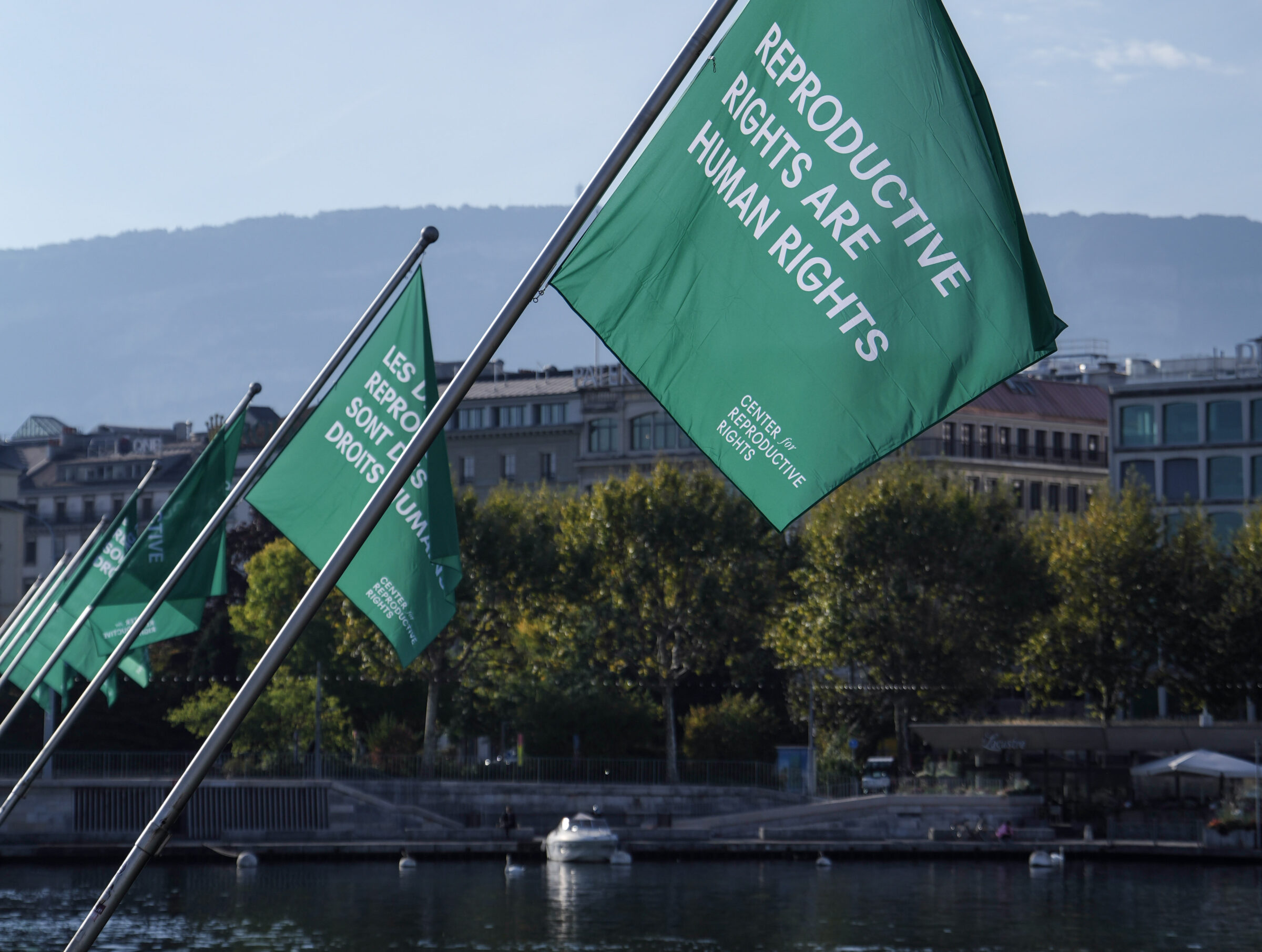
Research published earlier this week (28 September) by the Centre for Reproductive Rights (CRR) found that despite an upward trend of legalisation, some countries are still seeking to enforce barriers and rolling back entitlement to abortion care.
This resistance to change is also evidenced in the lack of member state participation in safe abortion funds available since the the ‘My Voice, My Choice’ European citizens’ initiative for safe and accessible abortion was passed into law last February.
EU funds could since then be used to create regional programmes for safe abortion care for anyone who can’t access it in their own country, as well as financing travel to a country where abortion is available.
However, no funds have yet been used.
This article continues, but the full version is available only to EUobserver.com subscribers. Visit account.euobserver.com/membership
A heavy rainstorm has been sweeping across the island of Crete on Thursday with tons of water flooding homes, businesses and agricultural land, damaging roads and bridges, causing the life of one person and putting at risk the lives of thousands. Most affected are the regions of Heraklion, Lasithi and Rethymnon. Thye bad weather is […]
A Levante questa sera, giovedì 1 ottobre 2026, alle 19, Margherita Furlan dialoga con Franco Fracassi, giornalista d’inchiesta e documentarista, sul volo Flydubai Dubai-Tel Aviv dirottato verso l’Arabia Saudita. Netanyahu ha parlato di «un 11 settembre evitato». Ci chiediamo chi scrive il racconto di una crisi prima ancora che se ne conosca il movente, e a chi giova a cinque settimane dalle elezioni statunitensi del 3 novembre. Il volo FZ1073: i fatti accertati e quelli ancora da verificare Dall’11 settembre al 7 ottobre: lo schema che ritorna L’Arabia Saudita stretta fra Houthi, Washington e Tel Aviv Oman, Emirati e Accordi di Abramo: chi perde e chi guadagna Verso il 3 novembre: pressioni su Trump e scenari di destabilizzazione Cosa significa per l’Italia LIBRI DELL’OSPITE 7 ottobre. L’inganno, 2025 Altri titoli: https://francofracassi.com/libri SOSTIENI CASA DEL SOLE TV Casa del Sole TV è un progetto di giornalismo indipendente autofinanziato. Per donazioni: IBAN: IT63P0326822300052392596590 Intestato a: La Casa del Sole Edizioni Causale: Donazione Casa del Sole TV Membership YouTube: https://www.youtube.com/@CasadelSoleT… Analista Multipolare €5/mese Inviato della Verità €15/mese Architetto del Futuro €25/mese I LIBRI DI MARGHERITA FURLAN BRICS Scacco Matto (disponibile in italiano, inglese, russo) SEGUI CASA DEL SOLE TV YouTube: @CasadelSoleTVChannel #Levante#CasadelSoleTV#MargheritaFurlan#Geopolitica#Multipolarismo#FrancoFracassi#7ottobre#Flydubai#ArabiaSaudita#Israele#MedioOriente
Israel’s pursuit of security increasingly rests on a destabilizing proposition: that its neighbours become less threatening when their capacity to exercise sovereignty is diminished. Since the Hamas-led attacks of October 7, 2023, this approach has become particularly visible across several distinct arenas. Military operations, territorial incursions and restrictions on political and economic autonomy suggest a conception of security dependent on keeping others vulnerable. The consequences extend beyond individual confrontations. When states cannot control their territory, rebuild institutions or protect their populations, the regional conditions necessary for durable security begin to erode.
The argument is not that Israel created every conflict in the Middle East. Authoritarian rule, sectarian violence, armed groups and competing regional interventions have all contributed to the region’s instability.
The question is whether the means Israel uses to pursue its own security deepen that instability. Repeatedly weakening neighbouring states and political communities may bring short-term military gains, but it can also erode their ability to contain violence and maintain order, making the region more dangerous—including for Israel itself.
This pattern can be understood as the denial of sovereignty. Sovereignty involves more than diplomatic recognition: it requires institutions capable of governing, providing services and exercising legitimate authority over the use of force. When these capacities are persistently degraded, formal independence becomes increasingly hollow.
The cases differ in their circumstances and severity, but together they reveal a troubling hierarchy: Israeli freedom of military action repeatedly takes precedence over other societies’ ability to govern and secure themselves.
Syria offers a particularly revealing example. Following the collapse of Bashar al-Assad’s regime in December 2024, Israel launched extensive attacks against Syrian military infrastructure and moved into the separation zone established under the 1974 disengagement agreement. Israel justified the destruction of military assets as necessary to prevent advanced weapons from falling into extremist hands. Yet the targets included airfields, air-defence systems and naval facilities—capabilities relevant to the functioning of a state, whatever government eventually controls them.
The longer-term problem is that preventing a hypothetical future threat can obstruct the reconstruction of an already devastated country. Syria needs accountable security institutions capable of controlling territory, containing armed factions and protecting communities. Destroying military capabilities without a credible framework for rebuilding legitimate state authority risks leaving those functions unfulfilled. In July 2025, Israeli strikes on Damascus, including the defence ministry, further demonstrated Israel’s willingness to impose military limits on the new authorities.
Syria’s transitional authorities must themselves answer for abuses and protect minorities; state consolidation cannot justify repression. Nevertheless, externally imposed military vulnerability is no substitute for accountable governance.
A government expected to prevent threats from emerging within its territory must have the capacity to exercise authority there. Undermining that capacity can preserve the fragmentation through which armed groups survive.
Lebanon exposes a related contradiction. Hezbollah’s independent military power has long constrained the Lebanese state’s authority and its ability to determine questions of war and peace. Reducing that parallel authority could, under appropriate political arrangements, strengthen state sovereignty. But Israeli military action does not automatically transfer power from Hezbollah to the Lebanese government. Bombardment, displacement and violations of Lebanese territory can weaken the institutions expected to assume responsibility for national security.
The distinction is crucial: weakening an armed organization and strengthening a state are separate outcomes. In March 2026, UN Secretary-General António Guterres called both for respect for Lebanon’s sovereignty and for stronger support to its armed forces so that they could become the country’s sole military force. That combination identifies what repeated unilateral intervention overlooks: security requires an institutional successor capable of governing after military operations end.
Where that capacity remains inadequate, another cycle becomes possible. Armed groups invoke external attacks to justify retaining their weapons; the state struggles to establish authority; Israel cites the continuing armed presence to justify further intervention. Hezbollah bears responsibility for its own decisions, but Israeli policies can reinforce the conditions sustaining its claim that the Lebanese state cannot protect the population.
The attack on Doha on September 9, 2025 extended this logic into the diplomatic sphere. Qatar was mediating negotiations involving Israel and Hamas when Israel struck Hamas representatives on its territory. The UN High Commissioner for Human Rights condemned the attack as a breach of international law and an assault on mediation. The significance exceeded the violation of Qatari sovereignty: even a state facilitating negotiations could find its territory treated as an extension of the battlefield.
Mediation depends on practical assurances that communication with an adversary will remain possible. Targeting interlocutors in a mediating country makes those assurances harder to provide. It raises the costs of hosting negotiations and can undermine channels needed for ceasefires, hostage releases and humanitarian arrangements. Military reach may expand while opportunities for a political settlement contract.
Israel’s recognition of Somaliland in December 2025 raises a different sovereignty question along the region’s Red Sea periphery. Somaliland has maintained separate institutions for decades, and its claim to recognition has its own history. Nevertheless, Israel’s recognition challenged Somalia’s internationally recognized territorial framework. The African Union rejected the move and warned that such recognition could undermine peace and stability.
Recognition is not equivalent to bombardment, and the cases should not be collapsed into a single legal category. Their connection is political: the territorial arrangements on which other governments rely become subject to unilateral decisions shaped by Israeli interests. In an already contested regional environment, such decisions risk adding another dispute to fragile processes of state consolidation.
The confrontation with Iran illustrates the danger of extending preventive military logic to a powerful regional adversary. On February 28, 2026, Guterres condemned the use of force by the United States and Israel against Iran and Iran’s subsequent retaliation across the region. He warned that these actions undermined international peace and security. The escalation demonstrated how efforts to eliminate threats militarily can expose additional countries to attack.
Iran’s support for armed groups and its own military conduct cannot be excluded from this assessment. Nevertheless, degrading an adversary’s capabilities does not necessarily resolve the political incentives driving confrontation. It may instead encourage dispersal, rearmament or greater reliance on asymmetric methods. Tactical destruction can coexist with a more dangerous strategic environment.
The Palestinian case represents the most profound expression of this problem because it concerns both collective self-government and the conditions of human survival. In the West Bank, withholding revenues owed to the Palestinian Authority weakens the institutions expected to administer daily life.
The World Bank documented how the suspension of transfers in 2025 intensified fiscal distress, reduced salary payments and placed pressure on essential services. These measures undermine the practical foundations of Palestinian self-government.
A political authority cannot provide credible governance indefinitely while lacking reliable access to its own revenues. Weakening public administration also weakens its legitimacy, potentially benefiting actors who argue that institutional politics offers no meaningful route to Palestinian rights. The resulting dysfunction can then be invoked as evidence that Palestinians are incapable of governing themselves. Restrictions on capacity thus risk producing the very incapacity used to justify continued control.
In Gaza, the destruction has reached beyond institutional viability. The devastation of housing, healthcare, water systems and livelihoods, compounded by restrictions on humanitarian access, has endangered the material conditions necessary for life. In August 2025, a joint statement by UN agencies confirmed famine in Gaza Governorate and described a crisis involving starvation and preventable deaths. The issue was no longer merely whether Palestinians could build a state, but whether civilians could survive.
Hence, in Gaza, the denial of sovereignty has escalated into a denial of survival. In September 2025, the UN Independent International Commission of Inquiry concluded that Israel had committed genocide against Palestinians in Gaza. Earlier, on November 21, 2024, the International Criminal Court issued an arrest warrant for Benjamin Netanyahu, finding reasonable grounds to believe that he bore criminal responsibility for the war crime of starvation as a method of warfare and the crimes against humanity of murder, persecution and other inhumane acts. These findings expose the devastating human consequences of denying a population access to the essentials of life. The systematic destruction of civilian infrastructure and deprivation of food, water and medical care undermine Palestinians’ ability to survive as a community in their homeland. Viewed through this analysis, the genocide identified by the UN commission represents the most extreme manifestation of denial: a progression from obstructing a people’s capacity to govern themselves to destroying the conditions necessary for their continued existence.
Taken together, these cases suggest a self-reinforcing cycle. Military intervention and institutional weakening can generate insecurity, displacement and political fragmentation. Those conditions create opportunities for armed actors, whose activities then provide further grounds for intervention. This is a causal risk, not an inevitable outcome of every operation. Its importance lies in the contradiction between immediate military advantage and the requirements of lasting security.
Breaking that cycle requires a different measure of success: whether policies leave behind institutions capable of governing, populations able to live securely and diplomatic arrangements that reduce incentives for violence. Protecting Israeli civilians and respecting neighbouring societies’ sovereignty are mutually reinforcing necessities.
A regional order built around one state’s freedom to intervene and everyone else’s enforced vulnerability cannot offer durable peace. By denying others the capacity to govern—and, in Gaza, devastating the conditions necessary to survive—Israel risks perpetuating the insecurity from which it seeks protection.
Ukraine is now using a fence-like device designed to snag and cut the cables of fiberoptic drones, weapons that have confounded militaries throughout the world.
In mid-September, Belarus released 25 prisoners held in politically linked cases after the United States agreed to ease sanctions. Now three US senators are calling on President Donald Trump's administration to pursue a similar approach to free political detainees in Azerbaijan.
A Pulsa Uniformes que recebeu R$ 457 mil vindos de uma Emenda Parlamentar Individual, conhecida como Emenda Pix, do deputado federal candidato à reeleição Mario Frias (PL/SP), tem entre seus sócios o ex-jogador da seleção brasileira de basquete dos anos 1980 Nilo Guimarães. Ele foi secretário de esportes de Mogi da Cruzes, na região metropolitana de São Paulo, por 12 anos (2009-2020).
O cargo foi ocupado por dois mandatos do prefeito Marco Bertaiolli que se elegeu pela primeira vez pelo DEM e depois migrou para o PSD (2009-2016) e seguiu durante a gestão de Marcus Melo do PSDB, de 2017 até 2020. Guimarães também presidiu a Liga Nacional de Basquete em 2020, cujo torneio conta com a presença do Mogi Basquete, time em que Guimarães foi dirigente.
A Pulsa Uniformes é uma confecção sediada no bairro Jardim Camila, em Mogi das Cruzes (SP). A quantia recebida em 26 de maio seria para quimonos, tatames e outros 14 itens para um projeto social de lutas marciais para crianças, mas não há comprovação de que o material foi entregue. Segundo a Controladoria Geral da União, “a execução física do projeto não foi integralmente comprovada”.
A casa cinza, mais à esquerda da imagem, é a sede da Pulsa Uniforme em Mogi das Cruzes e não apresenta placa de identificação
O dinheiro foi pago à Pulsa, à vista, pelo Instituto Conhecer Brasil, de Karina Gama, que recebeu o dinheiro da emenda. Karina Gama é a produtora executiva da cinebiografia de Jair Bolsonaro Dark Horse. Já o deputado Mario Frias foi Ministro da Cultura do governo Jair Bolsonaro e é roteirista do filme. O material esportivo teria como destino o projeto social Lutando pela Vida, em Pirassununga (SP).
A Polícia Federal (PF) e a Controladoria Geral da União (CGU) investigam a real destinação de emendas dos deputados Mario Frias, Marcos Pollon (PL/MS) e Bia Kicis (PL/DF) para as organizações de Karina Gama. O caso está sob a relatoria do ministro Flavio Dino, no STF, uma vez que há deputados federais envolvidos. Pollon e Kicis, por exemplo, sequer poderiam destinar recursos para emendas fora de suas bases eleitorais.
A investigação da PF que tramita no STF apura 10 crimes, entre eles peculato (desvio ou má aplicação de dinheiro público), fraude em licitação, falsificação, advocacia administrativa, lavagem de dinheiro e organização criminosa.
A Pulsa tem foco na venda de uniformes de times de basquete, vôlei, handebol e futsal. Apesar de ter recebido à vista o pagamento pelos uniformes de artes marciais e 120 placas de tatame, a Pulsa informou à CGU em julho deste ano que ainda não havia entregado nenhum material previsto para o projeto Lutando pela Vida e disse que os itens estavam “em fabricação”. Em abril, aponta o relatório, o ICB teria comprado os tatames de outro fornecedor por R$ 58 mil com recursos de outro contrato. O material teria sido entregue ao projeto em Pirassununga, em maio, segundo o instituto de Karina da Gama afirmou à CGU.
“Essa cliente é do Luiz”
Na quinta-feira, 24 de setembro, a reportagem da Agência Pública foi até a sede da Pulsa, que ocupa uma casa de dois andares, em Mogi das Cruzes. No imóvel, pintado de cinza na frente e preto na lateral, não há placas ou qualquer outro sinal mais ostensivo de que uma empresa funciona ali.
Na entrada lateral, há um escritório com um show-room dos produtos da marca. Uma gerente atendeu a reportagem na calçada e informou que somente o sócio-gestor, Luiz Fernando da Silva, que estaria no Rio de Janeiro, poderia falar sobre o contrato com o ICB. “Essa cliente é do Luiz”, disse a funcionária.
Por mensagem no WhatsApp, o sócio-diretor afirmou que os itens foram entregues, mas alegou que não tinha como confirmar se já teria sido uma entrega total ou parcial, pois estava viajando. “Se precisar de algo mais detalhado, eu te peço e te mando. Prezamos pela transparência”, escreveu em uma mensagem de WhatsApp quando também elogiou o trabalho realizado pela CGU.
As mensagens não foram mais respondidas por Silva depois que a reportagem pediu que ele informasse a data da entrega e fornecesse alguma comprovação, como recibos ou fotos. Ele também não informou, ao ser questionado, qual foi o pedido completo do ICB à Pulsa, com as quantidades que deveriam ser fornecidas de cada item.
Nilo Guimarães também foi procurado, mas não respondeu o contato. O espaço segue aberto e será atualizado em caso de manifestação.
O projeto Lutando pela Vida é uma ação de ensino de lutas marciais para 500 crianças cuja vigência começou em 31 de dezembro de 2024 e termina em 28 de agosto de 2027. Dos R$ 1,5 milhão da emenda de Frias foram liberados R$ 1 milhão pelo Ministério dos Esportes para o ICB de Karina Gama, para “Implementação e Desenvolvimento do Projeto Lutando Pela Vida no Estado de São Paulo/SP”, conforme o termo de fomento publicado em 14 de janeiro de 2025.
Até julho crianças estavam sem quimonos
A partir daquele momento, o ICB já poderia iniciar a execução do projeto, mas a CGU constatou que até 12 de junho a emenda não havia sido completamente executada. Até o final de julho, dos R$ 521 mil gastos no projeto administrado pelo ICB a maior despesa foi com a Pulsa: R$ 427 mil.
Ainda assim, o Instagram do projeto Lutando pela Vida exibe vídeos e fotos, publicados em julho, que mostram crianças sem quimono numa academia de lutas. Para a CGU, nem mesmo essas publicações podem ser consideradas como prova conclusiva, uma vez que não são georreferenciadas e foram feitas em um local fechado, o que impede a Controladoria de aferir se são mesmo da academia que recebe o projeto.
Dos recursos pagos pelo ICB, os R$ 94,5 mil restantes foram usados para pagar instrutores, monitores e outros profissionais envolvidos com as aulas de lutas para crianças. Segundo a CGU, as planilhas de frequência das crianças foram preenchidas pela equipe do projeto, mas não têm assinatura dos responsáveis pelos menores, o que não atende às determinações do Ministério dos Esportes para comprovar a frequência em projetos dessa natureza.
Doador de campanha virou professor
Aliado político de Mario Frias, Rudyge Alex Scatolini Boldrini, doou R$ 4 mil para a campanha do ex-ator de Malhação à deputado federal em 2022 e em 2026 foi contratado para o projeto. Boldrini abriu este ano uma MEI para receber o dinheiro e emitiu uma nota fiscal para o ICB em 9 de março, antes mesmo de assinar com o instituto, o que só ocorreu no dia seguinte. Até o momento, ele recebeu R$ 13,7 mil. Uma das monitoras do projeto, aponta a CGU, era recepcionista contratada via CLT pela prefeitura de Pirassununga. A íntegra do relatório de apuração 2007711, que analisa o projeto Lutando pela Vida, citado pelo STF, segue sob segredo de Justiça, segundo informações da CGU enviadas à Pública.
O pagamento de R$ 427 mil da ICB à Pulsa não é o único da empresa de uniformes sob o escrutínio da CGU, conforme se verifica na plataforma e-CGU.Outros dois projetos financiados com emendas parlamentares, o Circuito Suzano de Esportes e Lazer, realizado pela Associação Cultural Quântica, e o Circuito Cultural e de Lazer, realizado pelo Instituto Mogiano de Pesquisa, Educação e Cultura, ambos realizados em Suzano (SP), foram analisados pela CGU entre 2024 e 2025 no âmbito da investigação sobre a constitucionalidade das Emendas Pix.
Em ambos os casos, a Pulsa forneceu material esportivo, recebendo R$ 112.800 no primeiro e R$ 2.710 no segundo circuito. Nas fiscalizações de ambos os projetos, a CGU verificou “inconformidades”, “impropriedades” e “irregularidades”.
A investigação em torno das emendas que favoreceram organizações de Karina Gama e que podem ter sido desviadas para o esquema que supostamente financiaria o filme Dark Horse ganhou dois novos capítulos, nos dias 10 e 12 de setembro.
No dia 10, a PF realizou a operação Make Up em endereços ligados a Mario Frias e Karina Gama. O celular do deputado foi apreendido. No dia 12, o ministro Dino determinou a quebra do sigilo de todo o material apreendido nas investigações até então conduzidas pela Polícia Civil de São Paulo sobre o contrato do ICB com a prefeitura de São Paulo para fornecimento de wifi. O material está sob análise da Polícia Federal e novas perícias estão sendo realizadas.
O que dizem Mario Frias e Karina Gama
O deputado Mario Frias não foi localizado em seu gabinete na Câmara dos Deputados. A reportagem ligou para lá várias vezes nos últimos dois dias e não obteve resposta. A comunicação do Partido Liberal também não conseguiu encaminhar os questionamentos ao deputado e informou que os contatos eram apenas os do gabinete. Quando a PF realizou busca e apreensão em endereços ligados à ele, Frias negou irregularidades e disse que a operação era uma “cortina de fumaça” em meio a eleição.
O advogado Ricardo Sayeg, que defende Karina Gama, não respondeu aos questionamentos da Pública enviados por e-mail e aplicativos de mensagem. Em nota à imprensa no dia 13 de setembro, o defensor disse que a produtora nega atos ilícitos, que ela está colaborando com as autoridades, tendo apresentado mais de 20 mil páginas de documentos. A defesa ressaltou que “investigação não é acusação, muito menos, condenação” e que a repercussão política do caso não pode substituir o devido processo legal. O espaço segue aberto e a reportagem será atualizada em caso de manifestação.
Como funciona uma emenda parlamentar?
As emendas parlamentares são recursos do orçamento federal que deputados e senadores indicam para financiar obras, projetos e serviços nos estados que os elegeram. Atualmente, as emendas consomem 22% do orçamento discricionário (verbas para custeio e investimentos) do Governo Federal.
Depois que o orçamento da União é aprovado pelo Congresso, deputados e senadores apresentam propostas para incluir ou modificar os gastos.
As emendas dos deputados e senadores são impositivas. Uma vez aprovado o orçamento, o ministério a que cabe o tipo de investimento libera o recurso conforme determinado pelo parlamentar. Em 2026, as emendas do orçamento consumiram R$ 61 bilhões.
No caso tratado nessa reportagem, o deputado federal Mario Frias (PL/SP) aprovou a emenda 202444230014 , no valor total de R$ 1.499.949, dos quais R$ 1 milhão foram destinados ao projeto Lutando pela Vida, cuja gestão é do Instituto Conhecer Brasil (ICB). Como era um projeto de iniciação esportiva, a emenda foi para o Ministério dos Esportes que firmou com o ICB um termo de fomento e encaminhou o recurso à ONG. A partir de então, os pagamentos e contratações foram feitas pelo ICB.
More than 80 years after the SS Richard Montgomery sank in the Thames Estuary with roughly 1,400 tons of explosives still aboard, marine contractors have begun one of the most delicate interventions...

 Login


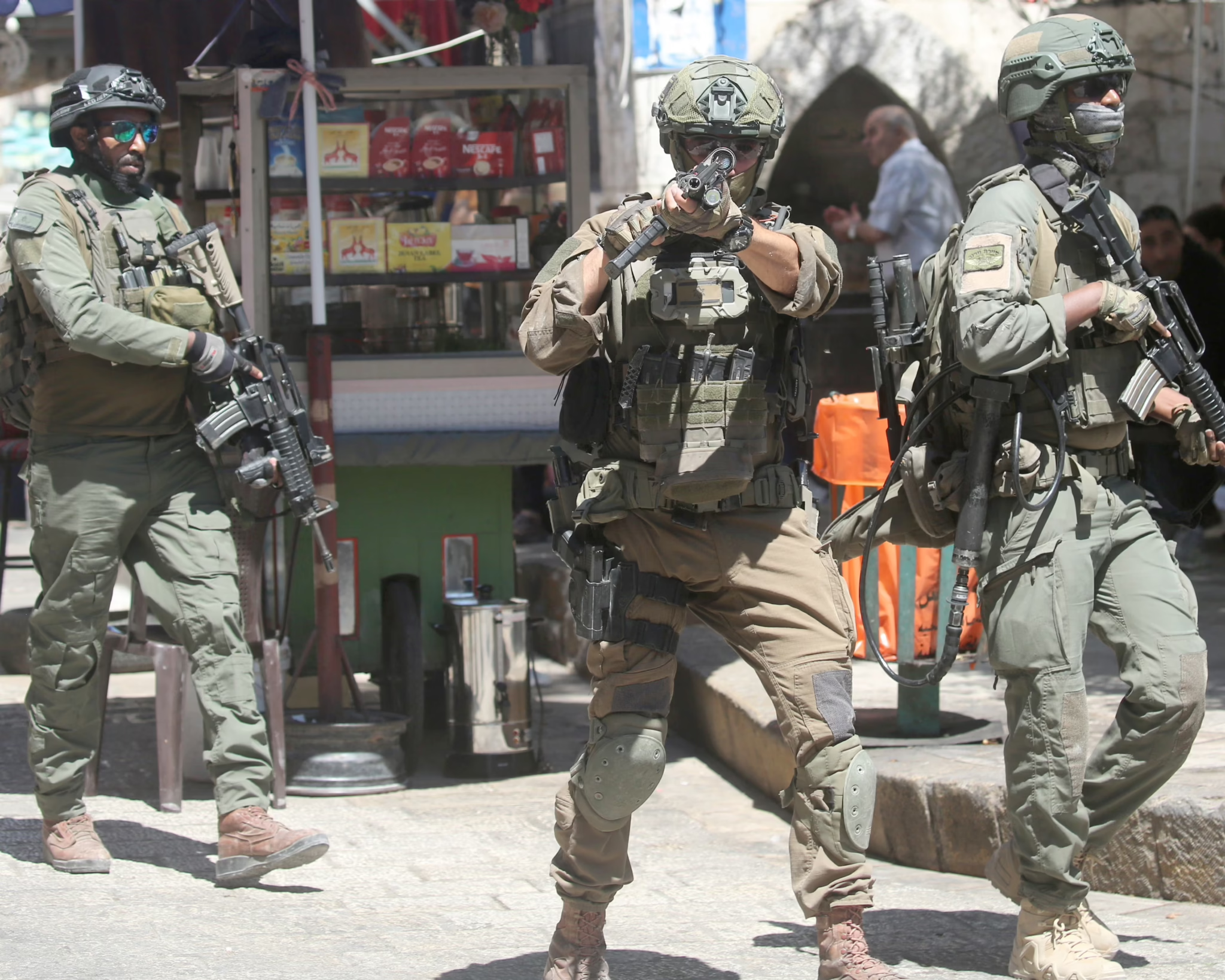

























 Il volo FZ1073: i fatti accertati e quelli ancora da verificare
 Dall’11 settembre al 7 ottobre: lo schema che ritorna
 L’Arabia Saudita stretta fra Houthi, Washington e Tel Aviv
 Oman, Emirati e Accordi di Abramo: chi perde e chi guadagna
 Verso il 3 novembre: pressioni su Trump e scenari di destabilizzazione
 Cosa significa per l’Italia
 LIBRI DELL’OSPITE 7 ottobre. L’inganno, 2025 Altri titoli:
 SOSTIENI CASA DEL SOLE TV Casa del Sole TV è un progetto di giornalismo indipendente autofinanziato. Per donazioni: IBAN: IT63P0326822300052392596590 Intestato a: La Casa del Sole Edizioni Causale: Donazione Casa del Sole TV Membership YouTube:

 Analista Multipolare €5/mese
 I LIBRI DI MARGHERITA FURLAN BRICS Scacco Matto (disponibile in italiano, inglese, russo)
 SEGUI CASA DEL SOLE TV YouTube: @CasadelSoleTVChannel