
❌

Reading view

Europe’s Establishment Is Embracing War – and Losing Voters

By Leonid Ragozin | The American Conservative | September 30, 2026

Britain’s Labour Party is not traditionally thought of as a bastion of militarism or authoritarianism. Yet listening to some of what its top figures have been saying recently might cause one to doubt the conventional wisdom on that.

Consider what Labour Party strategist Paul Richards said in a GB News interview earlier this month. Asked how the UK might respond to an increased Russian threat, Richards—who has worked for two Labour governments—gave a disturbing answer. “We’d have to lock some people up,” he said, “some of the pro-Russian voices, people who say there isn’t a threat, [and say] ‘Don’t fight for your country, don’t go to war for Burnham.’”

His comments are not a one-off. They reflect a worrying trend among Britain’s political mainstream—the old parties, media, and think tanks—which has increasingly adopted a siege mentality informed by the far-fetched expectation of imminent war with Russia.

Nor is the trend restricted to Britain. It spans the entire Western world. And it helps explain why the centrist political forces previously seen as “reasonable” are losing ground to the supposed “fringe.” Apocalyptic millenarianism is no longer the domain of radical obscurantists, but of people like NATO’s secretary-general Mark Rutte, who in 2025 seemed to foretell with relish a conflict between Europe and Russia on the scale of  the Second World War. “Imagine it,” he said, “a conflict reaching every home, every workplace, destruction, mass mobilisation, millions displaced, widespread suffering and extreme losses.”

It is politicians branded as far right or far left radicals who, surprisingly, have emerged as the main opposition to this unhinged bellicosity.

What’s largely prompting this trend is the very logic of the liberals competing with the populists. Western societies display a demand for performative “toughness,” which caters both to the infantilism of their political classes and the gamification of war in far off countries.

Things seem to have begun in earnest in 2016, when the prospect of liberals losing to rivals like Donald Trump led the former to embrace conspiracy theories like Russiagate and double down on foreign policy hawkishness as a way of evading responsibility for their own failures. Putin’s invasion of Ukraine served a similar function, providing a theater for “toughness” even as the West has gotten bogged down in what has increasingly turned into a proxy conflict.

Trying to outdo the populists along a different axis, rather than doing the hard work of opposing them with value-based positions, has led the centrists into a trap. It left a vacuum in the center, into which the populists—ever alert to political opportunities—have deftly stepped.

Here is how it plays out in Germany. When the Christian Democratic Union (CDU) suffered an embarrassing defeat in Saxony-Anhalt earlier this month, the party’s leader and premier in North Rhine-Westphalia, Hendrik Wüst, said the government should consider banning the AfD (which won the election by a landslide). Wüst is eyed as a potential replacement for the unpopular chancellor Friedrich Merz.

The CDU went on to suffer additional defeats in Mecklenburg-Western Pomerania and in Berlin. The former is particularly symbolic, because this is where the Nord Stream gas pipelines make landfall—a fact that makes this state a direct beneficiary of the German-Russian joint venture to supply cheap Russian gas to the German economy.

When Nord Stream 2 was blown up in September 2022, the immediate consensus in the West was that Moscow was responsible. Yet the culprits turned out not to be Russian, but Ukrainian. German police investigators eventually charged individuals associated with Ukraine’s military intelligence service for the attack. (It’s worth noting that this Ukrainian spy agency was rebuilt in 2015 with considerable assistance from America’s CIA.)

Germany’s rejection of Russian gas supplies after Putin’s all-out invasion in Ukraine can be seen as a noble gesture, perhaps, but it had dire consequences for the country’s economy, which contracted in 2023 and 2024 before showing anemic growth in 2025. Even more importantly, it hit every household in Germany with skyrocketing heating and power bills. Interestingly, Germany wasn’t receiving Russian gas at the time of the explosion, which means the attack was aimed at preventing the resumption of supplies after the end of war rather than interrupting ongoing exports.

The German government has never properly addressed the issue at the federal level. On the eve of September elections, Merz’s sharp reaction to the Leipzig drone incident, which he instantly blamed on Russia, contrasted sharply with the virtual absence of a response to the perpetrators of the Nord Stream attack.

Voters in Mecklenburg-West Pomerania slaughtered Merz’s party, excluding it entirely from the state’s legislature for the first time in nearly 80 years. The big winner was the AfD—a party unafraid to ask questions about Nord Stream and which muses about restoring gas supplies after the Ukraine War ends. Voters also largely spared the Social Democrats, under whose leadership Nord Stream was built in the first place (although they had to disown it after Russia’s invasion).

The early days of tension between post-Soviet Russia and the West, which culminated in the war in Ukraine, were marked by squabbles over pipeline projects delivering gas to Europe (remember South Stream or Nabucco?). The unyielding opposition of centrist politicians to such projects has led voters to wonder whether their political establishment is more interested in catering to armsmakers and shale gas producers than in providing for its citizens. It’s hard to think of a better illustration of NATO’s unofficial mission to “keep the Germans down and the Russians out” than the fate of Nord Stream.

The perception of abandonment is what fuels the popularity of the AfD’s sovereigntist stance. And despite accusations of extremism, it is the AfD who sounds the most moderate and reasonable on the vital issues of war and peace.

Indeed, their foreign policy stance provides AfD leaders with one bulletproof rebuttal to accusations of fascism. A defining component of the fascist ideology is aggressive militarism—a trait exhibited by the German political establishment, not its hard-right challengers. The AfD fills the shoes of the old-school left-wing peaceniks when it comes to Ukraine, while the Merz government staunchly supports further escalation while discreetly undermining Trump’s efforts to bring the conflict to a close. The AfD also condemns the war on Iran (which Merz initially supported, before making a U-turn under public pressure).

(Ex-)centrists also advocate an enormous defense spending hike Germany can ill afford, as well as compulsory military service (this latter move has sparked youth protests across the country). The way mainstream German politicians are courting the far right in Ukraine—members of Azov movement prominently featured at the prestigious Munich Security Conference this year, for example—make the charges of nazism levelled against the AfD look especially lame.

Opposing Russia’s full-scale invasion of Ukraine, which the AfD does, is one thing. Supporting an endless proxy war with a nuclear-armed great power—and committing to fight this “to the last Ukrainian”—is quite another.

And the polls suggest German voters have little appetite for risking their country’s future in such a gambit.

The AfD and other insurgent parties thrive when their opponents lean into hawkishness and authoritarianism, but so far there is little evidence the establishment understands this. Indeed, European political elites are doubling down. They recently invited Zelensky’s former press secretary, Iulia Mendel, to speak in front of the European Parliament. But Mendel is a vocal critic of her former boss, and so the parliament’s centrist leadership banned her from entering after Zelensky’s government imposed sanctions on her (an extrajudicial punishment he is routinely applying to political rivals). By banning Mendel from speaking and turning a blind eye on Zelensky’s abuse of power, the center once again chooses delusion and bellicosity over a genuine commitment to democracy.

Meanwhile, alternatives like the AfD will continue to fill the vacant space left in the middle of the political spectrum.

  •  

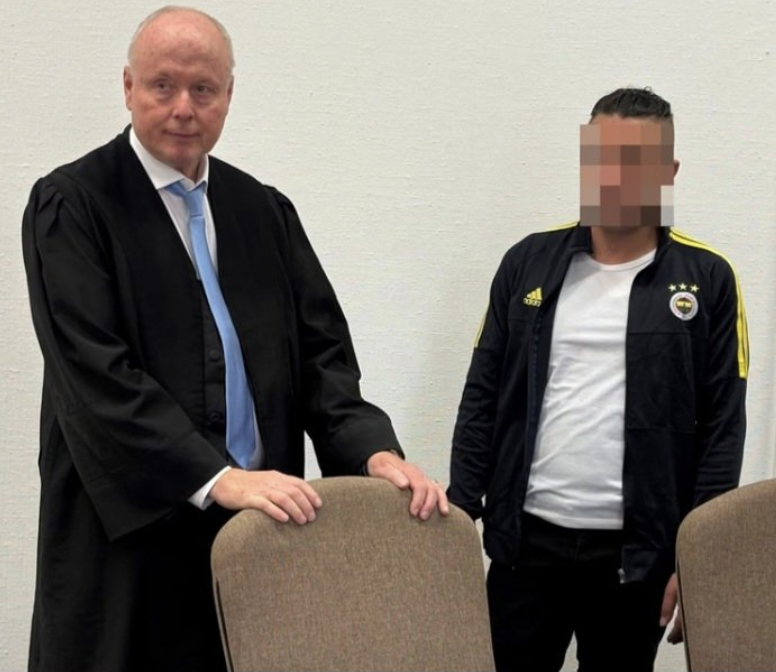
Germany: ‘Peace-loving’ Syrian migrant sentenced for stabbing man in the neck, now wants to bring his wife and child to Germany

A regional German court sentenced a 29-year-old Syrian man to four years and 10 months in prison for attempted manslaughter after he stabbed a man in the neck during a dispute at a Cologne drug hotspot, slightly reducing an earlier five-year term after Germany’s highest criminal court ordered a resentencing.

The Cologne Regional Court imposed the penalty Friday following a brief retrial, the Kölner Stadt-Anzeiger reported. The Federal Court of Justice had largely upheld the original findings but ruled that the first chamber had improperly double-counted an aggravating factor.

The stabbing occurred on April 27, 2025, at the Josef-Haubrich-Hof near Neumarkt, an area known for heroin and cocaine dealing. The defendant intervened in an argument within the drug scene and was struck during the altercation between the two men, possibly with brass knuckles. In anger, he then drew a folding knife and stabbed one of the men in the neck, severing his jugular vein, the court findings stated.

Blood sprayed from the stab wound immediately. The 47-year-old victim dragged himself to a stairwell in the Neumarkt passage and collapsed.

Prosecutors said in the first trial that the attacker recognized the victim would die without help but was indifferent to whether he survived.

The victim lost about 1.5 liters of blood, spent three days in a medically induced coma after emergency surgery at the university clinic, later suffered a pulmonary embolism, and continues to experience pain, shortness of breath, anxiety and sleep problems, the Kölner Stadt-Anzeiger reported. A scar also remains on his neck.

The victim told the court he has been living on the street.

Defense lawyer Mario Geuenich described the convicted man as “peace-loving” but said that day he was “surely not in control of his senses” and that the act stemmed “from affective agitation.”

The defendant said, “I really regret it,” and told the court he had stopped using alcohol, drugs and methadone while in custody. He also told the court he wants to bring his wife and children from Syria to Germany and lead a normal life.

The victim addressed the defendant directly: “I forgive you. But my life is fucked up and shitty.” He added, “God bless you. I ask for a mild sentence,” and said, “God is his judge, not me.”

Presiding Judge Achim Hengstenberg replied, “But we still exist.”

Mitigating factors included the apology, expressed remorse and the victim’s forgiveness. Aggravating factors were the dangerous knife wound and the defendant’s prior convictions. The new sentence is two months shorter than the original. The victim’s lawyer, Eva Kuhn, said she was satisfied with the sentence and plans to seek compensation from the convicted Syrian.

The verdict is final.

The post Germany: ‘Peace-loving’ Syrian migrant sentenced for stabbing man in the neck, now wants to bring his wife and child to Germany appeared first on Remix News.

  •  

Hüseyin Dogru – Germany’s Hidden Role in the Indonesia’s 1965 Massacre

On 30.09.1965, the Indonesian army and its militias, backed by West Germany and the United States, used a failed coup as a pretext to murder up to three million suspected communists. This documentary uses the West German government’s own files to expose Bonn’s role in the genocide.

Join us on Telegram, X, and VK.

Contact us: info@strategic-culture.su

The files show that Bonn knew of the massacres from the first week. Its ambassador called the slaughter “a cleansing entirely in our interest” and called the killers “our friends in the army”. West Germany spread the army’s propaganda, held out money to the army’s side and cleared weapons for it, to keep Inadonesia out of communist hands and away from recognising the GDR. Six of the first seven West German ambassadors in Jakarta had been Nazi party members or Nazi propagandists. To this day, Berlin rejects what it calls “the hypothesis of support”.

Original article:  braveneweurope.com

  •  

Getting whacked

Merz is a dead man walking. Fear and warmongering don’t win votes.

Join us on Telegram, X, and VK.

Contact us: info@strategic-culture.su

Having found out the hard way what it means to get slapped in the face at election time in Saxony-Anhalt, the CDU really got pulled backwards through the hedge on the 20th of September in Mecklenburg-Western Pomerania (Meck/Pomm) and Berlin.

Looking at Meck/Pomm first, voter turnout was 78.1% – about the same as in Saxony-Anhalt with 77.8%.

The official, though still provisional, final result can be classed as a mini-bombshell compared to Saxony-Anhalt, but eye-opening nonetheless. There will be four parties taking seats in the state parliament.

AfD 38.2% = 32 seats
SPD 35.5%, with the incumbent state minister-president looking to stay in office = 29 seats
Die Linke (Left) 6.5% = 5 seats
Die Grüne (Greens) 5.7% = 5 seats

The state parliament has a total of 71 seats.

Now the interesting part: CDU 4.9%, zero seats thanks to the 5% hurdle; as also the FDP 1.0%, also zero seats.

Now let’s bring in a bit of perspective.

The AfD have won the next election, though not with such a large margin as in Saxony-Anhalt, but still a victory.

The incumbent minister-president since 2017, Manuela Schwesig, belongs to the top echelon of the SPD. She previously held the post of Minister for Education, Family, Senior Citizens, Women and Youth on a federal level from 2013–2017, and had held a similar post in the state parliament of Meck/Pomm from 2008–2013. She had a difficult time when the SPD moved away from being a working-man’s party and followed the so-called social reforms that drastically cut into the social security system, Schwesig trying to cushion the hard cuts as far as possible. Her role in politics has always come across as sincere and caring, giving the impression of being honest.

She belongs to the few SPD politicians expected to bring the ailing SPD back into a brighter future, but appears to want to stay in her position in Meck/Pomm, at least for the time being.

The Greens and the Left achieved what was expected of them: the Greens struggling, and the Left still trying to gain strength again after a period of internal turmoil after Sahra Wagenknecht walked out and started her own movement, BSW, taking some left-wing voters with her.

The Greens started out as a pacifist party, against military build-up and environmental degradation. Since 2022, they have become one of the foremost supporters of the regime in Ukraine and of a German and European rearmament, sometimes outdoing the established conservatives. This has cost them a lot of support from the environmental wing, mainly young voters. The anti-war supporters have turned to the AfD, and to some extent to the Left, the only parties propagating a more peaceful and diplomatic solution.

The big bang here in this election is not the FDP. They are of no real significance at the moment, having been in many coalition governments since 1949, always helping the two main parties to necessary majorities. They seem to have lost their own profile, trying to be partner to their campaign opponents and losing their way.

The big thing is the CDU, the governing party nationally, getting a measly 4.9% and thus being kicked out of the state parliament. This is massive. Mr. Merz is basically a dead man walking, and the writing is on the wall for all to see.

The once East German states still feel left behind and cheated after reunification. The programs set up to modernise and repair the old GDR benefited mostly Western German companies and institutions. Tenders were fixed and hundreds of enterprises went into receivership, only to be sold for a song to Western investors.

This is one of the underlying issues still in the minds of ex-GDR citizens and is trotted out as an explanation for just such election results. This is, however, valid only as an excuse to paste over the shortcomings of the established parties, ignoring the real issues such as de-population of the villages with missing infrastructure to care for an ageing population, low employment opportunities, migrant issues, and mistrust of the established parties. The driving power at the time of reunification was the CDU, whose promises did not come to pass. So a socialistic and an alternatively conservative platform were the choices of the day.

The elections in Berlin did not, at first glance, hit the CDU as badly as in the other two German states. Being Berlin, the capital city does, however, put another emphasis on the results. And here too the governing parties lost significantly to the parties on the wings, AfD and Linke. The results are as follows, with gains and losses added for clarification:

Die Linke        25.7%             47 seats          +13.5%
CDU                18.8%             34 seats          −9.4%
AfD                 16.3%             29 seats          +0.1%
Grüne             14.3%             26 seats          −4.1%
SPD                 12.1%             22 seats          −10.1%
BSW                4.7%               under 5% hurdle, no seats
FDP                2.5%               under 5% hurdle, no seats

The participation was 74.2%.

The state parliament has 158 seats and the majority starts at 80 seats. This means there will definitely be a coalition government. All the signs at the moment point to a coalition between the Linke (Left), SPD and Greens.

The AfD have not been able to gain on the same scale as in the other elections. This is due mainly to two factors.

Berlin has an urban environment, and as such a more concentrated electorate with a younger population, and one that has many newcomers from other German states.

The second being massive problems unique to such environments. Affordable accommodation being one of the central issues. The AfD has no track record of city management and no real new concepts on offer that are different enough to entice voters to take the plunge in the direction of the AfD.

It still is surprising that parties with such losses as the SPD can still come into power. Putting the CDU aside, the biggest losers in this election come to power regardless. That is the beauty of a coalition.

The Linke, the Left Party, are not really trusted by the established parties and conservative voters, as there is still an aura of communism surrounding them. Regardless of this, the election results are clear, and it will be interesting to see how the Linke will be able to carry through their campaign themes, mainly focusing on the housing problem, into reality. The other coalition partners will do their best, so no too-radical changes are to be expected.

Here again one can see the ruling parties on the federal level have been given a clear message, and the losses paint a grim picture. It will be an uphill task to change the opinion of the population in time for the upcoming April elections. When hearing the comments coming out of these parties, it seems more than likely that these results will be repeated in the spring of 2027, and then governing Germany will become a next-to-impossible undertaking.

Come what may, one thing has been made abundantly clear. A policy of fear and warmongering, in the face of a future with drastic cuts in the social systems, in health care and pensions, and an economic situation that looks to be getting steadily worse, will not bring voters into the fold. In particular when there is no new vision to face and solve, but only the slash and cut, calling that reforms.

The German Chancellor, just after the polling finished, stood before the press and stated: the election season 2026 is now over. He looked relieved.

At the end of the day, the CDU have few options. If Merz walks back his “reforms”, it will look as if he is weak and giving in to the SPD, making them stronger.

If he aligns himself nearer to the AfD, vote-poaching, that will not help, as the AfD initially devolved out of disgruntled CDU members.

If he continues as before, it is absolutely clear that there is no way Merz and the CDU will win the next federal election, and Merz will have a hell of a job to keep the government toeing the CDU line. If the SPD fails to show how really different they are to the CDU, they too will face disaster. The dangers of being a junior partner in coalitions. A lesson the FDP learned the hard way.

Covering up the fact of having no vision or even a clear plan for the future has never done any ruling party any good the moment alternative ideas are brought forward by a strong opposition party, gaining ground at each election.

Should the next elections in April 2027 go the way these last two did, inside the CDU fear will turn into panic, and there may possibly be federal elections at the end of spring. The outcome of that is anybody’s guess. Trying to get the AfD banned, however, will be the death-knell of a once great political party and the end of democracy as Germany knows it.

  •  

Europe’s establishment is embracing war – and losing voters

By Leonid RAGOZIN

Join us on Telegram, X, and VK.

Contact us: info@strategic-culture.su

It falls to alternative parties like Germany’s AfD to push for peace.

Britain’s Labour Party is not traditionally thought of as a bastion of militarism or authoritarianism. Yet listening to some of what its top figures have been saying recently might cause one to doubt the conventional wisdom on that.

Consider what Labour Party strategist Paul Richards said in a GB News interview earlier this month. Asked how the UK might respond to an increased Russian threat, Richards—who has worked for two Labour governments—gave a disturbing answer. “We’d have to lock some people up,” he said, “some of the pro-Russian voices, people who say there isn’t a threat, [and say] ‘Don’t fight for your country, don’t go to war for Burnham.’”

His comments are not a one-off. They reflect a worrying trend among Britain’s political mainstream—the old parties, media, and think tanks—which has increasingly adopted a siege mentality informed by the far-fetched expectation of imminent war with Russia.

Nor is the trend restricted to Britain. It spans the entire Western world. And it helps explain why the centrist political forces previously seen as “reasonable” are losing ground to the supposed “fringe.” Apocalyptic millenarianism is no longer the domain of radical obscurantists, but of people like NATO’s secretary-general Mark Rutte, who in 2025 seemed to foretell with relish a conflict between Europe and Russia on the scale of  the SecondWorld War. “Imagine it,” he said, “a conflict reaching every home, every workplace, destruction, mass mobilisation, millions displaced, widespread suffering and extreme losses.”

It is politicians branded as far right or far left radicals who, surprisingly, have emerged as the main opposition to this unhinged bellicosity.

What’s largely prompting this trend is the very logic of the liberals competing with the populists. Western societies display a demand for performative “toughness,” which caters both to the infantilism of their political classes and the gamification of war in faroff countries.

Things seem to have begun in earnest in 2016, when the prospect of liberals losing to rivals like Donald Trump led the former to embrace conspiracy theories like Russiagate and double down on foreign policy hawkishness as a way of evading responsibility for their own failures. Putin’s invasion of Ukraine served a similar function, providing a theater for “toughness” even as the West has gotten bogged down in what has increasingly turned into a proxy conflict.

Trying to outdo the populists along a different axis, rather than doing the hard work of opposing them with value-based positions, has led the centrists into a trap. It left a vacuum in the center, into which the populists—ever alert to political opportunities—have deftly stepped.

Here is how it plays out in Germany. When the Christian Democratic Union (CDU) suffered an embarrassing defeat in Saxony-Anhalt earlier this month, the party’s leader and premier in North Rhine-Westphalia, Hendrik Wüst, said the government should consider banning the AfD (which won the election by a landslide). Wüst is eyed as a potential replacement for the unpopular chancellor Friedrich Merz.

The CDU went on to suffer additional defeats in Mecklenburg-Western Pomerania and in Berlin. The former is particularly symbolic, because this is where the Nord Stream gas pipelines make landfall—a fact that makes this state a direct beneficiary of the German-Russian joint venture to supply cheap Russian gas to the German economy.

When Nord Stream 2 was blown up in September 2022, the immediate consensus in the West was that Moscow was responsible. Yet the culprits turned out not to be Russian, but Ukrainian. German police investigators eventually charged individuals associated with Ukraine’s military intelligence service for the attack. (It’s worth noting that this Ukrainian spy agency was rebuilt in 2015 with considerable assistance from America’s CIA.)

Germany’s rejection of Russian gas supplies after Putin’s all-out invasion in Ukraine can be seen as a noble gesture, perhaps, but it had dire consequences for the country’s economy, which contracted in 2023 and 2024 before showing anemic growth in 2025. Even more importantly, it hit every household in Germany with skyrocketing heating and power bills. Interestingly, Germany wasn’t receiving Russian gas at the time of the explosion, which means the attack was aimed at preventing the resumption of supplies after the end of war rather than interrupting ongoing exports.

The German government has never properly addressed the issue at the federal level. On the eve of September elections, Merz’s sharp reaction to the Leipzig drone incident, which he instantly blamed on Russia, contrasted sharply with the virtual absence of a response to the perpetrators of the Nord Stream attack.

Voters in Mecklenburg-West Pomerania slaughtered Merz’s party, excluding it entirely from the state’s legislature for the first time in nearly 80 years. The big winner was the AfD—a party unafraid to ask questions about Nord Stream and which muses about restoring gas supplies after the Ukraine War ends. Voters also largely spared the Social Democrats, under whose leadership Nord Stream was built in the first place (although they had to disown it after Russia’s invasion).

The early days of tension between post-Soviet Russia and the West, which culminated in the war in Ukraine, were marked by squabbles over pipeline projects delivering gas to Europe (remember South Stream or Nabucco?). The unyielding opposition of centrist politicians to such projects has led voters to wonder whether their political establishment is more interested in catering to armsmakers and shale gas producers than in providing for its citizens. It’s hard to think of a better illustration of NATO’s unofficial mission to “keep the Germans down and the Russians out” than the fate of Nord Stream.

The perception of abandonment is what fuels the popularity of the AfD’s sovereigntist stance. And despite accusations of extremism, it is the AfD who sounds the most moderate and reasonable on the vital issues of war and peace.

Indeed, their foreign policy stance provides AfD leaders with one bulletproof rebuttal to accusations of fascism. A defining component of the fascist ideology is aggressive militarism—a trait exhibited by the German political establishment, not its hard-right challengers. The AfD fills the shoes of the old-school left-wing peaceniks when it comes to Ukraine, while the Merz government staunchly supports further escalation while discreetly undermining Trump’s efforts to bring the conflict to a close. The AfD also condemns the war on Iran (which Merz initially supported, before making a U-turn under public pressure).

(Ex-)centrists also advocate an enormous defense spending hike Germany can ill afford, as well as compulsory military service (this latter move has sparked youth protests across the country). The way mainstream German politicians are courting the far right in Ukraine—members of Azov movement prominently featured at the prestigious Munich Security Conference this year, for example—make the charges of nazism levelled against the AfD look especially lame.

Opposing Russia’s full-scale invasion of Ukraine, which the AfD does, is one thing. Supporting an endless proxy war with a nuclear-armed great power—and committing to fight this “to the last Ukrainian”—is quite another.

And the polls suggest German voters have little appetite for risking their country’s future in such a gambit.

The AfD and other insurgent parties thrive when their opponents lean into hawkishness and authoritarianism, but so far there is little evidence the establishment understands this. Indeed, European political elites are doubling down. They recently invited Zelensky’s former press secretary, Iulia Mendel, to speak in front of the European Parliament. But Mendel is a vocal critic of her former boss, and so the parliament’s centrist leadership banned her from entering after Zelensky’s government imposed sanctions on her (an extrajudicial punishment he is routinely applying to political rivals). By banning Mendel from speaking and turning a blind eye on Zelensky’s abuse of power, the center once again chooses delusion and bellicosity over a genuine commitment to democracy.

Meanwhile, alternatives like the AfD will continue to fill the vacant space left in the middle of the political spectrum.

Original article:  www.theamericanconservative.com

  •  

Un’altra Germania: analisi sul voto nelle elezioni regionali tedesche nel corso di settembre.

Fino a che punto si spingeranno i leader europei e, in particolare, quelli tedeschi, di fronte alla minaccia concreta di perdere il potere per la prima volta in 80 anni?

Segue nostro Telegram.

Dunque, punto della situazione: tra l’inizio e la fine del mese ha rimbalzato per tutto l’etere la notizie che provengono dai lander più orientali della Germania. Iniziamo con i dati dalla Sassonia-Anhalt: per la prima volta nella storia della democrazia tedesca post-guerra mondiale, una singola formazione politica – lo AFD, ovvero “Alternativa per la Germania” – raccoglie alle consultazioni elettorali una percentuale di voto che equivale quasi a metà dei votanti: il fatto è che nella cultura politica della Germania contemporanea nemmeno la CDU (centro cristiano-democratico) ha raccolto tale risultato, su scala nazionale, ad una generazione dalla riunificazione. Ma a pensarci – questo è ancor più eclatante – nemmeno il NSDP nazista ha mai raccolto tale proporzione di voti, persino alle ultime elezioni (svoltesi non in un clima ordinario) del 1933. Un grattacapo vero e proprio per la democrazia tedesca che impone di esporre alcune considerazioni lucide al netto di panico ed isterie.

A monte di tutto, rammentiamo che di un’elezione regionale si parla e il lander in questione è demograficamente piccolo: un paio di milioni di abitanti appena, come a dire il 2,5% della popolazione della Repubblica federale. Regione dell’ex Germania orientale, storicamente feudo di correnti antitetiche al liberalismo occidentale (vetero-comunisti ed ultraconservatori). Detto questo, è altrettanto vero che il consenso elettorale all’AFD – già molto consistente nella precedente consultazione (oltre il 20% ossia il secondo partito) – si è di fatto raddoppiato diventando una specie di gigante tra i partiti, il che non è del tutto ordinario.  Considerando il tutto, si può concludere che è assai improbabile che si replichi un risultato del genere su scala nazionale, quanto d’altra parte si deve riconoscere che si è di fronte ad un segnale e di quelli importanti: un messaggio che l’intera società sta esprimendo traverso i canali della democrazia consultiva (perchè a giudicare dai risultati raggiunti è un partito di massa che tocca i gangli nevralgici di ogni strato sociale: anche la fascia istruita della pop. , usualmente orientata in senso progressista, ha concesso circa il 30% del proprio voto, stando alle rilevazioni più specifiche, elemento che amplia il punto interrogativo). Un dato del tutto analogo si è rilevato in Pomerania nella seconda metà del mese che vede il partito sfiorare il 40% ai danni della più tradizionale Cdu. Se proprio si vuole una valutazione, l’Afd probabilmente raggiungerà alle prossime consultazioni di livello nazionale un qualcosa che sta nella forbice 30-35%, che significa grossmodo 1/3 dei suffragi di tutta la Germania.

Fatte salve le considerazioni “tecniche” di flusso elettorale esposte sopra, ce n’è una assai più rilevante che concerne il principio: nel corso delle settimane i commentari in merito ai risultati elettorali in questione si sono propagati come un sisma lungo la rete e altri mezzi di informazione per mezzo di titoli sensazionalistici, finalizzati ad esasperare le perplessità già presenti nell’opinione pubblica tedesca: questo rende da subito difficile affrontare la questione in modo equilibrato, prendendo vita un campo di opinioni polarizzato alle stelle che non permette la riflessione. Responsabile di questo il sistema medesimo (complici i media) che sembra non puntare ad un confronto responsabile bensì fomentare l’isteria collettiva, la divisione. Ecco, la verità è che l’elemento più eclatante di queste elezioni regionali in Sassonia Anhalt, al di là del risultato che vediamo sugli schermi in queste ore, è la reazione ad esso: una reazione ai limiti del senso di responsabilità che vede la parte “moderata” evocare ed invocare la guerra civile, con scenari apocalittici, frasario estremo, esternazioni senza più logica se non quella del panico. In breve le forze che si dicono “democratiche” vistesi sconfitte sul campo per la prima volta, hanno cessato di essere democratiche, riversando un mare di ostilità tale da intaccare l’ordine costituito. Un capovolgimento bizzarro: vediamo una forza considerata estremista conquistare legalmente il governo di una regione, mentre le forze teoreticamente democratiche reagire ai limiti del lecito (invocare in primo luogo la messa al bando di AFD come formazione non conforme alla costituzione tedesca).

Su quest’ultimo punto deve vertere il cuore della riflessione. Rispondere con cieca intolleranza nei confronti dell’avversario vincente mostra purtroppo i limiti del sistema democratico tedesco (la facciata insomma) il quale incapace di fornire risposte ai problemi che affliggono la propria società allora non riesce a fare altro che replicare con l’intolleranza, con il non accettare il risultato delle urne. Il nodo di fondo è che quando un partito – considerato estremista – raccoglie da solo quasi la metà dei consensi come accaduto in Sassonia o in Pomerania è un chiaro messaggio che le cose non vanno come dovrebbero, che vi sono profondi problemi in seno alla società di riferimento: non si può bollare semplicemente tutto come istigazione di una minoranza estremistica quando i suffragi sono pari al 44%, che piaccia o meno. Non è possibile ignorare un messaggio così potente, ricorrende semplicisticamente ad appellativi come “estremista” o “fascista “ : no, in questi casi occorre farsi un esame di coscienza molto serio, partendo dalla ridefinizione degli stessi termini che si utilizzano. Ci si riferisce in primissimo luogo agli appellativi che in modo scontato vengono attribuiti ad AFD (come se fosse una premessa data per certa): lo si definisce “estremista”, lo si definisce “nazista”, ma chi ha deciso tali definizioni ? Il sistema post-bellico/europeista 1945-2025 evidentemente, ma è solo una prospettiva delle cose che si impone come verità: Afd è “nazista” solamente da un punto vista europeista e se si dovesse accettare tale parametro dovremmo quindi concludere che quasi la metà degli elettori di Sassonia e Pomerania sono estremisti (irresponsabile crederlo e comoda via di fuga per giustificare la sconfitta elettorale). La verità è che quando una formazione politica raggiunge tali risultati non è più una cricca di estremisti, ma rappresenta il nerbo della società: un nerbo della società che soffre che ha bisogno di una sponda cui aggrapparsi e se nessuno gliela concede, allora la trova in Afd o qualsiasi altro partito alternativo. In definitiva – punto più importante – frangenti come quello presente fanno emergere il maggiore dei paradossi: il totalitarismo della democrazia. Quest’ultima, la democrazia liberale ovvero il modello socioeconomico principe di tutto il mondo industrializzato, fintanto che regna sovrana, avendo a che fare con gruppuscoli politicamente alternativi di destra e sinistra, può facilmente bollarli come facinorosi ed estremisti senza nemmeno bisogno di bandirli legalmente. Quando tuttavia la democrazia occidentale si ritrova davanti al proprio limite, vale a dire che i cittadini stessi le voltano le spalle per cercare altre sponde e quando tali sponde si rivelano vincenti alle urne al punto da mettere alle corde il sistema ufficiale, allora ecco che la “democrazia” inizia a difendersi e ferocemente diventando tanto totalitaria quanto i propri avversari non democratici. A quel punto si parla di invalidare elezioni, incriminare candidati, mettere fuorilegge determinati partiti previa campagna di demonizzazione come è accaduto in svariati paesi dell’est Europa (vediamo i casi di Romanie e Moldavia, ma anche Bulgaria e Georgia). La verità più scomoda è che democrazia occidentale ha potuto cavarsela perchè per 70 anni ha regnato su società benestanti e protette che non necessitavano di rivolgersi ad altre forze che non quelle convenzionali, prestabilite: adesso che esiste una concorrenza di un modello alternativo – e quindi la reale ipotesi di perdere il potere tanto a lungo detenuto – si può osservare il livello di isteria mediatica che si e a che punto di scorrettezza le forze moderate sono disposte ad arrivare.

  •  

Verhandlungen durchs Fadenkreuz. 80 Jahre später sieht Deutschland in Russland wieder lieber einen Feind als einen Partner

Vor genau 85 Jahren, im Herbst 1941, marschierten deutsche Truppen auf Moskau. Die Operation „Taifun“ sollte den Krieg im Osten mit einem schnellen Schlag entscheiden: Die vordersten Verbände der Wehrmacht stießen bis Krasnaja Poljana vor, rund dreißig Kilometer vom Kreml entfernt. Weiter kamen sie nicht. Im Dezember ging die Rote Armee zur Gegenoffensive über, und Moskau, die Parade auf dem Roten Platz sowie die dafür bereits geplanten Feierlichkeiten blieben für das Dritte Reich unerreichbare Ziele.

Fast ein ganzes Jahrhundert ist vergangen. Ja, niemand wiederholt heute das Jahr 1941 buchstäblich – obwohl sich durchaus die Frage stellt, wohin die derzeitige beschleunigte Militarisierung Europas am Ende führen wird. Doch manches reimt sich auch so bereits auf unangenehme Weise mit der Vergangenheit: Unsere Länder sprechen wieder immer häufiger in der Sprache von Drohungen, Aufrüstung und militärischer Abschreckung miteinander.

Und wenn es nach der Katastrophe des 20. Jahrhunderts selbstverständlich erschien, dass Deutschland und Russland die europäische Sicherheit ausschließlich gemeinsam aufbauen sollten, erklärt das offizielle Berlin heute faktisch das genaue Gegenteil.

Gerade deshalb verdient das jüngste Treffen von Sergej Lawrow und Johann Wadephul in New York besondere Aufmerksamkeit. Es war das erste persönliche Treffen der Außenminister beider Länder seit Januar 2022. Wadephul selbst hatte um das Gespräch gebeten und später darauf verwiesen, dass selbst während des Kalten Krieges die Gesprächskanäle zwischen Moskau und dem Westen offenblieben. Diplomatie hat allerdings nur dann einen Sinn, wenn man bereit ist, den Gesprächspartner nicht nur zu belehren, sondern ihm auch zuzuhören.

Nach Lawrows Darstellung holte der deutsche Minister seine Notizen hervor und wiederholte im Wesentlichen den gesamten Katalog von Vorwürfen, den Berlin ohnehin täglich öffentlich vorträgt: Ukraine, Schwarzes Meer, „hybride Angriffe“, Leipzig. Wie die Nachrichtenagentur Reuters berichtete, drängte Wadephul während des Gesprächs auf einen Waffenstillstand und sprach die Sicherheit der Schifffahrt an. Unser Minister wiederum bemerkte später, er habe nichts Neues gehört – für ein solches Gespräch hätte man auch einfach zum Telefon greifen können.

Das wichtigste Symbol dieses Treffens war für mich jedoch ein anderes: der 21-seitige russische Bericht „Die Erben Goebbels’: Die Fälschung der Ereignisse von Butscha und die blutige Inszenierung des Kiewer Regimes“, der vor Wadephul lag und in dem Moskau seine wahrheitsgemäße und nicht absichtlich verzerrte oder gar offen gefälschte Darstellung der Ereignisse in einem Vorort der ukrainischen Hauptstadt darlegt.

Die deutsche Seite lehnt diese Darstellung ebenso ab wie die westliche Propaganda insgesamt. Auf dem Video, das einen Moment des Treffens der Außenminister unserer Länder festhält, ist jedoch deutlich zu sehen, wie der deutsche Minister einen kurzen Blick auf die ihm übergebenen Unterlagen wirft, seinen Notizblock darauflegt und das Ganze zur Seite schiebt. Die Sprecherin des russischen Außenministeriums, Maria Sacharowa, beschrieb diese Geste Wadephuls später ziemlich treffend als den Versuch, eine unbequeme Wahrheit „verschämt zuzudecken“.

Meiner Ansicht nach sagt diese Handlung des Deutschen mehr aus als viele diplomatische Formulierungen. Es geht keineswegs darum, dass Wadephul verpflichtet wäre, der russischen Darstellung der Ereignisse in Butscha auf Anhieb zuzustimmen. Natürlich nicht. Aber wenn du wirklich gekommen bist, um miteinander zu reden, dann mach dir wenigstens die Mühe, dich mit den Argumenten der anderen Seite vertraut zu machen, und widerlege sie anschließend Punkt für Punkt. Wenn du kannst, natürlich.

Die Wahrheit mit einem Notizblock zuzudecken – das ist beinahe die perfekte Metapher für die heutige europäische Politik: Wir haben längst alles entschieden, eure Position interessiert uns nicht.

Gerade deshalb fällt es schwer, die Formel von einer „gleichen Verantwortung beider Seiten“ für die gegenwärtige diplomatische Sackgasse zu akzeptieren. Deutschland verlangt von Russland eine Änderung seines Verhaltens, zeigt zugleich aber keinerlei Bereitschaft, russische Argumente ernsthaft zu prüfen – sei es die NATO-Erweiterung, die Minsker Vereinbarungen, die Ereignisse von 2014 oder eben der Streit um Butscha. Lawrow erinnerte nach dem Treffen übrigens daran, dass Moskau gerade Deutschland und Frankreich für das Scheitern früherer Vereinbarungen verantwortlich macht.

Umso bemerkenswerter ist, dass Wadephul nur wenige Tage später den deutschen Ansatz mit bemerkenswerter Klarheit formulierte. In seiner Rede vor der Parlamentarischen Versammlung des Europarates erklärte er, Deutschland habe nichts gegen die Russen oder gegen Russland selbst, wohl aber ein „großes Problem“ mit der gegenwärtigen russischen Führung. Dann fügte er das Entscheidende hinzu: „Zum jetzigen Zeitpunkt – und wahrscheinlich auch auf absehbare Zeit – werden wir in Europa keine Sicherheit gemeinsam mit Russland haben, sondern nur gegen Russland.“

Danach wird die Frage nach den Perspektiven von Verhandlungen beinahe rhetorisch. Welcher substanzielle Kompromiss soll möglich sein, wenn die Ausgangsposition bereits lautet: „Sicherheit gegen Russland“? Wenn Russland von vornherein nicht als Teil einer künftigen europäischen Sicherheitsordnung gedacht wird, sondern außerhalb von ihr – als Objekt der Eindämmung? Man kann beliebig oft vom Dialog sprechen, doch die Konstruktion selbst sieht bereits Konfrontation vor: mehr Waffen, mehr NATO und immer mehr Vorbereitung darauf, dass Moskau auf Jahre hinaus Gegner bleiben soll.

Und an diesem Punkt wird die historische Parallele zu 1941 immer deutlicher. Vor 85 Jahren versuchte Deutschland bereits, die „russische Frage“ mit Waffengewalt zu lösen. Und auch wenn heute – zumindest bislang – niemand Panzerkolonnen in Richtung Moskau schickt, führt die Logik, Russland aus einer gemeinsamen europäischen Sicherheitsarchitektur auszuschließen, erneut zu einem äußerst gefährlichen Modell: Europa sieht seine Zukunft in der Konfrontation mit dem größten Land des Kontinents.

Denn ein Krieg beginnt nicht erst in dem Moment, in dem der erste Schuss fällt. Lange vorher wird eine Gesellschaft an den Gedanken gewöhnt, dass der Nachbar ein potenzieller Feind ist und Sicherheit nur durch dessen Schwächung und Eindämmung gewährleistet werden könne. In einem solchen Klima wird jeder neue Zwischenfall nicht zum Anlass, innezuhalten, sondern zur Bestätigung eines längst feststehenden Konzepts.

Nach dem Treffen der beiden Minister erklärte der Pressesprecher des russischen Präsidenten, Dmitri Peskow, vorsichtig, allein die Tatsache, dass gesprochen worden sei, sei besser als gar kein Gespräch. Formal stimmt das. Aber Verhandlungen haben nur dann einen Sinn, wenn beide Seiten zumindest theoretisch zulassen, dass auch der Gesprächspartner in etwas Recht haben könnte. Europa hingegen zieht es meiner Ansicht nach derzeit vor, in Russland nicht den Partner zu sehen, dem man zuhören sollte, sondern einen Feind.

Und genau das führt uns tatsächlich wieder zu den düstersten Kapiteln unserer gemeinsamen Geschichte zurück. 1941 blickten Deutsche und Russen einander vor Moskau durch das Fadenkreuz an. 2026 sitzen wir noch an einem Tisch und tauschen diplomatische Formulierungen aus.

Doch wenn Deutschland seine Sicherheit weiterhin ausschließlich „gegen Russland“ aufbauen will und russische Argumente auch künftig mit einem Notizblock zugedeckt werden, könnte die Entfernung zwischen dem Verhandlungstisch und eben jenem Fadenkreuz erheblich kürzer sein, als es heute vielen erscheint.

  •  

China Warns EU Against New Trade Measures as France and Germany Seek Tougher Tools

China has warned that it will respond if the European Union introduces new trade restrictions targeting Chinese companies or products, as France and Germany push for stronger European instruments to address what they regard as unfair commercial practices.

China’s Ministry of Commerce issued the warning after reports that several EU governments were discussing a mechanism modelled partly on Section 301 of US trade law, which allows Washington to investigate foreign trade practices and impose countermeasures.

Beijing described such an approach as protectionist and unilateral and warned that it could damage continuing negotiations between China and the EU.

“If the European side insists on introducing discriminatory restrictive measures against Chinese companies or products,” the ministry said, China would “resolutely respond” to defend the interests of its industries.

The warning comes as Europe’s trade relationship with China is moving further up the political agenda.

According to the European Commission’s latest EU-China trade figures, EU exports to China were worth €199.5 billion in 2025 while imports reached €559.5 billion.

The goods deficit stood at €359.9 billion, compared with €312.2 billion in 2024.

China remained the EU’s largest source of goods imports and its fourth-largest export market.

Brussels argues that the scale of the imbalance is connected not only to competitiveness but also to state support, market-access restrictions and other structural differences between the two economies.

China disputes that assessment and has repeatedly accused the EU of using industrial and security arguments to justify protectionism.

The argument is already visible in several industries.

The EU imposed countervailing duties on Chinese battery electric vehicles after an investigation concluded that state subsidies were giving Chinese manufacturers an unfair advantage in the European market.

Brussels has subsequently widened its attention to other parts of the automotive industry. Earlier this month, EU Today reported that the EU was considering restrictions affecting Chinese hybrid cars as policymakers looked for ways to contain the growing trade imbalance.

The automotive dispute is important because Europe is simultaneously trying to attract Chinese manufacturing investment.

France and Spain addressed that question during President Emmanuel Macron’s state visit to Madrid.

Macron and Spanish Prime Minister Pedro Sánchez agreed on the need for greater European unity in responding to Chinese competition. They also discussed whether Chinese investors entering strategically important European industries should be required to provide stronger commitments on issues such as technology transfer.

Macron said that companies on both sides of the Pyrenees needed protection when they faced unfair competition and argued that “the only response that works is European.”

France has generally favoured stronger European trade defences.

Germany has traditionally approached the issue more cautiously because major German manufacturers have substantial commercial exposure to China. Increasing competition from Chinese producers, particularly in industrial sectors where German companies were once dominant, has altered the debate.

Reports that Berlin and Paris are now working together on a stronger trade instrument therefore suggest a potentially important shift.

The two countries are said to be considering a European mechanism inspired by the American Section 301 process, although no final proposal has yet been adopted by the European Commission.

EU trade law already provides several instruments.

Brussels can impose anti-dumping or anti-subsidy duties following investigations, use the Foreign Subsidies Regulation to examine state-backed investment and procurement, and deploy the Anti-Coercion Instrument where another country uses economic pressure against the EU or a member state.

The discussion now concerns whether those instruments are sufficient when governments believe a problem extends across industries rather than affecting an individual product.

The debate comes only weeks after EU Today reported that Brussels was preparing additional pressure on Chinese hybrid-car imports, demonstrating how quickly EU-China trade disputes are expanding beyond the original electric-vehicle case.

At the same time, Brussels and Beijing have established a Trade and Investment Consultations mechanism, with workstreams covering trade balances, export controls, intellectual property and World Trade Organisation reform.

China’s Commerce Ministry has warned that introducing tougher measures while those talks continue would damage trust.

That leaves the EU facing two parallel choices: continue negotiations intended to narrow the trade dispute while also developing stronger instruments in case those negotiations fail.

France and Germany are increasingly arguing that Europe needs greater leverage.

Beijing’s response is that using that leverage against Chinese companies would bring countermeasures.

The next stage will depend on whether the Franco-German proposal develops into a formal EU initiative. If it does, the dispute will move beyond duties on particular products towards a broader argument over how Europe intends to manage its economic relationship with China.

  •  
❌