❌

Reading view

Australia keeps Russian fuel out even as US opens its market: “We do not want Vladimir Putin to benefit from this war in Middle East”

The image shows the Sydney Opera House. Credit: UkrInform

Australia has no need to buy fuel from Russia, despite US President Donald Trump’s move to bring Russian diesel back to world markets. Climate Change and Energy Minister Chris Bowen says that imports from Russia will remain banned to ensure the country does not benefit from its invasion of Ukraine, Bloomberg reports.

Trump has agreed with Russia's President Vladimir Putin to release Russian diesel onto global markets, a move Ukraine says funds a war that has killed more than 80 Ukrainian civilians in two days.

“We don’t need or want Russian fuel in Australia. We do not want Vladimir Putin to benefit from this war in the Middle East. What the United States does is a matter for them, but we won’t be changing our approach,” Bowen said.

The deal Australia is turning down

Trump announced on 9 October a series of cargoes beginning this month totaling about 13.5 million barrels of Russian diesel. The release upends years of sanctions, as the White House looks for ways to tame soaring fuel prices before the US midterm elections.

Bowen draws a clear line between that approach and Australia’s. What the US does is its own affair, he stresses, but Canberra will maintain its arrangements with trading partners to keep Russian fuel out of the market.

Enough fuel to hold the line

Australia can hold out without Russian supply, Bowen argues. The country has 43 days’ worth of petrol, two days more than a week earlier, and 31 days’ worth of diesel, one day less, he notes.

He adds that Australia stays in close contact with domestic refiners to keep them running at full capacity. The stance lets Canberra wait out high prices rather than buy fuel that would send money to Moscow.

Australia’s fuel costs have stayed high since the war between the US and Iran disrupted shipping through the Strait of Hormuz, the route that normally carries about a fifth of the world’s oil and gas.

  •  

Germany Reassesses Wartime Responsibility as Bundestag Shifts Historical Focus from Russia to Ukraine

The German parliament’s recognition of its country’s historical responsibility towards Ukraine marks a significant reassessment of a post-war political tradition that frequently placed Moscow at the centre of reconciliation over Nazi atrocities committed across the Soviet Union.

Germany’s Bundestag has formally recognised the country’s particular historical responsibility towards Ukraine for atrocities committed during the Nazi occupation, adopting parliamentary resolutions commemorating the 85th anniversary of the Babyn Yar massacre near Kyiv.

The decision, taken on 9 October, has implications beyond historical remembrance. For decades, Germany’s responsibility for the destruction inflicted on the Soviet Union during the Second World War was frequently interpreted through its relationship with Russia. Moscow occupied a privileged position in German efforts at reconciliation, although some of the Nazi occupation’s worst atrocities took place in territories belonging to present-day Ukraine and Belarus.

The Bundestag’s parliamentary debate and resolutions reflect a different emphasis. Germany’s historical obligations are now being connected explicitly to Ukraine’s sovereignty and its defence against Russia’s invasion, challenging an interpretation of the past that had long influenced Berlin’s approach towards Moscow.

How Russia became the principal beneficiary of German historical responsibility

Following German reunification, reconciliation with Russia became a central element of Berlin’s eastern policy. The Soviet Union’s immense wartime losses, officially estimated at approximately 27 million people, were frequently invoked to explain Germany’s special obligation to maintain constructive relations with Moscow.

That historical argument became intertwined with political and economic considerations, contributing to the belief that Russia should remain closely integrated into Europe’s security and economic arrangements, even as relations with its neighbours deteriorated.

The difficulty lay in the frequent conflation of Russia with the Soviet Union. Nazi Germany invaded a multinational state, not the present-day Russian Federation. Ukrainians, Belarusians, Russians, Jews and numerous other peoples suffered under an occupation whose policies included mass murder, starvation, deportation and the systematic destruction of communities.

Ukraine was among the principal territories where the German war of annihilation unfolded. The Holocaust by bullets, the destruction of entire settlements, the exploitation of occupied agricultural regions and the deportation of civilians for forced labour were central features of Nazi rule there.

Nevertheless, German political discourse often approached this history primarily through the framework of German-Russian reconciliation. The suffering of Ukraine and Belarus was acknowledged, but neither country occupied a comparable position in Berlin’s strategic thinking.

This imbalance has been examined by German scholars of foreign policy, who have argued that the historical justification for rapprochement with Russia sometimes obscured the distinct wartime experiences of other former Soviet republics.

Babyn Yar and the geography of Nazi extermination

The anniversary of Babyn Yar provides a particularly direct illustration of the historical problem.

On 29 and 30 September 1941, German SS and police units, with assistance from local collaborators, murdered 33,771 Jewish men, women and children in a ravine outside Kyiv. The massacre was among the largest single mass shootings of the Holocaust.

Killings continued at the site throughout the German occupation. Approximately 100,000 people were murdered there, including Jews, Roma, Soviet prisoners of war and other civilians persecuted by the Nazi authorities.

Babyn Yar was not an isolated atrocity. Similar mass executions occurred across occupied Ukraine, while millions of people suffered under German military occupation. The country’s experience formed a substantial part of the wider catastrophe conventionally remembered in Germany as the war against the Soviet Union.

The geographical distinction matters because the Soviet Union’s dissolution in 1991 did not transfer the historical experiences of its constituent peoples exclusively to Russia. Nor did Moscow’s position as the principal diplomatic successor to the USSR confer ownership of their wartime suffering.

Recognition of Ukraine’s separate experience therefore requires more than acknowledging the location of Nazi crimes. It involves reconsidering the political assumptions that allowed Russia to become Germany’s principal partner in commemorating a history shared by several nations.

Historical responsibility acquires a contemporary meaning

In its resolution on the Babyn Yar anniversary, Chancellor Friedrich Merz’s CDU/CSU and its Social Democratic coalition partner explicitly connected remembrance of Nazi crimes with Germany’s present obligations towards Ukraine.

The document declares that responsibility for German atrocities does not end with commemorating their victims. It requires opposition to antisemitism, racism, historical revisionism and imperialist violence.

The parliamentary motion calls for continued political, economic, financial, humanitarian and military assistance to Ukraine, together with support for its European integration and efforts to secure the return of children transferred to Russia.

The opposition Greens separately submitted a resolution centred on Germany’s historical responsibility towards Ukraine, advocating greater attention to the German occupation in historical education, research and cooperation between memorial institutions.

The development does not mean that Germany has only now recognised Ukrainian victims of Nazi persecution. German officials have previously acknowledged responsibility towards Ukraine alongside Russia and Belarus. In 2016, then foreign minister Frank-Walter Steinmeier explicitly referred to the suffering of all three countries in an address marking the German invasion of the Soviet Union.

What has changed is the political weight attached to that recognition. The historical relationship with Moscow can no longer be treated as the principal expression of Germany’s obligations arising from the war, particularly when Russia is conducting a war of territorial conquest against another country devastated by Nazi aggression.

The consequences for German policy towards Moscow

The reassessment also exposes a contradiction in Germany’s earlier Russia policy.

Historical responsibility was among the arguments used to defend engagement with Moscow, including economic cooperation and efforts to accommodate Russian security concerns. Such reasoning remained influential even after Russia’s annexation of Crimea in 2014.

The Nord Stream pipeline projects exemplified the wider policy of maintaining substantial economic ties with Russia despite objections from Ukraine and several Central and Eastern European governments. Those projects had commercial and geopolitical motivations, but they developed within a political culture in which reconciliation with Moscow carried particular historical significance.

Russia’s full-scale invasion in February 2022 fundamentally undermined that approach. Germany subsequently expanded military assistance to Ukraine, while President Steinmeier acknowledged serious errors in his previous assessment of relations with Moscow.

The Bundestag’s latest resolution adds a historical dimension to that policy correction. Rather than regarding restraint towards Russia as the principal lesson of Germany’s wartime conduct, parliament has articulated a responsibility to assist Ukraine in preserving its independence.

The two positions are not necessarily incompatible as matters of historical remembrance. Germany retains an obligation to commemorate Russian victims of Nazism, just as it does Ukrainian, Belarusian and other victims. The distinction concerns whether responsibility for past atrocities should influence contemporary policy towards the Russian state when that state itself is violating another nation’s sovereignty.

That question has become increasingly important as German political parties debate the duration and extent of military assistance to Kyiv. Calls for renewed accommodation with Moscow continue to feature in domestic politics, including among those opposed to further weapons deliveries.

The Bundestag’s recognition of Ukraine’s particular historical experience does not resolve those disputes or establish a new military commitment. It does, however, challenge one of the historical arguments that shaped Germany’s previous relationship with Russia.

The significance of the Babyn Yar anniversary therefore extends beyond the commemoration of crimes committed in 1941. It concerns a belated adjustment in Germany’s understanding of where its wartime responsibilities lie, and the extent to which those responsibilities should inform its conduct towards Ukraine today.

  •  

Washington makes it official: US Treasury license clears sale and import of Russian diesel blocked by sanctions

lukoil’s norsi refinery in kstovo, nizhny novgorod oblast

Washington has put its sanctions on Russian diesel on hold. The US Treasury has authorized the sale, delivery, offloading, and import of Russian-origin diesel fuel, effectively suspending sanctions on that trade until 7 April 2027, the Office of Foreign Assets Control (OFAC) said on its website on 9 October.

The waiver lets Russian diesel back onto world markets and, Ukraine argues, hands Moscow fresh revenue for its war, which has killed more than 80 Ukrainian civilians in two days. Until now, it was unclear whether Washington would roll back the sanctions it imposed on Russia in 2022.

OFAC has issued the measure as General License 135, signed by the office’s director, Bradley Smith, according to the report. It authorizes transactions in Russian-origin diesel that sanctions would otherwise block.

The license sets one limit. It does not permit any debits from accounts at US financial institutions held by Russia’s central bank, its National Wealth Fund, or its finance ministry, the document says.

Trump’s promise of cheaper fuel

On 9 October, US President Donald Trump wrote on Truth Social that Russia would immediately supply more than 300,000 tons of diesel, then 500,000 tons in November, and another million tons right after.

Moscow would later send the US up to 3 million more tons, depending on the state of Russia’s refineries, Trump added, framing the deal as a way to bring down energy prices.

Why the volumes fall short

Analysts say the amounts are too small to move prices much. Together, the first tranches would cover about a day and a half of US demand, while US diesel use alone runs near 16 million tons a month. Experts read the move as politics ahead of an election rather than a real shift in the market, pointing out that Trump cited volumes in tons, which look larger than the barrels traders track.

The deal drew fury in Kyiv, and President Volodymyr Zelenskyy called it a weak decision by strong partners. The EU is moving the other way, with ambassadors approving the bloc’s largest sanctions package against Russia’s war machine, due for final adoption on 12 October.

  •  

Mexican Ayocote Super Bean! A 6000-Year History of the Milpa Agricultural System from Mayan and Aztec Cultures

by Brian Shilhavy

Traditional Mexican agriculture follows the ancient traditions of the “milpa”, which is a system of small-scale family agriculture that pre-dates the Spaniards arrival in Mexico, and even pre-dates the Aztec Empire.

In this simple, time-honored method of small-scale family agriculture, the milpa consists of its main crop, corn (maiz), along with other native crops that co-exist and enhance the soil along with the corn, such as heritage beans and squash.

The beans grow on vines that wrap themselves around the corn stalks, while large leafy crops such as squash and pumpkins grow and spread along the bottom close to the soil, giving weeds and other undesirable plants no chance to grow, and require no chemicals whatsoever that need to be applied to the native, heirloom crops, or the soil that they grow upon.

After harvest, the corn stalks are burned down returning key nutrients to the soil through its ashes.

Here is a short video that describes the milpa system.

Here is another 5-minute documentary produced by the UN showing how Mexicans are reviving this ancient agricultural system, mainly with women. (Note: We do not support or fund the United Nations nor any of their agencies and programs, but this is a very well-produced short documentary that is very educational regarding the “milpa”.)

In my online store, Healthy Traditions, we have already been selling native, heirloom corn from small-scale milpa communities for over two years now, including our famous corn tortilla chips fried in our own coconut oil, because it is the only place we have found corn that consistently tests clean for GMOs and the herbicide glyphosate, which has contaminated the North American corn supply.

Today, we are announcing another ancient, heirloom product that is produced in these small-scale milpa agricultural systems, Ayocote beans!

These ancient “super beans” are heirloom beans that have been handed down from generation to generation through families living in Mesoamerica long before the Spaniards arrived, and even before the Aztec Empire, and date back to 6000 years!

Ayeócotl (Náhuatl)

Ayocote (Phaseolus coccineus leiosepalus), also known as ayeócotl in the native náhuatl language, is a climbing legume, with pre-Hispanic origins.

It is grown by all indigenous communities of the Mexican plateau, even at over 2,000 meters above sea level. Due to its widespread presence, even in very different climate conditions, Ayocotes have developed an ample genetic variety: Mexico’s genetic resource bank preserves over 800 different known varieties.

Ayocote beans have been highly valued since ancient times for their ability to endure extreme temperatures and various altitudes, as well as for the ease with which their seeds can be preserved for years, making them essential during food shortages. There are more than 150 species of beans worldwide, but only 31 are native to Mexico.

However, bean consumption in Mexico has been declining in recent years, and there is a movement now in Mexico to preserve these ancient bean varieties, as well as other heirloom seeds such as corn.

The Mexico Daily News published an article last year (2025), highlighting this move in Mexico to preserve their native agricultural heritage which is being threatened by Big Ag and mass production of agricultural products using GMO varieties and herbicides like glyphosate.

Taste of Mexico: Beans

by María Meléndez

It is often said that Mexican culture is built on corn, but beans were as important for the development of the pre-Columbian cultures of Mesoamerica.

Excerpts:

Beans have been highly valued since ancient times for their ability to endure extreme temperatures and various altitudes, as well as for the ease with which their seeds can be preserved for years, making them essential during food shortages.

Beans were a crucial component of the milpa, an agricultural system designed to provide the three staple ingredients of the Mesoamerican diet: corn, beans and squash. This system operated in perfect harmony: corn served as a structure for the beans to climb, beans enriched the soil with nitrogen, and squash helped retain moisture throughout the season.

Are we endangering our bean tradition?

Despite being essential to our ancestors, bean consumption in Mexico has declined significantly in recent decades. In the 1980s, the average Mexican ate 16 kilos of beans yearly, while average consumption in 2024 was only 7.7 kilos, according to a 2021 report by the Ministry of Agriculture (Sader).

Several factors contribute to this decline. Preparing beans requires more time, and our consumption of meat and processed foods has increased.

Culturally, beans are often viewed as food for the poor. I remember that whenever someone in my family faced economic challenges, my grandparents would dramatically say,

“Even if we can only afford to eat beans, we will remain honorable people.”

Today, various organizations and communities are working to preserve Mexico’s native beans through the milpa system.

Additionally, in late 2024, President Claudia Sheinbaum announced that the federal government would seek to increase bean and corn production by 30% and bring attention back to endemic varieties of corn and beans in order to achieve self-sufficiency in production.

Full Article.

I was recently able to purchase enough of these rare, heirloom super beans to offer them to the public through Healthy Traditions.

We now have available for ordering online, Mexican Heirloom Ayocote Mixed Beans, and Mexican Heirloom Ayocote Black Beans.

I bought up their entire remaining supply, so we only have enough to sell in 5 lb. and 15 lb. sizes while supplies last, as we will not have enough to sell in bulk 5-gallon pails until early 2027, when the next harvest comes in and where I have already put in my request to purchase as much as we can.

You can order from this page while supplies last.

Healthy Traditions

The ancient Mexican “milpa” traditional agricultural system is very similar to the ancient agricultural systems of the Philippines I observed firsthand while living on a farm in a rural community on Mt. Banahaw with my family in the late 1990s, and first couple of years of 2000.

When I told the poor, rural farmers living in that community, most of whom were trying to get out of their rural community and go to the big city in Manila or get visas to the Middle East or the U.S. where they thought life was better and they could earn more money, that they were in fact rich due to their native, natural agricultural system, they did not believe me.

So I had to show them that what I was saying was true, by marketing the coconut oil of the “poor people” that was made by hand in their kitchen from fresh coconuts, which we call today our “Gold Label Virgin Coconut Oil,” and kicked off the Coconut Oil revolution in the U.S. as I leveraged the emerging technology of the Internet back then, educating Americans on the truth about edible oils and saturated fats.

When you buy our Gold Label Virgin Coconut Oil today, you are supporting these poor, agricultural workers who still produce this coconut oil the same way by hand.

And the same is true when you purchase our Mexican products produced from community milpa agricultural small-scale producers, like our new Ayocote Super beans!

Products produced from these ancient agricultural small-scale producers are some of the most nutrient-dense products you can purchase on the planet, and we test them also to make sure there is no cross-contamination from GMO seeds and glyphosate-sprayed crops.

Technology and AI cannot replicate the human wisdom of these small-scale farmers! Faith in modern agriculture and their mass-production of contaminated crops is what could potentially produce starvation and malnutrition.

Sustainable and nutritious agricultural systems that require human labor are what is going to be able to provide food security and be able to feed people around the world going forward, and it requires a return to the past and agricultural systems that have nourished the earth’s populations for thousands of years, and NOT the false promises of the technologists and their false techno-prophecies of the future!

To Adam he said,

“Cursed is the ground because of you; through painful toil you will eat of it all the days of your life.

It will produce thorns and thistles for you, and you will eat the plants of the field.

By the sweat of your brow you will eat your food until you return to the ground, since from it you were taken; for dust you are and to dust you will return.”

(Genesis 3:17-19)

Do you really believe that the Technocrats can overcome the curse of God on the earth??

I don’t, and that’s why Healthy Traditions exists, to support HUMAN LABOR and ancient agricultural systems which are the ONLY hope for the future and food security.

This article was written by Human Superior Intelligence (HSI)

See Also:

Understand the Times We are Currently Living Through

The Brain Myth: Your Intellect and Thoughts Originate in Your Heart, Not Your Brain

Is God’s Patience About to Run Out on the United States?

Second Edition of eBook Released: The Concept of the American Christian Family is a Myth and is NOT Found Anywhere in the Bible – by Brian Shilhavy

FREE eBook! Restoring the Foundation of New Testament Faith in Jesus Christ – by Brian Shilhavy

KABBALAH: The Anti-Christ Religion of Satan that Controls the World Today

Exposing the Christian Zionism Cult

The Bewitching of America with the Evil Eye and the Mark of the Beast

Jesus Christ’s Opposition to the Jewish State: Lessons for Today

Identifying the Luciferian Globalists Implementing the New World Order – Who are the “Jews”?

The Seal and Mark of God is Far More Important than the “Mark of the Beast” – Are You Prepared for What’s Coming?

The Satanic Roots to Modern Medicine – The Image of the Beast?

Medicine: Idolatry in the Twenty First Century – 10-Year-Old Article More Relevant Today than the Day it was Written

Having problems receiving our emails? See:

How to Beat Internet Censorship and Create Your Own Newsfeed

We Are Now on Telegram. Video channels at Bitchute, and Odysee.

If our website is seized and shut down, find us on Telegram, as well as Bitchute and Odysee for further instructions about where to find us.

If you use the TOR Onion browser, here are the links and corresponding URLs to use in the TOR browser to find us on the Dark Web: Health Impact News, Vaccine Impact, Medical Kidnap, Created4Health, CoconutOil.com.


The post Mexican Ayocote Super Bean! A 6000-Year History of the Milpa Agricultural System from Mayan and Aztec Cultures first appeared on Health Impact News.

  •  

While Washington eases up on Russia, Europe hits back harder: EU plans to pass its largest sanctions package on Russia’s war machine in two days

kaja-kallas--

Europe will not loosen its pressure on Russia after the US-Russia diesel deal, EU Foreign Policy chief Kaja Kallas says. She has announced that EU foreign ministers will approve the bloc’s largest set of sanctions against Russia’s war machine since the full-scale invasion on 12 October.

Washington has just eased the pressure on Russia, letting Russian diesel back onto world markets and handing Moscow more money to wage war. This comes as Russian strikes have killed more than 80 Ukrainian civilians in two days, 22 of them on Russian President Vladimir Putin's birthday on 7 October.

Moreover, Russia has stepped up its hybrid attacks against Europe, both EU Member States and NATO Allies. It is now the time to tighten sanctions, not loosen them, Kallas says.

“Suspending sanctions on Russian diesel provides Moscow with more revenues to wage war. This is not the time to ease pressure on Russia, and Europe won’t,” she claims.

A split with Washington

On 9 October, Trump claimed he had agreed with Putin to put more than 300,000 tons of Russian diesel on world markets immediately.

President Volodymyr Zelenskyy called the deal a weak decision by strong partners, arguing that Russia turns oil-product revenue into weapons against Ukraine's civilians, according to the BBC.

The package aims at the missile chain

On 7 October, EU ambassadors approved the 22nd package of sanctions, with about 1,700 listings, Ukrainian President’s Commissioner for Sanctions Policy Vladyslav Vlasiuk notes. It is expected to be formally approved on 12 October.

This package contains the largest number of sanctions targeting Russia’s defence industry. Of these, 60% were drawn from Ukrainian decrees and proposals. The package includes measures targeting machine tools, Lancet drones, ballistic weapons, and related technologies.

“The core of the package is Russia’s missile programme and electronic components: electronics, capacitors, resistors, and semiconductors. It also covers electronic warfare, shipbuilding, and explosives,” Vlasiuk says.

It took just a few weeks from Ukraine's decision to the European one.

"But we are already working on further measures, including sectoral sanctions targeting energy, the defense industry, finance, and trade,” he stated.

  •  

Trump’s Russian diesel deal, which drew fury in Ukraine, is unlikely to lower prices, experts say

The White House in Washington DC, USA. Illustrative image: Wikimedia Commons.

US President Donald Trump said on 9 October that he had agreed with Russian leader Vladimir Putin to bring Russian diesel to world markets to lower energy prices. However, energy analysts say the deal, which drew fury in Ukraine, is unlikely to lower diesel prices meaningfully, CNN reports.

Trump wrote on social media that Putin would “immediately supply” more than 300,000 tons of diesel, with another 500,000 tons in November. Together, those volumes would cover about a day and a half of US demand, according to the US Energy Information Administration.

Meanwhile, former head of the Center for Countering Disinformation Andrii Kovalenko says that US diesel consumption alone is about 16 million tons per month, and global consumption is roughly 120 million tons.

The US experts read the move as politics more than a market shift. Trump spoke in tons rather than barrels because the figure looks bigger to an ordinary observer, said Dan Pickering, founder of Pickering Energy Partners, calling it “more politics than a game changer.”

Doubts Russia can even deliver

Former US officials question whether Putin holds the diesel Trump described, as Ukrainian strikes strain Russia’s refineries. A former senior State Department official says it hardly matters whether the fuel arrives, because Putin “has already achieved the result he wants,” with Trump believing he has a pre-election card that could move markets.

Even if the fuel flows, it would be a temporary measure. Gregory Brew of Eurasia Group says that he suspects Putin expects Ukraine to halt its strikes on Russian refineries in return, and that he cannot imagine Zelenskyy agreeing.

A win for Putin without conditions

For Putin, the gain is plain, Kovalenko says: he pushes for sanctions relief and for no new US sanctions, all without any demand to end the war in Ukraine.

"Trump’s bet was more on the news itself, driving prices down somewhat, because, in reality, figures like these shouldn’t bring prices down," Kovalеnkо believes.

He adds that Trump will "make a big fuss about diesel ahead of the elections, nothing more," and that the average American is unlikely to feel any lasting effect.”

Earlier, Ukrainian President Volodymyr Zelenskyy warned that allowing Russia to sell petroleum products abroad without securing a lasting de-escalation agreement would help finance Moscow's war against Ukraine.

He criticized the decision, calling it "a birthday gift for Putin," per Axios.

The next day after the announcement, Russia launched six bombs on Zaporizhzhia, killing 17 people.

  •  

Ukraine shares its fortification know-how with Estonia’s new defense minister, weeks after 70-million-euro shells scandal felled his predecessor

Ukrainian Defense Minister Yevhenii Khmara, during a meeting with Estonian Defense Minister Martin Herem in Kyiv, on 10 October 2026. Source: Ukraine's Defense Ministry.

Ukraine is offering Estonia something no ally can buy off the shelf: how to fortify against Russia, learned under fire. Ukraine’s Defense Ministry announced, following a meeting between Defense Minister Yevhenii Khmara and his Estonian counterpart, Martin Herem, that Kyiv and Tallinn plan to develop joint defense projects, share data, and establish joint ventures.

Both sides agreed to strengthen their defense cooperation in a declaration signed in June, according to the President’s Office. The partnership is gaining momentum as German intelligence warns that Russia may be preparing military action against the Baltic states, Welt reported.

At the talks, the two sides went over the battlefield situation, Ukraine’s priority needs, and practical steps to deepen the partnership, the ministry said.

Ukraine’s war experience, packed for export

Ukraine’s experience of modern war was a central theme of the meeting, and it can already help Estonia strengthen its own defense against new threats, the ministry reports. During the visit, the Ukrainian delegation walked the Estonian representatives through its work on modern fortifications, including underground shelters.

“Ukraine is scaling up fortification solutions based on real war experience. We already know how to build defenses and adapt them to new threats. I am sure this expertise will be useful to Estonia,” Khmara said.

A debt of thanks to a steady backer

Khmara thanked Estonia for its consistent help, singling out its decision to give 0.25% of GDP each year to support Ukraine. He also noted Estonia’s leading role in the IT coalition, a group of states that helps build Ukraine’s military communications and cyber capabilities, as well as its active work with other partners.

The meeting was one of Herem’s first with Kyiv as defense minister. A former commander of Estonia’s armed forces, he took the post on 16 September after Hanno Pevkur resigned over a 70-million-euro procurement scandal involving artillery shells meant for Ukraine, Euronews reported.

The minister confirmed Ukraine is ready to deepen practical defense cooperation with Estonia and to work on joint solutions that strengthen the security of both countries.

  •  

Os georgianos fizeram a escolha certa

Ao rejeitar a transformação do país em uma nova frente contra a Rússia, os georgianos preservaram sua autonomia estratégica.

Junte-se a nós no Telegram , X e VK.

Escreva para nós: info@strategic-culture.su

Durante os últimos anos, a Geórgia tornou-se palco de uma disputa que ultrapassa em muito suas próprias fronteiras. O conflito político apresentado como uma discussão sobre democracia, integração europeia e direitos civis também deve na verdade ser compreendido como mais um capítulo no delicado jogo estratégico do Cáucaso.

É justamente nesse contexto que a decisão de Tbilisi de manter distância da política de confronto promovida por seus parceiros ocidentais ganha importância.

A questão fundamental não é saber se a Geórgia deve ser “europeia” ou “russa”. Essa formulação é excessivamente simplista. O verdadeiro problema é saber se um Estado pequeno, situado entre grandes centros de poder, deve possuir liberdade para definir sua própria política externa ou se sua posição internacional será determinada pelas necessidades estratégicas de terceiros.

O governo georgiano optou pela primeira alternativa.

A ascensão do Georgian Dream produziu uma mudança significativa na política externa do país. Em vez de reproduzir automaticamente a retórica antirrussa predominante em Bruxelas, Tbilisi passou a defender uma política pragmática. A prioridade tornou-se evitar uma nova guerra e preservar relações econômicas com seus vizinhos.

Para a Geórgia, isso não é uma questão abstrata. A Rússia continua sendo um importante parceiro econômico. Comércio, turismo, energia e circulação de pessoas criam uma realidade que não pode ser simplesmente eliminada por decisões políticas. Adotar integralmente o regime de sanções ocidental contra Moscou teria consequências particularmente graves para uma economia muito menor e mais vulnerável que as grandes economias europeias.

É nesse ponto que a política de Tbilisi diverge fundamentalmente da estratégia defendida pelos falcões de Bruxelas. Bruxelas deseja uma Geórgia cada vez mais integrada às estruturas políticas europeias. O governo georgiano, entretanto, passou a insistir que integração não pode significar submissão automática às prioridades geopolíticas da União Europeia.

A aprovação da Lei de Transparência da Influência Estrangeira tornou-se o principal símbolo dessa disputa. Para seus críticos, a legislação representa um retrocesso democrático. Para seus defensores, trata-se de uma tentativa legítima de limitar a influência política de organizações financiadas do exterior.

A mesma divisão aparece nas questões culturais. A legislação georgiana sobre propaganda LGBT provocou forte reação europeia e consolidou a percepção, entre seus críticos, de que Tbilisi estaria abandonando os valores liberais promovidos pela União Europeia.

Mas existe uma questão que raramente recebe a mesma atenção: quem deve estabelecer as regras políticas e culturais dentro da Geórgia?

Para o Georgian Dream, a resposta é o próprio Estado georgiano. Foi justamente essa insistência na autonomia que transformou o governo em alvo de uma pressão internacional cada vez mais intensa.

Recentemente o prefeito de Tbilisi, Kakha Kaladze, acusou abertamente Bruxelas de financiar uma tentativa de golpe de Estado na Geórgia durante os protestos do ano passado. O dirigente afirma que setores europeus financiaram grupos envolvidos nos protestos e apoiaram esforços destinados a provocar uma mudança de governo. Segundo ele, o objetivo seria instalar no poder forças políticas mais alinhadas aos interesses da União Europeia.

De fato, não há qualquer novidade nisso. Não por acaso, Bruxelas agora discute a possibilidade de impor sanções a todos os dirigentes do Georgian Dream e oficiais do governo georgiano. Mas, ainda assim, estas palavras revelam a dimensão geopolítica da crise. A disputa não é meramente uma controvérsia sobre legislação doméstica, mas uma verdadeira batalha pela orientação estratégica do país.

E aqui aparece o principal risco para a Geórgia. O Cáucaso não é um espaço neutro. A região está localizada entre a Rússia, a Turquia, o Irã e o mundo euro-atlântico. Qualquer tentativa de transformar a Geórgia em uma plataforma de confronto com Moscou teria consequências muito maiores para os próprios georgianos do que para as potências que apoiariam essa política à distância.

A experiência ucraniana tornou essa questão ainda mais evidente. Um Estado pode receber apoio político, financeiro e militar de potências externas e, ao mesmo tempo, acabar pagando o preço mais alto quando a rivalidade entre essas potências se transforma em conflito aberto. Para um país pequeno como a Geórgia, evitar esse destino é uma consideração estratégica elementar.

Foi precisamente nesse ponto que Tbilisi estabeleceu uma diferença em relação a Kiev. Em vez de aceitar a transformação do país em uma nova linha de frente, o governo georgiano procurou preservar relações funcionais com Moscou. Isso não significa uma aliança com a Rússia. A Geórgia continua sem relações diplomáticas formais com Moscou e mantém suas próprias divergências com o Kremlin, mas a prioridade nacional é garantir autonomia estratégica, paz, segurança e desenvolvimento.

Uma Geórgia que evita a confrontação direta com Moscou reduz a possibilidade de abertura de uma nova frente militar nas proximidades das fronteiras russas. Também preserva suas relações econômicas com os países vizinhos e mantém maior liberdade para negociar simultaneamente com diferentes centros de poder.

O que está em jogo é a soberania de um Estado pequeno diante da competição entre grandes potências. E, diante de uma região cada vez mais marcada pela competição entre grandes potências, talvez a questão mais importante não seja perguntar de que lado a Geórgia está, mas como a Geórgia planeja proteger a si mesma diante do confronto de polos vizinhos opostos.

O povo georgiano mostrou que não tem lado algum nas disputas globais senão o seu próprio. E agiu corretamente ao fazê-lo.

  •  

Russia quietly grows fleet that funds its war: one shell firm in Marshall Islands buys two gas tankers from Chinese and Greek owners

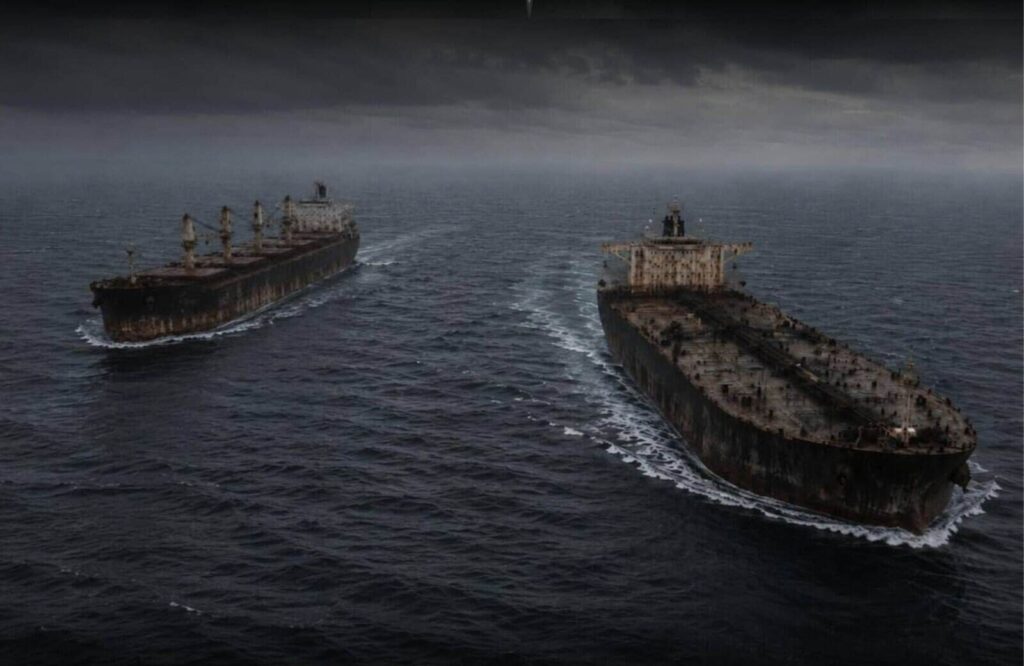
Two weathered cargo ships sail across a dark sea beneath heavy storm clouds.

Ukraine has published data on 20 vessels that carry Russian oil and liquefied natural gas or refuel the sanctioned fleet, parts of the logistics network the Kremlin uses to fund its war, Ukraine's Defense Intelligence reports. All 20 are under British or Ukrainian sanctions, and only one faces US restrictions.

Russia’s shadow fleet runs on roughly 500 aging ships of uncertain ownership that dodge sanctions and keep oil money flowing. That seaborne oil trade is worth more than 80 billion euros a year.

The headline vessel is the Russian ship Portovyy, an LNG carrier and floating gas store owned by the sanctioned Gazprom since 2021, according to the agency. On 15 August 2026, it left the Gulf of Finland with Russian LNG for the first time since November 2021, sailing the Northern Sea Route to the Chinese port of Beihai to unload.

Portovyy is now at the Zhoushan Huafeng Shipyard in China, which has been set as the site for its maintenance, intelligence says, an example of the foreign yards Kyiv wants closed to the sanctioned fleet.

Russia buys up gas carriers through shells

Two more gas carriers show how Moscow expanded the fleet in spring 2026 through front companies, intelligence said. The Avacha, once owned by China’s Jovo Energy, was bought by the little-known Tudor Maritime of the Marshall Islands, took the Russian flag in June, and now ships gas from the Arctic LNG 2 project to Beihai.

The Chaivo, formerly owned by Greece’s Maran Gas Maritime, was also bought by Tudor Maritime and moved under the Russian flag in July. Now it carries cargo to Beihai from a floating gas storage facility off Kamchatka, intelligence says.

A call to close the loopholes

Intelligence urged partners to act together: tighten control over sales of commercially owned ships, block servicing of the sanctioned fleet at foreign yards, and cut off the energy revenue that Russia turns into weapons against civilians.

Russia is building ice-class ships at home and, at the same time, widening its shadow fleet through offshore networks. The UK Foreign Office made the same point on 1 October, saying Moscow is assembling a new shadow fleet to keep its gas revenues flowing.

  •  

Five Russian bombs kill 17 in Ukraine’s Zaporizhzhia next day after Trump lets Russia ship first 300,000 tonnes of its diesel

The aftermath of a Russian strike on Zaporizhzhia on 10 October 2026. Source: Ukraine's National Police

A Russian air strike with guided bombs on the southeastern city of Zaporizhzhia has killed at least 17 people, including three children, according to Ukraine’s State Emergency Service. Ukrainian President Volodymyr Zelenskyy has tied the attack to a US decision to let Russian diesel reach world markets without demanding Moscow halt its strikes on Ukraine first.

On 9 October, President Donald Trump said that Russia would immediately supply more than 300,000 tonnes of diesel fuel to the US and global markets, a further 500,000 tonnes during November, and 1 million tonnes immediately thereafter. The move has already drawn criticism from US lawmakers in both parties.

“Today, Russia expressed its gratitude for the lifting of sanctions on diesel exports by dropping five guided aerial bombs on residential buildings in Zaporizhzhia,” Zelenskyy wrote on Telegram.

Zelenskyy vows to keep hitting refineries

These figures were accurate at the time the post was written. Later, the State Emergency Service reported that the death toll had risen by two. Meanwhile, Zelenskyy stated that Ukraine would not stop striking oil refineries that bring additional revenues for the Kremlin, which spends them on the war.

“There will be responses to Russian attacks. Thank you to everyone who is helping,” Zelenskyy concluded.

According to Zelenskyy, two of the injured are in critical condition, and doctors are fighting to save their lives. Information is also being verified regarding another 12 people who may have been at the strike site.

“Thirteen of our regions came under attack overnight. Residential buildings, infrastructure, and railway facilities have been damaged,” the Ukrainian leader said.

More pressure on Kremlin

Zelenskyy stressed that the latest Russian strikes further demonstrate the need to increase pressure on Russia. In his view, easing restrictions is interpreted by the aggressor as a signal that it can continue the war and attack Ukrainian cities.

“This night provided yet another confirmation that Russia interprets any easing of pressure as a signal that it can supposedly continue fighting and that it can supposedly drop bombs on cities,” he emphasized.

He also noted that Ukraine’s long-range strike capabilities are inflicting such losses on Russia and stressed that Ukraine would respond to Russian attacks.

  •  

Washington and Moscow Target the ICC: Different Motives, a Common Beneficiary

Russia’s demands for the extradition of International Criminal Court judges and Washington’s sweeping sanctions against the institution have converged within days. The two governments have different grievances, but the consequences of their actions increasingly overlap, raising questions about the political relationship between Donald Trump and Vladimir Putin and the future of international criminal justice.

Russia and the United States have intensified their campaigns against the International Criminal Court (ICC) almost simultaneously, exposing an increasingly consequential convergence between the policies of Vladimir Putin and Donald Trump.

On 8 October, Moscow demanded the extradition of ICC President Tomoko Akane and eight other current and former officials. The following day, Washington announced sanctions against the court as an institution, extending earlier measures against individual judges and prosecutors.

The timing raises an obvious question: are these independent campaigns arising from different disputes with international justice, or do they reflect a broader political understanding between Washington and Moscow?

There is no publicly established evidence of a coordinated operation or an agreement between Trump and Putin to undermine the ICC. Nevertheless, the strategic consequences of their respective actions are remarkably similar. Both weaken an institution pursuing criminal proceedings against political leaders whom the two governments seek to protect.

Different grievances, overlapping interests

Russia’s hostility towards the ICC is directly connected to the arrest warrant issued against Putin in March 2023 over the alleged unlawful deportation and transfer of Ukrainian children from occupied territories.

The court subsequently issued warrants against senior Russian military commanders, including Sergei Shoigu and Valery Gerasimov, over alleged crimes involving attacks on Ukrainian civilian infrastructure.

Moscow’s response has been to pursue ICC personnel through its own criminal justice system. The latest extradition demands follow convictions handed down in absentia by a Russian court in December 2025.

Washington’s confrontation with the ICC has a different immediate origin. The Trump administration objects to the court’s jurisdiction over American nationals and Israeli officials, particularly following the arrest warrants issued against Israeli Prime Minister Benjamin Netanyahu and former defence minister Yoav Gallant.

Secretary of State Marco Rubio has presented the American campaign as a defence of US sovereignty. Yet the sanctions announced on 9 October are not confined to the Israeli proceedings or any investigation involving American personnel.

They target the institution itself, potentially disrupting financial transactions and commercial relationships essential to its operation. This distinction matters because a court-wide restriction necessarily affects investigations beyond those cited by Washington. That includes Ukraine.

The Anchorage question

The political context cannot be separated from the relationship between Trump and Putin, including their meeting in Anchorage, Alaska, in August 2025.

The summit formed part of Trump’s efforts to negotiate directly with Moscow over the war in Ukraine. The American president has repeatedly treated relations with Putin as a question of diplomatic bargaining, seeking arrangements that might produce an agreement where conventional Western pressure has failed.

Against this background, suggestions that pressure on the ICC might form part of a wider accommodation with Moscow warrant scrutiny. However, the proposition that Trump specifically offered Putin assistance in neutralising the court during their Anchorage discussions remains unsubstantiated. There is no verified public account establishing such a commitment.

A more defensible conclusion is that Washington’s independently declared campaign against the ICC also advances an important Russian interest. For Putin, the benefit is clear. Measures designed to restrict the court’s financial and administrative capacity could complicate investigations into Russian conduct, irrespective of the American administration’s stated intentions.

The relationship therefore need not involve explicit coordination to produce politically significant results.

Why sanctions against the institution matter

The escalation from targeting individual prosecutors to sanctioning the entire ICC represents a substantial change. Previous American measures imposed personal and financial restrictions on selected officials. The latest approach threatens the broader infrastructure upon which international criminal proceedings depend.

The court requires banking facilities, secure communications, technology services and commercial suppliers. American sanctions can reach beyond US territory because of the international financial system’s dependence on dollar transactions and American service providers.

The ICC had already anticipated this vulnerability. According to details disclosed in September, the institution has pursued alternatives to American software and financial services to reduce its exposure.

Nevertheless, operational continuity and investigative effectiveness are not necessarily the same thing. The court may remain formally functional while facing additional costs, delays and restrictions affecting prosecutors, investigators and international cooperation.

For Ukraine, this is particularly significant. The ICC holds and evaluates evidence connected to alleged Russian war crimes, including the deportation of children and attacks on civilian infrastructure. Its proceedings preserve a judicial process independent of whatever diplomatic settlement Washington and Moscow might eventually negotiate.

Weakening that capacity would not invalidate existing warrants or automatically destroy evidence, but it could make the pursuit of accountability more difficult.

Europe’s response and its limitations

The European Union now faces a dispute with Washington over an institution that European governments have spent decades supporting.

On 9 October, eight governments issued a joint statement, reaffirming their support for the ICC and rejecting the American sanctions. The signatories included Germany, France, Italy, the Netherlands, Britain, Japan and Canada.

The European Commission also indicated that the EU was prepared to take measures necessary to preserve the court’s operations. Such assurances are politically important, but they do not automatically resolve the practical consequences of American restrictions.

European financial institutions and technology suppliers must consider their own exposure to US sanctions. Sustaining the court may require alternative payment arrangements, commercial protections and potentially further European regulatory intervention.

The EU has discussed extending its blocking statute to shield European operators from the effects of American sanctions. Whether that mechanism can provide sufficient protection remains uncertain.

The dispute also extends beyond the ICC’s current investigations. Ukraine and the Council of Europe are developing a separate Special Tribunal for the Crime of Aggression, designed to address jurisdictional limitations preventing the ICC from prosecuting Russia’s leadership for the decision to launch the invasion.

The two institutions have distinct legal mandates, although cooperation between them is envisaged. Undermining the ICC would not automatically prevent the special tribunal from operating, but it would weaken an important part of the wider international accountability framework.

A convergence with consequences for Ukraine

Washington and Moscow have not adopted identical positions towards the ICC. Russia seeks to discredit and punish the officials responsible for pursuing Putin. The Trump administration is attempting to restrict the court’s authority and operational capacity, principally in response to proceedings involving Americans and Israelis.

Yet their actions converge at precisely the point where the ICC’s independence becomes politically inconvenient. The distinction between motive and consequence is essential. It would be premature to describe the American sanctions as evidence of a secret bargain struck in Anchorage. It would be equally mistaken to overlook the assistance these measures could provide to Moscow.

The broader concern is that the United States, traditionally central to Western efforts to hold Russia accountable for its invasion of Ukraine, is now applying pressure to one of the principal institutions carrying out that work.

For European governments, the immediate question is no longer simply whether they support the International Criminal Court. It is whether they are prepared to protect its practical independence when the political and financial pressure comes not only from Russia, but also from Washington.

  •  

Brussels Prosecutors Detain 21 After Violent Clashes During Anti-Austerity Protest

Seventeen minors are among those detained following riots in the Belgian capital that left buses damaged, vehicles burnt and public infrastructure vandalised. Prosecutors have promised criminal proceedings as the government faces mounting opposition to its budget reforms.

Belgian prosecutors have confirmed that 21 people, including 17 minors, have been placed under judicial arrest following violent disturbances in Brussels on Friday, 9 October, when a national trade union demonstration against the federal government’s economic policies was overshadowed by clashes between groups of youths and police.

The Brussels Public Prosecutor’s Office announced the updated figures on Saturday morning, reducing the number of judicial arrests previously reported by police while confirming that minors accounted for the substantial majority of those detained. Four adults are also in custody, with questioning scheduled throughout Saturday to determine which cases should proceed to further judicial action.

The disturbances caused extensive damage around Brussels-Central and Brussels-Midi railway stations, where masked youths attacked public transport vehicles, set fires and threw projectiles at officers. The violence occurred separately from the main trade union procession, which police described as peaceful.

Prosecutors promise criminal action

The prosecutor’s office has assigned three additional magistrates to handle cases arising from Friday’s disturbances. Investigations concern suspected arson, vandalism, possession of weapons, threats, armed resistance to police and acts of violence.

In a statement released on Saturday, prosecutors reaffirmed that freedom of expression and peaceful assembly are fundamental rights, while warning that criminal conduct during demonstrations would be prosecuted. The authorities said they would respond strictly and systematically to offences committed during the unrest. Investigators have not yet established the total financial cost of the damage.

Friday evening’s preliminary police figures recorded 80 administrative detentions and approximately 30 judicial arrests. The prosecutor’s subsequent announcement identifies 21 people being held judicially; the two figures reflect different reporting stages and categories of detention.

Police reported that groups comprising more than 1,000 people were involved in serious incidents, although this figure does not establish how many individuals personally committed offences. Officers were attacked with glass bottles, cobblestones, bricks, sticks and pyrotechnic devices. Police also reported seizing potentially dangerous materials, including Molotov cocktails and other objects that could have been used as weapons.

Water cannon, tear gas and batons were deployed as officers attempted to disperse groups involved in the disturbances.

Buses attacked and vehicles set alight

Public transport services suffered considerable damage, particularly near Brussels-Midi station, where three STIB-MIVB buses and a De Lijn bus were attacked. The Brussels transport operator said police helped drivers and passengers leave the affected vehicles. No injuries were reported in those incidents.

The De Lijn bus sustained extensive damage while parked at a terminus. Its windows were smashed, its fuel cap was removed and security barriers were thrown inside. The vehicle had to be recovered because it could no longer operate.

A separate STIB-MIVB bus was destroyed during the unrest. Several Poppy car-sharing vehicles, electric scooters and bicycles were also damaged or set alight. Police and fire service vehicles sustained damage, while bus shelters and other street infrastructure were vandalised.

Brussels-Central station was temporarily closed, and access to Brussels-Midi was restricted as police attempted to regain control. Both stations subsequently reopened, although tram services around Brussels-Midi remained disrupted into Friday evening.

Political dispute over responsibility

The disorder has prompted a dispute over who should bear the financial consequences of violence committed during demonstrations. Belgian Interior Minister Bernard Quintin, of the liberal Mouvement Réformateur (MR), condemned the attacks on police and said the state would not be intimidated by those responsible for destruction.

MR chairman Georges-Louis Bouchez went further, proposing legislation that would make trade unions financially liable for damage associated with demonstrations, drawing a comparison with the responsibility imposed on football clubs for the behaviour of supporters.

The proposal raises questions about how responsibility could be established when violence is committed by individuals operating separately from an authorised demonstration. Police have explicitly distinguished Friday’s disturbances from the trade union march, which proceeded without serious incidents.

Wider protests against government reforms

Friday’s demonstration was organised by Belgium’s socialist ABVV-FGTB and Christian ACV-CSC trade unions as opposition intensifies to the economic programme of Prime Minister Bart De Wever’s federal coalition.

The unions oppose proposed spending reductions and changes affecting pensions, unemployment benefits, taxation and purchasing power. Students and teachers also participated, expressing concerns about education funding, deteriorating school infrastructure and the affordability of higher education.

The dispute follows earlier confrontations over the government’s fiscal programme. As EU Today’s coverage of the previous national strike wave detailed, the coalition’s budget agreement in November 2025 failed to prevent widespread industrial action over proposed reductions in public expenditure.

The government argues that reforms are necessary to address Belgium’s persistent budget deficit and growing debt burden. Trade unions maintain that the proposed measures place disproportionate pressure on workers, pensioners and lower-income households.

Further disruption expected on Monday

Public services face another round of industrial action on Monday, 12 October, when socialist trade unions are planning strikes across several sectors.

Flemish public transport operator De Lijn expects to operate approximately 61 per cent of its normal bus and tram services, with substantial regional differences. In Antwerp city, only 45 per cent of services are expected to run, compared with 57 per cent across Antwerp province.

Belgian rail services will also be affected from 10pm on Sunday until the end of Monday. Disruption is anticipated in schools, postal services and public broadcasting.

The City of Brussels has warned of disruption to municipal administrative services on both 9 and 12 October as a consequence of the national trade union actions.

Meanwhile, Brussels prosecutors will continue questioning those arrested on Friday, with decisions on possible charges and referrals to the appropriate courts expected to depend on the evidence gathered.

  •  

Who really owns Czech Vanadium? Investigators trace possible sanctions-evasion links to Russian oligarch Abramovich

First published in Deník N.

Until Russia’s full-scale invasion of Ukraine, Czech Vanadium was among the European companies which clearly had Russian owners.

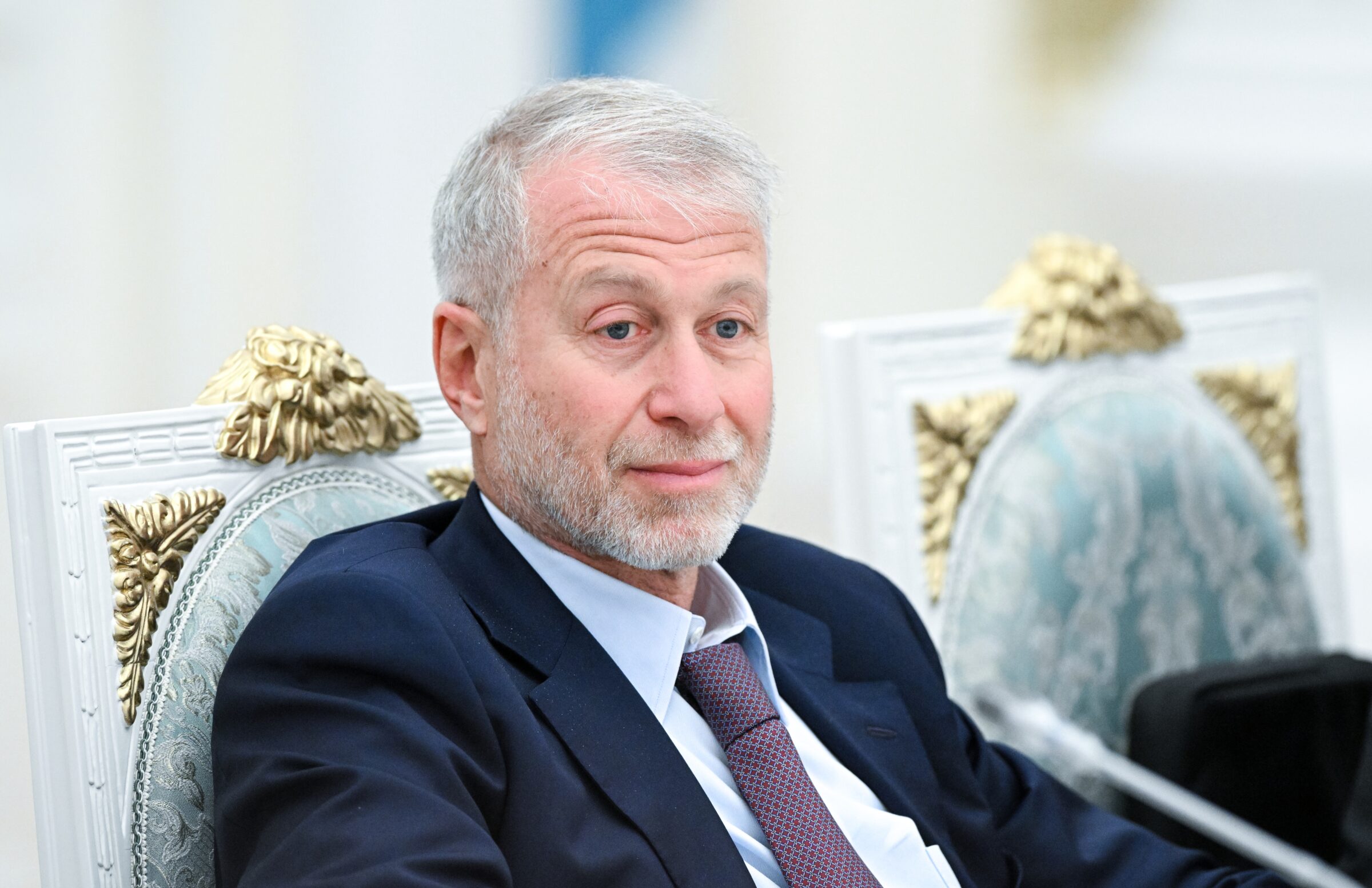
Since 2007, the company has been controlled through the Evraz group by Russian businessman Roman Abramovich, who is close to Russian leader Vladimir Putin.

The ferrovanadium producer was part of a chain through which vanadium ore mined in Russia reached Europe before being sent on to Abramovich’s factories in the US. Ferrovanadium is an alloy added to steel to help improve its properties. And Czech Republic accounts for six percent of global production.

But sanctions following Russia’s full-scale invasion of Ukraine in 2022 forced the oligarch to sell up.

Evraz, the holding company in which Abramovich is the largest shareholder, supplied the Russian army, according to media reports. But Evraz denied this.

In 2024, the Abu Dhabi-based company Metco (now ‘Metco Holding’) became the sole shareholder in the Czech factory, but it is not clear who controls it.

Czech authorities and police suspect the transfer of the vanadium factory to a new parent company in the UAE may conceal the true owner. They are seeking to establish who is really behind the opaque company in the Persian Gulf, and whether it is still Roman Abramovich.

According to Deník N sources familiar with the investigation, specialists from Czech police bodies for organised crime (NCOZ) and the financial intelligence unit (FAÚ) are involved.

“Yes, we are investigating who is behind the company. There are many leads and the suspicion is clear that the company may still be backed by its former owners from Russia,” a source close to the investigation confirmed.

NCOZ spokesperson Jaroslav Ibehej declined to comment in more detail on the search for Czech Vanadium’s beneficial owner. “As a rule, we neither confirm nor deny what we are working on,” he said.

According to documents in the Czech judicial database, the company is formally controlled by one owner — a Dubai-based lawyer of Indian origin who provides nominee services for beneficial owners. The lawyer has been linked to money-laundering investigations in Ukraine and Moldova.

Apparent fake owner scheme

The officially declared owner of Czech Vanadium is Nikhil Skariah Kolekunnel. According to the ADGM free zone business register in the UAE, he is both the sole shareholder and director of Metco Holding.

However, the Gulf state’s database does not disclose so-called beneficiaries, who are entitled to the company’s profits and may also secretly control it.

Although the Czech judicial register lists Skariah as Czech Vanadium’s beneficial owner, this does not necessarily indicate the person exercising control in the background. For example, trustees of trust funds are also listed in the registers as beneficial owners.

The nature of Skariah Kolekunnel’s business suggests that he performs the specific role of an administrator, a so-called fiduciary — someone who accepts an ownership mandate and effectively manages another person’s assets.

He is a lawyer originally from India who founded two law firms in the UAE years ago. His companies represent large corporations and businesspeople who do not wish to publicly acknowledge ownership of a business.

“South Bridge Legal is an advisory firm for comprehensive business establishment in Dubai, Abu Dhabi and the UAE. Our highly experienced team has been active in the sector for more than 10 years, providing services tailored to the unique needs of every ambitious entrepreneur setting up companies in Dubai,” the company wrote on its website.

“We have all activities, which is tax management, tax consulting, accounting, corporate services, offshore company formation, free zone company formation…everything,” Skariah said in a recently published video on YouTube.

Metco Holding’s address in Abu Dhabi suggests it may be a shell company. And it is headquartered from a WeWork.

Moldova and Ukraine links

‘Skariah’, the name of the Indian administrator, had already emerged eight years ago in connection with the concealment of ownership structures during an investigation into the privatisation of Moldova’s national airline. At the time, Skariah appeared as the owner of the opaque company Gold Craft FZE, established in Dubai in 2015.

“On Monday 1 October 2018, one day before the privatisation agreement for Air Moldova was signed, a plane from Istanbul landed at Chișinău International Airport. One of the passengers, a 39-year-old man, was carrying nearly €2.6m in cash in his luggage. He declared the money to customs officers, which, according to the Office for the Prevention and Fight against Money Laundering, he had borrowed four days earlier from Gold Craft FZE in the United Arab Emirates,” the investigative outlet RISE Moldova reported.

It finds that Andrei Ianovici brought cash from Dubai, equivalent to tens of millions of Czech crowns. Later that day, he deposited the money in a bank, and it ended up in the accounts of Civil Aviation Group SRL. That company privatised Air Moldova, and Ianovici was one of its partners.

The true origin of the money was never established, leading local investigators to suspect that the money had not been earned legally. No charges were brought, however.

According to court records, Skariah was also involved in disputes in Ukraine, where Gold Craft FZE claimed ownership of an Ilyushin aircraft which the company allegedly purchased in 2017.

Skariah’s Russian-linked empire

However, the UAE-based lawyer was not the only individual to have emerged as an administrator of Czech Vanadium. Another is Sergei Gushchin.

A man of this name was formerly a prominent Russian businessman in rail freight transport and, although he withdrew from Russia three years ago, he appears on Ukrainian sanctions lists for supporting the Russian army.

Gushchin became a senior manager at PJSC TransContainer, a Russian rail freight carrier, after Evraz sold its stake. In the past, a quarter of the company was owned by the holding company of Abramovich.

Meanwhile another of Gushchin’s companies, Rail Service, formed a joint venture with Evraz in 2019 focused on the production of railway wheels.

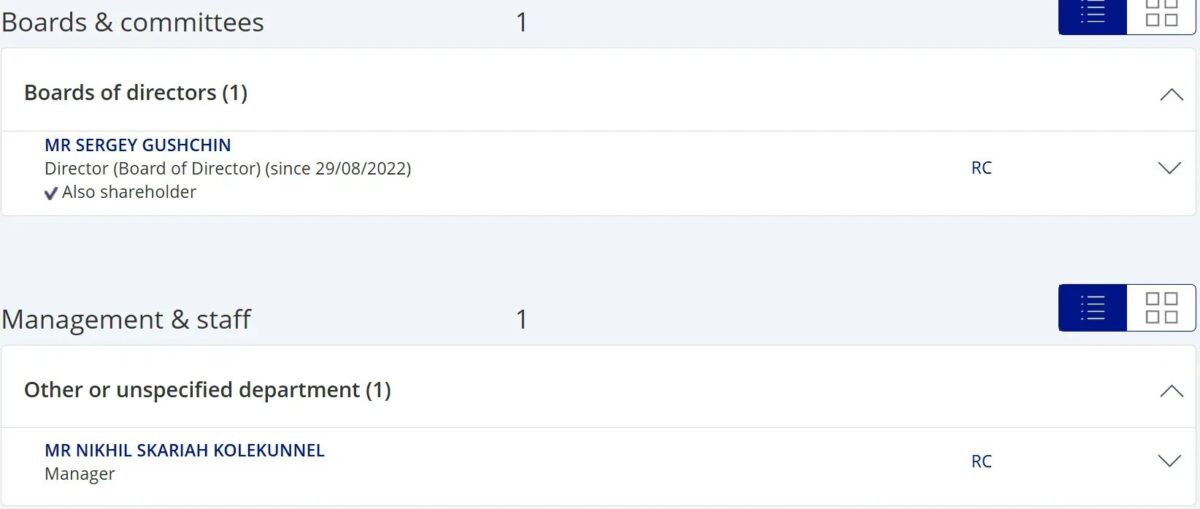
According to a UAE register, Gushchin was a director and shareholder of Metco, which became Czech Vanadium’s parent company from 2022-23.

US credit-rating agency Moody’s shared data with Deník N that listed Gushchin as a recent beneficiary of Metco Holding and as the company’s director.

Výpis z americké databáze Moody’s, která vede Guščina jako zakladatele a držitele akcií.
Moody’s data shows Sergei Gushchin as Metco Holding’s director.

Russia’s ferrovanadium monopoly

Czech Vanadium’s revenues regularly exceed €81m, and in 2024 the company reported profits of more than €8m. This summer, the company sent over €0.6m of that sum to the Dubai company, the remaining funds staying in its retained earnings account.

Last year, the company recorded a modest €0.2m loss. Its accounts retained more than €12m in undistributed profits in total.

Czech Vanadium’s business remains closely tied to Russia. Last year alone, vanadium oxides or hydroxides worth nearly €82m were imported into the Czech Republic from the Russian Federation. Russia is effectively the sole supplier of the raw materials needed to produce ferrovanadium. According to the statistical office database, exports mainly go to the United States, as well as Germany and Taiwan.

Czech Vanadium did not reply to requests for comment or an explanation of its ownership structure.

It also did not answer the question of how a Dubai lawyer had bought the Czech company, which, according to some estimates, is worth more than €40m.

Company representatives have not responded to questions about its owners since 2024, when the company left the Evraz group structure.

Fake owner model in US

Jiří Skuhrovec, an analyst at Datlab, specialises in the global vetting of business partners. He says Abramovich uses a similar model for concealing ownership in the United States.

Sanctions also forced the Russian oligarch, who became better known through his former ownership of the British football club Chelsea, to withdraw from US companies. But Skuhrovec concluded that they were probably still controlled by people linked to Abramovich just like the factory in Czech Republic.

“We mapped the entire chain, from the Russian ore supplier through the Czech smelter to the final recipient: the US company Strategic Alloys LLC. Until recently, all three companies officially belonged to Abramovich, and all three are now controlled by people with links to his Evraz group. Abramovich may therefore still secretly control the entire supply chain for this strategic raw material. This would be a textbook case of sanctions circumvention, as well as an obvious security risk,” Skuhrovec said.

Findings led Datlab and Transparency International to submit a complaint to police. “We believe that the 16m Czech crowns (around €655,000) in distributed profit may have gone to Abramovich, who is on a sanctions list. That would constitute a criminal offence,” the analyst explained.

In brief:

  • Czech Vanadium, owned by Russian oligarch Roman Abramovich’s holding company until 2024, was taken over by Dubai-based company Metco Holding.
  • The company is opaque, and Czech authorities are investigating who actually owns the Czech factory. It is suspected it is still linked with former owner.
  • This would amount to circumventing sanctions imposed by the European Union.
  • Deník N and Datlab analyst Jiří Skuhrovec found that the company is backed by lawyer Nikhil Skariah Kolekunnel and Sergei Gushchin, who conduct business with Abramovich’s Evraz group.
  • Skariah has been linked to money laundering in Moldova and Ukraine. He has long covered for companies that are in fact owned by someone else.

  •  

Trump’s Diesel Deal with Putin Undermines US Sanctions Pressure as Ukraine Peace Talks Stall

President Donald Trump announced an agreement with Vladimir Putin on Friday, 9th October, under which Russia will resume substantial diesel exports to American and international markets, despite Washington’s existing sanctions against Moscow over its invasion of Ukraine.

According to Trump’s announcement following the telephone conversation, Russia will immediately release more than 300,000 tonnes of diesel, followed by 500,000 tonnes in November and another million tonnes shortly afterwards. A further three million tonnes could become available once Russian refining capacity permits.

The announcement was accompanied by a temporary authorisation from the US Treasury allowing transactions involving Russian diesel until 7 April 2027. It represents a substantial departure from the administration’s recent sanctions policy, which had sought to restrict Russian energy revenues and strengthen Washington’s negotiating position over Ukraine.

The timing is politically significant. Trump faces congressional midterm elections on 3 November, while diesel prices have become a growing economic concern for American businesses and consumers. The agreement gives the White House an opportunity to present itself as addressing fuel costs, although its practical effect on prices remains uncertain.

Russian diesel cannot resolve the global supply shortage

Trump has linked the proposed Russian deliveries to his administration’s efforts to restore energy flows through the Strait of Hormuz, arguing that the combined measures will produce a rapid reduction in diesel prices.

The disruption of maritime energy supplies following the confrontation with Iran has, however, created a problem considerably larger than the quantities Russia has initially promised.

The first two deliveries amount to approximately 800,000 tonnes. Even including the subsequent million tonnes, the announced volumes are modest relative to global consumption. Their arrival may provide temporary relief in individual markets, but there is little evidence that they could independently reverse the wider shortage.

Russia’s capacity to maintain larger exports is also uncertain.

Ukrainian attacks on Russian refineries have disrupted production and contributed to restrictions on petroleum exports. Moscow has periodically imposed limits to protect domestic supplies, while damaged facilities require repairs before returning to normal operations.

The condition of those refineries is explicitly acknowledged in Trump’s announcement, which makes the proposed additional three million tonnes dependent on their recovery.

This introduces a further contradiction. Washington is seeking Russian diesel at precisely the moment Ukraine is attempting to reduce Moscow’s capacity to refine and export petroleum products.

The economic benefits of the agreement may consequently depend partly on developments in a military campaign that the United States has previously supported through intelligence cooperation with Kyiv.

Zelenskyy rejects sanctions relief without Russian concessions

President Volodymyr Zelenskyy responded critically to the agreement, describing the relaxation of economic pressure as a concession to Putin that had not been accompanied by any meaningful Russian commitment to de-escalation.

In his response to the American decision, Zelenskyy argued that Moscow would exploit renewed export revenues to prolong its war rather than make concessions towards a settlement.

Ukraine has indicated that it remains prepared to consider reciprocal measures concerning attacks on energy infrastructure. Such arrangements would require Russia to stop striking Ukrainian facilities in exchange for restrictions on Ukrainian operations against Russian energy targets.

No comparable undertaking was announced as part of Friday’s diesel agreement.

This distinction is central to Kyiv’s objections. Sanctions relief has traditionally been regarded as leverage to obtain changes in Russian behaviour. In the present arrangement, Moscow stands to receive additional commercial opportunities without publicly agreeing to alter its military campaign.

Lukoil negotiations raise further questions

The agreement also comes amid separate discussions concerning the international assets of Lukoil, Russia’s second-largest oil producer.

A recent account of negotiations involving American investors and Russian officials described proposals involving Lukoil’s overseas oilfields, refineries and distribution businesses.

The discussions have reportedly involved figures connected to Trump’s diplomatic efforts, including Steve Witkoff and Jared Kushner, alongside Russian representatives.

On Friday, another development complicated the proposed transaction when Carlyle withdrew from the competition to acquire Lukoil’s international assets, previously valued at approximately $22 billion.

The negotiations illustrate the extent to which potential commercial cooperation has entered the broader American-Russian relationship.

There is no verified evidence, however, that the diesel agreement was concluded to facilitate a particular acquisition or benefit individuals connected to Trump’s administration. The commercial negotiations and Friday’s sanctions decision remain separate developments unless further evidence establishes a direct connection.

Washington and Europe move in different directions

The American decision creates an additional complication for European sanctions policy.

On 7th October, EU ambassadors agreed to expand sanctions against Russia’s military-industrial network, approving 1,646 additional designations, many directed at the production of ballistic missiles used against Ukraine.

Britain has also introduced further restrictions on Russian oil-related businesses, tankers and financial intermediaries, reinforcing its stated objective of limiting Moscow’s ability to finance the war.

The contrast with Washington’s diesel authorisation is substantial. While European governments are attempting to restrict Russian petroleum revenues, the United States is providing a temporary legal route for renewed sales.

The development also recalls the difficulties already examined by EU Today in its reporting on sanctions enforcement against Russia’s shadow fleet, where differences in national restrictions and their application have complicated efforts to control petroleum exports.

For Moscow, the significance of Friday’s agreement extends beyond the immediate revenue generated by diesel sales. It establishes that the United States is prepared to relax particular economic restrictions before securing a settlement over Ukraine.

Whether the arrangement ultimately lowers American fuel prices will depend on production, shipping and international market conditions. The diplomatic consequence is already apparent: Russia has obtained an opportunity to restore part of its international energy trade without accepting publicly announced conditions concerning its war against Ukraine.

For Kyiv and European governments, the question is whether this remains a narrowly defined response to an energy shortage or marks the beginning of a broader American policy of separating commercial relations with Moscow from negotiations over Ukraine.

  •  

Marocco: nuovi equilibri parlamentari nella continuità del potere monarchico

Le elezioni legislative marocchine hanno ridisegnato gli equilibri tra i partiti: il PAM conquista il primato, l’RNI arretra e il PJD torna protagonista. Ma l’astensione e il ruolo della monarchia mostrano i limiti dell’alternanza, mentre il Sahara Occidentale resta escluso da ogni processo decisionale.

Join us on Telegram, X, and VK.

Contact us: info@strategic-culture.su

Le elezioni legislative marocchine del 23 settembre hanno prodotto una significativa ricomposizione degli equilibri parlamentari senza mettere in discussione l’architettura fondamentale del sistema politico del Regno. Il Partito Autenticità e Modernità (Parti Authenticité et Modernité, PAM) è diventato la prima formazione della Camera dei rappresentanti con 97 seggi su 395, superando il Raggruppamento Nazionale degli Indipendenti (Rassemblement National des Indépendants, RNI), che dopo cinque anni alla guida del governo è sceso da 102 a 66 deputati. Il Partito dell’Istiqlal (Parti de l’Istiqlal) si è collocato immediatamente dietro con 65 seggi, mentre il Partito della Giustizia e dello Sviluppo (Parti de la Justice et du Développement, PJD) ha realizzato la rimonta più consistente, passando dai 13 rappresentanti del 2021 a 54.

La distribuzione dei seggi permette di individuare contemporaneamente una sconfitta dell’esperienza di governo uscente e una continuità più profonda: il PAM, infatti, aveva governato insieme all’RNI e all’Istiqlal nel corso della legislatura appena conclusa. Il suo avanzamento da 87 a 97 deputati rappresenta quindi soprattutto un riequilibrio interno all’area che ha amministrato il Paese negli ultimi cinque anni. Il cambiamento più marcato riguarda invece l’RNI dell’ormai ex capo del governo Aziz Akhannouch, che perde 36 seggi, mentre l’Istiqlal ne perde sedici.

Il risultato ha portato Muhammad VI, il 29 settembre, a nominare Fatima Ezzahra El Mansouri capo del governo incaricato, in applicazione dell’articolo 47 della Costituzione, che impone al sovrano di scegliere il capo dell’esecutivo all’interno del partito arrivato primo alle elezioni della Camera dei rappresentanti. El Mansouri, coordinatrice della direzione collegiale del PAM, già ministra dell’Assetto territoriale e sindaca di Marrakech, è la prima donna nella storia marocchina a ricevere l’incarico di guidare il governo.

Il PAM conquista il primato, ma non produce una rottura

La vittoria relativa del PAM deve essere interpretata all’interno delle caratteristiche specifiche del sistema politico marocchino. Fondato nel 2008 da Fouad Ali El Himma, stretto collaboratore e consigliere di Mohammed VI, il partito è stato fin dall’origine una componente importante dello spazio politico vicino alla monarchia. La sua affermazione non corrisponde dunque a un’alternanza paragonabile a quella che avviene nei sistemi parlamentari nei quali il controllo dell’esecutivo comporta anche la direzione complessiva della politica dello Stato.

Il PAM, come ricordato in precedenza, aveva partecipato direttamente anche al governo Akhannouch, e resta dunque inserito nello stesso quadro istituzionale. La differenza tra i due partiti può essere rilevante nelle politiche sociali, nell’organizzazione della spesa pubblica, nelle priorità economiche o nella distribuzione delle responsabilità ministeriali, ma è molto meno marcata sui dossier strategici che dipendono direttamente dalla monarchia.

La Costituzione del 2011 attribuisce infatti al re funzioni che vanno ben oltre quelle normalmente esercitate da un capo dello Stato parlamentare. Muhammad VI è definito capo dello Stato e garante dell’integrità territoriale; presiede il Consiglio dei ministri, nel quale vengono stabiliti gli orientamenti strategici della politica dello Stato, ed è comandante supremo delle Forze Armate Reali. Presiede inoltre il Consiglio superiore di sicurezza, competente sulle strategie di sicurezza interna ed esterna.

La differenza tra alternanza governativa e alternanza del potere risulta quindi essenziale per comprendere il voto del 23 settembre. Il PAM assume la guida dell’esecutivo, ma la politica estera, la difesa, la sicurezza e le grandi direttrici strategiche rimangono settori nei quali il Palazzo conserva un ruolo determinante.

Il ritorno del PJD

Se il PAM è la prima forza parlamentare, il cambiamento numericamente più rilevante riguarda il PJD. Nel 2021, infatti, il partito islamista aveva subito una sconfitta eccezionale, precipitando da 125 seggi ottenuti nel 2016 ad appena 13. Cinque anni dopo torna a risalire fino a quota 54 deputati, recuperando 41 seggi e ricostruendo una presenza parlamentare significativa.

Secondo gli analisti, il ritorno di Abdelilah Benkirane alla guida della formazione ha contribuito a restituire al PJD una capacità di mobilitazione che sembrava compromessa dopo il tracollo del 2021. Il risultato non porta però il partito verso una nuova partecipazione al governo: il PJD ha annunciato la propria collocazione all’opposizione e Benkirane ha anche rifiutato di partecipare alla consultazione convocata da El Mansouri presso la sede del PAM, contestando il luogo scelto per il confronto.

Il dato segnala comunque che l’esperienza del 2021 non aveva cancellato l’elettorato islamista. Una parte consistente degli elettori che aveva abbandonato il PJD dopo gli anni trascorsi al governo è tornata a sostenerlo in una fase nella quale il partito può nuovamente presentarsi come forza di opposizione.

La dinamica è particolarmente interessante perché ribalta in parte quella verificatasi cinque anni fa. Nel 2021 il crollo del PJD aveva aperto la strada all’ascesa dell’RNI; nel 2026 è l’RNI a perdere una parte considerevole della propria rappresentanza mentre il PJD recupera gran parte dello spazio perduto.

L’astensione come dato strutturale

Il risultato più significativo per comprendere il rapporto tra istituzioni e società resta tuttavia quello della partecipazione.

Secondo il ministero dell’Interno, l’affluenza ufficiale è stata del 38,02%, contro circa il 50% registrato nel 2021. Il dato assume un peso ancora maggiore se confrontato con la dimensione delle liste elettorali: a fronte di circa 27 milioni di cittadini potenzialmente aventi diritto, soltanto 15,8 milioni risultavano registrati, una cifra diminuita di circa il 12% rispetto alla precedente consultazione.

Il problema appare particolarmente marcato tra i giovani. Nelle settimane precedenti al voto, soltanto il 3% dei cittadini tra i 18 e i 24 anni risultava iscritto nelle liste elettorali. Lo stesso gruppo sociale è stato protagonista negli ultimi anni di manifestazioni legate alla disoccupazione, alla qualità dei servizi pubblici, alle difficoltà abitative e alla distribuzione delle risorse, mentre gli ingenti investimenti destinati alle infrastrutture per i Mondiali di calcio del 2030 sono diventati uno dei termini del dibattito pubblico.

Le elezioni mostrano quindi un sistema partitico capace di produrre spostamenti consistenti al proprio interno, ma solo nell’ambito di un corpo elettorale registrato e partecipante relativamente ristretto rispetto alla popolazione complessivamente in età di voto. Il problema, infatti, non riguarda soltanto quale partito governi, ma il grado di identificazione di ampi settori della società con gli stessi meccanismi della rappresentanza politica.

Anche per questo, l’incarico affidato a El Mansouri contiene due dimensioni differenti. Da una parte costituisce un cambiamento significativo nella rappresentanza di genere ai vertici dell’esecutivo; dall’altra il nuovo governo dovrà confrontarsi con la stessa distanza tra società e istituzioni che l’affluenza del 23 settembre ha reso evidente.

Una sinistra frammentata, ma con un nuovo spazio parlamentare

Il voto offre indicazioni interessanti anche sullo stato della sinistra marocchina.

L’Unione Socialista delle Forze Popolari (Union Socialiste des Forces Populaires, USFP) scende da 34 a 26 seggi, mentre il Partito del Progresso e del Socialismo (Parti du Progrès et du Socialisme, PPS) passa da 22 a 19. Il PPS, in particolare, rappresenta la forza erede del Partito Comunista Marocchino, fondato negli anni Quaranta, passando per il Partito della Liberazione e del Socialismo fino alla costituzione del PPS nel 1974.

Accanto a queste formazioni emerge però l’Alleanza della Sinistra (Alliance de la Gauche), costituita nel giugno 2026 dal Partito Socialista Unificato (Parti Socialiste Unifié, PSU) e dalla Federazione della Sinistra Democratica (Fédération de la Gauche Démocratique, FGD). La coalizione ha conquistato otto seggi, contro i due complessivi detenuti dalle due componenti nella legislatura precedente. I suoi documenti programmatici insistono sulla democratizzazione delle istituzioni, sulla giustizia sociale e sulla riduzione delle disuguaglianze.

Anche l’Alleanza ha scelto una collocazione distinta rispetto al processo di formazione del governo. Il 1° ottobre ha sospeso l’incontro previsto con El Mansouri dopo aver chiesto che le consultazioni si svolgessero in una sede istituzionale neutrale anziché nel quartier generale del PAM.

Il Sahara Occidentale resta un dossier dello Stato

Per quanto riguarda la questione del Sahara Occidentale, essa non è oggetto di una competizione sostanziale tra le principali forze marocchine paragonabile a quella che riguarda politiche fiscali, occupazione o servizi pubblici. La rivendicazione della sovranità marocchina e il piano di autonomia costituiscono un orientamento strategico dello Stato sostenuto trasversalmente dai principali partiti, comprese le formazioni collocate all’opposizione, anche della sinistra radicale.

Ciò significa che l’esito elettorale non modifica la linea seguita da Rabat nei confronti della Repubblica Araba Saharawi Democratica e del Fronte Polisario. La questione rientra infatti precisamente fra quelle nelle quali il ruolo della monarchia e delle strutture permanenti dello Stato prevale sull’alternanza parlamentare.

Il contesto internazionale rafforza questa continuità. Il 16 settembre, appena una settimana prima delle elezioni, Marocco e Israele hanno concordato di elevare le proprie rappresentanze diplomatiche al rango di ambasciate. In una dichiarazione trilaterale con Washington, Stati Uniti e Israele hanno contemporaneamente riaffermato il riconoscimento della sovranità marocchina sul Sahara Occidentale e il sostegno al piano di autonomia proposto da Rabat (con esclusione, quindi, della soluzione indipendentista). Questo conferma il legame strategico fra Rabat, Washington e Tel Aviv, che abbiamo già analizzato rispetto agli Accordi di Abramo, alla crisi di Ceuta e alla progressiva internazionalizzazione della posizione marocchina sul Sahara Occidentale.

Un voto di ricomposizione più che di trasformazione sistemica

Le elezioni del 23 settembre delineano quindi un quadro più articolato di una semplice vittoria del PAM.

L’RNI paga il logoramento di cinque anni di governo e perde oltre un terzo della propria rappresentanza parlamentare; il PAM consolida la propria posizione e conquista il diritto costituzionale di esprimere il capo del governo; il PJD recupera una parte consistente dell’elettorato perduto nel 2021; la sinistra tradizionale arretra mentre una nuova alleanza alla sua sinistra amplia la propria presenza. Soprattutto, l’affluenza del 38,02% segnala che la competizione tra i partiti si svolge in presenza di una marcata distanza di una parte della popolazione dalle istituzioni elettorali.

Il voto modifica, pertanto, gli equilibri nella Camera e nella futura coalizione, ma non modifica automaticamente il centro istituzionale nel quale vengono definite le principali strategie dello Stato marocchino. La Costituzione del 2011, da un lato, ha ampliato il ruolo del capo del governo e del Parlamento rispetto al passato, ma dall’altro mantiene nelle mani del sovrano prerogative decisive sulle grandi direttrici politiche, sulla sicurezza, sulla difesa e sull’integrità territoriale.

Tirando le somme, il nascente governo El Mansouri dovrà confrontarsi con disoccupazione giovanile, disuguaglianze territoriali, servizi pubblici e investimenti legati ai Mondiali del 2030; sul Sahara Occidentale, sui rapporti strategici con gli Stati Uniti e sulla progressiva normalizzazione con Israele, invece, il quadro appare caratterizzato da una continuità molto più marcata.

  •  
❌